
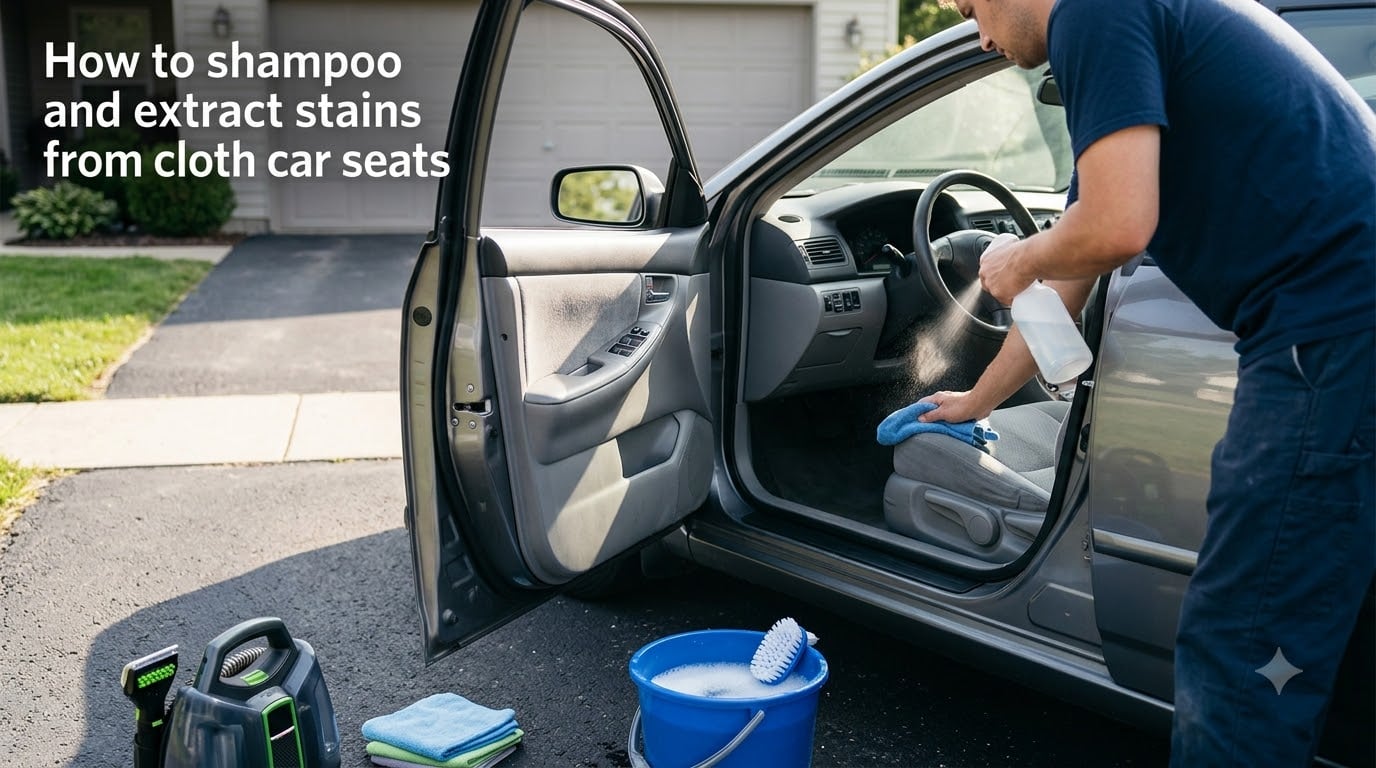
Cloth car seats soak up coffee spills, muddy footprints, pet hair, and sweat faster than you might think. Over time those deposits bake into the fabric under hot sun and become stubborn set-in stains that simple wipes cannot touch. The good news is that you can clean them at home with tools you already own.
I have spent the last several years testing every method on my own light beige cloth seats. From household products to extractor machines, I found that learning how to shampoo and extract stains from cloth car seats properly saves money and produces results that rival professional detailing shops. This guide walks through every step, from prep to drying, with specific products and ratios that actually work.
Whether you have a fresh coffee spill or months-old mystery marks, the right combination of cleaner, agitation, and extraction will lift them out. Let me walk you through the full process.
Table of Contents
What You’ll Need: Tools and Supplies Checklist?
Having the right supplies ready before you start makes the job twice as fast. Here is the full checklist I use every time I detail cloth seats at home.
Wet/dry shop vacuum (essential for extraction without a pro machine)
Stiff-bristled brush (nylon upholstery brush or old toothbrush)
Clean microfiber cloths (at least 6 to 8, color-fast white preferred)
Spray bottle (for mixing and applying solutions)
Baking soda (odor absorption and gentle scrub)
White vinegar (degreaser and stain lifter)
Liquid dish soap (Dawn works great for grease)
Warm water in a bucket
Optional: carpet shampooer, upholstery extractor, garment steamer, or commercial fabric cleaner
Most of these items are already sitting in your kitchen and garage. The only specialty item worth buying if you detail often is a small wet/dry vacuum, which I consider non-negotiable for serious cloth seat cleaning.
Step 1: Vacuum and Prep Your Cloth Seats
Never apply liquid cleaner to a dirty seat. Loose dirt turns to mud when wet and pushes deeper into the fabric fibers, making stains worse.
Start by removing floor mats, child seat anchors, and any personal items. Use a shop vacuum with a crevice tool attachment to hit every seam, crack, and gap along the seat edges. I spend at least five minutes per seat getting into the stitching where crumbs hide.
Next, brush the seat surface gently with a dry nylon brush. This lifts matted fibers and shakes loose embedded dust so the vacuum can pull it away. Vacuum again after brushing to capture what came loose.
Now inspect the seat under good lighting. Mark each stain mentally and note the type: oily, organic, ink, or mystery. Different stains respond to different cleaners, which I cover later in the tough stain guide.
Step 2: How to Spot Test Before Any Cleaner
Skip this step and you risk bleaching or discoloring your seats permanently. Always spot test any new cleaner on a hidden section first.
Find an inconspicuous area: the underside of the seat base, the rear-facing side of the backrest, or behind the headrest. Apply a small amount of your cleaning solution to a white cloth and dab the hidden spot gently.
Wait 10 to 15 minutes. Check whether any color transferred to the cloth. If the cloth is still white, your cleaner is safe. If you see dye, dilute your solution further or switch products.
Dark fabrics like charcoal gray usually hold up to most cleaners. Light beige, tan, and patterned cloth need extra caution. I have seen forum users report color fade from overly concentrated vinegar on delicate weaves, so always dilute to be safe.
How to Shampoo Cloth Car Seats with Baking Soda
Baking soda is the workhorse of DIY car seat cleaning. It absorbs odors, lifts stains, and acts as a mild abrasive without damaging fabric fibers.
For a paste method, mix three parts baking soda with one part warm water until it forms a thick paste. Apply the paste directly to the stain using an old toothbrush and work it in with small circular motions. Let it sit for 30 minutes to break down the stain, then blot away the dried residue with a damp microfiber cloth.
For a deeper clean on full seats, sprinkle dry baking soda evenly across the surface and let it rest for 20 minutes. Vacuum it up thoroughly. This pulls out absorbed odors and loose grime before you even apply liquid.
You can also build a baking soda upholstery cleaner by combining one tablespoon of baking soda, one cup of warm water, and a few drops of dish soap in a spray bottle. Shake well, mist the seat lightly, and agitate with a soft brush. Blot with a clean cloth and the dirt will transfer visibly onto the cloth.
I use baking soda as my first line of defense on coffee, soda, and food stains. It is cheap, color-safe when spot tested, and rarely leaves residue if you vacuum thoroughly.
How to Shampoo Cloth Car Seats with Vinegar Solution
White vinegar cuts grease, neutralizes odors, and breaks down mineral deposits that cause water marks. It is one of the most versatile cleaners in any garage.
Mix a 50/50 solution of white vinegar and warm water in a spray bottle. Mist the stained area lightly, just enough to dampen the fabric, not soak it. Let the solution dwell for 5 to 10 minutes so the acid can break down the stain bond.
Use a soft-bristled brush to agitate the area in circular motions. Blot immediately with a clean, dry microfiber cloth to lift the loosened dirt and excess moisture. Repeat if the stain is stubborn, but avoid over-wetting the seat.
For coffee stains specifically, the vinegar and baking soda combination works wonders. Apply vinegar first, let it dwell, then sprinkle baking soda over the damp area. The mild fizzing reaction lifts the stain from within the fibers. After 10 minutes, vacuum or blot away the residue.
One important note: vinegar has a strong smell that lingers for a few hours. Cracking the windows and letting the car air out resolves this quickly. I have cleaned entire interiors with vinegar and never had the smell last more than a day.
Using Dish Soap to Clean Cloth Car Seats
Liquid dish soap, especially Dawn, is a powerful degreaser that handles oily food stains, body oil buildup, and grease marks better than nearly anything else in the kitchen.
Mix one teaspoon of dish soap with one cup of warm water. Do not use more soap than this. Concentrated dish soap leaves a sticky residue that attracts new dirt and creates dark patches on cloth.
Dip your brush into the soapy solution, tap off the excess, and scrub the stained area in small circles. Work the foam into the fabric, then blot with a clean damp cloth to lift both the dirt and the soap. Rinse the cloth frequently and repeat until the cloth comes away clean.
For heavily soiled high-touch areas like the driver seat side bolster, I use dish soap as a pre-treatment. Apply, let it sit for 10 minutes, then follow up with extraction or steam cleaning to pull everything out.
Avoid dish soaps with added moisturizers or antibacterial agents. Plain blue Dawn is what most detailing communities on Reddit recommend because it rinses clean and cuts grease without additives.
Extraction Cleaning: Using a Wet Vacuum or Extractor Machine
Extraction is the secret weapon that separates amateur cleaning from professional results. The process pushes clean solution into the fabric, then immediately vacuums it back out along with the dissolved dirt.
If you own a carpet shampooer or a dedicated upholstery extractor like a Bissell Little Green, you already have everything you need. Fill the clean tank with hot water and a capful of upholstery shampoo, then run the tool over the seat in slow overlapping passes. Press the trigger to inject solution on the forward stroke, and release to extract on the backward stroke.
No extractor? A wet/dry shop vacuum is your next best option. Apply your cleaning solution manually using a spray bottle, scrub with a brush, then immediately vacuum the wet area with the shop vac. The suction pulls the dirty water out of the fabric before it can settle and leave marks.
Hot water extraction works because heat breaks down oils and speeds up chemical reactions. Use the hottest water your machine allows. Just be careful not to oversaturate the foam underneath the fabric, since soaked foam takes days to dry and can develop mildew.
I run two passes with my extractor on badly stained seats: the first with cleaning solution, the second with plain hot water as a rinse. That rinse pass is what prevents the sticky residue that attracts future dirt.
The biggest advantage of extraction over hand scrubbing is that it removes the dirty water rather than just moving it around. This is also how you prevent those frustrating water marks from forming in the first place.
Steam Cleaning Cloth Car Seats Without a Machine
A handheld garment steamer is a budget alternative to a professional steam extractor. Steam loosens dirt and kills bacteria in fabric without soaking the foam underneath.
Fill the steamer with distilled water and heat it to full temperature. Hold the nozzle about two inches above the fabric and pass slowly across the stained area. Follow immediately with a clean microfiber cloth to wipe away the loosened grime before it cools and resettles.
Work in small sections of about six inches at a time. The cloth should feel warm to the touch but not wet. Keep a stack of clean microfiber cloths handy because each section will dirty one quickly.
Steam works especially well on sweat stains along the headrest and seatback. The heat dissolves body oils that regular cleaners leave behind. For set-in odors, steam followed by a light baking soda sprinkle eliminates smells that soap alone cannot touch.
One caution: never let the steamer nozzle touch the fabric directly on synthetic cloth. Concentrated heat can distort or melt synthetic fibers. Always maintain a small gap.
How to Prevent and Remove Black Water Stains on Cloth Seats
Water stains are the most common complaint I see in car detailing forums. They appear when you clean with too much liquid and leave behind dissolved minerals and dirt that dry into visible rings.
Black water stains specifically indicate that dirt and mildew have combined in those leftover moisture deposits. The dark color comes from trapped soil and bacteria that thrive in damp foam underneath the fabric.
To prevent water stains in the first place, always extract as much water as possible after cleaning. Use a shop vacuum to pull moisture out of the fabric immediately, and never let a wet section air dry on its own. Blot with dry microfiber cloths until the cloth comes away nearly dry to the touch.
To remove existing black water stains, start by mixing equal parts white vinegar and warm water. Spray the affected area generously and let it dwell for 15 minutes to break down the mineral and dirt deposits. Extract with a wet vacuum or blot firmly with clean cloths.
If the stain persists, follow with a baking soda paste applied directly to the mark. Let it dry completely, then vacuum the dried paste away. The baking soda draws out the trapped moisture and discoloration as it dries.
For severe black stains that smell musty, you are dealing with mildew. In that case, use a dedicated mold and mildew remover formulated for fabric upholstery, then extract thoroughly and dry the seat with a fan or parked car in direct sunlight with windows cracked.
Tough Stain Guide: Coffee, Soda, Pet, and Set-In Marks
Different stains need different approaches. Here is what works for the most common troublemakers I have encountered.
Coffee and soda stains: Blot up as much liquid as possible immediately with paper towels. Apply a 50/50 vinegar and water solution, let it dwell for 10 minutes, then sprinkle baking soda over the damp area. The fizzing action lifts the sugar and tannins. Blot, vacuum, and repeat if needed.
Pet stains and odor: Pet urine requires an enzymatic cleaner to break down the proteins that cause lingering smell. Saturate the area with the enzyme product, let it dwell for the full recommended time (usually 15 to 30 minutes), then extract. Follow with a vinegar rinse to neutralize residual ammonia.
Set-in mystery stains: For old stains of unknown origin, start with dish soap and warm water as a gentle degreaser. If that fails, move to a dedicated automotive upholstery cleaner like Chemical Guys or Resolve. Agitate with a brush, let it dwell, then extract with a shop vac. Repeat up to three times before considering the stain permanent.
Ink stains: Dab with rubbing alcohol on a cotton ball, working from the outside of the stain inward to prevent spreading. Blot frequently and switch to a clean cotton ball as ink transfers. Do not scrub, since that pushes ink deeper into the weave.
Grease and oil: Dish soap is your best friend here. Apply concentrated Dawn directly to the grease mark, let it dwell for 10 minutes, then agitate and extract. For stubborn grease, sprinkle cornstarch over the stain first to absorb excess oil before applying soap.
Drying and Final Touches After Shampooing
Proper drying is what separates a clean seat from a musty one. Trapped moisture leads to mildew, lingering odors, and those black water stains we just covered.
After cleaning, leave all doors open or park in a shaded, breezy spot. Place a box fan aimed at the interior if possible. Run the car heater on floor mode for 20 minutes with windows cracked to circulate warm, dry air through the cabin.
Once seats feel dry to the touch, run a soft brush over the fabric to lift matted fibers back to their original texture. This restores the factory-fresh look and prevents the flat, worn appearance that damp fabric takes on.
Finish with a light dusting of baking soda across the seats, let it sit for 30 minutes, and vacuum it up. This final step absorbs any remaining moisture and leaves the interior smelling fresh rather than like cleaning chemicals.
FAQs
How do you clean badly stained cloth car seats?
Vacuum the seats thoroughly, then apply a cleaning solution of dish soap and warm water or a 50/50 vinegar and water mix. Agitate with a stiff brush in circular motions, let it dwell for 10 minutes, and extract the dirty water with a wet/dry shop vacuum. Repeat on stubborn areas and finish with a clean water rinse pass to prevent residue.
Can I use Dawn dish soap to clean my cloth car seats?
Yes, Dawn dish soap is safe for cloth car seats when diluted properly. Mix one teaspoon of Dawn with one cup of warm water, apply with a brush, and blot with a clean damp cloth to remove both the dirt and the soap. Avoid concentrated dish soap directly on fabric because it leaves sticky residue that attracts new dirt.
What do car detailers use to remove stains?
Professional detailers typically use hot water extraction machines paired with dedicated upholstery shampoos and commercial-grade stain removers. They pre-treat stains with enzyme cleaners or solvent-based spot removers, then use a heated extractor to inject cleaning solution and vacuum it back out along with the dissolved dirt in one motion.
How can I get water stains that have turned black out of my car seats?
Spray the black water stain with a 50/50 white vinegar and warm water solution, let it dwell for 15 minutes, then extract with a wet vacuum or blot firmly with clean microfiber cloths. Follow with a baking soda paste applied to the mark, let it dry completely, then vacuum the residue away. For musty-smelling black stains caused by mildew, use a fabric-safe mold remover and dry the seat thoroughly with a fan.
Final Thoughts on Shampooing Cloth Car Seats
Learning how to shampoo and extract stains from cloth car seats comes down to three core principles: prep thoroughly, use the right cleaner for the stain type, and extract all the moisture before it dries. Whether you use baking soda, vinegar, dish soap, or a full extractor machine, the process is the same.
I recommend a deep clean every three to four months for daily drivers, with spot treatments whenever spills happen. Treat stains immediately, never skip the vacuum step, and always extract water out rather than letting it evaporate on its own. Your seats will look newer and smell fresher for years.