
When your air conditioner starts dripping water onto the floor or staining the ceiling, the culprit is almost always a clogged AC evaporator drain line. I have cleared dozens of these clogs over the years, and the fix is faster than most homeowners expect. In short: turn off the power, locate the condensate drain line access point near your indoor air handler, then either suck the clog out with a wet/dry vacuum at the outdoor exit or flush it with distilled vinegar from inside. The full 5-step process takes about 20 minutes and costs under $20 in basic supplies.
This guide walks you through exactly how to unclog an AC evaporator drain that is leaking water inside, what tools to grab, and when to call a professional instead.
Table of Contents
Why Your AC Is Leaking Water Inside the House?
Your air conditioner’s evaporator coil removes heat and humidity from indoor air. As warm air passes over the cold coil, moisture condenses on it like a cold drink on a summer day. That water drips into a drain pan, then flows through a PVC condensate drain line to the outside of your home.
When algae, mold, slime, or dust builds up inside that narrow pipe, the water has nowhere to go. It backs up into the drain pan, overflows, and you end up with water leaking from your AC vents, ceiling, or air handler cabinet. I have seen this cause thousands of dollars in ceiling damage when homeowners ignored it for a few weeks.
Signs and Symptoms of a Clogged AC Drain Line
Before you grab a vacuum, confirm the drain line is actually the problem. These are the most common signs I look for:
Water dripping from the indoor air handler cabinet or ceiling near vents
AC system shuts off randomly, then turns back on hours later
Musty or mildew smell when the AC runs
Visible water pooling in the secondary drain pan (attic units)
Drip tray under the air handler is full or overflowing
No water dripping from the outdoor drain line exit when AC is running
If your system has a float switch, it will trip and shut the AC down to prevent overflow. That safety feature protects your ceiling, but it also means you have an active clog to clear.
Tools and Materials You Will Need
Gather these before you start. Most homeowners already own half of them:
Wet/dry shop vacuum (a standard household vacuum will not work)
1 cup of distilled white vinegar, or 1/4 cup bleach diluted in water
Adjustable pliers
Flashlight
Towel or small bucket
Funnel or turkey baster
Replacement PVC drain line cap (optional)
Total cost if you need to buy everything: about $40. If you already own a shop vac, you are looking at roughly $5 for vinegar and a towel.
Step-by-Step: How to Unclog an AC Evaporator Drain That Is Leaking Water Inside
Follow these steps in order. Most clogs clear within the first two methods, so do not skip ahead too quickly.
Step 1: Turn Off Power to the AC System
Safety first. Go to your thermostat and switch the system to OFF. Then kill power at the breaker panel for both the indoor air handler and the outdoor condenser unit. I always double-check by trying to turn on the AC from the thermostat. If nothing happens, you are safe to proceed.
Step 2: Locate the Condensate Drain Line Access Point
Find the indoor unit, usually in the attic, closet, garage, or basement ceiling. Look for a 3/4 inch PVC pipe with a T-shaped vent or a small capped T-fitting on top of the air handler. That is the primary drain line access point. The pipe then runs through your home and exits outside, usually near the foundation wall.
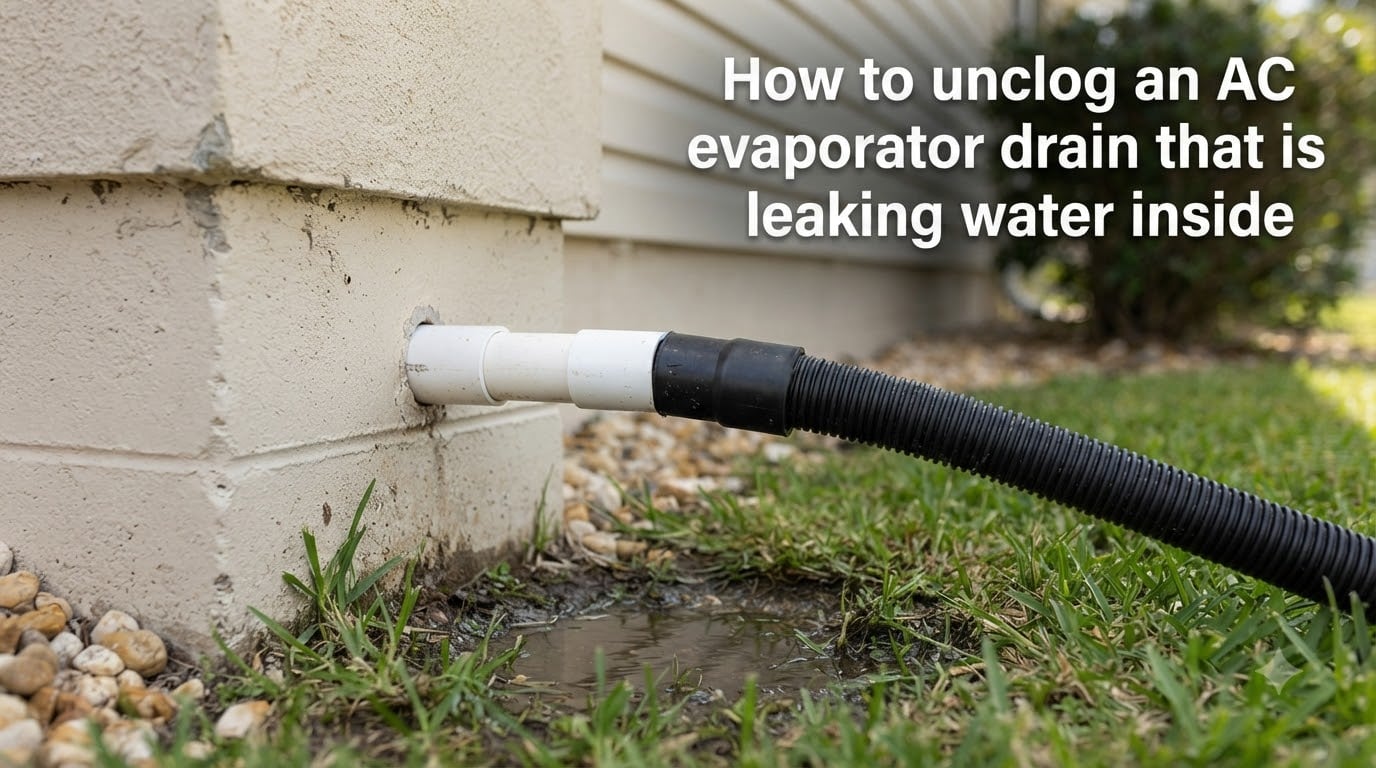
Step 3: Vacuum the Outdoor Drain Line Exit
Walk outside and locate the PVC pipe where the drain line terminates. It is usually a few inches off the ground, capped or uncapped, and may drip during normal operation. Press your wet/dry vacuum hose tightly against the opening, wrap a towel around the connection to seal it, and run the vacuum for 3 to 5 minutes. Reddit users in r/HVAC consistently report this method clears most clogs on the first try.
Step 4: Flush With Vinegar From Inside
Go back to the indoor access point and remove the cap. Pour 1 cup of distilled white vinegar into the drain line slowly. The vinegar dissolves algae, mold, and sludge that the vacuum loosened. Let it sit for 30 minutes. Do not use bleach on a clogged line since it cannot penetrate the blockage. Vinegar’s mild acidity is safer and effective for maintenance flushing.
Step 5: Confirm the Drain Is Clear
Pour 1 cup of clean water into the access point. It should flow freely and exit outdoors within a minute. If water backs up or drains slowly, repeat Step 3 with the vacuum. Once water flows freely, replace the cap, restore power at the breaker, and turn the AC back on. Check the drain pan after 15 minutes of runtime to make sure no water remains.
What Can You Pour Down an AC Drain to Unclog It?
The three most common options are distilled white vinegar, diluted bleach, or a commercial HVAC condensate drain cleaner. For active clogs, vinegar poured from the indoor access point works best because its acidity dissolves algae and slime. For routine maintenance every few months, many HVAC pros recommend pouring a quarter cup of vinegar into the access point to prevent future buildup.
Bleach works for maintenance but is less effective on stubborn clogs and can corrode metal components over time. Commercial tablets like AC Safe or Rectorseal are popular with professionals and are designed specifically for condensate drain lines. Avoid Drano or any drain cleaner with harsh chemicals. These can damage PVC piping, corrode the evaporator coil drain pan, and release fumes into your living space.
Safety Precautions Before You Start
Working around an air handler and electrical components carries real risk. Always turn off power at the breaker before opening any access panel or removing the drain cap. Wear gloves and safety glasses if you are working in an attic where mold or bacteria may have built up in the drain pan. Never pour water or cleaner into the drain line with the power on, since you could damage electrical components or get a shock.
If your AC unit is in a tight attic space, watch your step. Attic floors are not designed for foot traffic. Lay down plywood planks to distribute your weight and avoid falling through the ceiling below.
Primary vs Emergency Overflow Drain: What’s the Difference?
Most central AC systems have two drain lines. The primary drain line carries normal condensate out of the home, while the emergency overflow drain is a backup that only activates when the primary line clogs. Many homes have a small PVC pipe exiting near a window or upstairs wall that serves as the overflow drain.
If water is dripping from the overflow drain, the primary line is already clogged. The float switch in the secondary drain pan is supposed to shut the system off before overflow, but older homes may lack this safety feature. Knowing which drain is leaking helps you diagnose whether you are dealing with routine maintenance or a more serious backup.
When to Call a Professional HVAC Technician?
DIY unclogging works for about 80% of clogs, but there are times when calling a licensed HVAC contractor is the smarter move. Call a pro if:
The clog returns within a few weeks of clearing it
You see water stains on the ceiling or drywall (possible drain pan rust)
The drain line is inaccessible without removing ductwork
The air handler is in a crawl space you cannot safely enter
Your AC still leaks water after following every step above
Professional service typically runs $75 to $250 for a standard drain line cleaning, with full diagnosis and repairs ranging from $150 to $500 depending on your region and whether the drain pan needs replacement. Annual maintenance contracts that include drain line cleaning usually cost $150 to $300 per year.
How to Prevent Future AC Drain Line Clogs?
Prevention is simple once you know the rhythm. Pour a quarter cup of distilled vinegar into the drain line access point every 3 to 6 months during cooling season. Replace the cap and forget about it. Check the drain pan under the air handler quarterly for standing water, rust, or biological growth.
Schedule a professional AC tune-up once a year, ideally in early spring before cooling season. Most HVAC contractors include drain line inspection and cleaning as part of a standard maintenance visit. You can also install a condensate drain pan treatment tablet that slowly dissolves to prevent algae growth between visits.
RV and Mobile AC Drain Considerations
RV air conditioners face the same clogging problem, but the drain lines are tiny and prone to blockage from road debris, leaves, and insect nests. Use a flexible bottle brush or compressed air (low pressure only) to clear them. Pour a tablespoon of vinegar monthly during active use. Avoid high-pressure water since RV drain pans are usually plastic and can crack easily.
FAQs
What can I pour down my AC drain to unclog it?
Pour 1 cup of distilled white vinegar into the indoor drain line access point and let it sit for 30 minutes. For routine maintenance, a quarter cup every 3 to 6 months prevents algae buildup. Avoid Drano or harsh chemical drain cleaners, since they can damage PVC piping and corrode the evaporator coil drain pan.
Why is my air conditioner leaking water inside?
Your AC is leaking water inside because the condensate drain line is clogged with algae, mold, or debris. Water backs up into the drain pan, overflows, and drips from the air handler or ceiling. A clogged drain is the most common cause, but a cracked drain pan or disconnected PVC pipe can also cause leaks.
How to unclog an AC evaporator drain tube?
Turn off AC power at the breaker. Apply a wet/dry vacuum to the outdoor drain line exit for 3 to 5 minutes. Then pour 1 cup of distilled vinegar into the indoor access point and wait 30 minutes. Flush with clean water to confirm the line is clear. Replace the cap and restore power.
Can you put drano in a clogged AC drain line?
No, do not use Drano in an AC drain line. Drano contains harsh chemicals that can corrode PVC pipes, damage metal drain pans, and release toxic fumes into your living space. Stick with distilled white vinegar, diluted bleach for maintenance, or HVAC-specific condensate cleaners designed for the job.
Final Thoughts
Knowing how to unclog an AC evaporator drain that is leaking water inside saves you hundreds in service calls and prevents serious water damage. The fix is straightforward: kill the power, vacuum the outdoor drain line exit, flush with vinegar, and confirm water flows freely. With a quarterly pour of vinegar and an annual HVAC tune-up, you can keep your condensate drain line clear for years.
If the clog keeps coming back or you spot ceiling stains that point to a failing drain pan, do not wait. Call a licensed HVAC technician before a small leak turns into a costly repair.