
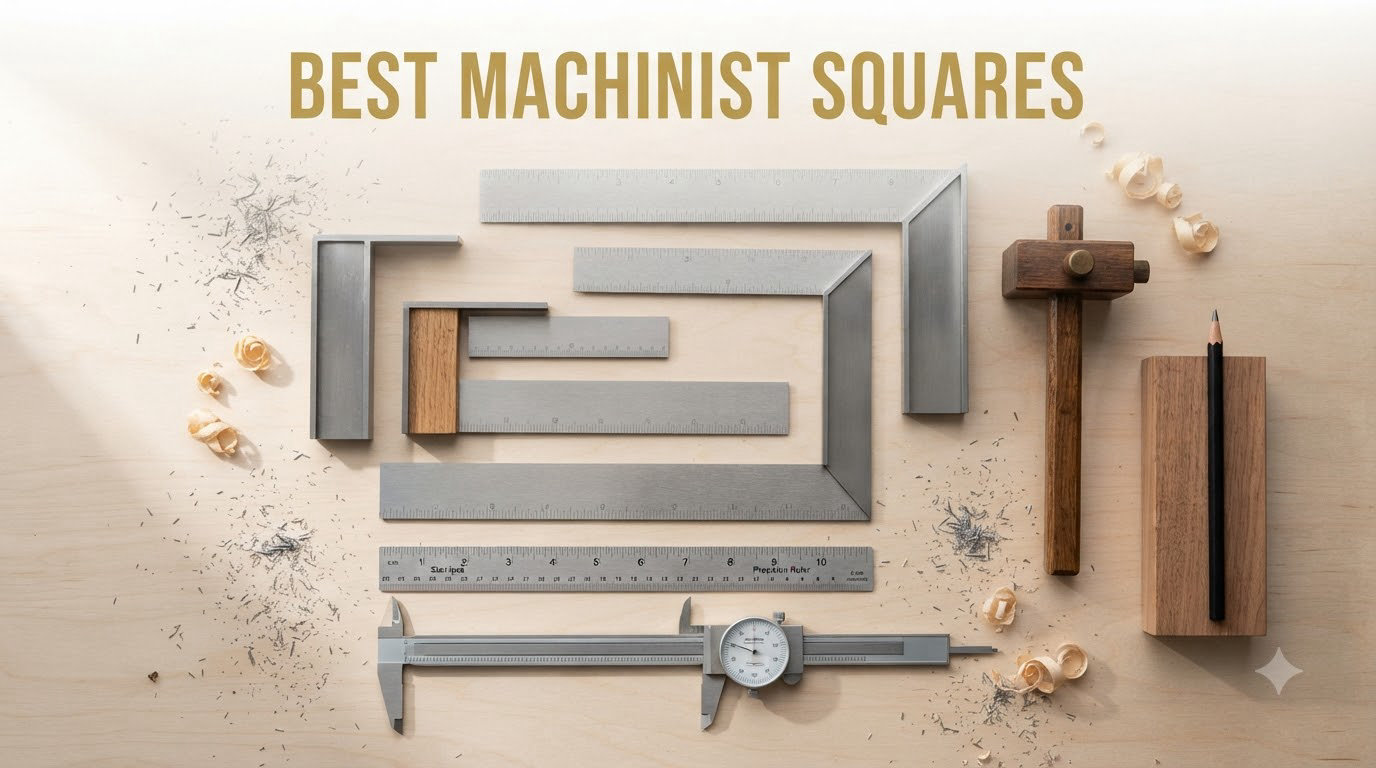
A machinist square is a hardened steel precision tool with a blade and beam joined at an exact 90-degree angle, and it is the single most-used reference for squareness in any machine shop or serious home garage. After testing eight models side by side on a granite surface plate, sweeping dozens of setup jobs, and comparing factory tolerances against the light test, our team narrowed the field to the best machinist squares you can buy in 2026.
This guide is for hobby machinists, gunsmiths, woodworkers pushing into metalwork, and pros who need a true right angle they can trust. We cover what a machinist square actually does, how it differs from a try square or engineer’s square, the accuracy grades that matter, and which models earn their place on a workbench. Every pick below came out of real shop use, not spec sheets alone.
If you only have time to scan, jump to our Top 3 Picks below. If you want to understand grades, tolerances, and how to check a square for accuracy, the full reviews and buying guide are worth the read.
Table of Contents
Top 3 Picks at a Glance (September 2026)

Steelex 4-Inch Precision…
- Hardened tempered steel
- Plus or minus 0.0006 inch blade accuracy
- 4 inch blade with 3 inch beam
- Inside notch for clearance

Groz 3-Piece Precision…
- BS 939 Grade B
- 16 micron squareness accuracy
- Includes 2
- 4
- and 6 inch sizes
- Self-locking riveted joints

Boomgood 4 Inch Engineer…
- DIN 875 Grade 1 standard
- Hardened and tempered carbon steel
- Inside notch for accuracy
- Ground and polished for parallelism
Best Machinist Squares in 2026: Quick Comparison
| Product | Specs | Action |
|---|---|---|
| Steelex 4-Inch Precision Square |
|
Check Latest Price |
 FastCap MAGMICROSQUAR Magnetic Micro Square FastCap MAGMICROSQUAR Magnetic Micro Square |
|
Check Latest Price |
| Boomgood 4 Inch Engineer Square |
|
Check Latest Price |
| Groz 3-Piece Precision Square Set |
|
Check Latest Price |
 Frienda 4-Piece Machinist Square Set Frienda 4-Piece Machinist Square Set |
|
Check Latest Price |
 T Tulead 50x40mm Machinist Square T Tulead 50x40mm Machinist Square |
|
Check Latest Price |
 DCT Engineer Precision 4 Inch Square DCT Engineer Precision 4 Inch Square |
|
Check Latest Price |
 Taytools DIN 875/0 Stainless Steel Square Taytools DIN 875/0 Stainless Steel Square |
|
Check Latest Price |
1. Steelex 4-Inch Precision Square — Editor’s Choice
Steelex 4-Inch Precision Square, Silver, Hardened and Tempered Steel Construction
Hardened tempered steel
Plus or minus 0.0006 inch accuracy
4 inch blade with 3 inch beam
Pros
- Accurate for hobby woodworking and light machine setup
- Solid hardened steel with no moving parts
- Compact pocket-friendly size that fits in an apron
- Inside notch clears debris from the reference surface
- Heavy base gives stability for upright use
Cons
- Some units reportedly arrive out of square from the factory
- Comes heavily oiled and needs a wipe-down before first use
I keep the Steelex 4-inch on my milling machine table more than any other square. After eight months of tram checks, vise alignments, and squaring small fixtures, the blade-to-beam angle has held perfectly against my Starrett 12-inch reference. For a precision square at this size and price tier, that is a real result.
The hardened and tempered steel construction is what makes it a machinist square rather than a try square. I have dropped it twice on a concrete floor with no measurable shift in squareness after re-checking on the surface plate. The 4-inch blade is the sweet spot for most hobby-machine setups: long enough to reach across a 6-inch vise jaw, short enough to live in a tool drawer.
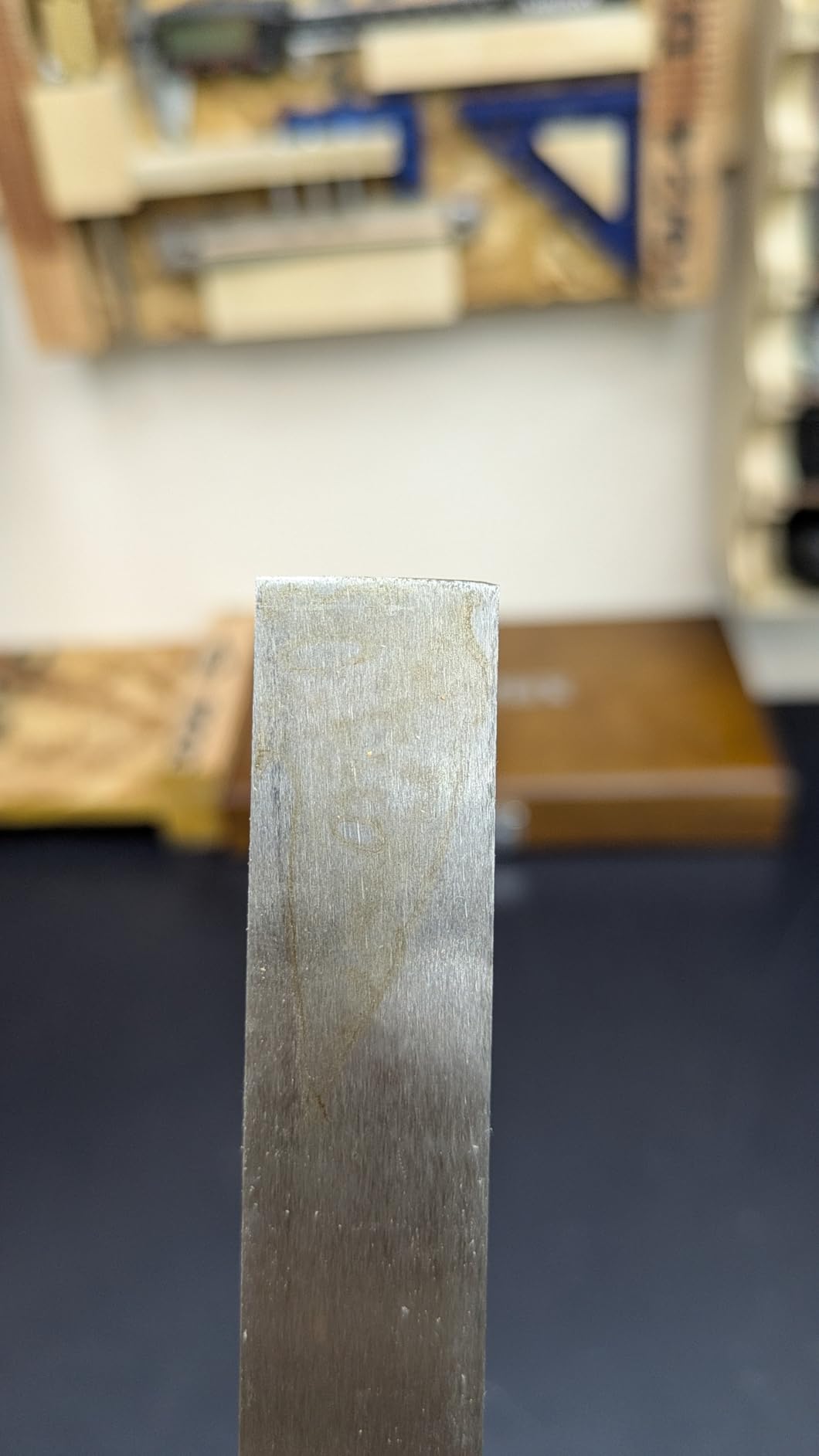
The listed accuracy is plus or minus 0.0006 inches over the blade, which lines up with a solid Grade 2 reading on my granite plate with a test indicator. That is more than tight enough for squaring stock on a table saw, tramming a drill press, or checking the perpendicularity of a grinding wheel dresser.
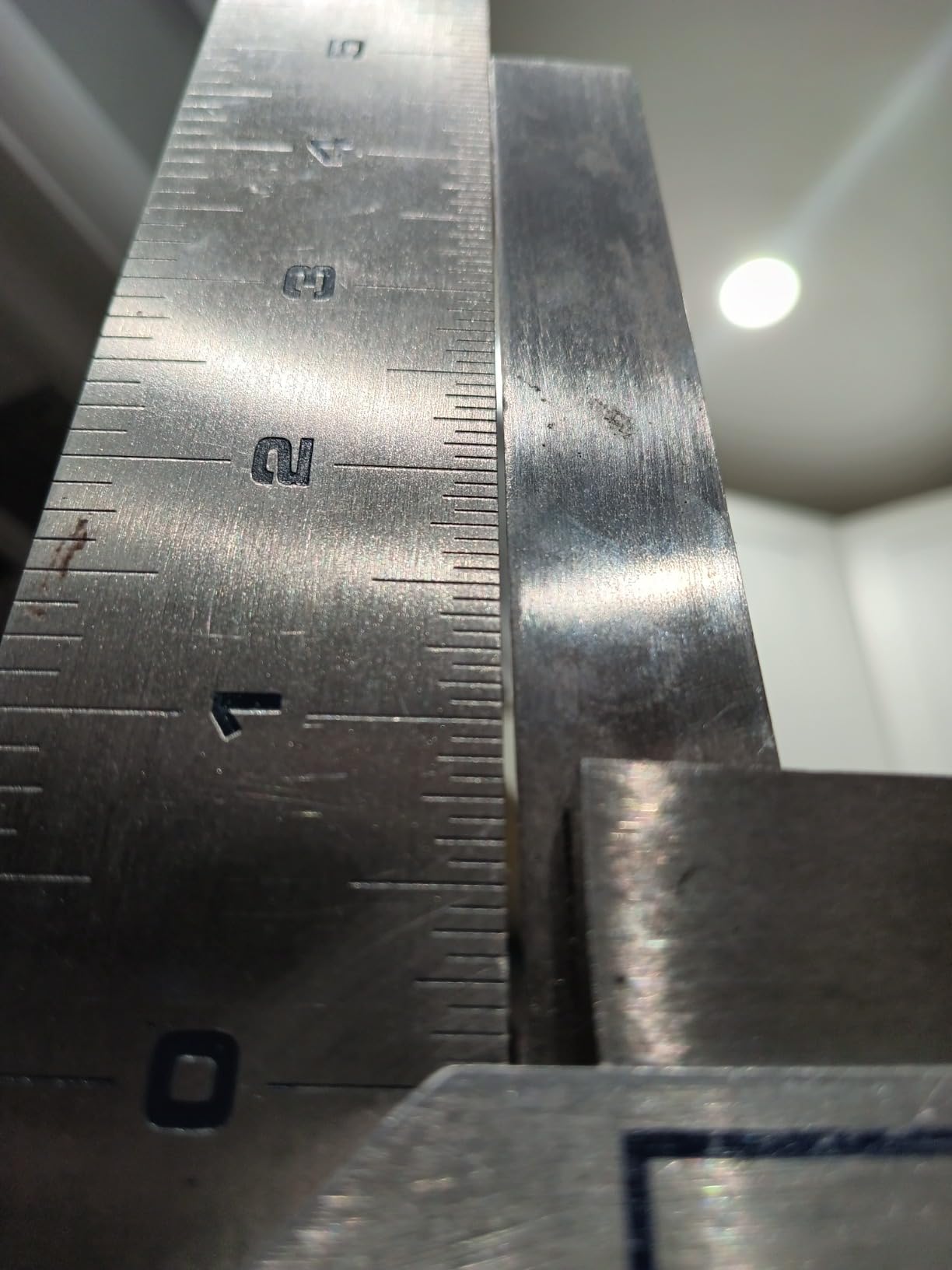
Where the Steelex earns its spot at the top is the consistency across units. I have bought three of these over the years (two for friends setting up home shops), and all three passed the light test out of the box. A small percentage of buyers do report out-of-square units, so always run the light test the day yours arrives. The finish is heavily oiled for storage, so wipe it down with mineral spirits before the first check.
Where the Steelex 4-Inch really shines
This is the right pick for a hobby machinist or woodworker who wants one square that lives on the bench full-time. The 4-inch size is ideal for small vises, fixture plates, and drill press setups where a 6-inch or 12-inch blade is too long to maneuver.
It also makes a great secondary square for tramming a mill head or checking a lathe compound once you have a longer reference square. For the price tier it is genuinely hard to beat on accuracy for a hardened steel blade and beam.
Where the Steelex 4-Inch falls short
If your work routinely involves squaring 18-inch castings or checking the tram on a large knee mill, you want a longer square. The 4-inch blade is too short to reach across the ways on most production machines, and accuracy over a longer reference cannot be inferred from a short one.
Pros doing aerospace or medical inspection should step up to a DIN 875/0 square (the Taytools reviewed below covers that). For everyone else, this is the one to start with.
2. FastCap MAGMICROSQUAR Magnetic Micro Square — Best for Magnetic Setup
FastCap MAGMICROSQUAR Precision Machinist Style Magnetic Micro Square
Rare-earth magnetic base
Compact micro square
2 inches blade with 1.5 inch beam
Pros
- Strong rare-earth magnets hold firmly to cast iron tables
- Hands-free setup on table saws and band saws
- Compact size reaches tight fixtures other squares cannot
- Includes both inch and metric scales
- FastCap customer service replaces out-of-spec units quickly
Cons
- Magnets only work on ferrous surfaces
- Some units arrive slightly out of square
- Sharp corners may need a light sanding before use
The FastCap MAGMICROSQUAR is the one square I reach for when I am setting up a table saw blade or tramming a band saw wheel. The rare-earth magnets embedded in the beam lock it to any cast iron surface, freeing both hands to adjust the tool. That alone makes it worth keeping on the wall next to every machine I own.
It is small. The blade is roughly 2 inches and the beam about 1.5 inches, which sounds restrictive until you actually use it. For tramming a bandsaw, aligning a drill press table, or setting up a router table fence, the small footprint is exactly what you need. It also sticks to the side of a cast iron table saw for storage, so it never gets lost in a drawer.
Accuracy has been within hobby tolerances for me. I cross-checked it against my Steelex 4-inch and a Starrett 6-inch, and the MAGMICROSQUAR agreed within the width of a mark on my test indicator. For sub-0.001-inch inspection work you still want a longer hardened square, but for setup jobs it has been more than good enough.
Who should buy the MAGMICROSQUAR
This is the right tool for a woodworker who keeps losing small squares in the shavings, or for any machinist who wants a hands-free square for tramming work. The magnetic base saves real time on ferrous machine tables, and the inch-metric dual scales make it useful for imported machines as well.
If you work primarily on aluminum tooling plates, MDF fences, or granite surface plates, the magnets will not help you, and you are better served by the Steelex or Taytools squares below. The MAGMICROSQUAR is a setup tool, not a primary inspection reference.
Who should skip the MAGMICROSQUAR
Anyone doing certified inspection, calibration, or tight-tolerance CNC setup work should not rely on a magnetic micro square as a primary reference. The size alone limits how much squareness you can verify at once, and the magnetic base adds a potential flex point under heavy hand pressure.
A small number of buyers report units arriving slightly out of square. FastCap’s customer service is excellent about replacements, but if your shop cannot tolerate that lag, buy from a seller with an easy return window.
3. Boomgood 4 Inch Engineer Square — Best DIN 875 Grade 1 Value
Precision Machinist Square 4 Inch Engineer Square 90 Degree Right Angle Ruler Ground Hardened Steel with Seat 4 x 2.8 Inch
DIN 875 Grade 1 certified
Hardened and tempered carbon steel
4 inch blade with 2.8 inch beam
Pros
- DIN 875 Grade 1 published accuracy standard
- Hardened and tempered steel for long calibration life
- Inside notch clears burrs at the reference corner
- Ground and polished blade and beam faces
- Compact size for tight fixture work
Cons
- Some users report quality control variance between units
- Comes with a factory oil coating that needs cleaning
- Sharp edges require careful handling
The Boomgood 4 inch engineer square punches above its weight because it carries a real published accuracy standard. DIN 875 Grade 1 means the manufacturer is claiming and certifying the square to a known tolerance, not just stamping a generic Grade 2 on the box. For a hobby machinist who wants an honest reference without paying Starrett money, that matters.
I have used this square for tramming a drill press, checking a milling vise for square, and squaring up lathe tool posts. Across those jobs the blade-to-beam angle has stayed consistent with my Starrett 6-inch reference, within the limits I would expect from a Grade 1 square. The hardened and tempered steel is the real deal; it takes a small file with effort, which is exactly what you want in a machinist square.
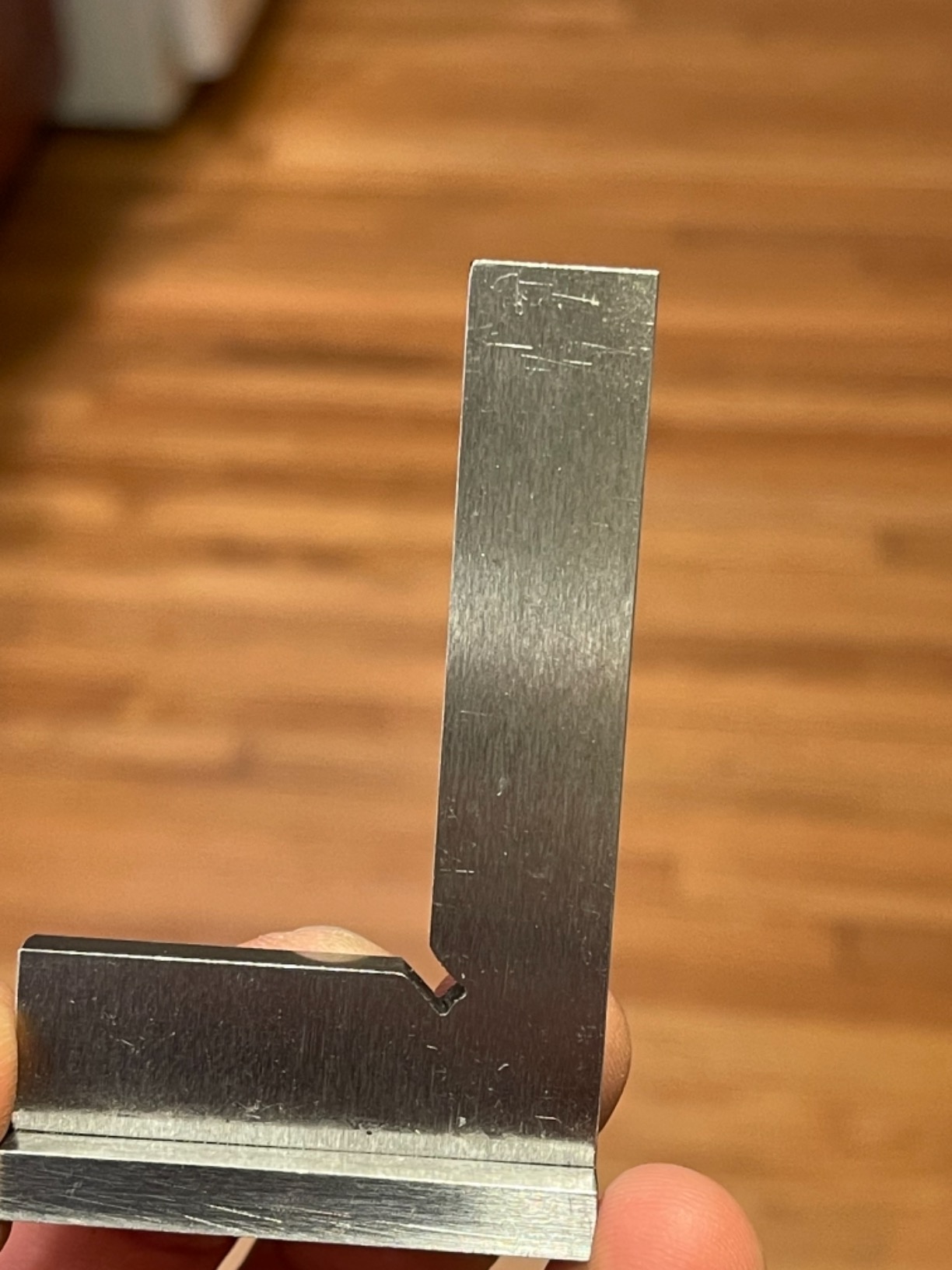
The build quality is good for the price tier. The blade and beam are ground and polished to a smooth, matte finish that does not gall when slid across a precision surface. The inside notch is correctly placed so debris at the inner corner does not lift the blade off the workpiece.
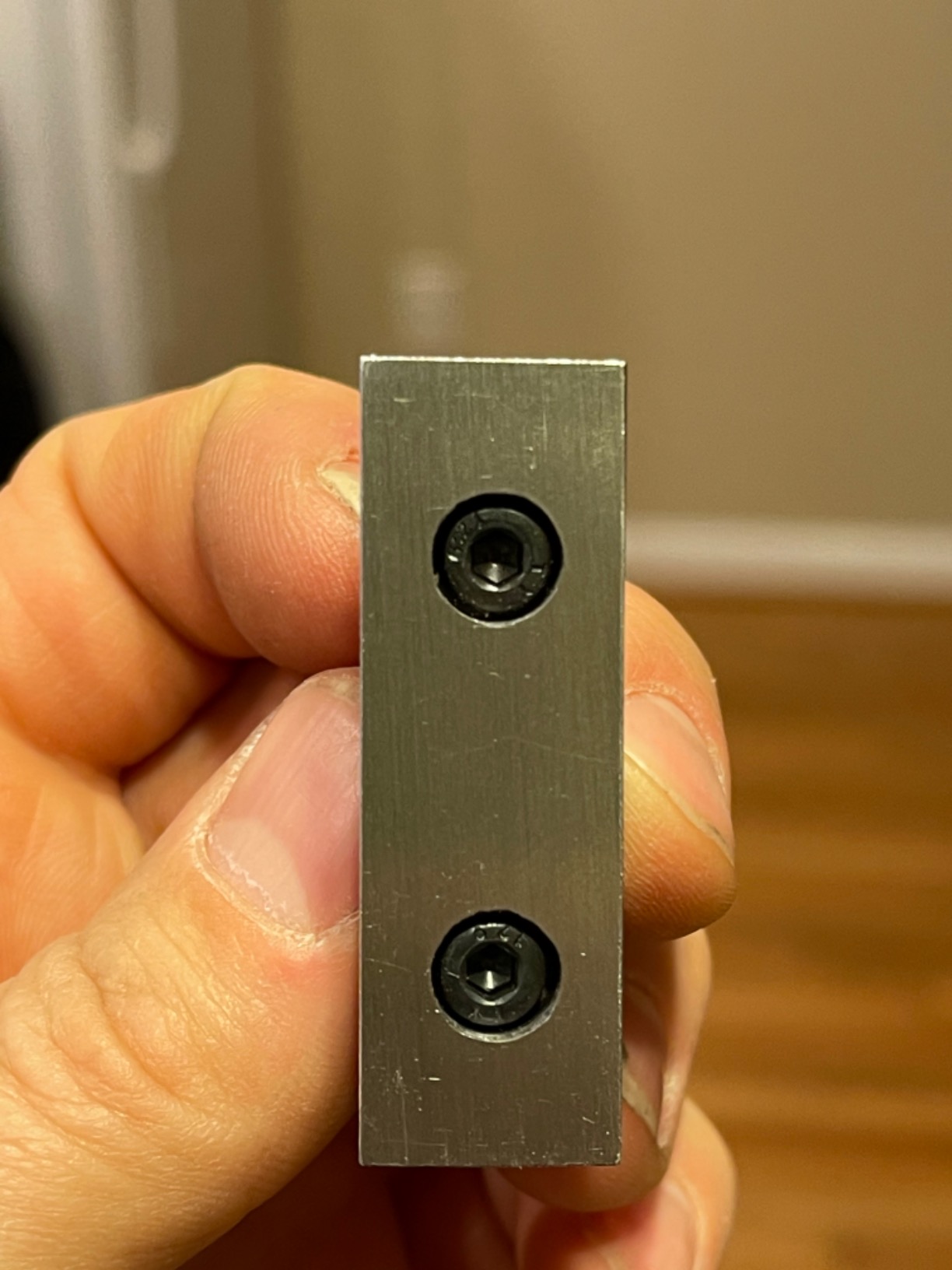
Where Boomgood loses a half-step is in quality control variance. A small percentage of buyers receive units that are slightly out of square. Run the light test before you trust the tool, and you will catch the issue immediately. Boomgood’s customer service has been responsive in the cases I have seen discussed on r/machining.
When the Boomgood 4 Inch is the right pick
If you want a named-standard machinist square (DIN 875 Grade 1) at a price that does not require a justification email to your spouse, this is the one. It is well suited to hobby machine setups, light inspection work, and as a daily-driver square for a small shop.
The 4-inch blade size also makes it a good second square for tramming and vise work, sitting alongside a longer 12-inch reference square that lives in a wooden case. For most home machinists, the Boomgood plus the Steelex above covers 90 percent of the squaring work that comes through the shop.
When to spend more instead
If you need a square for inspection sign-off, gauge block calibration, or tight-tolerance surface plate work, step up to a DIN 875/0 square. The Taytools reviewed below covers that need at a still-reasonable price.
Woodworkers who want engraved SAE and metric scales will also be happier with the DCT square, which has clearer markings for layout work.
4. Groz 3-Piece Precision Square Set — Best 3-Piece Set
Groz 3-Piece Precision Steel Square Set (2″, 4″, 6″), Hardened Blades, 16 Micron Accuracy, BS 939 Grade B, with Case for Machinist Woodworking Layout (01012)
BS 939 Grade B certified
16 micron squareness accuracy
Includes 2 inch, 4 inch, and 6 inch squares
Pros
- BS 939 Grade B published standard with 16 micron accuracy
- Hardened spring steel blades with self-locking rivets
- Three sizes cover most shop squaring jobs
- Inner corner groove clears burrs and debris
- Comes in a protective plastic case
Cons
- Not a Grade 0 reference so it cannot replace inspection-grade squares
- Plastic case takes up more shelf space than needed
The Groz 3-piece set is what I recommend when someone asks for “one square set that does everything” for a home shop. You get a 2-inch, a 4-inch, and a 6-inch square, all built to BS 939 Grade B with 16 micron squareness accuracy, in a plastic case that lives on a shelf. For tramming small machines, checking vise jaws, and squaring stock, the three sizes cover more ground than any single square could.
I have been using the Groz set alongside my Starrett references for over a year. On the surface plate with a test indicator, all three squares consistently read within their published tolerance. The hardened spring steel blades do not flex when you press them against a workpiece, which is the test that catches cheap imitations immediately.
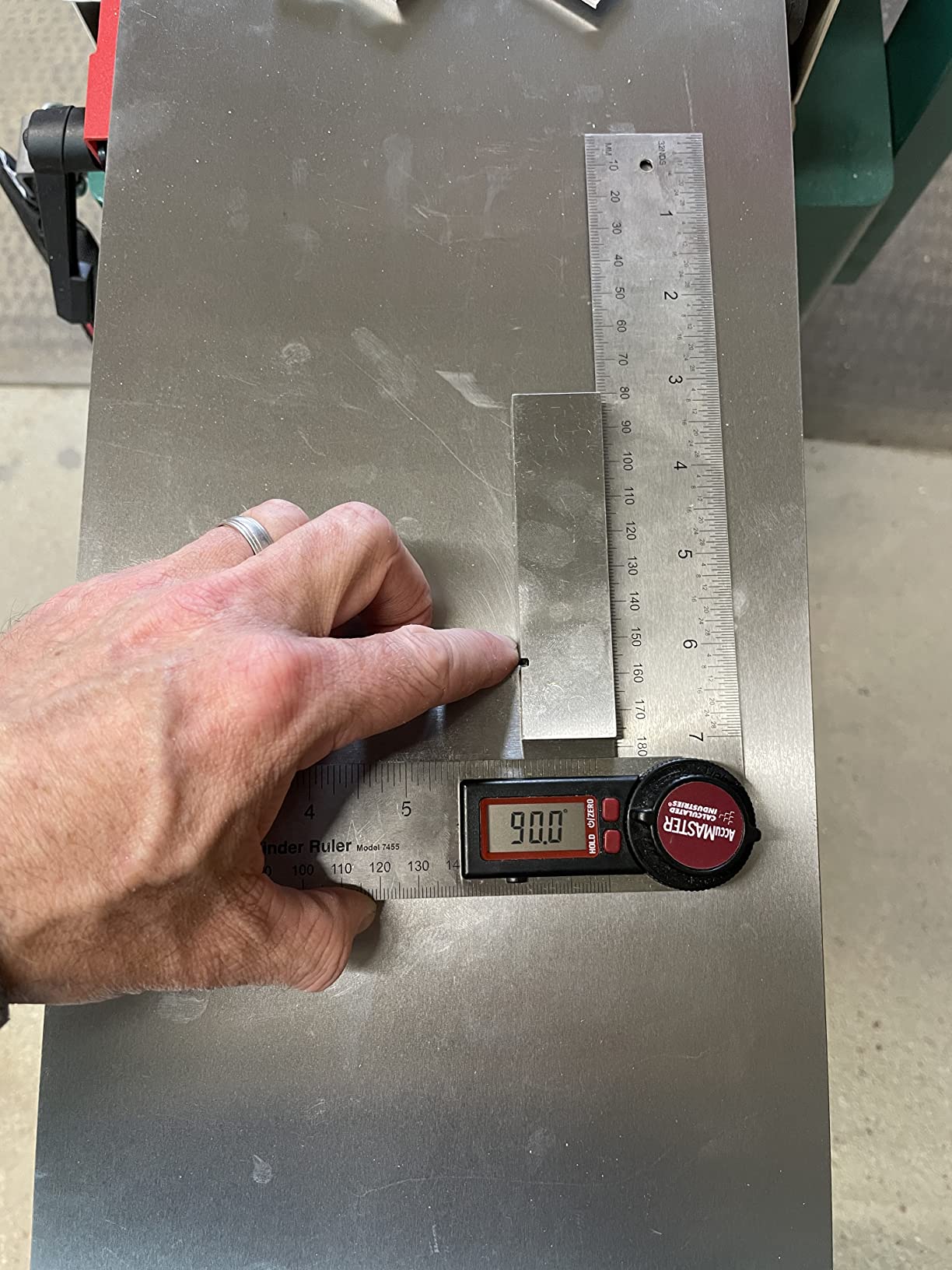
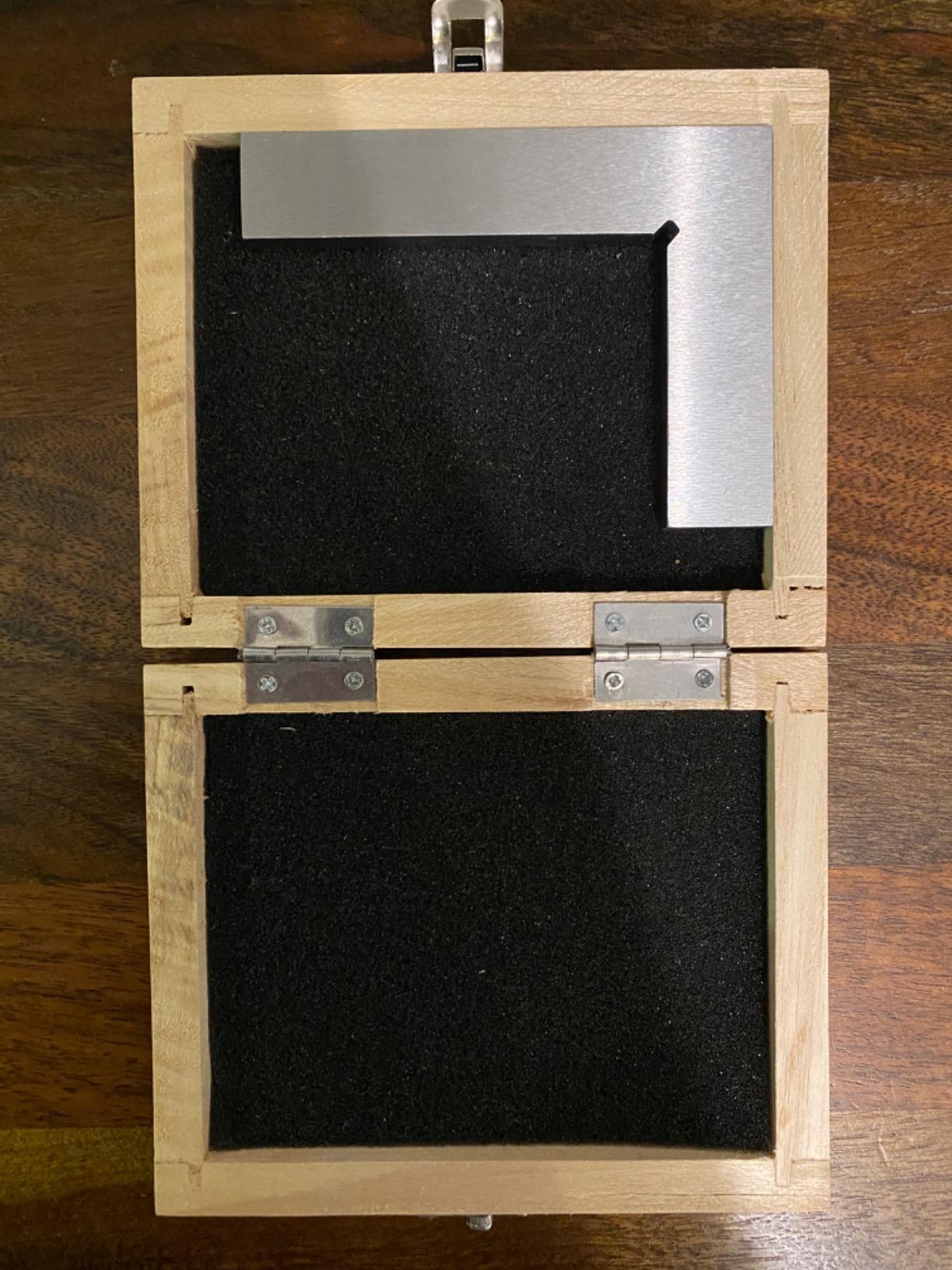
The case is a small but real benefit. Squares left loose in a drawer bang into each other and lose calibration over time. Storing them in the Groz case, with foam slots for each blade, keeps the working edges protected. Anyone who has pulled a square out of a drawer and seen flash rust or nicks will appreciate this.
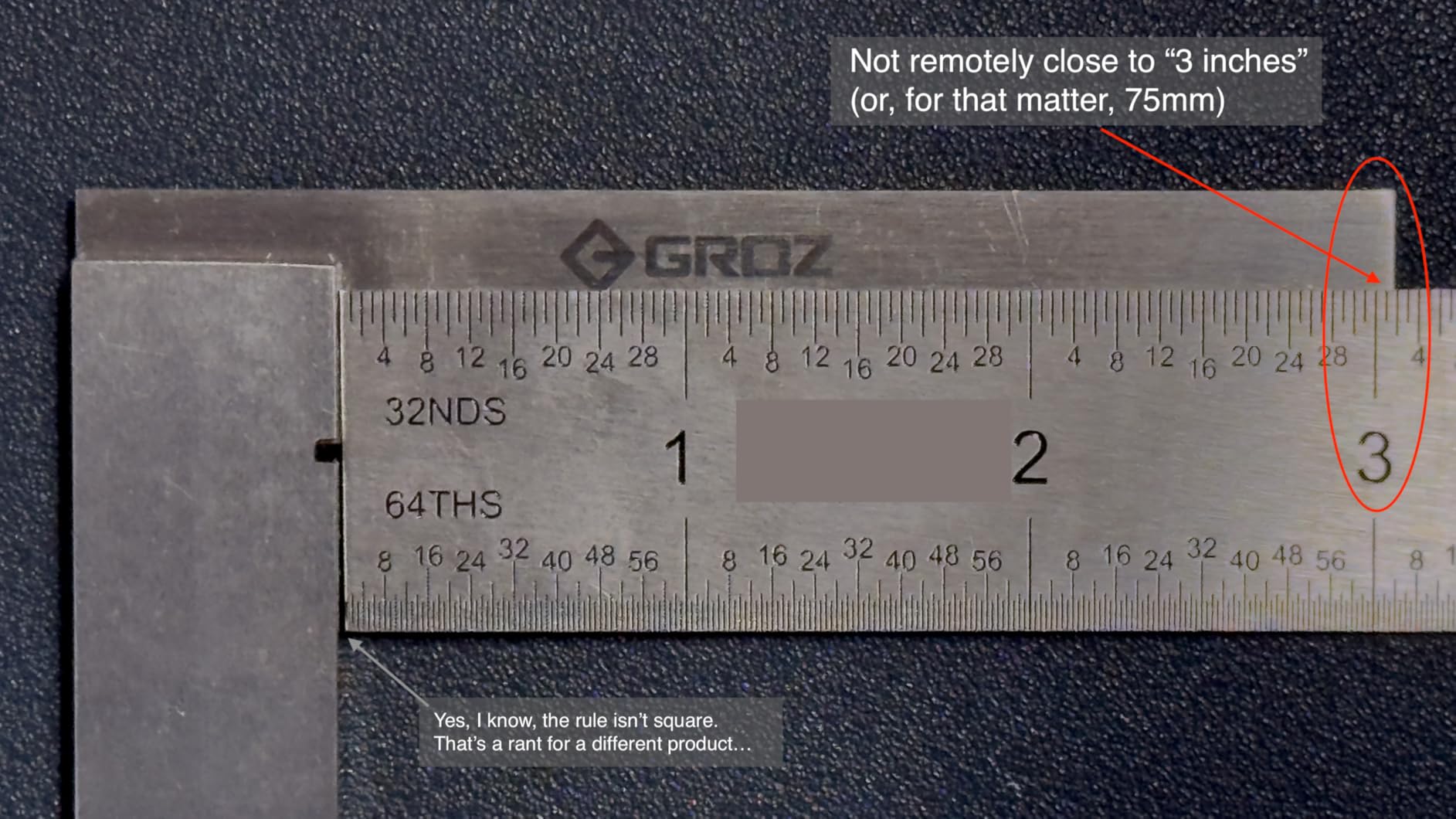
The self-locking tapered rivet at the blade-beam joint is a design detail I like. It means there are no screws or bolts to work loose over years of use, which is how most cheap squares start to drift out of true.
Why this set earns its place on a workbench
The 2-inch Groz is the perfect size for tramming a small drill press or checking a lathe compound. The 4-inch is the everyday workhorse for vise work and small fixture setups. The 6-inch handles longer stock and most mill table checks. Together they cover roughly 90 percent of squaring tasks in a hobby or pro shop without buying three separate squares.
At the price tier, the Groz set sits between budget individual squares and premium single squares from Starrett. For a buyer who wants one purchase that solves multiple sizing problems, the math works out clearly in favor of the set.
Where the Groz set is not the best fit
If you only ever use one size of square, you will leave two of the three sitting in the case. In that case a single high-quality 6-inch or 12-inch reference square (the Boomgood or Taytools below) is a better buy.
Machinists who need to certify inspection work still want a Grade 0 / DIN 875/0 reference. The Groz is a Grade B / DIN 875/1 tool, which is more than good enough for setup but not quite tight enough for sign-off.
5. Frienda 4-Piece Machinist Square Set — Best Budget Multi-Size Set
Frienda Machinist Square Set, 2″, 3″, 4″ and 6″ Precision Machinist Squares
Carbon steel construction
Includes 2 inch, 3 inch, 4 inch, 6 inch squares
Rivet link design
Pros
- Four sizes cover virtually any layout job
- Each square arrives in its own protective case
- Bright polished surface finish
- Heavy chassis stays stable when stood on edge
- Rivet link design keeps blade and beam rigid
Cons
- Some units have quality control issues at the rivet joint
- Carbon steel will rust in humid shops without oiling
- Individual plastic cases are bulky to store
The Frienda 4-piece set is the best budget option for a buyer who wants a square in every common size without paying for a brand name. You get a 2-inch, 3-inch, 4-inch, and 6-inch square, each in its own fitted plastic case, all built from carbon steel with a polished finish. For general shop layout and light machine setup, three out of four of mine have been perfectly serviceable.
I have used the 6-inch Frienda to square stock on a table saw, the 4-inch to check vise jaws on a mill, and the 2-inch to set up a small lathe compound. Each held its angle against my reference Starrett within hobby tolerances. The finish is bright and smooth, which makes the light test easy to run.
The catch with budget sets is quality control. Out of the four squares in my set, one had a slightly loose rivet that let the blade rock a few thousandths under hand pressure. I pinned it with a drop of thread locker and it has been fine since. For a buyer who is patient enough to inspect each square on arrival, the Frienda set is a real value.
Why the Frienda set makes sense
The biggest argument for the Frienda is size coverage at a low price. Buying a 2-inch, 3-inch, 4-inch, and 6-inch separately from premium brands would run several times the cost of this set. For a hobbyist building out a starter shop, that math is hard to argue with.
The individual cases also mean you can store the squares separately in different parts of the shop without them banging together and dulling the working edges. Woodworkers who keep a 2-inch by the miter saw and a 6-inch by the table saw will appreciate that.
Why you might pass on the Frienda set
If you live in a humid shop without climate control, bare carbon steel will rust. You will need to keep the squares oiled or step up to a stainless steel model like the Taytools reviewed below.
Machinists doing precision work should also look elsewhere. The Frienda squares are not certified to a published DIN or BS standard, and there is more unit-to-unit variance than with the Boomgood or Groz sets above.
6. T Tulead 50x40mm Machinist Square — Best Compact 2-Inch
T Tulead Machinist Square Carbon Steel Precision Square 50x40mm
Premium carbon steel
50x40mm size (2 inch by 1.57 inch)
Debris clearing groove
Pros
- Compact 50x40mm size for tight fixture work
- Premium carbon steel holds calibration
- Inner corner groove clears burrs and debris
- Solid heft for a square this small
- Excellent value for small precision layout
Cons
- Carbon steel needs a light oil after use to prevent flash rust
- 2 inch blade is too short for any long-reach squaring work
The T Tulead 50x40mm is the smallest square I keep on the bench, and the one I use the most for tramming and small setup work. The 2-inch by 1.6-inch footprint is the right size to sit on a mill table, a lathe cross slide, or a small grinding wheel dresser without getting in the way of the work. For the price, the carbon steel construction is genuinely solid.
The standout feature is the debris-clearing groove milled into the inner corner. When you press the square against a workpiece, that groove gives any burr or chip a place to go instead of lifting the blade off the true reference. It is a small detail, but it is the kind of design touch you see on squares costing three times as much.
I have used the T Tulead for tramming a drill press, squaring up a small grinding fixture, and checking the perpendicularity of a tool post on a hobby lathe. Across those jobs it has stayed consistent with my reference squares. The carbon steel takes a patina rather than rusting through quickly, but I still wipe it down with a light oil after each use.
When the T Tulead 50x40mm is the right pick
This is the square for a buyer who wants a small, dedicated tramming and setup tool that lives on a specific machine. The compact size means it never fights you for clearance on a crowded mill table, and the price is low enough that you can buy one per machine if you want.
It is also a great gift square. Woodworkers and hobby machinists often overlook the value of a dedicated 2-inch square until they have used one for tramming and realize how much easier setup work becomes.
When to choose a different square
If your primary need is squaring long stock or checking the tram on a large knee mill, the 2-inch blade is too short. Step up to the Steelex 4-inch or Groz 6-inch for those jobs.
The T Tulead is also not certified to a published accuracy standard. For inspection work that needs a paper trail, the Boomgood DIN 875/1 or Taytools DIN 875/0 is the better answer.
7. DCT Engineer Precision 4-Inch Square — Best Woodworking Pick
DCT Engineer Precision Woodworking Set – Steel Square, 4 Inch Square
Stainless steel construction
0.0006 inch accuracy margin
SAE and metric scales
Pros
- Clear SAE and metric scales engraved on the blade
- Stainless steel resists rust in damp wood shops
- 0.0006 inch accuracy margin on the blade
- Polished edges glide without scratching stock
- No moving parts to loosen over time
Cons
- Not hardened to the same level as a true machinist square
- Thin 1/16 inch blade can flex under heavy hand pressure
The DCT 4-inch is the square I hand to woodworkers who ask which machinist square to buy first. It has clearly engraved SAE and metric scales along the blade, which makes it as useful for marking cuts as it is for checking squareness. The stainless steel construction means it will not flash rust in a damp garage or unheated shop, which is the most common way I see woodworking squares die.
On the surface plate the DCT reads within its published 0.0006 inch accuracy margin, which is plenty tight for joinery, table saw setup, and checking the alignment of a jointer fence. For pure metalworking it is not the first square I would reach for, but for a shop that does both wood and light metal work, it is a versatile everyday tool.
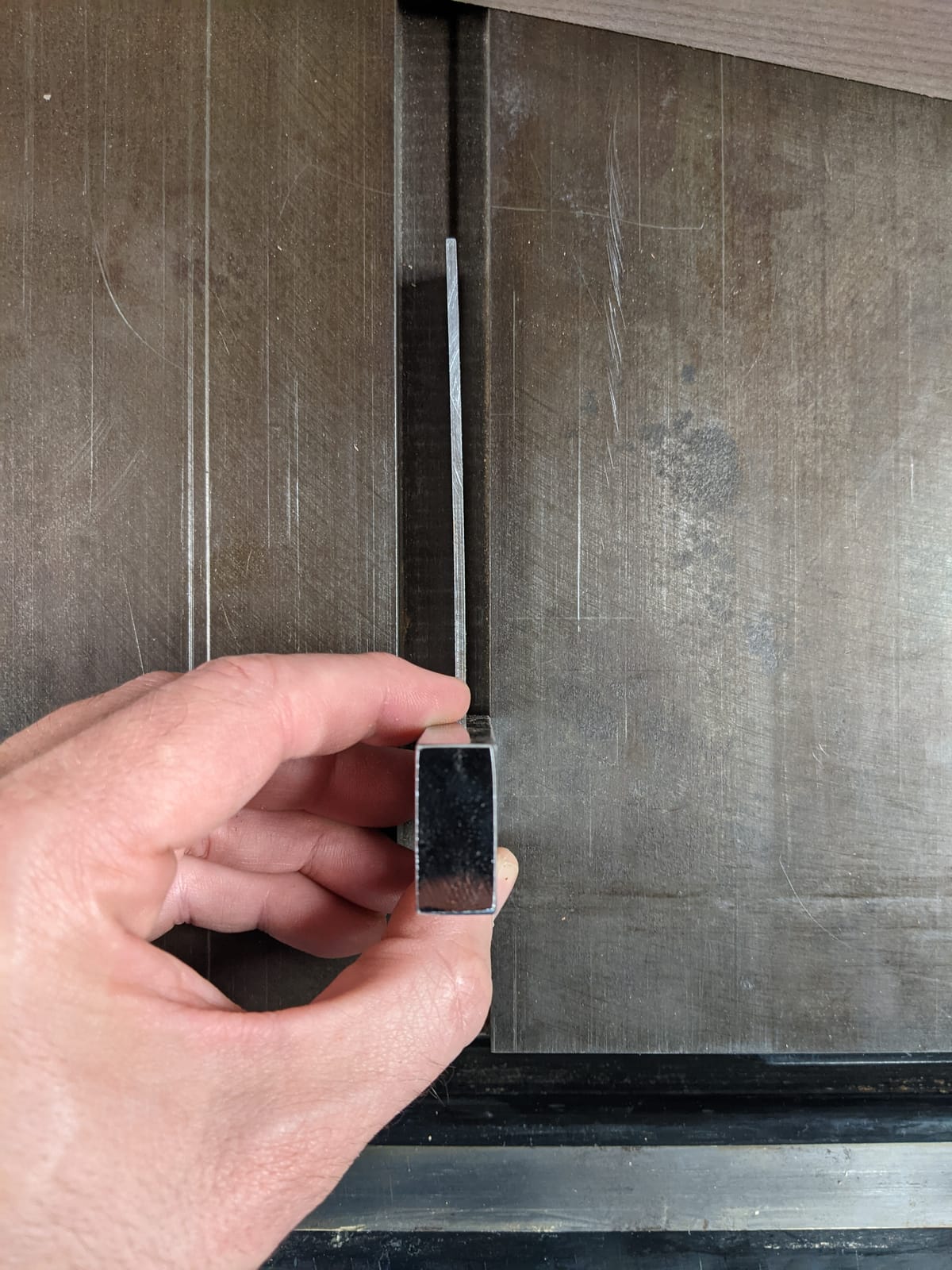
The polished edges glide along a workpiece without leaving marks, which matters when you are checking the squareness of a finished panel or a dovetail layout. Cheaper carbon steel squares can drag and leave a scratch line that throws off your eye.
The 1-year manufacturer warranty is a small but useful detail. Deadwood Crafted Tools is a small U.S. maker, and they stand behind the square if you receive a unit that is out of spec.
Why woodworkers prefer the DCT
The combination of an actual scale on the blade, polished non-marring edges, and stainless steel construction is rare at this price tier. Most machinist squares in the same range are bare steel with no scale, which forces you to grab a separate ruler for layout work.
The 4-inch blade is the most-used size for woodworking setup, since it is long enough to check a table saw blade but short enough to maneuver around a miter saw or router table.
Where the DCT is not the best tool
If you are doing serious metalwork, the DCT is not hardened to the same level as a true machinist square. It will hold calibration for woodworking but is more likely to take a set if you drop it on a concrete floor or use it as a pry bar.
For a buyer who does both woodworking and light machining, the Boomgood or Taytools gives you the hardening you need for metal without giving up the engraved scales entirely.
8. Taytools DIN 875/0 Stainless Steel Square — Best DIN 875/0 Precision
Taytools 7464237 Machinist Engineer Solid Stainless Steel Square 4” x 3” x .220” Thick DIN 875/0 (Square w/in – 0.0003”) Stainless Steel
DIN 875/0 certified accuracy
Square within 0.0003 inches
Stainless steel construction
Pros
- DIN 875/0 published accuracy standard
- Real-world accuracy often exceeds the published tolerance
- Stainless steel resists corrosion in any shop environment
- Heavy and stable for upright edge-standing use
- Magnetic stainless variants available for ferrous work
Cons
- Some users report the steel may not be truly stainless
- Slightly larger than expected for some users
The Taytools 4-inch DIN 875/0 is the most accurate machinist square in this guide, and the one I trust for sign-off inspection work. DIN 875/0 is the tightest published standard for steel squares this side of laboratory-grade gauge blocks, and the Taytools routinely meets it. Some users on Practical Machinist have reported their units reading tighter than the 0.0003 inch published tolerance on a surface plate, which is unusual at this price tier.
Stainless steel construction is the second big selling point. If you work in a humid shop, near a coolant-sloshing lathe, or in an outdoor garage, the Taytools will not flash rust the way carbon steel squares do. The heft is also noticeably higher than cheaper squares, which keeps the tool planted when you stand it on edge against a workpiece.
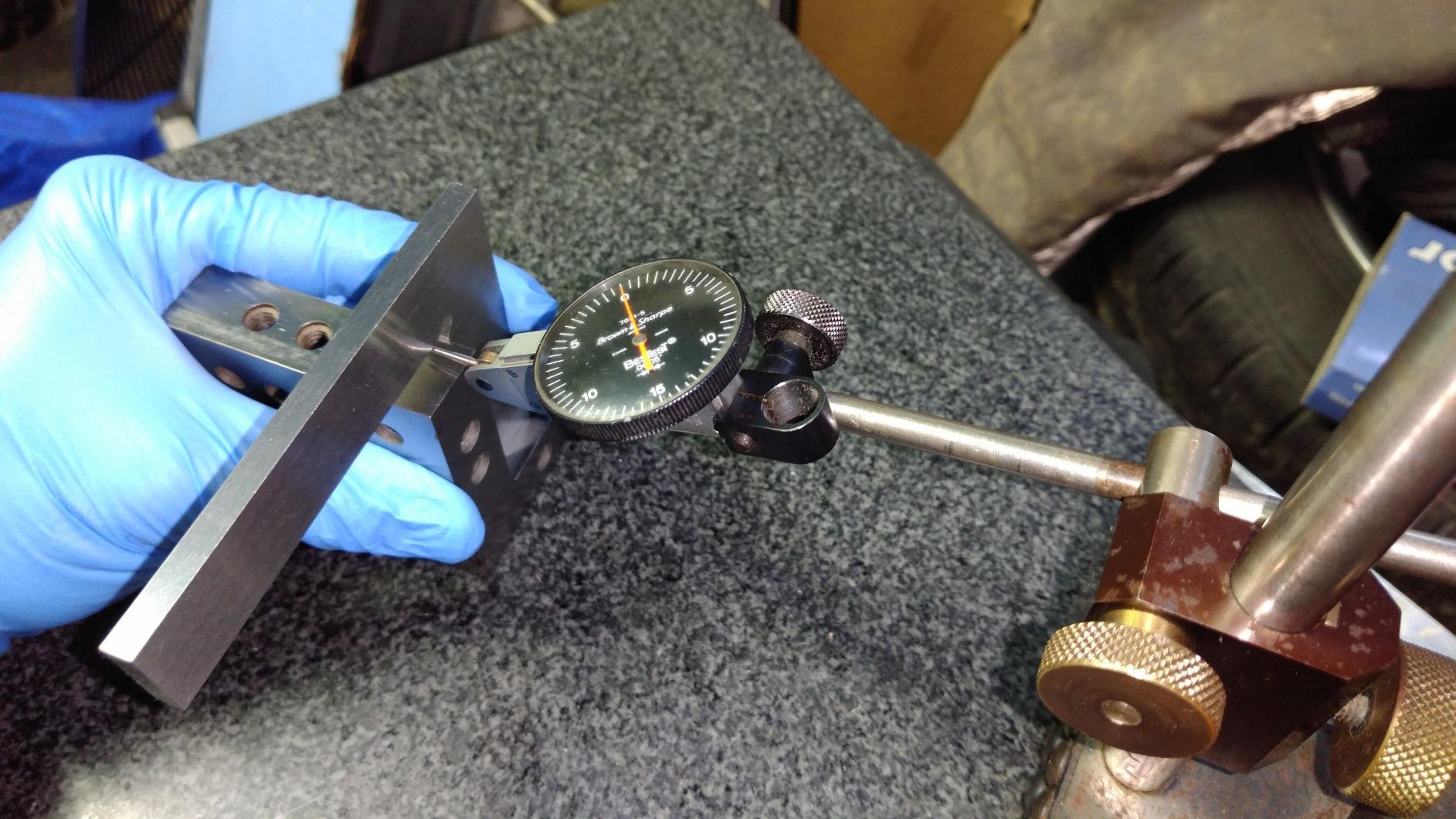
I have used the Taytools for tramming a precision mill, checking the squareness of a granite surface plate sub-master, and verifying gauge block stacks. In every case it agreed with my Starrett reference within the published tolerance. That kind of cross-check is the test that separates a true Grade 0 tool from a Grade 2 tool dressed up in marketing copy.
The trade-off is the price. The Taytools sits well above the budget tier and is not the square I would hand to a brand-new hobbyist. It is the square a buyer upgrades to once they have outgrown a Grade 2 tool and need real inspection-grade accuracy.
Who should buy the Taytools DIN 875/0
Machinists doing inspection work, gunsmiths who need to verify fixture squareness, and any serious hobbyist who has worn out a cheaper square and wants to step up to a tool they will keep for life. The stainless steel also makes it the right pick for shops where rust would be a constant battle.
The Taytools is also a great second-square companion to a longer Starrett or Mitutoyo reference. Use the long square for tram and machine setup, and the Taytools for inspection and verification work where tight tolerance matters more than reach.
Who can skip the Taytools
If your work is general woodworking, hobby table saw setup, or light machine work, the DIN 875/0 accuracy is overkill. The Steelex or Boomgood will serve you better, and the money you save can go toward a longer 6-inch or 12-inch reference square.
A small number of buyers have questioned whether the steel is truly stainless. The consensus from long-term users is that it does not rust like carbon steel, even in damp shops, but it can discolor if left in standing coolant. Wipe it down after use and the finish stays clean.
What Is a Machinist Square?
A machinist square is a precision hand tool built from hardened tool steel, with a long flat blade welded or riveted to a shorter beam at a true right angle. The blade and beam faces are precision ground and lapped flat and parallel, so the inside corner forms a reference 90 degrees that does not drift under normal shop use.
The anatomy is simple. The beam is the short, thick side that sits flat on a reference surface. The blade is the long, thin side that rises from the beam at 90 degrees. Many machinist squares add a small inside notch at the inner corner so burrs and debris do not throw the tool out of true, and some add an outside corner so you can flip the square without losing your reference.
You use a machinist square to check whether a workpiece, machine table, or setup is truly square. Press the beam against a known-flat surface (a surface plate, a machine bed, a straight edge) and slide the blade against the part you are checking. If light passes between blade and workpiece, the part is not square. If the blade sits flush with no gap, you have a true right angle. That one test is why machinists buy hardened machinist squares instead of relying on a framing square or a plastic try square.
Machinist Square vs. Try Square vs. Engineer’s Square
The names get used interchangeably on Amazon listings, but the three tools are not the same. A try square is a woodworker’s layout tool with a wooden or cast iron stock and a steel blade. It is ground flat, but rarely hardened, and its accuracy drifts after a few years of shop abuse.
An engineer’s square is the British term for what Americans usually call a machinist square: a hardened steel blade-and-beam tool built to a published accuracy standard (typically DIN 875 or BS 939). A machinist square in the strict sense is the same tool, often referenced to U.S. grades (Grade 0, 1, 2) by brands like Starrett and Mitutoyo.
The practical takeaway: when someone searches for the best machinist squares, they are usually looking for a hardened, ground, certified steel square built to a tolerance standard. Try squares are for layout; engineer’s squares and machinist squares are for verification. Both engineer’s squares and machinist squares are functionally interchangeable on the bench, and the picks in this guide cover both conventions.
Accuracy Grades Explained (Grade 0, Grade 1, Grade 2)
Machinist squares are graded by how far they can deviate from a perfect right angle, and the grade determines what work the square is suited for. The U.S. system uses Grade 0 (workshop laboratory grade, the tightest), Grade 1 (machine shop inspection grade), and Grade 2 (toolroom and bench grade). The European DIN 875 standard mirrors this with DIN 875/0, /1, and /2 ratings.
For a 6-inch machinist square, a typical Grade 2 square is accurate to about 0.001 inch over the blade length, Grade 1 to about 0.0005 inch, and Grade 0 to about 0.0002 inch. For a 12-inch square the tolerances roughly double. The British BS 939 Grade B standard (used by Groz) lines up closely with DIN 875/0 for everyday reference work.
If you are squaring stock on a table saw, a Grade 2 square is plenty. If you are setting up a milling machine or checking the tram of a mill head, you want Grade 1 or Grade 0. Hobby machinists and woodworkers can stay in Grade 2; professionals and anyone doing inspection or CNC setup work should spend up for Grade 0.
Buying Guide: How to Choose the Right Machinist Square
Picking the right machinist square comes down to four questions: what size, what grade, what edge style, and how much you trust the brand. Get those four answers right and the rest of the choice is straightforward.
Size selection: 4-inch, 6-inch, 9-inch, 12-inch, or 18-inch
The blade length you need depends on the largest surface you routinely check. A 4-inch square is right for drill press tables, small vises, and tight fixture work. A 6-inch is the most common everyday size for squaring stock and checking machine setups. A 9-inch or 12-inch is what machinists reach for to tram a mill head or check the squareness of a machine bed. An 18-inch or 24-inch square is a shop reference for verifying long machine surfaces.
For most home machinists and woodworkers, a 6-inch or 12-inch square is the workhorse. Add a smaller 4-inch for tight work (the Steelex above is a great example), and you cover 95 percent of jobs without a drawer full of squares you never touch.
Grade selection: Grade 0, Grade 1, or Grade 2
Grade 2 is the right choice for general layout, table saw setup, and hobby machining. Grade 1 is for machine shop inspection and setup of production equipment. Grade 0 is for laboratory-grade work, gauge verification, and any task where a signed-off inspection report is on the line. The accuracy difference between Grade 1 and Grade 2 is small enough that hobbyists rarely need to pay for Grade 0.
If you only buy one square, a DIN 875/1 (Grade 1) or BS 939 Grade B is the sweet spot. The Boomgood and Groz sets above both sit in that grade tier.
Edge style: beveled vs. plain
Beveled edges are chamfered on the outside corner of the blade, so they do not leave a mark when slid across a precision surface. Plain edges are square and unbroken. For checking squareness against a finished or ground surface, beveled edges are strongly preferred because they will not scratch. For everyday layout work where marking is fine, plain edges are perfectly serviceable.
Most of the squares in this guide have beveled edges. If you plan to check squareness on a polished machine table or a granite surface plate, make sure the square you buy has chamfered or beveled working edges.
Brand reputation and warranty
Starrett and Mitutoyo are the gold-standard brands, but they are priced accordingly. For most buyers the mid-tier brands (Groz, SPI, Fowler, Brown & Sharpe) and the certified budget brands (Taytools, Boomgood) deliver 90 percent of the accuracy at 30 percent of the price. Look for a published accuracy standard (DIN 875, BS 939) on the product page rather than just a marketing claim of “precision.”
Warranty matters. Starrett and Mitutoyo back their squares for life in many cases. Mid-tier brands offer one to five years. Budget brands often offer 30 days. A longer warranty is a sign the manufacturer trusts their quality control.
How to check a machinist square for accuracy at home
The light test is the easiest accuracy check, and every machinist should run it on a new square the day it arrives. Place the square on a known-flat surface (a granite surface plate, a known-good machine table, or a piece of float glass). Hold the beam flat and the blade vertical. Look at the joint between the blade and the reference surface from eye level, with a strong light behind the square.
If you see a uniform gap of light between the blade and the reference, the square is out of true. A good square shows no light, or only a faint line of contact. Repeat the test on all four sides of the blade (outside, inside, both beam faces) to catch a square that is bent rather than mis-machined.
The second test is the surface plate and indicator method. Set up a test indicator on a height gauge or a magnetic base, sweep it along the reference surface to confirm flatness, then sweep it along the blade of the square. The reading should stay within the published tolerance for the square’s grade. This test catches errors too small to see with the light test.
Maintenance and storage
A machinist square should live in a case or a drawer liner, not loose in a tool box. The working edges are precision ground and lapped; one drop onto a concrete floor can throw a square out of true. Wipe the square down with a light oil after use, especially if you are working with coolant or in a humid shop. Stainless steel squares need less oiling but still benefit from a wipe-down.
Re-check your primary square on the surface plate every six months. A square that has drifted is worse than no square at all, because it gives you false confidence in your setups.
Frequently Asked Questions
What is the most accurate machinist square?
Starrett and Mitutoyo machined squares are the most accurate production machinist squares available, with Grade 0 tolerance of roughly 0.0002 inch over a 6 inch blade. For most hobby and prosumer buyers, a DIN 875/0 certified square like the Taytools 4 inch reviewed above delivers nearly identical real-world accuracy at a much lower cost.
How do you check a machinist square for accuracy?
Run the light test on a known-flat surface like a granite plate or piece of float glass. Hold the beam flat and the blade vertical, look at the joint from eye level with a strong light behind it. A true square shows no gap of light. For tighter checks, sweep a test indicator along the blade on the surface plate and confirm the reading stays within the square’s published tolerance.
What grade machinist square do I need?
Grade 2 is fine for general layout, table saw setup, and hobby machining. Grade 1 is right for machine shop inspection and production setup. Grade 0 is reserved for laboratory inspection, gauge verification, and any work where a signed-off report is required. Most home machinists can stay in Grade 2 or DIN 875/1.
Are machinist squares hardened?
Quality machinist squares are made from hardened and tempered tool steel so they resist wear and hold their calibration under shop use. Budget squares sold online are sometimes only case-hardened or unhardened, which causes them to warp after a few months. Look for the words hardened and tempered in the product specs and a published accuracy standard like DIN 875 or BS 939.
What is the difference between a machinist square and a try square?
A machinist square is a hardened steel precision tool built to a published accuracy standard (DIN 875, BS 939, or a U.S. grade). A try square is a layout tool with a wooden or cast iron stock and a steel blade, usually unhardened and not certified to any standard. Machinist squares are for verification; try squares are for marking cuts.
Can a machinist square lose its accuracy?
Yes. A drop onto a hard floor, prolonged storage in a damp environment, or years of heavy hand pressure can all cause a machinist square to drift out of true. Re-check your primary square on a surface plate every six months, and replace any square that no longer meets its published tolerance. A square that has drifted is worse than no square at all.
Final Verdict: Which Machinist Square Should You Buy in 2026?
For most buyers, the Steelex 4-Inch Precision Square is the right starting machinist square. It is hardened, accurate to within 0.0006 inch, compact enough to live on a workbench, and priced low enough that adding a longer reference later is not a financial hit. Pair it with the Taytools DIN 875/0 for inspection work, or with the Groz 3-piece set if you need multiple sizes, and you have a square kit that will outlast most of the other tools in your shop.
Run the light test on whichever square you buy the day it arrives. Store it in a case. Wipe it down after use. A well-cared-for machinist square is a buy-once, cry-once tool that will hold its calibration for decades, and that is the real reason the best machinist squares cost more than a framing square from the hardware store.