
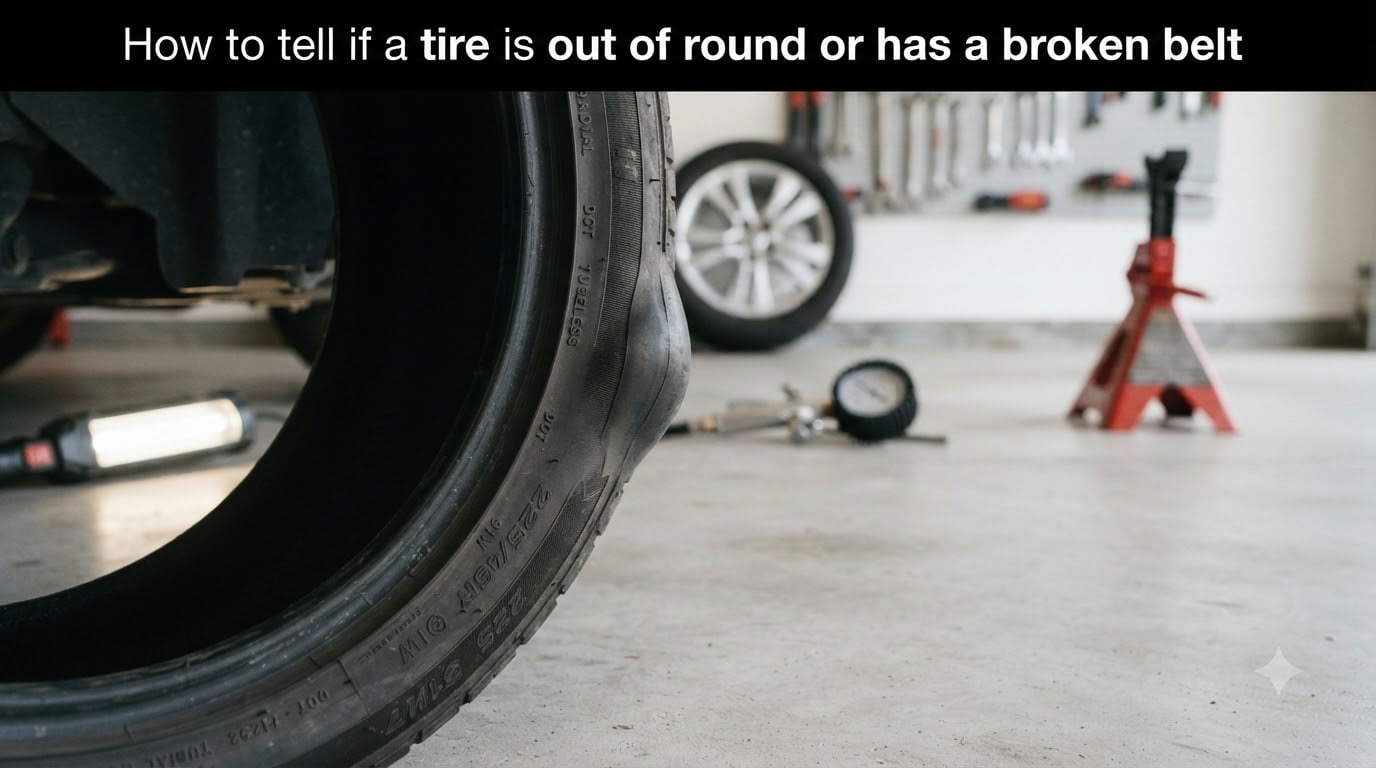
That steering wheel shimmy you feel at 60 mph could mean more than an out-of-balance tire. I learned this the hard way when a pothole damaged a belt inside my tire, and a mechanic showed me the bulge I’d missed for weeks.
If you’re wondering how to tell if a tire is out of round or has a broken belt, you’re in the right place. In this guide, I’ll walk you through the exact diagnostic steps I use, the warning signs to look for, and when to stop driving immediately.
Table of Contents
What Is a Tire Belt and Why Does It Matter?
A tire belt is a layer of steel cords (sometimes combined with polyester or nylon) embedded in rubber beneath the tread. Most modern radial tires use two steel belts stacked at opposing angles to give the tire its strength, shape, and stability.
The belt keeps the tread flat against the road while allowing the sidewall to flex over bumps. When one or more belt cords snap or shift out of position, the tire loses its uniform shape. This creates a high spot or bulge that pulses with every rotation.
Why this matters: a broken belt is one of the leading causes of sudden tire blowouts. Once a belt separates, the damage cannot be reversed. The tire must be replaced.
Out-of-Round vs. Broken Belt: What’s the Difference?
An out-of-round tire is one that is no longer perfectly circular. The tire may have a flat spot, a high spot, or an oval shape. This can happen from a broken belt, from sitting flat for months, from a hard impact, or from manufacturing defects.
A broken belt is the specific internal failure that often causes the tire to become out of round. You can have an out-of-round tire without a broken belt (for example, a tire stored under load), and you can have a broken belt that hasn’t yet made the tire visibly out of round.
Out of round only: uniform thump, no visible bulge, often a balance or wear issue.
Broken belt: visible bulge, thumping at speed, vibration that worsens quickly.
Visual Signs of a Broken Belt or Out-of-Round Tire
The first place I always check is the sidewall. Run your hand slowly around both sides of each tire, feeling for any raised bump, soft spot, or unusual protrusion. A broken belt typically pushes the rubber outward, creating a visible or palpable bulge about the size of a golf ball or larger.
Next, look at the tread for abnormal wear patterns. Cupping (scalloped dips across the tread), diagonal feathering, or wear only on one edge all point to suspension or balance problems that can mimic or accompany belt damage.
Finally, listen. A thumping or flapping noise that increases with speed is the classic sound of a separated belt slapping against the road with each rotation.
Quick Checklist: Five Warning Signs
Visible bulge or bubble on the sidewall or tread shoulder.
Steering wheel shake that starts around 50 to 60 mph.
Rhythmic thumping noise from one corner of the car.
Uneven or cupped tread wear.
Vibration felt through the seat or floor, not just the wheel.
How to Tell If a Tire Is Out of Round (DIY Test)?
The most reliable home test is the jack-and-spin method. Park on a flat surface, loosen the lugs on the suspect wheel, jack the car up so the tire clears the ground, then remove the wheel.
Hold the tire vertically in front of you and spin it slowly while watching the tread surface against a straight background like a wall. Any wobble, hop, or high spot will jump out at you. Mark the high spot with a piece of tape so you can compare it to other tires.
If the tire is mounted on the car, you can still spin it while jacked up. Place a jack stand under the car for safety, then rotate the wheel by hand and watch the gap between the tire and fender. The gap should remain constant. A noticeable rise and fall confirms the tire is out of round.
How to Tell If a Tire Has a Broken Belt
The single most useful test for a broken belt is the swap-and-drive method. Swap the suspect tire with the spare (or with a rear tire) and drive at highway speed. If the vibration follows the tire, the tire is the problem. If it stays in the same spot on the car, you’re likely dealing with a bent wheel, worn suspension bushing, or brake issue.
For a faster check, perform the spin test described above. A belt break almost always creates a visible high spot or bulge. Run your fingers firmly over the sidewall. Any soft, squishy area under pressure indicates internal separation even if the surface still looks round.
If you’re shopping for a used tire, lay it on the ground and press down hard on the tread with your full weight. A tire with a broken belt will flex unevenly and may produce a faint cracking sound from the damaged area.
Common Causes of Tire Belt Damage
Most broken belts trace back to one of three root causes. Hard impacts (potholes, curbs, speed bumps taken too fast) shock the steel cords and snap them. Chronic underinflation lets the sidewall flex excessively, which shears the belt edges over time. Overloading pushes the tire beyond its design capacity, breaking bonds inside the carcass.
Age is another factor. Most tire manufacturers recommend replacement at six to ten years regardless of tread depth. The rubber hardens and the steel cords corrode, making belt separation more likely. Check the DOT code stamped on the sidewall: the last four digits tell you the week and year of manufacture.
How to Read Your DOT Code
Look for a stamp that ends in “DOT” followed by letters and numbers. The final four digits are your build date. For example, “2622” means the tire was made in the 26th week of 2022. If your tires show a date code older than six years, plan a replacement even if the tread still looks deep.
Safety Warning: Why You Should Not Drive on a Damaged Tire
A tire with a broken belt can fail without warning. The bulge you’ve noticed is the weakest point in the structure. At highway speed, the heat and centrifugal force can rip the belt apart completely, causing a sudden blowout and loss of control.
I don’t recommend driving on a tire with a visible bulge or rapid vibration. If you must drive to a shop, keep your speed under 45 mph, avoid highways, and inflate the tire to the recommended PSI on the door jamb sticker to reduce sidewall flex.
Replace the tire as soon as possible. No repair is safe for a broken belt.
When to Replace vs. Repair a Tire with a Broken Belt?
Repair is not an option. A broken belt is internal structural damage. Patches and plugs work for punctures in the tread area; they cannot restore broken steel cords. Any shop that suggests repairing a belt separation is giving bad advice.
Replacement is mandatory for any tire showing a sidewall bulge, rapid pressure loss, or vibration that matches the wheel rotation. If only one tire is damaged, replace it with the same brand, size, and model if possible to avoid mismatched handling.
Prevention Tips to Extend Tire Life
Keep your tires properly inflated. Check PSI monthly, including the spare. Underinflation is the silent killer of tire belts.
Rotate your tires every 5,000 to 7,500 miles so they wear evenly. Get a four-wheel alignment whenever you replace suspension parts or notice uneven wear. Avoid potholes and curbs when you can, and slow down over speed bumps.
If you park for extended periods, store the vehicle on flat ground or use tire cradles to prevent flat-spotting. Inspect every tire visually once a month and look for any new bulges or changes in wear pattern.
FAQs
How do you tell if a tire is out of round?
Jack the tire off the ground, spin it slowly by hand, and watch the gap between the tire and fender. A constant gap means the tire is round. A visible rise and fall confirms the tire is out of round. You can also do a road test by swapping the suspect tire with a known-good one and seeing whether the vibration moves with the tire.
What does a tire look like when a belt breaks?
A tire with a broken belt usually shows a visible bulge or bubble on the sidewall, often the size of a golf ball or larger. The tread above the damaged area may appear wavy or uneven. In some cases the tire looks round from a distance but feels soft or squishy when you press the sidewall firmly with your thumb.
How do I find out which tire has a broken belt?
Swap the suspect tire with the spare or with a rear tire and drive at highway speed. If the vibration moves to the new position, that tire has the problem. You can also jack each wheel individually and spin it while looking for a bulge, listening for a thumping rhythm, or watching for a wobble against a straight background.
Can I drive with a broken belt in my tire?
No, you should not drive on a tire with a broken belt. The bulge is a weak point that can fail at any speed, causing a sudden blowout and loss of vehicle control. If you must drive to a shop, stay below 45 mph, avoid highways, and inflate the tire to the pressure listed on your door jamb sticker.
What causes a broken belt in a tire?
The most common causes are hard impacts (potholes, curbs, speed bumps), chronic underinflation, overloading the vehicle, and age-related rubber and steel degradation. Manufacturing defects can also cause belt separation, though this is rarer. Inspecting tires after any hard impact is the best way to catch early damage.
Final Verdict on Diagnosing Tire Damage
If you remember nothing else from this guide, remember this: a visible bulge on the sidewall always means replace the tire. No repair, no patching, no waiting to see if it gets worse. The bulge is the symptom of a broken belt, and the belt is what holds the tire together at speed.
For an out-of-round tire without a bulge, run the jack-and-spin test described above to confirm the issue, then swap tires to isolate which wheel is causing the problem. Combined with the warning signs checklist and the DOT code inspection, you have everything you need to diagnose tire damage yourself in 2026 before it becomes a roadside emergency.