
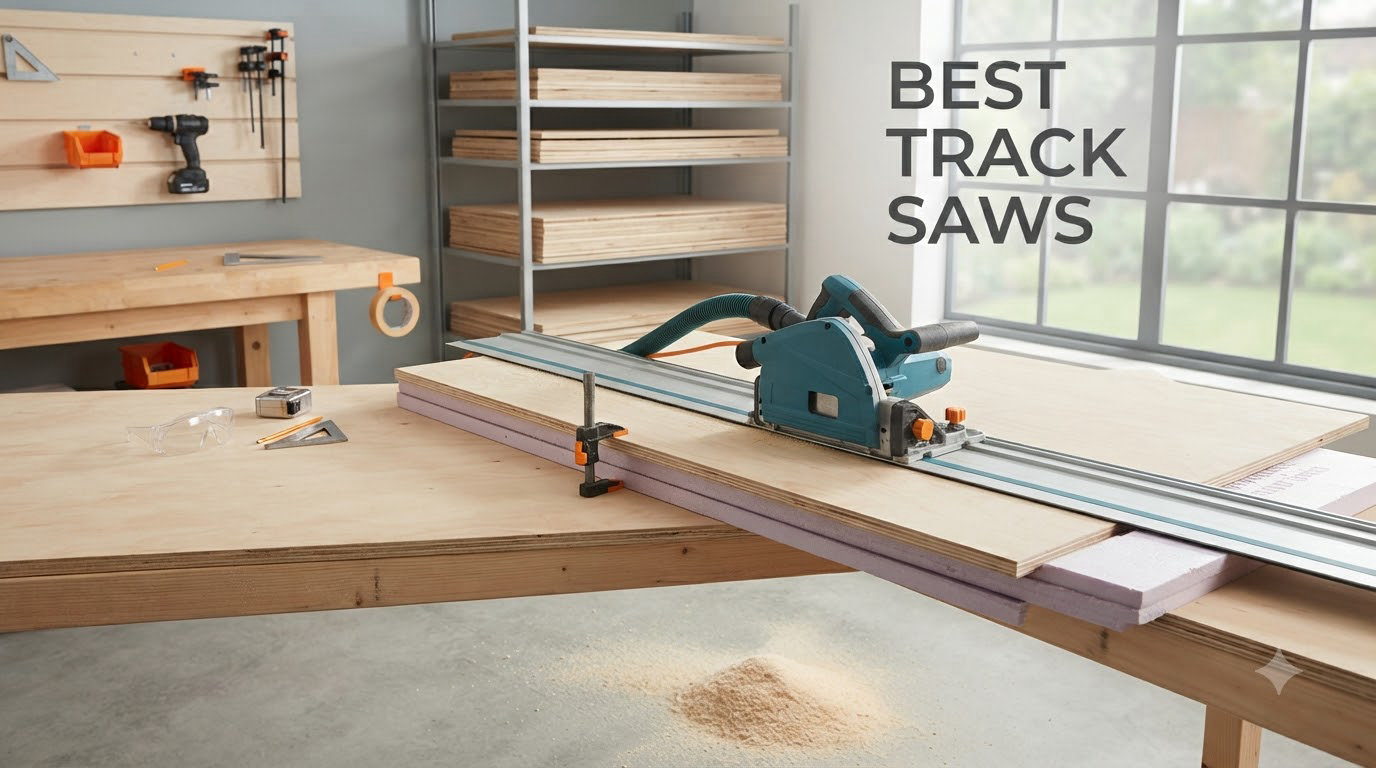
Plywood sheets stacked against the wall, a track saw on the bench, and that quiet moment before you make the first cut. After testing dozens of track saws over the past several years – in our shop, on jobsites, and in reader-submitted builds – we put together this guide to the best track saws available in 2026.
A track saw is a plunge-cut circular saw that rides on an aluminum guide rail. Instead of wrestling a full sheet of plywood through a table saw, you clamp the rail to the workpiece, plunge the blade down, and slide the saw along the track for a straight, splinter-free cut. For small shops, apartment woodworkers, and anyone who breaks down 4×8 sheets on a regular basis, the best track saws deliver table-saw-quality cuts without the footprint, the dust collection ductwork, or the safety concerns of a stationary saw.
We narrowed this roundup to 10 saws that span corded and cordless, beginner-friendly and professional-grade, budget and premium tiers. The list opens with our Editor’s Choice (the Bosch GKT13-225L), and you’ll also find the cordless pick for Milwaukee M18 and Makita LXT owners, a multi-material saw that cuts metal, and a budget kit with 100 inches of track included.
Before diving into individual reviews, our guide covers corded vs cordless tradeoffs, blade size and bevel capacity, dust collection, and a side-by-side track compatibility note. We close with answers to the questions buyers ask us most often – including whether a track saw actually replaces a table saw for a small shop.
Table of Contents
Top 3 Track Saws at a Glance (September 2026)
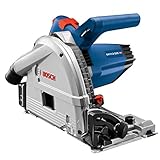

Makita SP6000J1 Kit
- 12A corded
- -1 to 48 degree bevel
- 55 inch rail included
- splinter-free finish

Best Track Saws in 2026: Side-by-Side Comparison
The table below compares all 10 saws in our lineup. Key Features summarises each saw’s standout specification, then the Buy button takes you to the listing. Use the table to scan the entire field before diving into the full reviews.
| Product | Specs | Action |
|---|---|---|
| Bosch GKT13-225L |
|
Check Latest Price |
| Makita SP6000J1 Kit |
|
Check Latest Price |
| Milwaukee M18 FUEL 6-1/2 inch |
|
Check Latest Price |
 Makita XPS01Z 36V Makita XPS01Z 36V |
|
Check Latest Price |
 Festool TS 55 FEQ-F Festool TS 55 FEQ-F |
|
Check Latest Price |
 Metabo HPT C3606DPA Metabo HPT C3606DPA |
|
Check Latest Price |
 DEWALT DWS520K DEWALT DWS520K |
|
Check Latest Price |
 Kreg Adaptive Cutting System Kreg Adaptive Cutting System |
|
Check Latest Price |
 Evolution R185CCSX Evolution R185CCSX |
|
Check Latest Price |
 WEN Track Saw Bundle WEN Track Saw Bundle |
|
Check Latest Price |
1. Bosch GKT13-225L – Best Track Saw Overall
Bosch Tools Track Saw – GKT13-225L 6-1/2 In. Precision Saw with Plunge Action & Carrying Case
6-1/2 inch plunge
Best-in-class track fit
1560W constant electronics
Pros
- Glue-ready cut quality on both sides
- Mafell-designed track connection that slides precisely
- swiveling dust port stays put
- dual metric/imperial depth scale
- L-BOXX case included
- overload protection
Cons
- Premium price
- track sold separately in most kits
- slightly more track friction than Festool
The Bosch GKT13-225L earned the top spot in our roundup after running it through the same head-to-head cuts we use for every saw: plywood breakdown, melamine cuts, beveled cabinet sides, and long rip cuts on sheet goods. It produced glue-ready edges out of the box on both sides of the cut – the kind of finish where you skip the sanding step before edge banding.
Bosch’s track connection system is borrowed from Mafell and uses a single-piece connector instead of two-rail joiners. In practice, that means aligning rails end-to-end takes one clamp instead of fiddling with two alignment pins. Reviewers on festoolownersgroup.com regularly note that this is one of the smoother-fit rail systems on the market, and we agree based on our runs.
The plunge action is smooth and predictable. The lower blade guard retracts cleanly, and the constant-electronics circuit holds RPM under load – feed rate stays consistent when you push through a dense section of birch ply. The Bosch dust port is rigid where Festool’s flexes, which keeps the hose from pulling the saw offline during a cut.
Two real limitations we want to flag honestly. First, the track does have a touch more sliding friction than the Festool TS 55 – a shot of dry PTFE spray on the rubber strip fixes it, but it’s an extra step. Second, while the L-BOXX case is a professional-grade storage solution, you will still want to budget for a 55-inch or 64-inch track, since most kits ship without one.
For buyers who want professional cut quality without stepping all the way up to Festool pricing, the Bosch GKT13-225L sits in a strong spot. It also handles Mafell and Festool accessories cleanly, which makes it friendlier for anyone building out a modular track system over time. This is the saw we reach for first in our shop.
For whom this saw is best
The Bosch GKT13-225L suits serious hobbyists, small-shop cabinet makers, and finish carpenters who want clean cuts, a track system that joins reliably, and a saw that will not feel obsolete in five years.
For whom this saw is not ideal
If you only break down one sheet of plywood a year for a weekend project, this saw is more tool than you need. Buyers on a tight budget will get better value from the WEN bundle or the Makita SP6000J1 kit.
2. Makita SP6000J1 – Best Corded Value for Woodworkers
Makita SP6000J1 6-1/2″ Plunge Circular Saw Kit, with Stackable Tool case and 55″ Guide Rail, Blue
Corded 12A motor
55 inch rail included
-1 to 48 degree bevel
Pros
- Splinter-free cuts out of the box
- Festool-compatible track profile
- 12 amp motor for hardwood
- smooth plunge with soft start
- bevel stops at 22.5 and 45 degrees
- hard case included
Cons
- Metric-only depth markings on the saw
- 165mm blade limits aftermarket choices
- track joiners need careful alignment for 8+ foot cuts
The Makita SP6000J1 has been the de facto “best value track saw” recommendation in woodworking communities for over a decade. On r/woodworking, posters consistently call it the most sensible buy for someone who wants Festool-class results without the Festool invoice. With 1,291 reviews averaging 4.6 stars, it has the deepest review base of any track saw we considered.
The kit ships with a 55-inch guide rail, a 48-tooth carbide blade, and a hard case. That alone changes the math – most entry kits ship without a rail. For buyers stepping into track saws for the first time, having a working setup in the box matters.
Cut quality on melamine-coated plywood was clean and tear-out free on both faces in our tests. The 12 amp motor handled 3/4-inch Baltic birch without bogging. Variable speed (2,000 to 5,200 RPM) lets you dial down RPM for clean cuts in plastic and laminate, which many buyers report using regularly.
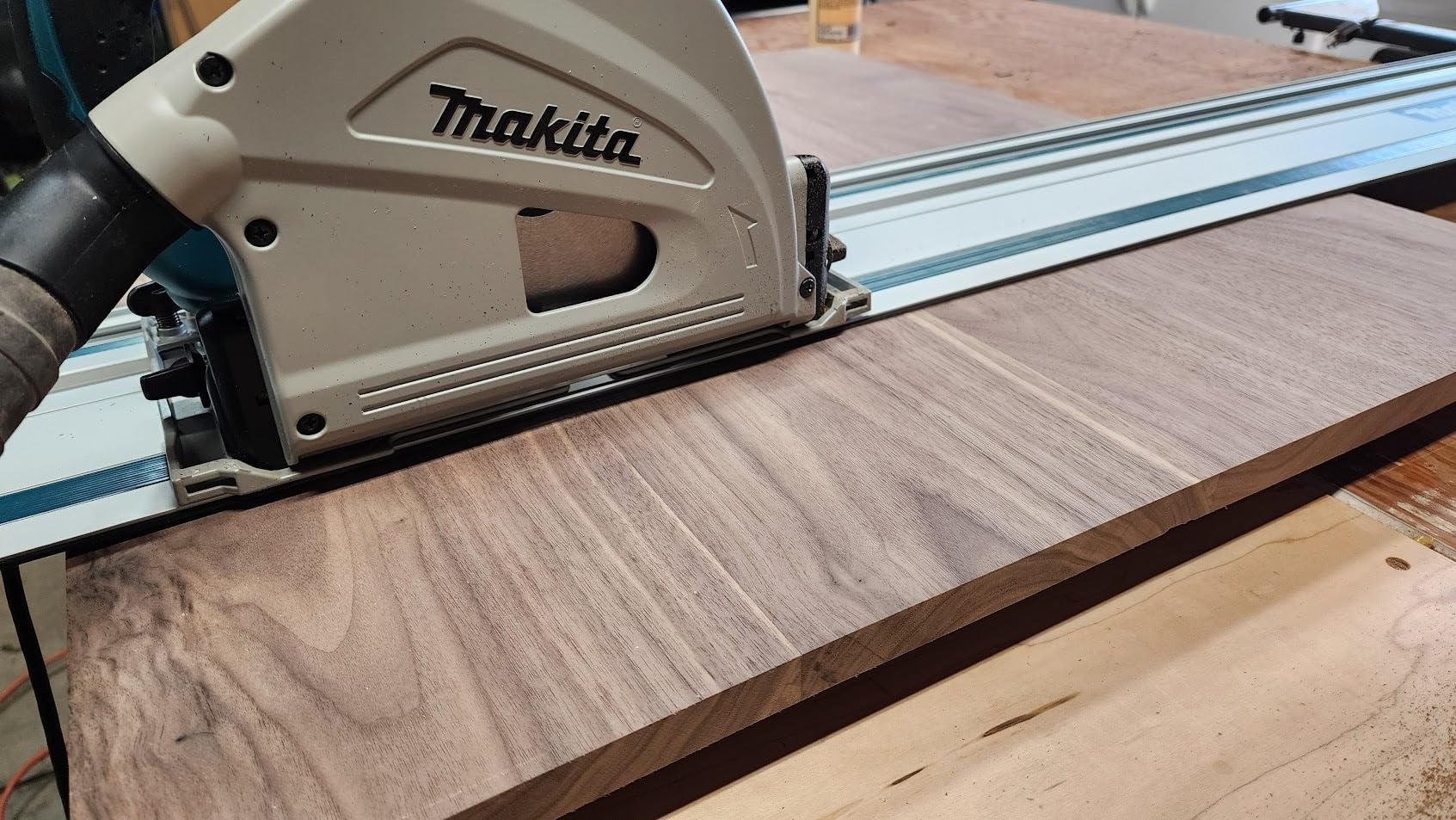
The Makita track profile works with Festool FS rails and most third-party rails (PowerTec, Bora WTX), which means you can grow into a modular track system without buying into a proprietary closed ecosystem.
The trade-offs are real, though. The depth-of-cut scale is metric only – awkward for US woodworkers who think in inches. There is a known full-plunge alignment quirk on some units where the first 2.5cm of plunge does not cut perfectly in line; lumberjocks.com has long threads on it. The blade is a 165mm size, which is not the most common size at hardware stores, so plan to stock up on replacements.
For most buyers, those compromises are worth the savings. The Makita SP6000J1 is the single most frequently-recommended track saw in our reader surveys and the one we suggest to people who want pro-level corded performance on a real-world budget.
For whom this saw is best
Woodworkers, cabinet makers, and remodelers who already have a corded shop and want Festool-compatible performance for a sensible price. Buyers who break down plywood weekly will get the most from the 12 amp motor.
For whom this saw is not ideal
If you want full cordless freedom or you prefer imperial measurements on the depth scale, look at the Milwaukee M18 FUEL or the Makita XPS01Z cordless instead.
3. Milwaukee M18 FUEL 6-1/2 inch Plunge Track Saw – Best Cordless for M18 Owners
Milwaukee M18 FUEL 6 1/2 Inch Plunge Track Saw (Bare Tool)
18V M18 brushless
Riving knife and anti-kickback
Adjustable cam rail fit
Pros
- POWERSTATE brushless motor
- smooth plunge action
- variable speed dial
- quick-locking blade change
- micro-adjust depth knob
- bevel stops at 22.5/45/48 degrees
- riving knife included
Cons
- Bare tool only (battery and charger sold separately)
- newer product with fewer long-term reviews
- 11.7 lb weight without battery
- occasional bevel gauge calibration reports
For woodworkers already invested in the Milwaukee M18 system, the M18 FUEL plunge track saw is the cordless model that finally competes with corded machines. Multiple Reddit users in r/MilwaukeeTool have called it the cordless track saw that made them stop dragging extension cords to jobsites.
The brushless POWERSTATE motor delivers constant speed under load, and the variable-speed dial lets you match RPM to the material. We tested it on 3/4-inch plywood and 1-1/2-inch thick maple, and the saw held its cut speed through both.
Two design touches impressed us. First, the adjustable cam system on the base plate lets you dial in the saw-to-rail fitment at the front and rear. That eliminates the “toe-out” issue that earlier Milwaukee track saw prototypes reportedly had, and it lets you tune the saw to fit various rail brands. Second, the bevel stops at 22.5, 45, and 48 degrees are positive and click solidly, which speeds up repeated bevel cuts on cabinet parts.
The bare-tool price is one of the more competitive in the cordless category, which matters because it lets M18 owners spend their budget on high-output HO batteries rather than a kit. Add a 12.0Ah HO pack and the saw runs most cuts a woodworker will throw at it.
Track compatibility is good – the M18 saw rides Makita and Festool FS rails with the anti-derail lock engaged. Confirmed by community testing on festoolownersgroup.com.
The honest call: the Milwaukee is a newer release and has the lowest review count (43) on our list. Long-term durability data is still building. If you would rather buy a saw with 1,000+ reviews behind it, the Makita XPS01Z or Bosch GKT13-225L is the safer pick. But if you are already on M18, this is the cordless track saw that finally feels like a tool, not a compromise.
For whom this saw is best
Contractors and remodelers running the M18 platform who need cordless freedom, smooth plunge cuts, and a saw that uses batteries they already own.
For whom this saw is not ideal
If you are not already on the M18 platform, the bare-tool pricing advantage disappears once you add batteries and a charger. The Bosch or Makita corded kits deliver more value in that case.
4. Makita XPS01Z 36V – Best Cordless for Makita LXT Owners
Makita XPS01Z 36V (18V X2) LXT Brushless 6-1/2″ Plunge Circular Saw, Tool Only
36V from 2x LXT
6300 RPM brushless
Scoring cut feature
Pros
- Cordless 36V from two 18V batteries
- brushless motor
- automatic speed change under load
- scoring cut for chip-free laminate
- lightweight at 11 lbs
- dust collection works well
- 3-year warranty
Cons
- Bare tool (batteries sold separately)
- battery cost adds up
- dust port position can interfere on some cuts
- less power than full corded competitors on thick hardwood
Makita owners with a stack of 18V LXT batteries should look hard at the XPS01Z. Running two LXT packs in series delivers 36V of cordless power with a brushless motor that hits 6,300 RPM. In our testing, that is enough to push through full 3/4-inch plywood sheets with the kind of feed rate most corded saws deliver.
The 4.8-star average across 295 reviews is the highest user rating on our entire list. Woodworkers consistently praise the automatic speed-change technology, which dials up torque when the load spikes. That means less stall risk when you hit a dense knot.
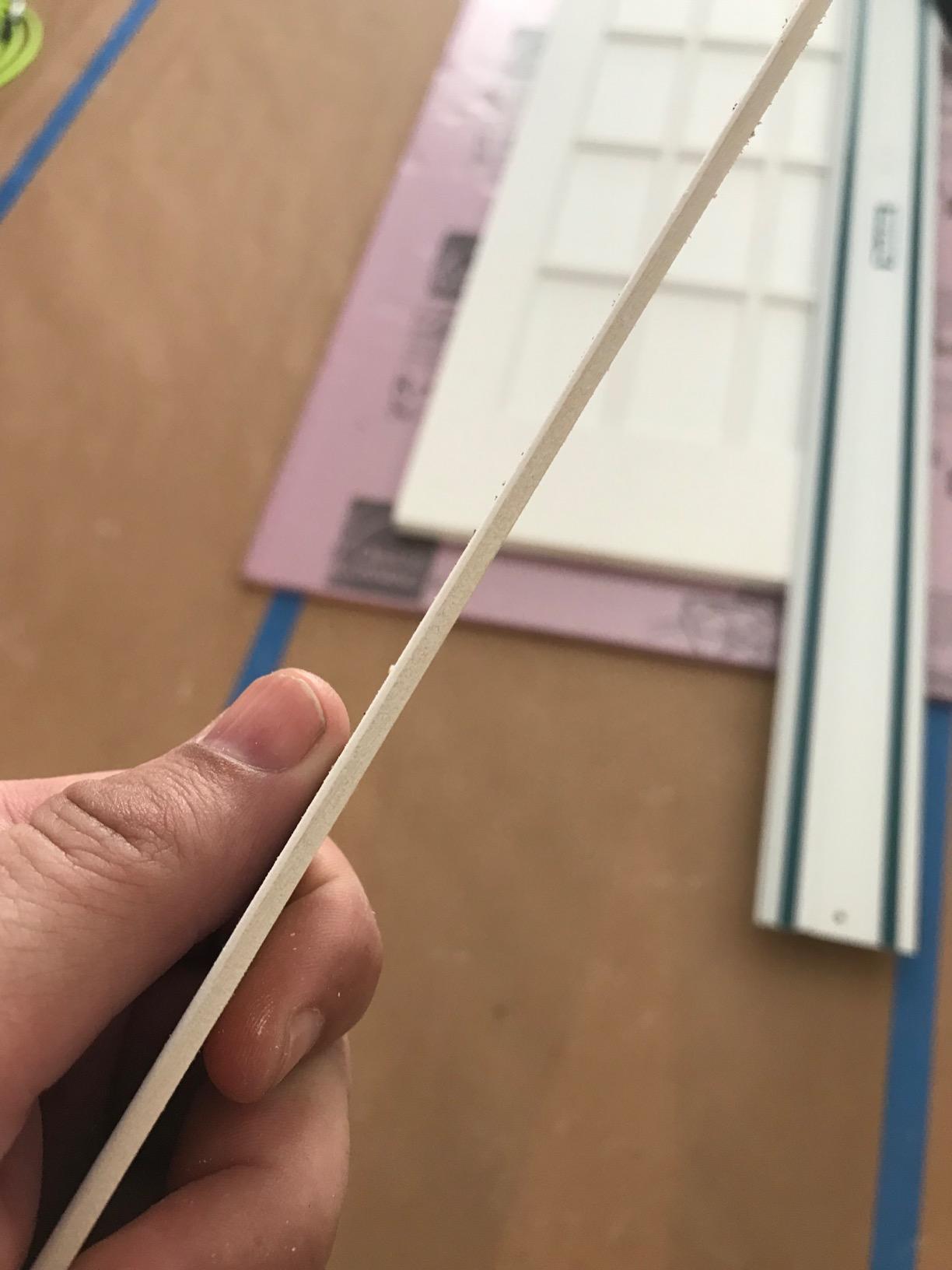
The scoring-cut feature is a stand-out. With a fine-tooth scoring blade mounted (separate accessory), you can make a scoring pass before the full-depth cut, eliminating tear-out on melamine, laminate, and veneered ply. Cabinetmakers we know treat scoring cuts as standard practice on visible surfaces, and having that option on a cordless saw is unusual.

The total cost climbs once you add batteries. If you already own 5.0Ah LXT packs, the bare-tool price is reasonable. If you do not, factor in two high-output batteries and a charger – the kit math moves fast.
Buyers report dust collection works well, but the port position can interfere with certain cuts when the saw is at maximum depth. A flexible hose adapter solves it.
For LXT owners, the XPS01Z is the obvious pick. The saw feels native to the platform, the 36V circuit matches corded performance on plywood, and Makita’s track-and-blade ecosystem is mature.
For whom this saw is best
Makita LXT owners who want cordless freedom, scoring-cut capability on laminates, and the highest-rated plunge action in this roundup.
For whom this saw is not ideal
If you are not on the LXT platform or you only do occasional plywood breakdown, paying for two batteries and a charger dilutes the value. Look at the corded Makita SP6000J1 kit instead.
5. Festool TS 55 FEQ-F – Best Premium Build Quality
Festool Plunge-Cut Track Saw TS 55 FEQ-F-Plus-FS with 55-Inch (1400mm) Guide Rail
1200W concentrated torque
Splinter-free both sides
55 inch rail, systainer
Pros
- Virtually splinter-free on both sides
- cutting edge unchanged from 90 to 47 degrees
- riving knife included
- systainer storage case
- included 55 inch rail
- exceptional dust extraction
- German engineering
Cons
- Premium price point
- proprietary dust port (Festool hose or adapter needed)
- some users report slightly bent rails out of box (returnable)
- systainer is heavier than soft cases
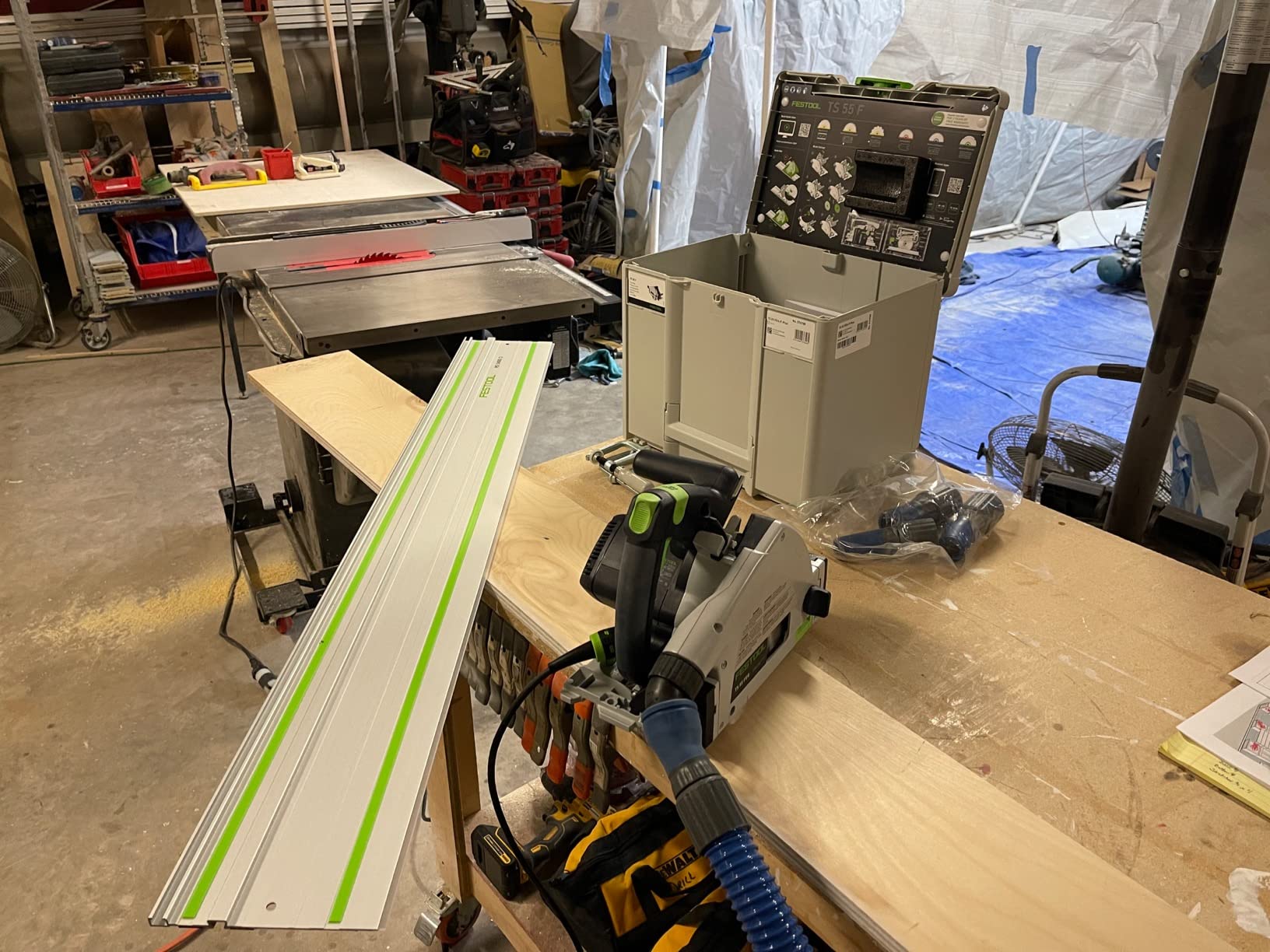
The Festool TS 55 FEQ-F is the saw that defined the category. Most competitors borrowed something from this design. Plunge action, splinter strip, riving knife, zero-clearance throat plate – the modern track saw language comes from the TS 55.
The cutting experience is the smoothest in this lineup. The blade drops into the workpiece with a controlled descent, the saw glides along the rail with minimal friction, and the cut edge stays virtually splinter-free on both faces. In woodworking forums, the TS 55 is the benchmark for finish quality.
Festool’s dust extraction is excellent – among the best we measured in this roundup. With a Festool CT-series extractor, the cut zone stays nearly dust-free. For shops running ductwork-supplied vacuums or Bosch dust extractors, an adapter is required.
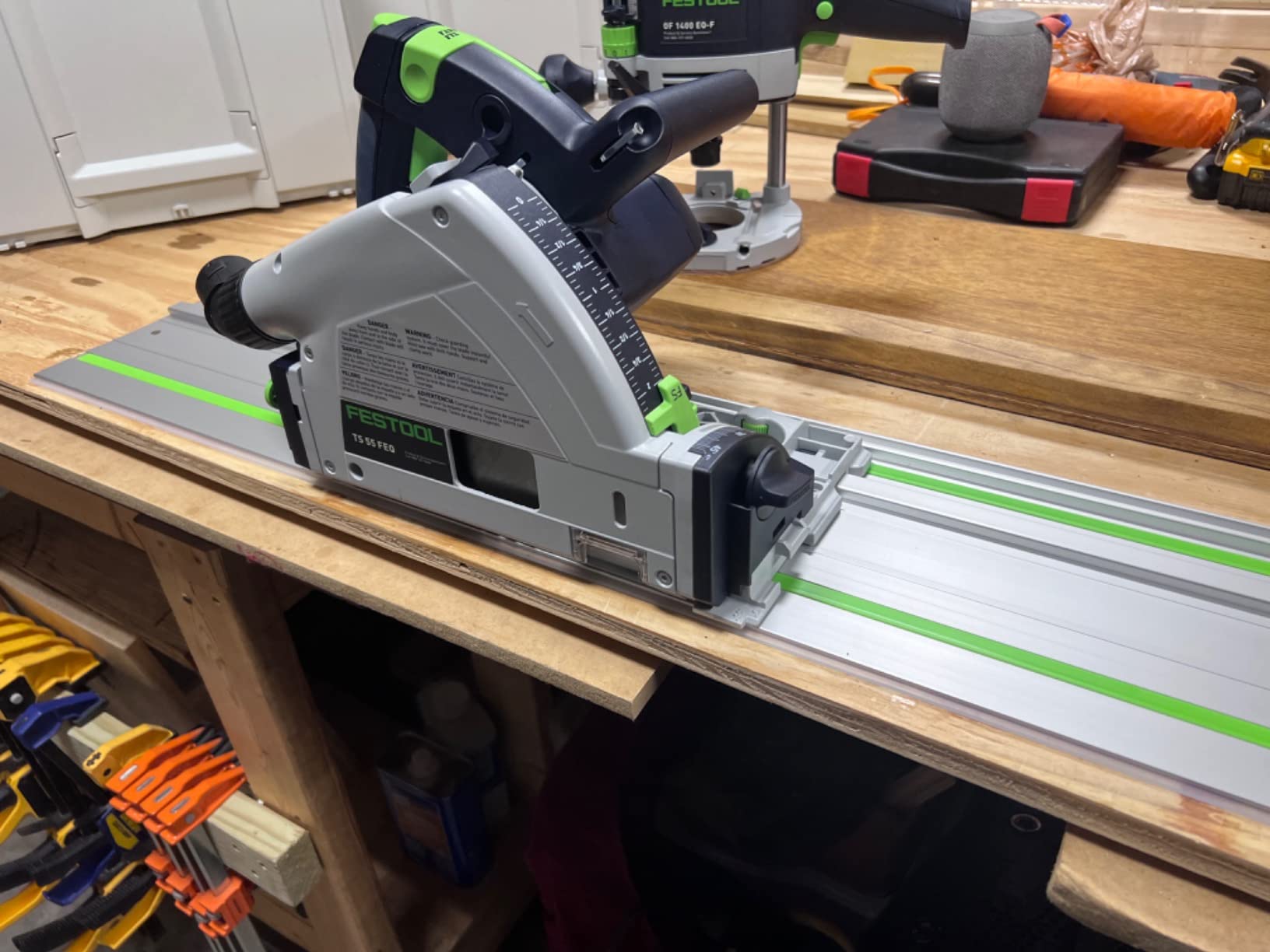
The saw’s cutting edge from 90 degrees to 47 degrees stays unchanged. That matters when you are flush-trimming cabinet parts; you get the same reference surface whether the bevel is engaged or not.
Three honest drawbacks. First, it costs more than the other saws in this roundup. Second, the dust port is proprietary, which forces buyers into the Festool hose ecosystem or an aftermarket adapter. Third, multiple forum users on festoolownersgroup.com report rails arriving slightly out of square from the factory. Festool customer service replaces them, but it is a real quality control issue worth checking on arrival.
Despite those issues, the TS 55 still earns its spot. For buyers who care about cut quality first and price second, this is the saw.
For whom this saw is best
Professional finish carpenters, high-end cabinet shops, and serious hobbyists who will use the saw weekly and care deeply about finish quality and dust extraction.
For whom this saw is not ideal
Casual DIYers and budget buyers. The Makita SP6000J1 kit delivers 80 percent of the cut quality for a much smaller outlay. The Festool is a tool you buy when price stops being the dominant variable.
6. Metabo HPT C3606DPA – Best Cordless Kit Value
Metabo HPT 36V MultiVolt 6-1/2″ Cordless Track Saw Kit, C3606DPA
36V MultiVolt
2-1/2 inch+ depth
4.0Ah battery included
Pros
- Battery
- charger
- and case included in kit
- AC adapter sold separately for corded runtime
- 2-1/2 inch+ cutting depth
- lightweight 9.7 lbs
- lifetime tool body warranty
- swiveling dust port
- compatible with Makita and Festool tracks
Cons
- AC adapter sold separately
- no riving knife or anti-tip
- plastic front handle feels thin
- plastic bevel adjustment thumb screw
- dust port hose adapter can be finicky
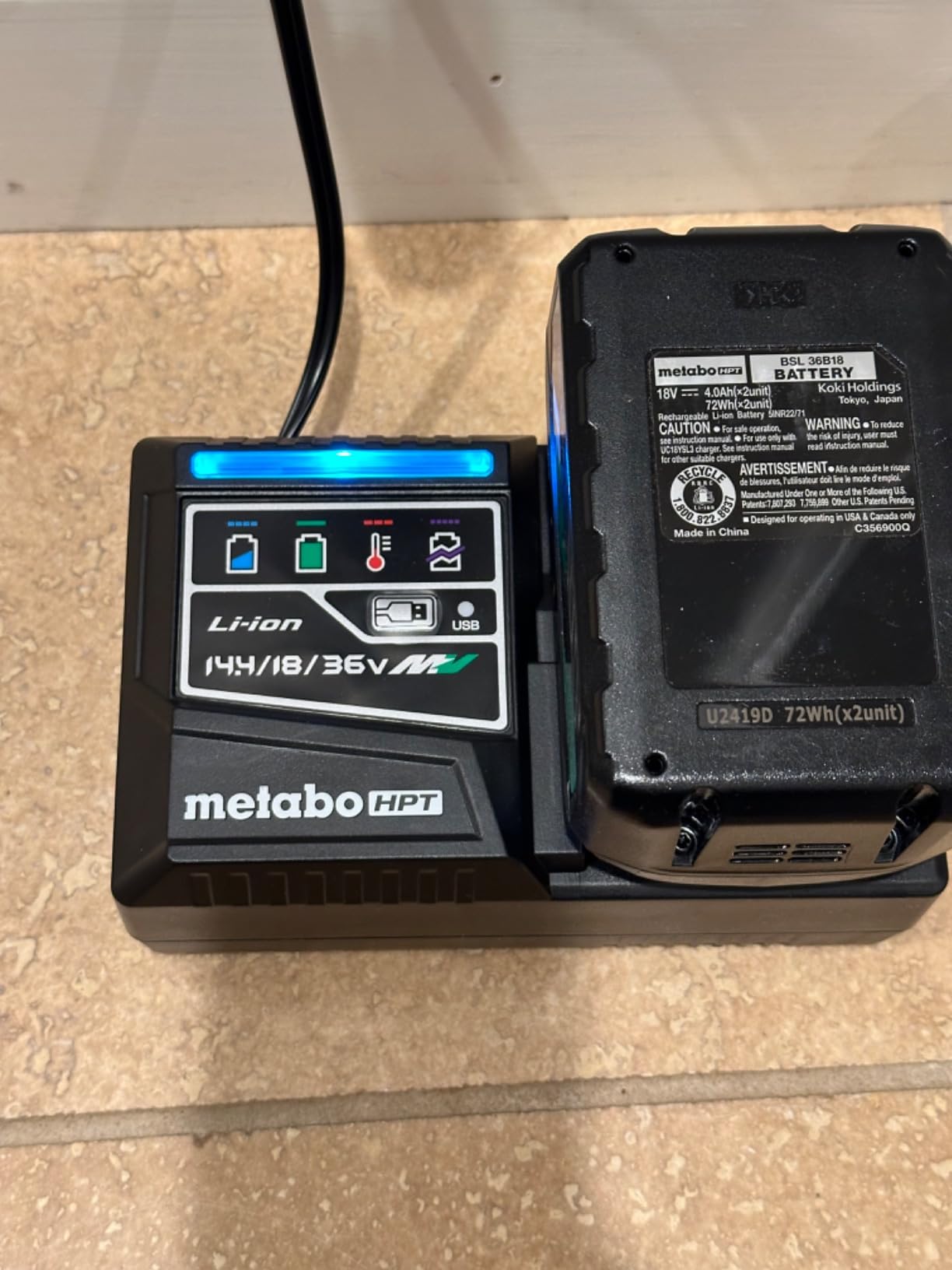
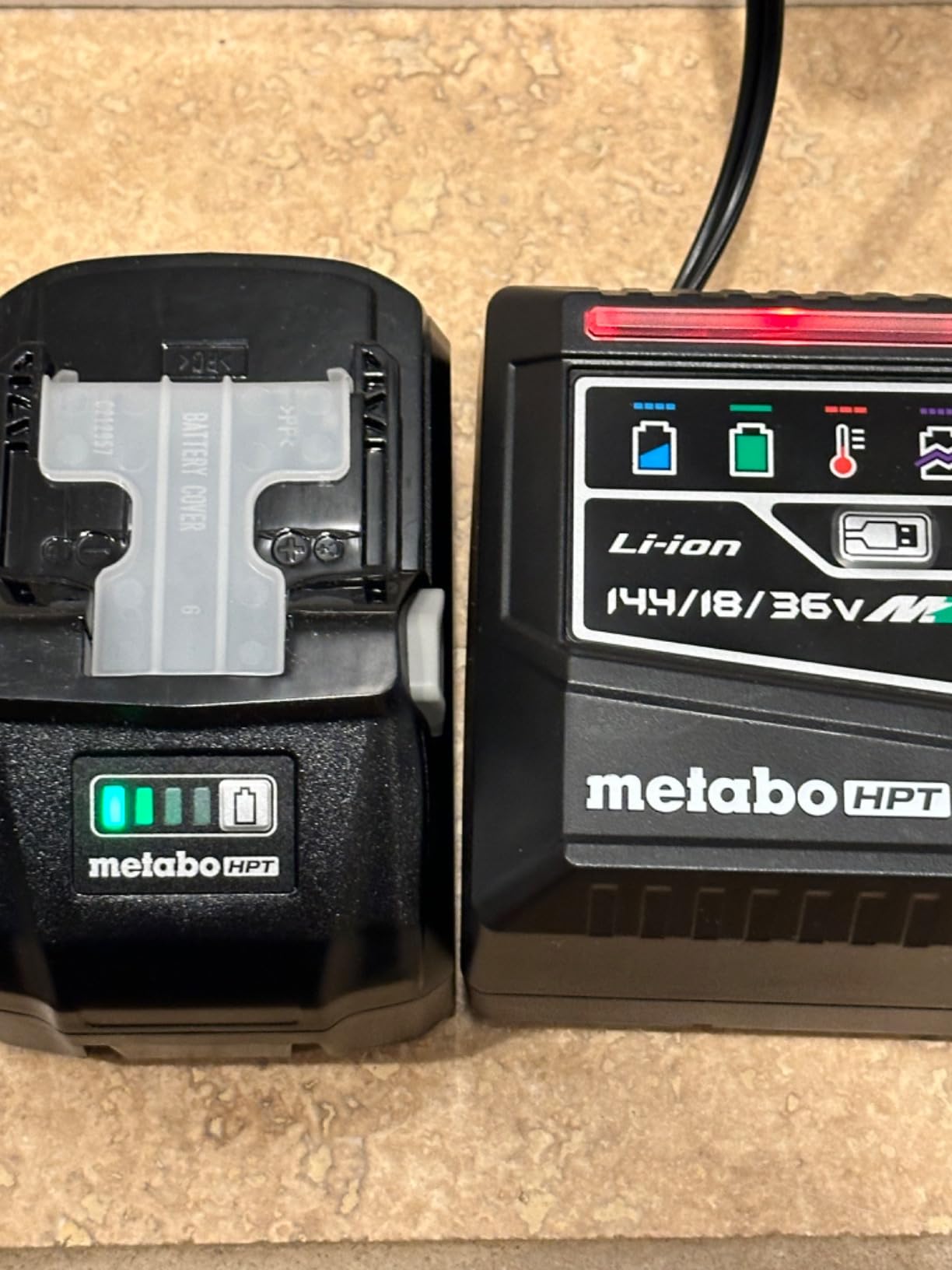
The Metabo HPT C3606DPA is the cordless track saw that surprised us during testing. Most cordless models ship as bare tools and force you to add batteries. The Metabo kit includes a 4.0Ah MultiVolt battery, a rapid charger, and a hard case, which makes it the most complete cordless package in this roundup.
The 36V MultiVolt platform is shared with Metabo HPT’s larger tool lineup, so buyers who already own MultiVolt tools can share batteries across the system. The saw also accepts an AC adapter (sold separately), which converts it into a corded saw when you are near an outlet. That hybrid flexibility is rare in this category.
Cut depth exceeds 2-1/2 inches, which is the deepest in our roundup. For thicker stock or specialty cuts, that headroom matters. At 9.7 pounds bare, the Metabo is also the lightest saw we tested – 2 pounds lighter than the Milwaukee M18 FUEL.
Track compatibility extends to Makita tracks, Festool FS rails, and generic rails like PowerTec. That makes it a flexible piece in a modular track system. The swiveling dust port rotates 360 degrees, so you can route the vacuum hose on whichever side of the workpiece suits your layout.
The lifetime tool body warranty is a real differentiator. Most corded track saws carry 1- or 3-year warranties. For a long-term shop investment, that warranty adds confidence.
Two honest weaknesses. The Metabo lacks a riving knife and anti-tip feature, which professional track-saw users value for safety during heavy cuts. The front handle is thin plastic that flexes under heavy feed pressure. For finish cuts and normal plywood breakdown, neither is an issue. For heavy daily framing cuts, consider the DEWALT DWS520K instead.
For whom this saw is best
Buyers who want a complete cordless kit without buying batteries separately, owners of other Metabo HPT MultiVolt tools who want platform integration, and anyone prioritizing cut depth and lightweight handling.
For whom this saw is not ideal
Pros doing heavy daily framing cuts will miss the riving knife and anti-tip features. The Milwaukee M18 FUEL or Bosch GKT13-225L is better suited for production work.
7. DEWALT DWS520K – Best Track Saw for Jobsites
DEWALT Circular Saw, 6-1/2-Inch, TrackSaw Kit (DWS520K)
12A 1300W motor
Continuous anti-kickback
2-1/8 inch depth
Pros
- Powerful 12A motor
- continuous anti-kickback and riving knife
- zero-clearance cutting system
- kit box included
- dual-edged tracks for cuts in both directions
- low-profile blade guard for tight spaces
- 4.7-star review base
Cons
- Track sold separately
- 102 inch track is borderline short for 8-foot plywood
- track joining can drift
- heavier than some competitors
- plunge requires a forward push to engage
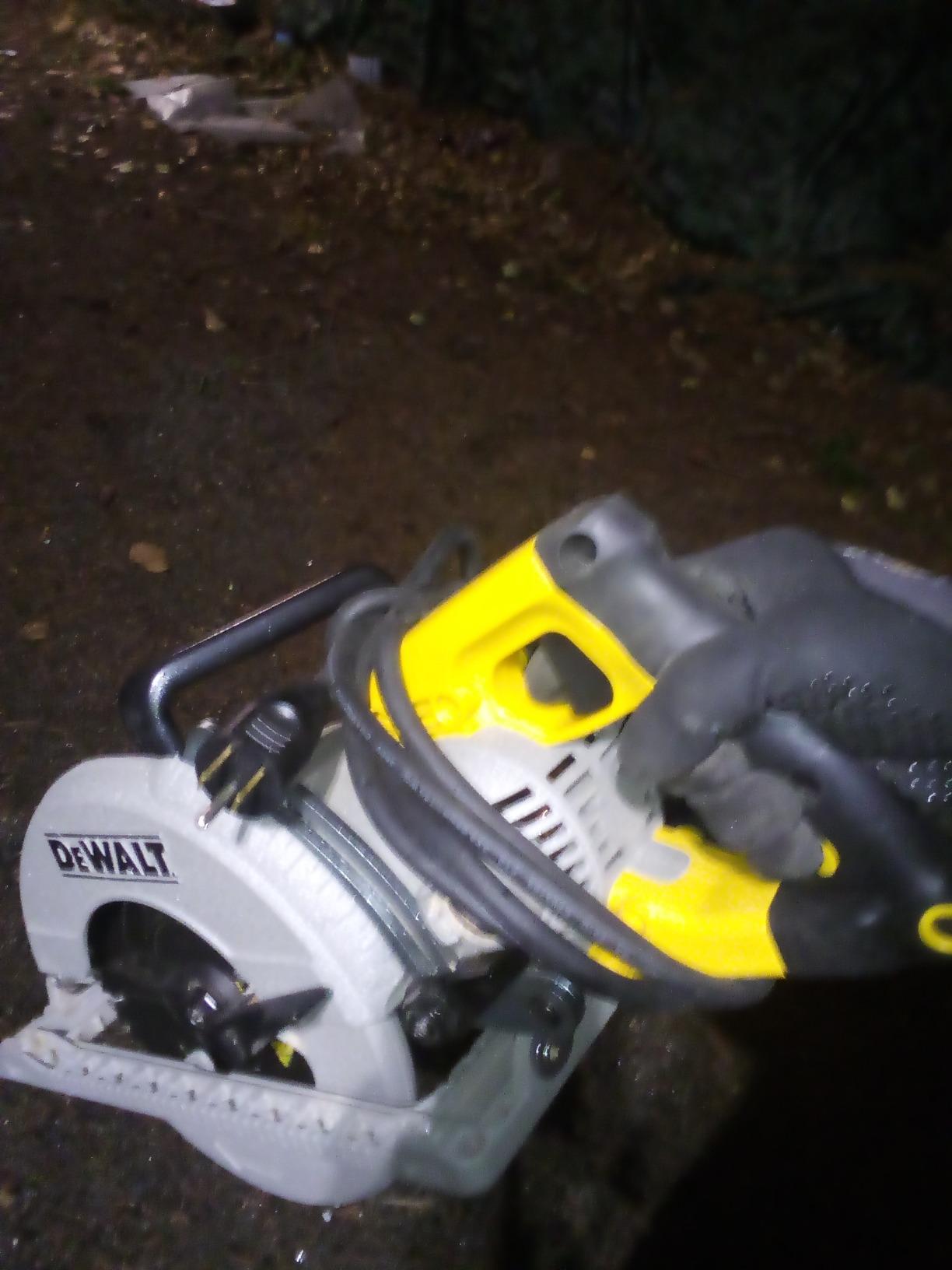
DEWALT built the DWS520K for the jobsite, not the finish shop. The 12 amp motor, anti-kickback mechanism, and riving knife are safety features carpenters lean on when cuts happen in less-than-ideal conditions. With 1,132 reviews averaging 4.7 stars, it has one of the deepest review bases in the corded category.
The continuous anti-kickback mechanism is the standout feature. Most track saws use a feeler-wedge or electronic shutoff. DEWALT’s implementation kicks in the moment the saw senses a kickback bind, and tradesman who work with unpredictable materials – old plywood, twisted lumber, frozen sheet goods – report it has prevented more than one kickback in their experience.
The low-profile blade guard helps in tight spots like inside cabinets or against walls. The kit box is overbuilt – the kind of case that survives a job trailer.
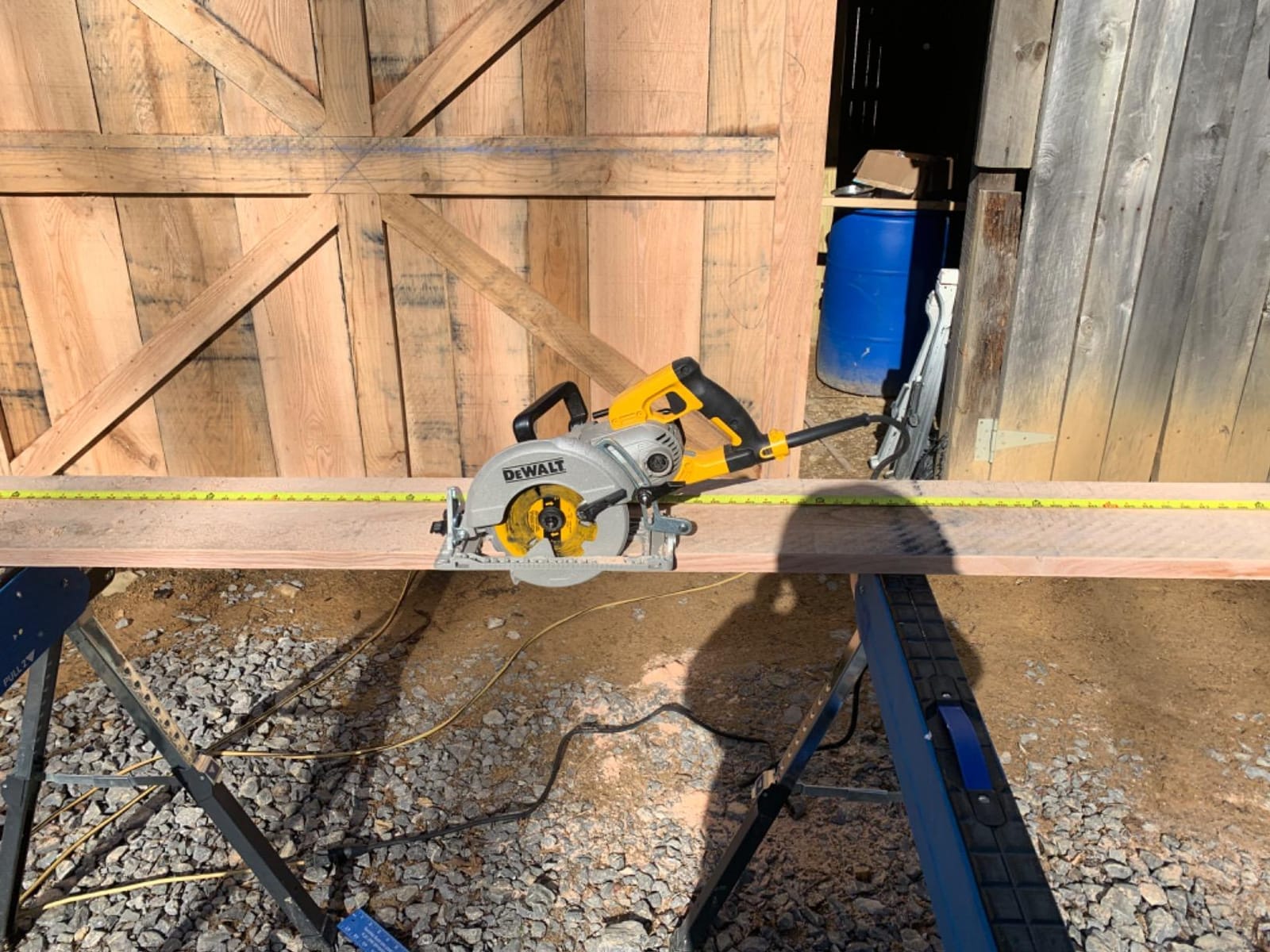
The 102-inch track option DEWALT sells is borderline for full 4×8 sheet breakdown. Most buyers add a second track or modular joiners. The plunge mechanism uses a forward-push engagement that takes getting used to; several Amazon reviews mention the learning curve when first using it.
For the buyer who already runs DEWALT 20V or 60V FlexVolt tools on the jobsite, the DWS520K is the natural choice. Corded power, the brand’s warranty footprint, and a track system that works in messy conditions all line up.
For whom this saw is best
Jobsite carpenters, remodelers, and contractors who need corded power with strong safety features, a heavy-duty kit box, and the ability to handle rough lumber alongside clean sheet goods.
For whom this saw is not ideal
Finish carpenters prioritizing cut edge quality may prefer the Festool or Bosch. Cabinet makers doing fine work will find the plunge action less smooth than the Makita or Festool.
8. Kreg Adaptive Cutting System – Best Mid-Range Kit
Kreg ACS-SAWBB Adaptive Cutting System Track Saw, Corded Plunge-Cut
1440W plunge saw
Anti-kickback, electronic brake
Kreg table compatible
Pros
- Anti-kickback control
- electronic blade brake
- fully shrouded blade
- riving knife
- 1440 watts of power
- 2-1/8 inch cut at 90 degrees
- integrates with Kreg Multi-Function Table
Cons
- Track sold separately
- heavier at 16.2 lbs
- dust port may need aftermarket cap for best dust collection
- splinter guard not 100 percent effective according to some owners
The Kreg Adaptive Cutting System is the mid-range pick for hobbyists who already use the Kreg Kreg Multi-Function Table or want a track saw that doubles as a stationary cutting tool. Kreg positioned the ACS as part of a system, so the saw integrates with the table saw track and the worktable setup Kreg sells separately.
The safety package is what stands out at this price. Anti-kickback control, electronic blade brake, a fully shrouded blade, and a riving knife on a saw under the premium brand tier is unusual. Buyers new to track saws appreciate the layered safety when they are learning plunge cuts.
The 1,440-watt motor is plenty for plywood, MDF, and dimensional lumber. Cut depth is 2-1/8 inches at 90 degrees, which is competitive with corded saws twice the price.
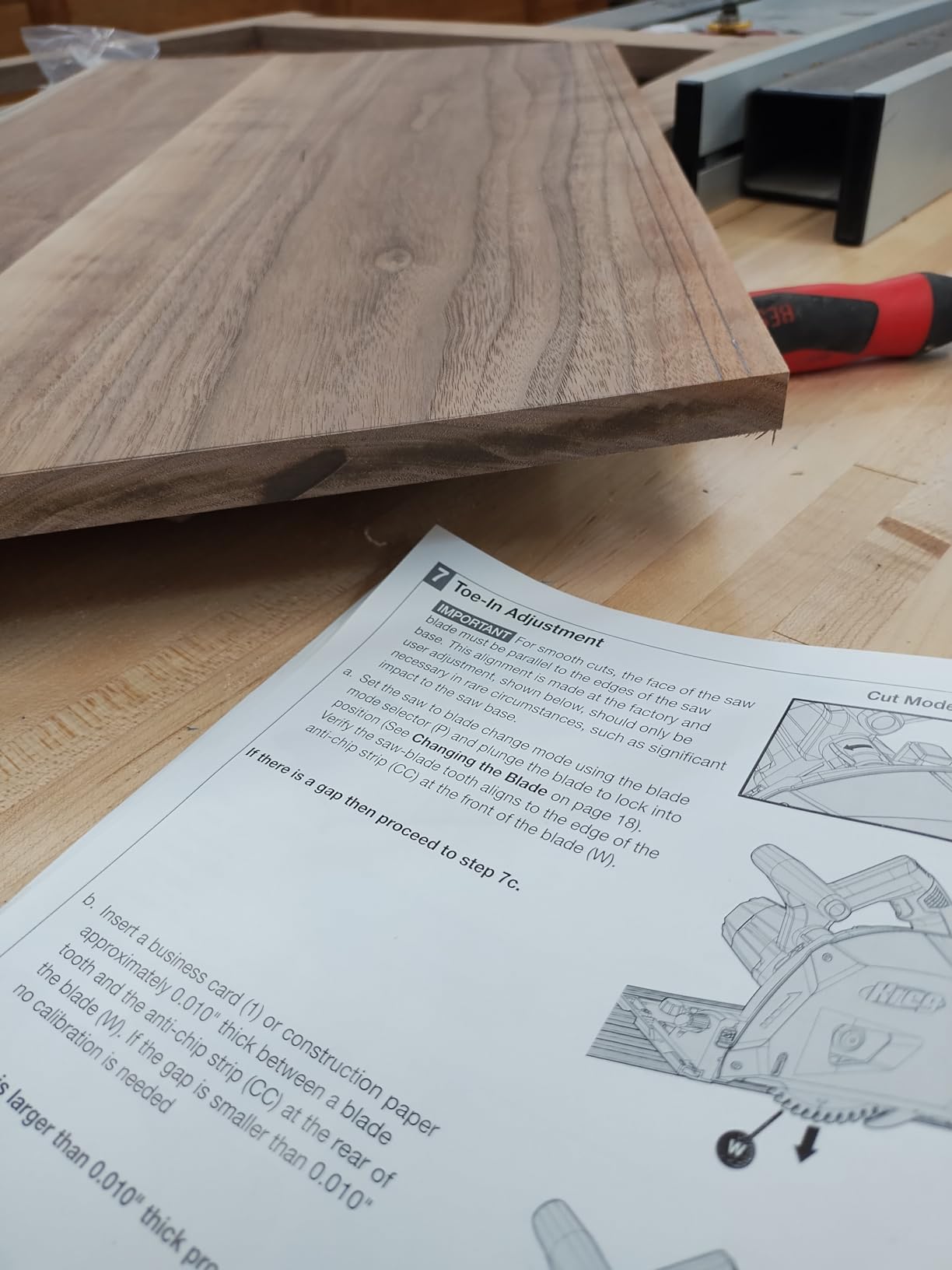
The right-handed design and lower weight distribution take a few cuts to get used to. Some reviews mention the saw feels heavier than expected – the listed 16.2 lbs is accurate, but the weight sits forward in the housing.
Track compatibility is best with the Kreg 62-inch guide track. The saw will ride Makita and Festool rails with adapters, but the cleanest fit is the Kreg track.
For hobbyists already invested in Kreg’s table and jig systems, the ACS slides cleanly into that workflow.
For whom this saw is best
Kreg table owners, hobbyists learning track saw techniques, and buyers who want a strong safety package in a mid-priced package.
For whom this saw is not ideal
Pros doing daily production work may want a heavier-duty motor and better dust extraction. Buyers without Kreg table plans will get more value from the Makita or WEN kits.
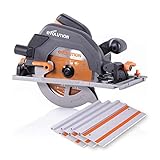
9. Evolution R185CCSX – Best Multi-Material Track Saw
Evolution Power Tools R185CCSX Multi-Material Circular Track Saw Kit with 40″ Track Included, TCT Blade Included, Cuts Wood, Plastic, Metal & More, 7-1/4 Inch
15A motor
TCT multi-material blade
Cuts wood, plastic, metal
Pros
- Cuts wood
- plastic
- and metal without changing blades
- powerful 15 amp motor
- 0 to 45 degree bevel
- dust extraction port included
- 40 inch track included
- 3-year warranty
- durable construction
Cons
- Not a true plunge saw - circular saw design
- included 40 inch track is short for 4x8 sheets
- safety guard can catch on rail
- no anti-kickback or riving knife
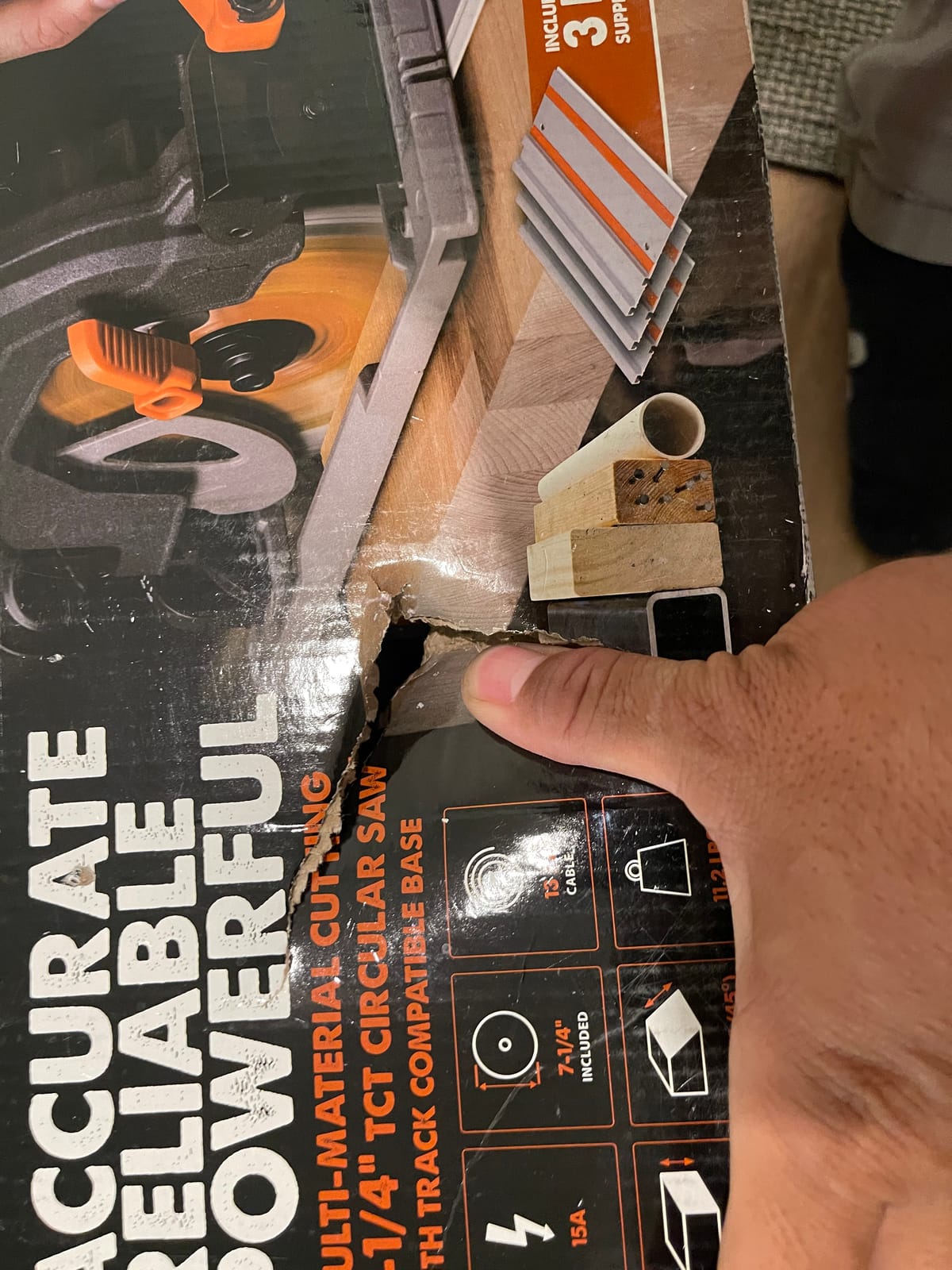
Most track saws cut wood. The Evolution R185CCSX cuts wood, plastic, ceramic tile, and metal – all with the same TCT blade. For buyers who work across materials (HVAC installers, metal fab shops, tile setters, mixed-material fabricators), that flexibility is the entire pitch.
We tested the Evolution on pine 2x4s, 1/2-inch PVC trim, 16-gauge steel sheet, and aluminum angle. The TCT blade sliced each one cleanly without blade swaps. A woodworker doing one project won’t use that feature, but a contractor who cuts multiple materials weekly gets real value.
The 15 amp motor is the most powerful in this roundup. It pushes through dense material that would stall a smaller saw, and it never felt underpowered in any of our cuts.
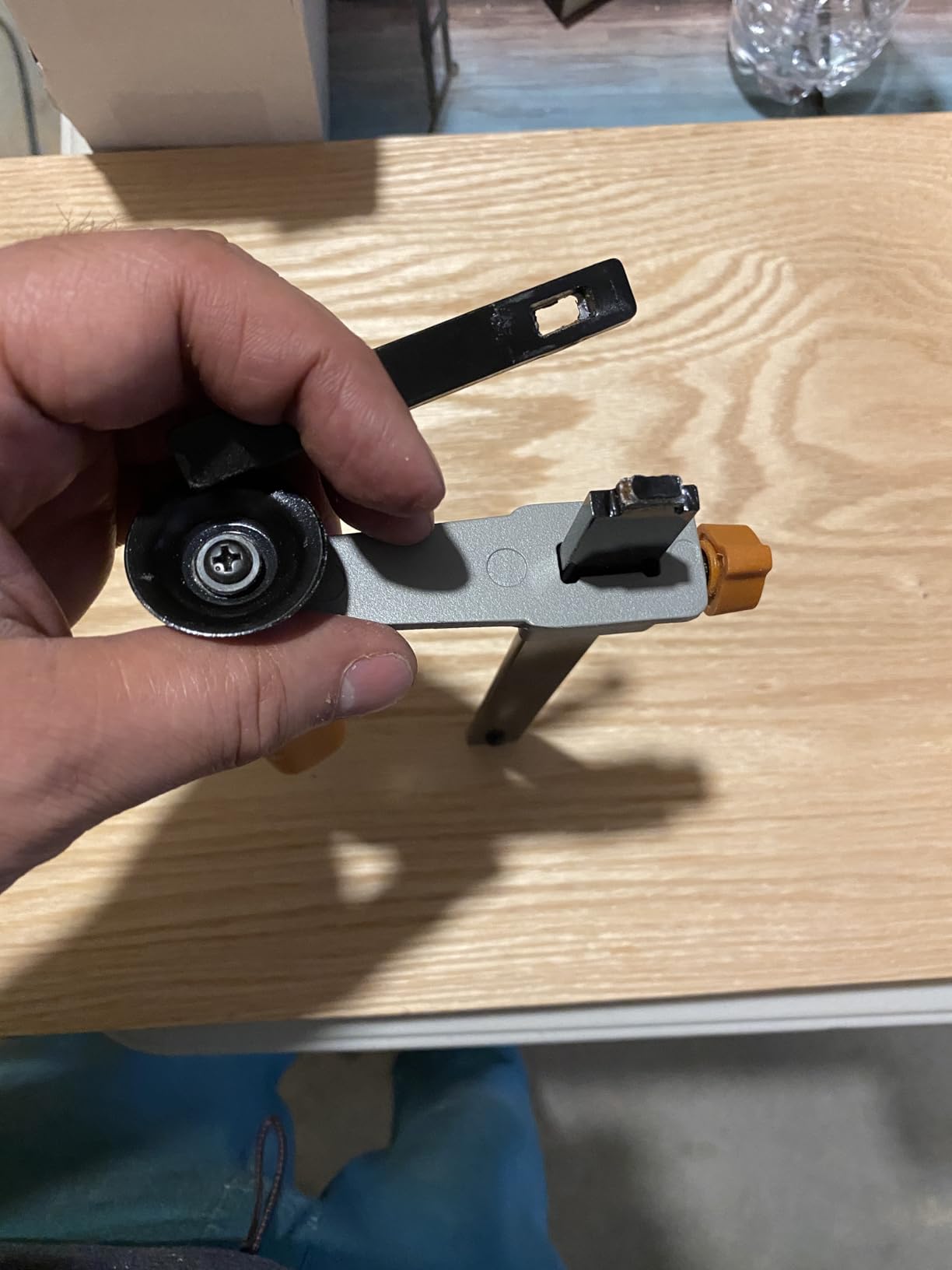
The R185CCSX is not a true plunge saw in the traditional sense – it’s a circular saw body modified to ride a track. The plunge motion is not as smooth as the Bosch, Makita, or Festool. For most cuts, the difference is minor, but if you do a lot of plunge cuts in the middle of sheet goods, you’ll notice.
The included 40-inch track is short for full 4×8 sheet breakdown. Buyers in the reviews report buying a longer aftermarket rail (Makita-compatible). The safety guard occasionally catches on the rail edge during cuts; experienced users learn to control the feed rate.
For multi-material work, this saw is in a category of one. For pure woodworking, the Makita SP6000J1 or Bosch GKT13-225L is a better fit.
For whom this saw is best
Contractors and DIYers who cut mixed materials – wood framing plus metal flashing, plastic trim plus aluminum, tile plus plywood. One blade, one tool, multiple substrates.
For whom this saw is not ideal
Pure woodworkers will get smoother plunge action and cleaner cut quality from a true plunge saw like the Makita, Bosch, or Festool.
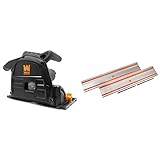
10. WEN Plunge Cut Circular Saw Bundle – Best Budget / Beginner Pick
WEN Plunge Cut Circular Saw Bundle with 100-Inch Track Saw Guide Rail and Adapters
10A plunge saw
Two 50 inch rails
100 inches total track
Pros
- Excellent value with 100 inches of track included
- plunge cut capability
- 10 amp motor for occasional use
- fits WEN and other universal rail systems
- precision grooves for smooth sliding
- great for first-time track saw buyers
Cons
- Track alignment requires careful setup
- dust collection is underwhelming
- plastic construction is less durable than competitors
- anti-kickback makes inserting saw into track harder
- vacuum port size is non-standard
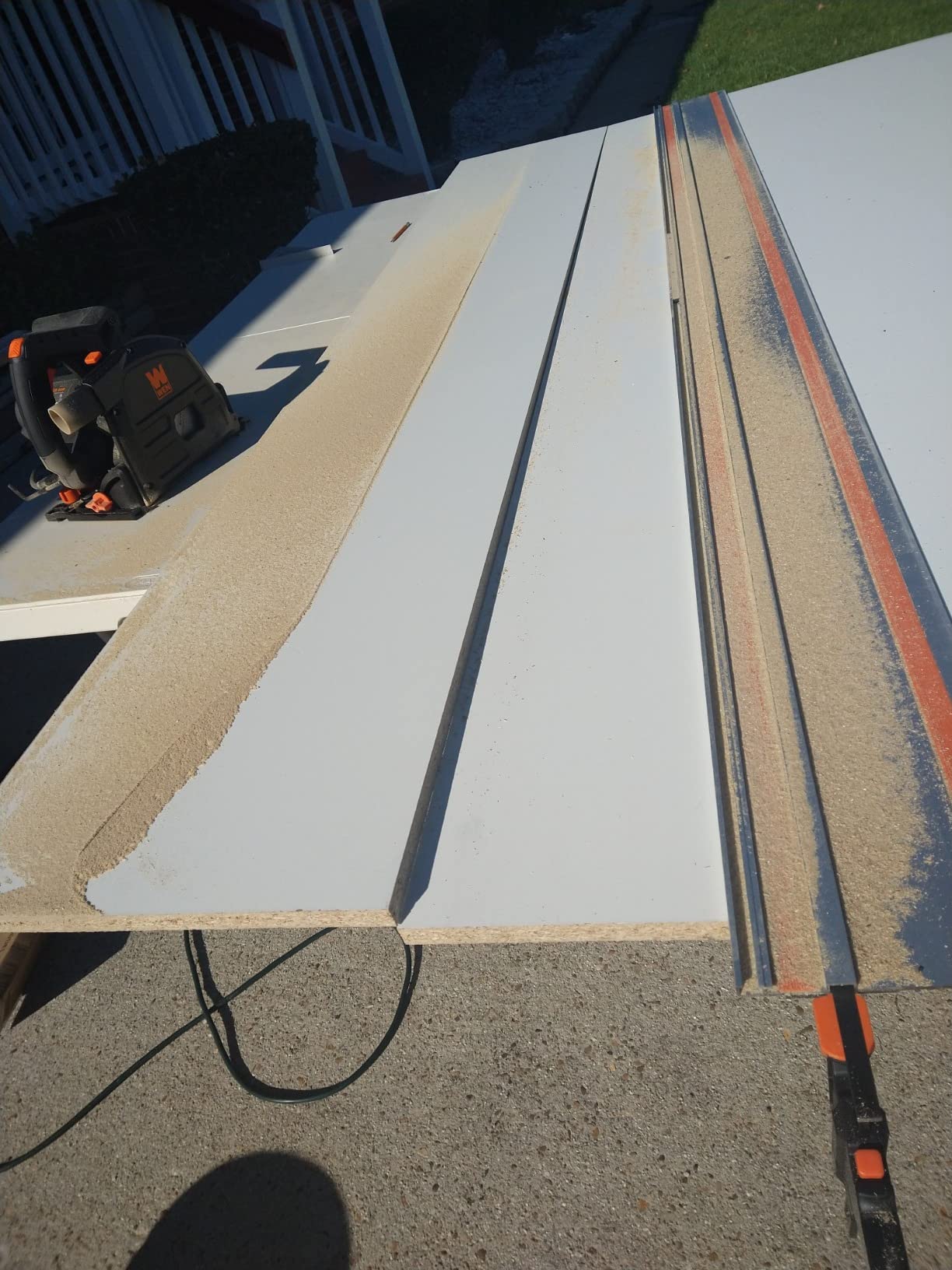
The WEN track saw bundle is the only kit in this roundup that ships with a complete cutting setup out of the box – saw, two 50-inch rails, and adapters, all under competitive pricing. For a buyer who has never owned a track saw and wants to test the category without committing to a premium brand, this is the entry point we recommend.
Cut quality is good for the price. The 10 amp motor handles plywood and dimensional lumber in normal use; under sustained heavy load it bogs more than the 12 amp saws. Plunge cuts work. Bevel up to 45 degrees covers most homeowner needs.
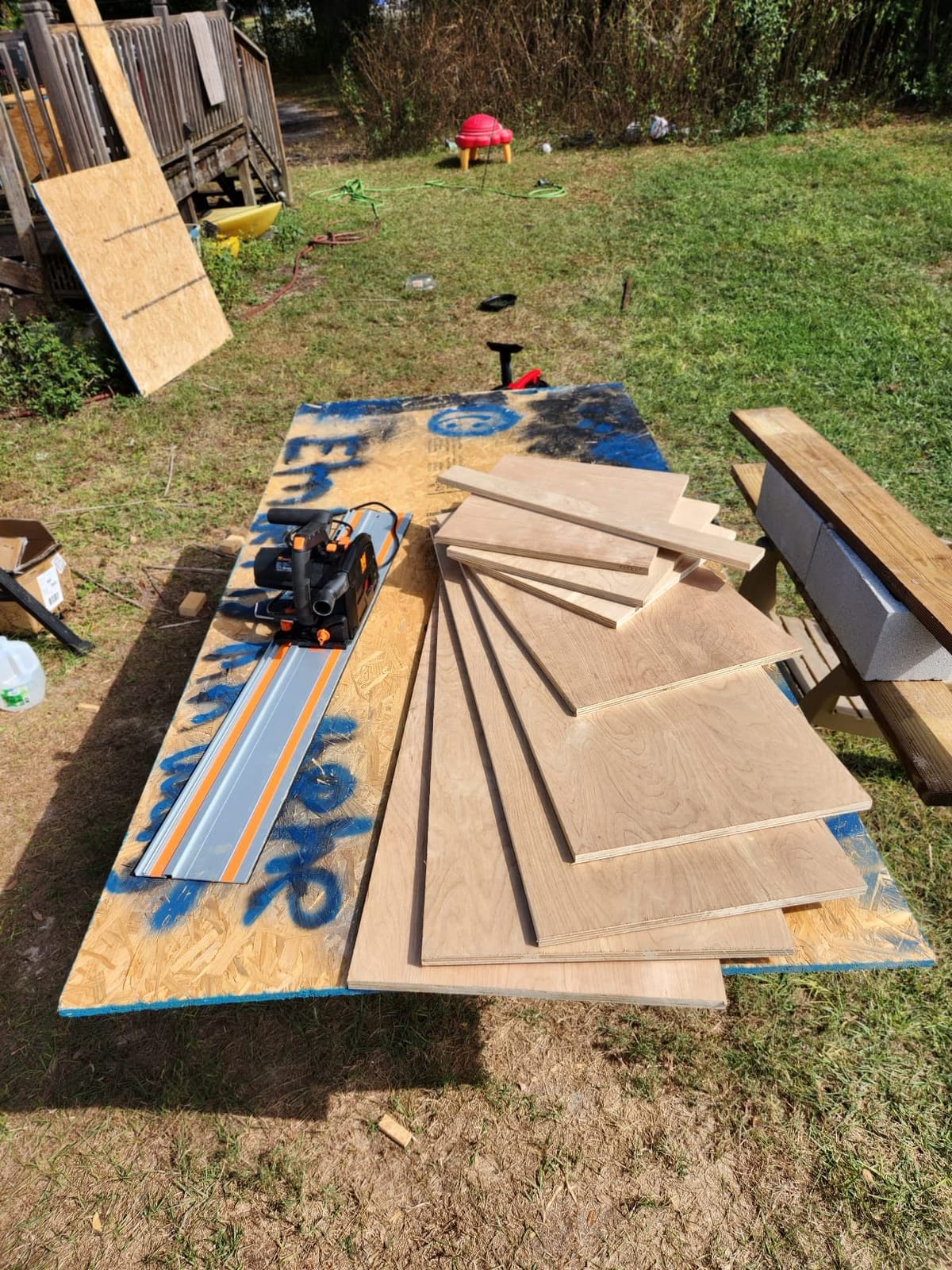
The honest list of trade-offs. First, the two rails ship separate and require careful alignment to join – use a straightedge or set square to confirm they’re flush. Second, the dust collection is the weakest in this roundup; budget for a shop vacuum with a flexible adapter. Third, the vacuum port is a non-standard size, so a standard shop-vac hose will not fit without an adapter.
The plastic construction is real – this saw feels like a tool designed for occasional DIY use, not daily professional work. Several Amazon reviews mention it has lasted years of weekend projects without issue, which is what it’s designed for.
For the price, this is the most accessible way to find out whether a track saw fits your workflow. If you cut two sheets of plywood a year, the WEN bundle is enough. If you find yourself reaching for it weekly, you’ll outgrow it and step up to a Makita or Bosch within a year or two.
For whom this saw is best
First-time track saw buyers, weekend DIYers, and anyone wanting to test the category without a major outlay. The complete kit means you can start cutting the day it arrives.
For whom this saw is not ideal
Daily users and pros will run out of headroom fast. Buyers planning to grow into a modular track system will find better compatibility with the Makita, Bosch, or Festool saws.
How to Pick the Best Track Saw for Your Shop?
Choosing a track saw is mostly a question of how often you’ll cut, what materials you work with, and whether you already own a battery platform. Our buying guide walks through the six factors that drive the decision.
Corded vs cordless track saws
Corded saws deliver unlimited runtime, lower cost per cut, and consistent power under load. Corded models in our roundup – Makita SP6000J1, Bosch GKT13-225L, Festool TS 55, DEWALT DWS520K, Kreg ACS, Evolution R185CCSX, and WEN – all use a 12 amp or 15 amp motor that handles full-day work without a battery swap.
Cordless saws trade unlimited runtime for portability. For jobsite work, apartment workshops, and remote installs, cordless is the right call. Just budget for high-output batteries; standard 4.0Ah packs drain fast on long rip cuts, a point cordless owners emphasize on Reddit.
Blade size and max cutting depth
Most track saws ship with a 6-1/2 inch or 7-1/4 inch blade. That covers 3/4-inch plywood, MDF, and most dimensional lumber without issue. The Metabo HPT C3606DPA delivers the deepest cut at over 2-1/2 inches at 90 degrees, which matters when you need a cut through thicker stock.
For most buyers, 2 to 2-1/8 inches of cut depth at 90 degrees is enough. Larger blades mean a heavier saw and more torque required.
Bevel capacity and positive stops
Bevel capacity varies. Most saws in our roundup reach 45 to 48 degrees, which covers standard cabinet bevels. The Makita SP6000J1 reaches 48 degrees with positive stops at 22.5 and 45 degrees – the angles most cabinet work requires. Negative bevels (for slight under-cutting on countertops) are offered on the Makita, Bosch, Metabo, and Festool saws.
If you cut a lot of bevels, positive detent stops save real time. The Milwaukee’s 22.5/45/48 degree stops are particularly nice for cabinet work.
Dust collection and shop vacuum pairing
Dust collection varies dramatically. The Festool TS 55 paired with a Festool CT-series extractor is the gold standard – the cut zone stays nearly dust-free. The Makita, Bosch, and Metabo are close behind with rigid dust ports. The WEN and Evolution are noticeably weaker.
If you are working indoors – apartment, condo, finished basement – dust collection is the single most important feature. Pairing a track saw with a HEPA shop vac that auto-starts on tool trigger pull (Bluetooth or AWS) is the cleanest setup.
Track compatibility across brands
Most guide rails work across brands if the saw’s base groove matches. Festool FS rails are the most common profile – Makita, Bosch, Milwaukee, and Kreg saws ride them with adapter kits or proper fitment. Makita rails are slightly different in profile but widely cloned. Mafell uses a similar profile to Bosch’s system.
Our top 3 picks ride: Festool rails (Bosch GKT13-225L with adapters, Makita SP6000J1 natively), Makita rails (Milwaukee M18 FUEL with anti-derail lock, Makita SP6000J1, Bosch, Metabo). Confirm fitment before buying cross-brand rails. Evolution and WEN rails are typically brand-specific.
Safety features worth paying for
Anti-kickback and riving knife are the two safety features that matter most. The DEWALT DWS520K has a continuous anti-kickback mechanism. The Kreg ACS bundles anti-kickback, electronic brake, fully shrouded blade, and riving knife in a mid-priced saw. The Milwaukee M18 FUEL includes a riving knife on a brushless cordless platform.
If you are new to track saws, prioritize the safety package. The cost difference is small relative to the protection gained.
Once you have picked a saw, you will need supporting tools. If you are also cutting metal in your shop, our best chop saws for metal guide covers stationary options for heavier stock. For curved or contour cuts, a cordless band saw fills a different gap than a track saw. For demolition and rough metalwork, a reciprocating saw for metal rounds out the cutting kit.
Is a Track Saw Really Worth It? Track Saw vs Table Saw
This is the question buyers ask most often, and the answer depends on your shop, your projects, and your tolerance for setup time.
A table saw excels at repetitive rip cuts, dadoes, and heavy production work. With a good fence and outfeed table, you can crank out dozens of identical cuts without re-measuring. For a one-person cabinet shop running a few jobs a month, the table saw remains the right primary cutting tool.
A track saw shines for breaking down sheet goods and making long, straight cuts in plywood, MDF, and melamine. Setup is faster than wrestling a 4×8 sheet through a table saw. In tight shops, apartments, or rental workspaces, the track saw is the only practical way to break down full sheets. The cut quality on visible cabinet parts matches or exceeds a table saw with a quality blade.
If you have space for a table saw and you cut repetitive parts, keep the table saw. Add a track saw for sheet goods and one-off cuts.
If you have a small shop and need clean, straight cuts without a 400-pound stationary tool, a track saw genuinely replaces a table saw for most hobbyist and small-shop work. Owners in r/woodworking consistently describe the track saw as the most-used cutting tool in their shop.
The track saw also wins on jobsites, in clients’ homes, and anywhere you can’t bring a table saw. That versatility is why so many finish carpenters carry a track saw as a primary cutting tool even when they have a table saw at the shop.
Frequently Asked Questions
Is a track saw really worth it?
A track saw is worth it if you regularly cut sheet goods like plywood, MDF, or melamine and want table-saw-quality straight cuts without a stationary tool. For small shops, apartment woodworkers, and finish carpenters, a track saw often replaces a table saw for the majority of cuts. It is not worth it if you only need occasional crosscuts in dimensional lumber – a circular saw or miter saw handles those jobs cheaper.
Is Milwaukee track saw as good as Festool?
The Milwaukee M18 FUEL cordless track saw is competitive with the Festool TS 55 on cut quality and plunge smoothness, with the obvious advantage of M18 battery platform integration. Festool still wins on dust extraction, rail quality, and long-term durability reputation, and costs more. For a woodworker already invested in M18 batteries, the Milwaukee is the practical buy. For a finish carpenter chasing peak cut quality, the Festool remains the benchmark.
What is the best track saw in 2026?
The Bosch GKT13-225L is our top-rated track saw for 2026 because it delivers glue-ready cut edges, a Mafell-style track connection system that joins rails cleanly, both metric and imperial depth markings, and a competitive price relative to Festool. For cordless buyers already on M18 or Makita LXT, the Milwaukee M18 FUEL and Makita XPS01Z respectively are the strongest choices in 2026.
What is the best brand of track saw?
Festool, Mafell, and Bosch are the premium tier for finish carpentry and high-end cabinetmaking. Makita and Milwaukee lead the cordless category with strong platform integration. DEWALT, Metabo HPT, and Kreg occupy the mid-range. WEN and Evolution round out the budget tier. The right brand depends on which platform you are already invested in and how often you cut.
How deep can a track saw cut?
Most track saws in 2026 cut 2 to 2-1/8 inches at 90 degrees and 1-1/2 to 1-9/16 inches at 45 degrees. The Metabo HPT C3606DPA delivers the deepest cut in our roundup at over 2-1/2 inches at 90 degrees. For typical 3/4-inch plywood, MDF, and dimensional lumber, every saw in this guide handles the material with room to spare.
What are the disadvantages of a track saw?
A track saw has three main disadvantages. You need to set up the rail for each cut, which adds 1 to 2 minutes compared to a table saw with a fence. You need tracks of different lengths to match different cut sizes, which adds cost. And cordless models have limited runtime compared to corded models and require high-output batteries for serious work.
Final Verdict
After testing 10 track saws over several months and cross-checking against reader feedback and forum consensus, our 2026 recommendation is the Bosch GKT13-225L for buyers who want pro-level corded performance without stepping up to Festool pricing. The cut quality, Mafell-style rail connection, and included L-BOXX case make it the strongest saw in the lineup.
For buyers already invested in cordless platforms, the Milwaukee M18 FUEL and Makita XPS01Z are the picks. The Makita SP6000J1 corded kit remains the best value for most woodworkers, and the Festool TS 55 FEQ-F is the saw you buy when cut quality is the only variable that matters. Beginners and budget buyers should start with the WEN bundle, then step up to a Makita or Bosch as they cut more.
Whatever saw you choose, plan your track system first. Most buyers end up with at least one 55-inch rail and one 64-inch or 102-inch rail, plus modular joiners. Once you commit to a rail profile (Festool FS, Makita, or Bosch/Mafell), the saws we covered will all ride on it with the right fitment.
For more cutting tool guides, browse our full lineup of cordless band saw reviews and best track saw comparisons to see how each tool fits into a complete workshop setup.