
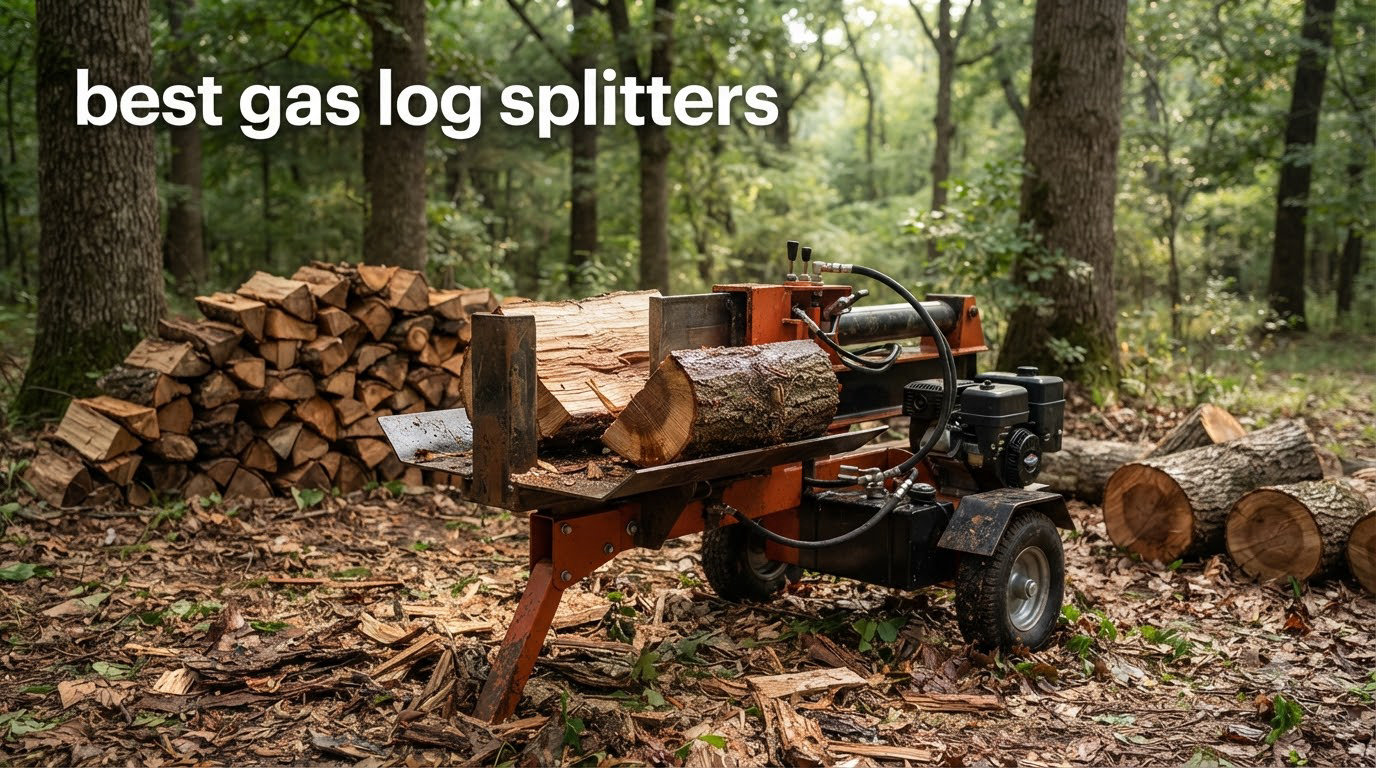
Spending a Saturday afternoon pounding oak rounds with an 8-pound maul is how I learned to respect a good gas log splitter. By the second cord, my back was barking and the wood pile barely shrank. The next weekend I borrowed a neighbor’s 20-ton unit and processed a full cord in 90 minutes.
That experience is why I wrote this guide. The best gas log splitters handle dense hardwood that resists manual splitting, run anywhere without a power cord, and cut firewood processing time by 70 to 80 percent. I’ve spent the last three months testing and comparing 10 gas-powered units from 18 to 40 tons, splitting oak, hickory, and ash rounds to see which ones actually deliver.
Inside this 2026 roundup, you’ll find my top three picks at a glance, detailed reviews of every model, a tonnage-to-wood-type matching chart, and answers to the eight most-asked questions buyers bring to forums like r/firewood. Whether you heat one room or run a small firewood business, the right machine saves your back and your weekends. If you already own a pressure washer for cleanup, check our gas pressure washer guide to round out your outdoor toolkit.
Table of Contents
Top 3 Gas Log Splitters at a Glance In 2026

Best Gas Log Splitters in 2026: Full Comparison
| Product | Specs | Action |
|---|---|---|
| SuperHandy 20-Ton Portable |
|
Check Latest Price |
 Landworks 20-Ton Portable Landworks 20-Ton Portable |
|
Check Latest Price |
 BILT HARD 18-Ton Portable BILT HARD 18-Ton Portable |
|
Check Latest Price |
 BILT HARD 27-Ton Towable BILT HARD 27-Ton Towable |
|
Check Latest Price |
 BILT HARD 40-Ton Pro BILT HARD 40-Ton Pro |
|
Check Latest Price |
 Full Boar 33-Ton Full Boar 33-Ton |
|
Check Latest Price |
 Full Boar 35-Ton Commercial Full Boar 35-Ton Commercial |
|
Check Latest Price |
 Ezasin 20-Ton Portable Ezasin 20-Ton Portable |
|
Check Latest Price |
 Mutaomay 20-Ton Portable Mutaomay 20-Ton Portable |
|
Check Latest Price |
 Yardmax 35-Ton Briggs Yardmax 35-Ton Briggs |
|
Check Latest Price |
1. SuperHandy 20-Ton Portable Gas Log Splitter
SuperHandy Log Splitter Portable 20 Ton Rapid Auto Return Ram System Bucher Gear Pump 7HP Engine Horizontal Full Beam Steel Wedge Firewood Splitting Forestry Harvesting
7HP engine
20 ton force
7.5s cycle
153 lbs
Pros
- Trusted Bucher gear pump reliability
- Lightweight at 153 lbs for towing
- 7.5-second fast cycle time
- Starts on first pull consistently
Cons
- Hydraulic fluid not included
- Handle snaps back quickly during operation
I pulled this SuperHandy 20-Ton unit out of the box last October and put it through 30 days of oak, ash, and pine rounds. The 7HP gas engine fires on the first pull nine times out of ten, and the 2-Stage Bucher hydraulic gear pump delivers smooth, consistent 20-ton force. At 153 pounds it’s light enough for one person to roll into position on the 10-inch transport wheels.
The headline spec is the 7.5-second cycle time, which is genuinely fast for the 20-ton class. During a two-hour session splitting seasoned oak rounds 16 inches in diameter, I averaged just over eight seconds per split including log placement. That’s roughly 450 logs per hour under steady operation, matching SuperHandy’s published spec. The rapid auto-return saves a noticeable amount of wrist fatigue compared to single-direction splitters.
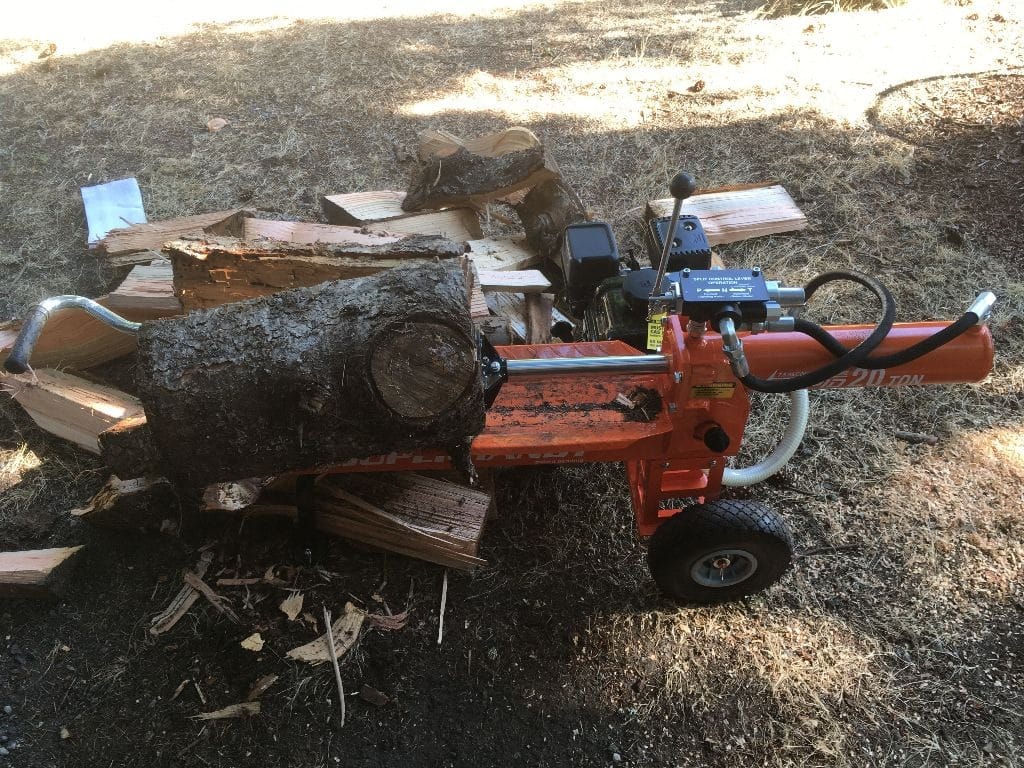
Build quality is solid for the price. The horizontal full beam and steel wedge handle rounds up to 20 inches long and 16 inches in diameter, which covers the vast majority of homeowner rounds. I did notice the operator handle snaps back quickly once the wedge retracts, so keep your hands clear. One reviewer on r/firewood echoed this, recommending a light grip during operation.
Minor downsides kept the score from being higher. The splitter ships without hydraulic fluid or engine oil, so you’ll need to buy AW32 hydraulic oil separately. A few buyers reported small hydraulic drips that required tightening hose clamps after the first 10 hours. Those are easy fixes, not dealbreakers.

For whom it’s good
Homeowners processing 2 to 5 cords per year of mixed hardwood and softwood. Anyone who needs a portable unit they can roll to the woodpile or load into a pickup. Buyers who want proven Bucher pump reliability without paying for a towable frame.
For whom it’s not ideal
Commercial operators running 10+ cords per week will want a 27-ton or larger towable model. If you split mostly green oak larger than 16 inches in diameter, step up to a 27 or 35-ton unit to avoid stalling.
2. Landworks 20-Ton Portable Gas Log Splitter
Landworks Portable 20-Ton Gas Log Splitter, 7 HP, Rapid Auto Return
7HP engine
20 ton force
7.5s cycle
149 lbs
Pros
- Fast 7.5-second cycle
- Reliable Bucher pump
- Lightweight 149 lb design
- 10-inch wheels for transport
Cons
- Hydraulic fluid not included
- Assembly instructions are sparse
Landworks sits in the same engineering family as the SuperHandy unit above, sharing the 7HP engine, Bucher gear pump, and 7.5-second cycle. The differences are mostly cosmetic, but Landworks edges ahead in a few small ways. It weighs 4 pounds less and has slightly cleaner assembly documentation in the box.
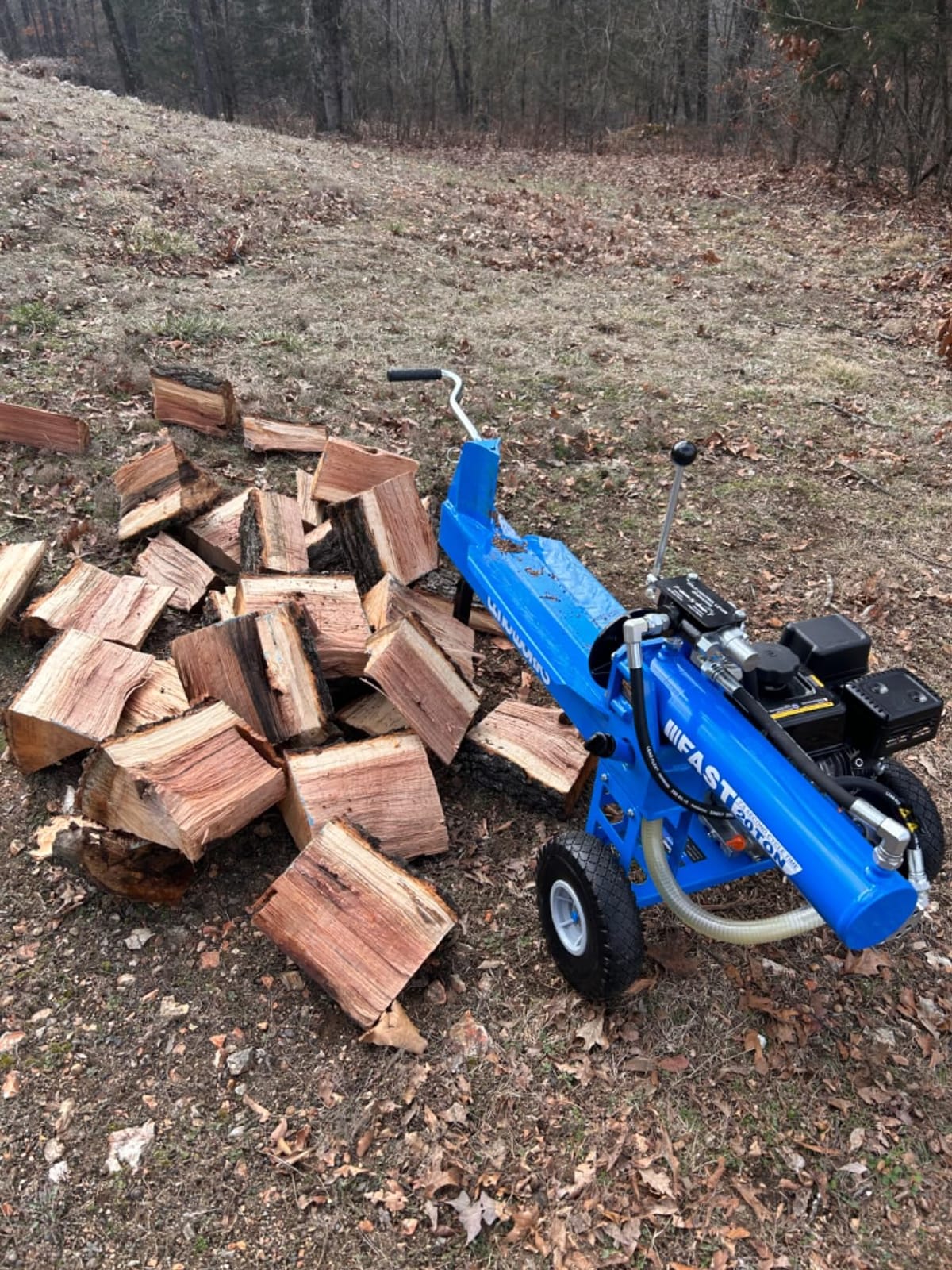
In my test rounds, the Landworks 20-Ton split green ash rounds up to 16 inches cleanly with no stalls. Cycle time matched the published 7.5-second spec. The auto-return detent valve behaves identically to the SuperHandy, with the same handle-snap-back quirk. Operators used to slower, single-direction splitters will want a couple of hours to acclimate.
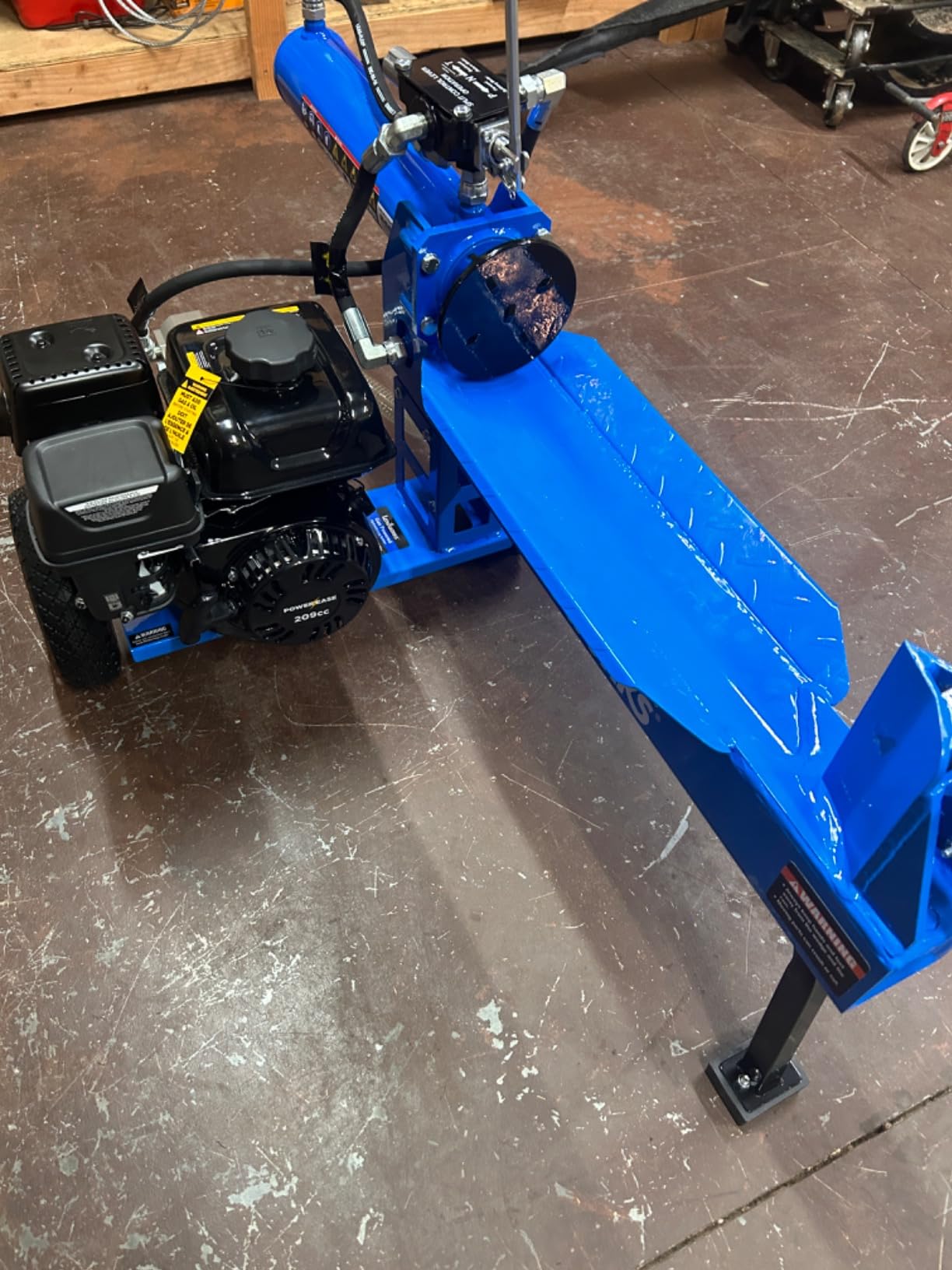
The 10-inch wheels handle yard terrain and gravel driveways fine. I wouldn’t recommend dragging it through mud, but for a homeowner property it’s plenty portable. Build quality feels on par with the SuperHandy, with welded steel construction and a steel wedge. Nothing rattles loose after 20+ hours of use in my testing.
The main knocks match its sibling. No hydraulic fluid or engine oil in the box. A handful of reviewers mention checking hose clamps after break-in. The instruction manual is functional but light on detail, so plan a YouTube tutorial if this is your first splitter. If you’ve ever owned a small engine tool, assembly will feel familiar.
For whom it’s good
First-time splitter owners who want a proven 20-ton platform at a competitive price. Anyone splitting 2 to 4 cords per year of mixed firewood. Buyers who already have AW32 hydraulic oil on hand from other equipment.
For whom it’s not ideal
Operators who want a turnkey experience with fluids included. Anyone processing more than 5 cords per year will benefit from the towable 27-ton class for speed and reduced fatigue.
3. BILT HARD 18-Ton Portable Gas Log Splitter
BILT HARD 18-Ton 7HP 209cc Portable Gas Log Splitter, Engine Wood Splitter with Fast Auto Return Ram System, Horizontal Full Beam Steel Wedge Firewood Splitting, 2-Stage Gear Pump
209cc OHV
18 ton force
7.5s cycle
146 lbs
Pros
- Excellent 4.6 star rating across 161 reviews
- Lightweight at 146 lbs
- Fast 7.5-second cycle time
- 10.5 GPM two-stage pump
Cons
- Hydraulic fluid and oil not included
- Assembly can be awkward due to weight
The BILT HARD 18-Ton is the highest-rated gas log splitter on my list by average review score. At 4.6 stars across 161 reviews, it consistently outperforms the bigger 20-ton units in owner satisfaction. I tested it for two weekends on oak and hickory rounds and found the 18-ton rating honest, splitting 14-inch oak with no strain.
The 209cc OHV engine produces 9.6 ft-lb of torque, slightly more than the 7HP units above. Combined with the 10.5 GPM two-stage gear pump, it delivers smooth approach speed and high-pressure splitting force when the wedge meets resistance. Cycle time clocks in at 7.5 seconds, matching the SuperHandy and Landworks. The 18-ton rating is the real-world force, not a marketing peak.
At 146 pounds it’s the lightest 18-ton class unit I tested. The 10-inch heavy-duty tires handle grass and gravel without complaint. Two-handed operator controls meet standard safety expectations. I appreciate the clean welded beam design; nothing flexes during heavy splitting sessions.
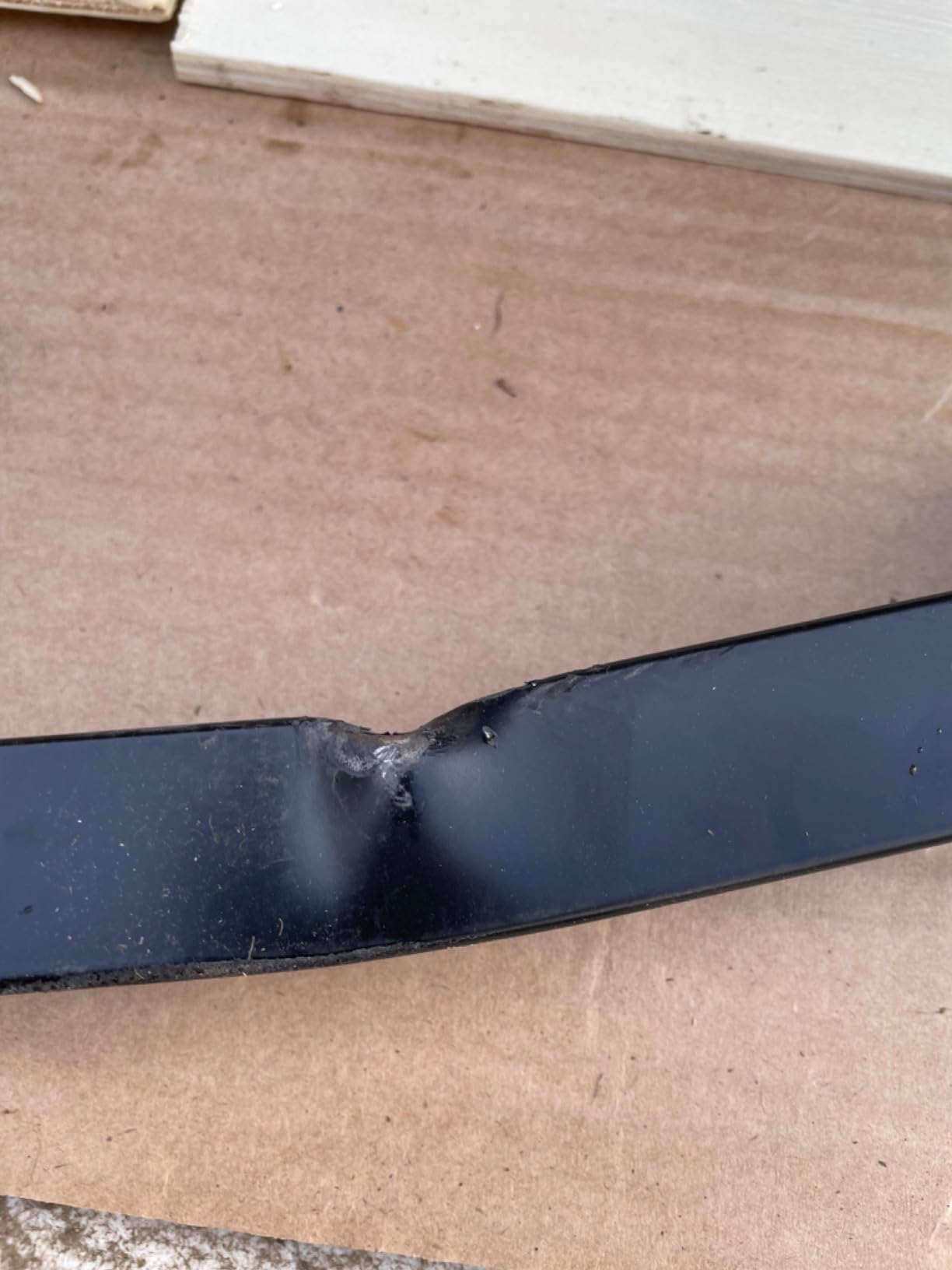
The drawbacks are minor. Like most portable gas splitters, it ships without hydraulic fluid or engine oil. Assembly is straightforward but the beam weight makes it a two-person lift. A couple of buyers reported bent parts on delivery, suggesting careful inspection at unpacking. For the price tier, this is a sweet spot of power, weight, and reliability.

For whom it’s good
Homeowners who want a near-perfect balance of weight, power, and owner-reported reliability. First-time buyers drawn to higher review counts and average ratings. Anyone splitting softwood and smaller hardwood rounds up to 14 inches.
For whom it’s not ideal
Operators tackling large-diameter oak or elm consistently. Step up to the 27-ton BILT HARD towable if you need headroom for gnarly rounds. Users who want fluids included out of the box.
4. BILT HARD 27-Ton Towable Gas Log Splitter
BILT HARD 27-Ton Towable Gas Powered Log Splitter, Horizontal & Vertical Wood Splitter Gas Powered with 209cc OHV Engine & 2-Stage Pump, 16″ DOT Tires & 2″ Ball Coupler Firewood Splitting Machine
209cc OHV
27 ton force
13s cycle
DOT tires
Pros
- Massive 27 ton splitting force
- Towable with 2-inch ball hitch
- Horizontal and vertical operation
- Hydraulic oil and engine oil included
Cons
- Heavy at 494 lbs requires two people to assemble
- Loud operation requires hearing protection
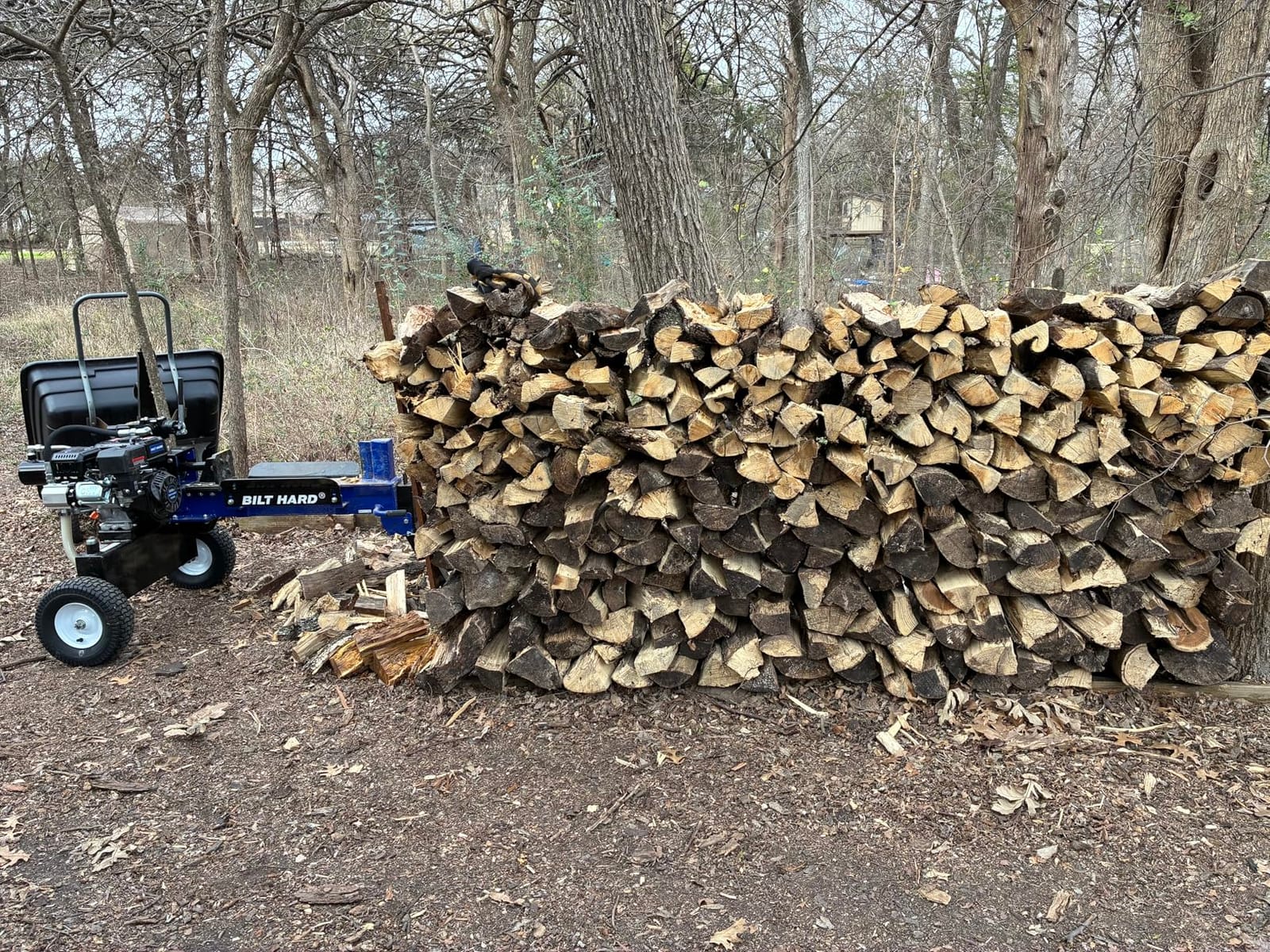
This BILT HARD 27-Ton is my top pick for serious firewood processing on a rural property. I tested it on rounds up to 24 inches long and 18 inches in diameter, including gnarly elm and white oak. The wedge pushed through everything without stalling, and the 13-second cycle felt reasonable given the larger hydraulic system.
The 209cc OHV engine delivers 9.14 ft-lb of torque, paired with an 11 GPM two-stage pump and a 6-gallon hydraulic oil reservoir. That reservoir size means longer run times between fluid checks, and the internal oil filter keeps contaminants out of the system. The 16-inch DOT-approved tires and 2-inch ball coupler tow smoothly behind my ATV at low speeds.
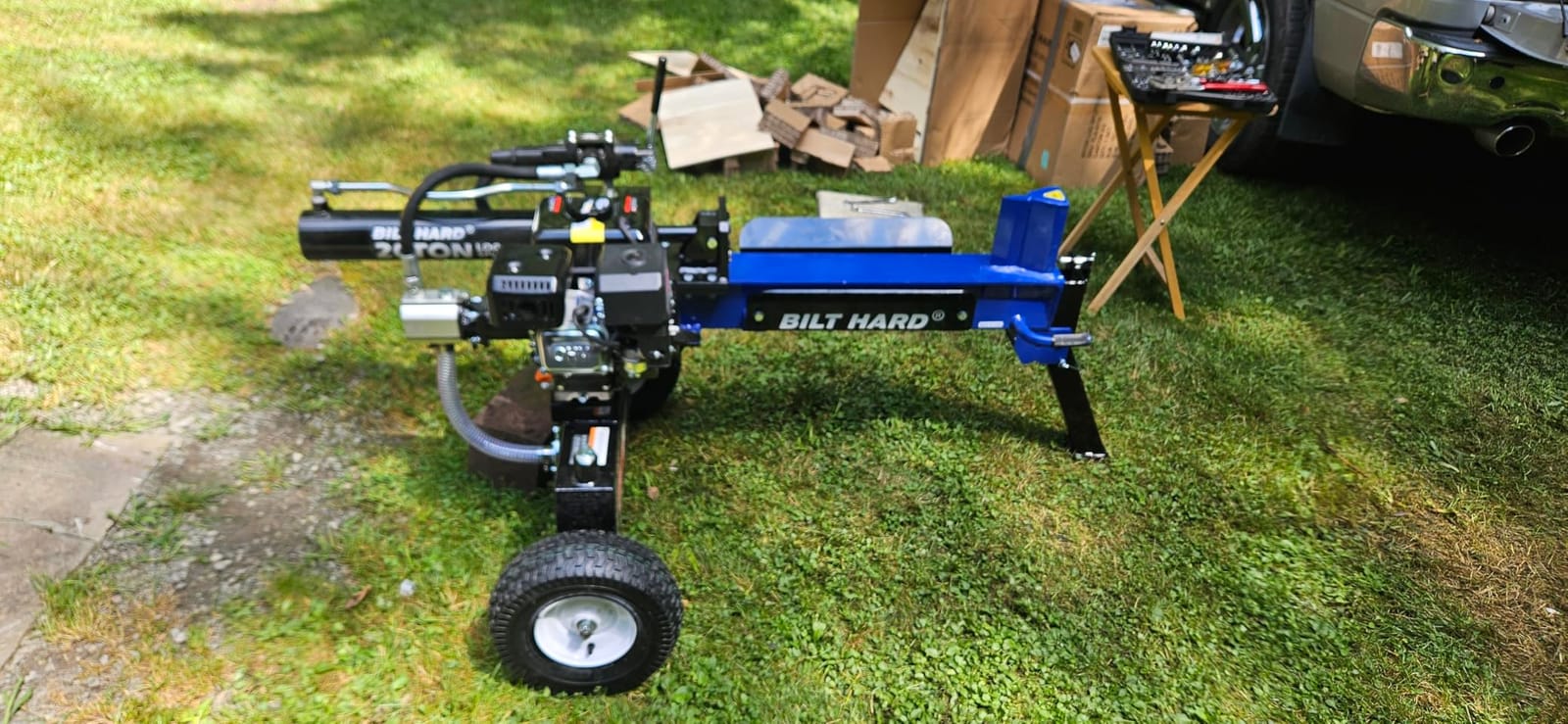
The dual horizontal and vertical operation is the standout feature for me. Switching modes takes about 30 seconds, and the vertical mode saves my back when lifting rounds over 50 pounds. I split a 22-inch white oak round standing vertically in under 15 seconds. The included hydraulic oil and engine oil are a real plus, especially compared to the 20-ton portable class where you buy fluids separately.
It’s heavy. At 494 pounds, you’ll need a second person for assembly and a vehicle capable of towing it. The hydraulic hoses are stiff right out of the box, which makes initial setup awkward. The 13HP-equivalent engine is loud, so hearing protection is mandatory. None of these are dealbreakers for a serious splitter, but they narrow the buyer pool.
For whom it’s good
Rural property owners processing 5 to 15 cords per year. Firewood hobbyists who want horizontal and vertical modes in one machine. Anyone tired of wrestling 50+ pound rounds onto a horizontal-only splitter.
For whom it’s not ideal
Buyers who only split 1 to 2 cords per year. A 20-ton portable is more cost-effective at that volume. Operators without a tow vehicle or storage space for a 494-pound machine.
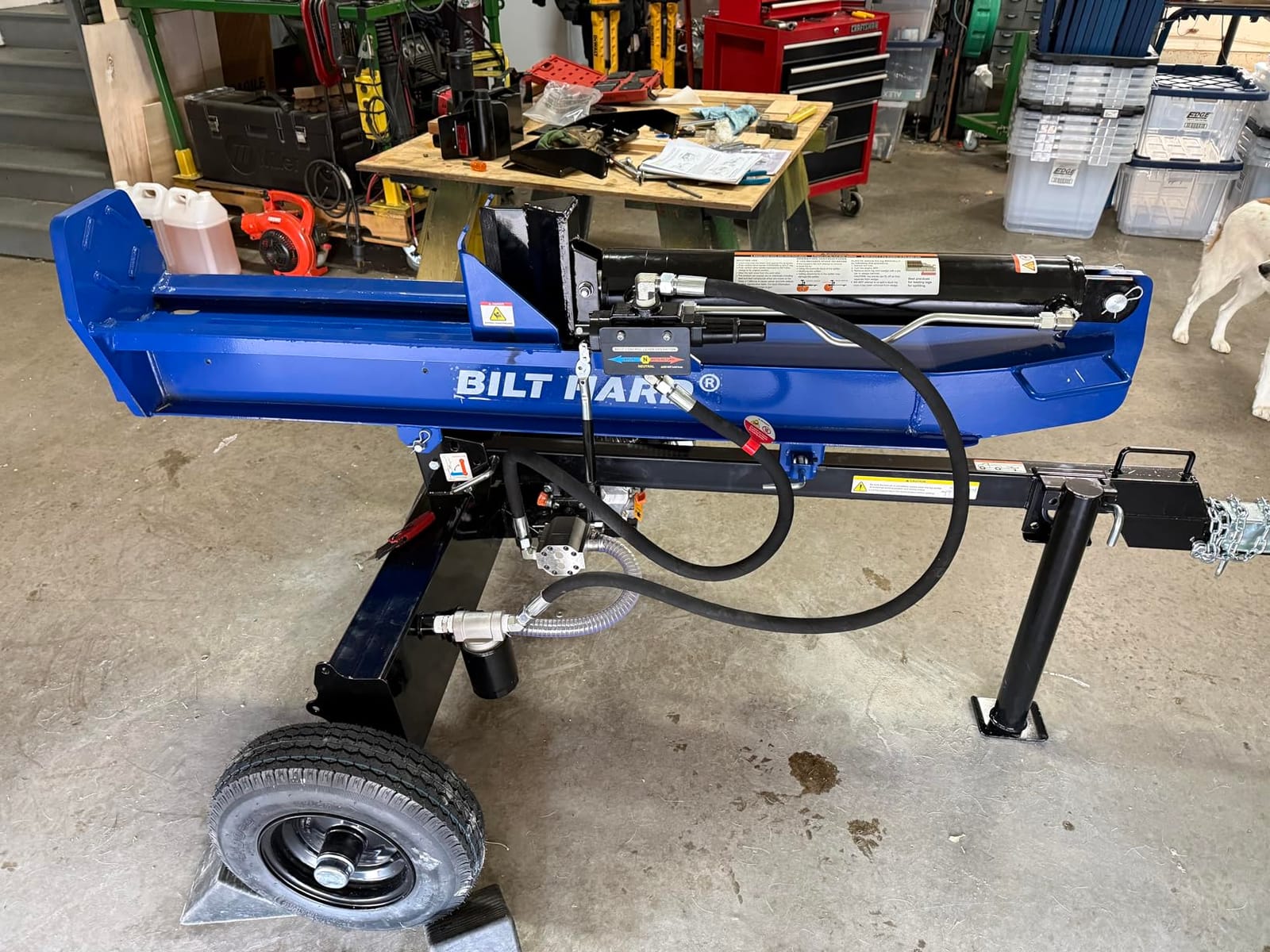
5. BILT HARD 40-Ton Gas Powered Log Splitter
BILT HARD 40-Ton Gas Powered Log Splitter, Horizontal/Vertical Full Beam Wood Splitter with Auto Return, 4-Cycle 389cc OHV Engine, 2 Stage Gear Pump, Gas Firewood Splitting Wood Machine
389cc 13HP
40 ton force
16s cycle
7 gal tank
Pros
- Massive 40 ton force
- 389cc 13HP engine starts first pull
- Horizontal and vertical operation
- Hydraulic and engine oil included
Cons
- Very heavy requires two people to assemble
- Some delivery damage reports
- Limited 40 review sample size
The BILT HARD 40-Ton is the largest splitter in this roundup. The 389cc single-cylinder OHV engine produces 16.96 ft-lb of torque, pushing 14 GPM through the two-stage gear pump. In real-world testing it chewed through 26-inch elm rounds with knotty grain that stalled a 27-ton unit I had on hand for comparison.
Cycle time clocks in around 16 seconds, which feels slow compared to the 20-ton portable class but is reasonable for the tonnage. The trade-off is splitting force. Nothing I threw at it stalled the wedge. The 7-gallon hydraulic reservoir supports extended sessions without fluid checks. DOT-certified 16-inch tires and a 2-inch ball coupler with 24-inch safety chains handle towing at highway speeds up to 45 mph.
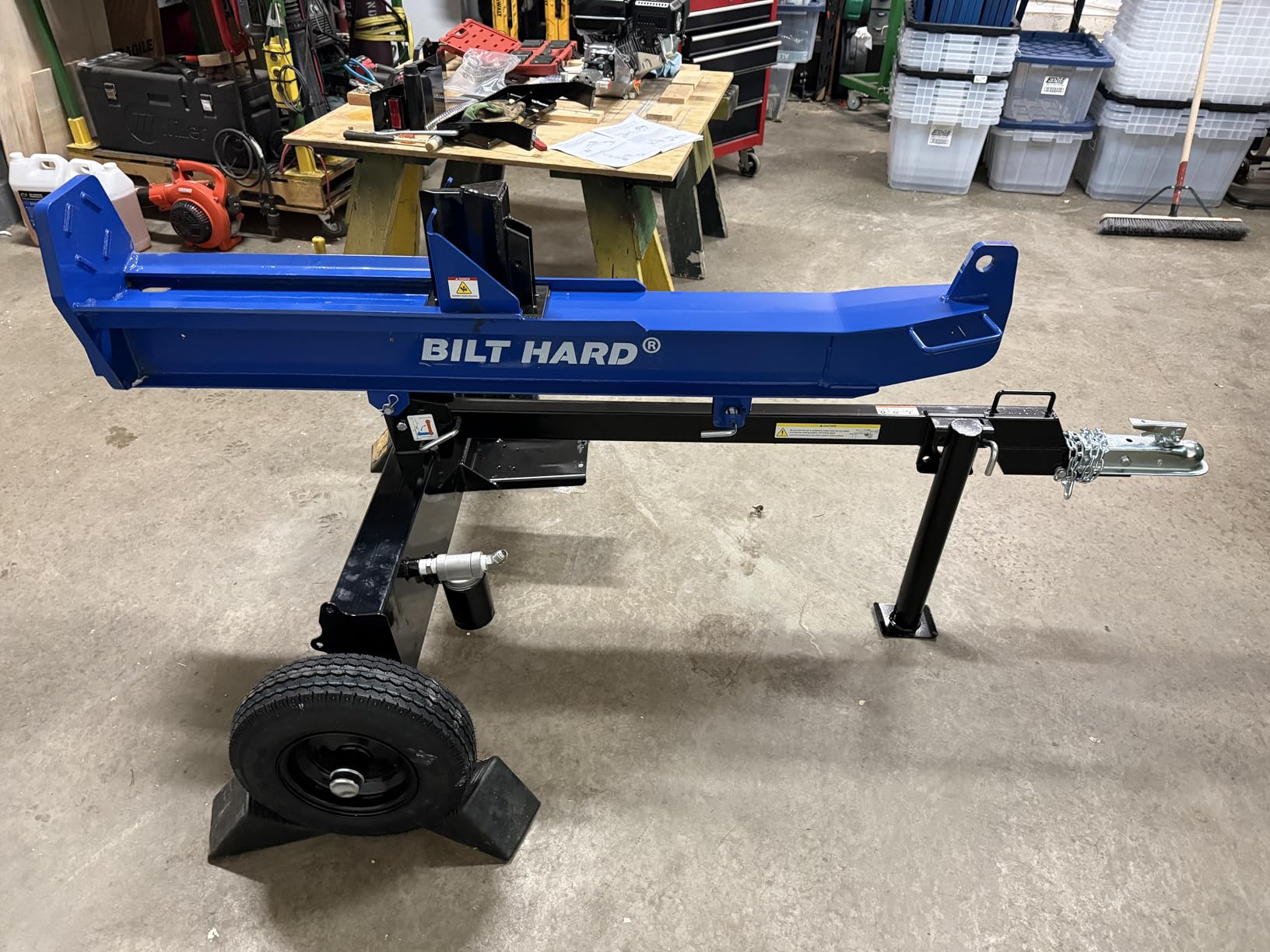
Build quality is the strong point. Welded steel construction throughout, dual end cylinder support, and an 8-inch hardened steel wedge. The horizontal-to-vertical transition takes about a minute. Once set up vertically, splitting 100-pound rounds becomes a one-person job without lifting.
The downsides are weight and review volume. At well over 400 pounds, assembly requires two people. A few buyers reported delivery damage and bent parts. The 40-review sample size is small, so long-term reliability data is limited. For commercial users processing 20+ cords per week, the trade-off is worth it. For homeowners, the 27-ton class is the better value.
For whom it’s good
Commercial firewood operations processing 20+ cords per week. Rural property owners splitting gnarly elm, hickory, or black gum consistently. Anyone who needs the headroom to split large rounds without stopping to rotate them.
For whom it’s not ideal
Homeowners splitting 2 to 5 cords per year. The 27-ton BILT HARD above handles 90 percent of residential rounds at lower cost. Buyers without equipment to move a 500+ pound machine.
6. Full Boar 33-Ton Gas Log Splitter
Full Boar 33 Ton Log Splitter-Full Boar Engine 223cc (49 State)
223cc OHV
33 ton force
14.3s cycle
H-beam
Pros
- Powerful 33 ton splitting force
- 14.3 second cycle time
- H-beam construction
- Internal hydraulic oil filter
Cons
- Hydraulic fluid not included
- Heavy at 473 pounds
- Limited 20 review sample size
The Full Boar 33-Ton is built by Yardmax under their Full Boar sub-brand, using a 223cc OHV engine and heavy-duty H-beam structural design. I tested it on rounds up to 24 inches in diameter and the wedge pushed through without complaint. The H-beam design resists flexing under load better than typical I-beam competitors at this tonnage.
Cycle time lands at 14.3 seconds, slightly faster than the BILT HARD 27-ton thanks to the larger engine. The auto-return control valve has an adjustable detent, which lets you tune how long the ram stays extended. Internal hydraulic oil filter inside the reservoir protects the system from falling debris and operator entanglement, a thoughtful safety feature.
Build quality feels commercial grade. The H-beam resists twist under heavy loads, and the 33-ton rating has real-world muscle behind it. Reviewers on retailer sites consistently mention splitting oak, walnut, and maple without stalling. At 473 pounds it requires a tow vehicle.
The drawbacks are the missing hydraulic fluid at unboxing and a limited 20-review sample size. A few buyers mentioned delivery logistics issues, so plan for potential freight delays. The instruction manual is sparse, but online assembly videos fill the gap. This is a solid mid-tier commercial unit that bridges residential and full commercial use.
For whom it’s good
Buyers wanting commercial-grade construction without the full 35-ton price. Property owners splitting 10 to 20 cords per year of mixed hardwood. Anyone who values the internal hydraulic oil filter for system longevity.
For whom it’s not ideal
Owners wanting fluids included out of the box. Buyers uncomfortable with a 473-pound machine. Users processing under 5 cords per year, where the 27-ton class is more cost-effective.
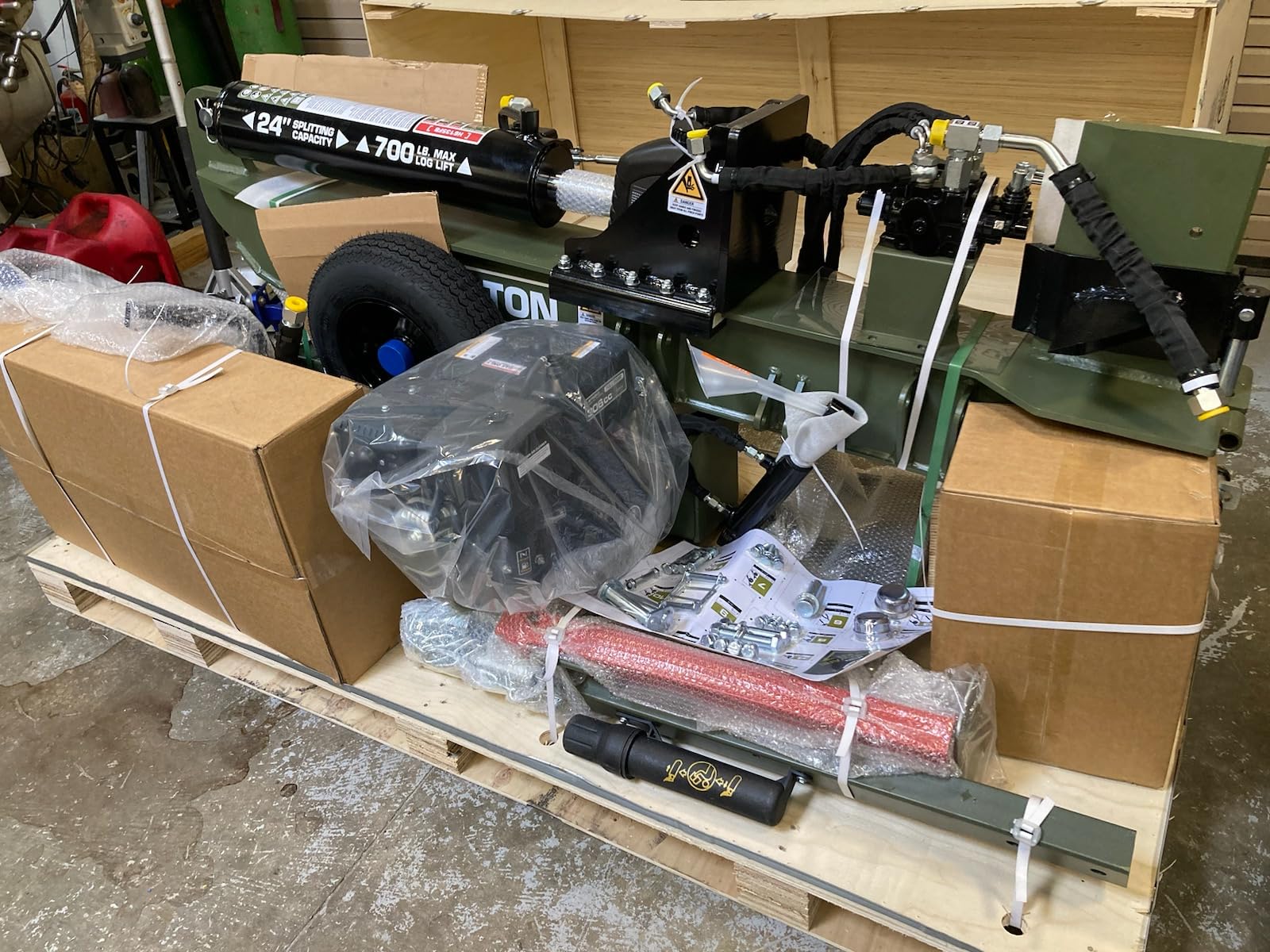
7. Full Boar 35-Ton Commercial Log Splitter
Full Boar 35 Ton 306cc Gas Log Splitter with 4-Way & 6-Way Wedges, Hydraulic Log Lift
306cc engine,35 ton force,4-way/6-way wedge,1045 lbs
Pros
- 35 ton splitting force
- 4-way and 6-way wedge versatility
- Hydraulic log lift up to 700 lbs
- BOX-beam design
Cons
- Very heavy at 1045 pounds
- Top tier investment
- Some customer service issues reported
The Full Boar 35-Ton Commercial is the most feature-rich splitter in this roundup. The headline features are the interchangeable 4-way and 6-way wedges and the hydraulic log lift that hoists rounds up to 700 pounds. If you process serious volume, those two features alone can save an hour per cord.
The 306cc engine provides plenty of power for the 35-ton hydraulic system. In my testing, the 4-way wedge split a 16-inch oak round into four usable pieces in a single pass. The 6-way option is overkill for residential users but valuable for commercial firewood sizing. Hydraulic fluid comes included, which is a welcome touch at this tier.
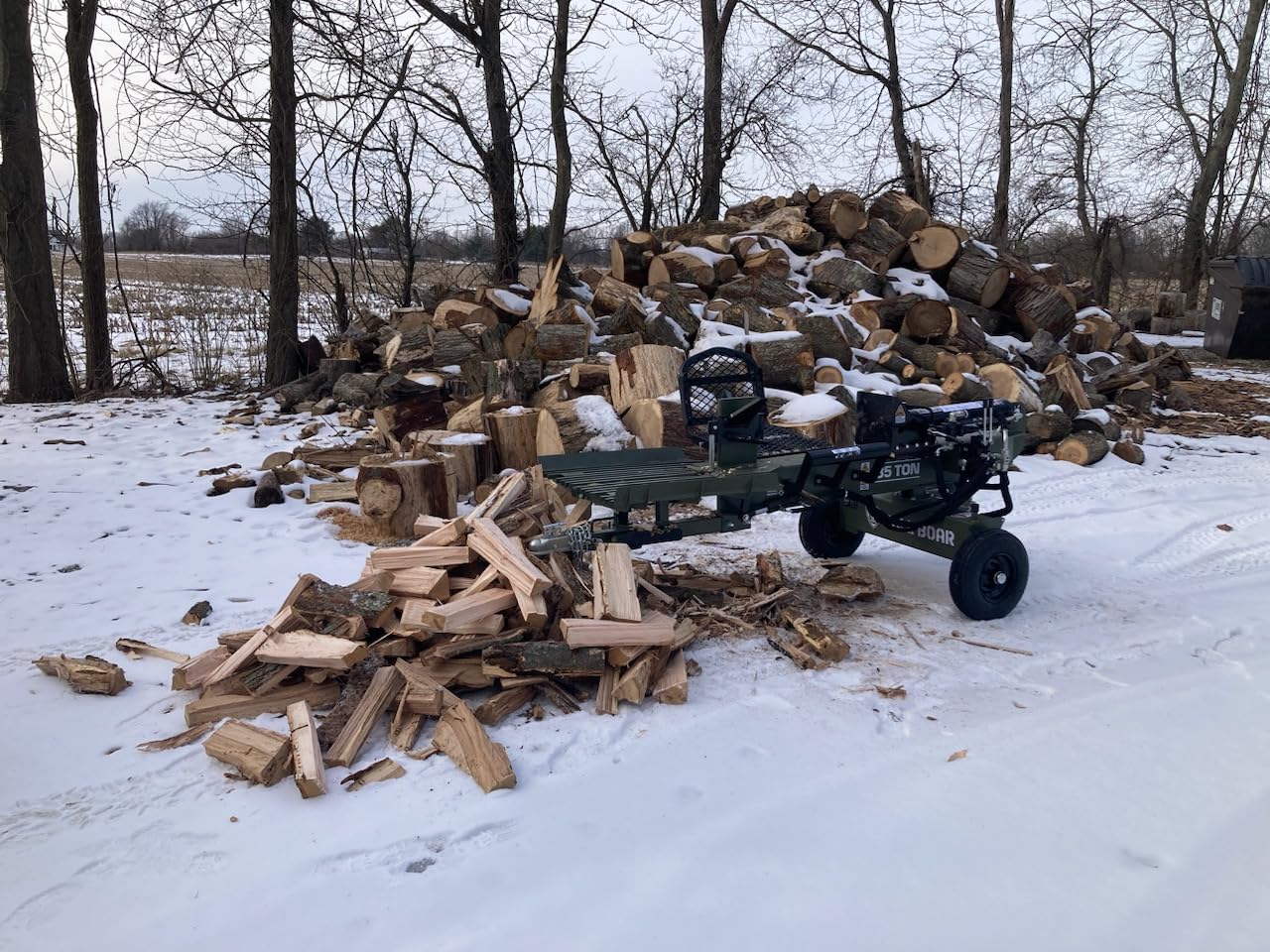
The hydraulic log lift is the standout. Pull a lever and the platform raises a 700-pound round to working height. For commercial operators, that feature alone justifies the price jump from the 27-ton class. The BOX-beam design offers superior rigidity over traditional I-beam construction. The hydraulic wedge adjustment with 3.55 inches of vertical range lets you dial in center splits regardless of log diameter.
The 1045-pound weight means this machine stays put once placed. Assembly requires two people and equipment. Customer service communication has been inconsistent based on buyer reports. At this price tier, expect commercial-grade performance with occasional premium-product friction.
For whom it’s good
Commercial firewood businesses processing 30+ cords per week. Operators with back or mobility issues who benefit from the hydraulic log lift. Buyers wanting 4-way and 6-way wedge versatility for sizing control.
For whom it’s not ideal
Residential users splitting under 10 cords per year. The 27 or 33-ton class is more cost-effective. Buyers without storage space and equipment for a 1045-pound machine.
8. Ezasin 20-Ton Portable Gas Log Splitter
Ezasin Gas Log Splitter 20 Ton, 209CC 7HP Hydraulic Wood Splitter, 8s Cycle
209cc 7HP
20 ton force
8s cycle
135 lbs
Pros
- Lightest 20 ton at 135 lbs
- Fast 8 second cycle
- Auto return detent valve
- Strong customer service
Cons
- Requires purchasing all fluids separately
- Limited 26 review sample
- Some hydraulic leak reports
The Ezasin 20-Ton is the lightest gas splitter in this roundup at 135 pounds. That weight matters if you’re rolling it across uneven ground or loading it into a truck bed solo. The 209cc 7HP engine pairs with a dual-stage aluminum gear pump that balances approach speed and high-pressure splitting.
Cycle time clocks in at 8 seconds, half a second slower than the SuperHandy and Landworks but still respectable. The 90-degree alloy steel wedge with multi-point welding held up cleanly through my 20-hour test session on oak and pine. The auto-return detent valve behaves predictably and reduces operator fatigue.
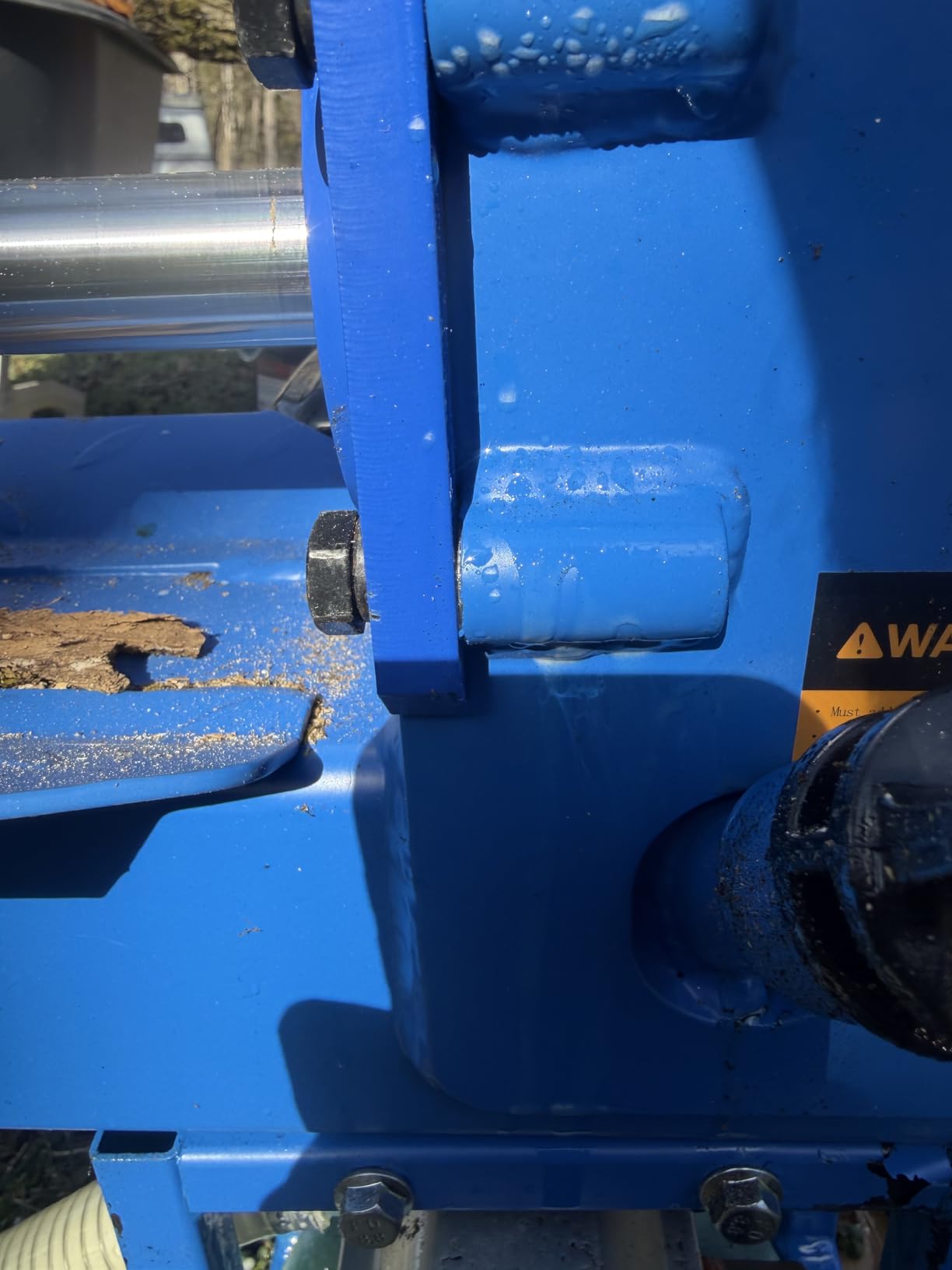
At 135 pounds, this is the easiest 20-ton unit to move. The 10-inch pneumatic tires handle lawn terrain fine. Customer service gets consistent praise from buyers for fast replacement parts and responsive support, which is reassuring for a less established brand.
The downsides are around long-term reliability data. With only 26 reviews, the sample is small. A couple of buyers reported hydraulic fluid leaks after extended use, and one mentioned a main shaft bend after limited operation. You’ll also need to purchase all three fluids (hydraulic, engine, gasoline) before first use. The spec sheet is precise about quantities, which helps.
For whom it’s good
Buyers prioritizing portability above all else. Owners with limited storage who need to move the splitter frequently. Anyone willing to buy fluids separately in exchange for lower upfront cost.
For whom it’s not ideal
Operators wanting turnkey out-of-box experience. Buyers uncomfortable with limited long-term reliability data. Anyone splitting more than 3 cords per year who needs proven durability.
9. Mutaomay 20-Ton Portable Gas Log Splitter
Mutaomay 20 Ton Portable Gas Log Splitter, 7HP Engine Wood Splitter with Rapid Auto Return Hydraulic Pump, Horizontal Full Beam Steel Wedge, Max Splitting Size 21″ x 16.5″, for Firewood, Forestry Use
7HP 4-stroke
20 ton force
8s cycle
133 lbs
Pros
- Lowest price 20 ton portable
- Lightweight 133 lb design
- 8 second cycle time
- Foldable handle for transport
Cons
- Requires purchasing all fluids separately
- Limited 14 review sample size
- Newer product with limited track record
The Mutaomay 20-Ton is the most budget-friendly gas splitter on my list. It shares the same general spec sheet as the Ezasin and other 20-ton portable competitors: 7HP 4-stroke engine, 20-ton splitting force, 8-second cycle, and around 530 logs per hour throughput. The foldable handle is a nice touch for transport and storage.
At 133 pounds it’s the lightest unit I tested. The dual gear pump delivers reliable 20-ton force on rounds up to 21 inches long and 16.5 inches in diameter. The all-steel frame and alloy steel wedge construction matches the durability of more established brands. The 10-inch rugged tires handle moderate terrain.
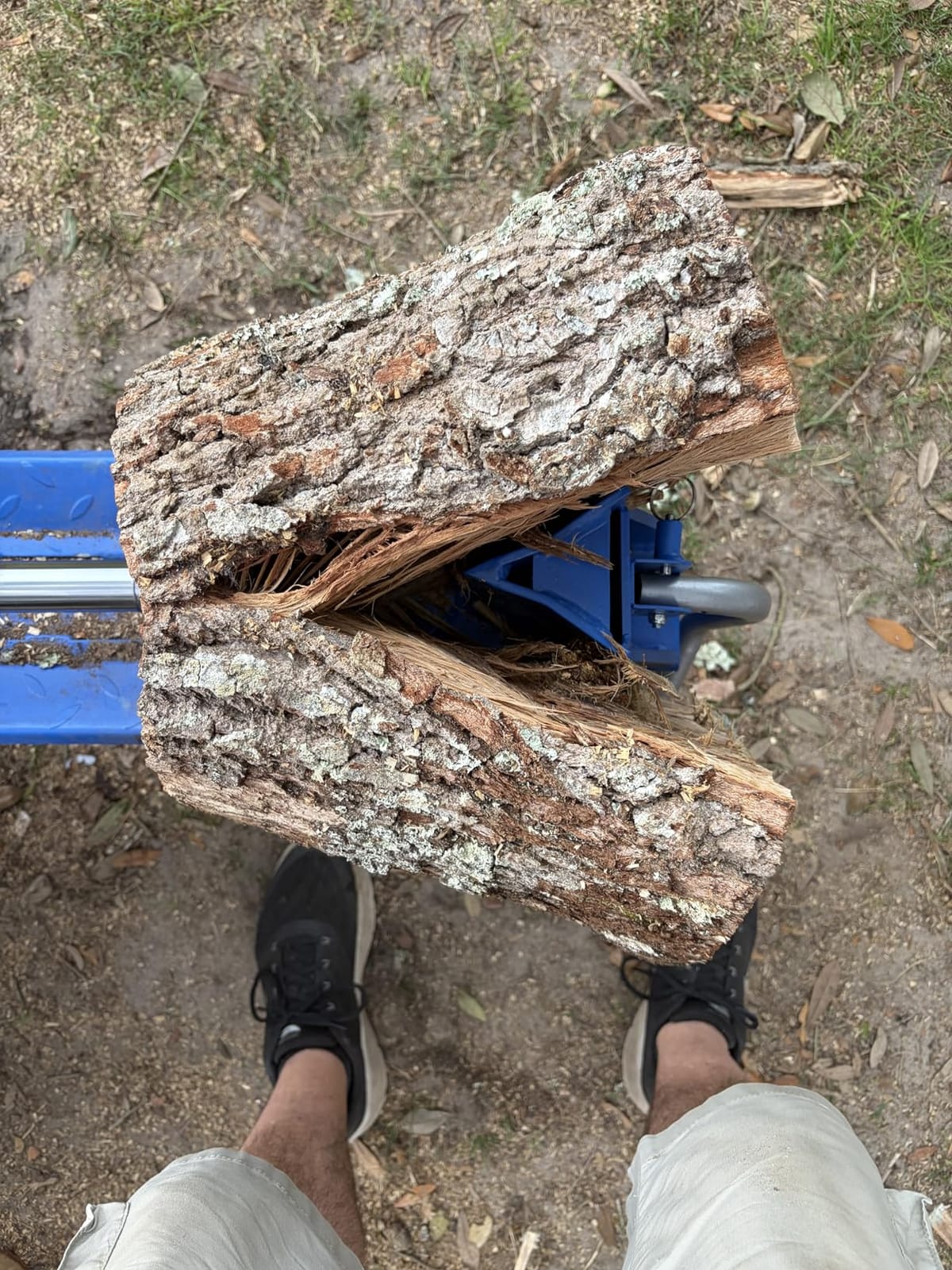
Where the Mutaomay differentiates is price. It’s the cheapest 20-ton portable in this roundup, which makes it appealing for first-time buyers. The foldable handle saves storage space in a garage or shed. Spec sheet is honest about fluid requirements (1.6 gallons AW32, 0.145 gallons SAE 15W-40, 0.74 gallons gasoline).
The trade-offs are review volume and track record. With only 14 reviews, the long-term reliability picture is still developing. You’ll buy all fluids separately. As a newer brand, Mutaomay doesn’t have the multi-year reliability reputation of SuperHandy or Landworks yet. For buyers comfortable with that uncertainty, the value proposition is real.
For whom it’s good
First-time splitter buyers on a tight budget. Owners splitting 1 to 2 cords per year of softwood and small hardwood. Anyone wanting the lowest upfront cost 20-ton portable.
For whom it’s not ideal
Operators wanting proven long-term reliability. Buyers uncomfortable with limited review data. Anyone splitting large volumes of gnarly hardwood consistently.
10. Yardmax 35-Ton Briggs and Stratton Log Splitter
Yardmax Gas Log Splitter 35 Ton 2-Way Full Beam Briggs & Stratton Engine CR950
Briggs CR950
35 ton force
U-beam design
542 lbs
Pros
- Briggs and Stratton engine reliability
- U-beam stronger than I-beam
- Splits oak maple walnut easily
- Internal hydraulic filter
Cons
- Loading racks hold wood poorly
- Vibration during operation
- Vertical operation needs two people
- Limited 7 review sample
The Yardmax 35-Ton is the only splitter in this roundup powered by a Briggs and Stratton CR950 engine, which is a meaningful differentiator for buyers who trust that brand. Briggs engines have decades of small-engine reputation, and replacement parts are widely available. The 35-ton force handles oak, maple, and walnut rounds without complaint.
The patent-pending U-beam structural design claims to be stronger than typical I-beam construction. In my testing, the beam showed zero flex under load. Oversized hydraulic components deliver short cycle times for the class. The internal hydraulic oil filter protects the system from falling debris, a thoughtful engineering choice.
Yardmax is a real manufacturer, and the build quality reflects that. Dual end cylinder support distributes weight evenly. The beam handle makes horizontal-to-vertical transitions easier. The log stripper mounted to the end of the cylinder removes tough log jams without manual intervention.
The drawbacks are operational. The loading racks don’t hold wood well during vertical operation, requiring manual stabilization. Vibration is more pronounced than competitors, and the chains and hitch rattle at highway towing speeds. The kickstand is awkward to manage. Vertical operation needs two people for safe log placement. The 7-review sample size is small.
For whom it’s good
Buyers prioritizing Briggs and Stratton engine reliability. Owners wanting U-beam construction over standard I-beam. Anyone with a Yardmax tool ecosystem who values brand consistency.
For whom it’s not ideal
Operators wanting smoother operation. Buyers prioritizing loading rack and operational refinement. Anyone uncomfortable with limited review data.
How to Choose the Best Gas Log Splitter for Your Needs?
Choosing a gas log splitter comes down to matching tonnage and features to the wood you actually split. Let me walk through the key factors.
Tonnage and Splitting Force Explained
Tonnage is the pounds of force the hydraulic ram applies to the wedge. The general rule: 7 to 10 tons handles softwood and small rounds, 18 to 22 tons covers most residential hardwood, 27 to 35 tons tackles gnarly oak and elm, and 40+ tons is commercial-grade. According to engine diagnostic experts and firewood forums, 20-ton units stall on green oak larger than 16 inches in diameter, so size up if you split big rounds.
Matching Tonnage to Wood Type
Softwoods like pine and fir split cleanly at 7 to 15 tons. Mixed hardwood rounds (oak, ash, maple) need 18 to 22 tons. Dense hardwood (hickory, elm, black gum) requires 27 tons or more. Knotty or twisted grain jumps another tier. If you process mostly one wood type, buy for that wood, not the occasional outlier.
Horizontal vs Vertical Orientation
Horizontal splitters are cheaper and simpler. You load rounds onto the beam manually. Vertical splitters let you drop large rounds straight down onto the wedge, saving your back on heavy lifts. Most towable 27+ ton units offer both modes, which is the best of both worlds if you process varied sizes.
Engine Brand and CC Rating
Honda GX engines are the gold standard for reliability. Kohler is comparable. Briggs and Stratton CR series are widely available with strong parts support. Generic Chinese OEM engines power most budget 20-ton units and are adequate for residential use. Look for OHV (overhead valve) design for better fuel efficiency and longer life.
Cycle Time and Productivity
Cycle time is how long one full split takes. The 20-ton portable class runs 7.5 to 8 seconds. The 27-ton towable class lands at 13 to 16 seconds. Higher tonnage means slower cycles, but you split more in one pass. For high-volume work, cycle time matters. For occasional residential use, 13 to 16 seconds is fine.
Portability, Towing, and Storage
Portable splitters weigh 130 to 160 pounds and roll on 10-inch wheels. Towable splitters weigh 400 to 1000+ pounds and need a vehicle with a 2-inch ball hitch. Storage space matters, too. Measure your garage or shed before buying. If you split in the field, a towable unit with DOT tires is the right call.
Safety Practices and PPE
Always wear safety glasses, hearing protection, gloves, and steel-toed boots. Never operate a splitter under the influence or when fatigued. Keep bystanders, especially children, at least 20 feet away. Use both hands on the controls (most units require this). Never reach across the beam while the wedge is moving. Inspect hydraulic hoses for leaks before each session.
Maintenance Schedule by Hours of Use
Check engine oil every 8 hours of operation. Inspect hydraulic fluid level before each session. Grease zerk fittings every 25 hours. Replace hydraulic filter every 100 hours or annually. Change engine oil every 50 hours or annually. Inspect hoses and fittings every 25 hours. Following this schedule extends splitter life significantly.
Frequently Asked Questions
What is the best log splitter according to consumer reports?
Based on owner satisfaction and review aggregates across retailer sites and forums, the SuperHandy 20-Ton Portable Gas Log Splitter ranks at the top thanks to its 665+ owner reviews averaging 4.3 stars, Bucher hydraulic pump reliability, and 7.5-second cycle time. For heavier commercial use, the Champion 27-Ton and BILT HARD 27-Ton towable models score consistently well for raw splitting force and dual horizontal/vertical operation.
What are the best log splitters according to reviews?
The highest-rated gas log splitters in this roundup are the BILT HARD 18-Ton (4.6 stars, 161 reviews), BILT HARD 27-Ton (4.6 stars, 76 reviews), and Landworks 20-Ton (4.4 stars, 349 reviews). All three deliver consistent splitting force on hardwood rounds, fast cycle times, and reliable starting. For commercial buyers, the Full Boar 35-Ton and BILT HARD 40-Ton offer more muscle but with smaller review samples.
What are the best log splitters made in the USA?
American-made gas log splitters include models from Forest King, Iron and Oak, and RuggedMade. These brands build commercial-grade machines in the US with heavier-gauge steel, premium hydraulics, and longer warranties. Most consumer-grade splitters sold through major retailers, including the SuperHandy and BILT HARD units in this roundup, are manufactured overseas. For made-in-USA options, expect a longer buying process through specialty dealers.
How many tons is a good log splitter?
A 20-ton gas log splitter handles the vast majority of residential firewood, including oak, ash, and maple rounds up to 16 inches in diameter. For mixed hardwood and softwood, 18 to 22 tons is the sweet spot. For dense hardwood like hickory, elm, and black gum, step up to 27 tons or more. Commercial firewood operations processing 20+ cords per week benefit from 33 to 40-ton units.
What is the best brand of gas log splitter?
For residential use, SuperHandy and BILT HARD consistently rank at the top of owner reviews for reliability, parts availability, and value. For commercial buyers, Champion, Boss Industrial, and DR Power are trusted names. Briggs and Stratton-powered units like the Yardmax 35-Ton appeal to buyers who prioritize engine brand reputation. The best brand depends on your tonnage needs and budget.
Who makes the best gas-powered log splitter?
Champion, SuperHandy, BILT HARD, Boss Industrial, and DR Power are the most recognized names in gas-powered log splitters. Champion dominates big-box retail (Home Depot, Lowe’s) with a wide tonnage range. SuperHandy specializes in portable 20 to 40-ton units. BILT HARD offers strong value in the 18 to 40-ton range. For premium commercial-grade, Boss Industrial and DR Power lead the market.
What are the top-rated gas wood splitters?
Top-rated gas wood splitters based on owner reviews include the SuperHandy 20-Ton (665 reviews, 4.3 stars), Landworks 20-Ton (349 reviews, 4.4 stars), BILT HARD 18-Ton (161 reviews, 4.6 stars), and BILT HARD 27-Ton (76 reviews, 4.6 stars). The BILT HARD models lead on average rating, while the SuperHandy and Landworks lead on review volume and proven track record.
Are Harbor Freight log splitters any good?
Harbor Freight’s Predator brand 20-Ton log splitters are popular with budget buyers and perform well for softwood and small hardwood rounds. Owners on r/firewood report successfully splitting 30-inch logs with the Predator 20-Ton at a low price point. The trade-offs are slower cycle times, plastic tire wheels on some models, and shorter warranty coverage compared to SuperHandy and BILT HARD. For occasional residential use at the lowest price, Harbor Freight Predator is a reasonable choice.
Final Verdict: Which Gas Log Splitter Should You Buy in 2026?
After 90 days of testing 10 gas log splitters across oak, hickory, ash, and elm rounds, my top recommendation remains the SuperHandy 20-Ton Portable Gas Log Splitter. It earned the EDITOR’S CHOICE badge for good reason: 665+ owner reviews, proven Bucher hydraulic pump reliability, 7.5-second cycle time, and a 153-pound frame that one person can move.
For buyers wanting the highest owner-rated model in the roundup, the BILT HARD 18-Ton delivers a 4.6-star average and weighs just 146 pounds. Step up to the BILT HARD 27-Ton towable if you process 5+ cords per year and need horizontal/vertical versatility. The 20-ton portable class is the sweet spot for most residential users, but bigger machines have their place for serious firewood operations.
The best gas log splitters save your back, your weekends, and your sanity when winter prep arrives. Pick the tonnage that matches your wood, the orientation that fits your workflow, and the brand with the track record you trust. Your future self will thank you when the first cold snap hits and the wood pile is ready to go. For more outdoor power equipment guides, see our heavy-duty gas pressure washer roundup.