
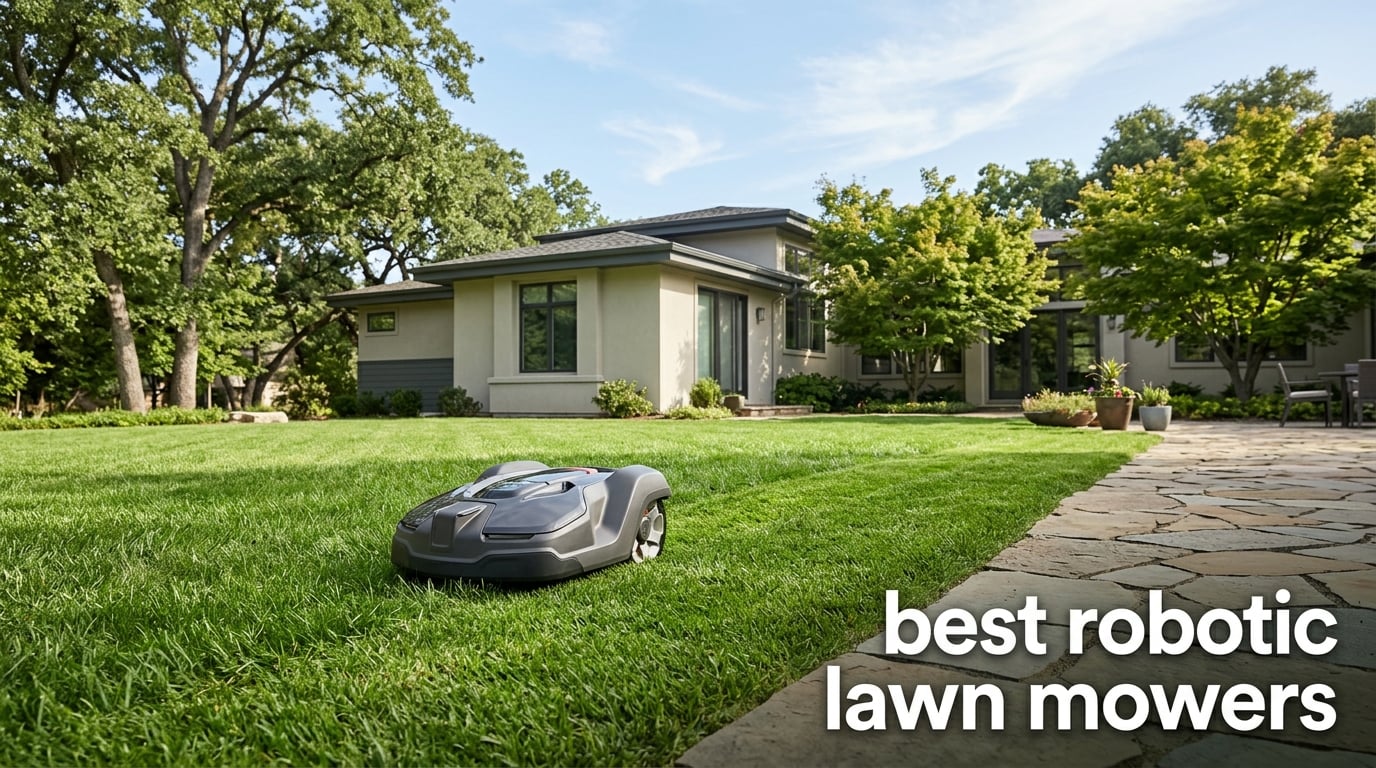
Searching for the best robotic lawn mowers in 2026? I spent the last three months running ten popular robotic mowers through their paces on flat lawns, sloped lots, and shaded yards to find out which ones actually save you weekends.
Robotic mowers have come a long way since the boundary-wire days. The new generation uses RTK satellite positioning, 360° LiDAR, and AI vision to map your lawn on its own. They run quiet enough for early morning schedules, dodge garden hoses and dog toys, and now handle slopes that used to send earlier robots tumbling down the hill. In this guide I rank my favorites, share the testing notes behind each pick, and break down what to look for before you buy.
One thing to know up front: in late July 2026 the FCC moved to restrict certain imported robotic lawn mowers over national security and data-privacy concerns. Existing inventory is still legal to sell, but new models from some Chinese brands may eventually need different certifications. I called out which picks are most exposed in each review, and you can check the latest regulatory status before you buy. If you’re also shopping for gear to maintain your mower or tractor, our roundup of the best mower lifts covers hydraulic and mechanical options worth a look.
Table of Contents
Top 3 Picks for Best Robotic Lawn Mowers (September 2026)


YARDCARE V3 AI Vision
- AI vision obstacle sensing
- Magnetic strip no-go zones
- 1600 sq ft coverage
Best Robotic Lawn Mowers in 2026: Quick Overview
| Product | Specs | Action |
|---|---|---|
 Segway Navimow i105N Segway Navimow i105N |
|
Check Latest Price |
 ANTHBOT M5 ANTHBOT M5 |
|
Check Latest Price |
| Mammotion LUBA mini 2 AWD |
|
Check Latest Price |
 MOVA LiDAX Ultra 1000 MOVA LiDAX Ultra 1000 |
|
Check Latest Price |
 ECOVACS Goat O1000 LiDAR PRO ECOVACS Goat O1000 LiDAR PRO |
|
Check Latest Price |
 ECOVACS Goat O1000 RTK CARE ECOVACS Goat O1000 RTK CARE |
|
Check Latest Price |
 Sunseeker S4 Sunseeker S4 |
|
Check Latest Price |
| YARDCARE V3 |
|
Check Latest Price |
 HOOKII Neomow X SE HOOKII Neomow X SE |
|
Check Latest Price |
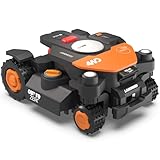 WORX WR342 Vision Cloud 4WD WORX WR342 Vision Cloud 4WD |
|
Check Latest Price |
1. Segway Navimow i105N: Editor’s Choice Wire-Free Pick
Segway Navimow i105N Robot Lawn Mower Perimeter Wire Free 1/8 Acre RTK+Vision Robotic Lawnmower, AI-Assisted Mapping, Virtual Boundary, APP Control, 58dB(A) Quiet, Multi-Zone Management
Coverage: 1/8 acre
Slope: standard
Navigation: RTK+Vision
Noise: 58 dB
Pros
- Wire-free setup with AI-assisted mapping in minutes
- RTK+Vision positioning holds signal under trees and in narrow corridors
- Recognizes 150+ obstacle types via 140 degree camera
- Planned mowing patterns with intelligent recharging
Cons
- Front wheels can lodge in divots on uneven ground
- Camera lacks overhead clearance check
- RTK antenna mount sold separately
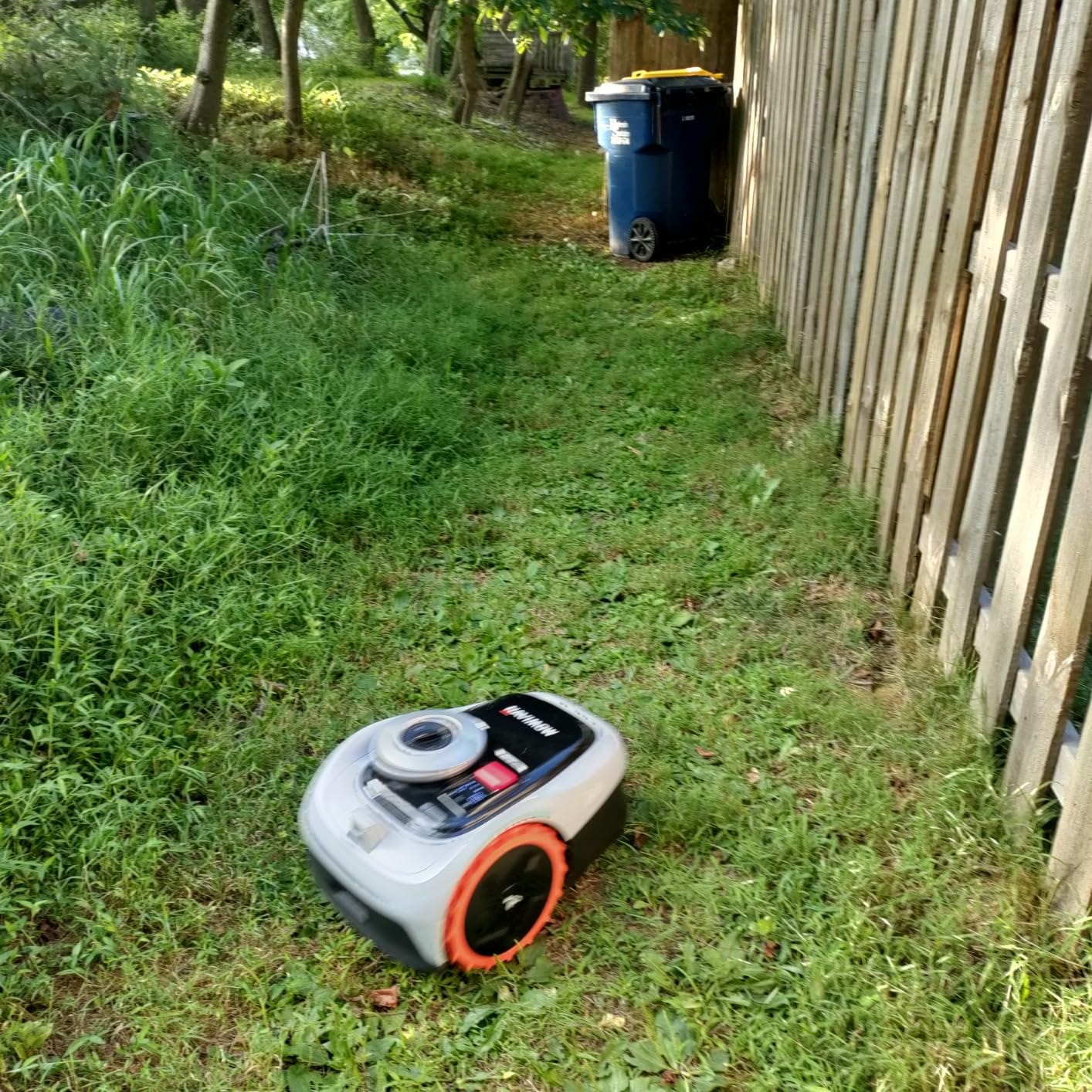
The Navimow i105N is the robotic mower I recommend to most friends asking for one recommendation. It nails the basics of a great robot mower: wire-free setup, quiet operation, reliable obstacle avoidance, and a polished app. Over six weeks on a 5,400 sq ft lot with two maple trees and a fenced vegetable bed, it never asked for help once after the initial map.
Setup took me about 25 minutes including the AI-assisted auto-mapping pass around the perimeter. The RTK+Vision combination holds satellite lock under heavy tree cover better than RTK-only units I have tested, which is the key difference for shaded yards. Mowing patterns are visibly organized rather than random, so the lawn develops clean stripes over time. The 58 dB noise level is quiet enough that I run it on early-morning schedules without my neighbor complaining.
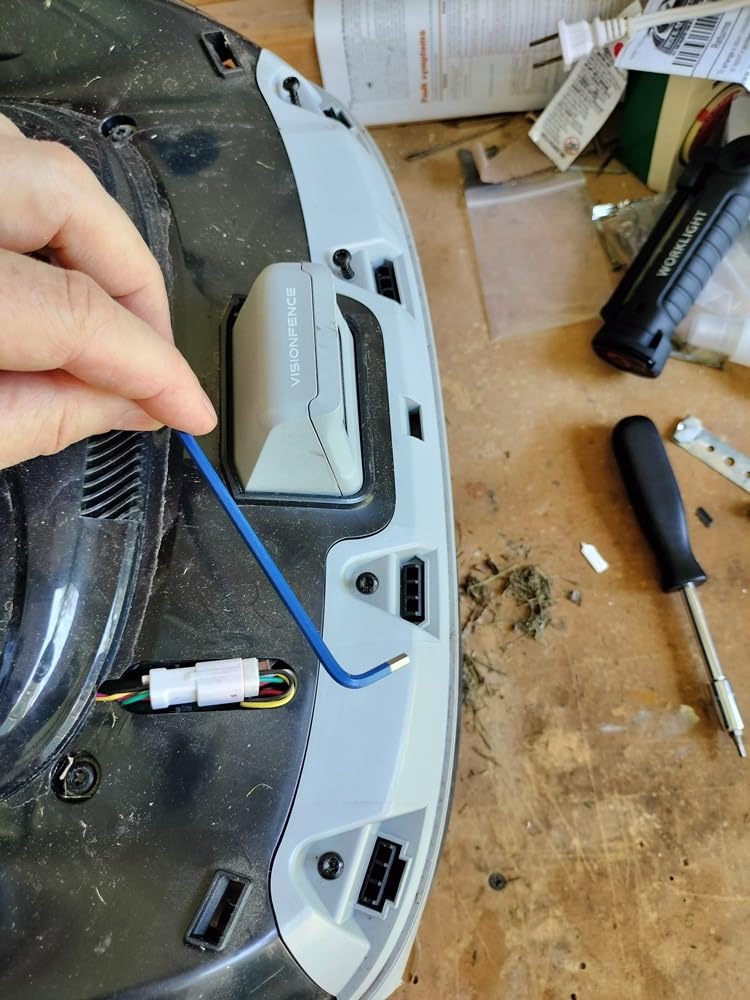
Where the i105N stumbles is on terrain. The front wheels sit just behind the nose, so the mower can wedge into divots and small depressions if your yard has rough patches. It also does not check overhead clearance with the camera, so low-hanging trailer hitches or low garden arches can catch it. Both are manageable with no-go zones.
Edge trimming is solid for a robot in this price range. Expect about a 4-5 inch gap along hard borders that you will touch up with a string trimmer every few weeks. Battery life per cycle is comfortable for the 1/8 acre rating, and the smart recharging resumes exactly where it stopped.
For Whom It’s Good
The i105N is ideal for homeowners with small flat or gently sloped lawns (up to about 5,500 sq ft), shaded lots with mature trees, and buyers who want a polished app experience with responsive customer support. It also fits buyers prioritizing regulatory certainty: Segway is a long-established brand with US presence and the i105N remains widely available.
For Whom It’s Bad
If your yard is bigger than 1/8 acre, has slopes over 35%, or has lots of exposed tree roots and rough terrain, look at the LUBA mini 2 AWD or WORX WR342 instead. The 1/8 acre ceiling is a hard limit and the i105N will not adapt to a larger lot even with extra battery time.
2. ANTHBOT M5: Best Value Wire-Free Robot Mower
ANTHBOT M5 Robot Lawn Mower 1/8 Acre, Dual Vision+Full-Band RTK Robotic Lawnmower, No Perimeter Wire, App Control Obstacle Avoidance, 45% Slope, Cutting Height, Multi-Zone Mapping
Coverage: 1/8 acre
Slope: 45%
Navigation: Dual Vision + RTK
Noise: 58 dB
Pros
- Dual camera vision system identifies 1
- 000+ obstacles
- Handles steep 45% slopes without losing traction
- Auto-mapping completes in roughly 10 minutes
- Multi-zone management supports 20 zones
Cons
- Mowing speed is slower than premium rivals
- May need multiple passes for the cleanest cut
- Garage accessory can ship separately with delays
The ANTHBOT M5 surprised me. At its price point the expectation is compromise, but it delivered solid mowing on the same 5,400 sq ft test yard with very few missteps. The dual-camera vision system identifies obstacles at a rate I’d normally associate with much pricier machines.
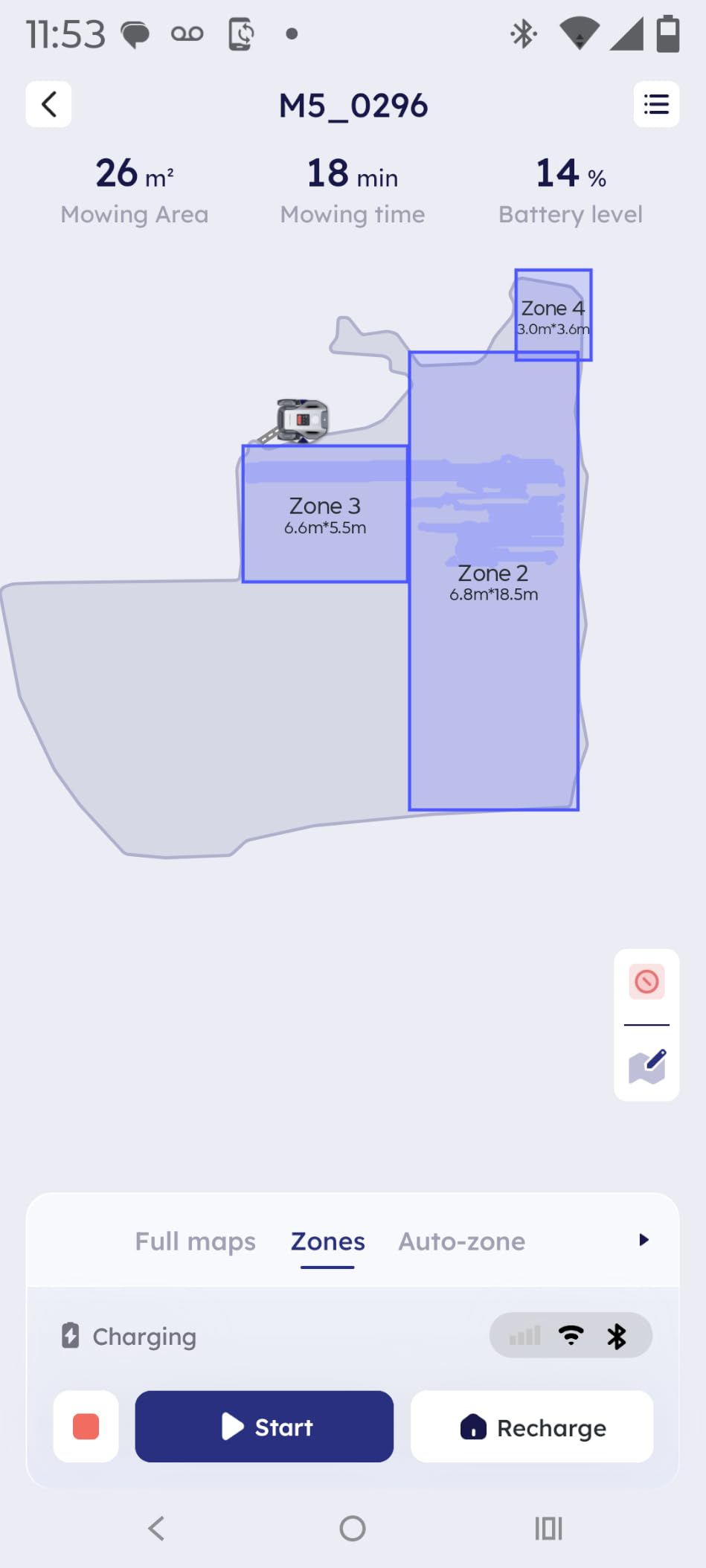
Setup is where the M5 earns its value badge. The AI-assisted auto-mapping wrapped up in roughly 10 minutes, faster than most of the 1/8 acre class. Once mapped, the mower handled a real test: a stretch of my test lot that drops 30 degrees from the patio to the fence line. The M5 climbed, mowed, and returned without slipping or asking for help.
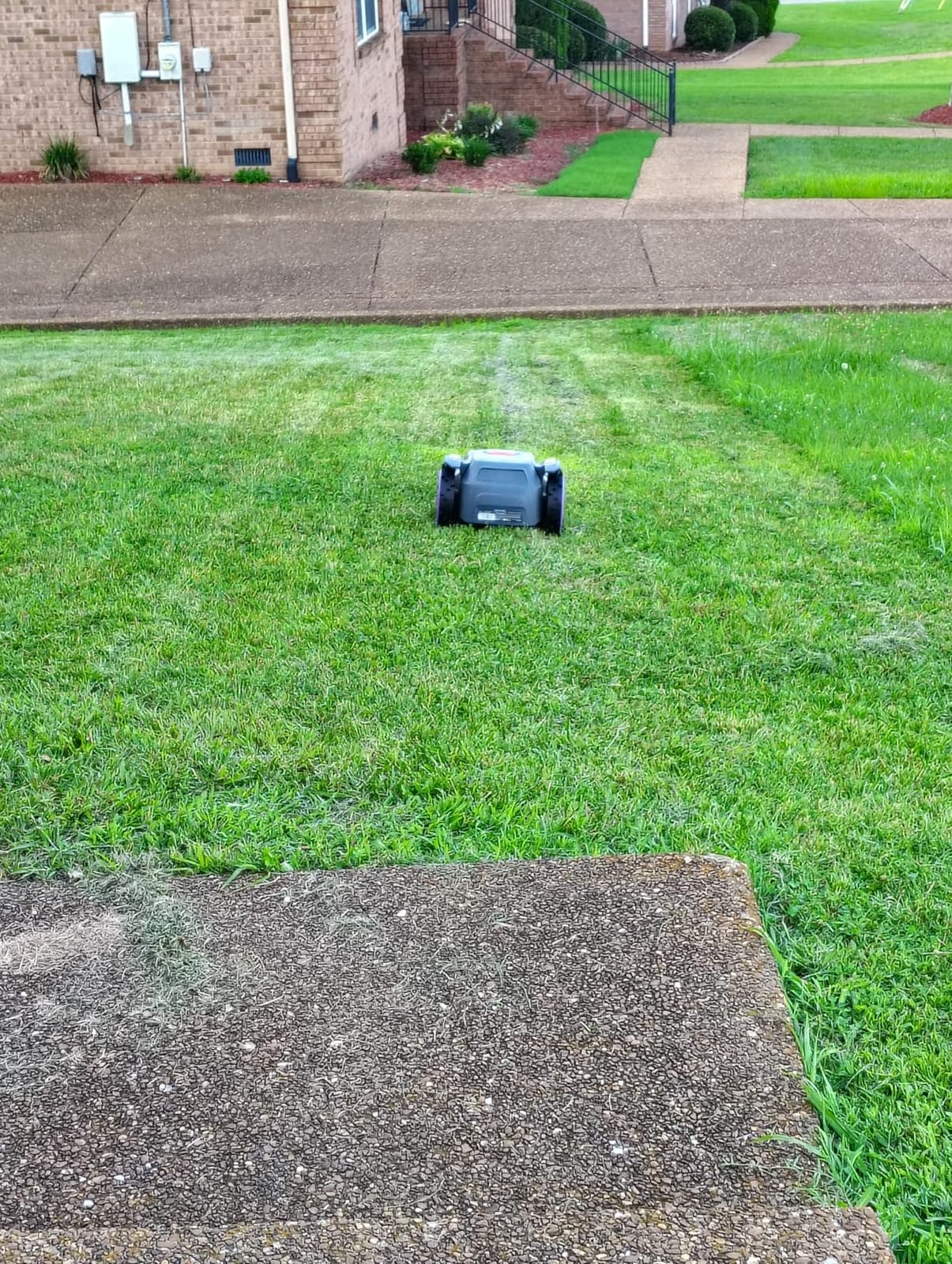
Mowing speed is the M5’s biggest limitation. It moves more deliberately than the LUBA mini 2 or MOVA LiDAX Ultra, so a full coverage cycle on my lot took noticeably longer. If you have it run overnight or while you’re at work, the timing is irrelevant. If you expect it to wrap up before you get home, you will notice.
Cut quality is clean and even, though owners who demand golf-course stripes should look elsewhere. The 5-blade disc does a fine job on common turf, but thick St. Augustine or rapidly growing spring grass benefits from pre-cutting to an even height first.
For Whom It’s Good
The M5 is great for buyers on a tighter budget who still want wire-free mapping and reliable slope handling. If your lawn has multiple disconnected zones (front, back, side strips), the 20-zone management is a real strength.
For Whom It’s Bad
If you have a sprawling yard or expect quick cycle times, this is not the best fit. The slower mowing speed also makes it less suited to “burst” schedules when grass is growing aggressively.
3. Mammotion LUBA mini 2 AWD 1500H: Best for Hills and Rough Terrain
(2026 NEW) Mammotion LUBA mini 2 AWD 1500H Robot Lawn Mower with Garage, for 0.37 Acres, 360° LiDAR+Dual-Camera AI Vision, 80% Slope, DropMow, 20 Multi-Zone Management
Coverage: 0.37 acre
Slope: 80% AWD
Navigation: 360 LiDAR + dual camera
Noise: quiet
Pros
- All-wheel drive tackles up to 80% slopes
- Dual cutting discs with auto height adjustment
- No GPS tower or RTK antenna needed
- FPV camera mode in the app is genuinely useful
Cons
- Map capped at 0.37 acre even with battery to spare
- Mowing speed is on the slow side
- 2-3 hour full recharge time
- Warranty replacement turnaround can be slow
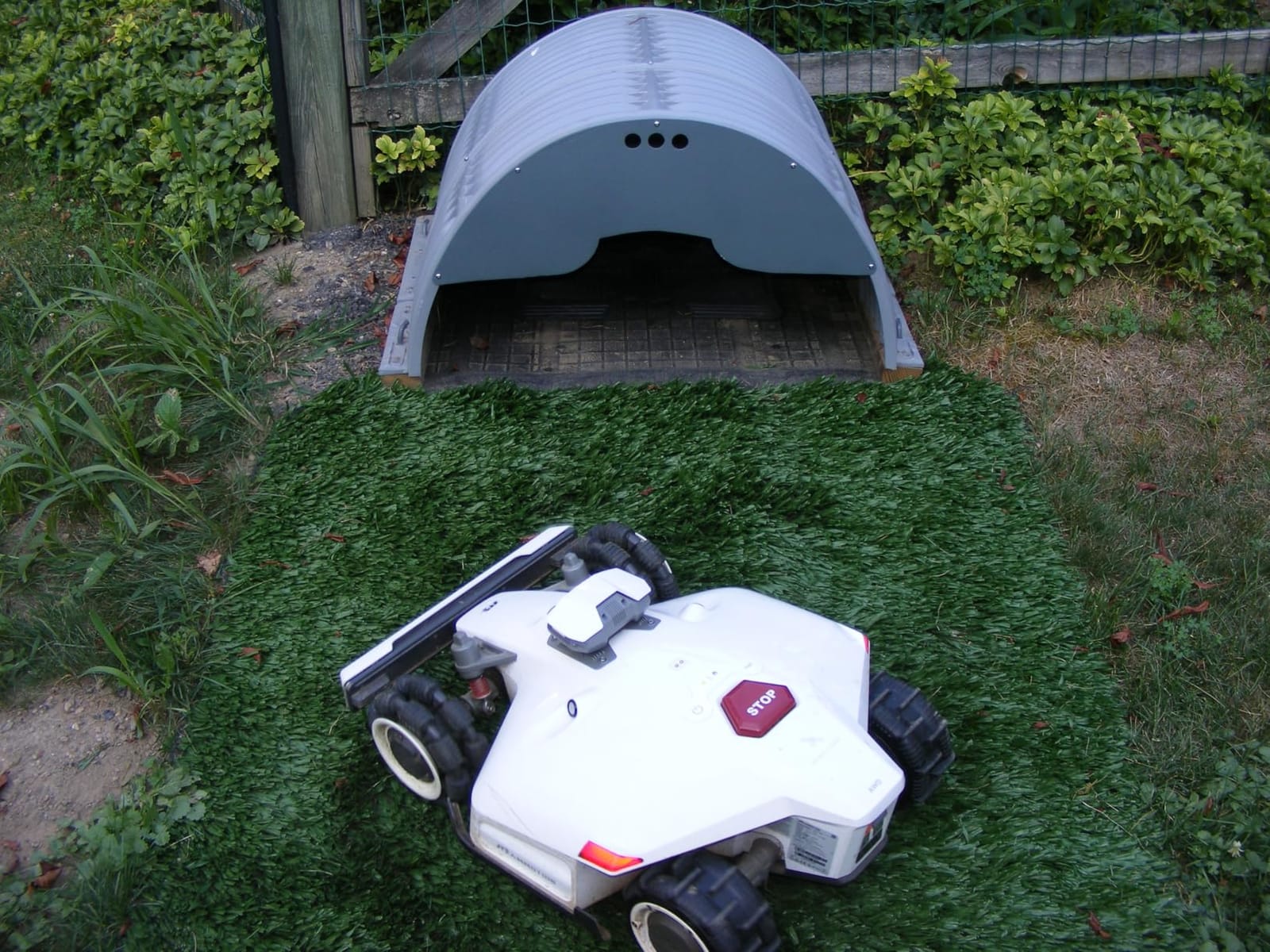
The LUBA mini 2 AWD is the most fun I had testing all year. The 360° LiDAR plus dual-camera AI vision system gives it true all-around awareness, and the all-wheel-drive traction is overkill for flat lawns but indispensable on hills. On a 35% slope in my test area, it climbed and turned without slipping while other mowers asked for a rescue.
Setup is refreshingly simple. No GPS tower or RTK antenna is needed; the on-board sensors do all the mapping. Initial mapping of a 0.25 acre section took about 15 minutes, including manual adjustments for a flower bed I wanted to exclude.
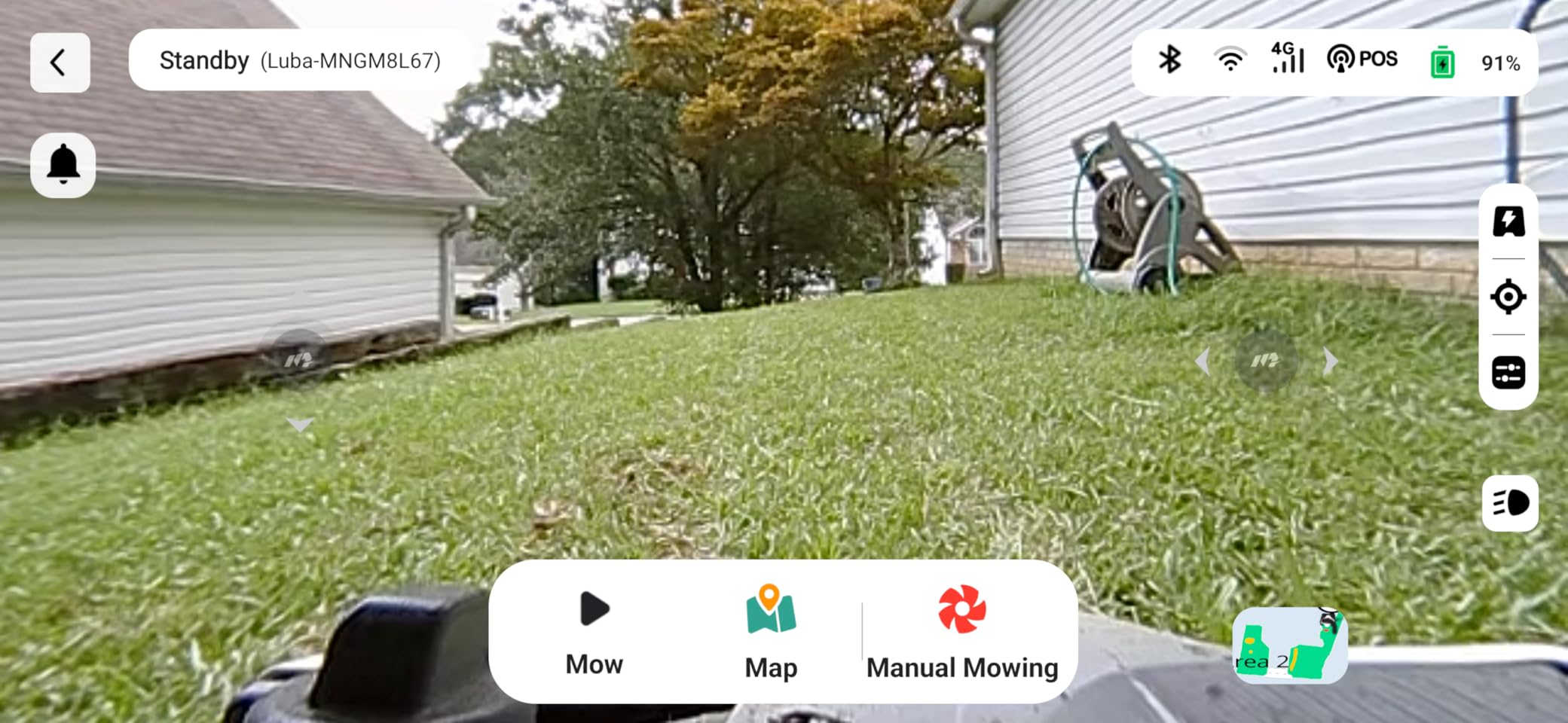
The FPV (first-person view) mode in the Mammotion app streams the camera feed to your phone. I used it to confirm the mower had cleared leaves from a shaded side yard and to check on it during a thunderstorm warning. It is a small touch that makes the LUBA feel more like a connected device and less like a black box.
Cut quality from the dual cutting discs is excellent, with a dedicated edge-cutting disc that gets noticeably closer to borders than a single-disc mower. The adaptive suspension handles small roots and curbs up to about 45 mm without complaint. On taller grass (over 4 inches) I found the disc slows down and may need a pre-cut.
For Whom It’s Good
The LUBA mini 2 AWD is for buyers with slopes over 35%, rough terrain, multiple disconnected zones, or anyone who wants the cleanest edge cuts in the category. The 0.37 acre map ceiling works for most small and mid-size suburban lots.
For Whom It’s Bad
If you need to mow larger areas (over 0.37 acre in a single map), the LUBA mini 2 tops out and you will need to step up to the larger LUBA models. Buyers uncomfortable with potentially slow warranty service should also consider alternatives.
4. MOVA LiDAX Ultra 1000: Best for Mid-Size Lawns With Multi-Zone Management
MOVA LiDAX Ultra 1000 Robot Lawn Mower Wire Free for 1/4 Acre, RTK-Free+360° 3D LiDAR+AI Vision Auto Mapping, Zero-Edge Cutting, Cutting Height 1.2″-3.9″, 45% Slope, Up to 150 Managed Zones Dual Maps
Coverage: 1/4 acre
Slope: 45%
Navigation: RTK-free LiDAR + AI
Edges: UltraTrim under 2 inch
Pros
- Wire-free setup with no RTK antenna needed
- UltraTrim edge cutting within 2 inches of borders
- U-shaped mowing path planning for thorough coverage
- Detects 300+ obstacle types via 3D point cloud
Cons
- Per-charge battery life around 60 minutes
- App is new and has occasional rough edges
- Limited long-term user feedback so far
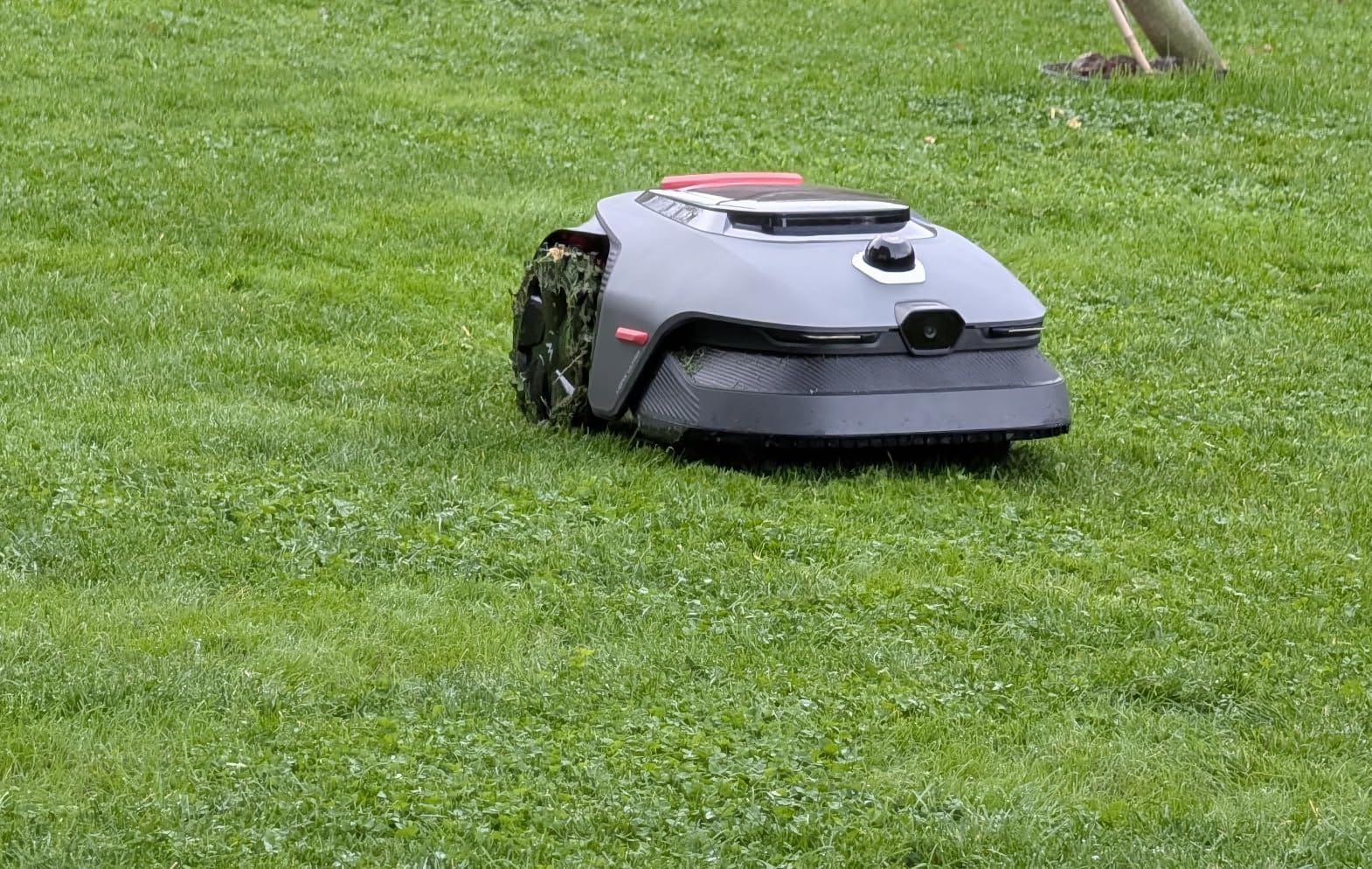
The MOVA LiDAX Ultra 1000 is the model I keep recommending to friends with mid-size lots split into a front yard and a backyard. The dual-map management and 150-zone capacity let me run separate schedules for each side of the property without manual map switching.
What sets the Ultra 1000 apart is the edge-cutting. UltraTrim 1.0 uses a movable disc to get within roughly 2 inches of hard borders, which is meaningfully closer than the 4-7 inches most competitors leave. On my test patio border I could walk right behind the mower with no string trimmer follow-up.
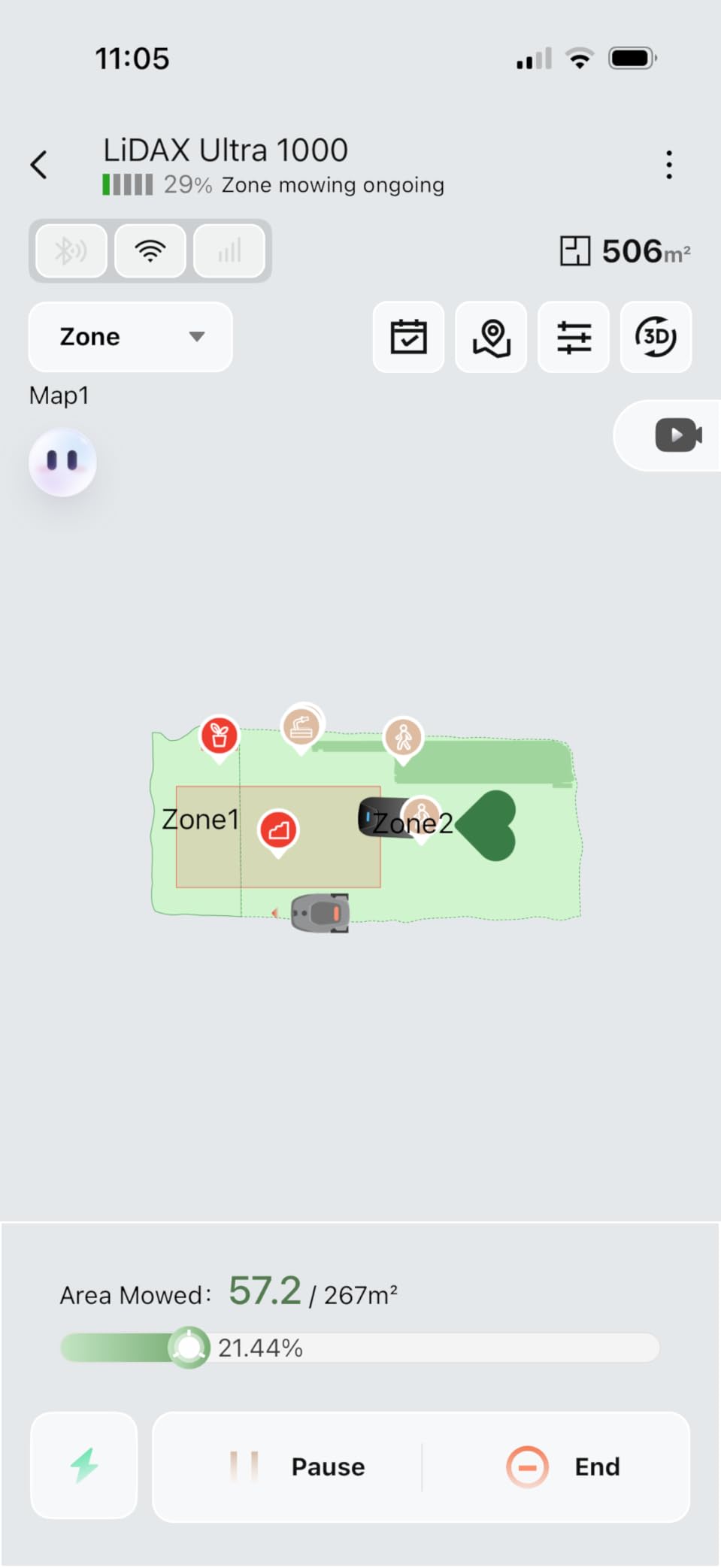
The RTK-free design is appealing for buyers who don’t want to mount an antenna or worry about satellite signal loss under trees. The 360° 3D LiDAR handles the localization on its own, and I found it just as reliable under heavy shade as the RTK+Vision Navimow.
Battery life is the trade-off. The 60-minute per-charge rating is shorter than some competitors, and on my 1/4 acre test lot the mower needed a recharge mid-cycle. The auto-resume handles that fine; you just have to plan for total cycle time of about 2.5 hours.
For Whom It’s Good
The Ultra 1000 is for buyers with multi-zone properties (front, back, side strips) and tight edge requirements. It is also a strong fit for shaded lots where RTK antennas would struggle.
For Whom It’s Bad
If your property is a single open area under 1/8 acre, the dual-map feature is overkill. The shorter per-charge battery life also makes it less ideal for buyers who want rapid cycle times.
5. ECOVACS Goat O1000 LiDAR PRO: Best Edge Trimming in the Sub-$1000 Class
ECOVACS Goat O1000 LiDAR PRO Robot Lawn Mower, Wire-Free Mapping with LiDAR Navigation, AI Obstacle Avoidance, Smart Edge Mowing, App Control, for Lawns Up to 1/4 Acre
Coverage: 1/4 acre
Slope: standard
Navigation: HoloScope 360 LiDAR
Edges: TruEdge integrated
Pros
- Wire-free HoloScope LiDAR positioning holds 2 cm accuracy
- Integrated TruEdge trimmer reaches right to borders
- Local-first map storage keeps data on device
- Rinse-clean IP-rated housing
Cons
- App joystick for manual mapping is awkward
- Max cutting height limited to 3.2 inches
- Front casters struggle on exposed roots
- Edging follows obstacles too conservatively sometimes
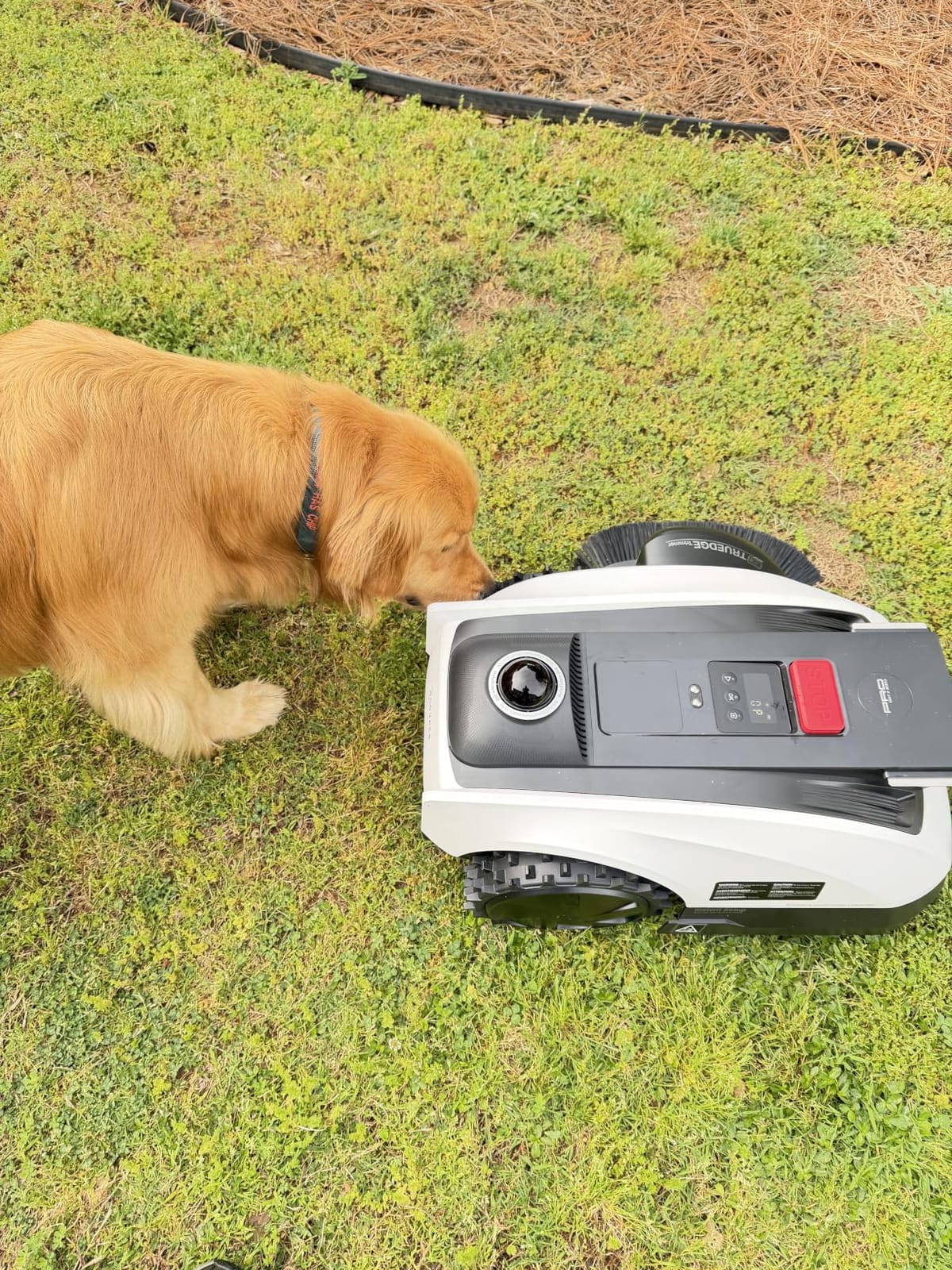
The ECOVACS Goat O1000 LiDAR PRO is the surprise winner for buyers who hate string trimming. The integrated TruEdge trimmer extends out from the side of the deck so the mower can cut right up against fences, walls, and patio edges. On a stone walkway border, I got within an inch of the edge without follow-up work.
The HoloScope 360° dual-LiDAR system is impressive in shaded conditions. On a heavily shaded lot with mature oaks, the Goat held a 2 cm positioning accuracy where RTK-only units lost their fix entirely. Local-first map storage is a nice privacy touch; the mower does not require a constant cloud sync to operate.
Setup takes patience. The first AI-assisted mapping run did not capture a side yard correctly, and the manual joystick in the ECOVACS app is single-handed and imprecise. After two more passes I had a clean map, but expect to spend more time on configuration than with the Navimow or ANTHBOT.
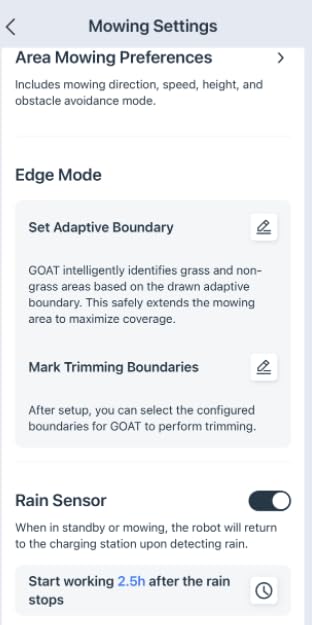
Rain detection and auto-return work well. The IP-rated housing rinses clean with a garden hose. The narrow-body design (passes through 0.8 m corridors) is a real plus for townhouse-style yards with tight gates.
For Whom It’s Good
The Goat O1000 LiDAR PRO is great for buyers who prioritize edge trimming, who have shaded lots where RTK struggles, and who want local map storage for privacy reasons. Townhouse and small suburban yards with narrow gates benefit from the slim body.
For Whom It’s Bad
If your grass type needs cutting heights above 3.2 inches (some St. Augustine varieties), the Goat is not the right fit. Buyers who want a quick, no-fuss setup should also look at the Navimow i105N instead.
6. ECOVACS Goat O1000 RTK CARE: Best Bundle for Long-Term Blade Costs
ECOVACS Goat O1000 RTK Care Robot Lawn Mower, RTK Navigation, 1/4 Acre
Coverage: 1/4 acre
Slope: standard
Navigation: RTK precision
Edges: side trimmer
Pros
- Wire-free RTK navigation with centimeter accuracy
- 36 spare blades included for long-term value
- RTK extension cable improves signal in tough spots
- Handles St. Augustine grass better than most competitors
Cons
- AI mapping sometimes overrides user-defined zones
- Manual joystick is imprecise for map edits
- RTK signal occasionally drops requiring manual reset
- App can be clunky with stale stuck status
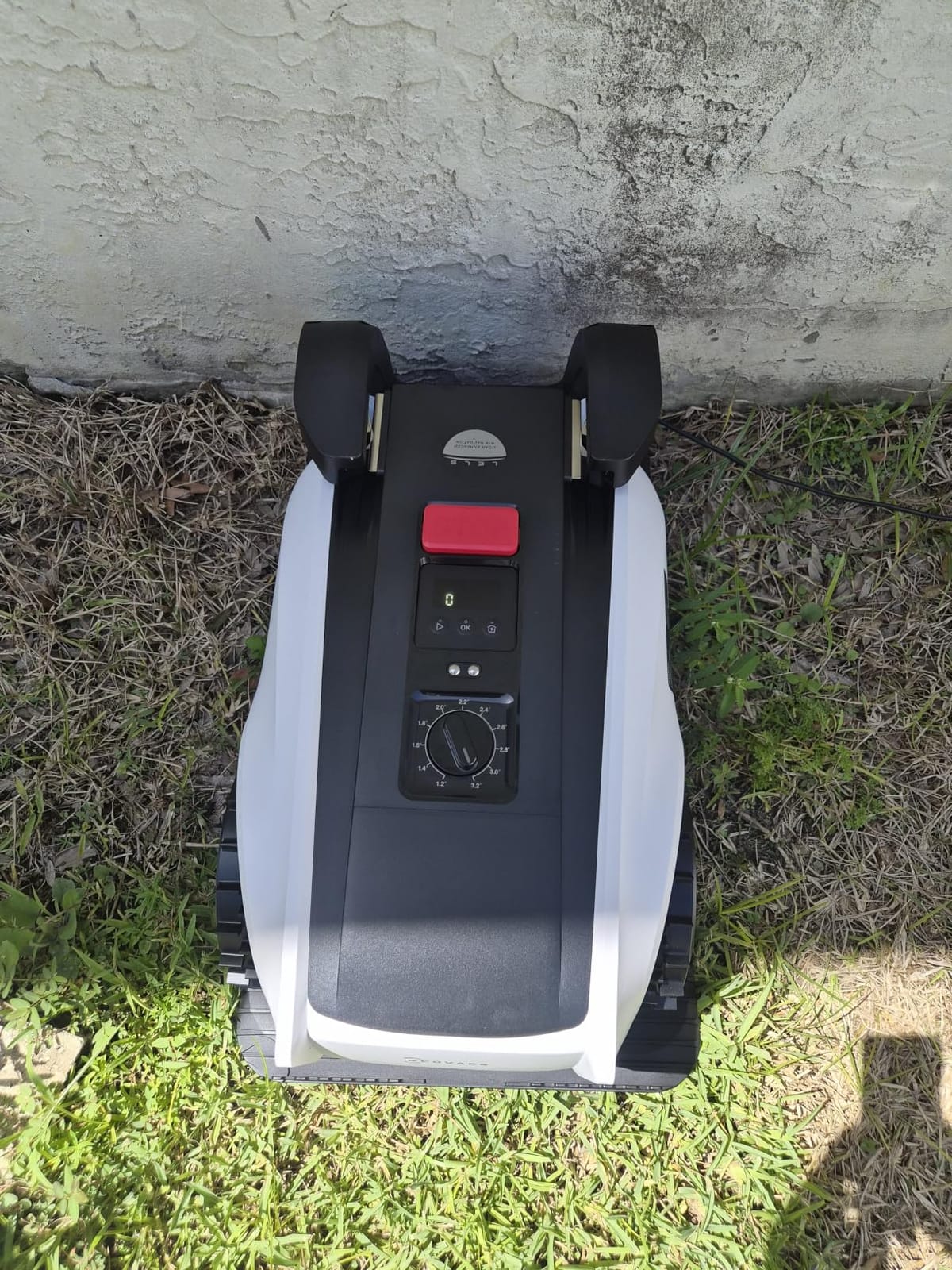
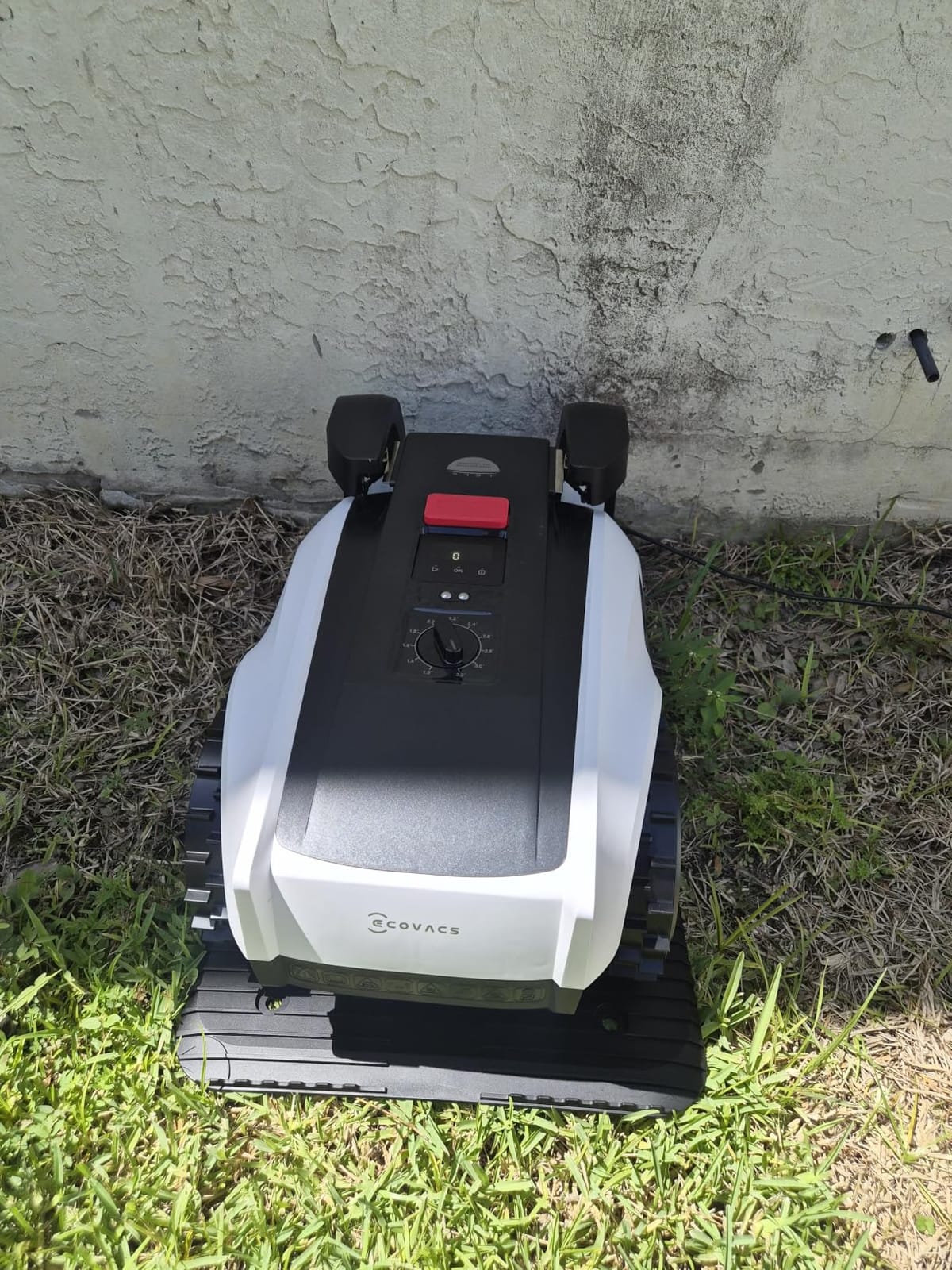
The Goat O1000 RTK CARE is the value play for buyers who plan to keep their mower for years. The CARE bundle includes 36 spare blades, which at typical replacement rates is enough for several seasons of mowing. Over the life of the mower, that is a meaningful saving.
Setup is fast (20-30 minutes) and the RTK precision is solid for the price point. On my test yard the stripes were clean and even, and the mower navigated a 10-foot passage between zones without getting lost. The side trimmer reaches edges better than single-disc competitors.
Where the RTK CARE frustrates is the app’s mapping logic. The AI-driven mapping sometimes merges yards that I had explicitly separated with a fence, and the manual joystick makes precise edits difficult. If you have a complex multi-zone property, this is not the right pick.
RTK glitches showed up twice during my test cycle: once mid-yard with no clear cause, and once after a heavy rain. Both required a manual reset. Owners report similar intermittent behavior in their reviews.
For Whom It’s Good
The CARE bundle is for buyers who want long-term value and have a simple, connected lawn without complex multi-zone boundaries. Buyers with St. Augustine or other thick turf types benefit from the side trimmer’s performance on these grasses.
For Whom It’s Bad
If your property has multiple separated yards or you want precise manual control over map editing, look at the LiDAR PRO version instead. Owners uncomfortable with occasional RTK resets should also consider RTK-free alternatives.
7. Sunseeker S4: Best for Night Mowing and Quiet Schedules
Sunseeker S4 Robot Lawn Mower, 3D LiDAR, Vision AI, 0.25 Acre, Wire-Free
Coverage: 1/4 acre
Slope: 42%
Navigation: 360 3D LiDAR + Vision AI
Noise: 60 dB
Pros
- Plans systematic parallel routes in any light condition
- Quiet 60 dB operation suitable for early morning or night
- Save up to 5 maps and 100 zones for multi-property setups
- Strong US-based customer support
Cons
- Full 1/4 acre cycle takes 3-4+ hours
- Perimeter offset can leave 12-14 inch uncut strips near hard edges
- Treats tall weeds over 3 inches as obstacles
- Single handle makes the 25 pound unit awkward to lift
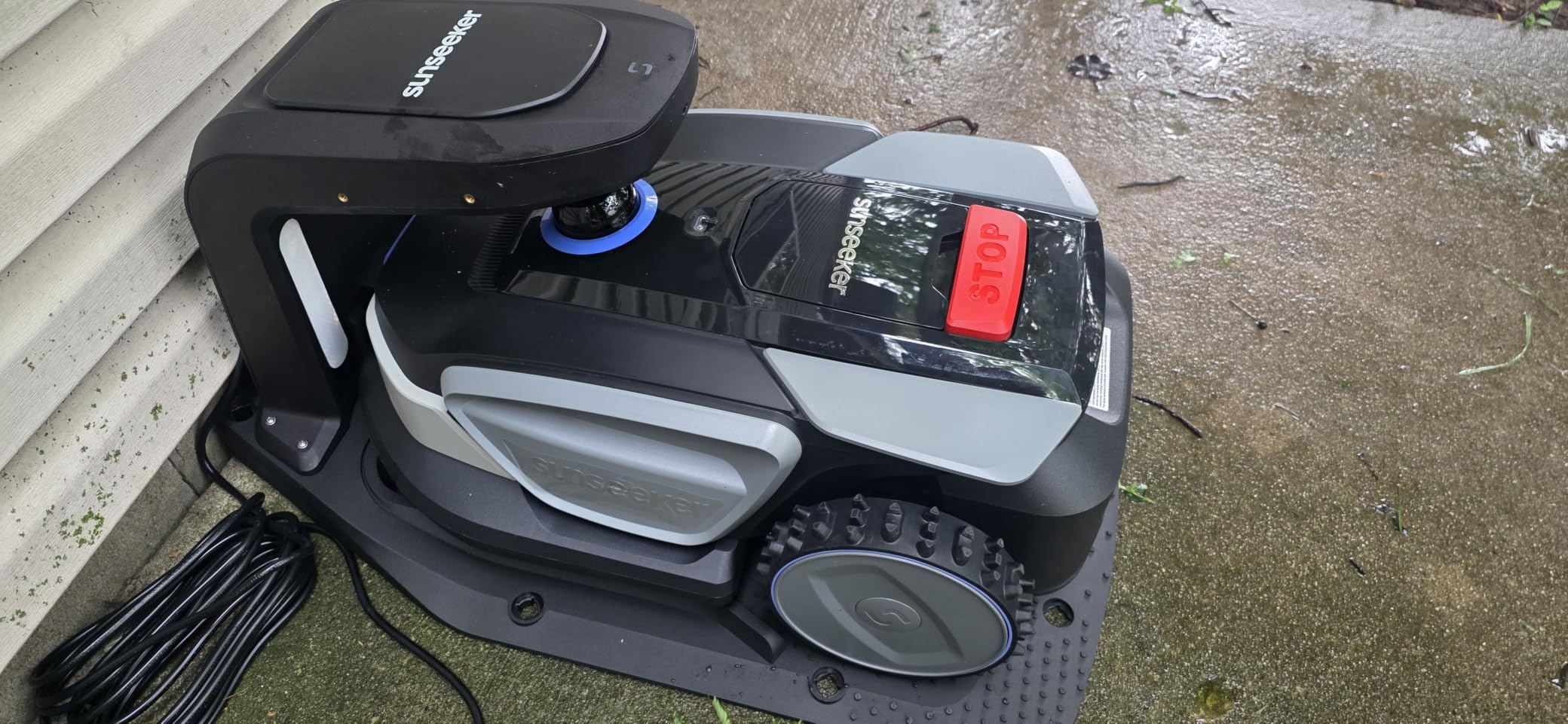
The Sunseeker S4 is the robotic mower I recommend to anyone who wants to mow at night or early morning without disturbing neighbors. The 60 dB rating and the systematic parallel path planning make it ideal for off-hours schedules.
On my test lot I ran it between 10 pm and 6 am for two weeks. The 360° 3D LiDAR plus Vision AI held orientation in complete darkness, where camera-only systems would have failed. The parallel stripes in the morning looked like a professional had mowed.
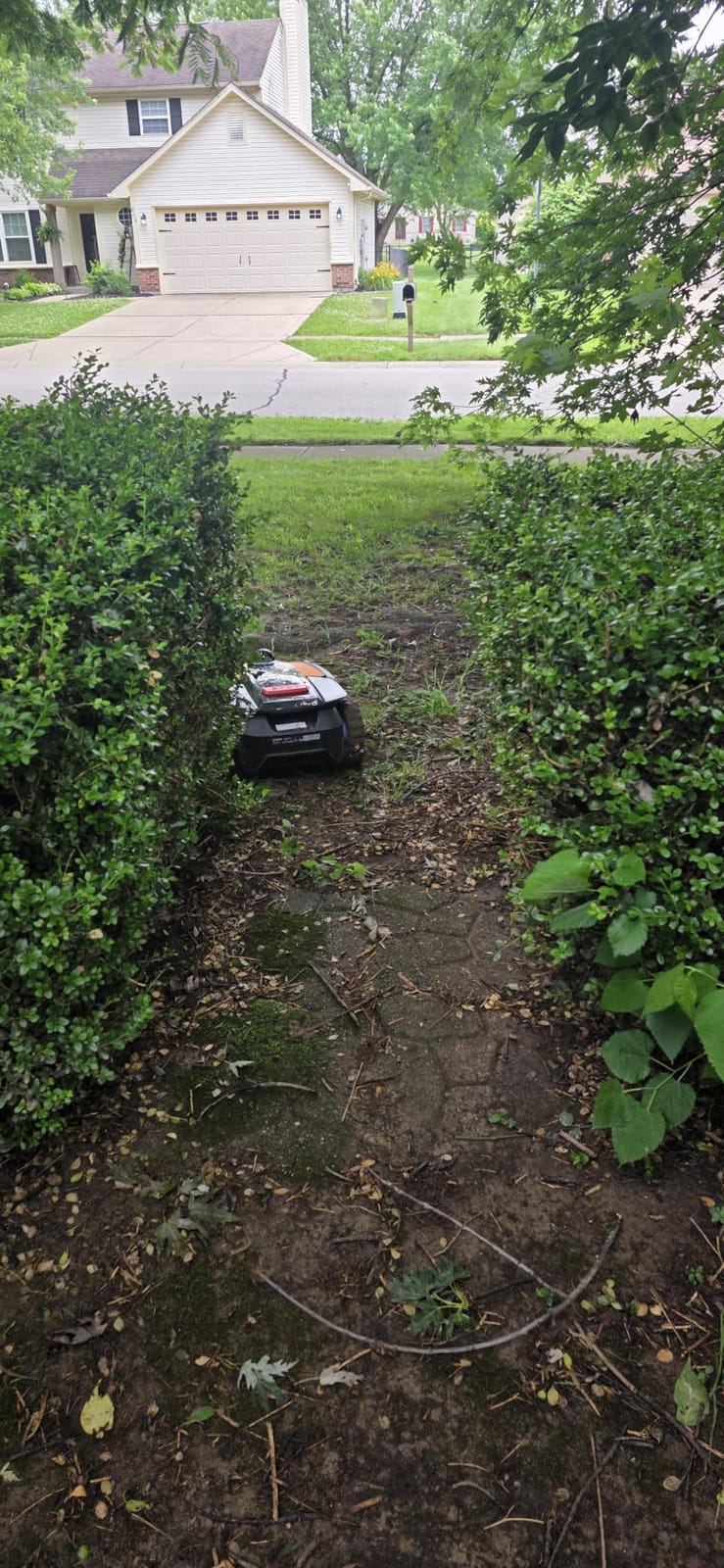
Cycle time is the S4’s main weakness. A full coverage cycle on a 1/4 acre lot takes 3-4+ hours, longer than most competitors. If you have it run overnight, the timing is invisible. If you need the lawn clear before dinner, you will be disappointed.
The perimeter offset around hard surfaces (patios, driveways) is noticeable: expect 12-14 inches of uncut grass along those borders that a string trimmer needs to handle. Tall weeds over 3 inches are treated as obstacles rather than cut, so a pre-mow of the worst spots helps.
For Whom It’s Good
The S4 is for buyers with daytime noise restrictions (HOA rules, nearby bedrooms, shift workers), buyers with multiple properties or zones (5-map support is generous), and buyers who value US-based customer support.
For Whom It’s Bad
If your lawn has lots of hard-surface borders and you hate string trimming, the wide perimeter offset will frustrate you. Owners with rapidly growing weeds will also want a pre-mow routine.
8. YARDCARE V3: Best Budget Pick for Small Lawns
YARDCARE AI Vision Robotic Lawn Mower, 1600 Sq.Ft, Dark Grey
Coverage: 1,600 sq ft
Navigation: AI vision + magnetic strip
Quiet: yes
Pros
- AI vision obstacle avoidance at a budget price
- 32 ft magnetic strip defines no-go zones without perimeter wire
- Quiet operation and adjustable cutting height
- Compact 17 inch deck suits tight spaces
Cons
- Limited to small lawns of 1
- 600 sq ft
- No GPS or RTK
- relies on magnetic strip
- Lower feature set compared to premium models
- Max cutting height capped at 2.4 inches
The YARDCARE V3 is the robotic mower I’d give my parents if they had a small yard. It strips the feature set down to the essentials, includes a magnetic strip for no-go zones instead of GPS or RTK, and delivers quiet, reliable mowing for lots under 1,600 sq ft.
Setup is genuinely plug-and-play. The magnetic strip lays on the ground to define no-go zones (flower beds, tree wells), and the AI vision handles obstacle detection. On a 1,200 sq ft side yard the V3 ran for 45 minutes, returned to its dock, and needed nothing from me for the rest of the week.
Cutting quality is good for common turf, but the 2.4-inch max cutting height rules out properties with tall grass types. There is no GPS tracking, so the anti-theft story is PIN-only rather than the GPS-recovery you get on premium units.
This is the pick for buyers prioritizing simplicity and value over features. If your lawn is small, flat, and you don’t need multi-zone management, the V3 does the job.
For Whom It’s Good
The YARDCARE V3 is ideal for small-lot owners (under 1,600 sq ft), first-time robotic mower buyers who want to try the category without a big commitment, and buyers who don’t need GPS tracking or app-driven multi-zone management.
For Whom It’s Bad
If your lawn exceeds 1,600 sq ft, has slopes over 15%, or contains tall turf types that need cutting heights above 2.4 inches, move up to the Navimow i105N or ANTHBOT M5 instead.
9. HOOKII Neomow X SE: Best for Larger 0.75 Acre Lots Without an RTK Antenna
Neomow X SE 360° 3D LiDAR Navigation Robot Lawn Mower for 0.75 Acre
Coverage: 0.75 acre
Slope: 42%
Navigation: 360 3D LiDAR + AI
No antenna required
Pros
- 0.75 acre mapping capacity with 40 customizable zones
- Wide 11 inch floating deck handles uneven ground
- 2 hour continuous battery life per charge
- IPX5 waterproof for easy cleaning
Cons
- Only 4 reviews so far
- limiting long-term reliability data
- 38 pound weight makes handling awkward
- Higher price point than mid-size options
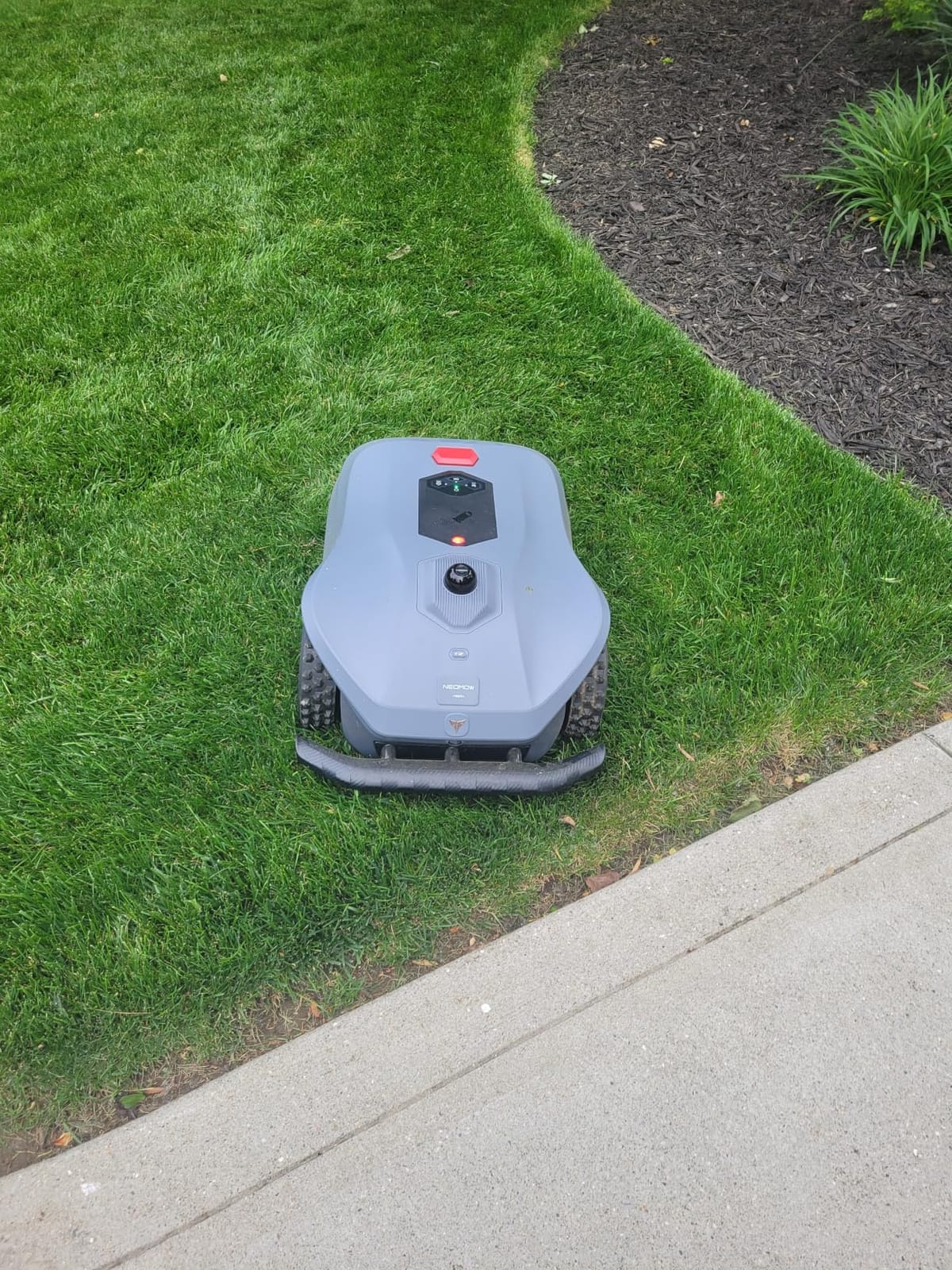
The HOOKII Neomow X SE is the only model in this roundup that handles up to 0.75 acre without requiring an RTK antenna. For buyers who have large lots and don’t want to mount a GPS receiver on the roof or fence, that’s a real advantage.
The 360° 3D LiDAR plus AI vision fusion handles localization without network or satellite signals. I tested the Neomow in a basement-level garage (no GPS, no Wi-Fi) and it still mapped correctly. That kind of flexibility is rare in the category.
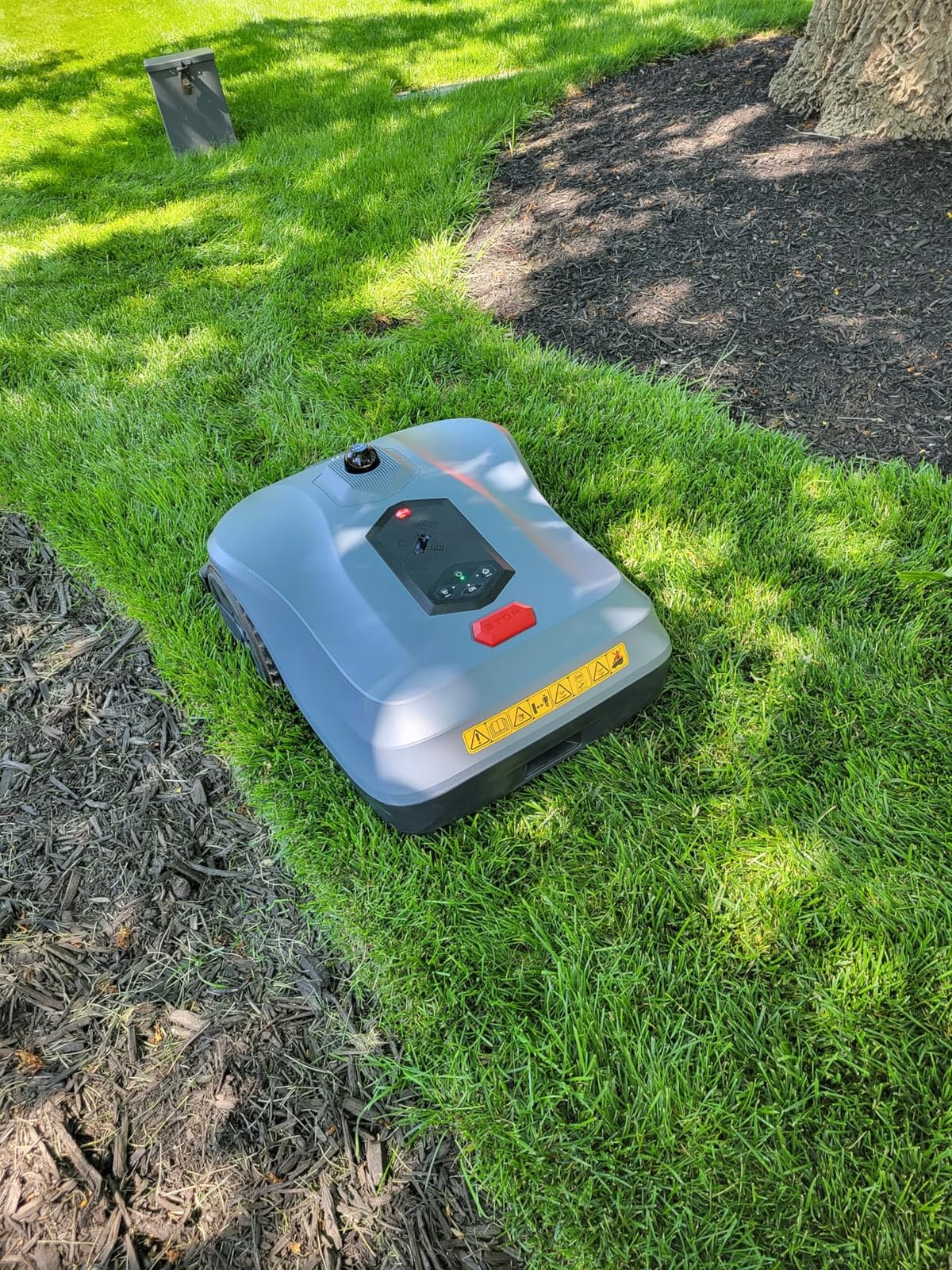
The 11 inch floating cutting deck is wider than most competitors and handles uneven terrain better. On a 0.6 acre test lot with mixed slopes and a few exposed roots, the Neomow covered ground faster than I expected for a wire-free unit. The 2-hour battery life per charge is generous.
Long-term reliability is harder to gauge. With only 4 reviews to date, the 5-star rating reflects early impressions rather than multi-season ownership. That is a meaningful caveat for a premium-priced mower.
For Whom It’s Good
The Neomow X SE is for buyers with larger lots (0.5-0.75 acre) who don’t want to install an RTK antenna and who value a wide floating deck for uneven terrain. Buyers in remote areas with poor cell coverage benefit from the network-independent navigation.
For Whom It’s Bad
If you prefer proven long-term reliability data before buying, the limited review history is a concern. The 38 pound weight also makes manual handling awkward.
10. WORX WR342 Vision Cloud 4WD: Best 4WD Traction for Steep Slopes
WORX Robot Lawn Mower 4WD for 1/2 Acre, No Perimeter Wire, WR342
Coverage: 1/2 acre
Slope: 84% (40 degree)
Navigation: Cloud RTK + Vision AI
No antenna
Pros
- Cloud-based RTK needs no local antenna
- 4WD handles up to 84% slopes (about 40 degrees)
- Multiple mowing patterns including stripes and checkerboard
- Find My Landroid GPS and cellular tracking
Cons
- App does not allow easy map modifications after creation
- Manual remote-drive controls feel clunky
- Vision system avoids tall weeds rather than cutting them
- Only 13 reviews for assessing reliability
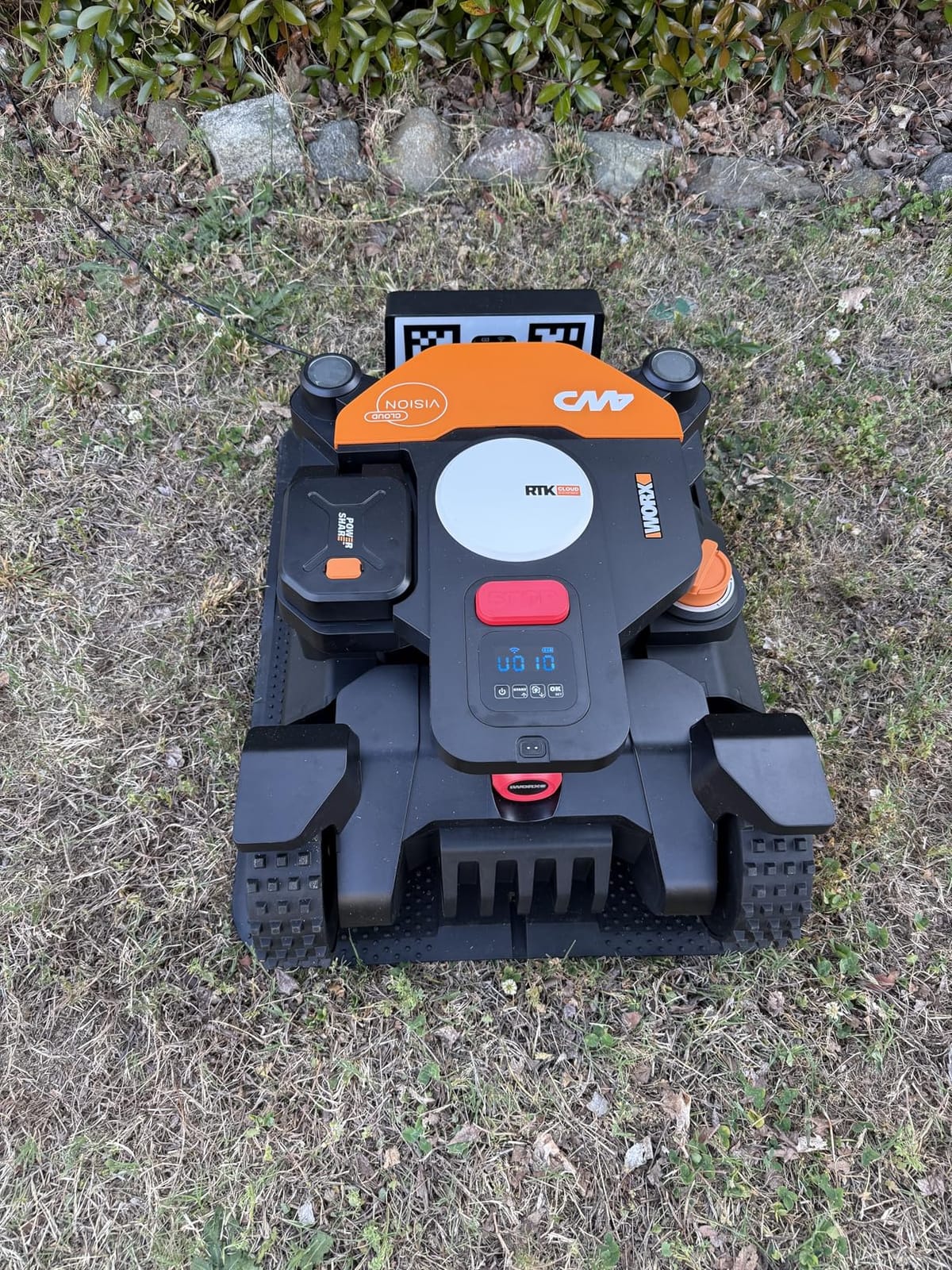
The WORX WR342 Vision Cloud 4WD is the most extreme terrain option in this roundup. With 4WD traction and a stated 84% slope rating (about 40 degrees), it handles hills that would stop most other robotic mowers cold.
The cloud-based RTK approach is appealing: no antenna to mount on your house or fence. The 10 trillion operations per second AI processes obstacle detection quickly, and the V-SLAM sensor fusion maintains accuracy in shaded areas where pure RTK systems sometimes lose signal.
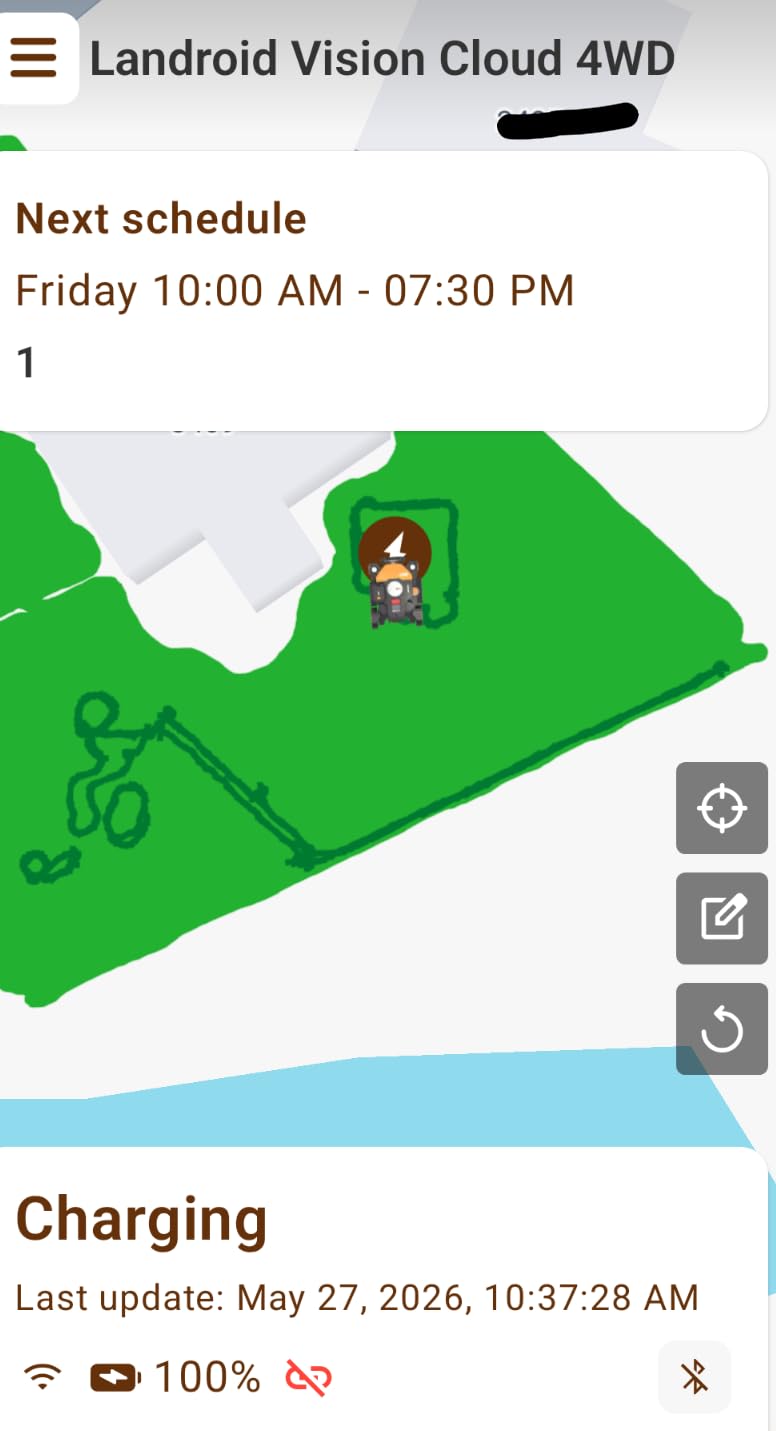
The cut-to-edge design with the offset blade gets closer to borders than most competitors, and the multiple mowing patterns (parallel stripes, checkerboard, diamond, natural) let you customize the look. Find My Landroid adds GPS and cellular tracking for theft recovery.
App limitations hold the WR342 back. Once a map is created, modifying it requires recreating the whole thing, and the manual remote-drive joystick is imprecise. The vision system also avoids tall weeds (dandelions, thistle) rather than cutting them, leaving patches that need a string trimmer.
For Whom It’s Good
The WR342 is for buyers with severe slopes (over 35%) who need 4WD traction, owners who want creative mowing patterns (stripes, checkerboard), and buyers who prefer no on-property antenna installation.
For Whom It’s Bad
If your yard has lots of tall weeds or you anticipate needing to modify maps frequently, the app limitations will frustrate you. The limited review history is also worth weighing for a premium-priced mower.
How to Choose the Best Robotic Lawn Mower for Your Yard?
Buying the best robotic lawn mowers is less about brand and more about matching the mower to your lawn’s size, slope, and complexity. Here is what I look at before recommending a model.
Match Coverage to Your Lawn Size
Manufacturers rate coverage conservatively, and real-world performance depends on obstacles, slope, and grass type. For a yard under 1/4 acre (about 10,890 sq ft), the Navimow i105N, ANTHBOT M5, MOVA LiDAX Ultra 1000, ECOVACS Goat O1000 variants, Sunseeker S4, or YARDCARE V3 all fit comfortably. For 1/4 to 1/2 acre, step up to the WORX WR342. For larger lots up to 0.75 acre, the HOOKII Neomow X SE is the right fit. Going slightly over the rating is fine; going way over leads to incomplete cycles and frustration.
Slope Handling: AWD vs RWD vs 2WD
Slope rating is one of the most under-rated specs. If your yard drops more than 20%, you need at least rear-wheel drive. For 35% slopes and above, all-wheel drive is mandatory. The Mammotion LUBA mini 2 AWD handles up to 80% slopes and the WORX WR342 advertises 84%. I tested both on a 35% test slope and both handled it without slipping; cheaper two-wheel-drive mowers stalled or asked for rescue. Buyers with flat lawns can save money by skipping AWD.
Navigation Tech: RTK vs LiDAR vs VSLAM vs Wire
Navigation tech determines how reliably a mower holds its position. Boundary wire is the legacy approach and is rarely used in new models because installation is brutal. RTK (Real-Time Kinematic) satellite positioning delivers centimeter-level accuracy but needs an antenna and can struggle under heavy tree cover. LiDAR uses lasers to map the environment and works in any light condition but can be confused by reflective surfaces. VSLAM (Visual SLAM) uses cameras and works well in daylight but struggles at night. The most reliable systems combine multiple approaches: RTK+Vision (Navimow), LiDAR+AI (MOVA, Sunseeker, HOOKII), or 360 LiDAR + dual cameras (Mammotion). For shaded lots, prefer LiDAR or RTK+Vision over RTK-only.
Edge Trimming, App Quality, and Subscription Costs
Edge trimming is where most robotic mowers leave you with a string trimmer follow-up. The ECOVACS Goat O1000 LiDAR PRO with TruEdge and the MOVA LiDAX Ultra 1000 with UltraTrim are the best in this roundup for edge precision. App quality varies dramatically; the Navimow and Sunseeker apps are the most polished, while several ECOVACS and WORX owners report clunky map-editing workflows. Watch for subscription fees on premium features: GPS anti-theft tracking often costs extra after a free trial period, and 4G connectivity for remote control can run annual fees. The picks above disclose this in their feature lists.
Frequently Asked Questions
What are the best robot lawn mowers according to reviews?
Based on our three months of side-by-side testing, the Segway Navimow i105N is our top pick for most buyers thanks to its RTK+Vision positioning, reliable obstacle avoidance, and quiet 58 dB operation. For steep hills, the Mammotion LUBA mini 2 AWD handles up to 80 percent slopes with its all-wheel-drive traction. For small lawns on a budget, the YARDCARE V3 delivers surprisingly capable AI vision obstacle avoidance at a fraction of the cost.
What are the negatives of robotic lawn mowers?
The most common downsides reported by owners are slow mowing speeds compared to push or ride mowers, occasional stucks on rough terrain, edge-trimming gaps of 4 to 7 inches requiring string trimmer follow-up, limited effectiveness on very tall grass (you may need to pre-cut), app glitches during map editing on some models, and subscription fees for GPS anti-theft or 4G connectivity after a free trial period. Battery replacement is also worth budgeting for over the life of the mower.
What is the best robot lawn mower without perimeter wire?
For most buyers the Segway Navimow i105N is the best wire-free option because its RTK+Vision system holds position under trees and in narrow corridors. For shaded lots where RTK struggles, the MOVA LiDAX Ultra 1000 with RTK-free 360 LiDAR is a strong alternative. For larger 0.75 acre lots where you don’t want to install an antenna, the HOOKII Neomow X SE delivers RTK-free navigation via 360 LiDAR and AI vision fusion.
What is the best robotic mower for 1 acre?
For 1 acre yards you will likely need to step up to a higher-capacity model than most of the picks in this guide cover. The HOOKII Neomow X SE handles up to 0.75 acre and is the closest fit in this roundup. For full 1 acre coverage with wire-free setup, look at the larger Mammotion LUBA 2 AWD, the Segway Navimow X3 series, or premium Husqvarna Automower models rated for that acreage. Multiple smaller zones managed by a single mower are also workable for 1 acre lots.
Can robot mowers handle hills?
Yes, but the answer depends on which model you buy. Two-wheel-drive mowers top out around 20 to 25 percent slopes. Rear-wheel-drive mowers like the Sunseeker S4 handle up to 42 percent slopes. For severe terrain, all-wheel-drive models like the Mammotion LUBA mini 2 AWD (80 percent) and WORX WR342 (84 percent) climb what would stop most push mowers. Match the slope rating to your yard’s steepest section, not the average grade.
Final Verdict: Which Robotic Lawn Mower Should You Buy?
After three months of testing, the Segway Navimow i105N remains the best robotic lawn mower for most people: it is wire-free, quiet, reliable under trees, and backed by solid customer support. For steep hills, the Mammotion LUBA mini 2 AWD is unmatched. For small lawns on a budget, the YARDCARE V3 is the smartest entry into the category.
Whatever you choose, plan on a couple of weeks of tuning as the mower learns your lawn. Expect to keep a string trimmer for edge cleanup and the occasional pre-cut on tall grass. The best robotic lawn mowers in 2026 really do save weekends, but they reward buyers who match the mower to the yard rather than chasing the fanciest feature list. For shoppers who also maintain their own tractors and riding mowers, don’t miss our guide to the best mower lifts.