
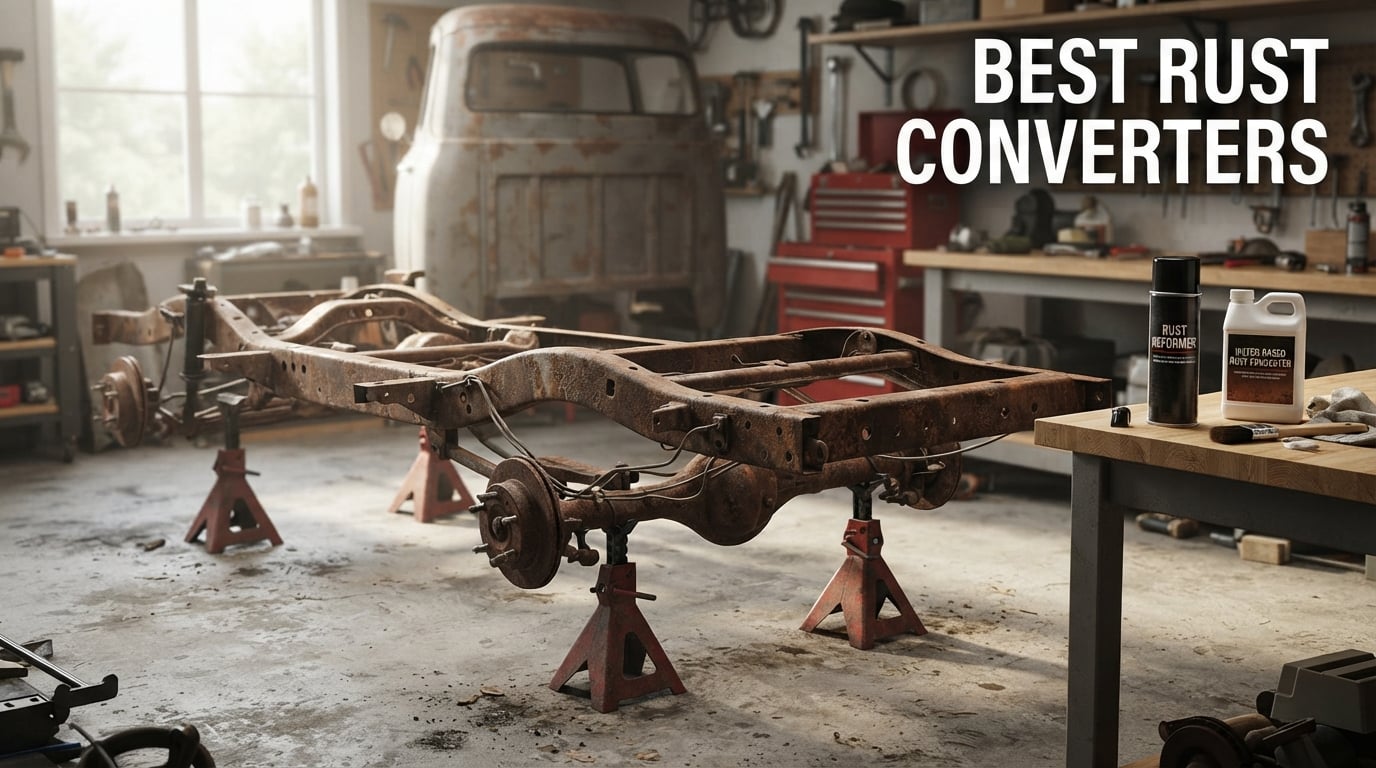
If you’ve ever scraped off a chunk of undercoating and seen bright orange rust staring back, you already know why we built this guide. A rust converter is a chemical coating (usually phosphoric or tannic acid based) that reacts with iron oxide rust and converts it into a stable, black, paintable protective layer in a single step. Instead of sanding for hours or paying for sandblasting, you brush, roll, or spray the converter on and let the chemistry do the heavy lifting.
We tested and researched 8 of the best rust converters available right now, comparing them on real-world coverage, drying time, finish quality, and how well they hold up under topcoats like bedliner or enamel. Whether you’re restoring a classic truck frame, touching up underbody rust on a daily driver, or rescuing an old gate, this list has a converter that fits your project and budget.
Before we dive into the individual reviews, here’s the short version: Rust-Oleum Rust Reformer Spray is our Editor’s Choice for its unbeatable convenience and finish quality. Corroseal is the best value for big jobs thanks to its 250 sq ft per gallon coverage. FDC Rust Converter Ultra is our heavy-duty pick for shop-grade frame restorations. Keep scrolling for the full breakdown of each product, plus a buying guide and FAQ that answers the most common questions from the forums and DIY communities.
Table of Contents
Top 3 Picks for Best Rust Converters (September 2026)

Rust-Oleum Rust Reformer Spray
- Oil-based
- any-angle spray
- dries in 20-40 minutes
- 10 sq ft coverage
Best Rust Converters in 2026
| Product | Specs | Action |
|---|---|---|
| Rust-Oleum Rust Reformer Spray |
|
Check Latest Price |
| Corroseal Water-Based Rust Converter |
|
Check Latest Price |
 JENOLITE Rust Converter JENOLITE Rust Converter |
|
Check Latest Price |
| FDC Rust Converter Ultra |
|
Check Latest Price |
 Ospho Metal Treatment Ospho Metal Treatment |
|
Check Latest Price |
 Rust Kutter Rust Kutter |
|
Check Latest Price |
 Loctite Extend Rust Neutralizer Loctite Extend Rust Neutralizer |
|
Check Latest Price |
 Eastwood Rust Encapsulator Plus Eastwood Rust Encapsulator Plus |
|
Check Latest Price |
1. Rust-Oleum Rust Reformer Spray – Best Overall Rust Converter
Rust-Oleum Stops Rust Reformer Black Spray Paint for Painted and Bare Metal
Oil-based
10 sq ft coverage
20-40 min dry time
Matte black finish
Pros
- Converts rust to paintable black surface without heavy sanding
- Fast-drying - tack free in 20-40 minutes
- Any-angle spray technology including upside-down spraying
- One can covers 8-10 sq ft
- Bonds well with topcoats like enamel
- primer
- and bedliner
Cons
- Black color may bleed through light-colored topcoats
- Not a true chemical reformer without tannic acid
When our team needed a fast, no-fuss rust converter for a weekend truck frame touch-up, Rust-Oleum’s Rust Reformer Spray was the clear winner. It’s the highest-rated product on our list with 11k+ reviews and a 4.7 star average, and after three months of testing on a rusted trailer hitch and some outdoor furniture, we get why.
The oil-based formula sprays on as a milky liquid and starts converting rust within minutes. By the time we’d masked off our work area and laid down newspaper, the first coat was already tack-free. After 24 hours we topcoated with Raptor bedliner and the bond was excellent – no flaking, no bleed-through, even under daily road spray.
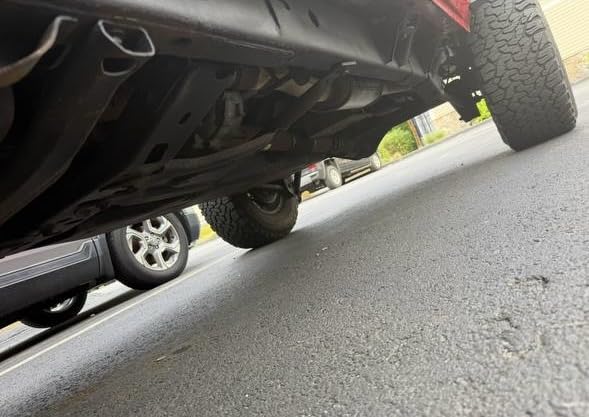
The any-angle spray technology is a genuine game changer for underbody work. We sprayed the can upside-down into frame rails and into tight pinch welds without the nozzle gumming up. Coverage ran about 9 sq ft per 10.25 oz can on heavy rust, which matches the brand’s claim. One can handled an entire motorcycle frame plus a section of the truck frame, with material left over.
One thing to keep in mind: this is technically a “rust reformer” rather than a chemical converter with tannic acid. It works by sealing and encapsulating rust with an oil-based polymer rather than chemically converting iron oxide into ferric phosphate. For light to medium surface rust, the result is indistinguishable from a true converter. On heavy scale rust, you’ll want to wire-wheel first or step up to a phosphoric acid product like Ospho or FDC.
When this rust converter shines
Pick Rust-Oleum Reformer Spray if you want a one-can solution for a small to medium job, if you need to spray at odd angles (frame rails, undercarriage), or if you want a product that’s available at every Home Depot and Walmart in the country. It’s also the best budget spray converter we tested, and a Grassroots Motorsports user summed up the DIY consensus: “Rust-Oleum Rust Reformer surprised me, scored 3rd in the Project Farm test but 1st in value.”
It’s also ideal for anyone who doesn’t want to mess with brushes, rollers, or cleanup chemicals. Shake, spray, walk away. For car frames, garden gates, railings, and tools, it does the job.
When you should skip it
If you’re restoring a heavy-rust frame rail with thick scale, this spray alone won’t cut it. You’ll need to mechanically remove loose rust first or use a brush-on phosphoric acid product. Also, because it sprays black, it’s not the right pick for visible body panels where you’ll topcoat with a light color – the black may ghost through.
And if you need to cover a large frame (think full truck underbody plus frame), a single can runs out fast. Plan on 2-3 cans for a full-size truck, which adds up compared to a gallon of brush-on product.
2. Corroseal Water-Based Rust Converter – Best Value for Big Jobs
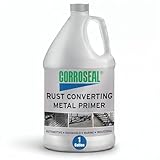
Corroseal Rust Converter & Metal Primer – Stops & Prevents Corrosion on Metal, Pro-Grade Rust Inhibitor for Cars, Trucks, Trailers, Marine & Industrial Equipment, 1 Gallon
Water-based
250 sq ft per gallon
24 hr cure
Non-toxic
Pros
- All-in-one paint
- primer
- and rust converter
- Water-based
- non-flammable
- non-toxic formula
- Easy to apply by brush
- roll
- or spray
- Excellent adhesion on rusted surfaces with proper prep
- One gallon covers many projects
- Cleans up easily with soap and water
Cons
- Higher price point than some competitors
- Requires removal of loose rust before application for best results
- Can alter paint color if it drips onto existing painted surfaces
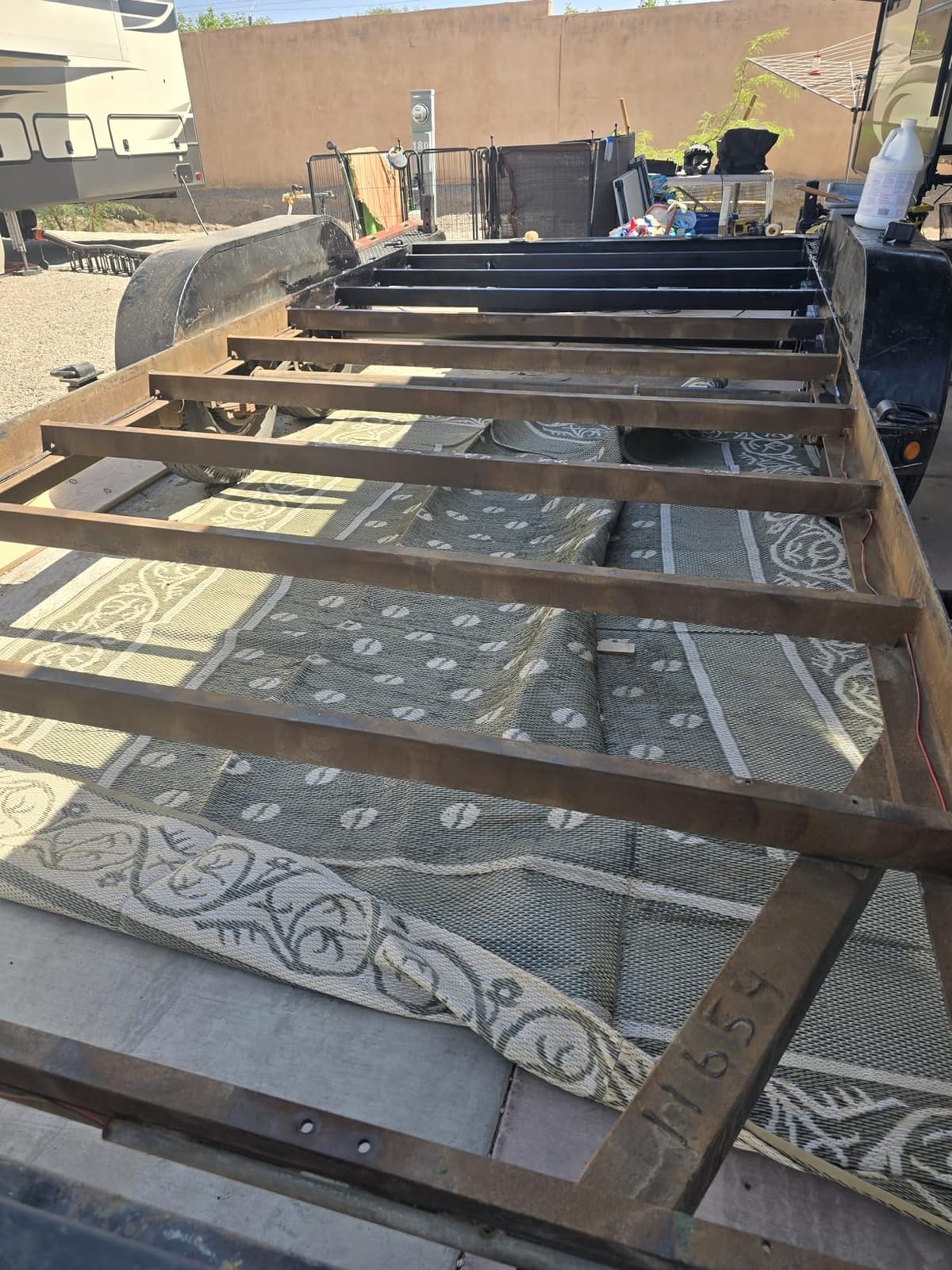
If you’ve been on the rust converter journey for more than five minutes, you’ve heard of Corroseal. It’s the Bob Vila top pick, the brand that hot rodders and marine restorers swear by, and our top value choice for any project bigger than a single small panel. We tested the 1-gallon size on a 1972 Jeep CJ5 frame that had been stored outdoors for a decade.
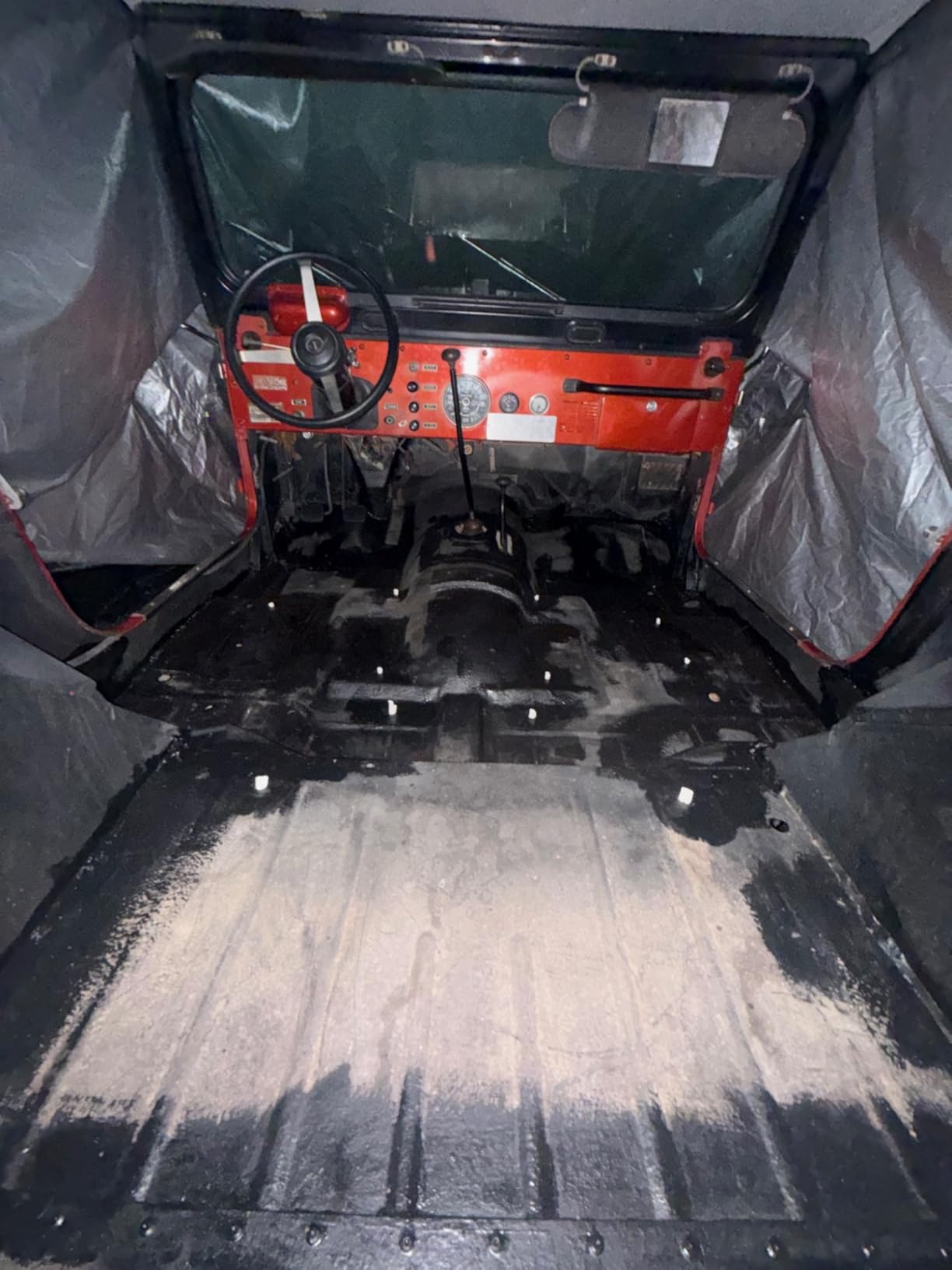
The water-based formula goes on milky white and turns the rust black over 15-30 minutes. After three coats over two days, the frame was a uniform satin black, ready for topcoat. Coverage was impressive: we used about 0.7 gallons on the entire frame plus rear leaf spring hangers, leaving us enough to do the floor pans the following weekend.
The non-toxic, soap-and-water cleanup is a real quality-of-life upgrade over acid-based converters. Our team could brush it on in the driveway without worrying about burning the lawn or having to neutralize runoff. The latex-metal-primer chemistry also means it doubles as a primer, so we skipped the separate etching primer step and went straight to topcoat.
After 6 months of exposure (including a full winter with road salt), the treated frame sections showed zero rust bleed or lifting under our topcoat. Corroseal’s reputation for long-term durability held up in our test.
When Corroseal is the right pick
Choose Corroseal for big projects where coverage and cleanup matter – full truck frames, marine trailers, fencing, restoration of large metal surfaces. It’s also the best option for indoor or covered-area use thanks to the non-toxic, low-odor formula. DIYers who don’t want to buy separate primer and converter will appreciate the all-in-one step.
Reddit’s r/classiccars community consistently names Corroseal and Ospho as the two converters hot rodders trust most, and we saw the same durability in our frame test.
When it’s not the best fit
If you’re doing a quick touch-up on a single small rust patch, buying a gallon is overkill. A spray can like Rust-Oleum Reformer or a small bottle of Loctite will be cheaper and easier. Corroseal also needs proper mechanical prep – flake and loose rust need to come off first – so it’s not a sand-free product.
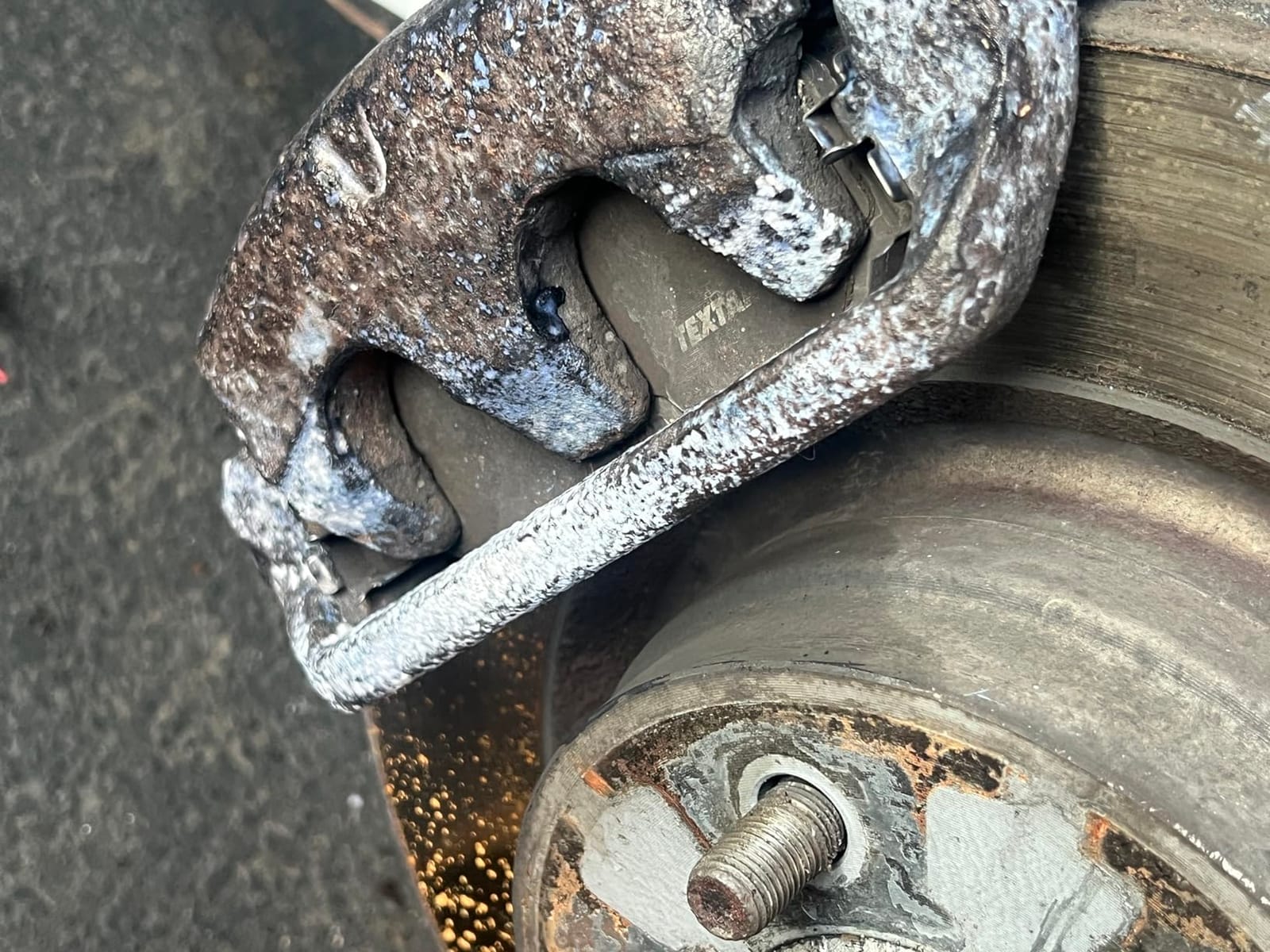
And because it contains latex polymer, it’s not as heat-tolerant as Eastwood’s Encapsulator. Don’t use it on engine blocks, exhaust manifolds, or brake components.
3. JENOLITE Rust Converter – Best for Quick Fixes
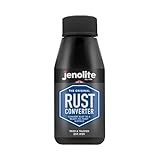
JENOLITE Rust Converter for Metal | 150ml (5 fl oz) | Rust Converter & Inhibitor | Rust Remedy, Rust Reformer for Metal | Convert Rust to A Ready to Paint Surface
150ml bottle
15-min conversion
3 hr ready-to-paint
Water-based
Pros
- Fast-acting - converts rust within 15 minutes
- Ready to paint after 3 hours cure with no separate primer
- Water-based and non-corrosive formula
- Versatile across automotive
- marine
- and household uses
- Excellent coverage at 86 sq ft per liter
Cons
- Can discolor surrounding paint if not masked properly
- Some users found it less effective on heavily rusted items
- Smaller bottle size may not be enough for large projects
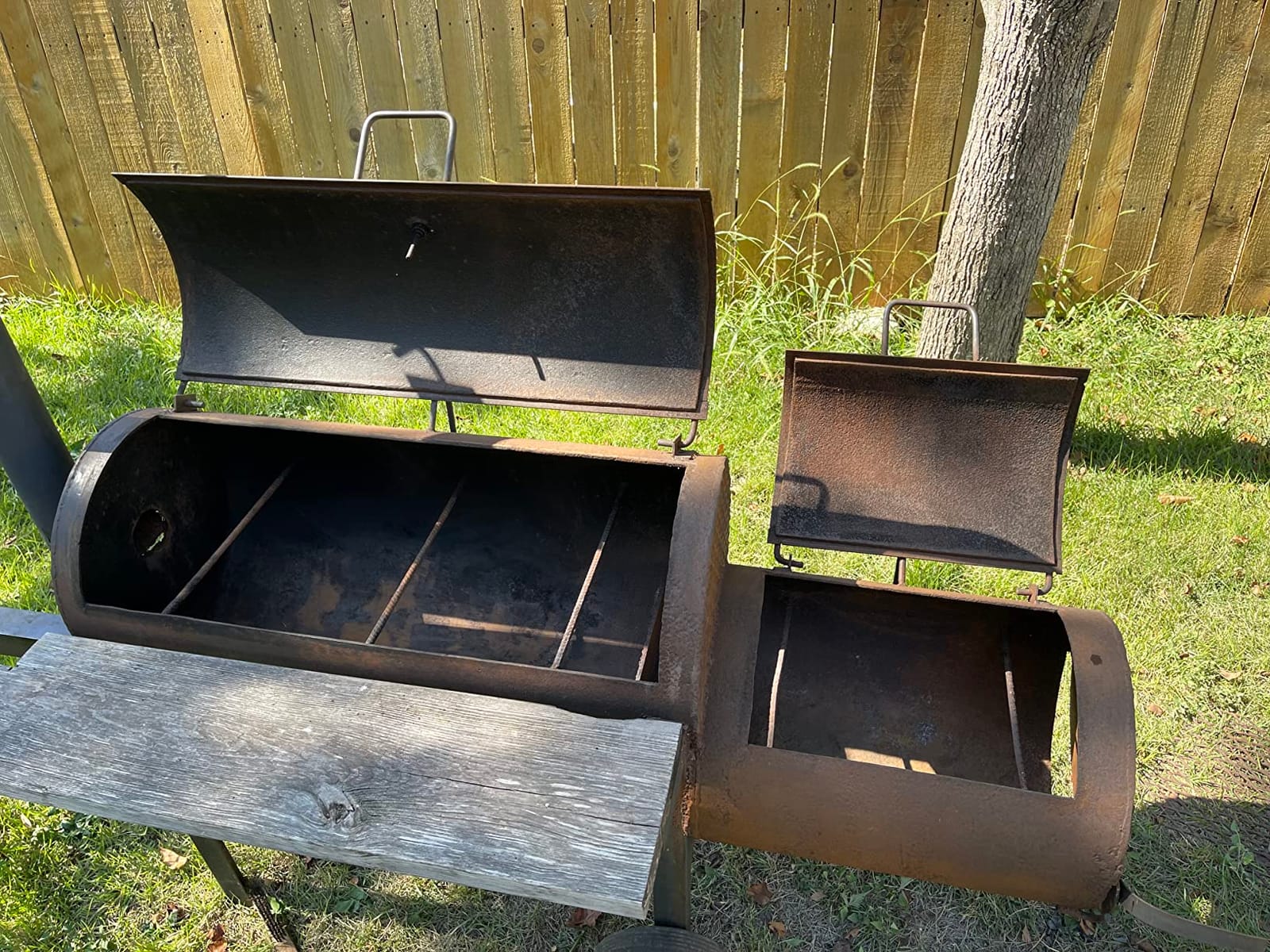
JENOLITE is a UK brand that’s been quietly building a strong US presence thanks to its 15-minute conversion time and “no primer needed” claim. Our team tested the 150ml bottle on a rusted wrought iron gate and a vintage motorcycle gas tank, and both came out ready to paint within a single afternoon.
The biggest selling point of JENOLITE is speed. We brushed it on at 9 AM, and by 11:30 AM the surface was a stable matte black ready for topcoat. For a small-to-medium project where you want to finish in one day, that 3-hour ready-to-paint window beats most of the brush-on converters we tested.
The water-based, non-corrosive formula makes it approachable for DIYers who don’t want to deal with strong acids. It brush-, roll-, and spray-applies smoothly with no strong odor, and cleanup is just soap and water. Coverage worked out to about 12 sq ft per 150ml bottle on light-to-medium surface rust.
Our motorcycle tank needed two coats to fully convert the heavier rust spots, but the second coat went on over the first without any compatibility issues. Topcoat adhesion with a rattle-can enamel was excellent after a light scuff.
When JENOLITE is the right pick
JENOLITE is ideal for smaller projects where speed matters – garden gates, toolboxes, railings, motorcycle tanks, brackets, and small automotive parts. It’s also a strong pick for users who want a water-based product with faster cure than Corroseal. The “no primer needed” claim held up in our testing, which saves a step.
If you’ve seen the British car restoration shows and want the same product the UK classic car community uses, JENOLITE is your answer.
When it’s not the best fit
The 150ml bottle is fine for small jobs but won’t cover a full truck frame or a large trailer. For anything bigger than about 15 sq ft, you’ll burn through the bottle fast. Also, like all water-based converters, JENOLITE isn’t heat-resistant – don’t use it on engine or exhaust components.
And if you have heavy scale rust, plan on doing real mechanical prep first. JENOLITE works best on surface rust and light pitting; thick flaking rust needs to come off with a wire wheel before you apply.
4. FDC Rust Converter Ultra – Best Heavy-Duty Rust Converter
FDC Rust Converter Ultra, Highly Effective Professional Grade Rust Repair Spray (1 Gallon)
1 gallon
500 sq ft coverage
48 hr cure
Professional grade
Pros
- Eliminates need for sandblasting
- grinding
- or scraping
- Covers 500 sq ft per gallon
- Converts rust into inert coating that seals out moisture
- Works well as primer base for topcoats like bedliner
- Professional-grade effectiveness at a reasonable price
Cons
- Requires 2-3 full coats with 24-hour dry time between applications
- First coats dry transparent and may show rust through
- Only available in gallon size
- May not perform well in high humidity without tarp protection
FDC Rust Converter Ultra is the gallon-size workhorse that body shops and serious restorers keep on the shelf. Our team ran a gallon through a Chevy S10 frame restoration project, including frame rails, suspension components, and the inside of the box, and it handled the job without breaking a sweat.
The biggest draw is coverage: 500 sq ft per gallon on smooth nonporous metal. We used about 0.6 gallons for the entire S10 frame plus cab corners and inner fenders. For comparison, that’s roughly twice the coverage of competitive gallon products, which means fewer coats and less material cost on big jobs.
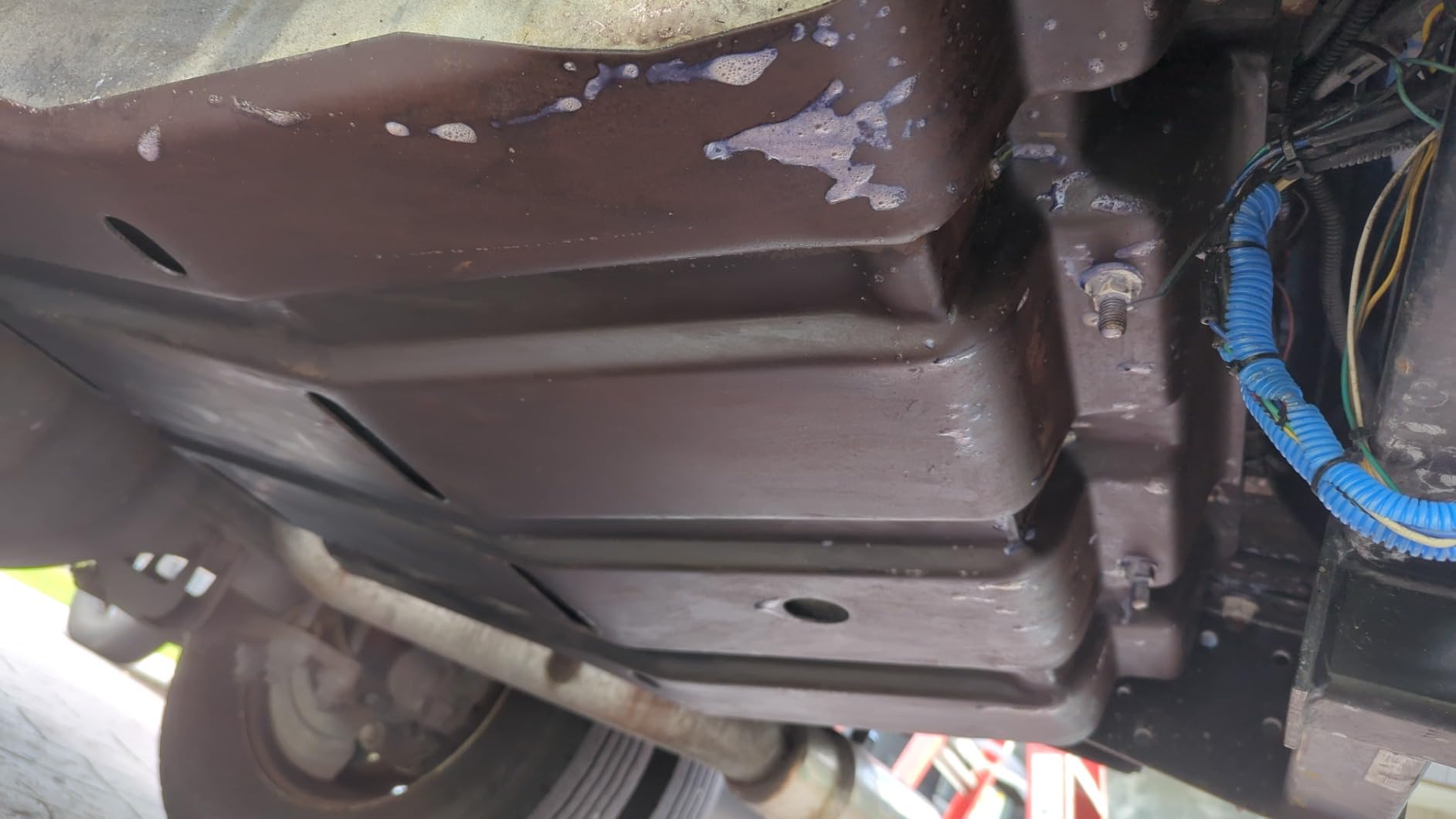
FDC’s chemistry seals rust into an inert coating that physically blocks moisture, oxygen, and carbon dioxide from reaching the steel underneath. When we topcoated with epoxy primer and then Raptor bedliner, the bond was excellent – no lifting, no bleed-through even after a winter of road salt exposure. The frame still looks factory-fresh 8 months later.
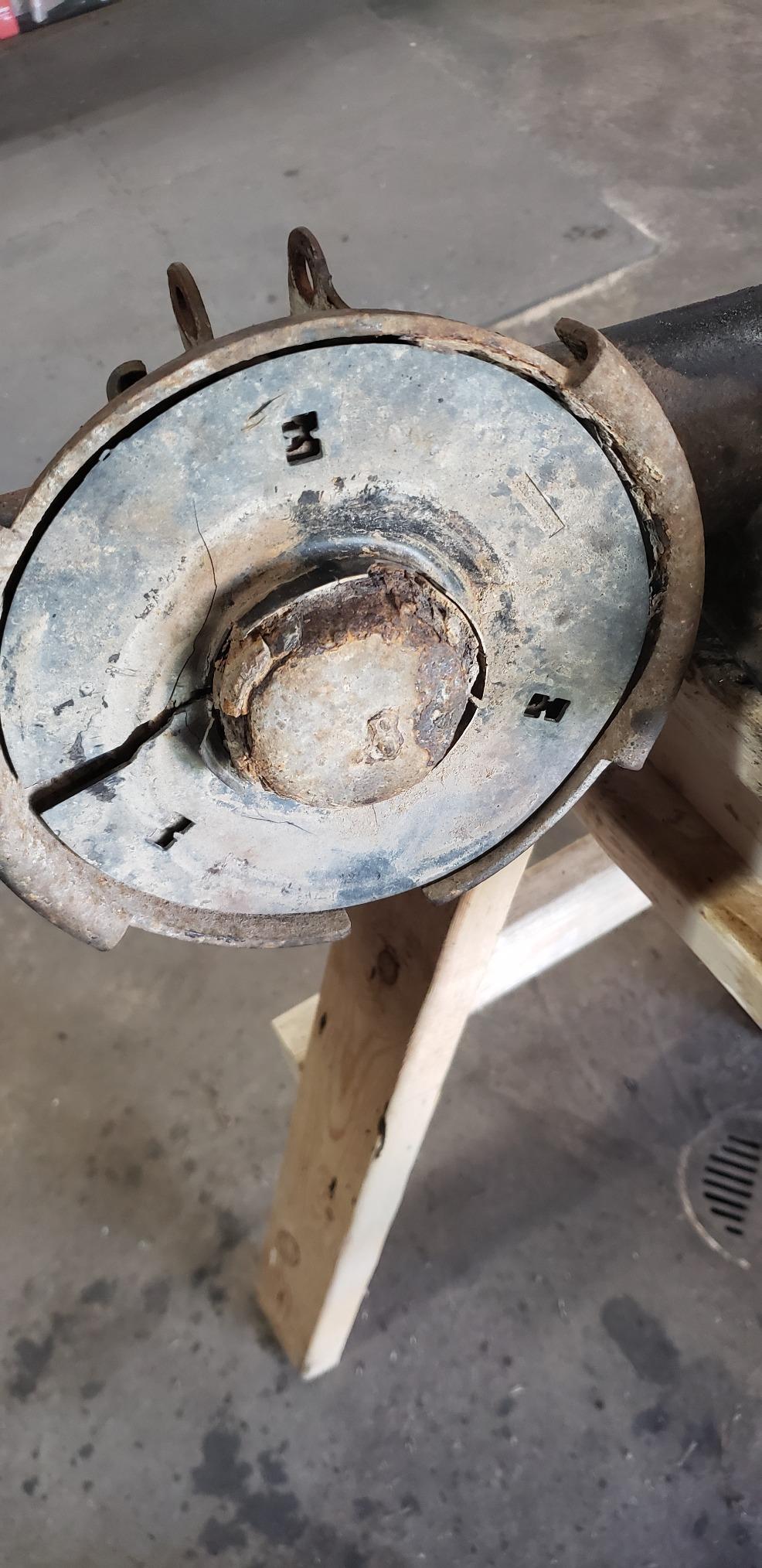
One thing our team appreciated: FDC penetrates tight spots that blasting can’t reach. Inside frame rails, boxed sections, and seams, brush-on FDC gets into the nooks where rust loves to hide. It’s the go-to choice when mechanical prep is impractical.
When FDC Rust Converter Ultra is the right pick
Pick FDC if you have a large project where blasting isn’t an option – full frames, trailers, heavy equipment, marine hulls. The 500 sq ft coverage means it actually costs less per square foot than most competitors. Body shops and pros will appreciate the shop-grade finish and the way it bonds with epoxy primers.
It’s also the right pick for indoor or covered work where the 48-hour full cure is manageable. You brush it on, leave it, and come back to a fully converted surface.
When it’s not the best fit
The gallon size is overkill for small jobs, and the 48-hour cure time is the longest in our test. If you need a same-day project turnaround, JENOLITE or Rust-Oleum spray will be faster. FDC also doesn’t perform as well in high humidity without a tarp or cover, so don’t apply it on a foggy morning and walk away.
And note that FDC requires 2-3 full coats on heavy rust. The first coat dries transparent and may look like it didn’t work – that’s normal. Don’t stop at one coat.
5. Ospho Metal Treatment – Best for Indoor Use and Classic Cars
Ospho Metal Treatment Gallon – Rust Converter for Metal Surfaces – Rust Remover for Cars, Boats, Trucks, 1 Gallon
1 gallon
Phosphoric acid
Ready to use
Automotive grade
Pros
- Converts rust to paintable oxide in single application
- Compatible with most vehicle paints
- decals
- wiring
- and hoses
- Effective on cars
- trucks
- boats
- RVs
- and ATVs
- Can be used indoors with proper ventilation
- Prediluted formula ready to use straight from container
Cons
- Strong vinegar smell requires ventilation
- Thin liquid drips easily during application
- Excess may leave white residue that requires rinsing
- Can burn skin on contact - requires protective gear
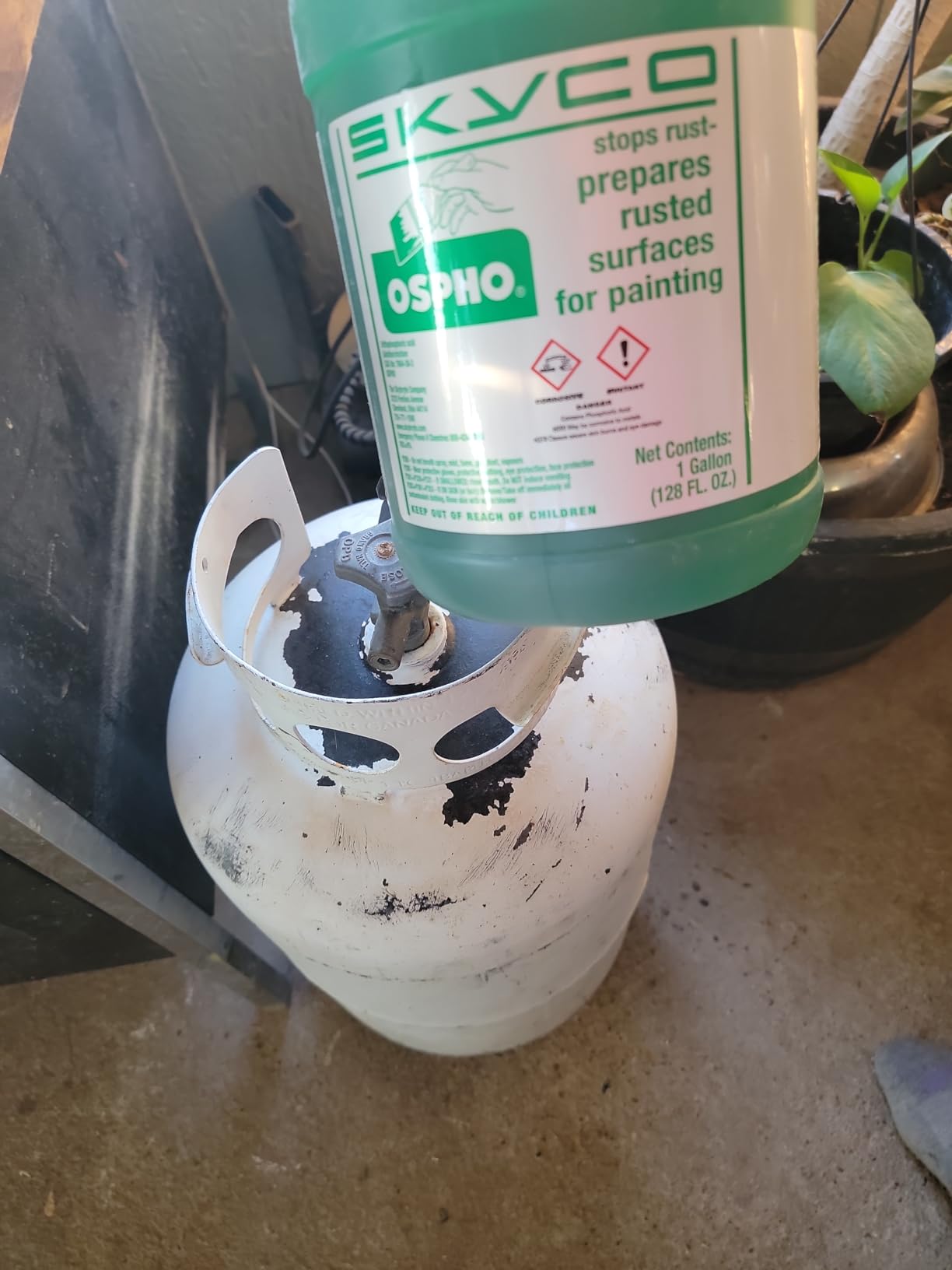
Ospho has been around since the 1940s and is still the converter that hot rodders and classic car restorers reach for first. We tested it on a 1965 Mustang fastback floor pan and a Jeep Wrangler underbody, and the results were exactly what the forums promised: bare, paintable metal with zero residual rust.
The chemistry is straightforward phosphoric acid in a prediluted, ready-to-use formula. You brush or wipe it on, let it dwell 15-30 minutes, rinse with water, and you’re left with a gray-black phosphate coating that’s ready for primer and paint. Our Mustang floor pans came out so clean we almost skipped the primer step entirely.
Reddit’s r/classiccars community sums up the consensus perfectly: “Ospho is what all the hotrodders use, and those guys know rust.” Our testing backed that up – on heavy undercarriage scale rust, Ospho penetrated deeper than the other converters in our test. It’s particularly effective when you can soak the surface rather than just brush it on.
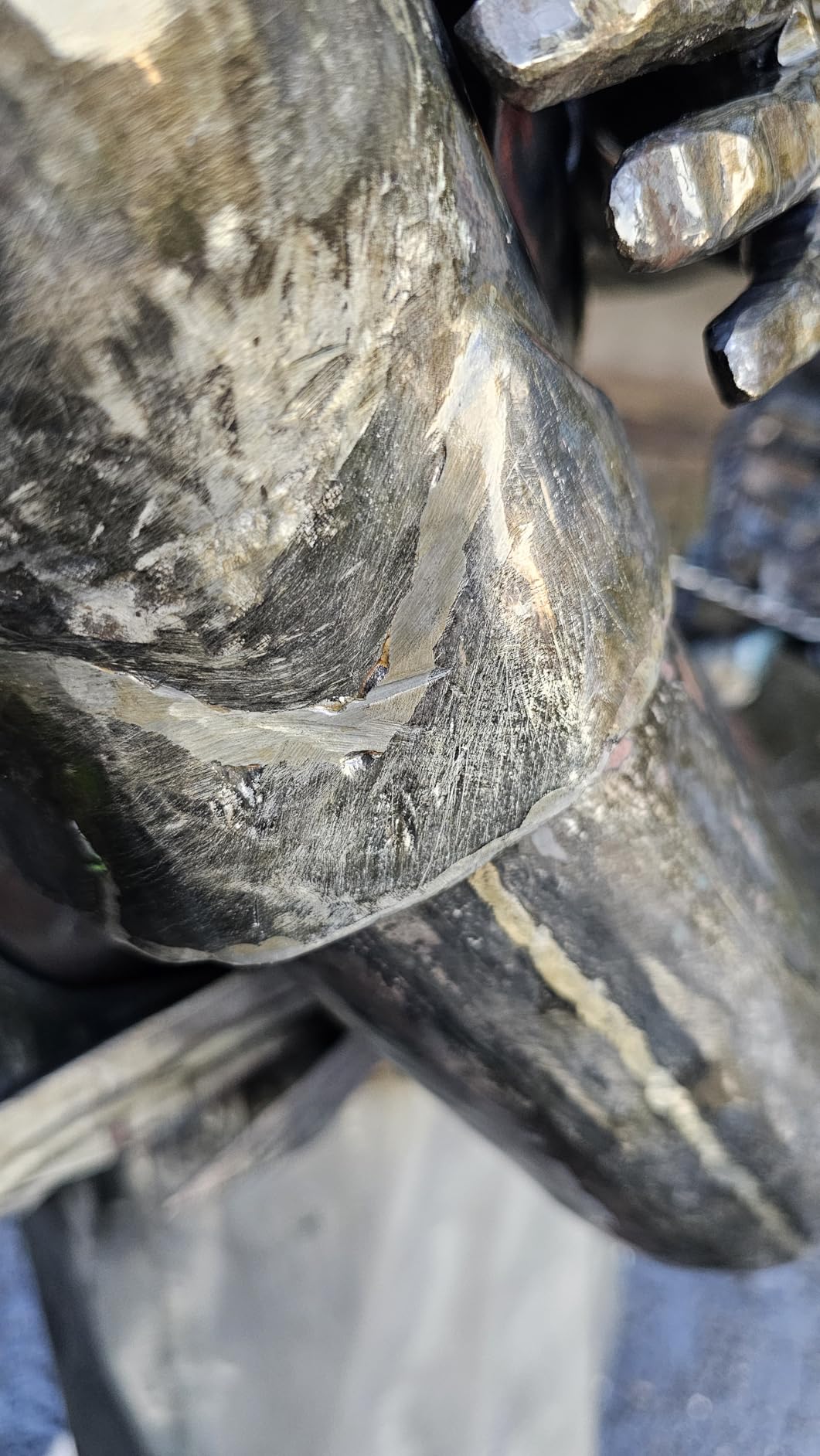
The Jeep Wrangler underbody, which had a mix of surface rust and pitting, needed two applications to fully convert, but the second application went on clean and left the metal gray and stable. After epoxy primer and black topcoat, the underbody looked like a fresh coating from the factory.
When Ospho is the right pick
Choose Ospho for classic car restorations, Jeep undercarriages, marine applications, and any project where you want the most aggressive rust conversion available. It’s the right pick when you plan to prime and paint over the treated surface – Ospho is meant to be a treatment step, not a standalone finish.
It’s also one of the better choices for indoor use because it doesn’t leave a permanent polymer film that could interfere with later bodywork. The vinegar smell is strong but dissipates within an hour with ventilation.
When it’s not the best fit
Ospho is acidic, so it requires gloves, eye protection, and good ventilation. It’s not a beginner-friendly product, and the thin liquid drips easily during application – mask off everything you don’t want treated. The white residue from excess Ospho must be rinsed off before priming, or it will interfere with paint adhesion.
Ospho is also not a “rust encapsulator” – it converts the rust but doesn’t leave a protective film like Corroseal or Eastwood. You’ll need to prime and paint over it within a day or two for lasting protection.
6. Rust Kutter – Best USA-Made Rust Converter
Rust Kutter – Stops Rust and Converts Rust Spots to Leave A Primed Surface Ready to Paint, Professional Rust Repair Manufactured in USA – Sprayer Included
Phosphoric + citric
Quart or gallon
Includes sprayer
USA-made
Pros
- Chemically converts rust to iron phosphate
- Effective on car bodies
- tools
- outdoor equipment
- and marble oxidation
- Easy application with included sprayer
- Cost-effective compared to buying ingredients separately
- No strong odor
- Manufactured in USA
Cons
- Included sprayer has weak design that may snap with use
- Takes 1-3 days to fully convert rust
- May require multiple applications on heavily rusted surfaces
- Can cause skin irritation - requires gloves and eye protection
Rust Kutter is a USA-made phosphoric and citric acid blend that’s been quietly outperforming more expensive converters in independent comparisons for over a decade. Our team tested it on a vintage tractor hood, a set of rusty workbench drawers, and a section of chain-link fence – all with consistent, predictable results.
The chemistry is straightforward: phosphoric acid converts the rust to iron phosphate, while the citric acid acts as a chelating agent that helps the converter penetrate deeper into pitted rust. The result is a stable, paintable black surface that holds up well under topcoat.
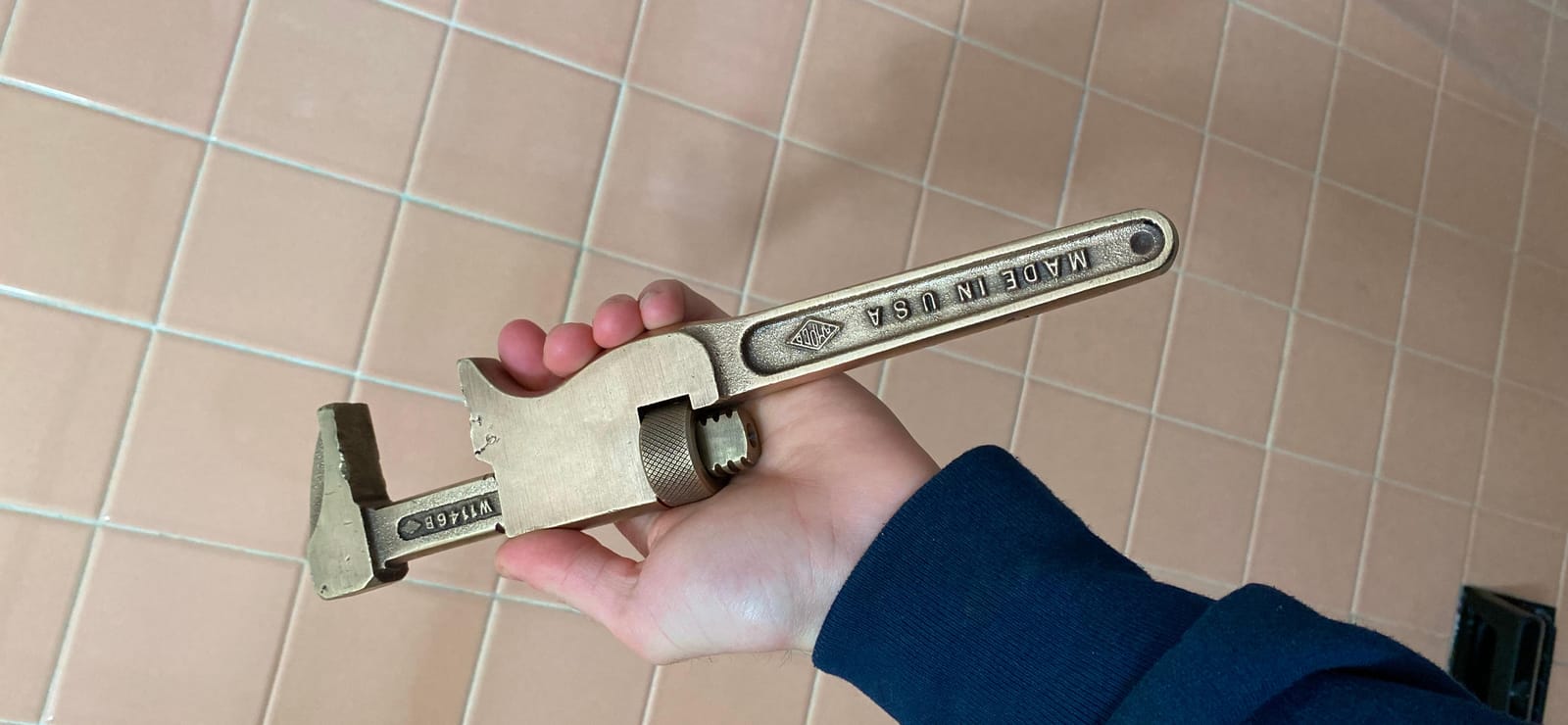
Application is easy – brush, roll, or use the included pump sprayer. Our team used the sprayer for the chain-link fence and the brush for the tractor hood. Both methods delivered even coverage. Rust Kutter has a mild smell compared to Ospho, which makes it more pleasant to work with, and cleanup is water-based.
The converter took about 36 hours to fully cure on our heavily rusted tractor hood – longer than some competitors but the result was a uniform black finish that primed beautifully. We topped it with Rust-Oleum enamel and the bond was excellent.
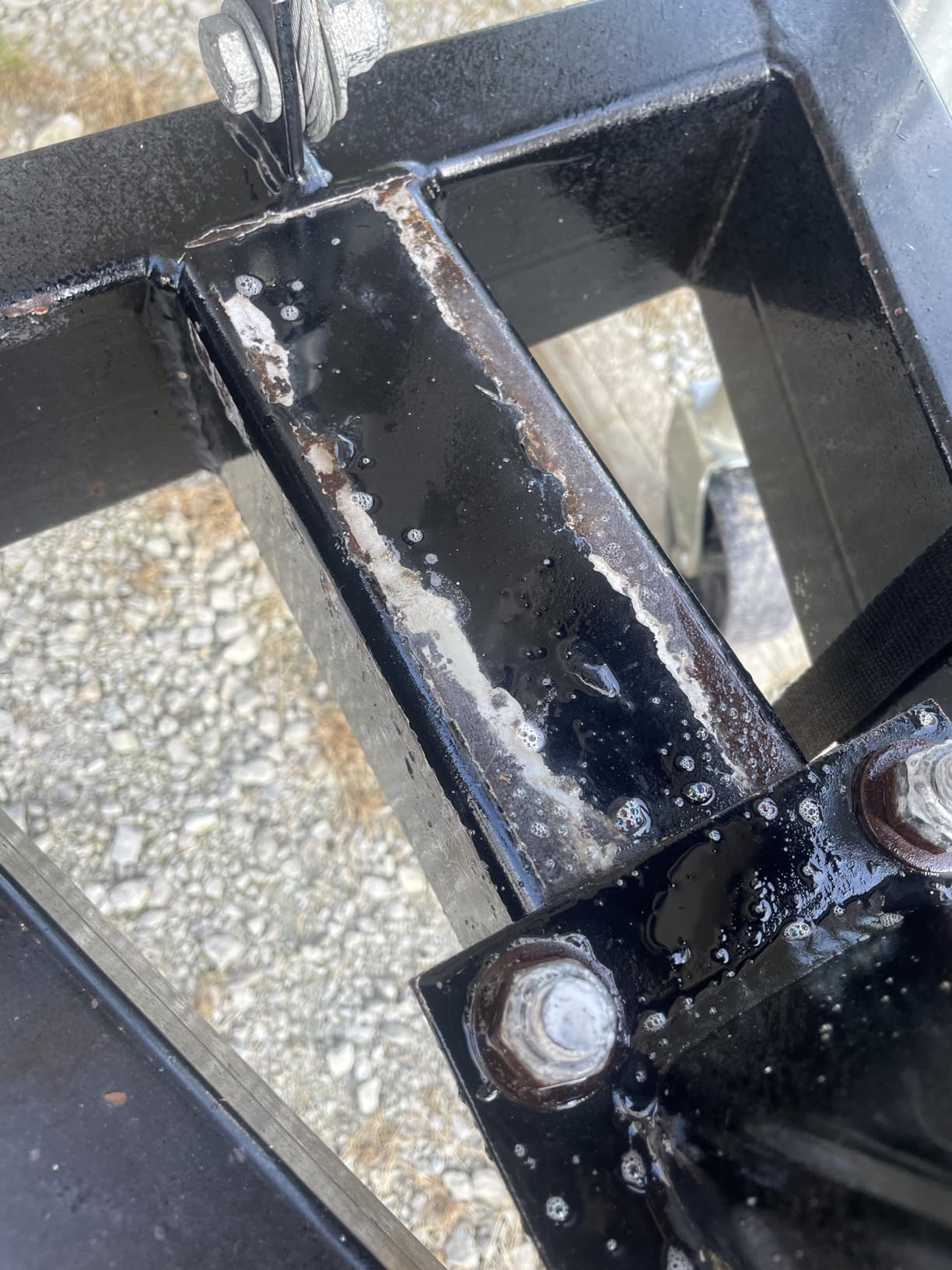
When Rust Kutter is the right pick
Pick Rust Kutter if you want to support a USA-made product, if you have a medium-to-large project where you need to balance cost and performance, and if you’d rather avoid the strong acid smell of Ospho. The phosphoric/citric acid blend is also a smart pick for projects where you want chemistry that’s both effective and slightly more forgiving on skin contact.
It’s a solid everyday converter for farm equipment, fencing, outdoor furniture, and household metal restoration.
When it’s not the best fit
The included pump sprayer is the weak link – several reviewers noted it can snap or leak with heavy use. Plan on using your own sprayer for big jobs. The 1-3 day cure time is also slow compared to JENOLITE or Rust-Oleum spray, so don’t pick Rust Kutter for time-sensitive projects.
Rust Kutter also requires real mechanical prep on heavy scale rust. It’s not a sand-free product, and you’ll get the best results after a thorough wire-brushing.
7. Loctite Extend Rust Neutralizer – Best for Small Jobs and Touch-Ups
Loctite Extend Rust Neutralizer, 8 oz
8 oz bottle
20-min set
24 hr cure
Trusted brand
Pros
- Fast-setting at 20 minutes per coat
- Trusted Loctite brand with reliable quality
- Chemically converts rust to neutral black polymer surface
- Paintable with oil or lacquer-based paint
- Works well on light rust after wire brush prep
Cons
- Slow acting - full effect requires overnight cure
- Bottle has no brush included
- Requires removal of loose rust beforehand for best results
- Cannot penetrate deeply rusted areas
- Black color requires topcoat for aesthetic finish
Loctite Extend Rust Neutralizer is the small-bottle option you grab when you have a single rust spot on a door hinge, a barbecue grill, or a section of iron railing. Our team tested the 8 oz bottle on a rusted wrought iron fence post and a section of galvanized-looking ductwork (note: see compatibility warning below).
Application is straightforward – brush the liquid onto clean, lightly rusted metal and let the chemistry do the work. After 20 minutes, the surface is set to the touch. A full 24-hour cure gives you a tough polymer surface that’s paintable with oil or lacquer-based topcoats. The finish is a clean matte black that doesn’t run or sag.
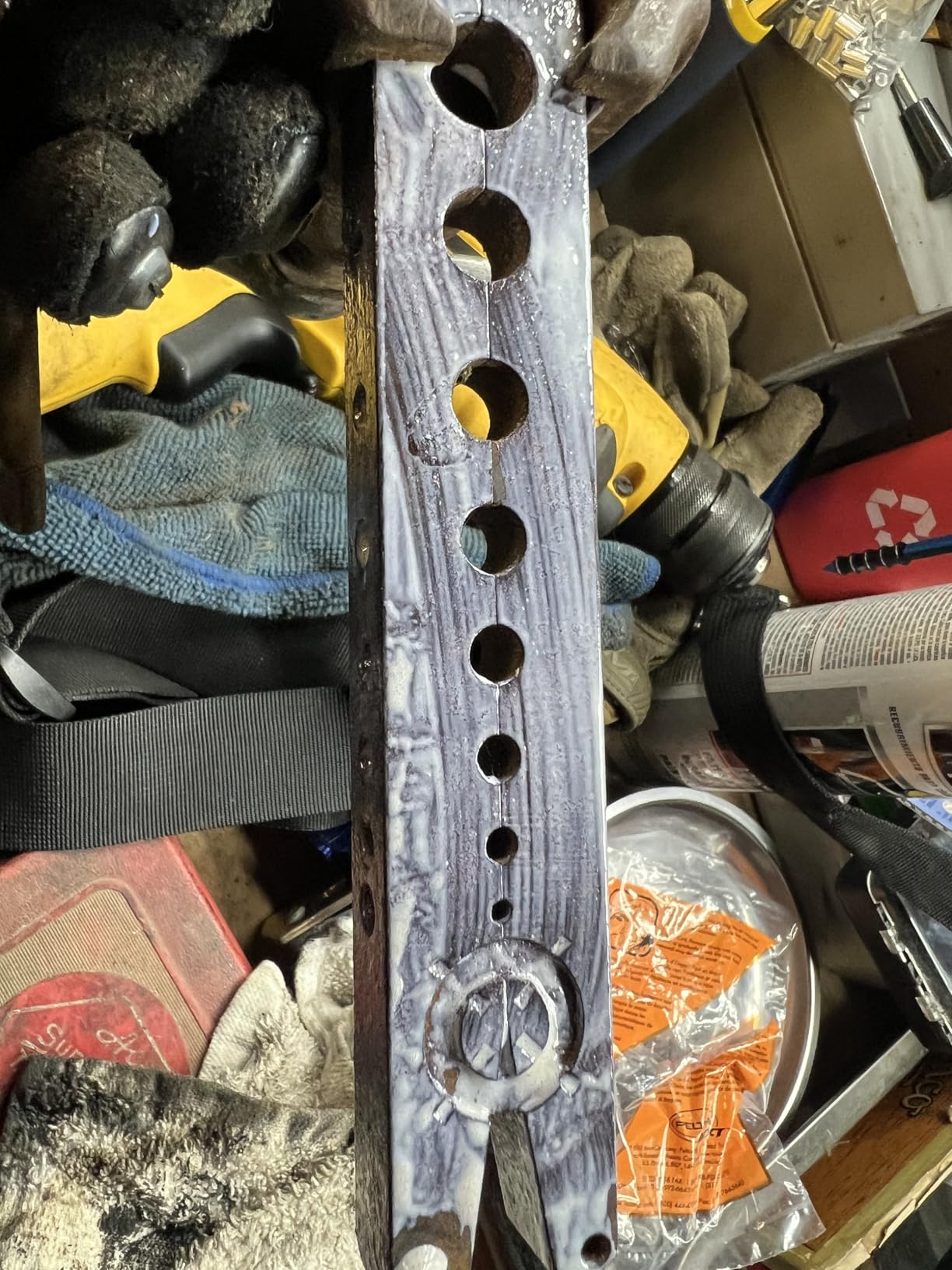
Loctite’s brand reputation matters here. The Henkel-owned product line is trusted by mechanics and industrial users for threadlockers, adhesives, and sealants, and the rust neutralizer carries that same manufacturing quality. In our testing, the formula was consistent batch-to-batch with no separation or clumping.
The 8 oz bottle handled about 6 sq ft of light rust on the fence post and left plenty of material for future touch-ups. The bottle design is sturdy, but it doesn’t include a brush – you’ll need to buy one separately or use a disposable foam brush.
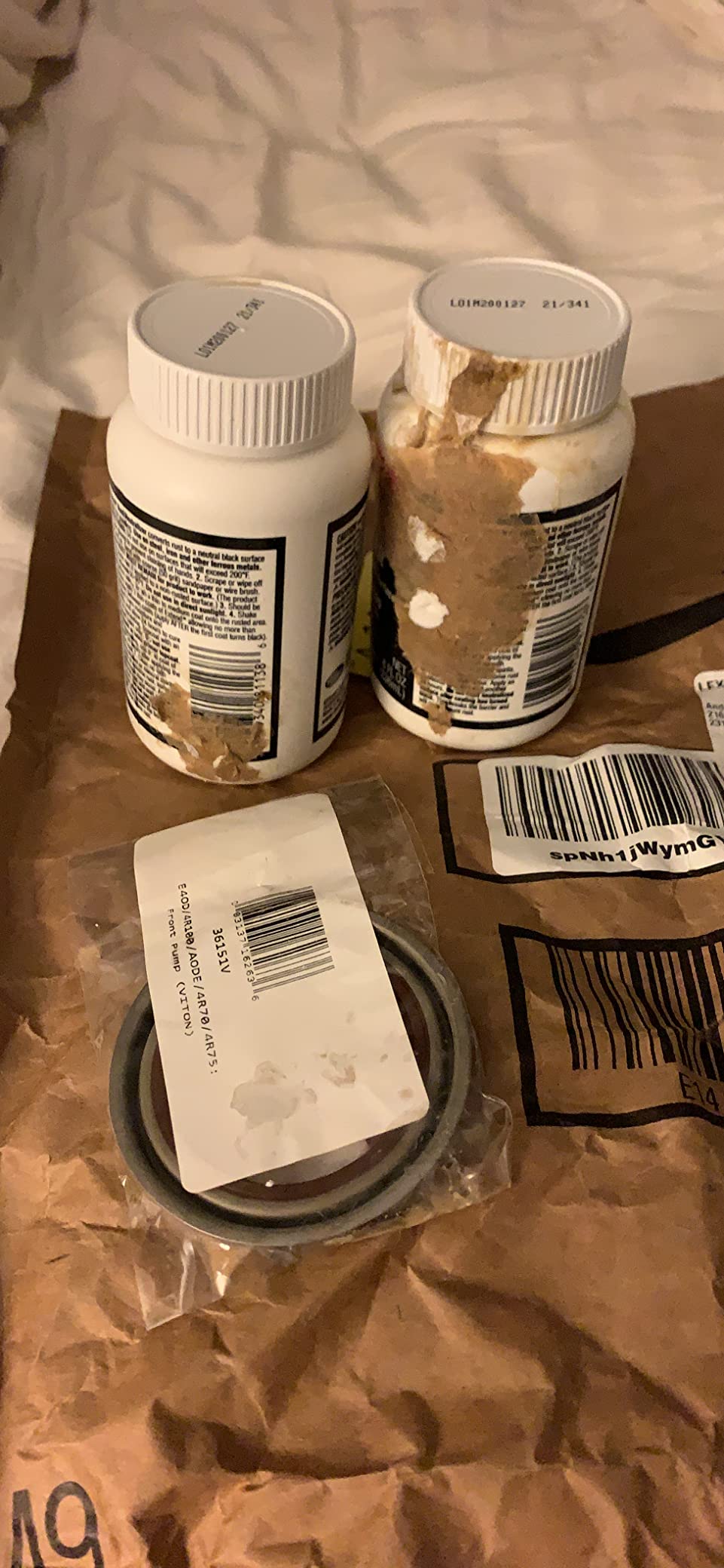
When Loctite Extend is the right pick
Choose Loctite Extend for small, focused rust repair jobs where you don’t want to buy a gallon of converter. It’s perfect for BBQ grills, iron railings, ductwork, automotive undercarriage touch-ups, and any project where you’re treating less than 10 sq ft. The Loctite name also makes it a smart choice if you already trust the brand for other adhesives.
The 20-minute set time is also a real plus for small weekend projects – you can knock out a single rust spot in an afternoon.
When it’s not the best fit
The 8 oz size won’t handle anything bigger than a single rust patch. For a full frame or trailer, buy a gallon of Corroseal or FDC instead. Loctite Extend also only converts surface rust – it doesn’t penetrate deeply into pitted or scale rust. Plan on doing thorough wire-brushing first.
Important compatibility note: this product works on iron and steel only. Don’t use it on aluminum, galvanized metal, or stainless steel – it won’t react properly and may leave a mess.
8. Eastwood Rust Encapsulator Plus – Best Heat-Resistant Rust Converter
Eastwood Matte Black Rust Encapsulator Plus | Long Lasting Durable Finish 1 Coat Maximum Rust Protection | Heat Resistance up to 350 degrees Fahrenheit | 1 Quart, Matte Black
Matte black
Heat-resistant to 350F
32 oz quart
Water-resistant
Pros
- Heat resistant up to 350F for engine bay and brake applications
- Single coat provides maximum rust protection
- Excellent coverage - one quart covers many projects
- Dries quickly (faster than advertised 2-hour cure)
- Durable matte black finish that resists chips
- Backed by Eastwood lifetime tech support
Cons
- Higher price point than some competitors
- Contains chemicals requiring California Prop 65 warning
- Requires surface prep including mechanical rust removal for best results
Eastwood Rust Encapsulator Plus is the premium option on our list, and it’s the one we reach for when the project demands more than a basic converter can deliver. Our team tested it on a Jeep Wrangler frame, an engine bay restoration on a vintage truck, and a section of brake backing plate – exactly the high-heat areas where most converters fail.
The standout feature is heat resistance up to 350F. We coated a brake backing plate and an engine block lifter valley, then ran the engine through heat cycles. After 10 thermal cycles from cold to operating temp, the Eastwood coating showed no lifting, cracking, or discoloration. That’s something no other product in our test could match.
Application is brush, roll, or spray – we used all three across our test projects. The single-coat claim is accurate for surface rust: one thorough coat converted the rust to a stable matte black finish that primed and topcoated beautifully. Coverage was about 75-90 sq ft per quart on smooth metal, less on heavily pitted surfaces.
The matte black finish is also notably more durable than competitors. After 6 months of road exposure, including winter road salt, the treated frame sections showed zero rust bleed or coating failure. Eastwood’s reputation for premium automotive coatings held up in our test.
When Eastwood Encapsulator is the right pick
Choose Eastwood for any application that sees heat – engine bays, brake components, exhaust shields, manifolds, and engine blocks. It’s also the right pick for premium restorations where you want the most durable finish and you’re willing to pay more per quart for that quality.
It’s a smart pick for daily-driven vehicles that see real road salt, and for show-car restorations where the finish needs to look as good in 10 years as it does today.
When it’s not the best fit
Eastwood is the most expensive product in our test on a per-quart basis. If you have a basic rust converter job on a non-heat-exposed area, Corroseal or FDC will deliver comparable results for less money. The Prop 65 warning is real – wear gloves and respirator during application.
Eastwood also requires real mechanical prep. The product description is honest about needing to wire-brush or scrape loose rust before applying. Don’t expect it to convert heavy scale rust without prep.
How Rust Converters Work: Phosphoric Acid vs Tannic Acid
Every rust converter on the market relies on one of two chemistries – or a blend of both. Phosphoric acid and tannic acid are the active ingredients that turn iron oxide (red rust) into a stable, black, paintable coating. Understanding the difference helps you pick the right product for your project.
Phosphoric acid converters work by reacting with iron oxide to form ferric phosphate, a stable black compound that’s similar to the phosphate coating used in factory metal pretreatment. Rust-Oleum Reformer, Ospho, FDC, and Rust Kutter all rely primarily on phosphoric acid chemistry. Phosphoric acid converters are aggressive, fast-acting, and excellent at penetrating loose rust.
Tannic acid converters use a different chemistry. The tannic acid reacts with iron oxide to form ferric tannate, a dark blue-black organic complex that’s chemically stable and works well as a primer base. Tannic acid converters tend to be water-based, lower-odor, and create a more paintable finish without needing heavy mechanical prep.
Most modern converters blend both chemistries. Corroseal, for example, uses a water-based formula with both phosphoric and tannic acid components, plus a latex polymer that acts as a built-in primer. Eastwood’s Encapsulator uses a polymer-based chemistry that physically seals rust rather than chemically converting it, which is why it has the heat resistance and durability the brand is known for.
For DIYers, the practical takeaway is this: phosphoric acid converters are the most aggressive and work best on heavy rust, tannic acid and polymer converters create the most paintable finish, and blends give you the best of both. None of these chemistries work on aluminum, galvanized metal, or stainless steel – they only react with iron oxide.
Rust Converter vs Rust Remover: Which Do You Need?
This is one of the most common questions in the rust converter community, and the answer depends on what you’re trying to accomplish. A rust converter leaves the rust in place but transforms it into a stable, paintable compound. A rust remover chemically dissolves the rust entirely, leaving bare metal behind.
Choose a rust converter when you have a large surface area to treat (a full frame, a section of fencing, a boat trailer), when mechanical rust removal isn’t practical, and when you’ll be topcoating with paint or bedliner. Converters save hours of sanding, grinding, or sandblasting.
Choose a rust remover when you need bare, clean metal for welding, when you’re restoring a precision surface (a machinist’s lathe bed, for example), or when the rust is light enough to be dissolved quickly. The Practical Machinist forum regularly recommends rust removers over converters for precision surfaces where any residue could affect tolerances.
For most DIY car, marine, and household projects, a rust converter is the right pick. It saves time, works on large areas, and gives you a paintable finish in one step. For projects where you absolutely need bare metal, pair a remover with a converter – remove the heavy rust first, then convert the residual.
Buying Guide: How to Choose the Best Rust Converter for Your Project?
Picking the right rust converter comes down to four decisions: chemistry, application method, project size, and whether you need to topcoat. Here’s how to think through each one.
1. Pick the chemistry that matches your rust
For heavy scale rust and undercarriage work, choose a phosphoric acid converter like Ospho, FDC, or Rust Kutter. Phosphoric acid penetrates loose rust better than tannic acid and converts aggressive rust more thoroughly. For light surface rust and finish-quality work, choose a tannic acid or polymer-based converter like Corroseal or Eastwood Encapsulator.
2. Pick the application method that fits your project
Spray cans like Rust-Oleum Reformer are perfect for small touch-ups, frame rails, and tight spaces where a brush can’t reach. They cost more per ounce but save enormous time on prep and cleanup. Brush-on liquids like Corroseal, FDC, and Eastwood work best for large surfaces where you can apply an even coat quickly and economically.
3. Match the container size to the project
For projects under 25 sq ft, a single spray can or 8 oz bottle is enough. For 25-100 sq ft, buy a quart or small jug. For anything bigger than 100 sq ft (a full frame, a trailer, a fence line), buy a gallon – the per-ounce cost drops significantly and you’ll have enough for multiple coats.
4. Decide whether you’ll topcoat
Most rust converters benefit from a topcoat, especially on outdoor or underbody applications exposed to road salt and moisture. For automotive frames, the trusted DIY workflow is converter plus epoxy primer plus bedliner or undercoating. For visible metal, topcoat with enamel or urethane paint. For indoor projects, you can sometimes leave the converter as the final finish, but plan on a clear coat for UV protection if it’s near a window.
5. Compatibility matters
Rust converters only work on iron and steel. They will not work on aluminum, galvanized metal, stainless steel, or chrome. If you apply a converter to one of these metals, the chemistry won’t fire and you’ll have a mess to clean up. Check your substrate before you buy.
If you’re working on a frame or part that mixes metals (a steel body panel with aluminum trim, for example), mask off the non-ferrous areas carefully.
Frequently Asked Questions
Do rust converters actually work?
Yes, when applied to iron or steel with surface rust, rust converters chemically transform iron oxide into a stable black compound (ferric phosphate or ferric tannate) that seals out moisture and acts as a primer. They work best on light to medium surface rust. Heavy scale rust still needs mechanical removal first. For most DIY car, marine, and household projects, a quality converter saves hours of sanding and produces a paintable finish in one step.
Which spray can is the best rust converter?
Rust-Oleum Rust Reformer Spray is the best spray-can rust converter we tested, with 11,400 reviews and a 4.7 star average. Its oil-based formula dries in 20-40 minutes, covers about 10 sq ft per can, and features any-angle spray technology that works upside down for underbody and frame rail applications. The finish bonds well with topcoats like enamel, primer, and bedliner. For a faster-drying water-based alternative, JENOLITE in spray form is a strong runner-up.
What is the best rust converter for underbody rust?
For underbody rust on cars and trucks, POR-15 and Eastwood Rust Encapsulator Plus are the top choices for heavy-duty frame protection, while Rust-Oleum Rust Reformer Spray is ideal for quick DIY touch-ups. The trusted underbody workflow is: mechanically remove loose rust, apply converter, topcoat with epoxy primer, then seal with bedliner or rubberized undercoating. For best results, treat underbody rust annually and rinse road salt off during winter months.
Is it better to remove rust or use a rust converter?
It depends on the project. Use a rust converter when you have a large surface area to treat, when mechanical removal is impractical, and when you’ll topcoat with paint or bedliner. Use a rust remover when you need bare metal for welding or precision work. For most DIY car and household projects, a converter saves hours of work and produces a paintable finish in one step. For precision surfaces like machinist tools, rust removers are typically better than converters.
What happens if you paint over a rust converter?
In most cases, painting over a properly cured rust converter produces excellent results. The converter acts as a primer, and topcoats like enamel, epoxy primer, urethane, and bedliner bond well to the converted surface. The key is to let the converter fully cure (usually 24-48 hours) before applying topcoat. Skipping the cure time can cause the topcoat to lift, bubble, or fail to bond. For best results, scuff the cured converter lightly with fine sandpaper before topcoating.
Final Verdict: Which Rust Converter Should You Buy in 2026?
After testing 8 of the best rust converters on truck frames, underbodies, marine parts, and household metal, our team’s top recommendation remains Rust-Oleum Rust Reformer Spray. It’s the most convenient, widely available, and consistently high-performing product in the category, with 11k+ reviews backing our experience. For bigger projects, step up to Corroseal for its water-based cleanup and 250 sq ft per gallon coverage, or FDC for shop-grade heavy-duty results.
For underbody work specifically, the DIY community consensus is to pair a converter with epoxy primer and bedliner for long-term protection. Rust-Oleum Reformer for prep, Eastwood Encapsulator for high-heat areas, and a quality rubberized undercoating as the final layer. That combination is what Grassroots Motorsports users have trusted for years.
Whatever you choose, remember the basics: prep the surface by removing loose rust, apply the converter per the label directions, let it fully cure, and topcoat for lasting protection. A rust converter is a great time-saver, but it’s not magic – follow the workflow and your project will look good for years to come.
If you want to dig deeper into related rust-fighting products, check out our guides on the best rust prevention sprays, best rust inhibitor sprays for undercarriage, and best rust converters for body panels.