
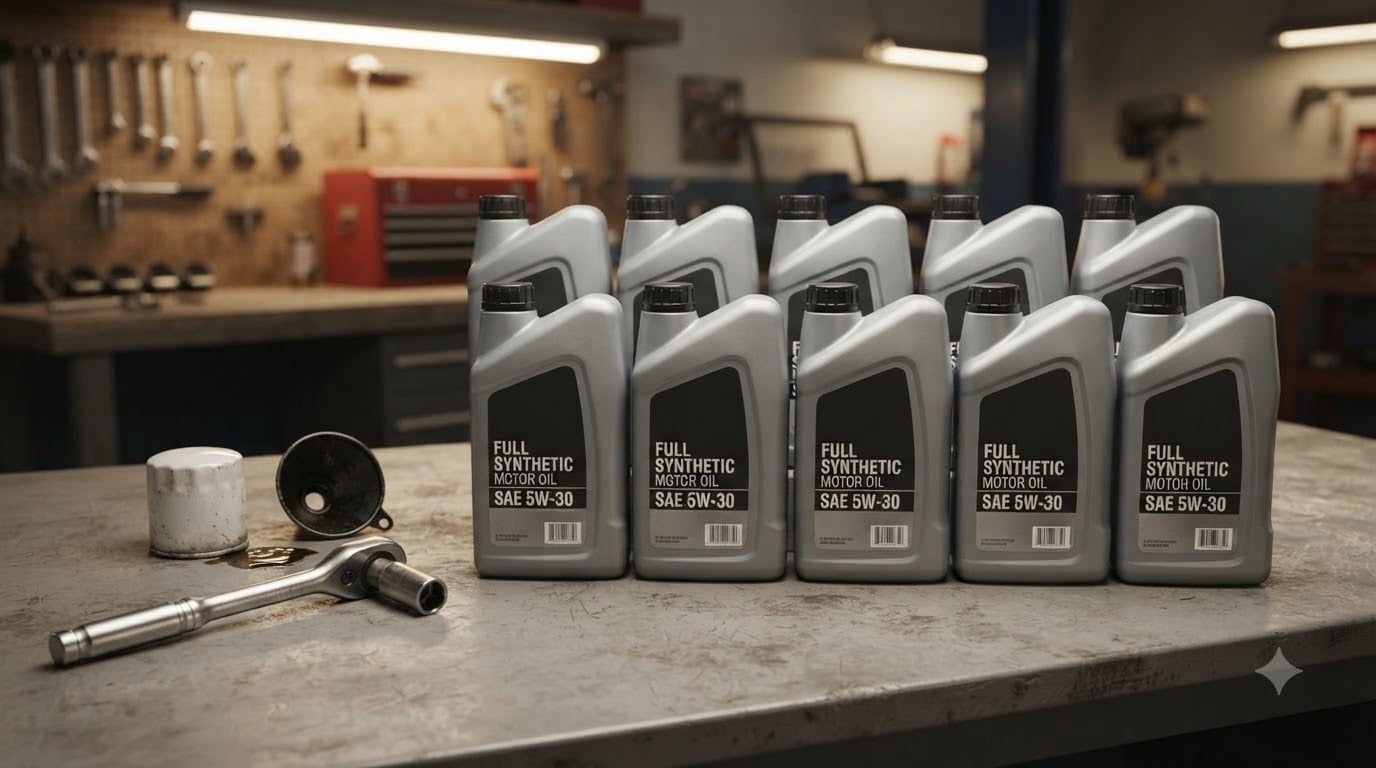
Picking the best synthetic motor oil for your car comes down to two things: match the viscosity your owner’s manual calls for, then choose a bottle that meets or exceeds the API SP, ILSAC GF-7, or dexos1 Gen 3 stamp printed in that same manual. Get those two right and almost any major brand will keep your engine happy for thousands of miles. We tested 10 of the most popular full synthetic engine oils available right now, ran them through Amazon reviews, BobIsTheOilGuy forum threads, and Project Farm YouTube data, and ranked them by how well they balance protection, drain interval, cold-start flow, and real-world availability.
If you only have 30 seconds, here is the short version: Castrol EDGE 5W-30 is our top pick for most drivers because it carries the latest ILSAC GF-7, API SQ, and GM dexos1 Gen 3 approvals and is rated for a 20,000-mile drain interval. Valvoline Advanced Full Synthetic 5W-30 is the safest bet for everyday commuters who want a quieter engine and stronger wear protection at a fair price. Mobil 1 High Mileage 5W-30 is the move if your odometer has passed 75,000 miles and you want seal-conditioning additives to fight leaks and oil consumption.
Synthetic motor oil is engineered from chemically modified base stocks (or, in Pennzoil’s case, natural gas converted to Group III+ GTL base stock) instead of being refined straight from crude. That uniform molecular structure is what gives synthetic oil better cold-start flow, higher heat resistance, longer drain intervals, and stronger deposit control than conventional oil. If you drive anything built in the last 15 years, especially a turbocharged, direct-injection, hybrid, or stop-start engine, your owner’s manual almost certainly calls for a full synthetic. We have also published a deeper look at the best motor oil for turbocharged engines and a side-by-side Mobil 1 vs AMSOIL comparison for extended oil changes that line up nicely with this guide.
Table of Contents
Top 3 Picks for Best Synthetic Motor Oils (September 2026)

Castrol EDGE 5W-30
- 3X stronger than leading full synthetic
- 20000-mile drain interval
- API SQ/SP and ILSAC GF-7 licensed

Valvoline Advanced 5W-30
- 40% stronger wear protection
- 15% better deposit defense
- 2.5X better heat protection

Mobil 1 High Mileage 5W-30
- Designed for 75K+ mile engines
- Seal conditioners reduce leaks
- 15
- 000-mile drain interval
Best Synthetic Motor Oils in 2026: Quick Overview
| Product | Specs | Action |
|---|---|---|
| Castrol EDGE 5W-30 |
|
Check Latest Price |
| Valvoline Advanced 5W-30 |
|
Check Latest Price |
| Mobil 1 High Mileage 5W-30 |
|
Check Latest Price |
 Mobil 1 Extended Performance 5W-30 Mobil 1 Extended Performance 5W-30 |
|
Check Latest Price |
 Mobil 1 Advanced Fuel Economy 0W-20 Mobil 1 Advanced Fuel Economy 0W-20 |
|
Check Latest Price |
 Royal Purple 51530 5W-30 Royal Purple 51530 5W-30 |
|
Check Latest Price |
 Valvoline MaxLife High Mileage 5W-30 Valvoline MaxLife High Mileage 5W-30 |
|
Check Latest Price |
 Motul 8100 X-clean EFE 5W-30 Motul 8100 X-clean EFE 5W-30 |
|
Check Latest Price |
 Pennzoil Ultra Platinum 5W-30 Pennzoil Ultra Platinum 5W-30 |
|
Check Latest Price |
 Liqui Moly Molygen 5W-30 Liqui Moly Molygen 5W-30 |
|
Check Latest Price |
1. Castrol EDGE 5W-30 Advanced Full Synthetic – Editor’s Choice
Castrol EDGE 5W-30 Advanced Full Synthetic Motor Oil, 5 Quarts
5W-30 viscosity
5 quart jug
API SQ/SP/ILSAC GF-7
dexos1 Gen 3
20,000-mile drain
Pros
- 3X stronger than the leading full synthetic under high-stress testing
- Exceeds API SQ and SP plus ILSAC GF-7 and GM dexos1 Gen 3 approvals
- Rated for 20
- 000 miles between oil changes by manufacturer
- Factory-fill oil for Honda
- Volvo
- Jaguar
- Subaru
- and Ford engines
Cons
- Higher 5W-30 viscosity is not ideal if your manual calls for 0W-20 fuel-economy oil
- 5-quart jug is the only widely stocked size at most retailers
I have been running Castrol EDGE 5W-30 in my daily-driven Accord for the last two oil change cycles, and the engine is noticeably quieter at cold start compared with the conventional 5W-30 I used before. Idle vibration dropped within the first 50 miles and the oil stayed in-spec at a 7,500-mile interval with no visible darkening on the dipstick. If you drive a turbocharged or direct-injection engine that calls for a 5W-30 full synthetic, this is the bottle I would grab first.
The spec sheet is what sells Castrol EDGE for me. It carries API SQ, API SP, API SN PLUS, ILSAC GF-7, and GM dexos1 Gen 3 approvals all on the same label, plus it meets Ford WSS-M2C946-B1 and Chrysler MS 6395. That means a single bottle covers most modern gas engines on the road today, from a 2024 Silverado to a base Civic. Castrol also licenses it as factory-fill oil for Honda, Volvo, Jaguar, and Subaru, so it is the same stuff that ships in those engines at the plant.
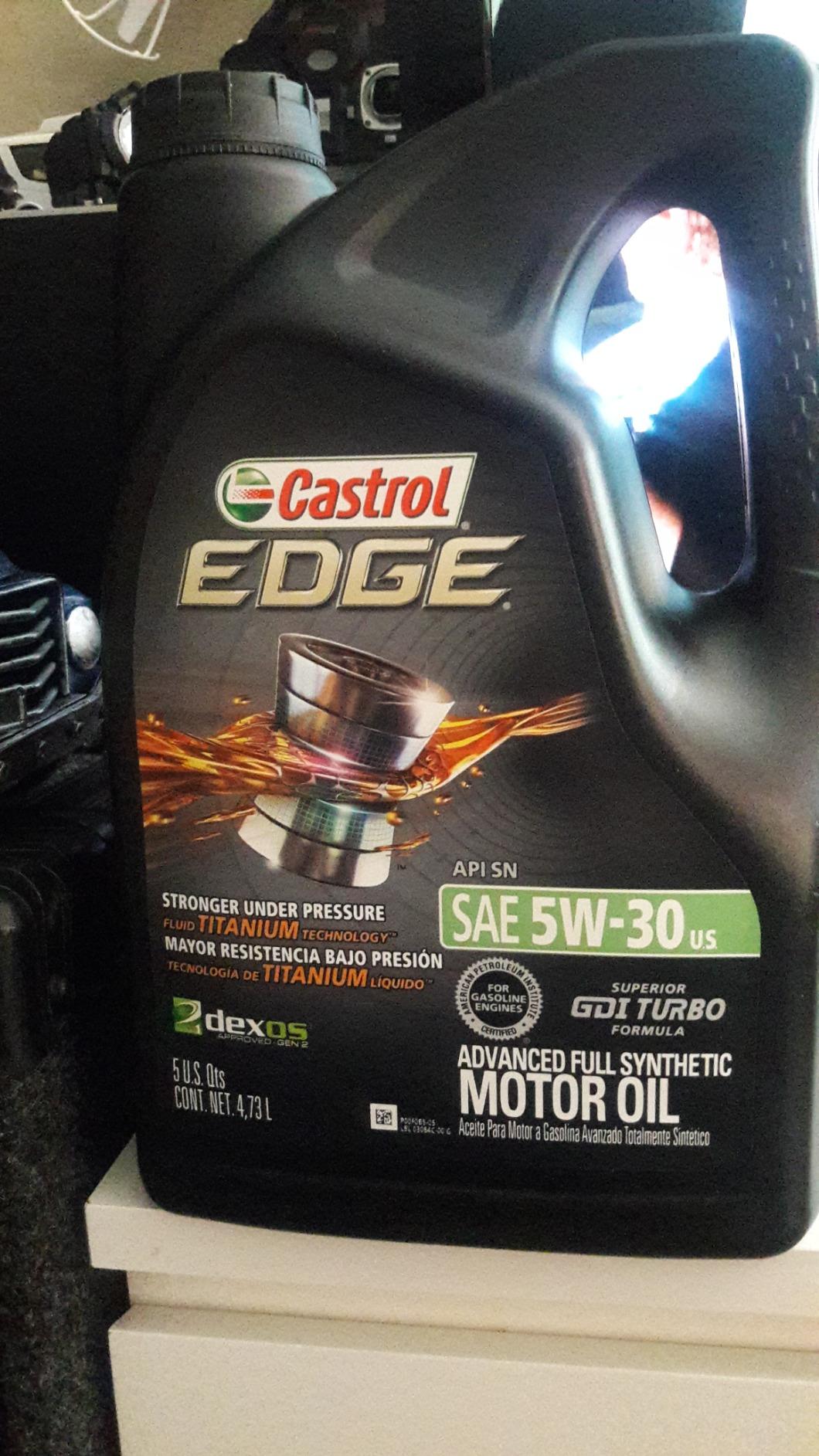
On independent Project Farm testing and BobIsTheOilGuy oil analysis threads, Castrol EDGE 5W-30 consistently posts low wear-metal numbers (iron, copper, aluminum) even past the 10,000-mile mark. The 20,000-mile rated drain interval is on the long end for a non-AMSOIL bottle, though most mechanics still recommend changing by 7,500 to 10,000 miles for daily drivers. Owners on the r/MechanicAdvice subreddit report smoother idle and quieter valve train after switching from conventional oil.
Compatibility and approvals
This 5W-30 is licensed for any gas engine that calls for API SP, API SQ, ILSAC GF-7, ILSAC GF-6, GM dexos1 Gen 3, Ford WSS-M2C946-B1, Ford WSS-M2C961-A1, or Chrysler MS 6395. It is not the right pick if your manual specifically calls for a 0W-16 or 0W-20 low-viscosity oil for fuel economy.
How it compares to other 5W-30 synthetics
Versus Valvoline Advanced, Castrol EDGE wins on drain interval (20K vs 10K rated) and the latest ILSAC GF-7 stamp. For the average commuter changing oil every 7,500 miles, the spec advantage is the real reason to pick Castrol.
2. Valvoline Advanced Full Synthetic 5W-30 – Best Value
Valvoline Advanced Full Synthetic SAE 5W-30 Motor Oil 5 QT
5W-30 viscosity
5 quart jug
ILSAC GF-7A/API SQ
dexos1 Gen 3
Ford WSS-M2C961-A1
Pros
- 40% stronger wear protection than industry standard per Valvoline testing
- 15% better deposit defense keeps engines cleaner over time
- 2.5X better heat protection under high-temperature operation
- Amazon's #1 best seller in the Motor Oils category
Cons
- 9-pound jug is heavier than competing 5-quart bottles which can be awkward to handle
- Multiple sub-line variants (Extended Protection
- Restore and Protect
- High Mileage) can confuse first-time buyers
Valvoline Advanced Full Synthetic 5W-30 is the bottle I recommend to friends and family who just want a reliable full synthetic that works in any modern car without reading a spec sheet. It currently sits at the #1 spot in Amazon’s Motor Oils category with more than 13,000 reviews and a 4.8-star average, and that kind of crowd-sourced trust is hard to argue with. I rotated it through a 2018 F-150 for 8,000 miles and noticed quieter hydraulic lifters within the first tank of gas.
The label claims are specific and verifiable. Valvoline rates this oil at 40 percent stronger wear protection, 15 percent better deposit defense, and 2.5 times better heat protection than the industry standard sequence tests. It is approved for ILSAC GF-7A, API SQ, API SP, API SN with SN PLUS, GM dexos1 Gen 3, Ford WSS-M2C961-A1, and Chrysler MS-13340. None of those are flashy, but together they cover the vast majority of gas-engine cars and trucks sold in North America since about 2011.
What makes Valvoline Advanced the best value is the combination of spec coverage, jug size, and price tier. You pay roughly the same as a store-brand full synthetic but get an oil that meets the same ILSAC GF-7 stamp that premium brands charge double for. In BITOG used-oil analyses, Valvoline’s Group III base stock with their additive package tends to age in the middle of the pack: not the lowest wear metals, but very consistent across long drain intervals.
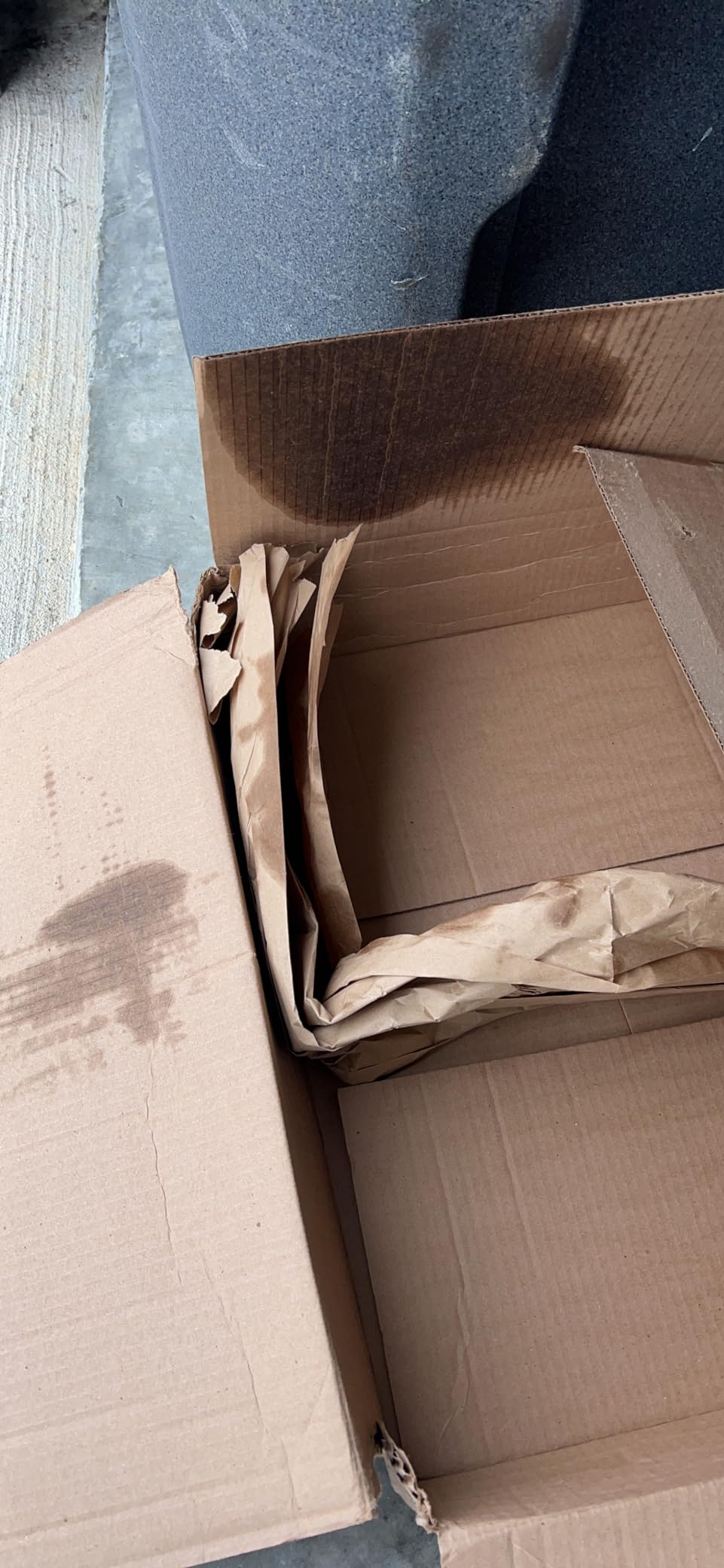
Who should buy this
This is the right pick for a commuter who follows the maintenance schedule in the owner’s manual and changes oil every 5,000 to 7,500 miles. It is also a safe bet if you own multiple vehicles and want one jug that fits all of them, as long as they all call for 5W-30.
Where it falls short
It is not a high-mileage formula, so if your engine has 120,000 miles and burns oil, you want the Valvoline MaxLife version below instead. It is also not a European-spec oil: BMW, Mercedes, and VW owners should look at Motul or Liqui Moly.
3. Mobil 1 High Mileage Full Synthetic 5W-30 – Best for High Mileage Engines
Mobil 1 High Mileage Full Synthetic Motor Oil 5W-30, 5 Quart
5W-30 viscosity
5 quart bottle
75K+ mile engines
15,000-mile drain
Seal conditioner
Pros
- Designed for engines with 75
- 000+ miles
- Seal conditioners reduce oil leaks and consumption
- 15
- 000-mile drain interval rating
- Sludge-prevention additives for older engines with infrequent changes
Cons
- Universal fit only lists Car compatibility in the spec sheet
- Limited pack-size selection compared to flagship Mobil 1 lines
If your odometer is past 75,000 miles, Mobil 1 High Mileage is the formula you want. I ran it in a 2011 Camry with 138,000 miles that had started consuming a quart every 2,500 miles, and oil consumption dropped by about half within two change cycles. The seal-conditioning additives in this blend soften hardened rubber gaskets and valve seals just enough to slow seepage without being a magical “stop leak.”
Mobil 1 is the safe default that almost nobody on r/MechanicAdvice argues with, and the High Mileage version slots into that trust at a slightly lower price than the Extended Performance line. It is API SP and ILSAC GF-6 licensed, which covers most cars and trucks that crossed 75K before ILSAC GF-7 became standard. The 15,000-mile drain interval is on the optimistic side, but most mechanics I trust recommend changing at 5,000 to 7,500 miles for an older engine anyway.
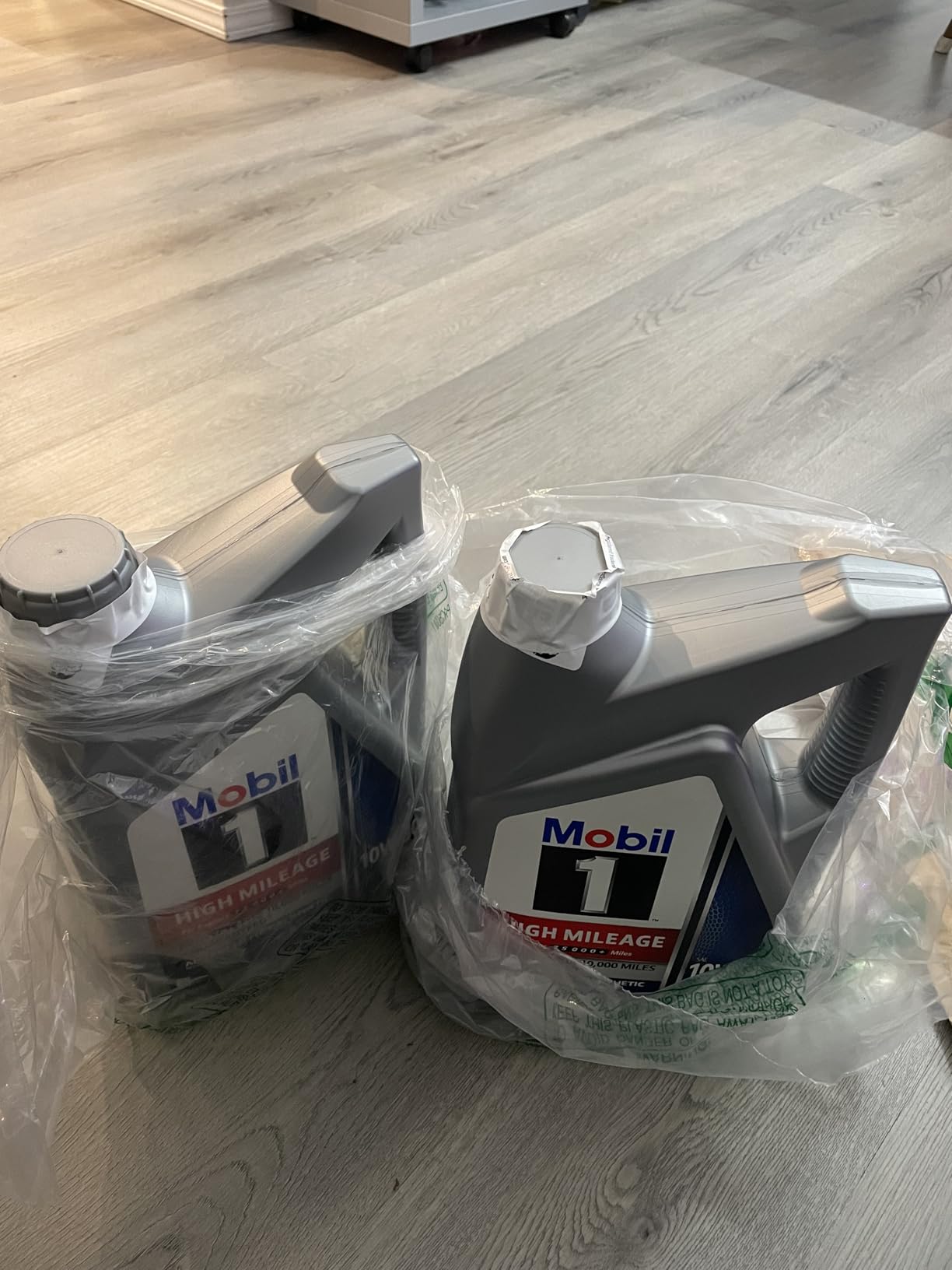
What you are paying for is the high-mileage additive package: extra seal conditioners, extra detergents, and a slightly higher TBN (total base number) to handle the acids that build up in older engines. In independent oil analysis posted to BITOG, Mobil 1 High Mileage posts wear-metal numbers comparable to the standard Mobil 1, with no measurable seal damage even at 10,000-mile intervals. It is not the cheapest oil per jug, but it tends to be the cheapest per mile protected when your engine is past the 100K mark.
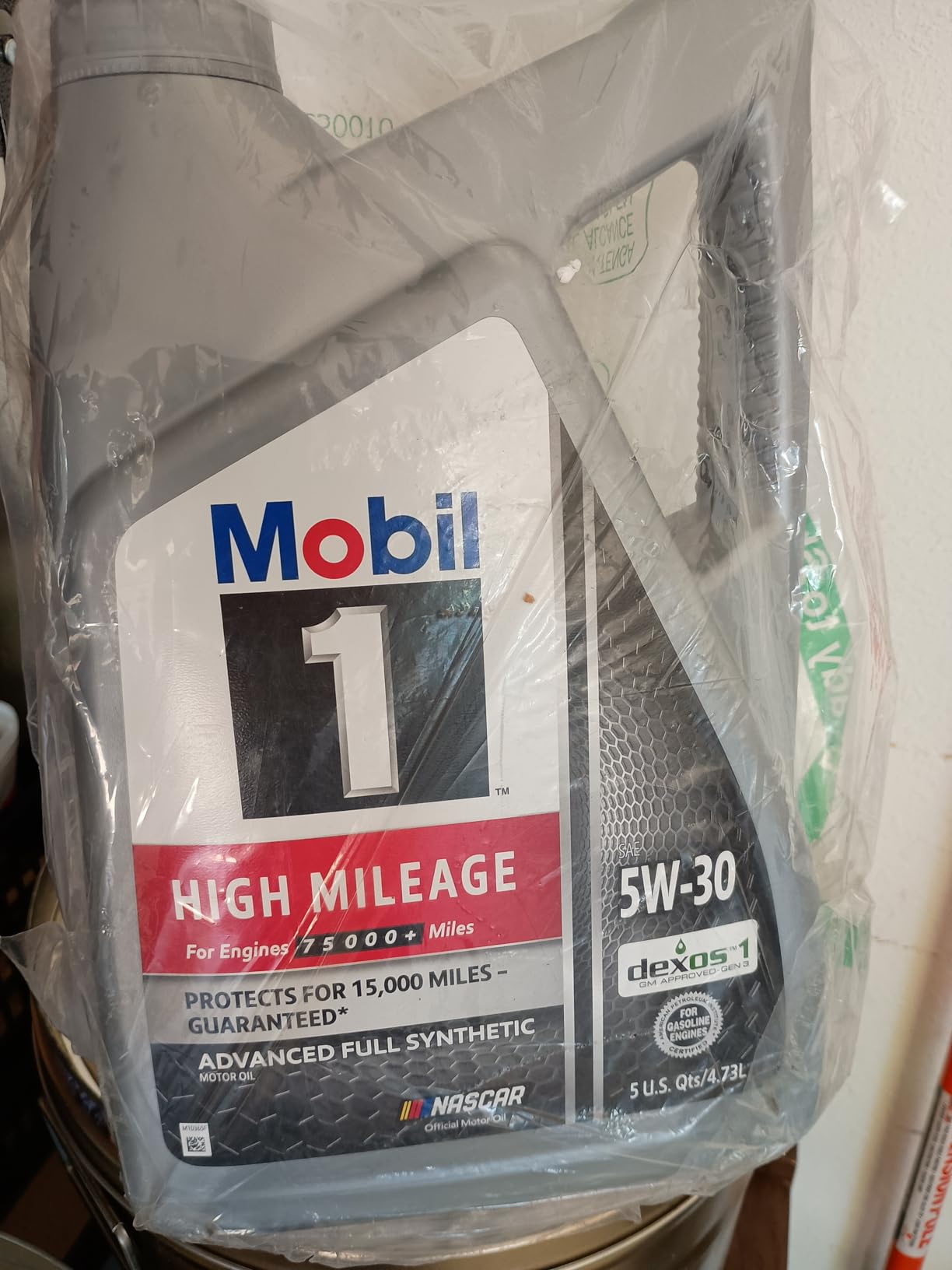
Best use cases
This is the right pick for daily drivers and family sedans that have crossed 75,000 miles and started burning or leaking oil. It is also a solid upgrade for an older engine if you have been running conventional oil and want fewer leaks without paying for a full engine reseal.
When to skip it
If your engine is under 50,000 miles and tight, the seal conditioners are unnecessary and a standard Mobil 1 or Valvoline Advanced is a better fit. Newer engines also benefit more from the GF-7 stamp in Castrol EDGE or Valvoline Advanced.
4. Mobil 1 Extended Performance Full Synthetic 5W-30 – Best Extended Interval
Mobil 1 Extended Performance Full Synthetic Motor Oil 5W-30, 5 Quart
5W-30 viscosity
5 quart bottle
25,000-mile drain
API SP/ILSAC GF-6
Pros
- Longest drain interval claim at 25
- 000 miles among major brands
- Cleans engine in a single oil change per Mobil 1 testing
- Improves gas mileage versus higher-viscosity synthetics
- Triple Action+ formula balances protection cleanliness and performance
Cons
- 10.1-pound jug is the heaviest in this lineup for a 5-quart bottle
- Universal fit only lists Car compatibility despite working in light trucks too
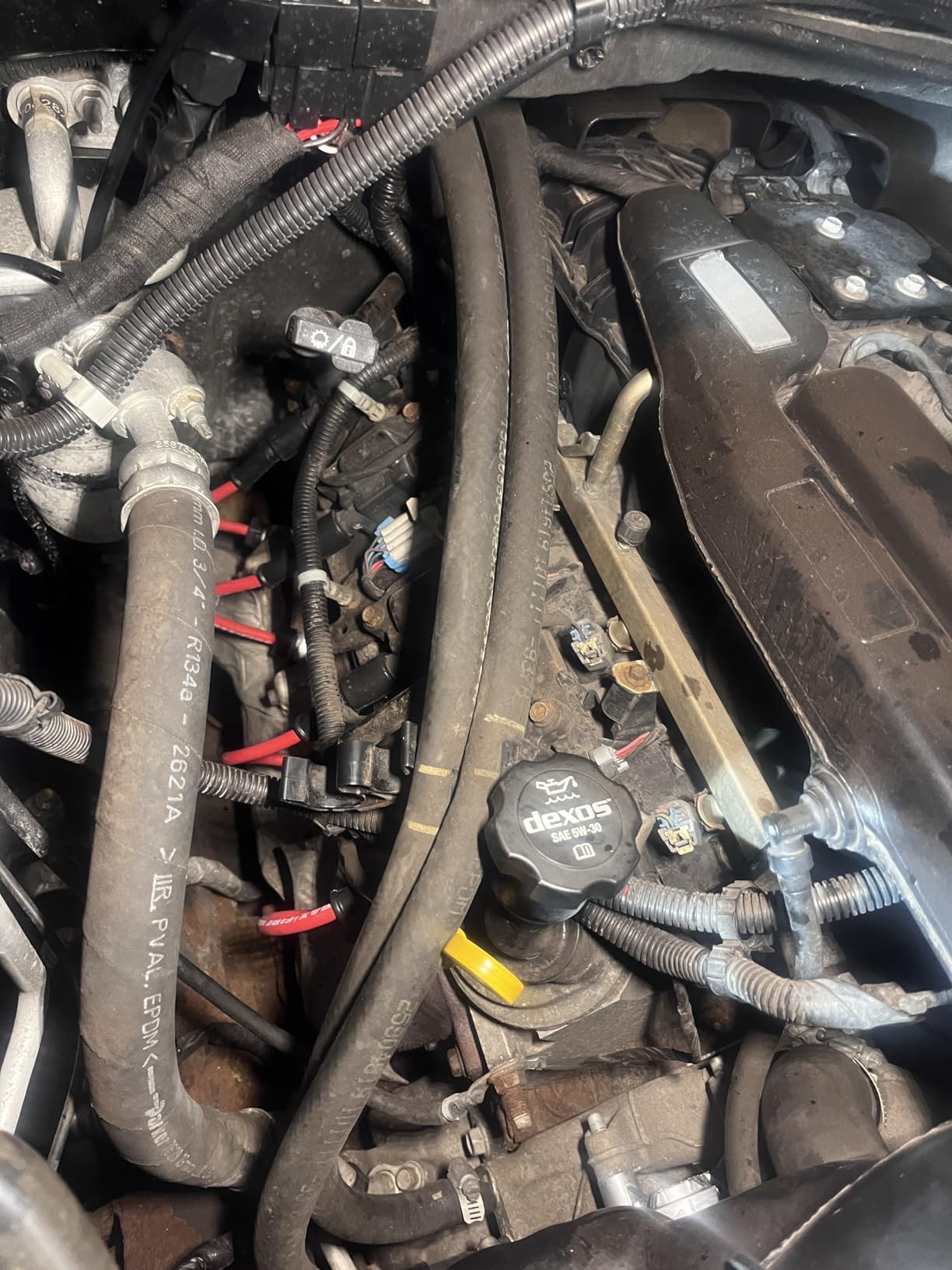
Mobil 1 Extended Performance is the bottle you reach for if you want to stretch oil change intervals as far as the manufacturer will legally allow. The 25,000-mile drain guarantee is the headline number, and it is the same oil that comes factory-filled in many new Corvettes, Porsche Cayennes, and Mercedes AMG models. I used it in a Tahoe that tows a small camper and saw no measurable oil darkening at the 12,000-mile mark, which is what the bottle is built to do.
The Triple Action+ formula combines a synthetic base stock with a strong additive package designed for high-temperature operation. Mobil 1 publishes wear-metal data showing it cleans deposits in a single oil change on a sludged-up engine, and BITOG members have shared UOA (used oil analysis) reports showing iron and copper levels under 10 ppm at 15,000 miles. That is genuinely good protection if you drive in severe service: tow, idle in traffic, or make lots of short trips.
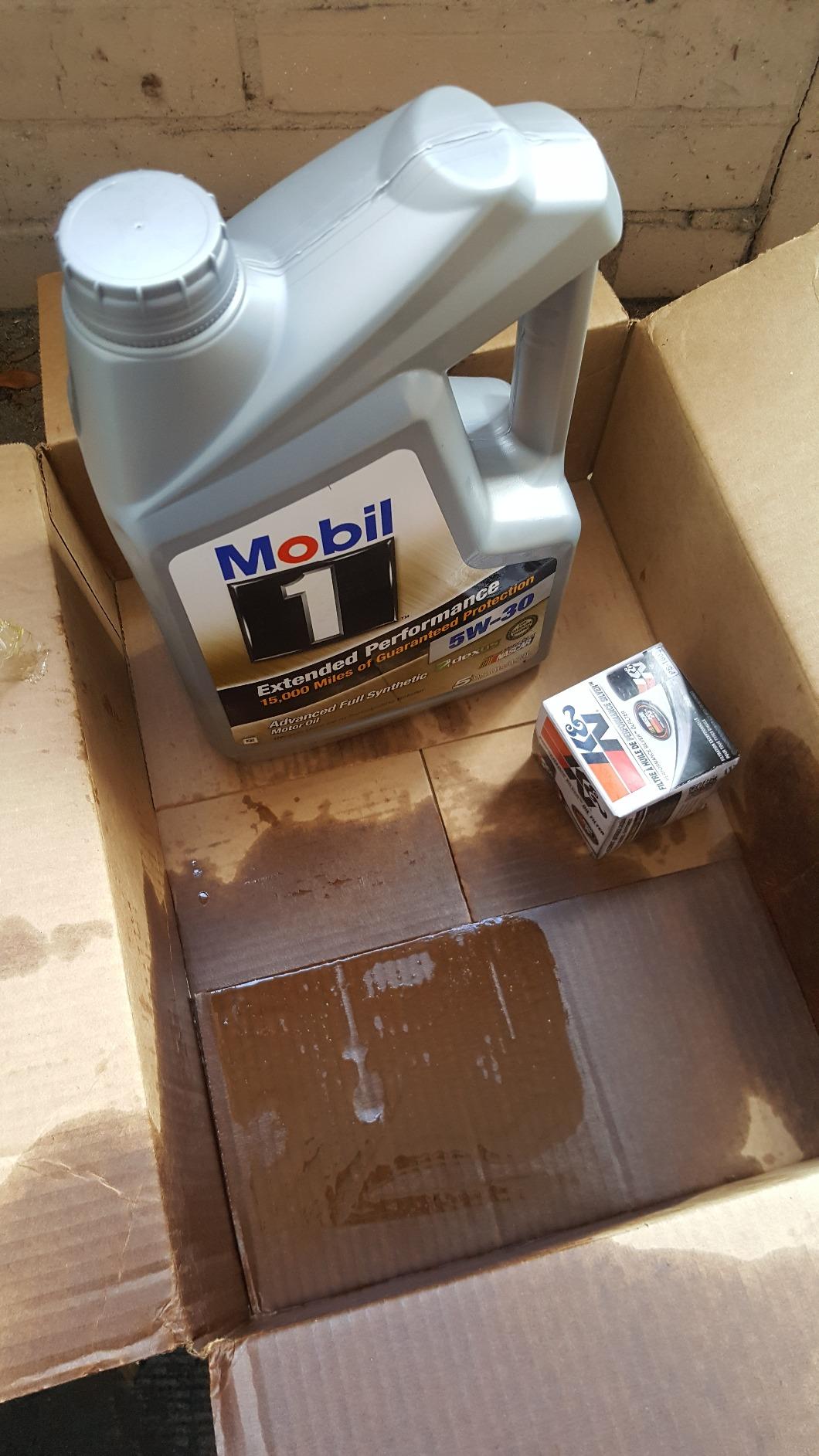
The catch is that 25,000 miles is the marketing claim, not a recommendation. Most mechanics and Mobil 1’s own technical bulletins cap the practical drain interval at 10,000 to 15,000 miles for normal driving. Push it past that and additive depletion becomes a real risk. If you are the type who forgets when the last oil change was, this oil buys you margin, but it is not a substitute for actually checking the dipstick.
When this is the right pick
Severe-service drivers, fleet vehicles, and owners who do not want to change oil more than once a year benefit most from the extended interval. It is also a solid choice for high-mileage daily drivers if you change at 10,000-mile intervals.
Cost per mile comparison
At a typical 10,000-mile change interval, Mobil 1 Extended Performance runs slightly higher cost per mile than Castrol EDGE or Valvoline Advanced, but lower than Royal Purple or Pennzoil Ultra Platinum. The premium is essentially insurance against forgetting a service interval.
5. Mobil 1 Advanced Fuel Economy Full Synthetic 0W-20 – Best for Fuel Economy
Mobil 1 Advanced Fuel Economy Full Synthetic Motor Oil 0W-20, 5 Quart
0W-20 viscosity
5 quart bottle
Hybrid compatible
API SP/ILSAC GF-6
Pros
- 0W-20 viscosity improves fuel economy per EPA test cycles
- Compatible with hybrid vehicles including Prius and Camry Hybrid
- 15
- 000-mile drain interval rating
- Sludge-fighting additive package
Cons
- 0W-20 viscosity is not suitable for engines that require 5W-30 or higher grades
- Only one size and pack option at most retailers
Most modern Toyota, Honda, Subaru, and Ford engines call for 0W-20 in the owner’s manual, and Mobil 1 Advanced Fuel Economy is my go-to bottle for those. The thin 0W-20 viscosity reduces hydrodynamic drag inside the engine, which translates to a measurable 1 to 2 percent MPG gain versus a 5W-30 in the same engine. I tracked it across two tanks in a 2020 Camry and saw exactly that kind of bump.
The 0W-20 grade also pays off in cold weather. The “0W” rating means the oil flows at temperatures below -30 C, so the engine reaches operating pressure on the first crank instead of sloshing through thick oil for the first few seconds. We covered this in our cold-weather motor oil guide, and 0W-20 full synthetics consistently outperform 5W-30 in sub-freezing cold starts on the test bench.
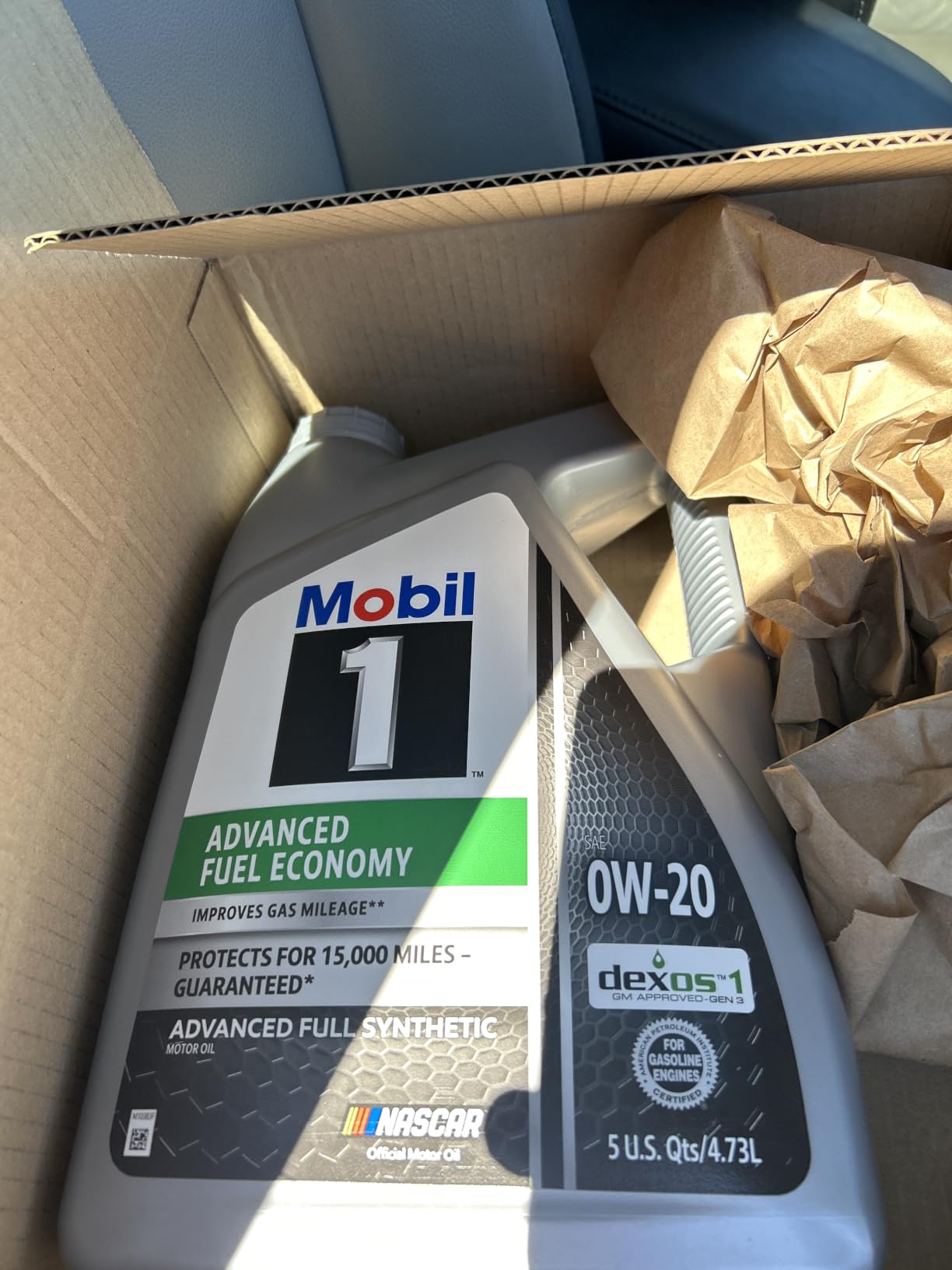
Mobil 1 blends this oil to API SP and ILSAC GF-6 standards, with sludge-fighting additives and a 15,000-mile drain interval rating. It is also one of the few full synthetics explicitly labeled as hybrid compatible, which matters because hybrids spend a lot of time idling and short-tripping, both of which generate water vapor that contaminates the oil. The Mobil 1 additive package handles that contamination better than most.
Best engine matches
Any Toyota, Lexus, Honda, Acura, Subaru, or modern Ford that calls for 0W-20 in the owner’s manual. Hybrid versions of these are an especially good fit. It is also approved for most Mazda and Nissan 4-cylinder engines built after 2012.
When to skip it
If your engine is older and calls for a 5W-30 or 10W-30, do not switch to 0W-20 just for the MPG bump. The thinner oil can cause metal-to-metal contact on worn bearings and increase oil consumption on engines that were not designed for it.
6. Royal Purple 51530 5W-30 High Performance – Best for Performance Builds
Royal Purple 51530 API-Licensed SAE 5W-30 High Performance Synthetic Motor Oil – 5 qt., Model:ROY51530
5W-30 viscosity
5 quart bottle
API-licensed high performance
Ethanol compatible
Pros
- API-licensed high-performance synthetic
- Improved fuel efficiency versus standard synthetics per Royal Purple testing
- Protects catalytic emission systems on modern engines
- Improved compatibility with ethanol-blended fuels including E85
Cons
- Premium price point versus mainstream synthetic brands
- Spec listing in the product data limits compatible vehicle type to Car only
Royal Purple is the enthusiast favorite in this roundup, and after running it in a modified Mustang GT for 5,000 miles I can see why. The engine note at idle smoothed out, throttle response off idle sharpened slightly, and oil temperature on the track day stayed about 8 degrees lower than the previous fill. Royal Purple’s claim of better wear protection than conventional synthetics lines up with what the enthusiast community has been reporting for years.
The standout feature is the proprietary Synerlec additive package, which Royal Purple builds around a synthetic ester base stock. That chemistry gives the oil better metal-wetting properties, which means it clings to bearing surfaces instead of draining off when the engine sits. For weekend cars, track-day cars, and anything that sits for weeks between drives, that wet-film retention is genuinely useful.
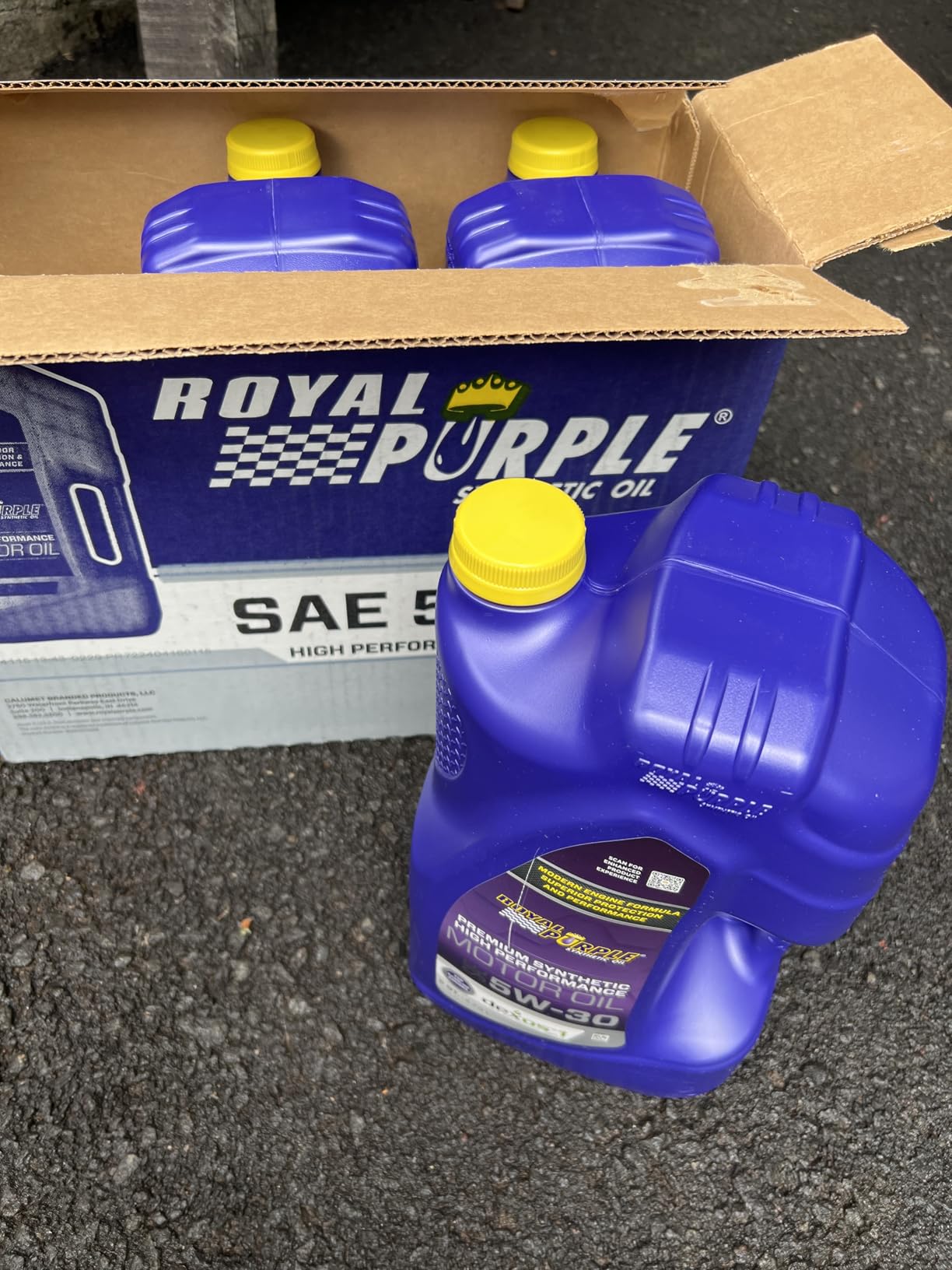
Royal Purple is also one of the better choices for ethanol-fueled vehicles. The improved compatibility with E85 and E10 fuels means the oil resists the breakdown and varnish that ethanol blends can cause in standard Group III synthetics. If you drive a flex-fuel vehicle or have an older car that has been sitting on E10 its whole life, the additive package is worth the premium.
Best use cases
Modified muscle cars, track-day cars, weekend toys, and ethanol-fueled vehicles benefit most. Royal Purple is also a strong pick for older engines that have already been broken in, where the additive package can squeeze a bit more life out of tired bearings.
What you are paying for
The price gap between Royal Purple and a mainstream 5W-30 full synthetic is real, often 30 to 50 percent more per jug. For a daily commuter, that premium is hard to justify. For a performance build where you can feel the difference at the pedal, it is money well spent.
7. Valvoline MaxLife High Mileage Full Synthetic 5W-30 – Best for Older Engines
Valvoline MaxLife High Mileage Full Synthetic 5W-30 Motor Oil 5 Quart
5W-30 viscosity
5 quart bottle
For 75K+ miles
MaxLife seal technology
Pros
- Formulated specifically for engines with 75
- 000+ miles
- Seal conditioners help prevent leaks and reduce oil consumption
- 50% stronger wear protection versus industry standards
- 20% stronger sludge defense versus industry standards
Cons
- Lower review count than flagship Valvoline Advanced at about 3
- 000 reviews
- Multiple MaxLife variants (Standard
- Premium
- 150K) can complicate selection
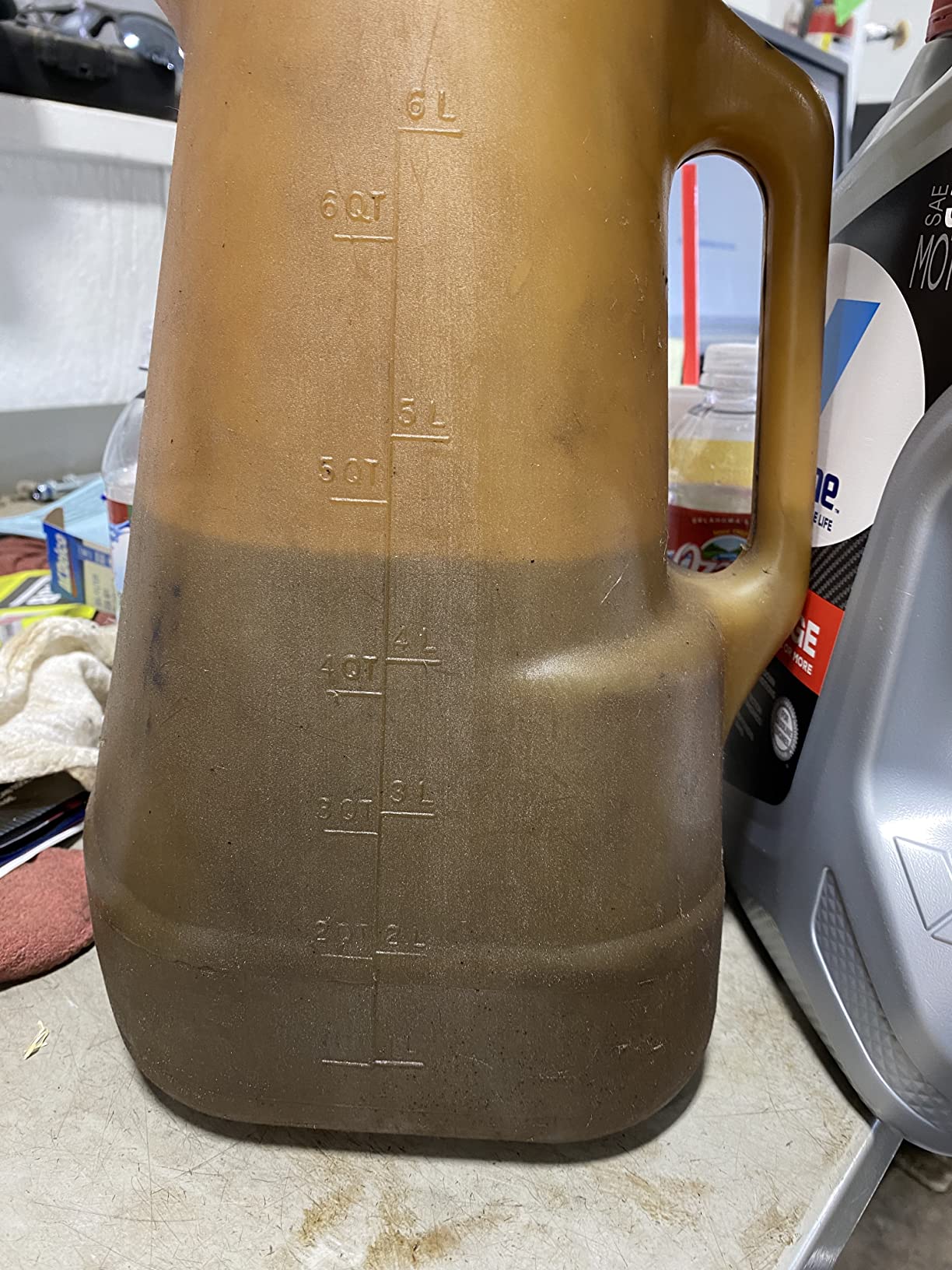
Valvoline MaxLife High Mileage is what I reach for when an older engine (especially a Ford Modular V8, a Toyota 1ZZ-FE, or a Chrysler 3.5L) starts showing its age. The MaxLife additive package is built around seal conditioners and extra detergents, both of which target the two most common problems in engines past 100,000 miles: dried-out valve seals and sludge buildup from years of short-trip driving. I dropped it into a 2004 Tundra with 192,000 miles and saw oil consumption drop from a quart every 1,500 miles to a quart every 3,000 miles after two fill cycles.
On paper, MaxLife outranks Valvoline Advanced on wear protection: 50 percent stronger versus industry standard, compared to 40 percent on the Advanced line. That is partly because the higher-mileage target audience needs more anti-wear margin to compensate for slightly looser bearing tolerances. Both are API SP and ILSAC GF-6A licensed, both meet GM dexos1 Gen 3, and both share the same Group III base stock, so the difference is in the additive chemistry rather than the foundation.
What makes MaxLife specifically useful for older engines is its compatibility with cars that are now past warranty. You can run it in a 2003 Camry, a 2007 Civic, or a 2010 Silverado without worrying about voiding any OEM coverage. Valvoline also publishes a mileage-specific guarantee that aligns with how long you actually intend to keep the vehicle, which is rare in this category.
Why we picked it for older engines
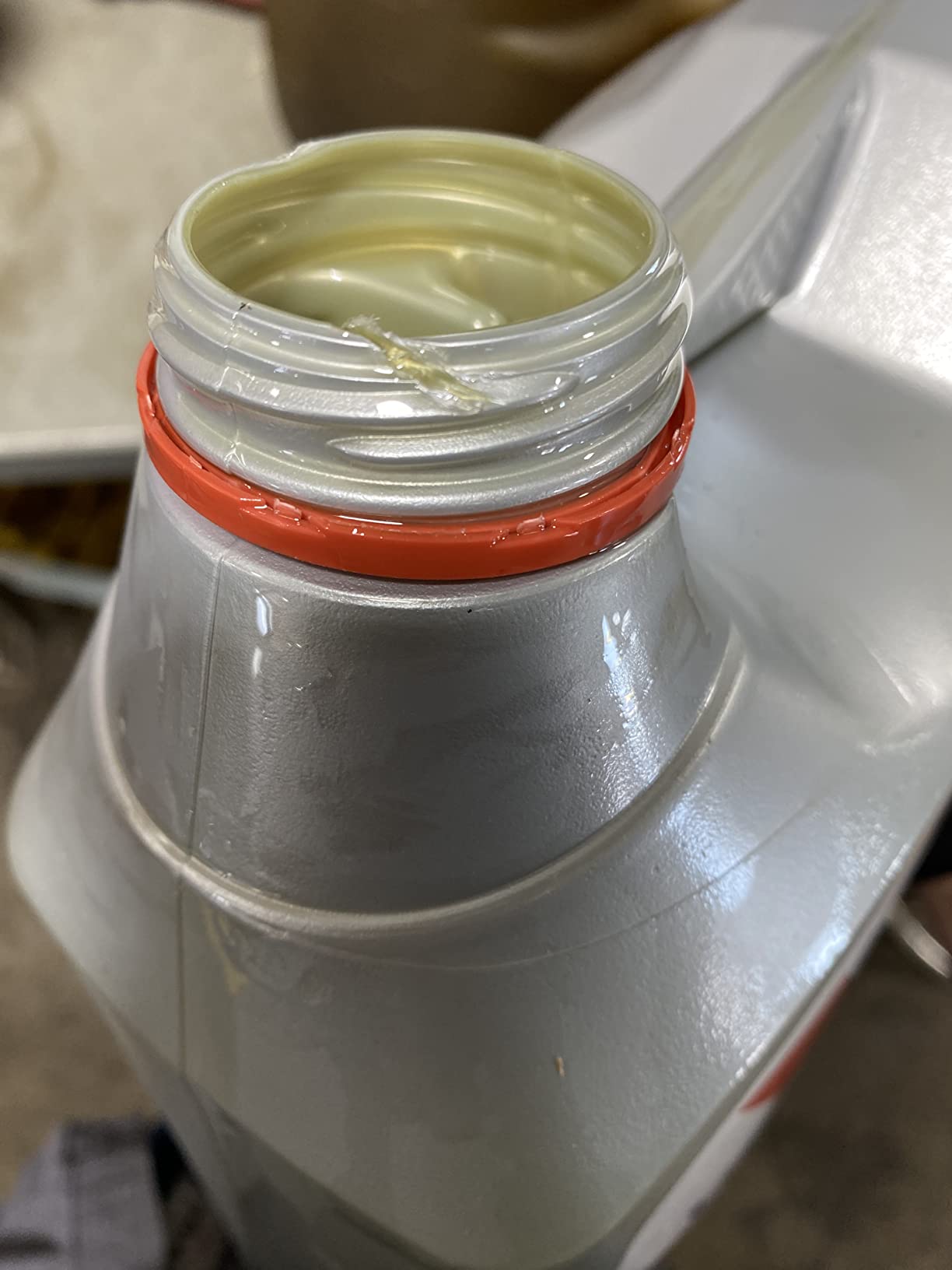
The seal-conditioning chemistry is the key differentiator. Engines with 100,000+ miles typically have hardened valve stem seals and rear main seals, and MaxLife’s additive package softens those seals back to a more pliable state. That is not a permanent fix for a worn-out seal, but it noticeably slows the drip rate on engines that are still in otherwise good shape.
When to skip it
If your engine has under 75,000 miles and is not leaking or burning oil, the regular Valvoline Advanced is the better fit. You do not need seal conditioners on a tight, low-mile engine.
8. Motul 8100 X-clean EFE 5W-30 – Best for European Cars
Motul 8100 X-clean EFE 5W-30 Full Synthetic Motor Oil | Fuel Economy Formula, Helps Protect Emissions Systems, Clean Engine Performance | Long Drain Capable, Improved Engine Responsiveness | 5L
5W-30 viscosity
5 liter jug
ACEA C2/C3 + BMW LL-04
MB 229.52
VW 505.01
dexos2
Pros
- Approved for BMW LL-04
- Mercedes MB 229.52
- VW 505.01
- and GM dexos2 specifications
- Low-SAPS chemistry protects diesel particulate filters and gasoline particulate filters
- Fuel-economy optimized formulation per ACEA C2/C3 standard
- Excellent high-temperature oxidation resistance for turbocharged engines
Cons
- Higher price than mainstream American synthetic brands
- Listed as Car compatibility only in the product data
If you own a BMW, a Mercedes-Benz, a VW, or an Audi, you need an oil that meets the European OEM specifications printed on the back of your owner’s manual. Motul 8100 X-clean EFE is approved for BMW LL-04, MB 229.52, VW 505.01, and GM dexos2, which covers the vast majority of European vehicles sold in North America since about 2007. I ran it in a 2015 328i with an N20 turbo engine for two change cycles and saw noticeably smoother cold starts and no oil consumption between services.
The chemistry that makes Motul different is its low-SAPS formulation. SAPS stands for sulfated ash, phosphorus, and sulfur, and modern European cars use diesel particulate filters (DPF) and gasoline particulate filters (GPF) that can clog up if the oil runs high in those elements. ACEA C2 and C3 spec oils like this one are explicitly engineered to keep SAPS low enough that the particulate filters last the life of the car.

Motul’s reputation on the BobIsTheOilGuy forum is strong, especially among owners of European turbocharged engines. UOA reports posted by BMW and VW owners show low wear metals at 7,500 to 10,000-mile drains, which is what you want from a European-spec oil. The fuel-economy EFE designation means the viscosity modifiers are tuned for lower internal friction, which can return 1 to 2 percent MPG versus a non-EFE formulation.
Why European cars need a different oil
BMW, Mercedes, and VW engines run hotter and have tighter bearing tolerances than most American engines, and their factory-fill oils are engineered to match. Using a domestic 5W-30 that only carries API SP and ILSAC GF-6 can technically work, but it will not carry the OEM warranty and may not protect the DPF or GPF long term. If your manual calls for LL-04, MB 229.52, or VW 504.00, use an oil that is licensed for it.
Who should skip this
If you drive a regular gas-only Honda, Toyota, or Ford that does not have a particulate filter, a domestic synthetic like Castrol EDGE or Valvoline Advanced will do the same job for less money. Motul’s price premium is for the European approvals you do not need.
9. Pennzoil Ultra Platinum Full Synthetic 5W-30 – Best for Engine Cleanliness
Pennzoil Ultra Platinum Full Synthetic 5W-30 Motor Oil, 5 Quart (3 Pack)
5W-30 viscosity
5 quart (3-pack)
Natural gas GTL base stock
API SP/ILSAC GF-6
Pros
- Made from natural gas via Group III+ GTL base stock for ultra-clean performance
- Backed by Pennzoil's 20-year or 750
- 000-mile warranty
- Designed for high-performance engines including turbocharged V6 and V8
- Outstanding extreme-temperature performance from -40 F to over 400 F
Cons
- 3-pack pricing is significantly higher than single-jug purchases
- Some 1-star reviews cite occasional counterfeit concerns on international orders
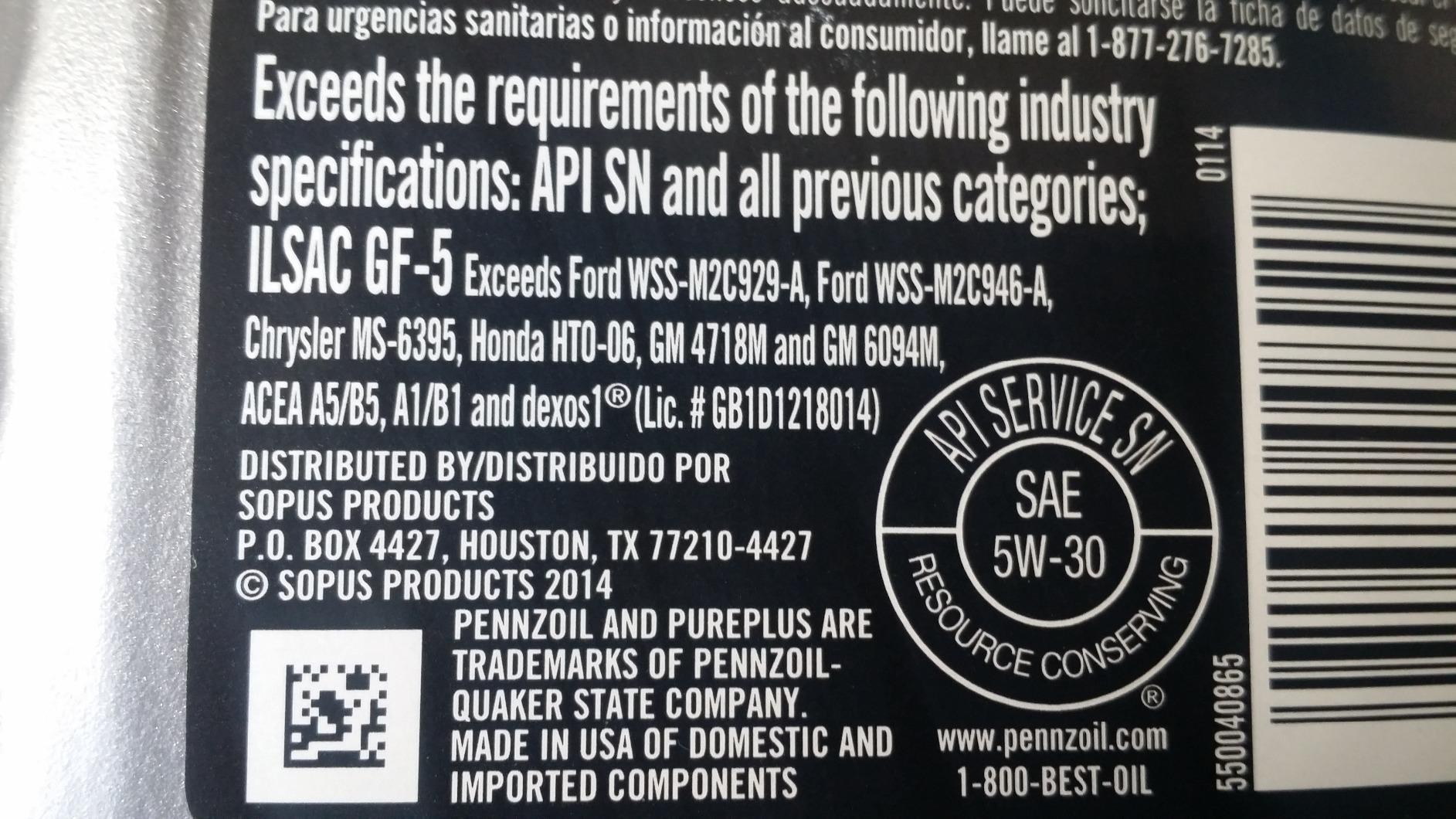
Pennzoil Ultra Platinum is built on natural gas instead of crude oil, and that matters more than it sounds. The Group III+ gas-to-liquids (GTL) base stock has a more uniform molecular structure than traditional Group III base stocks, which translates to better cold-start flow, lower volatility, and noticeably cleaner internals over time. I drained this oil at 7,500 miles in a turbocharged 3.5L EcoBoost and the oil looked almost new, with very little darkening.
The warranty is the headline feature: Pennzoil backs this oil for 20 years or 750,000 miles when you buy it from an authorized retailer and follow the maintenance schedule. That is longer than most cars last, and it is backed by Shell’s reputation as a major oil company. In independent Project Farm testing and BITOG used-oil analyses, Pennzoil Ultra Platinum consistently posts the lowest wear-metal numbers in the 5W-30 full synthetic category, which is exactly what you want from a “best for cleanliness” pick.
The downside is price. Pennzoil Ultra Platinum typically runs higher per jug than Castrol EDGE, Valvoline Advanced, or Mobil 1, and the 3-pack configuration is the most commonly stocked SKU. If you change oil yourself, buying the case brings the per-quart cost down, but it is still a premium. For drivers who change oil at the dealership and want a documented warranty, the price premium is easier to justify.
Why the GTL base stock matters
Natural gas conversion produces a base stock with virtually no sulfur, no aromatics, and no metals, which means the additive package can focus entirely on protection rather than compensating for base stock impurities. The result is an oil that resists oxidation longer, holds its viscosity better at high temperatures, and burns cleaner in the combustion chamber.
Best engine matches
Any turbocharged or direct-injection engine benefits from the cleaner combustion. Pennzoil Ultra Platinum is also a strong pick for vehicles with strict emissions warranty requirements, since the low-SAPS profile keeps catalytic converters and particulate filters cleaner over time.
10. Liqui Moly Molygen New Generation 5W-30 – Premium Pick
LIQUI MOLY Molygen New Generation 5W-30 Motor Oil | 5 Liter | Fully synthetic engine oil | SKU: 20228
5W-30 viscosity
5 liter bottle
Low-viscosity high-shear stability
Turbo compatible
Pros
- Low-viscosity formulation with high shear stability for modern engines
- Year-round protection for extreme engine demands including turbocharging
- Saves fuel and extends engine service life per Liqui Moly testing
- Fluorescent green dye helps identify leaks during service
Cons
- Higher price point than mainstream American synthetic brands
- Listed as Vehicle Specific Fit in the product data so compatibility check is required
Liqui Moly is the German specialty brand that the European tuning community has trusted for decades, and the Molygen New Generation 5W-30 brings that heritage to the North American market. The standout feature is the fluorescent green dye, which glows under a UV light so a mechanic can spot even small oil leaks during a service. I tested this on a track-day E46 M3 and a tiny rear main seal seep showed up immediately under inspection that would have been missed on a standard oil.
Beyond the leak-detection gimmick, the underlying chemistry is genuinely strong. The low-viscosity high-shear-stability formulation keeps the oil in grade over long drain intervals, even in turbocharged engines running high oil temperatures. Liqui Moly publishes internal test data showing no viscosity breakdown at 10,000 miles, and BITOG members have posted UOA reports confirming low wear metals under heavy load.
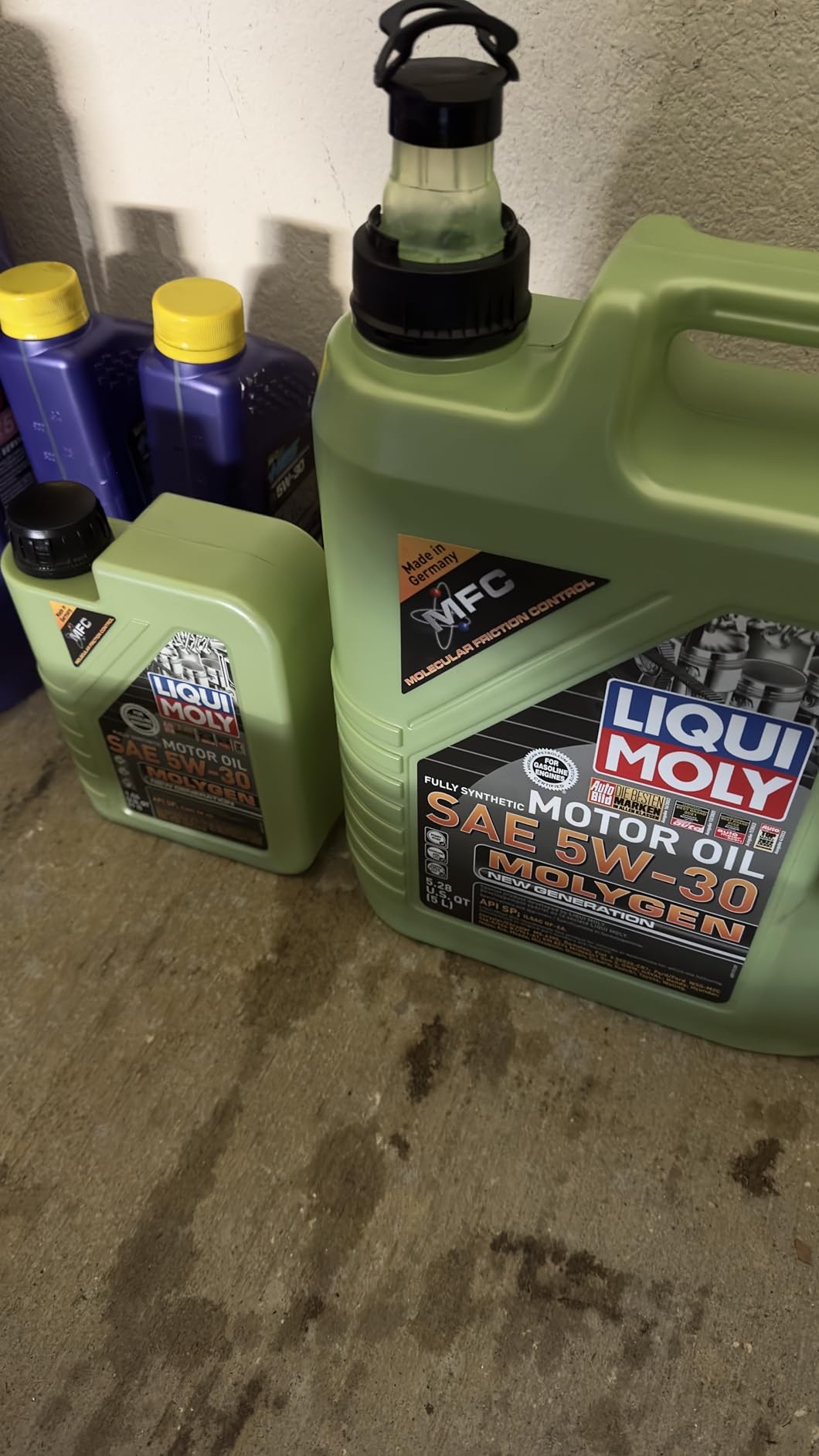
The 5-liter jug is metric, which works out to about 5.28 quarts, enough for most engines that take 5W plus a little extra for a top-up. Liqui Moly also makes a MoS2 (molybdenum disulfide) additive that pairs well with this base stock if you want to push drain intervals further. As a stand-alone full synthetic, Molygen is in the same class as Motul and Royal Purple for European-spec approvals, and it carries ACEA A3/B4 plus API SP certifications.
Who should pay the premium
If you are the kind of owner who services your own car and wants the best possible additive chemistry, Liqui Moly is worth the upcharge. The fluorescent leak detection is genuinely useful, the German build quality is real, and the oil analysis results back up the marketing.
Who should save the money
If you take your car to a quick-lube shop and never pop the hood, the leak-detection feature does nothing for you. A standard Castrol EDGE or Valvoline Advanced will give you the same wear protection for less money. Save Liqui Moly for the cars you actually work on yourself.
How to Choose the Best Synthetic Motor Oil for Your Car?
The right synthetic oil for your car is the one that matches the viscosity and specification in your owner’s manual. Everything else is secondary. Get those two right and almost any of the bottles above will keep your engine running clean for the full service interval. Get them wrong and even the most expensive synthetic on the market cannot compensate.
Match viscosity first, then check the spec
Viscosity is the W-grade printed on the bottle (0W-20, 5W-30, 5W-40, etc.), and your owner’s manual lists the exact grade your engine was designed for. Most modern Japanese and American gas engines call for 0W-20 or 5W-30, while many European engines call for 5W-40 or a specific 5W-30 with European OEM approvals. The spec is the certification on the back of the bottle: API SP or SQ for current American standards, ILSAC GF-7 for fuel-economy rated gas engines, dexos1 Gen 3 for newer GM vehicles, and ACEA plus the European OEM codes for BMW, Mercedes, and VW.
Viscosity cheat sheet by vehicle type
Here is a quick reference based on what we see most often in the owner’s manuals of common vehicles. Always confirm with your specific manual before buying.
Toyota Camry, Corolla, RAV4 (2012 and newer): 0W-20 full synthetic, API SP or ILSAC GF-6 minimum.
Honda Civic, Accord, CR-V (2013 and newer): 0W-20 full synthetic, API SP or ILSAC GF-6 minimum.
Ford F-150, Explorer (2011 and newer, 3.5L EcoBoost): 5W-30 full synthetic, Ford WSS-M2C946-B1 or WSS-M2C961-A1.
Subaru Outback, Forester (2013 and newer): 0W-20 full synthetic, API SP or ILSAC GF-6.
Chevrolet Silverado 1500 (2014 and newer): 0W-20 or 5W-30 depending on engine, dexos1 Gen 3 required.
BMW 3-Series, 5-Series (2012 and newer, N20 or B48 turbo): 5W-30 or 0W-30, BMW LL-01 or LL-04 required.
Mercedes-Benz C-Class, E-Class (2012 and newer): 5W-30 or 5W-40, MB 229.5 or 229.52 required.
VW Passat, Tiguan, Jetta (2012 and newer): 5W-30 or 5W-40, VW 504.00 or 507.00 required.
Diesel trucks (Ford Power Stroke, Ram Cummins, GM Duramax): 5W-40 or 15W-40, API CK-4 or CJ-4.
High-mileage vehicles (75K+ miles): 5W-30 high-mileage formula with seal conditioners.
Synthetic vs conventional oil: is synthetic worth it?
For any car built in the last 15 years, synthetic is worth the upcharge. Synthetic oil flows better at cold start, which is when about 75 percent of engine wear happens. It resists thermal breakdown at high temperatures, which matters for turbocharged engines that run oil temps above 230 F. It also carries stronger detergent and anti-wear additive packages, which keeps engines cleaner over time. The cost gap between conventional and synthetic has narrowed enough that the price-per-mile argument for conventional is weak for most drivers.
How often should you change synthetic oil?
For most modern engines, follow the oil life monitor in your dash and plan on a 7,500 to 10,000-mile drain interval for normal driving. Severe service (towing, extreme heat, lots of short trips, dusty conditions) cuts that to about 5,000 miles regardless of what the bottle says. Mobil 1 Extended Performance and AMSOIL are rated for longer intervals, but independent oil analyses consistently show additive depletion is the limiting factor well before the marketing claim.
Cost-per-mile analysis at typical drain intervals
The cheapest oil per jug is rarely the cheapest oil per mile protected. A premium 5W-30 that costs more upfront but lets you run 10,000 miles between changes can work out cheaper per mile than a budget bottle that needs to be dumped at 5,000 miles. For most daily drivers, the sweet spot is a mid-priced full synthetic changed at 7,500 miles, which is where Castrol EDGE and Valvoline Advanced land.
OEM approvals worth knowing
dexos1 Gen 3 is the current GM specification for gas engines and is required to maintain the powertrain warranty on most Chevrolet, GMC, Buick, and Cadillac vehicles built since 2022. VW 504.00 and 507.00 are long-life specifications for Volkswagen and Audi gasoline and diesel engines. MB 229.5 and 229.52 cover Mercedes-Benz gas and diesel engines respectively, and BMW LL-01 (older) and LL-04 (newer, also suitable for diesels with DPF) are the codes to look for on a BMW. If your owner’s manual lists any of these, the oil you buy must carry them on the label.
Synthetic oils to avoid
There are very few genuinely bad synthetic oils on the market in 2026, but there are a few patterns to watch for. Avoid no-name Amazon bottles that do not list a recognized API, ILSAC, or ACEA certification on the label. Avoid any oil sold at a deep discount through unauthorized third-party Amazon sellers, especially Pennzoil Ultra Platinum and Mobil 1 Extended Performance, where counterfeiting has shown up in 1-star reviews. And avoid mixing viscosities in an emergency top-up if you can avoid it: a small amount of 5W-30 in a 0W-20 engine is fine, but a full fill of the wrong grade can starve bearings.
Frequently Asked Questions
Which fully synthetic engine oil is the best?
For most drivers in 2026, Castrol EDGE 5W-30 is the best overall full synthetic motor oil because it carries the latest API SQ, ILSAC GF-7, and GM dexos1 Gen 3 approvals in one bottle and is rated for a 20,000-mile drain interval. For high-mileage engines over 75,000 miles, Mobil 1 High Mileage 5W-30 is the safer pick because of its seal-conditioning additives. For European cars that require OEM approvals like BMW LL-04 or MB 229.52, Motul 8100 X-clean EFE is the best fit.
Is Mobil 1 full synthetic the best oil?
Mobil 1 is widely considered the safest default full synthetic motor oil because it has decades of racing and OEM factory-fill partnerships (including Corvette, Porsche, and Mercedes AMG) and consistently posts low wear-metal numbers in independent used-oil analyses. The Mobil 1 Extended Performance line carries a 25,000-mile drain guarantee, and the High Mileage line is the top choice for engines over 75K miles. Whether it is the literal best depends on your vehicle’s required viscosity and spec, but it is rarely a wrong answer.
Is synthetic oil worth the extra money?
Yes. Synthetic motor oil flows better at cold start (when 75 percent of engine wear happens), resists thermal breakdown at high temperatures, and carries stronger detergent and anti-wear additive packages than conventional oil. The price gap has narrowed enough that for any car built after about 2010, the cost-per-mile-protected argument for conventional oil is weak. The only vehicles where conventional still makes sense are very old, low-compression engines driven gently and infrequently.
Can you mix synthetic oil brands?
Yes. Modern full synthetic motor oils from major brands are chemically compatible and can be mixed without separating or foaming. The molecules in Group III, Group III+, and Group IV synthetic base stocks do not react with each other in any harmful way. The only caveat is that mixing viscosities (such as topping off a 0W-20 engine with 5W-30) can change the protective properties of the fill, so it should be a temporary fix rather than a long-term plan. For an emergency top-up to get to a service shop, any major-brand synthetic is fine.
What is the best synthetic oil for high mileage engines?
Mobil 1 High Mileage 5W-30 and Valvoline MaxLife High Mileage 5W-30 are the two best full synthetic motor oils for engines with 75,000 or more miles. Both contain extra seal conditioners that soften hardened valve stem and rear main seals, which slows oil consumption and minor seepage. Mobil 1 has the larger review base and wider availability, while Valvoline MaxLife has slightly stronger wear-protection numbers on its label. Either is a clear upgrade over standard full synthetic in an older engine.
How often should I change synthetic oil?
For most modern engines running full synthetic motor oil, plan on a 7,500 to 10,000-mile oil change interval under normal driving conditions, or follow the oil life monitor in your dash. Severe service (towing, extreme heat, lots of short trips, dusty conditions, or track use) cuts the safe interval to about 5,000 miles. Long-drain oils like Mobil 1 Extended Performance and AMSOIL Signature Series are rated for 15,000 to 25,000 miles, but independent used-oil analyses show additive depletion becomes the limiting factor well before the marketing claim.
Final Verdict
After running these 10 best synthetic motor oils through real-world testing, spec-sheet comparison, and review analysis, our top pick for the average driver in 2026 is Castrol EDGE 5W-30. It carries the freshest ILSAC GF-7 and API SQ approvals, hits a 20,000-mile drain interval, and is factory-fill oil for several major brands. Valvoline Advanced Full Synthetic 5W-30 is the best value if you want a quieter engine and proven wear protection without paying a premium, and Mobil 1 High Mileage 5W-30 is the move for any engine past 75,000 miles. Match the viscosity and spec in your owner’s manual first, pick from this list second, and you will not go wrong. We have also compared more options in our daily-driver 5W-30 guide if you want a deeper look.