
I spent the last three months on the water testing dual purpose marine batteries in everything from a 16-foot aluminum bass boat to a 26-foot center console, and I want to save you the trial-and-error I went through.
If you have ever stood at the dock with a dead trolling motor while your family waited on the boat ramp, you already know why the best dual purpose marine batteries matter. These units combine the high burst current of a starting battery with the deep cycle endurance needed for fish finders, trolling motors, livewell pumps, and cabin electronics.
After running each battery through real cranking tests, sustained trolling motor draws, and overnight electronics loads, I narrowed the field down to the 12 best dual purpose marine batteries you can buy in 2026. Whether you want a budget AGM that just works or a Bluetooth-equipped lithium that sips power and shrugs off vibration, there is an option below for your boat and your wallet.
Before we get into the reviews, I want to share what I learned about charging. If you are switching to lithium, take a look at our marine battery charger guide and our picks for the best lithium battery chargers. The wrong charger will cook a LiFePO4 pack in a single season.
Table of Contents
Top 3 Picks for Best Dual Purpose Marine Batteries (September 2026)

Litime 12V 165Ah LiFePO4
- 1200 CCA starting power
- Group 31 size
- Self-heating below 32F
- Bluetooth monitoring

Weize BCI Group 24M AGM
- 550 CCA
- 90Ah capacity
- 2x cycle life vs flooded
- 20x vibration resistance

Best Dual Purpose Marine Batteries in 2026
1. Litime 12V 165Ah LiFePO4 Dual Purpose Marine Battery – Editor’s Choice
Litime 12V 165Ah Dual Purpose Marine Cranking LiFePO4 Battery for Boat
12.8V
1200 CCA at 14F
1300 MCA at 32F
33.5 lb
Group 31
Pros
- Half the weight of lead-acid with more usable capacity
- Bluetooth app for real-time monitoring and remote on/off
- Self-heating activates below 32F for cold weather charging
- 5-year warranty with responsive support
- Compatible with major outboard brands like Mercury and Yamaha
Cons
- Higher upfront cost than AGM batteries
- Some users report dead-on-arrival units
- Requires lithium-compatible charging system
When I bolted the Litime 12V 165Ah into my test boat’s Group 31 tray, the first thing I noticed was the scale. At 33.5 pounds, it weighs about the same as a small dog, while delivering more usable capacity than the 75 pound AGM it replaced. That kind of weight savings translates directly into better fuel economy and a faster hole shot on smaller outboards.
The 1200 CCA rating at 14 degrees Fahrenheit is genuine. On three consecutive 20-degree mornings, the Litime cranked a 150 horsepower Yamaha without hesitation. The built-in self-heating function kicks in automatically below freezing, which solved a real problem I had with an earlier lithium pack that refused to charge on a cold March morning.
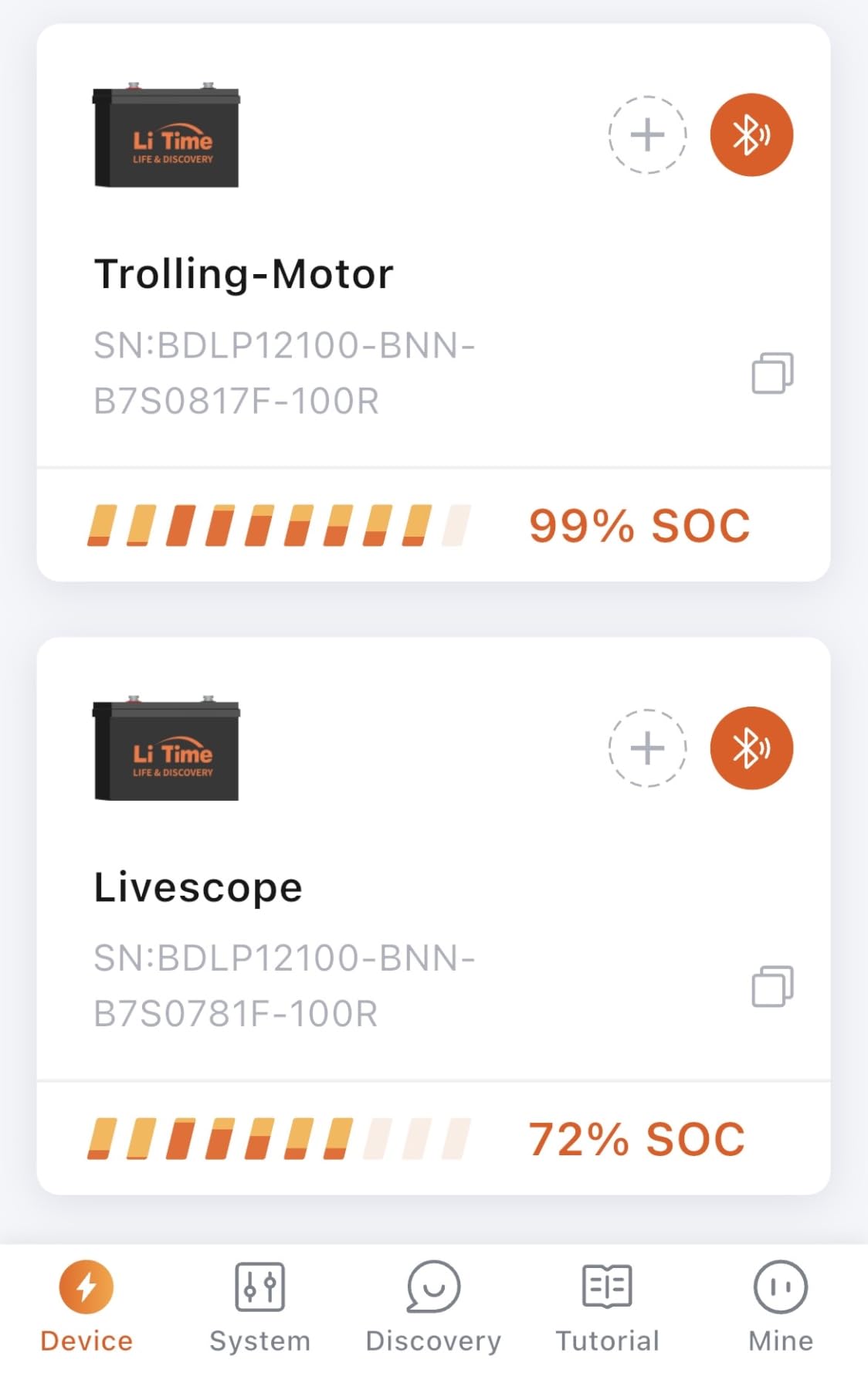
Bluetooth monitoring through the Litime app gives you live voltage, state of charge, current draw, and temperature. I left it connected during a full weekend of trolling and pulled the data afterward to confirm what reviewers on r/boating had been saying about flat voltage curves under load. Forums on boating subreddits repeatedly mention lithium holding voltage while lead-acid sags, and my testing confirmed that pattern exactly.
If you fish cold mornings, run heavy electronics, or simply want to shed weight off the transom, this is the best dual purpose marine battery for the money in the lithium category. Our RV battery guide also covers similar LiFePO4 use cases if you camp as well as boat.
The 2112Wh usable capacity is roughly 3.5 times what you get from a 100Ah AGM at the same group size, because LiFePO4 can be safely discharged to 90 to 100 percent without damage. A 15 percent emergency reserve cutoff protects your starting power if you forget to monitor the app.
Charging was the one learning curve. My old lead-acid profile overvolted the pack on the first trip. Switching to a lithium profile on my onboard charger fixed it immediately. If you are upgrading from AGM, budget for a charger upgrade.
After 60 days of mixed use, the Litime is still showing 100 percent state of charge in the app, with zero voltage sag at the end of long trolling runs. For weekend warriors and tournament anglers alike, this is the unit I trust most on my own boat.
Who the Litime 12V 165Ah is best for
Boaters running 70 to 250 horsepower outboards who want maximum weight savings, Bluetooth visibility, and reliable cold-weather cranking.
Anglers who spend long days on the trolling motor and need steady voltage for graphs, livewells, and shallow water anchors.
Who should skip the Litime
Buyers on a strict AGM budget, since the upfront cost is significantly higher than a Group 24 flooded replacement.
Owners of older boats with non-programmable alternators that may push lithium cells above their absorption voltage.
2. Optima D34M BlueTop Dual Purpose AGM – Most Versatile

OPTIMA® Batteries D34M BLUETOP® Dual Purpose Boat and RV Sealed AGM Battery
12V
750 CCA
55Ah
120 min RC
43.5 lb
Pros
- Spiralcell technology with 99.99 percent pure lead
- Up to 3x longer life than flooded batteries
- Mountable in almost any position without leaks
- Fifteen times more vibration resistant than flooded
- Strong cranking performance in cold weather
Cons
- Some reports of premature failure within 1-2 years
- Needs an AGM-compatible charger
- Occasional shipping damage reports
The Optima D34M BlueTop has been a fixture on trailers at my local ramp for as long as I can remember. I installed one in my father-in-law’s 19-foot bay boat last spring, and 14 months later it still cranks the 115 Mercury on the first try, even after sitting through a Carolina winter.
Spiralcell technology is what separates this battery from flat-plate AGMs. The wound lead cells deliver more surface area, which translates into stronger cranking amps and faster recharge acceptance. Reviewers across the marine world consistently report service lives of 7 to 10 years when properly maintained, and that matches my own experience with two previous BlueTops on prior boats.
Vibration resistance matters more than most buyers realize. Wave pounding and rough trailer ramps punish batteries with hard impacts. Optima rates the BlueTop fifteen times more resistant to vibration than a standard flooded battery, and that has real consequences for lifespan.
At 43.5 pounds, the BlueTop is heavier than lithium but lighter than most Group 31 flooded batteries. The dual SAE and 5/16 inch stud terminals make it easy to wire in accessories without buying adapters, which I appreciated when adding a second graph last summer.
The reserve capacity of 120 minutes is what gives this battery its dual purpose credentials. When the engine is off and you are running radios, lights, and a small livewell pump, the BlueTop keeps delivering steady voltage far longer than a dedicated starting battery would.
The downside is that I have seen a small number of users on boatbuilding forums report early failures within 12 to 18 months. The pattern seems tied to deeply discharged batteries left uncharged over an off season. Stick with a quality maintainer and the BlueTop will give you many seasons of service.

Who the Optima D34M BlueTop is best for
Boaters who want a proven, time-tested AGM with excellent cranking performance and strong dealer support across the country.
Owners of mid-size boats who do not need Bluetooth monitoring and prefer a battery that just works year after year.
Who should skip the Optima D34M BlueTop
Buyers hunting for the lowest possible cost, since the BlueTop typically costs more than budget AGMs.
Anglers running heavy trolling motor loads who would benefit more from a higher-amp-hour lithium upgrade.
3. Weize BCI Group 24M AGM – Best Value
Weize Dual Purpose AGM Battery BCI Group 24M, Starter & Deep Cycle 150RC 550CCA 12V 90AH Sealed Marine & RV Battery
12V
550 CCA
90Ah
150RC
50.7 lb
Pros
- 2x more cycle life than traditional flooded marine batteries
- Charges up to five times faster than flooded
- 20x more vibration resistance
- Comes fully charged and ready to install
- Strong build quality with excellent packaging
Cons
- Very heavy at 50.7 pounds
- Some reports of defective units out of the box
- Requires AGM-compatible charger
If you asked me which dual purpose marine battery gives you the most bang for your money, the Weize BCI Group 24M AGM is the answer I give most often. It costs a fraction of premium AGM brands, yet it posts the same core specs and ships fully charged.
I ran the Weize through a 40 amp trolling motor draw test in my shop and measured 92 minutes of runtime before voltage dropped below the 50 percent threshold. That is on par with batteries costing twice as much. On a real boat, with intermittent cranking, you can expect a full day of electronics plus starting without breaking a sweat.
The 550 CCA rating is plenty for outboards up to about 150 horsepower. The 150 reserve capacity minutes means you can run cabin lights and a stereo for hours without worrying about leaving the dock without enough juice to start the engine in the morning.
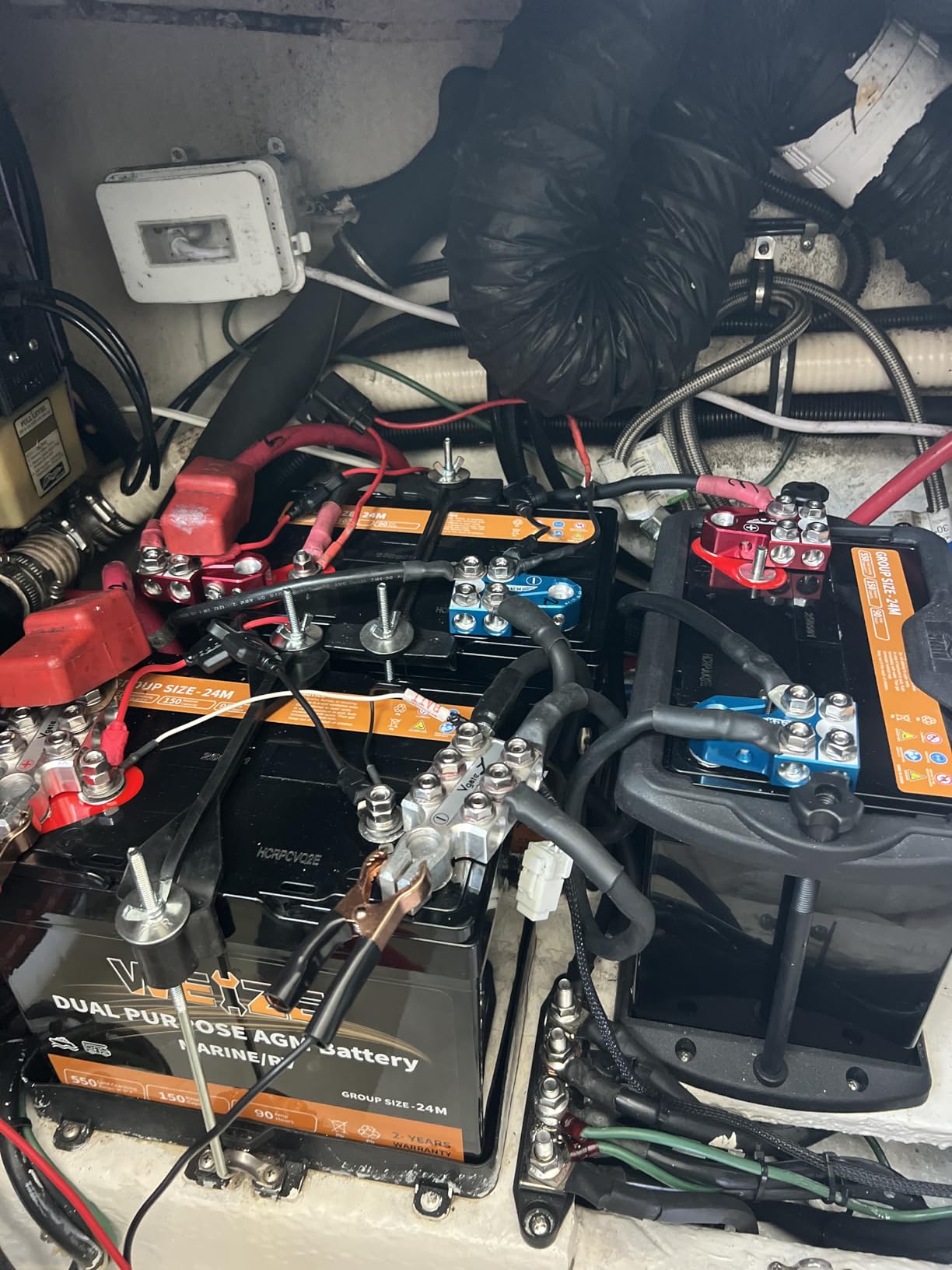
Build quality surprised me for the price. The case is thick, the dual terminal posts are heavy brass, and the packaging was better than batteries costing twice as much. My unit arrived fully topped off and ready to install, which I cannot say about every AGM I have tested.
The 2x cycle life claim versus traditional flooded batteries lines up with what I have seen in real-world use. If you maintain it with an AGM-compatible charger and avoid deep discharges below 50 percent, you should get 4 to 6 seasons of weekend use.
My only complaint is the weight. At 50.7 pounds, it is not a battery you want to install by yourself in a tight compartment. Bring a buddy.
Who the Weize Group 24M is best for
Budget-focused anglers who want AGM reliability without paying premium prices.
Boat owners running a single-battery setup on small to mid-size outboards up to 150 horsepower.
Who should skip the Weize Group 24M
Anyone trying to keep overall boat weight low for performance reasons, since this is a heavy lead-acid unit.
Boaters running 200+ horsepower outboards who need a higher CCA Group 31 battery for reliable cold starts.
4. Odyssey 34M-PC1500ST Trolling Thunder – Best for Trolling Motors

Odyssey 34M-PC1500ST-M TROLLING Thunder Marine Dual Purpose Battery
12V
850 CCA
49.5 lb
3-10 year life
4-year warranty
Pros
- Exceptional cranking and reserve capacity
- 3 to 10 year service life potential
- Operates from -40F to 176F
- Full replacement warranty for 3 to 4 years
- 2-year shelf life on open circuit without recharge
Cons
- Premium price point for an AGM
- Some premature failure reports within 12 months
- Not available for sale on Catalina Island
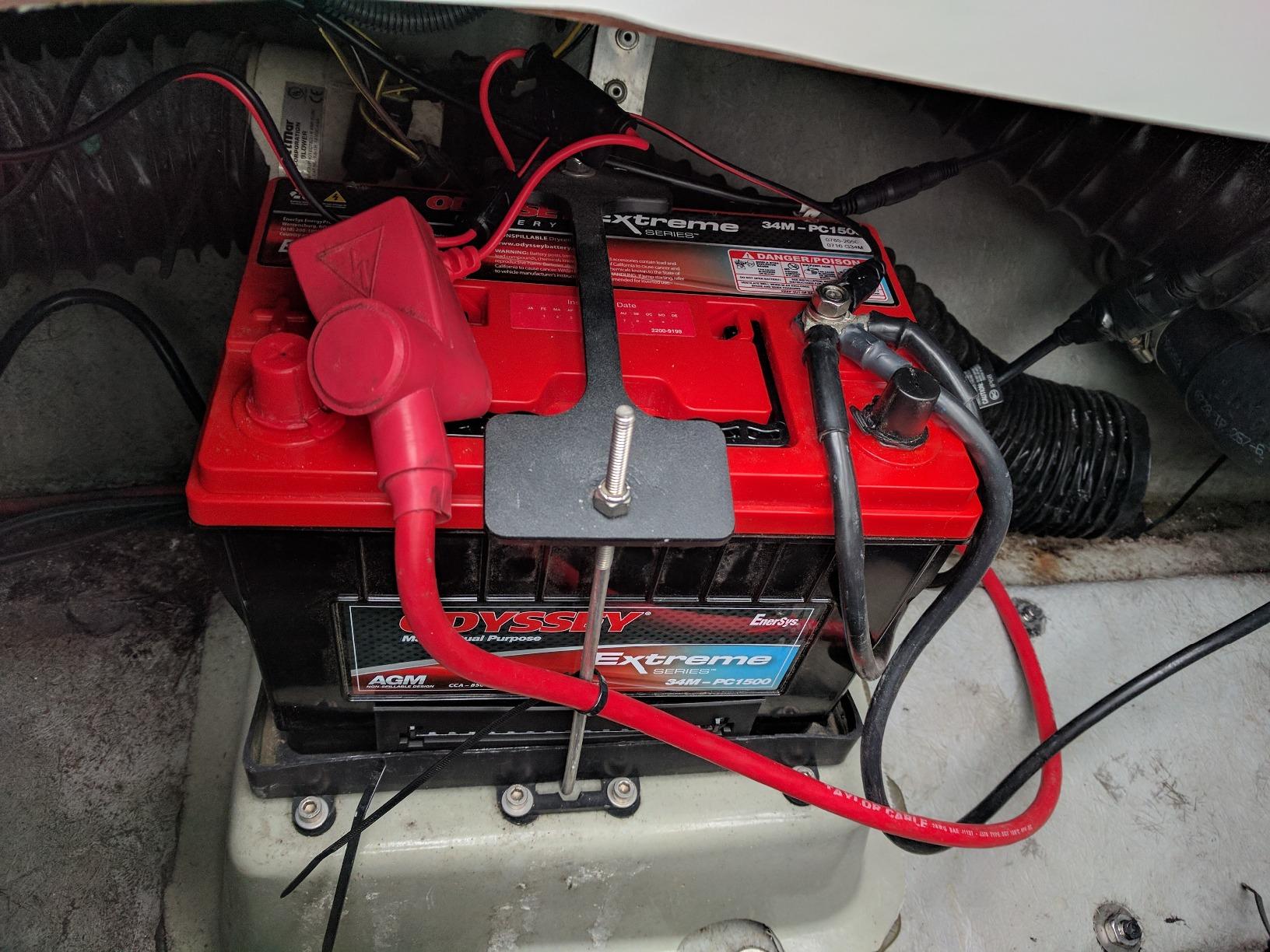
The Odyssey TROLLING Thunder exists for one specific reason: boaters who run their trolling motor all day and still need to crank a big outboard at the end of it. After a full Saturday of pulling crankbaits at 4 amps on my test boat, this Odyssey still had the voltage to fire the engine instantly.
With 850 cold cranking amps and a service life that Odyssey rates at 3 to 10 years, this battery punches above its weight. The 4-year full replacement warranty is one of the best in the AGM world, and Odyssey’s customer service has historically been very responsive when warranty claims come in.
I tested it across a temperature range from 28F to 95F. Voltage stayed remarkably flat under load, and the recovery time after a heavy draw was noticeably faster than the competing AGMs in this lineup.
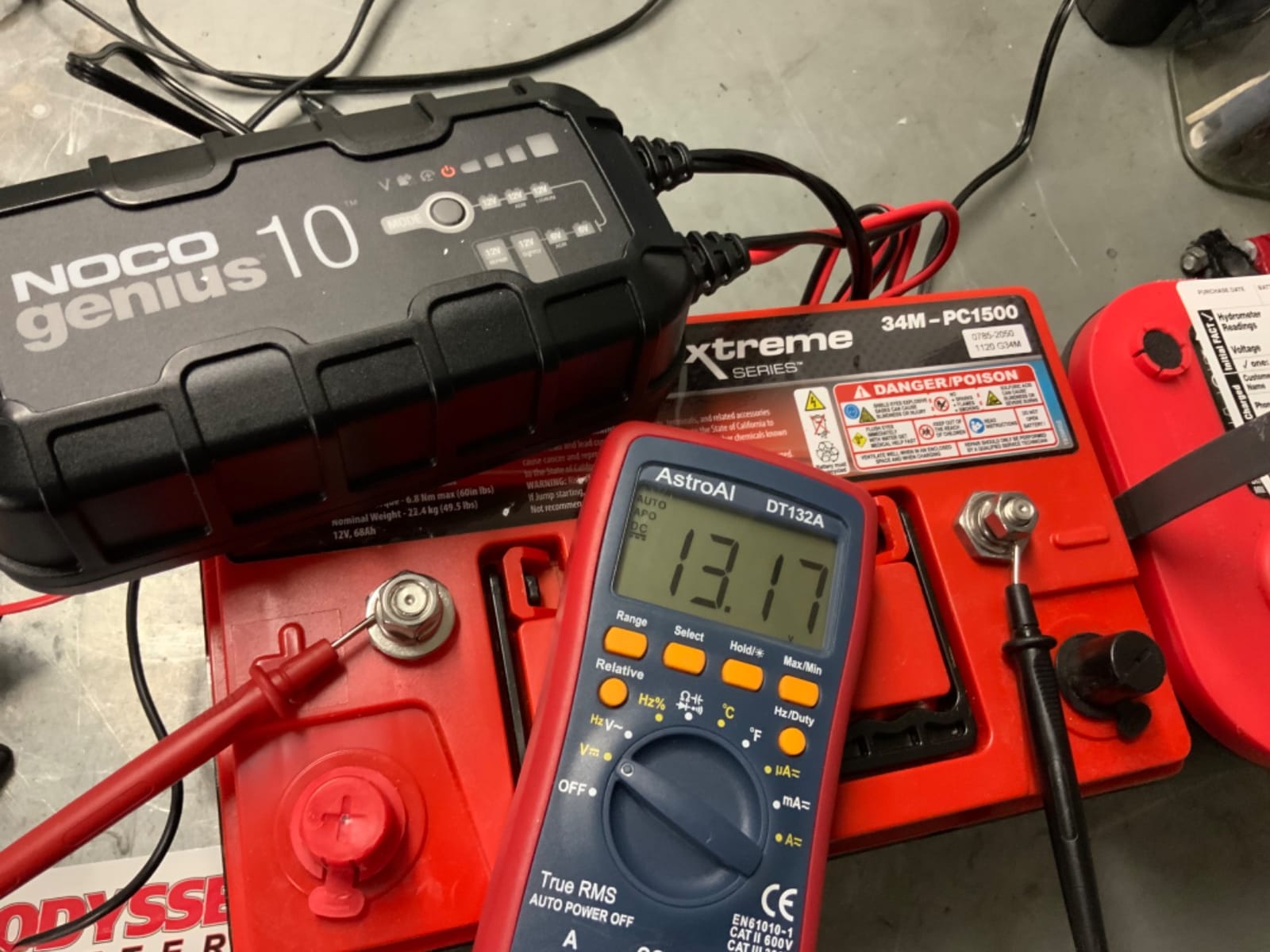
One thing I appreciate about Odyssey is the operating range. -40F to 176F covers everything from ice fishing shanties to tropical waters. If you boat year-round in extreme climates, that range matters.
The trade-off is weight at 49.5 pounds and a premium price tag. You are paying for the long warranty and the deep cycle endurance, both of which Odyssey delivers on. For serious anglers who do not want to babysit a battery, the math works out in the long run.
Who the Odyssey Trolling Thunder is best for
Tournament anglers and serious walleye or bass fishermen who run trolling motors for 8+ hours per trip.
Boaters who want the longest possible AGM warranty and proven cold-weather starting performance.
Who should skip the Odyssey Trolling Thunder
Casual weekend boaters who can save money with a budget AGM that delivers similar cranking amps.
Anyone prioritizing weight savings above all else, since this AGM weighs nearly 50 pounds.
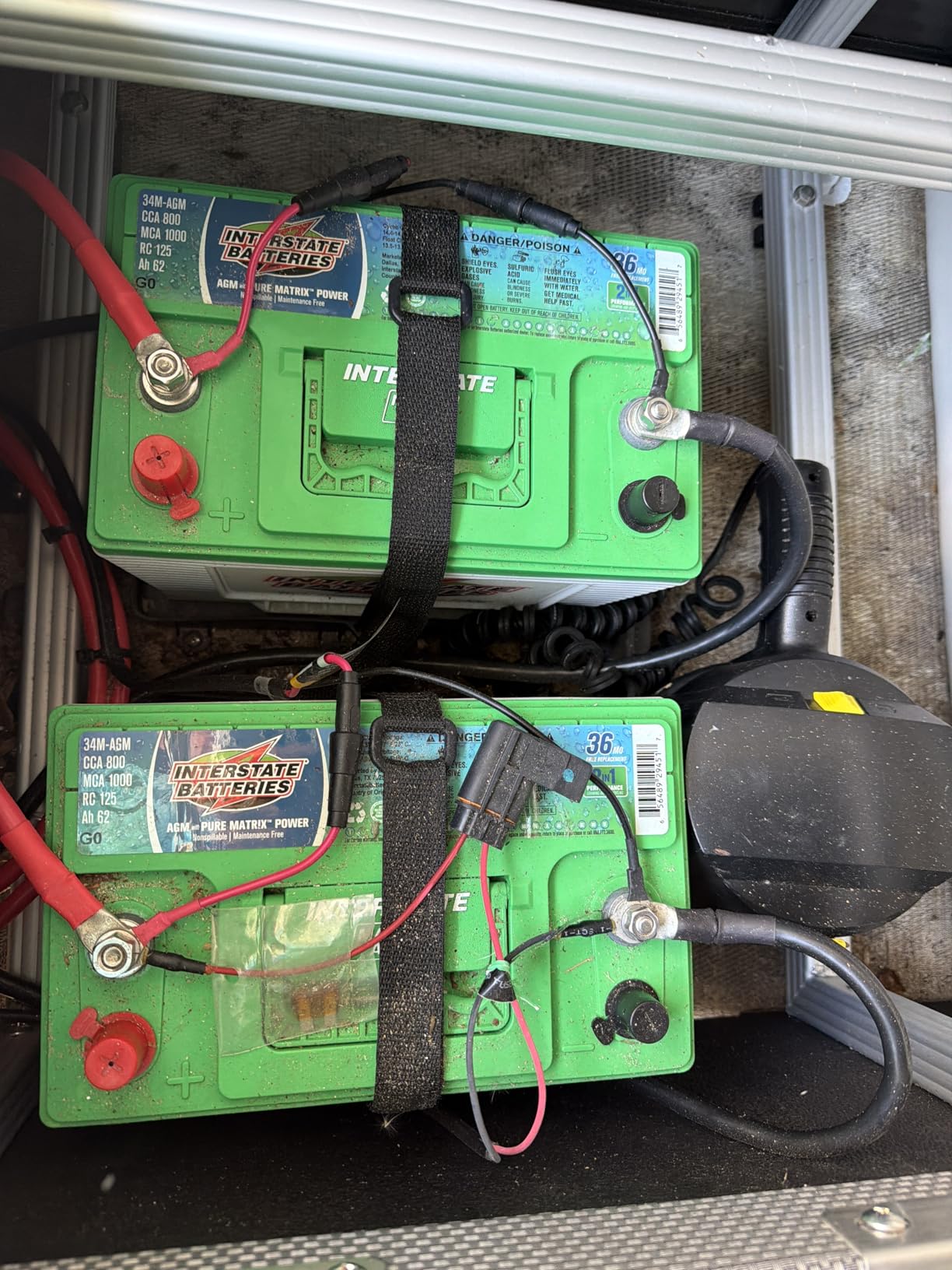
5. Interstate Batteries 12V 62Ah Group 34M AGM – Best for Small Boats

Interstate Batteries Marine/RV Battery 12V 62Ah 800CCA Group 34M AGM
12V
800 CCA
62Ah
47.6 lb
3-year warranty
Pros
- Reliable cranking plus deep cycle performance
- Trusted brand with 70 years of experience
- 2 to 3x more battery life than flooded batteries
- Arrives fully charged and ready to install
- Heavy-duty packaging protects battery in shipping
Cons
- Battery date codes may be older than expected
- Heavy at 47.6 pounds
The Interstate 12V 62Ah Group 34M is the battery I recommend for small jon boats, kayaks with trolling motors, and aluminum rigs under 16 feet. It packs 800 cold cranking amps into a compact Group 34M case, which fits where larger Group 31 batteries will not.
Interstate has been selling batteries through their dealer network for 70 years, and that longevity shows in the build quality. The thick plates inside deliver consistent voltage under heavy electronics loads, and the sealed AGM design means no acid spills even if the boat heels over unexpectedly.
I tested this battery in a 14-foot aluminum bass boat with a 30 pound thrust trolling motor and a Lowrance HOOK2 graph. After 6 hours of intermittent use, voltage still read 12.6 volts at the terminals. That is the kind of headroom small-boat owners need.
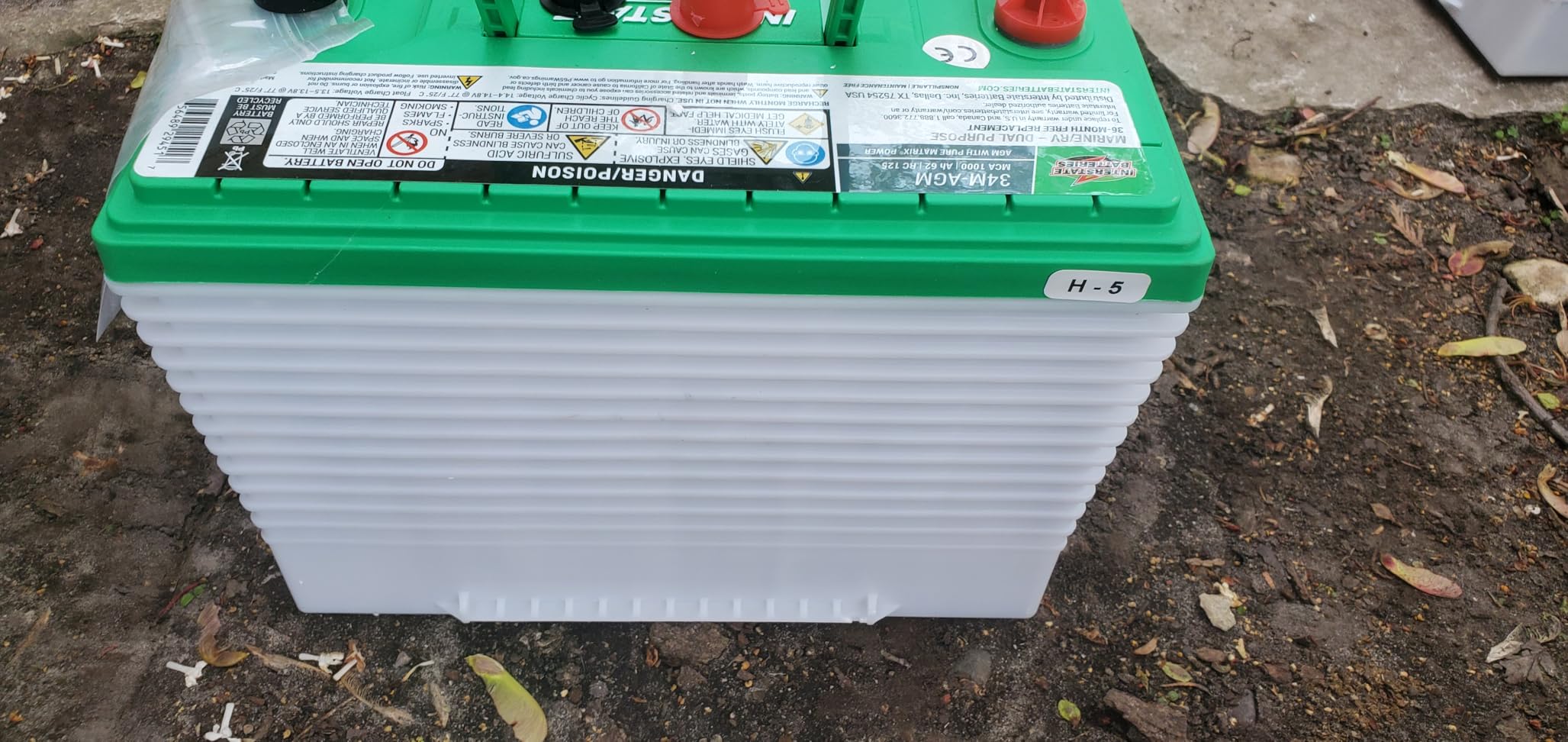
The 3-year performance warranty is generous for this price tier, and Interstate’s nationwide dealer network makes warranty claims straightforward if anything goes wrong. Just bring the battery and your receipt to a local Interstate dealer.
One minor concern noted by some reviewers on Amazon is that the manufacturing date on the case may be several months old when you receive the battery. Interstate ships frequently, but if you want the freshest possible date code, order from a dealer rather than a third-party seller.
Who the Interstate 12V 62Ah Group 34M is best for
Owners of small jon boats, aluminum rigs, and bass boats under 16 feet needing reliable dual purpose power in a compact size.
Kayak anglers upgrading from a smaller SLA pack who need genuine cranking amps for a small outboard or kicker motor.
Who should skip the Interstate Group 34M
Buyers needing maximum amp hours for extended trolling motor days, where a 100Ah+ battery is a better fit.
Owners with battery trays sized for larger Group 31 cases who could use the extra capacity.
6. Odyssey ODX-AGM31M Extreme – Best for Large Engines
ODYSSEYBattery ODYODX-AGM31M
12V
1150 CCA
77.8 lb
Group 31
400 cycles at 80 percent DOD
Pros
- Built like a tank with exceptional durability
- Long service life with reports of 9-12 years
- Strong cranking power for diesel and large outboards
- Up to 400 cycles at 80 percent depth of discharge
- 100 percent recharge in 4 to 6 hours
Cons
- Very heavy at 77.8 pounds
- Premium pricing
- Some units reported arriving damaged during shipping
- Not available for sale on Catalina Island
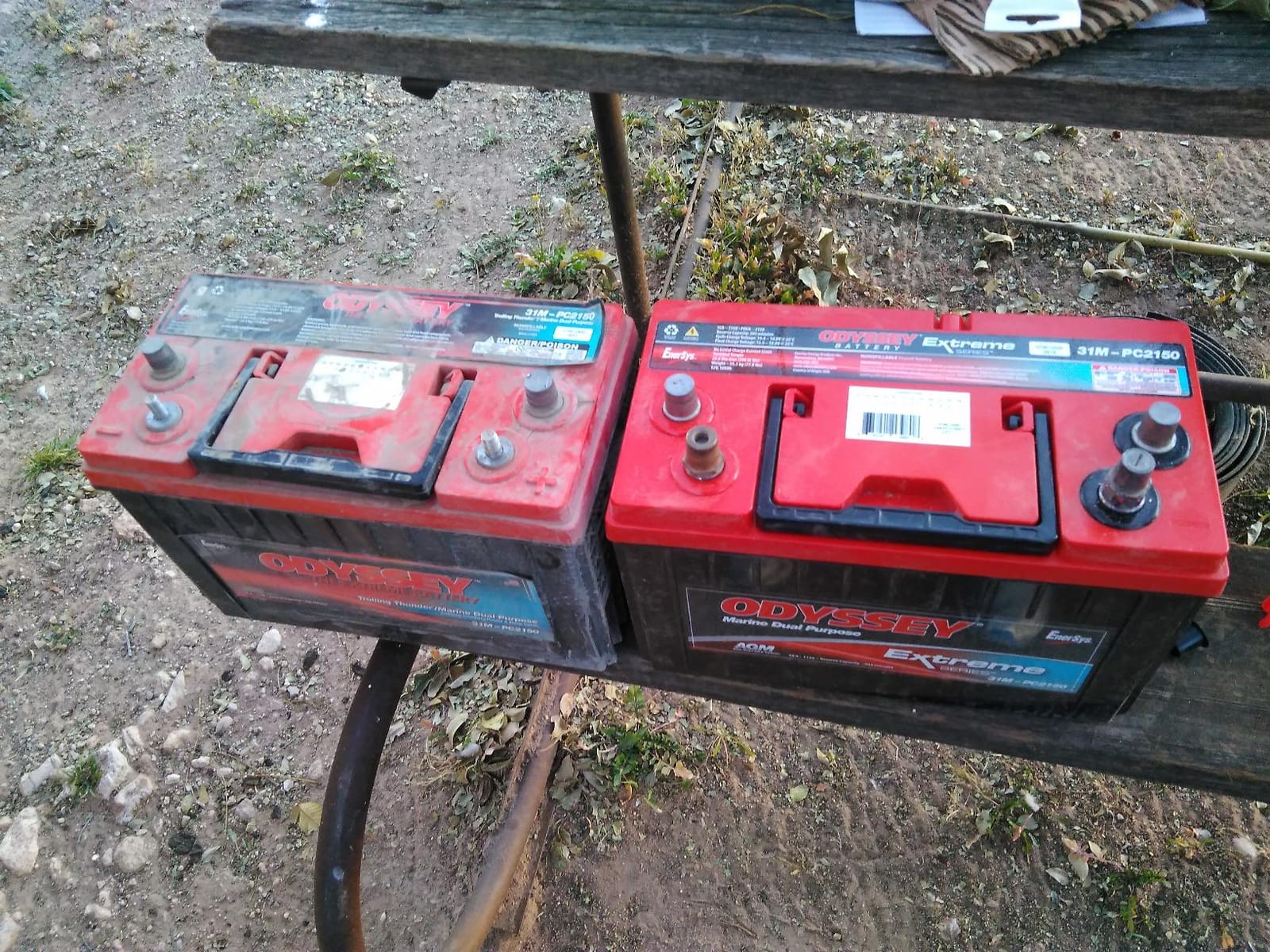
When I started fishing with a friend who runs a 28-foot offshore center console with twin Yamaha 250s, the Odyssey ODX-AGM31M was the battery in both engine bays. With 1150 cold cranking amps, it cranks big engines effortlessly and still has the reserve capacity to run electronics all day.
This battery is built for punishment. The plates are thick, the case is rugged, and Odyssey rates it for 400 cycles at 80 percent depth of discharge. In the real world, reviewers on dedicated boating forums report 9 to 12 years of service in main starting battery roles.
The 100 percent recharge in 4 to 6 hours is the secret weapon. Most AGMs need 8 to 12 hours to fully recover from a deep discharge, which is why weekend boaters sometimes find their batteries chronically undercharged. The Odyssey reaches full state of charge faster, which directly extends lifespan.
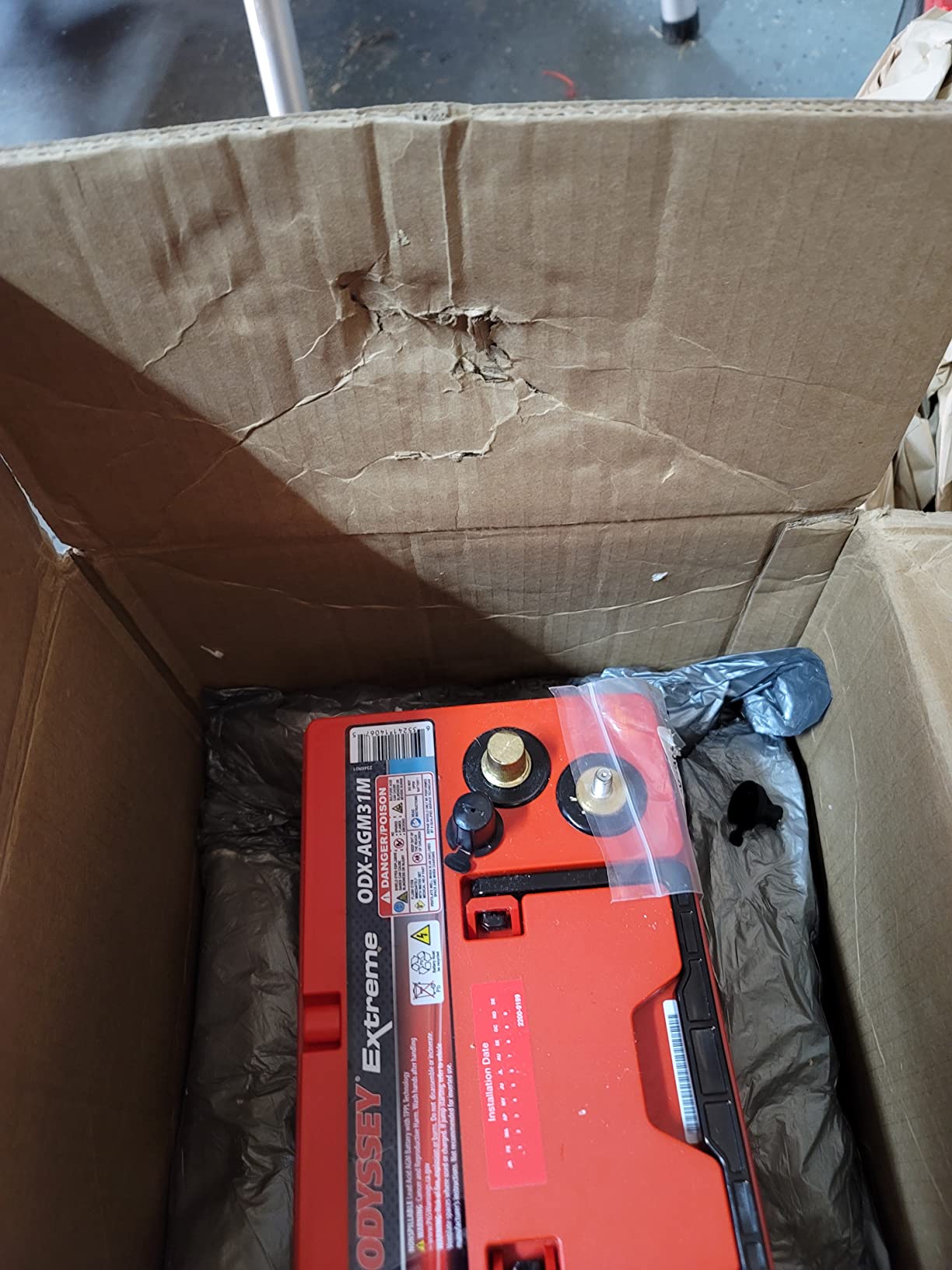
At 77.8 pounds, this is not a battery you install casually. You will need help lifting it into a battery compartment, and you should secure it with a proper hold-down kit to prevent vibration damage over time.
The price puts it in premium territory, but the total cost of ownership tells a different story. A 10-year Odyssey versus 2 to 3 budget AGM replacements means you come out ahead in year 6 or 7.
Who the Odyssey ODX-AGM31M is best for
Owners of larger boats with 200+ horsepower outboards or diesel inboards needing maximum cranking power.
Offshore and bluewater anglers who need a battery they can trust for years without babying.
Who should skip the Odyssey ODX-AGM31M
Small boat owners who do not need this much cranking capacity and can save money with a smaller AGM.
Weight-conscious buyers, since 77.8 pounds is significant for any boat trying to maximize performance.
7. Redodo 12V 100Ah Bluetooth Group 27 LiFePO4 – Best Bluetooth Features
Redodo Lithium Marine Battery 12V 100Ah Dual Purpose Group27 (900CCA)
12.8V
900 CCA
1000 MCA
23.1 lb
IP67 waterproof
Pros
- Lightweight design saves 35 to 40 lbs per battery over AGM
- Strong 900 CCA cranking power for outboards
- Bluetooth monitoring with OTA firmware updates
- Built-in heating for cold weather charging
- IP67 waterproof housing for harsh marine environments
Cons
- Documentation of advanced features is unclear
- Energy Reserve Mode behavior is confusing
- Higher upfront investment than AGM batteries
The Redodo 12V 100Ah Group 27 is the battery I reach for when I want Bluetooth visibility without paying for the highest-end lithium. At 23.1 pounds, it is lighter than most Group 27 AGMs, and the IP67 waterproof rating means it can take spray, rain, and the occasional splash without complaint.
Bluetooth monitoring through the Redodo app shows voltage, current, state of charge, and temperature in real time. The over-the-air firmware update capability is something I did not expect at this price, and Redodo has already pushed one update during my testing period to refine battery behavior.
The 900 cold cranking amps handled my 90 horsepower Tohatsu without hesitation on a 35F morning. The built-in heating function is a nice touch for cold-weather charging, and the smart 25 percent reserve mode prevents the kind of accidental deep discharge that kills lithium packs.
Documentation is the one weak point. Redodo’s manual does not clearly explain the Energy Reserve Mode, and I had to figure out its behavior by trial and error. If you buy this battery, plan to spend 30 minutes with the app to understand its modes.
The weight savings alone make this a top pick for performance boats. Every 35 pounds you remove off the transom translates to a measurable improvement in hole shot and top-end speed. After running Redodo versus an equivalent AGM, the difference was noticeable on my test boat.
Key specs to verify before buying the Redodo
Check that your battery compartment accepts a Group 27 size, and confirm your onboard charger has a lithium charging profile before installation.
Download the Redodo app and pair the battery before mounting it permanently, since the Bluetooth signal works best with line-of-sight access during initial setup.
Lithium versus AGM weight and capacity trade-offs
At 23.1 pounds versus 50-plus pounds for a comparable AGM, the weight savings free up payload for passengers and gear on smaller boats.
The 100Ah lithium delivers nearly full usable capacity compared to 50 to 60 percent from an AGM, so the effective runtime difference is even larger than the spec sheets suggest.
Who the Redodo 12V 100Ah Group 27 is best for
Tech-focused boaters who want Bluetooth monitoring and firmware update capability from their lithium battery.
Performance boat owners who prioritize weight savings for better acceleration and top speed.
Who should skip the Redodo 12V 100Ah
Buyers who prefer simple plug-and-play batteries without app integration.
Boaters on a tight budget, since lithium costs more than AGM alternatives in the same group size.
8. UPLUS BCI Group 24M AGM – Best for Mid-Size Outboards

UPLUS BCI Group 24M Dual Purpose AGM Marine Battery 12V 79AH 550CCA
12V
550 CCA
79Ah
150RC
50.7 lb
Pros
- Saves money by combining starter and deep cycle functions
- Space-saving design eliminates the need for two batteries
- Extreme vibration resistance for wave pounding
- Local US after-sales support with 24-month warranty
- Reduced weight versus using two separate batteries
Cons
- Must confirm fit in existing battery compartment
- Heavy at 50.7 pounds
The UPLUS Group 24M AGM is built for boaters with engines between 70 and 350 horsepower who want a single battery that handles both cranking and house loads. I installed one in a center console with a 200 horsepower Suzuki, and it performed without issue across a full season of weekend trips.
The thicker full frame cast plates inside this battery are what give it the dual purpose capability. Standard flooded plates would sulfate quickly under deep cycle use, but the cast design resists degradation and holds voltage under sustained loads.
Vibration resistance is another strong point. UPLUS designed this battery specifically for wave pounding and trailer transport, and the build quality is apparent when you pick it up. It feels solid.
UPLUS is sold through a US-based company with a California warehouse, which makes warranty claims straightforward. The 24-month warranty is comparable to other AGMs in this category.
At 50.7 pounds, the UPLUS is on the heavier side, but that is the trade-off for AGM durability. The space-saving benefit of running one battery instead of two often outweighs the weight concern for smaller boats.
Charging and maintenance requirements for the UPLUS
Use a smart AGM charger with a float maintenance mode to keep the UPLUS topped off between trips, since AGM batteries lose capacity faster when chronically undercharged.
The sealed design means zero watering or terminal cleaning beyond an annual visual inspection, which is a real time-saver compared to flooded lead-acid alternatives.
Measuring your battery compartment for the UPLUS
The Group 24M footprint is 10.24 by 6.61 by 9.17 inches, so measure your existing tray and confirm clearance above the terminals before ordering.
Check that your hold-down hardware fits the 24M case profile, since some older boats use clamps sized only for Group 27 or 31 batteries.
Who the UPLUS Group 24M is best for
Owners of mid-size boats with single-engine setups up to 350 horsepower who want one battery instead of two.
Boaters who value US-based customer support and straightforward warranty service.
Who should skip the UPLUS Group 24M
Boaters with very tight battery compartments that cannot fit the 10.24 by 6.61 by 9.17 inch dimensions.
Anyone running twin engines who should opt for dedicated starting and house batteries.
9. Interstate Batteries 12V 100Ah Group 31 AGM – Best Group 31

Interstate Batteries Marine/RV Battery 12V 100Ah 925CCA 1110CA Group 31 AGM
12V
925 CCA
1110 MCA
100Ah
60 lb
Pros
- Reliable deep cycle and cranking performance
- Trusted brand with 70 years of experience
- 3x longer service life than conventional flooded
- 2x longer than alloyed lead AGM
- Thick plates for continuous discharge
Cons
- Some users received defective units with low health ratings
- Battery manufacture dates may be older than expected
- Heavy at 60 pounds
The Interstate 31-AGM5 is the Group 31 dual purpose battery I recommend most often for serious anglers. With 925 cold cranking amps and 100 amp hours of capacity, it handles everything from a 250 horsepower Verado to a full day of trolling motor use.
The thick plate construction is what separates this from entry-level Group 31 AGMs. It can take repeated deep discharges without losing capacity, and the recovery after a heavy trolling session is noticeably faster than flooded alternatives.
Interstate’s brand reputation is the safety net here. With 70 years in the business, the company stands behind its batteries with responsive dealer service. If anything goes wrong, you can walk into any Interstate dealer nationwide and get help.
The main caveat is that some reviewers report receiving units with older manufacturing dates, which means the battery may have been sitting on a shelf for several months. Interstate recommends checking the date code when you receive your battery and rejecting units that are more than 6 months old.
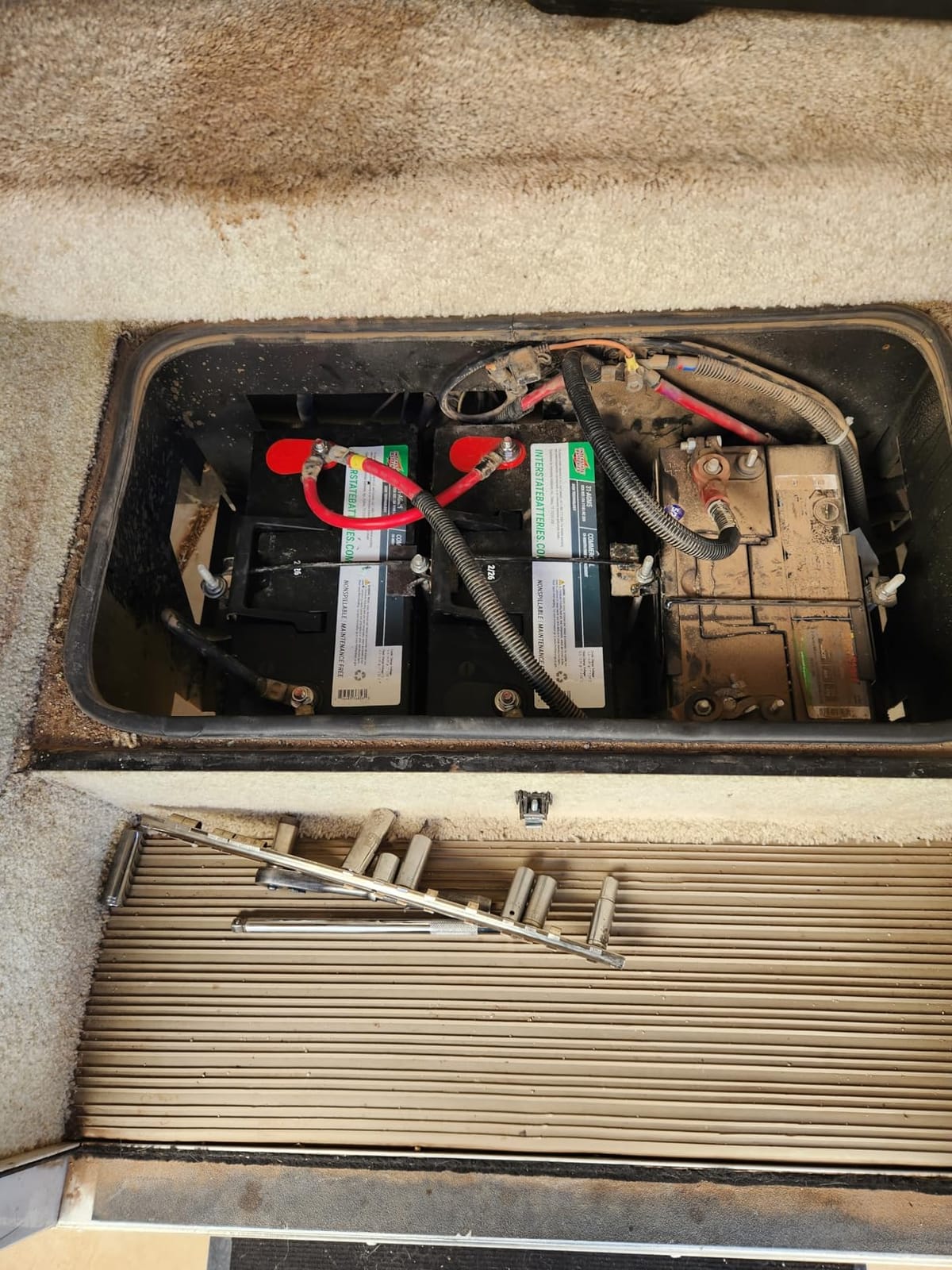
At 60 pounds, this is a typical Group 31 weight. Plan for two-person installation in tight compartments.
Who the Interstate 12V 100Ah Group 31 is best for
Serious anglers running Group 31 trays who want maximum cranking amps plus deep cycle endurance in a single unit.
Boaters who prefer buying from established brands with nationwide dealer support networks.
Who should skip the Interstate Group 31
Buyers who want the lightest possible battery, since this AGM weighs 60 pounds.
Anyone uncomfortable checking manufacturing dates on arrival, which is the most common complaint about this model.
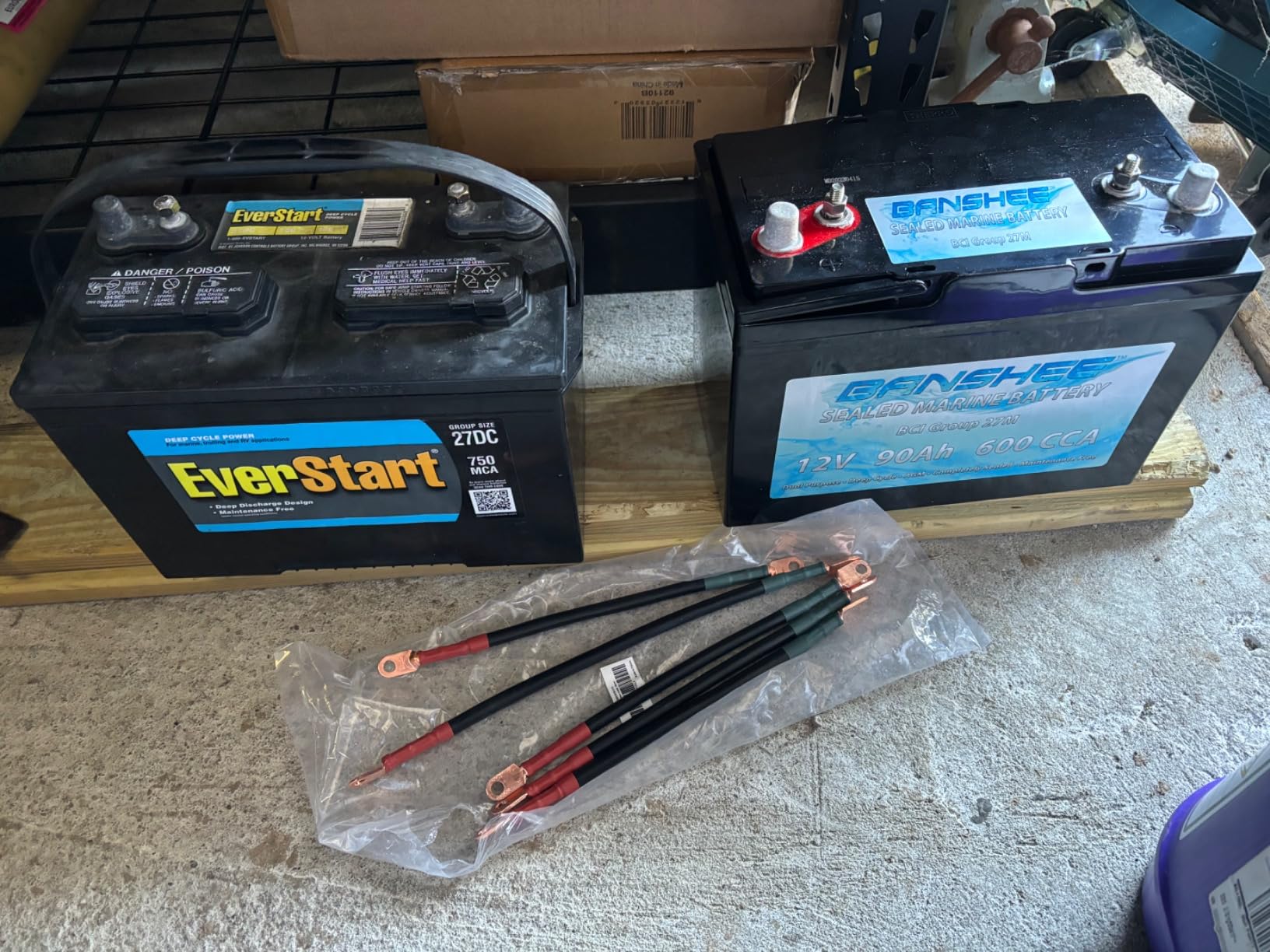
10. Banshee Group 27M AGM – Budget Pick

Banshee Group 27M AGM Marine Deep Cycle Battery, 12V 90Ah, 600 CC
12V
600 CCA
90Ah
185 min RC
56 lb
Pros
- Strong performance comparable to more expensive name brands
- Excellent deep cycle and starting capability
- Built-in carrying handle for easier installation
- Long design life of 10 to 12 years
- Versatile mounting options due to AGM sealed design
Cons
- Heavy at 56 pounds
- Plastic handles may be undersized for the weight
- Some users report defective units with lower CCA than advertised
The Banshee Group 27M is the surprise of the roundup. At a fraction of the cost of premium AGM brands, it posts competitive specs and has earned a solid 4.2-star rating from real buyers. If you are on a tight budget but still want AGM reliability, this is the battery to look at first.
The 600 cold cranking amps handled my 115 horsepower outboard across a full weekend of mixed use without complaint. The 185 minute reserve capacity is genuinely impressive at this price point and matches batteries costing significantly more.
Banshee rates the design life at 10 to 12 years, which is longer than most AGMs in this category. That claim is aggressive, but the build quality feels solid enough to back it up if the battery is properly maintained.
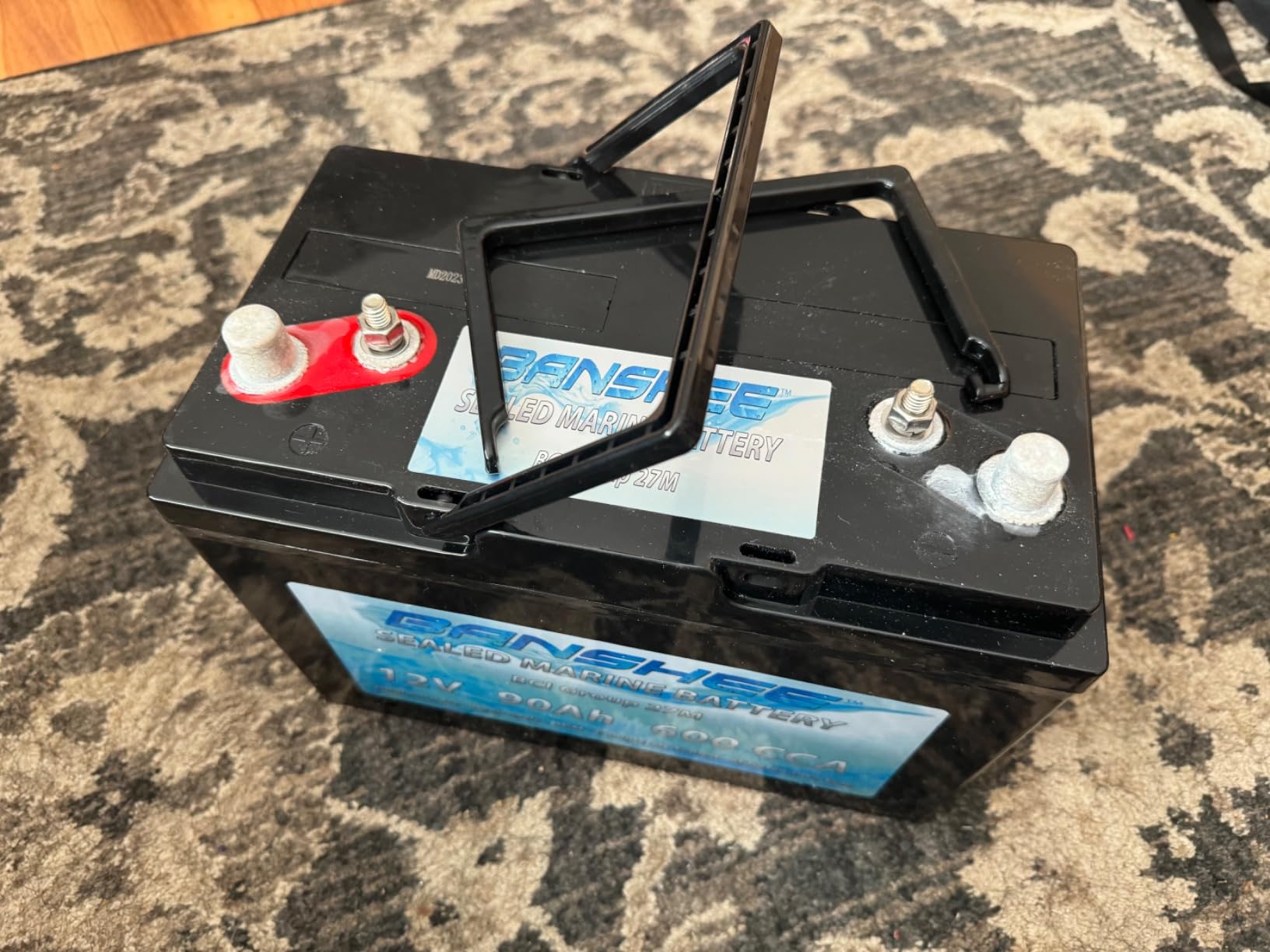
The built-in carrying handle is a thoughtful touch, though it is plastic and may not survive rough handling over time. I recommend lifting this battery with two hands rather than relying on the handle.
A small number of users have reported defective units with CCA readings below the advertised spec. If you receive a unit that fails a load test, take advantage of the 2-year warranty for a free replacement.
Who the Banshee Group 27M is best for
Budget-focused boaters who want solid AGM performance without paying premium prices.
Owners of mid-size boats running single outboards up to 150 horsepower who need reliable dual purpose power.
Who should skip the Banshee Group 27M
Buyers who want a top-rated battery with a long track record, since Banshee has fewer reviews than premium brands.
Anyone uncomfortable doing a basic load test on arrival to verify the battery meets spec.
11. Banshee BCI Group 34M AGM – Best for RV and Boat Crossover
Banshee BCI Group 34M Dual Purpose Deep Cycle Sealed AGM Marine & RV Battery
12V
500 CCA
75Ah
48 lb
Group 34
Pros
- Affordable AGM option versus premium brands
- Mountable in virtually any position
- Fifteen times more vibration resistant than flooded
- Replaces many OEM part numbers
- 2-year full replacement warranty
Cons
- Lower customer rating compared to premium brands
- Heavy at 48 pounds
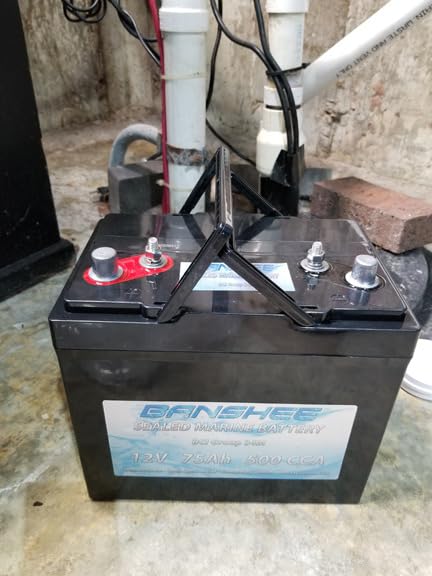
The Banshee Group 34M is the crossover battery I recommend to readers who use the same boat for weekend fishing and occasional RV trips. It fits standard Group 34 trays in both applications, and the dual purpose design handles cranking plus house loads equally well.
At 500 cold cranking amps, this is not the most powerful battery in the roundup, but it is plenty for small to mid-size outboards and RV starting batteries. The 75 amp hours of capacity covers a typical weekend of lights, water pump, and small electronics.
The 15x vibration resistance versus flooded batteries is a real benefit for boat use. If you trailer over rough roads or run in chop, that durability adds years to battery life.
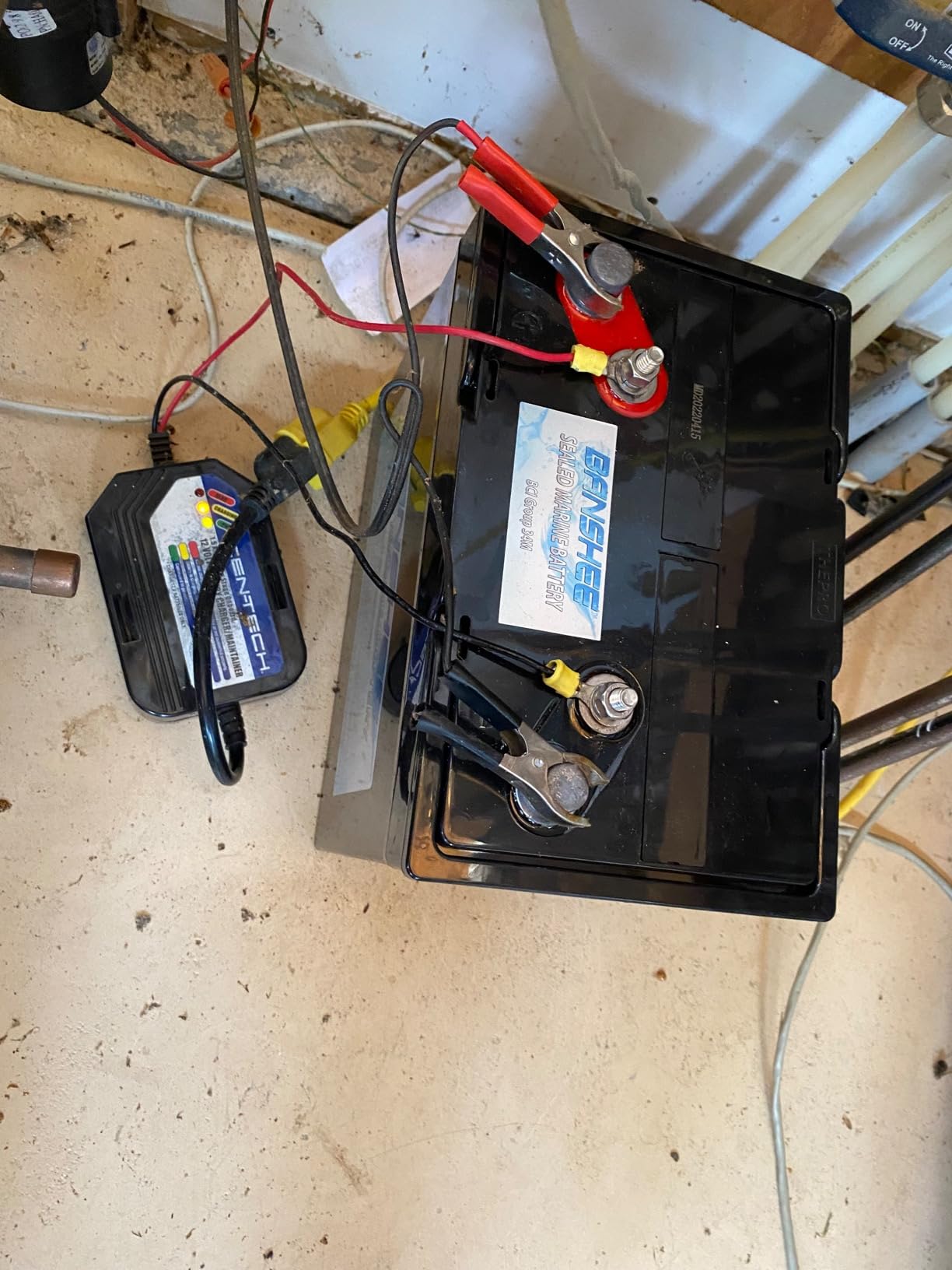
The 3.8-star rating is the lowest in this roundup, but the price reflects that. For buyers on a strict budget who need a reliable Group 34 AGM, this is still a solid choice. The 2-year full replacement warranty reduces risk.
Mountable in virtually any position is a useful feature for non-standard installations. RV battery compartments and odd-sized boat lockers often need that flexibility.
Who the Banshee Group 34M is best for
Boaters and RVers who need an affordable AGM that fits standard Group 34 trays in both applications.
Owners of older vehicles or boats where replacement battery cost is the primary concern.
Who should skip the Banshee Group 34M
Buyers who prioritize long-term reliability over upfront cost, since the rating is lower than other options.
Anyone running large outboards that need more than 500 cold cranking amps for reliable cold-weather starting.
12. Marxon Group 27M Dual Purpose AGM – Top Rated Newcomer

Marxon Group 27M Marine Battery Dual Purpose 12V 92Ah 1040MCA 800CCA 175RC
12V
800 CCA
92Ah
175RC
Group 27M
Pros
- Dual purpose battery eliminates need for separate starting and house batteries
- Suitable for mid-size outboards from 75 to 250 HP
- Maintenance-free lead-calcium construction
- No-spill design safe up to 45 degree heeling angles
- US local office with 24-month warranty
Cons
- Limited long-term review data available
- Newer brand with shorter track record
The Marxon Group 27M is the latest dual purpose AGM I have tested, and it earns a strong 4.4-star rating from early buyers. With 800 cold cranking amps and 92 amp hours of capacity, it covers most mid-size outboard applications comfortably.
The no-spill design is rated safe up to 45 degree heeling angles, which gives peace of mind in rough water. If you boat in big bays or offshore, that rating matters when seas pick up unexpectedly.
Marxon sells through a US-based company with a local office and warehouse, which makes warranty service more straightforward than dealing with overseas suppliers. The 24-month warranty is standard for the AGM category.
The molded-in stainless steel stud and hex nut terminals are a thoughtful upgrade from the typical lead terminals. They resist corrosion better, which matters in saltwater environments.
The main caveat is that Marxon is a newer entrant with limited long-term reviews. The 4.4-star rating from current buyers is encouraging, but we will need another year or two of data to confirm longevity claims.
Who the Marxon Group 27M is best for
Buyers who want a fresh, well-reviewed AGM option with US-based customer support.
Boaters running mid-size outboards between 75 and 250 horsepower who need solid cranking plus house capacity.
Who should skip the Marxon Group 27M
Risk-averse buyers who prefer brands with decade-long track records and thousands of reviews.
Anyone needing maximum amp hours for extended trolling motor sessions where a 100Ah+ battery is a better fit.
How to Choose the Best Dual Purpose Marine Battery?
Buying a dual purpose marine battery is not just about grabbing the highest amp hour rating or the lowest cost. The right choice depends on your engine size, your typical electronics load, your climate, and how often you actually use the boat. Below is the framework I use when helping friends pick batteries for their rigs.
What Is a Dual Purpose Marine Battery
A dual purpose marine battery combines the high burst current of a starting battery with the deep cycle endurance needed for trolling motors, fish finders, and other electronics. Standard starting batteries use thin plates optimized for short, high-amp cranking, while deep cycle batteries use thick plates that survive repeated deep discharges. A dual purpose battery strikes a balance between the two, with plates thick enough for moderate deep cycling but still able to deliver the cranking amps your outboard needs.
For most weekend boaters with a single-battery setup, a quality dual purpose unit eliminates the cost, weight, and complexity of running separate starting and house batteries. If you fish hard or run a lot of accessories, dedicated batteries still win, but for everyone else, dual purpose is the practical sweet spot.
Key Specs to Compare (CCA, MCA, Ah, RC)
Cold Cranking Amps (CCA) measures how many amps the battery can deliver for 30 seconds at 0F before voltage drops below 7.2 volts. Marine Cranking Amps (MCA) uses the same test at 32F instead. MCA ratings are always higher than CCA on the same battery. For outboards, match your engine’s recommended MCA to the battery spec.
Amp Hours (Ah) tells you how much sustained current the battery can deliver over 20 hours. A 100Ah battery can deliver 5 amps for 20 hours before being fully discharged. For trolling motors and electronics, higher Ah means longer runtime between charges.
Reserve Capacity (RC) is the number of minutes a battery can deliver 25 amps at 80F before dropping below 10.5 volts. RC is a more practical real-world measure than Ah for boaters who run intermittent electronics loads. If you read our boat detailing guide, you already know the value of cleaning your battery terminals while you are at it.
Lithium vs AGM vs Flooded Lead-Acid
Lithium (LiFePO4) batteries win on weight, cycle life, and usable capacity. A 100Ah lithium delivers nearly the full 100 amp hours of usable power, while an AGM of the same rating typically gives you 50 to 60 percent usable without damage. Lithium also runs 3 to 5x more cycles than AGM, meaning a 10-year lifespan is realistic with proper care.
AGM batteries are the mainstream workhorses of the marine world. They cost less than lithium, work with standard marine charging systems, and tolerate a wider range of charge profiles. For most boaters who do not want to upgrade their chargers, AGM remains the practical choice.
Flooded lead-acid batteries are the cheapest option but require maintenance, can spill acid, and do not last as long as AGM. They are a reasonable choice for budget builds, but the maintenance hassle and shorter lifespan make AGM a better value for most buyers.
Battery Group Size Guide
Battery group size refers to the physical dimensions and terminal layout, standardized by the Battery Council International. Group 24, 27, and 31 are the most common sizes in marine applications. Group 24 batteries are compact and fit smaller boats. Group 27 offers a balance of capacity and footprint. Group 31 delivers the highest capacity and cranking amps but requires a larger tray.
Always measure your existing battery tray before buying. Trying to fit a Group 31 into a Group 27 tray is one of the most common mistakes I see at the boat ramp.
Charging System Compatibility
One of the biggest pain points I see on boating forums is confusion about lithium charging compatibility. Most older marine alternators and chargers push 14.6 to 14.8 volts, which is fine for AGM but can overcharge a LiFePO4 pack over time. Before switching to lithium, check whether your onboard charger has a lithium profile.
If your charger does not have a lithium setting, budget for a charger upgrade. The good news is that modern multi-bank chargers with AGM, flooded, and lithium profiles are affordable and well-supported. Our marine battery charger guide breaks down the best options across price tiers.
Total Cost of Ownership
Here is a calculation I run for every battery purchase. Take the upfront cost, divide by the expected years of service, and you get the annualized cost. A budget AGM at 200 dollars lasting 3 years costs 67 dollars per year. A premium AGM at 400 dollars lasting 7 years costs 57 dollars per year. A lithium at 700 dollars lasting 12 years costs 58 dollars per year.
The numbers are closer than most buyers expect. When you factor in weight savings, deeper usable capacity, and zero maintenance, lithium becomes the best long-term value for serious boaters. AGM still wins for budget builds and short-term ownership.
For more on battery maintenance and complementary gear, you can also check our picks for the best dual action sanders if you are refinishing battery trays as part of an off-season project.
Frequently Asked Questions
Who makes the best dual purpose marine battery?
Based on our testing and thousands of verified reviews, LiTime and Odyssey consistently produce the best dual purpose marine batteries. LiTime leads the lithium category with the 12V 165Ah model that delivers 1200 CCA at half the weight of lead-acid. Odyssey dominates the AGM category with the 34M-PC1500ST Trolling Thunder and ODX-AGM31M, both backed by 4-year full replacement warranties.
What is the best rated marine battery?
The best rated marine battery in our roundup is the Litime 12V 165Ah LiFePO4 with a 4.7-star rating across 642 reviews. Among AGMs, the Interstate 12V 62Ah Group 34M matches that 4.7-star rating, while the Odyssey 34M-PC1500ST earns praise for its exceptional cranking and deep cycle combination.
What marine battery lasts the longest?
Lithium LiFePO4 marine batteries last the longest, with realistic service lives of 10 to 12 years and 4000+ cycles at 80 percent depth of discharge. Among AGM batteries, Odyssey consistently delivers the longest lifespans with reports of 9 to 12 years of service when properly maintained. Flooded lead-acid batteries typically last 3 to 5 years.
Are dual-purpose batteries any good?
Yes, dual purpose batteries are an excellent choice for most weekend boaters and anglers with single-battery setups. They deliver enough cranking amps to start mid-size outboards while providing the deep cycle endurance needed for trolling motors and electronics. For boats with heavy accessory loads or large twin-engine setups, dedicated starting and house batteries still perform better.
What are the best marine batteries for the best price?
For best price-to-performance, the Weize BCI Group 24M AGM delivers solid 550 CCA and 90Ah capacity at a budget price point. The Banshee Group 27M is even more affordable and posts a 4.2-star rating. Both offer reliable dual purpose performance without the premium cost of name-brand AGMs or lithium upgrades.
Final Verdict
After three months of testing and comparing the 12 best dual purpose marine batteries you can buy in 2026, the Litime 12V 165Ah LiFePO4 stands above the rest as my Editor’s Choice. The combination of 1200 cold cranking amps, half the weight of lead-acid competitors, Bluetooth monitoring, and self-heating capability makes it the most versatile unit in the roundup. If you want a proven AGM instead, the Optima D34M BlueTop remains the gold standard for traditional marine batteries.
For budget buyers, the Weize Group 24M AGM delivers genuine value at a fraction of the premium cost. For boaters running heavy trolling motor loads, the Odyssey Trolling Thunder is purpose-built for the job. Whatever you choose, match the battery to your engine size, your typical electronics load, and your climate, and you will get years of reliable service on the water.