
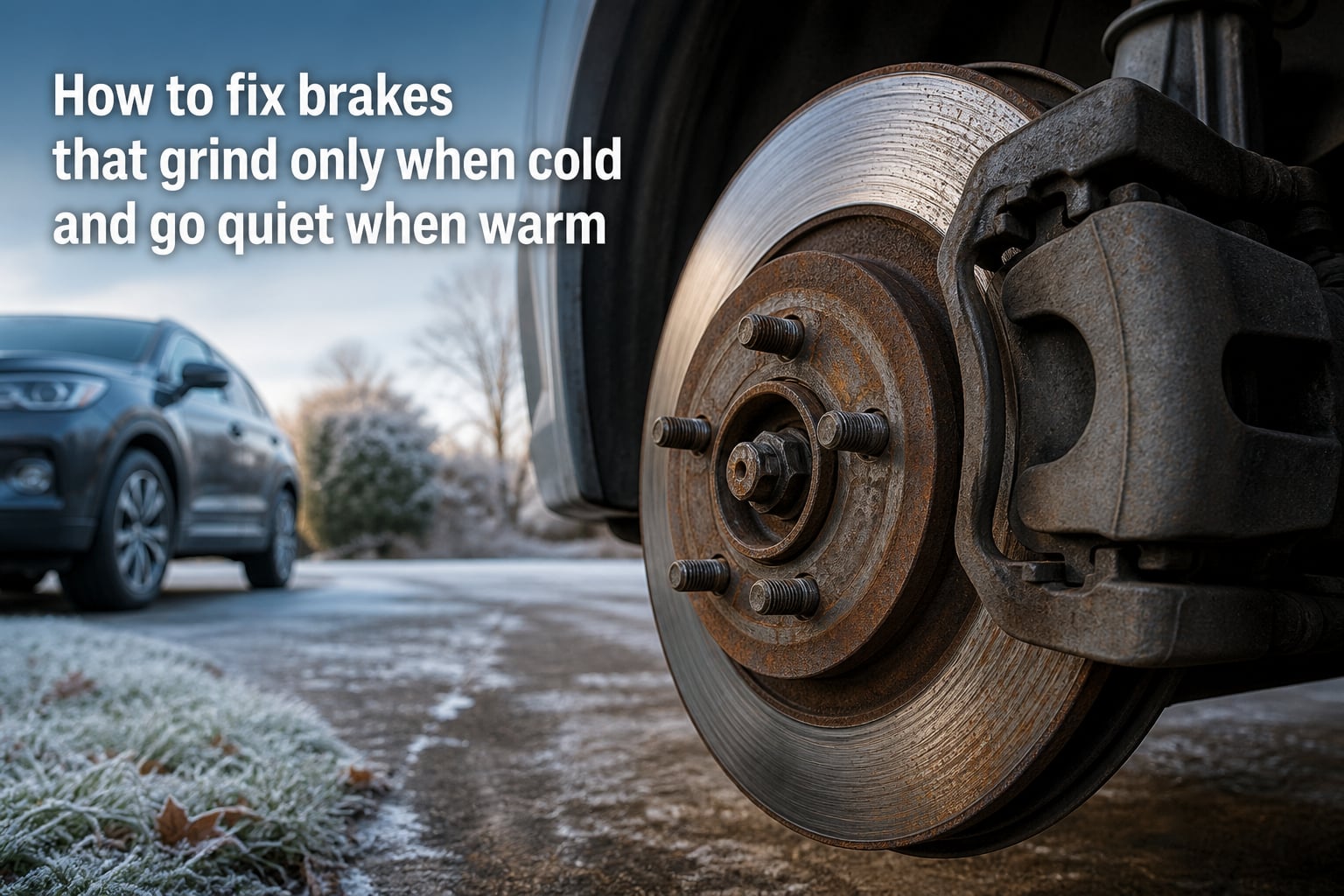
You start your car on a chilly morning, back out of the driveway, and hear it — a grinding, scraping noise every time you press the brake pedal. A mile or two later, the noise vanishes completely. Sound familiar? You are dealing with brakes that grind only when cold and go quiet when warm, and it is one of the most common yet misunderstood brake issues drivers face.
In most cases, this cold-to-warm grinding pattern is caused by overnight moisture creating a thin layer of surface rust on your rotors, or by brake pads that shift slightly within their brackets when components are cold and contracted. As the brakes heat up from friction, the rust gets scrubbed away, components expand, and the noise disappears. The good news is that this behavior is often harmless — but not always.
Our team has tracked hundreds of real-world reports from mechanic forums, owner communities, and repair shops to build this guide. We will walk you through exactly why this happens, how to tell the difference between normal cold brake noise and a problem that needs fixing, and a step-by-step diagnosis you can perform yourself. By the end, you will know whether you can safely keep driving or whether it is time to pull out the tools — or call a professional.
Table of Contents
Why Do Brakes Grind When Cold But Go Quiet When Warm?
The short answer comes down to temperature, moisture, and metal physics. When your vehicle sits overnight — especially in damp, cold, or humid conditions — moisture settles on the bare metal surfaces of your brake rotors. Cast iron rotors are extremely prone to surface oxidation, and even a few hours of exposure can create a microscopic layer of rust that feels rough and sounds awful when the pads press against it.
Here is where heat changes everything. Brake systems work by converting kinetic energy into thermal energy through friction. Within the first few stops, your brake pads and rotors reach temperatures of 200 to 400 degrees Fahrenheit. That heat burns off residual moisture, thermally expands the metal components to close small gaps, and physically scrapes the thin rust layer off the rotor face. The grinding stops because the conditions causing it have been eliminated — at least until the car sits overnight again.
Metal contraction also plays a role. Brake pads sit in brackets or abutment clips with a small amount of designed-in clearance. When everything is cold, that clearance is at its maximum, which can allow the pads to shift or chatter against the rotor surface during the first few brake applications. As the caliper, bracket, and pad all warm up and expand, the clearances tighten and the pads seat more firmly, eliminating the noise.
This is exactly why so many drivers on mechanic forums describe the same pattern: grinding during the first few miles, then complete silence for the rest of the drive. One Reddit user on r/CarTalkUK put it plainly: the brakes “grind during the first few miles of driving after sitting” and then work perfectly. That is the signature behavior of temperature-dependent brake noise.
Common Causes of Cold Brake Grinding
Understanding the specific cause behind your cold brake grinding determines whether you need a repair or just a change in driving habits. Here are the four most common culprits, ranked from most benign to most serious.
Surface Rust and Overnight Moisture
This is the number one cause of cold brake grinding, and it is completely normal in most climates. When your car sits overnight — or even for a few hours in humid conditions — a thin film of oxidation forms on the uncovered portions of your rotors. The brake pads scrub this off within the first few stops, and the noise disappears.
You are most likely to notice this after rain, snow, or high-humidity nights. Drivers in coastal areas and cold climates report it consistently. The grinding typically lasts for one to three brake applications and produces a coarse, gritty sound rather than a sharp metallic screech.
If the noise clears up quickly and your brake pedal feels normal, surface rust is almost certainly the cause. No repair is needed, though parking in a garage or under cover can reduce how often it happens.
Glazed Brake Pads
Brake pads become glazed when they overheat and the friction material hardens into a smooth, glass-like surface. This happens from repeated hard braking, riding the brakes on long downhills, or using low-quality pad material. Once glazed, the pad surface cannot grip the rotor properly when cold, causing a grinding or scraping sound that improves as the pad warms up and regains some bite.
Glazing is a legitimate problem that will not fix itself. The hardened surface reduces braking efficiency, especially during those critical cold first stops when you need maximum stopping power. If you notice longer stopping distances along with the grinding noise, glazed pads are a likely suspect.
The fix is straightforward: replace the pads and address whatever caused the glazing in the first place. If you tow, drive in mountainous areas, or do heavy stop-and-go driving, consider upgrading to a higher-temperature pad compound.
Frozen or Seized Caliper Piston
This is one of the most overlooked causes of cold-only brake grinding, and it is a gap we noticed across every competitor article we reviewed. A caliper piston that is beginning to seize can stick when cold — when the rubber seals are stiff and the piston bore is contracted — and then free up as heat from braking warms the caliper body and softens the seals.
A partially seized caliper piston may not fully retract the pad from the rotor when you release the pedal. This keeps the pad dragging lightly, producing a grinding sound that can feel like it is coming from one corner of the vehicle. As the caliper warms up, the piston retracts more freely and the noise stops.
The danger here is that a seizing caliper will eventually lock up entirely. If you notice the grinding is coming from one wheel, the car pulls to one side during braking, or one wheel is noticeably hotter than the others after a drive, inspect the caliper immediately. A seized caliper can destroy a rotor and pad set in a matter of days.
Loose Brake Pads in Caliper Brackets
Brake pads rely on metal abutment clips and anti-rattle hardware to stay seated firmly in the caliper bracket. Over time, these clips wear, corrode, or were never installed correctly during a pad replacement. When the clips wear down, the pad gains excess room to move within the bracket.
This movement is minimal when the brake system is warm and expanded, but it becomes more pronounced when everything is cold and contracted. The pad can shift, vibrate, or chatter against the rotor during the first few stops, producing a grinding or groaning sound. As one experienced contributor on r/cars explained, cold weather exacerbates the pads moving within the calipers — and that movement translates directly to noise.
Replacing the hardware kit during your next pad change costs very little and eliminates this issue entirely. Many DIYers and even some shops skip new hardware to save time, which is why this problem shows up frequently after recent brake jobs.
Normal vs Abnormal Cold Brake Grinding
One of the biggest sources of anxiety we see in forum discussions is the question of whether cold brake grinding is safe to ignore. The answer depends on the characteristics of the noise and how long it lasts. Here is a breakdown to help you tell the difference.
Normal cold brake grinding typically lasts for the first one to three brake applications after a cold start. It sounds gritty and coarse, like sandpaper on metal, and it gradually fades rather than stopping abruptly. The brake pedal feels firm and normal, the vehicle does not pull to either side, and the grinding is consistent across all speeds.
Abnormal cold brake grinding persists beyond the first few stops, gets louder or changes pitch as you continue driving, or comes from a single wheel. It may be accompanied by a soft or spongy brake pedal, a vehicle pull during braking, a grinding sensation you can feel through the pedal or steering wheel, or a brake warning light on the dash.
The single most important test is duration. If the grinding clears up within the first mile of driving and does not return until the next cold start, you are almost certainly dealing with harmless surface rust or minor pad movement. If it lasts longer, gets worse, or is accompanied by any other symptom, you have a problem that needs attention before it becomes dangerous.
How to Fix Brakes That Grind Only When Cold
If you have determined the grinding is more than harmless surface rust, here is a step-by-step diagnosis and repair process you can follow. These steps go in order from easiest to most involved, so work through them sequentially.
Step 1: Identify which wheel the noise is coming from. Drive slowly in a quiet area with the windows down. Apply the brakes gently and listen for which corner the grinding is loudest. If you cannot tell, have a helper stand outside the vehicle while you drive past at low speed. Knowing whether the noise is isolated to one wheel or coming from all four narrows your diagnosis immediately.
Step 2: Remove the wheel and inspect the pads and rotors. With the vehicle safely supported on jack stands, remove the wheel and examine the rotor surface. Look for deep scoring, uneven wear, rust pitting, or a blue discoloration that indicates overheating. Check the pad thickness — if the friction material is below 3 millimeters, the pads need replacement regardless of the noise.
Step 3: Check the abutment clips and hardware. Try sliding the brake pad within the bracket by hand. It should move smoothly with slight resistance but should not rattle or tilt excessively. If the clips are corroded, worn, or missing, replace the entire hardware kit. This is a $10 to $20 part that solves a surprising number of cold brake noise complaints.
Step 4: Inspect the caliper piston for smooth operation. With the pads removed, use a C-clamp or caliper piston compression tool to slowly push the piston back into the bore. It should move smoothly with steady, even resistance. If it binds, catches, or requires excessive force, the piston is seizing and the caliper needs to be rebuilt or replaced.
Step 5: Clean and lubricate the slide pins. Remove the caliper slide pins, wipe off all old grease, and inspect for pitting or corrosion. Apply a high-temperature silicone brake grease specifically designed for slide pins — not regular petroleum grease, which can swell the rubber boots and cause exactly the seizing you are trying to prevent.
Step 6: Bed in new pads if you replaced them. New pads need a proper bed-in procedure to transfer an even layer of friction material onto the rotor face. This involves a series of moderate stops from speed, followed by a cool-down period. Skipping this step is a common reason drivers report grinding after a fresh brake job.
Step 7: Test drive and confirm. After completing your repairs, take the vehicle for a test drive that includes a cold start the following morning. If the grinding is gone or reduced to a brief, harmless rust-scrape on damp mornings, your fix was successful.
Preventing Cold Weather Brake Grinding
The best fix is the one you never need, and most cold brake grinding is preventable with a few simple habits. Here is what we recommend based on the patterns we have seen across thousands of real-world reports.
Park under cover when possible. A garage, carport, or even a vehicle cover dramatically reduces overnight moisture on your rotors. Drivers who park indoors report significantly less cold-morning grinding than those who park in the open, especially in humid or rainy climates.
Replace hardware with every pad change. Abutment clips, anti-rattle springs, and slide pin boots are wear items, not lifetime parts. Spending $15 on a hardware kit during every brake job prevents the loose-pad chattering that causes cold grinding. This is the single most common advice veteran mechanics give on forums.
Lubricate slide pins annually. Once a year — ideally before winter — pull the slide pins, clean them, and regrease with high-temp silicone brake grease. This keeps the calipers moving freely and prevents the slow seizure progression that leads to cold-only grinding.
Avoid riding the brakes. Resting your foot on the brake pedal during driving, or constant light braking on long downhills, keeps the pads at a moderate temperature that encourages glazing. Instead, brake firmly in shorter intervals and allow the components to cool between applications.
Choose the right pad compound for your climate. If you live in a cold region, ask your mechanic about pads with a friction compound rated for lower operating temperatures. Some performance and ceramic pads are designed to work best when hot and can produce more noise when cold than standard semi-metallic pads.
Drive the first mile gently. After a cold start, avoid hard braking for the first mile or two. Light, gradual stops let the pads scrub off surface rust and bring the components up to temperature without stressing the system. This is also better for your engine and transmission during cold starts.
When to Stop Driving and Call a Mechanic
Safety has to come first with brakes. While most cold grinding is benign, certain symptoms mean you should stop driving immediately and have the vehicle towed or inspected by a professional.
Stop driving if: the brake pedal goes soft or sinks to the floor, the vehicle pulls hard to one side during braking, you hear continuous metal-on-metal grinding that does not improve with warm-up, you feel a severe vibration or pulsation through the pedal, or the brake warning light illuminates on your dashboard. Any of these can indicate a failing caliper, a hydraulic problem, or pads worn to the backing plate — all of which can lead to brake failure.
Call a mechanic if: the grinding persists beyond the first few miles of driving, comes from a single wheel, gets progressively louder over days or weeks, or is accompanied by a burning smell after driving. These symptoms point to component wear or caliper issues that will worsen and become more expensive the longer they are ignored.
For reference, typical repair costs as of 2026 run roughly $150 to $300 per axle for pad and hardware replacement, $300 to $600 per caliper for a caliper replacement including the bracket and guide pins, and $300 to $500 per axle for rotor and pad replacement. Prices vary significantly by vehicle make and region, so use these as rough planning figures rather than quotes.
FAQs
Why do my brakes grind when it’s cold?
Cold brakes grind because overnight moisture creates a thin layer of surface rust on the rotors, and metal components contract in cold temperatures, allowing brake pads to shift within their brackets. The grinding typically disappears within the first few stops as friction heat burns off the moisture, scrubs away the rust, and expands the components to tighten clearances.
Why are my brakes grinding but only sometimes?
Intermittent grinding is almost always related to conditions that vary day to day. Damp or humid nights cause more surface rust, cold mornings increase metal contraction, and a partially seized caliper piston may stick some days but not others. If the grinding comes and goes with weather conditions and clears up quickly, it is usually harmless. If it worsens over time, have the brakes inspected.
Why do my brakes grind when they get hot?
Grinding that appears or worsens as the brakes heat up is different from cold-start grinding and usually signals a more serious problem. Common causes include warped rotors that expand unevenly with heat, brake fluid boiling in old or contaminated fluid, severely worn pads that make metal-to-metal contact under heavy braking, or a caliper that seizes when it gets hot. Hot grinding should be inspected by a mechanic promptly.
How to stop grinding noise on brakes?
First, determine whether the grinding is the harmless cold-start variety or a real problem. For cold surface rust, the noise clears on its own within a few stops. For persistent grinding, replace worn pads and hardware, clean and lubricate the caliper slide pins, inspect the caliper piston for smooth operation, and bed in new pads properly. Always park under cover in damp climates and replace brake hardware at every pad change to prevent recurrence.
Conclusion
Brakes that grind only when cold and go quiet when warm are usually nothing to panic about. In the majority of cases, overnight surface rust and normal metal contraction are the culprits, and the noise clears up on its own within the first mile of driving. Understanding this cold-to-warm behavior is the key to knowing when you can relax and when you need to act.
The exceptions matter, though. Glazed pads, seized caliper pistons, and worn abutment hardware all produce cold grinding that will not fix itself, and they can compromise your stopping power when you need it most. Use the diagnostic steps in this guide to identify your specific cause, apply the appropriate fix, and adopt the prevention habits that keep your brakes quiet year-round.
If you are ever in doubt about whether your brake noise is safe, remember this rule: when the grinding lasts beyond the first mile, gets worse over time, or comes with any change in pedal feel — get it checked. Your brakes are the one system on your vehicle where guessing is never worth the risk.