
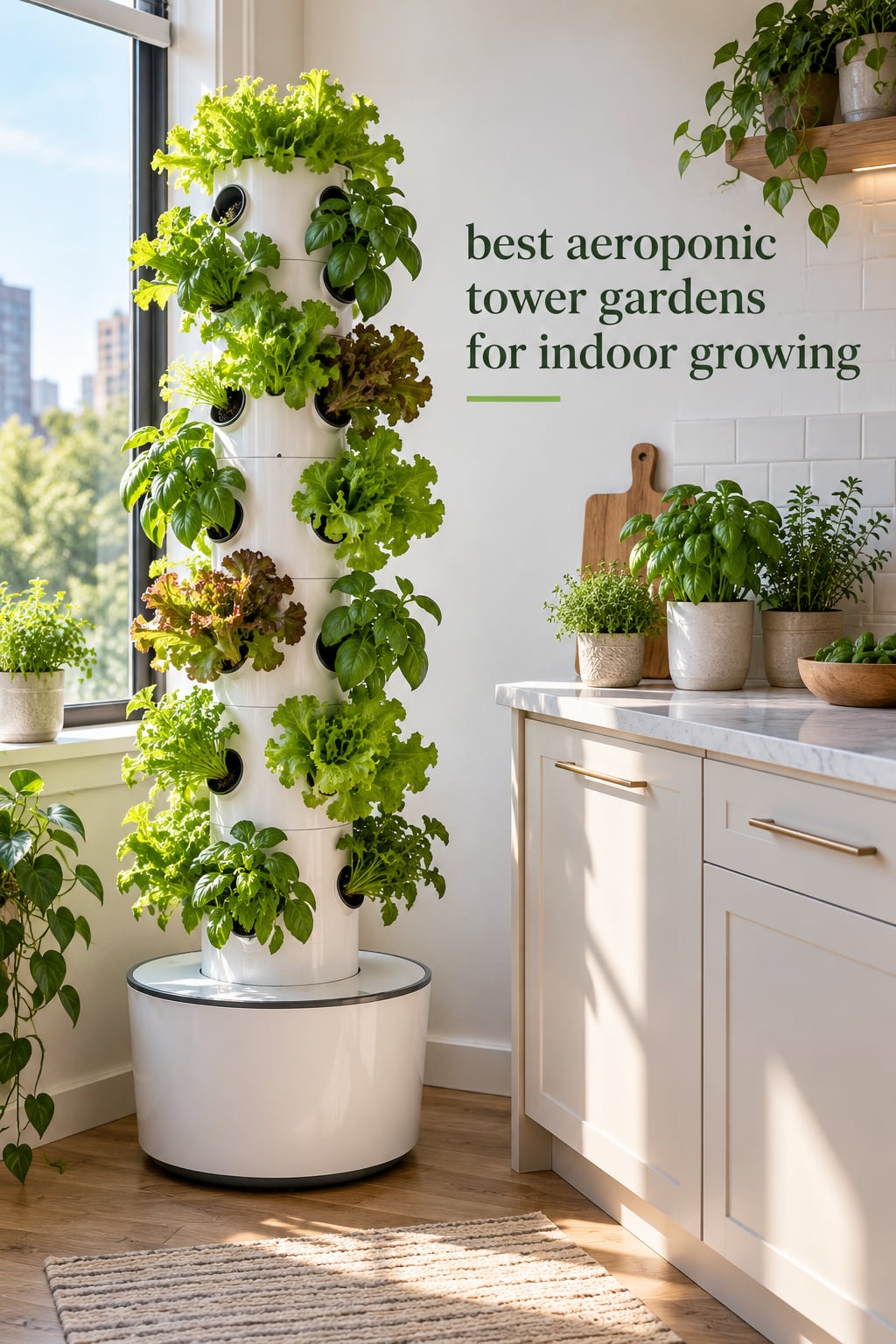
If you have ever wanted fresh lettuce in a studio apartment with no window to grow it in, you have probably looked at a hydroponic tower and wondered whether the results are real. They are, but only if you pick the right tower for the space you actually have and accept that a tower garden is a small appliance with a refill cycle, not a one-time purchase.
We spent weeks reading specifications, digging through buyer feedback, and comparing ten of the best aeroponic tower gardens for indoor growing currently on the market, from a compact six-tier unit that fits under a counter to a 30-plant smart system with an app and an AI grow coach. The goal was simple: find the tower that a real person in a real home can keep alive and keep producing food from.
Last updated: October 2026
Table of Contents
What Is an Aeroponic Tower Garden?
An aeroponic tower garden is a vertical indoor growing system that suspends plant roots in air inside a sealed central column and periodically mists them with a nutrient solution, delivering oxygen directly to the roots for faster growth than soil while using very little water and almost no floor space.
Here is how the mechanism actually works. A pump in the base reservoir lifts nutrient solution up the tower, mist heads inside the column spray the hanging roots, and the excess drains back down to the reservoir on a timer. A full-spectrum LED column above the tower runs on a fixed daily cycle, and plants sit in net cups so their roots hang free rather than sitting in soil or a wet net cup.
That constant oxygenation is the whole argument for aeroponics. Roots that are soaked rather than misted sit in stagnant water with less dissolved oxygen, which is why many growers see faster growth and cleaner root systems in true aeroponic columns.
Aeroponic vs Hydroponic Towers: What Actually Differs
Most towers sold online are labelled hydroponic, and the terms get blurred together constantly. The differences that matter when you are choosing a unit for an apartment are much narrower than the marketing suggests.
Aeroponic delivery means roots hang in an enclosed chamber and get sprayed with a fine mist. It is the highest oxygenation of any home method and uses the least water.
Recirculating drip towers pump solution up a central pipe and let it trickle past each planting site, dripping back down. This is the most common tower architecture in this roundup.
Flood and drain towers fill the column from the bottom on a timer and drain again, pushing air through the root zone as the level falls.
Deep water culture submerges roots in an aerated reservoir. It is efficient and forgiving, but it needs more water volume and closer attention to solution temperature.
Nutrient film technique is a shallow flowing film in a narrow channel. It works well for leafy greens but struggles with anything larger than a net cup.
Seed pods versus open media is the biggest ongoing cost decision. Proprietary pods are convenient and repeatable; loose rockwool, clay pebbles or grow sponges let you use your own seeds and nutrients and keep running costs near zero.
NFT vs DWC vs Aeroponic: Which Architecture Suits Your Space
Nutrient film technique and deep water culture are largely bench and channel systems, not tower systems, so for a floor-standing indoor column the real choice is aeroponic misting versus recirculating drip or flood towers. Aeroponic wins on water use and root health and loses on component cost, because mist heads clog and pumps are the single most common failure point in every one of these systems.
Recirculating drip towers cost less, tolerate mediocre water, and are the easiest units to fill with clay pebbles. In a home kitchen, that combination is usually the sensible pick. In a bedroom or a quiet apartment where pump noise matters, read the noise section below before you commit.
Top 3 Best Aeroponic Tower Gardens for Indoor Growing (October 2026)

Gardyn Home 4
- 30 plants in 2 sq ft
- Alloy steel frame
- Sunrise and sunset LED modes
- Kelby AI coach

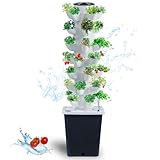
SJZX 5-Layer 30-Hole Tower
- 30 planting holes
- 12L tank
- Smart socket app control
- Tool-free assembly
JPWDDWYT 35-Plant Tower
- 35 planting sites
- 18L movable tank
- Timed top-down watering
- Lightweight and portable
Quick Comparison of All 10 Towers in 2026
| Product | Specs | Action |
|---|---|---|
| Gardyn Home 4 |
|
Check Latest Price |
| SJZX 5-Layer 30-Hole Tower |
|
Check Latest Price |
| JPWDDWYT 35-Plant Tower |
|
Check Latest Price |
 LYCereal 6-Tier 30-Plant Tower LYCereal 6-Tier 30-Plant Tower |
|
Check Latest Price |
 Lettuce Grow Farmstand Nook Lettuce Grow Farmstand Nook |
|
Check Latest Price |
 DPROOTS 30-Pod Tower DPROOTS 30-Pod Tower |
|
Check Latest Price |
 OvyNewzly 6-Layer Tower OvyNewzly 6-Layer Tower |
|
Check Latest Price |
 Gardyn Studio 2 Gardyn Studio 2 |
|
Check Latest Price |
 14-Layer 70-Slot Tower 14-Layer 70-Slot Tower |
|
Check Latest Price |
 TIRUSS 9-Layer 36-Pot Tower TIRUSS 9-Layer 36-Pot Tower |
|
Check Latest Price |
1. Gardyn Home 4 – Best Overall for 30 Plants in a Small Footprint
Gardyn Home 4 Vertical Hydroponics Growing System Kit – 30 Plants
30 plants
2 sq ft footprint
Alloy steel and aluminum
4 levels
0.6 gal reservoir
Pros
- Grows 30 large plants in roughly 2 sq ft
- 30 yCubes of non-GMO seed mixes included
- Redesigned columns simplify cleaning
- Sunrise and sunset LED modes plus water sensors
Cons
- Premium price point versus budget towers
- AI features lean on an app ecosystem
- Small reservoir relative to 30-plant capacity
The Gardyn Home 4 is the only unit in this roundup that puts thirty large plants in roughly two square feet of floor space while still using metal rather than plastic for the main structure.
Those two strengths are why it took our top slot, and it also carries by far the deepest review history here at 145 reviews. The 30 yCubes in the box carry multiple non-GMO seeds in rockwool, so you can genuinely start on day one without a separate seed order. Buyers frequently call the redesigned columns the biggest practical improvement, because the smooth interior surfaces wipe clean instead of trapping mineral buildup in the seams.
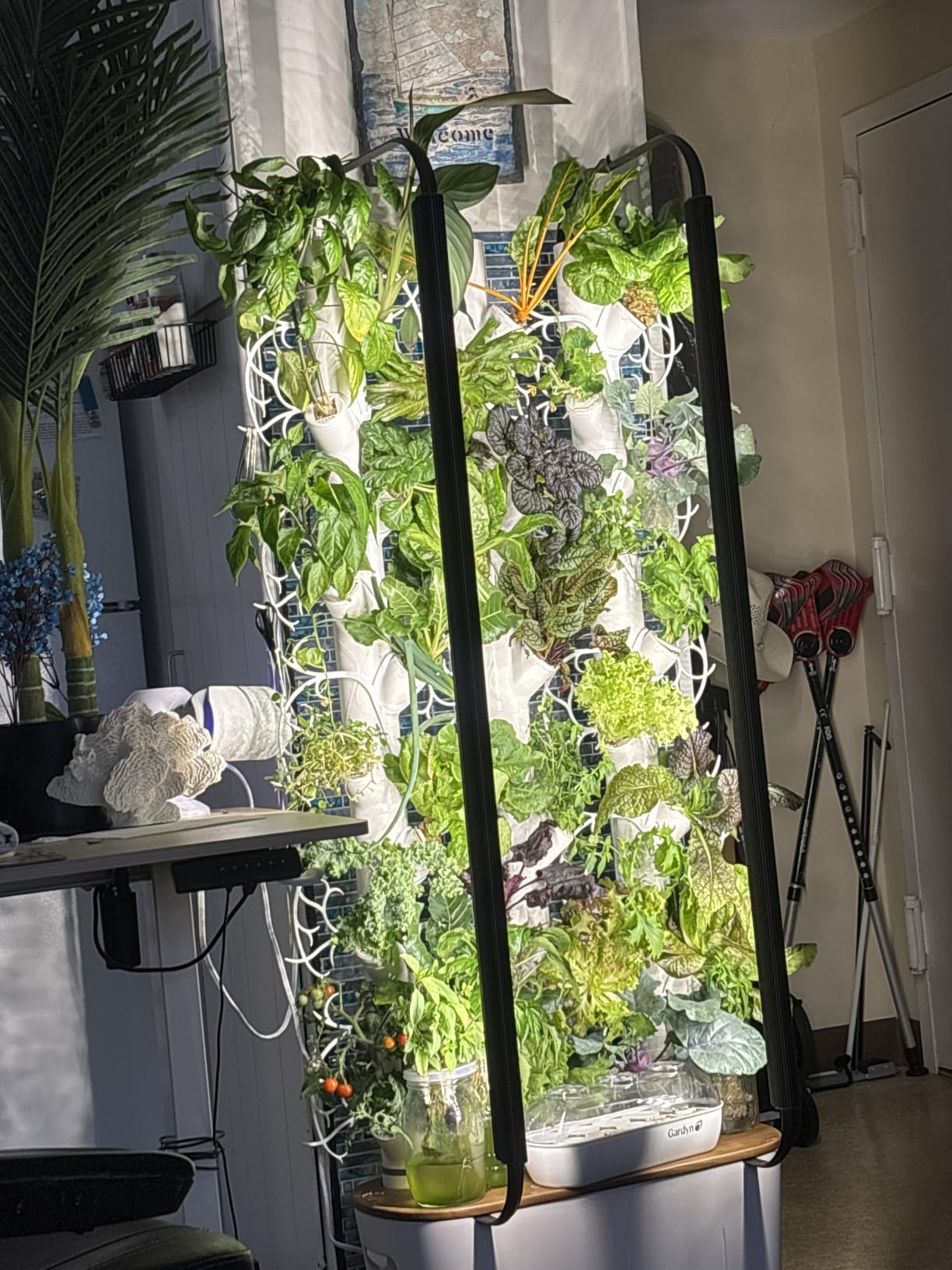
Where the feedback splits is the software. The sunrise and sunset lighting modes, real-time water measurement and the Kelby AI coach genuinely reduce guesswork for a first-time grower, but several reviewers report that the more advanced features only pay off if you stay inside the app ecosystem, and a long tail of one-star feedback focuses on support responsiveness and results that under-deliver against expectations set by the price tag.
One detail worth planning around is the 0.6 gallon reservoir. That is small for thirty plants, so this is not a set-it-and-forget-it-for-a-week system. If you are not willing to check the water level every couple of days, the maintenance burden is the real cost of this unit, not the purchase.
How the Footprint and Reservoir Compare in a Real Kitchen
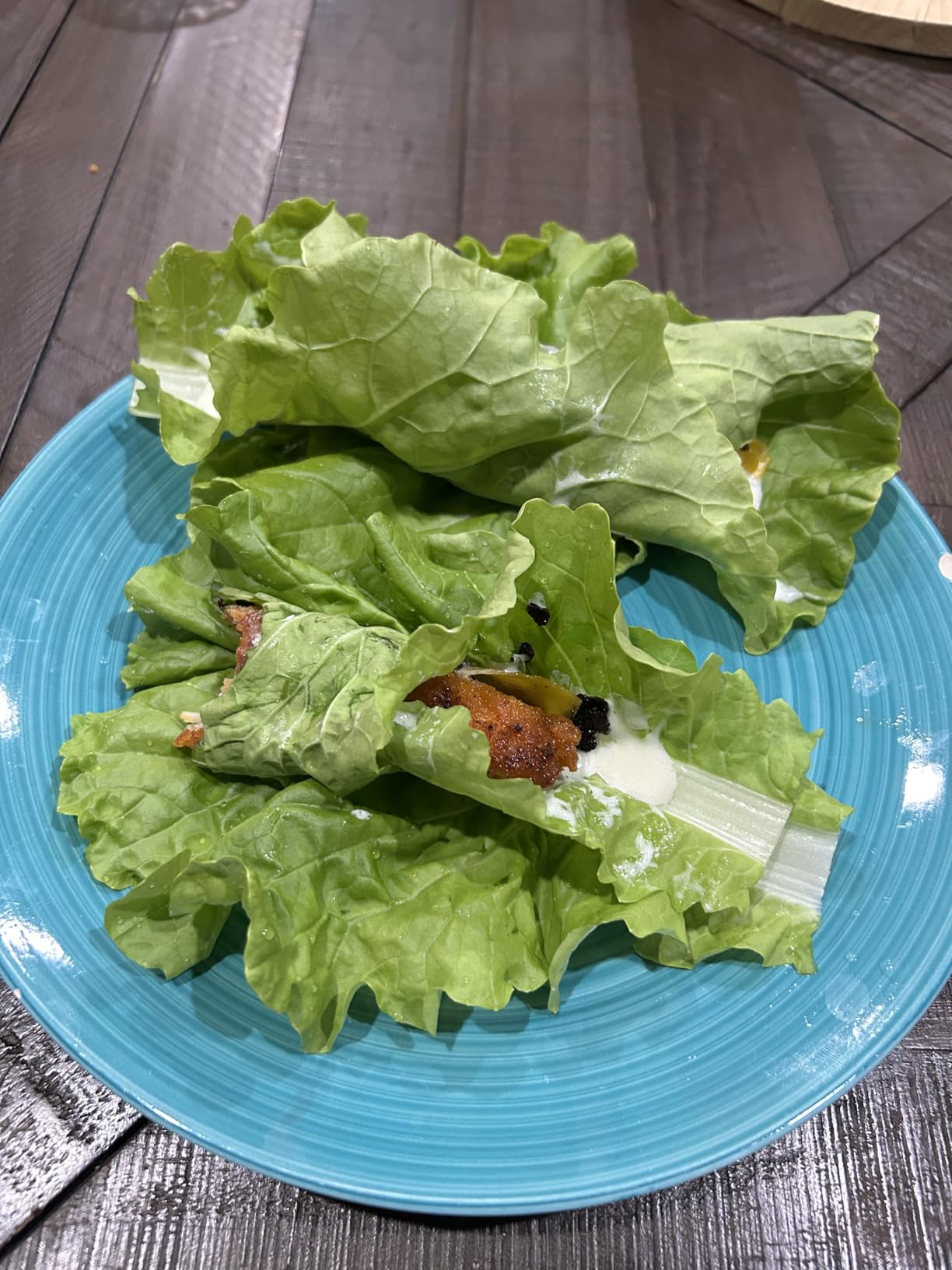
Two square feet is genuinely small. It fits beside a fridge or in a corner next to a counter, and unlike a bench NFT channel it does not need a table edge. The tradeoff is that the shallow reservoir means the top tiers draw from the same water volume as the bottom ones, so top growth can stall first if the level is not topped up.
Over a typical week, plan on two or three reservoir checks and a full water change roughly every other week. Buyers who pair this with a simple daily reminder report the smoothest runs.
Who Should Look Past This Tower
If your budget is fixed and you want the cheapest path to salad greens, this is not that tower, and the two budget picks below deliver a working harvest for a fraction of the outlay. If you need something that survives a week without attention, the small reservoir here works against you.
It is also the heaviest commitment in terms of ongoing supplies. Thirty yCubes plus nutrients is a recurring line item that never goes away, which is exactly the complaint that shows up repeatedly in indoor gardening forums.
2. SJZX 5-Layer 30-Hole Tower – Best Value Complete Kit
SJZX Hydroponics Growing System Kit, 5-Layer Hydroponic Tower, 30 Planting Holes, Space-Saving Vertical Gardening System, Suitable for Both Indoor and Outdoor use Germination Kits
30 planting holes
12L tank
5 layers
8.98 lbs
27 x 11 x 11 in
Pros
- Tool-free assembly with detailed instructions
- 12L base tank needs infrequent refills
- Smart socket app sets pump run time
- Sturdy build that fits a 4ft grow tent
Cons
- Slim planting wells limit root room
- No low-water auto shutoff on the pump
- Inline cups can drop through if the collar plate is misaligned
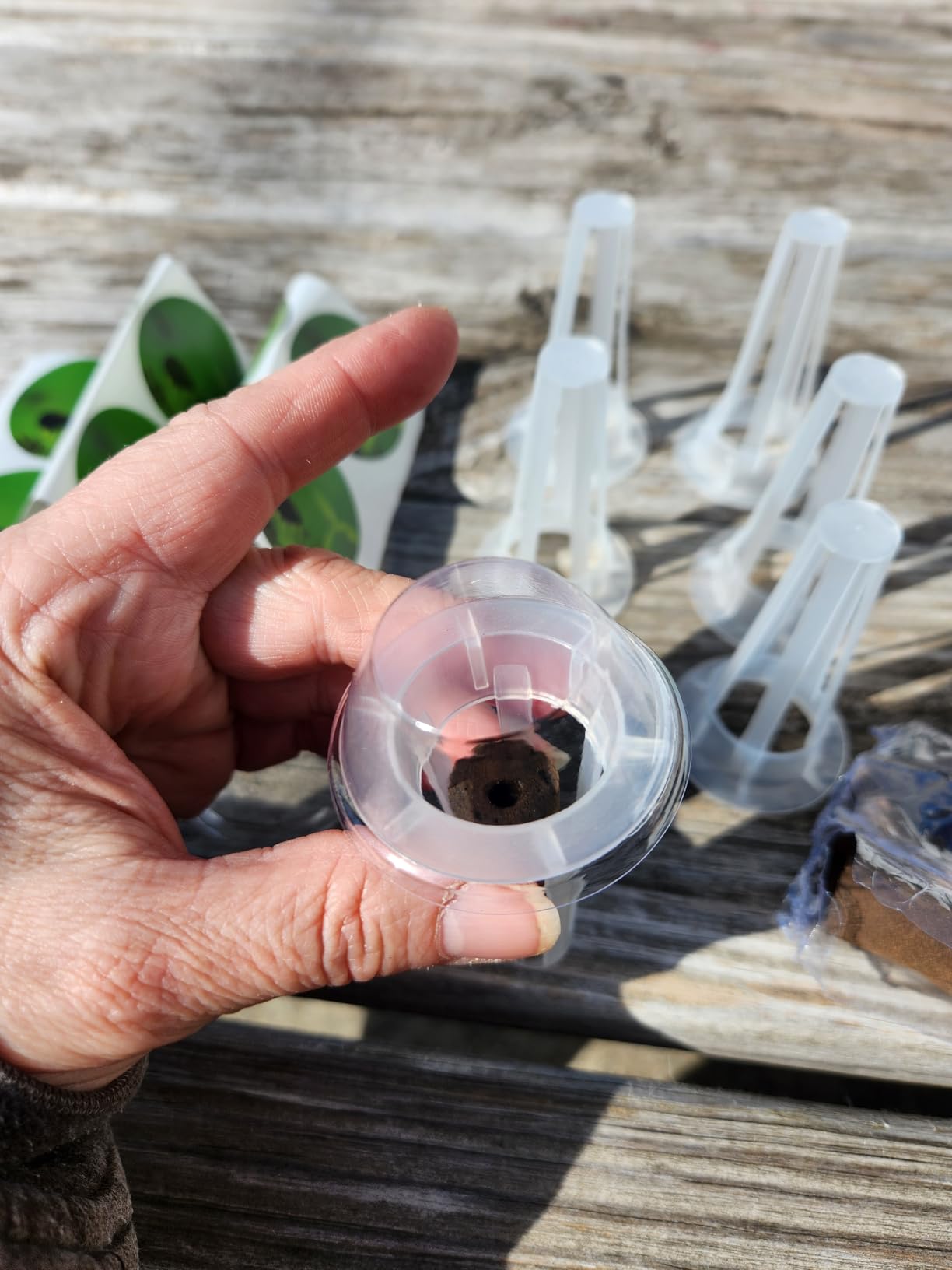
The SJZX tower is the kit we kept coming back to as the value pick. It ships with an unusually complete box: five tower sections, a 12L tank, timer, pump, power adapter, water level gauge, funnel, two filter sponges, hose, tweezers, thirty labels, thirty biochar domes and thirty planting baskets. There is very little else you need to start except seeds and nutrients.
Assembly is tool-free and the instructions are genuinely detailed, which matters for anyone buying their first tower. The smart socket app lets you set pump run time from your phone rather than guessing at a dial, and the water level gauge on the tank removes the most common beginner mistake of letting the reservoir run dry.
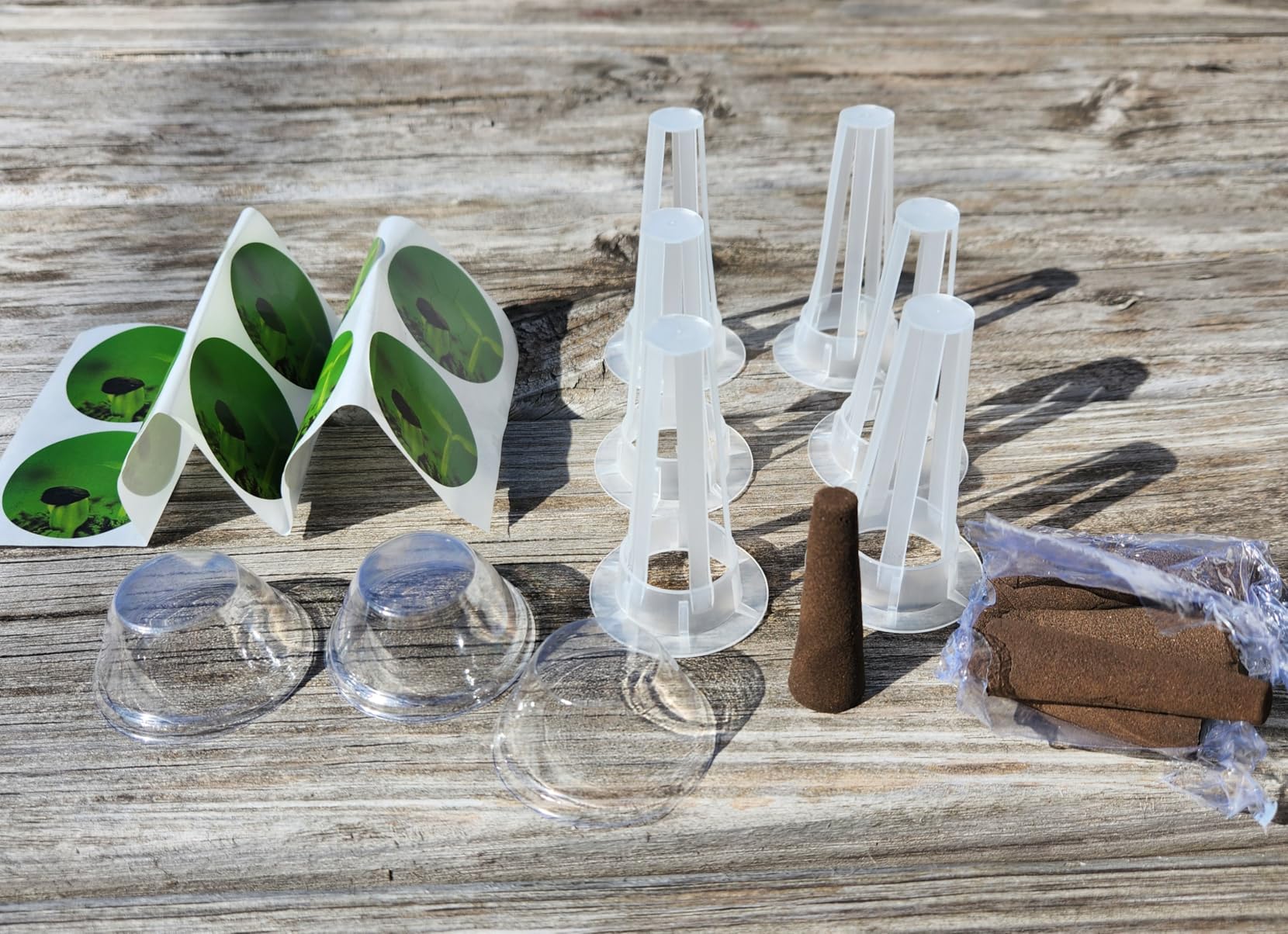
Reviews split on water delivery. A recurring theme is weak circulation that leaves seedlings under-watered after they sprout, and germination and mold resistance come across as inconsistent across seed types. The likely cause is the slim planting wells, which limit root room and keep yields moderate even when plants look healthy.
At 8.98 pounds and packaged at 27 by 11 by 11 inches, it is light enough to carry between rooms, and several buyers note it fits inside a standard 4-foot grow tent if you want to move it outdoors for a summer.
Which Crops This Tower Handles Without Complaint
This is a salad-and-herbs unit. Lettuce, basil, cilantro, kale and mizuna all perform well in the twelve liter reservoir. Heavier fruiting crops like tomatoes and peppers push against the limited root room in the planting wells and tend to underperform compared with the nine-layer unit further down.
The thirty labels and biochar domes in the box make it easy to stagger plantings so you are not harvesting everything at once, which is the habit that separates a steady salad supply from a one-time bumper crop.
Where the Budget Tier Gives Something Up
The pump has no low-water shutoff, so a dry tank means a dry pump rather than a warning. If you tend to travel or forget check-ins, pair it with the smart socket schedule and a phone reminder rather than trusting the hardware.
Forum growers comparing value across the cheap tier repeatedly name this class of tower as the practical entry point, and the recurring caveat matches the review data here: circulation, not assembly, is the thing to watch in the first two weeks.
3. JPWDDWYT 35-Plant Tower – Most Versatile for Portability
JPWDDWYT Hydroponics Tower Indoor Growing System Vertical Garden Planter Indoor Smart Garden Kit with Pump and Movable Water Tank Vegetable Plant Gift for Gardening Lover (35-Plants)
35 planting sites
18.02L movable tank
PVC construction
2.96 kg
17 x 10 x 14 in
Pros
- Compact and light enough to move between rooms
- 18L tank supports long intervals between refills
- Automatic timed watering cuts daily upkeep
- Soilless setup keeps floors mess-free
Cons
- Light PVC feels less rigid than framed towers
- Growing cavity limits plant size
- Limited material and food-safety documentation
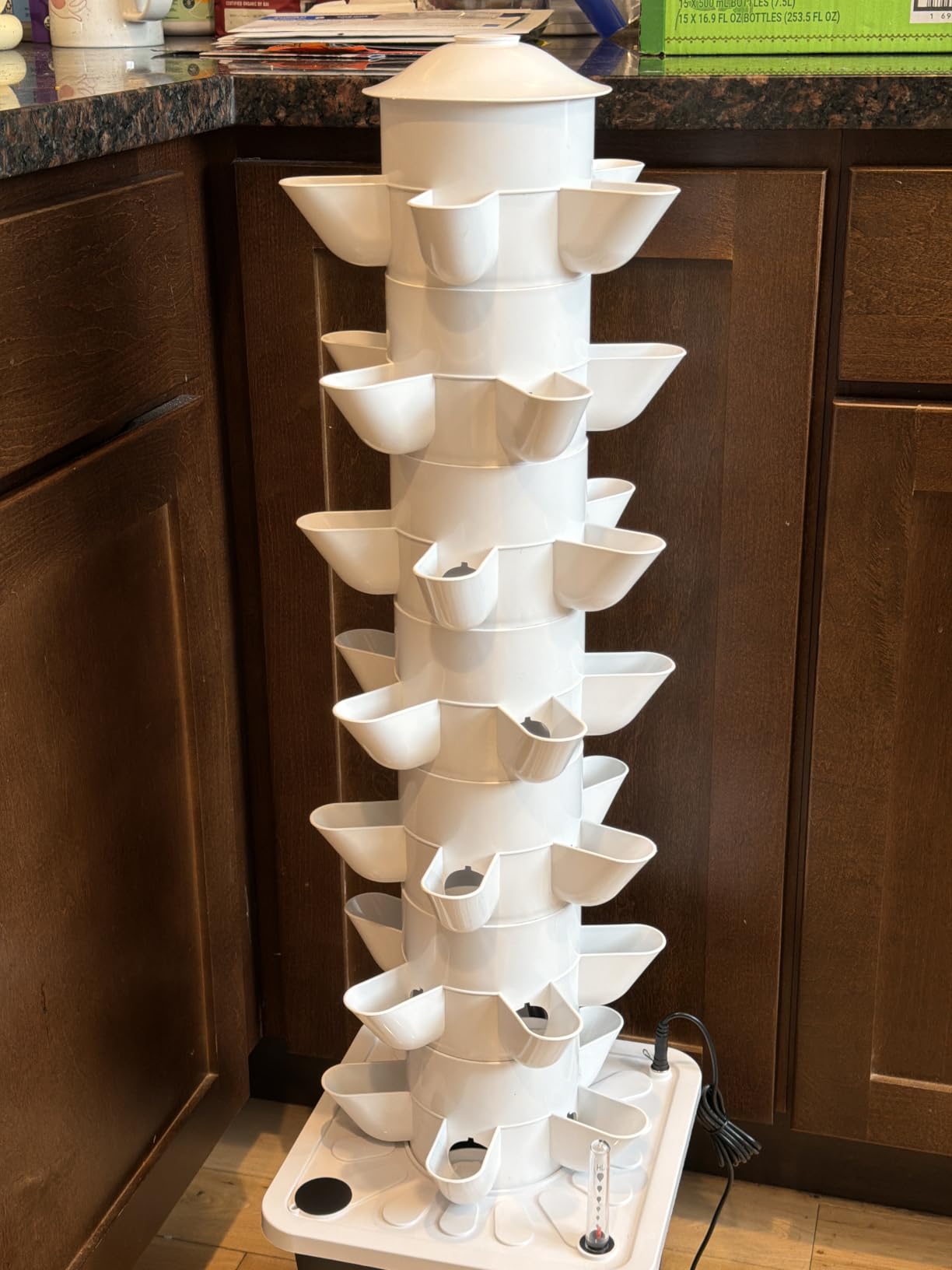
The JPWDDWYT tower is the one to buy when floor space is the binding constraint. At 17 by 10 by 14 inches and just under 3 kilograms, it is light enough to move between a kitchen counter, a living room and a balcony without a dolly, and it works indoors or out.
The 18.02 liter tank is the standout number here. That volume means you can go several days between refills, which is the single biggest factor in whether a tower survives contact with a busy household. The automatic top-down timed watering cycle recycles the water and reduces waste, and the soilless design means no soil on your counters.
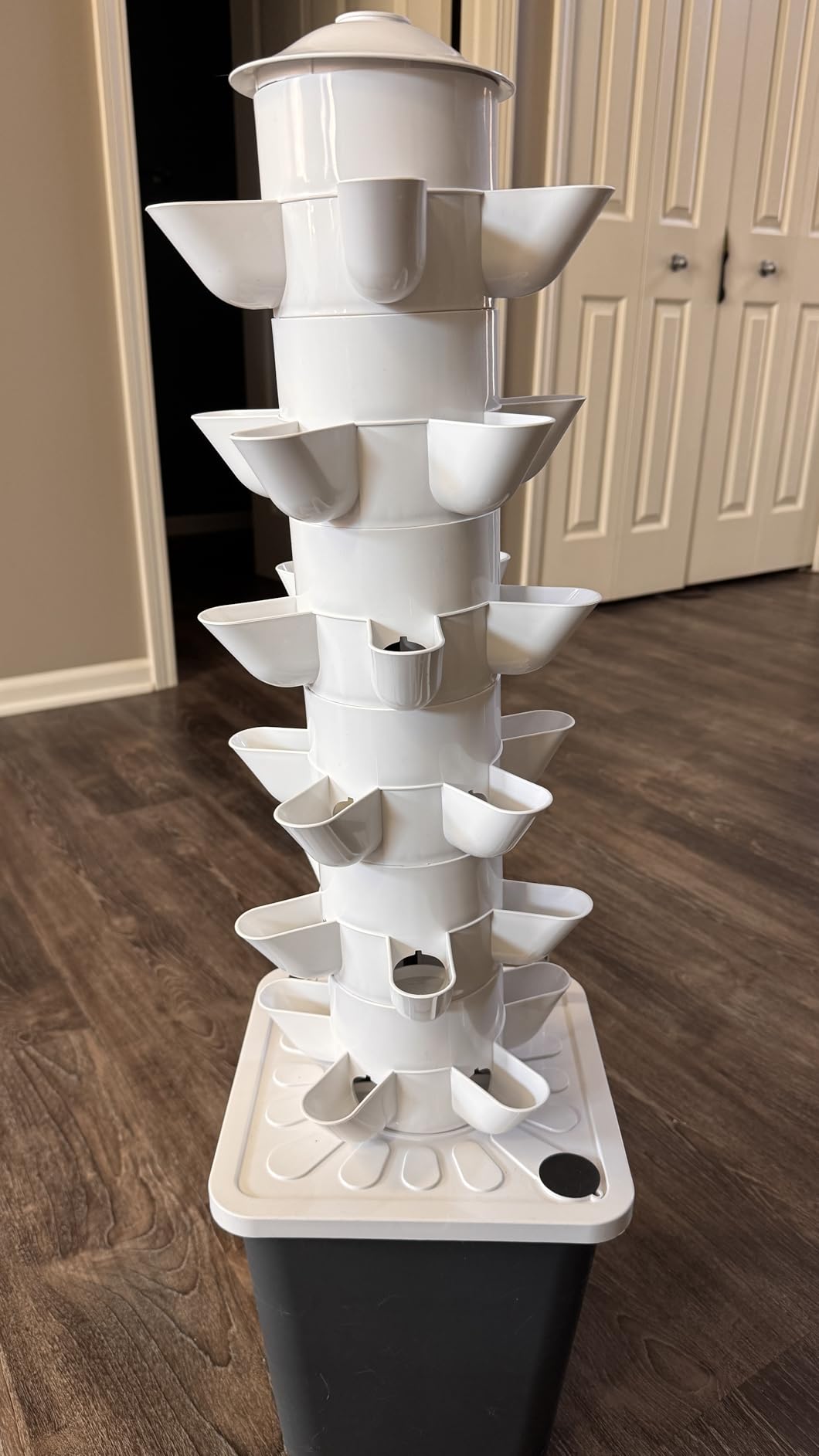
Construction is where the money was saved. The PVC body is light and portable but feels noticeably less rigid than the framed towers, and the small growing cavities limit the size of plants you can let mature. Reviewers also flag thin material and food-safety documentation, so this is not the unit to buy if you want to know exactly what your roots sit in for a decade.
Germination reliability across seed types comes back as mixed. Budget for replacing a few starts, and expect a slightly smaller plant than the same variety produces in one of the larger columns.
Why the Movable Tank Changes Daily Routine
Because the tank detaches, filling it at the sink and carrying it back takes under a minute. That removes the reason people skip reservoir checks, which is the most common way tower gardens fail. If you are the type of grower who forgets, portability is doing more for you than any extra planting site would.
It also makes moving for a change of season trivial, since indoor and outdoor use are both supported and the same unit works on a patio in summer.
What You Give Up Compared With the Mid Tier
Rigidity and cavity size. A tomato or a large basil plant will hit the limits of the growing cavity well before it hits the limits of the tank, so treat this as a greens-and-herbs tower rather than a fruiting one.
Second, documentation. If you plan to run this for years, the thin material information is a mild long-term risk. Third, germination consistency, which is worth budgeting for with spare seeds.
4. LYCereal 6-Tier 30-Plant Tower – Best for Under 1 Square Foot
LYCereal Hydroponics Growing System, 30-Plant Indoor Hydroponic Tower with Pump System, Plants Germination Kit, Smart Aeroponic Herb Garden, Vertical Hydroponic System for Gardening Lover (No Seed)
30 plants under 1 sq ft
9.84 x 9.84 x 33.86 in
10L tank
6 tiers
Timer pump
Pros
- Fits in under 1 sq ft for tiny spaces
- Most of the tower arrives pre-assembled
- Included grow sponges speed germination
- Responsive customer support
Cons
- No grow light included
- No fertilizer or nutrients in the box
- Pump and light bought separately raise running cost
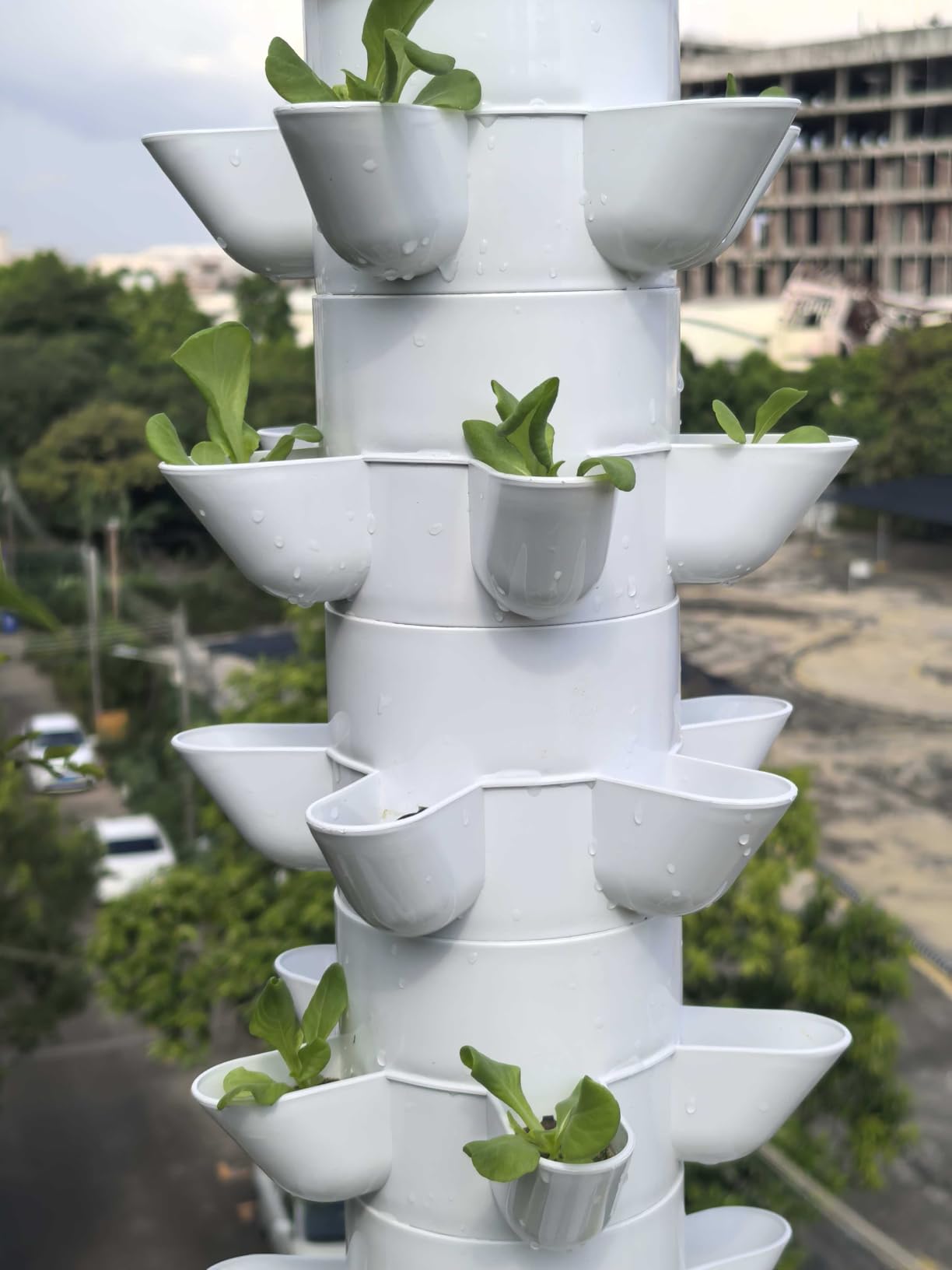
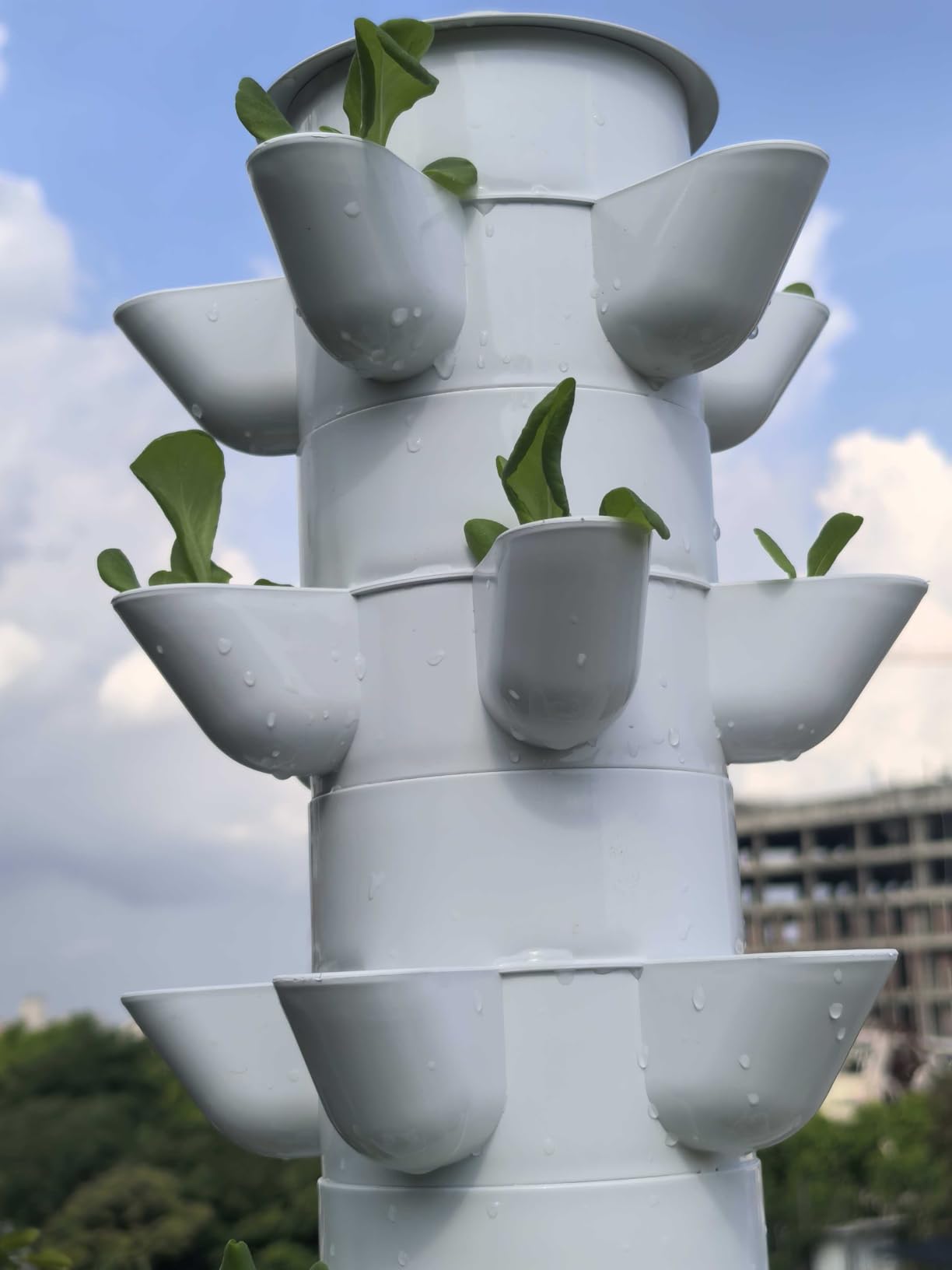
At 9.84 inches square, the LYCereal is among the most compact towers in this roundup, and it is one that fits the tightest apartment layouts without a fight. Six tiers give you 30 planting sites in a column barely wider than a coffee tin, which makes it a natural fit for a kitchen counter corner or a narrow hallway gap.
Most of the tower arrives pre-assembled, so setup is closer to filling the tank and adding planting baskets than to building furniture. The included grow sponges are a nice touch for beginners because they improve germination speed, and the water level gauge sits where you can see it from the front.
The catch is the omissions. No grow light and no nutrients are included, so you need a separate full-spectrum light and your own nutrient solution before anything happens. Buyers consistently call that out, and it is the main reason this tower ranks below the SJZX kit on value despite the higher rating.
For a fair comparison, budget the light as part of the system rather than as an accessory. Several buyers also praise the construction as stable even with top-heavy growth, which matters on a tower this narrow.
How It Performs in a Low-Light Corner
Because no light is included, this unit depends entirely on what you add. Position it where the light reaches the full column height, and expect to supplement with a full-spectrum bar rather than a bulb. Indoor hydroponic growers in windowless kitchens commonly run the light on a timer for 14 to 16 hours a day to hold growth steady.
Once the light is right, the water circulation that raises root-zone oxygen is the part users notice, with growth reported at up to three times faster than soil for the same variety.
Whether the Savings Survive the Missing Accessories
They usually do if you already own a grow light and want to use your own nutrients and clay pebbles. If you are starting from zero, the all-in-one kit two picks up is the cheaper path, because the light and nutrients you would buy anyway erase this tower’s price advantage quickly.
It is also worth noting that the 10L reservoir is on the small side for 30 sites, so top-watering frequency will be higher than on the larger tanks here.
5. Lettuce Grow Farmstand Nook – Best Premium Pick for Hands-Off Growing
Lettuce Grow Farmstand Nook | 4ft 7in Vertical Hydroponic Garden Tower
Up to 20 plants
17 x 17 x 29 in
28.3 lbs
Built-in LEDs
Bluetooth Smart Timer
Pros
- Self-watering and self-fertilising with minimal upkeep
- Built-in LED lights plus Bluetooth Smart Timer
- App support with reminders helps beginners
- Pre-grown seedlings cut time to first harvest
Cons
- One of the most expensive systems in this group
- 28.3 pounds makes it awkward to reposition
- Refills and add-ons are a recurring cost
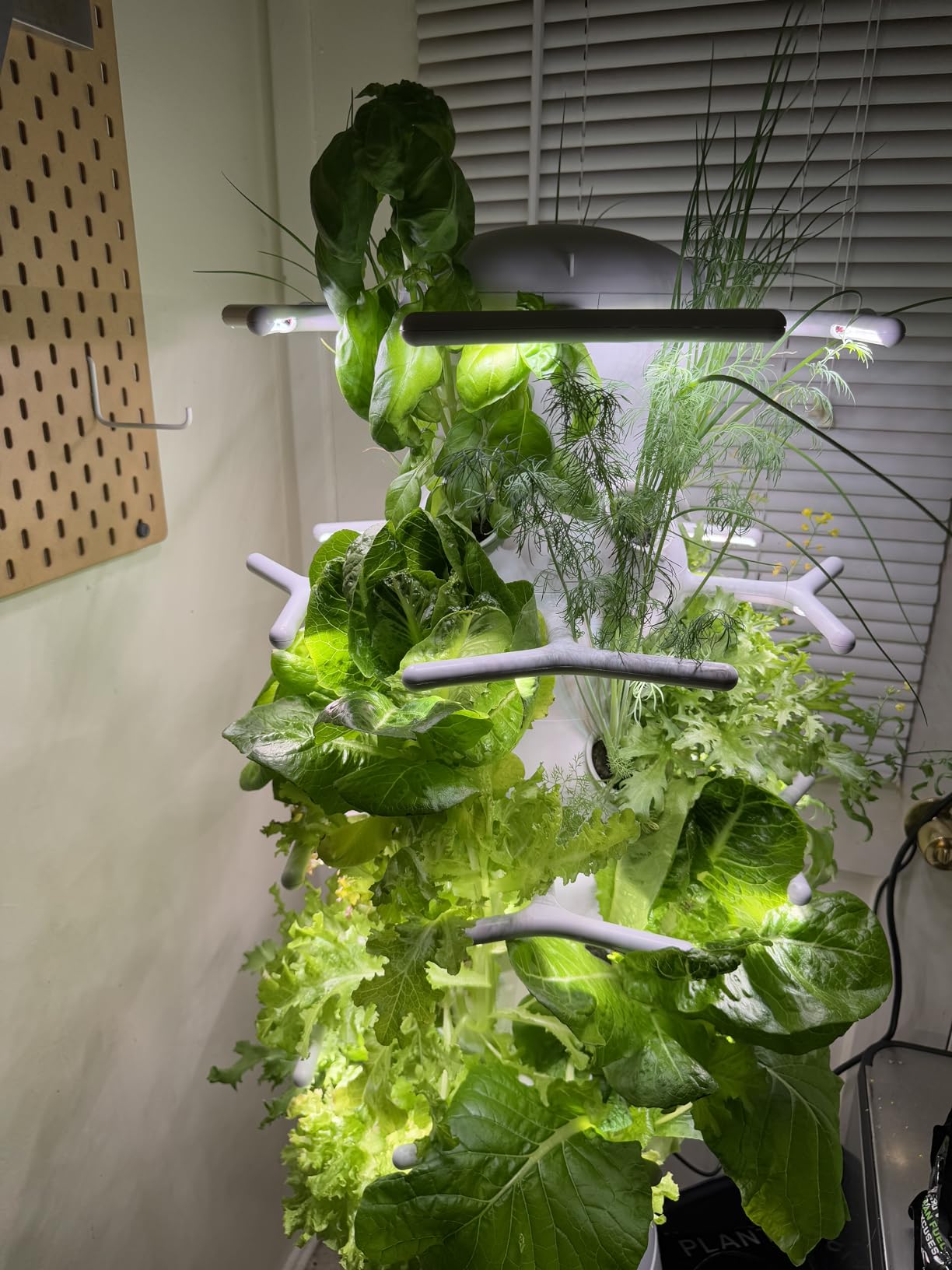
The Farmstand Nook is the most self-contained indoor hydroponic garden here. Lights are built in, the Bluetooth Smart Timer automates both watering and lighting with a light snooze mode, and the kit includes nutrients for 130+ plants, grow cups, a pump, scoops and a pH kit. There is no separate light to buy and no nutrient mixing to figure out.
What makes it different from the rest is the pre-grown living seedlings that ship with it. Buyers report fresh greens in about three weeks rather than the five or six a seed start needs, which is the single biggest practical advantage in a small kitchen where you want a harvest now.
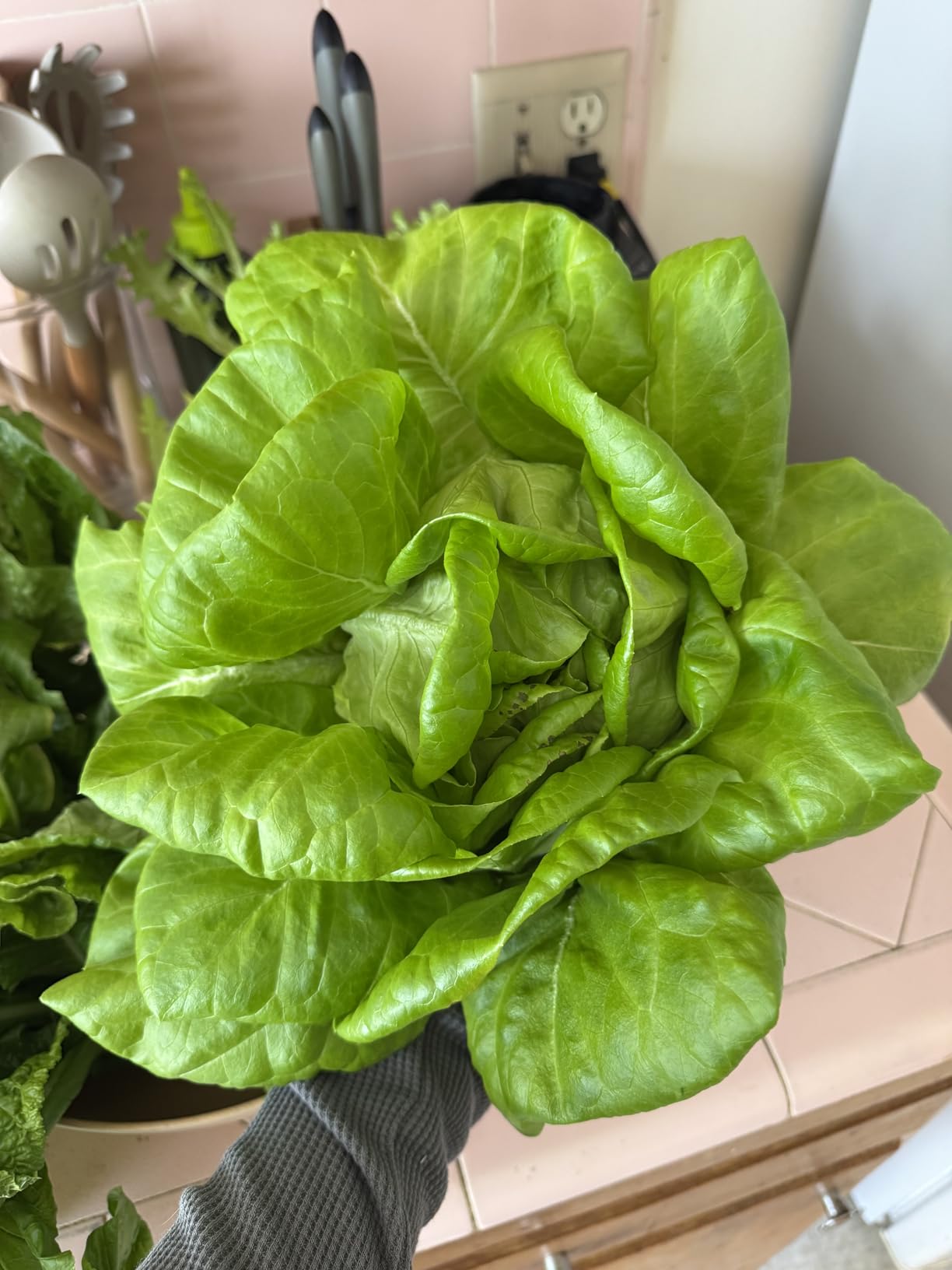
The costs that draw criticism are physical and financial. At 28.3 pounds it is heavy, and the 17-inch square footprint is not slim. The purchase price sits at the top of this group, and nutrient refills and add-ons recur for as long as you own it, which is the ongoing-cost complaint forum buyers raise most often about premium towers.
Harvest volume per tower is described as modest for what you spend, and the app-based guidance is central to the experience rather than optional.
Why This Tower Needs the Least Attention
Self-watering and self-fertilising means the daily interaction is checking a water level and snipping greens. For households where the tower has to survive without anyone remembering to feed it, that reliability is worth more than raw yield per square foot.
The pH kit in the box is a genuine inclusion most budget towers skip. Combined with app reminders, it means a first-time grower is not learning water chemistry by trial and error.
When the Premium Tier Is the Wrong Call
Buy the SJZX or JPWDDWYT instead if your goal is the largest harvest per dollar, since you can seed 30 sites for far less and use your own media. The Nook makes more sense if you want the shortest path to a working harvest and you will pay more to avoid managing the routine.
It is also one of the heavier units in the roundup at 28.3 pounds, so plan the final position before you assemble it rather than after.
6. DPROOTS 30-Pod Tower – Best All-in-One Kit With Built-in Lights
DPROOTS Hydroponic Tower Growing System, 30 Pods Vertical Indoor Garden
30 pods
12.99 x 12.99 x 37.4 in
290 full-spectrum LEDs
7.44 kg
Casters included
Pros
- 30 plants in roughly 1 sq ft with integrated lighting
- 290 LEDs give 360-degree coverage
- Universal wheels make repositioning easy
- Column disassembles to fit in a sink
Cons
- Pump timer reported unreliable on some units
- Water pump a common failure point after a few months
- Light fixture assembly is fiddly
- Arrived with cracked parts in some reviews
The DPROOTS tower solves the accessories problem in one box. You get 30 pods, a grow light with 290 full-spectrum LEDs for 360-degree coverage, a water pump with a 30ml reservoir per plant holding roughly 12 hours of supply, rockwool, and universal wheels. Assembly is reported at about ten minutes either way, which is a rare claim in this category.
The 12.99-inch square footprint at 37.4 inches tall is one of the better density-to-size ratios available, and the casters plus a column that fits in a sink are practical details that more expensive towers charge extra for.
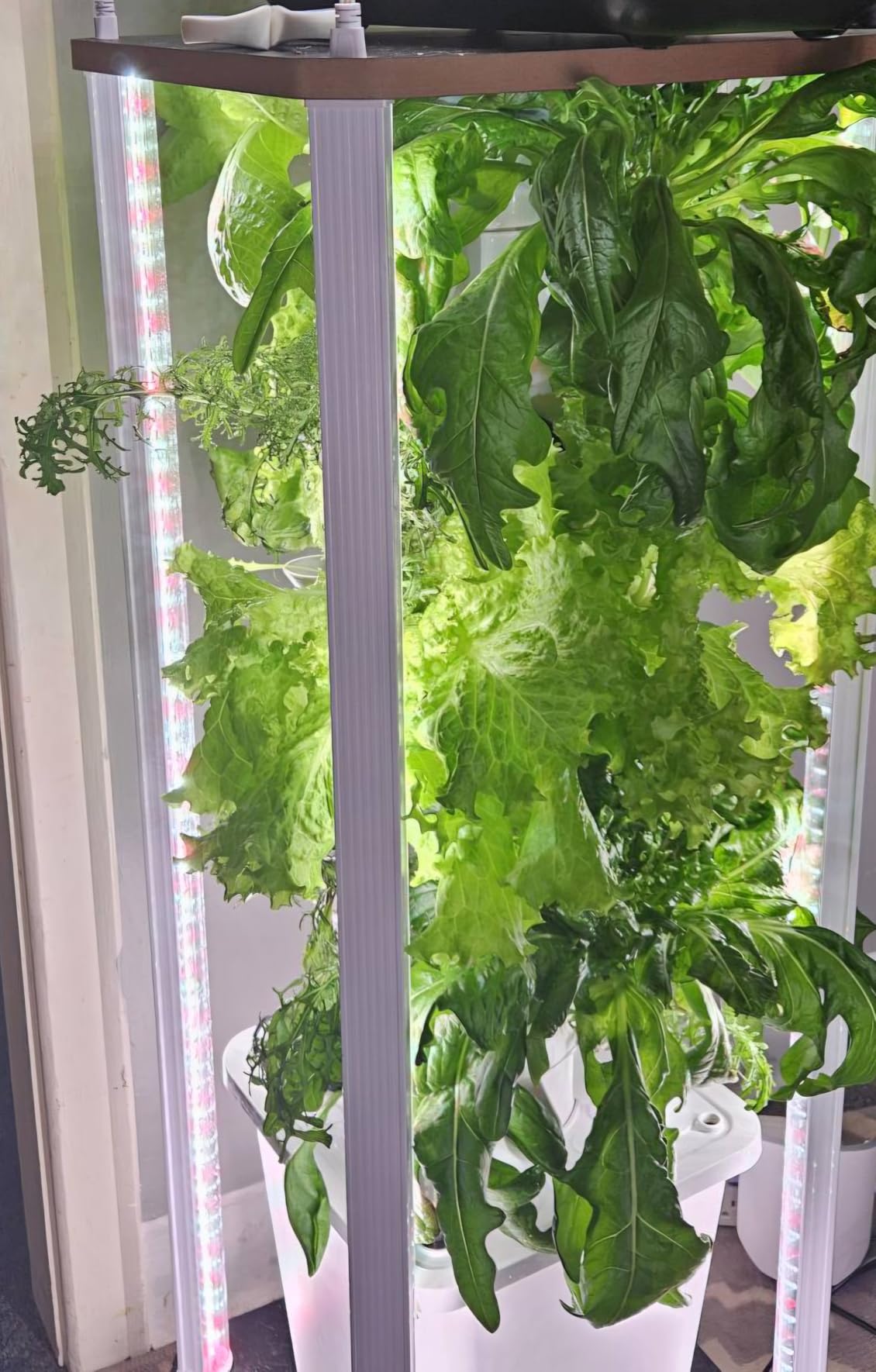
This is the lowest-rated product in the group at 3.7 stars, and the reasons are consistent rather than random. The pump timer is reported as not working properly on some units, the water pump is a common failure point after a few months, and a number of reviews mention cracked or broken parts on arrival. Buyers who keep the pump running tend to be happy, so treat pump reliability as the deciding question.
Two other notes: the tower body feels flimsy, so move it from the base rather than the top, and after-sales support for replacement parts has been inconsistent even though customer service is praised when it does engage.
What the Per-Plant Reservoir Actually Changes
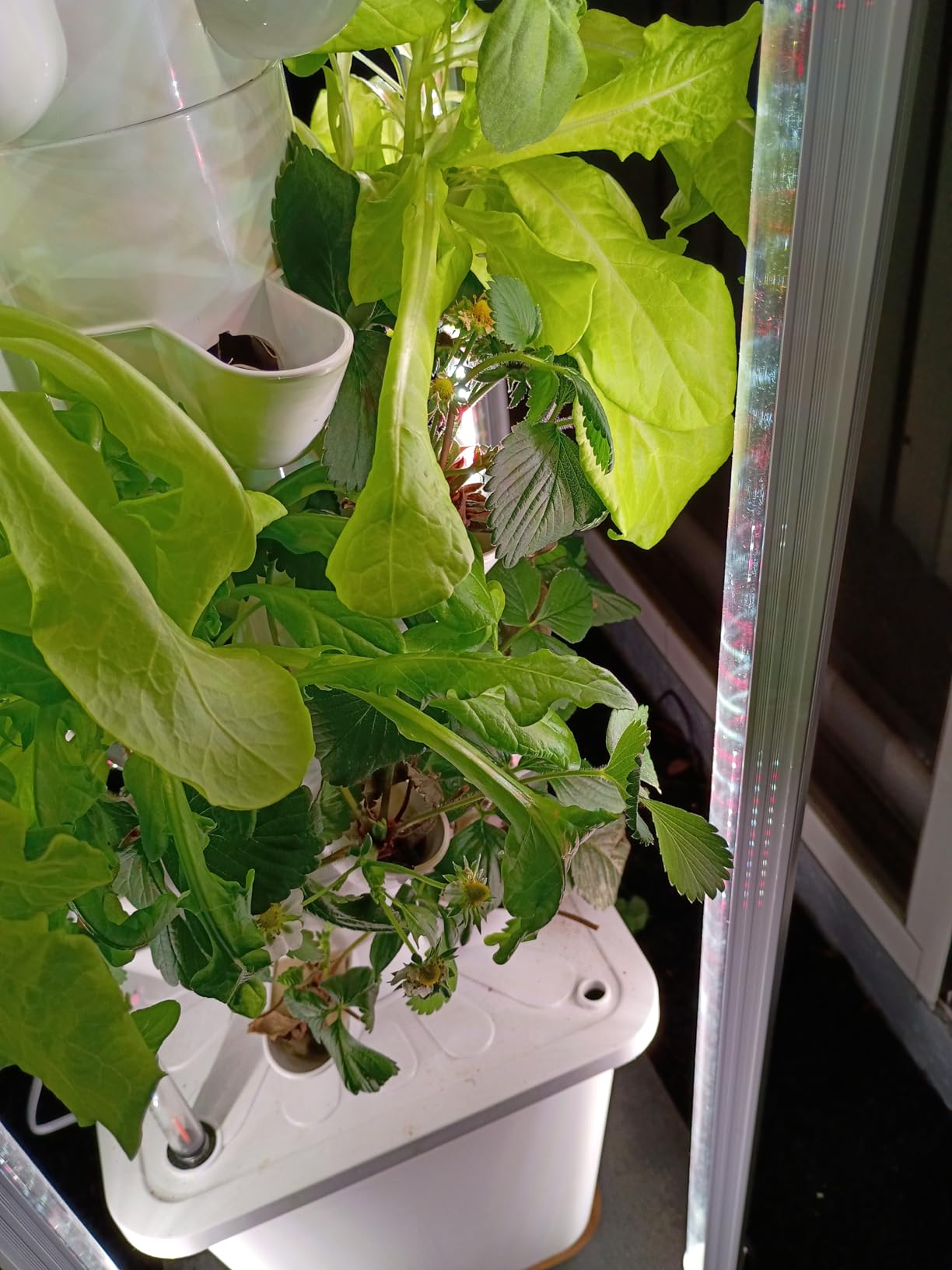
A 30ml reservoir per plant, holding around 12 hours of supply, is a genuinely different architecture from a shared base tank. Plants draw from their own chamber, so a temporary shortfall in one zone does not immediately starve the whole column, and the daily pump run is shorter.
The tradeoff is that twelve hours of buffer means you cannot leave for a week. It also means more moving parts, which lines up with the pump complaints in the reviews.
Whether the Integrated Light Is Worth the Reliability Risk
If you have no light at all, yes, because the alternative is a separate fixture that costs money anyway and needs its own placement planning. If you already own a decent full-spectrum light, the taller unlit towers give you more flexibility for less risk.
At 3.7 stars, budget for a spare pump from the outset and check the timer function on day one rather than assuming it works.
7. OvyNewzly 6-Layer Tower – Best Entry-Level Tower With Phone Control
Hydroponic Tower Indoor Growing System Vertical Garden for Gardening Lover
30 planting sites
10 x 7.5 x 33 in
10L tank
6 layers
15-minute tool-free setup
Pros
- Quick tool-free setup in about 15 minutes
- Compact footprint for kitchens and balconies
- Smart outlet schedules pump cycles from your phone
- Food-grade recyclable BPA-free materials
Cons
- Planting baskets may not seat properly in the slots
- Pods suit small plants only
- No liquid fertilizer or grow light included
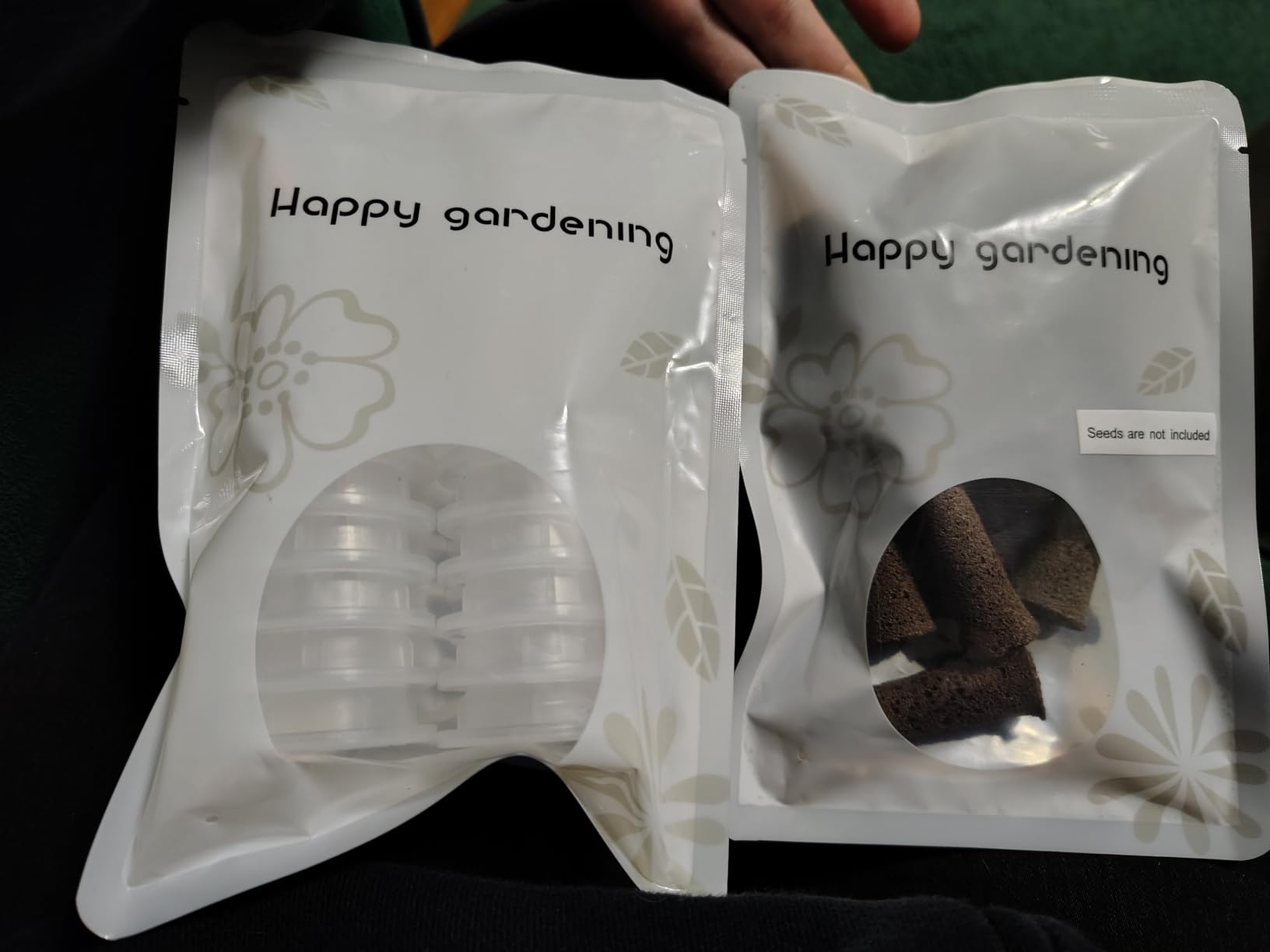
The OvyNewzly is the cleanest first tower to buy. It is a modular six-layer design with 30 planting sites that goes together in about fifteen minutes without tools, and everything you need for assembly is in the box, including 128 cultivating sponges, 30 grow sponges, 30 planting baskets, a funnel, water level indicator, power adapter and pump.
The smart outlet is the differentiator at this level. You set pump run time from your phone rather than relying on a mechanical timer, and the same outlet is what lets the top-down timed cycling deliver the water savings the design is built around.
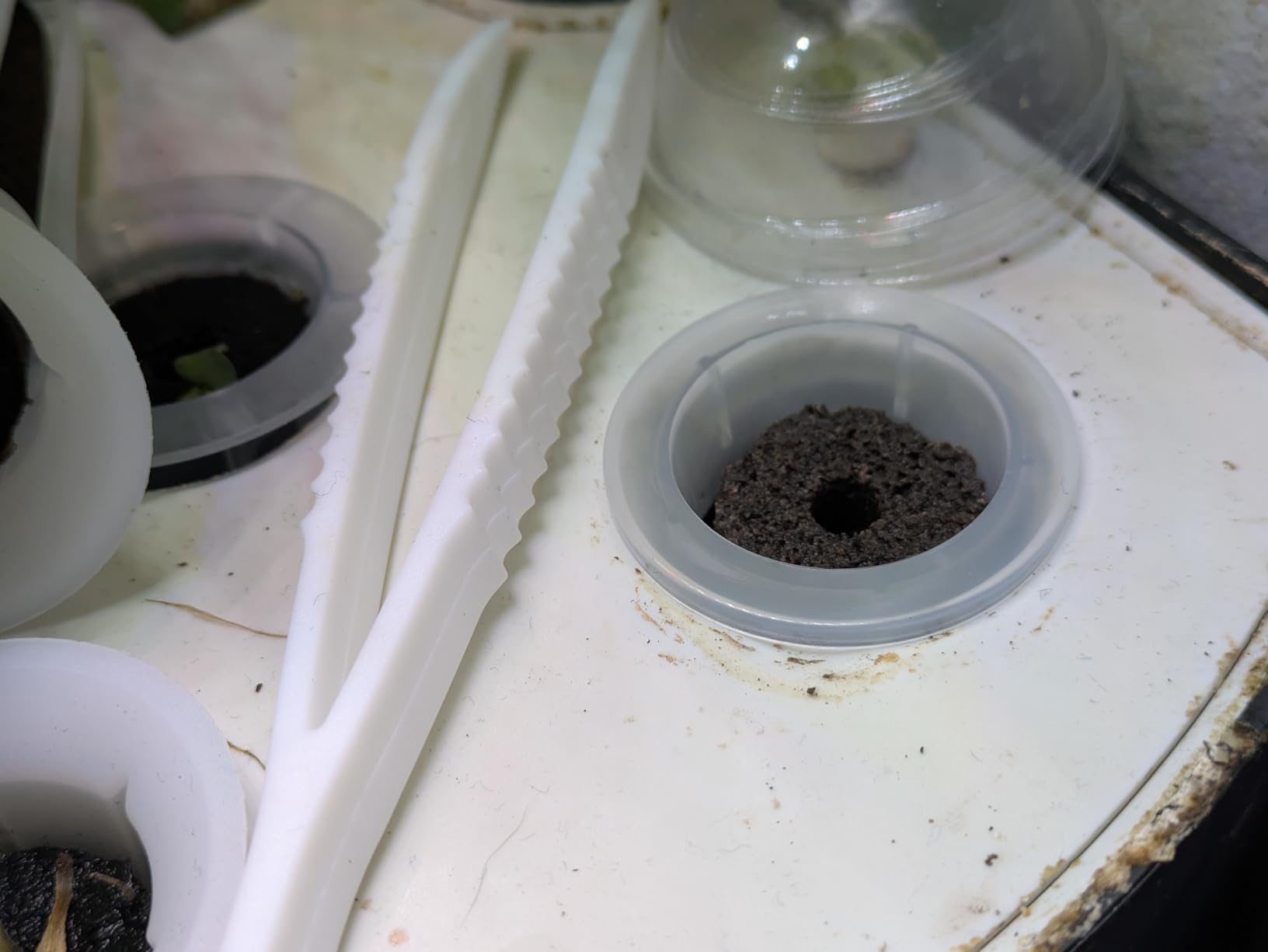
Two practical complaints recur. The planting baskets may not seat properly in the tower slots without modification, which catches people out during setup, and the pods are sized for small plants, so larger root crops need transplanting later. As with several towers here, no fertilizer or grow light is included.
Materials are described as recyclable, food-grade and BPA-free, which is more specific language than most towers offer, and growth is reported as faster than comparable soil planting.
Best Placement for a 10 by 7.5 Inch Column
At 10 by 7.5 by 33 inches, this is a counter or corner unit rather than a floor unit. The narrow depth works well against a wall, and the vertical run means it does not need much of your counter. Indoor and outdoor use are both supported, so it can move to a balcony in warm months.
The water level indicator on the 10L tank is on the visible side, which matters on a slim column where the gauge is otherwise hard to check.
What to Watch in the First Two Weeks
Check that every planting basket clips into its slot before you fill anything. Owners report that the fit is the main early frustration, and a basket that drops into the wrong hole blocks flow for the plants above it.
Beyond that, keep the plants small. Basil, lettuce, chives and cilantro suit the pod size, while anything you intend to grow to full size belongs in a larger cavity like the nine-layer unit.
8. Gardyn Studio 2 – Best Smart Tower With a Monitoring Camera
Gardyn Studio 2 Hydroponics Growing System – 16 Plants, Smart Tower
16 plants
54 x 17 x 12 in
Aluminum construction
4 levels
Camera and AI assistant
Pros
- Grows 16 plants in the footprint of one potted plant
- Sealed no-cleaning columns resist buildup and crystallization
- Camera plus AI assistant for real-time monitoring
- Sunrise and sunset modes and sleek design
Cons
- AI assistant membership adds a monthly fee
- Nutrients and plant food bought separately
- Reported irrigation hose cracks and kinks
- Very bright lighting and loud pump noise
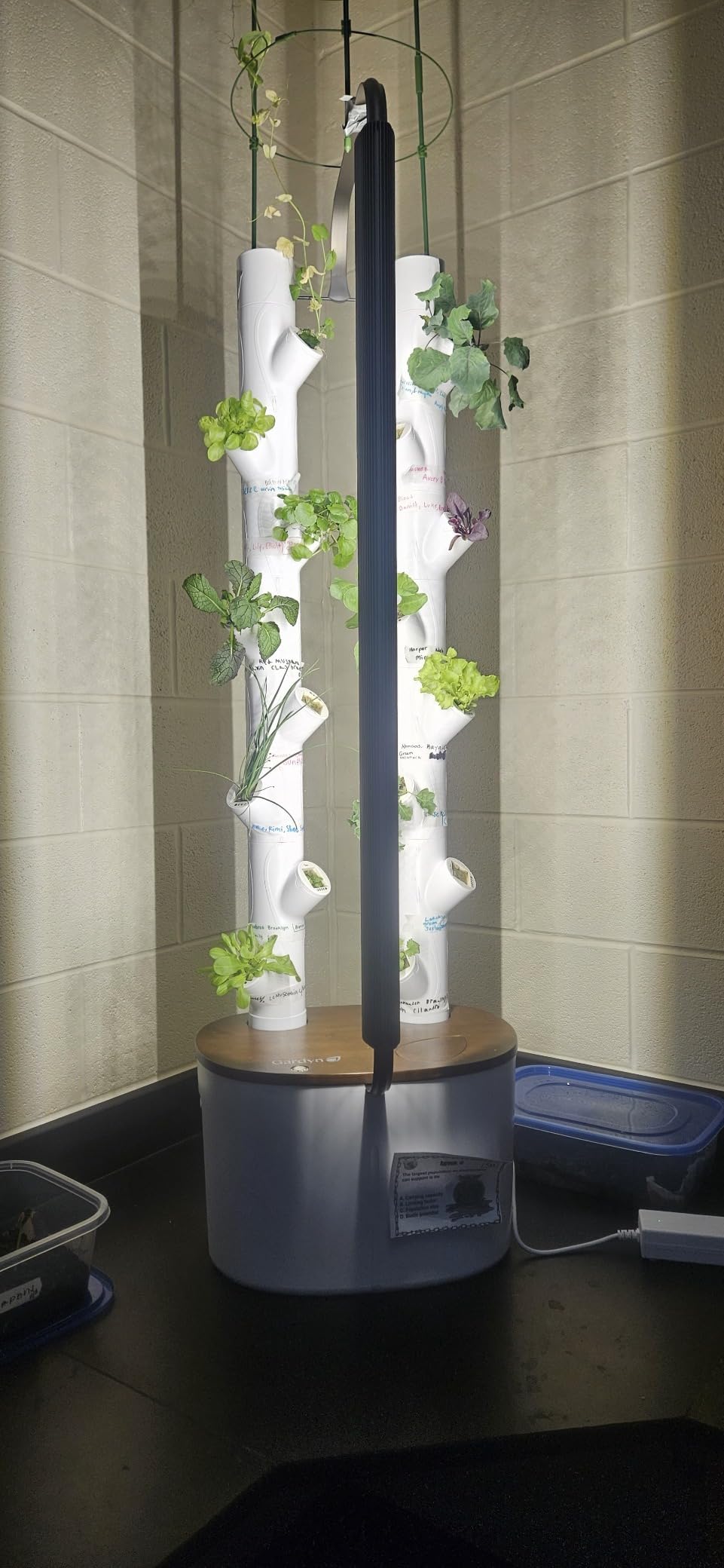
The Studio 2 is the smarter, smaller sibling of the Home 4. It grows up to 16 plants within roughly the footprint of a single potted plant, and the no-cleaning columns use watertight silicone seals specifically to prevent the buildup and crystallization that makes plain plastic towers hard to maintain.
It is also the only unit here with a wide camera and the Kelby AI assistant for real-time plant health monitoring. For a grower who travels or simply forgets to look, having the system show you what is happening is a genuine advantage over guessing at a reservoir level.
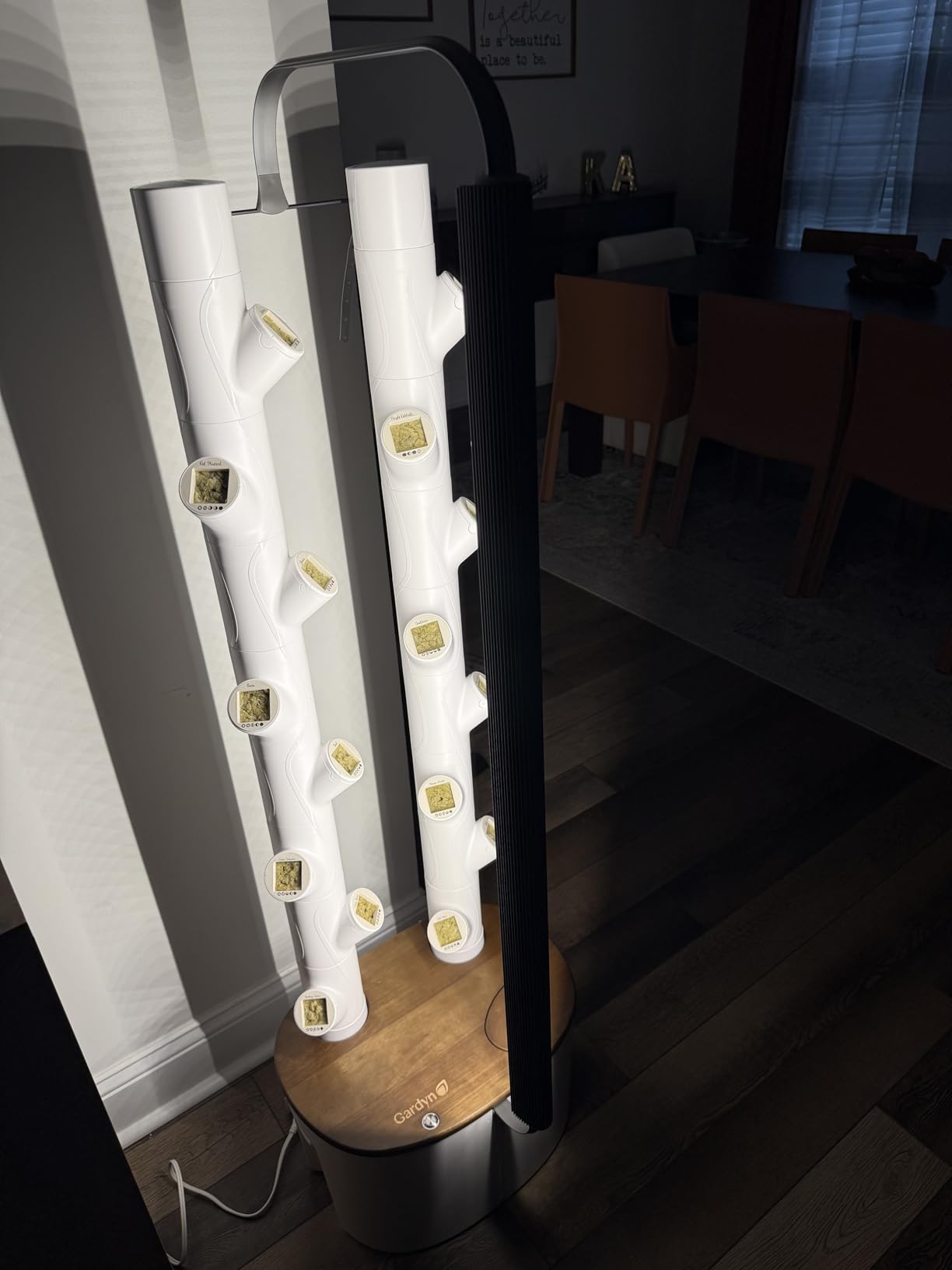
The rating sits above 4 stars, but the one and two star tail is unusually heavy for the category, and it clusters around specific problems: irrigation hoses that cracked, kinked or failed, pump noise loud enough to be compared unfavourably to a dishwasher, lighting bright enough to flood an open-plan room, and seeds that arrived loose with poor germination results.
The AI assistant also runs on a membership subscription, and nutrients are not included, so the headline number is not the whole cost. Same irrigation complaints surface across earlier Gardyn models, so this is a pattern rather than a one-off defect.
Noise and Light: Check Both Before You Buy
This is the pick to avoid in a bedroom or a shared-wall apartment. Buyers describe the pump as louder than a vacuum or dishwasher during watering, which is fine in a kitchen and genuinely disruptive at night. If quietness matters, look at a pump-in-base tower like the SJZX instead.
The lighting is the other constraint. It is bright enough to wash a dark room, so place it where it lights plants rather than your evening, and expect it to become the most visible object in the space.
Who Gets the Most Out of the Camera and AI Tools
Beginners and anyone growing through travel periods. Seeing leaf condition remotely catches a failing irrigation line before it kills a column, and the step-by-step app instructions remove the steepest part of the learning curve.
Experienced growers who already read their plants well get less from it, and the subscription fee is real money for information they would not use. Those people are better served by the larger Home 4 for the same brand ecosystem.
9. 14-Layer 70-Slot Tower – Best for Maximum Plant Count
Hydroponic Tower, 14-Layer Hydroponics Growing System Kit with 70 Slots, Vertical Garden System with 20L Water Tank and Pump for Indoor Outdoor Home, Balcony & Patio
70 growing slots
14 layers
20L reservoir
64.5 in tall
5.3 gal chamber
Pros
- Highest plant capacity in the group at 70 slots
- 20L reservoir gives days without refills
- Top-down flow avoids drip-line clogging
- Soil-free operation stays clean and pest-free
Cons
- No grow light included for indoor use
- No seeds or nutrients included
- 64.5-inch frame needs clearance
- Limited documentation under a generic brand
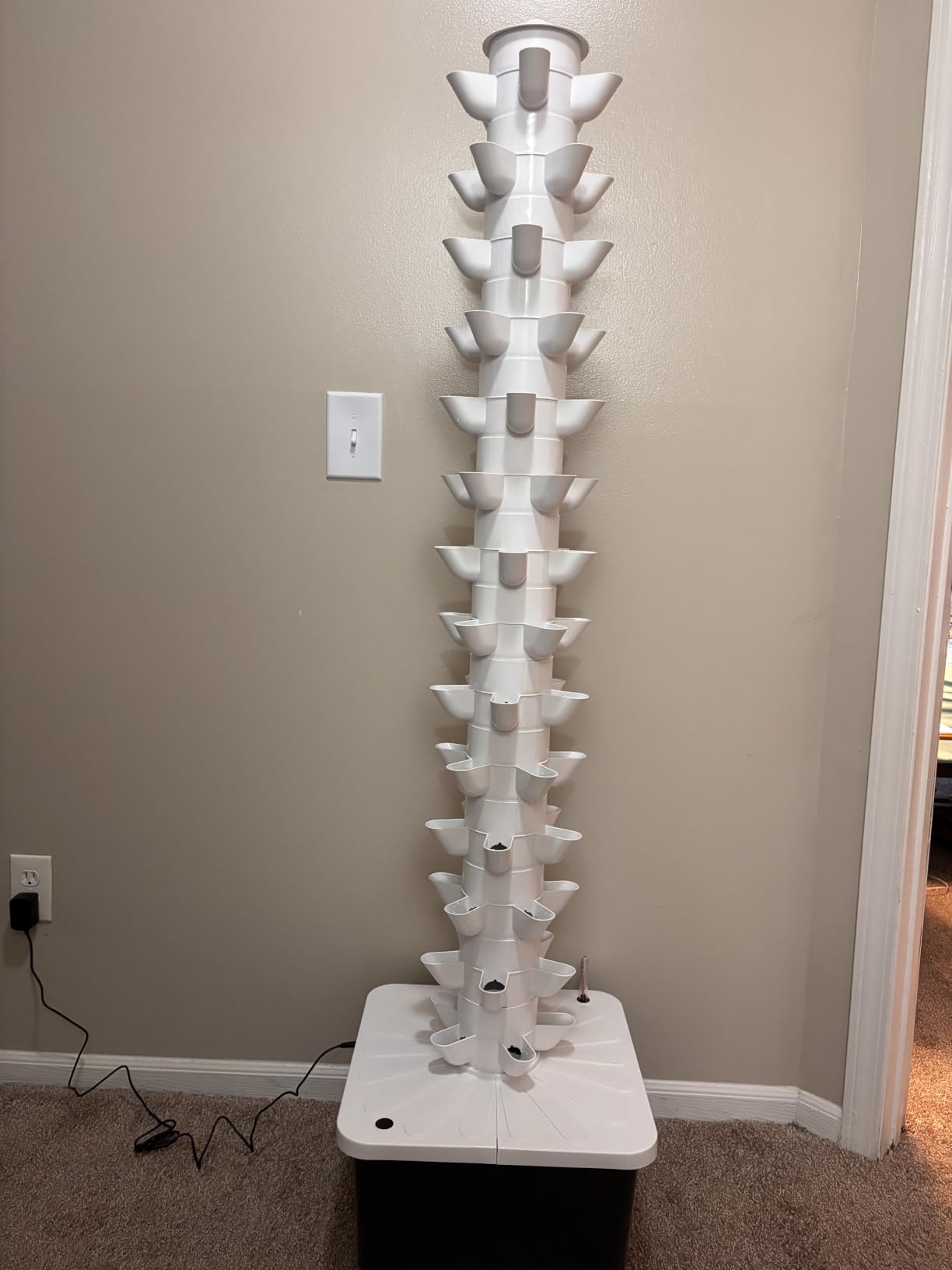
Nothing else in this roundup comes close on capacity. Fourteen layers with 70 growing slots turns a single column into a genuine salad operation, and the 20-liter, 5.3 gallon reservoir means days of operation with no daily refills, which is the least demanding maintenance schedule of any unit here.
The timed submersible pump delivers water from the top down through all fourteen layers, and continuous nutrient circulation is the reason buyers report fewer dry spots and clogs than they get from drip systems. It also moves between indoor grow-light use and an outdoor patio without modification.
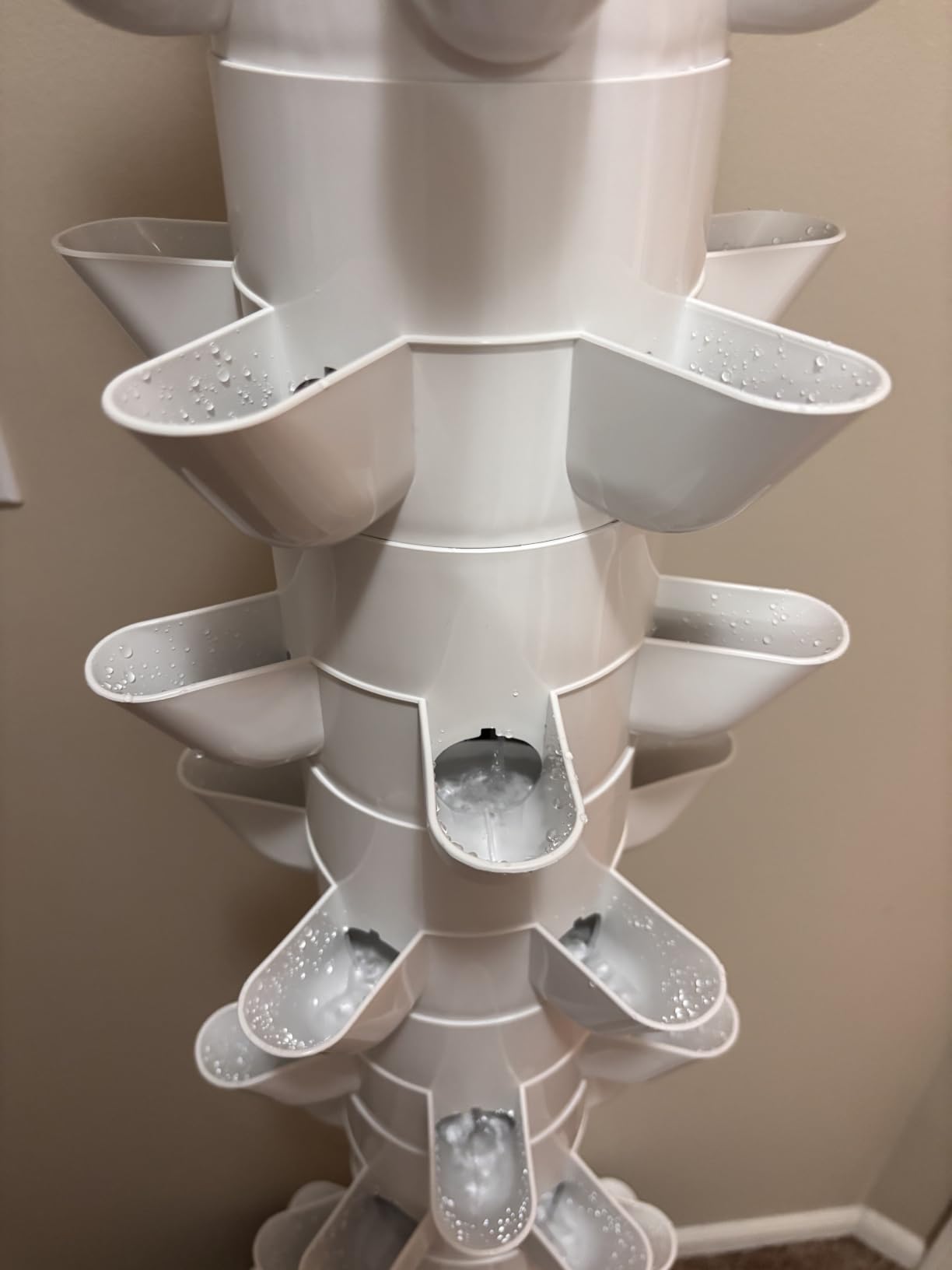
Two warnings are worth reading carefully. At 64.5 inches tall, this is a floor unit that needs ceiling clearance and walking room around it, and it ships with no grow light, no seeds and no nutrients, so an indoor setup means adding a light that can cover six feet of column.
The review base is the thinnest in the set at 17 reviews, and every one of them is 3 stars or better, but thin evidence is thin evidence. The generic branding also means documentation is thin, so you are buying on the design rather than on a support ecosystem.
Who Can Realistically Keep 70 Sites Alive
You need a dedicated corner, a light that reaches the full height, and a routine. Seventy sites sounds like a lot of salad, but it is also 70 things that can wilt in a week if you travel. The large reservoir helps, and the flow design means you are not hand-watering individual sites, but the harvest itself becomes a chore rather than a treat.
If your goal is a steady salad supply for a family, this is the most efficient unit per litre of water. If your goal is a handful of herbs and some lettuce for sandwiches, this is wildly oversized.
What the Missing Light Means for Total Cost
A light that covers 64.5 inches is a meaningful addition, and it needs to be positioned correctly rather than set on top. Plan the lighting first, then decide whether the tower still fits the corner you had in mind once the fixture is in place.
Buyers who have already added a suitable light report strong results, which is why the average rating is the second highest in the group despite the low review volume.
10. TIRUSS 9-Layer 36-Pot Tower – Best for Tomatoes and Other Fruiting Crops
TIRUSS Vertical Hydroponic Grow Tower Aeroponic Tower for Fruits and Vegetables 9 Layer 36 Pots Planter with Water Tank and Pump
36 pots across 9 layers
19.99L tank
20.86 x 20.86 x 56 in
15.4 lbs
Recirculating pump
Pros
- 36 pots on 9 layers suit greens and larger vegetables
- Recirculating design recycles most of the water used
- Large 20L base tank for the tier count
- Buyers report easy pairing with a solar panel for the pump
Cons
- Pump may lack pressure to reach the top three levels
- Some buyers fit a stronger aftermarket pump
- About 21 inch square footprint is wider than slimmer towers
- Only 12 reviews for long-term reliability data
This is the tower to look at if you want to grow more than lettuce. Nine layers with 36 pots gives each plant far more room than the 30-site slim columns, and the 20-liter base reservoir is generous relative to the tier count, so the tower stays topped up longer between fills.
The circulation is a straightforward recirculating design with a submersible pump feeding the column from the base reservoir, and the marketing claim of growth up to three times faster than soil shows up in buyer reports too. At 15.4 pounds it is heavy enough to stay put and light enough to reposition once.
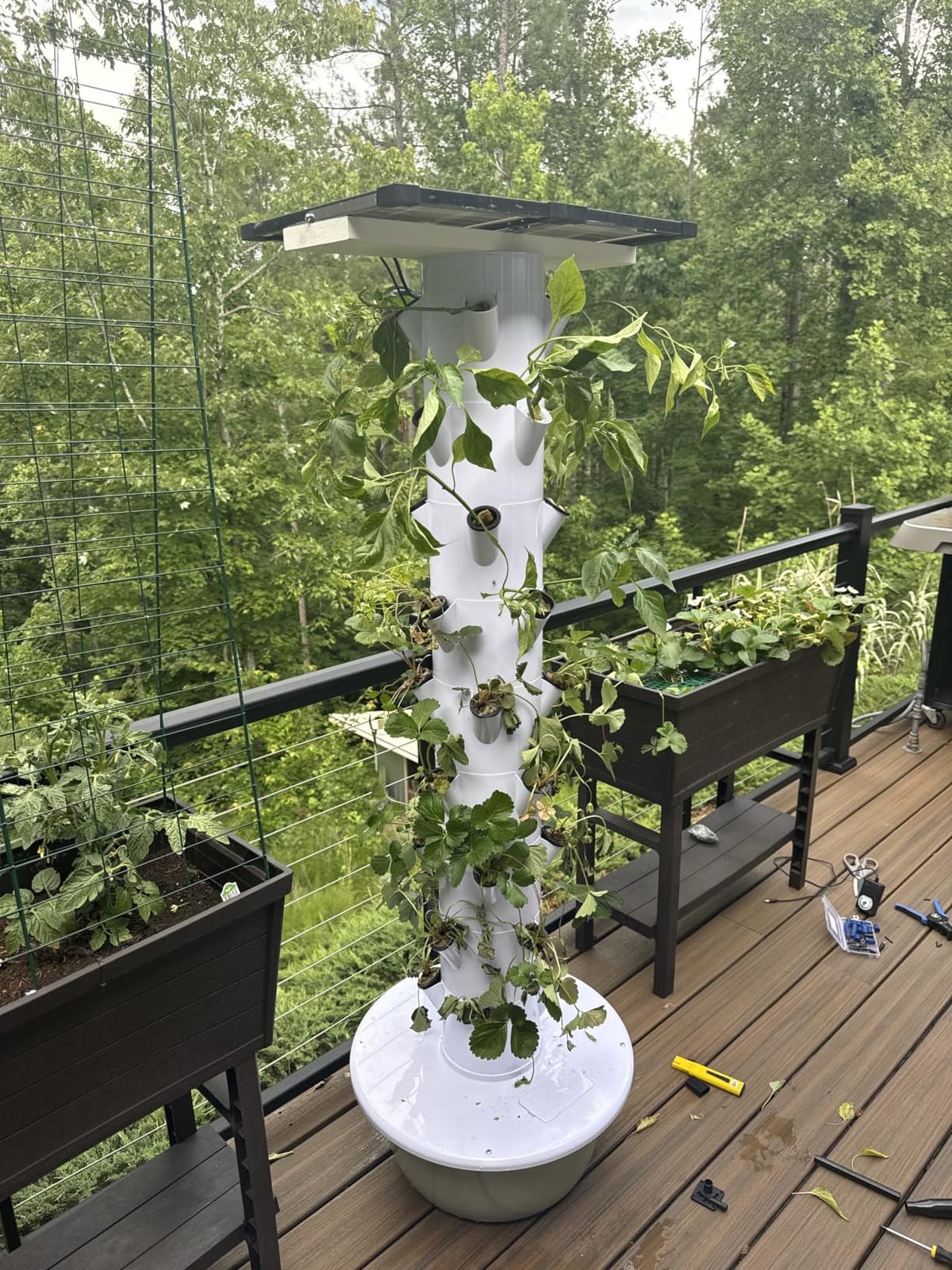
One technical complaint repeats, and it is a good one to buy against: the pump may not have the pressure to push water past the top three layers on the higher setting, and some buyers have fitted a stronger aftermarket pump instead. If you want reliable flow to the crown, plan for that from the start rather than treating it as a surprise at week four.
At roughly 21 inches square and 56 inches tall, it is wider than the slim towers, so it needs a proper corner rather than a gap beside the fridge. The 12-review base is small, which limits what long-term reliability data exists.
Which Crops Fit in a 36-Pot Column
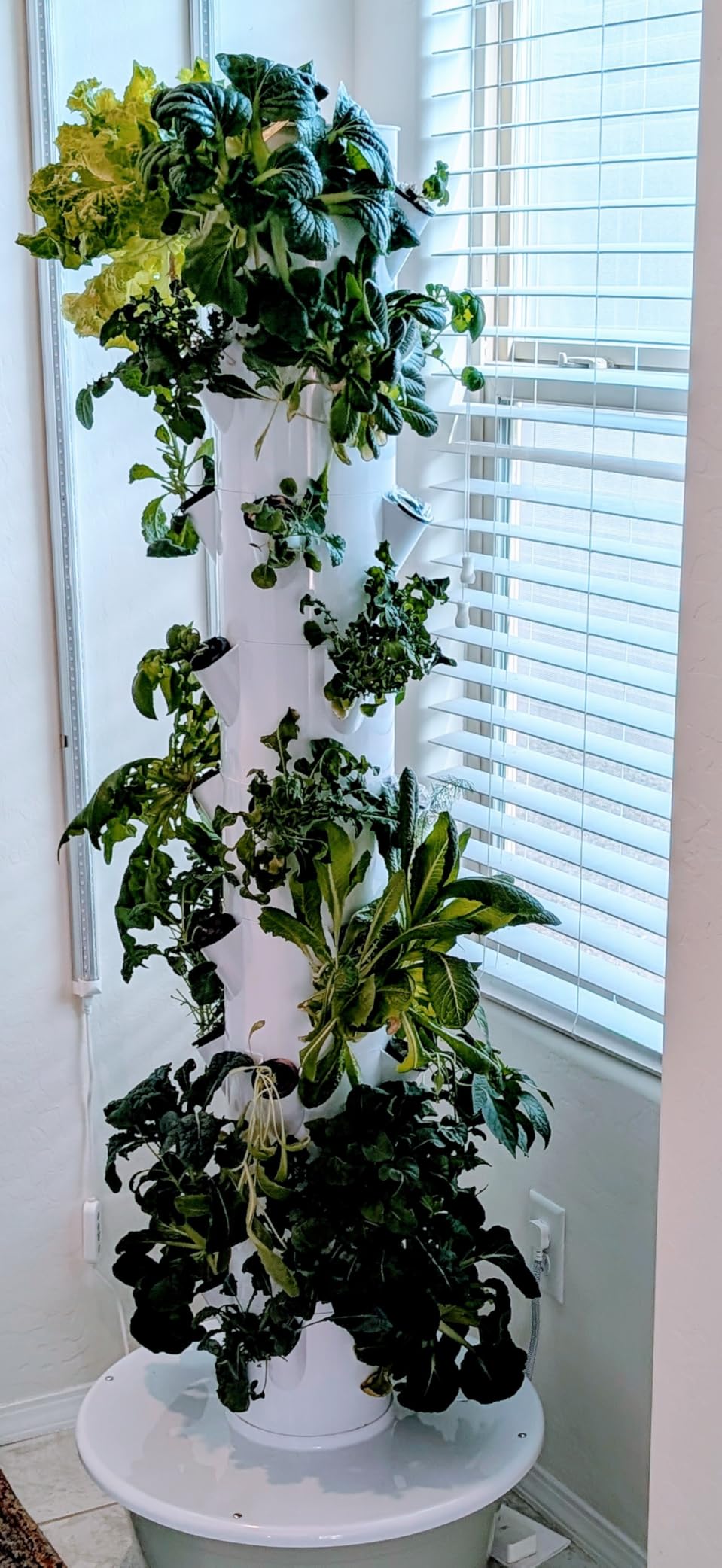
This is one of the few towers in the roundup where a tomato, pepper or larger herb has enough root room to actually develop. The pot spacing is the difference, not the water system, and buyers describe the pump doing its job on leafy greens and larger vegetables alike.
Fruiting crops do need more light than a bare tower provides, so budget a full-spectrum fixture positioned to cover the upper tiers where the canopy sits.
What the Pump Pressure Issue Means in Practice
On the lower setting, flow is fine for the bottom six layers. On the higher setting, the top three can run dry, and a dry upper tier is where a tomato fails first because it carries the largest canopy and the highest demand.
So the practical advice is to test top-tier flow in the first week with a full reservoir, and to upgrade the pump early if the top layers look sparse. Buyers who did exactly that report the system working well.
What Grows Best in an Aeroponic Tower Garden
Leafy greens and herbs are the reliable answer, because they are shallow-rooted, fast, and forgiving of the small deviations in light and nutrient strength that come with any home tower. Fruiting crops work only where pot spacing and light are generous.
Easiest: lettuce, butterhead and romaine types, basil, cilantro, parsley, chives, mint and any microgreens.
Reliable with a little care: kale, mizuna, arugula, bok choy, dill, thyme and oregano.
Possible but demanding: spinach, which growers report as inconsistent, and larger basil varieties that need room.
Needs a wider column and strong light: cherry tomatoes, sweet peppers, strawberries and eggplant.
Usually not worth attempting: root crops such as carrots, radishes and beets. Towers do not give them the depth of soil they need, and forum growers consistently report root crops as the weak point of tower systems.
Staggering matters more than variety. Plant a few sites every week rather than all of them at once, and you get a rolling harvest instead of a single bumper crop that has to be eaten immediately.
Are Aeroponic Tower Gardens Actually Worth It?
They are worth it if your goal is a reliable supply of salad greens and herbs in a space with no usable outdoor area, and you are willing to treat the tower like a small appliance. They are not worth it if you expect one purchase to produce food indefinitely, or if you travel regularly.
In favour: a year-round harvest in a footprint smaller than a coffee table, a fraction of the water use of soil growing, no weeds or soil-borne pests, and a genuine supply of greens you will actually eat.
Against: ongoing consumable costs that never end, a pump and light drawing electricity daily, proprietary pods that lock you into one ecosystem, real failure modes when a pump dies or a line clogs, and light or noise constraints in a small apartment.
The skepticism you see in indoor gardening forums is mostly about cost, not performance. The recurring complaint is that the towers are expensive and you still have to keep buying supplies, and that is a fair point for any system with proprietary refills. The counter is that a bag of greens from a store is a recurring cost too, and a tower can out-produce it over a season if you actually use the output.
The deciding factor is honesty about routine. Towers with a large reservoir, an integrated light and an app earn their keep for busy households. Towers that need a separate light, separate nutrients and daily manual checks often end up as a plant you forgot about.
What It Actually Costs to Run a Tower Garden
Nobody advertises the second-year cost, so here is what the running costs actually consist of. The system is a one-time outlay; everything else repeats.
Refills and planting media: proprietary pods and seed cubes are the largest recurring line on the premium smart towers. Open-media towers let you buy loose rockwool, clay pebbles or coco coir in bulk and use your own seeds, which cuts this to almost nothing.
Nutrients: every tower needs a balanced solution, and the pH kit included with the premium kits is the cheapest insurance in this whole category.
Electricity: a full-spectrum LED column and a pump run on a daily timer. The light dominates the draw, and the auto light cycles on the smart towers are designed to cut unnecessary runtime.
Replacement pumps: pumps are the single most common failure point across every tower reviewed here, so consider a spare pump part of the setup rather than an unexpected expense.
Water: towers recycle and recirculate, and several products here claim large savings over conventional growing, but you still consume a real volume over a year.
The practical way to think about it: open-media towers have a low running cost and a higher effort cost, proprietary systems have a high running cost and a low effort cost, and the difference between them over twelve months is usually larger than the difference in the purchase price.
How to Choose an Indoor Tower Garden: 8 Criteria
Most people choose on plant count and end up disappointed. These eight criteria, in order, are what actually determine whether you will still be using the tower in six months.
1. Footprint and ceiling height. Measure the corner, not the floor. Three towers here are over 50 inches tall, and the tallest needs 64.5 inches of clearance plus room to reach the top. Counter-height units at 33 inches are far easier to find a home for.
2. Plant count versus cavity size. A 70-slot tower with small cavities will not grow a tomato. If you want fruiting crops, count pot spacing, not slots. Thirty sites with generous cavities beats seventy cramped ones for anything beyond lettuce.
3. Is a grow light included? This is the most common hidden cost. Several towers here come with no light at all, and one of those is 64.5 inches tall. Integrated lighting makes a system more expensive up front and much cheaper to set up. If you are planning to add fixtures yourself, our roundup of accent table lamps for indoor rooms covers how much usable light you actually get per fixture in a dim room.
4. Reservoir volume versus refill frequency. 10 liters means checking every day or two. 18 to 20 liters buys you real intervals between fills. In a two-person household or with travel, reservoir size is worth more than plant count.
Water Quality: Tap, Distilled or Filtered?
Tap water is usually fine in hardness terms, but chlorine and varying mineral content are the practical concern. Let tap water sit uncovered overnight so the chlorine off-gasses, and check your tower’s included pH kit weekly. If your water is very hard, expect mineral scale on the reservoir walls and more frequent reservoir changes.
Distilled or reverse osmosis water is the cleanest option and prevents scale, but it costs money per litre and you will use a lot of it. Filtered tap water is the sensible middle ground for most apartments.
Noise in Bedrooms and Small Apartments
Pumps run on a timer, and the noise window is short but real. One product in this roundup draws explicit complaints about pump noise described as louder than a vacuum or a dishwasher. The design variable is whether water moves through a central column or is pumped far up a tall frame.
Place any tower away from a headboard, and avoid scheduling cycles in the early morning. A tall unit in a quiet room is a bigger problem than a short one.
5. Open media or proprietary pods. Decide this before you buy, because it changes every future purchase. Open media means more handling, more nutrient management, and near-zero recurring media cost. Pods mean consistent germination, a controlled crop list, and a supplier you buy from for years.
6. App control versus manual timers. App and smart-outlet control means you can schedule pump cycles remotely and get reminders. It also means a phone dependency, and on the premium smart towers the deeper features are tied to a membership subscription.
7. Noise and pump accessibility. See above. Also check whether the tower disassembles for sink cleaning, because a column you can take apart is a column you will actually clean, and cleaning is what prevents root rot and mineral buildup.
8. Expandability. Modular multi-section towers grow with you by adding tiers. Fixed tall columns do not, so if you might start with one tower and add a second kitchen later, pick something that disassembles into sections and has casters.
Want to Build Instead? A DIY PVC Tower in Brief
A DIY tower is the cheapest route by a wide margin and the most educational. The sequence is straightforward: cut equal-length PVC sections, drill planting holes in a staggered pattern around each section, stack them on a central support, fit an opaque reservoir at the base, add a submersible pump, and a timer to switch the pump on and off. Line the inside with a food-safe liner or use food-grade pipe.
The tradeoffs are real. You are responsible for structural stability, waterproofing, pump sizing and leak testing, and a leak inside a cabinet is a much worse outcome than a disappointing harvest. Choose the DIY route if you enjoy the build; choose a kit if you want food.
Reasons to Skip a Tower Garden
Most roundups in this category are purely promotional, so here is the honest list.
Recurring consumable costs never stop. Proprietary pods, nutrient refills and replacement pumps are a permanent line item, and this is the single most common complaint in indoor growing forums.
Pump failure stops everything. Every tower here depends on a pump, and pumps are the most reported failure point across this entire group.
Clogging and dry spots are real in aeroponic designs. Mist heads and narrow wells can block, and a clogged section starves whatever is growing in it.
You are dependent on a light you did not buy. Several units ship without one, and indoor light is where a lot of the unadvertised cost hides.
Subscription features on premium smart towers. AI assistants and deeper app features can carry a monthly fee, and the guidance is central to the experience.
Light and noise in a shared home. Bright LED columns and pump cycles are disruptive in apartments, particularly in bedrooms and open-plan rooms.
Root crops and woody plants will not work. A tower is a shallow, soilless system. Carrots, beets and larger woody herbs are not going to succeed in it.
Travel and power outages are a genuine problem. Units that buffer only about twelve hours, or that need daily refills, will not hold through a week away.
Wall mounting and tip risk. A tall, top-heavy tower should never be wall-mounted indoors, and casters are safer than a fixed base if you move it.
You may simply forget it. The most common failure mode is not mechanical, it is a dry reservoir in week three because nobody was checking.
Frequently Asked Questions
What grows best in a tower garden?
Leafy greens and herbs grow best in an indoor hydroponic tower garden because they are shallow-rooted, fast and forgiving. Lettuce, basil, cilantro, parsley, chives, kale, mizuna and arugula are the reliable core crops. Fruiting plants such as cherry tomatoes, peppers and strawberries work only where pot spacing and grow light are generous. Root crops such as carrots and radishes are not suited to towers, which lack the soil depth they need.
What plants can you grow in an aeroponic system?
Aeroponic systems mist the hanging roots directly, so the strongest performers are high-oxygen crops with fine root systems: lettuce and salad mixes, basil, mint, kale, mizuna, bok choy, parsley and chives. Larger crops need more support from the system, and growers report spinach as inconsistent in towers. Crops with deep taproots, including carrots, beets and radishes, are poor choices because a vertical tower offers no soil depth.
What is the difference between aeroponic and hydroponic towers?
In an aeroponic tower, roots hang in an enclosed column and are sprayed with a fine nutrient mist, giving them the highest oxygenation and the lowest water use of any home method. In a recirculating hydroponic tower, a pump lifts solution up a central pipe and it trickles past each planting site before draining back to the reservoir. Aeroponics costs more and clogs more often; recirculating towers cost less and tolerate ordinary tap water far better.
Which hydroponic tower garden system is the best?
For most households the Gardyn Home 4 is the strongest all-round choice, growing 30 large plants in roughly 2 sq ft of floor space with metal construction and the deepest review history in this roundup. The SJZX 5-Layer tower is the best value option if you want a complete kit for less, and the JPWDDWYT tower is the pick if portability and a large reservoir matter more than anything else.
Are indoor hydroponic gardens worth it?
They are worth it if you want a reliable year-round supply of salad greens and herbs in a space with no usable outdoor growing area, and you are willing to treat the tower like a small appliance with a routine. They are not worth it if you expect one purchase to produce food indefinitely, if you travel regularly, or if you do not want to keep buying refills. The harvest itself performs; the ongoing cost is where the criticism lands.
Is tap water ok in hydroponics?
Tap water is usually usable in a hydroponic tower, but let it sit uncovered overnight so chlorine off-gasses, and check pH weekly with the included kit. Very hard water will produce mineral scale on the reservoir and mean more frequent water changes. Filtered tap water is the practical middle ground, and distilled or reverse osmosis water prevents scale entirely but costs money per litre.
How much does it cost to run a hydroponic tower garden?
The recurring costs are refills and grow media, nutrient solution, electricity for the LED column and pump on their daily cycle, and occasional replacement pumps since pumps are the most common failure point. Proprietary pod systems cost the most to refill, while open-media towers using rockwool or clay pebbles keep media cost near zero at the price of more hands-on management. Reservoir volume is the biggest lever on water consumption.
Which is better, NFT or DWC?
For a floor-standing indoor tower, neither is usually the right comparison, because both are channel and reservoir formats rather than vertical columns. NFT suits long shallow runs of leafy greens, DWC suits a single reservoir of a few plants, and a recirculating or aeroponic vertical tower suits someone who wants 30 or more sites in a small footprint. Choose by plant count and available corner space, not by system label.
What is the best indoor herb garden system?
For herbs specifically, a tower with generous pot spacing beats a tower with a high slot count, because basil and parsley need root room that the slim 30-site columns do not provide. The TIRUSS 9-Layer 36-Pot tower offers the widest cavities in this roundup, while the JPWDDWYT tower is the easier choice for a small kitchen and lighter crops like chives, mint and cilantro.
The Verdict: Which Tower Should You Buy in 2026
The Gardyn Home 4 is the best aeroponic tower garden for indoor growing in 2026. Thirty large plants in about two square feet, metal construction, sunrise and sunset lighting modes and the deepest review base we found make it the safest all-round buy, as long as you are willing to top up a small reservoir every couple of days.
Buy the SJZX 5-Layer tower instead if you want the lowest cost to a working harvest, and the JPWDDWYT tower if the corner you have is small and you need to carry the thing there. For tomatoes and peppers, step up to the TIRUSS 9-Layer 36-Pot tower, and for the largest possible salad supply in one column, the 70-slot tower is the only one that gets there.
Getting the right supplementary lighting is covered in our guide to the best desk lamps for indoor use. Check the latest details on any of the towers before you buy, and come back once you have harvested your first bowl.