
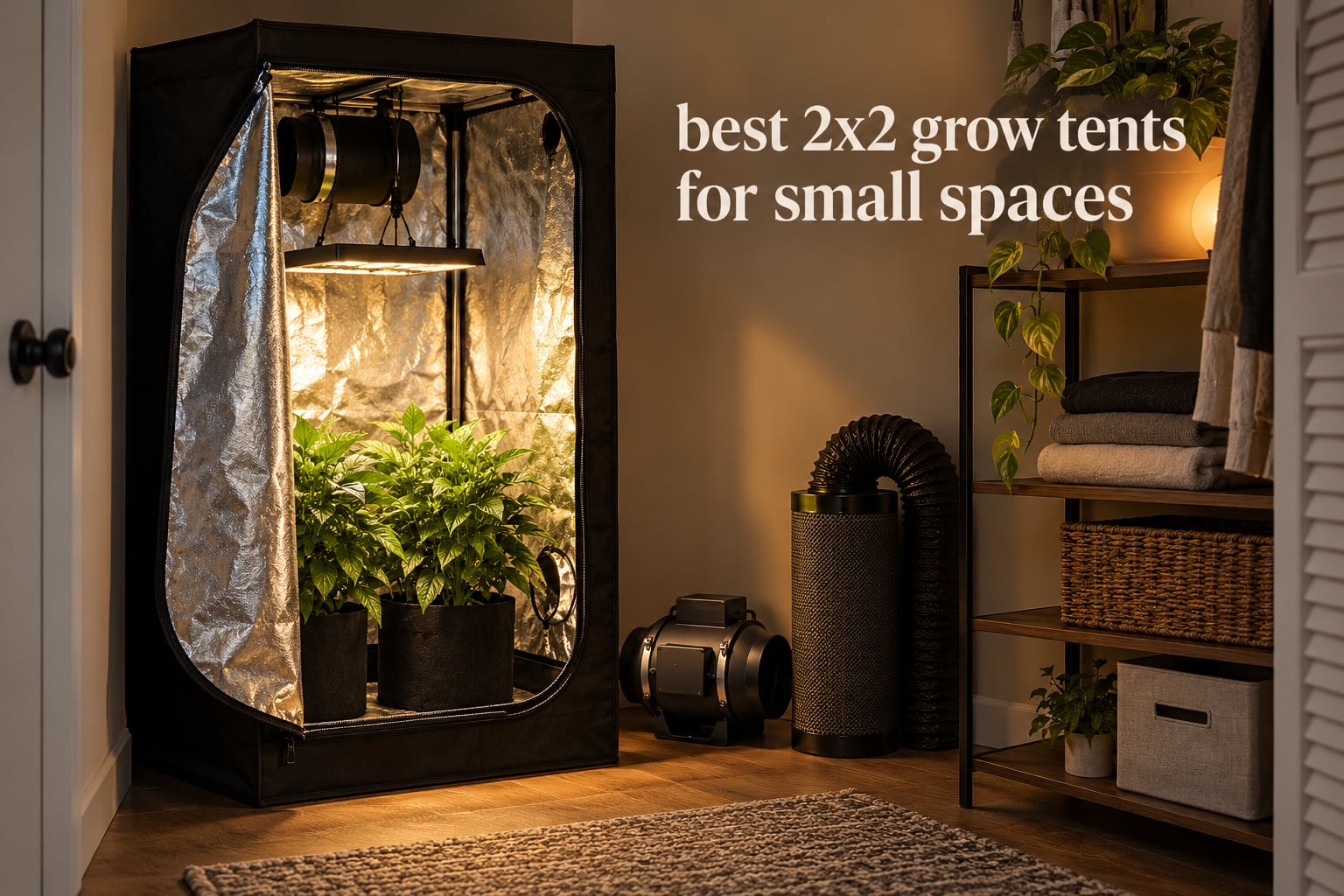
A 2×2 grow tent is a two-foot by two-foot fabric box with a reflective mylar lining, a steel frame, and zippered doors and vents that let you control light, heat, humidity and smell in a small indoor grow. That is the smallest footprint that still fits a full frame, a light, an inline fan and a carbon filter, which makes it the default answer for anyone who wants to grow indoors but has no yard, no garage and no spare room to give up.
Most guides point you at a 2×4 or a 5×5. For a closet, a spare bedroom, or a home office corner, those are wrong. The best 2×2 grow tents for small spaces are the ones that disappear when you close the door, seal light properly, and hold up a light and a filter without the frame flexing. That is what we tested against, comparing ten tents across canvas denier, frame gauge, port layout, weight and real buyer complaints.
We also spent time reading what growers actually say on r/2x2growery and the ILGM forums, because the pattern there is consistent: buy the tent, then add a dimmable bar-style LED, a four-inch inline fan and a four-inch carbon filter yourself rather than buying a pre-bundled kit. We will get into what that setup looks like further down.
Read on for the shortlist, the full ten-tent comparison, and an honest note on which of these you can skip.
Table of Contents
Top 3 Picks: Best 2×2 Grow Tents for Small Spaces (October 2026)

AC Infinity CLOUDLAB 422
- 2000D canvas and 1 inch steel poles
- Lab-tested reflective mylar
- Reinforced corners and extra hanging bars

VIVOSUN S224
- 600D Oxford canvas with PE lining
- Black-lined light-sealing zipper
- Tool-free corners and removable tray
MARS HYDRO 2x2x4 Advanced
- 1680D double-stitched canvas
- Zipper flap shade cloth
- Steel frame with detachable tray
All 10 Tents Compared Side by Side in 2026
Every tent below is a genuine two-foot by two-foot footprint. Heights vary more than people expect, so read that column first if your ceiling is low.
| Product | Specs | Action |
|---|---|---|
| AC Infinity CLOUDLAB 422 |
|
Check Latest Price |
| VIVOSUN S224 |
|
Check Latest Price |
 CoolGrows 2×2 Mylar Tent CoolGrows 2×2 Mylar Tent |
|
Check Latest Price |
| MARS HYDRO 2x2x4 Advanced |
|
Check Latest Price |
 Spider Farmer 2×2 Grow Tent Spider Farmer 2×2 Grow Tent |
|
Check Latest Price |
 Green Hut 2×2 Grow Tent Green Hut 2×2 Grow Tent |
|
Check Latest Price |
 zazzy 2×2 Grow Tent zazzy 2×2 Grow Tent |
|
Check Latest Price |
 VIVOSUN P224 PRO VIVOSUN P224 PRO |
|
Check Latest Price |
 ATOUR 2×2 Grow Tent ATOUR 2×2 Grow Tent |
|
Check Latest Price |
 MELONFARM 2×2 Grow Tent MELONFARM 2×2 Grow Tent |
|
Check Latest Price |
1. AC Infinity CLOUDLAB 422: Best 2×2 Grow Tent Overall
AC Infinity CLOUDLAB 422, Advance Grow Tent 2×2, Thickest Poles & Mylar
Footprint 24 x 24 x 48 inch
1 inch steel poles
2000D Oxford canvas
16 cubic foot chamber
Pros
- Thickest canvas and strongest poles in the group
- Lab-tested reflective mylar lining
- Reinforced corners and extra hanging bars
- Front zipper flaps block light leaks
Cons
- Heaviest unit here at 9.1 kg so it is the hardest to move
- Top of the range for a 2x2 tent
- Only rated for a single 5 gallon pot plant
This is the tent we keep coming back to. The frame uses one inch steel poles, which is roughly double the gauge you get on a budget 600D tent, and the fabric is 2000D Oxford canvas rather than 340 gram cloth. You feel the difference the moment you finish the frame and press a palm against a wall panel.
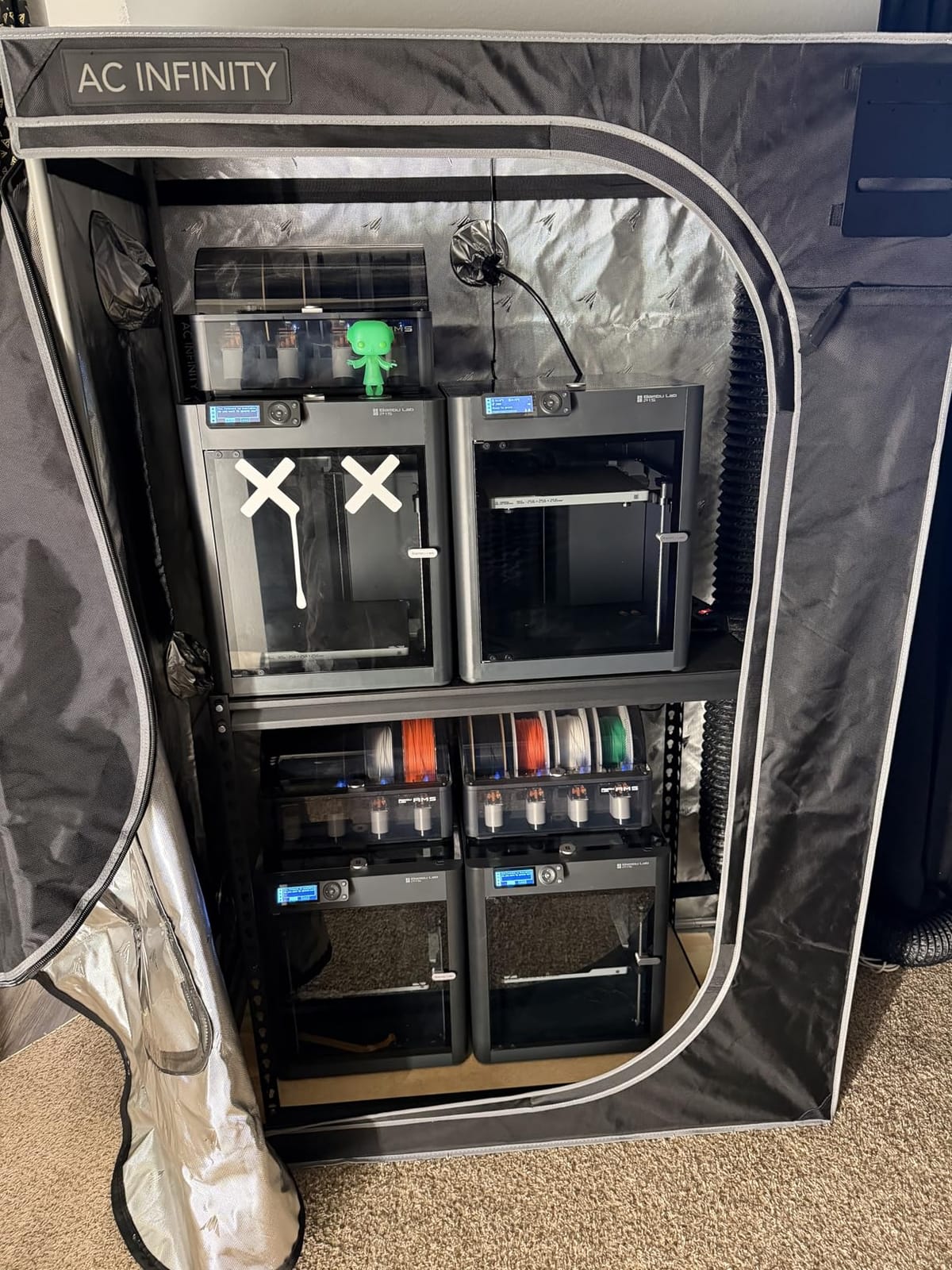
What sold us is the hardware list. Reinforced tent corners, extra hanging bars, a heavy-duty stain-resistant catch tray and a controller mounting plate with a lightproof cable passthrough. That plate matters more than it sounds, because in a 2×2 every cable and cord is a potential light leak and a place to hang a sensor.
The port layout is unusually generous for the footprint: four four-inch duct ports and three six-inch ports. In a tent this small you want an intake low on one side and an extraction high on the other, and there are enough options to do that without fighting the frame.
What you gain over a cheaper 2×2
Light control is the real upgrade. Taller observation windows with SBS zippers mean you can check on a plant without unzipping the door, which is the fastest way to break a dark cycle or let heat out. The mylar lining was lab-tested for reflectivity, and buyers report even light spread across the floor of the tent.
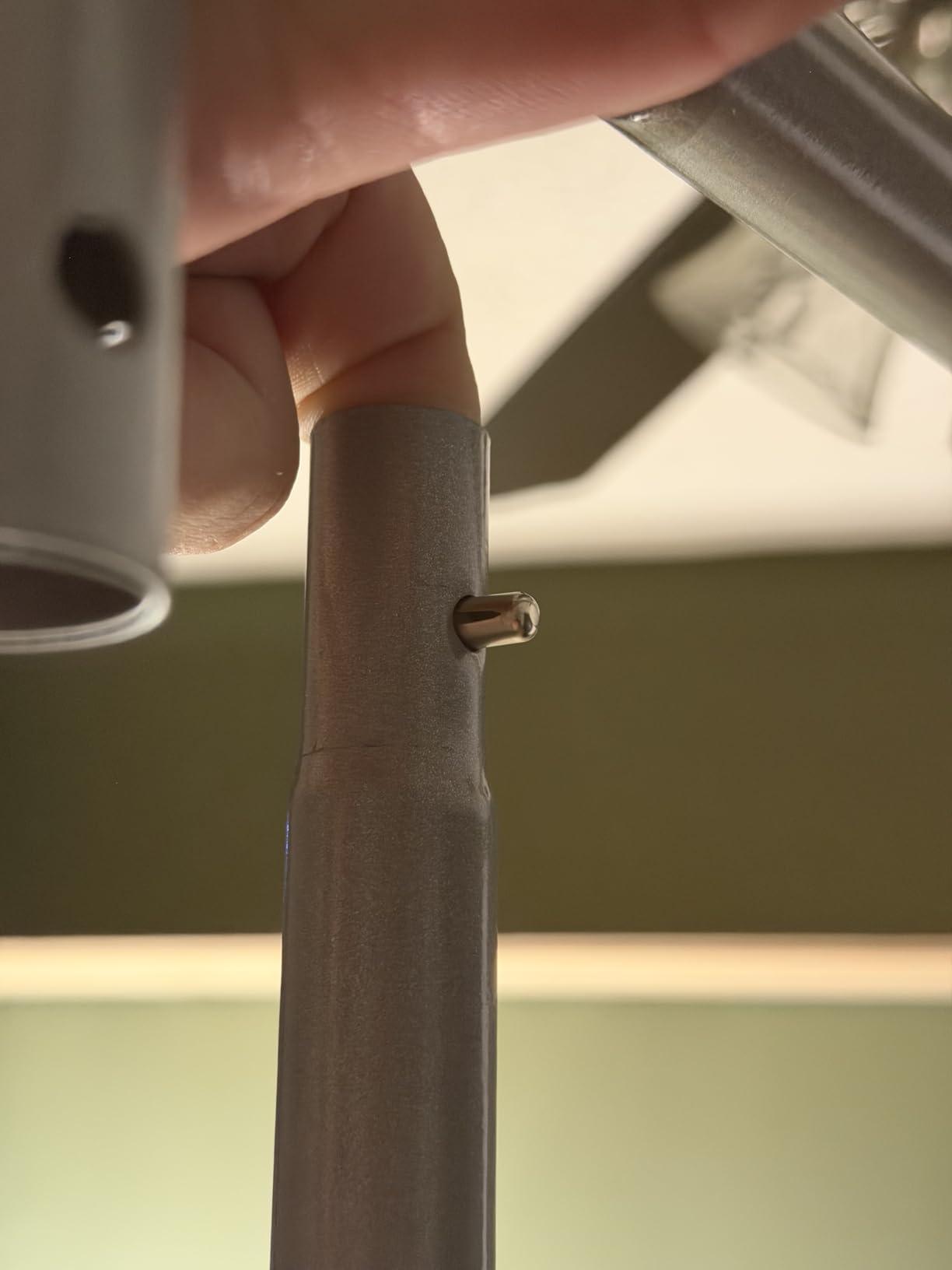
The frame also stays rigid under load, which is where cheaper tents bow. Hang a light and a carbon filter on the same frame and a 600D tent with thin poles will visibly flex.
Where it disappoints
It is the heaviest tent we reviewed, at 9.1 kg, so moving it between a closet and a workbench is a two-person job. It is also the highest-end build here, and the manufacturer rates it for a single plant in a five gallon pot. If your plan is a dense four-plant sea of green, you are pushing past what this frame is specced for.
2. VIVOSUN S224: Best Value 2×2 Grow Tent
VIVOSUN S224 2×2 Grow Tent 24″x24″x48″ High Reflective Small Mylar Tent
Footprint 24 x 24 x 48 inch
600D Oxford canvas with PE layer
Removable mylar tray
Top bar rated to 100 lbs
Pros
- Most reviewed tent in the group with over 33k ratings
- Black-lined zipper seals light without extra tape
- Tool-free corner connectors speed assembly
- Removable tray and inner tool organizer
Cons
- 340 g fabric is thinner than the 1680D and 2000D rivals
- Two hanging bars limit lighting placement
- Observation window is small for the footprint
With more than 33k ratings and a 4.5 average, this is the tent most first-time micro growers end up with, and the reason is the black inner lining on the zipper. Most budget tents leak light through the zipper track. This one does not need tape or an extra flap, which removes the single most common beginner complaint in the category.
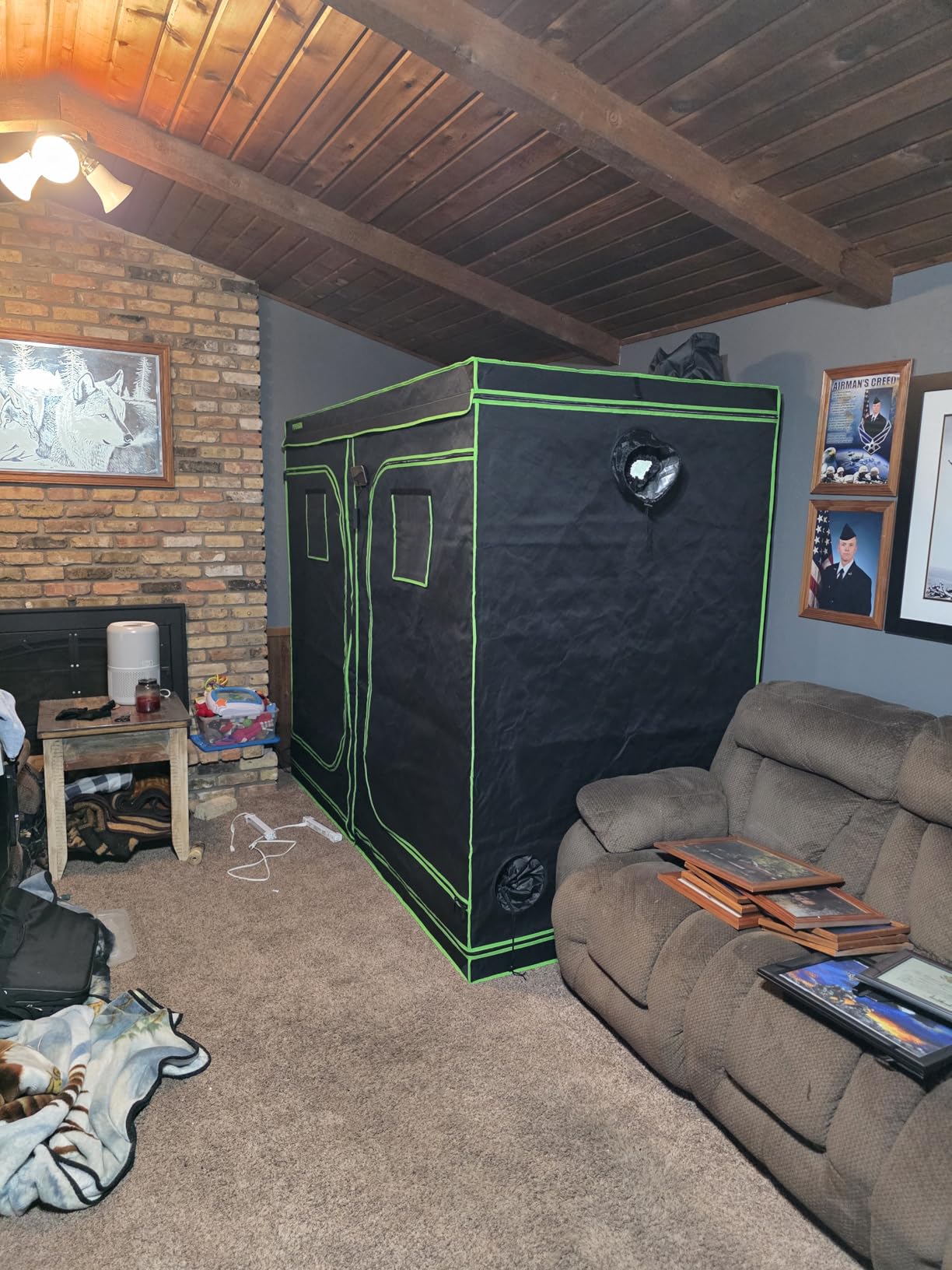
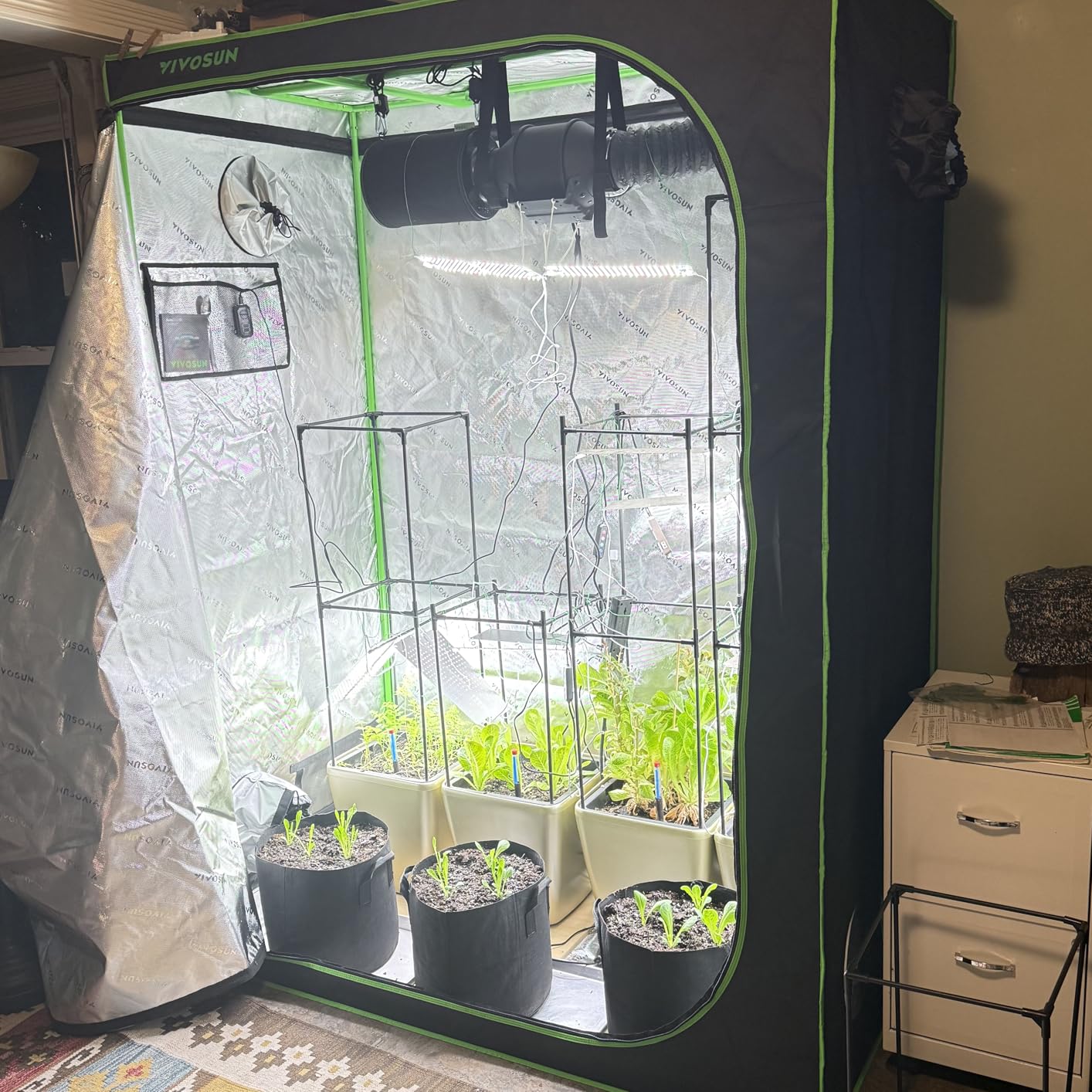
Construction is 340 gram high-density fabric, waterproof, tear resistant and double stitched, supported by metal poles and tool-free corner connectors. Assembly takes one person about fifteen minutes. A removable mylar floor tray and an inner tool organizer are in the box, and two hanging straps are included.
There is also a bottom heat-dissipation window, which is genuinely useful in a closet that runs warm in summer. Air moves in low and out high without you having to cut a duct port.
Why this one keeps its review count so high
A huge review pool usually means a product that works the first time. Reviewers repeatedly point at easy assembly and the zipper lining, and the fabric has held up for people who move the tent between closets. If you want a set-and-forget tent for a first autoflower run, this is the safe bet.
Where the thin fabric bites
The 340 g cloth is the thinnest tier in this group. Over a full cycle of daily handling, watering and pruning you will notice it flexes more than a 1680D wall, and the stitching at stress points is the first place to check. The two-bar hanging layout also gives you fewer options for light placement than the VIVOSUN P224 PRO below.
3. MARS HYDRO 2x2x4 Advanced: Best Light Lock in a Mid-Size Build
MARS HYDRO 2x2x4 Advanced Grow Tent, 24″x24″x48″ Indoor Plant Growing
Footprint 24 x 24 x 48 inch
1680D double-stitched canvas
Dense diamond mylar interior
Detachable waterproof tray
Pros
- Zipper flap shade cloth kills pinhole leaks
- 1680D canvas is a step up from 600D
- Zippers run smoothly without snagging
- Tray stays put with corner velcro flaps
Cons
- Only passive intake flaps on the sides
- Some variants arrive without a viewing window
- Side exhaust ports sit low and waste vertical space
The upgrade that defines this tent is the shade cloth stitched between the zipper and the canvas. It covers pinholes along the seam, which is where cheap tents give away light in a dark hallway. Combined with 1680D double-stitched canvas and heavy-duty metal zippers with double black inner lining, this is the tightest seal in our test group.
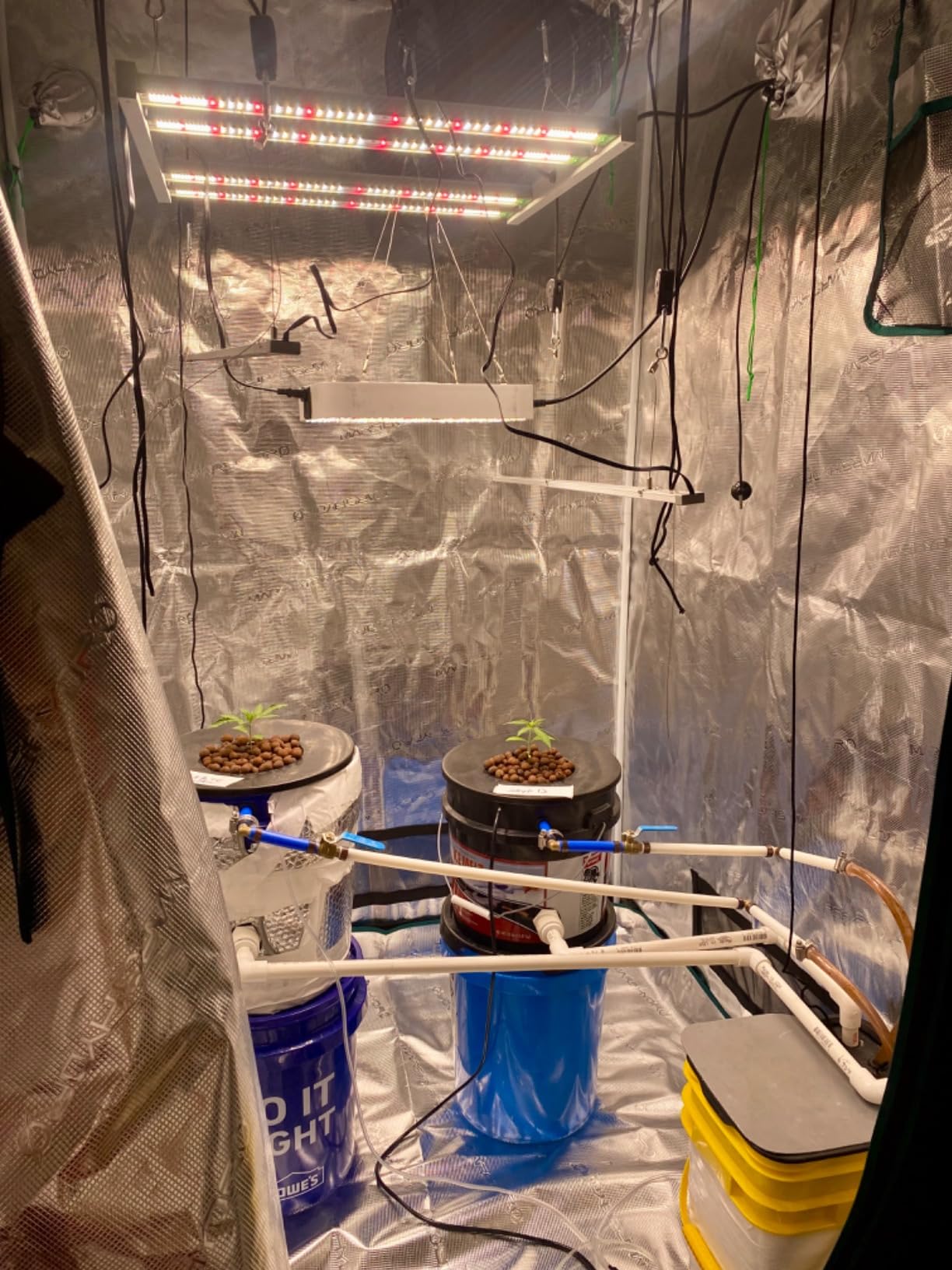
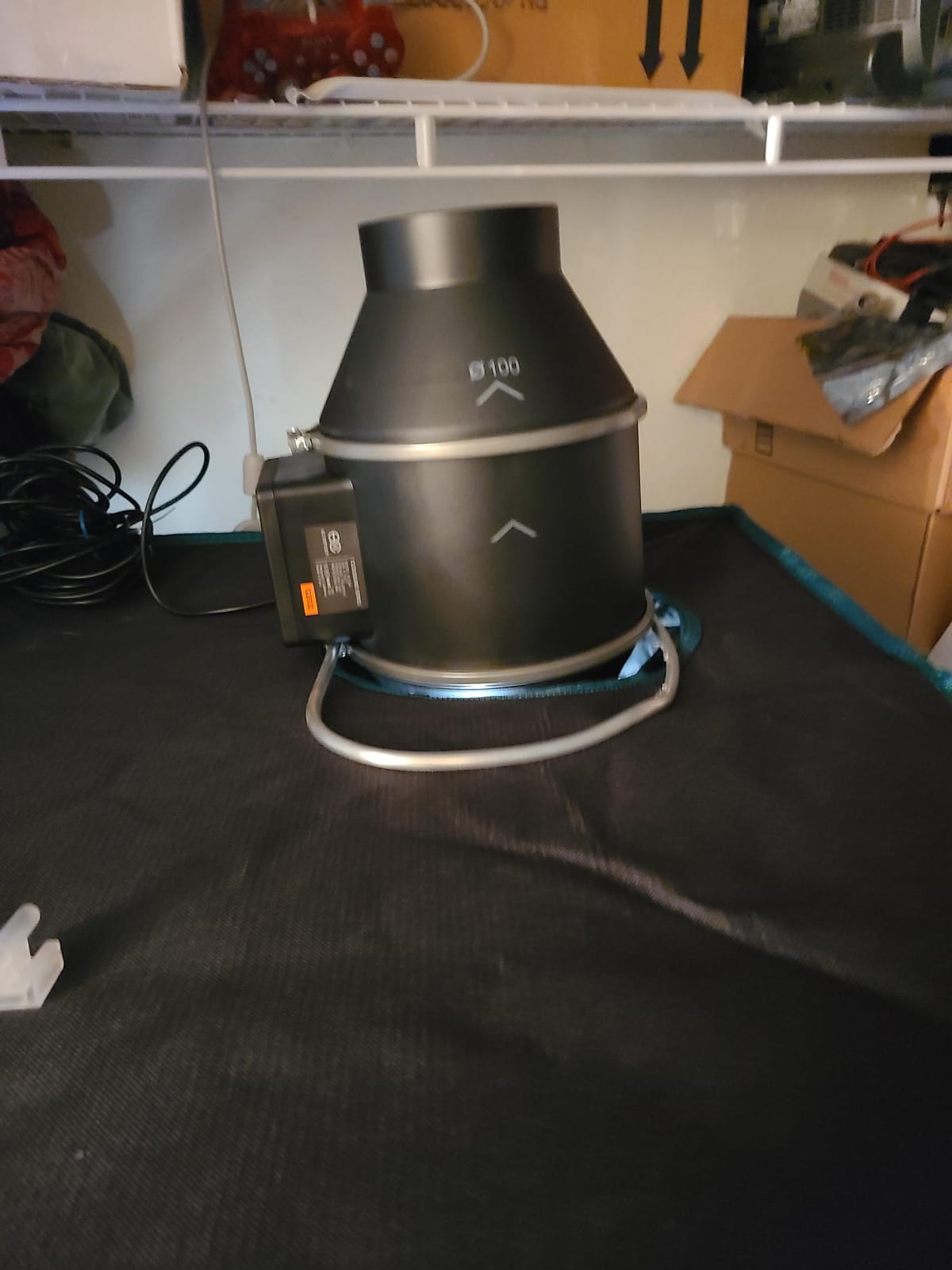
The frame uses stable metal poles with corner adapters and top bars, described as neither rusting nor losing paint. Assembly is pop-snap based with no tools. Chamber volume is listed at about 0.42 cubic meters, which is right for one large plant or a few smaller ones.
The double-layer viewing window lets you check progress without opening the door, and the detachable waterproof tray is held by corner velcro flaps so it does not shift when you water.
What makes it worth the step up from 600D
Double stitching and heavier canvas mean the walls hold their shape and reflect more light back to the canopy instead of absorbing it. In a footprint this tight, light efficiency is not a luxury, because every wasted lumen is watts you are paying for twice.
Reviewers also single out how smoothly the zippers operate, and smooth zippers matter more than most buyers expect. A zipper that snags on fabric eventually tears a seam, and that seam is a light leak.
What to fix before you use it
The side panels have passive intake flaps rather than a port you can duct an active intake fan into. If you plan to run filtered intake air rather than filtered exhaust, you will be improvising. Reviewers also note that some variants ship without a viewing window despite the listing, so check the box before you build.
4. Spider Farmer 2×2: Best for Heavily Rigged Setups
Spider Farmer 2×2 Grow Tent 24″x24″x48″ for Indoor Plant Growing 2026 New
Footprint 24 x 24 x 48 inch
1680D waterproof Oxford canvas
Steel poles rated to 120 lbs
5.67 kg
Pros
- Strongest rated frame here at 120 lbs
- 1680D waterproof canvas with diamond mylar
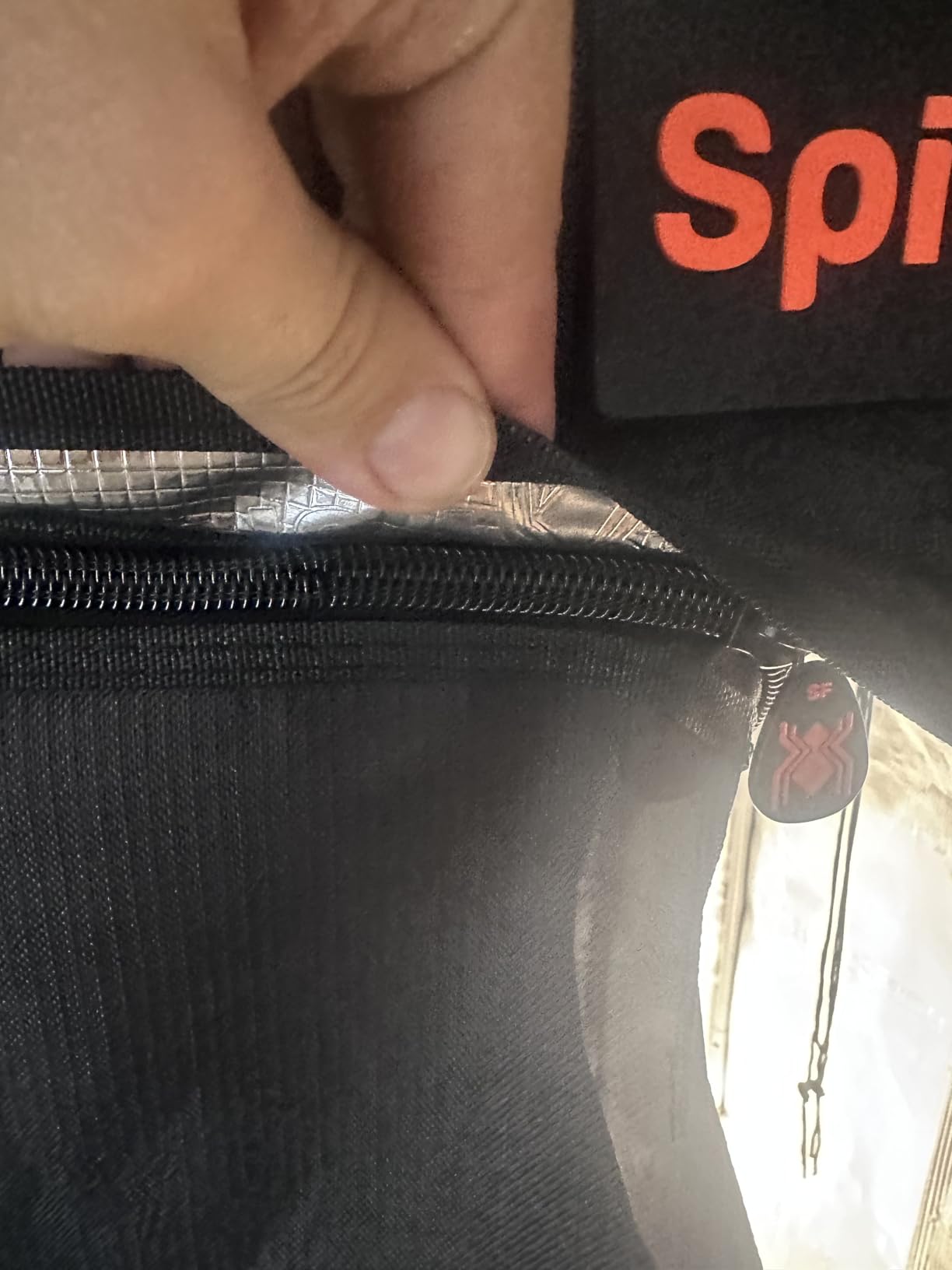
- SBS zippers with flap and dual stitching
- Largest viewing window at 11.8 inches
Cons
- One of the higher-end builds in this group
- Heavier 1680D fabric is bulky to store
- Wrap-on assembly is tight for one person in a small space
This is the one we would pick if the tent has to carry a bar light, a carbon filter and a trellis without complaining. The hardened steel poles are rated to 120 pounds, which is the highest load figure in this group, and reinforced corner adapters spread the weight instead of concentrating it at one joint.
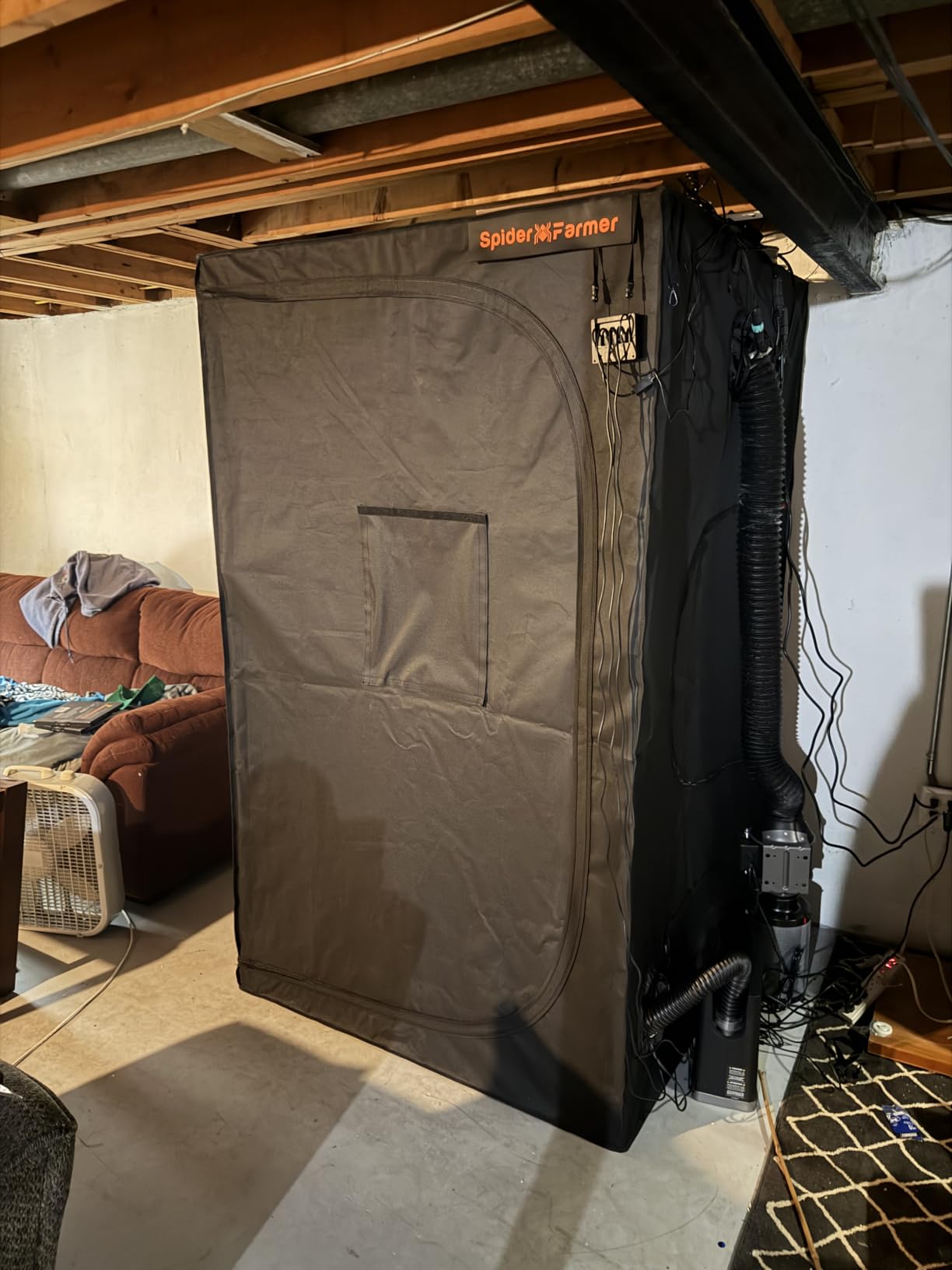
Growers on r/2x2growery consistently favour bar-style LEDs when the budget allows, and that preference fits this frame. A bar light is heavier than a panel of the same output, and the poles here are sized for exactly that kind of load.
The canvas is tear-proof and waterproof 1680D Oxford with a diamond reflective mylar lining. Controller hooks and a cable pass-through are included, along with a waterproof removable floor tray and a side buckle on the main door.
Why frame strength decides this category
A 2×2 has almost no spare room, so you hang everything from the same frame: light, filter, fan, sensor. Plastic corner hardware on cheap tents cracks under that combined load, and a cracked corner in a closet means a light and a fan on the floor. Metal corners with reinforced adapters avoid that entirely.
Where you will feel the bulk
At 5.67 kg with 1680D fabric, this is not a tent you fold into a shoebox. The wrap-on assembly is also awkward alone, since you are effectively wrapping fabric around a frame you are holding together at the same time. Budget twenty minutes and two hands.
5. CoolGrows 2×2 Mylar Tent: Best for Maximum Airflow
CoolGrows Grow Tent, 2×2 Feet Mylar Hydroponic Grow Tent with Obeservation Window and Floor Tray for Indoor Gardening Plant Growing (24″x 24″x 48″)
Footprint 24 x 24 x 48 inch
95 percent reflective mylar lining
PVC-free PEVA materials
5000 g
Pros
- Heavy vent and duct port coverage for airflow choice
- PVC-free PEVA construction
- 95 percent reflective mylar lining
- Zippers do not snag on the fabric
Cons
- Raw cut edges by the door can fray and need sealing
- Some pinhole leaks reported along stitching
- No reinforced corners or zipper cover flap
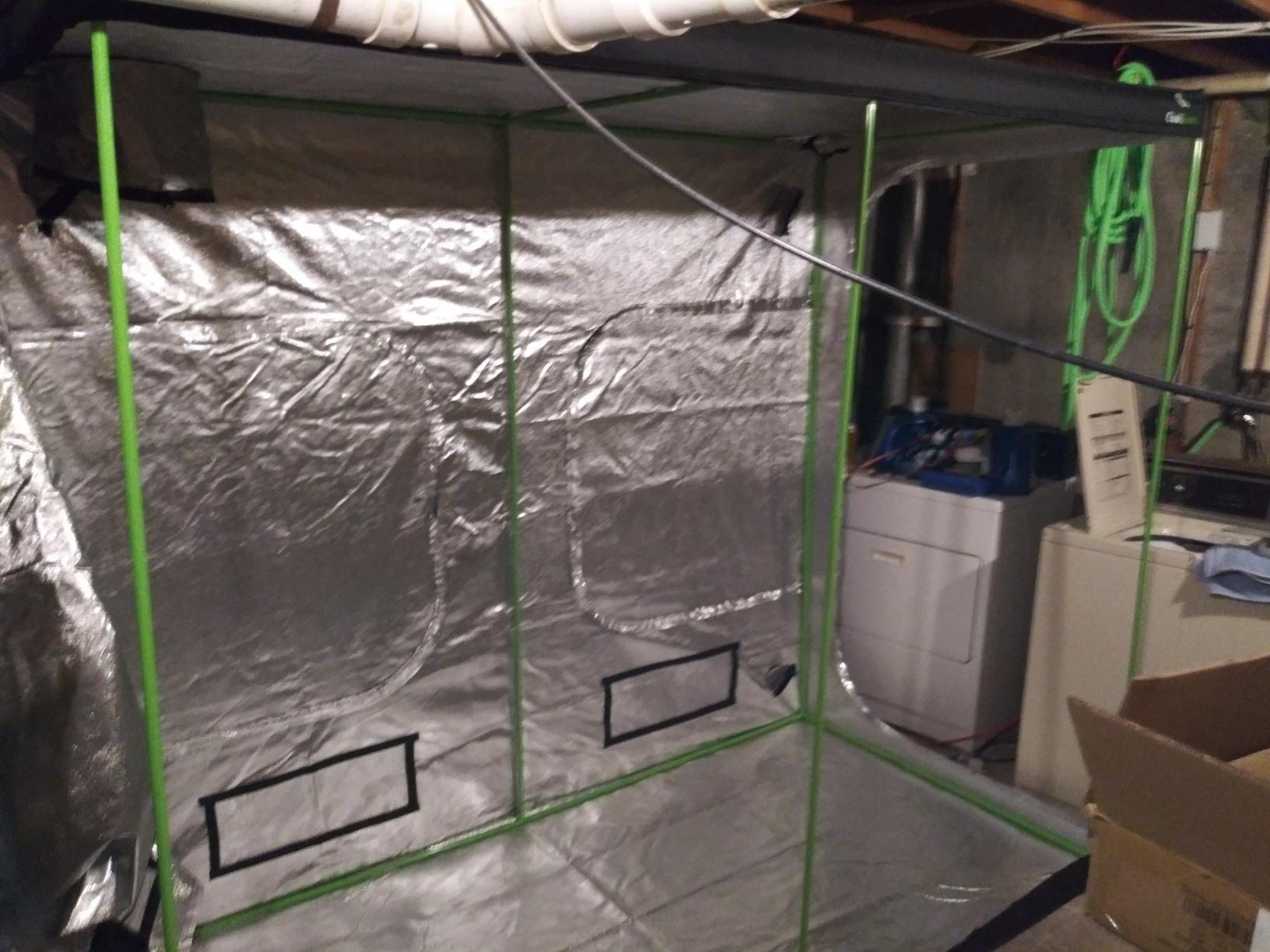
In a two-foot box, airflow is not a feature you add later, it is the difference between a healthy canopy and a mold problem. This tent has the heaviest vent and duct port coverage of the group, with multiple rectangular ducting windows across the panels. Reviewers consistently call that out as the reason they kept it.
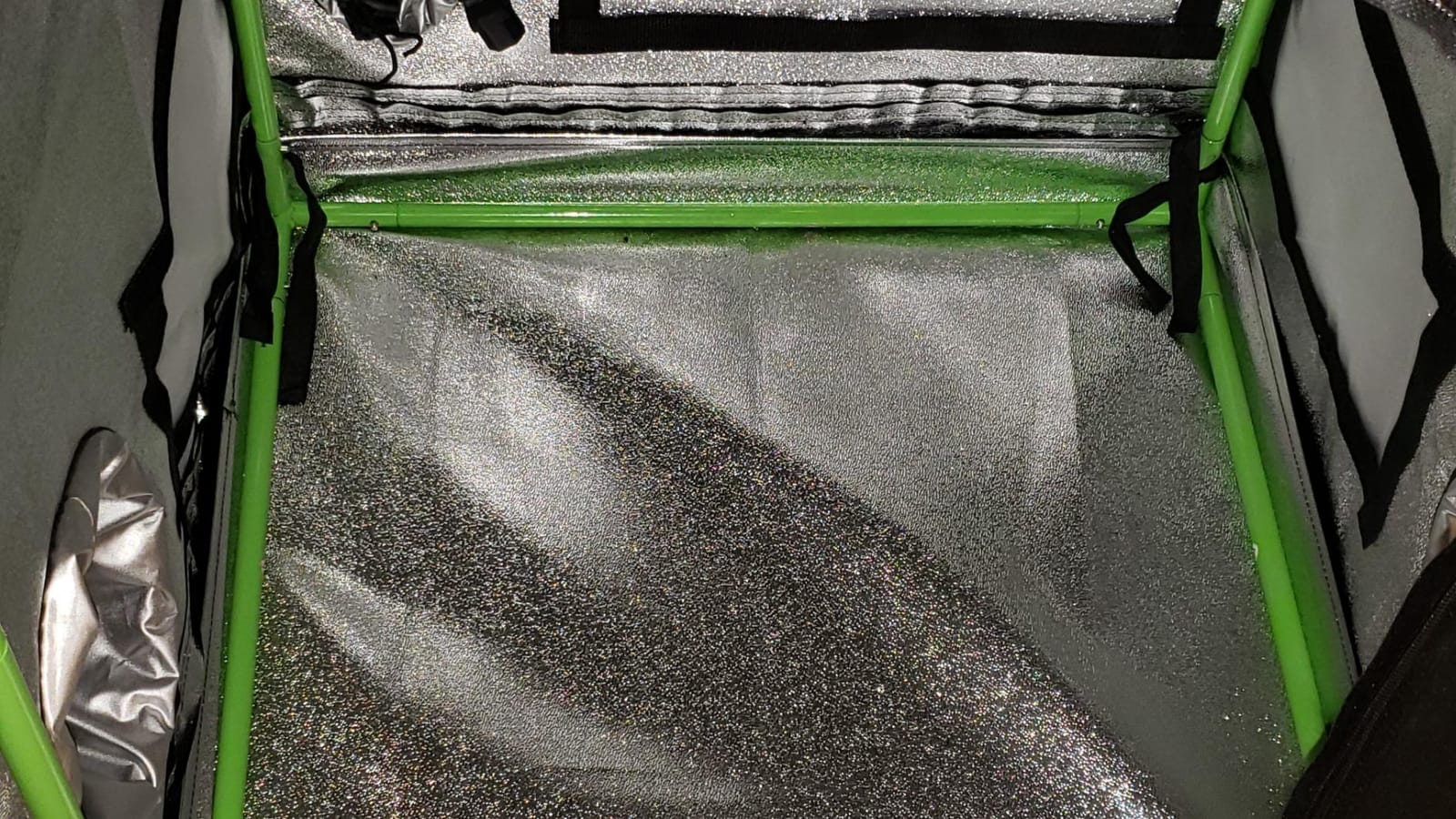
The lining is 95 percent reflective mylar, which is competitive with tents costing noticeably more, and the whole tent is built from PVC-free PEVA materials. Heavy-duty zippers open smoothly and, according to reviewers, do not catch on the fabric the way they do on cheaper tents.
Assembly is unusually simple. This model uses connector A only, so there are no B or C pieces to work out, and the instruction sheet is short because there is less to explain.
What good airflow actually gets you
With that many ports you can run an intake on one side and an extraction on the other without blocking a port with duct fittings. Growers on ILGM forums describe dehumidification as the hardest problem at this scale, and port count is the tent-side half of that fix. The other half is airflow capacity, which no tent can supply on its own.
Where the finish quality shows
There are no reinforced corners and no zipper cover flap, so raw cut edges near the door and windows can fray with use and may need sealing. Some buyers report pinhole leaks along stitching. If you are picky about light escaping, run a light test in a dark room before you load the tent with plants.
6. Green Hut 2×2: Best Budget Metal-Frame Pick
2×2 Green Hut Grow Tent 24″x24″x48″ 600D Mylar Hydroponic Grow Tents
Footprint 24 x 24 x 48 inch
600D double-stitched mylar canvas
All-steel frame rated to 110 lbs
5.9 kg
Pros
- All-metal frame and corners rather than plastic
- Patented anti-rust connector holds its adjustment
- Large smooth heavy-duty zippers with ribbon
- Takes down and back up repeatedly
Cons
- Zipper flap fabric catches on the zipper track
- Vent holes sit mid-panel rather than near a corner
- Green exterior piping makes the tent visually obvious
The thing that separates this from other entry-level 2×2 tents is the frame. It is all steel, poles and corners, rated to at least 110 pounds, and the patented PA connectors are adjustable and anti-rust. At this tier, seeing metal corners rather than plastic is rare enough that it changes the durability story.
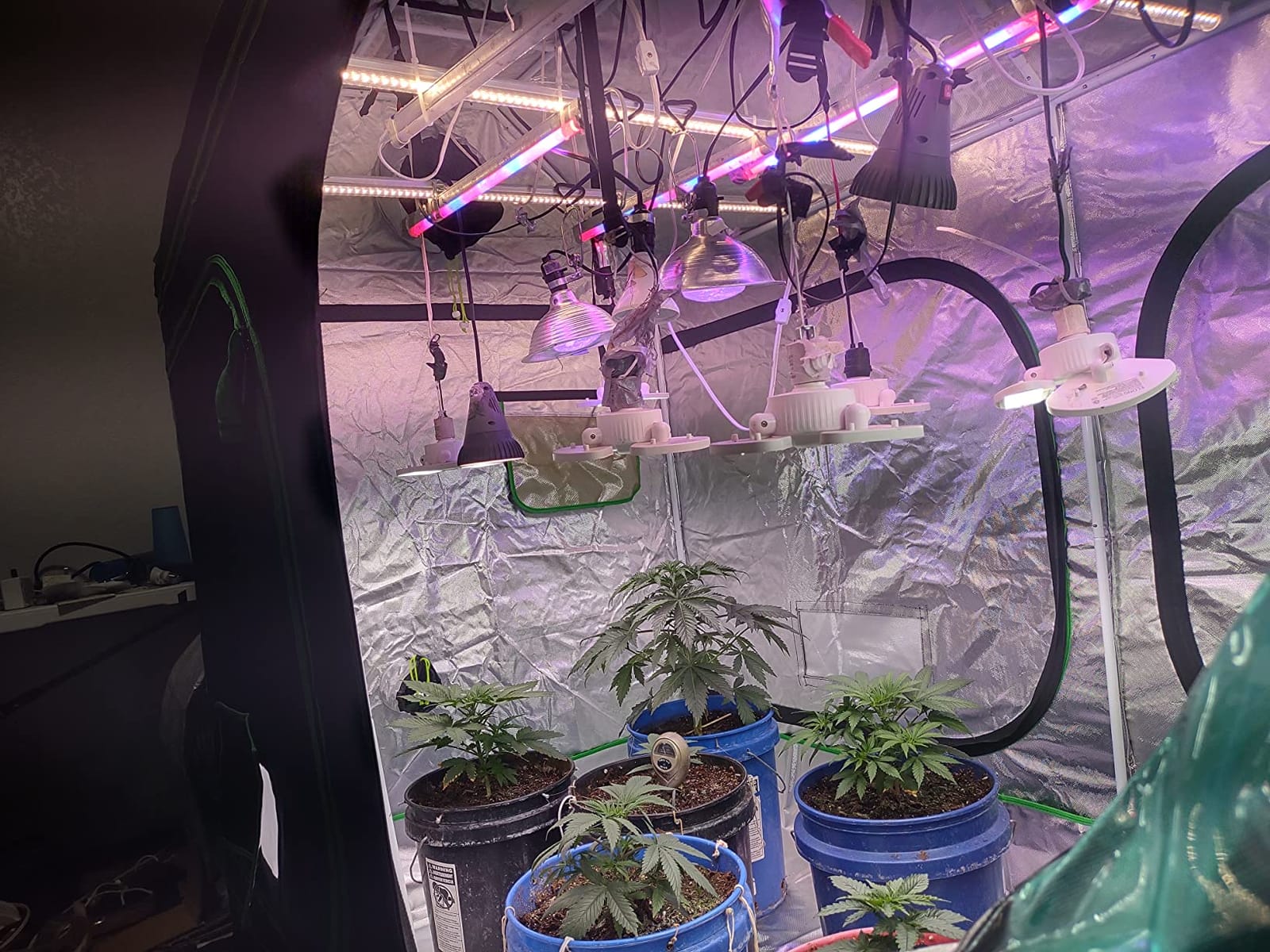
Because there is no plastic in the frame, the tent can be taken down and set up again many times without cracking connectors. That matters if you plan to move between a closet and a spare room, or if you travel the setup seasonally.
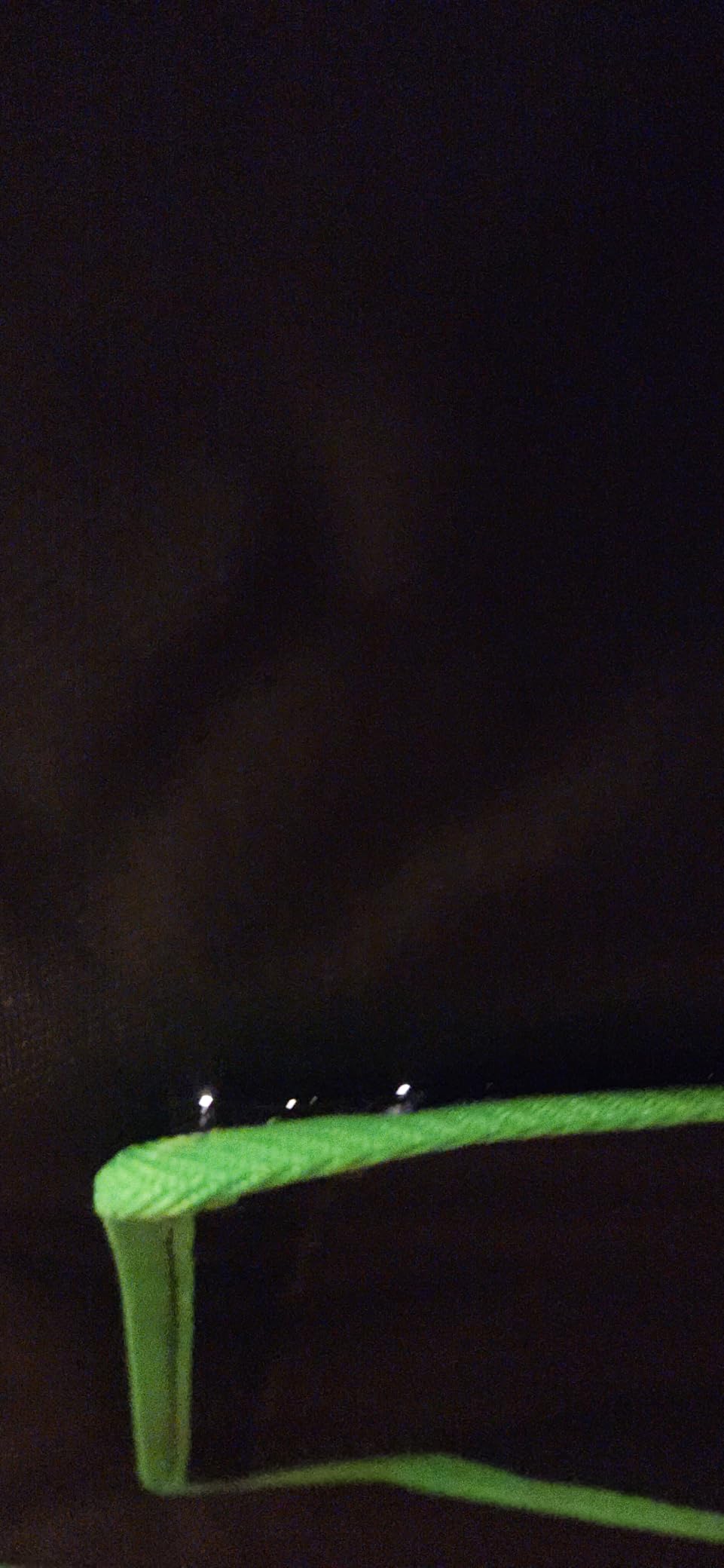
The canvas is 600D tear-proof, double stitched, with a removable mylar floor tray and large heavy-duty zippers backed by 1.5 inch ribbon for light blocking. Weight is 5.9 kg.
Why metal corners matter at this budget
Plastic corners are the first failure point in cheap tents, and forum complaints about cracking under the weight of a carbon filter and driver come up repeatedly. A steel frame with adjustable connectors does not have that failure mode. It also means a duct fan pulling on the tent wall has something solid to push against.
Where the compromises are
The zipper flap fabric catches on the zipper track when you close it, which is annoying but not a light leak if the ribbon seal works. Vent holes sit mid-panel instead of near a corner, so duct routing is less tidy. Green exterior piping and branding also make the tent obvious in a room where you were hoping it would blend in.
7. zazzy 2×2 Grow Tent: Best for Shelves and Low Ceilings
2×2 Grow Tent 24″x24″x36″ 600D Mylar Hydroponic Growing Tent
Footprint 24 x 24 x 36 inch
98 percent reflective mylar lining
600D tear-proof canvas
5.1 kg
Pros
- Shortest height here at 36 inches for shelves and tight spots
- 98 percent reflective mylar interior
- Mesh vent windows keep out dust and insects
- Anti-rust PA connectors hold adjustment
Cons
- 36 inch height leaves little room for a hanging carbon filter
- Canvas is thinner and less reflective than premium rivals
- Some light leakage at the zipper and window areas
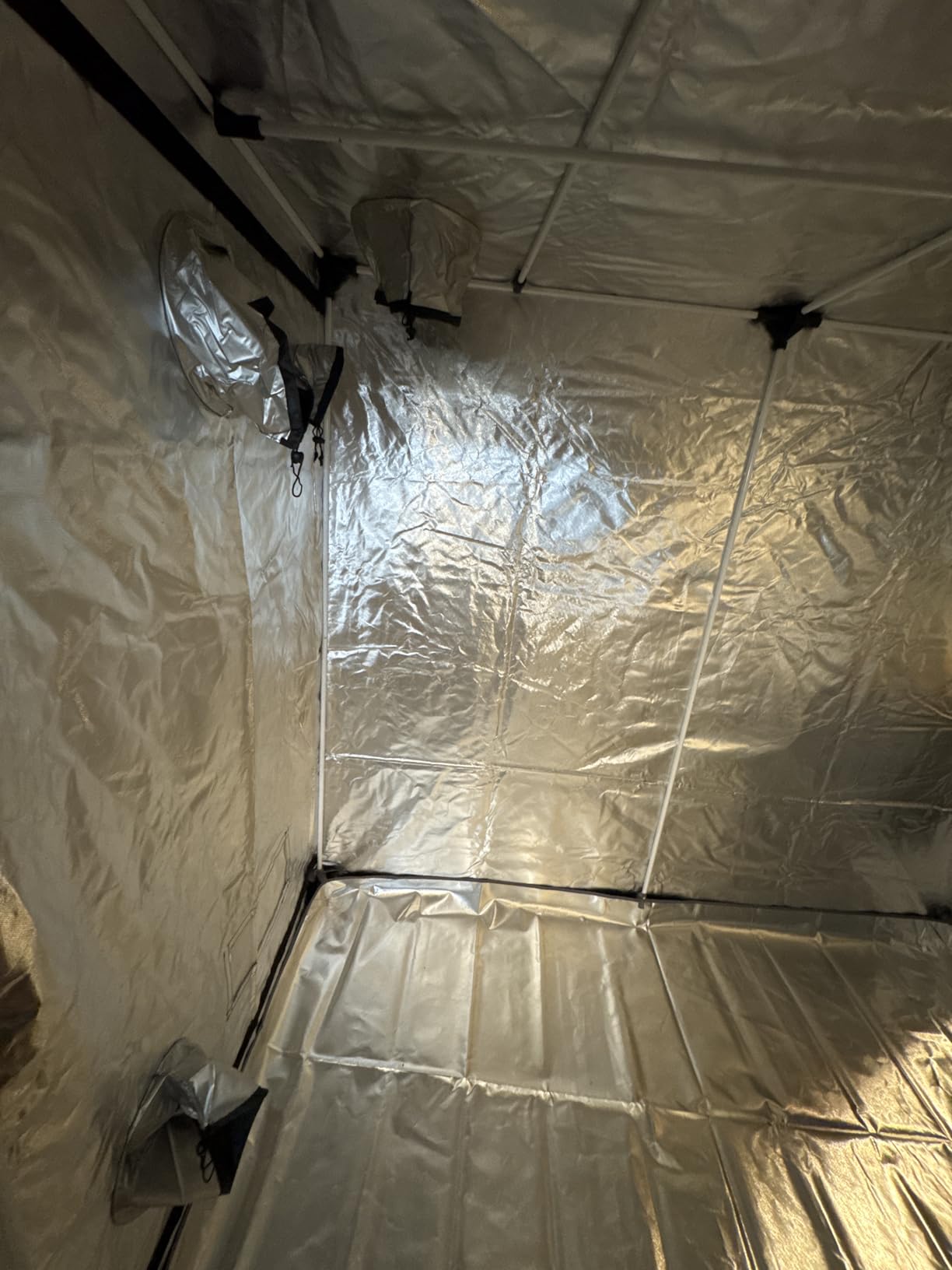
Every other tent on this list is 48 inches tall. This one is 36, and in a home with a low ceiling, a sloping roof or a shelf-height space, that twelve-inch difference is the whole decision. It is also the only genuinely compact option here for a propagation or seedling station.
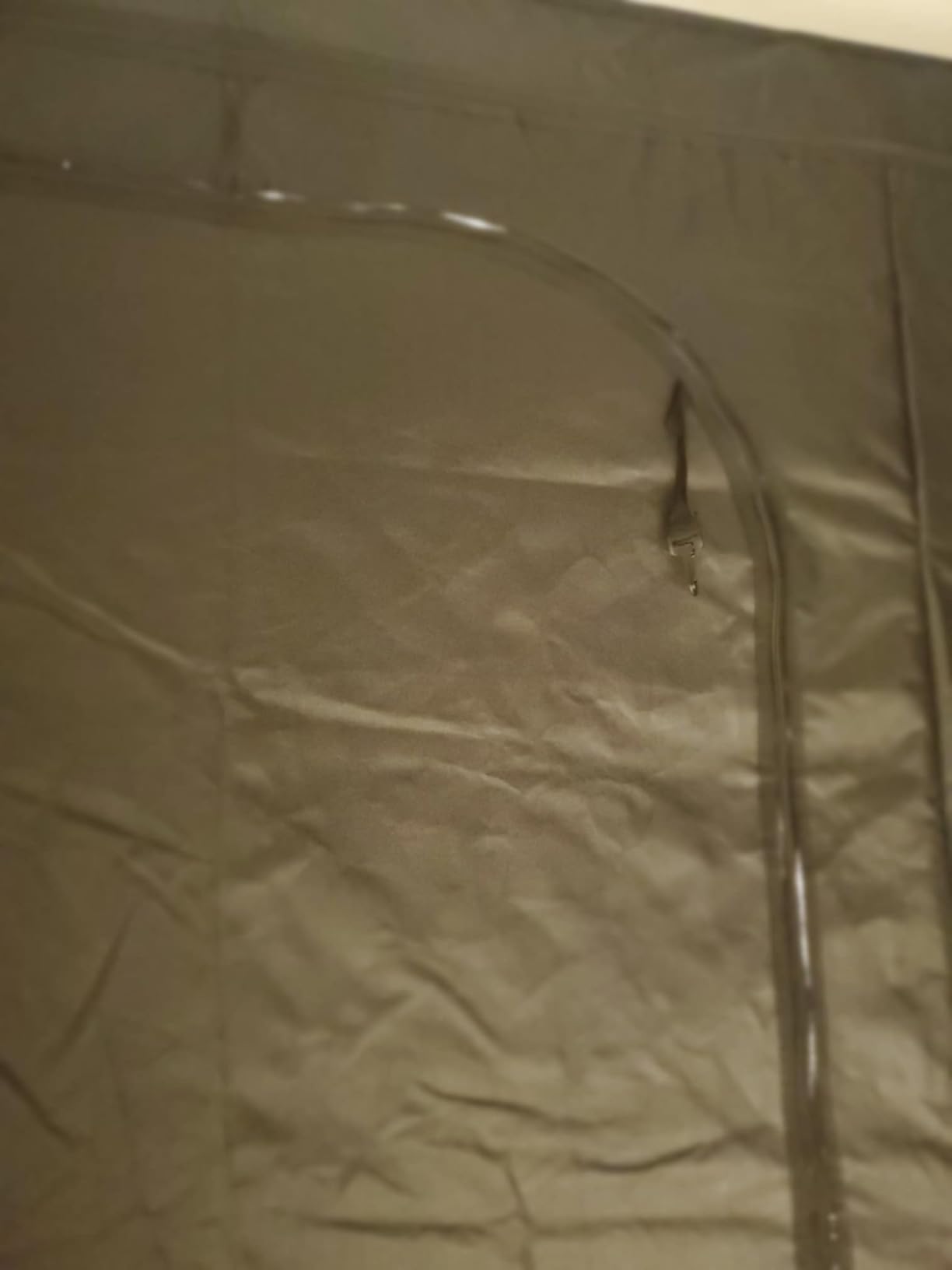
The reflective claim is strong for the tier: 98 percent reflective mylar over 600D tear-proof, double-stitched canvas, with a heavy-duty zipper for light blocking and a removable mylar floor tray. Mesh vent windows keep dust and insects out, which matters if the tent sits in a utility space rather than a bedroom closet.
Tool-free installation and clearly labeled parts make this a good first build. At 5.1 kg it is easy to lift onto a shelf, which is not something you can say for the heaviest tents in this group.
Where a short tent helps more than it hurts
A lower tent also holds heat more tightly, because the volume of air your light has to heat is smaller. In a cold closet in winter that is an advantage, and it is why growers use low tents for cloning and early veg.
Where 36 inches stops being enough
Once you flower a plant, 36 inches is tight. You need room above the canopy for the light, and you need vertical space to hang a carbon filter without it sitting on the tent roof. Growers repeatedly caution against tall photoperiod strains at this size anyway, so pair this tent with autoflowers and a low-profile light.
8. VIVOSUN P224 PRO: Best for Light Placement Flexibility
VIVOSUN P224 PRO Grow Tent 2×2 Small Indoor Grow Tents 24″x24″x 48″
Footprint 24 x 24 x 48 inch
Three-layer 2000D Oxford canvas
22mm steel poles
Three hanging bars
Pros
- Thick three-layer 2000D canvas seals light well
- 22mm poles among the thickest in the group
- Three hanging bars give better light placement
- Cable management slots and outside tool pocket
Cons
- High CFM support kit is excluded on this model
- Air vents are small and few for humidity control
- Viewing windows are the main light leak point
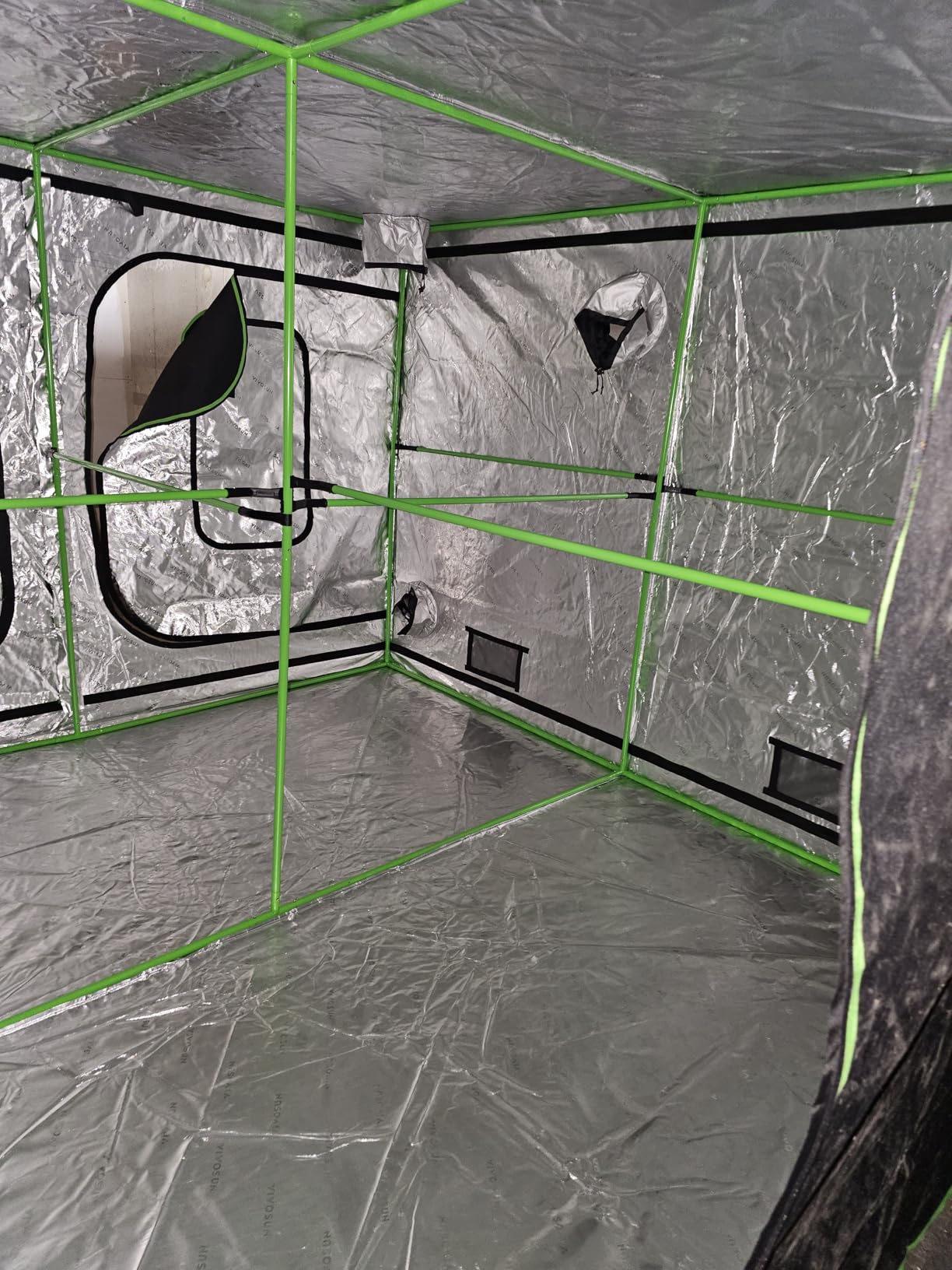
The P224 PRO is the newest member of this group and the one built around a simple problem: a 48 inch tent gives you almost no room to position a light. It ships with three hanging bars and 22mm steel poles, so you can hang a bar light lengthwise, crosswise, or split across the tent instead of committing to one fixed position.
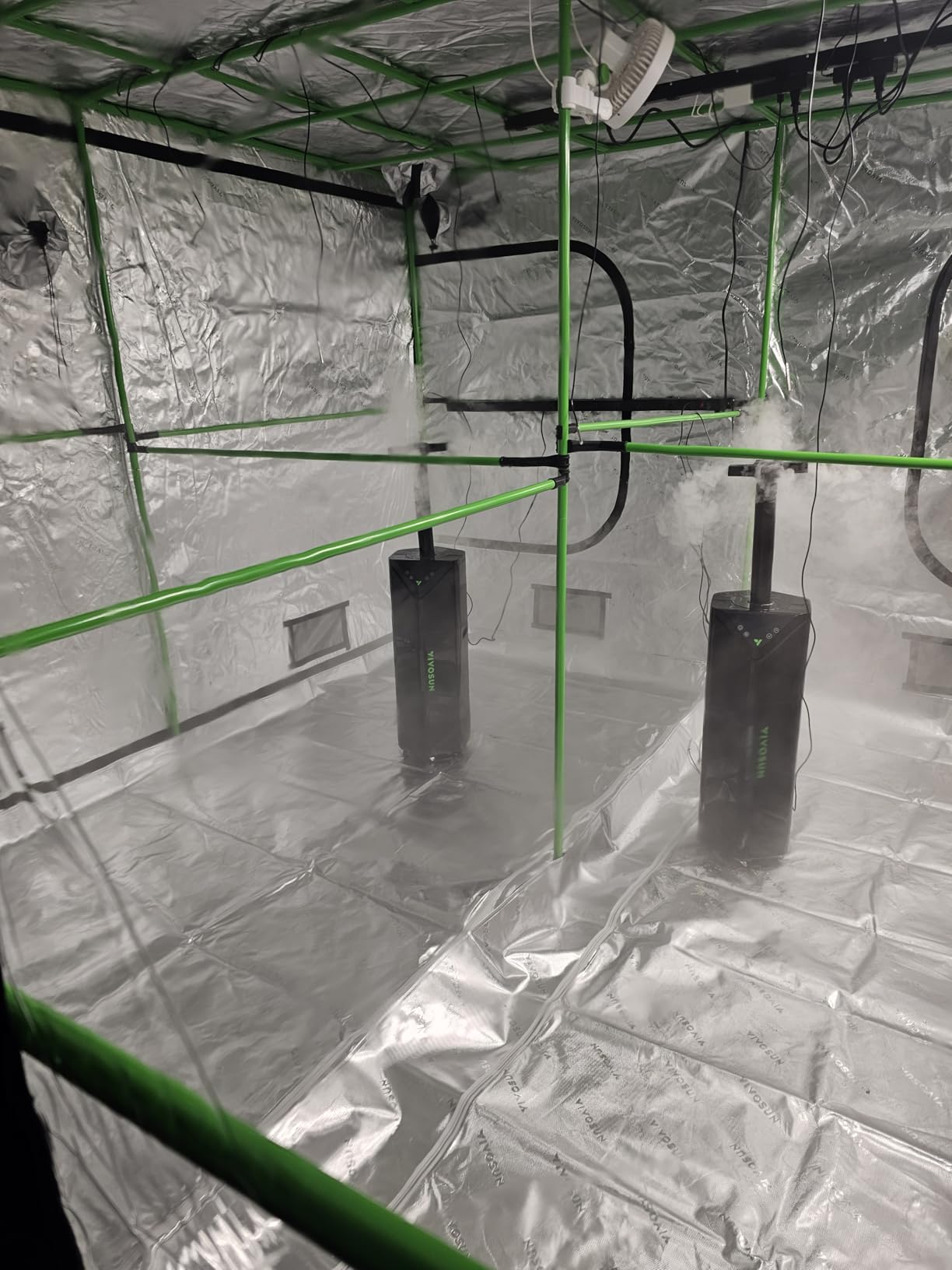
The fabric is the thickest tier here, a three-layer 2000D Oxford canvas lined with PE and reflective mylar, with black inner lining at the zipper. Pole load capacity is listed between 150 and 400 pounds. The zipper door is removable and attaches to the side with hook-and-loop, which opens the front up completely for airflow or for working on plants.
Cable management slots for controllers and an attachable outside pocket are the details that show this was designed around real setups rather than empty tents.
What three hanging bars buy you
Two-bar tents force one decision. Three bars let you mount a light off-center for a mother plant and clones on one side, or split a bar light to avoid hot spots across a wider canopy. In a 2×2 that flexibility is worth more than it would be in a larger tent, because you have less room to work around a bad position.
What to check on arrival
Two things. The high-CFM support poles are excluded on the P224 model, so if you are running a powerful inline fan, factor in flexing. And the vents are small and few, which means active humidity control has to come from your fan rather than from passive flow. Some shipments also arrive with missing supporting poles, so inventory the box.
9. ATOUR 2×2 Grow Tent: Best Lightweight Tent for Moving Around
ATOUR 24”x24”x48” Grow Tent, Reflective 600D Mylar,Hydroponic Grow Tent with Observation Window and Floor Tray for Indoor Plant Growing 2’x2’
Footprint 24 x 24 x 48 inch
Reflective polyester film lining
Heavy metal rod frame
3.8 kg
Pros
- Lightest tent in the roundup at 3.8 kg
- Reflective polyester film performs well for the tier
- Inner zipper flap blocks light at the door seam
- Good number of vent holes for fans and ducting
Cons
- Thinner 600D fabric not intended as a heavy grow room
- Velcro observation window can loosen with frequent use
- Zipper quality is mediocre compared with the frame
At 3.8 kg this is the tent we would pick for a home office or a spare room where you may need to take the whole thing down and put it away. The frame is a heavy metal rod frame with double-stitched zipper seams, and the interior is a reflective polyester film rather than true mylar.
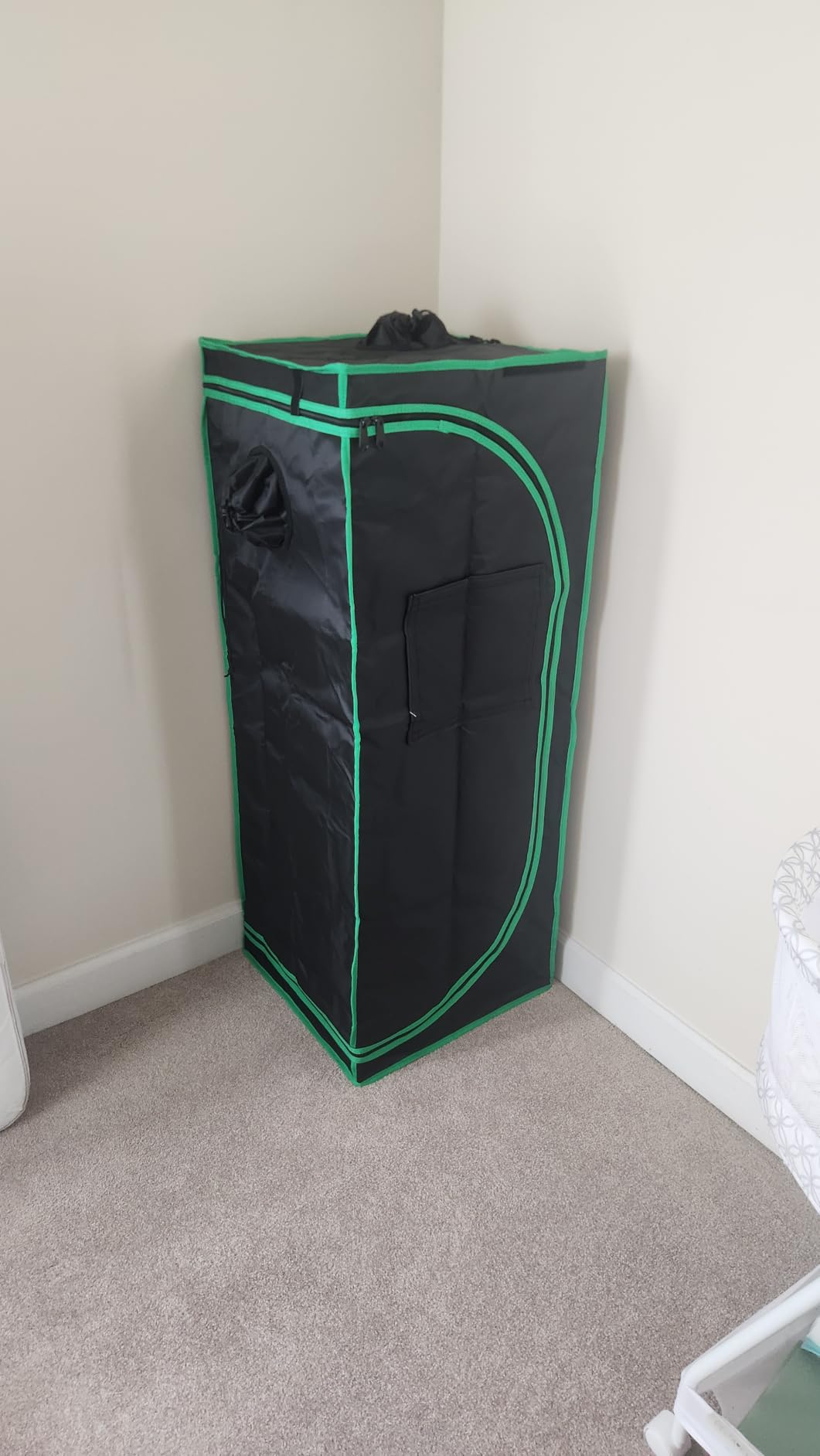
The polyester film lining does a reasonable job of reflecting light and holding temperature, and buyers generally treat the reflective performance as good for the price. An inner zipper flap blocks light at the door seam, which is where a lot of budget tents leak.
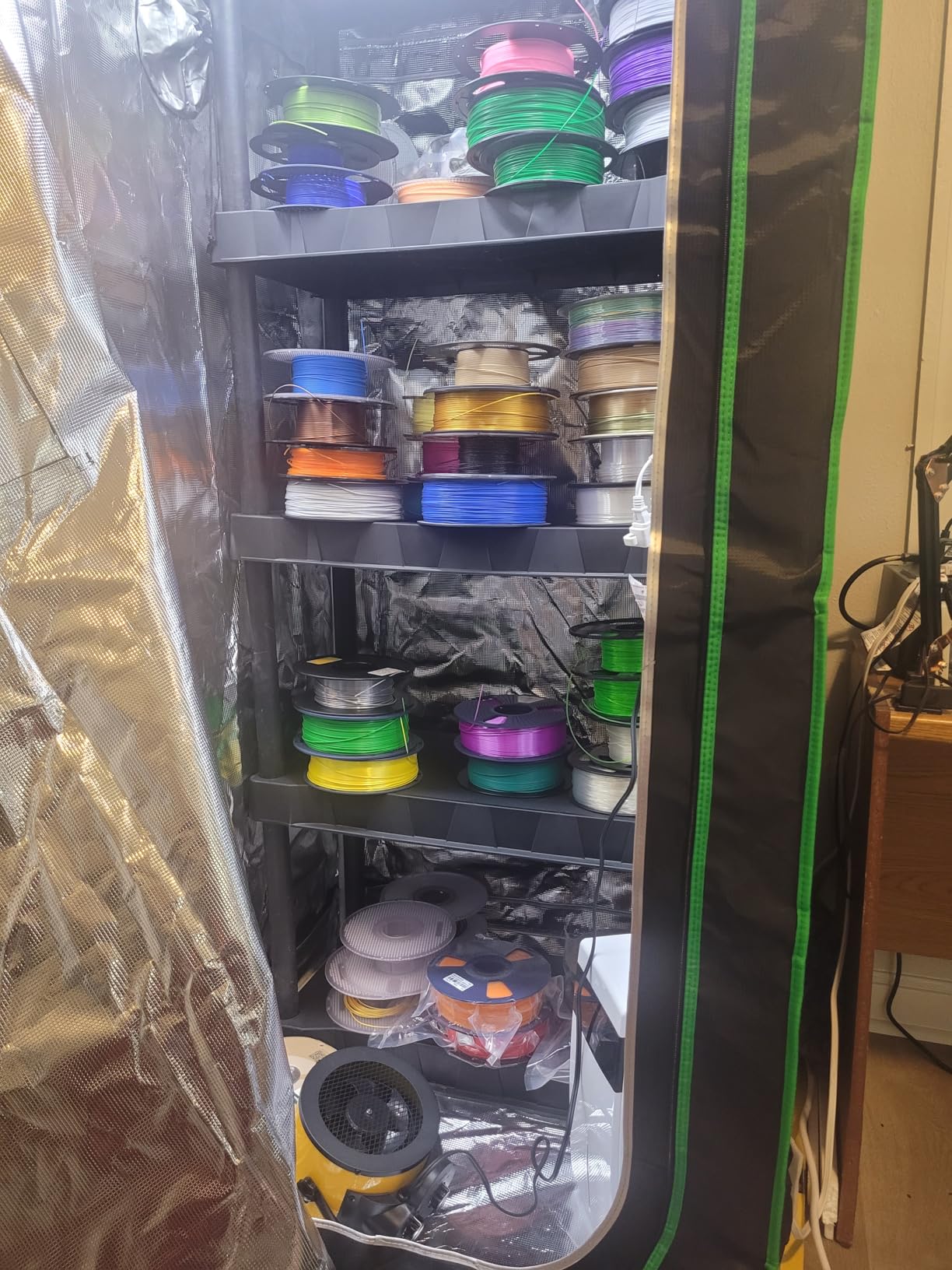
There are multiple vent holes sized for fans, lights and ducting, and tool-free assembly takes about fifteen minutes for one person.
Who this suits
If you want a tent for propagation, a mother plant station, or a dry and cure area that you will move between rooms, this is enough. The number of vent holes is the detail that makes it work as a mother room station, because passive flow around clones matters more than light sealing.
Where it falls short
Reviewers are clear that this is a light-duty tent, not a heavy grow room. The 600D fabric is thinner than the premium rivals, the velcro observation window can come loose with frequent opening, and the zipper quality does not match the frame. Pole holes also do not always line up cleanly, and the instructions for this specific size are not in the box.
10. MELONFARM 2×2 Grow Tent: Best for Dual Observation Windows
MELONFARM 2×2 Grow Tent, 24″x24″x48” High Reflective 600D Diamond Mylar Canvas with Observation Window and Floor Tray for Hydroponic Indoor Plant Growing
Footprint 24 x 24 x 48 inch
600D double-stitched Oxford canvas
Dual transparent windows
4.74 kg
Pros
- Dual transparent observation windows for easy monitoring
- Storage bag included for accessories and stowing
- Reflective waterproof lining compares well to other budget tents
- Tool-free installation
Cons
- Lowest average rating in the group at 4.3 stars
- 600D canvas is the thinnest tier and can feel flimsy
- Listed dimensions do not match the stated 24 by 24 by 48 size
- Fewer duct port and venting options
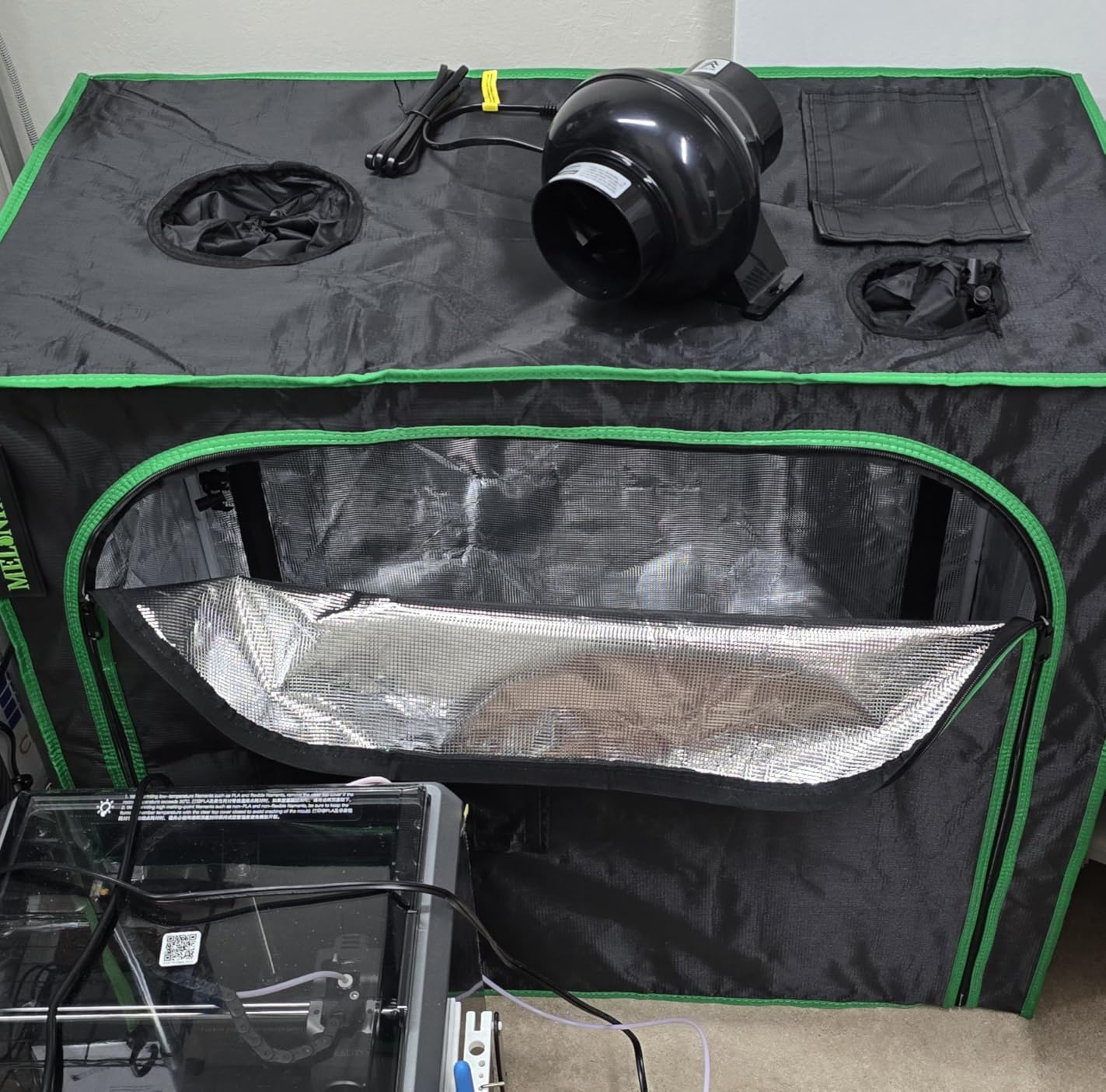
Two observation windows on a two-foot tent is a real advantage, because you can check one side of the canopy without leaning over the other. That matters in a dense setup where a single window shows you half the plants and hides the rest. The large heavy-duty zipper door and included accessory storage bag round out a genuinely useful package.
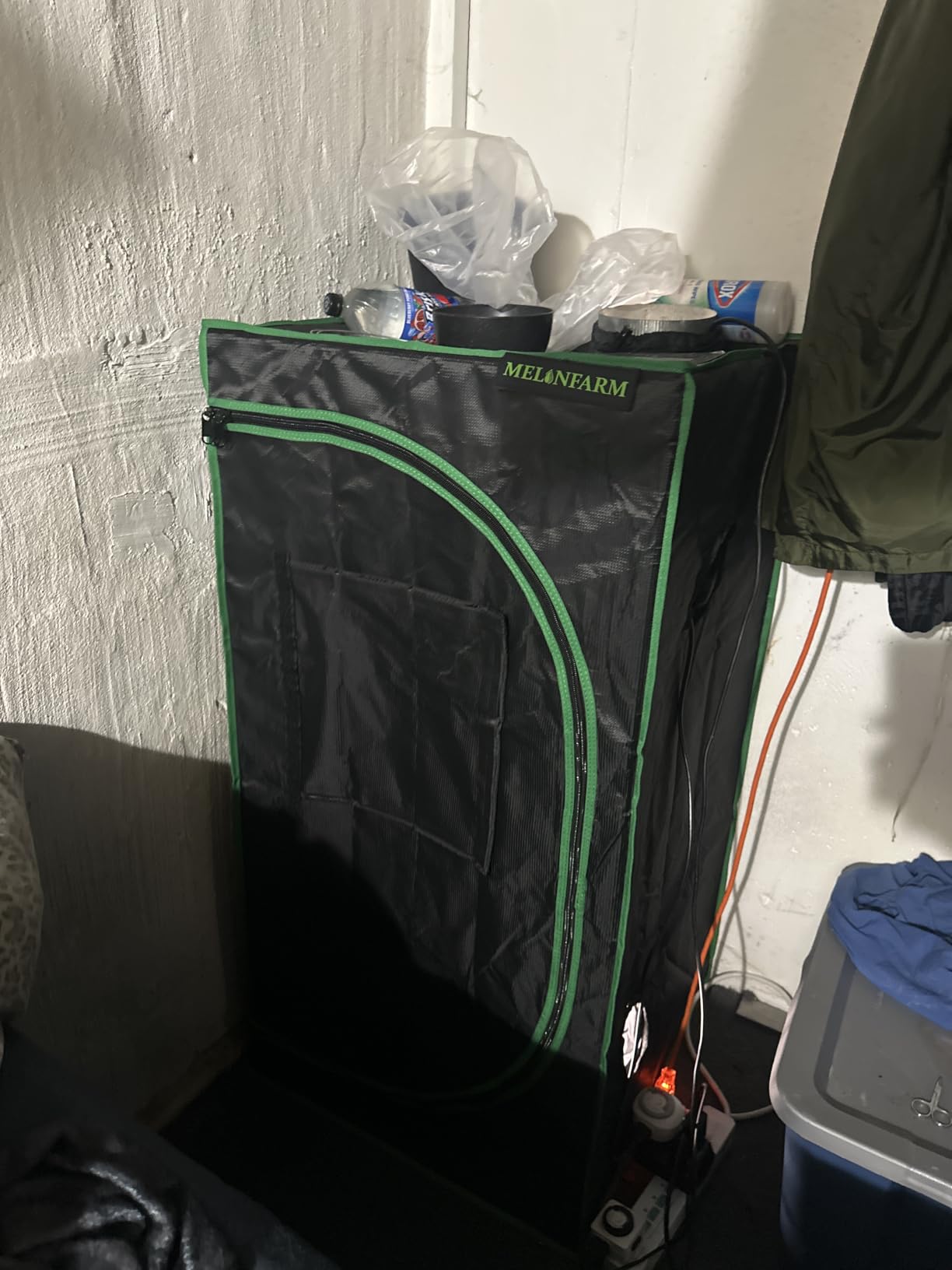
The lining is a reflective waterproof polyester film over 600D double-stitched Oxford canvas, and buyers compare the reflectivity favorably against other tents in the same bracket. Installation is tool-free and takes minutes even for a first build. Weight is 4.74 kg.
This is the tent to look at if you are still deciding whether a 2×2 is worth building at all. It will not be the last tent you buy, but it will tell you quickly whether you enjoy the process.
What it does well
The window layout and the storage bag. Serious micro growers keep a lot of small accessories, and a bag means you can pack the tent away without losing clips, ties and sensor cables in the process.
Why it is ranked last
Its 4.3 average is the lowest in this group, with 8 percent one-star reviews, the widest spread of any tent we reviewed. Reviewers point to the thin 600D canvas, fewer venting options, and a spec listing whose dimensions do not match the stated size. Some also report pole holes not lining up perfectly, so assemble it before you rely on it.
How to Choose a 2×2 Grow Tent for a Small Space
Measure the space before you browse. A 2×2 tent needs roughly a 24 by 24 inch footprint plus a few inches of clearance for the frame and for air to move around it, and it needs to be near an outlet that can handle a light plus a fan. If your space is under a sloped ceiling, check the height at the back corner, not the middle.
What the D in 600D, 1680D and 2000D actually means
Denier is a measure of fabric density: how many threads per 0.5 gram of yarn. Higher numbers mean thicker, heavier, more tear-resistant cloth. In practice, 600D is the entry tier and can feel flimsy over a full cycle, 1680D is the sweet spot for a tent you will actually flower in, and 2000D is the heavy end where you can hang heavy hardware with confidence. Reflectivity is a separate number, quoted at 95, 98 or 100 percent depending on the mylar lining.
True 2×2 versus 2×2.5: does it fit your closet
A true 2×2 is 24 by 24 inches and most standard closets will take one comfortably, even with a filter and ducting hanging outside. A 2×2.5 gives you more elbow room for a filter and more plant sites, but in a tight closet it can leave you unable to close the door, which defeats the stealth purpose. Several top lists for small tents actually recommend a 2×2.5, so check the footprint against your door swing before you follow one.
Height math: 36 inch versus 48 inch and light burn
Height is the number most buyers underweight. A 48 inch tent gives you room for a hanging carbon filter plus clearance between the canopy and the light, and anything over about 150 watts should sit at least a foot above the tallest leaf. A 36 inch tent works for seedlings and clones but leaves almost nothing above a flowering plant. One trick worth knowing: skip the included light hangers and zip ties to the frame instead, which buys back a few inches of usable height in a low tent.
Frame and corners: why metal only
Everything hangs off the frame, so the frame is structural. Look for steel poles with a stated load rating and metal or reinforced corner adapters. Plastic corners are the most common failure in cheap tents, and they crack under the combined weight of a carbon filter and a light driver. For a 2×2, a frame rated to at least 100 pounds is the sensible floor.
Light-proofing: zippers, flaps and pinholes
Light leaks come from three places: the zipper track, the stitching, and the ports. A black inner lining on the zipper solves the first without tape. Shade cloth stitched over the zipper-to-canvas seam solves the second. For ports, light-sealing flaps or Velcro covers solve the third. Do a five-minute dark-room test before you add plants, because a leak is far easier to fix on an empty tent.
How Many Plants Fit in a 2×2 Grow Tent
One large plant in a five gallon pot is the most common answer, and it is the one AC Infinity rates the CLOUDLAB 422 for. Two or three smaller autoflowers work well if you keep the canopy even and train outward, and a dense sea of green of four or more is possible but pushes both light intensity and frame load past what a 2×2 is specced for.
Grow communities consistently treat autoflowers as the default for 2×2 spaces, because photoperiod strains stretch toward the ceiling and hit the light. If you want more than three plants, the honest move is a 2×4 or a 2×2.5 rather than forcing a taller plant count into a smaller box.
Ventilation for a 2×2: Fan, Carbon Filter and Ducting
A four-inch inline fan paired with a four-inch carbon filter is the setup most experienced growers recommend for this size, and they advise buying both separately rather than accepting a bundled filter. Odor control is treated as non-negotiable even at micro scale, because a 2×2 sitting in a closet is close enough to your hallway to smell.
Run intake low on one side and extraction high on the other, and leave enough slack in the duct so the fan is not fighting its own intake. Small fans are the loud option in an apartment, so budget for a decent one rather than the cheapest. Expect dehumidification, not temperature, to be the harder problem: the volume of air in a 2×2 is small and cheap dehumidifiers cannot keep up.
Where to Put a 2×2 Tent Inside a Small Home
Closets are the classic answer, and the VIVOSUN S224 listing specifically names wardrobes, laundry rooms and balconies as intended spaces. Watch the seasonal swing: a closet with no window traps heat in summer and gets cold in winter, and a tent amplifies both because the mylar holds temperature inside.
A spare room or home office corner gives you airflow and an outlet you control. A concealed spot under furniture or behind a curtain reduces the light signature but makes maintenance harder. If the setup has to live in a shared utility space, the same space-planning logic we use in our portable workshop tents guide applies. Whatever you pick, leave access to the door, check the electrical capacity for a light plus a fan, and keep the tent off shared walls you do not control if you care about light leakage.
Tent vs Kit: What a 2×2 Starter Kit Should Actually Include
A usable 2×2 setup needs four things: the tent, a dimmable LED in the 100 to 200 watt range, a four-inch inline fan, and a four-inch carbon filter. Community advice leans toward assembling those four pieces yourself, because bundles often pair a weak light with a undersized filter and leave you replacing both within a cycle.
The extra items people add later, in order of usefulness, are a thermo-hygrometer with a remote probe, an oscillating clip fan for the canopy, a floor tray if the tent did not include one, and quiet ducting clamps. Buy the tent first, then see what your space actually needs.
Frequently Asked Questions
What is the best affordable grow tent?
The VIVOSUN S224 is our best affordable 2×2 pick. Its black inner zipper lining seals light without tape, assembly is tool-free, and it holds a 4.5 average across more than 33,000 ratings. If you want more frame strength, the MARS HYDRO 2x2x4 steps up to 1680D canvas and a shade cloth flap over the zipper seam.
How many plants can I grow in a 2×2 tent?
Most growers run one large plant in a five gallon pot, which is how the AC Infinity CLOUDLAB 422 is rated. Two or three smaller autoflowers with an even canopy also work well. Four or more in a dense sea of green is possible but strains light intensity and frame load, and photoperiod strains will stretch into the ceiling.
Are Gorilla grow tents worth it?
We did not review a Gorilla 2×2 here, so we cannot give a measured verdict on one. What we can say is what matters at this size: a steel frame with a stated load rating, metal or reinforced corners, and a light-sealing zipper. Gorilla is widely regarded as a strong build, so apply those checks to whatever 2×2 you shortlist.
How hot is too hot for a grow room?
In a sealed 2×2 the practical ceiling sits around 85F before plants start showing stress, and mylar-lined walls make a small space climb faster than you expect. Above that you need extraction rather than more light. Run intake low and exhaust high, keep the duct short, and check the temperature at canopy height with a remote probe rather than at the tent ceiling.
What is the best LED grow light for a 2×2 grow tent?
A dimmable bar-style LED in the 100 to 200 watt range suits a 2×2 best. Growers on r/2x2growery consistently favour bar-style fixtures when the budget allows, because bars spread light more evenly across a small footprint. Dimmability matters more than raw wattage, since a brighter light in a 48 inch tent usually means more heat than more usable yield.
How many watts of light do I need for a 2×2 grow tent?
Plan for roughly 100 to 200 watts of actual draw for a 2×2, which covers one large plant or a small group of autoflowers without forcing heat into the space. Keep at least a foot of clearance between the light and the tallest leaf to avoid light burn, and choose a dimmable fixture so you can turn down rather than lift the light.
Conclusion
After comparing ten 2×2 grow tents built for small spaces, the AC Infinity CLOUDLAB 422 comes out ahead on canvas thickness, frame gauge and light control. It is the tent we would put in a closet and forget about for a full cycle, and its 4.7 average across more than 7,000 ratings backs that up.
If your budget is tighter, the VIVOSUN S224 is the value pick and the MARS HYDRO 2x2x4 is the best light lock. Whichever you choose in 2026, measure your space first, plan for autoflowers, and build the tent empty so you can test for leaks before plants go in.
For more small-space roundups, we keep a running list of wall beds for small spaces and accent table lamps for small spaces that follow the same measure-first approach.