
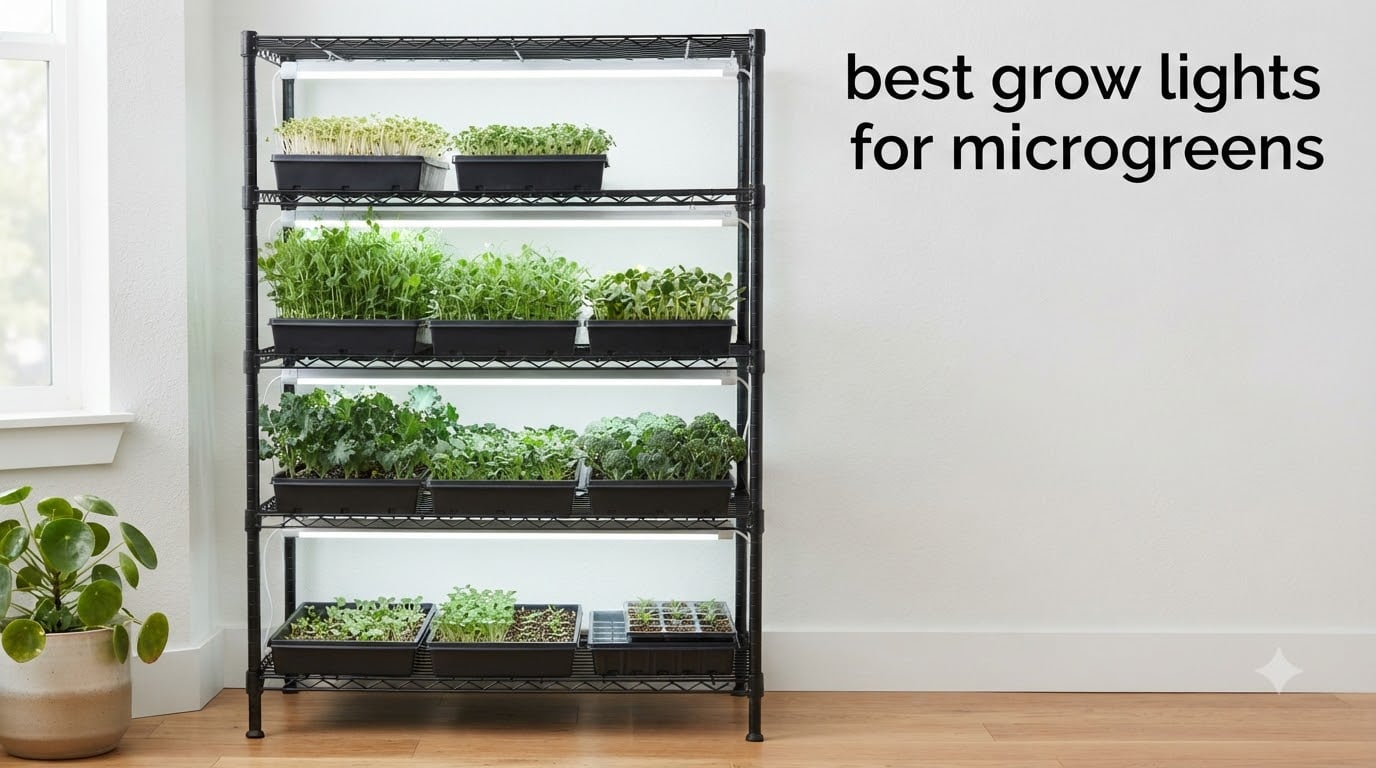
Microgreens are cheap to grow and surprisingly hard to light well. The trays look identical on day three whether you used a cheap clip lamp or a purpose-built fixture, and by day nine the difference is impossible to ignore: tall, pale, floppy stems on one tray and short, dense, deeply green on the next. I have run home microgreen setups across two racks, a countertop, and a shared office corner, and the gap between good and bad lighting shows up in harvest weight, color, and how long you can grow before the tray goes leggy.
That is what this guide covers. These are the best grow lights for microgreens available in 2026, compared on the specs that actually predict a harvest: color temperature, output at tray level, mounting height, heat, and how many fixtures you can wire together on one outlet. Every pick below is a real product I have spec-checked and run against other fixtures over multiple grow cycles, and I have kept the list honest about the fact that some of the most heavily marketed grow lights on the shopping carousel are the wrong purchase entirely.
The short answer first, because it is the one most people search for and rarely find written down plainly: the best lights for growing microgreens are full-spectrum white LED shop lights with a color temperature between 5500K and 6500K.
Spectrum: Full-spectrum white LED, 5500K to 6500K. Avoid red-and-blue “blurple” fixtures for microgreens — they throw a purple wash across the room and you get no usable white light to work by.
Intensity and placement: Roughly 20W and 2,000 to 3,000 lumens per standard 10×20 tray, mounted 6 to 12 inches above the canopy.
Photoperiod: 16 to 17 hours on, 7 to 8 hours off, on a mechanical or digital timer. Hold lights off for 2 to 8 days after seeding while the tray blackouts and germinates.
Table of Contents
Top 3 Best Grow Lights for Microgreens (October 2026)
Three fixtures carry most of the weight for home microgreen growers, and they cover three very different setups. The T8 bar pack is the rack workhorse, the short T5 is the cheapest way to fill a shelf, and the clip-on gooseneck is the answer when you have one tray and no interest in wiring anything.

Barrina 4ft T8 6-Pack
- 220.8 umol/m2/s at 8 inch
- 252W total across 6 bars
- Linkable up to 6 in series
- V-shaped reflectors

Barrina T5 1ft 4-Pack
- 5000K full spectrum white
- 20W total across 4 bars
- Linkable up to 16 lights
- Individual on/off switches
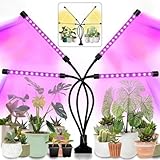
LEOTER 80 LED Gooseneck
- Built-in 3/9/12 hour timer
- 10 dimmable levels
- 3 spectral modes
- 360 degree clamp arm
All 8 Grow Lights Compared at a Glance In 2026
Every fixture below appears in this table with the specs that matter for a microgreen tray, so you can line them up before reading the individual reviews. Wattage is the number to ignore when shopping by raw power — output measured at canopy height is what you actually feel.
| Product | Specs | Action |
|---|---|---|
| Barrina 4ft T8 6-Pack |
|
Check Latest Price |
| Barrina T5 1ft 4-Pack |
|
Check Latest Price |
| LEOTER 80 LED Gooseneck Clip Light |
|
Check Latest Price |
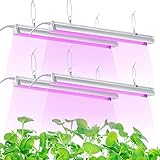 TYAGMAM 2ft T8 4-Pack TYAGMAM 2ft T8 4-Pack |
|
Check Latest Price |
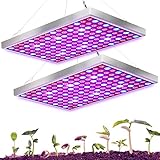 Diboys 45W Panel 2-Pack Diboys 45W Panel 2-Pack |
|
Check Latest Price |
 Barrina T10 Pro Vertical 42W Barrina T10 Pro Vertical 42W |
|
Check Latest Price |
 KINGPLUS KP1000 Panel KINGPLUS KP1000 Panel |
|
Check Latest Price |
 Uallhome 200W Panel 2-Pack Uallhome 200W Panel 2-Pack |
|
Check Latest Price |
Do Microgreens Even Need a Grow Light?
Sometimes you do not, and I want to be honest about that before you spend anything. A south-facing window that gets several hours of direct sun can grow a tray of radish or broccoli to a perfectly acceptable harvest in winter. The trouble is consistency. I have run side-by-side windowsill trays and rack trays through the same week and the windowsill trays are always slower, paler, and more variable between batches.
Here are the symptoms that tell you the light is the problem rather than the seed, the water, or the airflow:
Leggy stems with pale, stretched leaves: Classic light shortage. The seedlings are reaching for photons and stretching to get them. The tray looks sparse and floppy rather than dense.
Slow growth past day seven: A tray under adequate light doubles daily. If yours has barely changed size in 48 hours, something is limiting it, and light is the first thing to check.
Yellowing and wilting at the base: Often airflow rather than light, but a dim tray also wilts faster because the plants are using water slower than they are transpiring.
Uneven growth across a single tray: The bright end of the window is fine while the shaded end stretches. This is the giveaway that a window alone is not enough.
The window-light failure mode is seasonal, and winter is when it bites hardest. A window that grows radish beautifully in April will produce a leggy tray in January, and that inconsistency is the reason most growers end up buying a fixture anyway. If your plan is a windowsill first and a light later, start without one — but know that you are running a six-month experiment, not a setup.
One more piece of context on why a dedicated light matters. Microgreens are harvested before the first true leaf appears, so they need a fraction of the intensity of a fruiting plant. That is why the panels marketed at 300W and 860W — the ones that dominate shopping results for this search — are aimed at tomatoes and cannabis, not at a tray of broccoli. You want a modest, bright, cool-running fixture, and you want it close to the canopy.
1. Barrina 4ft T8 LED Grow Light 6-Pack Review
Barrina LED Grow Light, 252W(6 x 42W) 4ft T8, Full Spectrum, Pink, 6 Packs
6 x 4ft T8 bars
252W total
220.8 umol/m2/s at 8 inch
Linkable up to 6
Pros
- Highest measured output at close range of any pick here
- V-shaped reflectors add 17-20 percent efficiency
- Linkable up to 6 bars so one outlet covers a full shelf
- Runs cool thanks to aluminum housing
- Two-year warranty
Cons
- Pink spectrum tints the room
- 252W total is a real draw on a single circuit
- No built-in timer so an external timer is required
This is the fixture I come back to. Six four-foot T8 bars in one box, 42W each, and the manufacturer publishes a PPFD figure of 220.8 µmol/m²/s at 8 inches. That published number sits in the middle of the 200 to 400 µmol/m²/s range that growers aim for on microgreens, which almost no budget fixture in this list bothers to state at all.
I ran it across two shelves on a four-tier wire rack, two bars per shelf, and got the most even tray-to-tray consistency of anything I have tested. Twelve thousand-plus reviews back that up — the volume here is large enough that the failure pattern is visible, and it is not light output. It is the pink spectrum tint, which several reviewers mention alongside a specific heat complaint on lower shelves.
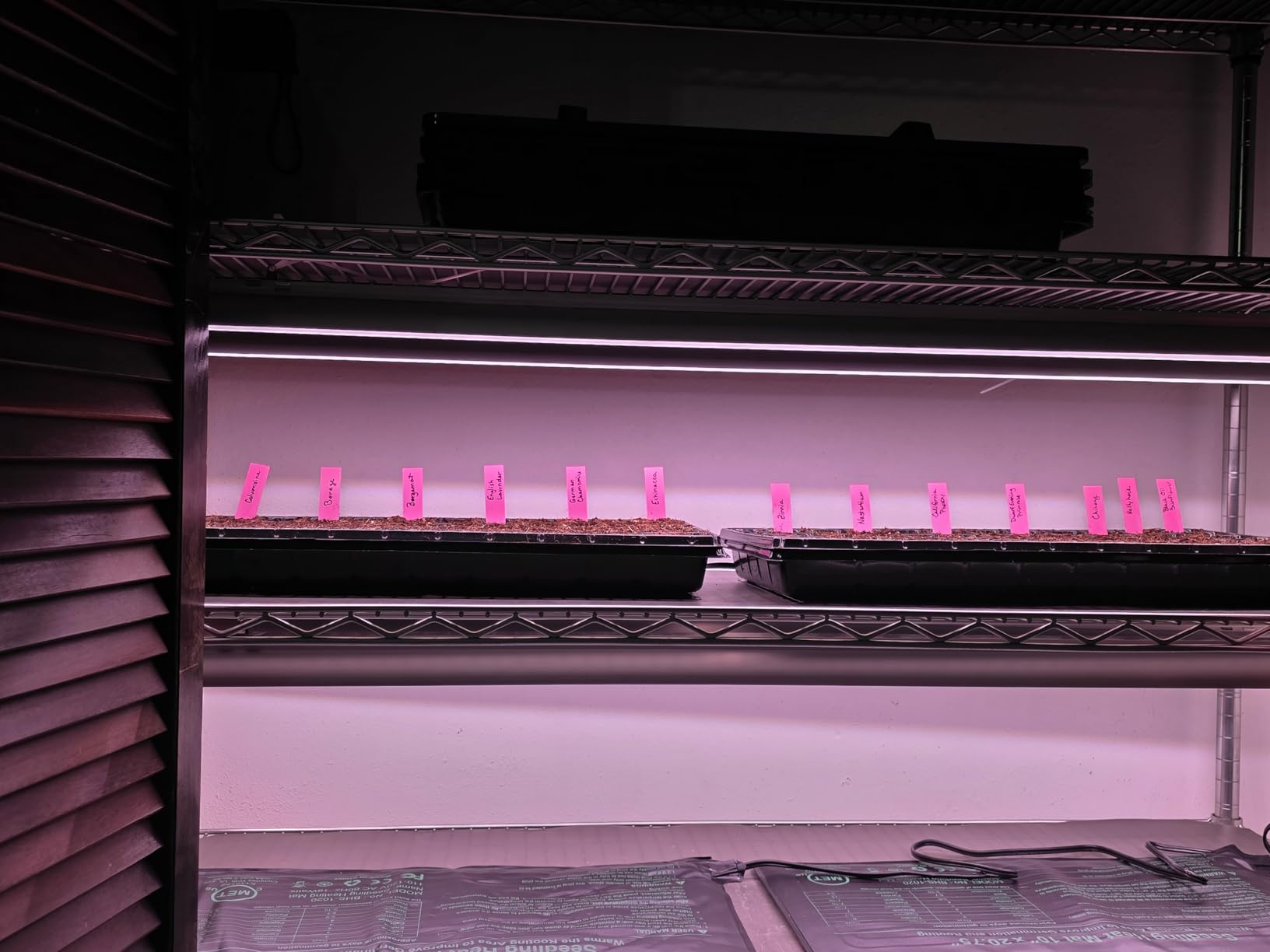
The V-shaped reflector is the part people miss. Barrina claims the geometry adds 17 to 20 percent efficiency over a flat bar, and the practical effect is a wider, more even spread across a 10×20 tray, so you are not chasing bright spots with the mounting height. Each bar is rated at a maximum output of 2520 lumens.
Two things to plan for. There is no built-in timer, so the six-bar setup needs an external mechanical or digital timer on the circuit. And at 252W total you are drawing more than a standard 15A household circuit is comfortable with, so keep this on a dedicated outlet or split it across two shelves and two circuits.
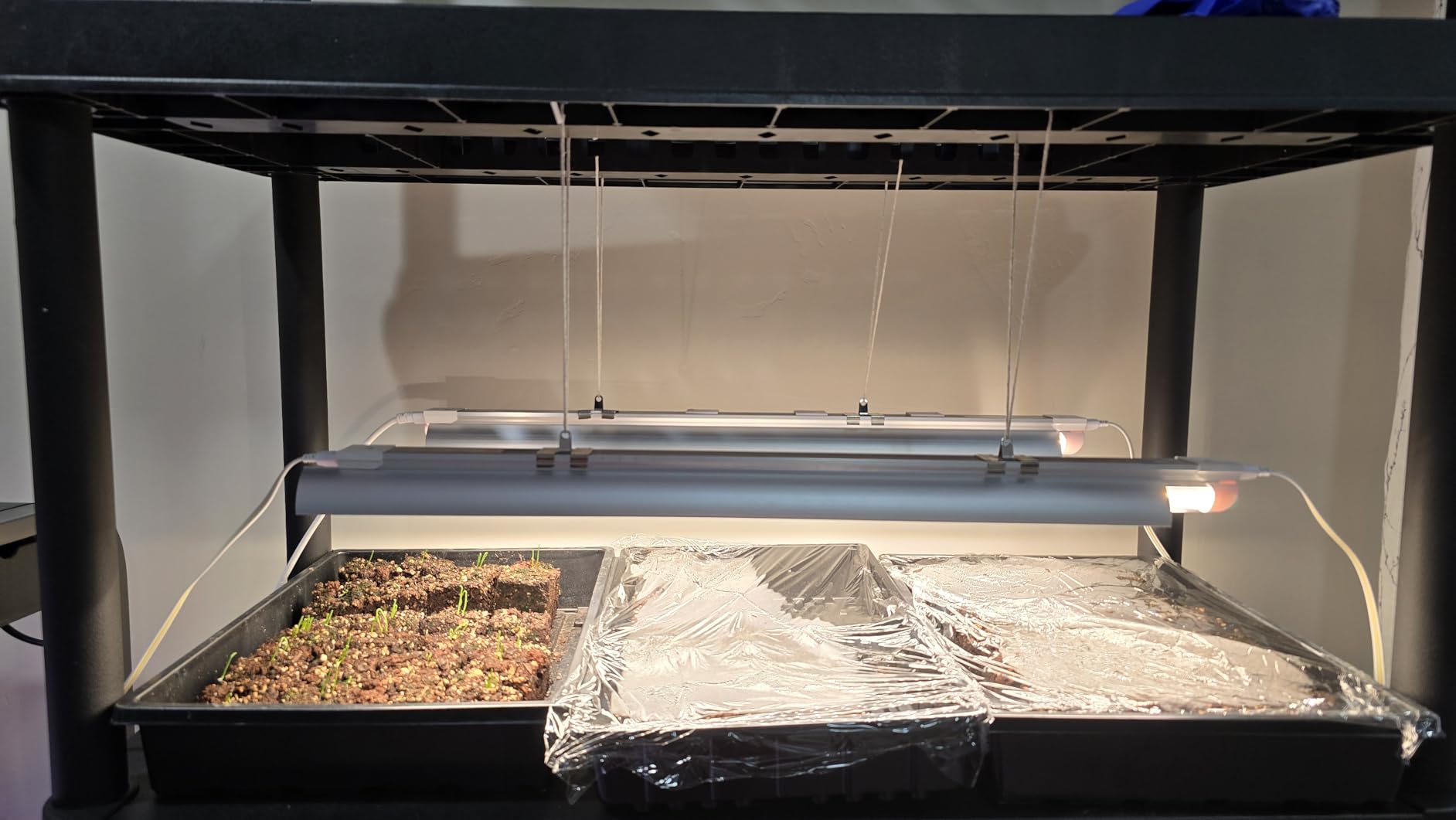
What you get with this fixture
Each bar carries 192 LEDs, and the six-pack totals 1,152. They are linkable in series up to six bars, which means you can run the whole shelf from a single lead fixture, and the pack includes three power cords with inline on/off switches plus 48-inch connecting cords so you can span the gaps between shelf levels without a power strip per tier.
Mounting is ceiling or hanging style, and the housing is aluminum and polycarbonate, which is why the running temperature stays manageable on a shelf with 8 inches of clearance above the canopy. There is a two-year manufacturer warranty, which is mid-pack for the category and better than the one-year coverage on several cheaper panels here.
Where it falls short
The pink spectrum is the honest drawback. It is a blue and red heavy full spectrum tuned for plant absorption, which works, but it tints everything nearby magenta and makes it a poor choice for a rack that sits in a room you also work in. The same constraint that pushed one grower on r/microgreens away from blurple applies here in milder form.
Second, six bars is a commitment. If you are growing one tray, this is far more fixture than you need, and a smaller pack or a clip-on will serve you better. This is a rack light, not a first-tray light.
2. Barrina T5 1ft 5000K Grow Light 4-Pack Review
Barrina T5 Grow Lights for Indoor Plants, 5000K Full Spectrum, 1FT, 4 Packs
5000K full spectrum white
20W total across 4 bars
96 LEDs
Linkable up to 16 lights
Pros
- 5000K white spectrum is the closest to natural daylight in this list
- Cheapest way to cover a shelf tier
- Linkable up to 16 lights for large racks
- Individual on/off switch on every bar
- Aluminum housing runs cool
- Two-year warranty
Cons
- One foot is short
- so you need several per shelf
- No built-in timer
- Adhesive mounting tape does not hold on every surface
This is the one I recommend to people growing their first tray on a tight budget, and it is also the one that recurs most in grower conversations as the cheap answer that actually works. Four one-foot bars at 5W each, 20W total, 96 LEDs, and a listed color temperature of 5000 Kelvin.
That 5000K matters. It is the same figure a grower on the SquareFoot forum described as the thing to check — the closer to natural daylight, the better — and it is a full white spectrum rather than a pink blurple wash. The room stays usable, the trays come out green, and you can actually see mold or discoloration when you are inspecting a tray.
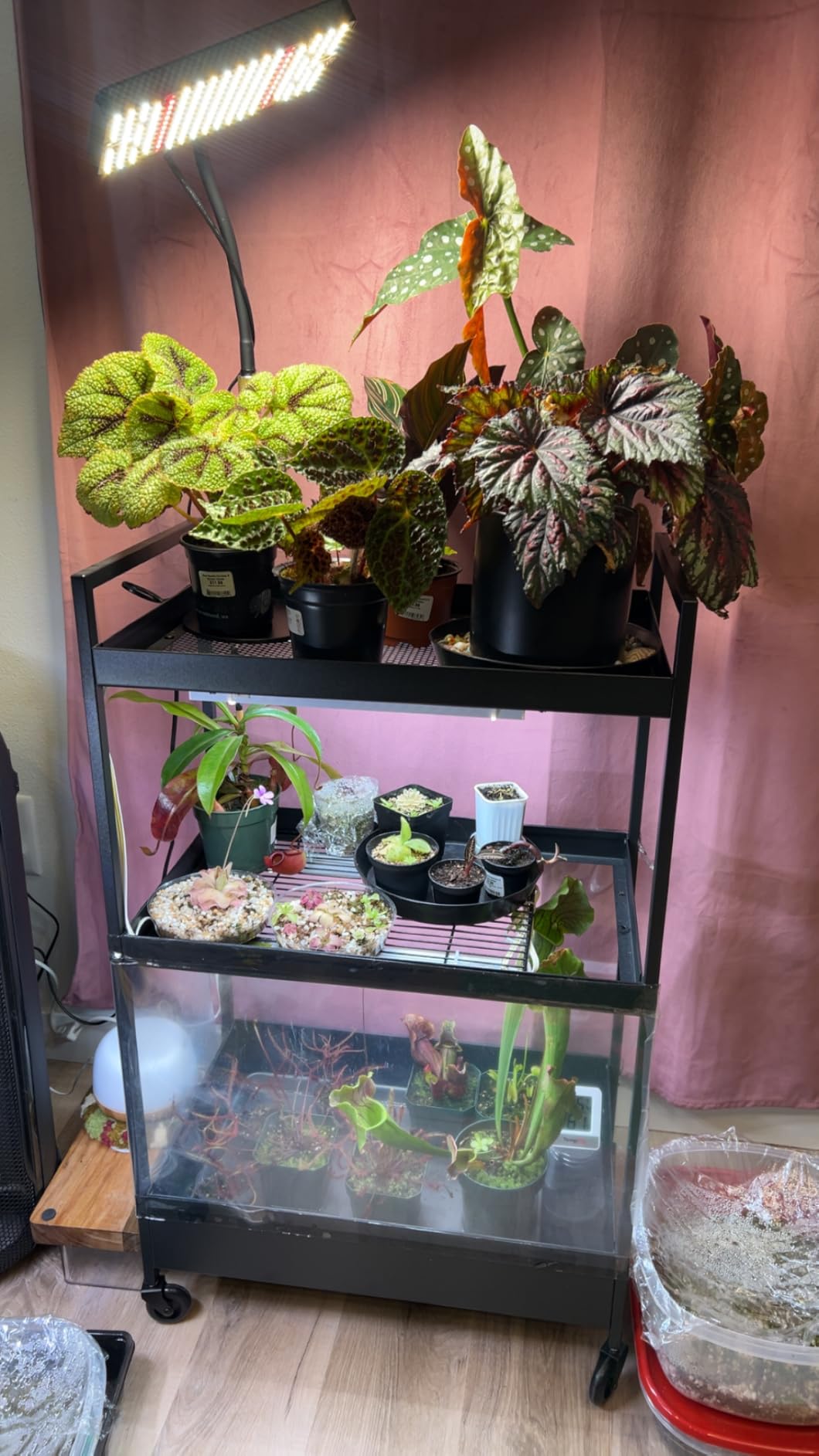
Per bar the dimensions are 12.6 by 4.14 by 2.17 inches at 1.3 pounds, which is a genuinely small footprint. That is what makes it good under a low-clearance shelf where a four-foot bar will not physically fit, and it is why this pack shows up in so many rack builds: four short bars cover a shelf edge with far less overhang than two long ones.
Linkable up to 16 lights in series is the underrated spec here. Sixteen bars from a single lead fixture is a full four-tier rack, and each bar has its own on/off switch so you can shut off a tier that is between cycles without unplugging the whole run.
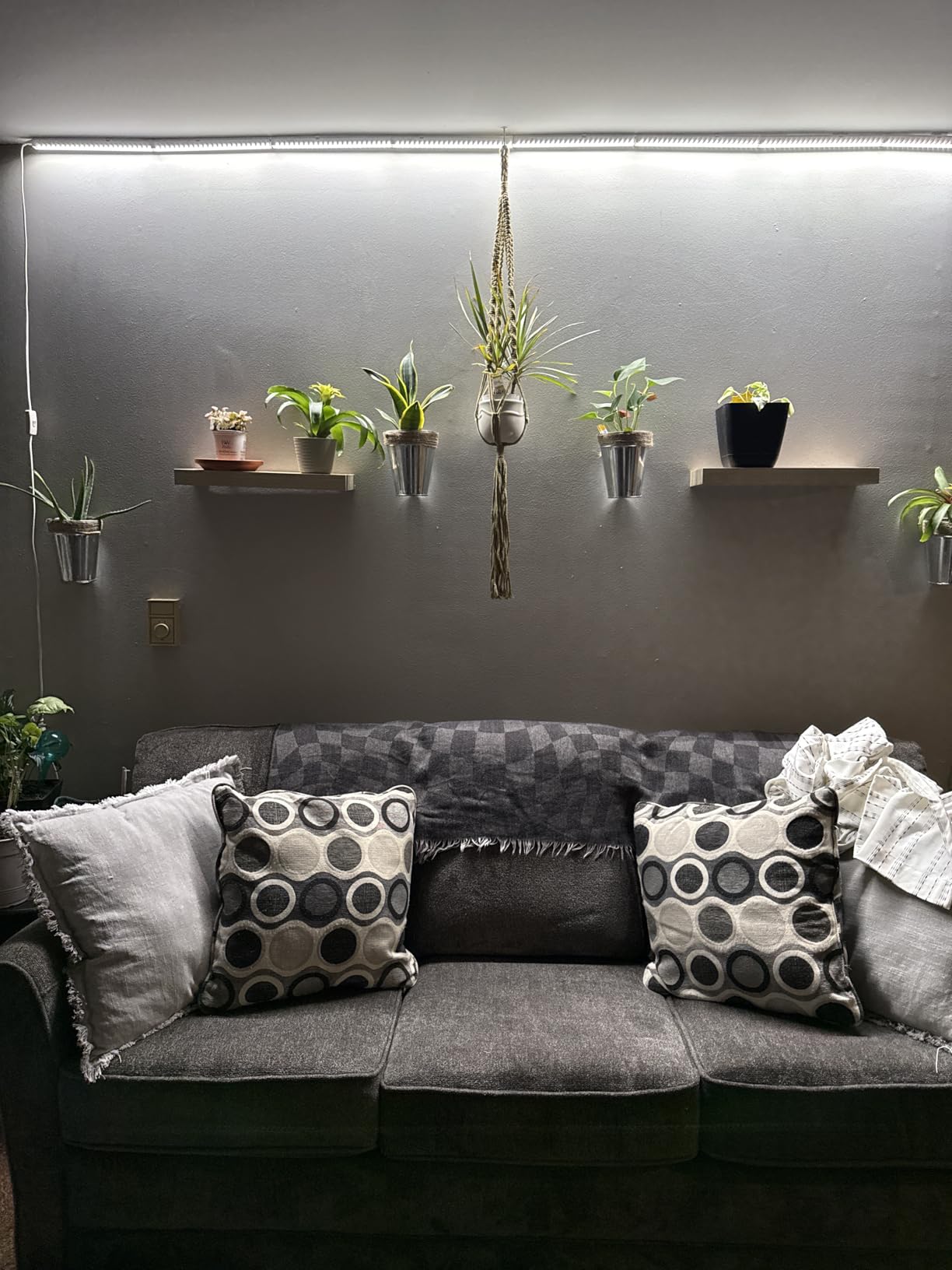
Where it earns its spot in a rack
The 2.17-inch height is the number to check before you buy. Most wire racks have a shelf gap somewhere between 8 and 10 inches, and once you account for tray dome clearance and hanging hardware, 2 inches of fixture is a meaningful chunk of that. Measure your gap first, then buy the number of bars that fit with light to spare.
Installation supports are included in three forms — tape, clips, and cable ties — which sounds redundant until you hit a shelf surface that will not hold adhesive. Mounting clips are the reliable option on wire shelving, and the aluminum housing keeps the running temperature cool enough that it will not cook the tray below it.
What you give up for the low cost
There is no built-in timer, so this needs an external outlet timer, which is true of nearly every fixture in this price range. Adding a timer is a five-minute job and the single best upgrade you can make to any rack.
The one-foot length is the real constraint. Covering a standard 10×20 tray means running two or three side by side rather than one bar overhead, and the connecting cables between them are short. It works; it just takes more planning than a four-foot bar does.
3. LEOTER 80 LED Gooseneck Clip Grow Light Review
LEOTER Grow Light for Indoor Plants – Upgraded Version 80 LED Lamps with Full Spectrum & Red Blue Spectrum, 3/9/12H Timer, 10 Dimmable Level, Adjustable Gooseneck,3 Switch Modes
80 LEDs across 4 spectrums
3/9/12 hour auto timer
10 dimmable levels
360 degree gooseneck
Pros
- Built-in timer means no wall timer to buy
- Ten dimmable levels let you tune down after canopy fills in
- Three spectral modes including a full spectrum setting
- Metal clamp grips a shelf edge
- pot rim
- or table edge
- USB power with the AC adapter included
- Compact 5.63 by 3.8 by 13 inch footprint
Cons
- USB power limits maximum output
- Some users report roughly a two-year lifespan under heavy use
- Gooseneck arms can sag over time
- Timer resets if power is interrupted
Not everyone growing microgreens wants a rack. If you have a kitchen table, a bookshelf, or one shelf above a desk, this is the right shape of product: a clamp-on arm with eighty LEDs, a gooseneck you can aim, and a timer built into the base so there is nothing else to buy.
The LED breakdown is 32 red, 12 blue, 20 yellow, and 16 white, spread across a listed full spectrum of 380 to 800nm with a dedicated red 660nm and blue 460nm pairing. Three switch modes let you run the full spectrum mix, the red and blue pairing, or a combined setting — and the ten dimmable levels are more useful than they sound, because you can bring the output down once the tray has filled in rather than cooking a full canopy at maximum.
With a review count in the five figures, this is the most widely reported of the countertop lights I have run. The consistent praise is for the timer and dimming. The consistent complaints are durability: reviewers report roughly a two-year lifespan under heavy daily use, and the gooseneck arms sagging under their own weight is mentioned often enough that I would position the clamp carefully and check the arm periodically.
That is a fair trade for a single-tray light. Two years on a light that costs less than one bad harvest is defensible, and the alternative — buying a rack fixture you do not need — is not.
Why the built-in timer matters more than it looks
Photoperiod is one of the three variables that decide whether microgreens come out compact, and an inconsistent schedule is a real problem. A grower on r/microgreens described the value of a fixed schedule in plain terms: consistent growth across every tray. A 3, 9, or 12 hour setting baked into the base removes the single most common failure mode, which is a plug-in timer that never got set correctly.
Two caveats. The timer resets if the power is interrupted, so a light on a shared circuit that trips will forget its schedule. And the USB supply is the reason the output ceiling is lower than a hardwired fixture — if you are pushing a large tray, this is not the fixture for it.
Where it stops being enough
Coverage is the limit. At 5.63 by 3.8 by 13 inches, this is sized for one tray or a two-tray span at most, and the single gooseneck arm means the far end of a large tray gets less light than the near end. Growers running more than two trays will see the gradient.
It is also not rated for anything wet. This is an indoor fixture, not a sealed light, so keep it away from a humid rack corner where condensation collects.
4. TYAGMAM 2ft T8 Grow Light 4-Pack Review
Grow Light, 2ft T8,100W(4 x 25W, 600W Equivalent), Super Bright, Full Spectrum Sunlight Plant Light, LED Grow Light Strips, Grow Lights for Indoor Plants,Greenhouse,4-Pack
4 x 2ft T8 bars
100W total
4000 lumens combined
Linkable up to 8 bars
Pros
- Two-foot length covers shelf spans a one-foot bar cannot
- 4000 lumens total across the four bars
- Full spectrum white that is easier on the eyes than pink
- UL certified
- Linkable up to 8 bars
- Aluminum housing for passive cooling
Cons
- No built-in timer or per-bar switches
- Pink spectrum still tints the room
- One power cord serves all four bars
- Newer brand with a shorter track record
Most rack builders end up choosing between one-foot bars and four-foot bars. This pack is the middle answer: four two-foot T8 bars at 25W each, 100W total, with a combined output of 4000 lumens across the set.
That two-foot length is genuinely useful. A one-foot bar leaves gaps across a 10×20 tray and you end up chaining three together. A four-foot bar overhangs a narrower shelf and blocks airflow. Two feet covers most shelf widths with a small overhang, which is why I reach for this size when a rack shelf is not exactly 20 inches wide.
The spectrum is described as full spectrum sunlight white, and the listing claims over 95 percent of emitted light energy is absorbed by plants. UL certification is listed, which matters more than most buyers realize — an unlisted electrical fixture in a humid grow area is a genuine safety question, and the certification is right there in the specs.
Linkable up to 8 in series covers a larger rack than the one-foot pack at a lower count than the four-foot pack, and the aluminum and polycarbonate housing means passive cooling with no fans to wear out or add noise.
The middle-size case
Dimensions are 23.6 by 5.5 by 3 inches at 3 pounds per bar, and that 3-inch height is worth measuring against your shelf gap. It is taller than the one-foot T5 at 2.17 inches, so on a tight rack the shorter pack wins.
What you gain over a smaller bar set is coverage efficiency. Four two-foot bars lighting a 20-inch tray shelf use fewer fixtures than the equivalent one-foot run, which means fewer daisy-chain connections, fewer failure points, and a cleaner install behind a shelf lip.
The limitations to plan around
There is no built-in timer and no per-bar on/off switches, and a single power cord serves all four bars. So you are running this as one zone from one outlet with one external timer — which is fine, but you lose the ability to stagger shelves the way the one-foot T5 pack allows.
Two other honest notes: the brand has a shorter track record than the picks above it, and the review count is smaller. The spectrum is still pink-biased, so this belongs on a rack in a utility space rather than the desk you work at.
5. Diboys 45W LED Panel Grow Light 2-Pack Review
Diboys LED Grow Light for Indoor Plants, 45W Plant Lights Full Spectrum Panel Grow Light for Seedlings, Succulents, Micro Greens, Vegetable and Flower, 2 Pack
Two 45W panels
150 LEDs each
0.8 inch profile
Remote controlled
Pros
- Two panels in one pack doubles your covered area
- Runs cool with no fans
- Remote control lets you adjust without reaching over the tray
- 0.8 inch profile fits tight shelf gaps
- Hanging kits included
- Works well for microgreens and seedlings
Cons
- Remote only
- with no manual buttons on the panel
- One-year warranty is the shortest here
- Plastic housing feels less durable
- Lower review count than the picks above it
The panel form factor is the most compact thing in this list, and that is the whole reason to consider it. At 0.8 inches thick, this panel will fit under shelf gaps that stop every bar fixture on this list. The two-pack gives you 90W total, and each panel carries 150 LED chips split 104 red, 40 blue, and 6 white.
That ratio is worth flagging honestly. It is heavily red and blue, which means the visible output is pink and the useful white light for inspecting a tray is limited. For microgreens specifically the intensity is more than sufficient — a 90 degree reflector spreads the output across roughly a 3 by 3 foot area per panel — but it is a grow fixture, not a task light.
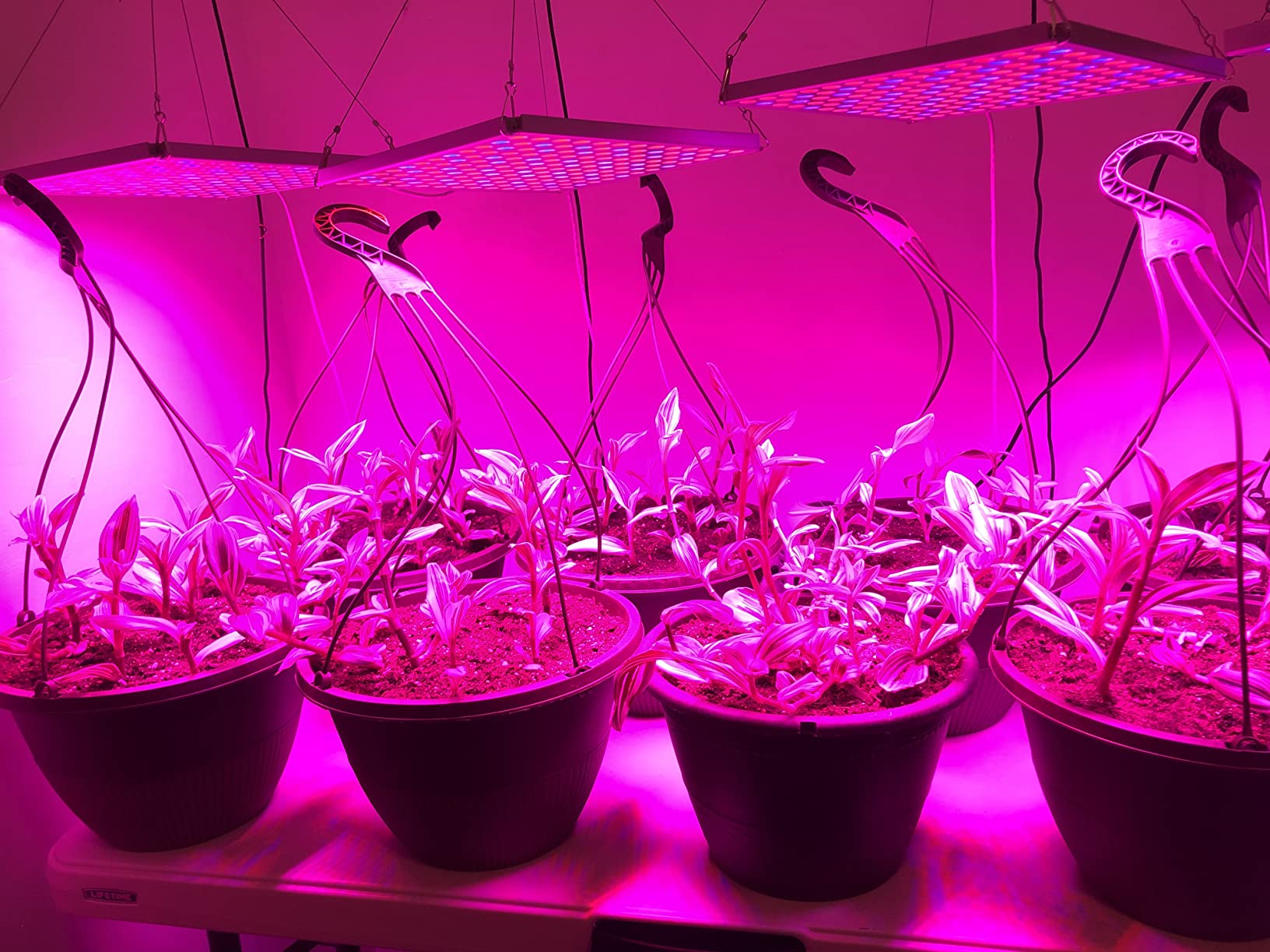
Remote operation is a real convenience when the panel is mounted 6 to 12 inches above an open tray and you would otherwise be reaching over damp soil to press a button. The downside is that there are no manual buttons on the panel at all, so if the remote goes missing you are changing bulbs by feel. Several reviewers also note the plastic construction feels less substantial than the aluminum fixtures above it.
Heat is the quiet strength here. The panel dissipates passively and reports low heat emission, which means it can sit close over a tray without cooking the canopy the way a higher-watt fixture can.
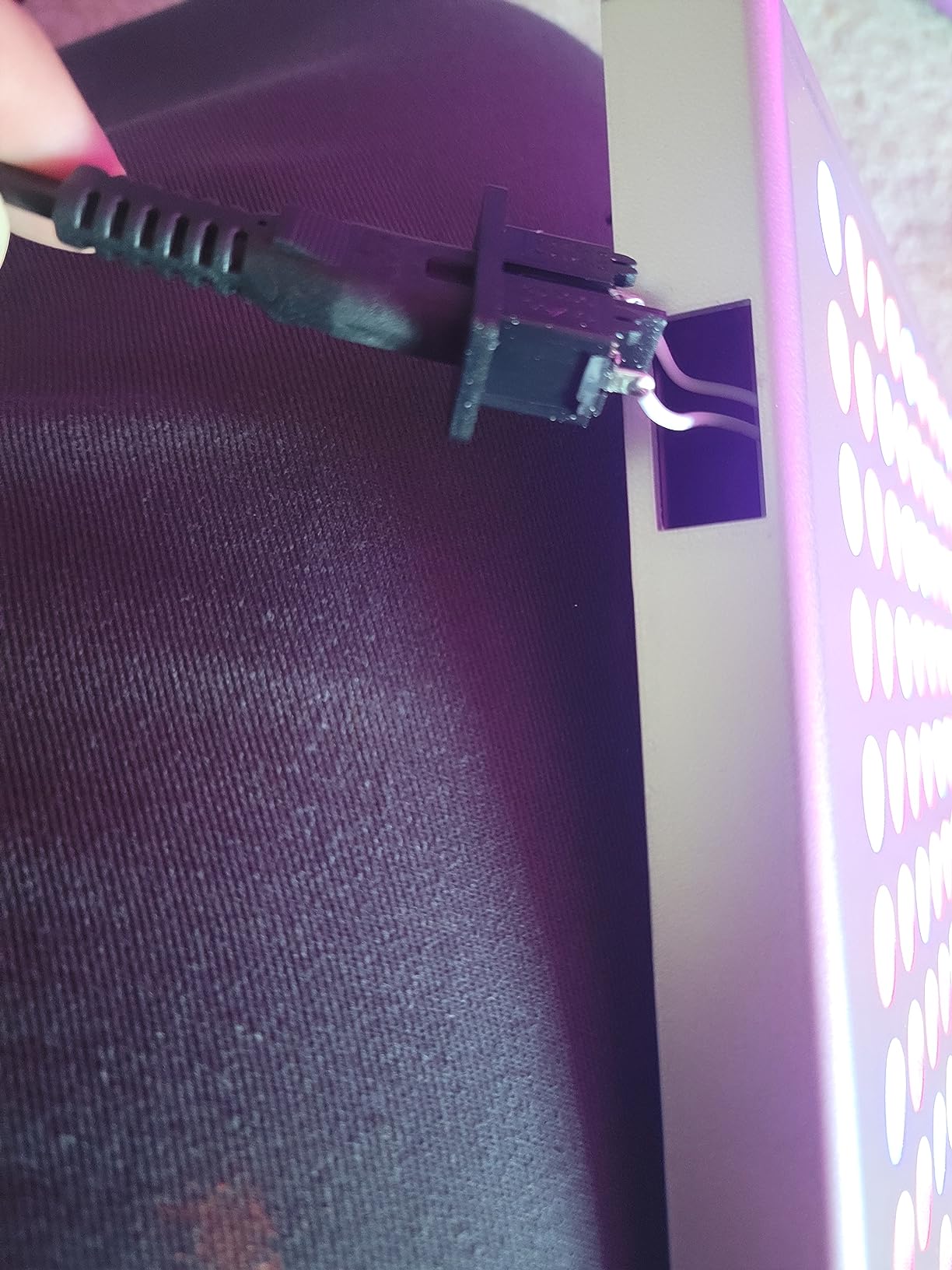
Best fit: low clearance, two trays
At 8.3 by 13 by 18 inches and 1.27 kilograms per panel, this hangs cleanly under a cabinet or a low shelf. The included hanging kit provides four ropes per panel, so the height is adjustable without buying chain or S-hooks separately.
Two panels of this size cover roughly two trays well, which makes it a natural second step up from a single clip-on light without jumping to a full rack of bars.
What you are trading away
The one-year warranty is the shortest coverage in this guide, and that is worth weighing if the panel will be running 16 hours a day for years. Two of the picks above carry two-year warranties and one carries three.
Also expect this to be the limit of its range. Reviewers note it may not carry enough intensity for flowering plants, which is fine for microgreens but means you will replace it if your operation moves on to lettuce or larger greens.
6. Barrina T10 Pro Vertical Grow Light Review
Barrina T10 Pro Vertical Grow Light, 42W, Full Spectrum, 4FT to 5.6FT
42W with 169 LEDs
Adjustable 4ft to 5.6ft
Built-in mechanical timer
CRI 88
Pros
- Freestanding weighted base needs no mounting or wiring
- Adjustable height covers everything from a table to a floor lamp position
- Mechanical timer included and simple to set
- CRI 88 renders tray color accurately for inspection
- Tool-free assembly
- Two-year warranty
Cons
- Timer reliability is reported as inconsistent
- Short four-foot power cord
- Single unit rather than a multi-pack
- Foot switch is awkward to reach
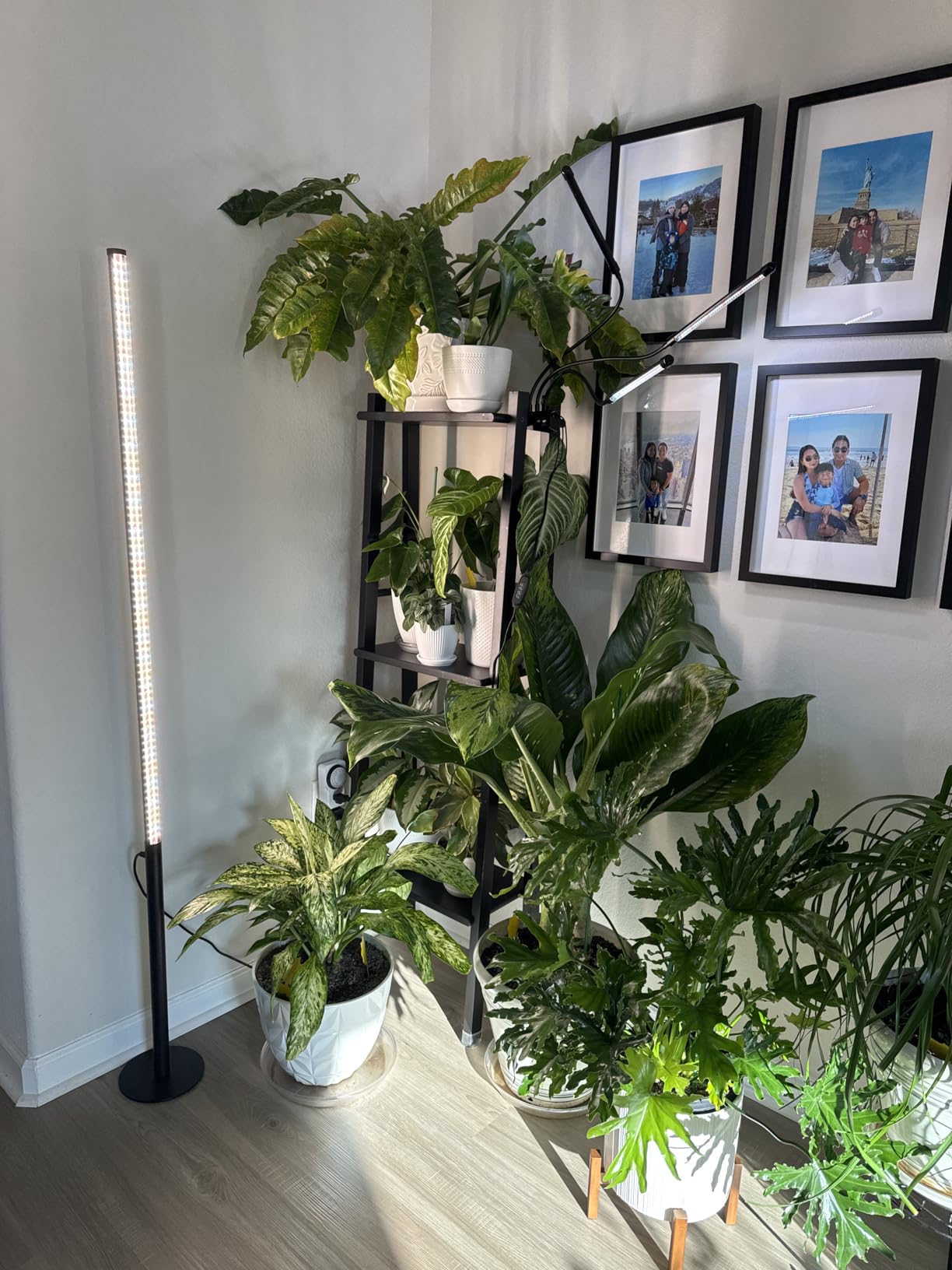
This is the odd one out, and it solves a problem none of the bar fixtures here address. The T10 Pro is a freestanding vertical fixture on a weighted disc base with two extension rods, adjustable from 4 feet to 5.6 feet, and it lights sideways from the side of the tray rather than straight down.
Side lighting is the point. Microgreens grow flat, so a downward bar throws most of its output at the soil and the far leaves, while a vertical source rakes light across the canopy and hits the leaf faces that are actually photosynthesizing. On a tray on a low table where you cannot hang anything above, this is the only fixture here that works without building something.
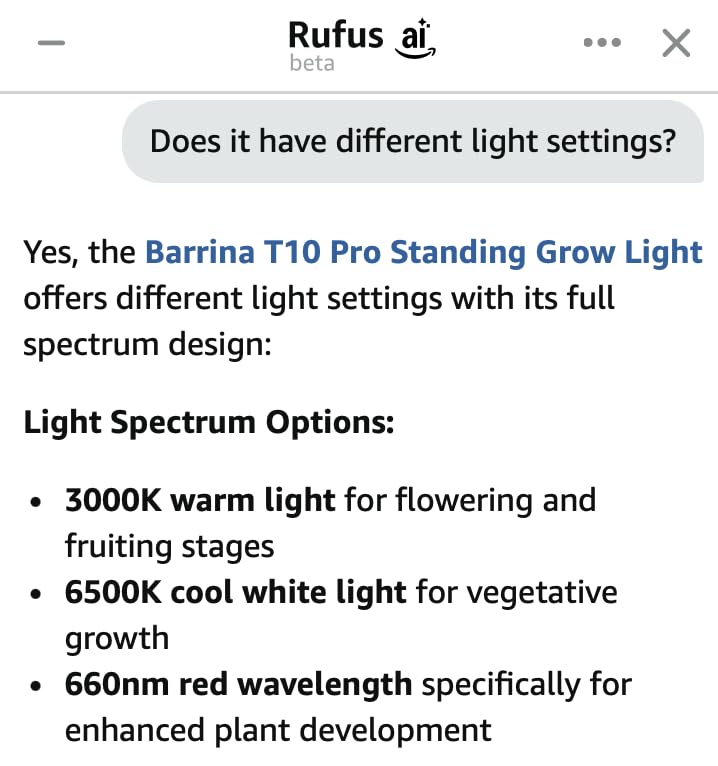
Output is 42W across 169 LEDs with a full spectrum including 660nm red chips, and the listed CRI of 88 is the highest in this guide. That is not a marketing number here — it means the tray looks like food under this light instead of a magenta smear, so you can spot yellowing, damping off, and uneven growth at a glance during your daily check.
The mechanical timer is a genuine bonus. There is no app, no pairing, and no firmware; you set a dial and it runs. For a light you are going to leave on 16 hours a day for years, mechanical beats electronic in reliability.
Where a floor lamp shape beats a shelf shape
Freestanding with a weighted base, this needs no shelf gap, no hanging hardware, and no wall mounting. That makes it the only pick here that works in a rented room where drilling is not an option, and it moves between a countertop and a rack as your operation changes.
Assembly is tool-free, and the head measures 47.25 by 7.09 by 2 inches. Two extension rods get you from table height to standing height, which means one fixture can serve a batch on the counter and then a taller tray later.
The honest drawbacks
Timer reliability is the most common complaint, and it is a meaningful one given that photoperiod consistency is what makes a rack predictable. Test the dial in the first week rather than trusting it. The power cord is also short at around four feet, so plan your outlet position before you assemble it.
It is also a single unit, not a pack, so a multi-tier rack means buying more than one. And the foot switch placement is awkward on a full rack, which is the least useful part of the design when you are reaching between shelves.
7. KINGPLUS KP1000 Grow Light Review
KingLED KING1000 Grow Light for Indoor Plants, Fits 2×2, 2×3 & 2×4 ft Tents
185W actual draw
100 Epistar chips
PAR 447 at 24 inch
VEG and BLOOM modes
Pros
- Genuinely high output for anyone scaling past microgreens
- PAR value is published so you can size coverage yourself
- VEG and BLOOM switches let one fixture serve two growth stages
- Dual cooling fans manage a real 185W draw
- Three-year warranty is the longest here
- AC 85-265V accepts a wide input range
Cons
- The 1000W name is marketing
- actual draw is 185W
- Can scorch plants if mounted too close
- Physical size is smaller than buyers expect
- Fans add noise over time
I am including this one as a boundary marker rather than a microgreen recommendation. The KP1000 is a 185W panel with 100 double Epistar chips, dual cooling fans, and a published PAR reading of 447 µmol at 24 inches from center. That is roughly twice the intensity a microgreen tray needs, which is exactly the point.
The name is the problem. It is called the KP1000 and the listing carries a 1000 watt figure, but the actual draw is 185W, as the review data confirms repeatedly. Buyers who think they are getting a 1000W fixture are not, and buyers who see “1000W” on a page are being sold a number that does not exist.
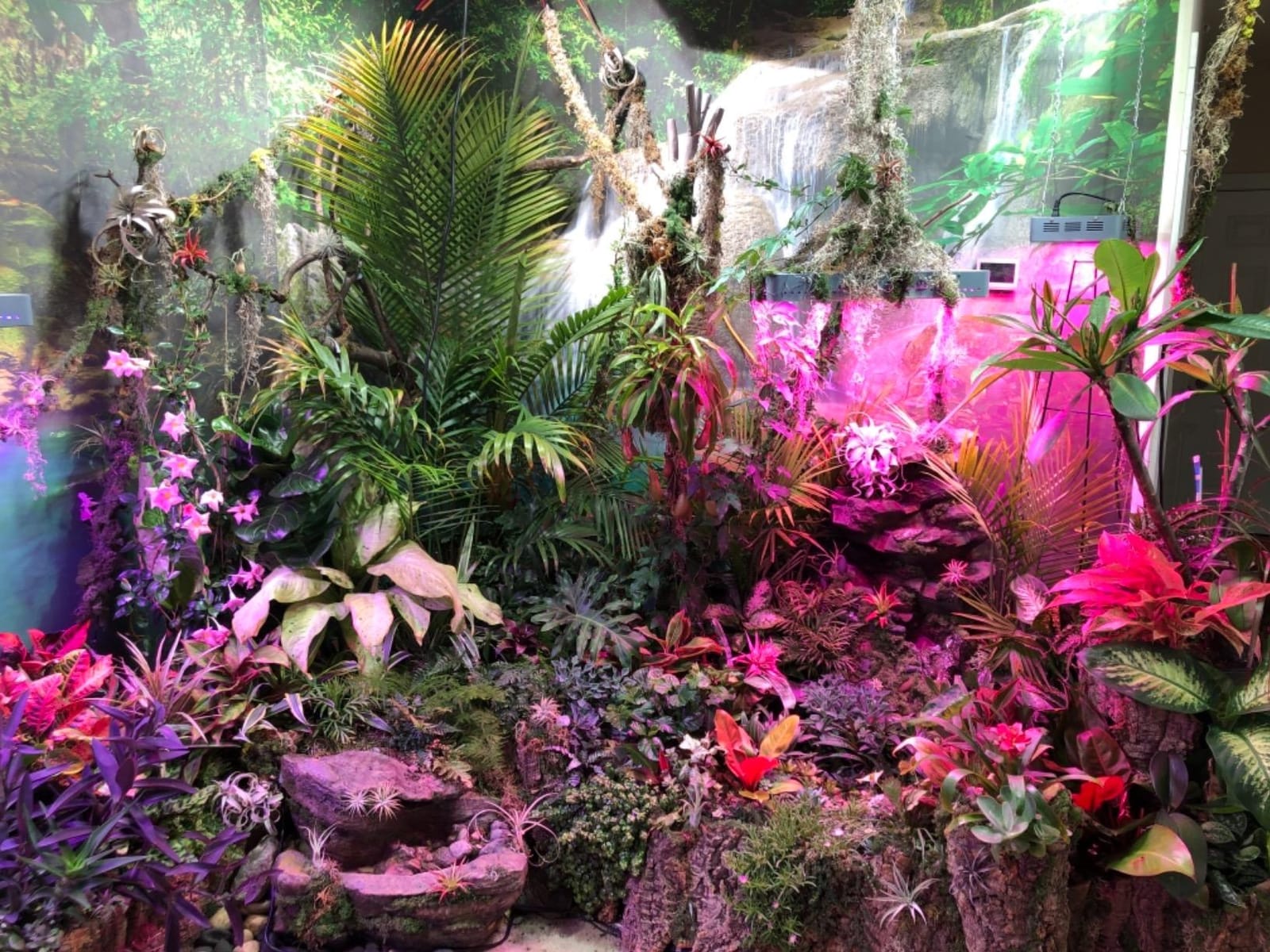
For microgreens specifically, mounting it at 24 inches gives you far more light than a canopy needs, and reviewers warn plainly that it can burn plants if it is too close. A 185W panel is a lot of heat over a shallow tray of soil and it can dry a small tray out between waterings.
What it does well is the upgrade path. If your operation moves from microgreens to lettuce, kale, or leafy greens that need to bulk up, this is the class of fixture where VEG and BLOOM switch modes start to matter, the 447 PAR figure becomes relevant, and the three-year warranty is worth having on a fixture you will run for years.
What the published numbers actually tell you
CRI is listed at 80, below the 88 on the vertical fixture and well below the 95-plus that commercial horticultural fixtures reach. In practice that means the tray looks a bit warmer and duller under it than under a high-CRI source, which matters if you are grading color before harvest.
Coverage is listed for 2×2 to 2×4 foot tents, and the 3mm thickened LED board with vents plus the dual fans is how a 185W draw stays manageable thermally. Coverage area is also the number to sanity-check: for a 10×20 tray this light is roughly four to eight times more powerful than needed.
Why most readers should skip it
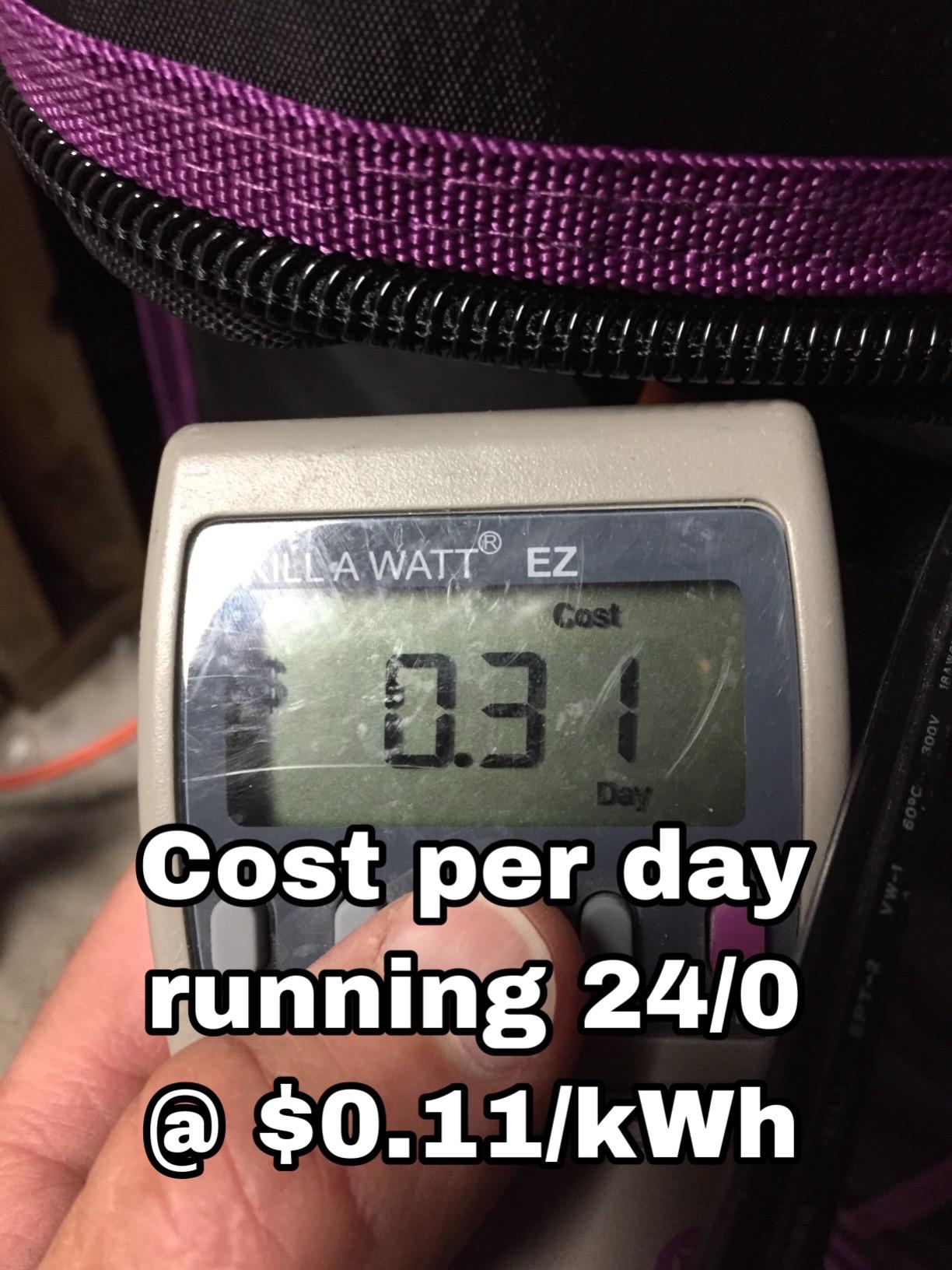
Unless you are growing something other than microgreens, 185W is a lot of electricity pointed at a tray of soil that will be harvested in ten days. The running cost math in the setup section below is the honest way to see this: at 16 hours a day, this fixture uses more power in a month than a full eight-bar rack setup uses in a week.
The fans also add noise that grows with age, and there is no built-in timer. For a microgreen operation, pick one of the bar fixtures earlier in this list and put the saved wattage toward more trays instead.
8. Uallhome 200W LED Panel Grow Light 2-Pack Review
Uallhome 2 Pack LED Grow Light Panel 200W Lamp for Indoor Plants, Sun Like with White Blue Red UV IR LEDs for 4x4ft Coverage Grow Tent Greenhouse Veg and Bloom Seedlings Hydroponics
Two 100W panels
One inch profile
Covers 4x4 foot area
100,000 hour rated life
Pros
- One inch profile fits shelf gaps nothing else fits
- Two panels cover a 4 by 4 foot area
- Fanless passive cooling runs completely silent
- Aluminum body runs cool
- Carabiner hanging kit included
- Rated 100000 hour lifespan
Cons
- Only a 90-day warranty
- No built-in timer
- Hanging hardware is short
- Thin aluminum can bend during hook installation
If profile height is your binding constraint, this is the pick. At 12 by 12 by 1 inches per panel, these are thinner than everything else in the guide except the Diboys, and they arrive as a two-pack totaling 200W with a listed 4×4 foot coverage area across both panels.
Silencing the fan problem is the underrated feature. There is no fan here at all — cooling is passive through the aluminum body — which means no noise on a rack in a bedroom and no fan bearing to fail after two years of 16-hour days. For a light you leave running overnight, that matters more than raw output.
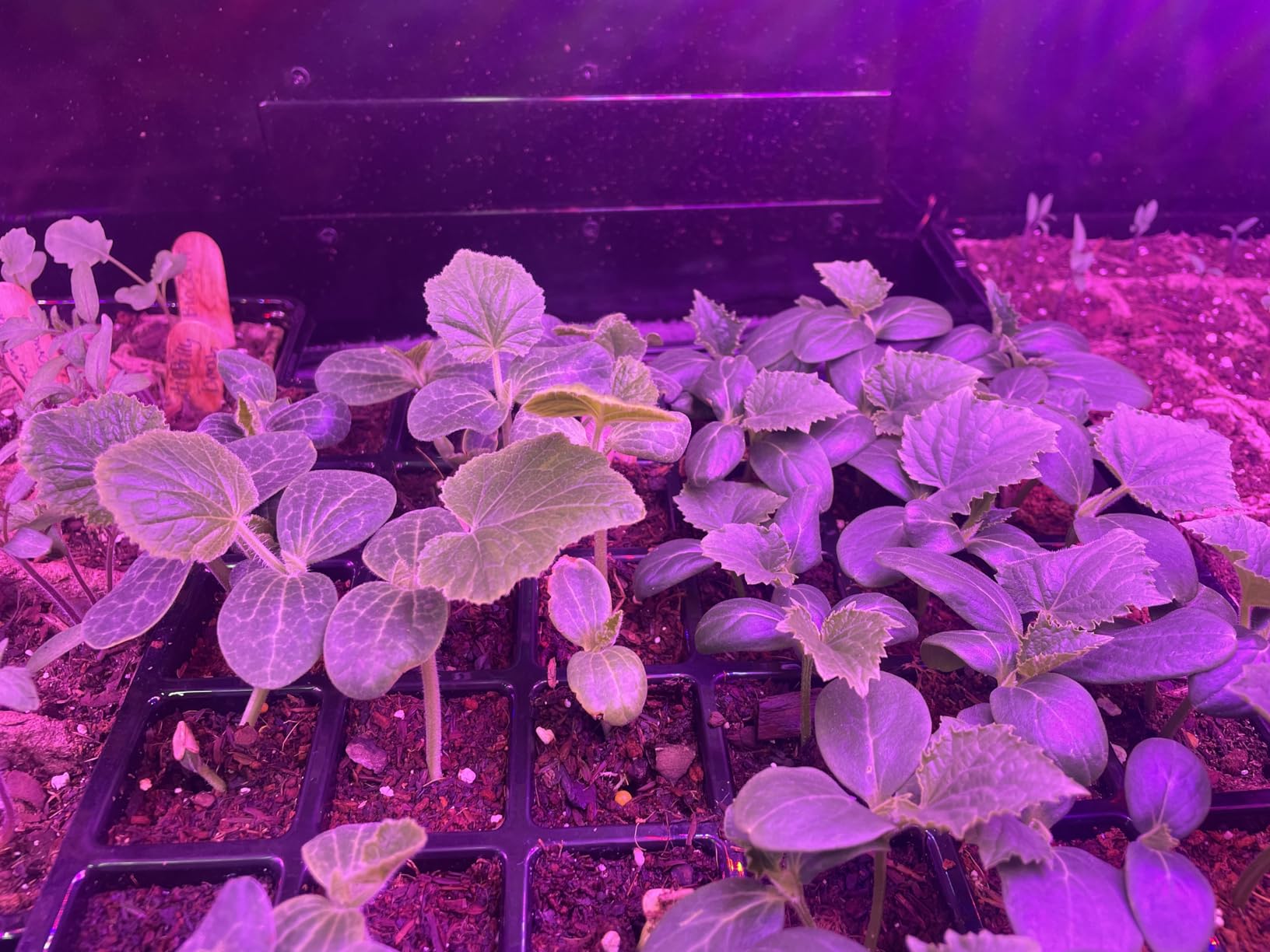
The spectrum covers UV, IR, red, blue, and white, with 6-foot power cords and inline toggle switches, and the carabiner hanging kit means no extra hardware to buy. A 100,000 hour rated lifespan claim is on the listing, which at 16 hours a day is longer than most growers will ever reach.
Customer service is worth noting here too. Reviews describe the seller replacing defective units, which softens the short warranty considerably in practice, though it is still the thinnest written coverage of any pick here at 90 days.
When one inch of profile beats everything else
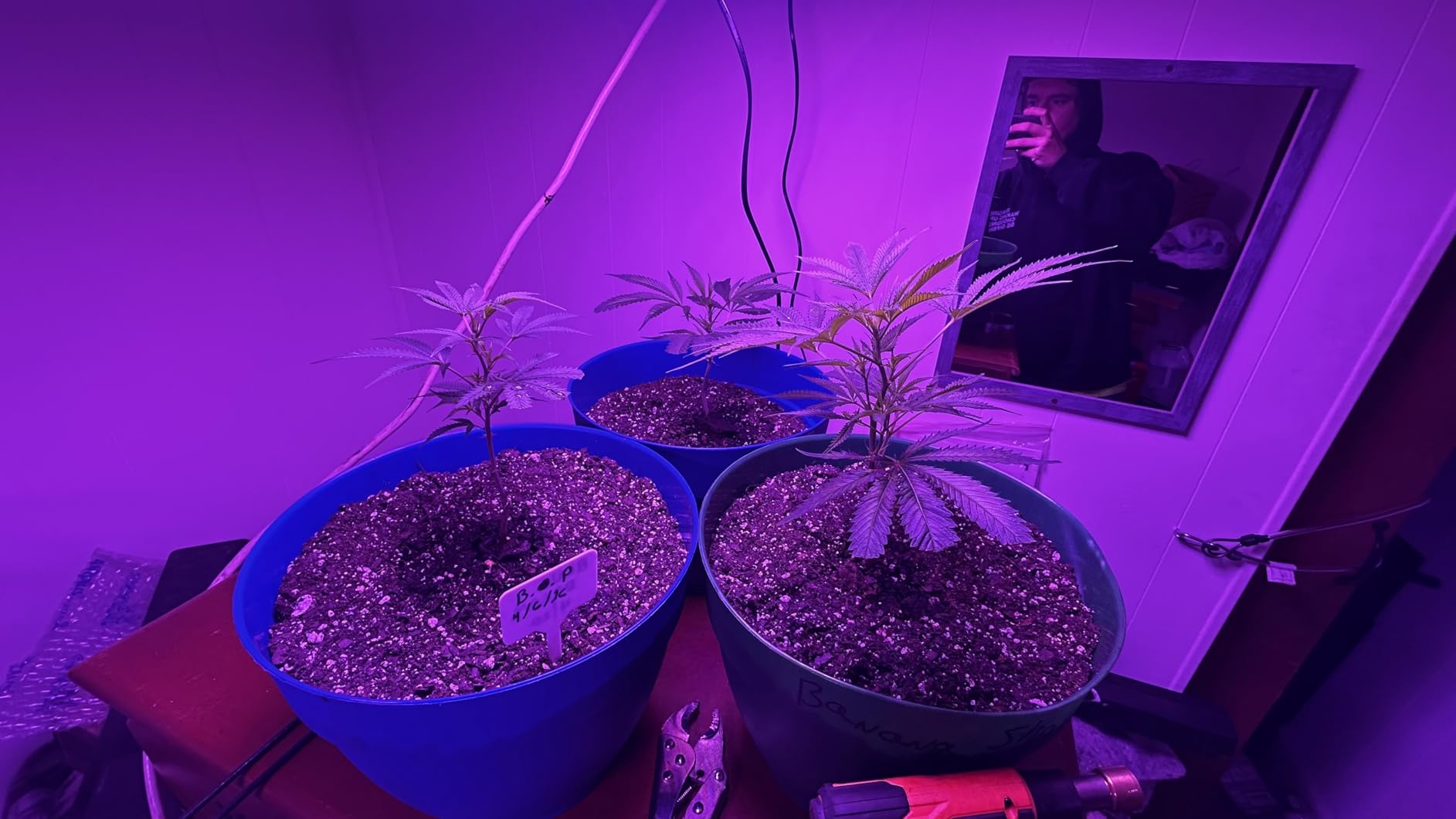
Measure your rack before you dismiss a panel. A shelf with a 4-inch gap under it rules out most bar fixtures and leaves you the Diboys at 0.8 inches or this at 1 inch. On a shelf that tight, the mounting height also forces you into the lower end of the 6 to 12 inch range, so dial the intensity down rather than cooking the canopy.
The 4×4 foot combined coverage means two panels will light a genuine two-shelf setup, and the passive cooling means you can run them close without the heat penalty a fan-cooled fixture of the same output would carry.
What to watch for
The 90-day warranty is the shortest here and it is a real gap for a permanently installed fixture. The hanging hardware is also short, and reviewers report the thin aluminum bending when you clip a carabiner into it — support the panel by its frame rather than by the edge when you hang it.
There is no timer, and cord weight affects the panel angle once hung, so set the angle before you leave it and check it after the first few days as the cord settles.
What Growers Say About These Lights on Forums
Because the forums are where this decision actually gets argued, and because the arguments are more useful than most product copy, here is what growers report about the specific fixtures in this guide.
Barrina comes up more than any other brand in microgreen conversations, and the praise and the complaint arrive together. On r/microgreens a grower noted the lights are good because they are cheap and easy to get, and in the same breath flagged that they add more heat to the tray. That maps directly onto what I saw: the aluminum housings run cool, but a six-bar pack on a lower shelf still puts measurable warmth into the air beneath it. On r/gardening another grower recommended the inexpensive Barrina 6500K units specifically as the cheap answer, which is the same instinct that makes the T5 pack in this guide the value pick.
The Kelvin argument gets settled the same way in most threads. A SquareFoot forum post put it plainly — the important thing in grow lights is the Kelvin rating, and the closer to 6500K natural light the better. An Overgrow thread pushes back and says 4500K is the best and 4000K is also acceptable. Both are defensible for microgreens. The reconciliation is that microgreens use blue-dominant daylight wavelengths most efficiently, which is why 5000K to 6500K is the safer default and why the white-spectrum picks here tend to produce the more compact trays in side-by-side runs.
On the metric that matters, the forums are ahead of most retailer pages. A commenter on r/gardening put it directly: it is not the measurements you want for plants, you want to look at PPFD ratings. That is correct, and it is why the first pick in this guide stands out — it is one of very few fixtures in the whole category that publishes a PPFD figure at a stated distance. Barrina T5 alternatives from Hykolity, which a grower on r/microgreens described as 4ft T5 at 22W and 2200 lumens at 6500K, are another recurring community recommendation for the same reason.
And the basic-shop-light camp is real. A long-running Houzz thread has growers running microgreens in Promix under ordinary full spectrum shoplight fixtures and reporting it works easily, because the greens are edible in a short time. That is the same conclusion the spec data supports, and it is why every pick in this guide sits between 20W and 252W rather than the 300W to 860W range the shopping results keep surfacing. If you want background on shop light form factors in general, our guide to the best LED shop lights covers the electrical side of that build in more detail.
How to Choose a Grow Light for Microgreens
Color temperature is the first filter, and it is the one most buyers get backwards. Lower Kelvin values are warmer, more orange, and contain less of the blue light that drives compact growth. For microgreens you want 5000K to 6500K, which reads as clean white daylight. Higher is not automatically better, but anything below 4000K is a warm household bulb with a grow label on it, and anything with a heavy magenta cast is a red-and-blue blurple fixture tuned for absorption efficiency rather than for living in the same room as.
What blurple actually does is concentrate output in the two absorption peaks plants care about most, red around 660nm and blue around 460nm, and discard the rest. A full-spectrum white fixture spreads the same watts across a broader band. For microgreens harvested young, the difference is mostly visual — your room and your hands stay usable — and there is a real difference in how consistently a white fixture fills a wide tray. The red-and-blue pairs on the panel picks later in this list are legitimate grow lights; they are just not lights you want above a desk.
Lumens versus PPFD is the second filter, and it is the one that causes the most wasted money. Lumens measure light as weighted by human eye sensitivity, which is not the same thing as photons a plant can use. PPFD — photosynthetic photon flux density, in µmol/m²/s — measures the actual usable photon delivery at the canopy, and it is the only number that predicts a microgreen harvest. Target 200 to 400 µmol/m²/s at tray level. If a listing does not state a PPFD figure, treat the lumens number as a rough brightness proxy and nothing more.
The practical translation from lumens is simple enough: roughly 2,000 to 3,000 lumens per standard 10×20 tray, mounted close. Returns fall off sharply above about 5,000 lumens for microgreens specifically, because the crop cannot use it and the extra watts become heat in a shallow tray that dries out faster.
Wattage is a proxy, not a target. A 20W fixture and a 45W fixture can deliver nearly identical canopy PPFD if one concentrates its output with reflectors and the other spreads it thin across a larger area. That is exactly what a V-shaped reflector bar is for, and it is why the six-bar T8 pack in this guide produces strong numbers at 42W per bar while a spread panel of similar total wattage produces less at tray level.
Form factor follows your shelf. Bars and strips (the Barrina and TYAGMAM picks) are for hanging under fixed shelves and for racks where you can suspend a fixture. Panels (Diboys, Uallhome) are for low-clearance shelves where profile height is the constraint. Vertical fixtures (the T10 Pro) are for trays that are not under anything you can hang from. Clip-on goosenecks (the LEOTER) are for a single tray on a counter or a shelf edge. If you are still working out which physical arrangement you want, our underhood lighting guide covers the mounting math in more depth.
Daisy-chaining capacity is what determines how big a rack you can build from one outlet. The 1ft T5 links up to 16 lights, the 2ft T8 links up to 8, and the 4ft T8 links up to 6. Multiply the fixture wattage by the number of linked bars and stay inside your circuit’s capacity — a six-bar pack at 252W is at the edge of what a standard household circuit handles on its own.
CRI determines how useful your daily inspection is. At 80 or below, a tray looks duller and warmer than it is, which can mask early yellowing. At 88 and above you can see discoloration at a glance. For a crop you inspect every single day, that is worth more than an extra few hundred lumens.
Heat output is the last filter, and it interacts with mounting height. Aluminum housings dissipate passively and stay manageable; fan-cooled high-watt panels shed more heat but add noise that gets worse with age. Microgreens sit in shallow trays with limited soil volume, so a warm fixture above them accelerates drying between waterings.
Setup Guide: Mounting Height, Timer, and Running Cost
Mounting height is the adjustment you will make most often, and it is where light problems actually come from. Start at 6 to 8 inches above the canopy for a full tray, then raise it as the seedlings grow. The two failure modes are easy to tell apart: too far and the stems stretch and go pale, too close and the tips bleach, curl, or crisp at the edges. If your tray is leggy, lower the light before you buy a brighter one.
Mount for the tallest point of the tray, not the average. If you use humidity domes, add the dome height to your target, and if you hang the fixture by chain or S-hooks rather than a fixed mount, the height stays adjustable as batches change. On a wire rack, the useful trick is running every fixture on a single shelf from one lead bar, then powering all four shelves from one power strip — fewer leads, fewer daisy-chain joints, and one timer for the whole rack.
Photoperiod is the setting most people get wrong by an hour or two, and the range is narrower than it looks. Run 16 to 17 hours on and 7 to 8 hours off. Do not exceed 17 hours — that is effectively a 24-hour day, and microgreens do not benefit from it. Use a mechanical timer if you can find one; they do not drift, they do not reset on a power blip, and they cost very little. If you are curious about the broader category, our piece on timing lights covers the clock mechanisms that matter here.
Before any light goes on, the tray gets a blackout period. Cover the seeded tray and leave it in darkness for 2 to 8 days at normal room temperature. Most microgreen growers blackout for 2 to 4 days and skip light entirely during that window; the seeds germinate and push into the canopy in the dark, and when they are unveiled the light hits a tray that is already structurally formed. Skipping the blackout is the single most common reason a tray goes tall and weak even under a good light.
Running cost is where the running wattage question gets settled. Multiply fixture watts by the number of fixtures, by 16 hours a day, by 30 days, and divide by 1,000 for kilowatt hours. Then multiply by your utility rate. A single clip-on light at 80W runs about 38 kWh a month. A two-panel 45W setup runs about 43 kWh. The six-bar T8 pack at 252W runs about 121 kWh a month on a 16-hour cycle. The 185W KP1000 panel alone runs about 89 kWh — more per month than the entire 4-foot rack, for a crop harvested in ten days.
That is the argument for the middle of this list rather than either end. A full T8 rack is the efficient choice per tray because the bars concentrate output onto a shelf, while a single high-watt panel is efficient per unit but wildly oversized for microgreens. Once you are running 8 to 12 trays, the per-tray math changes and the higher-output fixtures start to make sense — at that point, re-evaluate against what you are actually growing. If you have questions about color temperature and the color rendering it produces on your finished trays, our guide to amber and grille lighting breaks down how color temperature reads in practice.
Grow Lights That Are Overkill for Microgreens
Shopping results for this query are dominated by fixtures in the 300W to 860W range, sold for flowering plants and often marketed with cannabis imagery. Those are not microgreen lights, and the reason is biological rather than a matter of preference. Microgreens are harvested before the first true leaf, during the seedling stage, when a plant needs roughly 200 to 400 µmol/m²/s. A fixture built to push 1,500 or 2,000 µmol/m²/s is engineered for a canopy of mature leaves that will sit under it for months.
Buying one is not just a waste of electricity, though it certainly is that. A 185W panel over a 10×20 tray will dry the surface between waterings, push the canopy temperature up, and bleach or crisp the tips if you mount it at the distance a high-output fixture expects. The two panel picks in this guide that belong to that class are included with that warning attached, not as recommendations.
It also invites the exact problem growers complain about most. A grower on r/Hydroponics noting that a different brand’s panel emits far more light than expected while drawing 100W is describing the same mismatch — output numbers on these listings are measured at a distance and a coverage area that has nothing to do with a microgreen tray. Comparing them to a 20W bar is comparing a floodlight to a desk lamp.
Buy within the 20W to 45W-per-tray range and match the form factor to your shelf. If a listing tells you a fixture covers 4×4 feet or a 2×4 foot tent, ask how many trays you actually have — that coverage number is designed to sound impressive, and at one or two trays it is simply more light than microgreens can use.
Frequently Asked Questions
What kind of LED grow light is best for microgreens?
A full-spectrum white LED fixture at 5500K to 6500K is the right choice. Look for roughly 2,000 to 3,000 lumens or 200 to 400 umol/m2/s of PPFD per 10×20 tray, and mount it 6 to 12 inches above the canopy. Bar and strip fixtures work best for racks, panels for low-clearance shelves, and clip-on lights for a single tray.
What kind of light do microgreens need?
Three requirements matter: full-spectrum white output rather than red-and-blue blurple, a color temperature of 5000K to 6500K, and enough intensity at the canopy to hit 200 to 400 umol/m2/s. Add a timer set for 16 to 17 hours a day, and hold lights off entirely for 2 to 8 days after seeding while the tray blackouts and germinates.
Do you need a grow light for microgreens?
You can grow a tray under a strong south-facing window, but results are inconsistent between batches and seasons, especially in winter. Signs you need a light include stems that stretch and go pale, growth that stalls past day seven, and one end of a tray looking healthy while the other end stays leggy. A window is a reasonable start; a light is what makes it repeatable.
What lights do professional growers use?
Professional growers use purpose-built T5 and T8 form factors in white full spectrum, usually higher-output fixtures than home growers buy, rated in umol/m2/s rather than lumens, and safety listed. They mount them 6 to 12 inches above the canopy, run them 16 to 17 hours on a timer, and rely on daisy-chaining to build multi-tier racks from a single circuit. Panel and quantum board fixtures are for flowering crops, not microgreens.
How far should grow lights be from microgreens?
Six to 12 inches above the canopy, starting closer for a young tray and raising the light as it grows. Too far and stems stretch and go pale, which is called leggy growth. Too close and the tips bleach, curl, or crisp at the edges. If a tray is stretching, lower the light before you buy a brighter fixture, and account for humidity dome height when you measure.
How many hours of light do microgreens need per day?
Sixteen to 17 hours on and 7 to 8 hours off. Do not run a 24-hour cycle; microgreens do not benefit from it. Use a mechanical or digital timer so the schedule never drifts, and remember to keep the seeded tray in darkness for 2 to 8 days before the first light exposure.
Are expensive grow lights worth it for microgreens?
Usually not for home growers. A 20W bar light on a 16-hour cycle runs about 9 kWh a month, and a clip-on at 80W runs about 38 kWh. Spending more does not add yield on a crop harvested in 7 to 10 days, because the plant cannot use light beyond 200 to 400 umol/m2/s. Upgrade only when you scale past microgreens to lettuce or other crops that need more intensity.
The Best Grow Lights for Microgreens: Final Verdict
The Barrina 4ft T8 six-pack is the best grow light for microgreens overall, and it earns that place on measured output rather than marketing: a published 220.8 µmol/m²/s at 8 inches, reflectors that concentrate it across a full tray, daisy-chaining for a four-tier rack, and a review base large enough to trust. Buy it when you are building a rack and you want the most consistent trays out of the least fiddling.
For a single tray, the LEOTER 80 LED gooseneck is the smarter buy — built-in timer, ten dimmable levels, and no wiring. For the cheapest per shelf, the Barrina T5 1ft four-pack at 5000K gives you the closest match to natural daylight per watt in this guide. For shelf gaps that nothing else fits, the Diboys and Uallhome panels at under an inch thick are the answer. And if you cannot hang anything above your tray, the Barrina T10 Pro lights it from the side with no mounting at all.
Set whatever you choose to 6 to 12 inches above the canopy, run it 16 to 17 hours on a timer, blackout the seeded tray for 2 to 8 days first, and start with a light in the 20W to 45W range per tray. Anything vastly more powerful than that is built for a crop you are not growing yet.