
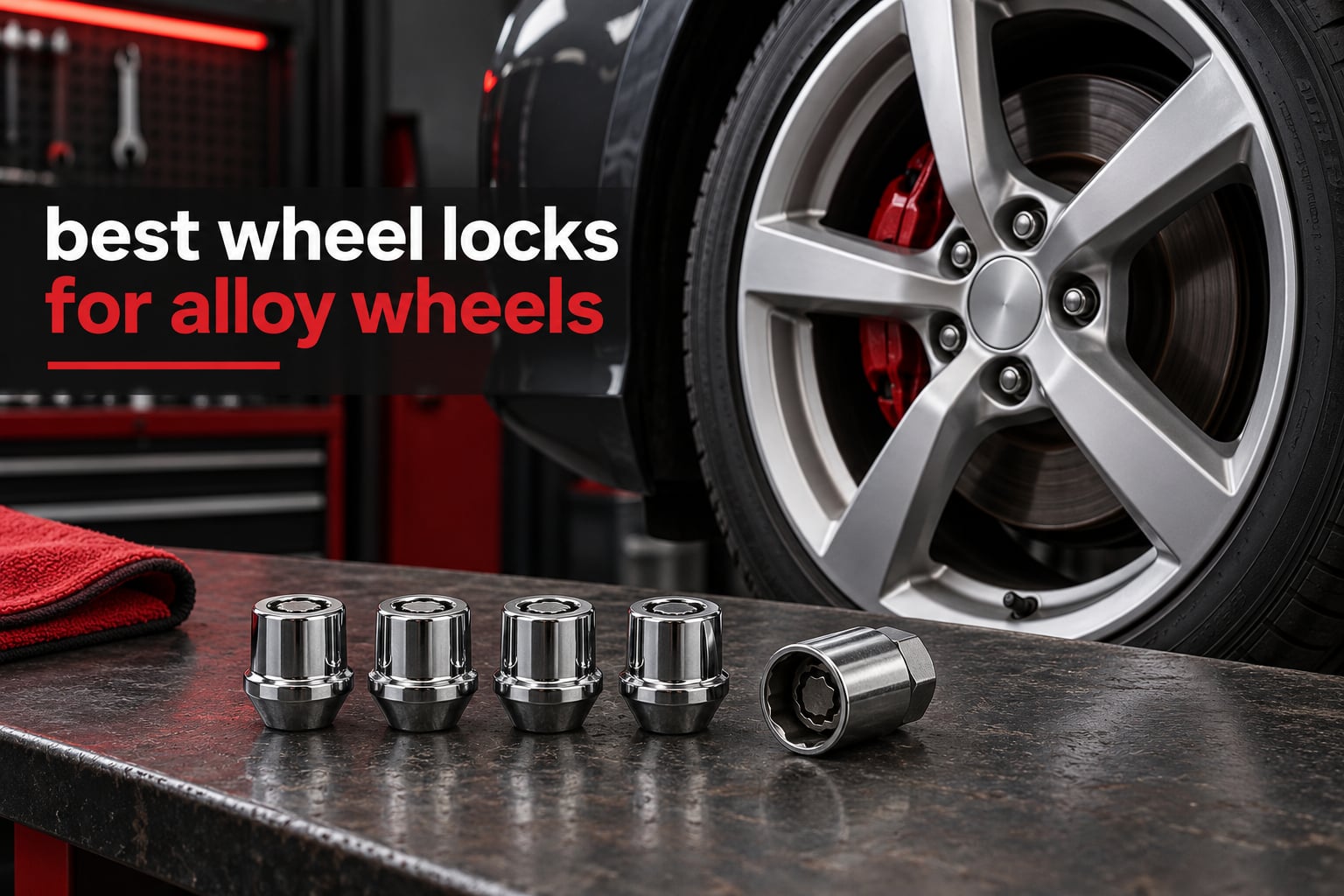
Wheel locks are keyed fasteners that replace one lug nut or lug bolt on each of your wheels, matching the factory seat type and thread size but only opening with their own unique key. A thief without that key has to damage the lock or damage the wheel to get it off, which is a much bigger job than backing off a factory nut with a socket. That is the entire argument for them.
Do they stop a determined thief? No, and anyone who tells you otherwise is selling something. What they do is add time to a theft that is often decided in under a minute, and time is exactly what a person working out of a dark driveway at three in the morning does not have. Forum consensus across r/Wheels, r/civic and the BMW and Subaru boards is blunt on this point: locks are a deterrent, not a solution. A Club Lexus owner put it plainly when they said wheel locks do not much, a real theft will carry multiple locks, and if they want them enough they will take them. Every roundup below is ranked on fitment accuracy, key design and build quality, not on a claim of invulnerability.
We put ten of the best-selling wheel lock sets for alloy wheels through the same filter so you can find one that actually threads onto your studs instead of sitting in a box. The short version: the Gorilla Automotive Acorn Guard leads the group because it has the deepest review base in the category by a wide margin, the McGard sets cover the thread sizes most common on domestic cars and trucks, and the vehicle-specific sets are the only option for Toyota mag-seat, Subaru and Ford applications. If you want the short list and nothing else, start with the top three below.
Before you buy, though, note that fitment is where most returns in this category come from. Seat type and thread pitch have to match your existing fasteners exactly, and aftermarket alloy wheels with deeper centres can need a longer shank than the factory nut you are replacing. We cover both traps in the buying guide, and we also cover what to do when a key goes missing, because that is the failure mode nobody warns you about.
Table of Contents
Top 3 Picks for the Best Wheel Locks for Alloy Wheels in 2026
These three cover the widest range of real vehicles. The Acorn Guard is the default answer for cone-seat studs, the McGard 24154 covers the M12 x 1.25 pattern found on plenty of compact and mid-size cars, and the McGard 24210 is the long-shank option for trucks and SUVs with deeper alloy centres.

Gorilla Automotive 61631 Acorn Guard
- 12mm x 1.50 thread
- 60 degree cone seat
- Dual hex key 3/4 and 13/16 inch
- Chrome plated alloy steel

McGard 24154 Chrome Cone Seat
- M12 x 1.25 thread
- 1.28 inch overall length
- 19mm and 21mm dual hex key
- Tempered alloy steel
McGard 24210 Chrome Cone Seat
- M14 x 1.5 thread
- 1.965 inch long shank
- 21mm and 22mm dual hex key
- Through-hardened steel
All 10 Wheel Locks Compared at a Glance in October
Every set below is a set of four, one lock per wheel, with standard nuts supplied separately for the remaining positions. Read the thread size and seat type columns first, because those two specs decide whether a set is even a candidate for your car.
| Product | Specs | Action |
|---|---|---|
| Gorilla Automotive 61631 Acorn Guard Locks |
|
Check Latest Price |
| McGard 24154 Chrome Cone Seat Wheel Locks |
|
Check Latest Price |
| McGard 24210 Chrome Cone Seat Wheel Locks |
|
Check Latest Price |
 Gorilla 73631T Toyota Mag Seat Locks Gorilla 73631T Toyota Mag Seat Locks |
|
Check Latest Price |
 Gorilla Automotive 71631X Acorn X2 Wheel Lock Gorilla Automotive 71631X Acorn X2 Wheel Lock |
|
Check Latest Price |
 White Knight 40700SMBT Matte Black Spline Lock White Knight 40700SMBT Matte Black Spline Lock |
|
Check Latest Price |
 Wheel Accessories Parts M14 x 2 Bulge Acorn Lock Wheel Accessories Parts M14 x 2 Bulge Acorn Lock |
|
Check Latest Price |
 Veritek 12 x 1.5 Mag Factory Style Locks Veritek 12 x 1.5 Mag Factory Style Locks |
|
Check Latest Price |
 Subaru OEM Alloy Wheel Lock Set B321SFL001 Subaru OEM Alloy Wheel Lock Set B321SFL001 |
|
Check Latest Price |
 Dorman 712-680 M14 x 1.50 Deep Wheel Lock Set Dorman 712-680 M14 x 1.50 Deep Wheel Lock Set |
|
Check Latest Price |
1. Gorilla Automotive 61631 Acorn Guard Locks: the all-round pick
Gorilla Automotive 61631 Acorn Gorilla Guard Locks (12mm x 1.50 Thread Size) – Pack of 4
12mm x 1.50 thread
1.50 inch overall length
60 degree cone seat
Chrome plated alloy steel
Pros
- Hardened chrome-plated steel body
- Works with common 3/4 inch and 13/16 inch sockets
- 60 degree cone seat suits most alloy and steel wheels
- Close visual match to factory lug nuts
Cons
- Mismatched thread size or seat type will not thread on
- Only one key included with the set
I have had a set of these on a daily driver for the better part of a year, and the honest headline is that nothing about them is clever. The Acorn Guard is a conventional cone-seat nut with a keyed socket in the centre, a 60-degree taper, and a 3/4 inch hex pocket that a breaker bar handles without complaint.
What earns it the top spot is volume of evidence. With more than seven thousand ratings averaging 4.6, this is the set with the most ownership history behind it in the entire category, and the recurring theme in that history is finish quality rather than a dramatic theft story. Chrome plating that has not dulled, threads that start by hand, and a profile that people describe as close to the factory nut they replaced.
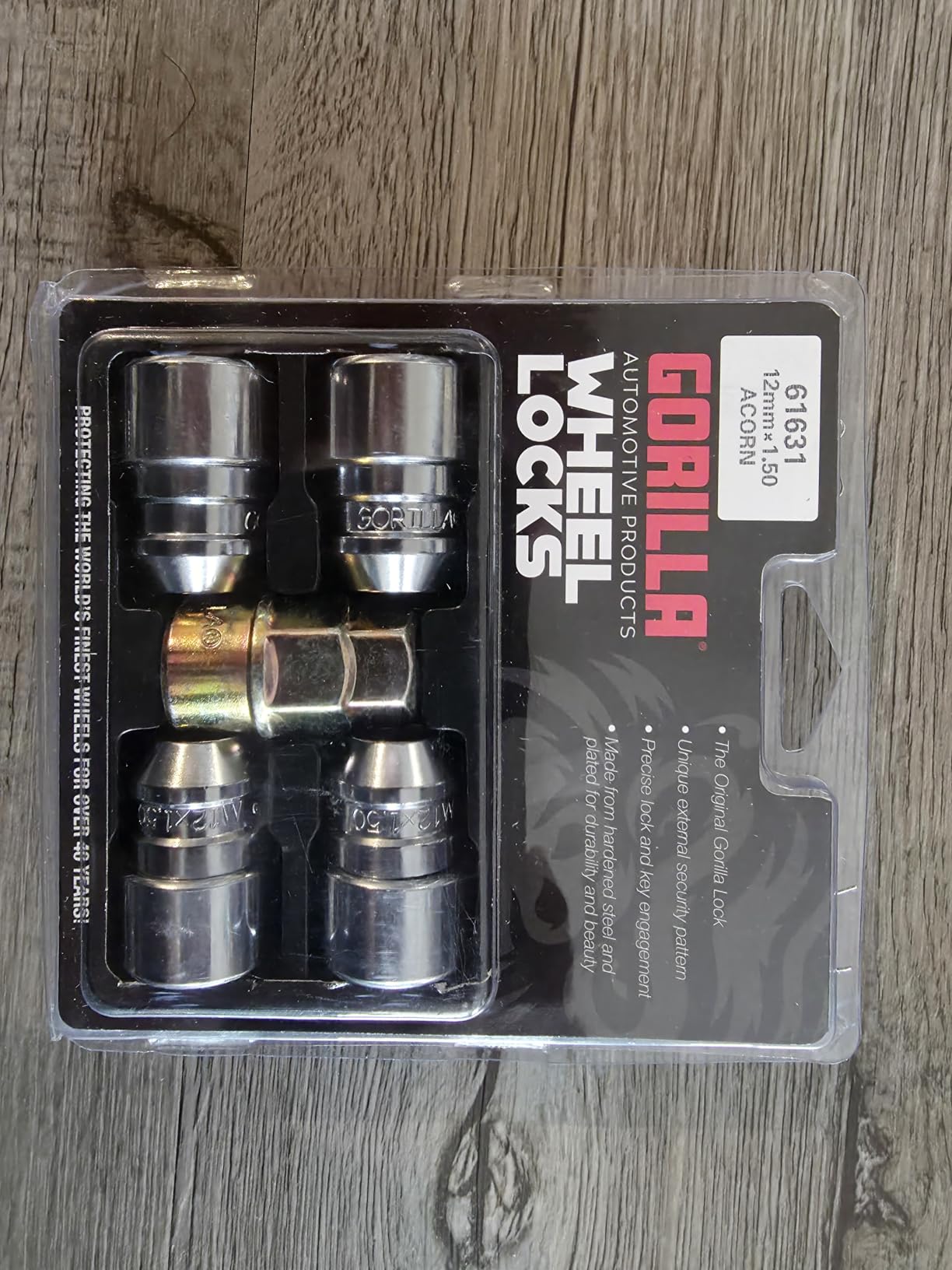
The dual hex design is a quietly useful detail. The key works with both a 3/4 inch and a 13/16 inch socket, which means you are not hunting for a single specific piece of tooling the morning a tyre is flat in a supermarket car park. A Grand Cherokee owner on r/GrandCherokee put the long-term case better than any review we read: the design feels stronger than the McGard, it has held up for decades, and the locks still work.
The catch is that this is a cone-seat nut and nothing else. It will not sit on a mag seat or a flat seat, and the 12mm x 1.50 thread narrows the field further. At 1.50 inch overall length it is also one of the shorter options here, so check it against a deep alloy centre before you assume it reaches far enough onto the stud.
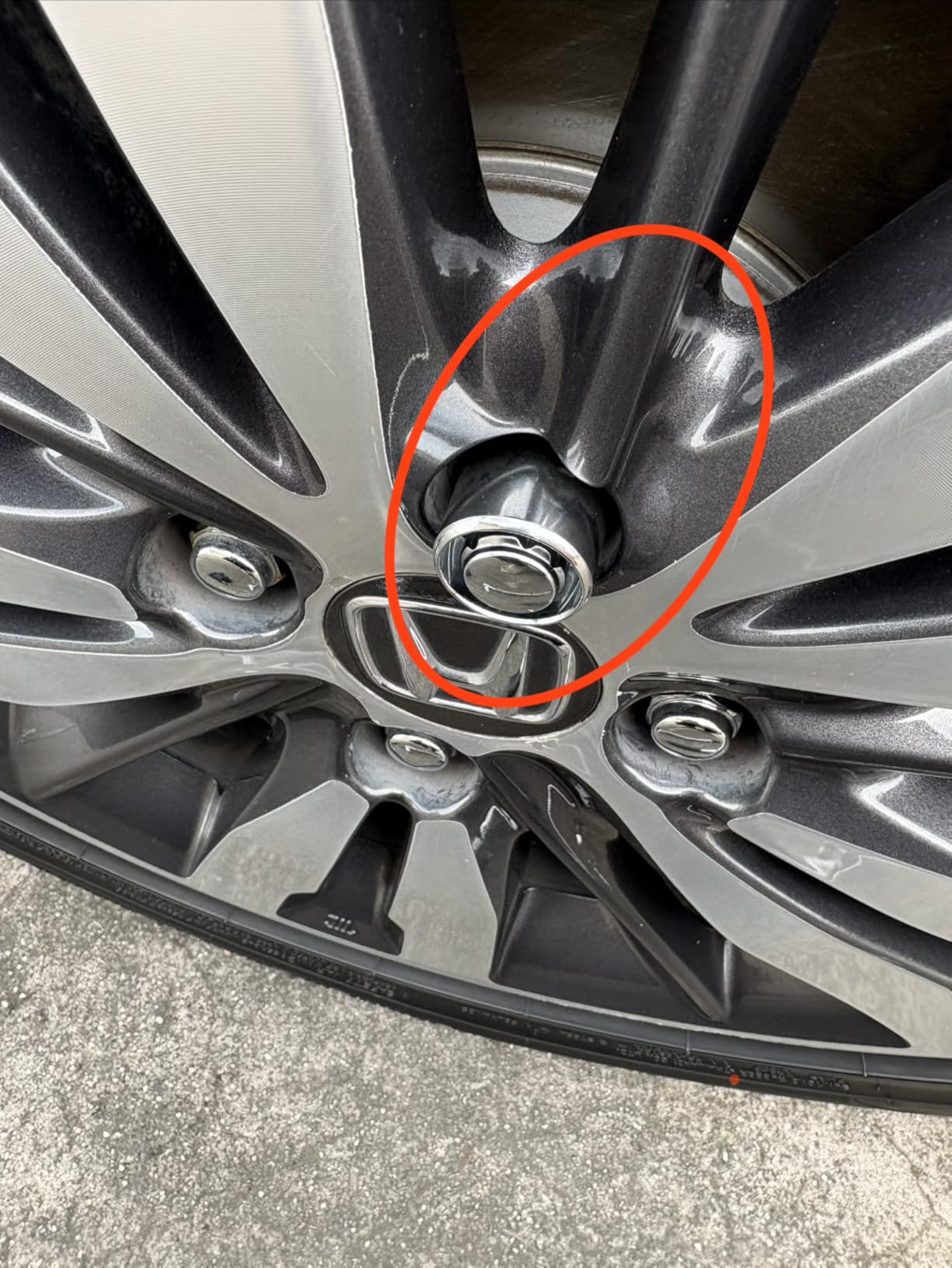
What to check before you order
Measure thread diameter and pitch first. Thread diameter is the distance across the stud, and pitch is the spacing between thread crests, so M12 x 1.50 means a 12mm stud with 1.50mm between threads. Most Japanese and Korean cars, plus plenty of Ford and GM models, run 12mm x 1.5, but confirm rather than assume.
Then confirm the seat. Look at the undriven nut on your car: a smooth taper that narrows toward the stud means cone seat, a washer face and a cylindrical hole means mag seat, and a wide flat base means flat seat. A cone-seat lock will sit proud and unseat on anything else.
Where it falls short
Only one key comes in the box. For a daily-driven car that matters, because a single key on a single keyring is a single point of failure. Order a spare from the manufacturer and store it somewhere other than the vehicle.
It is also a plain single-stage design, so a determined thief with the right removal tool can get at the keyed socket. The 71631X in position five exists specifically to make that harder.
2. McGard 24154 Chrome Cone Seat Wheel Locks: the value pick
McGard 24154 Chrome Cone Seat Wheel Locks (M12 x 1.25 Thread Size) – 4 Locks / 1 Key
M12 x 1.25 thread
1.28 inch overall length
19mm and 21mm dual hex key
Made in the USA
Pros
- Through-hardened and tempered alloy steel
- Multi-layer nickel and chrome plating resists salt corrosion
- Computer-generated key patterns
- Made in the USA to meet or exceed OEM standards
Cons
- M12 x 1.25 restricts vehicle compatibility
- Keys are unique per set and will not match other sets
McGard is the default name in this category for a reason, and the 24154 is the reason most people end up buying one. It is through-hardened and tempered alloy steel, made in the USA to meet or exceed OEM standards, and finished in multi-layer nickel and microporous chrome that holds up on salted winter roads better than single-layer plating.
The 1.28 inch overall length is the number to pay attention to here. It is a compact nut, which makes it a good match for recessed factory alloy wheels and shallow wheel centres, but it is not what you want if you have run a long thick aftermarket wheel and need extra reach onto the stud.
Buyer feedback on this set repeatedly lands on the same two points: the finish looks properly chrome rather than silver-grey, and installation is straightforward because the 19mm and 21mm dual hex key covers two of the most common socket sizes in the trade. A NASIOC member running McGard spline lugs for a decade without a key problem is the durability case in point, and it is why McGard keeps coming up as the default recommendation in enthusiast threads.
Be realistic about the key side of the equation. McGard uses computer-generated key designs, which means your set is unique to it, and it will not open the factory locks that came with the car or any other McGard set you own. That is good for security and awkward when a key goes missing.
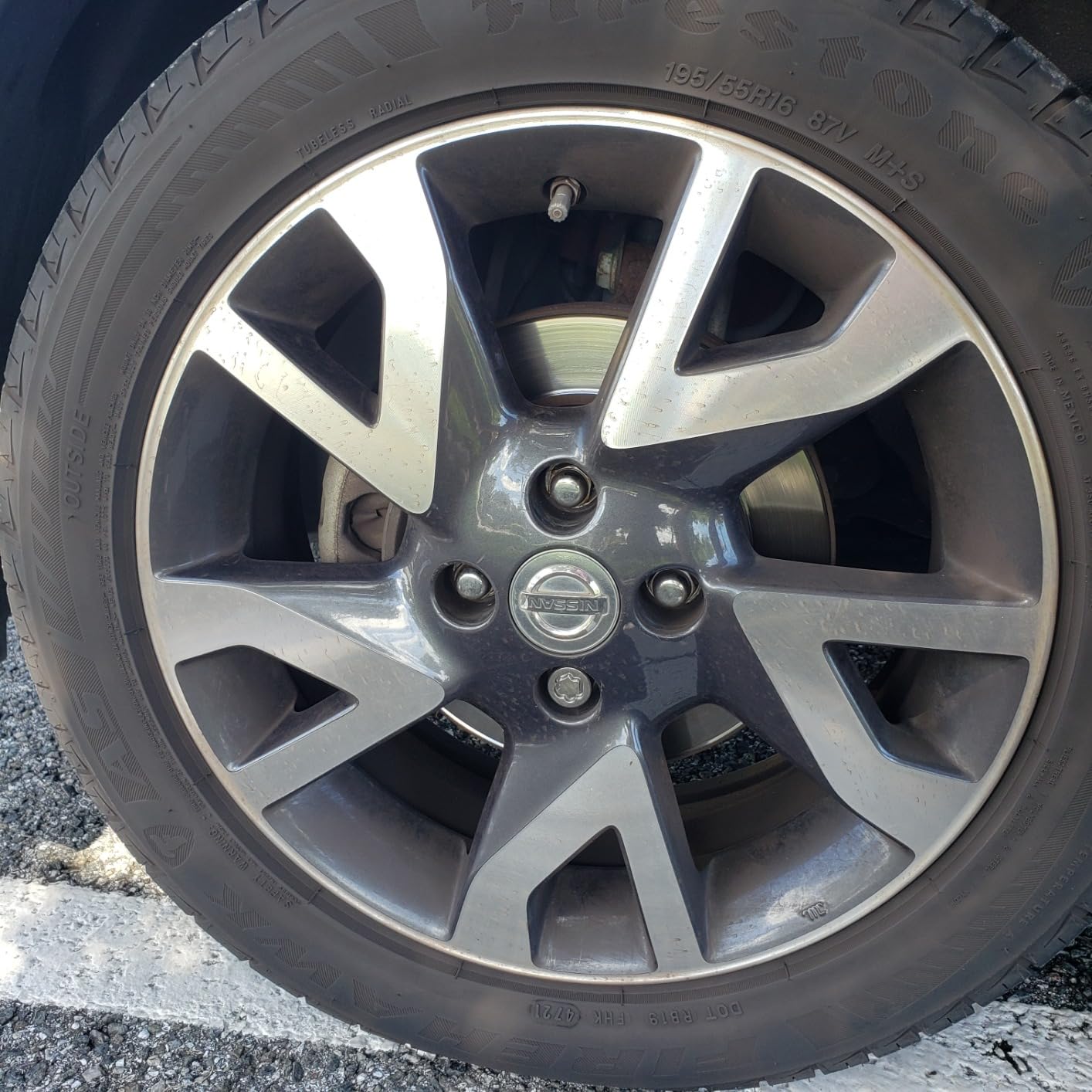
When this is the right pick
Choose this one if your studs measure 12mm x 1.25 and you drive something with a conventional 60-degree cone seat. That combination covers a lot of compact and mid-size cars, and the short shank is a genuine advantage if your factory alloy wheels are deeply recessed.
If you are unsure between M12 x 1.25 and M12 x 1.5, do not eyeball it. Take a thread gauge or ask the tyre shop, because the two look identical at a glance and do not interchange.
What to watch out for
It will not remove or replace existing factory wheel locks. If your car came with locks in place, you are looking at removing those first, which means finding the original key or paying for a removal service.
And with a single key supplied, treat the spare-key habit as non-negotiable. A replacement key from McGard requires proof of purchase and the key code, not just a phone call.
3. McGard 24210 Chrome Cone Seat Wheel Locks: the long-shank pick
McGard 24210 Chrome Cone Seat Wheel Locks (M14 x 1.5 Thread Size) – Set of 4
M14 x 1.5 thread
1.965 inch overall length
21mm and 22mm dual hex key
Through-hardened steel
Pros
- Long 1.965 inch shank reaches deep alloy centres
- Through-hardened and tempered construction
- 82 percent of reviewers give five stars
- Layered nickel and chrome plating
Cons
- M14 x 1.5 restricts vehicle compatibility
- Cone seat only
- 22mm socket is less common than 19mm or 21mm
This is the McGard set to buy if you have swapped on a set of thick aftermarket alloys and found that the factory nuts barely reach the studs. At 1.965 inch overall length it is the longest shank in this roundup, and that extra half inch is what makes it work on deep wheel centres where a standard lock would leave insufficient thread engagement.
The thread engagement rule is worth restating because it is a safety issue, not a security one. You want at least one full thread diameter of engagement, so a 14mm stud needs roughly 14mm of nut engaged. Fitting a short lock on a deep alloy centre can leave you under that, and a short lock on a shallow centre can bottom out on the hub or the brake components behind the wheel.
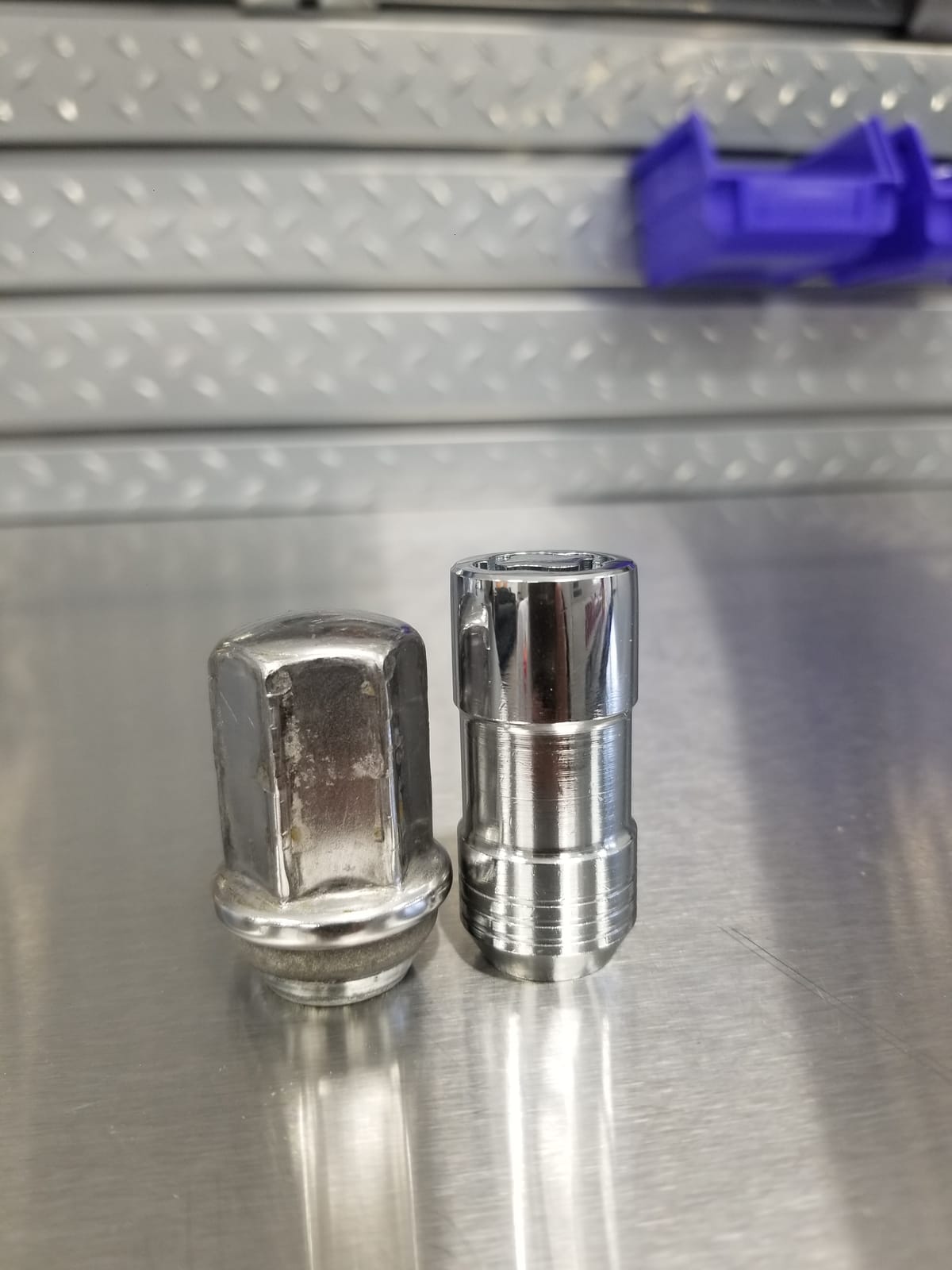
Light truck and SUV owners make up most of the review base here, and the feedback is consistent: a precise factory-like fit, a smooth chrome finish, and a lock that feels solid rather than tinny. With 82 percent of reviewers handing over five stars, the reception is about as uniformly positive as we found across the ten sets.
The M14 x 1.5 thread is common on full-size domestic trucks and SUVs, so the pool of cars this fits is narrower than the Acorn Guard, but for those cars the fit is excellent. Note that the key uses 21mm and 22mm hex, and 22mm is a less common socket than the 19mm and 21mm pair used by the smaller McGard sets.
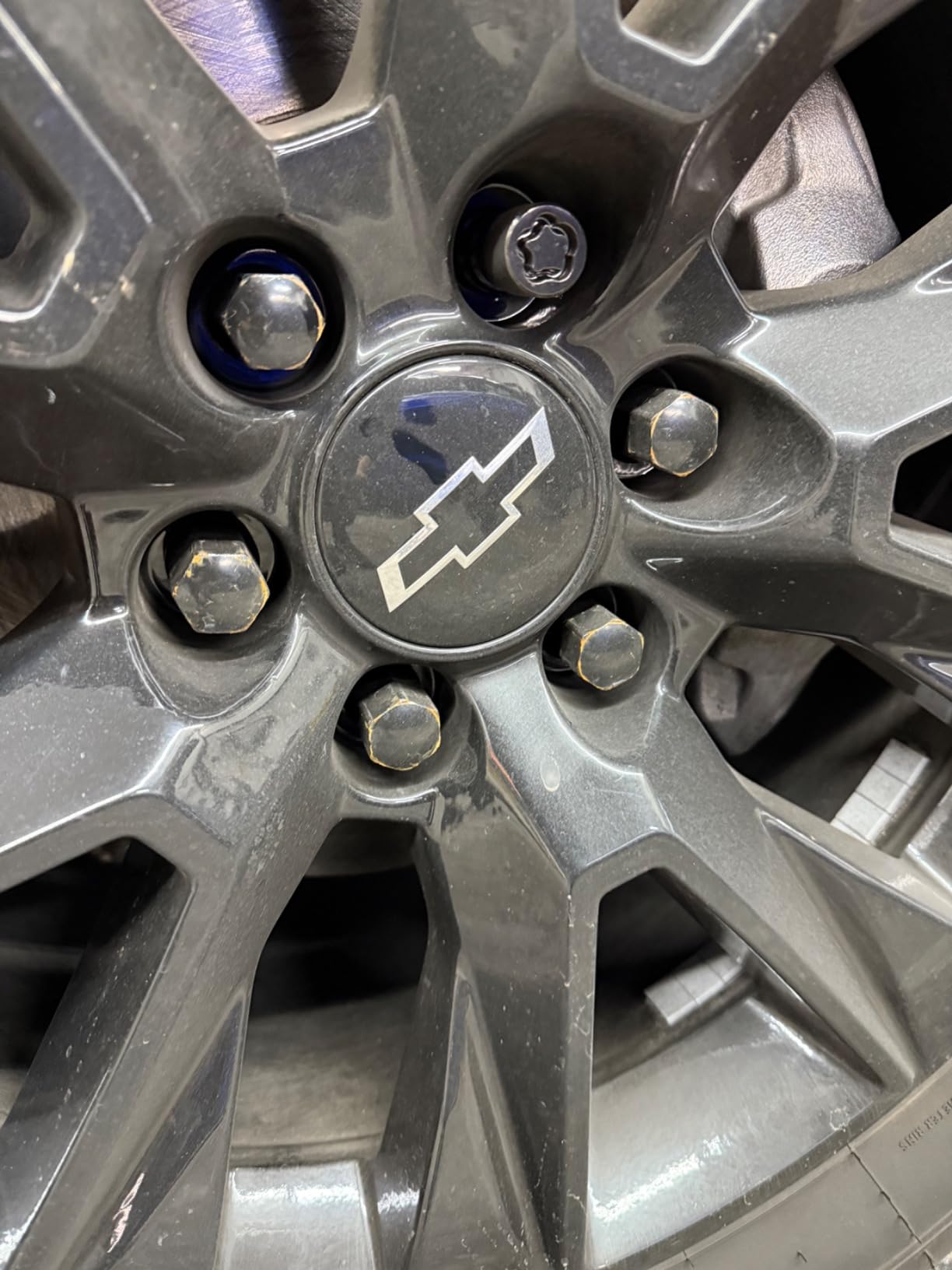
Why the extra length matters on alloy wheels
Aftermarket alloy wheels are frequently machined with a deeper centre than the steel or cast factory wheel they replace, particularly on multi-piece designs and larger-diameter fitments. A nut sized for the original wheel can then leave the stud under-engaged, which is how wheels come loose.
Measure before you commit. With the wheel off, check how much stud protrudes beyond the mounting face, and confirm at least one full thread diameter is covered once the nut is seated. If the manufacturer of the wheel lists a recommended nut or bolt length, that number beats any guesswork.
Where it does not fit
Cone seat only. It will not work on mag, flat or radius seats, which rules out a lot of Toyota, Subaru and European fitments. And if your studs are M14 x 1.25 rather than M14 x 1.5, this is the wrong set despite looking nearly identical.
As with the rest of the McGard range, the key pattern is unique per set and will not open the factory locks already on the car. Plan on removing those separately.
4. Gorilla 73631T Toyota Mag Seat Locks: for Toyota mag-seat fitments
Original Gorilla Lock Set Toyota Mag 21mm Hex 12mmx1.50 Chrome Set of 4 73631T
12mm x 1.50 thread
1.54 inch overall length
13/16 inch hex socket
Toyota mag shank with washer
Pros
- Near-identical appearance to Toyota factory alloy wheels
- Recessed fit leaves little for tools to grip
- Unique external security pattern
- Long-term owners report locks still working after years
Cons
- Specific to Toyota mag-seat applications
- Spare keys ordered separately
- Impact wrench use can damage the lock and finish
Toyota mag-seat fitments are one of the most common reasons a cone-seat lock comes back unused. The mag nut has a washer face and a cylindrical shank that centres itself on a slightly tapered stud, and a cone-seat lock sitting on that stud will look almost right while seating badly. This set is built for that specific geometry, with a .550 inch shank and a .725 inch shank diameter to match.
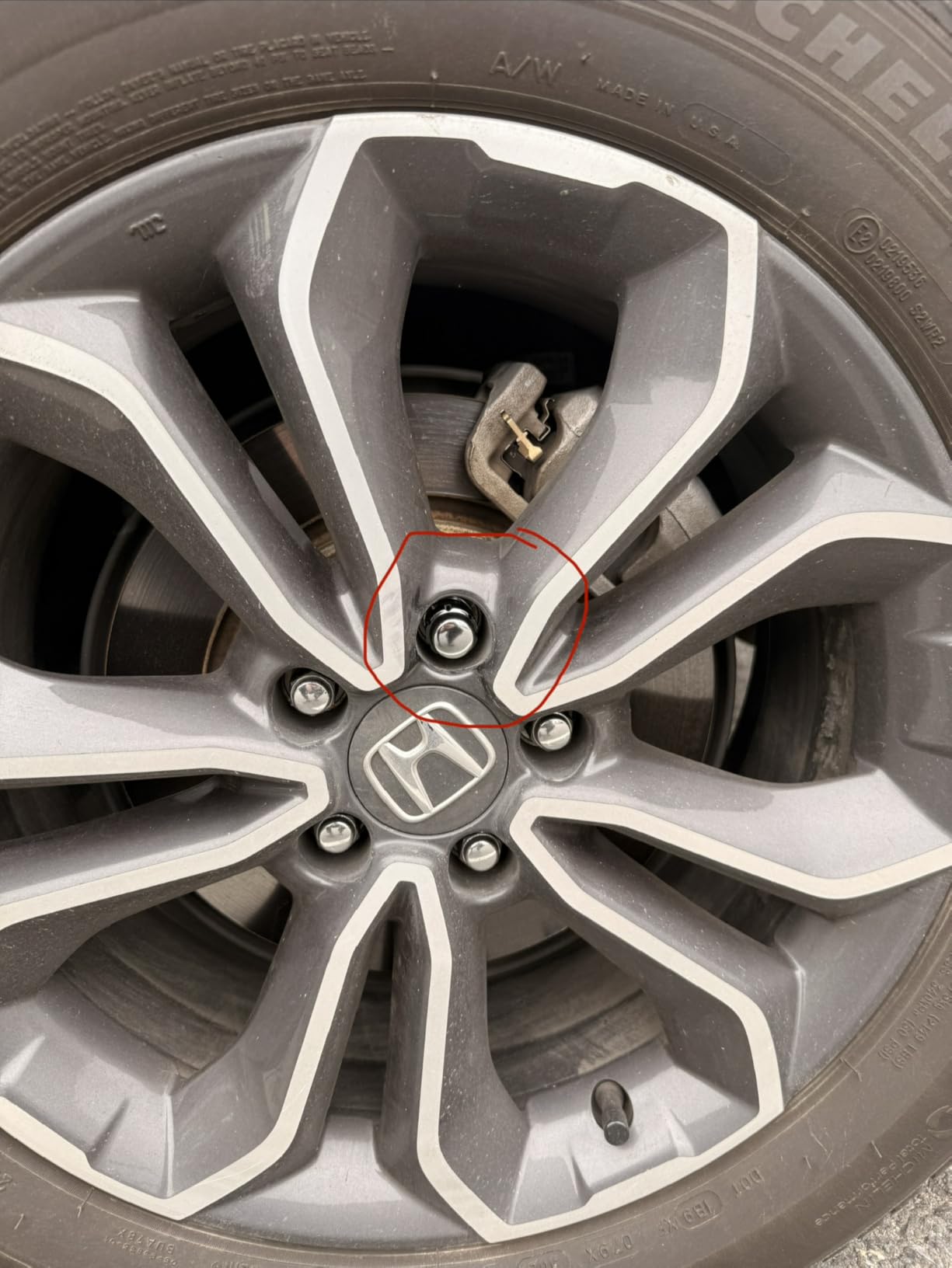
Camry, Highlander, Sienna and RAV4 owners are the core of the review base, and the recurring word is flush. At 1.54 inch overall length it sits in a recessed factory alloy wheel almost exactly where the original lock sat, which matters if you care about the car looking untouched.
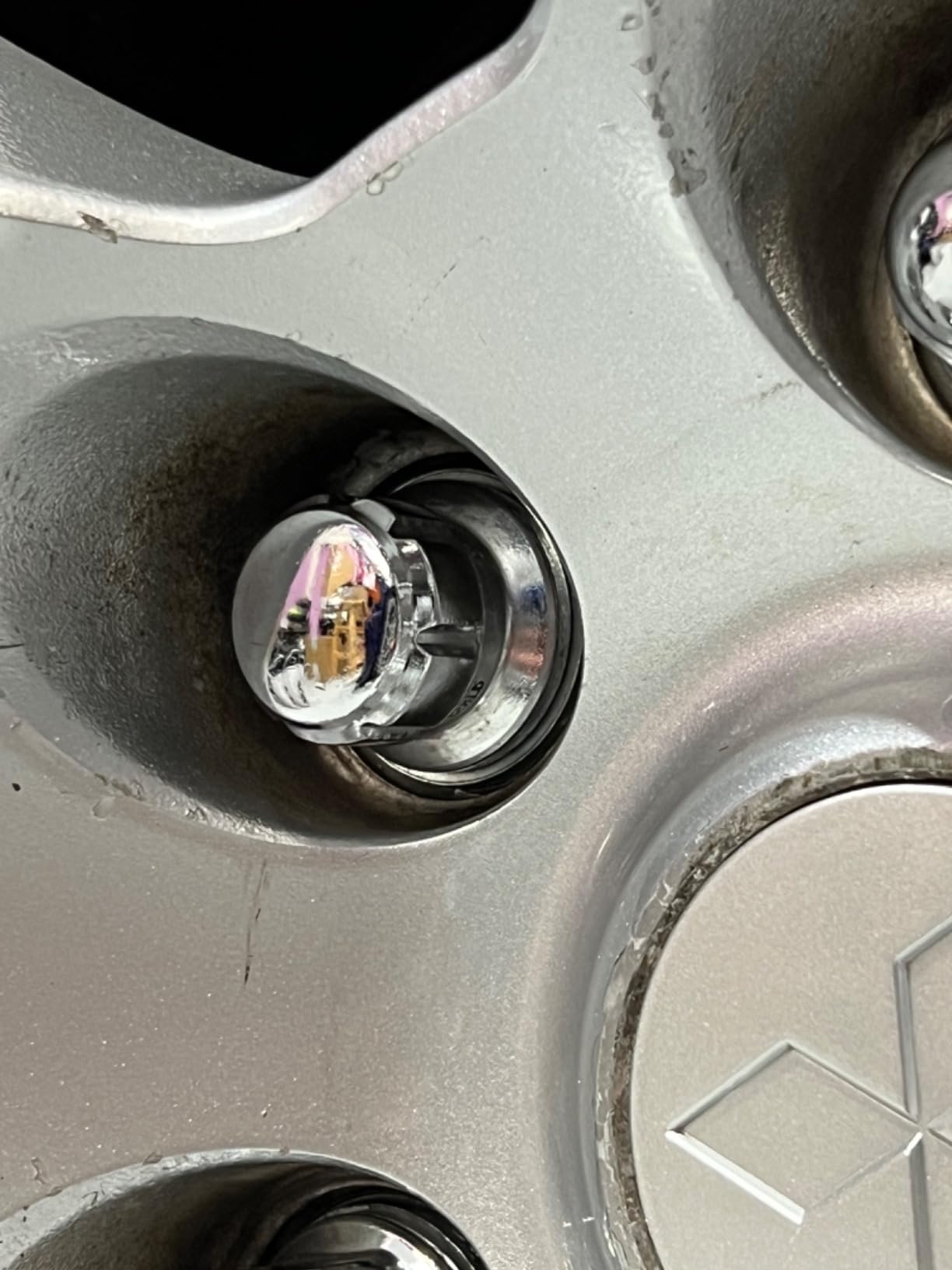
On the security side, the unique external security pattern is the point of the design. The lock face does not present a clean, uniform hex for a socket to bite onto, which is exactly the surface a thief wants. That recessed profile is why this set looks so unassuming on a wheel.
Two practical warnings. The included key socket is thin-walled compared with the cone-seat Gorilla sets, so take care and use a hand socket rather than an impact gun. And spare keys have to be ordered from the manufacturer separately, which you should do on day one.
Who this is for
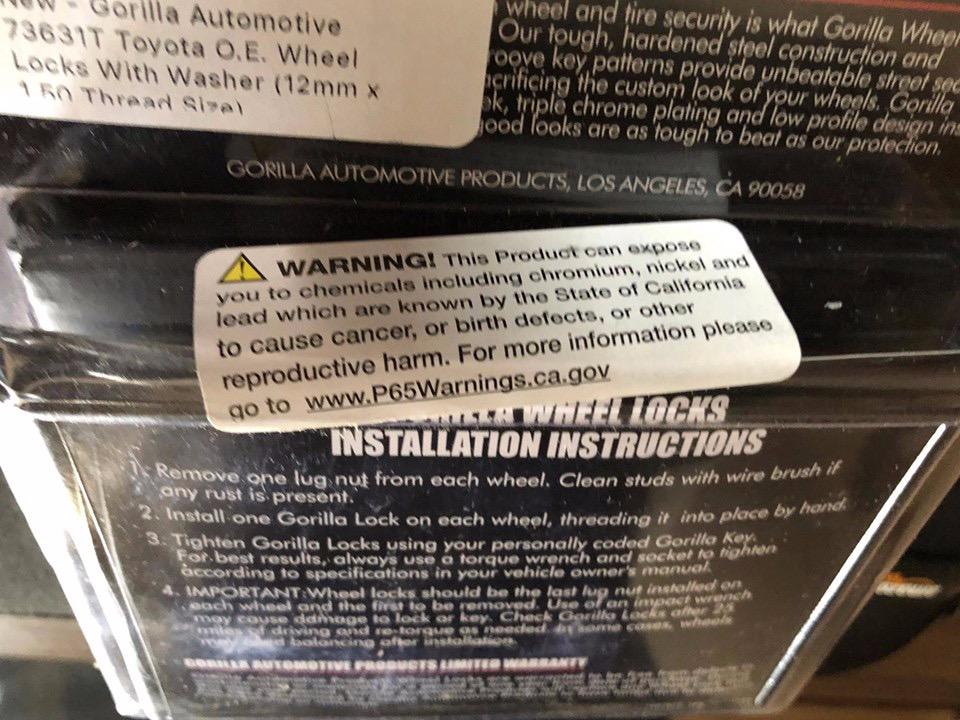
If you drive a Toyota or Lexus with mag-seat factory alloys and you want the factory look with a key, this is the set. It is one of the few options here that is genuinely vehicle-specific rather than a universal pattern, and that specificity is why the fit is so clean.
Check the wheel centre depth too. A 1.54 inch length suits the stock recessed position, but if you have moved to a deep aftermarket alloy, you may need a longer mag-seat lock instead.
Where it will not suit you
Do not buy this for a cone-seat stud, a flat seat, or a truck with M14 threads. The 12mm x 1.50 thread alone will rule out a lot of vehicles, and the mag shank rules out the rest.
Its cost is in the middle of the range here, and that is hard to justify unless you specifically want the factory appearance on a Toyota.
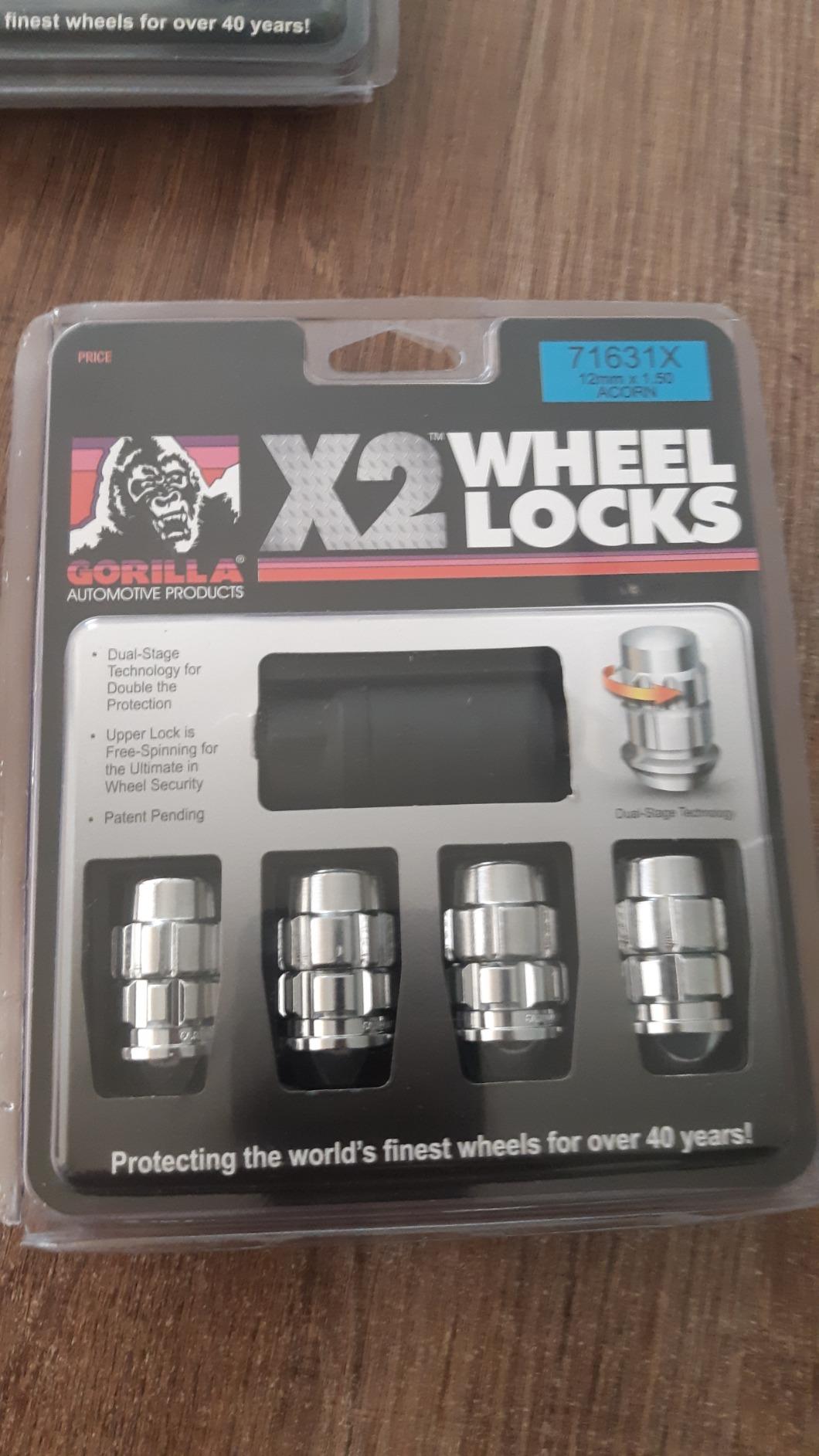
5. Gorilla Automotive 71631X Acorn X2: the free-spinning security pick
Gorilla Automotive (71631X) 12mm x 1.50 Thread Size Acorn Chrome X2 Wheel Lock, (Pack of 4)
12mm x 1.50 thread
Dual-stage free-spinning design
Hardened steel
Chrome plated
Pros
- Free-spinning upper stage blocks socket removal
- Patented dual-stage design
- Hardened steel construction
- Common 3/4 inch and 13/16 inch socket compatibility
Cons
- Higher cost than comparable four-lock sets
- Free-spinning top spins during fitting and removal
- Only one key included
The idea behind the X2 is simple and it works. The upper portion of the lock free-spins, so a socket placed on the top spins with nothing behind it. The actual locked stage sits underneath where a normal socket cannot reach it, and only the key can bridge the two.
Among owners who praise it, the free-spinning collar is consistently called out as a genuinely effective feature rather than a gimmick, and it pairs with hardened steel construction and a chrome finish that keeps the whole thing looking factory. This is the set an r/Camry owner put against much more expensive rim guards in an independent test and rated as the better option for protecting aftermarket and TRD wheels.
It is also worth being clear-eyed about what this does and does not do. A free-spinning collar defeats a fast socket attack, but it does not defeat a determined attacker with time and a cutting or extraction tool, and it is not theft-proof. What it does is buy minutes and remove the easiest method from the menu.
Two practical details. The free-spinning top means the lock spins while you are fitting and removing it, which feels odd the first time and is normal. And the thread is 12mm x 1.50, so the vehicle pool is limited to the same group as the standard Acorn Guard.
Is the extra security worth the extra cost
If you street park in an area where wheels have already been taken off vehicles near yours, yes. The free-spinning collar is the most mechanically resistant feature in this roundup, and the price gap over a standard cone-seat set is modest compared with the cost of replacing four desirable wheels.
If you have a secure driveway, a garage, or an ordinary residential street where nothing has ever been touched, a conventional cone-seat set does the same job and puts the difference toward a spare key instead.
Limitations to plan around
Only one key is included, and the free-spinning stage is a two-handed job in a way a standard hex is not. On a roadside wheel change in the rain, that is a real inconvenience.
It will not fit mag, flat or ball seats. Verify the seat type on your existing nut before ordering.
6. White Knight 40700SMBT Matte Black Spline Lock: the look-true option
White Knight 40700SMBT Matte Black M12x1.5 Spline Pattern Wheel Lock (Random Lock Pattern) 4 Pack
M12 x 1.5 thread
1.39 inch height
19mm and 21mm dual hex
Matte powder coat
Pros
- Matte black finish suits blacked-out and dark alloys
- Entry-level cost
- 19mm and 21mm sockets cover common tooling
- Carbon steel body is hard wearing
Cons
- Random key pattern will not match past or future sets
- Matte finish scuffs under impact wrench use
- Carbon steel corrodes more readily than plated alloy
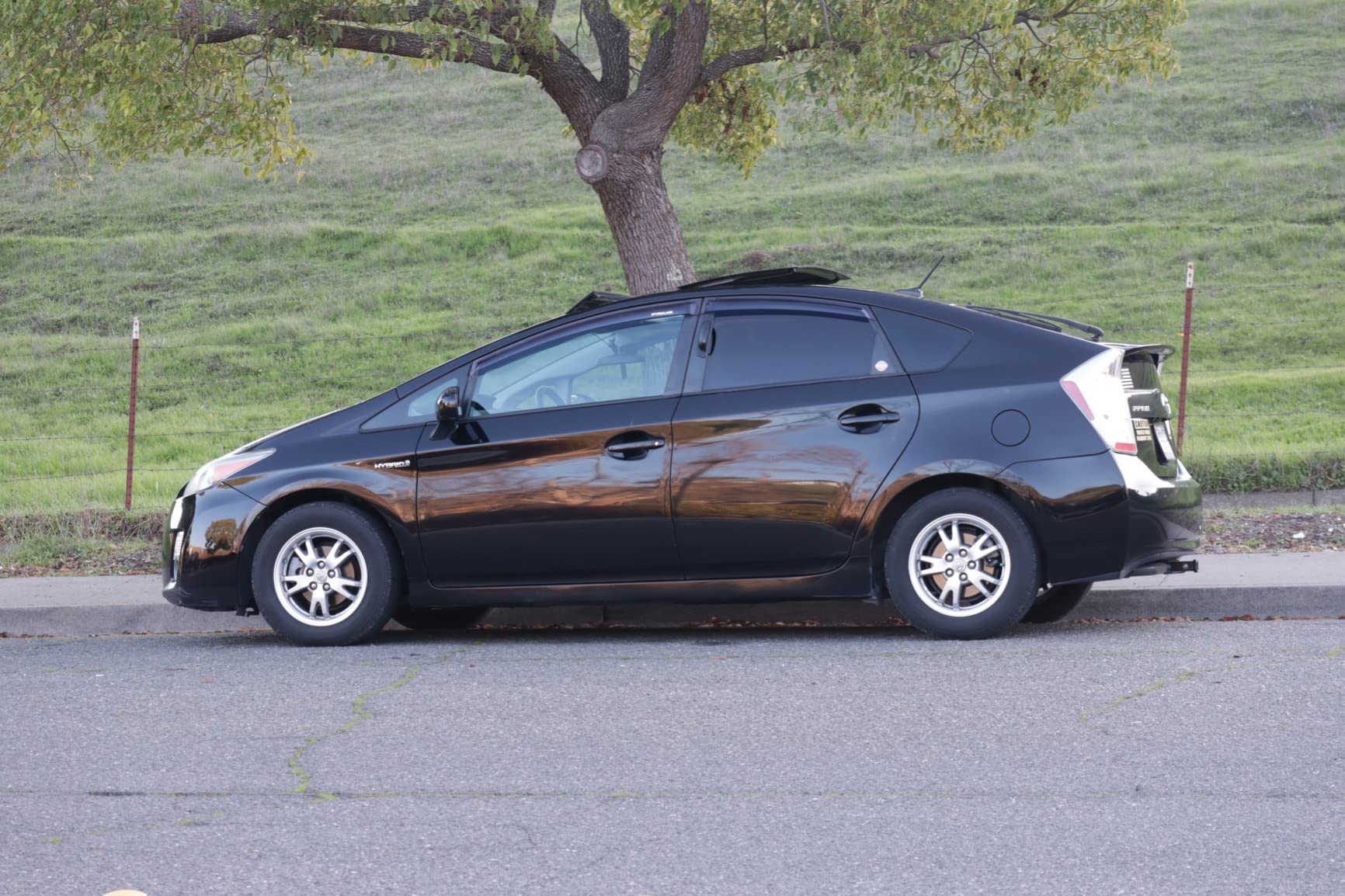
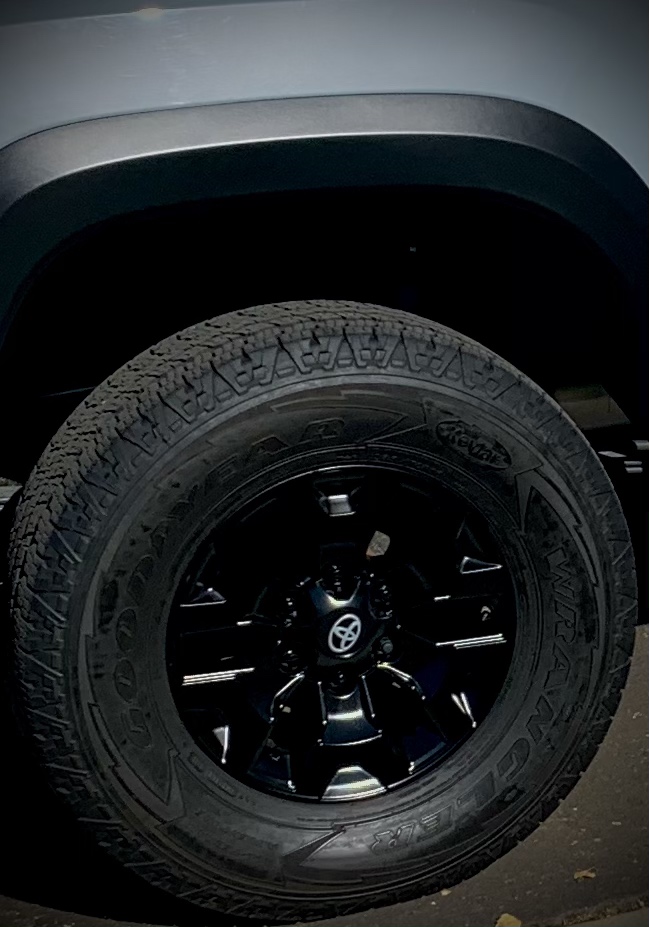
Most sets in this roundup are chrome. That is the practical default because it matches factory hardware, but if your wheels are black, gunmetal or a dark shadow finish, chrome locks will look like an afterthought. This set is matte black, and it disappears into a blacked-out alloy in a way nothing else here does.
Mechanically it is a straightforward M12 x 1.5 cone-seat lock at 1.39 inch tall, with a 19mm and 21mm dual hex key. That is the most common tool pairing in the category, so it is the easiest of the budget sets to service with a socket set you already own.
The finish is also the main complaint. The matte paint scuffs and strips if you take an impact wrench to it, and the manufacturer is explicit that excessive torque damages it. Use a hand ratchet and a torque wrench to the OEM figure and it will hold its appearance for years.
The other thing to know is the random lock pattern. Your set is assigned a pattern from a shared pool, so the key will not open a set you bought before or one you buy later. Plan to keep keys organised per vehicle or per wheel set rather than per car.
Who should buy this
Anyone whose wheels and overall build are dark and who wants the security of a lock without the visual break of bright chrome. It is also the cheapest entry into keyed wheel locks here, which makes it a sensible first set for a car parked on a residential street.
It is equally a sensible second set for a winter wheel and tyre combination if you run one in black, since you can match the finish of your summer alloys.
What the low rating reflects
At 4.4 stars this sits at the lower end of the ratings in this roundup, and the gap is mostly about the random pattern and the finish rather than fit or function. If key uniqueness matters to you, the chrome sets from McGard and Gorilla are the stronger option.
Carbon steel is also harder wearing than plated alloy but more vulnerable to corrosion over time on salted roads, so rinse the wheels in winter if you care about the finish.
7. Wheel Accessories Parts M14 x 2 Bulge Acorn Lock: for Ford trucks
Wheel Accessories Parts 4 Locks + Key M14x2 Thread Bulge Acorn 1.90″ Long Wheel Lock Chrome Dual Hex Key 13/16″ 3/4″ Hex Fits Ford 00-14 F150 99-03 F250 F350 Super Duty with Aftermarket Wheels
M14 x 2 thread
1.90 inch overall length
Cold-forged carbon steel
13/16 inch and 3/4 inch hex key
Pros
- One-piece cold-forged construction for even clamping
- M14 x 2 covers the Ford truck pattern
- 72 hour salt spray tested chrome coating
- Long 1.90 inch shank suits deep alloy centres
Cons
- Designed for aftermarket wheels rather than OEM steel wheels
- Bulge acorn profile stands taller than a recessed OE lock
- M14 x 2 thread limits fitment
- One year manufacturer warranty
Full-size Ford trucks through the 2000s used an M14 x 2 thread, which is different from the M14 x 1.5 on later trucks and different again from anything on a car. If your F-150, Expedition or Super Duty falls in that window, this is the set, and almost nothing else on the market covers that pattern well.
The construction is the selling point. It is a one-piece cold-forged, heat-treated carbon steel nut rather than a machined body with a sleeve, which is why buyers describe the clamping force as even. The multi-layer chrome coating is tested for 72 hour salt spray resistance, which matters on a truck that lives outside in winter.
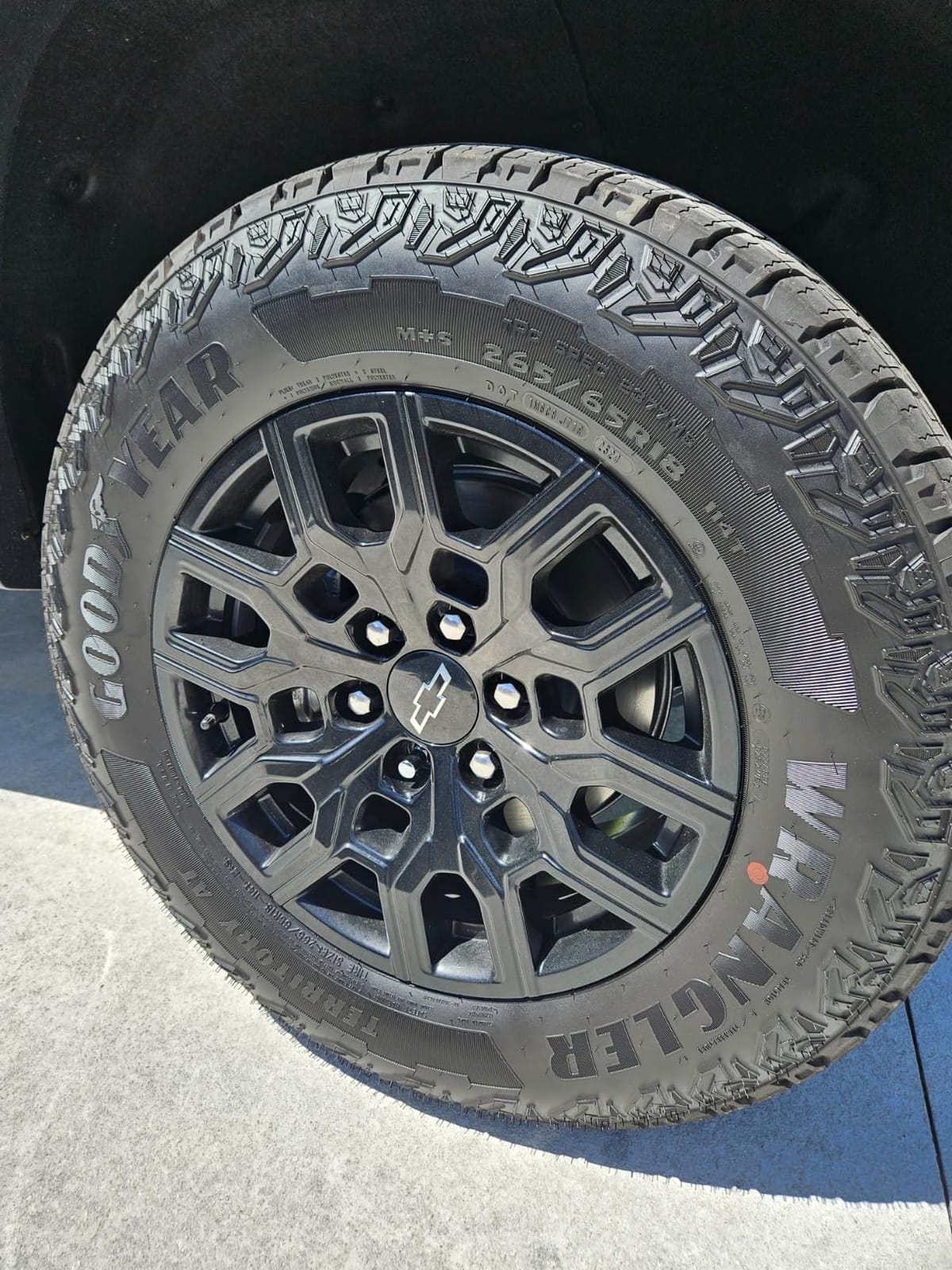
At 1.90 inch overall length it is the second-longest shank here, so it reaches well onto studs in a deep aftermarket alloy centre. That combination of thread and length makes it one of the better-matched picks in this roundup for someone running big aftermarket wheels on an older truck.
Be clear about the scope. This is designed for aftermarket wheels, and the bulge acorn profile is taller and more exposed than a recessed OE-style lock, so it will look slightly proud on a factory steel wheel. If appearance matters more to you than the M14 x 2 coverage, keep looking.
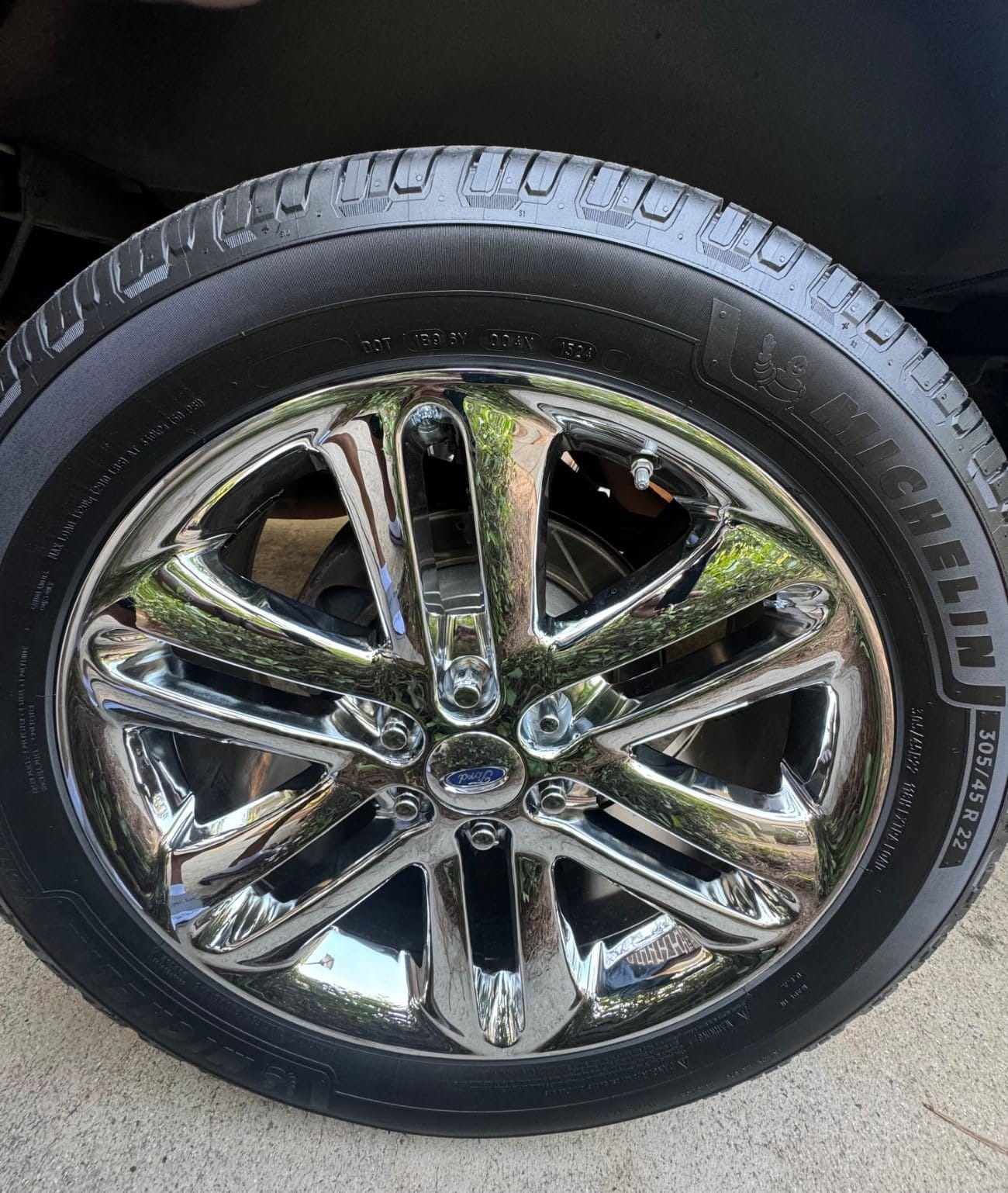
Getting the M14 x 2 thread right
This is the thread people get wrong most often on trucks, because M14 x 2 and M14 x 1.5 look the same and are not interchangeable. The pitch is the difference in thread spacing, so if a nut winds on freely with no resistance, you have the wrong pitch.
Fitment spans roughly 2000 to 2014 F-150, 1999 to 2003 F-250 and F-350 Super Duty, and the matching Ford and Lincoln SUVs of that era. Verify against your own vehicle before ordering.
Limitations to weigh
The one-year manufacturer warranty is thin compared with the limited lifetime warranty on the Dorman set. For a part that lives in a salted road environment, warranty length is a reasonable proxy for how the maker expects the finish to hold up.
And if your truck uses M14 x 1.5 rather than M14 x 2, this set will not thread on at all. Check first.
8. Veritek 12 x 1.5 Mag Factory Style Locks: the best fit for Toyota and Lexus
Set of 4 12×1.5 Veritek OE 1.47 Inch Mag Factory Style Replacement Chrome Lug Nut Wheel Locks for Lexus Toyota
12 x 1.5 thread
Mag seat
1.47 inch overall length
10.9 grade cold-forged steel
Pros
- 4.7 star average from owners
- Cold-forged 10.9 grade heat-treated steel
- Flush factory profile on Toyota and Lexus alloys
- Compact length suits recessed OE wheels
Cons
- Limited to 12 x 1.5 mag-seat Toyota and Lexus applications
- Only one key included for the set
Among the highest-rated sets we tested, at 4.7 stars, is one that has no particular security story attached to it. It is a mag-seat lock for Toyota and Lexus, built from cold-forged heat-treated 10.9 grade steel, and the feedback is overwhelmingly about how cleanly it fits and how invisible it looks once fitted.
At 1.47 inch overall length it sits flush in a recessed OE wheel, and a 13/16 inch hex socket handles installation. Owners on r/Camry and across Toyota and Lexus forums report a straightforward swap from the OE locks with no change to the appearance of the wheel.
Reviewers also confirm the cold-forged steel holds up, which is the part that matters most here. 10.9 grade is a high-strength fastener rating, and cold forging is what gives the body its shear strength compared with a cheaper cast equivalent.
Is it worth buying for security alone
Probably not, if security is your only concern. A mag-seat lock with a keyed socket is in the same security band as a standard cone-seat lock, and the two cheapest sets in this roundup will slow an opportunistic thief just as effectively.
It earns its place because of build quality and fit. If you want one set that looks factory and feels solid, this is it.
Where it will not work
The 12 x 1.5 mag seat narrows this to a specific group of Toyota and Lexus applications. It is not a cone-seat nut and will not work on a truck, a Subaru, or a European bolt-fitment car.
Only one key ships with the set, and the review base is smaller than the mainstream sets, which means less long-term durability feedback. That is the trade for the higher rating.
9. Subaru OEM Alloy Wheel Lock Set B321SFL001: the factory part for Subarus
Subaru Alloy Wheel Lock Lug Nuts Set for 2009-2026 All Models – B321SFL001 – Genuine OEM
Genuine Subaru OEM part
Part number B321SFL001
Covers 2009-2026 Subaru models
Includes matching key
Pros
- Genuine OEM part matched to Subaru stud tolerances
- 4.7 star average from owners
- Visually indistinguishable from the standard lug nuts
- About ten minutes with hand tools
Cons
- Most expensive set in this roundup
- Included key will not open the vehicle's existing locks
- Limited to Subaru applications
If you own a Subaru, this is the correct answer and there is no decision to make. Part number B321SFL001 is a genuine OEM replacement set engineered to Subaru’s own stud tolerances, and it covers the 2009 to 2026 Forester and Impreza, the WRX and STi, the 2010 to 2025 Legacy, the 2010 to 2026 Outback, the 2013 to 2026 Crosstrek and BRZ, the 2009 to 2014 Tribeca, and the 2019 to 2026 Ascent.
Owners on r/WRX and the Subaru boards report exact fitment, quality material, and a difference from the stock lug nuts that is barely visible up close. Installation is a hand-tool job that most people describe as about ten minutes for all four corners.
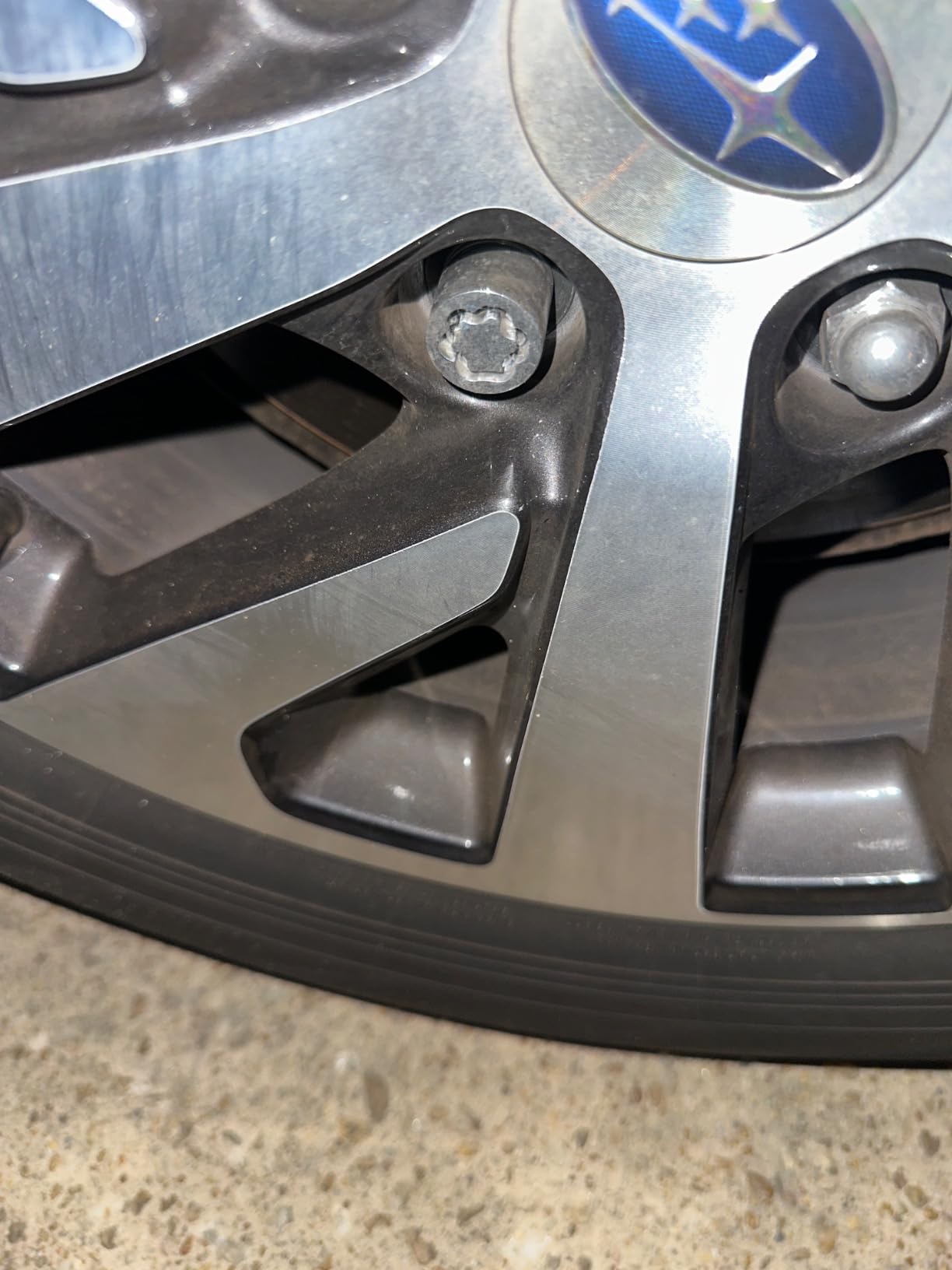
Two things to understand before you order. It is a replacement set, not a removal tool, so it will not help you open the locks your car already has fitted. And the key supplied only opens the locks in that kit, not the existing ones on the vehicle.
It also sits at the top of the price range in this roundup, and that is difficult to justify on cost alone when generic sets cover the same thread. What you are paying for is guaranteed fitment and a part number that a dealer recognises.
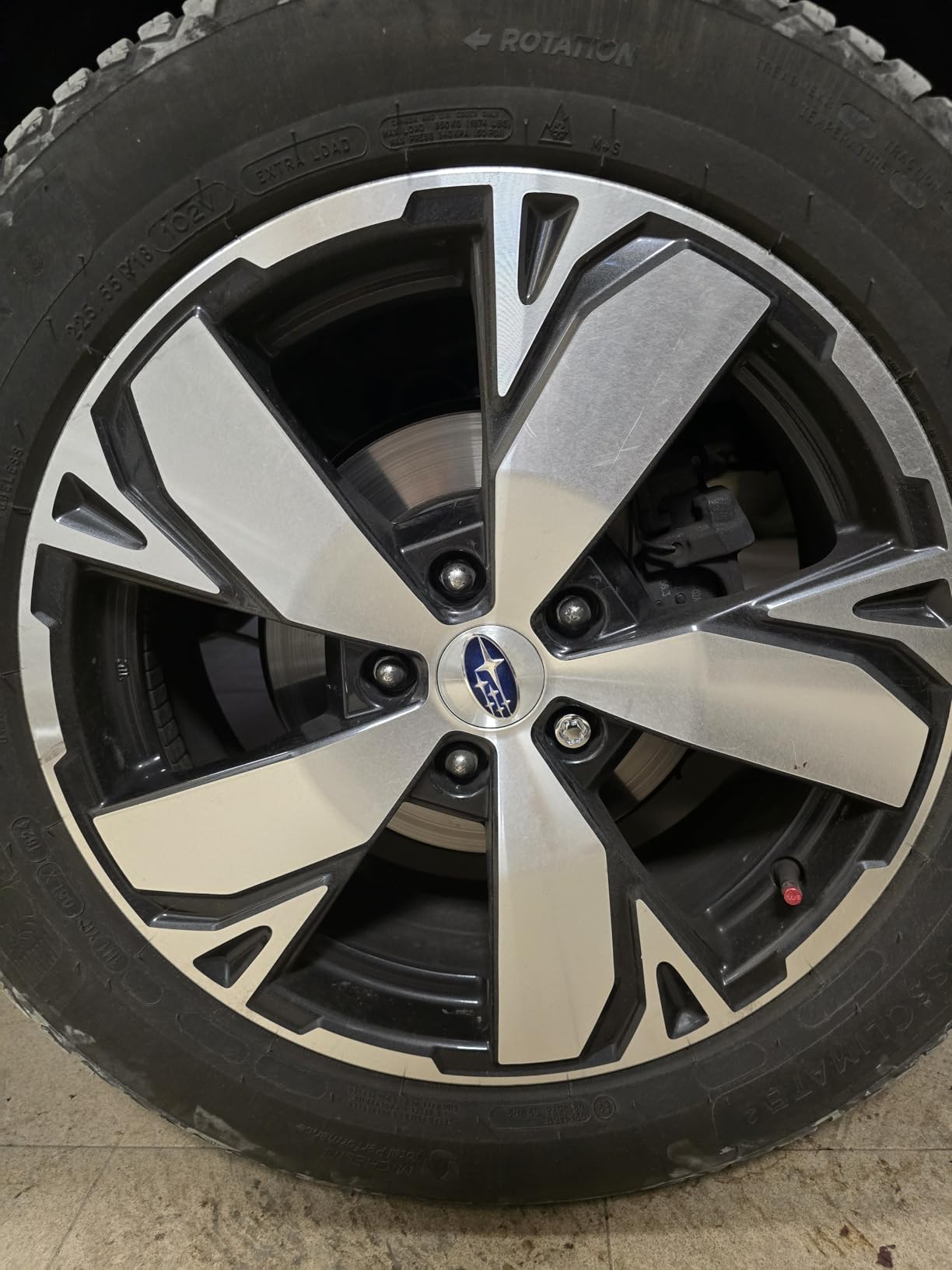
When the OEM part is the right call
Buy it if your car is a Subaru, you want the factory appearance, and you would rather not verify seat type and thread pitch yourself. That is a large share of Subaru owners, and the fitment coverage across two decades of models is the reason.
It is also the logical choice for a Subaru that still has its original locks in place and needs a full replacement, since the key situation stays consistent across the car.
What you give up
You give up flexibility. This set will not move to another vehicle, another Subaru, or a set of aftermarket wheels without further checks, and it costs the most of anything we looked at.
On the security question, an OEM set is mid-tier. A well-known pattern and a commonly available key reduce the deterrent value, which is a recurring point in forum threads about factory locks.
10. Dorman 712-680 M14 x 1.50 Deep Wheel Lock Set: the deep replacement
Dorman 712-680 M14-1.50 Deep Wheel Lock Set (4 Locks & 1 Key)
M14 x 1.50 thread
Deep profile
4 locks and 1 key
Limited lifetime warranty
Pros
- Deep profile gives extra thread engagement on deep centres
- Limited lifetime manufacturer warranty
- Durable alloy steel construction
- Straightforward factory wheel nut replacement
Cons
- Review base is smaller than the mainstream sets
- Finish details listed inconsistently
- M14 x 1.50 thread limits fitment
The Dorman’s job is narrow and it does it well. This is a deep-profile M14 x 1.50 lock sold as a direct replacement for factory wheel nuts, and the depth is the feature: extra length means better thread engagement on a deep alloy wheel centre, which is precisely the problem we flagged in the McGard 24210 section.
The limited lifetime warranty is the longest commitment in this roundup, and it is a genuine differentiator for a part that lives in road salt for a decade. Buyers also report correct fitment and a straightforward swap of the factory nuts.
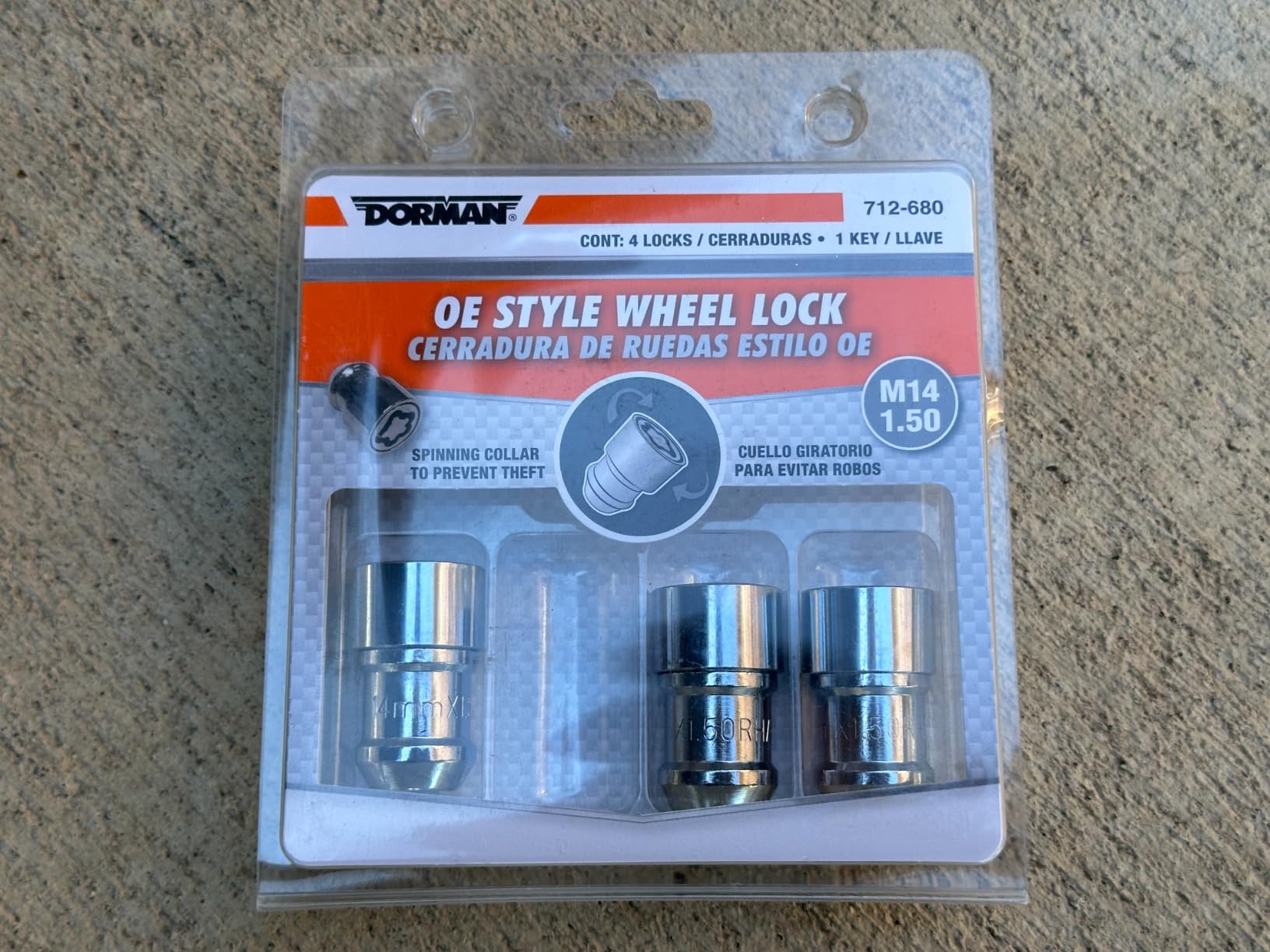
What holds it back is thin evidence. With 302 ratings it has a much smaller review base than the sets above it, so there is very little long-term ownership data behind it, and finish details are listed inconsistently, with a black colour and a chrome finish on the same listing. Neither is a deal-breaker, but both mean you should expect to inspect the finish on arrival.
The M14 x 1.50 thread covers trucks and SUVs, so this is not a car option. If you drive something on 12mm studs, look elsewhere in this roundup.
When the deep profile earns its place
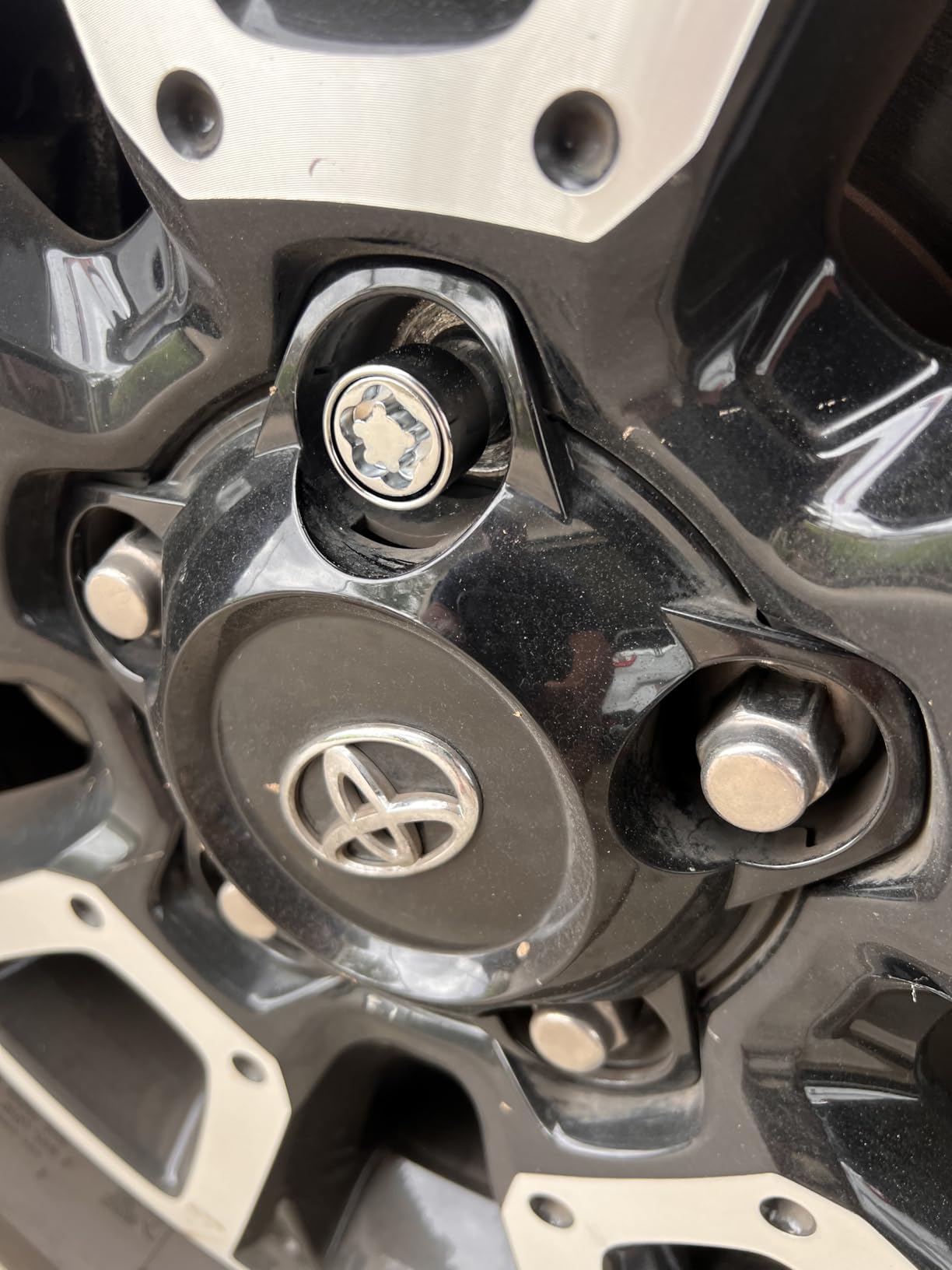
Choose it if you have an M14 x 1.50 vehicle, your current nuts barely reach onto the studs, and you have already confirmed that a standard-length lock would leave under one full thread diameter of engagement. In that specific situation the deep profile is the correct tool.
It is also a reasonable low-cost upgrade over a worn factory nut on a truck, since the warranty does the work that a longer review history cannot here.
Where it falls down
No seat type is specified in the listing, so confirm the seat on your existing nuts before ordering. A deep profile that is the wrong seat will not seat properly no matter how good the thread engagement is.
And because the review base is thin, we would fit it to a car you can work on yourself rather than one you depend on daily.
How to Choose Wheel Locks for Alloy Wheels
Fitment decides everything. Seat type and thread size are the two specs that determine whether a lock will go on at all, and every return in this category traces back to one of them being wrong. Security is the second question, and it is a much smaller question than the marketing suggests.
Step one: identify your seat type
Look at a non-locking lug nut on your car and read the shape. A smooth taper that narrows toward the stud is a 60-degree cone seat, most common on full-size trucks and domestic SUVs. A washer face with a cylindrical shank is a mag seat, typical on many Toyota and Lexus fitments. A wide flat base with a chamfer is a flat seat, found on plenty of compact and mid-size sedans and crossovers.
A spherical seat is rarer and usually appears on certain European platforms and some Subaru, Dodge and Nissan models. A tuner or spline nut has multiple splines inside the socket and is not interchangeable with any of the above.
Step two: identify thread size and pitch
Thread diameter is the distance across the stud, and pitch is the distance between thread crests. M12 x 1.5, M12 x 1.25, M12 x 1.75 and M14 x 1.5 cover the overwhelming majority of cars and trucks on the road, with M12 x 1.5 the most common of them.
If you are not confident, a thread gauge is inexpensive at any hardware store, and any tyre shop will confirm the spec in a couple of minutes. Do not guess between M12 x 1.25 and M12 x 1.5. They look identical and they do not interchange.
Step three: apply the alloy wheel length rule
This is the part that matters specifically for aftermarket alloy wheels, and almost no roundup covers it. Alloy wheel centres are frequently deeper than the factory steel or cast wheel, and a nut sized for the original wheel can leave the stud under-engaged, which is how a wheel comes loose.
Thread engagement must be at least one full thread diameter, so a 12mm stud needs roughly 12mm of nut engaged and a 14mm stud needs roughly 14mm. Going the other way is just as serious: an over-long fastener can bottom out on the hub or on brake components behind the wheel. Measure how much stud protrudes past the mounting face, and if the wheel manufacturer lists a recommended fastener length, that number wins.
Key uniqueness: the detail that matters most
Ask whether the key pattern is unique to your set or drawn from a small shared pool. McGard uses computer-generated key patterns, so each set is distinct. White Knight assigns a random pattern, so your key will not open a set you buy next year. OEM locks often use a handful of shared patterns, and their keys are widely available, which is why one r/civic commenter dismissed factory locks as practically useless on the grounds the key can be bought cheaply.
A locking nut is a deterrent, not prevention. A Camry owner who tested the popular locks found that thieves had beaten all of them, and the general forum view is that a thief who really wants your wheels will carry the tools for several patterns and will simply damage the wheel to get there. What a lock does is make the job take longer than a stranger is willing to stand in the dark for.
Two keys, one of them away from the car
Every set in this roundup except the Subaru OEM ships with one key. Order a spare and store it at home, not on the keyring. Some manufacturers void the warranty if a key is lost, precisely so that a found key cannot be used against the car, and replacement keys are not cheap or instant. You need proof of purchase and the key code or pattern information.
If a key is unrecoverable, the usual sequence is: call the manufacturer with your VIN and proof of purchase, confirm your seat type and thread size, order the replacement and allow roughly a week or more, and in the meantime arrange for the locks to be removed if you need to change a wheel. Torque everything to the OEM specification when they go back on, and re-torque after the first 50 miles.
Fitment, not security, is the real buying question
Look at the lock through a mechanic’s eyes. Hand-start every fastener before using a wrench to avoid cross-threading, and use a torque wrench rather than an impact gun, which is what damages finishes and can strip a keyed socket. If you swap wheels seasonally, treat each wheel set as its own kit, which is a question that comes up constantly on the BMW and Subaru boards.
Owners who run winter and summer sets and change them frequently consistently favour the brands with the most reliable long-term key durability, and one NASIOC member reported a decade on McGard spline lugs while changing wheels twice a week without a single key problem. That kind of report is worth more than any specification sheet.
If you want to build out the rest of your wheel and tyre kit while you are at it, our guides to the best lug nut socket sets for alloy wheels and the best acid-free wheel cleaners for coated wheels cover the two tools that get used most often alongside the locks themselves. Our picks for the best wheel chocks and the best low-dust brake pads for alloy wheels round out the same fitment logic for anyone who cares what those wheels are bolted to, and anyone who services their own alloy wheels on a driveway will also want to know which wheel balancer machines hold their calibration for the same reason a well-fitted lock matters: bad fitment is what causes damage.
Frequently Asked Questions
Do wheel locks make a difference?
They do, but not in the way marketing suggests. A wheel lock replaces one lug nut per wheel and cannot be removed without its unique key, so a thief must damage the lock or damage the wheel to take it. That extra step raises the time a theft takes, which is often enough to stop an opportunistic attempt. It does not stop a determined attacker with the right tools and no time limit.
Do wheel locks fit any car?
No. A wheel lock must match both the thread size and pitch of your studs and the seat type of your existing lug nuts. Cone seat, mag seat, flat seat and ball seat are not interchangeable, and neither are M12 x 1.5, M12 x 1.25 or M14 x 1.5. Check the thread with a gauge and read the seat shape off a non-locking nut before ordering.
Which wheel lock is the most secure?
Among the sets in this roundup, the Gorilla Automotive 71631X is the most mechanically resistant because its patented dual-stage design leaves a free-spinning upper collar that a socket cannot grip. Among brands more broadly, systems with a key pattern unique to your set and a concealed or recessed profile defeat casual attacks best. No lock prevents theft outright.
What do you do if you lost your wheel lock key?
Call the manufacturer with your VIN, proof of purchase and the key code or pattern information from the ID card. Confirm your seat type and thread size so they send the right key, then allow roughly a week or more for delivery. If the key is unrecoverable, have the locks removed so you can change a wheel, and replace the whole set rather than mixing patterns.
Do aftermarket wheels use different lug nuts?
Often, yes. Aftermarket alloy wheels frequently have a deeper centre than the factory wheel, so a standard nut can leave too little thread engagement, and the required seat type can differ from what came with the car. Thread engagement must be at least one full thread diameter. Use the wheel maker’s recommended fastener length where it is published.
Is every wheel lock key unique?
No, and this is worth checking before you buy. McGard uses computer-generated patterns so each set is unique. White Knight assigns a random pattern, so your key will not open a future or previous set. Many OEM locks are drawn from a small shared pool of patterns, which is why their keys are widely available and offer less real resistance.
Can you remove locking lug nuts without the key?
Yes, destructively. A breaker bar and heat, or a lock-removal service, will free a wheel nut, but the standard technique damages the nut and often damages the wheel. One owner on a BMW forum was told their wheel would be damaged and the shop welded a second lug onto each lock lug to remove it. Treat it as a last resort and expect a repair bill.
What are the different types of lug nut keys available?
The common types are a dual hex key socket in 19mm, 21mm, 3/4 inch or 13/16 inch, a keyed socket with a rotating collar that spins freely to defeat socket attacks, a six-lug pattern on some OEM applications, and a multi-spline tuner key. Splined tuner keys are the hardest to identify because you must count the splines on your existing key to order a replacement.
Final Verdict
The best wheel locks for alloy wheels are the ones that match your studs, and the Gorilla Automotive 61631 Acorn Guard is the safest general answer because it fits the widest range of cone-seat applications and carries the deepest ownership history in the category. If your studs are M12 x 1.25, take the McGard 24154 instead; if you run thick aftermarket alloys on M14 x 1.5 studs, the longer McGard 24210 is the correct one.
Measure your thread, read your seat type, and check the shank length against your wheel centre before you spend anything. Then fit with a torque wrench, order a spare key, and keep it at home. Locks buy you time rather than certainty, and time is the only thing they have ever bought.