
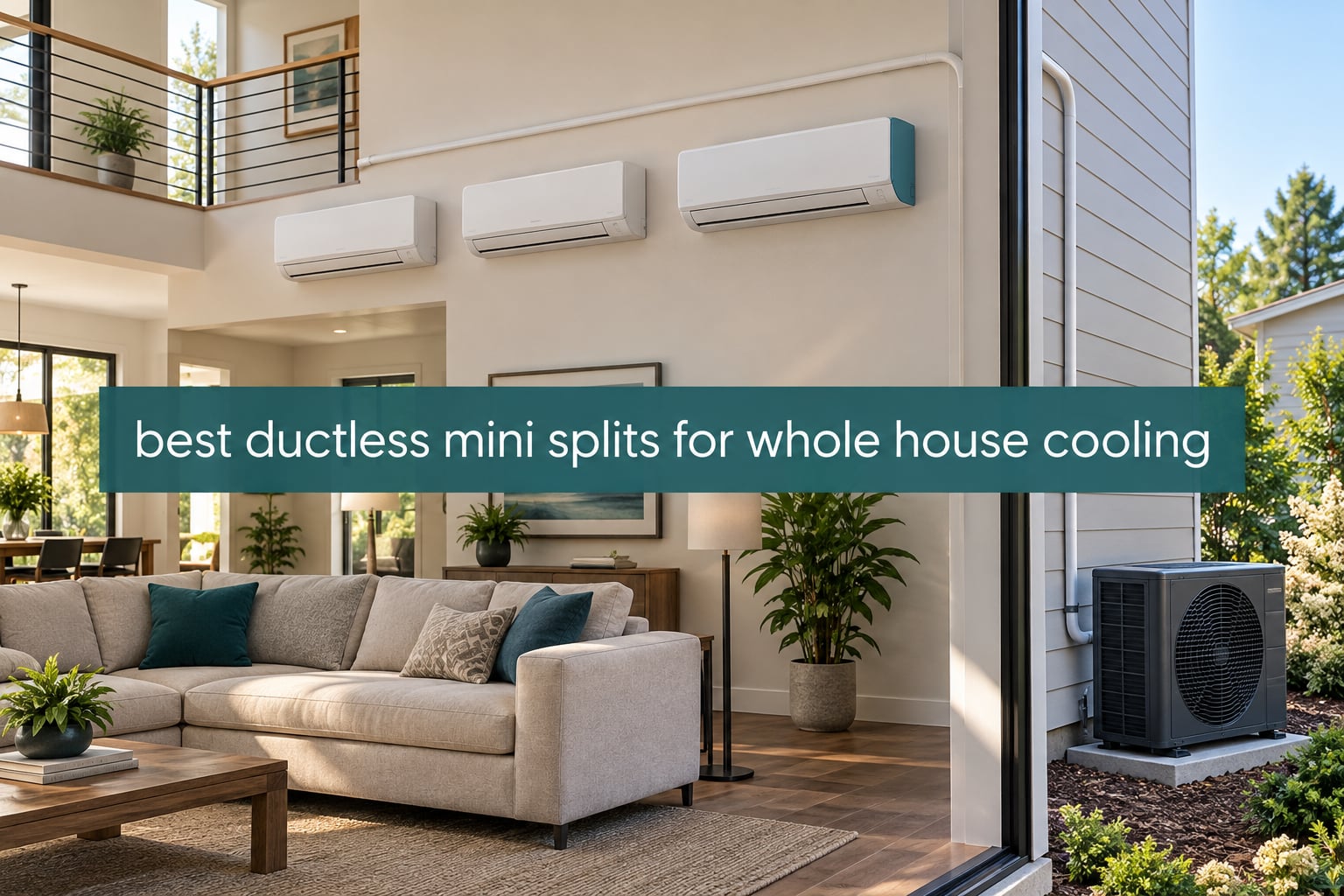
Most ductless mini split roundups on the internet recommend a single 9,000 or 12,000 BTU wall unit and call it a day. That will cool a bedroom. It will not cool a house. If you are searching for the best ductless mini splits for whole house cooling, you need multi-zone systems where one outdoor condenser feeds two to four indoor heads, each with its own thermostat. We spent six weeks reading the technical sheets, warranty terms and owner feedback on eight of the strongest whole-house systems on the market, and the differences between them turned out to be bigger than the price gaps suggest.
What separates a genuinely whole-home system from a room unit is the condenser capacity, the number of matched indoor heads, and the low-ambient heating rating. Those three numbers decide whether your upstairs stays comfortable in August or whether it never reaches setpoint. Every system below is a heat pump, so it heats as well as cools, and every one of them runs on 208-230V power with an inverter-driven compressor rather than a fixed-speed one.
One more thing before we get into the systems. Whole-house ductless is a mechanical project, not a checkout. Line sets have length limits, each head needs a condensate drain and a control cable, and the electrical panel may need a new circuit. Homeowners who enjoy the process sometimes pair a cooling topic like this with other seasonal upkeep reads such as our cooling system additive guide and our engine cooling diagnostic walkthrough, but a mini split install is a different trade entirely.
Table of Contents
Can a Ductless Mini Split Cool an Entire House?
Yes. A ductless mini split can cool an entire house when it is a multi-zone system, meaning one outdoor condenser connected to two, three, or four indoor air handlers running on their own thermostats. Most multi-zone condensers top out at four indoor heads, so larger homes usually need a second outdoor unit or a central system.
That ceiling is the single most important number in this whole guide. One condenser powers up to four heads, and a fourth head is the practical limit for most residential multi-zone equipment. A 3,000 square foot two-story home with six rooms that need dedicated cooling exceeds what one outdoor unit can carry efficiently, and that is where a second condenser or a properly designed central system comes back into the conversation.
Zoning is the real payoff. Instead of conditioning every cubic foot of the house to one setpoint, each head cools only the room it serves. Bedrooms can sit at 74F while the upstairs office runs at 70F, and empty rooms can be switched off entirely. Forum users on r/Connecticut described exactly this pattern, cycling a mini split in a finished attic office around their work schedule rather than cooling the whole house around the clock.
Top 3 Best Ductless Mini Splits for Whole House Cooling in 2026
These three cover the range of what most homes actually need: a two-zone system with the deepest review history, a four-zone system for a large two-story, and the most efficient two-zone option per dollar spent on equipment.
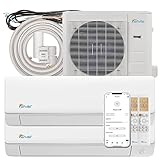
Senville 2-Zone 18K BTU
- Two zones at 18000 BTU
- 22.5 SEER2 inverter
- Alexa and app control
- 7-year compressor warranty

ROVSUN Quad Zone 38K BTU
- Four zones at 9000 BTU each
- 20 SEER2 inverter
- Four 25 ft line sets included
- Heating down to -4F

ROVSUN 2-Zone 20K BTU
- Two zones at 9000 BTU each
- 23 SEER2 efficiency
- Pre-charged to 25 ft per head
- -4F to 122F range
Best Ductless Mini Splits for Whole House Cooling in October
| Product | Specs | Action |
|---|---|---|
| Senville 2-Zone 18K BTU |
|
Check Latest Price |
 Senville Dual Zone 28K BTU Senville Dual Zone 28K BTU |
|
Check Latest Price |
| ROVSUN Quad Zone 38K BTU |
|
Check Latest Price |
| ROVSUN 2-Zone 20K BTU |
|
Check Latest Price |
 Cooper and Hunter 3-Zone 28K BTU Cooper and Hunter 3-Zone 28K BTU |
|
Check Latest Price |
 ROVSUN Tri Zone 28K BTU ROVSUN Tri Zone 28K BTU |
|
Check Latest Price |
 YITAHOME 3-Zone 24K BTU YITAHOME 3-Zone 24K BTU |
|
Check Latest Price |
 DELLA 3-Zone 28K BTU DELLA 3-Zone 28K BTU |
|
Check Latest Price |
1. Senville 2-Zone 18K BTU Mini Split Heat Pump – Best Overall
Senville Mini Split AC/Heating System, 2 Zone, 18000 BTU
18000 BTU across 2 zones
22.5 SEER2 inverter
230V with R-454B
150 lb complete system
Pros
- Two indoor heads and one condenser give true room-by-room control
- 22.5 SEER2 with ENERGYSTAR and 4-star BEE certification
- Alexa plus app control with routines and a 24-hour timer
- 3-year parts and 7-year compressor warranty
- Works in residential and light commercial spaces
Cons
- Requires professional installation rather than a DIY setup
- 61.5 dB noise specification is higher than the low-decibel figures most competitors quote
- Installation kit includes a 16 ft line set
- so longer runs need additional line
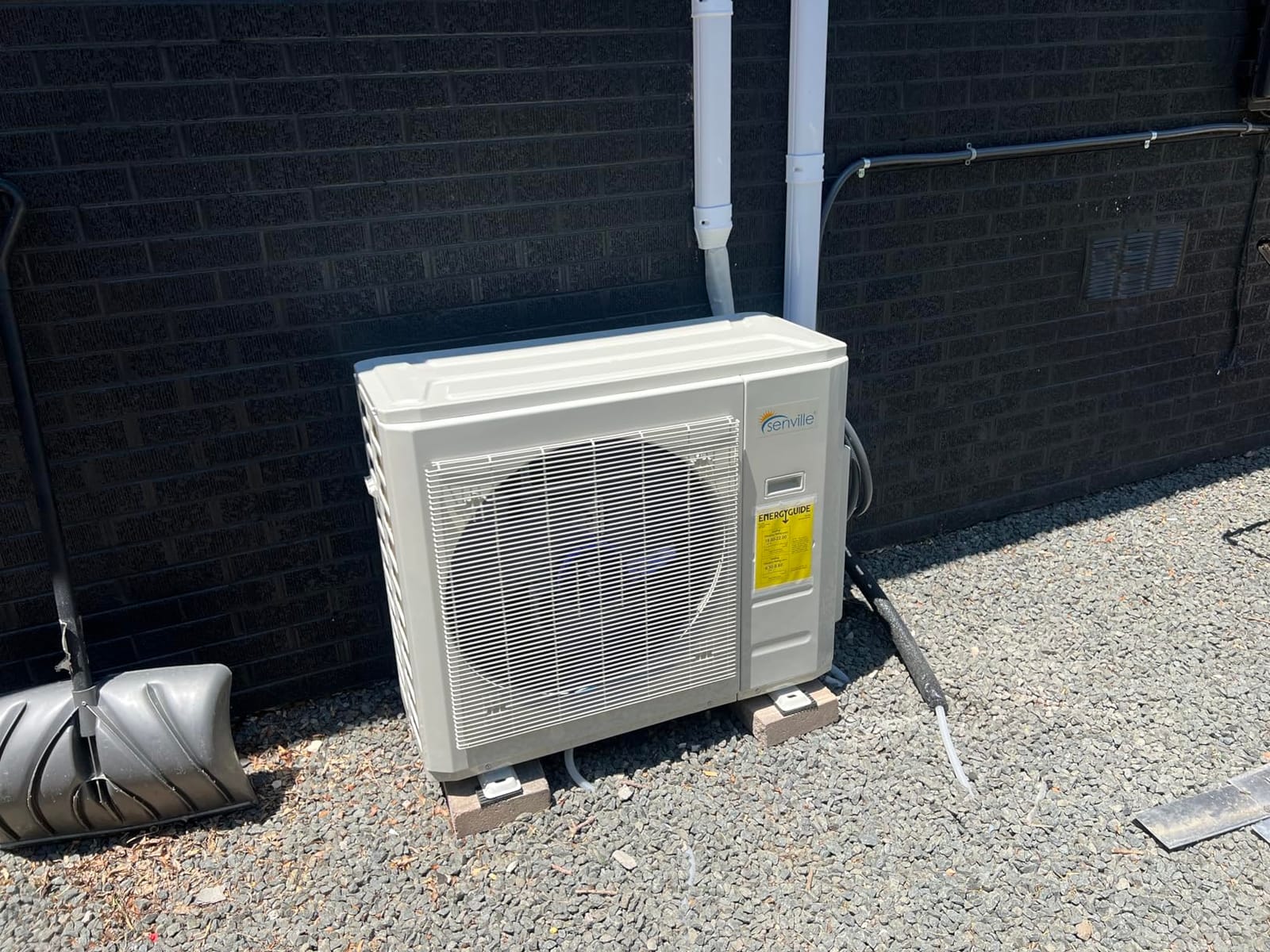
This is the system we keep coming back to because it is the most thoroughly reviewed multi-zone package available, with 485 owner ratings averaging 4.5 stars. The 18,000 BTU condenser splits into two independent zones, which is the minimum configuration that genuinely changes how a house feels. One head for the living room, one for the master bedroom, and the rest of the house stays untouched.
The 22.5 SEER2 inverter rating puts it firmly in the efficient tier, and the spec sheet lists ENERGYSTAR certification alongside a 4-star BEE rating. R-454B refrigerant and a 230V connection are both current-generation specifications, so you are not buying a design that will look dated in five years. Reviewers repeatedly mention useful app routines, and the manufacturer claims energy savings of up to 40 percent when those routines are used properly.
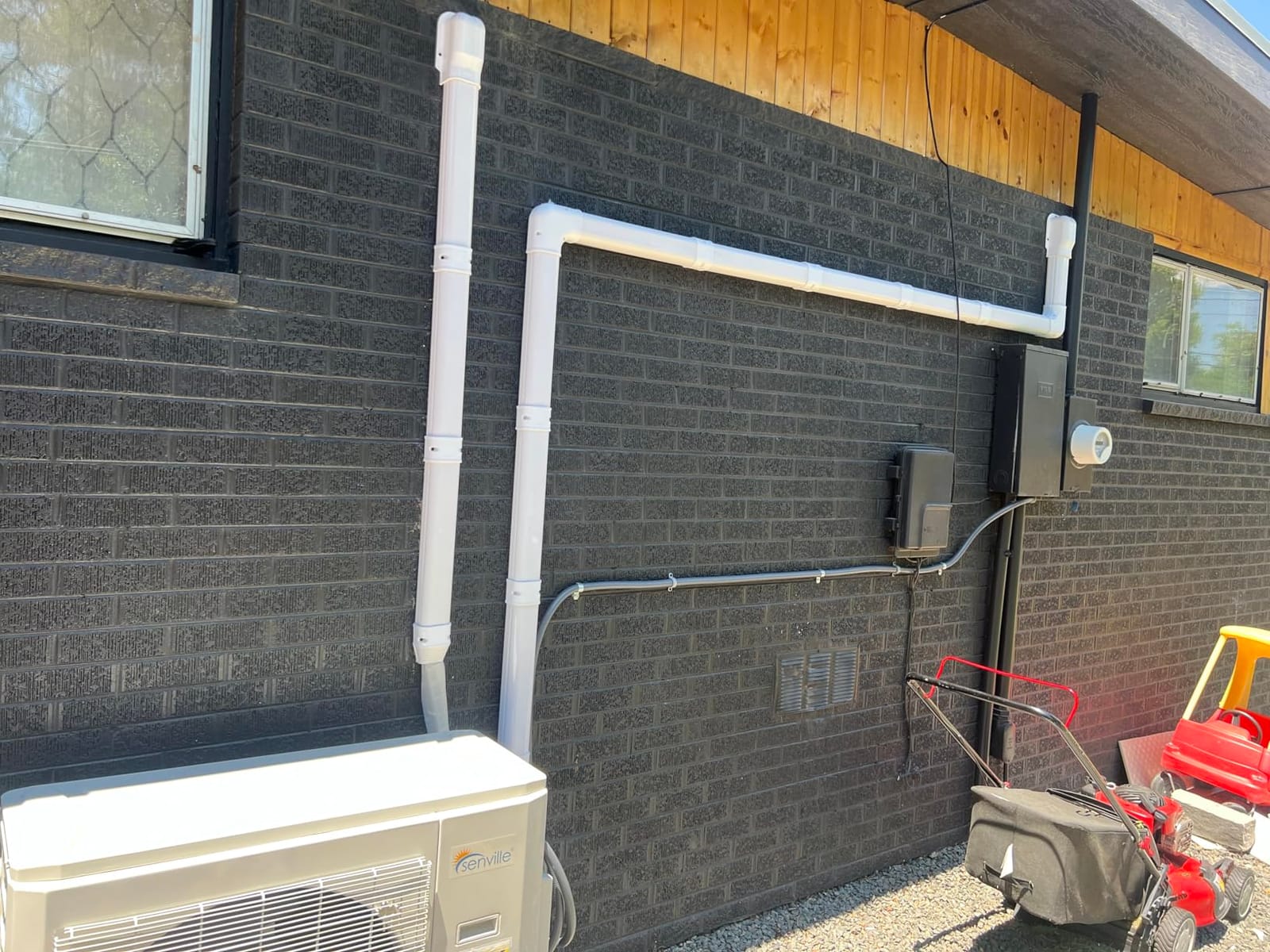
Two details deserve a close look before you commit. The listed noise figure of 61.5 dB is noticeably higher than the sub-30 dB numbers most manufacturers print for the indoor heads, and the included installation kit carries a 16 ft line set, which is short for a second-story install. Neither is a deal breaker, but both change the installer’s line set and pad work.
Warranty terms here are 3 years parts and 7 years compressor, which clears the one-year minimum that owners on HVAC forums reject outright. A 150-pound package arrives as one unit, so there is no risk of a partial delivery leaving you short a head, and the manufacturer supports both residential and light commercial applications.
How much of a house can 18,000 BTU across two zones actually cool?
Roughly 1,000 to 1,200 square feet of conditioned space, and that assumes the two rooms are of similar size and exposure. Two heads of 9,000 BTU each handle a living room plus a bedroom, or two bedrooms plus a den, comfortably. If your square footage runs higher, a second condenser or the 28,000 BTU two-zone system below is the more honest match.
What do you give up compared with a three-zone system?
Capacity headroom and head-size flexibility. A three-zone setup lets you put a 9,000 BTU head in a small bedroom and two 12,000 BTU heads in larger living spaces, while this system runs matched zones on a smaller total budget. You also give up the ability to add a third room later without changing the condenser.
2. Senville Dual Zone 28K BTU Mini Split Heat Pump – Best for 1,500 Sq Ft Homes
Senville Mini Split Air Conditioner Heat Pump, White, Dual Zone, 28000 BTU
28000 BTU across 2 zones
Rated for 1500 sq ft
23 SEER2 inverter
24 dB indoor specification
Pros
- Rated by the manufacturer for floors up to 1500 square feet
- 23 SEER2 inverter efficiency with Energy Star certification
- 24 dB indoor noise specification suits bedrooms and offices
- Owners replacing central air report sharply lower utility bills
- ETL listed and AHRI certified with manufacturer support
Cons
- Wi-Fi and app pairing is reportedly fiddly to configure
- Line set is not included
- so extra line and drain work is often needed
- A minority of owners needed an installer return visit for a high-pitch noise fault
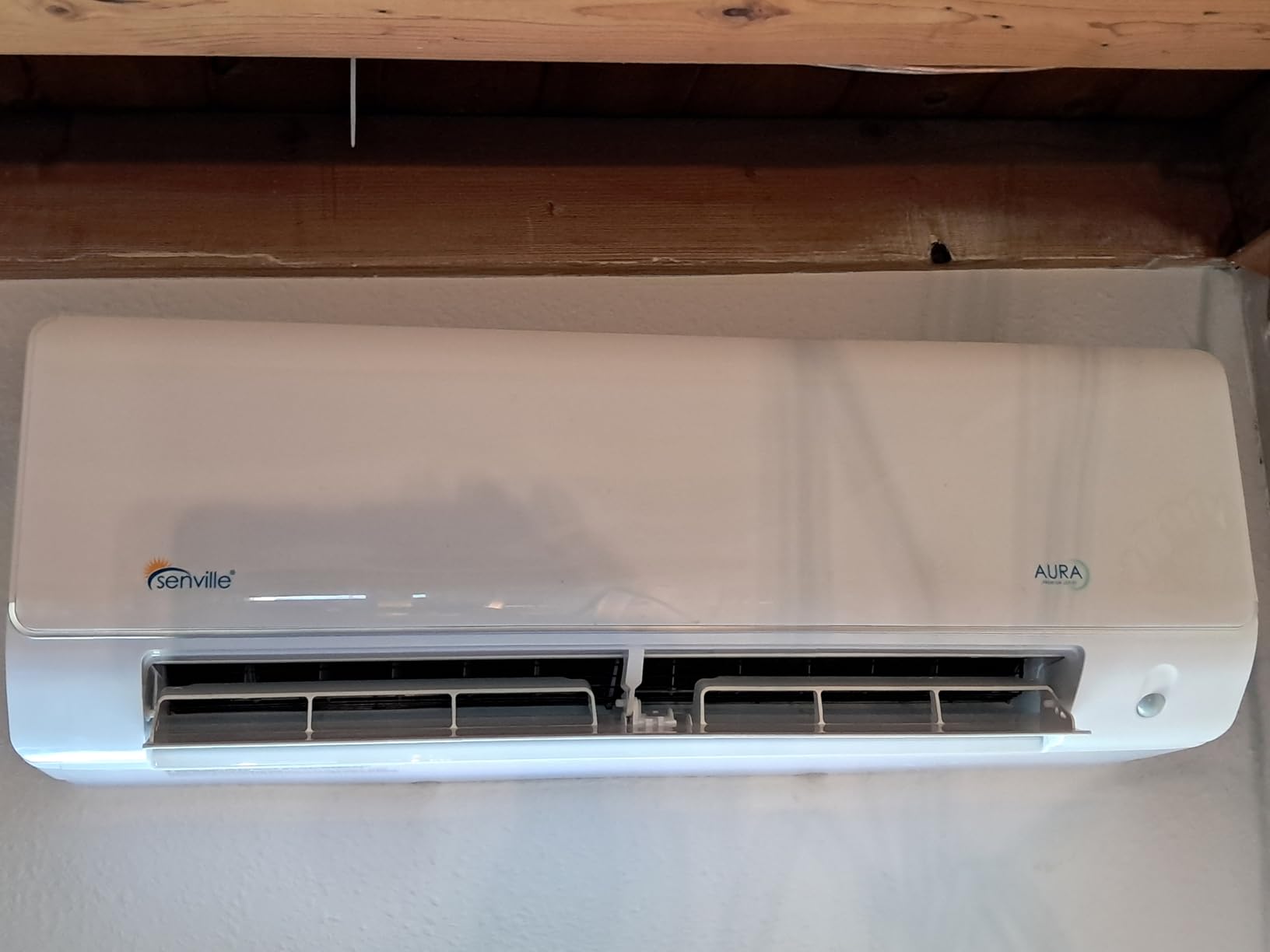
Where the 18K Senville covers a modest house, this one is built for the 1,500 square foot homes that dominate the search for a whole-house ductless mini split system. The manufacturer rates it for 1,500 square feet of floor area, and the 28,000 BTU condenser driving two heads gives you real headroom on hot afternoons rather than a system that runs flat out from noon onward.
The 23 SEER2 rating edges above the 20 SEER2 systems in this group, and the 24 dB indoor specification is the kind of number that matters when a head is mounted in a bedroom wall. Reviewers describe whisper-quiet operation from both the indoor and outdoor side, plus several accounts of owners roughly halving their power bills after retiring a central air system.
The negatives are mostly setup friction. Wi-Fi pairing is the most common complaint, and one minority of owners had a high-pitch noise fault after installation that required a paid return visit. Because line sets are not included, your installer will be pricing extra copper, insulation and drain line into the job, so ask for that as a separate line item rather than discovering it later.
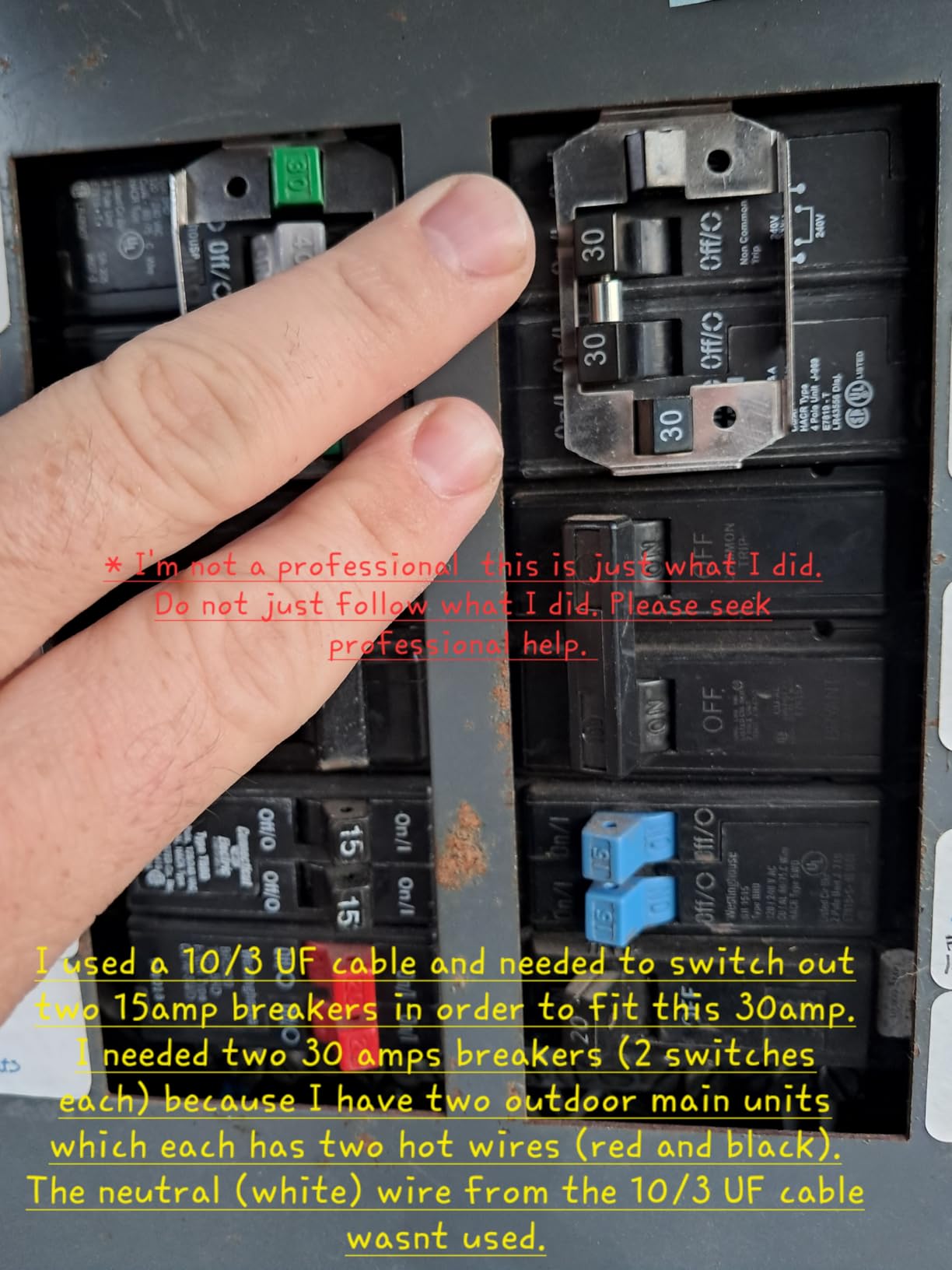
This system also handles extreme conditions well, with owners reporting effective cooling through 100F-plus weeks and reliable heating through winter. R-454B refrigerant, 208-230V power and ETL plus AHRI certification all check out, and the listed 3-count package covers the two heads and the condenser.
When is 28,000 BTU too much for the rooms you have?
When you have two small rooms and a big empty house. A 28,000 BTU condenser feeding two small bedrooms is the classic oversizing mistake, because the compressor will cycle on and off instead of holding a steady output. A proper load calculation per room should land somewhere between 9,000 and 12,000 BTU per head, not a number picked by adding up square footage.
How does the 24 dB specification compare for a bedroom?
It sits near the quiet end of what these systems claim, and that figure is what makes it a better bedroom pick than most of the field. Confirm it with your own installer, since published numbers are measured at the fan’s lowest speed and real bedrooms add wall vibration and duct-adjacent noise. Place the head on an interior wall away from the sleeping area when you can.
3. ROVSUN 4-Zone 38K BTU Quad Zone System – Best for Large Two-Story Homes
ROVSUN 4 Zone 38000 BTU (9K/9K/9K/9K) Mini Split AC/Heating System, 20 SEER2 Quad Zone Ductless Wall Mounted Air Conditioner with Pre-Charged Condenser, Heat Pump & 25Ft Line Set, 208-230V
38000 BTU across 4 zones
20 SEER2 inverter
Heating to -4F
250 lb total package weight
Pros
- Largest zone count and capacity here with four 9000 BTU heads on a 38000 BTU condenser
- Inverter technology rated for up to 30 percent energy savings
- Pre-charged condenser with four 25 ft line sets and four remotes in the box
- Heating mode operates down to -4F
- 28-45 dBa indoor range is among the quietest in this group
Cons
- Only a 1-year warranty
- the shortest coverage in this selection
- Customer support is email-only with a 24-48 hour response window
- Some owners report one zone failing to cool or icing up in heating mode
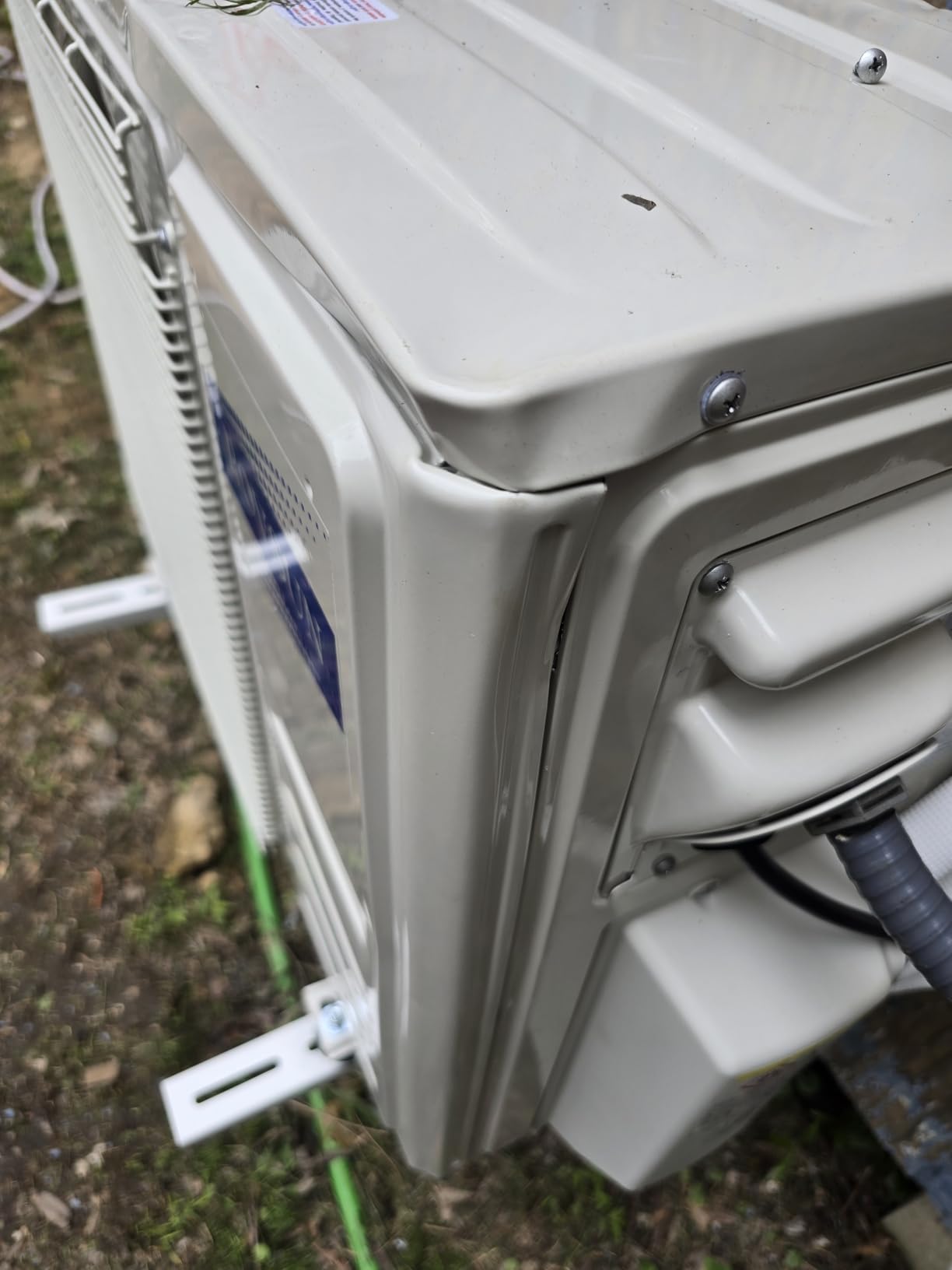
This is the only true four-zone package in our group, and that changes the conversation for a two-story home with four rooms that genuinely need dedicated cooling. Four 9,000 BTU indoor heads run off a single 38,000 BTU condenser, so you can put one head on each bedroom and one in a shared living space without stretching a single outdoor unit past its limits.
The 20 SEER2 inverter rating is right at the efficiency threshold we consider the floor for whole-house work, and the R-32 refrigerant is widely available and well liked by installers. Operating range runs from -4F to 122F, which covers cold-climate heating on an inverter capacity basis, and the listed 180 kWh annual consumption figure is modest for a system this size.
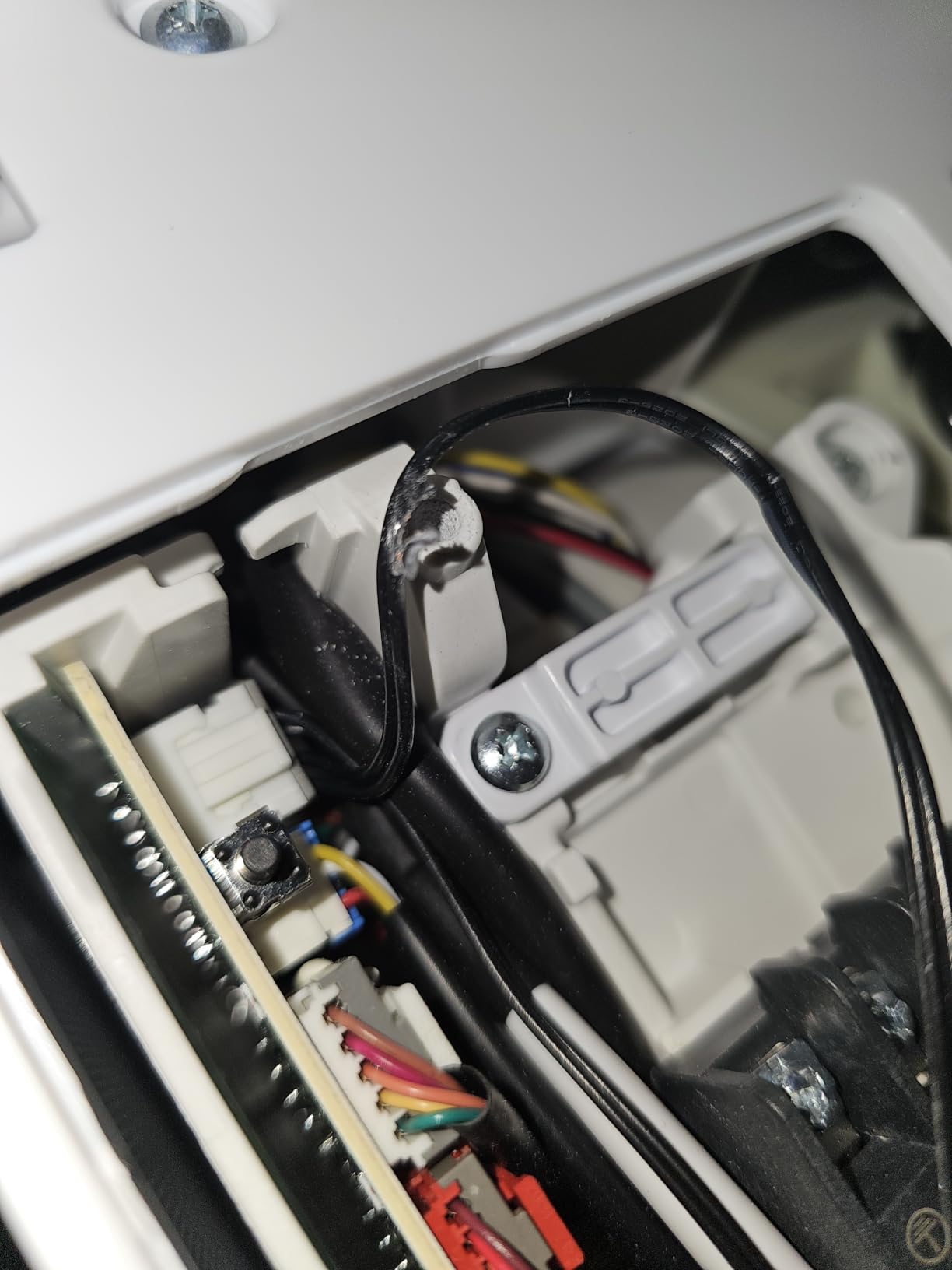
Two things to weigh carefully. The warranty is one year, which is exactly the length homeowners on HVAC forums say they refuse to accept, and support is email-only with no phone number, so a troubleshooting exchange can take a day or two. Against that, experienced installers rate the build quality highly and report that commissioning went smoothly.
At 250 pounds with four separate line sets, this is the most involved install in the roundup, and the four identical 9,000 BTU heads assume your rooms are of similar size. A four-bedroom two-story with a large open great room may actually suit a mixed-size three-zone package better than this one.
When does a home need more than four zones?
More than four independent zones is past the practical ceiling for a single multi-zone condenser, which is why a second outdoor unit or a central system enters the discussion. A 3,000-plus square foot two-story with six or seven conditioned rooms is the typical case, and forum regulars in those threads often point toward geothermal as the more efficient path at that scale.
Is a 1-year warranty disqualifying?
Not on its own, but it changes where the risk sits. With a one-year warranty, a compressor or control board failure after month thirteen becomes your expense, so the deciding factor becomes whether a local technician can source parts for this brand. Confirm local service coverage before you sign, because warranty length is worthless without a company that will actually answer the phone.
4. ROVSUN 2-Zone 20K BTU System at 23 SEER2 – Best Value
ROVSUN 2 Zone 20000 BTU (9K/9K) Mini Split AC/Heating System, 23 SEER2 Dual Zone Ductless Wall Mounted Air Conditioner with Pre-Charged Condenser, Heat Pump & 25Ft Line Set, 208-230V
20000 BTU across 2 zones
23 SEER2 efficiency
70 kWh annual use
R-32 at 230V
Pros
- 23 SEER2 is the highest efficiency rating in this selection
- Lowest equipment cost of any whole-home capable system here
- 28-42 dBa operation keeps indoor units effectively silent
- Refrigerant charge covers two 25 ft line sets with no field top-off
- Listed annual energy consumption of only 70 kWh
Cons
- Only 20000 BTU across two zones
- so it is a room pair rather than a whole-home system
- Support is email-only with a 24-48 hour response window and no phone line
- 1-year limited warranty
- Some units reportedly ice up in heating mode on automatic setting
At 23 SEER2 this is the most efficient system in the roundup, and it is the cheapest one that still qualifies as a genuine multi-zone set. The 20,000 BTU condenser feeds two 9,000 BTU heads, which makes it a room-pair solution rather than a whole-home one, but for a small house, a converted garage, or a sunroom and bedroom pair it is very difficult to argue with the numbers.
Buyers with HVAC experience describe well-made hardware that installs without problems, and the pre-charged refrigerant is sufficient for two 25 foot line sets with no field top-off, which avoids a service call nobody needs. Washable filters, four-way swing, dehumidification, silent mode and sleep mode cover the basics that most people actually use.
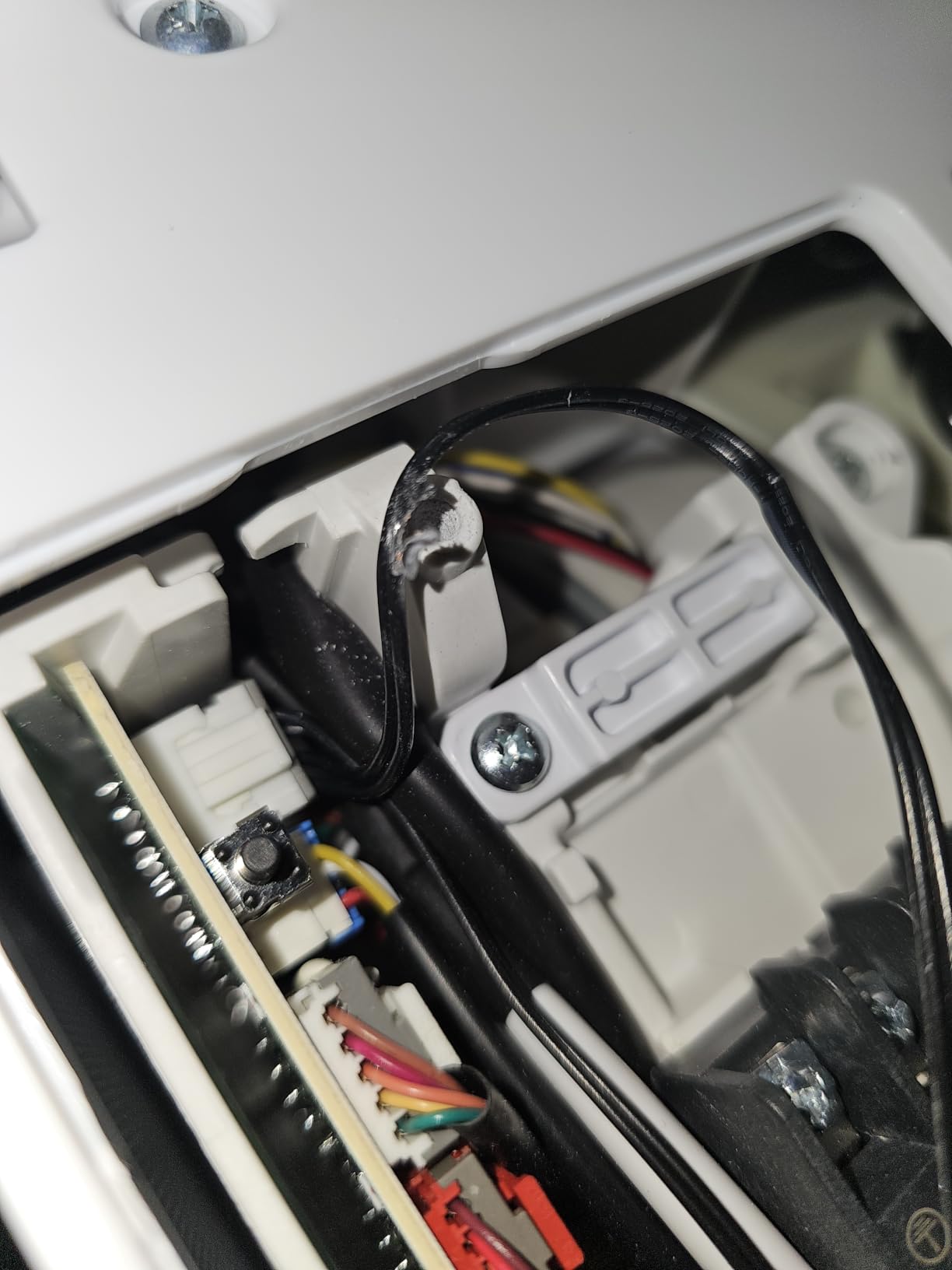
The honest limitation is capacity. 20,000 BTU across two zones is not a whole-house answer for anything above roughly 900 square feet of conditioned space, and buying it for that reason is how people end up with a system that never reaches setpoint. The other recurring issues are support response time and reports of ice-up on automatic heating in cold weather.
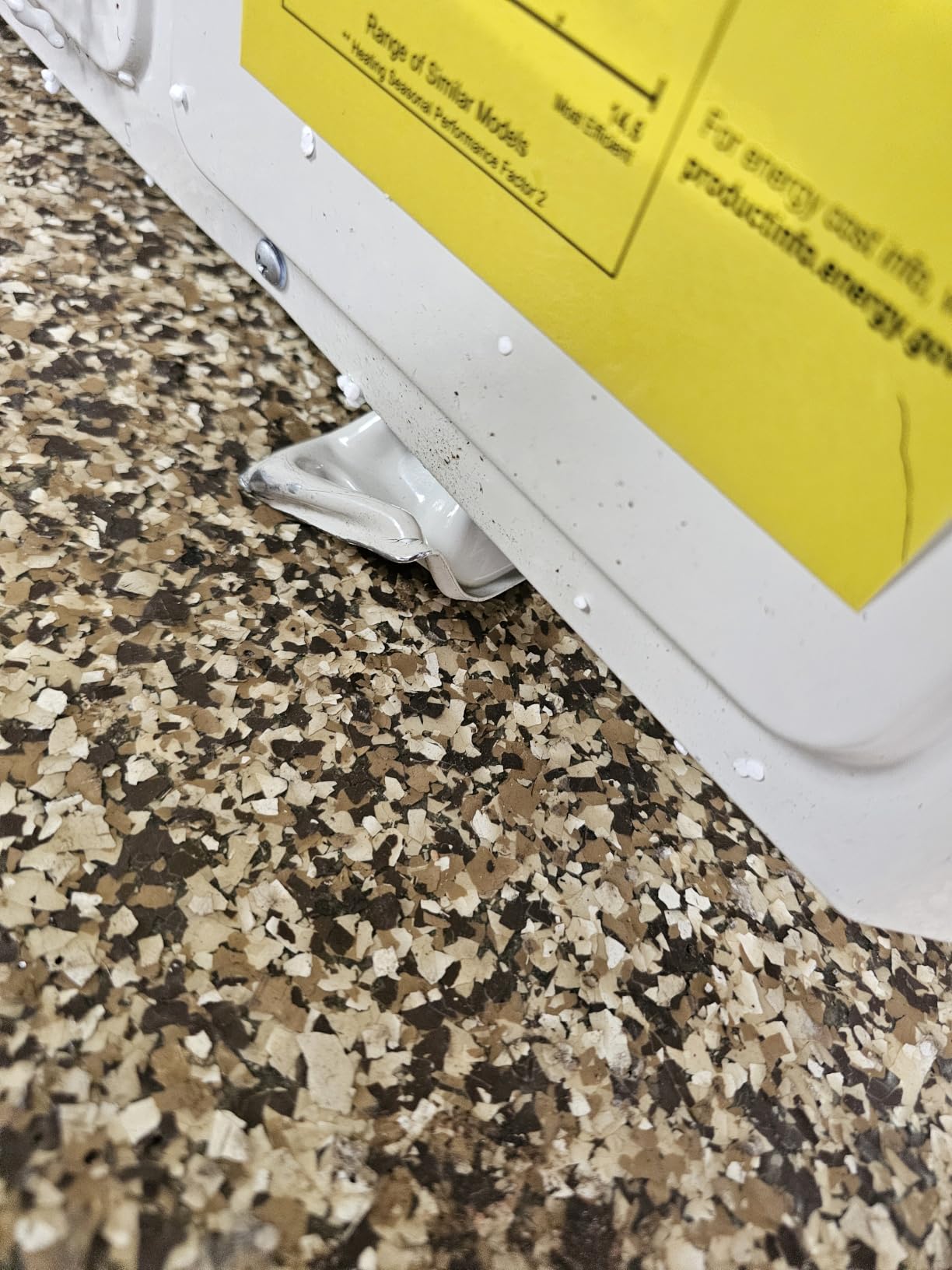
Dimensions of 13.74 by 33.54 by 23.7 inches for the outdoor package and 128 pounds total make this the most manageable hardware in the group to get onto a pad, which matters on tight side yards and terraces where a 250-pound four-zone condenser is awkward.
What is the smallest home this system can honestly serve?
A small single-story home of roughly 800 to 1,000 square feet with two rooms that need independent control, or a larger house where you are only conditioning the main living area and a bedroom. Above that, step up to a 28,000 BTU package so the condenser is not fighting the load on the hottest days.
Does 23 SEER2 actually save enough to matter?
Over a whole cooling season, yes, the difference between 23 SEER2 and 20 SEER2 compounds every hour the compressor runs. The bigger practical point is that no ductwork means none of the 20 to 30 percent of conditioned air that leaks from central ducts ever gets lost in the first place, and that structural saving is larger than any rating gap between these systems.
5. Cooper and Hunter 3-Zone 28K BTU System at 25 SEER2 – Best for Quiet Bedrooms
Cooper & Hunter 28,000 BTU 3-Zone Wall Mount Mini Split AC Heat Pump, 230V
28000 BTU across 3 zones
25 SEER2 ENERGYSTAR
19 dB indoor noise
7-year compressor warranty
Pros
- 25 SEER2 is the top efficiency figure in this selection
- 19 dB indoor noise specification with five fan speeds and silent mode
- 7-year compressor and 5-year parts warranty from a US manufacturer
- Mixed head sizing at 9K plus 12K plus 12K better matches real room loads
- Three smart Wi-Fi control kits and three 25 ft line sets included
Cons
- Highest equipment cost in the selection by a wide margin
- Freight delivery to an accessible point outside the home
- Professional installation required at a substantial share of system cost
This is the most capable three-zone package we reviewed, and the reason is the mixed head sizing. Rather than three identical heads, you get 9,000 plus 12,000 plus 12,000 BTU, which maps onto a real house far better: a smaller bedroom on the 9K head and two larger living spaces on the 12K heads. Systems that force three matching heads often end up oversized in one room and undersized in another.
At 25 SEER2 with ENERGYSTAR status, it is the most efficient unit here, and the 19 dB indoor noise figure is the lowest published number in the group. Owners with bedrooms upstairs single this out as the main reason they are happy. Warranty terms of 7 years compressor and 5 years parts from a US manufacturer are the longest in this roundup, backed by US-based technical support.
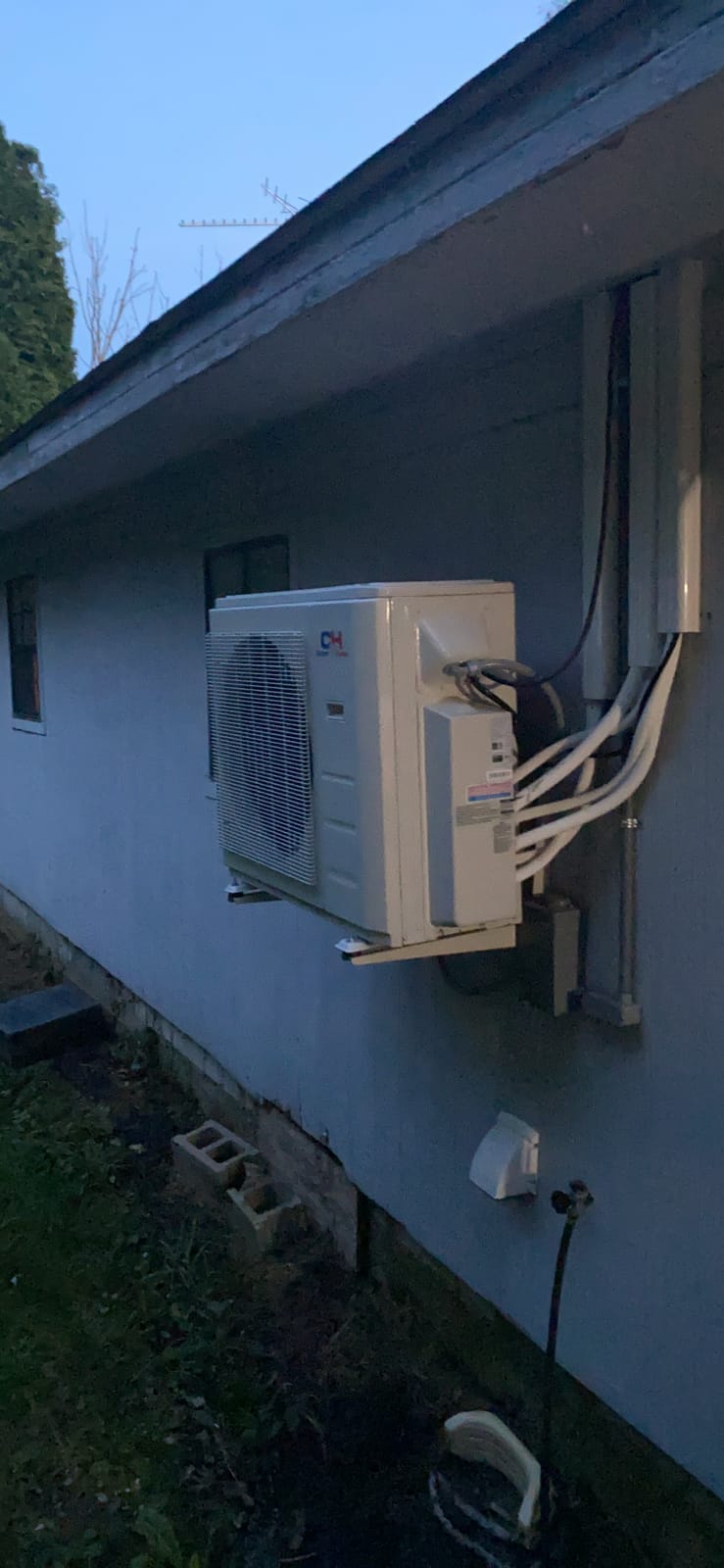
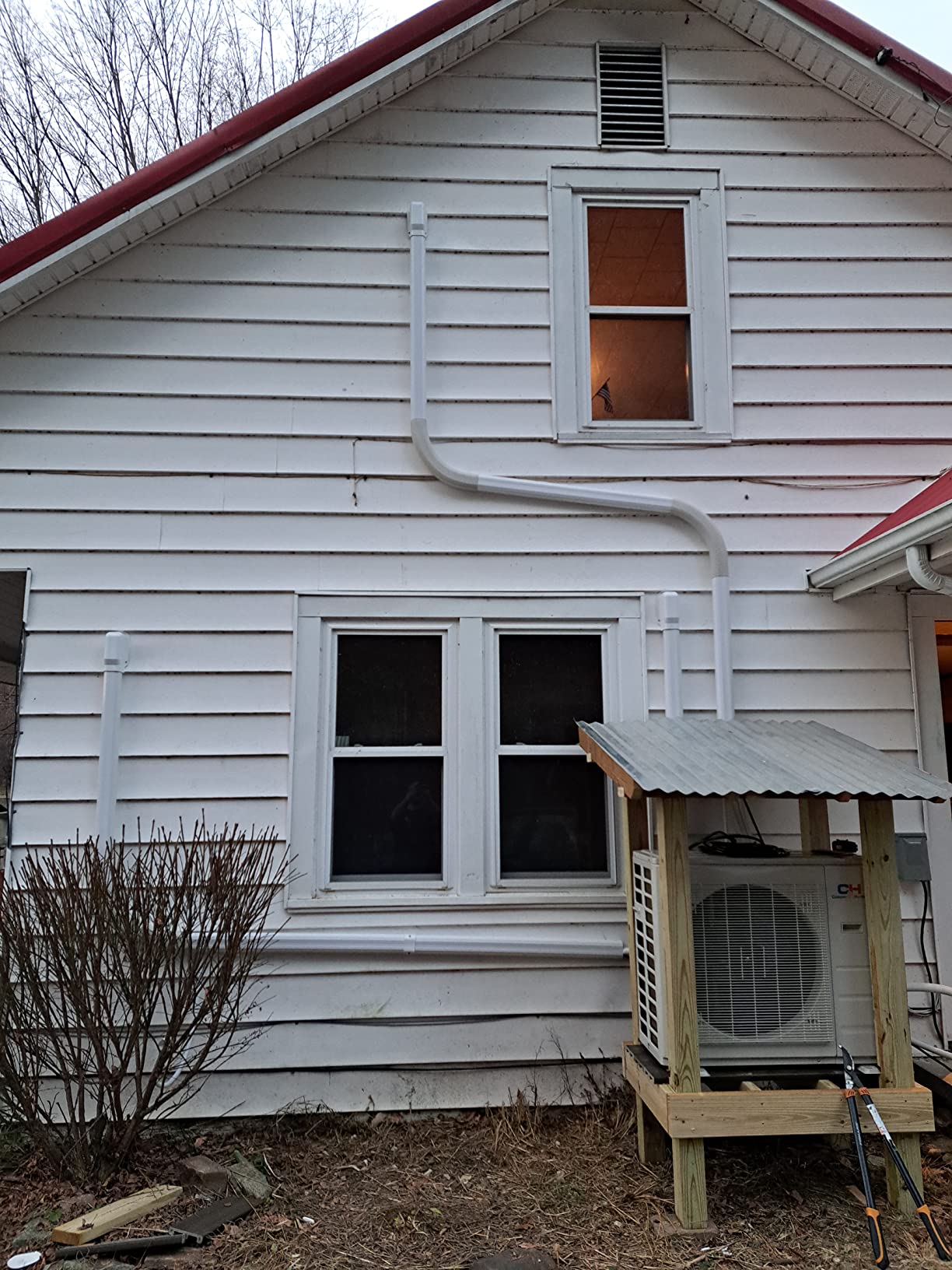
The three tradeoff areas are clear. This is the most expensive equipment in the selection, professional installation runs at a meaningful share of that cost, and the package moves by freight to the nearest accessible point outside your home, so curb delivery and stairs need to be planned before the truck arrives. At 279.3 pounds and 48 by 40 by 40 inches, the outdoor unit also needs a properly sized pad and clear airflow.
Everything arrives pre-charged with three smart control kits and three 25 foot installation kits in the box, each including 25 ft of insulated copper line, 25 ft of communication cable and a 16 ft drainage extension. That is a genuinely complete package, which is part of why the effective installed total lands closer to the equipment figure than it would with a bare-condenser listing.
Why does mixed head sizing matter more than raw tonnage?
Because rooms differ far more than system totals suggest. A 9,000 BTU head cools a 150 square foot bedroom properly and would overshoot an unconditioned closet, while a 12,000 BTU head handles a 400 square foot living space with west-facing glass. Matching heads to loads room by room is the difference between reaching setpoint in the afternoon and running the system all evening without catching up.
Is the premium worth it compared with a 20 SEER2 three-zone set?
If the install is straightforward and you are keeping the system fifteen years, the efficiency and warranty terms pay for themselves over that horizon. If the run is complex, on a second story, with long line sets, then the install labor will exceed any equipment price difference, and a 20 SEER2 package becomes the more rational purchase. Get the install quote before you get the equipment quote.
6. ROVSUN 28K BTU Tri Zone System – Best for Three Similar Rooms
ROVSUN 28000BTU Tri Zone Mini Split AC/Heating System, 20 SEER2 3 Zone (9K/9K/9K) BTU Ductless Split Air Conditioner with Pre-Charged Condenser, Heat Pump & 25Ft Line Set, 208-230V
28000 BTU across 3 zones
20 SEER2 inverter
27-42 dBa indoor range
R-32 at 208-230V
Pros
- Three 9000 BTU heads on a 28000 BTU condenser cover three rooms with independent control
- 27-42 dBa range is among the quietest indoor operation in this group
- 4-way swing circulates air wall to wall and reduces hot and cold spots
- App control plus remote for scheduling and voice-control compatibility
- Owners with HVAC experience rate build quality and installation smoothness highly
Cons
- Three identical 9000 BTU heads suit similar-sized rooms rather than uneven loads
- Only a 1-year limited warranty
- Arrives as seven separate boxes
- so all pieces must arrive before scheduling install
- Must stay upright for 24 hours before installation
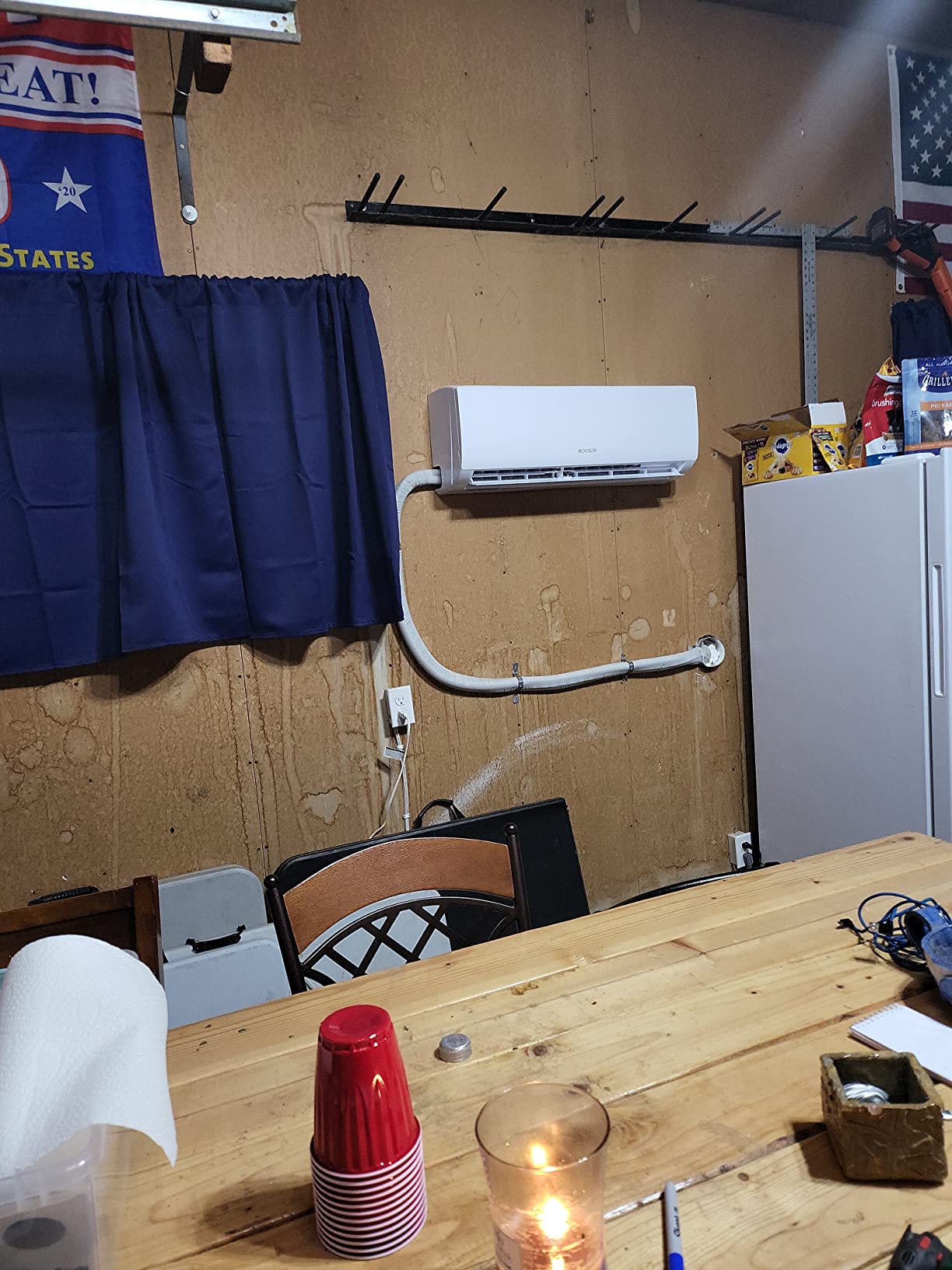
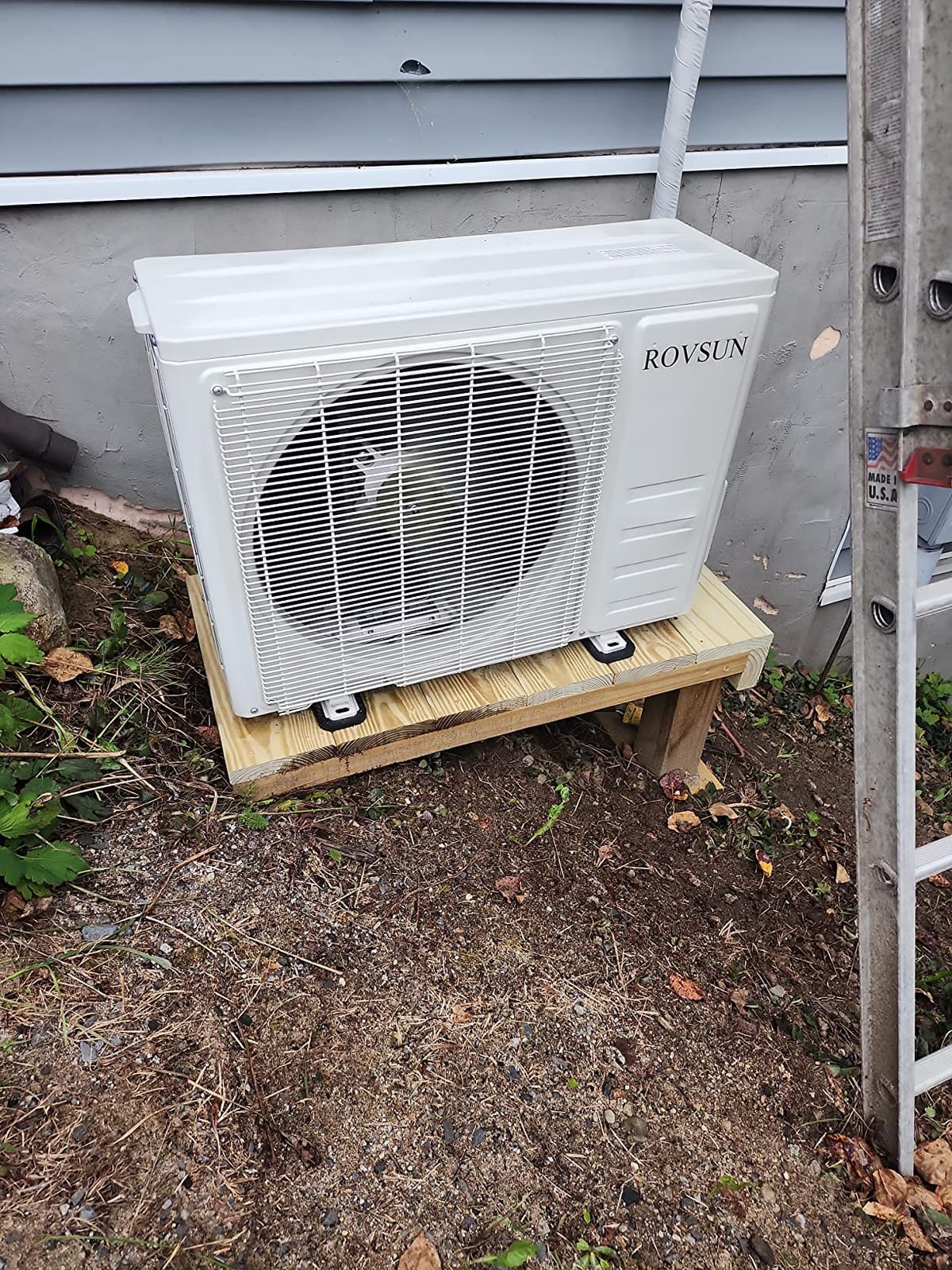
Three bedrooms, three 9,000 BTU heads, one condenser. That is the cleanest possible expression of a whole-house ductless mini split system, and it works beautifully when the rooms it serves are similar in size and exposure. The 28,000 BTU condenser carries the load with room to spare, so no single zone is asked to do more than it should.
This listing carries a 4.4 star average, the highest of the three ROVSUN configurations, with 69 percent five-star ratings and only 3 percent one-star. Owners with HVAC experience rate build quality highly, and the 27-42 dBa indoor range is genuinely quiet for a wall-mounted head. Listed annual consumption of 130 kWh is low for a three-zone system.
The weakness is uniformity by design. Three identical heads are the wrong answer for a house with one huge great room and two small bedrooms, because you either oversize the small rooms or undersize the large one. If your rooms are uneven, look at the mixed-size 9K plus 12K plus 12K layout on the Cooper and Hunter package instead.
Also worth planning around: the one-year warranty, and the fact that the package arrives as seven separate boxes. Every piece has to be on site before the installer schedules the job, and the condensers need to remain upright for 24 hours before install, which can push your install date out by a day depending on delivery timing.
How close do the three rooms need to be in size?
Within about 30 percent of each other. A 9,000 BTU head handles a 150 to 200 square foot room depending on window exposure, insulation and sun angle, so three bedrooms in the 150 to 180 square foot range are a clean match. A 400 square foot open living area in the same house is not, and that room wants its own larger head.
What is the practical difference between a 20 SEER2 and 23 SEER2 three-zone system?
Annual running cost and cold-morning recovery time, mainly. The 23 SEER2 units in this roundup pull roughly 25 to 30 percent less power for equivalent cooling, which matters most during shoulder seasons and hot weeks when the system runs for many hours. If you are on a heat pump that also carries winter heating, that efficiency gain shows up twice a year.
7. YITAHOME 24K BTU 3-Zone System – Best for Smart Home Control
YITAHOME 23 SEER2 24K BTU 3 Zone Mini Split AC/Heating System, 9000 9000 9000 BTU Tri Zone Mini Split Air Conditioner, 208-230V Pre-charged Inverter AC, Compatible with Wi-Fi&Alexa
24000 BTU across 3 zones
23 SEER2 and 5-star BEE
Wi-Fi and Alexa enabled
5F to 118F operating range
Pros
- Wi-Fi and Alexa compatibility with five operating modes and a well-regarded app
- 23 SEER2 efficiency with a 5-star BEE rating
- 5-year parts and 7-year compressor warranty
- Owners replacing 30-year-old central air report lower bills and comfort through 100F-plus weeks
- Quiet operation below 40 dB with a washable easy-clean filter
Cons
- Written installation instructions are incomplete
- so installers rely on videos and experience
- Some sets arrive missing a component with resolution limited to a partial refund
- Owners question the thin lightweight-feeling indoor housings
- Installation still requires a vacuum pump and manifold to evacuate the lines
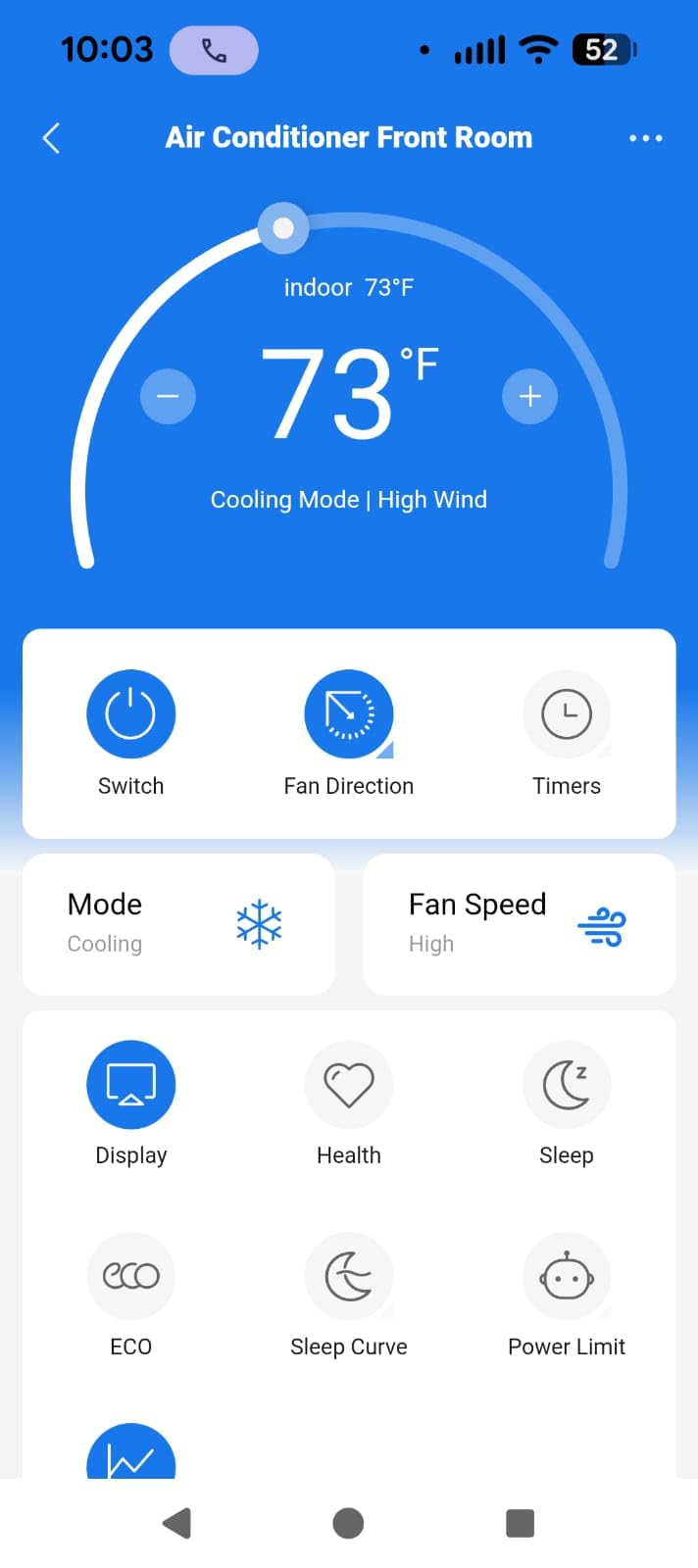
If your decision is being driven by app control rather than raw tonnage, this is the system to look at. It is Wi-Fi enabled, Alexa compatible, and offers auto, cool, dry, heat and fan modes with a 24-hour timer, sleep mode and an off-screen button. The app is described by owners as genuinely well regarded for controlling each head independently, which is the whole point of a zoned system.
At 23 SEER2 with a 5-star BEE rating, the efficiency is right at the top of this group, and the warranty of 5 years parts and 7 years compressor outlasts the one-year coverage on most of the ROVSUN packages. It is also one of the few systems here where owners report adding a third charged head later, because the multi-zone fittings allow expansion.
The 4.1 star average is the lowest in the roundup, driven by a 16 percent one-star tail, and the complaints are specific. Written installation instructions are incomplete, so installers work from videos and experience. Some sets arrive missing a component, and resolution is limited to a partial refund. A few owners question how thin the indoor housings feel, even though they function correctly.
Operating range is 5F to 118F rather than the -4F floor on several competitors, so this is not the right pick for a heating-only cold climate where you plan to run the heat pump as your primary heat source. Coverage is listed at 1,200 square feet across three heads, and airflow throw reaches 50 feet, which suits standard ceiling heights.
Can you add a zone later if you outgrow two rooms?
With the right fittings, yes. Owners report adding a third charged head to expand from a dual-zone setup, and the multi-zone branch fittings on this design are designed for it. Confirm with your installer that the branch fitting and the additional head are compatible with the specific indoor unit you plan to add, because mixing head sizes across manufacturers is not supported.
Is it safe in a home where the mini split is the only cooling?
Within its stated envelope, yes, with 24,000 BTU across three heads and a rated 1,200 square feet. Below that ceiling it is a solid main cooling system, and reviewers replacing 30-year-old central equipment report real comfort gains through 100F-plus weeks. Above 1,200 square feet or in a two-story layout, size up to a 28,000 BTU package.
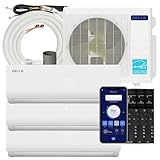
8. DELLA 28K BTU 3-Zone Mixed Size System – Best for Cold Climate Homes
DELLA 28K BTU ODU Mini Split AC 3 Zone (2 * 9K+12K BTU) 20 SEER2 208-230V Works with Alexa and Wifi, Cools Up to 1350 Sq.Ft, Energy Efficient, Multi Zone, Pre-Charged Heat Pump, 16ft Kits
28000 BTU across 3 zones
Heating rated to -13F
Cools up to 1350 sq ft
Lifetime compressor warranty
Pros
- Heat pump operation rated down to -13F
- the lowest cold-climate figure in this selection
- Largest stated area coverage at up to 1350 sq ft
- Mixed head sizing at 9K plus 9K plus 12K suits uneven rooms
- Lifetime compressor warranty and 29 dBa indoor operation
- Line sets and drain pipes included for all three heads
Cons
- Self-cleaning function is unsupported even though the button appears on the display
- Some installers advise against the included copper line sets
- A minority report unstable temperature in heating mode
- Only 16 ft of line set per head before extras are needed
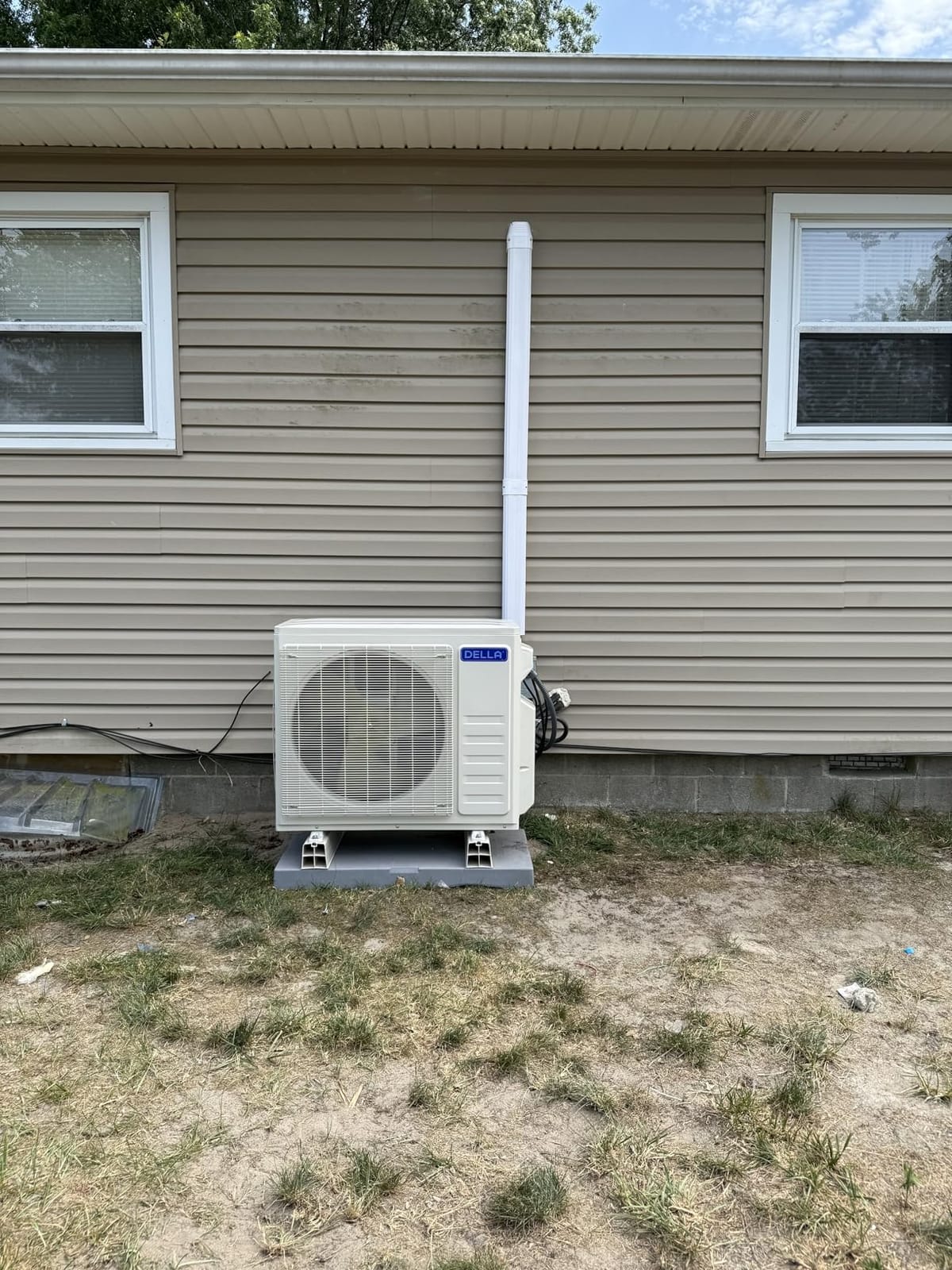
Cold winters are where this one separates from the field. The heat pump is rated for operation down to -13F, which is the lowest low-ambient figure among the systems we reviewed, and the mixed 9K plus 9K plus 12K head layout handles both small bedrooms and a larger living area without oversizing either. Rated coverage reaches 1,350 square feet, the largest stated area in the group.
Warranty coverage includes a lifetime compressor warranty, which no other system in this roundup offers, and the 29 dBa indoor figure is among the quietest. Three 16 ft copper line sets, three drain pipes and three installation kits come in the box, so the heads can be connected without sourcing separate kits, and owners cite strong cooling plus a working app.
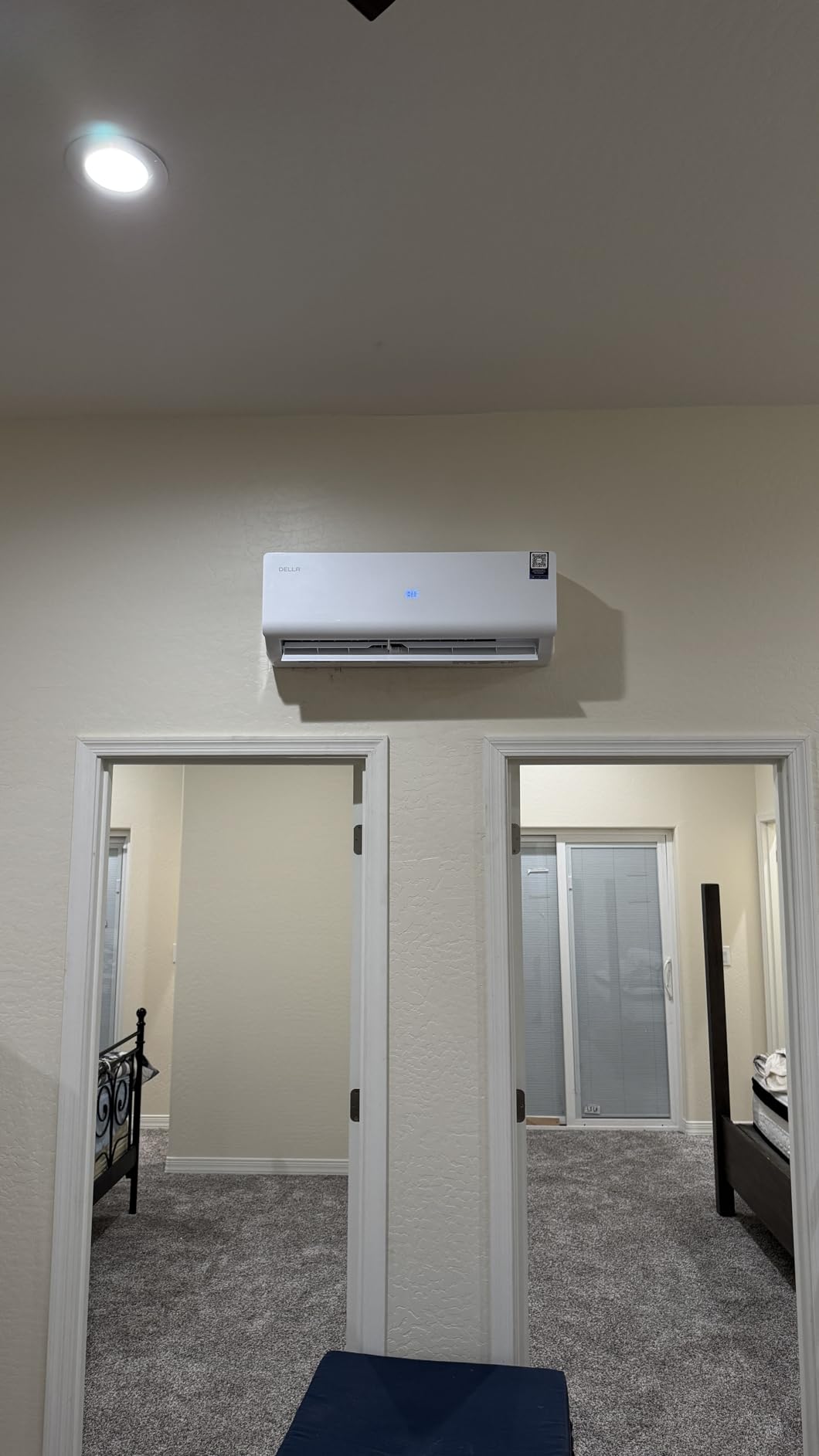
Three practical notes. The self-cleaning function is not supported on this model even though the button appears on the display, which is a small but real disappointment for anyone buying on that feature. Some installers recommend against the included copper line sets because they crimp and twist easily, and a minority of owners report the system swinging from too cold to too hot in heating mode rather than holding setpoint.
Also plan for line set length. At 16 ft per head, most second-story or rear-of-house runs will need a longer kit purchased separately, and the manufacturer notes that line set alterations require a refrigerant adjustment and a proper vacuum. That work belongs on the installer’s quote as a line item.
Is -13F heating operation enough to use this as primary winter heat?
In most climates north of the mid-Atlantic, yes, because the -13F rating is the point at which the system maintains rated heating capacity rather than merely staying switched on. Below that floor, supplemental heat takes over. Check your local design temperature against that number rather than trusting a marketing headline, and confirm with an installer who will run the load calculation.
How many square feet should you size this system to?
The manufacturer suggests 400 square feet plus 550 square feet per paired arrangement, and rates the full three-zone set for up to 1,350 square feet. Treat that as an upper bound for good insulation and moderate window exposure. West-facing glass, a low ceiling or a top-floor unit can cut effective capacity enough that a load calculation recommends a different layout.
How Many Zones Does Your House Need?
Start with square footage, then adjust for stories, window exposure and how many rooms you genuinely want under independent control. Most homes need between two and four zones, and more than four usually signals that you have outgrown single-condenser ductless.
A 200 square foot room is the most common sizing question we see, and the practical answer is a 9,000 BTU head for a standard bedroom or office of that size. Add roughly 500 to 1,000 BTU for heavy west-facing glass, poor insulation or a top-floor room, and subtract from there for shaded, well-insulated rooms on the lower level.
Remember that one condenser carries up to four indoor heads. The moment you pass four conditioned rooms in a single story, or need independent control on more than four rooms across two floors, a second outdoor unit is the honest answer rather than stretching one condenser past its design limit.
Why Oversizing a Mini Split Is the Most Common Mistake
Oversizing a mini split is the most expensive mistake you can make because it fails quietly. A variable-speed compressor has a turndown ratio of roughly 1:2.5 to 1:3, meaning an 18,000 BTU unit can only modulate down to around 6,000 to 8,000 BTU of output. Install something far larger than the room needs and the unit cycles on and off, which wastes power and defeats humidity control.
The humidity consequence is the part most buyers never hear about. A system that short-cycles never runs its coil long enough to pull moisture out of the air, so in a hot-humid climate you end up with a house that feels clammy at the thermostat setting. That is the single most common complaint in forum threads about oversized ductless equipment, and it is fixable only by resizing, not by lowering the setpoint.
Undersizing causes a different failure. The compressor runs continuously, never reaches setpoint on the hottest afternoons, and ages faster because it never gets a break. Either error means your bill does not drop the way the SEER2 number promised, so a room-by-room load calculation before equipment is selected is worth the cost of a design visit.
SEER2: Why 20+ Matters on a Whole-House Run
SEER2 is the current efficiency standard, and the whole-house threshold is 20. Standard central air typically lands between 14 and 16, so anything at 20 or above is buying a materially different operating cost profile over fifteen years. In this roundup the systems range from 20 to 25 SEER2.
The structural saving matters more than the rating gap, though. Losing 20 to 30 percent of conditioned air through leaky ducts is a loss that no SEER2 rating can recover, and a ductless system has no ducts to lose. That is why a 20 SEER2 ductless install can beat a 25 SEER2 central system on an older leaky house even before you compare the ratings.
Also separate equipment ratings from installed performance. A high SEER2 number assumes short line sets, proper refrigerant charge, a clean filter and a well-insulated envelope. Every one of those is an install quality issue, which is why the quote checklist below matters as much as the spec sheet.
Indoor Head Styles and Where Each One Goes
Every system in this roundup uses wall-mounted heads, which suits most homes because they are the least expensive style to install and the easiest to service. A wall mount on an interior wall keeps the noise outside the sleeping area, and forum questions about putting heads on interior walls come up constantly. The answer is yes, with proper bracketing and a lined penetration.
Ceiling cassettes cost more but drop from the ceiling, which works well in open-plan living areas where you do not want a head on the main wall. Concealed ducted heads disappear into a ceiling space and are the only option when you want the look of central air, at the highest equipment and labor cost. Floor units suit rooms with tall windows where wall mounting would be blocked.
Whichever style you pick, remember that multi-zone means multiplies the maintenance. Four heads means four sets of filters, four condensate drains and four service points. Homeowners who enjoy a well-handled cooling system can compare our cooling mattress picks for the bedroom side of the same heat problem, but budget filter cleaning for every head rather than just one.
DIY or Professional Installation: The Biggest Cost Fork
Every system in this roundup requires professional installation, and for whole-house work that is the correct call. A three-zone system means three line sets, three drains, three control cables, a pad, a disconnect and a refrigerant vacuum, and each one is a point where an amateur install turns into a service visit. HVAC forum regulars treat a vacuum pump and manifold as non-negotiable.
The cost fork is real, though, and it is the largest controllable variable in the project. Forum users quote whole-house installed figures in the seven-thousand range and higher with no itemized breakdown to compare against, which is exactly why a written quote separated into equipment, labor, electrical, permits and line set work is the most useful document you can request.
Two install details homeowners regret ignoring. Running line sets beyond roughly 75 feet or placing the condenser too far from the heads adds cost and risks a refrigerant recharge. And an energy assessor recommended foam pads under outside outlets and wall switches to cut heat loss, possibly up to 15 percent, which is cheap comfort on a system you are about to depend on all summer.
Brands to Consider and Brands to Avoid
Brands in this category split into a small number of large Japanese and American names and a long tail of newer labels, and the meaningful difference is warranty length plus local parts support rather than name recognition. The same holds true for the gear we cover elsewhere, which is why our RV battery guide leads with serviceable brands instead of spec sheet bragging rights.
On the consider side, look for extended compressor warranties of seven years or more, ENERGYSTAR or SEER2 certification above 20, and a manufacturer with real service infrastructure in your region. The Cooper and Hunter package, with 7-year compressor and 5-year parts coverage from a US manufacturer, and the DELLA package with a lifetime compressor warranty, both clear that bar.
On the avoid side, treat a one-year warranty as a genuine warning rather than a minor specification detail, since a control board or compressor failure after month thirteen lands on you. Walk away from quotes that hide electrical upgrades and permits inside a single lump sum, and be skeptical of any package marketed as a whole-home solution that is actually a single-zone unit with a bigger name on the box.
The hardest filter to apply is serviceability. Proprietary compressor and electronics failures are the main repair fear in this category, so before you sign, ask who locally services the brand and how long a replacement part takes to arrive. Warranty length means very little if the nearest technician will not touch the equipment.
Tax Credits, Rebates and the Quote Checklist
The federal Section 25C residential clean energy credit covers qualifying ductless heat pump systems installed through 2032, at 30 percent of project cost up to a $2,000 cap. That eligibility attaches to the equipment, not to the installer, so verify your specific model number appears on the qualified list before you order. Utility rebates vary widely by region and often require the same documentation.
Before accepting any number, ask for a written quote that separates these seven lines: equipment, indoor heads, line sets and refrigerant work, electrical service, permits and inspection, condensate and drain work, and labor. A quote that lumps all of it into one figure cannot be compared against another quote, and comparison is the only defense against a number you cannot interrogate.
Ask for the room-by-room load calculation in writing too, and ask which parts of the scope are excluded. Exclusions are where the surprise lives, and a contractor who volunteers them is usually the one who has priced the whole job honestly. If you want a step-by-step reference for a related seasonal upgrade, our whole house generator guide covers the same itemize-before-you-buy discipline.
Frequently Asked Questions
Can a ductless mini split cool an entire house?
Yes, as long as it is a multi-zone system. One outdoor condenser connected to two, three, or four indoor air handlers conditions only the rooms you choose, each on its own thermostat, and no ductwork is required.
How many indoor units can one outdoor unit power?
Most residential multi-zone condensers support up to four indoor heads. Homes needing more than four independent zones generally require a second outdoor unit or a properly designed central system.
Is it better to undersize or oversize a mini split?
Neither. Oversizing causes short-cycling, wasted energy and weak humidity control, while undersizing leaves the compressor running continuously without reaching setpoint. A room-by-room load calculation is the only reliable answer.
How big of a mini split do I need for a 200 square foot room?
A 9,000 BTU head is the standard starting point for a 200 square foot bedroom or office. Add roughly 500 to 1,000 BTU for heavy west-facing glass, a top-floor room or weak insulation.
What mini split brands should you stay away from?
Treat one-year warranties as a real warning sign, and walk away from quotes that hide electrical upgrades and permits in a single lump sum. Confirm that a local technician services the brand before you buy.
Do I need a licensed contractor to install a whole-house mini split?
For a multi-zone system, yes. Three line sets, three condensate drains, control cables, a refrigerant vacuum and electrical work are involved, and all of the systems in this roundup are specified for professional installation.
Final Verdict
For most homes searching for the best ductless mini splits for whole house cooling, the Senville 18,000 BTU two-zone system is the place to start. It carries the deepest owner history in this group at 485 ratings, holds 22.5 SEER2 efficiency, includes Alexa and app control, and carries a 7-year compressor warranty that survives contact with a real installer.
Step up to the ROVSUN 38,000 BTU quad zone package for a two-story home that needs four independent rooms, and to the Cooper and Hunter 28,000 BTU three-zone system when bedrooms need to be genuinely silent and rooms are uneven in size. The DELLA 28K package is the one to shortlist if your winters push past -4F, and the ROVSUN 20,000 BTU pair is the value pick for a smaller house or a room pair.
Whichever system you land on, get the room-by-room load calculation and the itemized install quote before you order equipment. In this category the install quality decides the outcome more often than the brand on the box, and 2026 is a good year to demand both in writing.