
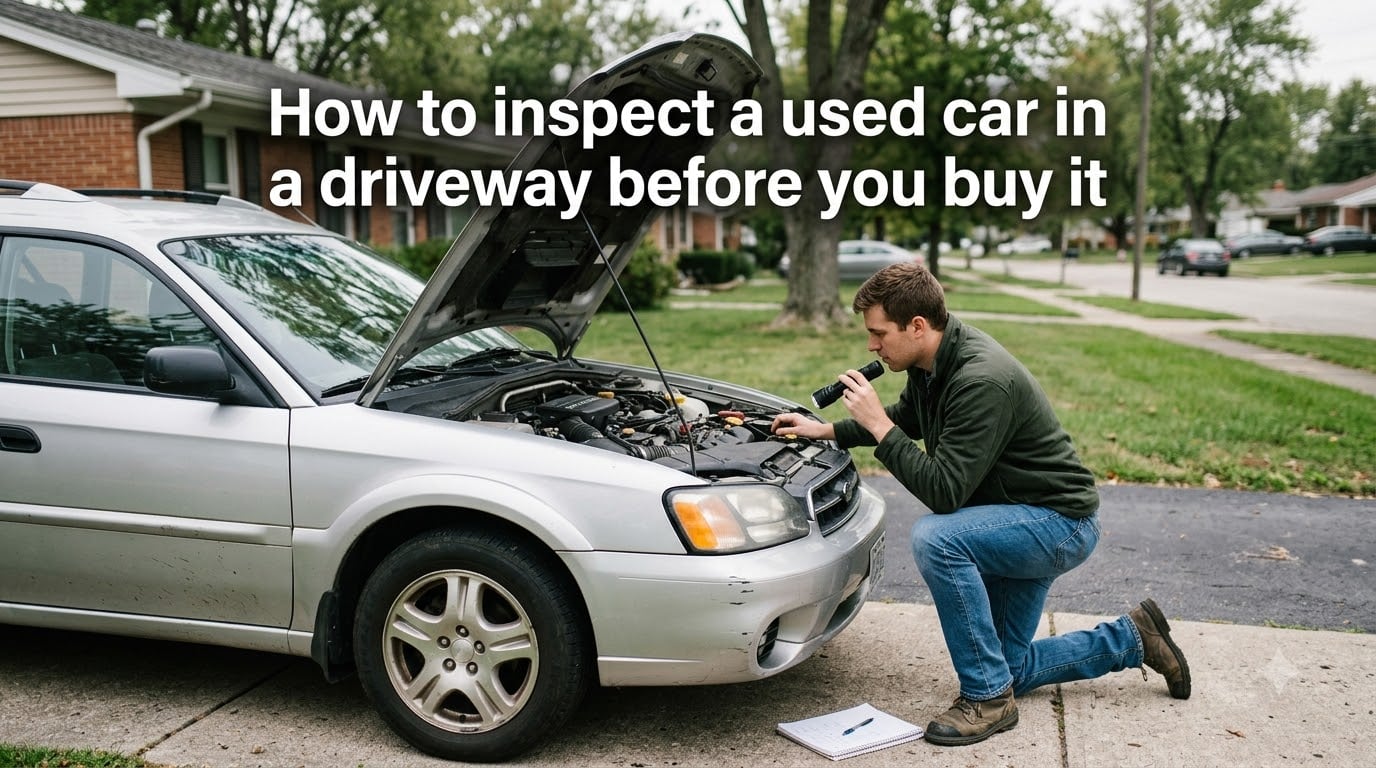
Buying a used car from someone’s driveway can save you thousands compared to a dealership, but it also carries real risk. I have helped friends and family inspect dozens of private party vehicles over the years, and I can tell you that a thorough driveway inspection catches problems the seller might not even know about (or might not mention).
The goal is simple: figure out whether the car in front of you is a solid deal or a money pit before you hand over cash. You do not need to be a mechanic to spot the majority of red flags. What you need is a system, a short checklist of tools, and the patience to look at the car methodically rather than getting swept up in excitement.
In this guide, I will walk you through exactly how to inspect a used car in a driveway before you buy it, step by step. We will cover what to bring, the exterior walk-around, under-the-hood checks, interior evaluation, the test drive, and what to do when the seller pushes back on your inspection. By the end, you will have a repeatable process you can use on every private party car you look at.
Two things you should absolutely never skip: a vehicle history report and a professional pre-purchase inspection. I will explain why these two steps matter so much, and how to handle it when a seller refuses.
Table of Contents
What to Bring to a Used Car Inspection?
Showing up unprepared is the number one mistake I see buyers make. You do not need professional tools, but a few cheap items will make your inspection far more effective. Here is what I bring to every driveway car inspection.
Essential items:
Flashlight (phone light works, but a real flashlight is brighter)
Small magnet or refrigerator magnet
Penny and a quarter (for tread depth testing)
Paper towel or white cloth (for checking fluids on the dipstick)
Notepad or phone for photos and notes
OBD2 scanner (about $25 on Amazon, reads engine codes instantly)
Gloves if you do not want to get your hands dirty
Do your homework before arriving:
Ask the seller for the VIN ahead of time. Run a free VIN check through the National Highway Traffic Safety Administration (NHTSA) recall database at nhtsa.gov/recalls. If the seller will not give you the VIN before showing up, that is your first red flag.
Consider ordering a vehicle history report from Carfax or AutoCheck before the visit. It costs around $25 to $45 and can reveal accident history, title branding, odometer discrepancies, and service records. I always pull one before driving to see a car, because it has saved me wasted trips more than once.
Finally, research the fair market value of the exact make, model, year, and trim using resources like Kelley Blue Book or Edmunds. Walk in knowing what the car should be worth so you can negotiate with confidence.
Exterior Walk-Around Inspection
The exterior walk-around is where most hidden problems reveal themselves. Take your time here. I recommend starting at the front left and circling the car clockwise, looking at it from different angles. Lighting matters, so try to inspect during daylight hours.
Paint and Body Panel Alignment
Stand at an angle to the car and look along the body panels. The paint color should match evenly from panel to panel. If one door, fender, or hood looks slightly different in shade or has a different texture, that panel was likely repainted after a collision.
Check the gaps between body panels like doors, hood, and trunk. Gaps should be consistent in width on both sides of the car. Uneven or mismatched gaps suggest the car was in an accident and the panels were not aligned properly during repair.
The Magnet Test for Body Filler
Take your small magnet and run it along the body panels, especially around the lower doors, fenders, and quarter panels. The magnet should stick firmly to bare metal beneath the paint. If the magnet does not stick or barely holds, there is body filler underneath, which means that section was repaired.
A small amount of filler on one panel is not necessarily a dealbreaker, but large patches or filler on multiple panels suggest significant accident damage that may not appear on the vehicle history report.
Rust Inspection
Rust is one of the most expensive problems to fix on a used car. Look at the wheel wells, rocker panels (the area below the doors), door bottoms, and the frame underneath. Surface rust is normal on older cars, but bubbling paint, flaking metal, or rust that you can poke through with a screwdriver means structural corrosion.
Also check inside the trunk under the carpet or spare tire area. Water pooling there can indicate a trunk seal leak or previous rear-end collision damage.
Tire Condition and Tread Depth
Tires tell you a lot about how the car was maintained and driven. Look at all four tires and check for uneven wear patterns. If the inside or outside edge of a tire is significantly more worn than the center, the car likely needs a wheel alignment or has worn suspension components.
Use the penny test for tread depth. Insert a penny into the tread groove with Lincoln’s head pointing down. If you can see the top of Lincoln’s head, the tire is dangerously worn and needs replacement. Four new tires can cost $400 to $800, so factor that into your offer.
Check the tire sidewalls for cracks, bulges, or plugs. Also verify that all four tires are the same brand and size. Mismatched tires suggest the owner was cutting corners on maintenance.
Glass, Lights, and Mirrors
Look for cracks, chips, or pitting in the windshield. A small stone chip might be acceptable, but a long crack will require full windshield replacement. Check that all headlights, taillights, brake lights, turn signals, and reverse lights are functional. Have the seller operate each one while you walk around the car.
Cloudy or yellowed headlight lenses are common on older cars and can often be restored with a polishing kit for about $20. But if the lenses are cracked, replacement gets pricey.
Signs of Flood Damage
Flood cars are sometimes cleaned up and resold without disclosure. Look for water lines inside the headlights or taillights, a musty or mildew smell in the cabin, condensation under the dashboard, rust on screws or metal brackets under the seats, and a dirty water line in the trunk or engine bay.
Check the seatbelt by pulling it all the way out. If you see a waterline stain on the fabric, the car was likely submerged at some point. Walk away from any flood car, period.
Under the Hood Inspection
Even if you know nothing about engines, you can spot serious problems in the engine bay. Ask the seller not to start the car before you arrive, because a warm engine can hide cold-start issues. Here is what to look for.
Engine Oil
Pull the oil dipstick, wipe it clean with your paper towel, reinsert it, and pull it again. The oil should be amber to dark brown. If it looks like a thick, milky, chocolate milkshake, the engine has coolant mixing with oil, which points to a blown head gasket. That is a massive repair bill.
Also check whether the oil level is within the marked range. An engine that is low on oil may have a leak or may have been neglected. Check underneath the car for fresh oil spots on the driveway.
Transmission Fluid
If the car has a transmission dipstick (some newer cars have sealed transmissions), pull it and check the fluid. Healthy transmission fluid is pink or red. If it is dark brown or black and smells burnt, the transmission may be slipping or overheating. A transmission rebuild can cost $2,000 to $4,000.
Coolant and Other Fluids
Check the coolant reservoir. The coolant should be green, orange, or pink depending on the type. Brown or rusty coolant means neglected maintenance. Never open the radiator cap when the engine is hot.
Check the brake fluid reservoir. It should be clear to slightly amber. Dark or black brake fluid means it has not been changed in years. Also glance at the power steering fluid if the car has a hydraulic system.
Belts, Hoses, and Battery
Squeeze the large radiator hoses. They should be firm but not rock hard, cracked, or spongy. Look at the serpentine belt on the front of the engine. Cracks, fraying, or glazing (a shiny, smooth surface) mean the belt needs replacement.
Check the battery terminals for white or green corrosion buildup. Heavy corrosion can cause starting problems and suggests the battery or alternator may have issues. The battery case should not be bulging or cracked.
Look for Leaks and Rodent Damage
Shine your flashlight around the engine bay and underneath the car. Fresh wet spots indicate active leaks. Black fluid is oil, red or pink is transmission fluid, green or orange is coolant, and clear could be power steering or AC condensation (which is normal).
Look for chewed wires or rodent droppings under the hood, especially if the car has been sitting for a while. Rodent damage to wiring harnesses can cause electrical gremlils that are difficult and expensive to diagnose.
Interior Inspection
The interior tells you how well the previous owner cared for the car. A neglected cabin often means a neglected engine. Sit in every seat and test every feature.
Odor Check
Open the doors and take a deep breath before sitting down. A strong air freshener smell is a warning sign that the seller is masking something. Mildew or mold smells point to water leaks or flood damage. Heavy smoke odor is nearly impossible to remove and reduces resale value.
Dashboard Warning Lights
Turn the key to the ON position without starting the engine. All warning lights (check engine, ABS, airbag, oil, battery) should illuminate briefly. Then start the car. Every light should turn off within a few seconds.
If the check engine light stays on, plug in your OBD2 scanner to read the code. Some sellers clear codes before showing the car, so if no light appears but the scanner shows pending codes, that is suspicious. Drive cycles clear after a few starts, so a freshly cleared code will not show up until the car has been driven.
Seats, Upholstery, and Wear Patterns
Check the condition of the seats, steering wheel, and pedals. Excessive wear on the driver seat, steering wheel, or brake pedal that does not match the odometer reading is a sign of odometer rollback. A car showing 60,000 miles should not have a bald brake pedal or a worn-through steering wheel.
Test Every Feature
Roll all windows up and down. Test the sunroof if equipped. Turn the AC to maximum and verify cold air within a couple of minutes. Test the heater. Operate every switch, including the wipers, defroster, horn, and adjustable mirrors. Try the radio and infotainment system.
Check the sunroof for water leaks by looking at the headliner around the sunroof opening. Water stains mean the drain tubes are clogged or the seal is failing.
Odometer Fraud Signs
Odometer rollback is more common than most people think, especially on older digital dashboards. Compare the odometer reading to the mileage on the vehicle history report and maintenance records. If the numbers do not line up or if the report shows higher mileage in the past than the current reading, walk away.
The Test Drive
The test drive is non-negotiable. I have seen cars that looked perfect sitting still but revealed serious issues the moment they moved. Insist on driving the car yourself, and plan for at least 15 to 20 minutes on a route that includes city streets, highway speeds, and some rough pavement.
Cold Start
Before you start the engine, note whether the seller warmed it up before you arrived. Ask them to start it cold if possible. Listen for unusual noises on startup. A brief rattling that fades within a second or two is common on some engines, but persistent knocking, ticking, or grinding signals problems.
Watch the exhaust pipe. A puff of blue smoke means the engine is burning oil. White smoke that does not go away can indicate coolant entering the combustion chamber. Black smoke suggests a fuel system issue.
Acceleration and Braking
Accelerate firmly from a stop. The car should pull smoothly without hesitation, stumbling, or jerking. Sudden power loss or hesitation can point to fuel injection, ignition, or transmission problems.
Brake firmly from about 30 mph. The pedal should feel firm and the car should stop in a straight line. A spongy pedal, grinding noise, steering wheel vibration under braking, or the car pulling to one side all indicate brake system problems.
Suspension and Steering
Drive over bumps, railroad tracks, and potholes deliberately. Listen for clunks, squeaks, or rattling. Excessive bouncing after a bump means the shocks or struts are worn. The steering wheel should be centered when driving straight. If it pulls to one side on a flat road, the alignment is off or there is a brake drag issue.
Transmission Behavior
If the car is an automatic, feel for smooth shifts as the transmission goes through its gears. Hard, jerky, or delayed shifts indicate transmission wear. Slipping (the engine revs but the car does not accelerate) is a serious warning sign.
For manual transmissions, test the clutch engagement. A clutch that grabs very high on the pedal travel is worn. Listen for grinding when shifting into each gear, which can indicate worn synchronizers.
Listen and Pay Attention
Turn off the radio and climate control during the test drive so you can hear everything. Note any unusual smells, like burning oil or sweet coolant. After the drive, park the car and let it idle. Check underneath for any new leaks that appeared during the drive.
Red Flags Specific to Private Party and Driveway Sales
Buying from a private seller in their driveway has different risks than buying from a dealership. No competitor guide I have seen addresses these driveway-specific warning signs, so I want to cover them in detail.
The Seller Already Warmed Up the Car
If the engine is already warm when you arrive, the seller may be trying to hide a cold-start problem. Ask them why the car was started before your visit. Always try to see a cold start. If the seller refuses to let the car sit and cool down, that is suspicious.
Title Problems
Ask to see the title before you get serious. Verify that the name on the title matches the seller’s ID. If the seller is not the person named on the title, they may be an unlicensed curbstoner flipping cars illegally. Check that the title is not branded as salvage, rebuilt, or flood.
Look for signs of title washing, where a car with a salvage brand in one state gets a clean title in another state. The vehicle history report should show the full title history across states.
No Maintenance Records
A seller who kept receipts and service records is more likely to have taken care of the car. No records at all does not automatically disqualify the car, but it raises the importance of a professional inspection. Ask specific questions about when the timing belt, spark plugs, brakes, and fluids were last serviced.
Pressure to Buy Quickly
If the seller rushes you, claims there is another buyer waiting, or pressures you to make a decision on the spot, slow down. High-pressure tactics from a private seller often mask hidden problems. A legitimate seller will understand that you want to inspect the car and think it over.
Price Too Good to Be True
If the asking price is significantly below market value, there is almost always a reason. Scammers use low prices to lure buyers who skip the inspection. Compare the price to comparable listings. If it stands out as unusually cheap, proceed with extra caution.
Check Vehicle History Report and Recalls
A vehicle history report is essential, but it is not a substitute for a physical inspection. Reports can miss things, and they only contain information that was reported to insurance companies, body shops, or government agencies.
What a Vehicle History Report Reveals
Carfax and AutoCheck reports show accident records, title branding, odometer readings over time, number of previous owners, service records from participating shops, and sometimes registration and inspection history. This information helps you verify the seller’s story and catch discrepancies.
What Reports Miss
If a previous owner paid out of pocket for accident repairs without involving insurance, the damage may never appear on the report. This is why the physical walk-around and magnet test are so important. A clean report does not guarantee a clean car.
Run a Recall Check
Go to nhtsa.gov/recalls and enter the VIN. This free check shows any open safety recalls on the vehicle. Common recalls involve airbags (especially the Takata airbag recall affecting millions of vehicles), fuel system leaks, and electrical fire risks.
Open recalls can usually be fixed for free at a dealership, but you should know about them before buying. Use open recalls as a negotiation point and make sure they get addressed promptly after purchase.
Verify the Title Is Clean
Check that the title is not branded as salvage, rebuilt, junk, or flood. A branded title means the car was declared a total loss by an insurance company at some point. These cars can be dangerous and are difficult to insure or resell. If the seller has a rebuilt title, they should disclose it clearly.
Get a Professional Pre-Purchase Inspection
Even after a thorough DIY driveway inspection, I strongly recommend getting a professional pre-purchase inspection (PPI) before you commit. A mechanic can put the car on a lift, check underneath, and spot problems you cannot see from the driveway.
Why a PPI Is Worth the Cost
Reddit users on r/carbuying consistently say that spending $100 to $300 on a pre-purchase inspection is the best money you can spend when buying a used car. That fee is trivial compared to the thousands you could lose on a car with hidden engine, transmission, or frame damage.
A mechanic on a lift can check brake pad thickness, suspension bushings, exhaust system condition, frame integrity, fluid leaks from underneath, and tire condition from a perspective you simply cannot get standing in a driveway.
Mobile Inspection Services
If the car is at a private seller’s home and taking it to a shop is impractical, mobile inspection services will come to the driveway. Companies like Lemon Squad, Pitstop, and local mobile mechanics will send a technician to inspect the car on-site for roughly $150 to $250.
Mobile inspections are not as thorough as a shop visit because the mechanic cannot put the car on a lift, but they still provide professional eyes and often include an OBD2 scan and test drive.
The $3000 Rule for Cars
One useful guideline I share with buyers is the $3000 rule. If the purchase price plus the estimated cost of needed repairs exceeds the retail value of the car by $3,000 or more, you are overpaying. Factor in everything the inspection revealed: tires, brakes, fluids, body work, and any mechanical issues. If the math does not work, negotiate the price down or walk away.
What to Do When the Seller Refuses Inspection?
If a private seller refuses to let you get a professional inspection, walk away. This is the single biggest red flag in a private party sale. No legitimate seller who believes in their car will object to a buyer paying for an independent inspection.
Sellers who refuse usually know the car has serious problems. Thank them for their time and leave. There will always be another car, but you cannot un-buy a lemon.
Negotiate Based on Your Findings
Every issue you found during the inspection is leverage. Document everything with photos and notes so you can present specific findings to the seller rather than making vague complaints.
Document and Estimate Repair Costs
List each problem you found and estimate the repair cost. You can call a local shop for quick quotes on common items like brakes, tires, or a battery. Present the seller with a written list and a total dollar figure. Most reasonable sellers will adjust the price to reflect needed repairs.
Know When to Walk Away
Some cars are not worth buying at any price. If the inspection revealed structural rust, engine issues, transmission problems, flood damage, or a branded title, the safest choice is to walk away. There is no discount large enough to justify buying a car that will drain your bank account.
Be prepared to walk, and mean it. The willingness to walk away is your strongest negotiating tool. I have seen sellers drop their price significantly the moment a buyer starts loading up their tools.
Frequently Asked Questions
How to test drive a used car before buying?
Drive for at least 15 to 20 minutes on a route with city streets, highway speeds, and rough pavement. Check cold start behavior, acceleration smoothness, braking response, steering alignment, and transmission shifting. Turn off the radio and listen for unusual noises. After the drive, check underneath for new leaks.
What is the $3000 rule for cars?
The $3000 rule says that if the purchase price plus estimated repair costs exceeds the retail value of the car by $3,000 or more, you are overpaying. Add up the price of the car and all needed repairs identified during inspection, then compare that total to the car’s market value to decide if the deal makes sense.
What are two things you definitely should do with a used car before buying it?
Get a vehicle history report and have a professional mechanic perform a pre-purchase inspection. The history report reveals accidents, title branding, and odometer discrepancies. The mechanic inspection catches mechanical and structural problems that neither the report nor a DIY driveway check can uncover.
How does a mechanic inspect a used car?
A mechanic puts the car on a lift to check the frame, suspension, brakes, exhaust, and underbody for leaks or damage. They scan the OBD2 computer for engine codes, test all fluids, inspect belts and hoses, evaluate tire condition, and take a test drive to assess engine, transmission, and braking performance.
Is it worth getting a pre-purchase inspection?
Yes. A pre-purchase inspection typically costs $100 to $300, which is a small fraction of the purchase price of a used car. It can reveal hidden engine, transmission, frame, or safety problems that would cost thousands to repair. Most experienced buyers consider it the best money spent during the buying process.
What red flags to look for when buying a used car from a private seller?
Watch for a seller who warmed up the car before you arrived, refuses a professional inspection, has no title in their name, lacks maintenance records, pressures you to buy quickly, or lists the car well below market value. Also check for mismatched paint, body filler, flood damage signs, and dashboard warning lights that stay on.
Conclusion
Knowing how to inspect a used car in a driveway before you buy it gives you the power to make a confident, informed decision instead of a risky gamble. Walk around the exterior, check under the hood, evaluate the interior, take a thorough test drive, and never skip the vehicle history report and professional inspection.
Bring your checklist and your tools, take your time, and trust your instincts. The right car is worth the effort, and the wrong car is expensive no matter how cheap the price seems. Print this guide, bring it to your next inspection, and walk away from anything that does not check out.