
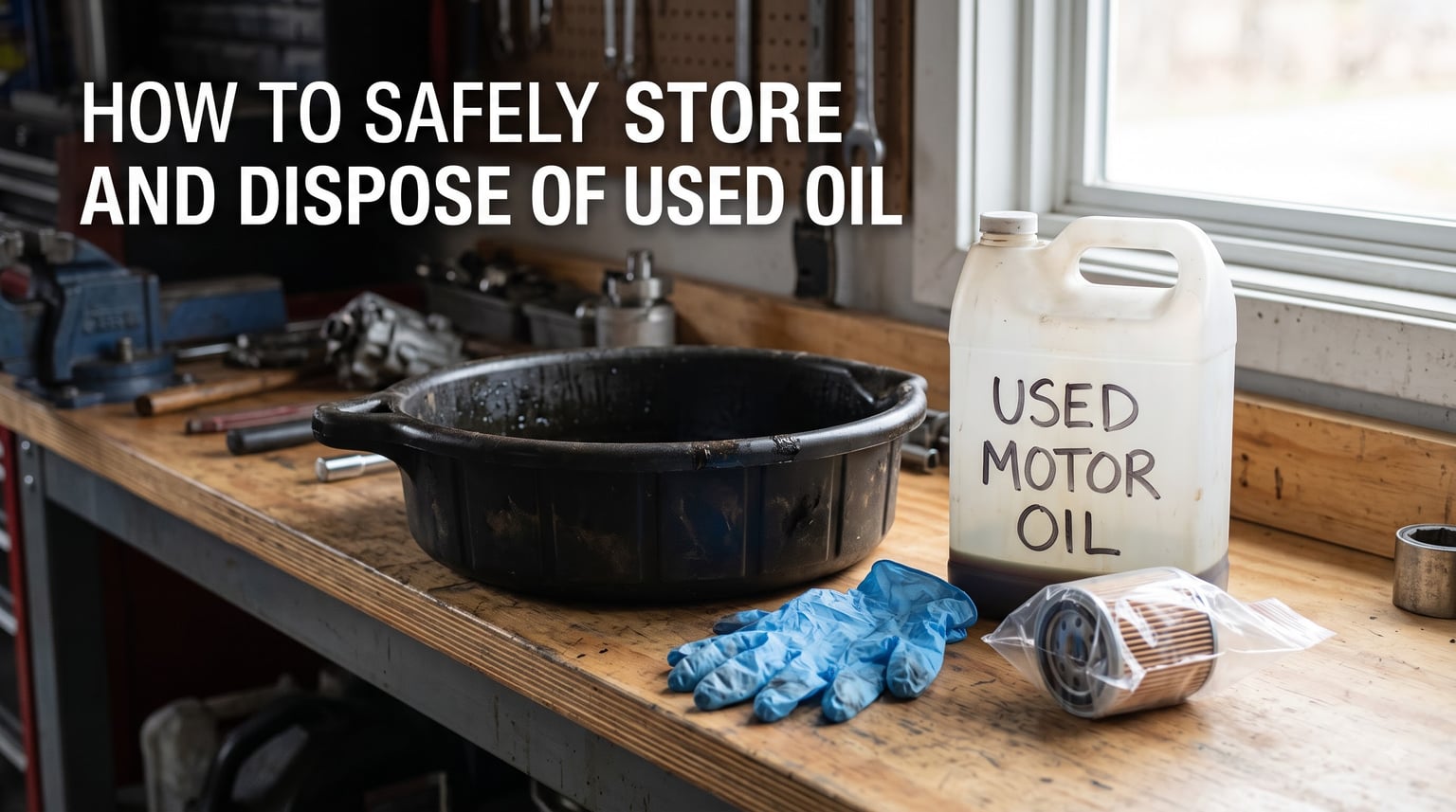
Just one gallon of used motor oil can contaminate one million gallons of fresh water. That single statistic explains why knowing how to safely store and dispose of used oil matters so much. Every DIY oil change leaves behind roughly 4 to 5 quarts of liquid that the EPA classifies as a regulated waste.
If you change your own oil, you are responsible for that waste from drain to drop-off. The good news is that disposal is free at thousands of locations across the country, and the recycling process turns dirty oil into clean re-refined lubricant.
In this guide I walk you through every step of the process: what used oil actually is, how to collect and store it safely, where to recycle it for free, how to handle oil filters and rags, and what never to do with old motor oil. I also cover state incentive programs that pay you to recycle and how long you can store used oil before it degrades.
Whether you do one oil change a year or maintain a small fleet, this guide gives you the exact process our team follows to handle used oil responsibly.
Table of Contents
What Is Used Motor Oil and Why Is It Hazardous?
Used motor oil is any petroleum-based or synthetic oil that has cycled through an engine and picked up impurities during operation. After thousands of miles of circulation, it collects dirt, metal shavings, water, unburned fuel, and chemical additives that break down under heat.
The EPA does not classify used oil from DIY oil changes as a listed hazardous waste under RCRA. However, it is still regulated as a universal waste in many states and carries toxicity characteristics that make improper disposal illegal in all 50 states.
The contaminants in used oil are what make it dangerous. Heavy metals like lead, zinc, and barium build up from engine wear. Hydrocarbons and polyaromatic compounds persist in soil and water for years. A single tablespoon can create a visible sheen on a body of water.
Re-refined motor oil made from recycled used oil meets the same API and SAE performance standards as oil refined from crude. Recycling oil actually takes less energy than refining crude, which makes proper collection valuable for both environmental and economic reasons.
Why Proper Disposal Matters: The Environmental Impact
One gallon of used motor oil contaminates one million gallons of fresh water. That ratio comes directly from the EPA and appears in nearly every reputable source on oil disposal because it illustrates how concentrated the contamination is.
When oil reaches soil or groundwater, it does not break down quickly. The hydrocarbons bind to soil particles and slowly leach into aquifers. Heavy metals accumulate in fish and wildlife tissue, working their way up the food chain.
Pouring oil down a storm drain is especially damaging because storm drains often flow untreated into rivers and lakes. Even a small amount entering a municipal system can trigger costly water treatment responses and environmental fines.
Recycling solves this problem completely. The re-refining process removes water, metals, and degraded additives, then restores the base oil to API Group II quality. The recycled oil performs identically to virgin product in lab and field testing.
Tools and Containers You Need Before Draining Oil
Preparation prevents spills. Before you crawl under the car, gather everything you need so you are not scrambling mid-drain.
Here is the checklist our team uses for every oil change:
Drain pan — A low-profile drain pan rated for at least 8 quarts, ideally with a built-in spout for clean pouring.
Oil filter wrench — Strap or cap style depending on your filter type.
Funnel — A dedicated funnel for transferring used oil into a storage container.
Storage container — A clean, leak-proof, sealable container made of HDPE plastic or metal. The original oil bottles you just emptied work perfectly.
Nitrile gloves and shop rags — Protect your skin and wipe small drips.
Jack and jack stands or ramps — Only if your vehicle needs additional clearance.
Never use a container that held bleach, antifreeze, or other chemicals. Residual chemicals contaminate the oil and can cause recycling centers to reject your batch. Wash out a used oil bottle thoroughly or simply use the bottles from your fresh oil purchase.
How to Safely Store and Dispose of Used Oil Step by Step?
Learning how to safely store and dispose of used oil comes down to a straightforward sequence. Follow these steps and you will never have a spill or rejected batch.
Step 1: Position the Drain Pan Correctly
Warm the engine for a few minutes so the oil flows freely, then shut it off. Slide the drain pan directly under the oil pan drain plug so the initial stream lands in the center of the pan.
Remove the drain plug slowly with the correct size wrench. The oil may shoot sideways at first, so keep the pan wide enough to catch splatter.
Step 2: Let It Fully Drain
Let the oil flow for at least 10 to 15 minutes until the drip slows to a trickle. Reinstall the drain plug with a new crush washer if your vehicle uses one.
Remove the oil filter and let it drain into the pan too. Filters hold nearly a quart of oil that you want to capture.
Step 3: Transfer to a Leak-Proof Container
Use your funnel to pour the drained oil from the pan into a clean, leak-proof container with a tight-sealing cap. Leave an inch of headspace at the top so the liquid can expand if temperatures change.
Wipe the outside of the container with a rag so it is not slippery to handle later.
Step 4: Label and Date the Container
Mark the container clearly with “Used Motor Oil” and the date. Labeling matters because recycling centers need to verify the contents and because a date tells you how long it has been stored.
Step 5: Store in a Cool, Dry Place
Keep the container in a cool, dry location away from direct sunlight, heat sources, and pilot lights. A garage shelf or storage cabinet works well. Avoid leaving it on bare dirt where moisture can corrode a metal container.
Do not store used oil near water heaters, furnaces, or any appliance with an open flame.
Step 6: Transport Upright and Secured
When you are ready to recycle, place the container upright in a cardboard box or plastic tub to catch any leaks. Secure it so it cannot tip over during braking or cornering. A second container under the box adds an extra layer of spill protection.
Transport the oil to your nearest recycling drop-off — details on where to go are in the next section.
Where to Recycle Used Oil for Free
The most common question on forums like Reddit’s r/MechanicAdvice is simple: where do I take this stuff? The answer is encouraging because most options are completely free.
Here are the most reliable places to recycle used motor oil:
Auto parts stores — AutoZone, O’Reilly Auto Parts, Advance Auto Parts, and NAPA Auto Parts accept used oil and filters at no charge. This is the most popular DIY option on Reddit. Most stores limit you to 5 gallons per visit.
Municipal recycling centers and household hazardous waste facilities — City and county facilities run free collection programs. Some hold monthly or quarterly community collection events.
Service stations and quick lube shops — Many accept used oil from the public, though some charge a small fee. Call ahead to confirm.
Walmart Auto Care Centers — Select locations accept used oil. Check with your local store first.
Earth911 search tool — Visit earth911.com, type “motor oil” and your ZIP code to find every nearby drop-off with hours and accepted materials.
Is it free to recycle oil at AutoZone? Yes. Most major auto parts chains accept used motor oil and filters at no charge as part of their corporate recycling programs. The same is true at O’Reilly and Advance Auto Parts.
Always call ahead before driving out. Store policies vary by location, and some have daily capacity limits or specific hours for oil drop-off.
How to Handle Used Oil Filters the Right Way?
Used oil filters contain nearly a quart of trapped oil and are classified as hazardous automotive waste in most states. You cannot simply toss them in the trash.
Follow these steps to prepare filters for recycling:
Drain the filter by puncturing the dome end with a screwdriver and letting it drip into your drain pan for at least 12 to 24 hours.
Crush the filter if possible to confirm it is fully drained and to save space.
Place the filter in a sealed plastic bag or the box your new filter came in.
Take it to the same auto parts store or recycling center where you drop off your oil.
Most auto parts stores that accept oil also accept filters. Some states, including California, require retailers to take back filters at no charge when you buy a replacement.
Oil-Soaked Rags and Absorbents: A Hidden Fire Risk
This is a topic most guides skip, and it nearly cost me a garage fire years ago. Oil-soaked rags can spontaneously combust through a slow oxidation process that builds heat faster than it dissipates.
The NFPA warns that petroleum-soaked textiles in a pile or closed container can ignite without an external flame. The risk is real, especially in warm weather or in a sealed trash can.
To handle oil-soaked rags safely:
Spread used rags flat outdoors in a single layer to dry completely before disposal.
Never wad them up and toss them in a trash can or pile.
Place dried rags in a metal container with a tight lid filled with water and a small amount of detergent.
Bring oil-soaked absorbents to your local household hazardous waste facility along with your used oil.
Cat litter or commercial absorbents used to clean spills should also go to a hazardous waste facility, never in the regular trash.
What Never to Do With Used Motor Oil?
Some disposal methods are not just bad practice — they are illegal and carry serious fines. Here is what never to do with used oil.
Never Pour It Down Any Drain
Sink drains, toilets, and storm drains all lead somewhere that oil does not belong. Storm drains typically flow untreated into local waterways. A single pour can contaminate thousands of gallons of water and trigger environmental enforcement.
Never Dump It on the Ground
Pouring oil on dirt, gravel, or weeds lets it soak into groundwater. The contamination persists for decades and is traceable back to the source.
Never Put It in the Trash
Used oil in a garbage bag leaks in collection trucks and landfills. Many jurisdictions treat deliberate trash disposal of oil as illegal dumping.
Never Mix It With Other Fluids
Mixing oil with antifreeze, brake fluid, transmission fluid, or gasoline contaminates the batch. Recycling centers will reject mixed fluids because they cannot be re-refined. Keep each fluid in its own clearly labeled container.
Never Use It as a Weed Killer or Dust Suppressant
Old-school advice about spraying oil on driveways or fence lines is both illegal and toxic. Modern regulations prohibit this practice everywhere.
California Cash Incentive and Other State Programs
Some states actually pay you to recycle used oil. The most well-known is California’s Used Oil Recycling Program, which offers a 40-cent per gallon refund through certified collection centers.
Not every California center participates, but many do, and the program has recycled millions of gallons since it launched. Check the CalRecycle website for participating locations near you.
Other states run similar but smaller incentive programs. South Carolina, for example, offers grants to communities that set up used oil collection. Even without a cash payout, the disposal itself is free at most locations, which saves you compared to paying a shop to take it.
Can you get paid for recycling motor oil? Yes, in certain states like California. In most other places, recycling is free but does not come with a cash incentive.
How Long Can You Store Used Motor Oil?
Used motor oil does not spoil the way food does, but it does degrade over time when exposed to air and moisture. The additives break down, water condensation builds up inside the container, and oxidation slowly changes the oil’s chemistry.
For practical purposes, try to recycle used oil within 6 months. If you store it longer, it remains recyclable, but the quality of the re-refined product drops.
If you have years of accumulated oil in your garage, you are not alone — it is one of the most common questions on r/cars. The solution is straightforward: take it to a municipal household hazardous waste facility rather than an auto parts store, since most stores cap intake at 5 gallons per visit. Hazardous waste sites can handle larger volumes.
Check your container for rust, swelling, or leaks before transporting old oil. Transfer to a new HDPE container if the original shows any signs of failure.
FAQs
Where can I dispose of old motor oil for free?
Most auto parts stores accept used motor oil at no charge. AutoZone, O’Reilly Auto Parts, Advance Auto Parts, and NAPA typically take up to 5 gallons per visit. Municipal recycling centers, household hazardous waste facilities, and some Walmart Auto Care Centers also accept it free. Use the search tool at earth911.com to find locations near you.
How do you dispose of used engine oil?
Collect the oil in a clean leak-proof container with a tight-sealing cap, label it Used Motor Oil, and store it in a cool dry place. Transport it upright and secured to a recycling drop-off such as an auto parts store, municipal recycling center, or household hazardous waste facility. Never pour it down a drain, on the ground, or in the trash.
Is it free to recycle oil at AutoZone?
Yes. AutoZone accepts used motor oil and oil filters at no charge at most locations. The typical limit is 5 gallons per visit, and some stores have specific hours for oil drop-off. Call your local store to confirm before you go.
How are you supposed to dispose of old engine oil?
Store old engine oil in a clean sealed container, label it clearly, and bring it to a certified recycling location such as an auto parts store or household hazardous waste facility. Never mix it with antifreeze, brake fluid, or other fluids, and never pour it down any drain or on the ground.
Wrapping Up
Knowing how to safely store and dispose of used oil is one of the most practical skills any DIY mechanic can develop. The process is simple: drain into a clean pan, transfer to a leak-proof container, label and date it, store it in a cool dry place, then drop it off at a free recycling location.
The stakes are real. One gallon contaminates a million gallons of fresh water, and the consequences of dumping persist for decades. But the solution is just as real — free recycling at auto parts stores and municipal centers, state incentive programs that pay you back, and a re-refining process that turns dirty oil into product as good as new.
Next time you finish an oil change, take five minutes to seal and label the container properly. Your local water supply and your conscience will thank you.