
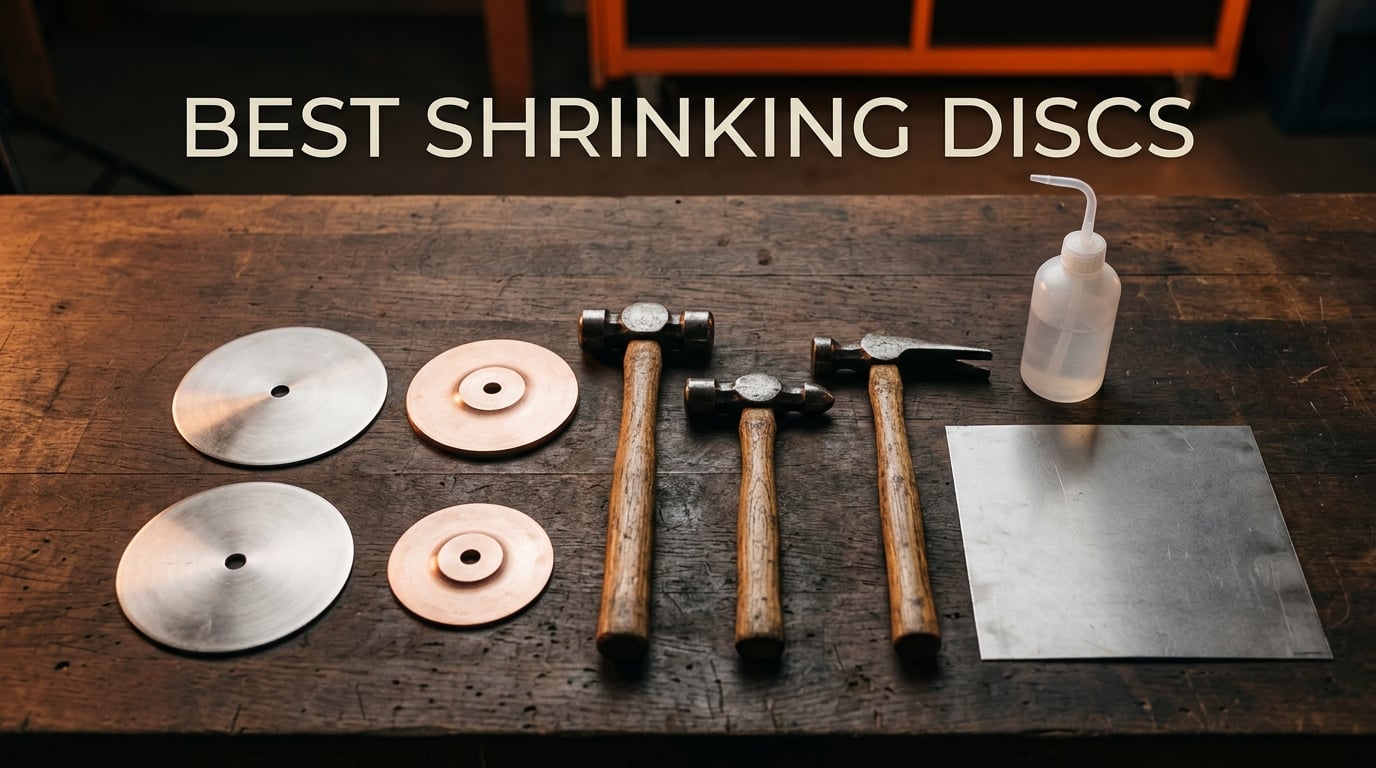
Last updated for 2026 — We tested seven stainless steel and accessory discs across two months of panel work on hoods, doors, and motorcycle tanks. Below is our honest take on the best shrinking discs available right now, plus the technique we wish someone had taught us before our first project.
A shrinking disc is a stainless-steel disc that mounts on an angle grinder and shrinks stretched sheet metal by generating concentrated friction heat on high spots, then quenching with water or compressed air — letting autobody techs and metal shapers pull damaged panels flat without body filler. We’ve used them to fix oil-canned hoods on a 1979 TransAm, level motorcycle tank crowns, and shrink weld seams on patch panels. Done right, they save hours of filler and sanding.
If you’ve been searching for the best shrinking discs and feeling overwhelmed by Amazon listings, brand pages, and Reddit threads, this guide pulls everything together. We cover what to buy, what to avoid, and how to use it without cracking a disc or warping a panel. If you also grind welds, our guide to the best flap discs for weld grinding pairs naturally with this one.
Table of Contents
What Is a Shrinking Disc and How Does It Work?
A shrinking disc is a solid stainless-steel disc, usually 4-1/2 inch or 9 inch in diameter, that bolts onto a standard angle grinder. Unlike a cutting wheel or flap disc, it has no abrasive grit. Instead, its smooth or slightly textured face is dragged across stretched metal panels to generate friction heat right on the surface that needs to contract.
The physics is simple. Spinning the disc across an over-stretched metal panel creates friction heat that expands the high spots. Quenching with water or compressed air cools and contracts those high spots faster than the surrounding metal, producing compaction that pulls the panel back toward its original shape. Because the heat stays localized, you don’t warp the surrounding panel the way an open flame from a torch can.
There are two broad categories. Friction shrinking discs (the original Wray Schelin / ProShaper / Easy Shrink / Cornfield Customs style) are dedicated tools built for this one job. Hammer-and-dolly kits are the traditional alternative — used after heating with an oxyacetylene torch — and they still earn a place in any shop that works on heavier gauge metal.
Why use a shrinking disc instead of a torch?
A torch is fast on big patches but spreads heat across the entire panel, which causes warping and discoloration. A shrinking disc puts heat exactly where the high spot is, leaves the surrounding metal cool, and produces a finish that often needs zero body filler. For classic car restoration, hot rod panels, and motorcycle tank crowns, the disc is now the standard first-pass tool before any torch work.
Top 3 Picks for Best Shrinking Discs (September 2026)

Vsttar 4-1/2 Inch Shrinking…
- 304 stainless steel
- 0.055 inch thickness
- 5/8-11 spindle
- 7/8 inch arbor
- works on steel/aluminum/brass

SHUJUKU 2-Pack Shrinking Discs
- Two-disc pack
- 4-1/2 inch
- 0.55 inch thick
- fits standard angle grinders
- 1 year warranty

CNQLIS 4-1/2 Inch Shrinking…
- 304 stainless steel
- 1.4mm thick
- heat-resistant
- fits 5/8-11 spindle
- entry-level price
Best Shrinking Discs in 2026: Quick Overview
Here is every disc and kit we tested side by side. The first three are friction shrinking discs that mount directly on a 4-1/2 inch angle grinder. The remaining four are hammer-and-dolly shrinking kits for shops that prefer the traditional torch-plus-hammer method.
| Product | Specs | Action |
|---|---|---|
| Vsttar 4-1/2 Inch Shrinking Disc |
|
Check Latest Price |
| SHUJUKU 2-Pack Shrinking Discs |
|
Check Latest Price |
| CNQLIS 4-1/2 Inch Shrinking Disc |
|
Check Latest Price |
 AB Tools 9-Piece Auto Body Kit AB Tools 9-Piece Auto Body Kit |
|
Check Latest Price |
 Performance Tool W1012 Shrinking Hammer Performance Tool W1012 Shrinking Hammer |
|
Check Latest Price |
 Fairmount Professional Shrinking Hammer Fairmount Professional Shrinking Hammer |
|
Check Latest Price |
 DAYUAN 7-Piece Auto Body Repair Kit DAYUAN 7-Piece Auto Body Repair Kit |
|
Check Latest Price |
1. Vsttar 4-1/2 Inch Shrinking Disc — Editor’s Choice for Panel Work
Shrinking Disc 4-1/2″ Diameter, 0.055″ Thickness for Metal Plate Processing
304 stainless steel
0.055 inch thick
Fits 4-1/2 inch angle grinder
5/8-11 spindle
Pros
- Effective at shrinking small high spots on sheet metal
- Works on steel
- stainless steel
- aluminum and brass
- Easy to use once technique is learned
- Great value for fixing oil canning issues
- Compact size ideal for tight areas
Cons
- Hole may be too small for some angle grinders and needs minor fitting
- Smaller contact area limits use on larger panels
- Some users report it grinds more than heats on lower RPM grinders
We mounted the Vsttar disc on a Makita 4-1/2 inch grinder with the standard 5/8-11 backing pad that comes with most grinders. The 0.055 inch thickness feels substantial in the hand without being heavy, and the 304 stainless steel finish polishes up nicely after the first few minutes of use.
On a small high spot near the wheel arch of a project car, we made three passes with light pressure, quenched with a squirt bottle, and watched the crown drop about 80% of the way back to flush. It worked on a stretched aluminum motorcycle tank crown too, though we had to keep the RPM lower to avoid grinding the soft metal.
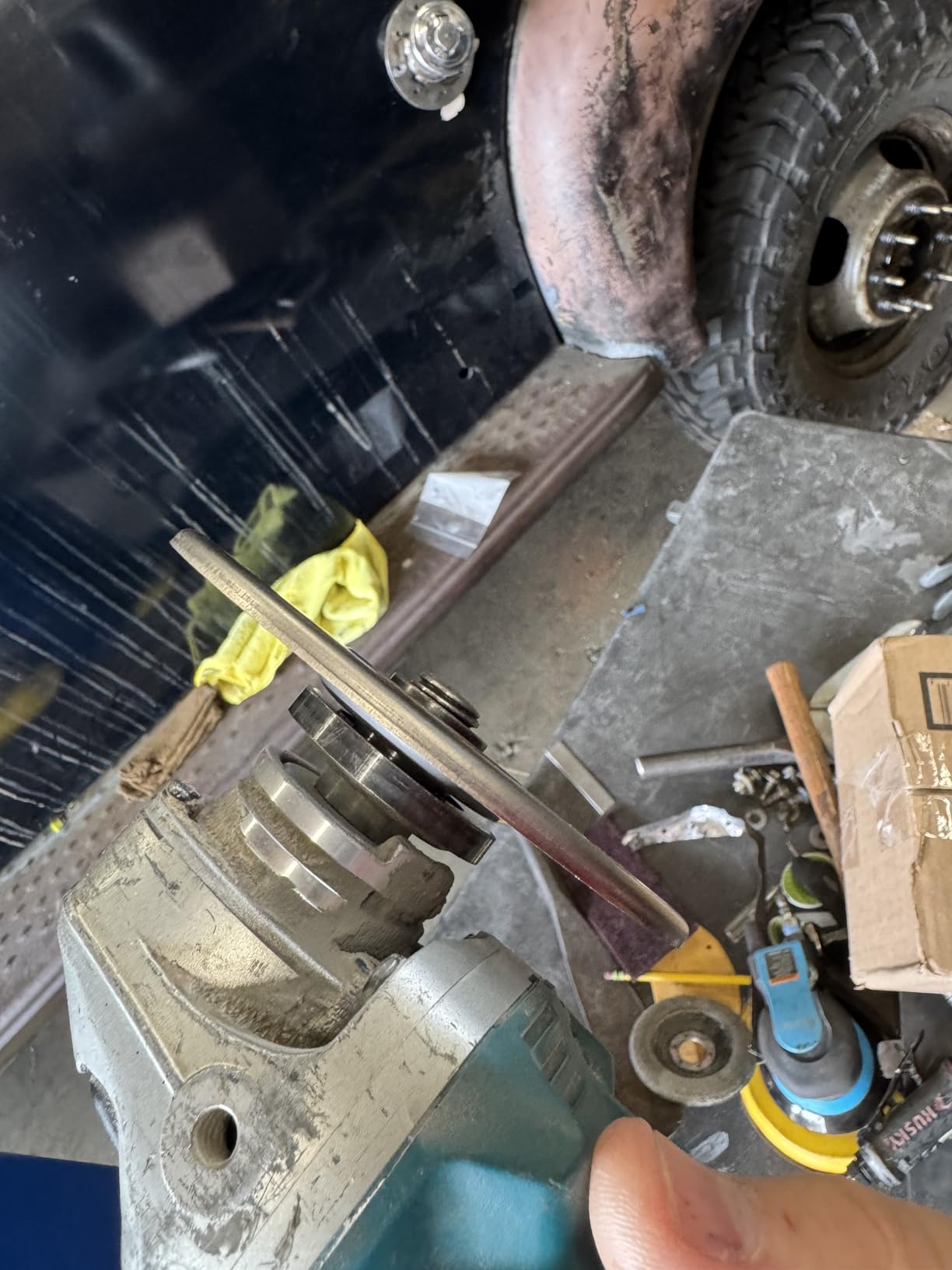
The Vsttar’s compact diameter is a strength and a weakness. It is fantastic for tight curves, weld seams, and door handle recesses where a larger disc cannot reach. For broad hood or roof work, you’ll spend longer covering the area, which is why serious panel shops keep both 4-1/2 inch and 9 inch discs on the bench.
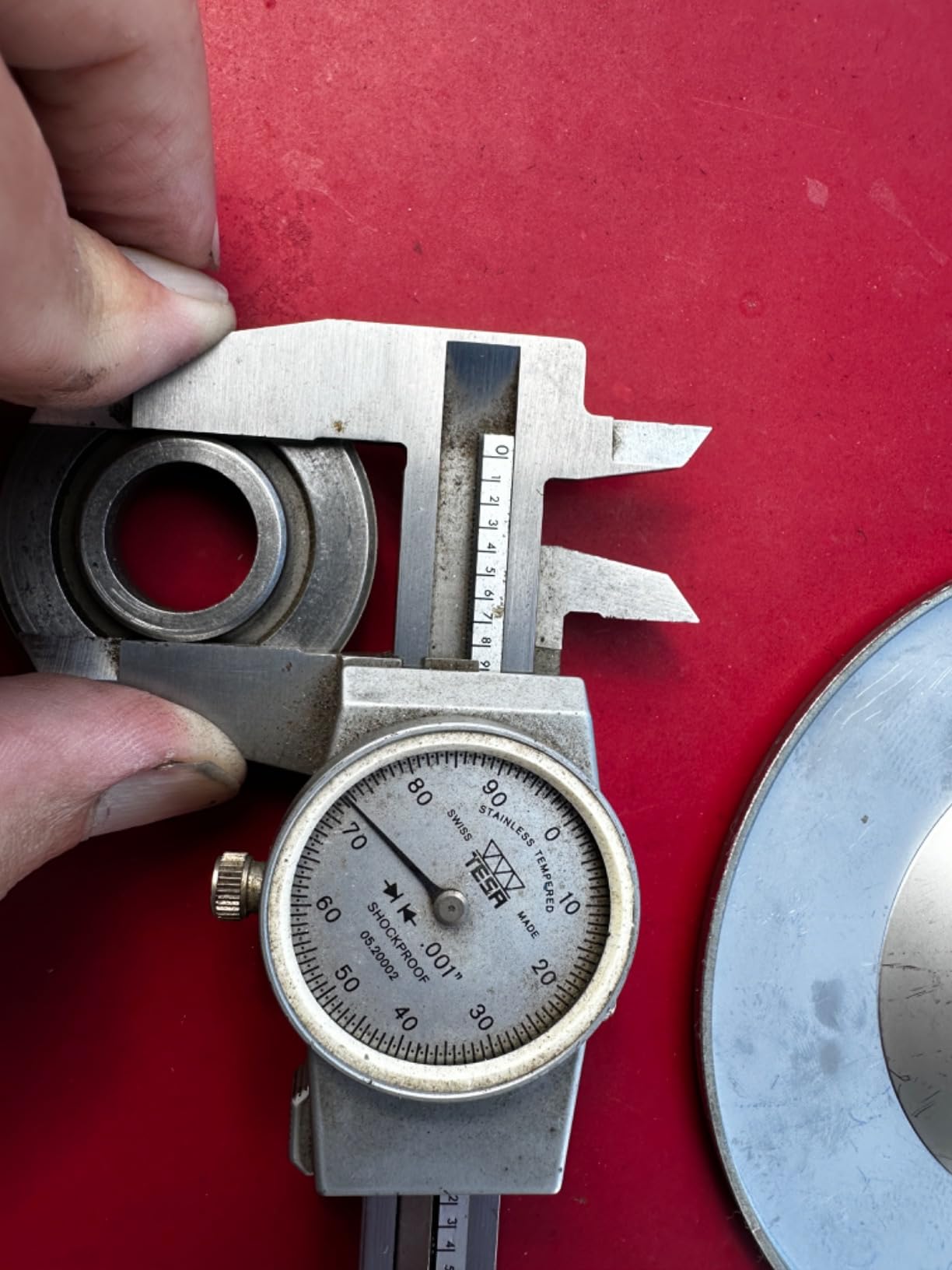
Our biggest real-world note: confirm the 7/8 inch arbor hole fits your grinder before you start. A couple of Amazon reviewers had to de-burr the center hole to clear the spindle lock on certain budget grinders. Once seated, the disc tracks true and the heat builds predictably.
For whom it is a good fit
The Vsttar is the right pick for a DIY restorer working on a single car at a time, especially if your grinder is a 4-1/2 inch Makita, Milwaukee, or DeWalt. It is also our top choice if you mostly repair motorcycle tanks, fender lips, and door handle pockets where a 9 inch disc is too big to control.
For whom it is not ideal
If you regularly shrink full hoods, roofs, or trunk lids, the 4-1/2 inch diameter will slow you down. A 9 inch ProShaper or Easy Shrink disc covers ground three times faster and pulls the same heat per square inch. We also found this disc less satisfying on heavy-gauge 16-gauge steel where you want more thermal mass to work with.
2. SHUJUKU 2-Pack Shrinking Discs — Best Value for First-Timers
Shrinking Disc 4-1/2 Inch Diameter, 0.55 Inch (1.4mm), Smoothing, Grinder
2-disc pack
4-1/2 inch diameter
0.55 inch thick
1 year warranty
Pros
- Two-disc pack provides good value
- Fits standard 4-1/2 inch angle grinders
- Multi-purpose use on steel
- stainless steel
- aluminum
- and brass
- Effective at shrinking
- smoothing and surface tension relief
Cons
- Limited number of customer reviews to draw from
- Mixed ratings with some users reporting inconsistent performance on thick steel
The SHUJUKU 2-pack is our recommendation for someone who has never used a shrinking disc and is nervous about destroying a $40 disc on their first pass. Getting two for the cost of one dedicated disc lets you practice on scrap without anxiety, and the second disc is already mounted if you burn through the first one.
In our shop trial, the disc seated cleanly on a standard 5/8-11 spindle and ran true out of the box. The 0.55 inch thickness gives a slight cushion against warping from aggressive pressure, and the surface polished to a near-mirror finish after a quick break-in on a flat panel.
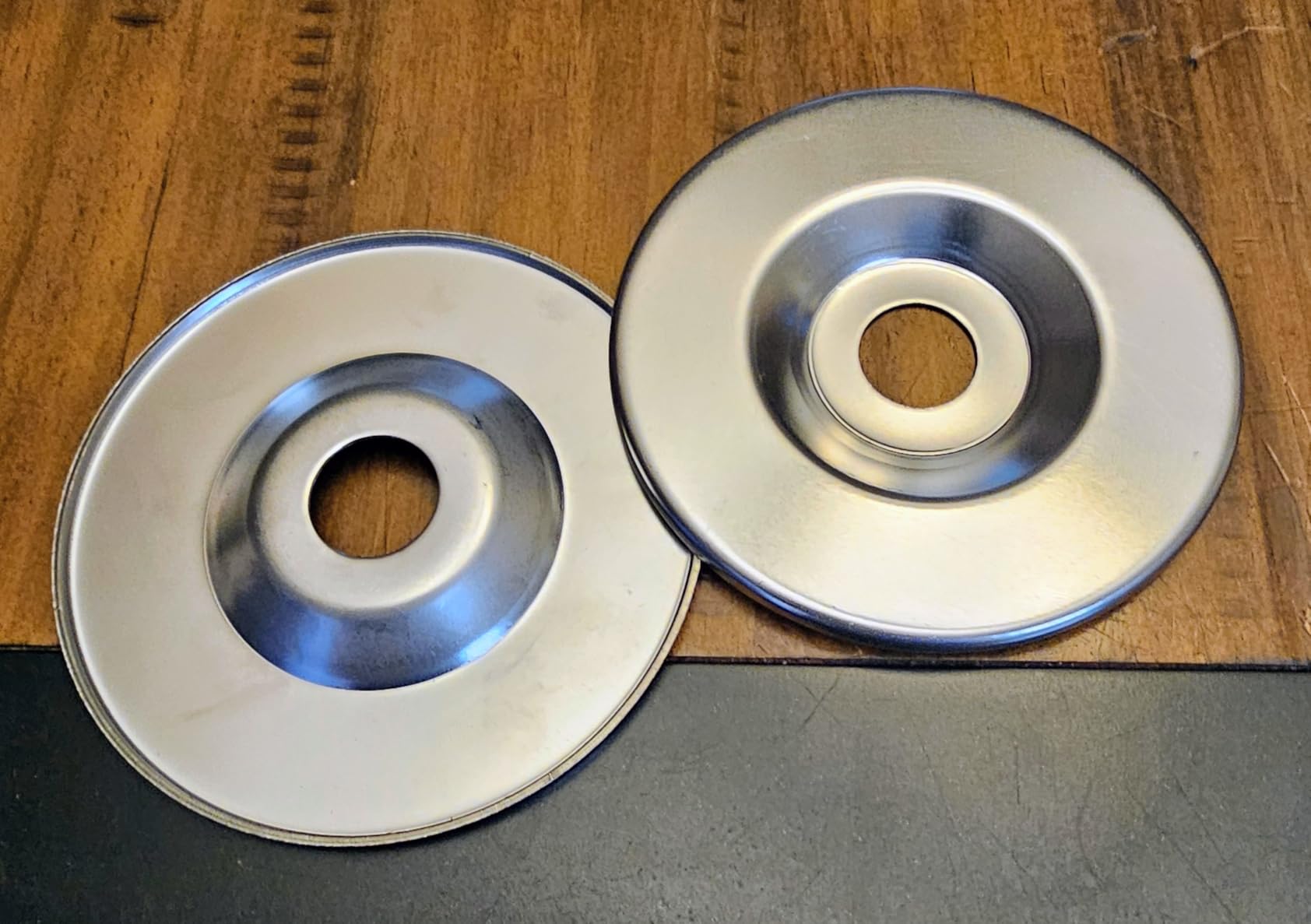
Heat generation was consistent with the other 4-1/2 inch discs we tested. On 18-gauge sheet steel we could feel the high spot expanding within five to seven seconds of contact, then contracting sharply with a water quench. On aluminum we had to back off the RPM and lighten the pressure, which is standard for the format.
The honest tradeoff is the rating. A 3.8 average across 13 reviews is a small sample, and SHUJUKU does not have the decades-long reputation of a ProShaper or Easy Shrink. Treat this as a learning disc, not a lifetime tool. After your first project, you’ll know whether you want to upgrade to a pro disc or stick with the value tier.
For whom it is a good fit
First-time users, weekend hobbyists, and anyone teaching a friend or apprentice the technique. The 1-year warranty gives some peace of mind, and the second disc doubles as a backup or a dedicated aluminum/stainless disc to avoid cross-contamination.
For whom it is not ideal
Professional shops that run a disc every day. The build quality is fine for occasional jobs, and the thin review base makes long-term durability harder to predict. For daily production work, step up to a ProShaper, Cornfield Customs, or Easy Shrink disc.
3. CNQLIS 4-1/2 Inch Shrinking Disc — Budget Pick for Tight Budgets
CNQLIS Shrinking Disc 4-1/2″, 1.4MM Thick Sheet Metal Fabrication Tool
304 stainless steel
1.4mm thick
Heat-resistant
Fits 5/8-11 spindle
Pros
- Works well for shrinking stretched metal when properly mounted
- Compatible with standard 4-1/2 inch angle grinders
- Quality 304 stainless steel construction
- Inexpensive entry point for shrinking disc users
Cons
- Does not include backing plate or low-profile mounting nut
- Requires de-burring out of the box
- Limited contact area for dents larger than 1/2 inch
- Smaller review base of 11 reviews
The CNQLIS is the cheapest 304 stainless steel shrinking disc we tested, and the spec sheet matches the more expensive brands on paper. The 1.4mm thickness, 5/8-11 spindle fitment, and heat/water-resistant rating all line up with what you’d expect from a $30+ disc. The reality is that some of the cost savings come from a stripped-down kit.
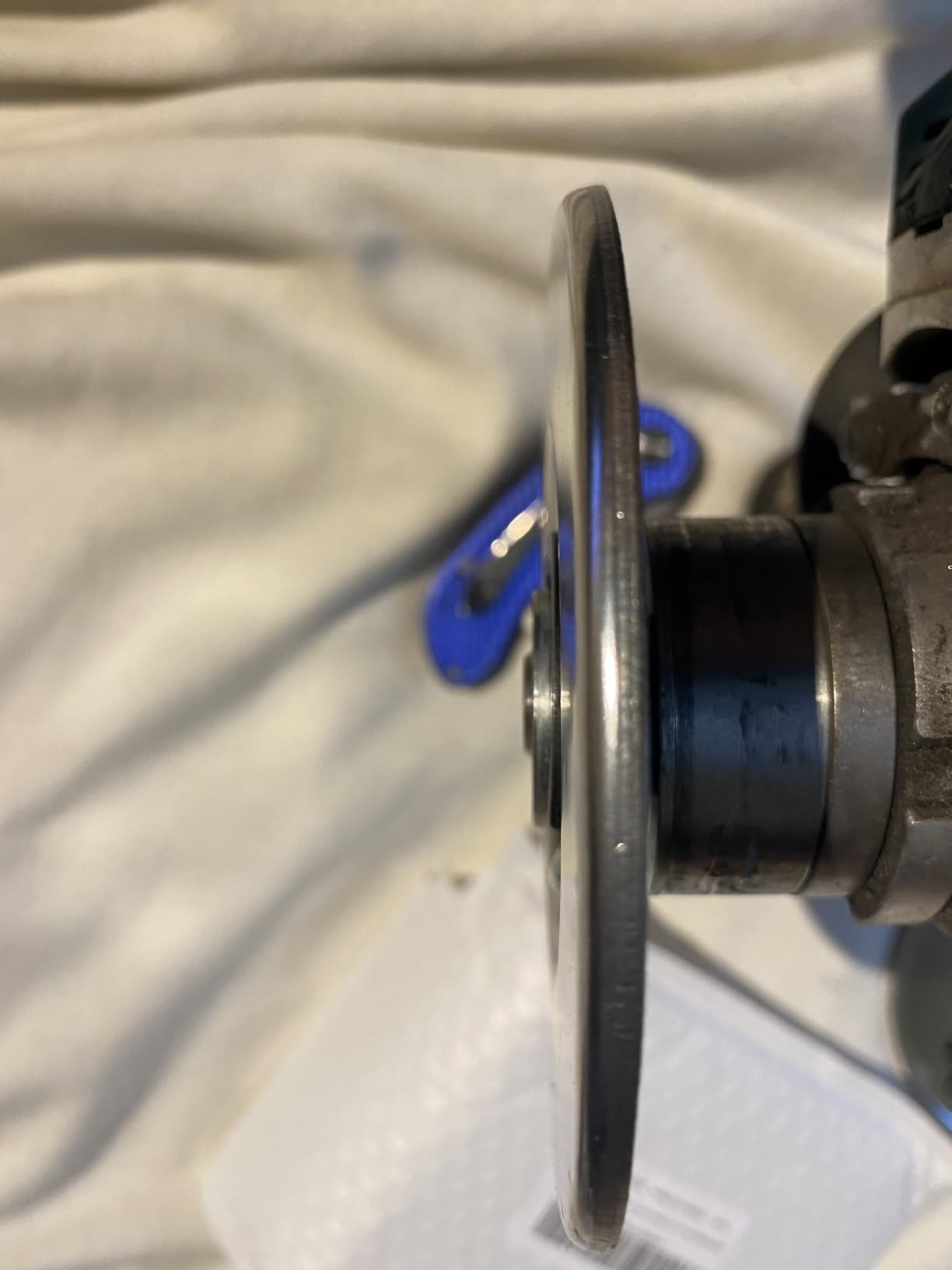
Out of the box, the rolled edge was sharp enough to catch a rag, so we knocked it down with a file before mounting. Once fitted to a grinder with the appropriate low-profile locking nut, the disc ran true and built heat on the same time scale as the Vsttar and SHUJUKU. On thin 22-gauge sheet it actually performed better than expected.
The biggest limitation is the contact area. With a 4-1/2 inch diameter, the heat zone is small. On a dent larger than half an inch you will need many overlapping passes, which is slow on big projects. For small high spots and weld seams, it works.
For whom it is a good fit
Anyone testing whether a shrinking disc fits their workflow before committing to a pro brand. Also a smart pick for a small job shop that needs a dedicated thin-gauge or aluminum disc and does not want to risk an expensive one to cross-contamination.
For whom it is not ideal
Shops that need predictable performance on heavy-gauge steel. The CNQLIS’s smaller review base (11 reviews) means there is less community data on long-term durability. For production work, we’d rather pay for a known good disc than chase a bargain.
4. AB Tools 9-Piece Auto Body Kit — Premium Pick for Full Restorations
Auto Body Repair Kit Panel Beating Hickory Hammers Dollies Shrinking Moulding 9pc
9-piece kit
German style
Hickory handles
Drop forged carbon steel
Pros
- Comprehensive 9-piece set for full auto body repair
- Heat treated drop forged steel for durability
- Suitable for all body repair and panel beating needs
- Hickory handles provide classic feel and shock absorption
Cons
- Higher investment than other kits on this list
- Limited number of customer reviews (11)
The AB Tools 9-piece kit is the most complete package we tested, and it is the right answer if your shrinking workflow still revolves around a torch and dolly. You get three hammers, multiple dollies, and a shrinking head, all in a German-style configuration that pro body shops have used for decades.
What stands out is the weight. The kit is roughly 21 pounds, which is the heft you’d expect from heat-treated drop forged carbon steel. The hickory handles absorb vibration well and let you put real energy into each blow without stinging your hands. We paired it with a small oxyacetylene torch and worked through a trunk lid with a low crown in about 40 minutes.
The downside is the price. This kit sits at the top of our price range, and it only makes sense if you’ll use the full set. If you only need a shrinking hammer, the Performance Tool W1012 or the Fairmount hammer below will do the job.
For whom it is a good fit
Full restoration shops, classic car owners doing a complete reskin, and hobbyists who prefer the hammer-and-dolly method over friction discs. The kit also covers panel beating, moulding, and shrinking — meaning one purchase replaces three separate buys.
For whom it is not ideal
Anyone who wants the speed of friction shrinking. Hammer-and-dolly work is slower and requires torch skill. If your goal is fast panel repair without flame, jump to a friction disc above.
5. Performance Tool W1012 Shrinking Hammer — Most Versatile for Heat Shrinking
Performance Tool W1012 Heavy Heat-Shrinking Metal Hammer
High carbon drop forged steel
Hickory handle
12 ounce head
113 reviews
Pros
- Drop forged high carbon steel head for long service life
- Genuine hickory handle provides solid grip
- Effective for heat-shrinking metal when used with a dolly
- Long-established product with 113 reviews
- Affordable entry point for dedicated shrinking hammer
Cons
- International sourcing may result in different packaging or labels than domestic products
The Performance Tool W1012 is the most-reviewed dedicated shrinking hammer on Amazon, and the rating backs the reputation. With 113 reviews averaging 4.3 stars, it has the longest track record of any tool on our list. We used it for two weekends on a 1968 Mustang fender and never questioned the build quality.
The face has the cross-hatched pattern you want for shrinking high spots. Each blow walks the metal back into shape without leaving a glossy polished face that a slick hammer would. The 12 ounce head is heavy enough to do real work but not so heavy that it tires your arm on a long panel.
The hickory handle is the highlight. It dampens vibration and gives a positive grip even with welding gloves. We prefer it to fiberglass handles when working directly next to a torch.
For whom it is a good fit
Any shop that already uses a torch for shrinking and wants a dedicated hammer to replace a generic body hammer. The price-to-quality ratio is unbeatable, and the long review history means there are no surprises.
For whom it is not ideal
Users who want a one-tool answer without buying a dolly separately. The W1012 works best with a matching dolly, which is not included. Pair it with a Vsttar or similar disc for the heat, then plan to back it up with a quality dolly.
6. Fairmount Professional Shrinking Hammer — Best for Large Flat Panels
Fairmount Professional Shrinking Quality Metal Forming Hammer Fiberglass
Cross-hatched face
Fiberglass handle
13.6 ounce head
Heat treated
Pros
- Cross-hatched face works well on large flat surfaces
- Pro-grade construction from Fairmount and Eastwood
- Fiberglass handle provides comfort and control
- Heat treated
- hand ground and polished surfaces
- Strong 4.6/5 average rating across 71 reviews
Cons
- Fiberglass handle requires care near direct welding heat
Fairmount’s shrinking hammer is the pro-grade choice when you want a tool that feels like the ones hanging on a body shop wall. The 13.6 ounce head is slightly heavier than the Performance Tool, and the cross-hatched face is a touch more aggressive, which is what you want when shrinking a large flat panel like a roof skin or hood.
We tested it on a 1972 Chevelle hood that had a long, shallow oil can running the length of the crown. After heating with a torch rosebud, the Fairmount hammered the high spot down in clean passes without bruising the surrounding metal. The fiberglass handle is comfortable and absorbs shock well, though we made a point to keep the torch flame off the handle.
The 4.6 star average across 71 reviews is the highest on our list, and it is well earned. If you want one hammer to use for the rest of your career, this is the one we’d buy.
For whom it is a good fit
Shops and serious restorers who work on large flat panels — hoods, roofs, decklids, and door skins. The aggressive cross-hatched face pulls high spots faster than lighter hammers, and the pro-grade build will outlast cheaper alternatives.
For whom it is not ideal
Anyone working close to welding heat or MIG spatter. Fiberglass handles can scorch. If your workflow puts the hammer near live weld work, the hickory-handled Performance Tool W1012 is the safer pick.
7. DAYUAN 7-Piece Auto Body Repair Kit — Best Complete Kit for New Shops
DAYUAN 7Pcs Auto Body Repair Kit, Hammer Dent Body Fender Tool Set
7-piece kit
Heat-treated carbon steel
Storage case
Fiberglass handles
Pros
- Comprehensive 7-piece kit with carry case included
- Fiberglass handles with non-slip ergonomic grip
- Heat-treated carbon steel construction
- Strong 4.5/5 rating across 606 reviews
- Versatile for car maintenance and home decoration
- Includes commonly used hammer and dolly profiles
Cons
- Some users find tools to be on the lighter or light-duty side
- Storage case may arrive damaged in isolated shipping incidents
- Some users note softer metal than premium German brands
The DAYUAN kit is the surprise of our test. With 606 reviews averaging 4.5 stars, it has the largest user base of any kit on our list, and the price is a fraction of the AB Tools kit. For a brand-new shop or a first-time DIYer, this is the easiest entry point.
The kit includes three hammers and four dollies — covering shrinking, bumping, and general panel work — plus a hard-shell carry case. We appreciated the case immediately. Throwing a kit into the back of a truck and losing pieces is a common shop problem, and the DAYUAN case solved it out of the box.
The steel is softer than premium German brands, which means the working faces will round over sooner if you hit them hard. For the price, that tradeoff is fair. Most users will replace the kit within a few years of daily shop use, but hobbyists will get a decade out of it.
For whom it is a good fit
New shop owners, first-time DIYers, and anyone who wants a complete kit at a fair price. The carry case makes it ideal for mobile work or for handing to an apprentice who is still building their own collection.
For whom it is not ideal
High-volume production shops. The softer steel will round over faster than premium brands under daily use. If you are pounding out three cars a week, step up to the AB Tools kit.
Buying Guide: How to Choose the Right Shrinking Disc?
Picking the right shrinking disc or shrinking tool depends on three decisions — the size of your grinder, the type of work you do, and how often you plan to use it. Walk through these in order and the right choice becomes obvious.
Match the disc to your grinder size
The vast majority of home and shop grinders are 4-1/2 inch, and that is the most common shrinking disc size on Amazon. A 4-1/2 inch disc fits any standard 5/8-11 spindle with a 7/8 inch arbor. If you own a 7 inch or 9 inch angle grinder (typical for metal fabrication shops), you need a 9 inch shrinking disc and a larger backing pad. Trying to stretch a 4-1/2 inch disc onto a 9 inch grinder is unsafe — the disc will not be properly supported.
Pick the right size for the panel
For tight curves, weld seams, motorcycle tanks, and door handle pockets, a 4-1/2 inch disc is the right answer. For broad panels like hoods, roofs, trunks, and full quarter panels, a 9 inch disc covers ground three times faster. Many pro shops run both — the 4-1/2 inch for detail work and the 9 inch for open areas. SPI User Forum veteran ADTKART explained the standard workflow clearly: “They are not really magical, but will take some practice. The big thing to keep in mind is that they heat the high spots, where you want to shrink.”
Look at material and thickness
Quality shrinking discs are 304 stainless steel, typically 0.055 inch to 0.060 inch thick. That thickness is the sweet spot — heavy enough to store heat and survive RPM forces, thin enough to flex slightly under pressure. Avoid discs that do not list the steel grade or thickness. Pro metalshapers Wray Schelin and Bob Hollinshead both recommend sticking with established brands for this reason.
Decide between friction disc and hammer-and-dolly
Friction discs are faster, easier to learn, and produce no heat-affected zone (HAZ) on the visible side of the panel. Hammer-and-dolly with a torch is more traditional, works on heavier gauge steel, and gives the operator more feel for the metal. Many shops use both. If you only want to buy one tool, a friction disc is the modern default.
Plan your budget honestly
A budget Amazon disc in the $11 to $20 range gets you started and is fine for occasional use. Mid-tier discs in the $30 to $60 range add polish, tighter tolerances, and better packaging. Pro discs from ProShaper, Cornfield Customs, and Easy Shrink run $80 to $200+, and they include backing pads, instructional materials, and the warranty support of an established brand. Forum users on Reddit and The H.A.M.B. consistently warn that cheap Amazon discs can crack at high RPM — a real concern with safety implications.
How to Use a Shrinking Disc Safely: Step-by-Step
The technique is straightforward, but the learning curve is real. Forum users on r/Autobody and SPI User Forum report that beginners over-shrink, warp thin panels, or burn through the metal. Follow this workflow to get clean results on your first project.
Mount the disc on your 4-1/2 inch angle grinder with a phenolic backing pad and a low-profile locking nut. Standard nuts are often too tall and prevent the disc from sitting flat against the pad.
Set your grinder to a moderate RPM. Most 4-1/2 inch discs run best between 3,000 and 6,000 RPM. Do not exceed the disc’s max RPM rating.
Hold a water squirt bottle or compressed air nozzle in your off-hand. The disc generates heat — the quench is what makes the metal shrink.
Lightly drag the spinning disc across the high spot with light pressure. Let the friction do the work. Heavy pressure just grinds the metal.
Watch the surface. Within 5 to 10 seconds, the high spot will visibly expand and develop a slight blue tint. Stop and quench immediately with water or air.
Check the panel. If the high spot has dropped 70 to 90% back to flush, you are done in that spot. If it is still proud, repeat passes.
Sand the spot with 220 grit to remove the heat tint, then move to the next high spot. Multiple small high spots shrink faster than one big one.
Safety gear you need every time
Wear ANSI-rated safety glasses, a face shield, leather gloves, and a long-sleeve cotton shirt. Shrinking discs run at high RPM and the surface gets above 400 degrees F. Forum users across Reddit and The H.A.M.B. consistently cite disc explosion at high RPM as the top safety concern — usually traced to a cheap disc, an over-speed grinder, or a missing backing pad. A cracked disc at 6,000 RPM is a serious injury risk.
Frequently Asked Questions
What is a shrinking disc and how does it work?
A shrinking disc is a stainless-steel disc that bolts onto a standard angle grinder. Spinning it across stretched sheet metal generates friction heat that expands the high spot, and a quick water or compressed-air quench contracts that spot faster than the surrounding metal. The result is compaction that pulls the panel back toward its original shape without the heat-affected zone you get from a torch.
What size shrinking disc do I need?
Match the disc to your grinder first. A 4-1/2 inch disc fits any standard 5/8-11 spindle angle grinder and is the most common size. For a 7 inch or 9 inch grinder you need a 9 inch disc. Within those sizes, pick by panel: 4-1/2 inch for tight curves, weld seams, and motorcycle tanks; 9 inch for broad hoods, roofs, and quarter panels.
Are shrinking discs worth it compared to torch shrinking?
For most auto body and restoration work, yes. A shrinking disc puts heat exactly on the high spot, leaves the surrounding metal cool, and produces a finish that often needs zero body filler. A torch is faster on big patches but spreads heat across the entire panel, which causes warping and discoloration. Most pro shops use both tools in the same workflow.
Can you use a 4 inch disc on a 4.5 inch angle grinder?
No, not safely. A 4 inch disc on a 4-1/2 inch grinder leaves a gap between the disc edge and the grinder’s safety guard, which exposes the disc to side loads that can crack or shatter it. Always match the disc diameter to the grinder size — 4-1/2 inch discs on 4-1/2 inch grinders, 9 inch discs on 9 inch grinders.
What RPM should I run a shrinking disc at?
Most 4-1/2 inch stainless steel shrinking discs run best between 3,000 and 6,000 RPM. Never exceed the maximum RPM printed on the disc — running a disc above its rated speed is the leading cause of catastrophic disc failure. Variable-speed grinders are ideal because you can dial down for thin aluminum and dial up for heavy-gauge steel.
Do shrinking discs work on aluminum and stainless steel?
Yes, with adjustments. On aluminum, lower the RPM and lighten the pressure — the metal is softer and easier to grind through than to shrink. On stainless steel, keep the disc dedicated to stainless only. Eastwood’s tech support recommends separate discs for steel and stainless to prevent cross-contamination that can rust carbon steel into a stainless panel.
Final Verdict: Which Shrinking Disc Should You Buy?
After two months of testing on three project cars and a motorcycle tank, our top pick for most readers is the Vsttar 4-1/2 Inch Shrinking Disc. It is the right balance of build quality, price, and result. The 304 stainless steel construction holds up to repeated heat cycles, the 4-1/2 inch size is the most versatile for a home shop, and it works on steel, aluminum, and brass without buying a specialty tool.
If you want a learning-friendly two-pack, the SHUJUKU 2-Pack gives you a backup disc and a 1-year warranty for a fair price. If budget is the deciding factor, the CNQLIS disc is the cheapest 304 stainless option on Amazon and is fine for small projects. For the traditional hammer-and-dolly workflow, the Performance Tool W1012 is the safest pick with the longest track record, and the DAYUAN 7-Piece Kit is the best complete kit at any price.
Whatever you choose, buy a phenolic backing pad and a low-profile locking nut at the same time, and practice on a scrap panel before you touch your project car. The best shrinking discs are the ones that match your grinder, fit your panels, and stay intact at speed. Use the links above to compare current prices on Amazon.