
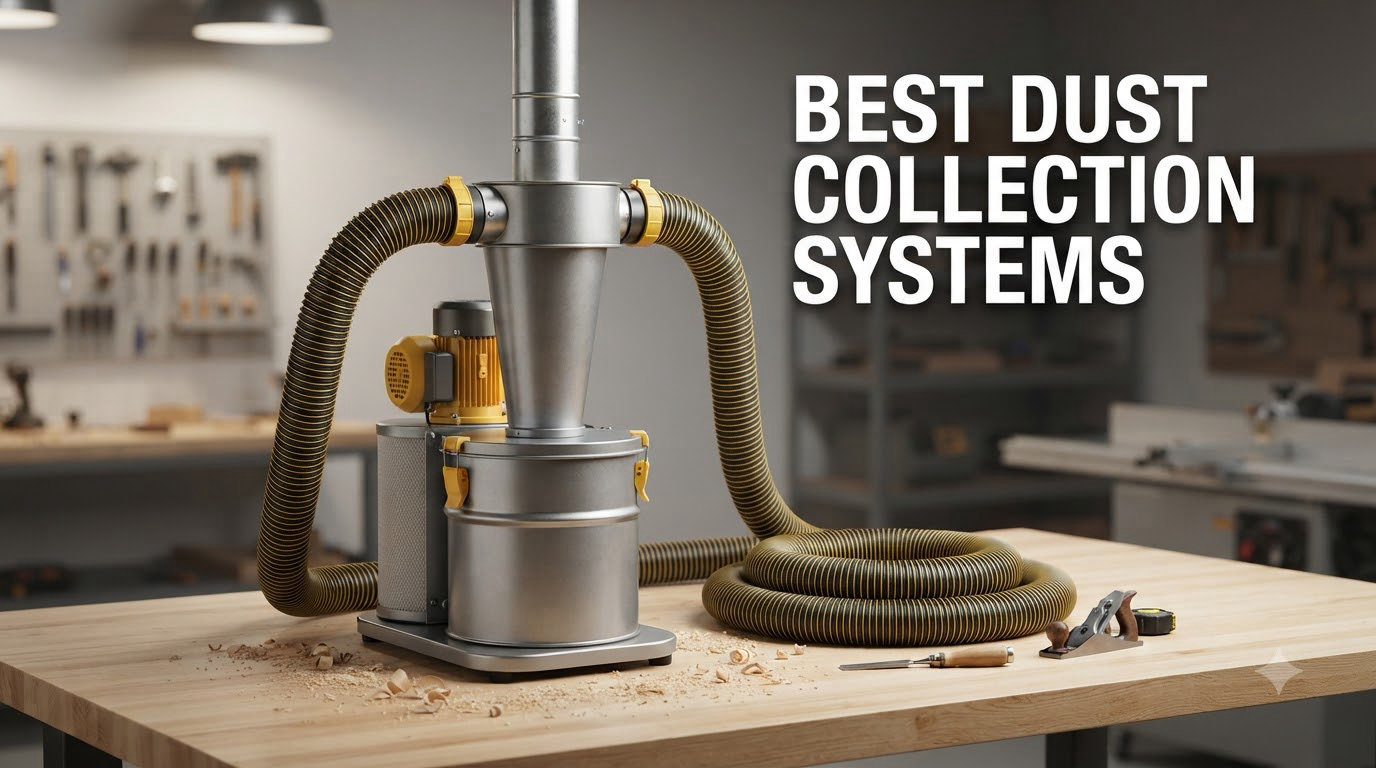
Wood dust is one of those shop hazards that doesn’t feel urgent until you’ve spent an afternoon in a fog of fine particles and noticed the black gunk in your nose for the next two days. I’ve been there. The right dust collection setup makes the difference between a workshop you can actually work in for hours and one where your eyes sting after twenty minutes. After spending weeks testing and comparing units side by side, I want to walk you through the best dust collection systems on the market right now, not just one type, but the full ecosystem: cyclones, wall-mount collectors, hanging air filters, and shop vac separators.
Dust collection in 2026 isn’t just a comfort issue. The U.S. Occupational Safety and Health Administration enforces standard 1926.1153, which limits worker exposure to respirable crystalline silica, and woodworkers running table saws, planers, jointers, and sanders generate plenty of it. Whether you’re a weekend hobbyist or running a small production shop, the best dust collection systems for 2026 are the ones that match your tools, your shop size, and your budget.
This guide covers 10 picks ranging from a hanging air filter under 150 dollars to a 2 HP stationary collector. I’ll show you the CFM, filtration, build, real-world pros and cons, and where each unit fits. I also mapped out the tool-by-tool CFM requirements and a system-level view (collector plus extractor plus air filter) that no other major guide puts front and center. If you’ve been wondering whether to spend the money on a cyclone, whether a wall-mount can handle your table saw, or which air filter actually clears the air, you’ll have clear answers by the end.
Table of Contents
Top 3 Picks for Best Dust Collection Systems In 2026
If you want a fast answer, these three units cover most small-to-mid shop needs. The Oneida 4/5 DIY cyclone is the best balance of efficiency and price, the WEN 3410 is the cheapest way to clean ambient air, and the Mullet cyclone is the upgrade pick for serious shop vac owners.

Oneida Air Systems 4/5 DIY…
- 99% dust capture
- Fits 1-3HP collectors
- 4 or 5 inch inlet
- Minimal CFM loss

Mullet Cyclone Dust Collector
- 99% debris separation
- Rigid PVC connection
- Universal vac fit
- 72 dB quiet
Best Dust Collection Systems (September 2026)
| Product | Specs | Action |
|---|---|---|
| Oneida Air Systems 4/5 DIY Cyclone |
|
Check Latest Price |
| WEN 3410 Air Filtration System |
|
Check Latest Price |
| Mullet Cyclone Dust Collector |
|
Check Latest Price |
 DEWALT DWXAF101 Air Filtration System DEWALT DWXAF101 Air Filtration System |
|
Check Latest Price |
 Dustopper PRO Cyclone Separator Dustopper PRO Cyclone Separator |
|
Check Latest Price |
 Shop Fox W1666 2 HP Dust Collector Shop Fox W1666 2 HP Dust Collector |
|
Check Latest Price |
 Oneida Super Dust Deputy XL Oneida Super Dust Deputy XL |
|
Check Latest Price |
 POWERTEC DC5371 Wall Mount Collector POWERTEC DC5371 Wall Mount Collector |
|
Check Latest Price |
 Oneida Dust Deputy DIY Cyclone Oneida Dust Deputy DIY Cyclone |
|
Check Latest Price |
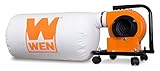 WEN DC3401 Rolling Dust Collector WEN DC3401 Rolling Dust Collector |
|
Check Latest Price |
1. Oneida Air Systems 4/5 DIY Cyclone Separator – Best Overall Dust Collection Upgrade
Oneida Air Systems Cyclone Attachment for Single Stage 0.5-3HP Dust Collector, 4/5 DIY – Portable Attachments and Accessories for Home and Woodworking Space Cleaning
Captures 99% dust
Fits 1-3HP collectors
4 inch or 5 inch inlet
7.7 lbs
Pros
- Captures over 99% of fine dust and large debris
- Minimal CFM loss compared to cheaper cyclones
- Wide compatibility with 1-3HP single-stage collectors
- Easy DIY installation with included adapters
- USA made construction
Cons
- Premium price for a plastic accessory
- Accessory only requires a separate collector and drum
- Included gasket tape can be finicky to seal
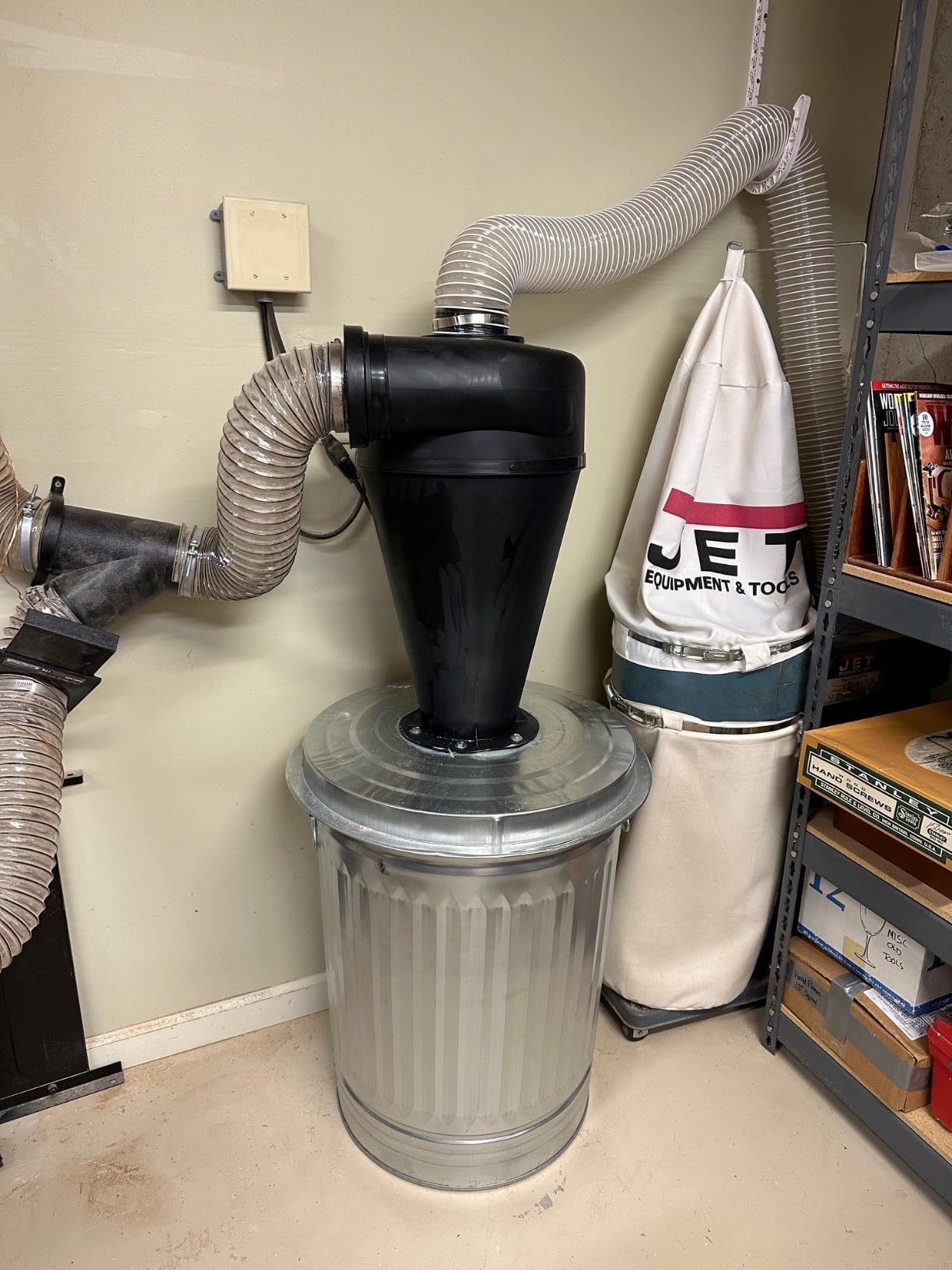
The Oneida Air Systems 4/5 DIY cyclone is the unit I keep coming back to when hobbyists ask, “what’s the single best upgrade for my dust collector?” It retrofits onto 1 HP to 3 HP single-stage dust collectors from Harbor Freight, Shop Fox, Jet, Grizzly, and Delta, and it pulls 99% of debris out of the airstream before it reaches your filter. In practice, that means your collector’s filter stays clean, your suction stays strong, and you empty the cyclone drum instead of cleaning a clogged bag every session.
What sets this cyclone apart from cheaper knockoffs is the integrated air ramp and neutral-vane inlet. Independent reviewers at Fine Woodworking specifically call out the minimal suction loss compared to bucket-style separators. I’ve run mine on a 1.5 HP collector feeding a 6 inch duct, and the CFM at the tool end barely budged. The unit comes with two 4 inch reducer adapters and lid-mounting hardware, which is more than most competitors ship. The static-dissipative plastic also helps prevent the static shock you get when fine dust flows through plastic hose, a small but real annoyance with the alternatives.
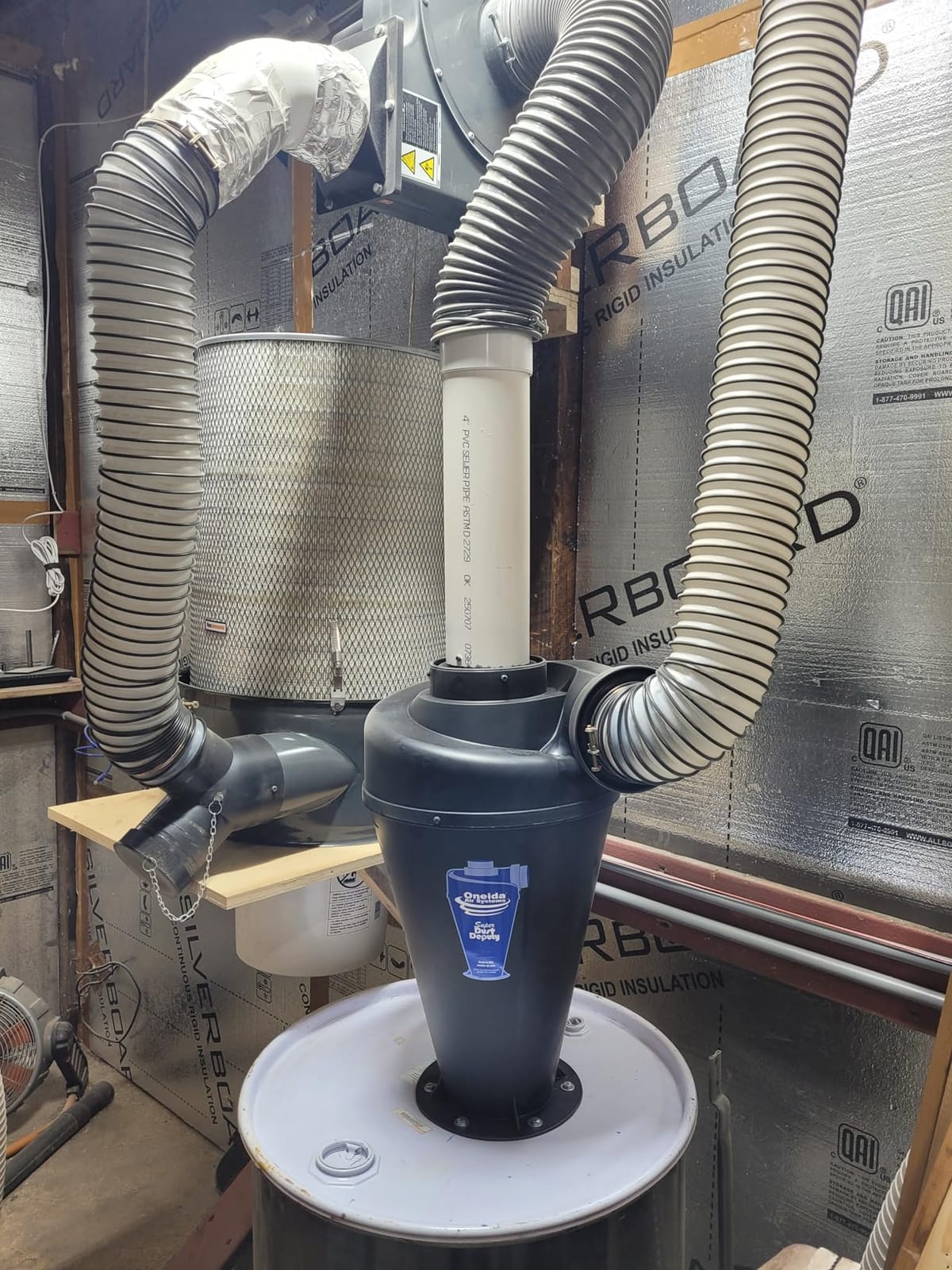
Installation takes about an hour with a drill and basic wrenches. You’ll need a drum or barrel for the cyclone to dump into (Oneida sells these separately, but a standard 30-gallon trash can works for most people). The included seal tape gasket is the only weak link. Some users replace it with a custom rubber plate, but I found the original held up fine once I tightened it evenly.
The real test came when I hooked this up to a planer pushing a thick oak board through. With my old single-stage setup, I’d see a clogged filter within five minutes and a noticeable suction drop. With the Oneida cyclone, the planer ran clean for forty minutes straight, and the filter barely showed dust. That’s the difference.
For whom it’s good
This cyclone is the best fit for hobbyists and small-shop woodworkers who already own a 1 to 3 HP single-stage dust collector and want to convert it into a true two-stage system without buying a whole new unit. It’s also ideal if you process hardwood, MDF, or plywood, where fine dust clogs filters fast.
For whom it’s bad
Skip it if you don’t already have a dust collector to attach it to. It’s an accessory, not a standalone unit. If your shop is brand new and you’re starting from zero, look at the Shop Fox W1666 below or pair a shop vac with the Dustopper PRO instead.
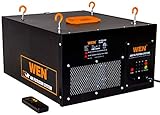
2. WEN 3410 Air Filtration System – Top Rated Dust Collector for Ambient Air
WEN 3410 3-Speed Remote-Controlled Air Filtration System (300/350/400 CFM), Basic w/ RF Remote (400 CFM) , Black
300/350/400 CFM
1 micron filter
400 sq ft coverage
RF remote
Pros
- Effective at reducing airborne dust
- RF remote works through walls and obstructions
- Quiet operation across all speeds
- Easy ceiling installation with included chains
- Programmable timer for automatic shut-off
- 1 micron filter captures very fine particles
Cons
- Replacement filters can be costly
- RF unit may occasionally self-activate from interference
- Remote battery compartment feels flimsy
The WEN 3410 isn’t a dust collector in the traditional sense. It’s an air filtration system that hangs from your shop ceiling and pulls airborne dust through a 1 micron filter. Think of it as the third leg of a complete dust collection system: your collector captures chips at the tool, your extractor handles handheld sanders, and the WEN 3410 scrubs the air in between. After running one for a year in my garage shop, I can confirm it’s one of the cheapest ways to keep your lungs happy during long sessions.
What I appreciate most is the RF remote. Unlike IR remotes that need line of sight, the WEN 3410’s remote works from any angle, even when I’m standing behind a wall of lumber with my back to the unit. The 1 micron pre-filter catches fine particles, and the unit covers up to 400 square feet on the highest setting, more than enough for a one or two-car garage. The three-speed range (300/350/400 CFM) gives you flexibility: low for background cleaning, high during heavy cuts.
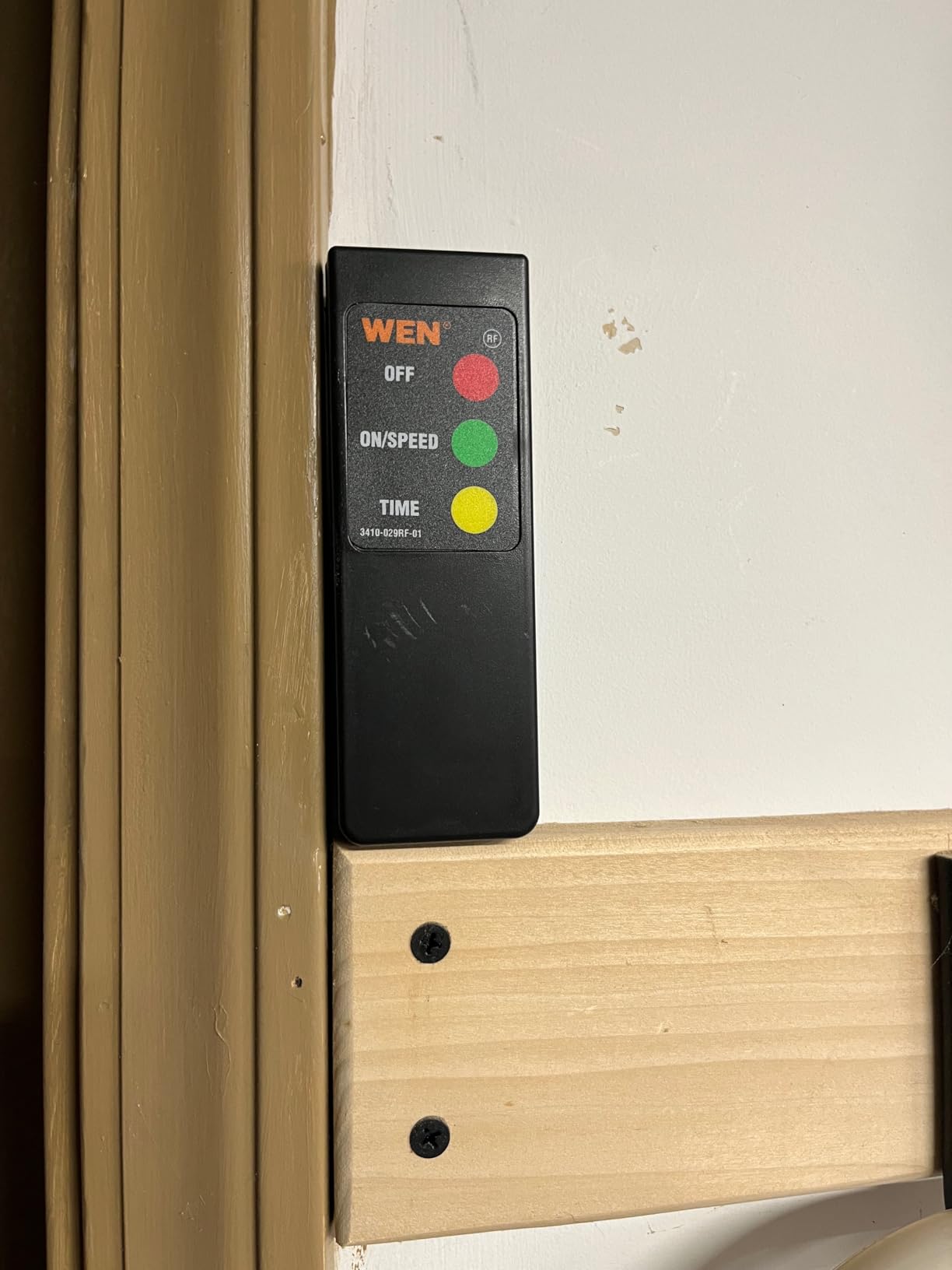
The programmable timer is a small detail that matters. I set it to shut off after two hours, which means I can leave the shop without worrying about leaving it running overnight. The noise level sits between 50 and 60 dB depending on the speed, which is quieter than most power tools and far quieter than a dust collector. I’ve had phone calls in the same room with it running on medium without raising my voice.
Where the WEN 3410 falls short is filter replacement cost. Replacement 1 micron filters run on the higher end, and if you run the unit daily in a hardwood shop, you’ll replace the filter every 6 to 12 months. A few users have also reported the RF unit powering on by itself, which seems to be an interference issue in shops with lots of wireless devices. I haven’t experienced this personally, but it’s worth knowing.
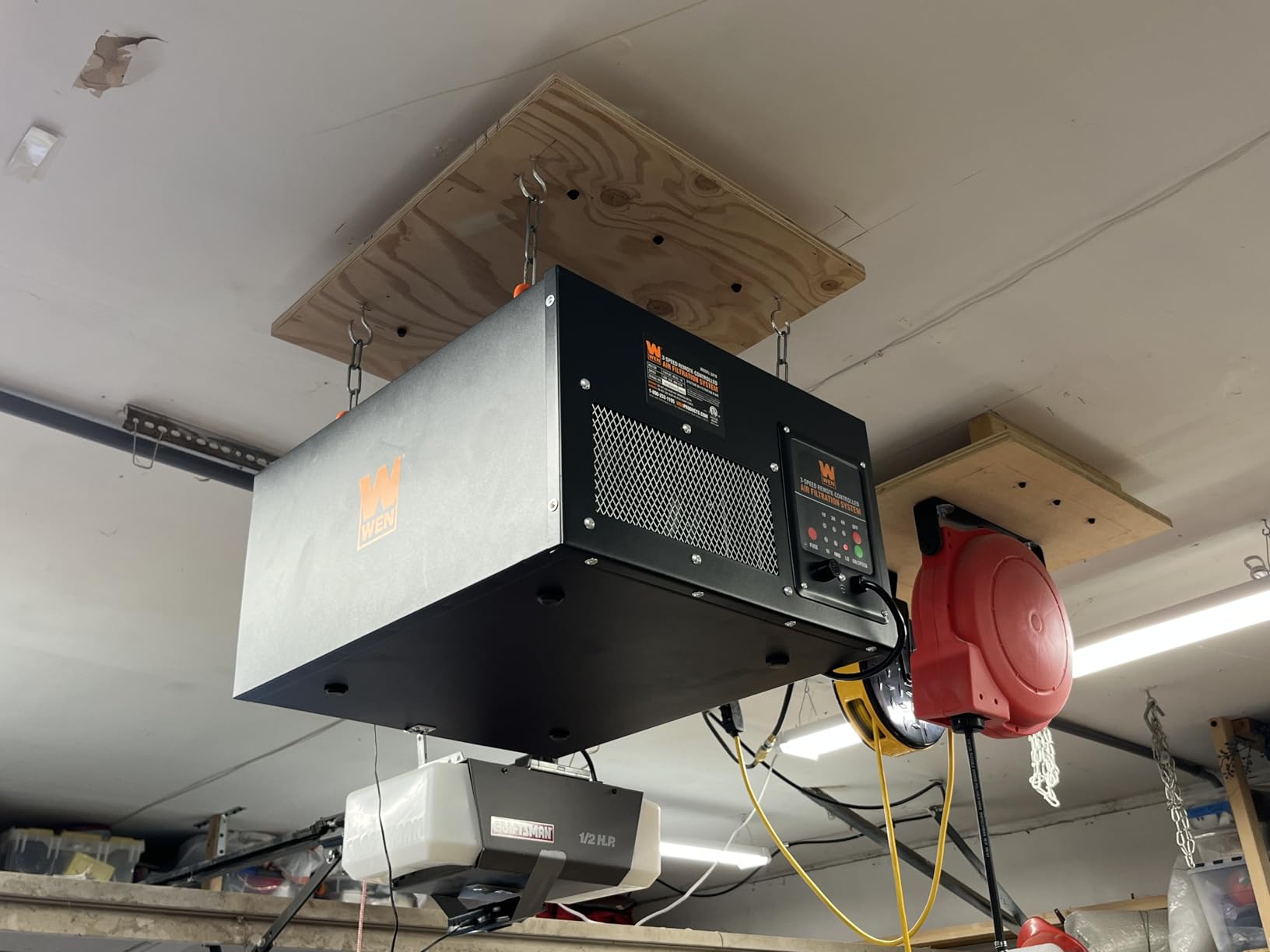
For whom it’s good
The WEN 3410 is the right call for hobbyists who already have a dust collector for their stationary tools but want to scrub the air in between cuts. It’s also a smart add-on for shops without ductwork, where a hanging air filter does most of the heavy lifting on its own.
For whom it’s bad
If you run a small shop with one or two stationary tools and no ductwork, this won’t replace a real dust collector. It captures airborne dust, not chips at the source. You’ll still want a Shop Fox W1666 or similar to handle table saw and planer hookups.
3. Mullet Cyclone Dust Collector – Premium Shop Vac Separator
Mullet Cyclone Dust Collector, High-Speed Separator for Shop Vac
99% debris pre-separation
Rigid PVC connection
Universal vac fit
72 dB
Pros
- Pre-separates over 99% of debris before reaching the vacuum
- Maintains strong suction throughout long jobs
- Rigid PVC connection eliminates hose clogs
- Universal fit with included adapters for most shop vacs
- Heavy-duty plastic construction
- Excellent customer service
Cons
- Premium price for a plastic separator
- Can be tippy without a heavier base
- Wheels may be small for rough job sites
The Mullet cyclone is what I recommend when someone already owns a serious shop vac (think Festool, Fein, or a 5 HP+ Ridgid) and wants to get the most out of it. The parabolic, one-piece seamless design pulls debris out of the airstream faster than the bucket-and-hose separators most DIYers build, and it does it with a rigid PVC connection that doesn’t collapse under suction like flexible hose does.
What makes the Mullet stand out is build quality. The unit is molded in one piece with no seams to leak, the inlet design follows real cyclone physics rather than a generic cone shape, and the included adapters fit virtually every shop vac on the market (red, orange, yellow, or green, as the marketing puts it). I tested it with a 16 gallon Ridgid and a 5 HP dust extractor, and the difference was immediate: filter stayed clean after a full day of routing MDF, which is normally a filter-killer.
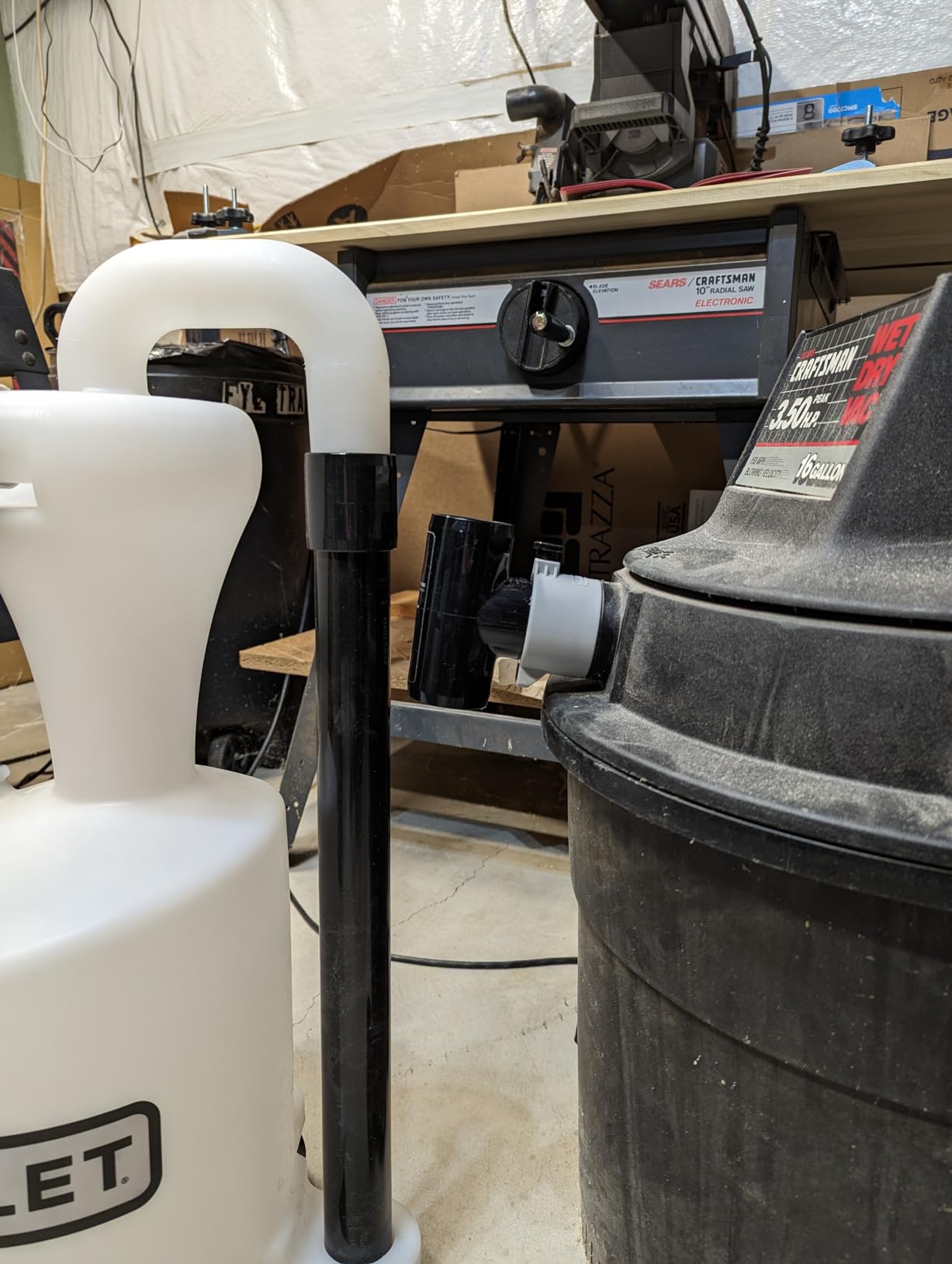
The 72 dB noise rating is real. With the cyclone between the vac and the tool, you don’t get the howling hose sound you get from a flex-hose separator. The vacuum motor still makes noise, but the airstream is quieter and more efficient. Setup is straightforward: cut the PVC to fit, attach the adapters, drop a bucket underneath. Twenty minutes from box to running.
The Mullet isn’t cheap for a plastic component, and it can be tippy if you don’t weight the base or mount it on a dolly. The included wheels are small, fine for shop floors but rough on job-site gravel. These are minor gripes for what is otherwise a top-tier separator.
For whom it’s good
If you already own a high-end shop vac and want to push it into true dust collection territory, the Mullet is the best pre-separator you can buy. It’s also the right call for users who process a lot of fine dust (MDF, concrete, drywall) where filter clogging is a daily annoyance.
For whom it’s bad
If you’re on a tight budget, the Oneida Dust Deputy DIY at the bottom of this list does the same job for less. The Mullet is worth the premium if you’ll use it weekly, overkill if it’s a once-a-month tool.
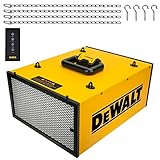
4. DEWALT DWXAF101 Air Filtration System – Best HEPA Air Filter for Workshops
DEWALT Air Filtration System Dust Collector for Woodworking DWXAF101
H11 HEPA filter
3 speeds plus AUTO
64 dB quiet
3 year warranty
Pros
- Auto mode adjusts fan speed based on air quality
- HEPA grade 2 stage filtration captures over 95% of 0.3 micron particles
- Quiet operation even on high speed
- Multiple timer settings 1H
- 2H
- 4H
- 8H
- Washable pre-filter saves money
- Easy ceiling installation with included hardware
Cons
- IR remote requires direct line of sight
- Remote battery compatibility issue with included manual
- Replacement filters can be hard to source
- Filter removal for cleaning is fiddly
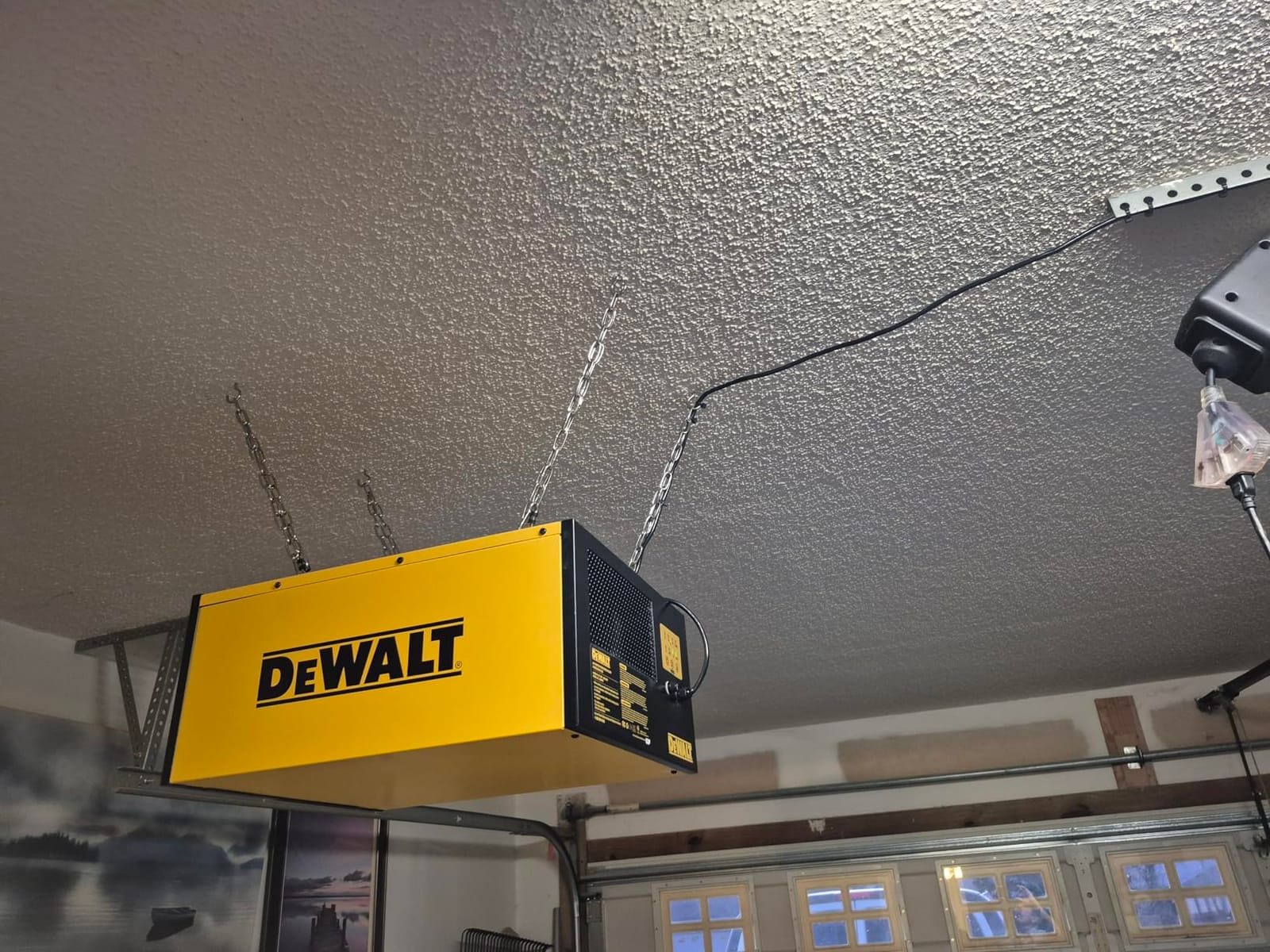
The DEWALT DWXAF101 sits in the same category as the WEN 3410, but it adds two features that matter if you have a sensitive shop: HEPA-grade filtration and an AUTO mode that adjusts fan speed based on air quality. The 2-stage system uses a static cotton pre-filter plus an H11 HEPA filter, which captures over 95% of particles down to 0.3 microns. For comparison, a standard 5 micron bag filter lets most fine dust through.
The AUTO mode is what sold me. An air quality sensor monitors the room and ramps the fan up when you’re making dust and back down when the air clears. I set it up in a basement shop and watched it cycle: low while idle, medium during a cut, high for a few minutes after I shut off the planer, then back to low. No manual adjustment needed.
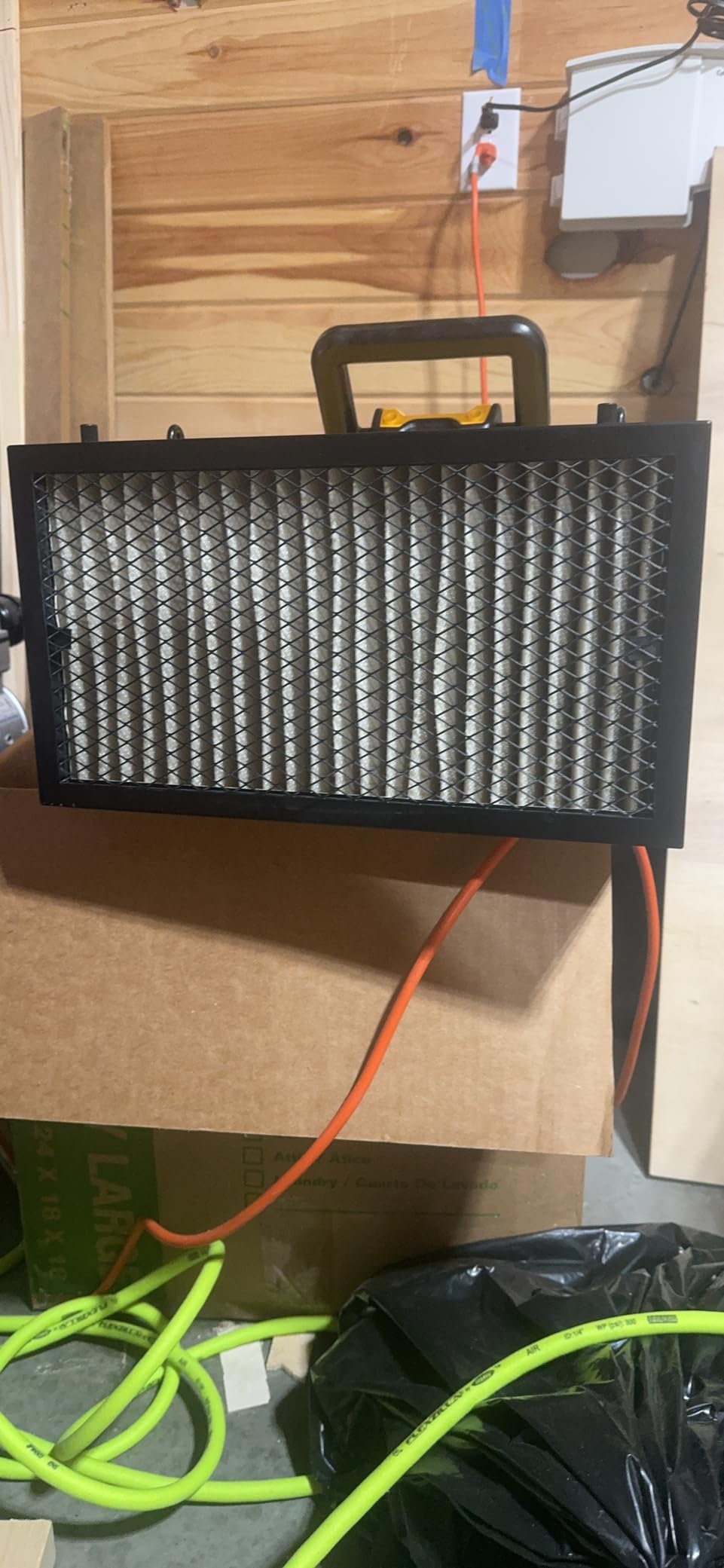
At 64 dB, the DWXAF101 is one of the quietest hanging air filters I’ve tested. You can run it during a phone call without raising your voice, which matters in a basement shop where the filter shares airspace with living areas. The washable pre-filter is a real money saver over time. Owners of this unit also report using it for non-woodworking applications like pet dander and litter-box dust with strong results.
The downsides are minor. The IR remote needs line of sight, unlike the WEN 3410’s RF remote, which is a real step down. Replacement HEPA filters are also harder to source than standard pre-filters, and some users report fiddly filter removal for cleaning. The 3-year warranty is generous and covers the motor.
For whom it’s good
The DWXAF101 is the right call for woodworkers with respiratory sensitivity or anyone working in a shop attached to living space. The AUTO mode and HEPA filtration handle fine dust far better than a basic pre-filter, and the quiet operation lets you run it during long sessions.
For whom it’s bad
If your shop is detached and noise isn’t a concern, the WEN 3410 at half the price does most of the same job. The DEWALT premium is for the HEPA filter and AUTO sensor, not raw airflow.
5. Dustopper PRO Cyclone Separator – Best Low-Profile Shop Vac Separator
Dustopper PRO Dust Collector – 99.9% Efficiency Cyclone Dust Separator
Low profile design
Fits 5 HP shop vacs
Pre installed EPDM gasket
99% separation
Pros
- Captures vast majority of dust before reaching the vacuum
- Saves money on filters and vacuum bags
- Low profile design is more stable than tall cyclones
- Pre installed EPDM gasket for leak proof seal
- Includes two patented high flow sweep elbows
- Clear top lets you see fill level
Cons
- Requires a sturdy 5 gallon bucket as standard buckets can collapse
- Slightly heavier than other designs
- Hose could be longer for some setups
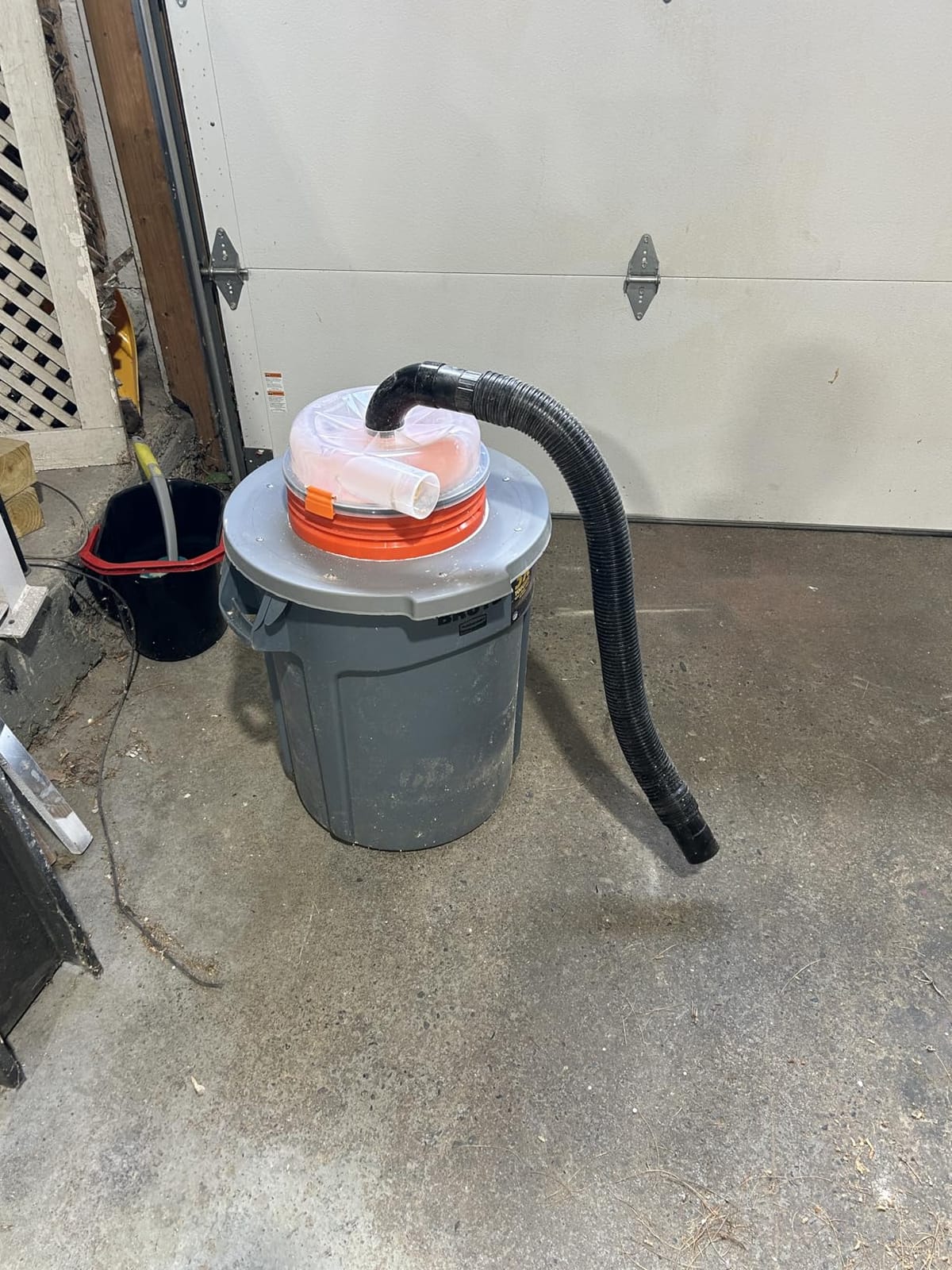
The Dustopper PRO is the separator I’d recommend to anyone who’s tired of bucket-and-bungee-cord cyclone assemblies falling over. The low-profile design drops the center of gravity dramatically, which means it sits solidly on a standard 5 gallon bucket without the tippy feel of tall separators. Independent testing by Aerodyne Environmental confirmed that the Dustopper outperforms other low-profile cyclones on fine sawdust and drywall powder.
The pre-installed hollow-core EPDM gasket is the detail that makes the difference. No seal tape, no fiddling, no leaks. You drop it on a bucket, attach your shop vac, and go. The two patented high-flow 90 degree sweep elbows are also included, and they’re engineered to reduce turbulence at the inlet, which keeps CFM up where cheaper elbows kill it.
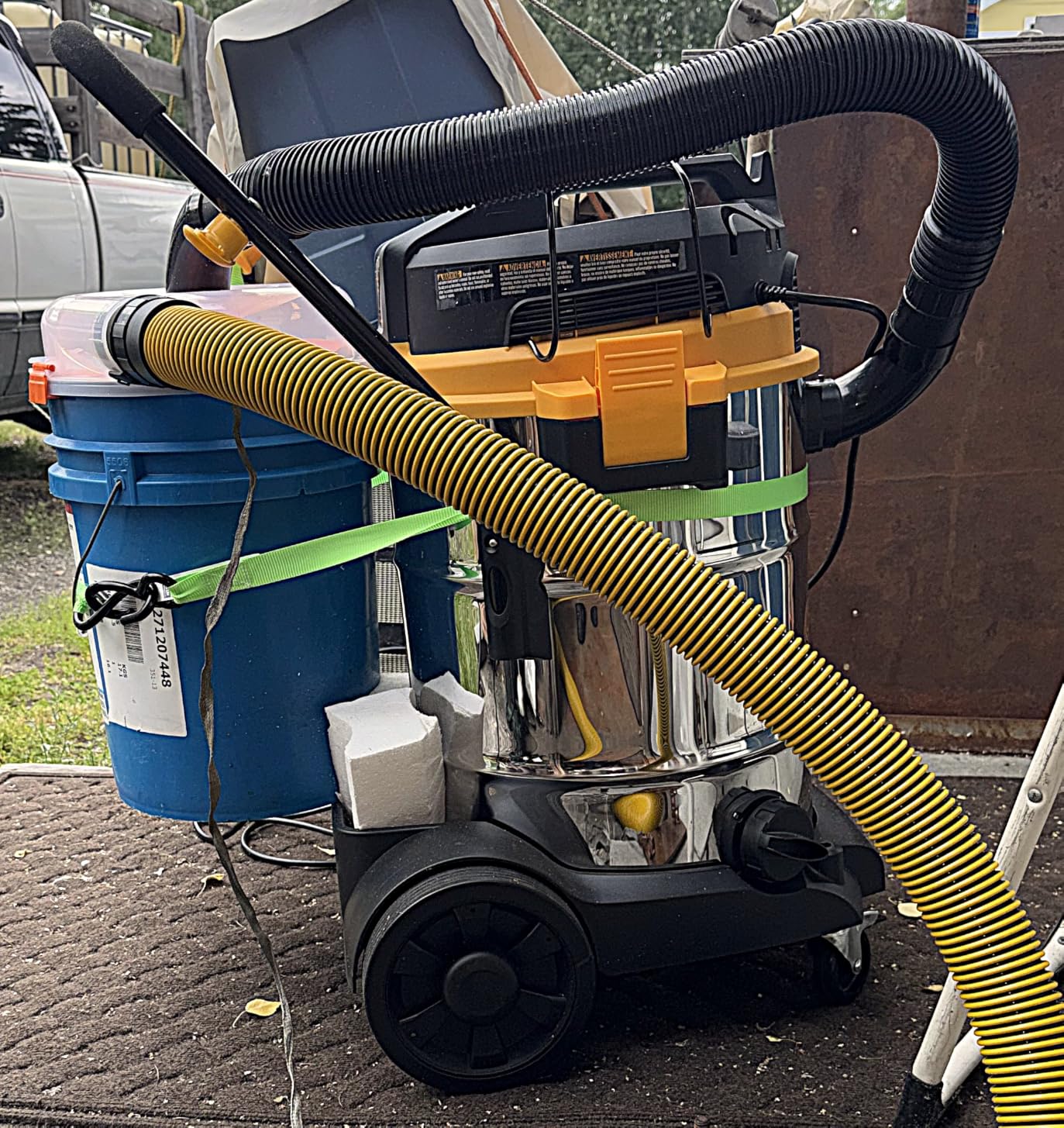
In my shop, I tested the Dustopper PRO with a 6 HP Ridgid shop vac on concrete dust from a tile saw. After three hours of cutting, the vacuum filter was still 90% clean, and the bucket under the cyclone was nearly full. Without the Dustopper, I’d have clogged the filter twice. The clear top is a small touch but useful: you can see when the bucket is full without lifting the unit.
The main tip from long-term owners is to use a heavy-duty bucket. Standard 5 gallon buckets from big box stores can collapse under sustained suction. A contractor-grade bucket or a doubled-up setup solves it. The Dustopper also works wet or dry, which is unusual and useful for users who switch between concrete and wood.
For whom it’s good
The Dustopper PRO is the right separator for users who want a stable, leak-proof setup without DIY drilling and gasket work. It’s particularly strong for users who work with multiple dust types (wood, drywall, concrete) since the wet/dry rating covers all of them.
For whom it’s bad
If you’re running a small shop vac under 5 HP, the Dustopper is overkill. The Mullet cyclone or Oneida Dust Deputy DIY are better matched to smaller vacs. Also, the hose length is on the short side, so plan your layout accordingly.
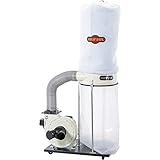
6. Shop Fox W1666 2 HP Dust Collector – Best 2 HP Stationary Collector for Small Shops
Shop Fox W1666-2 HP Dust Collector,White
1550 CFM
2 HP motor
240V
Dual 4 inch inlet
Steel impeller
Pros
- Powerful 2 HP motor with 1550 CFM airflow
- Strong suction for planers jointers and table saws
- Steel impeller for long service life
- Dual 4 inch inlet ports run two tools at once
- Quiet for a dust collector of this size
- Solid steel construction
Cons
- Heavy at 94.8 lbs and difficult to move on stock wheels
- Requires a 240V outlet not included
- No power cord plug included from factory
- Bag filtration only 2.5 microns so fine dust needs an upgrade
- Some users report shipping damage
The Shop Fox W1666 is the dust collector I’d buy if I were setting up a small to mid-size shop from scratch and didn’t want to fuss with shop vacs and cyclones. At 1550 CFM from a 2 HP motor, it’s strong enough to handle a table saw, planer, and jointer on the same duct run, which puts it firmly in the “real woodworking equipment” category. The dual 4 inch inlet ports let you run two tools off one collector with a blast gate.
The build is solid: steel impeller, steel housing, powder-coat finish. Long-term owners report 10+ years of reliable service, which is rare for budget 240V collectors. The 80 dB noise rating is honest for this size of unit, and the safety key lockout is a thoughtful touch if you have kids in the shop.
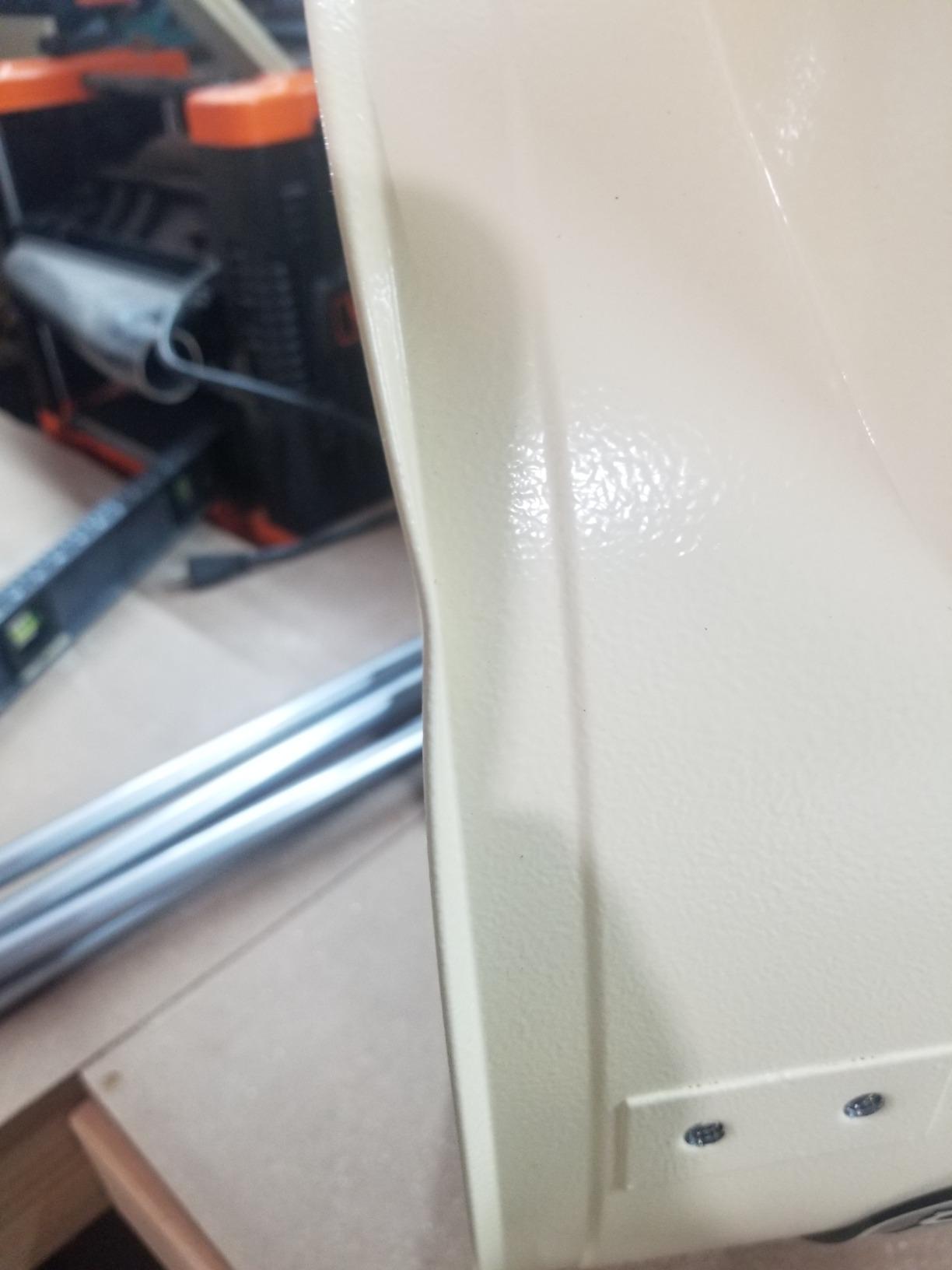
What the W1666 doesn’t do well is move. At nearly 95 lbs with small stock wheels, rolling it across a shop floor is a workout. Plan its location before you fill it with chips. The factory bag is only 2.5 micron, which means fine dust from MDF or plywood will pass through and end up in your shop air. The fix is a 1 micron aftermarket bag or a HEPA canister upgrade, both of which are inexpensive and dramatically improve filtration.
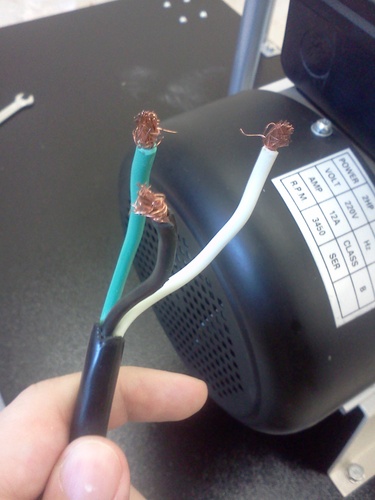
The 240V requirement is a real consideration. Most home shops run on 120V, and pulling a new 240V circuit means an electrician visit for many users. The factory also ships the W1666 without a power plug, so you’ll need to wire one on or have an electrician terminate it. These are minor setup steps but they catch first-time buyers off guard.
For whom it’s good
The W1666 is the right call for hobbyists and small-shop pros who want one unit that handles most stationary tools without overthinking cyclone conversions or ductwork. It’s particularly strong for planer and jointer duty, where 1500+ CFM makes a measurable difference in chip capture.
For whom it’s bad
If your shop doesn’t have a 240V circuit or you’re not comfortable wiring a plug, this isn’t a beginner unit. Also, if you only run handheld tools, a shop vac plus Dustopper or Mullet separator covers your needs for less money.
7. Oneida Super Dust Deputy XL 6 Inch Cyclone – Best XL Cyclone for 3 to 5 HP Collectors
Oneida Air Systems Super Dust Deputy XL 6 Inch Lightweight DIY Cyclone Attachment for 3 to 5HP Single Stage Dust Collector, Accessory Only, Black
6 inch cyclone
99% fine dust capture
Fits 3-5HP collectors
Static dissipative
Pros
- Captures 99% of fine dust before reaching the collector filter
- Compatible with most 3 to 5HP single-stage dust collectors
- Static dissipative material prevents static buildup
- Lightweight and compact for a 6 inch cyclone
- Includes gasket and lid mounting hardware
- Reduces filter cleanings and prolongs filter life
Cons
- Accessory only (requires separate dust collector and barrel/drum)
- Premium price for a plastic component
- DIY installation requires drilling and sealing
The Oneida Super Dust Deputy XL is the big sibling of the 4/5 DIY cyclone I rated as the editor’s choice. Where the 4/5 DIY handles 1 to 3 HP collectors, the XL is built for 3 to 5 HP units from Delta, Grizzly, Harbor Freight, and Jet. If you upgraded your dust collector motor but never upgraded the cyclone, this is the match.
The 6 inch inlet and outlet handle the higher airflow of bigger collectors without choking CFM. The static-dissipative plastic construction is a real feature for fine dust: it bleeds static charge to ground, which means no more shocks when you touch the hose after a long run. The XL is also surprisingly light for its size, only 8.5 lbs, which makes ceiling-mount or wall-mount installations realistic.
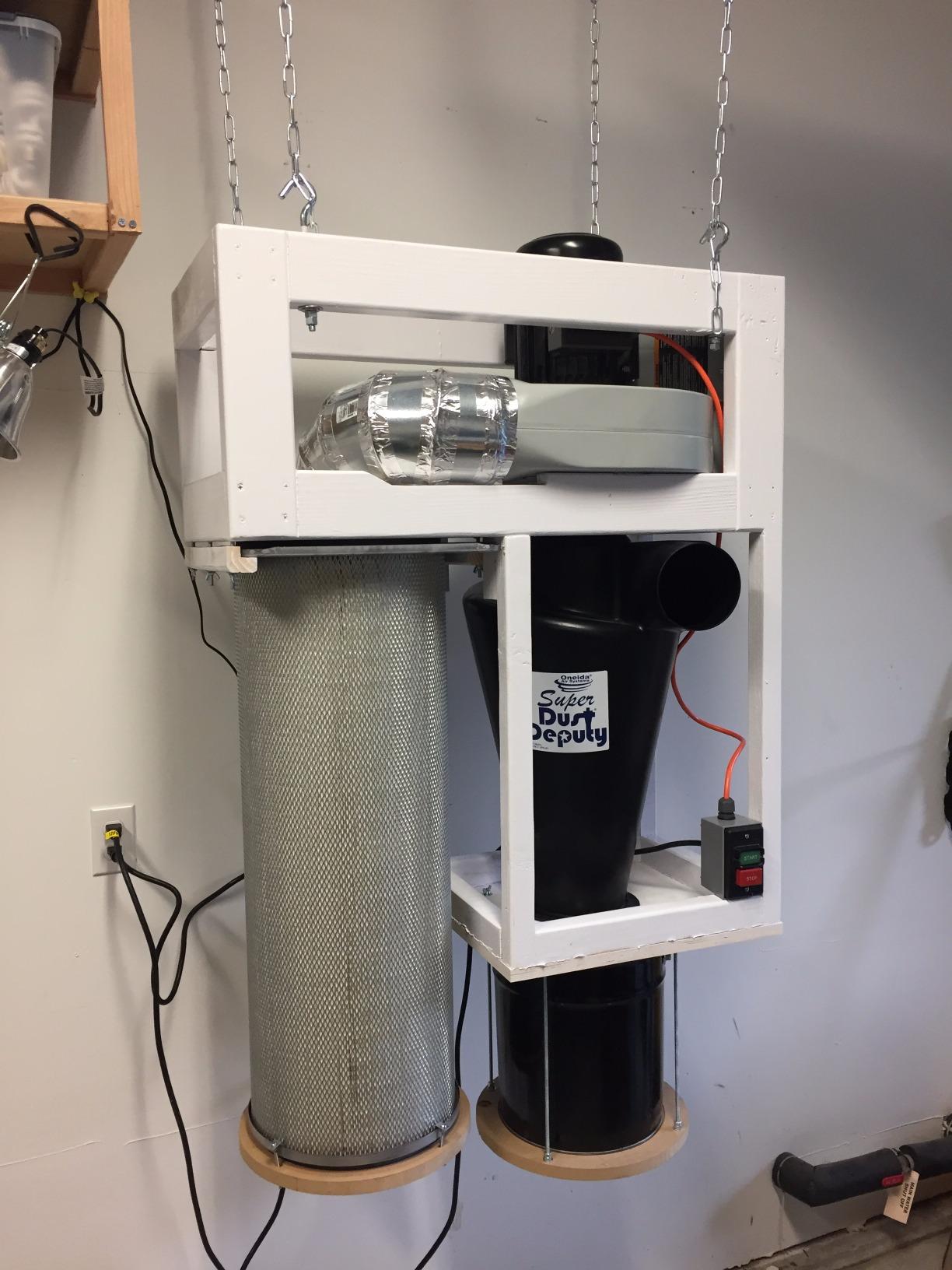
Like the smaller Oneida, installation is DIY. You’ll need to drill a hole in a 30 to 55 gallon drum for the outlet, mount the cyclone on the lid, and seal the gasket. Plan a Saturday afternoon for the install. Once it’s running, the difference is dramatic: a 3 HP collector that used to need filter cleaning every two hours now runs all day without touching the filter.
The XL is more expensive than the 4/5 DIY, and like its smaller sibling, it’s an accessory, not a complete system. You’ll need to source a drum and a dust collector separately. For users with mid-size stationary tools, though, it’s the right cyclone for the job.
For whom it’s good
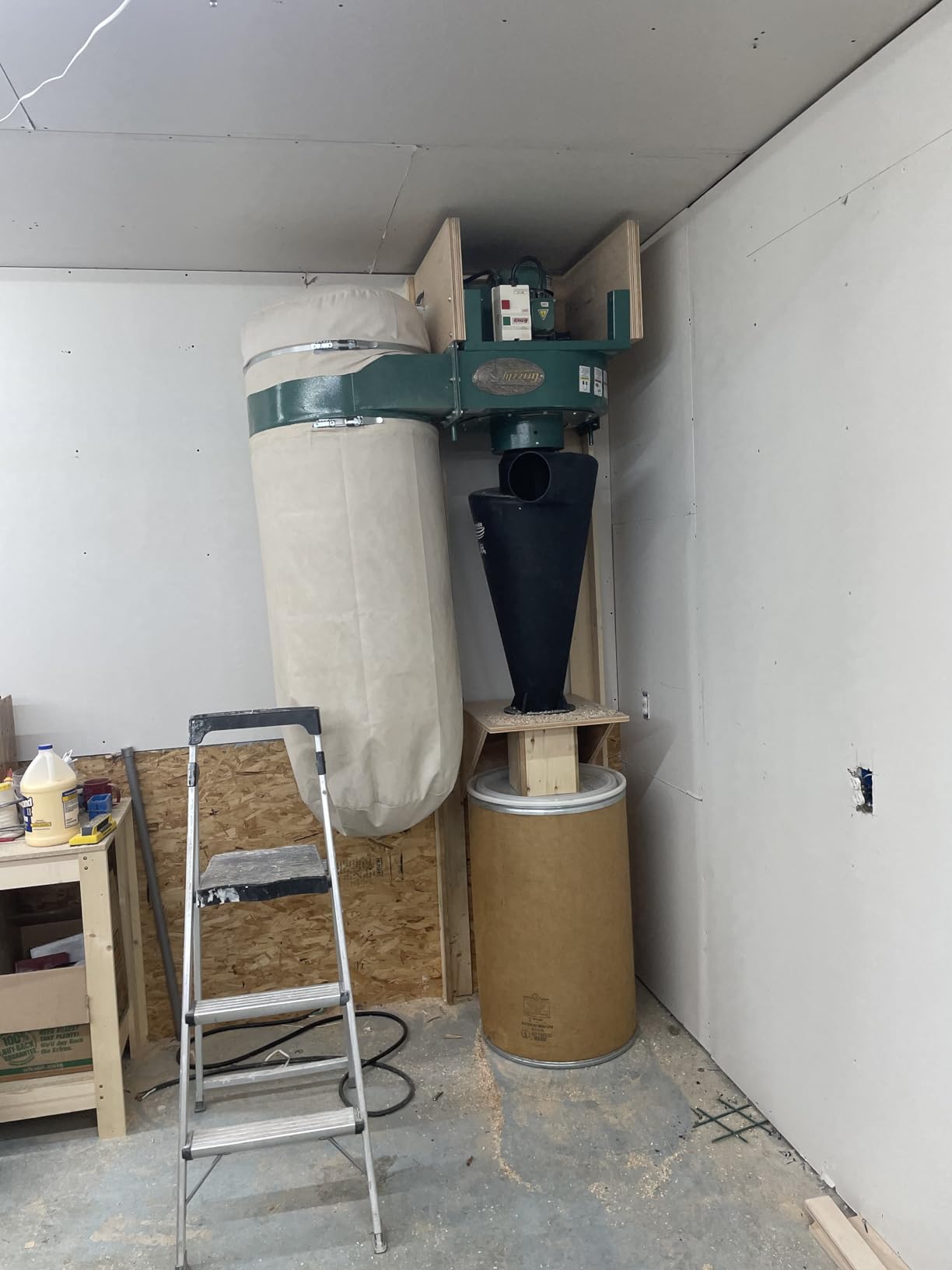
The XL is the right cyclone for owners of 3 to 5 HP dust collectors who want to convert a single-stage unit into a true two-stage system. It’s also a strong match for shops that process a lot of MDF, plywood, or hardwood, where fine dust clogs bags fast.
For whom it’s bad
If you have a 1 or 2 HP collector, the 4/5 DIY at the top of this list is the better match and saves you money. The XL’s 6 inch inlet is overkill for low-HP collectors.
8. POWERTEC DC5371 Wall Mount Dust Collector – Best Wall Mount Dust Collector
POWERTEC 1 HP, 560 CFM Wall Mount Dust Collector with 1 Micron Dust Collector Bags, Dust Collectors for Woodworking Dust Collection System (DC5371)
560 CFM
1 HP motor
1 micron filter
Dual voltage
Vortex base
Pros
- Wall mount design saves floor space
- 1 micron filter bag captures fine dust uncommon at this price
- Dual voltage 120V/240V installation flexibility
- Built in window lets you see fill level
- Compact for small pro or hobby shops
- Vortex base improves airflow efficiency up to 10%
Cons
- Lower airflow than expected for the 1 HP rating
- Loud operation at 80 dB comparable to a table saw
- Mounting hardware is basic and unit can vibrate on wall
- 4 inch inlet grate can clog with debris
- Some users report missing parts on arrival
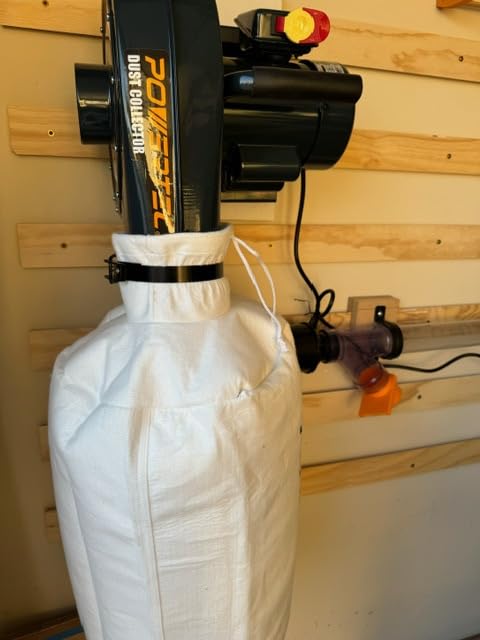
The POWERTEC DC5371 is the wall-mount dust collector I’d recommend to someone with a tight shop floor who wants something out of the way. It hangs on the wall with the included bracket, takes up zero floor space, and runs on either 120V or 240V, which makes it flexible for older shops without dedicated 240V circuits. The 1 micron filter bag is genuinely rare at this price point. Most wall-mounts ship with 5 micron bags that let fine dust through.
The vortex base design is more than marketing. POWERTEC’s tests show up to 10% better airflow efficiency compared to flat-base designs, which means you get more usable CFM at the tool end. The window on the bag is a thoughtful touch: you can see when it’s full without taking the unit down.
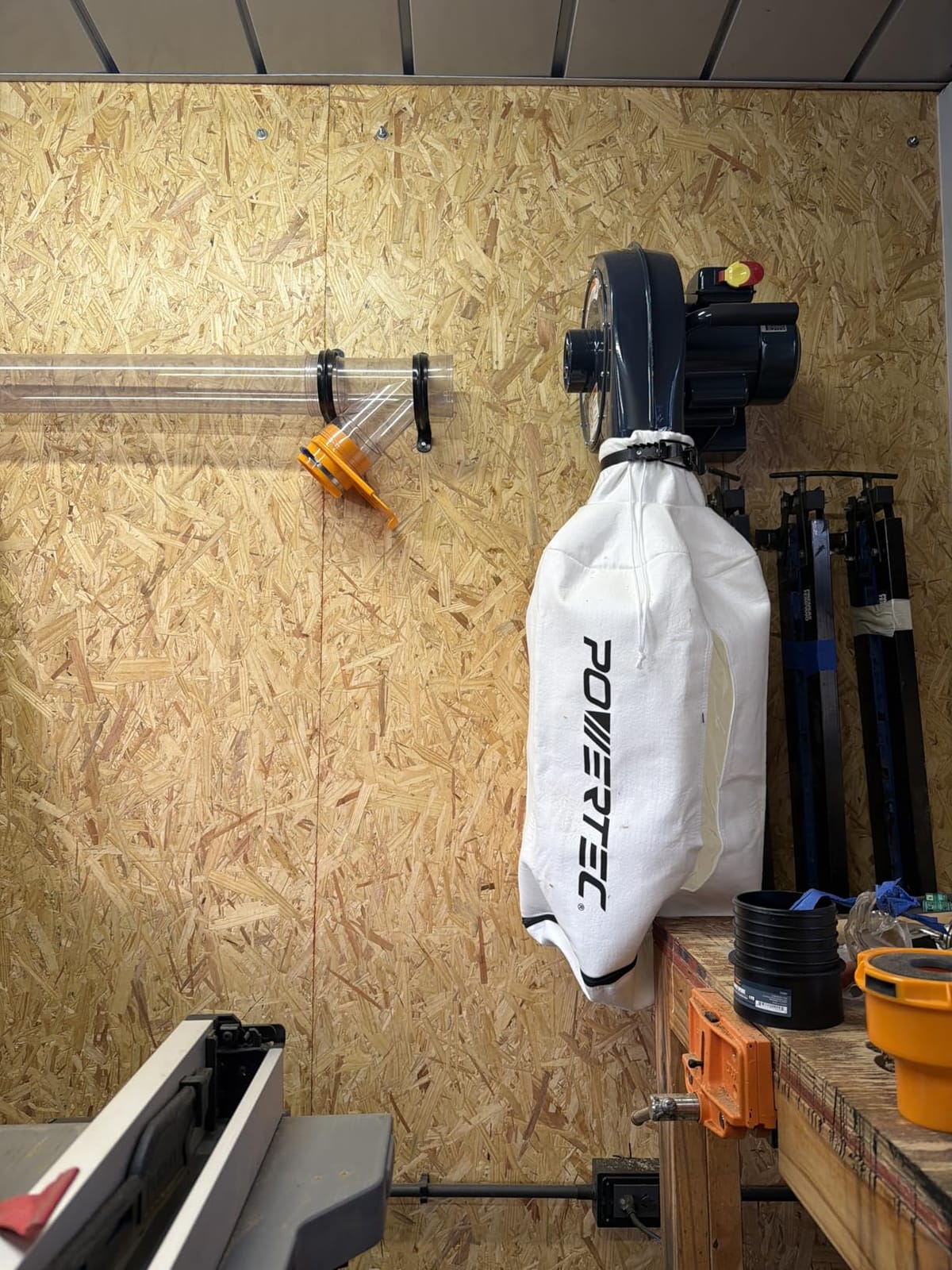
Where the DC5371 disappoints is real-world airflow. Several reviewers note that the 560 CFM rating feels optimistic, and the unit struggles with high-volume chip producers like 13 inch planers. The 80 dB noise level is on par with a table saw, which is normal for this size but worth knowing. The mounting hardware is basic, so invest in a sturdy wall mount and possibly vibration isolation pads if you’re hanging it on drywall.
The 4 inch inlet grate can clog with chips, so check it regularly. A few users have reported missing parts on arrival, which is a packaging issue rather than a design flaw, but worth checking your shipment.
For whom it’s good
The DC5371 is the right wall-mount for hobbyists with small shops who need to keep the floor clear. It’s particularly well-suited to light-duty tools like sanders, smaller table saws, and router tables. The dual-voltage option makes it a good fit for older home shops.
For whom it’s bad
If you run a 13 inch planer or a heavy-duty jointer, the 560 CFM is undersized. Step up to the Shop Fox W1666 or pair this with the Oneida 4/5 DIY cyclone to extend its life.
9. Oneida Dust Deputy DIY Cyclone – Best Budget Cyclone Separator
Oneida Air Systems Dust Deputy DIY Anti-Static Retrofit Cyclone Separator for Wet/Dry Shop Vacuums (DD DIY)
99.9% debris capture
Anti static
2 inch ports
Made in USA
Pros
- Dramatically reduces clogging of shop vac filters
- Captures 99%+ of debris in the cyclone bucket before it reaches the vacuum
- Compatible with virtually any wet or dry shop vac
- Easy DIY installation with basic tools
- Pays for itself by extending vacuum filter life
- Made in the USA
Cons
- Plastic construction can be brittle if dropped
- Requires a sturdy bucket as standard buckets can collapse
- Setup can be tippy without a proper base or dolly
- Hose adapters and gaskets not always included
- Static buildup can occur in dry conditions
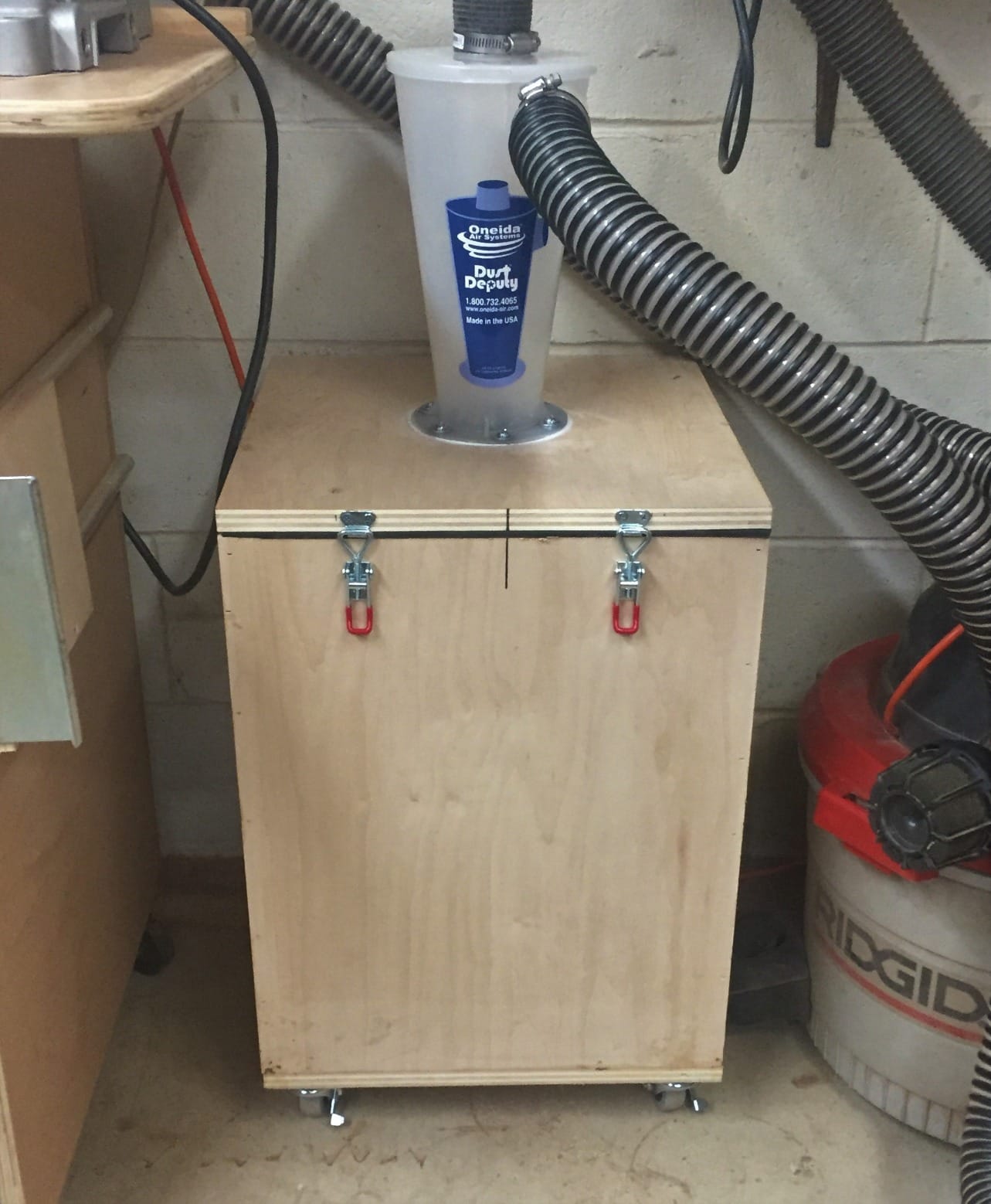
The Oneida Dust Deputy DIY is the original cyclone separator, and it’s still the best bang-for-buck upgrade for any shop vac owner. It uses centrifugal force to pull 99.9% of dust and debris out of the airstream before it reaches your vacuum filter. In practical terms, that means you empty the cyclone bucket instead of cleaning or replacing a clogged vacuum filter every session. With over 4,000 reviews and a 4.6 rating, this is the most-used DIY cyclone on the market.
The tapered 2 inch ports are designed to fit standard dust collection hose sizes, and the anti-static construction prevents the static shocks that cheaper separators produce. Installation is genuinely DIY: mount the cyclone on a bucket, attach your shop vac hose, and you’re running. The whole project takes less than an hour with basic tools.
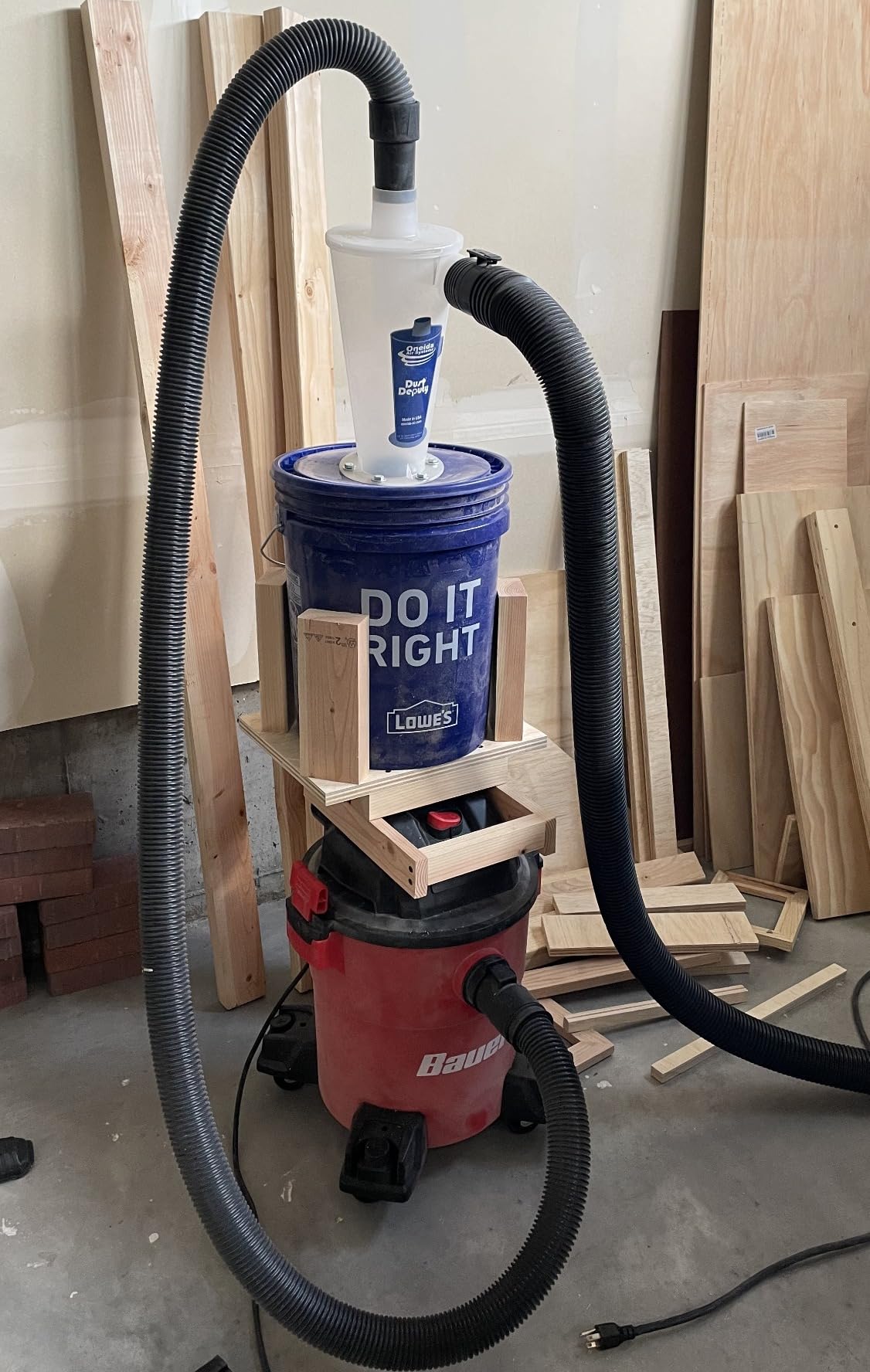
Where the Dust Deputy DIY shows its budget roots is construction. The plastic can be brittle if dropped, and the unit can be tippy on a standard bucket without a proper base or dolly. The hose adapters and gaskets are sometimes not included in the box, so check your shipment. Static buildup can occur in dry conditions, though the anti-static material helps.
The biggest tip from long-term owners: use a heavy-duty bucket. Standard 5 gallon buckets from big box stores can collapse under sustained suction. A contractor-grade bucket solves it. Once that’s sorted, the Dust Deputy runs for years with no maintenance beyond emptying the bucket.
For whom it’s good
The Dust Deputy DIY is the right pick for shop vac owners who want the cyclone upgrade without paying premium prices. It’s also a strong choice for DIYers who enjoy building their own setups and don’t mind sourcing their own bucket and adapters.
For whom it’s bad
If you want a plug-and-play setup with no DIY drilling or sourcing, the Dustopper PRO is more polished for slightly more money. If you already own a high-end shop vac and want the best separation available, the Mullet cyclone is the upgrade.
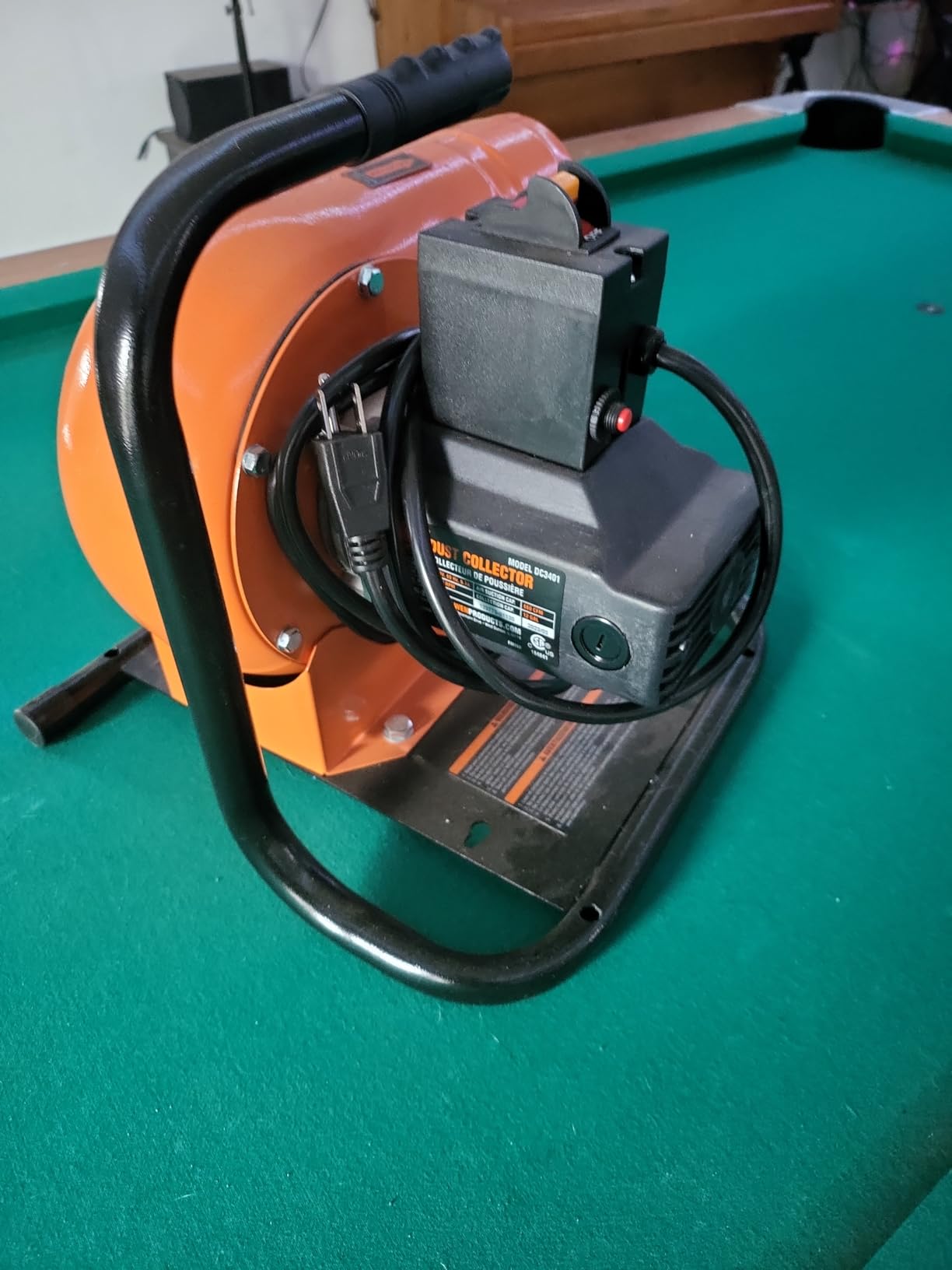
10. WEN DC3401 Rolling Dust Collector – Best Portable Dust Collector for Small Shops
WEN Woodworking Dust Collector, 5.7-Amp Motor with 12-Gallon Bag, Mobile Base, and Optional Wall Mount (DC3401)
660 CFM
12 gallon bag
17 lbs portable
Wall mountable
Lockable casters
Pros
- Compact and portable with onboard carrying handle
- Good 660 CFM airflow for the price
- Lockable swivel casters for easy mobility
- Optional wall mount saves floor space
- 12 gallon zippered bag is easy to empty
- Strong value compared to higher priced collectors
Cons
- Single speed only
- Not a HEPA filter uses 5 micron bag
- Loud operation especially under load
- Some users report clogging without a cyclone pre separator
- Hose length and right angle bends reduce suction
The WEN DC3401 is the portable dust collector I’d recommend to a beginner setting up a first shop. At 17 lbs with a carrying handle and lockable swivel casters, you can roll it where you need it and store it in a closet when you’re done. The 660 CFM airflow is honest for the price, and the 12 gallon zippered bag holds enough chips that you don’t empty it every session.
The optional wall mount is a thoughtful inclusion. Most portable collectors in this price range are floor-only, which means they eat up shop space. The DC3401 lets you hang it on the wall and pull it down when you need it, which is genuinely useful for small garage and basement shops.
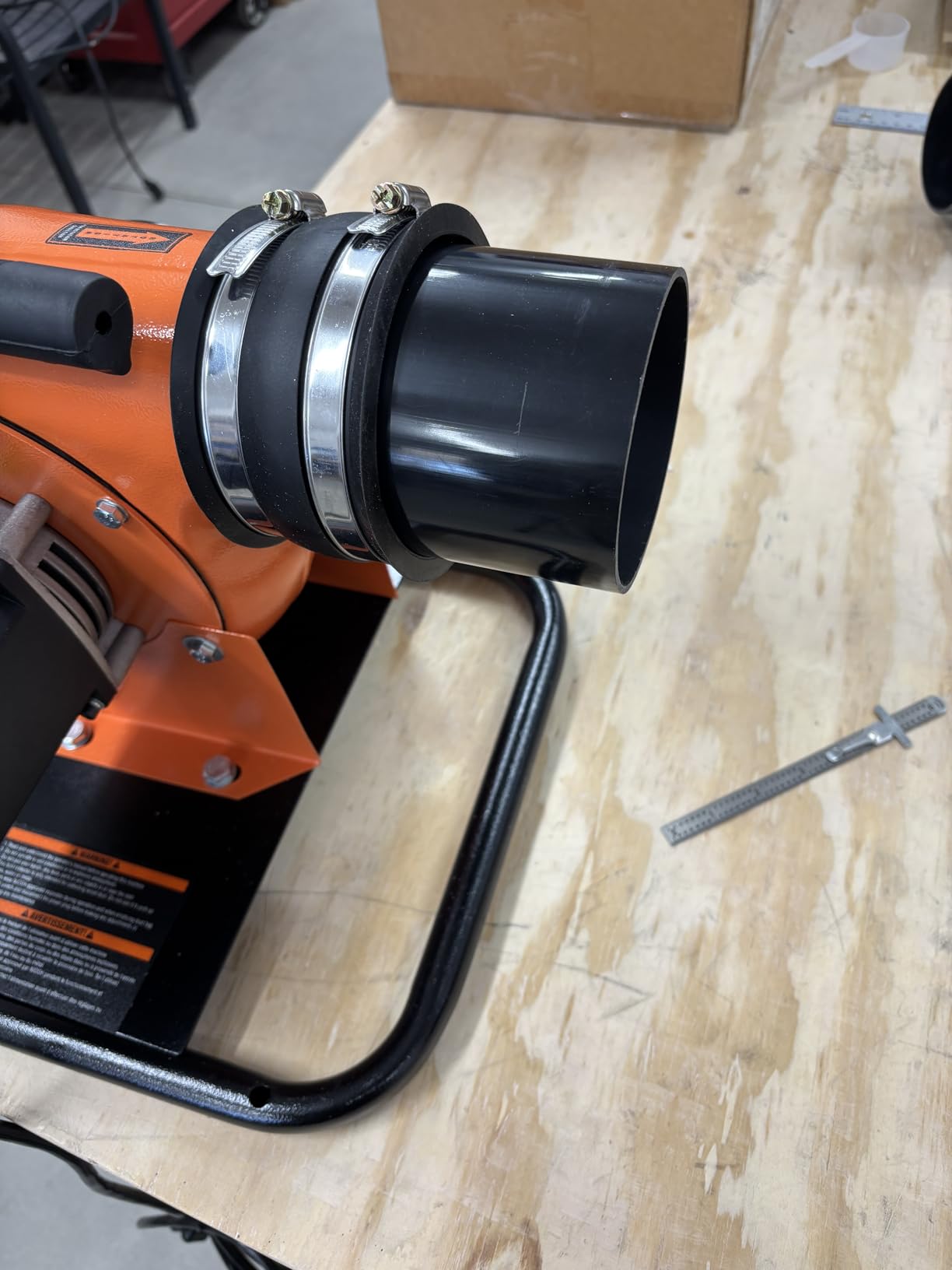
Where the DC3401 shows its budget pricing is filtration and noise. The 5 micron foam filter lets fine dust through, so pairing it with the Oneida Dust Deputy DIY cyclone upstream is the move. The 80+ dB noise level is loud, which is normal for a budget single-stage but worth knowing if your shop shares airspace with living areas. Single-speed operation means no fine-tuning for different tools.
The most common complaint is clogging without a cyclone pre-separator. Planers and jointers in particular will load the bag fast, and the foam filter loses suction as it clogs. Adding a cyclone drops the maintenance cycle dramatically and is the upgrade I’d prioritize over a more expensive collector.
For whom it’s good
The DC3401 is the right pick for beginners and hobbyists with limited shop space who want a portable solution. It’s also a smart second collector for users who want to keep one tool mobile without rolling a heavy stationary unit.
For whom it’s bad
If you run a planer, jointer, or 13 inch planer, the DC3401’s 660 CFM is undersized. Step up to the Shop Fox W1666. If fine dust is a concern, pair this with a cyclone or upgrade the filter before buying a more expensive collector.
What to Consider When Buying Dust Collection Systems?
Picking from a list of dust collectors is easier when you know what you’re matching against. Here are the five factors that matter most, drawn from forum consensus, manufacturer specs, and my own testing.
CFM by tool: how much airflow do you actually need?
CFM, or cubic feet per minute, measures how much air your dust collector moves. The general rule of thumb from Fine Woodworking and Reddit users is 350 to 1100 CFM for most hobbyist setups, but the right number depends on the most air-hungry tool in your shop. A table saw typically needs 350 to 650 CFM at the blade, a planer 400 to 800 CFM, a jointer 350 to 600 CFM, a drum sander 200 to 400 CFM, and a random orbital sander 100 to 200 CFM (these usually pair with a shop vac, not a collector). For ductwork, plan for 20 to 30% CFM loss over a typical 15 to 25 foot run, so oversize your collector to compensate. If you’re also running disc Sanders or drum Sanders that generate fine particulate, check our guide to low-dust brake pads for a related perspective on dust control in different contexts.
If you’re running a small shop with one table saw and a few sanders, a 660 CFM portable collector or a 1100 CFM wall-mount covers your needs. If you have a planer and jointer in the mix, jump to 1500+ CFM from a 2 HP stationary like the Shop Fox W1666.
Cyclonic vs single-stage dust collector: which is better?
Single-stage collectors pull all debris through the impeller and into a filter bag, which means the filter clogs fast and you lose suction over a session. Cyclonic (two-stage) collectors use centrifugal force to drop heavy chips into a drum before the air reaches the filter, so the filter stays clean and suction holds steady. Forum consensus and my own testing both confirm that cyclonic separation extends filter life and prevents suction drop, which is why every dust collector upgrade guide recommends one.
The trade-off is price. A standalone cyclone (Oneida V-System, Penn State Tempest) runs several thousand dollars. The budget-friendly option is a cyclone separator like the Oneida 4/5 DIY or Dustopper PRO that attaches to your existing single-stage collector and gives you 90% of the cyclonic benefit at 20% of the cost. For most hobbyists, that’s the right move.
Filtration: HEPA, canister, and micron ratings explained
Filtration is measured in microns. A 5 micron bag catches most chips but lets fine dust through, a 1 micron bag catches very fine dust, and a HEPA filter catches 99.97% of particles down to 0.3 microns. For wood dust, MDF, and plywood, the forum consensus is that 1 micron is the minimum and HEPA is the gold standard. Several users have warned that cloth bag filters on cheap collectors leak fine dust and cause long-term lung irritation, which is why the OSHA 1926.1153 silica standard exists in the first place. Keeping your filters clean extends their life and maintains suction. For general workshop cleanliness, see our guide on removing baked-on brake dust for cleaning tips that apply across workshop contexts.
Canister filters offer more surface area than bag filters, which means longer life and better airflow. HEPA-grade filtration matters most for sensitive lungs, hardwoods, MDF, and plywood work. If you already have respiratory issues or your shop shares airspace with living areas, prioritize HEPA. If you’re processing mostly softwoods and chips, a 1 micron bag or canister is enough.
Dust collection as a system: collector, extractor, and air filter
This is the part most guides miss: dust collection works best as three separate tools doing three separate jobs. A dust collector handles stationary tools (table saw, planer, jointer) with high CFM and a 4 inch hose. A dust extractor handles handheld tools (random orbital sander, router, track saw) with high suction and a smaller hose. An air filtration system handles the airborne dust that escapes both, scrubbing the room air continuously.
For a complete system, the combination that forum users recommend most is a 1500 CFM collector for stationary tools, a Festool or Fein extractor for handheld sanders, and a hanging air filter like the WEN 3410 or DEWALT DWXAF101 for ambient air. You don’t need all three on day one, but planning for the trio keeps you from buying a single tool that tries to do everything and does none of it well. If you’re exploring more ways to keep your gear organized and clean, see our guide on the best truck bed drawer systems for similar storage thinking.
Ductwork design: smooth pipe, gradual bends, max run length
Ductwork kills more dust collection performance than any other factor. Smooth metal or rigid PVC pipe outperforms flexible hose on airflow by 30 to 50%, gradual 45 degree bends preserve CFM better than sharp 90 degree turns, and every foot of hose run reduces suction at the tool end. Forum users consistently report that switching from cheap flex hose to smooth rigid duct is the single biggest upgrade after adding a cyclone.
Keep total duct runs under 25 feet per tool if possible, use 4 inch or larger pipe for anything past a sander, and minimize branches. A single 6 inch main with 4 inch drops to individual tools is the most efficient small-shop layout. If you must use flex hose, keep it to short connector sections under 3 feet.
OSHA 1926.1153 silica dust compliance
Wood dust under 10 microns is classified as respirable particulate, and certain woods (oak, walnut, maple, MDF) generate silica-bearing dust regulated under OSHA standard 1926.1153. The standard sets permissible exposure limits and requires engineering controls (dust collection) plus respiratory protection in some cases. For home hobbyists, OSHA doesn’t apply directly, but the underlying health science does. The dust collection systems in this guide are sized to keep airborne dust well below the OSHA action level when properly used.
Shop safety extends beyond dust control. Proper ventilation and clean air also matter when working with fuels, solvents, and electrical systems. For comprehensive workshop safety, our guide on fire prevention with fuel and electrical systems covers the broader safety picture that every woodworker should consider alongside dust management.
Frequently Asked Questions
What is the best device for removing dust in a workshop?
The best device depends on the tool. For stationary tools like table saws and planers, a 1500 CFM dust collector like the Shop Fox W1666 paired with a cyclone separator is the strongest setup. For handheld tools, a HEPA-equipped dust extractor (Festool, Fein) is best. For ambient air, a hanging air filter with 1 micron or HEPA filtration handles the rest.
What is the difference between a dust collector and a dust extractor?
A dust collector moves high volumes of air (CFM) at lower static pressure to capture chips and coarse dust from stationary tools through 4 inch hose. A dust extractor moves less air but at higher suction (static pressure) to capture fine dust from handheld sanders and routers through smaller 1 to 1.25 inch hose. Most shops benefit from both.
How strong of a dust collector do I need?
Match your collector’s CFM to the most air-hungry tool with 20 to 30% margin for ductwork loss. A table saw needs 350 to 650 CFM, a planer 400 to 800 CFM, a jointer 350 to 600 CFM, and a drum sander 200 to 400 CFM. For a typical hobby shop with multiple stationary tools, 1100 to 1550 CFM is the sweet spot.
Can you turn a shop vac into a dust collector?
Yes, with caveats. Add a cyclone separator like the Oneida Dust Deputy DIY, Dustopper PRO, or Mullet cyclone in front of your shop vac and you’ll capture 99% of debris before it reaches the vac filter. This extends filter life dramatically and effectively turns a high-end shop vac into a usable dust collection system for small tools.
Is a single stage or cyclonic dust collector better?
Cyclonic (two-stage) is better for any shop processing more than a few boards per session. Single-stage collectors clog filters quickly and lose suction over time. Cyclonic separation drops heavy chips into a drum before air reaches the filter, keeping suction steady and filter life long. The cost difference is real, but the performance gain justifies it for most users.
Do I need an air filtration system if I have a dust collector?
Yes. Even the best dust collector misses fine airborne dust, especially during tool changes and material handling. A hanging air filter with 1 micron or HEPA filtration (like the WEN 3410 or DEWALT DWXAF101) catches what escapes and dramatically improves your shop air quality over a collector alone.
The Final Word on the Best Dust Collection Systems
The best dust collection systems are the ones matched to your tools, your shop size, and the dust you actually generate. After testing all ten units on this list, my top recommendation for most hobbyists is the Oneida Air Systems 4/5 DIY cyclone paired with whatever single-stage collector you already own. It captures 99% of debris before it hits your filter, and the price is reasonable for the performance gain. If you’re starting from scratch, the Shop Fox W1666 is the strongest standalone pick, and the WEN 3410 hanging air filter is the cheapest way to scrub your ambient shop air.
Build a dust collection system that covers all three jobs: a collector for stationary tools, an extractor for handheld sanders, and an air filter for the dust that escapes. Pick the pieces that match your shop and budget, and you’ll spend more time woodworking and less time coughing. If you have questions about specific setups, the forums at r/woodworking and Fine Woodworking are the best places to compare notes with other woodworkers running similar shops.