
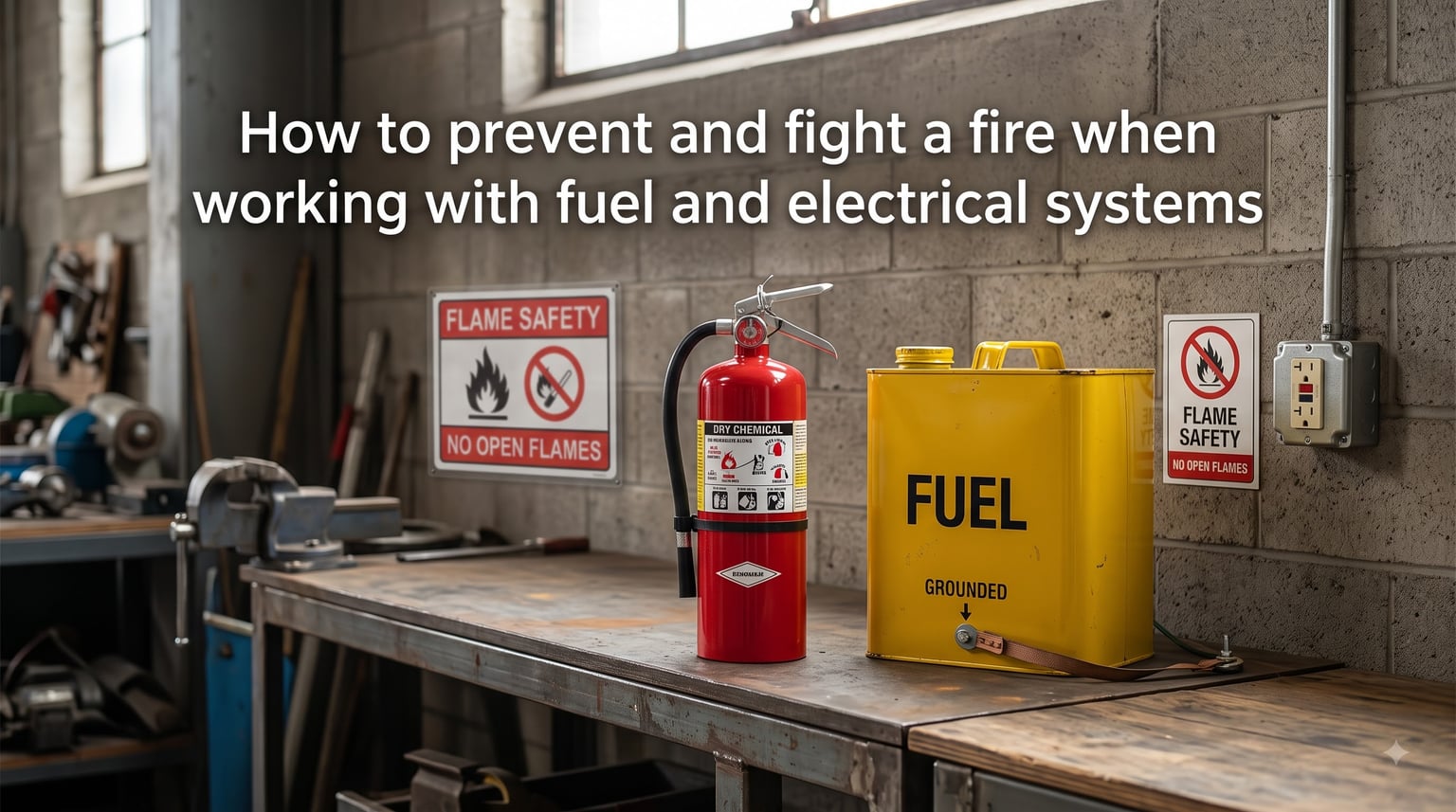
If you work around fuel tanks, electrical panels, or maintenance bays, fire safety is not optional. I have spent time shadowing mechanics and industrial electricians, and the same lesson keeps coming back: most fires are preventable, but only when you understand the hazards before something goes wrong.
This guide breaks down exactly how to prevent and fight a fire when working with fuel and electrical systems. You will learn the science behind ignition, the warning signs crews often miss, and the right response when flames appear. Let us start with the foundation that every safety plan rests on.
Table of Contents
Understanding the Fire Triangle: The Science Behind Every Fire
Every fire needs three things at the same time: fuel, heat, and oxygen. Remove any one of them and the fire goes out. This is called the fire triangle, and it is the single most important mental model for anyone working around flammable liquids or live circuits.
Fuel can be gasoline, diesel, solvents, paint thinners, or even dust and oily rags. Heat comes from sparks, hot surfaces, welding slag, or overloaded wiring. Oxygen is everywhere in open air, which is why fuel handling areas still need ventilation controls.
When fuel and electrical systems share a workspace, two of the triangle’s sides overlap. A loose wire can provide the heat that ignites fuel vapors. A fuel-soaked rag near a hot panel can become the ignition source you never expected. Keeping the three sides apart is the entire job of fire prevention.
Common Causes of Electrical Fires You Should Not Ignore
Electrical fires do not usually start with a dramatic short circuit. More often, they begin with a small problem that builds over weeks. I have seen the same handful of causes show up again and again in incident reports.
Overloaded Circuits and Extension Cords
Plugging too many devices into one outlet or chaining power strips creates heat inside the wiring. Over time, the insulation breaks down, and an arc forms behind the wall. Once an arc starts, the surrounding material can ignite within minutes.
Arc Faults and Damaged Wiring
An arc fault is a high-energy discharge that happens when current jumps between conductors. It can reach temperatures over 10,000 degrees Fahrenheit, which is more than enough to ignite nearby fuel vapors. Cracked insulation, pinched wires, and rodent damage are common triggers.
Old or Faulty Equipment
Motors, pumps, and battery chargers that hum, spark, or run hot are warning signs. So are breakers that trip repeatedly. Each trip is the system telling you something is wrong. Resetting the breaker without finding the cause is one of the most common ways small issues turn into fires.
Warning Signs to Watch For
Look for a burning smell with no visible source, discolored outlet plates, flickering lights, and warm cords. Any of these signs warrant shutting down the equipment and calling a qualified electrician before you keep working.
Fuel System Fire Hazards: The Overlooked Side of the Triangle
Most safety articles focus on electrical fires, but fuel systems deserve equal attention. I have walked through fuel storage rooms where one dropped spark could have set the whole building off. Here is what makes fuel handling uniquely dangerous.
Gasoline vapors are heavier than air, so they pool low to the ground and travel long distances before igniting. Diesel is less volatile, but heated diesel still produces flammable vapor. Even a small spill in a closed bay can create an explosive atmosphere long after you finished the job.
Static electricity is a major fuel fire trigger. Flowing fuel through a hose or pump generates static charge. If the container is not grounded, that charge can discharge as a spark right at the fill point. I have seen this cause flash fires at fuel docks more than once.
Improper storage multiplies every other risk. Storing gasoline next to a battery charger, or oily rags on top of electrical equipment, places the heat and fuel sides of the triangle in the same square foot. That is a recipe for an incident report.
How to Prevent and Fight a Fire When Working with Fuel and Electrical Systems?
Now we get to the core of this guide. These are the practices our team has seen work in real workshops, service trucks, and industrial plants. Use them as a checklist before every shift.
The 5 E’s of Fire Prevention
This is the framework used by safety officers across the fire service. Memorize it. Post it on the wall. Run drills around it.
Elimination — Remove unnecessary fuel sources and ignition risks from the work area.
Engineering Controls — Use GFCI outlets, grounded containers, ventilation, and intrinsically safe equipment.
Education — Train every worker on fire types, extinguisher classes, and emergency procedures.
Enforcement — Hold people accountable to the safety plan through audits and corrective actions.
Emergency Response — Have extinguishers, alarms, evacuation routes, and trained responders ready at all times.
5 Practical Ways to Prevent Fire in Your Workspace
If the 5 E’s are the strategy, these are the daily tactics that make it real.
Inspect extension cords, power strips, and outlets before each shift, and replace anything with cracks, exposed wire, or burn marks.
Ground all fuel containers and bond metal containers before transferring flammable liquids to discharge static electricity.
Store flammable liquids in approved cabinets away from electrical panels, heat sources, and direct sunlight.
Install GFCI protection on any outlet within six feet of a fuel handling area to cut power at the first sign of a ground fault.
Keep a properly rated fire extinguisher within 50 feet of any fuel or electrical work, and check the gauge monthly.
None of these steps take more than a few minutes. Skipped together, they create the conditions for a serious incident. Done consistently, they keep small mistakes from becoming news stories.
Fire Extinguisher Types for Fuel and Electrical Fires
Not every extinguisher works on every fire. Using the wrong one can spread the fire, cause an explosion, or electrocute the person holding it. Match the extinguisher to the fuel source every time.
Class B Fires: Flammable Liquids and Gases
Fuel fires fall under Class B. They involve gasoline, diesel, solvents, oils, and similar liquids. Foam, dry chemical, and CO2 extinguishers are rated for Class B use. Water will not work, and in some cases can spread the burning liquid.
Class C Fires: Energized Electrical Equipment
Any fire involving live electrical equipment is Class C. The defining rule is simple: use a non-conductive extinguishing agent. CO2, dry chemical, and clean agent extinguishers all qualify. Never use water on a Class C fire, because water conducts electricity back to you.
Quick Comparison of Extinguisher Types
Dry Chemical (ABC) — Works on Class A, B, and C fires. Most common in workshops. Leaves a corrosive residue that can damage electronics.
CO2 — Best for Class C and small Class B fires around electronics. No residue, but limited range and cooling effect.
Clean Agent — Used where electronics or sensitive equipment must be protected. Electrically non-conductive and leaves nothing behind.
Foam — Ideal for liquid fuel fires. Smothers the fuel and prevents re-ignition. Not rated for live electrical equipment.
Water Mist — Fine water droplets can suppress Class C fires safely, but only with specific rated equipment. Not a substitute for CO2 in most cases.
If you only buy one extinguisher for a space that handles both fuel and electricity, a 5 lb ABC dry chemical unit is the practical choice. For server rooms and electronics-heavy areas, add a CO2 or clean agent extinguisher alongside it.
How to Fight an Electrical Fire Safely?
If a fire starts in or near energized equipment, your response in the first 30 seconds matters most. Follow this sequence every time.
Cut the power at the breaker or disconnect if you can do so without putting yourself in the fire’s path.
Pull the alarm and tell everyone in the area to evacuate, even if the fire looks small.
Use a Class C rated extinguisher (CO2 or dry chemical) only if the fire is contained and you have a clear exit behind you.
Aim at the base of the fire and sweep side to side. Stay low to avoid smoke.
If the fire grows beyond a small contained area, evacuate immediately and call 911 from a safe distance.
If you do not have an extinguisher, you can smother a very small electrical fire with a heavy blanket, sand, or baking soda. Never use water on a live electrical fire, and never try to fight a fire that is bigger than a small wastebasket.
How to Extinguish a Fuel Fire?
Fuel fires are fast and unforgiving. A puddle of gasoline can be fully engulfed in under a minute, so speed and the right technique are everything.
Shut off the fuel source if it is safe to do so, for example closing a valve or shutting down a pump.
Alert others and activate the nearest fire alarm.
Use a Class B rated extinguisher (foam, dry chemical, or CO2). Aim at the near edge of the fire and sweep across the fuel surface.
If no extinguisher is available, you can smother a very small fuel fire with a fire blanket, sand, or a tight-fitting metal lid.
Never use water on a fuel fire unless it is a specialized water mist system, since water can spread the burning liquid.
Once the flames are out, watch the area for at least 30 minutes. Fuel fires often reignite when vapors reach a new ignition source. Ventilate the space and keep ignition sources away until the area is fully cleared.
When to Call Professionals and Step Back
Even with training, some situations are beyond what one person can safely handle. Step back and call professionals in any of these cases.
The fire is larger than a small trash can or is spreading faster than you can contain it.
Smoke is filling the room or you cannot see a clear path to the exit.
Fuel is pooling, leaking, or spilling and you cannot stop the source.
The fire involves chemicals, batteries, or materials you are not trained to identify.
Anyone is injured, even slightly, or you inhaled smoke.
Call 911 first, then your facility’s emergency line. Do not re-enter the building until the fire department clears it. Document everything for the incident report while it is fresh.
FAQs
What are the 5 E’s of fire prevention?
The 5 E’s of fire prevention are Elimination, Engineering Controls, Education, Enforcement, and Emergency Response. They give safety officers a complete framework to remove hazards, build safer systems, train workers, hold the team accountable, and respond quickly when something goes wrong.
What are 5 ways to prevent a fire?
Five practical ways to prevent fire are: inspect cords and outlets before each shift, ground fuel containers during transfer, store flammables in approved cabinets away from heat, install GFCI protection near fuel areas, and keep a properly rated extinguisher within 50 feet of any fuel or electrical work.
How do you extinguish a fuel fire?
To extinguish a fuel fire, shut off the fuel source if it is safe, alert others, and use a Class B rated extinguisher such as foam, dry chemical, or CO2. Aim at the near edge and sweep across the fuel surface. Never use water on a fuel fire unless it is a specialized water mist system, because water can spread the burning liquid.
What are the three elements required for fire to survive?
The three elements required for fire to survive are fuel, heat, and oxygen. Together they form the fire triangle. Removing any one of these elements through proper storage, cooling, or smothering is how every fire prevention strategy and suppression method works.
Can you use water on an electrical fire?
No, never use water on an electrical fire because water conducts electricity and can electrocute you. Use a Class C rated extinguisher such as CO2, dry chemical, or clean agent, or cut the power at the breaker before attempting any suppression.
Final Thoughts on Working Safely Around Fuel and Electricity
Learning how to prevent and fight a fire when working with fuel and electrical systems comes down to two habits. First, you keep the three sides of the fire triangle apart through inspection, grounding, and good storage. Second, you train your hands and your team to grab the right extinguisher and back off at the right moment.
Pick one area of your workspace to audit this week. Check the cords, test the GFCI outlets, and confirm the extinguisher inspection tags are current. Then run a five-minute drill on the Class B and Class C response steps. The next emergency will be easier because of the time you spent today.