
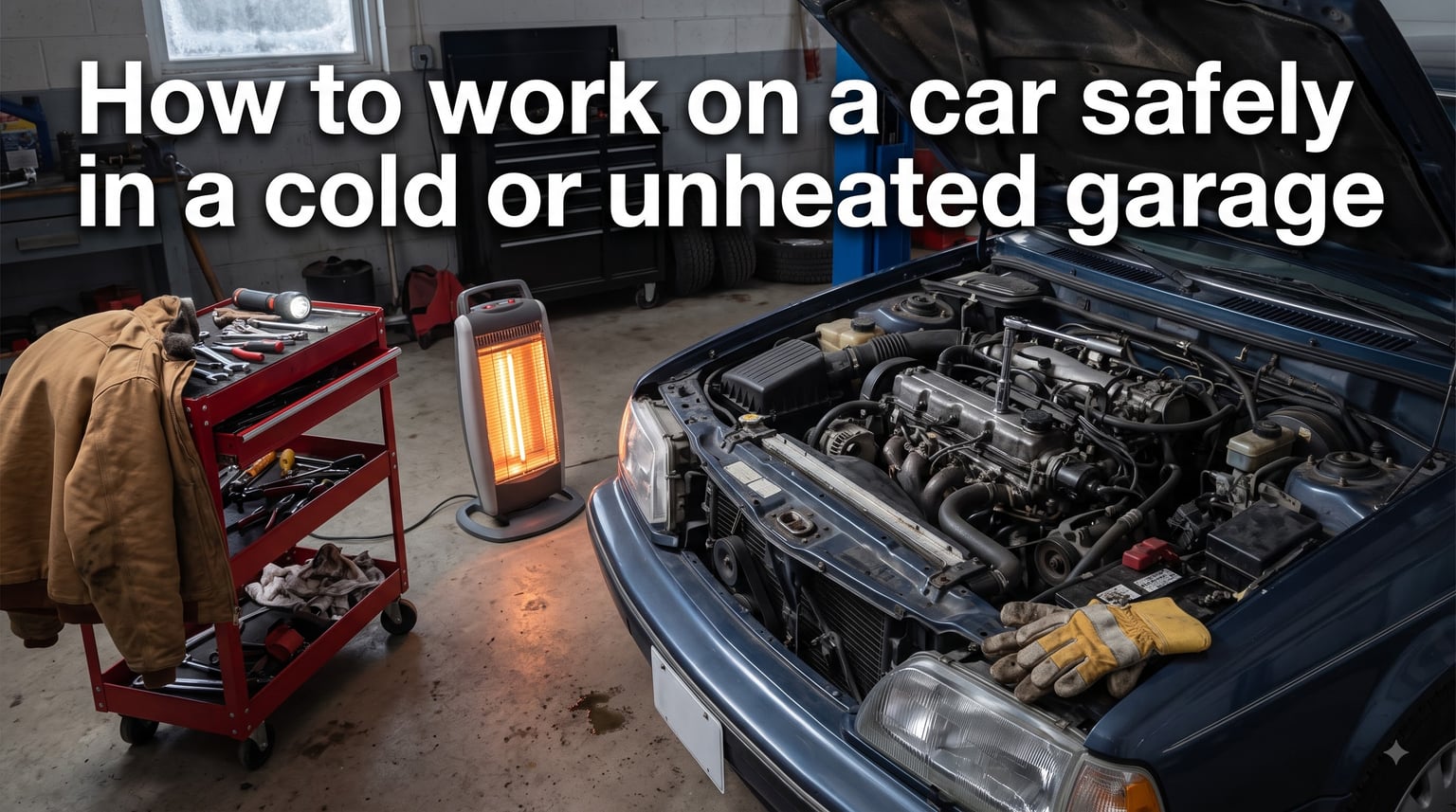
Working on your car during winter can save you serious money on shop labor, but a freezing garage changes everything. Metal gets brittle, your hands go numb, and simple tasks take twice as long. If you have ever tried to wrench in a 35-degree garage with stiff fingers, you know exactly what I mean.
I have spent years working on project cars in unheated garages across New England winters. Along the way, I learned what works, what is dangerous, and what repairs you should simply postpone until spring. This guide covers everything from OSHA-based cold weather safety guidelines to battery care, heating solutions, and which tasks are safe to tackle in the cold.
By the end, you will know exactly how to work on a car safely in a cold or unheated garage without risking your health, your vehicle, or your sanity.
Table of Contents
Understanding Temperature Limits: How Cold Is Too Cold?
Most experienced DIY mechanics agree that 40 degrees Fahrenheit is the comfortable floor for hands-on car work. Below that, your dexterity drops and everything takes longer. Once you hit 32 degrees Fahrenheit, you enter a zone where both you and your car start struggling.
At 32 degrees Fahrenheit, car batteries lose significant cranking power. Oil thickens and flows poorly. Tire pressure drops by about 1 PSI for every 10 degrees of temperature decline. These are not opinions from forum posts. They are well-documented physical changes that affect how your vehicle behaves.
Below 20 degrees Fahrenheit, most forum mechanics recommend stopping entirely unless it is an emergency repair. Frozen bolts snap instead of loosening. Plastic clips shatter when you pry them. Your skin can suffer cold exposure damage in under 30 minutes of direct exposure.
The sweet spot for cold garage work falls between 40 and 55 degrees Fahrenheit. You can manage those temperatures with proper layering and a small radiant heater near your work area.
Personal Safety: OSHA Guidelines for Cold Weather Work
OSHA classifies cold stress as a real workplace hazard, and their guidelines apply directly to anyone working in an unheated garage. Cold stress happens when your body cannot warm itself fast enough, leading to frostbite, hypothermia, and trench foot. Understanding these risks is the first step in learning how to work on a car safely in a cold or unheated garage.
The three main cold stress conditions you need to watch for are frostbite, hypothermia, and trench foot. Frostbite affects exposed skin, especially fingers, toes, nose, and ears. Hypothermia sets in when your body temperature drops below 95 degrees Fahrenheit. Trench foot develops when your feet stay cold and damp for extended periods.
Here are the OSHA-based safety practices I follow every time I step into a cold garage:
Dress in at least three layers: a moisture-wicking base layer, an insulating middle layer, and a wind-resistant outer layer
Wear insulated, waterproof boots to prevent trench foot
Keep your head covered since you lose significant heat through an uncovered scalp
Take breaks in a warm area every 30 to 45 minutes
Stay dry at all costs because wet clothing loses 90 percent of its insulating value
Pack extra clothes in case what you are wearing gets soaked by fluids or snow
Work with a buddy or let someone know you are working, since cold stress can cause confusion and poor judgment
These are not overcautious suggestions. Real mechanics on Reddit forums from Canada and the northern United States share stories of abandoning repairs mid-task because their hands stopped functioning. Cold stress sneaks up on you.
How to Dress for Working on a Car in a Cold Garage
Proper clothing is the single most important factor in cold garage work. Without it, nothing else matters because you will quit before finishing the job. The layering system below is what I use for sessions lasting two hours or more in temperatures between 30 and 45 degrees Fahrenheit.
Start with a moisture-wicking base layer made of synthetic fabric or merino wool. Never use cotton as a base layer because it traps sweat against your skin and turns cold the moment you stop moving. A long-sleeve thermal shirt and thermal pants work well here.
Add an insulating middle layer like a fleece jacket or a lightweight puffy vest. You want something that traps body heat but still allows freedom of movement. Bulky coats make it impossible to reach into tight engine bays, so choose fitted layers over thick ones.
For your outer layer, wear a wind-resistant work jacket. Garage drafts can cut through thin fabric fast. Mechanics coveralls are excellent for this because they seal out drafts and protect your clothes from grease at the same time.
Your hands need special attention. Standard mechanics gloves do not cut it below 40 degrees. I recommend insulated mechanics gloves with silicone grip pads for general work, then switching to thinner liner gloves for fine tasks requiring more feel. Keep a pair of chemical hand warmers in your pockets as backup.
For footwear, insulated waterproof boots are non-negotiable. Concrete garage floors pull heat from your feet faster than any other surface. Add thick wool socks underneath. Standing on a rubber anti-fatigue mat also creates a thermal break between your feet and the freezing floor.
Heating Solutions: How to Heat an Unheated Garage
You do not need to install a permanent heating system to make your garage bearable. Forum mechanics across cold climates have tested dozens of solutions, and a few clear winners emerged. The right heating approach depends on your garage size, budget, and how often you work in the cold.
Portable radiant heaters are the most popular choice among DIYers. These units direct infrared heat at objects and people rather than warming the air, which makes them efficient even in a drafty unheated space. Position one near your work area and it creates a warm zone within minutes.
Forced-air propane heaters generate serious heat quickly and can warm an entire two-car garage. However, they require ventilation because they produce combustion byproducts. Always crack the garage door open if you run a propane heater.
Electric space heaters are the safest option for enclosed garages because they produce no emissions. Look for models rated for garage use with tip-over protection and overheating shutoff. They work best for spot heating near your workbench or under the car.
Here is a quick comparison of the most common garage heating options:
Radiant heater: Best for spot heating, energy efficient, safe for enclosed spaces
Forced-air propane heater: Heats large areas fast, requires ventilation, higher cost to operate
Electric space heater: Safest for enclosed use, lower heat output, best for small zones
Kerosene heater: Powerful heat output, requires ventilation and careful fuel handling
One trick from forum mechanics that works surprisingly well: keep your hand tools on a tray in front of your radiant heater. Warm wrenches feel dramatically better in bare hands than ice-cold steel, and they also transfer some warmth to the bolts they touch.
Battery Care in Cold Temperatures
Cold weather is brutal on car batteries. At 32 degrees Fahrenheit, a battery loses about 35 percent of its cranking power compared to 80 degrees. Drop to 0 degrees and that loss reaches 60 percent. If your battery is already weak, a cold garage will expose the problem fast.
For vehicles sitting in an unheated garage over winter, connect a trickle charger or battery maintainer. These devices keep the battery at optimal charge without overcharging. Disconnect the negative terminal first if you are storing the vehicle long-term, and check the battery voltage monthly with a multimeter.
If you are working on a car that needs to start in cold conditions, test the battery before you need it. A healthy battery should read 12.6 volts or higher when the engine is off. Anything below 12.4 volts means it needs a charge before cold weather hits hard.
Keep jumper cables or a portable jump starter in the garage at all times. Forum mechanics consistently report that the first truly cold morning of the season catches people off guard. Having a jump pack ready saves you from being stranded next to a car that will not turn over.
Fluids, Oil Viscosity, and Antifreeze Considerations
Cold temperatures change how fluids behave inside your vehicle. Oil thickens as it gets cold, which means your engine works harder on startup and oil drains painfully slowly when you are trying to do an oil change in a cold garage.
Switch to a lower viscosity winter oil if you live in a cold climate. A 5W-30 or 0W-20 oil flows much better at low temperatures than a 10W-30. The first number in the oil grade represents cold-temperature flow, and lower is better for winter.
Test your coolant mixture before winter sets in. A 50/50 mix of antifreeze and water protects down to about minus 34 degrees Fahrenheit. If your mixture is off, you risk frozen coolant passages and potentially a cracked engine block. Use an inexpensive antifreeze tester to check the ratio.
Keep your gas tank at least half full during cold months. A fuller tank reduces condensation inside the fuel system, which prevents water from entering your fuel lines and freezing. Adding a fuel stabilizer is essential if the vehicle sits unused for more than 30 days.
Warming Up Your Vehicle Safely in a Garage
This section addresses one of the most dangerous things people do in winter. Never warm up a vehicle in a closed garage. Carbon monoxide is colorless, odorless, and deadly in concentrations as low as 200 parts per million. Even with the garage door partially open, fumes can accumulate to lethal levels.
If you need to start the car in your garage, follow these rules without exception:
Fully open the garage door before starting the engine
Back the car out of the garage before letting it idle for an extended warm-up
Never leave a running car unattended in a garage, even with the door open
Install a carbon monoxide detector in your garage and check it monthly
If you accidentally left a car running in a closed garage, evacuate immediately, ventilate the space fully, and do not re-enter until CO levels are safe
Some mechanics use a direct exhaust ventilation hose that connects to the tailpipe and routes fumes outside. These are common in professional shops and are worth the investment if you regularly run engines inside your garage.
For warming up parts rather than the whole vehicle, a hair dryer or heat gun works on small components. Forum mechanics report success using a hair dryer to warm specific bolts, sensors, or wiring connectors before working on them in sub-freezing temperatures.
Repairs That Are Safe vs Unsafe in the Cold
Not all car repairs belong on your winter to-do list. Some tasks become dangerous, frustrating, or downright impossible when temperatures drop. Based on forum discussions and my own experience, here is a practical guide to what you can and cannot do in a cold garage.
Safe to do in the cold (above 32 degrees Fahrenheit):
Battery replacement and electrical testing
Fluid changes if you warm the oil first
Filter replacements (air, fuel, cabin)
Spark plug and ignition coil swaps
Basic suspension work with properly heated tools
Interior component repairs
Avoid doing in the cold (below 40 degrees Fahrenheit):
Brake work, since cold hands make precise adjustments dangerous
Auto body and paint work, because fillers and paints require warm temperatures to cure
Any repair involving plastic clips or panels, which become brittle and snap
Timing belt or chain work requiring exact precision
Seal and gasket replacements, since rubber hardens and may not seat properly
Forum mechanics from cold climates share a common rule: if the repair requires feel and finesse, wait for a warmer day. Save winter garage sessions for brute-force tasks and electrical diagnostics.
Preventing Rust and Condensation in Unheated Garages
Unheated garages create a hidden enemy called condensation. When warm, moist air hits cold metal surfaces, water forms on your car, your tools, and exposed components. Over time, this moisture causes rust on everything it touches.
The best defense against condensation is controlling humidity. Run a dehumidifier if your garage has power, and aim to keep relative humidity below 50 percent. If a dehumidifier is not practical, moisture-absorbing products like desiccant bags or calcium chloride crystals help in smaller spaces.
For stored vehicles, use a breathable car cover rather than a plastic tarp. Plastic traps moisture against the paint and accelerates rust. Breathable covers allow condensation to escape while keeping dust off the finish.
Protect your tools the same way. Wipe down metal tools with a light machine oil after each session, and store them in a sealed toolbox with desiccant packs. Forum mechanics report that tools left on open shelves in unheated garages develop surface rust within a single winter season.
FAQs
How to work in a cold garage?
Dress in three layers (moisture-wicking base, insulating middle, wind-resistant outer), wear insulated waterproof boots, take breaks in a warm area every 30 to 45 minutes, stay dry, and use a radiant heater near your work area. Follow OSHA cold stress guidelines and stop working if your hands lose dexterity.
How cold is too cold for a car to run?
Cars can start in temperatures well below zero, but battery cranking power drops 60 percent at 0 degrees Fahrenheit. Below 32 degrees, expect sluggish starts, thick oil, and reduced tire pressure. For working on cars rather than driving them, most mechanics consider 40 degrees Fahrenheit the comfortable minimum.
Can I let my car warm up in a closed garage?
Never warm up a car in a closed garage. Carbon monoxide is odorless, colorless, and deadly even with the door partially open. Always fully open the garage door before starting the engine, back the car outside for extended warm-up, and install a carbon monoxide detector in your garage.
How to heat an unheated garage?
The most effective options are radiant heaters for spot heating near your work area, forced-air propane heaters for warming larger spaces (requires ventilation), and electric space heaters for safe enclosed use. A hair dryer or heat gun works well for warming small parts and bolts.
Conclusion
Learning how to work on a car safely in a cold or unheated garage comes down to respecting both the cold and the risks it creates. Dress in proper layers, heat your work area, protect your battery and fluids, and never run an engine without full ventilation.
Save precision tasks for warmer weather and stick to electrical work, diagnostics, and basic maintenance during winter months. Most importantly, listen to your body. If your hands go numb or you start feeling confused, stop immediately and warm up.
With the right preparation, your unheated garage stays productive all winter long. Stay warm, stay safe, and keep wrenching.