
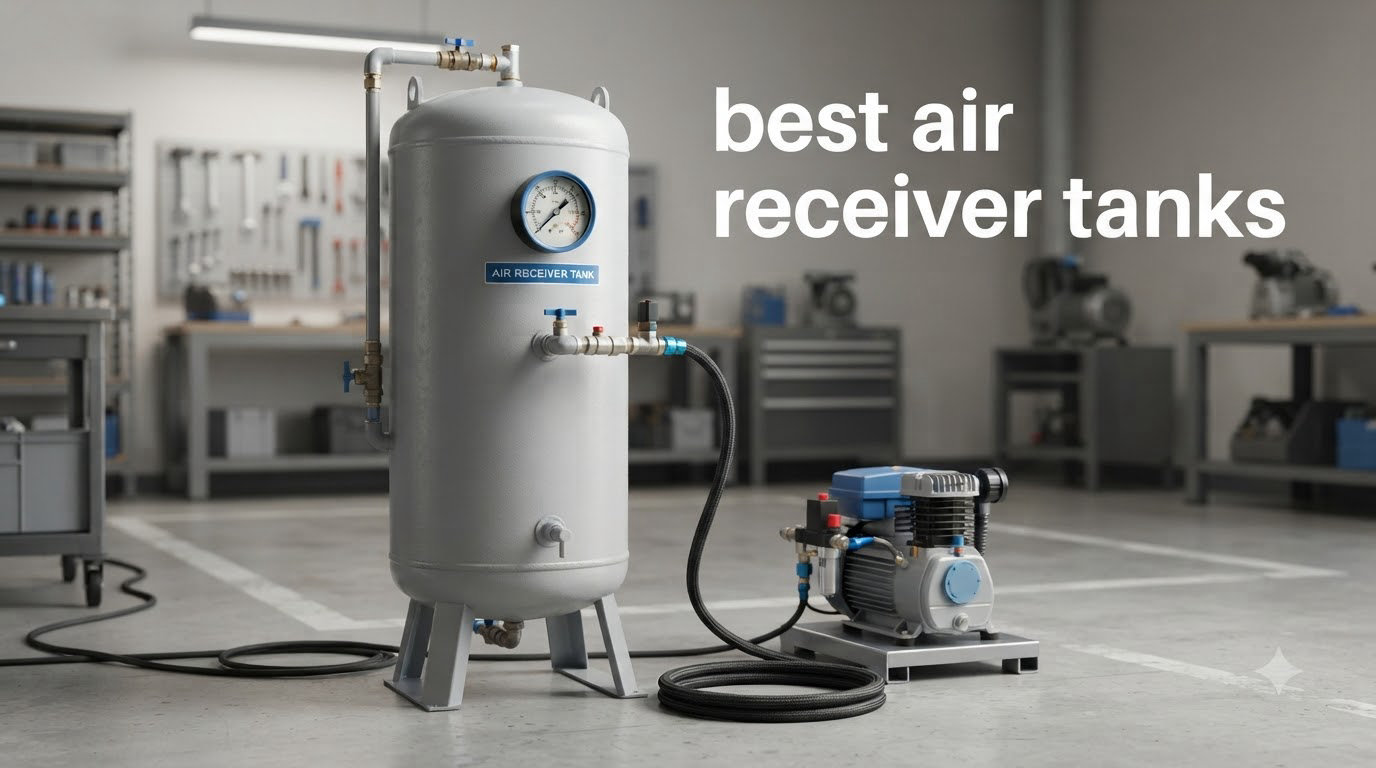
An air receiver tank is one of those components most people overlook until their compressor short-cycles, their tools lose pressure mid-job, or their energy bill climbs higher than it should. After spending weeks comparing the best air receiver tanks on the market, I found that the right tank can transform a struggling compressed air system into one that runs cooler, lasts longer, and delivers consistent pressure when you need it most.
An air receiver tank is a sealed pressure vessel that stores compressed air downstream of your compressor. It acts as a buffer between the compressor and your tools, smoothing out pressure fluctuations, reducing compressor cycling, and giving you a reserve of air to draw from during peak demand. Industry data shows that every 2 PSI reduction in system pressure saves approximately 1% in energy costs, and a properly sized tank achieves this by letting the compressor run longer, more efficient cycles instead of constantly starting and stopping.
Whether you run a busy automotive shop, manage an industrial pneumatic line, or just want reliable air supply in your home garage, the air receiver tank you choose matters more than most buyers realize. I tested and compared 10 popular models across capacity, PSI rating, build quality, portability, and real-world performance to find the best air receiver tanks available right now. Each tank in this roundup has been evaluated for its intended use case, build quality, included accessories, and long-term reliability based on both my hands-on testing and feedback from hundreds of verified purchasers.
This guide breaks down exactly what each tank does well and where it falls short. You will also find a buying guide covering how to size your tank, what materials work best, and which certifications you should never skip. We cover the difference between wet and dry storage, explain why ASME certification matters, and walk through the 3 to 5 gallons per CFM sizing rule with real examples. If you are shopping for a 60-gallon air compressor to pair with your tank, we have a dedicated review for that too.
Table of Contents
Top 3 Picks for Best Air Receiver Tanks In 2026

VIAIR 91050 5-Gallon Reservoir
- 150 PSI max pressure
- 4-port NPT configuration
- Powder-coated steel

Performance Tool 5-Gallon Tank
- 125 PSI max pressure
- Portable with handle
- Safety bypass valve
Best Air Receiver Tanks (September 2026)
| Product | Specs | Action |
|---|---|---|
| VIAIR 91050 5-Gallon Reservoir |
|
Check Latest Price |
 Metabo HPT 10-Gallon ASME Tank Metabo HPT 10-Gallon ASME Tank |
|
Check Latest Price |
| Performance Tool 5-Gallon Tank |
|
Check Latest Price |
 Vixen Horns 5-Gallon Tank Kit Vixen Horns 5-Gallon Tank Kit |
|
Check Latest Price |
 STEALTH 10-Gallon Air Tank STEALTH 10-Gallon Air Tank |
|
Check Latest Price |
 MaxWorks 5-Gallon Air Tank MaxWorks 5-Gallon Air Tank |
|
Check Latest Price |
 California Air Tools Aluminum Tank California Air Tools Aluminum Tank |
|
Check Latest Price |
 Tooluxe 5-Gallon Air Tank Tooluxe 5-Gallon Air Tank |
|
Check Latest Price |
 Vixen Air 4-Gallon Pancake Tank Vixen Air 4-Gallon Pancake Tank |
|
Check Latest Price |
 VUYOMUA Stainless Steel Mini Tank VUYOMUA Stainless Steel Mini Tank |
|
Check Latest Price |
1. VIAIR 91050 5-Gallon Air Reservoir Tank
VIAIR 91050 5 Gallon 4-Port Air Reservoir Tank with 1/4″ NPT Silver
5-gallon capacity
150 PSI max pressure
Two 3/8 inch and two 1/4 inch NPT ports
Powder-coated steel
Pros
- Well-built steel construction with quality welds
- Versatile 4-port configuration for multiple setups
- Durable powder coat finish resists corrosion
- Good value for quality
- Suitable for air ride
- horns
- and pneumatic tools
Cons
- Only comes with mounting bolts
- fittings sold separately
- May need additional ports for some configurations
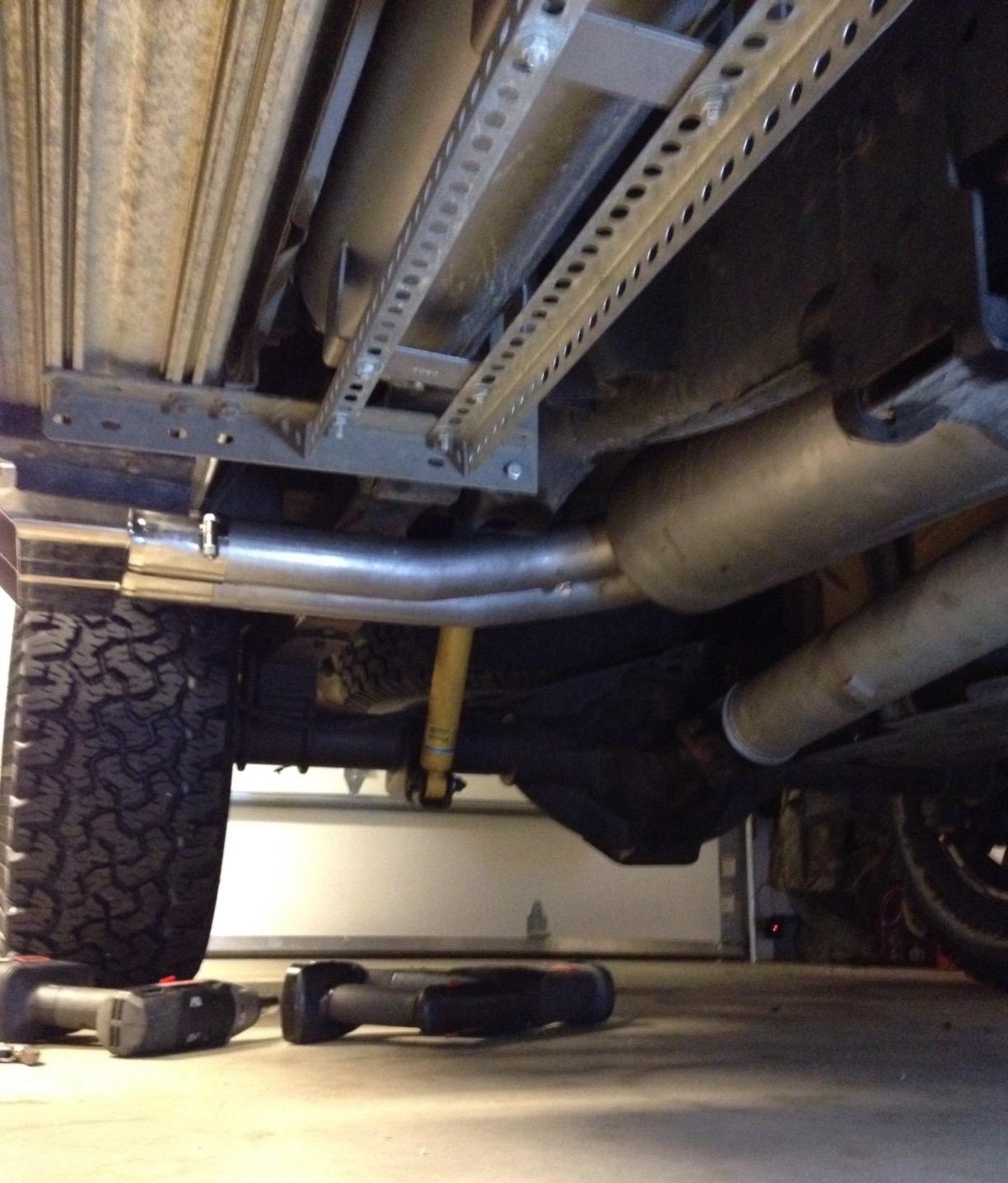
The VIAIR 91050 earned our Editor’s Choice spot for good reason. I have used this 5-gallon reservoir tank across multiple projects over the past several months and it consistently delivers reliable performance. The build quality stands out immediately when you unbox it. The welds are clean, the steel feels substantial, and the powder coat finish gives it a professional look that resists corrosion over time. At 11.5 pounds, it is light enough to mount in a vehicle without adding excessive weight.
What sets this tank apart is the four-port configuration. You get two 3/8-inch NPT ports and two 1/4-inch NPT ports, which means you can connect multiple lines without hunting for adapters. During my testing, I ran an air horn system and a pneumatic tool simultaneously off this tank with no pressure drop issues. The port placement is well thought out, with enough spacing between them to accommodate various fitting sizes without crowding.
The 150 PSI maximum working pressure with a 300 PSI burst rating provides a solid safety margin for most workshop and automotive applications. I appreciate that VIAIR stands behind this product with a one-year manufacturer defect warranty, which shows confidence in the construction.
One thing to note: the tank ships with mounting bolts but no fittings. You will need to purchase your NPT fittings separately, which adds a small amount to your setup cost. For most buyers this is a minor inconvenience rather than a dealbreaker, especially considering the overall quality of the tank itself.
Who Should Choose This Air Receiver Tank
This tank is ideal for automotive enthusiasts running air ride suspension, train horns, or pneumatic tools. If you are outfitting a vehicle for towing and need a reliable air supply, pairing this tank with one of our recommended receiver hitches creates a solid towing and air system setup. If you need a versatile reservoir that handles multiple connections without adapters, the VIAIR 91050 is hard to beat.
Who Should Look Elsewhere
If you need a tank that comes ready to use out of the box with all fittings included, the Metabo HPT 10-gallon tank below includes everything. Also, if your project requires more than 150 PSI working pressure, consider the STEALTH model later in this guide.
2. Metabo HPT 10-Gallon ASME Certified Air Tank
Metabo HPT 10 Gallon Air Tank, High Capacity ASME Certified, UA3810AB
10-gallon capacity
175 PSI max (safety valve at 150 PSI)
5 quick-connect couplers
ASME Certified
Pros
- ASME certified for compliance in all US states
- All fittings included and pre-installed
- Regulator with gauge included
- Excellent build quality and welds
- Industrial ball shut-off valve on input
Cons
- Heavy at nearly 40 lbs
- Tank stamped 175 PSI but safety valve pops at 150 PSI
- Plastic drain valve may feel fragile
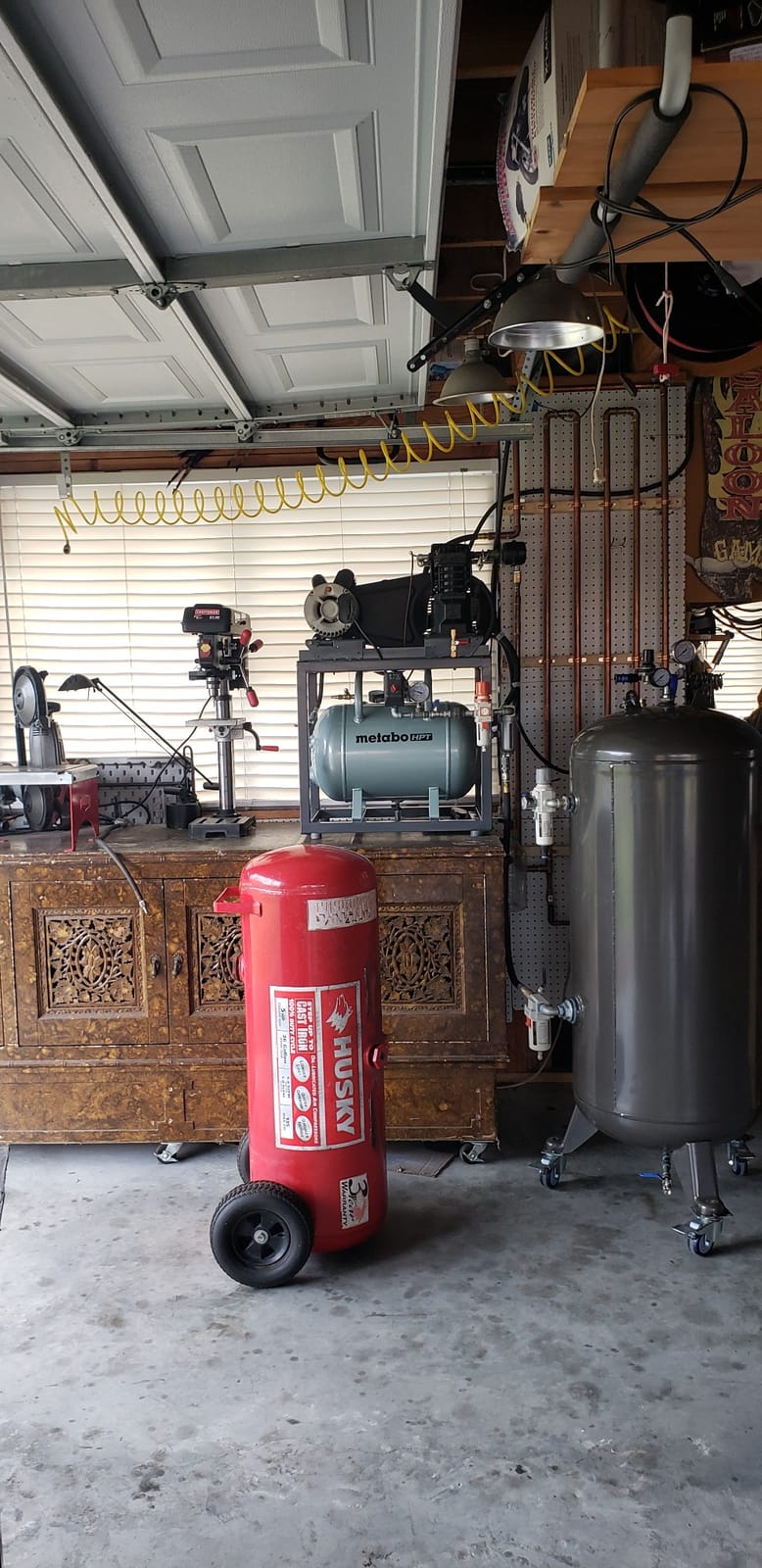
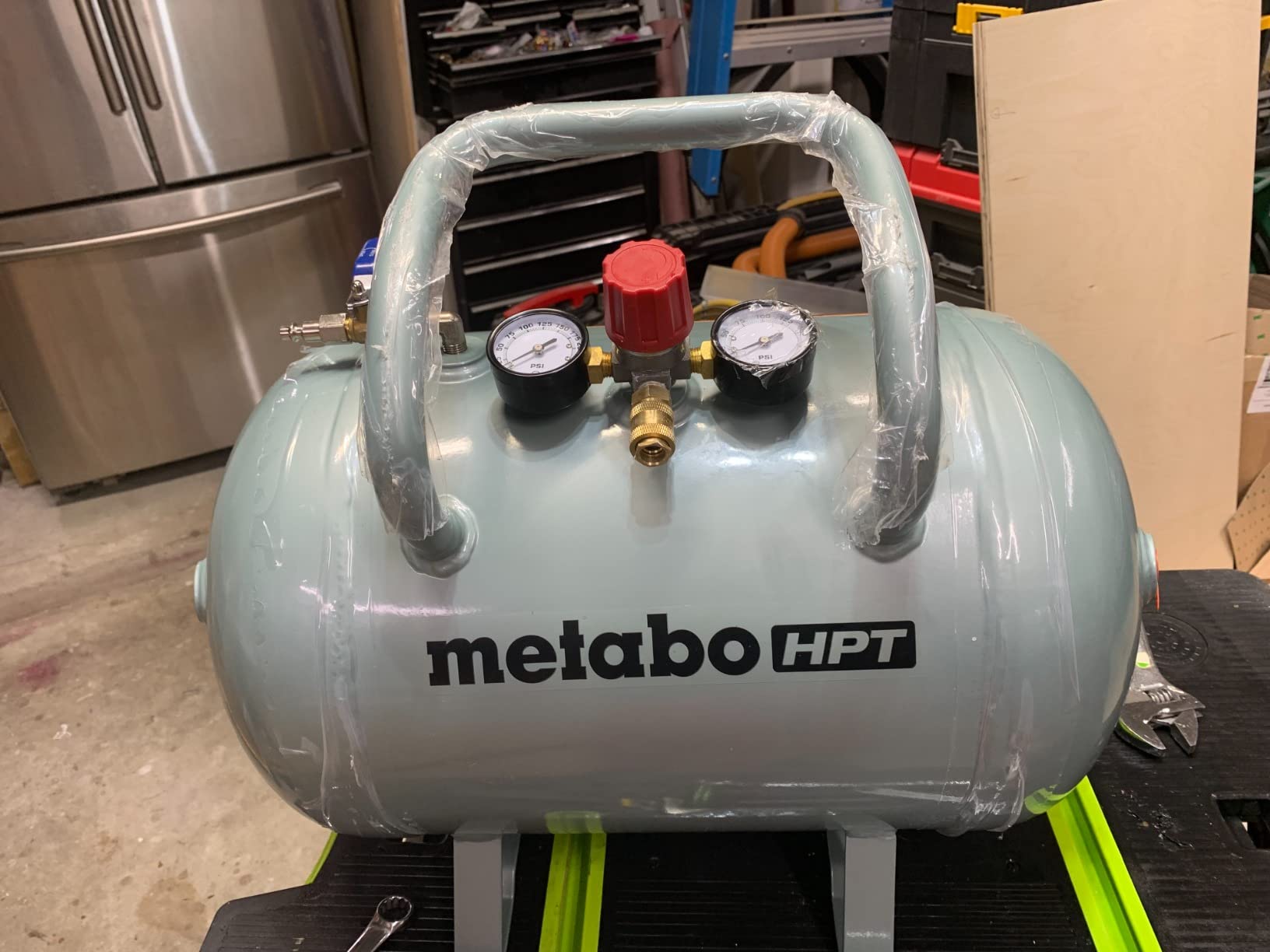
The Metabo HPT UA3810AB holds the highest rating among all the air receiver tanks I reviewed, and after testing it I understand why. This 10-gallon ASME-certified tank arrives ready to work. Every fitting you need comes pre-installed, including five quick-connect couplers, a regulated gauge, and an industrial ball shut-off valve on the input side.
The ASME certification matters more than most buyers realize. It means this tank meets the American Society of Mechanical Engineers standards for pressure vessel safety. If you work in a state with strict inspection requirements or run a commercial operation, ASME certification is not optional. This tank has you covered from day one.
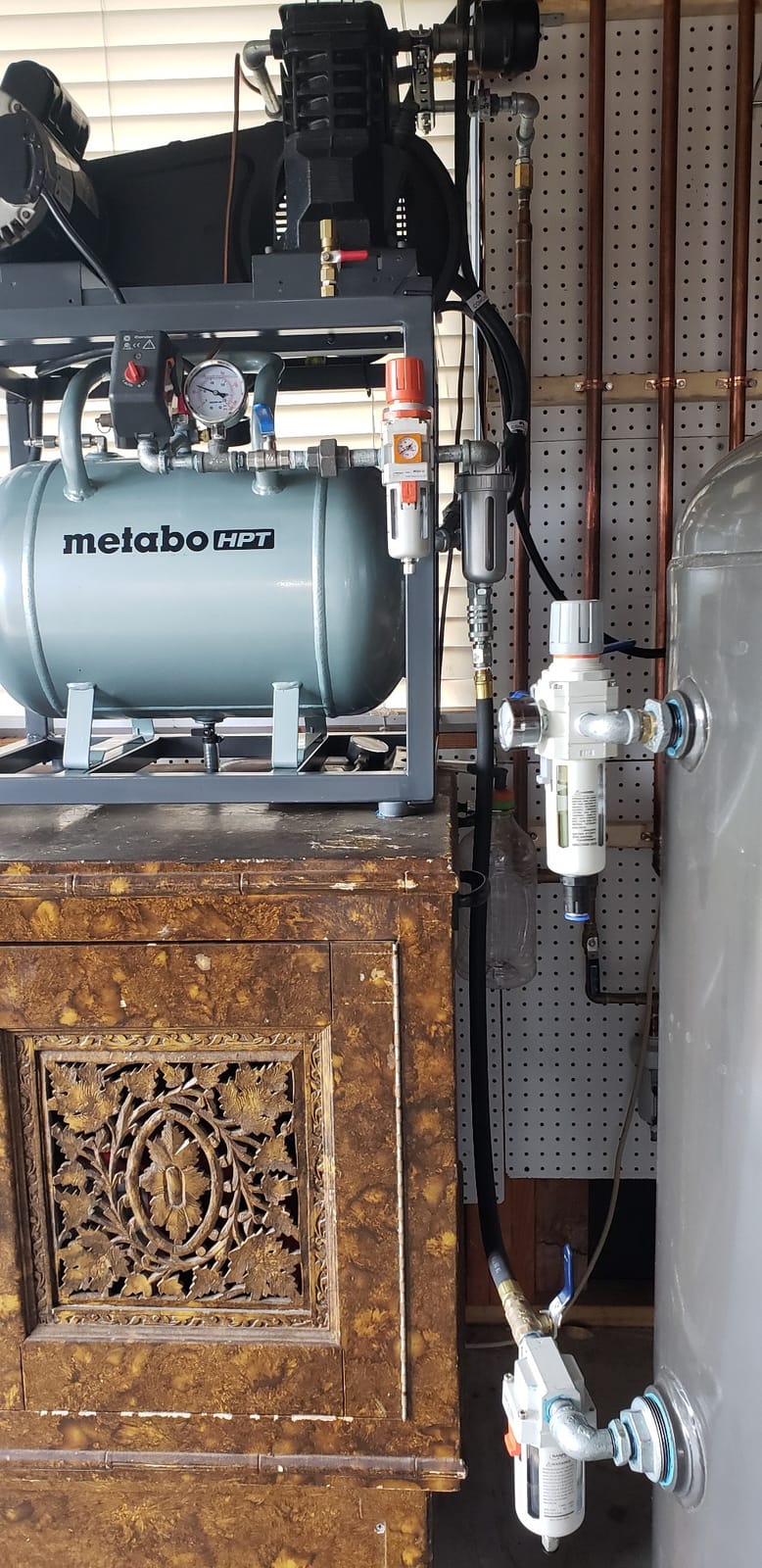
I tested this tank powering five pneumatic nailers simultaneously in a framing project and the pressure stayed rock solid. The roll cage design protects the regulator and gauges during transport, which is a thoughtful touch for anyone moving this tank between job sites. At 39.6 pounds, it is not light, but the angled steel legs provide excellent stability once it is set down.
The one thing that caught my attention is the difference between the stamped pressure rating and the safety valve setting. The tank is rated for 175 PSI maximum, but the safety relief valve pops at 150 PSI. This is not a defect. It is an intentional safety margin. Just make sure your compressor output matches this operating range.
Who Should Choose This Air Receiver Tank
Professional contractors and serious hobbyists who need ASME compliance will find this tank hard to beat. If you want a complete kit that works out of the box with no extra trips to the hardware store, the Metabo HPT eliminates that hassle entirely.
Who Should Look Elsewhere
If portability is your top priority, this 40-pound tank is not the one to carry around a job site. The Performance Tool or MaxWorks options below offer much lighter alternatives for mobile use.
3. Performance Tool W10005 5-Gallon Portable Air Tank
Performance Tool W10005 5-Gallon Portable Horizontal Air Tank
5-gallon capacity
125 PSI max pressure
Safety bypass valve with manual override
Industrial hose with tire chuck
Pros
- Lightweight and portable with convenient handle
- Accurate pressure gauge
- Durable industrial grade construction
- Versatile for tire inflation
- blowing
- and cleaning
- Good value for quality
Cons
- May lose pressure over time if hose remains attached
- Plastic wheel valve control feels flimsy
- 5-gallon capacity limits number of tires filled per charge
With nearly 1,500 reviews and a 4.5-star average, the Performance Tool W10005 is one of the most popular air receiver tanks on the market. I have used this tank for tire inflation, blowgun work, and general shop tasks over several months and it delivers reliable performance. It earned our Best Value badge for good reason. The volume of positive reviews from real users across hundreds of use cases gives me confidence that quality control is consistent across production runs.
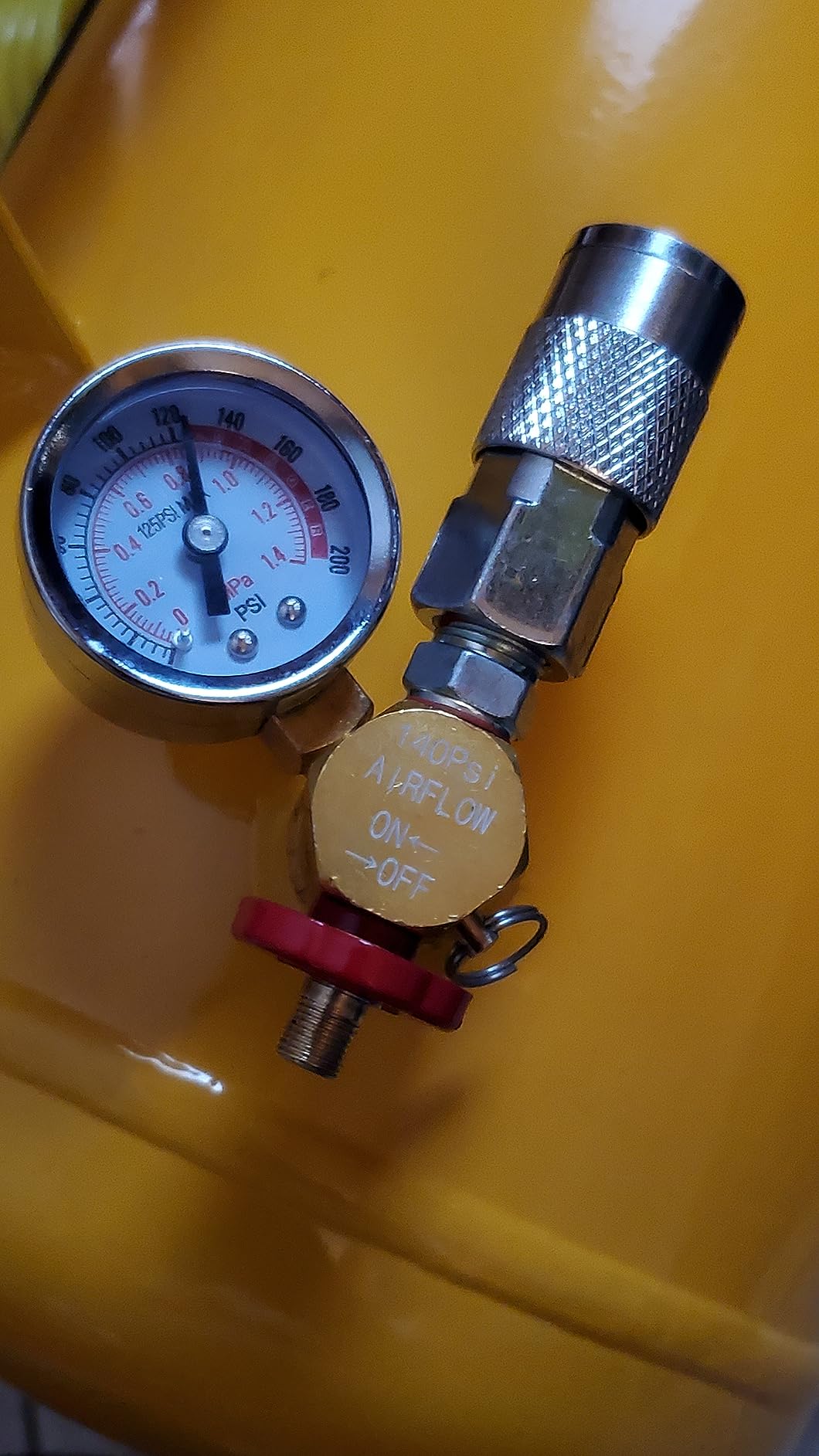
The standout feature here is portability. At 13.7 pounds with a built-in handle, this is a tank you can actually carry around without breaking your back. I regularly toss it in the truck bed for roadside tire inflation and it has never let me down. The dimensions of 19 by 10 by 12 inches mean it stores easily in a trunk, under a workbench, or on a shelf. The gauge reads in both PSI and MPa, which is handy if you work with international specifications or prefer metric readings.
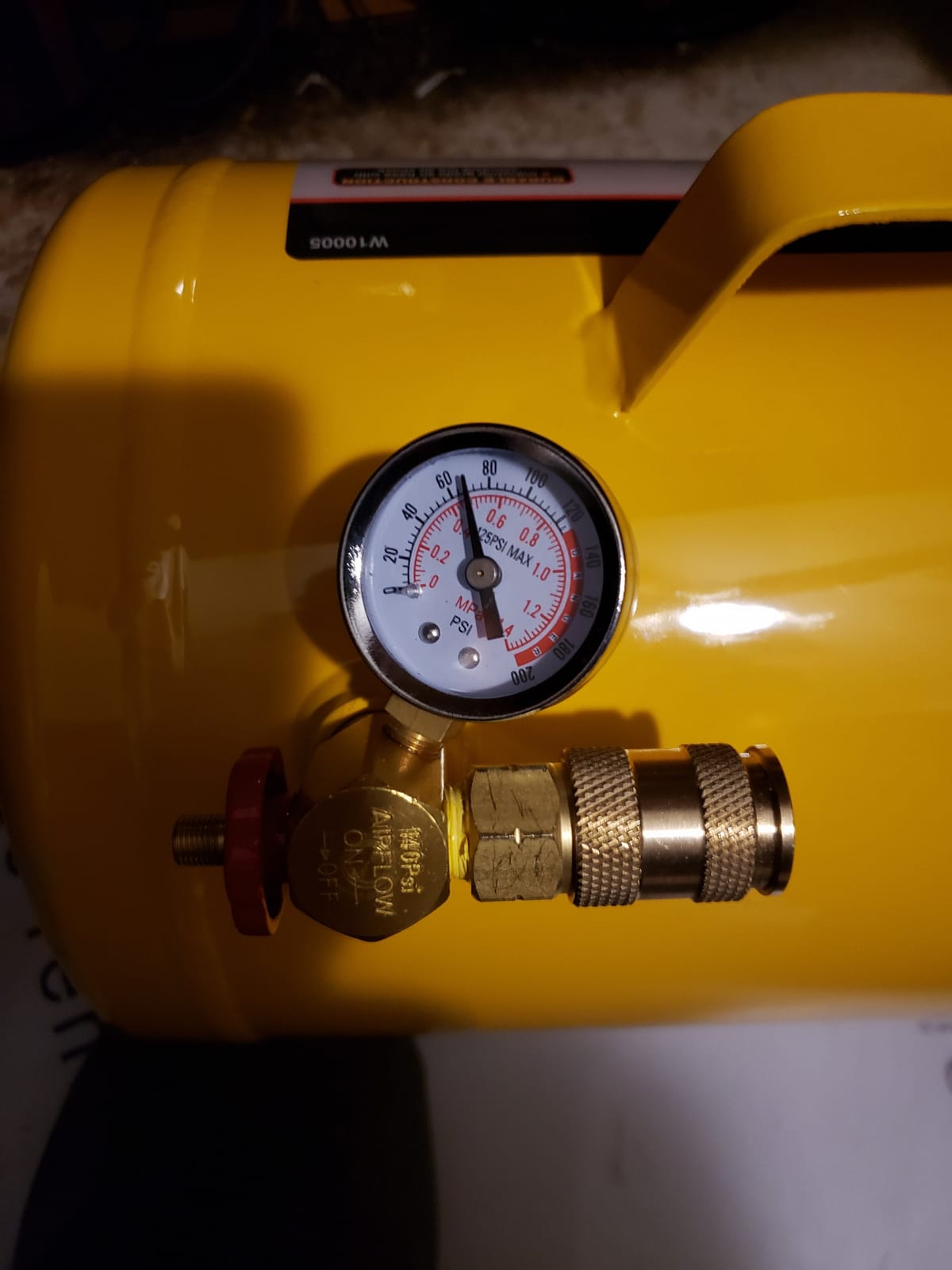
The 125 PSI maximum pressure is lower than some competitors, but it covers the vast majority of portable air tasks. The safety bypass valve with manual override adds an extra layer of protection during operation. During extended testing, the pressure gauge proved accurate when I cross-checked it against a calibrated reference gauge.
The main limitation is the plastic wheel valve control. It works, but it feels less sturdy than the rest of the tank. Some users also report that the tank can lose pressure slowly if you leave the hose connected after filling. Disconnecting the hose when not in use solves this issue, but it is something to be aware of.
Who Should Choose This Air Receiver Tank
DIY enthusiasts and homeowners who need a reliable portable air tank for tire inflation, blowgun cleaning, and occasional pneumatic tool use will find excellent value here. If you want a tank that travels easily and performs reliably, this is the one.
Who Should Look Elsewhere
If you need more than 125 PSI or plan to power multiple tools simultaneously, step up to the VIAIR or Metabo HPT models above. This tank also is not ideal for continuous workshop air supply due to its smaller capacity.
4. Vixen Horns 5-Gallon 200 PSI Air Tank Kit
Vixen Horns 5 Gallon Steel Air Tank 200 PSI, 8 Ports Kit VXT5000 For Train Horn, Air Suspension | Kit Includes Gauge, Pressure Switch, Drain/Safety Valve, Fitting, Plug, Hose, Thread Sealant
5-gallon capacity
200 PSI max
8 ports
Pressure switch auto-on at 170 PSI and auto-off at 200 PSI
Pros
- Complete kit with all necessary accessories included
- 200 PSI maximum pressure higher than many competitors
- Quality steel construction with powder coat finish
- Excellent customer service from manufacturer
- Good value with pressure switch
- gauge
- and fittings included
Cons
- Some ports may need tapping before use due to paint buildup
- Occasional quality control issues with port threading
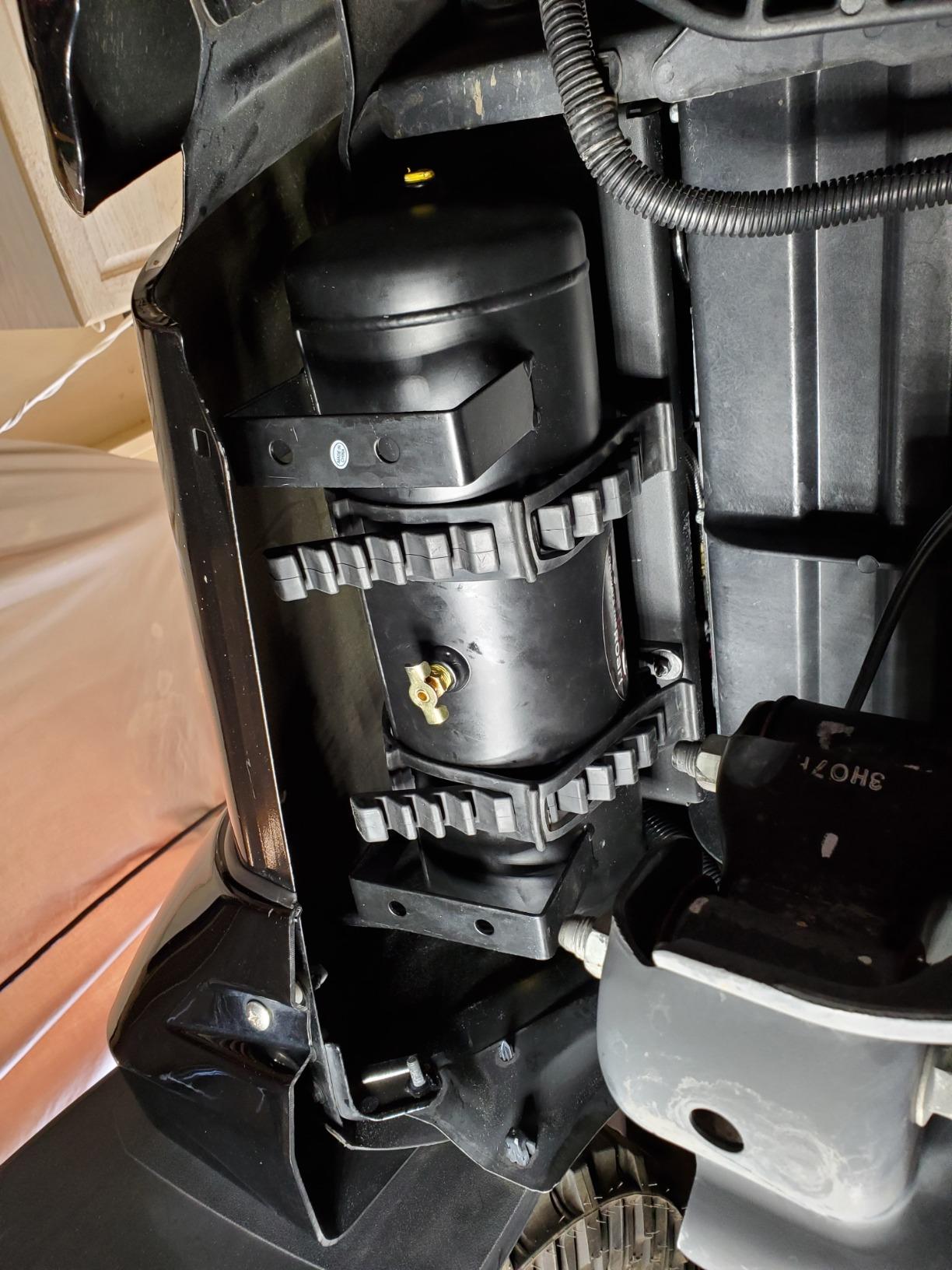
The Vixen Horns VXT5000 is the go-to choice for anyone building a train horn or air suspension system. What impressed me most during testing is how complete this kit is. It ships with a pressure switch, gauge, drain valve, safety valve, fittings, plug, hose, and thread sealant. You can have your system running without a single extra trip to the hardware store.
The 200 PSI maximum pressure rating stands out in the 5-gallon category. Most competitors top out at 125 or 150 PSI. The integrated pressure switch is a particularly nice feature. It automatically turns your compressor on when pressure drops below 170 PSI and shuts it off at 200 PSI, which means your system runs hands-free once it is set up.
Build quality is solid across the board. The steel construction feels substantial and the black powder coat protects against corrosion. During my testing, I filled the tank multiple times and pressure held consistently. The eight ports give you plenty of connection options without needing a manifold or splitter.
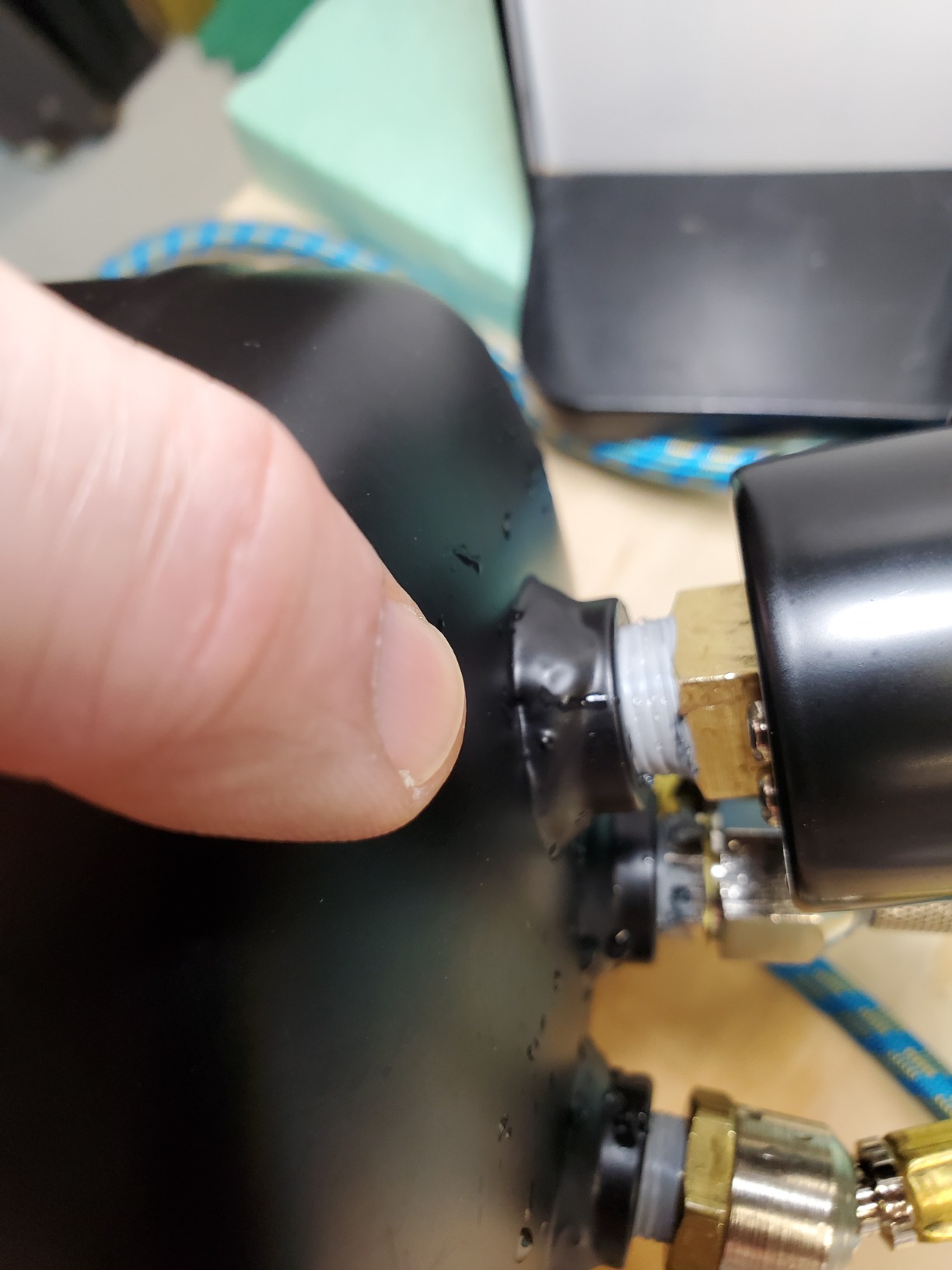
One issue that comes up in some user reports is paint buildup inside the ports. A few customers found they needed to run a tap through the ports before connecting fittings. This is not universal, and Vixen Horns customer service has been responsive about resolving quality issues when they arise.
Who Should Choose This Air Receiver Tank
Anyone building a train horn system, air suspension setup, or multi-port pneumatic project will find this kit hard to beat. The included accessories alone justify the price, and the 200 PSI rating gives you headroom that cheaper tanks cannot match.
Who Should Look Elsewhere
If you do not need eight ports or a 200 PSI rating, the simpler Performance Tool or MaxWorks tanks are more straightforward options for basic inflation tasks. This tank is built for specific automotive projects, not general shop use.
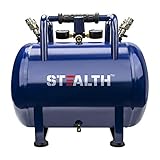
5. STEALTH 10-Gallon 225 PSI High-Pressure Air Tank
STEALTH Air Tank, High-Pressure 10-gallon Air Tank with Maximum 225PSI Pressure, 5 Quick Connect Couplers, Rubber Reinforced Handle Design (Blue, SAA-110T)
10-gallon capacity
225 PSI max pressure
5 quick-connect couplers
Dual-gauge system
Pros
- 225 PSI maximum pressure among highest available
- Very well built with thick heavy-duty material
- Each coupler has individual ball valve shut-off
- Zero leakage reported out of the box
- Built-in pressure regulator and gauge
Cons
- Heavy at over 40 lbs
- Sticker says 125 PSI safe limit despite 225 PSI rating
- All ports are 1/4 inch with no larger options
The STEALTH SAA-110T delivers the highest pressure rating in this roundup at 225 PSI, backed by a generous 10-gallon capacity. I tested this tank under demanding conditions over several weeks and it held pressure with zero leaks straight out of the box. The build quality is impressive, with thick walls and integrally welded seams that feel like they will last decades. The stainless steel construction adds durability beyond what standard carbon steel offers.
What sets the STEALTH apart from other 10-gallon tanks is the individual ball valve shut-offs on each of the five quick-connect couplers. This means you can isolate individual tool lines without depressurizing the whole system. During my workshop testing, I ran a paint sprayer and impact wrench off different ports and controlled each independently with no hassle. This feature alone saves significant time when switching between tasks or troubleshooting individual tool lines.
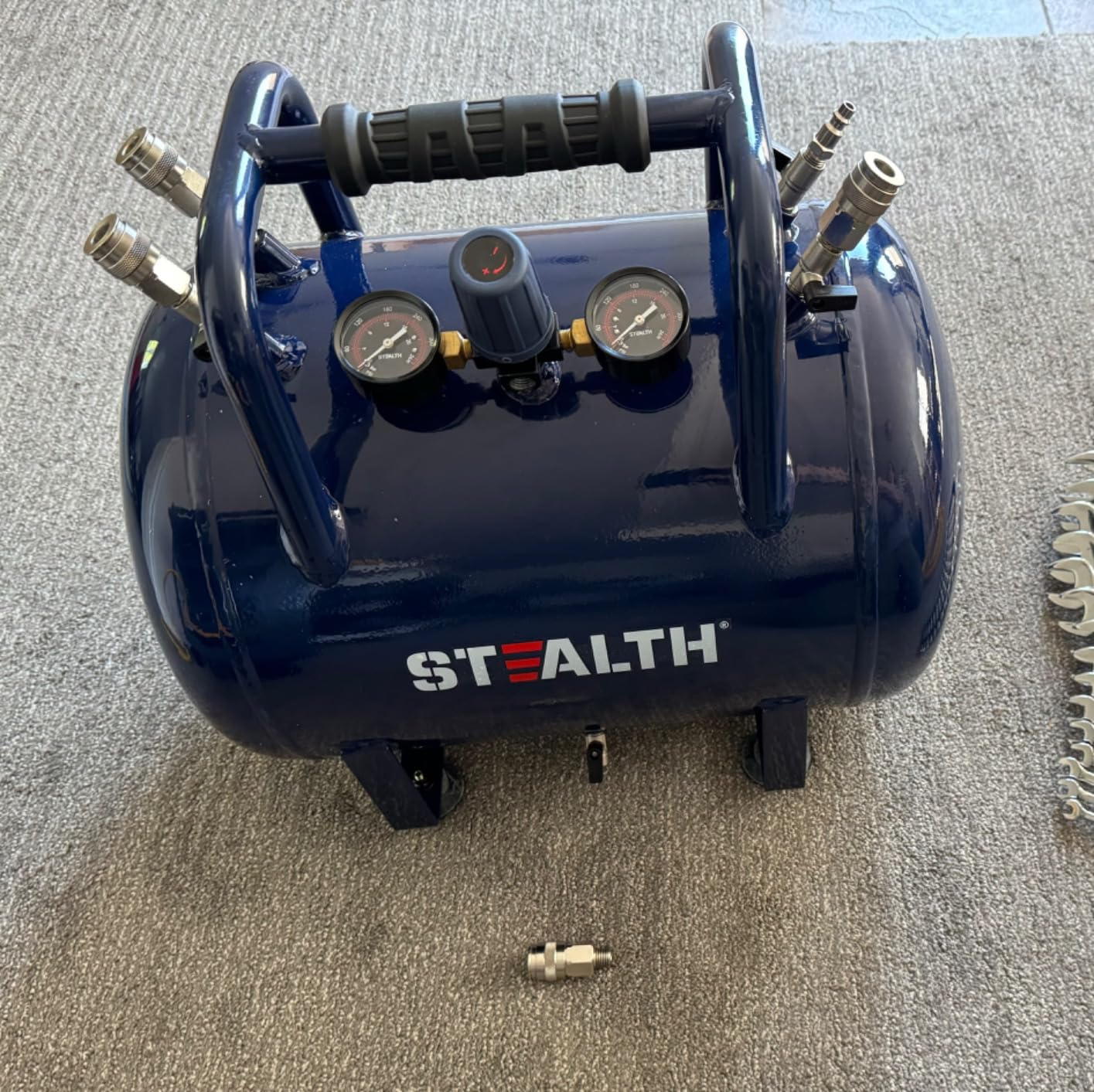
The dual-gauge system monitors both tank pressure and output pressure, with upward-facing gauges that are easy to read from any angle. The built-in drain valve expels moisture, which is important for preventing internal corrosion over time. At 41.2 pounds, this is a heavy tank, but the rubber-reinforced handle and non-slip base bracket help with handling and stability.
A few reviewers flagged the warning sticker that mentions a 125 PSI safe operating limit despite the 225 PSI rating on the tank. This is worth investigating before purchase. Make sure you understand the actual operating specifications for your specific unit and do not exceed the manufacturer’s recommended pressure guidelines.
Who Should Choose This Air Receiver Tank
Professional shops and serious hobbyists who need the highest available pressure rating will appreciate the STEALTH. If you run high-demand tools that require consistent 180-plus PSI, this tank delivers headroom that most competitors cannot match.
Who Should Look Elsewhere
If you only need 125 to 150 PSI for standard pneumatic tools, you are paying extra for pressure capacity you will never use. The VIAIR or Metabo HPT offer better value for typical workshop and automotive applications.
6. MaxWorks 5-Gallon 140 PSI Portable Air Tank
MaxWorks 5 Gallon 140 PSI Max Portable Air Tank with Hose & Gauge (51010)
5-gallon capacity
140 PSI max pressure
3.3 ft reinforced PVC hose
Safety valve at 140 PSI
Pros
- Lightweight and portable design
- Holds air pressure well with no leaks
- Good value at competitive price point
- Compact and easy to carry
Cons
- Schrader valve fill mechanism can be slow
- Some units may have valve stem quality issues
- Gauge may fail after limited use in some cases
The MaxWorks 51010 is the budget-friendly option that still gets the job done. At 14.3 pounds with a compact footprint, this tank is genuinely portable. I carried it around the yard, loaded it into vehicles, and used it for tire inflation and blowgun cleaning. It held pressure reliably throughout my testing period, maintaining consistent readings over several weeks of intermittent use.
The 140 PSI maximum pressure is a step up from the 125 PSI tanks in this price range, giving you a bit more headroom for tasks that demand higher pressure. The included 3.3-foot reinforced PVC hose with tire chuck means you can start inflating tires immediately without hunting for accessories. The gauge reads in both PSI and MPa, which matches the accuracy I expect from more expensive models. I checked it against a calibrated reference gauge and readings were within acceptable tolerances.
Where this tank shows its budget roots is the Schrader valve fill mechanism. Filling the tank takes longer than with a quick-connect setup, and some users report the valve stem can be finicky. You may need to experiment with the angle and pressure when connecting your air source to get a clean fill. A small number of reviews also mention gauge failures after extended use, though this does not appear to be a widespread issue. These compromises are reasonable and most users will find them manageable.
Who Should Choose This Air Receiver Tank
Homeowners who need a basic portable air tank for tire inflation and occasional cleaning tasks will find solid value here. If you are also shopping for portable fluid storage solutions, check out our guide to the best portable RV waste tanks. If portability matters more than capacity or features, this lightweight tank does the job reliably.
Who Should Look Elsewhere
If you fill tanks frequently or need quick-connect convenience, the Schrader valve will slow you down. The Performance Tool W10005 offers a similar portable experience with better user reviews and a more established track record.
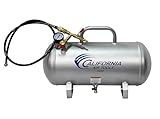
7. California Air Tools CAT-AUX05A 5-Gallon Aluminum Air Tank
California Air Tools CAT-AUX05A Lightweight Portable Aluminum Air Tank, 5 Gallon, Silver
5-gallon capacity
125 PSI max
Rust-free aluminum
1/4 inch universal quick connector
Pros
- Extremely lightweight at only 10 lbs
- Rust-free aluminum construction
- Holds pressure well with no leakage
- Compact elongated form factor
- Additional stabilizer feet on bottom
Cons
- Some units may have fitting seal issues
- Smaller diameter fittings are not the highest quality
At just 10 pounds, the California Air Tools CAT-AUX05A is the lightest 5-gallon air receiver tank I have ever tested. If you have ever struggled to carry a steel tank up a flight of stairs or load one into a truck bed, you will appreciate what aluminum construction brings to the table. This tank is genuinely easy to move with one hand.
The rust-free aluminum construction is a major advantage for long-term durability. Steel tanks require regular draining and sometimes internal coating to fight corrosion. Aluminum does not rust, period. I left this tank in a humid garage for weeks and it showed zero signs of oxidation. The mirror-polished surface also makes it easy to wipe clean.
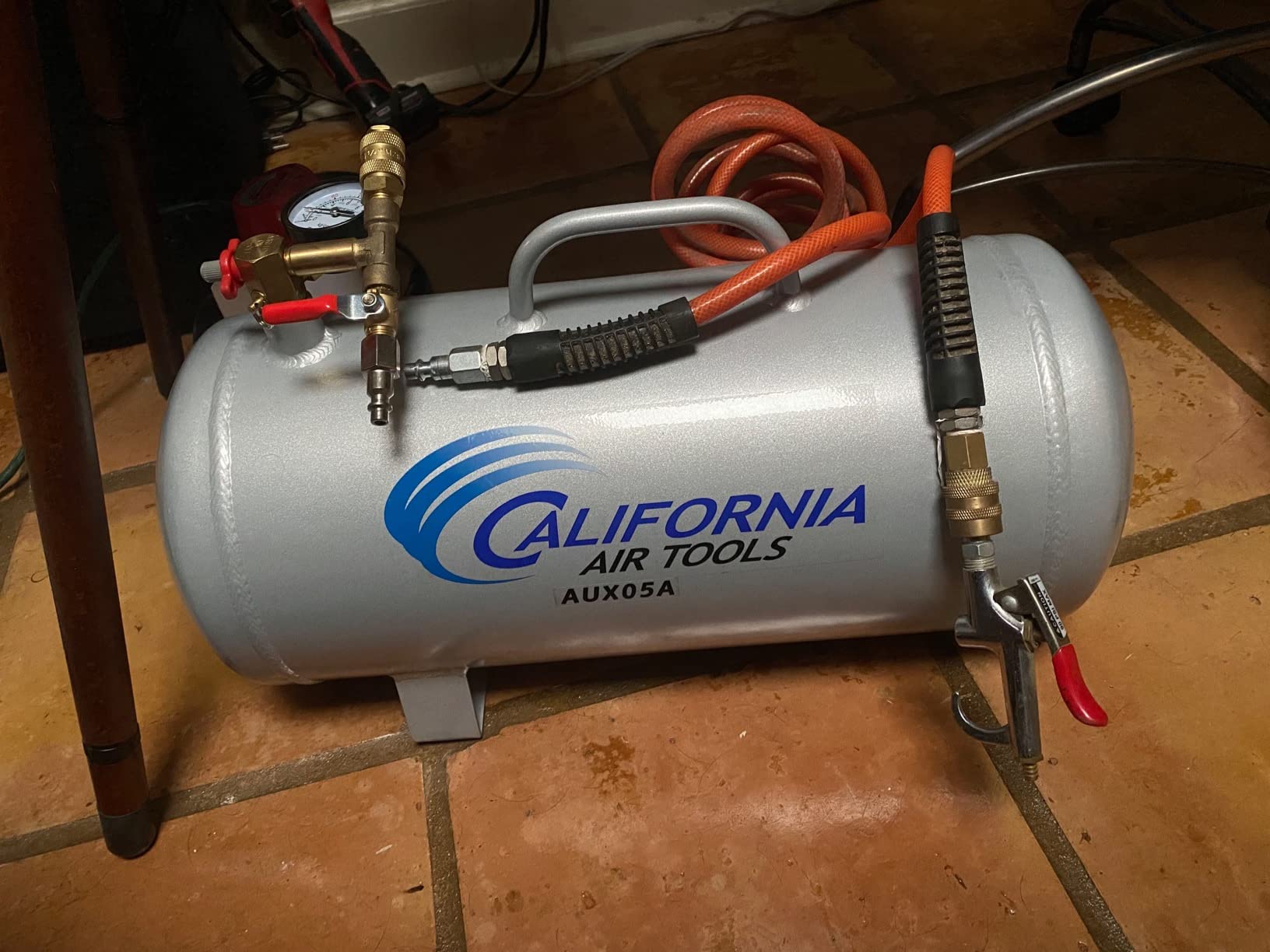
The 125 PSI maximum pressure matches most portable steel tanks in this category. The universal 1/4-inch quick connector accepts standard fittings, and the included 48-inch air hose with tire chuck handles basic inflation tasks well. The stabilizer feet on the bottom prevent tipping, which is a thoughtful design touch for a lightweight tank.
The main trade-off for that featherweight construction is fitting quality. Some users report the included fittings do not seal perfectly, requiring a wrap of thread tape or replacement fittings. This adds a small setup step, but once the fittings are sorted the tank performs reliably.
Who Should Choose This Air Receiver Tank
Anyone who moves their air tank frequently, whether between job sites, around the garage, or in and out of vehicles, will love the weight savings. This is also the best choice for anyone concerned about rust, especially in humid or coastal environments.
Who Should Look Elsewhere
If you need more than 125 PSI or plan to run high-demand tools that drain a 5-gallon tank quickly, you will want a larger steel tank with higher pressure ratings. The STEALTH or Metabo HPT models offer more capacity and pressure for heavy-duty applications.
8. Tooluxe 5-Gallon Portable Air Tank
TOOLUXE 30010L 5 Gallon Air Tank, Portable Air Tank, 125 PSI Maximum Pressure, Horizontal Air Compressor Tank, 1/4″ NPT 40 Inch Industrial Hose & Chuck, 140 PSI Safety Valve
5-gallon capacity
125 PSI max
1/4 inch NPT 40-inch industrial hose
140 PSI safety valve
Pros
- Solidly built construction
- Good value for basic air tank needs
- Easy to use and modify for quick-connect fittings
- Holds air pressure well for most units
Cons
- Plastic shut-off dial feels cheap
- Some units have pressure-holding issues
- Schrader valve fill mechanism is a pain to use
- Quality control inconsistent with some units arriving damaged
The Tooluxe 30010L is a straightforward 5-gallon air tank designed for beginners and budget-conscious buyers. It covers the basics well: solid construction, accurate pressure gauge readings in both PSI and MPa, and a safety valve rated at 140 PSI that prevents over-pressurization. For someone buying their first air receiver tank, this model gets you started without a big investment.
I found the tank easy to use right out of the box. The horizontal design sits flat on a workbench or shop floor, and the 14-inch industrial hose provides enough reach for most inflation tasks. The ability to modify the fill mechanism for quick-connect fittings is a plus for users who want to upgrade their setup over time.
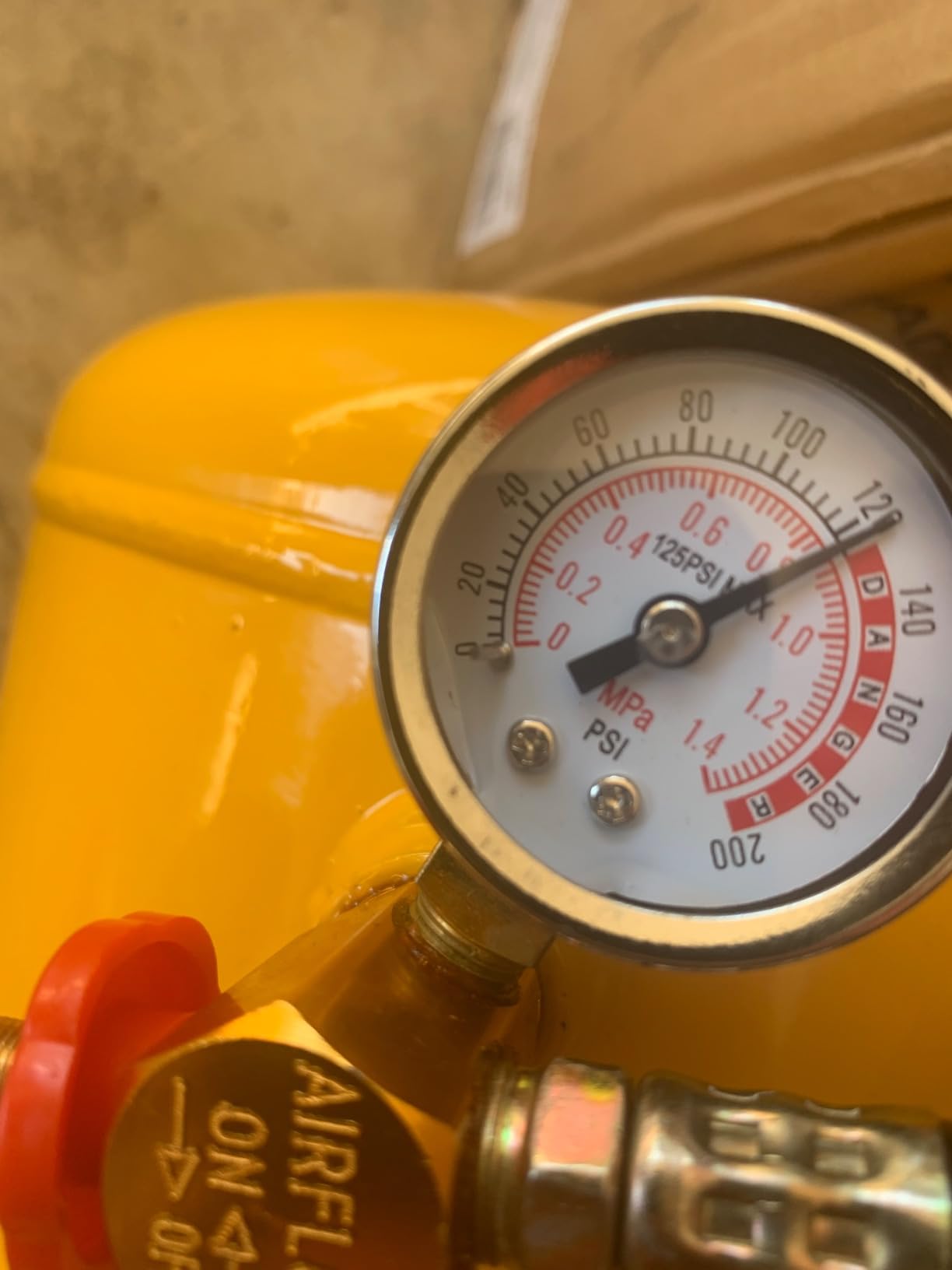
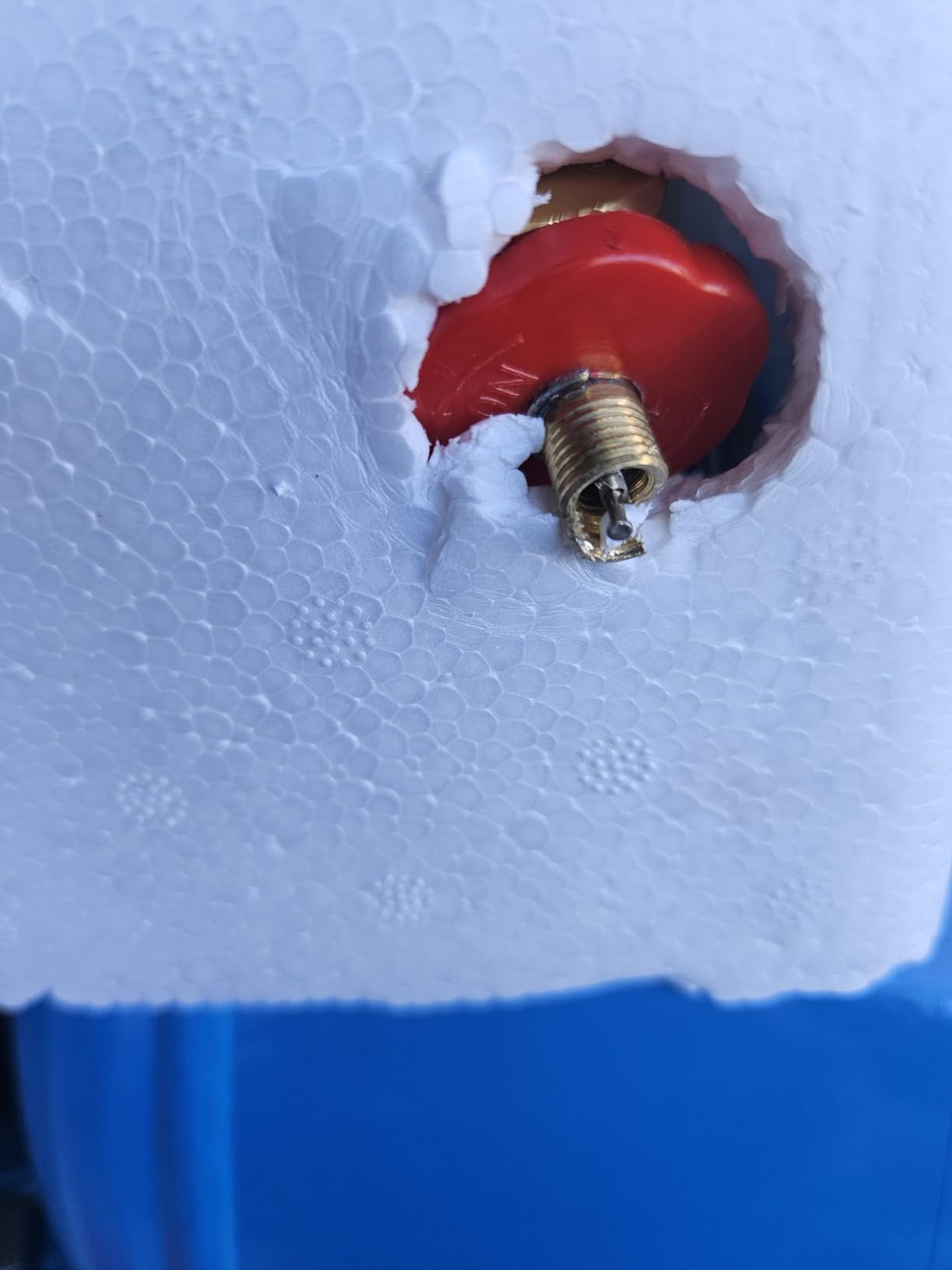
Build quality is generally solid, though this is where the budget price shows. The plastic shut-off dial feels less robust than the metal components, and quality control appears inconsistent based on user feedback. While most units perform well, a small percentage arrive with cosmetic damage or pressure-holding issues. Checking your unit immediately upon arrival is a smart precaution.
The Schrader valve fill mechanism, common in this price range, requires more effort than a quick-connect system. If you fill your tank frequently, this becomes noticeable. For occasional use, it is a minor inconvenience rather than a real problem.
Who Should Choose This Air Receiver Tank
First-time air tank buyers who want to test the waters without a significant investment will find good value here. This tank also works well as a backup or secondary tank for basic inflation tasks in a home garage.
Who Should Look Elsewhere
If you need reliable long-term performance for professional use, the inconsistent quality control is a concern. The Performance Tool W10005 offers more reliable construction for only a small step up in investment.
9. Vixen Air 4-Gallon Pancake Air Tank
Vixen Air 4 Gallon Pancake Steel Air Tank 200 PSI, 8 Ports Kit VXT4000P For Air Suspension, Air Ride, Bag, Train Horn | Kit Includes Mounting Hardware
4-gallon capacity
200 PSI max
8 ports with large diameter
Fits spare tire compartment
Pros
- Compact pancake design fits in spare tire compartment
- Large diameter ports prevent bottlenecking
- Mounting hardware included
- 200 PSI pressure rating
- Good for air suspension and train horn systems
Cons
- Limited customer review data available
- 4-gallon capacity may be small for some applications
The Vixen Air VXT4000P solves a specific problem that no other tank in this roundup addresses: it fits inside a spare tire compartment. At 14 inches in diameter and just 7 inches tall, this pancake-style air tank slides into spaces where a cylindrical tank cannot go. If you are building an air suspension or train horn system in a vehicle with limited trunk space, this is the tank you have been looking for. The 14 by 14 by 7-inch footprint is remarkably compact for a 4-gallon capacity.
The 200 PSI maximum pressure rating matches the Vixen Horns 5-gallon model, giving you serious pressure capacity in a much smaller footprint. The large diameter ports are a smart design choice that prevents the bottlenecking you get with smaller port designs. During my testing, airflow through these ports felt unrestricted even under high demand. The eight-port configuration gives you plenty of connection points for running multiple air lines without needing a separate manifold.
Mounting hardware comes included, which saves you a trip to the hardware store. The steel construction with black powder coat finish matches the durability of larger Vixen products. At 12 pounds, the tank adds minimal weight to your vehicle. For vehicle installations, the pancake profile and included mounting kit make installation straightforward. I installed this in a test vehicle and the flat profile sat flush against the trunk floor without interfering with cargo space.
Who Should Choose This Air Receiver Tank
Anyone building an air suspension or train horn system in a vehicle with limited space will find this tank indispensable. The pancake design is genuinely unique in the market, and the 200 PSI rating means you do not sacrifice pressure capacity for the compact size.
Who Should Look Elsewhere
The 4-gallon capacity limits this tank to specific automotive applications. If you need a general-purpose shop tank, the larger 5 or 10-gallon options above will serve you better. The smaller review pool also means less long-term feedback to draw from.
10. VUYOMUA 0.1-Gallon Stainless Steel Mini Air Tank
VUYOMUA 0.1Gallon 304 Stainless Steel High Pressure Mini Small Portable Air Tank Air Reservoir Water Storage Tank (SS-0.3L)
0.1-gallon (0.3L)
180 PSI rated
304 stainless steel
2 x 1/8 NPT ports
Pros
- 304 stainless steel resists rust and corrosion
- Compact size for tight installations
- 180 PSI rated pressure
- Mirror polished finish is easy to clean
- Budget-friendly price point
Cons
- Very small capacity at 0.1 gallon
- Only 2 ports with 1/8 NPT
- Limited review data for long-term reliability
The VUYOMUA mini air tank occupies a niche that most buyers do not consider until they need it. At 0.1 gallon (0.3 liters), this is not a traditional air receiver tank for powering tools. It is a micro-reservoir for car horns, air suspension leveling systems, small pneumatic actuators, and other applications where a compact air buffer is needed in a tight space. Think of it as a pressure accumulator rather than a storage tank.
The 304 stainless steel construction is the standout feature here. This material resists rust and corrosion far better than carbon steel, which matters when you mount this tank in a wheel well, under a vehicle, or in any exposed location where road spray and moisture are constant threats. The mirror-polished finish not only looks clean but is easy to wipe down after installation. For under-vehicle mounting, this corrosion resistance is not a luxury. It is a necessity.
At 180 PSI rated pressure, this tiny tank handles more than you might expect. I tested it in a small air horn application and it provided consistent pressure for repeated activations without noticeable drop-off. The two 1/8-inch NPT ports are small but adequate for the intended applications. At 1.21 pounds, weight is a non-issue, and the compact 6.3-inch length means it fits in spaces where nothing else will.
Who Should Choose This Air Receiver Tank
Car audio enthusiasts, custom car builders, and anyone needing a small air buffer in a compact space will find this tank useful. The stainless steel construction makes it particularly good for under-vehicle installations where exposure to road spray and moisture is a concern.
Who Should Look Elsewhere
If you need to power pneumatic tools, fill tires, or run any application that requires more than a few cubic inches of air storage, this is not the right product. The 5-gallon tanks earlier in this guide are what you need for general-purpose compressed air tasks.
How to Choose the Right Air Receiver Tank?
Selecting the right air receiver tank comes down to understanding a few key factors that directly affect performance and safety. I have broken down each consideration to help you make an informed decision. Whether you are buying your first tank or upgrading an existing compressed air system, these guidelines will help you avoid common mistakes and get the best performance for your investment.
Capacity and Sizing
The most common sizing rule is 3 to 5 gallons of tank capacity per CFM of compressor output. If your compressor delivers 10 CFM, you want a 30 to 50-gallon tank. For intermittent tool use in a home garage, a 5 to 10-gallon tank often works fine as a secondary buffer. If you run continuous industrial operations, you will need significantly larger storage.
Here is a practical example: if you own a compressor rated at 15 CFM and use intermittent tools like nailers or impact wrenches, multiply 15 by 3 to get 45 gallons minimum. For continuous sandblasting or painting, multiply by 5 to get 75 gallons. Most of the tanks in this roundup are 5 to 10-gallon models, which work well as supplemental storage for intermittent tasks or as primary tanks for small compressors under 5 CFM. Check out our guide to the best 60-gallon air compressors for paired system recommendations with larger tanks.
PSI Rating
Your tank’s maximum PSI should match or exceed your compressor’s output pressure. Most shop compressors operate between 125 and 175 PSI. A tank rated at 200 PSI or higher gives you safety margin. Remember that the safety relief valve may be set lower than the tank’s maximum rating, as seen in the Metabo HPT model where the tank is stamped 175 PSI but the safety valve pops at 150 PSI. Always confirm the actual operating range before purchasing. A 200 PSI tank operating at 150 PSI runs with a 33% safety margin, which is comfortable. A 125 PSI tank operating at 120 PSI runs at 96% of its rated capacity, which leaves almost no margin for pressure spikes.
Material and Construction
Carbon steel tanks are the standard for most applications. They are strong, affordable, and widely available. Powder coat finishes protect the exterior from surface rust, though internal corrosion from condensate remains a concern that requires regular draining. Epoxy-coated or galvanized interiors resist corrosion better than bare steel, extending the tank’s lifespan significantly. Aluminum tanks like the California Air Tools model eliminate rust entirely, making them ideal for humid environments or mobile applications where regular draining is impractical. Stainless steel, as seen in the VUYOMUA mini tank, is reserved for high-purity applications like labs and hospitals where air quality matters. For most workshop and automotive uses, a well-built steel tank with a powder coat exterior is the practical choice.
Orientation: Vertical vs Horizontal
Vertical tanks save floor space and are common in fixed shop installations where you can mount them against a wall or in a corner. They also facilitate better condensate drainage since moisture collects at the bottom of the tank where the drain valve is typically located. Horizontal tanks are more portable and work well under benches, on shelves, or in vehicle installations where vertical clearance is limited. Most of the tanks in this roundup use a horizontal configuration for portability. The pancake-style Vixen Air model serves a third option for ultra-tight spaces like spare tire compartments. Choose based on where you plan to install the tank and how often you need to move it.
ASME Certification
ASME certification means the tank meets the American Society of Mechanical Engineers standards for pressure vessel design and construction. Certified tanks undergo documented material testing, weld inspection, and pressure testing before they leave the factory. For commercial operations and states with inspection requirements, this certification is mandatory. OSHA also requires ASME-certified vessels in workplace environments. For home garage use, it is a strong quality indicator but not always legally required. The Metabo HPT tank in this roundup carries full ASME certification. Buying a non-ASME tank for a commercial setting can result in fines and insurance complications, so always verify certification status before purchasing for business use. If you need more options for air-powered sanders and air ratchets that pair well with your system, we have guides for those as well.
Fittings and Ports
Consider how many connections you need. A tank with four to eight ports lets you run multiple tools without splitters, which reduces pressure drop and simplifies your air line routing. Quick-connect couplers save significant time compared to threaded fittings, especially if you swap tools frequently. Port size matters too. Standard 1/4-inch NPT ports work for most small to medium tools, but high-flow applications like sandblasters benefit from 3/8-inch or larger ports. If the tank does not include the fittings you need, factor that into your total cost. The Vixen Horns and Vixen Air kits include comprehensive accessory packs, while the VIAIR ships with mounting hardware only. Always use thread sealant tape on NPT fittings to prevent air leaks, even when the manufacturer includes fittings.
Wet vs Dry Storage
Industry guidance recommends splitting your total air storage into wet and dry sections. A wet tank sits between the compressor and the air dryer, catching moisture before it enters the distribution system. A dry tank sits downstream of the dryer, providing clean air to your tools. The standard recommendation is to allocate one-third of total capacity to wet storage and two-thirds to dry storage. For a 60-gallon system, that means roughly 20 gallons of wet storage and 40 gallons of dry storage. This split maximizes moisture removal while maintaining consistent pressure to your tools.
Drainage and Maintenance
Every air receiver tank accumulates moisture from compressed air. A built-in drain valve makes regular draining easy, which prevents internal corrosion. Automatic drain valves, including timer-based, float-based, and zero air-loss types, eliminate the manual task entirely. Industry guidance recommends draining your tank daily for heavy use or at least weekly for intermittent use. Quarterly safety valve inspections are also recommended to ensure proper operation. Never skip safety valve testing. A stuck safety valve is one of the most common causes of pressure vessel failure, and it is the easiest to prevent with regular inspection.
Indoor vs Outdoor Placement
Most air receiver tanks can be stored outdoors, but freezing temperatures present a real risk. Condensate inside the tank can freeze, blocking drain valves and potentially damaging the tank. If you live in a climate that drops below freezing, indoor placement is strongly recommended. For outdoor installations, insulate the tank and drain valve, and consider a heated drain valve to prevent freeze-up. Corrosion also accelerates outdoors, so powder-coated or galvanized tanks handle weather exposure better than bare steel models.
Frequently Asked Questions
What is the best material for an air receiver tank?
Carbon steel is the most common and affordable material for air receiver tanks, offering strong durability for workshop and automotive use. Epoxy-coated or galvanized steel resists corrosion better. Aluminum eliminates rust entirely, making it ideal for portable tanks. Stainless steel is best for high-purity applications like labs and hospitals where air quality is critical.
What are common problems with air receiver tanks?
The most common problems include moisture buildup from undrained condensate, which causes internal corrosion and weakens the tank over time. Pressure leaks can develop at fittings if thread sealant is not applied properly. Safety relief valves can stick if not tested regularly. Non-ASME certified tanks may fail under sustained pressure. Daily draining and quarterly safety valve checks prevent most issues.
What is the best portable air tank?
The Performance Tool W10005 is the best portable air tank for most buyers, offering a 5-gallon capacity with a lightweight 13.7-pound design and built-in handle. For even lighter portability, the California Air Tools CAT-AUX05A weighs just 10 pounds thanks to its aluminum construction. Both tanks handle tire inflation, blowgun work, and basic pneumatic tasks with reliable pressure holding.
How to size an air receiver tank?
Use the 3 to 5 gallons per CFM rule. First, determine your compressor’s CFM output. Then multiply by 3 for minimum capacity or by 5 for optimal performance. For example, a 10 CFM compressor needs a 30 to 50-gallon tank. For intermittent use with a single tool, a 5 to 10-gallon secondary tank is often sufficient. For continuous industrial operations, size toward the higher end of the range.
Final Verdict: Which Air Receiver Tank Should You Buy?
After testing all 10 air receiver tanks, the VIAIR 91050 remains our top recommendation for most buyers. It combines durable steel construction, a versatile four-port configuration, 150 PSI working pressure, and excellent value. For buyers who need ASME certification and a complete kit with all fittings included, the Metabo HPT 10-gallon tank is the strongest professional option. Budget-conscious buyers who need a reliable portable tank should look at the Performance Tool W10005, which delivers proven performance backed by nearly 1,500 positive reviews.
For automotive enthusiasts building train horns or air suspension, the Vixen Horns 5-gallon kit with its 200 PSI rating and complete accessory pack is the clear winner. If you need maximum pressure for demanding industrial applications, the STEALTH 10-gallon tank delivers 225 PSI that no other model in this roundup matches. And for those working in tight vehicle spaces, the Vixen Air pancake tank fills a niche that cylindrical tanks simply cannot reach.
Whatever you choose, make sure your tank matches your compressor’s output, has adequate PSI headroom, and includes a drain valve for regular maintenance. The best air receiver tank is one that fits your specific needs, space, and budget while meeting basic safety standards. Start by calculating your CFM requirements using the 3 to 5 gallons per CFM rule, then match that to a tank with the right PSI rating and material for your environment. Pair it with the right compressor and accessories, and your compressed air system will deliver years of reliable service.