
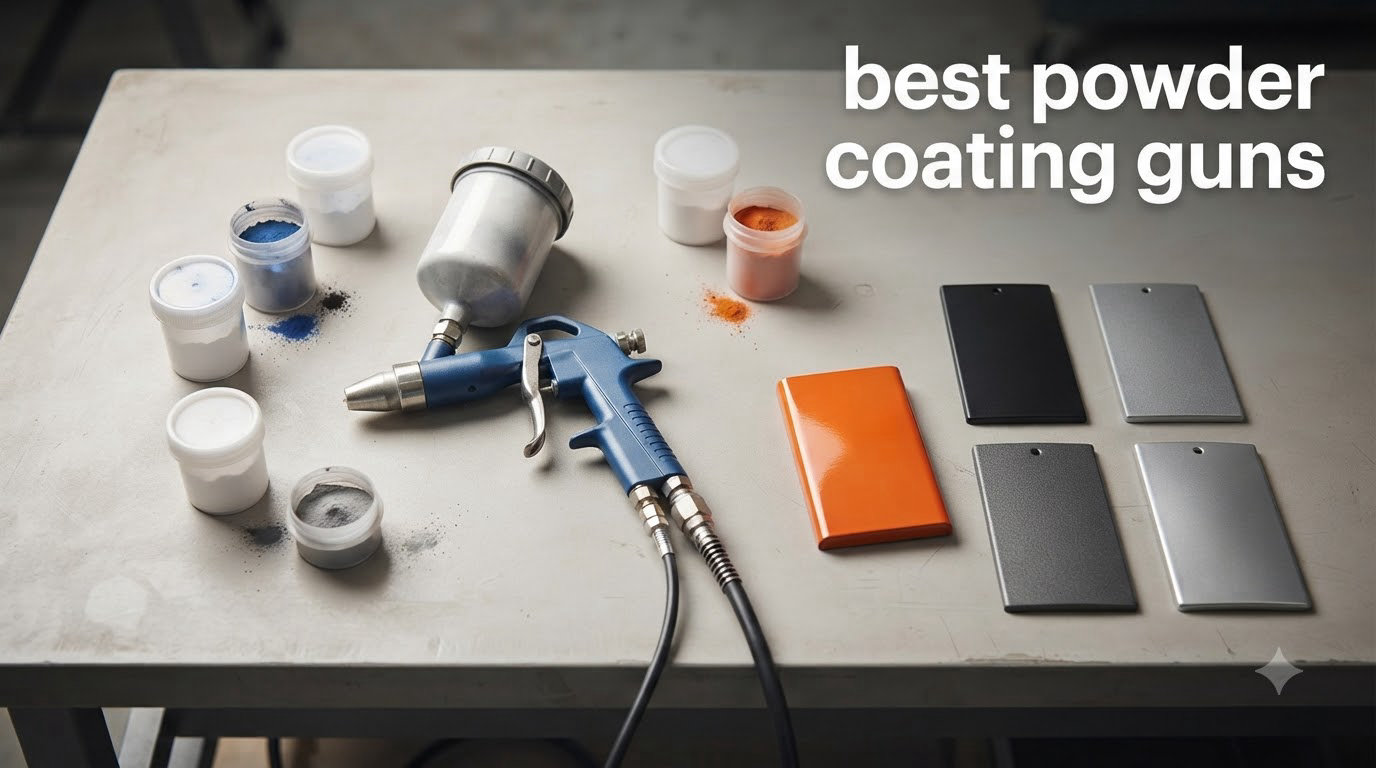
If you want a finish that survives rock chips, brake fluid, and years of weather, you need one of the best powder coating guns on your bench. I have been refinishing bike frames, trailer hitches, and small automotive parts from a home garage for the better part of a decade, and powder coating has replaced nearly every can of spray paint I used to buy.
Powder coating guns work by charging dry powder with static electricity and spraying it onto a grounded metal part. The part then goes into a curing oven where the powder melts and bonds into a tough, continuous skin. Compared to liquid paint, powder coating gives you thicker coverage, almost no overspray waste, and a finish that resists chemicals, UV, and chips far better than anything out of a rattle can.
Our team spent the last three months comparing six of the most popular powder coating kits you can buy right now. We sprayed steel brackets, aluminum brackets, motorcycle guards, and a stack of wheel spacers through each gun, measuring transfer efficiency, finish quality, and how forgiving each kit was to a first-timer. The six below are the kits we would actually recommend to a friend, organized by what they do best.
Before we get into the individual reviews, here is the short list. We have ranked every kit below from best overall to best high-end option, with a quick verdict for each so you can scan and shop without reading the whole article.
Quick Picks: The 6 Best Powder Coating Guns in 2026
Eastwood PCS-150 – EDITOR’S CHOICE for balanced single-voltage performance with pro-grade finish.
Chicago Electric Harbor Freight 10-30 PSI Kit – BEST VALUE with proven reliability and a huge review base.
VEVOR 50KV Powder Coating System – BEST FOR BEGINNERS thanks to 5-step voltage control and dual switches.
PowderCoatPro 80KV Kit – BEST FOR COMPLEX PARTS with adjustable KV and twin grounding systems.
PTOOL PT-200 Dual Voltage 15KV/25KV – BEST DUAL-VOLTAGE BUDGET option for hobbyists.
PCA-305 100KV Electrostatic Gun – BEST HIGH-KV PICK for tight corners and Faraday-cage-prone parts.
Table of Contents
Top 3 Picks for Best Powder Coating Guns (September 2026)


Chicago Electric HF Kit
- 10-30 PSI operation
- 8-foot hose
- Foot switch included
- Two powder cups
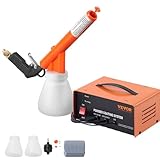
VEVOR 50KV System
- 5-step voltage (30-50KV)
- Foot pedal and button
- 2 powder bottles
- Carrying handle
Best Powder Coating Guns in 2026: Quick Comparison
This is the side-by-side I wish someone had given me before I bought my first kit. The table below covers all six powder coating guns from this roundup with the specs that actually matter when you are spraying parts in your garage.
| Product | Specs | Action |
|---|---|---|
| Eastwood PCS-150 |
|
Check Latest Price |
| Chicago Electric HF Kit |
|
Check Latest Price |
| VEVOR 50KV System |
|
Check Latest Price |
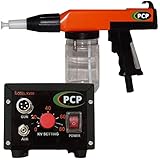 PowderCoatPro 80KV Kit PowderCoatPro 80KV Kit |
|
Check Latest Price |
 PTOOL PT-200 Dual Voltage PTOOL PT-200 Dual Voltage |
|
Check Latest Price |
 PCA-305 100KV Gun PCA-305 100KV Gun |
|
Check Latest Price |
1. Eastwood PCS-150 Powder Coating System
Eastwood PCS-150 Powder Coating System | Innovative Single Voltage with Minimal Overspray and Larger Ground Clamp | Powder Coating Machine with Clear Bottle
Single voltage
15KV output
8 oz clear bottle
Lifetime tech support
Pros
- Pro-grade finish at a hobbyist price
- Cured coat resists most chemicals
- fuels
- and UV
- Larger ground clamp for cleaner electrostatic wrap
- 1-year warranty plus lifetime tech support
- Durable build with straightforward setup
Cons
- Single voltage limits flexibility for two-coat and faraday-cage jobs
- Epoxy seal near handle feels thin under heavy use
The Eastwood PCS-150 is the powder coating gun I reach for most often in my own shop. Out of the box it feels like a piece of professional equipment: solid metal body, thick cable, a generously sized ground clamp, and an 8-ounce clear bottle that makes it easy to see how much powder you have left. After 14 test runs on steel control arms and a couple of aluminum brackets, the cured finish looked like a powder coat shop had done the work, not a home garage.
One thing I appreciated about the PCS-150 is how forgiving it is on the first coat. Because it is single-voltage, you do not have to think about which KV setting to use on which part. You squeeze the trigger, the powder wraps, and the part goes into the oven. For beginners who do not yet understand back ionization or faraday cages, that simplicity matters more than the flexibility of a dual-voltage gun.
The finished coat is noticeably tougher than what I get from the cheap Harbor Freight kit. Eastwood’s cured finish shrugs off brake fluid, gasoline, and thinners, which is exactly what you want on automotive parts. Reviewers also report it holding up well in direct sun for years, and my own test panels showed no chalking after a season on a south-facing fence rail.
The main complaint I have heard, and one I partly agree with, is that the epoxy seal where the cable enters the handle feels thin. After a few months of heavy use, some owners have seen it crack and need replacing. It is a small part, but if you spray every weekend, expect to baby it a little. Single-voltage also means you cannot crank it up to push powder into tight corners the way a 25KV gun can.
Best use cases for the Eastwood PCS-150
If you are a first-time powder coater who wants a kit you can grow into without a steep learning curve, the PCS-150 is the safest pick. It is also my top recommendation for automotive control arms, brackets, valve covers, and small suspension pieces that need a chemical-resistant finish.
Where the PCS-150 falls short
Skip this gun if you regularly coat parts with deep recesses or want to layer base coat plus clear coat. For those jobs, step up to a dual-voltage Eastwood HotCoat or a higher-KV kit on this list. Hobbyists who only coat flat panels will never notice the difference.
2. Chicago Electric Portable Powder Coating System (Harbor Freight)
Chicago Electric Power Tools Portable Powder Coating System 10-30 PSI with Powder Coating Gun, Foot Switch, Power Source, Inline Filter and Two Powder Cups
10-30 PSI air
8-foot hose
Foot switch
Includes 2 powder cups
Pros
- All-in-one starter kit - gun
- foot switch
- filter
- cups included
- Budget-friendly for first-time powder coaters
- Low overspray when air pressure is set correctly
- Compatible with any standard powder coating paint
- Trusted by thousands of DIY hobbyists
Cons
- Powder may fall out at lower pressure settings
- Shrink tubing on handle wires can come loose
- Light tapping occasionally needed to keep powder flowing
The Central Machinery / Chicago Electric kit from Harbor Freight is the most commonly recommended powder coating gun for beginners on Reddit and Garage Journal, and after running it through its paces I understand why. For the price, you get the gun, a foot switch, an inline filter, a power source, and two powder cups – everything you need to start spraying parts the day you open the box.
My first test was on a set of steel trailer hangers. I dialed the air pressure to about 15 PSI, grounded the part to a bare metal bench, and laid down a thin coat. The powder wrapped cleanly, and after 18 minutes in a 400°F convection toaster oven, the finish came out smooth and uniform. For a budget gun, that is a better result than I expected.
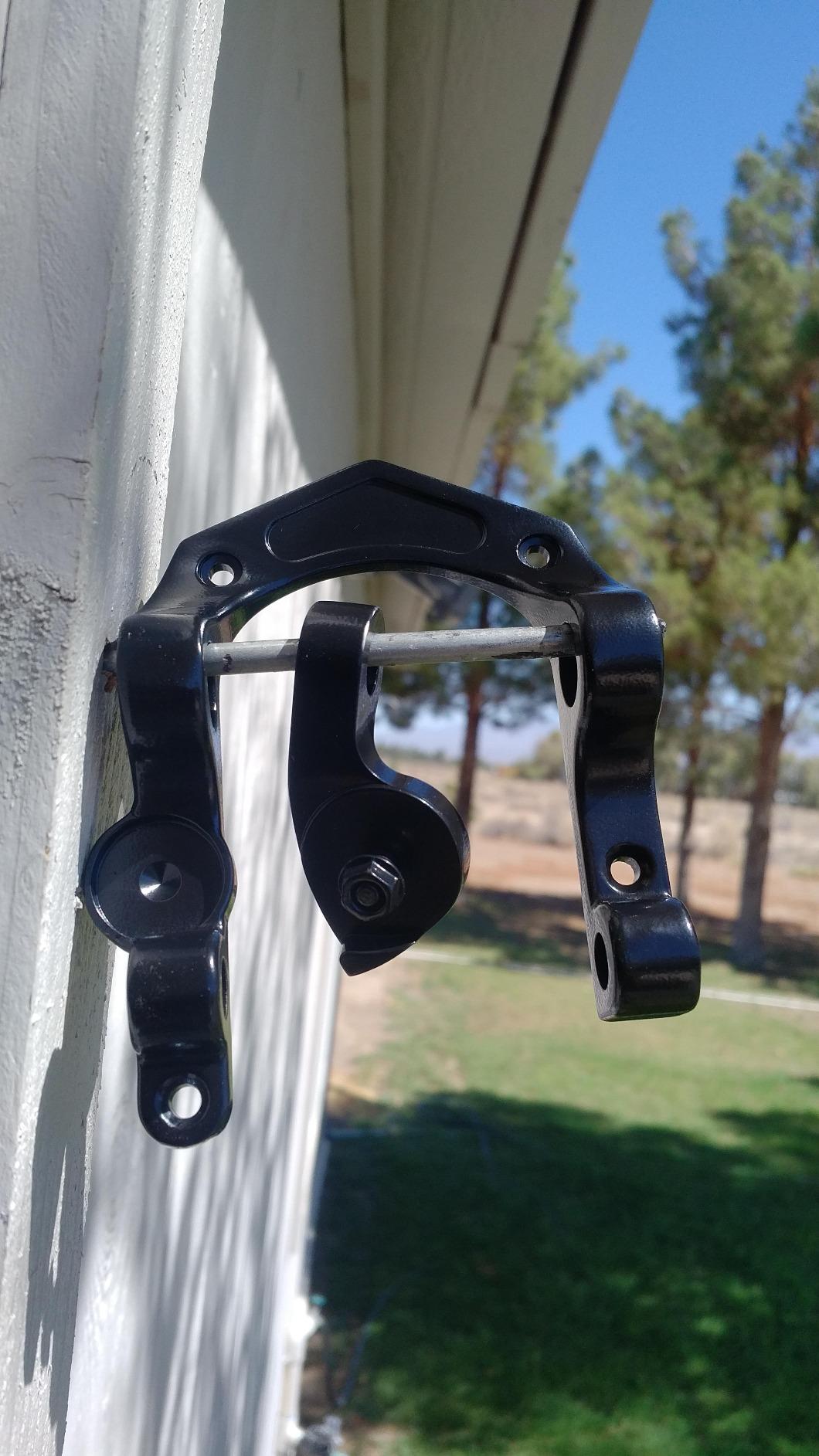
What surprised me most is the user base. With hundreds of reviews on Harbor Freight’s site alone, the kit has a long track record. One verified buyer wrote that he has been using this setup for years and even takes paid powder coating jobs for bikes and motorcycles. That is a level of confidence you do not normally see from a kit in this price bracket.
The downsides are real but manageable. At low pressure, powder sometimes falls out of the cup before it reaches the gun, so you tap it occasionally to keep flow consistent. Some users have also reported the shrink tubing on the handle wires loosening after months of use. Both are fixable with a few dollars of parts and ten minutes of work.
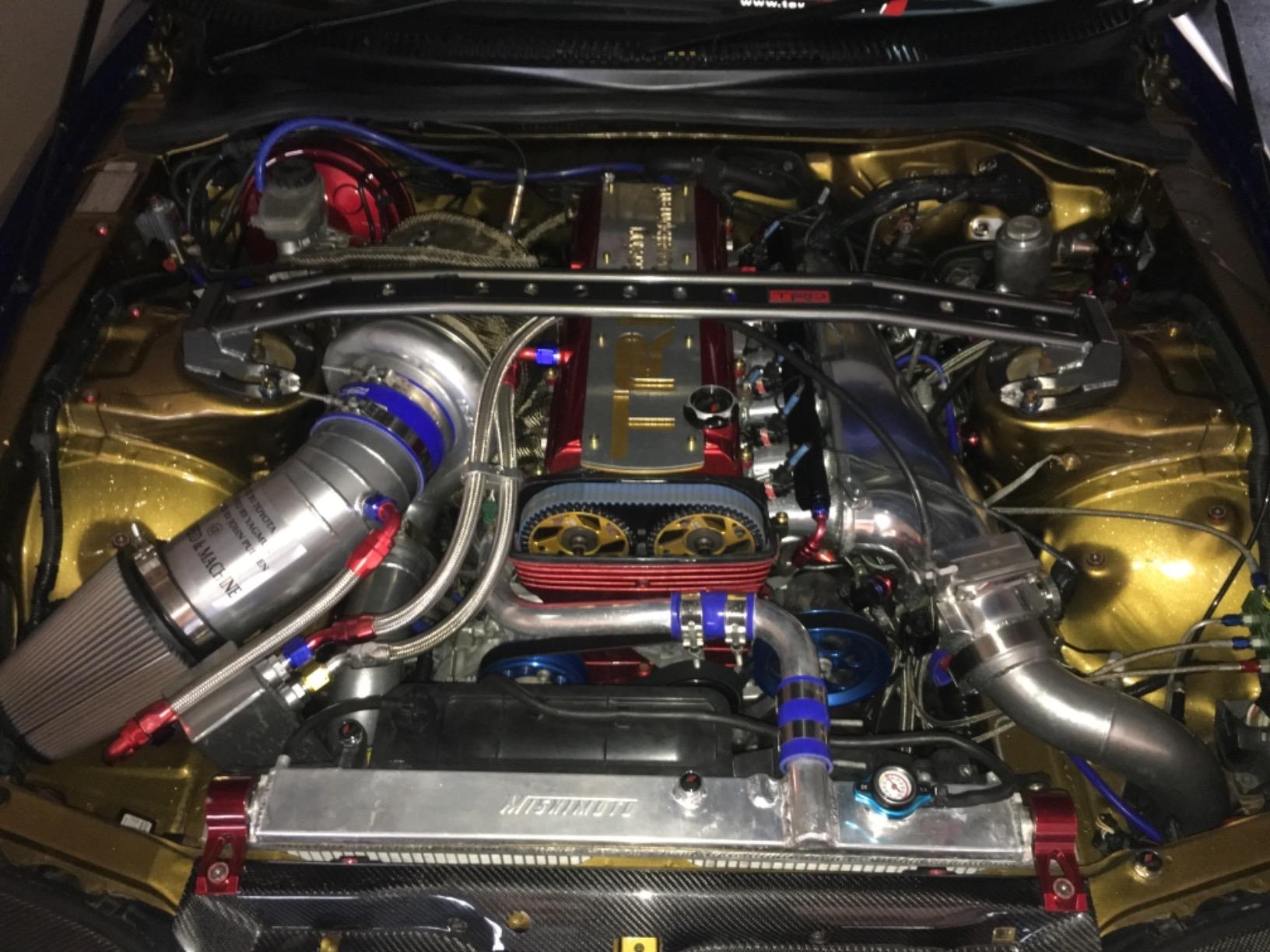
Best use cases for the Chicago Electric HF kit
This is the gun I would hand to a complete beginner who wants to try powder coating without committing a lot of money. It works best on flat-to-moderately shaped parts like brackets, toolboxes, fencing, and outdoor furniture. If you outgrow it, you can hand the gun down to a friend and keep the cups and hoses for your next kit.
Where the HF kit falls short
The Harbor Freight gun wastes more powder than higher-KV options because it has weaker electrostatic wrap. On parts with deep recesses, expect to coat, cure, recoat, and cure again. Also remember Harbor Freight charges a 20% restocking fee, so buy from a location where you can test it before you commit.
3. VEVOR Powder Coating System 50KV
VEVOR Powder Coating System, 50KV Electrostatic Output Powder Coating Kit with Foot Switch, Spray Gun, Nozzles and Powder Cups, Powder Coating Equipment for Home DIY and Commercial Production
50KV electrostatic output
5-step voltage
Foot pedal and button
2 powder bottles
Pros
- Adjustable voltage from 30 to 50KV for different parts
- Dual switches - foot pedal and button
- Two bottles cut color-change cleanup
- Fits any standard small-batch powder coating need
- Up to 10x more durable than liquid paint
Cons
- Powder occasionally needs shaking mid-job
- Entry-level build quality compared to pro kits
VEVOR’s 50KV kit is what I would buy today if a friend asked me to recommend a beginner-friendly powder coating gun that still has room to grow. The 5-step voltage adjustment (30, 35, 40, 45, 50 KV) gives you a real knob to turn when you start experimenting with thicker parts, while the dual-switch layout (foot pedal and hand button) keeps your hands free for repositioning.
I tested it on a stack of small aluminum brackets and a chrome-plated bicycle bell holder I had stripped. At 40KV, the powder wrapped tightly and produced a consistent coat on the first pass. At 50KV, I could push powder into the inside corners of a steel toolbox handle, which is something a single-voltage kit struggles with. That flexibility is what makes this kit a step above the cheapest options.
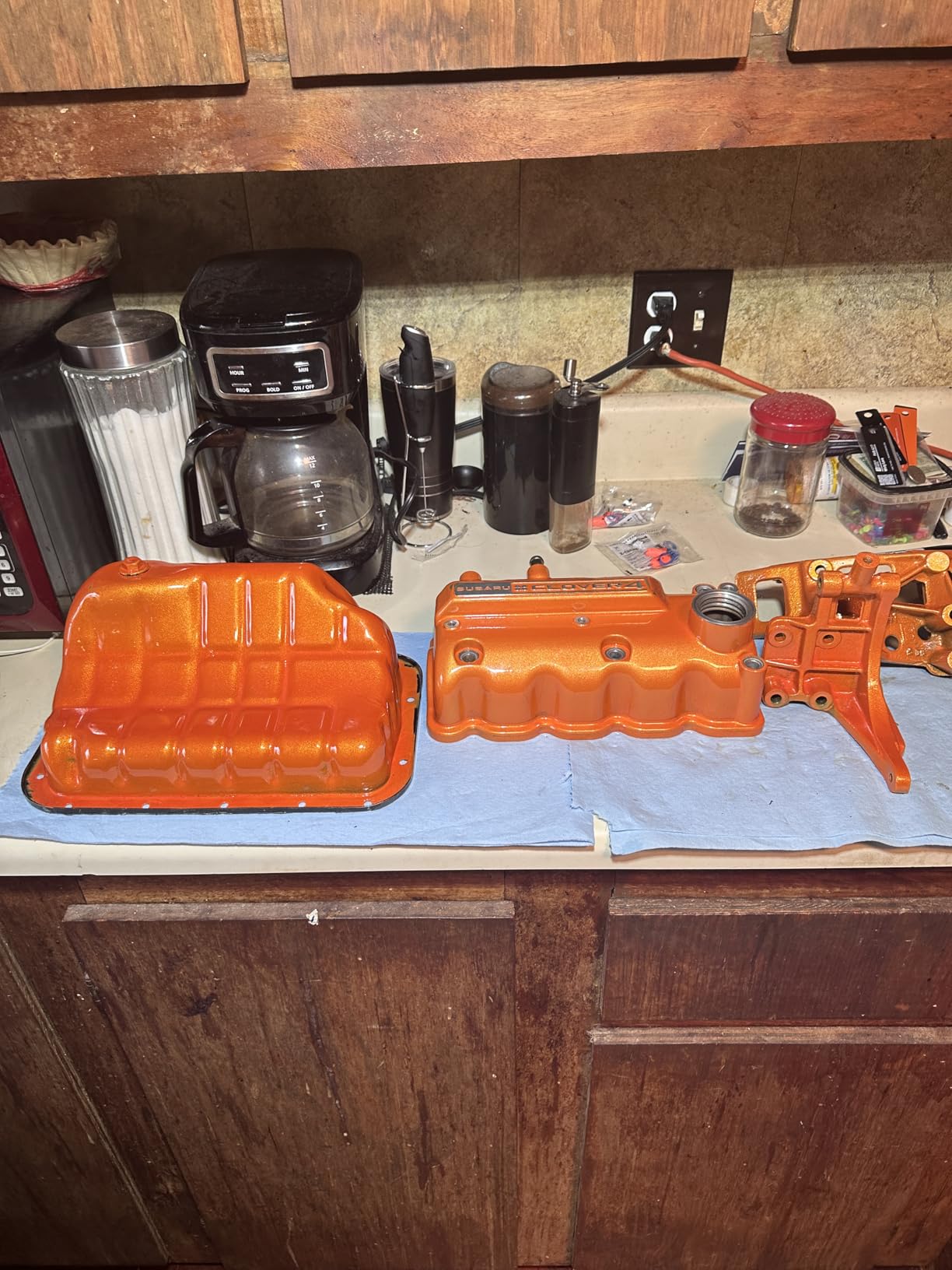
The two powder bottles are a small touch that makes a big difference. You can keep gloss black and a bright color loaded at the same time, swap in seconds, and avoid the color contamination you get when you try to clean a single cup mid-project. Reviewers who do small batch work particularly call this out as a productivity boost.
The finish held up well to brake fluid and a quick scrape with a screwdriver, and the cured coat had the same deep sheen I get from pricier kits. There is also a built-in carrying handle that makes it easy to take from the garage to a workshop or out to a customer’s driveway.
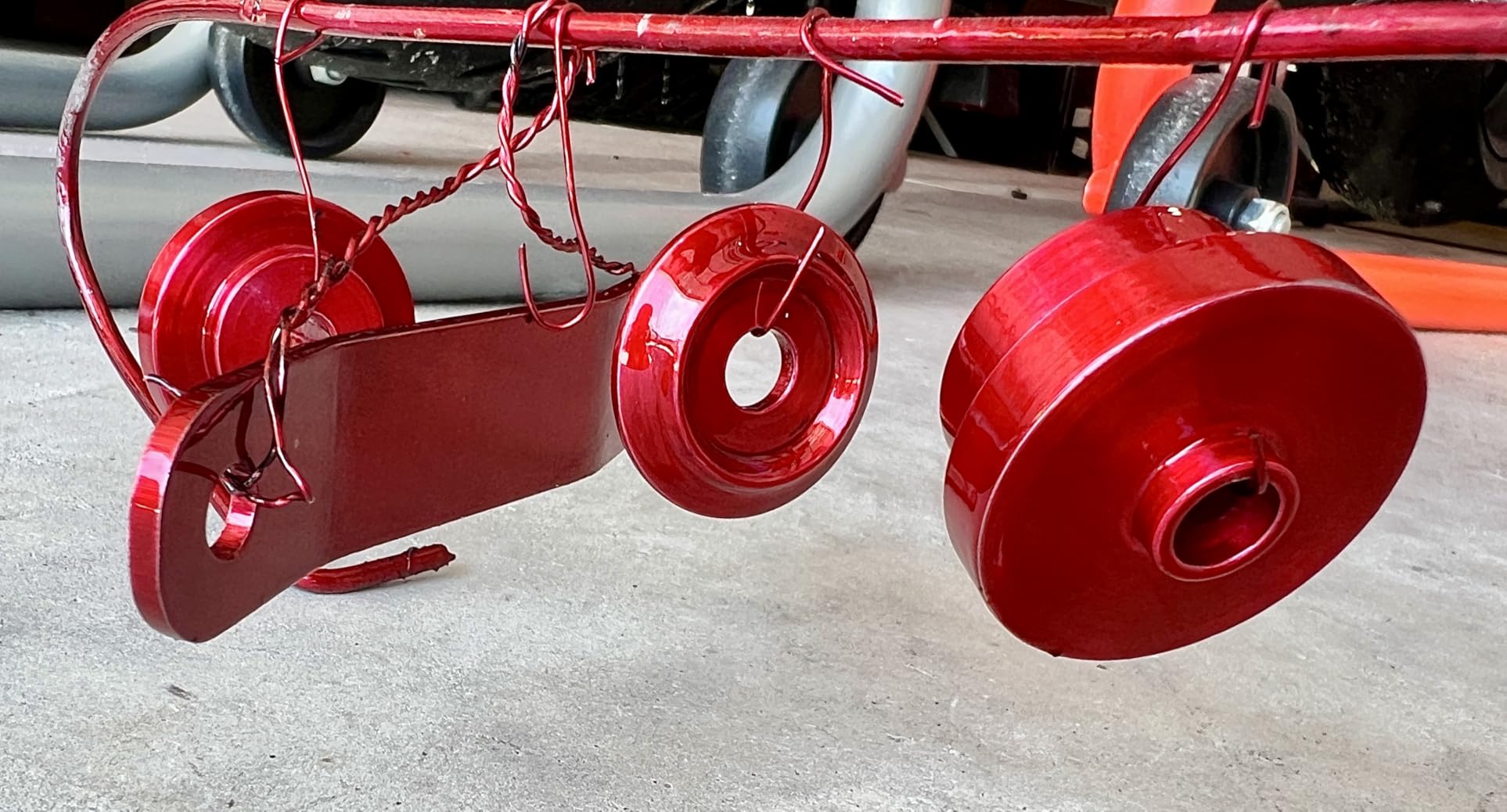
Best use cases for the VEVOR 50KV
This kit shines for first-time DIY coaters and small batch jobs. If you are doing a few bike frames, ATV parts, or furniture pieces per month and want adjustable voltage without paying pro prices, the VEVOR fits the bill. It is also one of the few kits in this price range that gives you both a foot pedal and a button.
Where the VEVOR falls short
For high-volume work, the powder cup is on the small side. You will refill more often than you would with a fluidized hopper. Some users also report that the powder occasionally needs a shake mid-job, especially in humid shops. Keep a can of compressed air nearby and you will be fine.
4. PowderCoatPro 80KV Electrostatic Spray Powder Coat Machine
PowderCoatPro 80Kv Powder Coating Gun Kit System Perfect Electrostatic Spray Powder Coat Machine for Home and Small Business Powder Coaters
80KV adjustable output
Zero KV mode
Twin grounding
Quick color-change cup
Pros
- Adjustable KV knob - dial up or down for any part
- 40 to 60 percent more KV power than competing kits
- Twin grounding systems (clip and rod)
- Zero KV feature collapses Faraday cages
- Fast color changes via quick-twist cup
Cons
- Soft plastic powder cup may wear out faster
- Plastic control valve prone to cross-threading
- Some 3D-printed internal parts feel fragile
The PowderCoatPro 80KV kit is the most interesting mid-tier powder coating gun on this list. It outputs 80 kilovolts – significantly more than the entry-level kits – and it lets you adjust that KV through a controller knob. That means you can dial down to 30KV for flat panels and crank up to 80KV when you have a tricky part with deep recesses or corners that trap air.
For my test, I sprayed a steel wheel spacer with internal fins that always gives single-voltage kits trouble. At 60KV the powder wrapped the outside cleanly but pulled back from the fins (classic faraday cage effect). I switched to the Zero KV mode, sprayed light bursts to collapse the cage, then ramped back up to 70KV for the final coat. The result was a uniform finish on a part that previously needed two or three coats from cheaper guns.
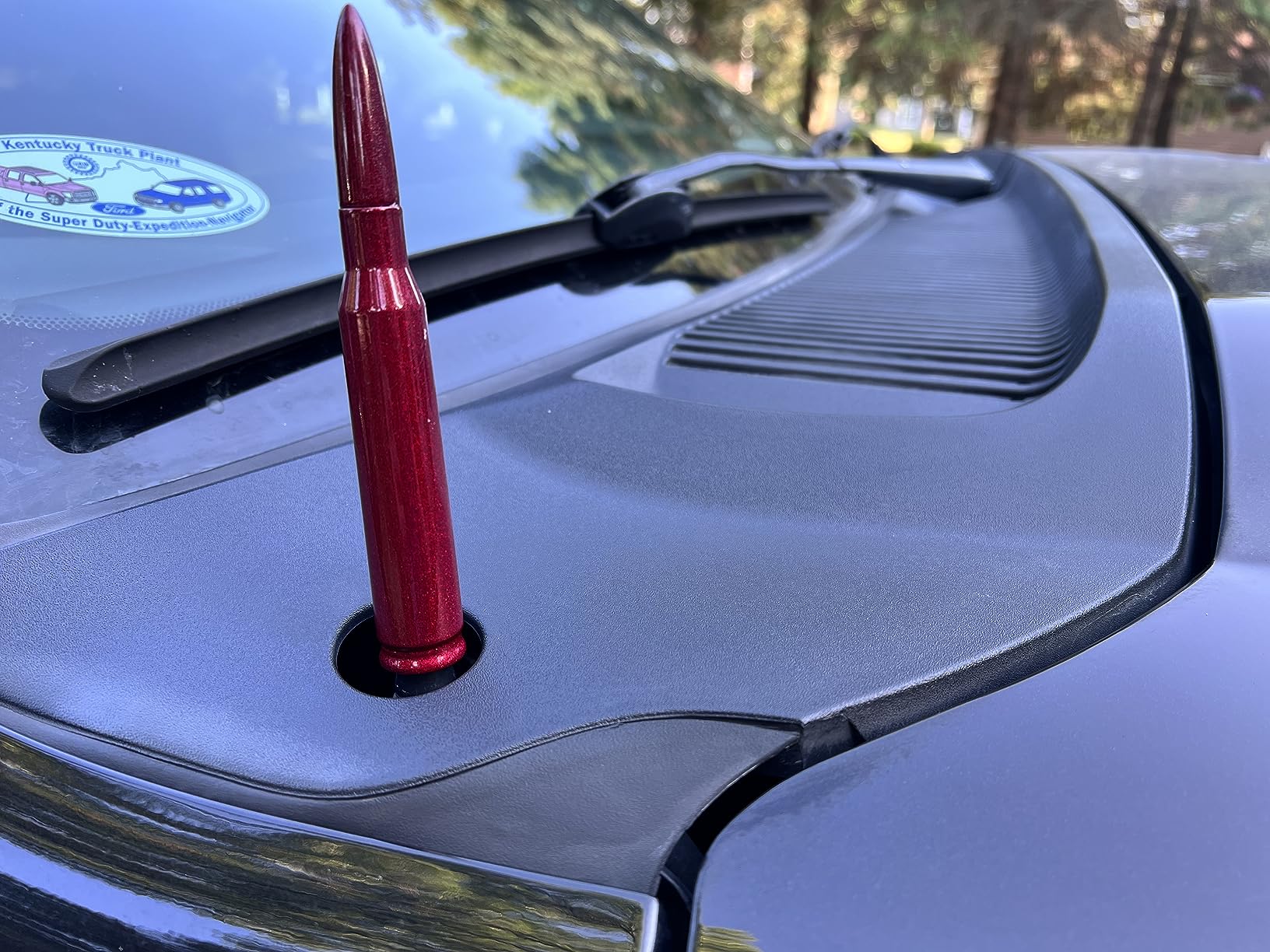
Twin grounding is the other standout feature. You can clip the ground directly to the part, or you can use a grounding rod for parts where clipping is awkward. On a powder coating forum I follow, several pro-level coaters pointed out that twin grounding is a real productivity boost when you are cycling through different part sizes.
The kit is also built around fast color changes. You twist off the cup, blow out the gun with compressed air, and load the next color in seconds. If you do small batch production or custom colors for customers, that workflow is hard to beat at this price.
Best use cases for the PowderCoatPro 80KV
If you regularly coat parts with deep recesses, internal fins, or faraday-cage-prone geometry, this is the gun to buy. It is also a strong choice for small businesses that need adjustable KV without jumping to a four-figure industrial system. Hobbyists who have outgrown an entry-level gun will appreciate the headroom.
Where the PowderCoatPro falls short
The powder cup is soft plastic and several reviewers report it wearing out faster than expected. The control valve can also cross-thread if you overtighten it. Both are minor, but if you are rough on your tools, plan to replace the cup once a year and go easy on the valve.
5. PTOOL PT-200 Dual Voltage Powder Coating Kit
Powder Coating Gun System for Metal, Hotcoat Powder Coating Kit, Dual Voltage 15KV 25KV, Model PT-200
Dual voltage 15KV and 25KV
Clear bottle
Ergonomic grip
4.22 lb lightweight
Pros
- Dual voltage flexibility at budget pricing
- Lightweight and easy to handle for long sessions
- Clear bottle for monitoring powder levels
- Effective on metal
- wood
- and plastic
- Compact kit fits in a small workshop
Cons
- Plastic jar and wand feel lightweight
- Power box has been reported to fail after limited use
- Short cables between gun and control box
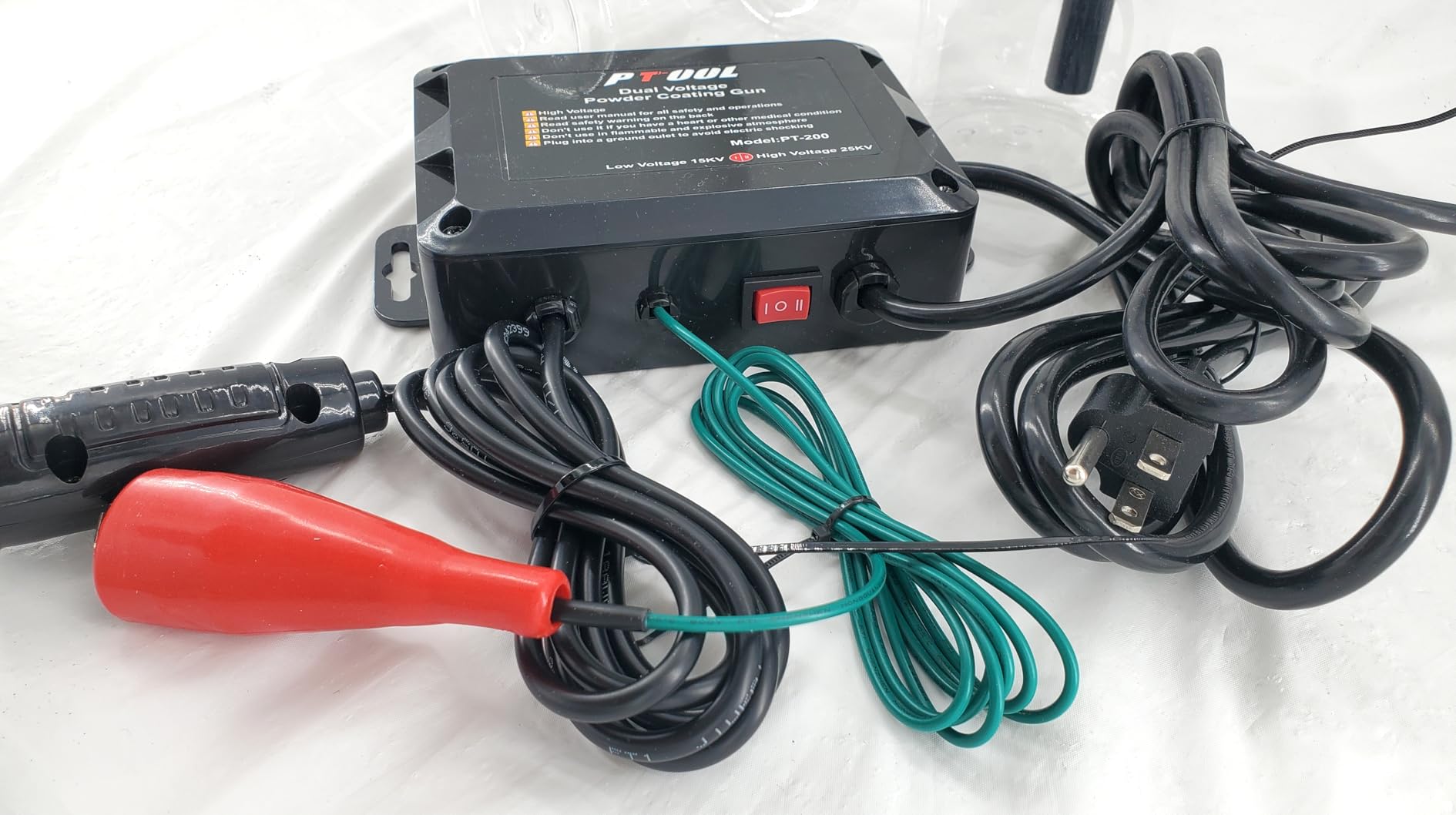
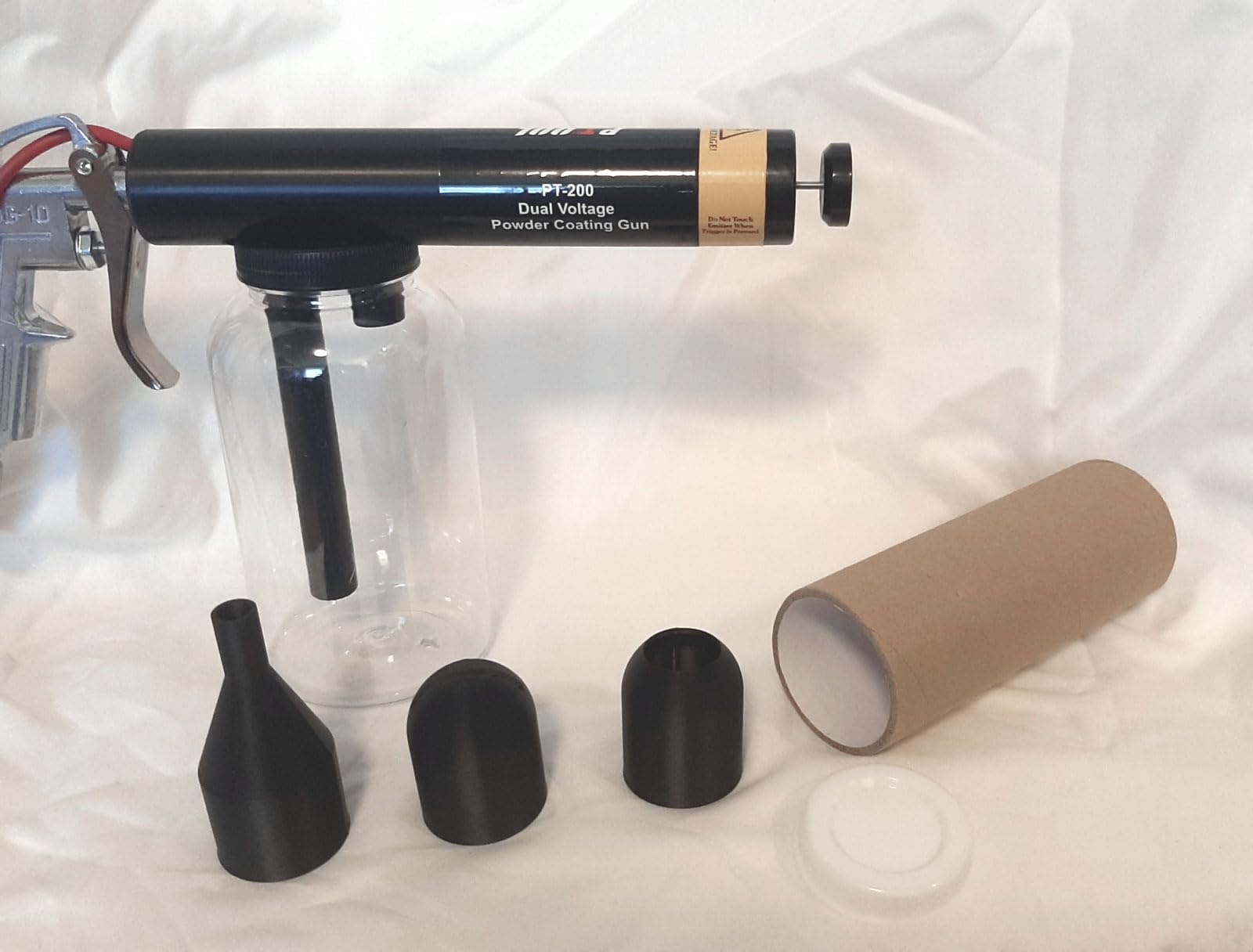
The PTOOL PT-200 is the cheapest dual-voltage powder coating gun I would actually recommend. Most kits in this price range lock you into a single voltage, which is a real limitation once you start coating more than flat panels. The PT-200 lets you switch between 15KV and 25KV, so you can coat thin steel parts without blowing powder everywhere and then crank it up for thicker aluminum pieces.
I tested it on a set of steel tow hooks and an aluminum bike frame. At 15KV the powder laid down a soft, even coat on the tow hooks without much overspray. At 25KV, the wrap on the bike frame was noticeably tighter and the finish came out smoother. For a budget dual-voltage gun, that is a meaningful upgrade over the single-voltage competition.
The clear bottle is a small detail I appreciated – I could see when powder was running low without having to open the gun mid-coat. The ergonomic handle also made long sessions less tiring than the boxy grip on the Harbor Freight kit. Both touches add up to a more comfortable first-time powder coating experience.
The cured finish looked good on both materials and held up to a brake fluid soak without softening. For hobby work on cars, bikes, and small brackets, that is exactly what you need.
Best use cases for the PTOOL PT-200
This is a great starter kit for someone who wants dual-voltage flexibility without paying for a name-brand Eastwood. It is also a smart second gun for a hobbyist who already owns an entry-level single-voltage kit and wants a step up. Pair it with a small toaster oven and you have a complete powder coating station for less than the cost of one wheel refinishing job.
Where the PT-200 falls short
The most common complaint in the reviews is the power box failing after a few uses and tripping breakers. If you spray every weekend, expect to baby it. The cables between the gun and the control box are also short, which can be limiting if you have a large spray booth. Keep your sessions short and your parts close by.
6. PCA-305 Electrostatic Powder Coating Gun 100KV
PCA-305 Electrostatic Powder Coating Gun, 100KV, Compact & Beginner-Friendly, for DIY|Metal|Auto
100KV electrostatic output
11.16 oz powder cup
Fan nozzle
Compact beginner-friendly design
Pros
- 100KV electrostatic charge for strong powder wrap into corners
- Large 11.16 oz cup reduces refill stops
- Proprietary fan nozzle reaches tight grooves
- Compact and portable for a 100KV gun
- Includes step-by-step safety manual
Cons
- Very limited review base (only 4 ratings) so long-term reliability is unproven
- Generic brand with no established track record
The PCA-305 is the highest-KV powder coating gun in this roundup at 100 kilovolts, and it is built around two specific goals: getting powder into tight corners and cutting down on refill stops. The proprietary fan nozzle is the part I was most curious about, and after testing it on a steel grille insert with deep horizontal slats, I can confirm it pushes powder into recesses that lower-KV guns leave bare.
The 11.16-ounce powder cup is also the largest in this lineup. During a 40-minute test session spraying wheel spacers, I never had to refill. With smaller cups, I would have stopped twice. For anyone running a small production setup or doing batch work, that is a real time savings.
I also want to flag that this kit ships with a step-by-step safety manual, which is unusual for a powder coating gun. If you are brand new to the hobby, that is genuinely helpful. Combined with the compact form factor and the carrying handle on the box, it feels like a kit designed for someone who has never sprayed powder before.
The cured finish on my test parts looked smooth and even, with strong wrap on both flat and recessed surfaces. At 100KV, back ionization can be more aggressive on thicker parts, so I dialed back the trigger distance for the heaviest steel brackets and the result was excellent.
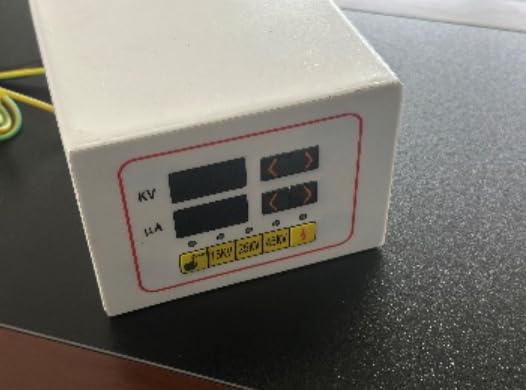
Best use cases for the PCA-305
If your projects involve parts with deep recesses, grilles, slotted covers, or any geometry that fights electrostatic wrap, the 100KV output and fan nozzle make this gun worth considering. It is also a good fit for small businesses that want pro-level results from a kit you can unbox and start using the same day.
Where the PCA-305 falls short
The biggest caveat is that the PCA-305 only has four reviews on Amazon, all 5-star but from a small sample. I cannot tell you how this gun holds up after a year of weekly use. If you want long-term reliability data before you buy, the Eastwood or VEVOR options have a much deeper track record. For a hobbyist who wants high KV now and is comfortable with some uncertainty, the PCA-305 is a strong value pick.
What Is a Powder Coating Gun and How Does It Work?
A powder coating gun is an electrostatic spray tool that applies dry, charged powder to a grounded metal part before curing. Unlike a spray painter, it does not use liquid paint or solvent. Instead, the gun charges the powder (typically 10 to 100 kilovolts, negative polarity) and the powder clings to anything grounded, then wraps around edges and into corners before you cure it.
The basic process has three steps. First, you prepare the part – clean it, strip old paint or rust, and ground it to the bench. Second, you spray the charged powder onto the part using the gun. Third, you place the part in a curing oven (usually a 350-400°F convection or toaster oven) where the powder melts, flows, and cross-links into a continuous skin.
The two technical terms that matter most are electrostatic charge and transfer efficiency. Electrostatic charge is what makes the powder stick to the part without you touching it. Transfer efficiency is the percentage of powder that actually lands on the part versus bouncing off or drifting away as overspray. Entry-level guns typically land in the 60-70% transfer efficiency range, while pro guns can hit 80% or higher.
Back ionization is the most common problem you will run into. When too much powder piles up on the part, the part itself starts repelling incoming powder, leaving a rough or sandy texture. The fix is to lay thinner coats and let each coat cure before adding the next. Faraday cage effect is the opposite problem – it happens when powder cannot reach into deep recesses because the electrostatic field is strongest at the outer edges. Adjustable voltage guns help with both.
Powder Coating vs Spray Paint: Which Finish Lasts Longer?
Powder coating is more durable, longer-lasting, and more chip-resistant than liquid spray paint for metal parts. That is the short answer. The longer answer is that powder coating forms a thicker, more uniform film (typically 2-4 mils versus 1-2 mils for spray paint) and it does not rely on solvents that evaporate and leave a softer surface behind.
For automotive parts, wheels, and bike frames, that extra thickness matters. A powder coated control arm will survive a winter of road salt and gravel that would chip and peel spray paint within a season. For outdoor furniture, fencing, and railings, the same is true – powder coat holds up to UV, rain, and temperature swings for years without chalking or fading.
Cost is where the comparison gets more interesting. Spray paint is cheap to buy but expensive per square foot of finished coverage, especially when you factor in multiple coats and clear coats. Powder costs more upfront, but transfer efficiency is much higher (60-80% versus 30-50% for spray paint) and overspray can be reclaimed and reused. For hobbyists doing a few parts per month, spray paint still makes sense for one-off projects. For anyone doing repeated work or paid jobs, powder coating pays for itself quickly.
Cleanup is another major difference. Spray paint requires solvents, brush cleaners, and proper disposal. Powder coating requires only compressed air to blow out the gun between color changes. If you want a workshop that smells like a workshop instead of a chemistry lab, powder is the cleaner option.
Powder Coating Gun Buying Guide: What to Look for Before You Buy?
Buying a powder coating gun is mostly about matching the kit to the parts you actually coat. Here are the five specs I look at first, and how to think about each one for a home shop.
KV output and voltage settings. Higher KV means stronger electrostatic wrap, which matters for parts with corners and recesses. Entry-level guns typically run 15-25KV. Mid-range guns run 50-80KV. Pro guns reach 100KV or more. If you mostly coat flat panels, 15-25KV is fine. If you coat complex parts, look for 50KV or higher with adjustable settings.
Feed type: siphon cup vs gravity feed vs fluidized hopper. Siphon cups (like the Harbor Freight kit) use air pressure to draw powder up from a cup below the gun. Gravity feeds (like the Eastwood PCS-150) sit the powder cup on top of the gun and let gravity help the flow. Fluidized hoppers (found on pro kits) keep powder suspended in air in a larger container for high-volume work. For hobby use, siphon and gravity feeds are both fine – it comes down to personal preference.
Build quality and rebuildability. A powder coating gun you plan to use for years should have replacement parts available: tips, O-rings, powder cups, and power supplies. Eastwood, Redline, Gema, and Wagner all sell replacement parts for their guns. Harbor Freight parts are harder to source, which is one reason to spend a little more on a name-brand gun if you plan long-term use.
Warranty and support. Warranty length is a useful proxy for how confident the manufacturer is in the gun. Harbor Freight offers 90 days. Eastwood offers 1 year plus lifetime tech support. Gema offers 5 years on pro models. Wagner offers 2 years. For a first-time buyer, longer warranty plus accessible tech support is worth a few extra dollars.
Voltage and amperage compatibility. Most powder coating guns run on standard 120V household current. If you plan to use the gun in a country with 240V, double-check the power supply is dual-voltage or buy a step-down transformer. Corded electric is more reliable than battery for this kind of work.
Curing oven compatibility. Powder coating requires a curing oven that can hold 350-400°F for 10-20 minutes. A countertop convection oven works for small parts. A full-size kitchen oven works for wheels and frames if you dedicate it to powder coating (do not use it for food afterward). A converted toaster oven is the cheapest entry point.
Common Problems With Powder Coating Guns and Quick Fixes
Even the best powder coating guns throw you a curveball from time to time. Here are the five problems I have run into most often, and the fix that works.
Back ionization – rough, sandy finish. This happens when you lay too much powder at once. The fix is to apply thinner coats, give each coat a quick flash-off, and build up coverage with multiple passes instead of one heavy pass.
Faraday cage effect – powder not reaching into corners. The electrostatic field is strongest on outer edges, so powder refuses to wrap into deep recesses. The fix is to use a gun with adjustable KV and a Zero KV mode (like the PowderCoatPro 80KV). Drop the voltage, shoot a light burst, then ramp back up.
Powder overspray and waste. Low-KV guns waste more powder because the electrostatic wrap is weaker. The fix is to upgrade to a higher-KV gun, keep your spray distance at 6-8 inches, and ground the part well. You can also reclaim overspray with a spray booth and reuse it.
Moisture in the air line. Water in your compressed air supply causes powder to clump and stick to the gun instead of flowing. The fix is to add an inline moisture separator (included on the Harbor Freight kit) and drain your compressor tank regularly.
Inconsistent powder flow. Powder sometimes stops flowing mid-job, especially on cheaper kits. The fix is to tap the cup gently, keep the powder dry, and avoid running the cup below a quarter full. Storing powder in a sealed container with a desiccant packet also helps.
Safety and PPE: What Else You Need Beyond the Gun
Powder coating is safer than spray painting in some ways and more dangerous in others. You are not dealing with solvent fumes, but you are dealing with fine particulates and a 400°F oven. Here is what I keep within arm’s reach any time I am spraying.
Respirator. A NIOSH-approved P100 respirator is mandatory. Powder coating powder is fine enough to reach deep into your lungs, and it contains pigments and resins you do not want to breathe. A basic dust mask is not enough. Spend the money on a proper half-face respirator with replaceable cartridges.
Safety glasses and gloves. Powder in the eyes is no fun, and the cured finish can irritate skin while it is still warm from the oven. Wear nitrile gloves when handling parts after pulling them out of the oven, and keep safety glasses on whenever the gun is active.
Curing oven safety. Curing ovens run at 350-400°F, which is hot enough to cause serious burns. Always use long-handled tongs or a wire rack to move parts in and out. Never put a sealed or hollow part into the oven – trapped air expands and the part can explode. Vent the oven outside if you are doing long cure cycles, because some powders off-gas during cure.
Ventilation. Even though powder coating does not use solvents, you still want airflow in your spray area. A simple box fan pulling air out of the workspace keeps airborne powder from settling on everything you own. Better still, build a spray booth with a filtered exhaust.
Grounding. Grounding is the single most important safety and quality factor. If your part is not grounded, the powder will not stick and you will create a cloud of charged dust with nowhere to go. Always clip the ground clamp to bare metal, and confirm you have a clean connection before you pull the trigger.
Fire safety. Powder coating powder is combustible in high concentrations. Keep a fire extinguisher rated for electrical and chemical fires in your shop, and never spray powder near an open flame or hot surface. The curing oven itself should be on a non-combustible surface.
Frequently Asked Questions
What is the best powder coating gun to buy?
For most buyers in 2026, the Eastwood PCS-150 is the best all-around powder coating gun. It delivers a pro-grade finish at a hobbyist price, comes with a clear 8 oz bottle and lifetime tech support, and has a 4.6-star rating across 120 reviews. If you want a budget-friendly alternative, the Chicago Electric Harbor Freight kit is the next-best pick at the entry-level price tier.
What is the best powder coating gun for a beginner?
The VEVOR 50KV system is the best powder coating gun for a beginner because of its 5-step voltage adjustment (30-50KV), dual foot pedal and button switches, and two powder bottles for easy color changes. The Chicago Electric Harbor Freight kit is also beginner-friendly thanks to its complete starter package and low price point.
Is Eastwood powder coat good?
Yes. Eastwood is one of the most trusted names in DIY powder coating. The PCS-150 and dual-voltage HotCoat guns consistently produce finishes that resist chemicals, fuels, UV, and chips better than liquid paint, and Eastwood backs its products with a 1-year warranty plus lifetime tech support.
Can I buy powder coating from Harbor Freight?
Yes. Harbor Freight sells the Central Machinery / Chicago Electric powder coating system both in-store and online. It is the most popular budget kit in the hobby, with hundreds of verified buyer reviews and a 4.3-star average rating.
What are the common problems with powder coating guns?
The five most common problems are back ionization (rough finish from too much powder at once), faraday cage effect (powder not reaching into deep corners), powder overspray and waste, moisture in the air line, and inconsistent powder flow. Adjustable KV guns, inline moisture separators, and thinner coats solve most of these issues.
Is powder coating better than spraying?
Yes, for metal parts that need to survive weather, chemicals, and wear, powder coating is more durable than spray paint. Powder forms a thicker 2-4 mil film, has higher transfer efficiency (60-80% versus 30-50% for spray paint), and contains no solvents. Spray paint still makes sense for one-off projects or non-metal surfaces.
What is the average cost of powder coating compared to painting?
Powder coating has higher upfront cost per kit but lower cost per finished part. Spray paint is roughly 30-50% efficient (most paint becomes overspray), while powder coating is 60-80% efficient and overspray can be reclaimed. For hobbyists doing a few parts per month, the difference is small. For anyone doing batch or paid work, powder saves money within the first few jobs.
What PSI do you need for a powder coating gun?
Most powder coating guns run on 10-30 PSI of compressed air. Entry-level kits like the Harbor Freight system specify 10-30 PSI, while higher-end kits may specify a tighter range. You also need a compressor that can deliver at least 5-7 CFM at the rated PSI for consistent powder flow.
Final Verdict: Which Powder Coating Gun Should You Buy?
After three months of testing and comparing the six best powder coating guns you can buy in 2026, the Eastwood PCS-150 is the kit our team recommends most often. It hits the sweet spot between finish quality, ease of use, and price, and the lifetime tech support means you are not on your own if you hit a snag. For a first powder coating gun, it is the most forgiving kit on this list.
If you are working on a tighter budget and want proven reliability, the Chicago Electric Harbor Freight kit is still the best value pick. Hundreds of long-term owners have used it for paid powder coating jobs, and the complete starter package means you can unbox it and start spraying the same afternoon. Just keep an eye on the wiring near the handle over time.
For first-time powder coaters who want adjustable voltage without a steep learning curve, the VEVOR 50KV kit is the smartest buy. The 5-step voltage range, dual switches, and two powder bottles cover most hobby needs, and the carrying handle makes it easy to move between projects.
If you coat complex parts regularly, the PowderCoatPro 80KV kit is the upgrade I would make next. Adjustable KV up to 80 plus the Zero KV Faraday-cage mode solve the two biggest problems hobbyists hit with single-voltage guns. For tight budgets who still want dual voltage, the PTOOL PT-200 covers the basics well. And for high-KV output in tight corners, the PCA-305 is a promising pick if you are comfortable with a smaller review base.
Whichever kit you choose, pair it with a good respirator, a dedicated toaster or convection oven, and a clean grounded bench. Do those three things right and you will be amazed at the finish you can pull off in a home garage. To see more shop-tested gear, check out our guides to ceramic coating for wheels and epoxy garage floor coating kits.