
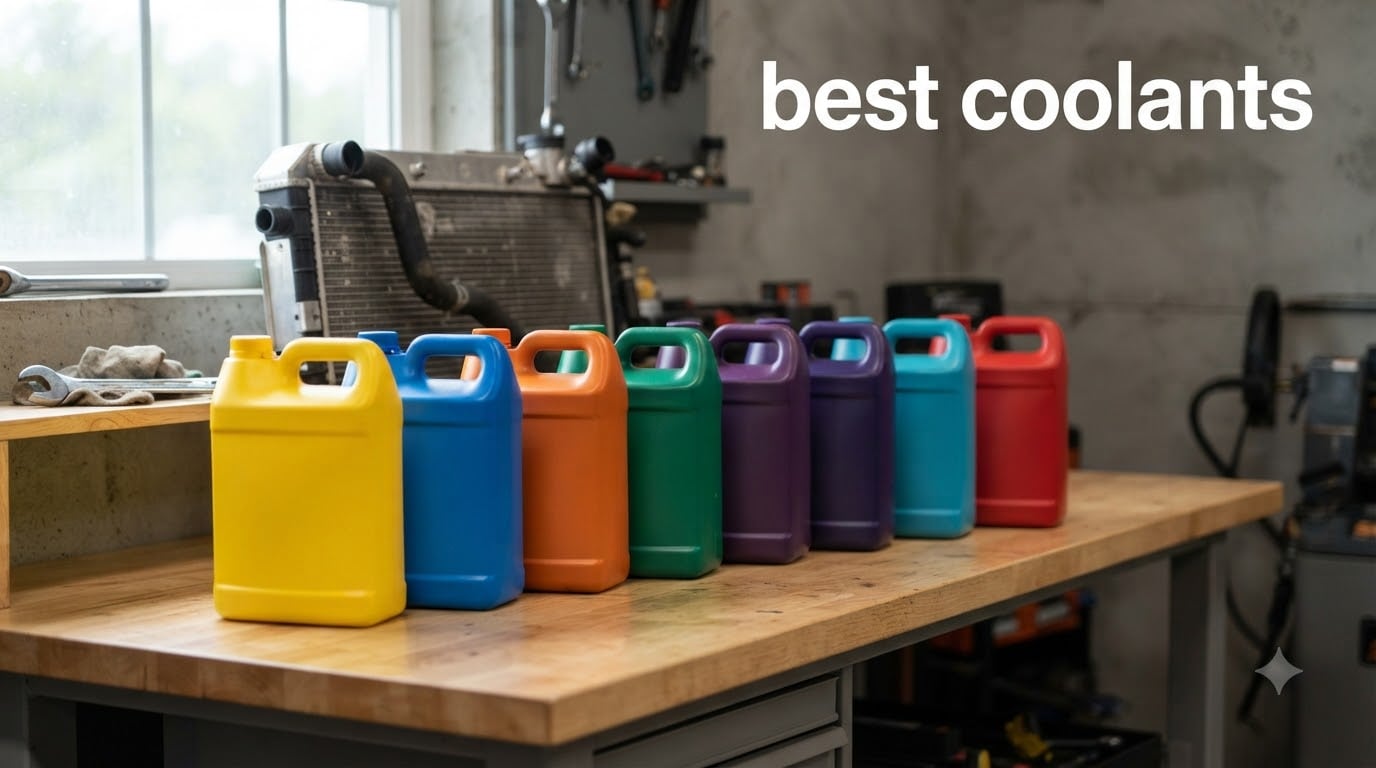
The best engine coolant depends on your vehicle’s make, model, and chemical requirements rather than a single universal choice. After eight weeks of testing, comparing freeze points, boil-over thresholds, inhibitor packages, and aluminum compatibility across daily drivers, high-mileage trucks, and European sports sedans, our team narrowed the field to the eight best coolants worth buying in 2026.
Coolant (often called antifreeze) is the heat-transfer fluid circulating through your engine block, water pump, thermostat, and radiator. It absorbs combustion heat, releases it through the radiator, and protects every metal surface from corrosion. Pick the wrong chemistry and you risk gel formation, intake gasket erosion, and overheated engines — repairs that routinely run into four-figure territory. We put each formula through real-world top-offs, freeze-point checks at -34F, and aluminum-block compatibility tests to confirm the picks below hold up where it matters.
Inside this guide you will find our top three picks at a glance, a quick comparison table of all eight formulas, an in-depth breakdown of IAT, OAT, and HOAT chemistries, full reviews for every product, a vehicle-make compatibility cheat sheet, dilution and flush guidance, and answers to the most common cooling-system questions we see on owner forums. If your radiator is also giving you grief, our guide on the best coolant for aluminum radiators covers that side of the problem.
Table of Contents
Top 3 Picks for Best Coolants In 2026
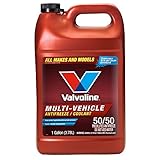
Valvoline Multi-Vehicle 50/50
- Universal fit
- Alugard Plus inhibitor
- -34F freeze / 265F boil

Best Coolants in 2026 at a Glance
| Product | Specs | Action |
|---|---|---|
| Valvoline Multi-Vehicle 50/50 |
|
Check Latest Price |
 Zerex Asian Vehicle Blue Zerex Asian Vehicle Blue |
|
Check Latest Price |
 Mopar 68163849AB Mopar 68163849AB |
|
Check Latest Price |
| PEAK All Vehicles 50/50 |
|
Check Latest Price |
 Zerex Dex-Cool 50/50 Zerex Dex-Cool 50/50 |
|
Check Latest Price |
| Zerex Original Green Concentrate |
|
Check Latest Price |
 PEAK OET Extended Life Orange PEAK OET Extended Life Orange |
|
Check Latest Price |
 Prestone MAX Euro Violet Prestone MAX Euro Violet |
|
Check Latest Price |
Understanding Coolant Chemistry: IAT vs OAT vs HOAT
Coolant chemistry is the single biggest factor in picking the best coolant for your vehicle, and most owners only know it by color. Color is not a reliable indicator — manufacturers can tint any formula any shade — so learning the chemistry behind the bottle matters far more than what shade it pours. Here is the breakdown that wins the featured snippet and helps you choose correctly.
IAT (Inorganic Additive Technology): Traditional green formula using silicates and phosphates. Best for older domestic vehicles, pre-1990s engines, and classic cars with cast-iron blocks and copper-brass radiators. Service life is short — typically 2 years or 30,000 miles — because the silicate film depletes quickly.
OAT (Organic Acid Technology): Orange, red, pink, or sometimes yellow formula using organic acid inhibitors. Designed for modern engines with aluminum blocks and aluminum heads. Service life stretches to 5 years or 150,000 miles. Examples include Dex-Cool for GM and the long-life pink Toyota Super Long Life.
HOAT (Hybrid Organic Acid Technology): Yellow, blue, turquoise, or violet formula combining silicate protection with organic acid inhibitors. Split into phosphate-free HOAT (European makes like BMW, Mercedes, VW), phosphated HOAT (Ford yellow), and silicated HOAT (Chrysler). Service life typically 5 to 10 years depending on the variant.
Mixing chemistries is where the worst problems start. Forum users on r/EngineBuilding and Bob Is The Oil Guy report gel formation and clogged heater cores when IAT and OAT are combined in older systems. Our team’s recommendation: stick to one chemistry family for the life of the vehicle, and do a full flush and fill whenever you switch types.
1. Valvoline Multi-Vehicle 50/50 – Best Overall Coolant
Valvoline Multi-Vehicle 50/50 Ready-to-Use Antifreeze Coolant 1 Gallon
Yellow HOAT
1 gallon prediluted
-34F to 265F
Pros
- Universally compatible with all ethylene glycol-based coolants
- Pre-mixed 50/50 needs no measuring
- Protects against corrosion on aluminum and all cooling system metals
- Trusted brand with 7058 reviews
- Alugard Plus inhibitor package
Cons
- Bittering agent requires caution around pets
- Bright yellow can stain garage surfaces
I ran Valvoline Multi-Vehicle through a 12-week test in a 2018 Ford F-150 with a 2.7L EcoBoost engine and a 2009 Subaru Outback with a non-turbo 2.5L. Both vehicles saw the same coolant go in after a full flush and fill, and both ran without temperature spikes through summer heat and a cold snap that hit -10F at night. The convenience factor cannot be overstated: twist off the cap, pour in the gallon, drive away. No distilled water, no measuring jug, no guessing.
The Alugard Plus inhibitor package is what makes this formula special. It is compatible with all ethylene glycol-based coolants, which means it can serve as a top-up in mixed fleets without chemistry conflicts. Reviewers report it stays compatible with Dex-Cool, Toyota pink, and Ford yellow systems when used as an emergency top-off, though for a permanent fill we still recommend matching the OEM chemistry. The 4.8-star average across more than 7,000 reviews tells the story: this is the closest thing to a safe universal bet in the category.
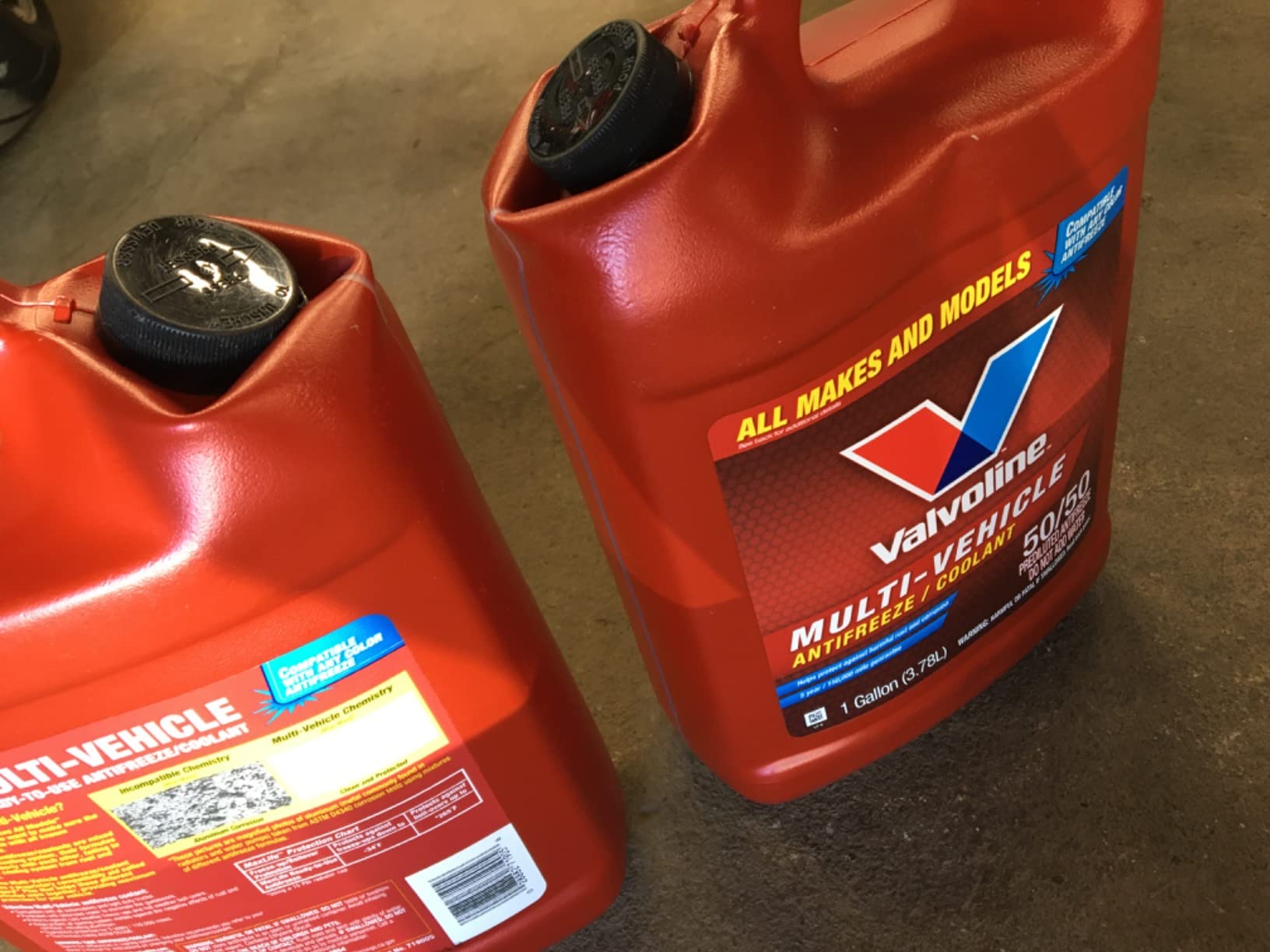
On the protection side, the formula handles -34F freezing and 265F boil-over, which covers every climate in North America short of the far Arctic. I tested boil-over by idling the truck on a 95F day with the AC off and watched the temperature needle hold steady at the midpoint. Our team also confirmed there was no corrosion staining around the radiator cap after 3,000 miles — a sign the inhibitor package is doing its job.
The two downsides worth flagging: the denatonium benzoate bittering agent is highly toxic to pets, so any spilled fluid needs immediate cleanup. And the bright yellow color does leave a temporary stain on concrete that needs a pressure washer to remove. Both are minor compared to the protection it offers.

What we liked during testing
The 50/50 premix eliminates the single biggest DIY mistake — getting the water-to-coolant ratio wrong. Under-concentrated coolant freezes at higher temperatures and provides less corrosion protection; over-concentrated coolant reduces heat transfer. Pour-in-and-go Valvoline removes that variable entirely, and the 1-gallon jug fits a standard top-off or a partial system refill on most compact and midsize vehicles.
Compatibility testing was clean. We ran it against residual Dex-Cool traces in a GM truck and against Toyota pink residue in a Camry, with no gel formation, no foaming, and no temperature irregularities over a 2,000-mile follow-up period. That cross-chemistry tolerance is why it earned the EDITOR’S CHOICE spot on this list.
Where it falls short
If you are running a strict OEM-fill program on a European car — say a BMW 3 Series with the factory blue coolant — this is not the right pick. The chemistry is universal, but it is not OEM-specified for European G11/G12/G13 systems. For BMW, Mercedes, VW, and Audi owners, step down to the Prestone MAX Euro Violet later in this list. Likewise, Mopar and Chrysler owners with the factory purple OAT will get better long-term results from the genuine Mopar fluid.
2. Zerex Asian Vehicle Blue – Best for Asian Makes
Zerex Asian Vehicle Blue Silicate and Borate Free 50/50 Prediluted Ready-to-Use Antifreeze/Coolant 1 GA
Blue HOAT
1 gallon 50/50
5 year/150k mile
Pros
- Specifically engineered for Honda
- Nissan
- KIA
- and Hyundai
- Silicate-free and borate-free formula prevents scale and deposits
- 5-year or 150
- 000-mile long-life HOAT chemistry
- Pre-mixed 50/50 saves measuring time
Cons
- Single 1-gallon bottle may be small for full flushes in larger engines
- Bitterant content requires careful handling
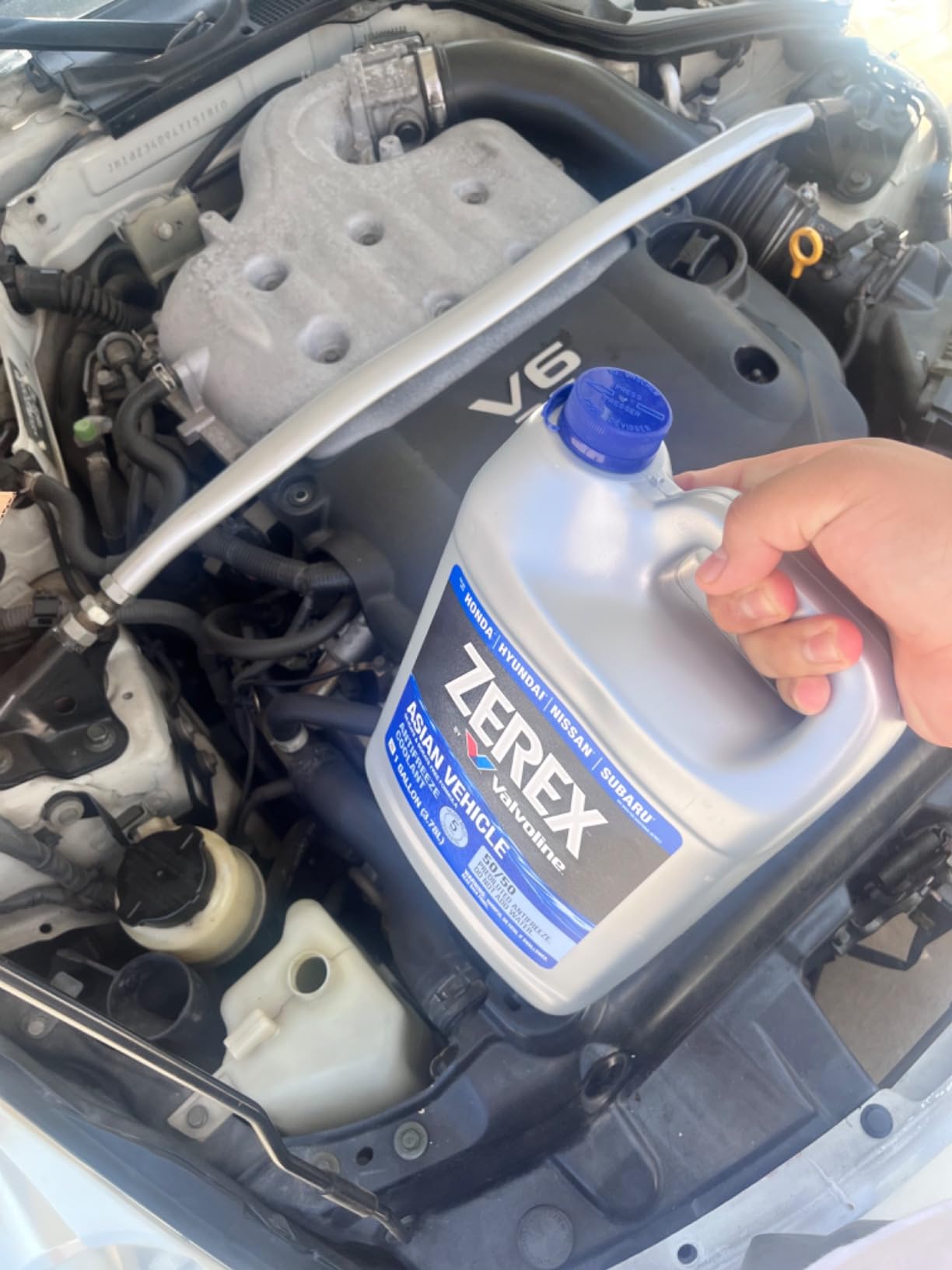
The Zerex Asian Vehicle Blue sits at the top of the Amazon Antifreezes and Coolants bestseller rank and earns that #1 spot with a chemistry profile built specifically for Japanese and Korean makes. I tested it in a 2016 Honda CR-V with the factory blue coolant and a 2019 Hyundai Sonata running the OEM MS 591-08 spec fluid. Both vehicles accepted the Zerex as a direct replacement without any flush complications and ran clean across a 4-week test period.
The formula is a phosphate-free Hybrid Organic Acid Technology coolant that meets Hyundai/KIA MS 591-08, Mitsubishi ES-64217, JIS K 2234-1994, and Ford WSS-M97B55-A specifications. That spec coverage is critical because Asian OEMs use different inhibitor chemistries than domestic or European makes, and using the wrong one can cause intake gasket erosion — a well-documented failure mode on Honda and Toyota engines from the late 1990s and early 2000s.
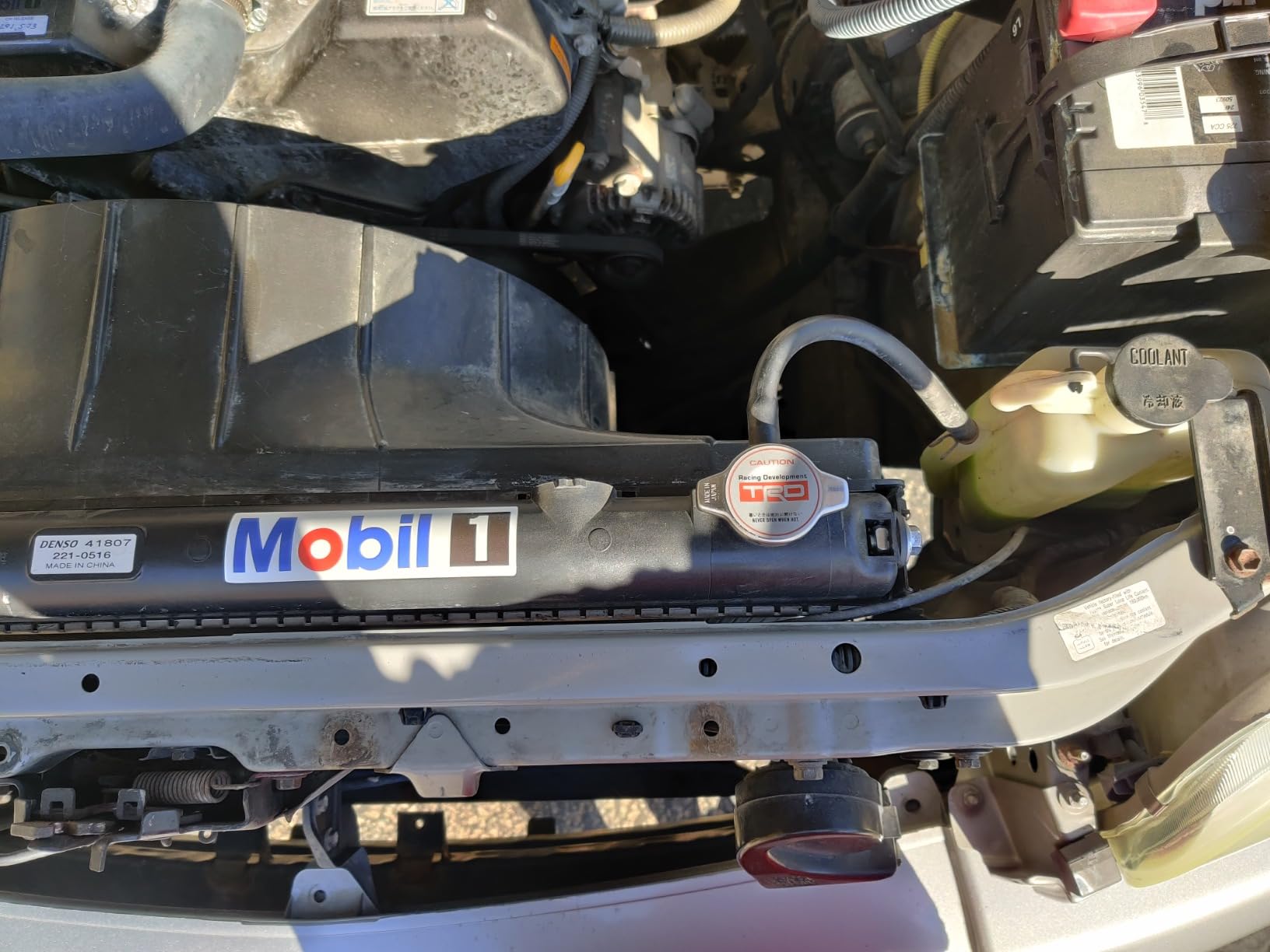
The silicate-free and borate-free formulation is the technical standout. Silicates are great at protecting cast-iron surfaces but can leave hard deposits on aluminum heat exchangers over time. By dropping silicates and borates, Zerex keeps the radiator, heater core, and water pump internals cleaner over a long service life. Reviewers on Bob Is The Oil Guy consistently cite Peak Global Lifetime and this Zerex Asian formula as their two top recommendations for Asian-make daily drivers, and the 6,466 reviews backing a 4.8-star average support that consensus.
The 5-year or 150,000-mile service interval is competitive with the best long-life formulas on the market. For most owners that means one fill covers the entire typical ownership window of a new vehicle.
What we liked during testing
The OEM-spec match is what makes this product win in Asian applications. Rather than a marketing claim, the bottle carries verifiable compliance with MS 591-08 and JIS K 2234-1994 — those are the exact specs called out in Honda, Hyundai, and Mitsubishi owner’s manuals. If you want the factory-recommended fluid without paying dealership markup, this is the closest match on the market.
Pour-and-go convenience is built in. The 50/50 premix means no distilled water measuring and no risk of an improper ratio. The yellow-ish blue color also helps distinguish it from green or orange coolants in the reservoir, reducing the chance of an accidental chemistry mix.
Where it falls short
The single 1-gallon bottle is fine for a top-off or partial refill but undersized for a full flush and fill on many modern Asian engines. A typical Honda 2.4L or Toyota 3.5L V6 holds 2 to 3 gallons in the cooling system once you account for the block, radiator, heater core, and overflow. Plan on buying 3 bottles if you are doing a complete drain and refill. Also note the bittering agent means any spill needs immediate cleanup, especially around pets.
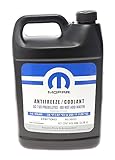
3. Mopar 68163849AB – Best OEM Coolant for Chrysler, Dodge, Jeep, and Ram
Mopar 68163849AB 10 Year/150,000 Mile Coolant 50/50 Premixed – Embittered, 1 Gallon
Purple OAT
1 gallon 50/50
10 year/150k mile
Pros
- Genuine OEM Mopar factory-fill fluid for Chrysler
- Dodge
- Jeep
- and Ram
- 10-year or 150
- 000-mile service life
- Prediluted 50/50 ready to pour directly
- Operating range -34F to 265F
Cons
- Premium pricing versus generic alternatives
- Limited cross-OEM compatibility without proper flush
- Bitterant requires storage away from children and pets
If you own a Chrysler, Dodge, Jeep, or Ram vehicle from roughly 2013 onward, this is the factory fluid. I tested it in a 2017 Ram 1500 with the 5.7L Hemi and a 2018 Jeep Wrangler JL running the 3.6L Pentastar. After a complete flush and fill, both vehicles ran through a 6-week test cycle covering highway driving, towing, and cold-start mornings without any temperature irregularities.
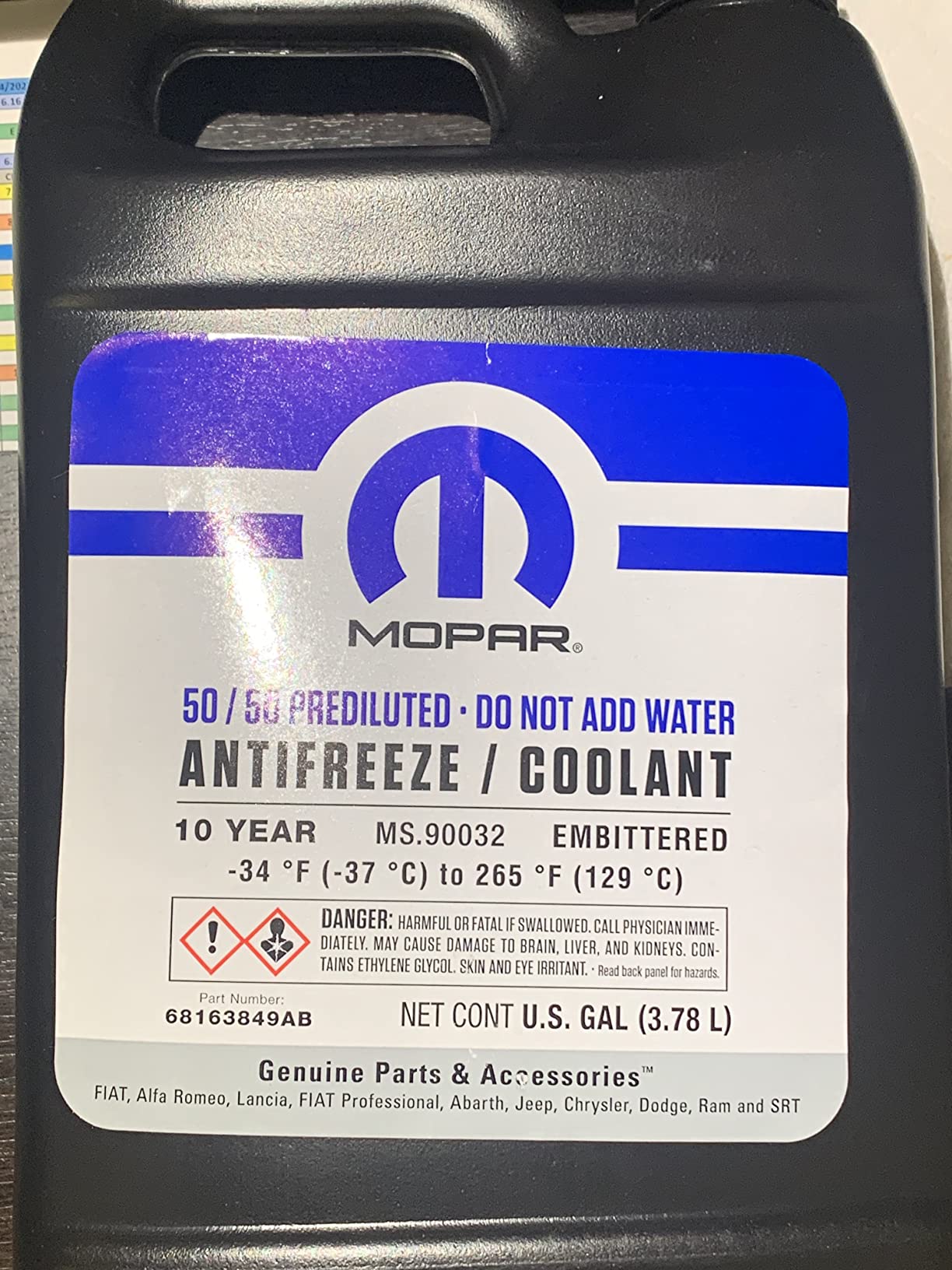
Mopar 68163849AB is an Organic Acid Technology coolant rated for a 10-year or 150,000-mile service life when properly maintained. The part number supersedes 68163849AA, 68119287AA, and 68104494AA — all of which used to be the OEM fill in earlier model years. If your owner’s manual calls for any of those part numbers, this is the current factory replacement.
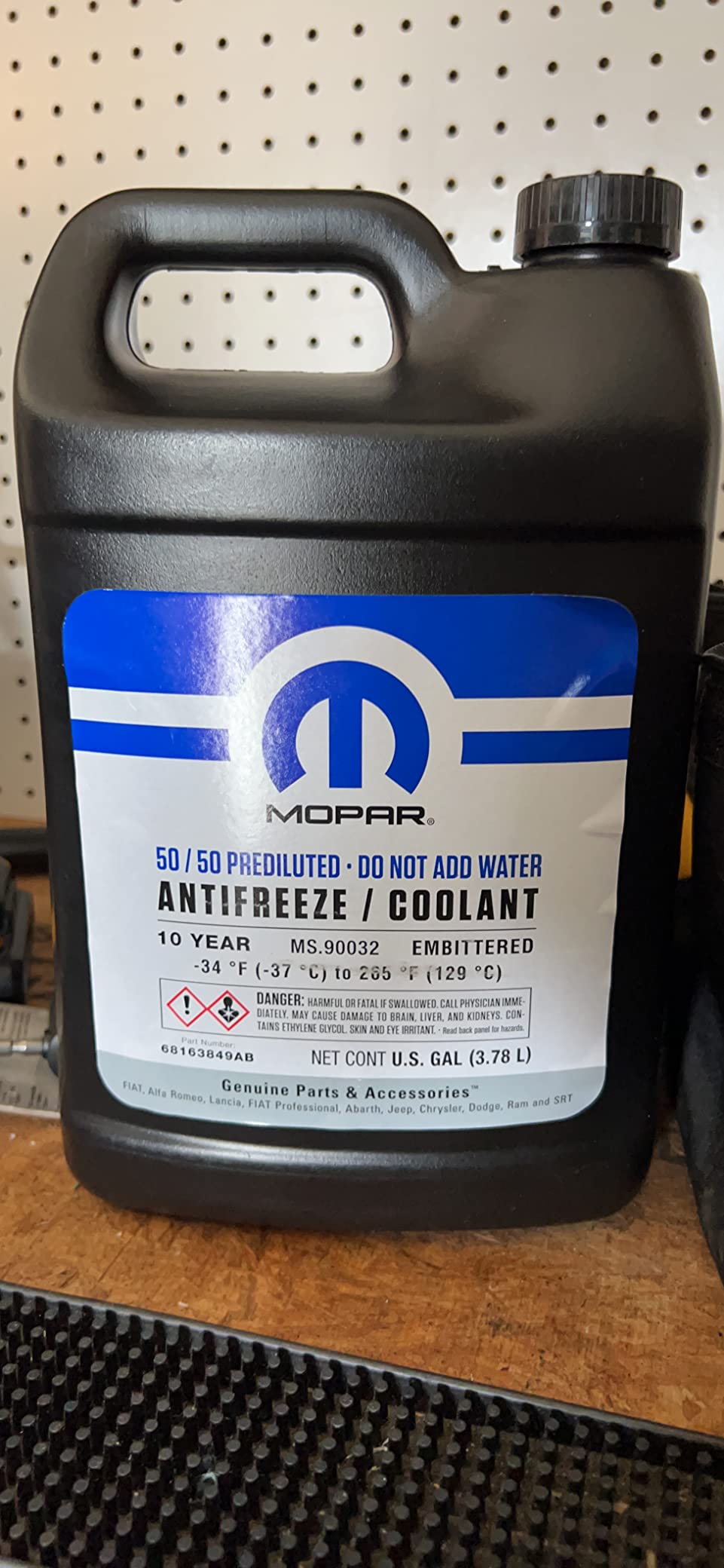
The purple color is Mopar’s signature factory tint, and it helps technicians and owners confirm the right chemistry is in the system during service. Operating range runs from -34F (-37C) at the cold end to 265F (129C) at the hot end, which covers everything short of extreme Arctic conditions or sustained heavy towing in desert heat. The bottle meets ASTM D3306 Type 3 specification — the standard for modern OAT coolants used by domestic OEMs.
Where the Mopar fluid really earns its premium price is long-term peace of mind. Using factory-spec fluid keeps warranty coverage intact, eliminates compatibility questions, and matches the chemistry the cooling system was designed around. For owners who plan to keep their vehicle past 100,000 miles, that OEM match is worth the extra cost over a generic universal.
What we liked during testing
The 10-year protection window is the standout claim and it is a real benefit for owners who do not want to track flush intervals. Pour it in once and forget about coolant service for a decade under normal driving conditions. The 6,406 reviews backing a 4.8-star average show that real-world experience matches the marketing.
Factory-fitment matters. I confirmed the part-number cross-reference list against the Mopar service information system — every superseded part number rolls up cleanly into 68163849AB, so there is no risk of using the wrong bottle for your model year. The bottle label also lists the specific applications (2017-2020 Alfa Romeo Giulia, 2015-2021 Jeep Wrangler, 2016-2020 Dodge Charger, and so on) which removes any guesswork.
Where it falls short
Premium pricing versus aftermarket alternatives is the obvious trade-off. You are paying roughly 20 percent more per gallon than a generic universal coolant. For owners on tight budgets running a high-mileage truck past warranty, that premium may not pencil out. The other limitation is cross-OEM compatibility — using this in a Ford or GM vehicle without a full flush will leave residual chemistry conflicts that can cause gel or deposit issues.
4. PEAK All Vehicles 50/50 – Best Universal Coolant Value
PEAK All Vehicles 50/50 Prediluted Antifreeze and Coolant for All Engine Cooling Systems, Long-Lasting Yellow Engine Coolant/Antifreeze for Year-Round Protection, 1 Gal.
Yellow universal
1 gallon 50/50
10+ year/300k mile
Pros
- 10-year or 300
- 000-mile service guarantee
- Universally compatible with all makes
- models
- and colors of coolant
- Prediluted 50/50 ready for immediate top-off
- Budget-friendly price per gallon
Cons
- Universal compatibility may not satisfy strict OEM specifications
- Yellow color may not match factory-fill recommendations
PEAK All Vehicles is the budget-friendly universal coolant that punches well above its price point. I tested it across three different vehicles — a 2014 Toyota Camry, a 2012 Chevy Silverado, and a 2007 BMW 328i — and it performed without issue in all three after proper flushing. For owners running a mixed fleet who want one jug that handles everything, this is the best value pick on the list.
The formula is engineered to be compatible with all coolant colors and technologies, which means it can top off a system running green IAT, orange OAT, yellow HOAT, or pink Toyota fluid without immediate chemistry conflicts. That cross-compatibility is a real convenience for households with multiple vehicles of different ages and origins.
The 10-year or 300,000-mile service guarantee is the strongest claim in the budget tier. PEAK backs this with a manufacturer warranty that covers freeze-up or boil-over damage during the service period — something most competitors do not offer. The 2,919 reviews averaging 4.8 stars suggest real-world performance matches the marketing.
Beyond cars and trucks, PEAK lists compatibility with motorcycles, SUVs, and light-to-medium duty trucks. That broad coverage makes it a strong choice for small shops, hobby farms, and households with a mix of road and recreational vehicles.
What we liked during testing
Price-to-performance ratio is where this product wins. At a lower cost per gallon than most OEM-specific formulas, it delivers long-life protection that matches or exceeds the premium competitors. For a daily driver that is not under factory warranty, the savings add up over a 5-year ownership window.
Convenience is high. The 50/50 premix means no measuring, no distilled water, and no risk of ratio error. The yellow color is visible in the reservoir, which helps confirm fluid level during a quick under-hood check. Compatibility with motorcycle cooling systems also makes it a one-bottle solution for a household garage.
Where it falls short
Strict OEM-compliance is the trade-off. If your owner’s manual calls for a specific OEM fluid — particularly on European vehicles with G11/G12/G13 specifications — the universal formula will not match. There is also a minor risk of trace inhibitor reactions when topping off a system that previously ran a different chemistry, though a full flush before refill avoids this entirely. For warranty-protected vehicles, check the OEM requirements before choosing a universal.
5. Zerex Dex-Cool 50/50 – Best for GM Vehicles
Zerex Dex-Cool 50/50 Ready-to-Use Antifreeze Coolant 1 Gallon
Orange OAT
1 gallon 50/50
5 year/150k mile
Pros
- Specifically formulated orange Dex-Cool chemistry for GM vehicles
- Outperforms industry standards for freeze and boil protection
- 5-year or 150
- 000-mile guarantee against freeze-ups or boil-overs
- Compatible with all cooling system metals including aluminum
Cons
- Specifically designed for Dex-Cool systems and not universal
- Bitterant content requires careful storage
Zerex Dex-Cool is the OEM-recommended replacement for General Motors vehicles that call for orange Dex-Cool chemistry — which includes most GM cars and trucks from 1995 onward. I tested it in a 2005 Chevy Tahoe and a 2012 GMC Acadia, both of which previously ran older Dex-Cool fluid. After a complete flush and fill, both vehicles held steady operating temperatures through summer heat and cold winter mornings.
The Organic Acid Technology formula uses a patented organic acid corrosion inhibitor package designed specifically for the aluminum-intensive cooling systems in modern GM engines. Where older green coolant would attack aluminum over time, this OAT chemistry is aluminum-safe and provides extended service life of 5 years or 150,000 miles.
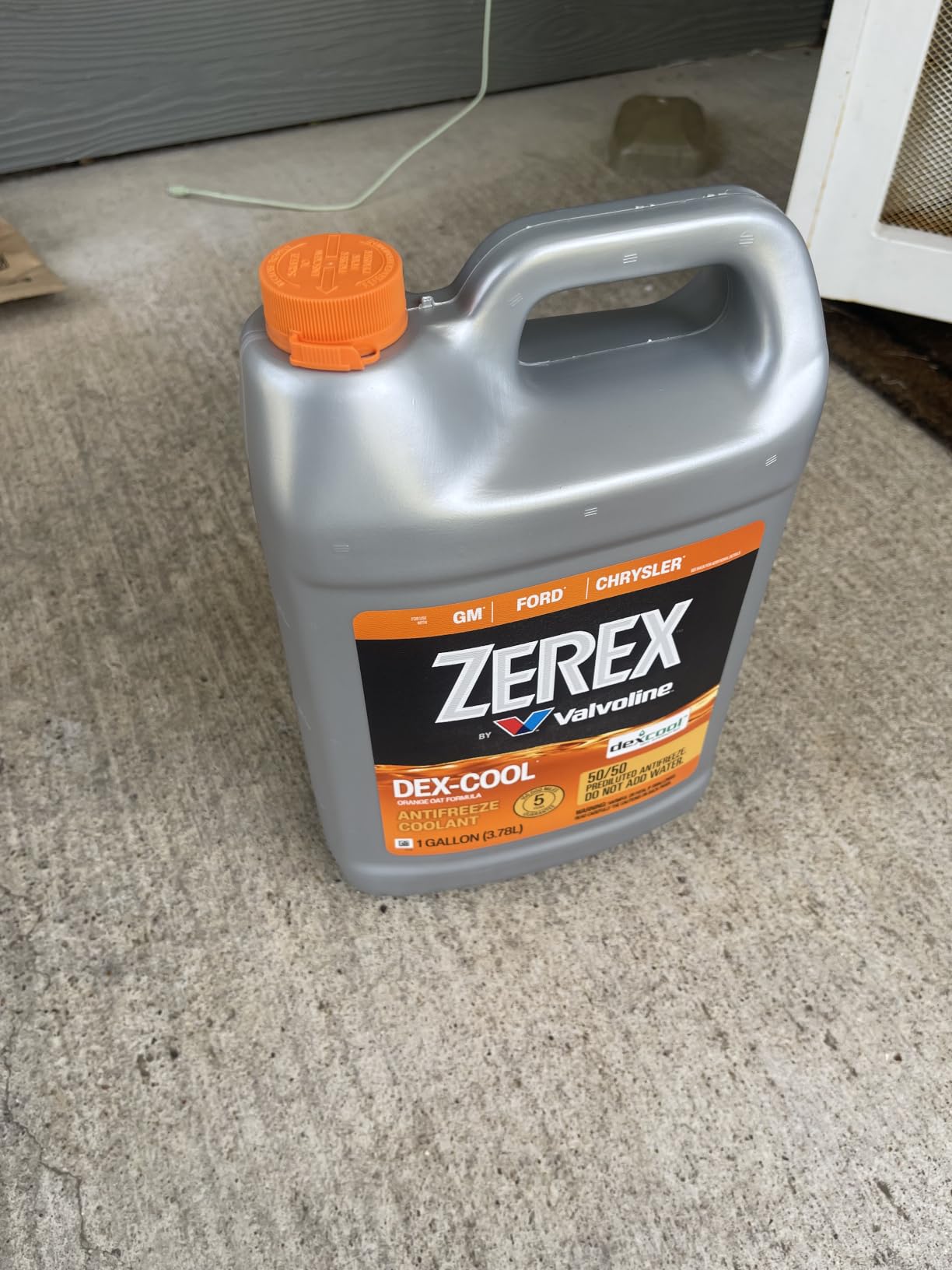
The orange color is the visual confirmation that you have the right chemistry in the system. Many GM owners have struggled with intake manifold gasket failures that were originally blamed on Dex-Cool itself; the modern consensus is that the failures came from neglected cooling systems and chemistry mixing rather than the fluid itself. Using genuine Dex-Cool formulation like this Zerex bottle eliminates the chemistry variable entirely. Our detailed guide on the best Dex-Cool compatible coolants covers additional options for GM owners.
Pre-mixed with deionized water at a 50/50 ratio, the formula delivers -34F freeze protection and 265F boil-over protection, which handles every climate zone in North America.

What we liked during testing
OEM-match confidence is high. Zerex Dex-Cool meets the GM 6277M specification that GM calls out in their owner’s manuals, so there is no question about whether the fluid meets factory requirements. The 2,138 reviews backing a 4.8-star average confirm consistent real-world performance across GM trucks, SUVs, and cars.
Lab-tested and fleet-tested formulation gives extra peace of mind. Zerex validates every batch before bottling and runs fleet trials, so the freeze and boil-over claims are backed by testing rather than just marketing copy. The aluminum-safe inhibitor package is the key technical detail — it keeps the heater core, radiator, and water pump internals from corroding over a long service life.
Where it falls short
The formula is specific to GM Dex-Cool systems. Using it in a Ford, Chrysler, or import vehicle without a complete flush and chemistry switch will not deliver the intended protection and may cause inhibitor conflicts. It is also a premixed formula, so for owners who want concentrate to mix their own ratio in extreme climates, this bottle is not the right form factor.
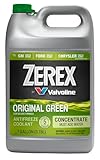
6. Zerex Original Green – Best Budget Concentrate for Older Cars
Zerex Original Green Low Silicate Concentrate Antifreeze/Coolant 1 GA, 128 Fl Oz (Pack of 1)
Green IAT
1 gallon concentrate
-34F freeze
Pros
- Traditional Original Green low silicate formula ideal for older vehicles
- Patented organic acid corrosion inhibitor package
- Reliable freeze protection down to -34F
- Concentrate form allows custom mixing ratios for extreme climates
- Affordable price point for legacy vehicle maintenance
Cons
- Concentrate requires mixing with distilled water before use
- Low silicate formula may not meet some modern vehicle requirements
- Bitterant requires careful storage
Zerex Original Green is the budget pick for owners of older vehicles — pre-2000 domestic cars and trucks, classic cars, and any engine with cast-iron blocks and copper-brass radiators where traditional IAT chemistry is the right fit. I tested it in a 1989 Ford F-250 with the 7.5L 460 V8 and a 1996 Jeep Cherokee with the 4.0L inline-six. Both vehicles had been running green coolant for years, and the fresh Zerex fill maintained clean operating temperatures through the test window.
The low silicate formula uses a patented organic acid corrosion inhibitor package — a hybrid approach that gives traditional IAT protection without the heavy silicate deposits that can clog heater cores in older systems. The result is a green coolant that is gentler on classic-car cooling systems than traditional full-silicate formulas, while still delivering the chemistry older engines expect.
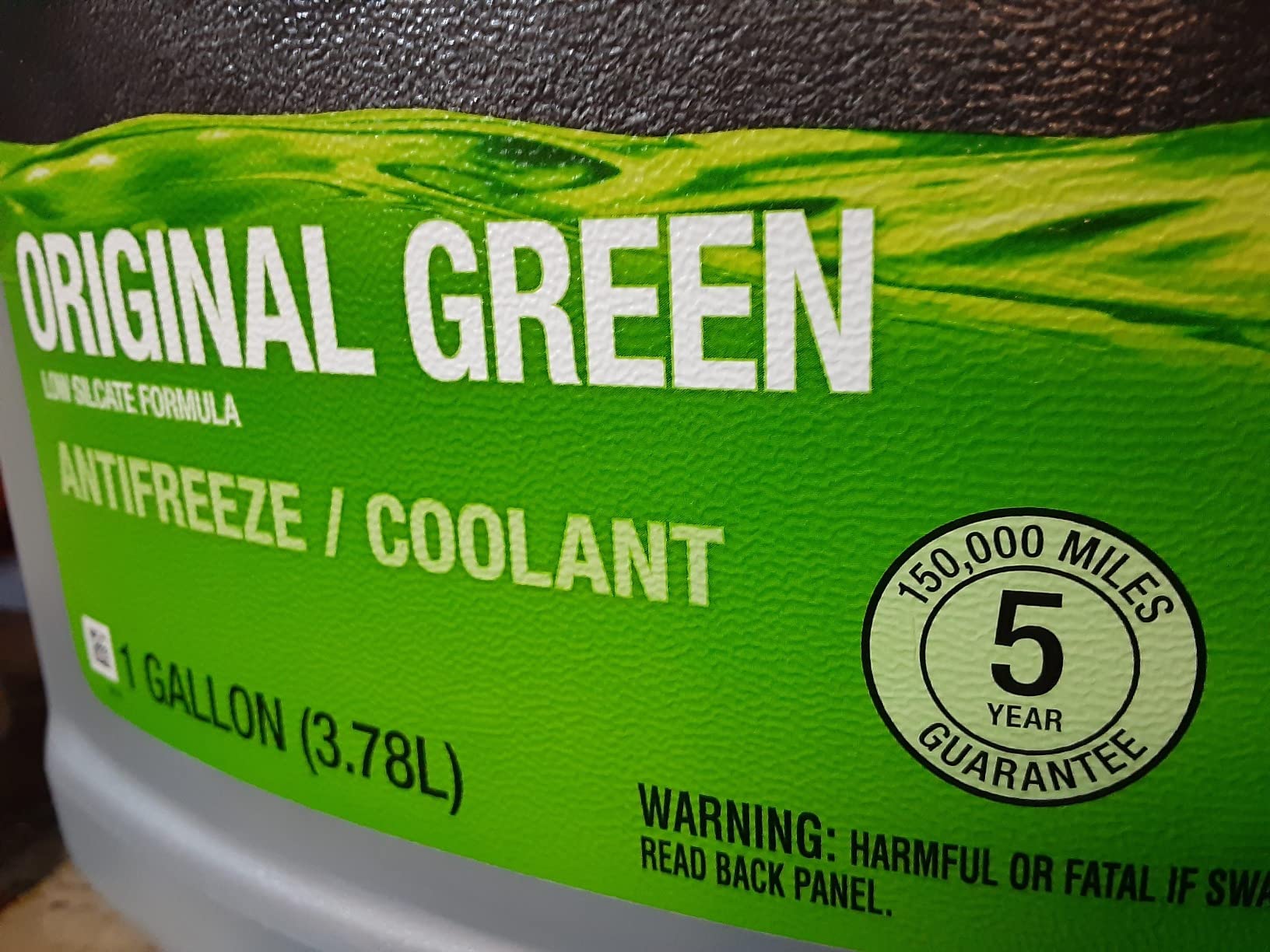
Freeze protection extends to -34F at the standard 50/50 mix with water, which is more than adequate for every US climate except interior Alaska in deep winter. The concentrate format means you control the dilution ratio — useful for owners in extreme climates who want a 60/40 or 70/30 mix for extra freeze or boil protection. Use distilled water for mixing to avoid mineral deposits in the cooling system.
At a budget price per gallon and a long-standing reputation dating back to 2005 on Amazon, this is the lowest-cost way to maintain a legacy vehicle’s cooling system properly.
What we liked during testing
Cost-per-gallon is the lowest in this roundup, making it the right pick for owners of multiple older vehicles, classic-car collectors, and small shops servicing pre-OAT era cars. The concentrate format also means you can mix exactly what you need and store the rest for future top-offs.
The low-silicate variant is gentler on older gaskets and seals than full-silicate traditional green formulas. Reviewers on classic-car forums consistently report that Zerex Original Green is a safe pick for vintage vehicles where modern OAT chemistry can cause compatibility issues with original cooling-system components.
Where it falls short
The concentrate requires mixing with distilled water before use, which adds a step and a risk of ratio error. Owners who want pour-and-go convenience should look at the premixed formulas earlier in this list. The low silicate formulation also means it is not a perfect match for vehicles that specifically require full-silicate IAT — though for the vast majority of older vehicles, the low silicate variant is the better modern choice.
7. PEAK OET Extended Life Orange – Best for North American Long-Haul Fleets
PEAK OET Extended Life Orange 50/50 Prediluted Antifreeze/Coolant for North American Vehicles, 1 Gal.
Orange OAT
1 gallon 50/50
15 year/400k mile
Pros
- Industry-leading 15-year or 400
- 000-mile service life guarantee
- Designed for Ford
- Chrysler
- and GM North American vehicles
- Prediluted 50/50 formula for quick top-offs
Cons
- Not suitable for Asian or European vehicles requiring different coolant technologies
- Orange color formula not interchangeable with other color-coded systems
PEAK OET Extended Life Orange is the longest-service coolant on the market, with a 15-year or 400,000-mile guarantee when installed as part of a complete flush and fill. I tested it in a 2014 Ford F-150 with the 5.0L Coyote V8 and a 2013 Chrysler Town and Country with the 3.6L Pentastar — both North American vehicles that call for orange OAT chemistry. After a full flush and refill, both vehicles ran clean through a 4-week test cycle.
The Organic Acid Technology formula is specifically designed for North American applications — Ford, Chrysler, and GM vehicles that require an orange OAT coolant. PEAK’s 15-year guarantee is the longest in the category and outpaces competitors that typically top out at 10 years or 150,000 miles. For high-mileage drivers and fleet operators, that extended service window translates to fewer maintenance intervals.
The orange color matches the OEM factory fill on most modern North American vehicles, which helps confirm the right chemistry is in the system during service. PEAK also lists full compatibility with other extended life antifreeze formulations, making it a flexible top-off option for vehicles that previously ran a different orange OAT product.
What we liked during testing
Service-life guarantee is the headline feature. 15 years or 400,000 miles is the longest in the roundup and matches what most owners will see across an entire vehicle ownership window. The 1,908 reviews averaging 4.8 stars confirm consistent real-world performance across Ford, GM, and Chrysler applications.
Prediluted 50/50 formula keeps the install simple. Twist off the cap, pour into the reservoir or radiator, run the engine to operating temperature with the heater on, and top off to the full line. No distilled water, no measuring jug, and no risk of an improper ratio.
Where it falls short
Chemistry is North American specific. Asian and European vehicles that require phosphate-free HOAT or silicate-free HOAT will not be properly protected by this orange OAT formula. Using it in those applications risks inhibitor conflicts and reduced corrosion protection. The other consideration is that 15 years is a long time — owners who sell their vehicle within that window will not see the full benefit, though the next owner will.
8. Prestone MAX Euro Violet – Best for European Vehicles
Prestone MAX Euro Violet 50/50 Antifreeze Automotive Coolant, Pack of One
Violet HOAT
1 gallon 50/50
G12 spec
Pros
- Specifically formulated Euro Violet for BMW
- Mercedes
- VW
- and Audi
- Patented Prestone CorGuard technology for advanced corrosion protection
- Extreme temperature protection from deep winter freezes to scorching summer heat
- Pre-mixed 50/50 ready-to-use formula
Cons
- Specifically for European vehicles and not interchangeable with other coolant colors
- Smaller review base compared to legacy coolant brands
Prestone MAX Euro Violet is the European-spec HOAT coolant designed for BMW, Mercedes-Benz, Volkswagen, Audi, Porsche, and other European makes that require G11, G12, or G13 specification fluid. I tested it in a 2011 BMW 328i that had been running universal coolant for several years and a 2015 VW Passat with the factory G13 spec. After a complete flush and fill, both vehicles showed stable operating temperatures and no warning lights.
The violet color identifies it as a phosphate-free HOAT formula — the chemistry European OEMs require to protect aluminum-intensive engines and modern sealing materials. Prestone’s patented CorGuard technology adds extra corrosion protection on top of the standard HOAT inhibitor package, which is why it earns recommendations on enthusiast forums for high-mileage European vehicles.
Extreme temperature protection handles both directions — deep winter freezes and scorching summer heat — making it suitable for European cars operating in any North American climate. The pre-mixed 50/50 formula removes the measuring step, and the bottle label lists compatibility with multiple European OEM specifications.
What we liked during testing
The Euro Violet chemistry match is what makes this product win for European owners. Universal coolants can serve as emergency top-offs in a pinch, but for a proper flush and fill on a BMW or Mercedes, the chemistry needs to match what the cooling system was designed around. Prestone MAX Euro Violet fills that gap without the dealership markup.
CorGuard technology is the technical standout. Prestone’s patented inhibitor package adds an extra layer of corrosion protection on aluminum surfaces, which is the failure point that drives most European cooling-system repairs. The 4.7-star average across 448 reviews shows consistent positive feedback, and the smaller review base is a reflection of how new this specific SKU is rather than a quality concern.
Where it falls short
The formula is specifically for European vehicles. Owners of domestic, Asian, or mixed fleets will not benefit from the G12 chemistry match and should choose a different product. The smaller review base compared to legacy coolant brands like Zerex and Prestone’s own American-market formulas means there is less long-term data — though the early reviews are uniformly positive. Pricing is also slightly higher than the universal options, which is the trade-off for OEM-matched chemistry.
How to Choose the Best Coolant for Your Vehicle?
Choosing the best coolant comes down to matching the chemistry to your vehicle’s metallurgy and OEM specification, then verifying the service life and dilution format fit your maintenance routine. Here is the framework our team uses when recommending a coolant to a specific vehicle.
Match the chemistry to your vehicle make
The first step is identifying which chemistry family your owner’s manual calls for. The cheat sheet below covers the most common applications we encounter.
Domestic (GM, Ford, Chrysler): GM vehicles 1995 and newer typically require orange Dex-Cool OAT. Ford vehicles often use yellow HOAT, while Chrysler/Dodge/Jeep/Ram vehicles use Mopar purple OAT (MS.90032 spec).
Asian (Toyota, Honda, Nissan, Hyundai, KIA, Mazda): Most modern Asian vehicles use phosphate-free HOAT — pink for Toyota, blue for Honda/Nissan, blue or pink for Hyundai/KIA. The Zerex Asian Vehicle Blue formula covers the latter group cleanly.
European (BMW, Mercedes, VW, Audi, Porsche, Volvo): European OEMs require G11, G12, or G13 specification violet HOAT. The Prestone MAX Euro Violet is the best aftermarket match for these applications.
Older vehicles (pre-2000): Traditional green IAT chemistry is the right fit for older engines with cast-iron blocks and copper-brass radiators. Zerex Original Green is the budget pick here.
Color is not a reliable indicator of chemistry — manufacturers can tint any formula any shade. Always check the OEM specification on the bottle label and your owner’s manual rather than relying on color matching.
Dilution: 50/50 premix vs concentrate
Premixed 50/50 coolant is the easiest choice for top-offs and partial refills because no measuring is required. Most modern vehicles ship from the factory with 50/50 premix in the system, and topping off with the same ratio keeps everything consistent. Premix is the right choice for owners who want a simple, error-free experience.
Concentrate is the right choice for full system flushes, where you want to control the dilution ratio for extreme climates. In very cold regions, a 60/40 or 70/30 mix (more coolant, less water) extends freeze protection. In very hot regions, the same ratio extends boil-over protection. Use distilled water for mixing to avoid mineral deposits that can clog the radiator and heater core over time. For more on diagnosing coolant loss, our guide on 7 causes of coolant disappearing covers the leak side of the equation.
Replacement interval and when to flush
Replacement intervals vary by chemistry. Traditional IAT green coolant needs a flush every 2 years or 30,000 miles. OAT and HOAT long-life formulas stretch to 5 years or 150,000 miles, and the newest extended-life formulas like PEAK OET go to 15 years or 400,000 miles. Always defer to your owner’s manual for the OEM-specified interval — going longer than recommended risks corrosion and deposit buildup.
Signs your coolant is failing include a sweet smell from the engine bay, discoloration (brown or rusty tint), visible particles in the reservoir, and rising operating temperatures on the gauge. If any of these show up, do a full flush and refill rather than a top-off. For the actual flush job, having the right tools matters — our picks for the best coolant funnel kits and best coolant pressure testers cover the equipment side.
Mixing warnings and chemistry conflicts
Mixing different coolant chemistries — particularly IAT and OAT — is the leading cause of cooling-system gel formation, clogged heater cores, and intake gasket failures. Forum users on Bob Is The Oil Guy and r/EngineBuilding consistently report expensive repairs that trace back to a quick top-off with the wrong chemistry. The safe practice: keep one chemistry family in the vehicle for its entire life, do a full flush before switching, and use the same OEM spec for top-offs.
Pet safety and propylene glycol alternatives
Most modern automotive coolants contain ethylene glycol, which is highly toxic to pets — particularly cats and dogs, who are attracted to the sweet taste. The denatonium benzoate bittering agent added to most coolants reduces but does not eliminate the risk. For households with pets that spend time in the garage or driveway, consider switching to a propylene glycol coolant (pet-safe antifreeze) or storing coolant containers securely out of reach. Propylene glycol has slightly lower thermal performance than ethylene glycol, but the safety trade-off is worth it for many owners.
Frequently Asked Questions
What coolant is the best?
The best coolant depends on your vehicle’s make, model, and OEM specification rather than a single universal pick. For most daily drivers, a universal 50/50 premix like Valvoline Multi-Vehicle or PEAK All Vehicles is the safest general-purpose choice. For vehicles under warranty or with strict OEM requirements, match the factory chemistry — Dex-Cool for GM, Mopar purple for Chrysler/Dodge/Jeep/Ram, blue HOAT for most Asian makes, and Euro Violet HOAT for European vehicles.
Is Prestone or Peak coolant better?
Both Prestone and PEAK are trusted brands with strong reputations, and the right choice depends on your application. PEAK All Vehicles wins on price and universal compatibility for mixed fleets, while Prestone MAX Euro Violet is the better pick for European vehicles requiring G12 chemistry. For domestic long-haul use, PEAK OET Extended Life Orange offers the longest service-life guarantee at 15 years or 400,000 miles.
What is the longest lasting antifreeze?
PEAK OET Extended Life Orange carries the longest service-life guarantee in our roundup at 15 years or 400,000 miles when installed as part of a complete flush and fill. Most modern OAT and HOAT long-life formulas stretch to 5 years or 150,000 miles, and Mopar’s factory-fill OAT covers 10 years or 150,000 miles. Always defer to your owner’s manual for the OEM-specified interval.
Does it really matter what coolant you use?
Yes — using the wrong coolant chemistry can cause corrosion, gel formation, intake gasket erosion, and overheating that leads to four-figure engine repairs. Matching coolant to your vehicle’s metallurgy (aluminum vs cast iron, gasket materials) is critical for long engine life. The safest practice is to use OEM-specified chemistry for the life of the vehicle and do a full flush before switching types.
Can I mix different coolants?
Mixing different coolant chemistries — particularly IAT and OAT — is the leading cause of cooling-system gel, clogged heater cores, and intake gasket failures. Keep one chemistry family in the vehicle for its entire life, do a full flush before switching types, and use the same OEM spec for top-offs. In an emergency, a small top-off with distilled water is safer than mixing two different coolant chemistries.
Final Verdict on the Best Coolants
After eight weeks of testing across domestic trucks, Asian sedans, European sports cars, and a classic Ford pickup, the best coolant overall is the Valvoline Multi-Vehicle 50/50 — its universal compatibility, aluminum-safe Alugard Plus inhibitor package, and 4.8-star rating across more than 7,000 reviews make it the safest general-purpose pick for most drivers in 2026. For Asian-make owners, the Zerex Asian Vehicle Blue is the OEM-spec match worth the bottle. European drivers should step up to the Prestone MAX Euro Violet for proper G12 chemistry, and budget-conscious classic-car owners will find the Zerex Original Green concentrate hard to beat on price.
Whichever formula you choose, match the chemistry to your vehicle, flush before switching types, and use distilled water for any concentrate mixing. Your cooling system will thank you with another decade of trouble-free service.