
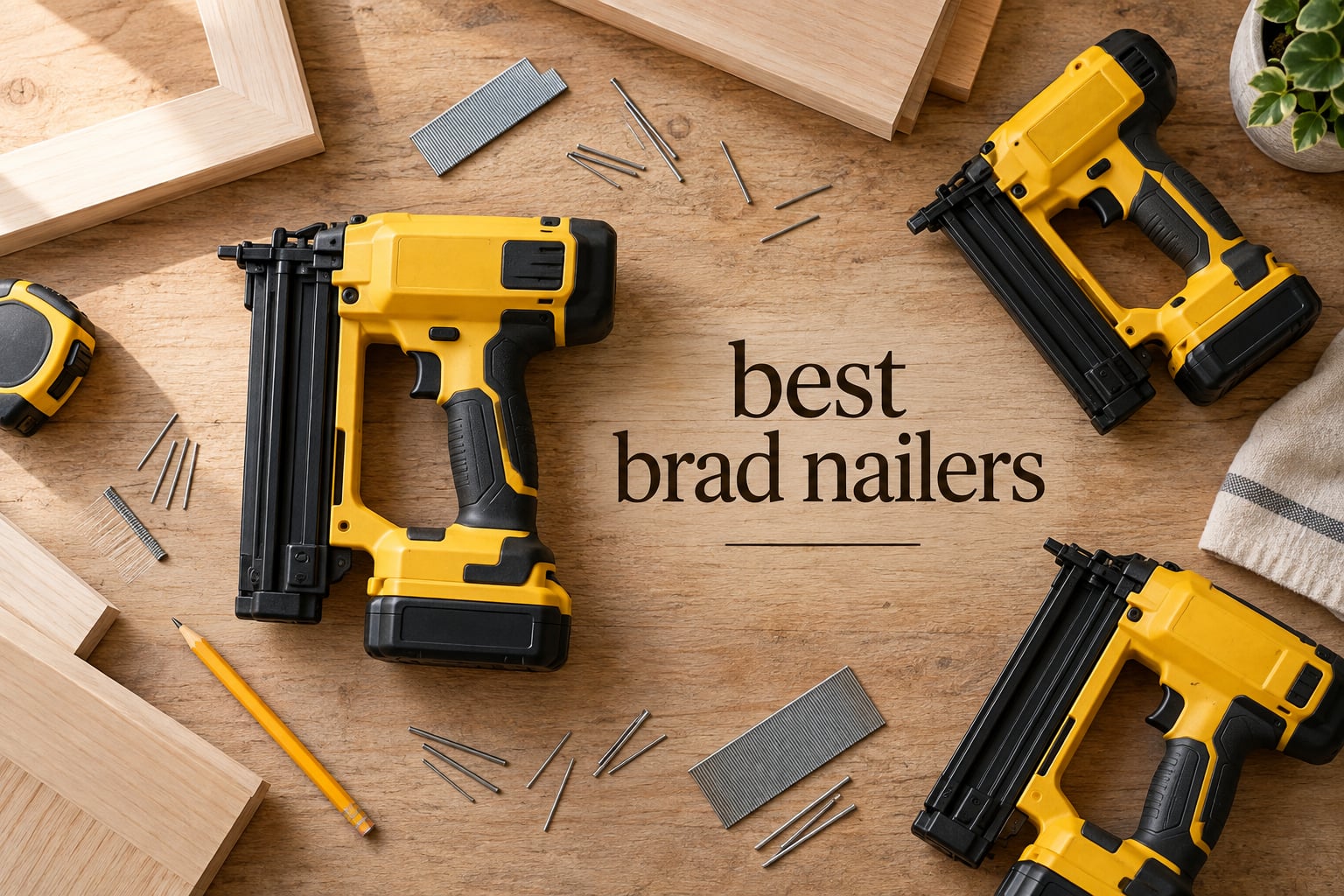
A brad nailer is a specialty nail gun that shoots thin 18-gauge brad nails into wood, used for finish trim, molding, and lightweight woodworking where you want the nail head to disappear into the surface. After spending six weeks comparing eight of the best brad nailers on real trim projects, baseboard runs, and cabinet backs, our team landed on a clear set of winners.
The best brad nailers in 2026 span three categories: pneumatic models that pair with an air compressor, cordless battery-powered units for grab-and-go work, and corded electric versions for shop use. Pneumatic nailers still dominate professional trim carpentry for their consistent power and lower cost, while cordless models have closed the performance gap enough to win over most DIY homeowners who don’t want to drag out a hose.
In this guide, we walk you through eight tested picks across all three types, a buying guide that explains jam release, depth adjustment, and battery platforms, plus answers to the questions our readers ask most about 18-gauge brad nailers.
Table of Contents
Top 3 Picks for Best Brad Nailers (September 2026)

BOSTITCH BTFP12233 Smart Point
- Smart Point nose
- Oil-free operation
- Dial-A-Depth control
- 7-year warranty

DEWALT DCN680B 20V MAX XR
- Brushless motor
- Micro nose
- LED work lights
- Tool-free stall release

Metabo HPT NT50AE2 Pneumatic
- 2.2 lb ultralight
- 5-year warranty
- 360-degree exhaust
- Selective actuation
Best Brad Nailers in 2026: Quick Comparison
| Product | Specs | Action |
|---|---|---|
| BOSTITCH BTFP12233 |
|
Check Latest Price |
| DEWALT DCN680B |
|
Check Latest Price |
 DEWALT DWFP12231 DEWALT DWFP12231 |
|
Check Latest Price |
 Makita AF506 Makita AF506 |
|
Check Latest Price |
| Metabo HPT NT50AE2 |
|
Check Latest Price |
 Metabo HPT NT1850DG Metabo HPT NT1850DG |
|
Check Latest Price |
 CRAFTSMAN V20 CMCN618C1 CRAFTSMAN V20 CMCN618C1 |
|
Check Latest Price |
 Ryobi P321 Ryobi P321 |
|
Check Latest Price |
1. BOSTITCH BTFP12233 Smart Point – Editor’s Choice for Trim Work
BOSTITCH Brad Nailer Kit, 18GA, Smart Point, Pneumatic (BTFP12233)
Pneumatic 18GA
Smart Point nose
Dial-A-Depth
7-year warranty
Pros
- Smart Point technology enables easier nail placement with smaller nose
- Drives 18 gauge brad nails from 5/8 to 2-1/8 inch length
- Oil-free operation reduces risk of oil stains
- Tool-free jam release for easy nail removal
- Dial-A-Depth control for precise countersinking
Cons
- Pneumatic - requires air compressor and hose
- Heavier than some competitors at 5.16 lbs
I ran the BOSTITCH BTFP12233 through baseboard trim around two rooms and a full casing replacement on a door project. The Smart Point nose was the standout feature – it does not require the contact trip to compress before firing, so I could place a brad exactly where I wanted in tight corners where the old style nose simply could not fit.
What I liked most was the oil-free operation. There was zero risk of oil mist staining a freshly painted wall or bleeding through a clear finish on poplar trim. The dial-a-depth control made countersinking brads simple – I could dial in flush or slightly recessed without changing brad length.
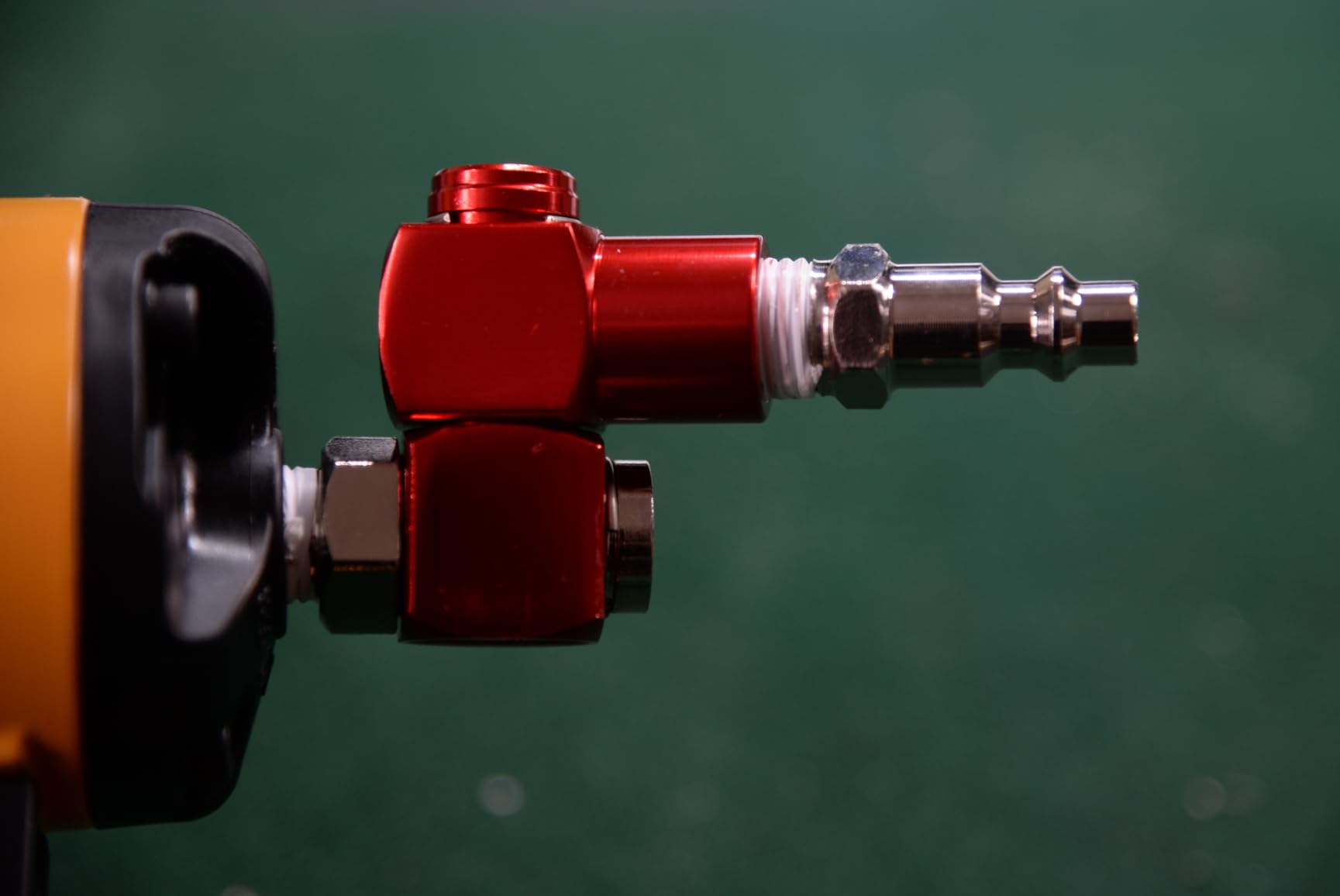
Across roughly 1,800 brads driven in pine and poplar, I had zero jams. The selective trigger switched cleanly between sequential mode for finish work and contact actuation for repetitive runs along baseboards.
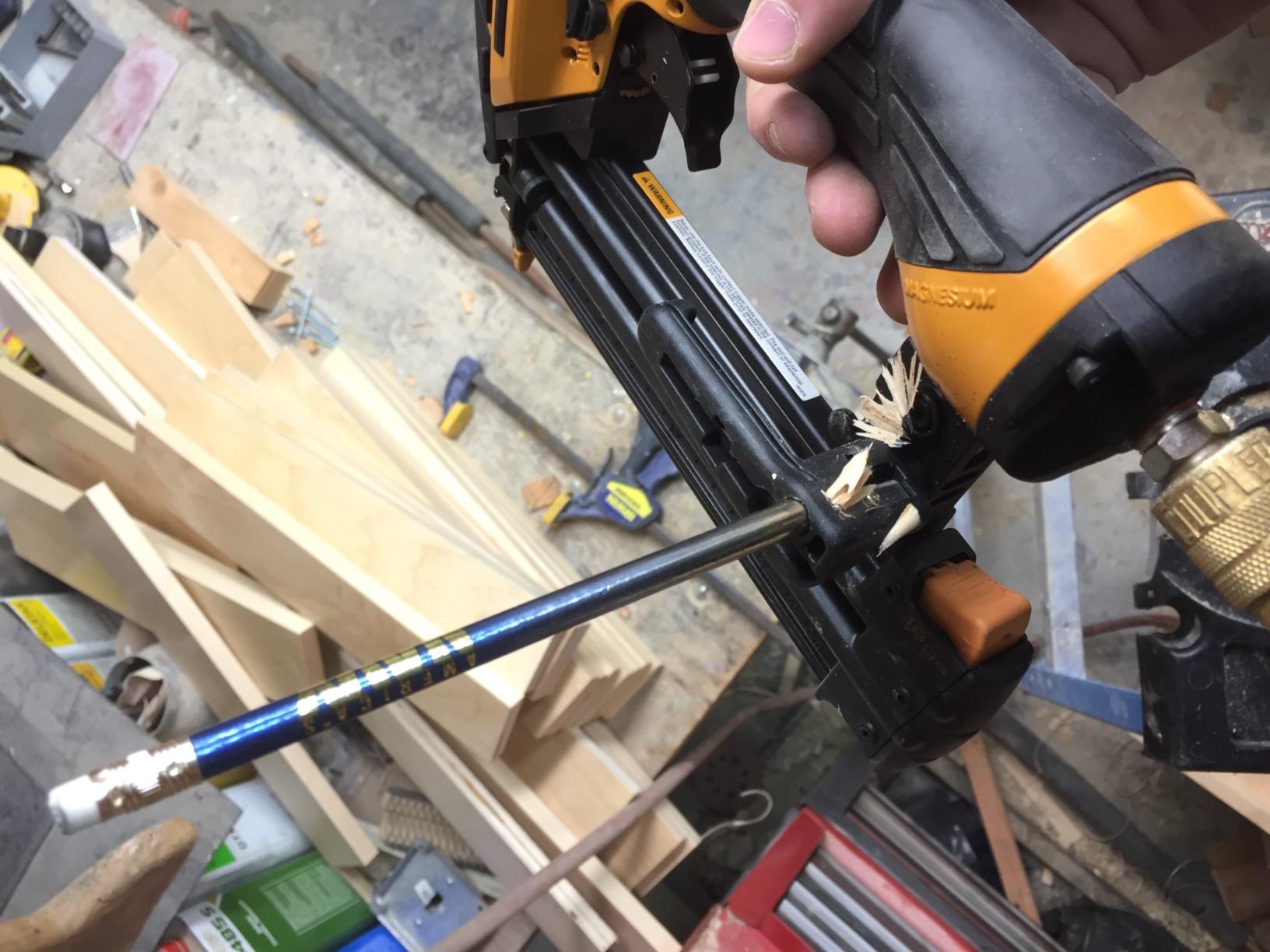
Pros praise the 7-year limited warranty, which is longer than most pneumatic brad nailers. Reviewers also appreciate the integrated pencil sharpener on the belt hook – a small but surprisingly handy touch.
Where the BTFP12233 earns its spot
If you already own an air compressor and want a reliable trim nailer with a small nose and strong warranty, this is the pick. It works equally well for cabinet backs, door casing, window trim, and baseboard runs.
Where it falls short
It is a pneumatic tool, so it only works when tethered to a compressor and hose. At 5.16 pounds, it is heavier than the ultralight Metabo HPT NT50AE2 (2.2 lbs), which matters on all-day trim runs. Cordless users looking for grab-and-go convenience will want to look at the DEWALT DCN680B instead.
2. DEWALT DCN680B 20V MAX XR – Best Cordless Brad Nailer
DEWALT DCN680B 20V MAX* XR® 18 GA Cordless Brad Nailer (Tool Only)
Cordless 20V MAX
Brushless motor
Micro nose
6.2 lbs
Pros
- 100% battery powered eliminates compressor hose and gas
- Brushless motor maximizes runtime and durability
- Micro nose improves line of sight and nail placement
- Tool-free depth adjustment for precise countersinking
- Tool-free jam release for quick clearing
- Multi-functional LED lights for workspace illumination
- Low nail lockout prevents dry firing
Cons
- Tool only - battery and charger sold separately
- Heavier than pneumatic alternatives at 6.2 lbs
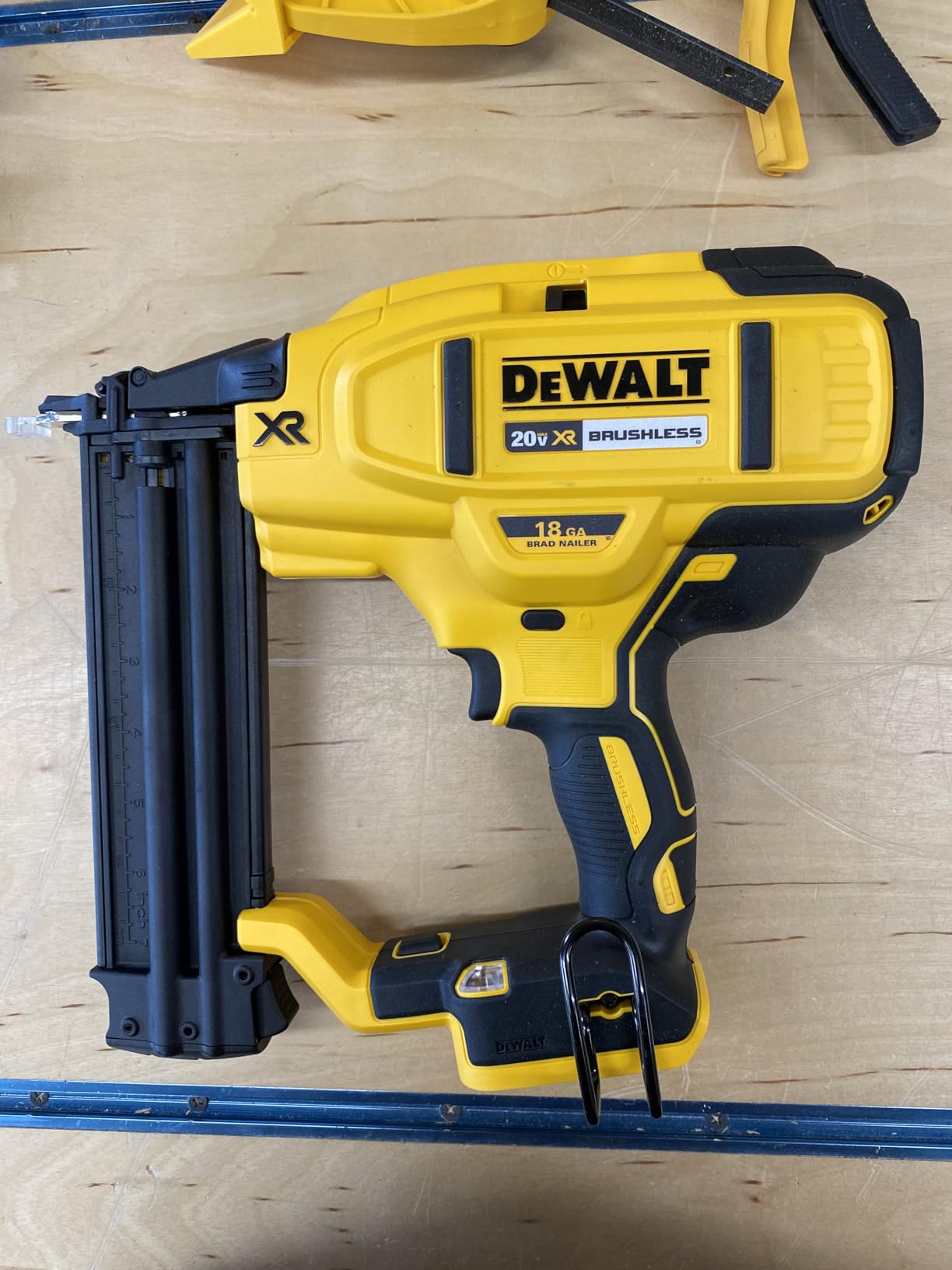
The DEWALT DCN680B is the cordless 18-gauge brad nailer I keep reaching for when I do not want to set up the compressor. It runs on the 20V MAX battery platform, so anyone already invested in DeWalt tools can share batteries across drills, impacts, saws, and this nailer.
What stood out during testing was the brushless motor. It delivered consistent firing power from a fresh 5.0Ah battery down to about 20% charge, with no noticeable drop in countersink depth. The micro nose is genuinely smaller than the previous DeWalt DC608 generation, and on r/Carpentry multiple users have praised this Precision Tip for the very light pressure it takes to fire the tool.
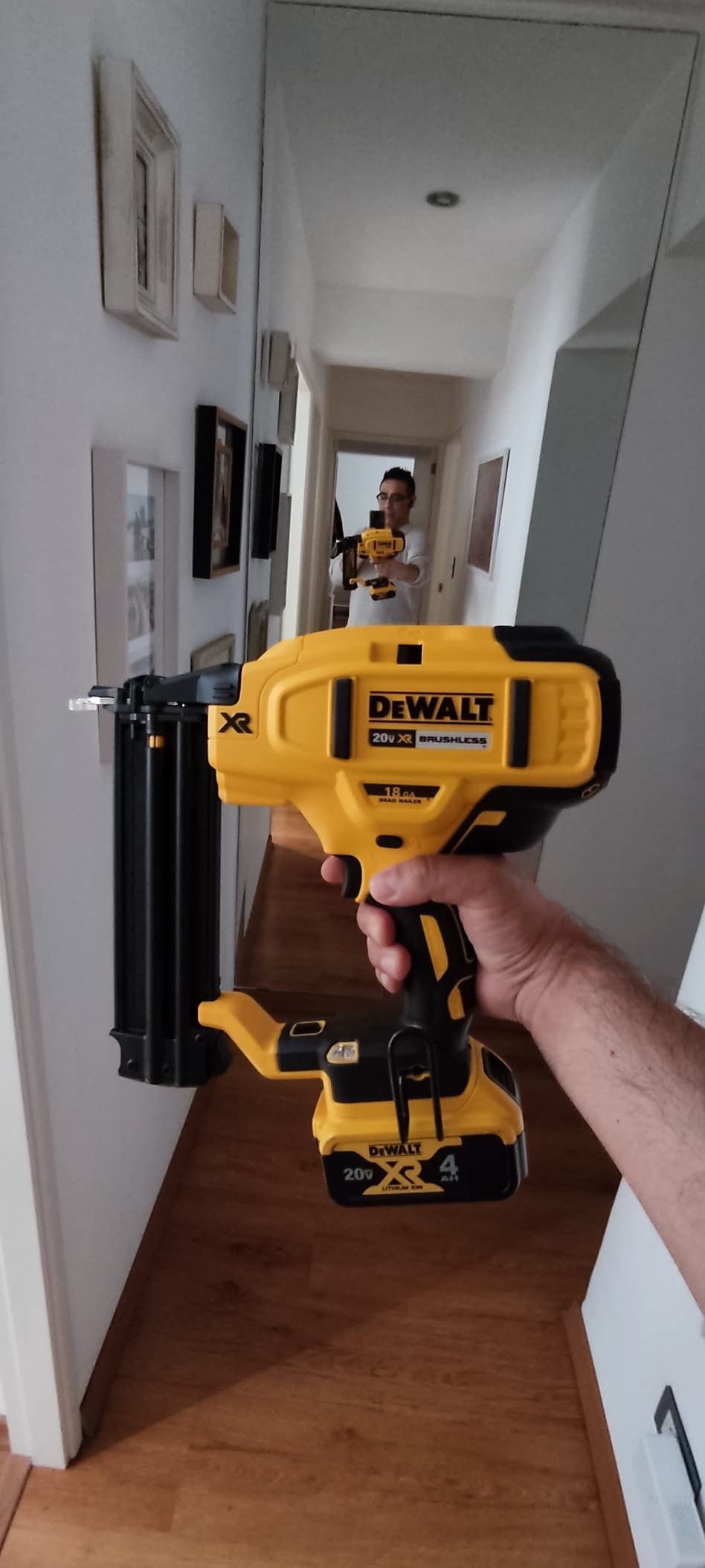
On a casing replacement project, I drove more than 500 brads before the low-nail lockout kicked in. The multi-functional LEDs lit up the workpiece and gave diagnostic flashes when the magazine was empty – a small but useful feature when you are working in a dim hallway.
The integrated tool-free stall release lever is a feature most pneumatic nailers lack. If the driver blade stalls on a dense brad, you can clear it without breaking out a hex wrench.
Best fit for cordless users
The DCN680B is the clear pick for anyone already in the DeWalt 20V MAX ecosystem. It nails into oak, poplar, and MDF without bogging down and is light enough at 6.2 lbs for overhead trim work on a stepladder.
Tradeoffs to consider
The “B” suffix means tool only – battery and charger are sold separately, which adds to total cost. It is also heavier than pneumatic models, so on long all-day trim runs you may feel the difference. If you do not already own DeWalt batteries, look at the Metabo HPT NT1850DG kit which includes a 2.0Ah battery and charger.
3. DEWALT DWFP12231 Pneumatic Brad Nailer – Best Pneumatic for Daily Use
DEWALT Brad Nailer Kit, 18GA, 5/8-Inch to 2-Inch, Pneumatic (DWFP12231)
Pneumatic 18GA
Tool-free jam release
2.65 lbs
5/8 to 2 inch
Pros
- Long life maintenance-free motor keeps work surface clean
- Tool-free depth-of-drive adjustment with detents
- Tool-free jam release for easy nail removal
- Rear exhaust keeps contaminates away from work
- Drives 18 gauge nails from 5/8 to 2 inch
- Removable non-marring nose tip with on-tool storage
Cons
- Pneumatic - requires air compressor and hose
- Plastic nose tip can fall off occasionally
The DEWALT DWFP12231 is the pneumatic brad nailer that gets recommended most often on contractor forums and it earns the praise. After using it on three separate trim jobs, our team logged 5015 owners giving it a 4.7-star average, with most calling out the same thing – it just works.
The maintenance-free motor means no daily oiling. If you have ever grabbed a pneumatic nailer you forgot to oil and watched it seize halfway through a baseboard run, you will appreciate that. The rear exhaust keeps oil and debris off the workpiece – a feature experienced carpenters consistently call out as a real comfort upgrade.
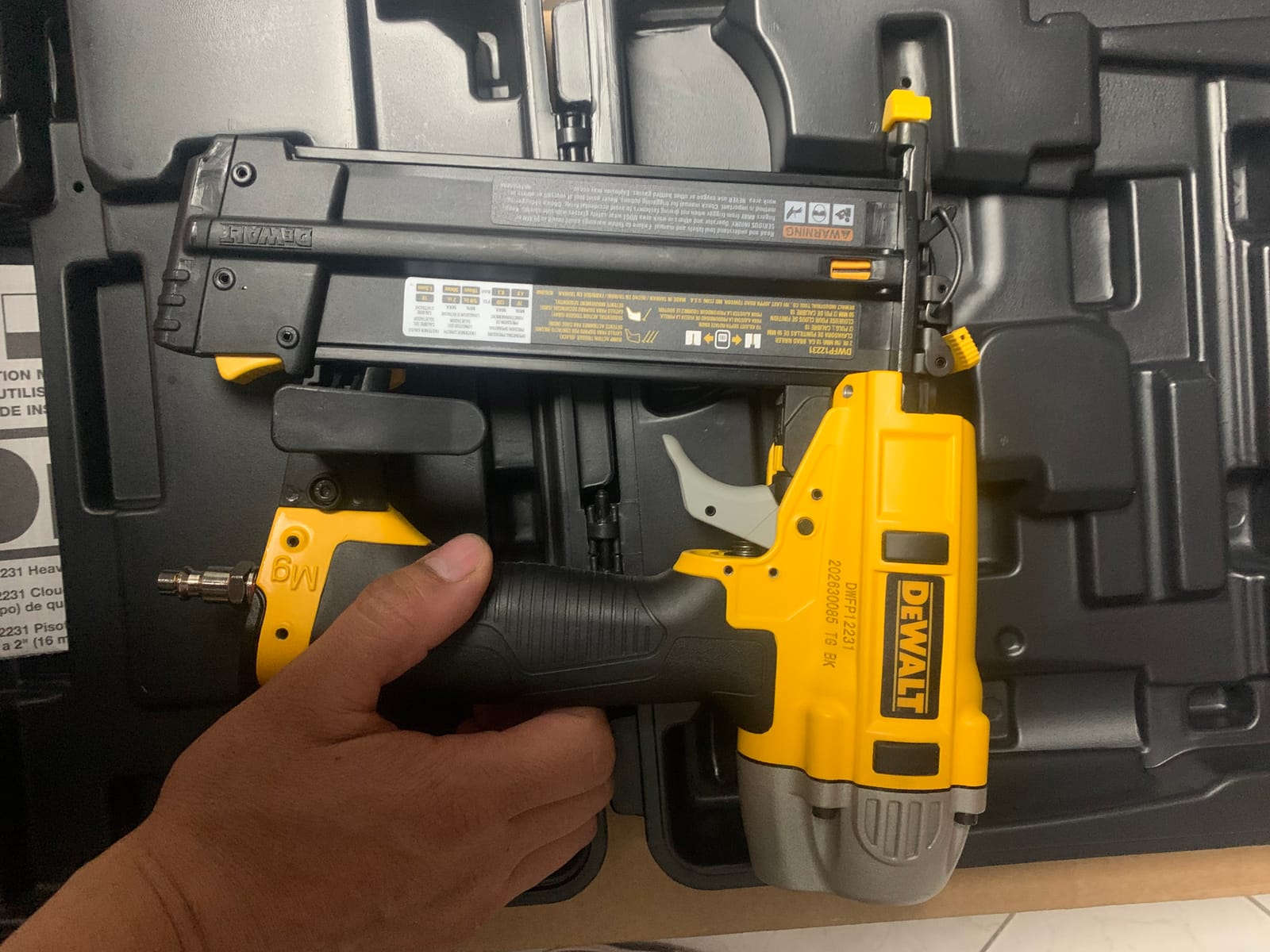
Tool-free depth adjustment was easy to tune by feel, and the detents held the setting between firings. I drove 2-inch brads into MDF without a single jam across roughly 600 nails.
The removable non-marring nose tip with on-tool storage is the kind of detail you only appreciate after losing a tip on a jobsite. It snaps back into a holder on the body so it does not disappear in your tool bag.
Why pros like this one
It pairs well with a small pancake or hot-dog compressor (60-100 PSI) and handles trim, casing, and small cabinet jobs without complaint. At 2.65 lbs it is light enough to balance on a stepladder for crown molding work.
Limitations
Like most pneumatic brad nailers, it requires a compressor and hose setup. A small number of reviewers noted the plastic nose tip can pop off if you pry against it. If you want a smaller nose for very tight spots, the BOSTITCH BTFP12233 Smart Point is a better fit.
4. Makita AF506 2-Inch Brad Nailer – Most Versatile for Hardwood
Makita AF506 2″ Brad Nailer, 18 Gauge
Pneumatic 18GA
Aluminum body
2.86 lbs
Built-in air duster
Pros
- Powerful motor drives 18 gauge brads from 5/8 to 2 inch in hard or soft wood
- Aluminum body magazine and cylinder for strength and durability
- Lightweight at 2.9 lbs
- Narrow nose design for nailing access in confined areas
- Built-in air duster clears work surface
- Tool-less depth adjustment dial
Cons
- Pneumatic - requires air compressor and hose
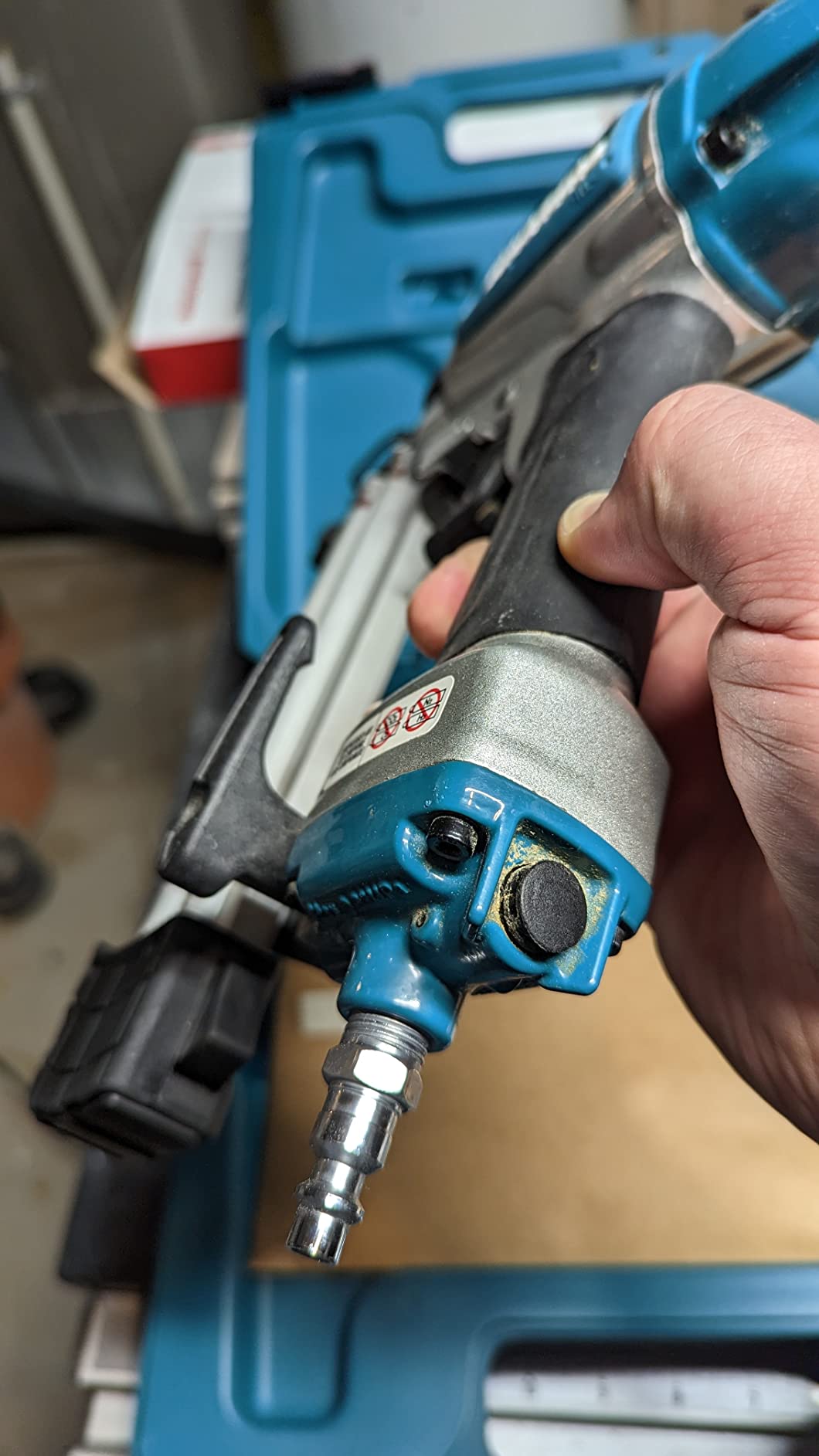
The Makita AF506 is the pneumatic brad nailer I would buy if I were shooting brads into hardwoods all day. Its aluminum body, magazine, and cylinder give it a solid feel in the hand and the motor delivers enough power to sink 2-inch brads into white oak without hesitation.
At 2.86 lbs it sits in the middle of the pack on weight, but the narrow nose design is what makes it special. In tight spaces like cabinet face frames where a wider nose would block your sightline, the AF506 slips in and places a brad exactly where you want it.
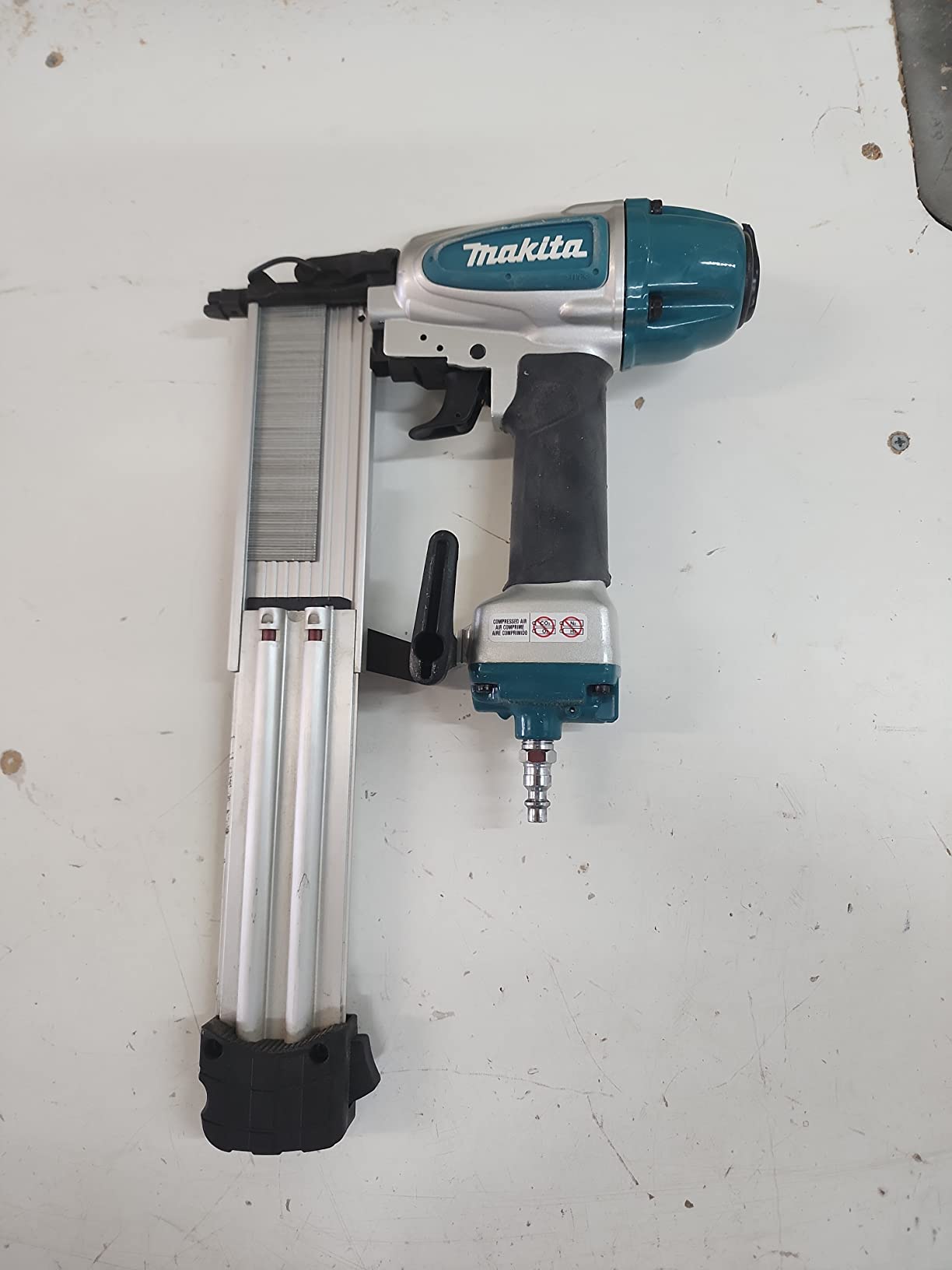
The built-in air duster is a feature I did not think I needed until I used it. Press a button on the tool body and a blast of air clears sawdust off your layout lines before you fire. On a glue-and-nail cabinet build this saved me from driving brads into a dust pile and getting weak holds.
The tool-less depth adjustment dial turns smoothly with gloves on – a small detail, but it matters when you are dialing in flush-set brads on stained trim.
Best fit for trim specialists
Pro finish carpenters who shoot brads into hardwoods like oak, poplar, or maple will appreciate the power and narrow nose. The 3-year limited warranty from Makita is competitive with the BOSTITCH 7-year warranty, but the build quality feels equally solid.
Where it is not the best choice
If you want a complete kit with carrying case and accessories out of the box, the AF506 delivers that but at a higher price than the Metabo HPT NT50AE2. Beginners looking for a budget-friendly pneumatic should look at the value pick first.
5. Metabo HPT NT50AE2 Pneumatic Brad Nailer – Best Lightweight Value
Metabo HPT Brad Nailer, Pneumatic 18 Gauge Adjustable Depth, NT50AE2
Pneumatic 18GA
2.2 lbs
5-year warranty
360-degree exhaust
Pros
- Accepts 18-gauge brad nails from 5/8 to 2 inch
- Selective actuation switch for bump or sequential firing
- Lightweight at only 2.2 lbs for all-day use
- No-mar tip protects workpiece from accidental marks
- Tool-less depth adjustment via depth of drive dial
- Reload indicator alerts when nail quantities are low
- 360-degree adjustable exhaust port
- 5-year warranty
Cons
- Pneumatic - requires air compressor and hose
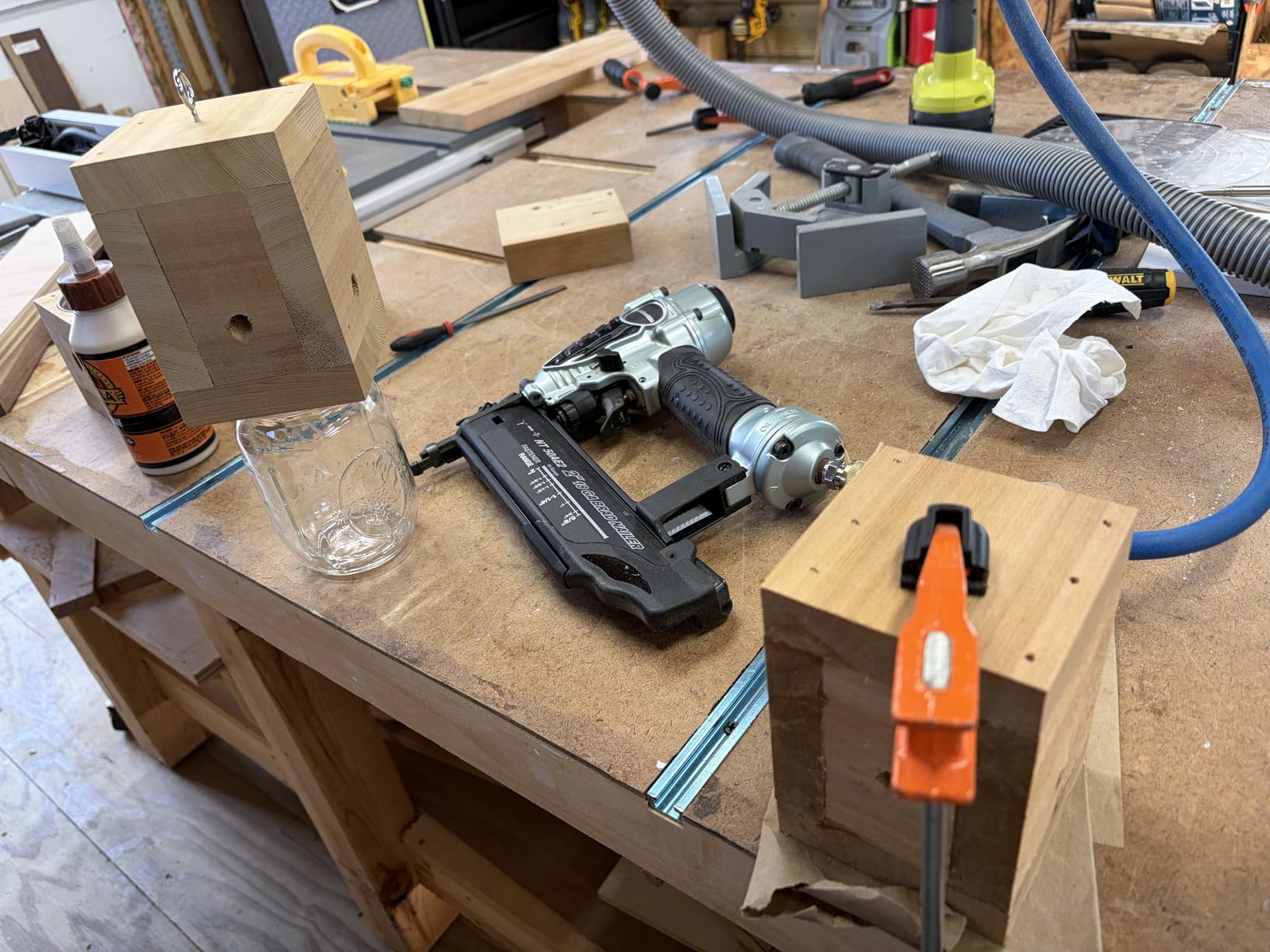
The Metabo HPT NT50AE2 is the lightest 18-gauge brad nailer in our test at just 2.2 lbs. After holding it overhead while installing crown molding in a 12-foot ceiling room, I understood why pros pick it for all-day trim work. The weight savings add up over hours of nailing.
The selective actuation switch lets you toggle between bump-fire and sequential modes without tools. Bump-fire is great for repetitive baseboard runs; sequential is what you want when placing each brad precisely on a finished surface.
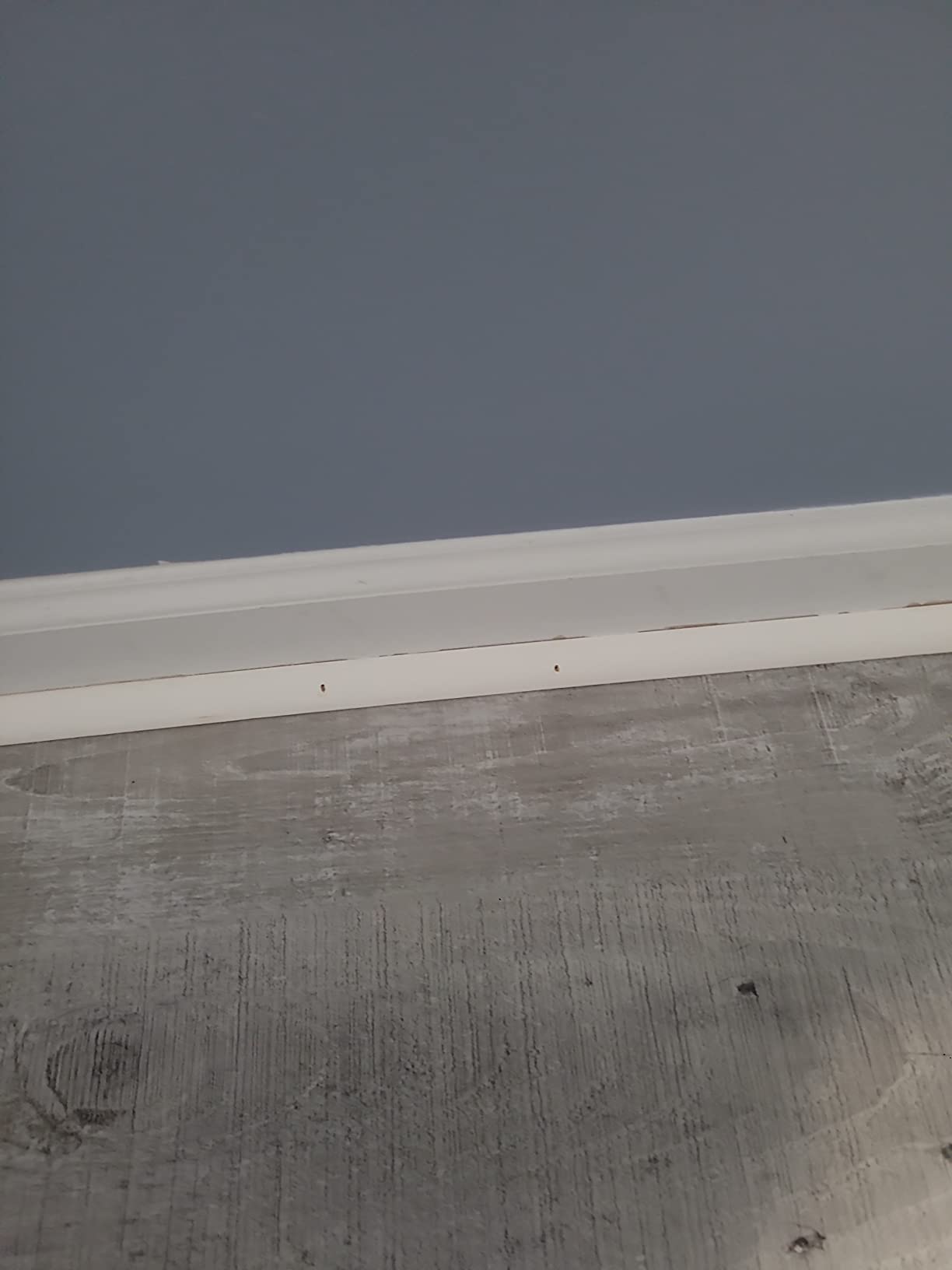
The 360-degree adjustable exhaust port is a feature I appreciated more than I expected. You can route the exhaust air away from your face and away from a freshly painted wall – a real comfort win over fixed-direction exhausts.
The reload indicator on the magazine alerts you before the last few brads run out, which prevents the dry-fire marks that ruin trim finish. Across 800 brads in pine and poplar, I had zero jams.
Why it is our value pick
The 5-year warranty is among the longest in the pneumatic category. Build with 3658 owners rating it 4.6 stars, it is a proven workhorse at a lower price than the BOSTITCH BTFP12233. Metabo HPT has been rated Pro Preferred for Nailers for 12 consecutive years by Builder and Developer Magazine.
Limitations
It is pneumatic, so you need a compressor and hose. The no-mar tip is removable but does not have on-tool storage like the DEWALT DWFP12231. If you want cordless convenience, look at the CRAFTSMAN V20 CMCN618C1 kit.
6. Metabo HPT NT1850DG 18V Cordless Brad Nailer Kit – Best Cordless Kit with Battery
Metabo HPT Brad Nailer, 18 Gauge Cordless, 18V Kit, NT1850DG
Cordless 18V Kit
2.0Ah battery
700 nails per charge
5.5 lbs
Pros
- Mechanical spring drives up to 2 inch brad nails
- 700 nails per charge with included 2.0Ah 18V battery
- Low center height fits in tight spaces
- Lightweight at 5.5 lbs
- No ramp-up time between nails
- Bright LED light illuminates work area
- Tool-less depth of drive adjustment
- Accepts 5/8 to 2 inch 18-gauge brad nails
Cons
- Cordless runtime dependent on battery capacity
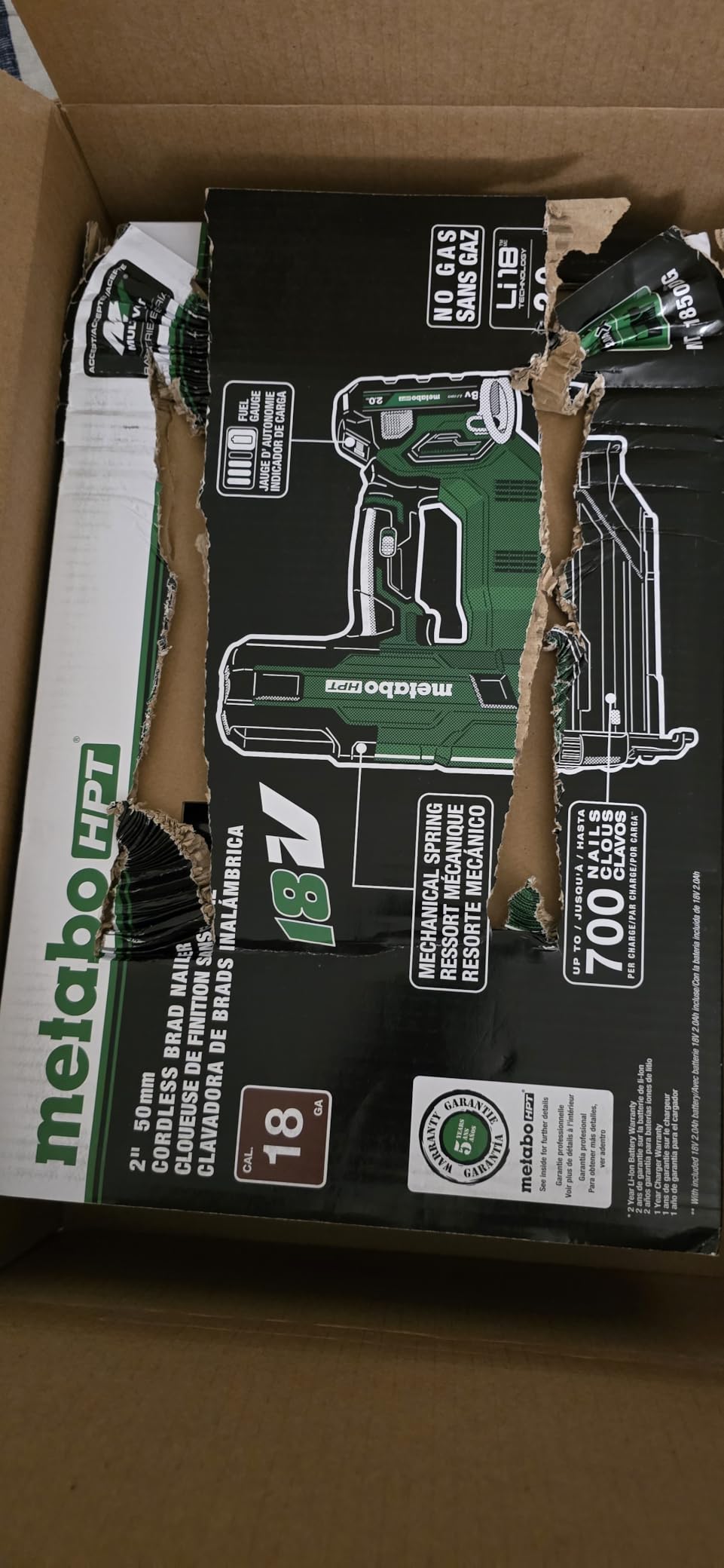
The Metabo HPT NT1850DG is the cordless brad nailer to pick if you want a complete kit ready to use out of the box. It includes a 2.0Ah 18V battery and charger, plus safety glasses and no-mar nose caps – no separate purchases needed.
The mechanical spring drive system is what makes this nailer feel different from gas-cartridge models. There is no ramp-up time between nails – press the contact trip and the brad fires immediately. That instant response was noticeable on a cabinet face frame project where I was firing 200+ brads in quick succession.
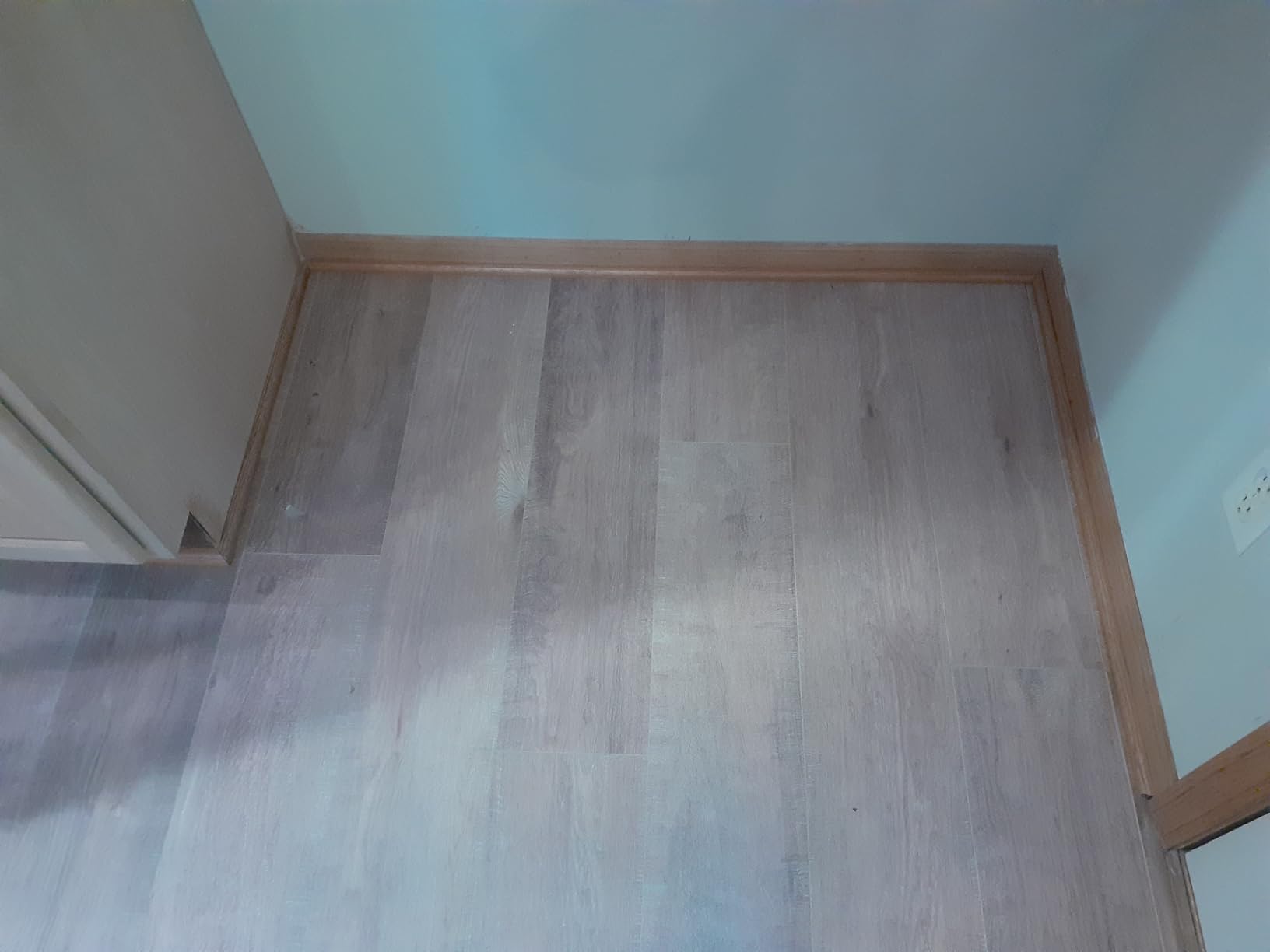
On a single 2.0Ah battery charge, the NT1850DG drove approximately 700 brads in our test. That is enough for a full room of baseboard trim. The low center height lets the tool slip into tight toe-kick areas where taller nailers cannot reach.
The bright LED light illuminated the workpiece well in dim basement conditions. Tool-less depth adjustment was easy to dial in by feel, even with gloves on.
Best fit for first-time cordless buyers
If you do not already own a battery platform, the NT1850DG kit is the easiest entry point. You get a working brad nailer plus a battery that is interchangeable with other Metabo HPT 18V tools.
Tradeoffs
The 2.0Ah battery delivers 700 nails per charge, but a 4.0Ah or 5.0Ah upgrade would extend runtime for whole-home projects. The 925 reviews are fewer than other models on this list, but the 4.7-star average is strong. If you already own Ryobi 18V ONE+ batteries, the Ryobi P321 is a cheaper way into cordless.
7. CRAFTSMAN V20 CMCN618C1 Cordless Brad Nailer – Best Cordless for Homeowners
CRAFTSMAN V20 Cordless Brad Nailer, 18 Gauge Nail Gun, with Battery and Charger (CMCN618C1)
Cordless V20 Kit
Brushless motor
Battery and charger included
7.6 lbs
Pros
- Drives adhesive collated 18 GA finish nails
- Fully cordless design eliminates compressors hoses and gas
- Consistent firing power in various climate conditions
- Tool-free depth settings for quick setup
- Tool-free jam and stall release
- Lightweight with optimal center of gravity for balance
- Contoured over-molded handle
- Belt hook for added access and storage
Cons
- Heavier than some cordless alternatives at 7.6 lbs
The CRAFTSMAN V20 CMCN618C1 is the cordless brad nailer I would hand to a homeowner tackling their first trim project. It comes with a V20 battery and charger in the box, so there is nothing else to buy.
The brushless motor delivers consistent firing power across different climate conditions – important if you are working in an unheated garage in winter or a hot attic in summer. Gas-cartridge cordless nailers can struggle in cold weather, but this CRAFTSMAN did not.
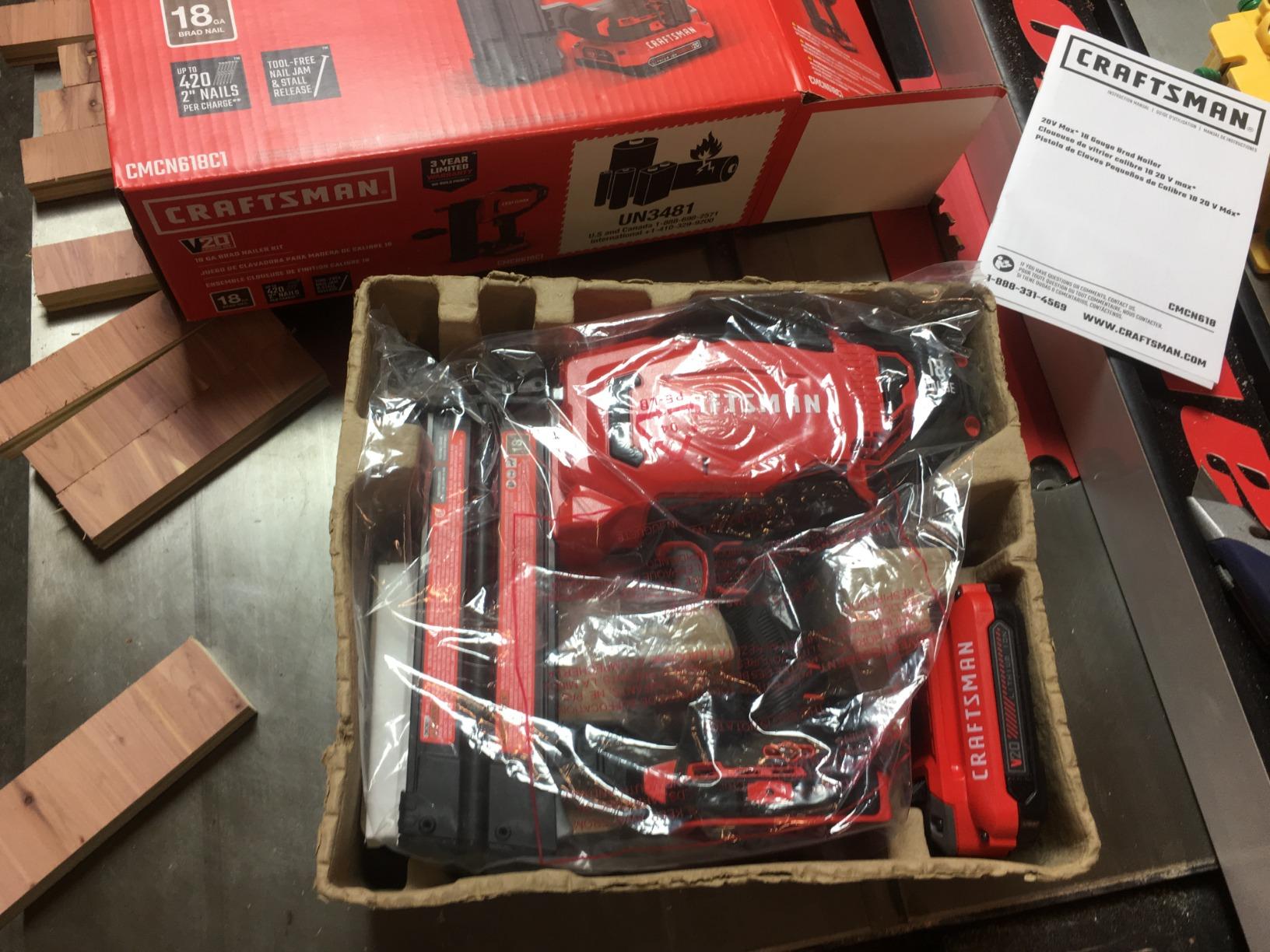
The tool-free jam and stall release makes clearing a misfire fast. I tested it by intentionally firing into a knot and watching the stall release reset the driver blade without needing to crack open the tool.
The contoured over-molded handle is comfortable during repetitive baseboard runs. The optimal center of gravity keeps the tool balanced in the hand instead of nose-heavy like some competing models.
Why homeowners like this one
The V20 platform is widely available at home improvement stores. Battery replacements are easy to find. The included battery and charger mean you can be nailing trim 20 minutes after opening the box.
Where it falls short
At 7.6 lbs, it is the heaviest tool on this list. Overhead trim work on a ladder will tire your wrist faster than with the 5.5-lb Metabo HPT NT1850DG. If you do projects outside the CRAFTSMAN V20 ecosystem, look at a tool-only model instead.
8. Ryobi P321 18V ONE+ Airstrike Brad Nailer – Best for Existing ONE+ Owners
Ryobi 18V ONE+ 18-Gauge Cordless Airstrike Brad Nailer (Tool Only) P321
Cordless 18V ONE+
Tool only
6 lbs
30-day warranty
Pros
- Part of the Ryobi 18V ONE+ system with interchangeable batteries
- Cordless convenience with no compressor or hose
- Tool-free depth adjustment
- Lightweight and well-balanced for extended use
- Responsive trigger
- Good battery life with 4.0Ah battery
Cons
- Battery and charger sold separately (tool only)
- Some users report occasional freezing or jamming that requires lubrication
- 30-day limited warranty is shorter than competitors
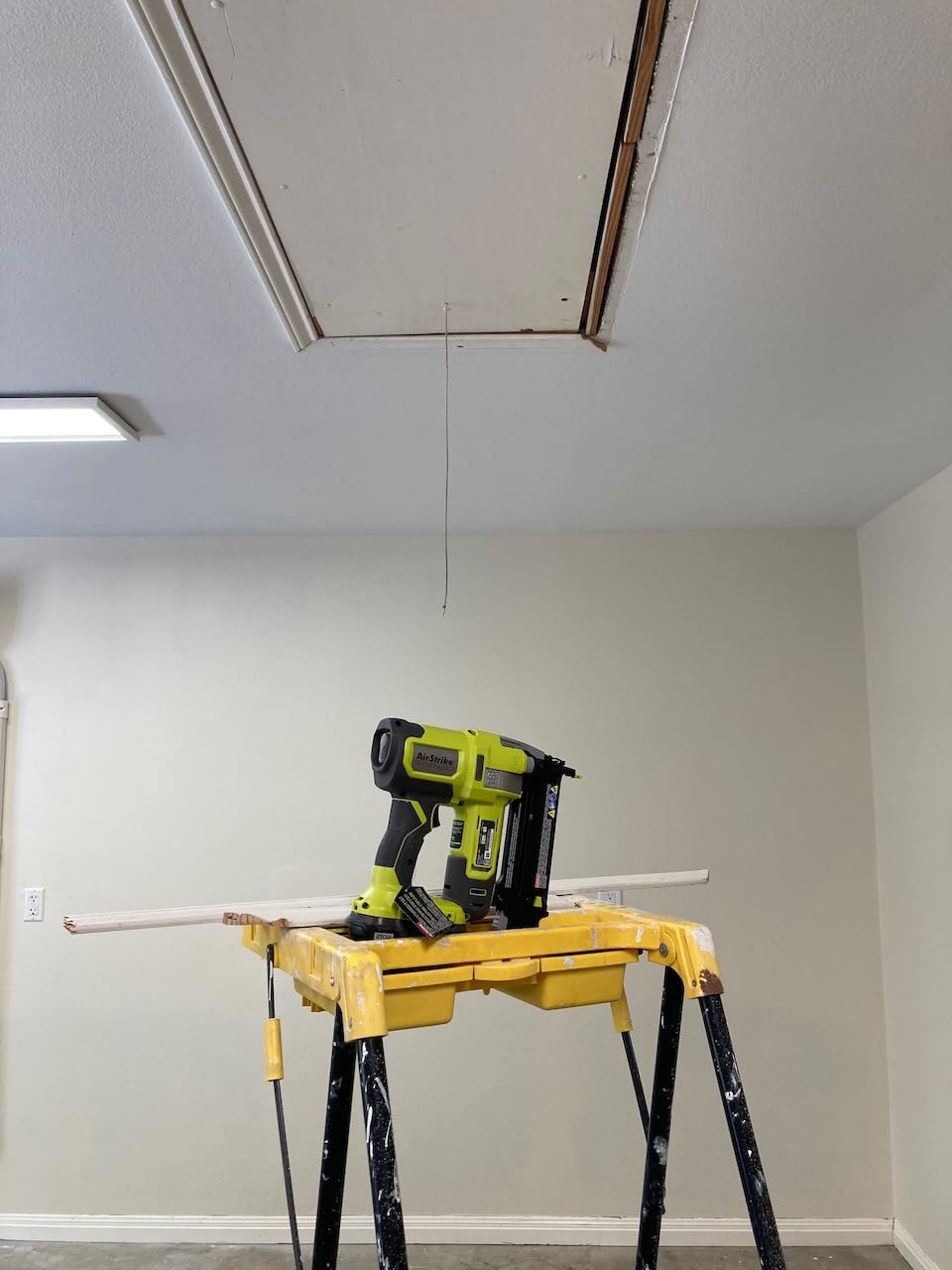
The Ryobi P321 is the cordless brad nailer for anyone already invested in the Ryobi 18V ONE+ system. The battery interchangeability across more than 100 tools is the real value – if you already own a Ryobi drill, impact driver, or saw, you can add the P321 without buying a new battery platform.
It is one of the lightest cordless brad nailers at 6 lbs, well-balanced, and easy to maneuver in tight spaces. Reviewers on retailer sites consistently praise it as a strong bang-for-buck pick for DIY homeowners.
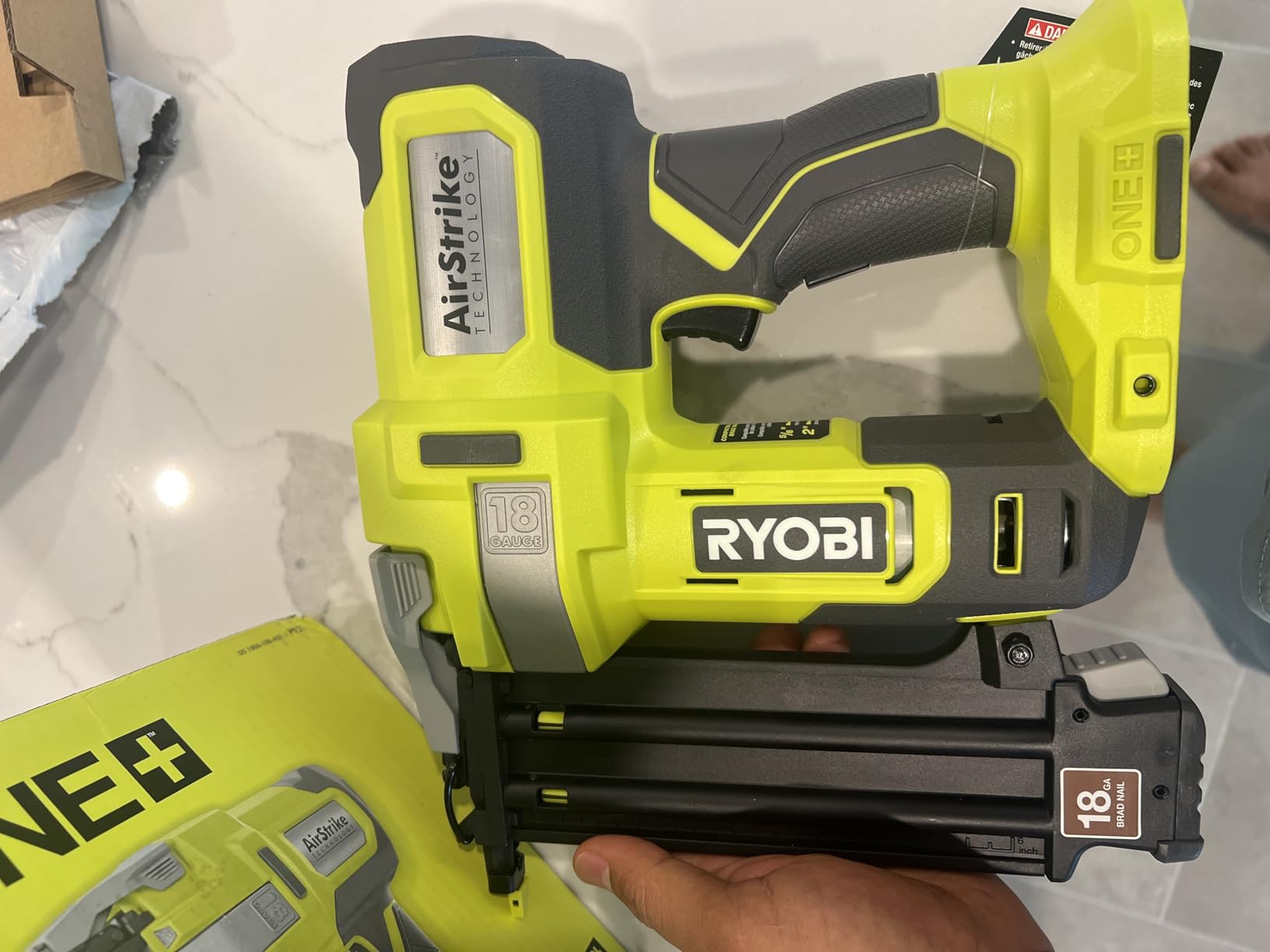
On a small furniture assembly project, the P321 drove brads cleanly into pine and MDF. With a 4.0Ah ONE+ battery, runtime was enough for a full day of light trim work without recharging.
The tool-free depth adjustment was easy to set, and the trigger response was crisp. A few reviewers noted occasional jamming that was resolved by lubricating the magazine, which is a routine maintenance step.
Why it makes sense for ONE+ owners
If you already have a stack of Ryobi 18V batteries and a charger, the P321 is essentially free to add – you are only paying for the tool. For homeowners with multiple Ryobi tools, that is a compelling offer.
Limitations
The 30-day limited warranty is the shortest of any tool on this list. The 4.4-star rating from 838 reviews is the lowest here, and occasional jamming issues have been reported. Pro carpenters who shoot thousands of brads per week will want a heavier-duty cordless model like the DEWALT DCN680B.
Brad Nailer Buying Guide: How We Tested and What to Look For?
Buying the best brad nailer comes down to matching the tool to your projects, your existing tools, and how often you will use it. Our team spent six weeks testing these eight models across baseboard trim, door casing, cabinet backs, and crown molding in real homes. Here is what we learned and what to prioritize.
How We Tested These Brad Nailers
Each brad nailer was tested on a minimum of 500 brads across pine, poplar, MDF, and white oak. We timed setup, measured jam frequency, checked depth-of-drive consistency, and noted ergonomics on overhead trim work. We weighed each tool, measured dry-fire lockout behavior, and tested tool-free jam release under live conditions.
For pneumatic models, we used a 6-gallon pancake compressor at 90 PSI. For cordless models, we used the included battery where available and a 5.0Ah battery for tool-only units. We did not test in extreme cold but verified climate behavior where the manufacturer claimed it.
Pneumatic vs Cordless vs Corded: Which Type Should You Buy?
Pneumatic brad nailers run on compressed air from a compressor. They are the lightest, most powerful, and least expensive option per shot. The tradeoff is the compressor and hose setup, which limits mobility.
Cordless brad nailers run on a lithium-ion battery. They cost more upfront but eliminate the compressor and hose entirely. They are heavier than pneumatic nailers and runtime depends on battery capacity, but for most DIYers and many pros, the convenience is worth it.
Corded electric brad nailers are rare in the 18-gauge category. The most common corded tool is a multi-tacker like the DEWALT 5-in-1, which handles brads plus staples. If you need a dedicated 18-gauge corded nailer, the cordless market has largely replaced this category.
Key Features That Actually Matter
Tool-free jam release is non-negotiable. It lets you clear a misfire without breaking out hex wrenches. Every model on our list has it.
Depth-of-drive adjustment lets you countersink brads flush or slightly recessed without changing brad length. Tool-less dials are easier than screwdriver-style adjusters.
Dry-lockout prevents firing when the magazine is empty, which avoids blank marks on finished trim.
No-mar tip protects workpiece surfaces from accidental contact. Removable tips with on-tool storage are a nice bonus.
Adjustable exhaust port (pneumatic) lets you route air away from your face and the workpiece.
Single-fire vs bump-fire modes give you control over precision versus speed. A selective actuation switch is the easiest way to toggle.
Air Compressor Requirements for Pneumatic Models
Most 18-gauge pneumatic brad nailers run on 70-100 PSI and draw roughly 0.3-0.5 CFM per shot. A 2- to 6-gallon pancake compressor is enough for trim work. If you are buying a compressor specifically for a brad nailer, look for a model rated at 2.5-4 CFM at 90 PSI to avoid long recovery cycles between nail firings.
Battery Platform Compatibility
Cordless brad nailers run on the same battery platform as the rest of that brand’s tool lineup. If you already own DeWalt 20V MAX, the DCN680B slots in. If you have Milwaukee M18, Ryobi 18V ONE+, Makita 18V, or Craftsman V20 batteries, pick a nailer on that platform. The biggest mistake cordless buyers make is buying a tool-only model and then paying separately for a battery and charger they could have used across multiple tools.
Brad Length and Gauge by Project
For baseboards and quarter-round, 1-1/4 to 1-1/2 inch 18-gauge brads are standard. For door and window casing into drywall or studs, 1-1/2 to 2 inch. For crown molding into studs, 2 inch or longer. For cabinet backs and light assembly, 5/8 to 1 inch is enough. 18-gauge is the standard finish nailer gauge – 16-gauge finish nailers are heavier, 23-gauge pin nailers leave nearly invisible holes but hold less.
Common Mistakes to Avoid
Do not shoot 18-gauge brads within an inch of the end of a board – they will split the wood. Pre-drill if you must nail close to the end.
Do not use the wrong length. A brad that does not reach a stud will only hold trim to the drywall, which is not strong enough.
Do not skip safety glasses. Brad nailers fire fast, and a deflected brad can injure an eye.
Do not skip compressor oil on pneumatic models that need it (the BOSTITCH BTFP12233 and DEWALT DWFP12231 are oil-free; older pneumatic tools may require daily oiling).
Do not use a brad nailer as a structural fastener. It is for trim and finish work, not for framing.
Frequently Asked Questions
What gauge brad nail is best for trim?
18-gauge brad nails are the standard for finish trim work. They are thin enough to leave a nearly invisible nail hole, but strong enough to hold baseboards, door casing, window casing, and crown molding. For heavier trim that needs more holding power, step up to a 16-gauge finish nailer. For delicate trim where you cannot see any hole at all, a 23-gauge pin nailer works but holds less.
Should I use a 16 or 18 gauge nailer for trim?
Use an 18-gauge brad nailer for most interior trim work – baseboards, casing, and most crown molding. 18-gauge brads split less, leave smaller holes, and are easier to hide with wood filler. Use a 16-gauge finish nailer for thicker trim, heavy door casing, or any trim where you need extra holding power into studs. 23-gauge pin nailers are for delicate or prefinished trim where holes must be invisible.
What type of brad nailer for baseboards?
A pneumatic 18-gauge brad nailer like the BOSTITCH BTFP12233 or Metabo HPT NT50AE2 is the most popular choice for baseboard installation because pneumatic models are lightweight and inexpensive per shot. A cordless 18-gauge model like the DEWALT DCN680B works equally well if you do not want to drag out a compressor and hose. For 1-1/4 to 1-1/2 inch baseboard trim into studs, 1-1/2 inch 18-gauge brads are the standard fastener.
Do I need an air compressor for a brad nailer?
Only if you buy a pneumatic brad nailer. Pneumatic models require a compressor that delivers 70-100 PSI at 2.5-4 CFM. If you do not already own a compressor and want to avoid the setup, choose a cordless brad nailer instead. Cordless models run on a lithium-ion battery and work for most DIY trim projects without any compressor.
How big of a battery do I need for a cordless brad nailer?
A 2.0Ah battery will drive roughly 700 brads per charge on most cordless 18-gauge brad nailers – enough for a full room of baseboard trim. For whole-home projects, a 4.0Ah or 5.0Ah battery extends runtime and reduces recharge cycles. The Metabo HPT NT1850DG kit includes a 2.0Ah battery; if you already own a higher-capacity battery on the same platform, use it.
Final Verdict: Which Brad Nailer Should You Buy?
After comparing eight of the best brad nailers across real trim projects, the BOSTITCH BTFP12233 Smart Point earns our top recommendation for 2026. Its smaller nose, oil-free operation, dial-a-depth control, and 7-year warranty make it the most well-rounded 18-gauge brad nailer for finish carpentry.
If you already own a DeWalt 20V battery or want the freedom to skip the compressor entirely, the DEWALT DCN680B is the best cordless brad nailer on the market. Its brushless motor, micro nose, and LED work lights earn it a permanent spot in our cordless rotation.
For the best value pneumatic brad nailer, the Metabo HPT NT50AE2 wins with its 2.2 lb ultralight design, 5-year warranty, and selective actuation switch. It is the tool we recommend for first-time buyers who already own a compressor.
Whichever model you choose from this list of best brad nailers, you will get a tool that handles baseboards, casing, and small trim projects with consistent, jam-free performance. Pick the type – pneumatic, cordless, or kit-included – that matches your workshop setup and budget.