
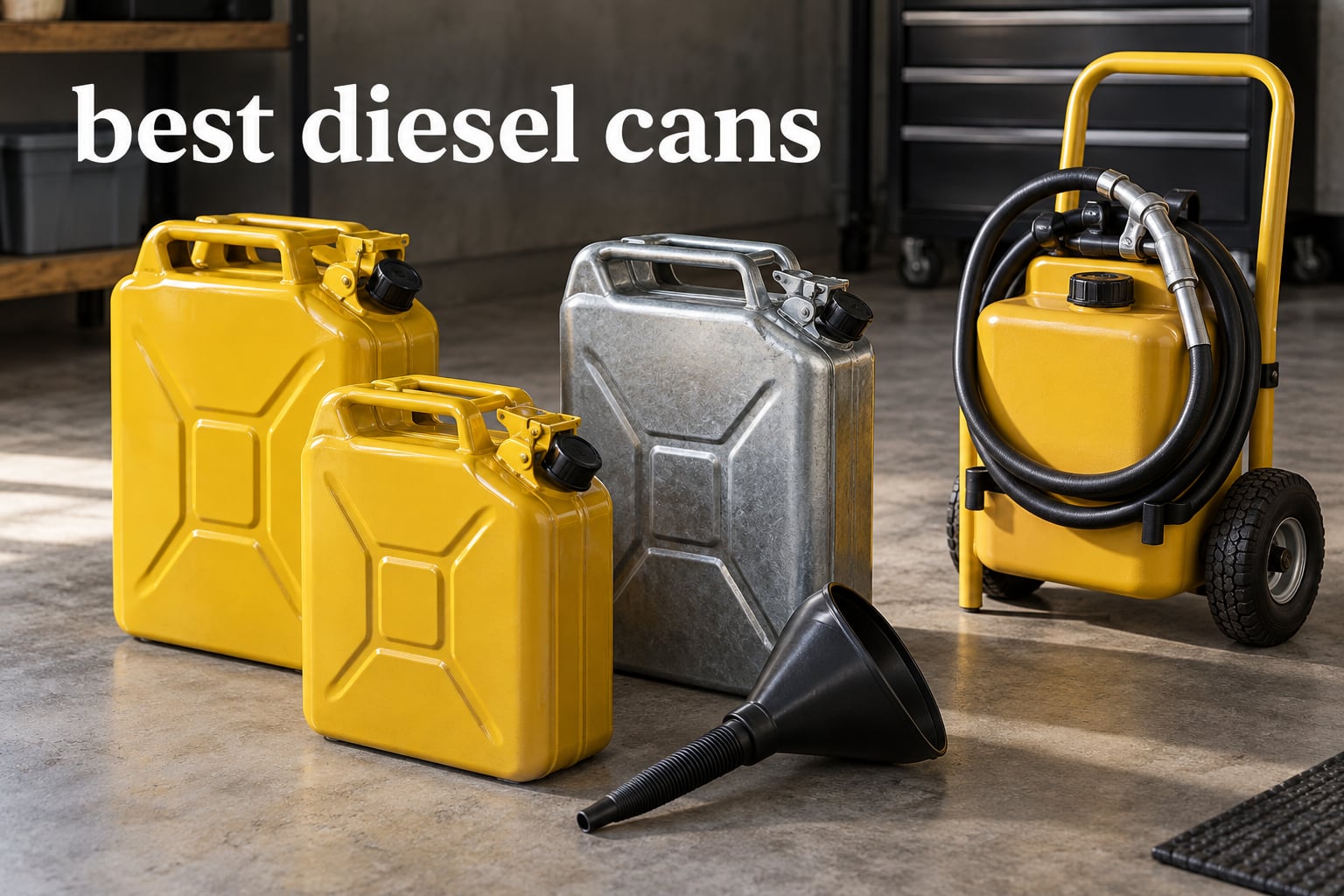
There is a reason diesel cans look nothing like the red gas cans in your garage. Diesel is not classified as a flammable liquid, while gasoline is a packing group III flammable material that is legally capped at 8 gallons per container. That single fact is the backbone of this entire guide, and it is why diesel-specific containers can use simpler single-opening Type I designs, can be larger than a gasoline can, and only need a flame arrestor as a belt-and-braces measure rather than a legal requirement.
Diesel also behaves differently in storage. It is hygroscopic, it draws moisture through any container wall that is not properly sealed, and it grows microbial algae if it sits half-full in a warm shed. The best diesel cans are the ones that seal tight, vent properly while pouring, and are marked for flammable liquid handling under OSHA and NFPA rules rather than being a generic jug that happens to hold a quart of solvent.
We compared eight diesel fuel containers across every real segment: Type I steel, Type II steel, Type II plastic, plastic with a thumb-trigger spout, a NATO-spec can, a wheeled pumped caddy, and one multipurpose jug we flag hard for a specific reason. If you want the short answer, the diesel engine oils we run on the same test bench matter less to storage life than the seal on your can does. Here is what we found, updated for 2026.
Table of Contents
How We Picked the Best Diesel Cans?
We did not test diesel cans on a flow bench in a lab. We picked them the way we pick every fuel-handling product: by reading the certification markings, the published materials and flow specifications, and then cross-referencing thousands of owner reviews for the failure modes that actually show up after a season of use.
Our criteria, in order of weight:
Seal integrity over time — does the gasketed lid hold a diesel charge through heat cycles and transport, or does the garage smell like fuel?
Flame and compliance markings — flame arrestor present, OSHA 1910.106 and NFPA 30 claims, FM, UL or ULC listing, EPA and CARB compliance.
Dispensing control — a vented spout, a thumb trigger or a flexible hose, and whether you can hit a small fill neck without dribbling.
Container material and wall thickness — 24-gauge galvanized steel or a genuine multi-layer HDPE wall, not thin single-layer plastic.
Real owner failure reports — spout fuel retention, warped seams, handle pivots, pump effort, wheels shedding under load.
Capacity matched to the job — a 5-gallon can for a zero-turn mower, a pumped caddy for a boat or a generator bank.
Forum owners on Yesterday’s Tractors, Garage Journal, Bob Is The Oil Guy and IRV2 are the source for most of the field notes here. Anything we could not verify against the product data, we left out.
Top 3 Diesel Cans for 2026
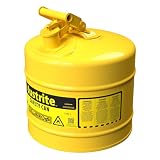
Justrite Type I Diesel…
- 24-gauge galvanized steel
- Stainless steel flame arrester
- Self-closing lid with positive-pressure relief
- FM and UL listed

Eagle 5 Gallon Type I Safet…
- Hot dipped 24-gauge galvanized steel
- Non-sparking flame arrestor
- Double interlock no-weld bottom seam

Scepter FSCD552 SmartContro…
- Thumb-button spill-proof spout
- Integrated air vent for 3 GPM flow
- 5-layer HDPE
The 8 Best Diesel Cans at a Glance (September 2026)
| Product | Specs | Action |
|---|---|---|
| Justrite Type I Diesel Safety Can |
|
Check Latest Price |
| Eagle 5 Gallon Type I Safety Can |
|
Check Latest Price |
| Scepter FSCD552 SmartControl Can |
|
Check Latest Price |
 Wavian NATO Jerry Can and Spout System Wavian NATO Jerry Can and Spout System |
|
Check Latest Price |
 Surecan Type II Flexible Rotating Spout Can Surecan Type II Flexible Rotating Spout Can |
|
Check Latest Price |
 Justrite Type II Diesel Fuel Can Justrite Type II Diesel Fuel Can |
|
Check Latest Price |
 PAMBEE 15 Gallon Wheeled Fuel Caddy PAMBEE 15 Gallon Wheeled Fuel Caddy |
|
Check Latest Price |
 Tuff Jug 5 Gallon Multipurpose Container Tuff Jug 5 Gallon Multipurpose Container |
|
Check Latest Price |
1. Justrite Type I Diesel Safety Can — Best All-Round Diesel Can
Justrite Type I Diesel Safety Can, Yellow Galvanized Steel, Made in the USA
5 gallon
24-gauge galvanized steel
Stainless steel flame arrester
FM, UL, OSHA, NFPA 30
Pros
- Galvanized steel build that owners report lasting decades
- Self-closing lid with automatic positive-pressure relief
- Counterbalanced swinging handle pours cleanly
- Stainless steel flame arrester
- Complete seal with no fuel odor escape
Cons
- Funnel sold separately
- Heavier than plastic cans
- Awkward to pour without a funnel
This is the can I put in the hands of anyone who asks me what a proper diesel fuel container looks like. Justrite builds it from 24-gauge galvanized steel with a chemical-resistant powder coat, weighs 7 pounds empty, and stamps it FM Approved, UL and ULC Listed, TÜV Certified, OSHA and NFPA 30 compliant. Model 7150200, made in the USA.
The self-closing lid with automatic positive-pressure relief is the feature that wins it the top spot. You pour, the lid stays down, and pressure equalises on its own rather than venting fuel vapour into the garage. That is the single complaint that shows up again and again on cheap plastic cans in forum threads, and this one simply does not have it.
Justrite added a counterbalanced swinging handle and an integrated bottom lip, which is a genuine upgrade over fixed-handle Type I cans. The can tips into a controlled stream instead of the near-vertical uncontrolled dump you get from a plain steel can, and the counterbalance means a full 5-gallon jug — roughly 40 pounds of diesel plus 7 pounds of steel — stays manageable with one hand.
With 2194 reviews at 4.6 stars, this is one of the most proven safety cans in the group, and owners describe galvanized steel cans as keeping fuel fresher than plastic over long storage. If you want one can that satisfies a shop inspector and survives twenty years of daily use, this is the one.
Who the Justrite Type I suits
Farm and ranch operators, contractors running fuel to a job site, and anyone working under an OSHA or NFPA 30 regime that expects a listed flammable liquid container. It also makes sense for long-term garage storage where a sealed steel can will not take on the diesel smell that permeates everything stored next to a plastic jug.
It is also the sensible pick for cold climates. Steel does not go brittle the way thin HDPE sidewalls can in deep freeze, and a dented steel can still holds fuel where a cracked plastic can leaks onto the truck bed.
What to know before you buy it
The funnel is not included, and that is the most common regret owners report. Because the Type I has a single opening, the neck is narrower than a Type II hose, so a proper funnel is close to mandatory for clean filling and for reducing splash when the tank neck is tight.
It is also 7 pounds heavier than a comparable plastic can, which adds up when you are carrying fuel to a mower at the far end of a property. The counterbalanced handle softens that a lot, but it does not erase it. And a few owners report the steel gauge reading thinner than vintage cans, so if you are used to a 1970s Justrite, expect a slightly lighter modern shell.
2. Eagle 5 Gallon Type I Safety Can — Highest Rated Steel Can
Eagle 5 Gallon Type I Yellow Safety Gas Can for Diesel
5 gallon
Hot dipped 24-gauge galvanized steel
Non-sparking flame arrestor
6.3 lb empty
Pros
- Highest rated can in the group at 4.7 stars
- Lightest steel can here at 6.3 pounds
- Made in USA with a powder-coat finish
- Meets OSHA 1910.106 and NFPA code 30
- FM
- UL and ULC approved
Cons
- Type I single opening pours slower than a Type II
- No flexible spout included
- Fixed handle is less ergonomic than a swing handle
The Eagle UI50SY carries the highest average rating in this roundup at 4.7 stars across 970 reviews, and the engineering behind that number is real rather than a marketing artifact. It is hot dipped 24-gauge galvanized steel with lead-free technology, baked powder-coat finish, and a double interlock no-weld bottom seam that resists the buckling and split-seam failures plastic cans suffer.
The gasketed spout cap self-closes to prevent leaks, and the cap assembly opens automatically to vent internal vapours during pouring. That combination is the heart of a Type I design: the same opening that vents during pour is gasketed shut the rest of the time, so nothing escapes in a hot truck bed.
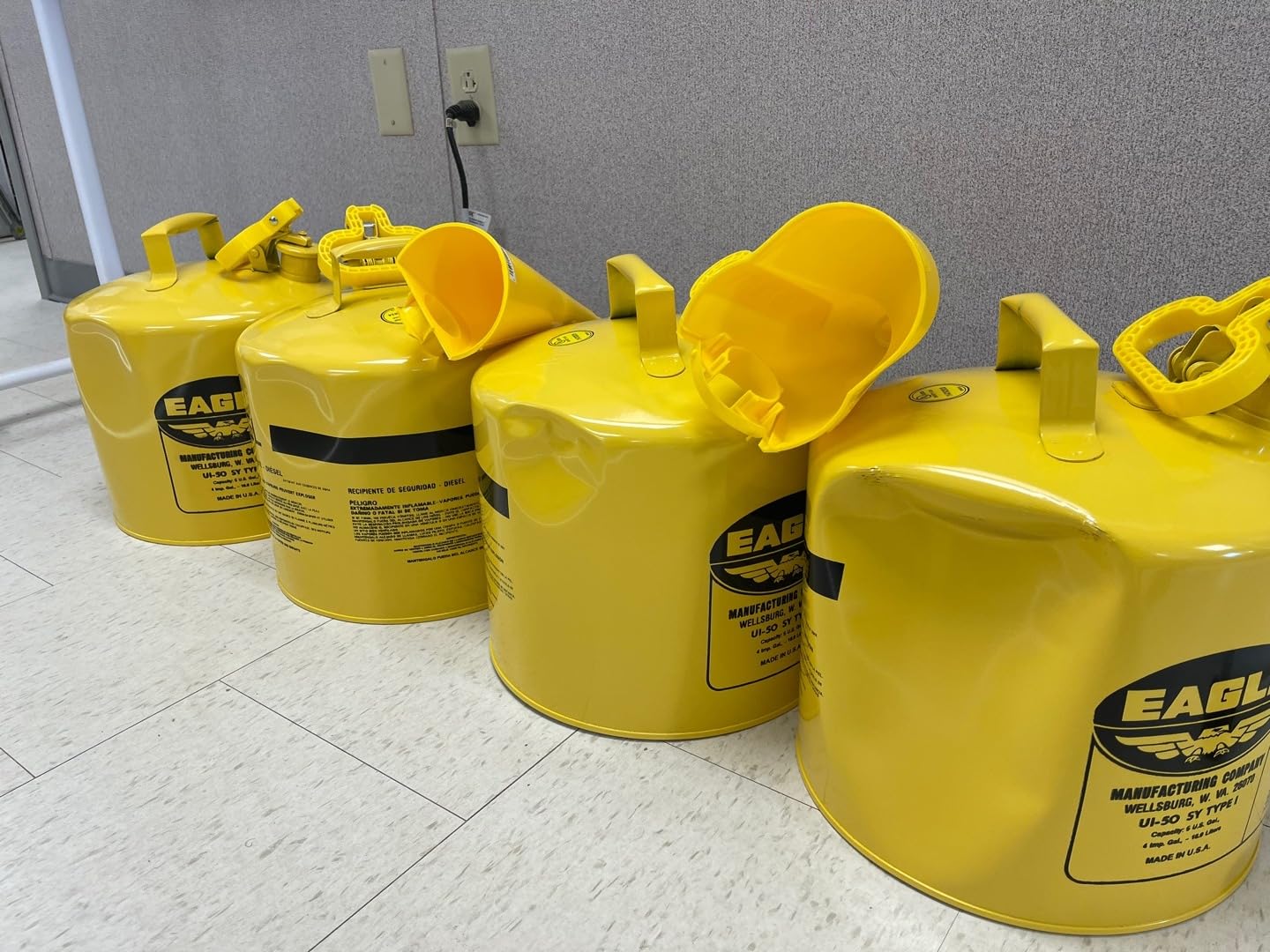
At 6.3 pounds empty, this is the lightest steel can here, and roughly a pound lighter than the Justrite Type I. For a 5-gallon diesel jug that is a meaningful difference when you are walking it across a yard, and it is a large part of why the rating sits where it does.
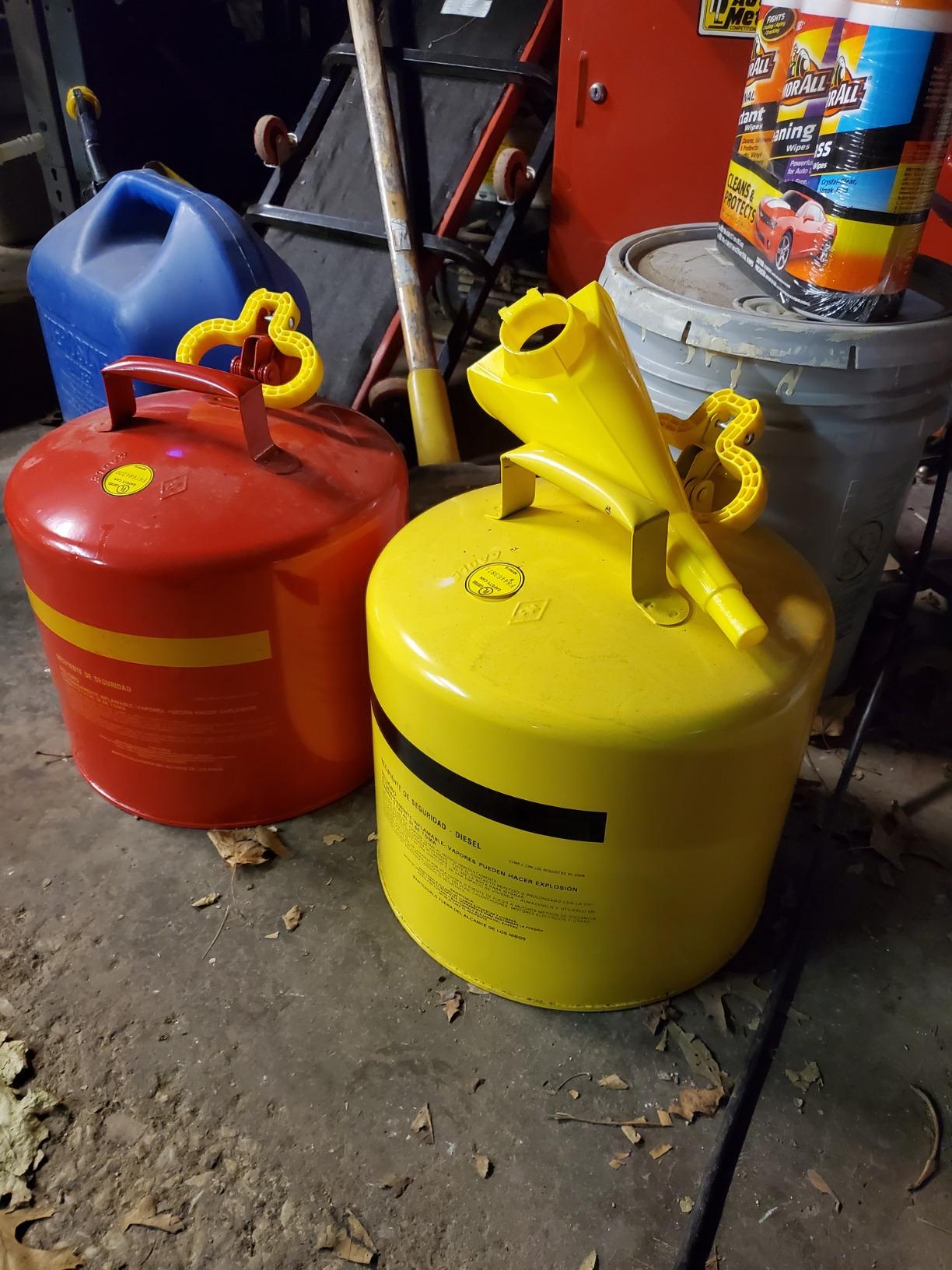
Eagle is explicit about compliance: OSHA Standard 1910.106, NFPA code 30, and FM, UL and ULC approval, with a non-sparking flame arrestor in the neck. If your workplace or your insurance documentation requires a listed container, this satisfies it plainly on the label.
Where the Eagle can wins
Anyone who wants a certified safety can without the bulk. The no-weld double interlock bottom seam is the detail that separates it from generic steel cans, and owners consistently report it staying square and leak-free after being dropped in a truck bed.
It is also a strong second can to own. If you already have one Type I steel can and want a second for a second vehicle, a second tank, or a second property, matching cans make a rotation system far easier than mixing a steel can with a plastic one that needs a different filling routine.
Where the Eagle can frustrates
The Type I single opening is the trade-off everyone accepts, and it is worth being honest about. Pouring through one fixed opening is slower and less controlled than a Type II flexible spout or a thumb-trigger hose, and no funnel is included.
The fixed handle is the other niggle. Where the Justrite swings and counterbalances, the Eagle does not, so on a full 5-gallon can you are supporting roughly 40 pounds of diesel with a rigid grip. Owners who move fuel a lot end up wishing for the swing handle or reach for a funnel rest.
3. Scepter FSCD552 SmartControl Spout Can — Best Value Diesel Can
Scepter 5G Gas Can with Spill Proof SmartControl Spout, Diesel Only, Yellow
5 gallon
5-layer plastic construction
SmartControl thumb-button spout
Up to 3 GPM flow
Pros
- SmartControl thumb-button spout gives genuinely controlled dispensing
- Integrated air vent drives flow up to 3 gallons per minute
- Dual handles make a full can easy to manage
- Flame mitigation device
- Lightweight compared with any steel option
Cons
- Awkward to fill from a service station pump nozzle
- Fuel is retained in the spout and spills when the cap comes off
- Less durable long term than steel
The Scepter FSCD552 is the plastic pick that changed how most people pour fuel, and it is the least expensive certified container in the roundup. Five-layer plastic construction, flame mitigation device in the neck, EPA, CARB and child safety compliant, and a two year manufacturer warranty.
The SmartControl spout is a thumb-button dispensing system: you squeeze to open the flow and release to stop it, with no cap juggling over a moving stream. Add the integrated air vent in the spout and you get fast flows of up to 3 gallons per minute without the glugging that makes a plain vented jug pour in stops and starts.
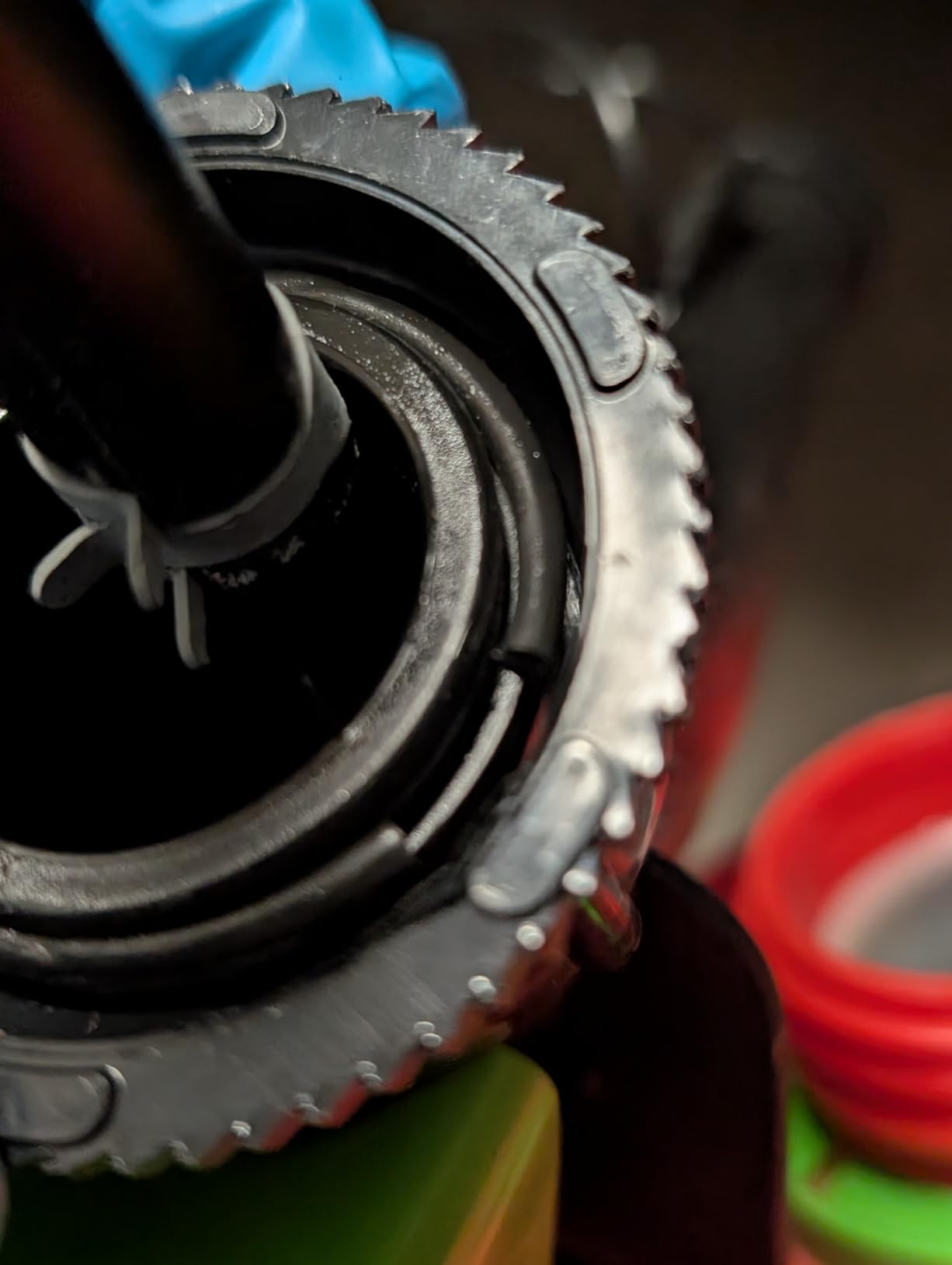
Ergonomics are where Scepter genuinely leads. You get a rear handle for easy pouring plus the top carry handle, so a full can can be gripped with one hand on the spout control and one under the body. No other plastic can in this guide has that combination, and it is the reason this can feels much lighter than it is.
For a zero-turn mower, a portable generator, an ATV or a chainsaw in the back of a truck, the FSCD552 is the most efficient can on the list. The 3 GPM flow specification is genuinely useful when you are filling a machine from a full can rather than topping off.
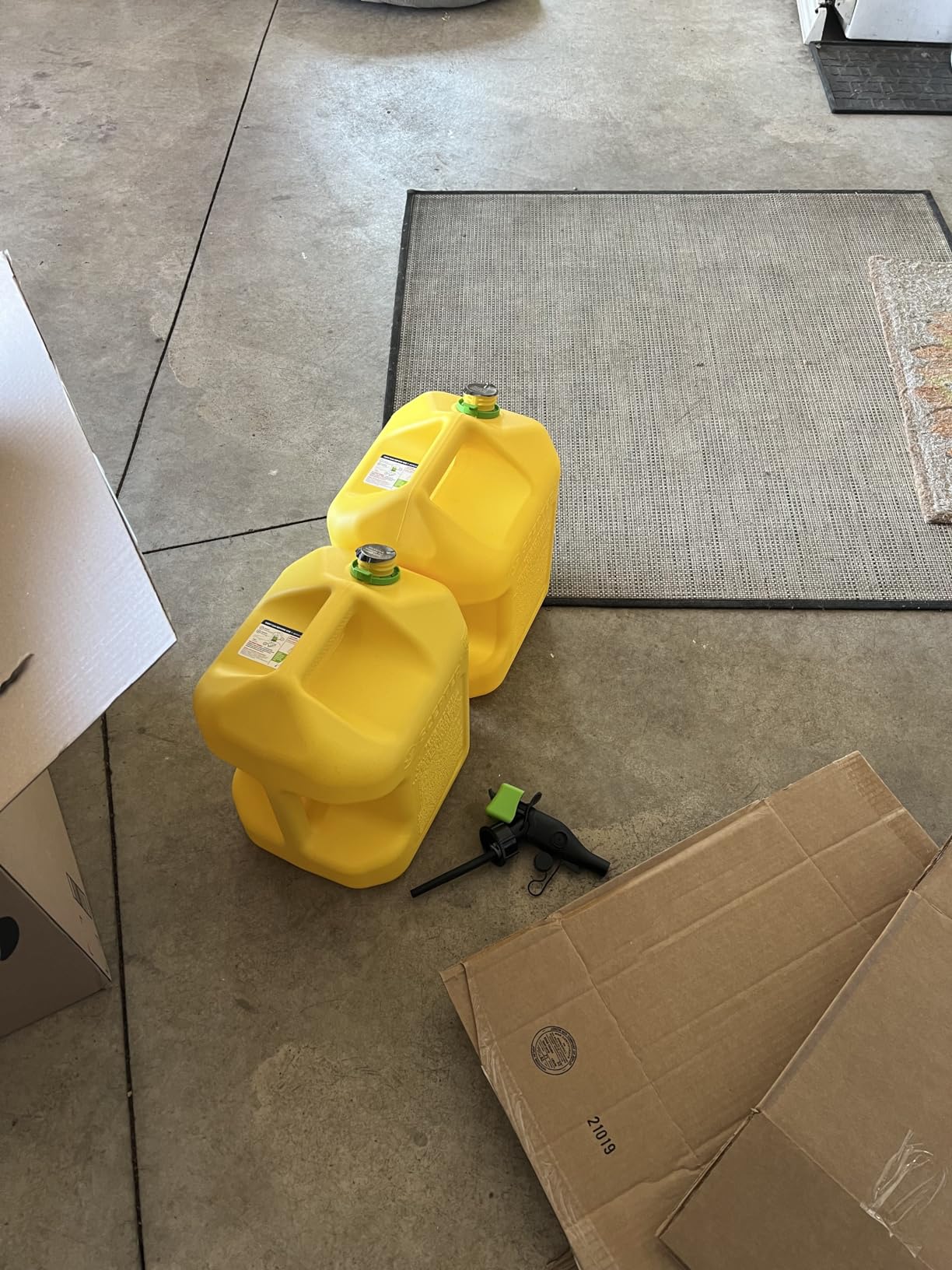
Where the Scepter works
Recurring top-ups of lawn equipment, generators and small engines, where you want one-handed control and do not care about long-term garage storage. The rear handle and top handle make carrying a full can down a driveway genuinely easy.
It is also the can to buy if you are filling from a low-flow source rather than a service station pump. A small transfer setup with a filler hose suits the wide fill mouth far better than a high-flow dispenser does.
Where the Scepter frustrates
Filling at a service station is the most repeated complaint in the reviews. The fill mouth is narrower than a pump hose, so you fill slowly and carefully, and the flow depends on the vent. Budget time for it rather than assuming a 5-gallon fill takes a minute.
The second complaint is fuel retention in the spout, which drips when you remove the cap. That is a design characteristic, not user error, and several owners have modified the spout. It is cosmetic rather than dangerous, but on a clean garage floor you will notice it every time.
Finally, thin HDPE is not a long-term storage vessel the way steel is. UV exposure over a season in a truck bed is the failure mode owners warn about, and plastic is simply not as forgiving of a dropped can or a cold winter as the steel options.
4. Wavian NATO Jerry Can and Spout System — Best for Overlanding and Emergency Fuel
Wavian USA Authentic NATO Jerry Can and Spout System – Rust-Proof, EPA & CARB Compliant, Yellow, 20 Litre, Wavian 5 Gallon Gas Cans for Diesel
20 litre / 5.3 gallon
0.9mm cold-rolled steel
11 lb empty
EPA and CARB compliant
Pros
- Authentic NATO specification construction
- Completely leak-proof and air-tight
- Three-position handle for one or two person carry
- Recessed continuously welded seams
- Interior coated for rust resistance
Cons
- Included plastic spout is widely criticised for leaking and breaking
- Internal spark arrester filter restricts filling and must be removed
- Heavy at 11 pounds empty
The Wavian JC0020YVS is a genuine NATO-specification jerry can, and that is either exactly what you want or irrelevant. It is 0.9mm cold-rolled steel with an anti-corrosive coating, recessed continuously welded seams, an interior rust-resistant coating, and it is EPA and CARB compliant with published EO and EPA numbers rather than a vague claim.
It is 20 litres, which is 5.3 gallons — slightly larger than the standard 5-gallon jug. The three-position NATO handle is the detail that matters on a trail: it can be carried one-handed by the top bar, two-handed at the sides, or shouldered, and the locking pin keeps the handle from swinging while you are moving over rough ground.
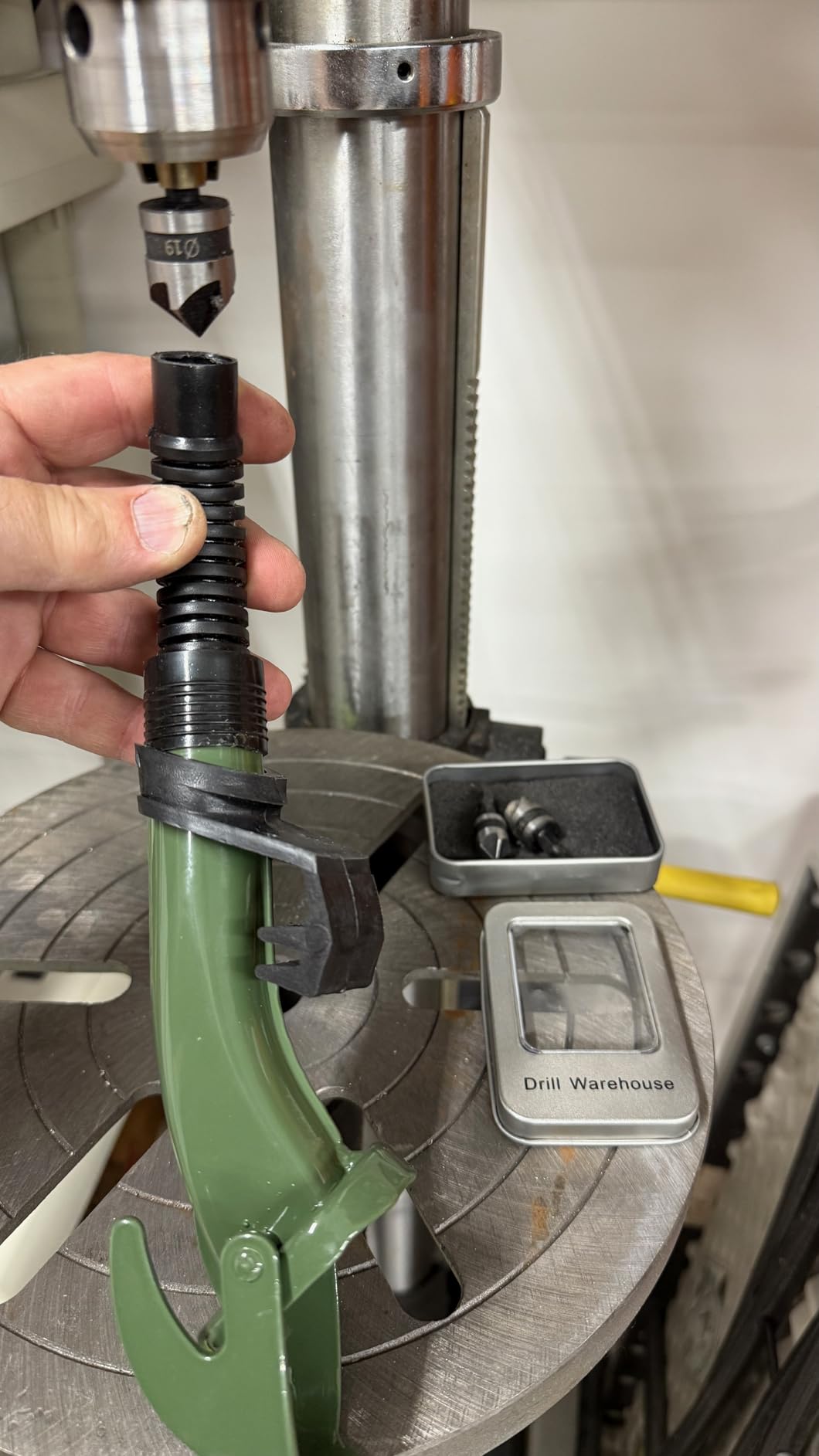
The seal is the headline. Owners describe it as completely leak-proof and air-tight, with no fumes even left in a hot vehicle, which is exactly the behaviour you want in a trunk, a camper, or a Jeep that sits in the sun for a week.
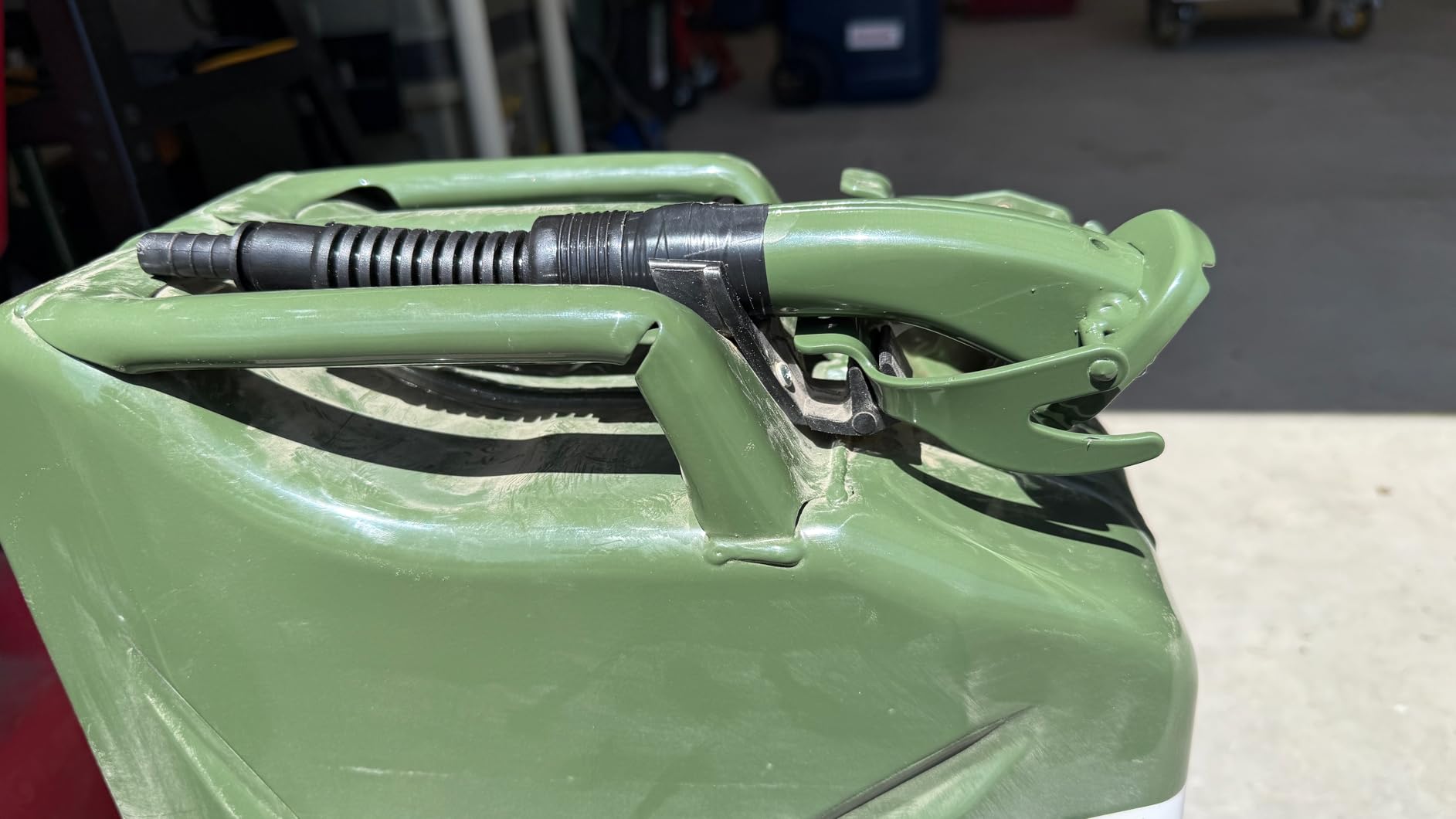
It is also compatible with standard NATO flexible nozzles once you remove the included plastic tip, so an overlander or a contractor can drop into a purpose-made diesel nozzle setup without hunting for a specific part.
Where the Wavian belongs
Overlanding builds, emergency and storm fuel caches, boat and RV storage, and anyone who wants a container that will not leak in a passenger vehicle. The 20-litre capacity means fewer refills than a 5-gallon can on a long trip.
It also suits anyone who specifically wants a NATO-pattern can for compatibility with military surplus fittings, which is a real use case for the overlanding crowd and a poor reason to buy one otherwise.
What to fix before first use
The included plastic spout is the weak point, and owners are blunt about it: it leaks, it cracks and it jams. Most people buy a separate NATO flexible nozzle and swap it in, and that is a sensible first purchase.
The included white plastic filter or spark arrester inside the neck also restricts filling badly enough that most owners remove it. Do that first, before you judge the can, because a blocked neck makes a good can look terrible. At 11 pounds empty, this is the heaviest container here, and there is no secondary handle to help you pour.
5. Surecan Type II Flexible Rotating Spout Can — Best Controlled Pouring
Surecan 5 Gallon Type II Safety Can – Flexible Rotating Spout, Spill Free Tank, Self-Venting, Thumb Trigger & Total Flow Control Jerry Can (Yellow)
5 gallon
Type II plastic
9 inch flexible rotating spout
Thumb-trigger control
Pros
- Thumb trigger gives precise flow control
- Rotating spout reaches tight and awkward fill ports
- Self-venting design with no separate vent to manage
- Excellent seal with no leaks in transport
- Backed by a 3-year limited warranty
Cons
- Last bit of fuel is hard to get out of the bottom
- Fill cap detent resists full draining
- Premium price for a plastic can
The Surecan SUR5SFD2 is the one to buy if your biggest frustration with diesel cans is a wet mess on the ground every time you pour. The Type II design puts a 9 inch flexible spout on a thumb-trigger system: you squeeze to start flow, release to stop, and rotate the spout to point it exactly where you need it.
Because the spout is self-venting, you dispense at a steady rate without managing a separate air vent, and the downward-rotating spout directs flow into a tight fill port or a container that is not directly under your hand. On a tractor, a boat tank or a low-slung mower, that flexibility is worth more than raw capacity.
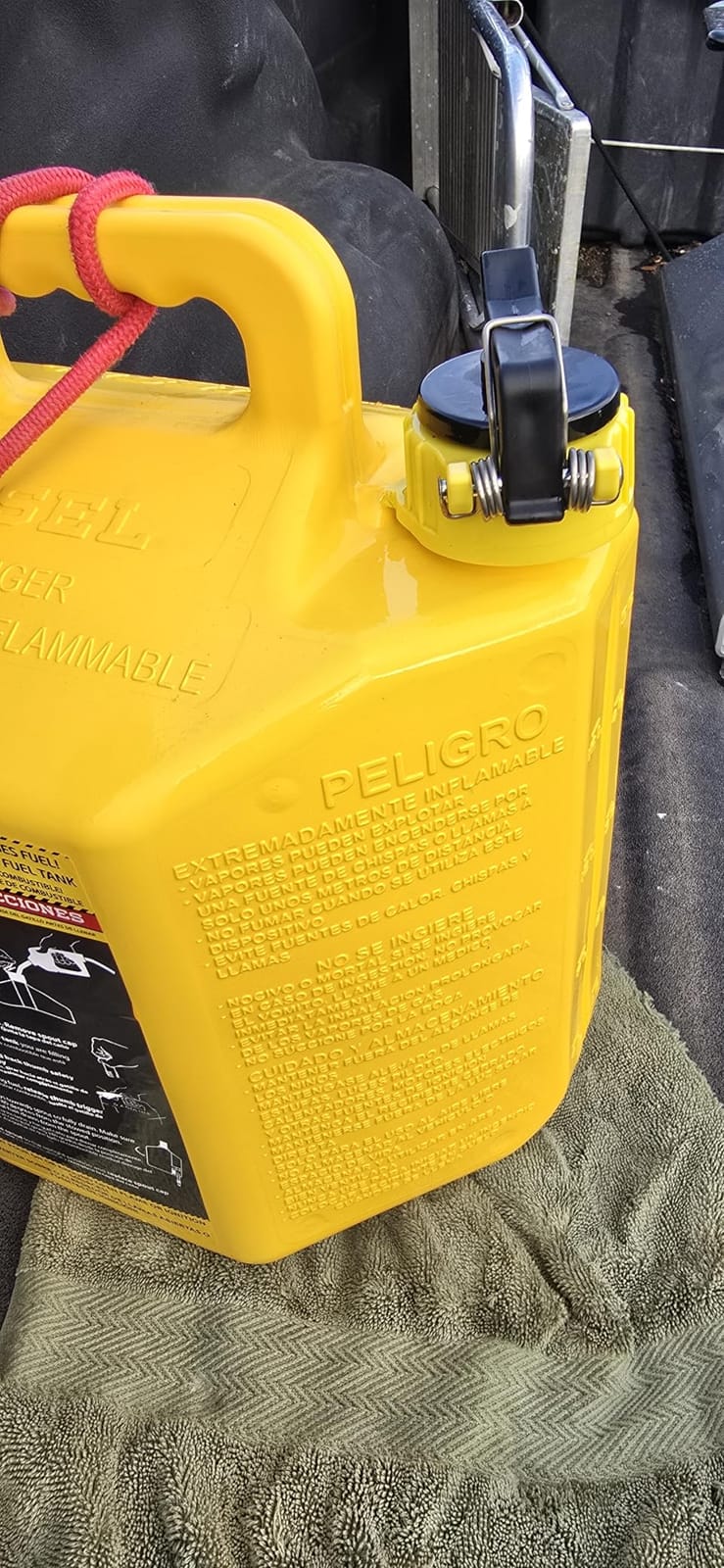
Owners rate the seal highly, reporting no leaks during transport and calling the thumb trigger the best design they have used. The three-year limited warranty is the longest among the plastic options here and roughly fifteen times what you get on a budget can with no stated cover.
Colour coding is standard — yellow for diesel, red for gasoline, blue for mix — so a shared fuel shelf stays unambiguous. If you run both gas and diesel equipment, that is a small daily quality-of-life win that safety cans in the industrial mould do not offer.
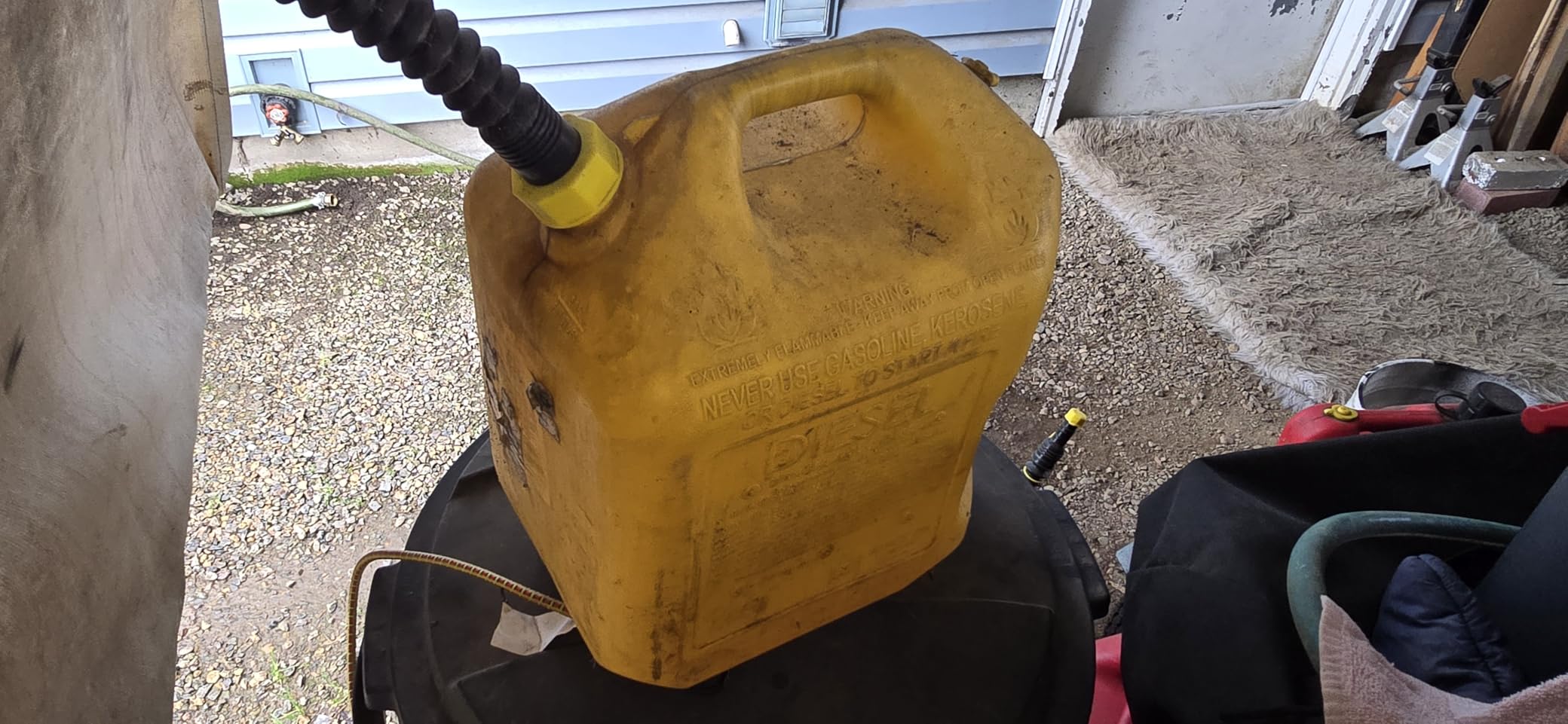
Where the Surecan belongs
Anyone pouring into a small, awkward or low fill neck. The 9 inch flexible spout reaches ports that a fixed Type I opening cannot get near, and the trigger keeps you from flooding a tank with a full stream you cannot stop quickly.
It is also a strong pick for lawn and landscaping work where a consistent, controlled stream matters more than volume, and for anyone who has ever had a job site ruined by a diesel spill.
What to watch out for
The recurring complaint is the last of the fuel. A metal filter in the drain tube and a detent on the fill cap combine to make full evacuation awkward, so a small residue stays in the bottom of the can. Owners who store long-term should know that leftover fuel in a partly drained can is exactly the warm, wet, air-tinged pocket where microbial growth starts.
It is also a premium-priced plastic can. If you only need to top off a mower, a cheaper vented jug does the same job, and the price difference buys you control rather than capacity.
6. Justrite Type II Diesel Fuel Can — Best for Tight Fill Ports and Long-Term Storage
Justrite Type II Diesel Fuel Can, Yellow Galvanized Steel, FM Approved
5 gallon
Type II galvanized steel
5/8 inch metal hose, 9 inch long
10-year warranty
Pros
- Flexible metal hose reaches small openings precisely
- Safe-Squeeze trigger delivers glug-free controlled flow
- 10-year warranty
- FM Approved
- UL and ULC Listed
- TUV Certified
- Pressure-tested galvanized steel that will not swell or collapse
Cons
- Narrower hose slows filling of large tanks
- Heaviest steel option at around 8.15 pounds
- Some reports of factory dents on arrival
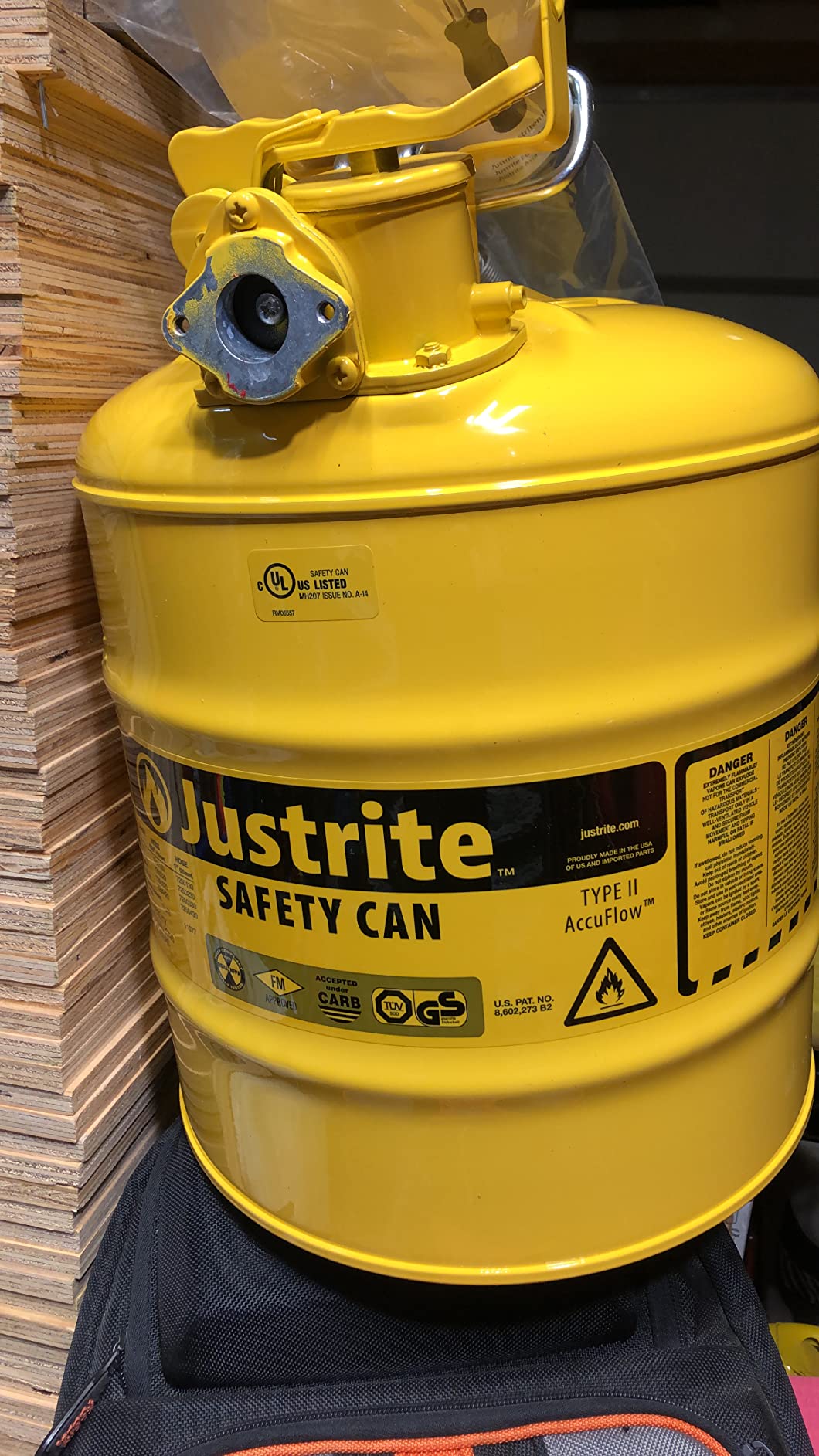
This is the premium answer for anyone who needs a Type II level of control in a steel can. The patented manifold and Safe-Squeeze trigger give glug-free dispensing with much better flow control than a rigid Type I opening, and the flexible 5/8 inch metal hose runs 9 inches so you can put fuel into a small port precisely.
The hose is metal, not plastic, and that is the quiet engineering win. A flexible steel hose will not kink, will not age in sunlight and will not go soft in a cold snap, so a diesel can left in a truck bed all winter still aims where you point it in February.
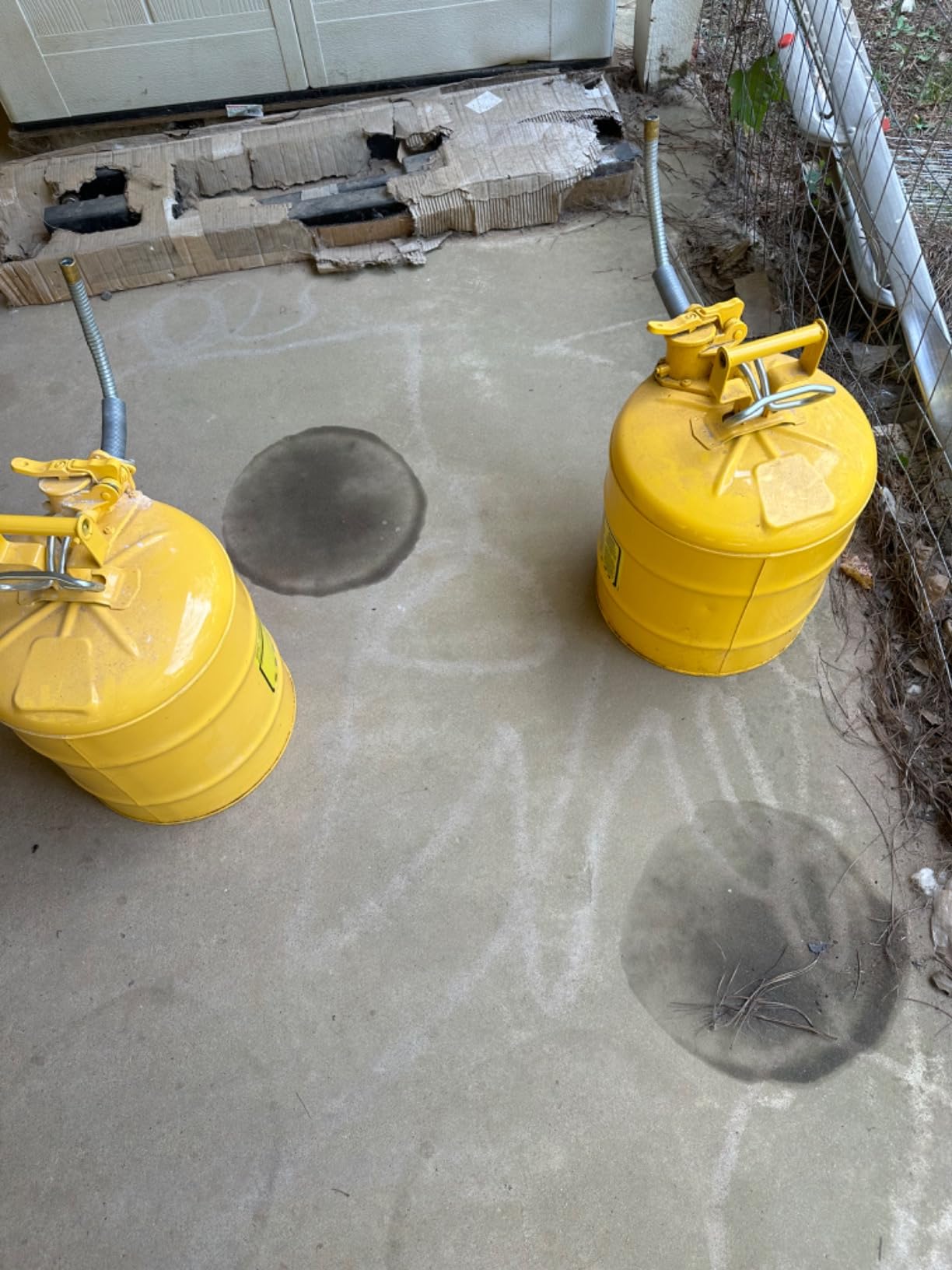
The certification stack is the strongest in this roundup: FM Approved, UL and ULC Listed, TÜV Certified, OSHA and NFPA 30 compliant, and pressure tested. The 10-year warranty is also the longest warranty offered by any product here, and owners describe it as a buy-it-once can.
The self-closing, leak-tight lid and stainless steel flame arrester are the same safety architecture as the Type I version, so nothing about switching to Type II costs you in fire protection. The ergonomic lift lever also makes refilling faster than craning your neck over a fixed opening.
Where this Justrite earns its place
Farm and ranch work, boat fueling at a dock, and any situation where the fill neck is small, low or awkward. If you have ever chased a stream of diesel across a tractor deck because the opening was hard to hit, this solves it.
It is also the best long-term storage can here for anyone who cares about fuel condition. A galvanised steel can does not breathe the way plastic does, so keeping it in a temperature-stable shed instead of a sun-heated truck bed is meaningfully easier.
What the trade-off costs you
The 5/8 inch hose is narrow. Owners report that it is noticeably slower to fill a large tank than a wide-mouth can, so budget time when you are topping off a big auxiliary tank rather than a mower.
It is also the heaviest steel option at around 8.15 pounds empty and the most expensive, and a few owners report cosmetic dents arriving from the factory. A small number of owners also note that the country of origin is not printed on this model the way it is on the Type I version, which matters if buying American-made matters to you.
7. PAMBEE 15 Gallon Wheeled Fuel Caddy — Best for Moving Large Volumes
15 Gallon Fuel Caddy, Portable Gas Can Fuel Tank with Manual Siphon Pump & 10FT Hose, Wheeled Fuel Container for Gasoline Diesel Storage, Car, ATV, Boat, Lawn Mower, Generator, Yellow
15 gallon
High-density polyethylene
Manual siphon pump
10 foot hose
Pros
- 15 gallon capacity cuts the number of refill trips
- Two operating modes including gravity feed
- 10 foot hose reaches distant fill ports
- Brass shut-off valves at tank and hose
- Works for diesel
- gasoline
- paraffin and light oil
Cons
- Manual pump demands heavy effort on large fills
- Very heavy when full at around 130 pounds
- Wheels reported detaching under load
The PAMBEE 15-gallon caddy exists because carrying five-gallon cans from a garage to a boat dock twenty times is a bad afternoon. It is a 15 gallon, high-density polyethylene tank on 6-inch wheels with a top handle, a manual siphon pump and a 10-foot automotive-grade rubber hose with a holder.
Two modes of operation is the genuinely useful feature. In gravity feed mode you position the tank above your target and the fuel flows without any effort at all, which is dramatically faster for large volumes. In siphon mode you work the manual pump and can get up to 3 gallons per minute if you push steadily.
The two brass shut-off valves, one at the tank and one at the hose, are the safety detail. They let you disconnect the hose cleanly without a fuel spill, which matters when you are working around a boat, a generator or a tractor that is running.
It is rated for diesel, gasoline, paraffin and light oil, so it is not a one-fuel tool. If you run mixed equipment at a job site or on a farm, having one wheeled container that handles all of it removes the whole juggling act of separate cans.
Where the wheeled caddy works
Stationary equipment first: portable generators, boats at a dock, farm machinery, and anything where the tank is close to the ground or hard to reach. The 10-foot hose is the reason it works at all for a low fill port on a boat.
It is also the practical answer for a contractor or rancher who moves fuel in volume, because you are wheeling one 130-plus pound assembly rather than carrying multiple 5-gallon cans one trip at a time.
Where it does not work
This is not a vehicle refuelling tool. Full, it is 23 pounds of tank plus roughly 105 pounds of diesel, and moving that across a shop floor is a two-person job on anything but flat concrete. Budget for that or find a ramp.
The manual pump is genuinely labour-intensive. Owners report significant effort on large fills, and a real risk of wrist strain if you keep squeezing. There is also no latch to hold the pump handle, so you have to squeeze continuously.
Two quality issues come up repeatedly: the fill port filter restricts flow enough that many owners remove it, and the wheels have been reported detaching when the tank is full, which is a heavy load on a 6-inch plastic wheel. Check both before you rely on it for anything important.
8. Tuff Jug 5 Gallon Multipurpose Container — Know the Label Before You Buy
Tuff Jug | 5 Gallon Multipurpose Container | White
5 gallon
Made in USA
Auto-Stop spout
Fast flow design
Pros
- Auto-Stop spout halts flow when fluid reaches the end
- Made in the USA
- Very fast pour rate by the manufacturer claim
- Available in 1.25
- 2.5 and 5 gallon sizes
Cons
- Manufacturer states it is not intended for fuel use
- No EPA or CARB fuel certification or flame arrestor
- White rather than the yellow diesel convention
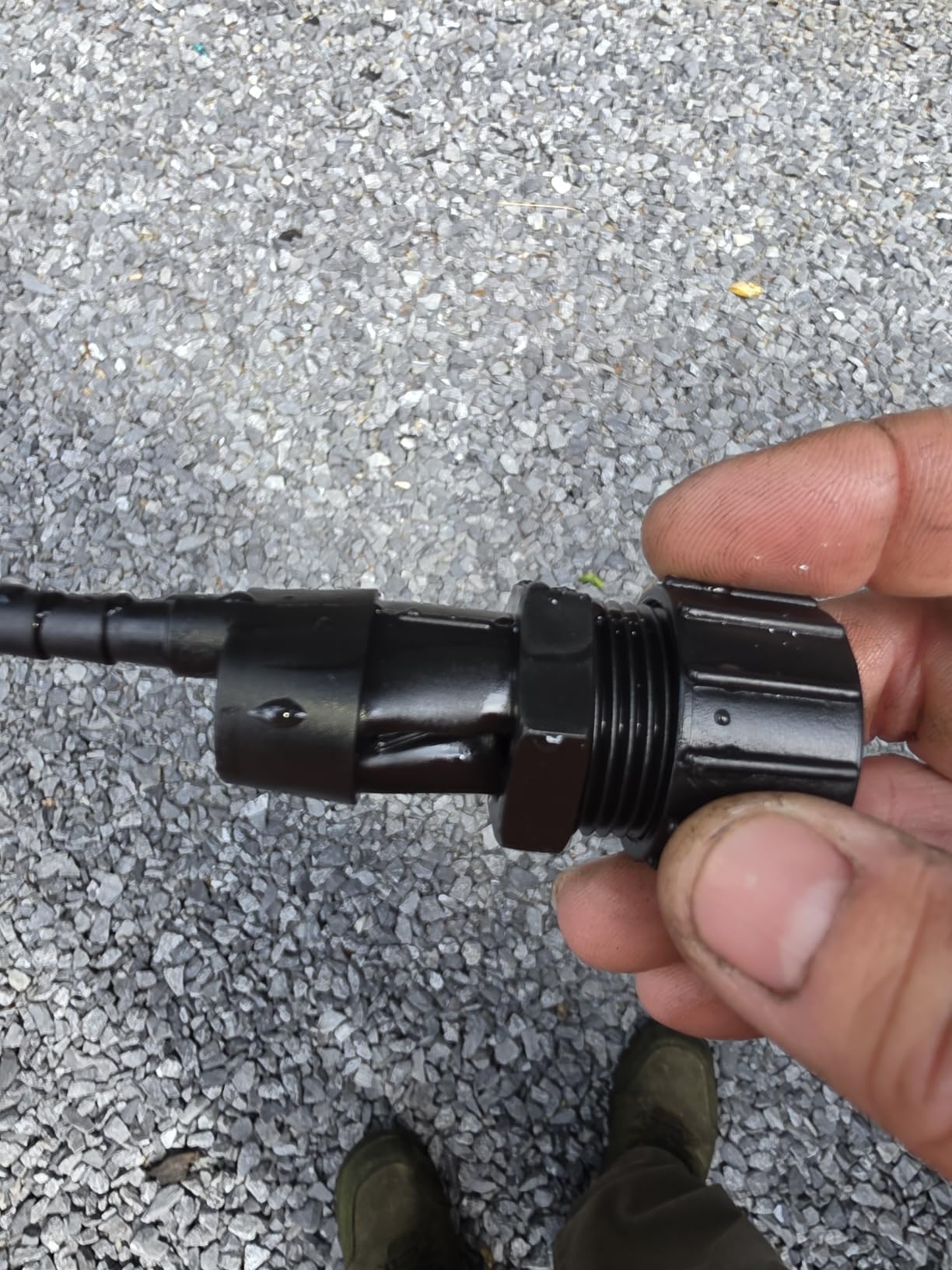
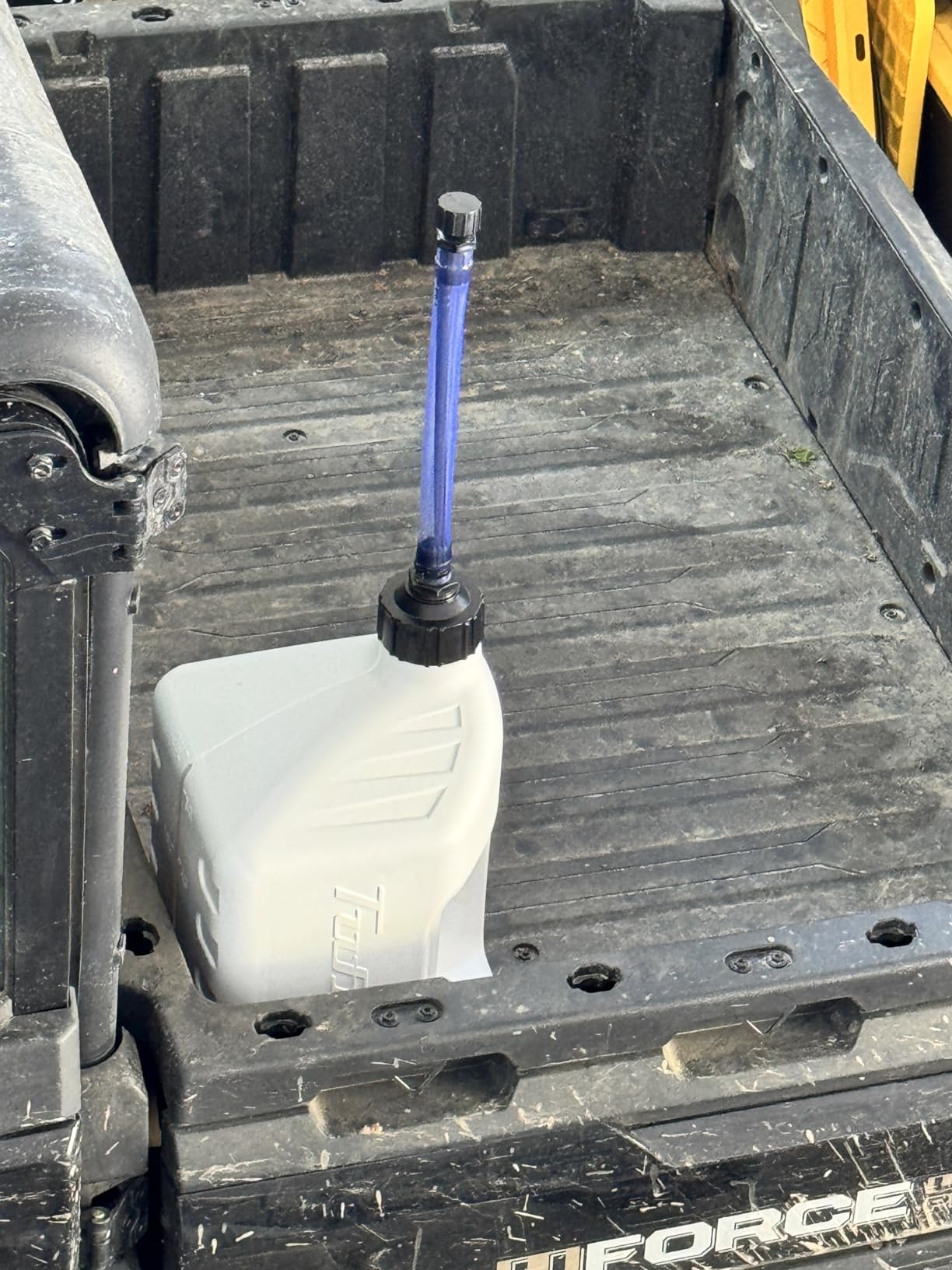
We are including this one deliberately, and the reason is one of the most common mistakes diesel owners make. The Tuff Jug 5 gallon multipurpose container has a 4.5 star rating, an innovative Auto-Stop spout that stops the flow when fluid reaches the end of the spout, and a genuinely fast pour rate. The manufacturer states plainly that this product is not intended for fuel use.
That statement settles it. This is a lab carboy and multipurpose liquid container, not a fuel safety can. It carries no flame arrestor, no OSHA or NFPA 30 claim, and no EPA or CARB fuel certification, and it is white rather than the yellow that marks diesel.
Used as intended, it is a good container. Water, coolant mix, non-hazardous chemicals, and general shop liquids all fall within what a multipurpose jug is built for. The Auto-Stop spout prevents overfilling by design rather than by luck, and it is made in the USA.
It also exists in 1.25 and 2.5 gallon sizes, which is genuinely useful for small volumes of non-hazardous liquid where a 5-gallon container would be overkill.
Where it does belong
Anywhere you are moving water, coolant, cleaning solution or another non-hazardous liquid and want an auto-shutoff spout. Owners who bought it for that purpose report high satisfaction, and the pour speed is the feature they single out.
Keep it visually separate from your fuel cans. A white jug on a garage shelf next to a yellow diesel can is an invitation to a mistake, and the whole point of the colour convention is to stop that.
Why we will not recommend it for diesel
A container not intended for fuel use has not been tested for hydrocarbon compatibility, vapour permeation or the thermal cycling diesel goes through in a truck bed. Its wall material is not specified for fuel, and its spout seal has not been validated against diesel vapour.
The label is the whole argument. When a manufacturer says the product is not for fuel, using it for fuel voids the basis on which any safety claim would rest, and it will not satisfy a workplace inspection. For diesel, choose a container that is actually certified for flammable liquid handling.
Diesel Can Buying Guide: Material, Spout and Safety Marks
The best container to store diesel fuel in is a certified safety can: either a Type I steel can with a flame arrestor, or a multi-layer HDPE can explicitly approved for diesel and marked EPA and CARB compliant. The material matters far less than the certification and the seal.
Type I versus Type II safety cans
Type I cans have a single opening used for both filling and pouring, with a gasketed cap that self-closes and vents automatically during a pour. Type II cans add a flexible spout, hose or rotating nozzle on a second opening, giving you controlled, directed dispensing into smaller openings.
A Type I can is simpler, cheaper, more compact and easier to clean out. A Type II can pours more precisely and is the better choice when fill ports are small, low or awkward. If you are filling a tractor deck or a boat tank, Type II wins. If you are storing and transferring in a shop with wide mouths, Type I is the better value.
Material: galvanized steel versus 5-layer HDPE
Steel is heavier, more impact resistant, UV stable, and will not crease or split when a fuel charge expands and contracts. It does not breathe, so fuel in steel stays fresher, and it satisfies workplace safety rules without argument. Plastic is lighter, rust-proof, easier to carry full, and modern 5-layer HDPE walls resist vapour permeation far better than the thin single-layer jugs of twenty years ago.
The rule of thumb we use: regulated or commercial work pushes you to steel, general consumer use is fine with genuine multi-layer HDPE, and long-term storage in a vehicle that sits in the sun is better in steel regardless of the label.
Safety and compliance marks worth checking
Look for these before you buy, in this order:
Flame arrestor or flame mitigation device — non-sparking mesh in the neck that stops an external ignition source from igniting internal vapour.
Self-closing gasketed lid — the reason your garage does not smell like diesel after a week.
OSHA 1910.106 and NFPA 30 — the US workplace and fire code standards for flammable liquid containers.
FM, UL or ULC listing — independent third-party testing. FM Approval and UL/ULC Listing are the two to look for.
EPA and CARB compliance — hydrocarbon emissions compliance for vapour-tight fuel containers in California and federally.
Fuel-use labelling — a clear statement that the container is rated for fuel, and no “non-fuel use only” language anywhere on it.
Our acronym glossary, quickly: OSHA is the Occupational Safety and Health Administration, NFPA 30 is the code for flammable and combustible liquids, EPA is the Environmental Protection Agency, CARB is the California Air Resources Board, UL and ULC are the US and Canadian safety certification bodies, and FM is Factory Mutual. HDPE is high-density polyethylene.
While you are in the specs, it is worth checking our diesel particulate filter guide, because how clean your engine burns the fuel affects how much water and carbon ends up in the tank you are storing.
Storing Diesel Long-Term Without Ruining It
Untreated diesel stored in a properly sealed can generally keeps for six to twelve months before you should expect clouding and microbial growth. Adding a biocide or diesel stabiliser and keeping the can full extends that well beyond a year, and the can itself matters more than the additive.
Diesel is hygroscopic, which simply means it pulls moisture out of the air. Water in diesel is the root cause of almost every stored-fuel complaint: microbial growth produces the black or grey slime at the tank bottom, it raises the water in fuel that injures injectors, and in winter it gells.
Six rules that actually work:
Fill to the mark, never to the brim. This is the number one piece of advice across every diesel forum. Diesel expands in cold weather, and a brim-full can will crease, bulge or burst. Leave 5 to 10 percent headspace, and fill to the moulded level marking rather than by eye.
Add a biocide or stabiliser before storage. IRV2 owners are near-universal on this: some people never see algae and some do, and the only reliable answer is to treat the fuel before it sits.
Keep the can as full as practical. Oxygen and water together drive growth. A full can has neither, which is why part-full cans are the ones that go bad.
Store cool, dark and indoors. A shed is better than a sunlit truck bed, and both beat the back seat of a car. Heat accelerates every degradation process.
Use a container that breathes nothing. A sealed steel can or a certified multi-layer HDPE can is the right vessel. A cheap vented jug loses vapour and takes on air.
Transport in the bed, not the cabin. Diesel vapour in a passenger compartment is an inhalation risk, and cans should ride upright, secured against tip-over, with the cap closed.
If a can has been sitting and the diesel is cloudy, do not just pour it back into a machine. Empty it into a clear container, let it settle, and expect a layer of water at the bottom. Flush the can with warm water and a degreaser, dry it fully, and treat the fuel with a biocide before it goes anywhere near an injection system.
One more practical note from the field: a can that is stored part-full and then forgotten is exactly the object that eventually fails at the spout seal. Check your gaskets and caps every few months, and re-test the seal by lifting the can and watching the spout joint for a minute. If you also want to catch what the engine sheds before it reaches the tank, our diesel oil catch can guide covers the same storage chain from the other end.
Frequently Asked Questions
What is the best container to store diesel fuel in?
A certified safety can is the best container for diesel fuel: a Type I steel can with a flame arrestor, or a multi-layer HDPE can marked EPA and CARB compliant. Diesel is not a flammable liquid, so containers can exceed the 8-gallon gasoline limit, but the gasketed self-closing lid and vapour-tight wall still decide how long your fuel stays clean. Our top pick is the Justrite Type I galvanized steel can.
How long can diesel sit in a jerry can?
Untreated diesel typically keeps for six to twelve months before clouding and microbial growth become a problem. Adding a biocide or diesel stabiliser and keeping the can as full as possible extends that well beyond a year. Always fill to the moulded mark rather than the brim, leaving 5 to 10 percent headspace, because diesel expands in cold weather and can crease or burst a full can.
Is it better to store diesel in metal or plastic?
Metal is better for long-term and regulated storage: galvanised steel does not breathe, resists UV and impact, and keeps fuel fresher. Plastic is lighter, easier to carry full and will not rust, and modern 5-layer HDPE walls handle vapour well. For a shop, farm or workplace with OSHA or NFPA requirements, choose steel. For general consumer top-ups, genuine multi-layer HDPE is perfectly adequate.
What is the best type of jerry can for diesel fuel?
The best type is a yellow, certified safety can rated for diesel. For most people, a Type I steel can with a flame arrestor and self-closing gasketed lid is the best balance of durability and simplicity. If you pour into small or awkward fill ports, choose a Type II can with a flexible spout and thumb trigger for controlled flow. Avoid any jug labelled for non-fuel use.
Can I use a gas can for diesel fuel?
Most quality gas cans will physically hold diesel safely, because diesel is not classified as a flammable liquid and is less volatile than gasoline. However, gasoline cans often have wider, shorter spouts and colour coding that invites mistakes, and a red can marked gasoline in your garage is a genuine hazard. Use a yellow can marked for diesel, and never use a diesel can for gasoline unless it is rated for both.
Do diesel cans need flame arrestors?
Diesel is not classified as a flammable liquid, so a flame arrestor is not a legal requirement the way it is for gasoline. That said, every certified can we recommend has one, because a flame arrestor costs nothing and prevents an external ignition source from reaching internal vapour. It is also the clearest signal that the manufacturer tested the container for fuel handling rather than general storage.
Final Verdict
The best diesel cans in 2026 split into three clear jobs. The Justrite Type I is the one to buy if you want a single certified steel can that satisfies OSHA and NFPA requirements and should last decades. The Scepter FSCD552 is the one to buy if you want fast, one-handed, spill-controlled pouring for lawn and generator work. And the Justrite Type II is the one to buy if you pour into tight ports and want trigger control in steel with a 10-year warranty behind it.
Own two, not one. A steel certified can for storage and long-term holding, and a plastic can with a smart spout for the daily top-ups you do in the yard. Check the label before you fill it, treat the fuel before it sits, and fill to the mark rather than to the top. You can see how we cover the rest of the diesel ownership chain in our diesel coolant guide.