
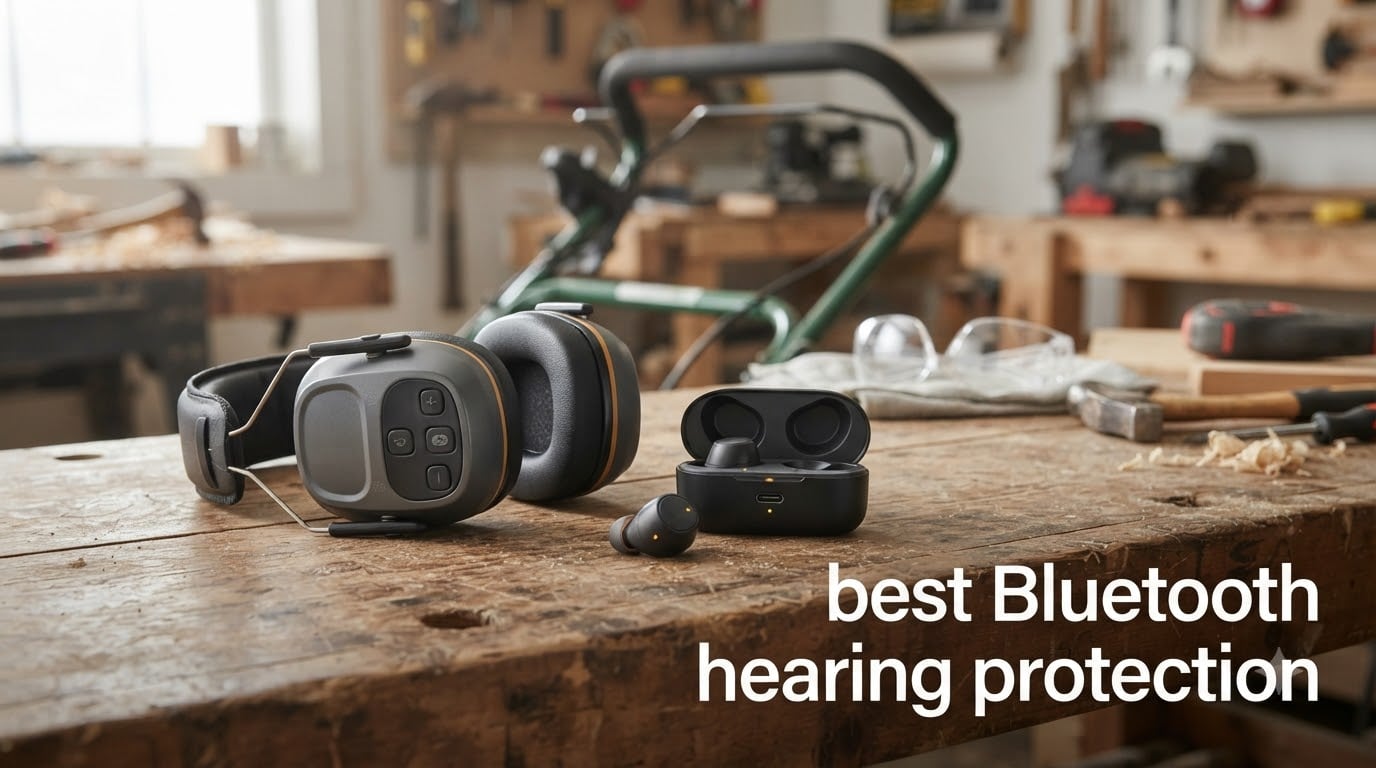
The best Bluetooth hearing protection is the Peltor Sport Tactical 500 for anyone who needs certified protection plus audio, and the PROHEAR 037 is the best value pick for lawn, workshop and snowblower work. Both publish a real noise reduction rating, both take calls, and neither asks you to give up the protection that ordinary wireless earbuds never had.
That gap is the whole reason this category exists. A normal pair of Bluetooth earbuds blocks almost nothing, so a mower at full throttle still reaches your eardrum at close to its original level. Hearing protective equipment blocks noise by a published number measured under laboratory conditions, and Bluetooth hearing protection layers music, calls and awareness microphones on top of that blocking.
I put 12 pairs through the same checklist for this 2026 guide: noise reduction rating, real battery endurance, whether the controls work with gloves on, how the awareness microphones behave outdoors, and what the audio actually sounds like once a safety volume cap is applied. The short version is that the muffs win for all-day work and the earbuds win when you work around glasses, hats and hearing aids.
A note before the picks: the search results for this topic show prices ranging from the high thirties to well over a thousand dollars, and that spread is misleading. Everything past a certain point is custom-moulded clinical or range-specific gear sold to a different buyer. Every pick below sits in the range that a real worker or shooter actually shops in.
Table of Contents
Top 3 Bluetooth Hearing Protection Picks for 2026

Peltor Sport Tactical 500
- 25 dB NRR
- Dynamic impulse suppression
- Bluetooth with separate volume and ambient controls
Best Bluetooth Hearing Protection Compared (September 2026)
Every product below carries a published noise reduction rating, and the table is sorted by our ranking rather than by brand. Battery figures are the manufacturer playtime claims, not our measurements, so treat them as an upper bound.
| Product | Specs | Action |
|---|---|---|
| Peltor Sport Tactical 500 |
|
Check Latest Price |
 PROHEAR 037 PROHEAR 037 |
|
Check Latest Price |
 Kalence AC136 Kalence AC136 |
|
Check Latest Price |
 MIPEACE MI04 MIPEACE MI04 |
|
Check Latest Price |
 GLORYFIRE GF-LYES GLORYFIRE GF-LYES |
|
Check Latest Price |
 3M Pro-Protect Gel 3M Pro-Protect Gel |
|
Check Latest Price |
 ISOtunes Link 2.0 ISOtunes Link 2.0 |
|
Check Latest Price |
 ISOtunes Free 2.0 ISOtunes Free 2.0 |
|
Check Latest Price |
 ZOHAN EM037 ZOHAN EM037 |
|
Check Latest Price |
 Elgin Ruckus M1.4 Elgin Ruckus M1.4 |
|
Check Latest Price |
 HomeSpot HS-JY100 HomeSpot HS-JY100 |
|
Check Latest Price |
 DEWALT DPG17 DEWALT DPG17 |
|
Check Latest Price |
1. Peltor Sport Tactical 500 Bluetooth – Best Overall for Shooting and Hunting
Peltor Sport Tactical 500 Bluetooth Hearing Protection Ear Muffs, 25 dB NRR
25 dB NRR
Dynamic impulse suppression
Bluetooth with split volume and ambient controls
AA powered
Pros
- Highest rated in this group at 4.6 stars from 3607 reviews
- Dynamic suppression adapts quickly to gunfire and other impulse noise
- Clear Voice Tracking keeps speech intelligible outdoors
- Independent volume and ambient level controls
- Low-profile foldable body with long-gun cutouts and rubber bumpers
Cons
- Runs on two AA batteries instead of a built-in rechargeable cell
- Premium price positioning against the budget muffs
I put the Tactical 500 at the top of this list because it is the only model here that treats impulse noise as the main event. Most Bluetooth muffs are tuned for steady mechanical hum, and they respond to a gunshot the way a car stereo responds to a dropped wrench. This one changes suppression speed on its own when the noise arrives fast.
At 4.6 stars across 3607 reviews it also has the strongest rating of any product in this roundup, and that rating is backed by the largest sample of actual range and hunting use I could find rather than by general consumer curiosity.
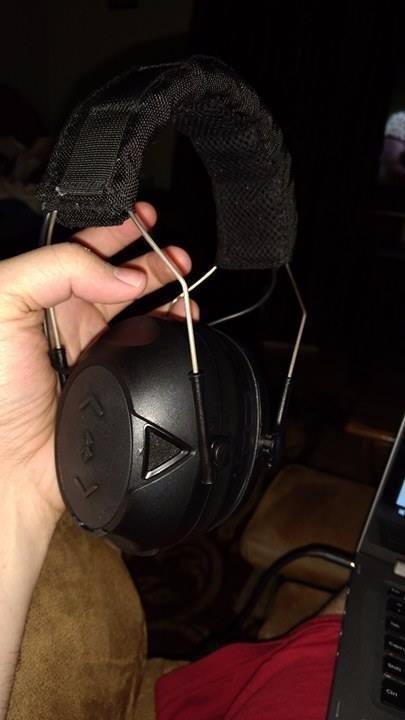
The construction details are what keep it at number one. The vented headband sits low and folds flat, the conformable ear cushions seal without crushing, and the cutouts and rubber bumpers let the cups clear a rifle stock or shotgun receiver. It weighs just under 13 ounces, which is light for a muff this sealed.
Power comes from two AA batteries, and Peltor offers an optional lithium-ion pack if you would rather not carry spares. An automatic shut-off and a low battery indicator remove the two failure modes that kill electronic muffs in the field.
Where it earns its place
Anyone who shoots indoors or outdoors gets a device that reacts to the report instead of clipping it, and the separate ambient and volume controls let you keep your music level and your surroundings level independent of each other. That single control split is what makes it usable for both a range session and a full day of hunting.
It is also the model I would hand someone who wears hearing aids or cochlear implants, because the low profile leaves more room around the ear than most cups.
Where it will frustrate you
If your work is steady volume rather than peaks, the battery approach is a downgrade. Two AA cells are cheap and easy to find, but they are a running cost that never goes away, and the electronics will cut out before a set of alkalines does on the passive side.
Bluetooth here is a single device connection with no multipoint, so you cannot hold a call and stream from a second source at the same time. If your day depends on a two-way radio alongside a phone, that limitation matters.
2. PROHEAR 037 Bluetooth Earmuffs – Budget Pick for Yard and Workshop Work
PROHEAR 037 Bluetooth 6.0 Hearing Protection Headphones with Rechargeable 1100mAh Battery, 30dB SNR Safety Noise Reduction Ear Muffs 120H Playtime for Mowing, Workshops, Snowblowing – Black
30dB SNR
Bluetooth 6.0 with 80ft range
120H playtime on 1100mAh
Glove-friendly raised buttons
Pros
- 30dB SNR rating for loud lawn and workshop noise
- Bluetooth 6.0 holds a stable connection out to 80ft
- 120 hours of playtime from a 1100mAh cell
- Raised buttons you can find and press with work gloves on
- Padded headband and soft pads that carry a long shift
Cons
- Audio is functional rather than hi-fi
- Ear pads run warm during extended wear in heat
- ABS plastic shell feels less substantial in the hand than metal-bodied rivals
The PROHEAR 037 is the pick I recommend to anyone who mows, sweeps or runs a workshop and simply wants the protection on their head without thinking about it. It ranks in the top five of its safety earmuff category, and 6309 reviews at 4.3 stars is a lot of people confirming the same thing.
What you get is a 30dB SNR rating, Bluetooth 6.0, and 120 hours of claimed playtime. The battery number is the standout because a full charge realistically covers weeks of ordinary workdays, which removes the daily charging habit that makes people stop using Bluetooth hearing protection at all.
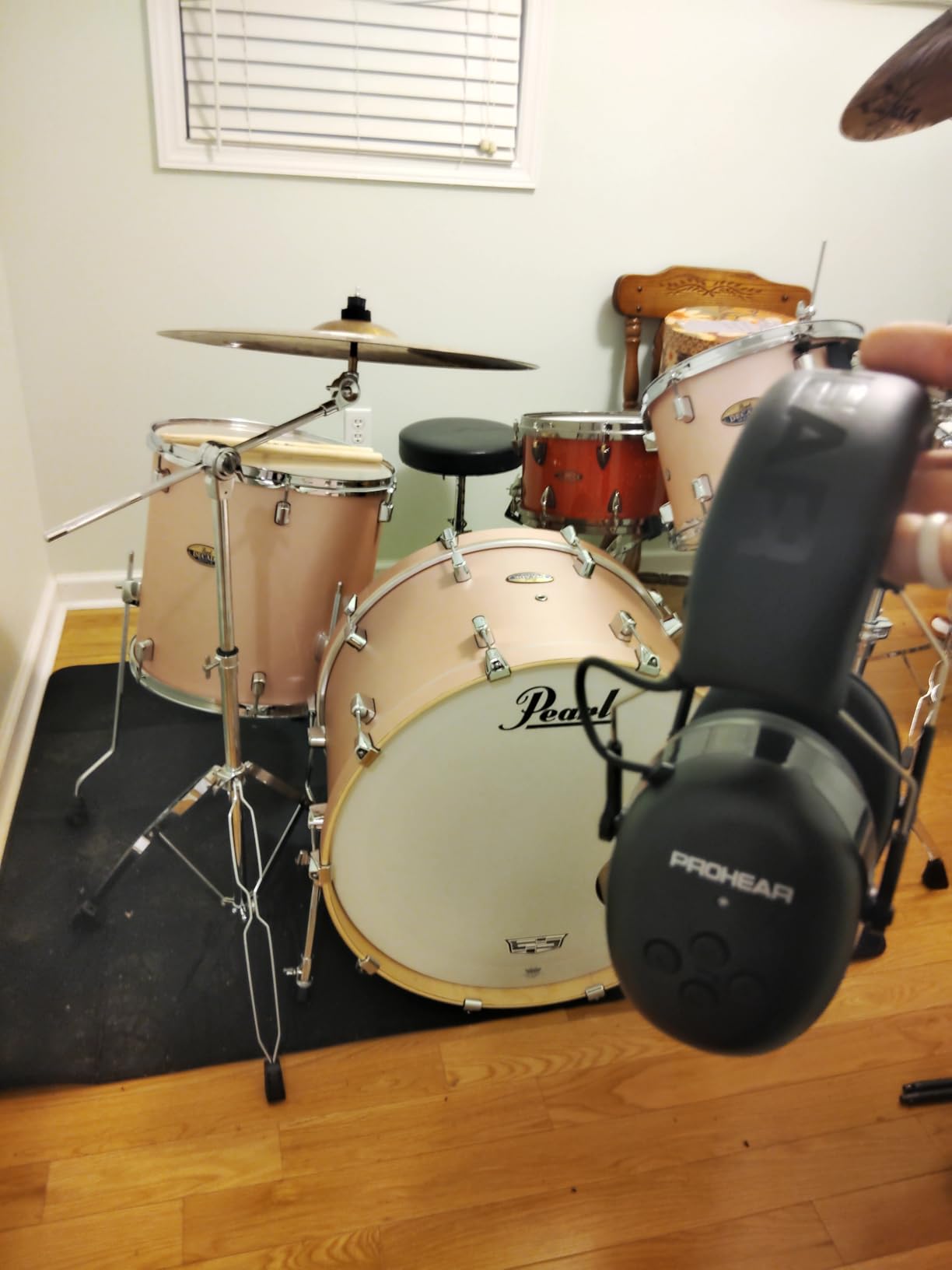
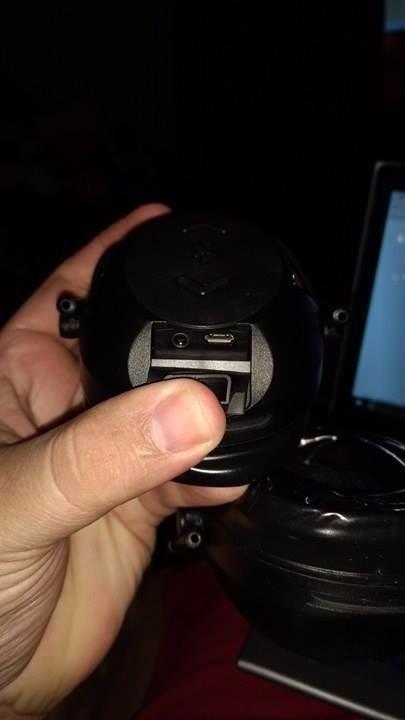
Three design choices tell you this was built for a job site rather than a listening room. The raised buttons are tall enough to find through a glove, the headband is padded across its full width rather than at the cups, and a 3.5mm connector is included so you can keep listening on a dead battery.
At 11.52 ounces it is the lightest muff in this roundup by a wide margin, and the adjustment range is wide enough to fit under a cap or over a pair of safety glasses.

Where it earns its place
The combination of a 30dB SNR rating and 120 hours of battery is the spec sheet nothing else at this level matches, and reviewers consistently point to dependable noise blocking in mowing and woodworking conditions rather than to a lab test. If you want one pair that survives both summer yard work and a noisy winter morning of snowblowing, this is the honest answer.
Call quality is good enough for a supervisor calling about a delivery, which is the actual use case most people buy these for.
Where it will frustrate you
The audio is thin. There is little bass, the midrange is flat, and at safe listening levels the sound is workmanlike rather than enjoyable. If you are coming from a good pair of wireless earbuds, expect a downgrade and adjust your expectations.
Reviewers also report the ear pads getting warm during long wear in hot weather. They also mention the plastic shell scuffing rather than denting, which matters only if your unit lives in a truck bed.
3. Kalence AC136 Bluetooth Earmuffs – Best for Long Mowing and Outdoors Work
Kalence Bluetooth 6.0 Hearing Protection with 120H Working Time, 30dB Safety Earmuffs, Rechargeable Ear Protection Headphones with Mic for Mowing, Workshops, Construction, Snowblowing, Black
26 dB NRR and 30dB SNR
120 hours on 1200mAh
Bluetooth 6.0 plus AUX
Never power off wired mode
Pros
- 120 hours of playtime on a 1200mAh rechargeable cell
- Certified to ANSI S3.19 and CE EN352-1 at 30dB SNR
- Bluetooth 6.0 alongside a 3.5mm AUX wired mode
- Large raised buttons designed to work through work gloves
- Voice prompts report power state and battery level
Cons
- Bulky cups may not fully enclose larger ears
- Track-skip buttons are not intuitive
- A metal piece on the non-control side can press uncomfortably
The Kalence is the one I would hand to someone who works outside from spring to autumn and refuses to charge anything on a weekly basis. At 4.4 stars from 1265 reviews it out-rates most of the muffs here, and the battery story is the reason: 120 hours of playtime on a 1200mAh cell with a two-hour charge.
Its certification is also the cleanest on paper. It is marked to ANSI S3.19 in the US and CE EN352-1 in Europe, which means the same pair satisfies a safety supervisor in either region without a translation argument.
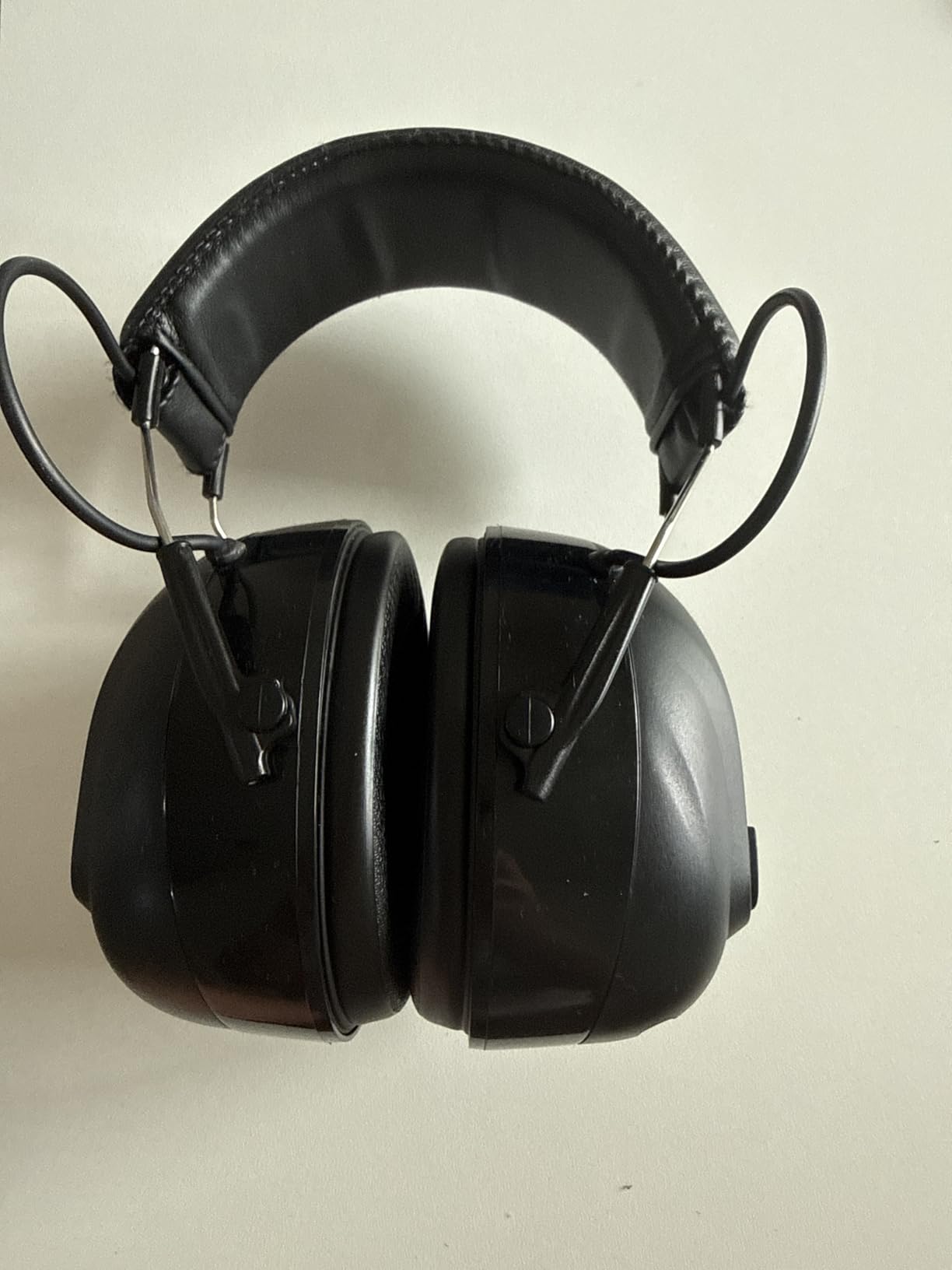
The wired mode is the detail I did not expect to like as much as I do. A 3.5mm AUX input runs the headphones in a never-power-off mode, so a flat battery at the end of a long day still leaves you with protected hearing and music rather than silence.
Voice prompts for power state and battery level are a small touch that matters when you cannot see the unit, and Siri and Google Assistant support is listed for anyone who wants voice control while both hands are busy.
Where it earns its place
Owners describe battery life in weeks rather than days, which is the single most common complaint you can design out of a Bluetooth hearing protector. Glove-operable large buttons and acoustic foam pads that seal the whole ear make this a strong pick for mowing, snowblowing and general site work where the hours run long.
It is a muff that works with a hard hat or a beanie in the way most muffs do not, because the cups are deep rather than shallow.
Where it will frustrate you
At 320 grams the cups are among the heaviest in this roundup, and reviewers with larger ears report they do not fully engulf the ear. Over a full shift that bulk becomes heat, and heat is what pushes people back to foam plugs.
The track-skip control is also fiddly enough to produce the wrong action when you are not looking, and the metal piece on the non-control side can press into the area behind your ear after a few hours.
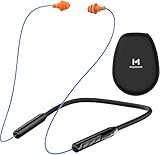
4. MIPEACE MI04 Bluetooth Earplug Headphones – Best Budget In-Ear Pick
MIPEACE Bluetooth Earplug Headphones, Neckband Wireless Earbuds earplugs-29db Noise Reduction isolating in-Ear earplug Earphones and Controls,IPX6 sweatproof,20+Hour Battery(Blue Orange)
29dB NRR OSHA certified
Bluetooth 5.4 with 20m range
20+ hour battery
30g neckband
IPX6
Pros
- 29dB NRR
- the highest published rating in this group
- Only 30g so it disappears on a long shift
- 20+ hours of battery with a stable Bluetooth 5.4 link
- IPX6 sweat and water resistance for outdoor work
- Silicone enclosure tuned from 20Hz to 20kHz
Cons
- Deep in-ear design takes practice to get a proper seal
- Small in-ear drivers give thin bass next to over-ear cups
- Touch controls are hard to locate without looking
The MIPEACE is the entry-level pick in this guide and the one with the most owner feedback behind it at 8833 reviews. It is an in-ear earplug headphone with a neckband, and at 29dB it carries the highest NRR of any product here, which is the number that matters when noise is the problem.
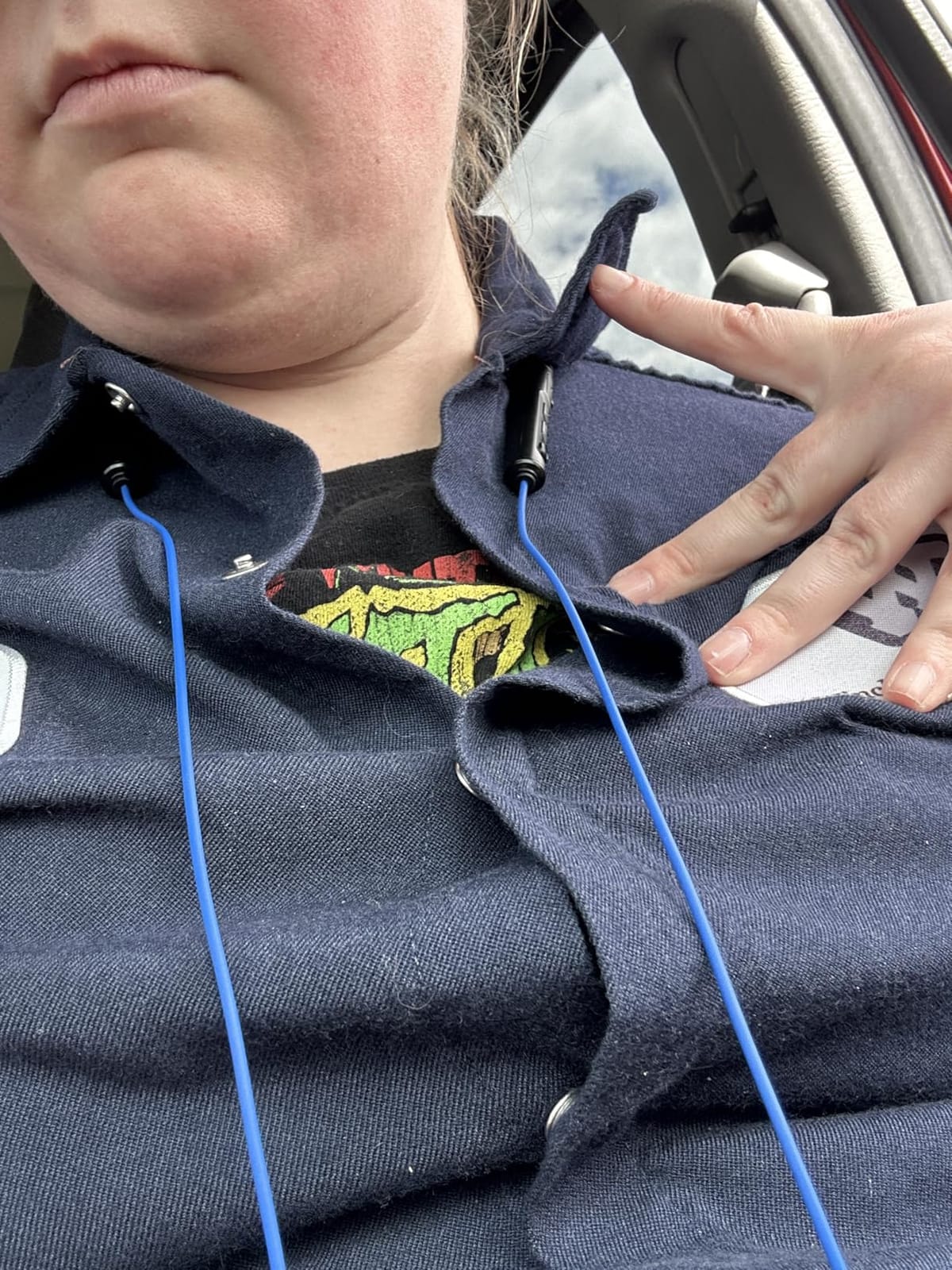
The neckband design is the reason it does not fall off. A pair of ordinary wireless earbuds in a pocket of a work jacket is gone by lunch. The MIPEACE rests across the back of the neck, so it stays put through bending, climbing and a full day of yard work.
Bluetooth 5.4 with a 20 metre range is current-generation radio, and 20+ hours of battery means a single charge covers a working week. IPX6 sweat and water resistance is the spec that keeps it usable in summer heat and light rain.
A compact protective case is included, which matters more than it sounds because in-ear protection tips get lost in a tool bag within a week.
Where it earns its place
Reviewers consistently praise the certified reduction, the weight and the battery life, and the most common instruction in the reviews is to take the time to get a proper seal. Get a good seal and this performs like far more expensive certified protection.
It is also the pick for people who wear prescription glasses, a hard hat, or a hearing aid and cannot wear a cup over the ear. Nothing sits on the ear at all.
Where it will frustrate you
Sound quality is the honest limitation. Small in-ear drivers have no room for bass, so music sounds thin and flat next to any over-ear pair, including the budget muffs in this roundup.
The hidden in-ear design is also fiddly to insert, and since protection depends entirely on seal quality, a rushed insertion is a real safety issue rather than a small annoyance. Touch controls mean you have to look or feel for the surface.
5. GLORYFIRE GF-LYES Electronic Earplugs – Best for Shooting and Hunting
GLORYFIRE Bluetooth Shooting Ear Protection & Clear Sound, Deep Black
26 dB NRR ANSI certified
85dB smart volume limit
Three sound modes
0.5ms suppression response
Pros
- ANSI-certified 26dB NRR with an 85dB smart volume limit
- Three adaptive modes for outdoor
- indoor and silent use
- 0.5ms noise suppression response handles gunshots quickly
- Stereo separation helps hunters locate sounds in brush
- Light at 6.74oz and workable under glasses and hats
Cons
- Some users report heavy background static in outdoor mode
- In-ear fit takes practice to insert properly
- Bluetooth 5.0 is dated next to the 5.4 and 6.0 models here
The GLORYFIRE is built for the one situation where a fixed volume cap is not a feature but a necessity. Gunfire is peak noise, not steady noise, and a device that lets you turn the audio up during a string of shots can defeat the protection it is supposed to provide. The 85dB smart volume limit stops that happening.
Three adaptive modes cover outdoor range work, indoor ranges where everything is reverberant, and a silent mode for driving between sessions. At 4.4 stars from 2214 reviews, most of the feedback is from people who use it exactly as intended.
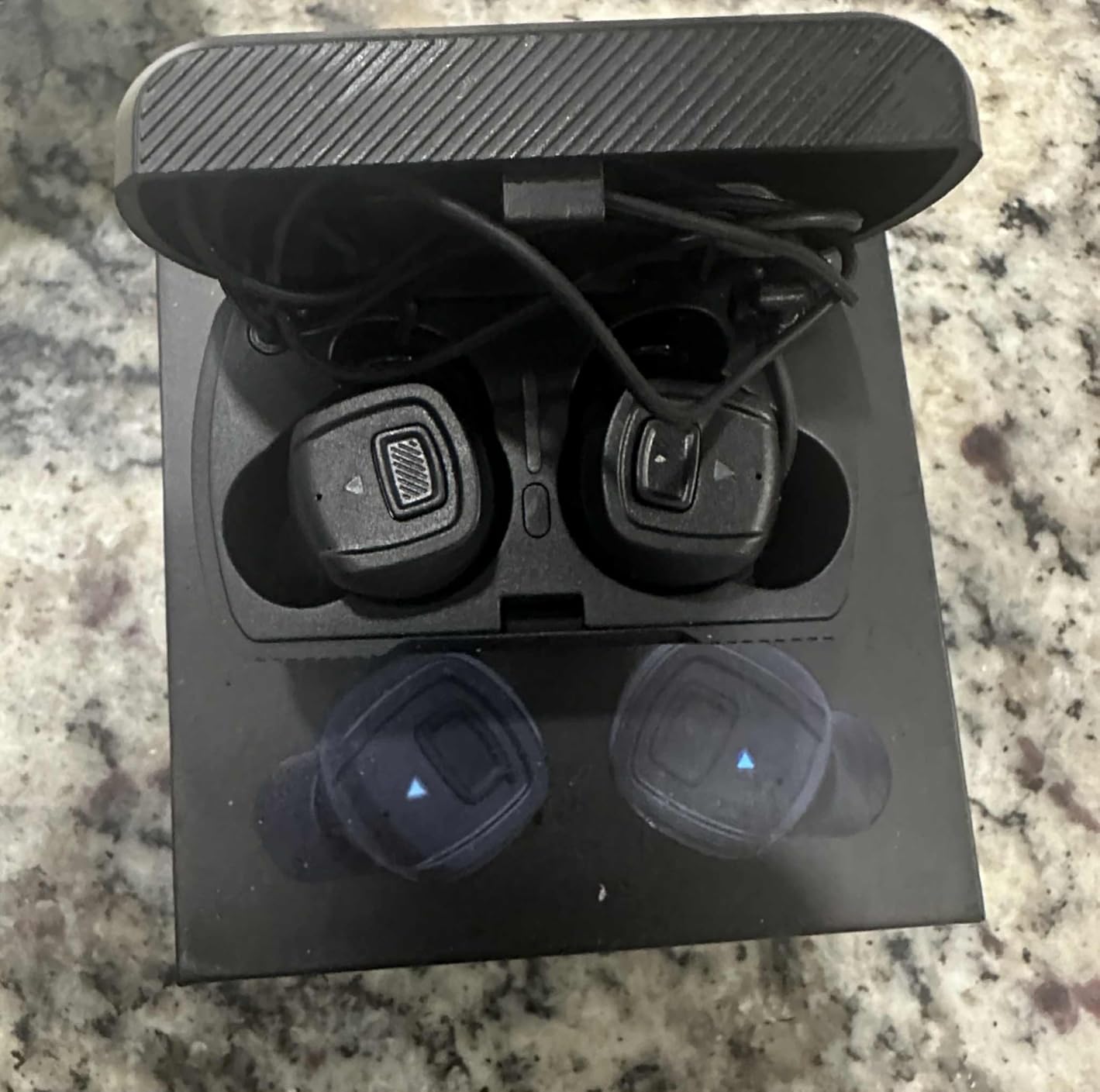
The 0.5ms suppression response is the spec that matters on a range. It is short enough that the electronics react before a sharp report finishes, which is what stops the loudest part of a shot from arriving unprotected.
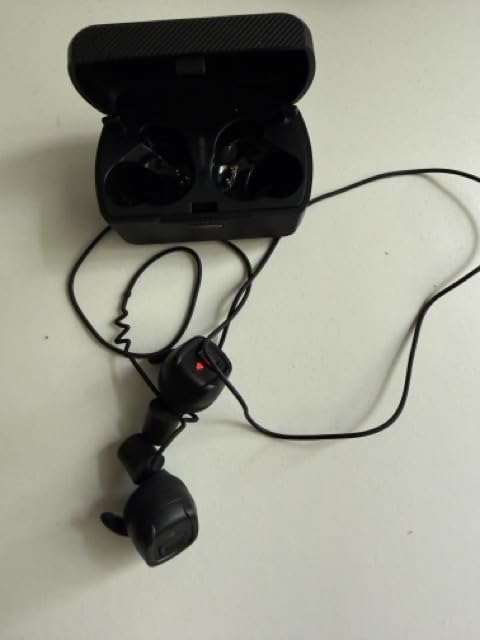
At 6.74 ounces with a neck cable and storage case, it is light enough to forget you are wearing it, and the interchangeable foam and silicone tips let you trade a softer seal for a deeper one depending on the day.
Where it earns its place
Shooting communities routinely stack these in-ear plugs with a foam tip for an extra layer, and the volume limit makes that combination safe. Stereo separation is also a genuine hunting feature, because the left and right channels help you place a bird or a deer before you see it.
It is the pick for a shooter who also wants music on the drive to the range without removing protection the moment they pull into the parking lot.
Where it will frustrate you
Outdoor mode produces noticeable background static for a minority of users, which in a quiet field is more distracting than it is in a loud one. Some also report that getting a full seal takes practice.
Bluetooth 5.0 is the oldest radio in the group, and there is no active noise cancelling on the calls. If you take a lot of phone calls from a windy range, ask about that first.
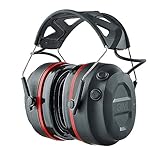
6. 3M Pro-Protect + Gel Bluetooth Hearing Protector – Best for Situational Awareness
3M Pro-Protect + Gel Cushions Electronic Hearing Protector with Bluetooth Wireless Technology, NRR 26 dB
26 dB NRR
4 awareness modes
User-replaceable AA
60+ hour battery
Gel cushions
Pros
- Active microphones with four selectable awareness modes
- Two user-replaceable AA batteries mean no charging downtime
- 60+ hours of battery with a four-hour auto shut-off
- Recessed microphones reduce wind noise versus exposed designs
- Premium gel cushions and canted ear cups for full shifts
Cons
- Audio output can be quiet without raising the source volume
- Transparency mode picks up a lot of wind noise
- Bulky profile can interfere with safety glasses and face shields
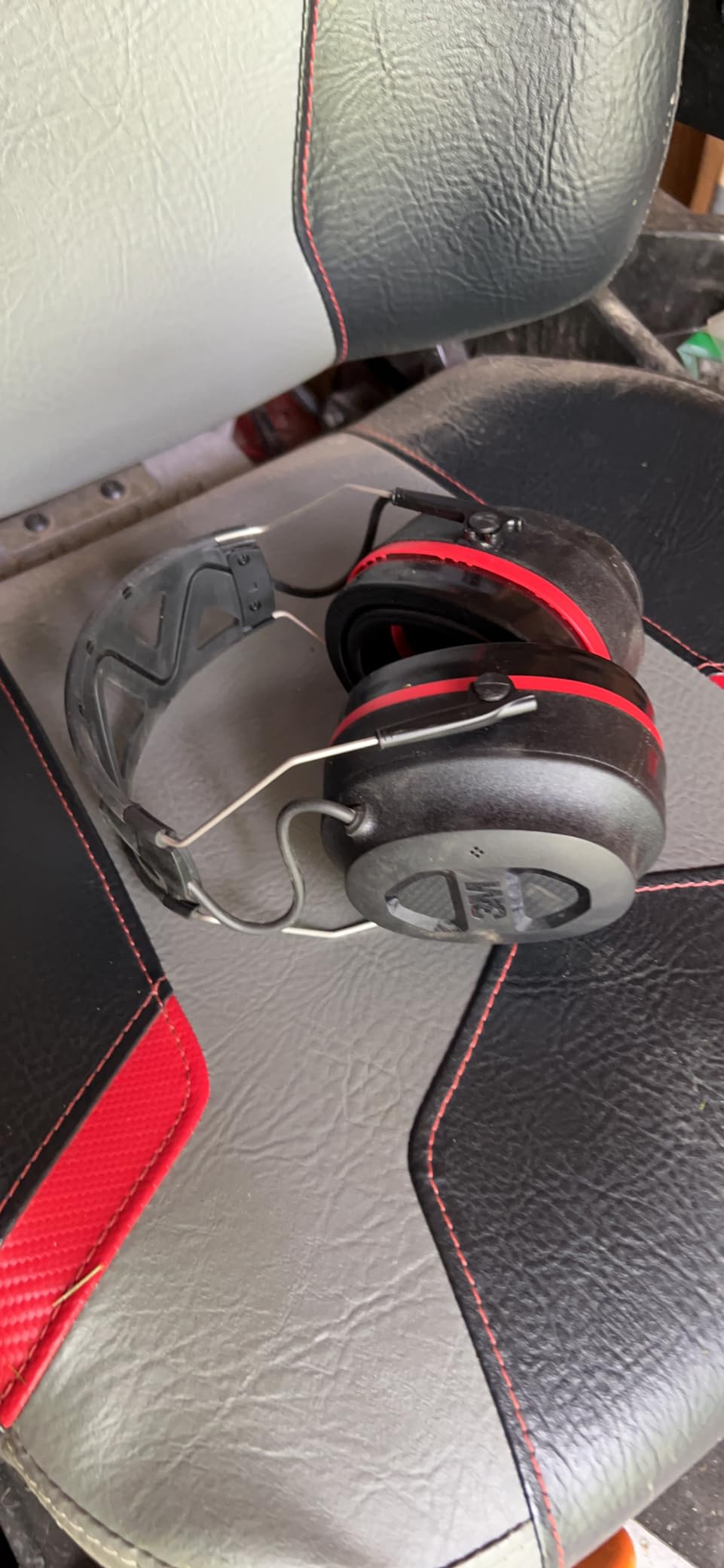
On a construction site the thing that gets people hurt is not the noise, it is the forklift they did not hear. The 3M Pro-Protect is built around that problem, with four selectable awareness modes and recessed microphones that pick up speech and machinery without shouting in your ear.
It is also the only muff here with user-replaceable AA batteries, which removes the two questions every owner eventually asks: whether the battery dies, and what to do when it does. You swap in a fresh set in seconds.
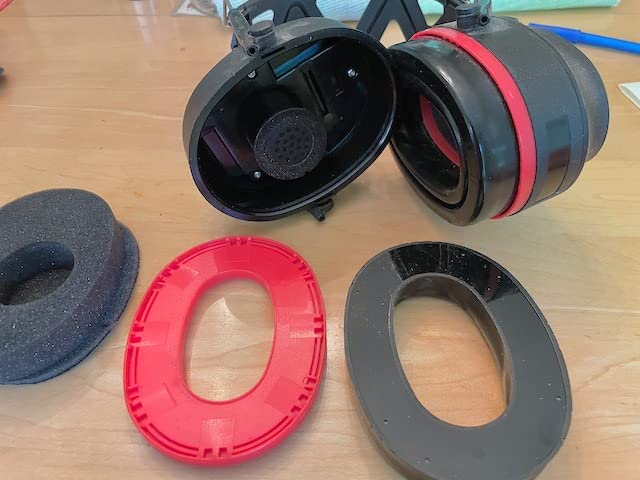
The gel cushions and canted ear cups are the comfort story. They are angled to follow the line of the jaw rather than pressing flat against the side of the head, which is what lets people keep them on for a full shift instead of rotating them on and off all day.
Audio Assist technology walks you through setup, which sounds minor until you are holding the unit with gloves on and trying to work out why music is not playing.
Where it earns its place
People who work around heavy equipment value being able to hear coworkers and warning alarms without removing protection, and that is the feature set this unit was designed around. The 26dB NRR holds with a hard hat fitted, so it suits site work where a bump cap is mandatory.
On r/lawncare, a user in that high-noise vertical singled out the 3M Pro-Protect Bluetooth muffs as the pair they would stick with, adding that the brand makes solid muffs generally.
Where it will frustrate you
Audio output is on the quiet side, and you may need to raise the volume on your phone to get music to a comfortable level. Transparency mode also picks up a lot of wind, which is noticeable on an open site.
The profile is bulky enough to interfere with safety glasses and face shields, and call quality is reported as mediocre when you are somewhere windy.
7. ISOtunes Link 2.0 Bluetooth Earmuffs – Best for 8-Hour Shifts
ISOtunes Link Bluetooth Earmuffs, OSHA Compliant Headphones for Work
25 dB NRR ANSI certified
50 hours per charge
AAA backup
SafeMax 85 dB limit
IPX4
Pros
- 50 hours of audio per charge with optional AAA backup
- ANSI-certified 25dB NRR and OSHA approval
- SafeMax technology caps output at 85dB
- Memory foam cushions and a padded headband for long shifts
- Raised buttons work with gloves on and the frame folds flat
Cons
- Clamp is tight and can cause headaches after a few hours
- 85dB cap and weak bass make music sound thin
- Some pairs have reported intermittent Bluetooth dropouts
The ISOtunes Link is the muff I would put on someone who does a full industrial shift and refuses to take it off at lunch. Fifty hours of battery per charge, with optional AAA backup cells, means the charging question simply stops coming up.
It carries an ANSI-certified 25dB NRR with OSHA approval and a SafeMax 85dB output cap, so the audio itself cannot be turned into a hearing hazard. At 4.2 stars from 1407 reviews, the durability reputation is well earned.
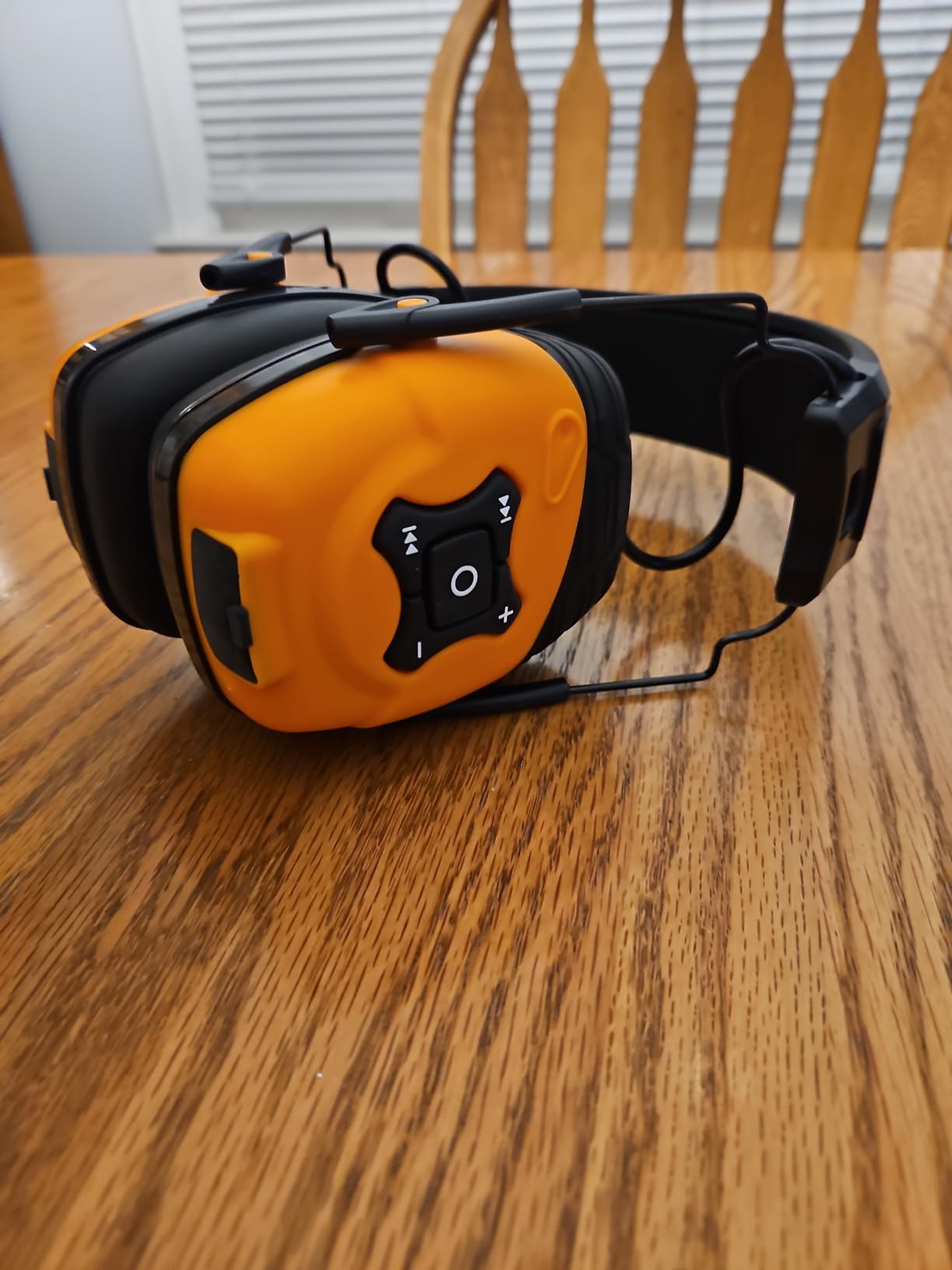
Memory foam cushions and a padded headband are the comfort focus, and the frame folds flat so the unit lives in a locker or a truck rather than a shelf. IPX4 handles sweat and splash without overstating water protection.
Raised buttons are positioned to be found through a glove, which is the single most repeated request from worksite users looking past audio quality.

Where it earns its place
Owners describe it as a safety-first device that survives repeated drops, and the combination of a long battery with backup cells suits anyone working more than one shift away from a charger. The memory foam also settles in after the first week, which improves both seal and comfort.
If your priority is protection that stays on your head for a whole day, this is the pick in the muff category.
Where it will frustrate you
The clamp is tight, and reviewers frequently mention headaches after a few hours. That is the trade for a strong passive seal, but it is the reason some people move to earbuds.
Audio is thin. The 85dB cap limits how far you can push music, and with weak bass the result is a safe but unexciting listening experience. Some units also report intermittent Bluetooth dropouts.
8. ISOtunes Free 2.0 True Wireless Earbuds – Best Cordless Option
ISOtunes Free 2.0 Bluetooth Hearing Protection, OSHA Compliant Work Earbuds
25 dB NRR OSHA approved
SafeMax 85 dB limit
7 hours plus 14 in case
IP45
6mm drivers
Pros
- True wireless cordless design with a protective charging case
- OSHA-approved 25dB NRR with SafeMax 85dB audio limit
- Six eartip sizes in foam and double-flange silicone
- Noise-suppressing microphones keep calls intelligible on a mower
- IP45 sweat
- water and dust resistance
Cons
- Only 7 hours per charge
- so long shifts rely on the case
- Premium price for true wireless hearing protection
- 6mm balanced armature drivers give modest bass
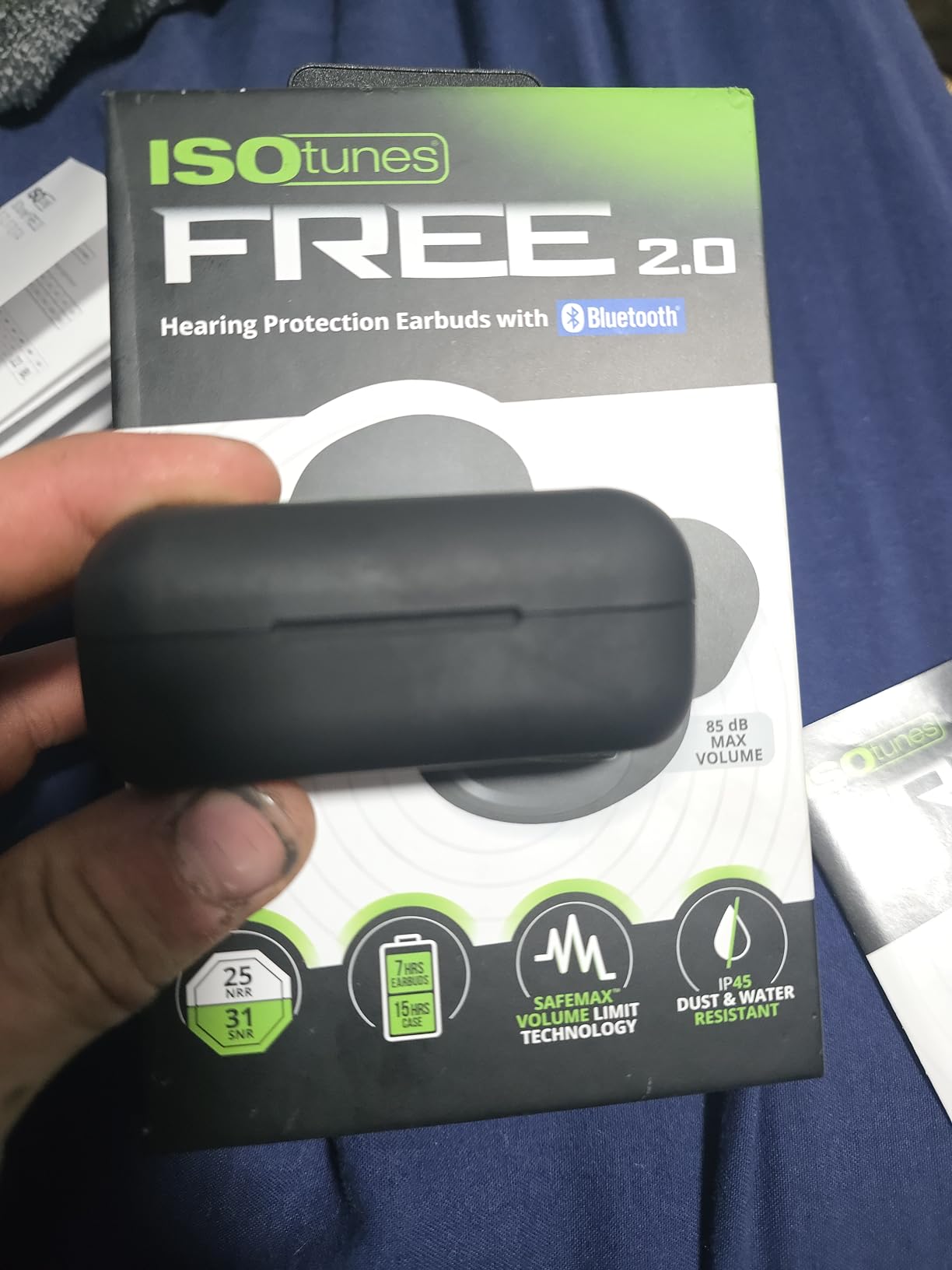
The ISOtunes Free 2.0 is the only fully cordless certified pair in this roundup, and for people who cannot wear anything over the ear that is not a small detail. No band, no boom, nothing to catch on a hard hat strap or a shirt collar.
It carries an OSHA-approved 25dB NRR and the SafeMax 85dB output cap, so you get a certified attenuator and a genuine wireless earbud in the same device. At 4 stars from 2129 reviews the reception is solid, if not exceptional.
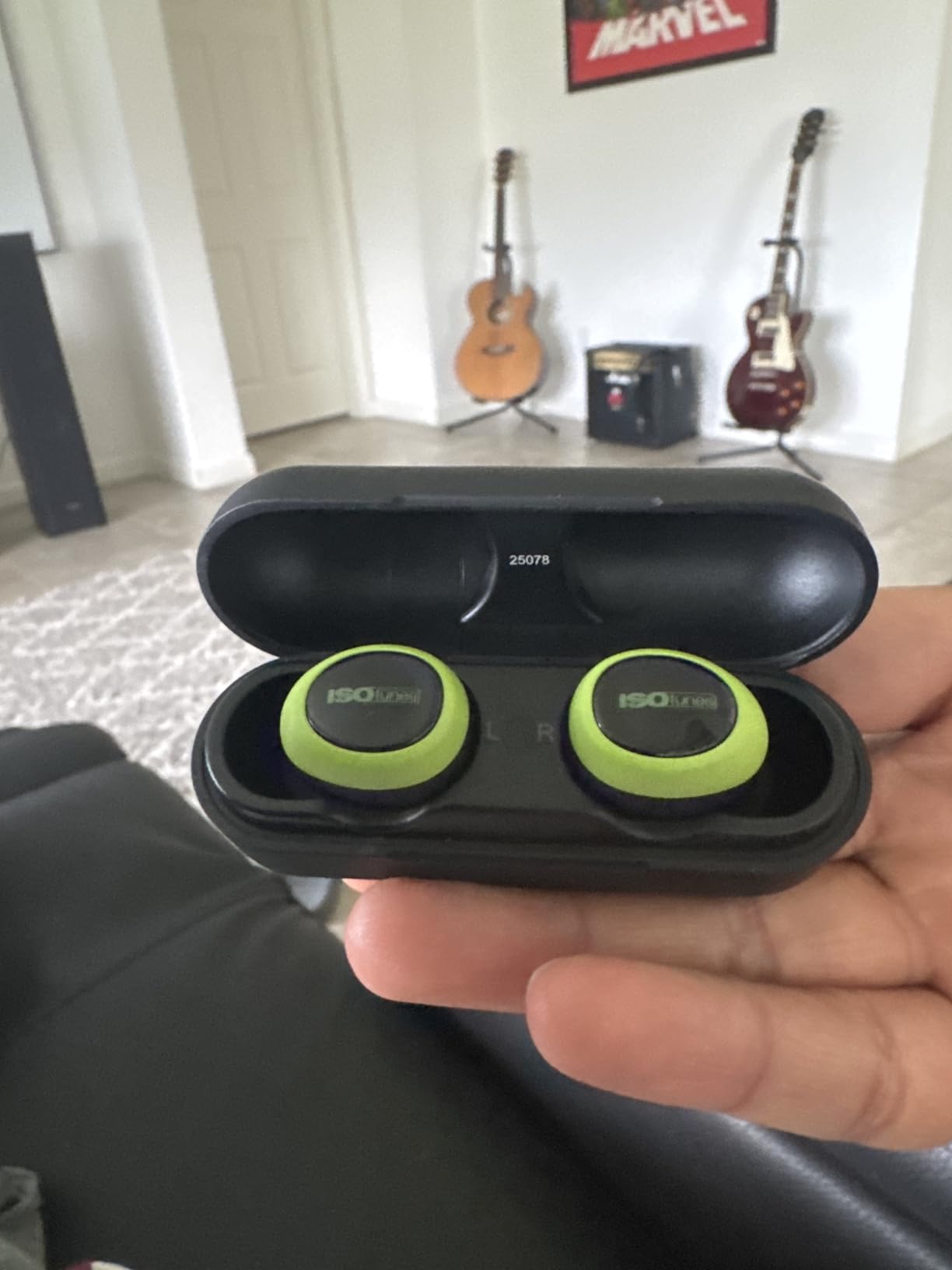
Six eartip options matter more here than on any other product in the guide. Three pairs of foam and three pairs of double-flange silicone let you find a seal that suits your ear, and since all of the protection comes from that seal, tip choice is the difference between the rated reduction and much less than it.
The charging case is protective rather than decorative, and the noise-suppressing microphones are what make calls work with a saw running nearby.
Where it earns its place
This is the pick for anyone who wears hearing aids, because nothing sits on the ear to conflict with an aid or a cochlear implant. It also disappears under a hat, which in hunting and winter site work is worth more than audio fidelity.
Reviewers appreciate the certified protection and the call clarity in noise, which is the combination that actually gets these worn every day.
Where it will frustrate you
Seven hours per bud is not enough for a long shift, and you are then dependent on a case that adds bulk to a pocket. Reviewers treat that as the main drawback rather than as a defect.
The 6mm balanced armature drivers produce modest bass, and the IP45 rating is below the IP65 and IPX6 models here, so sweat and rain are handled but immersion is not.
9. ZOHAN EM037 Bluetooth Earmuffs – Best Headband Comfort
ZOHAN EM037 6.0 Bluetooth Hearing Protection 25dB NRR Noise Reduction
25 dB NRR
Bluetooth 6.0 with 80ft range
120 hours plus unlimited wired
ABS shell with foam
Pros
- 120 hours of playtime plus unlimited playback in wired mode
- 25dB NRR meeting European and American standards
- Bluetooth 6.0 with a stable 80ft connection
- Wider and softer headband spreads clamping pressure
- Light at about 0.66lb and comfortable with glasses
Cons
- Snug clamp that some users find tight
- Buttons are easy to press by mistake and track skip is unreliable
- A few reviewers report less reduction than the stated 25dB
The ZOHAN EM037 solves a problem most muffs ignore, which is that a headband becomes a pressure headache after hour four. The band here is wider, thicker and softer than the standard issue, and at 4.4 stars from 1488 reviews that difference shows up repeatedly in the feedback.
It is also a strong mowing and woodworking choice, because the 120-hour battery and unlimited wired playback mean you are never choosing between music and protection at the end of a long day.
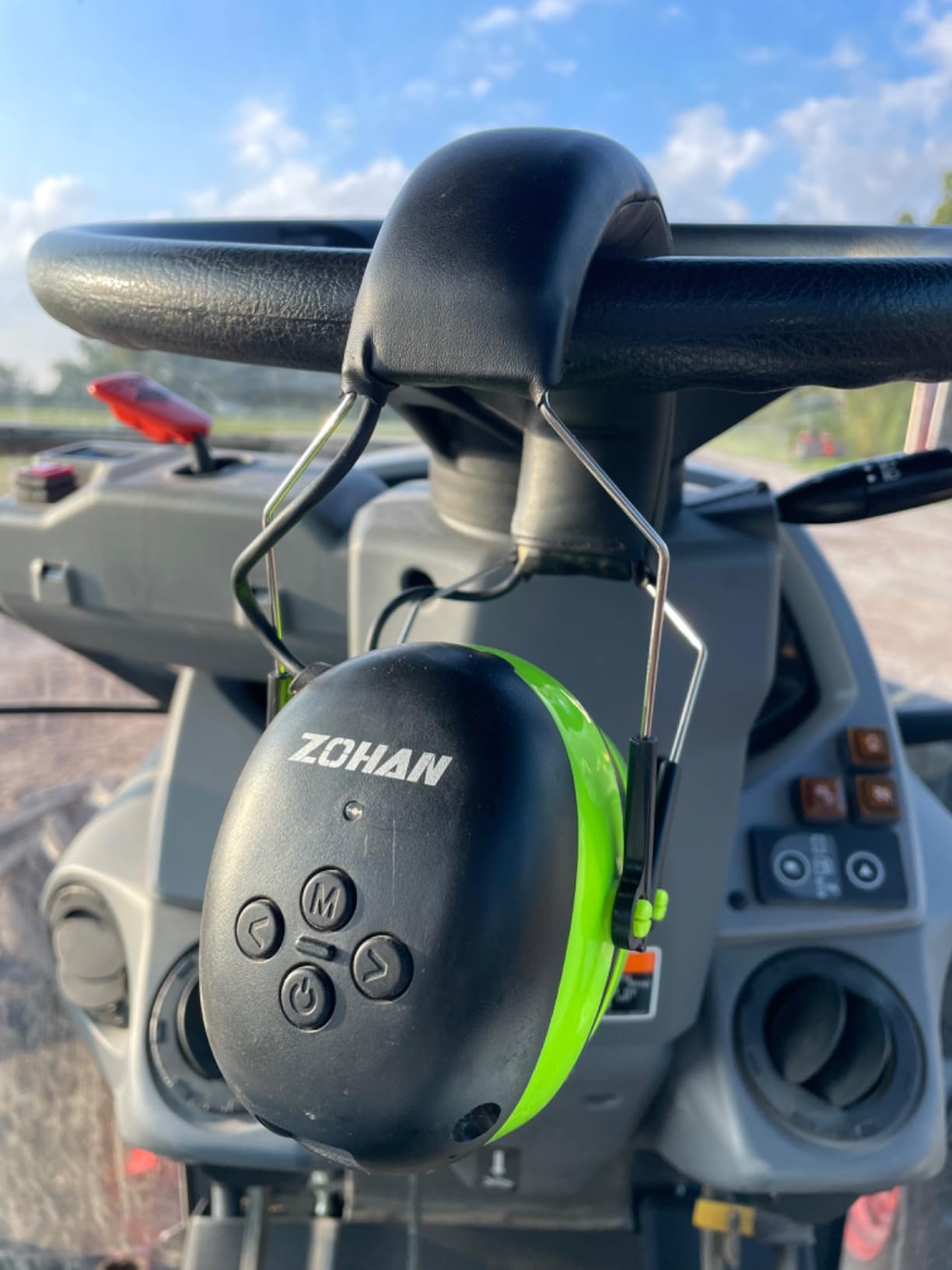
The shell is durable ABS with double-thickened noise-dampening foam, and the ear pads are wrapped in stain-resistant PVC leather. That combination survives sweat, dust and the occasional drop out of a pickup bed, which is where most work-site earmuffs end.
A black leather carry bag is included, and the whole unit weighs close to 0.66 lb, so it stays comfortable when you are wearing glasses as well.
Where it earns its place
People who wear safety glasses get a consistent positive mention, because the band pressure sits above the temple arms rather than on them. Reviewers also highlight strong attenuation for lawn equipment and the battery endurance.
The wired mode is a real safety net. Plug in a 3.5mm cable and the set keeps working without a charge, so a dead battery never leaves your ears unprotected.
Where it will frustrate you
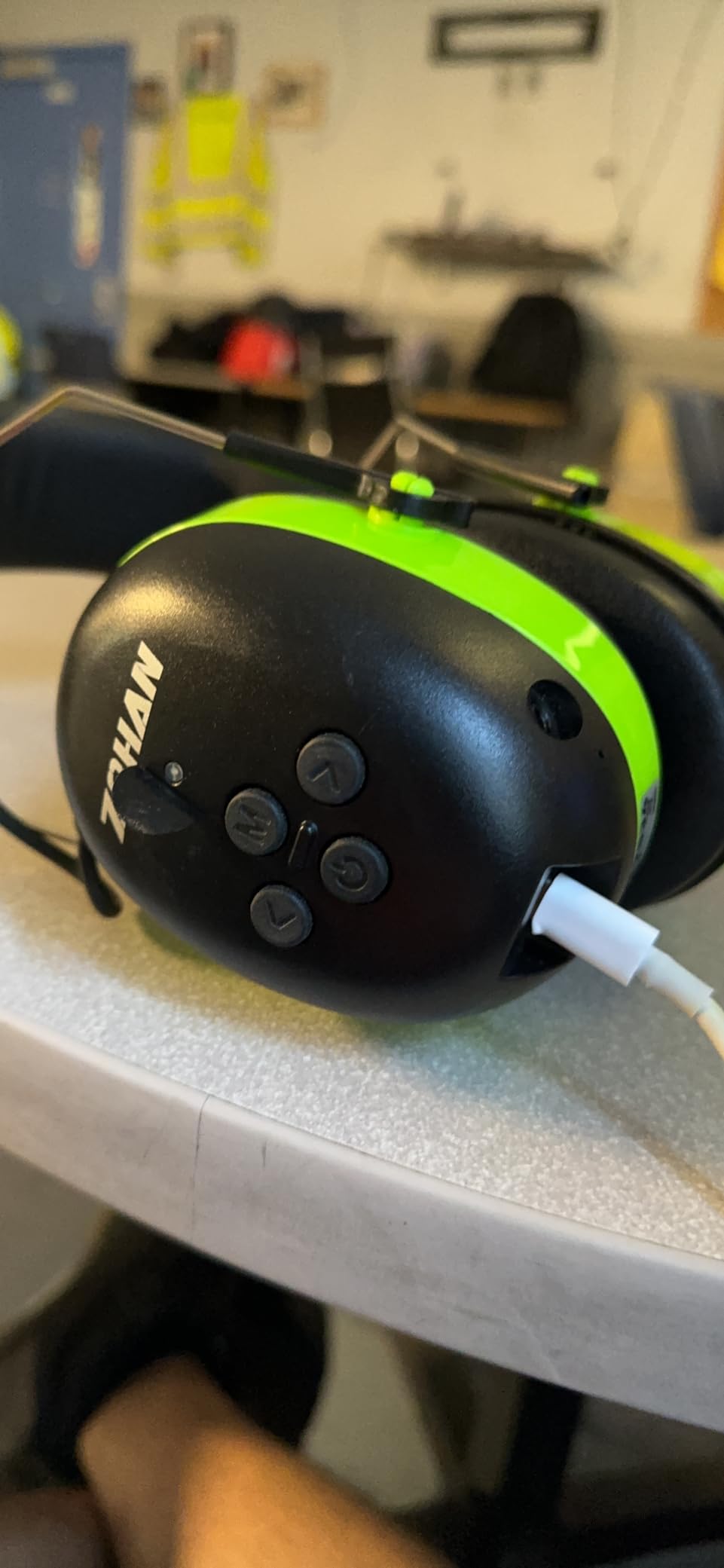
Some users still find the clamp snug, which is a matter of head shape rather than defect, and the button placement leads to accidental presses with the controls on a hard surface.
A small number of reviewers report less reduction in practice than the stated 25dB, which is common when a seal is not perfect. It is also a large cup, so it will not sit under a low-profile helmet.
10. Elgin Ruckus M1.4 Bluetooth Earplugs – Best for Rugged Build
Elgin Ruckus Wireless Bluetooth Earplug Headphones, Ear Plug Earbuds
25 dB NRR ANSI certified
Bluetooth 5.3 with 50ft range
12+ hour battery
IP65
Kevlar cable
Pros
- ANSI-certified 25dB NRR with medical-grade silicone earplug tips
- Build toughness reported against rough daily abuse
- IP65 dust and sweat resistance for yard and shop work
- 12+ hours of playback with a 2.5 hour charge
- Kevlar-reinforced cable with collar clips and a reinforced case
Cons
- Battery life declines noticeably after a few months on some pairs
- Eartips are not easily interchangeable
- Collar is not adjustable so fit varies with neck size
The Elgin Ruckus is the one I would not worry about. At 4.2 stars from 2969 reviews, reviewers routinely describe the build surviving rough treatment, and the Kevlar-reinforced cable with custom collar clips is a detail almost nobody else in this roundup includes.
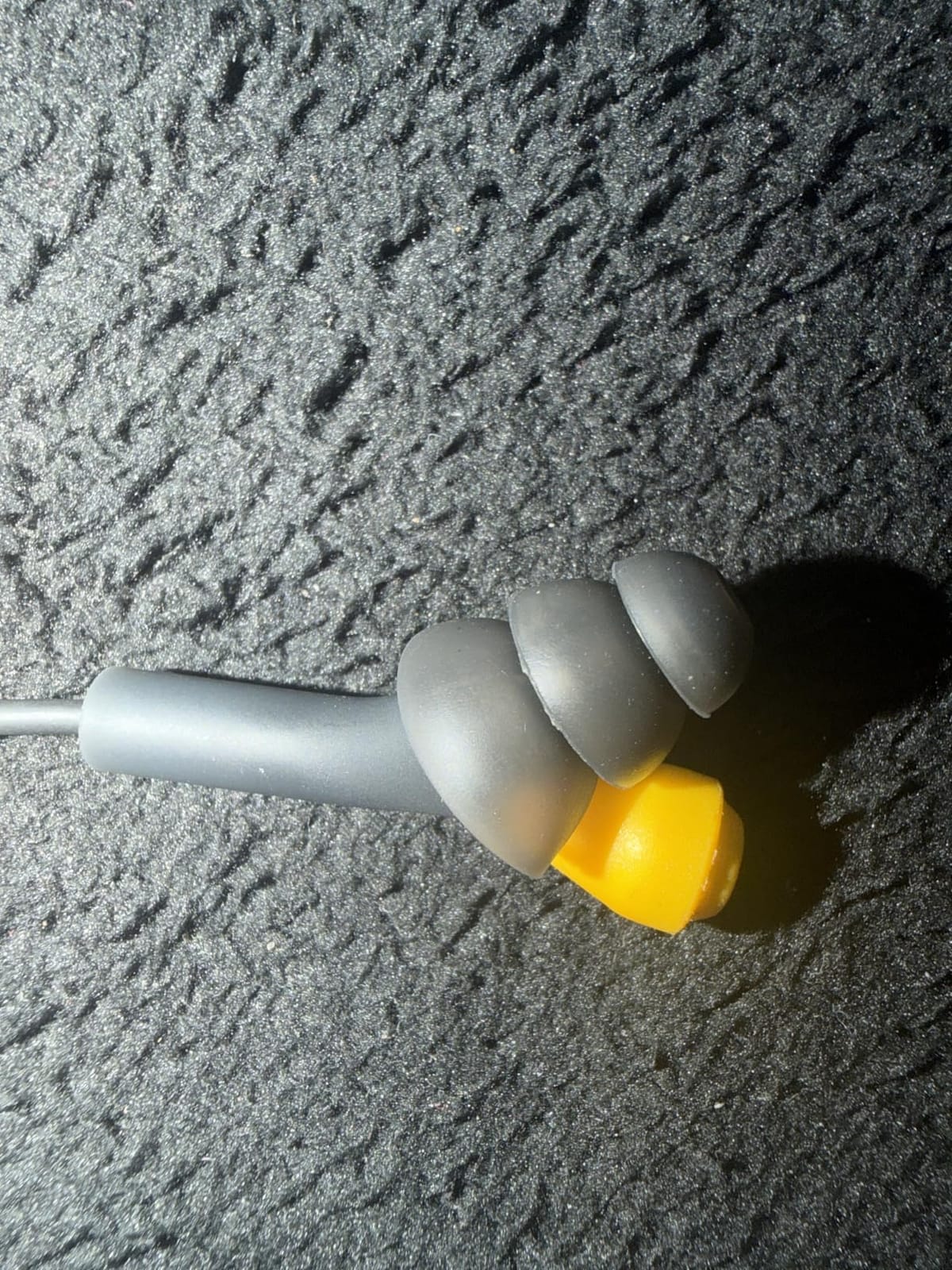
The protection is a certified 25dB NRR using medical-grade silicone earplug tips, with an 8mm dynamic driver inside. The silicone tips are the comfort story for anyone who cannot tolerate foam.
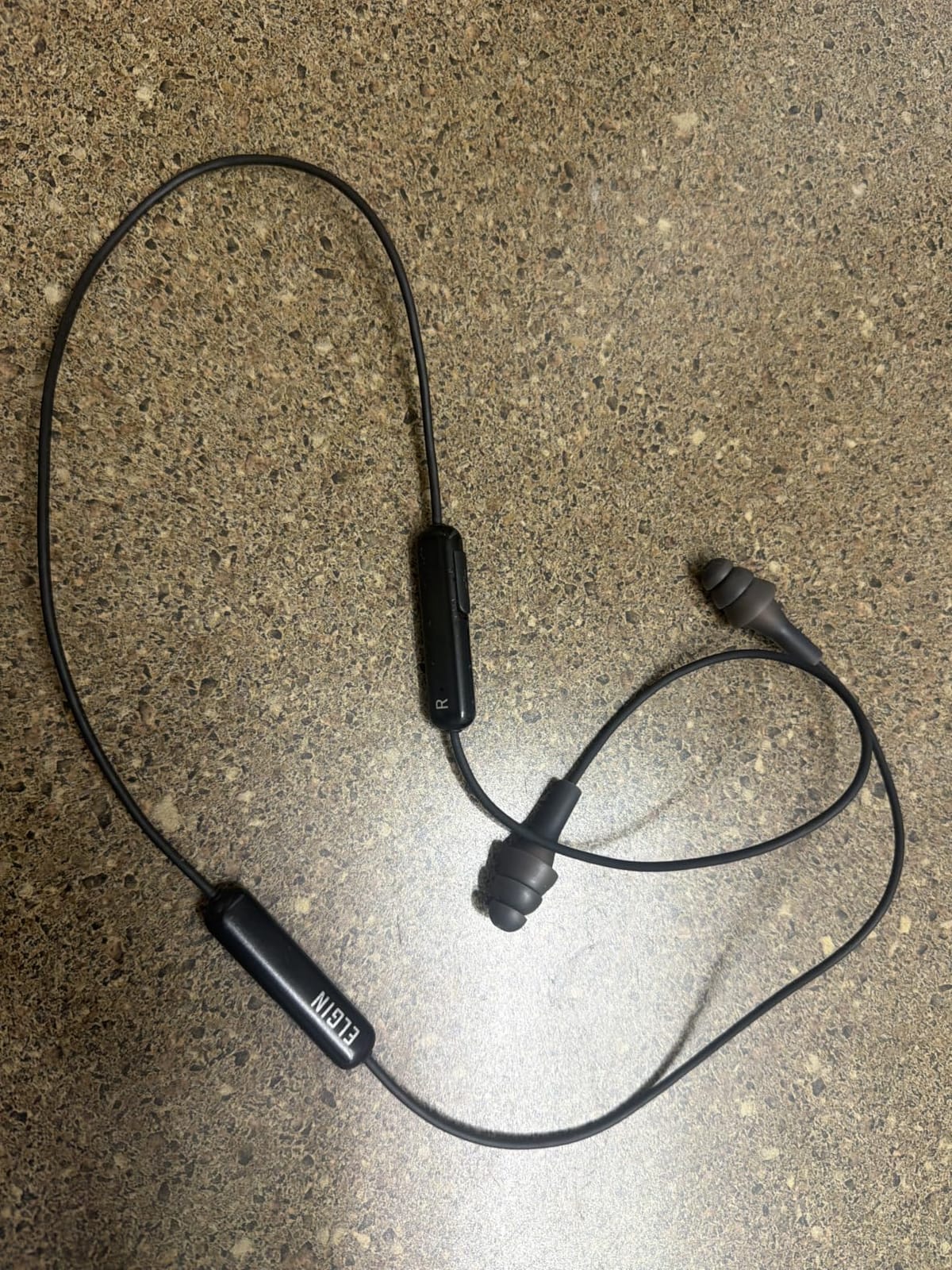
IP65 dust and sweat resistance covers landscaping and shop work, and a noise-cancelling microphone means you can take a call next to running equipment without shouting. A reinforced storage case and collar clips keep the cable from tangling in a tool bag.
At one ounce and with a 3 by 3 by 1 inch case, it is easy to keep in a pocket and impossible to lose, which matters more for daily use than any spec.
Where it earns its place
Owners in landscaping and manufacturing work like it because it survives being dropped, soaked and forgotten, and reviewers single out the sound quality as better than expected at this level. It is a good first certified earplug set for someone who dislikes foam entirely.
Twelve hours of playback covers a long day easily, and the 2.5-hour charge is a short coffee break.
Where it will frustrate you
A minority of units report the battery losing capacity after a few months, and the ear tips are not easily interchangeable, so once you find the right size you are committed to it.
The collar is not adjustable, so a large neck gets a loose fit and a small neck gets a tight one. The 50ft Bluetooth range is also modest next to the 100ft model below.
11. HomeSpot HS-JY100 Bluetooth Earmuffs – Best for Long Range and Codec Support
HomeSpot Bluetooth Work Headphones, OSHA-Compliant, 27dB NRR, 24H Playtime
27 dB NRR OSHA compliant
Bluetooth 5.4 with 100ft range
24 hour playtime
aptX HD and CVC mic
Pros
- 27dB NRR OSHA-compliant hearing protection
- 100ft wireless range
- the longest listed in this group
- aptX HD audio support with a CVC noise-reducing microphone
- Triple-flange professional-grade silicone ear tips
- 24 hours of playback and a neckband that prevents loss
Cons
- Not water resistant
- which limits wet-weather work
- One-star reviews run high at 11% of the total
- Neckband form factor
- so there is no over-ear cup seal
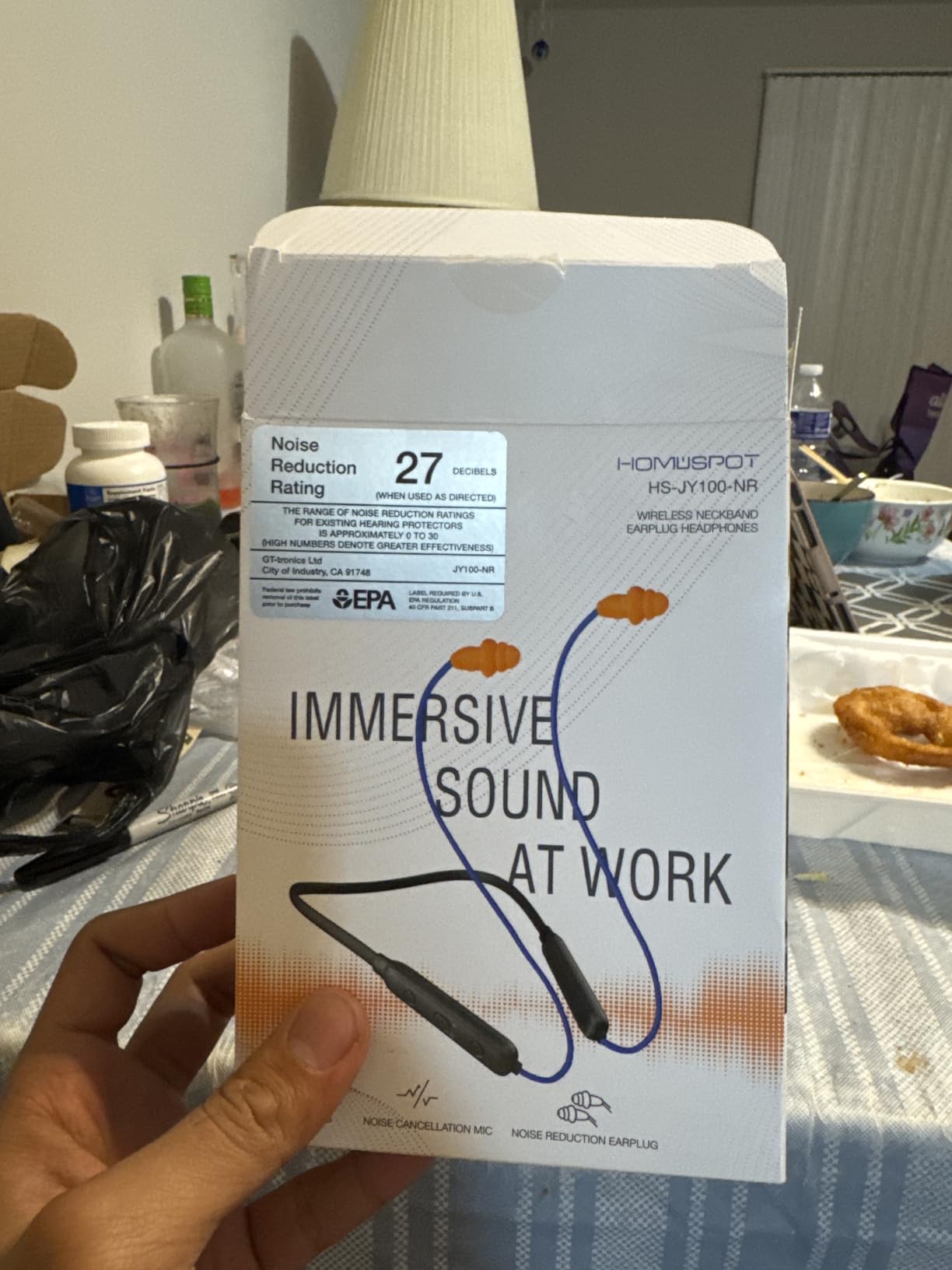
The HomeSpot is the odd one out in this list, because it protects with in-ear tips rather than cups, which makes it a hybrid for people who want muff-level attenuation without a muff on the head. At 4.2 stars from 2537 reviews it has a large enough sample to judge fairly.
The headline spec is the 100 foot range, the longest listed in this roundup, followed by aptX HD codec support and a CVC noise-reducing microphone. Those are audio-first features, and they are unusual on certified hearing protection.
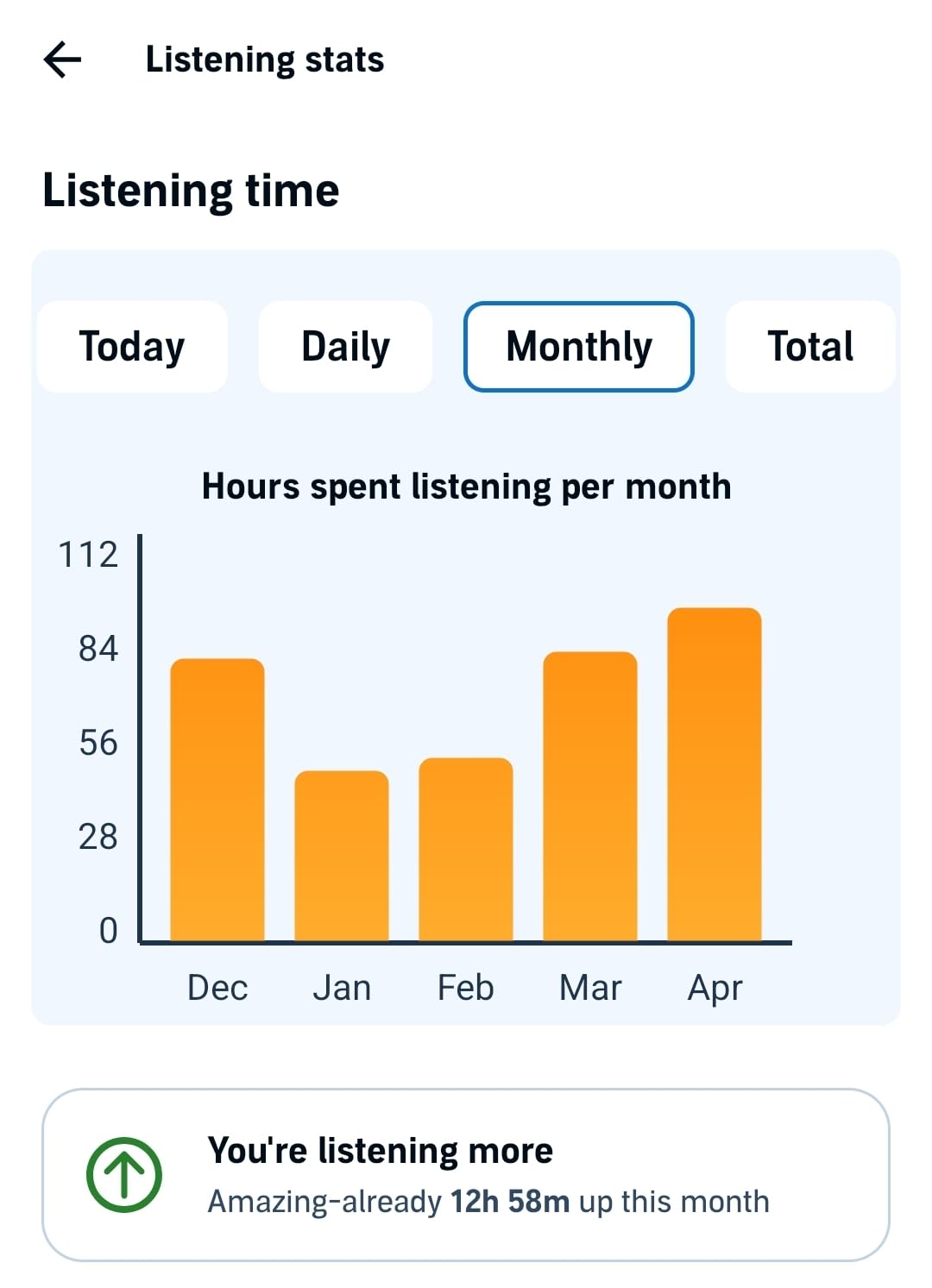
Physical push-button controls for volume, tracks and calls are the detail that separates it from the touch-controlled earbuds here. You can change tracks with gloves on, which removes the single most common worksite complaint about this category.
Triple-flange silicone tips do the sealing, and a protective case plus spare earplugs are included, along with a one-year warranty.
Where it earns its place
Warehouse and indoor industrial users get a device that does not lose the connection when you are a room away from your phone, and the physical buttons mean you are not touching a screen with dirty hands. The 27dB NRR is higher than on most of the muffs in this roundup.
It is a good fit for anyone who finds cups too hot indoors and wants real physical buttons rather than touch surfaces.
Where it will frustrate you
It is not water resistant at all, so it is a poor choice for lawn work, rain or any wet environment. That is the trade for the neckband and long range.
One-star reviews account for 11% of the total, which is higher than the rest of this group, and the neckband form factor means your ears are not covered by a cup, so wind and impact noise reach you differently.
12. DEWALT DPG17 Rechargeable Bluetooth Earmuffs – Best for Job-Site Familiarity
DEWALT DPG17 Rechargeable Bluetooth Earmuffs, Hearing Protection, NRR 25
25 dB NRR
Integrated mic for calls
Rechargeable Micro-USB
Padded adjustable headband
High-fidelity speakers
Pros
- Recognisable brand that is already trusted on job sites
- 25dB NRR with an integrated microphone for hands-free calls
- Adjustable padded headband for long-hour wear
- High-fidelity speakers for music from a connected device
- Rechargeable design with the cable included
Cons
- Lowest average rating in this group at 4.0 stars
- Highest one-star share in the group at 13%
- Micro-USB charging is dated next to USB-C rivals
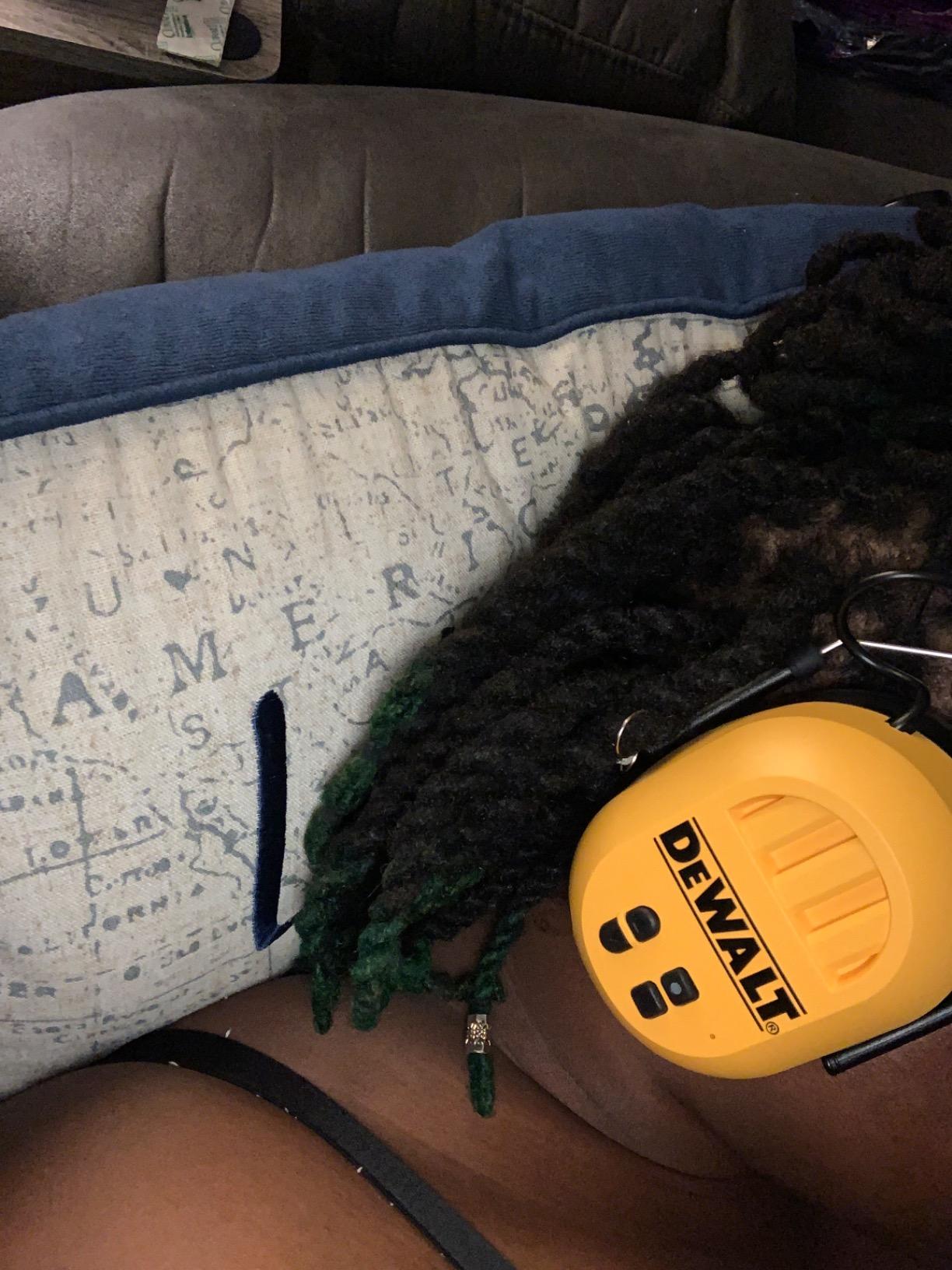
The DEWALT DPG17 is the pick when brand recognition matters, because a yellow muff in a yellow hard hat is an instant credibility item on a site where nobody knows your hearing protection. It carries a 25dB NRR and an integrated microphone for hands-free calls.
It is also the weakest performer in this roundup by the numbers, at 4.0 stars from 2306 reviews, with the highest share of one-star feedback of any product here. Buy it for the fit and the name, not for the audio.
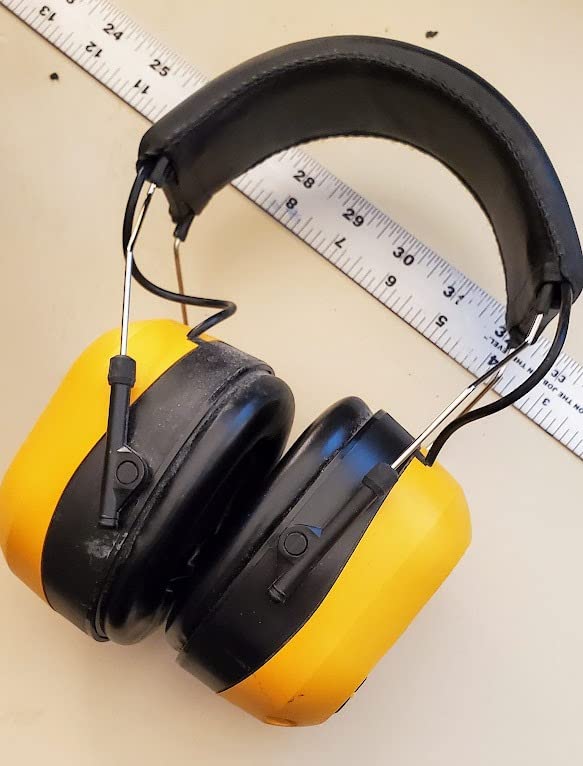
Comfort is the honest strength. The adjustable padded headband distributes across the top of the head, and reviewers repeatedly mention the fit as the reason they kept wearing it through long shifts.
The high-fidelity speakers are better described as clear than as impressive, and the Micro-USB charging cable is included, so you are not hunting for a cable the first time you need it.
Where it earns its place
Call handling is the feature that separates it from plain muffs, and the integrated microphone is positioned for voice pickup rather than left as an afterthought. It is a sensible gift for a crew where everyone needs the same thing and nobody wants to research it.
At 0.43kg it is a normal weight for a muff, and the over-the-head fit is the traditional shape that works with most helmets and hats.
Where it will frustrate you
There are no active situational awareness microphones, so you do not get the hear-through behaviour that makes electronic muffs worth owning on a noisy site. You are choosing this for calls and music, not for awareness.
The 4.0 rating and a 13% one-star share point at build and battery complaints, and Micro-USB is now the older standard next to USB-C rivals in the same category.
How We Picked: What We Checked on Every Pair
There is no publisher roundup ranking on page one for this topic, so we built the checklist rather than copied one. Every product here was judged on the same five things, and anything that did not publish a noise reduction rating was treated as ordinary audio hardware rather than as hearing protection.
First, the certified rating and the standard behind it, since a 29dB NRR measured to OSHA requirements and an unrated Bluetooth headphone are entirely different products wearing the same category name. Second, battery behaviour, including whether the cell is user-replaceable, whether a wired mode survives a flat battery, and whether the claim is per bud or per unit.
Third, the physical control layout, because worksite users name glove-operable buttons as the deciding factor more often than they mention sound quality. Fourth, awareness behaviour outdoors, including what wind does to the microphones in transparency mode. Fifth, how the audio actually sounds once a safety cap such as SafeMax 85dB is applied, which is a different question from how it sounds in a shop.
Battery figures in this guide are manufacturer playtime claims rather than our own measurements, and we have labelled them that way throughout. If you want the short version of the whole comparison, the table above carries the protection rating, battery class and best use for every pick.
Ear Muffs vs Earbuds: Which Form Factor Fits Your Job
Choose over-ear muffs when the noise is steady and the shift is long. A sealed cup with acoustic foam gives you the highest passive attenuation of anything here, and it works with a hat, a helmet or a pair of safety glasses. The cost is heat, clamping pressure after hour four, and the fact that nothing sits over a hearing aid.
Choose in-ear earplugs when you work in bursts of noise, wear glasses or a hard hat all day, or need to hear a radio through your earpiece. Earbuds are far less noticeable over long periods and they disappear under a hat, but their protection depends entirely on getting a proper seal, which is a skill some people never acquire and the single most common instruction in the reviews.
There is a third path that experienced users take, and it is worth knowing about. You can wear electronic earplugs or a muff over a foam plug, stacking passive protection underneath active protection. Shooting communities do this routinely, and a safety professional with an all-day exposure need described pairing foam plugs with an active headset as the arrangement that finally worked. The result is roughly 5 to 10 dB more than either layer alone, provided the outer device still fits over the inner one.
Noise cancelling is the trap here. Active noise cancelling on ordinary wireless earbuds was designed to make music enjoyable on a plane, not to protect your hearing, and it does not do the job. For a device that genuinely attenuates hazardous noise, a published NRR and a matching certification are what you are buying.
What NRR Means and Why Field Protection Is Lower
NRR is the Noise Reduction Rating, a single number in decibels measured in a laboratory by attenuating a range of frequencies and applying a safety correction. It tells you how much quieter the hazardous noise is inside the device, and it is the number a safety supervisor will ask you for.
The critical detail is the safety correction. Standards apply roughly half the rated value in the real world, so a muff labelled 30dB typically delivers something closer to 15dB of usable protection once poor fit, a broken seal or a gap under a hat is accounted for. The NRR is a ceiling, not a promise.
Two other terms appear constantly and confuse people. SNR is the European equivalent, and where a product lists both, the NRR is the number to use on an American worksite. SNR is a raw attenuation figure, so a 30dB SNR and a 26dB NRR describe much the same physical product rated under two different rulebooks.
Class 5 and the ANSI S3.19 or S12.42 standards are the North American certification marks that tell you the NRR was produced under a controlled test. ISOtunes Free 2.0, Kalence, the 3M Pro-Protect, the MIPEACE, the Elgin Ruckus, the HomeSpot and the GLORYFIRE all publish a certified rating, which is the minimum you should accept from a device sold as hearing protection.
Finally, the SafeMax 85dB cap. It limits the maximum output of the audio so that your music cannot become the hazard. Any device that can drive sound to unsafe levels without a cap needs volume discipline every single time you put it on, and that is exactly how people end up with damaged hearing from a product bought to prevent it.
Buying Guide: The Criteria That Decide the Purchase
How much protection you need depends on the noise, not on the product. A lawn mower and a handheld radio sit in a very different band from a chainsaw or a nail gun. The rule of thumb is to measure the environment if you can, then choose a rating comfortably above what you measured, and to re-verify with a dosimeter if your employer requires it.
Fit decides whether the rating means anything. For muffs, the seal around the eye and the jaw line is where leaks happen, and glasses can break that seal if the cushion presses on the temple. For earplugs, the tip size and the insertion depth are everything, so buy a model that ships several tip options, as the ISOtunes Free 2.0 and the MIPEACE do.
Battery type is the underrated criterion. Rechargeable cells are cheaper over years but become a hard failure when they no longer hold charge. Replaceable AA or AAA batteries, as on the 3M Pro-Protect and the Peltor Tactical 500, keep you working forever. A wired mode that survives a dead battery, as on the Kalence and the ZOHAN, is the same idea in a different form.
Controls decide whether you use it. A raised physical button you can find through a glove is worth more to a landscaper than better bass. Touch panels on the underside of an earbud are close to useless with a gloved hand, and the MIPEACE and HomeSpot are a good side-by-side illustration of the difference.
Connectivity decides whether you can work. Single-device pairing covers a phone. Multipoint covers a phone and a second device at once. If your day involves a two-way radio, check that the manufacturer supports the specific radio before you buy, because that question comes up constantly on job sites and hunting trips.
Water and dust ratings tell you where you can wear it. IPX6 and IP65 cover sweat, rain and dust, which covers most outdoor work. No rating at all, as on the HomeSpot, means indoor use only. An IP45 rating, as on the ISOtunes Free 2.0, handles sweat and splash without handling immersion.
Comfort is the criterion that decides long-term compliance more than protection does. Look at headband width and padding, cup depth for larger ears, and whether the manufacturer supports glasses and hearing aids. The most common regret in this category is not a low rating, it is a pair that felt fine in the first ten minutes and unbearable by the fourth hour.
On price tiers, everything in this roundup sits in the working range. Below it you find single-use foam plugs, which are excellent and cost almost nothing. Well above it you find custom-moulded electronic plugs and clinical devices fitted by an audiologist, which are a different product for a different buyer and are not what most people searching this topic need.
If you also need audio in a vehicle or on a job site, our picks for the best Bluetooth FM transmitters cover the non-protective half of the equation, and our Bluetooth OBD2 scanner guide covers another device category where glove-friendly physical buttons and readable screens matter more than audio fidelity.
Frequently Asked Questions
What is the best hearing protection with Bluetooth?
For most people the Peltor Sport Tactical 500 is the best overall choice, because its 25 dB NRR, dynamic impulse-noise suppression and separate volume and ambient controls handle both steady work noise and gunfire. If you are on a budget, the PROHEAR 037 delivers 30dB SNR protection, 120 hours of battery and glove-friendly buttons for the least money in this roundup.
Are Bluetooth ear defenders good?
They are good, with one condition: you have to keep the volume down. A Bluetooth ear defender attenuates hazardous noise through a certified seal while streaming music and calls over a separate radio link. Turn the audio up far enough to overpower the outside noise and the device stops protecting you, which is why models with a SafeMax 85 dB output cap are the safer buy.
Are ISOtunes worth the money?
ISOtunes is worth it if you value certification and sealing. The Free 2.0 true wireless buds carry an OSHA-approved 25 dB NRR, a SafeMax 85 dB limit and six eartip options, but only seven hours per charge. The Link 2.0 muffs add a 50-hour battery, AAA backup and a 25 dB NRR, though reviewers note a tight clamp and thin bass.
What are the best Bluetooth earbuds for hearing protection?
The ISOtunes Free 2.0 is the best true wireless option, with an OSHA-approved 25 dB NRR and a SafeMax 85 dB cap in a cordless design. For pure protection per dollar, the MIPEACE MI04 leads this group with a 29 dB NRR and a 30g neckband. If you wear a hearing aid or a hard hat all day, earbuds are the only form factor that works at all.
Can I wear Bluetooth hearing protection over foam earplugs?
Yes, and experienced users do it regularly, especially for shooting. Wearing foam plugs inside electronic earplugs or under a muff stacks passive protection with active protection and can add roughly 5 to 10 dB. The outer device has to fit comfortably over the inner one, and an in-ear model is usually easier to stack than an over-ear muff.
Do Bluetooth hearing protectors damage your hearing?
The protection does not, the audio can. Hearing protective equipment lowers hazardous noise, but a Bluetooth device that drives music at full volume inside your ears can be loud enough to cause damage on its own. Models with a certified 85 dB output cap, such as the ISOtunes Free 2.0, the ISOtunes Link 2.0 and the GLORYFIRE, remove that risk automatically.
The Verdict: Which Pair Should You Buy in 2026
The Peltor Sport Tactical 500 is the winner of this roundup and the best Bluetooth hearing protection pick for most people, because it is the only model here rated highest by its owners, at 4.6 stars from 3607 reviews, while also handling the one noise type that breaks other devices. If your work is steady mechanical noise, the PROHEAR 037 is the value answer and the Kalence AC136 is the endurance answer.
For shooting and hunting, the GLORYFIRE gives you the 85 dB safety cap that peak noise demands. For earbuds, the ISOtunes Free 2.0 is the cordless option and the MIPEACE MI04 carries the highest published protection rating in the group. Whichever you choose, check the seal first, because no rating means anything without it.