
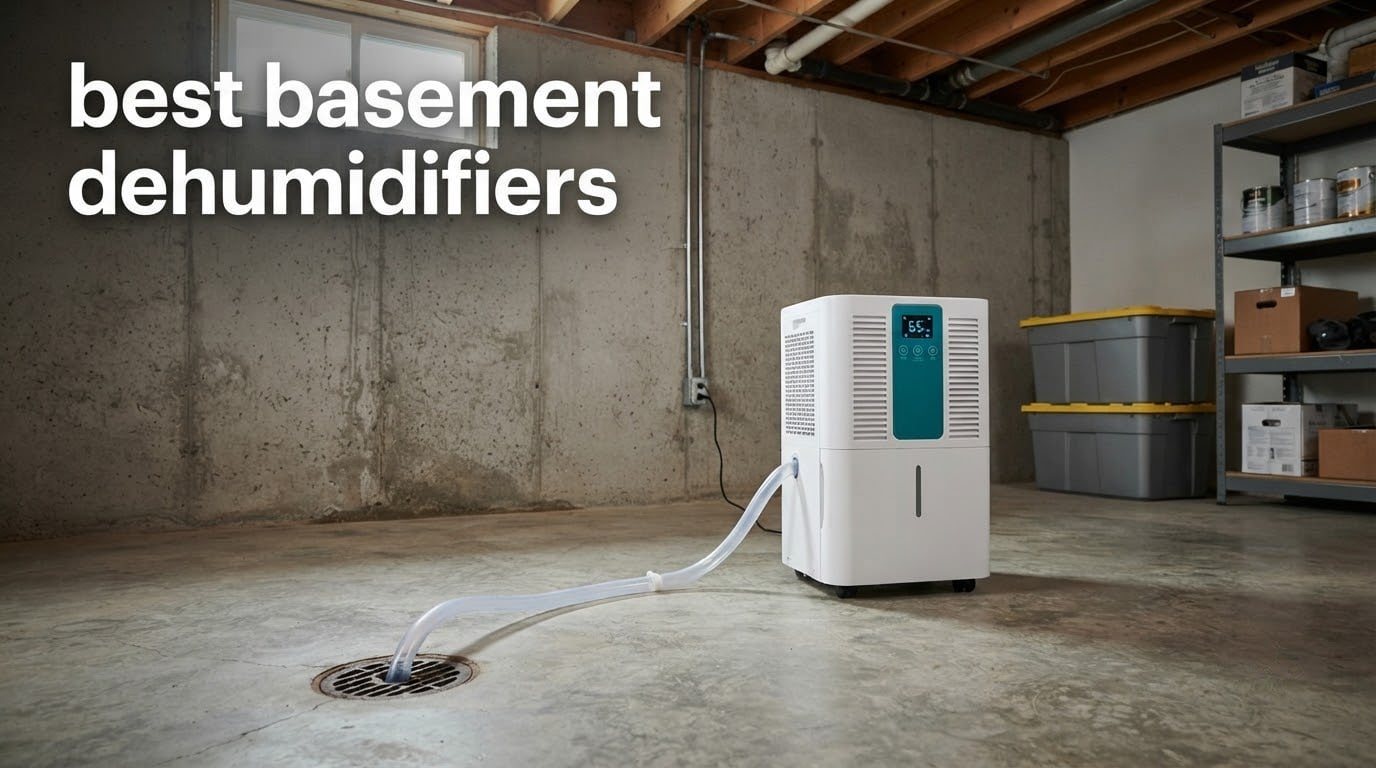
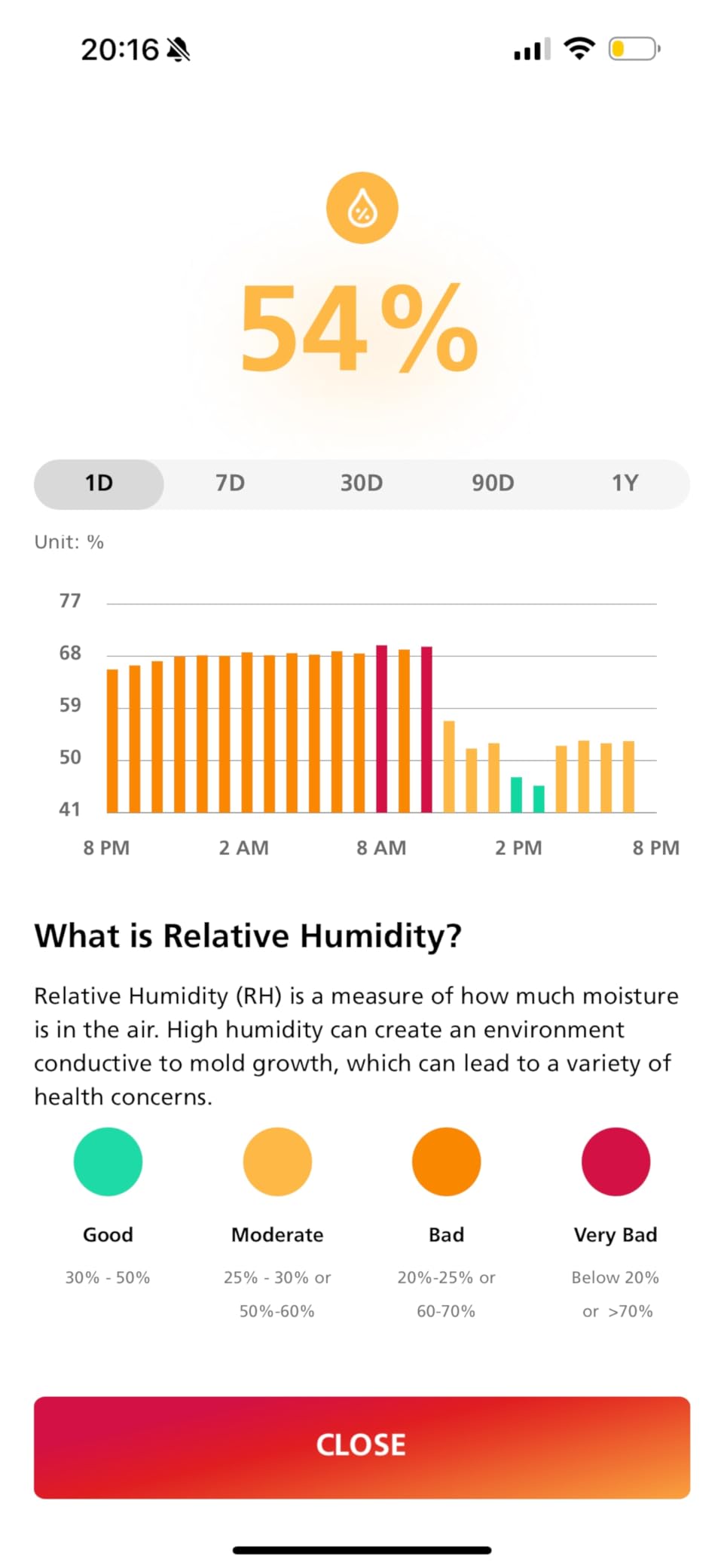
Basements are the one room in most American homes where a dehumidifier is not a convenience but a necessity. Cool air holds less moisture, ground moisture seeps up through concrete and floor framing, and the result is a room that sits above 60% relative humidity for months at a time. That is the band where musty odor, dust mites, peeling paint and early mold growth all start, and that damp air eventually migrates upstairs into the rest of the house.
So the short answer to the question everyone asks first: the Waykar 80 Pint 5,000 Sq Ft ENERGY STAR Dehumidifier is the best overall of the best basement dehumidifiers we evaluated, the hOmeLabs 7,500 Sq Ft 50 Pint with Pump is the one to buy when there is no floor drain within reach, the Yaufey 150 Pint is the answer for a genuinely large or severely damp basement, the HUMILABS 50 Pint is the classic mainstream performer, and the VEAGASO 34 Pint is the quietest option for a finished basement you actually sit in. Below, all eight, with the specs that actually matter and the complaints owners actually report.
Are basement dehumidifiers worth it? Conditionally yes, and the condition matters. If your hygrometer reads above 60% RH on a regular basis, a dehumidifier is doing real work and will usually pay for itself within a few summers in comfort and belongings saved. If the source of your moisture is a leaking foundation wall, groundwater intrusion, a missing vapor barrier, or grading that slopes toward the house, then no dehumidifier on this list will fix it, and buying one first is how people end up replacing it two years later out of frustration. We cover that honestly in the buying guide.
We spent weeks reading specification sheets, owner reviews and the long forum threads where people argue about this purchase years after the fact. What follows is the 2026 roundup, organized so you can jump straight to the section that matches your basement. If your space is more of a garage or workshop than living area, our guide to the best garage dehumidifiers covers a different set of constraints.
Table of Contents
Key Features to Look For in a Basement Dehumidifier
Before you compare models, these are the five specs that decide whether a unit works in a basement. Everything else is a preference.
Capacity in pints per day. A 50-pint compressor unit rated at 95 degrees Fahrenheit and 90% relative humidity is the mainstream choice for a standard basement. Coverage square footage on the box is marketing, not a sizing rule, because it assumes a dry, well-insulated room. Size on pint capacity and your actual dampness.
A drainage method you can live with. A floor drain or a gravity drain line beats everything, because the unit runs unattended forever. A built-in condensate pump solves basements where water must travel upward. A bare tank means someone empties it, and that is the annoyance that drives most negative reviews in this category.
ENERGY STAR certification, and ideally the ENERGY STAR Most Efficient tier. A basement dehumidifier can realistically run 12 to 18 hours a day in summer. Efficiency is not a nice-to-have here, it is a line item on the electricity bill every single month.
Measured noise level, and whether your basement is occupied. Advertised figures are usually the low fan speed. A storage basement tolerates a compressor hum; a finished rec room does not.
Low-temperature rating and auto-defrost. Most compressor dehumidifiers stop extracting effectively below roughly 65 degrees Fahrenheit. If your basement gets genuinely cold in winter, that threshold decides whether the unit helps you year round or sits idle for four months.
Top 3 Basement Dehumidifiers (September 2026)
Our three strongest picks across the whole lineup, with the reason each one earned the slot.

Waykar 80 Pint 5000 Sq Ft
- 80 pints per day at 95F
- 5000 sq ft rated coverage
- ENERGY STAR certified
- 42 dB with 24-hour timer

hOmeLabs 50 Pint with Pump
- Built-in pump for continuous drainage
- 50 pints per day
- 7500 sq ft coverage
- Wi-Fi app control
AEOCKY 80 Pint Energy Star
- ENERGY STAR Most Efficient 2025
- 80 pints per day at 95F
- 44 dB on lowest fan speed
- 3-year coverage
All 8 Best Basement Dehumidifiers at a Glance in 2026
Every model in this roundup, with the headline numbers. Use the pints-per-day column and the drainage column first, because they are the two that decide whether a unit fits your basement.
| Product | Specs | Action |
|---|---|---|
| Waykar 80 Pint 5000 Sq Ft ENERGY STAR Dehumidifier |
|
Check Latest Price |
| hOmeLabs 7500 Sq Ft 50 Pint with Pump |
|
Check Latest Price |
 Midea 22 Pint 1500 Sq Ft ENERGY STAR Dehumidifier Midea 22 Pint 1500 Sq Ft ENERGY STAR Dehumidifier |
|
Check Latest Price |
| AEOCKY 5500 Sq Ft 80 Pint ENERGY STAR Most Efficient |
|
Check Latest Price |
 Yaufey 150 Pint Dehumidifier with Pump 8500 Sq Ft Yaufey 150 Pint Dehumidifier with Pump 8500 Sq Ft |
|
Check Latest Price |
 Kesnos 2500 Sq Ft 30 Pint ENERGY STAR Dehumidifier Kesnos 2500 Sq Ft 30 Pint ENERGY STAR Dehumidifier |
|
Check Latest Price |
 HUMILABS 4500 Sq Ft 50 Pint with 1.7 Gal Tank HUMILABS 4500 Sq Ft 50 Pint with 1.7 Gal Tank |
|
Check Latest Price |
 VEAGASO 2500 Sq Ft 34 Pint Dehumidifier VEAGASO 2500 Sq Ft 34 Pint Dehumidifier |
|
Check Latest Price |
1. Waykar 80 Pint 5000 Sq Ft ENERGY STAR Dehumidifier – Best Overall
Waykar 80 Pints 5000 Sq. Ft 2025 Energy Star Dehumidifier for Basement
80 pints/day
5000 sq ft
270 W
42 dB
1.14 gal tank
Pros
- Strong moisture removal in large and damp basements
- Quiet 42 dB run with 24-hour timer
- 90-degree auto swing louver
- 30% to 80% humidity control range
- ENERGY STAR certified with 1-year exchange warranty
Cons
- Onboard humidity display reads high versus an external hygrometer
- Some owners report output declining after 1 to 2 years
- Included drain hose is short and no garden hose adapter is included
The Waykar 80-pint is the unit I keep recommending to people with a normal 1,500 to 2,500 sq ft basement that is genuinely damp rather than merely humid. It pulls 80 pints per day at the 95 degree Fahrenheit and 90% RH test condition, moves 165 CFM of air, and draws 270 watts. That combination of a real extraction number and a moderate power draw is the whole argument for it.
Owners across thousands of reviews describe the same arc: a basement that smelled musty on a Saturday afternoon is noticeably drier by Sunday morning, and a week of continuous running changes the room entirely. The 90-degree auto swing louver spreads the dry air instead of blowing it at one wall, which matters more in a wide, open basement than you would expect.
Waykar’s support operation is the sleeper advantage here. Multiple owners describe free replacement units well past the standard warranty period, which changes the math on a purchase you expect to run for several summers. If you are buying from a marketplace brand with no service footprint, that is worth as much as a spec line.
The honest weaknesses are worth stating plainly. The onboard humidity readout reads high against an independent hygrometer, so if you care about hitting a precise number, buy a cheap wall hygrometer and set the unit from that instead. A small share of owners report the extraction weakening or stopping after a year or two of continuous use. And the included drain hose is short and thin, with no garden hose adapter in the box.
Is the 80-pint capacity overkill for a small basement?
It is not harmful, and the argument for it is efficiency. A larger compressor that reaches its target quickly spends fewer hours drawing power than a small unit grinding at maximum duty cycle all day, so capacity oversizing is a legitimate strategy rather than wasted money. It does cost more up front and it is a larger box to find room for.
For a 900 sq ft basement that reads 55% RH, this unit is more machine than you need and the 30-pint Kesnos or the 34-pint VEAGASO will serve you better. For a 2,000 sq ft basement with a musty odor that does not shift, the bigger compressor is the right call.
Will the Waykar run all winter in a cold basement?
Below roughly 65 degrees Fahrenheit, compressor dehumidifiers enter auto-defrost cycles and their effective output falls sharply, because the evaporator coil ices over before the air gives up much moisture. This unit has automatic defrost and overload protection, so it will protect itself, but it will not be pulling 80 pints a day in a 50 degree basement.
If your basement holds under 65 degrees for months, treat the summer as the operating season and drain the tank or hose before the first hard freeze. Relying on a compressor unit through a northern winter is how people end up disappointed with a product that performed perfectly in July.
2. hOmeLabs 7500 Sq Ft 50 Pint Dehumidifier with Pump – Best with Built-in Pump
hOmeLabs Dehumidifier 7,500 Sq Ft 50 Pint with Pump 120 Pint 95°F, 90% RH
50 pints/day
7500 sq ft
1.6 gal tank
135 CFM
3 speeds
Pros
- Built-in pump removes the daily bucket-emptying chore
- Highest average rating in the roundup at 4.6
- Wi-Fi remote control through the brand app
- Comfort Turbo and Continuous modes
- Check-filter indicator with washable filter
Cons
- Carries a higher price tag than most comparable 50-pint models
- Turbo mode at 218 CFM produces more noise than the other modes
- Some owners want a larger tank given the 120-pint max rating
This is the highest-rated model across every unit we evaluated, sitting at 4.6 stars across more than 15,000 reviews, with roughly three quarters of those reviews at five stars. That consistency matters in a category where many listings are thin on history. It is also the only mainstream-capacity unit here with both a built-in pump and app-based control.
Do not let the 7,500 sq ft figure distract you. The real extraction figure is 50 pints per day at 80 degrees Fahrenheit and 60% RH, which is the mainstream 50-pint class, with a 120-pint maximum at the extreme test condition. The coverage number is aspirational marketing; the 50-pint figure is what sizes your basement.
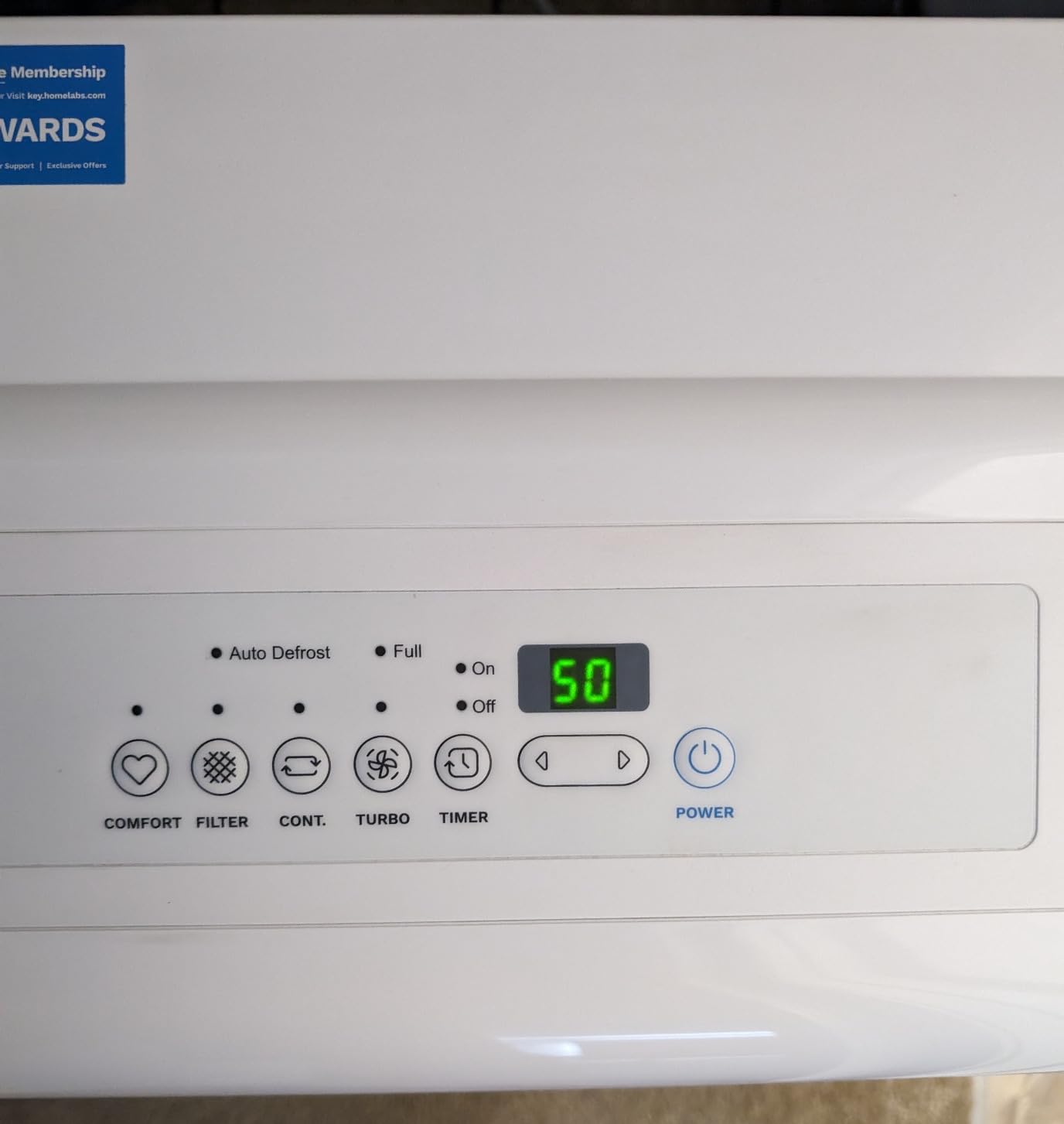
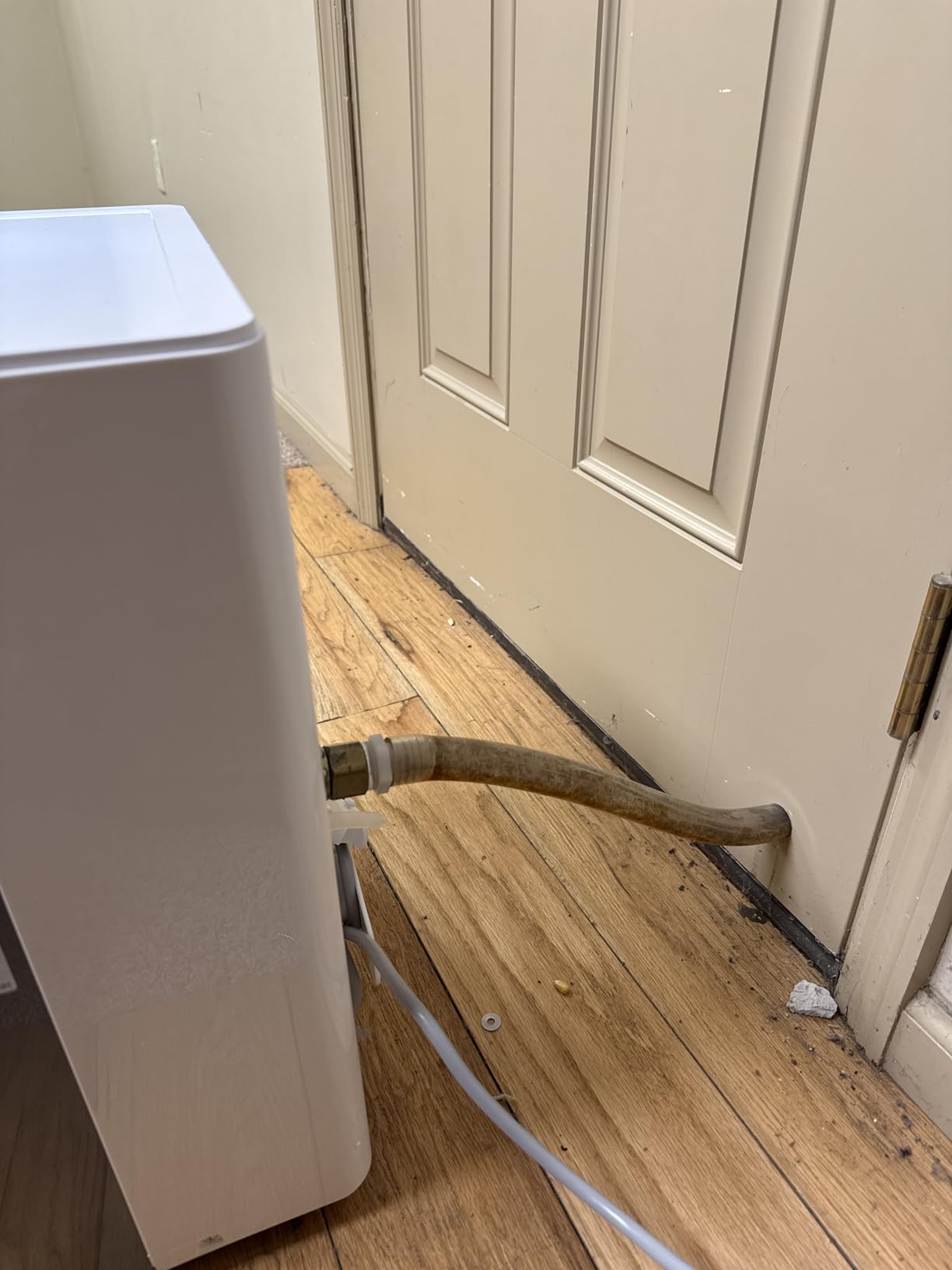
The pump is the reason to choose it. If your drain line is higher than the unit, or there is no floor drain at all, the integrated pump lifts water out and away so the machine can run unattended indefinitely. Owners in finished basements consistently say the pump is the feature that ended their relationship with a bucket.
The tradeoff is straightforward. It sits at the higher end of the group for its capacity class, and turbo mode at 218 CFM produces noticeably more noise than the other modes. Run it in Comfort or Continuous mode and the noise objection mostly disappears. Some owners also point out that a 1.6 gallon tank feels small for a unit rated to 120 pints, which is another reason to run the hose.
Is a built-in pump worth the premium over a plain unit plus a hose?
That is genuinely the hardest call in this category, and reasonable people land in different places. The built-in pump is convenient, compact, and the manufacturer supports it as part of one warranty. The counterargument, which shows up repeatedly on home improvement forums, is that a pump is a wear part with a shorter service life than a compressor, and when it fails the whole unit is often beyond economical repair.
Many long-term owners take the alternative route: buy a unit with a plain gravity drain port and pair it with a small external condensate pump you can replace on your own schedule. The compromise most of them land on is to run a gravity drain whenever a sloped line is possible, use the built-in pump only when there is genuinely no alternative, and keep an eye on the pump discharge line so a failure shows up as water on the floor rather than a wet basement wall.
What does the Wi-Fi control actually add?
More than it sounds like, in specific situations. Being able to check the current humidity reading and the tank level from upstairs is genuinely useful when the basement is finished and you no longer walk through it daily. It also means you can start a drying cycle before you go down rather than after.
What it does not add is any extraction capability. The digital panel on the unit does everything the app does. If you already plan to run the unit continuously through a drain hose, app control is a convenience rather than a reason to choose one model over another.
3. Midea 22 Pint 1500 Sq Ft ENERGY STAR Dehumidifier – Best for Small Basements
Midea 22 Pint Dehumidifier for Basement, 1,500 Sq. Ft, Energy star
22 pints/day
1500 sq ft
295 W
47 dBA
0.8 gal tank
Pros
- ENERGY STAR certified with about 31% energy savings
- Quiet 47 dBA that disappears into background noise
- Wi-Fi with SmartHome app plus Alexa and Google Assistant
- Auto defrost and auto restart after outages
- 360-degree rotatable wheels make it easy to move
Cons
- 22-pint capacity is small next to the rest of this roundup
- Onboard sensor reads local air and can run about 5% low
- Expels warm air that can affect a nearby thermostat
- Drain hose not included
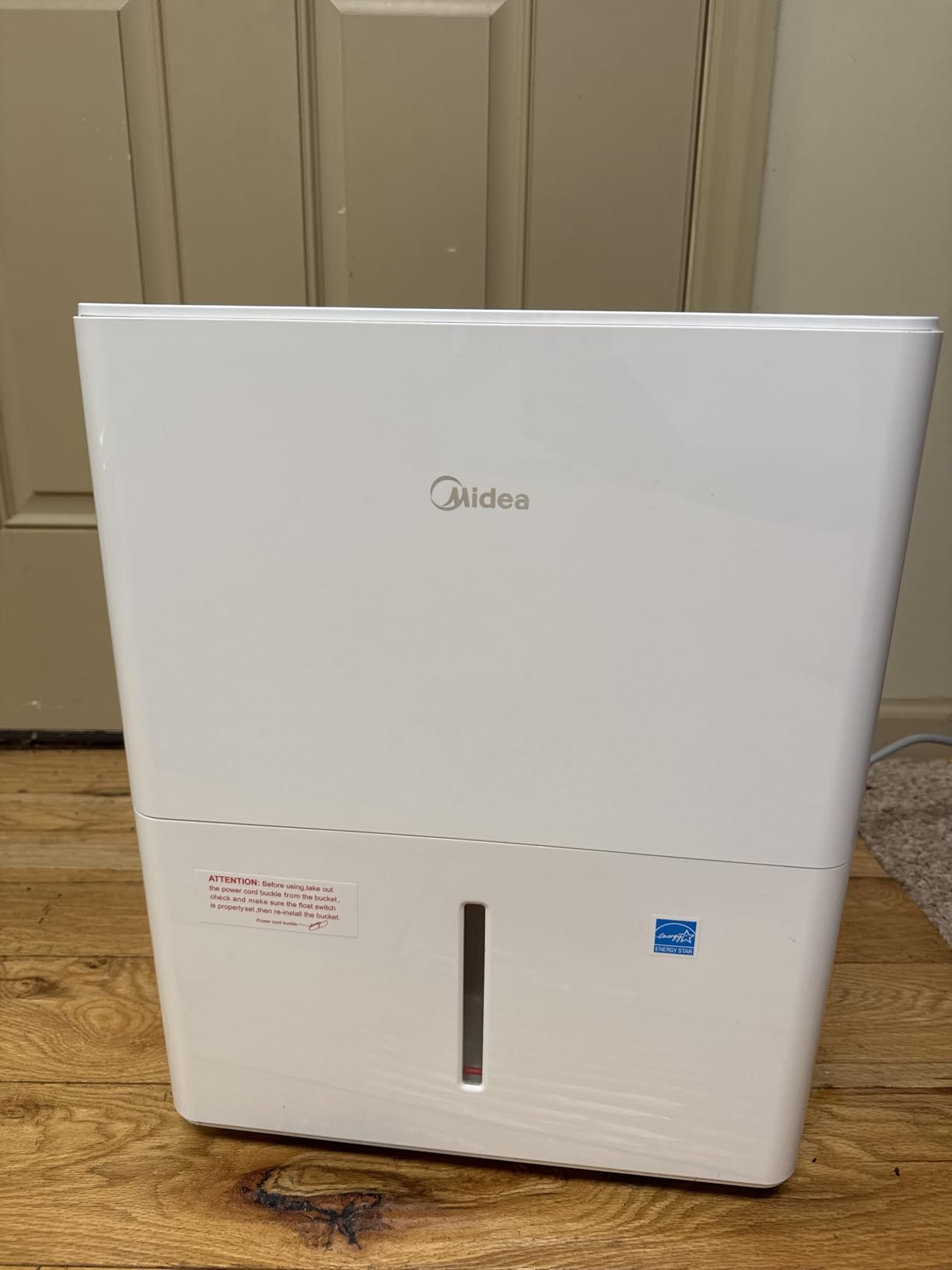
Midea is the brand name people in forums actually trust, and this is the unit that reputation belongs to. It is the smallest capacity in the group, and for a basement under about 1,200 sq ft that is the correct size rather than a compromise. It removes up to 22 pints per day with humidity adjustable from 35% to 85%.
Owners in small basements, apartments and laundry rooms report the same results: steady humidity reduction, and with it the disappearance of musty odor and the window condensation that shows up on cold basement walls. A 47 dBA running noise sits close to a quiet refrigerator, which is why it works in a space where bigger compressors become intolerable.
Smart control is unusually good here for the size. The SmartHome app, Alexa and Google Assistant support are all present, along with turbo mode, a programmable timer, auto defrost, and automatic restart after a power outage. That last feature matters in a basement where a tripped breaker during a storm would otherwise mean walking down with a flashlight.
The limitations are capacity-related. At 22 pints per day and 1,500 sq ft of rated coverage, it will not keep up with a wet 2,000 sq ft basement, and running it there means a permanently cycling compressor. The sensor reads the air immediately around the unit rather than the whole room, so the display can sit several points lower than a remote hygrometer. And it pushes noticeable warm air out the top, which is a consideration if a wall thermostat is nearby.
Will a 22-pint unit actually dry a 1,000 sq ft basement?
Yes, comfortably, and often faster than people expect. Most basements in that size range are not generating water continuously, they are dealing with elevated ground moisture that a small unit can outpace. Owners with 900 to 1,200 sq ft spaces report visible readings change within a day or two of running.
The point where it stops working is a combination of size and dampness. If your basement is 1,200 sq ft but has an active leak or a wall that sweats constantly, no 22-pint unit keeps up, and the small tank at 0.8 gallons will need attention often unless you run continuous drainage. Buy up in capacity if the water source is active.
How does this compare to a dedicated air purifier for a musty smell?
They solve different problems, and people frequently confuse them. A dehumidifier removes water from the air, which is what kills mold colonies, dust mites, and the musty odor those organisms produce. An air purifier removes particles and, in some cases, odors, but it does nothing about humidity, so the conditions that caused the smell stay in place and come back.
For a basement that reads 65% RH and smells musty, the dehumidifier is the tool. For a basement that reads 45% RH and smells musty, something is offgassing from a material, and a purifier with a carbon filter is a better starting point than a dehumidifier. Measure first, then buy.
4. AEOCKY 5500 Sq Ft 80 Pint ENERGY STAR Most Efficient Dehumidifier – Best Energy Efficient
AEOCKY 5500 Sq.Ft Energy Star Most Efficient 2025 Dehumidifier Max 80Pint/D
80 pints/day
5500 sq ft
280 W
44 dB
1.45 gal tank
Pros
- ENERGY STAR Most Efficient 2025 certification
- 80 pints per day at 95F and 56 pints at 86F
- Reliable operation down to 65F without icing
- 44 dB on the lowest fan speed
- Three-year coverage
- longer than the category norm
Cons
- Narrow 8.66 inch width needs airflow clearance on both sides
- 31 pounds is heavy to reposition without casters
- Fan is louder at the highest setting
This is the efficiency pick, and the certification is the argument. ENERGY STAR Most Efficient 2025 is a tier that only a small percentage of ENERGY STAR dehumidifiers earn, and in a category where the unit may run eighteen hours a day for four months, the difference in energy cost across a decade is not trivial.
Extraction is 80 pints per day at 95 degrees Fahrenheit and 95% RH, with a more useful real-world figure of 56 pints per day at 86 degrees and 80% RH. The second number is the one that matters, because that is closer to actual basement conditions. It covers up to 5,500 sq ft and draws 280 watts.
Build quality is the other differentiator. It uses 7mm high-tooth pure copper evaporator and condenser tubes with blue hydrophilic aluminum foil, and a smart humidity compensation algorithm with power-off memory. The three-year coverage is longer than anything else in this roundup, which for a machine expected to run continuously is a meaningful advantage.
The cold-temperature claim stands out for winter basements. Owners and specifications both point to reliable operation down to 65 degrees Fahrenheit without icing up, which is the threshold where many compressor units become decorative. It is still not a low-temperature unit for a 40 degree crawl space, but it works later into the season than most.
Two practical drawbacks. The 8.66 inch width is narrow, so it needs clearance on both sides for airflow, which is awkward against a wall. And at 31 pounds it is heavy to reposition, particularly without casters, so plan its final home before you unbox it.
What does ENERGY STAR Most Efficient actually mean for my bill?
It means the unit produces more pints of removed water per unit of electricity than the baseline every certified competitor clears, and it is independently tested rather than self-reported. Since a basement dehumidifier is an appliance you buy once and run for years, efficiency compounds in a way that an up-front premium rarely does.
The practical calculation is simple. At 280 watts, running 16 hours a day for 120 summer days consumes about 538 kilowatt-hours over the season. Compare that to a 370 watt unit on the same schedule and the gap is roughly 173 kilowatt-hours, which is a real number on a bill rather than a marketing claim.
Is this the right unit for a crawl space?
No, and we want to be direct about that. A crawl space is a different job: it is unconditioned, vented or encapsulated, often near ground temperature, and it needs a unit rated for continuous low-temperature duty rather than peak basement heat. Crawl spaces also need suspended installation so drainage runs downhill to a sump, which is a physical setup a floor-standing residential unit does not expect.
For an encapsulated crawl space, the right move is a dedicated crawl-space-rated machine with a rated low-temperature range and a lift pump, installed by someone who will suspend it correctly. For a basement, this unit is an excellent fit.
5. Yaufey 150 Pint Dehumidifier with Pump for 8500 Sq Ft – Best for Large or Severely Damp Basements
Yaufey 150 Pint Dehumidifier with Pump for Basement 8500 Sq. Ft.
150 pints/day
8500 sq ft
500 W
1.85 gal tank
2 speeds
Pros
- Highest capacity in the roundup at 150 pints per day
- Only unit offering pump discharge plus tank plus gravity drain
- 16.4 ft pump hose and 3.28 ft gravity hose included
- Generous 1.85 gallon tank with full-tank alert
- 30% to 80% humidity range with three presets
Cons
- Heaviest unit here at 39.7 pounds so repositioning takes effort
- Highest power draw at 500 W for 24/7 operation
- Rated upper temperature of 89.6F is lower than several competitors
If your basement is large, if it is seriously damp rather than seasonally humid, or if you are drying out a space after a flood, capacity is the only variable that matters. This unit removes up to 150 pints per day at 95 degrees Fahrenheit and 90% RH across a rated 8,500 sq ft, which is the ceiling in this roundup by a wide margin.
What genuinely sets it apart is drainage flexibility. It is the only unit here offering all three paths at once: an upward pump discharge for when water must travel up and away, a tank for intermittent use, and a gravity drain for a sloped line. A 16.4 foot pump hose and a 3.28 foot gravity hose are both in the box, and the connections accept a standard garden hose.
The 1.85 gallon tank is the largest here, with a visible water level and a full-tank alert, and the 30% to 80% humidity range with Living Area, Basement and Continuous presets gives you sensible starting points rather than a blank slider. A 40-degree swing louver and three fan speeds help distribute across wide spaces.
Now the part people skip. This is a 500 watt machine, the highest draw in the group, and a basement dehumidifier running near continuously is exactly the scenario where power draw becomes a monthly cost. It also weighs 39.7 pounds, so moving it up basement stairs is a two-person job. And its rated upper temperature of 89.6 degrees Fahrenheit is lower than several competitors, which is a curious omission on a 150-pint unit.
Is 150 pints per day ever justified in a residential basement?
Yes, in three specific situations: a basement above roughly 3,500 sq ft, a basement recovering from water damage, and a crawl space with heavy ground moisture. In all three, the limiting factor is not whether a smaller unit would eventually get the humidity down, but how long it takes and how much you run into the process.
If your basement is under 2,000 sq ft and only mildly humid, this is far more machine than the job requires, and you will pay for the capacity in power and in handling. Match the unit to the water you are actually removing, not to the size of your ambition.
Which drainage method should I use in a large basement?
Use gravity drainage if a sloped line or floor drain is within reach, because it has no moving parts and no failure mode. Use the pump discharge when the drain is above the unit or absent, and accept that the pump is a wear item you will eventually replace. Use the tank only during short bursts, for example when you first move a dehumidifier in to attack an existing problem, since a 1.85 gallon tank in a 150-pint unit fills in well under an hour at full output.
Whichever you choose, secure the hose so a failure shows you. A weighted hose, a clip at the top of the stairwell, and a visible low point in the run will save you from discovering a flooded finished floor at midnight.
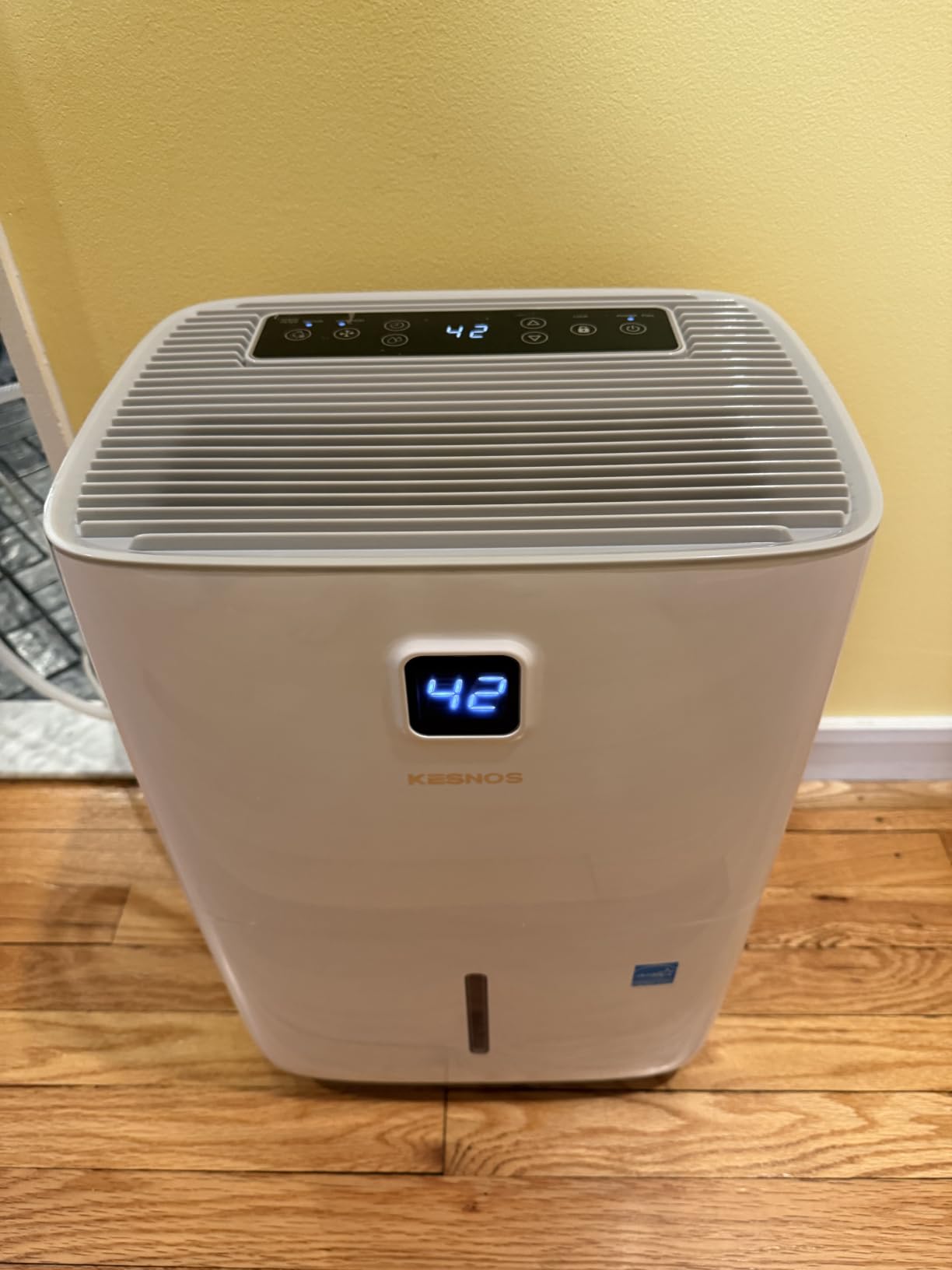
6. Kesnos 2500 Sq Ft 30 Pint ENERGY STAR Dehumidifier – Budget Pick and Most Portable
Kesnos 2,500 Sq. Ft. Energy Star Dehumidifier for Basement with Drain Hose
30 pints/day
2500 sq ft
165 W
36 dB
22.6 pounds
Pros
- Lowest energy draw in the group at 165 W
- 36 dB with 360-degree casters and a hidden handle
- 2025 ENERGY STAR certification with 35% lower power use than uncertified models
- 30% minimum humidity
- lower than most 30-pint models reach
- Support repeatedly offers free replacements
Cons
- Smallest tank in the group at 0.39 gallons needs frequent emptying
- Included 0.5 inch drain hose needs an adapter for a garden hose
- 30-pint capacity is well short of the larger models
- Only 236 reviews so the long-term track record is thin
At 165 watts, this is the least power-hungry machine in the entire roundup, and for a small basement that runs eighteen hours a day for four months, that number compounds into a genuinely different ownership experience. It is 2025 ENERGY STAR certified, and the brand claims 35% lower power consumption than uncertified models in the same class.
It is also the most portable unit here by a wide margin, at 22.6 pounds with 360-degree caster wheels and a recessed handle. If you are moving dehumidifiers between a basement, a bedroom and a laundry closet, this is the one in the list you can carry up a set of stairs comfortably by yourself.
Owners report fast humidity reduction even in two-level basements of 2,300 to 2,400 sq ft, which is more than the 2,500 sq ft rating suggests, and they praise the 36 dB operation and the four preset modes, with Turbo for clothes drying and Comfort for sleeping.
Two things temper this. The 0.39 gallon tank is the smallest in the roundup by a factor of two, so without continuous drainage you are emptying it constantly, and that is exactly the chore people complain about. The included 0.5 inch drain hose needs an adapter for a standard garden hose, so budget for that fitting. And with only 236 reviews, the long-term reliability record here is genuinely thinner than the rest of the field.
How much does it cost to run compared to a 50-pint unit?
Substantially less, and the gap is large enough that it changes the recommendation for a small space. At 165 watts running 16 hours a day, that is 79 kilowatt-hours over a 120-day season. A 370 watt 50-pint unit on the identical schedule uses about 177 kilowatt-hours, roughly 2.2 times as much for a unit that removes more water.
The honest framing is that on a small, mildly humid basement, you are buying efficiency rather than capacity, and the 30-pint Kesnos draws the least power per summer in this list. On a large or seriously damp basement, the bigger unit’s faster extraction pays back in time and usually in total energy, because a compressor running at maximum duty for ten hours can draw more than a larger one that finishes in four.
Is it worth waiting for a bigger review history?
The support record is the mitigating factor, and it is a good one. Multiple owners whose unit failed around a year in describe receiving free replacements, sometimes even just outside the warranty window, alongside a 30-day satisfaction guarantee and an optional two-year registration extension. That is a meaningful risk offset for a product with a thin review count.
What you are still taking on is less long-term data. A 236-review product tells you almost nothing about year five, and basement dehumidifiers are seasonal appliances that get run hard for four months and ignored for eight. If you buy this, register the unit for the extended coverage on day one. It costs nothing and it is the part of the process people forget.
7. HUMILABS 4500 Sq Ft 50 Pint Dehumidifier with 1.7 Gal Tank – Best Classic 50 Pint Performer
Dehumidifier for Basement with Drain Hose 4500 Sq.Ft – 50 Pint 1.7 gal Tank
50 pints/day
4500 sq ft
370 W
1.7 gal tank
2 speeds
Pros
- Owners report 25 to 30+ pints removed per day in modest spaces
- Very quiet
- quieter than most comparable models even on the higher fan setting
- Reliable automatic shutoff when the tank fills
- Compact footprint that does not crowd the room
- Four modes with 30% to 80% humidity adjustment
Cons
- Tank has no handle or grip and is easy to spill
- Top-mounted display is dim and hard to read at table height
- High 370 W power draw for a 50-pint unit
- Some units ship in unmarked boxes and should stand upright for several hours before first use
The HUMILABS 50-pint is the version of this purchase most people picture: a plain white box, a 1.7 gallon tank, a drain hose, and a 50 pints per day rating at 95 degrees Fahrenheit and 90% RH covering up to 4,500 sq ft. It has more than 3,000 reviews behind it, which makes it one of the better-documented mainstream units in the category.
What owners consistently praise is that it does more than its rating suggests, reporting 25 to 30 or more pints removed per day in ordinary basements, and that it is quiet, including on the higher fan setting. Owners in 1,000 to 2,000 sq ft spaces say it keeps up easily, and it dries indoor laundry and towels quickly.
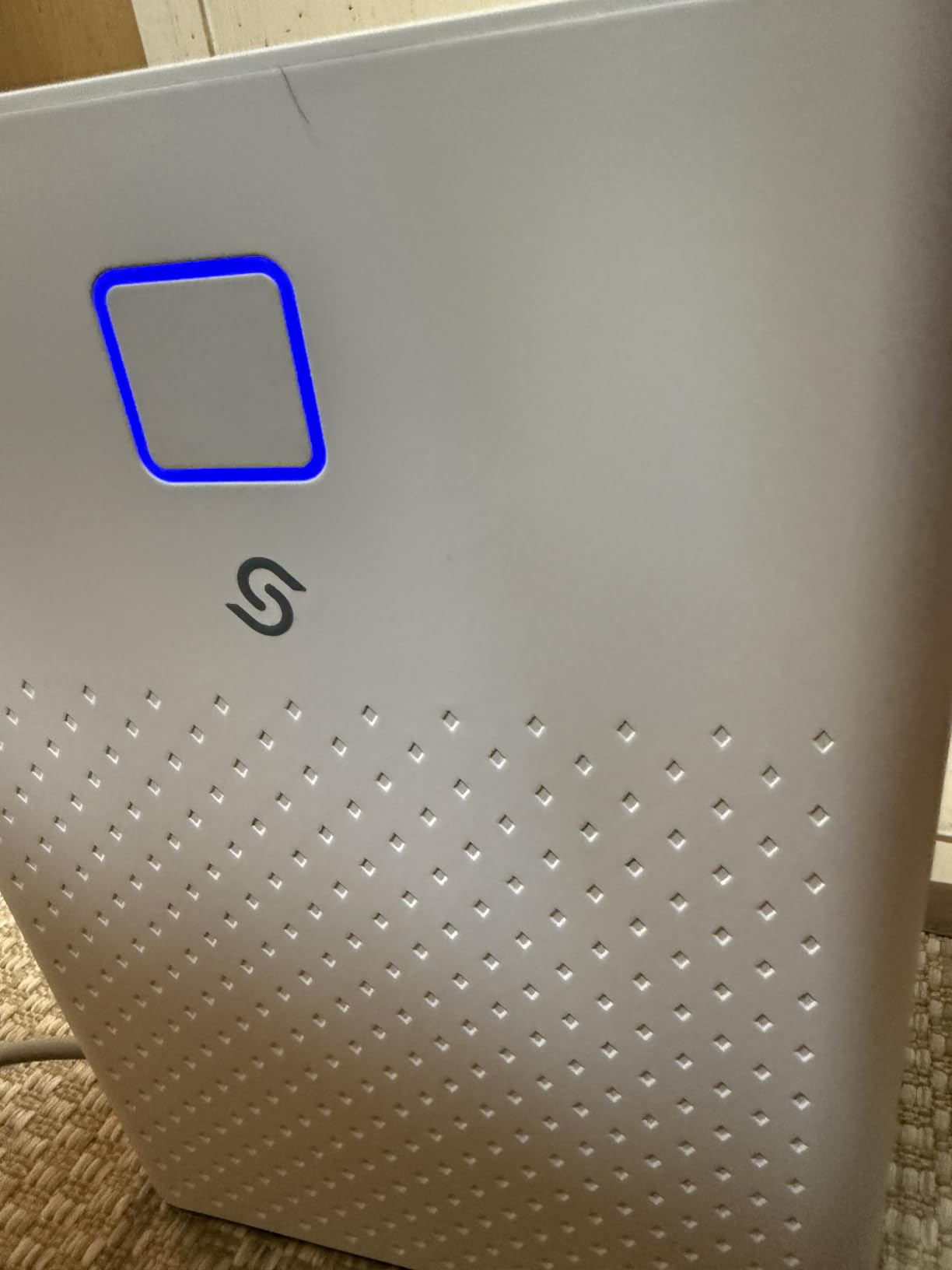
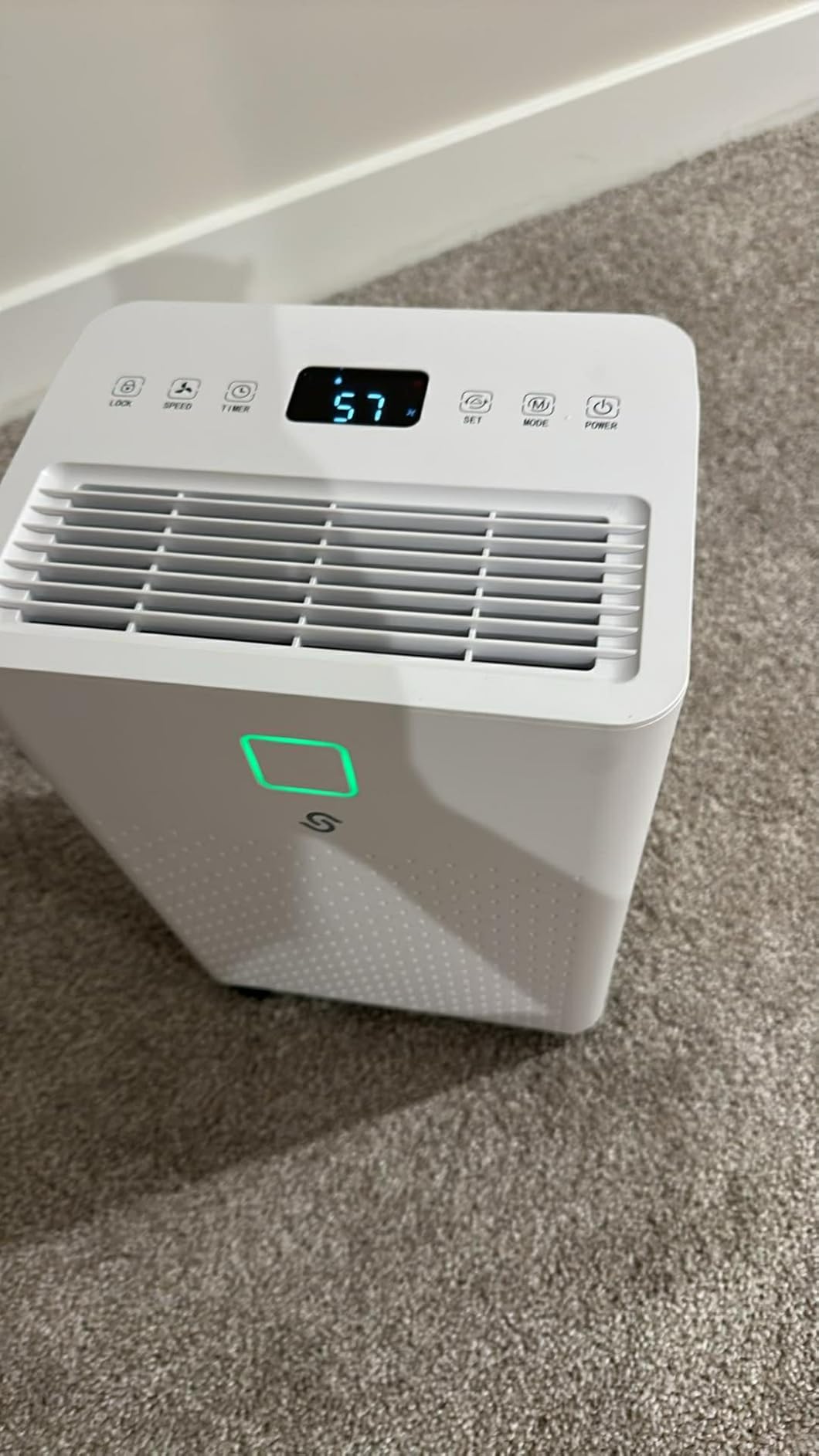
The feature set covers the basics properly: 30% to 80% humidity adjustment, four modes including dehumidify, dry, auto and sleep, a 24-hour timer, child lock, two fan speeds, automatic restart, automatic defrost, overheat protection, and a removable washable filter. A one-year warranty with 30-day free exchange is standard for the class.
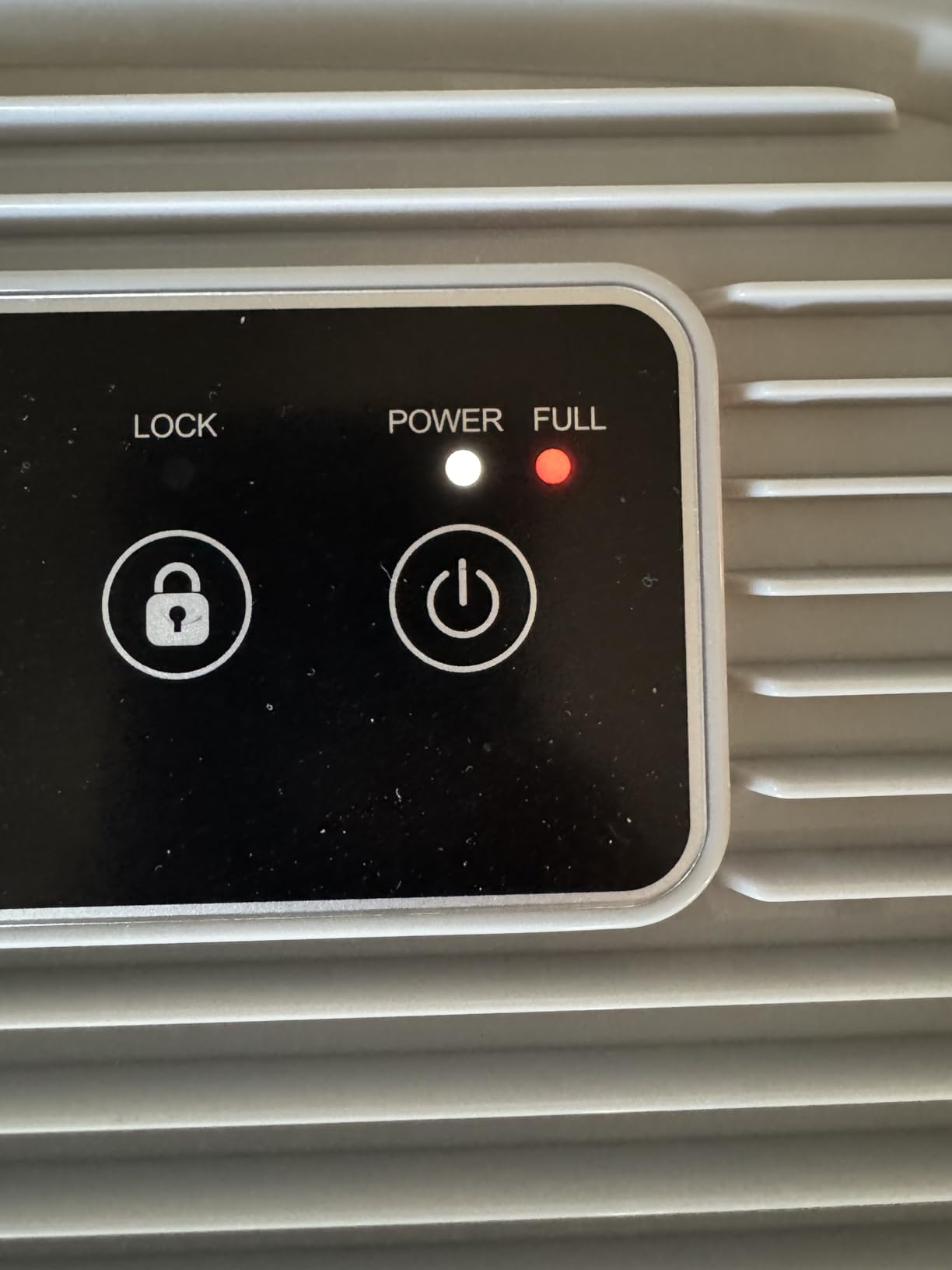
The tank is the weak point and owners are unusually blunt about it. There is no handle, no grip surface and no pouring spout, so it is awkward to remove and easy to spill, and the level window is not reliable. This is the single most fixable complaint in the roundup: run continuous drainage and you will never touch the tank again. The 370 watt draw is high for a 50-pint unit, and a small share of buyers report units that never collected water at all.
Is a 50-pint dehumidifier loud enough to bother me?
Less than most buyers expect, and quieter than the specification suggests for low-speed running. The compressor hum is the dominant sound, not airflow, and it sits far enough down in the spectrum that many owners describe it as background rather than intrusive.
What does bother people is a finished basement where the unit is next to a seating area or a desk. If your basement is a rec room, a bedroom, or a home office, do not buy a 50-pint unit on the assumption that it will be unnoticeable. Either pick one of the smaller units rated in the mid-40s decibels, place the dehumidifier in a closet or utility corner, or run it while the space is unoccupied.
Why did my unit never collect water?
There are three usual explanations and they are easy to check. First, the shipping orientation: units arrive in unmarked vendor boxes, and one that has been on its side for a long transit needs to stand upright for several hours before first power-on so the compressor oil settles correctly. Second, the room itself: if the basement is already below 50% RH, there is simply little water to pull, and the unit is working as designed.
Third, and most common, the ambient temperature. Below roughly 65 degrees Fahrenheit, most compressor units cycle into defrost far more often and net out very little water. If the room is cold, no setting on the humidistat will make it perform like it does in July. Verify the first two before you conclude the unit is faulty, and confirm the temperature before you file a claim.
8. VEAGASO 2500 Sq Ft 34 Pint Dehumidifier – Best for Quiet Finished Basements
VEAGASO 36 Pint/D, 2500 Sq.Ft Dehumidifier for Basement with Drain Hose
36 pints/day
2500 sq ft
230 W
40 dB low speed
2 liter tank
Pros
- Very quiet at 40 dB or less on low speed with a dedicated sleep mode
- LED touchscreen with live humidity readout and 1 to 24 hour timer
- Three clearly differentiated modes including DEHU DRY and CONT
- Power failure memory restores settings after an outage
- Two-year warranty runs longer than the one-year class norm
Cons
- Small 0.53 gallon tank needs regular emptying unless drained continuously
- 34-pint capacity is modest for a true large-area basement
- 40 dB figure applies to low speed only
- Some buyers find the touch panel over-sensitive to wake
If your basement is finished, occupied, and doubles as a living space or a work area, the VEAGASO 34-pint is the right shape of machine. It is rated at 36 pints per day for areas up to 2,500 sq ft, draws 230 watts, and runs at 40 dB or less on its low speed. The 36 dB Kesnos is fractionally quieter, but the VEAGASO combines that low noise with a larger 36-pint capacity, which is the trade that matters in a finished room.
What owners like most is the interface. The LED touchscreen gives a live humidity readout, a humidity target, fan speed, a 1 to 24 hour timer and the mode selector on one panel, and 360-degree swivel casters plus a recessed handle make it easy to reposition. Power failure memory restores your last settings, which saves you from walking down to reconfigure after every outage.
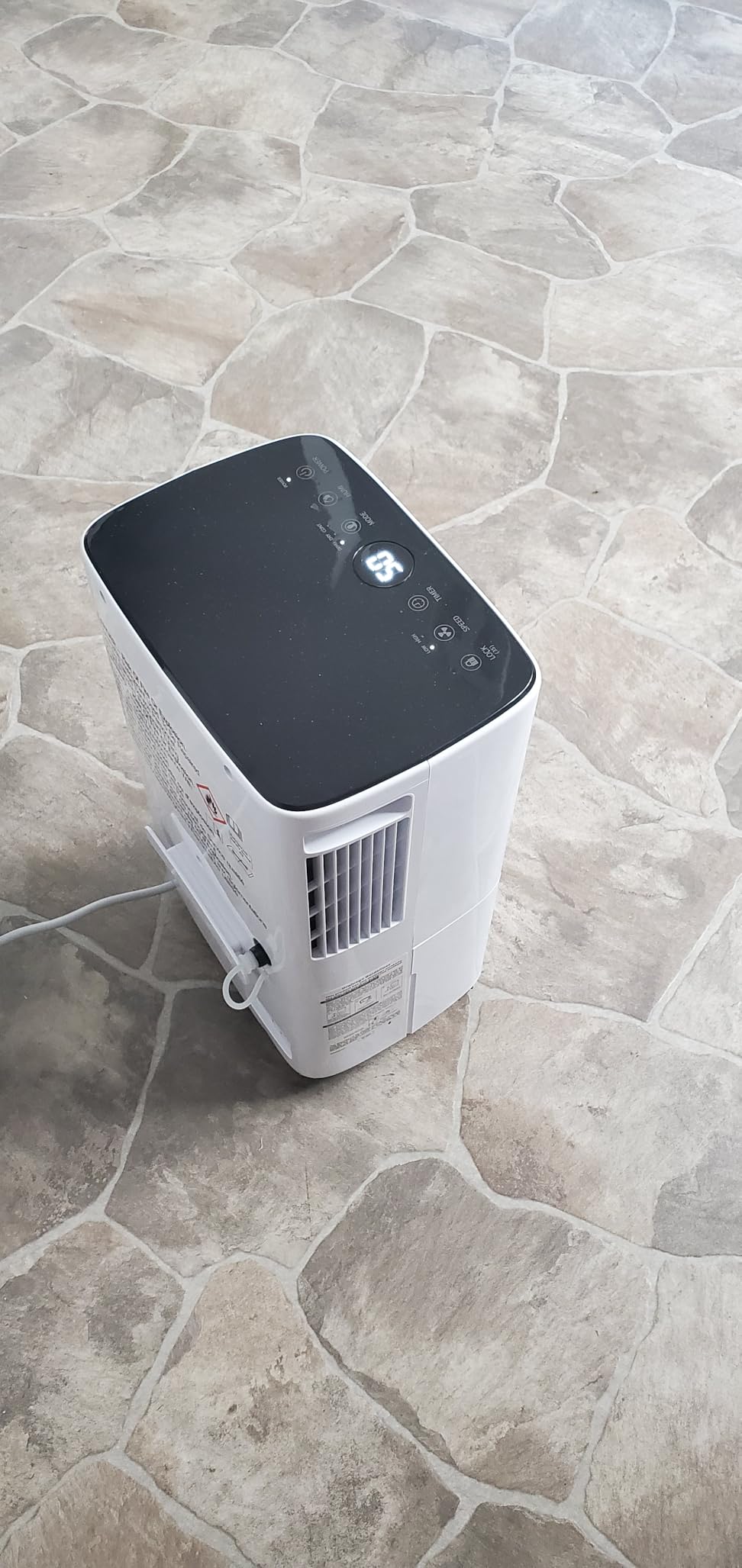
The three modes are genuinely differentiated rather than cosmetic. DEHU is the standard humidity-target mode, DRY is a higher-fan mode for drying clothes indoors, and CONT is nonstop running for a basement that needs constant extraction. That kind of mode naming sounds trivial until you have used a unit where every mode did the same thing.
On the other hand, the 40 dB figure is for low speed only, and higher settings are noticeably louder, so treat it as a low-speed claim. The 2 liter tank is small, and pushing hard means you will be emptying it. The two-year warranty is a genuine plus in a category where one year is the norm, and the 4.5-star average across more than 3,000 reviews reflects a well-liked unit.
Do I need a 34-pint unit for a 2,000 sq ft finished basement?
In most cases yes, and it is the sweet spot for this size room. Finished basements are typically better insulated and less ventilated than storage spaces, so humidity that would dissipate in a bare concrete room accumulates and persists. A 30 to 35 pint class unit holds a target in that environment without cycling on and off constantly, and the 2,500 sq ft rating lines up closely with the room sizes most people finish.
Match the unit to your actual square footage rather than to the marketing number, and remember that low-temperature operation stops being useful below about 65 degrees Fahrenheit. If your finished basement is unheated in a cold climate, plan to run this in the warmer months or accept that it is a seasonal tool.
Should I set up continuous drainage or use the tank?
Set up continuous drainage. A drain hose is included in the box, and it takes about two minutes, and it is the difference between a dehumidifier you think about every day and one you forget exists. The small tank is precisely why this matters more here than on a 50-pint unit.
Run the hose with a continuous downward slope to a floor drain, a sump, or an appropriate disposal point, and keep it secured along the wall so a kink or a trip does not become a problem. Once it is plumbed, the water level readout and the full-tank alert become a monitoring convenience rather than a daily obligation.
How We Picked the Best Basement Dehumidifiers
We evaluated these eight units against five criteria, in this order, because the order matters: the first two disqualify a unit faster than the rest can qualify it.
Capacity matched to real basement conditions. We use the 95 degree Fahrenheit and 90% RH rating as the common comparison point, then prefer published figures at more realistic conditions when a brand offers them, because 56 pints at 86 degrees tells you more about July than 80 pints at 95 does.
Drainage method. A unit that can run unattended for a season without a person carrying water upstairs is a fundamentally different product from one that cannot. We weighted built-in pumps, gravity drain ports, and included hose length heavily.
Energy efficiency. Measured wattage and ENERGY STAR certification, with particular attention to the ENERGY STAR Most Efficient tier, because the operating hours in a summer basement make this a compounding rather than a one-time factor.
Noise, at the speed you would actually run. Published figures are usually the low fan speed, so we note where a number applies only to low-speed operation rather than presenting it as a general level.
Reliability and the strength of the support record. Warranty length, the volume of owner feedback, and how consistently the brand resolves failures. Replacement support that extends past the warranty changes the real cost of ownership more than any spec on the list.
We also read the long forum threads, because the failure modes people describe years later are the ones a specification sheet cannot tell you. Expect a consumer compressor dehumidifier to last somewhere in the range of two to five years under continuous seasonal use, which is the expectation owners consistently report. Treat that as the planning horizon when you compare a portable unit against an installed commercial system.
What we did not do is repeat the manufacturer coverage numbers as sizing advice. Coverage square footage is a marketing artifact that assumes ideal conditions, and it is the single most misleading number on any dehumidifier listing. We size on pint capacity and measured dampness instead.
Basement Dehumidifier Buying Guide
What size dehumidifier do I need for your basement?
Measure the floor area, then judge the dampness, then pick a capacity. A dry, well-drained 1,500 sq ft basement and a damp 1,500 sq ft basement do not have the same problem, and the coverage number on the box will not tell you which one you have.
A good rule is that a standard compressor unit is sized in the 20 to 35 pint range for basements under about 1,500 sq ft, the 50-pint class for basements from roughly 1,500 to 3,000 sq ft, and 70 pints and above for larger spaces or for basements with an active water source. The reliable way to know which class you are in is to put a hygrometer in the basement for a week before you buy and read the actual numbers, rather than guessing from how the room feels in July.
Two basement details change the answer. Ceiling height matters because an 8-foot ceiling and a 9-foot ceiling hold different volumes of air, and open basements with exposed ducts and support columns are effectively larger than their floor area suggests. And basement humidity is seasonal, with readings typically highest in late spring and lowest in winter, so a single week of measurement in February will badly underestimate what the unit has to handle in June.
Pints per day versus square foot coverage
This confusion drives more bad purchases than anything else in the category. Coverage area answers the question of how much air the fan can circulate; pints per day answers how much water the unit can physically pull out. Only the second number determines whether the basement gets dry.
Any listing quoting 4,500 or 5,000 sq ft of coverage on a 50-pint unit is describing airflow reach, not moisture removal. A 50-pint unit that genuinely does its rated extraction will keep up with a 2,000 to 3,000 sq ft damp basement, not a 5,000 sq ft one, and the honest read of the manufacturer capacity claims in this roundup is that the higher figures describe how large a space the unit could handle if the air were not very wet.
Is a built-in pump better than running a garden hose?
Wherever it is possible, a gravity drain wins. It has no moving parts, no power requirement, and nothing to fail, and a slightly sloped line to a floor drain or a sump is the most reliable setup available. A 3/4 inch garden hose or the included drain tube with a downward slope for the entire run does the job.
Where gravity is not possible, you have two choices. A built-in pump inside the unit is convenient and self-contained, and the hOmeLabs and Yaufey here both do it well. Or you buy a unit with a plain drain port and add a small external condensate pump, which is the approach a lot of experienced owners on home improvement forums prefer, because the external pump is a cheap, replaceable part rather than something buried inside an appliance you would otherwise have to discard.
Either way, protect the run. Secure the hose so it cannot kink, keep a continuous downward slope, and position it so a failure announces itself loudly on a surface you will see, rather than quietly soaking a finished wall. If a pump is in the path, put a visible low point where you can check it.
How much does a basement dehumidifier cost to run?
Here is the arithmetic nobody publishes, using the published wattages from these eight units. Multiply watts by hours per day, then by 120 days of typical summer season, then by your utility rate. At a typical US residential rate of 15 cents per kilowatt-hour, the season totals work out like this.
The 165 watt Kesnos running 16 hours a day is about 79 kilowatt-hours, or roughly 12 dollars a season. The 270 watt Waykar on the same schedule is about 129 kilowatt-hours, roughly 19 dollars. The 370 watt HUMILABS is about 177 kilowatt-hours, roughly 27 dollars. The 500 watt Yaufey, if run flat out, is about 240 kilowatt-hours, roughly 36 dollars. None of these figures is large in isolation, and all of them are the difference between a machine you leave running and one you ration.
The more important point is that a bigger, faster unit can be cheaper per season than a small one. A small compressor working at maximum duty for ten hours a day draws more total energy over that time than a larger unit that reaches the target RH in four. Capacity is not only faster; in a genuinely damp basement, it is frequently more efficient too.
Do basement dehumidifiers work in cold weather?
Not well, and this is the most common winter surprise. A compressor dehumidifier chills an evaporator coil below the dew point of the incoming air, and when that coil gets close to freezing, moisture freezes onto it instead of condensing into the tank. Auto-defrost cycles warm the coil periodically to shed that ice, but the energy spent on defrost produces no water, so net output falls as the temperature drops.
Roughly 65 degrees Fahrenheit is the practical threshold for standard residential compressor units, which is why the AEOCKY’s rated down-to-65 degree operation is worth noting. Below that, the answer is a low-temperature or crawl-space-rated machine designed for the job, not a standard unit with a more optimistic label.
For most people the practical approach is seasonal: run the unit hard from late spring through early fall, then drain the tank or disconnect the hose before the first hard freeze, and leave the space to the winter. If you need humidity control year round, that requirement changes the buying decision entirely and should point you toward a low-temperature-rated installation.
Compressor versus thermo-electric versus desiccant
Compressor units are the only realistic choice for a basement, and it is not close. A compressor dehumidifier removes tens of pints per day and costs cents per pint. A thermo-electric unit typically removes under a gallon per day in total, which is a bathroom-scale answer being asked to solve a room-scale problem. Desiccant units work by absorption and are the right tool for cold, enclosed spaces like closets and crawl spaces, not wet basements.
The practical consequence is that every one of the eight units in this roundup is a compressor machine, and the comparison you are actually making is between capacities, drainage methods, and efficiency tiers rather than between technologies. That is a much easier decision than the marketing pages suggest.
What is a dehumidifier not going to fix?
An active water leak. Dehumidification can keep a damp area habitable and prevent mold spread, but it cannot remove water that is still arriving. A weeping foundation wall, a failed drainage tile, a leaking water heater, or groundwater coming through a floor slab all need repair, and the correct order is fix the source first, then dehumidify.
Similarly, a missing or torn vapor barrier, soil graded toward the foundation, and a basement with no exterior drainage will all keep generating moisture faster than any portable unit removes it. If you are seeing efflorescence, salt deposits on a block wall, or a persistently wet corner that never dries, that is a building-envelope or grading conversation, not an appliance purchase. Dehumidifiers in those situations run constantly, cost electricity forever, and never finish the job.
Maintenance, filters, and off-season draining
Wash or rinse the removable filter every two to four weeks during heavy season. A dirty filter restricts airflow, which reduces the amount of air passing over the coil, which directly reduces extraction, and it is the most common cause of a unit that seems to have lost power. Several of the models here include a check-filter indicator to prompt you, and ignoring it is how filters get missed.
Keep the intake and discharge sides clear. Most of these units need several inches of clearance on the sides and at the back to move air, and blocking the exhaust is the second most common self-inflicted performance loss. Place the unit in a central location rather than jammed in a corner, because a dehumidifier only conditions the air it draws in.
Before winter, drain the tank completely, disconnect any drain hose, and run the unit for a few hours on the highest fan to dry the internal passages. Standing water left in a tank over months invites odor, and a hose left connected to a dry line can promote the same. If the unit is stored rather than run, do it upright in a dry space.
Portable unit or installed whole-home system?
It is a legitimate question, and the honest answer is that an installed system wins on everything except purchase price. Installed commercial units, the kind that homeowners discuss on home improvement forums with quoted installed figures in the low thousands of dollars, tie directly into your HVAC system, drain automatically, and run at higher capacity with no tank to empty. Some owners also argue that a hybrid water heater, which dehumidifies the air it draws for hot water, is a cheaper way to condition basement air.
The counterargument that most people find convincing is arithmetic. A mainstream 50-pint portable unit costs a fraction of one installed system, is expected to last somewhere in the two to five year range, and can be replaced several times over the life of a single commercial installation. For a basement that needs seasonal dehumidification, a portable unit you can service yourself is usually the correct first purchase. For a basement that is finished, permanently conditioned, and needs humidity control in January as well as July, the installed system earns its cost.
Where to place a basement dehumidifier
Give it several inches of clearance on every side and on top, and keep the intake away from walls, boxes, and stored items. Put it in the middle of the space rather than in a corner, so the dry air it re-exhales mixes with the whole volume instead of a pocket of it. If your HVAC system has a return vent in the basement, running the dehumidifier within a few feet of that return lets the drier air feed the rest of the house, which is the cheapest whole-home humidity control available to you.
For drainage, maintain a continuous downward slope from the unit to the drain point, and avoid kinks and long flat sections. On a crawl space installation specifically, owners report that the unit must be suspended from the framing so drainage runs downhill to the sump, because a floor-mounted machine in a crawl space vibrates and sits below the water line. If you have a crawl space, that is a different installation discipline than a basement, and it is worth having done properly.
Frequently Asked Questions
What are the best basement dehumidifiers?
The Waykar 80 Pint 5,000 Sq Ft unit is the best overall for a typical damp basement, the hOmeLabs 50 Pint with Pump is the choice when there is no floor drain within reach, the Yaufey 150 Pint handles large or severely damp spaces, the HUMILABS 50 Pint is the classic mainstream performer, and the VEAGASO 34 Pint is the quietest option for a finished basement.
What size dehumidifier do I need for a basement?
For a basement under 1,500 sq ft, a 20 to 35 pint unit is usually right. For 1,500 to 3,000 sq ft, a 50-pint unit is the mainstream choice. Basements above 3,000 sq ft, or any basement with an active water source, need 70 pints or more. Size on pint capacity and measured dampness rather than on the coverage square footage printed on the box.
Are basement dehumidifiers worth it?
Yes, when your relative humidity is sustained above 60% and you have addressed the moisture source. They will not fix a leaking foundation wall, groundwater intrusion, a missing vapor barrier or poor grading, and in those situations the unit runs constantly without ever finishing the job. Expect a consumer compressor unit to last somewhere in the two to five year range under seasonal use.
Is a built-in pump dehumidifier better than a garden hose?
A gravity drain to a floor drain or sloped line is always best, because it has no moving parts. Where gravity is not possible, a built-in pump is convenient and self-contained, while a plain drain port paired with a small external condensate pump is what many experienced owners prefer because the pump is a cheap replaceable part rather than something sealed inside the appliance.
How much does a basement dehumidifier cost to run?
Multiply the unit’s wattage by daily run hours and by your electricity rate. At 165 watts running 16 hours a day, a season works out to about 79 kilowatt-hours, or roughly 12 dollars at 15 cents per kilowatt-hour. At 500 watts on the same schedule, it is about 240 kilowatt-hours, or roughly 36 dollars. A larger faster unit can be cheaper per season than a small one working at maximum duty.
Do basement dehumidifiers work in cold weather?
Standard compressor units stop extracting effectively below roughly 65 degrees Fahrenheit, because the evaporator coil ices over and auto-defrost cycles consume energy without producing water. Run the unit seasonally from late spring through early fall, then drain the tank and disconnect the hose before the first hard freeze. If you need control year round, choose a low-temperature-rated or crawl-space-rated machine instead.
How long does a basement dehumidifier last?
Owners consistently report two to five years for a consumer 50-pint compressor unit under normal seasonal use. Register the unit on arrival for any extended coverage, clean the filter every two to four weeks, and keep the intake and exhaust clear, since restricted airflow is the most common cause of a unit that seems to have lost power.
Should I run a dehumidifier in my basement all the time?
Continuously, through a drain hose, is the ideal setup because it holds a stable target humidity and removes the need to monitor a tank. Running it only when the basement feels damp produces cycling, more wear on the compressor, and a room that never reaches a consistent reading. Set a target between 50% and 55% RH for a typical basement and let the humidistat do the switching.
Final Verdict on the Best Basement Dehumidifiers in 2026
After working through all eight, the best basement dehumidifiers for 2026 come down to a short set of matching exercises. The Waykar 80 Pint 5,000 Sq Ft is our overall pick because it pairs genuine 80-pint extraction with a moderate 270 watt draw, a 42 dB running level, ENERGY STAR certification, and a support operation that replaces units past the warranty.
Match it like this. No floor drain in reach, buy the hOmeLabs 50 Pint with its built-in pump. A basement above 3,000 sq ft or one that is seriously damp, go to the Yaufey 150 Pint. Under 1,200 sq ft, the Midea 22 Pint is the right size and the brand you already trust. Chasing the lowest running cost in a small space, the Kesnos 30 Pint draws half what most do. Chasing efficiency certification specifically, the AEOCKY 80 Pint. A finished rec room or office, the VEAGASO 34 Pint. And a plain, well-documented 50-pint workhorse with a large tank, the HUMILABS.
Whichever one you pick, buy the external condensate pump option rather than a bare tank if you can, set a target between 50% and 55% RH, and measure with a cheap hygrometer rather than trusting the display. Those three habits do more for your basement than any single spec on any of these listings.