
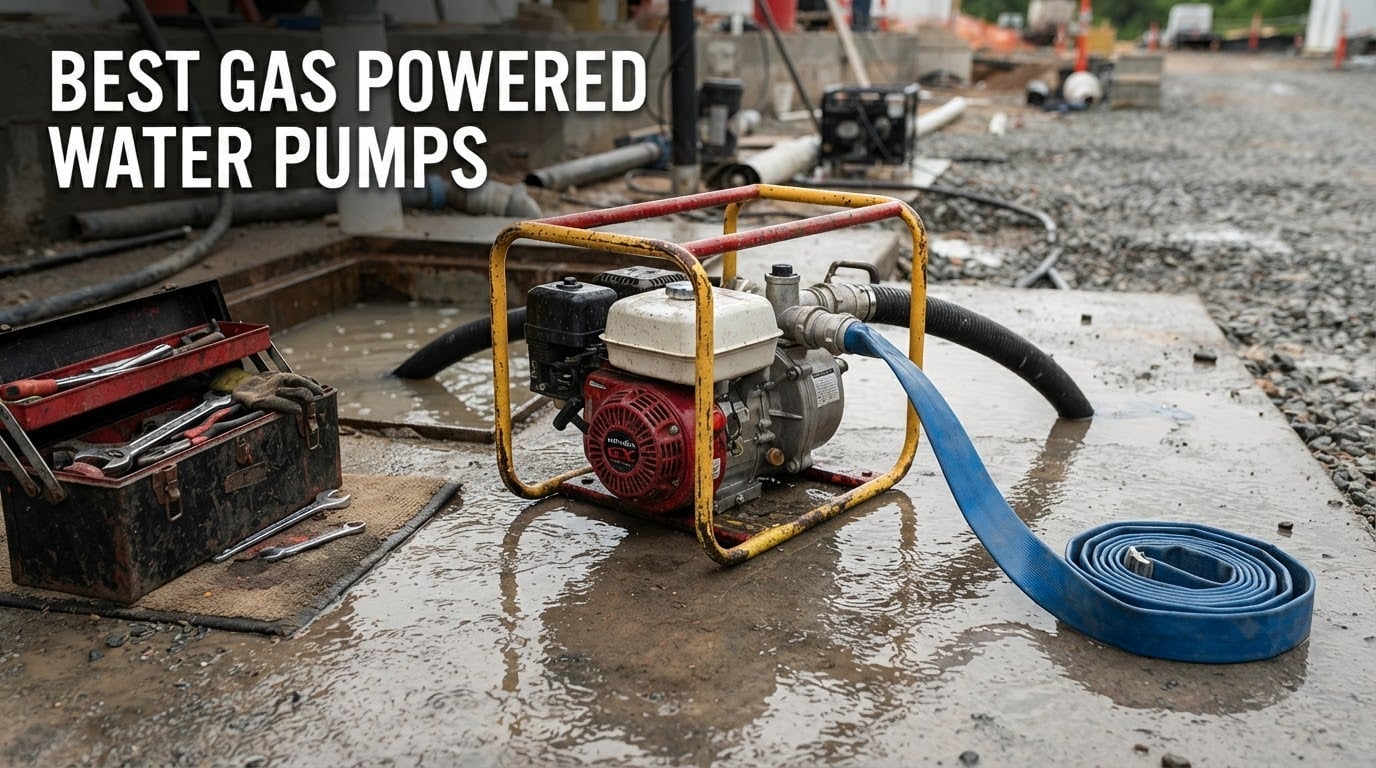
The night the power went out in my grandmother’s house, the sump pump went out with it. Two feet of standing water in the finished basement, no electricity, and a battery-backed sump that held for maybe forty minutes before it died. What actually saved that house was a gas powered water pump sitting in the garage, fueled the night before, started on the third pull, and running until sunrise.
That is the whole argument for this category. An electric pump is quieter, cheaper to run, and easier to start, but it is completely dead the moment an outlet is dead. If you have ever had a flooded crawlspace, a pond you need to draw down, a job site with no power for a quarter mile, or simply want to be ready when the storm knocks the grid out, a gas powered water pump is a tool worth owning. We covered the [8 Best Electric Water Pumps Tested and Reviewed](https://www.minormania.com/best-electric-water-pumps/) too, and for most indoor jobs the electric wins, but a gas pump is the one that keeps working.
We spent weeks working through the specs, the review patterns, and the real failure modes across twelve of the best gas powered water pumps on the market, from a 13-pound Honda mini-engine pump to a 264 GPM three-inch machine with a roll cage. We compared flow rate, total head, solids handling, port size, engine brand, warranty length, and what is actually in the box, because the gap between the spec sheet and the box contents is where most buyer disappointment lives.
Our editorial standard: every number below comes from the manufacturer listing or aggregated owner feedback, and where owners report a specific failure we say so rather than smoothing it over. We may earn a commission from qualifying purchases, which never changes what we write. If you are shopping for a companion gas tool, our [10 Best Gas Powered Air Compressors Expert Reviews](https://www.minormania.com/best-gas-powered-air-compressors/) covers the same engine platform in a different format.
Table of Contents
Top 3 Best Gas Powered Water Pumps (September 2026)

Honda WB20XT4A 2-Inch Pump
- 164 GPM
- 105 ft total head
- 5/16 in solids
- Honda OHV commercial engine

BILT HARD 2-Inch Semi Trash…
- 158 GPM
- 91 ft total head
- 26 ft suction
- 50 ft discharge hose included

Honda WX10 1-Inch Pump
- 32 GPM
- 13 lb carry weight
- 3-position discharge port
- Hose and fittings included
All 12 Gas Powered Water Pumps at a Glance
The table below covers every pump in this guide, with the four specs that decide most purchases: maximum flow, total head lift, solids passage, and what you get in the box. Solids figures are the single most useful differentiator here, because a pump rated for 158 GPM of clear water can choke on a leaf in under an hour.
A note on the flow numbers: maximum GPM is measured at zero head, meaning no lift at all. The moment you lift water 20 feet or run 100 feet of discharge hose, the achievable flow drops. Two pumps both rated at 158 GPM can behave completely differently depending on how much total head the job demands.
1. Honda WB20XT4A 2-Inch Pump: The Best All-Rounder
Honda WB20 2-Inch General Purpose Water Pump, Gas Powered Water Pump, Filters Solids Larger Than 5/16 Inch, 164 Gallons per Minute Capacity, Commercial-Grade Engine, Heavy Duty Frame (WB20XT4A)
164 GPM
105 ft total head
5/16 in solids
2 in ports
51 lb
Pros
- First-pull starting Honda OHV commercial engine
- Strainer passes solids up to 5/16 inch
- Cast iron volute with 4-vane impeller
- Isolation mounts cut vibration and pump walking
- 4.6 stars across 349 owner reviews
Cons
- Hoses and fittings sold separately
- Needs priming plus oil and fuel setup before the first start
- Some owners report intake bracket breakage or service issues
- Honda service response can be slow in some regions
The Honda WB20XT4A is the best gas powered water pump for anyone who needs one machine to handle pool draining, irrigation, and job site dewatering without switching equipment. It moves 164 gallons per minute with a 105-foot total head rating and passes solids up to 5/16 inch through a large strainer, which is more debris tolerance than most of the 2-inch pumps here. Hoses, camlock and pin lug fittings, and the strainer are all sold separately, so plan on buying the plumbing before the job.
What separates it from the pack is the engine mounting. Honda isolates the engine from the pump housing, and owners consistently credit that with a pump that stays put and lasts instead of walking across the slab and shaking itself apart. Ranching and homestead users who run these daily report vibration, not a lack of horsepower, as the first thing that destroys a cheaper unit, and this is the pump built for that wear pattern.
It is also the best-documented engine in the category. Owners report Honda and Briggs engines lasting 10 to 21 years with basic maintenance, and that long service life is the entire justification for spending more here. The WB20XT4A carries a 3-year manufacturer warranty, split between residential and commercial terms.
The honest trade-off is the box contents. You are buying a pump, not a system. Hoses, camlock and pin lug fittings, and the strainer are all sold separately, and you will need to prime it manually and set oil and fuel before the first start. Budget roughly the cost of a good hose kit on top, because at 164 GPM the included pump will empty the water faster than almost any hose you can buy.
What the WB20XT4A Handles That the Others Cannot
At 164 GPM this pump moves more than five times the flow of the Honda WX10. On a 10,000-gallon pool, theoretical drain time at maximum rated flow works out to about 60 minutes before you account for head loss and hose friction, so a realistic figure is closer to two hours with a long discharge run.
The 5/16-inch solids passage means it chews through leaves, gravel, and the grit that settles at the bottom of a pool or the mud that comes off a crawlspace floor. Combined with 105 feet of total head, it also has enough reserve to push water up out of a deep sump or across a yard to a drainage ditch.
Where the Honda Falls Short
Weight is 51 pounds, which is manageable for one person and a genuine two-person lift if you are loading it into a truck bed alone. The 2-inch ports also mean you cannot step up to 3-inch discharge without adding adapters, so if you are moving very large volumes to a distance, a 3-inch machine is the better tool.
Most importantly, a minority of owners describe intake bracket breakage or durability problems after limited use, and some report slow response from Honda’s repair network. The 349-review base is the deepest here, so the 4.6 average is well earned, but a few early failures do appear in the record.
2. BILT HARD 2-Inch Semi Trash Pump: Best Value With a Full Hose Kit
BILT HARD Semi Trash Pump 2 inch, 158 GPM 7HP Gas Powered Water Pump, 212cc 4-Cycle Engine with 50 ft Discharge Hose, 12 ft Suction Hose and Complete Fittings, EPA Certified
158 GPM
91 ft total head
26 ft suction
2 in ports
51.5 lb
Pros
- Complete kit with 50 ft discharge hose and 12 ft suction hose
- Includes camlock coupler
- strainer
- clamps and fittings
- Starts on the first or second pull
- Strong flow for pool filling and hydroseeding
- 4.4 stars across 287 owner reviews
Cons
- Included plastic fittings can split under pressure
- Some reports of housing bolts loosening and oil leaks
- 90-day warranty is short for this category
- Gasoline items cannot be returned through standard channels
The BILT HARD 2-inch semi trash pump is the best gas powered water pump for someone who wants to be pumping the same day the box arrives. It includes 50 feet of discharge hose, 12 feet of suction hose, a camlock coupler, an intake strainer, clamps, and fittings. That complete kit is the reason it is our value pick, and the 287-review base gives it more owner history than any other budget machine here.
Under the hood it is a familiar 212cc four-stroke OHV engine rated at 158 GPM with 91 feet of total head and 26 feet of suction lift, EPA Phase III compliant with a low oil shutoff. Owners report it starting on the first or second pull, which matters more than the horsepower figure when you are standing in the rain at midnight.
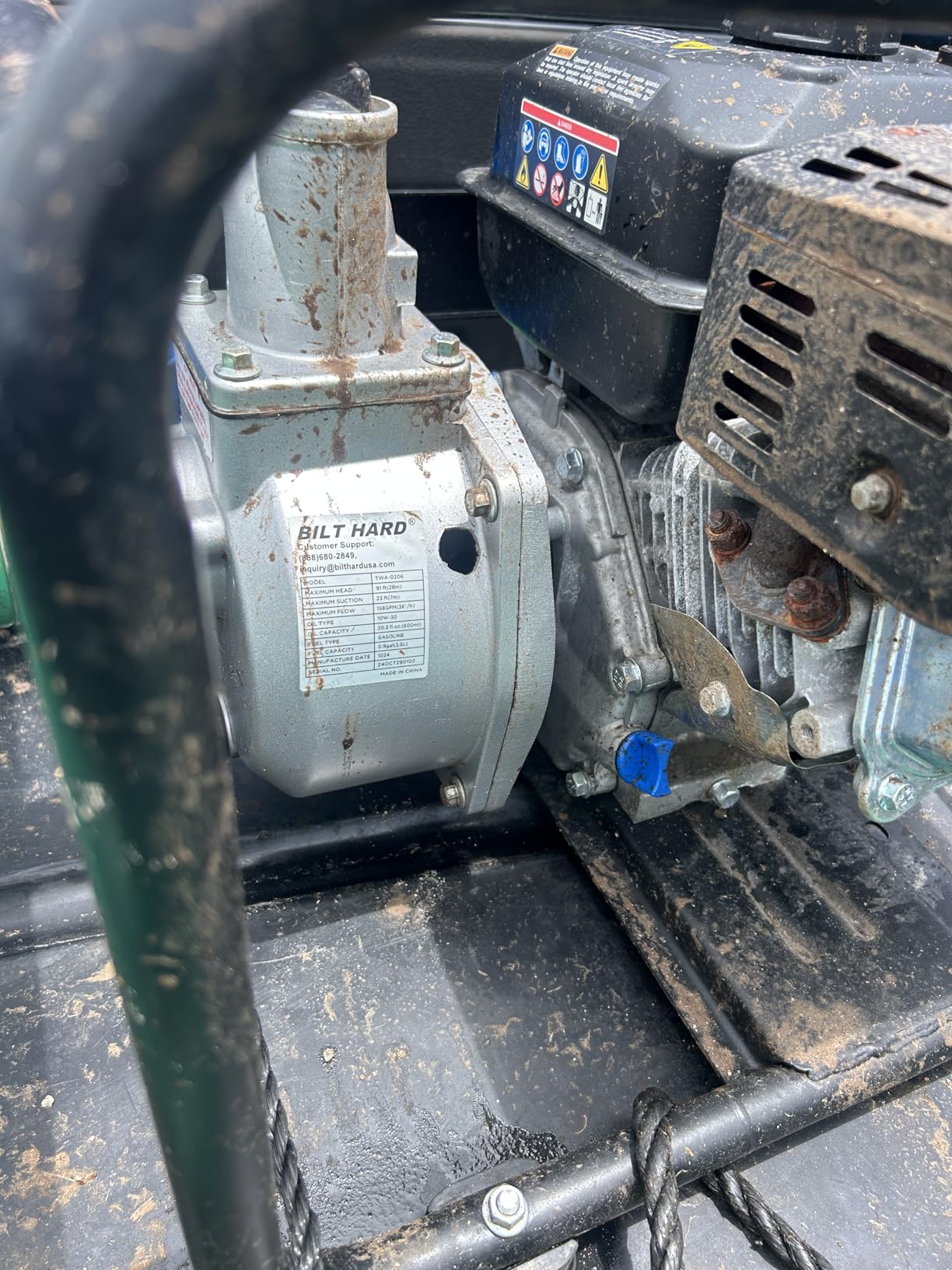
The 50-foot discharge length is unusually generous. Most bundled kits in this category include 25 feet, so this one halves the number of connections you have to make, and every connection is a leak risk. For hydroseeding, pond filling, or draining a pool to a far drain, that length is a real advantage.
Why This One Earns the Value Badge
Compare the arithmetic: buy this pump and you still need hoses. Buy a bare pump and you spend the next hour sourcing a suction hose, a strainer, clamps, and a coupler, plus the trip to a plumbing supplier. Reviewers who report running within 20 minutes of unboxing are describing exactly this advantage, and it is why budget pumps that ship 85 percent assembled are valued for emergency readiness.
Owners also praise the flow for pool work specifically, describing 158 GPM as more than enough to fill a water tank or move a pool in a weekend. For 4.4 stars across 287 reviews, that is a strong result for a machine at this tier.
What to Fix Before the First Long Job
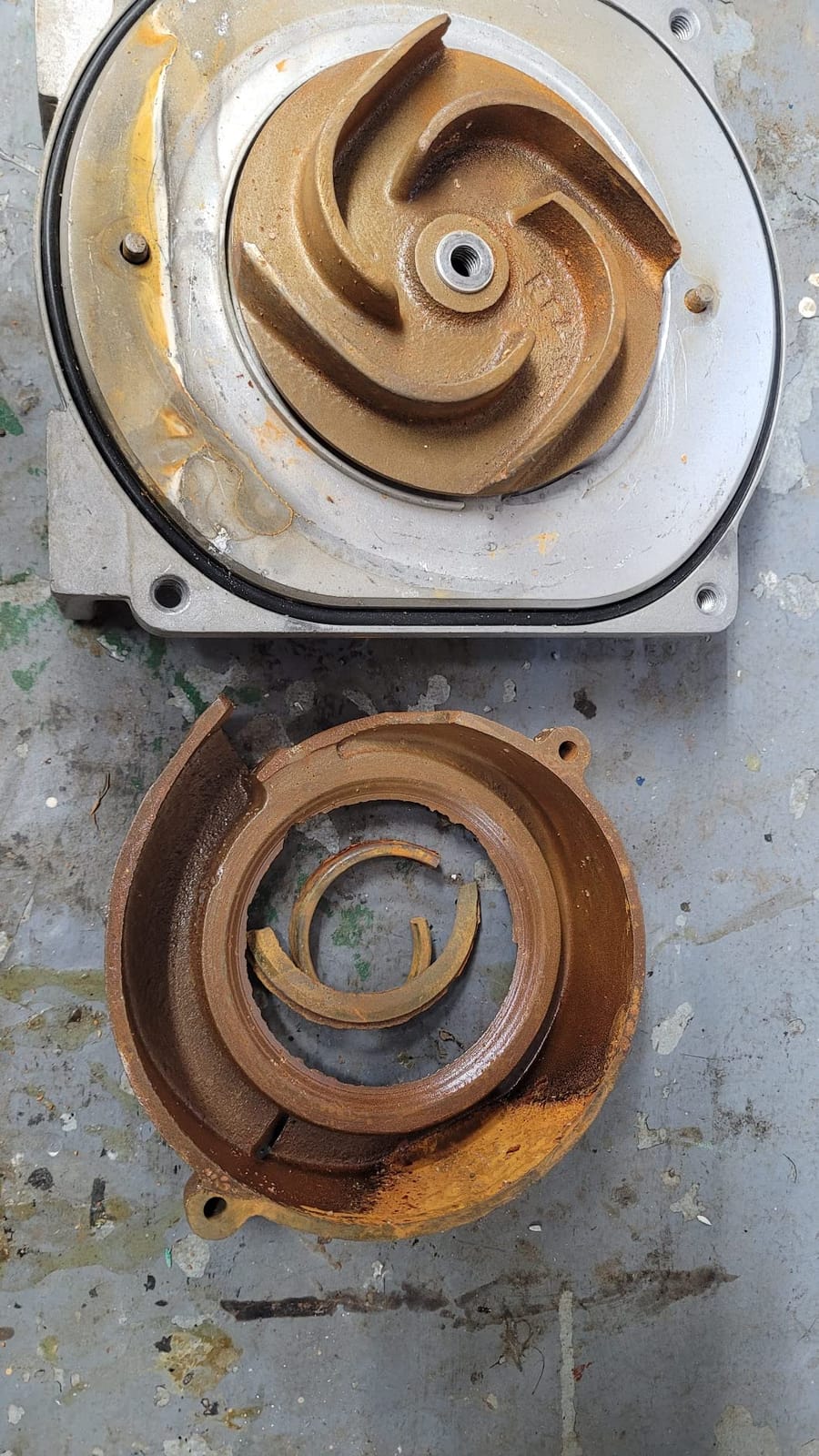
The most repeated complaint is the quality of the supplied plastic fittings, with some owners replacing them with metal after they split under pressure. This is a known pattern across budget pumps, and a set of metal camlock and threaded adapters is the cheapest insurance you can buy.
A smaller number of owners report housing bolts loosening and the pump weeping oil after repeat use, and the 90-day warranty is the shortest in this group. Also note that gasoline-powered items generally cannot be returned through standard channels, which makes the first-hour test run more important here than it would be with a corded tool.
3. Honda WX10 1-Inch Pump: Best for Carrying Water Anywhere
Honda WX10 1-Inch General Purpose Gas Powered Water Pump
32 GPM
100 ft head
13 lb
3-position discharge
Honda mini 4-stroke
Pros
- Only 13 lb and easy to carry to remote water
- Honda mini 4-stroke engine starts easily
- Garden hose adaptor
- suction hose
- clamps and strainer included
- 3-position discharge port adds routing flexibility
- Drain port supports freeze-safe winter storage
Cons
- Small fuel tank needs a refill roughly every 45 to 50 minutes
- Included plastic hose fittings are thin and short-threaded
- 32 GPM is slow for large pool drains
- A few buyers received cracked hoses or engines that stalled
The Honda WX10 is the best gas powered water pump when the water is 300 feet away and you have to carry the pump to it. At 13 pounds it is the lightest machine in this guide by a wide margin, and it is the one you can load into a small truck by yourself or carry down to a creek bank on foot.
It runs a Honda mini four-stroke GX-series engine, delivers 32 GPM, and lists a 100-foot maximum lift on a general purpose self-priming centrifugal design with a three-position discharge port. That port is genuinely useful: you can angle the outlet up, down, or sideways to route a garden hose along a fence line or into an elevated tank without fighting the discharge.
The box includes a garden hose adaptor, suction hose, clamps, and a strainer, which is more than many bare commercial pumps ship with. Owners also cite a drain port that supports freeze-safe winter storage, a small detail that matters if the pump lives in a shed in a climate that dips below freezing.
Where 32 GPM Is the Right Number
At 32 GPM this pump moves roughly 1,900 gallons an hour at rated flow. That is the right size for a garden, a greenhouse, a farm water tank, a fish pond, or irrigation from a rain barrel, and it is what you want when the total run is long and the lift is significant.
Long-distance pushing is the WX10’s strength. Owners report handling uphill pushes of several hundred feet from a pond source, which is a function of head capability rather than flow. The trade math is simple: if you need volume, you need a bigger pump, and if you need reach, this one delivers it at half the weight.
What Owners Complain About Most
The small fuel tank is the most cited drawback, requiring a refill roughly every 45 to 50 minutes under load. On a long irrigation run that is a scheduled interruption, not a defect, but it is real.
The included plastic hose fittings are described as thin and short-threaded, with many owners substituting aluminum. A few buyers also received units with cracked hoses or engines that stalled after a few minutes, so test it on the driveway before you trust it in a flood.
4. Honda WX15 1.5-Inch Pump: Top Rated for Its Class

Honda WX15 1.5-Inch General Purpose Gas Powered Water Pump (WX15TA)
74 GPM
26 ft suction
20 lb
3-position discharge port
2-year warranty
Pros
- 4.9 stars across 73 reviews with no low ratings
- Pushed water 300 feet uphill while feeding two hoses
- About 20 lb and easy for most users to pull start
- Three-position discharge port
- Includes hose clamps and a strainer
Cons
- Hoses are sold separately
- Small fuel tank on longer jobs
- Some owners struggle to prime on the first attempt
- Oil level must be checked and topped off after the first start
The Honda WX15 is the best gas powered water pump for high-pressure delivery at a moderate flow rate, and it carries the highest average rating in this group at 4.9 stars across 73 reviews with no one, two, or three star ratings. It moves 74 GPM, more than double the WX10, while staying near 20 pounds.
Owners describe pushing water 300 feet uphill at high pressure to supply two hoses without running the engine at full output. That is the pump you want for pressure irrigation on uneven ground, water trailers, or a long run to a remote hydrant, and the three-position discharge port makes the routing easy.
Starting reliability is repeatedly praised, with owners crediting the Honda mini four-stroke engine for starting on the first pull. Instructions are also called out as clear, which sounds minor until you are assembling a pump in bad light.
When the WX15 Beats the Bigger Pumps
The difference between 74 GPM and 158 GPM is not the deciding factor for many jobs. If you are feeding drip lines, a farm trough, or a long hose run to a garden, pressure and reach matter more than raw volume, and a 20-pound pump you can reposition in ten seconds beats a 51-pound one you move once.
It also fits in a small vehicle. A WX10 and a WX15 together weigh about 33 pounds, less than any of the 2-inch semi trash pumps in this guide, and together they cover both the light and medium end of the jobs most homeowners actually have.
What to Know Before Buying
There are no written hoses in the box. Compatible camlock and pin lug kits are sold separately, which is standard for Honda commercial pumps but surprises first-time buyers.
Expect to check and top off the oil after the first start, and expect a small fuel tank that wants attention on long jobs. Some owners report difficulty priming on the first attempt, so allow extra time for setup and read the priming procedure before you are standing in a flooded crawlspace.
5. BE Power WP-3065HL 3-Inch Pump: Best for All-Day Volume
BE Power Equipment 3″ Water Transfer Pump with Honda GX200 Engine WP-3065HL
264 GPM
3 in ports
Honda GX200
Steel roll cage
59 lb
Pros
- 264 GPM maximum flow for large volume transfer
- Honda GX200 engine built for continuous all-day duty
- Aluminum pump body with cast iron impeller
- Steel roll cage protects the pump and gives hand holds
- 3-year warranty with responsive service reported by owners
Cons
- One unit arrived with a gasket not fully installed at the factory
- One owner needed a carburetor replacement after a short time
- Only 30 ratings and the thinnest review base here
- Premium tier with a commercial-grade Honda engine
The BE Power WP-3065HL is the best gas powered water pump for draining large pools and moving serious volume across flat ground. At 264 GPM with 3-inch inlet and outlet, it moves roughly half again as much water as any 2-inch pump here and is tied at the top of the guide for output.
The engine is a Honda GX200, specified for all-day use, paired with an aluminum pump body and a cast iron impeller. That combination is the construction you want when the pump is going to be running for a full shift moving water with grit in it, rather than started occasionally to move a few hundred gallons.
A welded steel roll cage surrounds the assembly and doubles as a set of hand holds for maneuvering, which matters on a 59-pound machine with a full tank. The pump is rated for pool draining, field watering, flood water removal, irrigation, and general water transfer, and it carries a 3-year warranty.
What 264 GPM Actually Buys You
At rated flow this pump moves roughly 15,800 gallons an hour. A 10,000-gallon pool is theoretically under 40 minutes, and realistically an hour or two once you subtract head loss and friction from a long discharge run. If flood recovery is your use case, that output is what gets a standing basement back toward dry in an evening.
Because the ports are 3 inches, you will need 3-inch hose. Laying flat that moves far more water per foot and loses less head than 2-inch, so the larger plumbing partly pays for itself on any long run.
The Honest Catch: Thin Review History and Factory QC
Thirty ratings is the smallest review base in this group, so treat the 4.5 average as encouraging but not conclusive. Feedback is more directional here than anywhere else on the list.
What negatives exist center on assembly and quality control rather than performance. One unit arrived with a gasket not fully installed at the factory and leaked until professionally repaired, and one owner needed a carburetor replacement after a short time. Owners who get a working unit often praise the customer service department for handling defects and returns without friction, which is a meaningful counterweight.
6. NOVUS 2-Inch Semi Trash Pump: Best Value for Pond and Pool Work

NOVUS 2-inch Semi Trash Pump, 212cc 4 Cycle Engine, 141 GPM 100ft Lift 23ft Suction, Gas Powered Water Pump for Pond Pool Draining Gardening Irrigation,EPA Certified
141 GPM
100 ft total head
23 ft suction
2 in ports
55 lb
Pros
- 141 GPM empties pools and fills tanks fast
- Often starts on the fourth pull or fewer from cold
- Primes quickly and holds prime between uses
- Cast iron impeller in an aluminum housing
- 2-year limited warranty with lifetime technical support
Cons
- Hose is not included in the base configuration
- One unit shipped without two pump seals
- One unit arrived with a stuck throttle
- Support reportedly went unresponsive for one owner
The NOVUS 2-inch semi trash pump is the best gas powered water pump for pond owners who want strong flow without stepping up to a 3-inch machine. It delivers 141 GPM with 100 feet of total head, 23 feet of suction lift, and an intake filter to block larger debris before it reaches the impeller.
Owners report it starting easily, priming quickly, and holding prime between uses, and several describe running it for 16-hour stretches without trouble. Prime retention is the single most important quality in a semi trash pump, because a pump that loses its prime between startups is a pump that fails at the worst possible moment.
The wet end is a cast iron impeller in an aluminum housing on a heavy-duty frame, and the manufacturer includes a large fuel tank plus a 2-year limited warranty with lifetime technical support. Owners who needed help report reaching a live person who answered questions without a callback, at least initially.
Why Prime Retention Is the Feature to Shop For
A self-priming pump pulls water into a priming chamber, then holds it against the impeller. If the suction side has a leak, the pump loses that charge and has to be reprimed, which is the most common complaint across every gas pump in this category. The NOVUS is repeatedly described as holding prime across sessions, which makes it a good fit for a pond or irrigation duty that runs intermittently.
At 141 GPM it moves about 8,400 gallons an hour, so a modest farm pond takes a few hours rather than an afternoon. The 2-year warranty also beats the 90-day coverage on some budget imports by a wide margin.
Inspect the Box Before You Rely on It
The hose is not included with the base configuration, so budget for a suction hose, strainer, and coupler separately. The 100-foot total head rating also means less realistic flow at real-world lift than the headline number suggests.
Two QC reports stand out: one unit shipped without two pump seals, and one arrived with a throttle stuck in a position that prevented pumping until it was freed manually. One detailed review describes a backfiring fault followed by months of unreturned support calls, so if you buy it, verify the seals are present and the throttle moves freely before the first run.
7. Aceup Energy 2-Inch Semi Trash Pump: Best for Irrigation Setups

Aceup Energy Semi Trash Pump 2 Inch, Powered by 158 GPM 7HP Gasoline Engine, 208cc Portable Irrigation Water Pump with Hose, EPA Certified
158 GPM
95 ft head
27 ft suction
2 in outlet
208cc 4-stroke
Pros
- 158 GPM and 95 ft head from a 208cc 4-stroke engine
- Includes 12 ft suction hose and 25 ft discharge hose
- Strainer and connector kit in the box
- Shock absorbing pads keep it steadier when running
- Factory function tested before shipping
Cons
- Must be primed with water before the engine will run
- 1-year warranty trails most competitors
- Higher share of one-star ratings than the Honda models
- No written owner review detail was available for this listing
The Aceup Energy 2-inch semi trash pump is the best gas powered water pump for a fixed irrigation point pulling from a pond or open tank. It delivers 158 GPM through a 2-inch outlet with 95 feet of maximum head and a 27-foot maximum suction lift, and it includes a 12-foot suction hose, a 25-foot discharge hose, a clamping ring, a hose connector kit, and an intake strainer.
The 27-foot suction figure is the highest of any pump in this group, and that is the number that decides whether a pump can draw from a deep pond without losing prime. The integrated iron handle and base with shock absorbing pads keep the machine steadier on uneven ground, which reduces the fatigue failures that show up in cheaper frames.
It runs a 208cc four-stroke engine at up to 3600 rpm, is EPA compliant, and the manufacturer states every unit is functionally tested before leaving the factory. That claim matters because no-start on arrival from cheap units is one of the most repeated complaints in this whole category.
What 27 Feet of Suction Lift Means for You
Suction lift is the vertical distance the pump must pull water up before it starts pushing. A pump rated at 27 feet can draw from a pond bank that is higher than the pump, but every foot of lift costs flow, and pushing past the rating causes the pump to cavitate, lose prime, and eventually damage its seal.
For most irrigation jobs that is not the limit. Elevation change between the water source and the pump is, which is why the pump should sit as low as practical and the suction run should be as short and as straight as you can make it.
What the Ratings Do Not Tell You
At 4.3 stars across 46 ratings, roughly two-thirds are five star, while 10 percent of its ratings are one star, a higher share than the Honda models here. No written owner review text was available for this listing, so the picture is thinner than the star count suggests.
Two practical notes: the pump must be primed with water before the engine will run, which catches out new owners every season, and the warranty is one year, shorter than most of the field. The free lifetime technical guidance is a genuine offset, but a warranty is what you want when a seal fails.
8. Champion 3-Inch Semi Trash Pump: Best 3-Inch Kit for Flood Work

Champion Power Equipment 3-Inch Gas-Powered Semi-Trash Water Transfer Pump with Hose and Wheel Kit
264 GPM
92 ft head
26 ft suction
3 in NPT
90 lb
Pros
- Complete hose
- camlock coupler and wheel kit in the box
- 264 GPM from a 224cc OHV engine
- Passes solids up to 0.75 inch
- Never-flat tires and a steel frame for moving between jobs
- 3-gallon fuel tank with a wide priming cap
Cons
- Heaviest pump in the group at 90 pounds
- Lowest average rating among the 3-inch semi trash models here
- 12 percent of ratings are one star
- Wheel kit adds bulk for stationary transfer work
The Champion 3-inch semi trash pump is the best gas powered water pump when the water is dirty. It passes solids up to 0.75 inch, which is more than double what most 2-inch semi trash pumps in this group handle, and that is the difference between a pump that survives flood cleanup and one that clogs every twenty minutes.
Flow is 264 GPM through 3-inch NPT inlet and outlet, driven by a 224cc Champion OHV engine with a 3-gallon fuel tank and 0.5-quart oil capacity. Total head is 92 feet with 26 feet of suction head, and a wide priming cap speeds up startup after a restart.
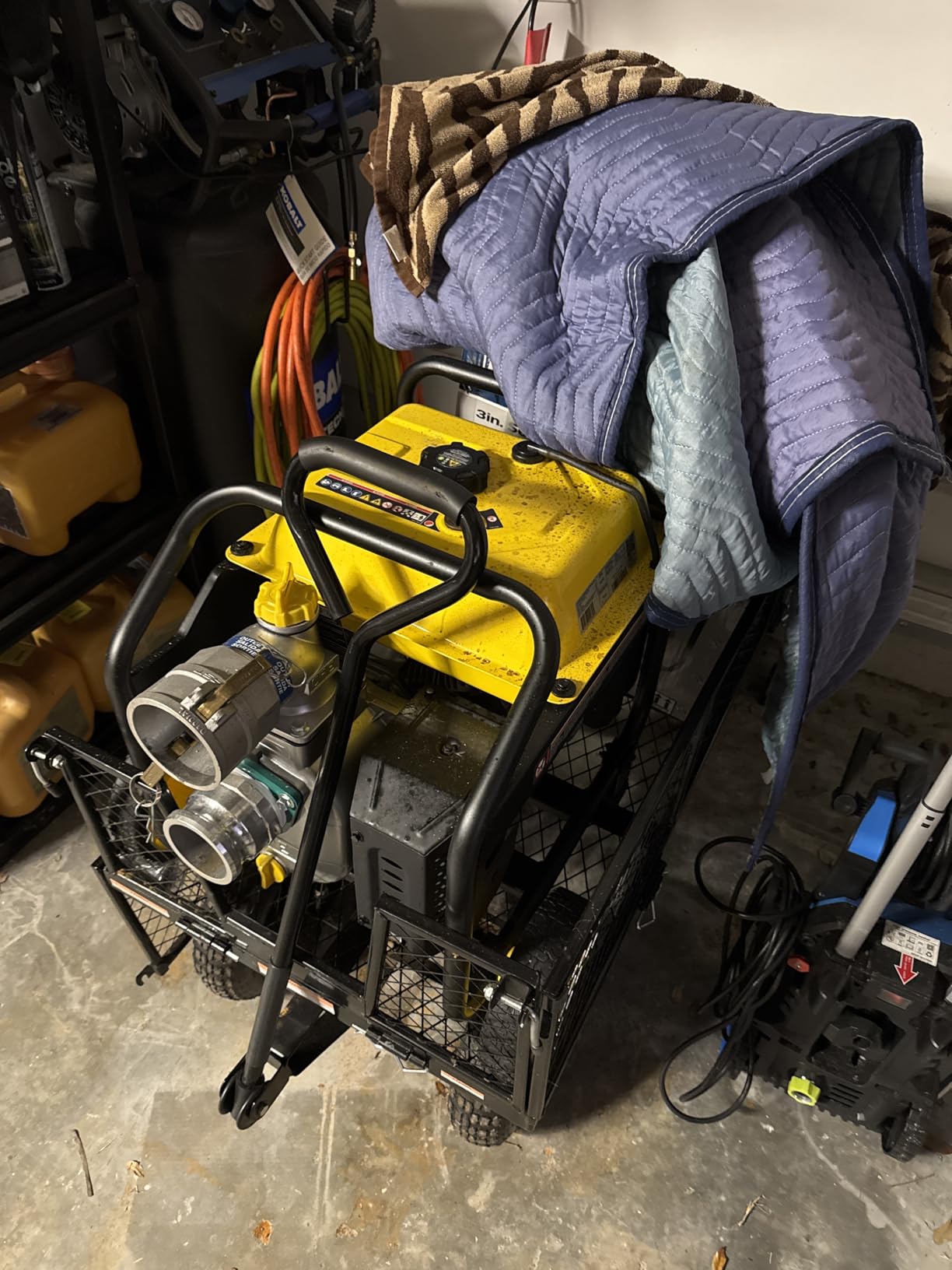
The box is genuinely complete: a 12-foot suction hose with filter, a 25-foot discharge hose, a quick camlock coupler, clamps, adapters, fittings, nylon tape, and a storage bag. Add the never-flat wheel kit and steel frame, and this is the only 3-inch pump in this guide that arrives with a wheel kit, ready to be dragged from the truck to the job and started.
Why 0.75-Inch Solids Handling Changes the Job
Solid passage diameter is the spec that predicts whether a dewatering job finishes. Water from a flooded basement carries carpet fiber, plaster, and silt. Water from a construction excavation carries sand and gravel. At 0.75 inch, this pump passes debris that would lodge in a 5/16-inch or 1/2-inch strainer, which is why it is the pick for construction and flood cleanup rather than clean irrigation water.
Pair it with a coarse external suction strainer. Users running pumps on mud and sand report that an external strainer solves most clogging problems faster than any internal design change.
Where the Weight and Rating Bite
At 90 pounds this is the heaviest pump in the guide, and owners acknowledge that the wheel kit is the reason it is manageable at all. For stationary transfer work, that wheel kit is bulk you are carrying for no benefit, and without wheels this is a two-person lift.
The 4.1 average across 73 ratings sits below the other 3-inch Honda-backed model here, with 12 percent of ratings at one star. The complaint owners voice most often is simply the extra bulk of the kit, not a failure of the pump itself, but if you already own 3-inch hose and a cart, a bare frame is a better buy.
9. Champion 2-Inch Semi Trash Pump: Best for Moving Between Jobs

Champion Power Equipment 2-Inch Gas-Powered Semi-Trash Water Transfer Pump with Hose and Wheel Kit
158 GPM
92 ft head
26 ft suction
2 in NPT
79 lb
Pros
- Hoses
- camlock coupler and fittings all included
- One owner ran it almost continuously for a week
- Strong flow with easy pull starting
- Never-flat tires and a handle for a 79-pound pump
- 2-year limited warranty
Cons
- Supplied plastic suction strainer is weak and detached in service
- One unit seized after two uses over several years
- One unit arrived broken and the return was difficult
- Heaviest 2-inch pump in the group
The Champion 2-inch semi trash pump is the best gas powered water pump for a contractor who loads the truck once and works several sites a day. It pairs 158 GPM with a wheel kit, never-flat tires, a handle, and a complete hose package, so nothing has to be forgotten in the shop at the end of a job.
It runs a 212cc Champion OHV engine with a 3-gallon fuel tank and 0.5-quart oil capacity, delivers 92 feet of total head and 26 feet of suction head, and passes solids up to 1/2 inch through 2-inch NPT ports. That solids rating puts it ahead of the generic 212cc pumps in this group, which commonly manage 1/3 inch or less.
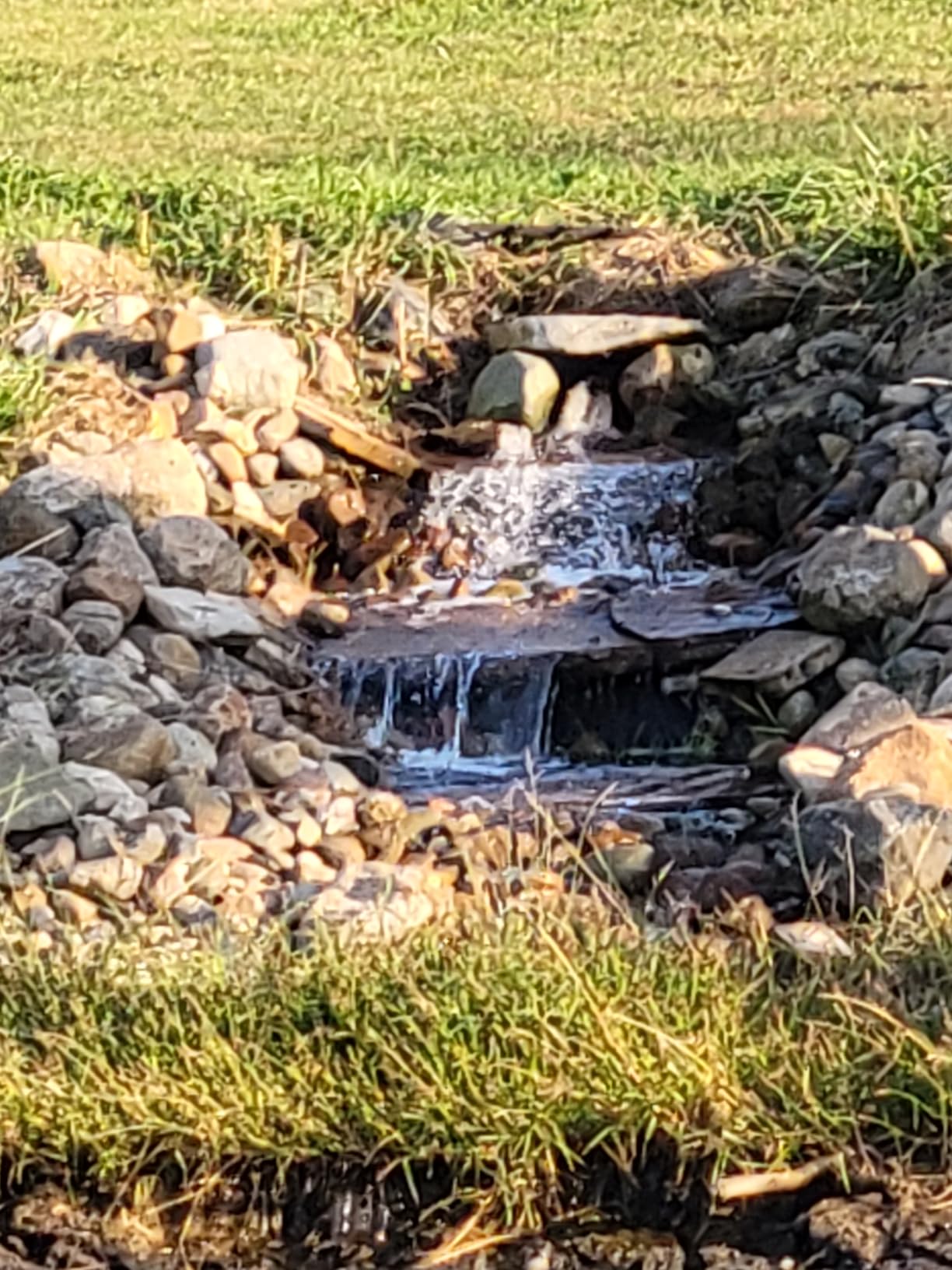
Owners report the pump feeding a waterfall and drain tile almost continuously for a week, and some use it as a standby fire pump, where the 92-foot head is doing more work than the flow. The 2-year limited warranty and lifetime technical support are solid for the category.
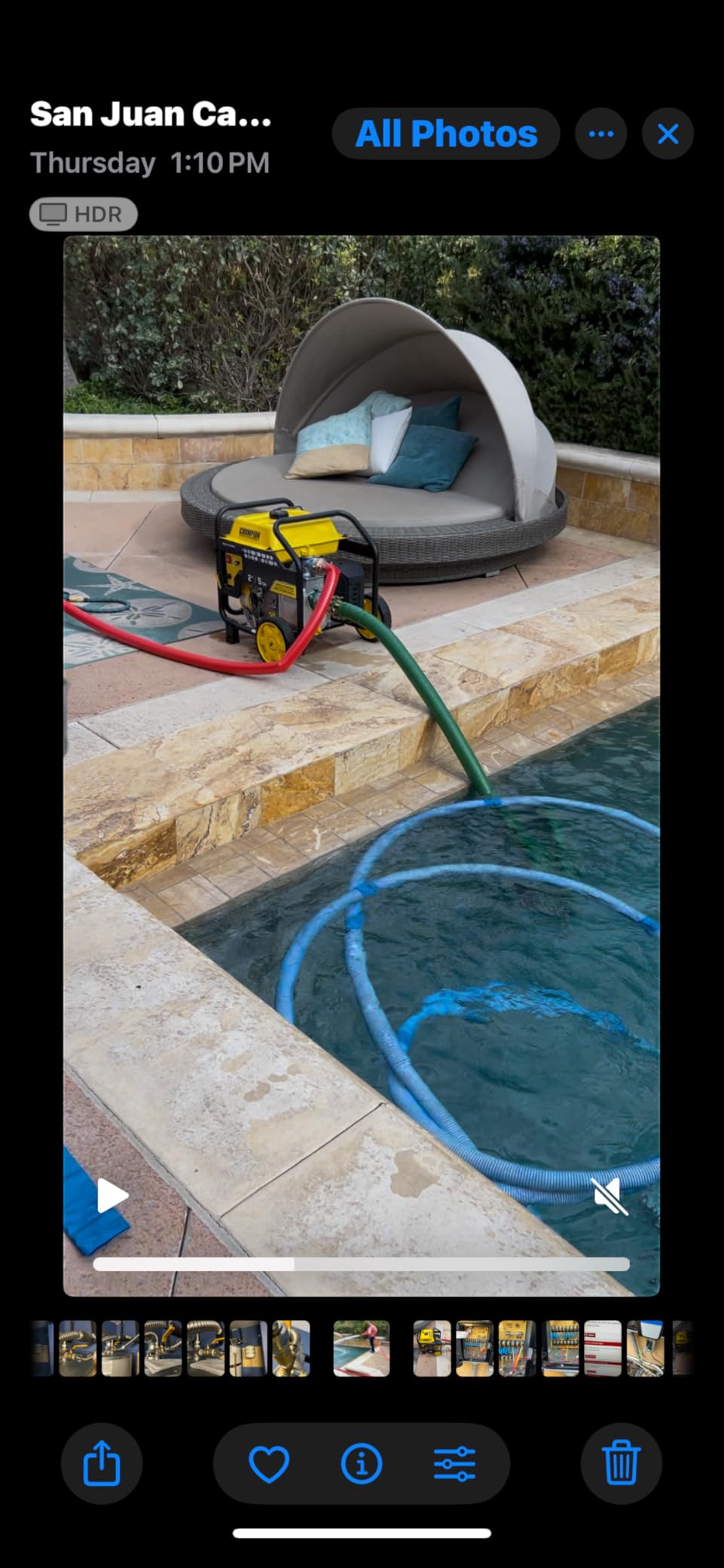
For the Contractor Who Lives in the Truck
A wheel kit changes how a pump is used. At 79 pounds this is the heaviest 2-inch model here, but the never-flat tires and frame are the difference between a unit you can roll from the tailgate to a crawlspace alone and one that needs a second pair of hands every time.
The included kit covers the whole job: a 12-foot suction hose with filter, a 25-foot discharge hose, camlock coupler, clamps, adapters, fittings, nylon tape, and a storage bag. Nothing to source, nothing to leave behind.
The Accessory Weak Link and the Rating Spread
The most common complaint is the supplied plastic suction strainer, described as weak, with the fitting breaking off and being lost in a tank. Replace it with a metal strainer before the first job, and keep a spare in the truck. Several owners across this category make exactly that upgrade.
At 4.0 stars across 35 ratings this is tied for the lowest average in the guide, and the negatives cluster on durability and arrival condition: one unit seized after only two uses over several years, and one arrived broken with a difficult return process. The 1/2-inch solids handling and the complete kit are real strengths, but buy it from a seller with a straightforward return path.
10. Pacer SE2PL E550 Transfer Pump: Best for Saltwater and Chemicals

Pacer Pumps SE2PL E550, Self-Priming Multi-Purpose Water Transfer Pump with 2 Inch Inlet and Outlet, 127 CC Engine, 150 GPM
150 GPM
100 ft TDH
2 in ports
Briggs 127cc
40 lb
Pros
- Glass-reinforced polyester case resists corrosion
- Handles fresh water
- saltwater and many agricultural chemicals
- Self-cleaning double volute with built-in check valve
- Stainless steel fasteners and EPDM elastomers
Cons
- 127cc Briggs engine has less output than 212cc and 224cc units
- 1-year warranty covers the pump only
- Listings conflict on flow and pressure figures
- No written owner review text was available
The Pacer SE2PL E550 is the best gas powered water pump for saltwater, irrigation chemicals, and brine. Its glass-reinforced polyester case resists corrosion in a way that a cast iron wet end does not, and the manufacturer rates it for fresh water, saltwater, and many agricultural chemicals.
It delivers 150 GPM with 100 feet of total dynamic head at 2-inch inlet and outlet, driven by a 127cc Briggs & Stratton 550 series engine. The self-cleaning double volute and built-in check valve are features you rarely see at this price, and both reduce the failure modes that come from a single-volute pump cycling against a closed discharge.
At 40 pounds it is a light machine for its output, and it is made in the USA with a 1-year limited warranty on the pump, with the engine covered separately by its manufacturer. Corrosion-resistant EPDM elastomers and chemical-resistant stainless steel fasteners complete the build.
Where Corrosion Resistance Wins
If your water is going to see salt, fertilizer, herbicide, or animal runoff, the case material decides how long the pump lasts. A polyester case tolerates chemical exposure that slowly pits an aluminum housing, and the stainless hardware resists the rust that eventually seizes a bolted flange.
The 100-foot TDH figure is among the highest in this guide, which makes it useful for lifting from a shallow well or a pond into a high storage tank, provided you accept the lower flow of a 127cc engine.
What to Weigh Before Buying
The 127cc Briggs engine is the smallest in this roundup, and it produces meaningfully less flow at real head than the 212cc and 224cc machines. Rated at 150 GPM with zero lift, expect a substantial drop once you are pumping uphill.
The warranty is also split, with one year on the pump and separate engine coverage, and the listing itself shows conflicting figures, with 150 GPM at 50 PSI in one place and 145 GPM at 40 PSI in another. No written owner review text was available for this listing, so the 4.1 rating across 51 reviews is a thinner signal than the count suggests.
11. TFCFL WP30 3-Inch Pump: Budget Pick for 3-Inch Volume
3inch Gasoline Powered Water Pump 7.5HP 4-Stroke Gas Engine Water Pump 210cc Water Transfer Garden Farm Irrigation Petrol Pump
60 cubic meters per hour
91.86 ft head
26.25 ft suction
3.6L tank
48.5 lb
Pros
- Budget-oriented 3-inch option with a cast iron wet end
- Cast iron impeller and volute for semi-trash wear
- Welded steel roll cage with a wide base
- 3.6 liter fuel tank for extended run time
- Multi-directional discharge and hand start
Cons
- Generic brand with no named engine supplier
- 17 percent of ratings sit at three stars
- 12 percent of ratings are one star
- No written owner review text was available
The TFCFL WP30 is the best gas powered water pump for a homeowner who needs 3-inch flow and does not need a dealer network behind it. Rated at 60 cubic meters per hour, roughly 264 GPM, with 91.86 feet of maximum lift and 26.25 feet of maximum suction, it delivers 3-inch-class volume at a budget-oriented price point.
The wet end is a cast iron impeller and volute, which is the right material for semi trash duty, mounted inside a fully welded steel roll cage with a wide base for stability. A 3.6 liter, roughly 0.95-gallon fuel tank supports long run times, and multi-directional discharge lets you aim the outlet without re-plumbing the run.
At 48.5 pounds with an 18.5 by 14.57 by 15.3 inch footprint, it is smaller and lighter than most 3-inch pumps here, and it is a 210cc four-stroke engine that starts by hand with no wiring required.
What You Get for the Money
The case for this pump is straightforward. If your job is clean or moderately dirty water at high volume, a cast iron wet end, a welded cage, and a cast iron volute is a real build at a budget price, and the flow rate is competitive with the 264 GPM units in this guide that carry a commercial-brand engine.
The wide base and roll cage also matter more than they seem. Pump walking across uneven ground is one of the most common reasons a hose connection eventually fails, and a stable frame reduces that.
Where the Risk Sits
This is a generic brand with no named engine supplier, which means parts availability and service depend entirely on the seller. That is the trade you accept for the price, and it should be a conscious decision rather than a surprise.
The rating distribution is also the widest in the guide: 53 percent five star, but 17 percent three star, which is the highest mid-rating share of any pump we analyzed, plus 12 percent one star. No written owner review text was available for this listing, so verify the pump on the driveway the day it arrives, and check the oil before the first start.
12. NorthStar 2-Inch Semi Trash Pump: Best for Long-Term Durability

NorthStar Semi-Trash Pump, 2in. Ports, 10,010 GPH, 5/8in. Solids
10,010 GPH (166.83 GPM)
5/8 in solids
23 ft suction
2 in ports
Pros
- Owners report units bought 20 years ago still running
- Honda engine starts easy and self-primes quickly
- FCD45 cast iron impeller and volute
- Silicon carbide seals rated harder and stronger than aluminum oxide
- Multidirectional discharge and standard NPT threads
Cons
- Included plastic inlet strainer distorts and causes blockages
- Muffler described as the weakest component
- One unit leaked after less than a tank of fuel
- One unit shipped soaked in oil and would not turn over
The NorthStar 2-inch semi trash pump is the best gas powered water pump for owners who want one to last decades. The long-tail reputation here is unusual: buyers report purchasing a second unit 20 years after the first, calling it a workhorse for filling water trailers and draining pool covers. That repeat-purchase history is worth more than any spec line.
Flow is 10,010 gallons per hour, or 166.83 GPM, the highest 2-inch figure in this guide, with 5/8-inch solids handling, 23 feet of maximum suction lift, 2-inch ports, and standard NPT thread attachments. The wet end is an FCD45 cast iron impeller and volute, and the mechanical seals are silicon carbide, rated by the manufacturer as twice as hard, 15 percent tougher, and 50 percent stronger than common aluminum oxide seals.
Owners consistently praise the Honda engine for easy starting, smooth running, and quick self-priming, and the rotatable discharge is a practical detail that lets you aim the nozzle to avoid kinking the hose.
What the Wet End Is Doing for You
Silicon carbide seals and an FCD45 cast iron wet end are the two specs that explain the longevity. A semi trash pump lives or dies on what happens between the impeller vanes and the wear plates, and cast iron with a carbide seal tolerates sand and grit far longer than an aluminum housing with a cheap seal.
At 166.83 GPM with 5/8-inch solids handling, it handles more volume and more debris than most of the 2-inch pumps here, which is why it appears on contractor and farm shortlists rather than homeowner lists.
The Weak Points Owners Name
The included plastic inlet strainer is the most repeated complaint. Owners report it distorting and causing blockages, and several replace it with a metal strainer, which is a two-minute fix that should be done on day one.
The muffler is described as the weakest component, being relatively loud and prone to rust. One unit developed a leak after running less than a tank of fuel on clear water, and another shipped saturated with oil, would not turn over, and leaked through the box. At 4.1 stars across 57 reviews, the four-star pattern reflects a durable machine with a mediocre arrival inspection process.
Pump Types Explained: Trash vs Semi-Trash vs Transfer
The difference between a trash pump and a semi-trash water pump is the diameter of the solid debris each one will pass, and nothing else matters more when the water is dirty. A full trash pump handles 2-inch to 3-inch solids, a semi-trash pump handles roughly 1/3 inch to 3/4 inch, and a transfer or utility pump is designed for clear or nearly clear water only.
Full trash pumps are a commercial and industrial tool, usually trailer-mounted or skid-mounted with a much larger engine, and they are priced and weighed accordingly. For a homeowner clearing a wet basement, a semi-trash pump is the correct answer, and buying more debris capacity than that is money and weight you never use.
Transfer pumps sit at the other end. They move large volumes of clean water fast with no solids rating at all, which makes them ideal for filling a pool, moving irrigation water from a clean tank, or draining clean water from a new pond.
The rule of thumb: if there is mud, grit, leaves, or gravel in the water, buy for solids handling. If the water is clear, buy for flow rate and head.
How to Choose the Right Size Gas Powered Water Pump
Choose the port size first, because it constrains everything else. A 1-inch pump handles light duty and long runs, a 2-inch pump covers most residential, farm, and light construction work, and a 3-inch pump is for high volume on flat ground such as pool draining, flood recovery, and large irrigation.
Then calculate the flow you need instead of buying the biggest number on the page. Work out your volume in gallons, divide by the gallons per minute you expect after head losses, and add time for setup. For a 10,000-gallon pool, a 141 GPM pump works out to roughly 71 minutes of ideal runtime and about two hours in practice. A 32 GPM pump does the same job in over five hours. A 264 GPM pump does it in well under an hour.
Total head is the misunderstood spec. It is the total vertical lift a pump can produce, combining suction lift, discharge lift, and friction loss in the hose. A pump rated at 100 feet of total head does not push water 100 feet horizontally, which is a different problem solved differently.
Horizontal distance is a friction problem. Every foot of hose costs flow, and the loss is steep, so a long flat run can defeat a pump with plenty of vertical capacity. The practical answer is to run the shortest, straightest, largest-diameter hose you can and let the pump push water the rest of the way.
Then look at the engine. Owners report Honda and Briggs & Stratton engines lasting 10 to 21 years with basic maintenance, and for occasional use a few times a year, engine reliability matters far more than peak GPM. Harbor Freight Predator 212cc pumps get defended by owners as solid machines, with the standard advice being to run the carburetor dry before storage rather than distrust the brand.
If you are choosing between two pumps with similar flow ratings, the engine brand, the warranty length, and whether hoses are included will decide it more often than the GPM difference will.
Priming and Startup Troubleshooting
Priming is the number one frustration with gas powered water pumps, and almost every failure traces back to air getting into the suction side. Fill the priming chamber until water flows out the priming port before you try to start the engine, and never run the engine with an empty chamber.
If a pump will not hold prime, work through these in order. Check every suction hose clamp for tightness, then check the strainer and foot valve for a blockage. Run a short piece of rigid pipe directly into the pump to test whether the problem is the hose, because rigid pipe does not collapse.
Suction hose collapse is the failure nobody expects. Ordinary lay-flat hose can flatten under the vacuum created at the inlet, and a collapsing hose will kill prime without any visible leak. Use reinforced suction hose or rigid pipe for the suction side, and keep the run as short as the site allows.
If the engine will not start, work from fuel to spark. Confirm fresh fuel, because stale gas is the most common cause, and prime the fuel line by pulling the recoil with the fuel cap off until you see fuel. Then check the spark plug gap, which is often set too wide out of the box and requires a feeler gauge adjustment before the first run on budget units.
Before storage, run the carburetor dry until the engine dies and then refill with fresh fuel. This single habit is the most repeated piece of advice across owner communities, and it is what separates pumps that start on the first pull in three years from ones that need a carburetor kit.
Safety, Noise and Seasonal Storage
Never run a gas powered water pump indoors or in an enclosed space, including a garage with the door open for a few minutes. Carbon monoxide is colorless and odorless, and the exhaust port must always be outside any enclosed area. This is not a risk worth taking for a few gallons of water.
Plan for noise. Commercial 3-inch pumps with 224cc engines measure around 85 decibels, and at that level hearing protection is the right call for anything beyond a short task. Also treat the exhaust and the muffler as hot, and keep the pump well clear of dry grass and brush.
For seasonal storage, drain the fuel tank or run the carburetor dry, change the oil, clean the strainer, and store the pump somewhere dry and above freezing. If your pump has a drain port, open it. Store hoses loosely rather than tightly coiled at the coupling.
For emergency readiness, keep the pump fueled or at least with a full tank of fresh gasoline, the oil topped off, and the spark plug gap set correctly, checked twice a year. A pump that will not start is not a backup, and owners consistently recommend a test run immediately after delivery for exactly that reason.
Thin air is a real factor at altitude. Above roughly 6,000 feet, a naturally aspirated small engine loses power and may refuse to start without a choke adjustment, which matters if your water is at elevation and your pump is at the truck.
Frequently Asked Questions
What is the difference between a trash pump and a semi-trash water pump?
Solids handling is the whole difference. A full trash pump passes solids up to 2 or 3 inches and is a commercial machine, while a semi-trash pump passes roughly 1/3 inch to 3/4 inch debris. A transfer or utility pump handles clear water only. If there is mud, grit, or leaves in the water, buy a semi-trash pump rather than a transfer pump.
What size gas water pump do I need?
A 1-inch pump suits gardens, rain barrels, and long-distance light duty. A 2-inch pump covers most home, farm, and light construction work and is the most versatile size. A 3-inch pump is for high volume on flat ground such as pool draining, flood recovery, and large irrigation.
How far will a 2 inch trash pump pump water?
Horizontal distance is limited by friction loss in the hose rather than by the pump’s head rating. A 2-inch semi trash pump rated at 92 to 100 feet of total head can realistically push water several hundred feet across reasonably flat ground, but flow drops steadily with every foot of hose, so the shortest and largest-diameter run gives you the most water at the end.
How long does it take to drain a 10000 gallon pool?
Divide the pool volume by the pump’s realistic flow. A 32 GPM pump takes over five hours, a 141 GPM pump takes about two hours, and a 264 GPM pump finishes in roughly an hour, before allowing for head loss and a long discharge run.
Are predator trash pumps any good?
Owners repeatedly defend Harbor Freight Predator 212cc semi trash pumps as capable machines, and the common advice is to run the carburetor dry before storage rather than distrust the brand. As always, test the pump immediately after delivery, since quality control is inconsistent across budget brands.
What is the most reliable water pump brand?
Engine brand is the strongest reliability signal in this category. Owners report Honda and Briggs u0026amp; Stratton engines lasting 10 to 21 years with basic maintenance, so pumps built around those engines, such as the Honda WB20XT4A and the NorthStar 2-inch semi trash pump, lead for long-term dependability.
Can you run a gas water pump indoors?
No. A gas engine produces carbon monoxide, which is colorless and odorless. Always operate a gas powered water pump outdoors with the exhaust vented away from doors, windows, and enclosed spaces.
Why won’t my gas water pump start?
Stale fuel is the most common cause. Check the fuel, prime the fuel line with the cap off until fuel reaches the carburetor, and inspect the spark plug gap, which is often too wide on new units and needs adjusting with a feeler gauge before the first run.
The Verdict on the Best Gas Powered Water Pumps
If you want one pump that covers almost every job, the Honda WB20XT4A is our choice for 2026. At 164 GPM, 105 feet of total head, 5/16-inch solids handling, a vibration-isolated Honda OHV engine, and 349 owner reviews behind it, it is the most complete general-purpose machine in this guide, and you should budget for hoses separately.
Buy the BILT HARD 2-inch semi trash pump if you want to be pumping the day it arrives, since the 50-foot discharge hose, 12-foot suction hose, coupler, strainer, and fittings are all in the box. Buy the Honda WX10 if carrying the water is the hard part, and it is only 13 pounds. Choose the Champion 3-inch when the water is genuinely dirty, because 0.75-inch solids handling is a different class of machine.
Whatever you pick, run it for ten minutes the day it arrives, set the spark plug gap, replace any plastic strainer with a metal one, and run the carburetor dry before storage. Those four habits decide whether a gas powered water pump still starts on the first pull in five years. For the lighter-duty indoor jobs where electricity is reliable, our [8 Best Electric Water Pumps](https://www.minormania.com/best-electric-water-pumps/) guide covers that side of the category, and our [10 Best Gas Log Splitters](https://www.minormania.com/best-gas-log-splitters/) roundup covers the other common small-engine job around the yard.