
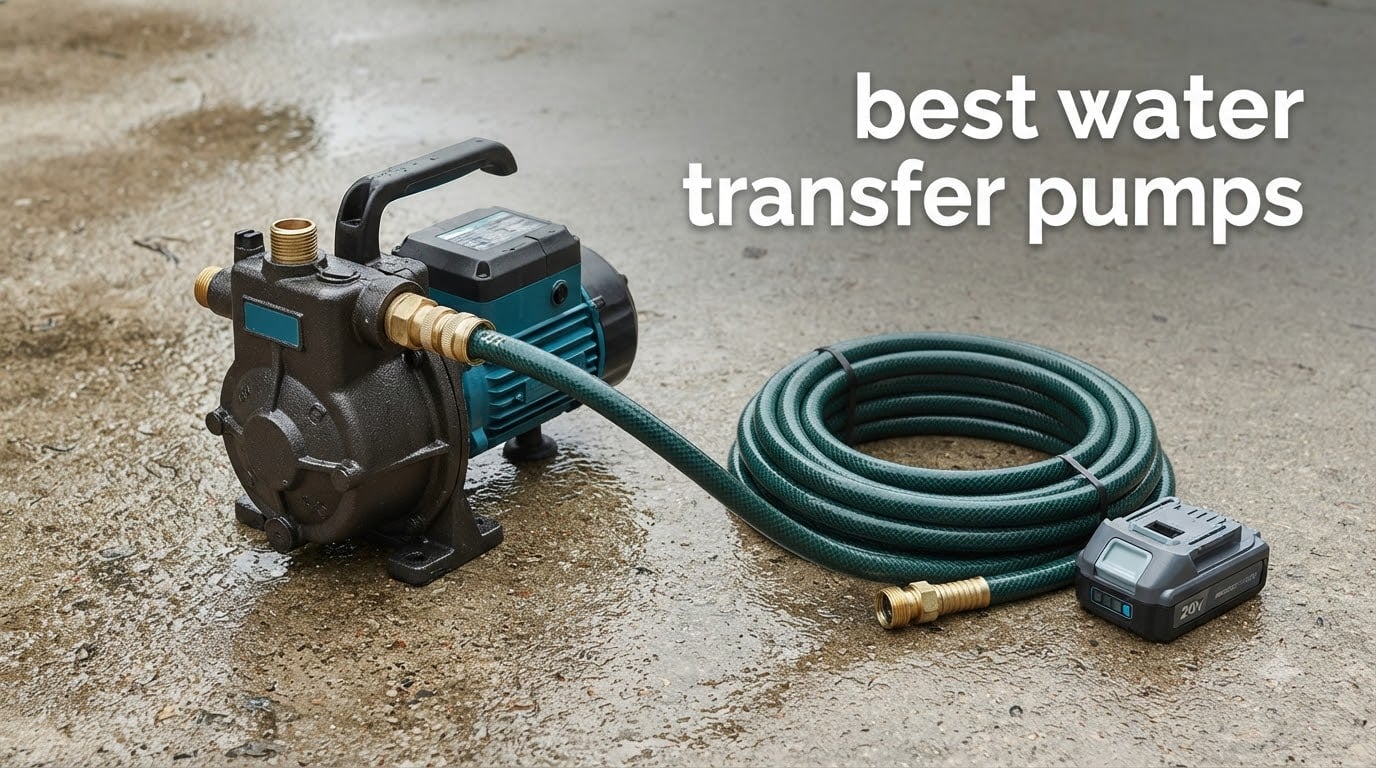
There is one question sitting at the top of every water transfer pump search, and almost nobody answers it: can you just buy the cheapest transfer pump instead of an expensive house pump or constant pressure pump? A poster on r/OffGrid asked exactly that while describing a setup with about 600 watts of power, 40 meters of head, an 8 meter lift, and a tank 15 meters away. Short answer: yes, for a one-way move from a tank to a tap or a barrel, a transfer pump is the correct tool. No, if you need steady pressure at a fixture or automatic storage-tank management.
That distinction is where this guide starts. We compared 12 water transfer pumps across cordless, 115V AC, and drill-powered classes, weighing each one against the four questions that actually decide the purchase: how much water you need to move, how far and how high it has to travel, what power you have at the site, and whether anyone drinks the water coming out the other end. Every pick below names a real model, a real flow rate, and one specific way it fails.
We also pulled in what people actually say after a season of use. On Thor Forums, the most-repeated advice for moving 7-gallon jugs into an RV fresh-water tank is a drill-operated pump or a 12V unit on a jump box or tool battery, and the same thread warns that budget pumps lose lift the moment you put a filter inline. A commenter on r/WindowCleaning simply recommends going to a discount retailer and buying a 120V transfer pump. Both stances are right, for different jobs. If you want the broader picture of what a pump moves beyond water, our fluid transfer pump guide covers the other fluid classes.
Three pump types, three jobs. A water transfer pump is a portable centrifugal pump that you fill with water by hand, then run to move water in one direction until you switch it off. A constant pressure pump is a fixed installation that builds and holds pressure continuously, which is what a house needs and a garden hose does not. A submersible utility pump drops into the water it is moving, which removes the priming problem entirely but means the motor can only handle debris, not clean potable lines. Buying the wrong one of those three is the most common expensive mistake in this category.
Table of Contents
Top 3 Water Transfer Pump Picks (September 2026)

Milwaukee 2771-20 M18 Transfer Pump
- 8 GPM flow
- 18 ft max lift
- Runs on M18 REDLITHIUM batteries
- Bare tool - battery sold separately

VEVOR 1/2 HP Cast Iron 1600 GPH Pump
- 1600 GPH / 26.67 GPM
- 120 ft max lift
- Cast iron with rust-proof treatment
- Filter and spare carbon brush included
TecHome 1/10 HP 330 GPH Utility Pump
- 330 GPH / 5.5 GPM
- 3/4 inch GHT ports fit garden hose
- Aluminum alloy body with thermal overload
- Suction hose and strainer kit included
All 12 Best Water Transfer Pumps Compared for 2026
1. Milwaukee 2771-20 M18 Cordless Water Transfer Pump – Best Overall
Milwaukee 2771-20 M18 Transfer Pump
8 GPM flow
18 ft max lift
M18 REDLITHIUM battery
Made in the USA
Pros
- Largest five-star share we recorded at 85 percent
- Moves 8 GPM with up to 18 feet of lift
- No power cord to trip over or find an outlet for
- Light enough to carry between jobs
Cons
- Battery and charger sold separately
- Lower flow than 1/2 HP corded cast iron pumps
This is the pump we come back to. At 4.7 stars across more than a thousand ratings it has the strongest combination of rating and review volume in the group, and the 85 percent five-star share is the largest we recorded across all 12. Owners describe the same thing repeatedly: it starts instantly, moves real water, and never gets in the way.
Eight gallons per minute with 18 feet of lift is enough for a hot tub, a rain barrel set, an RV tank fill, or a job-site puddle. It will not move what a 1/2 HP cast iron pump moves, and you should not pretend otherwise. But for the majority of people reading this, 8 GPM is the difference between finishing a task and standing there watching it drip.
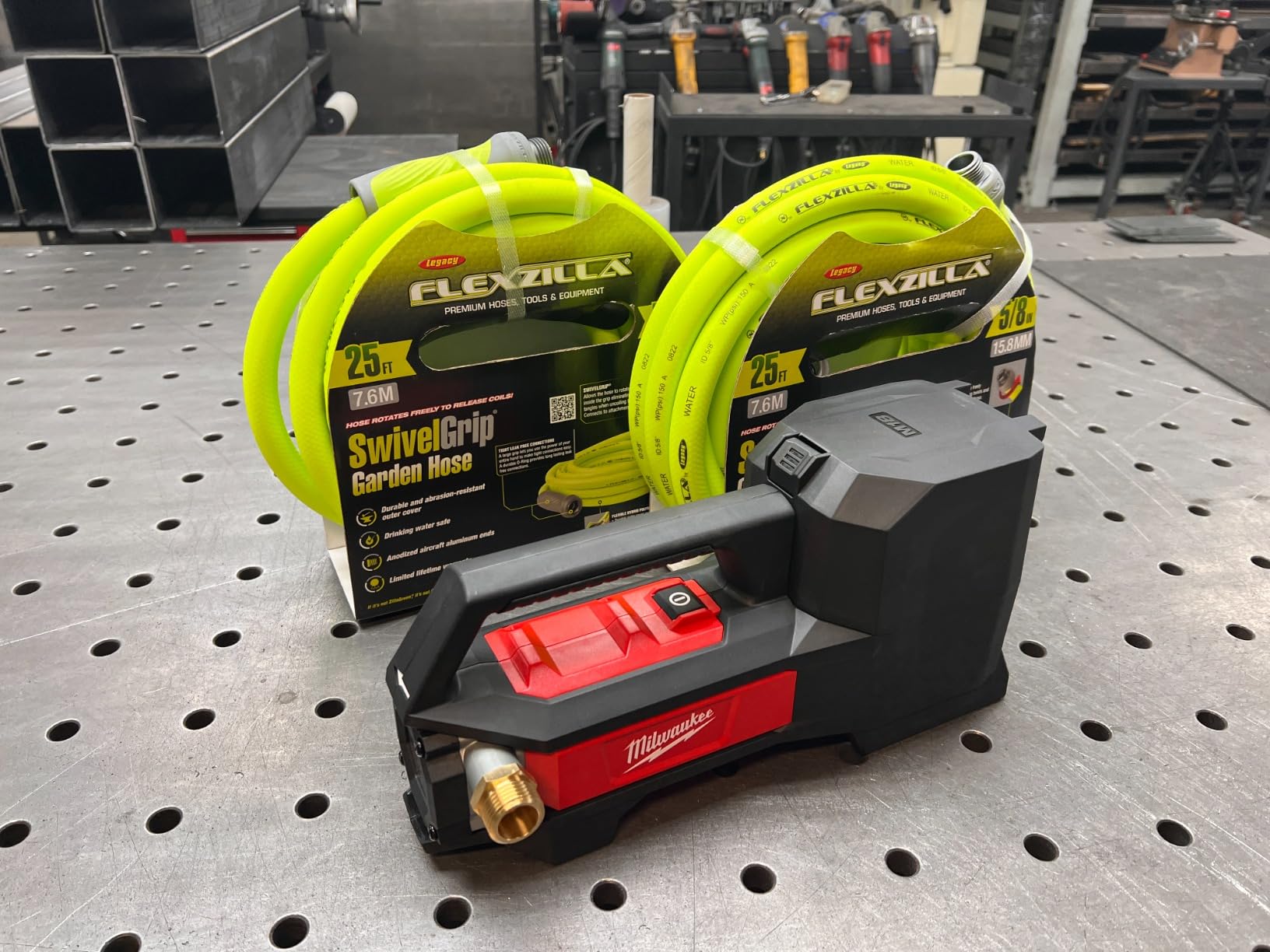
The cordless argument is the real one. There is no extension cord to run across a wet floor, no outlet to find on a job site, and no trip hazard. If you already own M18 REDLITHIUM packs, this pump costs you the price of one small tool and nothing else.
Our one caveat: it comes as a bare tool. The battery and charger are purchased separately, so if you do not already run M18, that changes the entry cost significantly. Check what you already own before you commit.
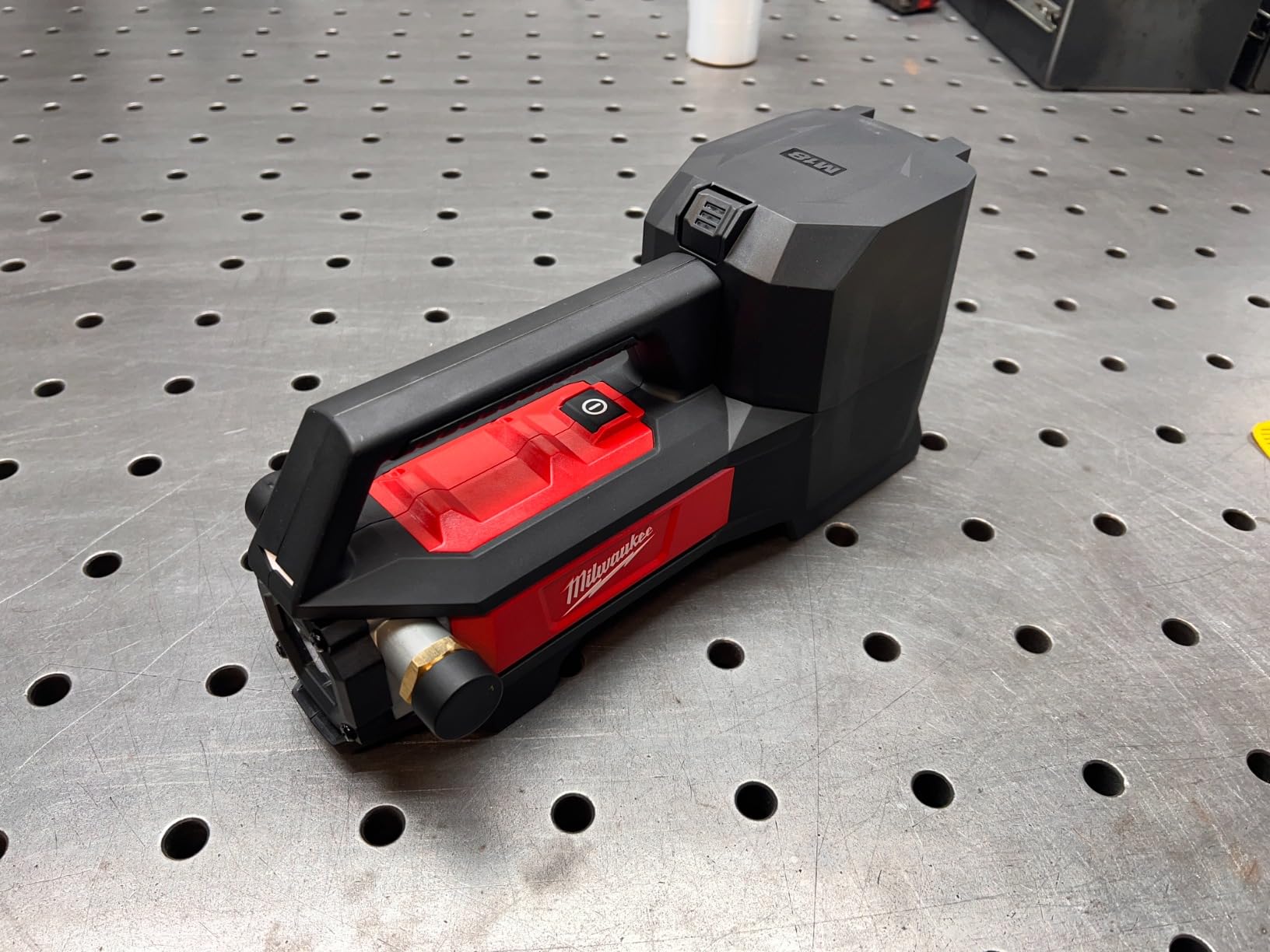
Who the M18 Transfer Pump Fits Best
If you are already a Milwaukee platform owner, this is close to a no-brainer. The pump shares batteries with your drills, drivers, and lights, and the whole point is that you can pick it up and take it where the water is instead of where the outlet is.
It also suits anyone doing HVAC or refrigeration drainage work, because 8 GPM handles a condensate line or a small flooded pan without ceremony.
Where the M18 Falls Short
Eight gallons per minute is roughly a third of what the Wayne PC4 and VEVOR deliver. If you are draining a 200-gallon hot tub, moving irrigation water for a whole garden, or clearing a genuinely flooded basement, the cordless route will take longer than you want.
Community opinion in r/Tools generally treats Milwaukee cordless systems as more durable than Ryobi, with battery platform cost as the trade-off, which is why the M18 sits at the top of our list, and why we would not steer a Ryobi or DeWalt owner away from their own ecosystem for a single pump.
2. Wayne PC4 1/2 HP Cast Iron Water Transfer Pump – Best for Basement Water
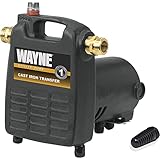
WAYNE PC4 1/2 HP Cast Iron Multi-Purpose Transfer Pump – Non-Submersible Utility Water Pump with Suction Strainer, Model 55832
1/2 HP cast iron
24.17 GPM
50 ft max lift
Non-submersible
Pros
- All cast iron pump and motor housing
- 1/2 HP motor gives 24.17 GPM and 50 feet of lift
- Suction strainer picks up water from flat surfaces
- Integrated handle plus brass 3/4 inch hose adapters
- Assembled in the USA with a 1 year warranty
Cons
- Non-submersible so the motor must stay dry
- Weighs 14 pounds and is awkward for one-handed carry
- Only a 1 year warranty
When water is coming through the door and you need it gone now, flow beats portability. The Wayne PC4 moves up to 24.17 gallons per minute and lifts 50 feet, and it is built entirely from cast iron in both the pump and the motor housing. That construction is the whole argument: plastic-bodied utility pumps crack or deform, cast iron does not.
At 4.3 stars over 1192 ratings it has one of the healthiest rating distributions in this roundup, with 70 percent five-star ratings. The design is old and simple, and the simplicity is why it has stayed on the market.
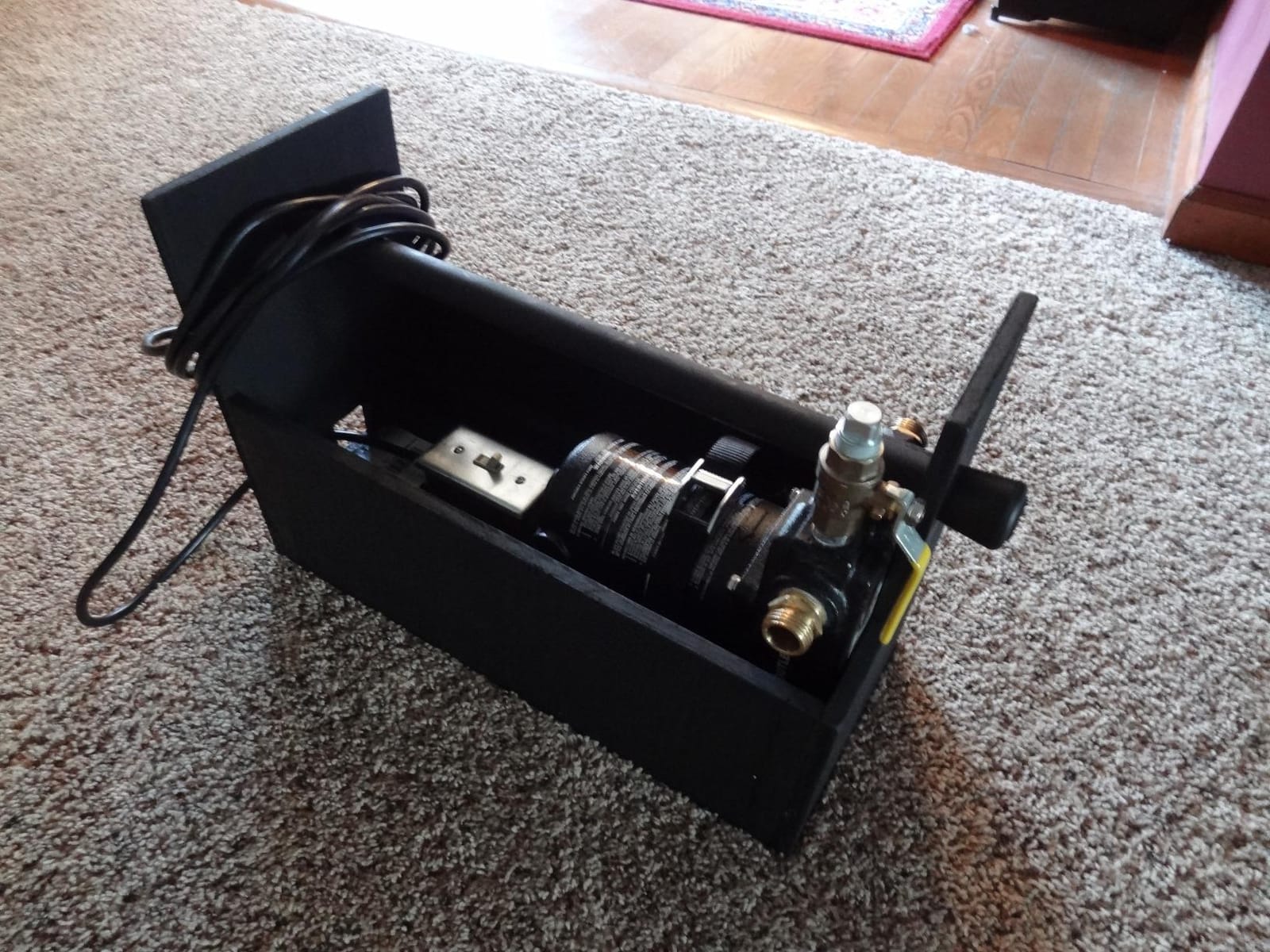
Two details make it genuinely convenient rather than merely capable. The integrated carry handle means you are not gripping a hot motor body, and the brass 3/4 inch garden hose adapters that come in the box save you a trip to the hardware store at two in the morning.
The suction strainer is the part people underrate. Because the pump is non-submersible, the strainer lets you pull water off a flat garage floor or a driveway where you cannot submerge anything, which covers more real basement jobs than people expect.
When the PC4 Earns Its Weight
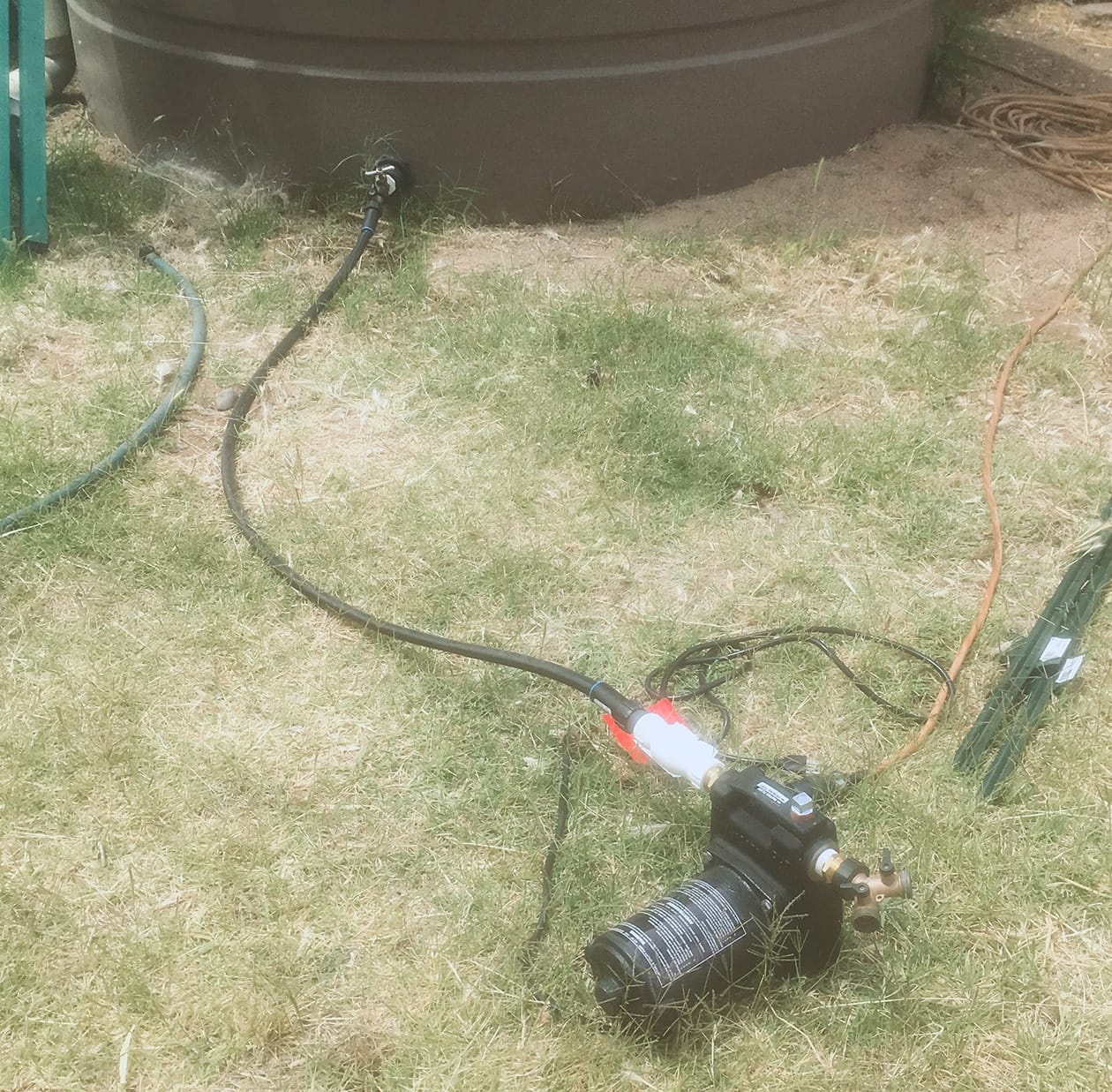
Flooded basement, sump pit overflow, water heater replacement, flushing a line. This is the pump for jobs where the volume of water is large, the motor will run for an hour or more, and nobody cares what the pump weighs.
It is also the pick if you are moving a serious volume from a rain barrel system into irrigation, because 24 gallons a minute empties a large barrel before the coffee is ready.
What to Know Before You Buy
Fourteen pounds is a real weight, and a nonsubmersible cast iron pump is a two-person lift in a flooded stairwell. If you are moving it between jobs regularly, the cordless picks above handle that far better.
It also demands discipline: prime the pump head before every start and never run it dry. Dry running is how mechanical seals die, and on a cast iron pump with a brass shaft, that is the single most common reason one dies early. Watch the electric water pump reviews for the general safety framing before a storm season.
3. DeWalt DCE050B 20V MAX Cordless Transfer Pump – Best Cordless Jobsite Pump

DEWALT 20V MAX Transfer Pump, 10 GPM, Powerful and Lightweight, Profesional Grade Versatility, Bare Tool Only (DCE050B)
10 GPM on tap water
25 ft lift; 4.5 GPM at 45 ft
Handles glycol mixes
Self-priming
Pros
- Highest cordless output here at 10 GPM on tap water
- Works with glycol and water mixes for HVAC
- self-priming with an LED power switch for clear feedback
- Lightweight cordless design with no cord on the job
Cons
- Battery and charger sold separately
- Smaller review base at 190 ratings
- Output falls to about 4.5 GPM at 45 feet of head
The DCE050B is the fastest cordless transfer pump we found, moving up to 10 gallons per minute on tap water with a 25 foot lift and a 300 gallon transfer per charge. At 4.6 stars it is well rated, though the listing is newer than most here with 190 ratings, so we hold that score with slightly less weight than the rest.
What makes it unusual is the glycol capability. It handles a 60 percent water and 40 percent propylene glycol mix, which means it is not only a water pump. Technicians draining a chiller or purging a hydronic loop can use the same tool.
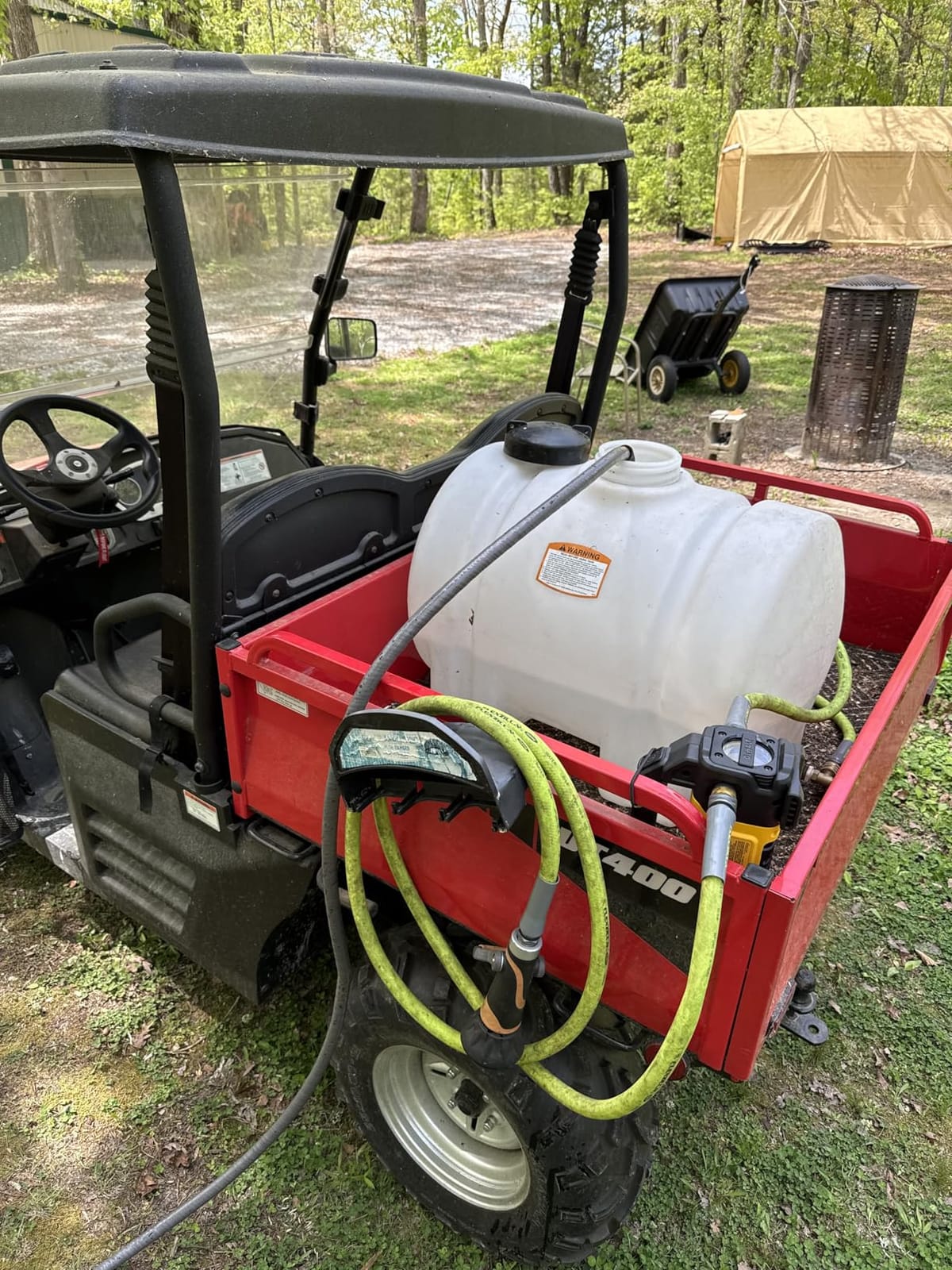
The self-priming design and the LED-embedded power switch are small quality-of-life details. In bad light, on a wet deck, you can tell at a glance whether the pump is energized, and you do not have to hold a button down.
It also holds 4.5 GPM at 45 feet of head, which is a genuinely useful number. Many transfer pumps fall off a performance cliff much earlier, and this one keeps moving water when the lift gets serious.
Where the DCE050B Earns Its Place
If you run DeWalt 20V MAX, this is the strongest cordless transfer pump in the roundup on raw numbers. If you run something else, the battery ecosystem decides it for you, and that is the honest constraint of every cordless pump on this list.
HVAC and refrigeration contractors will get more out of it than almost anyone, because the glycol tolerance is a capability no other pick here claims.
Limits Worth Knowing
It is a bare tool. The battery and charger are extra, and on a platform you do not own that can be the dominant cost of the purchase.
Flow falls from 10 GPM to about 4.5 GPM as head climbs to 45 feet, which is normal pump-curve behaviour but surprises people who read only the headline number. If you are moving water across a long horizontal run with real lift, plan on the low-head figure, not the high one.
4. Milwaukee M12 Stick Transfer Pump – Best for Trenches and Meter Boxes

Milwaukee Electric Tool M12 Stick Transfer Pump
9 GPM
Stainless steel body
3.8 lb
M12 cordless
Pros
- Owners report it outruns a household spigot
- 3.8 lb stainless steel body is easy to carry and store
- Shares M12 batteries with drills drivers and lights
- Handles leaves and light debris without clogging
Cons
- Small M12 packs drain fast so use 4.0 Ah or larger
- About 30 minutes of runtime per charge
- Battery and charger usually bought separately
This is the highest-rated unit in the roundup at 4.8 stars, though the review base of 139 is one of the smallest, so we treat it as promising rather than proven at the same level as the M18. The stainless steel body is unusual in a stick pump, and it is the reason the numbers hold up.
Nine gallons per minute across a stick format is a lot of throughput for something you can carry in one hand. Owners report it emptying a 40 gallon wheeled bin quickly and running ahead of a household spigot, which tells you how little restriction a 3/4 inch outlet imposes here.
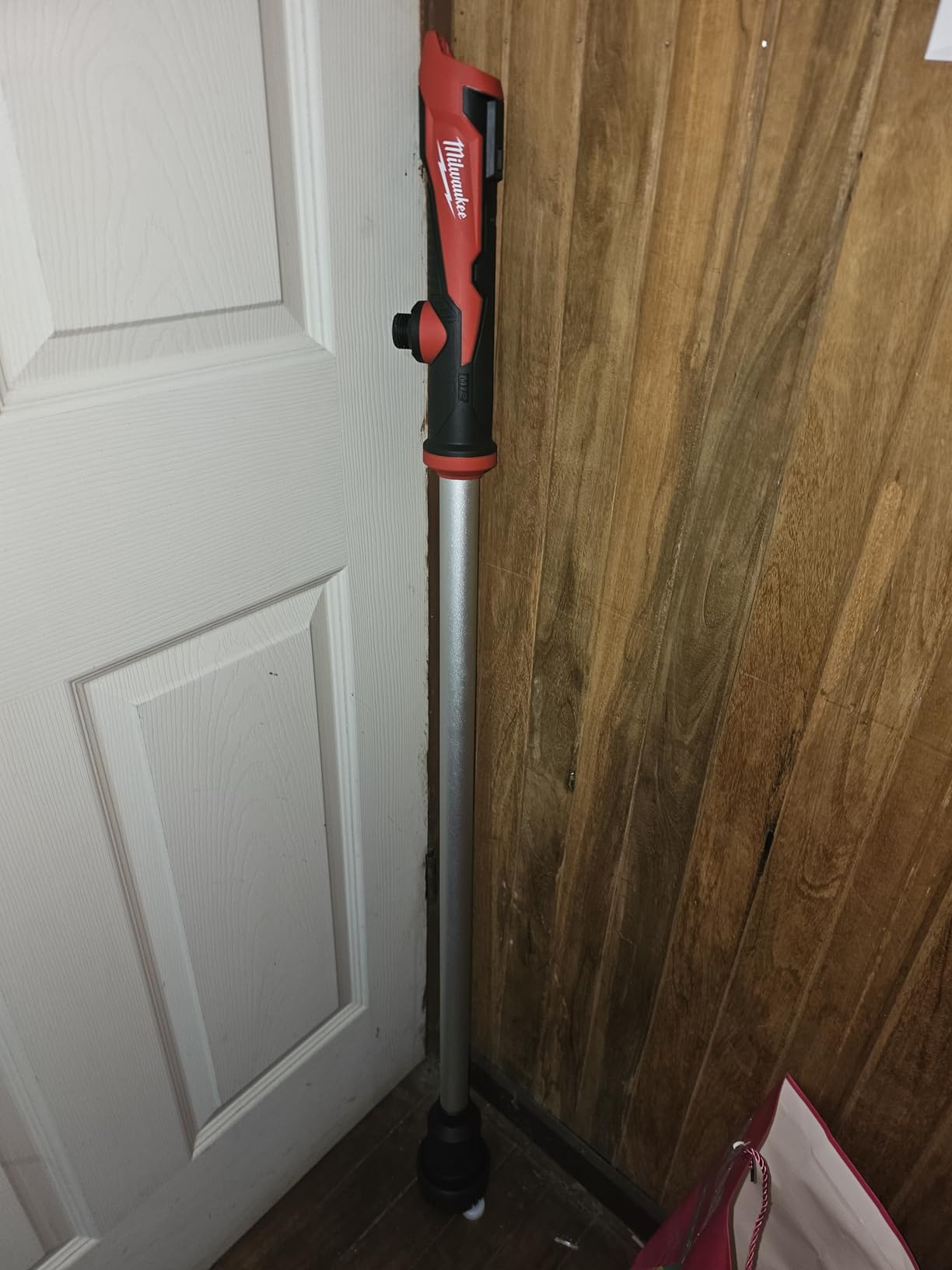
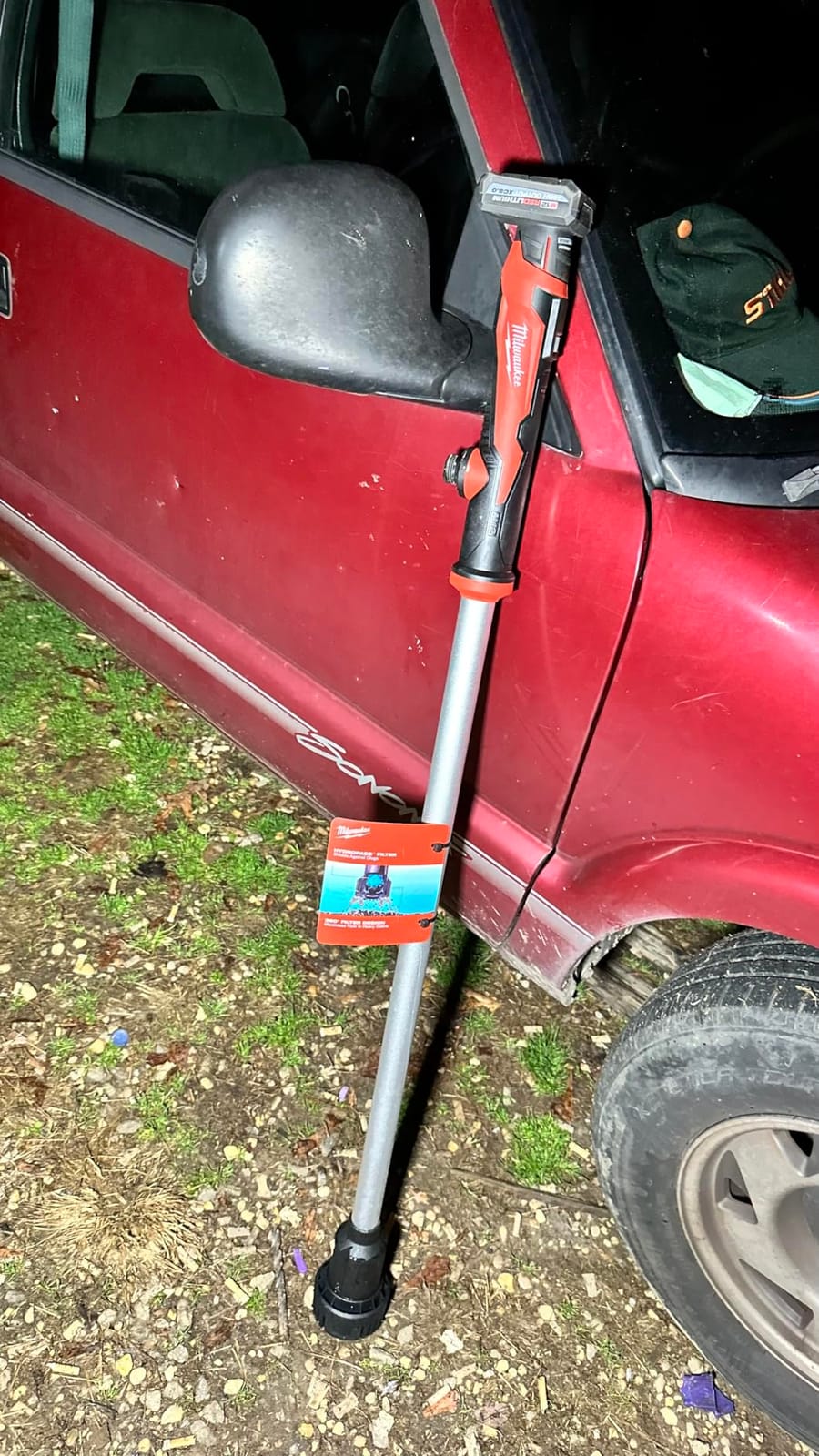
The design intent is narrow spaces, and it is good at them. Catch basins, meter boxes, trenches, and sump pits are exactly the places a bulky cast iron pump will not fit and a 3.8 lb stainless stick will. The listed body is a slim barrel rather than a box.
It also tolerates debris. Owners use it on pond and pool draining, fish tank water changes, window well evacuation during heavy rain, and small boat bilging without the clogging problems that plague small impellers.
Best Uses for the M12 Stick
Window wells, meter pits, trenches, and low spots are where nothing else fits. RVers and boaters who already carry M12 packs get a second, smaller battery ecosystem benefit here rather than adding a new one.
If your water is full of leaves and grit rather than clean, this is the pick in the cordless class. Note the spec sheet lists a maximum lifting height of 120 cm, which is a much lower ceiling than the other cordless pumps, so plan around that.
The Battery Catch
The M12 platform is the most popular small-cordless ecosystem there is, and that cuts both ways. The packs are small, they drain quickly under load, and owners consistently recommend 4.0 Ah or larger packs. Budget for roughly 30 minutes of runtime per charge.
This is the pump we would buy for someone who already has two M12 batteries and a charger. For someone starting cold, the M18 at number one is the better entry point.
5. FORDWALT 20V MAX Stick Transfer Pump – Best Multi-Speed Cordless Pump

Brushless Stick Water Transfer Pump Compatible with Dewalt 20V MAX Battery
720 GPH / 12 GPM
Three flow speeds
26 ft max head
20V MAX battery
Pros
- Three selectable speeds let you match output to the job
- 36 inch submersible barrel fits barrels and low spots
- Five protections including dry-run and low-voltage
- 5 year warranty
- Foldable design stores flat in a truck bed
Cons
- Not affiliated with DeWalt and battery is not included
- 36 inch barrel limits reach in tight spaces
- 720 GPH is well below half horsepower corded output
The FORDWALT is the only cordless stick in this roundup with three selectable flow rates, at 720, 600, and 480 GPH, driven by a 12000 RPM brushless motor. That control matters when you are moving delicate water rather than bulk volume, and it is the reason this unit earns its slot.
At 4.4 stars with 880 ratings and 76 percent five-star feedback, it is well proven for a newer listing. The five built-in protections, covering dry run, low voltage, overload, over current, and over heat, are the most complete safety package here.
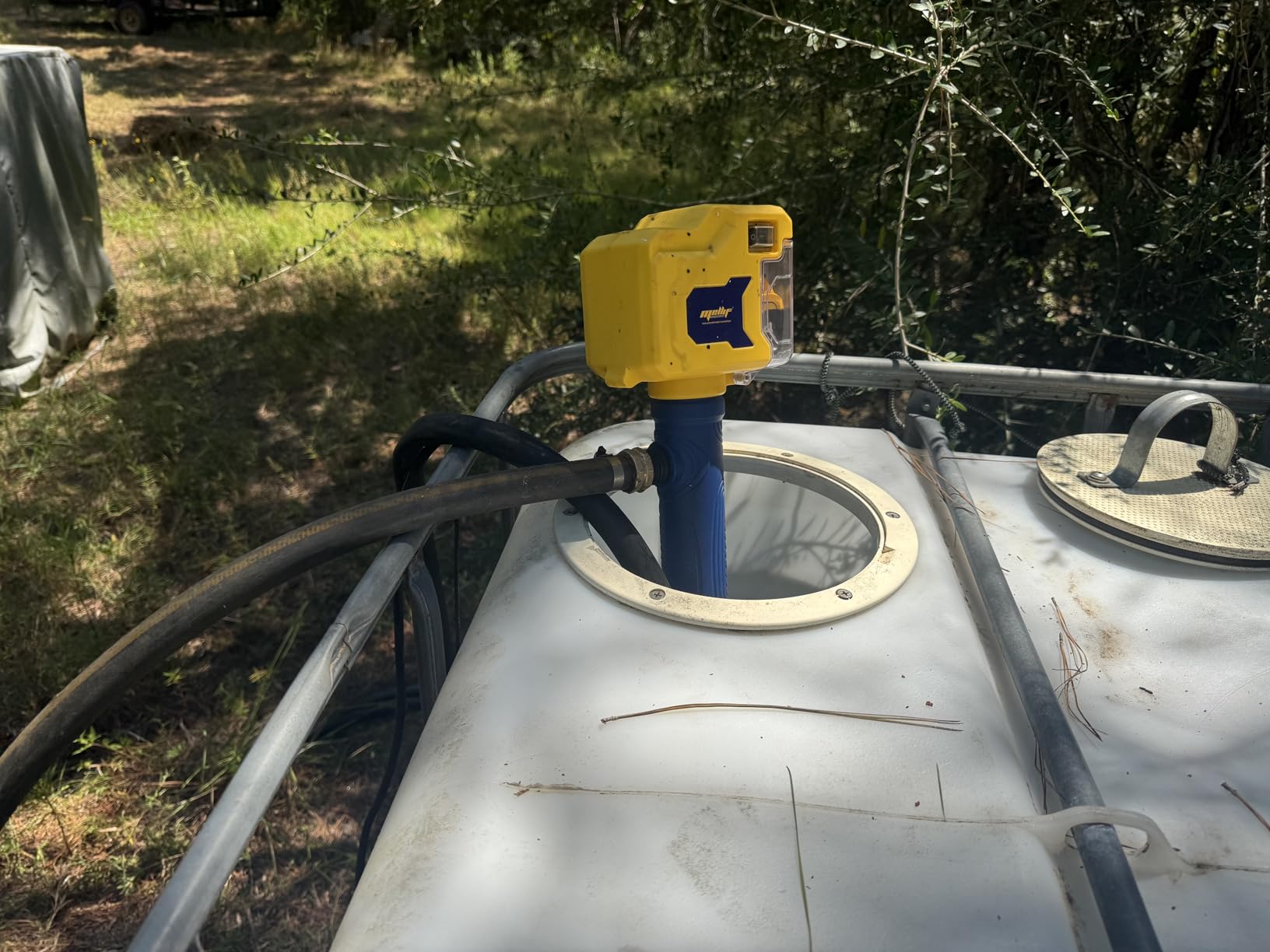
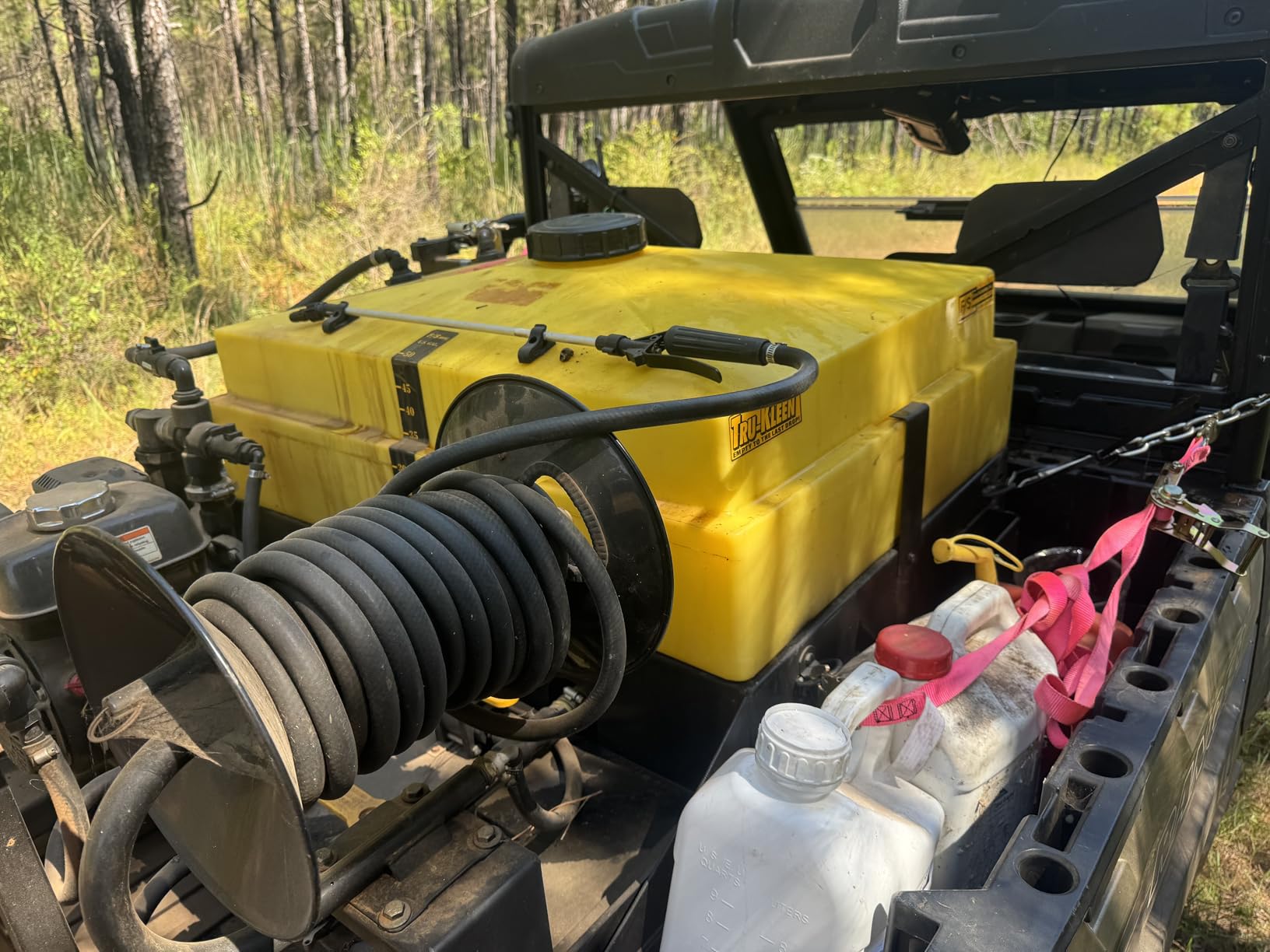
The 36 inch submersible aluminium barrel is what makes it a stick pump rather than a general utility pump. It drops into a rain barrel, a hot tub, or a low spot in a yard and pulls from the bottom, with a detachable sediment filter and a 3/4 inch outlet that fits a standard garden hose.
The foldable design with one-piece internal wiring is a genuinely thoughtful touch. Truck-bed storage is a real constraint for anyone doing this work regularly, and a folding barrel solves it.
Where It Makes Sense
Slow settings are for aquariums, koi ponds, and any water with living things in it. Running a high-speed impeller through a fish tank at 720 GPH is not a kindness. Dropping to 480 GPH gives you the same pump at a pace that suits the job.
It is also a good fit if you already run 20V MAX packs, though we would pair the 20V ecosystem with the DeWalt pump at number three for warranty and support reasons rather than this one.
Two Things to Verify First
This product is not affiliated with DeWalt. It fits a 20V MAX battery physically, and that is the extent of the relationship. Confirm your battery fits the enlarged compartment before you commit, and factor in that the battery and charger are extra.
The 26 foot head rating is fine for most lifting, but a 36 inch barrel is a long object to lower into a narrow well or a deep tote. For tight spaces, the slimmer Milwaukee M12 stick is the better tool.
6. VEVOR 1/2 HP Cast Iron Water Transfer Pump – Best Value at 1600 GPH
VEVOR Cast Iron Water Transfer Pump, 115V AC, 1600 GPH 1/2HP, Portable
1/2 HP cast iron
1600 GPH / 26.67 GPM
120 ft lift
10 ft cord
Pros
- 1600 GPH throughput in a 1/2 HP cast iron body
- Cast iron body with rust-proof treated pump head
- Integrated switch and tool-free inlet disassembly
- Includes filter spare carbon brush and brass connectors
Cons
- Heaviest unit in the roundup at 17.4 pounds
- Must be primed before each use and never run dry
- 15 percent one-star share suggests uneven build quality across units
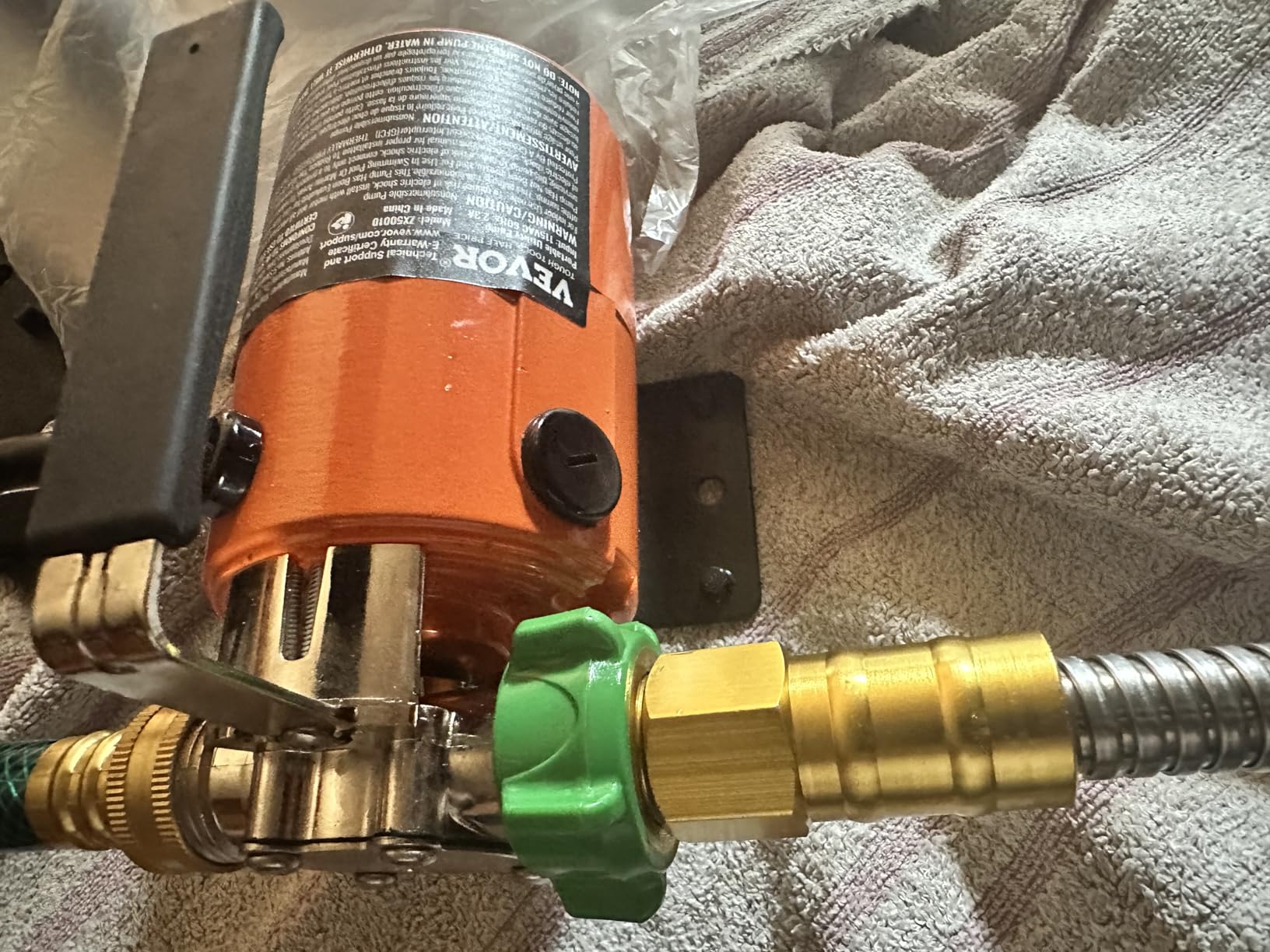
The VEVOR carries the output-per-outlay advantage in the 1/2 HP class. A cast iron pump rated at 1600 gallons per hour and 26.67 GPM, with a stated 120 foot maximum lift, moves a comparable volume to the Wayne on a much smaller outlay. If you are moving serious volume and want to spend as little as possible, this is the calculation that matters.
Owners like the raw output and the kit. It comes with a filter, a spare carbon brush rated for up to 200 hours of service, and two brass connectors, which is a more complete box than most competitors in its class.
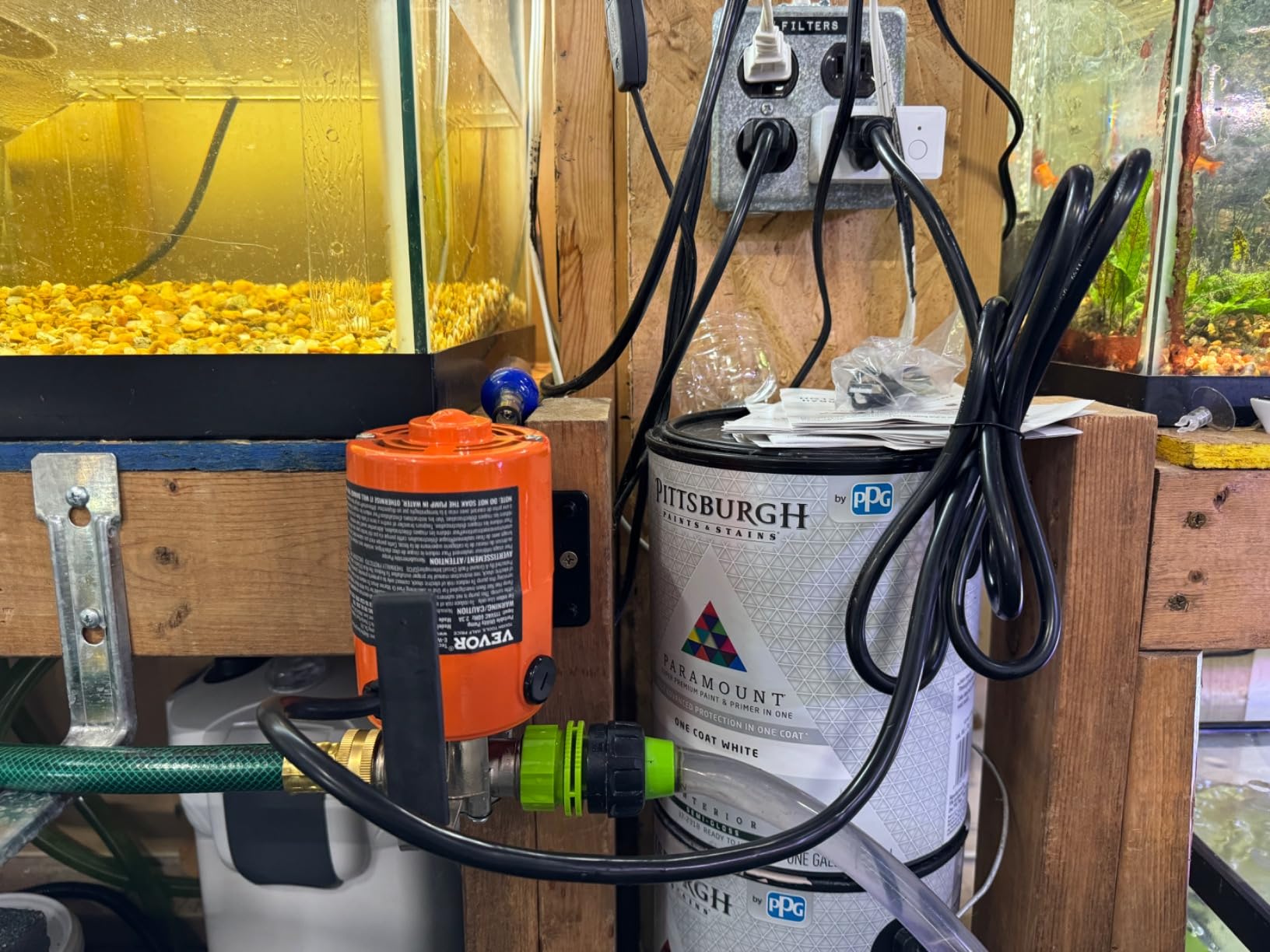
The build details are above what the price suggests. The pump head and water path get a rust-proof electrophoresis treatment, and the inlet disassembles without tools for cleaning, which is exactly the part that clogs when you are pulling pond water.
At 3.9 stars with 984 ratings it is not the smoothest listing in the set, and we want to be straight about where that comes from. Reviewers frequently raise the weight at 17.4 pounds and the need to prime it every single time.
When the VEVOR Is the Right Buy
Pond work, pool drainage, rain barrel systems, and any job where the volume is measured in hundreds of gallons. The 1600 GPH figure translates into genuinely fast transfers rather than a spec-sheet claim.
It suits a buyer who prioritises throughput and recognises the trade-offs, which is a reasonable position for a pump you will use hard in warm weather rather than occasionally around the house.
Where the Rating Comes From
Fifteen percent one-star feedback points to uneven build and reliability quality, and we would treat that as a real signal. A noticeable minority of reviews report failures after moderate use rather than a single isolated fault.
The concrete failure mode to know is the dry run. The manufacturer instructions are explicit: add water through the inlet to submerge the impeller before each use, do not put the pump in the water, and do not run it dry. Skip the priming step and you burn the seal. If you want a heavier duty answer with a longer track record, the Wayne PC4 is the same horsepower with a much cleaner reliability history.
7. TOPWAY 1/2 HP Cast Iron Water Transfer Pump – Best for Barrels and Totes

TOPWAY 1/2HP 1560GPH Portable Cast Iron High Pressure Utility Transfer Water Pump with Built-in On/Off Switch,Hose connectors & Suction Strainer.
1/2 HP cast iron
1560 GPH
120 ft lift
7 ft cord with switch
Pros
- One owner emptied a 275 gallon tote in about 40 minutes
- Self-priming with no inlet or outlet valves to adjust
- Quieter than cheaper plastic utility pumps
- Built-in switch and 7 ft cord allow remote start stop
- Includes brass connectors filter tape and spare carbon brush
Cons
- Priming plug can arrive painted shut and needs a wrench
- Threads on the outlet fitting can leak after a hose adaptor goes on
- 18.6 pounds and smaller than the listing photos suggest
For container-to-container work, the TOPWAY is the interesting one in this roundup. One owner reported emptying a 275 gallon IBC tote in about 40 minutes, which works out to roughly 7 gallons per minute sustained. That is a real number from a real owner, and it is exactly the use case this pump shape serves.
At 1560 GPH and 26 GPM it matches the VEVOR on output. The difference is self-priming: when water is flowing into the pump it primes itself, so there are no inlet or outlet valves to open and close for every cycle.
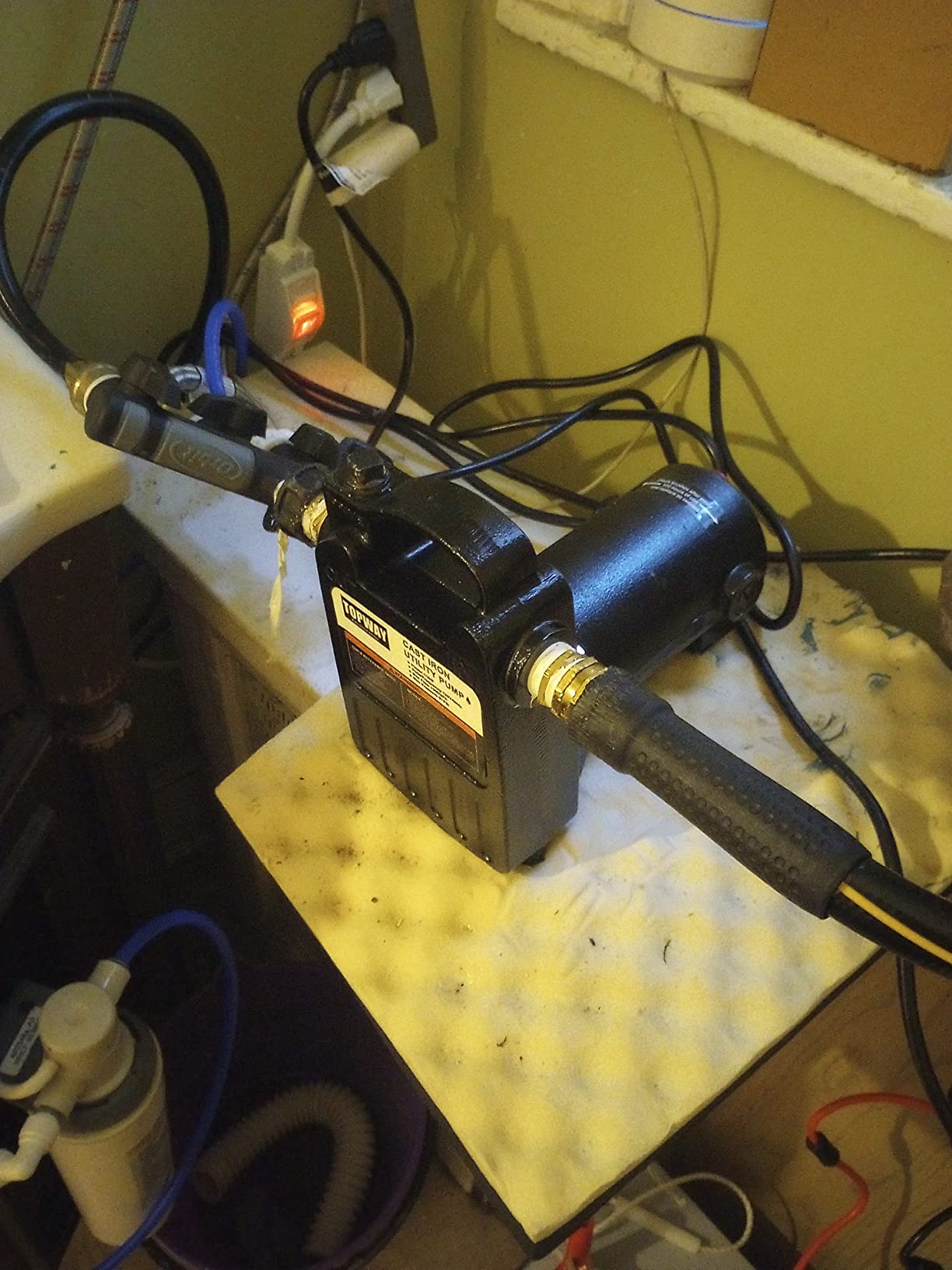
The accessory kit is unusually generous for the money. You get brass connectors, a fine filter, a roll of raw tape, a 200-hour carbon brush, a 7 foot cord, and a built-in one-touch on and off switch that lets you start and stop it from across a yard.
Owners also comment that it runs quieter than cheaper plastic-bodied utility pumps, and the cast iron body with electrophoresis rust-proofing is the right material for a pump stored in a damp shed.
Who This Pump Is For
Anyone moving water between containers, which is a broader group than it sounds: rain barrels, IBC totes, stock tanks, aquaponics reservoirs, and landscape trucks carrying bulk water. Self-priming is what makes repeated transfers bearable.
For livestock and agricultural work, a Chronofhorse thread on moving water from a steam to a trough made the point that independent pumping capacity is worth more than mains power, which is the same argument for the cordless and gas classes in general.
The One Thing to Check on Arrival
Be honest with yourself about the reviews before you order. The recurring negative theme, and the main driver of the 15 percent one-star share, is the cast iron priming plug arriving effectively welded shut by factory paint. Several owners needed a wrench and a hammer to free it, and one returned the unit as unusable.
That is a five-minute fix on arrival, not a defect that will develop later. Check it the day it arrives, before you need the pump. The secondary complaints, imprecise outlet threads and sharp burrs on the brass fittings, are also assembly quality issues rather than design limits.
8. TecHome 1/10 HP Utility Water Transfer Pump – Best Budget 330 GPH
TecHome Electric Water Transfer Pump, 115V 1/10HP Utility Garden Hose Pump
1/10 HP motor
330 GPH / 5.5 GPM
Aluminum alloy body
Thermal overload protection
Pros
- Strong flow and pressure for a 1/10 HP unit
- Aluminum alloy body with copper wire motor windings
- Suction strainer strips water down to 1/8 inch
- Kit includes impeller gasket and carbon brushes
- Buyers report 1.5 hour sessions across multiple seasons
Cons
- Loud whiny motor noise around 80 dB
- Not weatherproof and the thermal overload cuts out in extreme heat
- Some units overheat after roughly 8 to 10 minutes
The TecHome is the best-regarded of the small 1/10 HP pumps, with 66 percent five-star ratings across 1406 reviews. What separates it from its budget peers is material: an aluminium alloy body, copper wire motor windings, and a built-in thermal overload protector instead of a plastic shell and a bare motor.
That build quality shows in longevity. Multiple owners report running it in continuous 1.5 hour sessions across several seasons without failure, which is not something we can say for most units in this size class.
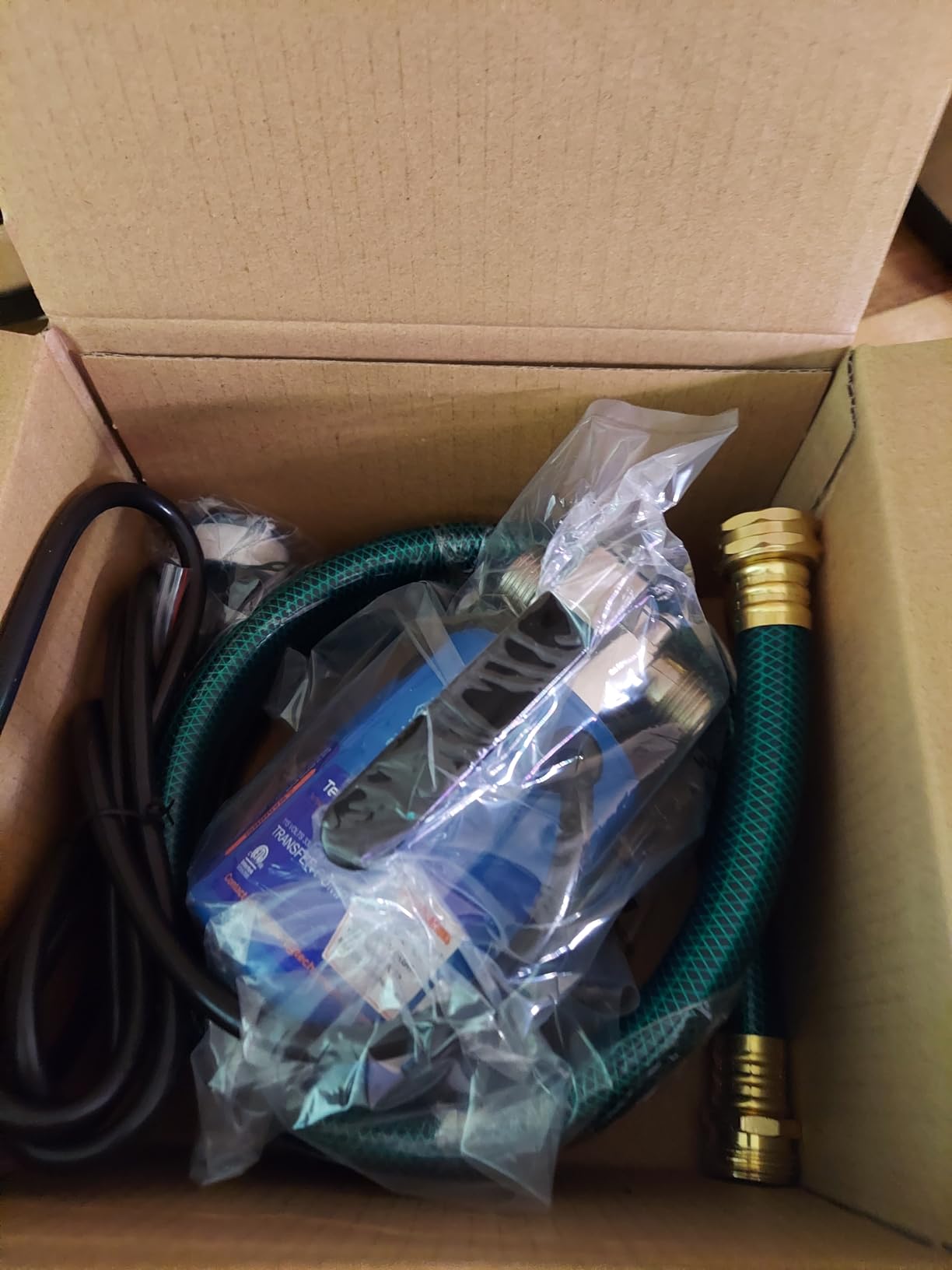
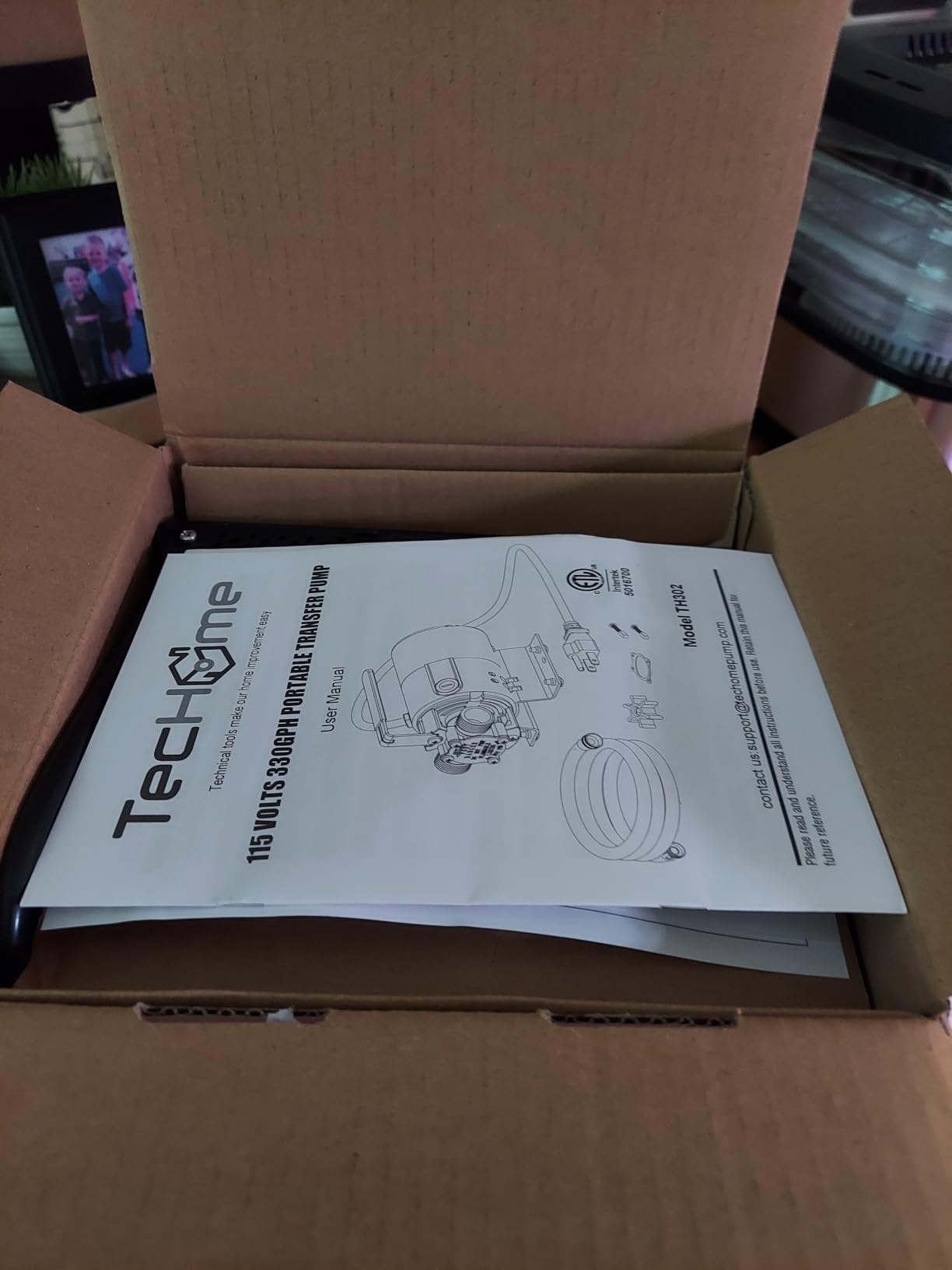
Three-quarter inch GHT inlet and outlet connectors fit standard garden hoses with no adapters, and the included suction strainer removes water down to 1/8 inch. The kit also carries a replacement impeller, a gasket, and two carbon brushes, so the consumable parts are in the box.
Flow is 330 gallons per hour, or 5.5 GPM, which is enough to drive a spray nozzle at the outlet. That matters for anyone using this to water a garden rather than just to move a bucket across a room.
What 1/10 HP Actually Buys You
Enough for aquariums, hot tubs, water heaters, small pools, car washing, lawn irrigation, and garden watering. If your job is any of those and the lift is modest, this class is genuinely sufficient rather than a compromise.
It is also the right first transfer pump for a lot of people. Small, light, and it stores in a closet, which matters more than raw gallons per hour when the pump only gets used twice a year.
Know the Limits Before You Buy
The motor is loud, around 80 dB, with a whine that people notice immediately. It is not weather sealed, and the thermal overload protector will cut out in extreme heat.
The listing is also inconsistent about lift. The product features claim up to 40 feet while the spec fields list 6 feet, so treat the lower figure as the honest expectation. A minority of units overheat and stop after roughly 8 to 10 minutes of continuous use, which is the most common one-star theme. If you need sustained high-volume pumping, move up to a 1/2 HP cast iron model.
9. FLOWPAC 1/10 HP Water Transfer Pump – Best Small Pump Starter Kit

FLOWPAC Water Pump 1/10 HP 330 GPH 115V Water Transfer Pump Black
1/10 HP 115V
330 GPH
40 ft max lift
3 ft suction lift
Pros
- Only 4 percent one-star ratings across 678 reviews
- Includes 6 ft suction hose strainer and spare impeller
- Strainer removes water down to 1/8 inch
- 3/4 inch ports fit a standard garden hose
Cons
- Suction lift limited to a little over 3 feet
- Pump head must be filled before every operation
- 1/10 HP motor will not handle large volumes or high lift
Most people judge a pump by its average rating. Judge this one by its floor, and the FLOWPAC stands out. Only 4 percent of its 678 ratings are one-star, against 68 percent at five stars, which is the tightest distribution of any product in this roundup. A pump that rarely disappoints is worth more than a pump that peaks higher and fails more often.
It delivers 330 gallons per hour from a 1/10 HP motor on 115V, with a 40 foot maximum lift, and it weighs 4.5 pounds. The box includes a 6 foot suction hose, a suction strainer, and a spare impeller kit.
The strainer is the feature that gets used most. Because it draws water down to 1/8 inch of the surface, this pump handles the last of a job, not just the bulk of it, which is the step most people end up doing by hand with a sponge.
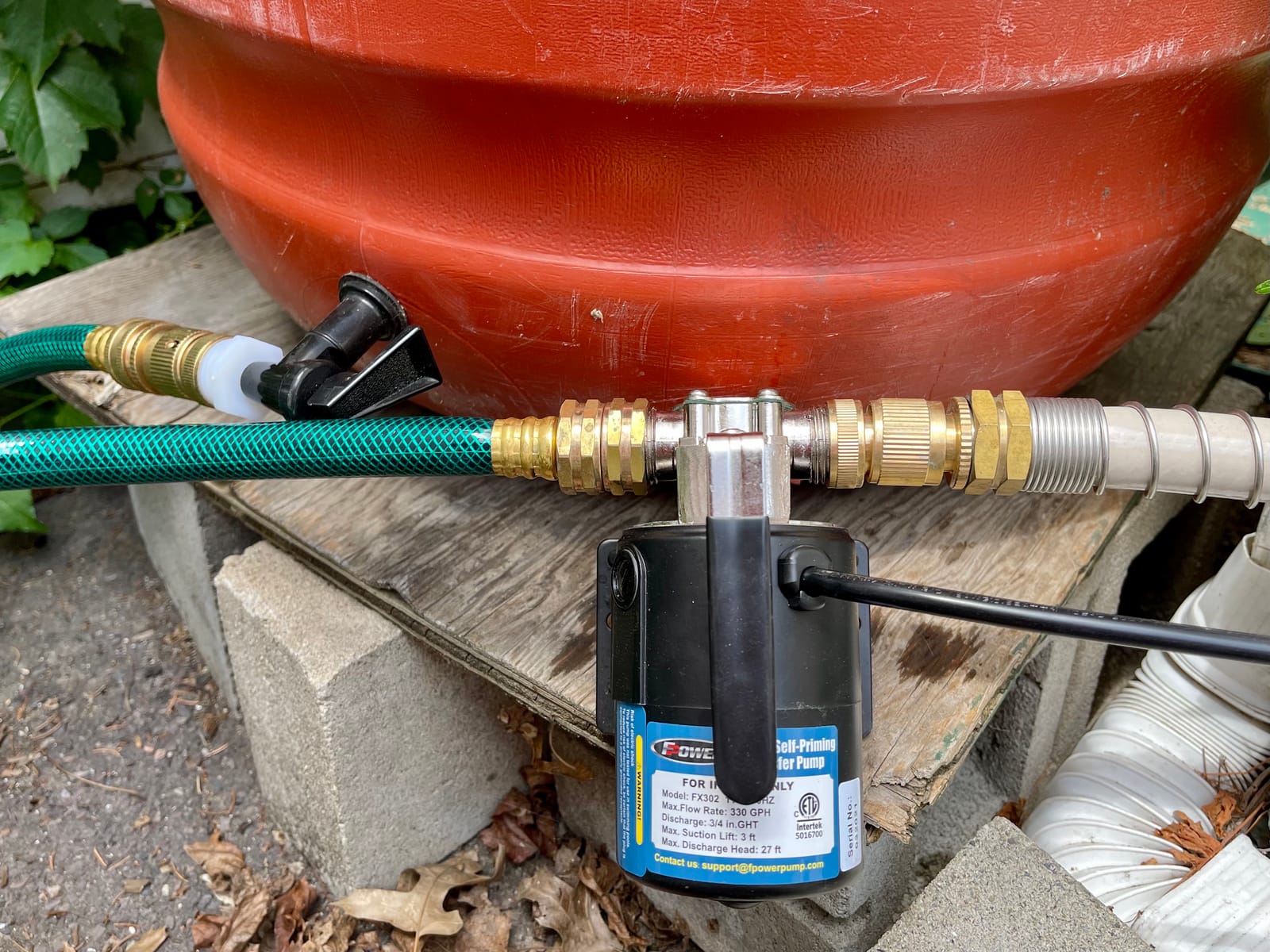
Owners use it for aquariums, clogged sinks, soggy basements, rain barrels, water beds, outdoor ponds, swimming pools, washing machines, and car washing. That list is a fair description of what a 1/10 HP utility pump is actually for.
Where the FLOWPAC Fits
Small containers, short distances, modest lift. It is a good match for a water bed being drained, a fish tank being changed, a rain barrel being emptied into irrigation, or a washing machine being moved. The strainer handles the last of the water on the floor.
The 1 year warranty and 100 percent factory tested claim are modest, but the rating distribution suggests the manufacturing is consistent, which matters more for a pump this small.
The Two Constraints
Suction lift is the number to understand. More than 3 feet is the stated maximum, meaning the water surface can sit only a little over a yard above the pump inlet. If your source is a deep tote, this pump will not prime.
It also has to be filled with water in the pump head before every operation, and it is not suitable for large volumes or high lift. If either of those describes your situation, the TecHome at number eight shares the same motor class with more headroom, and a 1/2 HP cast iron pump is the honest answer for anything substantial.
10. SumpMarine 330 GPH Water Transfer Pump – Best for Aquariums and Water Beds

SumpMarine Water Transfer Pump, 115V 330 Gallon Per Hour – Portable Electric Pump with 6′ Hose Kit, Remove Water From Pools, Rain Barrel, Aquariums
1/10 HP 115V
330 GPH / 5.5 GPM
39 ft max lift
6 ft hose kit
Pros
- Inexpensive and lightweight so it stores between uses
- Includes hose suction attachment and impeller kit
- Simple setup for aquariums water beds and rain barrels
- Good for washing machines water heaters and sinks
Cons
- Must be primed with food-grade vegetable oil each start
- Never run dry and never submerge the motor
- 1/10 HP suits small volumes and modest lift only
With 6311 ratings, the SumpMarine is one of the two most heavily reviewed pumps in this roundup, and the 4.0 average tells you what that volume reveals. This is the crowd favourite for small household water moving, and a review base that large is genuinely useful evidence for a product in the lowest tier of the market.
It moves up to 330 gallons per hour, or 5.5 GPM, from a 1/10 HP motor, with a listed 39 foot maximum lifting height. The box includes a 6 foot hose, a water suction attachment, and an impeller replacement kit.
The manufacturer instruction is unusual and worth reading twice: prime the pump with food-grade vegetable oil, place the intake fully submerged, and never run it dry. The oil lubricates the impeller on startup, which is how this class of small pump is meant to be commissioned.
That is a real difference from the TecHome and the FLOWPAC, which are primed with plain water. It adds a step, and it is the step that determines how long the unit lasts.
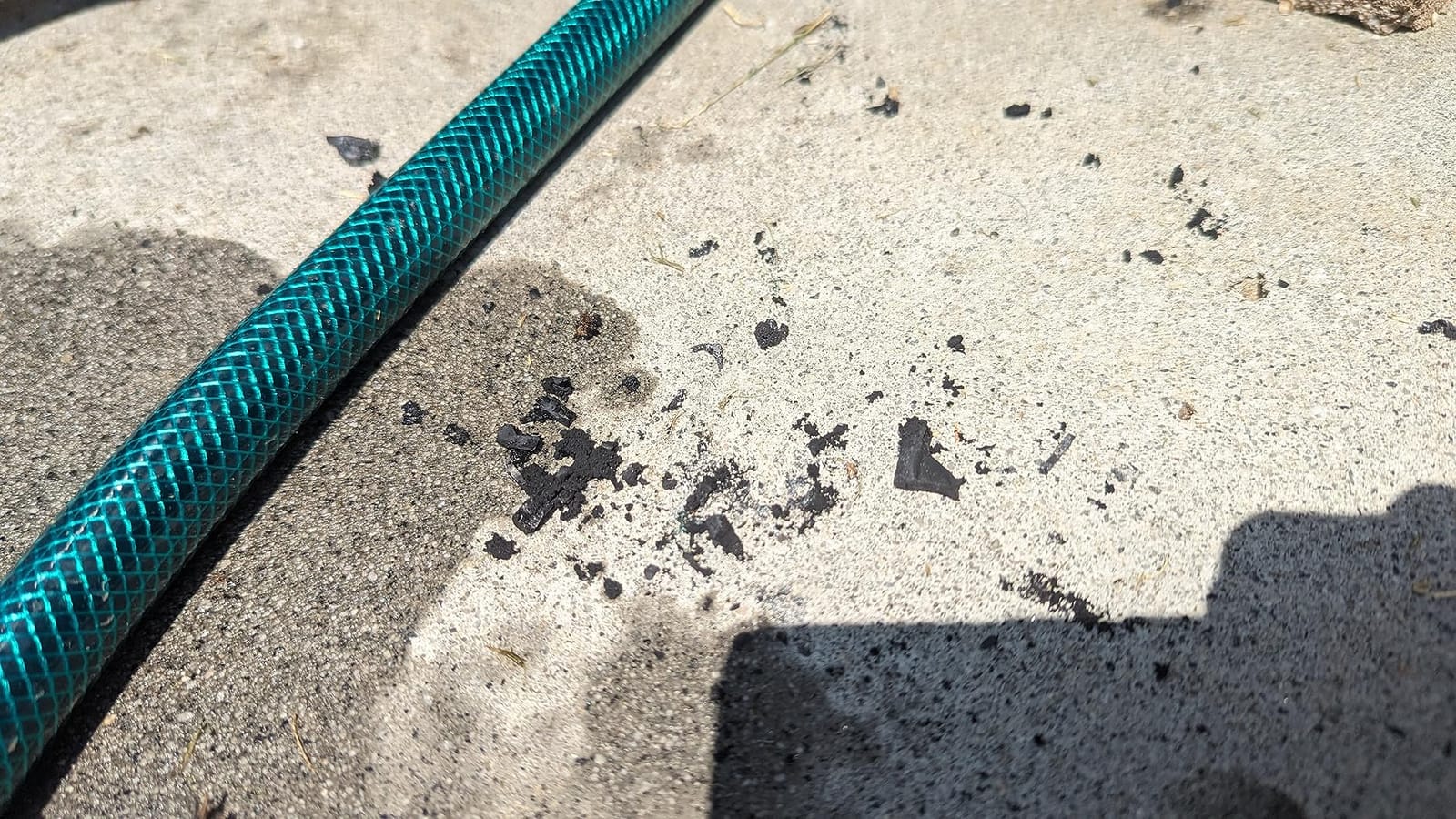
Best Uses
Aquariums, water beds, washing machines, water heaters, clogged sinks, and rain barrels. These are all small-volume jobs with short runs, which is precisely the envelope a 1/10 HP pump covers.
For anyone moving a large volume, the 12 percent one-star share of this listing is the warning label. Those failures cluster around units that were run dry or pushed beyond a 1/10 HP motor’s capacity, which is a maintenance habit, not a manufacturing defect.
What to Watch
It is non-submersible, so the motor stays dry at all times, and it cannot run without the oil prime at every startup. Treat the priming step as non-negotiable and this pump will keep working for years.
Given the size of the motor, do not expect it to move a hot tub or a flooded basement. If you are in that category, go back to number two or number six.
11. Acquaer 1/10 HP Utility Transfer Pump – Best Metal Body at Low Flow

Acquaer Utility Water Transfer Pump 1/10 HP Portable Electric with Suction Hose Kit, Low Suction Water Removal for RV,Water Beds, Pools, Rain Barrel, Aquariums
1/10 HP 115V
264 GPH / 4.4 GPM
46 ft lift
Metal volute
Pros
- Metal volute and corrosion-resistant metal fittings beat plastic
- Pushes water through a 50 ft hose with a 15 ft lift
- Owners report it pumps every time after the first prime
- Strips water down to 1/8 inch with the suction attachment
- 2 year warranty with a spare impeller kit included
Cons
- 264 GPH is slower than a garden hose spigot
- Heavier than expected for repeated container changes
- Must be primed before every start and never submerged
The Acquaer is the metal answer at the bottom of the price range. Where most 1/10 HP pumps use a plastic volute and plastic fittings, this one uses a durable metal volute with corrosion-resistant metal fittings, and at 4.3 stars with 326 ratings and 71 percent five-star feedback it holds a good record for a small review base.
It delivers 264 gallons per hour, or 4.4 GPM, with a listed 46 foot maximum lift, which is the highest head claim in the 1/10 HP class here.
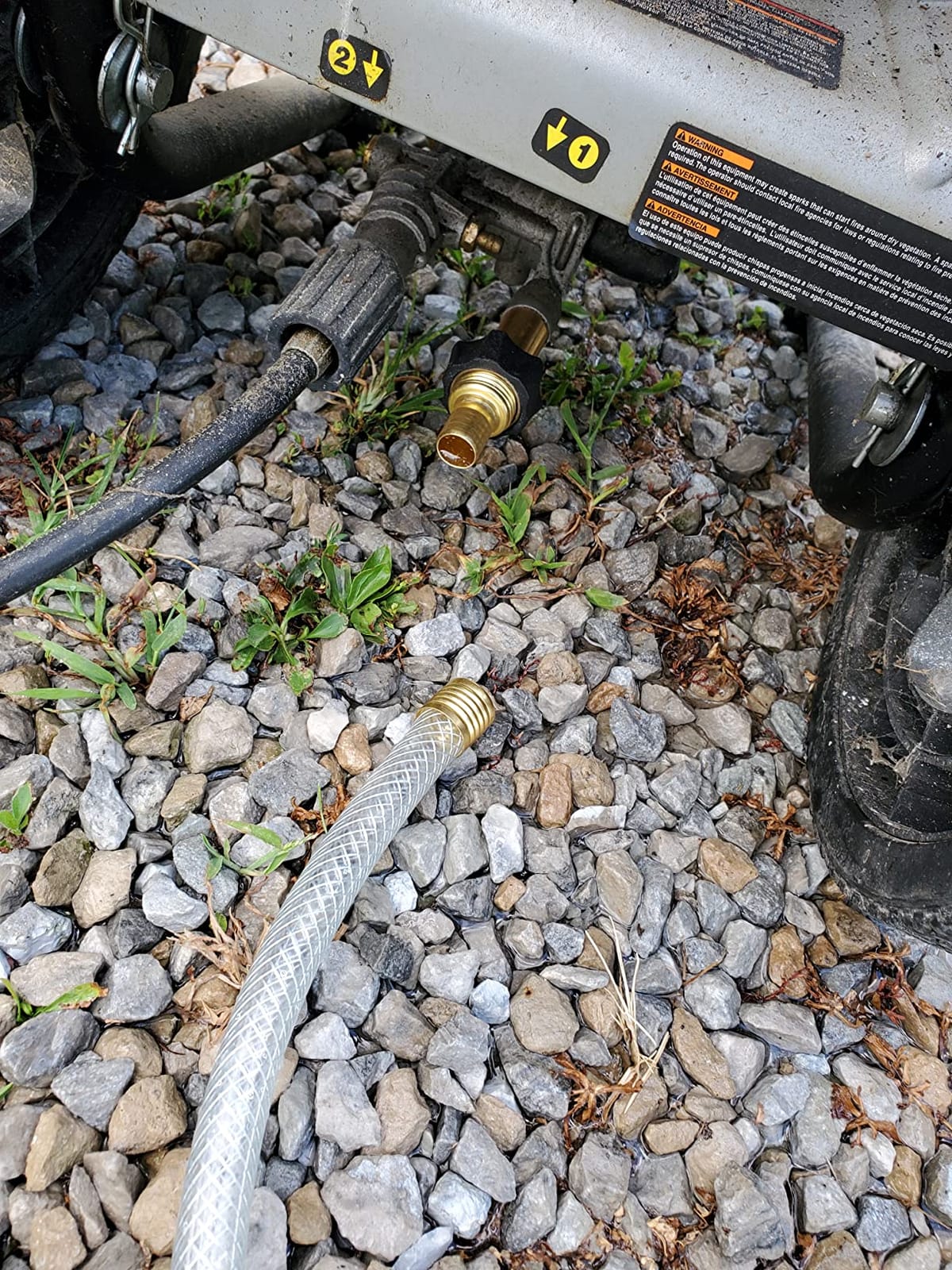
The headroom shows up in the hose runs owners report. People push water through a 50 foot hose with a 15 foot lift without trouble, which is beyond what most 1/10 HP pumps in this roundup will manage. A built-in thermal overload protector and an ergonomic handle round out a sensible package.
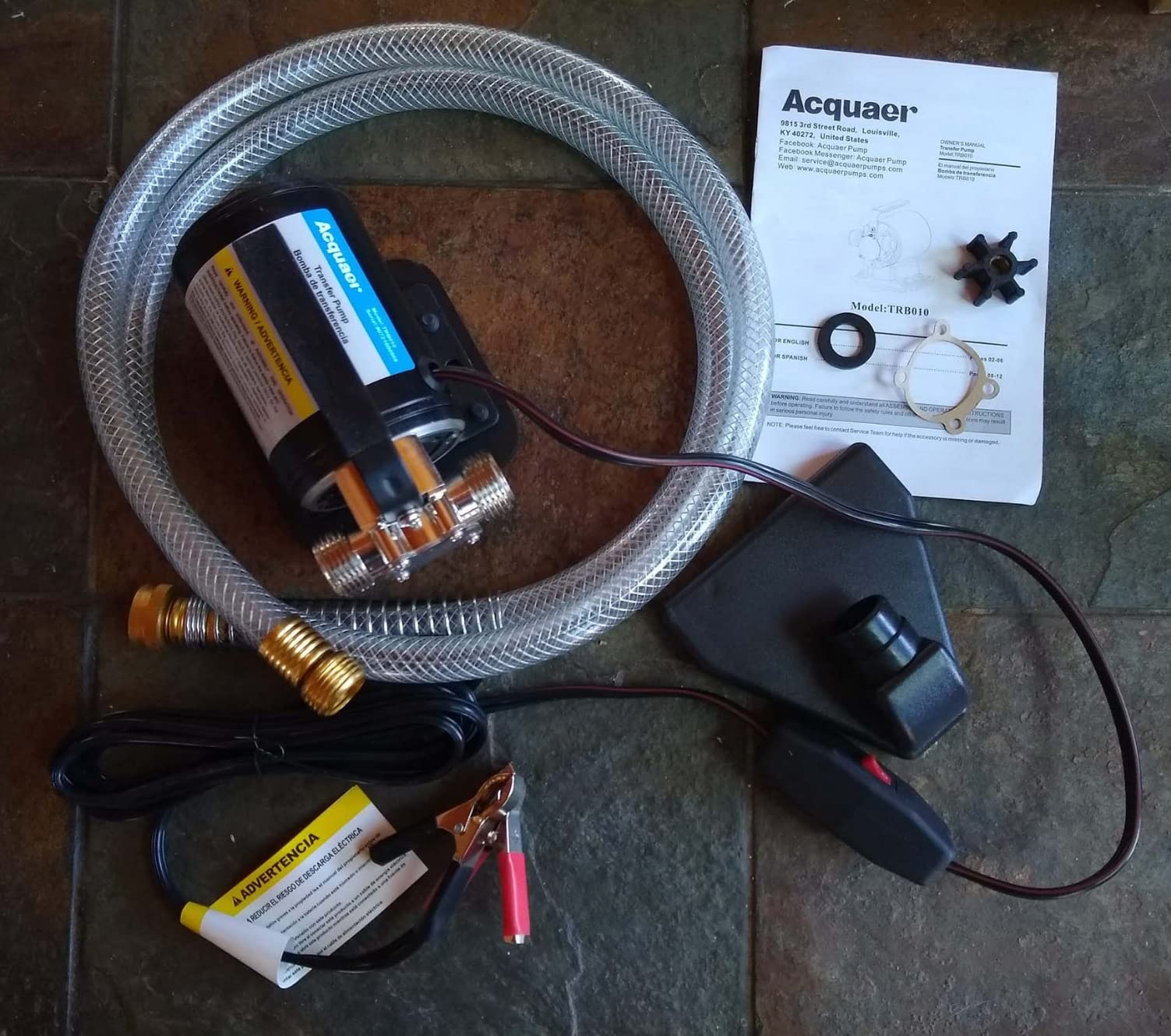
As with the TecHome, the box includes a 6 foot elastic suction hose, a suction attachment that removes water down to 1/8 inch, and an impeller replacement kit, all under a 2 year warranty.
When the Metal Body Matters
If your pump lives in a damp shed, a greenhouse, or a vehicle that sweats, the metal volute is the difference between a pump that lasts and one that cracks. It also suits anyone moving slightly dirty water where corrosion is the failure mode to plan for.
Aquariums, rain barrels, water heater flushing, garden irrigation, car washing, and draining flooded areas are all within reach, though 4.4 GPM is not fast for bulk water.
The Honest Trade-Off
At 264 GPH this is slower than a garden hose spigot, so anyone moving a large volume will be watching a hose fill. Reviewers also describe it as heavier than expected for repeated container changes, which conflicts slightly with the portable positioning.
A small number of units failed to move water at all on first power-up. With only 326 ratings that is a limited sample, but it is worth testing the pump on water the day it arrives rather than when you need it. If you want the same class of pump with a much larger review history, the FLOWPAC at number nine is the safer buy.
12. Milescraft Drill Pump 750 – Best Emergency Transfer Pump
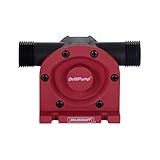
Milescraft 1314 Drill Pump 750 – Self Priming Water Pump Attachment for Drills – Water Transfer Pump – Uses Common Garden Hose – 750 Gallons per Hour
750 GPH / 12.5 GPM
12 ft max lift
3/8 inch drill shank
Silicone vane pump
Pros
- Cheapest compact way to move water with a drill you already own
- 3/4 inch hose connection fits a standard garden hose
- Handles long hose runs and lift better than its size suggests
- Disassembles easily for maintenance
Cons
- Needs frequent silicone re-greasing or it smokes
- Rubber vanes and the plastic cog wear out quickly
- Flow drops unless driven by a strong 1/2 inch corded drill
The Milescraft is not a serious transfer pump and that is precisely why it earns the last slot. It is a self-priming vane pump that attaches to a drill chuck and moves 750 gallons per hour, which makes it the emergency option, the RV backup, and the answer to a flood at two in the morning when everything else is still in a box.
With 7445 ratings it is the second most-reviewed product in this roundup, and at 3.9 stars it outperforms cheaper drill-pump competitors in a category where buyer disappointment is common. Buyers consistently praise it as the cheapest, most compact way to move water with a drill they already own.
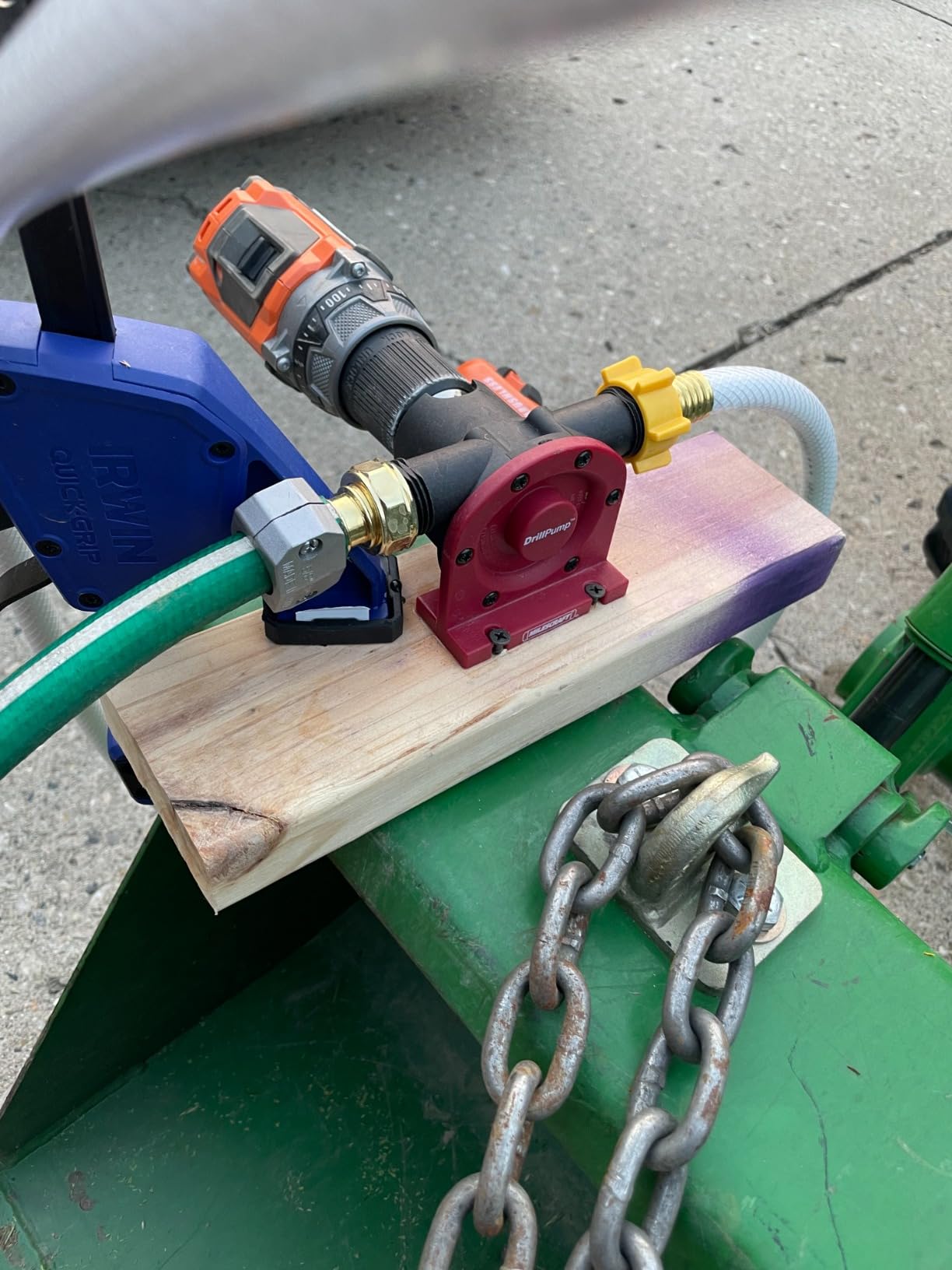
The Thor Forums thread on moving 7-gallon jugs into an RV fresh-water tank names drill-operated pumps as one of the two most recommended solutions, and this is the pump that recommendation is describing. The 3/8 inch shank fits common drill chucks and the 3/4 inch connection takes a standard garden hose.
At 12 feet of maximum lift and 750 GPH, it handles a hot tub, a fish tank, a small pond, or a wet floor. It also fits into spaces where nothing else will go.
Where It Genuinely Shines
RV and boat owners should look at this seriously. The second most common recommendation on Thor Forums is a 12V pump on a jump box or a tool battery, and the drill pump is the cheapest version of that idea, requiring no cable, no battery platform, and no separate charger.
It is also the answer for odd jobs, like siphoning sand from a hot tub or reaching into a tight space, because it weighs 7.84 ounces.
Maintenance Is Not Optional
This is a rubber vane pump, and vane pumps are consumables. The manufacturer instruction is explicit: after every use, open the housing, apply silicone grease where the rubber fan blades touch, and reassemble. No spray lubricants.
Skip the greasing and the impeller runs dry, smokes, and degrades. Reviewers also report that the rubber vanes and the plastic drive cog wear out quickly with frequent use, and that flow falls well short of the rating unless it is driven by a powerful 1/2 inch corded drill. The manufacturer also states plainly that it is not for potable water. Treat it as a job that gets performed, not a purchase that gets forgotten in a shed.
How to Choose a Water Transfer Pump
Can a cheap transfer pump replace a constant pressure pump?
Yes, for a one-way move with no storage and no pressure requirement. A transfer pump moves far more water per dollar and per watt than a constant pressure pump, because a constant pressure pump is built to build and hold pressure continuously whether or not a tap is open. If you are draining a tub, filling an RV tank, moving irrigation water, or topping up a header tank, a transfer pump is both the correct and the cheaper tool. If you need pressure at a fixture, automatic tank switching, or continuous duty, you need the constant pressure pump, and no amount of savings changes that.
How to calculate the total dynamic head you need
Total dynamic head is the sum of everything the pump has to fight, and it is the number that decides whether a pump reaches your destination. Work through it in order:
Measure the vertical lift. From the water surface at the source to the outlet of the hose or the destination. The r/OffGrid setup described 8 meters of lift plus a tank 15 meters away, so vertical rise is not always the biggest term.
Convert the horizontal run to an equivalent head. A rough and very useful rule is 3 feet of head for every 50 feet of horizontal hose run. A 100 foot run therefore costs you about 6 feet of head before the water even moves.
Add fittings. Every elbow, tee, and adapter costs roughly half a foot to a foot of head.
Add for the discharge restriction. A nozzle, spray head, or narrow faucet at the end adds its own head, sometimes considerably.
Add a safety margin of about 20 percent. Pump curves are measured at specific conditions and real installations never match them exactly.
Pick the pump that delivers your required flow at that head, not at zero head. This is the step people skip, and it is why so many cheap pumps seem to run well and then stop pumping halfway along a long run.
Add your numbers to 20 percent and compare against the maximum lift rating of the pump. The DEWALT DCE050B is a good illustration: 10 GPM at low head, about 4.5 GPM at 45 feet. Read the second number when you have lift to overcome.
How to choose a power source
Where the water is decides the power source more reliably than any feature list. A 115V AC pump is the right answer whenever a grounded outlet is within reach, because it gives you the highest flow at the lowest cost per gallon. If the water is forty feet from a wall, cordless or a generator is the only option. A 12V DC unit on a jump box or a tool battery is the field answer, and our water pump guides for cars cover the low-voltage side in more depth.
Gas engine pumps sit above all of this for farm, drainage, and construction work, where independence from mains power is worth the noise and the servicing. Every model here is electric or drill-driven, so if you need a gas unit, look at that category separately.
One more caution on power. A transfer pump moves water, not fuel, and the wrong pump for a petroleum job is a serious hazard. If you need a dedicated unit for anything viscous or flammable, start with our fuel transfer pump guide. Low-viscosity oils and gear fluids have their own requirements too, covered in the gear oil transfer pump picks.
How to prime a transfer pump correctly
Most first-time buyer failures happen here, and priming differs by class:
Manual fill pumps. Fill the pump head through the inlet with clean water until the impeller is submerged, then connect the hoses, attach the suction strainer, and start. The TecHome, FLOWPAC, and Acquaer all work this way, and VEVOR gives the same instruction.
Oil-primed pumps. The SumpMarine is primed with food-grade vegetable oil rather than water to lubricate the impeller. Use exactly what the manufacturer specifies.
Self-priming pumps. The TOPWAY primes itself when water is flowing into the pump, so there are no valves to open. Make sure the source water is actually moving into the inlet.
Submersible stick pumps. No priming at all. Drop the barrel in the water and switch on.
Check the suction lift before you start. The FLOWPAC is limited to a little over 3 feet. Below that, it primes. Above it, it will not, and you will mistake a head problem for a dead pump.
Five ways to burn out a mechanical seal
The seal is the consumable part that ends most transfer pumps, and every dry run shortens its life. The common mistakes are running the pump with no water in the casing, running it with the suction hose above the water line, losing prime mid-job and not switching off, priming with the wrong fluid, and storing a wet pump in a sealed shed over winter. The last one corrodes the shaft and the seal face together, and it costs more than any spec on the box.
The partial fix is a pump with built-in protection. The FORDWALT covers dry run, low voltage, overload, over current, and over heat, and the TecHome and Acquaer both carry thermal overload protectors. None of them make running a pump dry a good idea, but they buy you a margin when a hose slips.
Potable water versus non-potable ratings
This is the question that matters most if an RV owner, and it is where cheap pumps fail you. A pump rated for potable water has wetted parts approved for drinking water contact, typically brass or certified thermoplastic, with no silicone or general-purpose grease in the water path. A non-potable pump has neither, and the manufacturer often says so plainly. The Milescraft drill pump states in its own bullet points that it is not to be used with potable water.
Thor Forum users raised exactly this concern, including worry about the silicones and greases inside cheaper pumps, and the common fix discussed there is a Y-splitter with a diverter valve onto the RV’s city water fill line so the tank fills through the RV’s own potable-rated plumbing. If you cannot verify the certification, use that route rather than guessing.
Cordless platform economics
Community opinion in r/Tools generally considers Milwaukee cordless systems more durable than competitors like Ryobi, while noting that the battery platforms add a real upfront investment. That is the tradeoff in one sentence. The M12 is the cheapest ecosystem to enter and the smallest battery to carry. The M18 is the more capable and more durable one. 20V MAX slots into a broad existing base, and the DeWalt DCE050B is the strongest performer if you already have those packs.
Every bare-tool cordless pump in this roundup needs a battery and a charger. Add those to your real cost before comparing two products, and the ranking can change. Also note the FORDWALT is not affiliated with DeWalt: it fits a 20V MAX battery physically, and that is the whole of the relationship.
Frequently Asked Questions
What is a good portable water transfer pump?
For most household jobs, a 1/2 HP cast iron 115V pump is the good default, because it moves between 1500 and 1600 gallons per hour and handles pond, pool, barrel, and basement work. The VEVOR Q1CZ-800C and the TOPWAY are the two we rated most highly in that class. If the water is more than a few steps away from an outlet, a cordless pump is the better answer, and the Milwaukee 2771-20 M18 is our overall pick.
Which brand of water pump is the most reliable?
Reliability tracks build material and class rather than the badge. Cast iron pumps from Wayne, Superior Pump, and Liberty tend to last longest, then the cordless pumps from Milwaukee and DeWalt, then budget plastic-bodied units from Drummond, VEVOR, and similar sellers. In this roundup the VEVOR carried a 15 percent one-star share against 4 percent for the FLOWPAC. Community opinion also treats Milwaukee cordless systems as more durable than Ryobi.
Which brand is considered the best for water pumps?
The honest answer is that best depends on class, which is why the paired questions on this topic get answered together. Milwaukee and DeWalt lead the cordless class. Wayne, Superior Pump, and Liberty lead cast iron AC work. Pacer, Honda, Banjo, and MP Pumps cover gas and industrial volume, and none of those appear in this roundup. For water pumps generally, the deciding factor is whether the housing is cast iron or plastic and whether you are matching the pump to the fluid and the duty cycle.
What is the best 12-volt water transfer pump for RVs and water systems?
For RV fresh water tanks, the most popular forum recommendation is a 12V pump on a jump box or a tool battery, or a drill-operated pump. Among cordless options the Milwaukee M12 stick runs 9 GPM and shares batteries with common tools, while the DEWALT DCE050B moves 10 GPM and 25 feet of lift. Watch the head: users on RV forums report that low-end pumps lose lift, especially once a filter is placed inline.
Can I use a transfer pump instead of a constant pressure pump?
For one-way transfers with no storage, yes, and it will cost less and move more water. A constant pressure pump is designed to build and hold pressure continuously, which a transfer pump never does. If you need pressure at a tap, automatic tank switching, or continuous duty, you need the constant pressure pump. If you are draining a tub, filling an RV tank, or moving irrigation water, a transfer pump is the correct tool.
How do I know what head my transfer pump needs?
Add up three things: the vertical rise from source water surface to destination, about 3 feet of head for every 50 feet of horizontal hose run, and about a foot for each elbow or fitting. Add 20 percent for a margin. Then read the pump’s performance at that head, not at zero head. The DEWALT DCE050B is a clear example, delivering 10 GPM at low head but about 4.5 GPM at 45 feet.
Why does a transfer pump burn out?
Almost always because it ran dry. Without water in the casing, the mechanical seal loses its lubrication, overheats, and fails, usually within minutes. Running with the suction hose above the water line, losing prime mid job and leaving the switch on, priming with the wrong fluid, and storing a wet pump sealed in a shed over winter are the other four common causes. A pump with dry-run and thermal protection buys you a margin, not permission.
The Verdict on the Best Water Transfer Pumps in 2026
The best water transfer pump for most people in 2026 is the Milwaukee 2771-20 M18 if you already own M18 batteries, and the Wayne PC4 if you do not. The first is the finest way to move water without finding an outlet, the second is the most durable half horsepower pump we found, and between them they cover the two jobs people actually want solved.
Beyond those, the VEVOR is the value pick when volume matters more than finish, the TOPWAY is the self-priming choice for repeated container transfers, the DEWALT DCE050B wins on cordless output and glycol handling, and the Milescraft drill pump remains the cheapest insurance policy against a flood. Whichever you pick, work out your total dynamic head before you buy, prime it properly every time, and never let it run dry. Those three habits will decide whether your pump lasts five years or five months.