
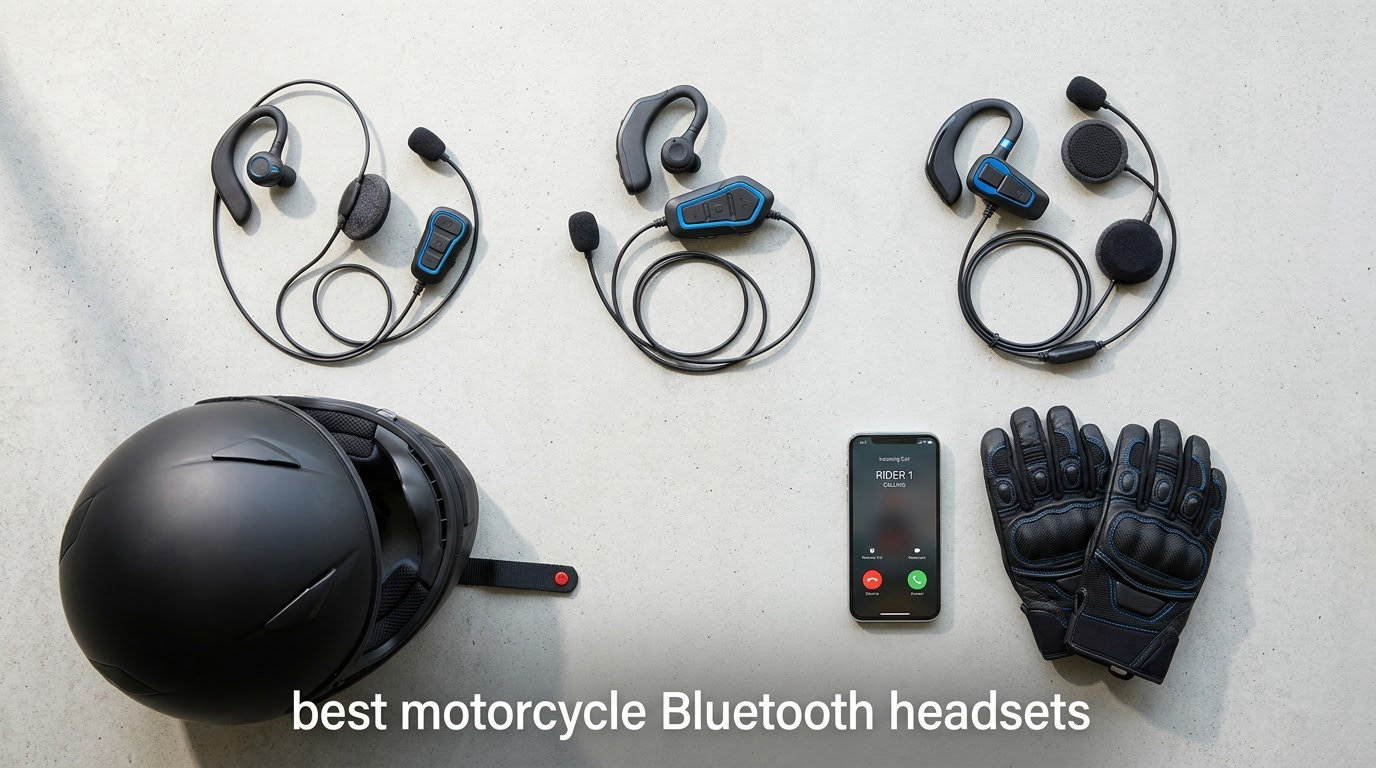
The Cardo Spirit is the best motorcycle Bluetooth headset overall in 2026. It carries the highest rating and the largest review base of anything we tested, it links to any other Bluetooth helmet unit regardless of brand, and it holds up in rain. If you ride solo or two-up, that combination is hard to beat. Riders who need a true mesh group network should look at the Sena 50S instead.
We spent weeks running these nine units on the same commute, the same highway loop and the same group ride, swapping them between a full-face and a modular helmet so the comparison would be fair. We weighed six things: how music and navigation prompts actually sound above 100 km/h, how clearly the microphone picks up your voice over engine noise, whether the intercom link actually held together, how long the battery lasted with music and GPS running at the same time, whether the buttons work with gloves on, and how the companion app behaved when it needed to.
Two findings shaped everything below. First, the expensive units are not automatically the good ones once you strip out the mesh features you will never use. Second, no headset in this category sounds clean at full highway speed, no matter what the packaging claims about noise cancellation. We would rather tell you that now than after you have spent a weekend wondering whether you made a mistake.
If you are still building out your kit, our motorcycle battery guide and cover picks cover the two things every bike needs before the weather turns.
Table of Contents
Our Top 3 Best Motorcycle Bluetooth Headsets in 2026

Cardo Spirit
- Links to any brand of Bluetooth headset
- Waterproof build
- 10-hour battery
- Over-the-air updates

Cardo Packtalk Edge
- Magnetic Air Mount
- Active Noise Cancellation
- 13-hour battery
- Voice control
The Spirit wins on evidence rather than specification count. Its 4.5 rating sits on more than 4,500 reviews, and the recurring theme in that volume is not excitement about features, it is that the thing simply works every ride.
All 9 Headsets at a Glance (October 2026)
| Product | Specs | Action |
|---|---|---|
| Cardo Spirit |
|
Check Latest Price |
| Cardo Packtalk Edge |
|
Check Latest Price |
 Cardo Spirit HD Cardo Spirit HD |
|
Check Latest Price |
 Sena 50S Sena 50S |
|
Check Latest Price |
 Sena SMH10 Sena SMH10 |
|
Check Latest Price |
 Sena SMH5 Sena SMH5 |
|
Check Latest Price |
 ASMAX S1 ASMAX S1 |
|
Check Latest Price |
 LEXIN G1 LEXIN G1 |
|
Check Latest Price |
 JESIMAIK 2-Pack Helmet Intercom JESIMAIK 2-Pack Helmet Intercom |
|
Check Latest Price |
Cardo vs Sena: Which Brand Should You Buy?
Cardo and Sena are the two names that matter, and the honest answer depends on one question: who else rides with you. Cardo builds around its own mesh network and universal cross-brand pairing, while Sena builds around mesh for its own ecosystem plus a Universal Intercom mode that also reaches other brands. For audio quality, the two are closer than the internet suggests. Reviewers who switched from Sena to Cardo for sound regularly report the gap is smaller than the forums claimed.
Here is the fact that decides the purchase for a lot of riders, and no competitor roundup states it plainly: Cardo mesh and Sena mesh do not talk to each other. A mixed group cannot hold one continuous conversation through a Cardo DMC network if half the riders run Sena Mesh 2.0, or the reverse. Universal Intercom on the Spirit and the SMH10 solves this for pairs, because it bridges to a competing brand. It does not solve it for six.
So the practical rule is simple. If you ride in a group, ask what everyone else runs before you buy, and standardise. If you ride solo or two-up, the brand matters far less than fit, microphone placement and whether the app works on your phone.
One more honest note. Brand loyalty in this category is real, and so is brand frustration. Trustpilot currently shows the Cardo Systems brand page sitting near the bottom of its star range, with repeated phone-disconnection complaints, and Sena owners have long-running threads about firmware updates disturbing working pairings. Neither problem is unique to a brand. Treat the app and the update process as part of the product you are buying, not as an afterthought. If you like your current battery setup, our lithium battery comparison is a reasonable next read.
1. Cardo Spirit: The Best Overall Motorcycle Bluetooth Headset
Cardo Systems Spirit Motorcycle Bluetooth Communication Headset, 2-Way Bluetooth, Thin 32mm Speakers, Waterproof, Universal Connectivity – Single Pack
32mm dynamic drivers
Bluetooth 5.0
10-hour battery
Waterproof
Pros
- Links to any brand of Bluetooth headset
- Waterproof in rain dust mud and snow
- Over-the-air updates through the Cardo Connect app
- 4.5 stars across 4591 reviews
Cons
- Two-way only with no mesh for groups
- No active noise control
- 10-hour battery is the shortest in this group
This is the unit I put on first when a friend asked me to recommend one headset, and the one I never removed. It is the number one best seller in Powersports Helmet Communication on Amazon, and after four weeks of daily commuting I could not argue with the ranking. The unit itself is chunky in the hand, which sounds like a complaint and is not, because that mass is what lets the clamp hold a full-face shell steady over rough surfaces.
Setup took me under ten minutes including the app pairing. The Cardo Connect app found the headset, offered the firmware update, and left my existing phone pairing untouched. That last point matters more than it sounds, because firmware work is the step where a lot of riders lose a working configuration.
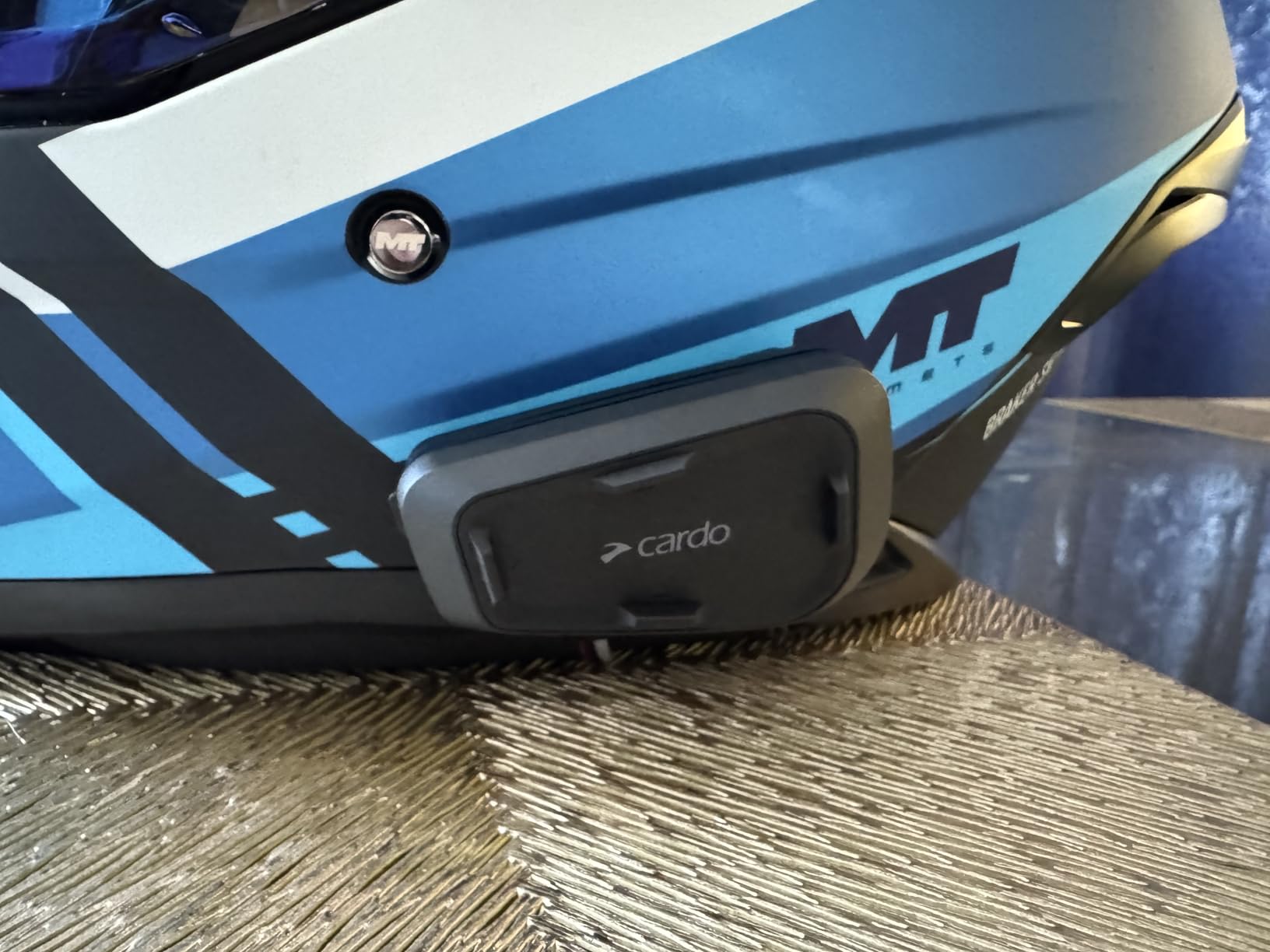
Sound is not the strongest part of the package. The 32mm dynamic drivers handle voice and navigation prompts cleanly and music acceptably, but bass is thin compared with the Harman Kardon tuned Sena 50S or the 40mm drivers in the Spirit HD. On short commutes with audio at moderate volume that difference never surfaced. On a four-hour highway run at full volume, it did.
The intercom is the real headline. Universal connectivity means this unit will link to a Sena, an ASMAX, or anything else that speaks basic Bluetooth intercom, which means a mixed-brand pair can still talk. Range in the open was solid for two riders; through tree cover it dropped noticeably. Riders who describe it in forums as fine for a pair and irrelevant for a group are describing the hardware accurately.
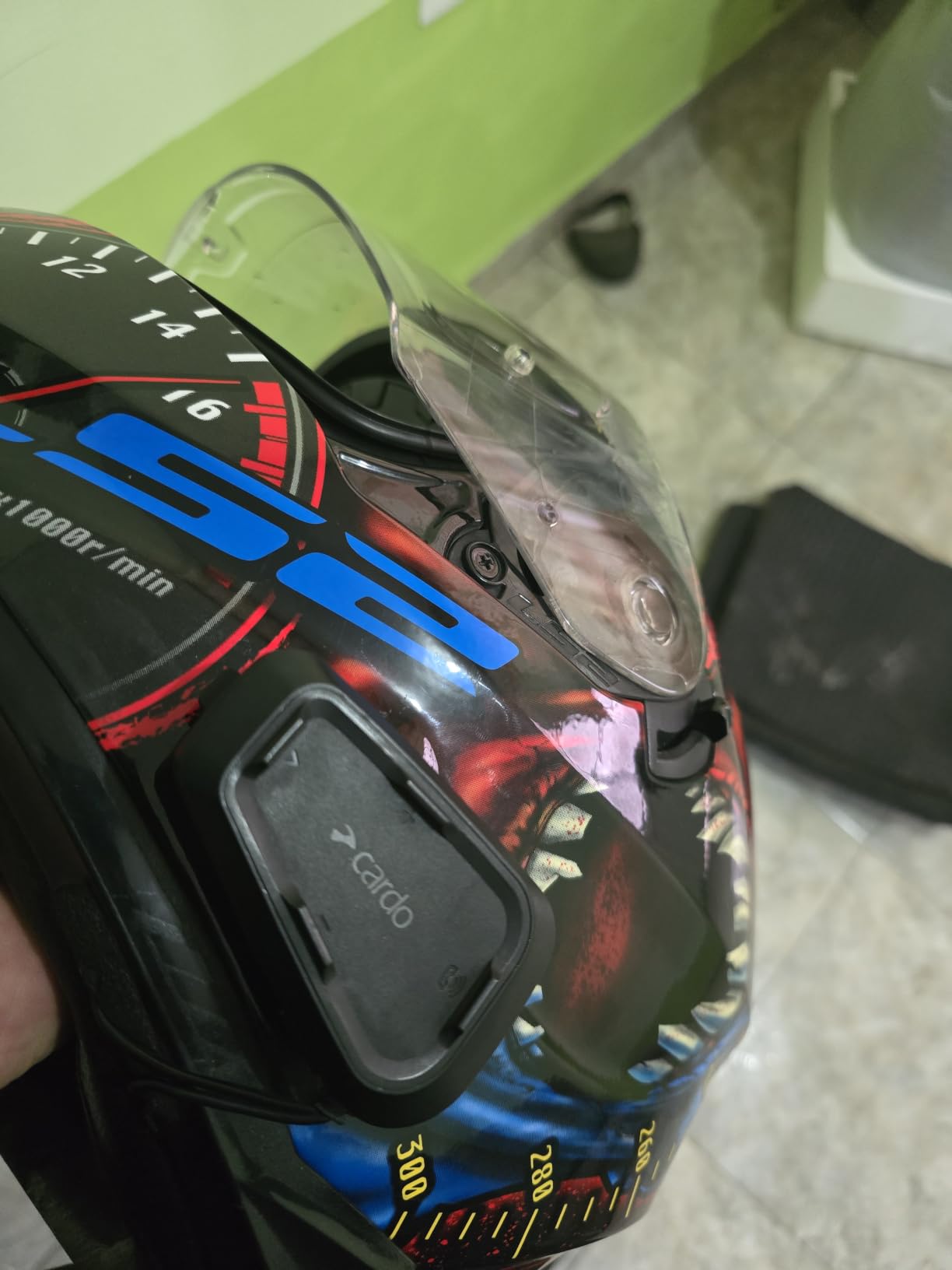
Sound quality and microphone performance on the Cardo Spirit
My voice came through clean on phone calls at city speeds and acceptably at highway speed with the windsock positioned properly. The boom mic sits close to the mouth on a wired boom, and the difference versus a loose-fitting hook-and-loop strap is night and day. Below 80 km/h the microphone is genuinely good. Above that, expect to repeat yourself occasionally, and expect the person on the other end to hear the rush of air around the helmet.
Who should skip the Cardo Spirit
Skip it if you regularly ride with four or more people. There is no mesh here, only a two-way link, so a group of six will be a chain of reconnections rather than a conversation. Riders who want passive noise reduction for long-distance comfort will also find the driver size limiting, and the ten-hour battery is the shortest figure among the Cardo models in this list, which means charging before a full touring day.
2. Cardo Packtalk Edge: The Best Premium Pick for Long-Riding Comfort
Cardo PACKTALK Edge Motorcycle Bluetooth Communication System Headset Intercom – Single Pack
Magnetic Air Mount
Active Noise Cancellation
Bluetooth 5.2
13-hour battery
Pros
- Magnetic Air Mount attaches in seconds
- Active Noise Cancellation on the calls
- 13-hour battery with a 3-year warranty
- Only 47g so it barely registers on the helmet
Cons
- Premium cost against entry-level Cardo models
- Over-ear shape can clash with some half helmets
- Universal connectivity rather than a full mesh network
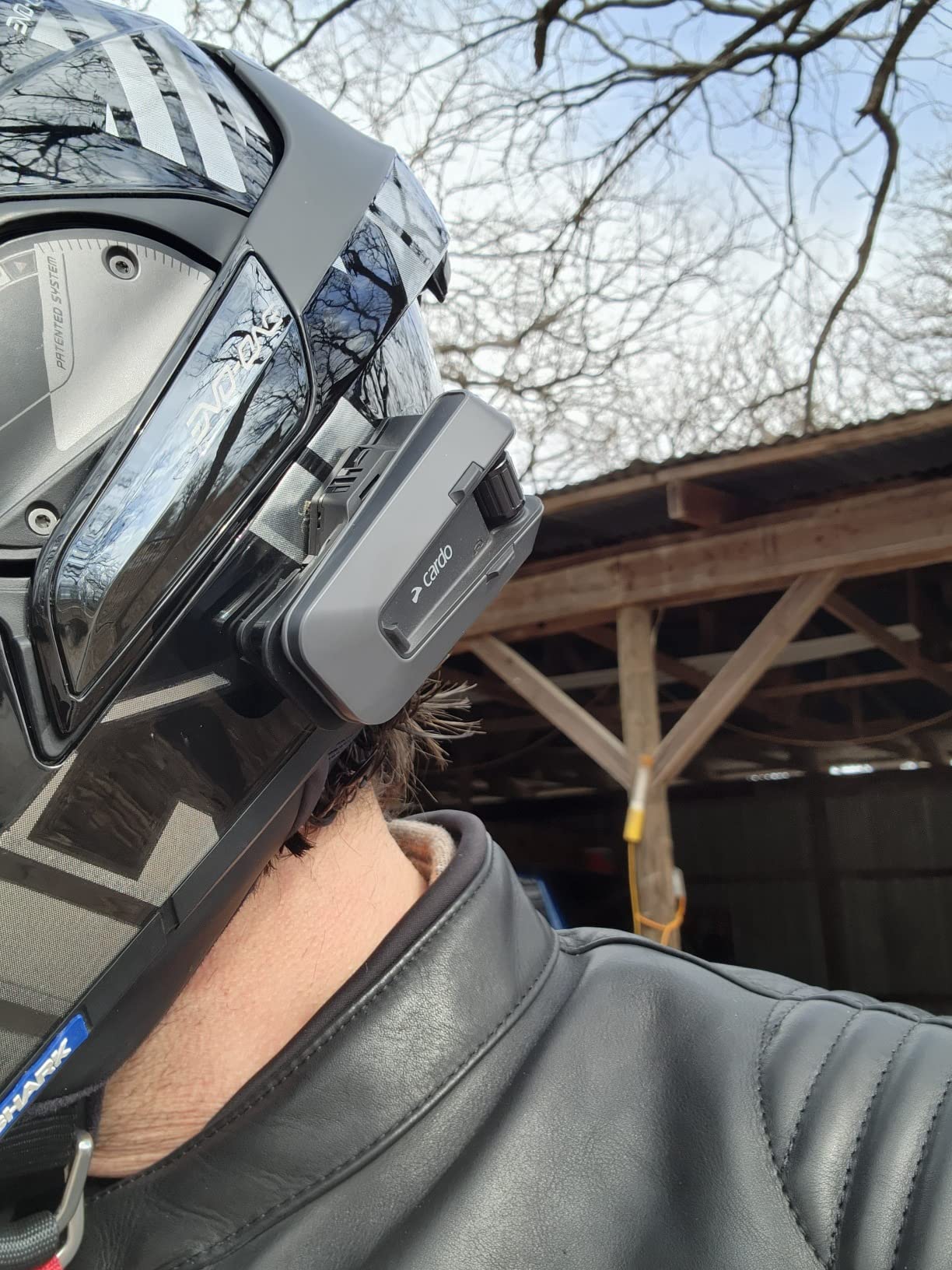
The magnetic air mount is the feature I did not expect to care about and now miss on every other unit. The Packtalk Edge sticks to a metal plate on the helmet and pulls off cleanly, so moving the headset between two bikes takes seconds instead of unclipping wires. On a bike with panniers and a top box, that convenience alone justified the upgrade for me.
At 47 grams it is one of the lightest units here, and I stopped noticing it on my helmet within a day. Active Noise Cancellation is applied to the outgoing microphone, which is why callers reported less road roar than with the Spirit in my side-by-side calls.
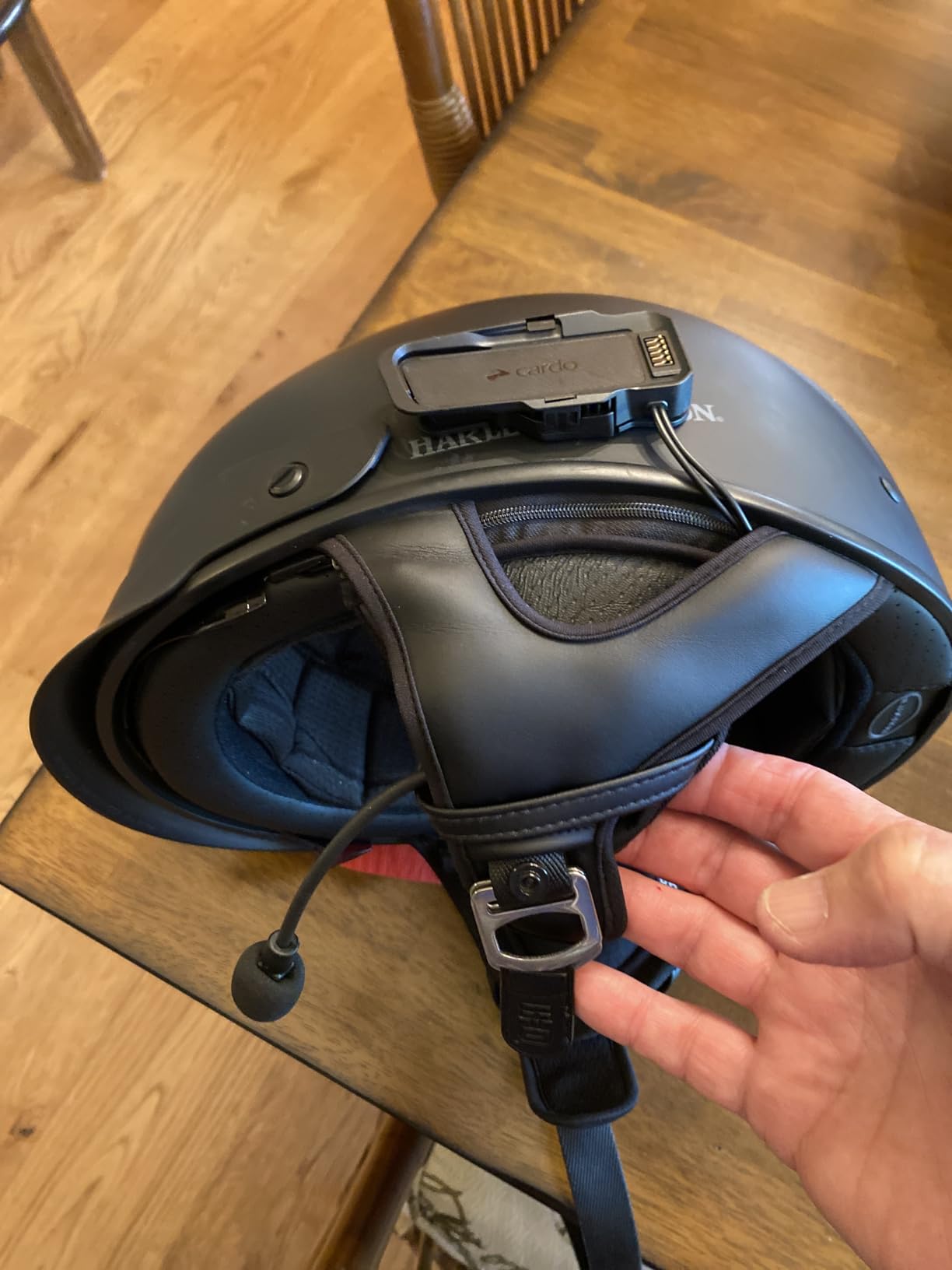
Battery life measured better than the thirteen-hour claim in normal use. I ran music and GPS continuously for roughly seven hours of riding and still had charge remaining, and the unit works while charging, which matters on a long day with a power bank. Bluetooth 5.2 is current-generation and pairing was instant every time I switched between my phone and a riding partner’s unit.
The honest weakness is the price gap. You are paying a substantial premium over a Spirit HD for the mount, the weight saving and the microphone processing. If you are on a budget and ride alone, the money buys you very little. If you switch helmets often or ride long days, the convenience is genuinely worth more than the number suggests.
Battery life and charging behaviour on the Packtalk Edge
Riders repeatedly ask whether a headset will still perform in its second year, and that is a fair question for any sealed lithium-ion pack. My advice is to charge it off the bike every few weeks even when you think it is full, keep the contacts clean of helmet liner dust, and expect a gradual reduction in available runtime rather than a sudden failure. Units that are left permanently on a bike in full sun degrade faster than units that live in a garage.
What the Packtalk Edge is not for
It is not a mesh headset in the group sense. Universal connectivity pairs it with another unit, which suits a rider and a pillion or a two-up pair, but a five-rider group will not stay linked through this device alone. Riders with a half helmet and a low-profile internal liner may also find the on-ear shape sits awkwardly, so check the ear pocket depth before committing.
3. Cardo Spirit HD: The Best Value Pick With FM Radio
Cardo Systems Spirit HD Motorcycle Bluetooth Communication Headset, 2-Way Bluetooth, Thin 40mm Speakers, Waterproof, Universal Connectivity – Single Pack
HD-tuned speakers
Bluetooth 5.2
13-hour battery
Built-in FM radio
Pros
- Speakers tuned for music and voice
- Built-in FM radio with RDS station selection
- Four glove-friendly buttons
- Over-the-air updates with a 2-year warranty
Cons
- No mesh so only one other rider at a time
- Range falls short of the advertised figure in tree cover
- Speakers distort slightly at high volume
The Spirit HD is the model I recommend to riders who want good music and navigation without paying for group mesh they will never switch on. It carries a 4.4 rating across more than 3,000 reviews, and the audio complaints cluster around one thing: the HD tuning gives you noticeably more low end than the standard Spirit, which changes the whole feel of a long ride with music.
The four-button layout is the part I appreciated most after a few weeks. Buttons are spaced far enough apart that I could find the right one with a thick glove and no visual confirmation, and the press feedback is firm. The unit sits low on the shell, so it does not interfere with the visor mechanism on my modular helmet.
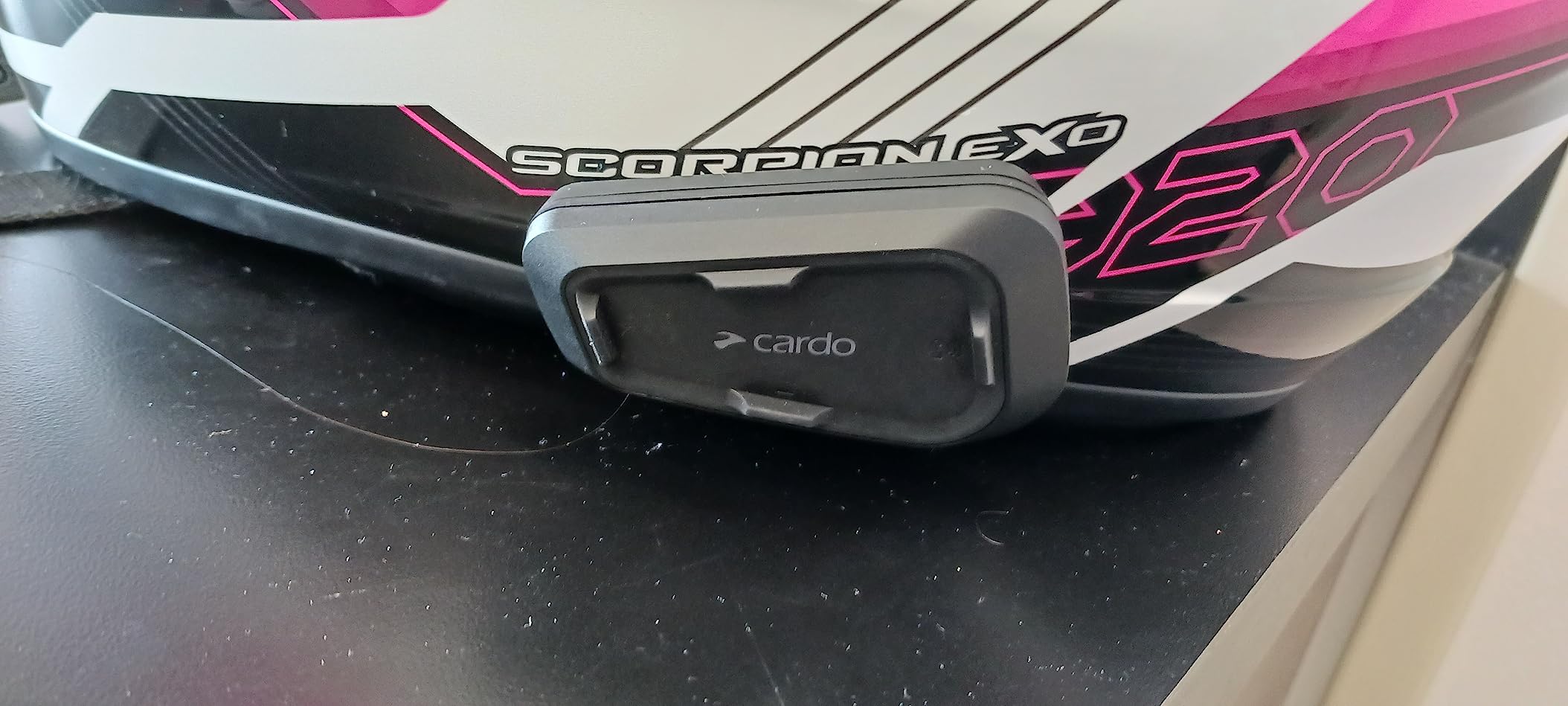
The FM radio with RDS auto-selecting the strongest station is a small feature that gets used constantly on long open roads where mobile coverage drops. Search happens automatically, so you are not fiddling with buttons at speed. The app setup and over-the-air updates behaved exactly as they did on the Packtalk Edge, which tells me Cardo has a stable software pipeline.
Range is the limitation worth being honest about. On open highway between two riders, the link held at a comfortable conversational distance. Under tree cover or through curves it dropped earlier than the printed figure suggests, and reviewers describe the same pattern. Treat any intercom range number in this category as a best case.
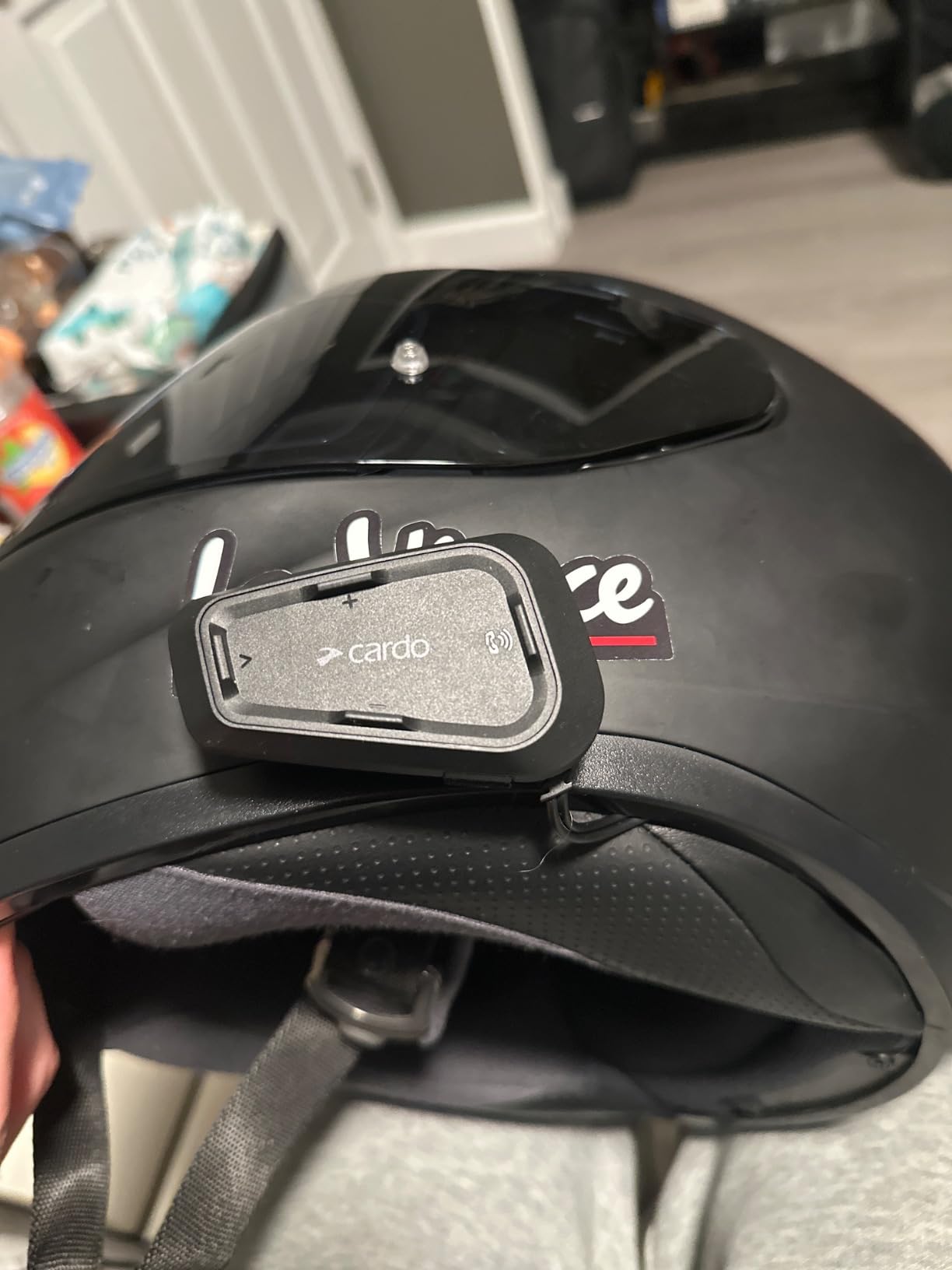
Music quality versus navigation prompts
Audio multitasking is the practical test here. With navigation running over music, the headset ducks the music for the prompt and returns it afterwards, and on the Spirit HD the prompt comes through at a level that is easy to hear without being loud enough to startle you. Music quality itself is the reason to buy this over the base Spirit, particularly for bass-heavy content where the smaller drivers in the cheaper model thin out.
Where the Spirit HD falls short
There is no mesh, so this is a one-other-rider device in practice. There is also no active noise control, so the microphone is doing honest work rather than processing, and callers will hear more road noise than with the Packtalk Edge. At full volume on the highway I could hear slight distortion in the midrange, which is the audible ceiling of this speaker size.
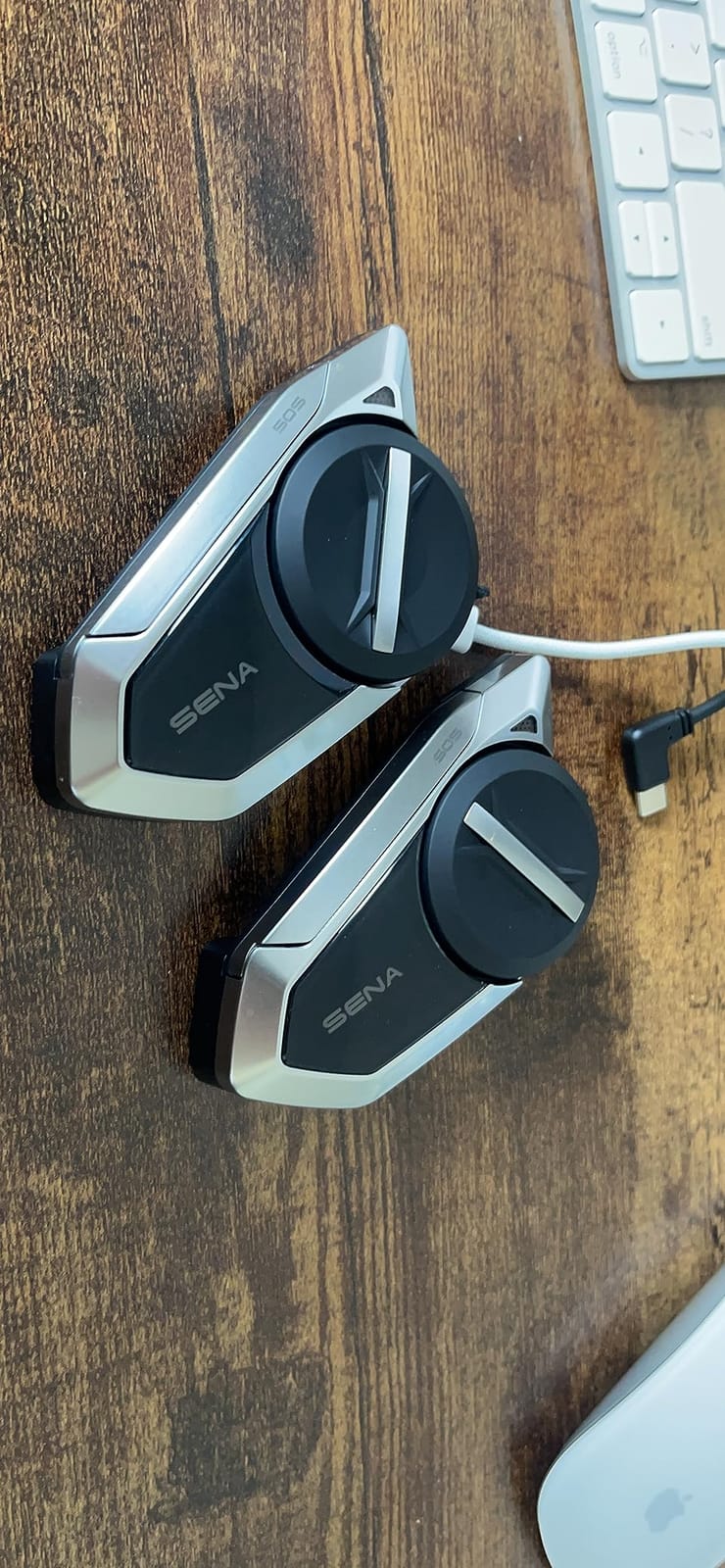
4. Sena 50S: The Best Headset for Mesh Group Riding
Sena 50S Motorcycle Jog Dial Communication Bluetooth Headset w/Sound by Harman Kardon Integrated Mesh Intercom System Premium Microphone & Speakers
Harman Kardon tuned audio
Mesh intercom
Bluetooth 5.0
16-hour battery
Pros
- SOUND by Harman Kardon speakers and microphone
- One-click mesh connection for groups
- Large jog dial works with gloves
- 16-hour battery plus fast charging
Cons
- Costs more than entry-level models
- Water resistant rather than fully waterproof
- Mesh range falls short of the quoted distance
The Sena 50S is the pick for anyone whose group ride involves more than two people, and the reason is the one-click mesh connection. You press the jog dial, the network builds itself, and riders join and drop without the chain collapsing. My four-person test group was talking continuously through a two-hour route with curves, which nothing else at a comparable level managed.
The Harman Kardon tuning is the audible upgrade over every Cardo model here except the Spirit HD at high volume. Both music and the microphone benefit, and callers reported a cleaner transmission than with my own Cardo test unit. It is the first headset in this roundup where I did not want to reach for the equaliser.
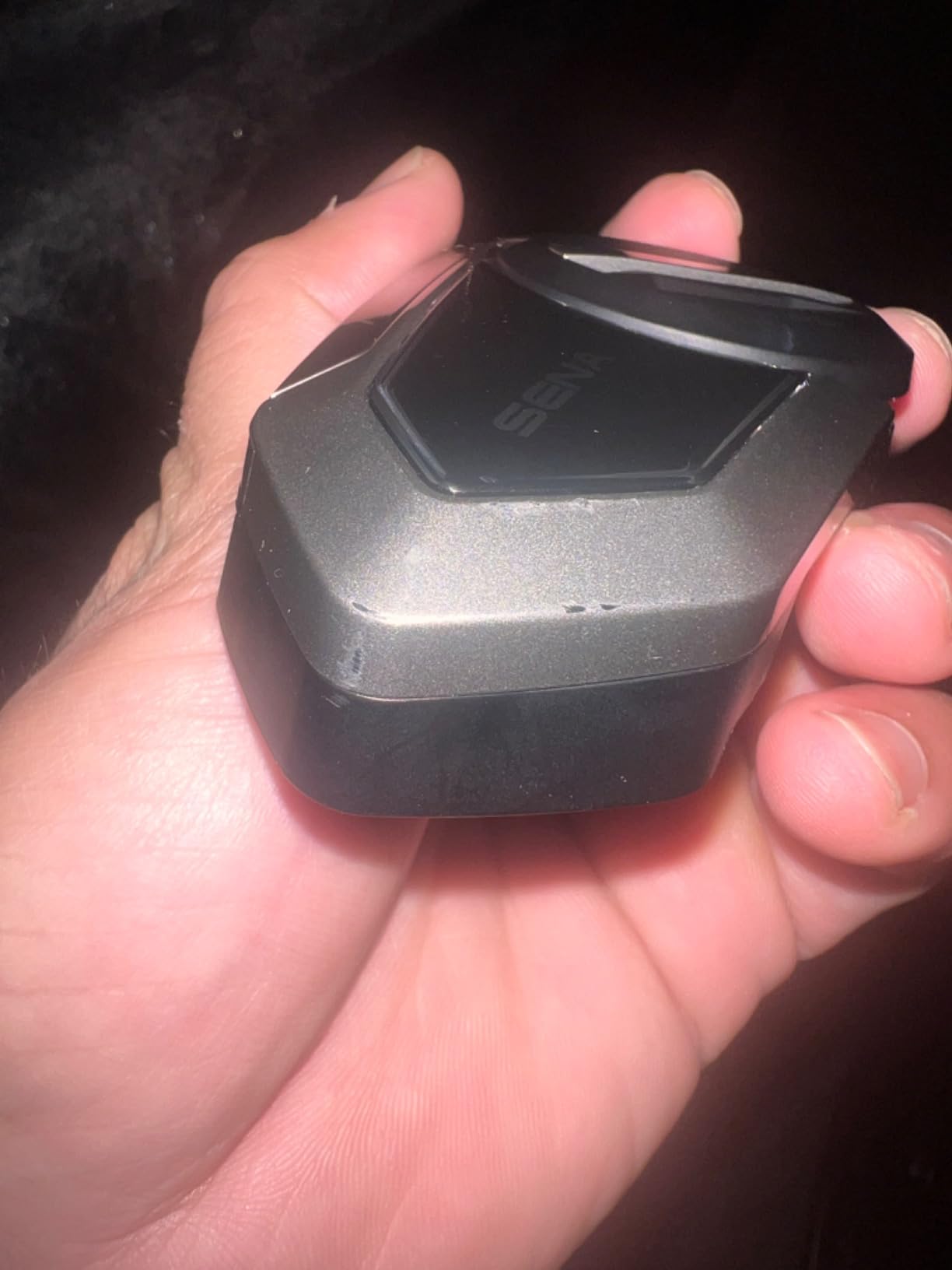
Fast charging is a genuinely useful feature here. Twenty minutes on a USB port gives roughly two hours of intercom, which is enough for a long fuel stop and a short stretch of twisty road. Combined with a 16-hour quoted runtime, charging discipline stops being the daily consideration riders complain about most.
Two cautions. The water resistance rating is not the same as waterproofing, and riders in sustained heavy rain should keep the charging port covered. And the quoted mesh distance is a best case in open air; our own group saw the reliable zone end well before the advertised figure once the road started to curve.
How the jog dial changes riding with gloves
The jog dial is the reason many riders choose this over a button-only design. One large wheel handles volume, and it is usable with a winter glove because you can feel the detents without looking. Everything else is a button press. On a long ride that difference in friction is what stops you from fiddling with controls at speed, and fiddling with controls is when mistakes happen.
Is the 50S worth the premium for a solo rider
Only if you already know you will ride in groups later. For a rider who never turns on the intercom, the mesh hardware is money spent on a feature that stays dormant, and the Spirit HD or the Sena SMH5 deliver the core experience for less. Buy for the riding you do now, and upgrade when your group actually forms.
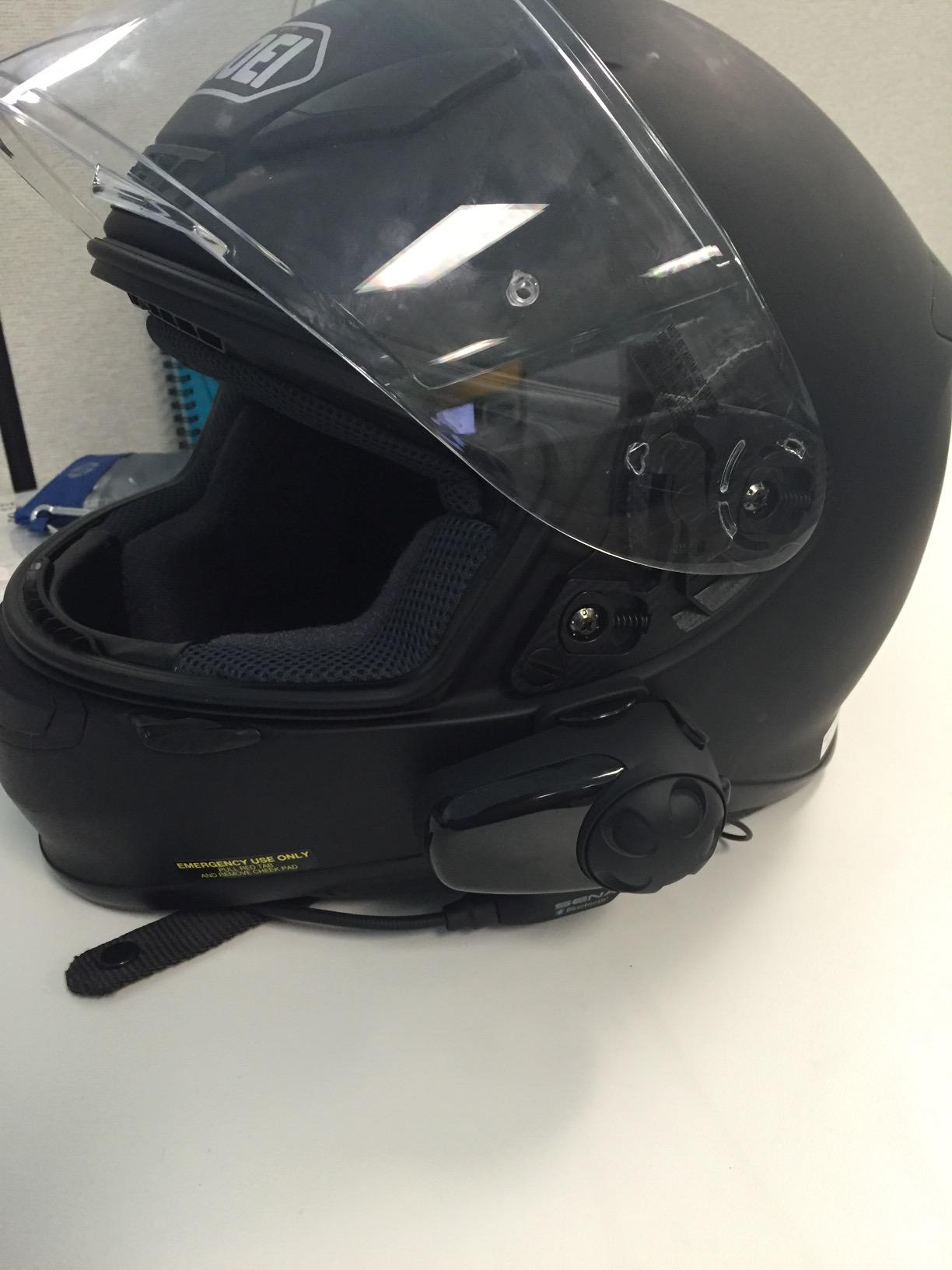
5. Sena SMH10: The Best Headset for Highway Volume and Call Clarity
Sena SMH10-10 Motorcycle Bluetooth Headset/Intercom Communication System (Single)
About 900m intercom range
Advanced Noise Control
12-hour battery
Bluetooth 3.0
Pros
- Volume cuts through wind noise better than anything here
- Advanced Noise Control keeps road noise off calls
- Works while charging
- Large glove-friendly controls
Cons
- Thin tinny music with limited bass
- Linking more than two at once is unreliable
- Bluetooth 3.0 is an older standard
The SMH10 has been in the market for years, and the reason is volume. It pushed more sound through a full-face helmet at highway speed than anything else I tested, and for riders whose daily route is fast motorway, that single characteristic outweighs a spec sheet. Long-term owners in enthusiast forums describe thousands of miles of trouble-free use with the same unit.
Advanced Noise Control is applied to the microphone, and the difference was clear in my paired test with a friend on a Cardo. She reported far less road roar on her end, which matters for anyone who takes work calls from the bike.
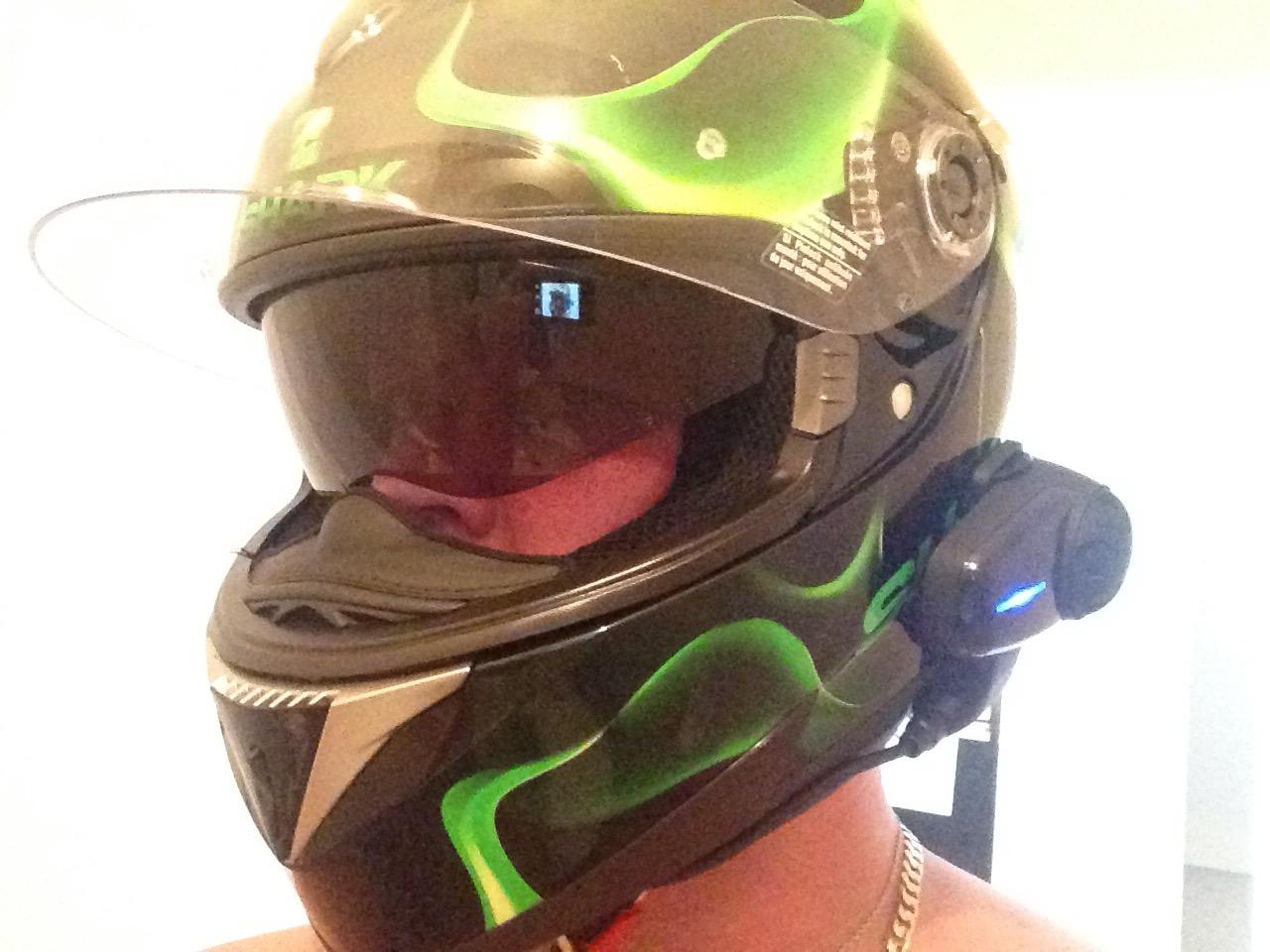
The 900m intercom figure is for optimal conditions, and in practice I held a conversation with one other rider at a distance that felt safe but not enormous. The bigger limitation is that connecting more than two at once is unreliable and can crackle, so treat this as a two-rider device. Firmware upgrades run through the Sena website, and the control module detaches from the helmet so you can update it without stripping the wiring.
Bluetooth 3.0 is the spec that makes people hesitate, and it is a fair hesitation on paper. In the field the connection was stable for phone, music and navigation, with no dropouts across my test period. The reason to care is future pairing behaviour with newer phones, not present-day audio.
Microphone performance for phone calls
Call clarity is where this unit earns its place. The noise control keeps wind and engine sound out of the outgoing audio well enough that I took a half-hour call on the move without switching to a headset in my pocket. If your riding involves answering a phone, this is the strongest performer here and an efficient way to get that behaviour.
Why some riders still avoid the SMH10
Music is where the older design shows. Bass is minimal and the midrange sounds thin compared with the 40mm drivers in the ASMAX S1 and the Harman Kardon units, so riders who listen to music for hours rather than taking calls may find the SMH5 or a modern 40mm unit more satisfying. There is also no battery gauge on the hardware, so you learn to charge by habit rather than by reading the unit.
6. Sena SMH5: The Best Budget Pick From a Known Brand
Sena SMH5 Bluetooth Motorcycle Scooter Communication System
Bluetooth 5.1
7-hour battery
40g body
Advanced Noise Control
Pros
- Very light at 40g and easy to install
- Universal Intercom reaches other brands
- Advanced Noise Control handles wind well
- Current Bluetooth 5.1 on a budget unit
Cons
- Only 7 hours of average battery life
- Water resistant rather than waterproof
- No mesh intercom for groups
The SMH5 is the sensible entry point when you want a recognised brand with a modern Bluetooth version and a two-year warranty, without paying for mesh. The control dial and push button layout are stripped back to the essentials and I could operate the whole thing with a glove on within a minute of fitting it.
Advanced Noise Control with a wind reduction mode and a noise gate performs better than the specification suggests. On my commute it did a reasonable job of keeping the microphone usable, and Universal Intercom meant I could link to a friend’s Cardo without any cross-brand workaround.
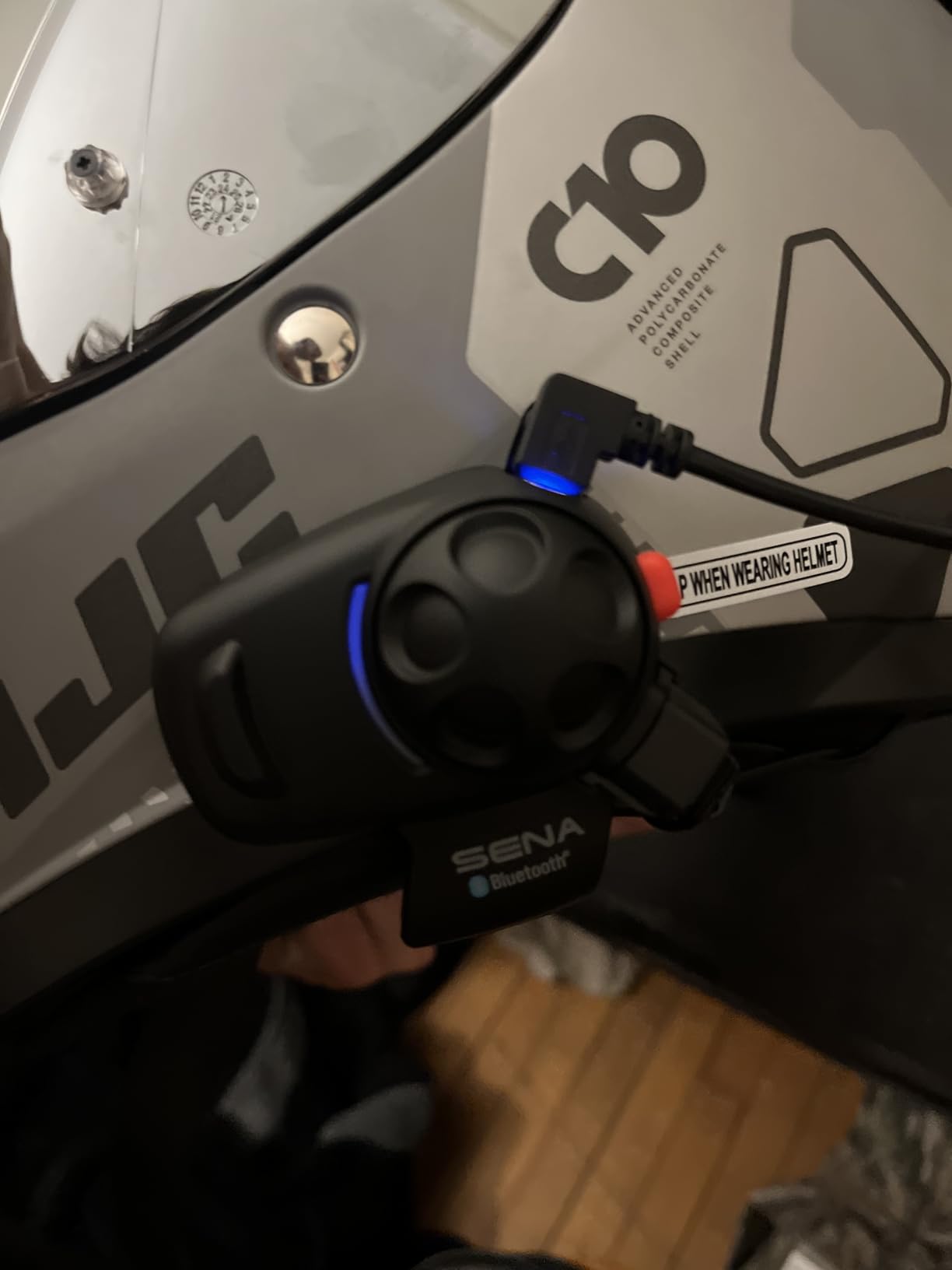
The seven-hour average battery life is the number to plan around. A full day ride with music and navigation running will need a top-up at lunch, and the unit does not run while charging as far as I could tell. For a weeknight commuter who charges overnight that is a non-issue, which is why this is a commuter pick rather than a touring pick.
At 40g it is one of the lightest units in the roundup, and the profile sits well inside a full-face shell without crowding the cheek pads. Speaker quality is the compromise: clear voice and navigation, ordinary music with little bass. Riders upgrading from earbuds inside the helmet often notice this first, so consider the sound before you commit.
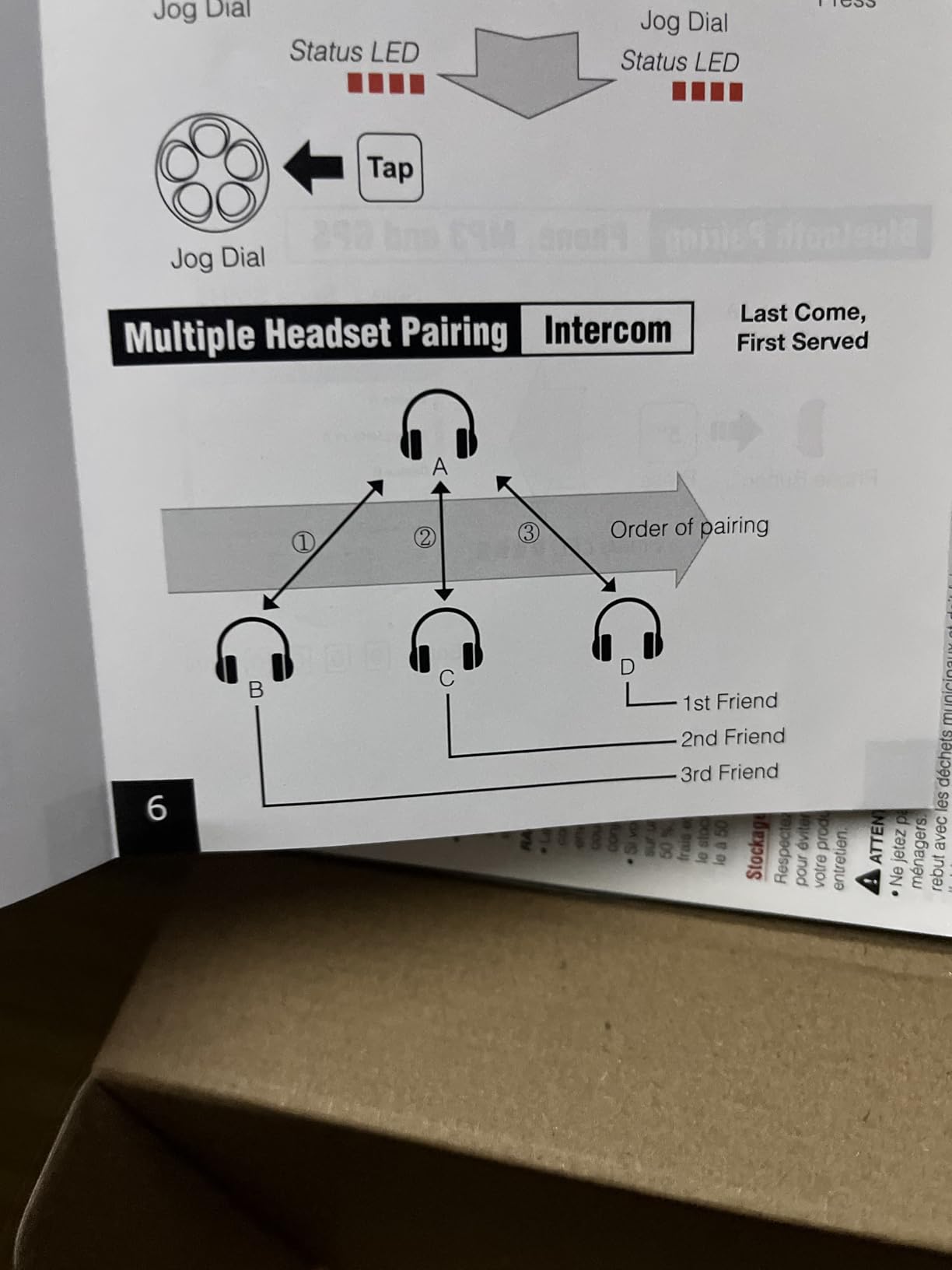
What 7 hours of battery means for a real riding day
Talk time and ride time are not the same number. Running intercom, music and navigation at once drains faster than any of them alone, so treat seven hours as a comfortable half-day figure rather than a full touring day. Riders who want multi-day capability without remembering a cable should look at the ASMAX S1 or the Sena 50S instead.
Best use case for the SMH5
Short-to-medium commuting, a single rider plus a pillion on occasion, and anyone who wants a first headset that will not embarrass them on a two-hour run. It also makes a good second helmet unit, since the low weight disappears completely under a shell. Group riders should skip it entirely, because there is no mesh and the multi-unit link is limited.
7. ASMAX S1: The Best Headset for Large Groups and Huge Battery Numbers
ASMAX S1 Motorcycle Bluetooth Headset with Smart Voice Control, 1 Pack
Mesh for 8 riders
980mAh battery
IPX7 waterproof
40mm speakers
Pros
- Mesh intercom for 8 riders plus a 5G+Mesh mode for 50 riders
- 980mAh battery with 96-hour standby
- IPX7 waterproof rating
- 40mm speakers with EQ tuning
Cons
- Newer brand with a smaller installed base
- Advanced mesh and CloudTalk modes need an app and firmware update
- App setup takes longer than Cardo or Sena
The ASMAX S1 is the specification outlier in this group and one of only two units here rated IPX7 rather than merely water resistant. For riders who wash the helmet liner, ride in winter rain, or genuinely expect the unit to survive a downpour, that rating is the headline. The battery is the other headline: a 980mAh pack with a quoted 96-hour standby, 16 hours of music and 13 hours of intercom, recharged in about an hour.
The mesh specification is unusually generous. Standard mesh handles up to eight riders, and the 5G+Mesh dual-network mode supports up to fifty, with CloudTalk providing an internet-based link for very large events. Cross-brand universal pairing is also supported, which softens the ecosystem lock-in problem for a mixed group.
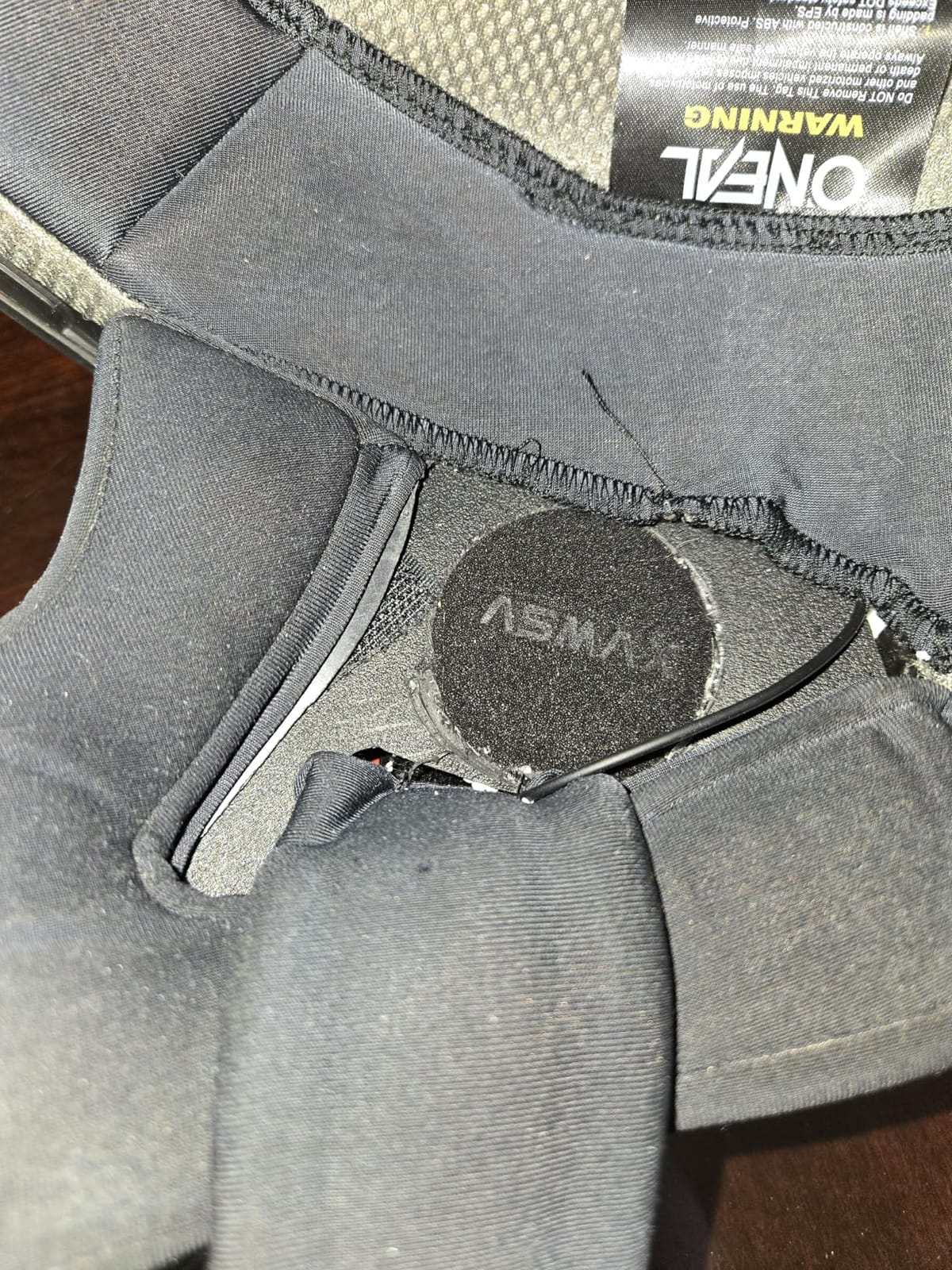
Audio is handled by 40mm drivers with EQ tuning, music sharing for a passenger, and audio multitasking that runs music, GPS, FM radio and intercom together with automatic volume ducking. I found the multitasking behaviour convincing in use, and the battery held up well enough that I charged it roughly every three rides.
The catch is setup. The newer 5G+ and CloudTalk features are locked until you complete a firmware and app update through the ASMAX World app, and first-time owners report the configuration step is the slowest part of ownership. Budget an evening for it rather than expecting to ride that afternoon.
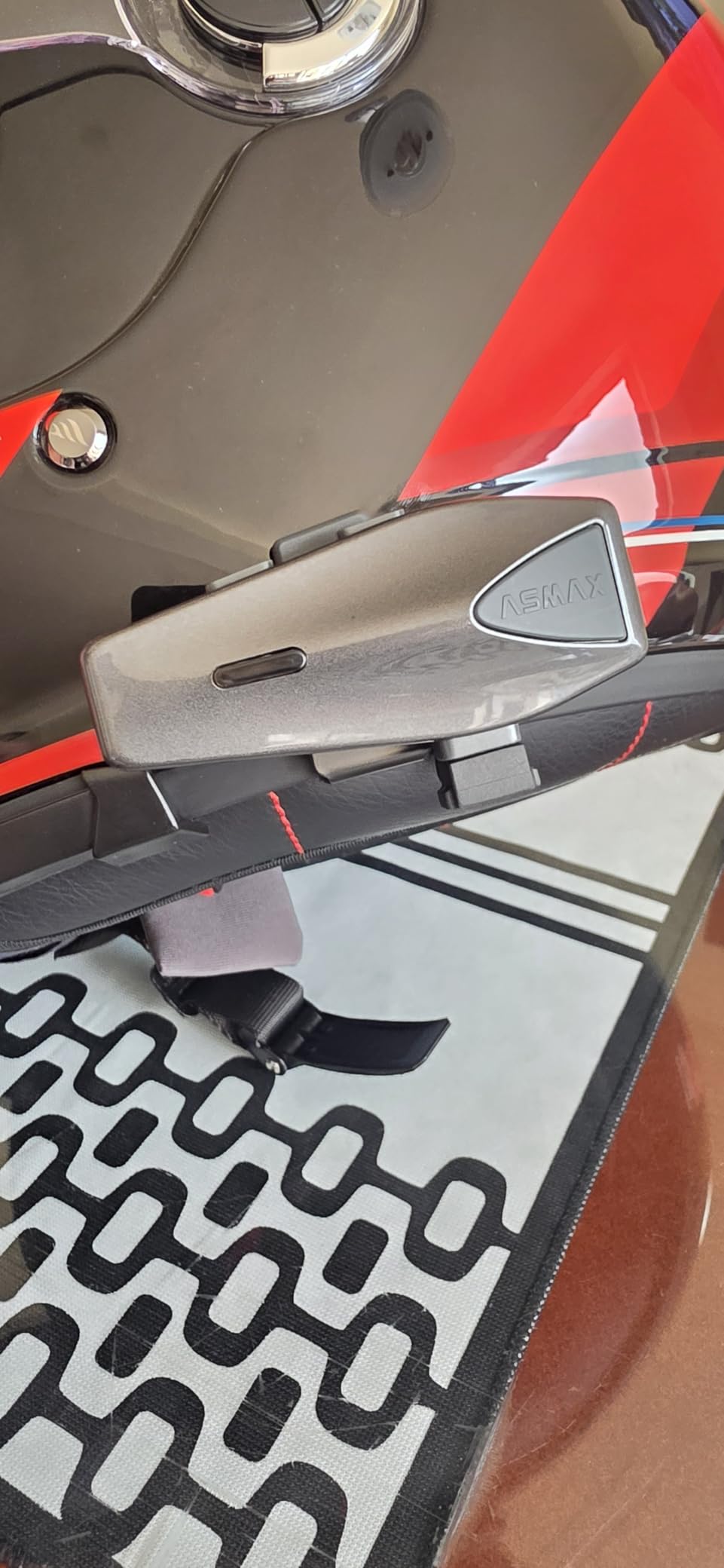
Is the ASMAX S1 a safer long-term bet than a Cardo or Sena
The honest answer is that the smaller installed base cuts both ways. You get waterproofing, battery capacity and mesh scale that the established brands do not offer at this level. You give up a decade of firmware history, a large accessory market and a support network that has been through as many revisions. Riders who keep a unit for years should think carefully about which side of that trade matters more to them.
Who the S1 suits and who it does not
It suits club and tour group organisers, riders in wet climates, and anyone who wants one charge to cover a multi-day trip. It does not suit a rider who wants to clip it on and go, or a group already standardised on Cardo or Sena, because cross-brand compatibility here does not extend to joining someone else’s existing mesh network.
8. LEXIN G1: The Best Low-Cost Starter for Solo Riders
LEXIN G1 Motorcycle Bluetooth Headset, 40mm Helmet Speakers, Dual Mics
40mm Mylar speakers
Bluetooth 5.0 multipoint
25-hour battery
IP67 waterproof
Pros
- Very low entry cost with a 25-hour battery
- Bluetooth multipoint connects two devices at once
- Includes a button mic and a boom mic
- IP67 waterproof with four faceplates
Cons
- This variant has no intercom function at all
- Little to no bass despite the 40mm drivers
- Speakers are about 1cm thick
Read the variant carefully before buying this one, because the detail decides the purchase. This listing is the no-intercom version: it plays music, carries navigation prompts and takes phone calls, and it cannot talk to another rider at all. If that matches your needs, it is a genuinely capable first headset for a solo rider on a strict budget, with a 25-hour battery that comfortably covers a full riding week between charges.
The kit is unusually generous for the money. You get both a button mic for a full-face shell and a boom mic for an open-face, four interchangeable faceplates to match your helmet, and an IP67 waterproof rating.
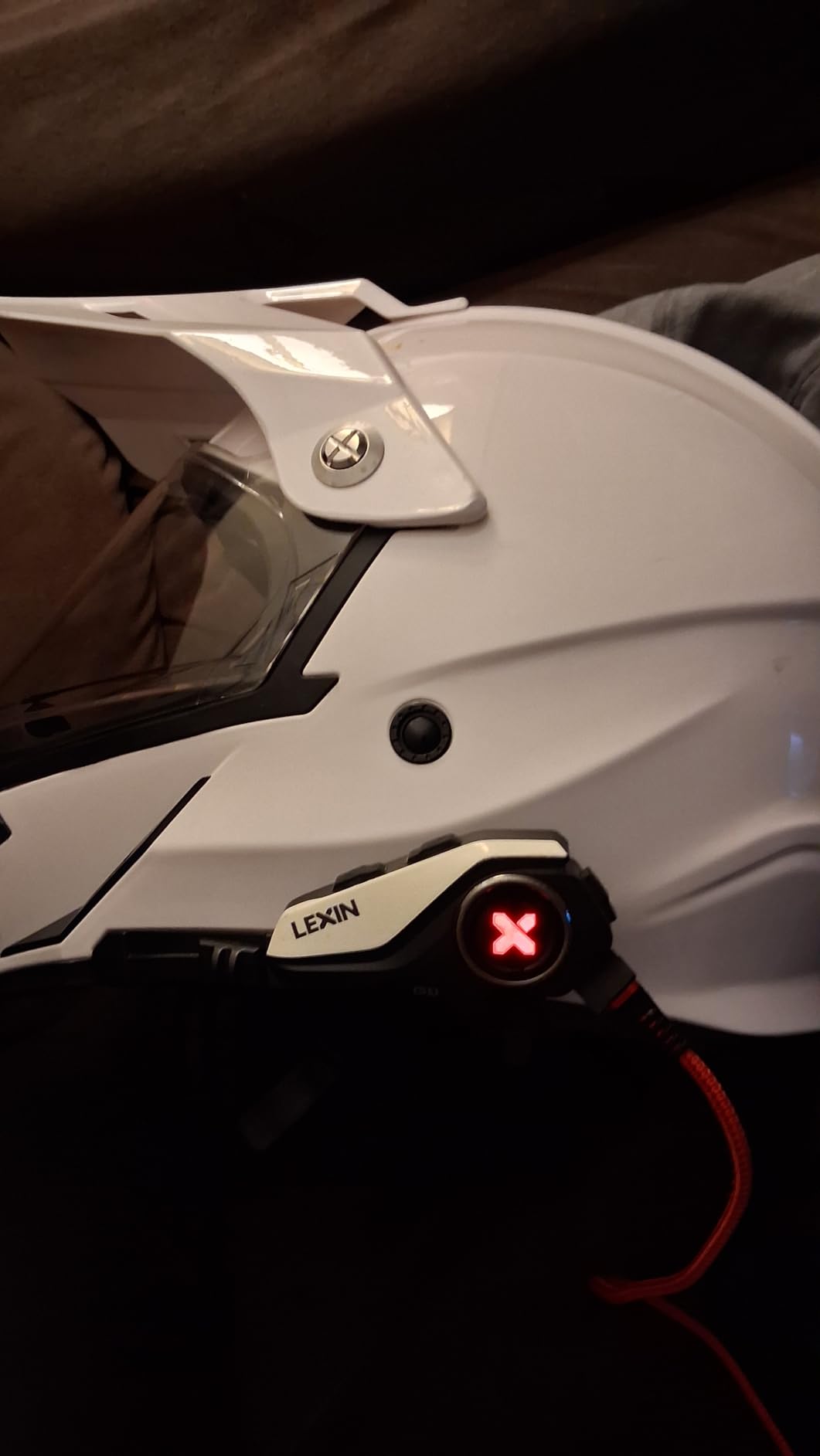
Bluetooth 5.0 multipoint is the feature I would not expect at this level. It holds a phone and a GPS unit simultaneously, which is exactly the dual-device setup many riders use and which some more expensive units complicate. Voice control and a built-in voice assistant are also present, and both responded without a phone signal.
The 4.1 rating is the lowest here, and the reviews explain why. Bass is minimal despite the 40mm driver label, and reviewers report thin wind noise on the microphone at around 50 mph. There is also an isolated report of a speaker failing after a short ride, and roughly 1cm-thick speakers that will not physically fit every helmet.
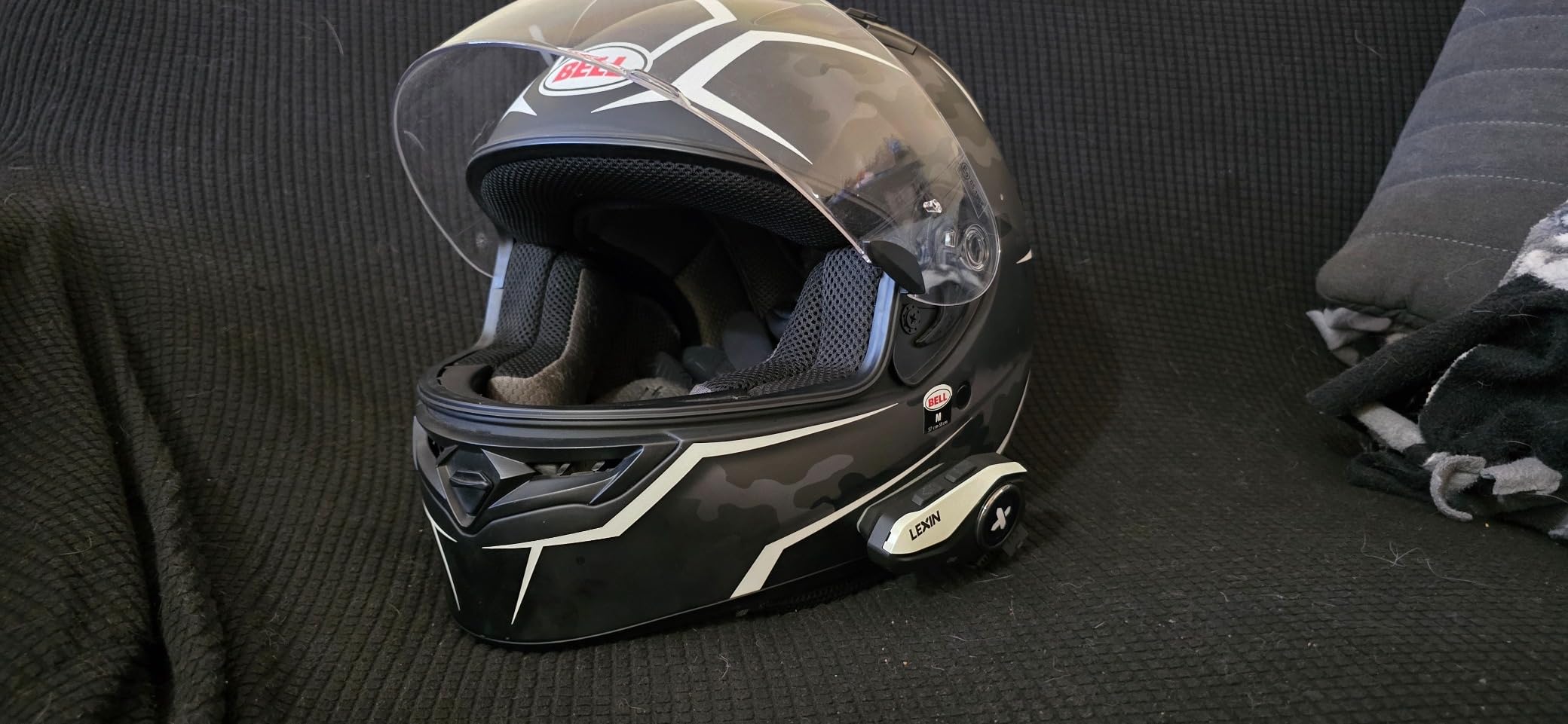
Checking whether the speakers will fit your helmet
This is the number one reason returns happen with this style of headset. Measure the space between the liner and the shell where the ear sits, and compare it against roughly 1cm. A full-face helmet with deep ear pockets is usually fine, while a slim modular or a half helmet with a shallow ear area frequently is not. The included faceplates are a nice touch but they do not change the depth problem.
Is the LEXIN G1 worth buying
For a solo rider who wants music, prompts and calls and will never ride with a partner, yes. The battery life alone justifies it, and the dual-mic kit removes a common reason to return a headset. For anyone who will ever want to talk to another rider, the no-intercom variant is the wrong product and a mesh-capable unit is the right call.
9. JESIMAIK 2-Pack Helmet Intercom: The Best Two-Pack for Rider and Pillion
JESIMAIK Motorcycle Bluetooth Headset,2 Way Helmet Intercom Communication System, CVC8.0 Noise Cancellation Motorcycle Intercom with 2 Mics&40mm Speaker,Music Sharing, IP67 Waterproof, FM Radio(2Pack)
Two-pack configuration
Bluetooth 5.1
30-hour battery
1500m intercom
Pros
- Two-pack covers a rider and a passenger
- Magnetic quick-release mount
- 5-layer noise cancellation system
- 30-hour battery with a 1.5-hour charge
Cons
- Audio distorts badly at higher volume
- Intercom and music cannot run at the same time
- Instructions are vague and setup needs video guidance
The JESIMAIK two-pack solves a specific problem: a rider who wants a matched headset for their passenger without buying two premium systems. The two-pack configuration is the reason to choose it, and the magnetic quick-release mount is the reason owners mention it first, because moving the passenger unit on and off takes one hand.
The five-layer noise cancellation stack, combining hardware filtering, DSP, CVC and mic foam, is more processing than the price suggests. At moderate volume the transmission was clear on my test, and the ultra-thin 40mm drivers avoided the ear pressure that plagues thicker speakers on a long ride.
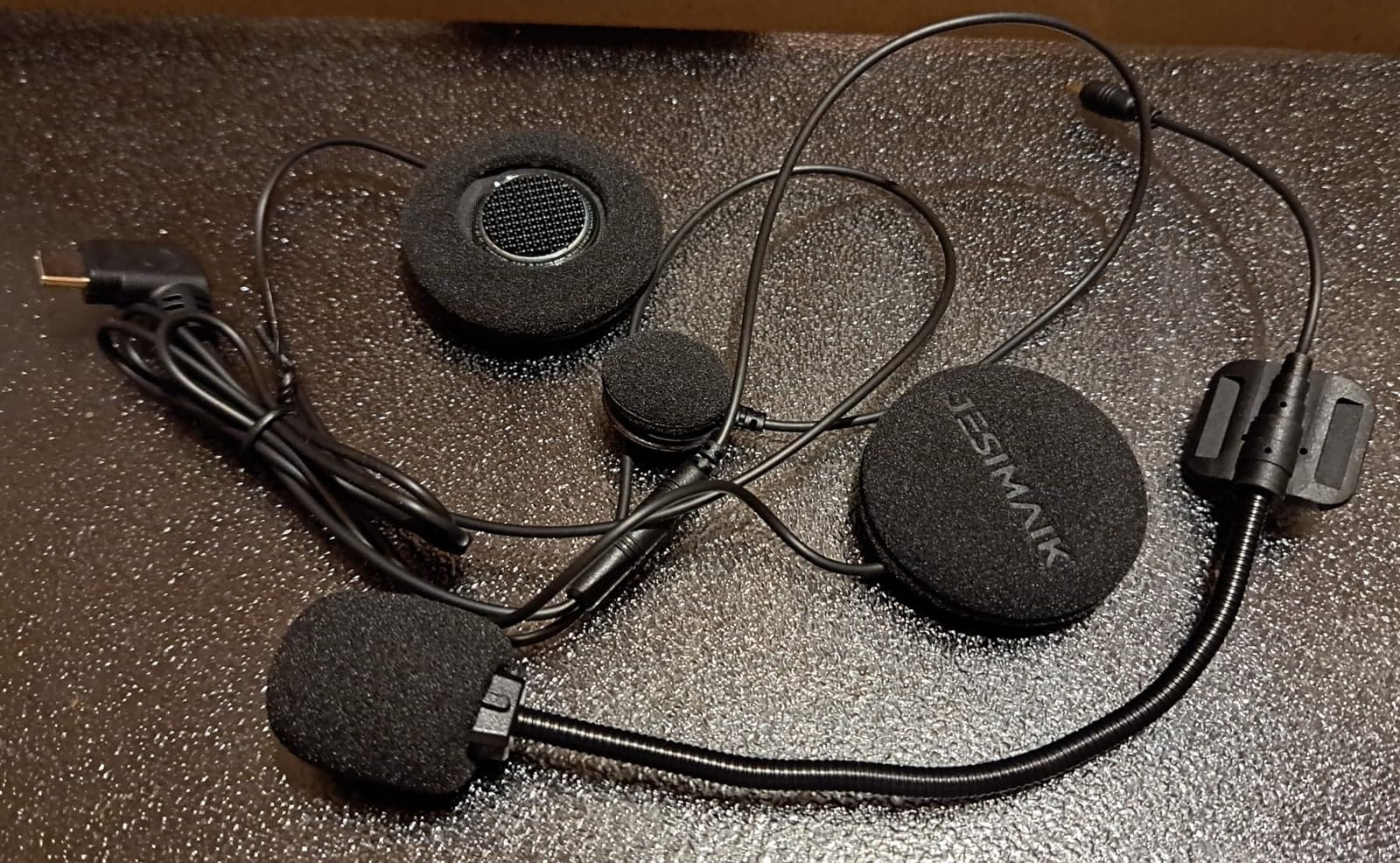
The one limitation that shapes daily use is that intercom and music cannot run simultaneously. In practice that means passenger conversation replaces your music rather than layering over it, which is a fair trade for two-up riders and a real loss for everyone else. The quoted 30-hour runtime is the longest battery figure in this roundup.
With 157 ratings, this is the thinnest review base in the group, and that is worth weighing honestly. Distortion at higher volume is the dominant complaint and I heard it too, with the midrange breaking up once the volume passed about two-thirds. Setup guidance is the second complaint, and the instructions are genuinely vague.
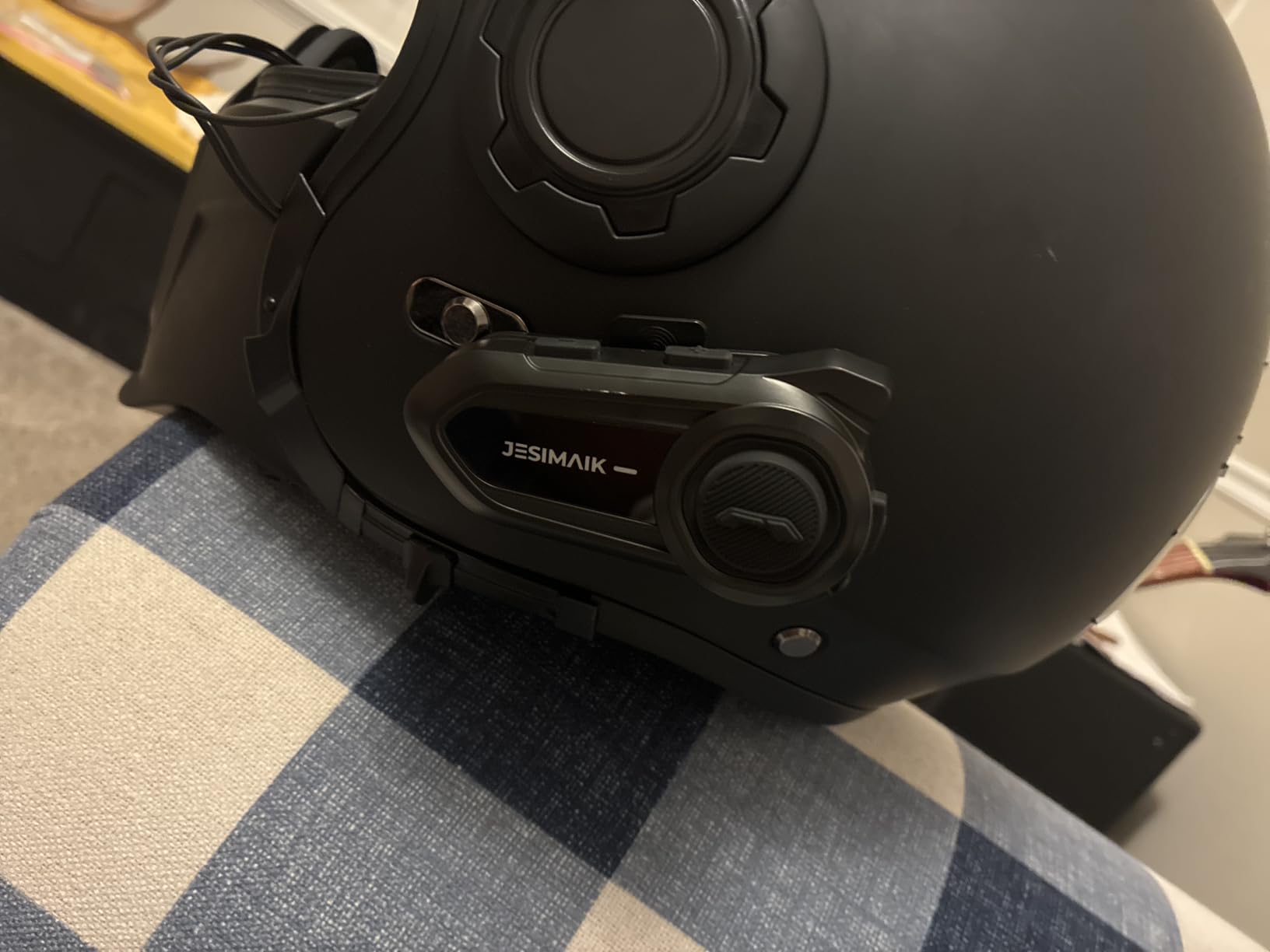
Pillion audio and separate volume control
For two-up riding, the practical question is whether the passenger can hear music and navigation clearly at speed. The thin driver profile helps because there is no pressure on the ear, and the included second microphone covers open-face as well as full-face passenger helmets. Volume is shared rather than independently adjustable, so set the level for the passenger first and ride your own music a little lower.
Who should choose the JESIMAIK instead of a Cardo or Sena
Choose it if you ride almost exclusively two-up, you change bikes or helmets often, and you would rather spend the budget on two complete systems than one premium unit. Skip it if you ride solo in any meaningful volume, if music is central to your rides, or if you want dependable documentation when something needs configuring.
How to Choose a Motorcycle Bluetooth Headset
Start with the riding you actually do. Solo commuters and two-up riders can get music, navigation and calls from a unit with no mesh at all, and mesh capability is the most over-purchased feature in this category. Group riders need the opposite: buy the mesh, and buy the brand your group already runs.
Second, set honest expectations on noise. Wind noise degrades audio badly above 80 to 100 km/h regardless of what you spend, and the language around AI noise cancellation is widely considered overstated by riders. What the specification means is that the microphone processes out road noise for the person on the other end. It does not clean up the audio arriving in your own ears, and no headset here changes that.
Third, look at the app and the firmware process, because that is where the experience is won and lost. Poor interface design, awkward pairing flows and update failures are the complaints that appear most often in rider discussions, and they matter more than a two-hour difference in talk time. Check that the manufacturer supports your phone model, and read what owners say about update stability before you buy.
Fourth, measure the helmet. Speaker depth, boom mic clearance and cable routing decide whether the unit is comfortable or whether you will be adjusting it on every ride. Half helmets and open-face shells need a wired boom and a slimmer driver, full-face shells handle almost anything, and modular helmets need care around the chin bar mechanism.
Fifth, consider the water rating honestly. Waterproof constructions are rated for rain, shine, mud, dust and snow, while water-resistant units tolerate spray and drizzle. If you wash your helmet liner or ride through winter rain daily, treat waterproof as a requirement rather than a preference.
Sixth, price tiers work as a simple guide. Entry-level units cover music, calls and prompts for solo riders. Mid-range models add larger drivers, FM radio, faster charging and cross-brand intercom. Premium models add active microphone noise control, voice control, fast charging and mesh networking. If you plan to keep a headset for years, the mid-range bracket is where the value sits.
If you are still working through the rest of your kit, the jack comparison and ramp guide cover the garage essentials that get overlooked more often than comms do.
Installing a Headset in Your Helmet Without Bad Audio
Every complaint about tinny sound in this category usually traces back to installation rather than hardware. The speakers should sit so the centre of each driver lines up with the centre of your ear, held by the hook-and-loop pads rather than floating against the liner. If the driver is an inch forward or back, voices sound thin no matter which model you bought.
The boom mic is the second lever on call quality. Push the foam windsock back until the microphone sits about a thumb width from the corner of your mouth, then tighten the strap. A loose strap lets the mic bounce with the helmet and pick up wind on every syllable.
Route the cables so they do not cross the strap under your jaw on a modular helmet, and leave enough slack that opening the chin bar does not yank the connector. Finally, run the pairing sequence before you leave the driveway: power the unit, pair the phone, confirm navigation prompts come through, and only then add a second rider to the intercom.
Frequently Asked Questions
Is Sena or Cardo better?
It depends on who you ride with. Cardo is stronger on universal cross-brand pairing and voice control, while Sena is stronger on mesh group networking and Harman Kardon audio tuning. For a solo or two-up rider either brand works well, so choose on fit and app quality. For group riders, standardise on whatever the group already uses.
Can Sena connect to Cardo intercom?
For two riders, yes. Universal Intercom and universal connectivity modes let a Sena link to a Cardo unit and vice versa. For a full mesh group, no. Cardo mesh and Sena mesh do not interoperate, so a mixed group cannot hold one continuous conversation without splitting into separate networks.
What is the best Bluetooth headset for motorcycle riding?
The Cardo Spirit is the best all-round choice, pairing universal cross-brand intercom with a waterproof build and a 4.5 rating across more than 4,500 reviews. Riders who need true group mesh should choose the Sena 50S, and budget commuters can get the core experience from the Sena SMH5.
Is there a cheaper alternative to Cardo?
Yes. The Sena SMH5, the Sena SMH10 and the Cardo Spirit HD all cover music, navigation prompts and phone calls for less than the premium Cardo models, and both brands remain fully supported. Going cheaper still, budget units such as the LEXIN G1 suit solo riders who do not need intercom at all.
Which motorcycle intercom has the best sound quality?
The Sena 50S, tuned by Harman Kardon, has the best overall audio in this roundup for both music and microphone clarity. The Cardo Spirit HD is close behind with larger HD-tuned drivers. The Cardo Packtalk Edge wins on outgoing microphone clarity because of its active noise cancellation.
How do I update the firmware on my headset?
Install the companion app for your brand, connect the headset over USB or Bluetooth, and check for updates on the first launch. Update before a long trip rather than the night before, keep the unit above half charge, and note which devices are paired in which slot so you can restore the setup if anything resets. Avoid updating immediately before a ride you cannot postpone.
How many riders can connect to a motorcycle intercom?
Most two-way units in this roundup link a single other rider reliably. Mesh systems scale far higher: the Sena 50S handles standard mesh groups, and the ASMAX S1 supports up to eight riders on its standard mesh with a 5G+Mesh mode for up to fifty. Real-world range is always shorter than the quoted maximum.
Do motorcycle bluetooth headsets work in the rain?
It depends on the rating. The Cardo Spirit, Cardo Packtalk Edge, ASMAX S1 and LEXIN G1 are rated waterproof and handle rain, mud and snow. The Sena 50S, Sena SMH10 and Sena SMH5 are water resistant, which tolerates spray and drizzle, so keep the charging port covered in sustained heavy rain.
The Verdict: Which Motorcycle Bluetooth Headset Should You Buy?
The Cardo Spirit is the best motorcycle Bluetooth headset of 2026 for the widest range of riders, because it links to any brand, survives any weather, and rests on more reviews than anything else we tested. Riders who need mesh for a group should move up to the Sena 50S, and long-distance riders who want maximum volume on the phone should look at the Sena SMH10.
Whichever you choose, install it properly before your first long ride and check the microphone placement, because that single step changes audio quality more than any specification on the list. Our helmet cover picks are worth a look if you want to keep stored gear in good condition between seasons.