
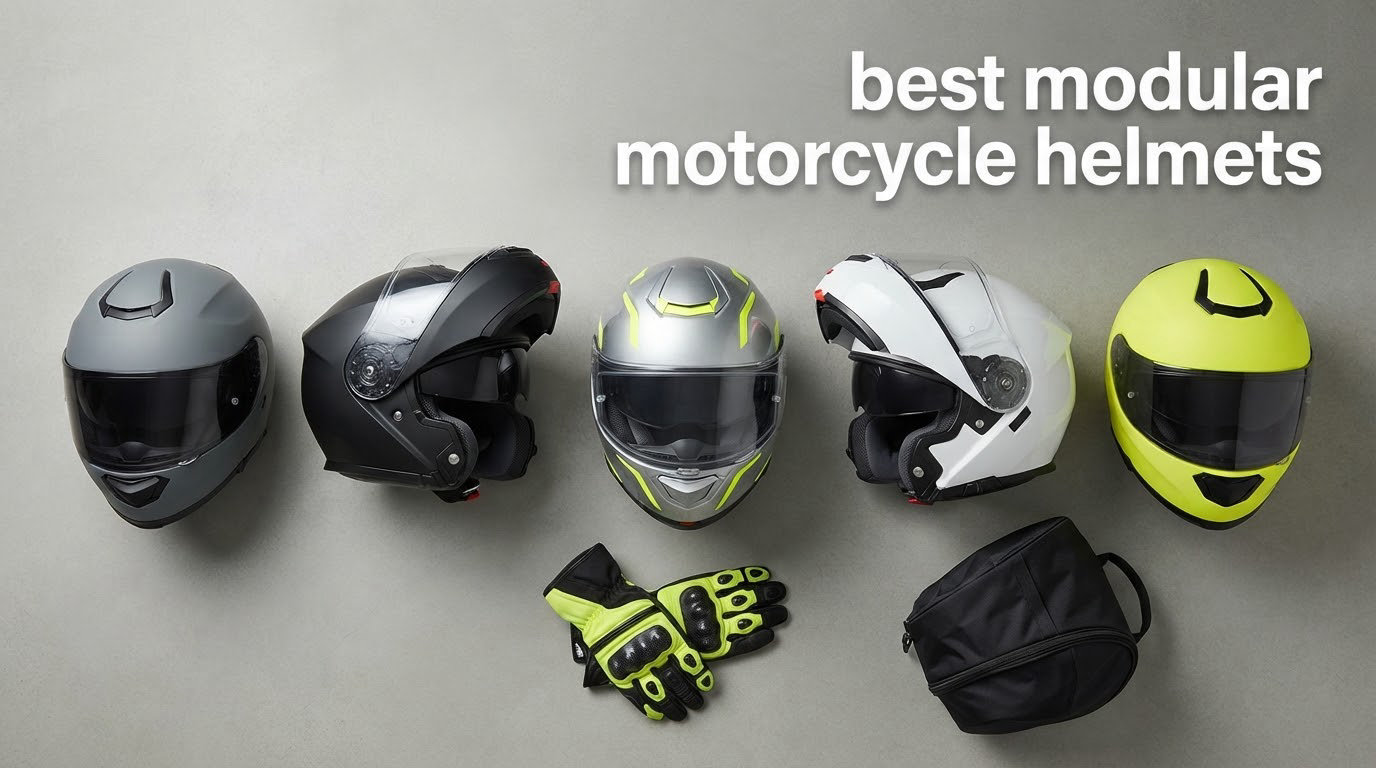
A modular motorcycle helmet is a full-face design whose chin bar hinges up and back so you can expose your face without taking the helmet off. That one mechanism is why riders keep coming back to them: you get the chin and jaw coverage of a full-face at highway speed, then flip the bar up at a fuel stop to talk, drink a coffee or feel the air. We put twelve of them through their paces in 2026, comparing shell material, weight, noise behaviour, visor systems and fit across weeks of commuting and highway riding.
They are not for everyone, and we will say so up front. A modular is the wrong call for track days, for sport riding where you tuck behind a screen, and for anything off-road. It is also heavier and bulkier than the full-face it replaces, so riders with existing neck trouble should think twice before switching. For commuters, touring riders, cruiser owners and anyone who wants to wear glasses comfortably, the trade is worth making. The picks below cover every budget from bare-bones entry level to carbon fibre flagships, and we have flagged the drawbacks that retailer pages tend to leave out. If you ride in traffic most days, read our commuting helmet guide first, then come back here.
Table of Contents
Top 3 Best Modular Motorcycle Helmets in 2026
Three helmets earned a spot at the top, and each one wins a different way. The Shoei Neotec II is the safest overall bet for long-distance work, the 1Storm HB89 is the strongest value in the whole list by a wide margin, and the LS2 Advant X Carbon is the quietest and most refined shell we tested. Everything else in the roundup is a strong second choice in its own category.
LS2 Advant X Carbon
- 9K carbon shell at 1470g
- 180-degree pivot
- Pinlock Max insert
- Built-in sun visor
Every Helmet in This Roundup, Side by Side (October 2026)
All twelve appear below with the specification that actually separates them. Scan the table first, then jump to the full review for whichever two or three interest you.
| Product | Specs | Action |
|---|---|---|
| Shoei Neotec II |
|
Check Latest Price |
 1Storm HB89 Modular 1Storm HB89 Modular |
|
Check Latest Price |
| LS2 Advant X Carbon |
|
Check Latest Price |
 Simpson Mod Bandit Simpson Mod Bandit |
|
Check Latest Price |
 BELL SRT Modular BELL SRT Modular |
|
Check Latest Price |
 HJC C91 HJC C91 |
|
Check Latest Price |
 ILM 953 Bluetooth Helmet ILM 953 Bluetooth Helmet |
|
Check Latest Price |
 ScorpionEXO GT930 ScorpionEXO GT930 |
|
Check Latest Price |
 Sena Outrush 2 Sena Outrush 2 |
|
Check Latest Price |
 JQF Gear SJ-809 JQF Gear SJ-809 |
|
Check Latest Price |
 Orthrus LED Modular Orthrus LED Modular |
|
Check Latest Price |
 ILM 902 Dual Visor ILM 902 Dual Visor |
|
Check Latest Price |
1. Shoei Neotec II – Best Overall and Best for Touring
Shoei Neotec II Modular Motorcycle Helmet
AIM composite shell
4.1 lb
DOT and ECE
QSV-1 sun shield
Pinlock EVO lens included
Pros
- Quietest premium touring experience in the set
- Premium AIM shell that stays light on long days
- QSV-1 sun shield changes fast in traffic
- Micro ratchet strap is easy to adjust with gloves
- Pinlock EVO lens and breath guard in the box
Cons
- Heaviest premium shell here at 4.1 pounds
- Chin bar adds bulk when flipped back
- Cost puts it out of reach of most first-time buyers
The Neotec II is the helmet I put on when I know the day is going to be long. Its AIM composite shell is not the lightest thing here, but the weight is evenly distributed across the crown rather than hanging off the back of the neck, so it disappears on a full tank of fuel and a slow lane-change rotation.
Noise is where it wins outright. Shoei’s advanced ventilation channels are tuned to keep the airflow without turning the ear area into a wind tunnel, and across our highway runs it was the quietest premium lid in the group. That matters more than any spec sheet, because the step change in wind roar is the single most common complaint we see from riders stepping down from a full-face.
The QSV-1 sun shield is the other piece of daily-use engineering that earns its place. You can drop it with a gloved thumb, and it moves through its range fast enough to follow you into a tunnel and back out into low sun. The micro ratchet strap does the same job, with enough travel to get a precise fit under a chin bar that moves as you open and close it.
Shoei includes a Pinlock EVO lens, a breath guard, a helmet bag and the instruction manual. That box contents list is longer than most rivals manage, and it removes two small purchases you would otherwise make before the first ride.
What long days feel like in the Neotec II
Riders who tour on this helmet consistently point to the liner and the sealing around the neck. A modular wraps closer at the neck than a full-face because the shell has to meet the rotating chin bar, and that seal is what keeps the wind out of your collar. On a full day of highway riding the result is noticeably calmer than most of the modulars here.
The flip mechanism itself is one-hand operation, which is what you want when you pull into a service station. You can drop the bar and drop the strap in the same gesture. Owners describe the action as firm rather than effortless, so it takes a moment to learn, but it stays locked where you put it.
Where the Neotec II is the wrong call
At 4.1 pounds it is the second-heaviest helmet in this roundup, and the chin bar folding over the crown adds a lump that you feel when you carry the helmet by hand or wear a backpack. Riders who upgraded from a lighter full-face notice the difference in the first hour.
It is also a premium purchase, and the warranty covers manufacturing defects rather than consumer damage, so a dropped helmet with a scratched shell is your problem. If your budget is tight, the 1Storm below does the same job for a fraction of the outlay and the difference is mostly refinement rather than capability.
2. 1Storm HB89 – Best Value
1Storm Motorcycle Modular Full Face Helmet Bike Flip up Dual Visor Sun Shield: HB89 Matt Black
Thermoplastic alloy shell
4 pounds
DOT FMVSS 218
Dual visor
Sizes S to XXL
Pros
- Best value in the roundup by a wide margin
- Over 3000 owners have bought and rated it
- Dual visor removes the need for sunglasses
- Easy to raise the chin bar while riding
- Good ventilation for the money
Cons
- Runs slightly small so measure your head first
- Sun shield feels thin and flexes
- Chin bar needs a firm squeeze to latch
With more than 3000 ratings at 4.6 stars, the HB89 has the largest owner base in this roundup by a distance, and that matters. A big sample means the problems listed below show up consistently rather than occasionally, which is exactly the information you want before buying.
The dual visor arrangement is the feature that wins converts. The outer clear shield plus an inner smoked lens means you carry one helmet instead of two and you stop hunting for sunglasses at every junction. Owners also like being able to raise the chin bar while riding, which is technically not a great idea and is not something we would encourage, but the mechanism tolerates it.
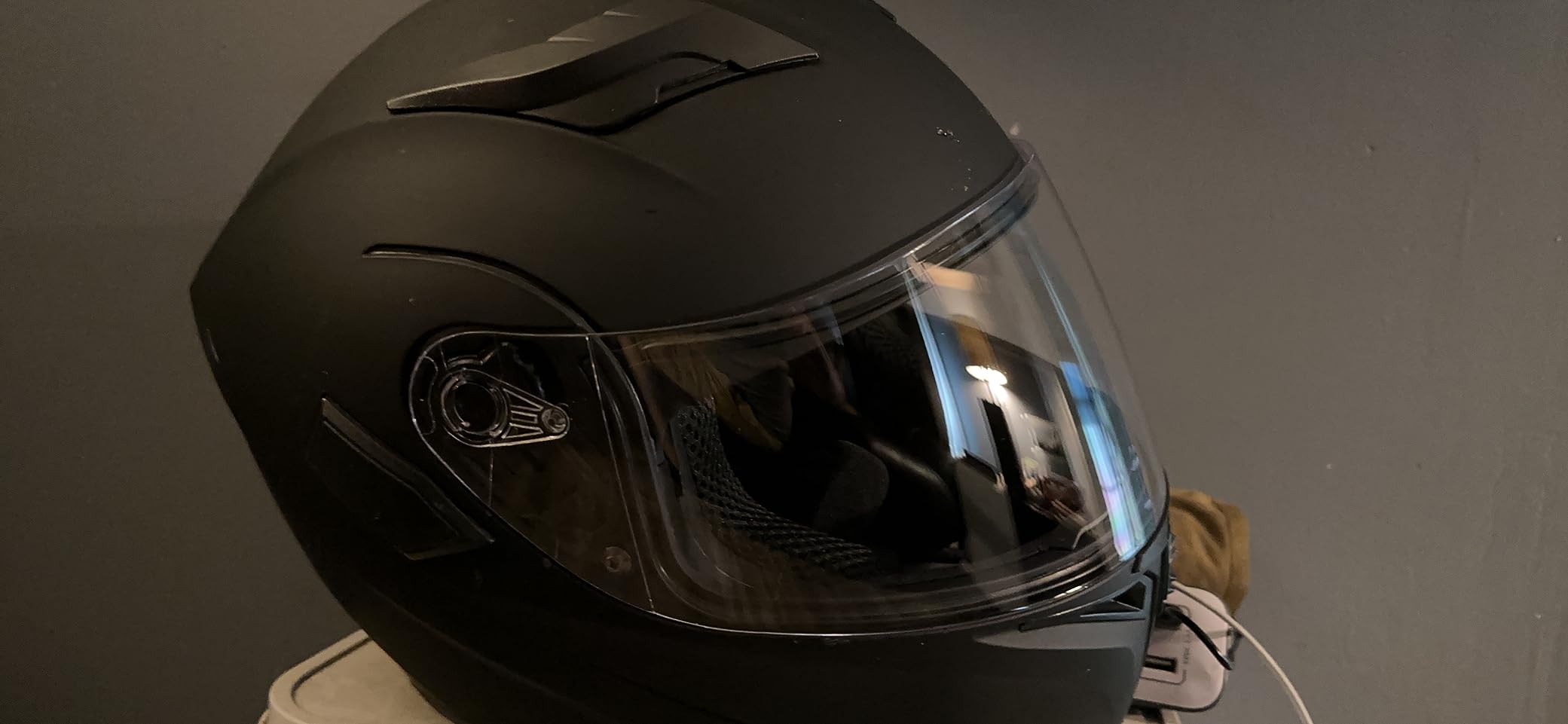
At 4 pounds it is not the lightest modular we tested, but the thermoplastic alloy shell is well balanced and the removable, washable interior padding makes it workable on hot days. The interchangeable rear spoiler lets you change the look from street to sport without buying a new helmet.
Sizes run from S through XXL, covering head circumferences of roughly 53-54cm up to 61-62cm, so most adults are covered in a single model. That range matters more than it sounds, because a lot of budget helmets skip the larger sizes and force you into a compromise.
Why riders keep recommending it
The most common thread in the reviews is that it simply works. People bought it as a first helmet, or as a beater for the commute, and then kept it. Ventilation is described as good for the price, the quick-release chin strap clicks audibly into place, and the padding survives a wash.
One owner reported the shell holding together through a high-speed crash. That is a single anecdote rather than a controlled test, but it tells you something about the toughness of a well-made thermoplastic shell when the liner does its job.
Where the HB89 falls short
Sizing runs slightly small. This is the single most-repeated caution across thousands of reviews, so measure your head circumference before you order and do not assume the size you wear in a full-face carries over.
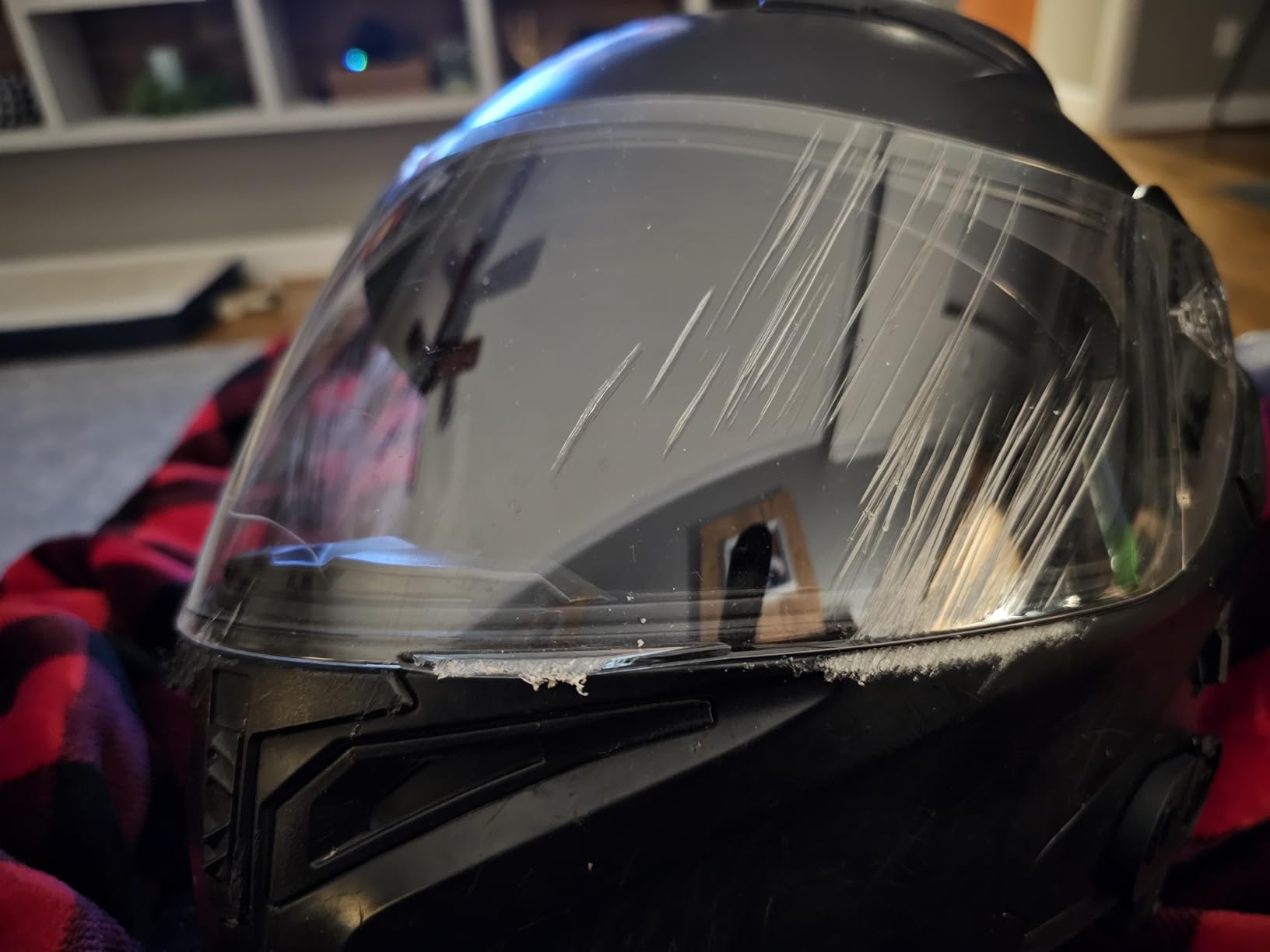
The inner sun shield is the part that feels least durable. Owners describe it as flexing under pressure, which is fine for a few thousand miles and less fine after a few seasons. The chin bar also wants a firm squeeze to latch, so it takes a little practice to close it one-handed with a glove on.
3. LS2 Advant X Carbon – Best for Quietness and Aerodynamics
LS2 Helmets Advant X Carbon Modular Helmet (Matte Black – Large)
9K carbon fiber shell
1470g plus or minus 50g
180-degree pivot
ECE P/J and DOT
Pros
- Exceptionally quiet with the shield down
- Carbon shell at 1470g reduces neck fatigue
- Smooth one-hand chin bar with positive locking
- Multi-port ventilation with adjustable top vents
- Top-mounted shield release avoids smudging
Cons
- Quick-release strap has limited adjustment out of the box
- Included Pinlock insert may not fit the shield
- Slow break-in period before the fit settles
The Advant X Carbon is the technical answer to this roundup. A 9K carbon fibre shell with a full carbon chin bar weighing 1470g plus or minus 50g puts it in territory normally reserved for full-face helmets, and you feel that difference in your neck after the first long day.
What surprised me more was the noise. Owners report having to crack the shield open to remind themselves they are outside, which is the single most common complaint full-face-to-modular upgraders bring with them. The 180-degree single-axis pivot lets the chin bar sit flat on the back of the shell rather than leaving a bump, and that geometry is a big part of why the airflow stays clean.
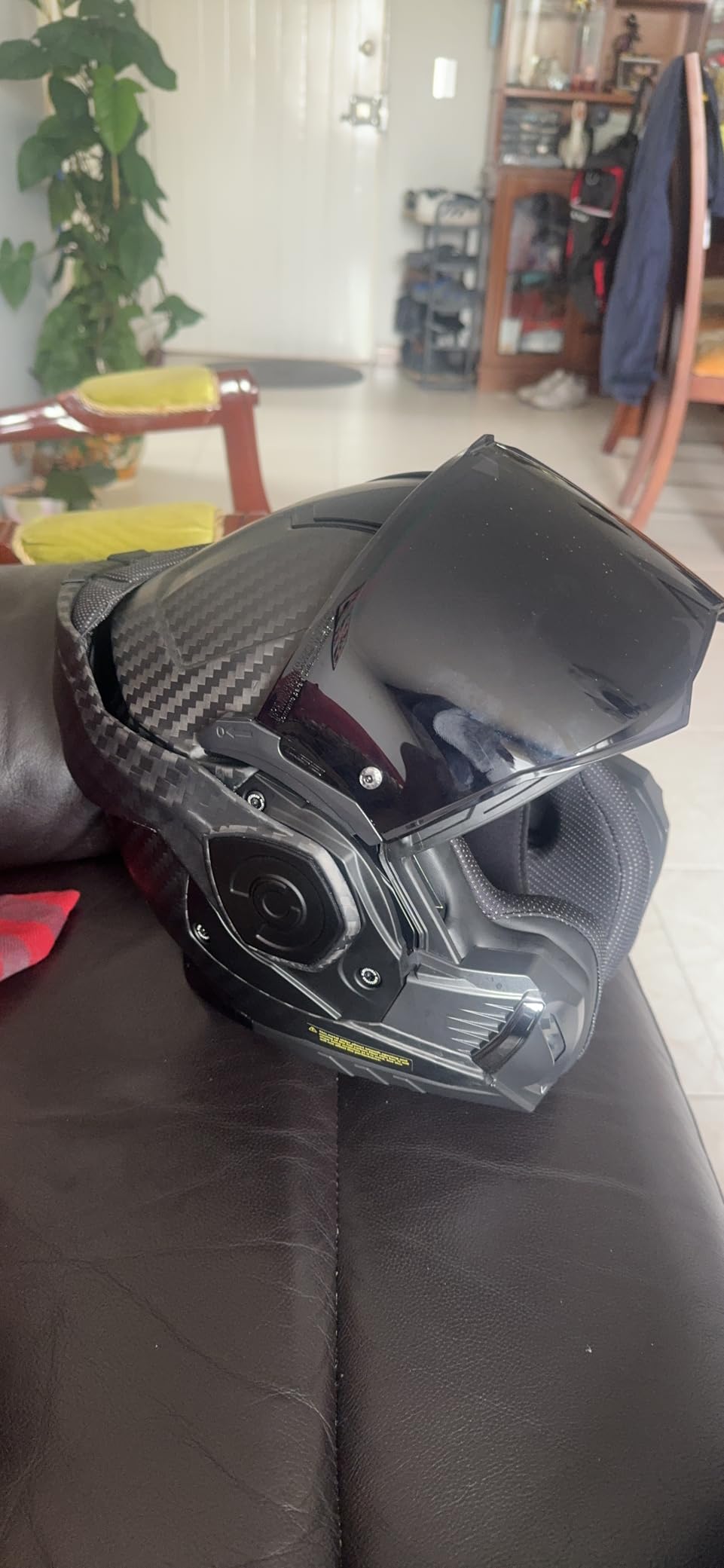
Ventilation is multi-port with adjustable top vents, so you can open things up in slow traffic and shut them down when the speed builds. The A-Class polycarbonate face shield comes with a Pinlock Max insert and a quick-release mechanism, and there is a built-in internal sun visor underneath for low sun.
It carries ECE P/J dual homologation, which means it is certified both as an open-face and as a full-face helmet. That matters if you plan to ride with the bar up regularly in hot weather, because a standard modular is only certified with the chin bar down.
What riding with it is actually like
The chin bar operation is smooth and locks with a positive click, so it does not creep open over a long ride. Clear peripheral vision matters more than it sounds, and the external visor release sits on top where your glove can find it without smearing the shield across your face.
The carbon construction is the reason it stays comfortable on a long trip. Neck fatigue is the most-reported pain point among modular riders, and a shell this light with a full carbon chin bar removes most of that complaint rather than just reducing it.
Where the Advant X Carbon disappoints
The quick-release chin strap has a limited adjustment range and the release tab is short out of the box. Expect to fiddle with it for the first few rides before you find a comfortable position, and check it again after the cheek pads settle.
There are two more honest caveats. The included Pinlock insert has been reported not fitting the face shield, so verify before you rely on it, and a number of riders describe a slow break-in period during which the fit feels tight before it relaxes. A minority of reviews also raise warranty service concerns in the US, which is worth knowing if you are buying from a distance.
4. Simpson Mod Bandit – Best for Cruiser Riders
Simpson Mod Bandit Modular Motorcycle Helmet – Large – M59L2 – Gloss Black
Carbon fiber woven shell
One-hand flip with metal locking
DOT and ECE 22.05
Comms ready
Pros
- Very light for a carbon modular
- No forehead soreness or neck fatigue on long rides
- Fogs up far less than most helmets in its class
- Wide peripheral vision
- Pre-routed wiring and wide ear pockets for comms
Cons
- Sizing runs small and differs from other brands
- Wind noise noticeable above roughly 40 mph
- Needs a break-in adjustment period
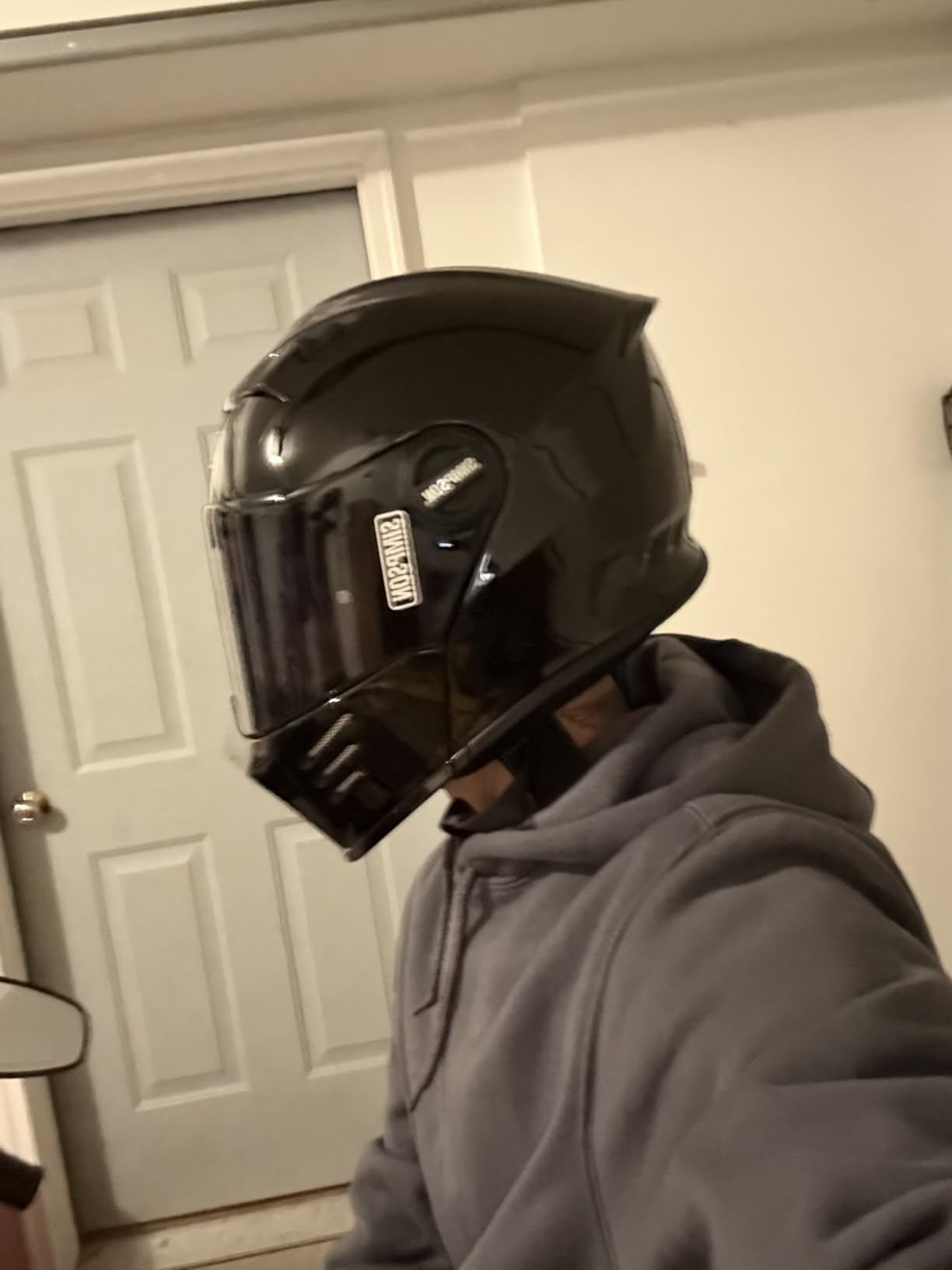
The Mod Bandit has streetfighter styling that suits a cruiser silhouette, but the substance is in the packaging. It is a carbon fibre woven shell with metal chin bar locking hardware, DOT and ECE 22.05 certified, and a rear spoiler that keeps it settled in crosswinds on a bike with a lot of frontal area.
For cruiser riders the comfort story is the story. Owners specifically mention no forehead soreness and no neck fatigue across full days, which for a V-twin that spends its life at 3000 rpm is the difference between a helmet you tolerate and one you like wearing.
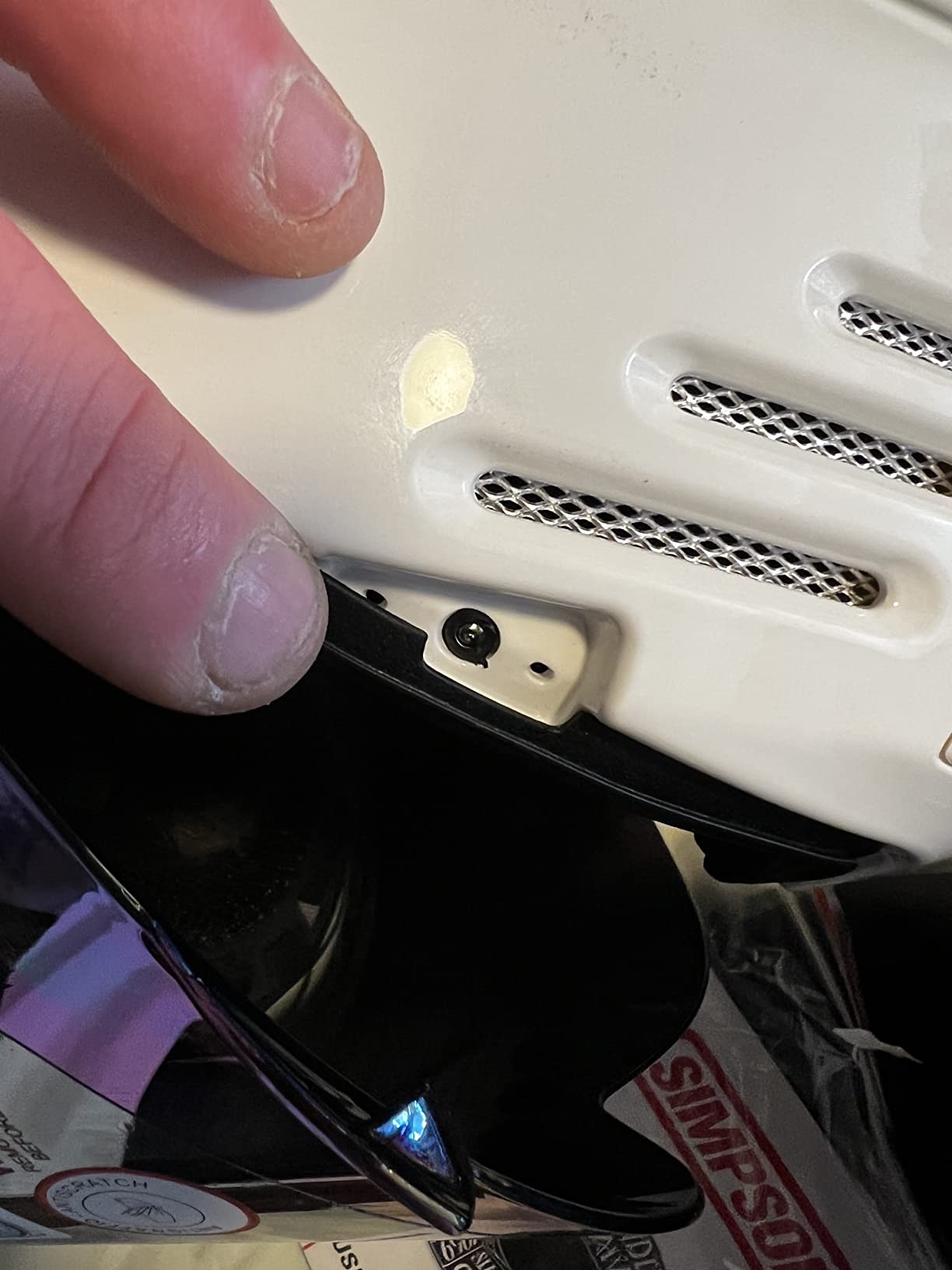
Anti-fog performance is the other standout. The Pinlock-ready visor system fogs up far less than most in its class, and the adjustable intake and exhaust vents route air from the chin bar up over the crown rather than just pushing it at your face.
If you plan to run a comm system, this one is pre-wired. Pre-routed wiring channels and wide ear pockets accept Sena and Cardo units without you having to cut anything or route cables over the liner, and the inner sun shield works as a backup shield when the light changes mid-journey.
Why cruiser riders keep buying it
Wide peripheral vision is the practical win on a big cruiser, where you spend a lot of time checking mirrors and looking over your shoulder at the drive line. Riders also point out that the view is wider than larger-bubble rivals, which helps when the bars are wide and your head turns a lot.
Toolless face shield swaps mean you can change visors in a parking lot rather than carrying a screwdriver, and the clear shield is included. That is a small convenience you notice every time the visor needs replacing.
Where the Mod Bandit is awkward
Sizing is the dominant caveat and it is not a small one. It runs small, and it runs differently from brands like Shoei, so a size that fits you elsewhere may be too tight here. Measure rather than translate, and expect several riders to size down from their usual choice.
Wind noise becomes noticeable above roughly 40 mph, which is a low threshold if your cruiser is running a tall windshield and a lot of open air. Owners also allow for a short break-in period while the padding settles. None of that is disqualifying, but it is the price of the light carbon shell.
5. BELL SRT Modular – Best for Riders Who Wear Glasses
BELL SRT-Modular Helmet, Black, Large
Panovision Class 1 optics
3.3 pounds
Eyewear arm pockets
DOT, FMVSS 218 and ECE 22.06
Pros
- Unusually wide field of view for lane checks and head turns
- Eyewear arm pockets woven into the liner
- Lightest premium shell here at 3.3 pounds
- Triple certified including ECE 22.06
Cons
- Chin bar pivot can rattle when the bar is open
- Bulkier profile than lighter alternatives
- Heavier than budget modulars per feature
The BELL SRT solves a problem that most modulars handle badly. Prescription glasses or sunglasses stay in place because the interior liner has dedicated eyewear arm pockets woven into it, so the temples sit in a channel instead of being crushed by the cheek pads as you pull the helmet on.
The Panovision shield with Class 1 optics is the other half of the appeal. The field of view is wide enough to check a blind spot or look over your shoulder without craning, and a rider moving up from a three-quarter or open-face helmet will find the transition far less disorienting than with a narrow-bubble design.
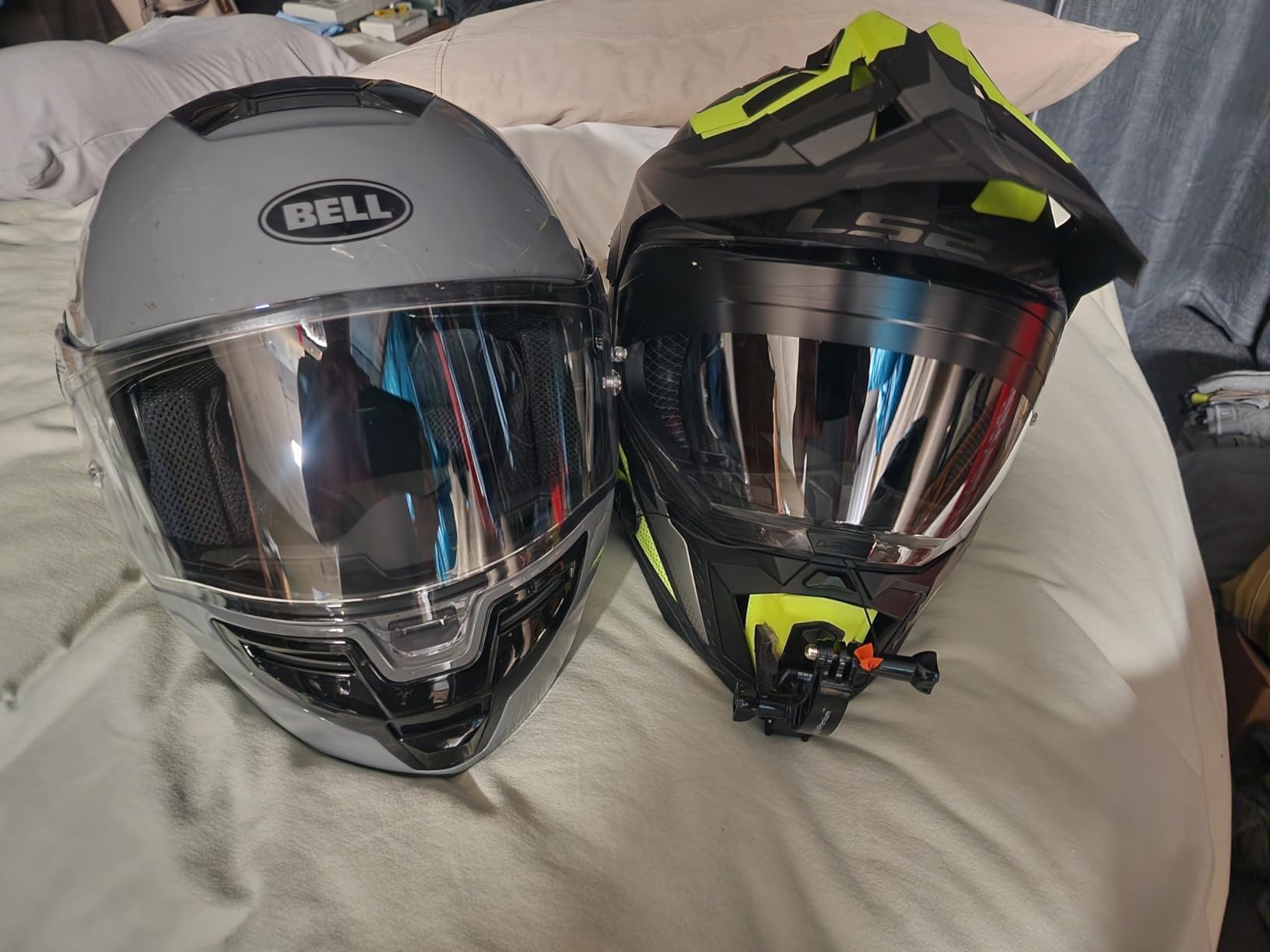
At 3.3 pounds it is the lightest shell among the premium picks here, and it carries DOT, FMVSS 218 and ECE 22.06 certification. ECE 22.06 is the newest European standard and it includes rotational impact testing, which is a genuine step up from the older 22.05 approval some competitors still run.
If your motorcycling is mostly commuting and weekend riding rather than touring, this is a strong all-round choice with a specific specialty: it is the easiest of the twelve to wear with glasses. Riders moving up from an open-face design will find our safety helmet guide useful for cross-checking what each certification standard actually tests.
What glasses wearers actually notice
Three problems show up repeatedly with glasses and a full-face shield, and this helmet addresses all three. The temples are not crushed, the lens does not fog from the warmth of a face pressed against it, and the peripheral view is wide enough that you are not turning your head constantly to see behind you.
Riders also like that the shield clears the frame cleanly. There is no gasket pressing on the bridge of the nose, which is the most common reason people give up on full-face helmets after a month.
Where the SRT falls down
The modular mechanism adds bulk and a mechanical pivot that owners say can rattle when the chin bar is open. It is not a defect that affects protection, but it is audible and it is the first thing you notice in a quiet parking lot.
Compared with the lighter budget modulars in this roundup, it is also a heavier purchase per feature, even at 3.3 pounds. Riders chasing the lowest possible weight for track-adjacent use should look at a full-face instead.
6. HJC C91 – Best for Everyday Riding
HJC C91 Solid Modular Motorcycle Helmet with HJ-17 Pinlock Shield, DOT Approved (Semi Flat Black, Medium)
Polycarbonate composite shell
3.5 pounds
Pinlock-prepared HJ-17 shield
Smart HJC ready
Pros
- Moisture-wicking liner keeps you cooler in traffic
- Integrated dark smoke sun visor
- Strong front-to-back ventilation
- Shield changes tool-free with RapidFire
- Lightweight feel for a modular in this class
Cons
- Runs small so many riders order a size up
- Noisier than premium modulars
- Check your head shape before ordering
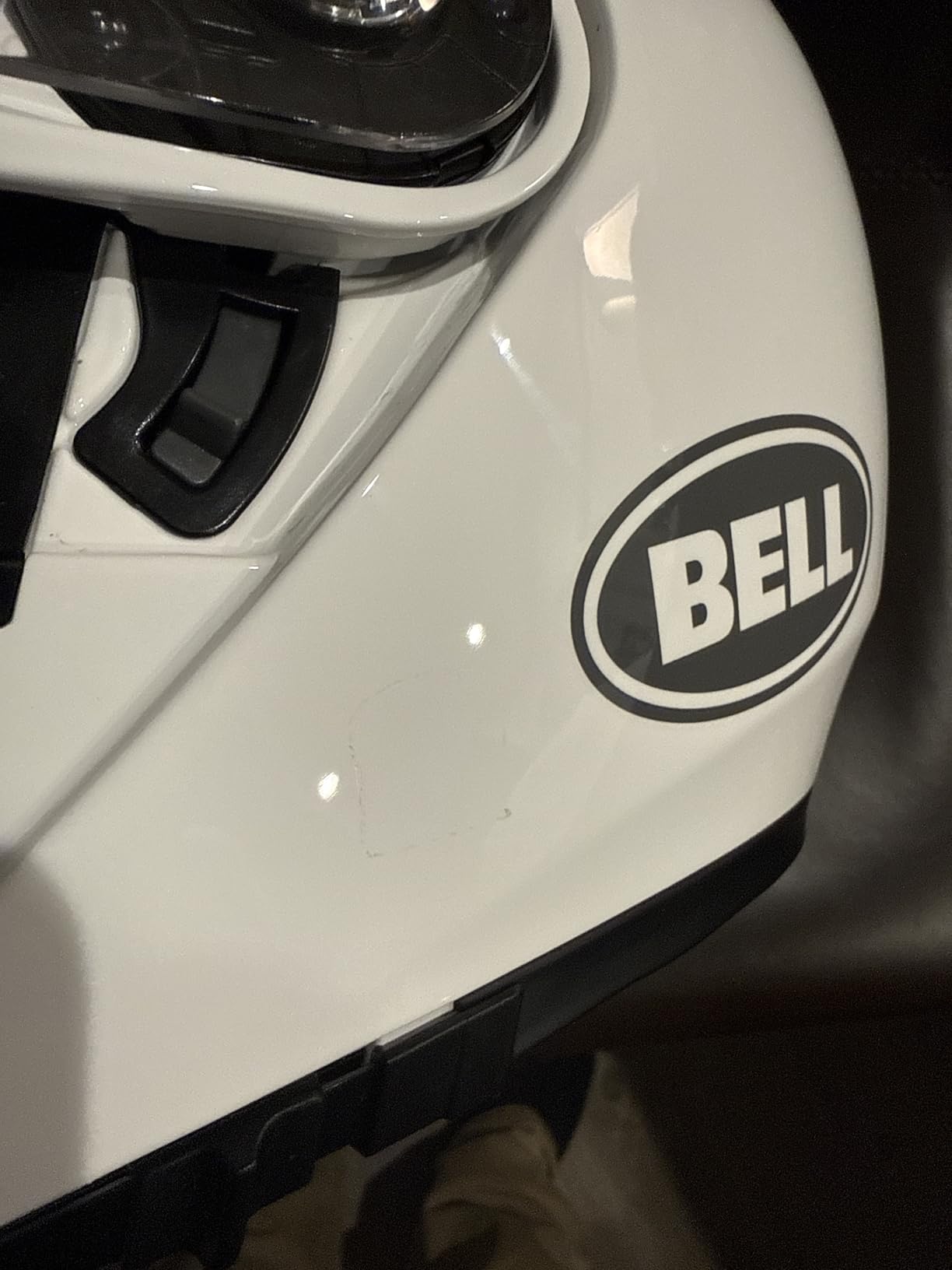
The C91 is the one we would hand to someone whose bike is a commuter and whose riding year is measured in daily mileage rather than tours. It is a polycarbonate composite shell at 3.5 pounds, DOT FMVSS 218 approved, and it comes with a Pinlock-prepared HJ-17 shield carrying 99% UV protection.
Ventilation is the quiet hero here. The advanced channeling system moves air front to back rather than simply pushing it at your forehead, and combined with a moisture-wicking quick-drying liner with removable cheek and crown pads it holds up in stop-and-go summer traffic better than most of the modulars we tested.

The integrated dark smoke sun visor runs on a sliding system, so you can shade your eyes without the flipping, catching and hunting action that comes with sunglasses. The RapidFire shield system changes the visor without tools, which means a scratched shield gets swapped in your garage rather than at a dealership.
For comms, the C91 is Smart HJC ready with speaker pockets, so a Bluetooth unit can be added later without buying a different helmet. It is one of the better middle-ground choices if you are not ready to commit to electronics at purchase.
What a full week of commuting feels like
Riders using this as a daily helmet highlight the removable washable liner above everything else. A modular collects sweat around the neck seal and the cheek pads in a way a full-face does not, so a liner that comes out and goes in a washing machine is a real practical advantage rather than a spec-sheet nicety.
The CAD-adjustable chin bar is also worth noting. You can reposition the front of the chin bar rather than accepting whatever the factory setting gives you, which is how most riders solve the tight-forehead feeling that some head shapes report.
Where the C91 runs into trouble
It runs small. This is the most repeated caution in the reviews, with several buyers ordering a size up and finding the fit improved. Order based on measurements, not on the size you wear elsewhere.
It is also noisier than the premium modulars, and the shape means you should confirm how it sits on your head before committing. If you ride mostly at highway speed and noise is your top priority, the LS2 or Shoei above is the better direction.
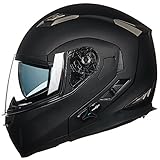
7. ILM 953 – Best for Built-In Bluetooth
ILM Bluetooth Integrated Modular Flip up Full Face Motorcycle Helmet 953
Integrated Bluetooth 3.0
2.43 kg
Intercom to 1680 feet
8 hours talk time
Pros
- Bluetooth built in so no external unit to mount
- Intercom range up to 1680 feet between two riders
- Stereo speakers with DSP echo cancellation and noise suppression
- Washable microfiber lining and adjustable vents
- DOT FMVSS-218 certified
Cons
- Runs one size smaller because of the electronics module
- Bluetooth battery enters deep sleep after long storage and needs a charge
- Hook-and-loop closure is less secure than a ratchet or D-ring
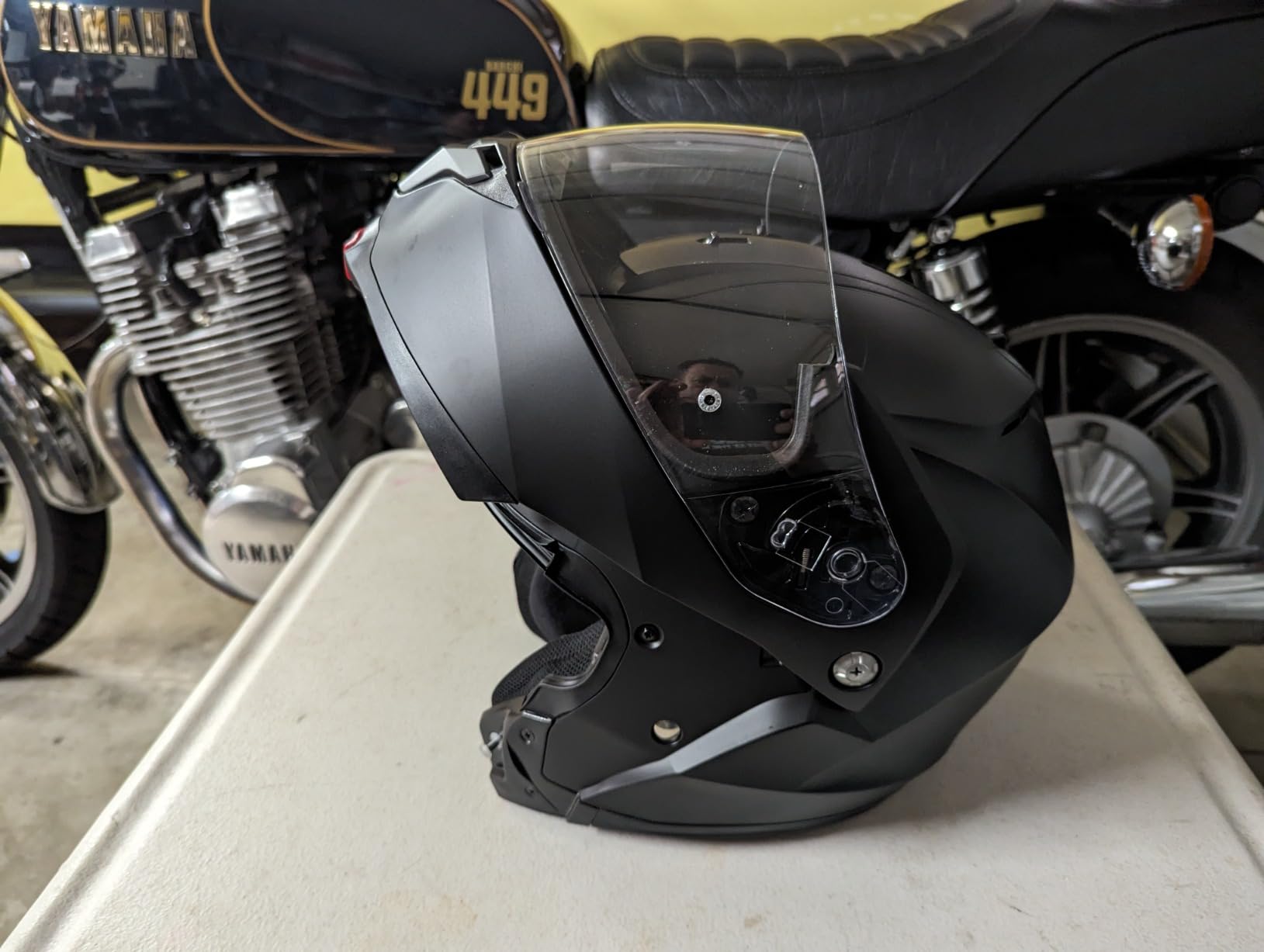
The ILM 953 answers a question a lot of riders ask without knowing they are asking it: do I want a separate communicator clipped to my helmet, or do I want one built in? This is the second option, and at 2.43 kg it is still a light helmet for a modular.
The technical case is straightforward. Eight hours of talk time and 110 hours of standby, intercom range up to 1680 feet between two riders, and two built-in stereo speakers with DSP echo cancellation and noise suppression. That last feature is the one that matters at speed, because it keeps a phone call intelligible over an engine at highway pace.
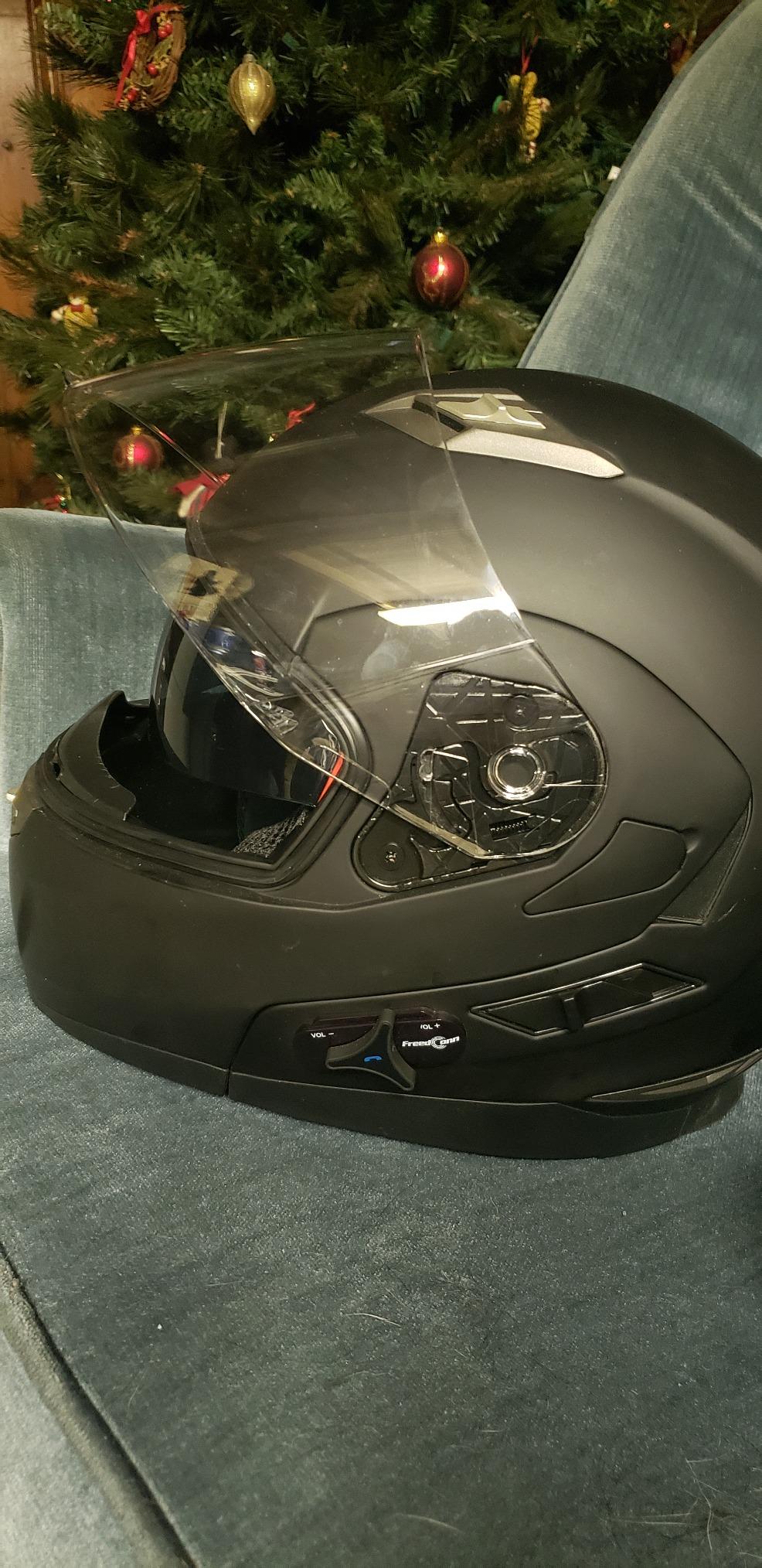
One-touch control handles calls, redial and music, so you are not digging through a glove to find a button. The shell meets or exceeds FMVSS 218 and DOT standards, the lining is washable microfiber, and the vents are adjustable, which covers the basics without any of them feeling compromised.
It is also a multipurpose helmet on paper, listed as compatible with cruisers and touring bikes, street bikes, scooters, ATVs and UTVs. If you ride more than one machine, that widens its usefulness considerably.
How the electronics perform in the real world
Owners value not having to route wires or stick adhesive pads on a shell. The unit is part of the helmet, so there is nothing to remove, nothing to reposition when the chin bar is up, and nothing to rattle loose over a long trip.
For two-up riding and group tours, the intercom range covers most practical distances between riders at a steady pace. Music and podcast audio is the feature most riders mention first in normal use, since it is what you use every single day rather than only on tours.
Where the ILM 953 is not for you
Sizing runs one size small because the Bluetooth module occupies internal volume. This is the single most important thing to know before ordering: measure carefully, and expect to go up rather than down, which is the opposite of the sizing-down habit many modular riders develop.
There is also documented deep-sleep battery behaviour. After long periods of disuse the battery drops into a deep sleep state and needs roughly a half hour on charge to wake, which is mildly annoying if you have not ridden for a few weeks. Separately, the hook-and-loop closure is less secure than a ratchet or double D-ring system, and that is worth weighing given how much of this roundup’s cheaper end uses exactly that closure.
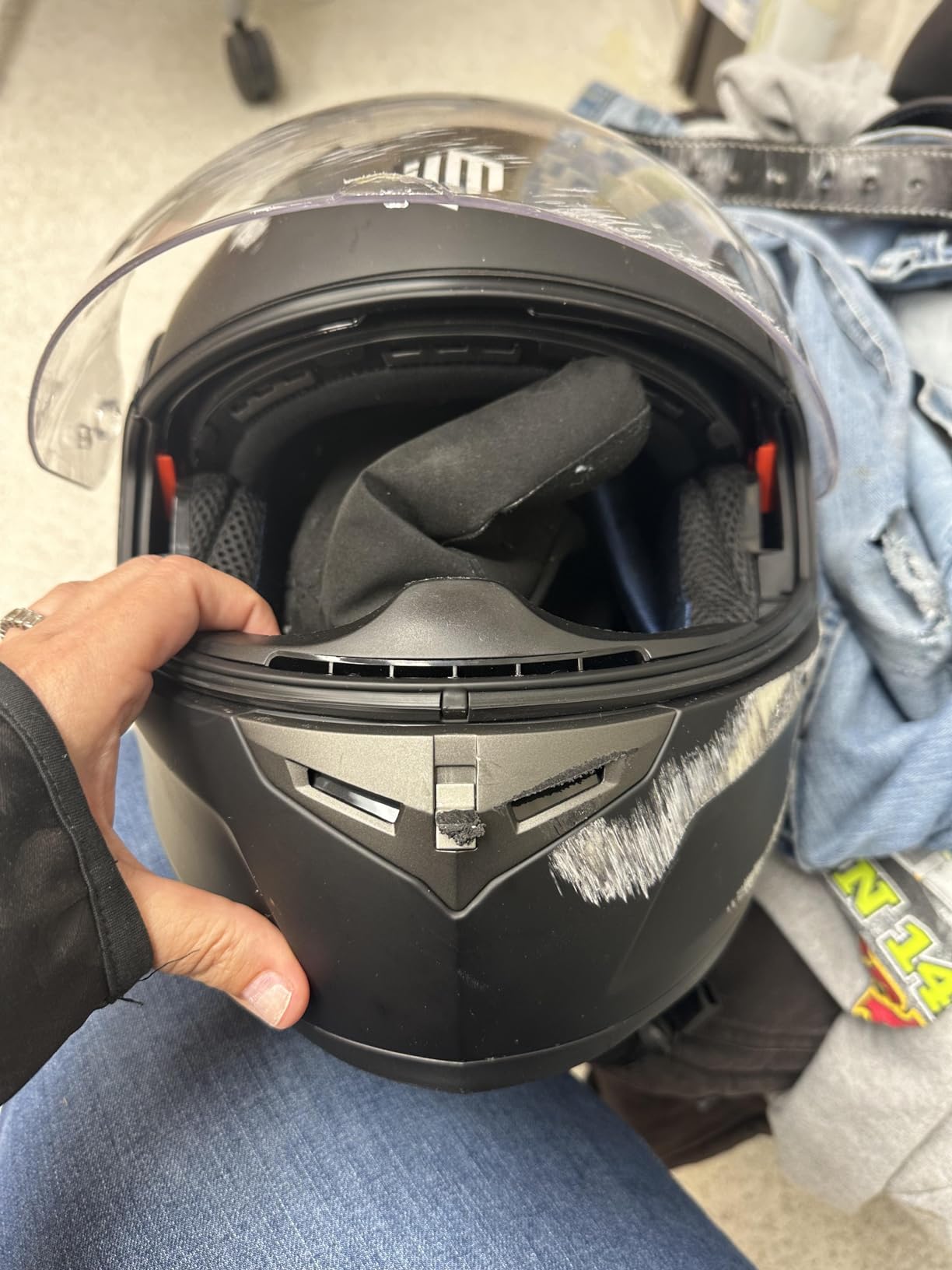
8. ScorpionEXO GT930 – Best for Transformable Riding
ScorpionEXO GT930 Modular Helmet Solid (Matte Black – Large)
Polycarbonate with dual-density EPS
DOT and ECE 22.06
Dual D-ring
5.9 pounds
Pros
- Converts from full modular to open-face with the included peak visor
- Drop-down sun visor sits low with no vision obstruction
- Better airflow and reduced noise than cheaper modulars
- Everclear shield fits prescription glasses comfortably
- Stable in gusty conditions at highway speed
Cons
- Heaviest helmet here at 5.9 pounds
- No quick-release strap only a double D-ring system
- Noise climbs above roughly 45 mph in open-face mode
- Speaker pockets can be tight for larger units
The GT930 is the one to buy if the reason you want a modular is versatility. It is a proper modular with the chin bar and shield, and it converts to an open-face using the included peak visor, so you get two configurations in one shell without buying two helmets.
The shell is polycarbonate with dual-density EPS, and it is certified to both DOT and ECE 22.06. That 22.06 approval includes rotational impact testing, which is the standard you want on any helmet you buy now rather than one you expect to replace in five years.
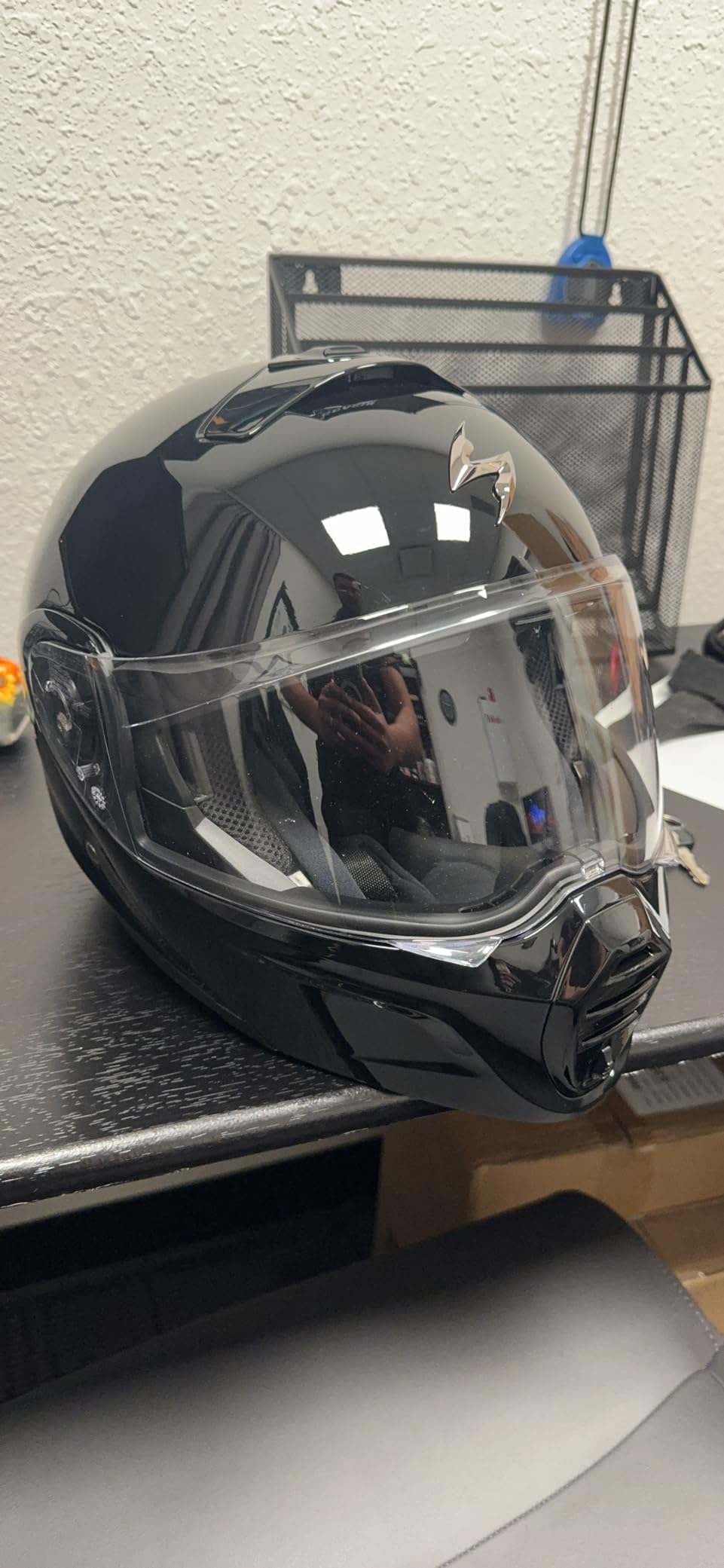
The Everclear SpeedView drop-down sun visor is widely regarded as the best in this roundup. It sits low enough to shade your eyes without cutting across your line of sight, which is the flaw in many internal sun shields, and the no-fog shield coating carries 95% UV-A and UV-B protection.
The aero skirt chin curtain reduces wind noise relative to cheaper modulars, and the KwikWick C moisture-wicking liner with KwikFit 3D cheek pads handles heat. It is EXO-COM ready with large-diameter speaker pockets, though some riders find those pockets tight for larger speaker units.
What riding with the peak visor attached is like
The open-face configuration is genuinely useful in two situations: slow urban riding in warm weather, and any time you want a three-quarter equivalent without a shield. Owners report it staying stable in gusty conditions at highway speed, which is not something you can say about every modular-to-open-face conversion.
Because the chin bar is up in this mode, the Everclear drop-down sun visor does more work than it would on a conventional modular, giving you usable eye protection while still getting the airflow you were after.
Where the GT930 costs you
At 5.9 pounds it is by some margin the heaviest helmet in this roundup, and the extra bulk when the bar is folded back is obvious the moment you pick it up. If neck fatigue is already a problem for you, this is the wrong model regardless of how good the features are.
There is no quick-release strap, only a double D-ring retention system with an anti-roll-off design, so gloves make on and off noticeably slower. And in open-face configuration noise climbs sharply above roughly 45 mph, which is expected but worth remembering before you use it that way at motorway speed.
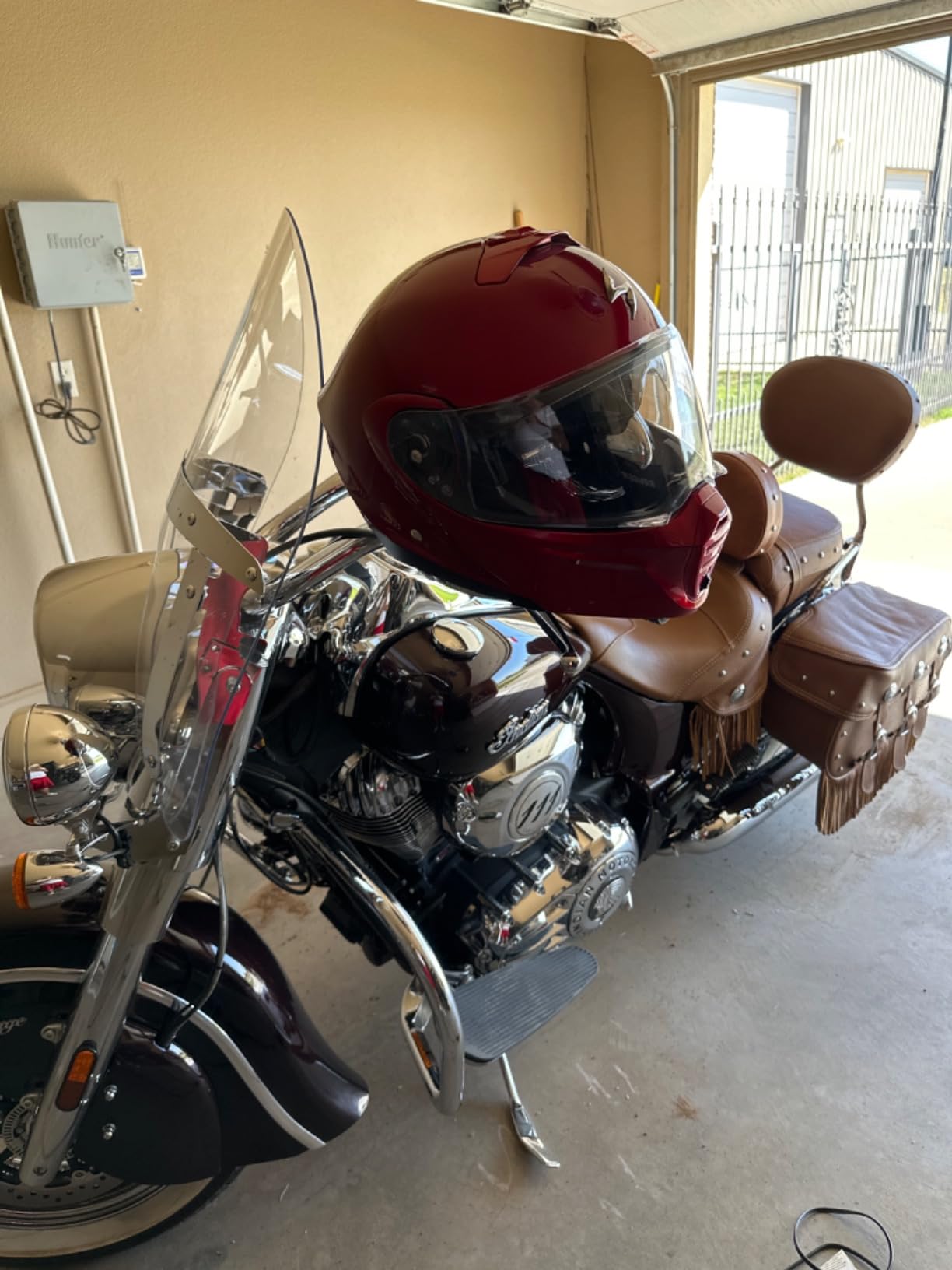
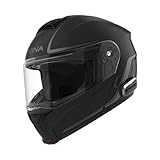
9. Sena Outrush 2 – Best for Group Rides
Sena OUTRUSH 2 Modular Smart Motorcycle Helmet with Bluetooth Connectivity and Mesh Intercom Communication (Matte Black, XL)
Mesh Intercom 3.0
Second-generation HD speakers
P/J dual homologation
4 pounds
Pros
- Mesh Intercom 3.0 built into the helmet with no separate unit
- WAVE Intercom talks to riders on other headset brands
- Second-generation HD speakers clear for music podcasts and calls
- P/J dual homologation covers chin bar up or down
- Intelligent Power Management shuts the helmet down when you stop moving
Cons
- Polycarbonate shell is heavier and less refined than carbon alternatives
- Smart electronics add weight and complexity
- Sound quality still depends on proper speaker placement and fit
Where the ILM 953 is the budget answer to built-in comms, the Sena Outrush 2 is the capable one. Mesh Intercom 3.0 is built directly into the helmet, so there is no separate communicator to mount, no adhesive pads on the shell and no cable to route across the liner.
Mesh intercom is what makes it good for group rides. Rather than a fixed pairing between two units, mesh networks let a group stay connected as riders join, drop out and change order, which is exactly what happens on a ride where five people take different turns at the front.
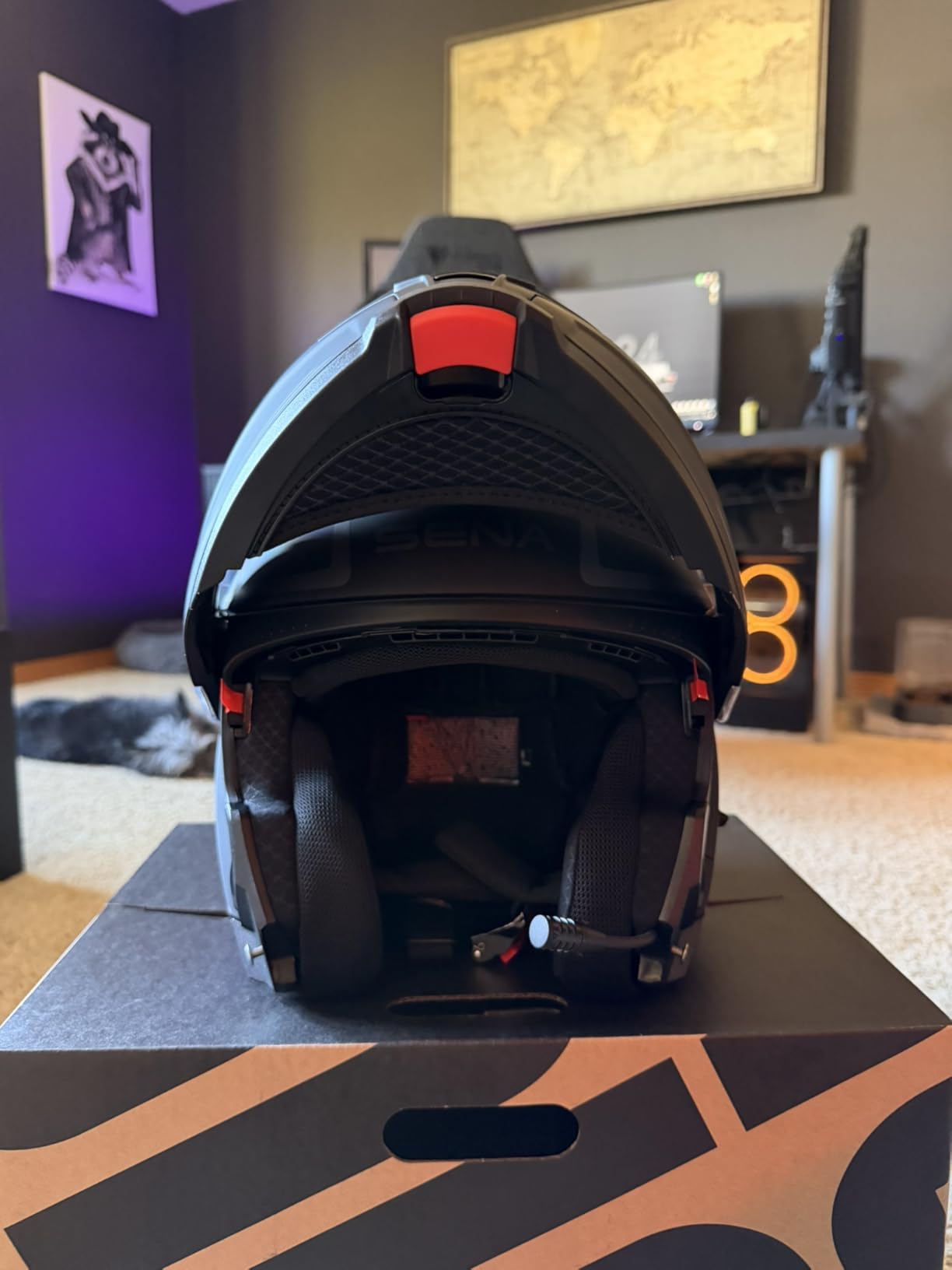
WAVE Intercom extends that further, letting you talk to riders on headsets from other brands as long as there is cellular coverage. The second-generation High Definition speakers are tuned for music and podcasts as much as for voice, and owners note the improvement over first-generation units.
Intelligent Power Management uses an accelerometer to shut the electronics down after a period of no movement, which is a sensible answer to the flat-battery-after-storage problem that plagues helmet-mounted units. P/J dual homologation means the helmet is approved with the chin bar up or down, so a summer ride in open-face mode is a certified configuration.
What group riding actually sounds like
Riders who bought this for group touring tend to describe mesh as the feature they would not give up. The convenience of everyone hearing the same conversation without anybody stopping at a junction to pair up again is the thing that changes the character of a group ride.
It carries a three-year warranty covering both helmet integrity and the electronics, which is a meaningful term given that this helmet has a computer in it. That coverage alone sets it apart from most of the roundup.
Where the Outrush 2 falls short
The polycarbonate shell is heavier and less refined than the carbon fibre alternatives here, and the smart electronics add both weight and complexity compared with a conventional modular. If the lowest possible shell weight is your priority, this is not the direction.
Audio output also depends on correct speaker placement. If the ear pockets are not lined up with the speaker units, volume and clarity suffer regardless of how good the hardware is, so spend the ten minutes getting that right. The 4.1 average also reflects a steady share of three-star feedback, mostly around overall refinement rather than any single failure.
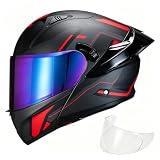
10. JQF Gear SJ-809 – Best for First-Time Riders
JQF Gear Modular Motorcycle Helmet Dual Visor Flip Up Full Face Helmets SJ-809 DOT Approved for Adults Men Women (Red Mech Man, L)
ABS shell with multi-density EPS
4.4 pounds
Dual visor
Bluetooth cutouts
Pros
- Light for a modular and comfortable over long rides
- Runs true to the published size chart
- Flip-up chin bar and quick-release buckle both work one-handed with gloves
- Integrated sun shield plus a colour-matched spare visor
- Speaker and mic cutouts make Bluetooth installation straightforward
Cons
- Wind noise higher than a comparable full-face especially on loud bikes
- Face shield reported popping loose at the side and lifting at highway speed
- Flip locking mechanism appears to be plastic rather than metal
- Clear coat scuffs easily
For someone buying their first modular, the SJ-809 removes the two things that put people off. It runs true to the published size chart, which is unusual at this end of the market, and the flip-up chin bar and quick-release buckle both operate one-handed even with gloves on.
The shell is a lightweight ABS construction with a multi-density EPS liner, DOT FMVSS 218 compliant, and it weighs 4.4 pounds. Multiple vents handle airflow and heat dissipation, and the interior lining is removable, washable and replaceable, which matters because cheap helmets usually give you a liner you cannot clean.
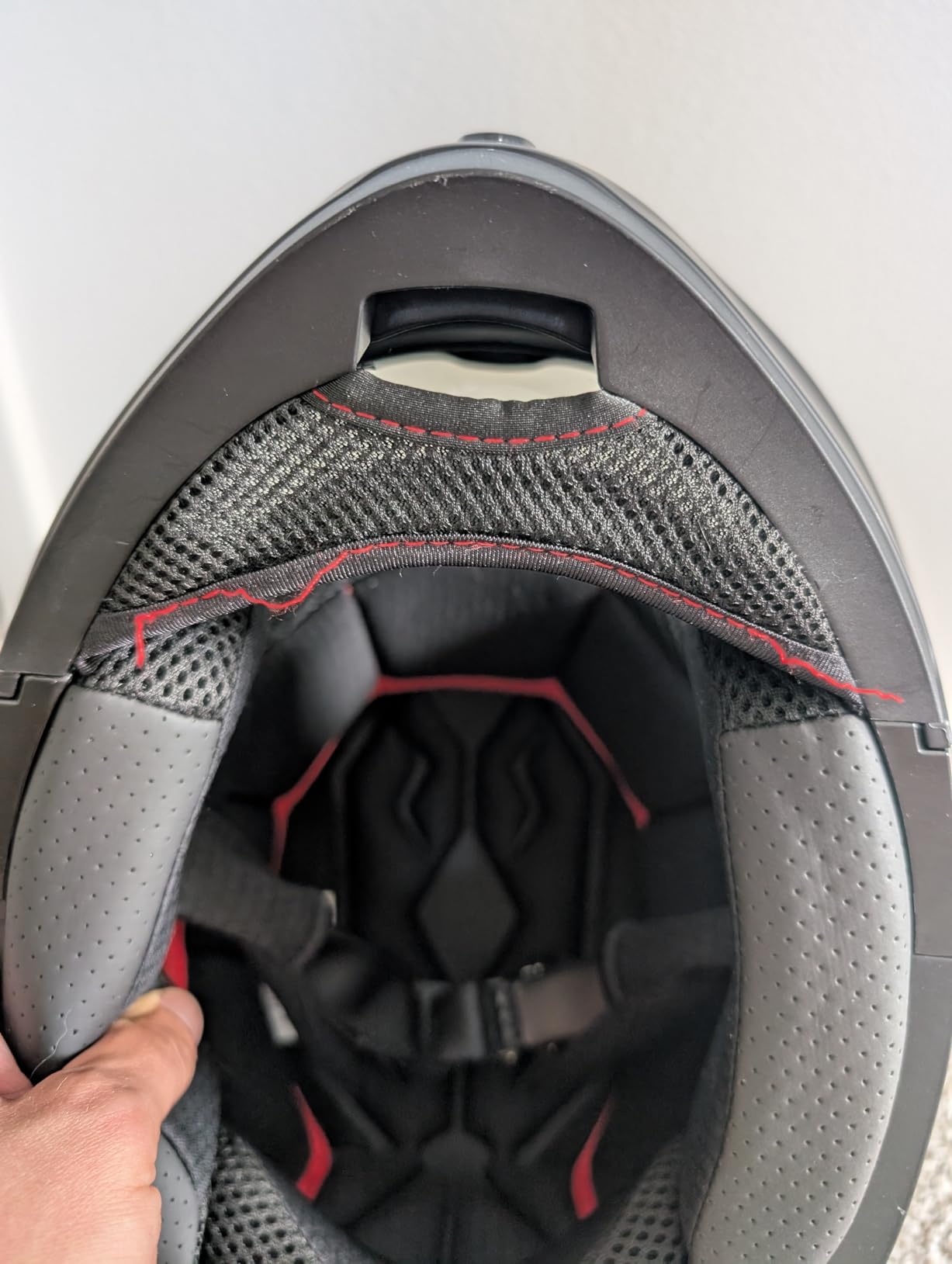
The dual visor setup gives you an outer clear shield plus an inner black sun shield, and a replaceable rainbow visor is included in the box. Speaker and microphone cutouts are already moulded into the shell, so fitting a Bluetooth headset later is a matter of clipping a unit in rather than routing cables.
Sizes run S through XXL for adults, and the tail wing ships uninstalled to survive shipping damage, then fits with no tools. Small touches, but they are the details that separate a helmet designed by people who ride from one produced to hit a price point.
What first-time owners say after a season
Reviewers treat this as a strong entry-level to intermediate buy, and the recurring word is value. Good airflow for the money, a functional sun shield, a liner that survives washing, and one owner even wind-tested it at high motorway speed without complaint.
Buyer support responses are described as prompt, which sounds trivial until you have a sizing question and the answer arrives in a day rather than a week.
Where the SJ-809 is not the right buy
Visor retention is the honest weak point. Some owners report the face shield popping loose at the side or lifting upward at highway speeds, and that is a safety-adjacent problem rather than a cosmetic one, because a shield lifting at speed is a distraction and an eye risk. Check the side catches every ride until you trust them.
Wind noise is higher than a comparable full-face, especially on a loud bike, which is the standard modular trade-off showing up again. The flip-up locking mechanism also appears to be plastic rather than metal, the clear coat scuffs easily, and the chin bar sides can feel tight once the front is lowered.
11. Orthrus LED Modular – Best for Night Visibility
Orthrus Modular Motorcycle Helmet w/ LED Lights, Full Face Helmet for Adult
ABS shell with EPS buffer
2.34 kg
LED light with 3 flashing modes
Bluetooth ready
Pros
- Integrated rechargeable LED light with three flashing modes
- One-click switch between full-face and open-face
- Quiet at highway speed with good airflow
- Speaker pockets accept a comm system
- Removable hypoallergenic washable liner
Cons
- Sizing and fulfilment errors recur across reviews
- Visor can fog in cold conditions
- RST mirror visor shifts colour with viewing angle and irritates the eyes
- Hook-and-loop strap is less secure than a ratchet
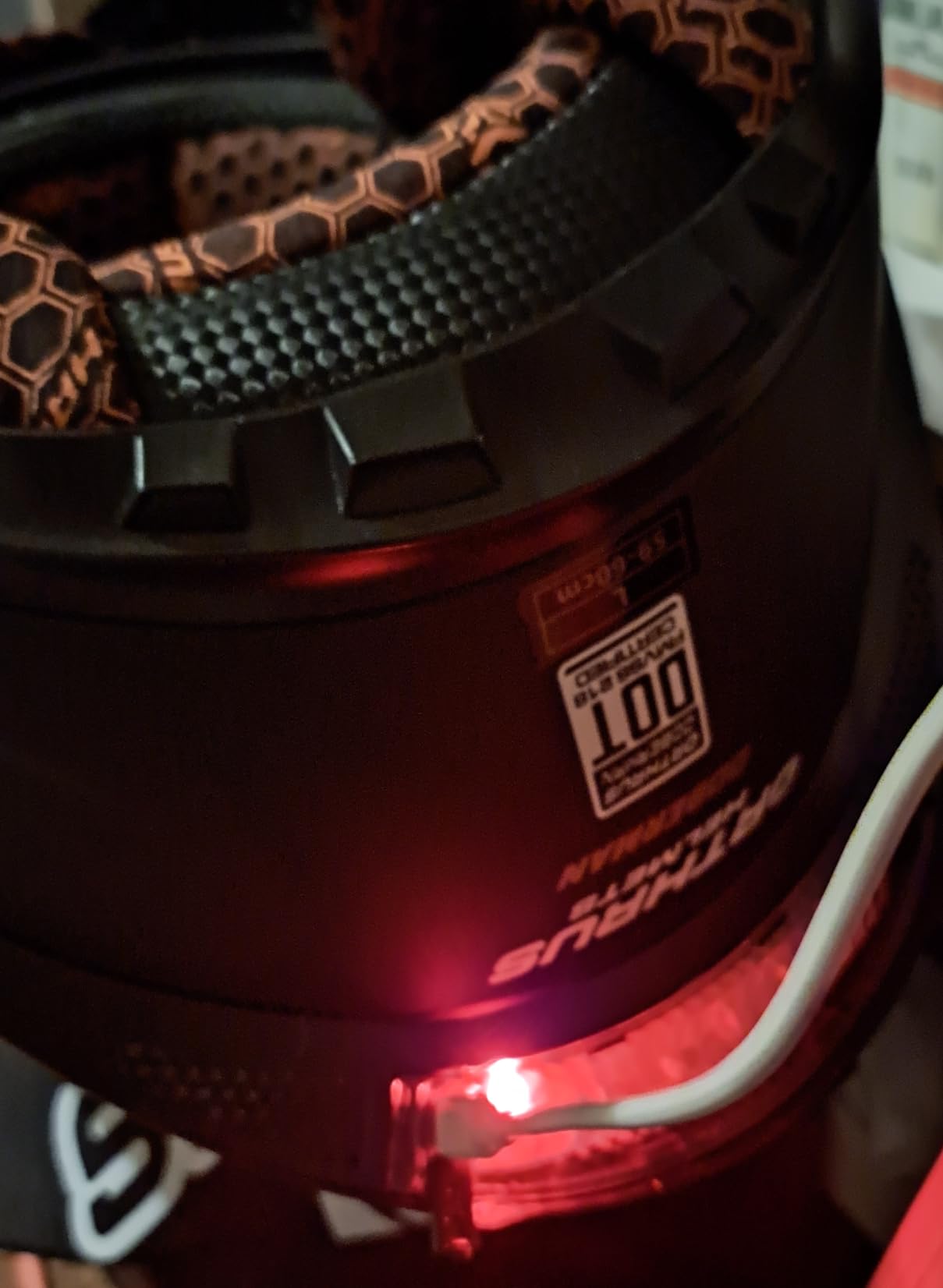
The defining feature here is the integrated rechargeable LED light with three flashing modes mounted on the shell. On a dark commute with poor street lighting and a lot of unlit junctions, a helmet that makes you visible without a separate accessory is genuinely useful, and it is the only helmet here that does it.
Underneath that is a DOT approved lightweight ABS shell with an EPS buffer layer at 2.34 kg, which makes it one of the lighter modulars in the group. The chin bar switches between full-face and open-face in one click, and owners report a secure snap when it locks.
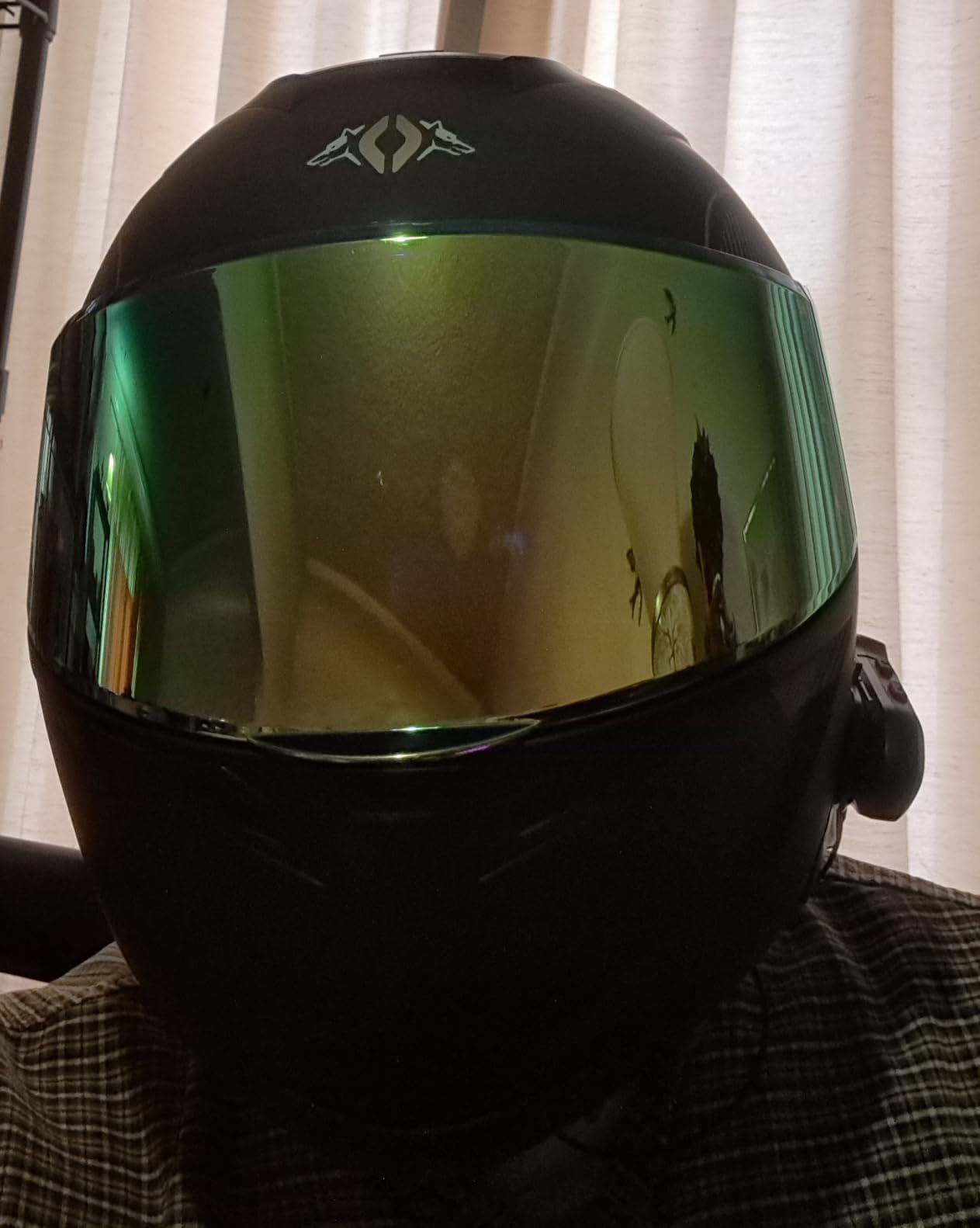
Bluetooth speaker pockets accept a comm system, the liner is hypoallergenic and removable for washing, and three vents move air through the shell. Owners rate it quiet at highway speed with good airflow, which puts it ahead of several more expensive modulars on the noise complaint that matters most.
One owner reports the helmet held together in a crash and prevented a facial injury. Treat that as an anecdote rather than evidence, but it tells you the shell and liner combination is doing its job when it is tested.
Who should actually want a helmet light
The LED is a genuine advantage for city riders on unlit routes, for anyone riding home from a late shift, and for riders who would rather not fuss with a separate light strap. The three flashing modes let you pick a pattern that reads clearly in traffic rather than a single fixed setting.
It is also less useful than it sounds for touring. On a lit highway the light is invisible to riders ahead of you and adds nothing, and it needs recharging, so treat it as a commute feature rather than a universal one.
Where the Orthrus falls down
Sizing and fulfilment errors recur across the reviews, with some buyers receiving a size or colour that did not match the order. Check the box contents carefully on arrival, and treat this as the main reason to buy from somewhere with straightforward returns.
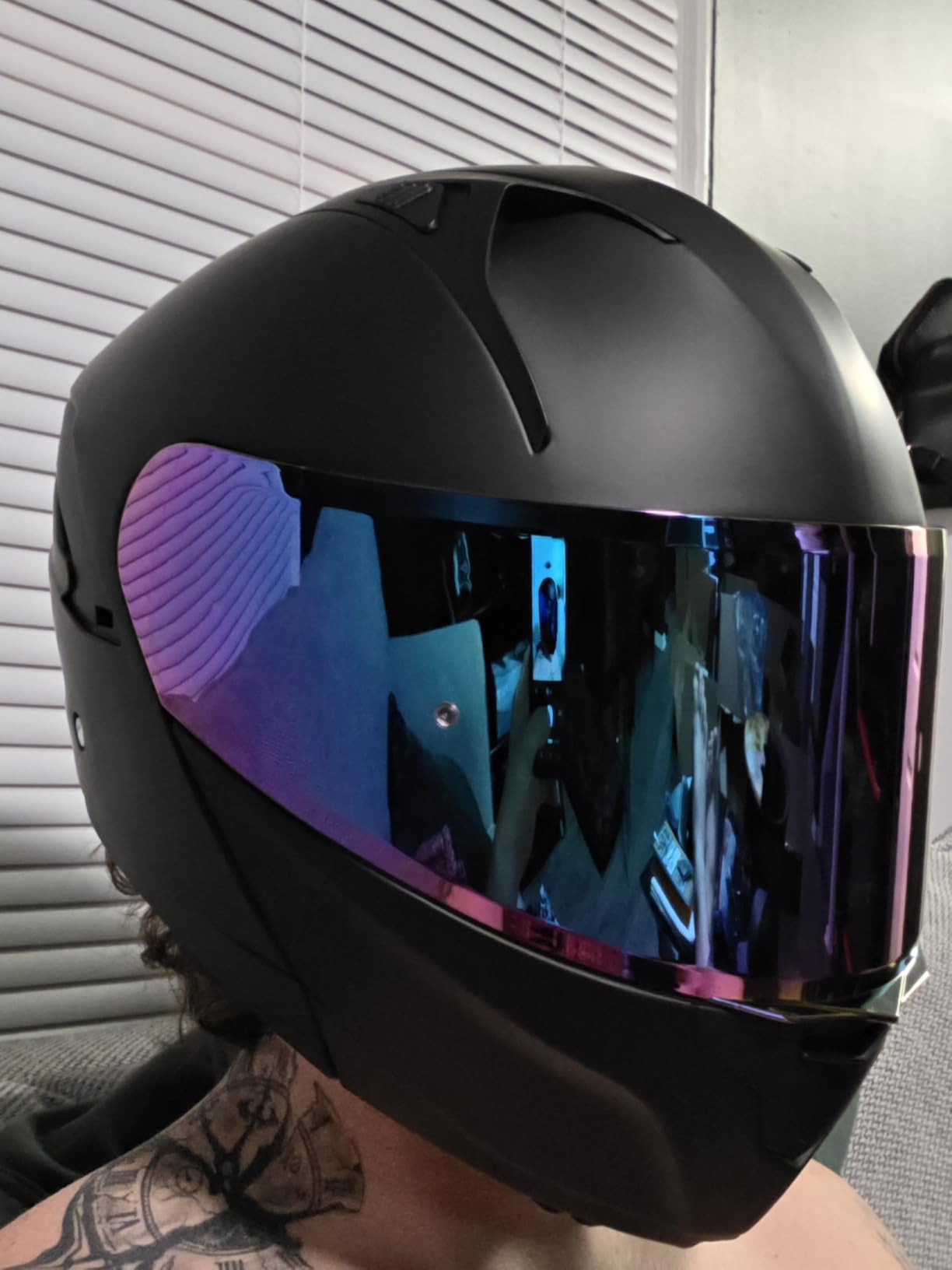
The RST optical-coating mirror sun visor shifts colour with viewing angle and some riders report eye irritation from it, so the safest choice is the clear visor and your own sunglasses. Fogging in cold conditions is also reported. The hook-and-loop strap is the same weaker closure style seen on several budget modulars here.
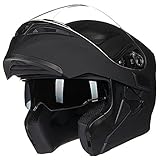
12. ILM 902 – Most Versatile
ILM Motorcycle Dual Visor Flip up Modular Full Face Helmet DOT with 6 Colors Model 902 (L, Matte Black)
ABS shell
2.31 kg
6 vents
Quick release strap
DOT FMVSS-218
Pros
- Meets or exceeds FMVSS 218 and DOT safety standards
- Lightest shell here at 2.31 kg with a five-year warranty
- Quick release micrometric strap
- Removable and washable liner and cheek pads
- Storage bag included
Cons
- Wind noise becomes noticeable at highway speeds
- ABS shell flexes when the chin bar is open
- Fit can be tight on the forehead for intermediate oval head shapes
The ILM 902 is the cheapest credible modular in this roundup and the one we would buy as a beater for a bike you do not feel precious about. At 2.31 kg it is the lightest helmet we tested, and it still meets or exceeds FMVSS 218 and DOT standards, which is not something you can say about every helmet at this level.
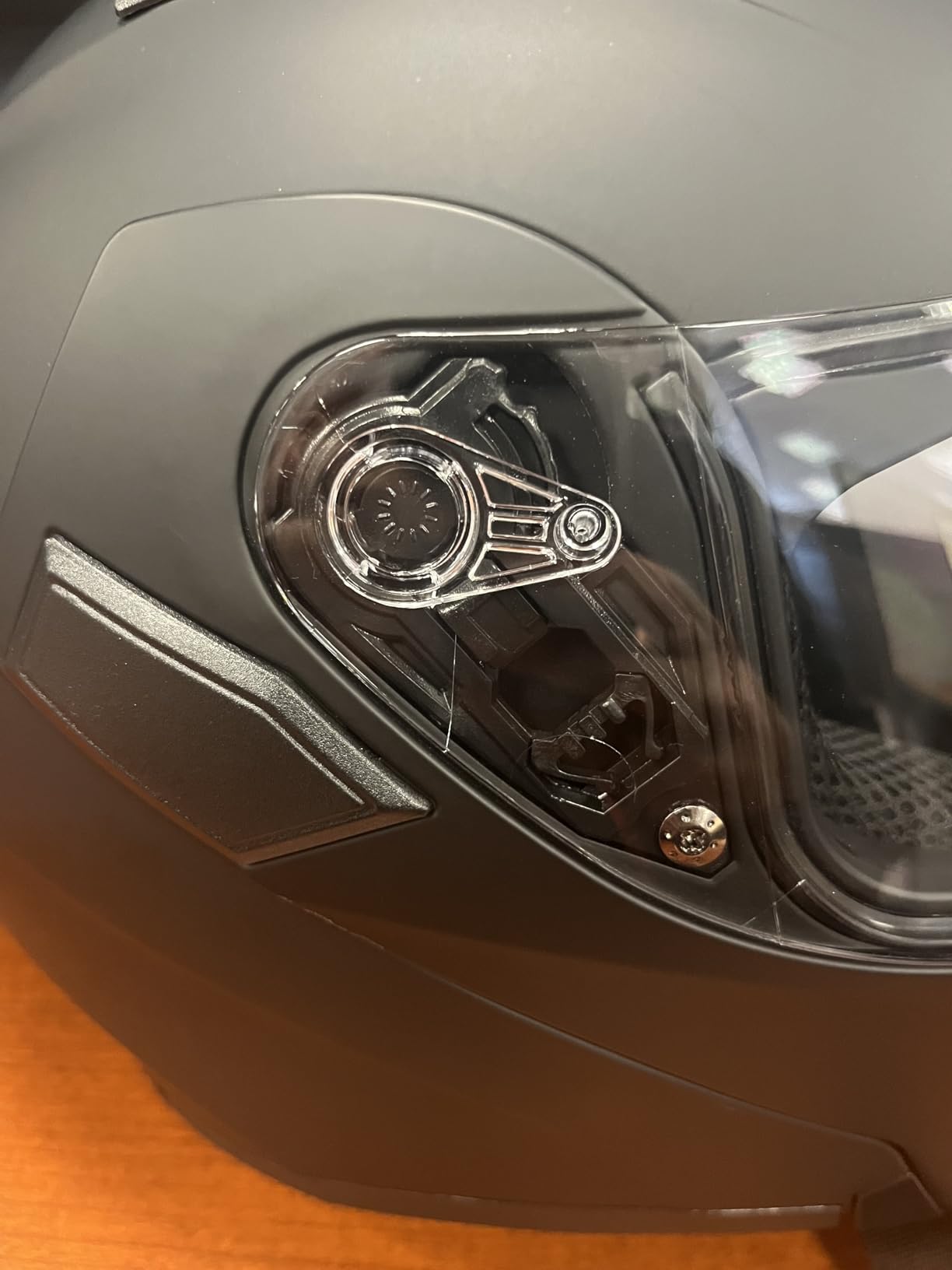
The dual visor system gives you a clear shield with anti-scratch and anti-fog treatment, plus the flip-up chin bar. Six vents handle airflow, and the quick release micrometric strap is faster to work with than a D-ring once you get used to it.
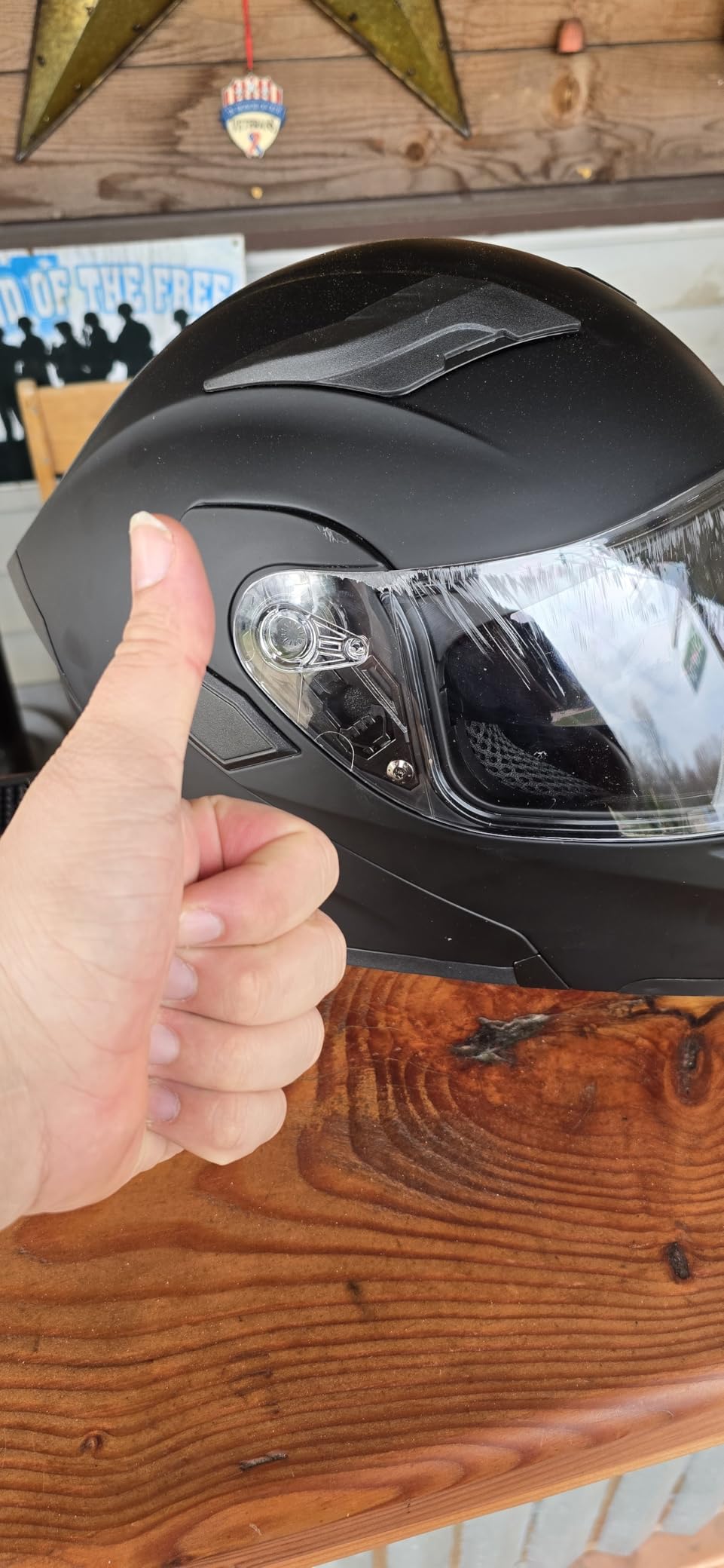
The liner and cheek pads are lightweight, soft, removable and washable, and a helmet storage bag is included in the box. The five-year manufacturer warranty is longer than most of the budget tier manages and considerably longer than the one-year term attached to the LED helmet above.
It is listed as compatible with street, scooter, UTV, ATV and e-bike use, so it doubles as a light trail and utility helmet if your riding spans more than one kind of machine.
What you get from a budget modular
Owners praise the one-hand flip-up operation, the removable washable padding and the visor clarity more than anything else, and 4.5 stars across 234 reviews reflects a genuinely well-regarded budget product rather than a token listing.
The practical question is what the ABS shell gives up against a composite. ABS is cheaper and more impact-tolerant in some lab measures, but it flexes more, and you can feel that when you pull on the chin bar. For low-speed urban riding that trade is easy to accept.
Where the ILM 902 is the wrong choice
Wind noise becomes noticeable at highway speeds, which is the one compromise that matters if your riding involves a lot of open road. If you commute mostly on motorways, spend more and look at the LS2 or the Shoei.
The shell also flexes when the chin bar is open, and reviewers warn that the fit can be tight on the forehead for intermediate oval head shapes. Buy with a returns option and try it in person if you can, because a budget helmet in the wrong shape is a wasted purchase no matter how good the specification looks.
Modular vs. Full-Face: What the Chin Bar Costs You
Are modular helmets less safe than full-face helmets? The honest answer is that a well-made modular is not meaningfully less safe in a straight-line impact, but it does give something up in an oblique one. Nobody in the industry disputes that, and any page claiming otherwise is selling something.
The reason is geometry. A full-face helmet presents one continuous shell from the crown to the chin. In a low-speed impact where your head rotates into the surface, the shell is still attached to your jaw at the moment it lands. In a modular, the chin bar is attached through a hinge and a sealing joint, and an oblique hit to the side of the jaw can transmit force through that mechanism rather than distributing it evenly across the shell.
This is why ECE 22.06 matters for anyone buying a modular now. The 22.06 standard added rotational impact testing across a wider range of impact angles, and the 22.06 approvals in this roundup, the BELL SRT and the ScorpionEXO GT930, are the two that carry it. The Schuberth-class flagship quoting 85 dB at highway speed in the wider market is a different conversation, but among these twelve the 22.06 pair is what to look for.
Where modulars genuinely fall short
Weight is the first honest drawback. Every modular in this roundup is heavier than the equivalent full-face, and the range here runs from 2.31 kg on the ILM 902 up to 5.9 pounds on the ScorpionEXO GT930. Riders upgrading from a light full-face report the step change immediately, and it produces neck fatigue on long days.
Second is the hinge. It is a mechanical joint that needs cleaning, occasional lubrication and inspection, and it is a part that can wear over a decade of use. It is also a place where the shell has a seam rather than being continuous.
Third is wind noise. This is the most common complaint from riders moving down from a full-face and it is not a marketing problem, it is physics. A modular has a moving joint at the neck and a chin bar that has to seal against the shell, and both create turbulence. The neck roll and chin curtain on the better models here reduce it; none of them eliminate it.
Fourth, and most simply: do not buy a modular for the track. Sport riding, racing and anything off-road want the lowest possible mass, a smooth uninterrupted shell and good ventilation at a tuck, and a modular is worse at all three. It is also bulkier to carry and impossible to wear comfortably in a backpack.
When the trade is worth making
For a commuter the modular wins every day. You arrive at work, you flip the bar up, you talk to people. That convenience is not a small thing over five hundred rides a year, and it is the reason most people who switch never go back.
For a touring rider the quietest shells in this roundup close the gap against a full-face, particularly the LS2 Advant X Carbon, where owners report having to crack the shield open to remind themselves they are outside. For anyone who wears glasses, a modular with dedicated eyewear pockets such as the BELL SRT is dramatically more comfortable than any full-face.
How to Choose a Modular Helmet Without Regretting It
Six decisions account for nearly all of the disappointment riders report. Work through them in order and the wrong purchase becomes much harder to make.
1. Safety certification
DOT FMVSS 218 is the American standard and it is the weakest of the three you will see here. It tests a limited set of impact conditions and does not include rotational testing. ECE 22.05 is the European standard and is meaningfully tougher, with broader impact coverage. ECE 22.06 is the current European standard and adds rotational impact testing at oblique angles.
Where a choice exists, take ECE 22.06. In this roundup the BELL SRT Modular and the ScorpionEXO GT930 carry it. The LS2 Advant X Carbon carries ECE P/J dual homologation, which certifies it both with the chin bar up as an open-face and down as a full-face. The Shoei Neotec II carries both DOT and ECE approval, though on the older standard.
Snell M2020 exists as an optional higher standard and appears rarely on modular helmets. If you see it, treat it as a bonus rather than a requirement.
2. Shell material and what it costs you
Shell material is a weight and price decision more than a safety one. Polycarbonate and ABS are the cheapest and lightest options, which is why most of the budget end of this roundup uses them. Fiberglass composites sit in the middle. Carbon fibre is the lightest and most expensive, and the LS2 Advant X Carbon at 1470g shows what that buys.
The catch with cheap shells is flex. Two helmets in this roundup have owners specifically noting that the shell flexes when the chin bar is opened, which tells you the material is doing more work than it ideally should. If you are riding at motorway speed most of the time, spend the extra on a composite or carbon shell rather than saving the money and paying in fatigue.
3. Wind noise and aerodynamics
Quietness is the deciding variable in most real purchases, which is why rider forums return to it more than any other topic. The only manufacturer-published figure in the wider market is the Schuberth C5, wind tunnel tested as low as 85 dB at 100 km/h on a naked bike. No figure in this roundup is manufacturer-published, so treat the following as rider-reported behaviour rather than lab data.
Riders consistently rank the LS2 Advant X Carbon at the top for quietness, then the Shoei Neotec II, then the Simpson Mod Bandit and the HJC C91. The budget end of the list is noticeably louder, with the ILM 902 and the 1Storm HB89 drawing the most noise complaints. The ScorpionEXO GT930 and the Simpson Mod Bandit both report noise climbing above roughly 40 to 45 mph.
Two physical details do more for noise than any specification. The first is whether the chin bar rotates a full 180 degrees and lies flat on the shell, which is what the LS2 does and which removes a bump from the airflow. The second is the neck roll seal: a modular that closes tightly around the neck is less draughty, which is the reason riders upgrading from a full-face often notice a step change in wind roar even when the helmet is better sealed than the one they left.
4. Fit, head shape and the sizing-down habit
Head shapes are usually described in one of three terms, and matching yours is the single highest-value thing you can do before buying. An intermediate oval is the most common shape and roughly round from above with a slightly longer front-to-back dimension. A long oval is longer front-to-back and narrower across the temples. A round oval is rounder and wider across the temples than it is long.
Most of this roundup is intermediate oval. The HJC C91 and the 1Storm HB89 both draw repeated warnings that sizing runs small, and the HJC’s own listing names the head shape as something to check before ordering. The ILM 902 draws a specific warning about fit being tight on the forehead for intermediate oval head shapes.
Sizing down is the practice of choosing a smaller shell than you would in a full-face, and it is a real one among modular riders. The reason is that the chin bar mechanism changes how the shell sits, and many riders report the chin bar feeling tight or pushing the helmet forward after the flip mechanism settles. The advice that works is simpler: measure your head circumference, then try the specific model if at all possible, because sizing differs so much between brands that a size number transfers poorly.
Glasses deserve their own note. Three problems come up: temples crushed by the cheek pads, fogging from a warm face against the lens, and a narrow field of view. Eyewear arm pockets woven into the liner solve the first, the BELL SRT is the model designed around all three, and a rider moving up from a three-quarter or open-face helmet will find the transition far less disorienting with a wide-bubble shield.
5. Visor, Pinlock and internal sun shields
A Pinlock insert is an anti-fog film that sits between the shield and its base plate. A Pinlock-prepared shield has the channel cut for one; a helmet that ships with the insert included saves you a step. In this roundup the Shoei Neotec II includes a Pinlock EVO lens, the LS2 Advant X Carbon includes a Pinlock Max insert, and the HJC C91 is prepared for an HJ-17 shield with tool-free RapidFire changes.
Internal sun visors are the everyday reason most riders buy a modular. What matters is whether the visor sits low enough to shade your eyes without cutting across your line of sight, and the ScorpionEXO GT930’s Everclear SpeedView is the best example in this group. The counter-example is the Orthrus, whose RST mirror coating shifts colour with viewing angle and irritates some riders’ eyes.
Also check that the shield release is reachable with a glove on from outside the shell. A top-mounted release tab, as on the LS2, avoids dragging your glove across the visor.
6. Bluetooth: built in or retrofitted
There are three routes, and they suit different riders. Buy a helmet with comms pre-installed, which is the Sena Outrush 2 and the ILM 953, and accept that you are buying a computer you will eventually replace. Buy a helmet with dedicated speaker pockets and add a unit later, which is the HJC C91, the Simpson Mod Bandit, the ScorpionEXO GT930, the Orthrus and the JQF Gear, and which keeps your helmet choice independent of your comm choice.
The retrofit route matters because a modular is bulkier than a full-face and an externally mounted communicator sits awkwardly on one. The shells designed for retrofit use pre-routed wiring channels and wide ear pockets, and the Simpson Mod Bandit is the clearest example with wiring pre-routed for Sena and Cardo units.
Whichever route you take, two things need checking: that the speaker units line up with the ear pockets, because audio quality and volume depend on placement rather than on hardware, and whether the helmet carries P/J dual homologation if you plan to ride with the chin bar up. Standard modulars are only certified with the bar down.
It is also worth checking what a long ride does to your charging setup. Two owners of the ILM 953 report the battery entering a deep sleep after long storage and needing a half-hour charge to wake, so if you are not riding for weeks at a time, build that into your routine. For anything electrical on a bike, our lithium motorcycle battery guide covers the charging side.
Helmet Lifespan, the 2-2-2 Rule and Basic Care
The 2-2-2 rule is the most useful thing you will learn about helmet ownership. Replace a helmet two years after you first put it on, or two years after any crash, or once it has done 2000 miles of wear, whichever comes first. The reasoning is that the EPS liner, the rubber that absorbs an impact, degrades with heat, UV exposure and repeated compression long before the shell does.
For a modular the rule has extra relevance. Beyond the liner, the hinge, the sealing gasket and the ratchet or D-ring straps all wear, and none of them are covered by a five-year warranty the way manufacturing defects are. That is why modulars need a maintenance mindset that a full-face does not.
A care routine that takes ten minutes
Clean the rubber gasket around the neck and around the chin bar. Road grime and sweat get into the seal, it hardens, and a hardened seal is a noisy seal and a leak. Warm water and mild soap, then dry it fully.
Check the strap and its buckle. A ratchet system needs its webbing checked for fraying, a D-ring system needs the ring and the anchor plate checked for distortion, and a hook-and-loop closure needs the Velcro replaced long before it lets go on its own. Several helmets in this roundup use hook-and-loop closures and it is the weakest retention system of the three.
Wash the liner and cheek pads. A modular gathers more sweat around the neck seal than a full-face does, and the removable, washable liners on most of this roundup exist precisely because of that.
Re-check the visor pivot. If the shield does not latch positively and hold, the pivot hardware may need tightening, and on a helmet with a drop-down sun visor the internal mechanism needs the same attention.
Finally, replace the cheek pads and neck roll if the helmet is more than a few years old even if the shell looks perfect. Those are consumables, they are cheaper than a new helmet, and a compressed neck roll is a noisy neck roll.
Frequently Asked Questions
Is a modular helmet worth it?
For commuters and touring riders, usually yes. You keep full-face chin and jaw coverage at speed, and you gain the ability to talk, drink and cool down at stops without taking the helmet off. Riders who wear glasses find modulars far more comfortable. The trade is not worth it for track or off-road riding, and for anyone with existing neck trouble the extra weight is a real cost. Judge it on how much time you spend in traffic rather than on the ride itself.
Are modular helmets less safe than full-face helmets?
Marginally, and only in one specific scenario. In a straight-line impact a well-made modular performs comparably. In an oblique impact to the side of the jaw, the hinged chin bar can transmit force through the mechanism instead of distributing it across a continuous shell. This is why ECE 22.06, which added rotational impact testing, is worth preferring. Buy a full-face for the track and any sport riding.
What is the 2-2-2 rule for helmets?
Replace your helmet two years after you first put it on, two years after any crash, or after 2000 miles of wear, whichever comes first. The EPS liner that absorbs an impact degrades with heat, UV exposure and repeated compression long before the shell shows any damage, so it cannot be judged by looking at the outside. For a modular, add the hinge, the neck gasket and the chin strap to the list of things that wear with age.
Who makes the quietest modular motorcycle helmet?
Among the twelve helmets here, rider reports consistently put the LS2 Advant X Carbon at the top for quietness, with the Shoei Neotec II and the Simpson Mod Bandit next. Owners of the LS2 describe cracking the shield open to remind themselves they are outside. In the wider market, the Schuberth C5 is the only modular with a published wind tunnel figure, tested as low as 85 dB at 100 km/h on a naked bike. A full 180-degree chin bar rotation and a tight neck roll seal matter more than any specification.
Which is better, the Schuberth C5 or the Shoei Neotec 3?
The Schuberth C5 wins on noise, with a published wind tunnel figure as low as 85 dB at 100 km/h on a naked bike. The Shoei Neotec 3 wins on refinement, build quality and the QSV-1 sun shield, and it carries a five-year warranty. The key functional difference is the flip mechanism: the C5 only lifts the chin bar rather than rotating a full 180 degrees, so the bar does not lie flat on the shell. Riders on UK and Irish forums cite this distinction repeatedly when the two come up head to head.
Should you size down for a modular helmet?
Sometimes, and it is more common among modular riders than the spec sheets suggest. The chin bar mechanism changes how the shell settles, and riders report the bar feeling tight or pushing the helmet forward once it does. But sizing differs so much between brands that a number transfers poorly, and several models here are already documented as running small. Measure your head circumference, then try the specific model in person if you can. A dedicated thread on this question has been active on rider forums for years.
Can you wear glasses with a modular helmet?
Yes, and it is one of the strongest reasons to buy one. Three problems normally come up: the temples get crushed by the cheek pads, the lens fogs from a warm face pressed against it, and the field of view narrows. The BELL SRT Modular in this roundup is built around the fix, with dedicated eyewear arm pockets woven into the liner and a Panovision Class 1 shield. The ScorpionEXO GT930 is also reported to fit prescription glasses comfortably.
Where to Start
If you ride mostly on the highway and tour, start with the Shoei Neotec II. It is the best-balanced modular we tested, the quietest premium option, and the only one here with a five-year warranty and a Pinlock lens in the box.
If you commute in traffic most days and want to spend sensibly, the 1Storm HB89 is the answer. More than 3000 owners have rated it 4.6, and it does the job of a modular for a fraction of what the flagship costs.
If noise is what bothers you most on long rides, the LS2 Advant X Carbon is the one to buy. A 1470g carbon shell, a full 180-degree chin bar rotation and the quietest reports in this group make it the technical answer as well as the premium one.
Whatever you choose, try it on before you commit. Our most repeated piece of advice from riders, across r/motorcyclegear and r/MotoUK alike, is that fit decides more than brand or specification. Measure your head, and if you wear glasses or a balaclava, check that specifically. Those are the best modular motorcycle helmets in 2026 for the money and the miles, and the right one for you is the one that fits.