
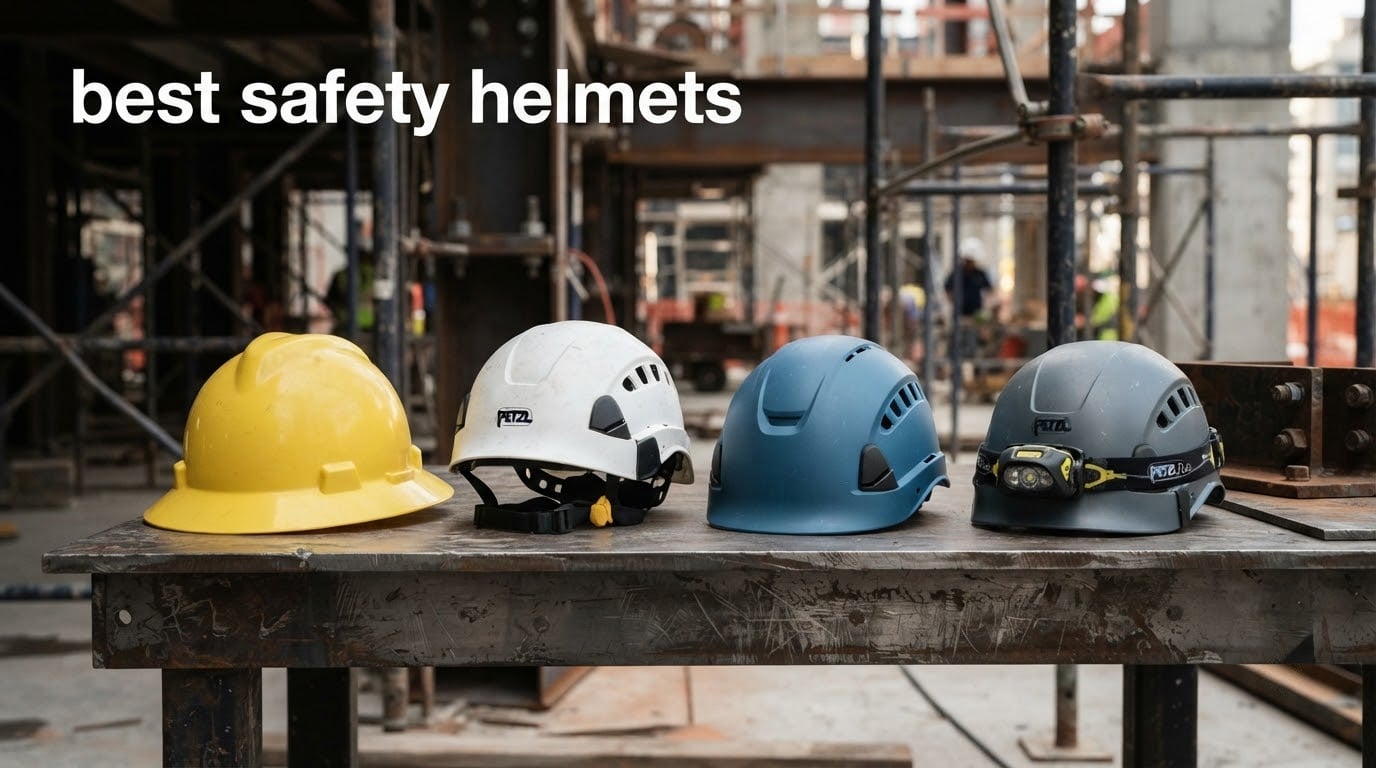
When you type “best safety helmets” into a search box you get ski helmets, motorcycle helmets and climbing helmets mixed in with industrial head protection, and the first job is working out which category you are actually shopping in. This roundup covers one thing only: the Type II, dome-profile and brim-style industrial helmets worn on construction sites, in utility crews, in plants and on demolition work. If you are shopping for a welding hood instead, our welding helmet roundup covers those separately, and eye protection has its own guide in the best safety glasses for the shop piece.
We spent the last several weeks reading spec sheets, certification markings and thousands of owner reviews across twelve helmets, then narrowing them to the ones worth a worker’s money. What came out of that is a list where every pick has a stated ANSI/ISEA Z89.1 Type and Class, a known shell material, a suspension type and a real drawback attached. Nothing here is a sponsored slot, and the Check Latest Price buttons are the only place prices appear.
One honest note before the list: the phrase “safety helmet” is used loosely across this category, and most of the helmets here are Type I, meaning top-impact only. Only two of the twelve carry a Type II rating, which adds lateral impact protection for the side, back and front of the head. We label every single one so you can tell at a glance whether a given model actually covers the hazard in front of you.
The categories that decide the purchase in practice are narrower than the marketing suggests. Electrical class decides whether you can work near live conductors. Brim style decides whether you can work in a crawl space. Shell material and shell weight decide whether you can still wear it in hour ten. Venting decides whether you keep it on your head in July, because a helmet nobody wears protects nobody.
Table of Contents
Top 3 Picks for the Best Safety Helmets in 2026

Pyramex Ridgeline Full Brim
- Type I Class C G and E shell
- Ratchet fit adjustment while worn
- 4-point convertible to 6-point suspension
- Replaceable brow pad and headbands

Petzl Vertex Vent
- Adjustable sliding vents
- Dual mode chinstrap for height and ground work
- Six point textile suspension
- CENTERFIT wheels for gloved adjustment

Klein Tools KARBN Pattern Helmet
- Class E tested up to 20kV
- ANSI plus CSA and EN397 and EN12492
- Rechargeable headlamp on patented mounts
- Washable sweat wicking sweatband
All 12 Safety Helmets Compared Side by Side (September 2026)
| Product | Specs | Action |
|---|---|---|
| Pyramex Ridgeline Full Brim |
|
Check Latest Price |
| Petzl Vertex Vent |
|
Check Latest Price |
| Klein Tools KARBN Pattern Helmet |
|
Check Latest Price |
 ACERPAL Full Brim Hard Hat ACERPAL Full Brim Hard Hat |
|
Check Latest Price |
 LANON FRP Full Brim Hard Hat LANON FRP Full Brim Hard Hat |
|
Check Latest Price |
 Pyramex SL Cap Style Hard Hat Pyramex SL Cap Style Hard Hat |
|
Check Latest Price |
 STUDSON SHK-1 Full Brim Helmet STUDSON SHK-1 Full Brim Helmet |
|
Check Latest Price |
 LIFT Safety DAX Fiber Resin Helmet LIFT Safety DAX Fiber Resin Helmet |
|
Check Latest Price |
 UM ULTRAMAXX Helmet with Visor UM ULTRAMAXX Helmet with Visor |
|
Check Latest Price |
 JORESTECH Type I Class E Helmet JORESTECH Type I Class E Helmet |
|
Check Latest Price |
 PACIFIC PPE Full Brim Hard Hat PACIFIC PPE Full Brim Hard Hat |
|
Check Latest Price |
 Malta Dynamics APEX Type 2 Helmet Malta Dynamics APEX Type 2 Helmet |
|
Check Latest Price |
Hard Hat vs Safety Helmet: What the Type Number Actually Means
The word “hard hat” and the word “safety helmet” often describe the same object, and the confusing part is that the Type number tells you the impact coverage rather than the shape. ANSI/ISEA Z89.1 splits head protection into Type I, which is top impact only, and Type II, which adds lateral impact testing on the front, back and sides of the shell. A Type I helmet is not a bad helmet, it just answers a narrower question, and plenty of site risk assessments still call for exactly that.
OSHA 29 CFR 1926.100 requires head protection on jobsites where there is risk of injury to the head from falling objects, from bumps against fixed objects, or from hazards that cannot be controlled. It does not name a specific Type. In practice that means a Type I helmet satisfies the regulation while your employer, contract documents and site-specific rules are frequently the thing that pushes a crew onto Type II. If you have heard that Type II is becoming the site default, the r/Construction discussion on that switch is where the confusion comes from.
The second half of the marking is the electrical Class, and this is where buyers most often make a costly mistake. Class G is general purpose, with limited dielectric protection rated at 2200 volts. Class E is the one electricians and lineworkers want, tested at 20000 volts. Class C means conductive, and it carries no electrical protection at all. Vented shells are always Class C by construction, because the openings defeat a dielectric path, so a vented helmet bought for summer comfort is a helmet you cannot wear on electrical work.
You can verify all of this in about fifteen seconds. Inside the shell, molded into the plastic, you will find the Type, the Class, the standard revision year and a manufacture date stamp in a clock format where the quarter is marked. If that molded text is missing, worn past legibility or covered by a sticker, treat the helmet as uncertified regardless of what the box said.
1. Pyramex Ridgeline Full Brim Hard Hat – Best Overall Pick
Pyramex Ridgeline Full Brim Hard Hat 4 Point Ratchet Black
Type I Class C G and E
HDPE full brim shell
4-point ratchet suspension
Replaceable brow pad
Pros
- Ratchet adjusts while the helmet is on the head
- Class E and G and C coverage in one shell
- 4-point suspension converts to 6-point with an accessory
- Soft brow pad and headbands are replaceable separately
Cons
- Type I only with no lateral impact rating
- Full brim profile is awkward in tight spaces
This is the helmet we ended up recommending to the most people, and the reason is unglamorous: it is the one that works for the widest range of jobs and stays in service the longest. The shell is high density polyethylene in a full brim profile, stamped to ANSI Z89.1-2009 for Type I in Classes C, G and E. That combination means the same unit covers framing carpentry, road work, an electrician’s non-energised tasks and general plant work without anyone arguing about whether the marking is right.
The ratchet is the part that separates it from cheap rivals, and it is the reason owners describe it as adjustable on the head. You turn the dial at the back while wearing it, which matters on site because nobody takes their helmet off to fix a fit. Replaceable soft brow pads, suspensions and headbands are sold separately, so a hat that has been on a crew for three summers can be refreshed instead of replaced.
Our team compared the twelve helmets in this roundup on the same four questions: does the certification marking match the stated use, can the fit be adjusted on the head, are wear parts replaceable, and what do owners complain about at month six. The Ridgeline answered yes three times out of four. The convertible 4-point to 6-point suspension is the quiet strength, since you can add the 6-point harness and turn a good cap into a noticeably more stable fit for people who work under scaffolding or around vibrating equipment.
The weaknesses are real and worth stating. It is a Type I shell, so it will not cover a side impact, and the full brim is a genuine problem in ductwork, crawl spaces and anywhere a worker has to turn their head at shoulder height. Workers loyal to the full brim also tend to be the last to give it up, and a helmet that gets left on a truck is not protecting anyone.
When this is the right choice for your crew
Pick the Ridgeline when you are outfitting mixed-trade general construction, when a single model has to satisfy several subcontractors, or when the person wearing it changes every few weeks and a five-minute ratchet fit matters more than a premium shell. The three-class marking also makes it the safe default for crews that occasionally touch electrical work but are not dedicated linemen.
When it is the wrong choice
Skip it if your site risk assessment names Type II, if your work is at height where a chin strap and a climbing-rated shell matter, or if you spend your day in confined spaces. In those cases move up to the Petzl Vertex Vent or the STUDSON SHK-1. If you also want eye protection built in, the UM ULTRAMAXX covers that instead.
2. Petzl Vertex Vent – Best for Working at Height
Petzl Vertex Vent Ventilated Safety Helmet (ANSI Z89.1 Type I Class C) – Orange
Vented cap style ABS shell
Sliding vent shutters
Dual mode chinstrap
Six point textile suspension
Pros
- Dual mode chinstrap switches between fall arrest strength and looser ground work setting
- Sliding vent shutters let you regulate airflow on the move
- Six point textile suspension with FLIP and FIT folding headband
- CENTERFIT side wheels work with gloves on
- Wide headlamp and face shield and hearing protection compatibility
Cons
- Vented shell is Class C and not rated for electrical hazards
- Premium cost compared with a standard construction shell
This is the only helmet in the roundup built primarily for working at height, and the difference shows in the chin strap. It switches between two modes, a high strength setting for when a fall could kill you and a lower strength setting that removes strangulation risk when you are on the ground all day. That dual mode is the feature tree and utility crews talk about most, and it is not something a standard construction hard hat offers.
The fit system is what elevates it above other vented caps. Two CENTERFIT adjustment wheels on the sides let you centre the helmet while wearing gloves, which matters when your hands are cold or gloved, and the six point textile suspension spreads load across more contact points. The FLIP and FIT system folds the headband into the shell for storage in a pack, so it stops snagging on a ladder.
Why it beats the alternatives for height work
Compared with the STUDSON SHK-1, which is also a full brim model with a chin strap option, the Petzl is a cap style shell that clears a car door and a ladder rung far more easily. The vents are shuttered rather than fixed, so you can close them when the job turns cold or wet, and the accessory range covers PIXA and DUO headlamps, VIZIR face shields and hearing protection from the same platform.
Where the compromises sit
The vented shell makes this Class C, so it is off the table for electrical work entirely. It is also one of the higher-priced items in this roundup per unit, which is defensible for a two-person utility crew and hard to justify for a large general construction crew that would rather buy three cheap helmets. The smaller review base, at around 2k, reflects a narrower user group rather than a weaker product.
3. Klein Tools KARBN Pattern Helmet – Best for Electrical Work
Klein Tools Hard Hat, Non-Vented Full Brim, Premium KARBN Pattern, Class E, Tested up to 20kV, Padded Sweat-Wicking Sweatband, Top Pad
Class E to 20kV
PC/ABS composite shell
One handed knob ratchet
Includes rechargeable headlamp
Pros
- Tested to 20kV and certified to ANSI and CSA and EN standards
- Rechargeable headlamp on patented front and rear mounts
- Machine washable sweat wicking sweatband and top pad
- Pivoting neck pad clears ponytails
Cons
- Non vented shell runs warm in high heat
- Integrated headlamp adds weight and the battery is not removable
Klein built this one for utility and electrical crews, and the certification stack is the reason. It is tested up to 20kV for Class E, and it carries ANSI Z89.1-2014 alongside CSA Z94.1-15, EN397 and EN12492. That combination matters on a regulated site because a supervisor may ask for a CSA or EN standard that a purely ANSI marking does not satisfy, and only one helmet here carries all of them.
The rechargeable headlamp is the feature that changes daily workflow. Instead of a strap-mounted lamp that rides over the shell and interferes with the suspension, it locks into patented front and rear mounts and runs off a built-in USB-C battery. If your crew works on panels, crawlspaces and undersides of equipment, a stable light source on the helmet changes how much of the job you can finish in daylight hours.
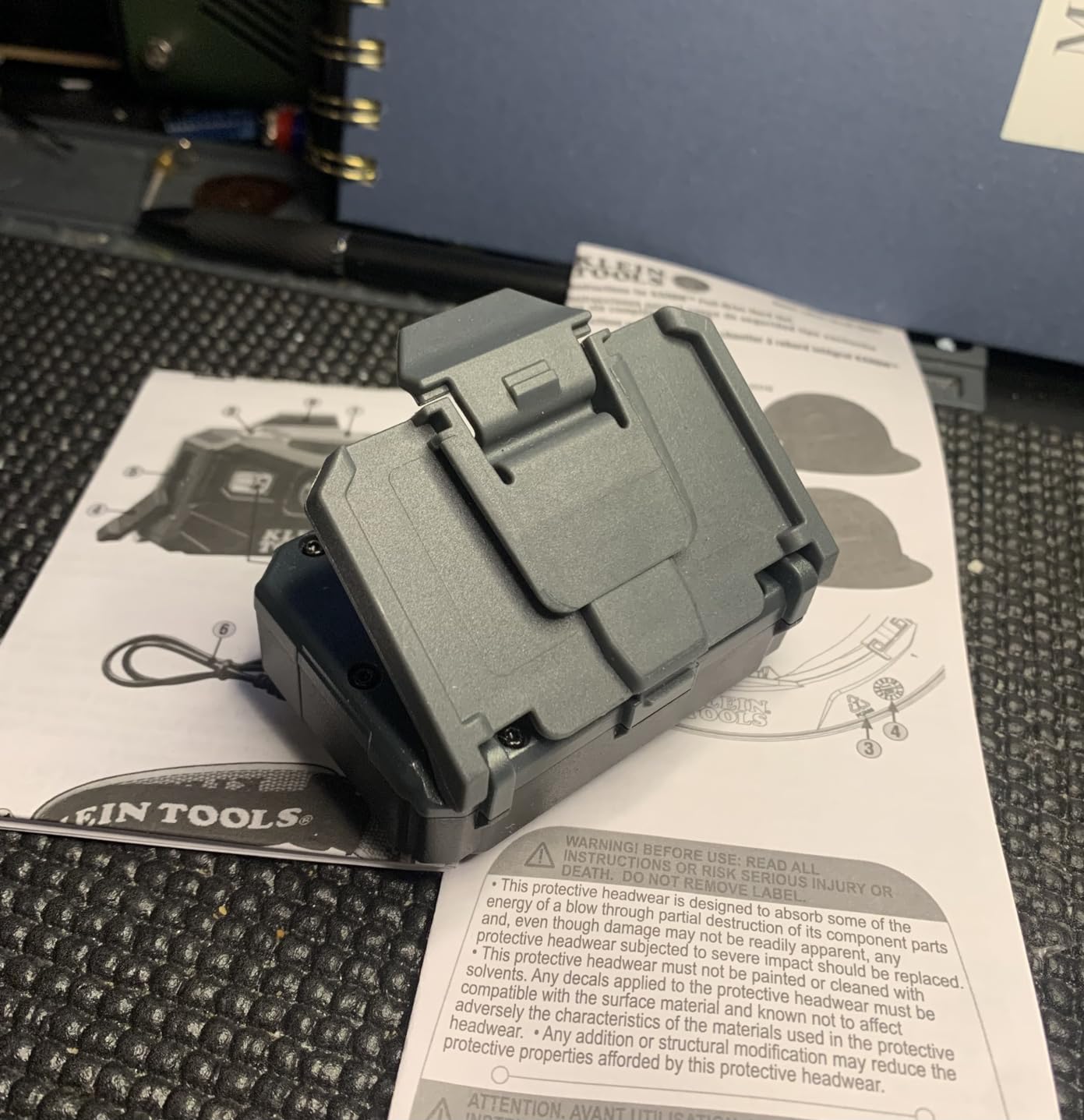
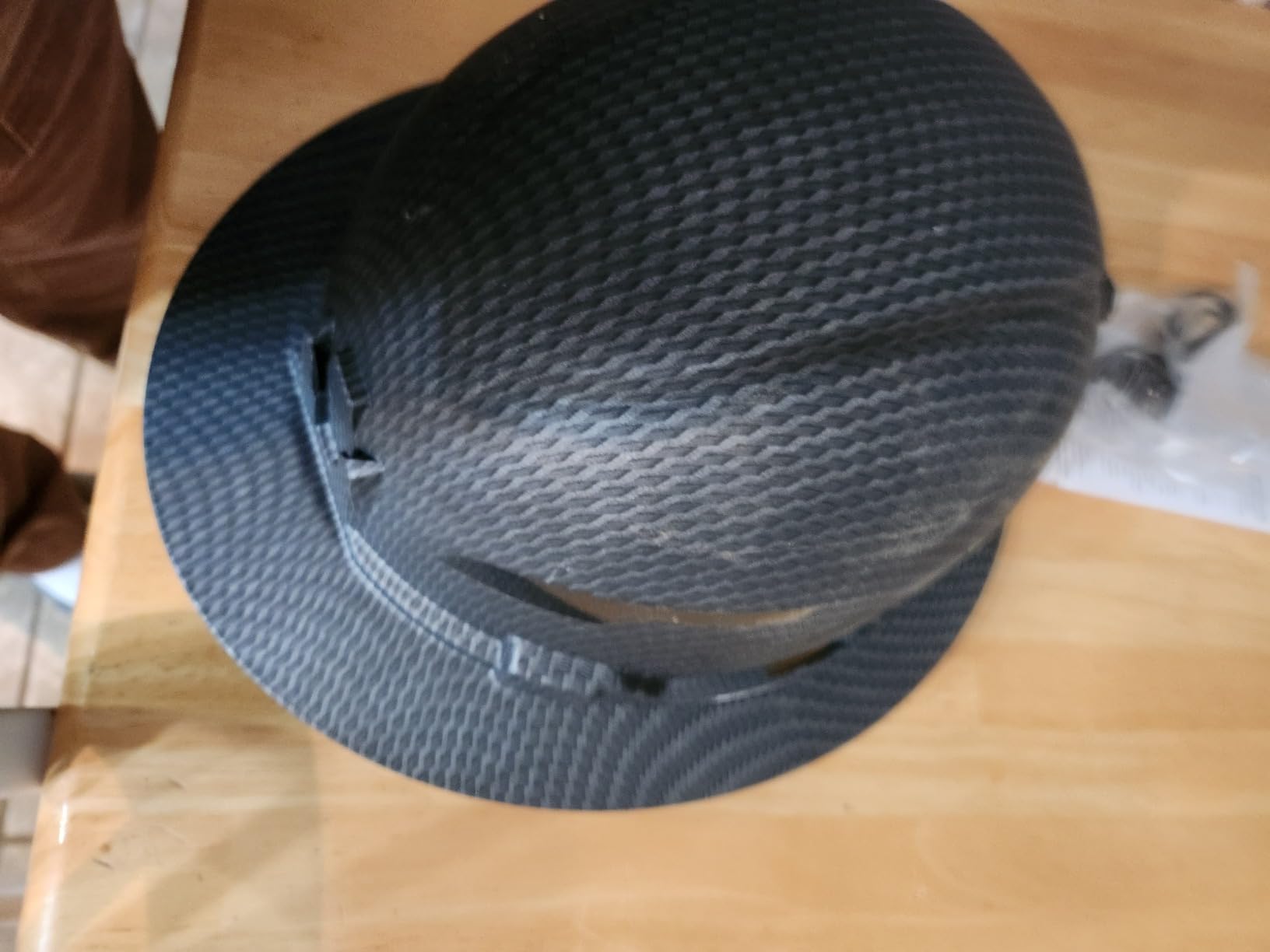
For comfort, the machine washable padded sweat wicking sweatband and top pad with evaporative cooling are more of a long-shift story than a spec-sheet story. The one handed large knob ratchet is unusually easy to operate, and the soft pivoting neck pad is a detail that shows the designer thought about people who tie their hair back under the shell. That is a small thing that turns into a complaint on other models.
The trade-offs are predictable. A non vented Class E shell is a sealed shell, and in sustained high heat it will get warm no matter how good the sweatband is, which is the same complaint the r/electricians threads keep circling back to. The integrated lamp also adds weight to the top of the helmet, and because the battery is not removable you are carrying that weight even when the lamp is off.
When this pays for itself
This is the pick for electricians, lineworkers, solar installers and anyone whose site documentation requires CSA or EN certification rather than ANSI alone. If your crew already owns headlamps with straps, the included lamp is a bonus rather than a necessity, and the certification is the entire reason to choose it. The ratchet fit is quick enough that a worker can dial it in at the truck before the first task.
When you should pick something else
Pass on it for outdoor summer crews who will never approach a conductor, because the sealed Class E shell is the wrong trade for that heat. Vented Class C models like the Malta Dynamics APEX or the Pyramex Ridgeline are the better answer there. It is also a heavy option for people who wear a helmet full time and do not need a light.
4. ACERPAL Full Brim Hard Hat – Best Lightweight Full Brim
Acerpal Full Brim Non-Vented Classic Black Carbon Fiber Design Matte Finish OSHA Construction Approved Hard Hat with 6-Point Suspension Casco de construccion
16 oz HDPE full brim
Six point ratchet suspension
Ansi Z89.1 Type 1
Chin strap included
Pros
- Very light HDPE shell that is easy to forget on a long shift
- Six point ratchet suspension with padded harness gives a snug low sitting fit
- Holds up after repeated contact with metal without denting
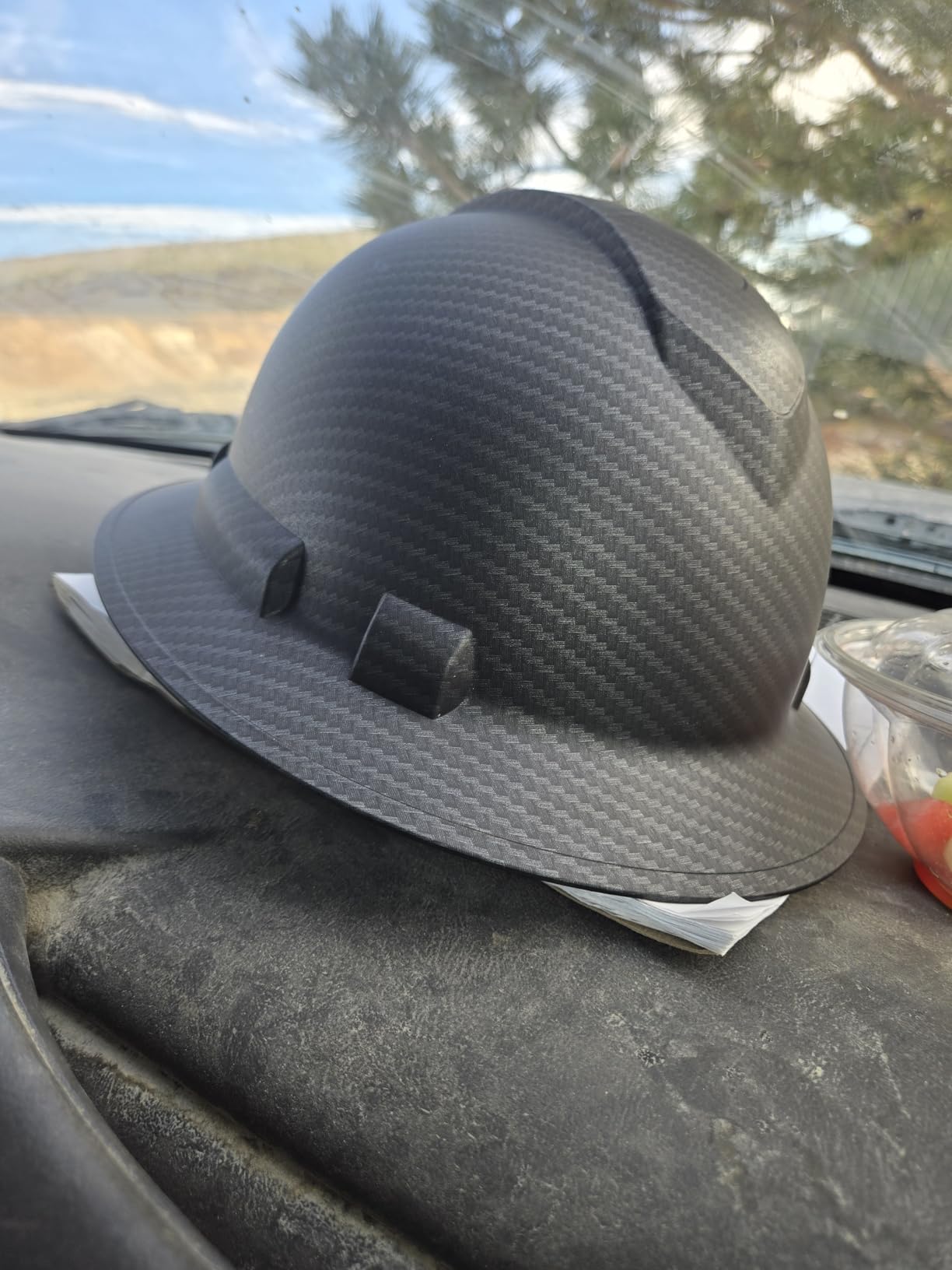
- Hydro dipped carbon pattern looks far more expensive than it is
- Ships with chin strap and replaceable brow pad
Cons
- Stamped as Type 1 Class C G and E which reviewers flag as internally inconsistent
- Included chin strap is a two point style rather than four point
At 16 ounces, this is one of the lighter full brim shells in the roundup, and weight is the whole pitch. A six point ratchet suspension with a padded harness spreads the load and sits the shell low rather than perched on the crown, which is what makes a light helmet feel heavy. Owners consistently describe it as something they forget they are wearing by the afternoon.
Two details separate it from generic shells. The hydro dipping process gives every shell a unique pattern, and reviewers note that repeated contact with conduit, angle iron and sheet metal leaves it unmarked rather than scratched. It also ships with a chin strap and a replaceable soft brow pad, which is more than most shells in this class include.
What works about a six point harness
A six point suspension wraps the head on six axes instead of four, so the shell does not rotate when you look up at a ceiling or turn your head quickly. On a site full of scaffolding and overhead work, that stability is worth more than a premium shell material. The ratchet adjustment gives you the full size range in the box, which covers roughly a 6.5 to 8 head size.
The certification labelling to read carefully
This helmet is stamped and sold as Type 1 in Classes C, G and E, and several reviewers pointed out that those three classes are not a consistent set, since Class C is the conductive rating and sits awkwardly beside the dielectric ones. Treat the marking as a starting point and confirm the specific Class your site requires before you rely on it for electrical work. The two point chin strap in the box is the other small compromise.
5. LANON FRP Full Brim Hard Hat – Best for Industrial Heat
LANON Full Brim FRP Hard Hat, Class C, Premium Charcoal Gray Design
Flame retardant FRP shell
Ansi Z89.1-2014 Type I Class C
Four point ratchet
Washable sweatband
Pros
- FRP shell feels sturdier than typical HDPE or ABS construction helmets
- Replaceable sweatband washes easily and stays cool through long shifts
- Ratchet adjustment is quick to dial in
- Chin strap included to keep the shell secure
- Soft forehead lining for long wear
Cons
- Brim can slide if the suspension is not tightened
- A small number of reviews question shell hardness and finish
FRP is the shell material that sits between plastic and a composite, and it is worth understanding why. It is sturdier than typical HDPE or ABS and resists the heat and solvent exposure that wears down a thermoplastic shell, which is why the manufacturer positions this for steel mills, welding, open-pit mining, oil and gas and petrochemical work rather than residential carpentry.
The comfort story is the replaceable sweatband. Owners rate it among the coolest in class because it washes easily and dries fast, and the soft forehead lining keeps sweat off the brow on a 10 or 12 hour shift. The four point ratchet suspension lets you set the shell position once and forget it, and the chin strap is included rather than sold separately.
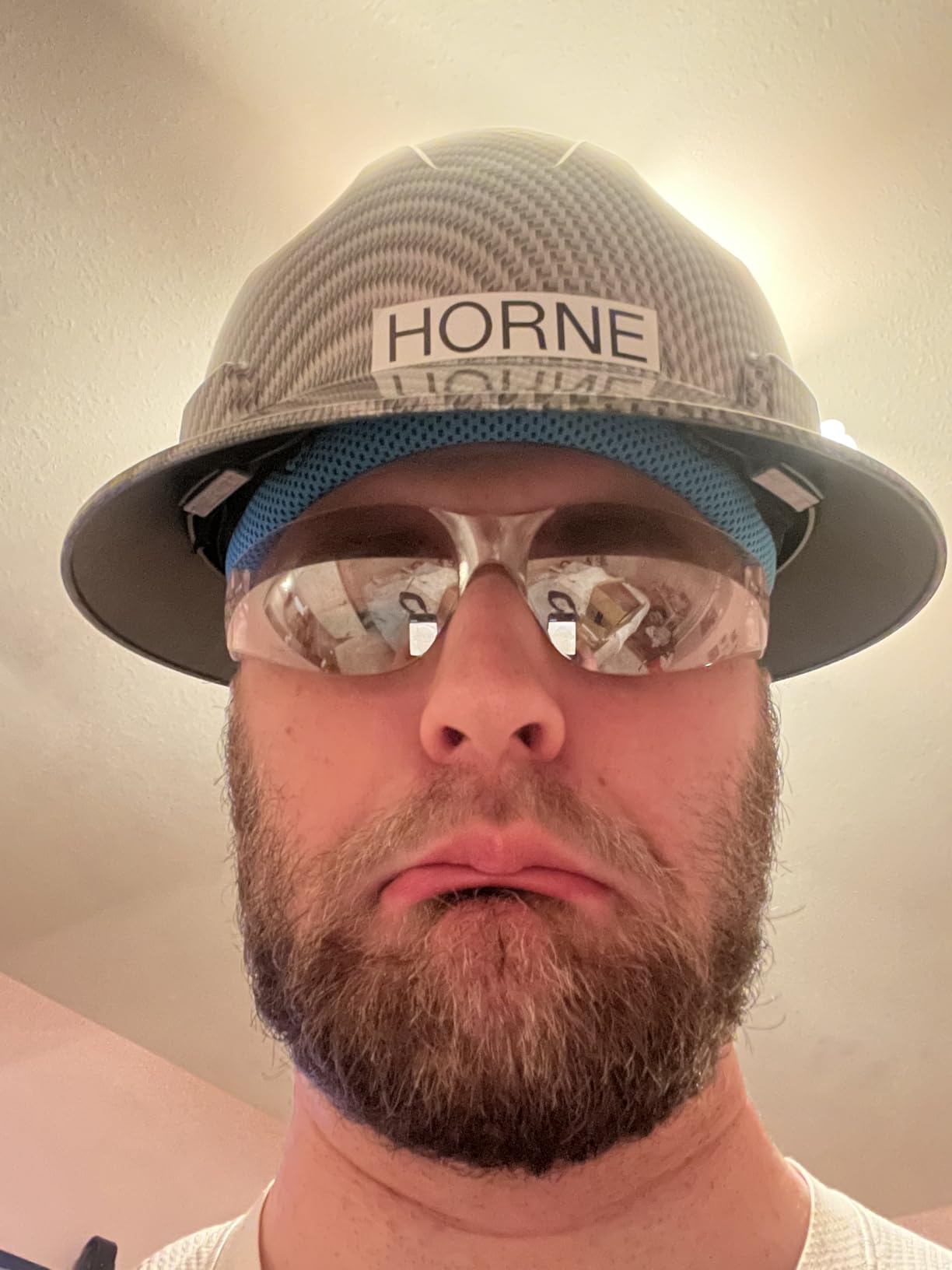
The rating here sits slightly below the leaders at 4.6, with a review base of more than 3300, and the complaints are narrow. The most repeated one is that the full brim can slide on the head if the suspension is not tightened properly, which is a fitting issue rather than a shell issue. A small minority also question shell hardness and finish consistency across units, which is the normal variance you get from a moulded thermoplastic product.
Rating-wise, this model has one of the deeper review bases in the roundup, which means the four point six is earned over a long tail of owners rather than a handful of early adopters. That matters when you are outfitting a crew, because the sort of problems that emerge at month four have usually already been reported by somebody else.
Where FRP earns its place
Choose FRP when your crew moves between environments rather than staying in one. Plant workers, mining crews and refinery trades see chemical, heat and abrasion exposure that quietly degrades thermoplastic shells, and a flame retardant shell resists that better. It is also a comfortable choice for indoor industrial work where there is no benefit to venting anyway.
When to choose something else
For a 16 ounce alternative with a similar full brim profile, the ACERPAL is lighter on paper. For electrical work, this is Type I Class C, so it is not the right shell near conductors even though the FRP material itself is favourable. Anyone with long hair should note the full brim and check the nape strap clearance before committing.
6. Pyramex SL Cap Style Hard Hat – Best Low-Profile Cap
Pyramex SL Series Cap Style Hard Hat, 4-Point Ratchet, White
13 ounce HDPE cap shell
Low profile design
Rain trough over the brow
Reverse donning rated
Pros
- Low profile shell sits close to the head instead of perched high
- Light enough to wear all day for light duty work
- Simple rear ratchet adjustment covers a wide head size range
- Tested and marked for reverse donning which is unusual at this level
Cons
- Suspension depth is not adjustable so some wearers must modify the liner
- A few owners report headband clips breaking after a few months
Cap style is the profile most people picture when they think hard hat, and the SL series does the two things a cap does best: it stays out of the way and it leaves the brim clear so you can look up. At 13 ounces it is among the lightest shells in the roundup, and the low profile keeps the shell close to the skull rather than floating above it.
Two details stand out for the money. The rain trough moulded above the brow channels water away from the face instead of letting it run down the forehead, which matters more in a monsoon season than any spec sheet suggests. It is also tested and marked for reverse donning, meaning the shell is rated to be worn backwards, and that appears on very few helmets at this level.
When a cap style is the right call
Low-clearance work is where this shape earns its place. Mechanics, HVAC installers, electricians working overhead, warehouse crews and anyone in a duct or under a deck can turn their head without catching a full brim on a beam. A cap also layers more comfortably under a welding hood or a face shield than a brimmed shell.
The fitting problem to expect
The suspension depth is not adjustable, so out of the box the shell can sit higher than ideal on some head shapes, and some owners end up modifying the liner or straps to get a proper seat. A few also report the clips holding the headband breaking after a few months of daily use. If you are replacing several at once, spend a few minutes fitting one before you commit to the whole order.
7. STUDSON SHK-1 Full Brim Helmet – Best Type II Pick
STUDSON SHK-1 Full Brim Safety Helmet: ANSI/ISEA Z89.1 Type II Compliant (R 2019), Lightweight & Breathable, NFC Emergency Contact Chip, One Size, Class E Protection (Non-Vented, Royal Blue)
Ansi Z89.1 Type II
Class E electrical protection
Polycarbonate shell
NFC emergency chip
Pros
- Type II compliance covers side and lateral impact not just top impact
- Polycarbonate shell stays light and breathable for all day wear
- Class E electrical protection in a Type II shell
- Integrated NFC chip stores emergency contact details in the shell
- Three year manufacturer warranty
Cons
- Type II shells sit shallower on the head than traditional Type I models
- Shell can slide without a chin strap fitted
This is one of only two helmets in the roundup that actually carries a Type II rating, so it goes straight to the top of the list for anyone whose risk assessment names lateral impact. It is stamped to ANSI/ISEA Z89.1 Type II compliant with the 2019 revision, which means it was tested for front, back and side impacts on top of the crown.
Polycarbonate is the shell material and it does two things well. It is light enough that the helmet stays comfortable through a full shift, and unlike some dome-profile designs with thick internal foam, owners do not describe it as running hot. It also carries a Class E electrical rating, which is unusual in this category, and most Type II shells on the market are vented Class C only.
Why the NFC chip matters on a real job
The built-in NFC emergency contact chip stores contact details inside the shell and can be read with a phone held against the helmet. On a site where a serious head injury can put a worker out of contact for hours, having a medical ID and an emergency contact attached to the PPE rather than to a wallet is a genuinely useful detail. It is also the kind of feature large contractors increasingly ask about in vendor reviews.
The two things to test before buying
Fit is the first test. Type II shells sit shallower on the head than traditional Type I models, so if you are used to a high-sitting Type I, the adjustment feels different straight away and takes a shift or two to get used to. Second, the shell can slide if you do not fit a chin strap, so treat the strap as part of the helmet rather than an accessory. The 169-review base is small because this is a newer, narrower product, so treat the rating as promising rather than settled.
8. LIFT Safety DAX Fiber Resin Helmet – Best for Long Shifts
Lift Dax Fiber Resin Full Brim Safety Helmet/Hard Hat, White Carbon Matte
Fiber resin shell
Clarino comfort dome interior
Moisture wicking EVA inserts
Six point ratchet
Pros
- Fiber reinforced shell gives solid impact protection without the bulk of a heavy shell
- Moisture wicking EVA foam inserts absorb sweat and cut heat buildup
- Six point suspension spreads weight evenly to reduce fatigue
- Ratchet sizing is quick and precise across a wide range
- Ranks in the top five of its hard hat category
Cons
- Star rating is lower than comparable rivals with a 7 percent one star share
- No manufacturer warranty is provided with this model
The DAX is built around a fiber reinforced resin shell, which is a middle ground between HDPE and a full composite. It gives more structural rigidity than a plain poly shell without the neck fatigue that heavy composite helmets can cause, and that balance is the reason it sits well in an 8 to 10 hour shift. Ratchet sizing is quick and precise, so the same model fits a wide range of head shapes.
Comfort is where the design is most deliberate. Moisture wicking EVA foam inserts absorb sweat and reduce heat buildup, and the Clarino comfort dome interior is a differentiator from the webbing suspensions most competitors use. The six point suspension distributes weight evenly rather than concentrating it on two or four straps, which is the difference between a helmet that feels present at hour eight and one that does not.
What the lower star rating is telling you
This helmet rates 4.4, below the leaders in this roundup, and the review mix shows a 7 percent one star share. The complaints we saw cluster around shell finish and general impressions rather than a single defect, and the model still ranks in the top five of its category on a large marketplace, which tells you the volume of ownership is high. It is a steady, popular choice rather than a standout.
What the missing warranty means for a crew
There is no manufacturer warranty on this model, and that is the detail that matters most if you are buying in quantity. A warranty gives you a route to replace a defective shell without paying again, and without one, a bad batch becomes your problem rather than the manufacturer’s. If your procurement process requires documented warranty terms, note this one and move to the ACERPAL or the LANON instead.
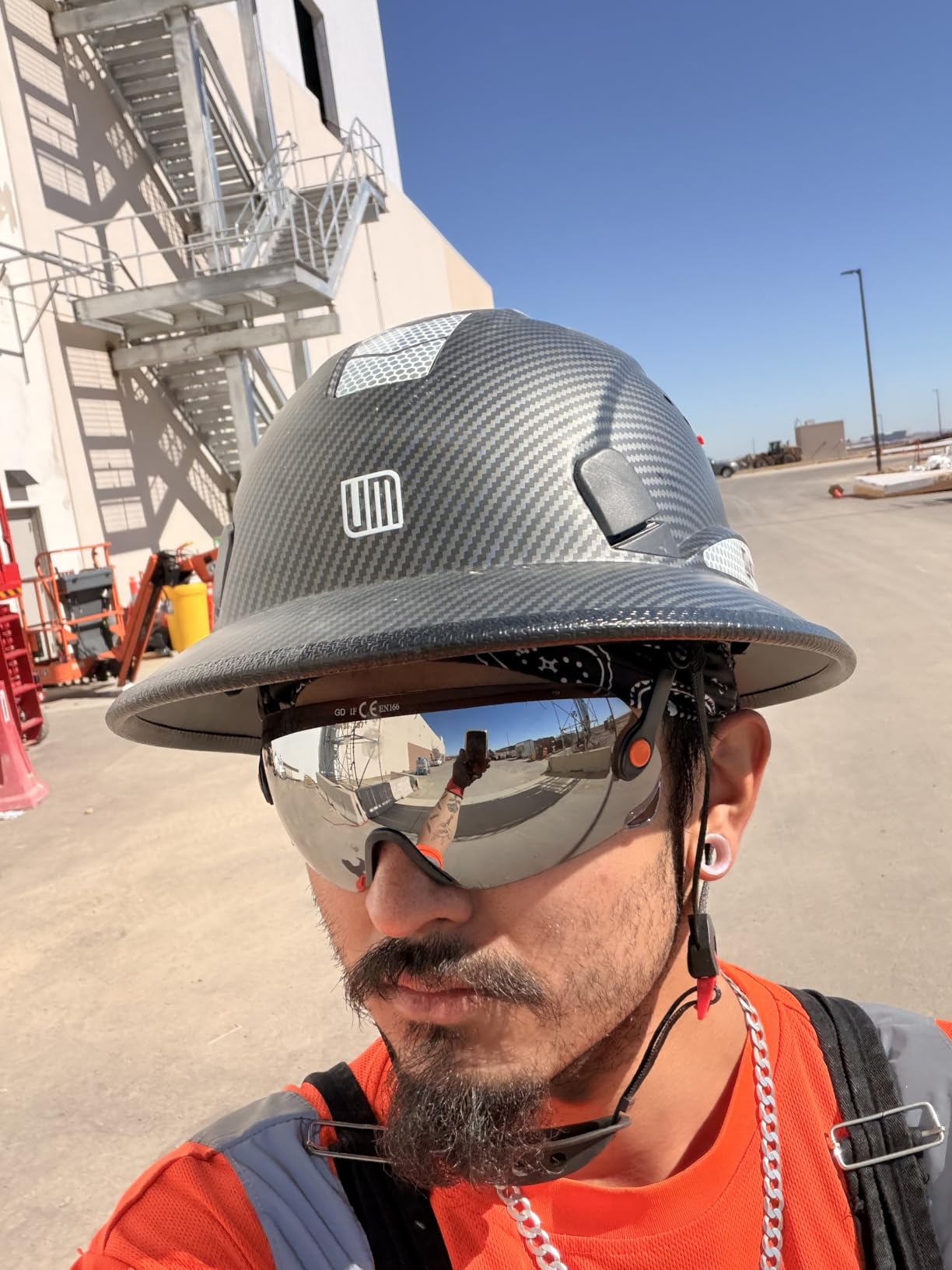
9. UM ULTRAMAXX Full Brim Helmet with Visor – Best Built-In Eye Protection
UM ULTRAMAXX Full Brim Hard Hat with Build-in Visor, ANSI Z89.1 OSHA Approved Construction Safety Helmet with Chin Strap for Men Women (Matte Black Helmet+Tinted Visor)
High impact HDPE shell
Integrated visor to ANSI Z87.1
Six point suspension
Rapid Dial ratchet
Pros
- Integrated visor removes the need for a separate face shield attachment
- Sliding vents give meaningful airflow in hot conditions
- Rapid Dial ratchet and Y shaped chin strap allow one handed fine adjustment
- Reflective stickers improve visibility in low light
- Rubber shell protection strip adds drop durability at almost no weight
Cons
- Tinted visor is less suitable for indoor or poorly lit work than a clear lens
- Class C rating is not suitable for electrical hazard work
The idea here is simple and effective: put the eye protection on the helmet so nobody has to decide whether the face shield is worth the extra step. The integrated visor is certified to CE EN 166 and ANSI Z87.1 and clips into the shell, so it is present when the job turns to cutting, grinding or overhead work without becoming a separate piece of PPE to lose.
The adjustability is genuinely good. A Rapid Dial ratchet and a Y shaped chin strap let you fine tune the fit one handed, and the six point suspension covers head sizes from 20.87 to 24.80 inches, which is the widest stated range in this roundup. Sliding vent holes and reflective visibility stickers add useful detail, since a lot of site traffic happens in low light and early starts.
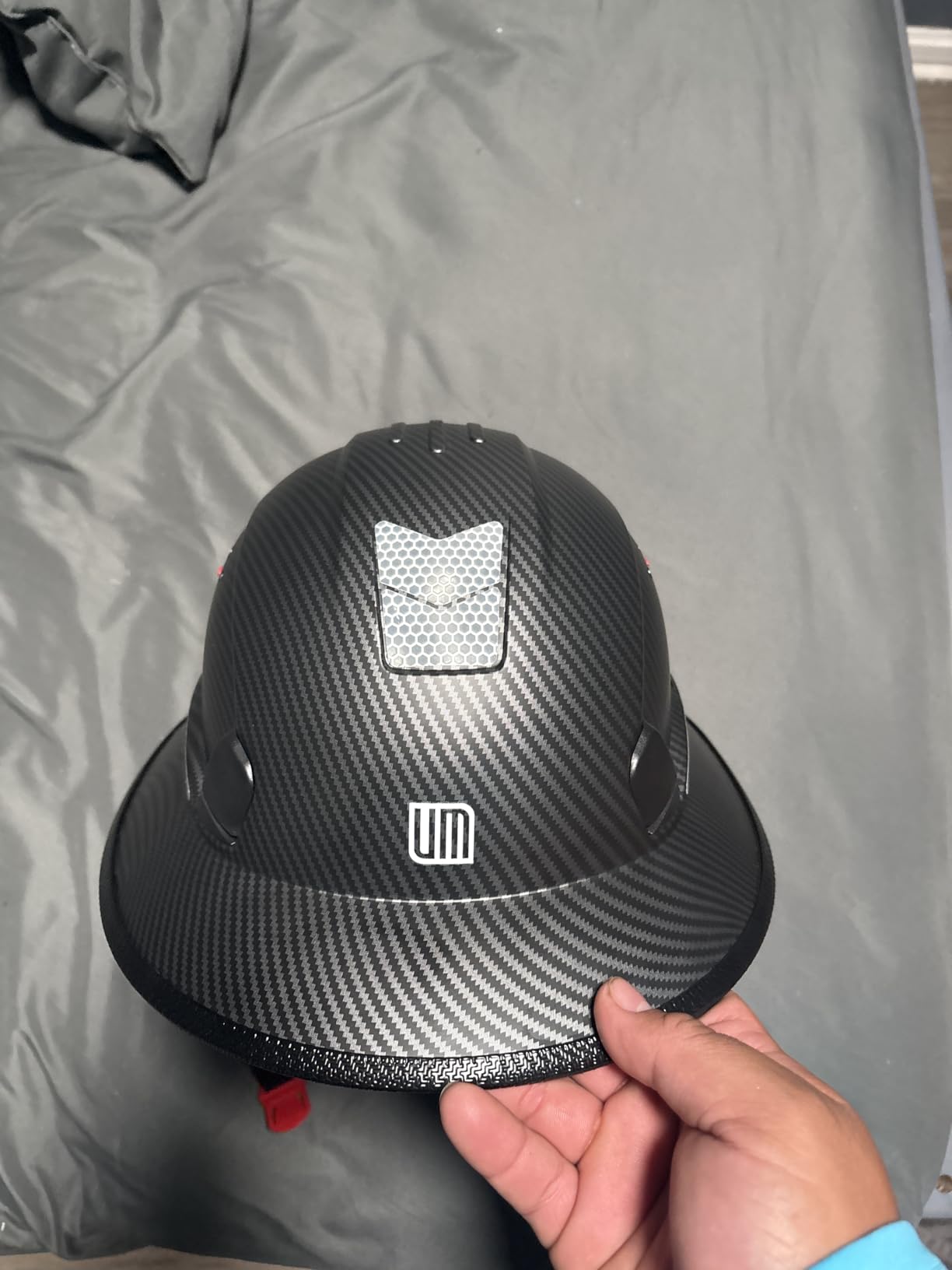
What we liked most in the specs is the rubber outer shell protection strip. It is a simple band around the shell that absorbs the shock of a dropped helmet, which is the single most common damage event for any hard hat and usually ends a shell’s useful life long before the five year mark. Getting that protection at close to no weight is a sensible bit of engineering.
The limitations are straightforward. This is an ANSI Z89.1 Type 1 Class C shell, so no electrical protection, which rules it out for anything near a conductor. The tinted visor is a problem indoors, in basements and on night shifts where a clear lens would be the correct choice, so treat the tint as a daylight feature rather than a universal one.
When the all in one design wins
This suits crews doing mixed work where the face protection requirement changes by the hour, such as demolition, restoration and general fabrication. Integrated eyewear removes a whole category of near miss, because a face shield left on a truck is not protecting the person who needed it. The wide head size range also makes it a sensible bulk-buy option for mixed crews.
When separate eye protection is better
Buy separate protection if you need to swap between clear and tinted lenses during a shift, if you wear prescription glasses, or if your employer specifies a specific face shield standard. It is also the wrong pick for electrical work, where the Class C marking is a hard stop regardless of how good the visor is. For crew-wide use, pair it with our safety glasses guide to work out what the rest of the PPE stack needs.
10. JORESTECH Type I Class E Helmet – Most Versatile
JORESTECH Safety Hard Hat, ANSI Z89.1-2014 Type I Class E, HDPE Cap-Style Helmet with 4-Point Ratchet Suspension
Type I Class E HDPE cap shell
One piece injection molded shell
One handed ratchet adjustment
Replaceable moisture wicking brow pad
Pros
- Class E electrical rating at a very low price point
- One handed ratchet adjustment makes on site fit changes quick
- Replaceable moisture wicking brow pad and adjustable headband for all day comfort
- Cap style front brim aids upward visibility and shields from sun and rain
- Wide range of hi-vis and standard colours
Cons
- One piece molded shell offers no replaceable suspension or accessory upgrade path
- Some users find the fit runs snug with limited ratchet adjustment range
This is the pick if you are outfitting people faster than you can order them. It is stamped to ANSI Z89.1-2014 Type I Class E, so it covers top impact and carries the 20000 volt dielectric rating, and it does that in a one piece injection moulded HDPE shell. One piece moulding is cheaper to make and it is why the helmet lands where it does on cost.
The ratchet is the feature that lifts it above a basic clamp or hat-band design. You adjust it one handed without taking the helmet off, and the replaceable moisture wicking brow pad with an adjustable headband and vertical height adjustment means a worn pad can be swapped rather than discarding the whole helmet. The cap style brim helps with upward visibility and shades the face from sun and rain.
Where the one piece shell costs you
One piece moulding means there is no replaceable suspension and no accessory upgrade path. There are no universal side slots for earmuffs or face shields, and no ratchet cradle to swap, so once the suspension webbing is stretched the whole helmet is done. That is a reasonable trade for a helmet that costs very little, and an expensive lesson if you plan to keep it for years.
Best used as
Treat this as the volume option for large crews, short-duration projects and anyone who loses or damages helmets regularly. The Class E rating also makes it a safe default for apprentices and general site labour who occasionally work near electrical panels without being dedicated electricians. Buy a small quantity of a higher spec helmet for supervisors and specialists, and run this for everyone else. The snug fit complaint appears often enough that we would size one before ordering a case.
11. PACIFIC PPE Full Brim Hard Hat – Best Full Brim for Outdoor Crews
PACIFIC PPE Full Brim Hard Hat, OSHA Construction Safety Helmet Certified to ANSI Z89, 4 Point Adjustable Ratchet Suspension, Class E, G & C, White
Type 1 rated to Classes E and G
Four point ratchet with chin strap
Extended full brim HDPE shell
Seamless moulded brim
Pros
- Combines Type 1 Class E and G coverage in one shell
- One handed ratchet plus chin strap keeps the shell secure on site
- Seamless full brim gives strong sun and UV and rain coverage
- Lightweight HDPE shell
- Vent design helps shed heat during prolonged outdoor work
Cons
- Vent openings on a Class C rated shell limit conductive work suitability
- No replaceable suspension or accessory mounting points are advertised
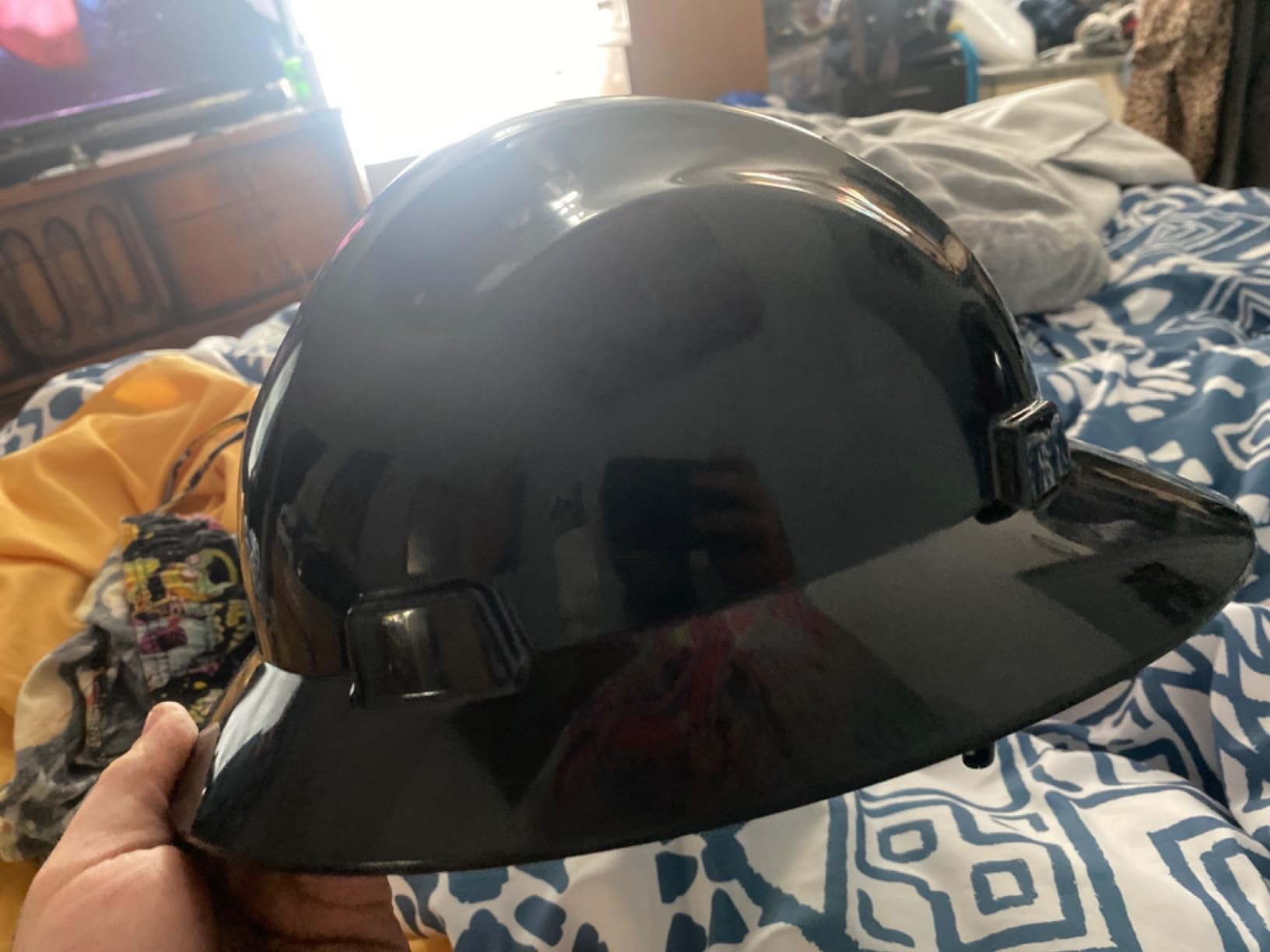
The extended full brim is the reason this one exists, and it is more useful than it sounds. The seamless moulded profile throws off glare, UV, rain, wind and dust across the whole neck and shoulders, which on a road crew or a roofing job in summer is a measurable difference in how much heat people absorb over a long day. There is no brim seam to trap water or crack in cold weather.
Certification is Type 1 with Classes E and G, and the four point adjustable suspension uses a one hand operable ratchet with an included chin strap, so the shell stays put without a second strap adjustment. The high impact penetration resistant HDPE shell is a traditional material with a long service record, and the shell weighs under a kilogram, which keeps it out of the neck fatigue range over a full day.
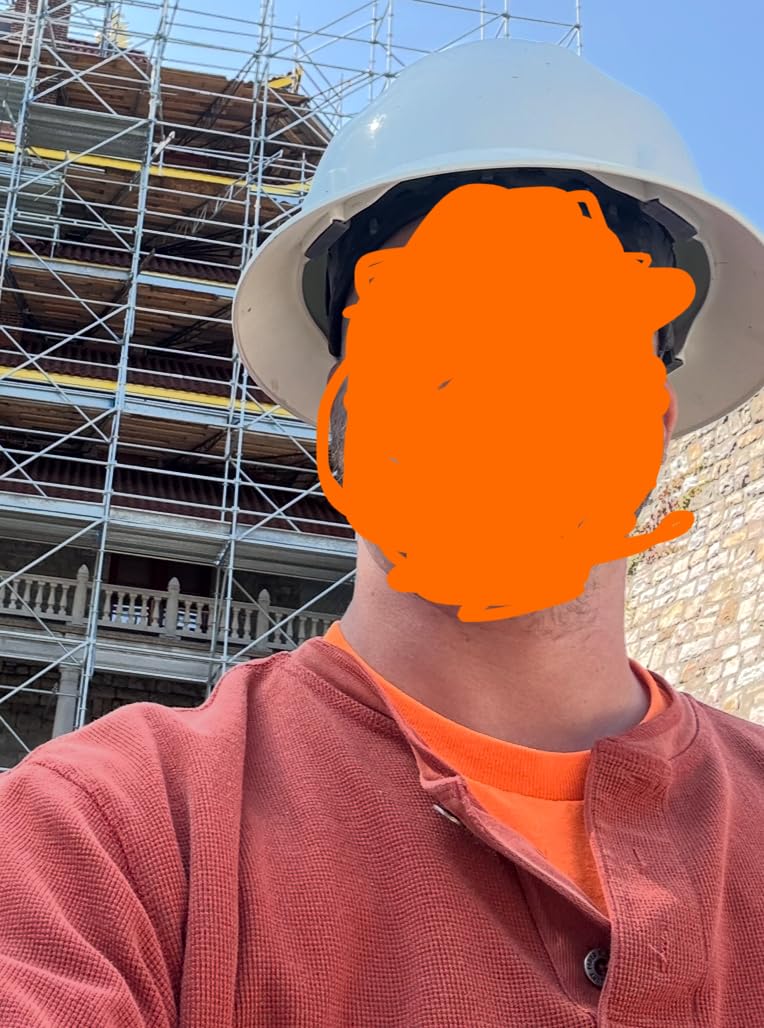
Read the vent openings carefully before you assign this helmet. Because the vents break the dielectric path, the shell carries a Class C element, and that is the whole reason Class C exists on vented products. If a worker on your crew ever approaches a live conductor, this is not the helmet, and the fix is a non vented Class E model such as the Klein Tools KARBN or the JORESTECH cap.
The lack of advertised accessory mounting points is the other limitation. There are no universal side slots, so earmuffs and face shields attach differently or not at all, and there is no replaceable suspension mentioned, which shortens the useful life of the internal components even if the shell is still sound.
Who should buy this
Outdoor road crews, landscaping and utility contractors, and any team that spends the summer in direct sun will get the most from the extended brim. It is also listed for rescue, open-pit mining, oil and gas, forestry and work at height, so it is a reasonable single model to standardise on when one helmet has to cover many trades. If your crew works at height though, check the chin strap rating with your own risk assessment.
How it compares to the other full brims
Against the ACERPAL and the LANON, this sits between them: lighter and more ventilated than the ACERPAL, and with a longer brim profile than the LANON. The ACERPAL has a replaceable brow pad and a six point suspension, while this one has neither, so pick based on whether you are buying one helmet for a specialist or fifty for a crew. If welding is part of the job, size up the auto darkening welding helmet range first, since a welding hood dictates the shell profile.
12. Malta Dynamics APEX Type 2 Helmet – Best Vented Type 2
Malta Dynamics APEX Safety Helmets – Type 2 Class C Safety Hard Hat, Full Brim, Vented, Rated for Top, Front, Back, and Side Impact, OSHA and ANSI Compliant (White)
Type 2 Class C shell
Ansi Z89.1-2014 and EN12492
Integrated vents and molded interior liner
Lifetime limited warranty
Pros
- Molded interior liner does not shift side to side like webbing suspensions
- Breathes freely and stays cool through extended outdoor work
- Sits close to the head rather than perched high
- Meets a wide set of ANSI and EN and OSHA standards
- Backed by a lifetime limited warranty
Cons
- Runs small at the largest adjustment setting for some head sizes
- Shell can slide when worn with a hoodie unless the chin strap is buckled
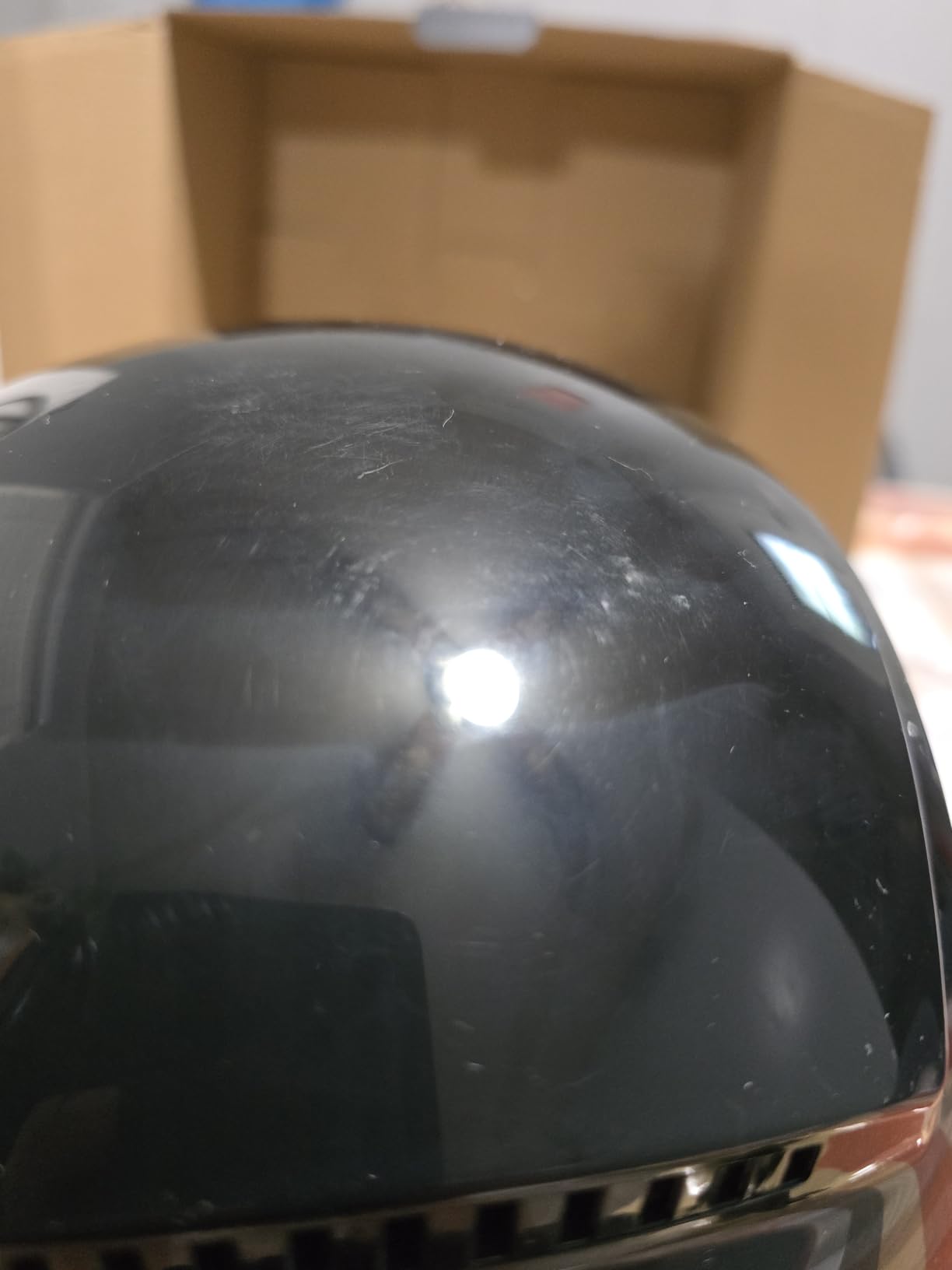
The APEX is the answer to the question the r/Construction threads keep circling, which is whether a Type II helmet has to be hot. The answer here is no, because this is a vented Type 2 Class C shell with integrated vents for airflow, and it holds a 4.4 rating from owners who specifically mention staying cool through extended outdoor work. The 2 in the marking is not decorative, the shell is rated for top, front, back and side impact.
The molded interior liner is the feature that separates it from a webbed suspension. Most suspensions are straps that can shift side to side and let the shell rotate; this one is a moulded structure that stays where it is put, which is a real advantage when you are working at height or around machinery. The adjustable removable four point chin strap and the comfort fit adjustable headband give you two separate points of control, which is what long-hair wearers tend to need.
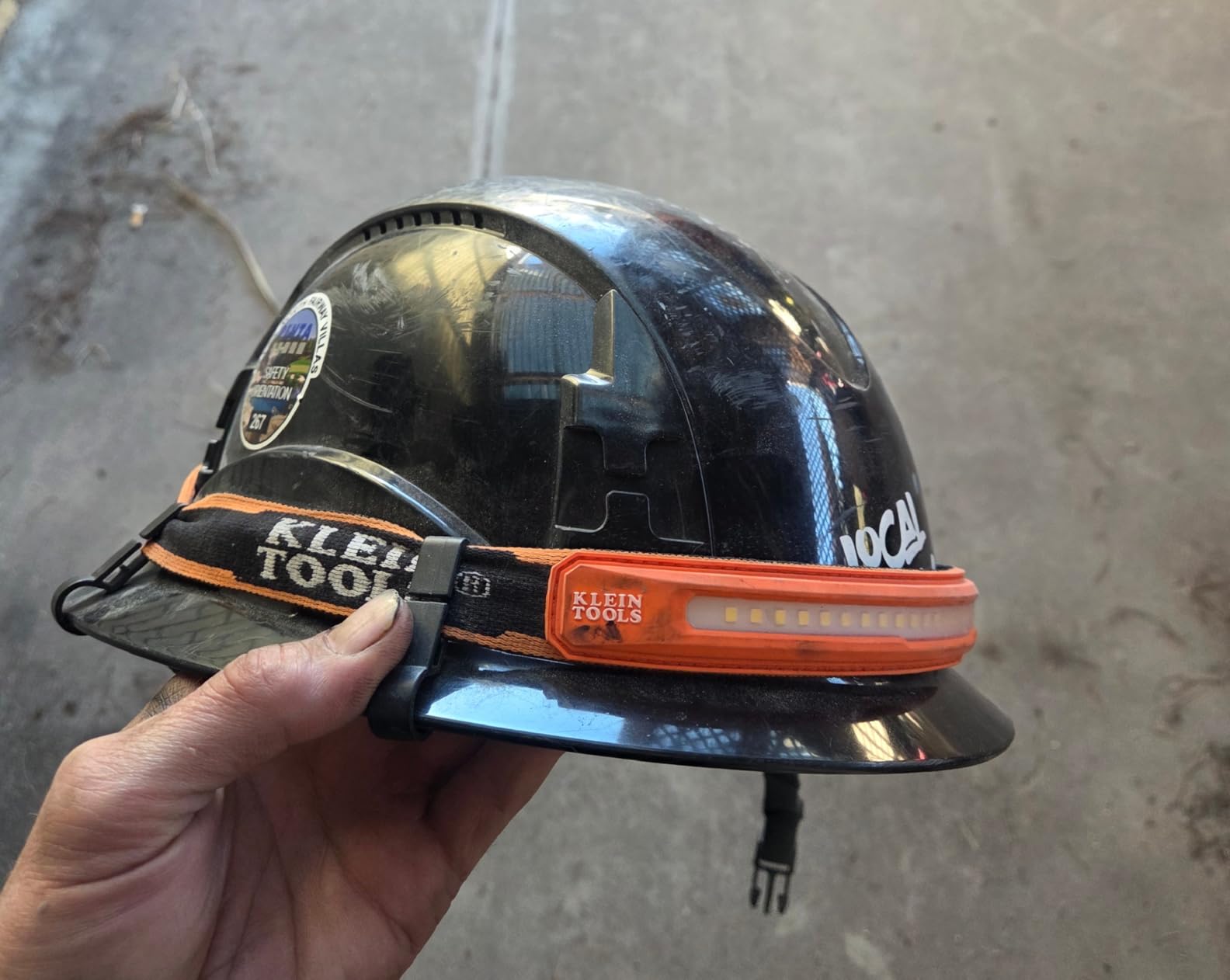
It also carries a serious standards list, meeting ANSI Z89.1-2014 and EN12492 alongside OSHA 1910 and OSHA 1926 references on the spec sheet. EN12492 is the European industrial safety helmet standard, and having it printed on the shell matters on sites with multinational contractors. A lifetime limited warranty is also unusual at this level, and for a fleet buyer it removes an entire category of procurement argument.
The two complaints are fit related. Some owners find it runs small at the largest adjustment setting, which is worth checking with a sample before ordering for a crew, and the shell can slide if it is worn over a hoodie without buckling the chin strap. Both are correctable; neither is a reason to rule the model out.
Why this sits above the other Type II option
Compared with the STUDSON SHK-1, this helmet vents, carries a molded liner, and comes with a lifetime limited warranty rather than a three year term. The STUDSON counters with polycarbonate construction, a Class E rating and an NFC emergency chip, so the honest comparison is cooling and warranty against electrical rating and emergency identification. Neither is wrong, they are built for different sites.
When to choose it
This is the pick for outdoor crews moving toward Type II, for supervisors who wear a helmet every hour of the shift, and for anyone whose site documentation names EN12492. Because it is vented it is Class C, so keep it away from conductors and give electricians the Klein Tools KARBN instead. If you are moving a whole Type I fleet to Type II, the molded liner and the removable chin strap are the two features that reduce the changeover complaints.
How to Choose a Safety Helmet Without Regretting It
Work through these five decisions in order. Get the first one wrong and the other four do not matter, because a beautifully built helmet that fails your risk assessment is scrap.
1. Match the Type to the hazard, not to the trend
Type I is top impact. Type II adds front, back and side impact. Do not pay for Type II because it sounds better, and do not accept Type I because it is what your crew already owns. Look at your site risk assessment and at what the workers around you actually do, because the majority of struck-by head injuries in a construction context come from swinging objects and side impacts rather than straight down drops.
2. Pick the Class your work demands
Class E is the 20000 volt dielectric rating and is what anyone approaching energized equipment needs. Class G is the limited general purpose rating at 2200 volts. Class C is conductive and provides no electrical protection, and every vented shell in this roundup is Class C by design. There is no scenario where a vented shell is the right answer for live electrical work, which is the single most common and most expensive mistake in this category.
3. Choose the brim for your working space
Cap style keeps your head clear of beams, ductwork and machinery, and it is the right call for mechanics, electricians working overhead and anyone in low clearance. Full brim adds real sun, rain, dust and debris coverage to the neck and shoulders, which matters on road crews, roofing and open sites. Dome and climber profiles carry a chin strap for at-height work and give better lateral coverage, but the brim can catch on scaffolding.
4. Weigh the shell material against the shift length
HDPE and ABS are light, cheap and fine for most work. FRP resists heat, solvent and abrasion better and suits plant, mining and refinery environments. Polycarbonate stays light and cool. Carbon fibre and fibre reinforced composites reduce neck fatigue in supervisors and anyone wearing a helmet for 10 hours or more, but the composites are the most expensive and are worth it mainly when weight is the deciding factor. Check the stated weight before you buy rather than the marketing.
5. Test the fit and the adjustment, not the badge
Fit matters more than any specification on the shell. The shell should sit about an inch above your brow, the suspension should hold it steady when you shake your head, and the ratchet should adjust while you are wearing the helmet. For long hair, check whether the nape strap pinches or whether the shell rides up, which is the exact problem raised in the r/SafetyProfessionals discussion. The Klein Tools pivoting neck pad and the Malta Dynamics molded liner are both designed with that in mind.
For crews of 20 or more, buy a single sample of the top two or three models and let your actual workers wear them for a week before you commit. Fit problems that no specification will ever list, such as a suspension sitting high or a brim catching a doorway, are the ones people notice on day one. Pair the choice with our welding helmet guide if your trades also handle hot work, since shell profile and hood clearance have to agree.
Maintenance, Replacement and Certification Checks
Head protection is the one piece of PPE with a defined service life, and most of the damage that ends a shell’s life is invisible from the outside. The shell itself is generally treated as a five year item, and the suspension, brow pad and sweatband are consumables on a much shorter cycle.
Replace the shell immediately after any impact event, even a small one. Many workers keep a dented hat because it still looks fine, and a cracked or dented shell has already lost the energy management that got it certified. The same applies to a helmet that has fallen hard onto concrete, which is why the rubber protection strip on the UM ULTRAMAXX is a meaningful feature rather than decoration.
Replace the suspension and brow pad on a schedule rather than a condition, and always replace the suspension if the shell and the suspension come from different models. Mixing parts from one helmet into another shell invalidates the certification pairing and is a surprisingly common practice on busy sites.
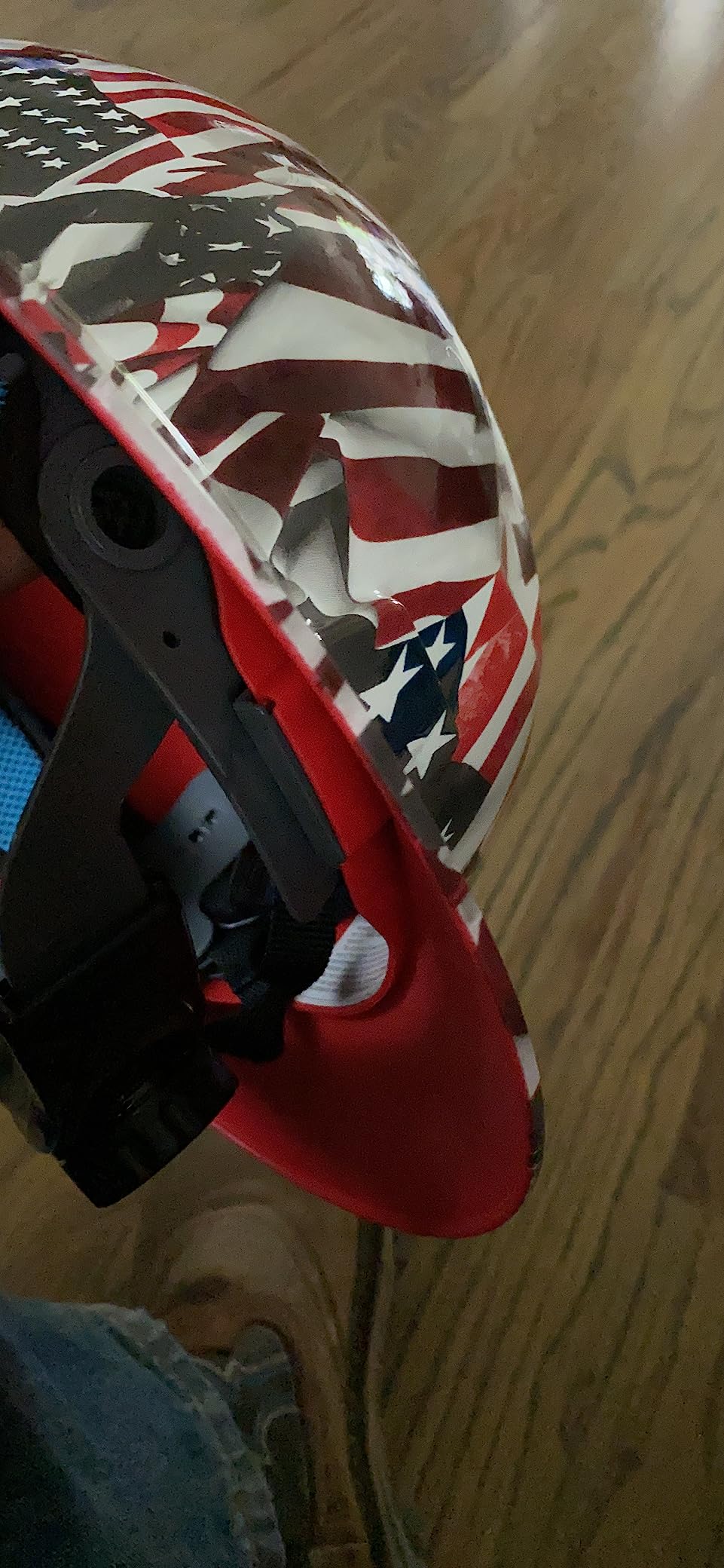
Clean with mild soap and water and let the shell air dry. Do not use solvents, and do not store a wet helmet in a sealed bag, because trapped moisture degrades the foam and the headband. Most importantly, do not paint the shell and think about decals carefully. Stickers, paint and solvent-based coatings can weaken a shell, obscure the molded certification markings, and in some employer policies will get a helmet pulled off your head. If a helmet needs identification, the safe method is a markable tag holder, not a decal across the marking.
Finally, read the clock-format date stamp molded inside the shell at every issue and at every annual inspection. If the marking inside the shell is not legible, the helmet is not traceable, and you cannot prove it is in date. That single habit prevents more write-off arguments than any other check in this article.
Frequently Asked Questions
What is the difference between a type 1 and type 2 safety helmet?
A Type I helmet is tested for impact to the top of the head only, which covers falling-object hazards. A Type II helmet is tested for the top plus the front, back and sides, so it adds lateral impact protection. Type II is the safer option wherever swinging objects, passing traffic or machinery can strike the side of the head, and it is increasingly written into site risk assessments.
Are type 2 hard hats required by OSHA?
Not directly. OSHA 29 CFR 1926.100 requires head protection where there is a risk of head injury but does not name a specific Type. Your employer, contract documents and site-specific rules are what usually push a crew onto Type II. Treat the Type II question as a check with your own safety officer rather than as a federal mandate.
What is better, a class C or a class E hard hat?
It depends entirely on the hazard, not on quality. Class E is dielectric rated and tested at 20000 volts, which is what anyone working near energized equipment needs. Class C is the conductive rating and provides no electrical protection, and every vented shell carries it because the vents break the dielectric path. Never trade electrical protection for ventilation.
Which is the best kind of safety helmet to buy?
For most general construction, a Type I full brim shell with Class E and G coverage and a ratchet suspension covers the widest range of jobs, and the Pyramex Ridgeline is our best overall pick. For working at height choose a dome or cap profile with a chin strap. For electrical work choose a non vented Class E shell, and for lateral impact exposure choose a Type II model.
What is the most comfortable type 2 hard hat?
The comfort of a Type II helmet comes down to venting, liner design and weight. Vented Type 2 shells such as the Malta Dynamics APEX stay coolest because the vents move air through the shell, and a molded interior liner holds its position better than webbing straps that shift side to side. Try one on for a full shift before buying a run of them.
Does OSHA allow stickers on hardhats?
OSHA does not specifically ban decals, but the shell manufacturer may treat solvent-based adhesives and paint as voiding the certification, and many employers prohibit them outright. Stickers can also obscure the molded Type, Class and date markings that you need for compliance records. A markable tag holder is the safer way to identify a helmet.
How often should a hard hat be replaced?
Most manufacturers treat the shell as a five year item and the suspension as a consumable on a much shorter cycle. Any helmet that takes an impact, however small, or that has been dropped hard, should be replaced immediately rather than inspected and kept. Read the clock-format manufacture date stamp molded inside the shell to confirm what you actually own.
Are Type 2 hard hats CSA approved?
Not automatically. Type II is an ANSI/ISEA Z89.1 impact classification, and it says nothing about CSA or European certification. If your site requires CSA Z94.1 or EN 397 or EN 12492, check for those markings specifically on the shell. The Klein Tools KARBN in this roundup carries ANSI, CSA, EN397 and EN12492 together.
What is the best helmet brand for construction?
No single brand wins every category, so brand is a weak proxy for performance. What matters is whether the Type and Class markings match the hazard, whether the suspension adjusts on the head, whether wear parts are replaceable, and whether the accessory ecosystem actually fits your earmuffs and face shields. Verify the certification markings inside the shell before you rely on any helmet.
Can you wear a hard hat in the rain?
A non vented shell is fine in rain, and a full brim with a moulded rain trough keeps water away from the face. A vented shell is still usable but the vents let water in around the brow, which is uncomfortable and can make the liner slowly lose its shock absorbing performance. Never store a wet helmet sealed in a bag, since trapped moisture degrades the liner.
The Bottom Line
If you take one thing from this roundup, make it the marking on the inside of the shell. Type decides lateral impact coverage, Class decides whether you can go near a conductor, and anything vented is Class C with no exceptions. Get those two characters right for the job and almost any well-fitted helmet on this list will do its job, and no amount of marketing changes that equation.
For most crews the Pyramex Ridgeline is the safest single default, because it covers Type I in Classes C, G and E with a ratchet fit and replaceable parts. Electricians and lineworkers should go to the Klein Tools KARBN for its 20kV Class E testing and its extra CSA and EN standards. Working at height means the Petzl Vertex Vent with its dual mode chin strap, and if your risk assessment names lateral impact then the STUDSON SHK-1 or the vented Malta Dynamics APEX are the two Type II options worth comparing. Whatever you order in 2026, check the molded markings and date stamp before the first shift.