
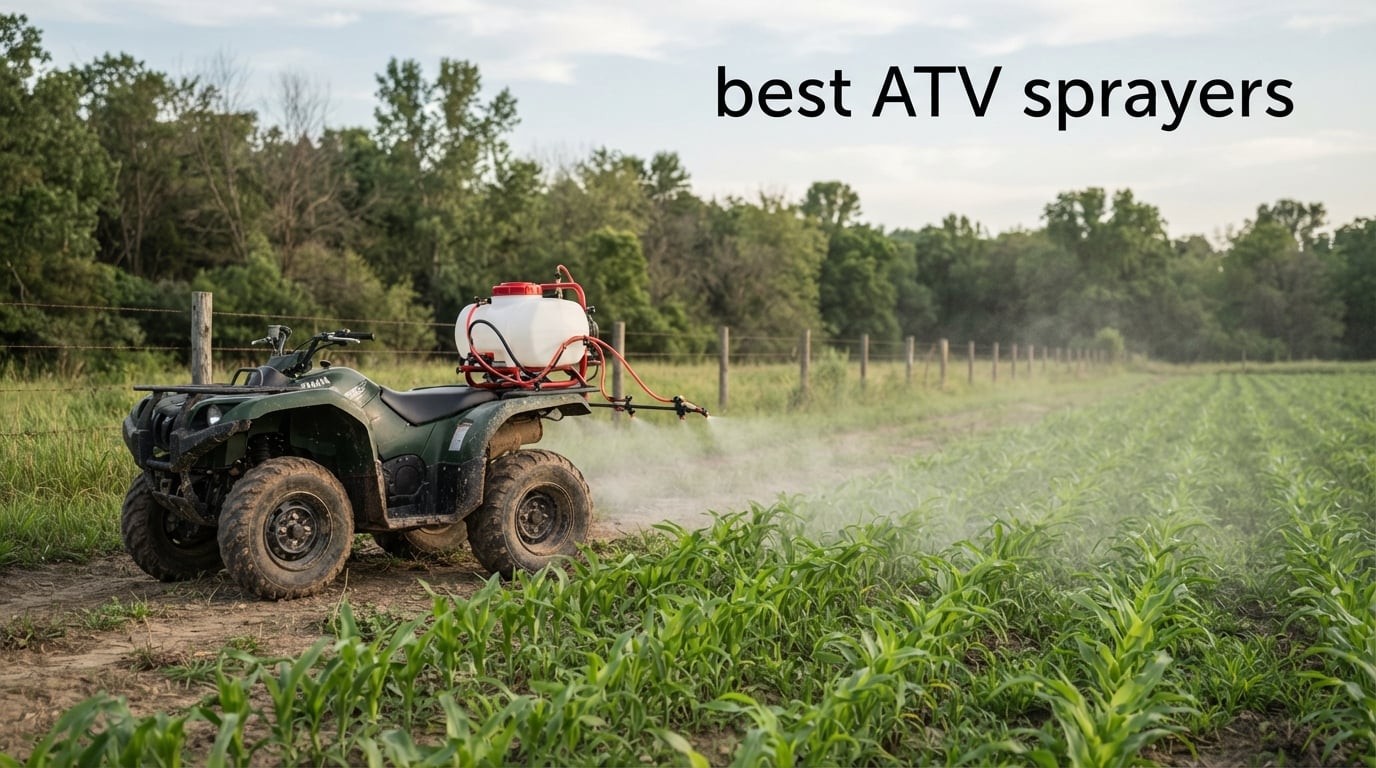
The best ATV sprayers balance three things: tank size, pump output and coverage type. Get that combination right and a food plot, pasture or fence line that used to take a full weekend with a backpack sprayer gets done in an afternoon. Get it wrong and you are hauling a heavy tank up a slope, replacing a leaking wand coupler, or fighting a boom that keeps snagging on brush.
We spent 2026 season working through mounted and tow-behind sprayers from NorthStar, Chapin and Master Manufacturing, comparing pump output, tank geometry, boom behaviour and the small failures that show up in the first hundred hours. What follows is the result: ten picks, ranked, with the compromises each one asks you to accept stated plainly.
Most readers here are property owners and homesteaders managing food plots, fence lines and pasture weeds, plus lawn-care professionals covering dozens of properties a season. A few are just trying to kill the weeds in a ditch. All three groups care about the same three variables, and we cover them all in the ATV lift guide when the sprayer itself is not the problem.
Table of Contents
Top 3 Best ATV Sprayer Picks for 2026

Those three cover very different ground. The NorthStar is the acreage tool, the Ironton is the weekend fence-line tool, and the Master Mfg 15-gallon is the one most people should actually buy. Keep reading for the other seven.
Best ATV Sprayers at a Glance (October 2026)
| Product | Specs | Action |
|---|---|---|
| NorthStar 31-Gallon Tow-Behind Boom and Spot Sprayer |
|
Check Latest Price |
 Ironton 12V 5-Gallon ATV Spot Sprayer Ironton 12V 5-Gallon ATV Spot Sprayer |
|
Check Latest Price |
 Master Mfg 15-Gallon UTV and ATV Spot Sprayer Master Mfg 15-Gallon UTV and ATV Spot Sprayer |
|
Check Latest Price |
 Master Mfg 15-Gallon ATV Broadcast Sprayer Master Mfg 15-Gallon ATV Broadcast Sprayer |
|
Check Latest Price |
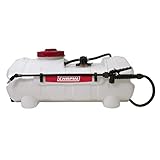 Chapin 97200E 15-Gallon ATV and UTV Spot Sprayer Chapin 97200E 15-Gallon ATV and UTV Spot Sprayer |
|
Check Latest Price |
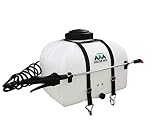 Master Mfg 9-Gallon UTV and ATV Spot Sprayer Master Mfg 9-Gallon UTV and ATV Spot Sprayer |
|
Check Latest Price |
 Chapin 97400E 25-Gallon ATV and UTV Spot Sprayer Chapin 97400E 25-Gallon ATV and UTV Spot Sprayer |
|
Check Latest Price |
 NorthStar 26-Gallon Boomless Broadcast and Spot Sprayer NorthStar 26-Gallon Boomless Broadcast and Spot Sprayer |
|
Check Latest Price |
 Chapin 97154 15-Gallon ATV and UTV Sprayer Chapin 97154 15-Gallon ATV and UTV Sprayer |
|
Check Latest Price |
 NorthStar 26-Gallon Boomless Sprayer NorthStar 26-Gallon Boomless Sprayer |
|
Check Latest Price |
1. NorthStar 31-Gallon Tow-Behind Boom and Spot Sprayer – Our Top Pick for Large Acreage
NorthStar 31-Gallon Tow-Behind Boom/Spot Sprayer, 2.2 GPM, 12V, 70 PSI
2.2 GPM at 70 PSI
120 inch breakaway boom
31 gallon tank
54 lb on 12 inch pneumatic wheels
Pros
- Widest boom in the group at 120 inches
- Commercial-grade continuous-duty pump
- Large 31 gallon tank cuts refill stops
- Remote switch with battery clamps
- Folds down for storage
Cons
- Assembly runs 45 minutes to over an hour
- Missing bolts and washers are a recurring complaint
- Included spray wand is regarded as flimsy
This is the only tow-behind sprayer in our group, and that changes how you think about it. Rather than hanging off a rear rack, it rides on a powder-coated steel cart with 12-inch pneumatic wheels, which means it never fights your ATV’s payload rating and never tips the rear end down on a side hill.
The boom is the reason to buy it. At 120 inches overall and 80 inches of effective spray width, with independent nozzle control on each side, it covers ground faster than anything else we tested. The 2.2 GPM on-demand pump holds 70 PSI and carries a 100 percent continuous duty rating, and recirculation keeps heavier chemical mixes suspended instead of settling out.
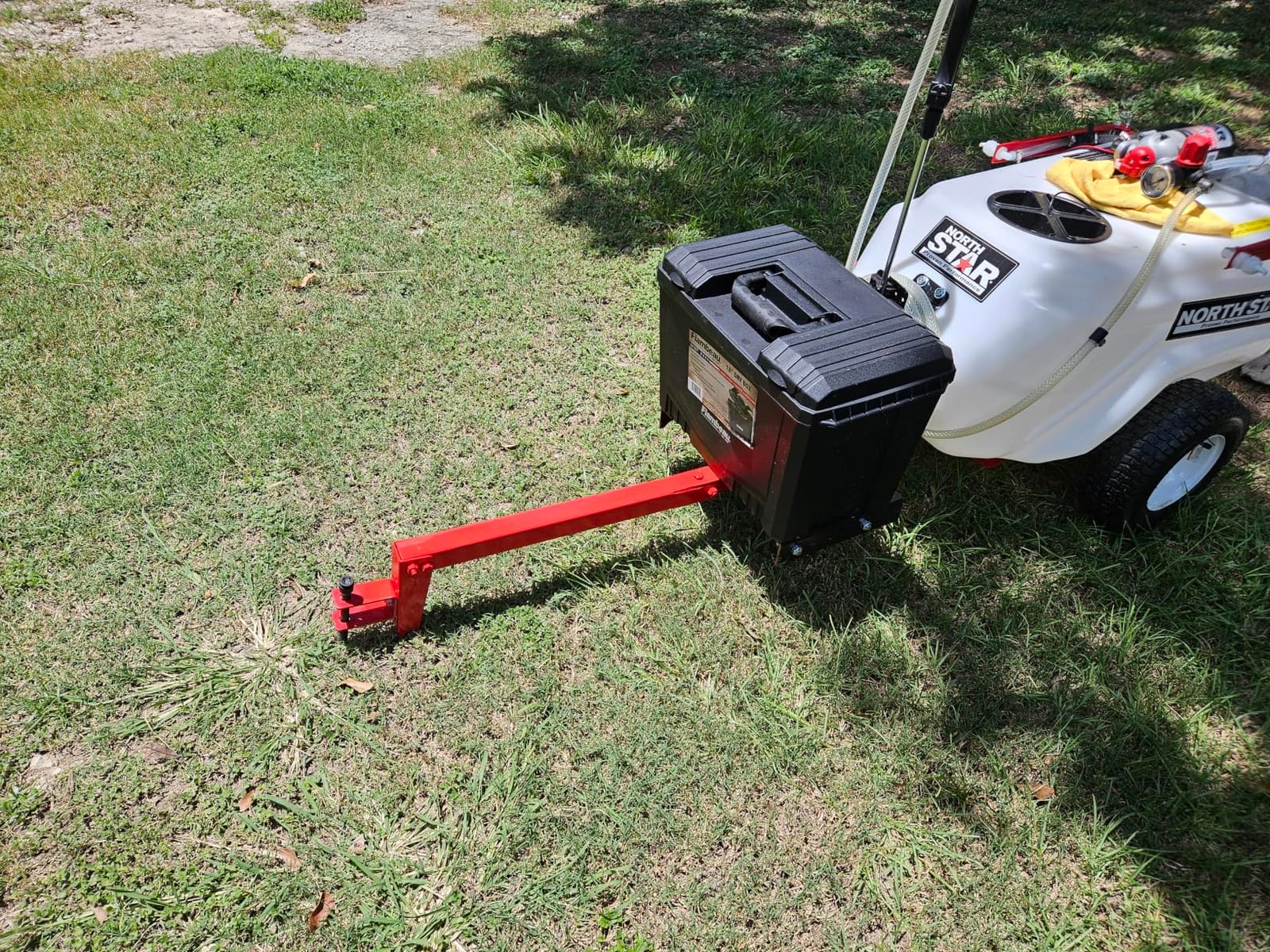
Owners consistently report the capacity is what makes it work. Thirty-one gallons is roughly 258 pounds of water, and on a property with fence lines running long, cutting the number of refill stops matters more than any spec on the page.
The spot gun is the weak link. Adjustable brass, reaching 19 feet vertically and 30 feet horizontally, and several buyers replace it early. The breakaway boom is genuinely useful, since it folds forward on contact with a gate post instead of tearing the whole unit off the cart.
What 120 inches of boom actually buys you
Spray width is the single biggest driver of how much ground you cover per tank. Roughly speaking, doubling swath width halves the number of passes, and the difference between an 80-inch effective band and a 24-inch wand pass is a factor of three.
That is the argument for this model on open ground. It is also the argument against it if your work is tree lines and ditches, where a wide boom is more liability than asset.
Check the assembly kit before your first weekend
The most common complaint, by a wide margin, is incomplete hardware. Owners report missing bolts, washers and paper instructions that force a trip to a hardware store mid-build.
Budget an hour and a box of fasteners before you start. Tighten every boom nozzle seal and hose clamp by hand before first fill, and run plain water through the whole system once to catch a factory crimp that will not hold pressure.
2. Ironton 12V 5-Gallon ATV Spot Sprayer – Most Versatile for Fence Lines
Ironton 12-V ATV Spot Sprayer, 5-Gal. Capacity, 1 GPM Flow Rate
1 GPM 12V pump
5 gallon polymer tank
9.5 lb total weight
20 ft horizontal spray reach
Pros
- Lightest unit in the group at 9.5 pounds
- Chemical and UV-resistant polymer tank
- In-line switch runs the pump from the seat
- 20 foot horizontal reach from the gun
- Complete battery-clamp harness included
Cons
- 5 gallon tank means constant refills
- 1 GPM is the lowest flow here
- No boom
- so spot spraying only
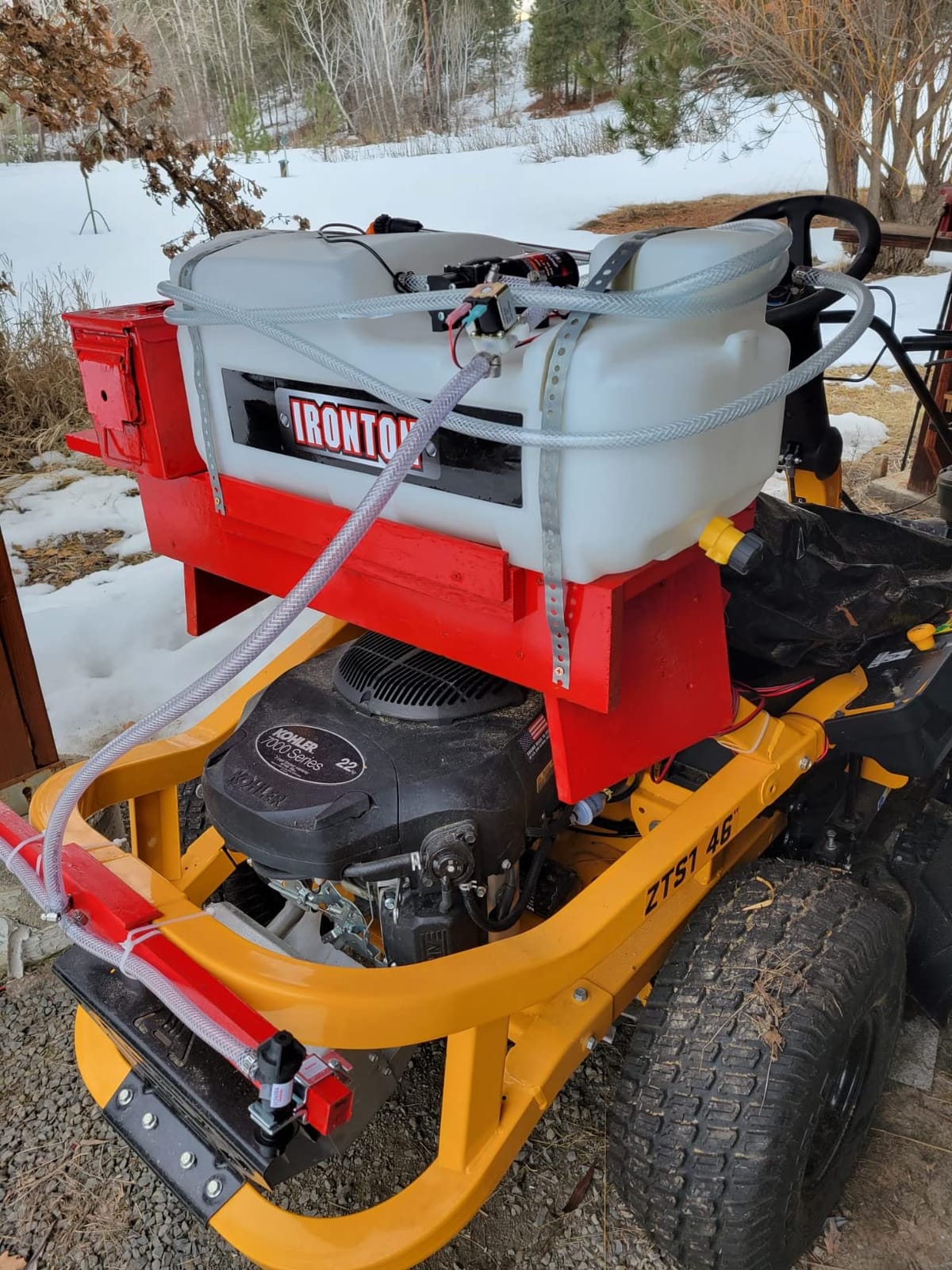
Most sprayers in this category are heavy before you add water. This one is 9.5 pounds empty, which is the entire reason to consider it. If your property is flat, your tank is modest and your work is scattered, weight stops being a factor.
The tank is a thick-walled polymer rated for chemical and UV resistance, and the listing notes compatibility with Roundup agricultural herbicides. The adjustable stream-to-cone nozzle gives you both a targeted stream for a crack in a walk and a wider cone for a patch of thistle.
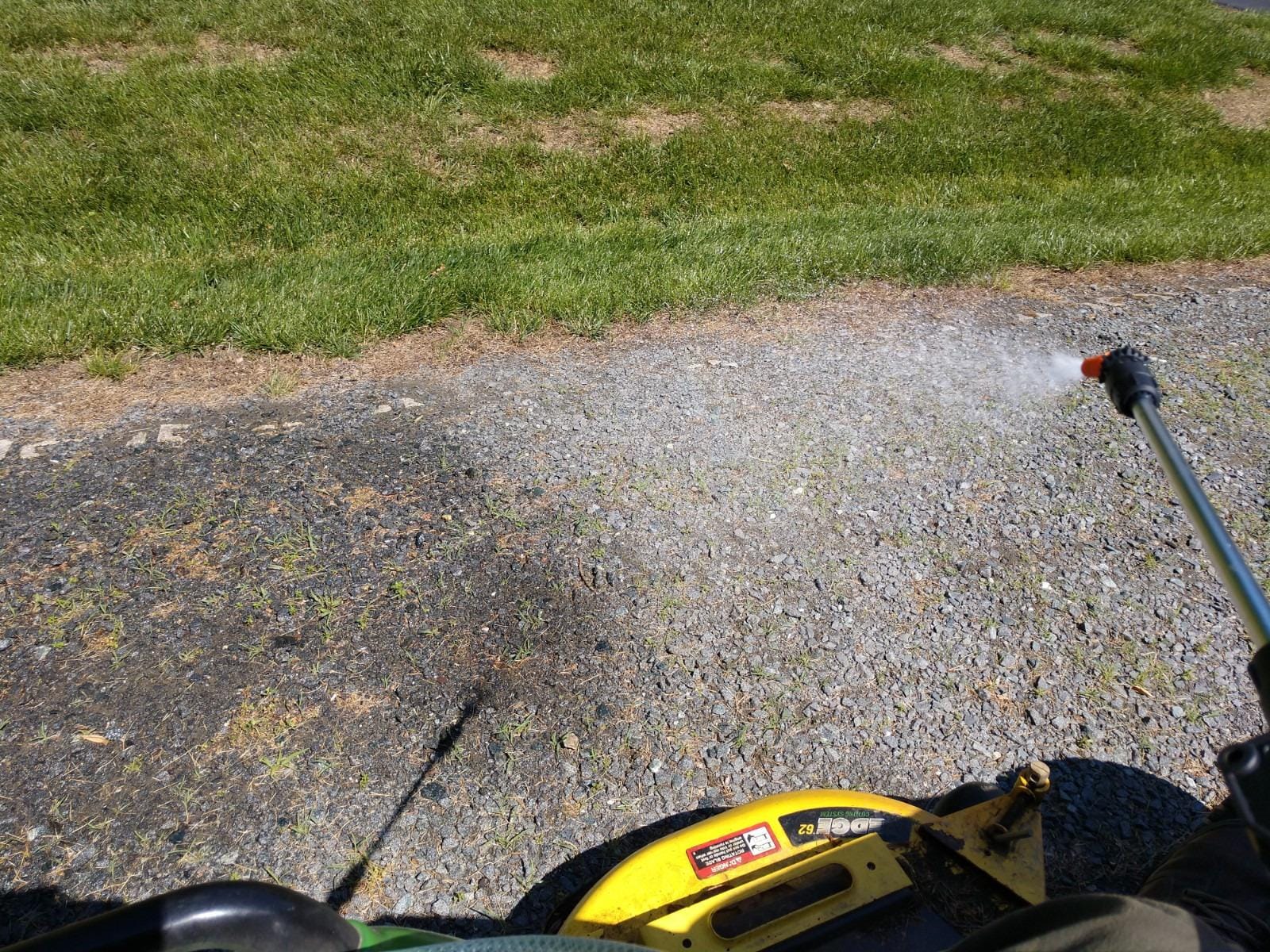
The in-line switch is a small detail that changes the whole experience. You clip it to the harness and run the pump from the driver’s seat, so you are not walking back to the tank every time you finish a weed.
The trade is capacity and flow. One gallon per minute is the slowest pump here, and five gallons is a tank you will fill more than a dozen times on a half-acre patch. For spot work it is fine. For anything that looks like broadcast, it is the wrong tool.
When 5 gallons is genuinely enough
Spot sprayers earn their keep on fence lines, gate posts, gravel drive edges, garden rows and isolated clumps. On a ten-acre property with heavy weed pressure, none of that is small.
If your list is mostly isolated weeds and short fence runs, this handles it in one session. If your list includes acreage, keep reading.
What to check before you mount it
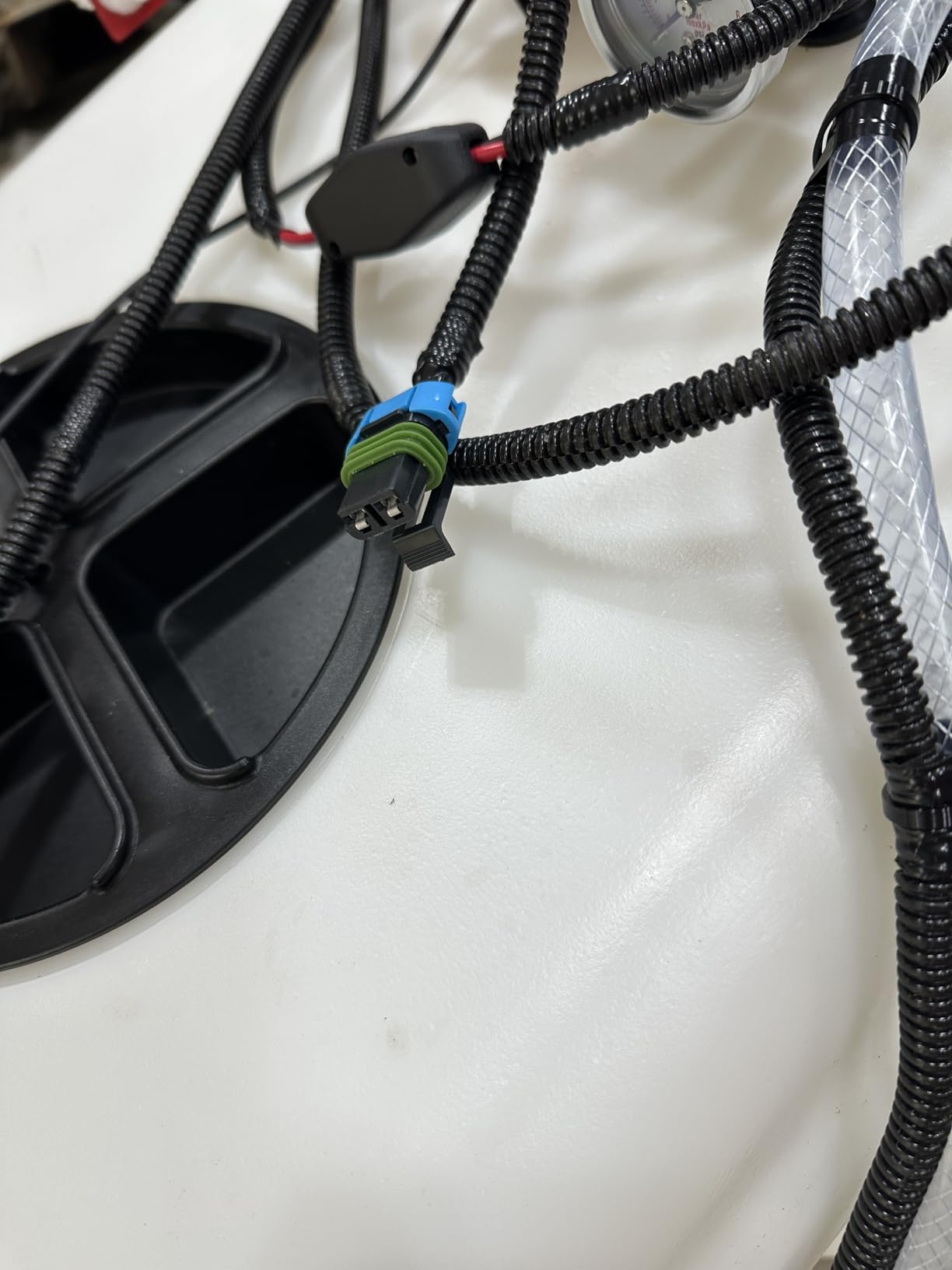
Confirm your rack or cage has a clean tie-down point. The included harness is 8 feet of battery-clamp leads, so measure the run from your battery to the pump before you buy.
Rinse the tank after every chemical load. A 5-gallon tank is cheap to fill and easy to flush, which is exactly why owners who skip it end up with a gummed-up nozzle in a month.
3. Master Mfg 15-Gallon UTV and ATV Spot Sprayer – Best Value Pick
Master Mfg 15-Gallon UTV & ATV Spot Sprayer – 1.0GPM, 40PSI Max for Fertilizer, Weed & Pest
Everflo 1.0 GPM at 40 PSI
15 gallon tank
14 lb empty weight
18 ft vertical and 20 ft horizontal reach
Pros
- 15 gallon tank at only 14 pounds empty
- Gallon markings are accurate
- Long hose plus gun reach hits hard-to-access spots
- Everflo pump is simple to service
- Two-year warranty on pump and components
Cons
- Plastic wand coupler is a repeated weak point
- Wand can separate from the hose and leak
- Offset pickup tube stalls spraying on side hills
- 40 PSI is the lowest here
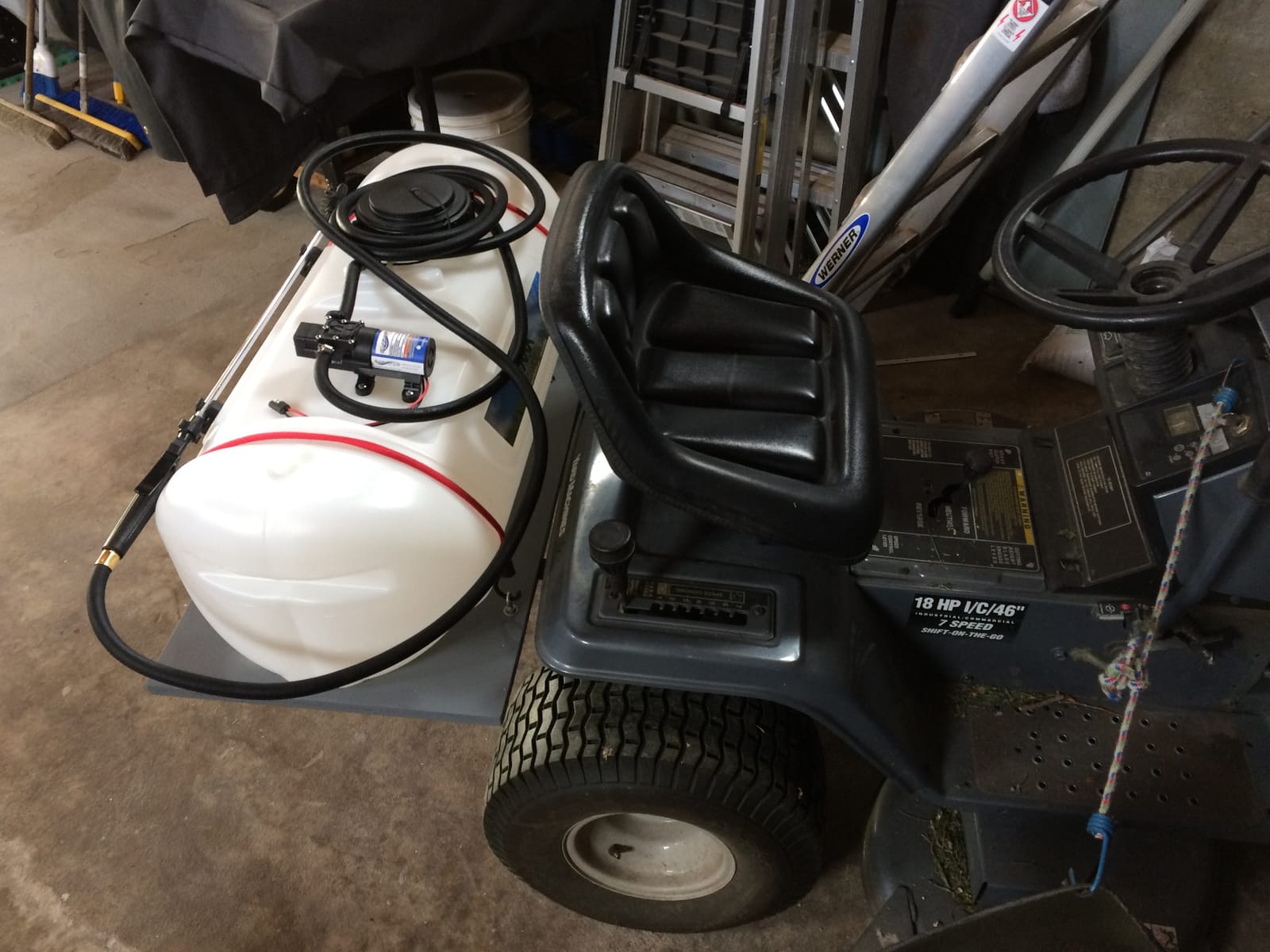
This is the sprayer we tell most people to buy. Fifteen gallons is a real working capacity, and at 14 pounds empty it still loads onto a rack by yourself. Compare that to the 30-pound broadcast units further down this list and you understand the appeal.
The Everflo 1.0 GPM diaphragm pump is a simple, widely supported design with no shafts or complex seals. If it ever fails, the part is easy to source and easy to swap. The adjustable spray gun reaches 18 feet vertically and 20 feet horizontally, and the 15-foot hose gives you room to get off the machine.
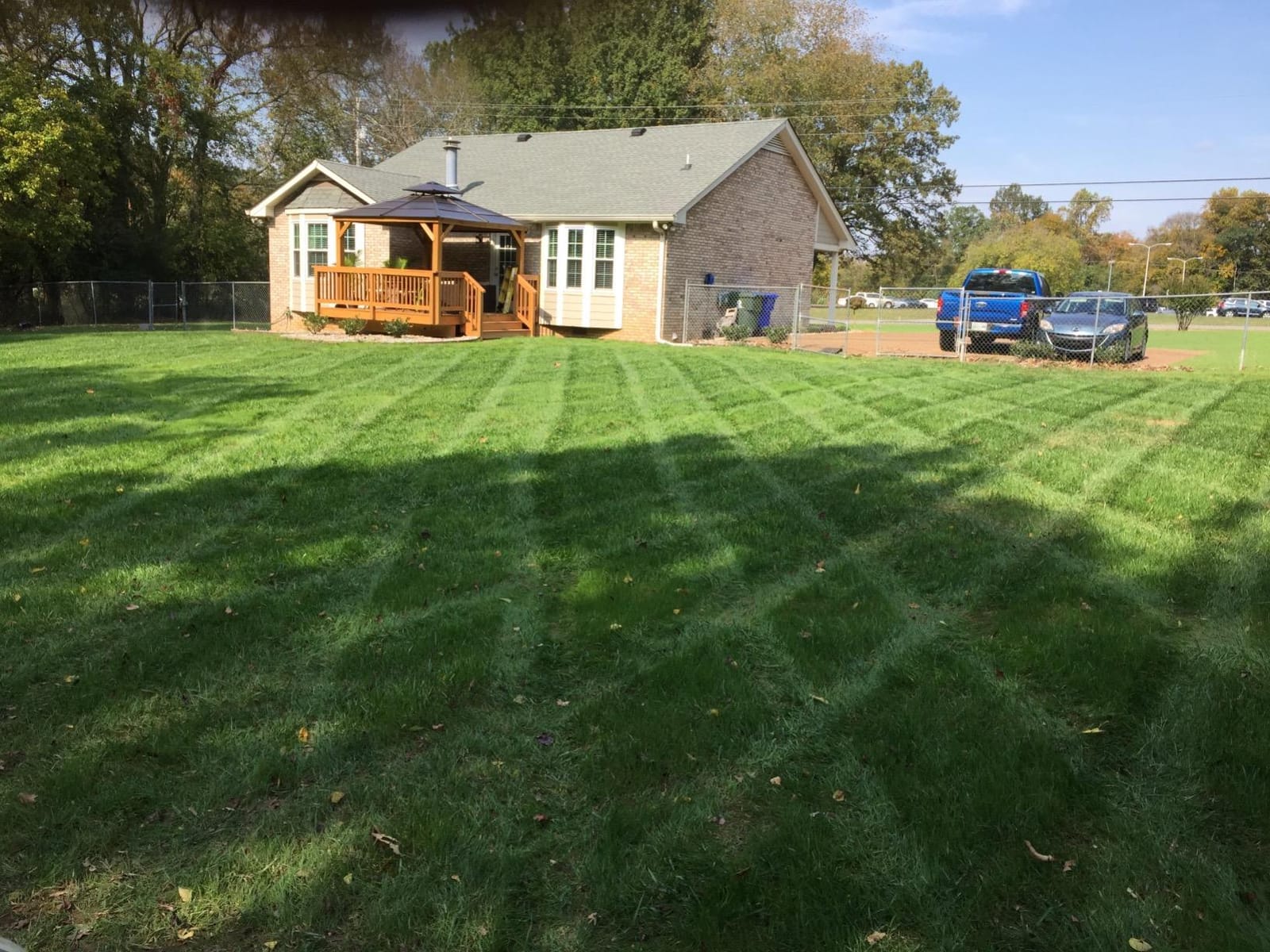
Owners consistently single out the gallon markings as accurate against known volumes, which sounds minor until you are mixing chemical concentrate and guessing at a half-full tank.
There is one design detail that catches people on hilly ground. The pickup tube sits at one end of the tank, so when you tip the machine into a side slope with the tank below a certain level, the pump can stop drawing. On flat ground you will never notice it.
How it handles a ten-acre food plot
With a wand-only setup, expect to work through 15 gallons over a couple of hours on a plot of that size, plus refill time. The reach from the seat is good enough that you rarely dismount for the tree at the edge.
If you want a broadcast pattern instead, this same mounting footprint accepts a boom kit. That upgrade path is why this is the value pick rather than just a cheap one.
Fix the wand coupler before season one ends
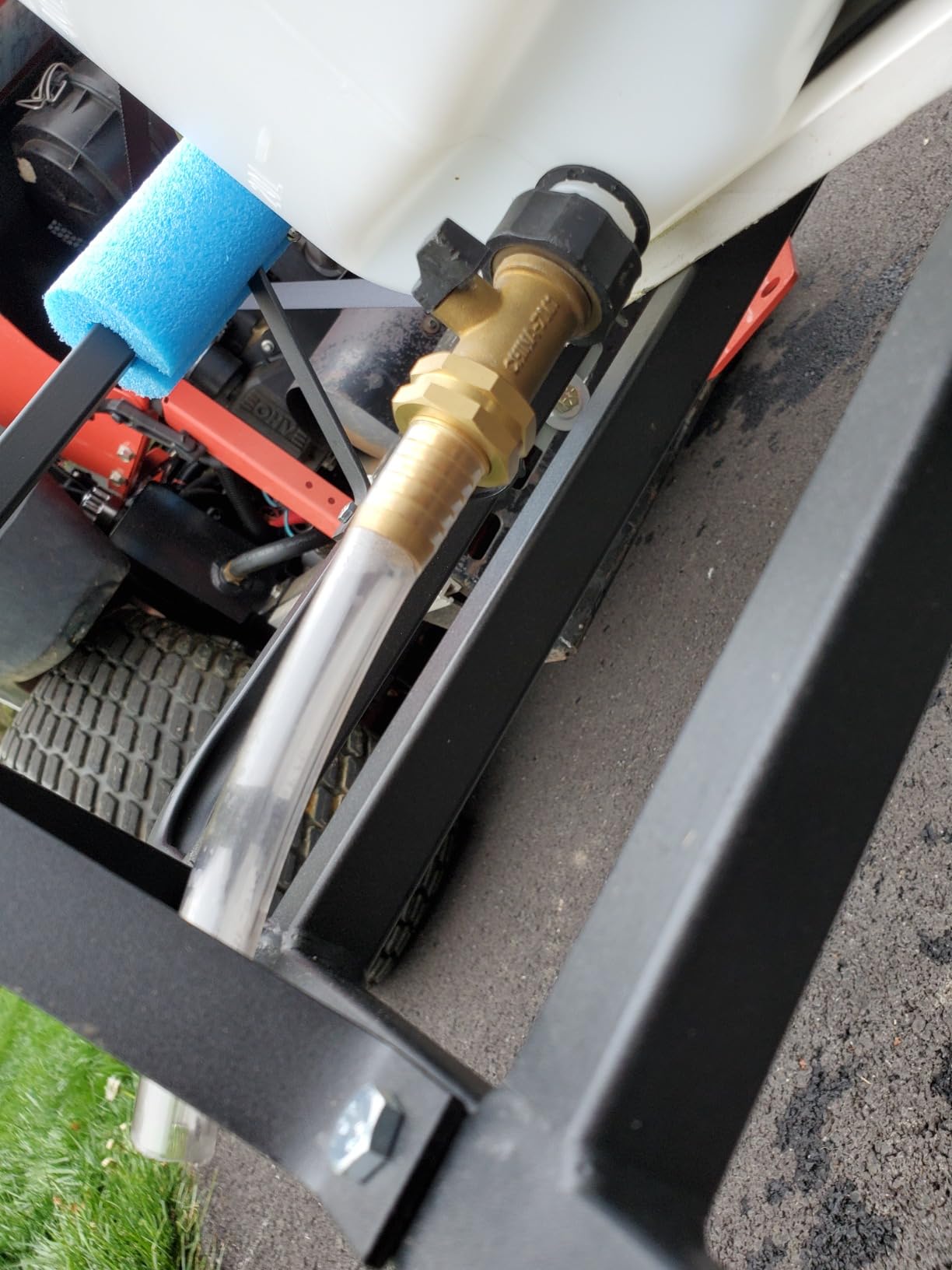
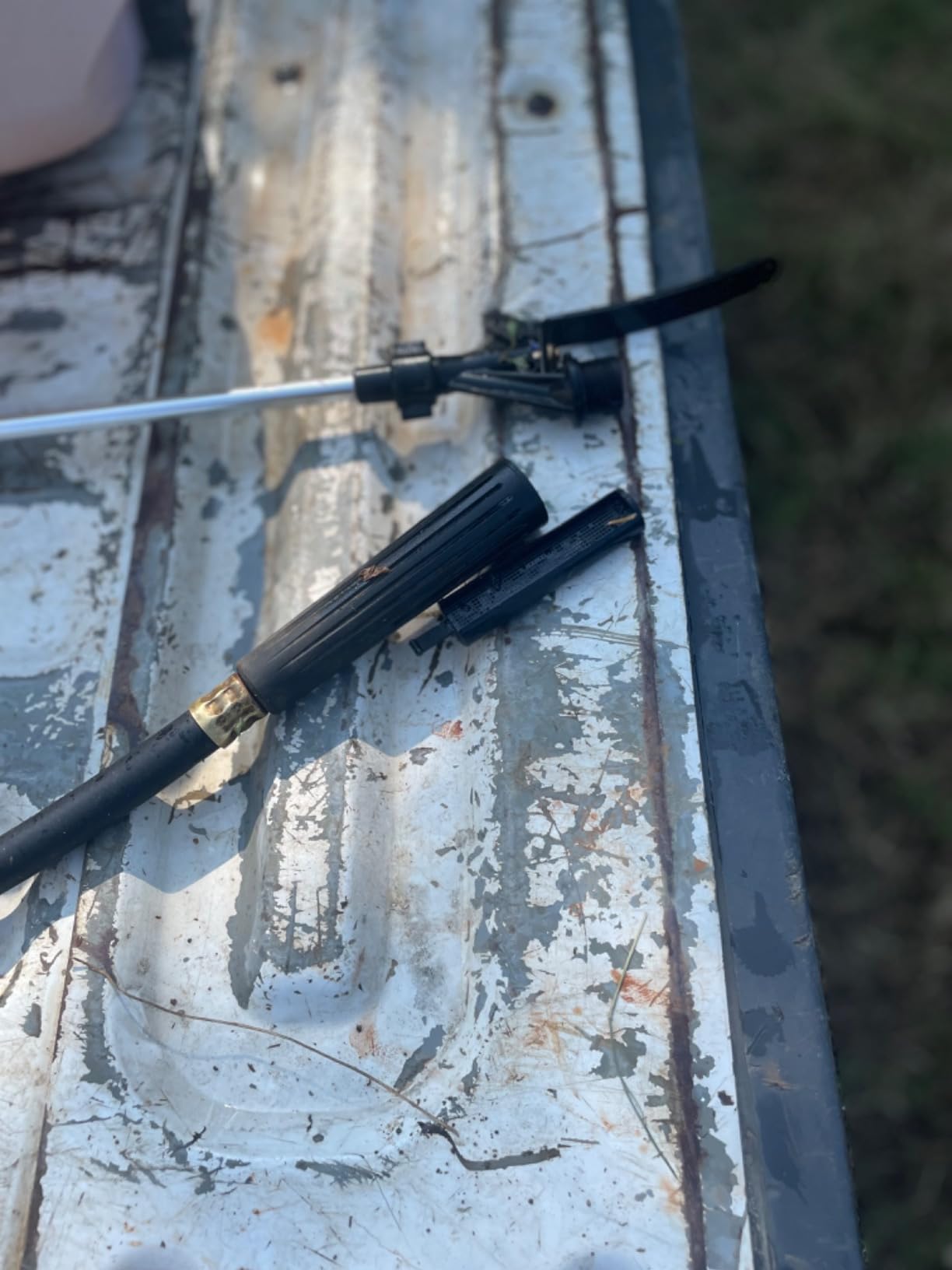
The plastic wand-to-hose coupler unscrews or blows off in the most common complaint, sometimes within a single season, and it always leaks at the joint. Several owners report the manufacturer replacing wands quickly, though one replacement leaked in the same spot.
Check the coupler by hand after the first few hours of spraying and periodically after that. A hose clamp at that joint costs almost nothing and ends the problem.
4. Master Mfg 15-Gallon ATV Broadcast Sprayer – Best Boom Sprayer Under 20 Pounds Empty
Master Mfg 15-Gallon ATV Broadcast Sprayer – 7ft Swath, 2.2GPM, 70PSI Max
Everflo 2.2 GPM at 70 PSI
7 foot adjustable all-steel boom
30 lb empty weight
Pressure gauge and regulator
Pros
- 2.2 GPM pump is far stronger than 1 GPM units
- Adjustable steel boom covers a 7 foot swath
- 25 ft vertical and 30 ft horizontal gun reach
- Ratchet straps and quick-attach mounts included
- Pressure gauge simplifies mixing
Cons
- Heaviest mounted unit here at 30 pounds
- Boom bracket height needs frequent re-tuning
- Some reports of pump or boom hardware failing after about a year
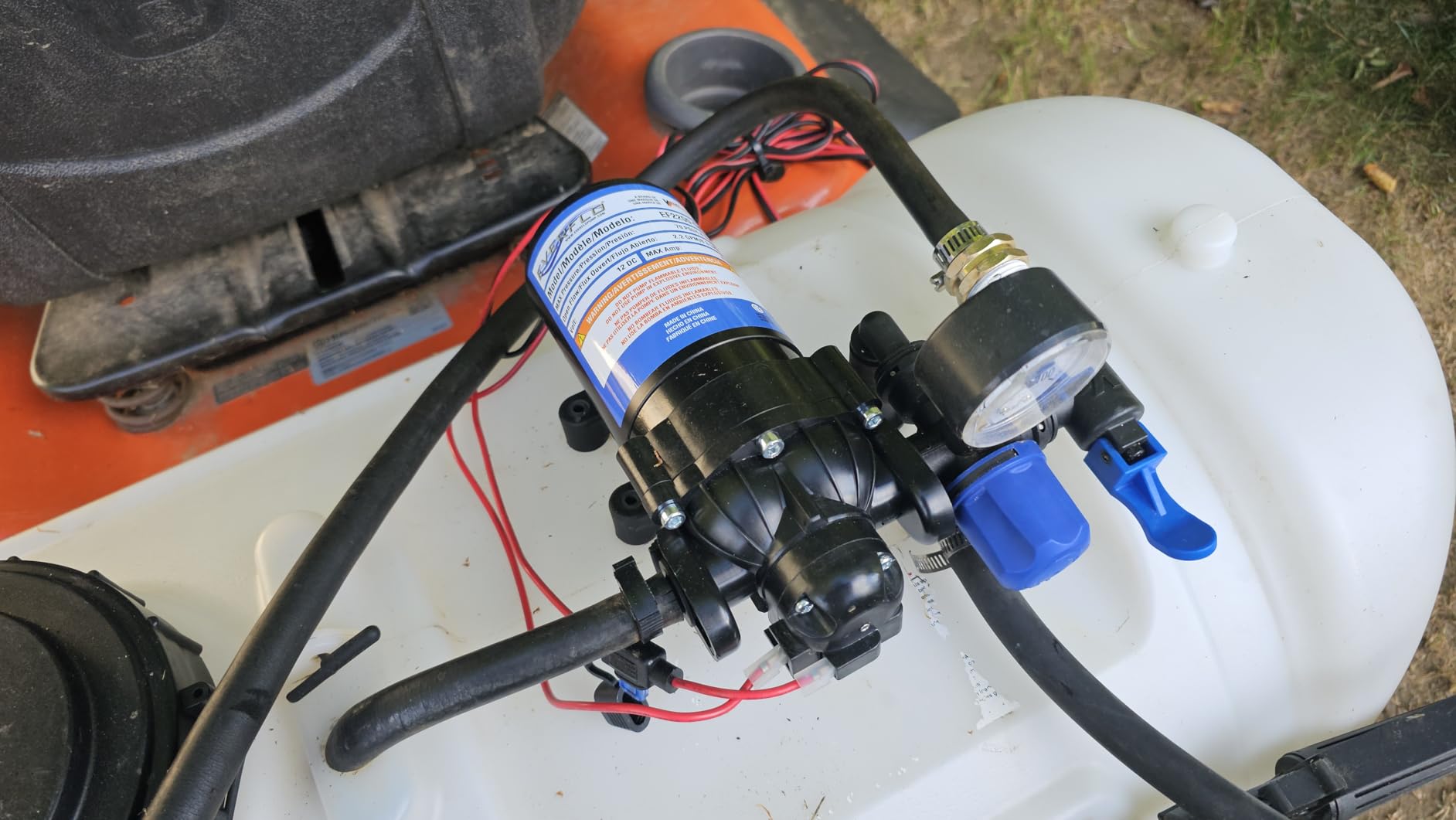
A boom turns spot spraying into coverage, and this is the lightest way to get one here. Fifteen gallons, a 7-foot all-steel broadcast boom and a 2.2 GPM pump rated to 70 PSI, with a pressure regulator and gauge to keep your mix consistent.
The pump jump from 1.0 to 2.2 GPM is the story. On the 1 GPM units you are waiting on the spray. On this one the boom feeds itself at a pace that keeps up with a moving ATV.
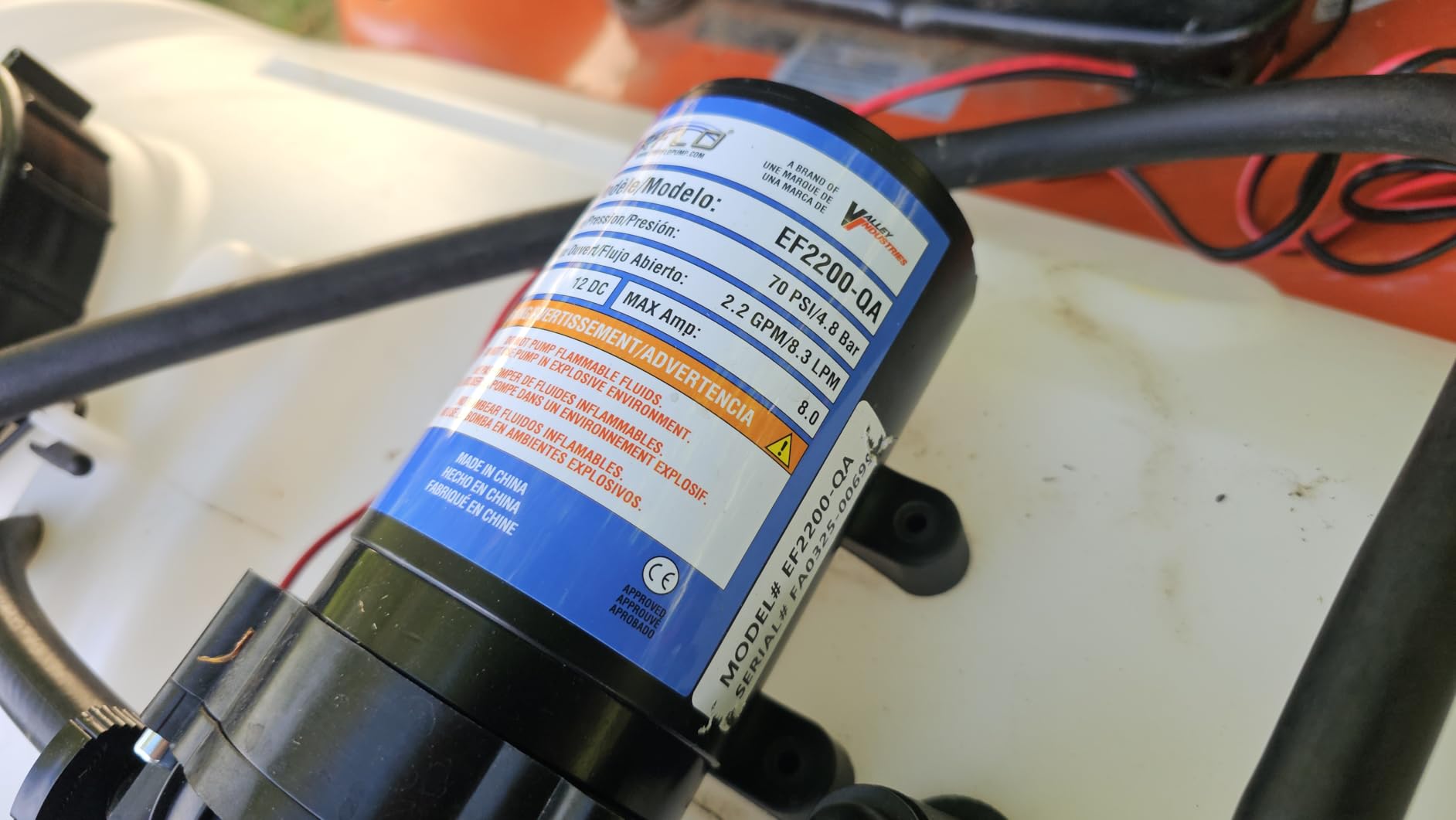
The gun reach is unusually long for a 15-gallon machine, 25 feet vertical and 30 feet horizontal, which owners mention when treating tree canopies and fence lines from the seat. Quick-attach boom mounts and two ratchet straps are in the box, so it fits most branded ATVs without a trip to the dealer.
The complaint to plan around is boom bracket geometry. Height needs frequent re-tuning to hold an even pattern once the suspension settles, and a minority of owners report pump or boom hardware problems after roughly a year of service.
When a boom pays for itself
Broadacre, food plot borders and pasture strips. Anywhere you would otherwise walk the same line four or five times, a fixed 7-foot swath turns that into one pass.
It also adds drag. A 30-pound tank plus a boom narrows your line choices and makes the unit a genuine consideration on side slopes. Check your rack rating with water in the tank, not empty.
Set boom height once and recheck monthly
Pattern consistency depends on nozzle height staying constant. Mark the bracket position with tape or a paint pen after your first pass, then check it against the mark each time you remount the unit.
Run plain water for the first full pass. Boom hardware loosening under pressure shows up immediately as an uneven stripe, and it is far easier to fix before you have chemical in the tank.
5. Chapin 97200E 15-Gallon ATV and UTV Spot Sprayer – Best for Fast Setup
Chapin 97200E Made in the USA 15 Gallon ATV/UTV 12 Volt Mounted Spot Sprayer With 6 Inch Wide Mouth, High Performing 12 V Diaphragm Pump and Filtration System and 18 Inch Spray Wand, Translucent White
1.0 GPM quick-connect pump
15 gallon tank with 6 inch wide mouth
14.5 lb empty weight
Triple filtration,18 inch wand and 15 ft hose
Pros
- Arrives nearly assembled and ready to use
- Translucent tank makes level checks easy
- Pump auto-shuts off when the trigger is released
- Triple filtration cuts clogging downtime
- Light 14.5 pounds is easy to load
Cons
- Drain cap threads leak and are a frequent complaint
- Concave tank bottom leaves liquid behind
- Some units arrive without the drain kit cap
- Pump can fit backwards to the pre-drilled holes
Chapin builds this one in the USA and it shows in the box. The unit arrives nearly assembled, which means the gap between opening the carton and spraying is a wiring connection rather than a build.
The 6-inch wide mouth on a translucent tank is the feature owners mention first. You can check your level at a glance, and you can get a hand and a mixing stick into the opening to break up concentrate that has settled.
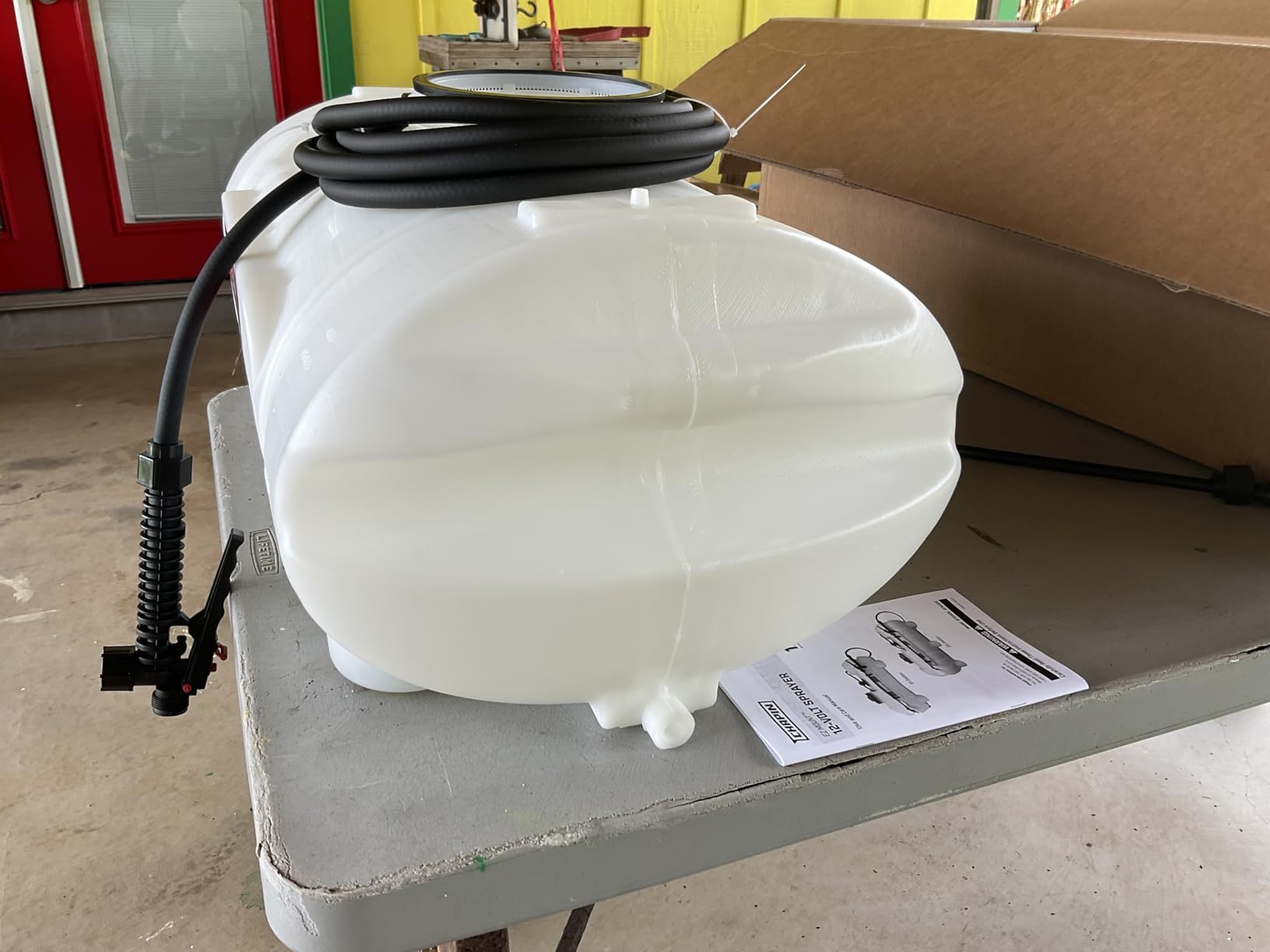
Triple filtration is the other quiet advantage. A filter cap basket, an in-tank filter and a shut-off filter between them catch grit before it reaches a nozzle, which matters more on ground with gravel, sand or dried plant debris.
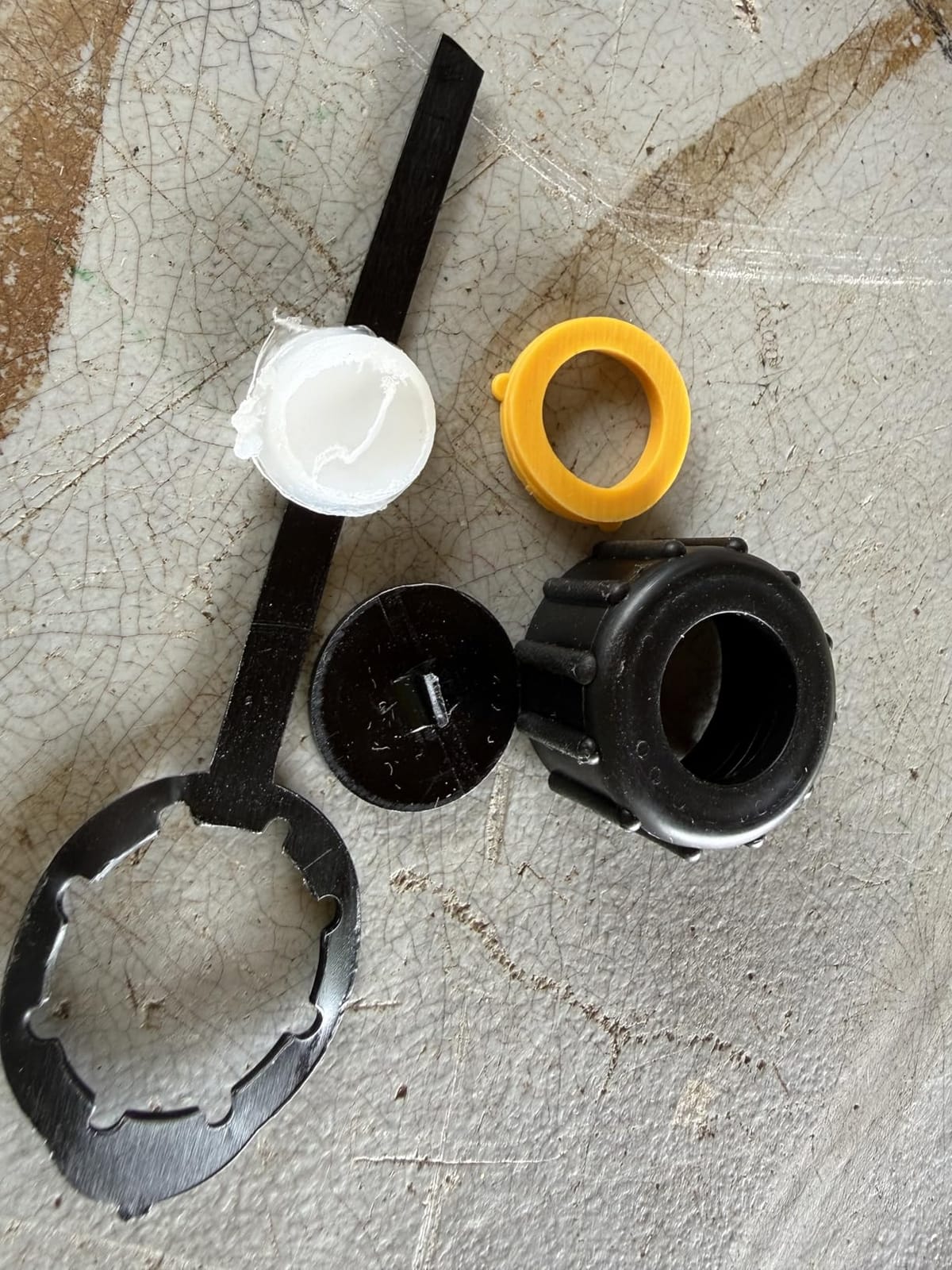
There is a recurring drain cap problem. Owners report the threads leaking steadily even after tightening, and a few received units without the drain cap in the box at all. The concave bottom also means the last of your chemical stays in the tank.
What triple filtration saves you
Clogged nozzles end a session. A single stuck orifice on a boom can leave you walking the entire swath back with a wand, and on a chemical mix, residue is the usual culprit.
Three filter stages in line means most debris stops short of the nozzle tip. Pull each filter and rinse it after every tank, and you will rarely see a clog at all.
Check the pump orientation before you wire it
Several owners have fitted the pump backwards relative to the pre-drilled hose holes. The symptom is a pump that runs but does not deliver, and the fix is simple once you know to look for it.
Match the inlet and outlet to the holes in the tank before you connect anything, then flush with plain water. Also check for factory plastic debris in the tank, which a few owners report finding before first use.
6. Master Mfg 9-Gallon UTV and ATV Spot Sprayer – Best for Light Loads and Small Machines
Master Mfg SSD-03-009B-MM 9 Gallon UTV & ATV Spot Sprayer – Everflo 1.0 Gpm for Fertilizer, Weed & Pest
Everflo 1.0 GPM 12V pump
9 gallon tank
11.5 lb empty weight
15 ft hose,18 ft vertical reach
Pros
- Lowest cost per gallon of capacity here
- Light 11.5 pound body is easy to lift onto a rack
- 9 gallons splits the difference between spot and full size
- Mounting straps included
- Everflo pump is a well-regarded serviceable design
Cons
- 9 gallons means more refills than 15 or 25 gallon models
- 1 GPM flow is slow for broadcast width
- Spot spraying only
- no boom or broadcast option
Nine gallons is not a round number for a reason. It is the smallest tank that still means something on a small UTV or golf cart, and at 11.5 pounds empty it is one of the easiest to load.
The gun is the same unit style as the 15-gallon Master Mfg, reaching 18 feet vertically and 20 feet horizontally on a 15-foot hose. Mounting straps, a wire harness, a tethered lid and a drain cap all come in the box.
Owners frame this as the practical choice for a secondary machine. If you already have a 25-gallon sprayer on your primary quad, this is the one you hang on the second vehicle so you are not unbolting anything between jobs.
It has no boom and no broadcast head. That is a real limitation rather than a missing accessory, and it is the reason this is not a broadacre pick despite the low weight.
Do the payload math on your second machine
Nine gallons of water is about 75 pounds before the tank, harness and your own body weight. On a small UTV with a modest cargo rating, that is usually comfortable where a 25-gallon tank is not.
Check the cargo rating in your own machine manual, not the number on the sales sheet. It is the difference between a tool and a liability.
Refill discipline matters more than tank size
Small tanks make people cut corners. The most common failure pattern in this category is skipping the rinse, and at 9 gallons you can rinse the whole tank quickly with a hose.
Keep a dedicated hose for the tank, flush after every chemical load, and run a few gallons of clean water through the wand to clear the line before you cap it.
7. Chapin 97400E 25-Gallon ATV and UTV Spot Sprayer – Highest Rated in the Group
Chapin 97400E Made in the USA 25 Gallon ATV/UTV 12 Volt Mounted Spot Sprayer With 5 Inch Wide Mouth, High Performing 12 V Diaphragm Pump and Filtration System and 18 Inch Spray Wand, Translucent White
1.0 GPM quick-connect pump
25 gallon translucent poly tank
19 inch wand,15 ft reinforced hose
Nitrile seals for pesticides and fertilizer
Pros
- Highest average rating in the group at 4.4 stars
- 25 gallons covers several acres per fill
- Strong consistent spray pattern and good distance
- Light when empty and easy to lift into a bed
- Lock-on shut-off reduces hand fatigue
- Owners report years of continued use
Cons
- Drain cap leaks until tightened with pliers
- In-line switch can fail within the first year
- Tank can degrade if stored in direct sun
- Boom kits need a separate Chapin mounting kit
This is the strongest-rated unit we tested, at 4.4 stars, and it earns that. Twenty-five gallons with a 1.0 GPM pump, a 19-inch wand and 15 feet of reinforced hose, built in the USA with a one-year limited warranty.
Owners describe it as the best value against equivalent models at farm supply stores, and several report it still performing after several years of service. The lock-on shut-off is the detail that shows up most often in praise, because it takes the constant trigger squeeze off your hand on long passes.
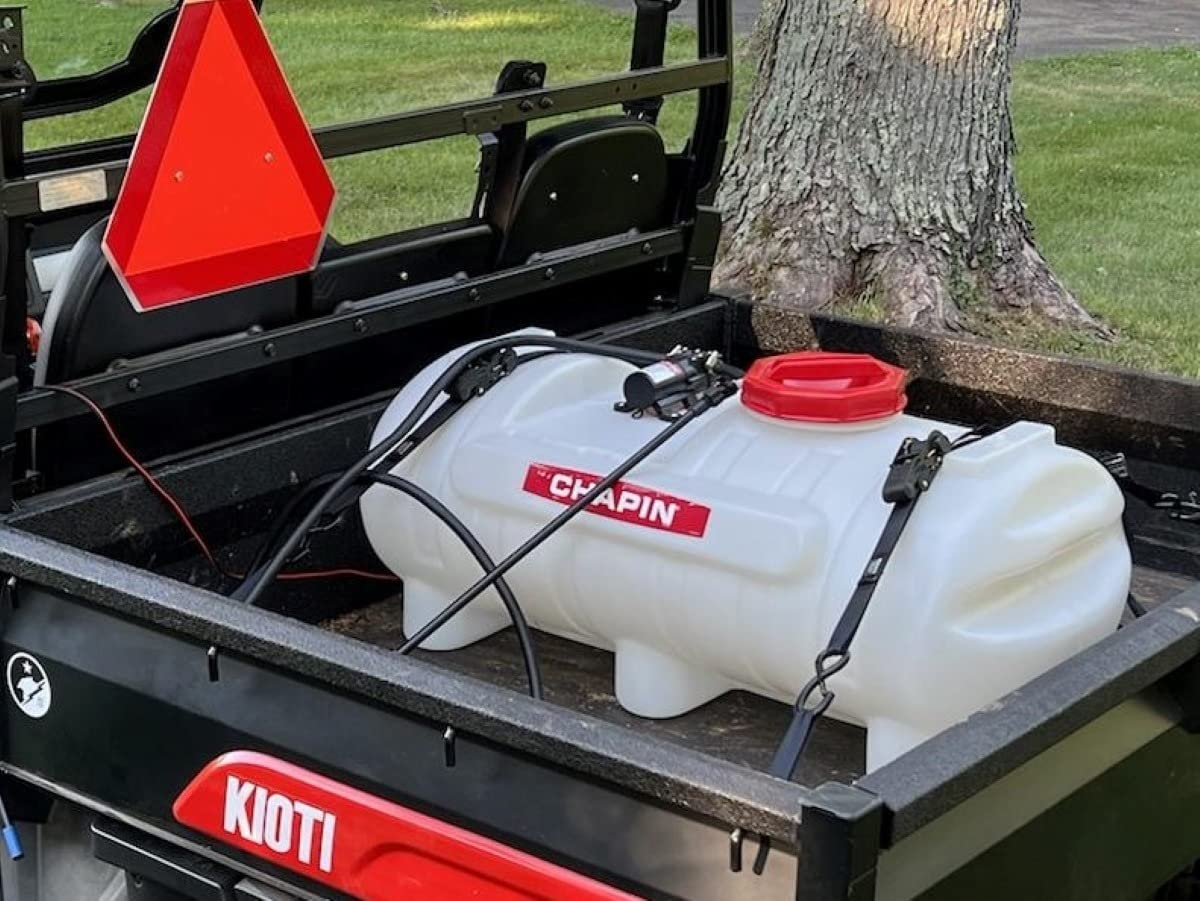
The nitrile seals are rated for standard pesticides, fertilizers and weed killers, and the triple filtration keeps grit out of the shut-off. Like the smaller Chapin, the tank is translucent with a wide fill opening.
The drain cap is the one universal complaint, leaking until it is tightened with channel-lock pliers. Owners also report an in-line switch that can fail within the first year, and tank degradation when a unit is stored in direct sun.
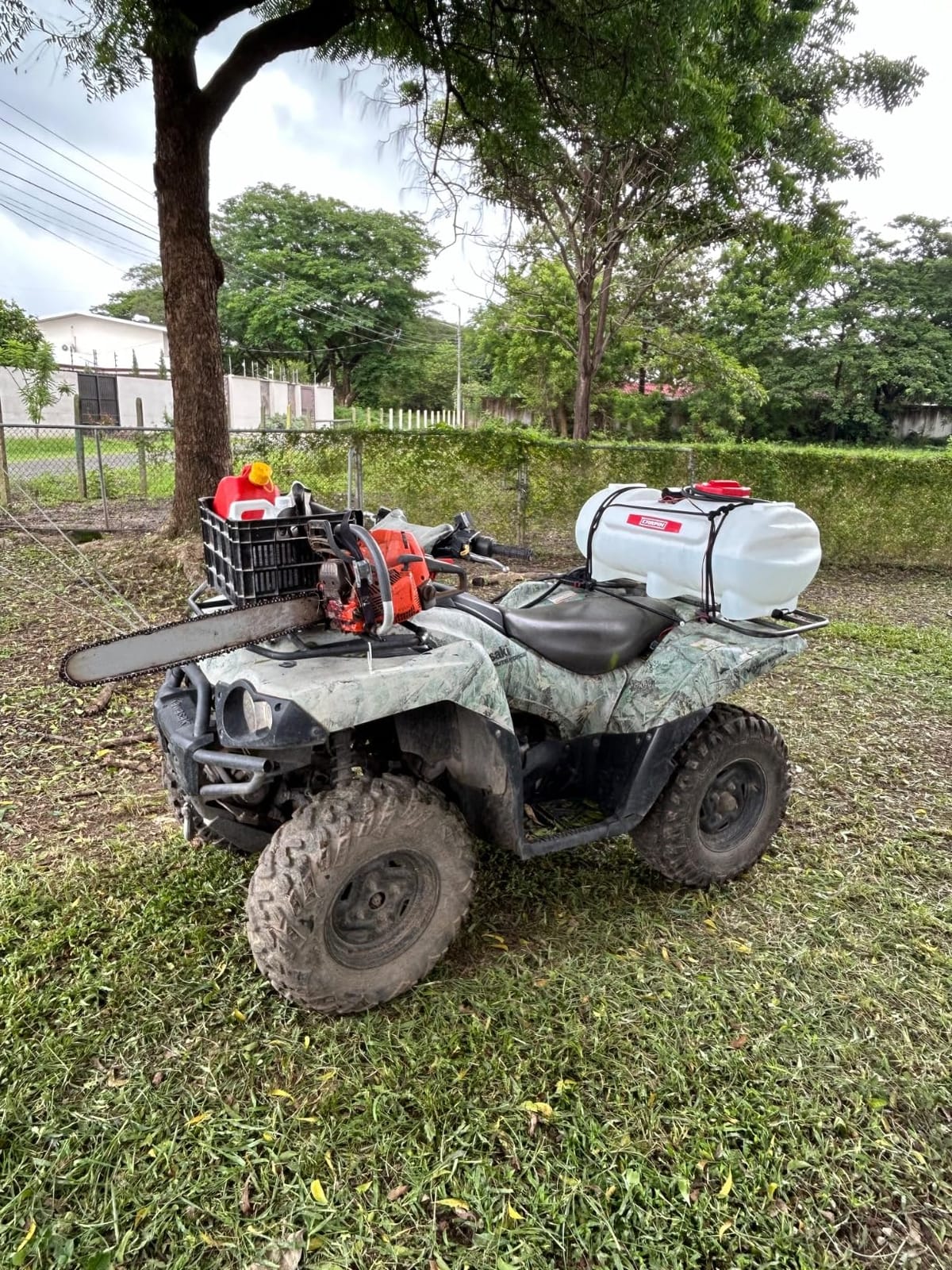
Whether 25 gallons is safe on your quad
Twenty-five gallons of water is roughly 209 pounds. That is a meaningful load on a stock rear rack, and it is the number that decides whether this tank size is right for you.
If your property is flat and your ATV has a healthy rack rating, 25 gallons is the sweet spot for general work. If your ground is hilly, choose a smaller tank. No owner has ever regretted carrying less.
Plan for the accessory kit if you want a boom
This tank does not accept a boom kit out of the box. Boom mounting requires a separate Chapin 6430 or 6330 kit, which is a straightforward addition if you plan to broadcast.
If you want a boom on day one, buy the broadcast model instead. If you are starting with spot work and may add a boom later, this is the better base tank.
8. NorthStar 26-Gallon Boomless Broadcast and Spot Sprayer – Best Boomless Sprayer for Rough Ground
NorthStar 26-Gallon ATV Boomless Broadcast/Spot Sprayer, 2.2 GPM, 12V
2.2 GPM 12V on-demand pump
14 foot broadcast coverage
26 gallon tank
32.8 lb empty weight
Pros
- No boom arms to bend or snag in brush
- 2.2 GPM pump is strong with long-term owner reports
- 14 foot broadcast width covers ground fast
- Wand is sturdier than most competitors
- Contoured tank front is comfortable against the rider
Cons
- No printed instructions in the box
- Pickup tube may not reach the tank bottom
- Drain plug threads need thread tape
- Wand pressure and range can disappoint
The boomless argument is simple: there is nothing out front to catch. No arms, no brackets, no breakaway hinge to adjust, and nothing to bend when you clip a sapling or push through a gate. On wooded ground that is the whole decision.
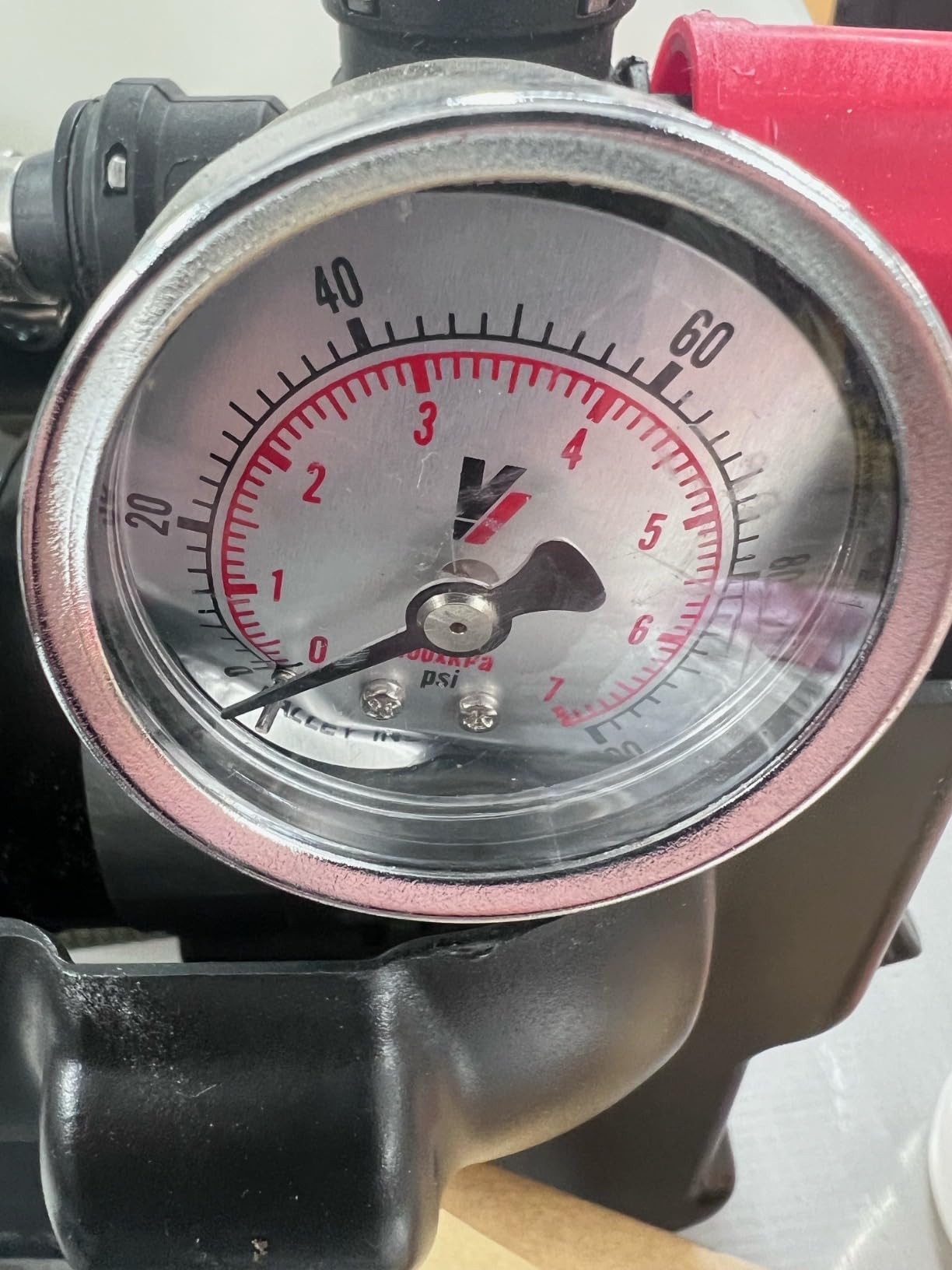
The 2.2 GPM on-demand pump drives a 14-foot broadcast pattern, which is wider than a typical spot sprayer wand and narrower than a 40-foot swath. The adjustable regulator and pressure gauge let you set output once and keep it consistent across passes.
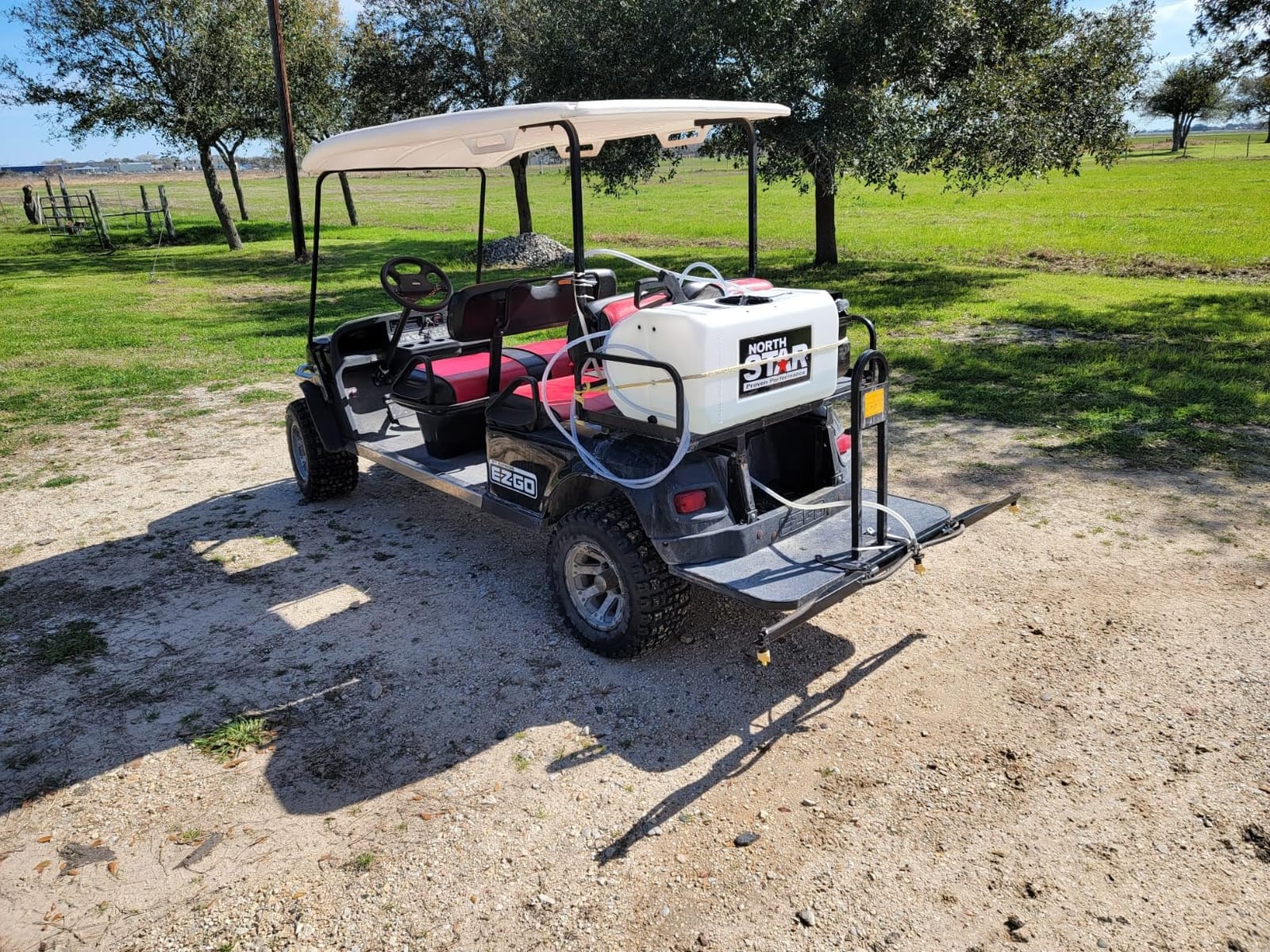
Owners log long service intervals on the pump, including one running well over 250 gallons without trouble. Viton valves and a Santoprene diaphragm give good chemical resistance, and the contoured tank front sits against the rider’s back rather than your spine.
Setup is where the complaints cluster. There are no printed instructions in the box, so you download them, and some units arrive with a pickup tube that does not sit at the tank bottom, which means no flow.
The wind rule for boomless spraying
Boomless nozzles atomise into a wide cone, so any breeze pushes droplets where you do not want them. Owners who run both styles say plainly that a boomless unit only works well on very calm days.
Treat that as the governing condition. If your work window is early morning before the breeze builds, boomless is excellent. If you spray in the afternoon, plan around it.
Verify the pickup tube and drain plug first
Two cheap checks before first use prevent most complaints. Confirm the pickup tube reaches the tank bottom, and wrap the drain plug threads with thread tape before you install it.
Run plain water for a full tank and watch every connection. One owner had a factory-crimped hose connection blow off under pressure, which is a five-minute test to avoid a ruined chemical load.
9. Chapin 97154 15-Gallon ATV and UTV Sprayer – Best for Maintenance-Free Winterizing
CHAPIN 97154 15-Gallon ATV/UTV Sprayer with 12V Pump & 15-Ft Hose
1.0 GPM 12V diaphragm pump
15 gallon poly tank with 6 inch opening
17 lb empty weight
EZ Mount quick-attach,15 ft reinforced hose
Pros
- Cuts multi-hour hand-spraying jobs down to about an hour
- 15 gallon tank means fewer refills
- Owners report it working past year three
- EZ Mount system is quick to attach and remove
- Adjustable nozzle supports stream through mist
- Double filtration reduces clogs
Cons
- Hose can split near the wand after extended use
- Battery clamps only
- no cigarette-lighter option
- Pump and tank must be winterized or the pump is ruined
- Instructions are thin
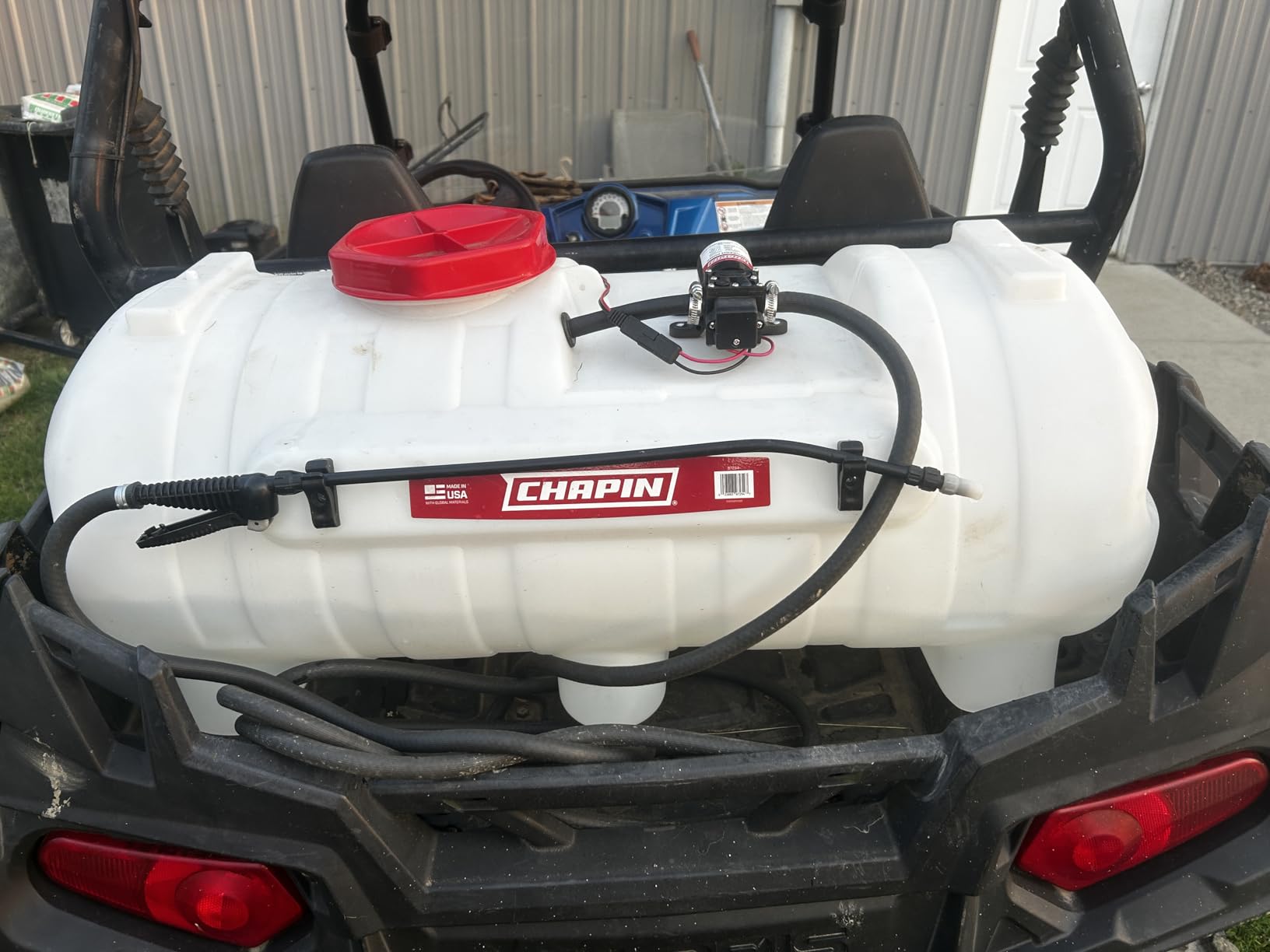
Owners of this model talk about time saved more than they talk about performance. Multiple reviews describe finishing large yard jobs in about an hour that used to take a full day with a hand-pumped sprayer.
The 6-inch opening on the 15-gallon tank makes filling and mixing fast, which is where a lot of that saved time actually comes from. The EZ Mount quick-attach system lets you pull the whole unit off and put it back without tools.
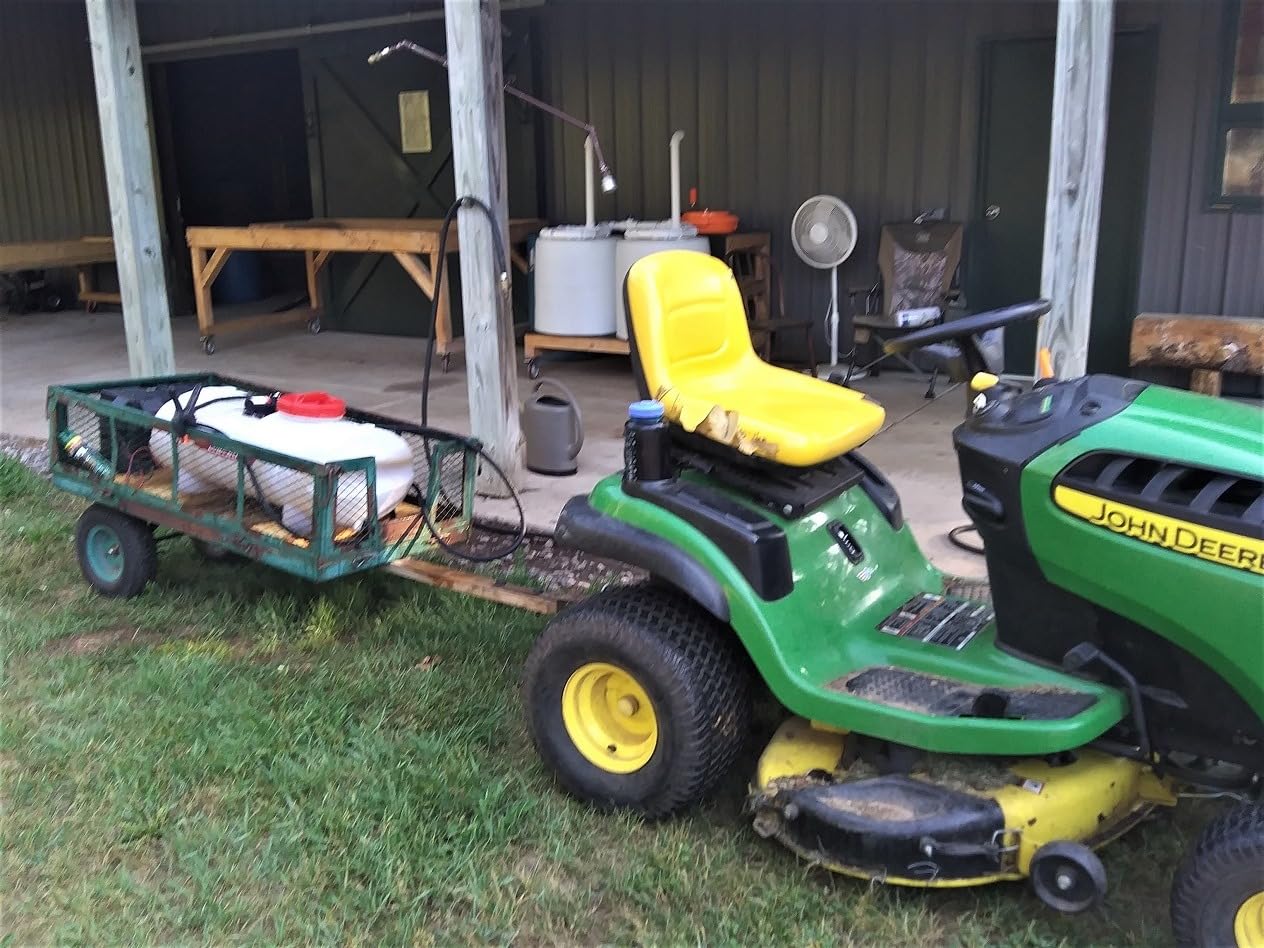
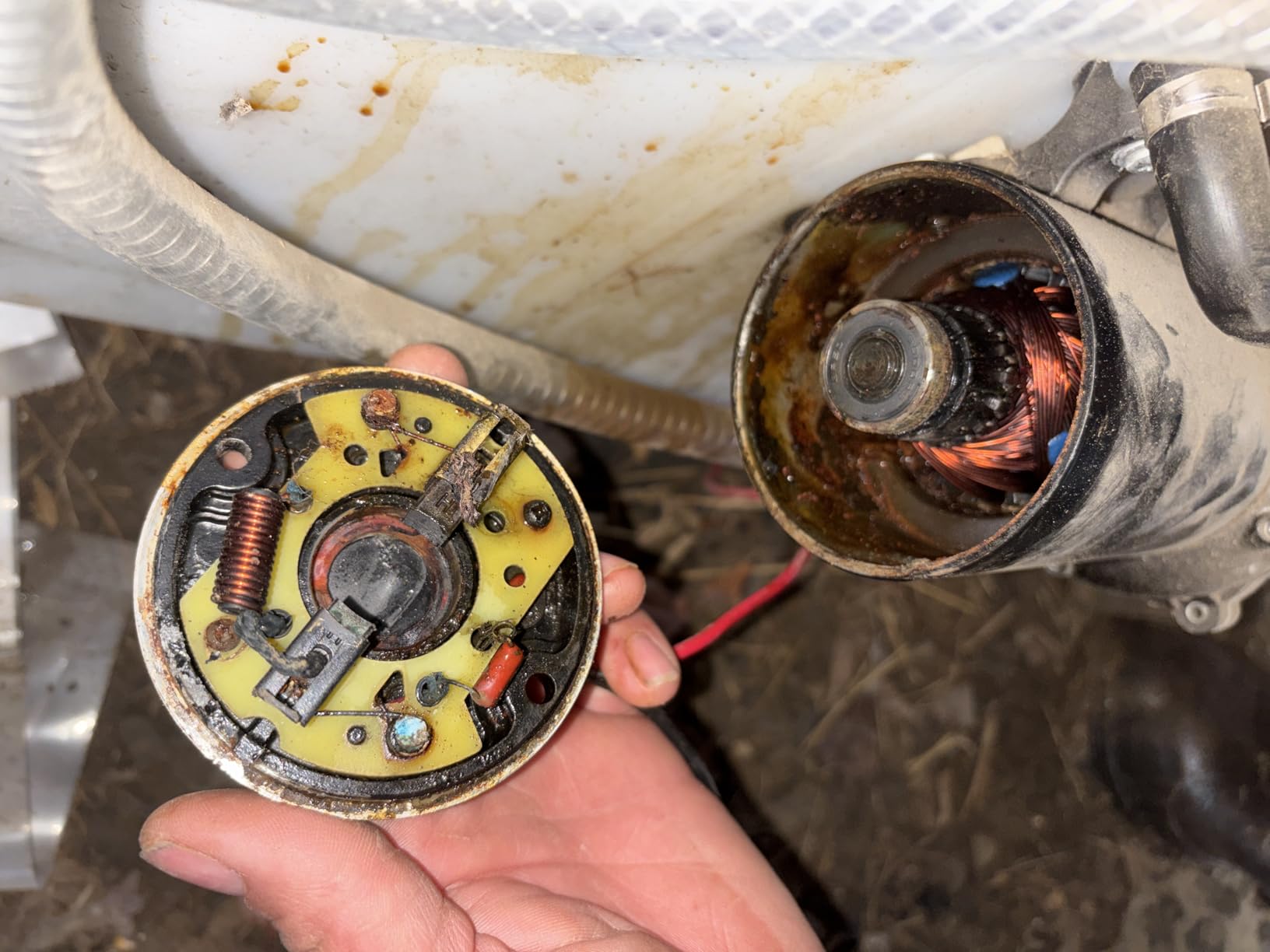
Winterization is the single most repeated warning in the reviews, and it is the most important line in this section. Owners who did not flush the pump with RV antifreeze lost the pump. Owners who did report it working into a third year.
Also worth knowing: the leads are battery clamps only. If you want to run the pump from a cigarette-lighter socket or off a power-tool battery for a remote job, plan on an adapter.
What a 15 gallon tank covers in practice
On a large residential property, one fill is a solid working session. On acreage, you are topping up several times, and a bigger tank or a boom starts to make more sense.
Double filtration here, an in-tank filter and a shut-off filter, is a lighter version of the Chapin triple system. It will not stop every clog but it reduces the ones caused by ordinary grit.
Winterize before the pump tells you to
Connect the pump, run RV antifreeze through the wand until you see it come out the nozzle, then disconnect. That single routine is the difference between a spring-start sprayer and a replacement.
Watch the hose near the wand, which is where several owners report splitting after extended use. A kink or a strain there shows up as a slow leak that is easy to miss until pressure drops.
10. NorthStar 26-Gallon Boomless Sprayer with 5.5 GPM Pump – Best for Large Acreage
NorthStar 26-Gallon ATV Boomless Sprayer, 5.5 GPM, 12V, 60 PSI
5.5 GPM on-demand pump at 60 PSI
40 foot boomless swath
26 gallon UV-resistant tank
42.8 lb empty weight
Pros
- Highest flow rate available here at 5.5 GPM
- 40 foot swath is the widest coverage in this group
- Automatic shut-off at max pressure protects the pump
- Large-droplet nozzles reduce drift
- Continuous-duty motor runs as long as the job
- In-seat switch and clear hose
Cons
- Lowest average rating in the set at 4.0 stars
- Heaviest at 42.8 pounds
- Boomless arms can still shift under heavy use
- Smaller owner base means less long-term feedback
If coverage per hour is the only thing that matters, this is the fastest machine here. The 5.5 GPM on-demand pump at 60 PSI feeds a 40-foot boomless swath from two broadcast nozzles, which is by far the widest band in the group.
Large-droplet nozzles are a real engineering choice here, not marketing. Coarser droplets fall faster and drift less, which matters when you are working near a boundary, a road or a waterway.
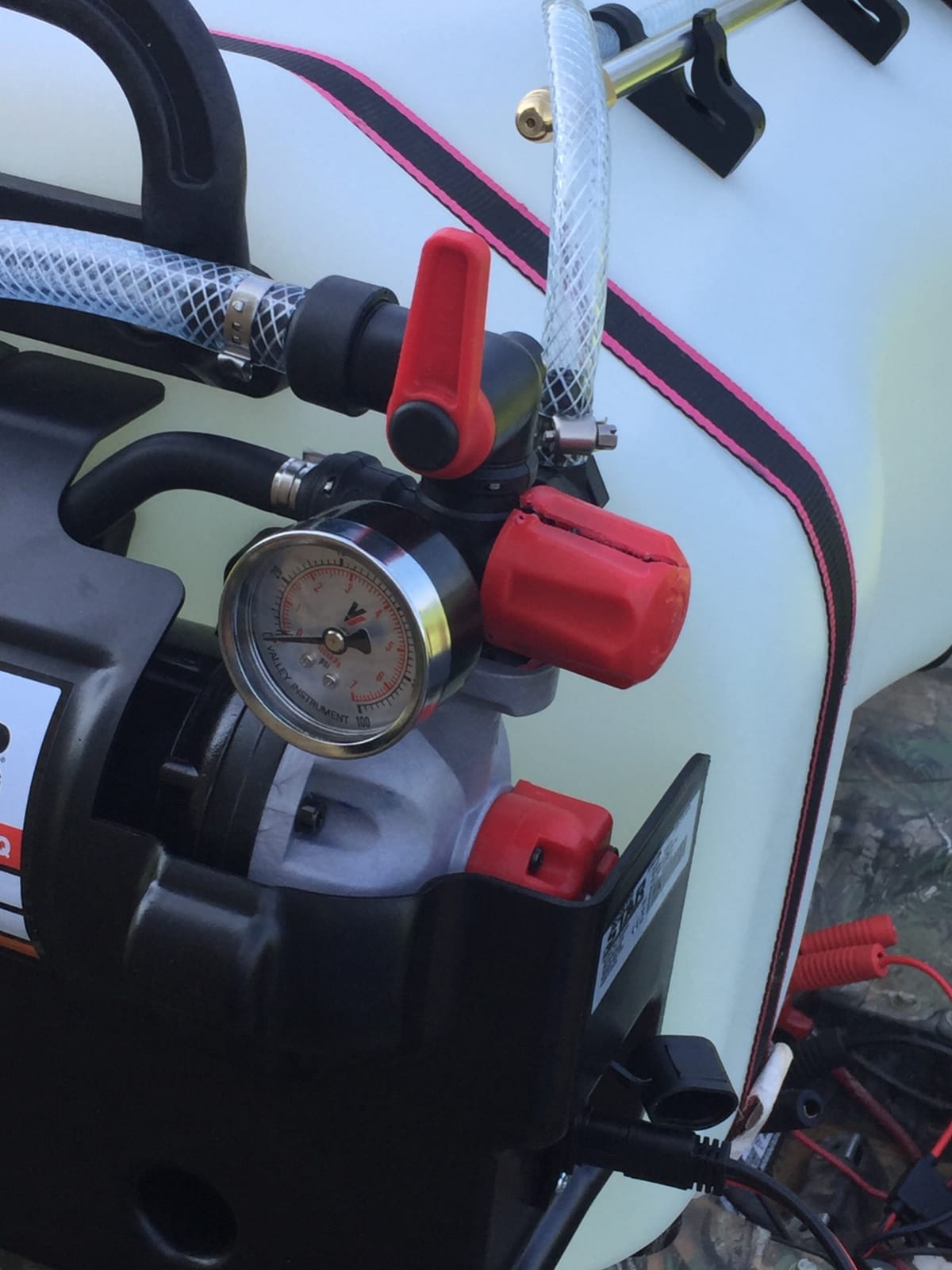
The oversized continuous-duty motor with automatic pressure shut-off means the pump stops when the system reaches maximum pressure instead of running hot. The spring-loaded breakaway arms fold for storage, and the 7.5-inch lid makes filling quick.
It is also the heaviest unit we tested at 42.8 pounds empty, which means roughly 260 pounds of water in a full tank. That is a lot, and it is why we place this pick last rather than higher.
What a 40 foot swath does for your afternoon
Wide swath means fewer passes and fewer turns, which is exactly what determines how many acres you finish in a sitting on open ground. A 40-foot band covers roughly triple the width of a 7-foot boom.
The same width cuts the other way near a boundary. Turning at a treeline with a 40-foot band means you will be correcting overspray on the next pass.
Check your payload rating before this one
With a 26-gallon tank, a large pump and a wide swath, this is the pick most likely to overload a stock rear rack. Confirm the rack rating and your ATV’s cargo capacity with the machine full of water before you commit.
Because the owner base here is smaller, long-term reliability evidence is thinner than on the 15-gallon models. If you buy it, keep the spare pump and nozzle kit on hand.
Boom vs. Boomless ATV Sprayers: Which Do You Need?
A boom sprayer has a fixed arm with nozzles at the end, giving a controlled, repeatable band. A boomless sprayer has no arm at all. It uses a single nozzle that atomises into a wide cone, and you let the cone do the work.
Bigger is not automatically better. The boom is faster and more precise. The boomless is snag-proof and simple, and it depends on calm air.
The operating rule owners give most consistently, from a North Carolina Hunting and Fishing thread, is that a boomless unit is only worth running on very calm days, while a boom stays usable up to about 5 mph of wind. That difference decides most purchases.
Booms also have a real cost in the field. They catch on brush, gates and branches, and the mounting bracket needs height adjustment often enough to become annoying. A spring-loaded breakaway hinge, which NorthStar uses on both units in this group, turns a hard snag into a fold instead of a repair.
On rough or wooded ground, the boomless wins outright. Along an open food plot or a straight pasture fence in steady daytime air, the boom wins. The one thing you will not get from a boomless is the even, narrow band a boom gives you at a fixed height.
Tank Size vs. Your ATV Payload: The Weight Math Nobody Does
Water weighs about 8.34 pounds per gallon. That single number decides how big a tank your machine can safely carry, and almost nobody runs it before buying.
A 5-gallon tank adds roughly 42 pounds. A 15-gallon tank adds about 125. A 25-gallon tank adds roughly 209. A 26-gallon tank is around 217. Add the empty weight of the tank, harness and hardware on top of all of that.
Owners on hilly ground put it bluntly: with 20 or 25 gallons full, the machine is way too heavy to operate safely on slopes. That is not a complaint about the sprayer. It is the sprayer doing exactly what you asked it to do.
Two rules keep people out of trouble. Check your ATV’s rear rack or cargo rating against the filled weight, not the empty weight. And on side hills, keep the tank as high and as level as your machine allows, because liquid slosh shifts your centre of gravity even when the total weight is within limits.
If your ground is hilly, a 15-gallon tank is the ceiling for most quads. If it is flat and your machine is rated for it, 25 gallons is the sweet spot. Anything beyond that belongs on a UTV or side-by-side, and the sprayer you want there is a different machine entirely.
How to Choose an ATV Sprayer: 7 Things That Matter
Tank capacity first, but not for the reason most people think. Think in passes, not gallons. Fifteen gallons with a 40-foot swath covers very different ground from fifteen gallons with a wand, and the boom configuration changes your refill math more than the tank size does.
Pump output is the number that tells you how much work the nozzles can absorb. A 1.0 GPM pump is fine for a wand and starved for a boom. If you want broadcast coverage, look at 2.2 GPM or higher. Anything beyond that is a large-acreage tool.
Boom type is the second big branch. Boom for speed and precision in moderate wind. Boomless for rough ground, wooded edges and calm-day broadcast work. Sprayers that do both, with a wand and a broadcast head, are the most versatile of the lot.
Mounting matters more than buyers expect. A tow-behind cart keeps weight entirely off your ATV and is the safest option on rough terrain. A rack mount is compact and convenient. A receiver hitch mount keeps weight low and centred, which is the safest of the rack options.
Tank material: UV-resistant polyethylene is the standard and the right answer. Look for molded gallon markers so you can mix accurately, and a wide fill mouth if you pour concentrate straight into the tank.
Warranty and parts matter more than they should in this category. Pump warranties of one to two years are common, and the widely supported diaphragm pump designs are far easier to service than anything sealed.
Finally, wiring. Every sprayer here runs on 12 volts, but the connection method varies. Battery clamps are universal. A dedicated harness with an inline switch is better, because it lets you kill the pump from the seat instead of walking back to the tank.
Before you start bolting things to your machine, make sure the basics are sorted. If your rack or hitch is not what it used to be, our ATV lift guide covers jacks and lifting kits, and the ATV lift table guide covers service platforms for working on your machine. Neither matters much until you need one, and then they matter a lot.
While you are working through mounting hardware, it is worth checking that your machine’s rack and accessories are in good shape. Our ATV lift table guide covers working platforms if your sprayer jobs involve loading heavier gear, and the ATV oil guide matters more than people expect once you are running a full tank over rough ground for hours at a time.
How to Calibrate Your ATV Sprayer and Calculate Acres per Fill
Uncalibrated, a sprayer can be off by a factor of two, which means you are either wasting chemical or under-treating. The good news is that the method is simple and needs no special equipment beyond a tape measure and a timer.
First, measure your actual effective swath with the machine running. Do not trust the boom length. Measure the treated band on the ground, edge to edge.
Second, time a measured run. Fill to a marked level, run the sprayer for a known distance at your normal working speed, and note how much of the tank you used. Recalculate gallons per acre from that measured volume, swath width and distance.
Third, convert to acres per fill by dividing tank capacity by the output you just measured. A user on the Michigan Sportsman forum reported one tank covering about 2 acres with a 32-foot dual-nozzle band, which is a useful reality check against your own numbers.
Recalibrate whenever you change nozzles, speed or pressure. A nozzle swap changes output far more than most people expect, and it takes ten minutes to redo the math.
Clearing a Clogged Nozzle and Winterizing the Pump
A clogged nozzle is almost always one of three things: dried chemical residue, grit, or a partial obstruction. Diagnose before you replace anything, because a new tip costs money and does not fix a dirty line.
Back-flush first. Remove the nozzle tip and blow backwards through the body with low-pressure air. That alone clears a surprising share of blockages.
If that does not work, soak the tip and body in a warm, dilute cleaning solution, then work the opening gently with a soft brush. Never use a wire, a knife point or a torch. Chemical-resistant tips are soft, and a scratch in the orifice changes your spray pattern permanently.
Then check the filters. In-tank and shut-off filters catch debris before it reaches the nozzle, and both rinse clean in seconds. If a tip keeps clogging, the cause is upstream.
Winterizing is the maintenance task that decides whether you have a sprayer next spring. Disconnect the pump from the battery, connect it directly, run RV antifreeze through the wand until you see it at the nozzle, then shut it off and disconnect. Owners who skipped this step lost working pumps, and owners who did it report sprayers still running into a third year.
Clean tanks matter for the same reason. Rinse after every chemical load, and if a tank has accumulated residue, a gallon or two of kerosene through a diaphragm tank sprayer followed by a full rinse is the approach owners recommend.
Why ATV Sprayer Ratings Sit Around 4 Stars
Every sprayer in this roundup lands between 4.0 and 4.4 stars. That is not slouchy performance. It is what a hardware category with heavy use, chemical exposure and cheap consumable parts actually looks like.
Look at what the complaints are. A wand coupler that unscrews. A drain cap thread that leaks. A hose that splits near the handle. A boom bracket that needs re-tuning. None of these are failures of the machine, and all of them are five-minute fixes with a hose clamp, a roll of thread tape or a screwdriver.
Review counts are also low across the category, often single digits, simply because most owners buy one sprayer and keep it for years. The units here with the largest review counts are the ones with the most owners, not the worst quality.
So read the complaint text, not the star number. A drain cap complaint is a five-minute fix, and the reviews here are specific enough to tell which problems you are actually buying.
Frequently Asked Questions
Which is better, a boom or a boomless sprayer?
A boom sprayer is faster and more precise because it lays down a fixed swath at a consistent height, and owners report it stays usable up to about 5 mph of wind. A boomless sprayer has no arm to snag on brush or gates and works well in rough ground, but it only performs in calm air. Choose a boom for open food plots and straight pasture lines, and a boomless for wooded edges.
How many acres can a 25 gallon sprayer cover?
It depends on your swath width and nozzle output, so calibrate before you trust a number. A 25 gallon tank with a 40 foot swath covers far more ground than the same tank with a hand wand. One user reported roughly 2 acres per fill with a 32 foot dual-nozzle band. Measure your swath, time a run and work out your own output per acre.
What size sprayer do I need for 10 acres?
A 15 gallon tank works for 10 acres if most of your work is spot spraying fence lines, ditches and isolated weeds. For broadcast coverage, step up to 25 gallons so you are not constantly refilling. Remember that 25 gallons of water weighs about 209 pounds, so check your rear rack rating before committing to that size.
My sprayer nozzle is clogged. How can I fix it?
Remove the nozzle tip and blow backwards through the body with low-pressure air to back-flush it. If that fails, soak the tip and body in a warm, dilute cleaning solution and use a soft brush, never a wire or a torch, since a scratched orifice changes your spray pattern permanently. Rinse the in-tank and shut-off filters while you are there, because debris upstream is the usual cause.
How much weight can an ATV pull with a rear rack sprayer?
Work it out from the water. Water weighs about 8.34 pounds per gallon, so a 25 gallon tank adds roughly 209 pounds before the tank, harness and hardware. Check that figure against your ATV’s rear rack or cargo rating rather than the empty weight, and keep liquid as high and level as possible on side hills, since slosh moves your centre of gravity.
Which brand makes the best ATV sprayers?
Chapin builds in the USA and holds the highest average rating in our group at 4.4 stars, with strong filtration and good long-term owner reports. NorthStar leads on broadcast and spot versatility, with breakaway booms and high-flow boomless options. Master Manufacturing offers the best capacity-to-weight value, especially at 9 and 15 gallons.
Do I need an ATV sprayer or a UTV sprayer?
A standard quad handles 15 to 25 gallons comfortably, and most ATV sprayers in this roundup are sized for exactly that. A UTV sprayer makes sense once you move into the 26 gallon and larger range, where weight becomes the limiting factor rather than pump power. Buy to your machine’s cargo rating and your terrain, not to the size of the job you hope to take on.
The Verdict: Which ATV Sprayer Should You Buy?
For most people reading this, the NorthStar 31-Gallon Tow-Behind is the best of these ten. It has the widest boom, the largest capacity, a continuous-duty pump and the highest review count here, and as a cart it never touches your ATV’s payload rating.
If you want one sprayer for general property work and can lift 25 pounds onto a rack, the Master Mfg 15-Gallon Spot Sprayer is the value pick and the easiest machine to live with. Add a boom later if your work broadens.
For broadcast on open ground, the Master Mfg 15-Gallon Broadcast Sprayer gives you a 7-foot steel swath at a 2.2 GPM pump, and the NorthStar 26-Gallon Boomless handles rough, wooded ground where an arm would snag. Whatever you choose in 2026, do the payload math first, run plain water through it before the first chemical load, and winterize the pump when you are done.