
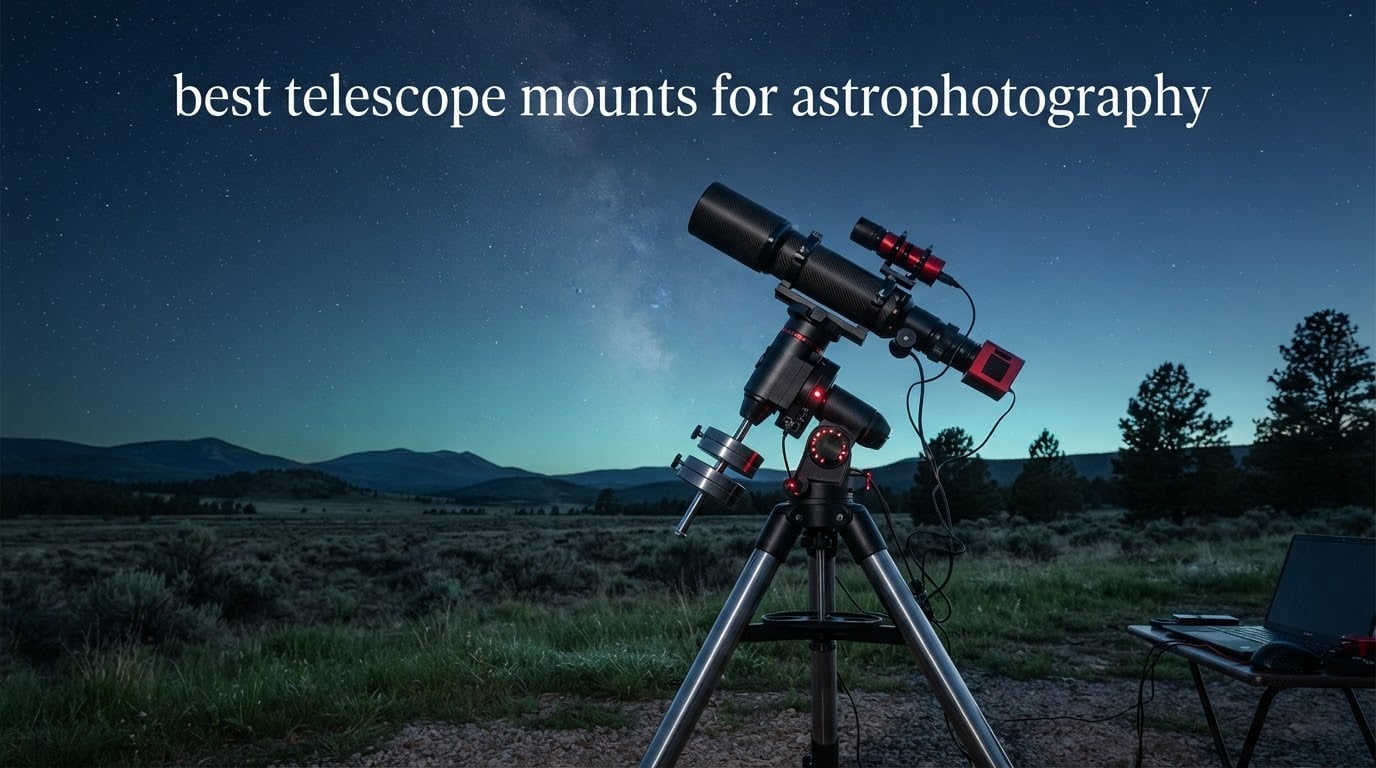
The mount decides how much of your telescope’s light actually turns into signal. A sharp aperture sitting on a wobbly head produces trailed stars no amount of processing can rescue, and the mount is usually the most expensive single component in an astrophotography rig. After spending months with these mounts in the field, our pick of the best telescope mounts for astrophotography in 2026 is the Sky-Watcher Star Adventurer 2i Pro Pack. It carries a 4.4 rating across 609 reviews, weighs 7 pounds, polar aligns with an integrated illuminated scope, and exposes an autoguider port when you want to tighten up longer shots.
That verdict is about fit rather than prestige. If your rig is a camera and a short lens, the 2i does the whole job. If you are running a long refractor or an 8-inch Newtonian, you need something further down this list with a bigger payload rating, and the buying guide at the end explains exactly how to make that call.
One rule matters more than any spec sheet number: the 50% rule. Keep your total imaging train weight at roughly half the mount’s rated payload capacity. A mount pushed to its limit will not balance cleanly, and the resulting guiding numbers get blamed on the hardware. We see the same pattern repeatedly when we compare motor mounts for a car, where a load limit is a ceiling rather than a target.
Table of Contents
Top 3 Best Telescope Mounts for Astrophotography in 2026

Sky-Watcher Star Adventurer 2i
- 7 lb portable tracker
- Illuminated polar scope
- Autoguider and intervalometer ports

iOptron SkyGuider Pro
- 11 lb balanced payload
- 20 hour internal battery
- Integrated AccuAlign polar scope

Celestron Advanced VX
- 30 lb payload
- 2 inch stainless steel tripod
- NexStar+ 40000 object database
Quick Picks: Best Telescope Mounts for Astrophotography (October 2026)
Best overall: Sky-Watcher Star Adventurer 2i Pro Pack for wide-field work at 7 pounds
Belt-drive tracker: iOptron SkyGuider Pro with an 11 lb balanced payload ceiling
Best step-up to GoTo: Celestron Advanced VX with a 30 lb rating and NexStar+ controller
Best for travel: Kenko Sky Memo S at about 1 kg total
Best complete portable kit: Sky-Watcher Star Adventurer GTi with tripod and counterweight
Best manual equatorial base: Celestron CG-4, 20 lb payload with slow-motion controls
Best budget dual-axis GoTo: Explore Scientific iEXOS-100-2 PMC-Eight
Best for heavy telescopes: Sky-Watcher EQ6-R Pro with a 44 lb payload
Best for astro timelapse: iOptron SkyTracker Pro with five tracking speeds
Lightest rig option: Vixen POLARIE U star tracker at 0.58 kg
| Product | Specs | Action |
|---|---|---|
| Sky-Watcher Star Adventurer 2i Pro Pack |
|
Check Latest Price |
| iOptron SkyGuider Pro |
|
Check Latest Price |
| Celestron Advanced VX |
|
Check Latest Price |
 Kenko Sky Memo S Kenko Sky Memo S |
|
Check Latest Price |
 Sky-Watcher Star Adventurer GTi Sky-Watcher Star Adventurer GTi |
|
Check Latest Price |
 Celestron CG-4 Celestron CG-4 |
|
Check Latest Price |
 Explore Scientific iEXOS-100-2 PMC-Eight Explore Scientific iEXOS-100-2 PMC-Eight |
|
Check Latest Price |
 Sky-Watcher EQ6-R Pro Sky-Watcher EQ6-R Pro |
|
Check Latest Price |
 iOptron SkyTracker Pro iOptron SkyTracker Pro |
|
Check Latest Price |
 Vixen POLARIE U Vixen POLARIE U |
|
Check Latest Price |
1. Sky-Watcher Star Adventurer 2i Pro Pack for the Most Complete Portable Tracker
Sky-Watcher Star Adventurer 2i Pro Pack (S20512)
7 lb head weight
Integrated illuminated polar scope
Autoguider and intervalometer ports
Pros
- Sets up in about five minutes
- Sharp 2-3 minute exposures up to 300mm after polar alignment
- Built-in illuminated polar scope
- Long battery life with optional USB power
- Handles a telephoto zoom plus full-size mirrorless with a counterweight
Cons
- Included support hardware is not rigid enough on its own
- SAM Console app is limited to alignment assistance
- Not built for large telescopes or extreme focal lengths
- Polar scope illuminator no longer fits with a camera mounted
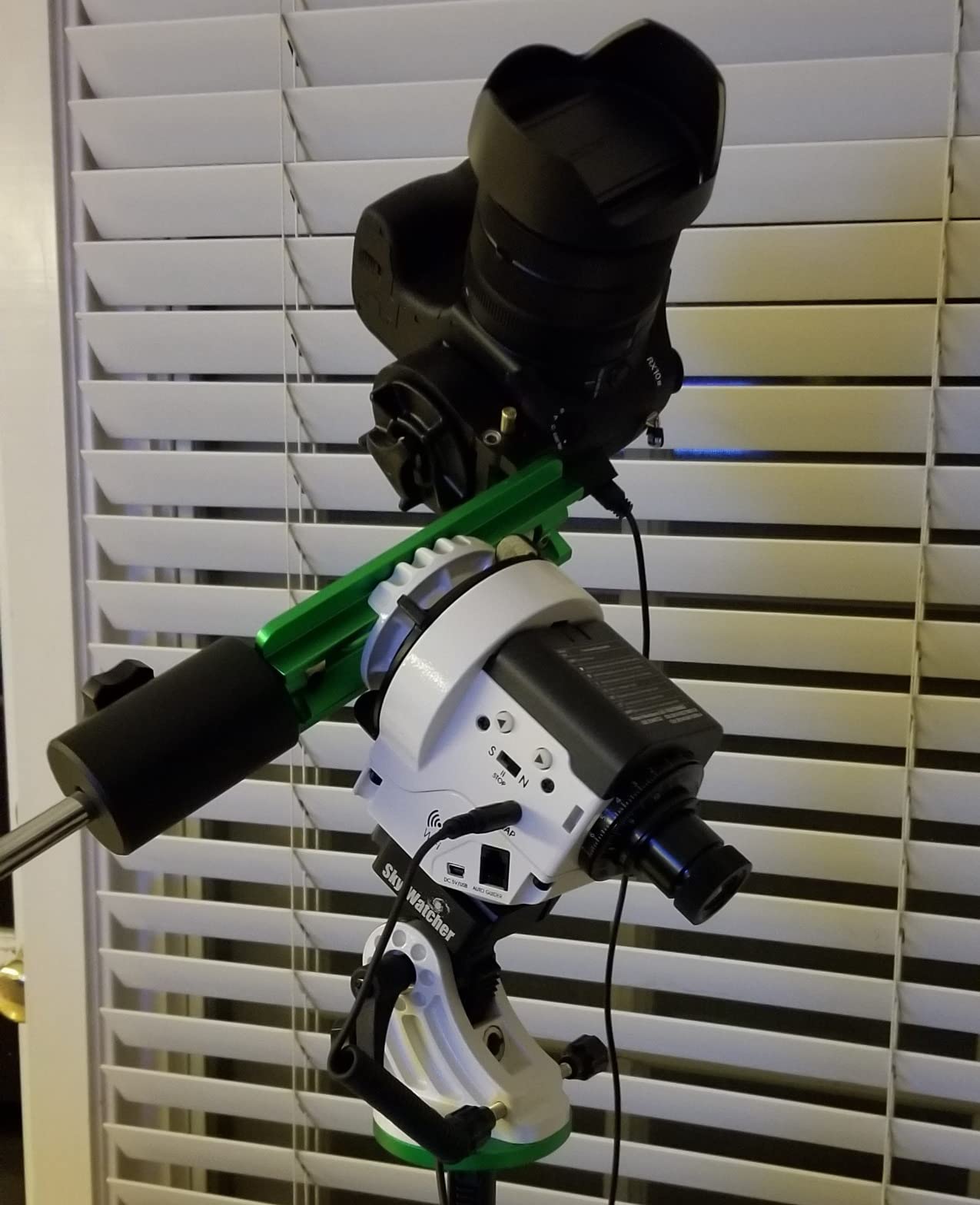
This is the mount I recommend most often because it fails gracefully. It is a camera tracker first, which means it does one job extremely well, and it has grown into a platform that accepts a small refractor just as readily as a mirrorless body and a short zoom.
The modular design is the part people miss. Rather than shipping a dedicated tripod, the 2i mounts to a standard photographic head, so the support you choose defines how solid the whole rig feels. Owners on photography forums repeatedly report the same pattern: it tracks beautifully until the stock hardware is asked to carry a long lens, then it needs something heavier.
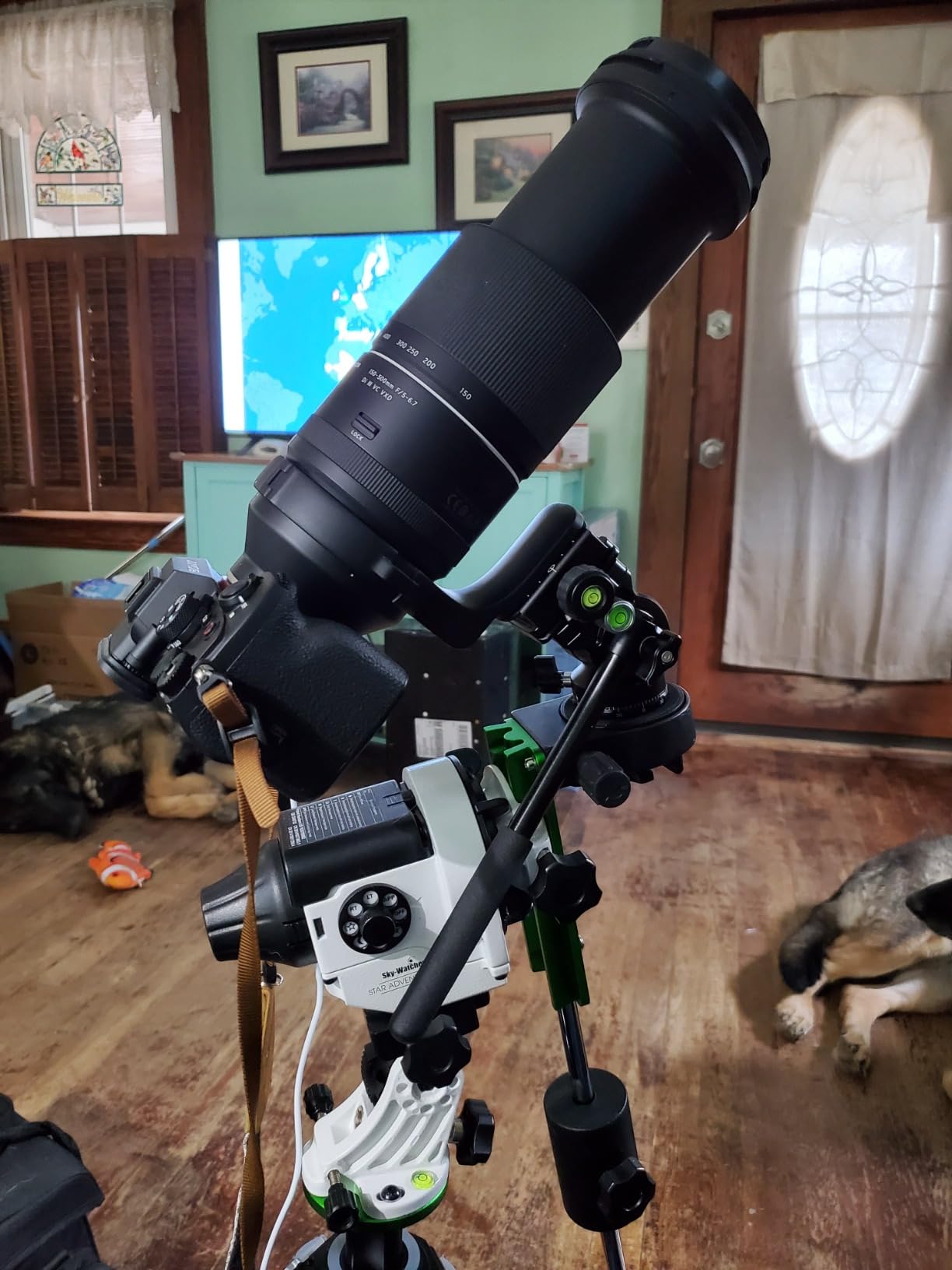
Once the deluxe equatorial base is set for your latitude, the integrated illuminated polar scope takes about a minute to align, and the deluxe base is what makes that alignment hold through the night. From there the tracking is genuinely good, with reviewers commonly reporting sharp two to three minute subs at focal lengths up to about 300mm.
There are two additional ports that matter. An autoguider port lets you run a guide scope and push subs longer when the sky cooperates, and an intervalometer port covers the timelapse side of the hobby. Built-in Wi-Fi adds smartphone control through the SAM Console app, which is where the honest limitation sits: the app assists with alignment, it is not a full GoTo controller.
Will it carry the telescope you already own?
For cameras and short telephotos, comfortably. The 2i handles a full-size mirrorless body with a zoom and a counterweight, and it will carry a small refractor such as a 60-80mm class tube. That covers most of the rigs people actually start with.
It will not carry an 8-inch Newtonian or a long focal length refractor. If your heaviest planned telescope is heavier than about 8-10 pounds including accessories, jump to the Advanced VX or the EQ6-R Pro, and buy for the telescope you expect to own in three years rather than the one you own tonight.
Is the app a problem for GoTo users?
Only if GoTo is the feature you care about most. The SAM Console app handles alignment assistance and nothing more, so you point the camera yourself at a known bright target and plate solve from there.
If you would rather have motorized pointing, the Star Adventurer GTi in position five adds GoTo, Wi-Fi, a counterweight bar and a tripod in one box. You give up some of the 2i’s bare simplicity and gain roughly 19 pounds of kit weight.
2. iOptron SkyGuider Pro for Belt-Drive Tracking in a Backpack
iOptron SkyGuider Pro Camera Mount Full Package
2.2 lb all-metal body
11 lb balanced payload
Up to 20 hours of internal battery
Pros
- Compact and light enough for a camera bag
- Sharp 2-3 minute subs at up to 300-500mm
- Integrated illuminated AccuAlign polar scope
- Rechargeable internal battery accepts external power
- Full package includes counterweight shaft and weight
Cons
- Single-axis RA tracking with no GoTo
- Supplied 8 inch counterweight bar is short
- Polar scope can arrive out of collimation
- Instructions lean heavily on third-party tutorials
- Sturdy tripod is required but not included
The SkyGuider Pro is the tracker I reach for when a session means carrying everything through a car park in the dark. At 2.2 pounds it is genuinely portable, and the all-metal body with machined parts gives it a settled feel that plastic trackers never quite match.
The belt drive is what makes this one interesting. Owners regularly achieve two minute exposures at 500mm, which is a longer lens than most trackers in this weight class manage, and the drive is smooth rather than relying on mass to hide gear error.
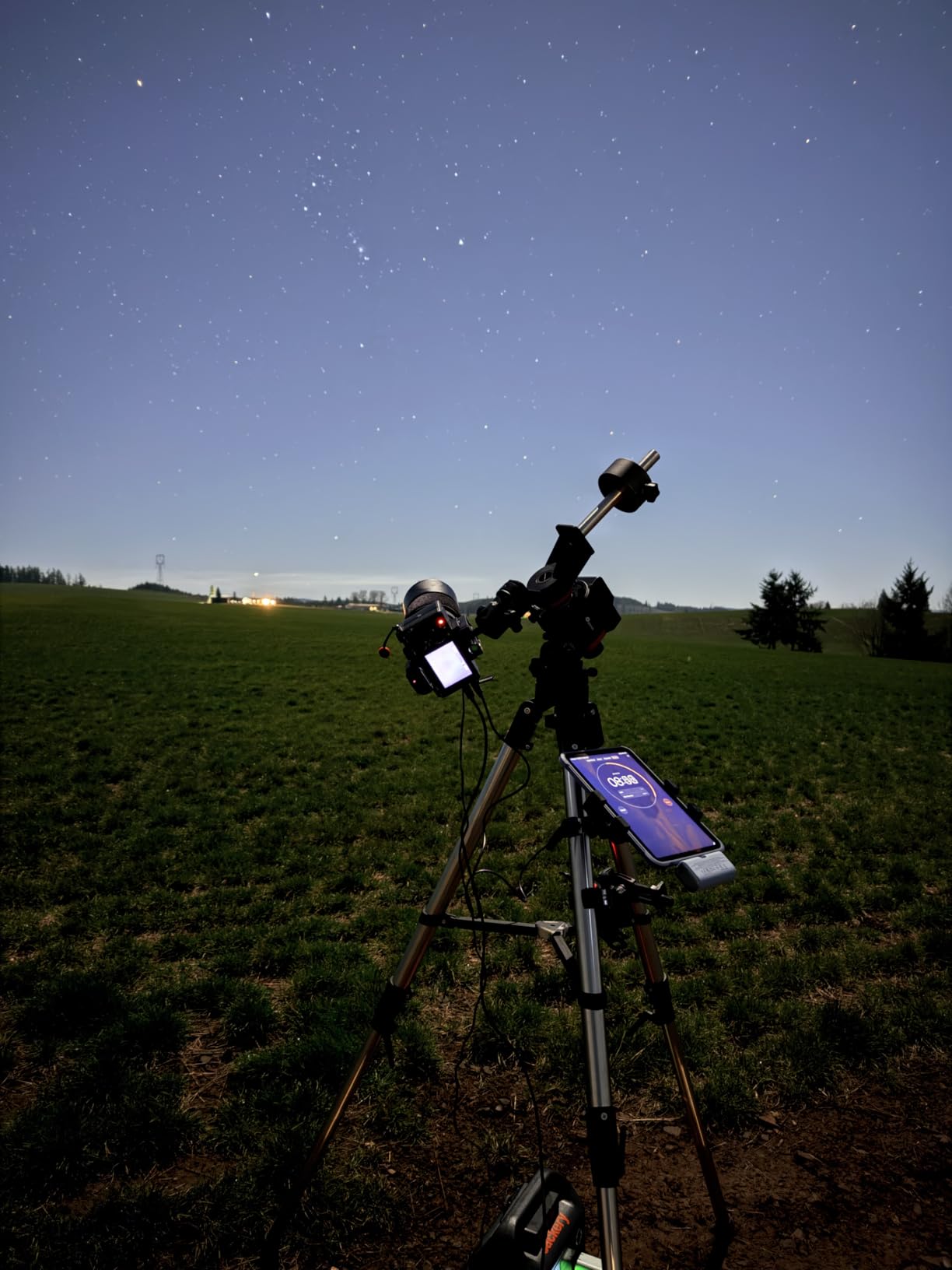
The integrated AccuAlign dark field illuminated polar scope means no separate alignment tool, and the alt-azimuth adjustable base covers latitudes from 30 degrees below to 65 degrees above the equator. The internal rechargeable battery runs up to 20 hours at 20 degrees C, so a full night of imaging needs no power pack in warm conditions.
What you give up is obvious. This is single-axis RA tracking with no GoTo capability at all, so target finding is entirely on you. The included counterweight shaft and weight let you balance a heavier telephoto combination, but the supplied 8 inch bar is short and extra extension bars are hard to source, which is a common complaint.
How much payload do you really get?
The 11 lb rating applies when the load is balanced. That figure covers a mirrorless body with a telephoto zoom, a small refractor, or a camera with a light guide scope, and the counterweight kit exists specifically so the heavier combinations can sit near the axis.
Treat 11 lb as an 8 lb working limit and you will stay in the range where guiding behaves. The listing itself lists 5 kg as the maximum recommended weight, so the honest number is closer to half of the headline figure.
Is the missing GoTo a real problem?
For fixed targets that you find once, no. Many imagers shoot the same handful of objects all season, and a plate solve confirms the field in seconds.
For beginners moving between targets, yes. That is the moment the Explore Scientific iEXOS-100-2 or the Celestron Advanced VX becomes the better purchase, because motorized pointing saves the twenty minutes of hunting that otherwise eats a session.
3. Celestron Advanced VX for Your First Real German Equatorial Rig
Celestron Advanced VX Computerized German Equatorial Mount – 30lb Payload
30 lb payload
2 inch stainless steel tripod
NexStar+ object database
Pros
- Rock-solid stainless steel tripod suits imaging rigs
- Computerized GoTo with a large object database
- Sidereal
- solar and lunar rates with EQ North and South modes
- Periodic error correction and All-Star polar alignment
- Well documented software support including ASCOM
Cons
- Roughly 47 to 50 lb for the full kit
- Alignment procedures take practice to master
- Included accessories and documentation feel dated
This is where a lot of imagers make the jump from a tracker to a full German equatorial mount, and the Advanced VX earns that transition. The 2 inch stainless steel tripod legs are the reason it feels solid at longer exposures, and they are a genuine step up from the folding aluminium legs on cheaper mounts.
A 30 lb payload covers almost every telescope most imagers will ever build: an 80mm refractor, a 6-inch or 8-inch Newtonian, a 90mm Mak with a camera. Add a guide scope, filter wheel and camera and you are still inside the rating.
Computer control is where this mount separates itself from the manual equatorial options. The NexStar+ hand controller carries a 40,000 plus object database, multiple alignment procedures, and sidereal, solar and lunar tracking rates with separate EQ North and EQ South modes. Periodic error correction and All-Star polar alignment are both built in, and ASCOM support means PHD guiding and common capture software work as expected.
The honest drawback is mass. The full kit is listed at 47 lbs with the specification sheet showing a 50 lb packaged weight, and that is two people or one strong back. It is still the mount many imagers end up keeping for a decade.
Is a 30 lb rating enough for an 8-inch Newtonian?
Yes, if you keep the load light. A typical 8-inch imaging tube with a camera, a 50mm guide scope and a short rotator sits comfortably under 30 lb, and the stainless steel tripod keeps that mass from turning into guiding problems.
Run a heavier guide train, a large focuser or a full filter wheel and the margin shrinks fast. Under those conditions the EQ6-R Pro’s 44 lb rating gives you real headroom, at the cost of moving well over 70 lbs assembled.
How hard is polar alignment on this mount?
More involved than a tracker with an integrated scope, and that is the learning curve rather than a fault. All-Star polar alignment and the motorized GoTo procedures want a few sessions before they feel automatic.
For comparison, the CG-4 in position six needs no alignment procedure at all because it has no motors, and the Star Adventurer 2i at the top of this list needs about a minute. The Advanced VX is the pick when you want pointing as much as tracking.
4. Kenko Sky Memo S for Simple Battery-Powered Travel Work
Kenko Portable Equatorial Mount for Astronomical Photography Sky Memo S Standard Set SV
About 1 kg total weight
Illuminated polar scope
ST-4 style autoguider port
Pros
- Very light and highly portable for travel work
- Built-in polar scope with adjustable brightness
- ST-4 style autoguider interface and interval timer
- Runs on four AA batteries
- Accepts both 1/4 inch and 3/8 inch tripod screws
Cons
- Limited payload capacity for larger rigs
- Tracking suits short focal lengths and light lenses
- No GoTo or motorized pointing
- Documentation is minimal
The Sky Memo S is the answer when the mount has to earn its place in the bag. At about 1 kg and 173.5 by 113.3 by 96 mm, it is one of the smallest complete equatorial trackers in this list, and it does not need a power bank because it runs on four AA batteries.
It is a plain mount in the best sense. There is no GoTo database, no app requirement and no firmware to negotiate, so there is very little between unpacking it and taking the first exposure.
The built-in polar scope with adjustable illuminator is the feature that makes travel practical. You can align in genuine darkness without a headlamp, which is when a separate scope on a larger tracker stops fitting in your kit. The ST-4 style six-pin autoguider port means it can be guided when the payload allows, and the built-in interval timer handles sequences.
Payload is the limit. Reviewers consistently rate it as suited to short focal lengths and light camera lenses, and the ratings cluster in the four and five star range with payload and the absence of GoTo as the two recurring reservations. The mounting screw adapter accepts both 1/4 inch and 3/8 inch heads, which widens your tripod options considerably.
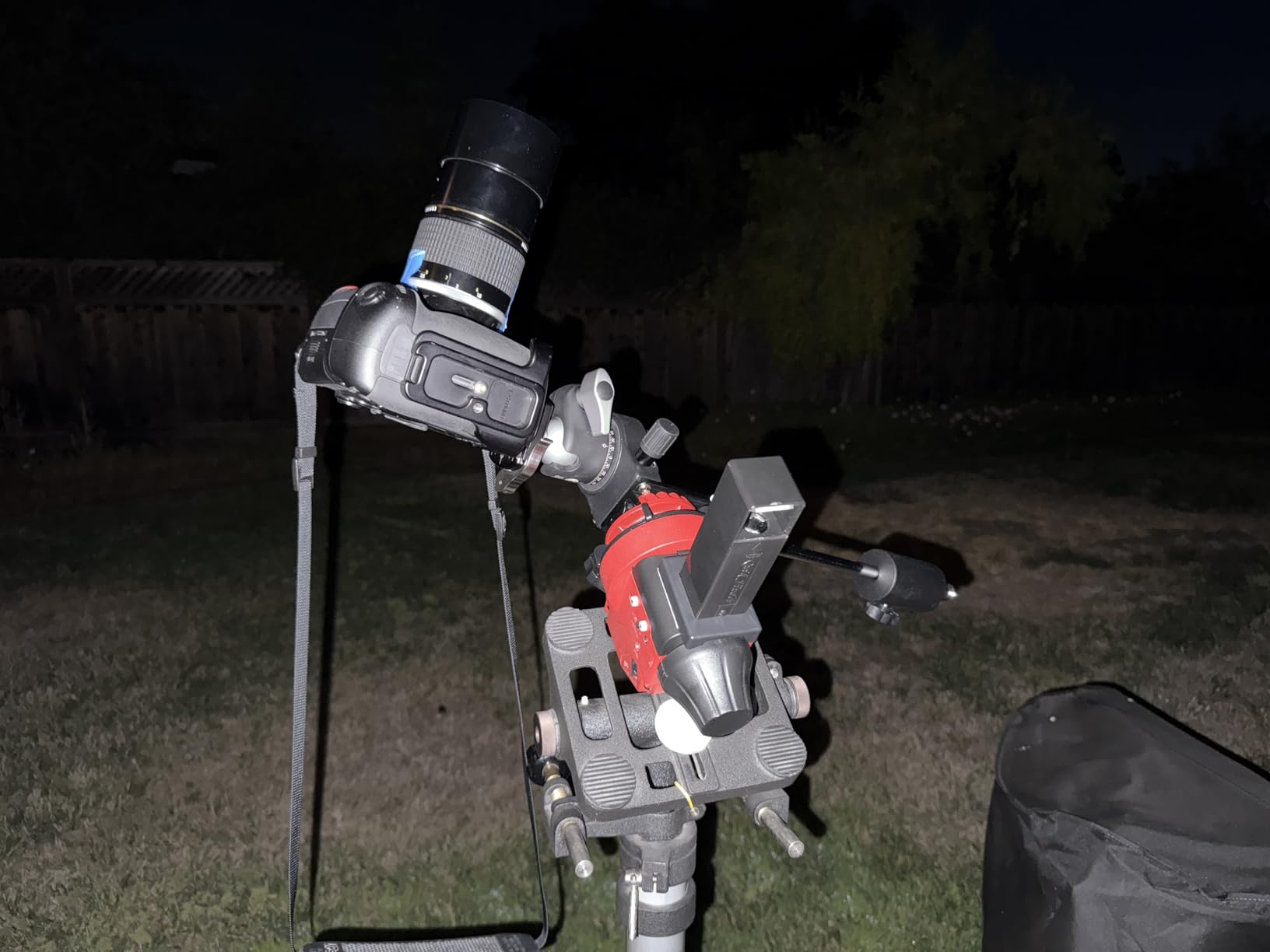
Can it handle a telescope at all?
A very small refractor, yes. The mount was designed for camera payloads, so a short tube is realistic while anything with a large focuser is not.
If your plan includes an 80mm refractor as the first upgrade, buy for that scope rather than the camera. The Advanced VX or the iEXOS-100-2 will both carry it with room to spare, and they will still let you point at targets without guessing.
Is AA battery power a real advantage?
On a cold night at altitude it is. Lithium cells lose output quickly when the temperature drops, and four AAs are the simplest power you can carry to a remote site.
The catch is runtime rather than capability. Plan on fresh cells for a long session, and if you want guiding at long focal lengths remember that the payload ceiling is the real limit, not the power source.
5. Sky-Watcher Star Adventurer GTi as the Complete Portable GoTo Kit
Sky Watcher Sky-Watcher Star Adventurer GTI Mount Kit with Counterweight, CW bar, Tripod, and Pier Extension – Full GoTo EQ Tracking Mount for Portable and Lightweight Astrophotography
GoTo tracking with built-in Wi-Fi
Counterweight bar and 5 lb weight
26 lb kit weight
Pros
- Adds GoTo and Wi-Fi to the proven Star Adventurer platform
- Kit includes counterweight bar
- weight
- tripod and pier extension
- Built-in illuminated polar scope
- Portable at 26 lb with the included tripod
- Counterweight improves balance for heavier combinations
Cons
- GoTo features require the SAM Console app and a smartphone
- Heavier and bulkier once the counterweight and tripod are attached
- Wi-Fi control is less responsive than a dedicated hand controller
The GTi answers the single most common objection to the Star Adventurer platform. It adds motorized GoTo and app control while keeping the tracker format, and the bundled counterweight bar, 5 lb weight, tripod and pier extension make it a genuinely complete rig on day one.
That completeness is the value story. Forum buyers repeatedly note that a portable head is only portable if the tripod and counterweight kit came with it, and this bundle resolves that complaint at the source.
The built-in illuminated polar scope keeps alignment quick, and the counterweight bar genuinely helps with heavier camera and lens combinations where the bare tracker would sit at its balance limit. Two-year warranty coverage adds a little reassurance on a mechanical purchase.
The trade-offs are weight and dependence. The full kit is listed at 26 lb, and once the pier extension and counterweight are attached it is no longer the pack-it-in-a-backpack option that the 2i remains. Wi-Fi control and app navigation also feel less immediate than a wired hand controller, which matters when you are slewing in the dark with gloves on.
GTi versus the plain 2i: which one?
Choose the GTi if you move between targets. Motorized GoTo with an app is a real quality-of-life gain, and having the tripod and counterweight in the box saves you assembling that support yourself.
Choose the 2i if you shoot fixed targets and value weight more than anything. It is the lightest of the GoTo-capable Star Adventurer options, it carries more reviews than any other mount here, and that means more long-term feedback from other imagers.
Is a pier extension useful for a portable kit?
It raises a standard photographic head to a comfortable imaging height without swapping tripods, which is convenient when you already own one you like.
Treat it as a convenience rather than a feature. It adds height and mass to a kit marketed as portable, so on long treks to a dark site the plain tracker plus your own head is still the lighter option.
6. Celestron CG-4 as a Manual Equatorial Base Worth Motorizing
Celestron CG-4 Manual German Equatorial Mount with Steel Tripod
20 lb payload
Stainless steel tripod with 1.75 inch legs
Manual slow-motion on both axes
Pros
- Heavy stainless steel tripod with 1.75 inch legs minimizes vibration
- 20 lb payload suits a wide range of telescopes
- Smooth manual slow-motion controls on both axes
- Adjustable height and latitude
- No motors or electronics to fail
Cons
- Fully manual with no motorized tracking or GoTo
- Unsuitable for long-exposure imaging without a motor drive
- Polar alignment must be repeated each session
The CG-4 sits in this roundup because it answers a different question: what does a good mechanical equatorial head give you when electronics are removed? The answer is a 20 lb payload on stainless steel legs with 1.75 inch diameter.
Slow-motion controls on both axes let you centre an object by hand with a high focal ratio instrument, and the adjustable latitude and height range from 33 to 47 inches make the setup repeatable across sites.
There is a real argument for it as an astrophotography base rather than just an observing mount. Several manufacturers sell motor drives that bolt onto a mount of this class, and adding one turns a dependable mechanical head into a tracking mount without replacing the whole assembly.
Reviewers rate the build quality and the tripod consistently, with the recurring reservation being the obvious one: no motorized tracking, so out of the box it is not a long-exposure imaging rig. If you only observe, that is a strength, because there is nothing to fail.
Is a manual mount worth buying in 2026?
Yes, if you also observe, or if you plan to motorize it. Visual use benefits from the fine slow-motion control, and there is no firmware, no database and no alignment routine to fail.
No, if imaging is the only goal. Adding a motor drive and a controller costs more than buying the Advanced VX outright, which is why this mount sits outside the main imaging recommendation.
How heavy can the payload get before it suffers?
The rated figure is 20 lb, and for visual observing you can push closer to that than for imaging. For long-exposure work you would want to stay near half of it even with a motor drive fitted.
The heavier point is the tripod rather than the payload rating. The 1.75 inch stainless steel legs and the 12.5 lb tripod weight are the stability advantage here, so keep that base rather than swapping to something lighter and lighter.
7. Explore Scientific iEXOS-100-2 PMC-Eight as the Budget Route to Dual-Axis Guiding
iEXOS-100-2 PMC-Eight Equatorial Tracker System Tripod and Mount for Astrophotography with WiFi and Bluetooth Compatible
Dual-axis worm gears with belt drives
ExploreStars app for GoTo
Polar alignment sight hole
Pros
- Dual-axis motorized tracking with quiet belt-driven stepper motors
- App-based GoTo through ExploreStars
- Clutched axes make balancing straightforward
- Supplied tripod makes it a complete system
- Sight-hole alignment removes the need for a separate polar scope
Cons
- Low payload capacity limits heavier telescopes and lenses
- Gears can bind under unbalanced loads
- Limited documentation and software integration
- Wi-Fi control can lag a wired hand controller
The iEXOS-100-2 is the entry route to genuine dual-axis tracking with motorized pointing, and the PMC-Eight platform runs eight independent CPUs rather than a single processor, which is a real design choice rather than marketing.
Clutched RA and declination axes matter most for first-time builders. Being able to release an axis to balance quickly turns a frustrating evening into a five minute job.
The app is the biggest single consideration. ExploreStars runs on Apple, Android and Windows tablets, so you are not locked to one phone brand, but the software integration with capture and guiding tools is thinner than what the SynScan-equipped mounts offer.
The rating of 3.9 across 84 reviews tells you what to expect. Owners like the complete package and the quiet belt-driven GoTo; the reservations centre on a modest payload ceiling, gears binding when the train is unbalanced, and documentation that assumes some prior experience.
Why does the payload limit matter so much here?
Because the geared axes need mass to work smoothly. Owners report gears binding under unbalanced loads, and the fix is always the same: get the balance right and the motion stays quiet.
Plan on a camera with a modest lens, or a very small refractor. Anything heavier belongs on the Advanced VX, where the load margin absorbs the mistakes that this mount punishes.
Is the sight-hole alignment good enough?
For a first equatorial mount, yes. A sight hole through the RA axis combined with precise altitude adjustment gets you close enough that autoguiding cleans up the rest.
It is not the same as an illuminated polar scope, and you will spend more time on it. If you value fast alignment over dual-axis capability, the Star Adventurer GTi or the SkyGuider Pro get you aligned quicker and guiding on one axis with far less fuss.
8. Sky-Watcher EQ6-R Pro for Long Focal Lengths and Heavy Telescopes
Sky-Watcher EQ6-R – Fully Computerized GoTo German Equatorial Telescope Mount – Belt-driven, Motorized, Computerized Hand Controller with 42,900+ Celestial Object Database
44 lb payload
Belt-driven stepper motors
SynScan 42,000 plus object database
Pros
- Sub-arcsecond guiding once aligned and guiding
- 44 lb payload covers everything up to an 8-inch tube
- Belt-driven stepper motors slew quietly with low periodic error
- Encoders accept periodic error correction data
- Works with EQMOD
- Stellarium
- NINA and PHD Guiding
Cons
- Over 70 lb assembled with tripod and counterweights
- Factory grease can cause stiction in the worm drives
- Base altitude adjuster screws feel awkward
- Hand controller screen can fail in cold weather
The EQ6-R Pro is the community default for a reason. A 44 lb payload in an all-metal body, belt-driven stepper motors and encoders on both axes make it the most capable mount here for long focal lengths, and it is the one that community consensus names most often as a solid long-term purchase.
Belt drives are the reason guiding can reach sub-arcsecond figures. There is no worm gear backlash to absorb, so periodic error is low enough that autoguiding has very little work left to do, which is exactly what you want on a long refractor.
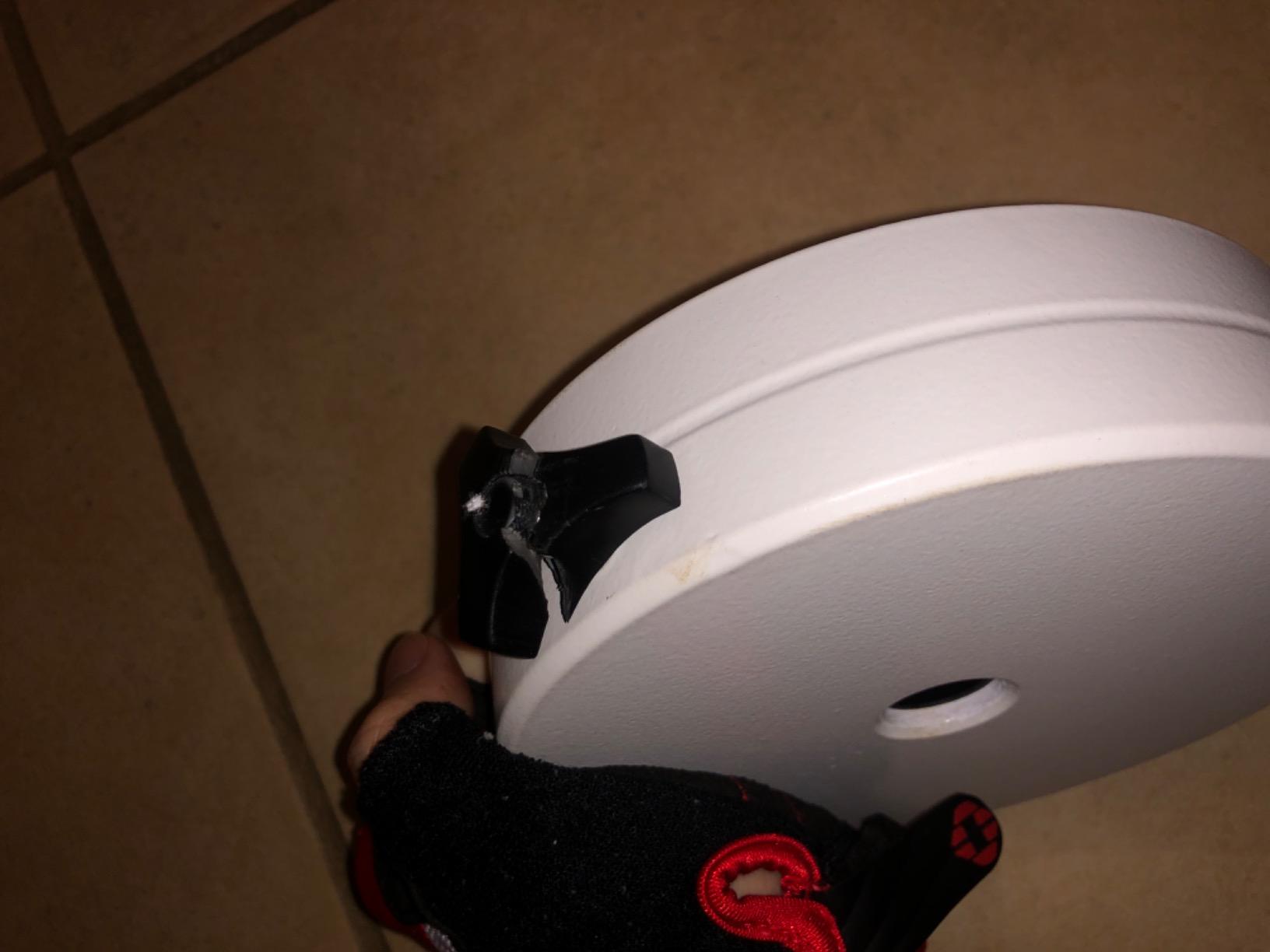
Encoders add the refinement: the mount measures its own position, so periodic error correction data can be uploaded and replayed. That turns a good mount into one that repeats the same tracking pattern night after night, and it works with EQMOD, Stellarium, NINA and PHD Guiding for PC-based control.
The SynScan hand controller carries a 42,000 plus object database and the built-in illuminated polar finderscope handles alignment. The box includes the head, controller and cables, the tripod and spreader bar, and two 11 lb counterweights with a counterweight bar extension.
What can a 44 lb payload actually carry?
Everything from a small refractor to an 8-inch imaging tube, and that includes a guide scope, rotator and filter wheel without strain. The advantage over the Advanced VX is headroom rather than maximum capability, but headroom is what lets you balance properly.
By the 50% rule that gives you a 22 lb working load, which is where the quiet motion lives. Going above 30 lb on a tripod this size is where the stiction complaints start.
What about the weight and the stiction?
The weight is real, at over 70 pounds assembled with the tripod and both counterweights, and you should treat the whole thing as two pieces to carry rather than one. Two people or a dedicated vehicle is the honest answer.
On stiction, owners point to factory grease in the worm drives affecting balance early in a mount’s life. The fix is to work both axes through their full range and re-balance, which loosens the grease before the season rather than after.
9. iOptron SkyTracker Pro for Quiet Astro Timelapse Work
iOptron SkyTracker Pro Camera Mount with Polar Scope, Only
6.6 lb payload
1x and half-speed tracking modes
Micro USB charging
Pros
- Very quiet operation on an integrated rechargeable battery
- Trail-free exposures of 1 to 5 minutes with fast wide lenses
- Multiple tracking speeds plus a dimmable polar scope LED
- Many fine-tuning knobs for quick alignment
- Compact and lighter than the previous generation
Cons
- 3 kg ceiling is reached quickly with telephoto zooms
- Dovetail base is not Arca-Swiss compatible
- Ball head and alignment app sold separately
- Swivel head cushion slips under heavy loads
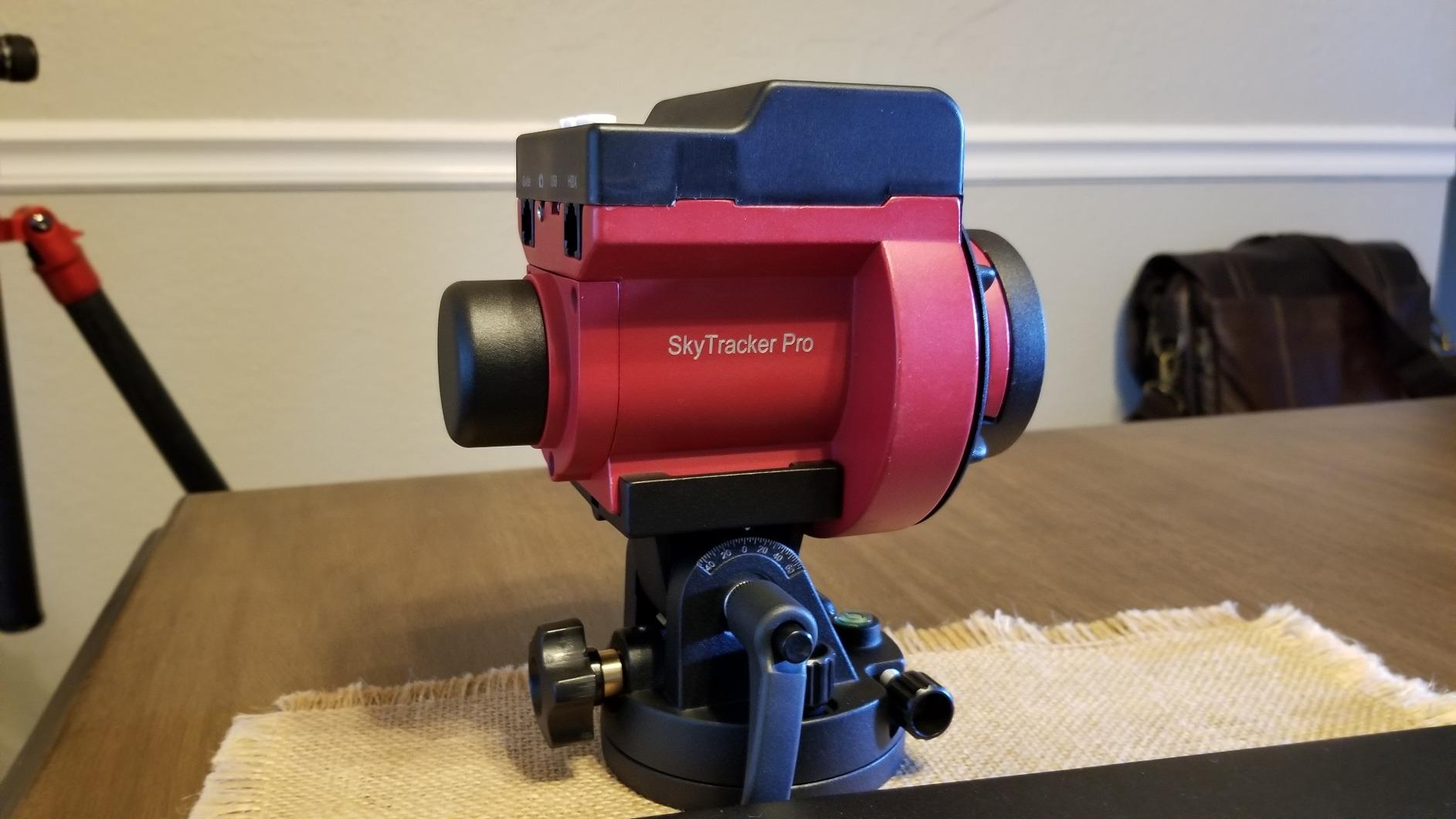
The SkyTracker Pro is built for a specific job that this roundup under-serves otherwise: astro timelapse. Five tracking modes, smartphone shutter control and near-silent DC servo drive let you run long sequences of tracked frames without the machinery announcing itself.
The half-speed mode is the underrated feature. At half tracking rate the stars trail enough to produce the streaked look that sells a timelapse while still keeping the foreground sharp, and reviewers rate the operation as very quiet.
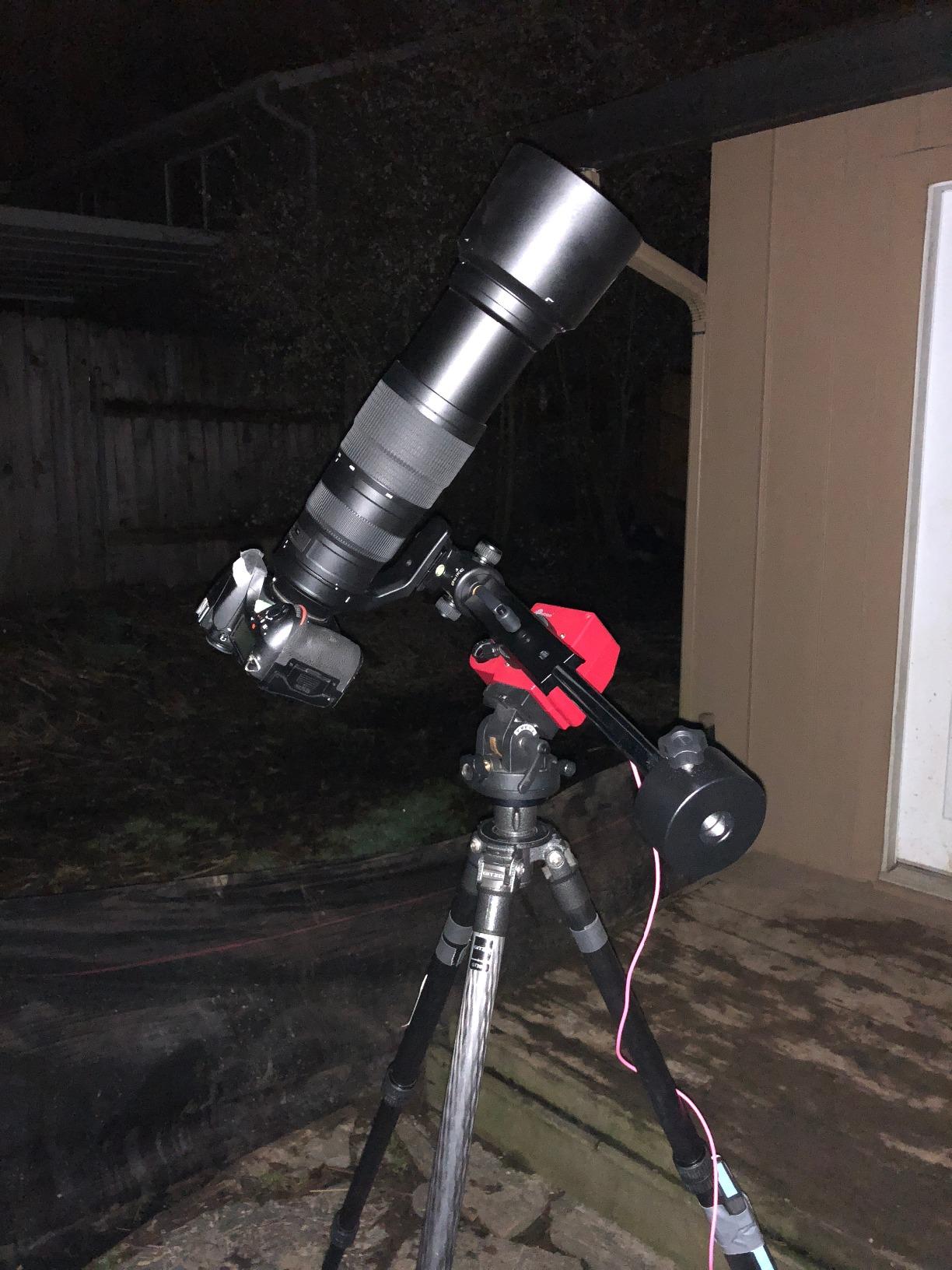
Reported exposures of one to five minutes come out trail-free with fast wide-angle lenses, which covers most nightscape work. The worm period of 600 seconds and the padded bag and polar scope in the box make it a complete grab-and-go package at 3.3 lb.
The constraint is the 6.6 lb ceiling, which arrives quickly with a telephoto zoom. The optional counterweight extends it, and the dimmable polar scope LED plus multiple adjustment knobs make alignment fast in the field.
Is it too light to be worth buying?
Not for its intended use. The rating reflects a small job done well rather than a limited mount, and the 3 kg maximum weight recommendation in the specifications is a real ceiling rather than a marketing number.
If you want one tracker to cover both timelapse and deep imaging with a telephoto, the SkyGuider Pro in position two has more payload and the same basic form factor. If your kit is a small sensor camera and a wide prime, this is the lighter answer.
What about Arca-Swiss compatibility?
Not built in, which is the most common upgrade request among owners. The dovetail base can feel unstable in a heavy head, and the swivel head rubber cushion is reported to slip and limit contact area under load.
It does not stop the mount working. It does mean you should keep loads within the rating rather than approaching it, and if your existing tripod head is Arca-equipped you will want a proper adapter before committing. Our ball mount roundup covers that hardware side of the decision.
10. Vixen POLARIE U as the Lightest Rig in the Roundup
Vixen POLARIE U Star Tracker
0.58 kg body weight
Five tracking speeds
ST4 autoguiding port on RA
Pros
- Compact and very light for travel astrophotography
- Multiple tracking speeds including half speed
- ST4 autoguiding port on the RA axis
- Smartphone shutter release simplifies interval shooting
- Well regarded for timelapse work
Cons
- Very light payload limits it to small cameras and short focal lengths
- RA-only autoguiding means declination cannot be corrected
- No GoTo pointing so targets must be located manually
- Requires AA batteries or an external USB-C supply
The POLARIE U is the lightest complete tracking solution here at 0.58 kg, and it is the mount I would hand someone who wants tracked frames from an ultra-wide lens with almost no other gear.
Five tracking speeds cover everything from full sidereal to slower rates for ground-and-sky composites, and the ST4 autoguiding port on the RA axis gives you a correction channel that most trackers this size omit entirely.
Smartphone shutter release turns it into a genuine interval shooting platform, which is why it is well regarded for timelapse. The package includes the finder unit, an Allen wrench and the instruction manual.
The limits are structural. RA-only autoguiding means declination drift is never corrected, there is no GoTo pointing at all, and the very light build caps it at small cameras and short focal lengths.
How does it compare with the Kenko Sky Memo S?
The Vixen is smaller and lighter and has smartphone control plus autoguiding. The Kenko is the more straightforward mount with an illuminated polar scope and a slightly more substantial build.
Pick the Vixen if you are shooting with a compact camera and a wide lens, and the Kenko if you want a plain mechanical tracker with alignment built in. Both sit at the lightweight end where focal length is the binding constraint.
Is RA-only autoguiding worth having?
For wide fields, yes. Most of the correction that matters at short focal lengths is along the RA axis, so an ST4 port on one axis still removes a meaningful share of the drift.
For anything long, no. Without declination correction the residual field rotation and dec drift stay in your data, and at that point you need one of the dual-axis equatorial mounts higher up this list.
How to Choose a Telescope Mount for Astrophotography in 2026
The most common mistake in this hobby is buying the mount after the telescope, or sizing to the telescope you own rather than the one you want. Mounts routinely outlive two or three telescopes, so size for the heaviest rig you realistically plan within five years.
Why equatorial beats alt-azimuth for long exposures
An alt-azimuth mount points in two axes relative to the ground. Over a long exposure it must counter-rotate the field continuously to keep stars fixed, and that rotating field rotation shows up in your data as trailing and field tilt that stacking cannot remove.
An equatorial mount aligns one axis with the celestial pole, so a single axis of rotation does the tracking while the other simply holds position. That is the entire reason every mount in this roundup is equatorial, and it is why trackers exist as a category at all.
Payload: the 50% rule worked through
Add your telescope, camera, guide scope, rotator, cables and adapters, then halve the mount’s rated payload. A camera with a 200mm lens is roughly 4 lb. Add a guide scope and rings and you are near 6 lb, which points to the 11 lb SkyGuider Pro or the 30 lb Advanced VX.
An 80mm refractor imaging train commonly lands between 15 and 20 lb, which puts the Advanced VX at a sensible 30 lb working figure and the EQ6-R Pro into range for the heavier versions. The Star Adventurer 2i at 7 lb handles the camera category and nothing beyond it.
Belt-driven worm gear versus harmonic drive mounts
There are no strain wave drive mounts in this particular roundup, so the choice is belt-driven worm gear against simple camera trackers. Belt drives like the EQ6-R Pro cut periodic error and remove backlash, which is why long focal lengths demand them.
Camera trackers use a simpler single-axis drive with no dec axis at all. That is not a compromise if your focal length is short, because there is nothing to correct and nothing to go wrong. For those rigs the honest trade is smoothness and weight against capability you will never need.
Autoguiding, RMS error and periodic error
Periodic error is the mount’s own tracking wobble, repeating on a fixed cycle caused by gear imperfections. Backlash is the lost motion when a gear reverses direction under a guiding correction. Wobble is the flex of the whole system under load.
Your guider measures star drift and sends pulses to cancel it, and the RMS guiding error in arcseconds tells you what is left. Well set up equatorial mounts with belts reach well under an arcsecond. Budget worm gear mounts typically sit higher, and a figure that will not drop below 2 arcseconds usually points to balance or polar alignment rather than the mount itself.
Forum threads make this point constantly: most “bad mount” complaints are really bad polar alignment or an unbalanced train. Take backlash up manually before you calibrate, by slewing fully in one direction and stopping gently, then aligning before you judge the hardware.
Polar alignment and app ecosystems
Illuminated polar scopes, such as the one on the Star Adventurer 2i, and sight holes on the iEXOS-100-2 are the fast manual routes. Software alignment through SharpCap or an electronic scope works well once you know it, but it is a slower first night.
App control is worth thinking about as an ecosystem choice. SynScan on the EQ6-R Pro is mature and well supported. SAM Console on the Star Adventurers is simpler and narrower. ExploreStars covers Apple, Android and Windows tablets. None of them locks you out of ASCOM-compatible capture and guiding software, but the app does determine how pleasant GoTo feels.
The accessories you need beyond the mount head
This is where budgets quietly run out. A portable tracker needs a solid tripod head, which several listings exclude. A long refractor needs a counterweight kit to balance near the axis. Guiding needs a guide scope, a camera and a guide interface cable.
Control and power add more. Most mounts ship with a hand controller or app, but many imagers run an all-in-one imaging controller instead. Take a DC power supply or battery pack seriously, because voltage drops during a long sequence cause exactly the kind of guiding problems owners blame on the mount.
Stability is the part people treat as an afterthought, and we see the same lesson in strut mount selection for cars: the bracket matters as much as the hardware it clamps. Balance the train, then secure it so nothing can shift.
Dovetail compatibility deserves a final check. The Advanced VX accepts CG-5, CGE-style and Vixen format dovetails, so your existing tube may mount directly, while other heads need a specific saddle. It is a five-minute check that saves an evening.
Frequently Asked Questions
What mount do I need for astrophotography?
For a camera and lens under 300mm, a portable tracker such as the Sky-Watcher Star Adventurer 2i or iOptron SkyGuider Pro is enough. For an 80mm refractor or an 8-inch Newtonian, you want a motorized equatorial mount with a payload rating at least twice your total train weight, such as the Celestron Advanced VX or the Sky-Watcher EQ6-R Pro. Buy for the heaviest telescope you plan to own, not the one you own now.
Do you need an equatorial mount for astrophotography?
Yes, for anything longer than a few seconds per frame. An alt-azimuth mount has to rotate the field continuously during a long exposure, producing field rotation and trailing that stacking cannot correct. An equatorial mount aligns one axis with the celestial pole so that axis alone tracks the stars, which is why every mount recommended for astrophotography is equatorial.
How accurate are equatorial mounts?
A well balanced, well aligned equatorial mount with belt-driven stepper motors can guide to well under one arcsecond of RMS error. Budget worm gear mounts typically sit in the one to three arcsecond range, which is usually fine for short focal lengths. If your guiding error will not improve, check polar alignment and balance first, since both cause the same symptoms as a poor mount.
Do I need GoTo for astrophotography?
No, GoTo is a convenience rather than a requirement. Many imagers shoot the same objects all season and confirm the field with a plate solve after manual centring. GoTo genuinely helps beginners and anyone moving between several targets in one night, because it removes the twenty minutes of hunting that otherwise reduces a session to two or three exposures.
How much payload capacity do I need for astrophotography?
Use the 50% rule. Total your telescope, camera, guide scope, rotator and cables, then choose a mount rated at roughly twice that figure. A camera with a telephoto zoom lands near 6 lb, an 80mm refractor train near 15 to 20 lb. Staying well inside the rating keeps the axis balanced and the guiding corrections small, which matters more than the headline number.
Final Verdict: Best Telescope Mounts for Astrophotography in 2026
The Sky-Watcher Star Adventurer 2i Pro Pack is our best telescope mount for astrophotography in 2026. It carries a 4.4 rating across 609 reviews, weighs 7 pounds, has an integrated illuminated polar scope and an autoguider port, and it costs you nothing in fuss. For a belt-driven tracker that holds long lenses, the iOptron SkyGuider Pro is the pick, and for a complete portable rig with motorized pointing, the Star Adventurer GTi covers the bases.
Move up to the Celestron Advanced VX for a 30 lb rating and full GoTo, or to the Sky-Watcher EQ6-R Pro when you need 44 lb and sub-arcsecond guiding at long focal lengths. Whichever you choose, weigh the train, polar align accurately and keep the load near half the rated payload. That single habit fixes more imaging problems than any mount upgrade.