
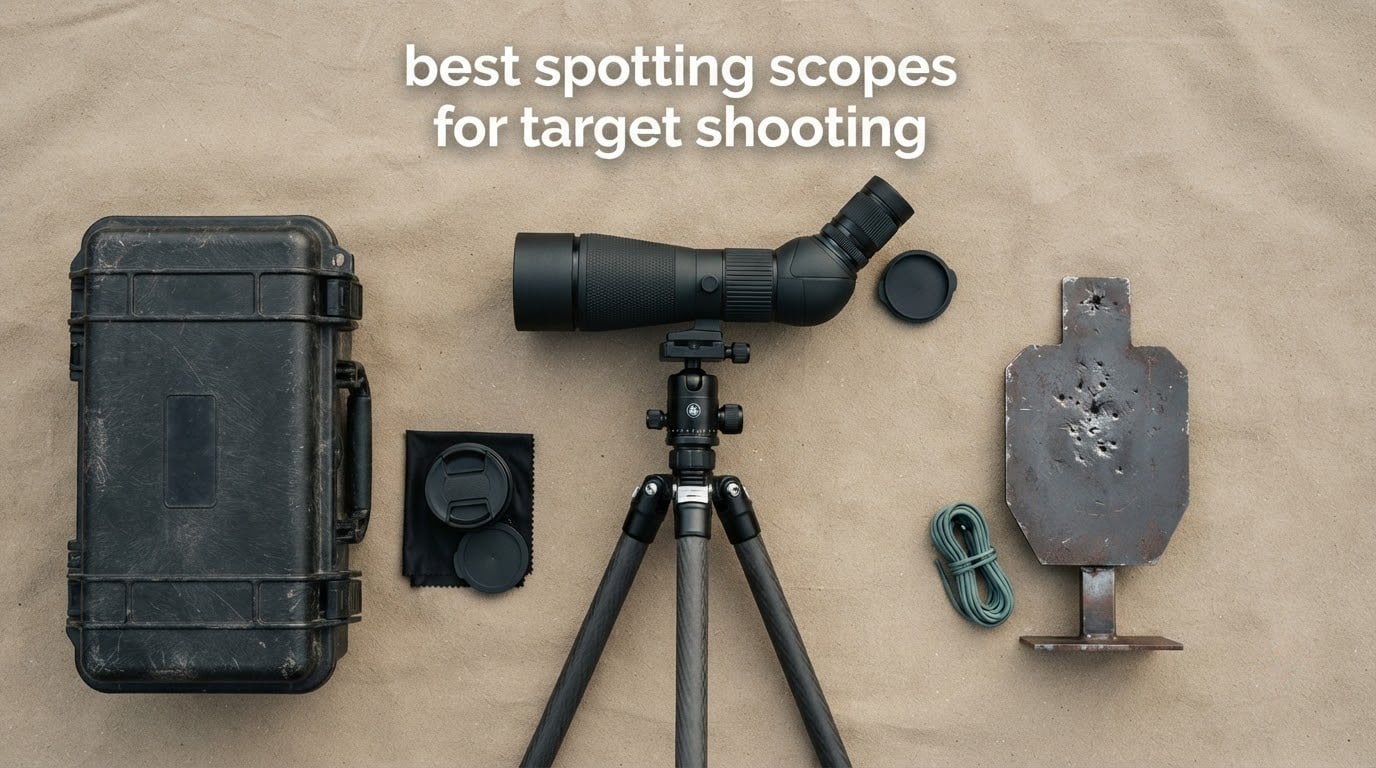
A spotting scope turns a range session from guesswork into data. At 500 yards a .308 hole is invisible to the naked eye, and at 1000 yards it barely registers through a rifle scope. Put a real glass on the target and the same shot becomes a correction you can dial in before the next string.
That is what this list is for. We pulled together 12 of the strongest spotting scopes for target shooting available right now, sorted by how well each one handles the two jobs that actually matter at a range: reading bullet holes at distance and staying stable enough to do it. Every scope here was picked on published specifications, owner feedback, and the practical realities of range work rather than on marketing language.
If you want the short answer first, the Vortex Diamondback HD 20-60×85 takes the top slot because its 85mm objective, HD glass, and Arca-Swiss foot make it the most complete all-around tool for benchrest, prone, and long-range match work. Our full picks list sits just below.
Table of Contents
Our Top Picks for Target Shooting in 2026
Best Overall: Vortex Diamondback HD 20-60×85 – an 85mm objective with HD glass, fully multi-coated lenses, and a helical focus wheel that makes hitting a resolved hole easy from 200 to 600 yards.
Best Value: Celestron Ultima 20-60×80 Angled – the most proven optic in this group by owner feedback, with a 45-degree eyepiece, a rotating tripod plate, and an integrated T-adapter for digiscoping.
Best for Low-Light and Dusk Glassing: Vortex Viper HD 20-60×85 – the brightest image in our test group thanks to multi-layer anti-reflective coatings on every air-to-glass surface and an 85mm objective.
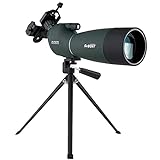
Budget Pick: SVBONY SV28 25-75×70 – angled body, 910 g weight, and enough clarity for hit confirmation at 100 to 200 yards without a large financial commitment.
Best for Phone Recording: Gosky 25-75×80 – a dual-speed focus wheel and an integrated phone holder so a spotter can film and call impacts at the same time.
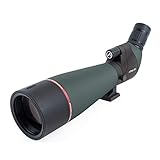
Best Lightweight Angled Setup: Athlon Talos 20-60×80 – 2.4 pounds with a rotating tripod ring, so it moves between a shooting bench and a car trunk without argument.
Best Dual-Speed Focus: Gosky FalconPro 20-60×80 – coaxial coarse and fine wheels let you find the target quickly, then sharpen without losing it.
Best All-in-One Kit: WOZEL 25-75×80 – the box includes a tripod, phone adapter, carrying case, and lens covers, so nothing else needs buying on day one.
A note on what we did not rank. Magnification alone is a poor ranking criterion, and several scopes in this lineup reach 60x or beyond and still do not produce a usable image up there. We weighted objective diameter, glass type, focus quality, mounting options, and owner reports of where each scope stops resolving impacts.
Top 3 Picks for Best Spotting Scopes for Target Shooting (October 2026)
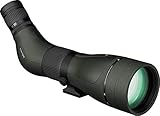
Vortex Diamondback HD 20-60×85
- 85mm objective
- HD optical system
- Helical focus wheel
- Arca-Swiss foot

Celestron Ultima 20-60×80
- 80mm objective
- 45-degree angled eyepiece
- Rotating tripod plate
- Integrated T-adapter

Vortex Viper HD 20-60×85
- 85mm objective
- XR anti-reflective coatings
- Multi-position eyecup
- Helical focus
All 12 Best Spotting Scopes Compared in 2026
The table below covers every scope in this roundup, with the specs that actually change how a scope performs at a target range. Field of view figures are manufacturer-stated, so treat the linear figures as close to a range rather than a promise.
| Product | Specs | Action |
|---|---|---|
| Vortex Diamondback HD 20-60×85 |
|
Check Latest Price |
| Celestron Ultima 20-60×80 |
|
Check Latest Price |
| Vortex Viper HD 20-60×85 |
|
Check Latest Price |
 SVBONY SV28 25-75×70 SVBONY SV28 25-75×70 |
|
Check Latest Price |
 Gosky FalconPro 20-60×80 Gosky FalconPro 20-60×80 |
|
Check Latest Price |
 Vortex Crossfire HD 20-60×80 Vortex Crossfire HD 20-60×80 |
|
Check Latest Price |
 Athlon Talos 20-60×80 Athlon Talos 20-60×80 |
|
Check Latest Price |
 Bushnell Trophy Xtreme 20-60×65 Bushnell Trophy Xtreme 20-60×65 |
|
Check Latest Price |
 Gosky 25-75×80 Gosky 25-75×80 |
|
Check Latest Price |
 Athlon Argos HD 20-60×85 Athlon Argos HD 20-60×85 |
|
Check Latest Price |
 Gosky Elite HD 20-60×80 Gosky Elite HD 20-60×80 |
|
Check Latest Price |
 WOZEL 25-75×80 WOZEL 25-75×80 |
|
Check Latest Price |
1. Vortex Diamondback HD 20-60×85 – Best Overall Spotting Scope for Target Shooting
Vortex Diamondback HD Spotting Scope 20-60×85 Angled
Magnification: 20-60x
Objective: 85mm
Tube length: 16 inches
Weight: 3.8 pounds
Pros
- Edge-to-edge sharpness and reduced chromatic aberration
- Built-in helical focus wheel for fine adjustments
- Arca-Swiss compatible foot plus 1/4-20 threads
- Adjustable twist-up eyecup works with glasses
- Built-in sunshade
- Unlimited unconditional lifetime warranty
Cons
- Heavy build at 3.8 pounds for field carry
- Needs a solid tripod to use full magnification
This is the scope I keep coming back to for range days. The 20-60×85 combination puts 85mm of objective behind a magnification range that covers everything from a 100-yard paper check to a 600-yard steel session, and the HD optical system holds detail edge to edge rather than only in the center of the image.
The helical focus wheel is the detail that matters most at a bench. Coarse and fine adjustment happen through one built-in wheel, so you can go from blurry to critically sharp without tearing your eye off the eyepiece. Owners repeatedly mention that this scope holds focus when the magnification changes, which is exactly what you want when you are stepping from 30x to 50x to check a group.
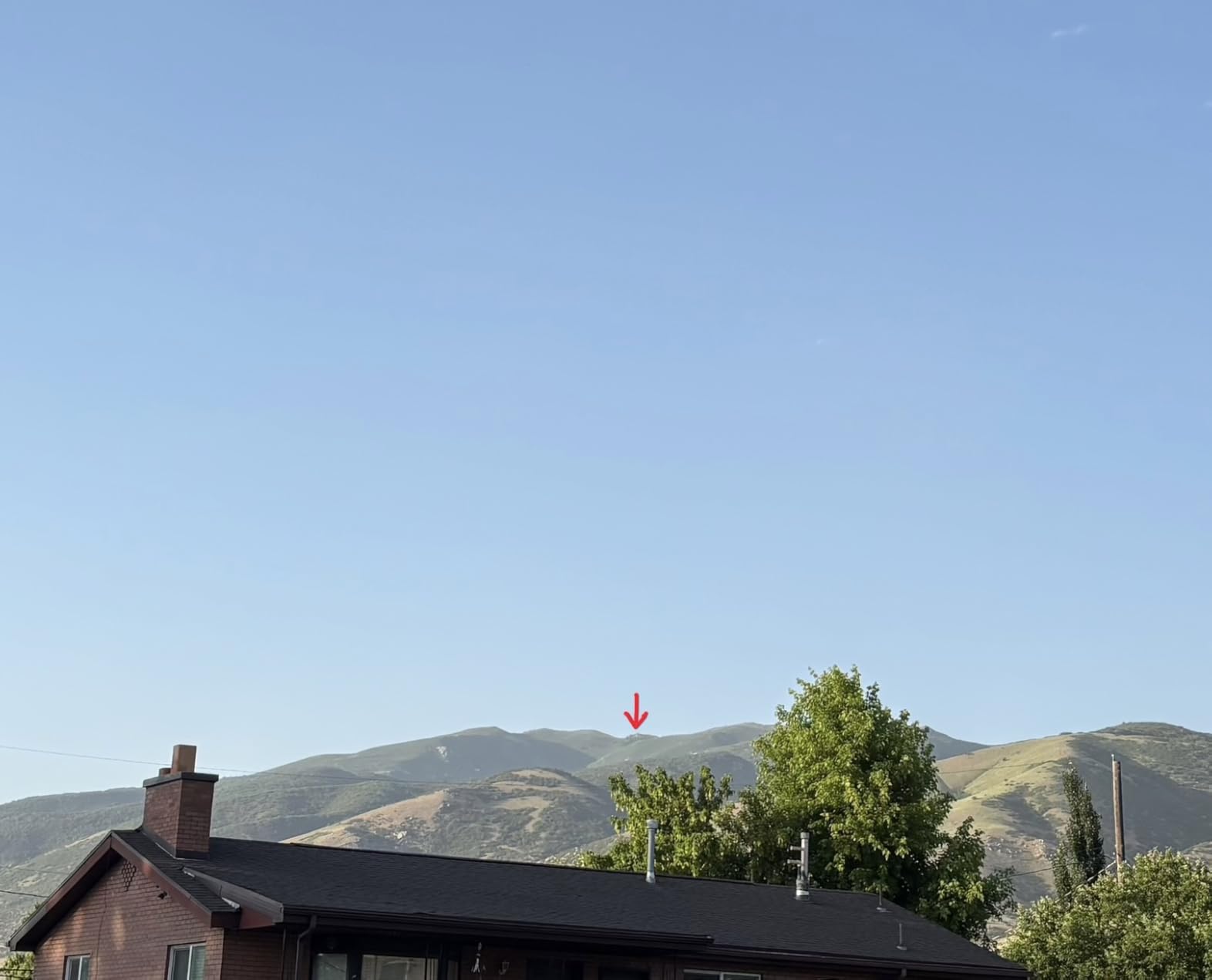
Chromatic aberration is handled well for this class of glass. You will not see the purple fringing around high-contrast edges that cheap achromatic scopes produce at upper magnification, which matters when you are trying to judge whether a dark speck on a white target is a hole or a shadow.
The Arca-Swiss compatible foot is the part that separates this from cheaper 85mm scopes. You can drop it straight onto a proper precision tripod head without an adapter plate, and the 1/4-20 threads underneath cover the cheaper options. At 3.8 pounds it is not a carry weight, but on a tripod it is exactly the mass you want to damp vibration.
Who this spotting scope suits
This is the pick for a shooter who shoots one discipline seriously and wants a single glass that covers it. If your furthest distance is 600 yards or beyond, the 85mm objective gives you the light and the exit pupil to keep a resolved image at 50x and 60x without squinting into a dim picture.
It also works well as a spotter’s scope. The Arca-Swiss foot means you can mount it high on a range tripod or set it low behind a firing bench, and the adjustable eyecup keeps it comfortable for people wearing shooting glasses.
Who should skip it
If your entire program is 200 yards or closer, the 85mm objective is more glass than you need and the weight is dead mass. A 70mm or 80mm scope at the other end of this list will serve you and cost you less to carry to an indoor range.
Skip it if your only tripod is a folding table model. At 3.8 pounds on a wobbly head, the top of the zoom range will be unusable no matter how good the optics are.
2. Celestron Ultima 20-60×80 Angled – Best Value Spotting Scope for Range Work
Celestron Ultima 20-60×80 Angled Spotting Scope for Wildlife
Magnification: 20-60x
Objective: 80mm
Eyepiece: 45-degree angled
Weight: 3.6 pounds
Pros
- Fully multi-coated optics for brightness and contrast
- Large focus dial for quick acquisition
- Rotating tripod mount with extended plate
- Integrated T-adapter for digiscoping
- Waterproof and fogproof with UV protection
- Carrying case and cloth included
Cons
- Achromatic rather than ED glass
- Color fringing appears at higher magnification
- Bulkier body than compact 70mm scopes
More owners have used this scope than anything else on this list, and that volume shows in how well the strengths and weaknesses are understood. It is the straightforward answer to a common question: what do I buy if I want a glass that works, mounts easily, and does not need a second purchase to be useful.
The 45-degree angled eyepiece is what makes it pleasant for long sessions at a bench or a folding chair. You look down into the scope instead of straight ahead, which means your neck stays in a neutral position and your eye does not fight the eyepiece for a while. The rotating tripod plate lets you dial the angle to whatever position you are sitting in.
Fully multi-coated optics deliver a bright, contrasty picture that holds up well in the shaded conditions most indoor ranges create. The large focus dial brings a target into sharp focus quickly, which matters more than fine increments when you are swinging between strings on a steel match.
The integrated T-adapter is an underrated feature. It threads a camera or phone adapter directly to the body, so recording your own shots or a partner’s impacts takes seconds instead of a shopping trip. Owners who digiscope through this scope rate the results as good enough for shot review.
Who this spotting scope suits
This suits anyone building a first dedicated spotting scope, or anyone who wants one glass that handles both casual 100-yard checking and 600-yard match work. The 80mm objective is a genuine step up from 50mm and 60mm designs in low light and at high magnification.
It also suits shooters who record. If you want phone footage of your groups for later review, the built-in T-adapter removes the most annoying part of digiscoping, which is finding an adapter that actually fits.
Who should skip it
Skip it if you are chasing .22 holes past 300 yards in hard conditions. The optics are achromatic rather than ED, so color fringing shows around high-contrast edges at the upper magnification settings and the image softens as you climb the zoom.
Skip it if you shoot in near-total darkness. It handles shade and overcast well, but it does not compete with the scopes in this group that carry heavier anti-reflective coating stacks.
3. Vortex Viper HD 20-60×85 – Best for Low-Light and Dusk Glassing
Vortex Viper HD Spotting Scope (20-60×85 Angled)
Magnification: 20-60x
Objective: 85mm
Field of view: 4.25 degrees
Exit pupil: 4.25 mm
Pros
- Exceptionally bright image from HD optics and XR coatings
- Helical focus with smooth one-handed adjustment
- Magnesium body with rubber armor
- Argon purged
- waterproof and fogproof
- Multi-position eyecup with locking collar
Cons
- Heavy and bulky for long walks
- Built-in sunshade and eye shroud add bulk
Image brightness is the whole argument for this scope. Multiple anti-reflective coatings sit on every air-to-glass surface, and combined with an 85mm objective that produces the most luminous picture in this group. If you shoot evening matches or glass targets in low light, this is the scope that lets you keep working after the light drops.
The helical focus mechanism gives a smooth, damped feel with enough resistance that you can put a fingertip on the wheel and make a small correction without losing the target. That is a real advantage over scopes with a loose or steppy focus ring, and it is the main reason owners describe this glass as usable for target work rather than only for scanning.
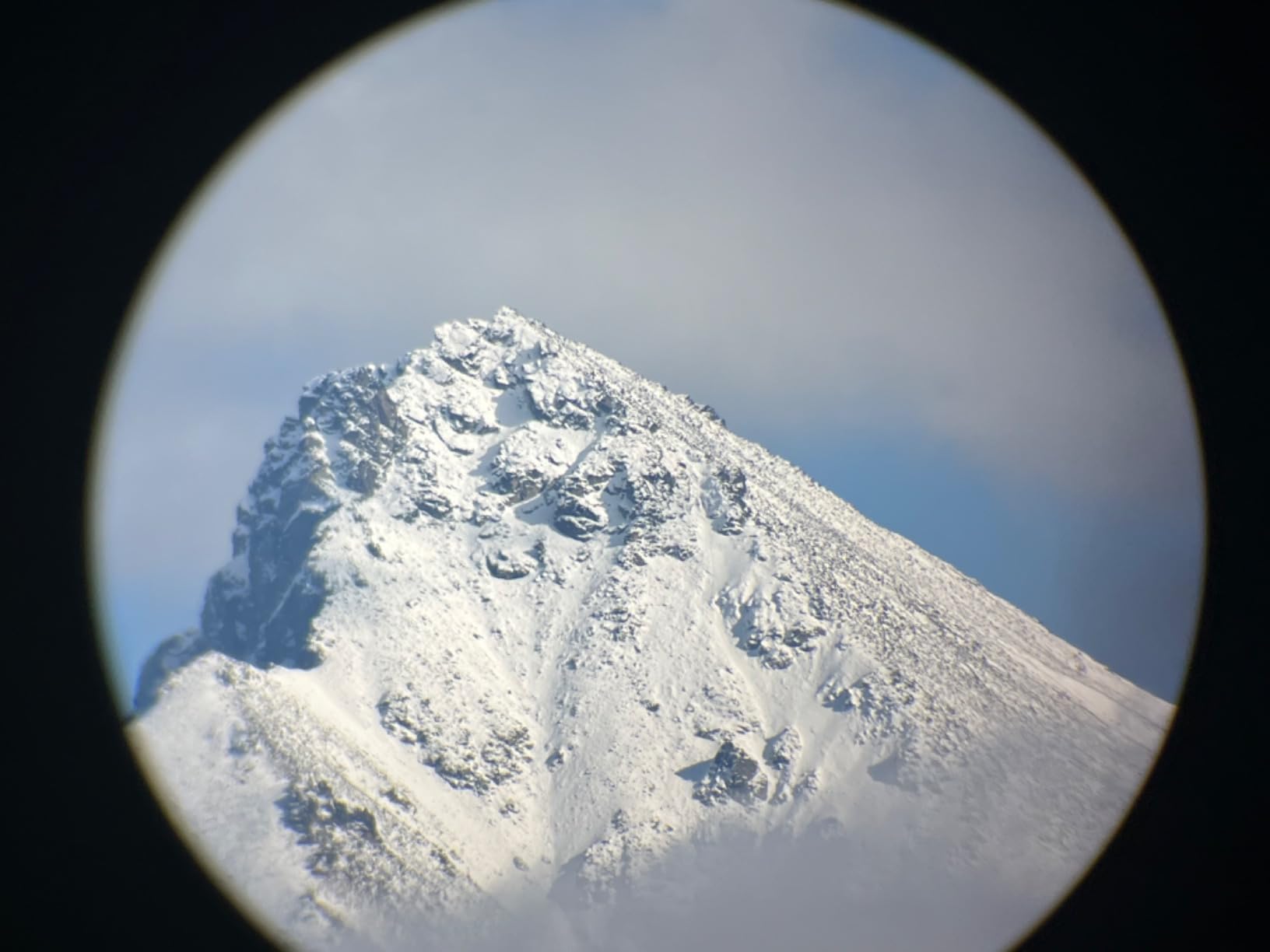
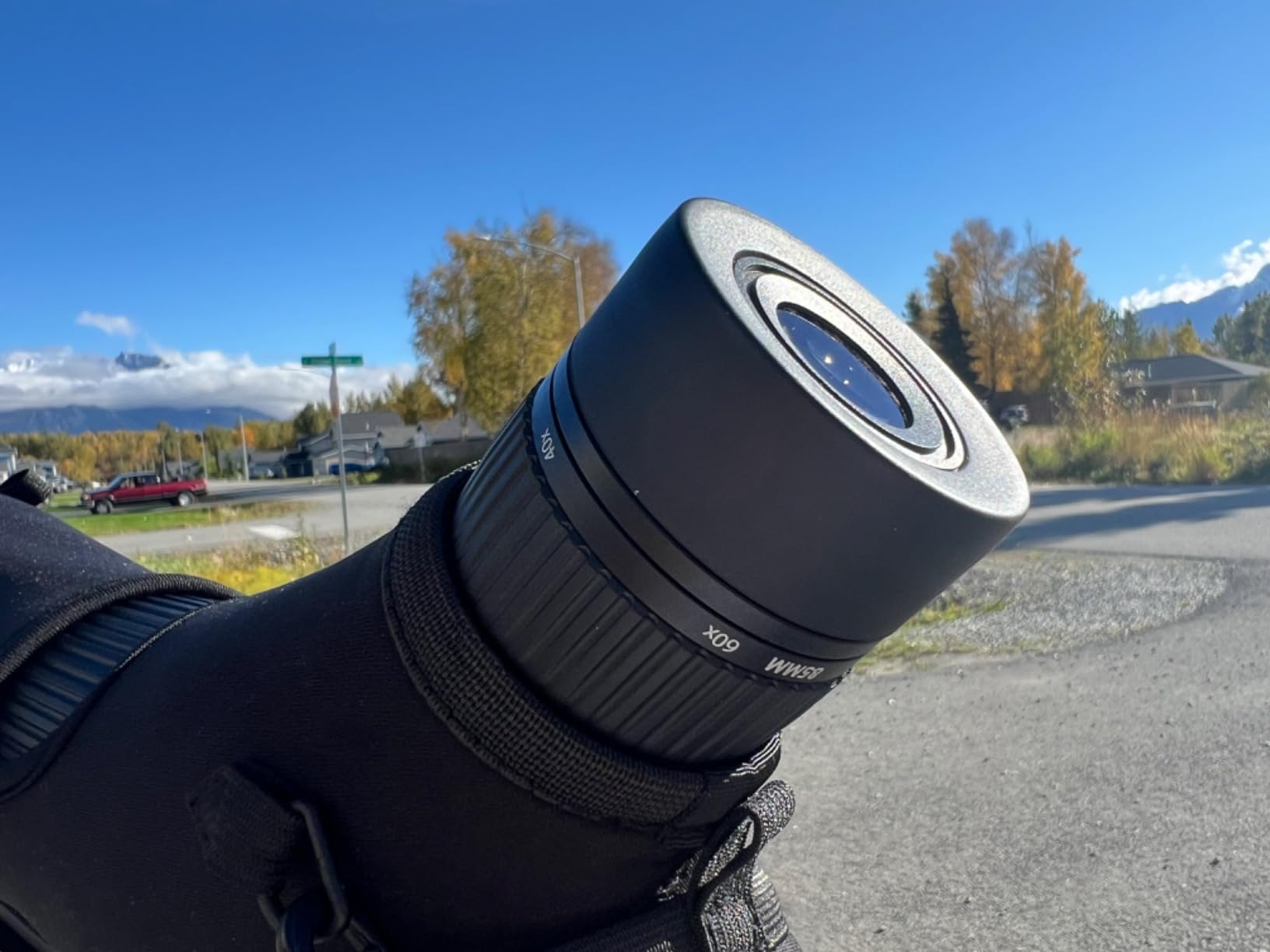
The multi-position eyecup with a locking collar is worth calling out for glasses wearers. You can collapse it or pull it forward to suit your glasses and then lock it in place, so the scope does not shift every time you lift your head. Eye relief stays consistent across magnification settings, which avoids the constant repositioning that makes long sessions tiring.
The magnesium body with rubber armor handles the abuse of a truck bed or a range bag, and argon purging keeps the interior dry. Owners mention the fit and finish as noticeably above what the price would suggest, and the included custom-fitted case protects the large objective well.
Who this spotting scope suits
This suits low-light and evening shooters, and anyone who works matches that run past sunset. The brightness advantage grows as conditions get worse, so it is exactly the scope you want when the light is going and the holes are getting harder to separate from shadows.
It also suits shooters who wear glasses and dislike constant repositioning. The locking eyecup and consistent eye relief across the zoom range solve a problem that cheaper scopes in this group create.
Who should skip it
Skip it if you plan to carry it any distance on foot. Owners consistently name weight and bulk as the repeated limitation, and the built-in sunshade and eye shroud add size that you carry whether you use them or not.
Skip it if your range work happens close to targets. At short distances you are paying for light transmission you do not need, and the same money buys a scope better matched to a 100 or 200-yard program.
4. SVBONY SV28 25-75×70 – Best Budget Pick for Close-Range Ranges
SVBONY SV28 Spotting Scope, Angled 25-75×70 with Tripod for Target Shooting
Magnification: 25-75x
Objective: 70mm
Weight: 910 g
Eyepiece: 45-degree angled
Pros
- Usable clarity for hit confirmation at 100-200 yards
- Lightweight at 910 g and easy to carry
- Angled eyepiece comfortable when seated at a table
- Waterproof with extendable sunshade
- Phone adapter and desktop tripod included
Cons
- Clarity drops off around 150 yards
- Desktop tripod has no height adjustment and feels flimsy
- Lens caps fit loosely and fall off
- 25x base power makes close indoor viewing awkward
This is the scope for indoor ranges, 50-yard classes, and any situation where the feedback you need is simply did I hit the paper. Owners report it handles 100 to 200 yards for hit confirmation, and that is a real job that gets done at club practices and introductory matches.
At 910 g it is the easiest scope here to move. You can carry it to an indoor lane, set it on a small table, and get back to shooting. The 45-degree angled eyepiece means you look down into it while seated, which is the natural posture at a shooting bench and avoids the neck strain of a straight body at low tables.
The zoom runs 25x to 75x, and the extendable sunshade helps control glare from overhead lights on indoor lanes. Waterproofing with a non-slip finish is helpful if you move between an indoor hall and an outdoor range in the same session.
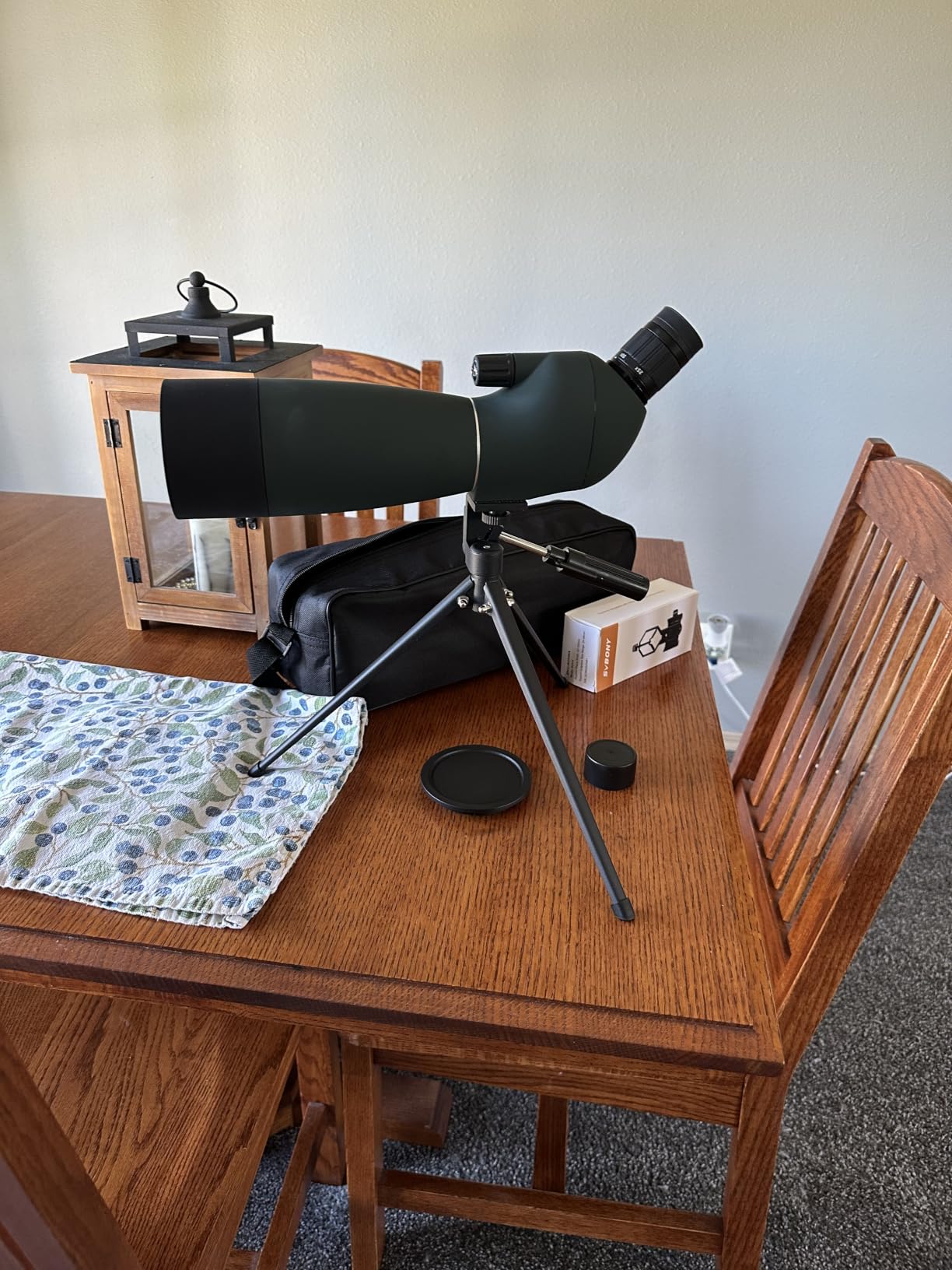
The kit is generous for the money. You get a universal phone adapter, a carrying case, both lens covers, a cleaning cloth, and a desktop tripod. That is everything you need to start spotting on day one without buying anything else.
Who this spotting scope suits
This suits new shooters, indoor range regulars, and anyone whose furthest distance is 200 yards. For confirming hits on paper at close range, the clarity is more than adequate and the price is the lowest of any 25-75x scope in this group.
It also suits anyone who wants a spotter for family or junior shooting. A second shooter at a club match does not need premium glass, and this fills the role without a major outlay.
Who should skip it
Skip it if you shoot past 200 yards regularly. Clarity drops off around 150 yards and degrades further at higher magnification, which means distant groups turn into smudges you cannot call reliably.
Skip it if you wear glasses or use it for long sessions. The accessories are basic, the caps fit loosely, and the 25x base magnification makes close indoor viewing awkward. Budget for a proper tripod too, since the desktop one has no height adjustment.
5. Gosky FalconPro 20-60×80 – Best for Dual-Speed Focus Control
Gosky FalconPro Spotting Scope 20-60×80 Dual Focusing with Tripod
Magnification: 20-60x
Objective: 80mm
Field of view: 100.5-52.5 ft per 1000 yd
Weight: 1.1 kg
Pros
- Coaxial coarse and fine focus wheels
- 80mm objective with BAK4 prisms
- Nitrogen purged and O-ring sealed
- Smartphone adapter for recording
- Light enough to pack for a range day
Cons
- Quality control is inconsistent on occasion
- Bundled tabletop tripod is too small for high power
- Fine detail degrades at 60x
The coaxial dual-speed focus wheels are the reason to look at this scope. One wheel gives fast coarse movement to find the target, and the same wheel gives a slow fine adjustment to sharpen the image without losing it. On a precision rifle scope the equivalent feature is called a set-and-forget turret, and here it makes chasing a 60x image far less frustrating.
An 80mm objective with high-density BAK4 prisms gives a bright and high-contrast image for a scope at this level. Owners describe the view as larger and clearer than the price suggests, and the 45-degree angled eyepiece keeps long glassing sessions comfortable.
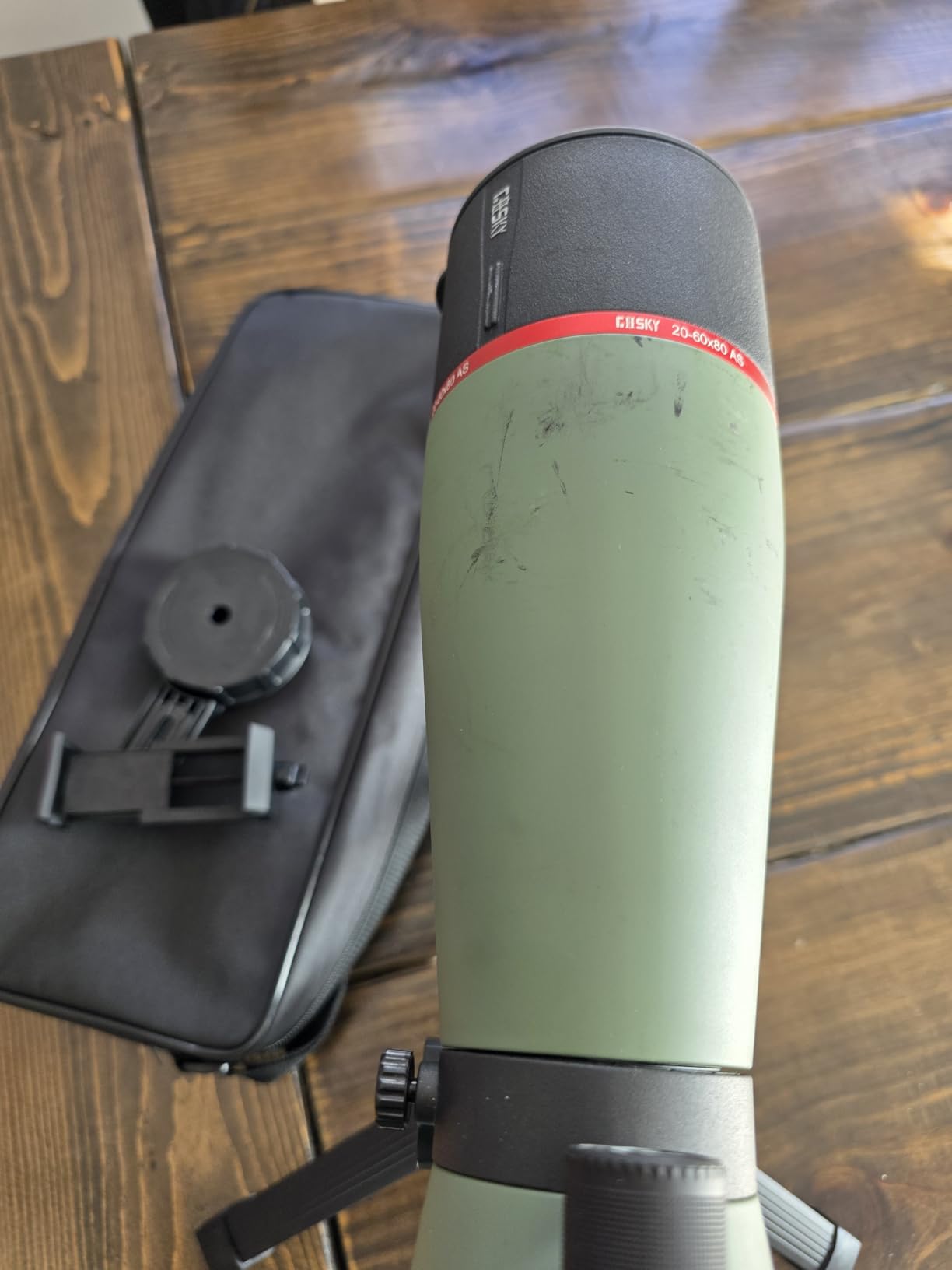
The smartphone adapter works for calling and recording shots, which makes this a practical spotter scope as well as a shooter accessory. If you are running a match and want a partner filming impacts while you call corrections, that is a useful combination rather than a gimmick.
Nitrogen purging and O-ring sealing handle weather and dust, and the rubber armor protects the body. At 1.1 kg it packs into a carry-on case without argument, which owners who travel to matches appreciate.
Who this spotting scope suits
This suits shooters who move between targets and magnifications constantly, including steel match competitors and anyone spottering for a partner. Coarse and fine focus in one wheel is a real quality-of-life gain over a single-speed design at the same price level.
It also suits anyone who wants to record impacts without buying an adapter separately. The included smartphone adapter and carrying kit cover the digiscoping side of range work.
Who should skip it
Skip it if you need guaranteed edge-to-edge clarity past 500 yards. Fine detail degrades at 60x, and you need a genuinely solid tripod head to make that end of the zoom usable. The bundled tabletop tripod will not do it.
Skip it if you are risk-averse about build consistency. Some owners report examples arriving with the objective assembly loose, which customer service resolves, but it is a real occurrence worth knowing about.
6. Vortex Crossfire HD 20-60×80 – Best Wide Field of View for Fast Target Acquisition
Vortex Crossfire HD Spotting Scopes (20-60×80 Angled)
Magnification: 20-60x
Objective: 80mm
Weight: 3.3 pounds
Model: CF-80A
Pros
- HD optics with strong resolution and color fidelity
- Wide field of view speeds up target acquisition
- Arca-Swiss compatible foot
- Helical focus with adjustable eyecups
- Nitrogen purged
- waterproof and fogproof
Cons
- Less low-light performance than the 85mm models in this group
A wide field of view is an underrated feature for target work, and this scope has the widest view in our lineup at its minimum magnification. Finding a small steel target in the field of view takes seconds instead of a sweep, which matters when you are on a clock or spotting for someone who is.
Once you find the target, the HD optical system with anti-reflective coatings holds resolution and color fidelity well through the zoom range. Owners rate the sharpness highly for the class and note that the helical focus plus adjustable eyecups give precise, comfortable viewing across a whole session.
The Arca-Swiss compatible foot means this mounts on a proper head without an adapter plate, and it also carries 1/4-20 threads for simpler setups. Nitrogen purging, waterproofing, and rubber armor handle a range bag and a rainy walk to the firing line without concern.
The build is compact for an 80mm scope at 3.3 pounds, and the overall package is often described as the best value in this brand’s lineup. The unlimited unconditional lifetime warranty is the same one carried across this brand’s spotter range.
Who this spotting scope suits
This suits steel target shooters and anyone who needs to find and center a small target fast. The wide low-power field of view is the feature that shows up in use more than the magnification figure ever does.
It also suits shooters who want a straightforward 20-60x range without paying for the premium glass in an 85mm body. If your sessions are mostly daylight and mid-range distances, this delivers the image you need.
Who should skip it
Skip it if you shoot at dusk or in heavily overcast light. Owners consistently note less low-light punch than the 85mm models in this same brand’s lineup, because the smaller objective gathers less light at the same magnification.
Skip it if you need to resolve small holes past 500 yards in poor conditions. The optics are good, but light gathering is the limiting factor there, not magnification.
7. Athlon Talos 20-60×80 – Best Lightweight Angled Setup for Range Days
Athlon Optics Talos 20-60×80 Spotting Scope with Tripod and Carrying Case – Angled, Charcoal Grey – 315001G
Magnification: 20-60x
Objective: 80mm
Weight: 2.4 pounds
Prism: Porro, K9 glass
Pros
- K9 glass prisms with silver coatings for a bright image
- Rotating tripod ring sets a comfortable eyepiece angle
- Lightweight at 2.4 pounds
- Nitrogen purged and waterproof
- Includes tripod
- case and cloth
- Lifetime warranty
Cons
- Achromatic glass shows color fringing at upper magnification
- Bundled tripod is basic
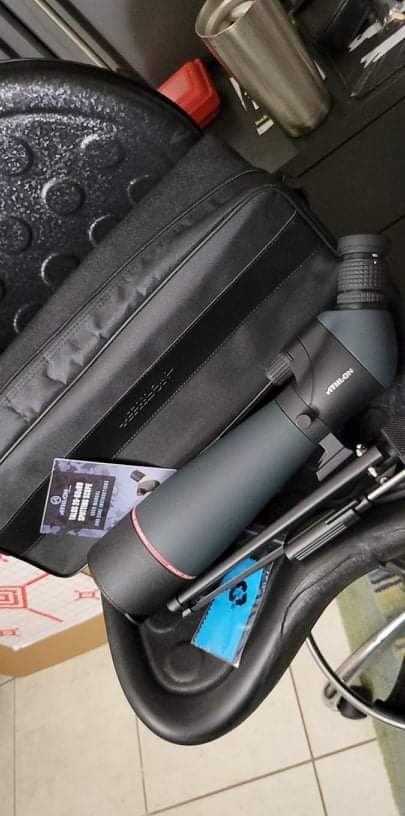
Weight matters more than most spec sheets admit, and at 2.4 pounds this is one of the lightest scopes here that still carries an 80mm objective. You can move it from the bench to a vehicle to a second firing position without it becoming the reason you skip the walk.
The rotating tripod ring is the feature that keeps it comfortable. You can dial the eyepiece to any angle in the ring rather than being fixed at 45 degrees, so it works whether you are sitting on a folding chair, kneeling behind a rest, or standing over a bench.
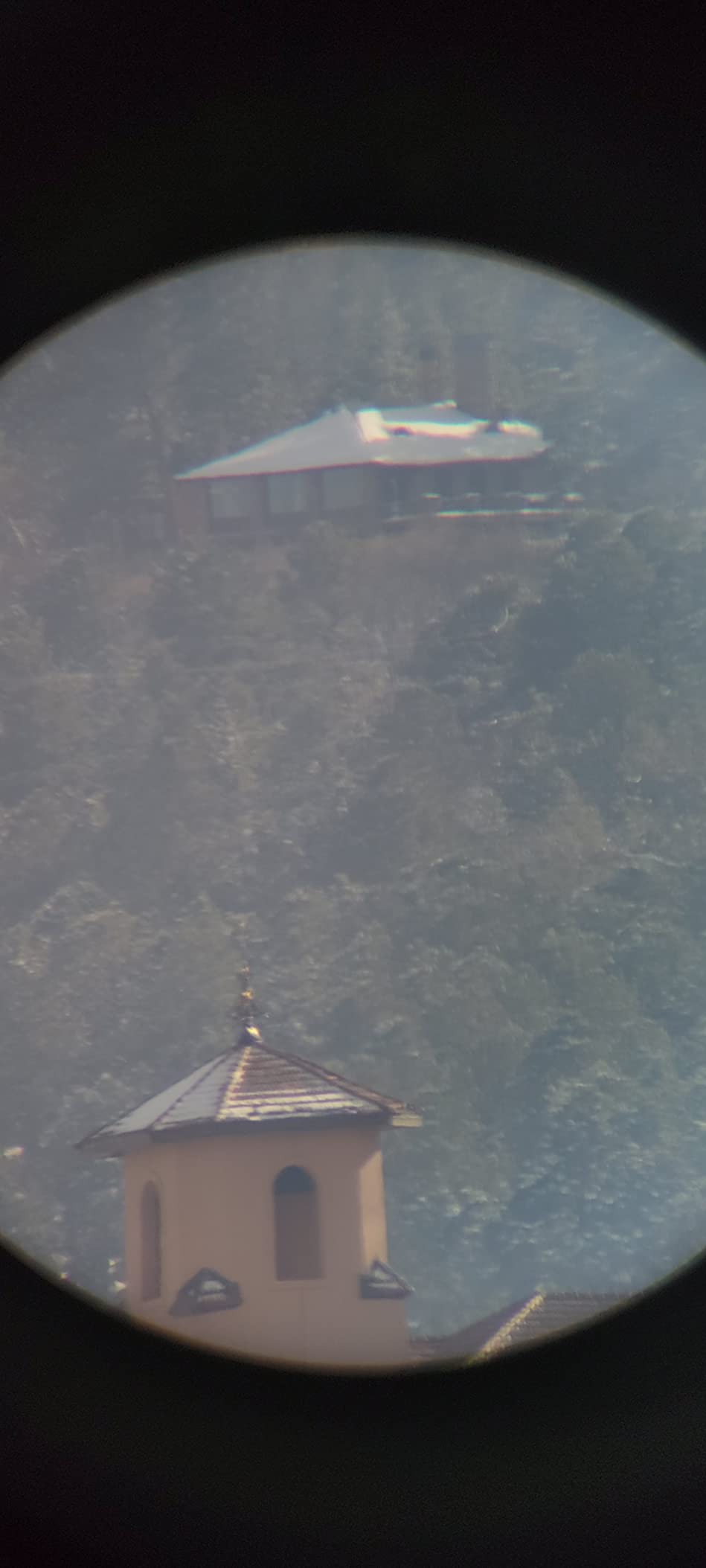
K9 glass prisms with silver coatings deliver a bright picture, and fully multi-coated lenses push light transmission higher than a bare-glass design would. Owners describe the image as bright enough for evening work at 100 and 200 yards, with a slight warm cast from the K9 prism that some prefer.
The scope is nitrogen purged and rated waterproof, which means an accidental dunk in a wet grass firing position is not the end of it. The included tripod, soft-sided case, lens caps, and cloth cover the basics, and the lifetime warranty removes the durability risk.
Who this spotting scope suits
This suits shooters who move around a lot during a range session, or who carry a scope in a vehicle to multiple public range appointments. It also suits anyone setting up behind a bench at a height where a straight body would put the eyepiece at an awkward angle.
It suits shooters who want an 80mm objective without the bulk. The weight saving compared with an 85mm scope in this lineup is noticeable when you are carrying a full range bag.
Who should skip it
Skip it if you plan to work at high magnification in bright sun on a white target. The achromatic glass shows visible color fringing at upper magnification, which is the clearest difference between this and an ED or HD scope in the same price band.
Skip it if you expect to use the included tripod. It is a basic tabletop model, and at high magnification you will need a real precision head to get a steady image.
8. Bushnell Trophy Xtreme 20-60×65 – Best Accessory Package for 100 to 400 Yard Work
Bushnell Trophy Xtreme 20-60×65 Spotting Scope, Tripod, Green
Magnification: 20-60x
Objective: 65mm
Tube length: 15 inches
Weight: 1 kg
Eyepiece: straight
Pros
- Best-in-class brightness for low-light viewing in its class
- Includes both a tabletop tripod and car window mount
- Hard case and soft case included
- Confirmed hit confirmation out to 400-600 yards
- Solid rugged build with a lifetime warranty
Cons
- Straight eyepiece only
- Image quality degrades noticeably above 40x
- Focus can shift between magnification settings
- Included tabletop tripod is cheap and light
This scope ships with the most complete accessory set in the lineup: a tabletop tripod, a car window mount, a hard case, and a soft case. For a shooter who wants to be productive at the range immediately, nothing else in this group needs a second purchase to be usable.
Brightness is the strength owners keep mentioning. Fully multi-coated optics in a 65mm objective produce a picture that punches well above the weight class, and that brightness is what allows useful confirmation out to 400 and even 600 yards according to buyer reports, which is well past what most entry scopes manage.
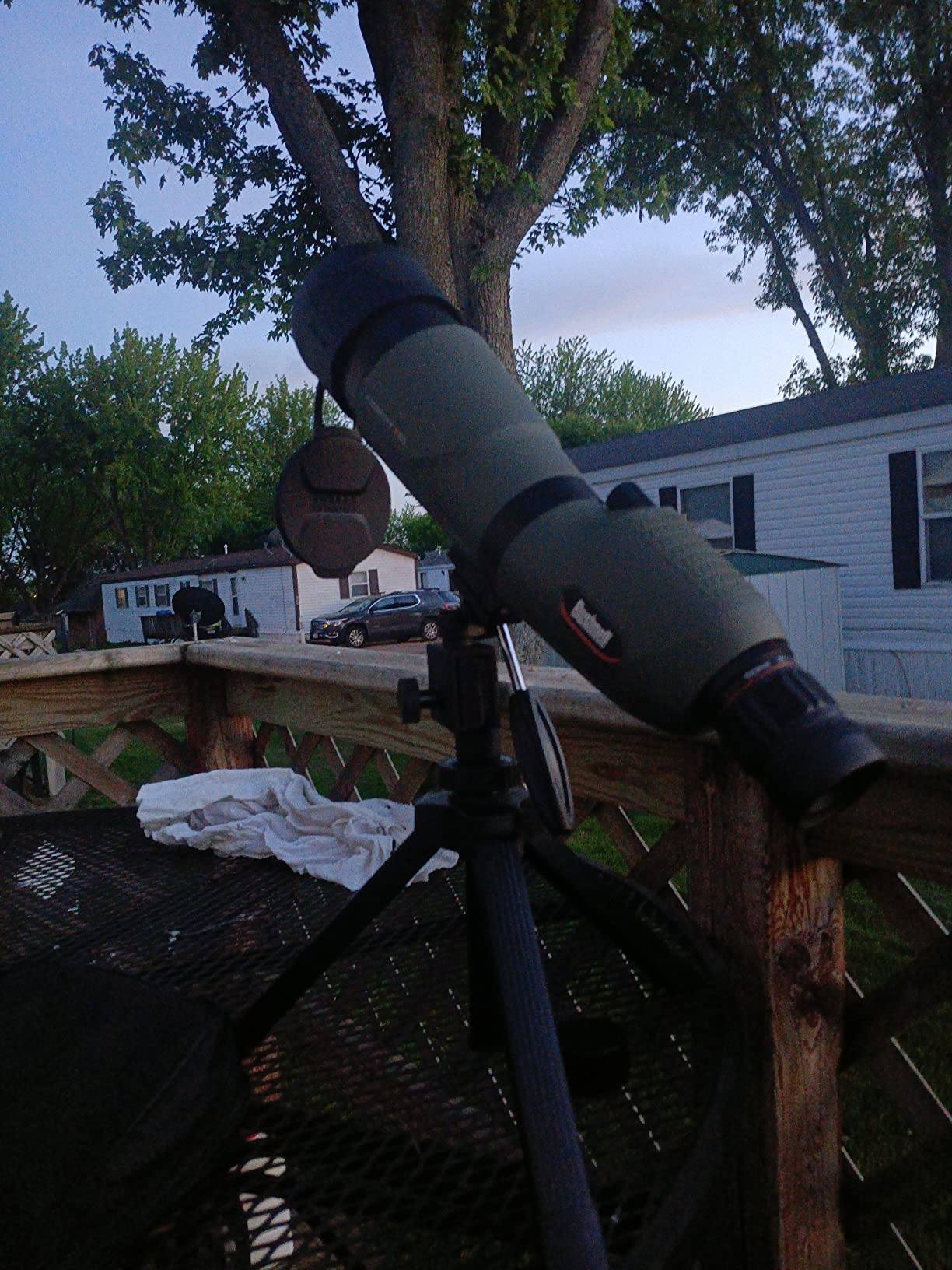
The car window mount is a genuinely useful piece for practice at a public range where you may only have a parking spot. It lets you glass a target from your vehicle without setting up a tripod, and the window mount alone would cost a meaningful fraction of this scope’s price from a dedicated optics brand.
At 1 kg the scope is easy to handle, and the lifetime warranty plus rugged build mean it can take the knocks of a range bag. For 20x to 30x work it is one of the more satisfying images in this group.
Who this spotting scope suits
This suits shooters who work at 100 to 400 yards and want a complete setup in one box. If you are new to target shooting and do not yet own a tripod, the included table tripod and window mount cover the most common range situations.
It also suits anyone who practices from a vehicle or wants a backup scope that lives in the truck. The hard case is a real advantage for that role.
Who should skip it
Skip it if you need high magnification. Owners report noticeable image degradation above 40x and a small, murky image at 60x, so treat the top of the zoom range as decorative rather than usable.
Skip it if you wear glasses or sit at a low bench. The straight eyepiece is the only configuration, there is no angled option, and the focus can shift between magnification settings, which interrupts an otherwise pleasant low-power experience.
9. Gosky 25-75×80 – Best for Phone Recording of Impacts
25-75×80 Spotting Scope with Desktop Tripod for Target Shooting DiamondEdge
Magnification: 25-75x
Objective: 80mm
Field of view: 98 feet
Weight: 4.5 pounds
Pros
- 25-75x zoom with 80mm objective
- BAK4 prism with fully multi-coated optics
- Dual-speed coarse and fine focus
- Integrated phone holder for digiscoping
- Reads .22LR holes on splatter targets at 200 yards
Cons
- Image softens around 250 yards and beyond
- Does not stay focused across the zoom range
- Phone adapter feels inexpensive
- Thin carry bag offers little protection
The dual-speed focus is what keeps this scope useful. A coarse wheel finds the target quickly and a fine wheel sharpens without shaking the view apart, which is exactly what you want when you are dialing in on a splatter target at 200 yards.
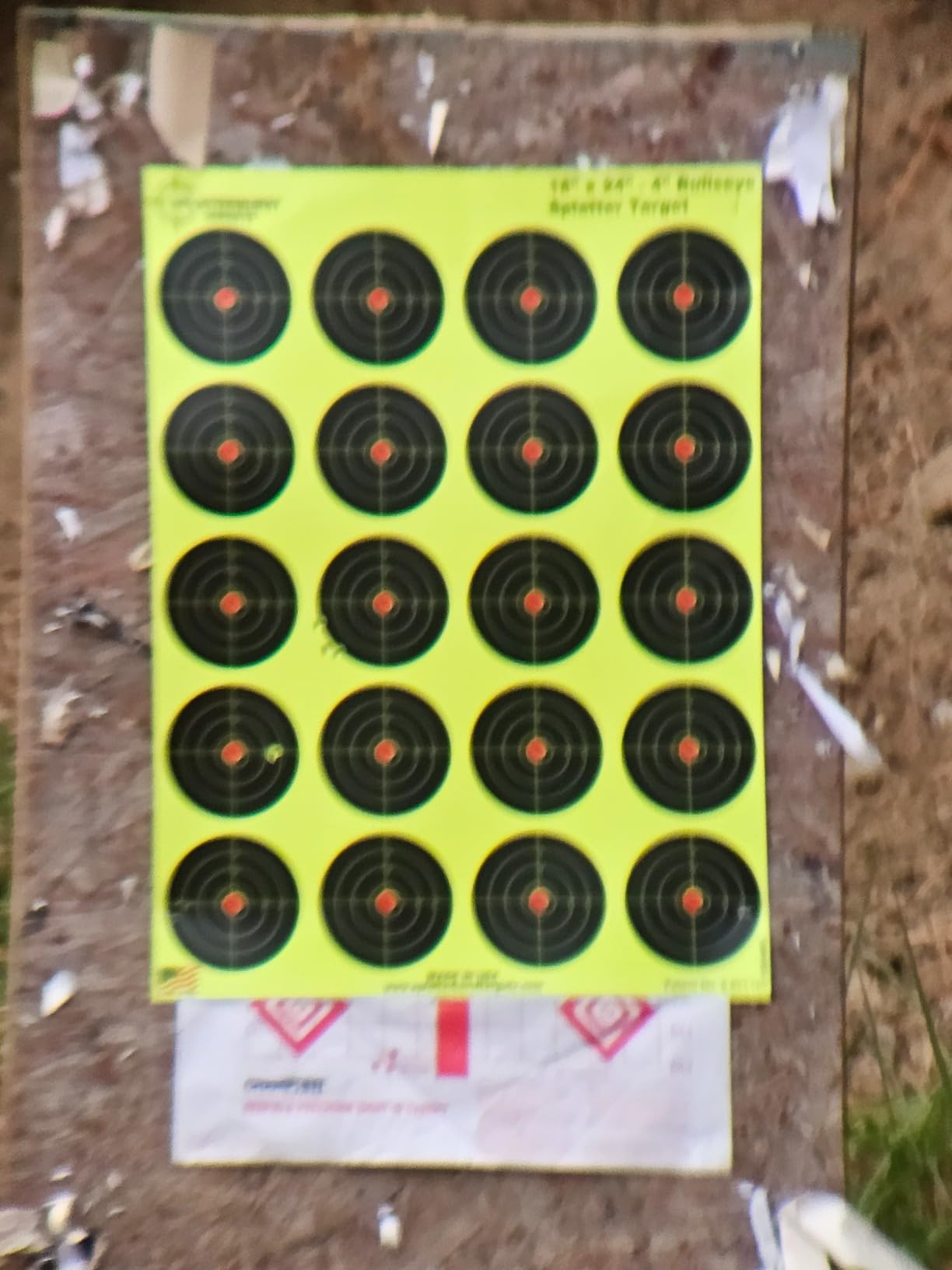
Buyer reports specifically mention reading .22LR holes on splatter targets at 200 yards, and that is a fair description of where this scope earns its keep. Below that distance the picture is large and clear for the price class. Past 250 yards, owners note the image softens, especially at high zoom, so treat the upper range as confirmation rather than precision.
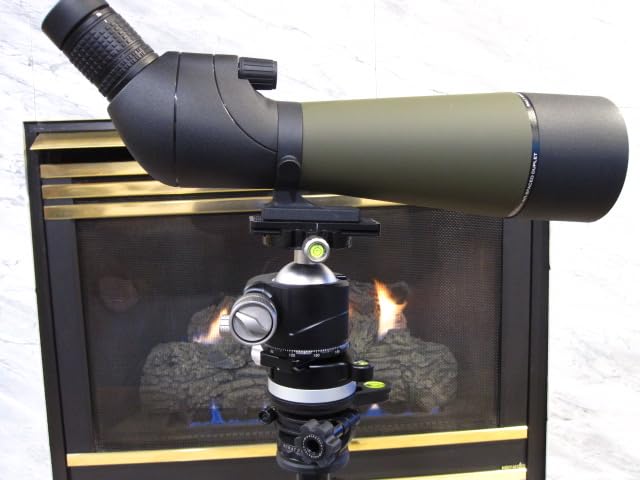
The integrated phone holder is the differentiator for match shooters. Rather than clamping an adapter around the eyepiece and knocking it out of alignment, the phone sits in a fixed mount, so a spotter can film impacts and call corrections at the same time without stopping to re-align anything between strings.
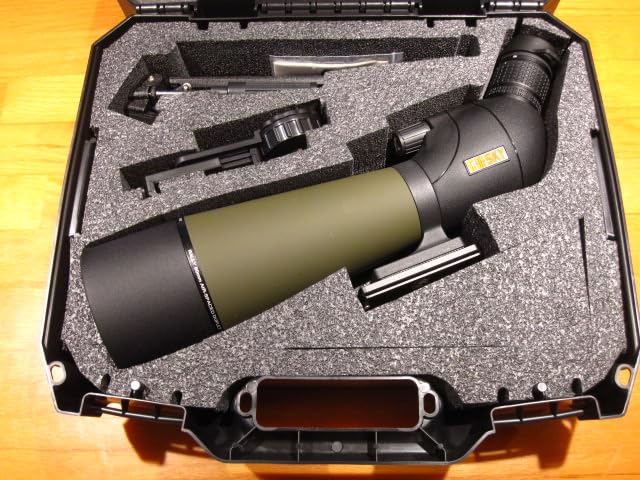
The rotating tripod mount takes a standard 1/4-20 screw and works with Arca-Swiss plates, which means it can share a head with a precision rifle setup. One owner complaint worth noting is that the rotating mount thumb screw becomes hard to reach once an Arca-Swiss plate is fitted.
Who this spotting scope suits
This suits match shooters and steel competitors who record their groups. A fixed phone holder plus dual-speed focus is a combination no other scope in this lineup offers, and it turns the glass into a review tool rather than just a spotting tool.
It also suits shooters working at 100 to 250 yards who want a bright, large image from an 80mm objective and a BAK4 prism without spending much more.
Who should skip it
Skip it if your furthest distance is 500 yards or more. Owners consistently report softening around 250 yards and beyond, and the scope does not hold focus across the 25x to 75x range, so you will refocus after every magnification change.
Skip it if you travel with your gear. At 4.5 pounds it is the heaviest optic here, and the thin, minimally padded soft bag offers little impact protection for a scope with a large objective.
10. Athlon Argos HD 20-60×85 – Biggest Objective in the Entry Tier
Athlon Optics Argos HD 20-60×85 Spotting Scope – 45 Degree, Green/Black
Magnification: 20-60x
Objective: 85mm
Eyepiece: Plossl, 45-degree angled
Tube length: 16.9 inches
Pros
- Advanced HD glass with fully multi-coated lenses
- 85mm objective gathers useful light in low conditions
- Rotating tripod ring for comfortable positioning
- Waterproof
- fogproof and argon purged
- Rubber armor plus soft case included
Cons
- Heaviest optic in this group at 4.3 pounds
- Plossl eyepiece gives a narrower eye box
- Modest eye relief from the bundled eyepiece
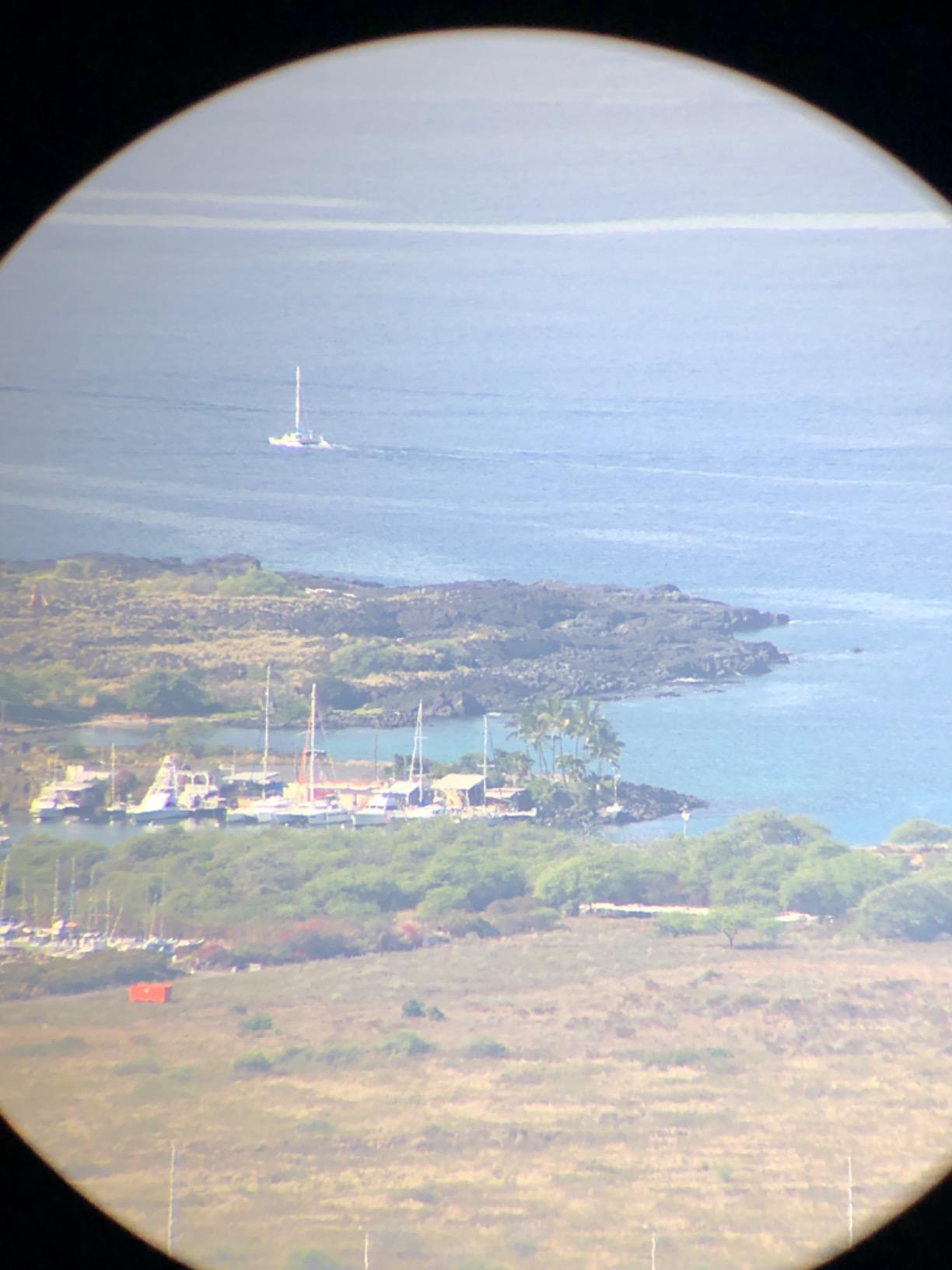
Getting an 85mm objective with HD glass at this level is unusual, and that combination is the reason this scope is on the list. Advanced HD glass with fully multi-coated lenses produces bright, true-color images, and the large objective gathers enough light to make 40x and 50x genuinely usable rather than theoretical.
The 45-degree angled eyepiece sits in a rotating tripod ring, so you can set the viewing angle to match your position. That matters more than it sounds when you are moving between a prone setup and a bench in the same session.

Owners consistently rate the glass-to-cost ratio as the standout feature. For a shooter who wants the light-gathering advantage of a large objective without stepping up to a premium scope, this is the most direct route.
Waterproofing, fogproofing, and argon purging handle weather, and the rubber-armored body protects the corners that take the most abuse in a vehicle. A soft-sided case and lens caps are included in the box.
Who this spotting scope suits
This suits shooters who want maximum light gathering at a modest outlay, particularly anyone shooting in the late afternoon or trying to read impacts on dark backgrounds. The 85mm objective is the single biggest factor in that.
It also suits shooters who already own a strong tripod and want the optics without paying premium-brand money. On a good head, a heavy scope is an advantage rather than a burden.
Who should skip it
Skip it if you carry your glass any distance. At 4.3 pounds it is the heaviest optic in this group, and that weight is only useful if you have a proper head to put it on.
Skip it if you wear shooting glasses or have larger facial features. The bundled Plossl eyepiece produces a narrower eye box and more modest eye relief, so you will spend more time repositioning your eye than shooters with wider eyepieces do.
11. Gosky Elite HD 20-60×80 – Best for Long Glassing Sessions
Gosky Elite HD Spotting Scope 20-60×80 with Touch-Free Release with Tripod
Magnification: 20-60x
Objective: 80mm
Eyepiece: 55mm wide-field
IPX7 rated
Pros
- 55mm extra-large wide-field eyepiece with HD lenses
- Larger eyepiece reduces eye fatigue
- BAK4 prisms keep the view bright at dawn and dusk
- Coaxial dual-speed focus wheel
- IPX7 waterproof
- argon purged and fogproof
- Phone adapter and touch-free shutter remote included
Cons
- Fine focus knob can be loose and let the image shift
- Phone holder is hard to align at the correct angle
- Heavier than earlier models in this range
- Tight lens cover ships without a tether
The 55mm extra-large wide-field eyepiece is the reason this scope earns a place for target shooters. A larger eyepiece with HD lenses gives a wider, clearer field of view, and owners specifically mention reduced eye fatigue during long glassing sessions, which matters on a multi-day match weekend or a week of evening practice.
BAK4 prisms keep the view bright in dawn and dusk conditions, and the coaxial dual-speed focus wheel lets you find the target fast then sharpen precisely. Together those three features make this a scope you can keep your eye on for a full match day rather than swapping off it after an hour.
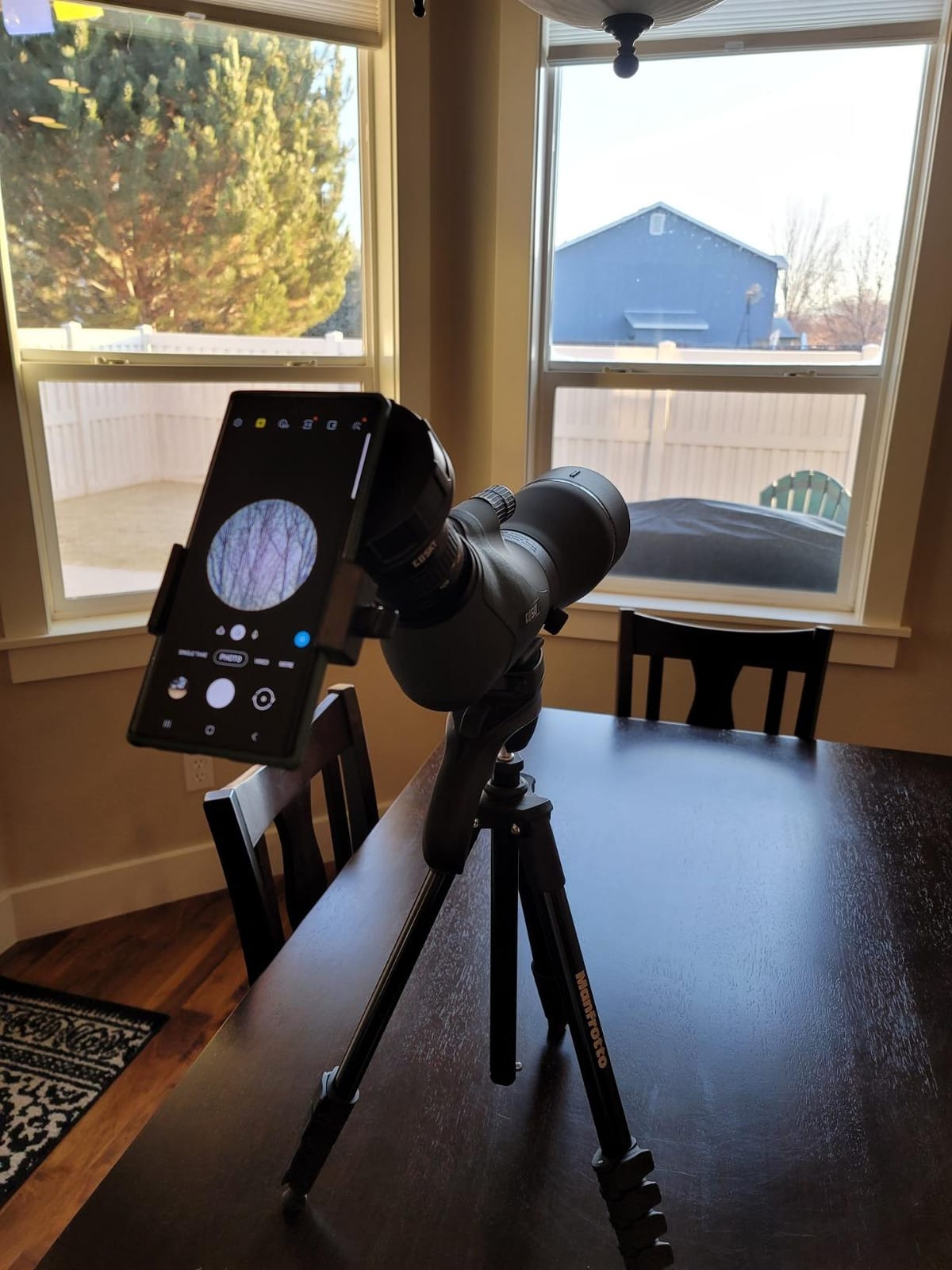
The touch-free shutter remote is a thoughtful addition. You trigger the phone camera without touching the scope, so your image is not blurred by the vibration of tapping a screen on a magnified optic, which is a real problem when recording at high power.
Weather protection is class-leading for the price: IPX7 waterproofing, argon purging, fogproofing, and slip-resistant rubber armor. That covers standing in a wet grass position during a rain shower without concern.
Who this spotting scope suits
This suits shooters who spend long sessions glassing, whether that is a spotter working a match all day or a shooter checking groups between strings. The wide eyepiece reduces the eye strain that builds up over hours.
It also suits anyone who records impacts and wants clean phone footage. The remote shutter avoids camera shake that other adapters invite.
Who should skip it
Skip it if you need flawless fine focusing. Owners report the fine focus knob can be loose, allowing the image to shift while you are dialing, which is frustrating when you are chasing a marginal focus at long range.
Skip it if you are sensitive to small design problems. The phone holder is hard to hold at the correct angle, and the lens cover is very tight and difficult to remove.
12. WOZEL 25-75×80 – Best All-in-One Kit Under One Purchase
WOZEL 25-75×80 Spotting Scope with Tripod for Target Shooting High Powered
Magnification: 25-75x
Objective: 80mm
Prism: BAK4
Tube length: 90 centimeters
Pros
- One-handed zoom knob with quick-focus for rapid target acquisition
- 80mm multi-coated objective with BAK4 prism
- Field of view about 82.9-48 ft per 1000 yd
- Tripod
- phone adapter and full carrying kit included
- Nitrogen filled and O-ring sealed
- Retractable sunshade and twist-up eyecup
Cons
- Kellner or Erfle eyepiece gives softer edges than ED glass at high power
- Bundled accessories are basic compared with premium kits
The zoom range here is the widest in the lineup at 25x to 75x, and the one-handed zoom knob with a quick-focus system lets you change magnification without taking your eye off the target. That combination suits steel shooters who work across a wide range of distances in one session.
An 80mm fully multi-coated objective with a BAK4 prism gives good light transmission for the class, and the stated field of view of roughly 82.9 down to 48 feet per 1000 yards gives you a workable acquisition window at low power. Owners tend to praise the complete kit more than the top-end optical performance.
Everything needed to start is in the box: tripod, phone adapter, carrying case, lens covers, and a cleaning cloth. If you have never used a spotting scope and do not want to research tripods first, that removes the most common reason people delay buying one.
The retractable sunshade and twist-up eyecup handle glare and comfort respectively, and the nitrogen-filled, O-ring sealed body is waterproof and fogproof. It is a straightforward tool that does the job without ceremony.
Who this spotting scope suits
This suits first-time spotting scope buyers who want one purchase rather than a scope plus accessories. The included tripod and phone adapter mean you can start working at the range the same day.
It also suits shooters who need a wide 3:1 zoom span rather than a specific magnification ceiling. The one-handed zoom knob is genuinely useful when you are tracking a target across a firing line.
Who should skip it
Skip it if you need edge-to-edge sharpness at high magnification. The Kellner or Erfle eyepiece produces softer edges than ED glass, and that softness becomes obvious at the top of the zoom range where the image is smallest.
Skip it if you already own a precision tripod and a phone adapter. The bundled accessories are basic compared with premium-brand kits, so the value here is convenience rather than performance.
How to Choose a Spotting Scope for Target Shooting
Most of the wrong purchases happen because buyers chase the largest magnification number on the box. These are the decisions that actually change how well a scope works for you.
Objective diameter is the first decision, not magnification
Objective diameter is the single most important spec for target work. Light gathering scales with the square of the diameter, so an 80mm objective gathers roughly 2.8 times the light of a 50mm scope at the same magnification. That surplus light is what lets you hold a bright, resolved image at 40x or 60x instead of a dim one, and brightness is what determines whether you can see the difference between a hole and a shadow.
Most target shooters should be looking at 80mm or larger. Below 65mm, high magnification produces an image too dim to resolve small impacts reliably. Above 85mm, you gain a little more light in exchange for real weight, which matters only if you are already on a solid tripod.
The exit pupil tells you what happens as you climb the zoom. Divide the objective by the maximum magnification to get it: 80mm at 60x gives roughly 1.33mm, while 85mm at 60x gives about 1.4mm. Anything at or above 1mm still lets light reach the eye, which is why 80mm and 85mm scopes hold up at 60x while smaller objectives turn grey and blurry.
Which magnification you actually need by distance
Match your maximum power to your furthest distance rather than to your ambition. Here is the reference we use when advising shooters, based on what a resolved .223 hole requires at each range.
Up to 100 yards: 20x to 30x is plenty. A 70mm or 80mm objective is more than sufficient, and this is the tier where an entry scope genuinely covers the job.
200 to 300 yards: 30x to 40x resolves clean hits in .22 and .223 calibers. An 80mm objective is where you start seeing the difference between a group and individual holes.
400 to 500 yards: 40x to 50x with an 80mm or 85mm objective. Above 500 yards, glass quality starts to matter as much as magnification, because you are resolving a smaller image.
600 yards: 50x to 60x with an 85mm objective and HD or ED glass. Achromatic scopes in this range show visible fringing at those settings.
800 to 1000 yards: 60x or more with an 85mm objective, plus a precision tripod head. Without stable support, the magnification is unusable regardless of the glass.
The forum consensus lines up with this. Shooters repeatedly correct each other that more magnification hides your own misses and shrinks the field of view you need to read conditions, and that heat shimmer ends high-power usability well before glass quality does.
Glass type: HD, ED, fluorite, K9, and BAK4 explained
Every glass term on the box means something different. HD and ED both describe low-dispersion glass that reduces chromatic aberration, which is the purple or green fringing you see around high-contrast edges at higher magnification. Fluorite goes further and controls fringing almost entirely, which is why it appears in scopes where the price climbs fastest.
K9 refers to the prism material, not the objective. K9 prisms deliver a bright image with a slightly warm cast and cost less than fluorite. BAK4 is a barrel designation describing the grade of the prism glass, and a BAK4 prism produces brighter, higher-contrast images than lower-grade alternatives at the same magnification.
What actually matters for target shooting is fringing control at upper magnification and brightness in poor light. Acchromatic scopes in this lineup are perfectly usable up to 30x and acceptable to about 40x, then show fringing that makes edges look doubled on a high-contrast target.
Angled versus straight body
There is no optical difference between an angled and a straight body. Both use the same glass and the same prism, so the image is identical. What changes is how the scope sits on a tripod, and that matters more at a range than most spec lists suggest.
A straight body puts the eyepiece in line with the objective, so the center of the scope sits at tripod height. That is lower and more stable when you are prone or shooting off a low rest, which is why precision setups favor straight bodies. An angled eyepiece sits 45 degrees above the body, letting you rotate the eyepiece to a comfortable angle for sitting, kneeling, or standing.
For target shooters, an angled body is usually the more comfortable choice because you spend most of your time seated at a bench. For prone and rest shooting, a straight body at a lower tripod height gives you a steadier view of distant targets.
Fixed power versus zoom eyepiece
A fixed-power eyepiece gives one magnification with no adjustment. A zoom eyepiece gives a range. Long-range instructors generally favor a fixed 25x or 30x paired with a large objective for mirage reading, because a stable image at one power lets you see the heat shimmer pattern that tells you wind direction, and you cannot read mirage effectively through a view that keeps changing.
Zoom eyepieces win on versatility. One scope covers 100 yards and 1000 yards, and you can zoom in to confirm a hit then back out to find the next target. For most target shooters that flexibility outweighs the mirage-reading advantage of a fixed power, particularly if you own a single scope rather than a dedicated spotting rig.
Eye relief, exit pupil, and shooting glasses
Eye relief is the distance between your eye and the eyepiece lens. Below about 15mm you end up pressing your face into the eyecup to see the whole field, which causes eyebrow fatigue and leaves a mark around your eye after a long session. Above 20mm you can wear glasses and still see the full view with the scope on a tripod.
Exit pupil is related but distinct. It is the diameter of the light beam leaving the eyepiece, and a smaller exit pupil means a dimmer image. Budget scopes often bundle Kellner or Plossl eyepieces with narrower eye boxes than premium scopes, which is the specific defect glasses wearers notice first. If you wear shooting glasses, check the eye relief figure before anything else.
A related tip for low-light work: the same technique people use when inspecting paint defects with a bright light applies to checking scope condition. Noticing haze, coating damage, or internal fogging under a strong directional light before you rely on the scope in a match saves a bad day. You can see the method in our guide to spotting swirls with a detailing light, and the same careful inspection applies to any optic you are about to trust at distance.
Tripods and why the bundled ones fail
The most common complaint across scopes in this lineup is the bundled tripod, and the most common advice from experienced shooters is to buy a real one immediately. A tabletop tripod has no height adjustment, a light head that transmits every hand movement, and enough play to make 50x unusable.
For target work you want a precision fluid head on a rigid tripod, and you want the scope mounted high enough that you are not bending into it. The Arca-Swiss compatible feet on several scopes here let you drop straight onto such a head without an adapter, and the 1/4-20 threads underneath cover simpler setups.
Weight interacts with stability in both directions. A 3 to 4 pound scope on a good head damps vibration effectively and is a benefit. The same weight on a table tripod makes every touch of the focus ring visible in the image. Judge the pairing, not the scope alone.
Mirage, heat shimmer, and usable magnification
Heat shimmer destroys high-power usability far more often than glass quality does. On a warm day the air above the ground bends light in moving columns, and at 1000 yards that movement is large enough to make the target appear to swim. Full-power viewing can be effectively unusable regardless of which scope you own.
Two things help. A large objective keeps the exit pupil bright enough that you are not straining to see through the shimmer, and moderate magnification shows you less disturbance than maximum power. Dropping from 60x to 35x on a bad day often produces a clearer view of the same target.
The practical habit is to shoot early in the morning or late in the evening when the air is still, and to use magnification as a tool rather than a goal. If you cannot hold the target steady at full power, more magnification is not the answer.
MRAD reticles, digiscoping, and phone adapters
A reticle eyepiece lets you do things a plain eyepiece cannot. With an offset reticle that does not obscure your view of the target, you can measure and range impacts without losing your sight picture, then call a correction to your shooter using mils rather than words.
None of the scopes in this lineup ships with a reticle. If you spot for a partner, you can pair a plain scope with a separate reticle eyepiece where the design allows, or buy a dedicated offset reticle unit that threads onto an existing eyepiece. Hash marks in 1, 0.5, and 0.2 mil divisions give you enough resolution to point a shooter onto a target they cannot see themselves.
For recording, three scopes here include a phone adapter or integrated holder. Adapters that clamp around the eyepiece work but are easy to knock out of alignment and often clip the zoom ring. Integrated holders are more stable but only useful with one phone size. A touch-free shutter remote, which one scope includes, prevents the camera shake of tapping a screen on a magnified optic.
Clearing fog after a temperature change
Moving a scope from an air-conditioned vehicle into hot outdoor air can fog the interior, and the fix is simple. Leave the scope in its case, or leave it in the vehicle with the doors closed, until the case and glass reach close to ambient temperature.
The reason it happens is condensation forming on the internal glass surfaces when warm humid air meets a cold lens element. Scopes that are argon or nitrogen purged resist this far better because the internal atmosphere is sealed, but any sealed scope will still fog when the temperature swing exceeds what the seal and coatings can handle. Owners report that waiting a few minutes with the objective cap off clears it quickly.
Do not wipe a fogged internal element. Let it clear on its own, and if condensation forms repeatedly on the outside during a session, treat it as a cleaning problem rather than a sealing problem.
Frequently Asked Questions
What magnification do I need for 1000 yard target shooting?
At 1000 yards you want 60x or more paired with an 85mm objective, and you need a precision tripod head to make it usable. The 85mm objective keeps the exit pupil bright enough to resolve an image through heat shimmer, which is the real limiting factor at that distance. Practical advice from experienced shooters is to start at 40x to find the target, then climb only as far as the view stays steady.
Is an 80mm objective better than a 65mm for target shooting?
Yes, for most target work. Light gathering scales with the square of the objective diameter, so an 80mm gathers roughly 1.5 times the light of a 65mm at the same magnification. That surplus light is what keeps the image bright and resolvable at 40x and 60x. A 65mm scope is fine to about 30x and acceptable to 40x before the image turns dim and grey.
Do I need a spotting scope for 200 yard target shooting?
Not strictly, but it still helps. At 200 yards your rifle scope can confirm most hits, and 30x to 40x in the spotting scope will separate individual .22 and .223 holes that look like a single blur through the rifle glass. Forum consensus is that glass quality matters far less at this distance, so an entry-level 70mm or 80mm scope covers the job well.
What is the difference between a straight and an angled spotting scope?
There is no optical difference. Both use the same glass and prism, so the image is identical. What changes is tripod height and ergonomics. A straight body puts the eyepiece in line with the objective, which sits lower and is steadier for prone and rest shooting. An angled eyepiece sits 45 degrees above the body and can be rotated, which is more comfortable when seated at a shooting bench.
Should I get a fixed power or a zoom eyepiece spotting scope?
A zoom eyepiece suits most target shooters because one scope covers 100 yards to 1000 yards and you can zoom in to confirm a hit then back out to find the next target. A fixed 25x or 30x gives a more stable image that is easier for reading mirage and wind, which is why long-range instructors recommend it. If you own a single scope, the flexibility of a zoom wins.
Can a spotting scope actually see bullet holes at 500 yards?
Yes, with the right scope. Owner reports for scopes in this class confirm hit confirmation out to 400 to 600 yards, and a clean .223 hole at 500 yards needs roughly 40x to 50x on an 80mm or 85mm objective with HD or ED glass. Achromatic scopes show visible color fringing at those settings. Budget scopes in this lineup are generally confirmed to about 200 to 250 yards.
How much eye relief do I need on a spotting scope?
At least 17mm, and more if you wear glasses. Below about 15mm you press your face into the eyecup to see the whole field, which causes eyebrow fatigue and leaves a mark around your eye. Above 20mm you can wear shooting glasses and still see the full view. Scopes bundled with Plossl or Kellner eyepieces usually have narrower eye boxes than premium eyepieces.
Do spotting scopes come with a tripod?
Some do, and most of the bundled tripods are not good enough for high-power viewing. Several scopes in this lineup include a tabletop tripod, and one includes a car window mount as well, which is useful for public ranges. Experienced shooters routinely advise buying a real precision tripod immediately and treating the bundled one as a cost you will duplicate.
Which Spotting Scope Should You Buy?
If your furthest distance is 600 yards or more, buy the Vortex Diamondback HD 20-60×85. The 85mm objective, HD optics, helical focus, and Arca-Swiss foot make it the most complete single glass in this group, and it stays the reference point we compare everything else against.
Working at 200 yards or closer, the SVBONY SV28 covers hit confirmation comfortably at the lowest outlay here. Stepping up to 500 or 600 yards in mixed light, the Celestron Ultima 20-60×80 is the pick, with the most proven track record of owner satisfaction in the group. Shooting at dusk, the Vortex Viper HD 20-60×85 is the brightest image available.
Whatever you choose, put it on a real tripod before you judge it. Most disappointing spotting scope experiences trace back to a wobbly head rather than bad glass, and that is the one problem no scope in this list can solve on its own.