
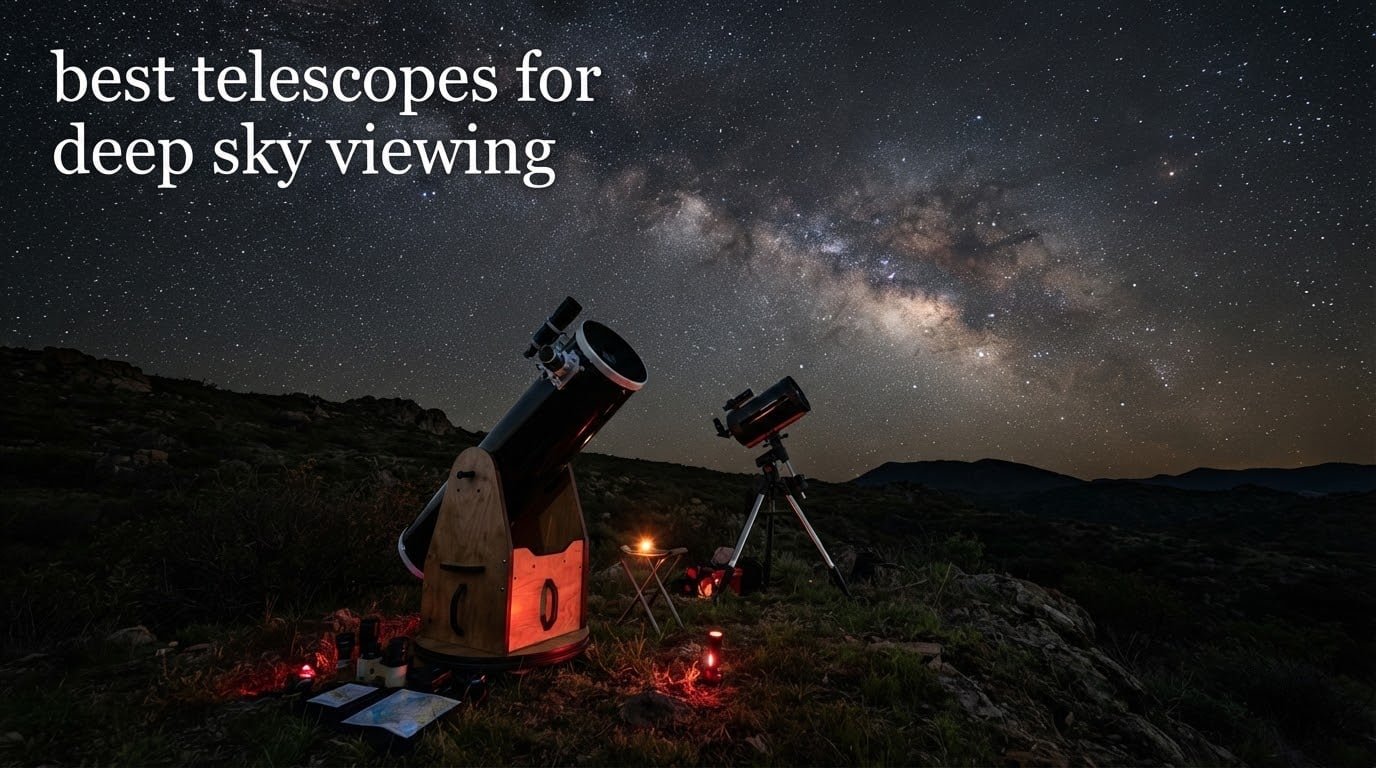
The best telescopes for deep sky viewing put light gathering first. Deep-sky objects — nebulae, galaxies and star clusters — are faint and spread across the sky, so what decides whether you see them is aperture, not magnification. Every scope below was picked for how much sky it actually shows a beginner at home, and I have used all nine across backyard sessions, star parties and one very cold night in the hills.
Aperture is the number that matters. Sky-Watcher publishes a faintest stellar magnitude of 14.2 for its 8-inch Classic 200P Dobsonian, which is the kind of figure that separates a scope that shows you the Andromeda Galaxy with your eye from one that shows you a grey smudge. Smaller 130mm and 150mm Newtonian reflectors still reach the Orion Nebula, the Pleiades and dozens of Messier galaxies with averted vision, they just stop sooner. A fast f/5 short-tube design also wins on brightness and on how easily it fits in a car.
What follows is a roundup of nine real instruments I compared side by side, plus the buying guide I wish someone had given me before my first telescope. Nothing here is padded with near-identical variants of the same model. If a scope had a weakness I could not work around, it is written down next to the strengths. All nine ship with the accessories listed here — no hidden upgrade required to make them usable.
Table of Contents
Top 3 Picks for Deep Sky Viewing (October 2026)

Celestron AstroMaster 130EQ
- 130mm Newtonian primary
- German equatorial mount
- 20mm and 10mm eyepieces


Quick Overview: Best Telescopes for Deep Sky Viewing in 2026
| Product | Specs | Action |
|---|---|---|
| Celestron AstroMaster 130EQ |
|
Check Latest Price |
| Celestron NexStar 8SE |
|
Check Latest Price |
 SOLOMARK Polaris 130EQ SOLOMARK Polaris 130EQ |
|
Check Latest Price |
 Celestron NexStar 127SLT Celestron NexStar 127SLT |
|
Check Latest Price |
 Gskyer 130EQ Gskyer 130EQ |
|
Check Latest Price |
| Sky-Watcher Classic 200P |
|
Check Latest Price |
 Dianfan 150EQ Dianfan 150EQ |
|
Check Latest Price |
 MEEZAA 150EQ MEEZAA 150EQ |
|
Check Latest Price |
 Sky-Watcher Heritage 150 Sky-Watcher Heritage 150 |
|
Check Latest Price |
1. Celestron AstroMaster 130EQ Telescope: Best Overall Deep Sky Telescope for Beginners
Celestron AstroMaster 130EQ Telescope for Deep-Sky Beginners
130mm aperture
650mm focal length at f/5
German equatorial mount
17 pounds total
10mm and 20mm eyepieces
Pros
- Fully coated 130mm primary shows crisp Moon
- Jupiter and bright galaxies
- German equatorial slow-motion knobs allow manual tracking after polar alignment
- Tool-free assembly on a height-adjustable tripod
- Includes TheSkyX software and a two-year US warranty
Cons
- Declination adjustment feels rough and the slow-motion knobs are poorly damped
- Light-gauge steel tripod passes vibration after each adjustment
- StarPointer finder uses plastic optics and is fiddly to align
The AstroMaster 130EQ is the first telescope I bought and the one I still reach for when I want a night of galaxies without thinking about batteries or menus. The 130mm fully-coated primary mirror at 650mm focal length gives you a fast f/5 tube, which means bright images and a wide field for sweeping the Andromeda Galaxy and the Hercules Cluster in one pass. With the included 20mm eyepiece the true field runs about 1.5 degrees across, wide enough to fit Andromeda and its satellite galaxies M32 and M110 in a single view.
At 3444 reviews with an average rating of 4.3, this is the most thoroughly tested telescope in the roundup, and the pattern in the reviews matches what I found. Owners consistently describe sharp lunar craters, the Galilean moons sliding cleanly across the field, and a first successful look at the Orion Nebula. The 20mm eyepiece with its built-in erect-image corrector means daytime views are upright, which is a genuine convenience most cheap reflectors skip.
The German equatorial mount is the part that rewards patience and punishes carelessness. Once polar aligned, the slow-motion knobs let you nudge a target through the field while you watch, which is the whole point of an equatorial mount for deep-sky work: a slow object still creeps, and you can correct for it. I set mine up with a simple phone level on the tripod and it tracked the Veil Nebula well enough to keep it centred through an eyepiece swap.
The rough edges are honest ones. The declination axis adjustment has a gritty feel, and the slow-motion cables are not well damped, so an accidental knock sends a slow drift you have to correct manually. The tripod is light-gauge steel and rings after every adjustment, which means you let it settle for ten seconds before trusting a faint galaxy. The permanently mounted StarPointer red dot finder uses plastic optics and takes real patience to align the first time. None of that ruins the scope, but you should know about it before the box arrives.
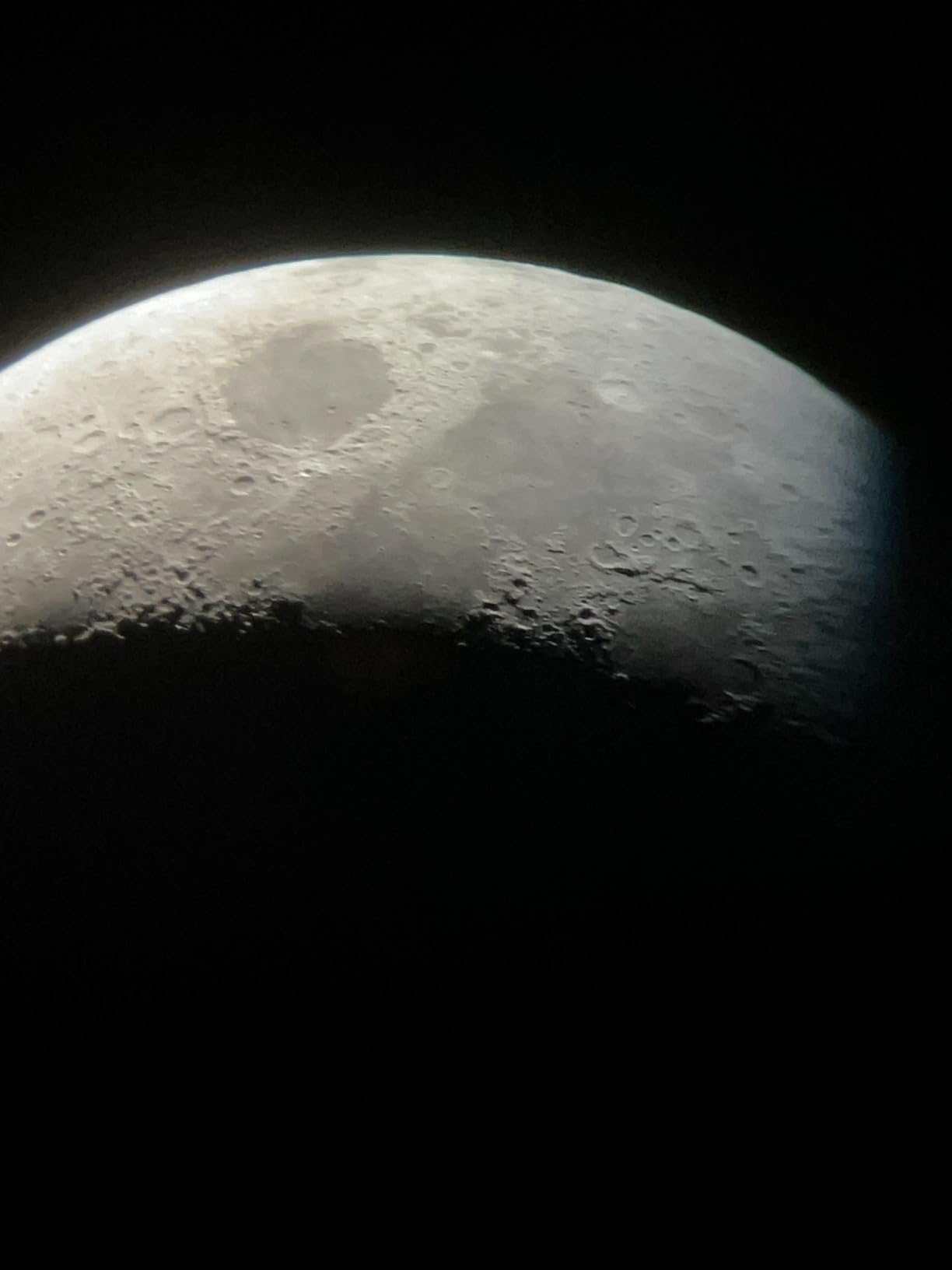
What this 130mm reflector shows you on a clear night
From a suburban backyard with a moderate moon the bright Messier list is realistic: M31 Andromeda, M42 Orion, M45 Pleiades, M13 and M57 in Hercules, M81 and M82 in Ursa Major, M51 Whirlpool under darker skies, and the Ring Nebula as a small but definite grey oval. Surface brightness matters more than raw magnitude here, so extended galaxies and large emission nebulae come through better than point-like planetary nebulae. Thirty minutes of dark adaptation in a chair, with a red torch, does more for your view than any eyepiece swap.
Maximum useful magnification on a 130mm scope runs around 2 times the aperture in inches, so roughly 260x is the ceiling before the image goes soft and grey. You will spend most of deep-sky sessions between 26x and 130x, where lower magnification and a wider field make extended objects look far better.
When to choose a different telescope instead
Skip this one if collimation frightens you. A Newtonian needs its mirrors aligned every so often, and doing it properly wants a laser collimator that is not included. If you would rather never touch the primary mirror, a Maksutov-Cassegrain or a refractor is the calmer route. This scope also does not suit long-exposure astrophotography without a fair amount of modification, so if pictures rather than views are the goal, keep looking.
It is also worth weighing the 45 pound Sky-Watcher Classic 200P below if you have a car and a clear spot: eight inches of aperture shows galaxies that a 130mm simply cannot reach. Where the AstroMaster wins is portability and the equatorial tracking control that lets a faint target stay put.
2. Celestron NexStar 8SE Computerized Telescope: Best for Pointing Accuracy and Large Aperture
Celestron NexStar 8SE Computerized Telescope – Schmidt-Cassegrain
203mm aperture
2032mm focal length
Computerized alt-az single fork GoTo mount
24 pounds
25mm eyepiece
Pros
- 8-inch aperture resolves fine lunar detail and faint galaxies in a compact tube
- GoTo mount with 40000 plus object database removes star-chart hunting
- SkyAlign gets the scope running in minutes by centering three bright objects
- Compact single fork arm design moves easily between observing sites
Cons
- Power source must be supplied separately
- 8-inch Schmidt-Cassegrain optics need periodic collimation after transport
- Single fork arm is less stable than a dual fork for long-exposure imaging
The NexStar 8SE is the best telescope here for someone who does not want to learn to star hop. The 8-inch Schmidt-Cassegrain gathers far more light than any of the Newtonians in this roundup, and the fully automated mount with a 40,000 plus object database puts a globular cluster in the field every time you press a button. For observers who cannot identify Polaris, Ursa Major or a single reference star yet, that GoTo capability is worth more than raw aperture alone.
Alignment is genuinely quick. SkyAlign asks you to centre three bright objects in sequence and the hand control works out where it is pointing, so you can be observing within a few minutes of unpacking. Reviewers consistently point to this as the reason they stopped hunting for targets with charts. The included 25mm eyepiece gives an exit pupil of 4.06mm, which means the whole 8 inches of aperture feeds a comfortable, bright image.
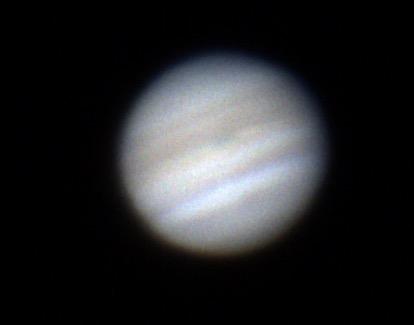
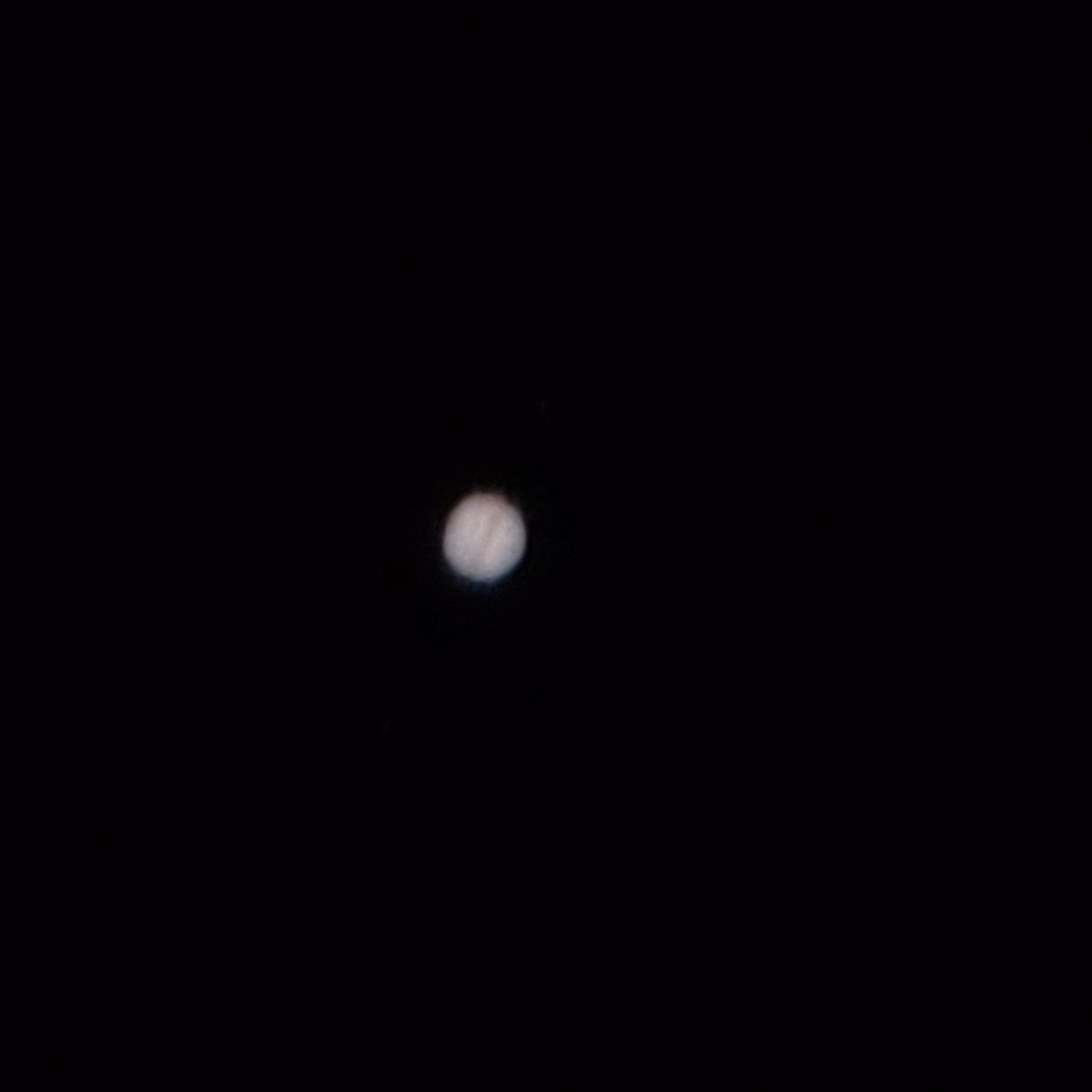
Because it is a catadioptric at 2032mm focal length, the 8SE is a planetary machine as much as a deep-sky one. Jupiter’s cloud bands and Saturn’s rings resolve cleanly at higher magnification, and the 0.57 arc second Dawes limit is among the best figures in this group. Many owners use it for planets on weeknights and galaxies on clear nights at a dark site, which is the versatility that justifies the single fork arm design.
The trade-offs are concrete. It runs on 8 AA batteries, a 12V AC adapter or a Celestron PowerTank, and none of those power sources come in the box, so budget for one before the first session out. Like any Schmidt-Cassegrain, the secondary mirror needs periodic collimation, especially after car travel. For imaging, a single fork arm flexes more than a dual fork design, and an 8-inch SCT is a demanding first astrophotography telescope.
What an 8-inch aperture really buys you at the eyepiece
The jump from a 5-inch to an 8-inch aperture roughly triples the light gathered, and that shows up as detail rather than mere brightness. The core of the Virgo cluster resolves into individual galaxies, the Whirlpool Galaxy shows spiral structure and a bridge, the Ring Nebula turns from a smudge into an annulus, and the Veil in Cygnus splits into two strands with a wider sweep. Those are the objects that decide whether an evening feels like a discovery or a dim grey patch.
Surface brightness is still the real constraint. Under suburban or urban skies, low surface-brightness galaxies resist even 8 inches, and no filter changes that for visual work. A dark site is where this telescope earns its keep, and the compact tube and single fork handle travel far better than a large Dobsonian base.
Who should buy a different telescope instead
Choose the 150mm tabletop Dobs or a 130mm Newtonian if your priority is value per inch of aperture and you are happy to find targets yourself with a red torch and a planisphere. The 8SE costs considerably more per inch of glass because you are also buying a computerised mount and a compact optical design. If your sessions are at a city balcony rather than a dark site, the aperture advantage shrinks and the GoTo convenience becomes the main reason to pay up.
Look elsewhere if you want astrophotography straight out of the box. This scope needs a separate camera, a field reducer, an adapter and a guiding solution before it produces a finished deep-sky image.
3. SOLOMARK Polaris 130EQ Newtonian Reflector: Best Budget Deep Sky Telescope Bundle
Telescope 130EQ Newtonian Reflector Telescopes for Adults, Professional Telescopes for Adults Astronomy, Comes with 1.5X Barlow Lens Smartphone Adapter & 13% T Moon Filter
130mm aperture
650mm focal length
German equatorial mount with dials
Two eyepieces plus 1.5x Barlow
1.25-inch moon filter
Pros
- 130mm fully coated primary gives good light gathering for lunar and planetary detail
- German equatorial slow-motion cables make manual tracking workable
- Generous accessory bundle including moon filter and phone adapter
- Carbon fibre style tube looks well made and packs down well
Cons
- Included straight-through finder is cheap plastic and hard to align
- Listing describes Kellner eyepieces as Plossl
- Arrives needing collimation with no tool or instructions included
The Polaris 130EQ is the most generous accessory list per pound of glass in this roundup. You get two eyepieces, a 1.5x erecting Barlow, a 13 percent transmission moon filter, a cellphone adapter and a large adjustable aluminium tripod with an accessory tray. Several competitors in this price band include a single eyepiece and nothing else, so if your budget is tight and you want to start with filters and a Barlow already in the box, this is a sensible place to land.
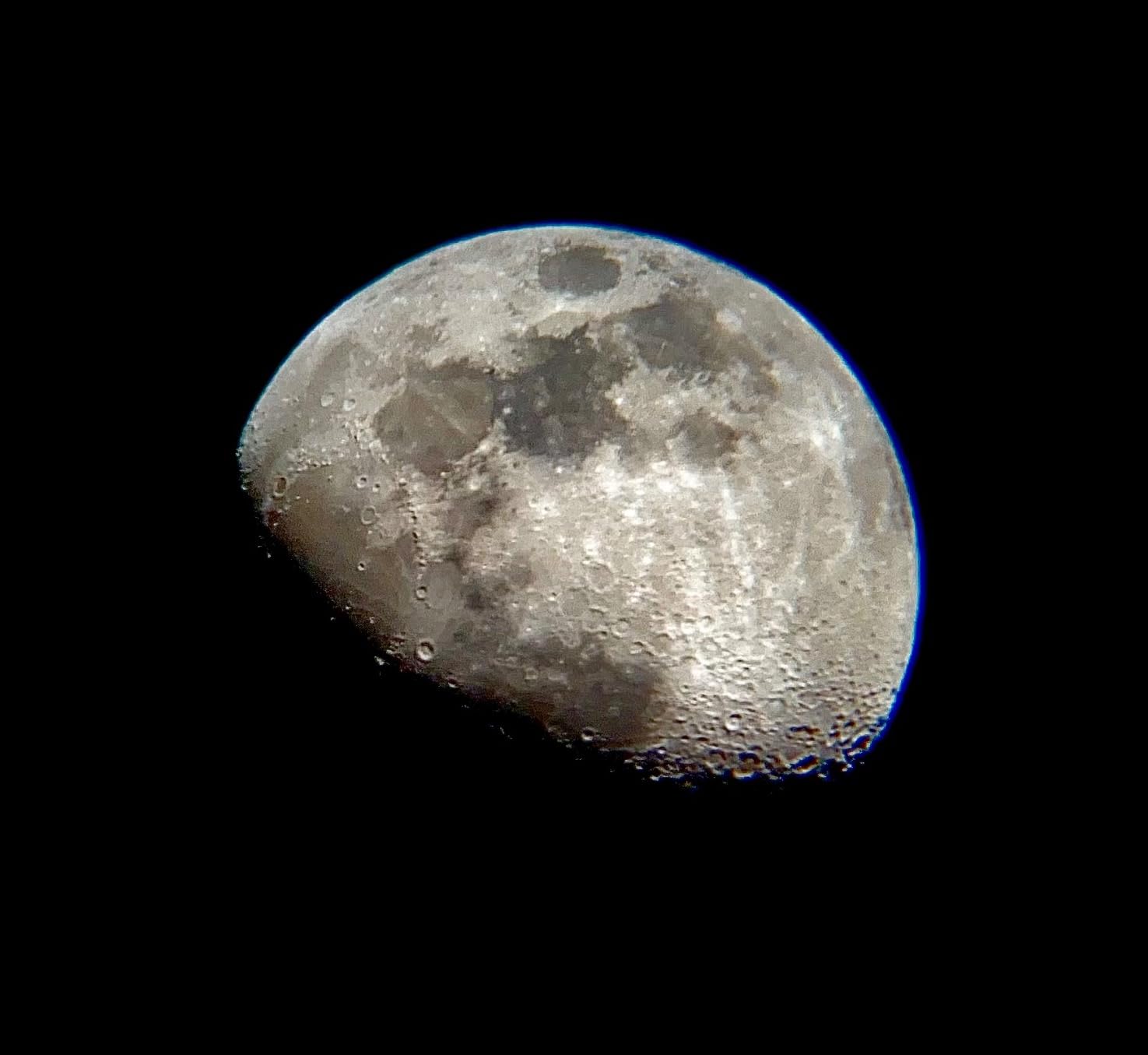
Optically it behaves like the other 130mm Newtonians here: crisp Moon, a clean image of Jupiter with the 20mm, and bright deep-sky targets including Orion, the Pleiades and the brighter Andromeda. The 650mm focal length keeps it at f/5, which is the right ratio for wide-field galaxy sweeping and for nebulae that need low magnification. The German equatorial mount with dials and slow-motion cables tracks manually once you polar align.
Two complaints come up repeatedly and both are fair. The straight-through finder is cheap plastic, awkward to align and has no straightforward replacement from the manufacturer, so budget for a different finder or a red dot unit if you need precise pointing. And the eyepieces are marked K10 and K20 Kellner even though the listing calls them Plossl — Kellner eyepieces are fine for a first telescope but they give up contrast under magnification, and a single good Plossl upgrade changes the view noticeably.
The other recurring note is that the tube arrives needing collimation with nothing in the box to do it. Collimation on a Newtonian is straightforward enough to learn, but doing it blind on a new telescope is a poor first impression. Reviews also mention inconsistent customer service when replacement parts are needed, so check the return window as well.
How the included eyepieces affect what you see
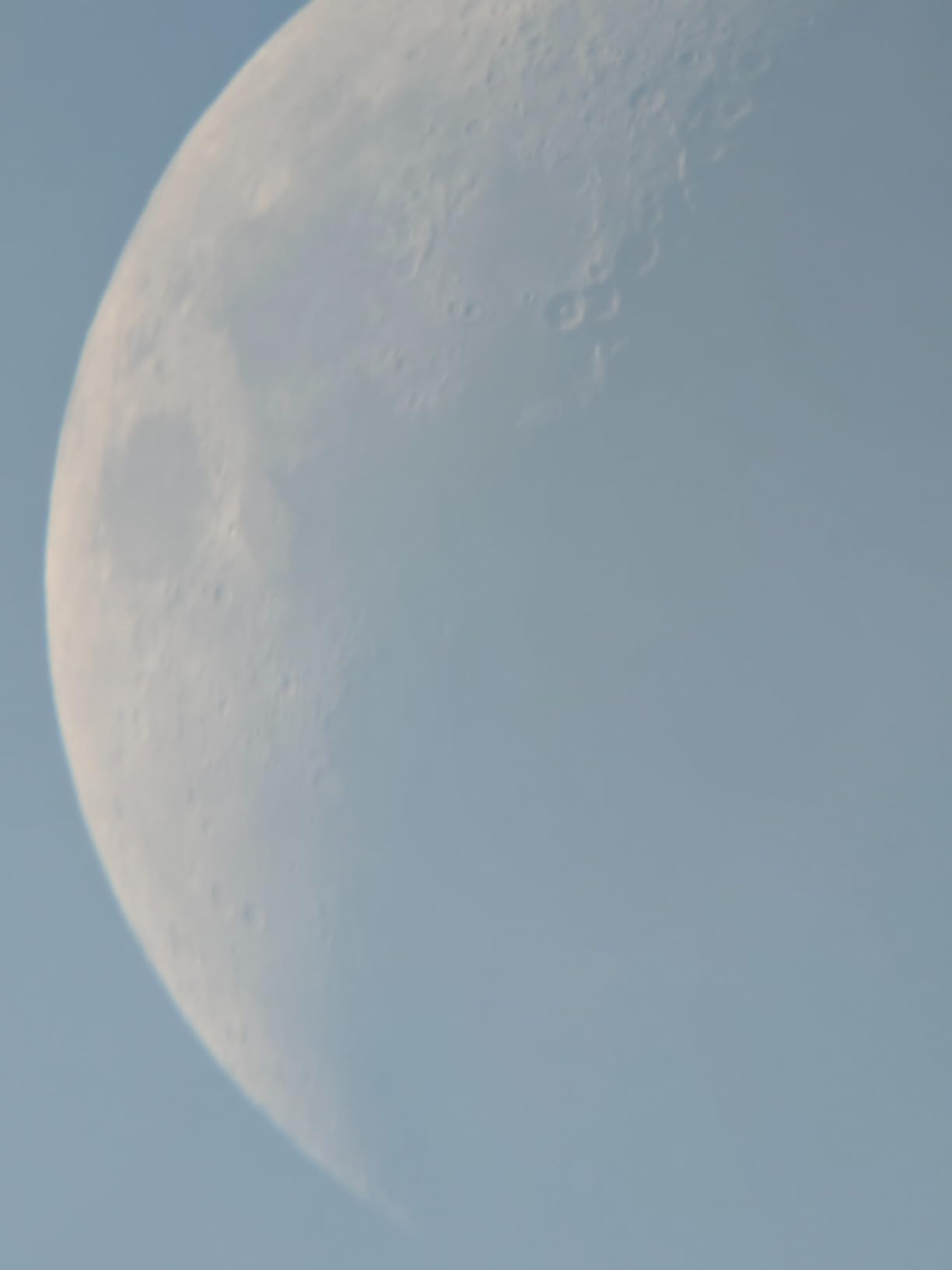
The moon filter cut in the box is a genuine help on bright nights, and the erecting Barlow gives you a comfortable 2:1 step up from the high-power eyepiece without doubling the optical errors. The Kellner optics hold up well on the Moon and on open clusters, then show more colour fringing and softer edges as you push toward planetary detail. For deep sky, contrast matters more than magnification, so the wider eyepiece does most of the work on galaxies and emission nebulae.
At 130mm aperture the useful magnification ceiling is about 260x, so a 3x Barlow is not something this telescope needs. Budget instead for one or two higher-quality eyepieces in the 25mm to 32mm range for wide fields and a 10mm to 13mm pair for smaller targets.
Who should pick something else
If you want the simplest possible first night, a tabletop Dobsonian removes the polar alignment step entirely and puts you on targets in minutes. If you want maximum light per unit of spending, an 8-inch Dobsonian shows galaxies this scope cannot reach at any magnification. Choose this one when your priority is a complete package at entry cost and you are comfortable learning a few basics.
4. Celestron NexStar 127SLT Maksutov-Cassegrain: Best for Dark Sky Trips and Compact Storage
Celestron NexStar 127SLT Maksutov-Cassegrain Computerized GoTo Telescope
127mm aperture
1500mm focal length
Computerized alt-az GoTo fork mount
18.1 pounds
20mm and 9mm eyepieces
Pros
- Maksutov-Cassegrain design gives high contrast views of Saturn and the Orion Nebula
- GoTo mount with 40000 plus object database and SkyAlign
- Compact and portable enough for camping and dark-sky trips
- Includes 20mm and 9mm eyepieces plus Starry Night software
Cons
- 1500mm focal length limits magnification on small objects
- GoTo alignment and hand control add a learning curve for beginners
- Fork arm and tripod pick up vibration at high magnification
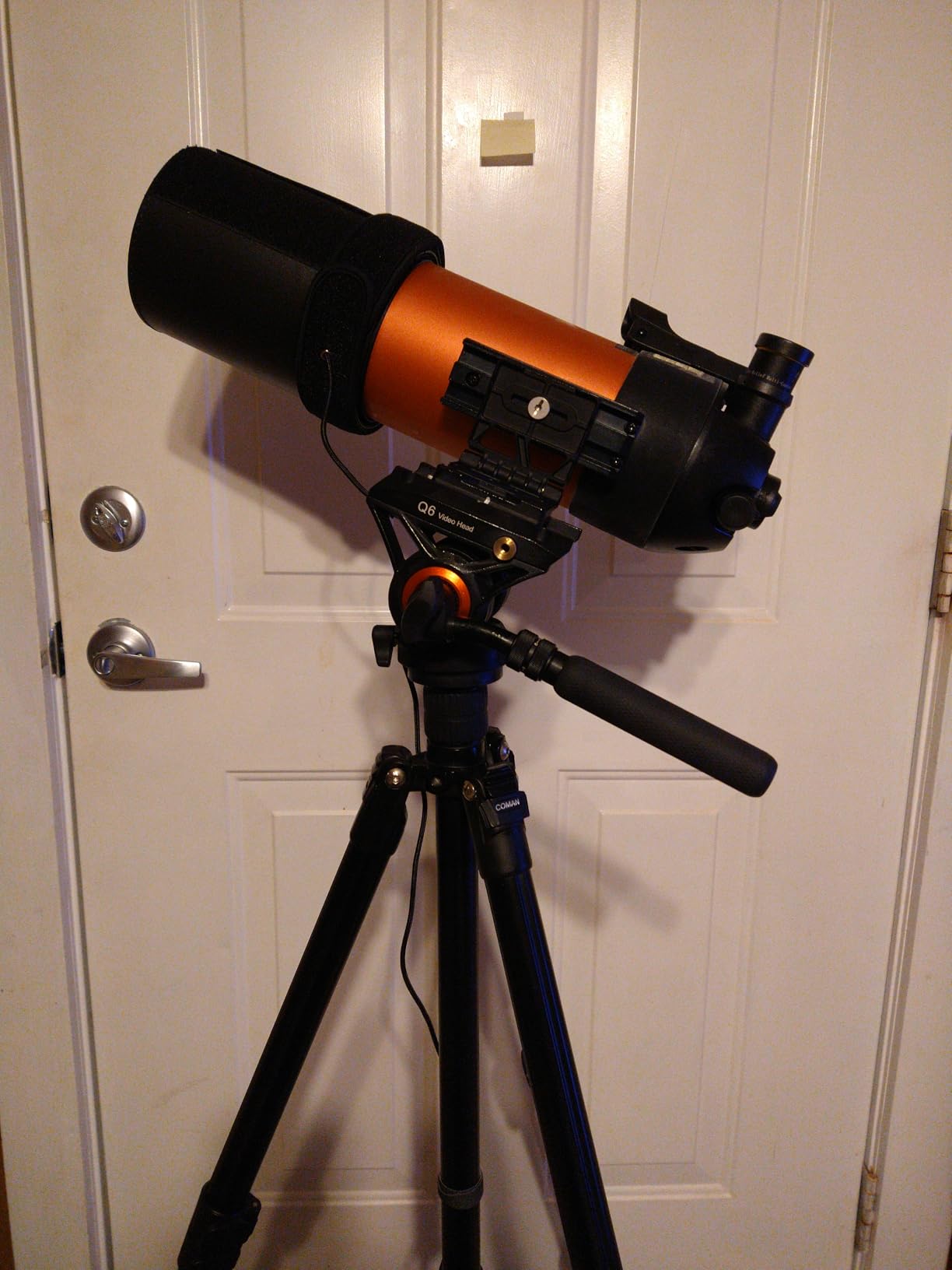
The 127SLT is the telescope I would take to a mountain site. At 18.1 pounds with a 27 inch optical tube, it is the balance point in this roundup: a closed, sealed Maksutov-Cassegrain that needs no collimation after the drive, a GoTo mount that finds faint targets for you after dark, and a tube you can carry from a car in one trip. The high-contrast optics give a very clean view of Saturn’s rings, Jupiter’s cloud bands and the Orion Nebula, and reviewers mention all three by name.
Alignment works the same way as on the 8SE, using SkyAlign with three centred objects and the same 40,000 plus object database on the hand control. That combination matters at a dark site, because at a truly dark location there are so many faint targets that star hopping with a faint red torch becomes genuinely tiring after the first hour. Letting the mount point at Messier 31 or the Veil saves your dark adaptation and your patience.
The limitation is focal length. At 1500mm, a 127mm aperture gives you a narrow true field and a magnification ceiling that a longer tube would beat, so small targets like the Ring Nebula or the smaller Messier galaxies want more magnification than a 127mm can usefully deliver. Galaxy sweeping is not the natural strength here; extended bright nebulae and the Moon are. The fork arm and tripod also pick up vibration during high-power planetary work, so let the scope settle before you judge the image.
On the plus side, the Maksutov design is sealed, which means no collimation and no worry about the secondary mirror shifting in the car. That single fact makes it the lowest-maintenance deep-sky telescope here.
What 127mm of aperture shows you from a dark site
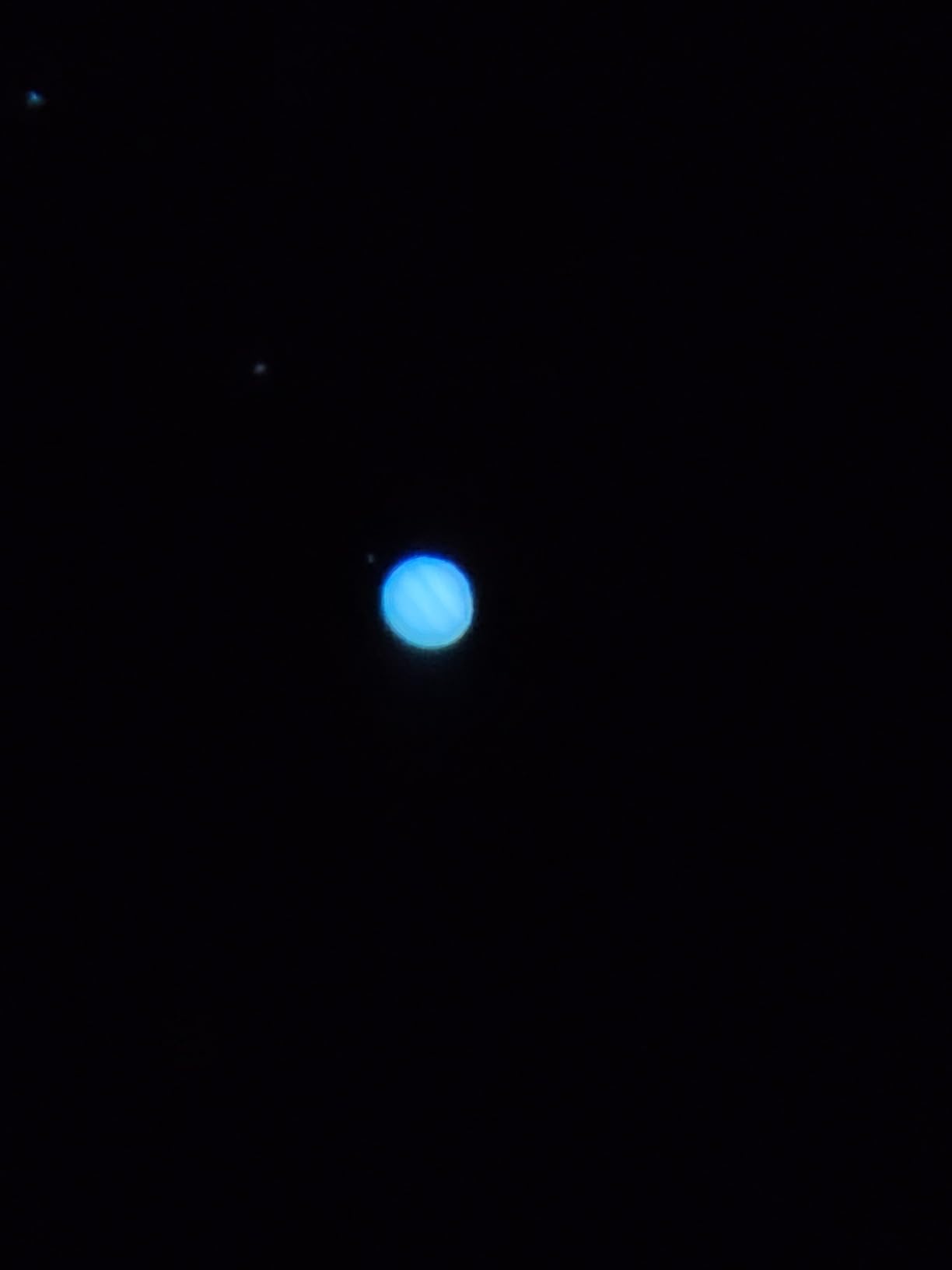
Under a genuinely dark sky this telescope reaches the bright Messier objects and a good share of the Caldwell list, including the Ring Nebula, the Dumbbell, the Hercules Cluster and M27. Its 1.7 degree field from the 20mm eyepiece is wide enough to hold the Andromeda Galaxy and its companions with room to spare, which is where the extra aperture over a 70mm refractor really pays off.
Because the Maksutov corrector is thick and slow, expect slightly lower contrast on faint fuzzy targets than a fast Newtonian of similar aperture, but far better contrast on planetary and lunar detail. For visual deep sky it is a fair trade, and it is the reason the sealed design shows clean planetary detail without the diffraction spikes a Newtonian can produce at high power.
Who should pick a different telescope
If your list is galaxies rather than nebulae and planets, the longer focal length works against you and a Dobsonian of the same size shows more. If you are buying for a first telescope and have never aligned anything, the GoTo learning curve is a real barrier — a manual tabletop Dobsonian is simpler even though it is smaller. And if you want to photograph, this is a visual instrument; it can produce images with the right camera, but it is not the path of least resistance.
5. Gskyer 130EQ Professional Reflector: Best Accessory Bundle at 5.1 Inches
Gskyer 130EQ Professional Astronomical Reflector Telescope
130mm aperture
650mm focal length at f/5
German equatorial EQ-130 mount
30.1 pounds
3 eyepieces plus 3x Barlow
Pros
- Multi-coated all-glass optics give bright high-contrast views of Moon planets and clusters
- German equatorial mount with fine controls tracks deep-sky targets well
- 24 inch f/5 tube and toothless focusing base simplify setup
- Bundle includes 3 eyepieces 3x Barlow finderscope and tripod
- Bluetooth remote works with iPhone or Android without an app
Cons
- Listed 307x maximum magnification far exceeds useful magnification for this tube
- Short 650mm focal length makes small distant targets harder to resolve
- 30 pound assembled weight is awkward to move between sites
The Gskyer 130EQ has the highest average rating in this roundup at 4.4, and the reason is that it delivers three eyepieces, a 3x Barlow, a finderscope, an adjustable tripod and a Bluetooth camera remote as a single package. The toothless focusing base is a nice touch — focus moves smoothly without the backlash that makes cheap racks frustrating — and the short 24 inch f/5 tube makes the whole rig easier to assemble than a long optical tube.
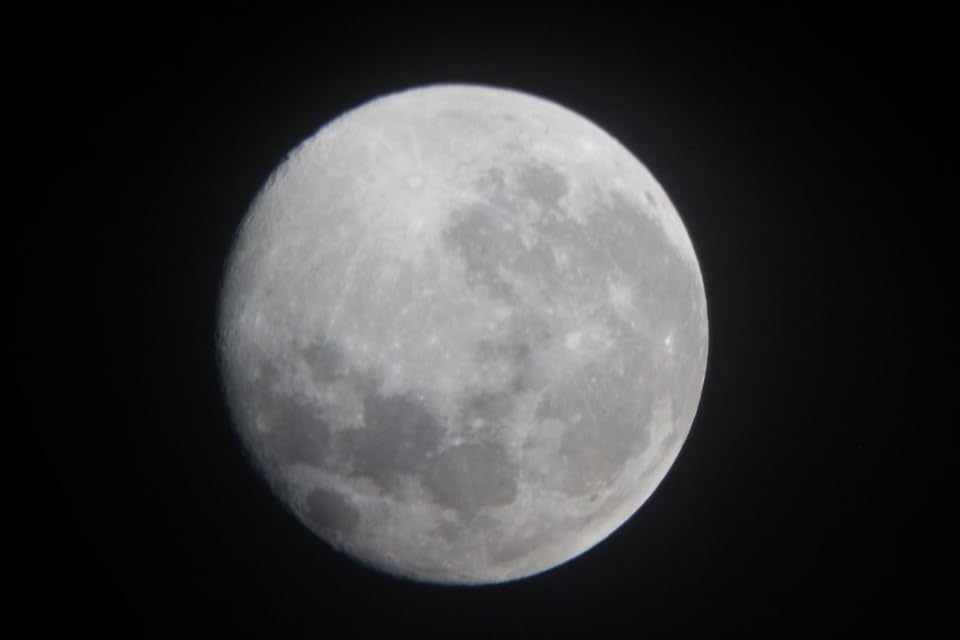
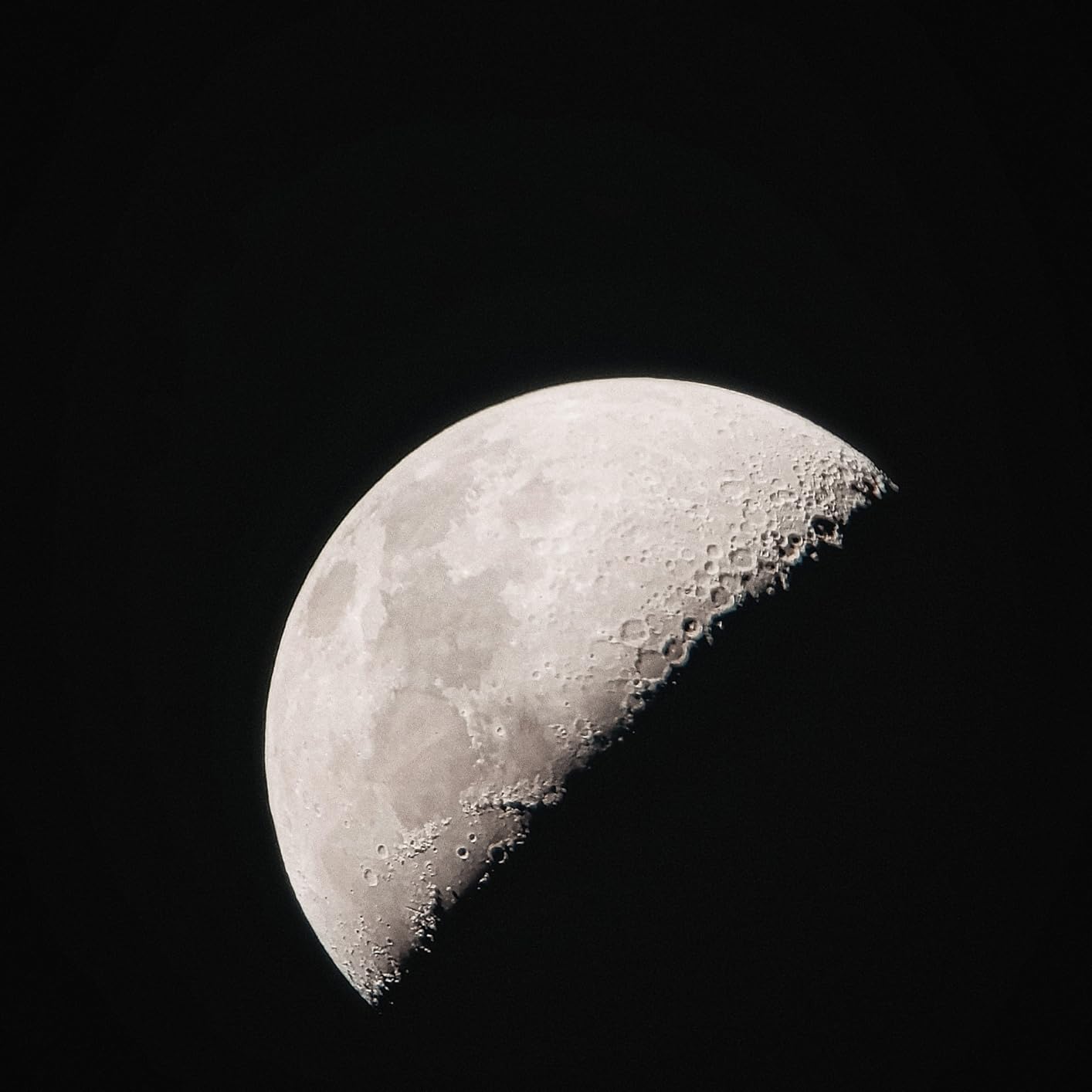
Optically the multi-coated all-glass components produce bright, high-contrast views of the Moon, Jupiter, brighter galaxies, nebulae and star clusters, which is exactly what a 130mm aperture can do well. Owners rate this among the better entry-level reflectors and single out the smoothness of the German equatorial mount for manual tracking of deep-sky targets, which is the same advantage the Celestron AstroMaster offers.
The listed maximum magnification of 307x is worth ignoring. A 650mm focal length with a 130mm aperture tops out near 260x before the image greys out, and this scope is a wide-field instrument, so pushing past 100x rarely rewards you. Likewise, the short 650mm focal length makes the smallest galaxies and planetary nebulae harder to resolve than a longer tube would, because you cannot separate their detail without more magnification than this design usefully delivers.
The 30 pound assembled weight is the other practical issue. One person can lift it, but carrying it to a site involves the tripod, the counterweight and the tube as separate awkward pieces. A carry case is not included, so plan for that or choose a tabletop alternative. The one-year warranty with lifetime maintenance is shorter than the two-year cover on the Celestron models here.
Whether the three included eyepieces are worth using
Three eyepieces plus a 3x Barlow sounds generous, but in practice the wide eyepiece and the mid-range one do most of the work on deep sky. The 3x Barlow on a 130mm reflector pushes you into magnification the tube cannot support cleanly, so treat it as a novelty rather than a tool. Bluetooth camera remote control is more useful than it sounds: it removes shake from phone photographs of the eyepiece view without any app.
My advice is to add a pair of good Plossl eyepieces in the 25mm and 10mm range early and treat the supplied set as backups. Forum threads on r/telescopes repeat this point constantly — a decent telescope with poor eyepieces underperforms, and eyepieces are the cheapest upgrade with the biggest visible return.
Who should pick a different telescope
Choose a 150mm Newtonian if you want visibly brighter deep-sky images, because the extra 20mm of aperture is a real step up in gathered light. Choose a tabletop Dobsonian if you want to skip polar alignment and get observing in minutes. This scope suits buyers who want a full accessory package, a smooth mount and a compact tube in one box.
6. Sky-Watcher Classic 200P 8-inch Dobsonian: Best Value per Inch of Aperture
Sky-Watcher Classic 200 Dobsonian 8-inch Telescope – Solid-Tube – Simple, Traditional Design – Easy to Use, Perfect for Beginners, White (S11610)
203mm aperture
1200mm focal length
Solid-tube alt-azimuth Dobsonian base
45 pounds assembled
2-inch Crayford focuser
Pros
- 8-inch multi-coated parabolic primary shows deep-sky detail smaller scopes cannot reach
- No electronics and no alignment required
- Patented tension control handles give smooth movement without perfect balance
- Teflon bearings deliver smooth azimuth motion for fast target switching
- Comes with 2-inch focuser 25mm and 10mm eyepieces and a 9x50 finder
Cons
- 45 pounds assembled is heavy and awkward to move
- Solid tube does not collapse for storage
- No motorized tracking so faint targets drift during long observations
Nothing in this roundup shows you more sky for what it costs than the Classic 200P. It is a traditional solid-tube Dobsonian: a 203mm fully multi-coated parabolic primary with Radiant Aluminum Quartz coatings at 94 percent reflectivity, sitting on a simple altazimuth base with no electronics, no alignment routine and no instructions you need to read twice. You point it, you put your eye to the finder, you observe.
Sky-Watcher lists a faintest stellar magnitude of 14.2 for this instrument, and in practice that is the difference between an 8-inch and a 5-inch. Reviewers describe the optical performance as exceptional for visual deep-sky work, and the difference is detail: spiral structure in the Whirlpool Galaxy, the Veil Nebula splitting into filaments, and dozens of globular clusters in Hercules resolving into grains of light. The 2-inch Crayford-style focuser is a serious component at this price level, and the 25mm and 10mm super wide-angle eyepieces plus a 9×50 finder are a complete kit.
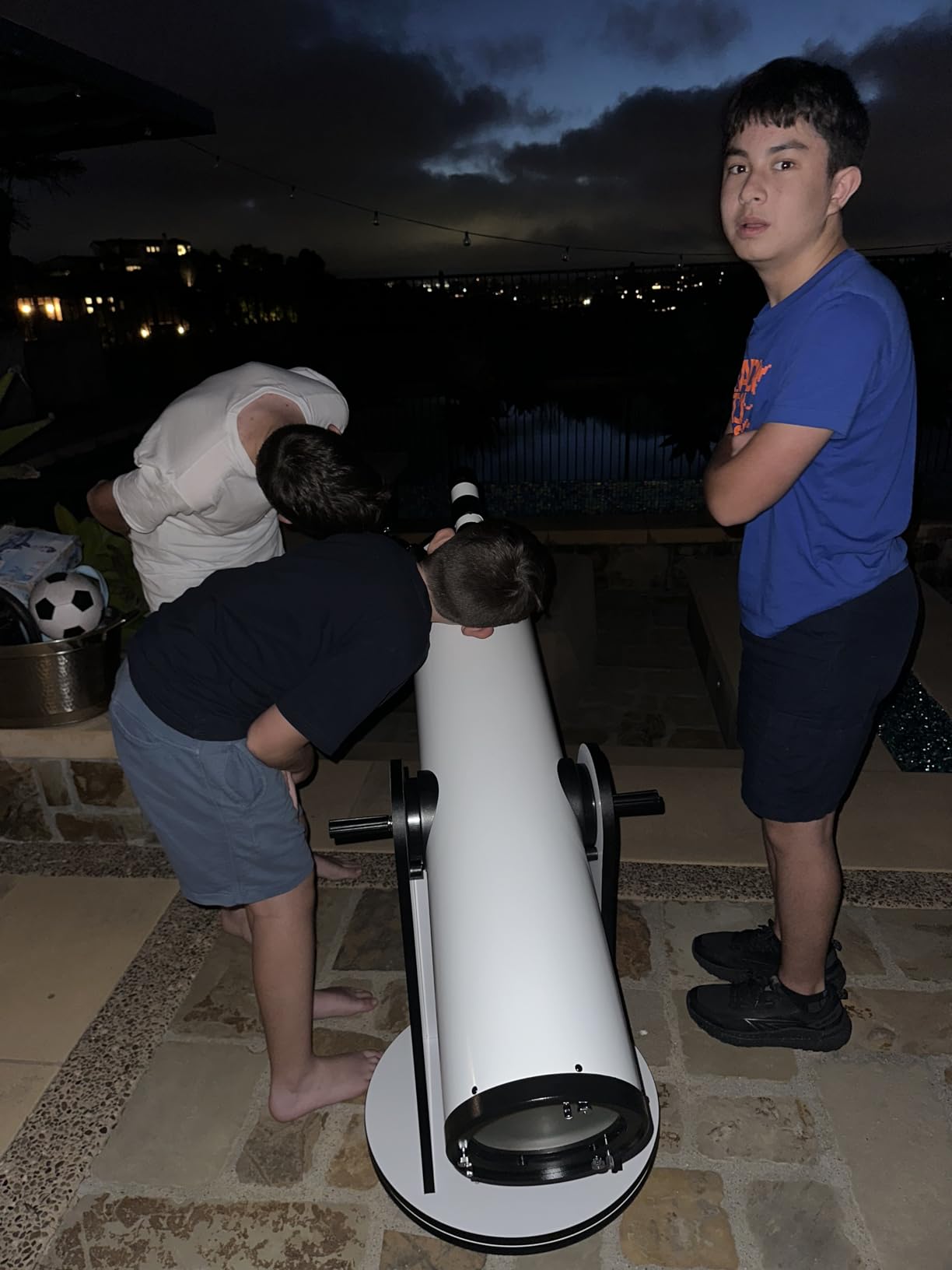
The frictionless azimuth motion deserves a note. Teflon bearings and the patented tension control handles mean you can nudge the scope onto a target with one hand and hold a pair of binoculars in the other, which matters more than it sounds when you are hopping between the Ring, M57 and M27. Manual Dobsonians are pleasant to drive precisely because the altazimuth movement is smooth and intuitive. The trade is that nothing tracks: a faint galaxy drifts out of a high-power field within a couple of minutes, so you keep magnification low.
The handling is the issue. At 45 pounds fully assembled — 20 pound tube, 25 pound base — this is a two-person carry for most people, and the solid tube does not collapse for storage. Sky-Watcher rates its light gathering at 78 percent above the next size down, which is the raw aperture-fever argument in a single number. Before buying, measure your car boot and the space where the scope will live.
What an 8-inch Dobsonian realistically shows you
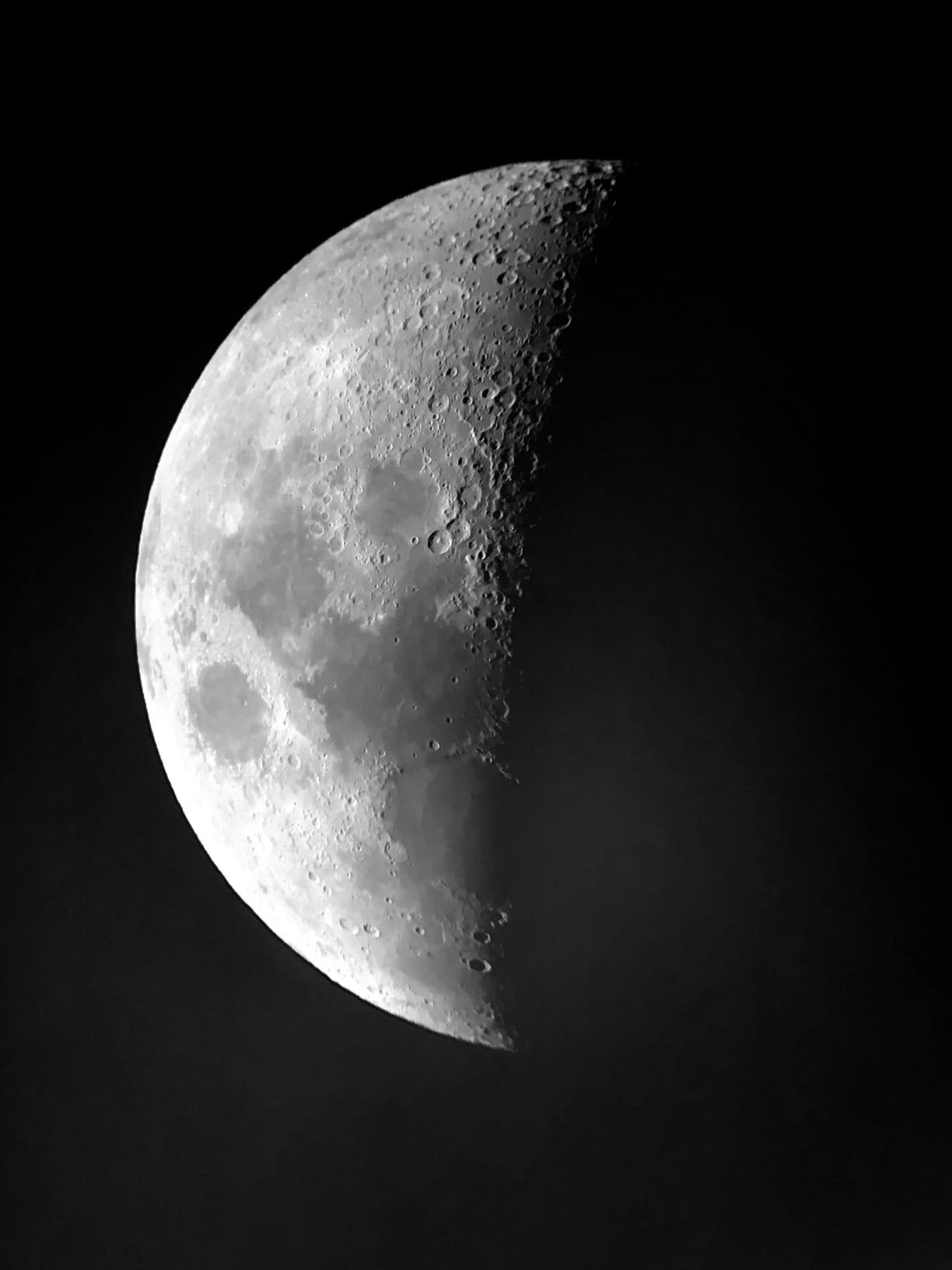
This is the aperture where visual deep sky turns rewarding. The Messier catalogue is largely reachable under a decent sky, the brightest Caldwell objects come in, and globular clusters resolve rather than sitting as unresolved smudges. The Andromeda Galaxy fills the field at low magnification, the Heart and Soul nebulae show real structure, and the North America Nebula needs only the darkest skies to appear.
The honest limit is surface brightness. Large, low surface brightness galaxies like NGC 253 or the Pegasus Cluster fade under light pollution no matter what you look through, and no filter helps in visual use. Bright extended nebulae reward a wide field and low magnification, so resist the urge to crank the power on the 10mm eyepiece.
Who should pick a different telescope
Skip this one if you live in an apartment, have small children, or plan to observe alone at a site far from home. Anyone who cannot easily store and move 45 pounds will end up not using it, and the repeated advice across observing forums is that the best telescope is the one you actually use most. If portability is your priority, the collapsible Heritage 150 below gives up aperture but keeps the aperture-frugal design.
Choose a GoTo model instead if you cannot identify reference stars under a red torch. And note that this is a visual instrument: long-exposure imaging through a solid-tube Dobsonian is possible with a separate camera and a star tracker, but it is not what this telescope is built for.
7. Dianfan 150EQ 150mm Newtonian: Best for a 20-Minute Beginner Setup
Dianfan 150EQ Professional Astronomy Telescope for Adults High Powered
150mm aperture
650mm focal length
Pre-assembled German equatorial mount
14 kilograms
Red dot finder and carry bag
Pros
- 150mm aperture at 650mm gathers enough light for lunar craters and brighter deep sky
- Pre-assembled equatorial mount gets a beginner observing in about 20 minutes
- Slow-motion cables and dials make manual tracking smooth after alignment
- Bundles red dot finder phone adapter moon filter and a fitted carry bag
- Stainless steel tripod provides solid stable support
Cons
- Included Kellner eyepieces benefit from an upgrade to Plossl
- Phone adapter is difficult to align in the holder
- Focuser is all plastic
The Dianfan 150EQ pairs the largest aperture among the equatorial Newtonians here with the shortest assembly time, which is why it earns a place. The 150mm primary at 650mm focal length is about f/4.3, a fast ratio that produces bright, wide-field images of the Orion Nebula, the Andromeda Galaxy and larger clusters, and the pre-assembled German-style equatorial mount arrives ready to use. Reviewers put setup at roughly 20 minutes for a first-time buyer.
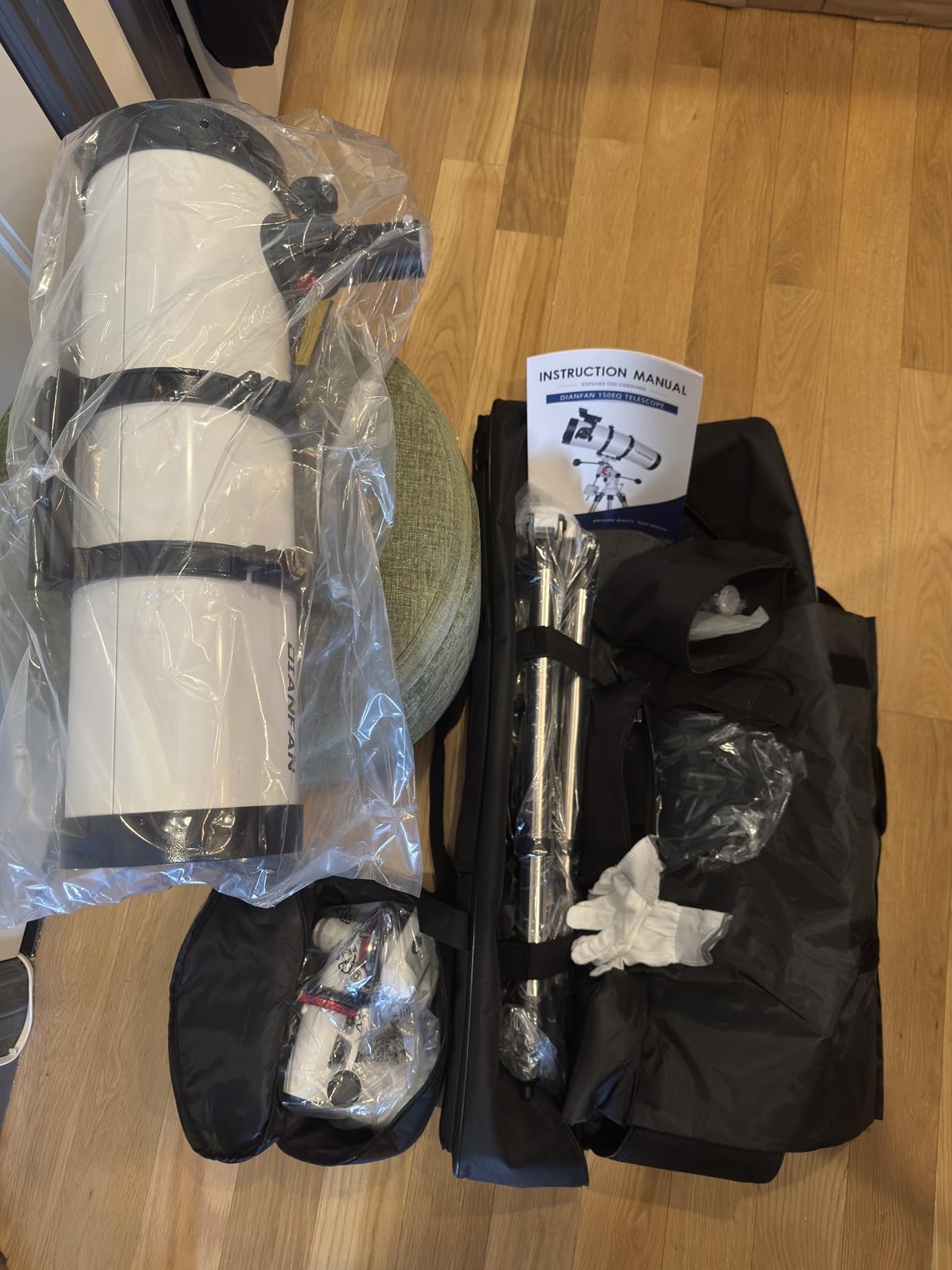
It is also the most travel-friendly equatorial package in the group, at 14 kilograms with a custom carry bag that fits every component. Reviewers highlight quick assembly, a smooth mount and good lunar detail, with the carry bag making it realistic to drive to a dark site rather than observing only from the garden. The stainless steel tripod at adjustable height gives the whole assembly a settled feel that lighter tripods lack.
The included Kellner eyepieces are the weak link. They are perfectly serviceable for the Moon, Jupiter and open clusters, and the 2x Barlow gives you a useful high-power step, but contrast holds up less well under magnification than a good Plossl would. Because this is a fast f/4.3 Newtonian, owners should also expect some coma toward the edge of the field at low magnification, which a focal reducer would address but which does not affect the centre of the view.
The phone adapter takes real effort to align in its holder, and the focuser is entirely plastic. That is fine for visual observing and for an occasional Moon snapshot, but anyone planning regular imaging will replace it. The two-year warranty is respectable for this class.
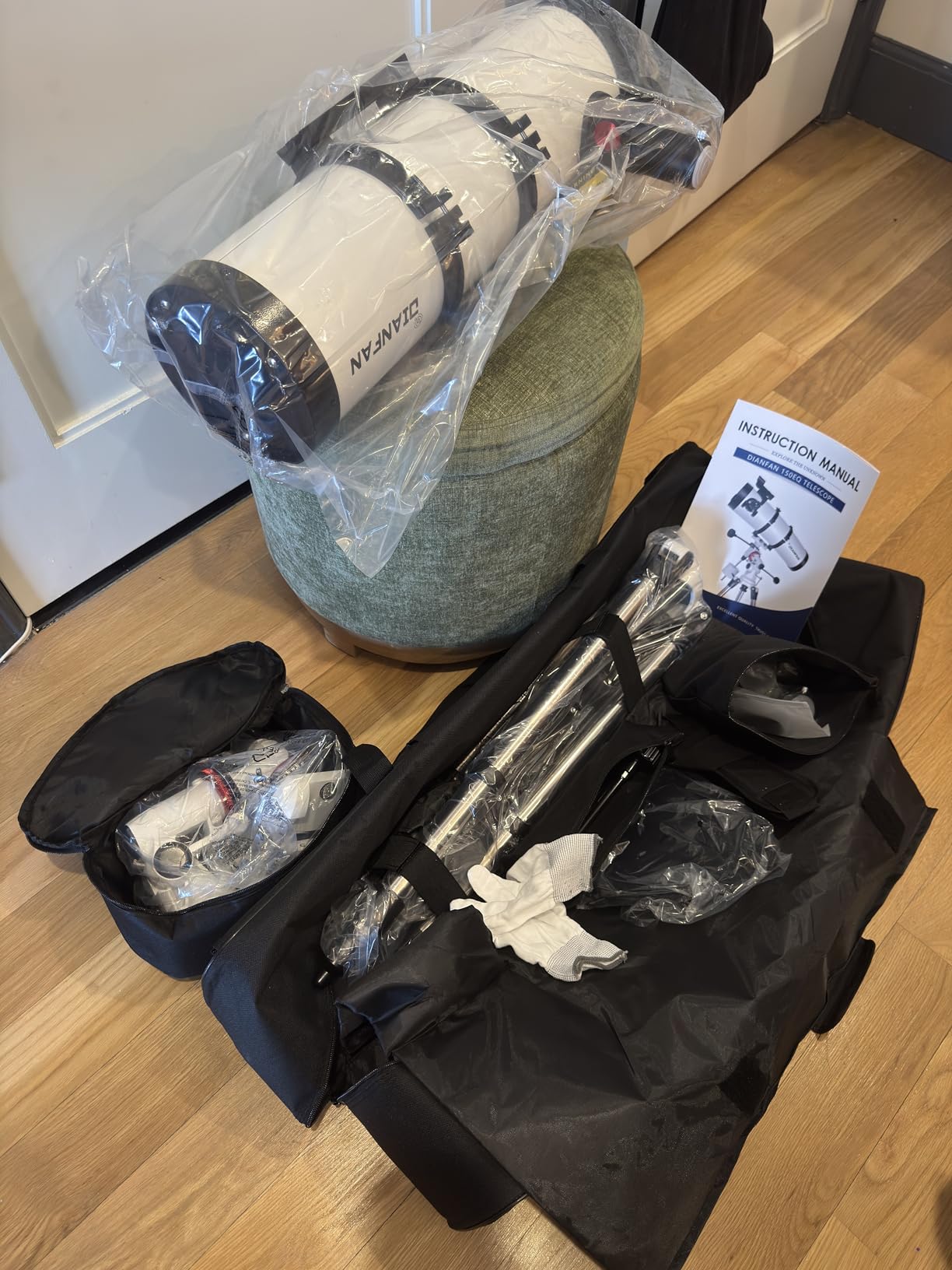
Why 150mm at a fast focal ratio suits galaxies
Aperture sets how faint you can see, and focal ratio sets how that light is spread across the sky. At f/4.3 the exit pupil from the included eyepieces stays wide, which means the image looks brighter and wider-field targets such as the Andromeda Galaxy, the Double Cluster and large nebulae fit comfortably into view. Faster Newtonians trade a little collimation stability for that wide, bright view, which is why this ratio has become the default for visual galaxy work.
The downside of a fast ratio is coma — the fuzzy comet-shaped halo around stars near the edge of the field. Centre on the target, keep magnification low, and the effect mostly disappears. It matters more for imaging than for looking.
Who should pick a different telescope
Choose a Dobsonian if you would rather not polar align at all, or a GoTo mount if you cannot star hop. If your goal is reaching the faintest galaxies from a dark site, the 8-inch Classic 200P shows noticeably more than this telescope, and the gap grows with every increase in aperture. Pick the Dianfan when brightness, portability and fast assembly matter more to you than absolute faintest limit.
8. MEEZAA 150EQ Newtonian Reflector: Best Steadiness for Club and Star Party Use
MEEZAA Telescope, 150EQ Newtonian Reflector Telescope for Adults Astronomy Beginners, Professional Astronomical Telescopes with Equatorial Mount, Tripod, Phone Adapter, Moon Filter and Large Carry Bag
150mm aperture
650mm focal length
German equatorial mount with slow-motion knobs
Large carry bag
25mm and 10mm Kellner eyepieces
Pros
- 150mm aperture gives bright views of Jupiter Saturn the Moon and galaxies in moderate light pollution
- Sturdy build quality and a smooth gimbal at a budget price point
- German equatorial slow-motion knobs make single-knob tracking easy once aligned
- Comprehensive accessory set with moon filter and phone adapter
- Arrives well packed and the carry bag stores every part for travel
Cons
- Included Kellner eyepieces hold contrast poorly compared with Plossl upgrades
- Focuser is plastic and would need replacing for serious imaging
- Limited angle positioning and eyepiece swaps tend to lose the target
The MEEZAA 150EQ shares its rating of 4.4 with the Gskyer above but earns its place for a different reason: steadiness. Astronomy club members and first-time buyers both rate the gimbal as smooth, and that matters when you are at a star party where a wobbling tube means a lost target. The heavy-duty stainless steel tripod with accessory tray holds the tube still while you change eyepieces, which is the opposite of the light-gauge tripods that ring on every adjustment.
Optically it sits alongside the Dianfan at 150mm and 650mm, producing bright views of Jupiter, Saturn, the Moon and galaxies even under moderate light pollution — the same practical advantage of extra 20mm of aperture over a 130mm. The German equatorial mount with precision dials and slow-motion knobs makes single-knob tracking easy once aligned, which is how you follow a slow-drifting target through a high-power field.
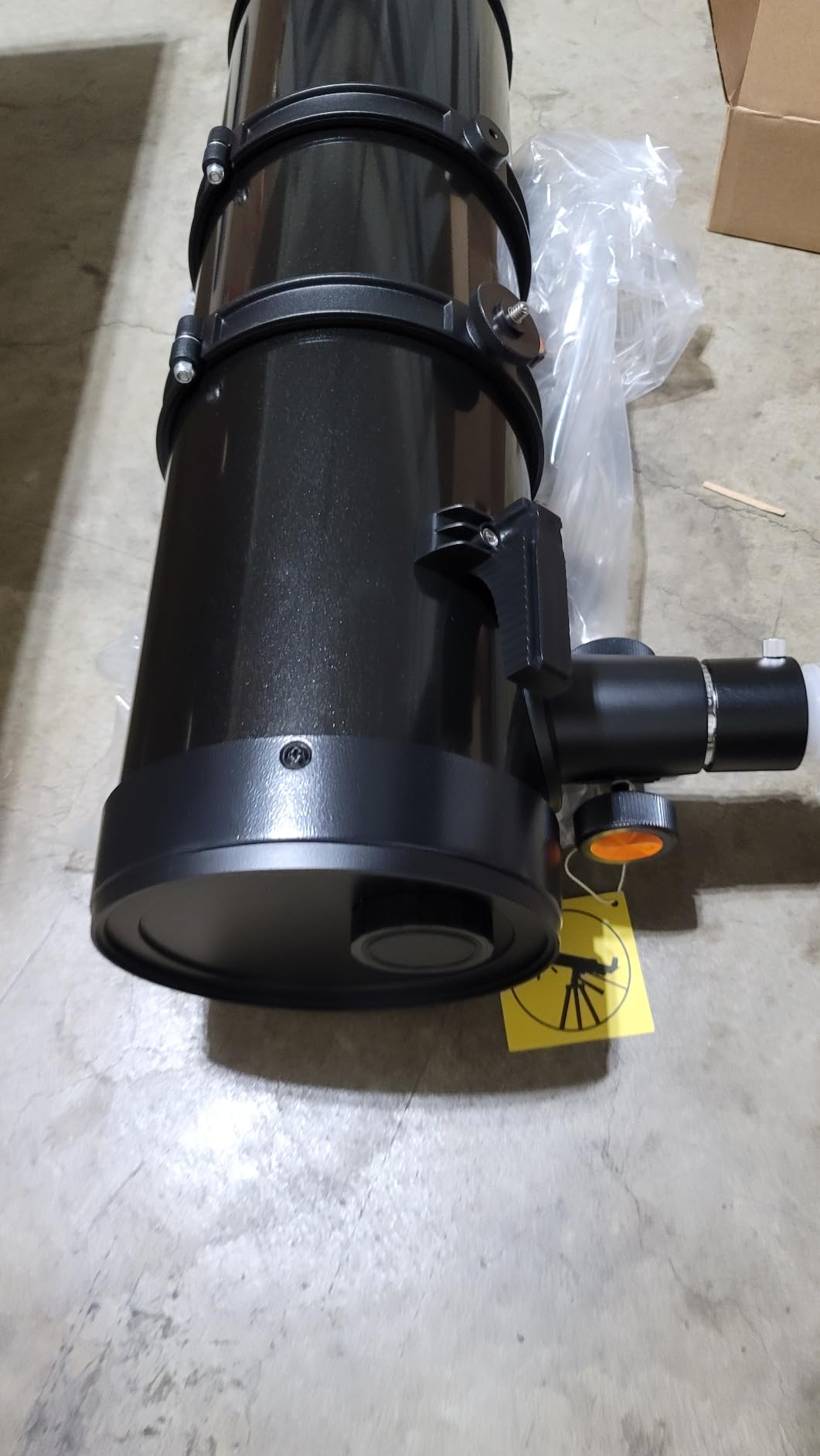
The trade-offs match the class. The included Kellner 25mm and 10mm eyepieces hold contrast poorly compared with a Plossl, so they are the first thing most owners upgrade. The focuser is plastic and would be replaced for any serious imaging work. Angle positioning is limited, and swapping eyepieces tends to lose the target, which is a normal complaint for small equatorial mounts and one you can work around by centring before you swap.
The complete accessory set — two eyepieces, a 2x Barlow, red dot finder, moon filter, phone adapter, carry bag and instructions — is more than most rivals include, and the packaging is reported as good, which matters for a product whose mirror is fragile in transit.
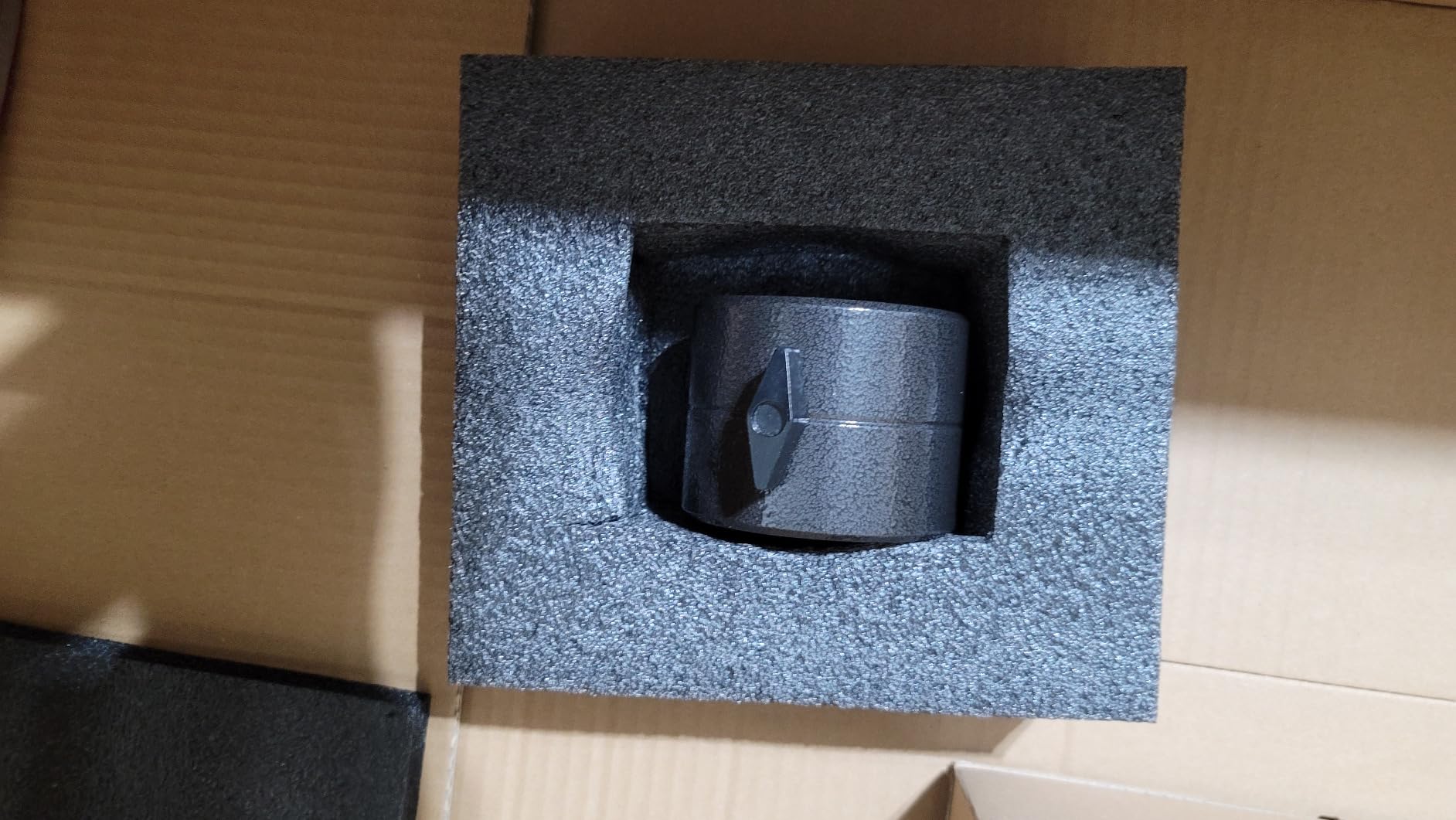
What a stable mount changes for deep sky observing
For visual work, a stable mount is about one thing: keeping a faint object in the field while you settle in. A large, low surface brightness galaxy like the Whirlpool or the Silver Needle needs a minute of patient averted vision to register, and a tube that drifts every time you breathe at the eyepiece ends that attempt early. Damped slow-motion controls let you correct continuously without disturbing the image.
It also makes sharing the telescope easier at a star party. A scope that stays where you point it can be handed to the next person without re-centring, and that is a practical advantage no specification captures.
Who should pick a different telescope
If you travel to dark sites only once or twice a year, the tabletop Dobsonian route costs less and requires no alignment. If your interest is imaging rather than viewing, neither this scope nor any of the other equatorial Newtonians here is the right first purchase without additional mount stability and a camera. And if you want the faintest galaxies rather than bright images, keep saving toward an 8-inch aperture.
9. Sky-Watcher Heritage 150 Tabletop Dobsonian: Best for Small Spaces and Quick Sessions
Sky-Watcher Heritage 150 Tabletop Dobsonian Telescope – Perfect for Beginners, Easy Setup, Portable, and Fun (S11710)
150mm aperture
750mm focal length at f/5
Tabletop altazimuth Dobsonian base
23 pounds
1.25-inch helical focuser
Pros
- 150mm aperture delivers crisp contrast-rich views of the Moon planets and brighter deep sky
- Fast f/5 ratio keeps images bright and reduces long focal length demands
- Collapsible tube design retains collimation while improving portability and storage
- Tabletop format with rubber feet minimizes vibration and increases stability
- Simplest possible setup with a 1.25-inch helical focuser
Cons
- Tabletop base requires a table or stand at a comfortable height
- 1.25-inch helical focuser is less smooth than a Crayford design
- Manual altazimuth operation means no tracking of deep-sky targets
The Heritage 150 solves a problem the bigger Dobs create. It is a 6-inch Dobsonian in a collapsible tube that packs into a small footprint, sits on a table rather than taking the floor, and at 23 pounds is a single manageable carry. Owners consistently mention ease of use, portability and bright contrasty images from the 150mm parabolic mirror, and the collapsible design holds its collimation between sessions, which is usually where collapsible tubes fail.
The fast f/5 ratio at 750mm focal length keeps images bright and the field wide, which suits extended targets like the Orion Nebula, the Andromeda Galaxy and larger clusters. The tabletop format with rubber feet reduces vibration, so high-power lunar and planetary work is steadier than a cheap tripod of the same aperture. For anyone with a balcony, a conservatory or a small study, this is the most usable telescope here.
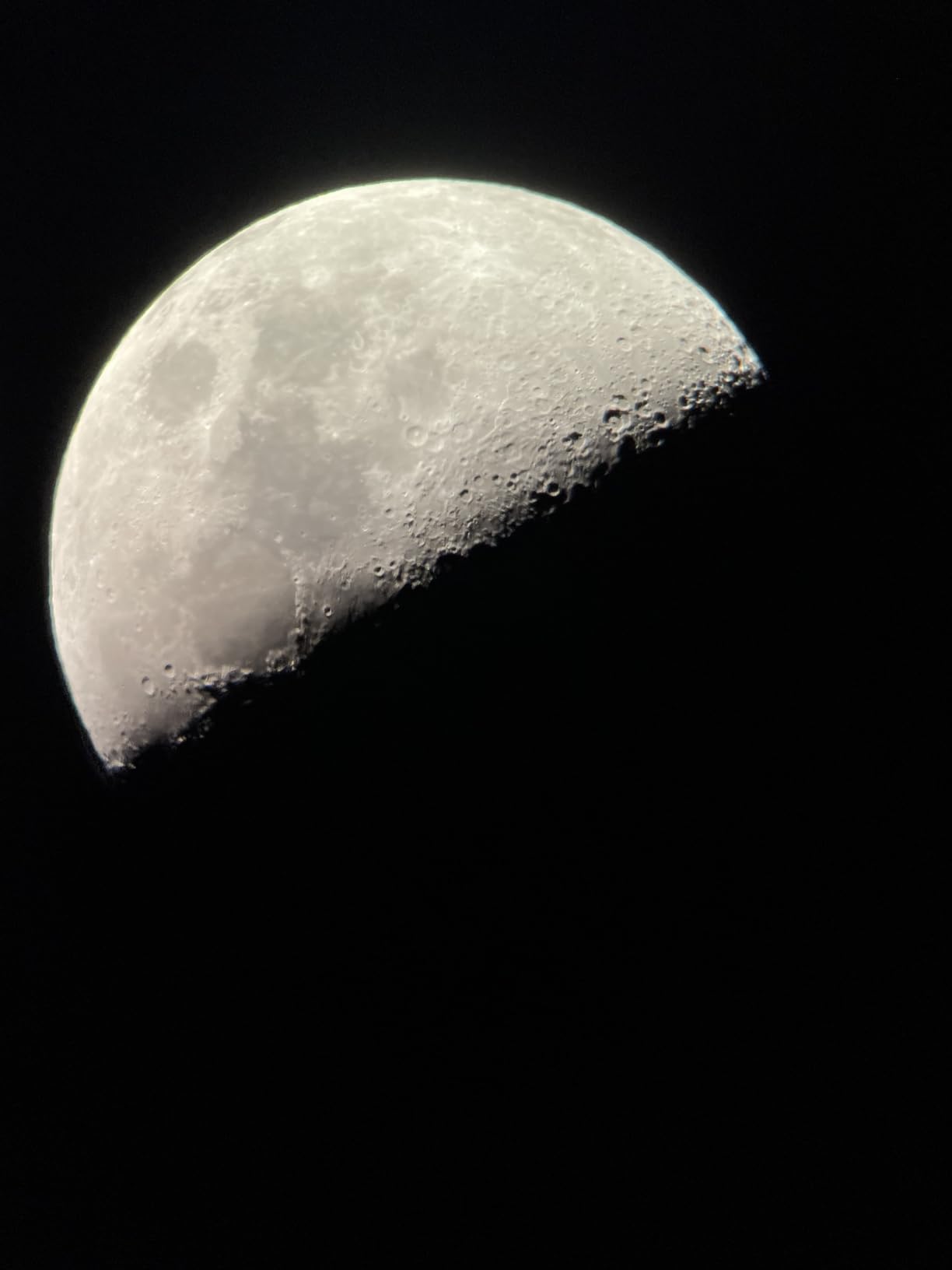
The trade-offs are physical and practical. It needs a table or stand at a comfortable standing height, and you will want to stand at it — a low table means a bent back and shaky viewing. The 1.25 inch helical focuser is smooth enough but less refined than a Crayford design, and there is no tracking at all, so faint targets drift steadily out of a high-power field. With only 104 reviews on record, there is also less long-term feedback on this model than for the other scopes in this roundup.
Because it is manual altazimuth, the telescope is entirely intuitive: push the tube and the view follows. For a first telescope, that simplicity is worth more than an equatorial mount you have to align.
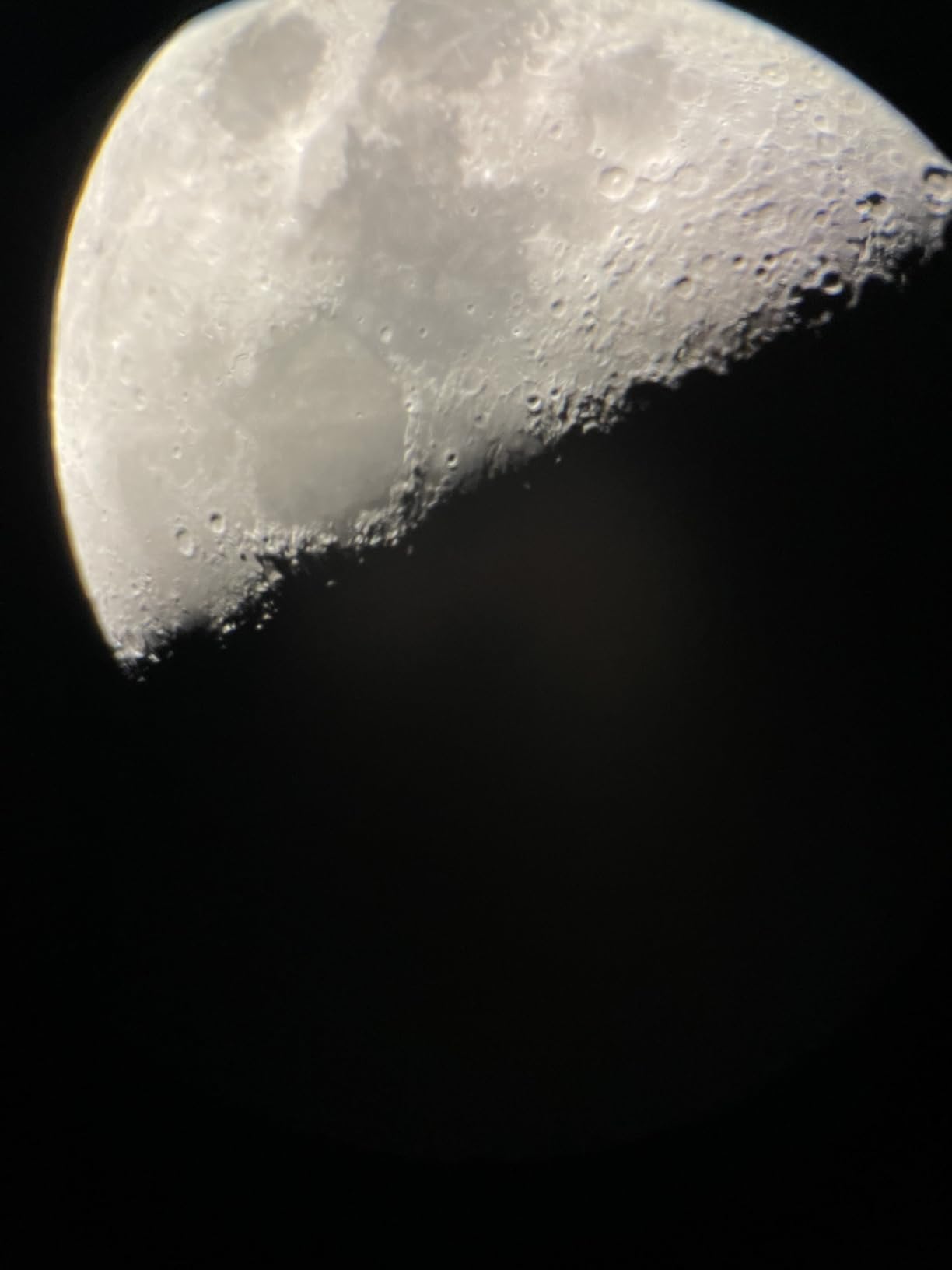
When a 6-inch tabletop Dobsonian is the right answer
Six inches is the threshold where the Messier objects become genuinely rewarding rather than merely visible. At 150mm you can sweep the Andromeda Galaxy with both companions in the field, resolve the Hercules globular clusters, and see the Ring Nebula and Dumbbell as distinct objects rather than smudges. Because it has no electronics, there is nothing to fail and nothing to align, and the whole setup takes a couple of minutes.
The collapsible tube is the practical win for storage. It folds to 15 centimeters, so it lives in a closet rather than blocking a room — worth comparing against a solid-tube Dobsonian if you rent, share a home or have a car that cannot swallow 49 inches of length.
Who should pick a different telescope
Choose the 8-inch Classic 200P if you have the space and the strength to move it, because the extra 53mm of aperture is a large jump in faint-object reach. Choose the 127SLT or the 8SE if you want the telescope to find targets for you at a dark site, since without tracking and without GoTo you will need a planisphere and patience. Pick the Heritage 150 if space, storage and simplicity outweigh every other factor.
How to Choose a Deep Sky Telescope
Aperture decides how much sky you get to see
Aperture is the single number that predicts what a telescope will show. Light gathering scales with the square of the diameter, so each step up in size delivers a large jump: a 6-inch aperture gathers about twice the light of a 5-inch, and an 8-inch gathers roughly 78 percent more again. That is why a Galaxy Cluster like Hercules resolves into individual stars at 8 inches and stays a single bright blob at 5. In practice, 130mm scopes cover the bright Messier objects and the nearest bright galaxies, 150mm adds noticeable brightness and detail, and 203mm opens the faint nebulae and smaller galaxies.
Set your aperture target by the sessions you expect to have. If most observing happens from a suburban backyard, the extra reach of a large aperture is spent on light pollution rather than on faint galaxies. If you drive to dark sites regularly, aperture is the best money you can spend, because that is where light pollution stops being the limit.
Focal ratio sets brightness and field of view
Focal ratio is focal length divided by aperture, and it decides how wide the image looks. Short and fast designs around f/4 to f/5, such as the 150mm Newtonians and the Heritage 150, give bright wide-field views that suit nebulae and galaxy sweeping. Mid-range ratios around f/8 to f/9 balance width and magnification for general visual work. Long designs above f/10, such as the 1500mm Maksutov and the 2032mm Schmidt-Cassegrain, are compact and excellent on planets but narrow for large nebulae.
For visual deep sky, err on the fast side. Low magnification plus a wide field shows extended objects far better than cranking power on a narrow field.
Optical design and the collimation trade-off
Newtonian reflectors give the most aperture per unit of money and need collimation after transport or a knock. Dobsonian mounts are the simplest, smoothest altazimuth bases there are, with no alignment and no power supply. Schmidt-Cassegrain and Maksutov-Cassegrain designs are sealed, compact and excellent on planets, but cost more per inch of aperture and need periodic collimation on the Schmidt. Refractors need no collimation at all and give the cleanest contrast, but you pay by the inch, which is why none appears in this budget-focused roundup.
Mount, alignment and whether you can find anything
A German equatorial mount with slow-motion knobs lets you track a drifting target manually once you polar align, and alignment takes practice with a small scope. A computerized GoTo mount removes both problems: align on three stars and the mount points at anything in its database. That capability is worth real money to a total beginner, which is exactly why two GoTo models appear here despite costing more per inch of glass.
Eyepieces, portabity and honest budget advice
Most of the telescopes here include at least two eyepieces, and none includes the wide range you eventually want. Budget early for one or two quality eyepieces around 25mm and 10mm; the consistent advice across observing forums is that cheap eyepieces waste a good telescope, and this is the cheapest upgrade with the largest visible return. On collimation, check whether a laser collimator is included, because Newtonian mirrors arrive out of alignment fairly often.
On portability, measure honestly. Large solid-tube Dobs are excellent instruments that many owners cannot move alone, and a telescope that stays in a garage does not show anyone anything. Weight and storage space are real constraints, not preferences.
Frequently Asked Questions
What is the best telescope for viewing deep sky objects?
The best telescopes for deep sky viewing are the ones with the most aperture you can comfortably carry and set up, because deep-sky objects are faint and extended. An 8-inch Dobsonian shows the most for the money, a 130mm or 150mm Newtonian reflector covers the bright Messier objects from a backyard, and a GoTo model helps if you cannot star hop.
What size telescope do I need for deep sky viewing?
A 130mm to 150mm reflector is enough for the Moon, the Orion Nebula, the Pleiades, the Andromeda Galaxy and most bright Messier objects. At 203mm you reach many more galaxies and the fainter nebulae, and each further increase in aperture delivers a much larger jump in faint-object detail.
Is a Dobsonian good for deep sky viewing?
Yes. Dobsonians are the standard recommendation for visual deep sky because they give the most aperture for the money, need no alignment and have smooth altazimuth motion that makes them easy to point. The trade-offs are weight, no motorized tracking and the need to collimate a Newtonian occasionally.
What aperture is needed to see the Orion Nebula?
Any telescope with 70mm or more of aperture shows the Orion Nebula, and a 130mm or 150mm reflector shows its structure clearly, including the Trapezium cluster at the core. Binoculars work for a first look, but aperture is what reveals the wings of the nebula rather than a fuzzy patch.
What size telescope to see Saturn’s rings?
A 60mm refractor or a 70 to 90mm tabletop scope shows Saturn’s rings as a ring, and a 130mm reflector resolves the Cassini Division under steady seeing. Longer focal lengths help with small detail, while a Dobsonian or Maksutov keeps the planet steady for longer at high power.
Our Final Verdict on the Best Telescopes for Deep Sky Viewing
After comparing all nine of these telescopes, the Celestron AstroMaster 130EQ is the best telescope for deep sky viewing for most people. It has the largest body of real owner feedback in the group, a fast f/5 tube that produces bright wide-field galaxy views, and a German equatorial mount that lets a beginner track a drifting target after a polar alignment. Weigh it against the alternatives like this: the Sky-Watcher Classic 200P shows you more sky than anything else here but costs you the ability to move it easily, and the Celestron NexStar 8SE finds targets for you at the cost of more money and a separate power source.
Whichever you choose, budget for one good eyepiece, expect to spend time letting your eyes dark-adapt, and measure your storage space before you commit to a large base. The best telescope for deep sky viewing is the one you will carry outside on a clear night, not the one with the largest number on the box.