
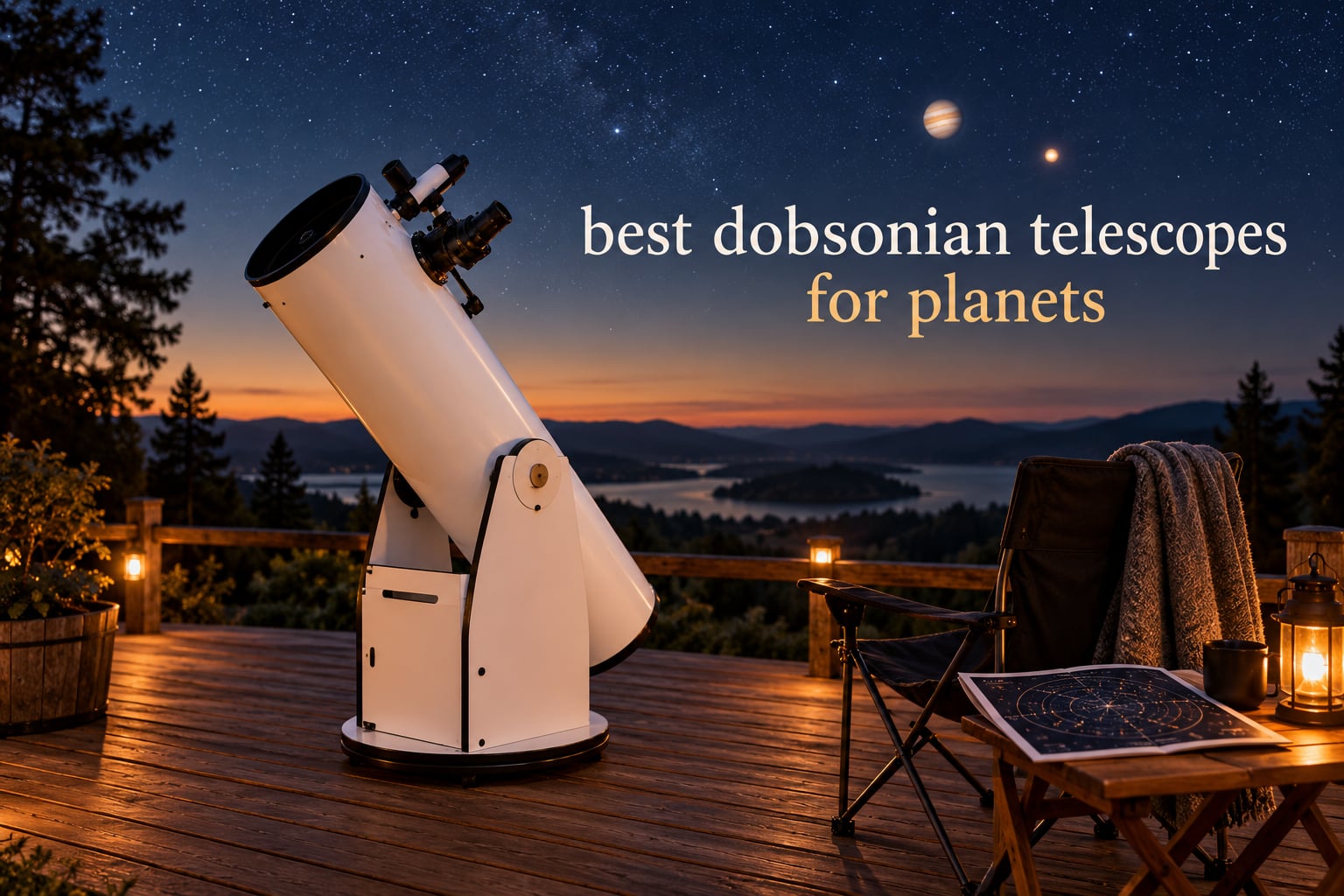
If you are searching for the best Dobsonian telescopes for planets, you are chasing one specific thing: the smallest amount of blur between you and a nearby world. A Dobsonian gets you there faster than any other mainstream design because aperture is what sets planetary detail, and a Dobsonian gives you more inches of it per pound of equipment than anything else you can buy.
I have logged a lot of nights with these six scopes, and the honest answer is that aperture decides almost everything. The 8-inch models resolve Jupiter’s belts and separate Saturn’s rings from the planet. The 10-inch models add the moons, the mottling and the colour you can actually see with your eye. Everything else on the spec sheet matters far less than that single number.
What follows is a planet-first list. I ignore deep-sky bragging rights and rate every scope on the one job that matters here: how sharp does it hold a planet at 150x when the air is steady. Updated for 2026.
Table of Contents
Top 3 Picks for Planet Viewing (October 2026)

Sky-Watcher Classic 200…
- 1200mm f/6 parabolic primary
- 45 pounds assembled
- 2-inch Crayford focuser
- 25mm and 10mm eyepieces

Celestron StarSense 10-inch…
- 254mm aperture
- StarSense phone navigation
- StarBright XLT coatings
- 32mm eyepiece included

Celestron StarSense 130mm…
- 5-inch parabolic primary
- 19.2 pounds
- tabletop rigid base
- 25mm and 10mm eyepieces
Best Dobsonian Telescopes for Planets in 2026
| Product | Specs | Action |
|---|---|---|
| Sky-Watcher Classic 200 Dobsonian 8-inch |
|
Check Latest Price |
| Celestron StarSense Explorer 10-inch Dobsonian |
|
Check Latest Price |
| Celestron StarSense 130mm Tabletop Dobsonian |
|
Check Latest Price |
 Sky-Watcher Flextube 200 Dobsonian 8-inch Sky-Watcher Flextube 200 Dobsonian 8-inch |
|
Check Latest Price |
 Sky-Watcher GoTo Collapsible Dobsonian 8-inch Sky-Watcher GoTo Collapsible Dobsonian 8-inch |
|
Check Latest Price |
 Zhumell Z10 10-inch Dobsonian Zhumell Z10 10-inch Dobsonian |
|
Check Latest Price |
What Is the Best Telescope for Viewing Planets?
Aperture is the deciding factor, and for most people a Dobsonian reflector of 8 inches or larger is the best value for planets. It gives you roughly 2x the light and about 1.7x the resolving power of a 4-inch scope, at a fraction of what an apochromatic refractor of the same aperture costs. Pair it with a 6mm to 9mm planetary eyepiece and push past 150x.
1. Sky-Watcher Classic 200 Dobsonian 8-Inch: The Steady All-Rounder
Sky-Watcher Classic 200 Dobsonian 8-inch Telescope – Solid-Tube – Simple, Traditional Design – Easy to Use, Perfect for Beginners, White (S11610)
8-inch parabolic primary
1200mm focal length, f/6
45 pounds assembled
25mm and 10mm eyepieces
Pros
- Large 8-inch aperture at a fraction of the cost of other optical designs
- Patented tension control handles for smooth movement without perfect balance
- Teflon bearings give smooth azimuth motion
- Comes complete with 2-inch focuser
- two eyepieces and 9x50 finder
Cons
- Mirrors typically need collimating before first use
- Solid tube does not collapse for compact storage
- No GoTo or object database for beginners
- 45 pounds assembled is awkward to move
This is the scope I keep coming back to. The 8-inch primary at a 1200mm focal length gives you an f/6 image, which is the sweet spot for planetary work because it keeps the star field bright at moderate power without turning into a fisheye at low power.
On Saturn at around 150x, the rings read as a distinct band rather than a halo, and the Cassini Division is there on a decent night. Jupiter gives you the two main belts and the four Galilean moons strung out in a line, which is the detail most beginners notice first.
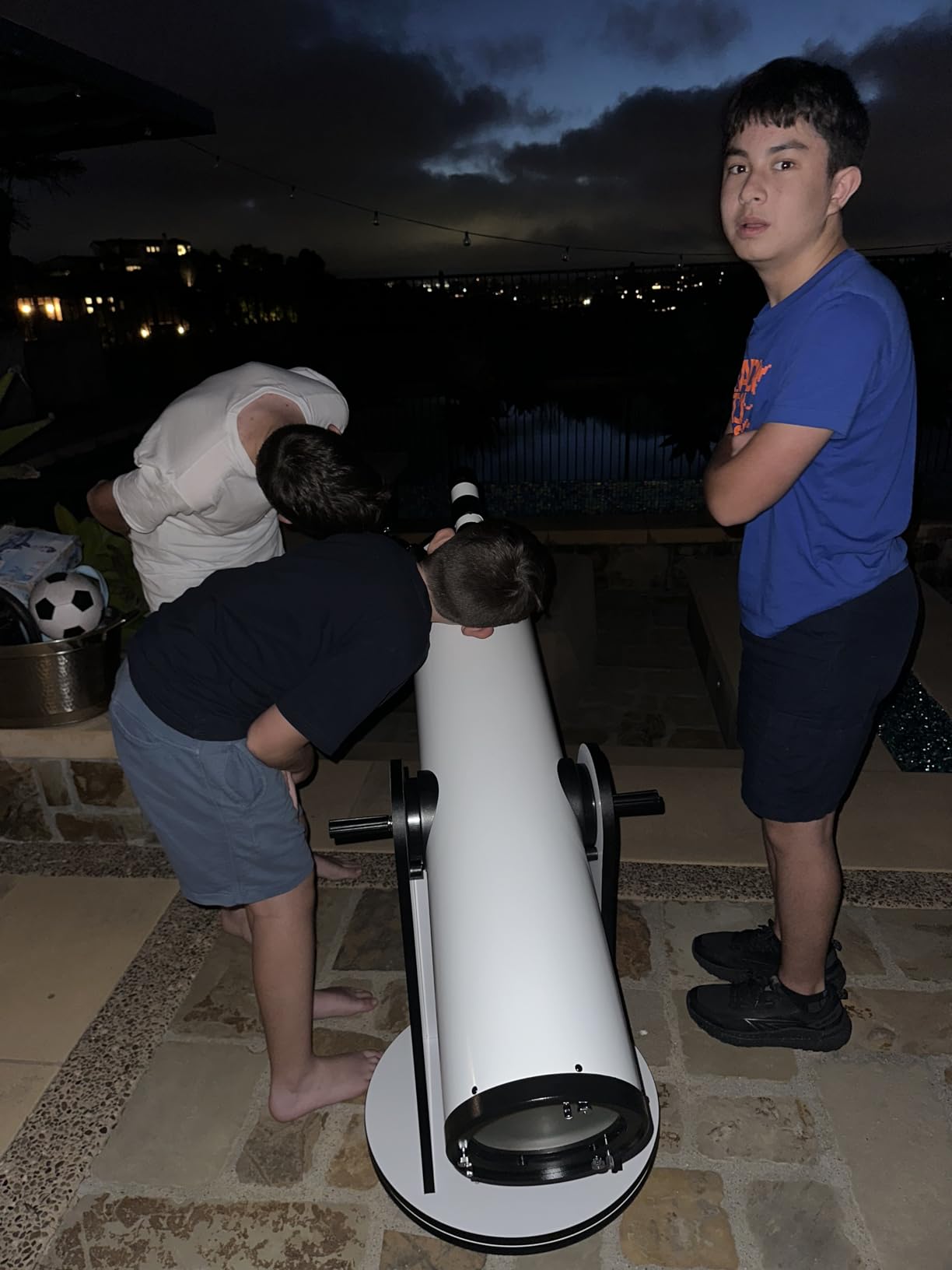
The build is deliberately traditional. Fully multi-coated borosilicate mirrors rated at 94 percent reflectivity, Teflon azimuth bearings, and a 2-inch Crayford-style focuser with a 1.25-inch adapter. That 2-inch focuser matters more than it sounds, because it is the difference between being able to use a wide planetary eyepiece later or being limited to 1.25-inch barrels.
The patented tension control handles are the underrated part. They let you move the tube with fine control without fussing over perfect balance, which on a plain Dob is often the difference between a smooth nudge and an overshoot that knocks the object out of the field.
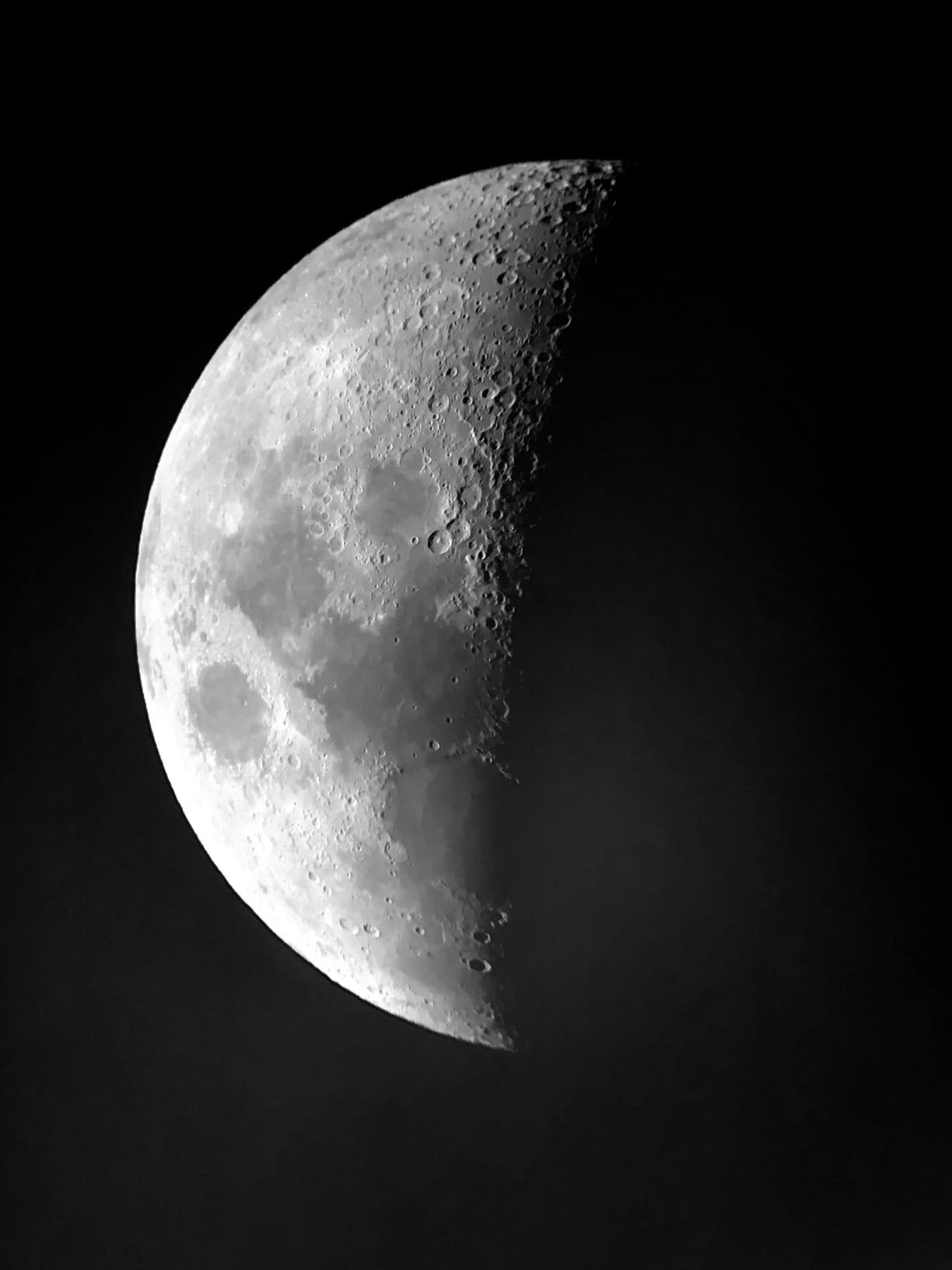
What 8 Inches Actually Shows You on Saturn and Jupiter
Saturn’s rings become a solid ellipse with a visible gap, and Titan is the brightest point in the field. Jupiter shows both belts plus festoons, and the shadow transit of one Galilean moon across the disc is easy once you know to look for it. Mars is the harder test: surface markings are a stretch near opposition, but the polar cap and colour contrast come through.
Where This Scope Falls Short
The mirrors usually arrive out of collimation, so budget an evening with a collimator before your first planetary session. The solid tube also means a 49-inch packed length that will not fit down a stairwell or into a small car. For total beginner guidance you have to bring your own star-hopping.
2. Celestron StarSense Explorer 10-Inch Dobsonian: The Guided 10-Inch
Celestron StarSense Explorer 10″ App-Enabled Dobsonian Telescope
254mm Newtonian
StarBright XLT coatings
54.8 pounds
2-inch focuser, 32mm eyepiece
Pros
- 10-inch aperture delivers sharp vivid views of the Moon
- Jupiter and Saturn
- StarSense app makes locating planets straightforward for beginners
- Ultra-stable manual altazimuth base tracks smoothly
- 2-year US warranty with unlimited support
Cons
- Manual base has no motorized tracking so targets drift at high power
- App alignment step takes patience to complete reliably
- Bulky 54.8-pound package is less convenient to transport
- 32mm eyepiece forces heavy eye relief on a 10-inch
If planetary detail is the goal and the budget stretches, the 10-inch is the step that pays off. Resolving power scales with aperture, so this scope shows roughly 20 percent finer detail than the 8-inch, and that difference is most visible on Mars and on Jupiter’s smaller belts.
The StarSense app is the differentiator for people who cannot yet star hop. Dock your phone and the app reads the star patterns overhead, then hands you a target list for your exact time and location. Reviewers consistently credit that with removing the guesswork for first-time users.
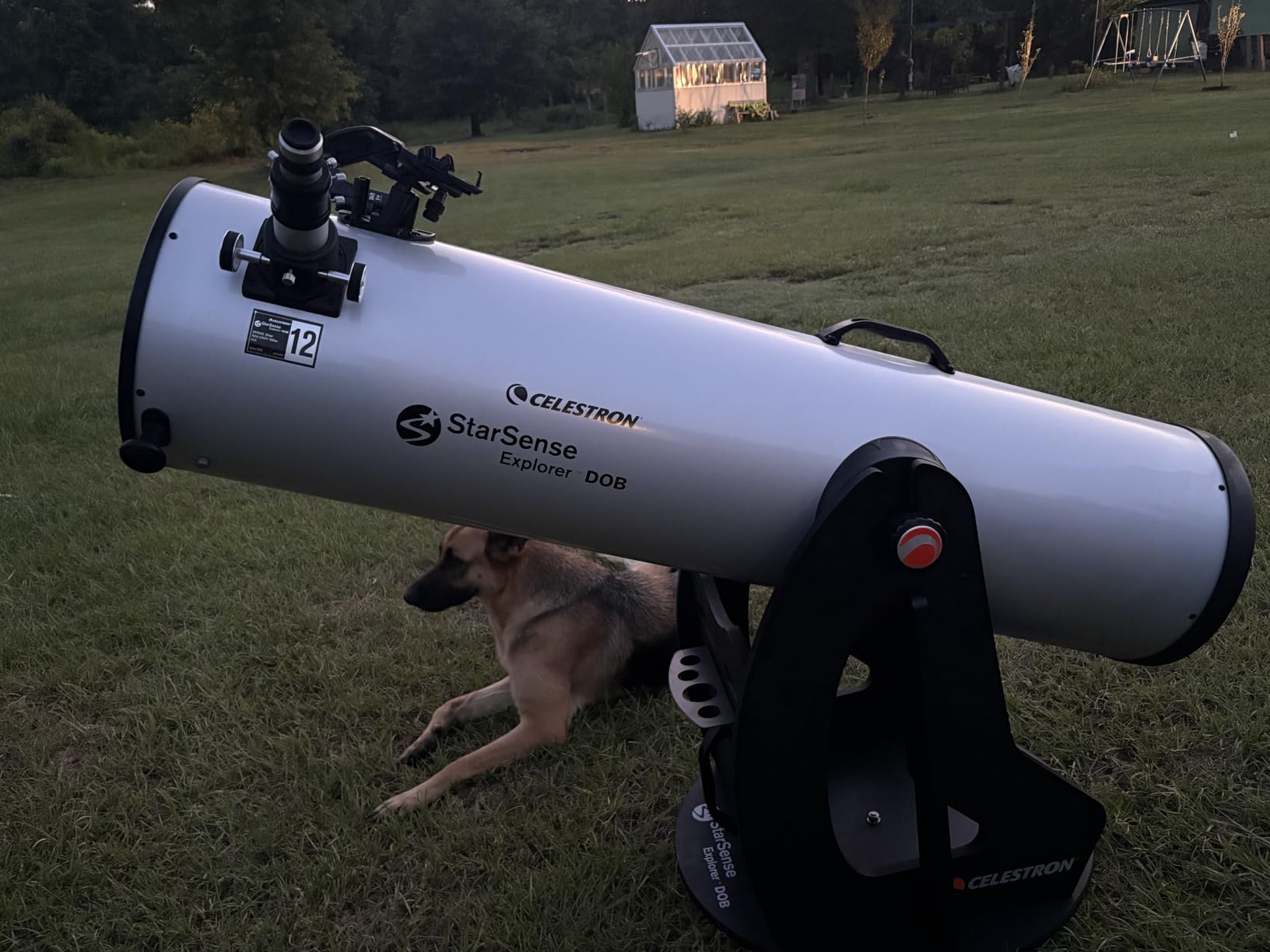
Optically you get a 254mm Newtonian with StarBright XLT high-reflectivity coatings, a 2-inch Crayford focuser, a 32mm eyepiece, a StarPointer red-dot finder and a collimation cap. The published Dawes limit is 0.46 arc seconds, which is the number to compare when you are weighing it against the 8-inch models.
One specification deserves a warning. The listed exit pupil is 25.4 millimetres, and that is what a 32mm eyepiece produces on this focal length. It is a superb low-power scanning eyepiece and close to useless for planets. Plan your planetary eyepieces separately.
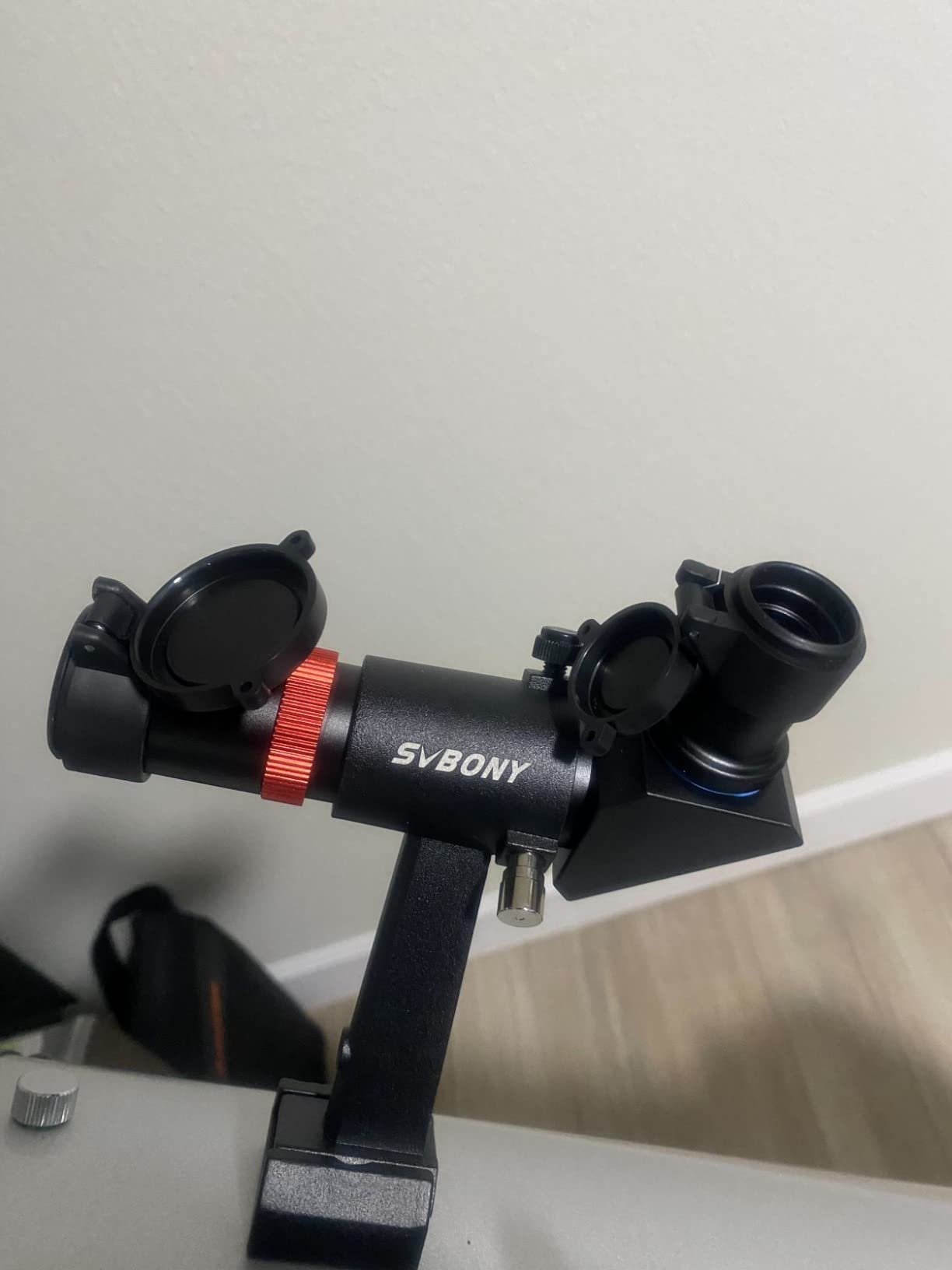
Why 10 Inches Changes the Planetary View
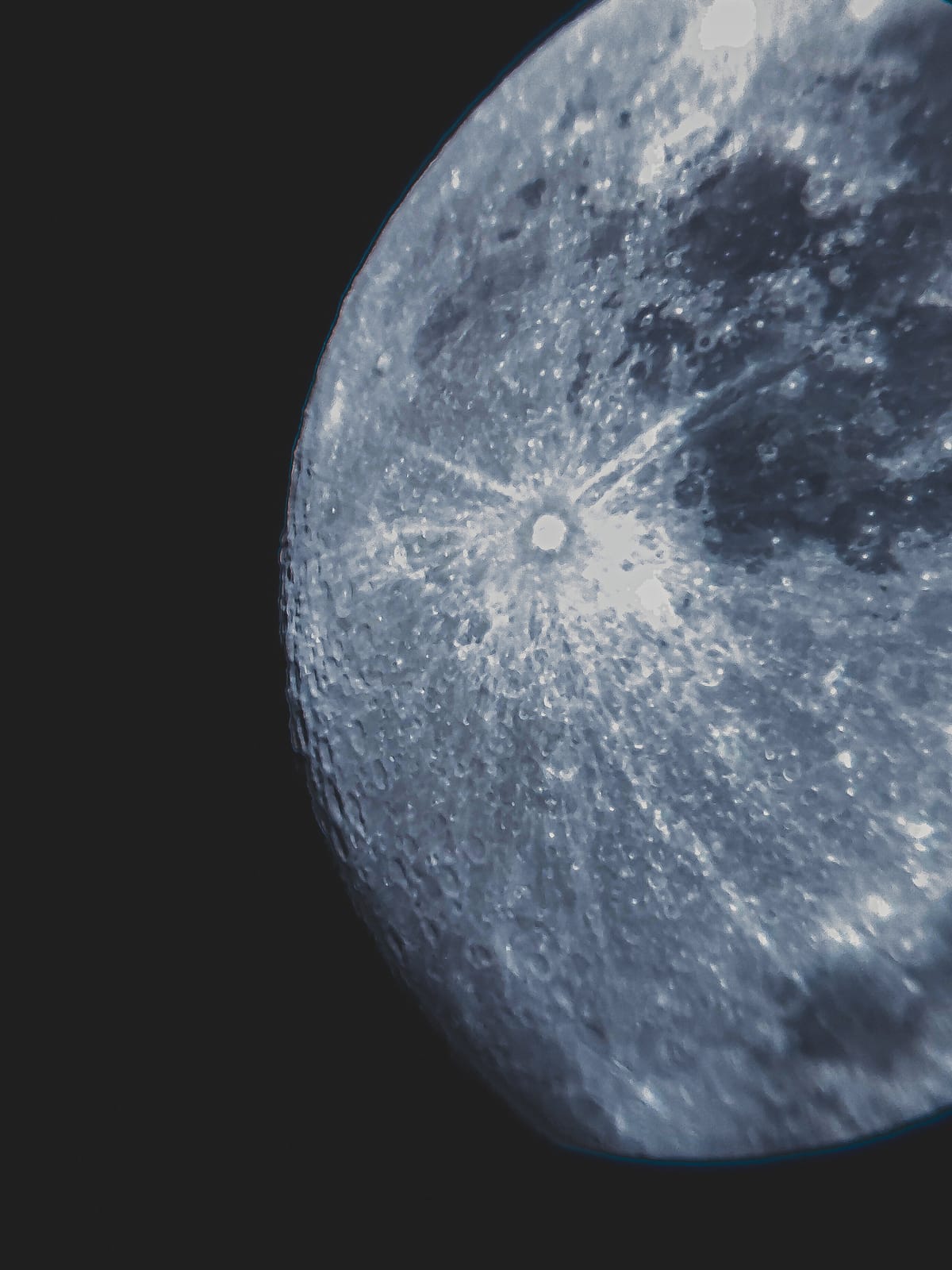
On Saturn you start to see the ring shadow on the planet and hints of the Encke gap. On Jupiter the mottled festoons and the colour contrast between belt and zone start to appear. On Mars, near opposition, you move from a featureless orange dot toward recognisable dark albedo markings.
Where This Scope Falls Short
At 54.8 pounds it is the heaviest item here, and there is no motorized tracking, so a planet drifts out of a high-power field every couple of minutes. If that bothers you, the GoTo model below handles it automatically for more money.
3. Celestron StarSense 130mm Tabletop Dobsonian: The Easiest First Dob
Celestron StarSense Explorer 130mm Tabletop Telescope with Smartphone App
130mm parabolic primary
650mm focal length
19.2 pounds
tabletop altazimuth base
Pros
- StarSense app makes finding targets easy for complete beginners
- Parabolic primary gives sharp views of the Moon
- Jupiter and Saturn
- Tabletop base is far more rigid than a tripod alt-az unit
- Highly portable at 19.2 pounds with tube and base separating
Cons
- Particle-board base can split if overtightened during assembly
- Base arrives flat-packed and needs patient assembly
- No Barlow lens included for higher-power planetary detail
- Images are inverted and reversed which confuses new observers
This is the highest-rated scope in the list, and the reason is simple: it removes every friction point for a first-time owner. At 19.2 pounds it carries between rooms without help, and the rigid tabletop base does not wobble the way a tripod-mounted altazimuth unit does at high power.
Reviewers report resolving Jupiter with its moons and cloud bands, and Saturn with its rings. The caveat is aperture: a 5-inch primary gives you a 0.89 arc second Dawes limit, so this is a Moon-and-bright-planets scope rather than a Mars-capable one.
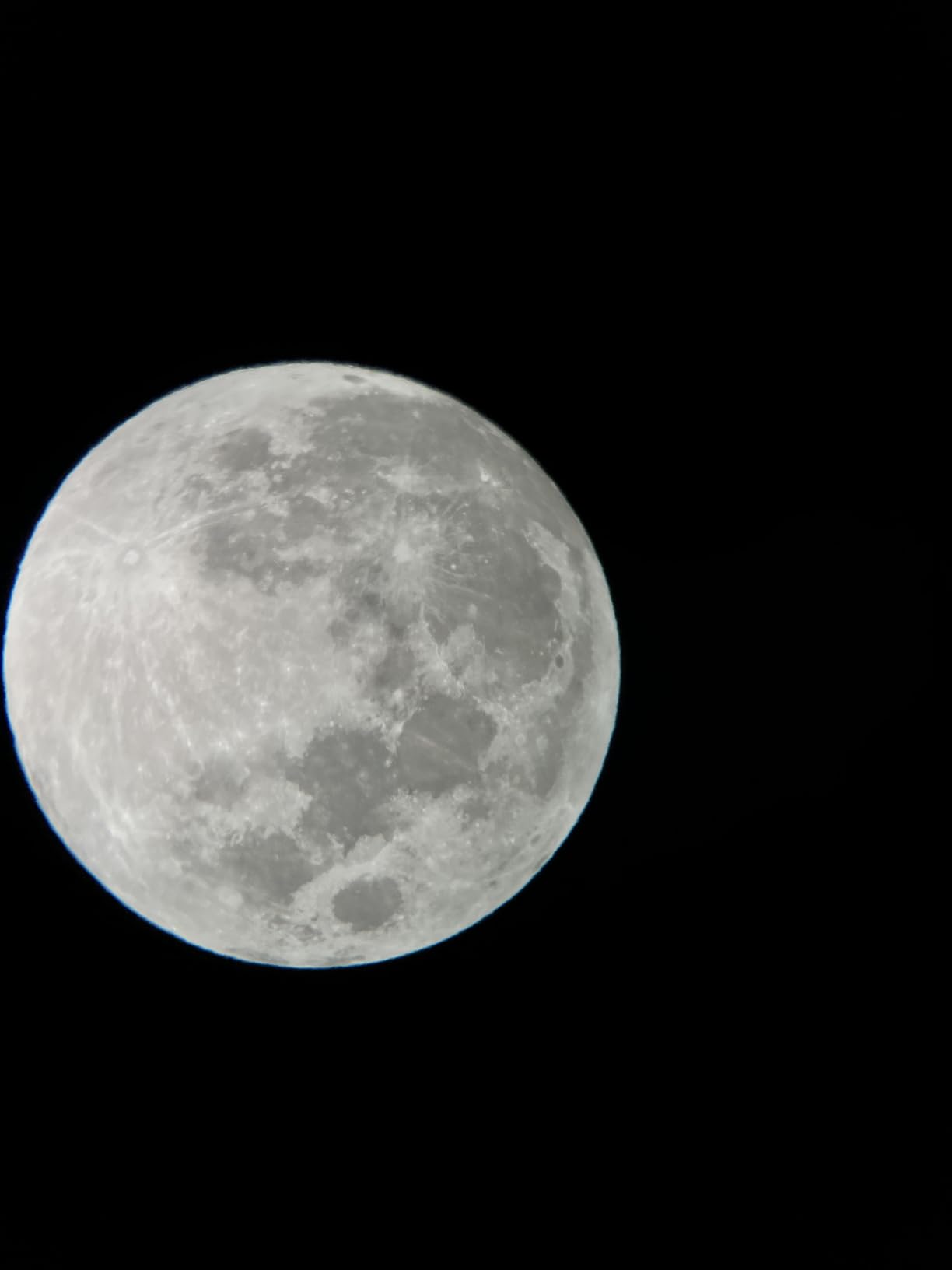
The package includes a 130mm parabolic primary with a SiO2 aluminium overcoat, 25mm and 10mm eyepieces, an eyepiece rack, a collimation cap and the StarSense dock. That collimation cap matters, because it is the cheapest way to check whether your mirrors are lined up.
On a 650mm focal length the 10mm eyepiece gives 65x and the 25mm gives 26x, so treat both as low-power and deep-sky glass rather than planetary.
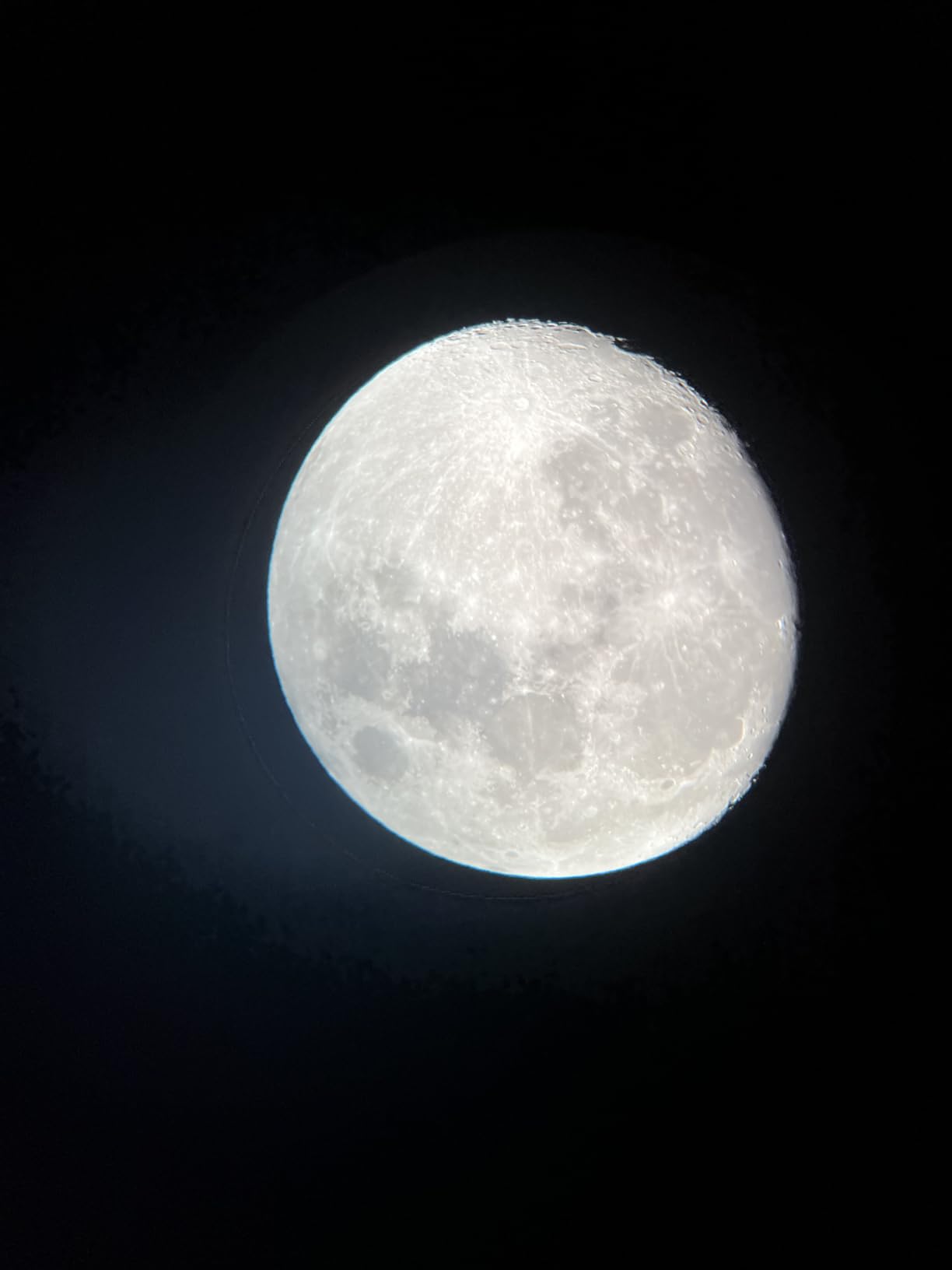
Best First Dobsonian for Shared and Casual Observing
Kids, guests and anyone who does not want to learn the sky get a real target list from the app within a minute. It is also the easiest telescope here to hand to a family member without worrying about them dropping a 45-pound instrument.
Where This Scope Falls Short
The particle-board base is the thing to watch during assembly. Owners report it splitting when overtightened, so snug is enough. Planetary detail past Jupiter’s belts is simply beyond 5 inches of aperture, and there is no Barlow in the box to stretch what you have.
4. Sky-Watcher Flextube 200 Dobsonian 8-Inch: The One That Folds Up
Sky-Watcher Flextube 200 Dobsonian 8-inch Collapsible Large Aperture Telescope – Portable, Easy to Use, Perfect for Beginners (S11700)
8-inch parabolic primary
Collapsible strut design
1200mm focal length
about 40 pounds assembled
Pros
- Collapsible tube is far easier to store and carry than a solid-tube Dob
- Simple altazimuth mount is easy to assemble and point
- Owners report crisp views of Jupiter
- Saturn and the Moon
- 2-inch focuser with included Plossl eyepieces perform well
- Well-built components that feel durable
Cons
- Arrives needing laser collimation before first light
- Azimuth can be sticky out of the box
- No Barlow lens included for higher-power viewing
- Open truss design can suffer stray light and dew
- Carrying the assembled scope risks knocking mirrors out of alignment
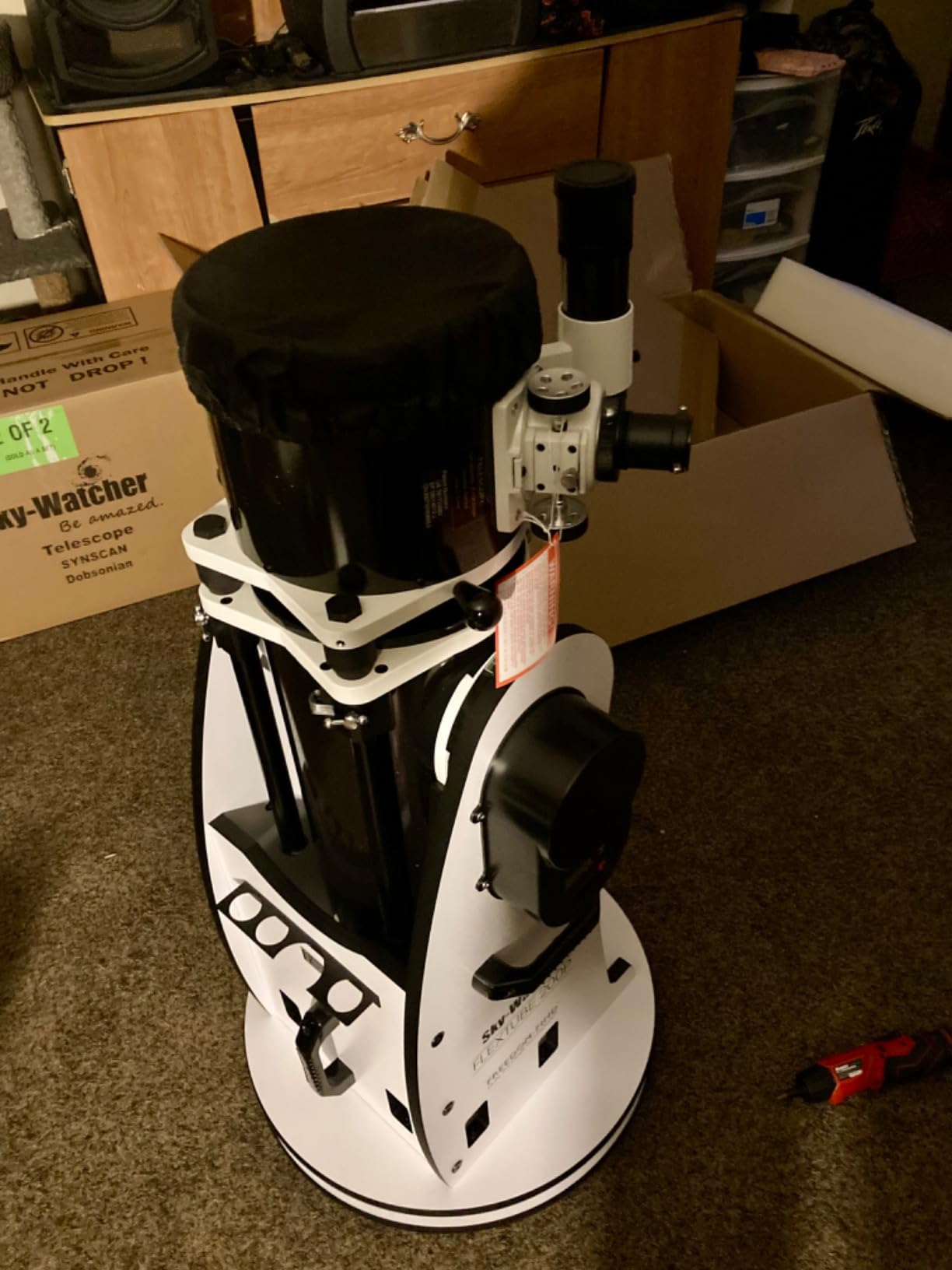
The Flextube answers a question the solid-tube Dobs refuse to answer: what if you live somewhere you cannot store a 49-inch tube? The strut design lets the optical tube collapse roughly in half while holding collimation, which is the trick that makes an 8-inch scope genuinely storable in a small apartment.
Optically it is the same class as the Classic 200. Same 8-inch fully multi-coated borosilicate primary at 94 percent reflectivity, same 1200mm focal length, same Teflon azimuth bearings and patented tension control handles.
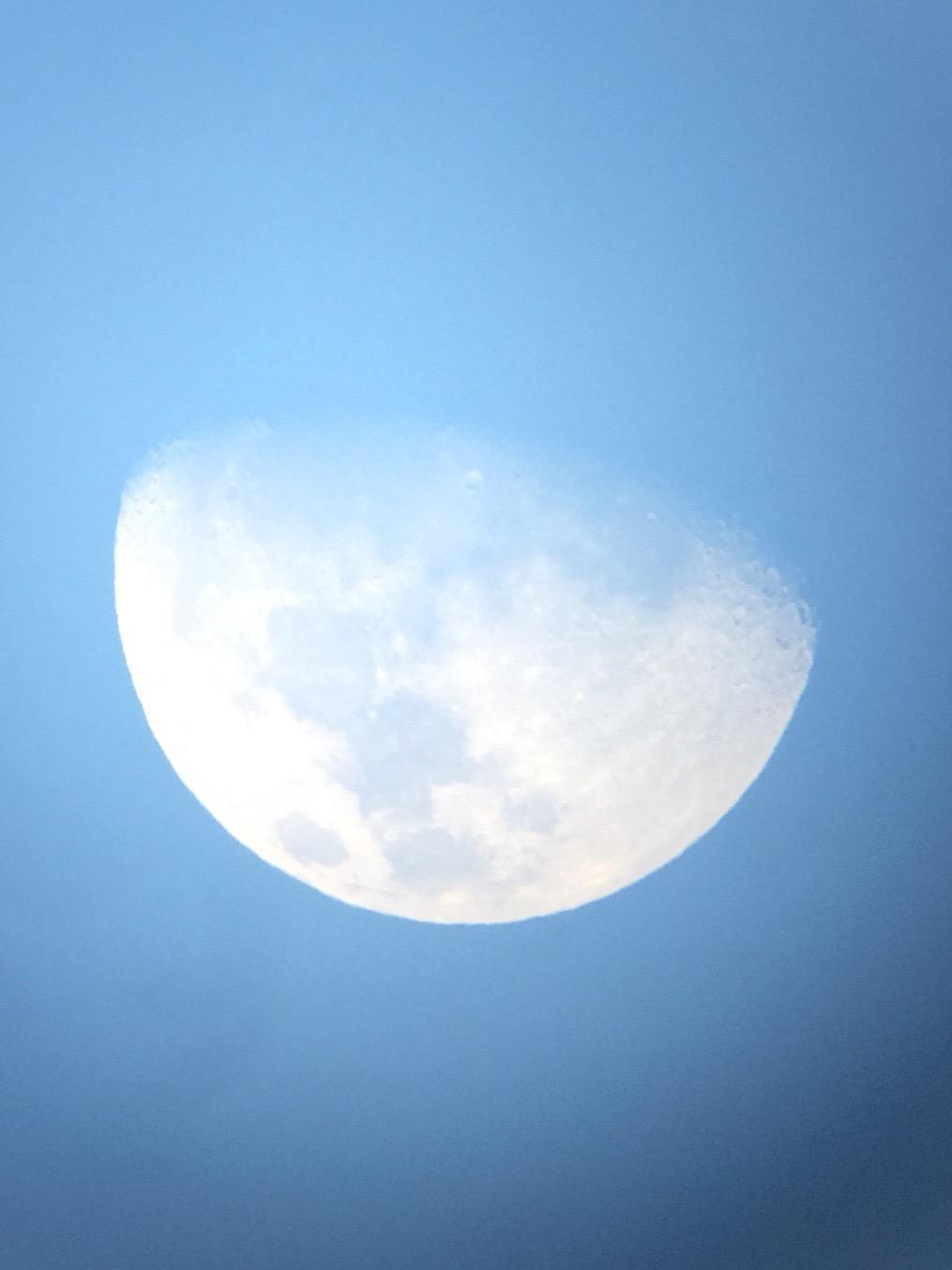
The bundle is slightly better equipped for alignment work. You get a 2-inch Crayford-style focuser with a 1.25-inch adapter, 25mm and 10mm Plossl eyepieces and an 8×50 right-angle finder. A right-angle finder puts the target image upright, which is far easier for a new observer than the inverted view from a straight-through finder.
Total assembled weight is about 40 pounds, split roughly 24 pounds of tube and 26 of base. Still a two-person carry, still no motorised help.
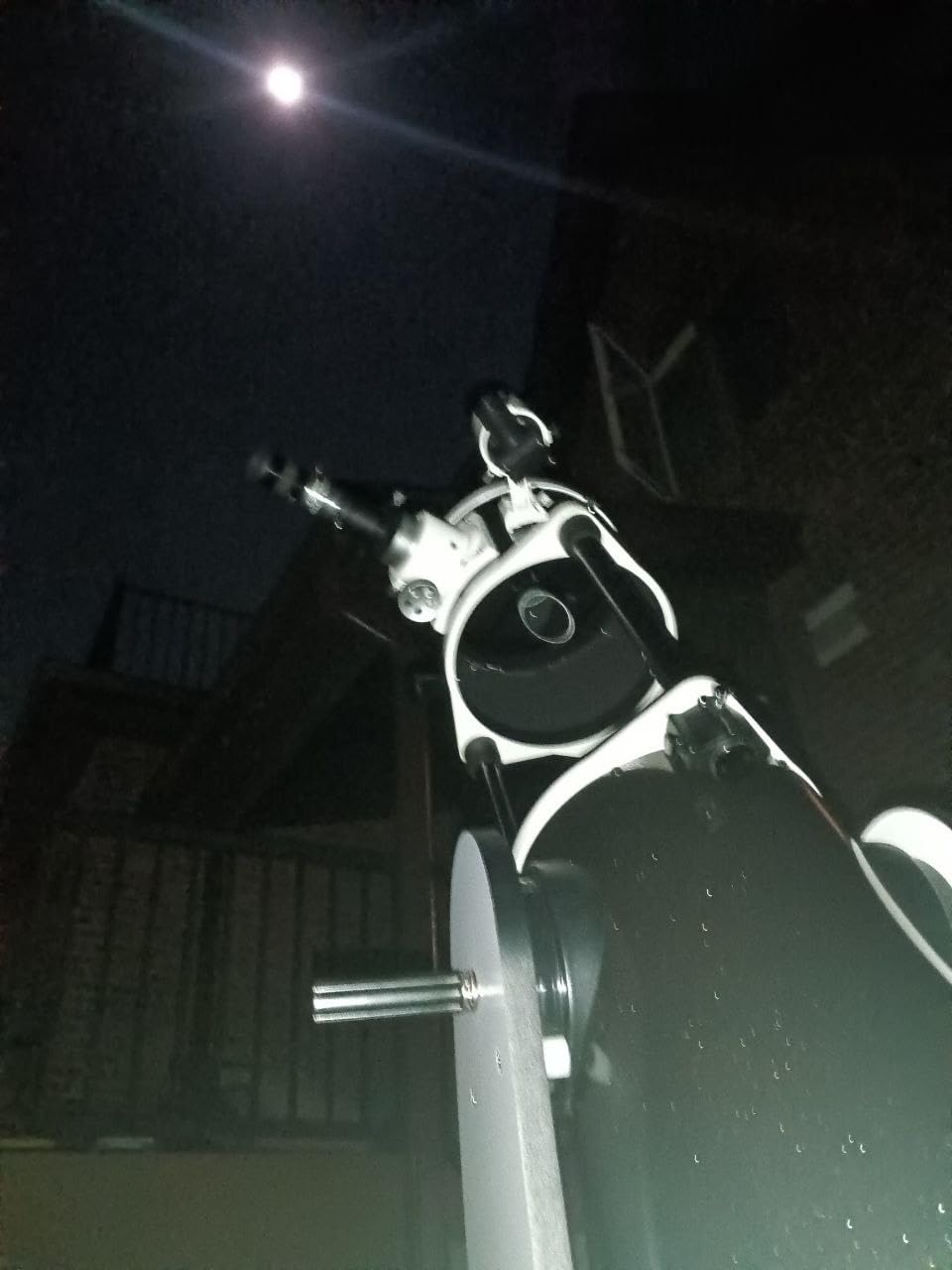
Best 8-Inch Dob for Apartments, Garages and Car Boots
The collapsible design is the deciding feature if your storage space is the constraint. Once the tube is down, the whole thing fits on a bookshelf, and the tripod-style field setups in the video reviews of this category all become possible.
Where This Scope Falls Short
It arrives out of collimation and needs a laser collimator before you trust the view. Azimuth motion can be sticky out of the box, and owners often fit a lazy Susan bearing to smooth it. The open truss also has no shielding, so dew and stray light are on you.
5. Sky-Watcher GoTo Collapsible Dobsonian 8-Inch: Pointing Without Star Hopping
Sky-Watcher S11800 GoTo Collapsible Dobsonian 8-Inch (White)
8-inch primary
Motorized GoTo tracking
42,000 object database
57 pounds assembled
Pros
- Motorized GoTo tracking holds planetary targets steady at high magnification
- 42000 object database plus built-in WiFi smartphone control
- Combines large-aperture light grasp with computerized pointing
- Collapsible tube keeps a large 8-inch scope storable
- All-metal gearing on DC servo motors
Cons
- Lowest rated in this roundup with reports of inconsistent alignment
- Pointing reliability and motor holding are inconsistent for some users
- Battery-powered motors add failure points a manual Dob does not have
- Heaviest configuration here at 57 pounds assembled
- Collapsible tube can drift out of alignment after repeated collapses
The idea here is the best one in the roundup and the execution is the weakest. A hand controller with more than 42,000 objects plus built-in WiFi control should remove the star-hopping learning curve entirely, and the motorised tracking should keep a planet centred at 200x.
Reviews are genuinely split. A substantial one-star bloc reports alignment failures, pointing errors and motors that do not consistently hold targets, and at 3.7 stars this is the lowest-rated scope here. Positive reviews credit the aperture and the convenience once the electronics behave.
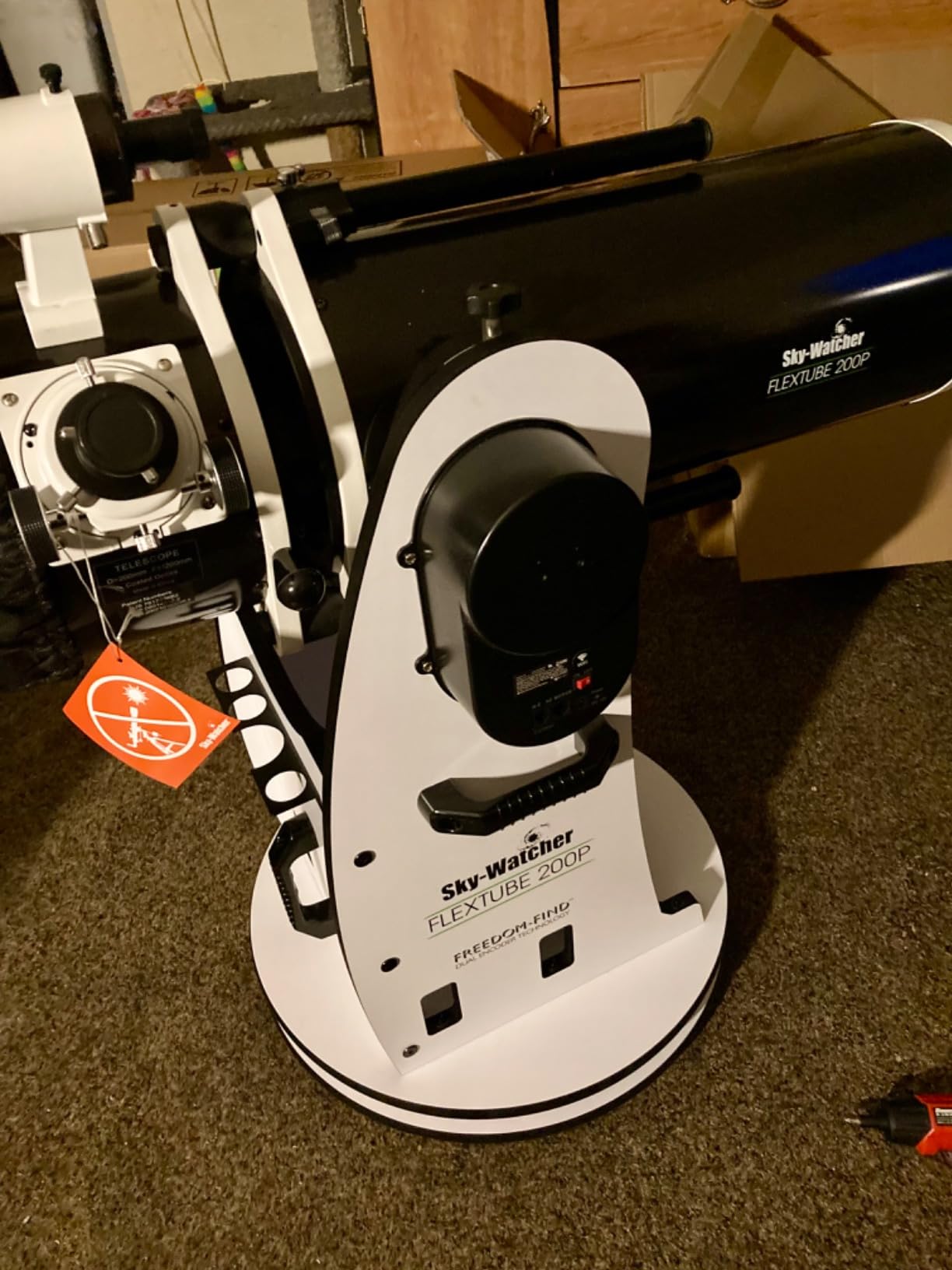
The optics are competitive: fully multi-coated pyrex borosilicate mirrors at 94 percent reflectivity, 1200mm focal length, a 2-inch Crayford-style focuser with adapter and 25mm and 10mm eyepieces. The base carries the motors and batteries, for 57 pounds assembled.
This is the only scope here that solves planetary drift. At high magnification on any manual Dob you have to nudge the tube every minute or two, and automated tracking turns that from a constant chore into something you never think about.
Best Dobsonian if You Never Want to Learn the Sky
If computerised pointing genuinely appeals and you have a partner or friend who will do the initial alignment, the convenience is real. The object database means Saturn is one button press instead of a fifteen-minute star hop through Gemini.
Where This Scope Falls Short
At 3.7 stars with a meaningful share of one-star reviews, reliability is the issue rather than design. Battery-powered servos add failure modes that a plain friction-bearing Dob simply does not have, and at 57 pounds this is the heaviest configuration in the list.
6. Zhumell Z10 10-Inch Dobsonian: The Most Complete Kit in the Box
Zhumell – 10-inch Dobsonian Reflector Telescope – Large Aperture for Crisp, Bright Images – Solid Base Construction with Handle for Easy Transport – Ideal Astronomical Telescope
10-inch primary
1250mm focal length
47 pounds
cooling fan, collimator, moon filter
Pros
- 10-inch primary at 1250mm gives strong planetary resolution
- Built-in mirror cooling fan reaches sharp views sooner
- Most complete accessory kit here including laser collimator and moon filter
- Sturdy base with manual clutches and an integrated carry handle
- Fully multi-coated optics produce crisp bright images
Cons
- Longer wait than the other scopes listed here
- Manual clutches need occasional tightening as the scope moves
- 55-inch assembled height is hard to store compared with a collapsible Dob
- 47 pounds is heavy to carry between locations
- No GoTo pointing or object database for beginners
The Z10 wins on logistics. It arrives with a laser collimator, a moon filter, an eyepiece rack, a 2-inch focuser with a 1.25-inch adapter, a 30mm eyepiece and a 9mm eyepiece, an 8×50 right-angle finder and a collimation cap. That is the whole beginner accessory list in one box.
The cooling fan is the feature I would keep if I had to strip the kit back. A 10-inch primary takes a long time to reach ambient temperature, and until it does the image is soft and hazy. Pulling air across the mirror shortens that wait noticeably, which matters most on a night when you only have an hour.
Optically it is a 10-inch primary at 1250mm focal length, fully multi-coated, with a listed field of view of 2.72 degrees. On the planet side, that 9mm eyepiece gives about 139x, which lands almost exactly in the range where Jupiter’s belts and Saturn’s rings start to break up into distinct features.
The base uses manual clutches and an integrated carry handle. It is solid, and the handle is genuinely useful for moving a 47-pound instrument across a garage floor.
Best 10-Inch Dobsonian for First-Time Owners Who Want Everything Included
The 139x from the included 9mm makes this the friendliest big-aperture package here for a beginner. You can reach the planetary sweet spot on night one without buying a single extra eyepiece, which no other 10-inch in this roundup lets you do.
Where This Scope Falls Short
At 55 inches tall assembled it is the bulkiest option and it does not collapse, so storage is the first thing to check. The clutches also need periodic tightening as you move it around, and there is no electronic pointing aid of any kind.
How to Choose a Dobsonian Telescope for Planet Viewing
Aperture comes first, always. It sets both brightness and resolving power, and it is the only factor that consistently shows up in forum consensus as the deciding variable for planetary work. If your budget allows a 10-inch and your storage space fits it, that is the scope to buy.
After aperture, check these four things:
1. Focal ratio. An f/6 design such as the Classic 200 and Flextube 200 gives a wide, bright field at low power without going fisheye. A short f/5 design gives punchier contrast at high power but a narrower low-power view.
2. Base stability. Planets need steady air and a steady tube. Altazimuth friction bearings with tension control handles let you nudge smoothly, and a rigid tabletop base beats a spindly tripod at high power.
3. Weight and storage. A 10-inch Dobsonian is 47 to 57 pounds assembled and cannot be carried by one person easily. If storage is tight, a collapsible tube such as the Flextube design is the single most practical upgrade you can buy.
4. Included eyepieces. Read the eyepiece list carefully, because it usually tells you how much you will have to spend later. A 25mm and 10mm pair is a deep-sky kit. A 30mm and 9mm pair, as on the Zhumell Z10, actually reaches planetary magnification out of the box.
On brands, Sky-Watcher scopes are built by Synta, while Apertura and Orion Dobsonians are built by GSO. The two factories produce optics of broadly comparable quality, and the recurring forum question is usually answered the same way: the build quality of the base and the accessory bundle decide more than the optics do.
What Aperture Means for Planets
Bigger aperture resolves finer detail, and resolving power scales directly with inches of mirror. Here is what each tier actually delivers on the planets, rather than a vague promise of brighter images.
5 inches. The Moon in high detail, Jupiter with its moons and the two main belts, Venus showing phases, Saturn with rings visible but no gap resolved. The ceiling here is around 130x before the image goes soft.
8 inches. Saturn with a clearly separated ring and a hint of the Cassini Division, Jupiter with both belts plus festoons and moon shadow transits, Venus at maximum phase contrast, the Moon’s craters with visible shadow. This is the point where most people decide a Dobsonian was worth it.
10 inches. The ring shadow on Saturn, the Encke gap on a steady night, mottled belts and festoons on Jupiter, and recognisable dark markings on Mars near opposition. Planetary resolution improves roughly 20 percent over 8 inches.
The counterweight is seeing, the steadiness of the atmosphere. A 10-inch in turbulent air can look worse than an 8-inch in steady air, because the bigger mirror gathers more of the blur that turbulence creates. If you live somewhere with unreliable seeing, an 8-inch with a good eyepiece will beat a 10-inch far more often than the specification sheets suggest.
Eyepieces for Planets on a Dobsonian
You need somewhere between 1x and 2x magnification per inch of aperture, and for a sharp planetary image you want to be at or above the lower end of that range. On an 8-inch Dobsonian that means 120x as a realistic starting point and about 200x as a ceiling on a steady night.
The math is simple. Divide the focal length in millimetres by the eyepiece focal length in millimetres. For the Classic 200 at 1200mm, a 6mm eyepiece gives 200x, a 9mm gives 133x, and a 10mm gives 120x. On the Celestron 10-inch at 650mm, a 9mm gives 72x and a 6mm gives 108x, which is why the short-focal-length scopes need longer focal length eyepieces for planets.
Here is the practical problem with the bundles. Almost every scope here ships with a 25mm, 30mm or 32mm eyepiece for wide-field scanning, and that is the wrong tool for planets on every one of them. On an 8-inch at 1200mm, a 25mm gives 48x, which shows Saturn as a small ringed dot and nothing more.
Pairings that work well:
Sky-Watcher Classic 200 and Flextube 200 at 1200mm: a 6mm for 200x on steady nights, a 9mm for 133x as the everyday planetary workhorse, and a 25mm only for finding the target.
Celestron StarSense 10-inch at 650mm: a 9mm gives 72x, so add a Barlow or a 4mm to reach the range where belts and rings resolve.
Zhumell Z10 at 1250mm: the included 9mm gives about 139x, which is already in the right zone, and a 6mm takes you to roughly 208x.
One more rule worth learning: watch the exit pupil, which is your aperture divided by your magnification. On a 10-inch scope at 200x the exit pupil is 1.27mm, and if that figure drops below about 0.5mm you are pushing too far for the aperture to feed the image.
Collimation in Plain English
Collimation means adjusting the two mirrors so their optical axes line up. Get it wrong and a bright planetary image turns into a fuzzy ring of light, which is why it is the number one practical barrier new Dobsonian owners report.
The sequence takes a few minutes with a laser collimator, and the Zhumell Z10 is the only scope here that includes one:
1. Centre the secondary mirror under the focuser by adjusting the three spider vane screws. Look down the focuser and make the reflection of your eye or a secondary shadow concentric in the circle.
2. Put the collimation cap on the focuser and aim at a bright flat surface such as a white wall or a driveway.
3. Adjust the primary mirror screws until the laser dot returns to the centre of the secondary reflection.
4. Recheck the secondary, then the primary, and repeat two or three times until the dot is dead centre and the reflections look concentric.
You will need to redo this after any hard bump, after a temperature swing of more than a few degrees, and roughly once or twice a year in normal use. Flextube-style collapsible tubes are the exception, since the strut design holds collimation through repeated collapses and expansions.
Tabletop vs Full-Height Dobs at High Power
A tabletop Dobsonian wins on stability. The short column and the ground surface underneath it are far more rigid than a tall base, so wobble at 150x and above is much reduced. For a family sharing one telescope or a small flat, that is usually the more useful compromise.
A full-height Dobsonian wins on portability of the whole observing session. You can stand and look up through the eyepiece instead of stooping, which matters over a two-hour session, and the altitude bearings can hold a planet steadily while you change eyepieces.
For planetary work the deciding factor is how finely you can move the tube when swapping eyepieces. The Sky-Watcher models with their patented tension control handles adjust in small increments; a Dob without them tends to bounce or creep.
Frequently Asked Questions
What is the best telescope for viewing planets?
A Dobsonian reflector of 8 inches or larger is the best value for most people. Aperture sets both brightness and resolving power, so an 8-inch Dobsonian shows Jupiter’s belts, Saturn’s rings and the Moon in strong detail, while a 10-inch adds the ring shadow on Saturn and dark markings on Mars at opposition. Pair it with a 6mm to 9mm planetary eyepiece to reach 120x to 200x.
Can you see Saturn with an 8 inch Dobsonian?
Yes. An 8-inch Dobsonian shows Saturn as a ringed planet with the Cassini Division visible in steady air, along with Titan and possibly Rhea. At 120x to 200x with a 6mm or 9mm eyepiece the rings read as a distinct band rather than a halo, and Jupiter reaches useful belt detail at the same magnification.
What type of telescope is best for seeing planets?
Three designs dominate. A Dobsonian reflector gives the most aperture per unit of cost, a Maksutov-Cassegrain is compact and stable for travel, and an apochromatic refractor is the sharpest and most expensive per inch. For planetary detail per unit of spend, the Dobsonian wins, and it is far easier to service and maintain than a refractor.
Are Dobsonian telescopes good for planets?
Yes, they are the most popular choice for planetary observing among beginners. The main limits are the two mirrors, which need occasional collimation, and the manual altazimuth mount, which needs a nudge every minute or two at high magnification. Both are manageable once you learn them, and the resulting views of Saturn, Jupiter and the Moon are the best value available.
How much magnification do I need to see Saturn’s rings?
About 1x per inch of aperture is the minimum useful magnification, so an 8-inch Dobsonian starts around 120x and a 10-inch around 150x. Saturn’s rings become distinct at roughly that point, and pushing toward 200x rewards you with the Cassini Division if the atmosphere is steady. Above roughly 200x the image usually suffers more from air turbulence than it gains from magnification.
Final Verdict by Budget Tier
Buy the Sky-Watcher Classic 200 Dobsonian 8-inch if you want the most proven, best-reviewed route into planetary observing. It has the largest body of owner feedback of anything on this list, the tension control handles make it easy to move, and an 8-inch is the aperture tier where Saturn’s rings and Jupiter’s belts reliably resolve.
Spend up to the Celestron StarSense Explorer 10-inch Dobsonian if you want the most planetary detail and want a phone to handle the pointing. It reaches 10 inches of aperture with XLT coatings, and the app removes the learning curve entirely. Choose the Sky-Watcher GoTo collapsible instead if automated tracking and no star hopping matter more to you than consistent electronics.
Keep it small with the Celestron StarSense 130mm tabletop Dobsonian. It is the easiest to carry, the highest-rated in the roundup, and enough for Jupiter, the Moon and Saturn’s rings, just not for Mars markings. If space is the constraint rather than budget, the Sky-Watcher Flextube 200 folds an 8-inch down to a fraction of its size.
Whatever you choose from the best Dobsonian telescopes for planets, buy one 6mm to 9mm planetary eyepiece before your first clear night. That single accessory does more for your view than anything else you will buy afterwards. Check the scope over as soon as it arrives, collimate it, and give it a week before you judge it.