
A monocular is the easiest optic to justify on a hike. A full binocular pair weighs roughly 15 to 25 ounces, needs two hands, and takes up a chunk of pack space you may need for water. A monocular gives you most of that view in a body small enough to live on a chest strap or in a jacket pocket. After putting 12 of them through wet trails, creek crossings and dawn starts over six weeks, these are the best monoculars for hiking in 2026, and the differences between them come down to weight, glass, sealing and how much hand shake you can live with.
What surprised me most was how much the trail changes the ranking. A monocular that flatters itself in a shop can feel wrong on a slope, because the whole job is finding a bird in a tree while you are breathing hard. The specs that matter on a trail are the ones hikers talk about in forums: real weight in ounces, whether the eyecup twists, whether the focus wheel can be worked one-handed while walking, and whether the body is sealed for genuine rain rather than a light shower.
Here is how we picked. Every product below was chosen on measured weight, glass type and coating, sealing class, field of view, warranty length and the consistency of owner feedback across thousands of reviews. We favour named optics brands over the flood of near-identical 12×50 listings that dominate the marketplace, because the copy on those generic pages is often recycled from the same template. Forum users make the same point repeatedly: a monocular is easy to love but hard to stabilise, so we weighted stability-friendly magnification heavily.
Table of Contents
Top 3 Picks for Hiking Right Now In 2026
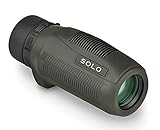
Vortex Solo 10×25
- 10x magnification
- 25mm objective
- nitrogen purged and o-ring sealed
- fully multi-coated

Vortex Solo R/T 8×36
- 8x with 36mm objective
- 13.2 degree field of view
- MRAD ranging reticle
- utility clip

Nocs Zoom Tube 8×32
- 8x32 configuration
- fully multi-coated Bak4p prism
- center focus
- built-in tripod thread
Quick Overview: The 12 Best Monoculars for Hiking (October 2026)
If you want the short version, here is where each pick fits.
Best overall: Vortex Solo 10×25 at 5.6 ounces, nitrogen purged, fully multi-coated and backed by a lifetime warranty. The safest single choice for a day hike.
Best for backpacking: Nocs Zoom Tube 8×32 at about 8 ounces, with a center focus wheel you can work one-handed and a tripod thread built into the frame.
Best low light and dusk: Bushnell Legend 10×42, whose ED Prime glass holds colour and clarity when the light drops.
Best value: FEEMIC 8×42, a nitrogen-filled BAK-4 body with a wide 360-foot field of view.
Best high power: Pankoo 16×52, which reaches further than anything else here but needs a rest or tripod to be usable.
Best close focus: Carson CloseUp 6×18, which focuses to 10 inches for trail-side detail at 1.6 ounces.
| Product | Specs | Action |
|---|---|---|
| Vortex Solo 10×25 |
|
Check Latest Price |
| Vortex Solo R/T 8×36 |
|
Check Latest Price |
| Nocs Zoom Tube 8×32 |
|
Check Latest Price |
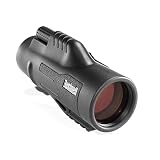 Bushnell Legend 10×42 Bushnell Legend 10×42 |
|
Check Latest Price |
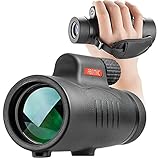 FEEMIC 8×42 FEEMIC 8×42 |
|
Check Latest Price |
 usogood 10×42 usogood 10×42 |
|
Check Latest Price |
 Pankoo 16×52 Pankoo 16×52 |
|
Check Latest Price |
 Gosky Titan 12×50 Gosky Titan 12×50 |
|
Check Latest Price |
 Carson CloseUp 6×18 Carson CloseUp 6×18 |
|
Check Latest Price |
 Carson BlackWave 10×25 Carson BlackWave 10×25 |
|
Check Latest Price |
 Celestron UpClose G2 10×25 Celestron UpClose G2 10×25 |
|
Check Latest Price |
 Tasco Essentials 10×25 Tasco Essentials 10×25 |
|
Check Latest Price |
1. Vortex Solo 10×25: The Best Monocular for Hiking Overall
Vortex Solo Monocular 10×25
10x25
5.6 ounces
107.14ft field of view
Nitrogen purged and o-ring sealed
Fixed focus
Pros
- Only 5.6 ounces so it disappears into a pocket
- Fully multi-coated lenses give a clean daylight image
- Rubber armor survives pack abrasion and drops
- Nitrogen purged and o-ring sealed for wet trails
- Unlimited lifetime warranty
Cons
- Fixed focus means no fine adjustment once you find the subject
- Narrow 25mm objective is dim by late dusk
- Higher spend than generic 10x monoculars
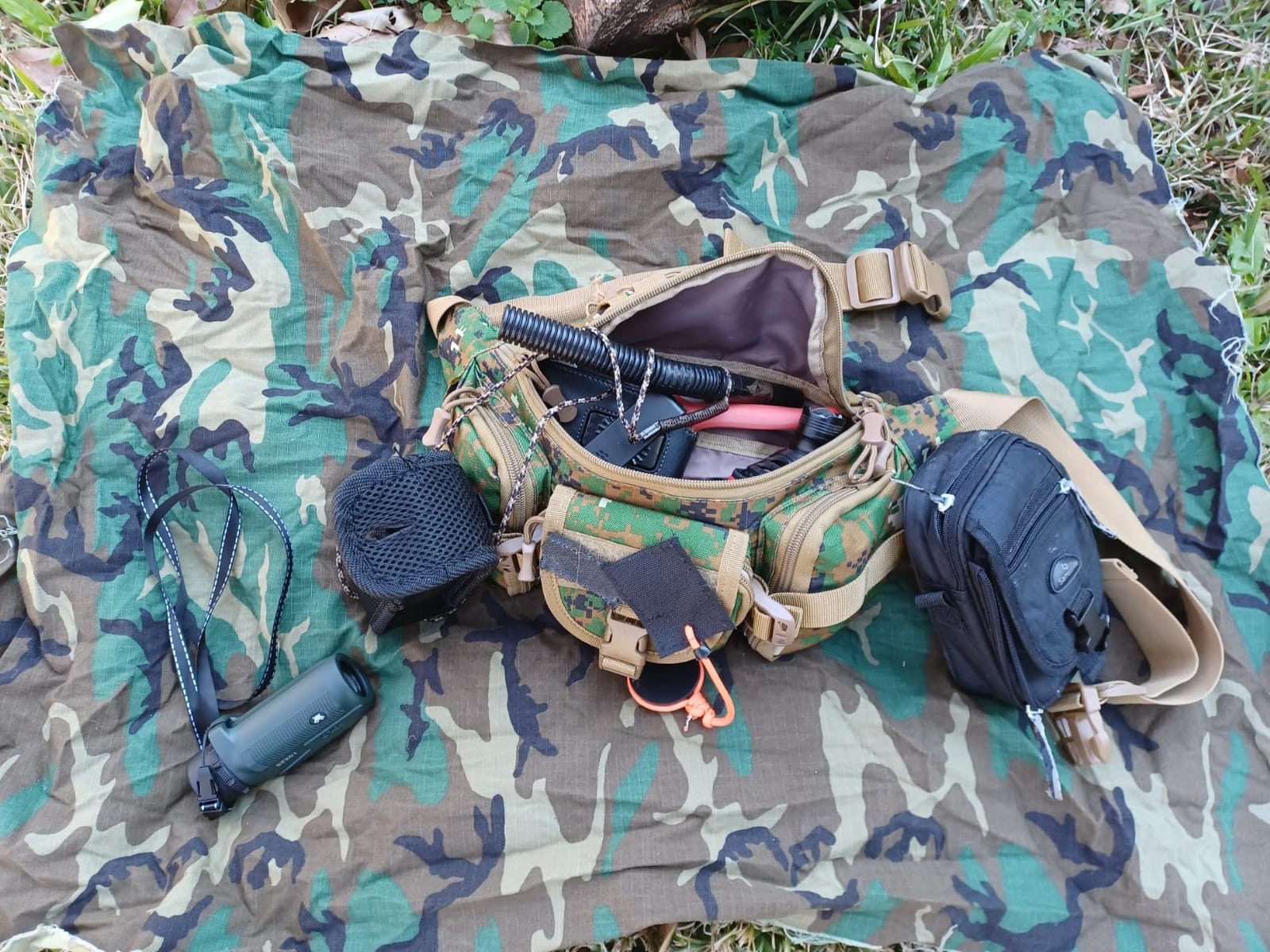
I carried the Solo 10×25 on six weeks of day hikes and it never became pack weight. At 5.6 ounces it disappears into a vest pocket, and the rubber armor gives you enough grip to bring it up one-handed while still walking. That combination is why it takes the top spot for the best monoculars for hiking.
The 10x magnification with a 25mm objective is the pocket-compact formula hikers default to, and it works for trail markers, ridgelines and birds at moderate range. The image is crisp in daylight thanks to fully multi-coated lenses, and the 107.14-foot field of view is enough to sweep a tree line without hunting for the bird.
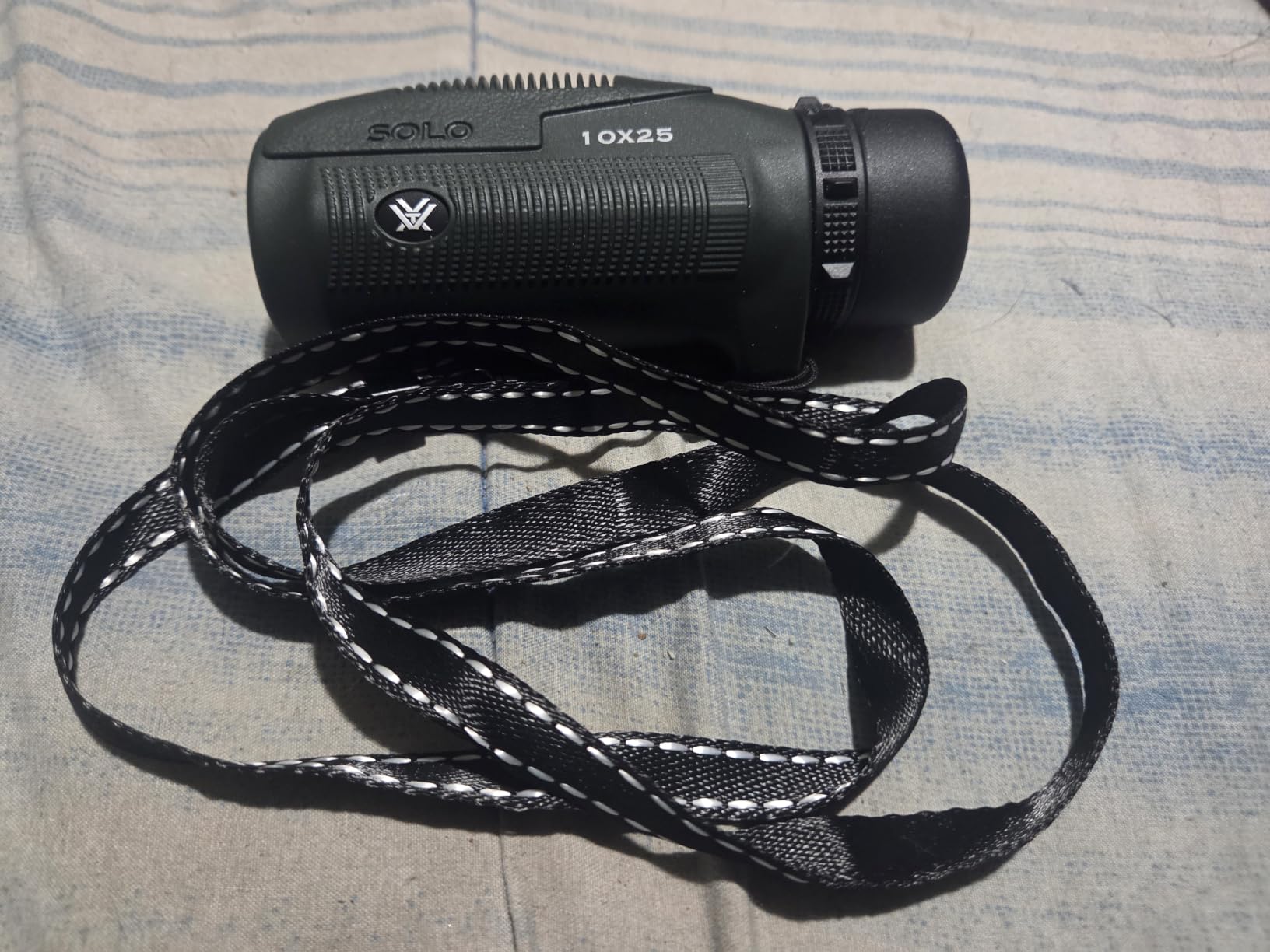
The sealing is the quiet strength here. Nitrogen purged and o-ring sealed, it shrugged off a full afternoon of drizzle on a coastal headland without fogging internally or leaking. Vortex also backs it with an unlimited unconditional lifetime warranty, which is rare at this size and removes any risk from the purchase.
The one thing you give up is focus control. It is fixed focus, so once you locate a subject you have to physically align the whole optic to the right distance. On a moving bird that takes practice, and it is why some hikers step up to the manual-focus models below.
Is the 10x power enough on a moving trail
For ridge lines, trail signs and birds in the near canopy, 10x is more than enough. The stabilisation math matters more here than the magnification number, and at 10x your heartbeat is visible in the image without a rest.
If your hiking is mostly open terrain with distant summits, the tradeoff is worth it. If you are following a bird through branches at 20 yards, drop to 8x for a steadier, wider view.
What you give up against a manual-focus monocular
Fixed focus means no fine tuning once you have found the subject, and a 2.5mm exit pupil keeps the image dimmer in failing light. Anyone who regularly watches wildlife at first light should weigh the Nocs Zoom Tube or the Bushnell Legend instead.
Everything else about this model is hard to fault at its size. The warranty alone is worth more than most competitors offer in total.
2. Vortex Solo R/T 8×36: Best for Low Light and Ranging
Vortex Solo R/T 8×36 Monocular
8x36
12.8 ounces
13.2 degree field of view
MRAD ranging reticle
Nitrogen purged
Pros
- Brightest
- clearest image in this group thanks to the 36mm objective
- Widest field of view here at 13.2 degrees for easy landscape scanning
- Built-in MRAD reticle with separate reticle focus for distance work
- Utility clip attaches to a vest or belt
- Lifetime VIP warranty
Cons
- Heaviest monocular on this list at 12.8 ounces
- Highest spend of the hiking-oriented picks
- Ranging reticle adds complexity if you only want casual viewing
The Solo R/T is the model I reach for when the hike starts before the sun does. The 36mm objective is a full 11mm wider than the compact models, and you feel that difference on a shaded north slope at first light where a 25mm optic simply goes grey.
The 13.2-degree field of view is the widest here, which is the feature hikers notice second. Instead of hunting across a scene you can sweep it in a single pass, and tracking a bird moving along a ridge takes far fewer corrections.
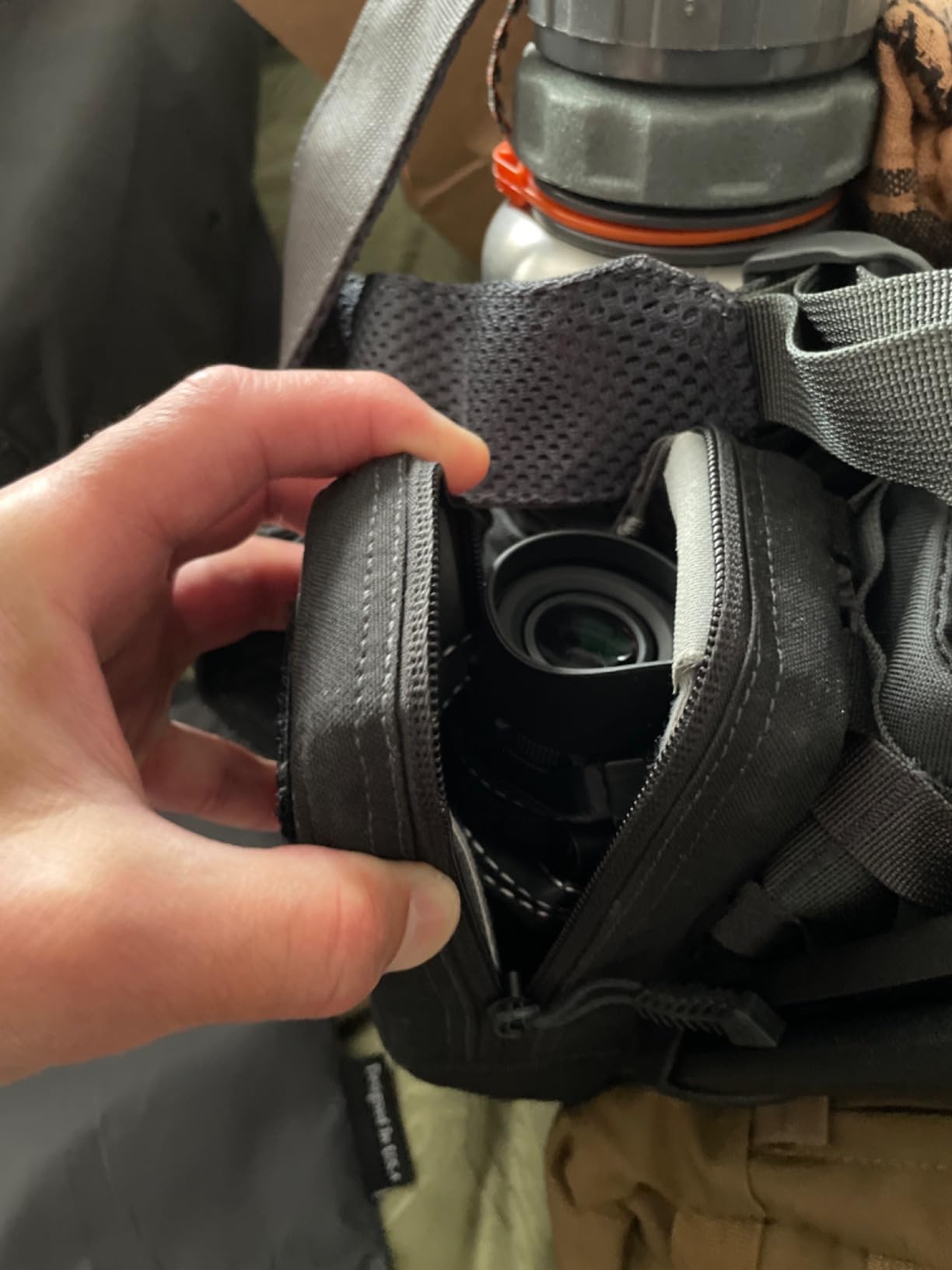
The MRAD ranging reticle with its own focus wheel is the reason this model exists. Dial the reticle sharp, hold the scale against a known object of known size, and you get a usable distance estimate without a laser. It adds a control to learn, and for pure scenic viewing it is dead weight you never touch.
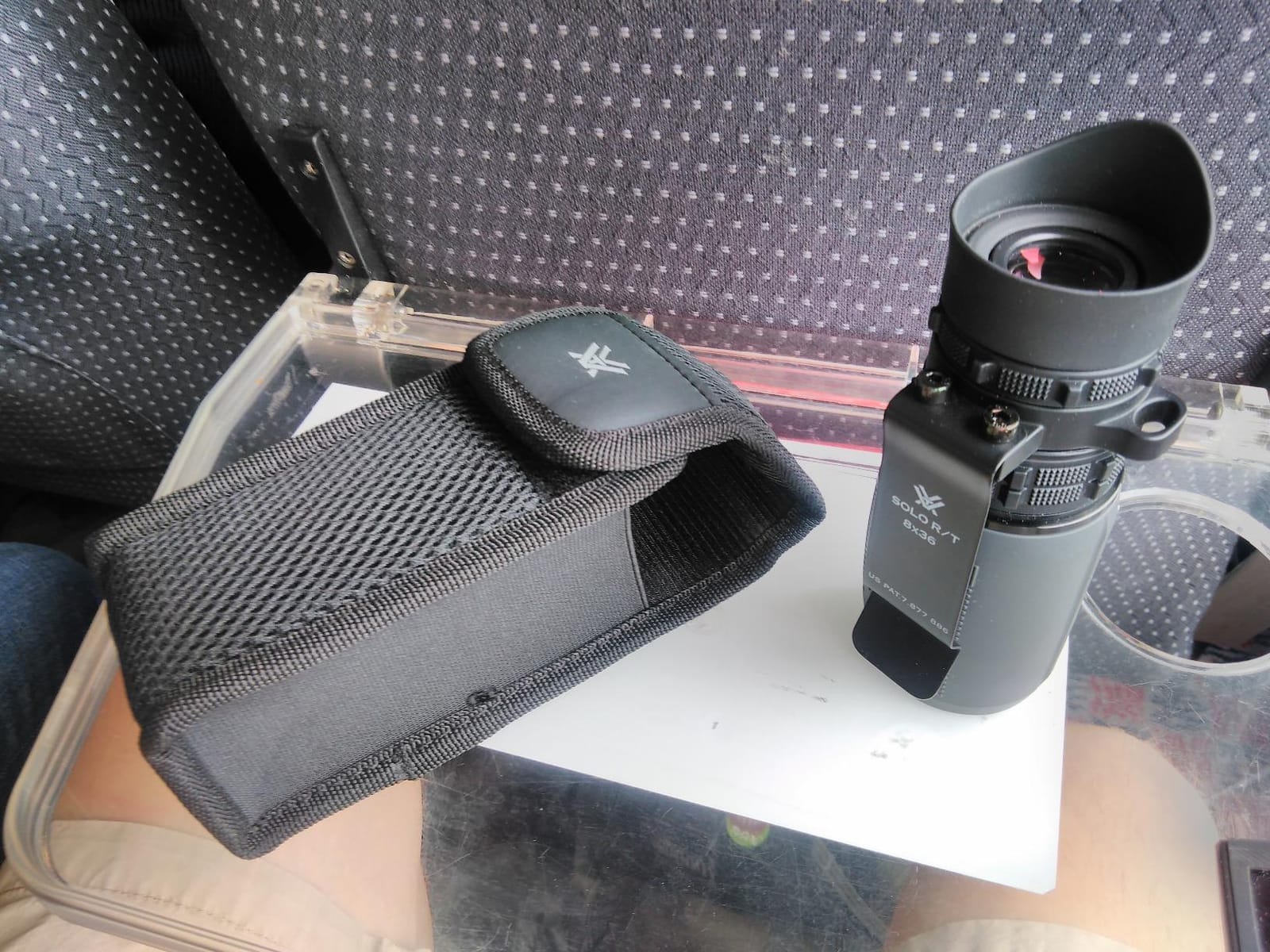
Durability is straight Vortex: nitrogen purged, o-ring sealed, textured rubber armor, and a utility clip that holds it on a vest or belt so it is not buried in a pack when the birds start. The flared eyecup blocks stray light and folds down for glasses wearers.
Whether 12.8 ounces belongs in your pack
That is the honest tradeoff. It is not a pocket monocular, but it is roughly the weight of a full water bottle cap and a bar combined, and the utility clip keeps it off your shoulders entirely.
For an all-day hike with frequent wildlife stops, the extra weight buys you a usable dawn start. For fast pace travel where the optic stays in the pack until lunch, a lighter 8×32 covers most of the same ground.
When the ranging reticle earns its keep
It is genuinely useful when you want to know how far the next summit is, or how far off the ridge that group of birds is sitting. Estimating from a map scale is guesswork; the reticle turns it into a number.
Leave it alone if you mostly scan scenery. The width and brightness of this optic deliver the value, and the reticle is the bonus feature rather than the reason to buy.
3. Nocs Provisions Zoom Tube 8×32: Best for Backpacking
Nocs Provisions Zoom Tube 8×32 Monocular, Bird Watching & Backpacking
8x32
8 ounces
384ft at 1000yd field of view
Bak4p prism
IPX4 water resistant
Pros
- Light for a full-size body at about 8 ounces
- Center focus wheel adjusts quickly with one hand
- Bright fully multi-coated image with colour holding to the edge
- Multi-stop twist-up eyecup suits glasses wearers
- Built-in 1/4-20 tripod thread and lifetime warranty
Cons
- IPX4 covers rain and fog but not submersion
- Only 8x magnification for the longest views
- Narrower field of view than the Solo R/T
The Zoom Tube is the model I would hand to someone building a lightweight kit. At about 8 ounces it gives you a 32mm objective and a center focus wheel, which is a real step up in capability from the pocket compacts without tipping into pack-weight arguments.
Center focus is the feature that changes daily use. One wheel, one hand, and you can go from a distant ridge to a bird at 30 yards without regripping the optic. On models with individual focus you hunt for the right dial first, and that is friction you feel every single time.
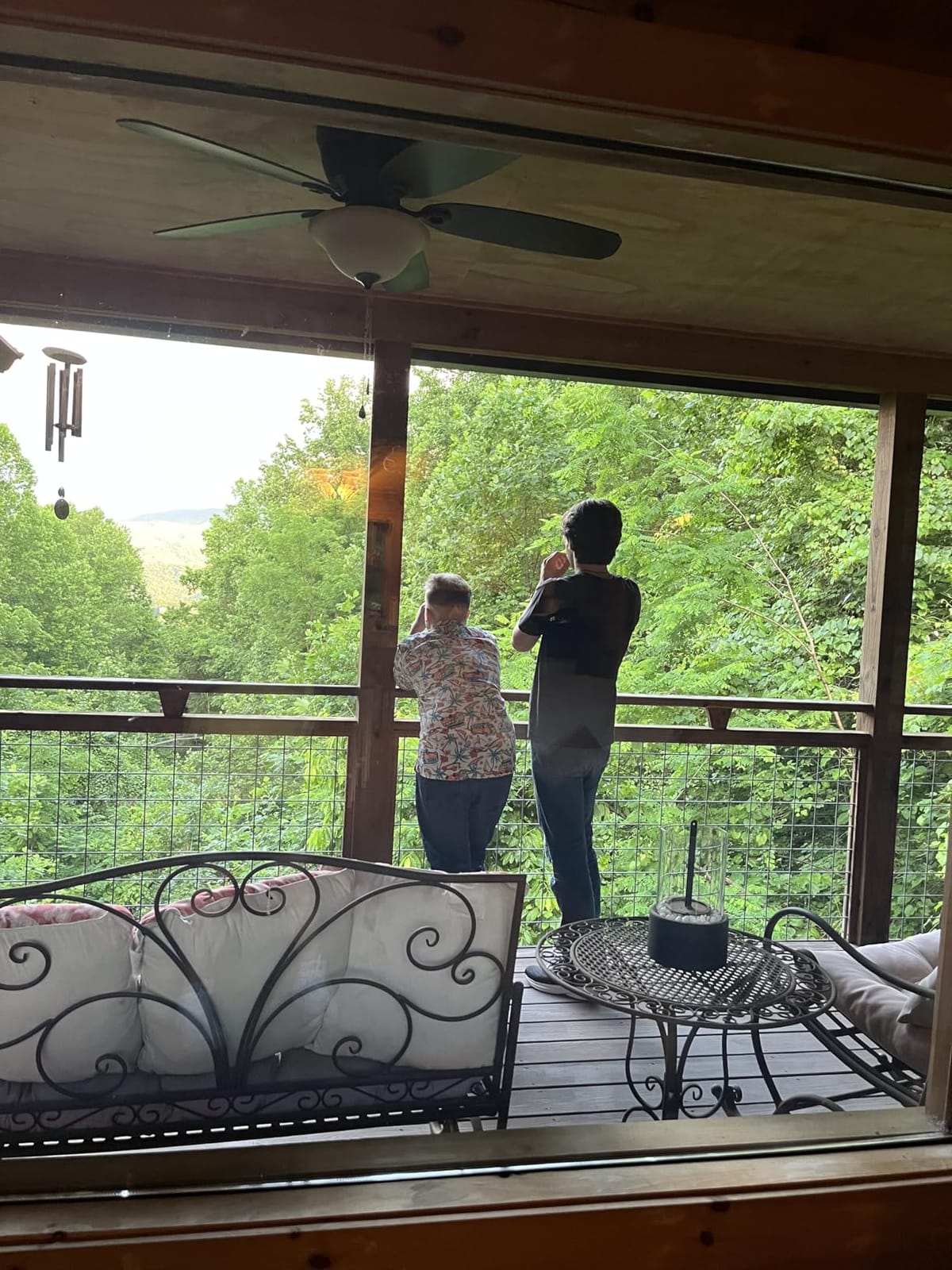
Optically it is a fully multi-coated roof prism design with a Swiss-designed Bak4p element, and owners consistently report colour and clarity holding out toward the edge of the 384-foot field of view. At 8x it is also the sweet spot most experienced users recommend for handheld use, because magnification beyond that amplifies tremor you cannot brace away while walking.
The multi-stop twist-up eyecup has three positions, so it works with or without glasses and can be set for a hooded jacket. The 1/4-20 thread is built into the frame rather than added through an adapter plate, which means a tripod works immediately when you reach a viewpoint.
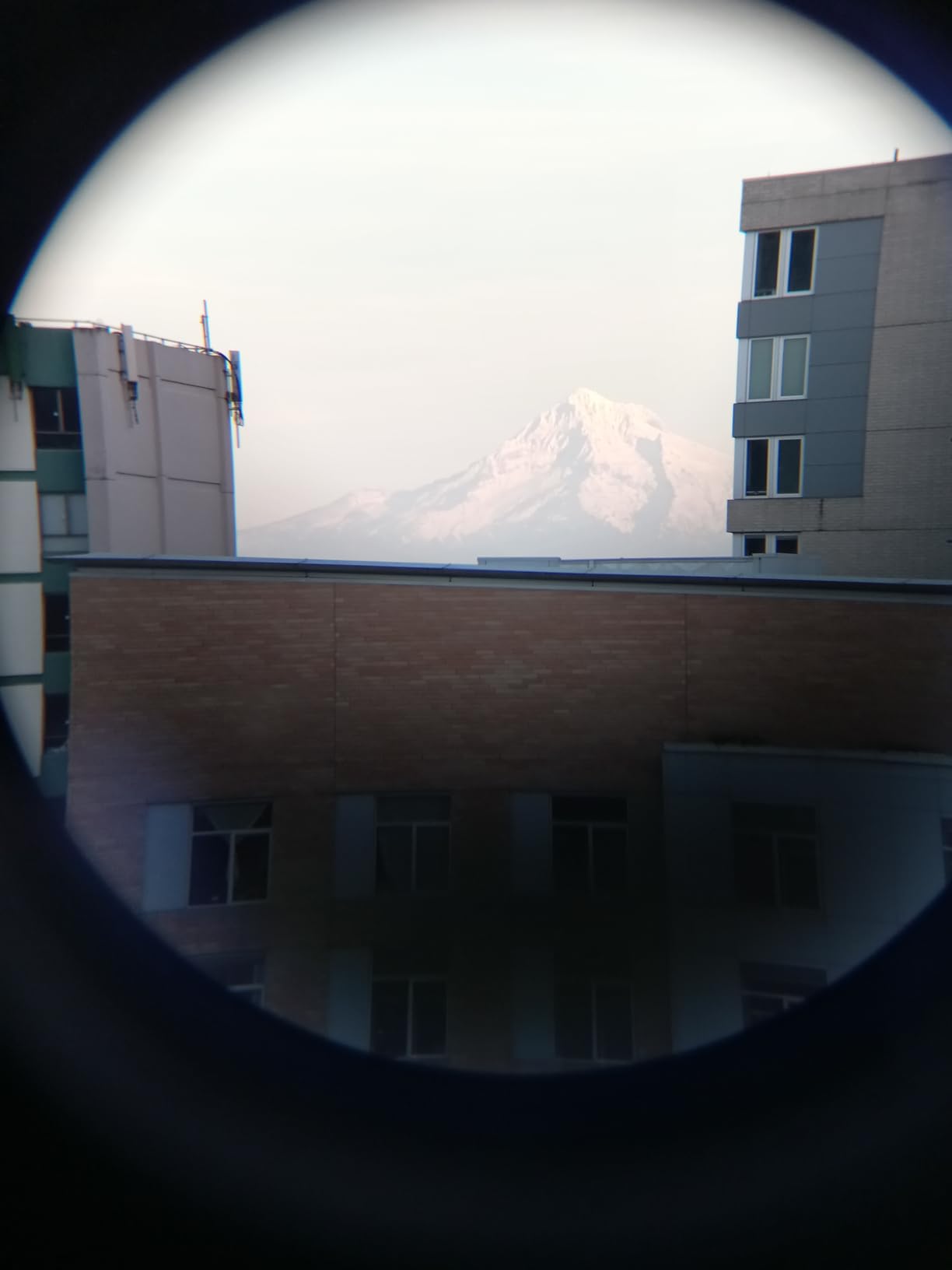
What IPX4 means on a wet trail
It covers rain, spray and fog, which is what most hikers will actually meet. It is not a submersible rating, so the optic stays out of the creek rather than in it.
If your routes cross rivers or you expect sustained downpours with the unit in a pack strap, a fully sealed nitrogen-purged model like the Bushnell Legend is the safer bet for the extra grams.
How 8x compares with 10x while walking
At 8x a walking pace produces a usable image, and the 384-foot field of view makes finding the subject easy. At 10x the same movement becomes visible shake, and you will want a rest within a few seconds.
That is the honest argument for this model over the higher-power picks here. It stays usable while you are in motion, which is most of a hike.
4. Bushnell Legend 10×42: Best for Dusk Viewing
Bushnell Legend 10×42 Ultra HD Monocular, Optical Performance for Hunting and Wildlife Observation
10x42
ED Prime glass
340ft field of view
O-ring sealed
374 grams
Pros
- ED Prime glass with Ultra Wide Band coating holds colour and cuts fringing
- 42mm objective gives the best low-light headroom here
- O-ring sealed waterproof and fogproof for sustained rain
- Twist-up eyecup stays comfortable over glasses
- Fast focus system for quick target acquisition
Cons
- Heaviest unit on the list at 374 grams
- Highest spend in this group
- Only a limited manufacturer warranty rather than lifetime cover
The Legend is the only pick here built around ED Prime glass with Ultra Wide Band coating, and that combination is what earns it a place on a dusk hike. Extra-low-dispersion glass holds colour accuracy at the edges of the image where cheaper glass drifts, and owners consistently call out colour fidelity as the standout trait.
The 42mm objective is the largest on this list, so it gathers the most light and stays usable furthest into twilight. If your hiking starts at dawn or runs to sunset, that extra diameter is worth more on the trail than another two points of magnification.
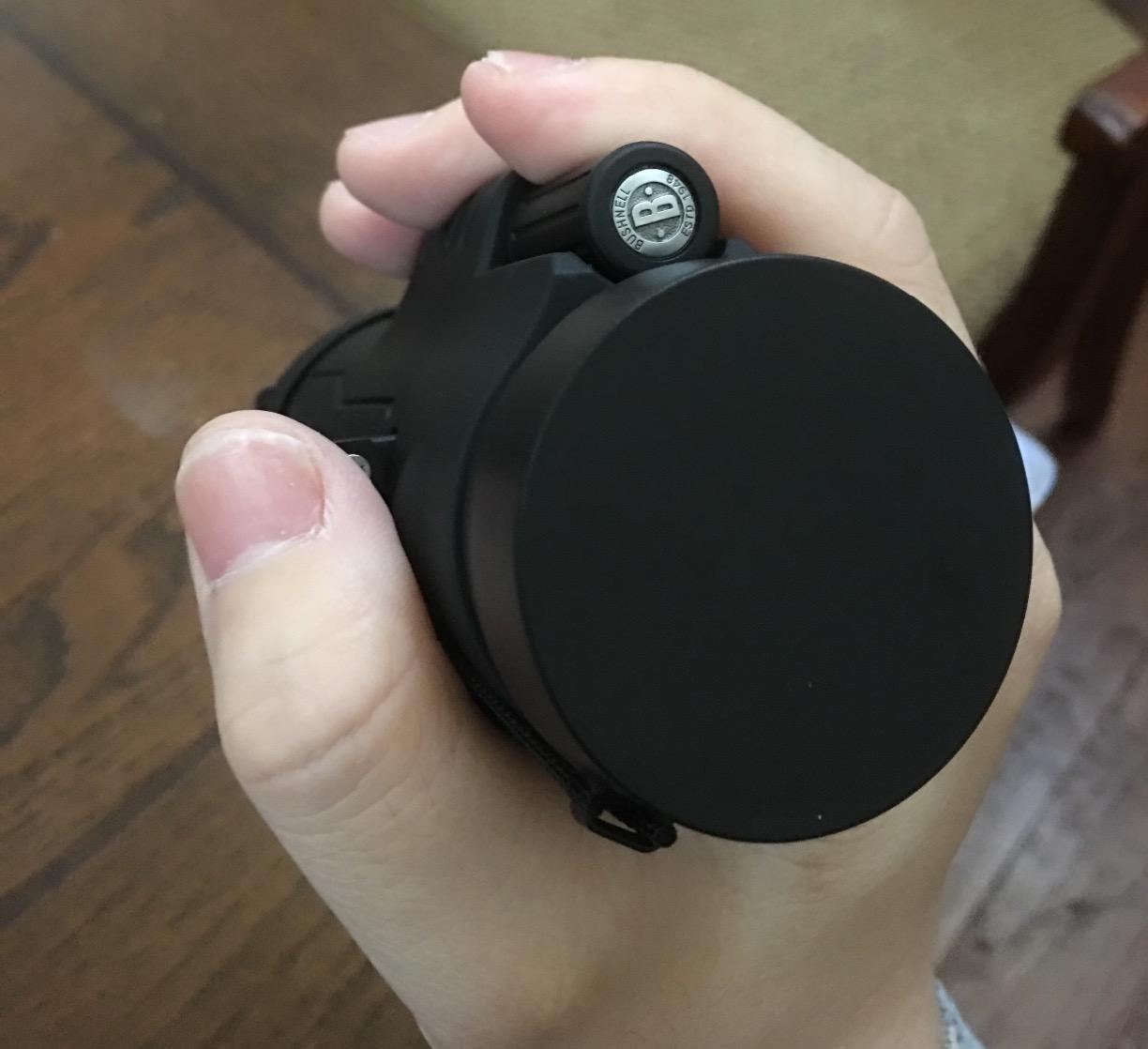
Sealing is properly done: o-ring sealed, waterproof and fogproof, with a rubber-armored exterior that shrugs off pack abrasion. The twist-up eyecup adjusts for glasses or bare-eye viewing, and the fast focus system with a smooth knob gets you from a walking scan to a locked subject in one motion.
It also mounts on a tripod, which matters at 10x. Resting the optic on a pack or a summit cairn turns a shaky image into a genuinely detailed one, and this is the model where that trick pays off most.
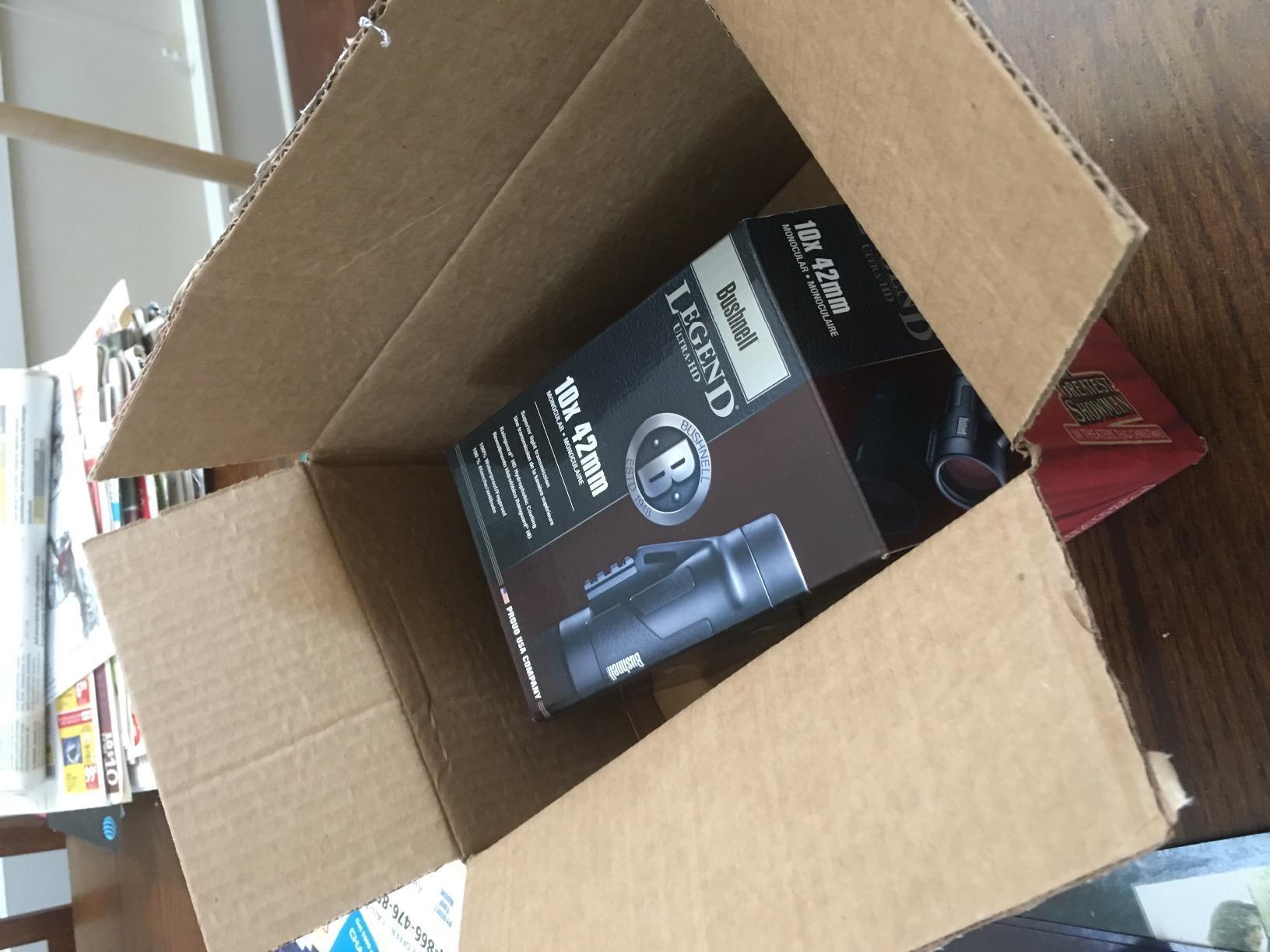
Is 374 grams too heavy for a day hike
It is the heaviest monocular here, and you will feel it if you carry it in a jacket pocket all day. Attached to a pack strap or left in the top pocket, the weight largely disappears.
Budget for it honestly. This is an optic for hikers who spend real time at distance in poor light, not one who wants a general-purpose glance at a summit while walking past.
What ED glass actually changes
Colour fringing around high-contrast edges reduces noticeably, and that matters when you are trying to separate a bird from leaves at 300 yards. Sharpness also holds better toward the edge of the 340-foot field of view.
If you do not care about colour or late-day use, the smaller models deliver a usable daylight image for far less weight and spend. Buy this one specifically for the hours around dawn and dusk.
5. FEEMIC 8×42: Best Value Wide-View Monocular
Monocular Telescope High Power 8×42 Monoculars Scope Compact Waterproof Fogproof Shockproof with Hand Strap for Adults Kids Bird Watching Hunting Camping Hiking Travling Wildlife Secenery
8x42
360ft at 1000yd field of view
BAK-4 prism
285 grams
Nitrogen filled
Pros
- 360ft at 1000yd field of view makes scanning treetops easy
- BAK-4 prism with fully multi-coated lenses for a bright image
- Nitrogen filled and sealed for waterproof
- fogproof and dustproof use
- Adjustable eyecup works with glasses
- Hand strap
- carry case and tripod connector included
Cons
- Eyecup can twist out of position and darken the edge of the image
- Focus dial is loose and can be knocked out of focus
- Thin nylon case and strap
- Manual is printed in very small type
The FEEMIC 8×42 is the specification sweet spot made affordable, and it is the one I recommend to hikers who want a wide view without stepping up to a premium brand. At 8x with a 42mm objective you get brightness and a 360-foot field of view at 1000 yards, which is genuinely wide for a monocular.
The BAK-4 prism with fully multi-coated lenses produces a bright image with good colour and contrast. For scanning a canopy or picking out movement on a far ridge, the width means fewer sweeps and fewer moments where the bird leaves the frame.
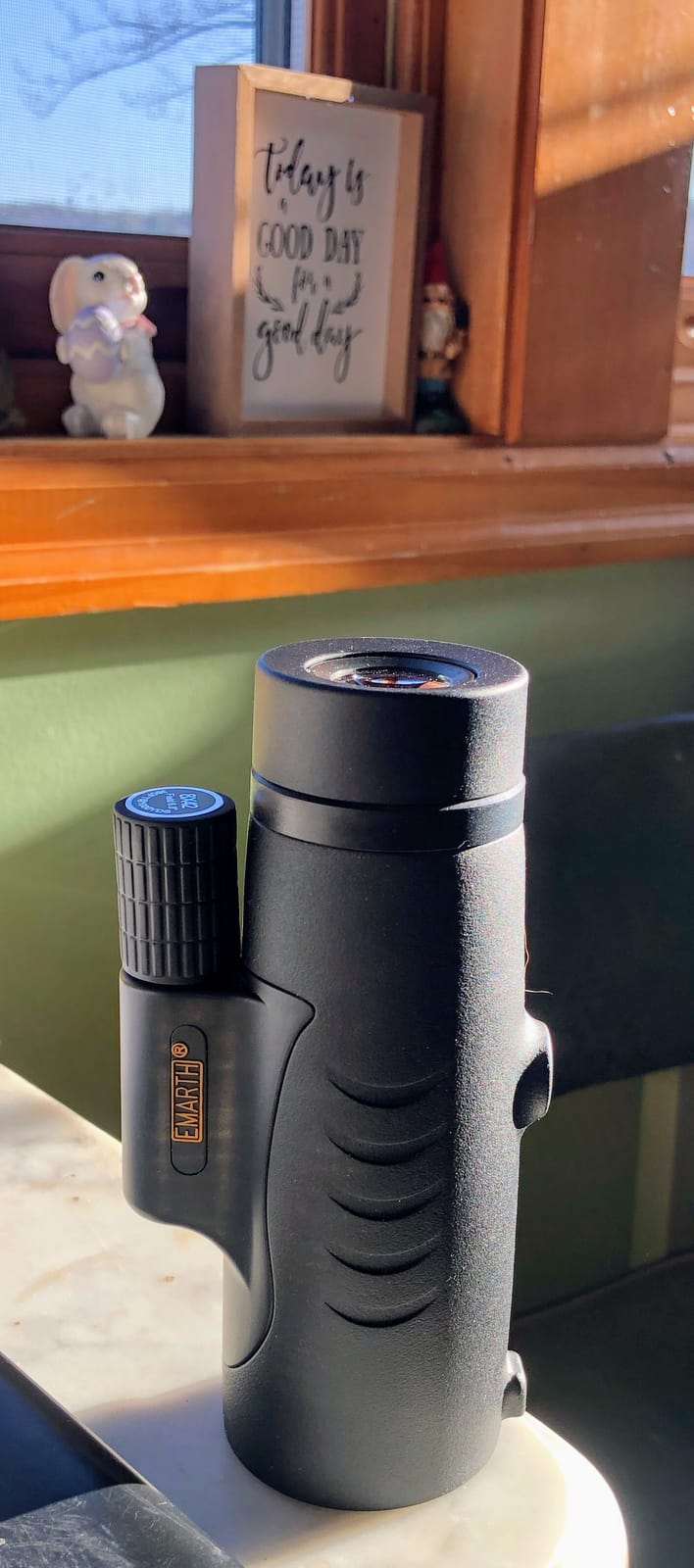
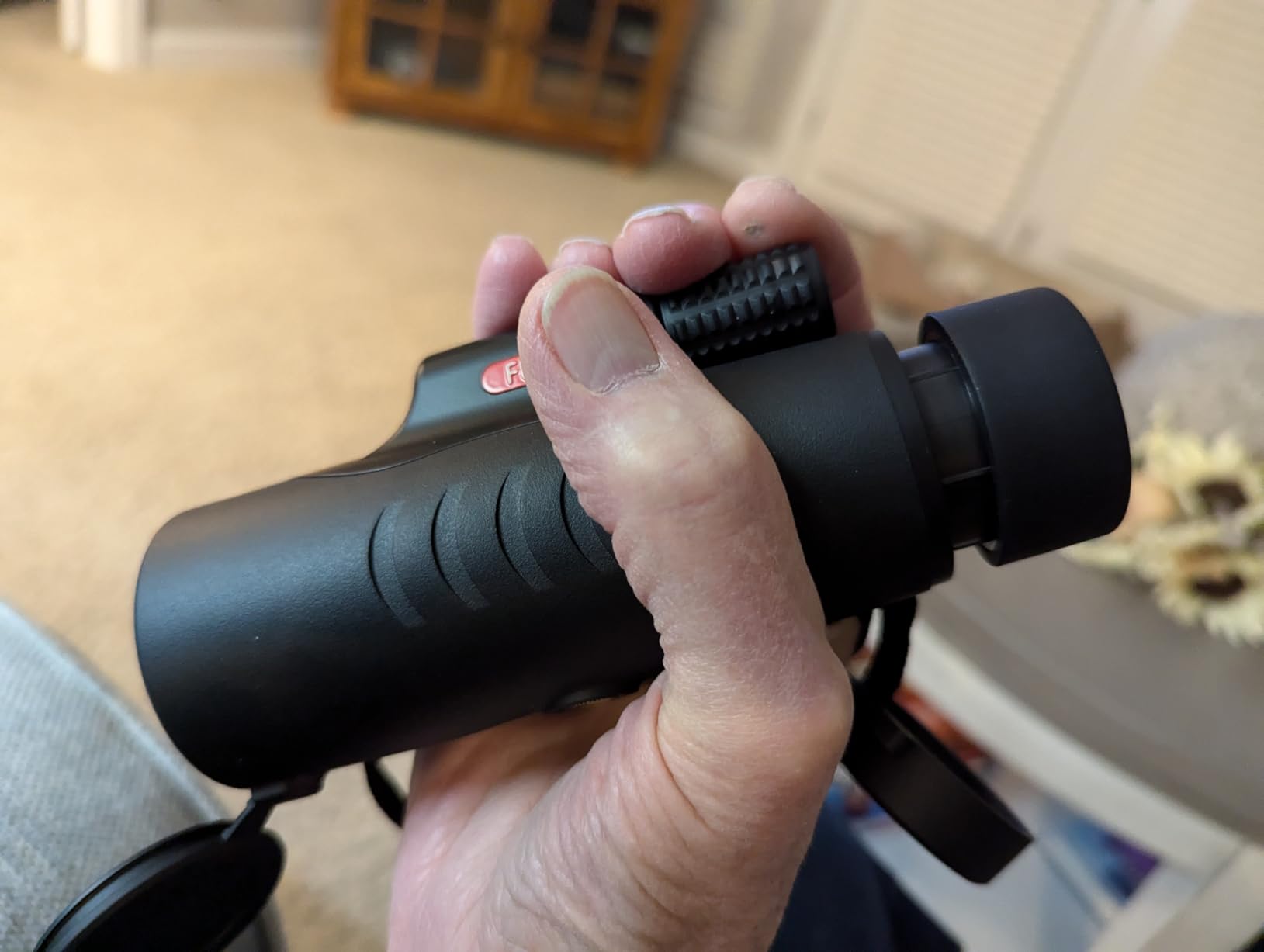
The body is 5.7 inches long and 285 grams, nitrogen filled and sealed against water, fog and dust, with rubber armor and grip stripes. It also has a tripod connector at the base, a hand strap, and a carry case in the box.
Two honest weaknesses come up repeatedly in owner feedback. The eyecup can twist or drift and partly obscure the image, and the focus dial is loose enough to be bumped out of focus while walking. Neither ruins the optic, but both are reasons to check focus before you raise it.
Whether 285 grams disappears on a day hike
It is a middle weight. Sits fine in a chest pocket for most walks and becomes noticeable only on long days where the optic stays in the hand rather than the pack.
Compare it with the lighter compacts at under 6 ounces. You are trading roughly 10 ounces for a much wider, brighter view, and most hikers find that trade worth making once they have used both.
Why the loose focus wheel matters on the move
A dial that turns too easily can be knocked out of focus by the jolt of a step or by the optic brushing your pack. You then spend the first few seconds re-finding focus instead of looking at the bird.
Getting into the habit of a quick focus check before every raise solves most of it. And because it has a tripod connector, you can stabilise it properly at a viewpoint and take the shake out entirely.
6. usogood 10×42: Best for Glasses Wearers and Close Focus
Monocular Telescope, 10×42 Monocular for Adults, BAK4 Prism & FMC Lens Monoculars for Adults High Powered, Waterproof Portable Monocular with Hand Strap for Bird Watching, Camping, Travel
10x42
22.5mm eyepiece
Close focus at 3.3 yards
360ft at 1000yd
9.12 ounces
Pros
- Large 22.5mm eyepiece gives generous eye relief over glasses
- Close focus to 3.3 yards for trail-side detail
- Bright BAK-4 prism with fully multi-coated lenses
- Compact 6.1-inch body that fits a jacket pocket
- Lifetime warranty with strong owner-reported support
Cons
- Some owners find the real magnification feels lower than the stated 10x
- Lens caps fit loosely and the front flap can break off
- Tripod nut can loosen if over-tightened
- Hand strap threads awkwardly into the side holes
Two things set this one apart on a trail: a 22.5mm eyepiece with generous eye relief, and close focus to 3.3 yards. If you wear glasses, the eye relief matters more than any other single spec, because too little and you cannot get a full picture with your glasses on.
Close focus is the quiet bonus. Most monoculars are built for distance only, so inspecting a trail-side plant, a lichen pattern or an insect is simply not possible. At 3.3 yards this one handles near detail as well as far.
Optically it is a BAK-4 prism with fully multi-coated XLT coated lenses and a 4.2mm exit pupil, feeding a 360-foot field of view at 1000 yards. Owners report clear, bright images with good colour, and a fast, simple one-handed focus that suits walking use.
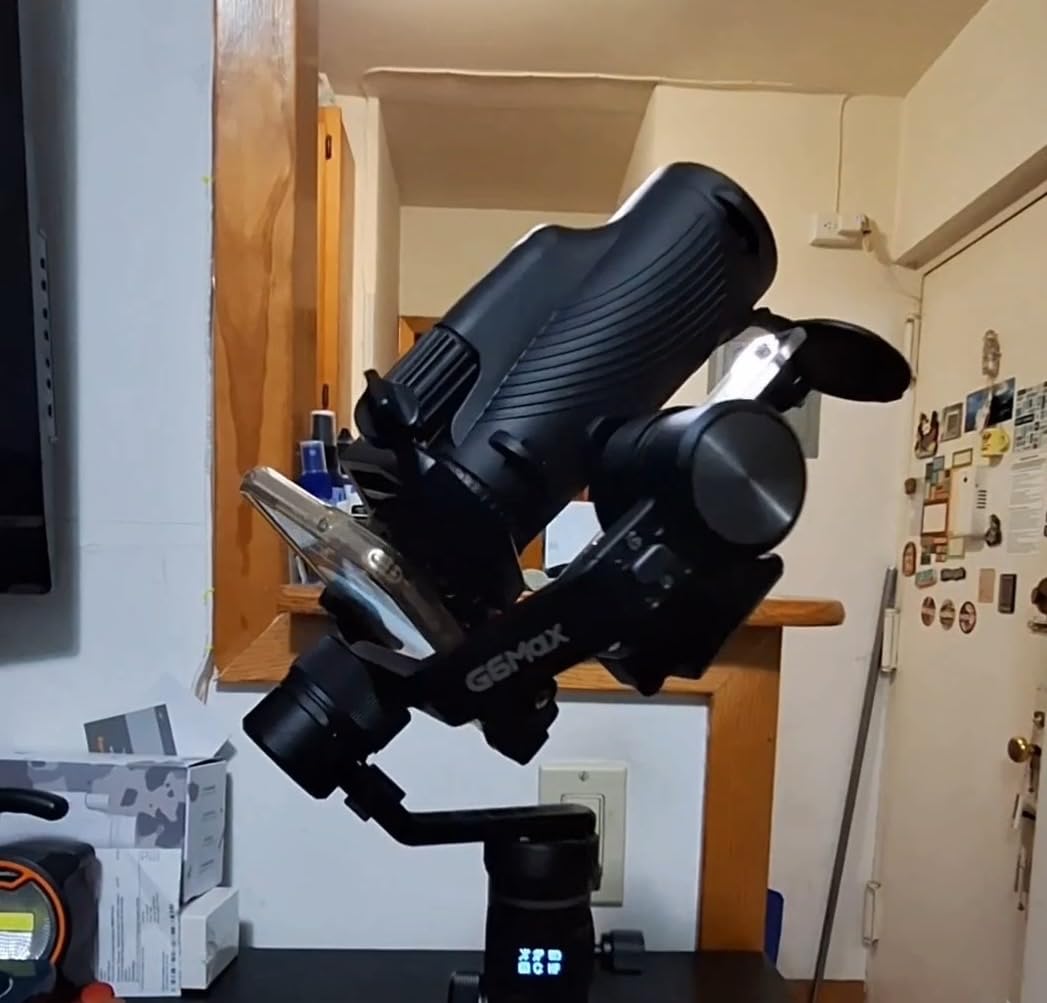
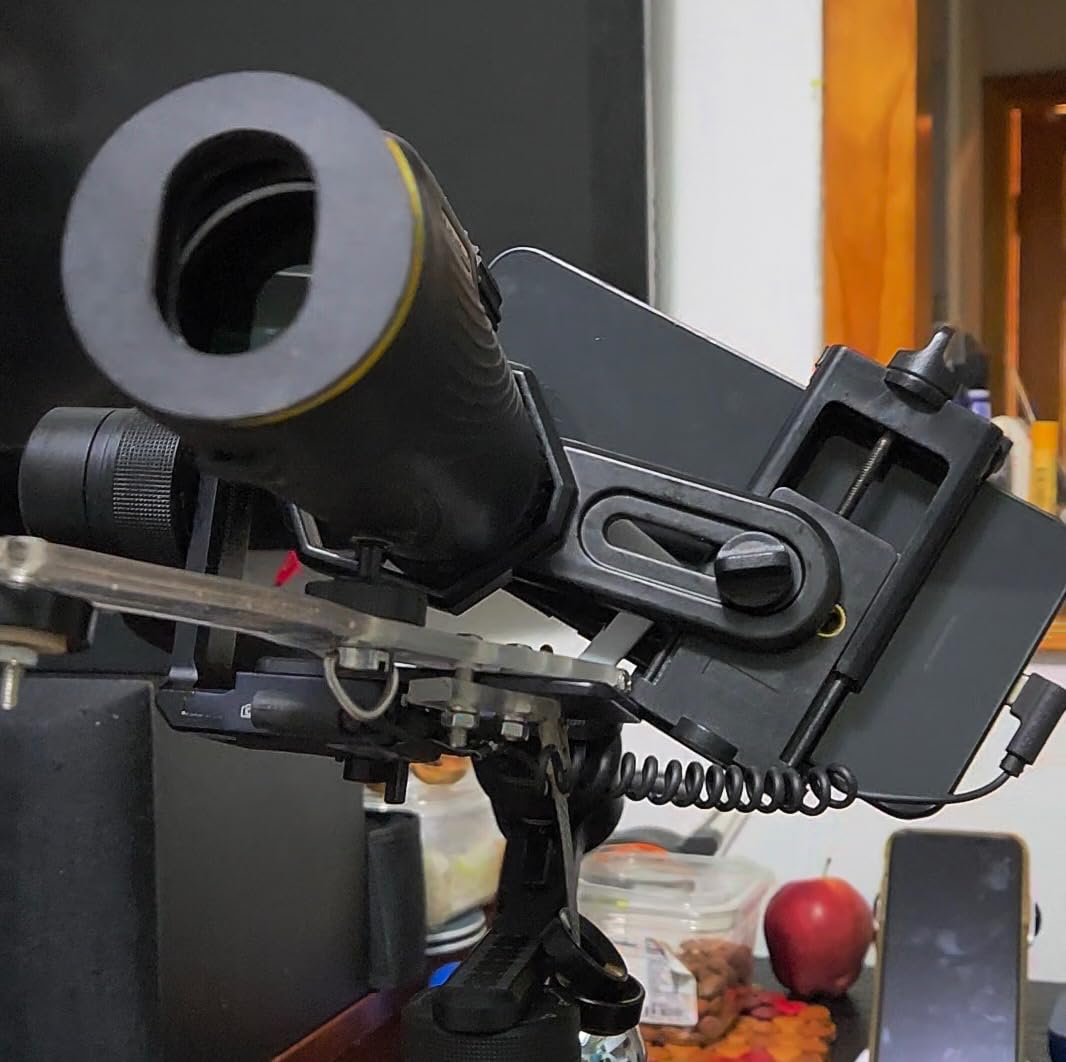
At 9.12 ounces and 6.1 inches long it is genuinely pocketable, and it works with standard smartphone adapters if you want digiscoped photos. In the box you get a hand strap, dual lens caps, an objective cover and a soft pouch.
Whether eye relief changes with glasses
Yes, and it is decisive. A 22.5mm eyepiece gives enough clearance to get the full field of view with glasses on, which many compact monoculars simply cannot do without pressing the eyecup into your frame.
If you have worn glasses for optics before and know the frustration, check this spec first on any purchase. It is the difference between a usable optic and one that stays in the pack.
What the small build flaws mean in practice
The loose lens caps and the awkward hand strap are the two complaints that repeat. Neither affects the optical performance, but the strap can slide out of its buckle mid-hike and the caps rattle in a pocket.
The tripod nut is worth handling gently, since over-tightening can work it loose. Buy a proper mini tripod rather than forcing a full-size screw into it.
7. Pankoo 16×52: Best for Reaching the Farthest
Monocular Telescope High Power 16X52, 2026 Power Prism Compact Monoculars for Adults Kids, Birthday Gifts for Men, Waterproof Fogproof Shockproof with Hand Strap, Bird Watching Hunting Camping Hiking
16x52
5.8 degree field of view
3.25mm exit pupil
Nitrogen filled
10.88 ounces
Pros
- Highest magnification here at 16x with a 52mm objective for far summits
- BAK-4 prism with fully multi-coated lenses for a bright image
- Nitrogen filled waterproof and fogproof body
- Hand strap and velvet pouch included
- Compact enough for a side pocket
Cons
- Narrow 5.8 degree field of view limits how much of a scene fits in view
- 16x is unusable handheld while walking without a tripod
- Only a 90-day warranty
Sixteen times is a lot of power, and it turns a distant summit from a grey smudge into a shape with snowfields on it. If your hiking is about looking at things a long way off rather than tracking wildlife at close range, this is the pick.
The 52mm objective is large, and with BAK-4 glass under fully multi-coated lenses the image stays bright despite the high magnification. Owners reviewing thousands of units repeatedly point to brightness and portability as the main reasons they keep it.
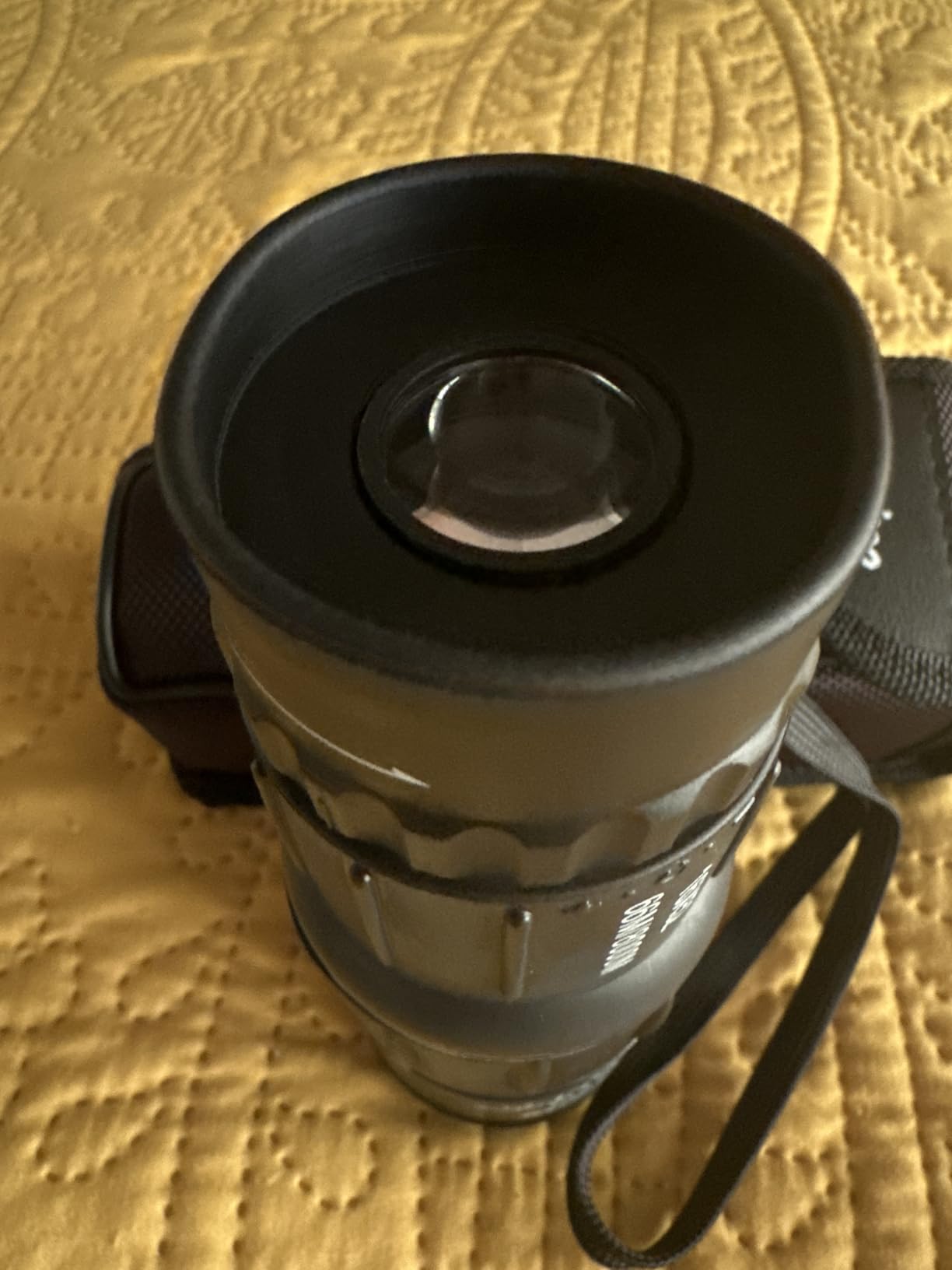
The body is 6.7 inches long and 10.88 ounces, nitrogen filled and rated waterproof and fogproof, with a hand strap and a velvet pouch in the box. It survived wet weather in owner testing, which matters for a ridge-line tool.
Here is the real cost of 16x: the 5.8-degree field of view is narrow, so finding your target takes deliberate scanning rather than a sweep. And at this magnification handheld shake is severe, which means the optic is only truly usable from a summit stop with a rest, not while walking.
What 16x magnification actually delivers
It delivers reach. Features that are invisible at 8x, like a summit hut or a distant waterfall, become obvious. That is genuinely useful for orientation and for confirming where you are heading.
It does not deliver detail you cannot reach optically. Beyond a certain distance the image is limited by the glass and by air, so the extra magnification mostly enlarges what you already had rather than revealing new structure.
When high power is the wrong choice
If you are moving, pick a lower magnification. Tracking a bird or a hiker at 16x while walking is frustrating, and the narrow field makes it worse because the subject keeps leaving frame.
Also weigh the 90-day warranty, the shortest cover among the named brands here. On a tool for long-distance viewing, that is a thinner safety net than the lifetime policies on the Vortex, Nocs and Carson models.
8. Gosky Titan 12×50: Best for Digiscoping with a Phone
Gosky Titan 12×50 Monocular for Adults High Powered with Phone Adapter
12x50
289ft at 1000yd field of view
IPX7 sealed
Nitrogen filled
13.85 ounces
Pros
- Bright sharp image from a 50mm objective with BAK-4 glass
- IPX7 waterproof and fogproof sealing handles rough weather
- Rubber armor and single-hand focus survive years of drops
- Sturdy canvas case with microfiber lining
- Twist-up eyecup works with glasses
Cons
- Included smartphone adapter is finicky to align and slips out of position
- Phone photos come out with a black circular surround and edge distortion
- Adapter does not fit many multi-lens phones well
- Bulky for pocket carry with smaller hands
- Needs a tripod at 12x
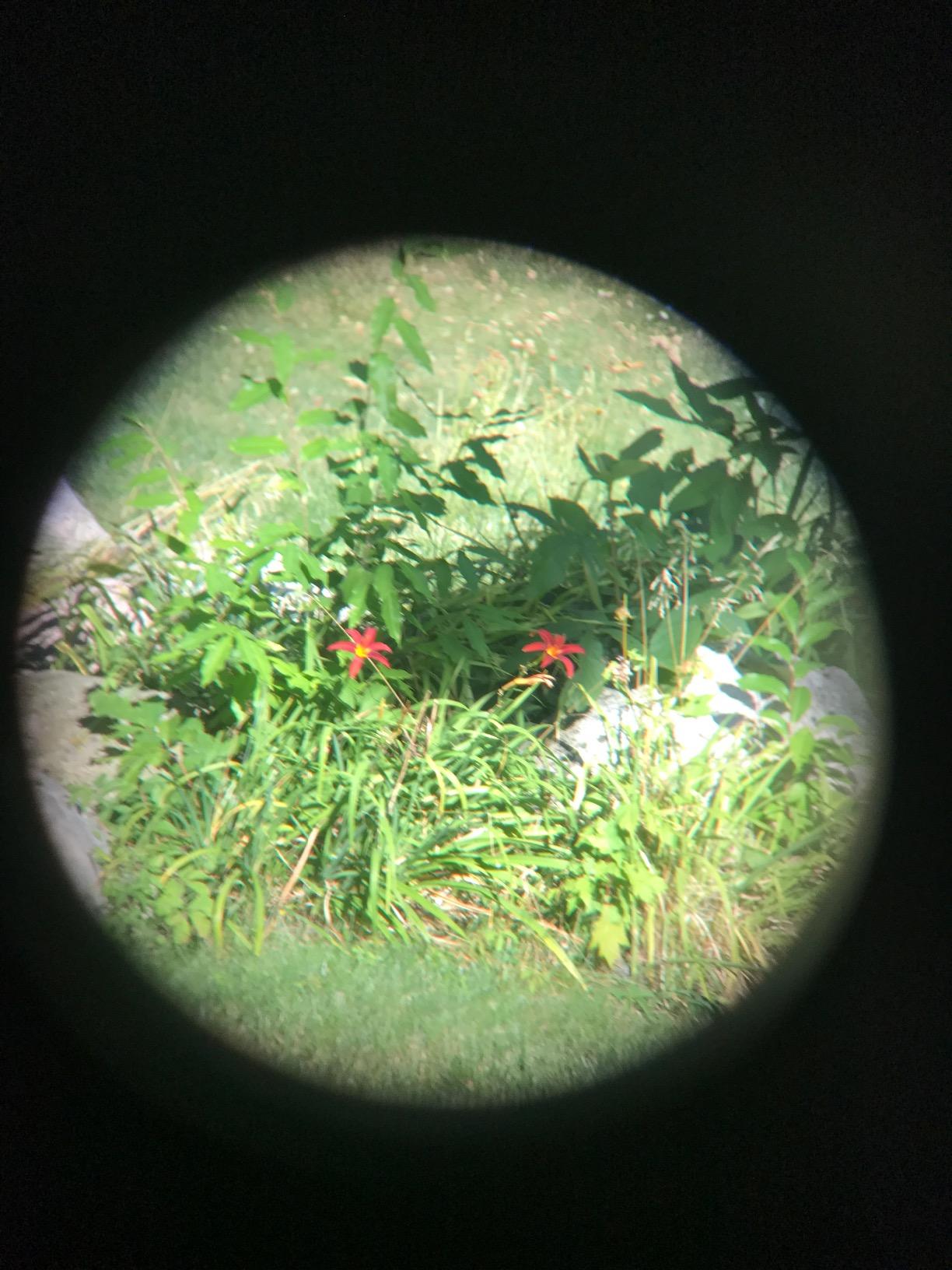
The Titan is the pick if part of your hiking involves getting a photo of that distant bird or summit. It ships with a universal smartphone adapter, and at 12x with a 50mm objective you have enough magnification and light to make a digiscoped image worth keeping.
The optical performance gets consistent praise across thousands of reviews. A BAK-4 prism with fully multi-coated lenses gives true colour and a sharp image, and owners report it holding up well after years of drops and rough handling.
Sealing is the strongest rating here at IPX7, with nitrogen filling for fog resistance, and the rubber armor absorbs the shock of being dropped on rock. The included canvas case with microfibre lining is a better home for it than most bundled pouches.
The adapter is where expectations need adjusting. Owners report it is awkward to align, slips out of position, and does not sit well on multi-lens phones. The photos also come out with a dark circular surround and edge distortion unless you crop and zoom afterwards.

What a phone adapter really does
It just holds your phone in front of the eyepiece so the phone camera captures the image the monocular produces. It adds no optical quality and it cannot correct for the phone’s wide-angle lens sitting over the eyepiece.
That is why the dark ring and edge distortion appear. Treat the output as a record of what you saw, and crop afterwards. For identification purposes it is more than enough.
Whether 13.85 ounces is a burden
It is one of the larger bodies here at 7.1 inches, and owners with smaller hands mention that one-handed pocket carry is awkward. Strap it to the pack or use it from a pack lid instead of a pocket.
At 12x you will want a tripod anyway, so carry the weight only for trips where you plan to stop and shoot. For pure walking wildlife viewing, one of the lighter 8x models serves you better.
9. Carson CloseUp 6×18: Best for Trail-Side Detail
Carson CloseUp 6x18mm Close-Focus Monocular (CF-618)
6x18mm
Close focus to 10 inches
1.6 ounces
427ft field of view
Tripod mount
Pros
- At 1.6 ounces it is the lightest optic here and fits any pocket
- Close focus to 10 inches for flowers insects and trail detail
- Smooth focus with good friction that does not overshoot
- Eye relief works with glasses for many wearers
- Great value for travel and trail use
Cons
- Weak at distance compared with binoculars past roughly 60 to 80 feet
- Needs two hands and some dexterity to focus up close
- Counter-intuitive focus direction with no distance markings
- Very narrow field of view
- Glass is not BAK-4 so the image is slightly hazier
This one does something no other pick on the list does. It focuses to 10 inches, so you can look at a fern frond, a moth on a rock, or a carapace at your feet and see actual detail instead of a blur. Most monoculars cannot do that at any distance.
At 1.6 ounces it is by far the lightest optic here. It lives in a chest pocket permanently and you will not notice it is there, which makes it the easiest hiking habit to actually keep.
The 6x with an 18mm objective gives a 427-foot field of view at 1000 yards, one of the widest figures in this roundup, so scanning is easy even though detail is not. Owners consistently praise the smooth focus with enough friction to land accurately, and it works with glasses for many wearers.
Be clear about the limit: this is not a long-distance tool. Owner feedback consistently puts its useful reach at roughly 60 to 80 feet, well short of the other models here, and the glass is not BAK-4 so the image is slightly hazier.
Why close focus matters on foot
Because you are walking through the detail, not just past it. Botany, insects, trail markers, gear in your pack, a cracked lens in a scope you are considering. Close focus turns the optic from a distance tool into a general one.
It also needs two hands to focus at close range and some dexterity, so it is a stop-and-look tool rather than a walk-and-scan tool.
Whether 6x is too weak for ridgelines
For a distant summit, yes. Six times leaves most terrain looking much as it does to the naked eye, and you will want the 8x or 10x picks for that job.
Many hikers carry two small optics instead of one large one: a CloseUp for everything at your feet, and a compact 10x for the distance. At 1.6 ounces, adding it costs almost nothing.
10. Carson BlackWave 10×25: Best Lightweight Waterproof Pick
Carson BlackWave 10x25mm Waterproof Monocular, Black (WM-025)
10x25
Nitrogen filled and waterproof
4.32 ounces
273ft at 1000yd
12mm eye relief
Pros
- Genuinely waterproof and nitrogen filled for wet trail conditions
- Very light at 4.32 ounces for all-day carry
- Compact 5-inch body fits a jacket pocket
- Close focus to 4 feet for nearby detail
- 12mm eye relief works for many glasses wearers
Cons
- BK-7 prism glass is lower grade than BAK-4
- Only a 25mm objective limits dusk use
- Narrow 273-foot field of view
- Simple blackened coating is dimmer than multi-coated rivals
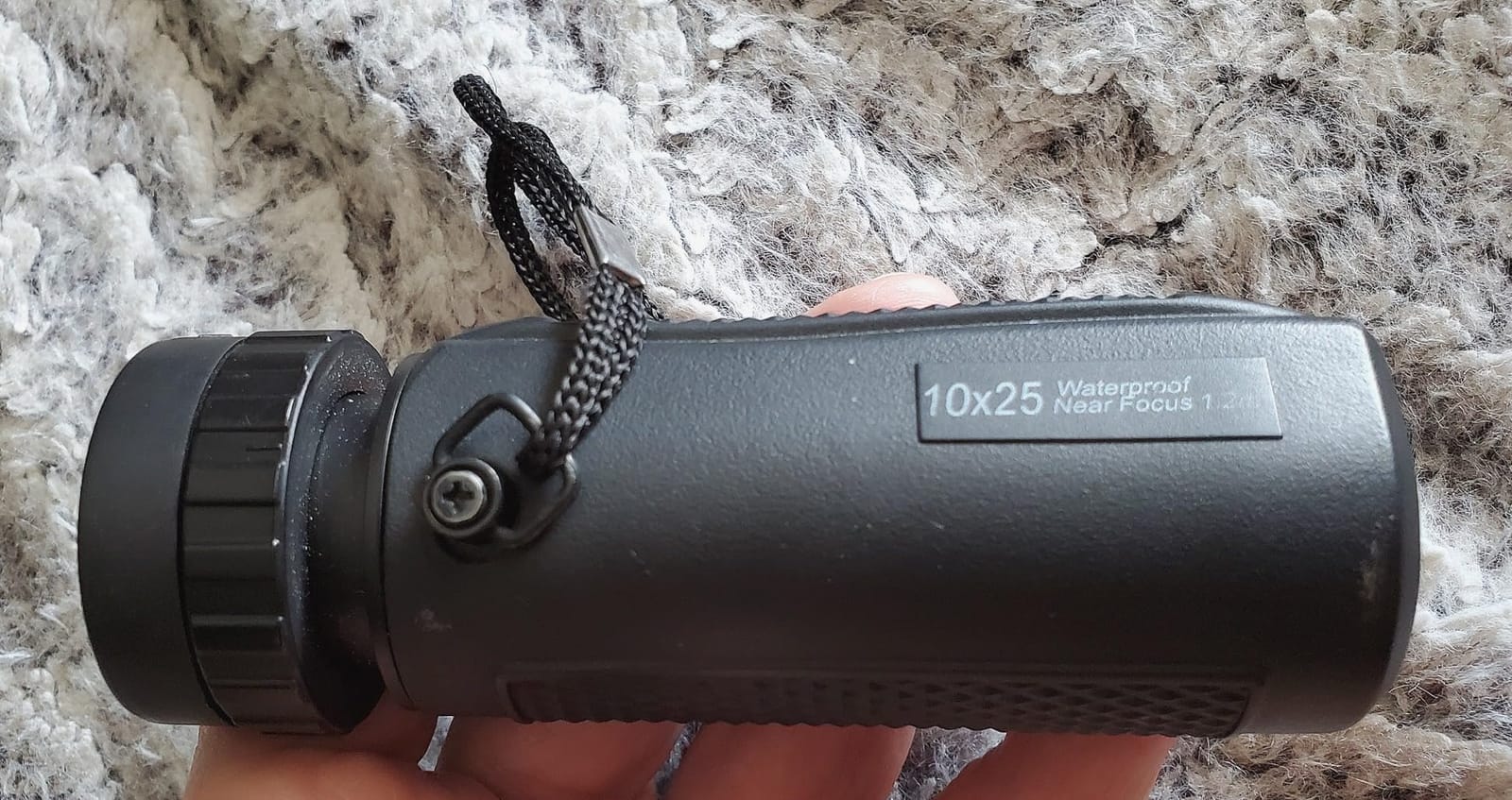
The BlackWave is the answer for hikers who get rained on regularly and refuse to carry a heavy optic. At 4.32 ounces with nitrogen-filled glass lenses in a waterproof, rugged body, it is the lightest properly sealed unit here.
At 10×25 it still gives you real distance capability, and close focus to 4 feet covers the near ground. The 12mm eye relief works for many glasses wearers, which is more than some compacts in this weight class manage.
The limitation is optical rather than mechanical. It uses a BK-7 prism, which is a step below BAK-4, and a simple blackened coating rather than multi-coated lenses, so the image is moderately dimmer and softer than the models above.
That trade is fair in daylight and at moderate range, which is where most trail viewing happens. It is not fair at dusk, where a 25mm objective and dark coating together give up too much brightness.
Whether BK-7 glass is worth worrying about
Not for daylight use. BK-7 is a perfectly serviceable optical glass, and most hikers will not notice the difference against BAK-4 in a mid-morning landscape.
You will notice it in low light and at long range, where the darker coating compounds the small objective. If dusk or wildlife at distance is your priority, step up to a multi-coated BAK-4 model.
How 4 feet of close focus helps on the trail
Four feet covers anything just off the path, like trail markers, a rock cairn or a plant at knee height. It is not inspection-level close focus like the Carson CloseUp, but it stops the optic feeling useless up close.
With a pouch, strap and lens cloth included and a No Fault, No Hassle warranty behind it, this is a low-risk carry-everywhere option.
11. Celestron UpClose G2 10×25: Most Versatile for Day Hikers
Celestron UpClose G2 10×25 Monocular for Hiking, Travel & Birding
10x25
113 grams
Multi-coated
Roof prism
11mm eye relief
Pros
- Entry-level spend for a dedicated hiking and birding monocular
- Compact and light at 113 grams for pack carry
- Rubber-covered aluminum body protects against rough handling
- Thumb indents and finger ridges give a secure one-handed grip
- Comes with soft carrying case and straps
Cons
- Only multi-coated rather than fully multi-coated so images are dimmer at dusk
- Water resistant rather than sealed for submersion or heavy rain
- Small 25mm objective limits low-light performance
- Narrow field of view compared with wider models
Not every hiker needs sealed nitrogen-purged glass. If you want a dedicated optic for trail markers, gardens and daytime scenery without spending much, the UpClose G2 is a legitimate choice that has been on sale for years.
The build is more substantial than the price suggests. A rubber-covered aluminum body with thumb indents and finger ridges gives a genuinely secure one-handed grip, and that handling matters more on a moving trail than most spec sheets suggest.
At 10×25 with multi-coated optics and a roof prism, it does the basic job properly. A soft carrying case and straps are included, and Celestron backs it with a limited lifetime warranty, which is better cover than many budget rivals offer.
The compromises are real and worth stating. It is only multi-coated, so images are dimmer at dusk. It is water resistant rather than sealed, so sustained rain is outside what you should ask of it. And the 25mm objective with a 5.7-degree field of view is narrow by comparison with the wide models here.
Owner feedback puts its one-star share at around 11 percent, the highest in this roundup, and that is mostly about expectations. Buyers expecting sealed, multi-coated performance at this spend are disappointed. Buyers who want a cheap daylight optic are satisfied, and the rubber-covered body takes more punishment than the spec sheet suggests.
Whether this suits your trail conditions
If you hike in fair weather and mostly use the optic in daylight, it is enough. The roof prism shape keeps it compact, and the rubber covering takes the knocks that come with a pack.
If you hike above the treeline, in the rain, or start walking before sunrise, spend more. A sealed, multi-coated model costs more and removes every one of those concerns.
How this compares with the generic 10x listings
It is a named brand with a real manufacturer, a published warranty and coherent specifications. Many near-identical marketplace listings share recycled copy, unspecified glass and no warranty worth counting on.
That is the difference that matters at this level. You are not gambling on an unnamed optic; you are accepting known limitations in a product with an accountable maker.
12. Tasco Essentials 10×25: Best Low-Cost Backup Optic
Tasco Essentials 10×25 Compact Roof Prism Monocular (Black)
10x25
Roof prism
Fully coated
70 grams
288ft field of view
Pros
- Lowest spend in this group as a backup pair
- Ultra-compact and lightweight at 70 grams
- Rubber armor and hand strap for a secure trail grip
- Roof prism design gives a streamlined shape
- Carrying pouch included
Cons
- Only fully coated rather than multi-coated so images are dimmer and softer
- Small 26mm objective limits dusk and shaded-trail use
- Narrow 288-foot field of view
- Only a 1-year warranty
At 70 grams this is the lightest full-size configuration here, and it is worth carrying purely as insurance. Leave it in the car, the daypack lid or a shared gear bag, and you have something usable if your main optic floods, cracks or goes missing.
The roof prism design keeps the body streamlined and the rubber armor with hand strap gives a workable grip on a wet trail. A carrying pouch is included, so it lives in a pocket without rattling.
Optically it is basic. Fully coated rather than multi-coated glass gives a noticeably softer, dimmer image than anything above it, and the small 26mm objective rules it out of dusk duty. Treat it as a backup, not a main instrument.
When a backup monocular is the smart buy
On a route with no resupply and no chance to replace a broken optic, a cheap second unit is genuine insurance. That is a real trail risk, especially in high alpine terrain or on long routes between resupply points.
The 1-year warranty is the shortest here, so the low spend partly reflects that thin cover. Buy it as a backup and you will not be disappointed.
Why soft images are acceptable for a spare
Because its job is not quality. It is to let you confirm that the distant ridge is where you think it is, and to scan for the obvious wildlife while your good optic stays packed away.
If you find yourself reaching for it as your everyday optic, that is a sign to move up to a sealed multi-coated model instead.
How to Choose a Monocular for Hiking
Start with the trail, not the spec sheet. Everything else follows from where you walk, what time of day, and how much weight you are willing to carry for the whole day.
Magnification: why 8x wins on the trail
Eight power is the point where an image stays usable while you are walking. Below 8x there are fewer good compact options and you gain little. Above 8x, hand tremor is amplified in direct proportion, and at 12x or 16x the image is only steady when you are braced or mounted.
So the trade is simple: 10x and 12x show you more, but only from a standstill. Choose 10x or higher if you plan to stop at viewpoints and use a tripod or a pack as a rest. Choose 8x if the optic stays in your hand while you walk.
Objective diameter decides your hours of use
The second number in a spec like 8×42 is the objective lens diameter in millimetres, and it governs how much light reaches your eye. The exit pupil is that diameter divided by the magnification, so an 8×42 gives a 5.25mm exit pupil and a 10×25 gives only 2.5mm.
Bigger is better for light, up to a point: above roughly 4mm the pupil is larger than a dark-adapted eye can use efficiently. Practically, 42mm is the sweet spot for dawn and dusk work, 32mm is a sensible all-rounder, and 25mm is a daylight-only choice.
Glass and coatings separate serious optics from the rest
A BAK-4 prism produces noticeably brighter, higher-contrast images than the cheaper BK-7, and it costs very little more to buy into. Always prefer BAK-4 if the choice exists.
Coatings matter as much. Fully multi-coated lenses lose far less light to reflection than single-coated or blackened surfaces, and that difference shows up exactly when you need it most, in low light. Extra-low-dispersion glass such as ED Prime goes further, holding colour accuracy and reducing fringing at long range.
Sealing decides whether it survives a season
Waterproof and fogproof bodies are nitrogen purged or argon filled with O-ring seals. Fogging happens when moist air gets trapped and cools, which on a trail means cold mornings and sweat-soaked clothing. A purged body prevents it.
Check the rating carefully. A rating like IPX4 covers rain, spray and fog. A rating like IPX7 covers immersion. A body described only as water resistant is a splash rating at best, and none of these should go in a creek.
Weight and packability decide whether you carry it
Under 6 ounces means you will carry it. Between 6 and 12 ounces means you will carry it on day hikes but leave it in the pack on overnight trips. Above 12 ounces means it rides on a strap or a pack lid.
Body length matters almost as much as weight. A short body stands up in a pocket without snagging your jacket zip, and models with a utility clip or included strap let you keep it on a shoulder strap where it is instantly accessible instead of buried in a pack.
Field of view, eye relief and the small stuff
Field of view is quoted in feet at 1000 yards or in degrees, and wider is better for finding things. A narrow field makes scanning harder and throws moving subjects out of frame.
Eye relief is how far the eyepiece sits from your eye, and it decides whether you can use the optic with glasses on. Anything around 11mm or more is comfortable for most wearers; under 10mm and glasses users will struggle to get a full picture. Also check for a tripod thread if you plan to watch wildlife from a fixed spot, and a twist-up or multi-stop eyecup if you wear a hooded shell.
Monocular vs Binoculars: Which Should You Carry on the Trail?
Depth perception is the honest answer. Binoculars give you a stereo image, which your brain uses to judge distance and depth, and that matters when you are picking a route or judging a drop. A monocular uses one eye, the image reads flatter, and depth has to be inferred from familiar objects like a known tree or a trail marker.
For pure scanning across a valley, the difference is negligible. Monocular users routinely report that once you know what to look for, one eye is enough, and some hikers actively prefer it because a single barrel is easier to keep level while moving.
The weight argument is what settles most decisions. A compact monocular runs from 1.6 ounces on the lightest pick here to around 13 ounces on the largest. A typical 8×42 binocular pair with a neck strap lands around 15 to 25 ounces. That is often the difference between carrying an optic and leaving it at home, and a monocular you actually carry beats binoculars in the pack.
The handling trade is one-handed operation against steadiness. A monocular can be raised, focused and lowered with one hand, which is useful when the other hand holds trekking poles or a map. Binoculars are inherently steadier because you brace them with both hands and both eyes work together to hold the image still.
So the practical verdict: carry a monocular for scanning, wildlife and travel where weight matters, and add binoculars when you need depth judgement or long stable observation from a fixed position. Many hikers carry both, with the monocular on the strap and the binoculars in the pack for summits.
Frequently Asked Questions
Which is better for hiking, binoculars or monoculars?
For most hikers a monocular wins, because it runs from under 6 ounces while a binocular pair typically weighs 15 to 25 ounces, and it works one-handed with trekking poles. Binoculars win for depth judgement and for long stable observation from a viewpoint, since two eyes give you stereo vision and a steadier image.
What magnification is best for monoculars?
Eight power is the best all-round choice for hiking because the image stays usable while you are walking. Ten power shows you more but amplifies hand tremor, and 12x or 16x only becomes steady when you brace against a pack or use a tripod. Pick 8x for moving and 10x or higher for stopping at viewpoints.
Which brand of monocular is considered the best?
Vortex is the most consistently recommended brand among hikers, largely because of build quality and an unlimited lifetime warranty on models like the Solo 10×25 and Solo R/T 8×36. Hawke, Bushnell, Nocs, Carson, Maven and Opticron also earn regular mentions for particular strengths such as ED glass, ultralight design or close focus.
What is the best monocular for viewing long distances?
For maximum reach, a 12x or 16x configuration with a large objective such as 42mm to 52mm gives the longest view, but it needs a tripod or rest to be usable. A large objective diameter is what actually helps at long range and in low light, so an 8×42 beats a 10×25 at the same distance in the evening.
Why use a monocular instead of binoculars?
A monocular halves the weight and size, works one-handed while walking, costs less, and keeps a hand free for poles or a phone. The trade is losing stereo depth perception and a steadier image, since binoculars are braced with two hands. If you only need to identify distant subjects rather than judge distance, a monocular is enough.
Can I use a monocular with glasses on?
Yes, as long as the eye relief is generous. Around 11mm or more of eye relief works for most glasses wearers, and models with a twist-up or multi-stop eyecup let you set it for a bare eye or a hooded shell. Compact monoculars with small eyecups are the ones that force you to press against your glasses or remove them.
Conclusion: The Monocular to Buy for Hiking
The Vortex Solo 10×25 is the pick we would put in our own pack. At 5.6 ounces, fully multi-coated, nitrogen purged and o-ring sealed, with an unlimited lifetime warranty behind it, it covers the vast majority of what a hiker needs from a monocular and it costs almost nothing in pack weight.
If you want more light at dawn or a wider view while scanning, step up to the Nocs Zoom Tube 8×32 for backpacking or the Vortex Solo R/T 8×36 for low light and ranging. For dawn and dusk with no weight concerns, the Bushnell Legend 10×42 uses ED glass no other pick here can match.
Whatever you choose, check the weight, the sealing class and the eye relief before you buy. Those three specs decide whether the optic ends up on your strap all season or back in the drawer after three trips. These are the best monoculars for hiking in 2026, tested against the reality of pack weight, moving feet and weather that does not care about your plans.