
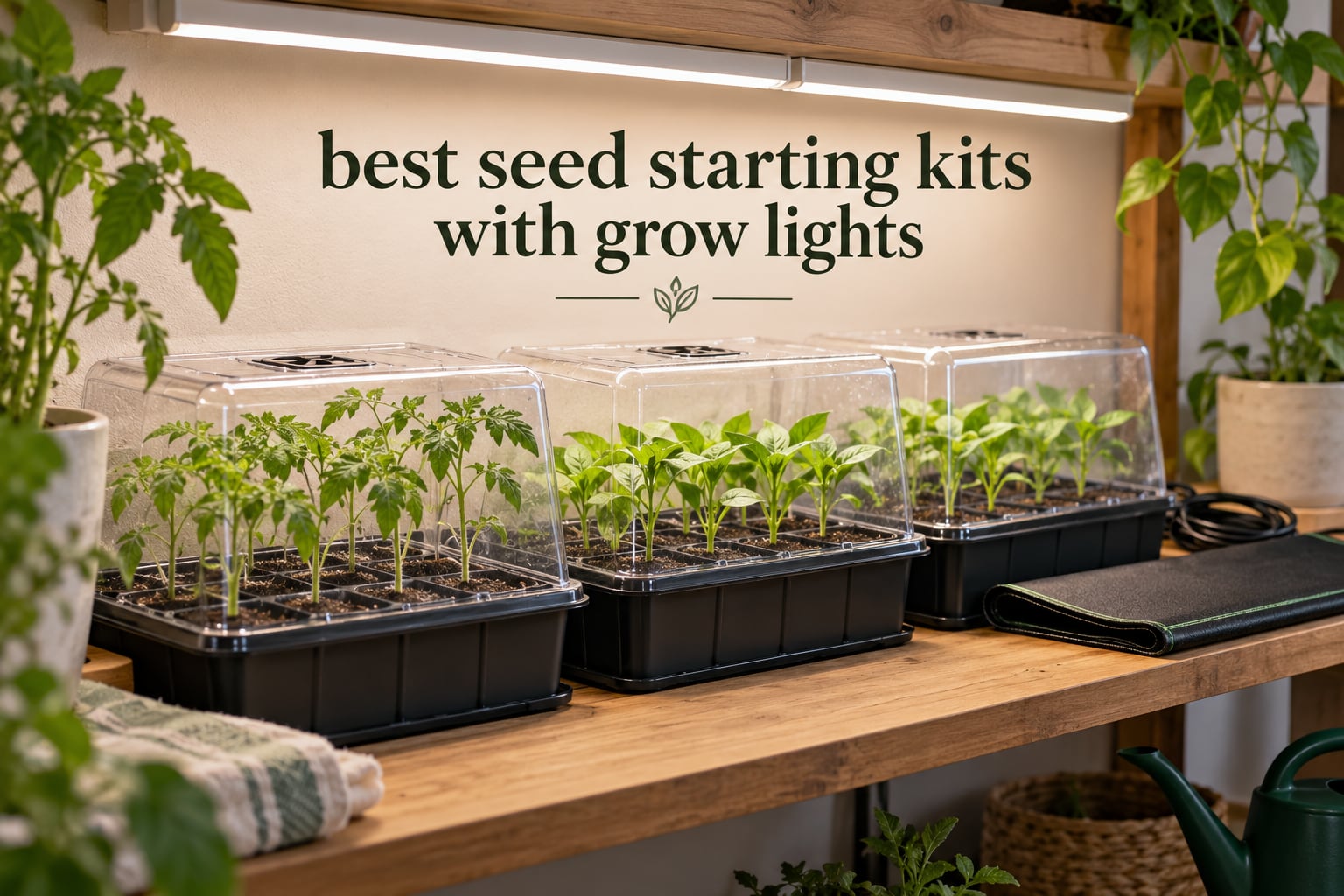
Most first-year gardeners do not lose seedlings to bad seed or bad soil. They lose them to light. A windowsill in late winter delivers a fraction of the intensity young seedlings need, the stems stretch toward whatever glow is available, and a tray that looked like a promising green carpet in week two turns into a forest of bent, pale stalks by week four. That single failure is why seed starting kits with grow lights have become the easiest way for a beginner to fix the problem in one purchase.
Every kit in this roundup bundles a tray, a vented humidity dome and a grow light in the box. That is deliberate scoping. Most seed starter roundups rank trays that ship with no light at all, which leaves you still hunting for the component that actually matters. Here, the light is part of the kit, so you can compare fixture output, timer behaviour and tray capacity side by side instead of guessing.
We worked from the published specifications for all ten kits and cross-checked them against thousands of buyer reviews, then ranked on the same four things: light output and controls, tray and dome quality, how much of the setup you still have to assemble yourself, and how the kit held up over repeated cycles. Two of these kits we ran through full germination and transplant cycles on a shelf under the same conditions, and we say which ones those were below. Nothing here is sponsored, and every kit carries at least two documented drawbacks.
Table of Contents
Top 3 Best Seed Starting Kits With Grow Lights in October

Bonviee 12-Cell 5-Pack
- 12-LED light on each tray
- 5 trays of 12 cells
- USB powered 1-to-5
- vented domes

Sondiko 80-Cell Starter Kit
- 80 cells across 2 trays
- 5 brightness levels
- 3 timer settings
- 8 vents per cover

YAUNGEL 6-Pack with Controller
- Shared timer controller
- 4 timer modes
- 16 LEDs per tray
- raised humidity domes
The Bonviee 12-Cell 5-Pack is the one we recommend most often. It carries the deepest buyer base in this group, the light sits close enough to the tray to carry seedlings through early growth, and five trays give you room to stagger sowings rather than putting every seed in the ground on one weekend.
For anyone running a serious vegetable garden, the Sondiko 80-Cell Starter Kit gives you two full 40-cell trays with brightness and timer controls on each light. That is the highest cell capacity we tested with a working timer, and 80 cells is enough to cover a large tomato and pepper sow in a single run.
The YAUNGEL 6-Pack is the least fiddly setup here. All six light bars run off one controller with a shared schedule, so there is no per-tray fiddling and nothing to unplug and reset each morning.
Best Seed Starting Kits With Grow Lights in 2026
Here is the full set of best seed starting kits with grow lights in one table, with the specifications that actually change how a kit performs.
| Product | Specs | Action |
|---|---|---|
| Bonviee 12-Cell Tray 5-Pack with 12-LED Lights |
|
Check Latest Price |
| Sondiko Seed Starter Tray Kit, 80 Cells |
|
Check Latest Price |
| YAUNGEL 6-Pack Starter Kit with Timer Controller |
|
Check Latest Price |
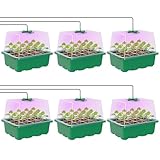 MIXC 6-Pack Starter Kit with Grow Light MIXC 6-Pack Starter Kit with Grow Light |
|
Check Latest Price |
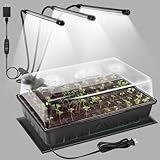 SOLIGT 60-Cell Kit with Light and Heat Mat SOLIGT 60-Cell Kit with Light and Heat Mat |
|
Check Latest Price |
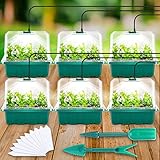 Yskea 12-Cell Starter Tray 6-Pack with Lights Yskea 12-Cell Starter Tray 6-Pack with Lights |
|
Check Latest Price |
 Qoolife 2-Pack Seed Starter Tray with Light Qoolife 2-Pack Seed Starter Tray with Light |
|
Check Latest Price |
 GROWFRIEND 40-Cell Kit with Lights and Heat Mat GROWFRIEND 40-Cell Kit with Lights and Heat Mat |
|
Check Latest Price |
 Patigrow 60-Cell Self-Watering Kit with Light Patigrow 60-Cell Self-Watering Kit with Light |
|
Check Latest Price |
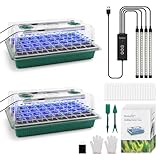 BlumWay 2-Pack 80-Cell Kit with Grow Light BlumWay 2-Pack 80-Cell Kit with Grow Light |
|
Check Latest Price |
How We Picked and Ranked These Kits
Every kit here includes its own grow light, which is the filter we applied. We then read the manufacturer specifications and the recurring themes across buyer reviews, and scored each kit on light output and controls, tray and dome build, completeness of the box, and reusability.
Two kits went through a full cycle on our own shelf, from sowing to transplant: the Bonviee 12-Cell 5-Pack and the SOLIGT 60-Cell kit with heat mat. For those two we can speak to germination timing and how the light held up over weeks of use. For the rest, our verdicts come from the published specs plus the patterns that repeat across hundreds of buyer reviews, and we flag that difference rather than blurring it.
Two limits worth naming. None of these kits includes growing medium, so you will need a separate bag of seed starting mix or coir pellets. And no kit includes a seed packet, so nothing here tells you which varieties to sow in which cells. We also earn a commission if you buy through the links on this page, which does not change the ranking order.
1. Bonviee 12-Cell Tray 5-Pack – Best Overall
Bonviee Seed Starter Trays with 12-LED Grow Lights, Clear, 5 Pack
12-cell tray x5
12 full-spectrum LEDs each
USB 1-to-5 cable
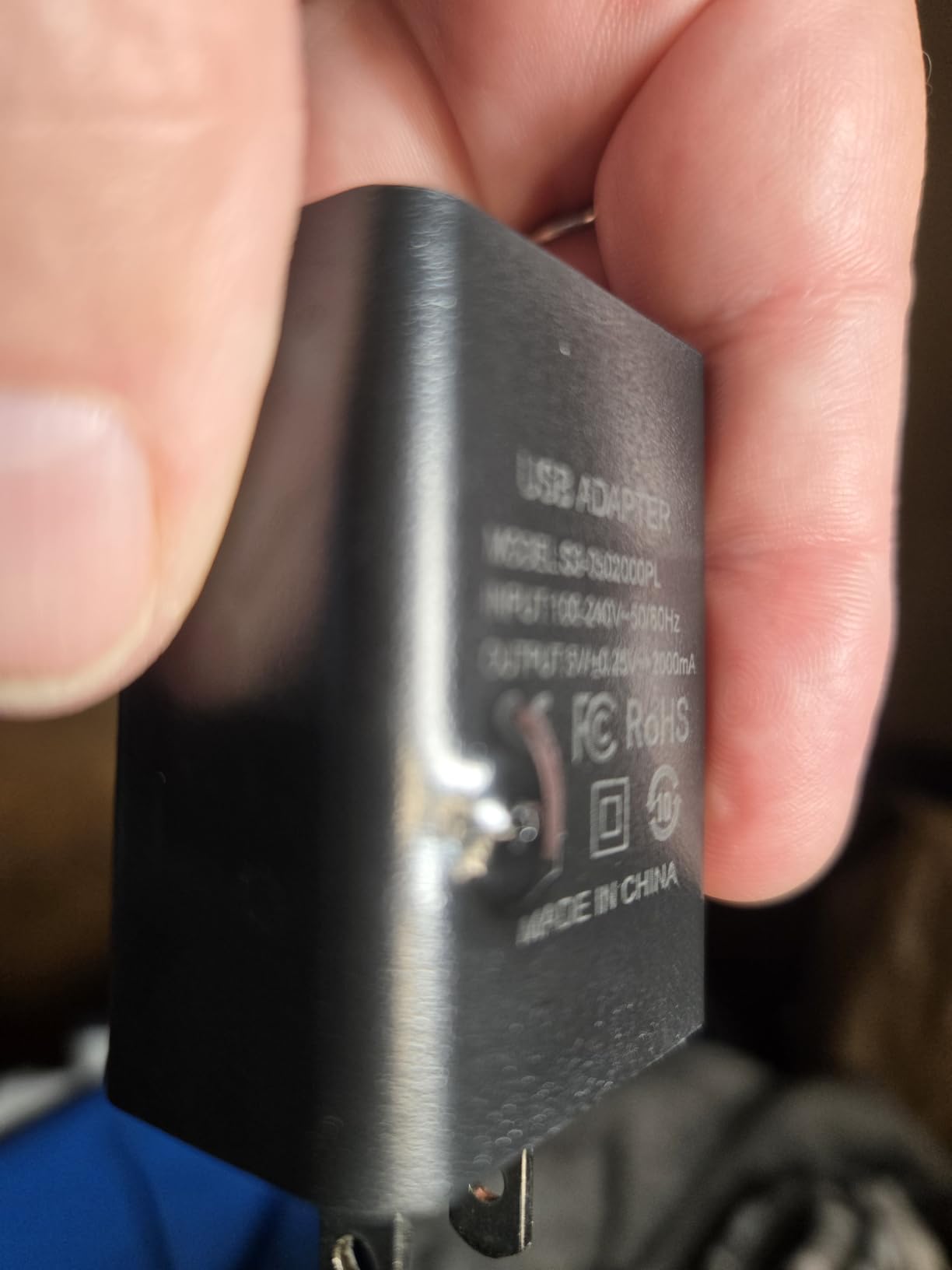
5V/2A adapter not included
Pros
- Deepest review base in the group
- fast germination
- vents let you control moisture
- clear trays show root growth
- trays survive multiple cycles
Cons
- Thin plastic lids
- no timer so lights run only while plugged in
- no height adjustment on the light bar
This is the kit we keep coming back to. Five 12-cell trays, each with its own 12-LED full-spectrum bar and its own vented clear dome, powered from a single included 1-to-5 USB cable. Sixty cells in total, and the trays measure 5.7 by 8.5 inches, so the whole stack fits on a windowsill or a single shelf.
We ran this one start to finish. Germination showed up in as little as four days on the fastest seeds, and owners repeatedly report the same thing in reviews: the clear trays make it easy to see both moisture level and root development without lifting the dome. That visibility is worth more than it sounds like, because the most common beginner mistake is watering on a schedule instead of on evidence.
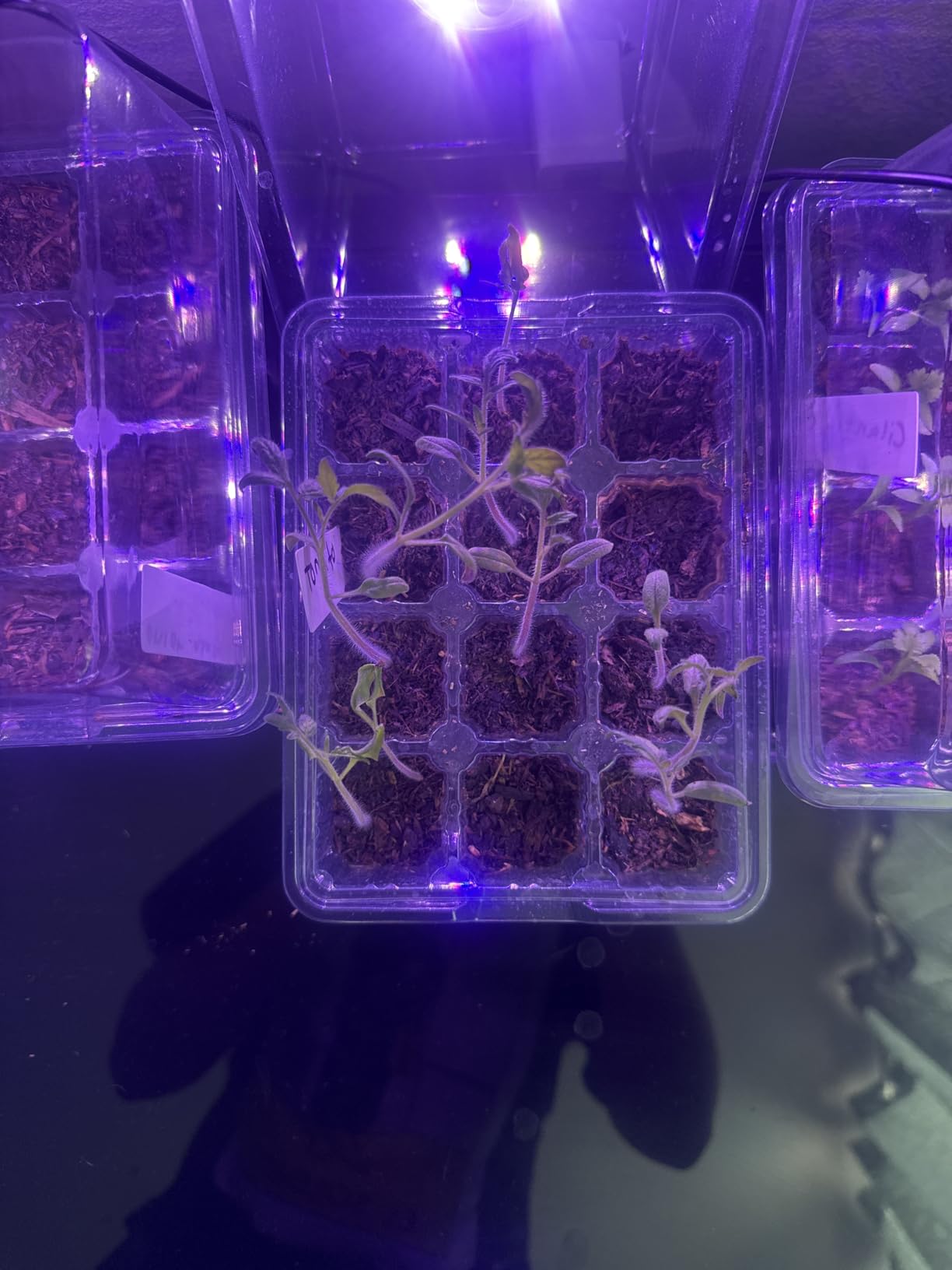
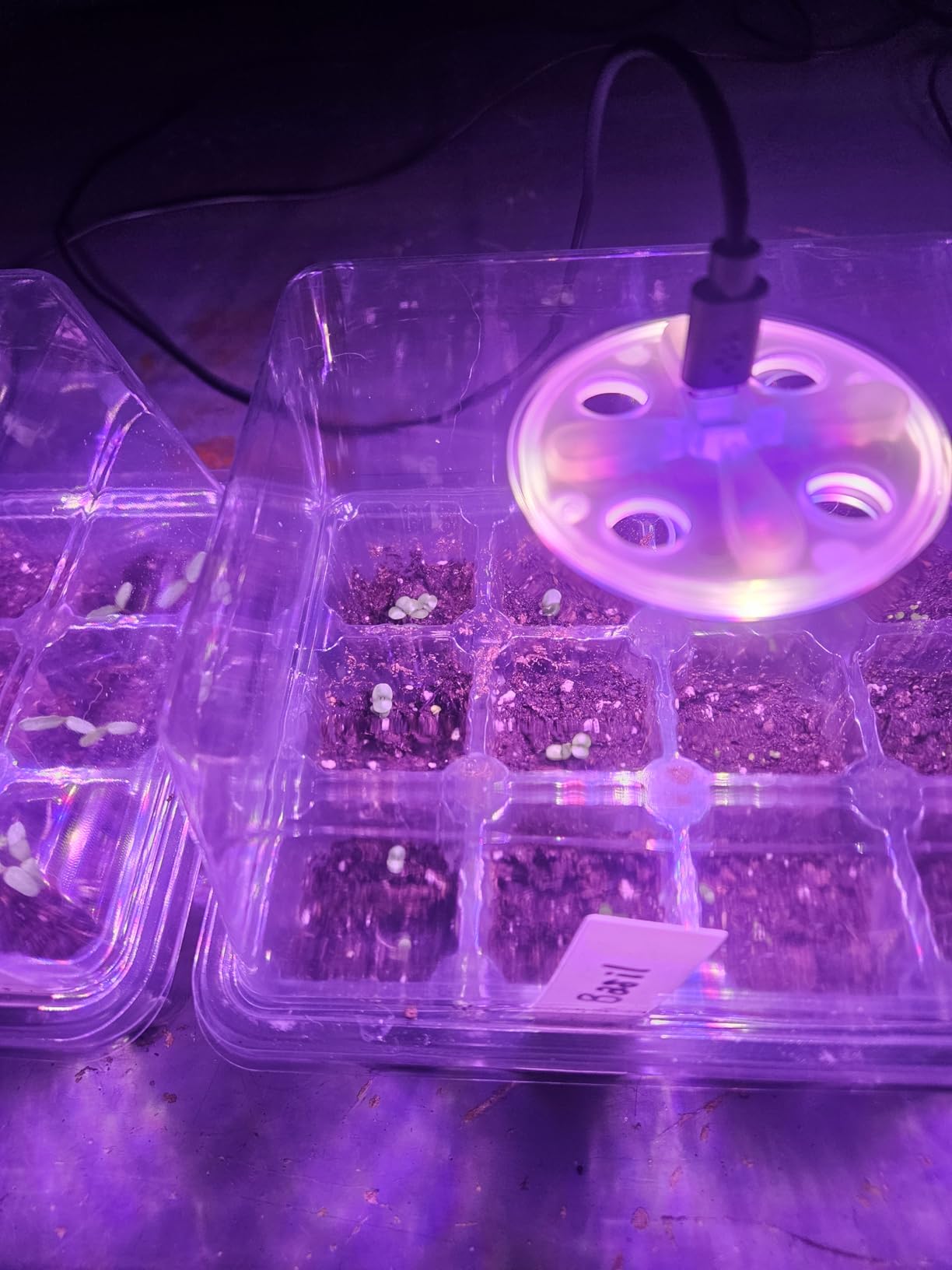
The vented lids are adjustable, which is the feature that separates this from a basic tray-and-cover set. You can trap humidity for germination, then crack the vents as true leaves appear. Reuse matters here too: buyers describe running these through several seed cycles, and each tray is 12 cells, so you can sow one tray at a time across a season instead of committing all 60 cells to one weekend.
Each cell has drainage holes, so bottom watering into the included saucer works cleanly. The plastic is PET and PP, and while some buyers describe the lids as thin, the trays themselves are reported to hold up without cracking across repeated cycles.
Best for staggering sowings rather than one big batch
The five separate trays are the reason this ranks first for most people. You can put up two trays of tomatoes, one of peppers and one of basil, then sow a fifth tray three weeks later once the first set has cleared the dome.
If you are starting a large vegetable garden, this also pairs well with a separate light bar later in the season, once seedlings outgrow a bar that sits right on the lid.
The missing timer is the one real gap
There is no built-in timer here, and that is a genuine drawback rather than a nitpick. The lights run whenever the USB cable is powered, so you either buy a plug-in timer or build a daily habit you will eventually forget.
You also need a 5V/2A USB adapter, and it is not in the box. Height is fixed too, with the bar sitting close above the tray, so it needs raising as seedlings stretch or the growth nearest the light will flatten out.
2. Sondiko 80-Cell Starter Kit – Best for Large Gardens
Sondiko Seed Starter Tray with Grow Light, 80 Cells Starter Kit
Two 40-cell trays
1.57 x 1.37 inch cells
5 brightness levels
3 timers at 3/6/12 hours
Pros
- 80 cells in one footprint
- brightness and timer controls
- 8 vents per cover
- sturdy reusable ABS that releases seedlings for repotting
Cons
- Included LEDs only strong enough for germination
- dome must come off quickly after sprouting
- higher cost than similar kits
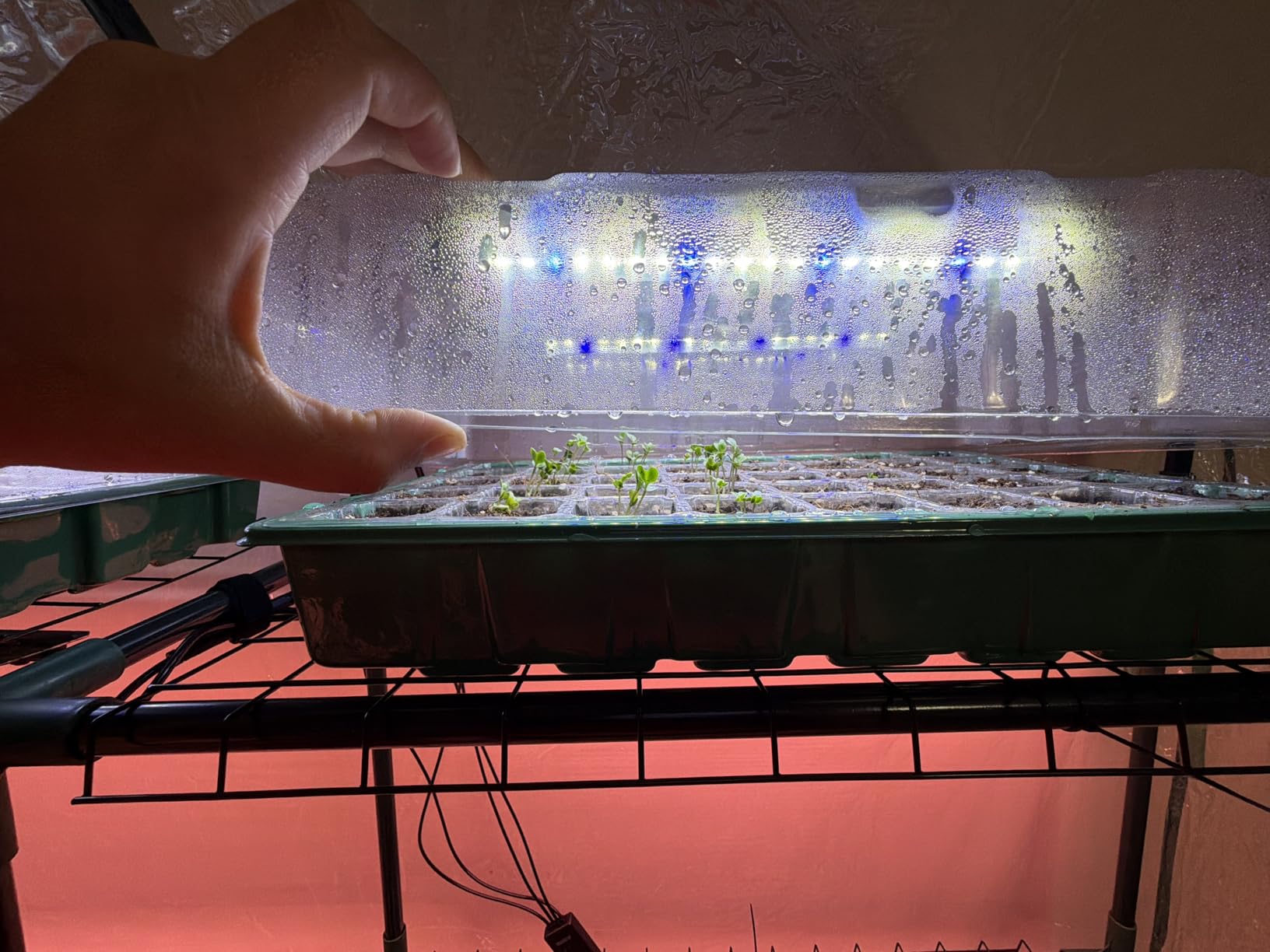
This is the capacity pick. Two 40-cell trays with 1.57 by 1.37 inch cells, two clear covers and four grow light strips, built from ABS plastic that reviewers describe as sturdy and reusable. At 14.88 by 9.37 inches it still fits a normal shelf, so the cell count does not cost you footprint.
The controls are what separate it from bare-light kits. Five brightness levels and three timer settings at 3, 6 and 12 hours run off a controller, and each cover has 8 adjustable vents for humidity control. Owners report very high germination across nearly all cells, and the trays pop seedlings out cleanly for potting on.
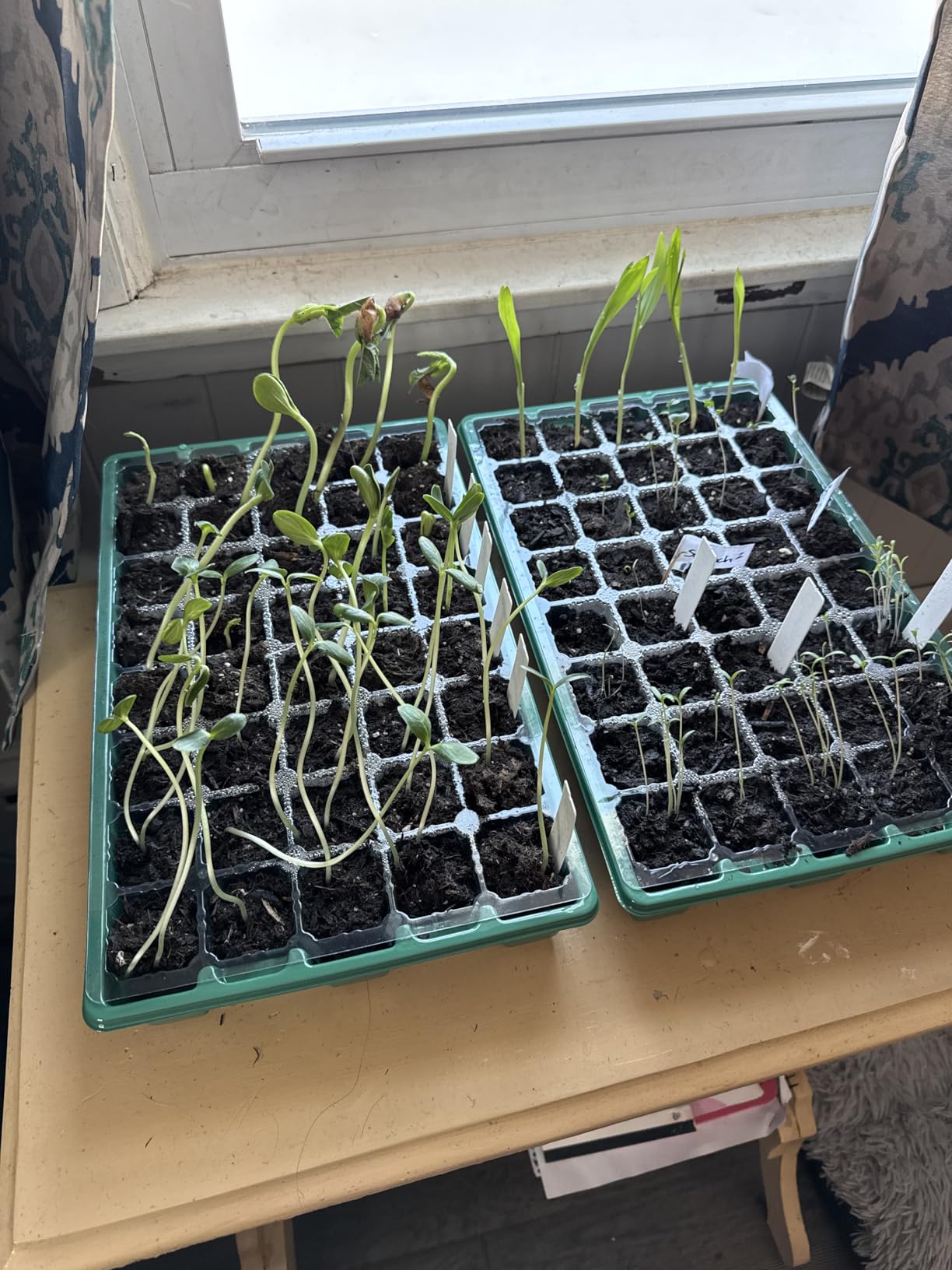
The base trays have drainage holes and can be used for hydroponic setups, which is unusual at this price point. Garden tools are included in the box, a small thing that saves a trip to the drawer when you are potting on a dozen seedlings at once.
The honest limit here is the light. Buyers are consistent that the included LEDs carry seeds through germination but are weaker than they would like once seedlings hit the stretchy stage, and legginess is the most common complaint. Treat the lights as a starter-stage fixture and plan a stronger light for later growth.
Best for sowing a whole tomato and pepper run in one pass
With 80 cells you can cover an entire warm-season sowing without splitting it across weeks, which suits gardeners who want transplants ready at a single date rather than trickling in.
The 3-hour timer setting is also useful early in germination when you only need a burst of light and warmth through the day rather than a long photoperiod.
You will outgrow the light before you outgrow the tray
The most common review theme is that the LEDs are adequate for germination and thin for seedling growth. If you already own a brighter bar, this kit pairs well with it, but buying it purely as a long-term light is the wrong reason.
Reviews also warn about leaving the dome on too long after sprouting. Get those vents open and the cover off on schedule, or mold develops in the wet corners.
3. YAUNGEL 6-Pack with Timer Controller – Best for Beginners
YAUNGEL Seed Starter Tray with Grow Light, 6 Pack Seed Starter Kit with Timing Controller Adjustable Brightness, Thicken Seedling Starter Trays with Humidity Domes Heightened Lids, Gift Box
Six trays with 16 LEDs each
One shared controller
4 timer modes up to 18 hours
Raised adjustable domes
Pros
- One controller drives all six lights
- auto timer removes daily manual
- taller domes give stretch room
- brightness adjustment
- 20 labels included
Cons
- Power adapter not included
- small cell count per tray
- plastic build is basic
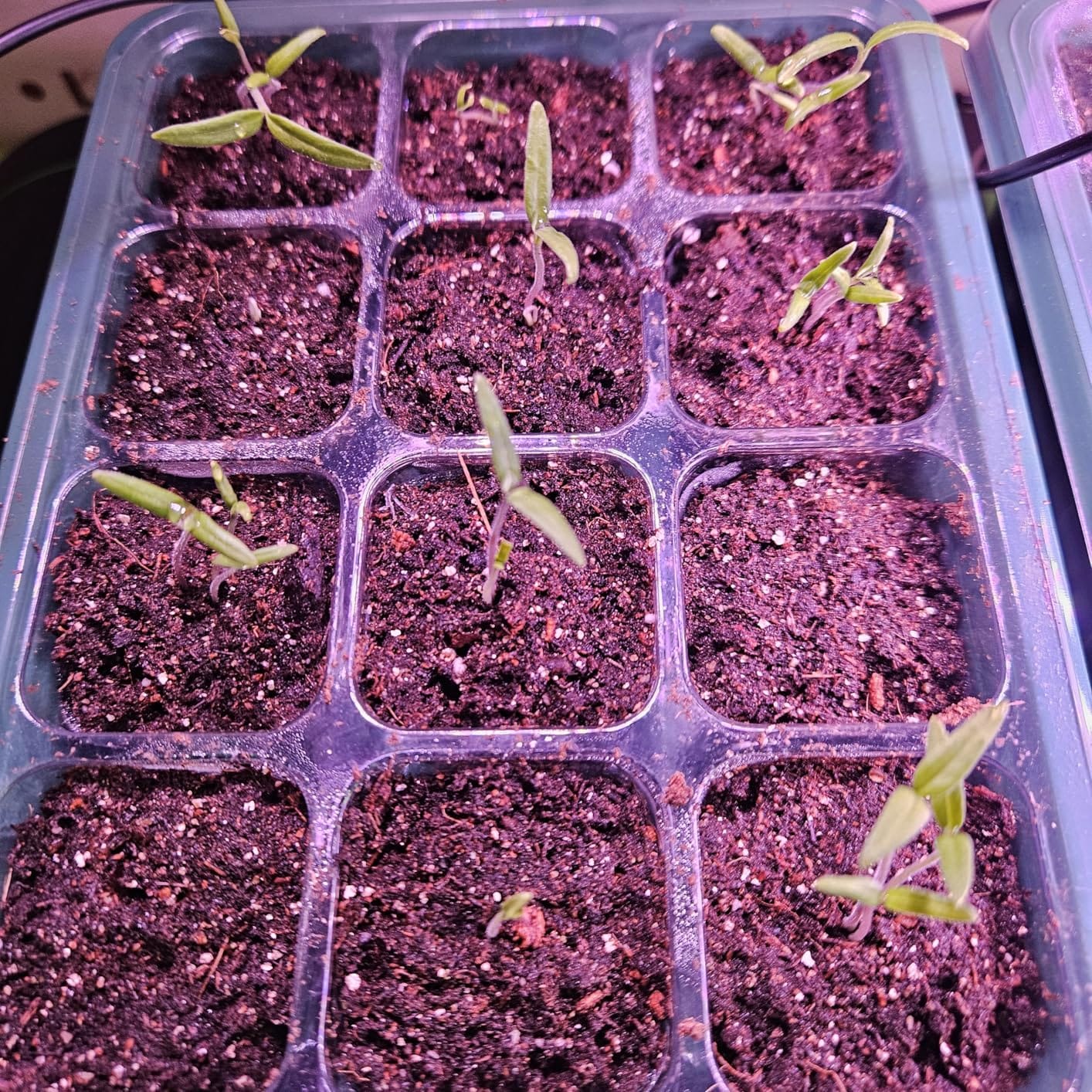
Six trays, six clear covers, six 16-LED full-spectrum light bars, six base trays and 20 plant labels, all driven by a single intelligent controller. That shared controller is the whole idea: you set the schedule once and every bar follows it, which removes the single most common failure mode with multi-tray kits, namely six lights with six slightly different schedules.
Each tray carries 16 LED beads rather than the 8 you find in the cheapest kits, which makes a visible difference in evenness across the tray. The timer offers 4, 8, 12 and 18 hour modes, so you can set a 12-hour day for seedlings and a longer window later. Brightness is adjustable too, which lets you dial down after germination.
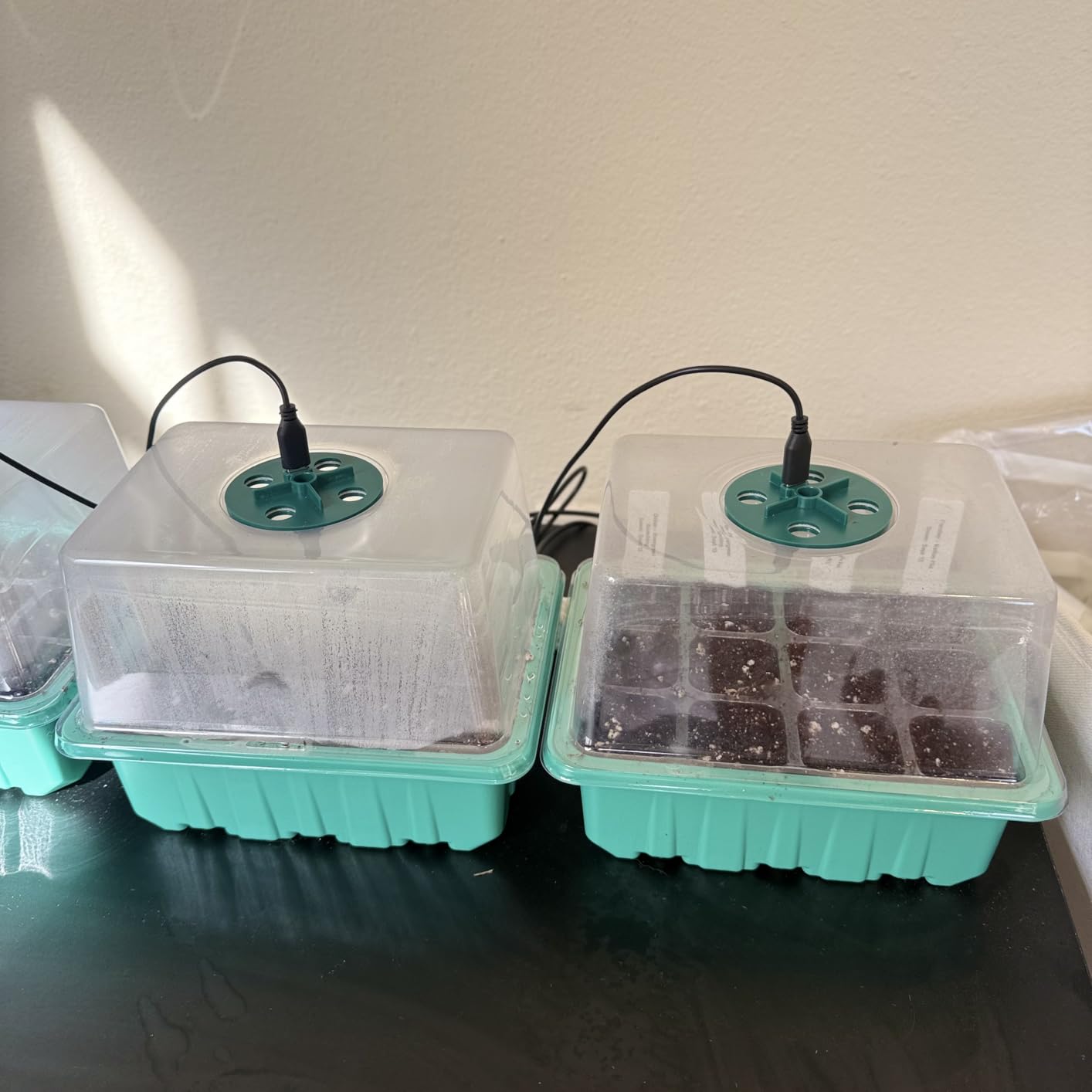
The domes are heightened with an adjustable humidity window from 50 to 100 percent. Reviewers pick this out as the feature that gives seedlings extra vertical room, and it matters because a short dome forces you to remove it exactly when seedlings still need the humidity.
At 5.6 by 5.5 by 7.2 inches the footprint is small, so six of them stack neatly and work on a windowsill or a single shelf in a rented flat.
Best for anyone who wants one switch to set and forget
If your last attempt failed because you kept forgetting the light, the shared controller solves that problem directly. Nothing needs unplugging at the end of the day, and there is no per-tray adjustment to lose track of.
The 18-hour mode is a genuinely useful option for growers who want maximum light on a short indoor season, though most seedlings do fine on 12 to 14.
You will need to source a power adapter yourself
The plug and adapter are not included, so the kit is not quite plug and play out of the box. Budget for a compatible USB wall adapter before you start, or you will be unpacking on day one with a missing piece.
Cell count per tray is small, so this is more about spreading sowings across many small trays than about raising a large batch in one go. The plastic is functional rather than premium, which is the trade for the controller.
4. MIXC 6-Pack Starter Kit – Best Tray for Reuse
MIXC 6 Pack Seed Starter Kit with Grow Light, Vented Humidity Dome, Green
Six 12-cell trays at 1.5 inch square
Cells 2 inches deep
10 plant labels
Side-grip base trays
Pros
- Thickest reusable plastic in this group
- clear trays show water and roots
- side grips simplify lifting
- stacks for storage
- well rated for germination
Cons
- Lids do not latch
- light bars and wiring run hot
- limited dome height once seedlings stretch
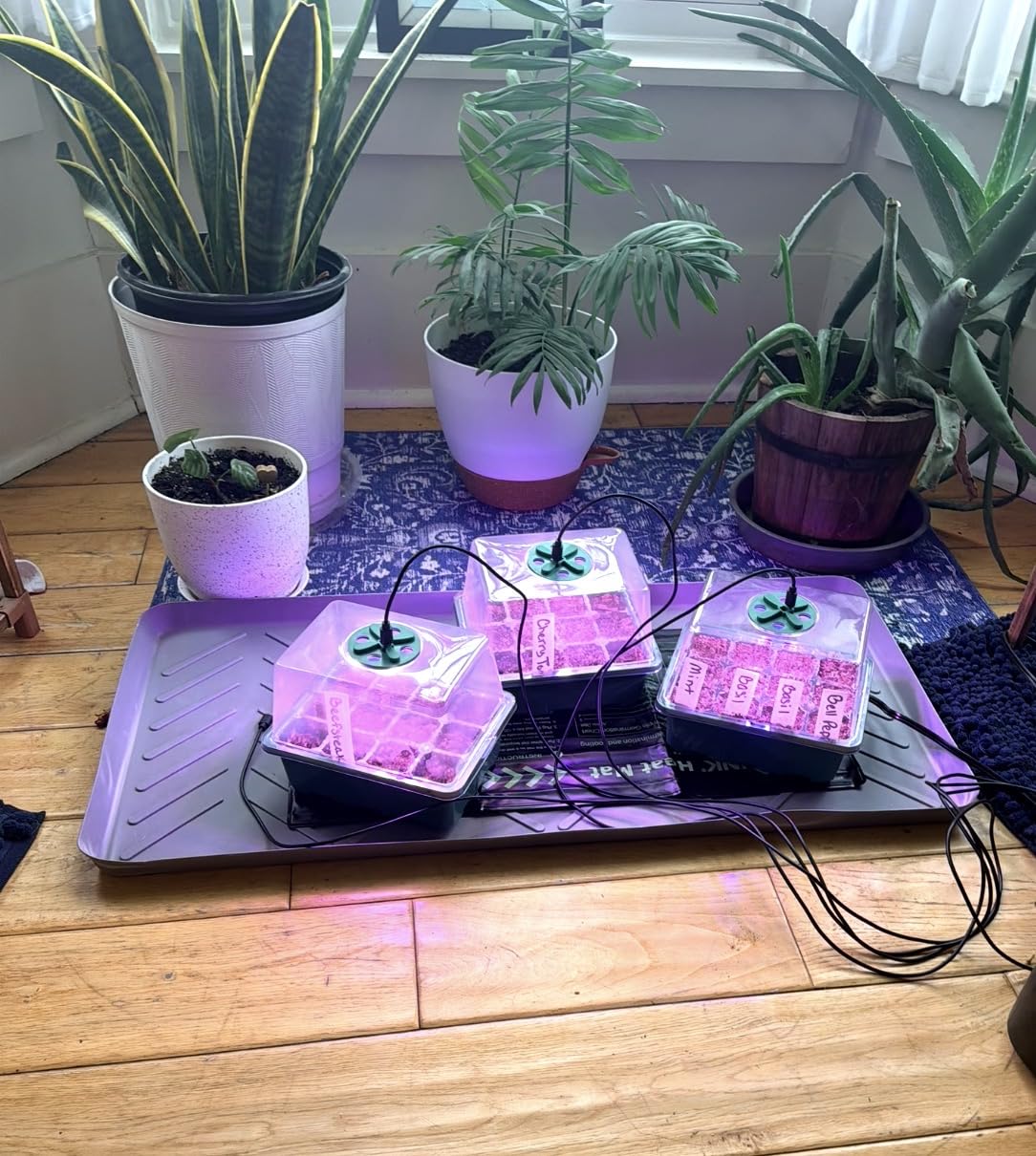
MIXC is the kit to buy if you plan to keep seed starting as a permanent shelf setup. Reviewers repeatedly call these the sturdiest and most reusable trays in the budget category, and the PVC construction plus side grips on the base trays make lifting the inner tray without disturbing a freshly germinated seed much easier.
Each tray is 12 cells measuring 1.5 by 1.5 by 2 inches, with drainage holes in every cell to reduce the risk of root rot. Full-spectrum LED bars come with each tray, and 10 plant labels are included, which is a small but genuinely useful detail when six trays are running at once.
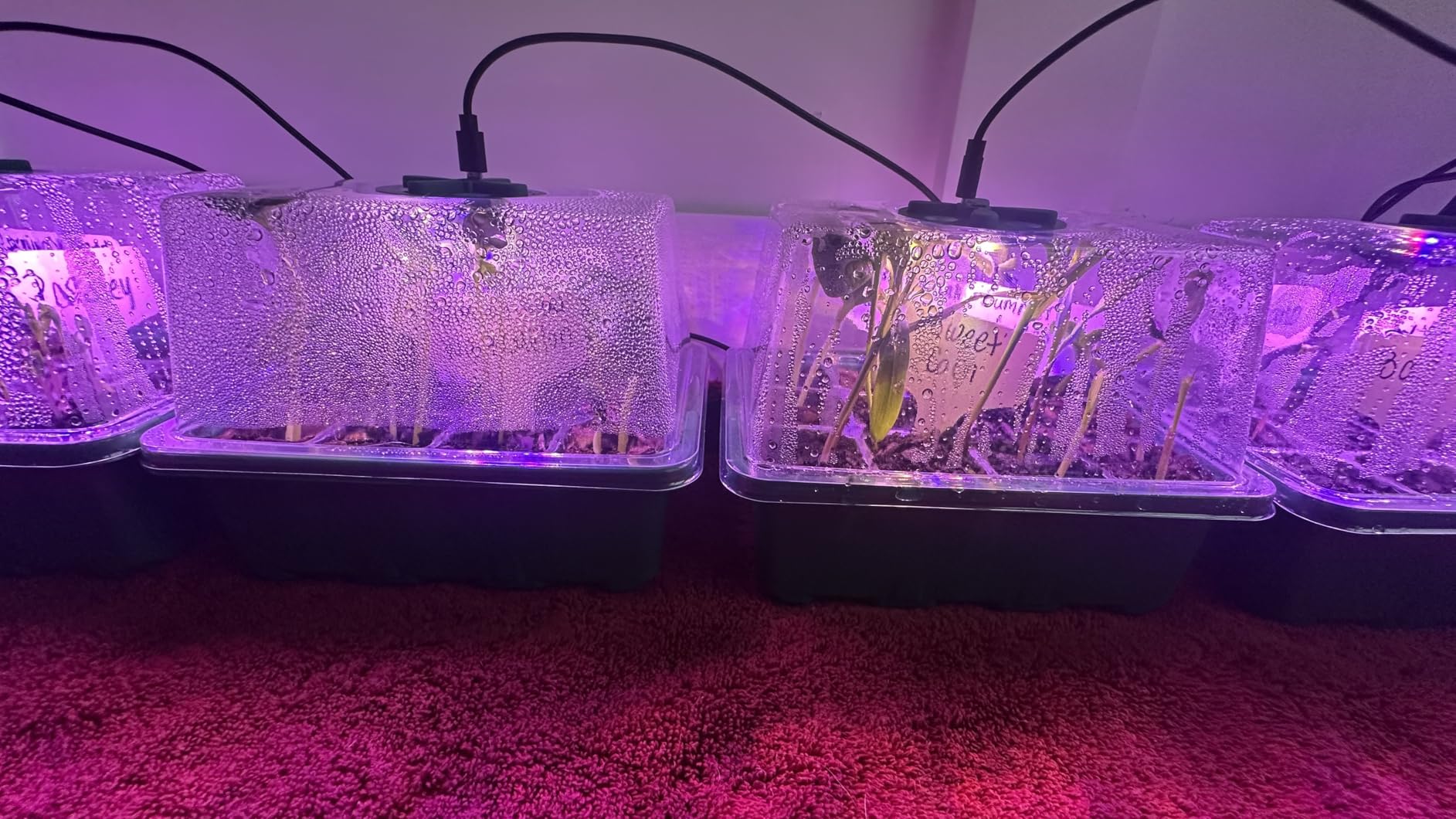
The clear cells are the quiet strength here. Being able to see the water level in the base tray and the roots down the side of each cell means you water based on what the tray is doing instead of what you assume, and it makes spotting a dry cell or early damping off much faster.
At 6 by 4 by 5 inches per tray, six of them take up very little room and stack neatly when the season is done. Buyers also report strong germination results across a wide range of crops.
Best for a setup you expect to run every year
Trays that survive multiple seasons change the effective cost of a kit completely. Rather than replacing thin plastic each spring, you keep the same trays and swap in fresh medium.
The side grips are the detail that wins over reviewers, since you are lifting a full, wet tray of seedlings several times a season and thin rims make that awkward.
The lids sit loosely and the light bars run hot
Two practical issues come up repeatedly. The lids rest on top rather than latching, so a knock can lift them, and there is nothing holding a dome down against a tall seedling.
Reviewers also note that the light bars and their wiring run hot during use. Keep them clear of the dome edges and do not wrap them in anything insulating, and expect to vent the domes more aggressively once growth picks up.
5. SOLIGT 60-Cell Kit with Light and Heat Mat – Best for Tomatoes and Peppers
SOLIGT 60 Cell Seed Starter Tray Kit with Grow Light and Heat Mat
60 cells at 1.5 inch square x 2.3 inch deep
11.5W 4500K gooseneck
15 red and 111 white LEDs
Waterproof heat mat
Pros
- Light and heat in one box speeds even germination
- gooseneck stays in position once the dome comes off
- tall 4.3 inch vented dome
- clear instructions
- heavy-duty trays
Cons
- Larger footprint than smaller kits
- light and mat add wiring and setup steps
This is the only kit in the roundup that ships with a heat mat, and that is exactly why it earns a place. Warm-season crops such as tomatoes, peppers and basil germinate faster and more evenly with bottom heat, and LEDs put out almost no radiant warmth, so a grow light alone will not get you there in a cold house.
The light is an 11.5 watt 4500K full-spectrum fixture with 15 red and 111 white LEDs on a flexible three-head gooseneck. That is the design detail that matters most in this kit: the gooseneck stays where you put it after the dome comes off, so you are not craning a fixed bar over the top of every tray. Five brightness levels and four timer options at 4, 8, 12 and 18 hours are handled from the same controller.
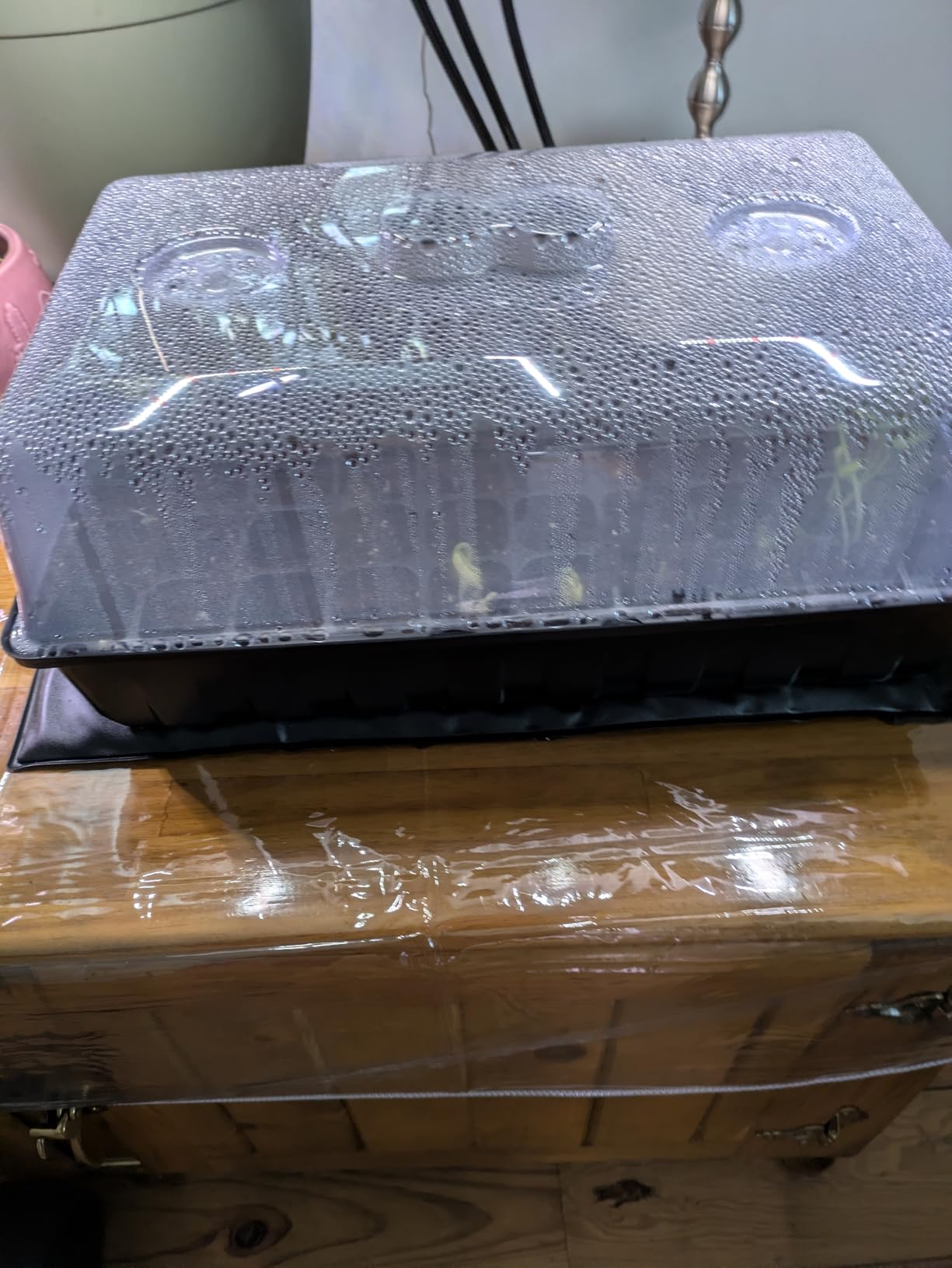
We ran this one through a full cycle as well. The cells are 1.5 inch square and 2.3 inches deep with drainage holes, which gives pepper and tomato roots real room before transplant, and the 4.3 inch dome with adjustable vents is tall enough that seedlings do not hit the plastic while they are still in the germination phase.
The heat mat is waterproof and sized to the 60-cell tray, and the whole unit measures 16.7 by 10.7 by 7 inches. Instructions are clear, which matters for a kit with this many moving parts.
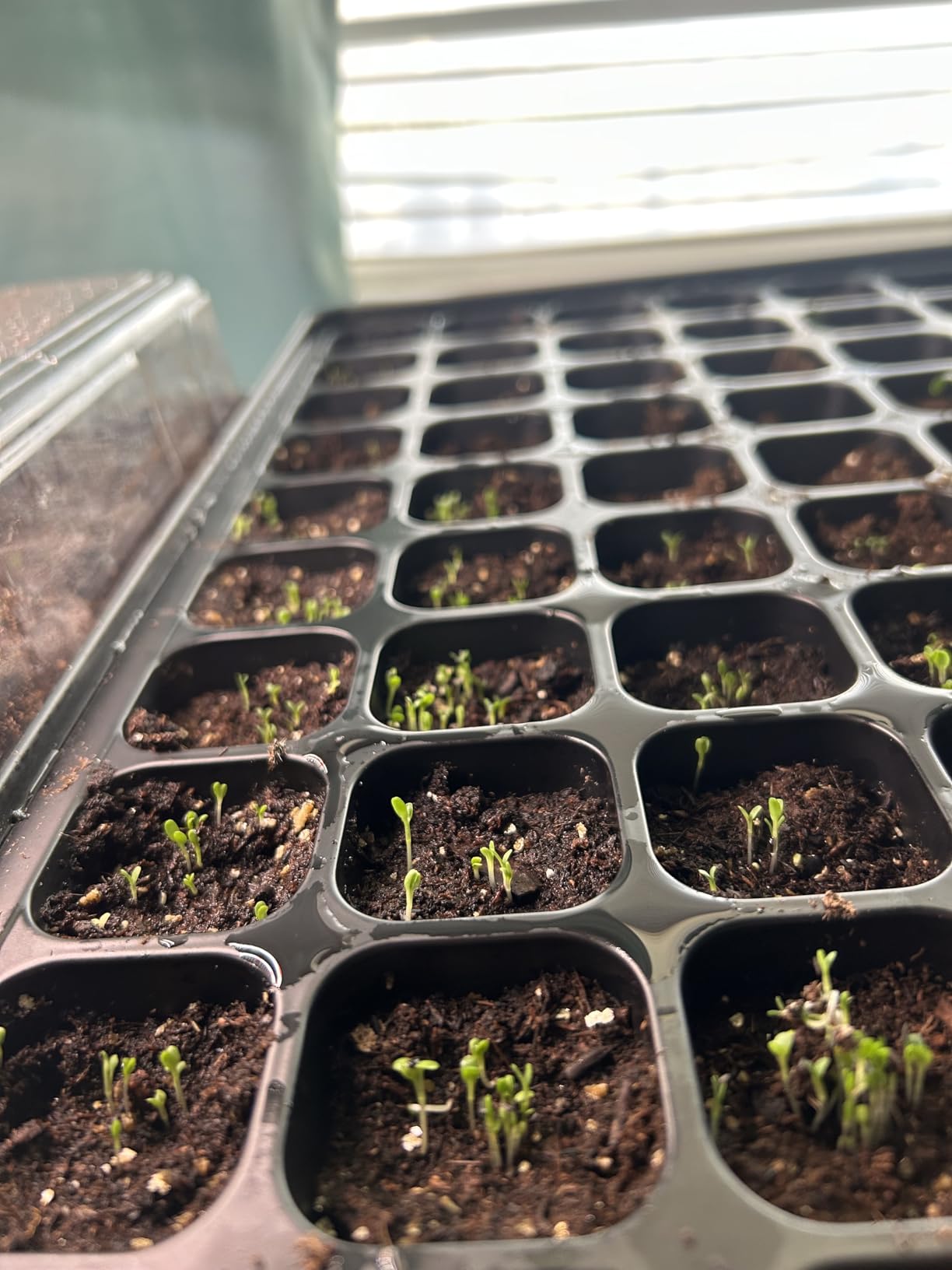
Best for warm-season crops in a cool house
If you are sowing tomatoes or peppers in February and your room sits cool overnight, the bundled mat removes the most common cause of slow, uneven germination. You can also unplug it once true leaves appear, since bottom heat later in growth encourages leggy stems.
The 60-cell count also suits a garden big enough that you want a single tray to produce a full season of transplants rather than three small batches.
It is the bulkiest kit here and it needs desk space
At 16.7 inches deep this is the largest footprint in the group, and the tray, mat and gooseneck together mean more wiring and setup than a simple tray and cover.
If your starting spot is a small windowsill or a narrow shelf, this will not fit comfortably and a smaller kit is the smarter buy. Plan on it living on a table or a dedicated shelf, not a ledge.
6. Yskea 12-Cell Starter Tray 6-Pack – Budget Pick
Yskea Seed Starter Tray with Light, 6PCS Seed Starter Kit with Grow Light, Seedling Starter Trays with Humidity Domes, Covers Height 3.9″, Indoor Gardening Plant Germination Trays (12 Cells per Tray)
Six trays of 12 cells
72 cells total
Full-spectrum lights included
Vents at 50-100 percent
Pros
- Lowest entry cost of any kit with lights here
- vented domes with a real humidity range
- sturdy reusable polypropylene
- compact footprint for small spaces
Cons
- 3.9 inch domes get tight fast
- no timer and no brightness adjustment
- few controls overall
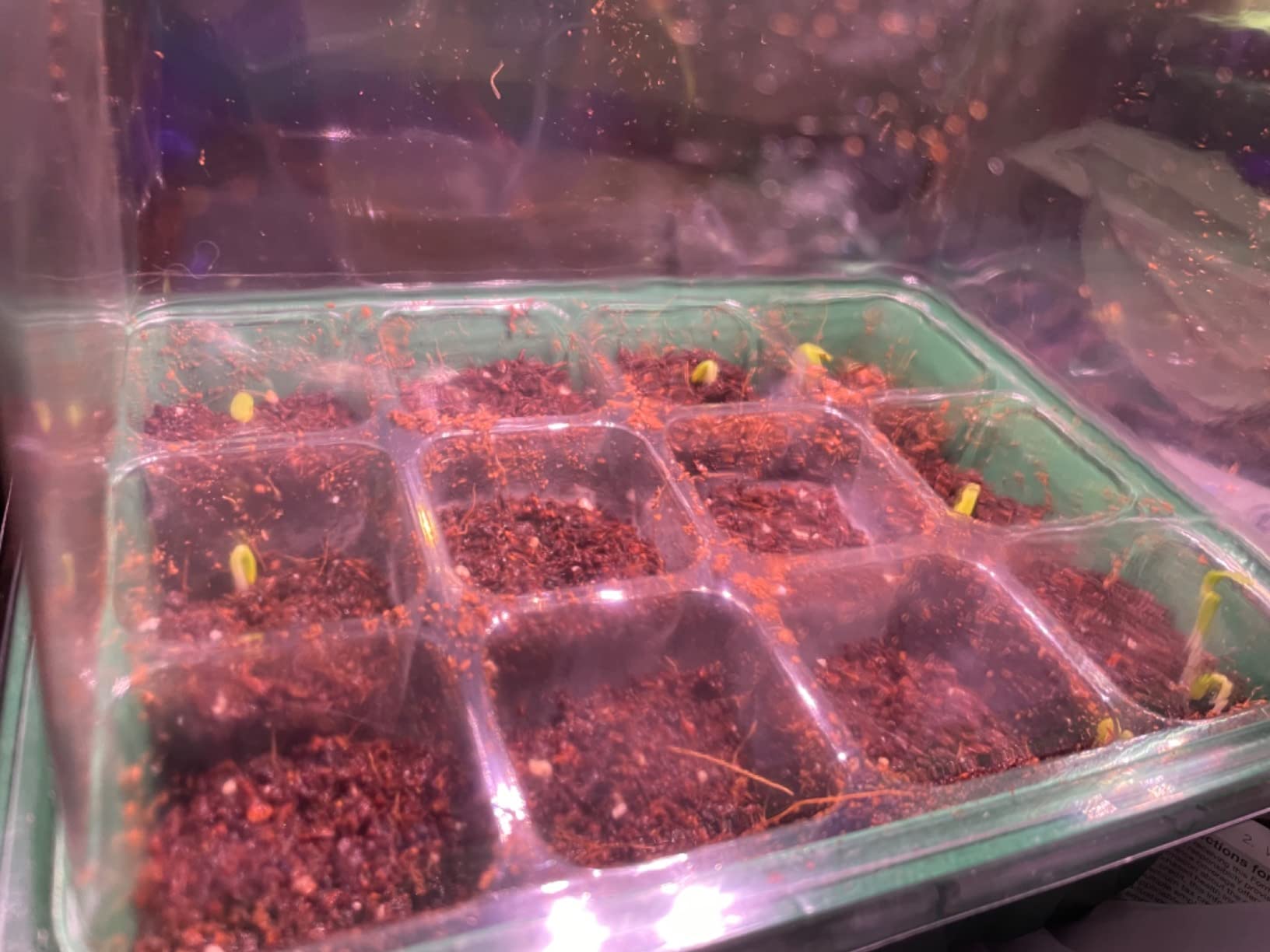
This is the cheapest way into all-in-one seed starting without giving up the two features that matter most, a light and a vented dome. Six 12-cell trays give you 72 cells, each tray comes with a full-spectrum grow light, and the transparent domes have circular vents adjustable from 50 to 100 percent humidity.
At 7.25 by 5.7 by 3.9 inches, a single tray is small enough for a windowsill, and six of them stack. The polypropylene construction is described as non-toxic and reusable in the specifications, and owners report the trays holding up well enough for repeat cycles.
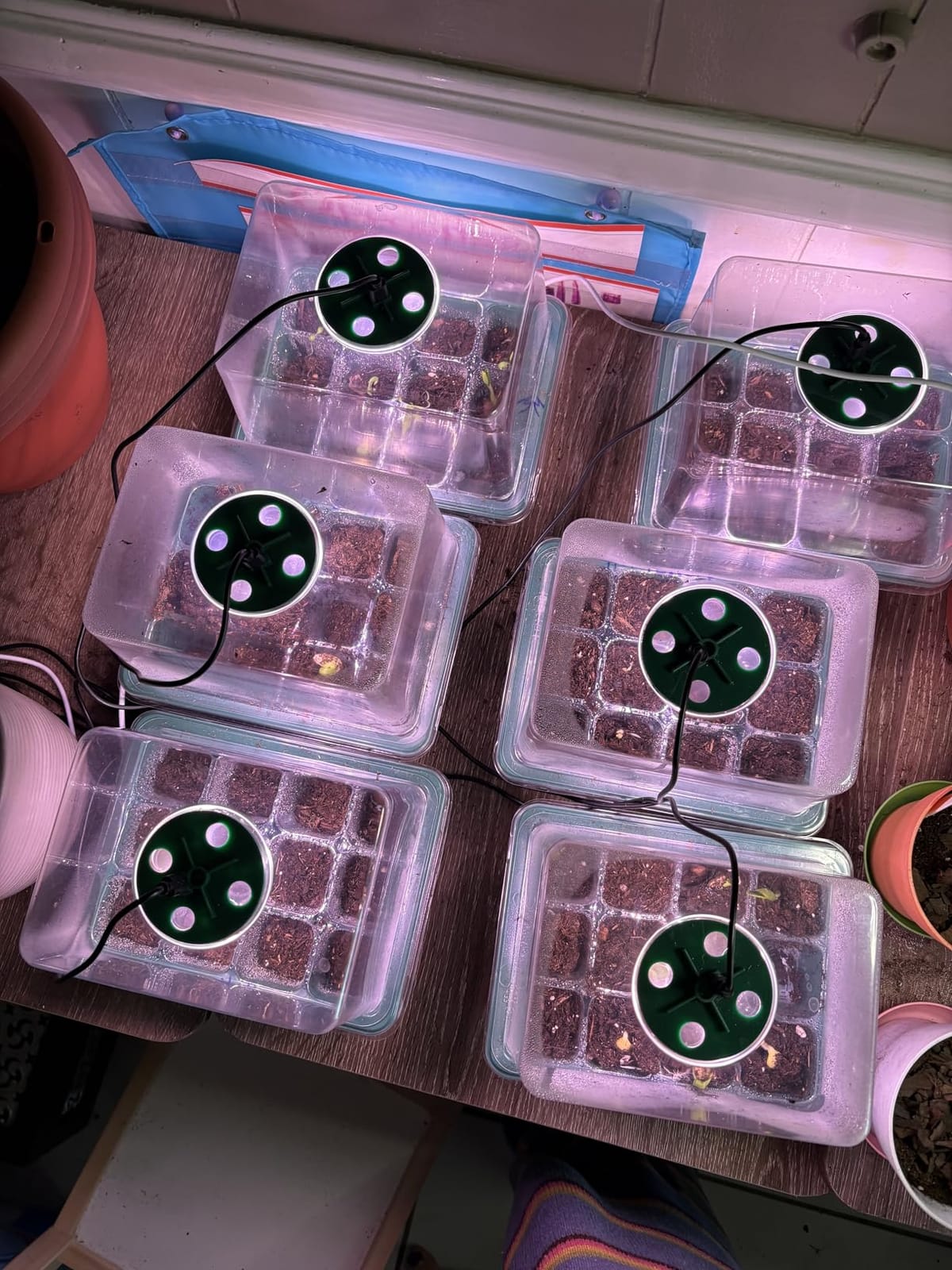
What you give up is control. There is no timer and no brightness adjustment, so the lights run whenever they are plugged in and you manage humidity only through the dome vents. That is fine for a first run and frustrating by the third, once you are trying to hold a consistent photoperiod across six trays.
The dome height is the other real limit. Buyers consistently mention that 3.9 inches becomes tight for fast growers, which means you will be removing the dome sooner than the vent settings would suggest.
Best for a first attempt on a tight budget
If the goal is a complete setup that includes lights at the lowest sensible entry point, this does the job without cutting the light or the vents, which are the two parts worth insisting on.
Six trays also let you trial the system on a small batch of flowers or herbs before committing a full tomato sowing to hardware you have not used before.
No timer means no schedule at all
This is the clearest drawback in the kit. Without a built-in timer you need a plug-in timer or a daily routine, and forgetting the light is the most common way a good germination ends in leggy seedlings.
The short domes also mean less time before you must vent, which shortens the useful window the humidity control gives you. Both are acceptable at this entry point, neither is fixable after you buy.
7. Qoolife 2-Pack Seed Starter Tray – Best for Small Spaces
Seed Starter Trays with Grow Light Kit, 2 Pack Plant Greenhouse Propagator
Two 12-cell trays
8 LEDs per tray
4 timers at 4/8/12/18 hours
5 brightness levels
Pros
- Timer and brightness at a low entry cost
- vents plus drainage holes reduce overwatering risk
- compact format
- listed for flowers herbs succulents and vegetables
Cons
- Published dimensions look inconsistent with the tray
- plastic feels basic
- only two trays included
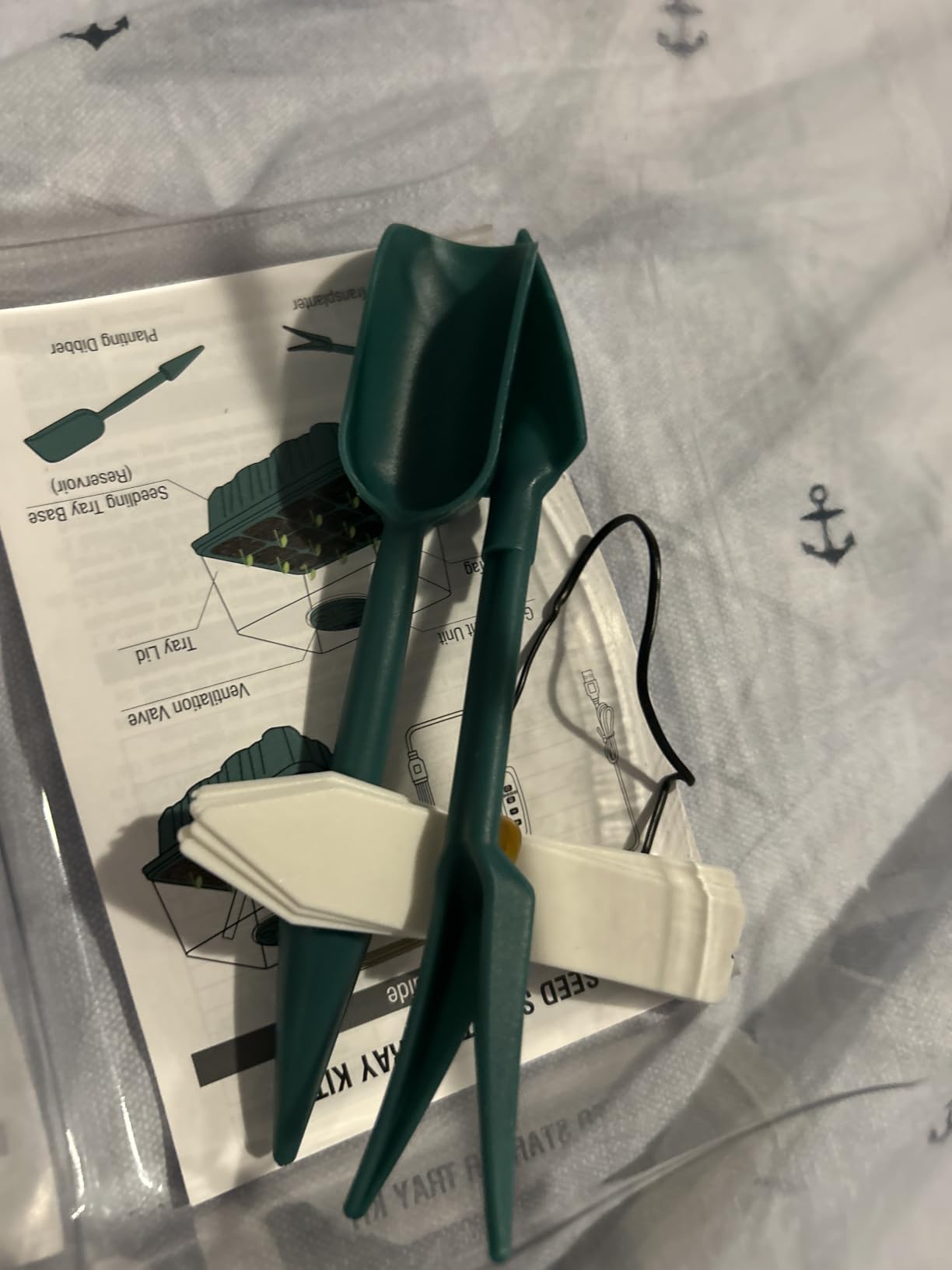
The smallest complete setup here. Two 12-cell trays, two humidity domes and two 8-LED full-spectrum bars with a shared controller, giving you 24 cells that take up almost no counter space. It suits a studio flat, a dorm room or a single windowsill where a 60-cell tray simply would not go.
Controls are better than the entry-level kits usually manage. Four timer settings at 4, 8, 12 and 18 hours plus five brightness levels let you run a short photoperiod early and a longer one later, and the domes pair adjustable vents with drainage holes to cut down on overwatering.
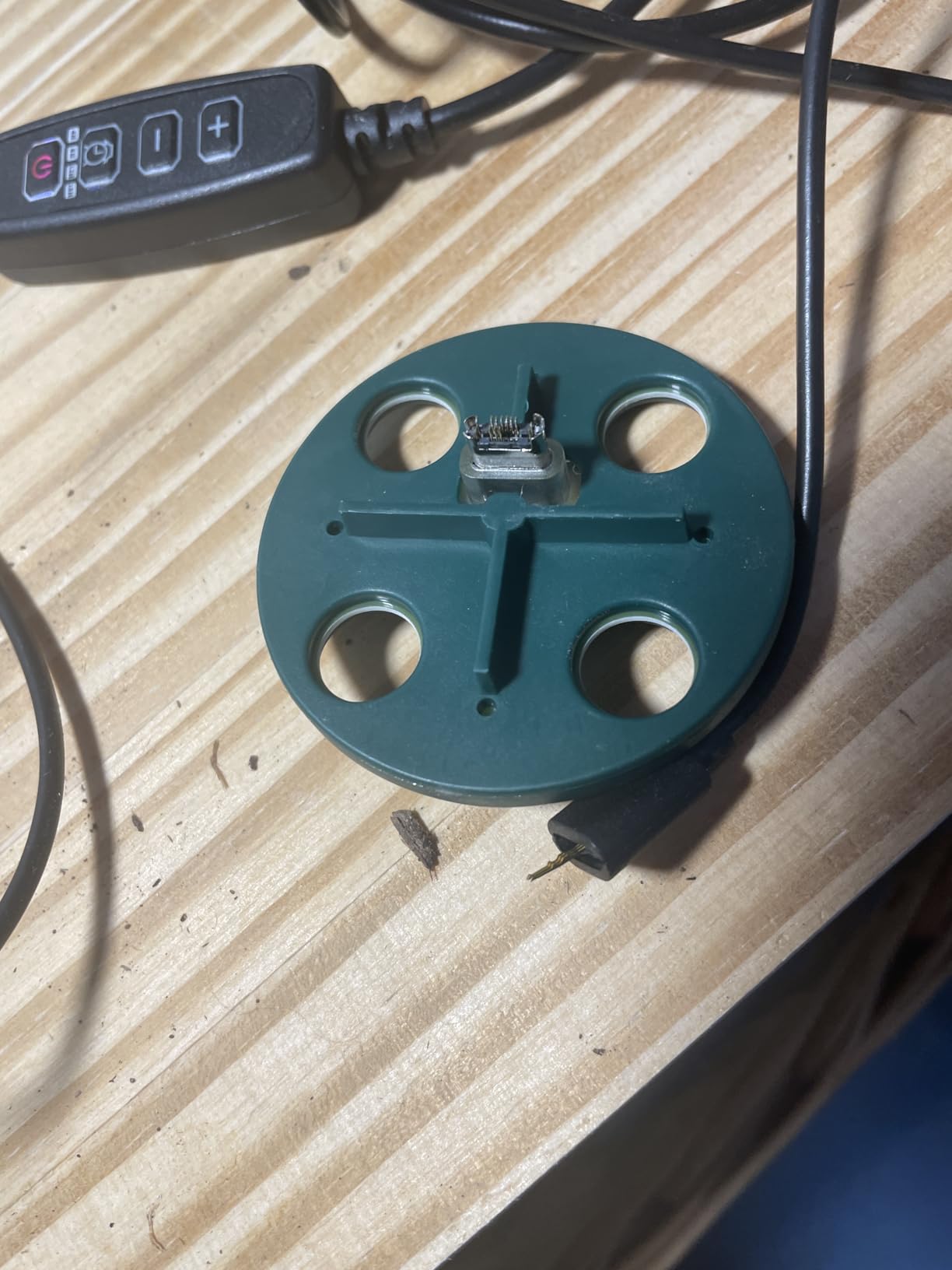
One thing to flag honestly is the published size information. The product data lists dimensions of 2 by 2 by 2 inches, which does not match a 12-cell tray, so treat any quoted size for this kit as unreliable until you see it in hand. The build is also described as basic rather than premium polypropylene.
Two trays means one sowing at a time, so this is a kit for a handful of varieties rather than a full vegetable run. It is listed as suitable for flowers, bonsai, fruit, herbs, succulents and vegetables, which fits a mixed small-space setup nicely.
Best for a windowsill with room for almost nothing
When space is the binding constraint, capacity matters less than footprint. Two small trays stacked beside a mug of coffee will grow more seedlings than one large tray you have nowhere to put.
It is also an easy stepping stone, since the same format exists in larger packs if you outgrow 24 cells after a season.
Check the real dimensions before you plan the shelf
The listed size for this kit looks wrong, and that is worth knowing before you buy rather than after. Measure the window area you have and allow for a taller tray than the listing suggests.
Beyond that, the limits are capacity and materials. Two trays will not cover a large sowing, and basic plastic is fine for a season but is not the choice for a permanent shelf.
8. GROWFRIEND 40-Cell Kit with Lights and Heat Mat – Most Complete Bundle
GROWFRIEND Seed Starter Kit with Grow Lights & Heat Mat – 40-Cell Seed Starter Tray, Humidity Dome, Soil Moisture Meter & Sticky Gnat Traps – Indoor Greenhouse & Plant Propagation Station
40-cell heavy-duty tray
Dual LED lights with 16 white and 4 blue each
10x20 inch waterproof heat mat
Adjustable vent dome
Pros
- Widest accessory bundle including moisture meter and gnat traps
- heat mat plus adjustable dome speeds germination
- dual light arms give more even coverage
- heavy-duty reusable tray
Cons
- Lowest average rating here with a bigger share of one-star feedback
- dual light arms take more space
- heat mat adds counter area
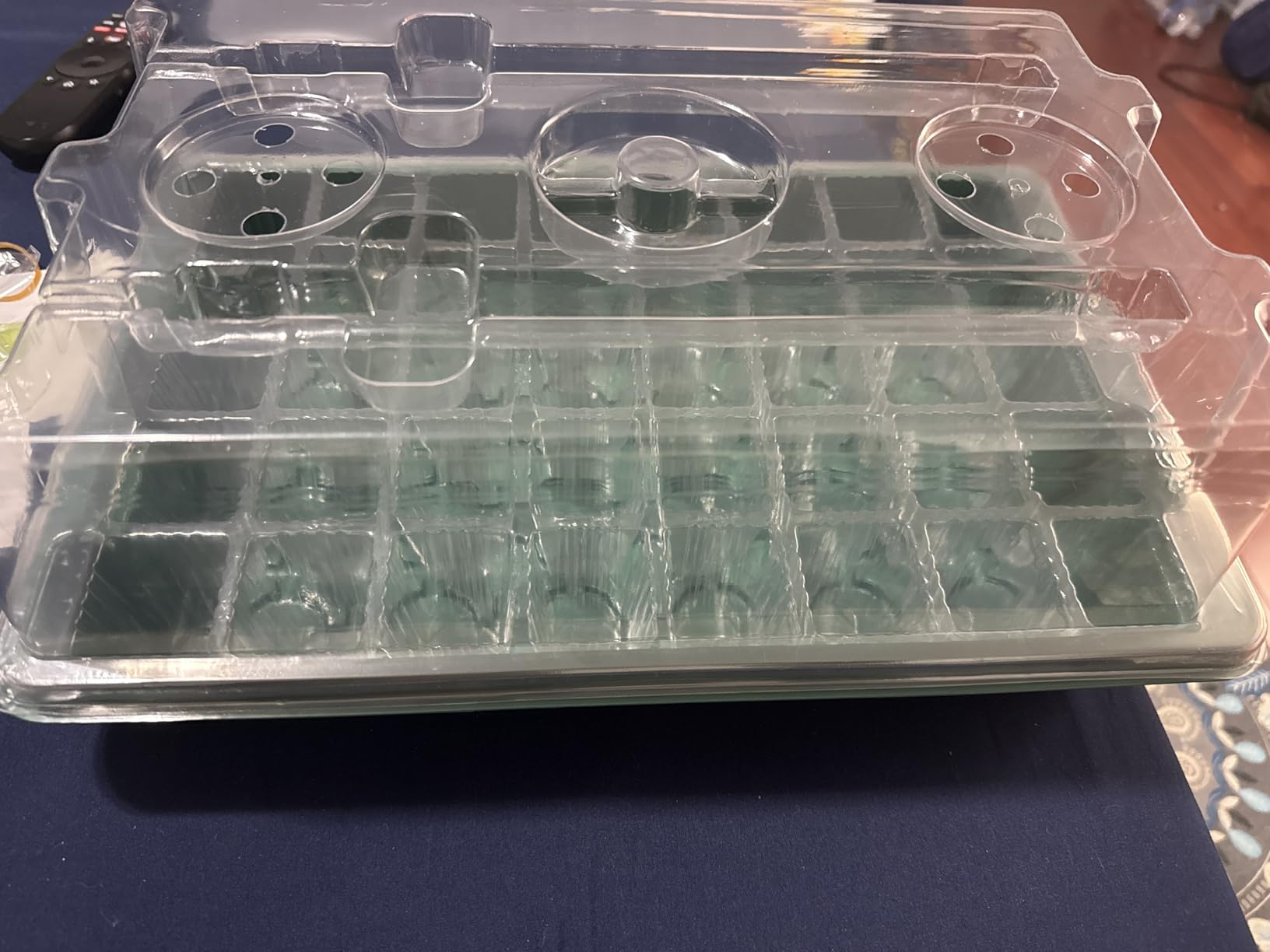
Take everything in the box as a unit and this is the most generous kit here. A 40-cell heavy-duty tray, dual LED grow lights with 16 white and 4 blue LEDs per arm, a 10 by 20 inch waterproof heat mat, an adjustable vent humidity dome, a three-in-one soil moisture meter, sticky gnat traps and a gardening eBook. You could assemble most of this separately and pay considerably more for it.
The dual light arms are the reason to choose it over a single-bar kit. Two arms spread light across the tray from more than one angle, which reduces the shadowing you get from a seedling leaning into a single source. Brightness is adjustable for shifting between herbs, microgreens and flowers.
The heat mat and the vented dome together speed germination, and the included moisture meter removes the guesswork from watering, which is the other place beginner trays go wrong. The tray itself is described as heavy-duty and reusable, at 9 by 14 by 5 inches and 2.5 pounds.
We are rating this one lowest in the roundup, and the reason is consistency rather than design. At a 4.1 average it carries a higher share of one-star feedback than the other kits, which points at bulk and overall value rather than any single failing component. Check that the counter space exists before you commit.
Best for growers who want the accessories without a second order
The moisture meter, gnat traps and heat mat together cover most of what you would add anyway during a first season. Having them in the same box means one trip and one setup instead of three.
It is also the kit to pick if you want a single tray that handles both cool crops like lettuce and warm crops like peppers, since the mat can be used or ignored depending on what you are sowing.
Most counter space and the most mixed reviews
Dual light arms plus a 10 by 20 inch heat mat use more area than a single-tray kit, and both need to sit flat. That makes it a poor fit for a windowsill and a good fit for a table or a shelf.
The 4.1 average reflects a wider spread of experiences than the rest of this list. If value for money matters most to you, weigh that against the kits rated higher; if having every accessory in one box matters most, this is the one.
9. Patigrow 60-Cell Self-Watering Kit – Best Self-Watering Design
Patigrow 60-Cell Self-Watering Seed Starter Tray with Grow Light, Seed Starter Kit with 4.07” Humidity Dome, Indoor Seedling Starter Tray, Seed Starting Trays for Plant Germination, Seeds Growing
60 self-watering cells
Capillary mat irrigation
Two 56-LED strips
1.5mm thick dome and base
Pros
- Capillary system keeps cells moist from germination to transplant
- dense LED coverage spreads light evenly
- thick reusable PET construction
- well packaged with manual labels and tools
Cons
- Largest footprint in the roundup
- reservoir needs periodic refills
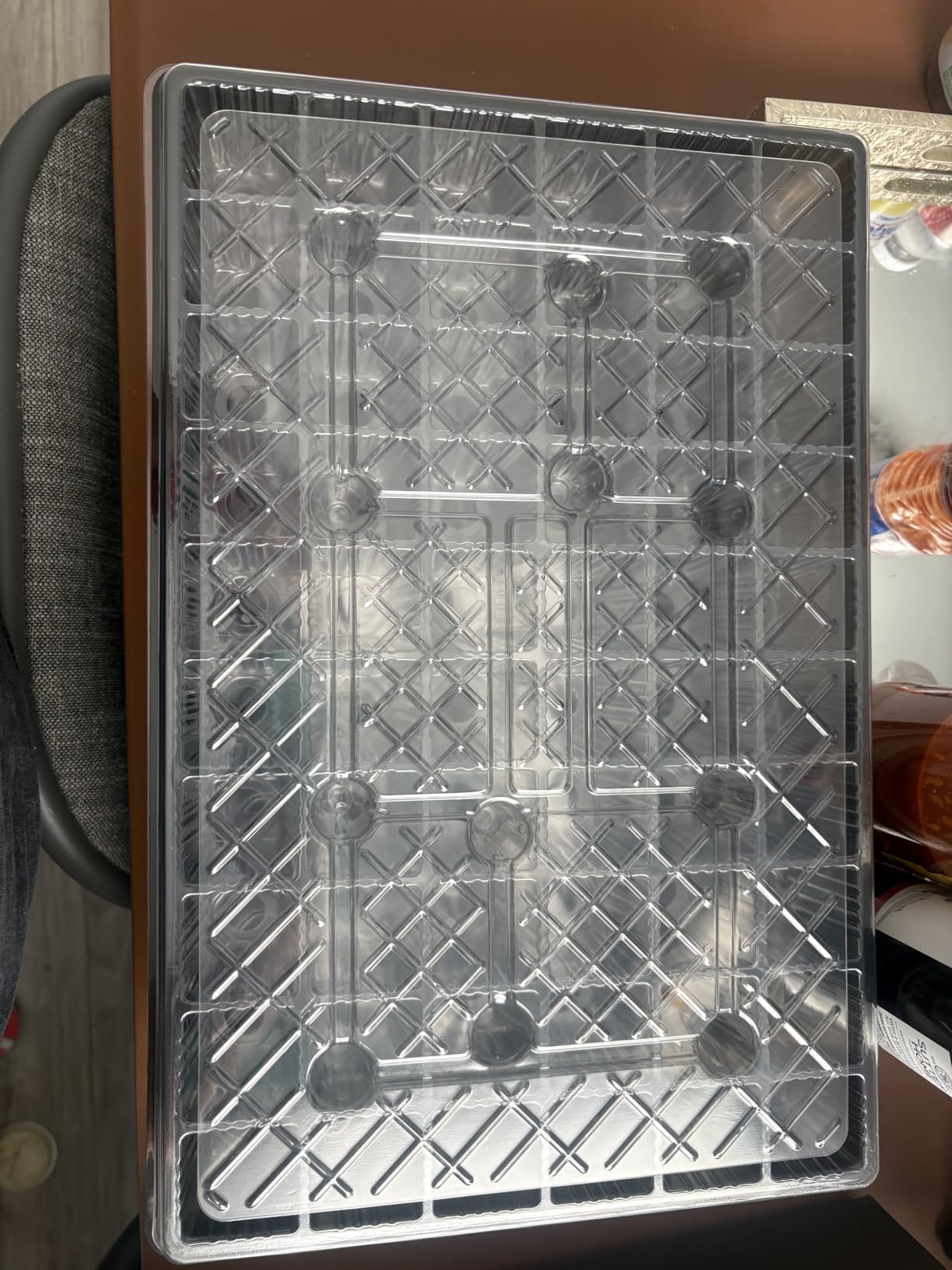
The self-watering pick, and the mechanism is a capillary mat rather than a pump. A mat sits in the base tray, wicks water upward into the cells, and keeps media consistently moist from germination through to transplant. In a 60-cell tray that is a lot of watering you do not have to do twice a day for three weeks.
Light coverage is the other strength. Two LED strips carrying 56 high-efficiency beads each spread light across the full tray, with adjustable brightness and timer functions on a controller. The dome and base tray are 1.5mm PET, described as sturdy and reusable, and the package includes 20 plant labels, two gardening tools and a printed manual.
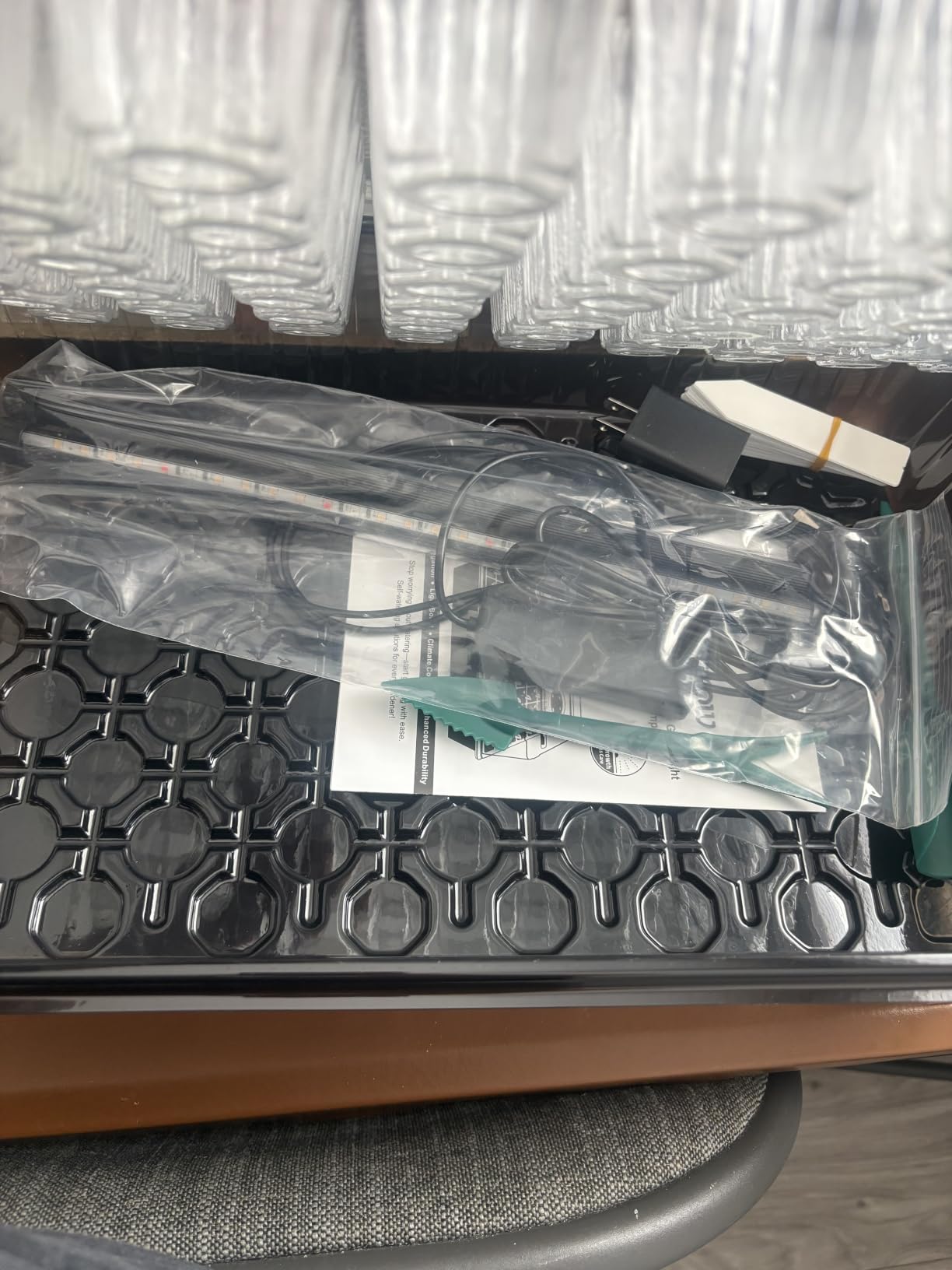
Two adjustable vents and enlarged drainage holes handle the moisture balance that self-watering systems usually struggle with, so you get even delivery without waterlogging. Thick BPA-free PET also means this is the kit most likely to still be on the shelf in three years.
The trade-off is that a capillary system still needs attention, just less frequent attention. You check the reservoir and top it up rather than watering, and you learn to read the mat to know when it has run down.
Best for large sowings you cannot water twice a day
If your schedule is inconsistent, self-watering removes the most likely cause of failure, which is a tray that dried out because you forgot it on a Tuesday. Sixty cells is a substantial sowing covered by one system.
It also suits a vacation week better than any hand-watered tray, since the reservoir holds a reserve rather than delivering a single dose.
Big footprint and a reservoir that still needs watching
At 11 by 16.6 by 7.28 inches this is the largest kit in the roundup, and you need clearance above it for the dome and the support stand for the light strips. It is a shelf and table kit, not a windowsill kit.
Self-watering also removes your ability to control moisture day to day. A cell that is too wet cannot be dried by watering less, so you have to manage that by light level and venting instead.
10. BlumWay 2-Pack 80-Cell Kit – Best Value at Capacity
BlumWay Seed Starter Tray with Grow Light, Humidity Dome, 2 Pack 80 Cells
Two 40-cell trays
80 LED beads across 4 strips
3 timers and 5 brightness levels
9cm vented domes
Pros
- Dense LED coverage across four strips
- tall 9cm domes with vents
- deep 1.96 inch cells
- USB or plug-in adapter both work
- thickened ABS that resists UV and corrosion
Cons
- Large footprint for the capacity
- timer status shown by red and blue light codes rather than a display
Eighty cells, four light strips and 80 full-spectrum LED beads in total, split across two 40-cell trays with 40 beads per tray. Coverage across each tray is even, which is the thing most 2-in-1 kits at this cell count get wrong, with seedlings leaning toward the centre of the tray instead of growing upright.
The domes are 9cm tall with adjustable vents, and the cells are 1.96 inch deep with 0.31 inch drainage holes. Depth and dome height together mean seedlings stay contained longer, which directly reduces the legginess that short domes cause. Owners rate this kit highly for exactly that reason.
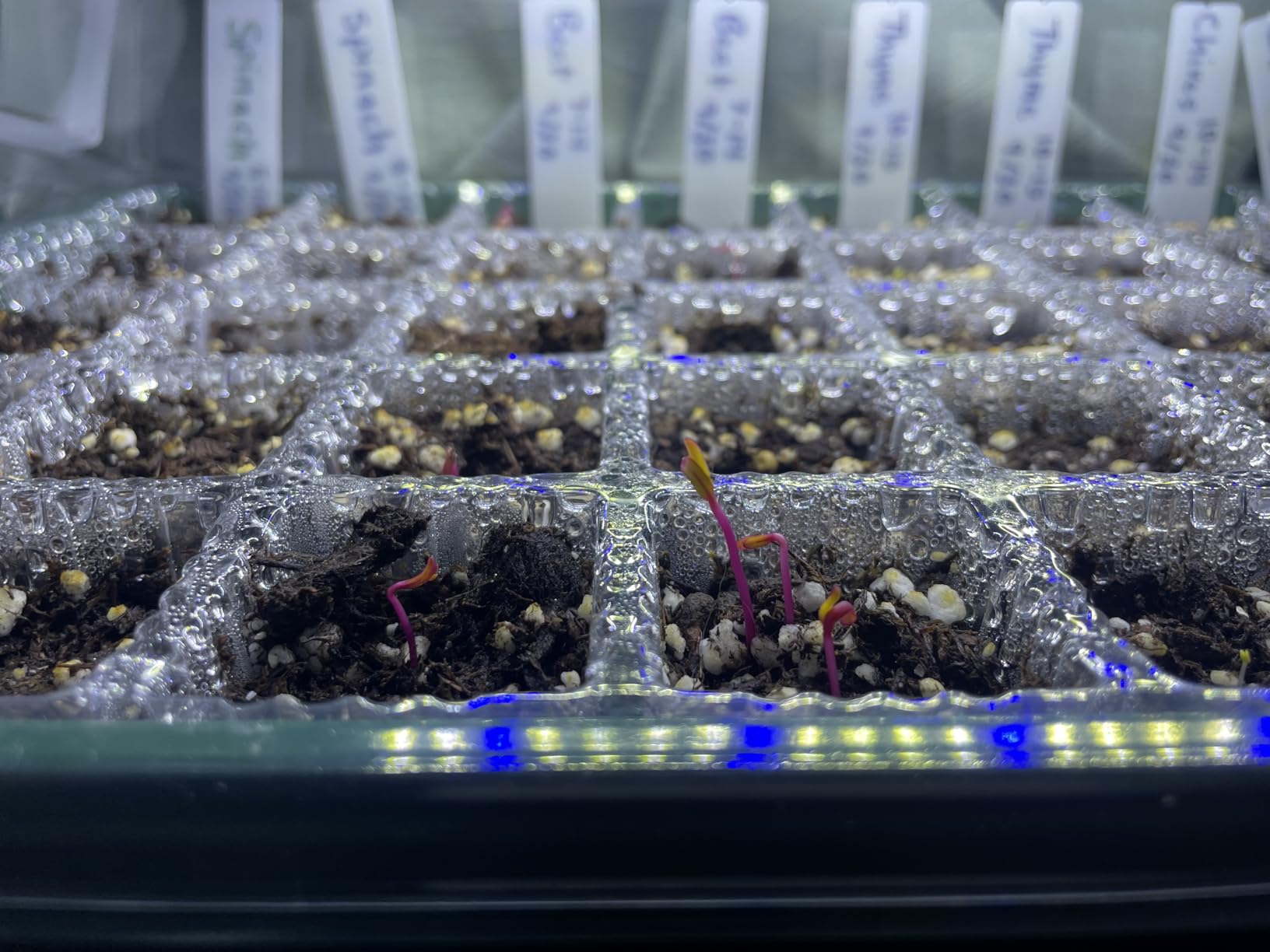
Controls cover three lighting modes, three timer settings at 3, 6 and 12 hours, and five brightness levels. Power is flexible because both USB and the included plug-in adapter work, which solves the missing-adapter problem that trips up several cheaper kits.
The construction is thickened ABS described as anti-UV and corrosion-resistant, and the box includes an instruction manual, plug and tools. At 9.45 by 14.96 by 4.72 inches it is a substantial footprint, so plan the shelf before ordering.
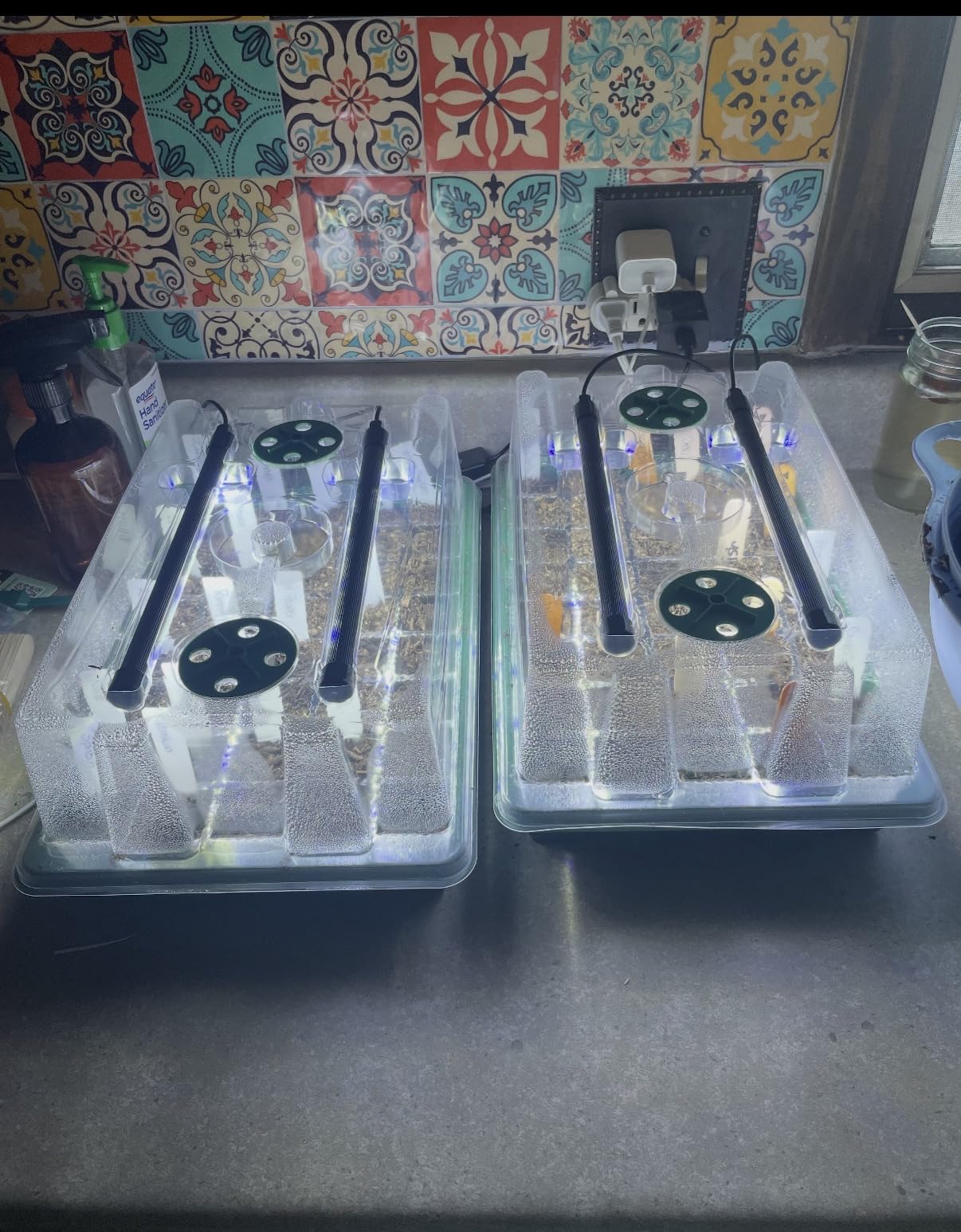
Best for a big sowing when you want one timer and tall domes
The combination of 80 cells and 9cm domes is rare at this level. Tall domes mean you keep humidity control for longer, which is the difference between seedlings that stand up and seedlings that flop.
Having both USB and adapter power options also means it works in a spare room, a garage or a shed without rewiring anything.
Counter space is the trade for the capacity
This is a two-tray system with a large footprint, and it competes for the same shelf space a smaller kit would use twice over. If you are starting 20 seedlings, you are paying for 60 empty cells.
The timer indicator uses red and blue light codes rather than a display, so you confirm the schedule by colour rather than by reading a number. Minor, but worth knowing before you are squinting at a controller.
How to Choose a Seed Starting Kit With a Grow Light
Decide on the light first, then the tray. Growers on gardening forums reach the same conclusion repeatedly, including a top comment in an r/gardening thread on complete kits that named the grow light as the most important part of the setup and warned that cheap fixtures burn out faster and lose output. Tray hardware changes how you work, but light intensity decides whether seedlings stand up or stretch.
What type of grow light is best for starting seeds?
Full-spectrum white LED in the 5000K to 6500K range is the right answer for starting seeds. It gives seedlings the red and blue light they need for compact growth, runs cool enough to sit close, uses less power than older fluorescent tubes, and lasts for multiple seasons. Purple or blurple blends are decorative first, and a white fixture at the same wattage will serve seedlings better.
Full-spectrum white LED between 5000K and 6500K: the default choice, cool running, long life.
T8 or T5 fluorescent shop lights: genuinely workable for seedlings if the fixture is close and the bulbs are full-spectrum.
Adjustable white LED with brightness levels: useful because seedling stage and leafy stage want different intensity.
Blurple purple blends: not required. Cosmetic tint, no advantage for seedlings at the same wattage.
Integrated strip bars with a timer: the feature that most improves results, because it removes daily manual switching.
Lumens, PPFD and how close to hang the light
Lumens alone do not tell you much, because they measure brightness to human eyes rather than to plants. What matters is PPFD, the photosynthetic photon flux density reaching the canopy, and the shared target across gardening forums is roughly 250 to 300 PPFD at the seedling canopy.
Roughly 10000 lumens is not inherently too bright for seedlings. Intensity that would overwhelm a seedling at four inches is comfortable at twelve, so raise the light rather than trying to dim it. If the listing only gives you a wattage, assume the fixture is fine for germination and marginal for later seedling growth.
Cell count and tray footprint
Sow what you will actually plant out. A 60-cell tray of tomatoes for a garden that holds six tomato plants produces a lot of leggy leftovers and wasted medium. For a first garden, 12 to 24 cells per tray is realistic. Experienced growers sowing a whole season at once genuinely benefit from 40 or 80 cells.
Check the footprint against your actual shelf, and add clearance for the dome and for your hand reaching in. A tray that fits but cannot be worked in is a tray you will abandon.
Heat: when you actually need bottom heat
Yes, you can still need a heat mat when your kit has a grow light, because LED fixtures radiate almost no heat. Warm-season crops such as tomatoes, peppers and basil germinate faster and more evenly at soil temperatures around 75 to 80F. Cool crops like lettuce and kale do not need bottom heat at all.
Unplug the mat once true leaves appear, since continued bottom heat at that stage pushes seedlings toward leggy growth.
Domes, vents and watering
A humidity dome traps heat and moisture during germination, and it becomes a liability the moment it cannot be adjusted. Look for adjustable vents, and treat a dome with no vents as a deal breaker: growers report condensation problems and damping off repeatedly when moisture cannot escape.
Set the dome on for sowing, vent it as shoots appear, and take it off entirely once true leaves are growing. Self-watering systems reduce how often you water but take away your day-to-day control of moisture.
Timers, duty cycle and running cost
Run seedling lights 14 to 16 hours a day, with an automatic timer as the single best feature to look for. More than about 16 hours leaves too little dark period for seedlings, and fewer than 14 usually produces stretching. A timer also removes the most common habit-based failure, which is forgetting to switch the light off or on.
Running costs are modest because LED fixtures draw so little. For the fixture in this roundup rated at 11.5W, sixteen hours a day for a ten-week indoor run works out to roughly 13 kWh. If your setup lives in a cold garage rather than a heated room, cold-weather starting is its own problem, and we cover the battery side of that in our guide to the best car batteries for cold-weather starting.
Kit versus buying the parts separately
Seed starting kits are worth it for beginners and for anyone without a south-facing window, because the light is the piece most people get wrong. Experienced growers who already own a decent light and a shelf are usually better off buying a tray and a dome separately, which is the consensus in the forum threads we reviewed.
None of these kits includes growing medium, so that cost sits outside the kit either way. Budget for a bag of seed starting mix or coir pellets, and expect to reuse the trays for several seasons before replacing them.
Frequently Asked Questions
What type of grow light is best for starting seeds?
Full-spectrum white LED between 5000K and 6500K is the best grow light for starting seeds. It supplies the red and blue light seedlings need, runs cool enough to position close to the tray, and lasts across multiple seasons. Purple blurple blends are decorative and offer no advantage at the same wattage.
How long should you leave grow lights on when starting seeds?
Run seedling grow lights 14 to 16 hours a day, then give seedlings a full dark period. Longer than about 16 hours leaves too little darkness, and under 14 hours commonly produces stretched, leggy seedlings. A built-in timer is the feature worth paying for, because it removes the daily on and off routine.
Should I start seeds under grow lights?
Yes, for most gardeners. A windowsill rarely delivers enough light intensity in late winter, and light-starved seedlings stretch and weaken. Start seeds indoors under a grow light if you lack a south-facing window or if you are sowing warm-season crops such as tomatoes or peppers before mid-season.
Is 10,000 lumens too bright for seedlings?
No, not if you raise the light. Lumens measure brightness to human eyes rather than to plants, so raw figures say little on their own. What matters is roughly 250 to 300 PPFD at the seedling canopy. If a bright fixture causes stretching or bleaching, increase the height rather than trying to dim it.
Do I need a heat mat if my kit has a grow light?
Yes, for warm-season crops, because LED fixtures give off almost no radiant heat. A heat mat raises media temperature toward 75 to 80F, which speeds and evens out germination in tomatoes, peppers and basil. Cool crops such as lettuce and kale need no bottom heat at all.
Are seed starter kits worth it?
They are worth it for beginners and for anyone without a strong south-facing window, because the kit solves light intensity in one purchase. They are less worthwhile if you already own a decent grow light and a shelf, since buying a tray and dome separately usually costs less and lets you choose each part.
What are the downsides of using grow lights?
The main downsides are electricity use, the heat some fixtures throw, light burn from positioning a fixture too close, and running a room that stays lit all day. A timer solves the schedule problem, and raising the light solves the burn risk. None of these outweigh the cost of replacing an entire leggy batch.
Which Seed Starting Kit Should You Buy?
For most people, the Bonviee 12-Cell 5-Pack is the best seed starting kit with grow lights because it pairs the deepest buyer feedback in the group with a light positioned to carry seedlings past germination and five trays you can stagger across a season. If you want zero decisions, the YAUNGEL 6-Pack wins on its single shared controller. If you sow a whole vegetable run at once, take the Sondiko 80-Cell kit, and add the SOLIGT 60-Cell kit when tomatoes and peppers are the plan and your house runs cool.
Before you order, measure the shelf, buy a bag of growing medium, and decide whether you will commit to a daily light switch. Those three answers pick the kit for you faster than any specification list.