
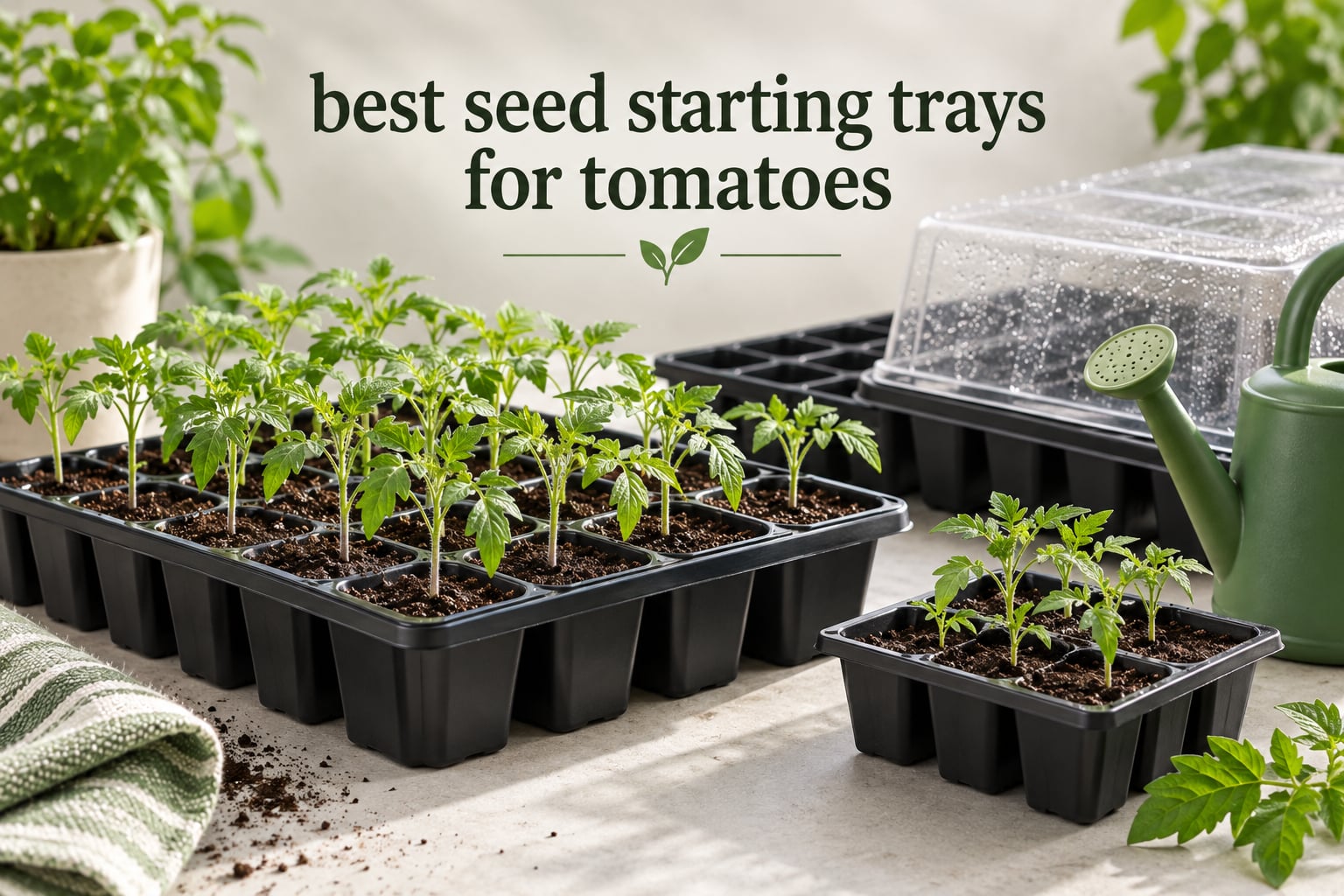
Most gardeners pick a seed tray by cell count and then spend the next six weeks fighting the consequences. For tomatoes, cell count is the second most important thing you will read on a package. Cell depth is the first.
Tomato roots are aggressive. Push a tomato seedling into a shallow cell and it will circle the bottom, wrap around itself and arrive at transplanting time as a stunted, root-bound plant that sulks for a week after it goes into the ground. Push it into a genuinely deep cell and you can hold it, feed it and water it right up until it is ready to go outside without a single intermediate pot.
We compared the best seed starting trays for tomatoes available now, looking at cell depth, cell count, drainage, dome design, material and how many times you will have to repot before planting out. Ten trays made the cut, from 32-cell self-watering systems to 720-cell bulk packs. Here is what each one is actually good at.
How we picked: every tray below was compared on published specifications and thousands of buyer reviews, plus recurring patterns in grower forum discussions about tray depth, cell count and durability. We did not run a controlled germination trial in a lab, and we are not claiming one. What follows is spec comparison plus a large volume of real owner feedback, which is where most of the useful signal lives for a product like a plastic tray.
Table of Contents
Top 3 Picks for Best Seed Starting Trays for Tomatoes in 2026

Gardzen 5-Set Seed Starter…
- 200 cells across five kits
- Two adjustable dome vents
- Tight dome and base fit

MIXC 120-Cell Tray Kit
- 120 cells across ten packs
- Adjustable vented domes
- Drainage holes in every cell

Burpee SuperSeed 36-Cell Tray
- Flexible silicone pop-out cells
- Molded corner drainage slots
- Dishwasher safe
Best Seed Starting Trays for Tomatoes in October
| Product | Specs | Action |
|---|---|---|
| Gardzen 5-Set Seed Starter Trays |
|
Check Latest Price |
 Burpee XL Self-Watering 32-Cell System Burpee XL Self-Watering 32-Cell System |
|
Check Latest Price |
| MIXC 10-Pack 120-Cell Kit |
|
Check Latest Price |
| Burpee SuperSeed 36-Cell Tray |
|
Check Latest Price |
 Bonviee 5-Pack 12-Cell Trays Bonviee 5-Pack 12-Cell Trays |
|
Check Latest Price |
 720-Cell Seedling Starter Trays 720-Cell Seedling Starter Trays |
|
Check Latest Price |
 300 Extra Deep Cell Trays 300 Extra Deep Cell Trays |
|
Check Latest Price |
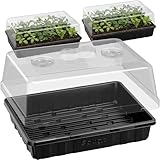 SOLIGT Thick Plastic 3-Set with Domes SOLIGT Thick Plastic 3-Set with Domes |
|
Check Latest Price |
 Burpee 72-Cell Seed Starting Kit Burpee 72-Cell Seed Starting Kit |
|
Check Latest Price |
 144-Cell Six-Cell Trays 144-Cell Six-Cell Trays |
|
Check Latest Price |
Quick answer: the Gardzen 5-Set is the best seed starting tray for most tomato growers because it pairs a workable cell size with vented domes, real drainage holes and a large enough cell count to cover a household planting. If you want to skip daily watering, the Burpee XL self-watering system does more of the work for you. If transplant day is the part you dread, the Burpee SuperSeed 36-Cell tray releases plants with the least root damage of anything we looked at.
How We Picked These Trays
Our ranking weights four things: how deep the cell is, whether water leaves the cell cleanly, how much handling the plastic survives, and how many times you have to repot a tomato before it goes into the ground. Rating averages and review counts tell us how consistently a tray performs in real kitchens, basements and garages.
We also read grower forum threads on tray size and depth, because the same complaints show up repeatedly there: flimsy plastic, cells that are too small for tomatoes, domes that trap moisture and trays that cannot survive a second season. No competitor page we reviewed organises trays around that depth-to-up-pot relationship, so we built this one that way.
1. Gardzen 5-Set Seed Starter Trays: Best Overall for Tomatoes
Gardzen 5-Set Seed Starter Tray Kits, Durable Plant Germination Trays with Humidity Vented Domes and Bases, Ideal for Seed Starting, Indoor Gardening, and Greenhouse (Total 200 Cells)
200 cells total
40 cells per tray
Two adjustable vents
9 by 14.5 by 1.85 inch tray
Pros
- Two adjustable vents cut stagnant humidity
- Bottom drain hole in every cell
- Clear domes let you watch germination
- Attachments keep the dome seated
Cons
- Shallow profile means earlier potting on
- Cell insert flexes when lifting seedlings
- Dome fit can loosen over time
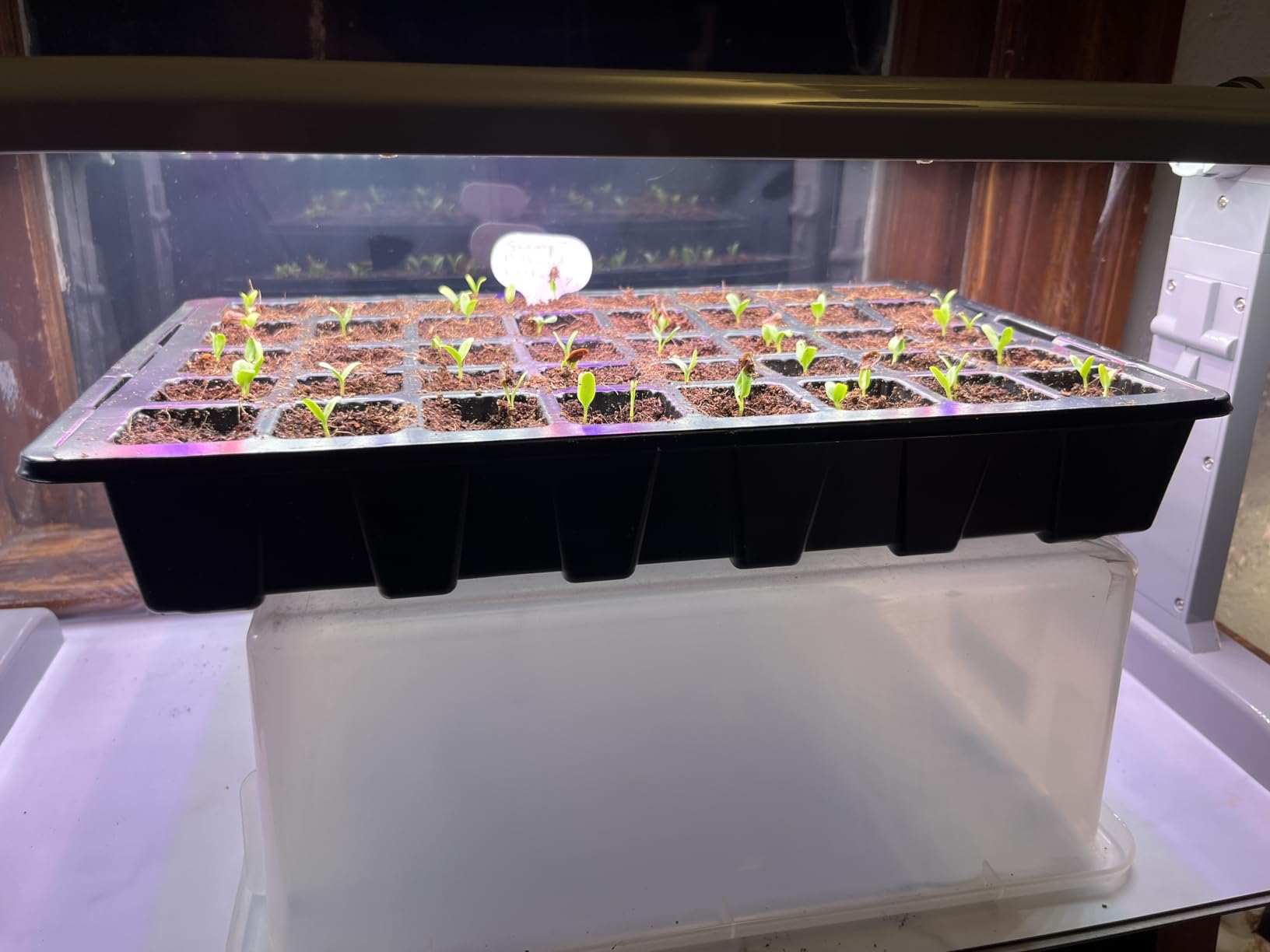
This is the tray I keep coming back to for the widest range of growers. Five kits give you 200 cells, which covers a serious tomato sowing plus a full round of peppers, herbs and fall greens without turning into a storage problem. Each tray holds 40 seedlings, a number that leaves enough room per cell that you are not fighting root crowding.
The two adjustable vents on each dome are the detail that matters most for tomatoes. Tomato seed germinates fast, and a dome without venting traps condensation and invites damping off within days. Buyers single out the vents and the clear plastic, which lets you check progress without lifting the lid and spilling the air layer.
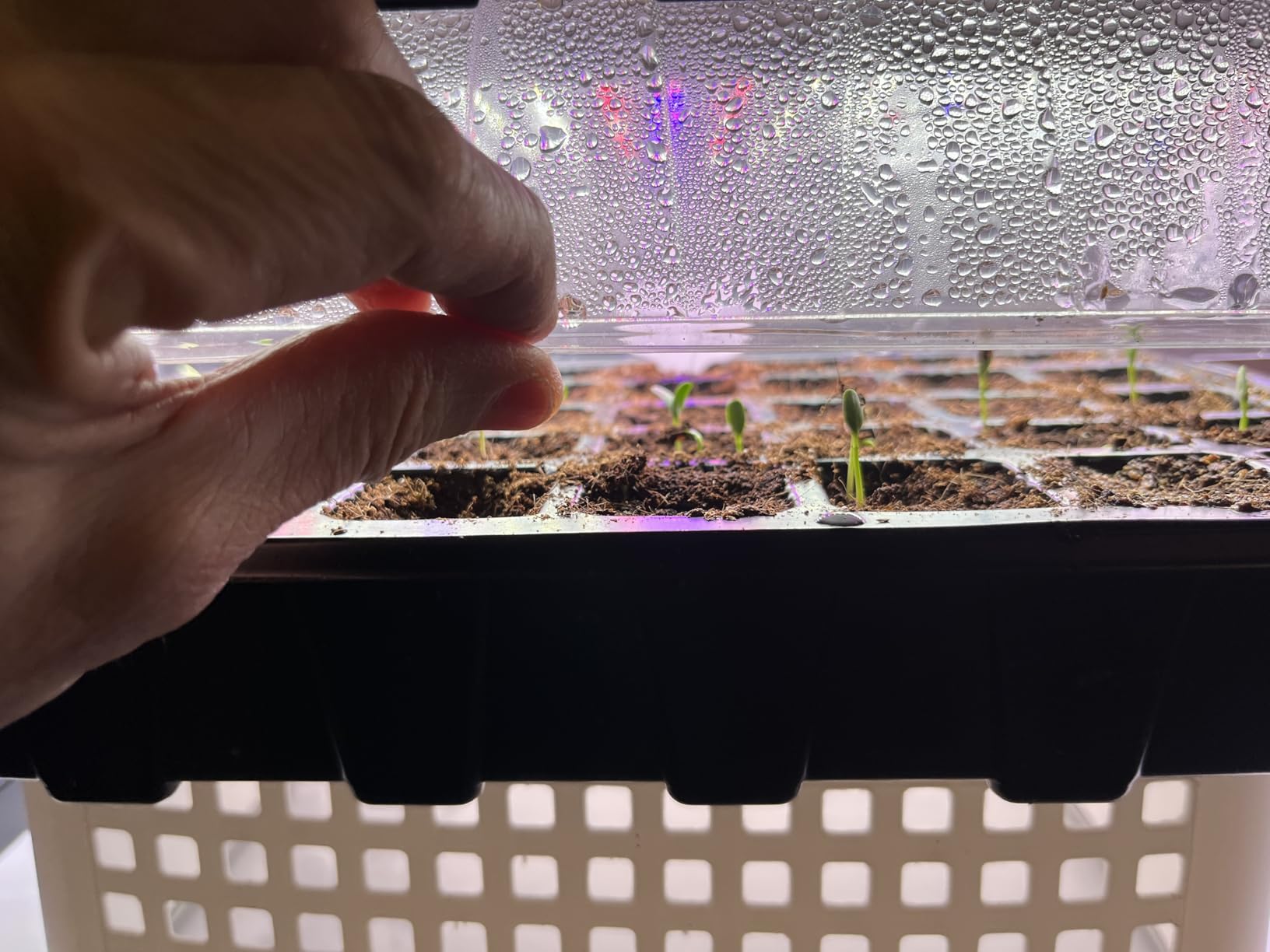
There is a real limitation and buyers are honest about it: 1.85 inch of tray height is shallow by tomato standards. Seedlings that hit their second set of true leaves in these cells are ready for a bigger pot. That is not a dealbreaker for most people, it is simply one extra handling event you should plan for.
A second common note is that the cell insert is flexible, so pulling a plant out by the leaves can disturb roots. Push up from the bottom instead and the problem disappears. The dome and base also loosen with repeated use, so check the seal before you walk away from a germinating tray.
Who the Gardzen 5-Set suits
This is the right pick if you are starting 30 to 60 tomato plants, or if you want one tray type that also works for peppers, lettuce and a broad second sowing of fall crops. Five matching kits stack neatly when you are done, and the clear domes mean one system covers germination and early seedling growth.
Where it falls short
If you want to skip the intermediate pot entirely and grow tomato starts to transplant size in the tray, a deeper cell is the priority and this is not it. Gardeners who are very hard on their trays should also know that the same flex that makes the cells easy to fill makes them easy to tear when a mature plant is pulled out.
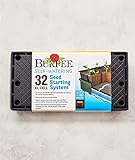
2. Burpee XL Self-Watering 32-Cell System: Best for Low-Maintenance Starting
Burpee XL Self-Watering Growing System Indoor Seed Starting 10″ W x 20″ L x 5″ H, 1 Kit (32 Cells)
32 extra-large cells
2.25 inch cells
10 by 20 by 5 inch system
Self-watering mat
Pros
- Wicking mat holds moisture for days
- 2.25 inch cells suit tomatoes and peppers
- Coir pellets
- markers and dome included
- Owners report seedlings surviving a week away
Cons
- Dome is short and seedlings grow into it
- Dome slips off thin tray edges
- Seedlings difficult to extract
- Pad reported to separate with use
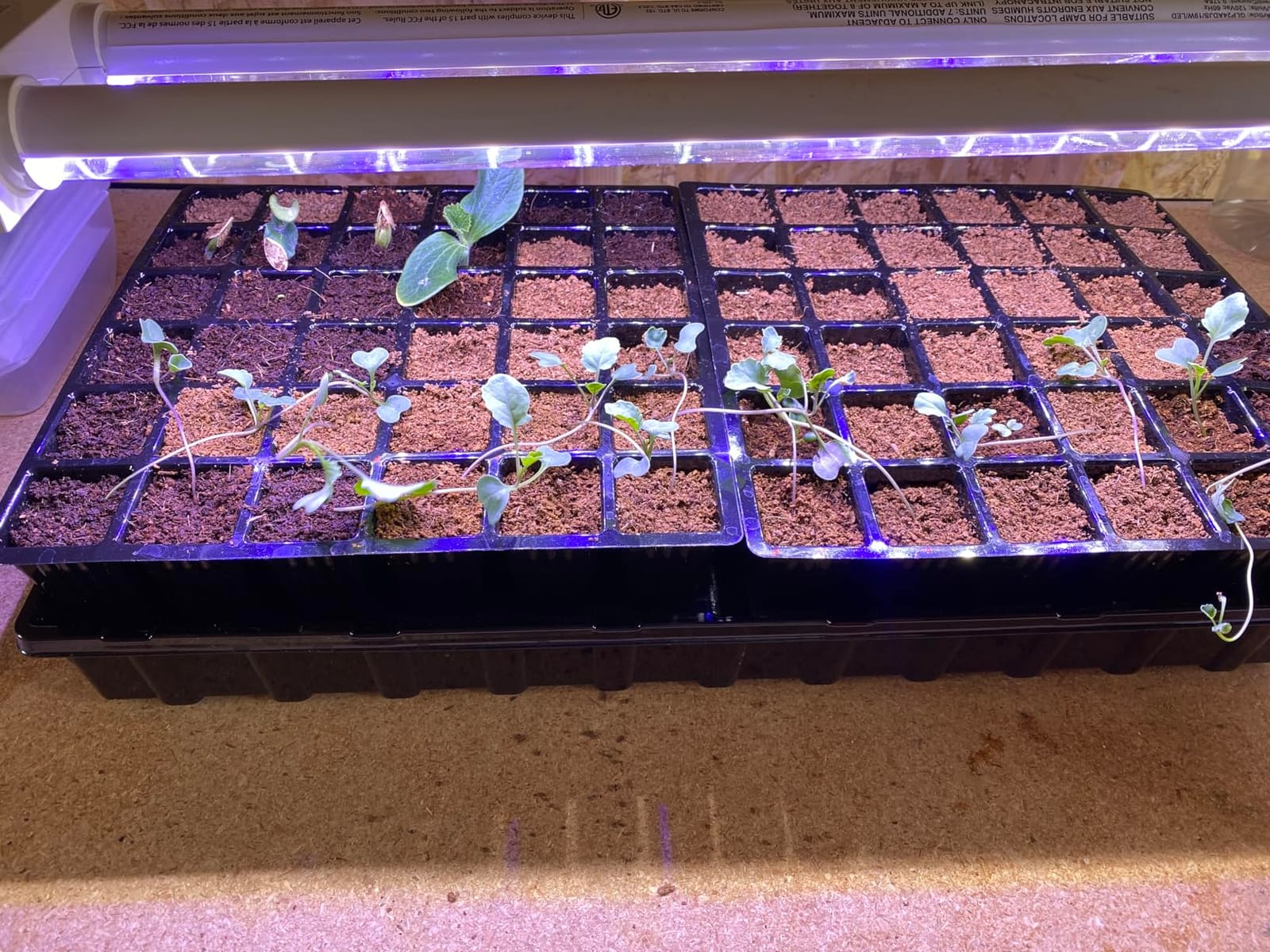
The strongest argument for this system is that it removes the most common failure point in indoor tomato starting, which is watering too much or too little on a schedule you cannot keep. The self-watering mat wicks water up from the base tray into the coir pellets, and owners report seedlings surviving a week without attention.
The cells are 2.25 inch extra-large, which puts them in the useful range for tomato root development without needing a second pot. You also get plant stands, markers, plant-o-gram diagrams and 32 coir pellets, so the whole station is one purchase.
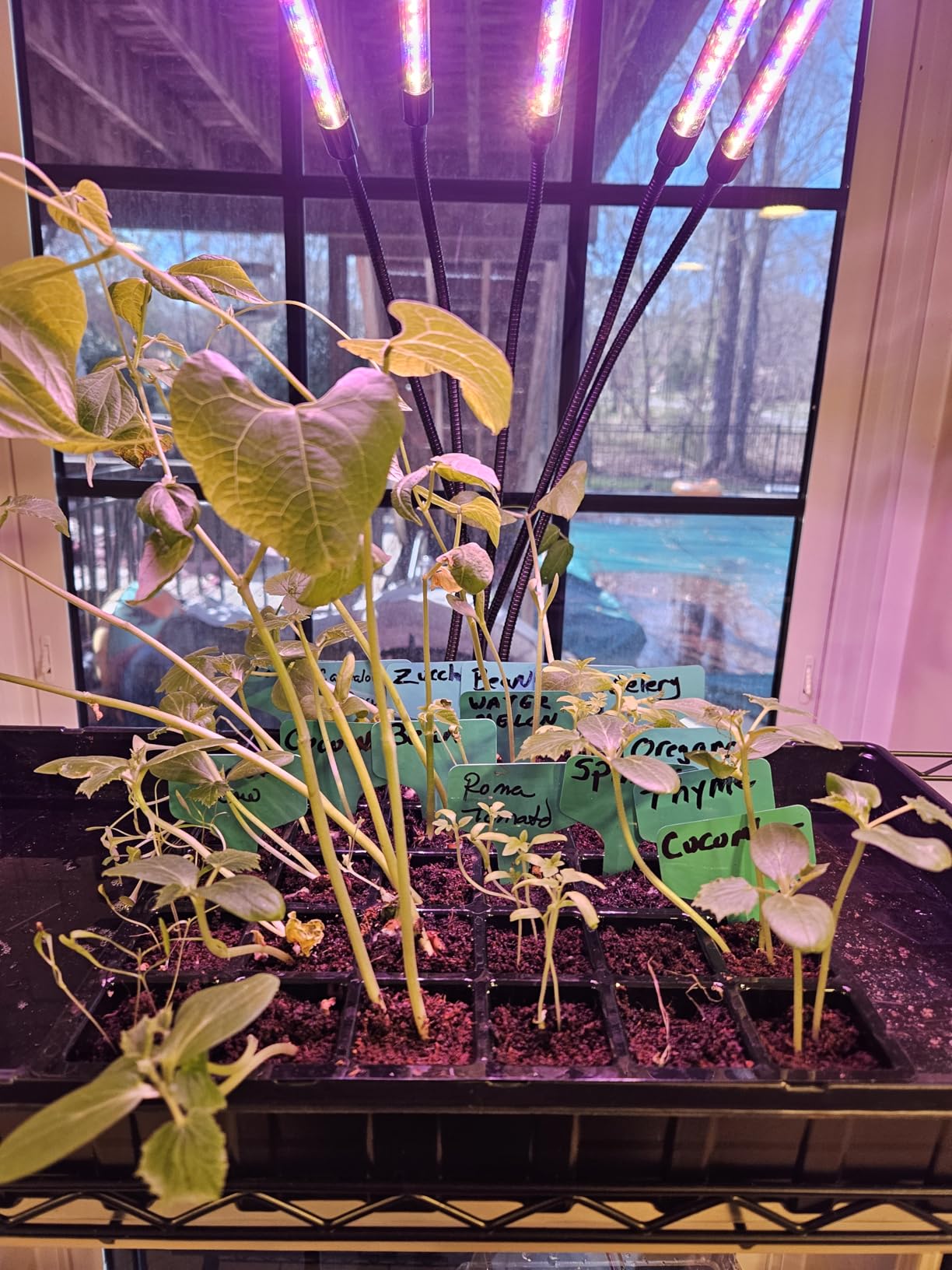
The dome is the weak point. It is short, and faster-growing tomato seedlings will reach the lid inside a couple of weeks. Several reviewers ask for a taller dome for exactly this reason. The dome also slips off the thin tray edges if you move the unit around, which is how you end up with flattened seedlings along one edge.
Extraction is the second issue. The medium crumbles when you try to lift a plant out, so plan on supporting the root ball from underneath with a dibber or a spoon. The wicking pad is also reported by some owners to separate from the base after a season or two of use.
Who it suits
This suits anyone who starts plants away from home for part of the week, travels, or simply forgets. It also suits growers who want large cells from day one because they dislike the up-potting step. Thirty-two plants is a sensible early tomato batch for a household garden.
Where it falls short
It is not the tray to buy if you want to raise a hundred or more starts, and the low dome means you will be removing the cover sooner than you would like. Buyers who need tall space under the lid should look at the high-dome set further down instead.
3. MIXC 10-Pack 120-Cell Kit: Most Versatile for Many Varieties
MIXC 10 Pack Seed Starter Tray, 120Cell Stater Kit with Humidity Dome Green
120 cells across ten packs
Adjustable vents
Drainage holes
Lightweight reusable plastic
Pros
- Great capacity for sowing many varieties
- Adjustable vents control humidity
- Drainage holes reduce root rot risk
- Cheap way to try a tray type
Cons
- Small cells need more frequent watering
- Light-gauge plastic flexes and can crack
- No medium or labels in the base pack
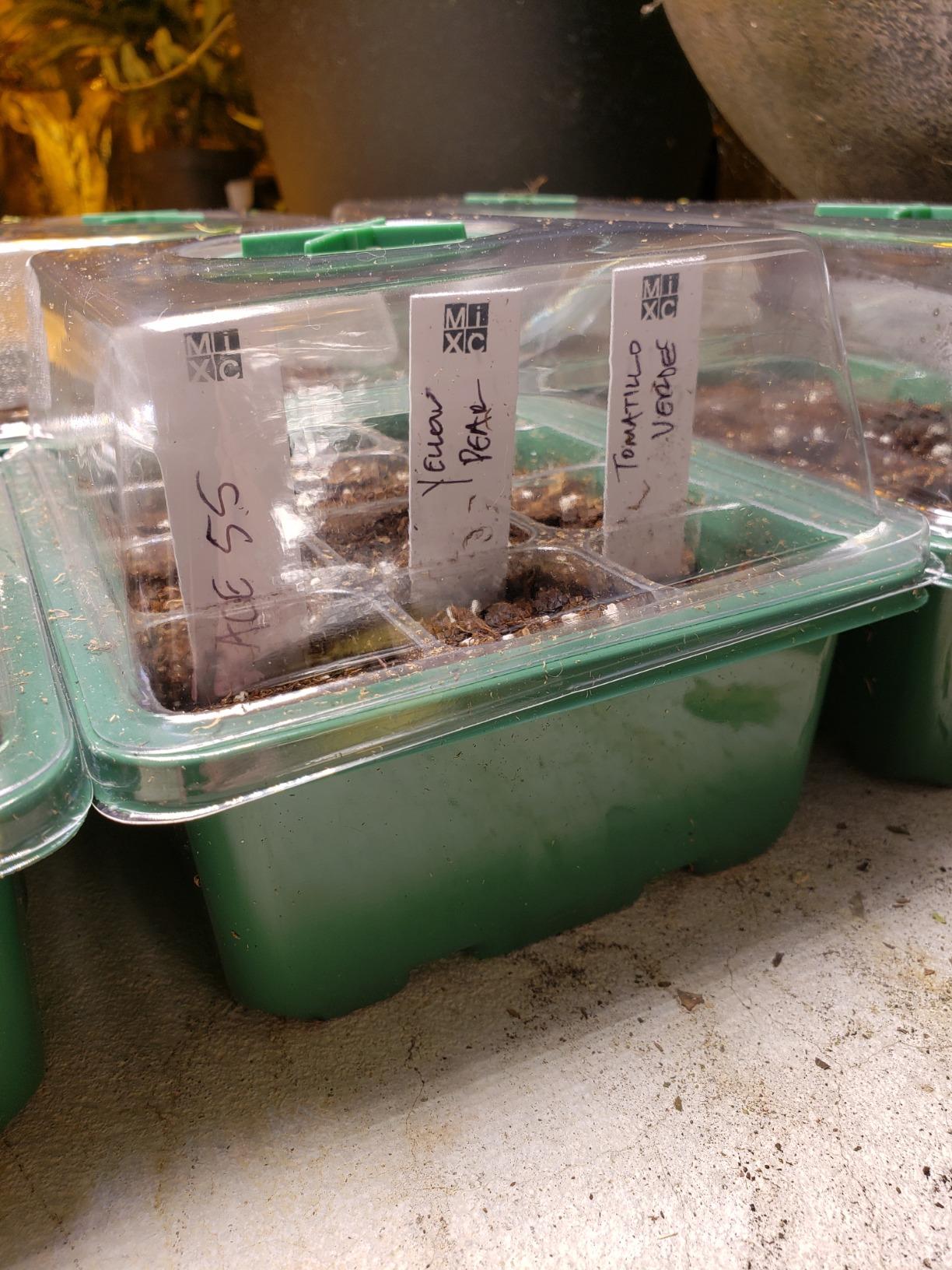
With more than eleven thousand reviews, this is the most battle-tested tray in the group, and it is the one I suggest if you are growing a lot of tomato varieties and want to start small and expand. Ten individual packs of twelve cells each give you 120 starts without committing to a full rack of trays.
Each pack includes a tray, a watertight base tray and a domed cover with adjustable vents. The base tray catches runoff under a grow light, which protects the shelf, and drainage holes in each cell keep the medium from sitting in water. Reviewers regularly cite the mini-greenhouse effect as the reason germination is even.
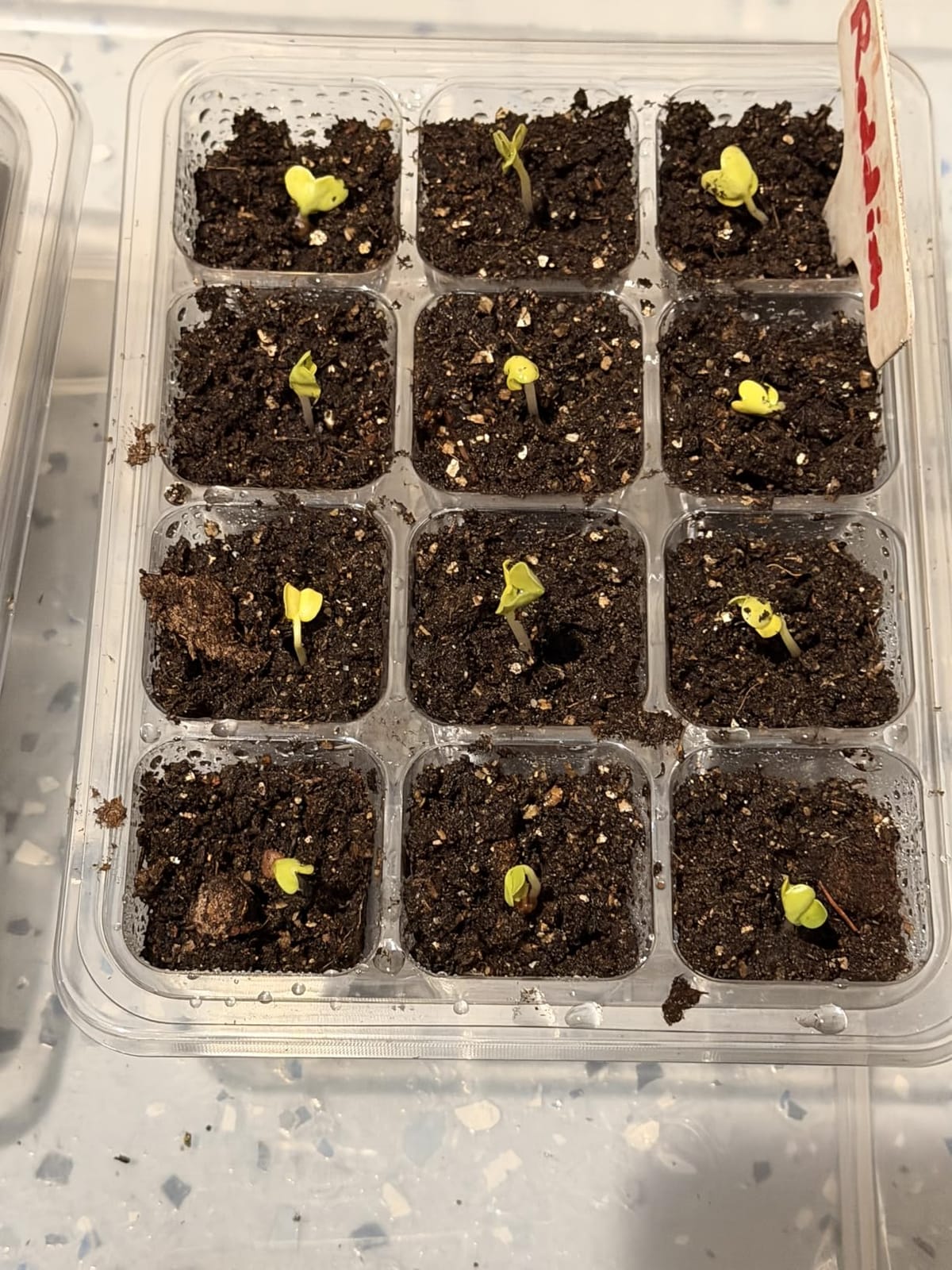
The trade-off is cell size. Twelve small cells per pack means your tomatoes will need potting on sooner than they would in the larger cells on the Gardzen or Burpee systems. You also water more often, because the volume of medium per cell is small enough that it dries within a day or two under a grow light.
Plastic gauge is the second trade-off. It is light and easy to carry, which is genuinely useful for a twelve-cell pack, but owners report flex and occasional cracking with repeated handling. Nothing here suggests it will still be in perfect condition after a hard season of de-potting.
Who it suits
This is for the grower running a trial of heirlooms and cherry varieties, or anyone who wants to raise tomatoes alongside a lot of quick crops. Because the packs are small, they stack anywhere including a windowsill, and a full kit still costs less than most garden centre accessories.
Where it falls short
Do not buy it for deep-rooted crops expecting to leave seedlings in place. Twelve small cells push you into an extra potting step, and thin plastic means you replace it sooner. If you already own larger deep cells, this is a supplement rather than a replacement.
4. Burpee SuperSeed 36-Cell Tray: Best Reusable Tray With Gentle Extraction
Burpee SuperSeed 36-Cell Reusable Seed Starting Tray for Indoor Seedlings
36 flexible silicone cells
11.5 by 10.375 by 2.25 inch tray
Dishwasher safe
Molded corner drainage slots
Pros
- Silicone cells flex to release seedlings cleanly
- Side handles and raised rim for handling
- Dishwasher safe for reuse
- Alphanumeric row labels
Cons
- No humidity dome included
- 36 cells is a modest batch
- Soft cells are harder to pack firmly
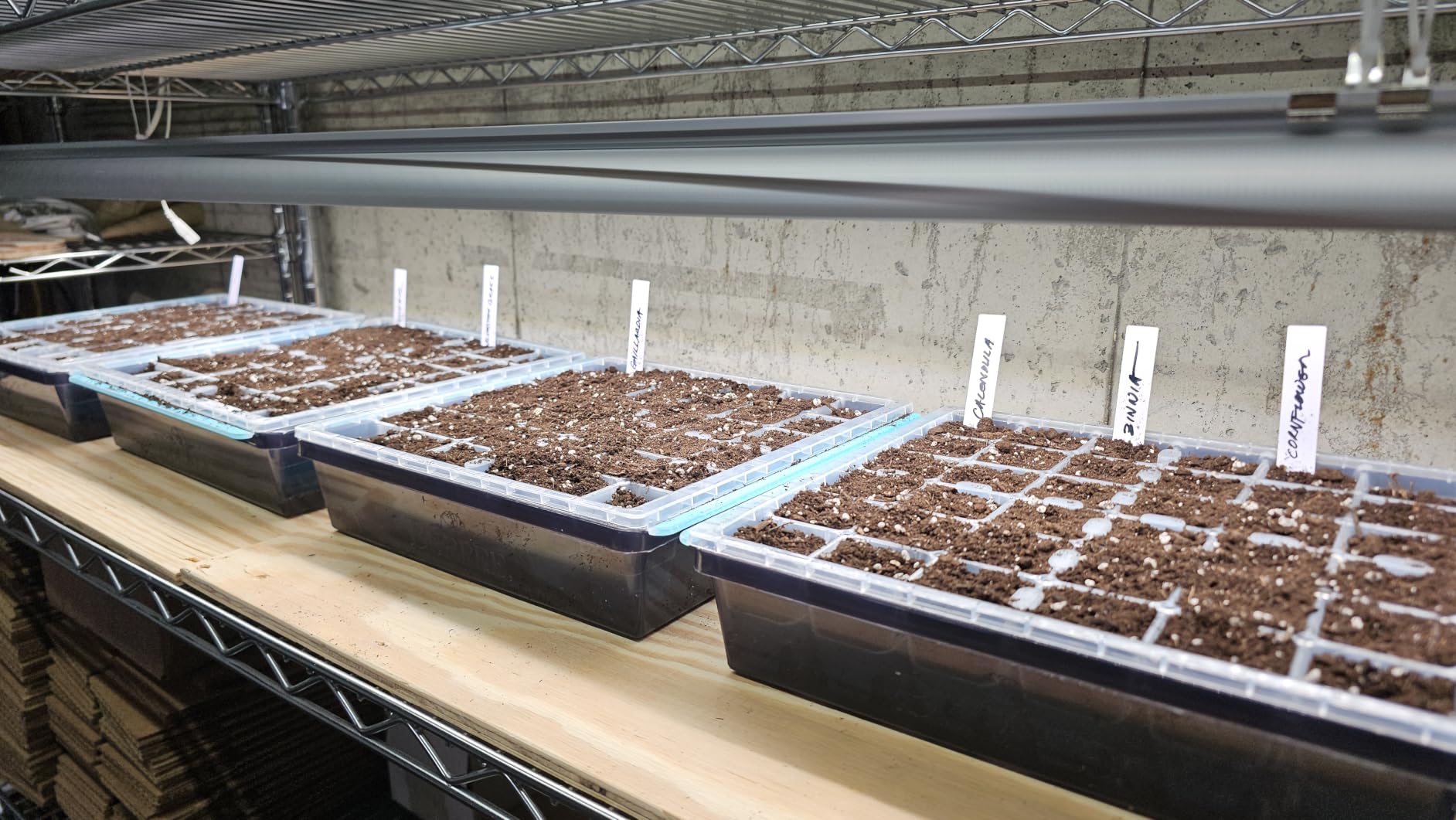
Transplant shock is the thing this tray was designed around. The cells are food-grade silicone rather than rigid plastic, so instead of tearing roots you pinch the cell from underneath and the seedling comes out in one piece with its root ball intact. For tomatoes, which dislike root disturbance more than most vegetables, that single feature is worth a lot.
Moulded corner slots improve drainage and aeration, and deep channels in the watering tray draw off excess water after a bottom watering. It is also the easiest tray on this list to keep clean. Top shelf dishwasher safe means sanitising between crops takes minutes rather than scrubbing.
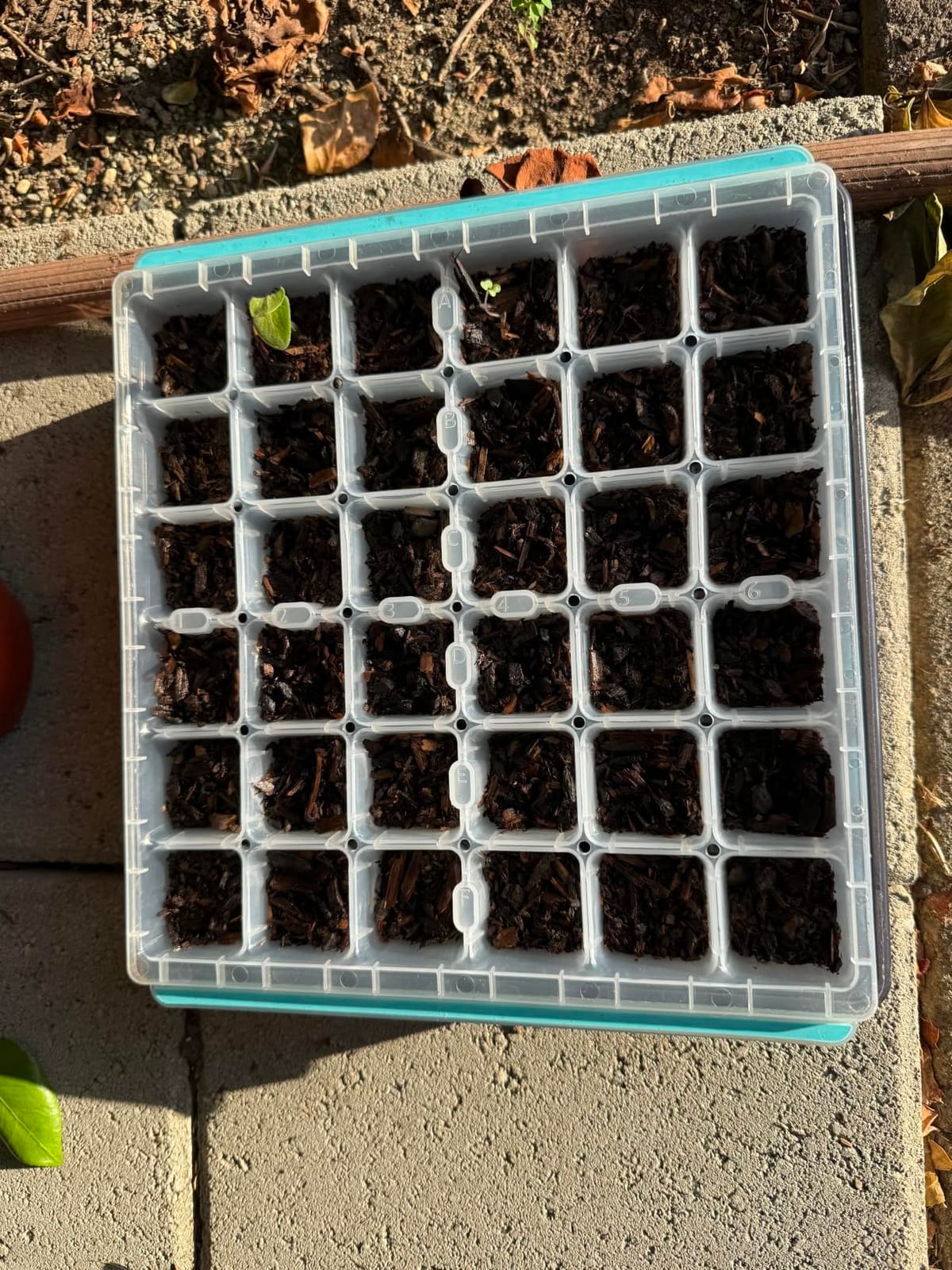
The trade-off is that no dome is included. You need a separate cover if you want to hold humidity at germination, which is fine if you already own a 1020 dome, and a bit of a hassle if you do not. For tomatoes specifically, a short-term cover is easy to improvise with a clear lid propped for airflow.
Thirty-six cells is also a modest batch, and the soft cells take a little practice to fill firmly enough with dense starting mix. Push the mix down with a firm tool rather than your fingers and you will get consistent depth across the tray.
Who it suits
This suits growers who hate de-potting, who already own a dome, or who want one tray that survives many seasons of use. It ranks at the top of its category for a reason: 75 percent of its reviews are five star.
Where it falls short
Skip it if you need to raise a hundred or more tomato plants in one run, or if you want a completely self-contained germination system. You will need a cover for the first week or two after sowing.
5. Bonviee 5-Pack 12-Cell Trays: Best for Small Spaces and Heat Mats
Bonviee 5-Pack Seed Starter Trays, Humidity Dome, Base, 12-Cell Tray, Green
Five 12-cell trays
1.5 inch square cells
4.3 by 6.7 by 5 inch unit
Five trays equal one 1020 flat
Pros
- 1.5 inch cells sized for large seeds like tomatoes
- Holds heat mat temperatures without warping
- Watertight bases stop drips under lights
- Twelve cells fit a tidy footprint
Cons
- Twelve cells means frequent potting on
- Vent prong is awkward to open and close
- Dome bends if handled roughly
Each tray here measures roughly 4.3 by 6.7 inches, and five of them cover the footprint of a single 1020 flat. That makes this the tray to choose if your seed starting area is defined by one heat mat or one shelf position and you want every square inch working.
The 1.5 inch square cells are sized for large seeds, and reviewers specifically call them well suited to tomatoes, peppers, potatoes and eggplants. Buyers also rate this set as sturdier than floppier high-count trays, and confirm the clear plastic holds heat mat temperatures without warping.
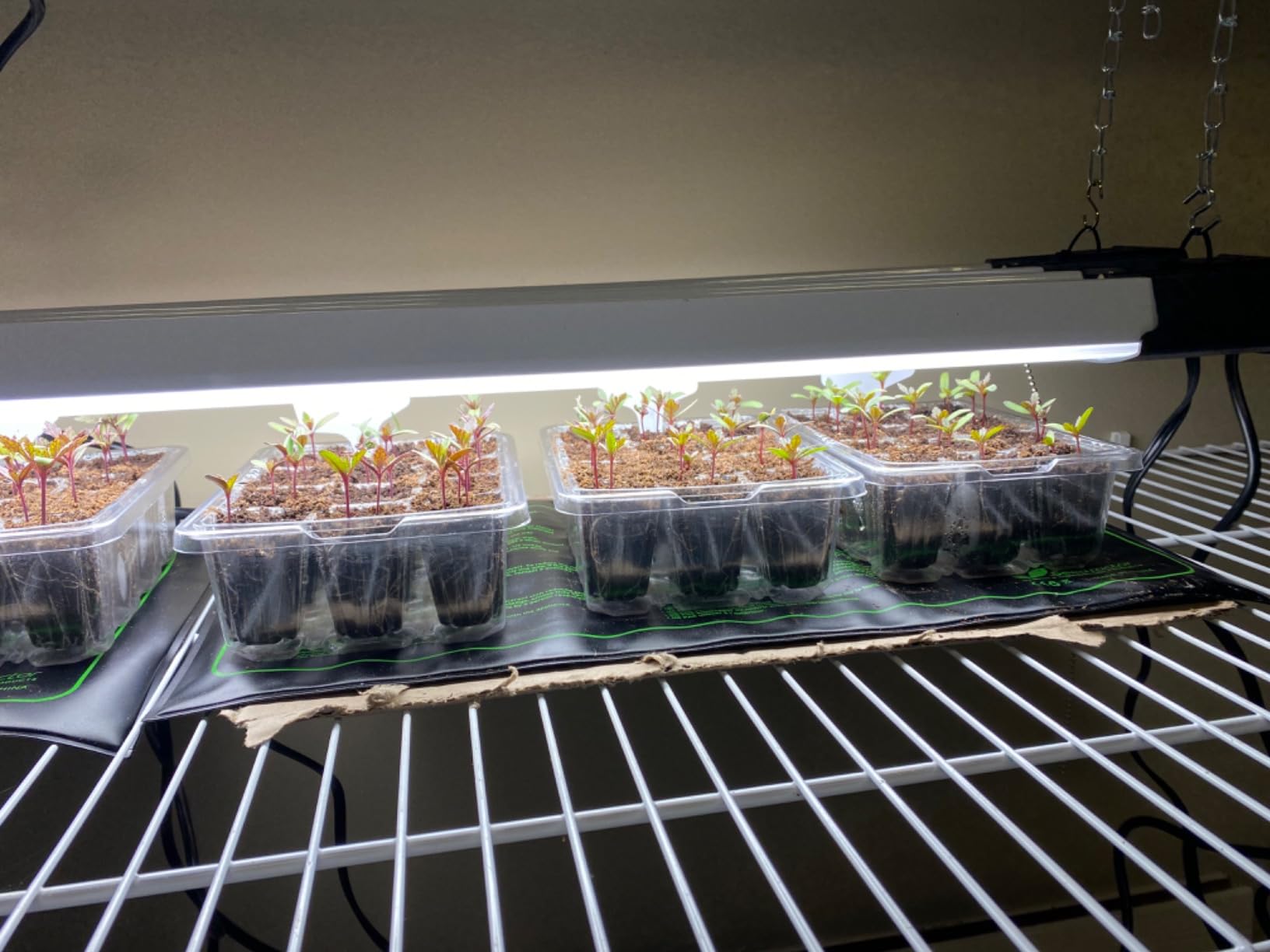
Watertight base trays are a detail worth more than they sound like. Under a grow light, runoff from top watering drips onto shelves and shortens the life of everything stacked below. These bases stop that.
Two complaints come up repeatedly. Twelve cells means your tomatoes need potting on earlier than in larger cells, and the vent prong is pushed in from the top and does not pull back out easily, so venting is a two-handed job. The dome also bends if you lift it by the edge rather than the base.
Who it suits
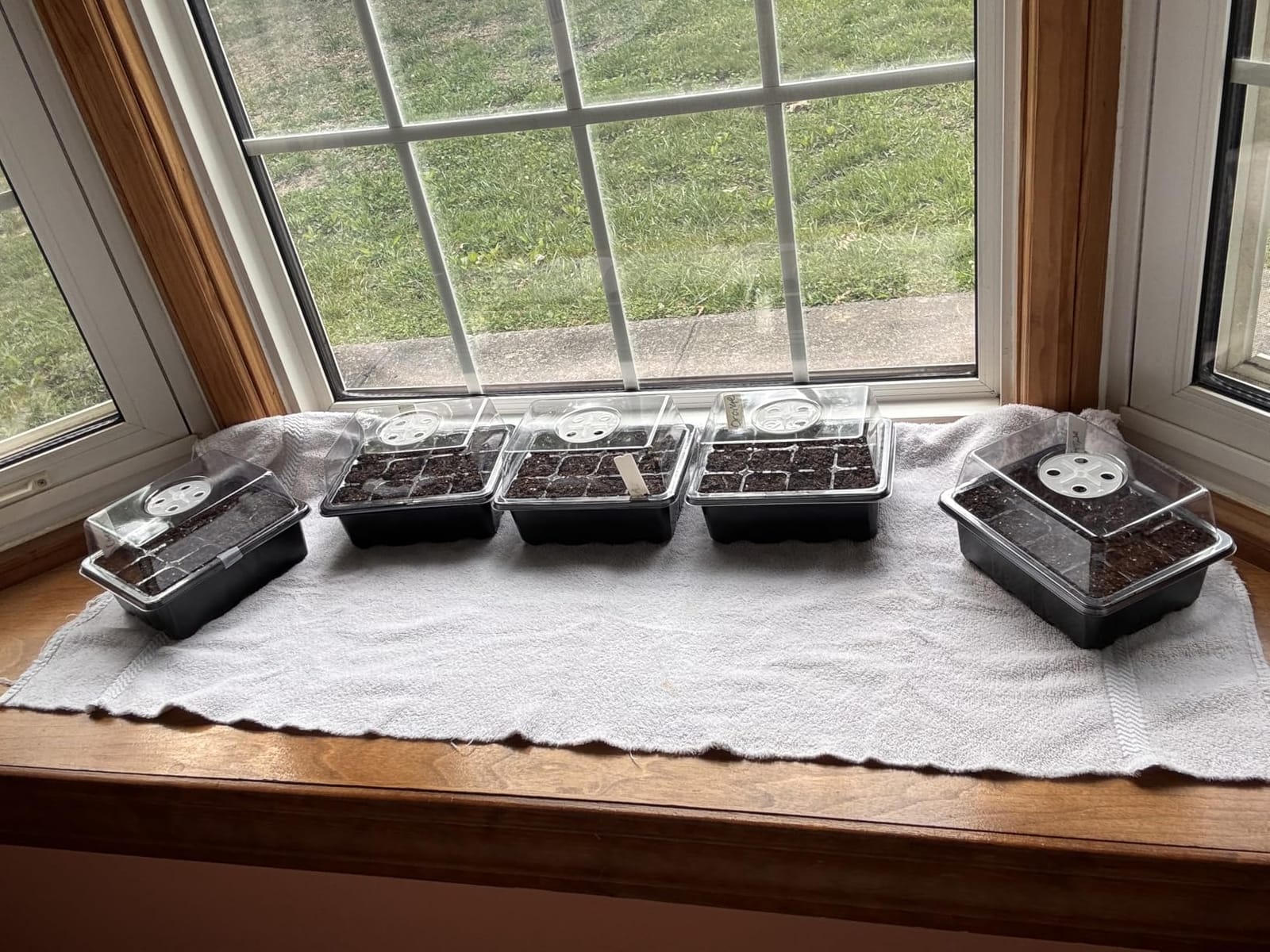
This is the apartment and windowsill option. It handles heat mat temperatures, stacks neatly, and gives each tray its own labelled dome. It also suits growers who want a modest batch of early tomatoes and then a clean reset for a second sowing.
Where it falls short
It is not a tray to raise a full garden’s worth of tomato transplants, and some users find the small pods tricky to pop seedlings out of. If you already have deep cells, this is a good companion tray for peppers and second-round crops rather than a replacement.
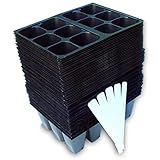
6. 720-Cell Seedling Starter Trays: Best for Large Batches
Seedling Starter Trays, 720 Cells: (120 Trays; 6-cells Per Tray), Plus 5 Plant Labels
120 trays of six cells
1.5 by 1.5 by 2.25 inch cells
Drainage holes in every cell
Indoor and outdoor use
Pros
- 720 cells covers very large sowings
- Nursery-standard sizing fits 1020 flats
- Thin plastic releases seedlings gently
- Stack compactly for storage
Cons
- Very thin plastic lasts one or two seasons
- Cells can tear when pulling a mature plant
- Only five labels for 120 trays
Nobody buys 720 cells for a windowsill. This pack exists for market growers, plant sale volunteers and anyone who starts several hundred tomato plants and needs them in a single weekend. At 4.6 stars with 76 percent five-star feedback, it is one of the highest-rated trays here.
Each tray is a nursery-standard six-cell insert measuring 1.5 by 1.5 by 2.25 inches, which means they drop into a standard 1020 flat for bottom watering. That single fact is why experienced growers like them: they slot into infrastructure you may already own.
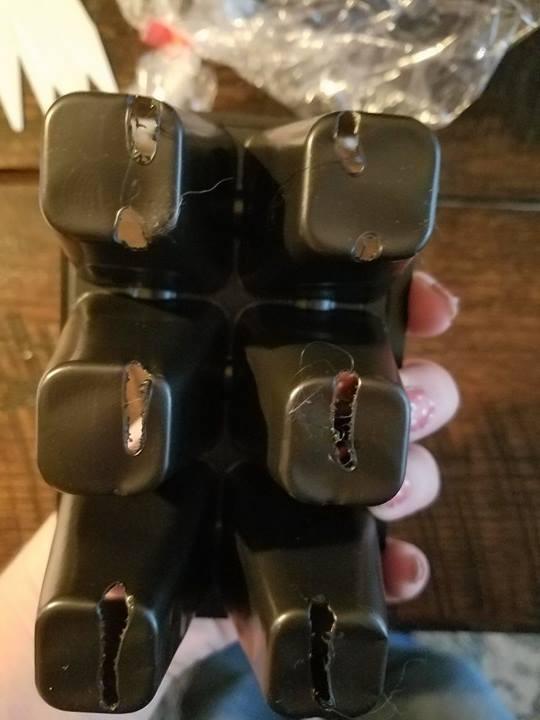
Reviewers defend the thin plastic rather than complaining about it. Because the cells flex, a seedling releases easily at transplant time, which is exactly what you want when you are potting four hundred starts on one kitchen table.
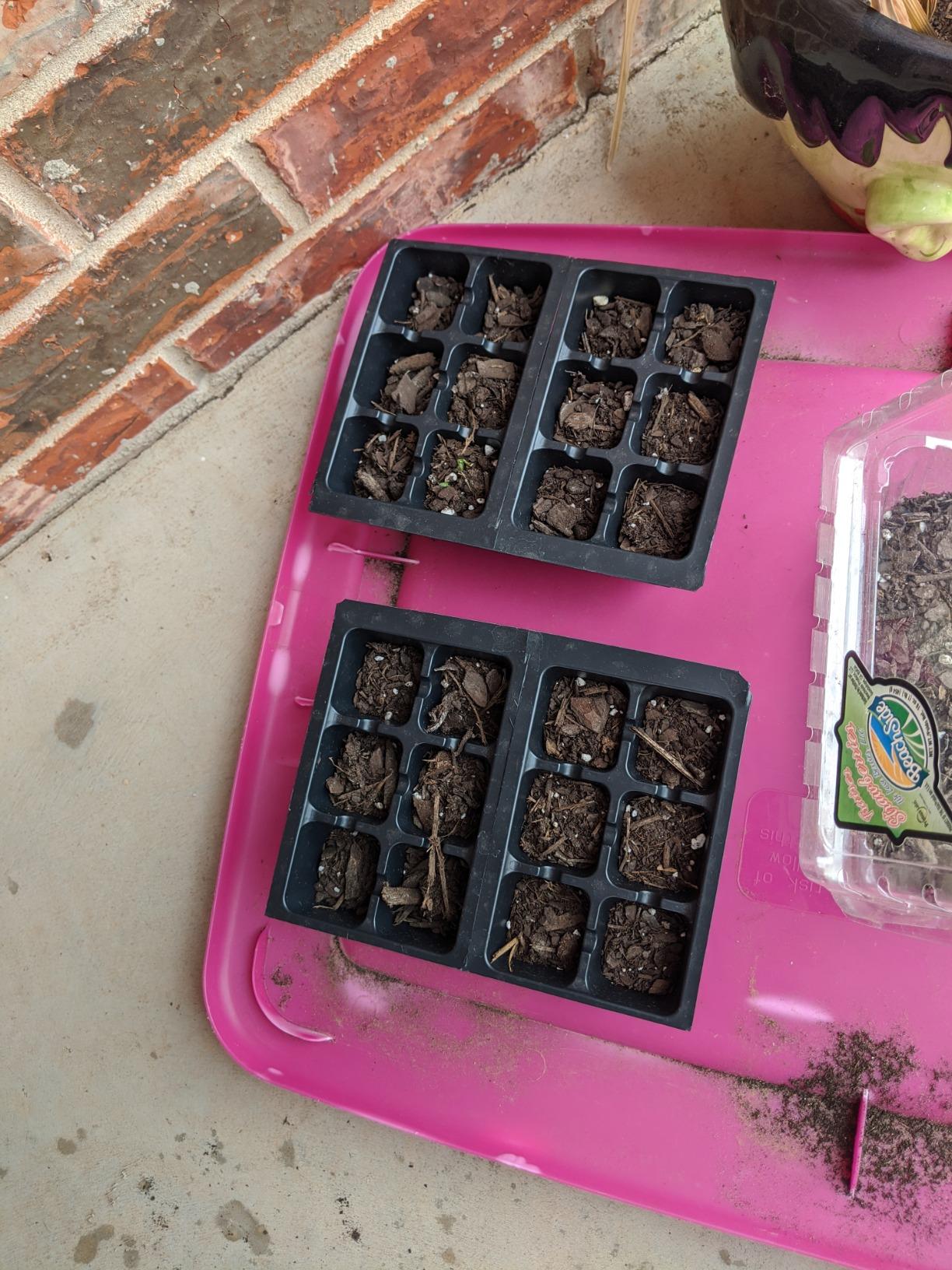
The trade-offs are honest ones. Thin plastic means a shorter working life, and cells do get damaged when you pull a mature plant out. Five plant labels for 120 trays is inadequate, so budget for your own markers or label maker.
Who it suits
This suits high-volume growers and anyone who wants the lowest cell cost for a large sowing. Because the trays stack, off-season storage is easy, and they work outdoors for a greenhouse run as well as indoors.
Where it falls short
It is a consumable rather than an investment. Expect a season or two, not a decade, and treat it as a one-time bulk purchase. It also does not include domes, bases or medium, so you will need the rest of your setup separately.
7. 300 Extra Deep Cell Trays: Best Deep Cells for Fewer Up-Pots
AAAmercantile Seed Starter Trays 300 DEEP Extra Large Cells Total (50 Trays of 6 Cells Each)
300 cells, 50 trays of six
2.5 by 2.25 by 3 inch cells
7 by 5 by 3 inch trays
Six trays fit a 1020 flat
Pros
- Three inch depth gives tomato roots real room
- Generous mix volume for large seeds
- Flexible plastic makes de-potting easier
- Stack into existing 1020 flats
Cons
- Listed as generally single use
- Larger cells consume more mix and space
- No dome or base tray included
This is the tray to look at if your single goal is to avoid up-potting tomato seedlings before transplanting. Cells are 3 inches deep, which gives a tomato root system room to run straight down instead of circling, and that is the whole argument for depth in one number.
With 77 percent five-star ratings, buyers repeatedly name the 3 inch depth as the reason their seedlings grew on without becoming root-bound. The 2.5 by 2.25 inch footprint is generous, so each seed gets a large volume of mix, and the flexible plastic still makes de-potting easier than rigid trays.
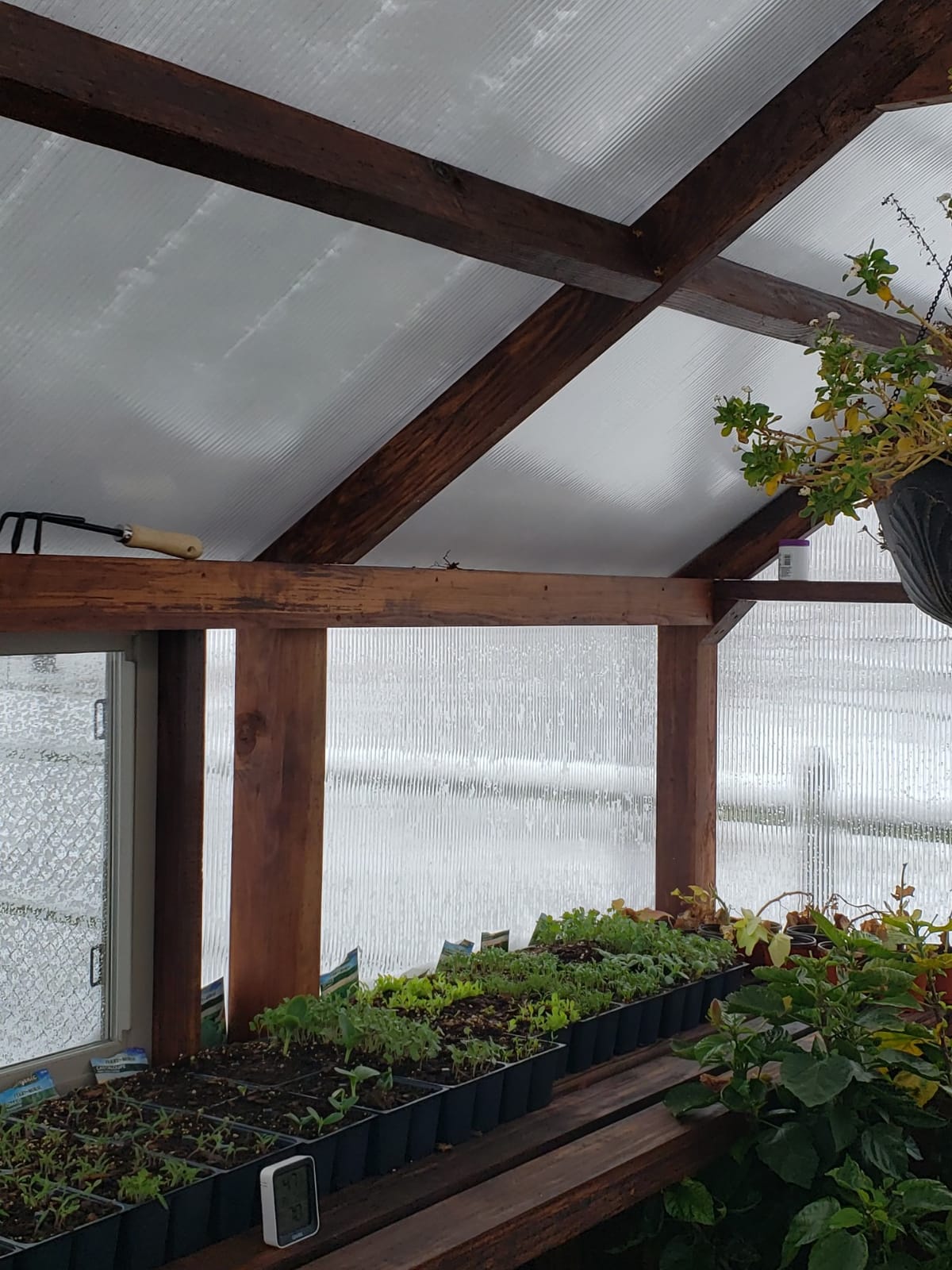
Six of the six-cell trays fit a standard 1020 flat, which makes bottom watering easy even though no base tray is included. Build your own system with a flat and a solid tray underneath, and you get the depth benefit of a professional propagation setup.
The limitation is reuse. These trays are generally considered single use, and larger cells mean more mix and more shelf space per seed. There is no dome, so humidity control during germination is entirely on you.
Who it suits
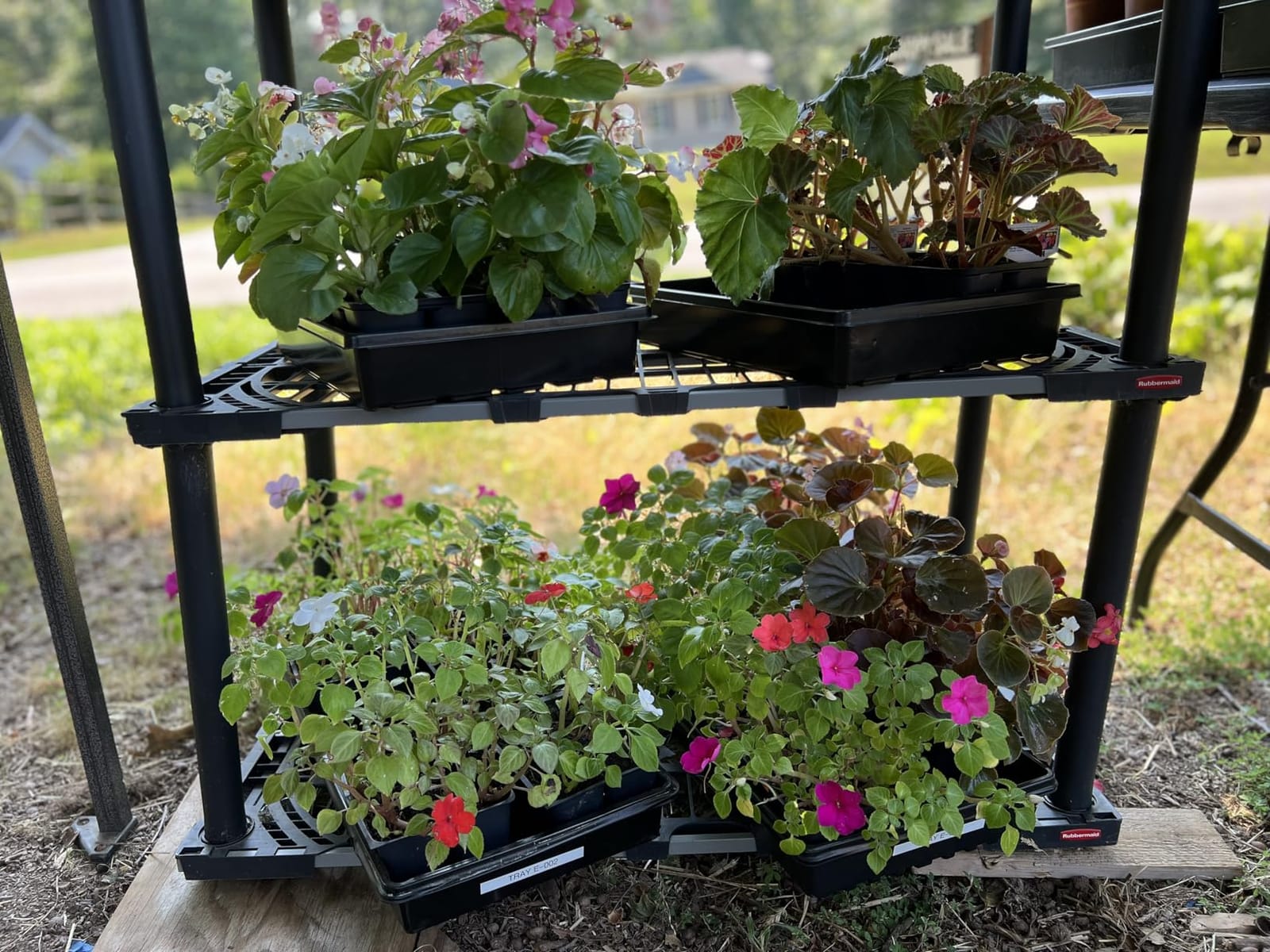
This suits growers following the common practice of sowing, then moving seedlings straight from the cell pack to a 4 inch pot rather than through two intermediate sizes. If you grow a moderate number of tomatoes and dislike repotting, this is the trade you want.
Where it falls short
It is not an economical way to start five hundred seeds, and you will need a separate dome or cover. If long-term reuse matters to you, the flexible silicone tray is the better purchase despite its smaller cell count.
8. SOLIGT Thick Plastic 3-Set with 5 Inch Domes: Best for Durability
SOLIGT Thick Plastic 3-Set Strong Seed Starter Trays with 5″ Humidity Domes
Three trays, three 5 inch domes
Holds eight six-cell trays each
13.7 by 10 inch inner space
10.87 by 14.37 by 6.5 inch unit
Pros
- Thick plastic reported to last many seasons
- Six inch inner dome height fits tall tomato seedlings
- Carries easily and fits a windowsill
- Lids seal tightly
Cons
- Cell trays are not included and sold separately
- Lids can pop off if the unit is moved
- Condensation builds up without daily venting
This is the answer to the most common durability complaint on grower forums, which is trays that look fine in a photograph and crack by the second season. The plastic here is noticeably heavier, and owners report it holding up over many seasons of use. At 78 percent five-star, it has the strongest star distribution in this group.
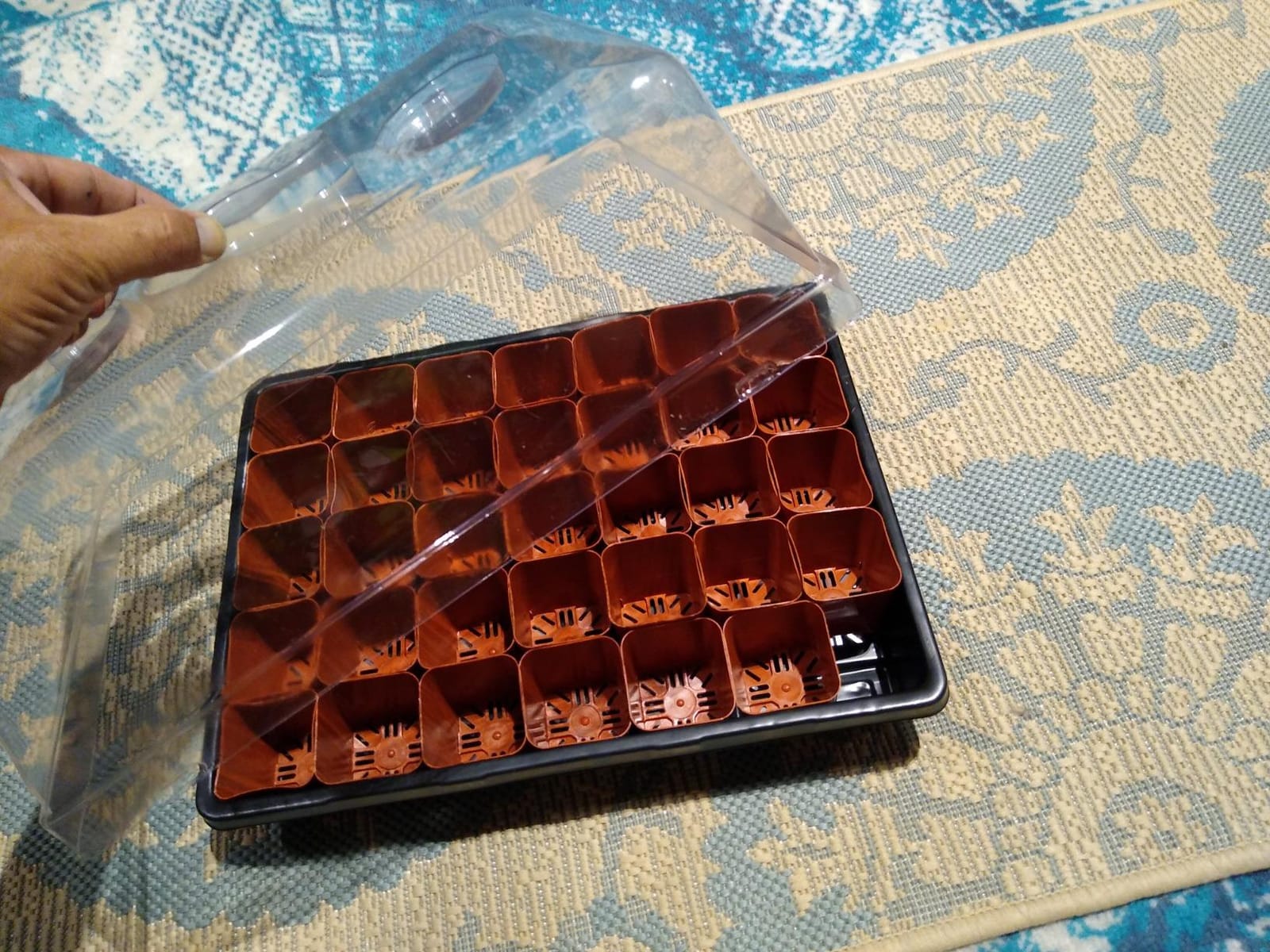
The domes are the other story. Each has 6 inches of inner height, which is tall enough for tomato seedlings to grow several weeks before you need to remove the cover. Two adjustable vents on every dome give you airflow control, and the seal between dome and tray is tight enough to hold warmth.
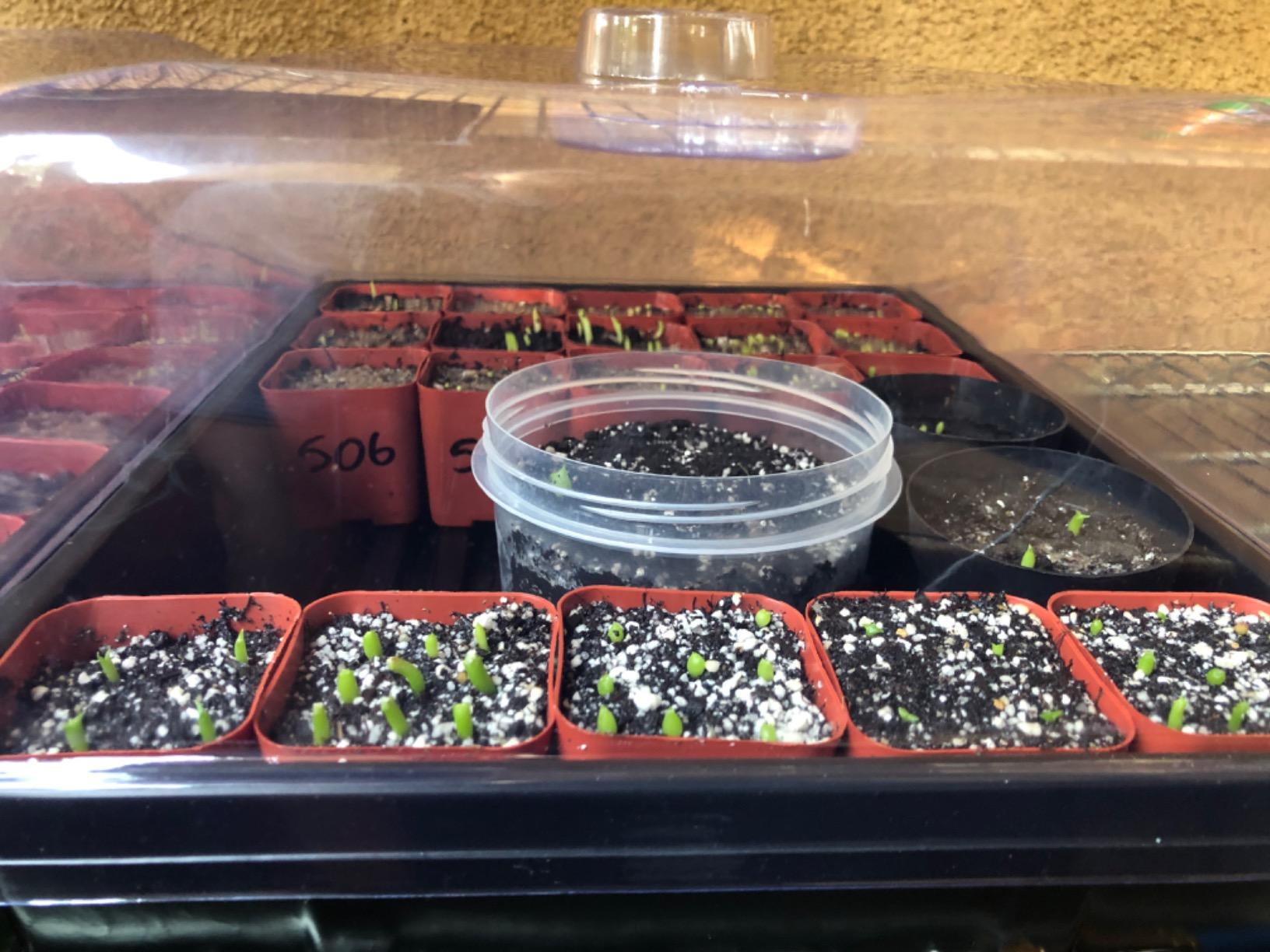
The medium footprint is genuinely useful. Each unit is 13.7 by 10 inches inside, so it fits a windowsill and is light enough to carry to a sunny spot. It holds eight six-cell trays each, which means 48 cells per unit across the three-set.
Two caveats. Standard soil cell trays are not included and must be bought separately, so this is a housing system rather than a complete kit. And condensation builds up inside a dome this tight, which means opening the lid daily is not optional if you want to avoid mold.
Who it suits
This suits growers who already own or plan to buy standard six-cell trays and want a long-lasting humid greenhouse housing for them. It also suits anyone whose seedlings get tall fast and keep bumping into a low dome.
Where it falls short
It is not a complete starter kit, so the total cost of the system is higher than the sticker figure suggests. If you want cells and dome in one purchase, choose one of the vented kits further up instead.
9. Burpee 72-Cell Seed Starting Kit: Best All-in-One Kit
Burpee 72 Cell Seed Starting Kit with Greenhouse Dome and Coir Pellets
Two 36-cell trays
1.5 by 1.5 by 2 inch cells
10 by 20 by 5 inch unit
72 coir pellets included
Pros
- Everything needed in one box
- Bottom reservoir tray simplifies watering
- Fast germination reported around 48 hours
- Plant-o-gram diagrams and markers included
Cons
- Cell trays are thin and crumble at transplant
- Dome lid is flimsy and does not stay on
- Center cells hard to reach for bottom watering
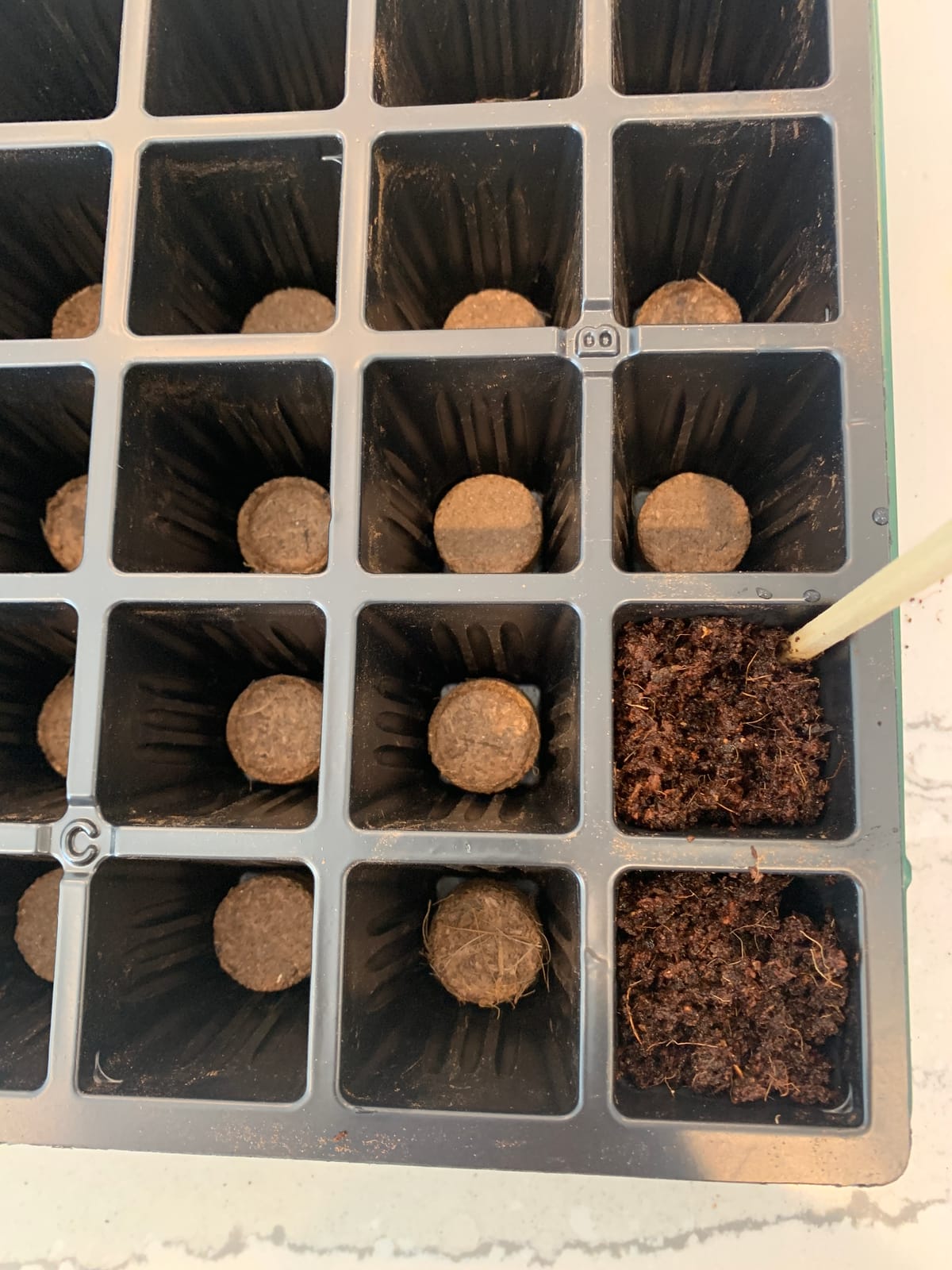
- Pellets expand sideways if not stood flat
This is the beginner kit. You open the box and you have two 36-cell trays, a water reservoir, a greenhouse dome, 72 coir pellets, markers and diagrams. Buyers report fast germination, with sprouts appearing in around 48 hours on a heat mat, which is a good result for a beginner setup.
The bottom reservoir tray makes bottom watering straightforward, which is the best defence against damping off you can buy at the tray level. Seventy-two cells is a sensible batch size for a household, and the 1.5 by 1.5 by 2 inch cells are standard for tomato starts.
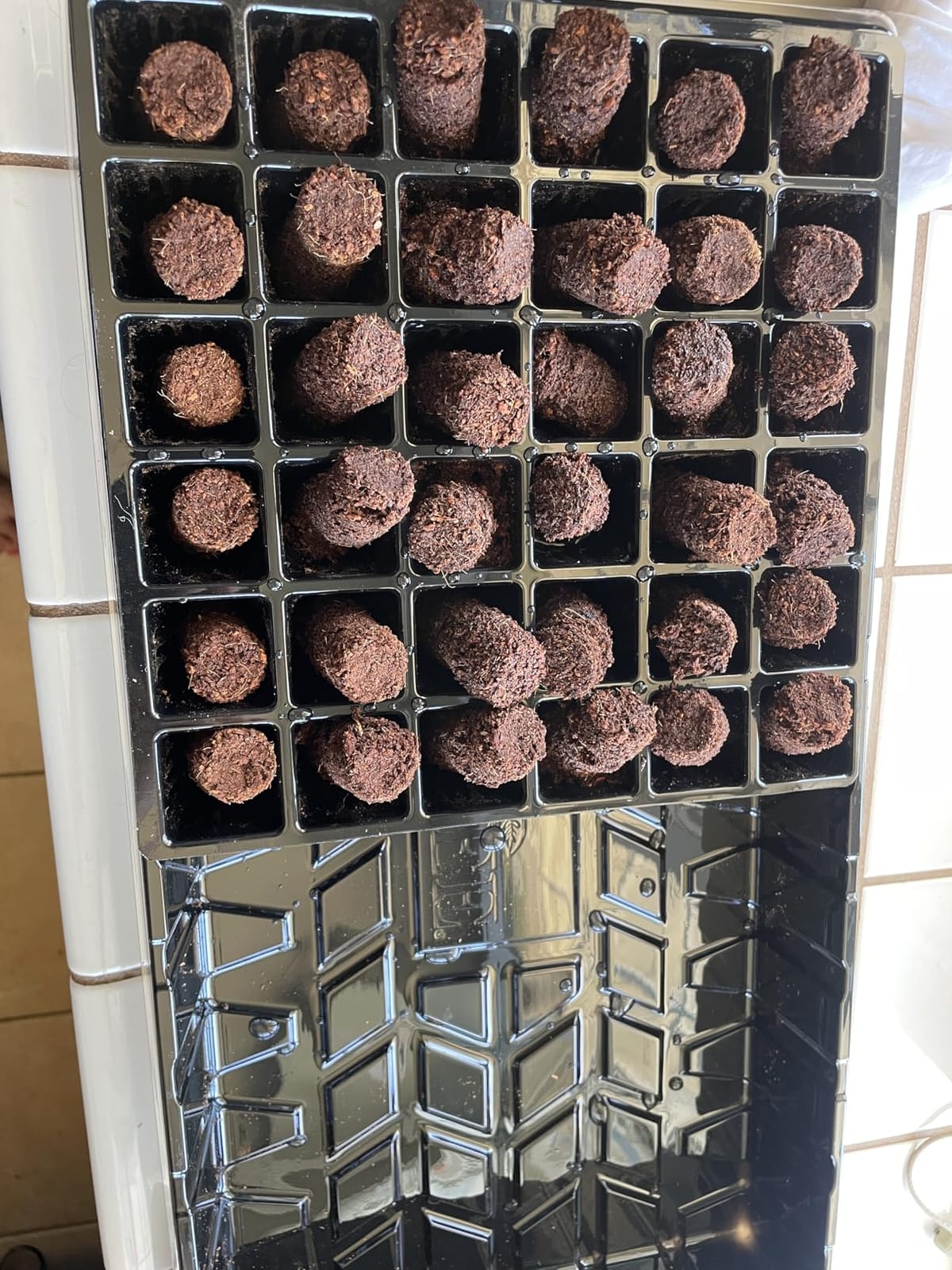
What holds it back is thin construction. The cell trays are difficult to transplant from without the medium crumbling away from the roots, and the clear dome is flimsy enough that it can arrive partially crushed. Several buyers recommend using potting mix instead of the included coir pellets.
There is also a watering geometry problem. The centre cells are hard to reach from below, so you end up top watering the middle of the tray and bottom watering the edges. The pellets expand sideways unless you stand them flat before the first watering, which catches a lot of beginners out.
Who it suits
This suits a first season, a gift, or anyone who wants one box that works without a second purchase. It is the least fiddly way to get from sowing to seedling in a weekend.
Where it falls short
It is not the tray for someone who cares about clean root extraction or long-term reuse. If you already have a heat mat, dome and mix, you are paying for pieces you will replace.
10. 144-Cell Six-Cell Trays: Best Value Per Cell
Seed Starter Trays, 144 Cells (24 Trays – 6 Cells Per Tray) + Plant Stakes
144 cells, 24 six-cell trays
1.5 inch square by 2.25 inch deep
Drainage slits
Two 1020 flat inserts per set
Pros
- Low cost per cell with 144 starts
- Good depth-to-width ratio for tomato roots
- Drainage slits prevent overwatering
- Stack neatly and include plant stakes
Cons
- Thin plastic degrades after a season or two
- No dome
- base or humidity control
- Only five plant stakes for 24 trays
This is the tray to buy if your aim is simply the most tomato cells for the least money. You get 144 cells across 24 six-cell trays, which works out as two standard 1020 flat inserts worth of starts. Buyers rate it well for exactly the reason you would hope: the cost per cell is hard to beat.
Cell geometry is better than the price suggests. Each cell is 1.5 inch square by 2.25 inch deep, and that depth-to-width ratio is genuinely workable for tomato roots. Drainage slits control excess water, which is the feature that keeps a crowded tray from turning into a damping-off incident.
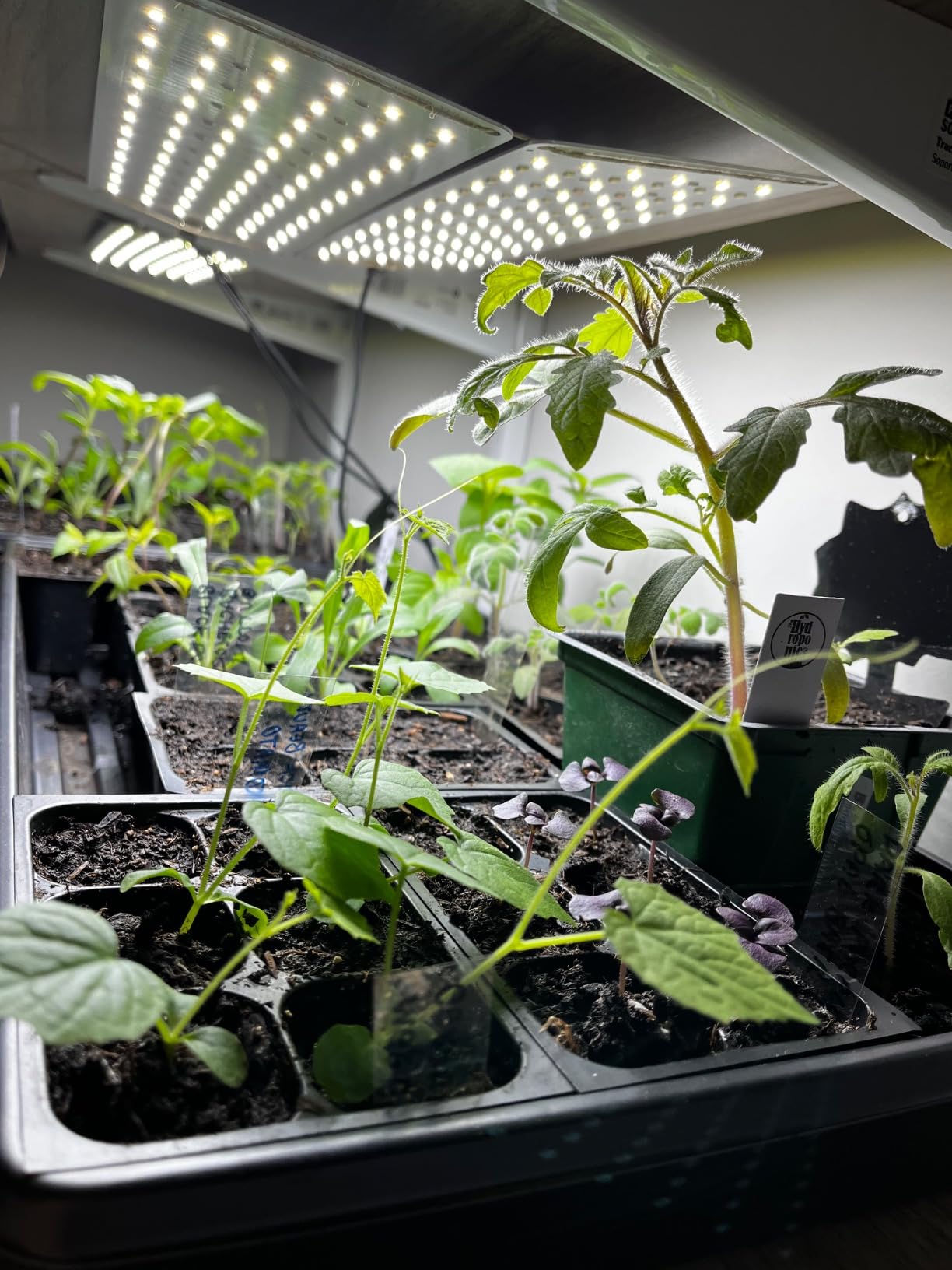
Treat it as a nursery six-pack insert and it behaves exactly like one. Tray after tray of cheap black plastic, stackable, easy to fill, and full of drainage. That is a feature in a bulk sowing and a limitation everywhere else.
The thin plastic is the main complaint and it is a fair one. It degrades quickly, so it is not truly long-term reusable. There is no dome or base tray, so humidity control during germination is up to you, and five plant stakes for 24 trays is not enough labelling.
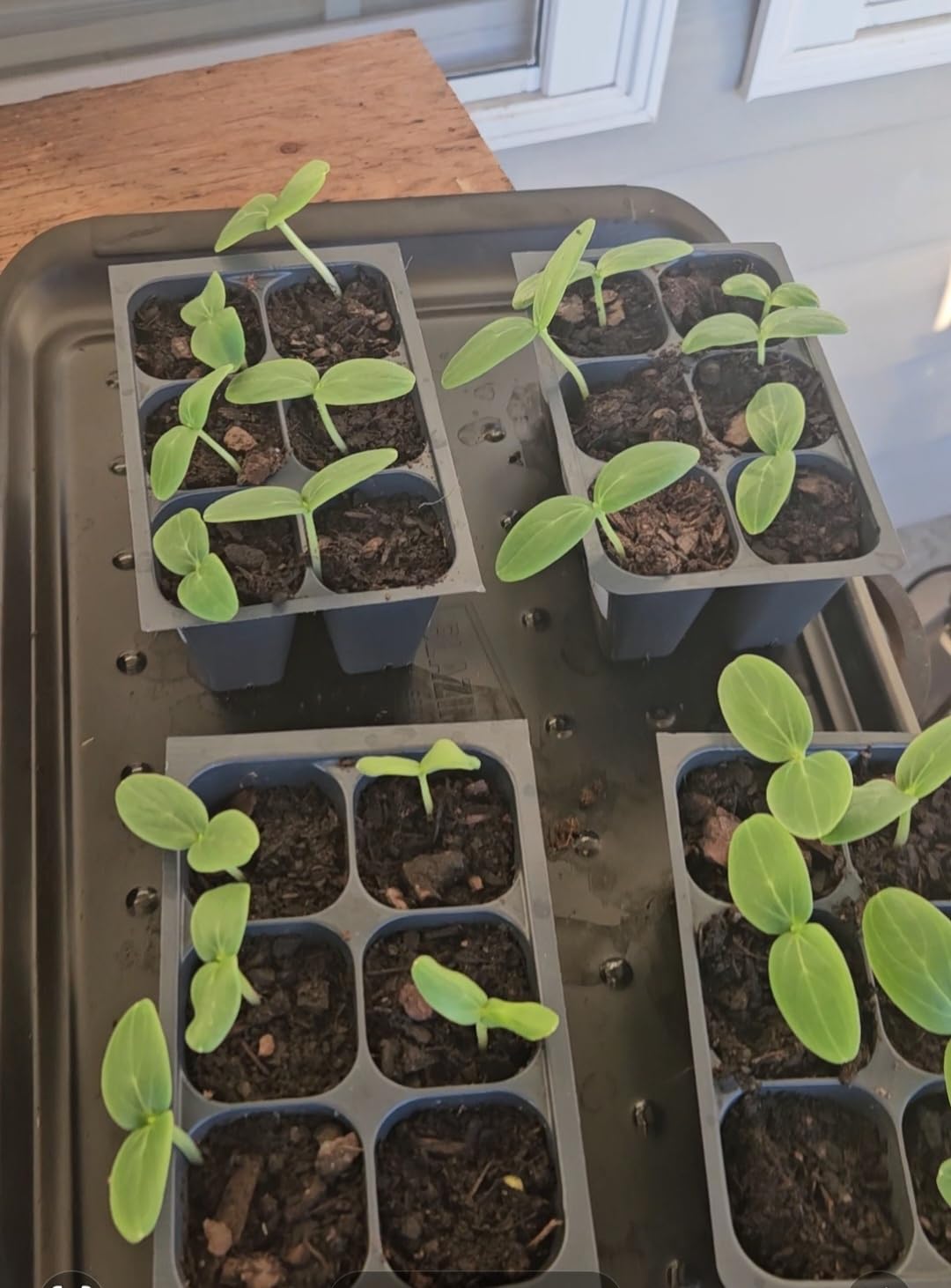
Who it suits
This suits high-volume growers on a budget and anyone who wants to try a tray format without committing much. It is a good second-crop tray too, once you already own domes, flats and a base tray from a bigger purchase.
Where it falls short
It is not reusable, not self-contained and not deep enough to skip an intermediate pot for tomatoes. Expect to replace it every year or two rather than treating it as part of a permanent setup.
How to Choose a Seed Starting Tray for Tomatoes
Cell depth is the decision that determines whether you up-pot once or twice. Shallow cells under about 1.5 inches force an early move; standard cells around 2 inches are workable; cells at 3 inches or deeper let you hold a tomato seedling until it is genuinely transplantable. Tomato roots are aggressive and become root-bound fast, so if you only change one thing, change this.
Cell count comes second, and it is really a question about how many plants you are raising. Twelve to 36 cells per tray suits a household batch. Forty to 72 cells covers a serious home sowing. Counts above 100 are for market growers and plant sales, and they mean more watering and more frequent potting on.
Material decides how many seasons you get and how cleanly plants come out. Thin polypropylene is cheap and easy to pop seedlings out of, but it is a consumable. Food-grade silicone flexes deliberately so roots stay intact, and it survives many seasons. Heavier plastics resist cracking but make extraction harder.
Drainage and watering matter more than any other feature for tomato survival. Look for drainage holes in every cell, and pick up a solid base tray so you can bottom water instead of pouring from above. Grower forum consensus is consistent on this: bottom watering into a reservoir is the simplest defence against damping off.
Humidity domes are helpful for the first week and harmful after that. Tomato seeds germinate quickly, so a vented dome is useful during germination and should come off at first sprout. An unvented dome traps condensation and encourages mold, so if your tray has no adjustable vents, plan to lift it daily.
A warning about the 1020 footprint: the name is not a guarantee of interchangeability. Trays labelled 1020 vary slightly in actual dimensions between manufacturers, so measure your flat before you buy a different brand of insert. This is the single most common compatibility complaint among growers mixing systems.
Finally, think about cleaning. If you intend to reuse trays, check that they can be sanitised properly between crops. Dishwasher-safe silicone is the easiest option, while thin cell trays are much harder to scrub without cracking the cells.
DIY Seed Starting Tray Alternatives and When They Work
You can start tomato seeds without buying a tray at all, and for a handful of varieties it is perfectly sensible. The trade-off is depth: almost every DIY option gives you a shallower cell than a purpose-made tray, which means more up-potting.
Egg cartons work for germination. Tear the cups apart, punch drainage holes in each bottom, fill with moistened starting mix and sow a quarter inch deep. Cell depth is roughly an inch, so plan to move seedlings on early. Save the lid and use it as a humidity cover, lifted slightly for airflow.
Muffin tins give you the deepest DIY cells, closest to the 3 inch trays above. Grease them so plugs release, and fill each cup about three-quarters full. Standard tins are twelve-cup, which is a sensible batch size for a household. Foil pans work the same way and are free, but they tear when you try to lift a seedling out.
Milk cartons cut down to a square and pierced in the base behave like deep square cells, and the tall sides double as humidity covers with the top folded back. They are awkward, need a support tray, and absorb water into the board, so they last one sowing at most.
The honest summary: DIY is fine for a trial sowing of a few varieties in late winter. If you are raising a full batch, a purpose-made tray buys you depth, drainage holes and reusability that no kitchen scrap matches.
Frequently Asked Questions
What are the best seed starting trays?
The best seed starting trays for tomatoes combine cells at least 2 inches deep, drainage holes in every cell, and either a solid base tray for bottom watering or a self-watering mat. Our overall pick is the Gardzen 5-Set, which gives you 200 cells across five vented kits. For large sowings the 720-cell six-cell packs give the lowest cost per plant, and for gentle transplanting the Burpee SuperSeed 36-Cell silicone tray is hard to beat.
How deep should tomato seeds be started and how deep do the cells need to be?
Sow tomato seeds about a quarter inch deep, or roughly three seed widths under the surface of moistened starting mix. The cell holding them should be at least 2 inches deep for a home sowing, and 3 inches if you want to avoid an intermediate pot before transplanting. Shallow cells under 1.5 inches cause circling roots and stunted starts.
What is the best way to get tomato seeds to germinate?
Fill and moisten your cells first, then sow two or three seeds per cell a quarter inch deep. Cover with a vented humidity dome and keep the medium near 70 to 80F using a seedling heat mat. Bottom water into a base tray rather than pouring from above, and remove the dome as soon as the first seedling emerges so air can circulate around the canopy.
How big should a tomato seedling be before transplanting?
A tomato seedling is ready to the garden when it has two to four sets of true leaves, a stem roughly as thick as a pencil, and a root system that fills the cell rather than circling it. If roots are already wrapping the base of the cell, pot up once into a larger container first. Seedlings with only their seed leaves are not ready, however large they look.
Do I need a humidity dome for tomato seeds?
A dome helps but it is not essential. Tomato seed germinates quickly, so a vented dome speeds up even germination in the first few days, then should come off at first sprout. Leaving an unvented dome on longer encourages condensation and damping off. Without a dome, keeping the medium evenly moist and the room around 70 to 80F does most of the same work.
Can I reuse seed starting trays?
It depends on the material. Food-grade silicone trays and thicker polypropylene trays are routinely reused for several seasons if you wash them and sanitise between crops. Very thin cell trays are usually good for one or two seasons and then crack. Remove all old medium, wash with hot soapy water and sanitise before sowing a new crop to avoid carrying disease over.
The Best Seed Starting Trays for Tomatoes in 2026: Final Word
The best seed starting trays for tomatoes are the ones with enough depth to let a root system run straight down. The Gardzen 5-Set wins overall for its 200 cells, vented domes and drainage holes at a price most gardeners will accept. Choose the Burpee XL self-watering system if watering is the part you always rush, the Burpee SuperSeed 36-Cell tray if you hate de-potting, and the 3 inch deep packs if you would rather skip an intermediate pot entirely.
Whatever you pick, buy it before you need it, fill the cells with moistened mix before sowing, and take the dome off at first sprout. Those three habits solve more problems than any tray on this list. Check the current details for each of these picks before you order, since availability and specifications change.