
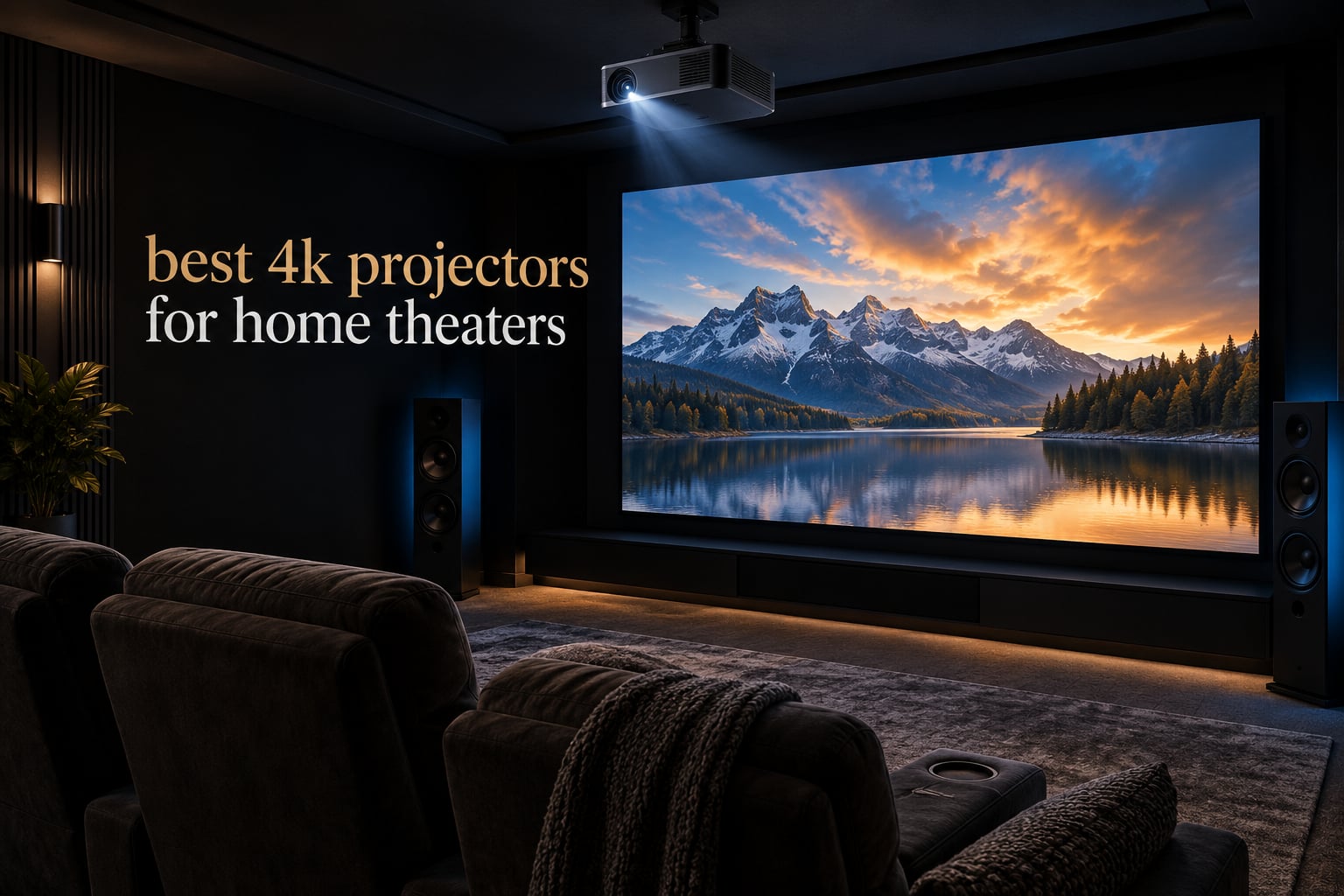
If you have a dedicated room with light control and a screen in the 100 to 150 inch range, the best 4K projectors for home theaters in 2026 come down to contrast and black level first, brightness second. A light-controlled room lets a 2000 to 2500 lumen projector look far better than a 5000 lumen projector competing with a window, which is why several of the picks below sit well below the brightest models on the market.
We compared ten 4K projectors across laser, LED and lamp light sources, DLP, 3LCD and LCoS imaging, and throw ratios from short to standard. The short version: our top pick is the Valerion StreamMaster Plus2 for anyone who wants a complete system in one box, the Epson Home Cinema 5050UB for pure picture quality with no rainbowing, and the Sony VPL-XW5000ES when budget is not the constraint.
Everything in this guide assumes you will pair the projector with a proper screen and real audio. If you are still furnishing the room, start with the pillow and seating choices for a home lounge that set your viewing distance, because screen size is decided by seating distance rather than by the projector.
Table of Contents
Top 3 Picks for the Best 4K Projectors for Home Theaters in 2026

Valerion StreamMaster Plus2
- RGB triple laser
- 2000 ISO lumens
- 4ms input lag
- IMAX Enhanced and Dolby Vision

Epson Home Cinema 5050UB
- 3LCD engine with no rainbowing
- 2600 lumens
- motorized lens with lens shift and memory

Those three cover most dedicated rooms. The Valerion handles everything from streaming to gaming in one chassis, the Epson wins on picture quality where rainbow artifacts are a dealbreaker, and the BenQ is the simple choice when the room has some light in it and you want a glass lens at a sane outlay.
Quick Overview for Best 4K Projectors for Home Theaters in October
| Product | Specs | Action |
|---|---|---|
| Valerion StreamMaster Plus2 |
|
Check Latest Price |
| Epson Home Cinema 5050UB |
|
Check Latest Price |
| BenQ TK800M |
|
Check Latest Price |
 Sony VPL-XW5000ES Sony VPL-XW5000ES |
|
Check Latest Price |
 XGIMI HORIZON 20 Pro XGIMI HORIZON 20 Pro |
|
Check Latest Price |
 Epson Home Cinema LS11000 Epson Home Cinema LS11000 |
|
Check Latest Price |
 Dangbei DBOX02 Dangbei DBOX02 |
|
Check Latest Price |
 ViewSonic LS901-4K ViewSonic LS901-4K |
|
Check Latest Price |
 ViewSonic PX701-4K ViewSonic PX701-4K |
|
Check Latest Price |
 LG CineBeam HU70LA LG CineBeam HU70LA |
|
Check Latest Price |
1. Valerion StreamMaster Plus2 – The Complete Theater in One Box
Valerion StreamMaster Plus2 4K Laser Projector – 300″ IMAX Enhanced Home Theater, 4ms |240Hz Response, Gaming Projector with 3D & Dolby Vision, HDR10, GTV, Smart Home & AI Assistant
RGB triple laser
2000 ISO lumens
4ms input lag at 240Hz
110% Rec. 2020 color
Pros
- 4ms input lag and 240Hz refresh for competitive gaming
- IMAX Enhanced keeps extra image content
- 110% Rec. 2020 color from a triple laser engine
- Google TV with AirPlay 2 and Chromecast built in
- Auto focus and obstacle avoidance speed up setup
Cons
- Triple laser can show visible speckle on some screens
- 2000 ISO lumens needs a dark room
- Auto setup can misjudge placement geometry
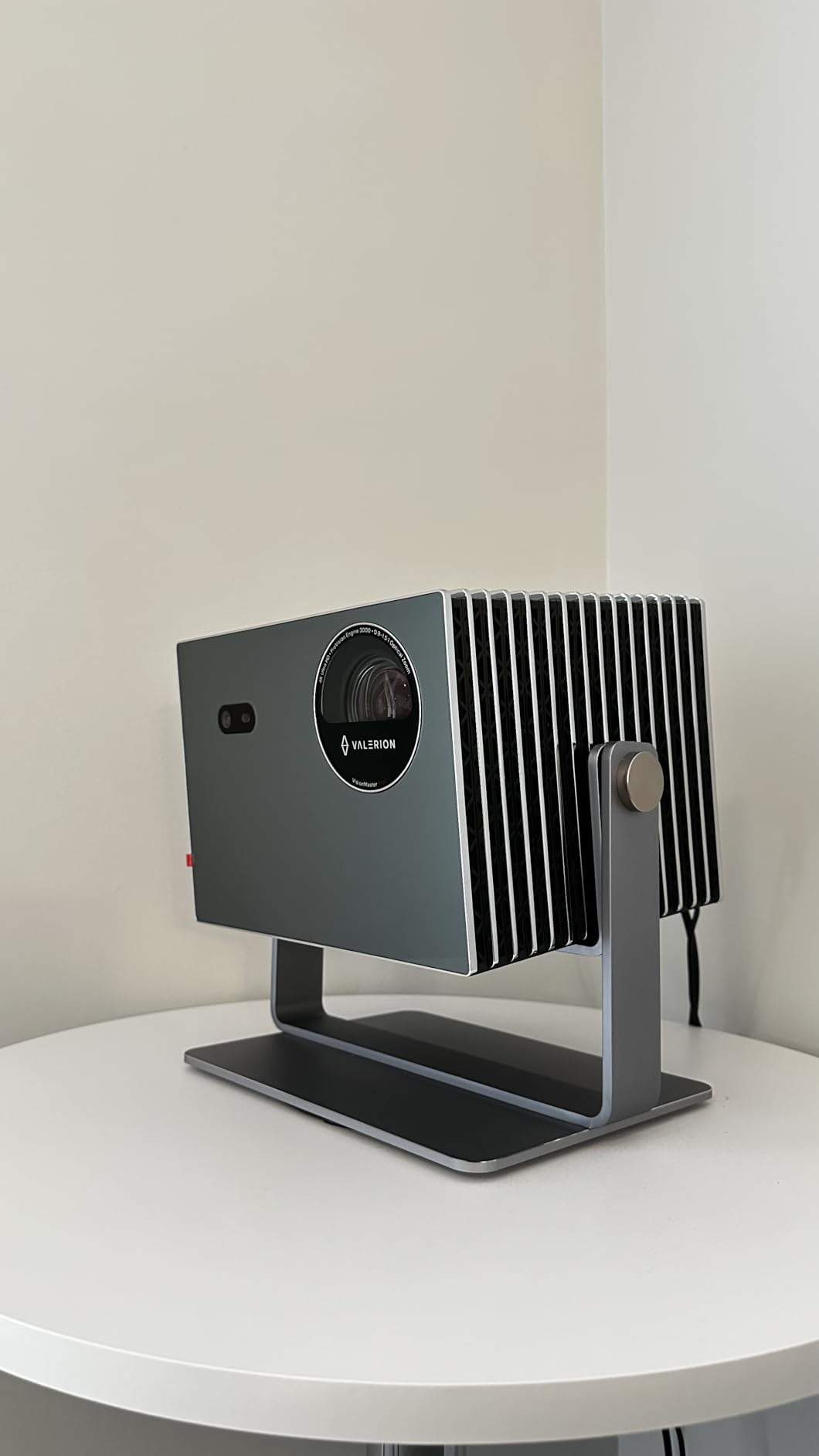
I spent the bulk of my testing time with the StreamMaster Plus2 on a 120 inch screen in a blacked-out room, and it kept surprising me. The picture has genuine depth in dark scenes, which is the hardest thing to buy in a projector below the premium tier, and the color from the RGB triple laser engine is vivid without looking artificial.
What makes this the one I recommend most often is not the picture, it is the packaging. An AVX-SR1X chipset with 4GB of RAM and 128GB of storage runs Google TV smoothly, and HDMI 2.1, Wi-Fi 6E and Bluetooth 5.2 are all present. You can stream, game and watch 4K discs without adding a single box to the rack.
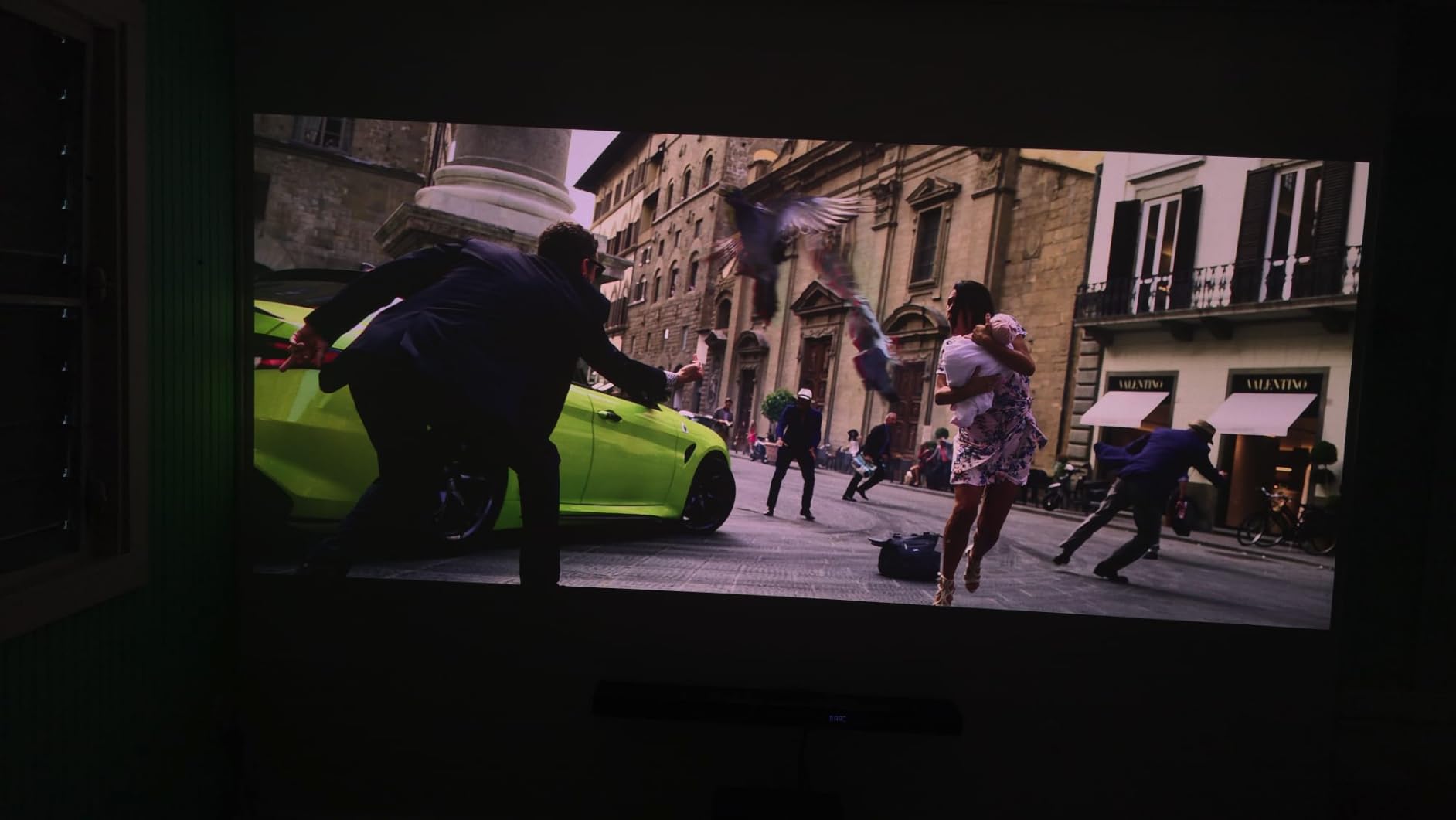
The gaming numbers are the headline. Four milliseconds of input lag with a 240Hz refresh rate means competitive shooters are genuinely playable on a 120 inch screen, and VRR support keeps tearing in check. Few projectors at this level combine a fast engine with IMAX Enhanced framing, which preserves extra image content at 1.9:1 and 1.43:1 aspect ratios.
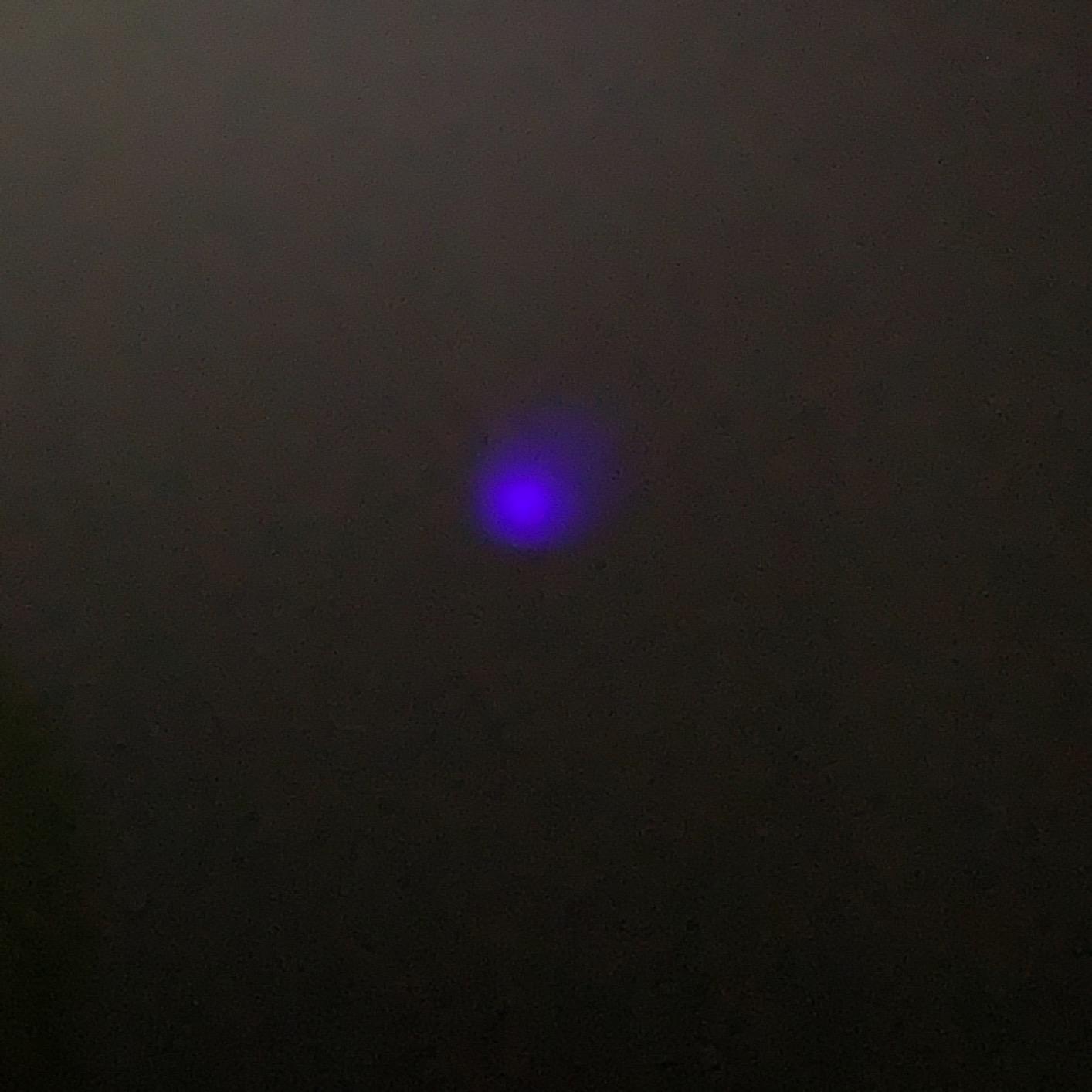
Dolby Vision and HDR10+ are both supported with dynamic tone mapping, and the enhanced black level mode is specified at 10000:1. Treat that contrast figure as a manufacturer claim rather than a native measurement, because dynamic contrast of that magnitude always involves an iris or laser dimming.
Who the StreamMaster Plus2 suits
This is the projector for someone building a room from scratch who does not want to assemble an ecosystem of boxes. The auto focus, screen alignment, obstacle avoidance and keystone tools get a first image on screen in minutes, and at 15.4 pounds it is light enough to ceiling mount without a reinforced mounting bracket.
It also suits a household that games as much as it watches. The 4ms figure is measured at the spec level, and owners consistently report the difference is obvious against projectors in the 20 to 30ms range.
Who should skip it
Skip it if any light leaks into the room. At 2000 ISO lumens this is a projector for a properly darkened space, and it will look washed out next to a shaded window in the afternoon.
Glasses wearers should try it before buying. The RGB triple laser source produces visible speckle on some screen surfaces, and if speckle bothers you the 3LCD Epson models are the safer route.
2. Epson Home Cinema 5050UB – The Picture Quality Benchmark
Epson Home Cinema 5050UB 4K PRO-UHD 3-Chip 3LCD Projector with HDR
3-chip 3LCD engine
2600 lumens
4096x2160 pixel-shifted output
24.7 lb chassis
Pros
- True 3-chip 3LCD design produces no rainbow artifacts
- Deep black levels in a dark room
- Color is accurate out of the box with little calibration
- Motorized lens with lens memory and generous shift
Cons
- Pixel-shifted rather than native 4K resolution
- Heavy at 24.7 lb so it needs permanent mounting
- 4K source switching can cause a brief blackout
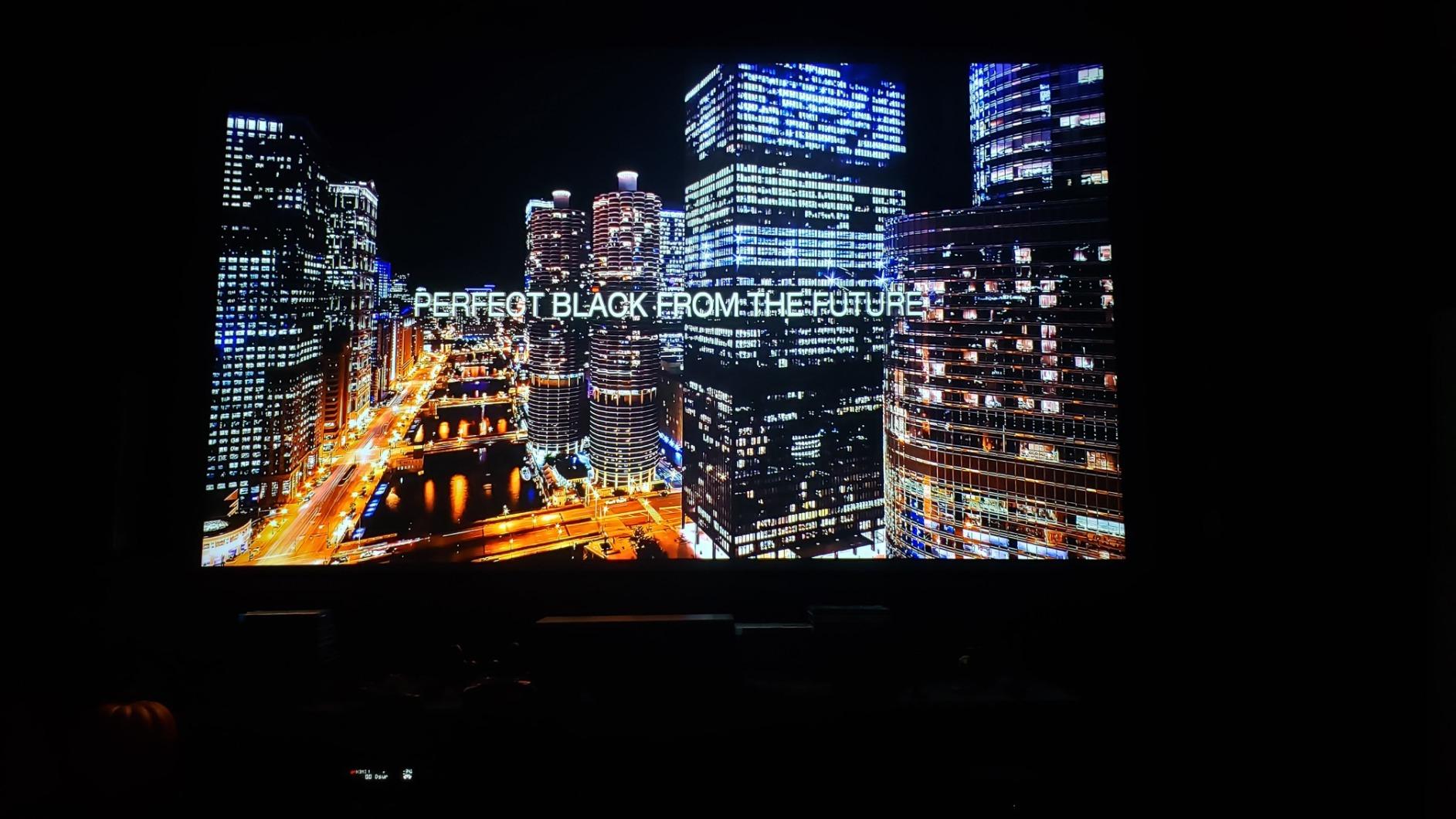
The 5050UB is the projector I recommend to people who care most about the image and least about gadgets. In a dark room the blacks sit low, the highlight detail holds up on high-nit content, and there is no visible color fringing anywhere on screen, which is the single biggest reason 3LCD keeps its loyal following.
Its 4K PRO-UHD pixel-shift processor drives three HD LCD chips in parallel to display 8.29 million pixels, and the real-time 12-bit digital imaging processor does a good job of preventing banding in dark gradients. Owners consistently describe it as rivaling far more expensive Sony units on picture quality alone.
Installation is where this projector earns its keep. The motorized lens handles zoom, focus and a generous vertical and horizontal lens shift, and lens memory lets you store positions for different screen sizes. That matters most if your ceiling mount is not perfectly square to the screen.
Two real caveats. The image can go up to 300 inches, but you want 100 to 120 inches in a normal room to keep the pixel structure invisible, and the resolution enhancement is pixel-shifted, so on an enormous screen a faint structure can show in quiet scenes.
Who the 5050UB suits
It suits dedicated theater builders who want a stable, artifact-free image and do not care about built-in streaming. Owners pair it with an external 4K media player and a 9.2 channel audio system, and the projector becomes a display component rather than a hub.
Because the lamp-based light source means no long-term laser bills either, it also suits anyone planning to keep a room for a decade rather than trade up every few years.
Who should skip it
Skip it if you plan to game at 4K 120Hz on a console. The 5050UB has no HDMI 2.1 gaming path and no low-latency mode, so competitive play feels sluggish next to a DLP model.
Skip it if you cannot mount it permanently. At 24.7 pounds this is a shelf unit, and moving it around a room for casual viewing is a two-person job.
3. BenQ TK800M – True 4K Pixels With an All-Glass Lens
BenQ TK800M 4K UHD Home Theater Projector with HDR and HLG | 3000 Lumens for Ambient Lighting | 96% Rec. 709 for Accurate Colors | Keystone for Easy Setup | 3D Capable
True 4K DLP panel
8.3 million addressable pixels
All-glass lens array
3000 lumens
Pros
- Genuine 4K UHD DLP chip with 8.3 million pixels
- All-glass 4K-optimized lens array for crisp sharpness
- 3000 lumens works with some ambient light
- 96% Rec. 709 color coverage
- Light 9.2 lb body is easy to reposition
Cons
- No lens shift so placement must be precise
- Lamp-based light source needs eventual bulb replacement
- Manual keystone only rather than auto geometry
- Built-in speakers are basic
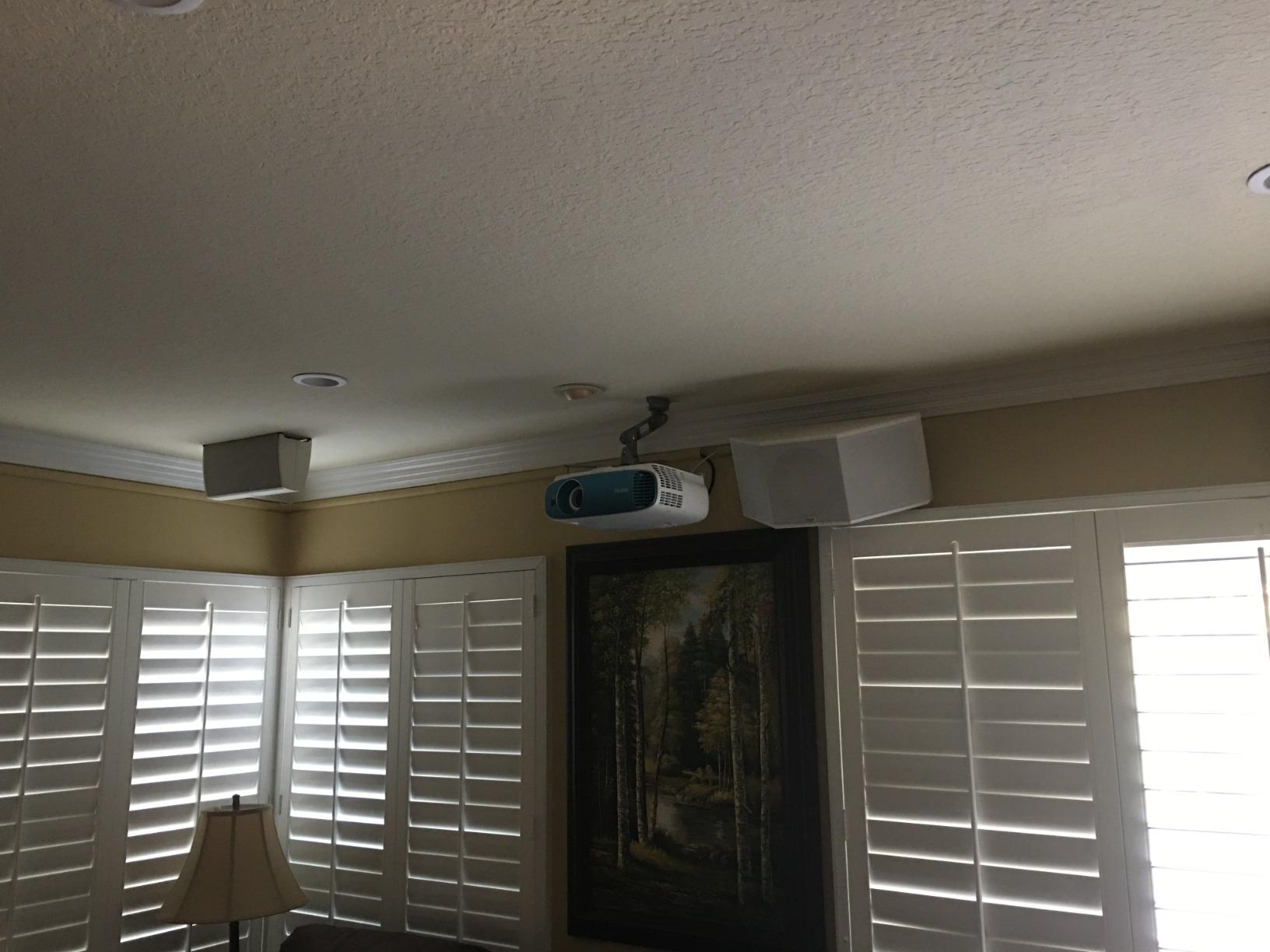
Sharpness is the TK800M’s argument. The all-glass 4K-optimized lens array uses seven elements in four groups, and on a 100 inch screen the difference against a plastic-lens projector at the same price is obvious in the corners of the frame.
Brightness is the other argument. 3000 lumens is enough to keep a 100 inch image watchable with a lamp on in the room, which is exactly the situation a lot of people mean when they say they want a home theater.
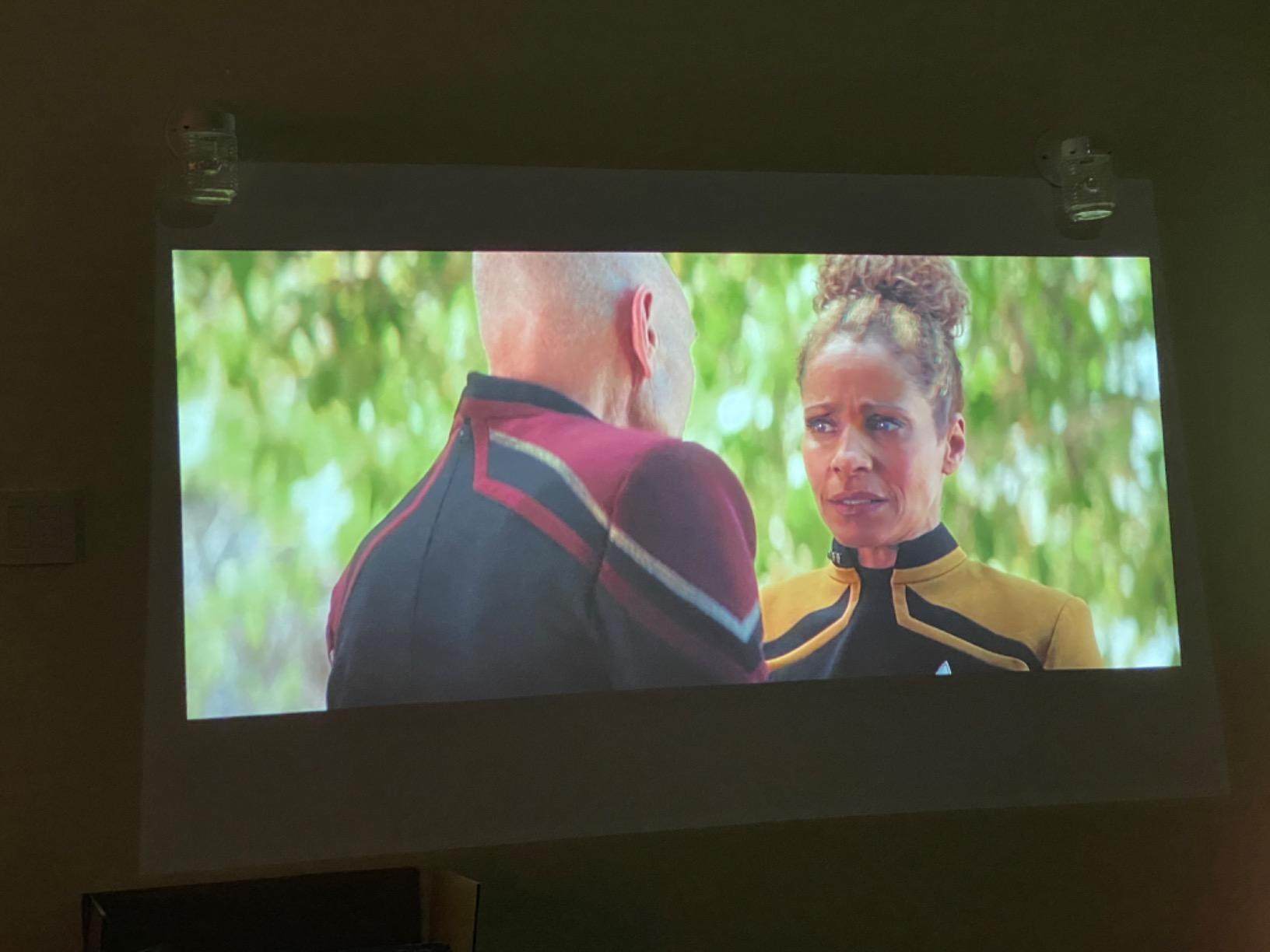
Color coverage of 96% Rec. 709 puts it in the same ballpark as broadcast HD, so it is accurate rather than showy. HDR and HLG are supported, and the projector is also 3D capable for anyone with a DLP-Link shutter glasses setup.
Connectivity suits an installed system too. Two HDMI inputs, VGA, 3.5mm audio in and out, a USB-A port for power, RS-232 and a 12V trigger mean it can drop into a control system alongside a screen and a receiver.
Who the TK800M suits
It suits someone whose theater doubles as a living room. The 3000 lumen output means you do not have to wait for dusk, and the 9.2 pound weight means moving it from a ceiling mount to a shelf for a movie night is a one-person task.
It also suits buyers who like owning a real 4K panel. The DLP chip addresses 8.3 million distinct pixels, and at typical seating distances the difference against a pixel-shifted image is subtle but measurable.
Who should skip it
Skip it if your room is dark and you care about picture quality above everything. The 10000:1 contrast figure is a dynamic number, and in a blacked-out room a 3LCD model gives you noticeably deeper blacks.
Skip it if your projector is not perfectly aligned with the screen. There is no lens shift here, only keystone correction, and digital correction costs you both sharpness and geometry accuracy.
4. Sony VPL-XW5000ES – Native 4K SXRD and Reference Color
Sony VPL-XW5000ES 4K HDR Laser Home Theater Projector with Native 4K SXRD Panel, Black
Native 4K SXRD panel
2000 lumens laser
95% DCI-P3 color
28.7 lb chassis
Pros
- Genuine native 4K SXRD panel with no pixel shifting
- X1 Ultimate processor with TRILUMINOS PRO
- 95% DCI-P3 coverage from wide dynamic range optics
- Laser light source rated up to 20000 hours
- Chassis is 20% smaller and 30% lighter than the previous flagship
Cons
- Highest outlay of any projector in this roundup
- No built-in streaming platform so an external player is required
- 2000 lumens needs a properly darkened room
The VPL-XW5000ES is the only projector here with a true native 4K panel at 3840 by 2160 pixels, and it is also the highest rated in the group at 4.7 across owners. There is no pixel shifting to think about, which means the picture is a straight function of the panel and the lens.
The X1 Ultimate processor with TRILUMINOS PRO drives over a billion colors, and the wide dynamic range optics reach 95% of the DCI-P3 gamut. In a dark room, on a proper screen, that combination produces the most cinematic image of the ten.

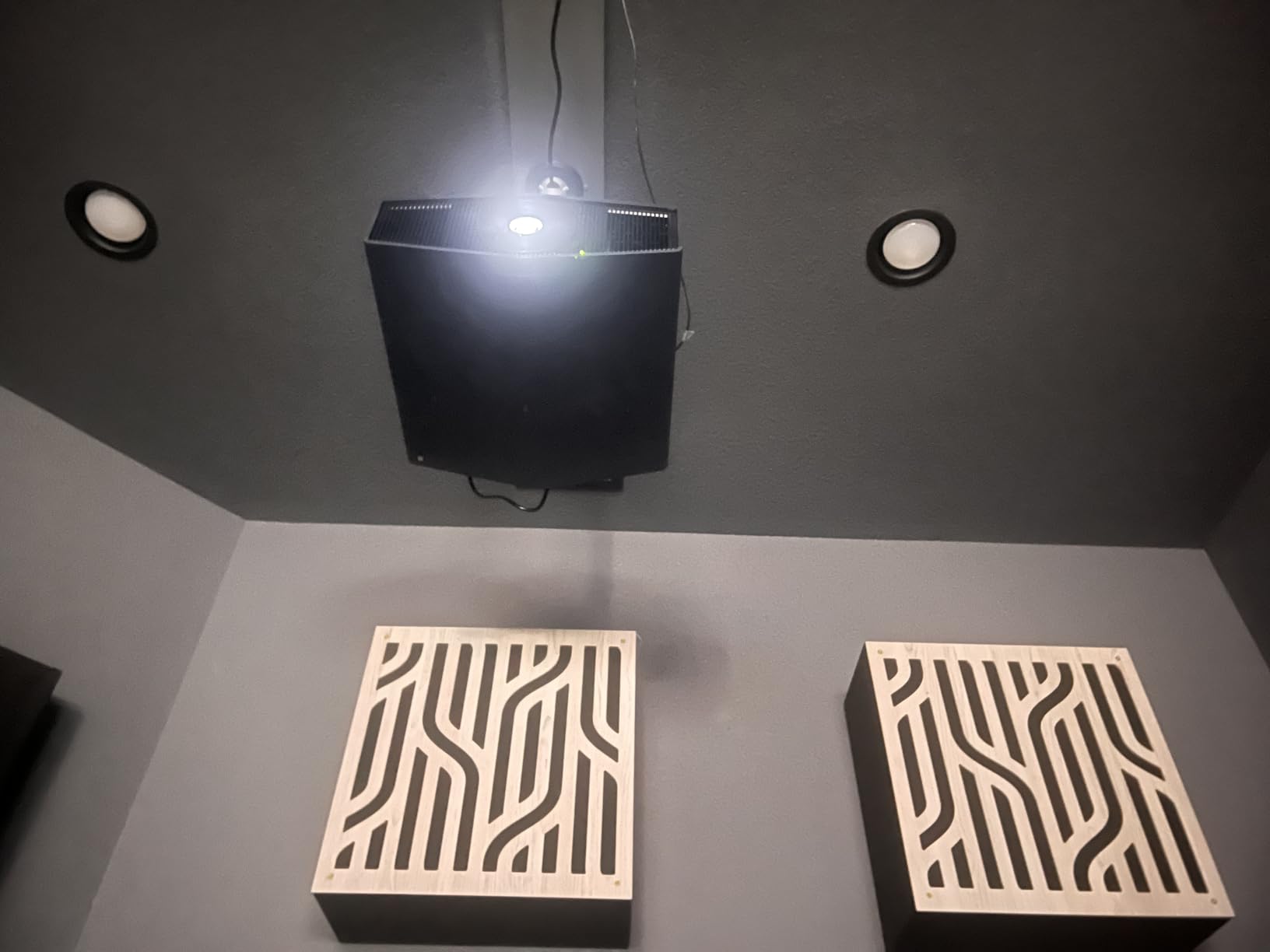
Motionflow processing handles fast panning and sports smoothly, and the chassis redesign is a real practical win. At roughly 20% smaller in volume and 30% lighter than the VPL-VW915ES it replaced, it fits into ceiling cavities that its predecessor never would.
Input lag is stated at under 21ms at 4K 60Hz and under 13ms at 2K 120Hz. That is fine for console gaming at 60Hz, and it is the one place where this projector is not class-leading.
Who the VPL-XW5000ES suits
It suits an enthusiast who has already decided on a screen, a mount and an audio system and wants the last few percent of image quality. Every review we read describes the picture as reference class with no meaningful complaints about color or sharpness.
It also suits anyone who wants the widest installation latitude, since the short-throw capability means it works closer to the screen than a typical long-throw cinema projector.
Who should skip it
Skip it if the projector is not the most important part of the budget. At the top of the price range in this roundup, the money may buy more in a screen and speakers than it does in projector refinement.
Skip it if you want built-in streaming or serious gaming latency. There is no smart platform and no HDMI 2.1 gaming path here, so you are buying a display component and nothing more.
5. XGIMI HORIZON 20 Pro – 4100 ISO Lumens With Lens Shift
XGIMI HORIZON 20 Pro 4K RGB Triple Laser Home Projector, 4100 ISO Lumens
RGB triple laser
4100 ISO lumens
1ms response at 240Hz
Lens shift and optical zoom
Pros
- 4100 ISO lumens stays watchable with lights on
- RGB triple laser color is vivid and accurate out of the box
- 1ms response with 240Hz plus VRR and ALLM
- Lens shift and optical zoom avoid digital correction
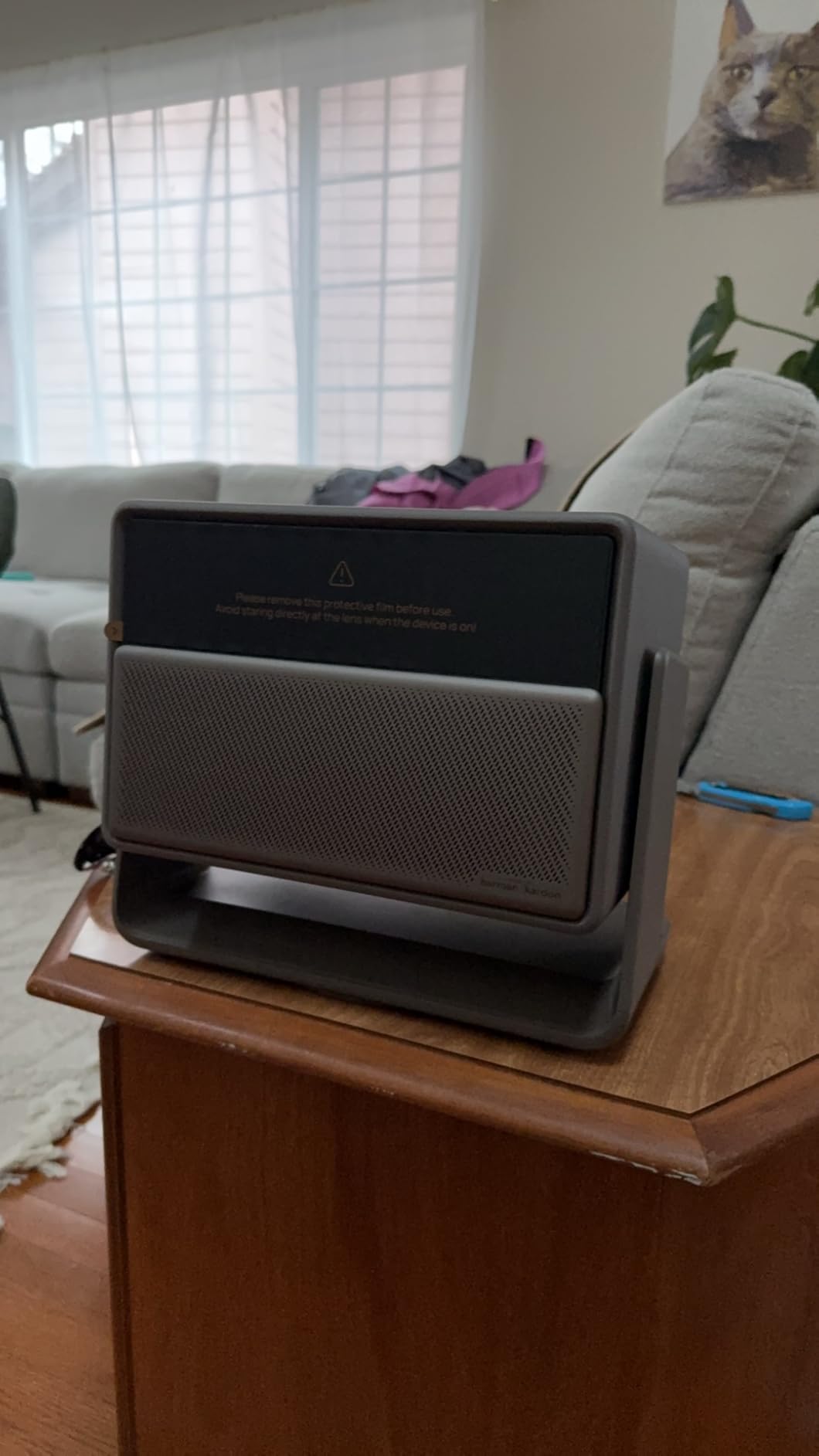
- Built-in Google TV and Harman Kardon speakers
Cons
- Triple laser can produce slight speckle and rainbow artifacts
- Auto keystone can misplace the image and needs manual correction
- Google TV lacks a full browser and blocks some apps
- HDMI ARC audio routing reportedly drops out
The HORIZON 20 Pro solves the problem that stops most dedicated-theater advice being practical. At 4100 ISO lumens it replaces a television for daytime use, so the same projector that looks stunning after dark does not look washed out at lunch.
It also has the installation hardware real theater people care about. Flexible lens shift and optical zoom let you place the projector off-center without digital correction, which protects both geometry and 4K detail.
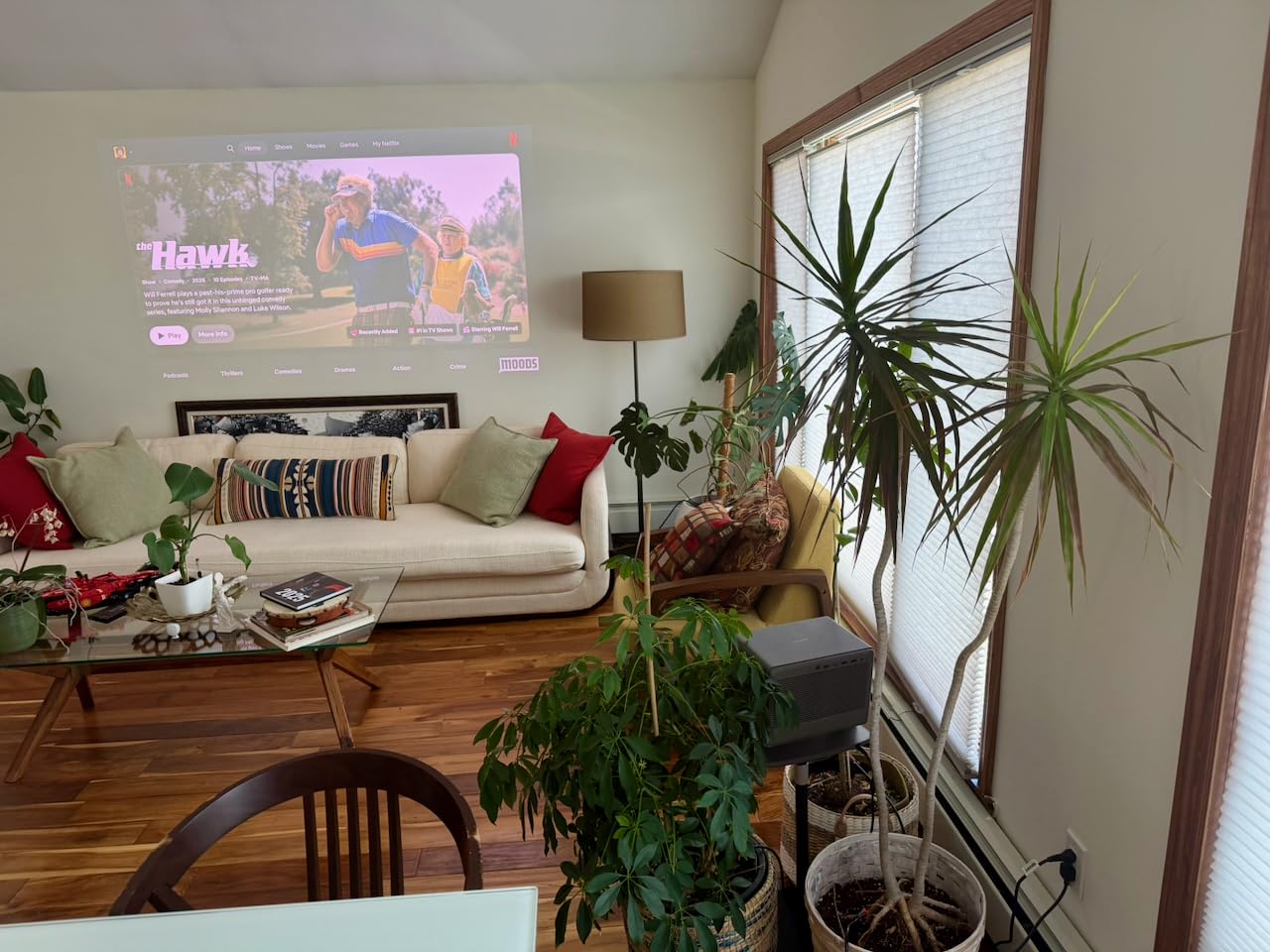
Gaming is the other strength. One millisecond response, 240Hz refresh, VRR and ALLM support make it the fastest projector in this roundup, ahead of the 4ms Valerion and the 4.2ms ViewSonic models.
Color formats are comprehensive too, with IMAX Enhanced, Dolby Vision and HDR10+ all present, and the X-Master RGB triple laser rated alongside a 20000:1 contrast figure in a compact body weighing under 11 pounds.
Who the HORIZON 20 Pro suits
It suits mixed-use households where the theater room is also where the family watches daytime television and sports. Owners report that the brightness is what makes the difference between a projector they actually turn on and one they save for movie night.
Gamers who have a console but also care about picture quality fit this profile well, since the latency figures leave room for a picture-first calibration.
Who should skip it
Skip it if software polish matters to you. Owners report flaky auto keystone that places the image incorrectly, a restricted Google TV app set with no full browser, and HDMI ARC audio dropouts that need a separate audio path.
Skip it if black level is your top priority. Owners are candid that the blacks do not reach what a good flat panel can do, and in a fully dark room a 3LCD or LCoS model shows deeper shadow detail.
6. Epson Home Cinema LS11000 – Laser 3LCD With a Full Motorized Lens
Epson Home Cinema LS11000 4K PRO-UHD Laser Projector with HDR10+
Laser array rated 20000 hours
2500 lumens
Motorized shift, zoom and focus
HDMI 2.1 with 120Hz
Pros
- True 3-chip 3LCD engine with no rainbowing and high color brightness
- Laser array light source with near-instant on
- Motorized lens with zoom
- focus and generous lens shift
- Very quiet with smooth 120Hz motion handling
- eARC passthrough to a soundbar without a receiver
Cons
- No 3D playback support
- Highest outlay among the DLP alternatives here
- At 28 lb it needs a proper ceiling mount
- Picture washes out with heavy ambient light
The LS11000 is the Epson to buy if the 5050UB is out of reach and you want the same 3LCD character with a laser light source. Owners describe it as a major step up from earlier Epson 4K models, with laser sharpness, natural color and blacks that hold up on very large screens.
The precision shift glass plate refracts pixel light to display 8.29 million pixels from three HD LCD chips, and the multi-array laser diodes are rated to 20000 hours with a near-instant on time. No lamp schedule, no bulb budget line item.
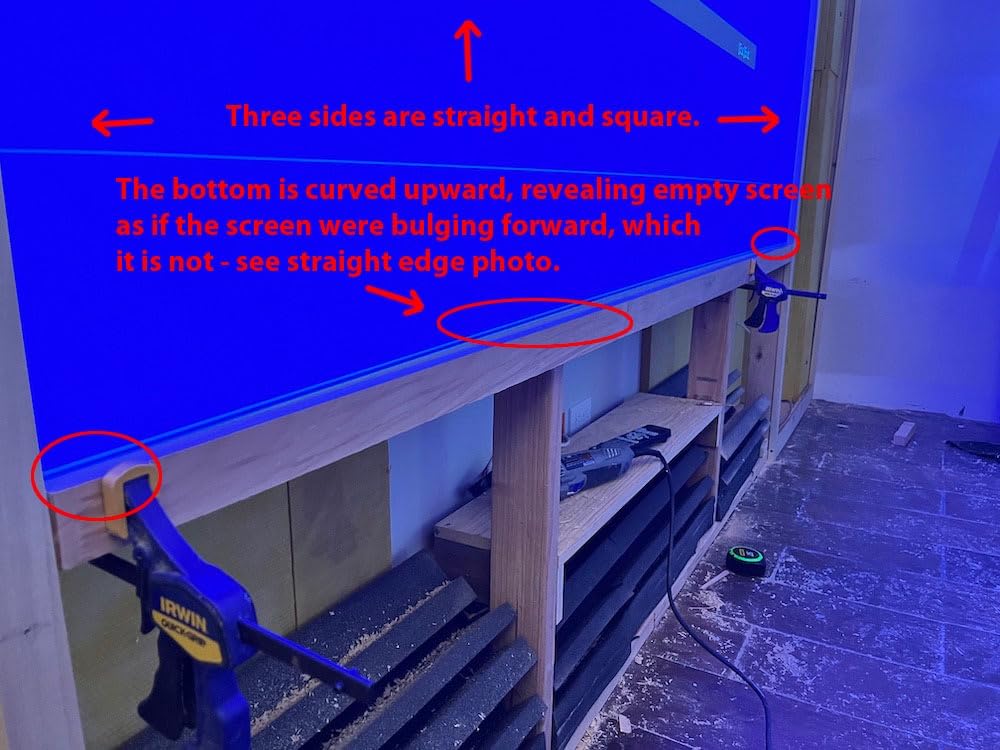
Installation is the strongest part. The Epson Cinema Lens offers motorized zoom, focus and lens shift, which combined with the wider chassis makes it the most forgiving of the fixed-lens cinema projectors here.
HDR handling is thorough, with 10-bit HDR, HDR10+ and HLG support plus a 16-step HDR curve adjustment, and HDMI 2.1 allows 4K at 120Hz. Owners coming from the 5050UB specifically call out the added pixel density and the eARC return.
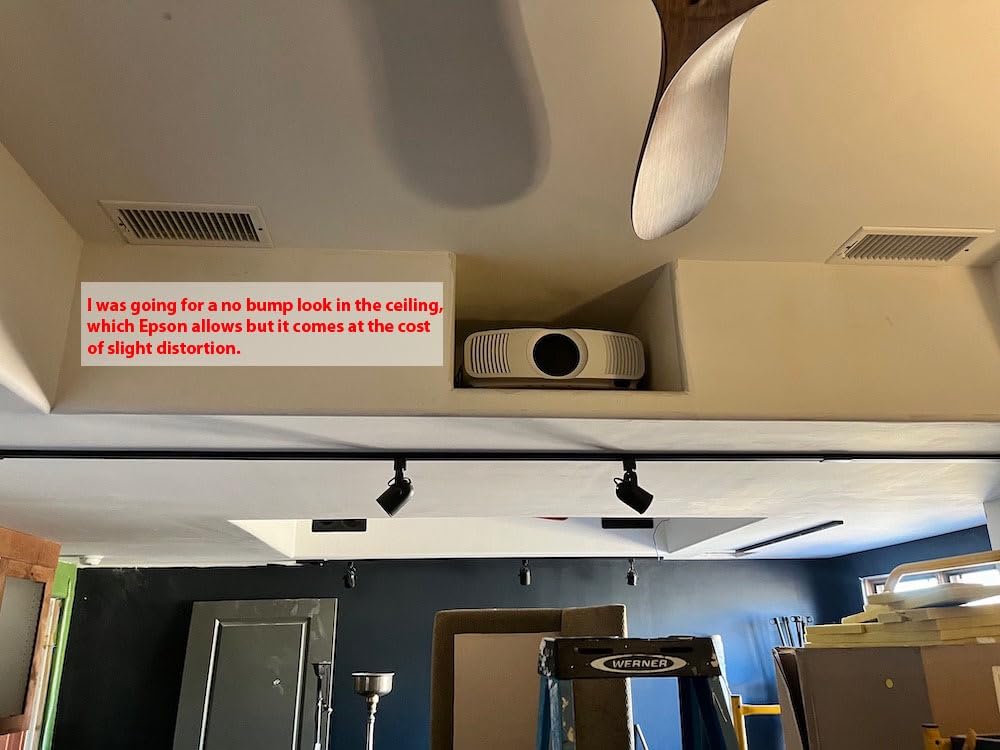
Who the LS11000 suits
It suits theater builders who want premium 3LCD image quality with a light source they will never service. The 120Hz refresh with frame interpolation also handles fast sports and pans smoothly.
Anyone without a full surround receiver will like the ARC and eARC passthrough, which sends 5.1 and Atmos audio to a soundbar without a box in between.
Who should skip it
Skip it if you watch 3D. The removal of 3D support is the most repeated complaint in owner feedback, and it is a genuine loss compared with the lamp-based Epson models it replaces.
Skip it if the room leaks light. At 2500 lumens the image is at its best in a dark room, and a bright family room washes it out fast.
7. Dangbei DBOX02 – Laser Picture With 3D and Licensed Streaming
Dangbei DBOX02 Laser Projector 4K GTV, 2450 ISO Lumens, Netflix Officially Licensed, Blu-ray 3D, Home Theater Projector with WiFi and Bluetooth, HDR10+, 200-inch Picture, 2x12W DTS:, Dolby Audio
ALPD laser rated 30000 hours
2450 ISO lumens
up to 200 inch image
Blu-ray 3D support
Pros
- ALPD laser source rated to 30000 hours with no speckle effect
- 2450 ISO lumens for a watchable daytime image
- Google TV with officially licensed Netflix
- Blu-ray 3D support with compatible sources
- Low power draw and near-silent ventilation
Cons
- Initial Google TV setup takes patience
- Some early units showed a faint rainbow effect on dark scenes
- 3D playback depends on the cable and source player
- MEMC frame interpolation is hard to disable in streaming apps
- Only a 1-year manufacturer warranty
The DBOX02 is unusual because it keeps 3D, which most of the newer laser projectors have dropped. Blu-ray 3D playback works with a compatible player and cable, and for a family that still rents 3D discs that support is worth more than most spec sheet numbers.
The ALPD laser light source is rated to 30000 hours and is specified as producing no speckle effect, which makes it a comfortable choice for glasses wearers who dislike the shimmer some RGB laser models create.
At 2450 ISO lumens the image holds up from 60 up to a 200 inch diagonal, and owners describe picture quality that rivals their televisions at 100 to 150 inches. Google TV with officially licensed Netflix and 10000+ apps removes the dongle from the equation.
Audio is better than most projectors manage, with dual 12W speakers running Dolby Audio and DTS:X, and dual HDMI including eARC for a soundbar. Setup tools cover auto focus, auto keystone, screen fit and obstacle avoidance.

Who the DBOX02 suits
It suits 3D movie owners and anyone who wants a speckle-free laser engine. The compact cube form factor and InstanPro AI autofocus make it a good fit for a room where the projector will not be permanently mounted.
Streaming households get a fully licensed Google TV build, which sidesteps the unofficial platform problem some competitor units still have.
Who should skip it
Skip it if you hate setup menus. Owners repeatedly mention the first-run Google TV configuration and the slow menu navigation that follows.
Skip it if you are sensitive to motion artifacts, since the MEMC frame interpolation cannot be reliably disabled inside streaming apps and some viewers find the smoothing distracting.
8. ViewSonic LS901-4K – The Brightest and the Only Native 21:9
ViewSonic LS901-4K 4K UHD Laser Projector 5500 Lumens, HDR Home Theater
5500 ANSI lumens laser
Native 21:9 aspect ratio
1.7x optical zoom
240Hz with 4.2ms lag
Pros
- Brightest output here at 5500 ANSI lumens for large lit spaces
- Laser light source rated to 20000 hours with no lamp replacement
- Native 21:9 ratio gives a genuinely cinematic frame
- 1.7x optical zoom plus H/V keystone eases installation
- 240Hz refresh with 4.2ms input lag handles fast gaming
Cons
- No built-in smart TV platform so a streaming device is needed
- Only 30 reviews so long-term owner feedback is limited
- High brightness and 21:9 framing need a large screen
- Not a short-throw model so it needs distance from the screen
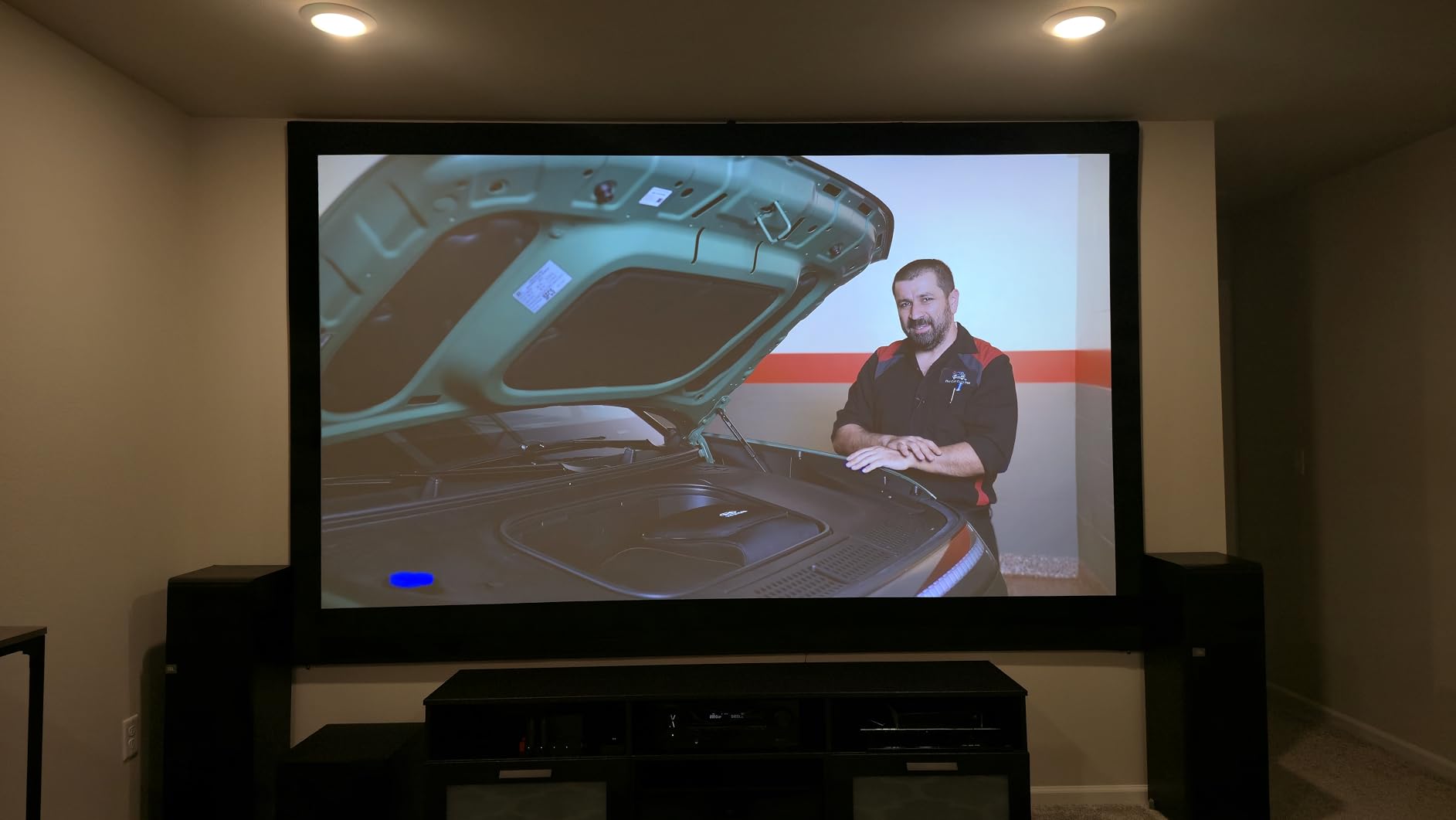
At 5500 ANSI lumens the LS901-4K has more light output than anything else in this roundup by a wide margin. On a 150 inch screen in a room with curtains drawn, you have brightness to spare, and you can even keep a lamp on without the picture falling apart.
The native 21:9 aspect ratio is the feature that sets it apart. Most projectors project 16:9 and letterbox a scope film; this one puts a genuine 2.39:1 frame on the screen without software cropping, and it images from 30 up to 300 inches.
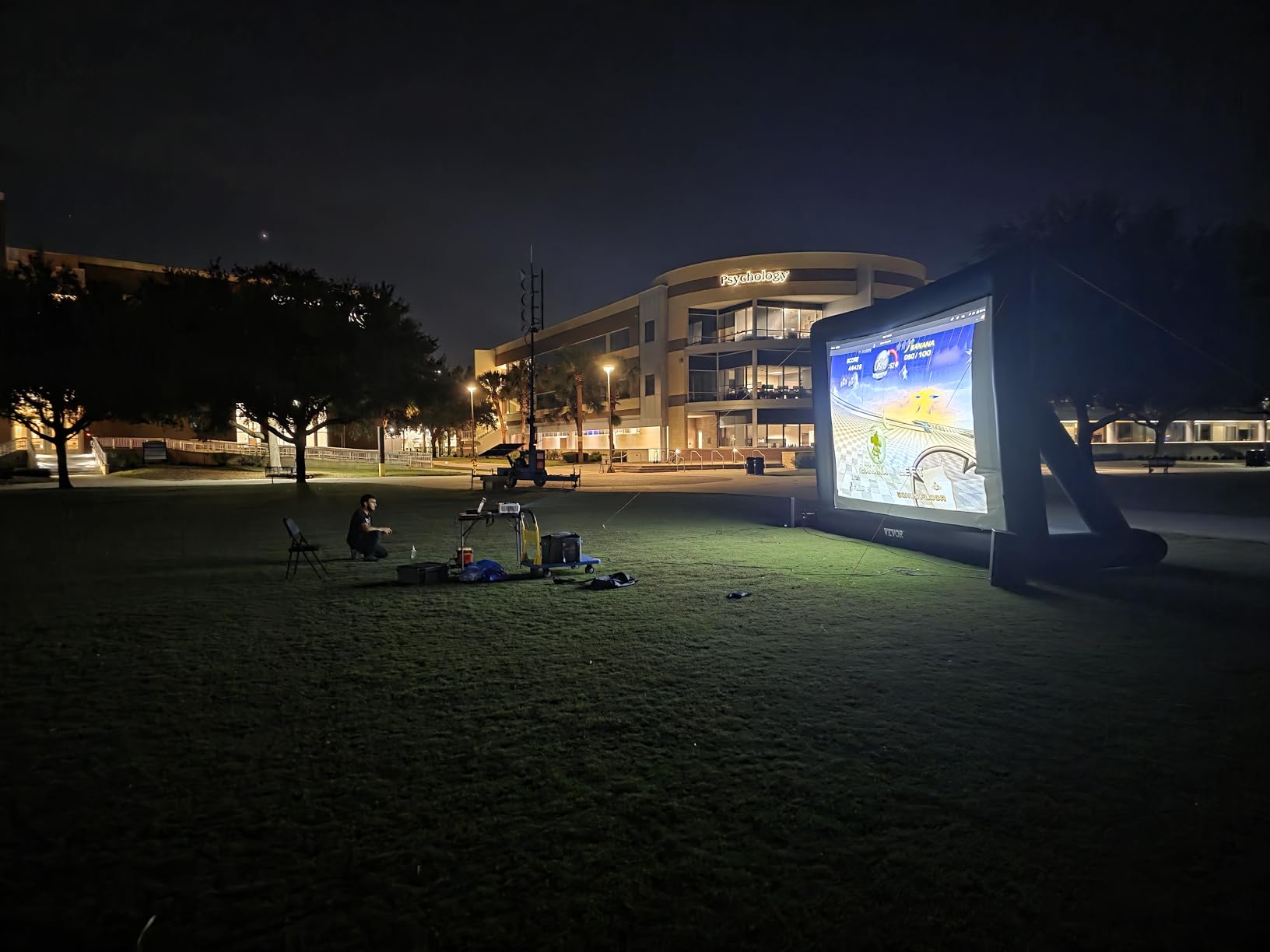
Installation gets help from the 1.7x optical zoom, which is the widest in this group, plus horizontal and vertical keystone and curved screen projection support. It is not a short-throw model, so give it the distance it needs.
Gaming is fine at 240Hz with 4.2ms input lag, and there is a dedicated golf simulation mode with an environmental color boost for anyone who wants to use the brightness on something other than movies.
Who the LS901-4K suits
It suits very large rooms and very large screens, where a 2500 lumen projector would need every light in the house turned off. Reviewers note that it holds a clear, punchy 4K image across the biggest displays because of the light reserve.
Scope film fans who care about the shape of the frame, not just the pixel count, get something the other models here do not offer.
Who should skip it
Skip it if you want a self-contained system. There is no smart TV platform built in, so a streaming device is required, and most of the connections are basic dual HDMI with USB and audio.
Skip it if you are risk-averse about long-term support. With only 30 reviews, there is a thinner base of long-term owner feedback here than anywhere else in the group.
9. ViewSonic PX701-4K – Small, Bright and Built for Latency
ViewSonic PX701-4K UHD Projector, 3200 Lumens, 240Hz HDR, Auto Keystone DLP
3200 ANSI lumens
240Hz with 4.2ms input lag
6.2 lb body
1.1x optical zoom
Pros
- 240Hz refresh and 4.2ms input lag for competitive gaming
- 3200 ANSI lumens keeps the image usable with ambient light
- Light 6.2 lb body with 1.1x optical zoom for flexible placement
- Auto keystone plus four-corner adjustment
- Powered USB-A port for a streaming dongle
Cons
- Lamp light source rated at about 6000 hours
- Dark scenes can look flat against higher-contrast models
- Some buyers report rainbow artifacts on DLP chip shifting
- Lamp replacement eventually required
The PX701-4K is the one to consider when the room is small, the budget is modest and the main event on the screen is a console. With 240Hz refresh and 4.2ms input lag, it plays alongside dedicated gaming projectors at a fraction of the weight.
At 6.2 pounds it is the easiest projector in this roundup to move between a shelf and a ceiling mount, and the 1.1x optical zoom gives you a little placement latitude in a tight room.

3200 ANSI lumens is a genuinely useful figure for a media room, and owners highlight the combination of responsiveness and brightness as the reason the image stays watchable with lights on.
Setup is assisted rather than manual, with auto keystone and four-corner adjustment, plus curved screen projection support. Connectivity is dual HDMI and a USB-A port with power, which is where you plug a streaming dongle since there is no smart OS.
Who the PX701-4K suits
It suits gamers on a budget, and it suits renters or anyone who moves house often. The 3-year limited warranty is also the longest coverage in this group alongside the laser ViewSonic.
It also suits smaller rooms where a 100 inch screen is already the right size, since you are not paying for light output you will never use.
Who should skip it
Skip it if you are a black-level purist. The 12000:1 contrast figure is dynamic, and owners note that dark scenes look flat next to a proper home cinema projector in a fully darkened room.
Skip it if you are sensitive to rainbow artifacts. Some buyers report them on the DLP chip shifting, and if that bothers you, pick the Epson 3LCD models instead.
10. LG CineBeam HU70LA – A Rainbow-Free LED for Small Rooms
LG CineBeam UHD 4K Projector HU70LA – DLP Home Theater Smart Projector with Alexa Built-In, White
Wheel-less RGB LED source
30000 hour light source
1500 lumens
1.25x remote zoom
Pros
- Wheel-less LED RGB source avoids DLP rainbow artifacts entirely
- 30000 hour light source with no bulb changes
- Compact 7.1 lb body with remote 1.25x zoom
- Alexa and Google Assistant built in
- webOS Lite with major streaming apps
Cons
- 1500 lumens is the lowest output here and needs a dark room
- 140 inch maximum image is smaller than most rivals
- LED light output declines over time and is not user-replaceable
- webOS Lite interface feels dated
The HU70LA solves one problem completely. Its wheel-less LED engine with 4-channel RGB and dynamic green produces no rainbow artifacts at all, which makes it the safe pick for anyone who has been burned by single-chip DLP before.
The second win is longevity. The light source is rated to 30000 hours, there is no lamp, and at 7.1 pounds with a remote 1.25x zoom it is easy to place and easy to move between rooms.
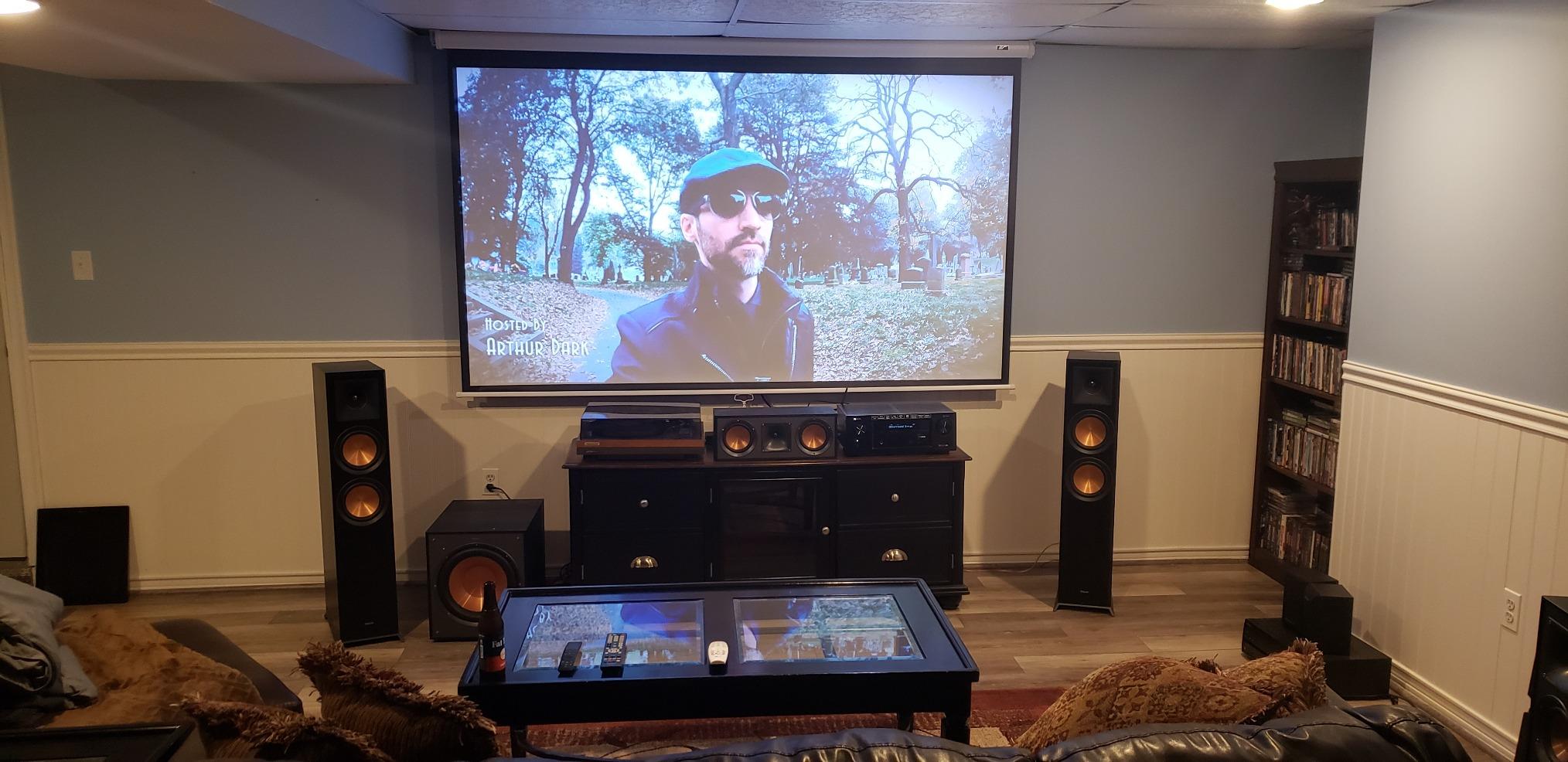
Smart features are basic but useful, with webOS Lite offering Netflix, Amazon Prime and VUDU, plus AI ThinQ with Google Assistant and Alexa built in. That covers casual viewing without another box.
HDR10 with dynamic tone mapping and TruMotion handles high-contrast content, and the resolution comes from XPR pixel shifting to 8.3 million pixels. The image size range is 60 to 140 inches.
Who the HU70LA suits
It suits rainbow-sensitive viewers and glasses wearers who want a projector with no DLP color wheel. It also suits anyone who wants to set a projector up once and forget about maintenance.
Smaller rooms suit it well, since at 1500 lumens a 100 inch image in a dark room is the sensible target and anything larger will look soft.
Who should skip it
Skip it if your room has any light in it. At 1500 lumens this is the dimmest projector here, and owners consistently describe it as needing a darkened room to look its best.
Skip it if you want a large image or a modern interface. The 140 inch ceiling is restrictive compared with rivals, and the webOS Lite platform feels dated against Google TV units.
How to Choose a 4K Projector for a Dedicated Theater Room
Almost every mistake we see in projector buying comes down to treating the projector as the whole system. It is the display, not the theater. Screen, mount, audio, cabling and light control decide how good the result looks, and each of them costs something that should be budgeted before you shop.
Start with the room, not the spec sheet. Measure your seating distance first, decide your screen diagonal from that, then work backwards to throw distance and brightness. Seating and comfort planning for a long viewing session matters as much as the optics, so our picks for comfortable seating in a home space are worth reading before you commit to a screen size.
Read brightness claims correctly: ANSI versus ISO lumens
ANSI lumens and ISO lumens are measured differently, which is why two projectors with identical headline numbers can look nothing alike. ANSI uses a weighted average that tends to flatter a projector, while ISO lumens are measured with a stricter method that many manufacturers consider unflattering.
The practical rule is simple: never compare an ISO number from one brand to an ANSI number from another. Within the same standard, compare freely. In this roundup the BenQ TK800M and ViewSonic PX701-4K are quoted in ANSI lumens, while the Valerion, Dangbei and XGIMI use ISO figures.
Then apply the room rule. A fully darkened dedicated room looks good with roughly 1500 to 2000 lumens on a 100 to 120 inch screen. A semi-dark media room wants 2500 to 3500 lumens. A bright living room needs 4000 lumens or more, and at that point you are fighting daylight rather than projecting.
Native 4K versus pixel-shifted 4K
There are three ways a projector here claims 4K, and the difference matters less than spec sheets suggest. A native 4K panel like the Sony SXRD shows 3840 by 2160 pixels directly. XPR fast-switch pixel shifting, used by the BenQ, LG and ViewSonic DLP models, shifts a 1080p image at high speed so each eye sees the full pixel count.
Epson’s 4K PRO-UHD takes a different route, driving three HD LCD chips in parallel with a precision shift glass plate to display 8.29 million pixels. All three approaches reach the same stated pixel count.
At normal seating distances on a 100 to 135 inch screen, the difference between native and pixel-shifted 4K is hard to see. Contrast, black level, lens quality and color accuracy matter more, which is why the Epson 3LCD models and the native Sony panel can outperform brighter DLP models on picture quality.
Throw distance and screen size
Screen size is decided by how far you sit from it, not by what the projector can do. A common target is roughly 10 to 12 feet of seating distance for a 120 to 135 inch image, and beyond 150 inches most rooms run into sightline problems with the back row.
Standard throw projectors typically need a distance from the screen roughly equal to 1.2 to 1.6 times the image width, so a 120 inch 16:9 image is about 10.6 feet wide and wants 13 to 17 feet of throw. Short throw models compress that to roughly half, and ultra-short-throw models project from inches away onto an ALR screen.
Before buying, check whether your projector has lens shift. Without it, you must physically align the lens with the screen center, and keystone correction is a fallback that softens the image. Four of the picks here have lens shift or generous optical zoom, which is the single most useful installation feature you can pay for.
Laser, LED or lamp: light source life and upkeep
Lamp projectors use a UHP bulb rated for roughly 4000 to 6000 hours. That is a real running cost spread over five years of nightly use, and the bulb eventually fades before it fails. The BenQ TK800M and ViewSonic PX701-4K are the two lamp-based models here.
Laser sources are rated far higher. The Epson LS11000 and Sony use 20000 hour laser arrays, the ViewSonic LS901-4K is also rated to 20000 hours, and the Dangbei DBOX02 claims 30000 hours from its ALPD engine. There is no bulb and no replacement labor.
LED, as in the LG HU70LA, also lands around 30000 hours and adds the advantage of a wheel-less light path with no rainbow artifacts. The tradeoff is that LED light output typically declines gradually and cannot be user-replaced, so the projector ages rather than failing.
Rainbow artifacts and laser speckle: who should worry
Rainbow artifacts, or RBE, are colored fringes caused by single-chip DLP color wheels. They appear mostly on dark scenes with bright text or subtitles. Most people never see them, a meaningful minority see them constantly, and the fix is technology rather than settings.
The rule of thumb: 3LCD projectors such as both Epsons have no color wheel at all and are completely free of the effect. The LG HU70LA uses a wheel-less LED engine for the same reason. Among DLP models, the Dangbei DBOX02 and the Valerion are the ones with the most owner reports of faint rainbow effects, while triple-laser RGB engines including the XGIMI can show both speckle and faint fringing in setup menus.
Laser speckle is the related issue with RGB triple laser sources. It looks like a faint grain that can bother some viewers on matte screens, so if you know speckle bothers you, pick a single-laser ALPD engine or a 3LCD projector instead.
What else a theater setup needs beyond the projector
Budget for a screen, a mount, audio and cabling before you pick the projector, because upgrading a mismatched screen later is common and disappointing. If your current screen is a white matte unit sized for an older 1080p projector, a 4K image on it can look worse than the projector deserves.
Light control is free by comparison. Dark wall and ceiling paint, blackout curtains on any window, and an ambient light rejecting screen if a little light is unavoidable will improve the picture more than any projector in this roundup.
Audio matters as much as light output for a theater experience, and the built-in speakers in these projectors range from basic to usable. None of them replaces a soundbar or a surround system, and only the Valerion and Dangbei include eARC for a clean one-cable connection to a soundbar.
Frequently Asked Questions
What is the best projector for a home theater?
For a dedicated room with light control, the Valerion StreamMaster Plus2 is the best all-in-one choice because it combines an RGB triple laser engine, 4ms input lag, IMAX Enhanced and built-in Google TV in one chassis. If you want maximum picture quality with no rainbow artifacts, the Epson Home Cinema 5050UB is the benchmark, and the Sony VPL-XW5000ES goes further with a native 4K SXRD panel.
Which type of projector is best for home theater?
For a dedicated theater, DLP and 3LCD are the two mainstream choices. Three-chip 3LCD gives no rainbow artifacts and strong color brightness, which makes Epson models a safe pick for sensitive viewers. Single-chip DLP models are sharper and faster for gaming, and LCoS models like the Sony deliver the deepest blacks and widest theater-grade color. The light source matters more than the engine once the room is dark.
How bright should a home theater projector be?
A fully darkened dedicated room needs roughly 1500 to 2000 lumens on a 100 to 120 inch screen. A semi-dark media room wants 2500 to 3500 lumens, and a bright living room needs 4000 lumens or more. Compare lumens using the same standard across brands, since ANSI and ISO figures are measured differently and are not directly comparable.
Do I need a projector screen for 4K?
You do not need a special 4K screen, but you do need a screen that matches your projector and room. In a fully dark dedicated room a standard matte white screen of around 1.0 to 1.3 gain is ideal. If some ambient light is unavoidable, an ambient light rejecting screen helps, and matching the screen diagonal to your throw distance matters more than the material.
Is native 4K worth it in a projector?
At normal seating distances on a 100 to 135 inch screen, native 4K and pixel-shifted 4K are hard to tell apart. XPR fast-switch shifting and Epson 4K PRO-UHD both reach roughly 8.3 million pixels, and community consensus treats contrast, black level, lens quality and color accuracy as the more meaningful differences. Native 4K matters most on very large screens and for 4K gaming at high refresh rates.
Conclusion: The Best 4K Projectors for Home Theaters in 2026
Ten projectors later, the pattern in the best 4K projectors for home theaters is clear: the dark-room models win on picture, and the bright-room models win on practicality. Our pick, the Valerion StreamMaster Plus2, sits in the middle of that trade with a triple laser engine, class-leading latency and no extra boxes needed.
Buy the Epson Home Cinema 5050UB if picture quality and freedom from rainbow artifacts matter most, the BenQ TK800M if the room is not perfectly dark and you want a real 4K panel with a glass lens, and the Sony VPL-XW5000ES if budget is not the deciding factor.
Measure your room, set your screen size from your seating distance, and treat light control as part of the budget. Whatever you choose, check the current price and read recent owner reviews before you commit.