
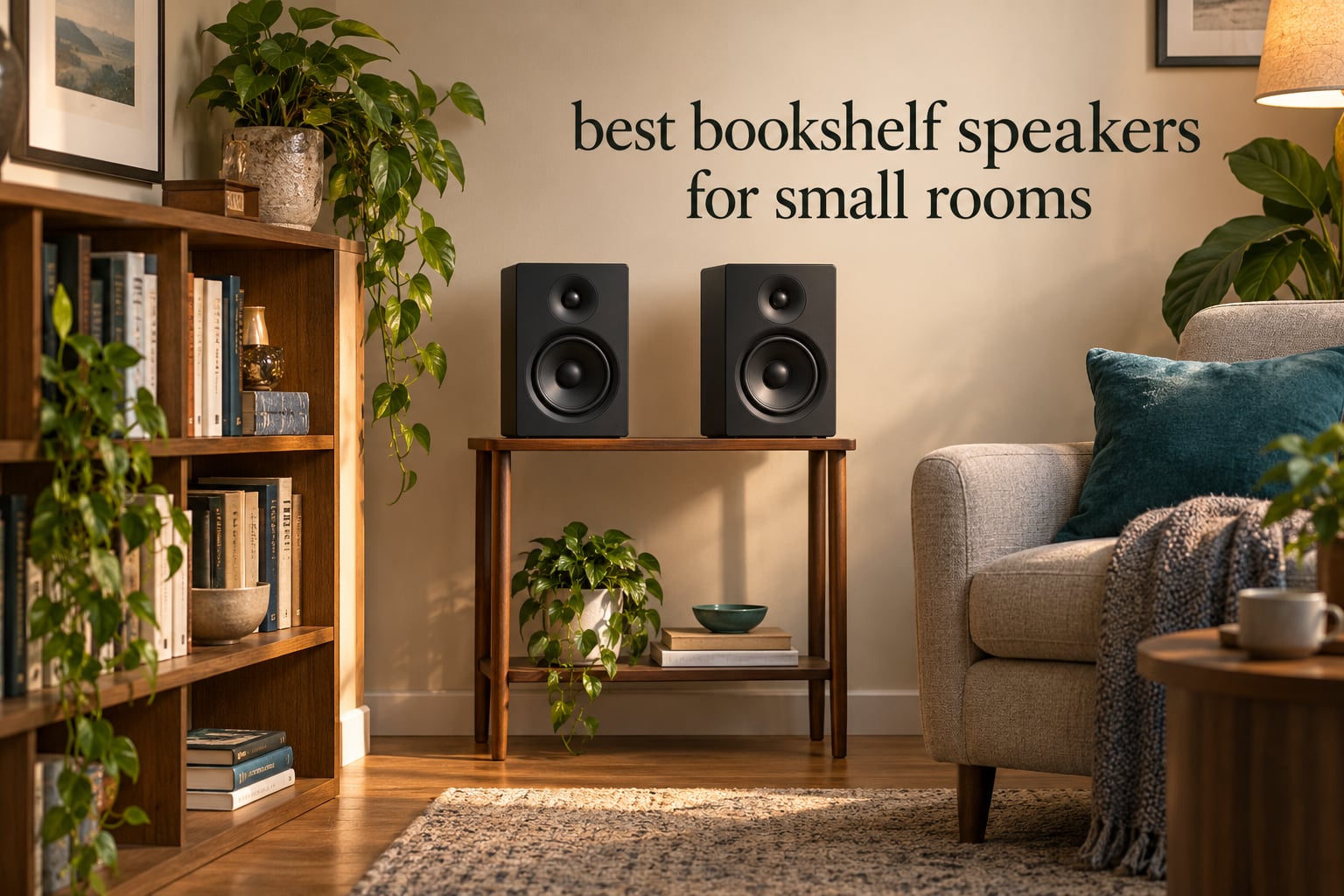
The best bookshelf speakers for small rooms are compact, front-ported or sealed models that either come with their own amplifier or are sensitive enough to be driven by a small one. A powered 4-inch pair on a stand handles most bedrooms, home offices and apartments without an amplifier, and it frees up the shelf or stand that a receiver would otherwise occupy.
That is the short version, and it is the same answer the forums keep arriving at. Over the last few weeks our team compared 12 pairs of bookshelf speakers rated for rooms roughly the size of a bedroom or a study, weighing cabinet depth, port placement, sensitivity and power handling against what actually fits on a shelf or a stand.
Small rooms punish the wrong cabinet in ways big rooms hide. Walls add low-frequency reinforcement, so a rear-ported speaker shoved flat against plaster sounds boomy and muddy no matter how good the drivers are. That is the single most common complaint in audio forums, and the reason we weighted port placement and enclosure type so heavily here.
If you want the shortlist before the detail, the table below covers every pair we tested. Every pick is a real product with published specifications, and each section tells you which room it suits and where it struggles.
One more thing before we start. Whether the speakers sit on an open shelf or inside a filled bookcase changes the answer completely, and so does the height of your listening position. If you are still working out the physical constraints, our guide to choosing wood for a bookshelf is worth a look, since a loaded bookcase changes both the acoustics and the load-bearing question.
Table of Contents
Top 3 Picks for Best Bookshelf Speakers for Small Rooms in October
These three cover the most common small-room situations: a powered pair for a bedroom, a passive pair for a home theater, and a value passive option for a first system.

Edifier R1280T
- 42W RMS powered
- 4 inch full-range driver
- 13mm silk dome tweeter
- Dual AUX input with remote
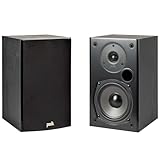
Polk Audio T15
- 5.25 inch Dynamic Balance driver
- 8 ohm passive
- 100 watt power handling
- Wall mountable with keyhole slot

Klipsch R-51M
- Horn-loaded 1 inch aluminum tweeter
- Dual 5.25 inch spun-copper woofers
- Rear-firing bass reflex port
- 340 watt power handling
Best Bookshelf Speakers for Small Rooms in 2026
Every pair in this roundup, with the specs that matter most in a tight room: driver size, power handling, and whether you need an amplifier.
| Product | Specs | Action |
|---|---|---|
| Edifier R1280T |
|
Check Latest Price |
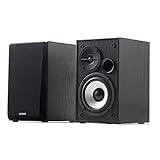 Edifier R980T Edifier R980T |
|
Check Latest Price |
| Polk Audio T15 |
|
Check Latest Price |
| Klipsch R-51M |
|
Check Latest Price |
 Sony SS-CS5M2 Sony SS-CS5M2 |
|
Check Latest Price |
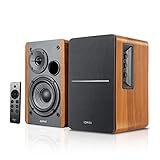 Edifier R1280DBs Edifier R1280DBs |
|
Check Latest Price |
 Polk Audio Monitor XT15 Polk Audio Monitor XT15 |
|
Check Latest Price |
 Audio-Technica AT-SP3X Audio-Technica AT-SP3X |
|
Check Latest Price |
 Micca OoO Micca OoO |
|
Check Latest Price |
 Micca COVO-S Micca COVO-S |
|
Check Latest Price |
 Kanto YU2 Kanto YU2 |
|
Check Latest Price |
 JBL Professional C1PRO JBL Professional C1PRO |
|
Check Latest Price |
1. Edifier R1280T Powered Bookshelf Speakers – Best Overall for Small Rooms
Edifier R1280T Powered Bookshelf Speakers -2.0 Near Field Studio Monitor
Powered 42W RMS
4 inch full-range driver
13mm silk dome tweeter
4 ohm, 80 hertz response
Pros
- 42W RMS means no amplifier needed
- Dual AUX inputs keep two sources connected
- Side-panel bass and treble knobs
- Wood-effect MDF cabinet suits home decor
Cons
- Limited real bass extension for film
- No wireless connectivity
- EQ limited to analog side-panel knobs
The R1280T is the pair we keep coming back to for small rooms because it removes the single biggest decision a buyer faces. Amplification is built in at 42 watts RMS, so there is no receiver taking up a shelf and no wall of speaker cable behind the furniture.
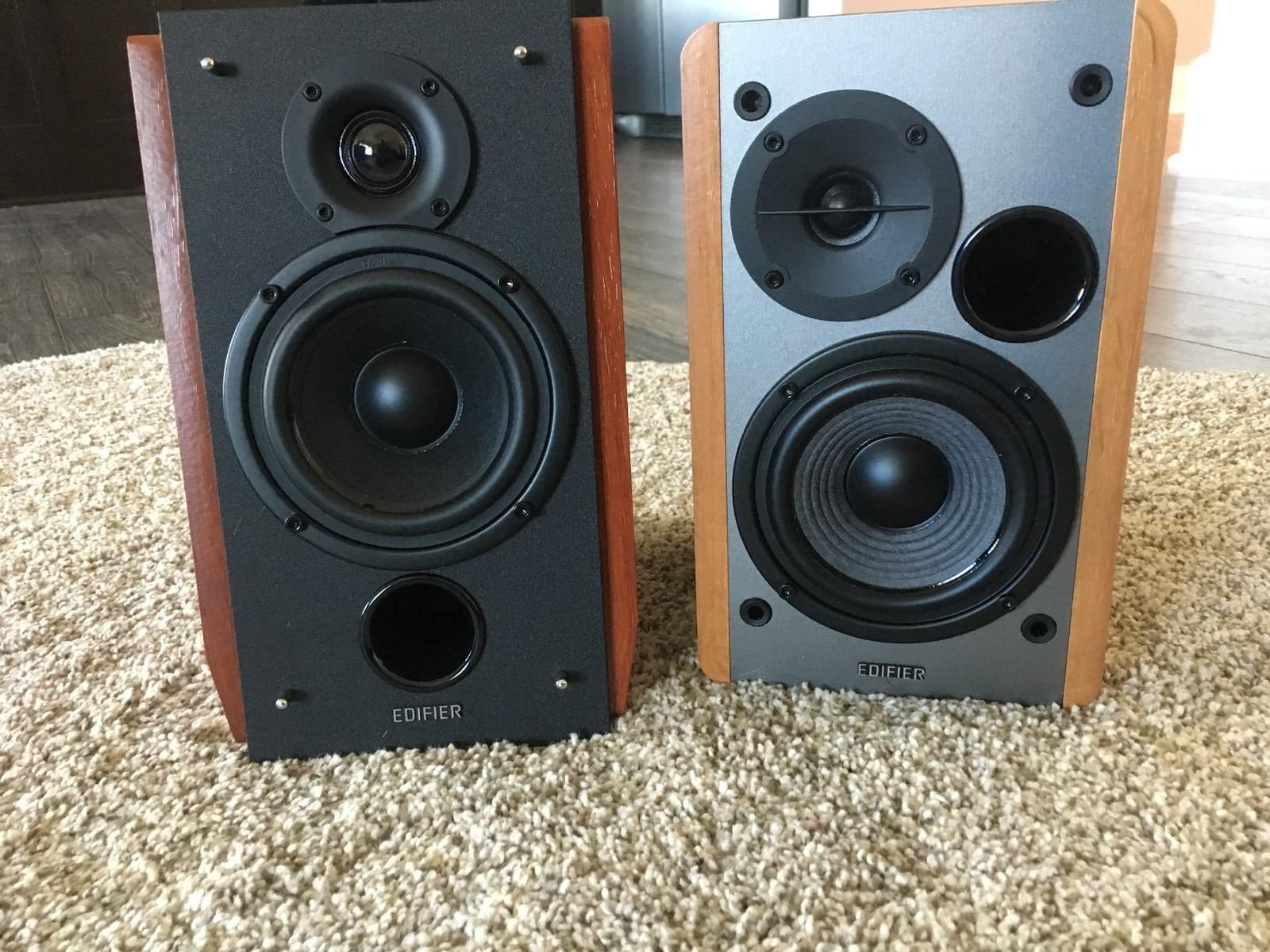
Sonically it is a 4-inch full-range driver paired with a 13mm silk dome tweeter, tuned toward a natural, balanced presentation rather than a dramatic one. That restraint suits a small room, where reflections add edge on their own. Reviewers describe the tuning as studio-monitor neutral, which is exactly what you want when the room is already boosting the low end.
Two AUX inputs let you keep a turntable or TV and a laptop connected at the same time without unplugging anything. A remote handles volume, and bass and treble trims sit on the side panel of the powered speaker. With 19365 reviews at a 4.6 average, this is the most thoroughly tested pair in the roundup by a wide margin.
How it handles a small room
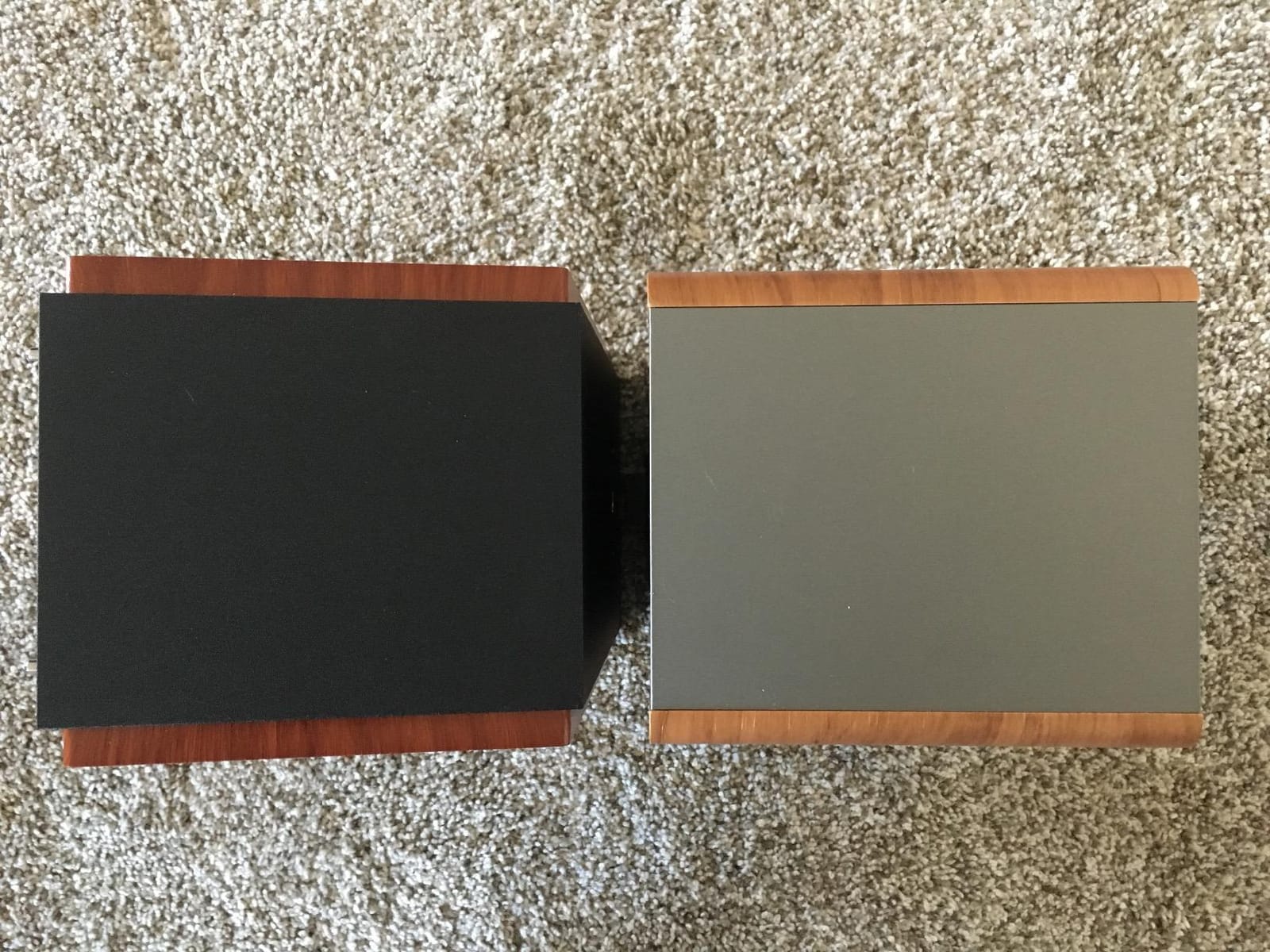
Because there is no amplifier to place, the only constraint is the shelf itself. The MDF cabinet with wood-effect vinyl finish looks intentional in a living room or bedroom, and the natural tuning avoids fighting the room. This is the pair we would put in a 10×10 room without hesitation.
Where it falls short
The 4-inch driver does not deliver much below the low 80s, so films lose impact without a subwoofer. There is also no Bluetooth or optical input, which means older sources need analog cables.
2. Edifier R980T Powered Bookshelf Speakers – Most Versatile
Edifier R980T 4″ Active Bookshelf Speakers – 2.0 Computer Speaker – Powered Studio Monitor (Pair)
Powered 24W RMS
4 inch driver
Front-flared bass reflex port
7.8 pounds per pair
Pros
- No amplifier required at all
- Front-flared port suits near-wall placement
- Cables included in the box
- Wooden enclosures limit cabinet resonance
Cons
- 24W is modest at high volume
- No Bluetooth or optical input
- Bass and treble less extended than 5-inch designs
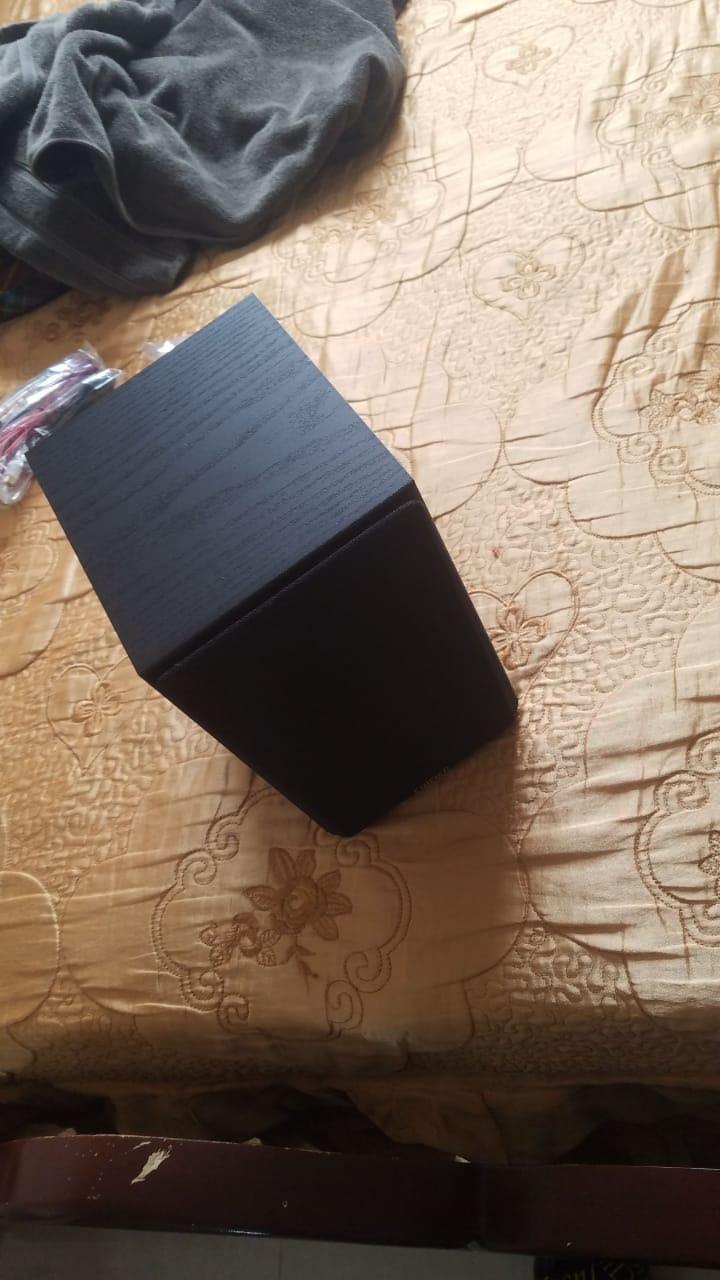
The R980T is the simplest way into hi-fi without buying an amplifier, and the detail that matters most in a small room is right on the spec sheet. Its bass reflex port is front-flared and fires forward, so the cabinet can sit closer to a wall than a rear-ported design of the same size.
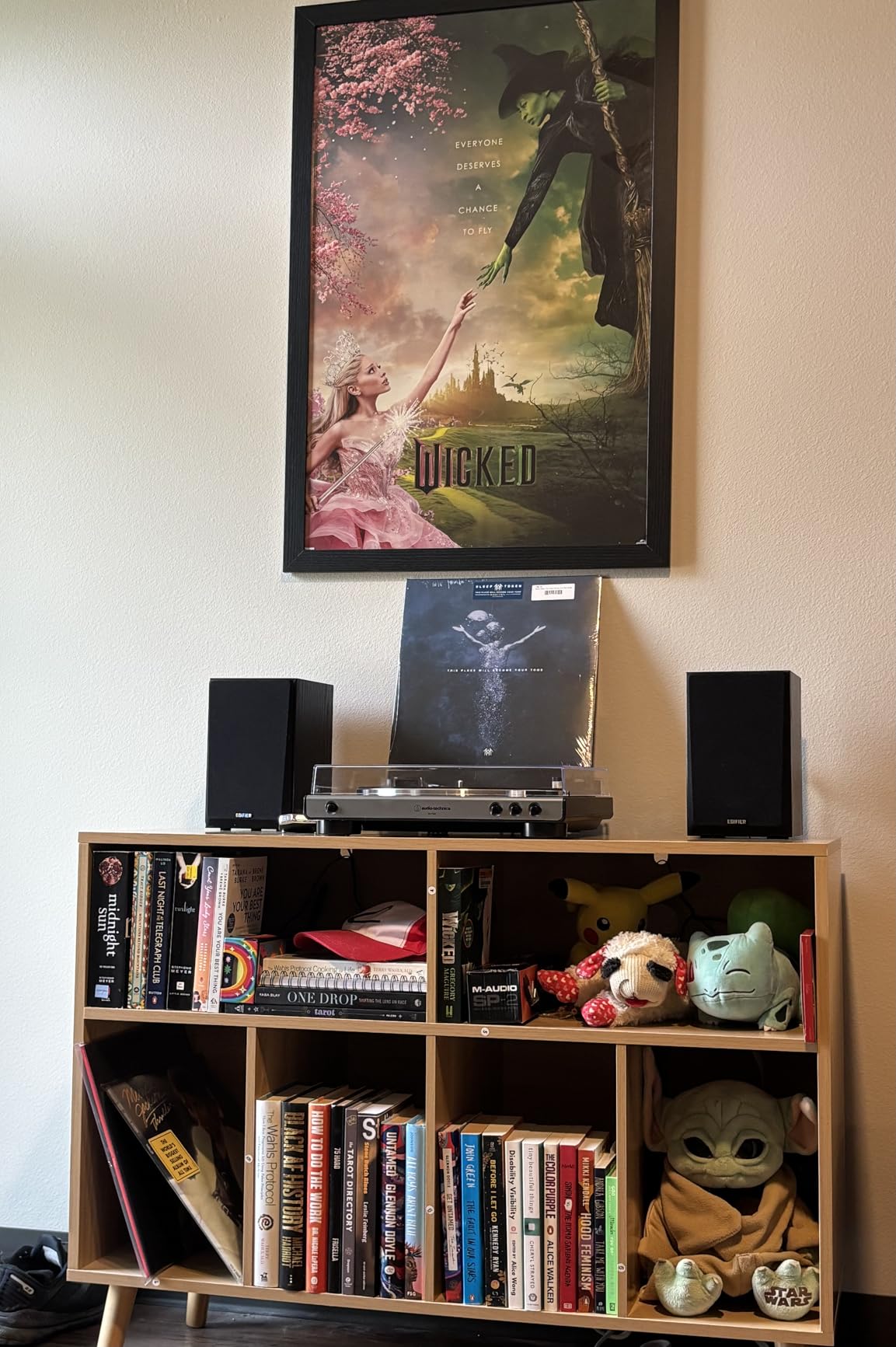
At 24 watts RMS this is not a pair for filling a large room at high volume, and in a small room you are rarely listening that loud anyway. Speakers like this are frequently praised in audio forums for staying composed at low listening levels, which is the honest use case for a bedroom or study at night.
The box includes RCA, 3.5mm and speaker wire, so nothing else needs buying before setup. Two AUX inputs again mean two sources stay connected. The wooden enclosures are a genuine step up in feel compared with plastic boxes at similar sizes.
How it handles a small room
The forward-firing port is the reason this one suits tight rooms better than most powered pairs at this size. You can push it back near a wall without the port turbulence or bass boom that rear-ported cabinets produce in a reflective space.
Where it falls short
24 watts is the ceiling. Expect less output than the R1280T and no low-end weight for films. There is no wireless or digital input, so a modern TV needs an optical converter or an analog connection.
3. Polk Audio T15 Bookshelf Speakers – Best Value Passive Pick
Polk Audio T15 100 Watt Home Theater Bookshelf Speakers, Black, 1 Pair
Passive 8 ohm
5.25 inch Dynamic Balance driver
0.75 inch tweeter
10.63 inches tall
Pros
- Compact cabinet for a 5.25 inch driver
- 100 watt power handling suits budget receivers
- Keyhole slots for wall mounting
- Expands into a Polk 5.1 system later
Cons
- Requires an amplifier or receiver
- Sound is competent rather than detailed
- No wireless or digital connectivity
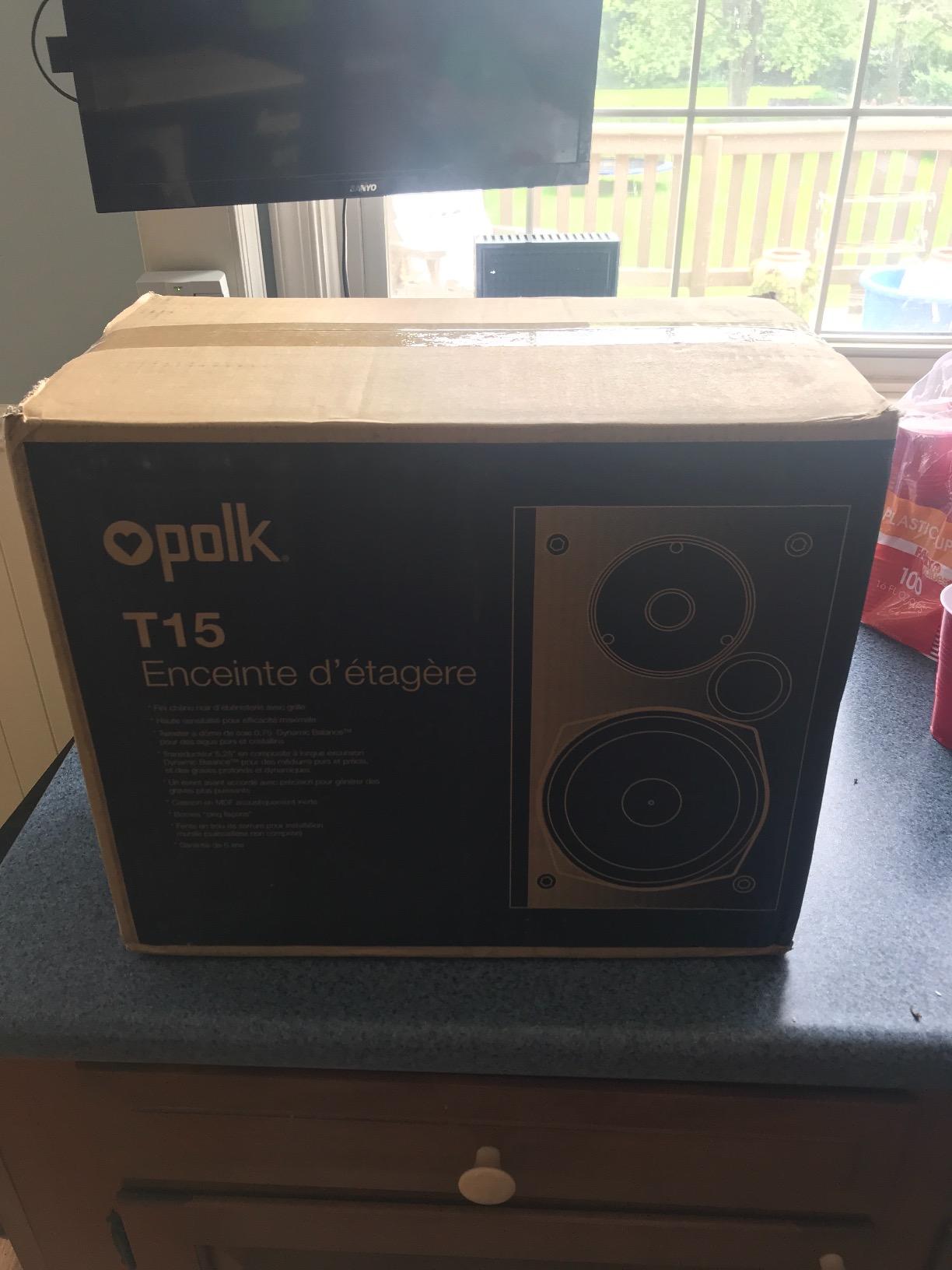
The T15 is the pick for anyone who already owns an amplifier or AV receiver and wants more speaker than a powered pair can offer. A 5.25-inch Dynamic Balance driver in a 10.63-inch cabinet is a lot of driver for a shelf that size, and Polk states it stays clear and balanced at low volumes.
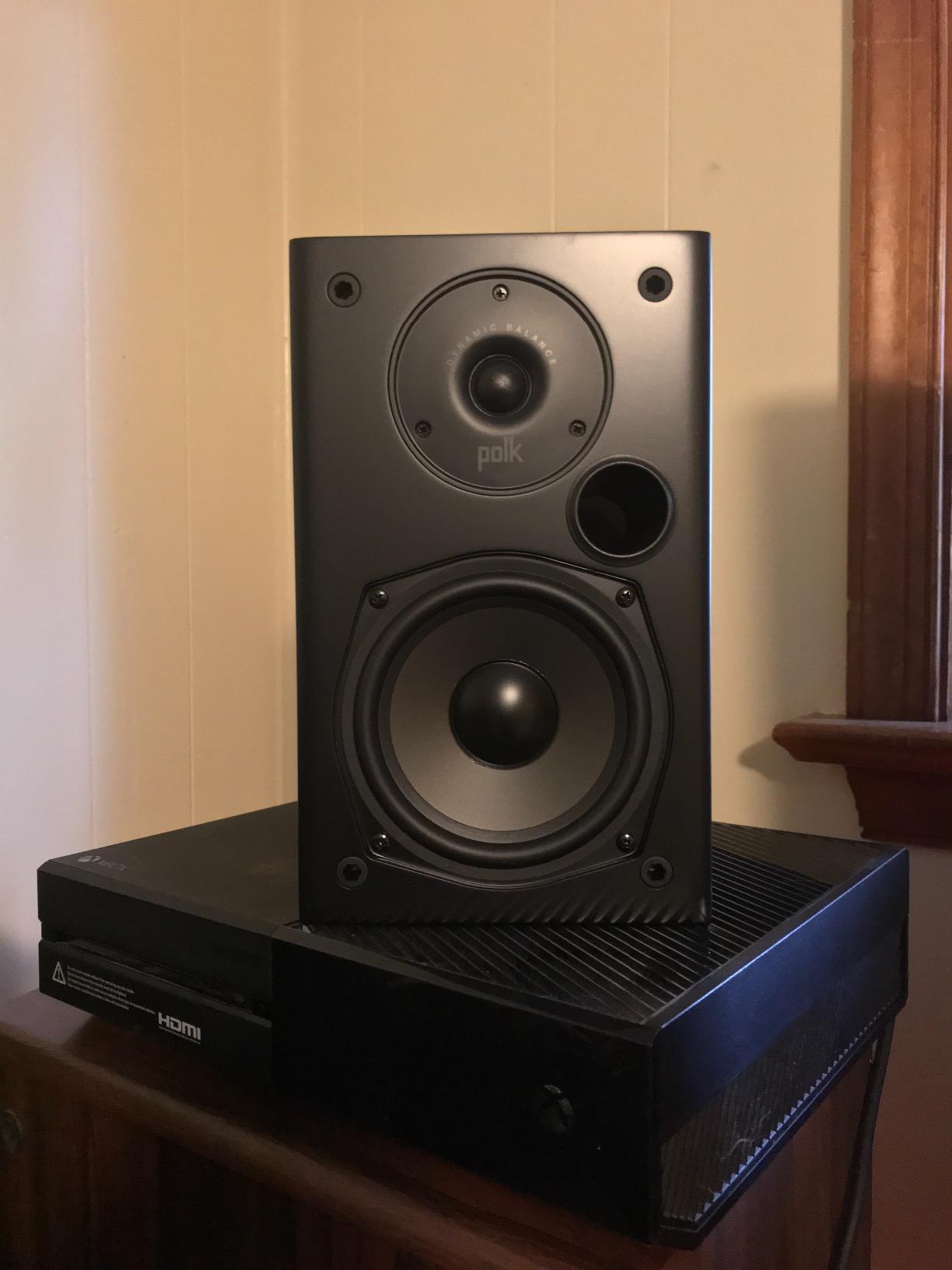
That low-volume behavior matters more in a small room than anywhere else. Small rooms are often shared rooms, where turning the system up is not an option, and a speaker that sounds thin when played quietly is unusable.
At 8 ohm and 100 watts of power handling, it is an easy load for a budget receiver. The keyhole slots on the back let you wall-mount the pair in a bedroom or den where shelf space is tight. A five-year parts and labor warranty backs it up.
How it handles a small room
The shallow 7.25-inch depth means it will not overhang a shelf, and the wall-mount slots solve the no-shelf problem entirely. It is also the easiest model here to expand, with matching towers, a center channel and sub available for a full 5.1 setup later.
Where it falls short
Passive means an amplifier is mandatory, and that box takes shelf space that a powered pair would not. Reviewers are candid that the sound is good rather than revealing, so this is a value entry point rather than an enthusiast endpoint.
4. Klipsch R-51M Bookshelf Speakers – Best for Home Theater
Klipsch R-51M Bookshelf Speaker (Pair), Black
Passive 8 ohm
Dual 5.25 inch spun-copper IMG woofers
90x90 Tractrix horn tweeter
Bass reflex via rear-firing port
Pros
- Horn-loaded tweeter gives pinpoint imaging
- Dual woofers with 340 watt power handling
- Timbre-matches Klipsch center channels and towers
- Highest average rating in this roundup
Cons
- Rear-firing port needs wall clearance
- 13.3-inch cabinet is large for tight shelves
- Needs a capable amplifier
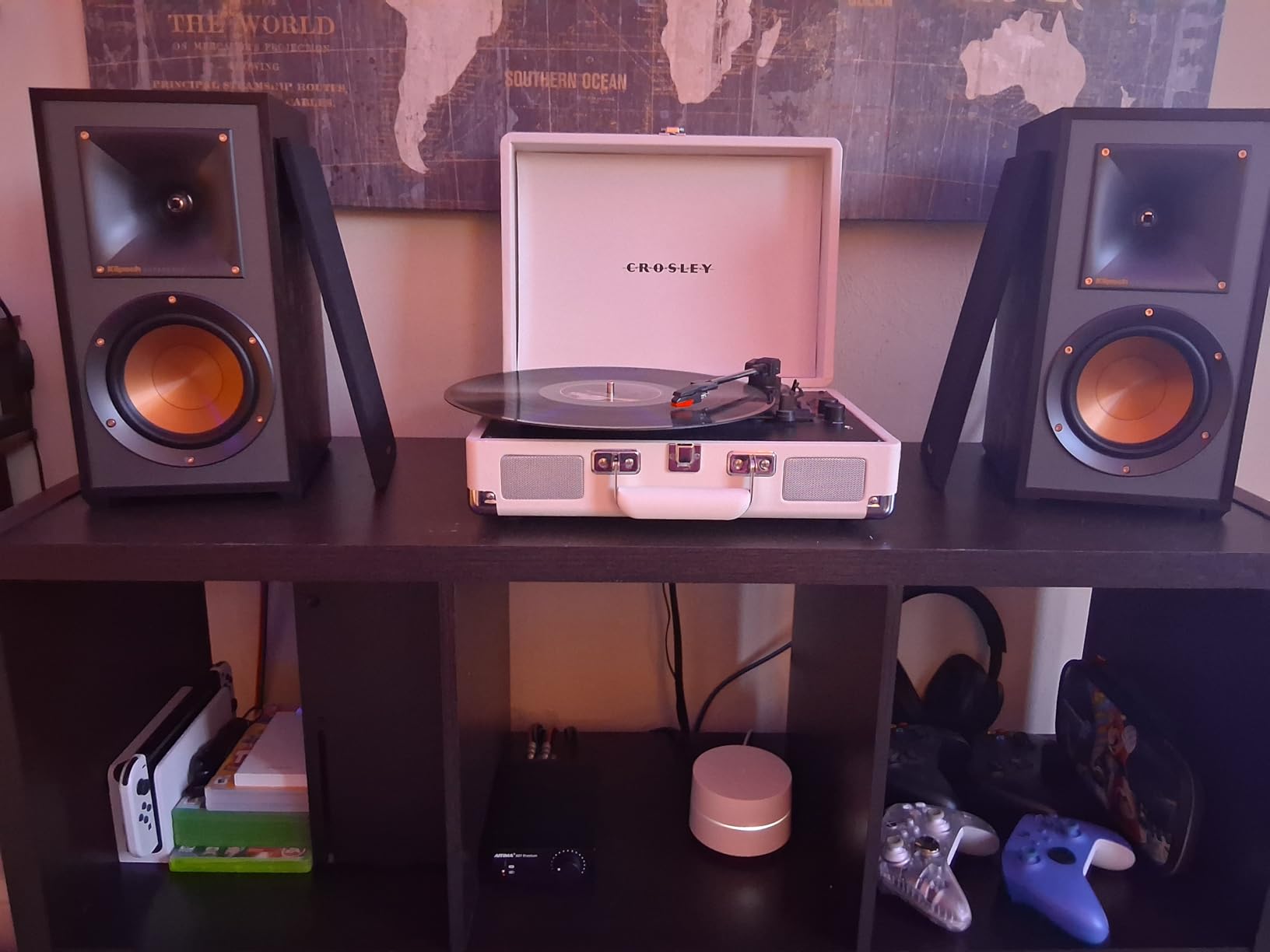
The R-51M is the highest-rated pair here at 4.8, and the horn-loaded 1-inch aluminum LTS tweeter behind a 90×90 Tractrix horn is the reason. Owners single it out for pinpoint imaging and vocal clarity, which is exactly what a front left and right pair needs for dialogue-heavy content.
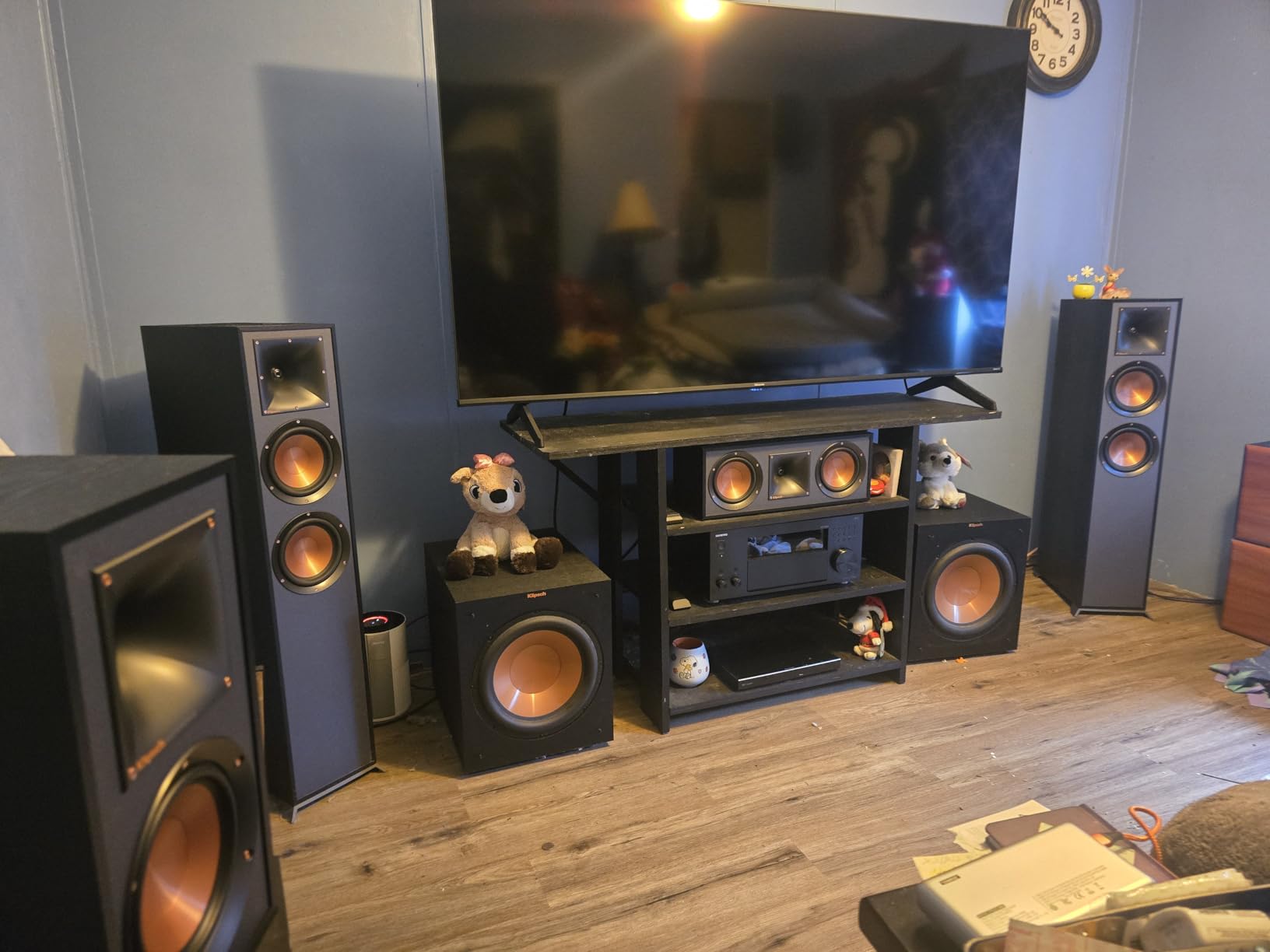
Dual 5.25-inch spun-copper IMG woofers with 340 watts of power handling give it real output, and at 8 ohm it is straightforward to drive. Because it belongs to the Reference line, it timbre-matches Klipsch center channels and towers if you build a matched surround system.
There is a tension here for small rooms. This is a 13.3-inch-tall cabinet with a rear-firing bass reflex port, so it wants a stand and roughly 20 to 30 cm of clearance behind it. Push it flat against a wall and the bass will bloom.
How it handles a small room
In a medium-sized room with stands and correct clearance, the efficiency and output mean it plays well at low listening levels without strain. The horn also throws a wide, controlled soundstage, so a pair can cover a couch in a room that is not very deep.
Where it falls short
In a genuinely small room the cabinet is large, the rear port needs space, and the forward treble can read as harsh in a very reflective space. This is a pick for a medium room or a home theater, not a 3-meter cube.
5. Sony SS-CS5M2 Bookshelf Speakers – Best for a Wide Soundstage
Sony SS-CS5M2 3-Way 3-Driver Hi-Res Compact Bookshelf Speakers (Pair)
Passive 6 ohm
Three-way, three-driver
5.12 inch woofer
53 Hz to 50 kHz Hi-Res response
Pros
- Super tweeter widens dispersion for a large soundstage
- Reinforced cellular cone stays clean at volume
- Compact cabinet aimed at small spaces
- Timbre-matches the wider Sony CS range
Cons
- Passive design requires an amplifier
- 6 ohm is lower than the 8 ohm norm
- Much smaller review base than other picks
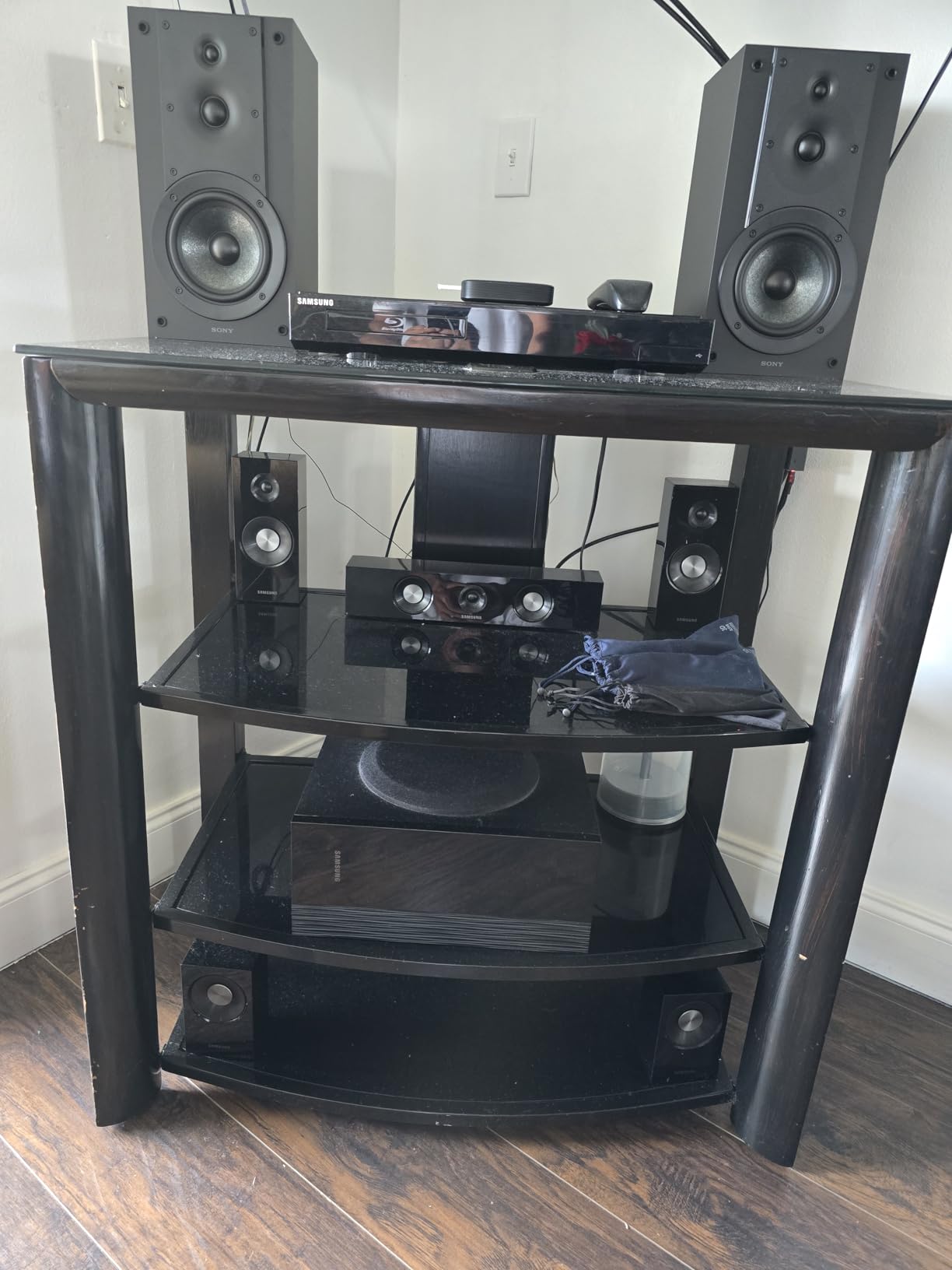
This three-way, three-driver Sony is the most unusual design in the roundup. Instead of one tweeter, it uses a high precision tweeter paired with a wide dispersion super tweeter above a 5.12-inch woofer, and the goal is a soundstage noticeably wider than the cabinet would suggest.
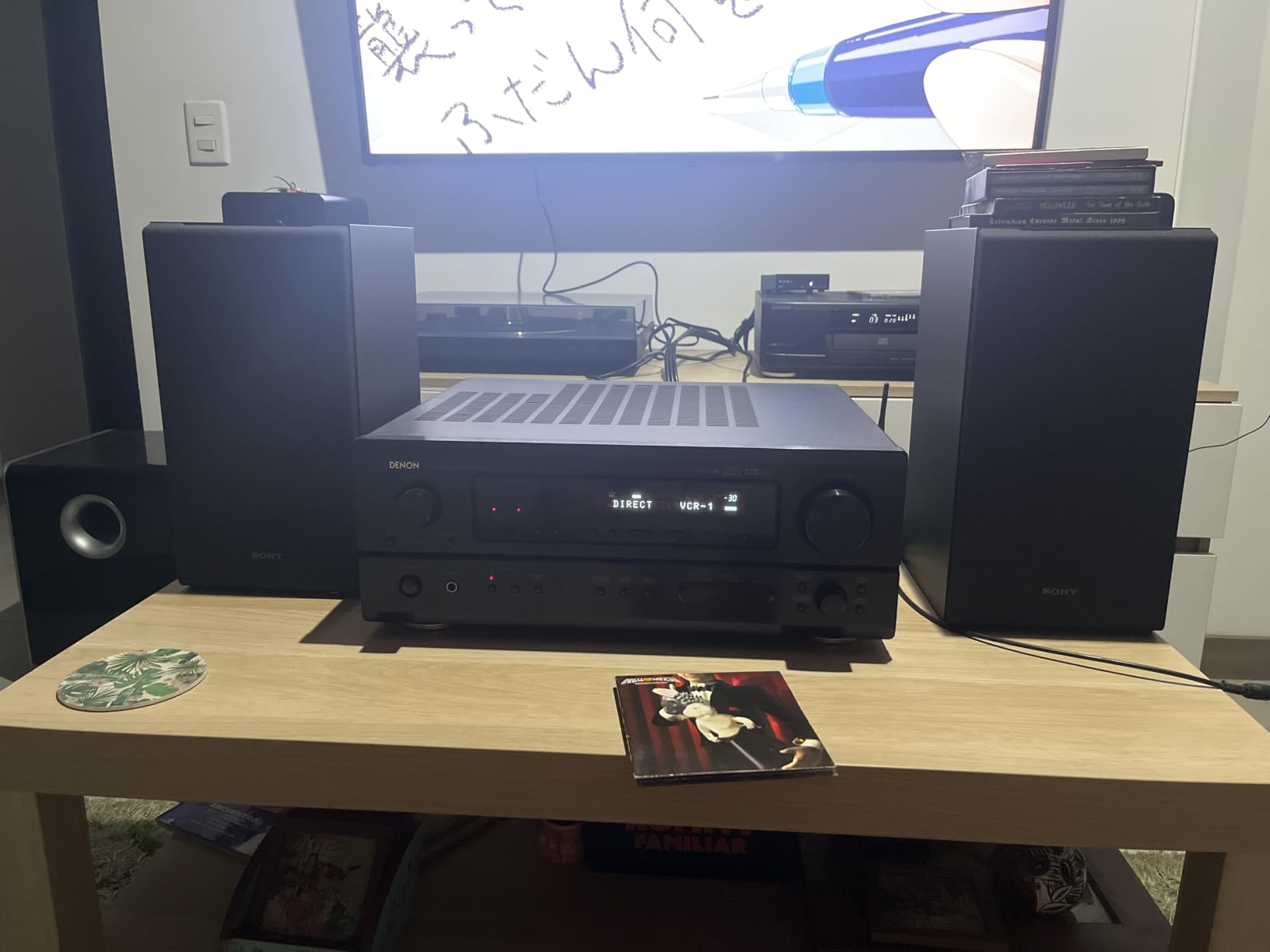
In a small room that width is genuinely useful. Sound that spreads past the speakers makes a cramped space feel larger, and Hi-Res certification across 53 Hz to 50 kHz means the drivers stay clean and undistorted when you push them.
One caution: the impedance is 6 ohm, which asks slightly more of an amplifier than the 8-ohm norm, and this is a passive design. Sony states the CS range is designed to match its own AV receivers, which is convenient if you already own one.
How it handles a small room
The dispersion is the selling point. In a square room where the speakers are close to the side walls, wide coverage means fewer hotspots and a more even listening area, which is something narrow-dispersion designs cannot offer.
Where it falls short
Only 196 reviews sit behind this listing, so the long-term owner record here is thinner than anything else we recommend. Combined with 6-ohm loading, it suits someone with a decent amplifier rather than a first-time buyer with no gear.
6. Edifier R1280DBs Powered Bookshelf Speakers – Best for TV and Wireless Sources
Edifier R1280DBs Active Bluetooth Bookshelf Speakers – Optical Input – 2.0 Wireless Studio Monitor Speaker – 42W RMS with Subwoofer Line Out – Wood Grain
Powered 42W RMS
Bluetooth 5.0
Optical and coaxial inputs
Subwoofer line out
Pros
- One powered pair handles TV
- PC and phone
- Bluetooth 5.0 plus optical and coaxial inputs
- Sub out with automatic detection and crossover
- Soundfield Spatializer widens the stage
Cons
- 4-inch drivers limit deep bass
- No HDMI or USB audio input
- No tone correction for very small rooms
The R1280DBs solves the source problem that trips up most compact powered speakers. Optical, coaxial, line-in and Bluetooth 5.0 inputs mean a TV, a desktop PC and a phone can all feed the same pair without an amplifier or a switcher box.
Output is 42 watts RMS of continuous undistorted power, a step up from smaller powered pairs. The Soundfield Spatializer widens the soundstage, which helps in a small room where the speakers sit close to the listener.
There is also a subwoofer out with automatic detection and a built-in crossover. That matters for the films question: you can start with the pair alone and add low-end later instead of buying a bigger cabinet that will not fit the shelf.
How it handles a small room
It needs no shelf space for an amplifier, and the optical input means a TV connects properly rather than through an adapter. The sub-out also lets you stay small now and expand later, which is the right order of operations in a tight room.
Where it falls short
The 4-inch drivers still limit bass on their own, and there is no HDMI or USB audio. There is also no room correction, so a very irregular room will still need careful placement on your part.
7. Polk Audio Monitor XT15 Bookshelf Speakers – Best for Quiet Listening
Polk Monitor XT15 Pair of Bookshelf or Surround Sound Speakers – Hi-Res Audio Certified, Dolby Atmos & DTS:X Compatible, 1″ Terylene Tweeter & 5.25″ Dynamically Balanced Woofer (Pair, Midnight Black)
Passive 8 ohm
1 inch Terylene tweeter
5.25 inch Dynamic Balance woofer
6.5 inch deep, 10.6 inches tall
Pros
- Transparent at low listening levels
- 4 and 8-ohm compatibility works with most receivers
- 10.6-inch cabinet suits bedroom and office use
- Timbre-matches the rest of the Monitor XT line
Cons
- Passive only
- so an amplifier is required
- A subwoofer is recommended for film impact
- Slightly larger footprint than the compact options
The Monitor XT15 comes up repeatedly in owner reports as transparent at low listening levels, and that is the most useful thing a small-room speaker can be. Many of those same owners set them up in bedrooms and condos, where the volume ceiling is set by other people in the home.
The 1-inch Terylene tweeter is a soft dome, which is a kinder starting point in a reflective room than a hard dome or a horn. Pair it with the 5.25-inch Dynamic Balance woofer and you get clear dialogue and an open midrange without a lot of cabinet volume.
Compatibility is unusually broad for a passive bookshelf speaker, working with both 4-ohm and 8-ohm receivers. The Monitor XT line also includes a center channel, tower pair, height module and sub, so a full surround system stays timbre-matched.
How it handles a small room
At 10.6 inches tall and 6.5 inches deep it is not the most compact cabinet here, but it will still fit most shelves. The soft dome stays comfortable in a room with hard walls and low furnishings, where brighter tweeters get tiring.
Where it falls short
It still needs an amplifier, and 40 watts of power handling is modest if you ever want to push it hard. Film watchers will want a subwoofer, since the sealed-off bottom end will not carry explosions.
8. Audio-Technica AT-SP3X Powered Bookshelf Speakers – Best for a Desk
Audio-Technica AT-SP3X Bookshelf Speakers
Powered 30W
3 inch drivers
Bluetooth multipoint pairing
Dual RCA inputs, 2 year warranty
Pros
- Smallest powered pair in the roundup
- Multipoint Bluetooth holds two devices at once
- Dual RCA accepts a TV or turntable
- AC adapter with three international plug adapters
Cons
- 3-inch drivers limit bass output
- 30W is modest for larger rooms
- No subwoofer output listed
The AT-SP3X is built for the smallest possible footprint: 3-inch drivers in a cabinet that fits a desk without taking the whole surface. Audio-Technica tunes these for full-range output despite the size, and 90 percent of owners rate them five stars, the highest share in the roundup.
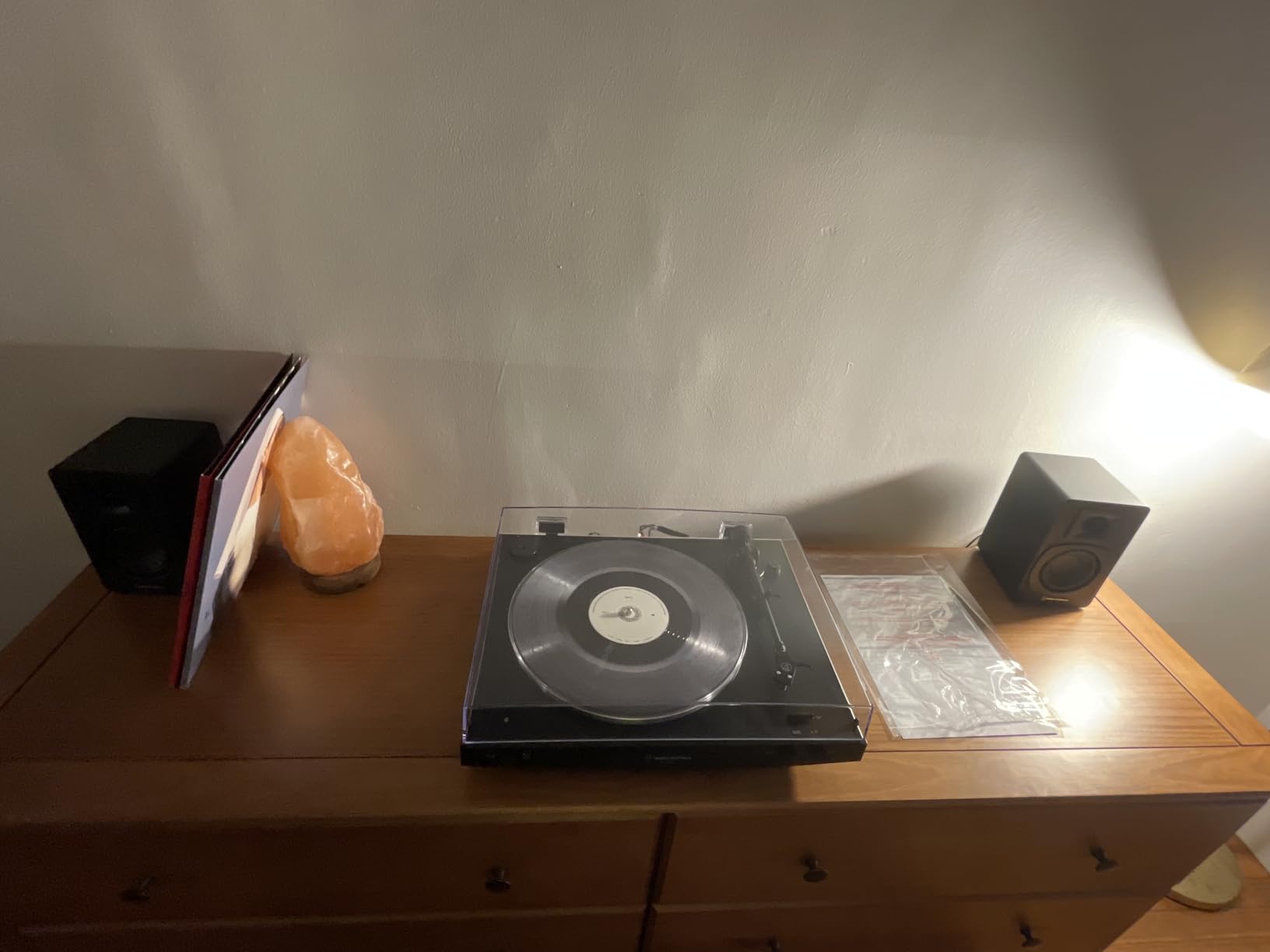
The connectivity is unusually good for such a small pair. Bluetooth multipoint holds two devices connected simultaneously, and the dual RCA inputs accept a wired source such as a TV or a turntable with a phono preamp.
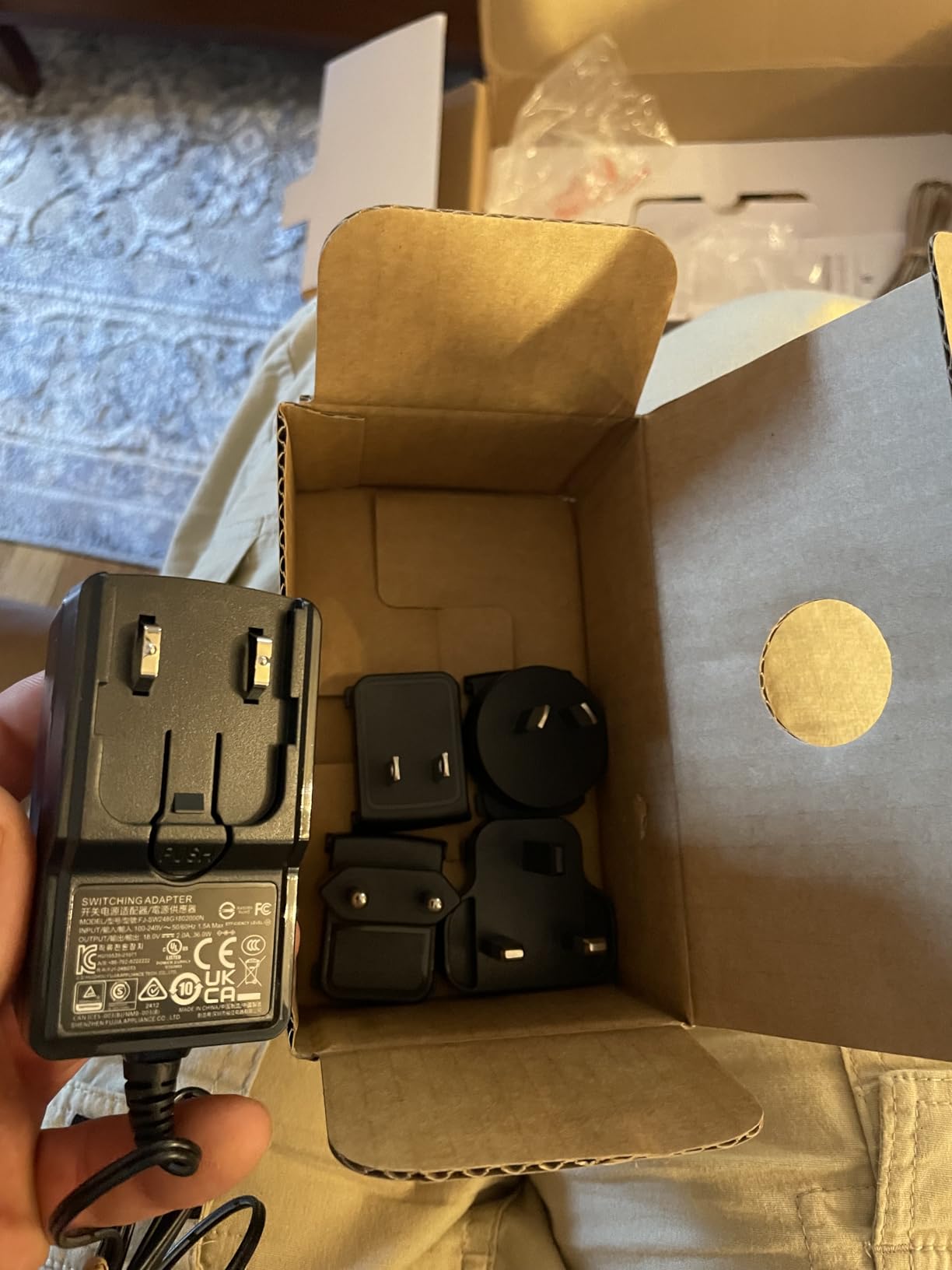
There is a volume dial and an LED power button on the cabinet, and the box includes an AC adapter with three international plug adapters plus a 2-meter speaker cable. Nothing else needs buying to get started.
How it handles a small room
This is the pick when the real constraint is a desk rather than a shelf. As a near-field pair at arm’s length there is no need for high sensitivity or high power, because the listener is close and the volume is low.
Where it falls short
Three-inch drivers mean very little bass, and 30 watts will not fill anything larger than a study. There is no listed subwoofer output either, so there is no easy path to more low end later.
9. Micca OoO Slim Bookshelf Speakers – Best for Shallow Shelves
Micca OoO Slim Passive Bookshelf Speakers Home Theater, Stereo Pair, Walnut
Passive slim cabinet
Only 3.9 inches deep
Dual 3 inch woofers, 0.75 inch silk dome tweeter
Bass extension to 60 hertz
Pros
- Only 3.9 inches deep so it fits shallow shelves
- Dual woofers extend bass to 60Hz
- Works vertically or horizontally as a center channel
- Real walnut veneer finish
Cons
- Passive
- so an amplifier is required
- Some owners find the bass forced without EQ
- Won't play very loud in a large space
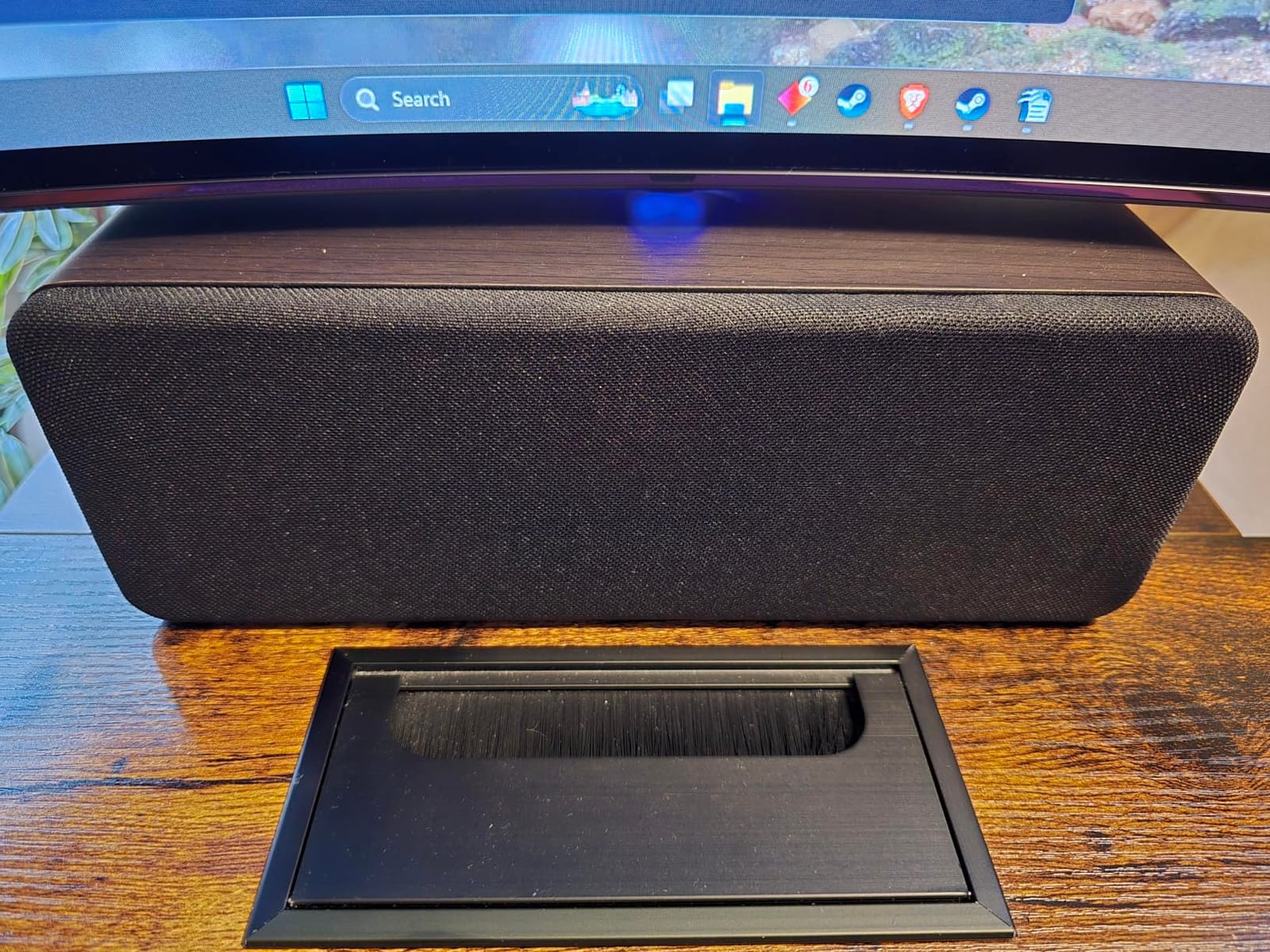
Depth, not width, is what usually breaks a bookshelf speaker. The Micca OoO is 3.9 inches deep, so it slides onto shelves where a conventional 5-inch cabinet would hang over the front edge or get pushed back into the wall.
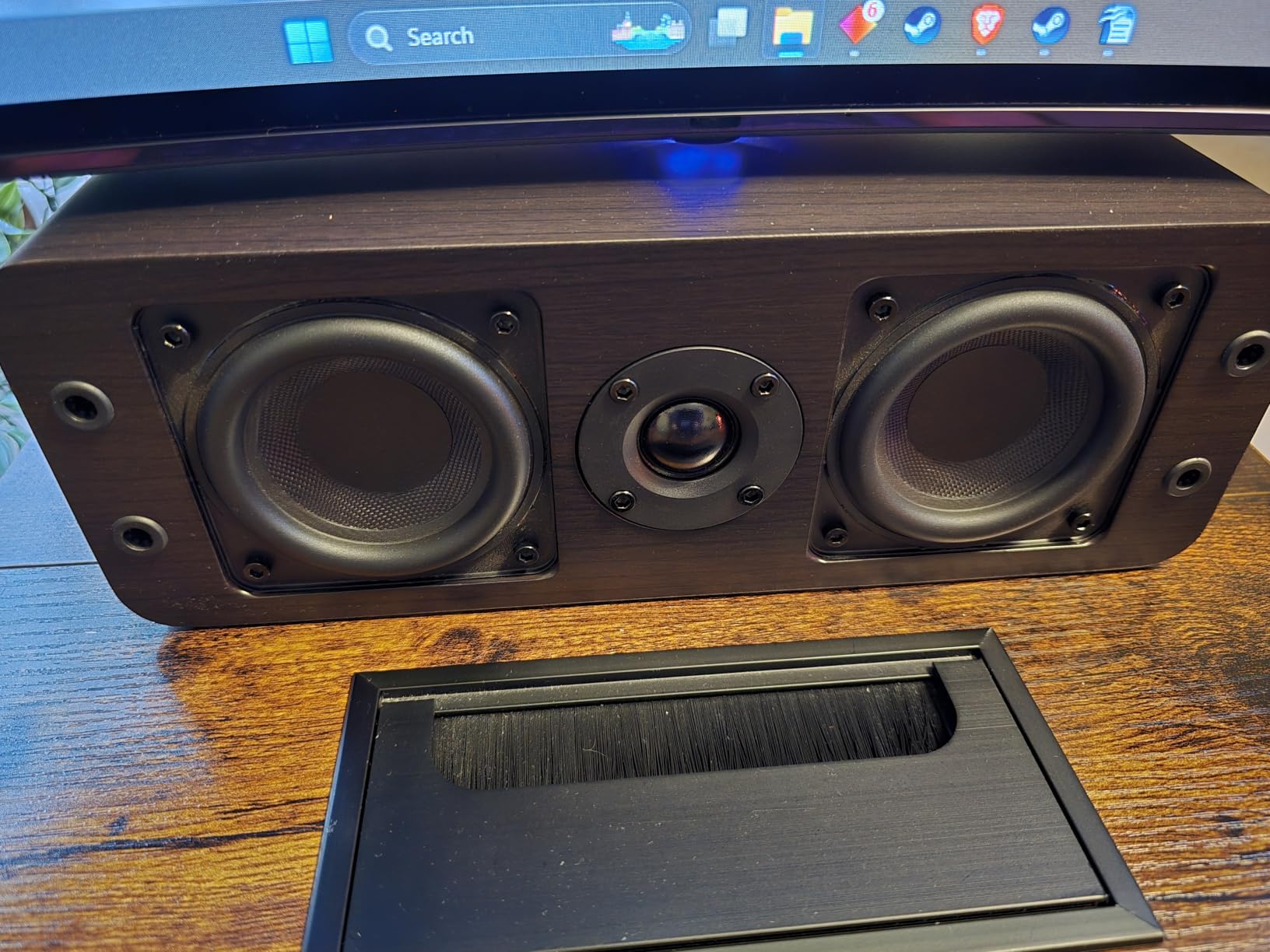
Two 3-inch woofers in a ported enclosure reach down to 60Hz, which is deeper than most compact models here manage, and the 0.75-inch silk dome tweeter uses a neodymium magnet for efficiency. Owners describe the result as room-filling for a cabinet this thin.
The slim shape also works horizontally as a center channel or on optional brackets as surrounds, and the walnut veneer makes it easy to keep out in a living room rather than hide away.
How it handles a small room
The shallow profile is the entire argument. If your available shelf is 4 inches deep, this is one of the few pairs that physically fits without compromise, and the vertical orientation keeps the footprint narrow.
Where it falls short
It is passive, so you need an amplifier, and several owners report the bass is a bit forced without EQ adjustment in a small room. It will not play very loud, which caps it to small and medium spaces.
10. Micca COVO-S Compact Bookshelf Speakers – Best for the Tightest Spaces
Micca COVO-S Compact 2-Way Passive Bookshelf Speakers, Stereo Pair, Black
Passive 3 inch woofer
5.1 inches tall, 4.2 inches wide
Concentric 0.75 inch PEI tweeter
Requires an amplifier
Pros
- The cheapest pair in this roundup
- Smallest footprint here at 4.2 by 5.1 inches
- Concentric tweeter keeps crossover behaviour clean
- Five-way binding posts accept banana plugs
Cons
- Passive and speaker wire not included
- Little real bass below roughly 90Hz
- Midrange often described as muffled
The COVO-S is the smallest complete system here at 5.1 inches tall and 4.2 inches wide, and it is also the cheapest. It is the practical answer when a bedroom shelf has about six inches of usable height and nothing else will fit.
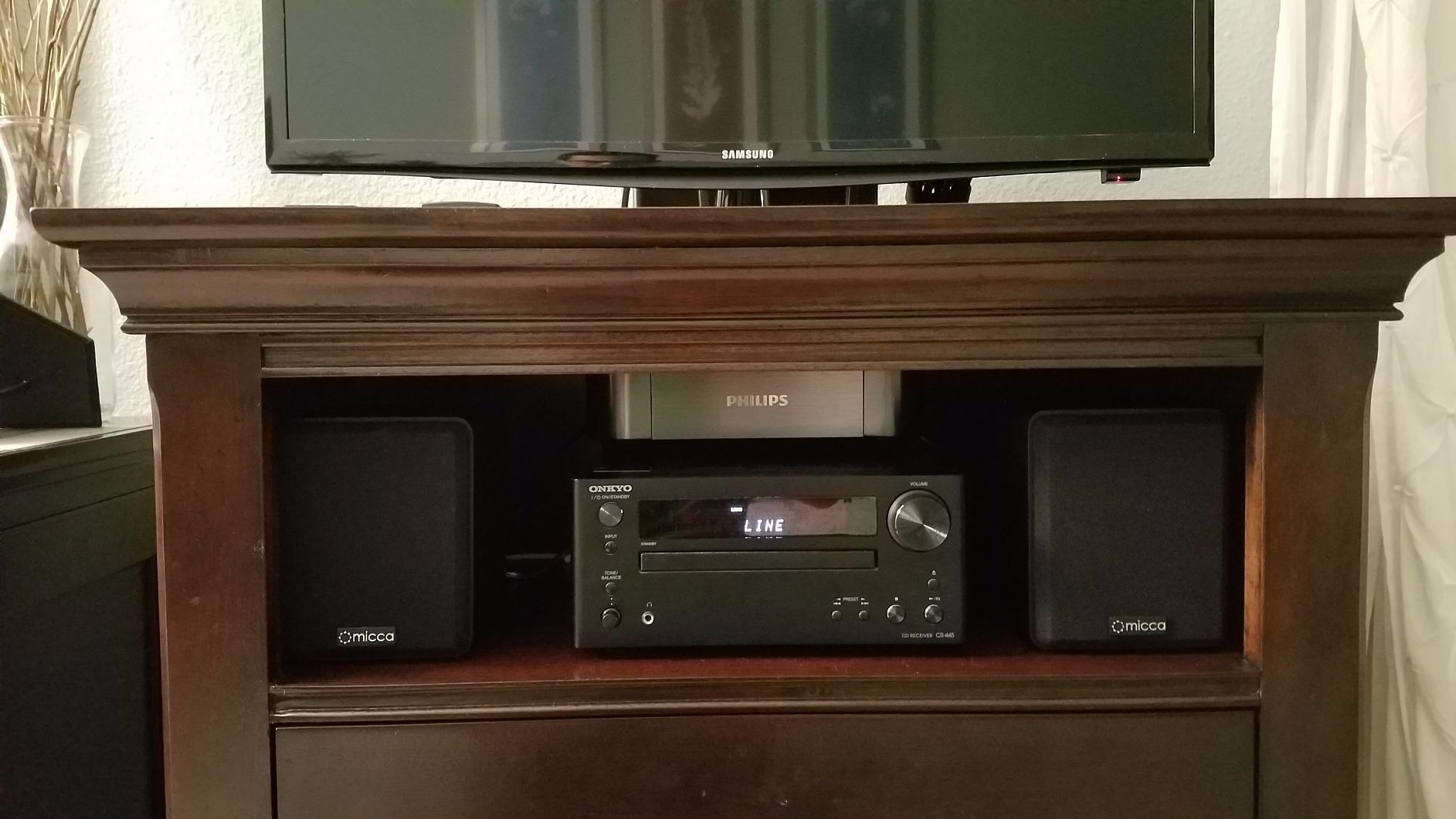
The design is a 3-inch wool fiber woofer with a concentric 0.75-inch PEI tweeter sharing the same acoustic centre point, which keeps the transition through the crossover clean. Five-way binding posts at this size are a nice touch and take banana plugs directly.
Be clear about the trade. It is passive, it needs speaker wire that is not included, and it cannot be plugged into a phone, computer or turntable directly. Owners typically pair it with a small subwoofer to build a budget 2.1 system.
How it handles a small room
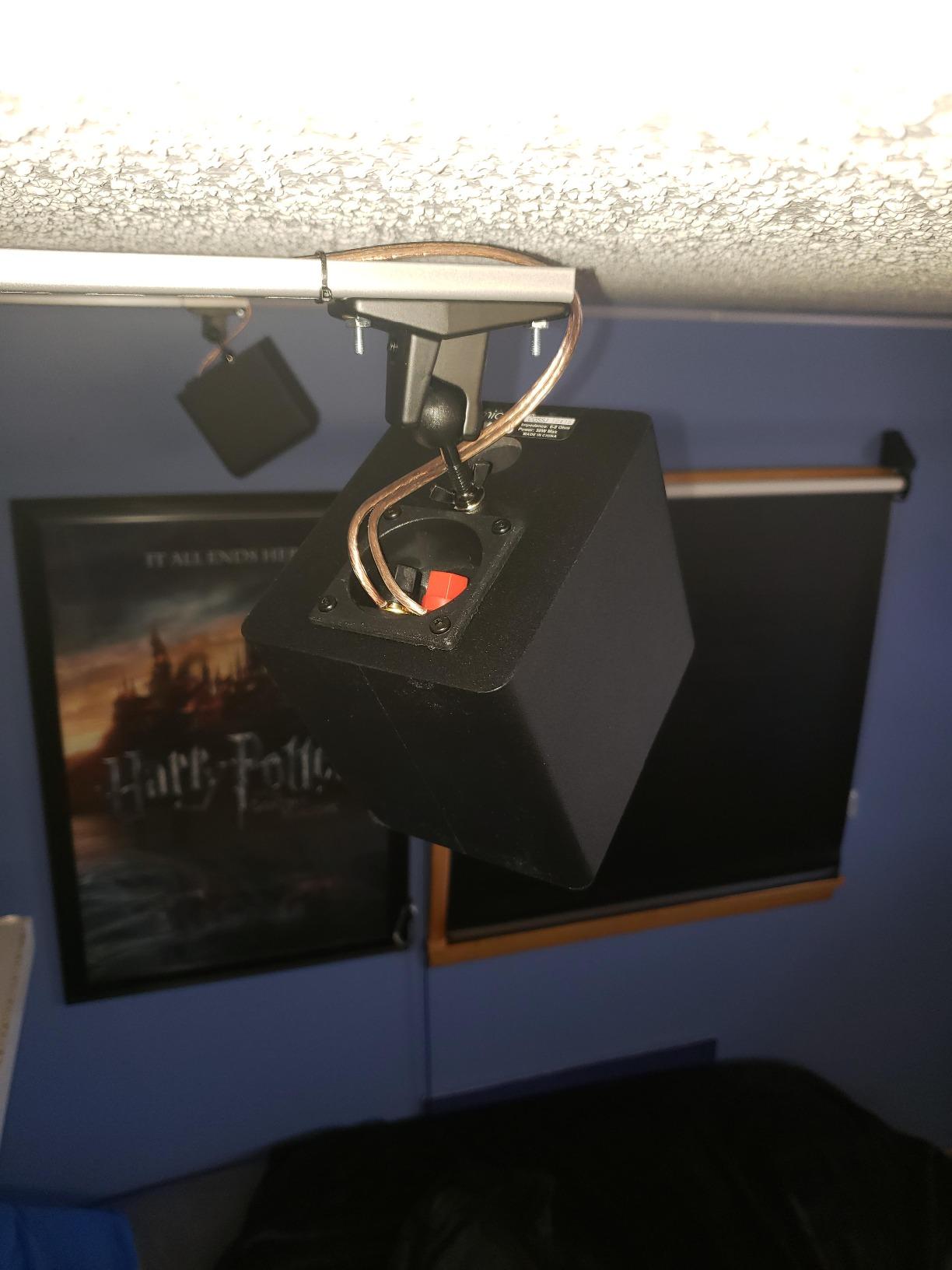
For surrounds, a desktop system or a second bedroom, the size is unmatched by anything else on this list. Wall mounting with optional brackets frees the shelf entirely in a very small room.
Where it falls short
The 4.3 average is the lowest here, and reviewers are candid about why. Bass below roughly 90Hz is thin and the midrange is often described as muffled, so this is not a pair to choose for critical music listening.
11. Kanto YU2 Powered Desktop Speakers – Best for USB Desktops
Kanto YU2 Powered Desktop Computer Speakers | 3″ Drivers 3/4″ Silk Dome Tweeter | 50 W RMS | Built-in USB DAC & AUX Input | Sub Out | Pair | Matte Cream
Powered 50W RMS
Built-in USB DAC and AUX input
3 inch composite woofers
Sub out port, 5.9 inches tall
Pros
- USB DAC gives a fully digital computer connection
- 50W RMS with a sub-out for later expansion
- 3.9 by 5.9 inch MDF cabinets suit tight desks
- Clear vocals and detailed silk dome treble
Cons
- No Bluetooth
- only USB and 3.5mm AUX
- No tone or EQ controls and no high-pass for a sub
- Stands sold separately
The YU2 is the only pair here with a built-in USB DAC, which makes it the simplest digital path from a desktop computer. One cable carries the signal, no interface is needed, and the 3.5mm AUX covers everything else.
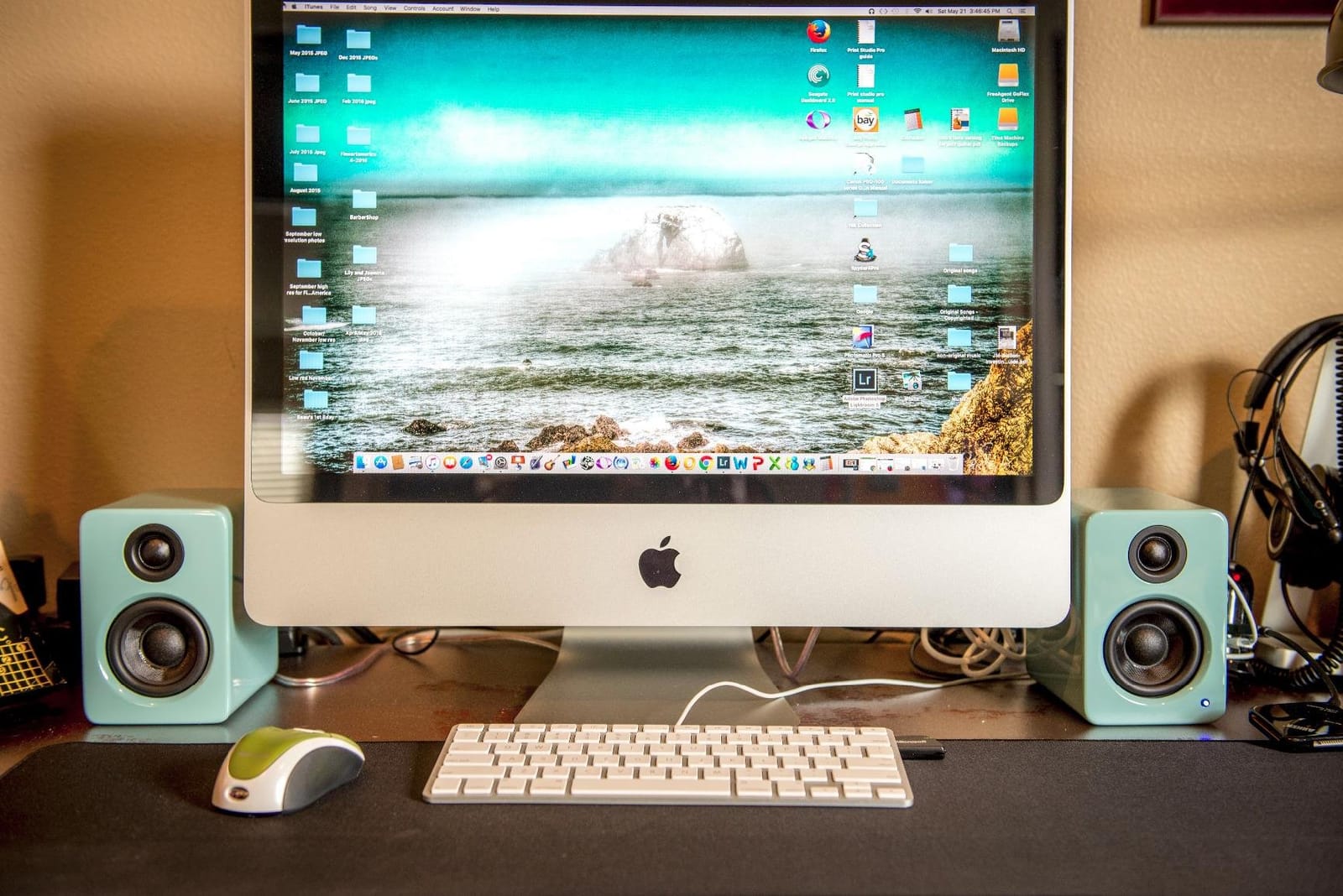
Output is 50 watts RMS total, the highest of any powered pair in this roundup, and there is a subwoofer out port for when you want more low end. The 3-inch composite woofers handle mids and upper bass cleanly, and the 0.75-inch silk dome tweeters stay detailed rather than shrill at moderate volume.
The rear bass port is tuned specifically to reduce port turbulence, which is worth noting because port noise is a common complaint with tiny cabinets. Cabinets are acoustic-grade MDF at 3.9 by 5.9 inches, and the volume knob doubles as the power switch.
How it handles a small room
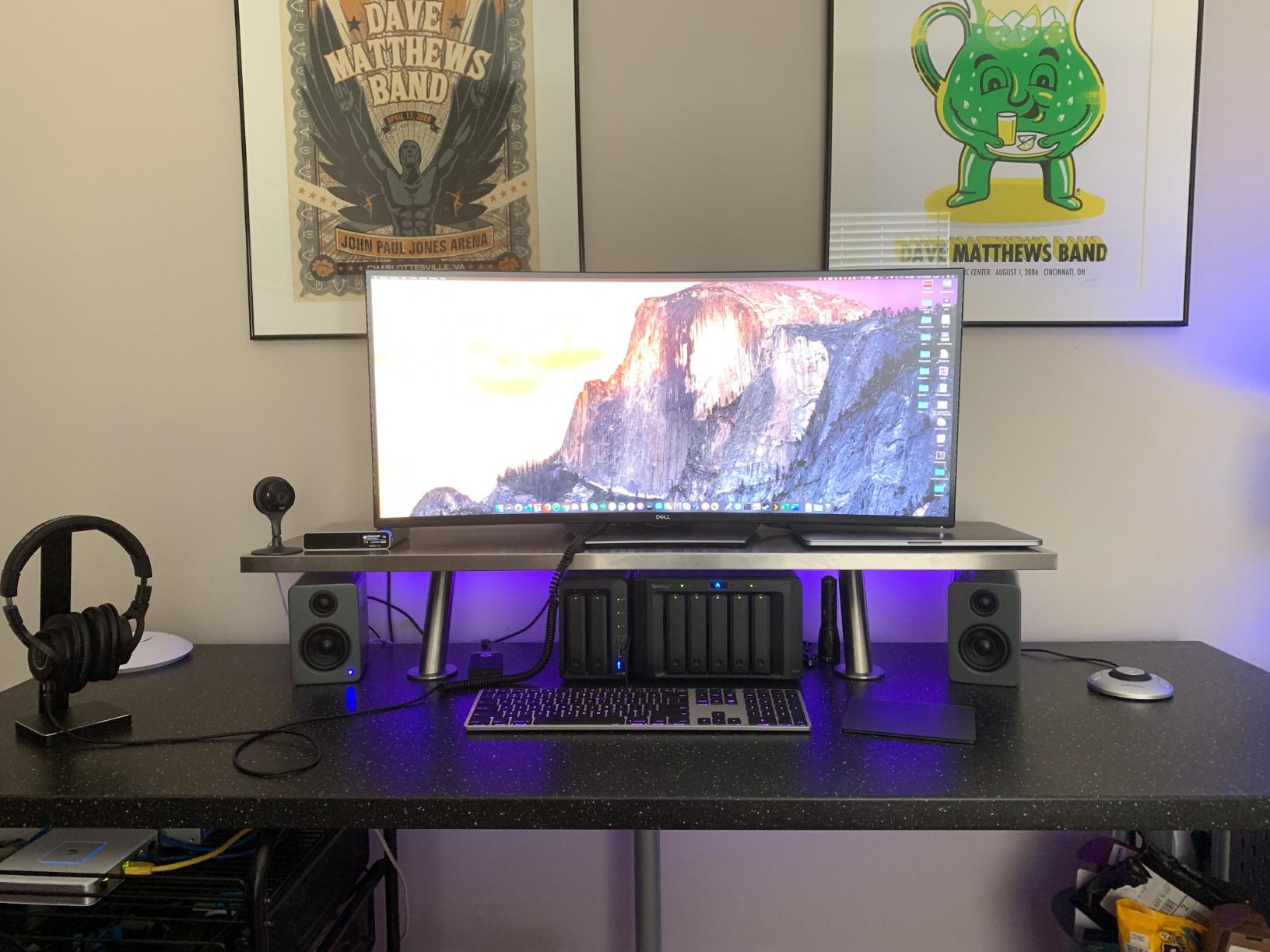
At near-field distance on a desk the listening position is close, so a small cabinet and modest power are genuinely sufficient. The digital connection also removes the noise floor issues that analog computer outputs can introduce.
Where it falls short
There is no Bluetooth, so phones need an adapter, and there are no tone controls or a high-pass filter for the sub-out. Several owners add EQ and a subwoofer before judging the low end, which is fair advice.
12. JBL Professional C1PRO Bookshelf Speakers – Best for Wall Mounting
JBL Professional C1PRO High Performance 2-Way, 150 Watt 5.25” Compact, Passive, Satellite, Bookshelf Speakers, Home Theater, Desktop, Stereo, Studio, Black, Sold as Pair.
Passive 4 ohm
150 watt power handling
5.25 inch woofer, 0.75 inch tweeter
100 Hz to 18 kHz response, brackets included
Pros
- Brackets included for immediate wall mounting
- 150 watt handling with SonicGuard tweeter protection
- Magnetically shielded drivers for use near electronics
- Compact 9.3 inch cabinet works as desktop or surround
Cons
- Passive
- so an amplifier is required
- 4 ohm is demanding on entry-level amps
- Rolls off below 100Hz so film needs a sub
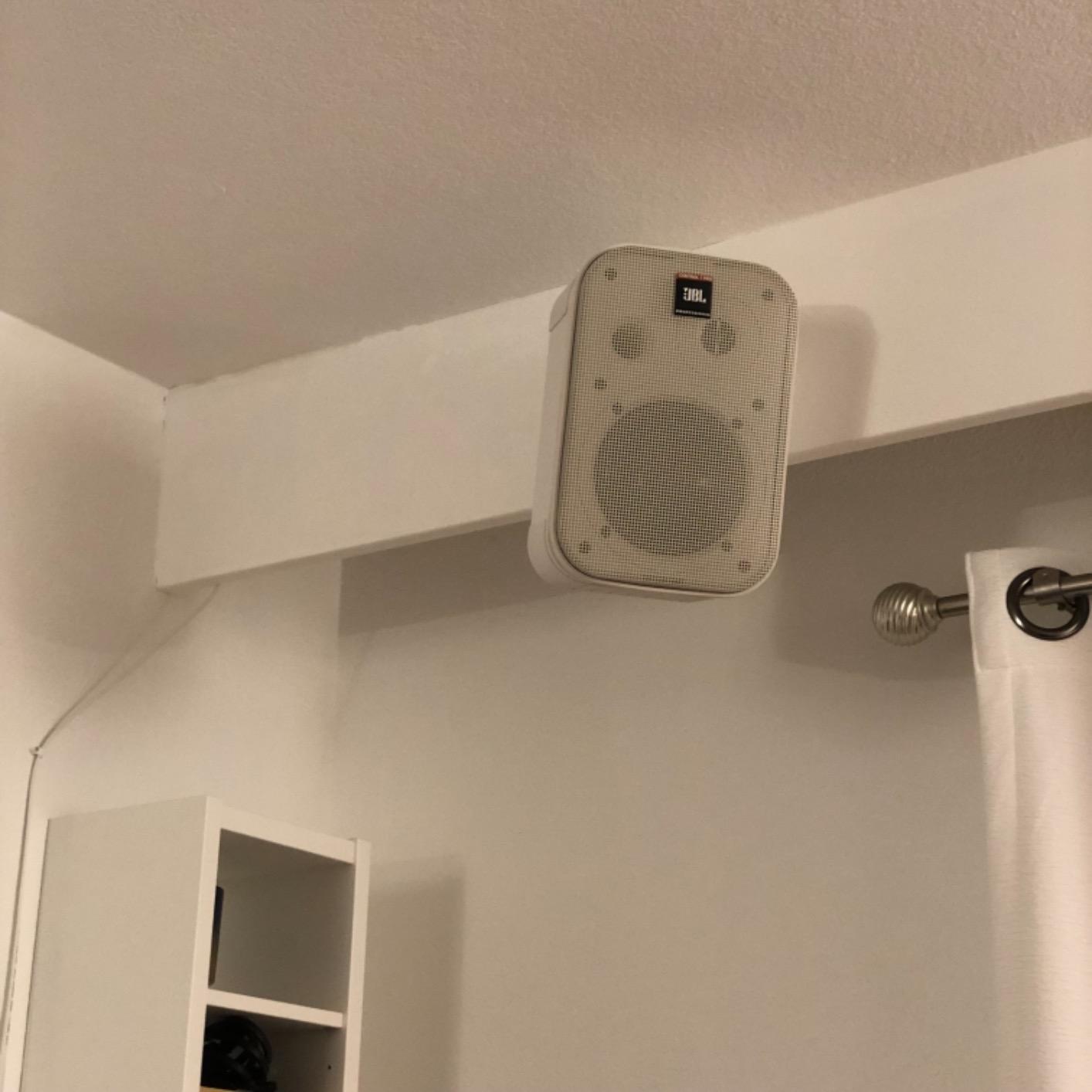
The C1PRO solves the placement problem rather than the sound problem. Wall-mounting brackets are included in the box, so in a small room where there is no shelf to spare, you can put both speakers at ear height on the wall beside a TV or desk and reclaim the furniture entirely.
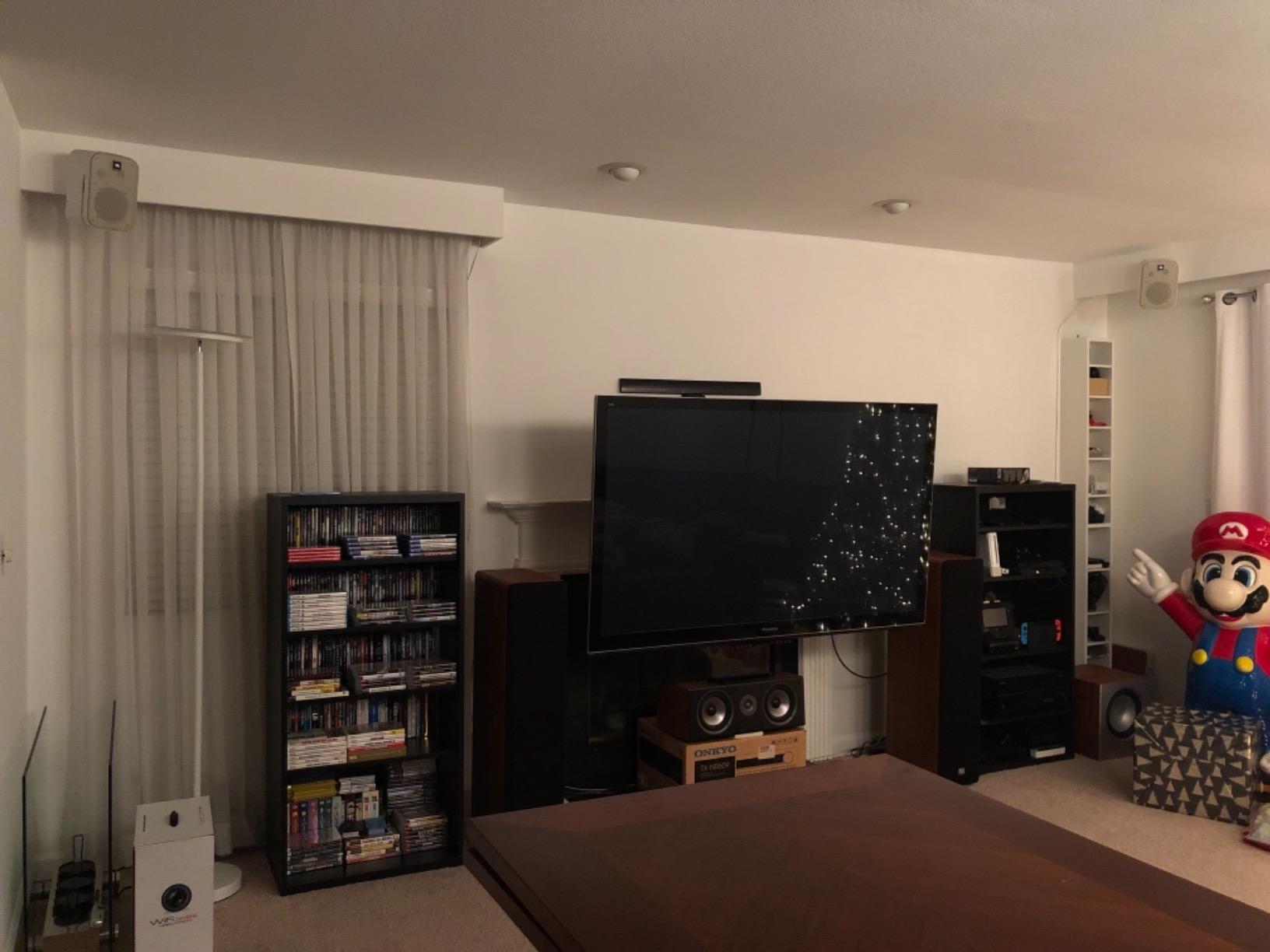
At 150 watts of power handling and 4 ohm, it will produce solid volume from modest amplification, and SonicGuard overload protection guards the tweeter if you push a cheap amplifier too hard. Magnetically shielded drivers also mean you can place them close to a monitor or sensitive electronics without trouble.
Frequency response runs 100 Hz to 18 kHz, which is honest for a compact satellite and means it is a satellite first and a music speaker second. The rugged molded enclosure is built for studio and installation use rather than a furniture-matched finish.
How it handles a small room
Wall mounting at ear height changes the game in a cramped room. No shelf depth to worry about, no cabinet pushed back into a rear port, and the speakers end up exactly where the listener’s head is.
Where it falls short
4 ohm is a demanding load and will work a modest amplifier harder than the 8-ohm designs here. Rolling off below 100Hz means film content needs a subwoofer, and the utilitarian finish is not designed to be left in view in a formal room.
What to Look For in a Small Room
Four specifications decide whether a bookshelf speaker works in a tight space. Everything else is preference.
Powered vs. passive. Active (powered) speakers have built-in amplifiers, which saves the shelf or stand an external receiver would occupy and removes a box from the cable run. Passive speakers need an amplifier or receiver, and give you a far wider choice of models if you already own one.
Front vs. rear porting. Front-ported or sealed speakers work better when placed close to a wall in a tight room. Rear-ported cabinets need roughly 20 to 30 cm (8 to 12 inches) of clearance behind them, or the port air moves unevenly and the bass booms.
Sensitivity and amplifier power. Sensitivity in dB tells you how loud a speaker goes per watt of input. A pair rated around 85 dB or higher plays properly from a small amplifier; below that you need more power to reach normal listening levels, which is a common source of disappointment with compact passive models.
Cabinet depth. Measure the usable depth of your shelf before you buy, not the width. Many conventional bookshelf speakers are 11 to 14 inches deep, and squeezing them onto a shallow shelf means pushing a rear port into the wall or overhanging the front edge.
Beyond those four, two more factors decide the outcome. Tweeter character matters in a reflective room, where a soft dome such as the Terylene in the Monitor XT15 stays comfortable while a hard dome can tire you. And low-volume performance is the honest test for a bedroom or shared wall, because that is where most listening actually happens. If your listening position is a vehicle rather than a room, our picks for the best 6×9 car speakers follow a completely different sizing logic.
Matching Woofer Size to Your Room
Speaker size is not a quality ranking, it is a room-matching decision. Bigger drivers in a small room sound worse, not better, because the walls pile on low-frequency reinforcement the drivers cannot escape.
Rooms up to about 12 square metres: look at 3 to 4 inch drivers. This covers most bedrooms, home offices and small studies, and it is where a powered pair makes the most sense. Every powered option in this roundup falls in that band.
Rooms of roughly 12 to 20 square metres: 4 to 5.25 inch drivers are the sweet spot. The Polk T15 and Monitor XT15, the Edifier R1280DBs and the Sony SS-CS5M2 all sit here, and you can begin to consider adding a subwoofer for film.
Larger rooms, or a dedicated listening position: 5.25 inch and larger drivers, with a stand rather than a shelf, and enough clearance for a rear-firing port. The Klipsch R-51M is the right shape for this, and the JBL C1PRO works well if the placement has to be on a wall.
Listening distance is the other half of the equation. A 3-inch driver paired with a 40 inch listening distance sounds thin; the same driver at 60 cm or less sounds balanced. Compact models are not flawed, they are simply built for close positions.
Do You Need a Subwoofer in a Small Room?
Usually no, and the reason is physics rather than taste. Small rooms have closer walls, which reinforce bass. Boundary gain means a compact speaker in a small room already produces more low end than the same speaker in a large one, which is why over-speakering is the classic mistake in an apartment.
Add a large subwoofer to that room and you make the problem worse, not better. You get a different low-frequency decay time in the room than from the speakers, which is the main cause of boomy, muddy low end in compact systems.
Use this rule. Under about 12 square metres, start without a subwoofer and only add a small 6 to 8 inch model if films lack impact. Above that, or if your speakers are genuinely small like the Micca COVO-S or the Kanto YU2, a subwoofer adds something the speakers cannot produce rather than doubling something they already have.
If you do add one, look for a subwoofer output on the amplifier or speaker, and check for a high-pass filter so the speakers stop trying to reproduce the same low range. Several pairs here have that output built in, including the Edifier R1280DBs and the Kanto YU2.
Where Should Speakers Be Placed in a Small Room?
Placement changes the result more than any upgrade you can buy afterwards. Six steps, in order.
Give a rear port its clearance. Rear-ported speakers need 20 to 30 cm (8 to 12 inches) from the back wall. Front-ported speakers can sit around 10 cm (4 inches) away, and sealed speakers can go as close as you like. Users report that pulling a pair roughly 3 inches off the wall noticeably reduced room resonance.
Set tweeter height at ear level. On a stand, the tweeter should sit at the same height as your ears when seated. On a shelf, raise the pair rather than angling down at the listener.
Toe the speakers in slightly. Angle each cabinet toward the listening position by a few degrees. It centres the soundstage and, on a narrow-dispersion design, brings the detail back to where you are sitting.
Separate them from the front wall. Push the pair a little further into the room than the seating, not flush against the wall behind the sofa.
Decouple from the furniture. Isolation pads or a purpose-built shelf stop cabinet vibration transferring into a hollow bookcase, which is the difference between a speaker on a shelf and a speaker on a stand.
Place a subwoofer away from corners. If you add one, start along a front wall near a corner but pull it out until the boom reduces, rather than assuming the corner is always correct.
One last caution. Putting speakers inside a fully loaded bookcase is common and it does work, but the books and side panels act as boundaries very close to the drivers. Leave a few inches of air on each side and keep the front edge open, or use a stand instead.
Frequently Asked Questions
What is the best speaker for a small room?
A compact powered pair with a 4-inch driver is the best default for a small room, because the built-in amplifier frees the shelf an external receiver would occupy and removes a box from the cable run. Choose a front-ported or sealed cabinet so it can sit close to a wall. The Edifier R1280T is the strongest all-round example.
What are the best bookshelf speakers for a small room?
For a bedroom or study, a powered 4-inch pair such as the Edifier R1280T or R980T. For a home theater in a small space, the Polk Audio T15 or Monitor XT15, which are easy to wall-mount and easy to drive. For a shelf with only a few inches of depth, the Micca OoO. For a desk, the Audio-Technica AT-SP3X or Kanto YU2.
Where should speakers be placed in a small room?
Start by giving a rear-firing port 20 to 30 cm (8 to 12 inches) of clearance from the wall behind it, or roughly 10 cm (4 inches) for a front-ported cabinet. Put the tweeters at seated ear height, angle each speaker slightly toward the listening position, keep the pair off the front wall, isolate them from the furniture, and place any subwoofer away from corners until the boom settles.
How far away from the wall should bookshelf speakers be placed?
It depends on the port. Rear-ported speakers need 20 to 30 cm (8 to 12 inches) behind them so the port moves air evenly, otherwise bass booms and port turbulence becomes audible. Front-ported designs can sit about 10 cm (4 inches) from the wall. Sealed speakers can be placed as close to the wall as you prefer.
Do bookshelf speakers need an amplifier?
Passive bookshelf speakers do, and they need a receiver or amplifier to drive them. Powered or active speakers have an amplifier built into one cabinet, so they connect directly to a TV, computer, phone or turntable with a phono preamp. If you already own an amplifier, passive opens up a much wider choice of models. If you do not, powered is the simpler path in a small room where shelf space is tight.
Do I need a subwoofer for bookshelf speakers in a small room?
Usually not. Small rooms have closer walls, which reinforce low frequencies, so compact speakers already produce more bass than they would in a large room. Adding a large subwoofer makes the low end boomier. Under about 12 square metres, start without one and add a small 6 to 8 inch model only if films lack impact, ideally with a high-pass filter so the speakers are not duplicating the same range.
Final Verdict for Small Rooms in 2026
If you have no amplifier and a normal shelf, the Edifier R1280T is the best bookshelf speakers for small rooms choice, because the power is built in and the tuning stays neutral. If you already own an amp and want more scale, the Polk Audio T15 or Monitor XT15 will serve a bedroom or a home theater without over-filling the space. If depth is the problem, the Micca OoO fits shelves nothing else will. If the real listening position is a desk, take the Audio-Technica AT-SP3X or the Kanto YU2 and add a subwoofer later only if you need one. Whichever you choose, measure the cabinet and match the port to your wall clearance before you order.