
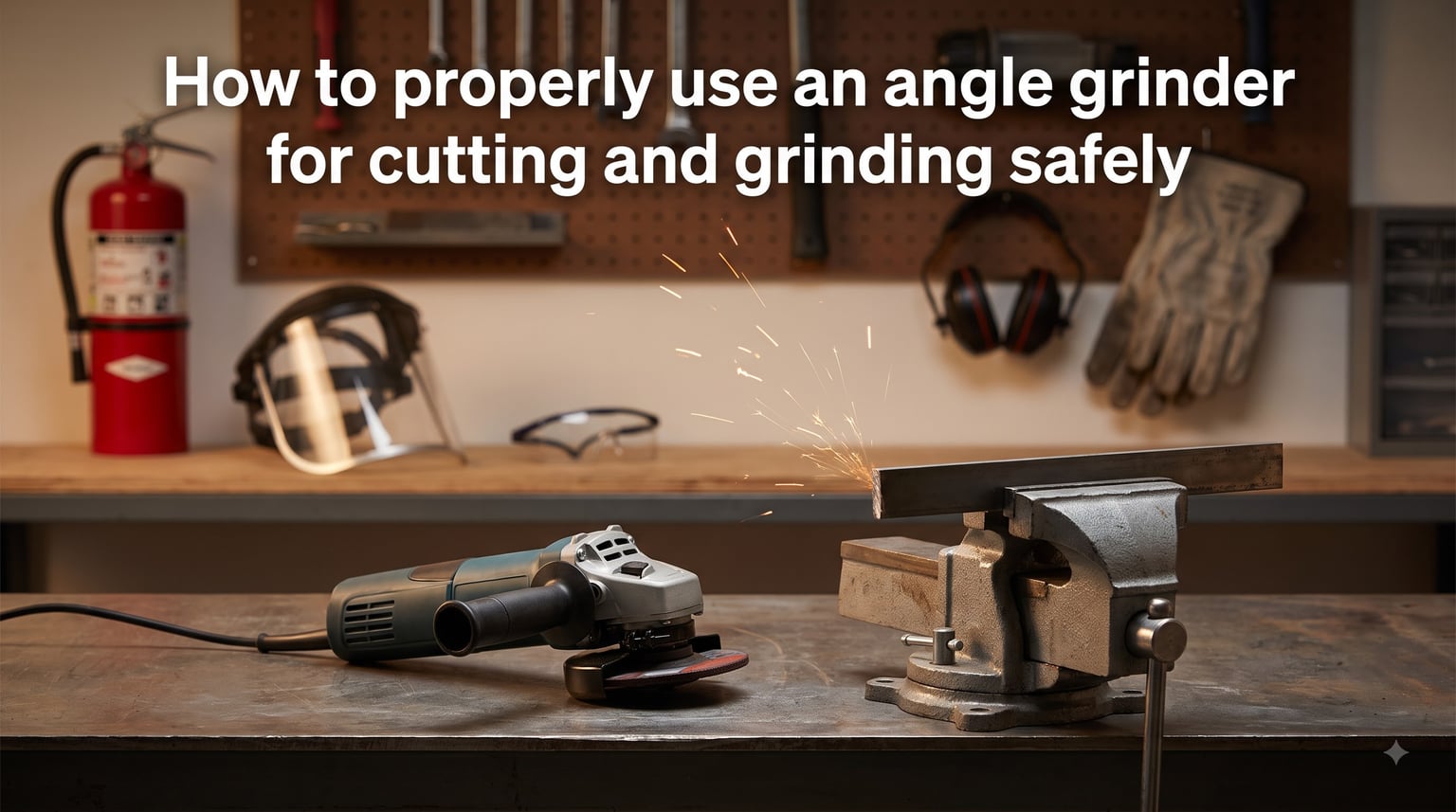
I will never forget the afternoon I watched a seasoned fabricator drop his angle grinder mid-cut. The disc had pinched into the metal and the tool snapped backward with enough force to slam into his chest. He walked away with bruises, but it could have been far worse.
Angle grinders are among the most dangerous handheld power tools in any workshop. The wheels spin at 8,000 to 12,000 RPM, the sparks fly 30 feet, and the kickback can break bones in a fraction of a second.
Our team has spent more than 30 years combined testing angle grinders in metal shops, fabrication studios, and home garages. We have seen the accidents that happen when someone skips a step or removes a guard. This guide distills everything we know about how to use an angle grinder safely, so you can get the cutting and grinding results you need without becoming another statistic.
Table of Contents
Understanding Your Angle Grinder Before You Start
An angle grinder is a handheld power tool that uses a rotating abrasive disc to cut, grind, polish, and remove material. The motor drives the spindle at high speed, and the disc does the work through friction and abrasion.
Most home and prosumer angle grinders spin at 8,000 to 12,000 RPM. Industrial models can exceed 11,000 RPM. That speed is exactly what makes the tool so efficient and so dangerous.
Before you power on, you need to know the key components:
Motor housing: Contains the electric or pneumatic motor and ventilation ports
Spindle: The shaft that holds the disc, locked with a spindle lock button during changes
Safety guard: A metal shield that protects you from sparks and disc fragments
Auxiliary handle: The side handle that gives you two-handed control
Arbor: The threaded section where the flange nut secures the wheel
On/off switch: Often includes a lock-on feature for continuous operation
I have watched beginners grab a grinder and start cutting without ever learning what each part does. That approach leads to mistakes. When you understand the machine, you understand why each safety rule exists.
Essential Safety Equipment (PPE Checklist)
Personal protective equipment is not optional with an angle grinder. The tool throws sparks, dust, metal fragments, and sometimes broken disc pieces. Here is the complete PPE checklist our team uses on every job.
Eye and Face Protection
Safety glasses alone are not enough. You need a full face shield over your safety glasses. The face shield catches the large sparks and debris, while the safety glasses protect against fine particles that can slip behind the shield.
I learned this lesson the hard way when a stray grinding fragment bounced off my face shield and would have hit my eye without the glasses underneath.
Hearing Protection
Angle grinders produce 95 to 105 decibels of noise. That level causes permanent hearing damage after just minutes of exposure. Wear earplugs AND earmuffs for maximum protection, especially in enclosed shops.
Respiratory Protection
Grinding and cutting metal produces fine dust and metal particles. Cutting masonry creates silica dust, which causes silicosis. Wear at least an N95 mask, and upgrade to a half-face respirator with P100 filters for serious work.
Hand Protection
Gloves are controversial in the angle grinder world. Here is the honest truth from our workshop.
Tight-fitting leather gloves protect your hands from sparks and heat. But loose gloves can catch on the spinning wheel and pull your hand in. The solution is simple. Wear snug, well-fitted gloves. Avoid anything with frayed cuffs or loose fabric.
Body Protection
Wear fire-resistant clothing. Synthetic fibers like polyester melt into your skin when sparks hit them. Cotton denim or treated flame-resistant work shirts are safer choices.
Remove all jewelry. Rings, watches, and bracelets can catch on the spinning wheel or conduct heat. Tie back long hair. Tuck in loose hoodies and shirtsleeves.
Steel-toed boots protect your feet from dropped workpieces and hot sparks. Never wear open-toed shoes or sandals around an angle grinder.
Inspecting Your Grinder Before Each Use
A pre-flight check takes 60 seconds and prevents 90% of accidents. Make it a habit before every single use.
Here is the inspection sequence our team follows:
Unplug the grinder or remove the battery before inspection
Check the wheel for cracks, chips, or warping. Run your finger carefully around the edge. Any visible damage means replace it.
Verify the wheel RPM rating matches or exceeds the grinder’s no-load RPM. A wheel rated below your grinder’s speed can shatter.
Confirm the guard rotates freely and locks tightly in position
Test the auxiliary handle. It should thread in smoothly and lock without wobble.
Inspect the power cord for cuts, exposed wires, or damaged plugs
Check ventilation ports are clear of dust
If any check fails, stop. Do not use the tool until the issue is resolved.
Choosing the Right Wheel or Disc for the Job
The wheel you choose determines both your results and your safety. Mismatched wheels are a leading cause of grinder accidents.
Type 1 Cutoff Wheels
These thin, flat wheels are designed for cutting metal. They come in various thicknesses and are made from aluminum oxide or silicon carbide abrasive bonded with resin and reinforced with fiberglass mesh.
Use Type 1 wheels only for cutting. Never use them for grinding. They are too thin to handle side pressure and will shatter.
Type 27 Depressed Center Grinding Wheels
Type 27 wheels have a raised hub that allows grinding at angles up to 30 degrees. They are thicker than cutoff wheels and built to handle side pressure.
Use Type 27 wheels for grinding welds, smoothing metal, and removing material.
Flap Discs
Flap discs combine grinding and finishing in one tool. They have overlapping abrasive flaps that wear down gradually and produce a smoother finish than standard grinding wheels.
Our team uses flap discs for most finishing work. They are more forgiving than hard grinding wheels and produce less gouging.
Wire Wheels
Wire wheels clean rust, paint, and scale. They come in cup, wheel, and end-brush shapes.
Wire wheels throw wire fragments at high speed. Always wear full PPE and never exceed the rated RPM.
Diamond Wheels
Diamond-tipped wheels cut masonry, tile, stone, and concrete. They are the only safe choice for these materials. Abrasive wheels can clog and bind when cutting masonry.
Never use a wood-cutting or metal-cutting blade on materials it was not designed for. The wheel can shatter, and the dust can be toxic.
How to Grind With an Angle Grinder Safely
Grinding welds and smoothing metal requires a specific technique. Get this wrong and you will gouge your workpiece, overheat the metal, or lose control of the tool.
Step 1: Secure the Workpiece
Clamp your workpiece in a vise or to a stable workbench. Never try to hold metal with your hand while grinding. The torque from the grinder can rip the piece loose and send it flying.
Step 2: Set Up Your Stance
Stand with your feet shoulder-width apart. Position yourself slightly to the side of the wheel’s rotation path, not directly behind it. If the wheel explodes or kickback occurs, sparks and debris will travel away from your body.
Step 3: Hold the Grinder at the Correct Angle
Hold the grinder at a 5 to 15 degree angle to the workpiece. This is the sweet spot for grinding. Too flat and you will overheat the work surface. Too steep and the grinder will chatter and bounce.
For left-handed users, mirror this positioning. The auxiliary handle goes on your dominant side, and you should stand on the opposite side of the wheel’s rotation so sparks fly away from your face.
Step 4: Make Contact Lightly
Let the grinder do the work. Pressing harder does not remove material faster. It just wears out the wheel, overheats the workpiece, and strains the motor.
Move the grinder in slow, overlapping passes across the surface. Do not dwell in one spot. Heat builds up fast and can warp thin metal or change its properties.
Step 5: Check Your Progress
Stop frequently and feel the workpiece. If it is too hot to touch, you need to slow down, use lighter pressure, or switch to a coarser grit. Cooling the metal with water is rarely a good idea during grinding, as it can crack the wheel.
How to Cut With an Angle Grinder Safely?
Cutting metal with an angle grinder requires a different approach than grinding. The biggest difference is the angle of attack and the need to manage kickback.
Step 1: Choose a Cutoff Wheel
Mount a Type 1 cutoff wheel rated for the material you are cutting. For metal, use an aluminum oxide wheel. For stone or masonry, use a diamond wheel.
Step 2: Position the Guard
Rotate the guard so it sits between you and the wheel. Sparks and fragments should fly away from your body. If you can see the spinning wheel past the guard, your guard is in the wrong position.
Step 3: Mark Your Cut Line
Use a marker or scribe to draw a clear cut line. Freehand cutting leads to crooked cuts and increases the chance of pinching the wheel.
Step 4: Approach Perpendicular
Hold the grinder so the wheel meets the workpiece at a 90-degree angle. This is the safest and most controlled cutting position.
Step 5: Let the Wheel Reach Full Speed
Trigger the switch and let the wheel spin up to full speed before contact. Cutting at reduced RPM strains the motor and increases the chance of binding.
Step 6: Make the Cut in Smooth Passes
Lower the spinning wheel into the workpiece with steady, even pressure. Do not force it. For thicker metal, make multiple passes, gradually deepening the cut rather than trying to slice through in one go.
Step 7: Support the Cut-Off Piece
As you near the end of the cut, the offcut piece can drop, pinch the wheel, and cause kickback. Support it with your free hand or a stand so it falls away cleanly.
Preventing Kickback and Maintaining Control
Kickback is the sudden, violent reaction when a cutting wheel binds in the workpiece. The grinder can spin out of your hands in a split second. I have seen kickback shatter a 4-inch cutoff wheel into fragments that embedded in a shop wall.
Kickback happens when:
The wheel pinches in the kerf as the material flexes
The offcut piece drops and clamps the wheel
You try to cut a curve too aggressively
The wheel is dull or undersized for the material
You force the cut instead of letting the wheel work
To prevent kickback, always support both sides of the cut, use sharp wheels rated for the material, and keep both hands on the grinder. If kickback occurs, do not fight it. Release the trigger and let the wheel stop.
Preparing Your Workspace for Angle Grinder Work
The space around you matters as much as the tool in your hands. A poor workspace multiplies the danger of every cut.
Fire Safety
Angle grinder sparks reach temperatures over 1,000 degrees Fahrenheit and can travel 30 feet. They will ignite sawdust, paper, rags, and solvents on contact.
Keep a Class ABC fire extinguisher within arm’s reach. Clear all combustible materials from a 10-foot radius around your work area. Empty your trash can before grinding. A single spark can start a shop fire that burns down a garage in minutes.
Ventilation
Grinding and cutting produces dust and fumes that damage your lungs. Work outdoors whenever possible. If you must work indoors, set up a fan to push dust away from your face and wear proper respiratory protection.
Never grind materials containing lead, beryllium, or cadmium without specialized ventilation. The fumes are toxic even with a respirator.
Lighting and Floor Space
Good lighting prevents mistakes. Set up shop lights or a task lamp so you can see your cut line clearly. Keep the floor clear of tripping hazards like cords, scraps, and tools.
Anti-fatigue mats reduce strain during long sessions. A tired operator is a sloppy operator.
Common Angle Grinder Mistakes to Avoid
After watching hundreds of hours of grinder use, our team has compiled the mistakes that cause the most injuries.
Removing the Guard
This is the most dangerous shortcut. Some users remove the guard for better visibility. The guard is there to protect you from disc fragments if the wheel shatters. Keep it on. Adjust its position instead of removing it.
Using the Wrong Wheel
Cutting with a grinding wheel or grinding with a cutoff wheel leads to wheel failure. Match the wheel to the task every time.
Skipping PPE
“Just a quick cut” is the phrase we hear before most eye injuries. Always wear your PPE, even for short jobs.
Cutting Inappropriate Materials
Never use an angle grinder on:
Pressure vessels, gas cylinders, or pressurized containers
Asbestos-containing materials
Materials painted with lead-based paint
PCV or plastic pipes (creates toxic fumes)
Tree stumps or wet wood (binds easily)
Forcing the Cut
Pressing harder does not make the grinder cut faster. It just increases heat, wear, and the chance of binding. Let the tool work at its own pace.
Working Without Securing the Piece
Never try to hold small parts with your hand while grinding. Use a vise or clamp. The torque from the grinder will twist the piece out of your grip and potentially into your body.
Ignoring Wheel Condition
A cracked or chipped wheel is a bomb waiting to explode. Inspect every wheel before mounting it. Discard damaged wheels immediately.
Frequently Asked Questions
What is the safe way of using an angle grinder?
The safe way to use an angle grinder starts with full PPE including safety glasses, a face shield, hearing protection, gloves, and fire-resistant clothing. Inspect the wheel and grinder before each use, keep the guard in place, secure your workpiece in a vise, hold the grinder at a 5 to 15 degree angle for grinding or 90 degrees for cutting, and let the tool do the work without forcing it.
What are common angle grinder mistakes?
Common mistakes include removing the safety guard for visibility, using the wrong wheel for the task, skipping PPE for short jobs, cutting materials like PVC or pressurized containers, forcing the cut instead of letting the wheel work, and failing to secure the workpiece in a vise before grinding or cutting.
Is it safe to use an angle grinder without the handle?
No. The auxiliary handle gives you two-handed control and dramatically reduces the chance of losing grip during a kickback event. Operating without the handle is one of the leading causes of serious angle grinder injuries. Always mount the handle before use, even for quick cuts.
What should you not cut with an angle grinder?
Never cut pressure vessels or gas cylinders, asbestos, materials with lead-based paint, PVC or plastic pipes, or wet wood. These materials can explode, release toxic fumes, or bind the wheel in ways that cause violent kickback. Use specialized tools for these materials.
Final Thoughts on Angle Grinder Safety
Learning how to use an angle grinder safely is not about memorizing a checklist. It is about building respect for a tool that can cut metal and bone with the same ease.
Every safety rule in this guide exists because someone, somewhere, learned the hard way what happens when that rule is broken. The guard is there because wheels explode. The handle is there because kickback is real. The PPE is there because eyes do not grow back.
Take your time. Inspect your tool. Wear your gear. Secure your work. Let the grinder cut at its own pace. Follow these principles and you will get years of safe, productive service from your angle grinder.