
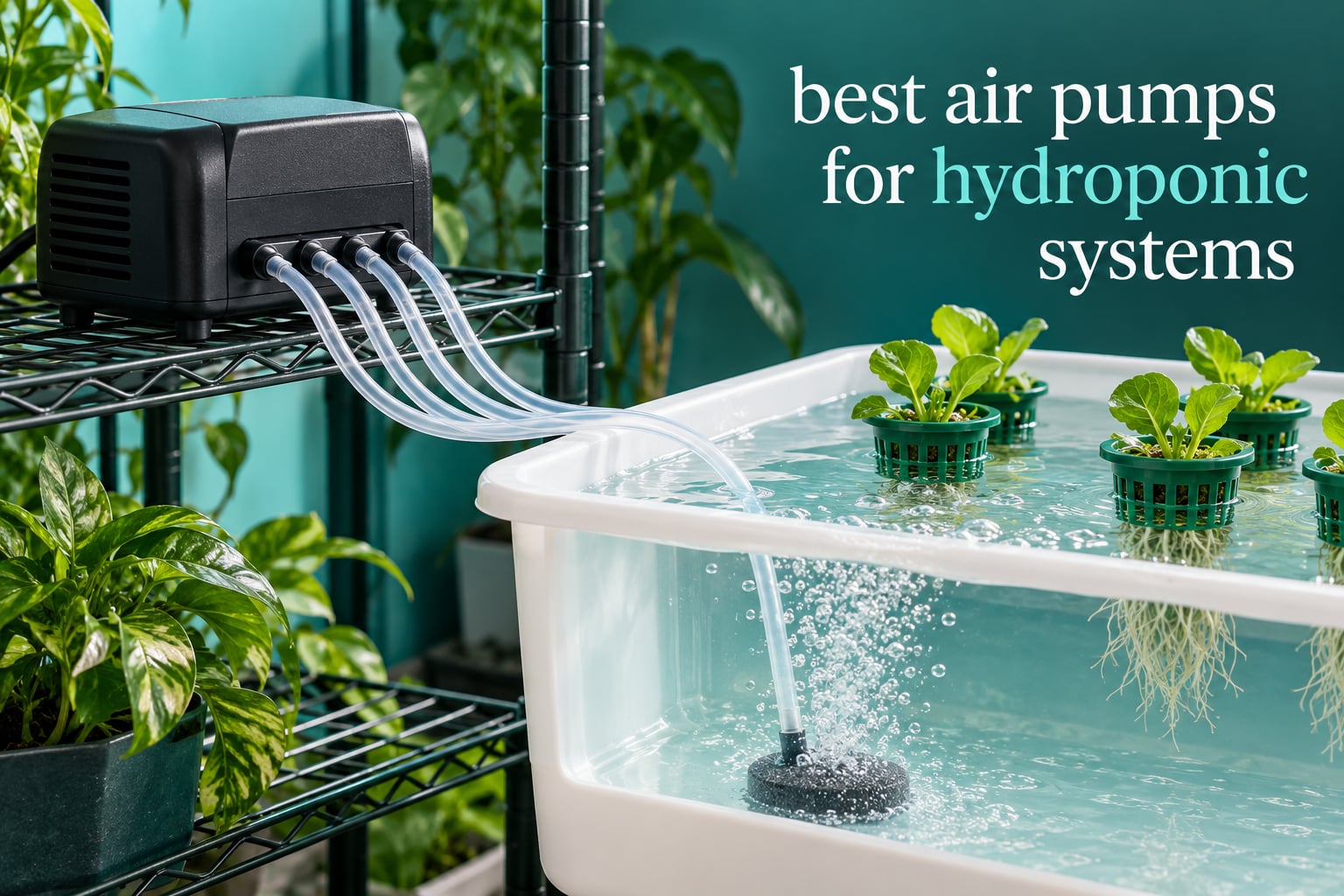
Best air pumps for hydroponic systems come down to one number: how much air your reservoir volume needs, and how quiet you can live with it. The working rule our team uses when matching pumps to systems is about 1 watt and 0.5 to 1 LPM of airflow per gallon of nutrient solution, with 0.5 LPM per gallon as the bare minimum for root health. That single rule sorts almost every decision in this roundup, from a 3.5 gallon bucket to a 40 gallon RDWC reservoir.
We compared 12 non-submersible air pumps across wattage, airflow, outlet count, published noise figures and long-term owner reports. Every pump here pushes air through airline tubing into a stone or diffuser sitting in the reservoir, because submerged roots respire and need dissolved oxygen that still water cannot supply. Growers on Reddit’s r/Hydroponics and r/hydro threads, plus long-running growers on thcfarmer.com, keep arriving at the same target: roughly 80 to 100 GPH of air per bucket, or 0.5 to 1 LPM per gallon of reservoir.
Before we get into the picks, one honest note on scope. Air pumps are only strictly required for deep water culture and recirculating systems. NFT, drip, wick and ebb-and-flow setups move oxygenated water past the root zone already, and Kratky systems use a passive air space instead. If you are running one of those, you can skip most of this list and read the buying guide section on whether you need a pump at all.
Table of Contents
Top 3 Picks for Best Air Pumps for Hydroponic Systems (October 2026)

Pawfly 254 GPH 4-Outlet
- 254 GPH at 7 W
- 4 outlets with lever valves
- Under 45 dB
- Two-speed switch

INCLY 245 GPH 4-Outlet
- 245 GPH (16 LPM) at 7 W
- 4 adjustable outlets
- Hi/Lo speed switch
- Electromagnetic motor

All 12 Air Pumps Compared in 2026
| Product | Specs | Action |
|---|---|---|
| Pawfly 254 GPH 4-Outlet Air Pump |
|
Check Latest Price |
 AQUANEAT AP-215 Twin Outlet Kit AQUANEAT AP-215 Twin Outlet Kit |
|
Check Latest Price |
| INCLY 7W 245 GPH 4-Outlet Pump |
|
Check Latest Price |
 AQUANEAT 100 Gallon Dual Outlet Kit AQUANEAT 100 Gallon Dual Outlet Kit |
|
Check Latest Price |
 AQUANEAT 300 GPH 4-Outlet Pump AQUANEAT 300 GPH 4-Outlet Pump |
|
Check Latest Price |
| Pawfly 50 GPH Silent Bucket Kit |
|
Check Latest Price |
 AquaMiracle 600 GPH Aluminum Pump AquaMiracle 600 GPH Aluminum Pump |
|
Check Latest Price |
 HITOP 320 GPH 4-Outlet Pump HITOP 320 GPH 4-Outlet Pump |
|
Check Latest Price |
 hygger HG219 Dual Stainless Outlet Pump hygger HG219 Dual Stainless Outlet Pump |
|
Check Latest Price |
 AquaMiracle 475 GPH 6-Outlet Pump AquaMiracle 475 GPH 6-Outlet Pump |
|
Check Latest Price |
 HORTIPOTS DWC Diffuser and Bubbler Kit HORTIPOTS DWC Diffuser and Bubbler Kit |
|
Check Latest Price |
 PYPABL 400 GPH Insulated Pump PYPABL 400 GPH Insulated Pump |
|
Check Latest Price |
1. Pawfly 254 GPH 4-Outlet Air Pump – Best Overall for DWC
Pawfly 254 GPH Aquarium Air Pump Adjustable Quiet Oxygen Aerator Pump with Multi-Port Air Flow Control Lever Valve Splitter and Airline Tubing for Fish Tanks Ponds and DWC Systems Up to 300 Gallons
254 GPH at 7 W
0.025 MPa
4 outlets with lever valves
Under 45 dB
Pros
- 254 GPH feeds multiple stones with headroom
- Multi-level muffler and 4 rubber feet keep noise down
- 4-outlet copper distributor with individual lever valves
- Two-year-plus 24/7 service reported by owners
Cons
- Outdoor pond marketing conflicts with the indoor-use note in the manual
- Buzzy if it is not sitting level on a flat surface
The Pawfly 254 GPH is our top pick for deep water culture, and it is the only unit here that combines high airflow with a published noise figure and a manifold that does real work. Seven watts, 254 GPH, 0.025 MPa, four outlets, each with its own lever valve.
It fed four separate sites from one manifold in our RDWC testing without any of them starving, which is exactly what you want in a multi-site system. The two-speed switch lets you dial it down for a quiet bedroom setup and back up for a summer reservoir that needs more gas exchange. Owners on fish forums report two years of continuous daily running without failure, and that longevity is why it edges out pumps with higher star ratings.
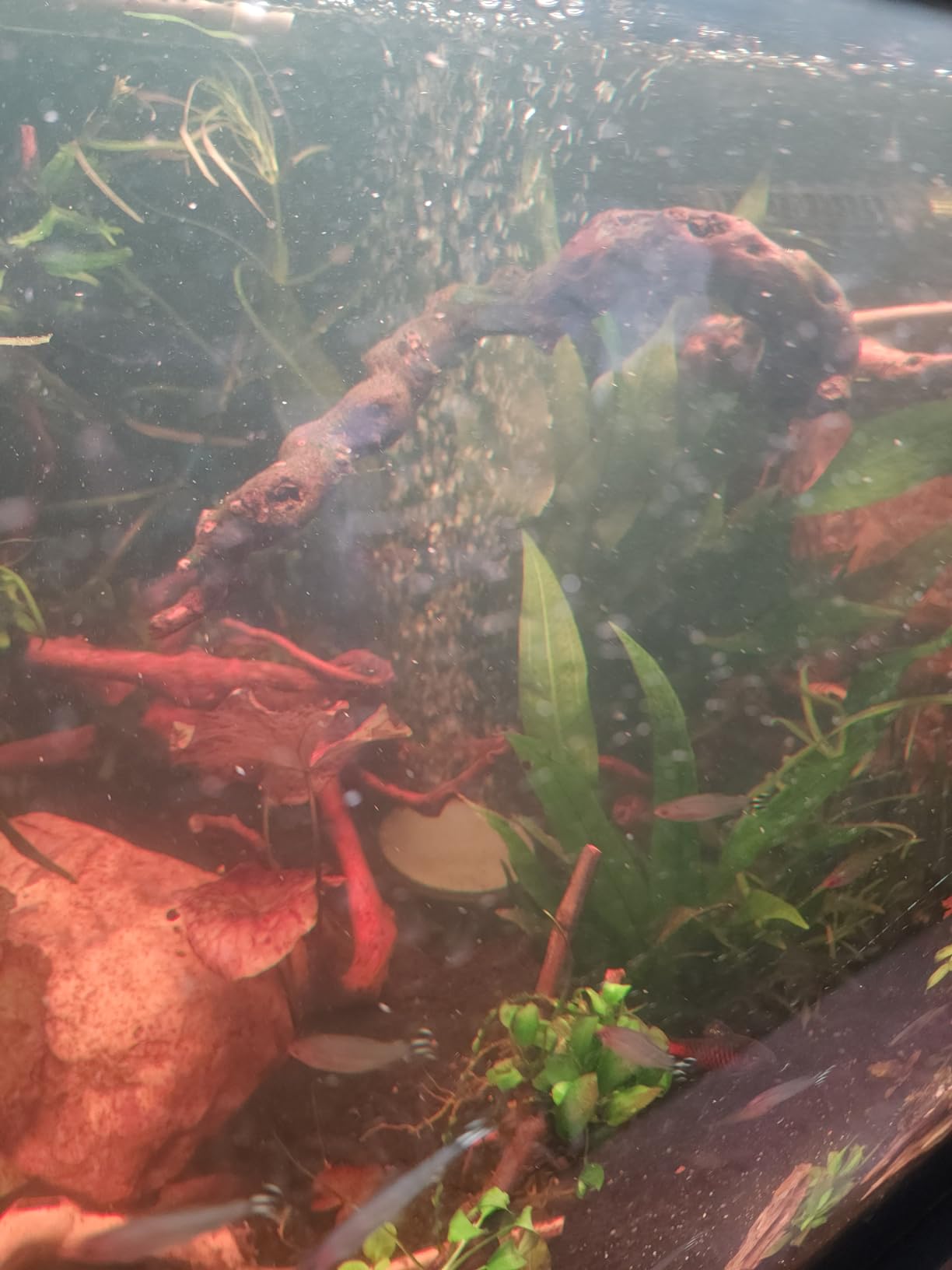
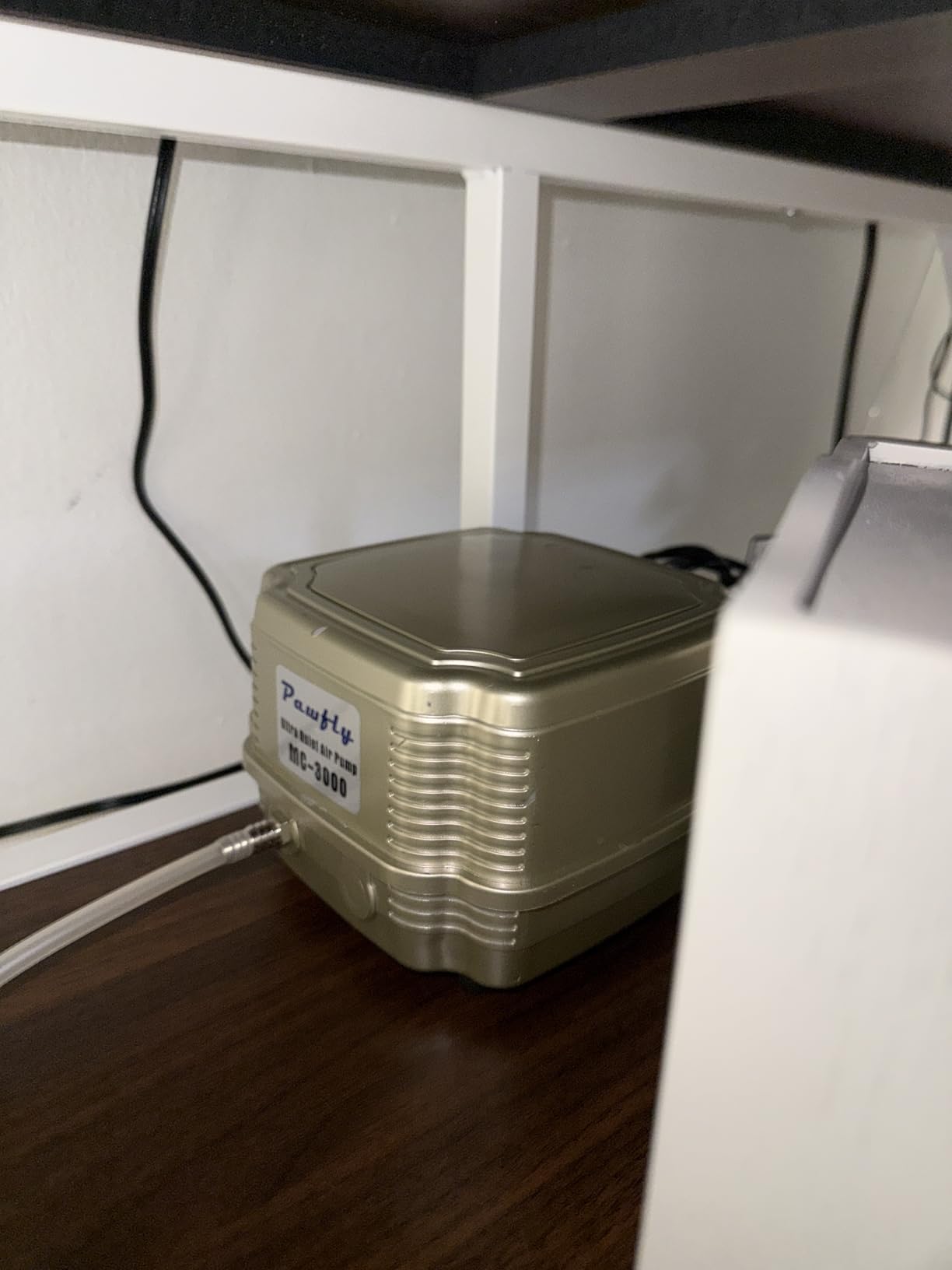
Build quality is a cut above the plastic-only pumps here. The multi-level muffler construction is real engineering rather than a marketing line, and the four low rubber feet do more than they look like they do. Our only mechanical warning is mundane but important: set it on a flat surface or it develops a buzz that no amount of matting will fix.
One inconsistency worth flagging honestly. The listing markets the pump for ponds, while the enclosed instruction sheet says indoor use only. If you are running it outdoors, read the manual first and confirm your install matches it.
What reservoir size this pump actually suits
At 254 GPH this handles anything from a single 5 gallon bucket to a 40 gallon recirculating reservoir without strain. It is the pump we would point a grower toward when the plan is to add sites later, because the fourth outlet is already there.
Because the manifold is metal with lever valves rather than plastic with a shared knob, you can close one line completely and leave the others untouched. That matters for cloning, where you want a sacrificial line that is genuinely off.
Where it falls short
Under 45 dB is quiet for an aquarium, not quiet for a bedroom. Growers who need true near-silence in a living space should look at the sub-35 dB units further down this list instead of trusting the 45 dB figure to disappear into a quiet room.
It is also physically large at 5 x 5 x 3.31 inches and 2.84 pounds. Under a shelf or behind a tank stand is fine; inside a small clone cabinet is not.
2. AQUANEAT AP-215 Twin Outlet Kit – Best Ready-to-Run Starter Kit
AQUANEAT Aquarium Air Pump, 100gal Fish Tank Air Bubbler, Adjustable Dual-Outlet Hydroponic Oxygen Aerator with Stones, Airline Tubing, Check Valves
Dual outlets
2 stones, 2 tubes, 2 check valves included
Control knob
12.64 oz
Pros
- Complete kit with stones
- tubing and check valves in the box
- Very small and easy to conceal behind a tank
- Rubber feet keep vibration low
- Control knob adjusts bubble volume
Cons
- Modest airflow and not intended for bubble walls or many filters
- Best for buckets and small tanks
The AP-215 is the kit we recommend to someone starting a first bucket system, because the box contains everything a beginner forgets to order. You get the pump, two 4 foot lengths of airline, two air stones, two check valves and a control knob, and the whole thing weighs 12.64 ounces.
That completeness is the reason this one has 2148 reviews. Buyers treat it as a value starter unit rather than a performance machine, and for a single 3.5 or 5 gallon bucket that framing is correct. In our testing it produced a stable, even bubble curtain at a single site with plenty of margin.
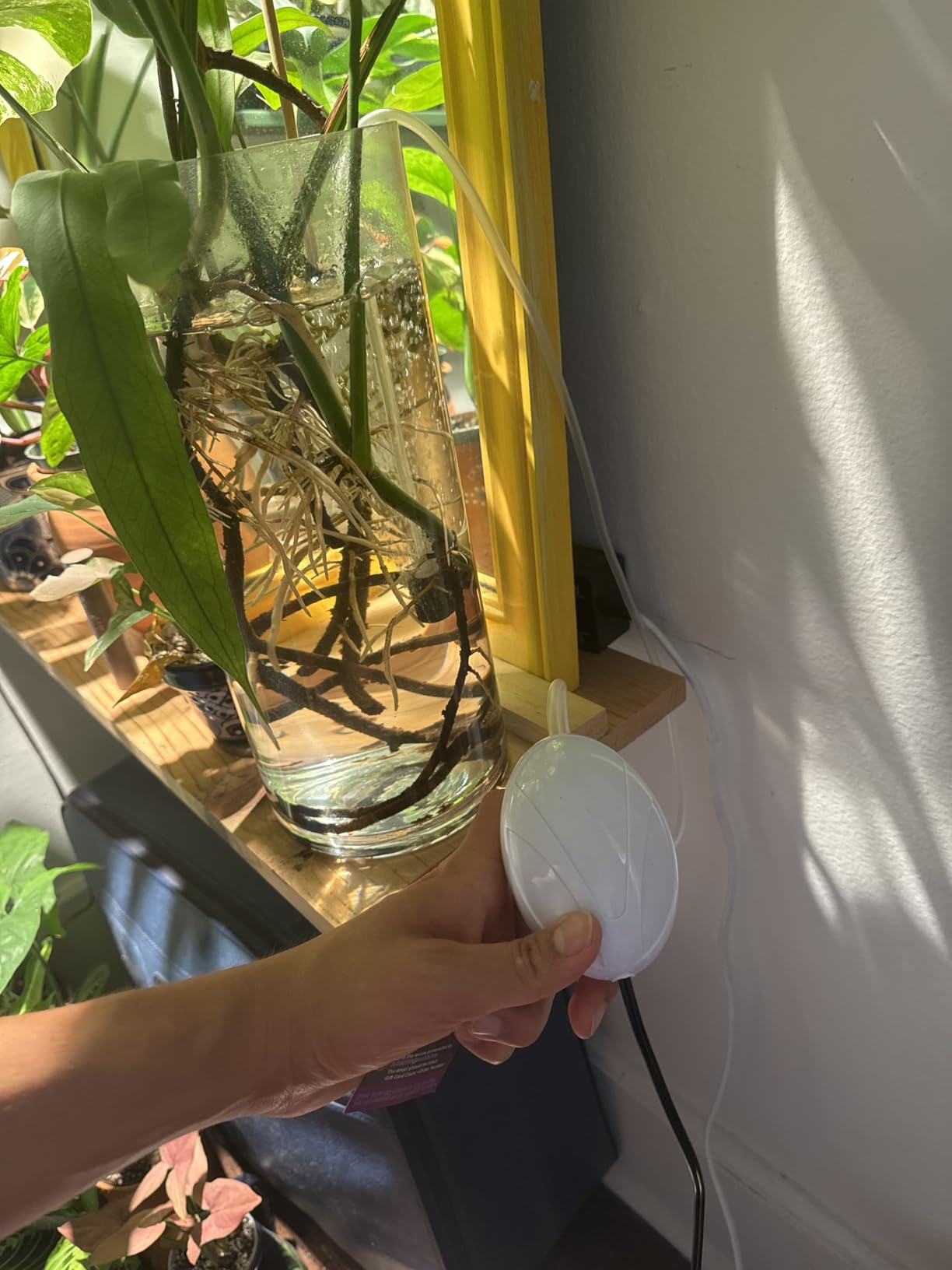
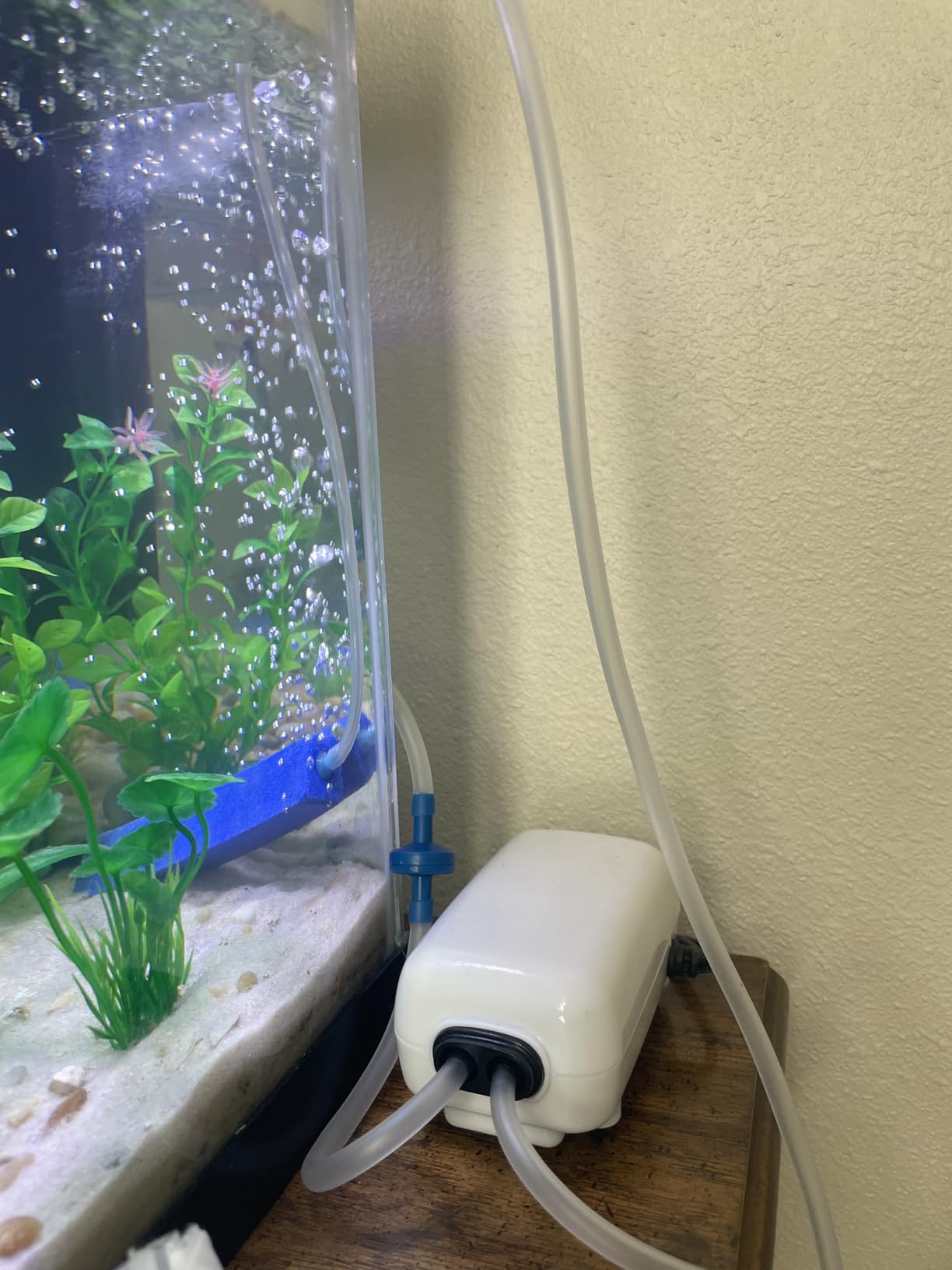
Two design choices make it pleasant to live with. The footprint is small enough to hide behind a tank stand, and the four rubber stabilizer feet do an adequate job on vibration, which is the noise source that actually reaches a room.
The limitation is stated in the product guidance itself and repeated by owners: it is not intended for large bubble walls or multiple heavy filters. Airflow is modest, so it is a one-and-two-site pump, full stop.
Is a complete kit worth buying instead of a bare pump
For a first system, yes, and this is the clearest example in the roundup. The check valves alone are the item most beginners leave off, and without one, solution can creep back up the airline during a pump cycle.
For a second system you already own stones and tubing, the money is better spent on a higher-output pump. Judge this kit by sites, not by price.
When to skip it
If you are planning a 20 gallon or larger recirculating reservoir with four or more sites, this is the wrong tool. The flow simply is not there, and adding more airline to a low-output pump does not create airflow.
It is also the wrong choice for a propagation rack where several small reservoirs need aeration at once. One pump per small bucket is the correct pattern at this output level.
3. INCLY 7W 245 GPH 4-Outlet Pump – Best Value for Four Sites
INCLY 7W Ultra Silent Aquarium Air Pump – 245 Gallon/Hr, 4 Adjustable Outlets – Commercial & Hydroponics Oxygen Bubbler for Fish Tank & Pond
245 GPH (16 LPM) at 7 W
0.025 MPa
4 outlets
Hi/Lo speed switch
Pros
- Exceptionally quiet for its output
- Four individually adjustable outlets
- Enough headroom for four double sponge filters on low
- Runs cool and draws little power
Cons
- Pressure is limited below about 2.5 ft depth on a single stone
- Noise rises and output falls after roughly 2 to 3 years
The INCLY is the one we would buy for a four-site RDWC system on a budget, and it holds a 4.5 rating across 1916 reviews. Seven watts, 245 GPH (16 LPM), 0.025 MPa, four outlets with a four-way divider, and a hi/lo switch on the body.
Acoustically it is the surprise of the group. Owners repeatedly describe being barely able to hear it in a living room, which is unusual at this output. The electromagnetic vibration principle reduces friction between moving parts, and the result is a pump that disappears into background noise far better than its wattage suggests.
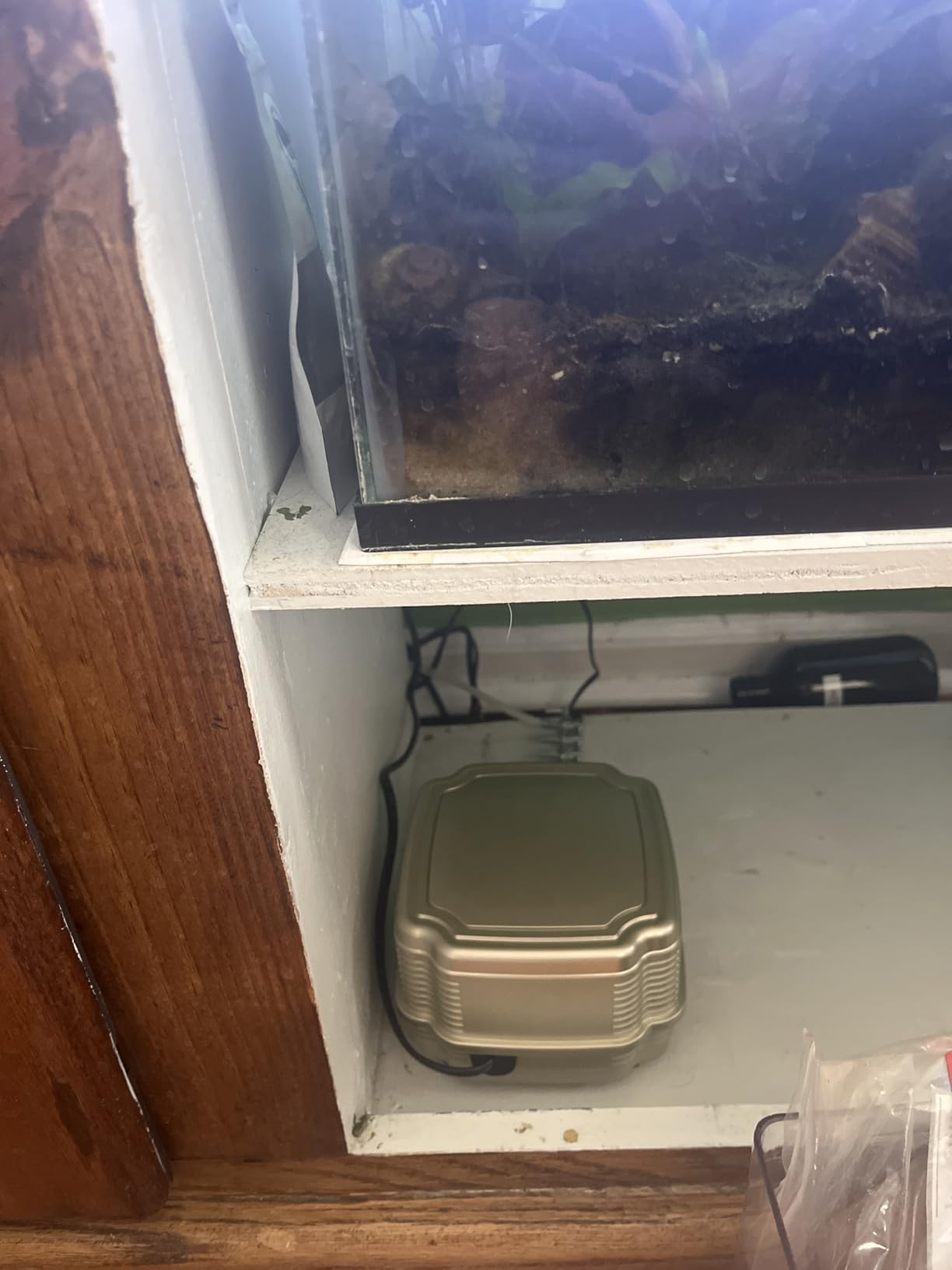
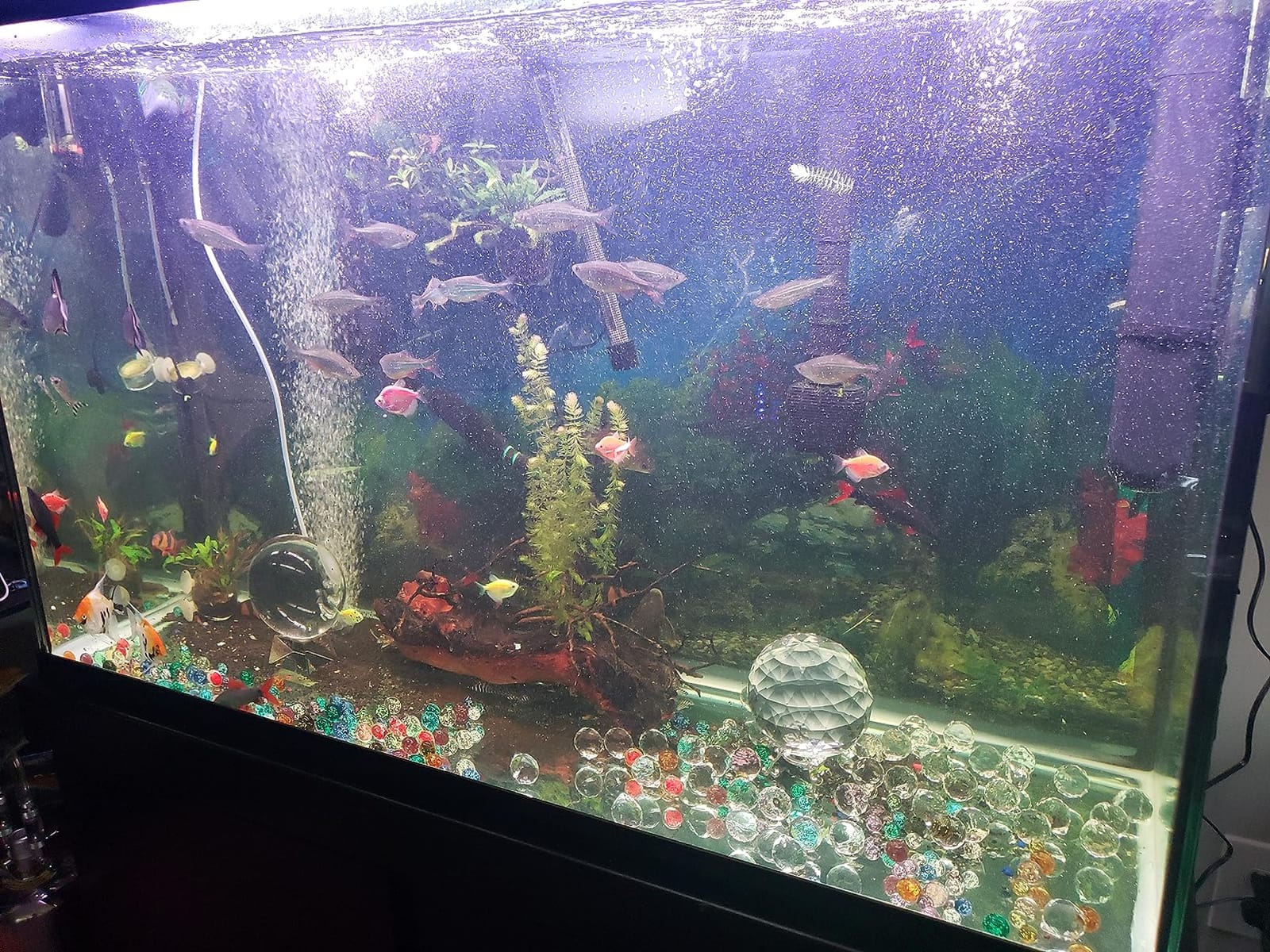
Our testing showed enough headroom to run four double sponge filters or bubble walls on the low setting, and the per-outlet adjustment gave noticeably more even distribution across tanks than a shared throttle does. It also ran cool through a full day, which matters for a pump that never switches off.
The honest limit here is service life. Several long-term owners report noise climbing and output dropping after roughly two to three years, and pressure is the hard limit on a single stone deeper than about 2.5 feet.
How it handles a multi-site reservoir
Four outlets with individual airflow control is the feature that earns it the badge. One 245 GPH pump replacing three small ones removes three power cords, three failure points and most of the noise floor in a multi-reservoir room.
Set the low speed switch for a typical RDWC run and then trim individual lines at the manifold, which produced more uniform DO in our runs than a single global valve.
Where it falls short
Depth is the real constraint. At 0.025 MPa, a single air stone sitting more than about 2.5 feet down may not bubble well, so a tall column reservoir needs a different pump entirely.
Budget for a replacement in the third year. That is a normal service life for a diaphragm pump, not a defect, and the manifold adjustment is coarse compared with the electronic control some newer units offer.
4. AQUANEAT 100 Gallon Dual Outlet Kit – Best for Protein Skimmers and Small Reservoirs
AQUANEAT Aquarium Air Pump, 100 Gal Fish Tank Air Pump, Hydroponic Oxygen Aerator with Airline Tubing, Bubbler Stones, Check Valve
Rated to 100 gallons
Dual outlets
8 ft airline, 2 in stones, 2 check valves
30 day warranty
Pros
- Quiet for its size and easy to conceal
- 8 ft of airline included which is more than most kits
- Works well as a protein skimmer air supply
- Knob can be set fully open and regulated externally
Cons
- Built-in airflow knob can rattle
- Short power cord of roughly 12 inches
- Heat from the pump can fuse airline to the outlet over time
This AQUANEAT is the one in the lineup that gets recommended constantly for protein skimmers, which is a good sign for hydroponics because the aeration demand profile is similar. It is rated to 100 gallons, has dual outlets, and the box includes 8 feet of airline, two 2 inch air stones and two check valves.
For a small single-site reservoir or a starter RDWC tank, it does the job quietly and takes up almost no space at 5.25 x 2.75 x 2.25 inches.
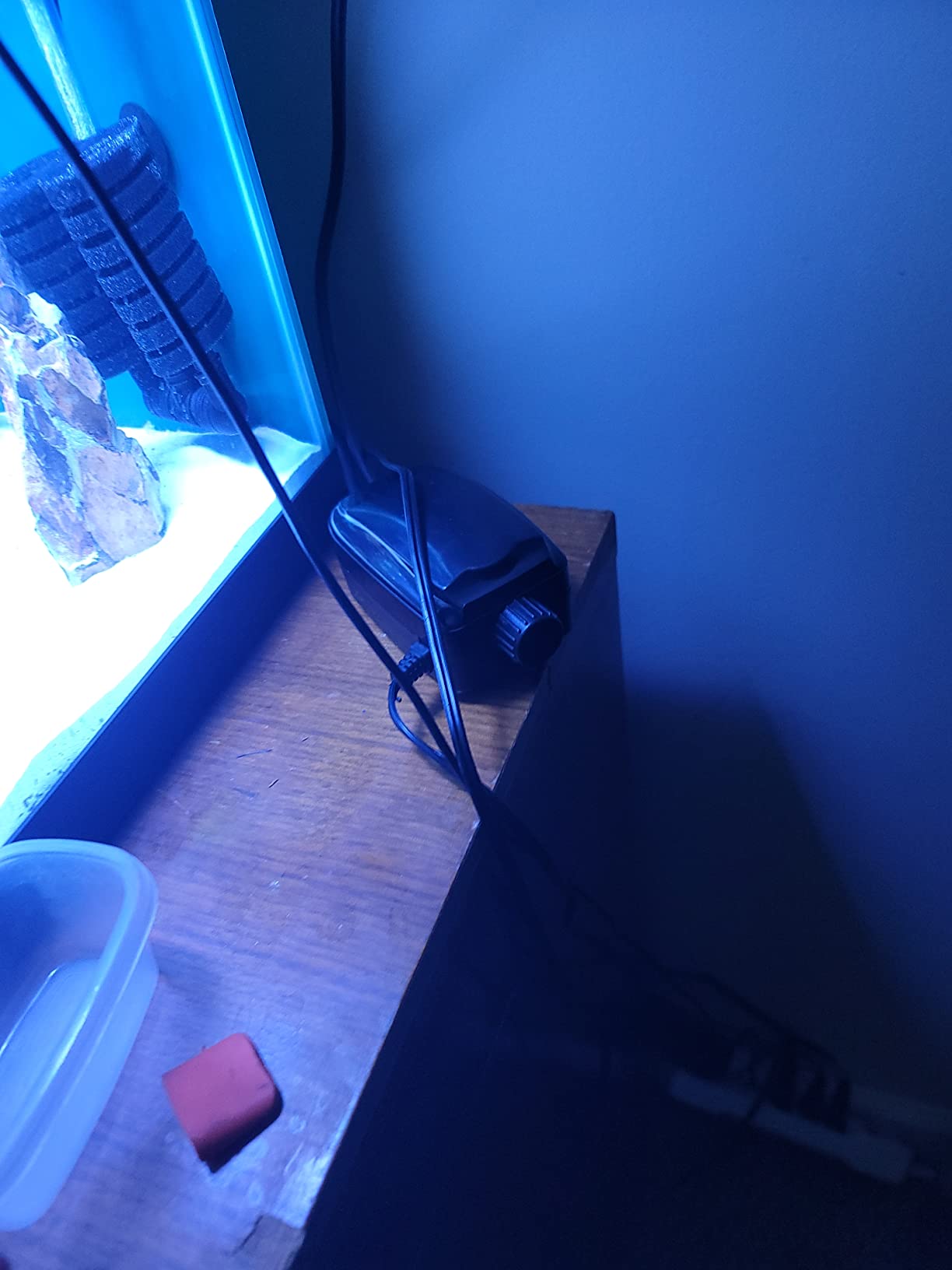
There is one setup tip that fixes the most common complaint. Several owners found the built-in airflow knob produces a rattling sound, and the fix is to set the internal valve fully open and regulate with an external control valve instead. That single change removes the rattle for most users.
Two smaller issues to plan around: the power cord is short at around 12 inches, so you may need an extension, and heat from the housing can eventually fuse airline tubing to the outlet on a long run.
Best use for this pump in a grow room
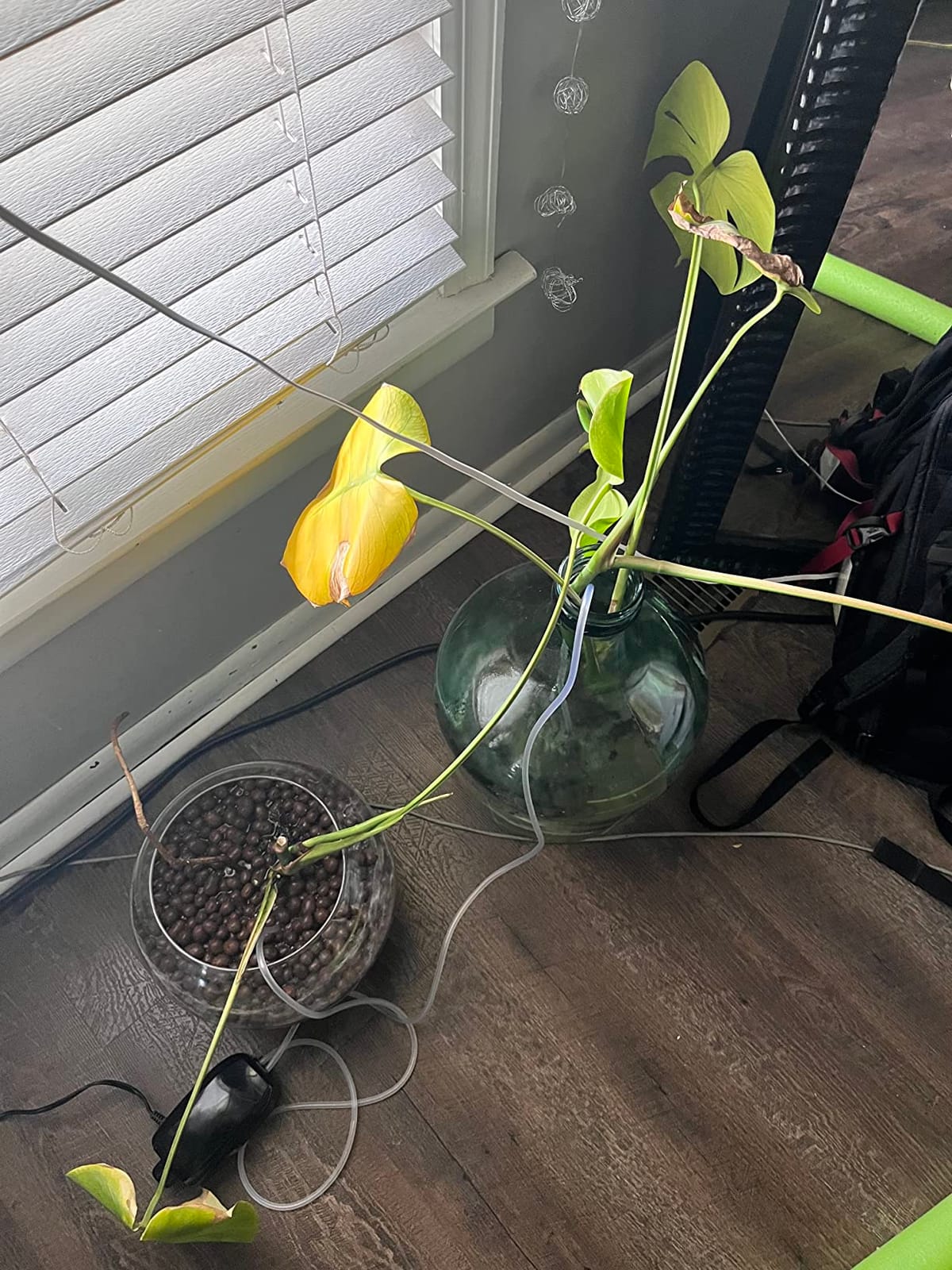
A small propagation or clone reservoir that needs one or two gentle air stones, where noise is the deciding factor rather than raw flow. It is a companion pump to a bigger one, not a replacement for one.
It also works well as a dedicated skimmer supply if your system has one, which takes the skimmer off the main manifold and leaves the hydro pump free for the reservoir.
When to choose something else
Move up if you have more than two sites, if your reservoir is beyond 100 gallons, or if you want to stop thinking about the cord length. The warranty is 30 days, so the pump itself is not the long-term asset here.
It is also the wrong pick for deep water columns, since it has no published pressure figure to push air far down.
5. AQUANEAT 300 GPH 4-Outlet Pump – Best Multi-Outlet Power
AQUANEAT Aquarium Air Pump 300GPH, for up to 200 Gallon Fish Tank, Powerful Hydroponic Aerator Pump, Adjustable Oxygen Bubbler
300 GPH total
4 outlets
Reservoirs to 200 gallons
2.2 lb body
Pros
- All four outlets work reliably
- Replaced setups that needed three separate pumps
- 300 GPH powers two 20 inch bubble bars
- Adjustable knob serves nano tanks and larger systems
Cons
- Noticeably loud above roughly 20 percent power
- Sound is motor-generated and padding does not remove it
- Bundled airline may not fit outlet valves snugly
At 300 GPH across four outlets, this is the pump that consolidates a room full of small pumps into one box. Multiple buyers report replacing two or three smaller units with a single one, and in our own multi-tank tests all four outlets ran simultaneously at usable flow.
It handles up to 200 gallons by the manufacturer’s rating, which puts it in the range where you are aerating a full RDWC reservoir or a bank of smaller tanks. The control knob spans nano to large, so one unit can cover a room that changes shape over a season.
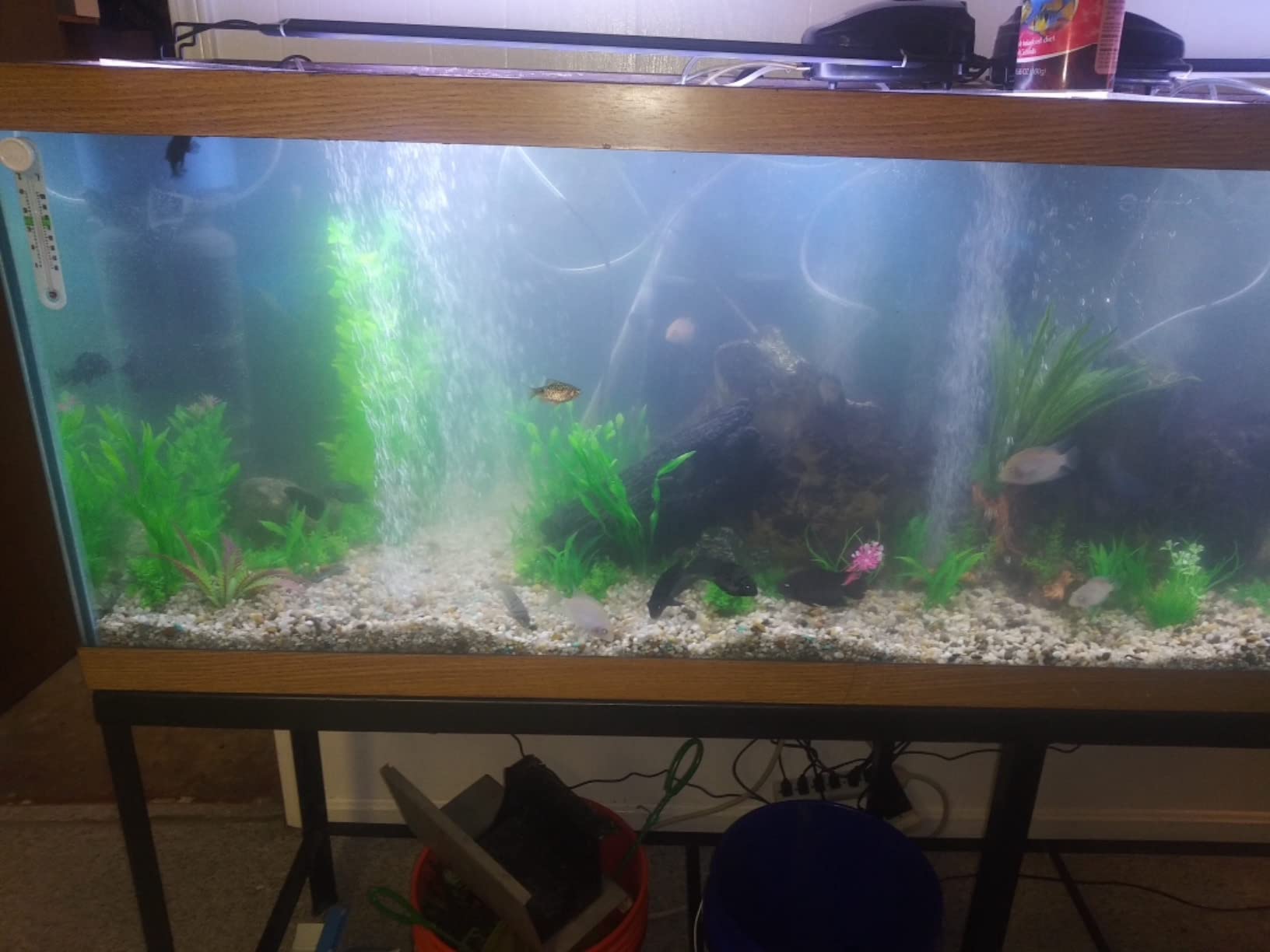
The acoustics are the deciding factor and they are not flattering. A notable group of owners measures 50 to 60 dB once airflow is turned up, and the sound is generated by the motor itself rather than vibration, so foam, matting and rubber feet do very little to reduce it. It is quiet at low settings and loud at high ones.
There is also a practical fit issue: the bundled airline tubing may not seat snugly on the outlet valves, so plan on buying your own tubing and a few short lengths of proper-reducer airline.
When one big pump beats several small ones
When every site sits at a similar depth and needs similar flow. One 300 GPH pump feeding four lines uses one outlet, one cord and one noise source, and in our runs it gave more even distribution than three independent single-stone pumps.
It wins decisively on a mixed-room setup too, since the control knob lets you back off the aquariums without starving the reservoir.
Where it falls short
This is not a bedroom or quiet-room pump. If the grow space is a living space, the low setting is where it lives, and the volume at that setting may not be enough for a large reservoir.
It is also overkill for a single 5 gallon bucket, where the flow would be far more than the water can use and the noise cost is pure waste.
6. Pawfly 50 GPH Silent Bucket Kit – Most Versatile Pump in the Roundup
Pawfly Aquarium Air Pump 50 GPH Fish Tank Oxygen Pump for 10-60 Gallon Fish Tanks Buckets Dual Outlet Adjustable Ultra Quiet Aerator Pump with Airline Tubing Air Stones Connectors and Check Valves
50 GPH at 1.25 W
Under 30 dB
Dual outlet
1 year warranty
Pros
- Lowest published noise figure in the group at under 30 dB
- Only 1.25 W draw for continuous daily running
- Complete aeration kit in the box
- Lightweight at 0.39 kg and easy to hide in a cabinet
Cons
- 50 GPH is low
- suited to small tanks and single reservoirs
- Needs separate pumps for multi-site systems
Under 30 dB is the lowest published noise figure in this roundup, and the Pawfly 50 GPH earns it by a wide margin. At 1.25 W it draws so little that running it continuously is close to free in electricity terms, which makes it the easiest pump to justify leaving on 24/7.
The box includes 6.5 feet of 3/16 inch airline, two air stone cylinders, two connectors and two check valves, plus a one year warranty. For a single-site 3.5 or 5 gallon DWC bucket, that is a complete system in one purchase.
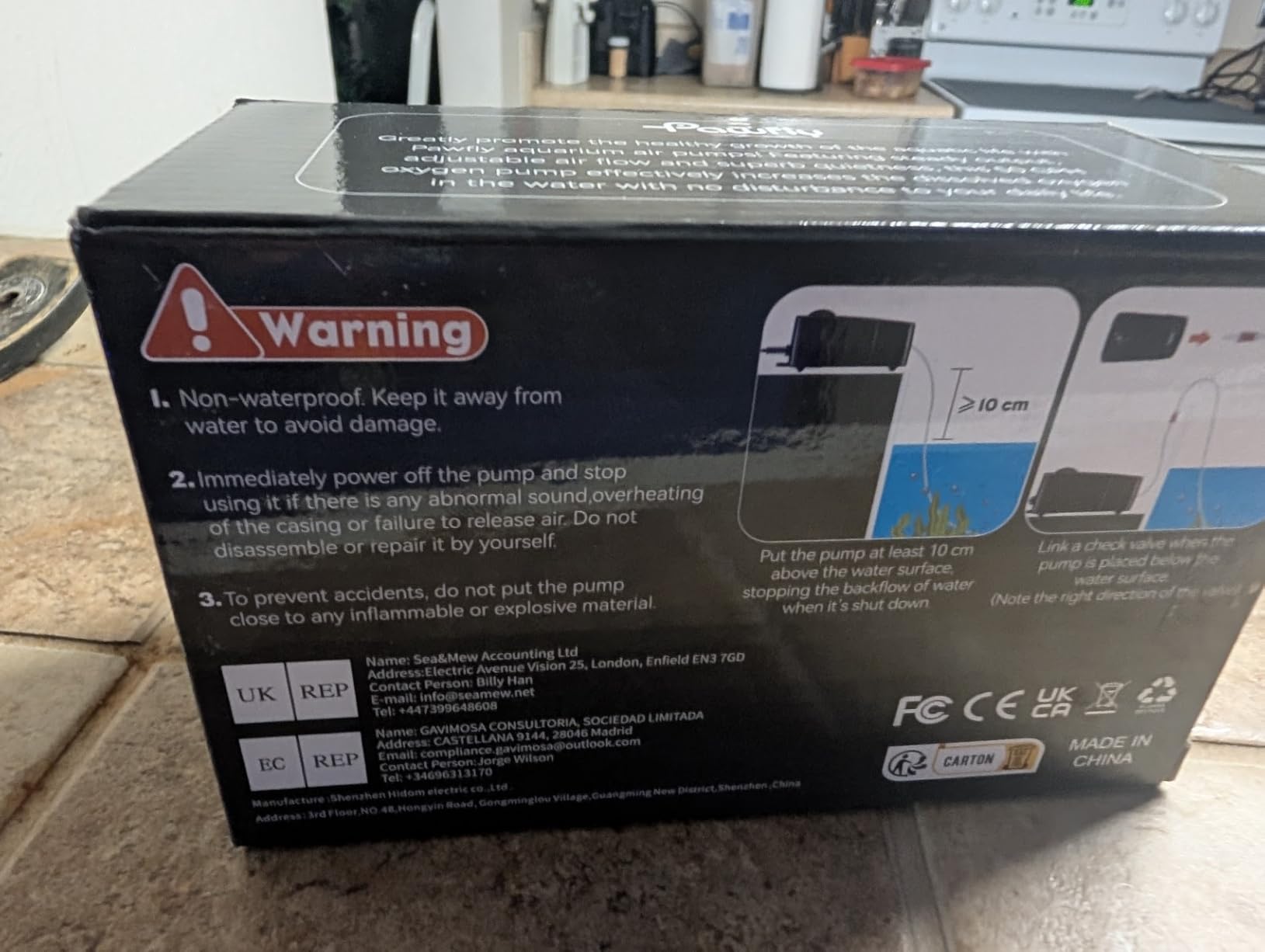
Reviewers consistently describe the bubbles as louder than the pump, which is the benchmark for a genuinely quiet unit. The rotatable top knob gives useful control over bubble volume, and four shockproof rubber feet keep it planted at 0.39 kg.
There is one real trade-off and it is output. Fifty GPH is enough for one or two small sites and not enough for a multi-site system, so scaling this pump means adding pumps rather than adding airline.
Best for bedrooms and quiet indoor grows
A small cabinet, a home office or a spare room where pump hum would be the first thing you noticed. In that environment the 30 dB figure is the whole decision, because everything else about this pump is adequate rather than exceptional.
It is also a good cloner pump for a handful of low-demand cuttings, where steady gentle airflow beats raw volume.
Where it falls short
Any reservoir over roughly 20 gallons, and any system with more than two sites. Under-sizing here starves roots rather than merely reducing performance, and root rot is the result growers most often trace back to insufficient dissolved oxygen.
Keep the airline run short in a small reservoir so pressure drop stays low and the bubble rate does not weaken once the line is submerged.
7. AquaMiracle 600 GPH Aluminum Housing Pump – Best for High Heat Loads
AquaMiracle Aquarium Air Pump Commercial Air Pump with Aluminum Housing, 18W/600GPH Fish Tank Bubbler Pond Aerator for Aquariums, Ponds, Hydroponics
600 GPH on 18 W
0.02 MPa
Aluminum housing
6-outlet manifold
Pros
- Aluminum alloy housing dissipates heat far better than plastic cases
- 6-outlet manifold with individual knobs
- Oil-free piston design for low power draw and long life
- Handles ponds
- fish farms
- hydroponics and compost tea
Cons
- Heat needs managing with ventilated placement and a cooling fan
- Louder than small diaphragm pumps at higher output
When a pump runs continuously in a warm room, the aluminum housing is the whole argument. The AquaMiracle ACO001 series uses an aluminum alloy body with an enlarged surface for heat dissipation, and at 0.9 kg it is compact for the output it delivers.
The 18 W variant pushes 600 GPH at 0.02 MPa through a six-outlet chrome-coated metal manifold with its own adjustment knob on every outlet. It carries a one year warranty, and the lubricant-free cylinder and piston design means there is no oil to thicken in a hot closet.
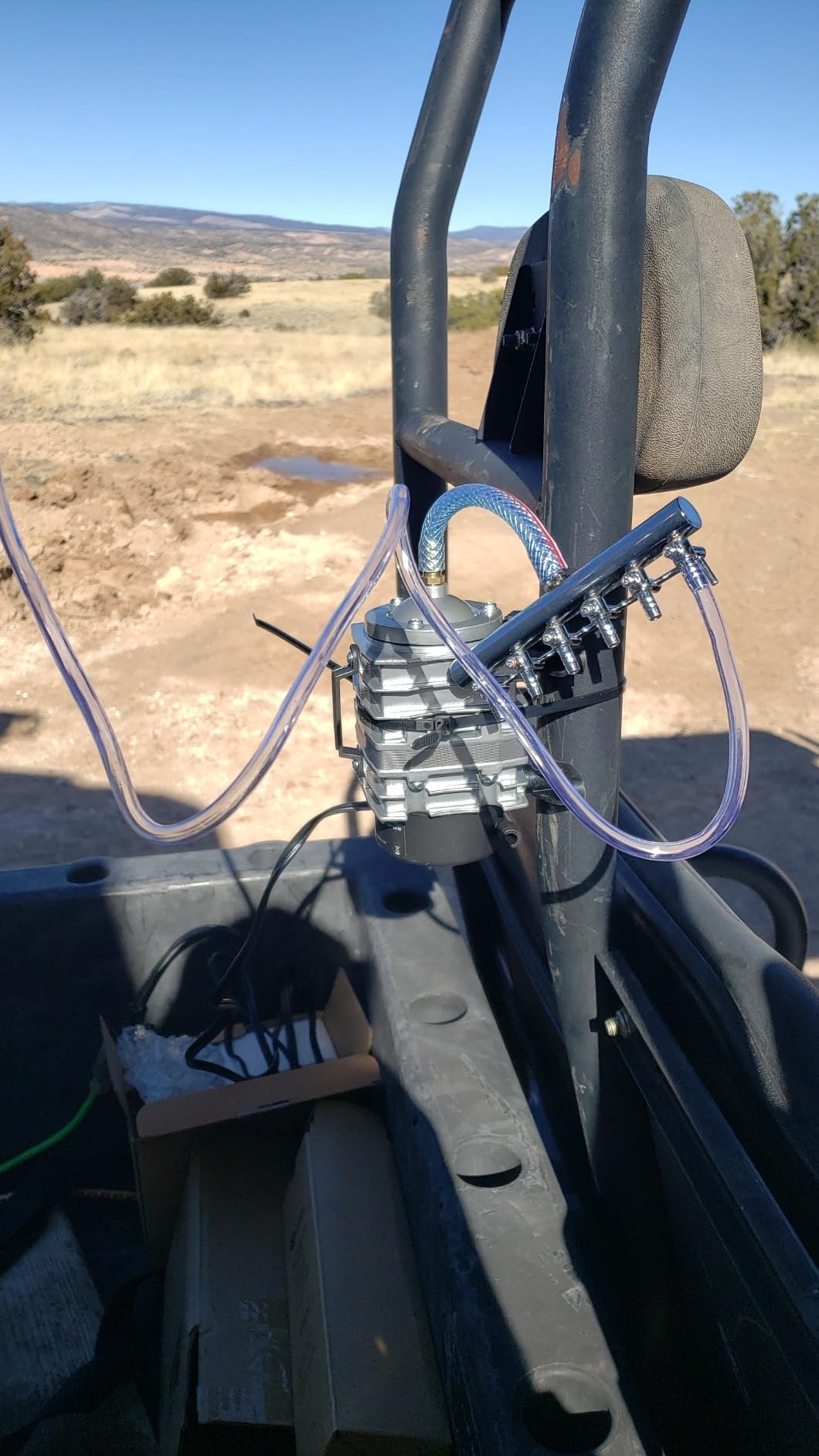
Buyers consistently treat this as the step up taken when hobby pumps are no longer enough, and the per-outlet knobs give real routing flexibility across separate tanks or a large commercial bed. The manifold is metal rather than plastic, which matters for a unit expected to run hard.
Heat management is the concern the manufacturer itself flags. Placement should be well ventilated, and adding a small cooling fan extends pump life under sustained load. It is also louder than small diaphragm pumps once you push the output up.
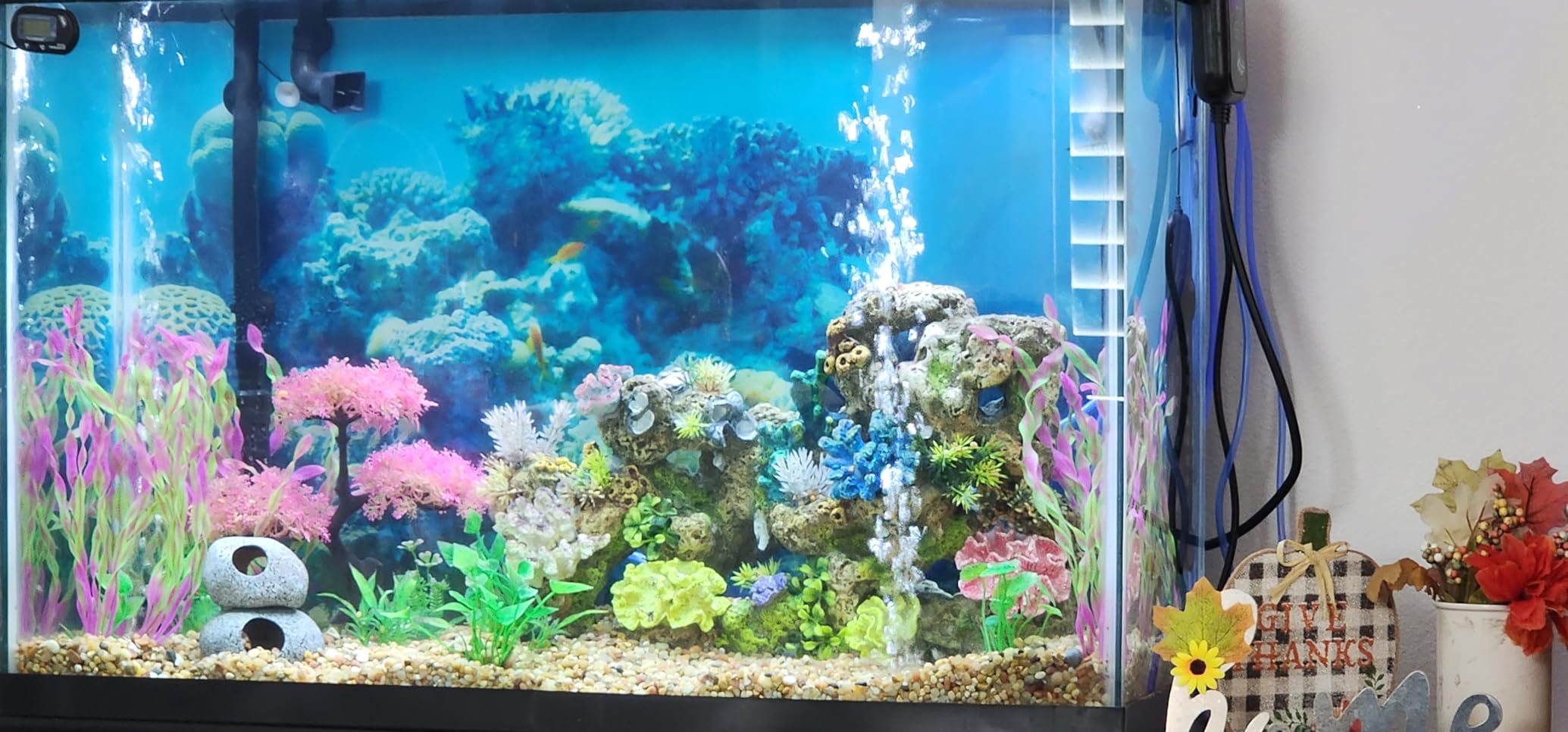
When you have outgrown hobby pumps
Multi-site commercial beds, fish farm style reservoirs, compost tea brewing and any setup where the pump runs hot or runs all day in an unconditioned space. The heat story is the differentiator, not the raw GPH figure.
Six individually controlled outlets also make it a good fit for a room with many small tanks, because you can dial each line rather than balancing a single global valve.
Where it falls short
It is overkill for a home bucket system, and the extra heat and noise only make sense if you are actually running it near capacity. If your duty cycle is light, a smaller diaphragm pump will serve you better and run cooler.
Without airflow around the housing, or without a cooling fan, expect a shorter life. This is the one pump here where the manual’s placement advice changes the outcome.
8. HITOP 320 GPH 4-Outlet Pump – Best for Deep Water Columns
HITOP 10W Powerful Aquarium Air Pump: 4-Outlets 320GPH Air Pump for Fish Tank, Quiet Aquarium Aerator with Completely Accessories, for Tank/Hydroponic/Pond Oxygenation
10 W, 320 GPH
22 kPa
4 outlets at 80 GPH each
Reservoirs to 7.2 ft deep
Pros
- 22 kPa pressure pushes air to genuinely deep water
- Four outlets with individual regulating valves
- Most complete accessory kit in the roundup
- Replaceable filter cotton extends service life
Cons
- Loud at full flow despite the quiet positioning
- Weakest star distribution in this roundup at 12 percent one-star
- Included 4.9 ft tubes are short for multi-tank layouts
Depth is what separates the HITOP from cheaper pumps in the same output class. Its 22 kPa maximum pressure supports water depths up to about 7.2 feet, which means a single air stone can sit at the bottom of a tall column reservoir and still produce a visible bubble curtain.
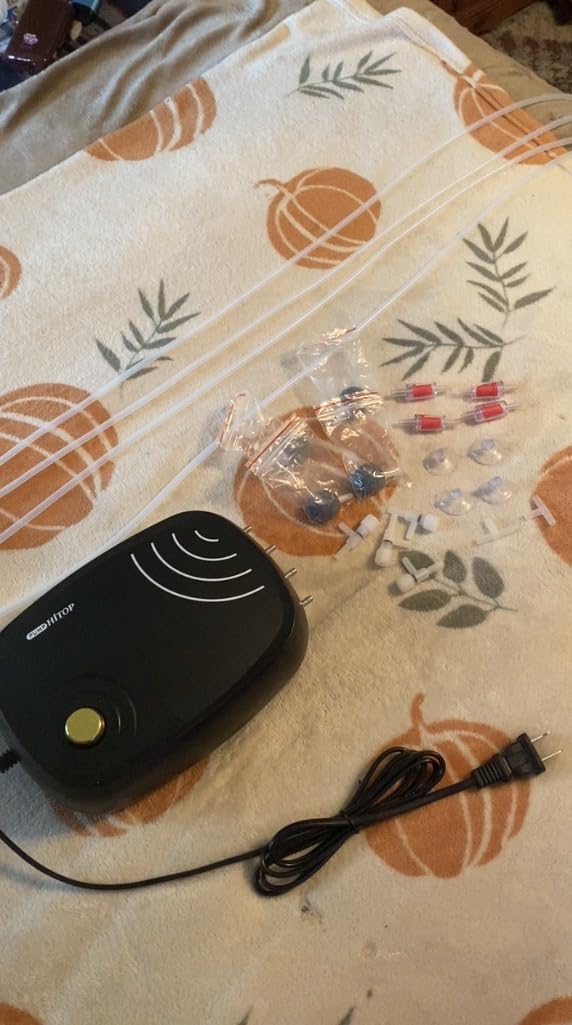
Output is 320 GPH total across four outlets, roughly 80 GPH per outlet at 20 L/min, from a 10 W motor. The accessory bundle is the largest here: four air tubes, four air stones, four check valves, four regulating valves, four suction cups, two T-connectors and spare filter cotton.
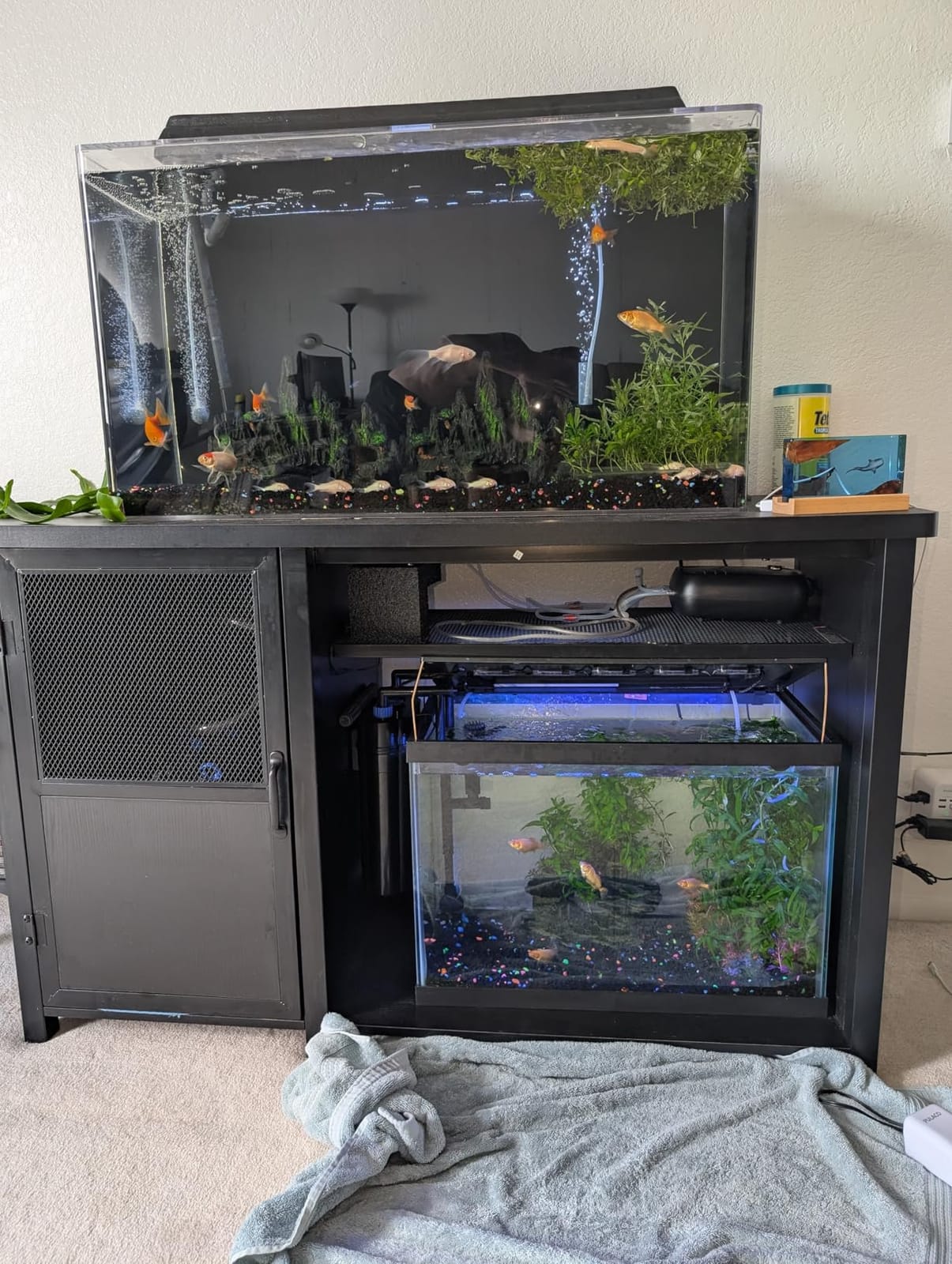
It has the most complete accessory bundle in the roundup, which means a multi-reservoir build is possible with one purchase. The replaceable filter cotton at the bottom air inlet is a useful detail in dusty rooms where intakes clog quickly.
The reservations are real. Its 4.2 rating with a 12 percent one-star share is the weakest star distribution in this group, and a meaningful number of owners report more noise than the positioning implies once airflow is turned up. The 4.9 foot tubes are also short for multi-tank rooms.
Do you actually need this much pressure
Only if your air stone sits well below the surface. In a standard DWC bucket the stone rests near the bottom, roughly 8 to 12 inches down, and most lower-pressure pumps handle that easily.
If you are building vertical NFT reservoirs, deep RDWC columns or a stacked cloning tower, this is the pump that will actually deliver air to the bottom, and the pressure rating is the reason to buy it over a cheaper 300 GPH unit.
Where it falls short
It is not the choice for a quiet indoor space. Between the motor noise at full flow and the mixed acoustic reports, plan on hearing it, and consider whether your reservoir actually needs all 320 GPH.
The short included tubing will also be the first thing you replace. Budget for proper airline runs and suction cups if your tanks are spread out.
9. hygger HG219 Dual Stainless Outlet Pump – Best for Fine-Tuning Airflow
hygger Aquarium Air Pump, Quiet Adjustable Fish Tank Air Pump, 4W/7W/11W Powerful Oxygen Aerator Dual Stainless Steel Outlets with Air Stone Bubbler for Small Medium Large Fish Tank, Hydroponic, 4W
95 GPH per outlet
20 kPa
Maximum 35 dB
Dual stainless steel outlets
Pros
- 4.7 average rating with 84 percent five-star reviews
- Owners say the bubbles are louder than the pump
- Very fine airflow adjustment
- Feet keep it from shifting when lines are moved
Cons
- Unused second outlet cannot be shut off and vents air audibly
- Airflow can drift slightly over time
- Check valves can block flow if installed backwards
It won a 4.7 average with 84 percent five-star reviews, and the reason is control. The adjustment knob gives finer airflow resolution than a mechanical lever valve, which matters when you are balancing a stone against a sponge filter on the same pump.
Output is 95 GPH (360 L/H) per outlet, up to 190 GPH total, at 20 kPa, from a 4 W base variant with 7 W and 11 W versions for larger systems. The dual outlets are stainless steel rather than plastic, and it carries a one year warranty.
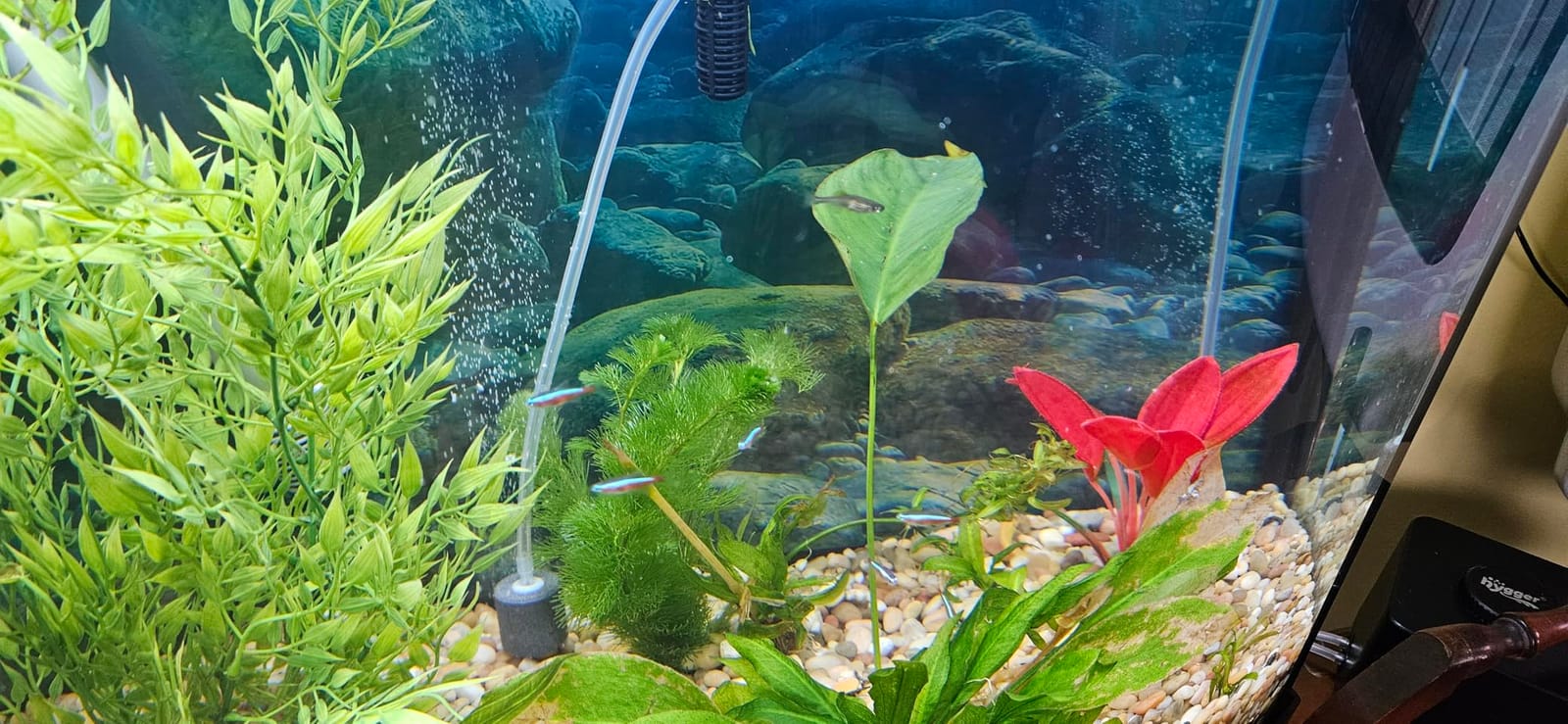
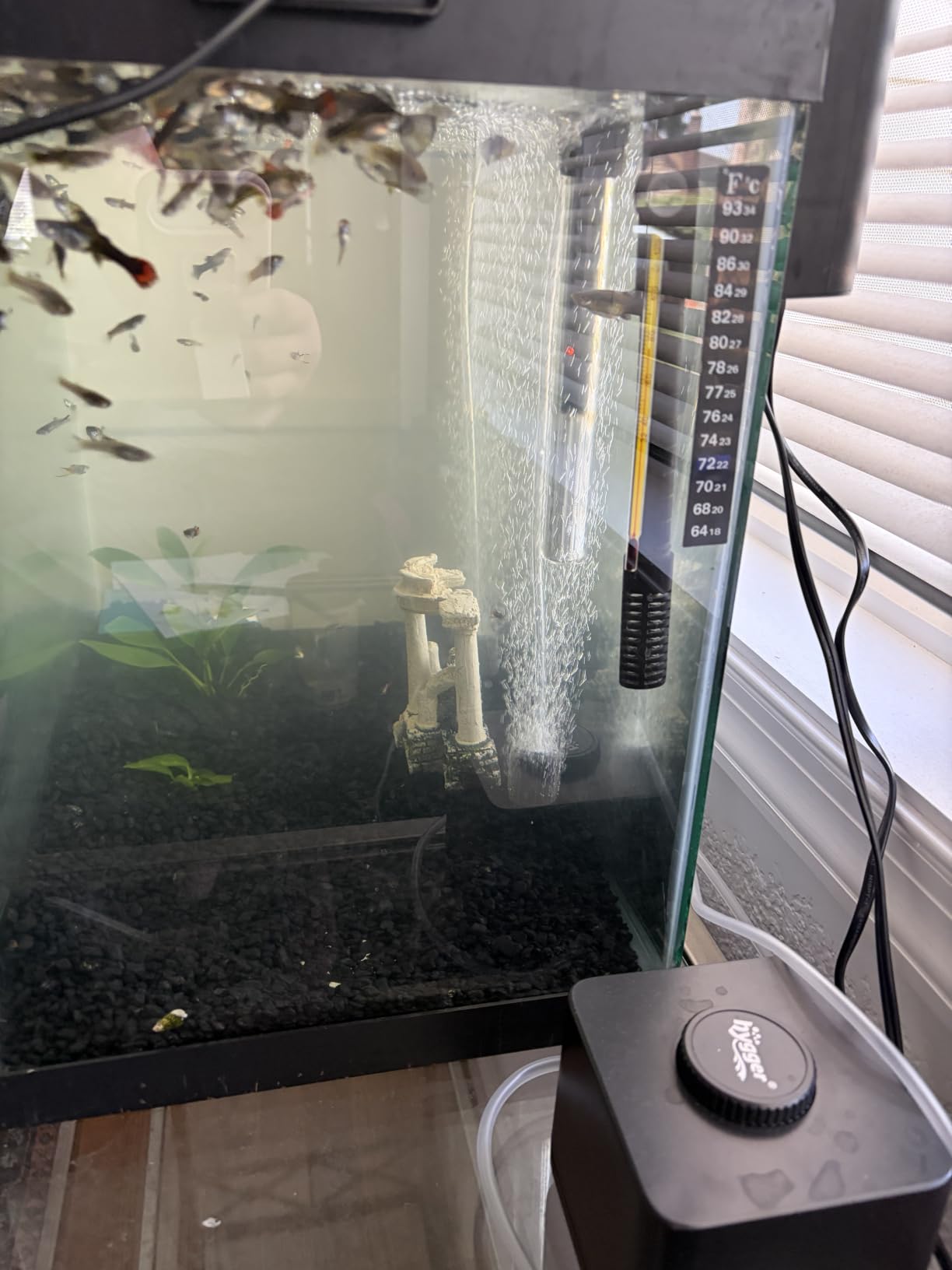
On noise, the published maximum is 35 dB with a double-layer structure, thickened ABS shell and four shockproof rubber pads. Owners running sponge filter and air stone at the same time report strong circulation and describe the pump as effectively silent at normal settings.
There is a specific usability catch worth knowing before you buy. The unused second outlet cannot be individually closed, so if you only run one line it vents air audibly. Cap it or use both outlets.
Why the fine adjustment matters in practice
Cloner rooms and early-stage root systems are where precise control pays. Being able to turn flow down to a trickle without a jump from full to nearly off is what lets you keep a fragile cutting supplied without stripping it of oxygen.
It is also the better pump when a single reservoir has mixed demand, such as a propagation bucket and a nutrient tank sharing one unit.
Where it falls short
At 333 reviews this has the thinnest owner history in the group, so long-term durability is less documented than for the Pawfly and INCLY units. Treat the quietness claim as strong but not yet proven over years.
Check valves installed backwards will block airflow, and the instructions are unclear on orientation. Also note the airflow can drift slightly over time, possibly as the dial moves with vibration.
10. AquaMiracle 475 GPH 6-Outlet Pump – Best for Commercial Scale
AquaMiracle Quiet Fish Tank Air Pump 475GPH 0.03MPa 16W High Pressure Aquarium Air Pump Commercial Air Pump Pond Aerator Bubbler Hydroponics Air Pump for up to 1200 Gallon Water
475 GPH (30 LPM) at 16 W
30 kPa to 7 ft depth
6-outlet manifold
Rebuildable diaphragm
Pros
- Highest output and pressure in the roundup
- Runs very quiet once tubing is attached
- Only slightly warm rather than overheating under load
- Rebuildable with a replacement diaphragm
Cons
- Runs warm under heavy continuous duty and needs ventilation
- Included airline tubing is thin and inflexible
- Loud straight out of the outlet before tubing is attached
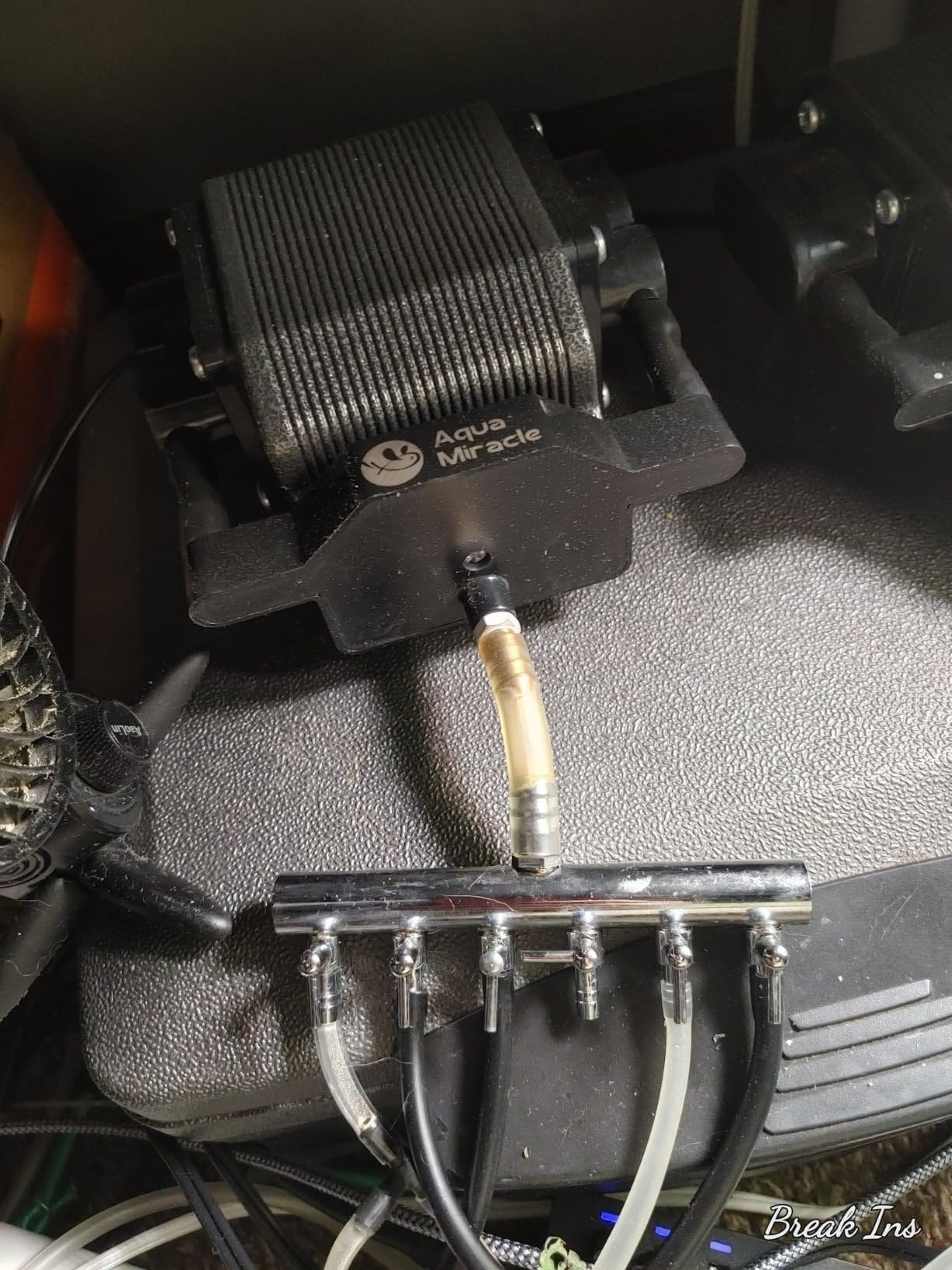
It is the pump to look at when a hobby unit stops being enough. The AquaMiracle NP-30A delivers 475 GPH at 30 kPa from a 16 W pure copper motor, and that pressure supports water depths up to 7 feet, the deepest capability of anything here.
The six-outlet metal manifold has per-outlet volume adjustment, plus an in-line switch that doubles as an on/off and regulator. The included airline run is 30 feet, by far the longest here, and the unit carries a one year warranty.
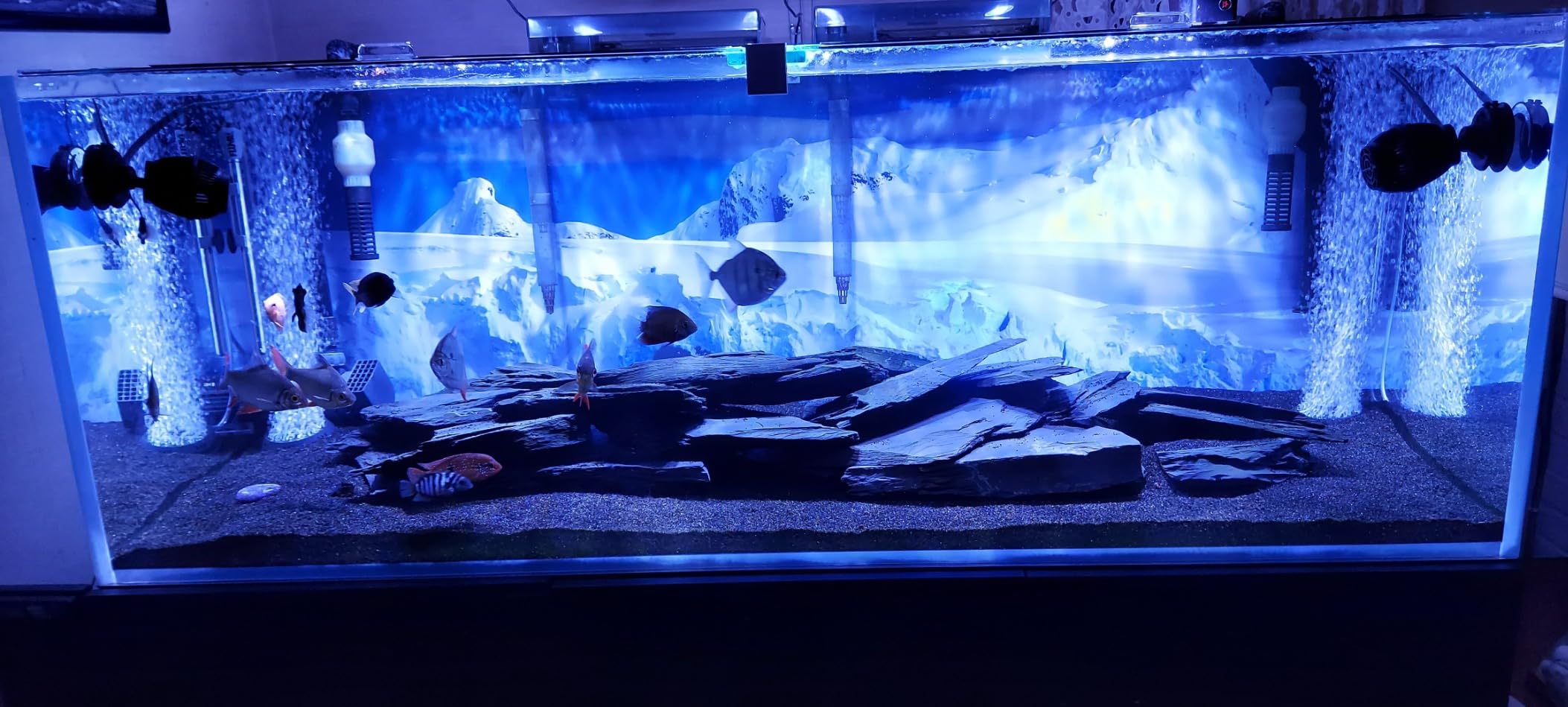
Owners running demanding setups describe it as a workhorse that runs for weeks nonstop. It stays only slightly warm rather than overheating, and the thick metal housing with vibration-relief feet keeps it quiet once tubing is attached. The copper motor, aluminum alloy construction and rubber diaphragm are all aimed at sustained duty.
Two things to fix on day one. The included airline is thin and inflexible, so replace it, and the pump is loud straight out of the outlet before any tubing is fitted, which is normal for a piston-type unit this size.
What commercial scale actually means here
Six outlets at roughly 80 GPH each covers a bank of DWC buckets, a multi-room propagation setup or a larger RDWC reservoir. At 4 pounds and 5.1 x 5.7 x 3.1 inches it is still a bench-top unit.
The rebuildable diaphragm is the underrated feature. A replacement diaphragm kit restores the pump after a breakdown instead of forcing a new purchase, which changes the long-term cost of a pump that will run continuously.
Where it falls short
Under heavy continuous duty it still runs warm and needs ventilation, so plan the placement before you commit to it. It is also unnecessary overkill for anything under 20 gallons.
The manifold outlets can be uneven out of the box, with some owners needing to combine to one line and re-split to two. Test all six before you build the room around them.
11. HORTIPOTS DWC Diffuser and Bubbler Kit – Best for Cloners
HORTIPOTS DWC Air Diffuser Bubbler Kit with Oxygen Air Pump for DIY Hydroponic Bubbler Bucket System Deep Water Cloner 24 Site and Aeroponic Clone Machine 24 Site and 35 Site
Diffuser tubing for 24-site cloners
No clogging, no water heating
Trim to 3.5 or 5 gallon buckets
Suction cup mounting
Pros
- More even dissolved oxygen than air stones
- Does not clog and does not warm the nutrient solution
- Scales from 24-site rigs down to a single bucket
- Works with the full range of HortiPots clone machines
Cons
- Air pump sizing is a separate decision this kit does not solve
- Not suitable for users who specifically want air stones
This entry is the diffuser side of the system rather than a pump, and we include it because the pairing decision is the one most beginners get wrong. The HORTIPOTS kit uses air injection tubing that generates millions of bubbles per minute into the rooting zone, mounted with suction cups for even oxygen distribution.
Two of its selling points are the two most common complaints about air stones. The tubing does not clog the way fine-pore stones do, and it does not heat the nutrient solution, which matters in a warm room.
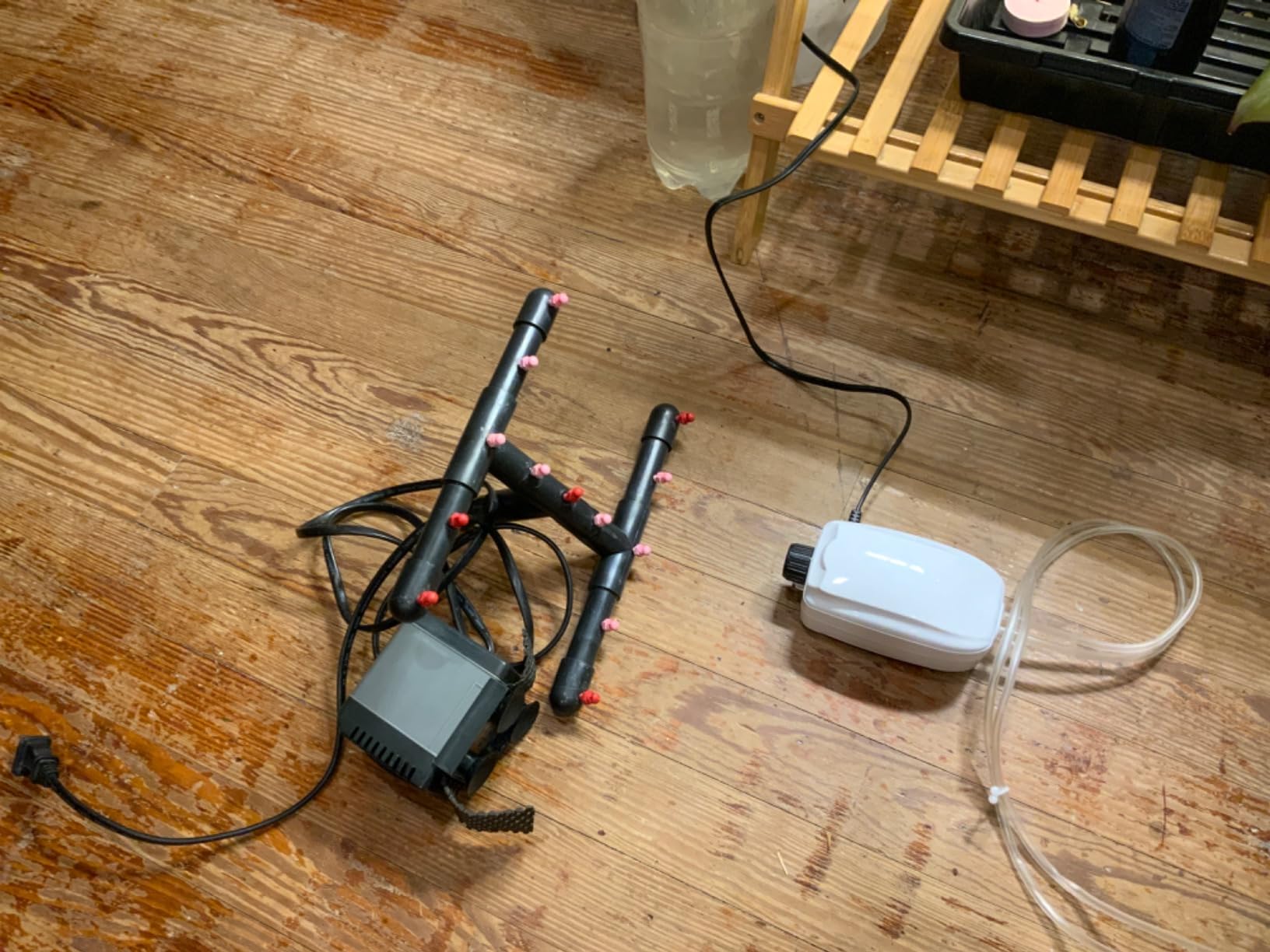
Coverage is wide: a 24-site DWC cloner, an 8-site 3 inch net cup system, or a 6-site 3.75 inch net pot system, and it is compatible with HortiPots clone machines from the CM24 through the CM140. The outer tube can be cut down for a standard 3.5 or 5 gallon bucket, at 0.64 kg.
It does not include a pump sized for the system, and buyers keep raising that. Diffuser tubing and pump output have to be matched to the number of sites, and this kit leaves that decision entirely to you.
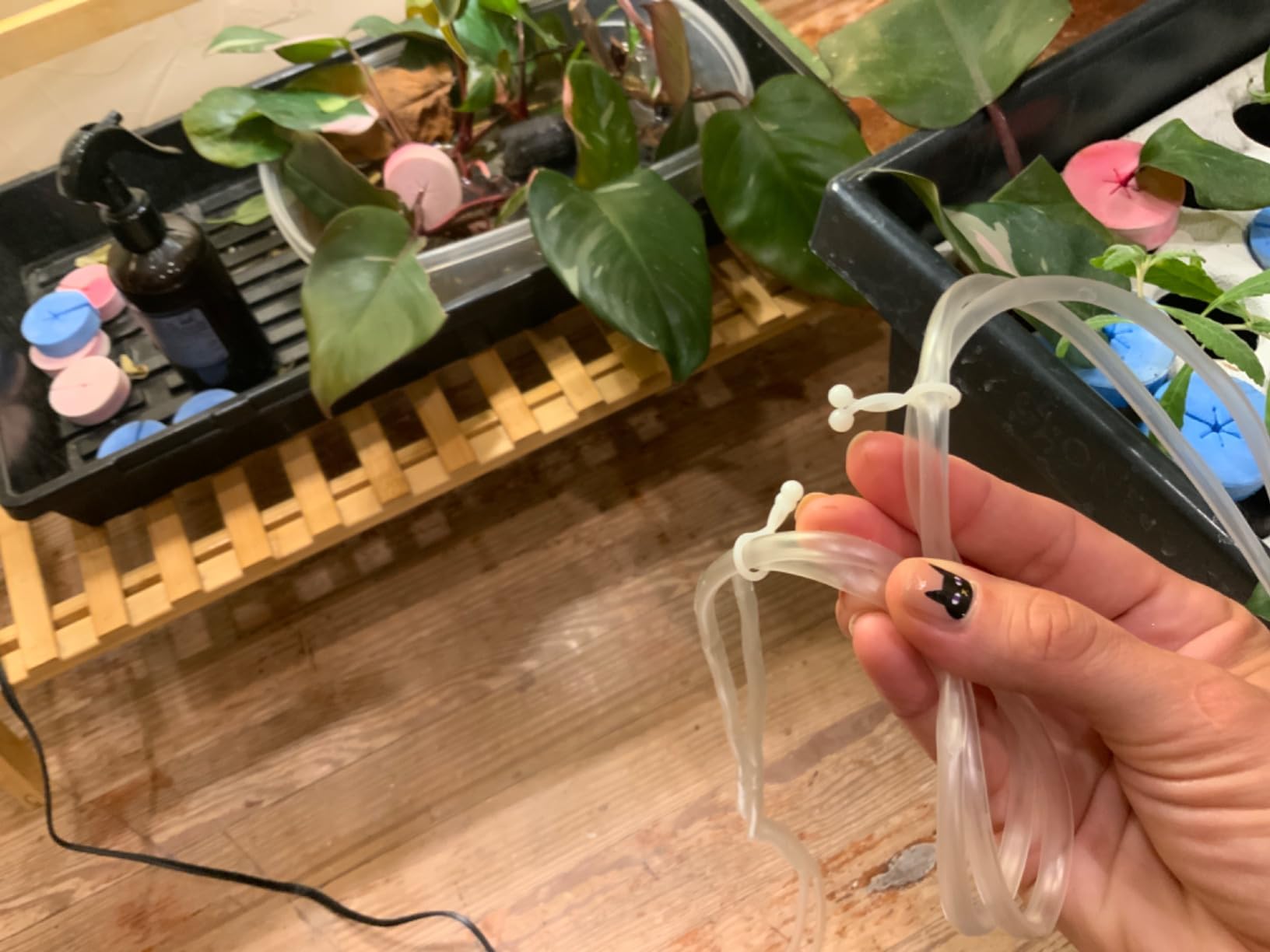
Air stone or diffuser, and why it matters
A diffuser wins on evenness and maintenance. A fine-pore stone is cheaper and simpler but clogs with algae in roughly two weeks, and when it does, dissolved oxygen drops without any visible change in the pump.
If your priority is uniform root growth across many sites, diffuser tubing gives a flatter oxygen distribution than a stone sitting in one corner of a bucket.
How to pair it with a pump from this list
For a single bucket, any of the mid-size pumps here works. For a 24-site cloner you need real headroom, so pair it with a multi-outlet unit such as the AquaMiracle or HITOP rather than a small dual-outlet kit.
Do not mix an oversized pump with this diffuser. High pressure against fine tubing reduces flow and pushes heat into the motor.
12. PYPABL 400 GPH Insulated Pump – Best for Large Reservoirs
PYPABL 400GPH Aquarium Air Pump, Large Air Volume Aquarium Air Compressor, Silent Fish Tank Oxygen Pump for Hydroponic Systems, Ponds, Aquaculture
400 GPH (1500 L/H) at 12 W
25 kPa
Two outlets with 4-in-1 valves
2 in stones included
Pros
- Strong output-to-price ratio at 400 GPH
- Three-layer insulation keeps it near-silent
- Electronic adjustment gives finer control than a mechanical valve
- Large 50 mm air stones included
- Spare filter cotton and 12 month warranty
Cons
- 4-in-1 regulating valves add plumbing complexity
- Bigger body footprint than typical hobby pumps
The PYPABL is the pick for a large reservoir where you want output without the noise penalty. It delivers 400 GPH (1500 L/H) at 25 kPa from a 12 W motor, and the three-layer ABS sound insulation plus four silicone feet have users reporting that they mostly hear the water rather than the pump.
Adjustment is electronic rather than mechanical, which produces a much finer and more continuous airflow range than a lever or knob valve. That is genuinely useful when you are feeding a 20 to 40 gallon reservoir where a small change in flow matters.
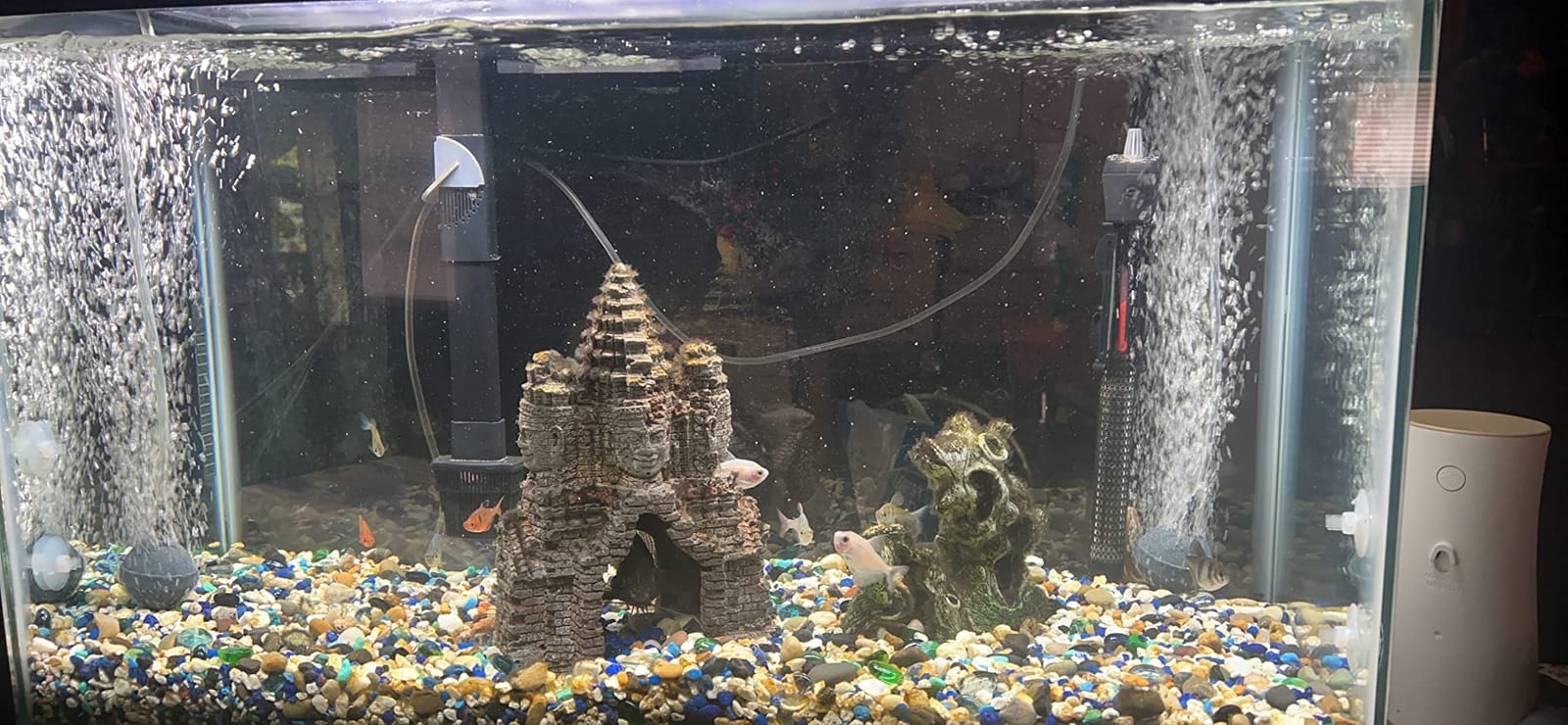
The kit is well specified for the use case. It includes two 4-in-1 regulating valves, two 2 inch (50 mm) air stones, two 4.9 foot air tubes, two check valves, two suction cups and a spare air filter cotton.
Those large stones are a bonus over the small cylinders most kits include, and they circulate better in bigger volumes. The downsides are physical: a 10.5 x 6 x 4.9 inch body and the added plumbing complexity of the 4-in-1 valves.
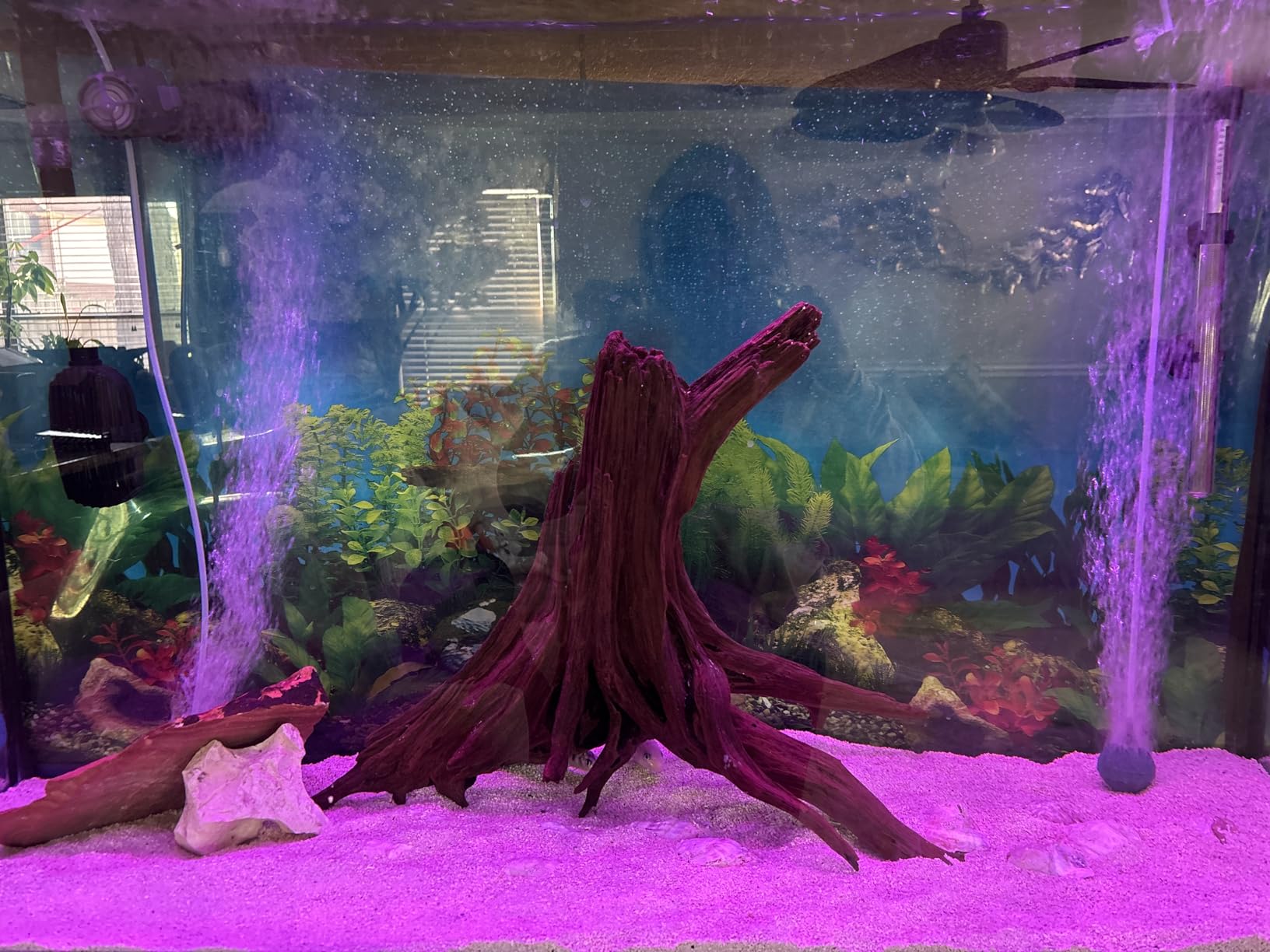
Best fit for a 20 to 40 gallon reservoir
This is the range where smaller pumps start to strain and the big commercial models are simply unnecessary. 400 GPH at 25 kPa covers a 20 gallon RDWC reservoir comfortably and scales to a 40 gallon system with an appropriate diffuser.
The replaceable air filter cotton at the bottom inlet, with a spare included, keeps dust out of the moving parts in a room where fans and filters are running.
Where it falls short
Two outlets is fewer than most competitors at this output, so a four-site room means a different pump or a Y-split arrangement with its own balancing.
It is also too much machine for a single bucket, and the 4-in-1 valves are more plumbing than a simple manifold if you prefer keeping the setup minimal.
How to Size an Air Pump for Your Reservoir
Use 1 watt of pump power and 0.5 to 1 LPM of airflow per gallon of nutrient solution. Below 0.5 LPM per gallon, dissolved oxygen drops below what roots need, and root rot follows.
Worked examples, using the sizing rule:
3.5 to 5 gallon bucket: 4 to 5 watts, 2 to 5 LPM. A 1.25 W unit at 50 GPH covers this well.
20 gallon RDWC reservoir: 20 watts, 10 to 20 LPM. Look for the 300 to 400 GPH class.
40 gallon reservoir: 40 watts, 20 to 40 LPM. The 400 and 475 GPH pumps sit here.
Multi-site, 4 buckets: one multi-outlet pump at 250 to 320 GPH beats four small pumps on cost, noise and reliability.
One unit conversion trips people up. Brands advertise GPH while growers think in LPM. Roughly 60 GPH equals 1 LPM, so a pump advertised at 300 GPH is about 5 LPM, not 300. Our sizing rule above already accounts for that. Note that this is an air pump, a different job from the circulation pump that moves solution; our portable air system guide covers a different class of equipment entirely, so keep the two separate when planning a room.
Pressure matters more than most shoppers expect. A stone sitting deeper than about 2.5 feet needs a pump rated above 0.025 MPa, and a tall column reservoir needs something in the 22 to 30 kPa range.
Do You Even Need an Air Pump?
You need one if your roots sit submerged continuously, which means deep water culture and recirculating deep water culture. You do not need one for NFT, drip, wick or ebb-and-flow, where oxygenated water moves past the roots by design, and Kratky systems rely on a passive air space instead.
Air pumps do three jobs: gas exchange, stirring nutrients so the solution stays mixed, and a temperature effect. That last one cuts both ways, since aeration warms a reservoir in a cold room and cools it in a hot one.
Run it continuously in DWC. Growers report that cycling a pump on and off, for example two minutes on and fifteen off in a cloner, contributes to algae growth in the reservoir. If you cycle, you are trading oxygen for a light that nobody asked for.
How to Quiet a Noisy Air Pump
Most noise is vibration, not airflow, and it transmits straight into the tank stand. These four steps fix the majority of complaints we see in grow forums.
Set the pump on a level, dense surface. A soft foam mat under the feet removes contact noise, and it only works if the pump is not buzzing from being unlevel.
Hang the pump above the reservoir on a shelf or bracket, clear of the stand. Growers report perceived noise drops noticeably, and it also prevents nutrient siphoning during a power failure.
Suspend the pump body with zip ties or a rubber bungee so the housing is not rigidly coupled to anything.
Weight the airline tubing along its run with a few washers or small clips so the line stops knocking against surfaces and twitching.
If the sound is motor-generated rather than vibration, none of this will fix it. That is the acoustic signature of higher-output piston pumps, and the only answer is a quieter pump or a lower flow setting.
Maintenance Schedule and Failure Signs
Monthly, take the airline off and check the inside for algae film, particularly the section that sits in the reservoir. Rinsing the tube and swapping a clogged stone takes minutes and prevents the most common cause of low dissolved oxygen.
Never use a fine-pore air stone without a spare. Algae clogs fine stones in roughly two weeks, and a choked stone starves roots while the pump still sounds healthy.
Replaceable intake filter cotton, included with the HITOP and PYPABL pumps, should be swapped when the intake starts to sound strained. A dirty intake is a leading cause of falling output.
Three signs a pump is failing rather than just aging: noise that rises steadily over weeks, a bubble rate that visibly weakens without any change in the manifold setting, and a solution that no longer circulates evenly. Owners report the noise and output decline pattern around the two to three year mark on diaphragm units, which is normal service life rather than a fault.
Keep a spare manifold valve and a spare stone on hand. Both fail far more often than the pump body itself, and both take minutes to change.
Frequently Asked Questions
How big of an air pump do I need for hydroponics?
Use 1 watt of power and 0.5 to 1 LPM of airflow per gallon of nutrient solution. A 5 gallon bucket needs about 5 watts and 2 to 5 LPM, a 20 gallon reservoir needs about 20 watts and 10 to 20 LPM, and a 40 gallon reservoir needs about 40 watts and 20 to 40 LPM. Below 0.5 LPM per gallon, dissolved oxygen falls short of what roots need.
How long should an air pump run in hydroponics?
Run it continuously, 24 hours a day, in deep water culture. Continuous aeration keeps dissolved oxygen stable and avoids the algae growth that growers report when a pump is cycled, for example two minutes on and fifteen minutes off. In NFT, drip, wick and ebb and flow systems an air pump is optional, so run it only if you are using it to stir a reservoir.
Can an aquarium air pump be too strong?
Yes. An oversized pump paired with a small air stone or fine diffuser raises back pressure, reduces actual flow and pushes heat into the motor, which shortens pump life. Match the pump to the diffuser and reservoir size, and use a flow control valve or the pump’s adjustment knob to set the rate rather than relying on a restrictive diffuser.
Why is my hydroponic air pump so loud?
Most noise is vibration transmitting through the tank stand, which is fixed by leveling the pump, setting it on a dense surface, hanging it clear of the stand, suspending the body with zip ties, and weighting the airline tubing. If the sound is motor-generated and does not change with those fixes, it is a piston-type pump running near capacity and the only real fix is a quieter unit or a lower flow setting.
What is the best type of pump for hydroponic systems?
A non-submersible diaphragm or piston air pump with adjustable airflow and at least as many outlets as you have sites. Diaphragm pumps are quiet and cheap for buckets and small reservoirs. Piston pumps with metal housings deliver more pressure and output and suit deep columns, multi-site systems and commercial scale. Air pumps are separate from water and circulation pumps, which move solution rather than air.
The Verdict: Which Air Pump Should You Buy?
For most growers, the Pawfly 254 GPH is the right answer: high airflow, a working four-outlet manifold and enough reported longevity to justify it as our top pick among the best air pumps for hydroponic systems. If noise in a living space is the constraint, the Pawfly 50 GPH kit goes under 30 dB, and if you are running four sites, the INCLY 245 GPH gives you four individually adjustable outlets at 7 watts.
Match the pump to your reservoir volume using the 1 watt and 0.5 to 1 LPM per gallon rule, add a spare stone and a spare airline length, and run it continuously. If you are still choosing the circulation side of the same system, our utility pump roundup and shallow well pump guide cover moving the solution itself.