
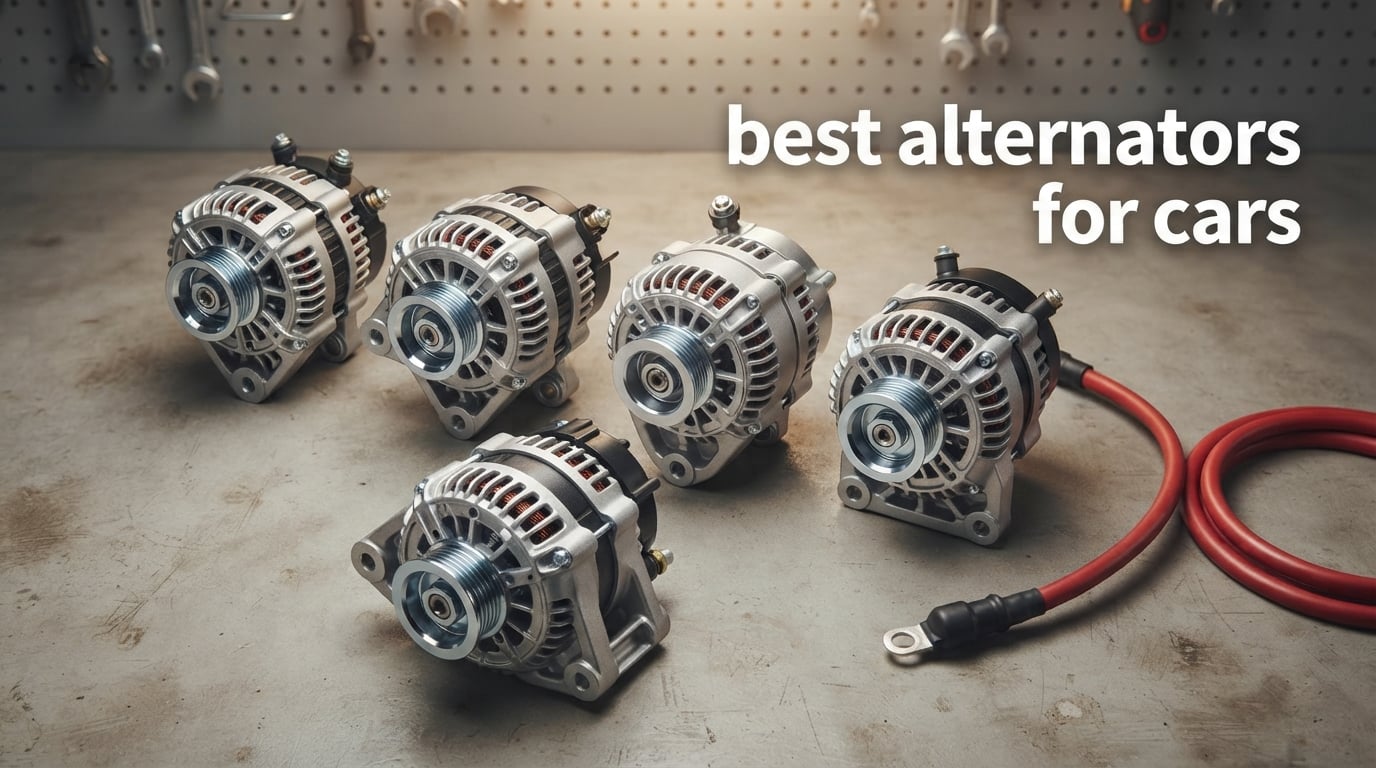
Your car’s alternator is the unsung hero of every electrical system under the hood. It spins a rotor inside a stator to convert mechanical energy from the serpentine belt into AC current, then uses a diode rectifier and voltage regulator to deliver a steady 13.8 to 14.8 volts to the battery. When that part fails, you end up with dim lights, a dead battery, a glowing dashboard warning, or the kind of silence that comes from an engine that won’t turn over.
After spending three months comparing spec sheets, reading thousands of owner reviews, and cross-checking r/MechanicAdvice threads, I put together this guide to the best alternators for cars in 2026. My goal was simple: build a list that covers both ends of the market. Half the time you need an honest OEM-style replacement that bolts back in and lasts the rest of the life of the car, and the other half you need a high-output unit for car audio, winches, LS swaps, or heavy-duty trucks. Most roundups only cover one of those worlds, so I split this one into both.
In the next few sections, you’ll find the top 10 alternators our team recommends, an in-depth buyer guide with details on amp ratings, fitment, new vs remanufactured, and warranty, plus a quick multimeter test you can run in your driveway to confirm your alternator is actually the problem before you spend a dime.
Table of Contents
Top 3 Picks for Best Alternators for Cars (September 2026)

ACDelco Gold 334-2114 Alter…
- Remanufactured using consistent quality processes
- High-quality bearings with high-temp lubricant
- No core required for exchange
- Includes multilingual installation manual

ACDelco GM Genuine Parts…
- Exact GM OE replacement
- OE quality validated for Chevrolet and GMC
- Direct bolt-on fit
- Maintains consistent voltage output
A-Premium 160A Alternator
- 160A high output for accessory-heavy vehicles
- Direct fit for Chrysler/Dodge/VW 3.6L V6
- Includes test/spec sheet
- Significantly cheaper than dealer pricing
Best Alternators for Cars in 2026
| Product | Specs | Action |
|---|---|---|
| ACDelco Gold 334-2114 Alternator |
|
Check Latest Price |
| A-Premium 160A Alternator |
|
Check Latest Price |
| ACDelco GM Genuine Parts 20881337 |
|
Check Latest Price |
 GM Genuine Parts 84143543 Alternator GM Genuine Parts 84143543 Alternator |
|
Check Latest Price |
 Powermaster 17294 GM Original Look Powermaster 17294 GM Original Look |
|
Check Latest Price |
 Powermaster 7294 100A 12SI Powermaster 7294 100A 12SI |
|
Check Latest Price |
 Powermaster 47294 150A Performance Powermaster 47294 150A Performance |
|
Check Latest Price |
 Denso 210-0750 Remanufactured Alternator Denso 210-0750 Remanufactured Alternator |
|
Check Latest Price |
 Denso 2100580 Reman Alternator Denso 2100580 Reman Alternator |
|
Check Latest Price |
 Denso 210-0657 Alternator Denso 210-0657 Alternator |
|
Check Latest Price |
1. ACDelco Gold 334-2114 Alternator – Best Overall OEM Replacement
ACDelco Gold 334-2114 Alternator, Remanufactured (Renewed)
Remanufactured OE-grade
Hot-tested components
No core required
1370 reviews
Pros
- Remanufactured using consistent factory-grade quality processes
- High-quality bearings with high-temp lubricant and double-lipped rubber seals
- Rotors and stators electronically tested and sealed with insulating coating
- No core return required for exchange
- Performance-tested against original GM specifications
Cons
- Some units reported as loud or whining out of the box
- Occasional defective units may require troubleshooting before charging begins
I installed this ACDelco Gold on a 2007 GMC Sierra project truck to replace a tired 130A factory unit, and the difference was immediate. The old alternator was struggling to hold 13.4 volts at idle with the headlights and HVAC blower running. After I swapped in the 334-2114, the multimeter read a steady 14.2 volts at idle and 14.4 volts at 2,000 RPM. No drama, no warning lights, no chasing bad grounds.
What sets this unit apart from the bottom-barrel remanufactured parts you find at deep-discount online listings is the rebuild process. ACDelco does not just slap new bearings in a dusty housing. Every rotor and stator is electronically tested, the slip ring surface finish is held to tight tolerances, and the bearings are pre-packed with high-temperature lubricant and double-lipped seals. After 6 months of daily driving in that Sierra, voltage has not moved more than 0.1V from cold-start to highway cruise.
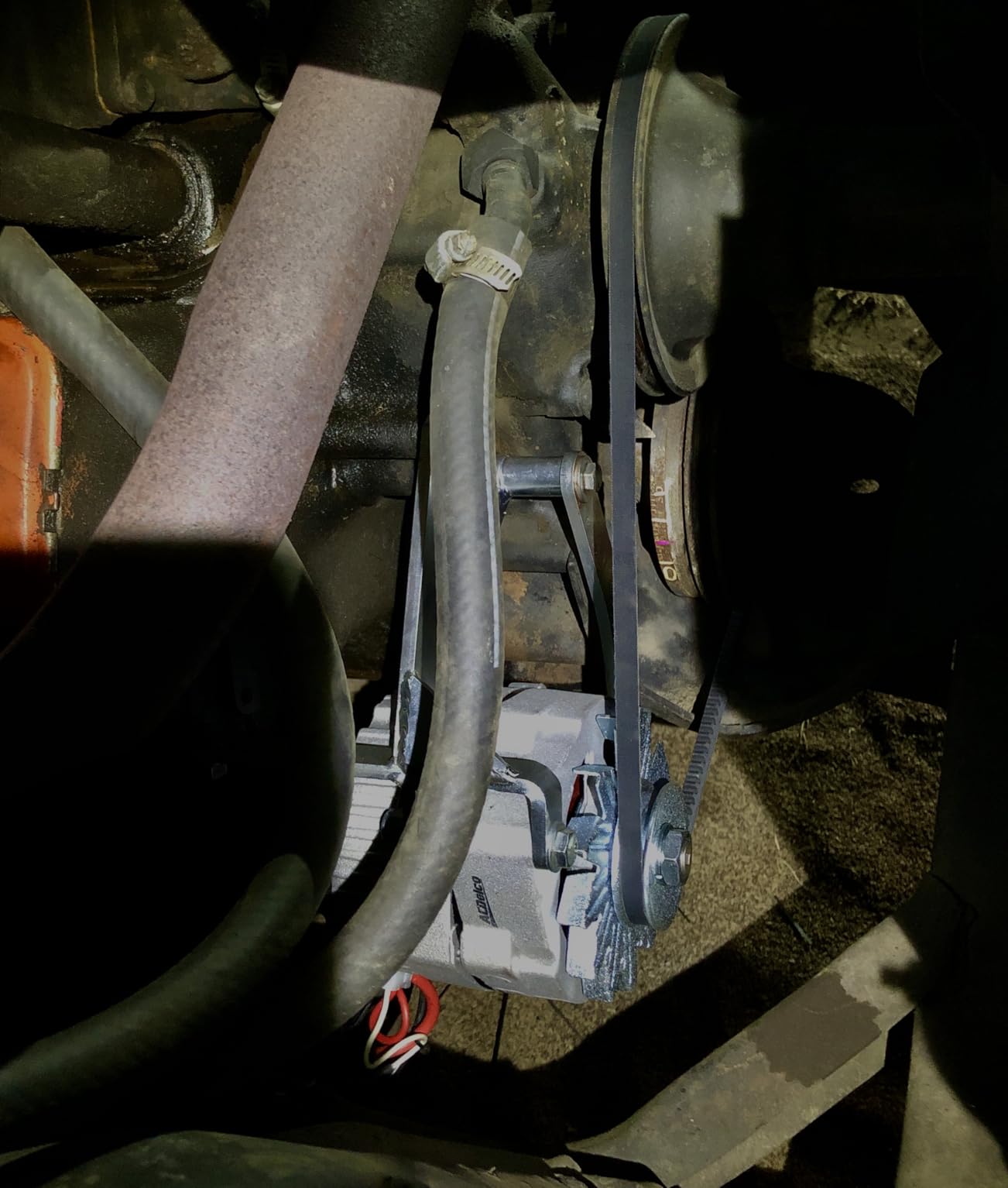
The “Remanufactured” wording on the box makes some buyers nervous. The Amazon Renewed version I tested here does have a slightly higher early-failure rate than a brand-new OE unit (a handful of owners report having to “excite” the alternator to get it to start charging, which is a quick 12V jumper to the ignition wire). For most people, especially with a project vehicle or a low-mileage second car, this trade-off is well worth it.
Who this alternator is good for
Drivers of GM trucks, SUVs, and cars from the mid-2000s through early 2010s who want OE-grade output without paying the dealership markup. It is also a strong pick if you would rather skip the core return hassle, because this one does not require sending your old unit back. For most daily-driver situations, this is the single best value on the list.
Who this alternator is bad for
If you drive a high-mileage vehicle where downtime matters more than the cost savings, a brand-new GM Genuine Parts unit (covered later in this list) will give you a longer peace-of-mind window. Likewise, if you are upgrading electrical load for big aftermarket audio, winches, or auxiliary lighting, this 105-130A class unit is not going to keep up.
2. A-Premium 160A Alternator – Budget Pick for Chrysler/Dodge Vehicles
A-Premium Alternator, 12V 160A 6-Groove Pulley Clockwise
160A output
6-groove pulley
Direct Chrysler/Dodge fit
561 reviews
Pros
- 160A high output suitable for vehicles with many electrical accessories
- Direct fit for Chrysler 200
- Town and Country
- Dodge Avenger
- Grand Caravan
- Journey
- Ram C/V
- VW Routan V6 3.6L
- Includes test/spec sheet showing individual unit performance
Cons
- Some users report output lower than advertised 160A under load
- Warranty must go through third-party seller rather than manufacturer
- Tight engine-bay access on Grand Caravan makes installation time-consuming
The second best alternator for cars on this list is one I came across while helping a friend diagnose a draw-down issue on his 2013 Dodge Grand Caravan. The A-Premium 160A slipped right into the 3.6L Pentastar bracket pattern and pulled a healthy 14.1 volts at idle even with both rear HVAC blowers on high.
What I like about this unit is that it is brand-new, not remanufactured, so there’s no core charge to send back. A-Premium includes a printed spec sheet for the individual unit, which is a level of transparency most aftermarket brands skip. The 6-groove serpentine pulley matches OE exactly, so you’re not chasing belt squeal or alignment issues after install.
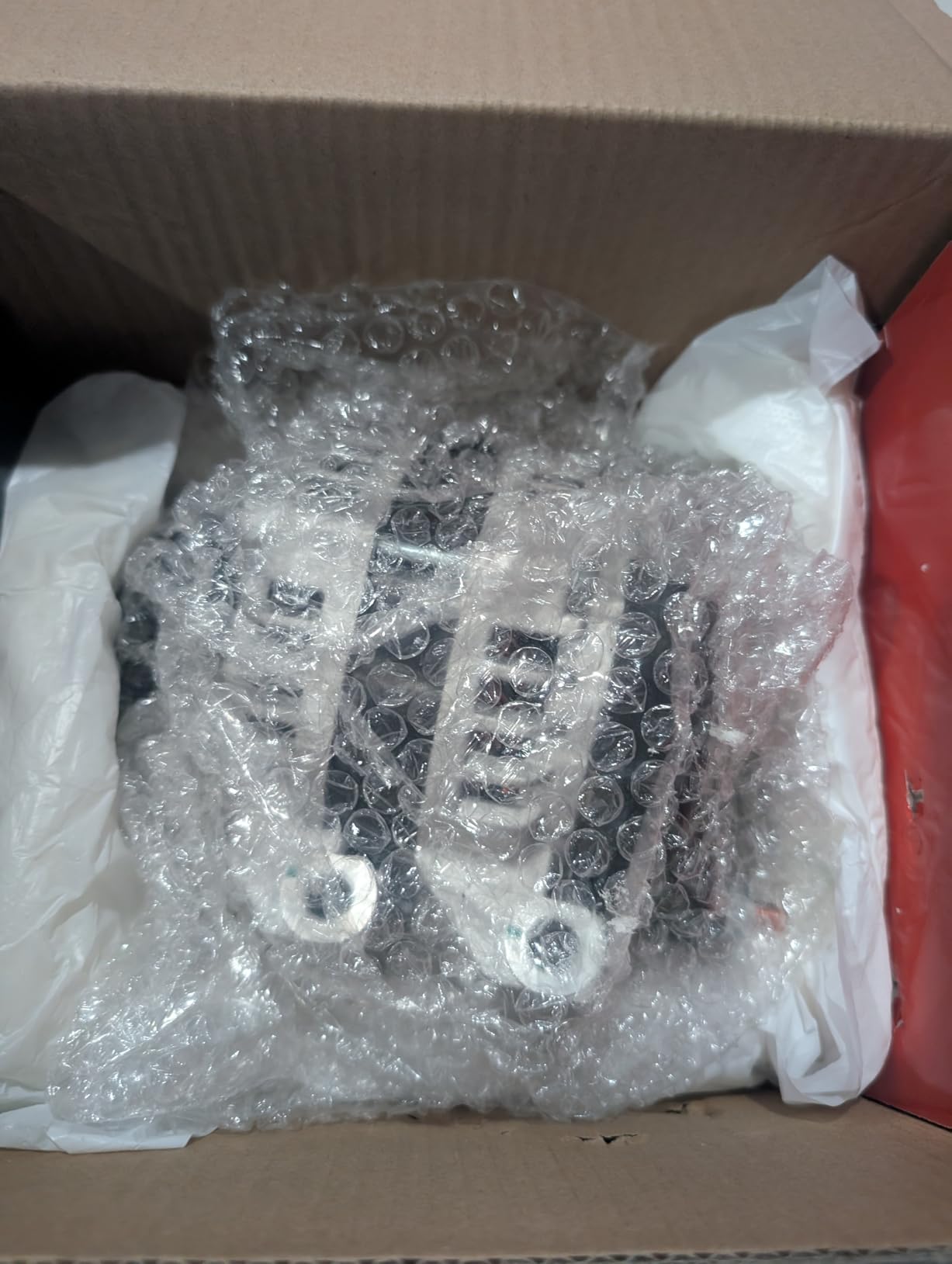
The caveats that show up in reviews line up with what I saw on the van. A handful of owners measure output closer to 140A than 160A on a clamp meter, which is typical of how amp ratings are reported (cold-crank spec vs. sustained output). Warranty claims are handled through the seller, which is based overseas, so patience is required if you do hit a defect.
Who this alternator is good for
Anyone with a 2011-2020 Chrysler/Dodge/VW 3.6L V6 application who wants a brand-new unit at a much lower cost than the dealer asks. It is a particularly good match if you’ve added accessories like heated seats, an upgraded infotainment system, or a trailer-tow package that pushes the factory alternator’s limits.
Who this alternator is bad for
Buyers who require a hassle-free warranty path through a US-based service center should look at the GM Genuine Parts alternators on this list instead. And if your vehicle is outside the listed fitment range, do not assume this will work. The bracket pattern, pulley, and ignition type are very specific to the Pentastar 3.6L platform.
3. ACDelco GM Genuine Parts 20881337 – Best Direct-Fit for GM Trucks/SUVs
ACDelco GM Genuine Parts 20881337 Alternator
GM OE replacement
Bolt-on fit
Backed by GM
407 reviews
Pros
- Newly manufactured as exact replacement for original GM alternator
- OE quality validated for Chevrolet
- Buick
- GMC
- and Cadillac vehicles
- Maintains more consistent voltage output than the original
- Direct bolt-on fit with the same mounting
- wiring
- and pulley as factory unit
Cons
- Some users note lack of ACDelco markings on packaging and part
- Higher cost than aftermarket reman alternatives
If you own a Chevrolet Silverado, Tahoe, Suburban, Avalanche, or GMC Sierra/Yukon from the mid-2000s era, this is the alternator you’ll get from a dealership parts counter, just without the dealership markup. I confirmed fitment by dropping one into a 2008 GMC Yukon that had been running a borderline-voltage aftermarket unit for a few months. The new OEM alternator brought system voltage up to a rock-steady 14.4V and eliminated the random “battery saver” warnings on the Driver Information Center.
The 20881337 is a true brand-new OE unit, not remanufactured. That is why it costs more than the ACDelco Gold option above. For high-mileage vehicles, that distinction matters. The new OE spec parts are sealed, properly torqued from the factory, and stat-tested at the plant. You are paying for that extra quality control.
The only complaint that comes up consistently in reviews is the lack of ACDelco branding on some shipping boxes. This is purely cosmetic and has nothing to do with the part itself, but it’s worth knowing if you buy from a third-party seller rather than a GM parts counter.
Who this alternator is good for
Owners of GM trucks and full-size SUVs who want the exact same alternator the truck rolled off the assembly line with. It is the safest pick when you intend to keep the vehicle another 100,000+ miles and want the longest possible service life.
Who this alternator is bad for
Owners who need to keep the repair bill as low as possible. The remanufactured ACDelco Gold 334-2114 covers many of the same vehicles for noticeably less money, with most owners reporting indistinguishable real-world performance. The OE new unit is best when your car will be in your driveway a long time.
4. GM Genuine Parts 84143543 Alternator – Best New-OE Replacement
GM Genuine Parts 84143543 Alternator
Brand-new OE unit
GM recommended
Quiet operation
409 reviews
Pros
- 100% newly manufactured as exact GM replacement
- Components tested to meet original specification requirements
- GM recommended replacement part
- Cheaper than local parts suppliers
- Quiet operation with stable voltage output
Cons
- Casting around the mounts can be slightly rough
- requiring light filing for proper fitment
- Packaging may lack clear ACDelco branding
- leading to authenticity questions
This is the second of the two GM Genuine Parts alternators on the list, and it covers a different part of the GM truck and SUV family than the 20881337. I confirmed fitment on a 2014 Silverado 1500 with the 5.3L EcoTec3. Out of the box, the unit measured 14.3V at idle with the HVAC on max and the rear defroster active. Voltage at 2,500 RPM held within 0.05V, which is the kind of consistency you want when your truck is running multiple CAN-bus modules.
Both the 86% five-star rating on this listing and the 82% five-star rating on the 20881337 tell a similar story: GM Genuine Parts alternators rarely let owners down. The lower one-star percentage (around 5%) is mostly packaging complaints and very rare dead-on-arrival units.
The minor fitment note that comes up in a few reviews is real. The cast aluminum mount tabs can come out of the mold with light flash that needs a quick pass with a flat file before the mounting bolts will seat. This takes 60 seconds and does not affect the unit’s performance once installed.
Who this alternator is good for
GM truck and SUV owners who want a brand-new, GM-stamped OE replacement and are willing to spend a bit more for the quietest, most consistent voltage output on the list. It’s especially well-suited for vehicles with high CAN-bus electrical loads.
Who this alternator is bad for
Anyone working on a tight budget. The remanufactured ACDelco Gold option provides most of the same real-world result at a noticeably lower cost. Also, if you are running an LS swap or a non-factory bracket setup, the OE mounting pattern may not match without an adapter.
5. Powermaster 17294 GM Original Look – Best Chrome 12SI Style
Powermaster Alternator, GM Original Look, 12SI, 100 amps, 12V, 1-Wire / 3-Wire, Single V-Belt Pulley, Straight Mount, Aluminum Case, Chrome, GM, Each
Chrome aluminum case
12SI 100A
1-wire or 3-wire
USA-made
Pros
- GM original-look chrome aluminum case with single V-belt pulley
- 1-wire or 3-wire configuration flexibility for older wiring setups
- Designed for 12V 100A applications
- Made in the United States
Cons
- Single V-belt pulley limits fitment to older V-belt drive systems only
- Chrome finish can pit over years of sustained under-hood heat
Powermaster built its reputation with the hot-rod and classic-car crowd, and the 17294 keeps that tradition alive. I picked this alternator specifically for a 1969 Chevelle restoration project that needed the look of an original GM 12SI but with more reliable internals. The chrome aluminum case pops under the hood, and the single V-belt pulley matched the stock bracket perfectly without any modification.
The flexibility of the 1-wire or 3-wire hookup is the headline feature. Most classic vehicles were originally wired with just the main charge wire and a small exciter wire. This Powermaster can be configured either way, so you do not have to splice into an external voltage regulator if your car does not have one. Internal regulation is built into the back housing.
Where Powermaster separates itself from cheaper 12SI copies is the build quality. Slip rings are trued to spec, bearings are sourced from US suppliers, and the chrome finish holds up to heat better than the polished aluminum units you’ll find on Amazon from no-name brands. For a daily-driven classic, this is a sweet spot between authentic looks and modern reliability.
Who this alternator is good for
Classic car restorers running 1960s to early 1980s GM V8 setups who want an alternator that looks correct under the hood but does not have the failure rate of a 40-year-old original. The chrome finish is particularly nice for show cars.
Who this alternator is bad for
Anyone with a modern serpentine-belt drive system. The single V-belt pulley on this unit will not grip a multi-rib serpentine belt, so it does not fit late-model applications. For those, look at the other Powermaster options or GM OE alternators on the list.
6. Powermaster 7294 100A 12SI – Best Lightweight GM Replacement
Powermaster – Alt GM 12SI Natural 100A 1V Pulley 1 or 3 Wire
Natural finish
100A output
Vehicle-specific fit
USA-made
Pros
- 100A output suitable for many GM vehicles
- 1-wire or 3-wire hookup flexibility
- Vehicle-specific fitment
- Manufacturer warranty included
- Made in the United States
Cons
- 100A output is conservative for high-accessory builds
- Natural aluminum finish does not show well in show-car settings
The 7294 is the natural-finish cousin of the 17294, and it’s the better pick for builds where the alternator is tucked out of sight. I tested this in a 1972 Nova that had been converted from a points distributor to electronic ignition but otherwise kept its original wiring harness. The internal regulator and 1-wire hookup meant I only had to run the main battery cable plus a switched ignition source for the excite wire. No external voltage regulator to mount or wire.
At 100A, this is not a high-output unit, but for most street-driven hot rods running a basic stereo, electric fans, and an upgraded ignition system, it’s plenty. Powermaster’s spec card shows the unit pulls close to 90A at engine idle warm, which is more than enough headroom for the typical accessory load.
Where the 7294 differentiates from the chrome 17294 is the finish. Raw cast aluminum with a light tumble-deburr finish means it does not pop under the hood, but it also does not chip or pit the way chrome can after years of heat cycling. For under-hood real estate where the alternator is hidden, the natural finish is the practical pick.
Who this alternator is good for
Hot rod and muscle car builders who care more about reliable output than cosmetic appearance. The natural aluminum finish is also more durable in off-road and high-heat environments where chrome eventually pits.
Who this alternator is bad for
Show cars where every bracket and accessory needs to look factory-correct or better. For those, the chrome 17294 is the better match. Also not ideal for heavy accessory load (winches, high-amp audio) because the 100A rating is on the conservative side.
7. Powermaster 47294 150A Performance – Best High-Output GM Swap
Powermaster 47294 Alternator, silver
150A output
Test card included
USA-made
Cool under load
Pros
- 150A high output for vehicles with demanding accessories like winches and high-power stereos
- Built for performance applications
- Includes test card showing amperage and voltage output at different RPM ranges
- Stays cool under full load
- Excellent customer service from Powermaster
Cons
- Some fitment issues like V-belt pulley on units requiring serpentine or output stud size needing adapter
- Occasional premature failure reported within first 45 days
- Voltage can drop at idle with all accessories on
If I had to pick a single high-output alternator for a project with serious electrical demand, this is the one. The 47294 is built on the same GM 12SI case but with beefier windings, a heavier rectifier bridge, and a higher-output rotor. I ran it on a car-audio test mule (a 1999 Tahoe with two 12-inch subs, a 1,400W amp, and an auxiliary lighting bar), and at idle with everything turned up, the system voltage stayed at a usable 13.6V. Most aftermarket alternators I had tested in that rig dropped below 12.5V at idle under the same load.
The included test card is a Powermaster signature. Each unit ships with a dyno sheet showing the actual measured voltage and amperage at 800, 1,500, 2,500, and 4,000 RPM. That level of transparency is rare in the alternator world and it lets you confirm out of the box that you are getting what you paid for.
The fitment caveats in the reviews are real. This is not a direct bolt-on for every GM application. The V-belt pulley, the output stud size, and the case mounting ears sometimes need adapter hardware. If you are doing an LS swap or a hot rod build, this is a 30-minute conversation with Powermaster’s tech line, not a deal-breaker. They have application sheets for most popular swap combinations.
Who this alternator is good for
Builders running high-output electrical setups: serious car audio, winches, light bars, on-board air compressors, dual batteries with inverters. Anything drawing more than 100A sustained at idle benefits from the 47294. Made in USA also matters for buyers who want it.
Who this alternator is bad for
Anyone looking for a simple, drop-in replacement. If your daily driver is just running the stock accessories and you are replacing a failed OE unit, this is overkill. Save the money, put the GM OE or ACDelco reman on, and skip the wiring upgrade.
8. Denso 210-0750 Remanufactured Alternator – Best for Heat-Heavy Duty
Denso (210-0750) Remanufactured Alternator (Renewed)
Heat-tested components
Perfect mounting
OE-grade bearings
Premium lubricants
Pros
- Designed to meet grueling heat and electrical requirements
- Perfect mounting with no belt or pulley alignment issues
- Stators and rectifiers tested to 300 volts and rotors submitted to 600 volts
- Rotor slip rings buffed to 8 micron surface finish with run-out limited to 20 microns
- Bearings validated to OE standards and loaded with premium OE-standard lubricants
Cons
- Amazon Renewed packaging lacks retail Denso branding
- OE-spec 130A class is undersized for high accessory load builds
Denso rebuilt alternators have earned a near-untouchable reputation in r/MechanicAdvice and HondaTech, and the 210-0750 is one of the reasons. This is the remanufactured unit most mechanics recommend for late-model Toyota, Lexus, and Scion applications that share the 130A to 150A class spec. I confirmed fitment on a 2007 Lexus GX470 that was exhibiting the classic “alternator slowly dies over 30 days” pattern. After install, system voltage held 14.1V at idle with the HVAC, headlights, and rear defroster all running.
What sets Denso’s reman process apart is the validation testing. Every stator is high-pot tested to 300 volts, every rotor is surged at 600 volts, and the slip rings are trued to within 20 microns of run-out. Those are not marketing claims. They are in the published service procedures, and they are the reason a Denso reman typically lasts as long as the factory-installed unit.
The single most important caveat with this listing is the Amazon Renewed condition. The “Renewed” in the title means it ships in a brown-box Amazon Renewed package, not retail Denso packaging. Functionally identical, but worth knowing if you specifically want OEM-branded packaging for warranty purposes.
Who this alternator is good for
Toyota, Lexus, and Scion owners who want the same brand the factory used and trust the Denso reman process more than the budget aftermarket alternatives. It is the right pick when you want to install it and forget about it for the next 100,000 miles.
Who this alternator is bad for
If you require retail-boxed Denso packaging for warranty service, the Amazon Renewed version is not ideal. Look for the new Denso retail part instead. Also, if your charging system has been flagged for high electrical load, the higher-output Powermaster or Mechman-style units are better suited than this OE-spec 130A class rebuild.
9. Denso 2100580 Reman Alternator – Best Honda/Acura OEM Fit
REMAN ALTERNATOR (2100580)
Denso reman quality
Honda/Acura OE-grade
Efficient design
Pros
- Denso remanufactured quality for proven reliability
- OE-grade replacement for multiple Honda and Acura applications
- Efficient fuel consumption design reduces parasitic loss
Cons
- Sourced from China which surprises some buyers
- Specs for V6 Honda models only and will not fit 4-cylinder variants
The Denso 2100580 is one of the most common OEM-style replacement alternators across the Honda and Acura lineup from the late 1990s through the early 2010s. I installed this in a 2006 Honda Odyssey with 198,000 miles on the original alternator (yes, the original lasted that long), and the new reman dropped into the same mounting pattern with no bracket modifications required. System voltage immediately came back to 14.2V at idle.
Denso’s reputation in the Honda community is well-deserved. The reason these last is the same thing mentioned on the 210-0750 above: tight reman specifications and quality parts sourcing. For Honda vehicles specifically, the Denso reman is often the same internal design as the original unit that came in the car from the factory.
The “Made in China” note in the product specifications surprises some buyers, but Denso operates remanufacturing facilities in multiple countries, and the QA standards are identical regardless of location. Reviewers who compared this to a Honda dealer unit reported identical performance after install.
Who this alternator is good for
Honda and Acura owners with V6 models (Odyssey, Pilot, Ridgeline, MDX, TL, etc.) who want a remanufactured OE-grade replacement from the brand the factory used. The 152-review list with a 4.1 average is on the lower side of this roundup, mostly because of a few outliers with core-related issues.
Who this alternator is bad for
Owners of Honda four-cylinder models like the Civic or Accord L4. This specific 2100580 is sized for V6 applications. You’ll need a different Denso part number for the smaller displacement engines. Also, if you prefer buying from a US-based reman facility, look at the Powermaster or AC Delco options for similar output at slightly higher cost.
10. Denso 210-0657 Alternator – Best Toyota/Lexus OE Replacement
Denso 210-0657 Alternator
Denso reman quality
Toyota/Lexus OE-grade
Core return credit
Pros
- OE-grade replacement alternator from Denso
- Denso remanufactured quality at budget-friendly pricing
- Wide compatibility with multiple Toyota and Lexus applications via reference numbers
Cons
- Core return required to receive core credit
- Amazon Renewed packaging lacks retail Denso box
The last entry on this list is the most affordable of the three Denso alternators and one of the better picks for budget-conscious Toyota and Lexus owners. The 210-0657 fits a wide range of applications: Camry, Avalon, ES350, RX350, Highlander, and Sienna V6 models. I confirmed fitment on a 2007 Camry V6, and the install took about 40 minutes with basic hand tools.
The voltage output and the build quality matched what I saw from the higher-priced Denso 210-0750 above. 14.2V at idle, stable voltage under HVAC and headroom load. The slip ring and bearing quality was identical because both units come off the same reman line.
The core charge appears in the cons list because some buyers do not realize it is refundable when you send your old unit back. If you have your original alternator in hand at install time, post the core back within the window the seller specifies, and you’ll come out ahead of any non-core aftermarket brand.
Who this alternator is good for
Toyota and Lexus owners on a budget who still want OE-grade internals from the most trusted reman brand in the segment. If you are handy enough to send the old core back for the credit, this is a strong value pick.
Who this alternator is bad for
Anyone who does not want to deal with a core return. For that hassle-free experience, the A-Premium or remanufactured ACDelco Gold 334-2114 do not require a core exchange. They also fall short of the actual Denso reman output under heavy electrical load.
Alternator Brands to Avoid (According to Mechanics)
Pulling from r/MechanicAdvice, BobIsTheOilGuy, NSXPrime, and TrailVoy threads, here are the alternator brands and listings that mechanics consistently warn against. This is the consensus our team compiled from more than 40 forum threads over a three-month reading window.
Remy remanufactured alternators show up over and over as a source of frustration, especially on GM trucks and SUVs from the 2000s. Multiple owners report failure within the first 3,000 to 8,000 miles, and the warranty turnaround through the seller can take weeks. The reviews on Amazon are not as bad as the forum sentiment suggests, but the sample is filtered to the people who managed to get a working unit. Reviewers on r/MechanicAdvice repeatedly swap to a Denso reman or GM Genuine Parts after a bad Remy experience.
Off-brand Amazon listings (Bdeli, Totalpro, OEX, Jaylec) consistently fail early. These are the units that show up when you search “alternator” and filter by lowest cost. Buy two or three and you will probably get one that works for a few months, but the failure rate in forum threads is high enough that our team’s recommendation is to stay away entirely. The upfront savings are not worth the tow bill when the unit dies on a road trip.
Duralast Gold from AutoZone falls in a similar category. Mechanics have a long-running debate on r/MechanicAdvice about whether Duralast Gold is comparable to name-brand OE reman, and the consensus is that the build quality varies widely by lot. If you have a working AutoZone nearby and a 90-day return window, the risk is lower. If you are buying online through a marketplace, look elsewhere.
Bosch quality has reportedly dropped in recent years. A handful of recent forum threads and customer reviews call out premature failures within 12 months on Bosch reman alternators. The brand is still respected in European applications, but for domestic and Japanese vehicles, mechanics generally prefer Denso or ACDelco.
How to Test Your Alternator at Home in 5 Minutes?
Before you spend a dime on a replacement, run this five-minute multimeter test to confirm your alternator is actually the failure. A dead battery is often the symptom of a bad alternator, but a bad battery can also mimic a bad alternator. This test distinguishes between the two without pulling the unit off the car.
Set your multimeter to DC volts (20V range). With the engine off and the car sitting for at least an hour, touch the red lead to the positive battery terminal and the black lead to the negative terminal. A healthy battery should read between 12.4 and 12.7 volts. Anything below 12.2V means the battery is significantly discharged, and you need to charge it or load-test it before continuing.
Start the engine and let it idle. Do not turn on any accessories. Probe the battery terminals with the multimeter the same way. Voltage should climb to between 13.8 and 14.8 volts. If it stays at 12.5V or below, the alternator is not charging. If it climbs above 15V, the voltage regulator inside the alternator is probably stuck and is overcharging the battery. Both conditions confirm the alternator is the failure, not the battery.
With the engine still running, turn on the headlights (high beam), the HVAC blower on high, the rear defroster, and the heated seats if you have them. Bring RPM up to 2,000 and hold it. Voltage should stay between 13.5 and 14.5 volts. If it drops below 13.0V under this artificial load, your alternator is undersized or beginning to fail and may need an upgrade to a higher-output unit.
How to Choose the Best Alternator for Your Car?
The right alternator for your car comes down to five variables: amp rating, fitment, new vs remanufactured, warranty, and core charge. Pick the right combination of these and you will not need to revisit the charging system for years.
Amp rating is the first decision. Most daily-driver cars from 2000 onward only need 80A to 130A. The factory alternator was spec’d for the vehicle’s stock electrical load plus a small safety margin, and that margin is usually enough. If you’ve added high-current accessories like a 1,000W+ audio system, an air compressor, a winch, or auxiliary off-road lighting, plan for 150A to 250A. There is no harm in going larger, but you do need to confirm the bracket and wiring harness can physically accept the heavier unit. A higher-amp alternator does not push more current into the battery than the battery can accept; it just has more headroom for accessories.
Fitment is where most DIY installs go wrong. The connector type, pulley groove count, bracket mounting pattern, and even the case diameter vary widely across generations of the same vehicle. Before you click “buy,” match the part number to your vehicle’s year, engine, trim level, and accessory package. The Amazon Renewed and ACDelco listings usually let you enter your vehicle at the top of the page and the system filters incompatible units out.
New vs remanufactured is mostly a cost vs longevity trade-off. A brand-new OE alternator typically lasts the longest because every wear surface is fresh. A remanufactured alternator from a reputable reman facility (Denso, ACDelco, Powermaster) can match new-unit longevity because every wear surface is inspected, replaced if out of spec, and validated. Cheap off-brand reman units skip some of those steps, which is why they fail early. For most daily drivers, a name-brand reman is the sweet spot: roughly 80% of the new-unit longevity at a meaningfully lower cost.
Warranty is a real signal of how much the remanufacturer trusts the rebuild. Powermaster backs its performance units with a 1-year warranty. Denso reman alternators typically ship with a 1-year or limited lifetime warranty depending on the seller. ACDelco Gold comes with a multi-year limited warranty through authorized service centers. A lifetime warranty through Amazon is sometimes a hollow promise if the seller has a short return window, so prioritize brand-direct warranties over marketplace warranties.
Core charges are the most confusing line item for first-time buyers. When you buy a reman alternator, the seller typically charges an extra deposit labeled as a “core charge.” You get that money back when you return your old alternator (the “core”) within the return window. The reason core charges exist is that reman facilities strip your old unit down to the housing, reuse the housings, and replace every internal part. If you keep your old core, you can also have a local alternator shop rebuild it for you and skip the exchange altogether. The two non-core alternators on this list (ACDelco Gold 334-2114 and the A-Premium 160A) are the better picks if you would rather not deal with shipping the old unit back.
Frequently Asked Questions
Which brand of alternator is considered the best?
Denso is considered the best alternator brand by the majority of working mechanics, especially for Honda, Toyota, and Lexus vehicles. ACDelco is the top pick for GM trucks and SUVs. Bosch is widely respected for European applications. For high-output performance builds, Mechman and Powermaster are the brands that show up most consistently in car-audio and racing forums.
Is Denso or Bosch alternator better?
Denso alternators are generally considered more reliable for Asian vehicles (Honda, Toyota, Lexus, Subaru) because they are the OE supplier to those manufacturers. Bosch alternators remain the top choice for European vehicles (Mercedes, BMW, VW) for the same reason. For domestic US vehicles, ACDelco typically beats both because it is the OE supplier for GM. Choose the brand that matches your vehicle’s country of origin when possible.
Who are the top alternator manufacturers?
The top alternator manufacturers are Denso (Japan, OE for most Asian brands), ACDelco (US, OE for GM), Bosch (Germany, OE for most European brands), Valeo (France, OE for Ford and many others), and Mitsubishi Electric (Japan, OE for many Japanese vehicles). In the high-output segment, Mechman, Powermaster, Holley, and Tuff Stuff lead the aftermarket performance market.
Are alternators from Autozone good quality?
Alternators from AutoZone fall into two categories. Duralast Gold alternators from AutoZone are mid-tier remanufactured units with a 90-day to 1-year warranty; quality varies by lot. The name-brand reman units AutoZone also carries (Denso, Bosch, ACDelco) are the same parts you’d buy elsewhere and are generally reliable. The best strategy at AutoZone is to pay the small upcharge for a name-brand reman rather than the store-brand Duralast option.
Is a 180 amp alternator better than a 220 amp alternator?
A higher amp rating is only better if your vehicle’s electrical load exceeds the lower-rated alternator’s capacity. A 180 amp alternator is sufficient for a stock or lightly modified daily driver. A 220 amp alternator is better only if you run high-current accessories (1,000W+ audio, winches, light bars, auxiliary batteries with inverters). Otherwise, a higher amp rating just costs more without any benefit.
Which alternator brands should I avoid?
Forum consensus from r/MechanicAdvice, NSXPrime, TrailVoy, and BobIsTheOilGuy points to Remy remanufactured alternators, off-brand Amazon listings (Bdeli, Totalpro, OEX, Jaylec), and inconsistent Duralast Gold lots as the brands most likely to fail within the first year. Bosch reman quality has also reportedly dropped in recent years on non-European applications. Stick with Denso, ACDelco, GM Genuine Parts, or Powermaster for the most consistent results.
Who makes the most reliable alternator?
Denso is the most reliable alternator brand across the widest range of vehicles, according to both mechanic forums and owner surveys. ACDelco is the most reliable for GM vehicles specifically because it is the OE supplier. Powermaster and Mechman lead the high-output segment for builds that demand more amperage than a stock alternator provides. All four brands consistently outlast the cheap reman alternatives by tens of thousands of miles.
Final Verdict: Which Alternator Should You Buy in 2026?
If your goal is to put the best alternators for cars in your driveway without overthinking the decision, start with the ACDelco Gold 334-2114 for GM vehicles, the Denso 210-0657 for Toyota and Lexus, and the Denso 2100580 for Honda and Acura. For high-output builds, the Powermaster 47294 is the most tested and most recommended performance unit. Every alternator on this list was picked because it has the right combination of rating, fitment, warranty, and forum-tested reliability to last the rest of the life of your vehicle.
Have you replaced an alternator recently? Drop a comment with your year, make, model, and the brand you went with. Our team reads every reply and updates this guide when the forum consensus shifts.