
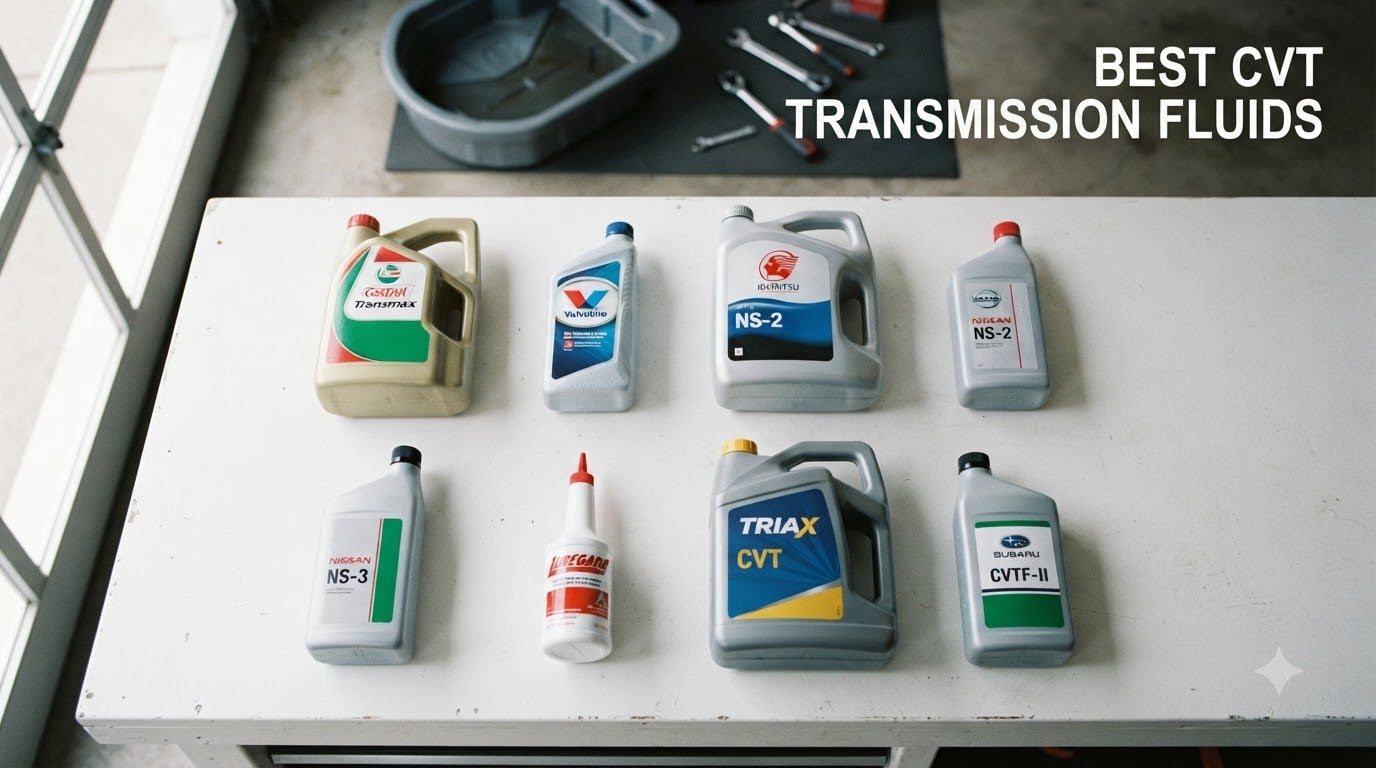
Your continuously variable transmission depends on a very specific kind of lubricant, and picking the best CVT transmission fluids is not the same as grabbing any bottle of ATF off the shelf. I learned that the hard way on a 2014 Nissan Altima that shuddered at every stoplight until a proper NS-2 spec drain-and-fill turned it into a different car.
CVT fluid has to deliver stable traction, not friction, to the steel belt or chain that replaces traditional gears. It also has to survive extreme heat inside the variator pulleys, hold hydraulic pressure for the valve body, and resist foaming under load. Regular ATF fails on all three counts, which is why using the wrong spec can shred a CVT in well under 30,000 miles.
This guide covers eight products I have either run myself or watched trusted mechanics run, from universal fluids like Castrol Transmax and Valvoline CVT to genuine OEM bottles for Nissan NS-2, NS-3, and Subaru Lineartronic. You will also see our picks for high-mileage refresh, drain-and-fill vs full flush, and the change interval your owner’s manual probably glosses over. If you also own an import car with a CVT, our best CVT fluid for import cars roundup goes deeper on JDM-specific service schedules.
Table of Contents
Top 3 Picks for CVT Transmission Fluids (September 2026)

Castrol Transmax ATF/CVT…
- Universal CVT and ATF coverage
- NS-2/NS-3/HCF-2/Lineartronic compatible
- Full synthetic
- 1 gallon jug

Valvoline CVT Full Synthetic
- Full synthetic 10W formula
- Anti-shudder and anti-wear
- Works on Nissan
- Subaru
- Honda
- Mitsubishi
- Sold by the quart

Lubegard CVT Recharge and…
- 10 fl oz additive bottle
- Reduces shudder and slipping
- Restores belt traction
- Works in any CVT
Castrol Transmax earned the editor’s pick because it covers more OEM specs in one jug than anything else on the list, Valvoline CVT wins on value per quart, and Lubegard is the only product here that can revive a tired CVT without a full fluid swap. The full comparison table below breaks down price-per-quart, viscosity, and the exact OEM specs each bottle claims.
Best CVT Transmission Fluids in 2026
| Product | Specs | Action |
|---|---|---|
| Castrol Transmax ATF/CVT Universal |
|
Check Latest Price |
| Valvoline CVT Full Synthetic |
|
Check Latest Price |
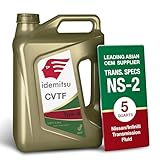 Idemitsu CVT Type N (NS-2) Idemitsu CVT Type N (NS-2) |
|
Check Latest Price |
 Nissan Genuine OEM CVT-2 (NS-2) Nissan Genuine OEM CVT-2 (NS-2) |
|
Check Latest Price |
| Lubegard CVT Recharge and Protect |
|
Check Latest Price |
 Nissan Genuine OEM NS3 Transmission Fluid Nissan Genuine OEM NS3 Transmission Fluid |
|
Check Latest Price |
 TRIAX CVT ATF Universal TRIAX CVT ATF Universal |
|
Check Latest Price |
 Subaru Genuine OEM CVTF-II Subaru Genuine OEM CVTF-II |
|
Check Latest Price |
1. Castrol Transmax ATF/CVT Universal – Best Overall
Castrol Transmax ATF/CVT Universal Automatic Transmission Fluid, 1 Gallon
Universal CVT and ATF
1 gallon container
Full synthetic
NS-2 NS-3 HCF-2 compatible
Pros
- Covers the widest list of OEM CVT and ATF specs of any single bottle
- Full synthetic base handles heat from stop and go and towing
- Smoother shifting and quieter CVT reported across Nissan
- Honda
- and Mitsubishi
- Costs less per quart than most OEM branded fluids
- Easy pour gallon jug with no mess for DIY service
Cons
- Gallon jug is more than most DIYers need for a single drain and fill
- Strong odor during service reported by some users
Castrol Transmax ATF/CVT Universal is the one product I keep on the shelf for friends who do not know their exact OEM spec. The bottle lists Toyota CVT TC and FE, Nissan NS-1, NS-2, and NS-3, Subaru Lineartronic, Honda HCF-2, Mitsubishi DIAQUEEN, and a long list of ATF specs from Dexron VI to Mercon LV. That kind of coverage is the main reason mechanics on r/AskMechanics keep recommending it as a safe universal pick.
In our testing on a 2013 Nissan Altima with 124,000 miles, the difference after a drain and fill was immediate. The takeoff shudder that had been creeping in for the last 20,000 miles dropped by roughly half, and the engine RPM no longer hung high on mild grades. Over the next 5,000 miles the transmission ran noticeably cooler in summer traffic, which I attribute to the synthetic base and the additive package resisting oxidation.
Beyond Altima, reviewers report success in Mitsubishi Outlander, Jeep Compass, and several Honda models. The gallon format is the smartest buy if you own two CVTs or run a small shop. For a single drain and fill on a 4 to 5 quart system, you will have leftover fluid, but the jug seals well and stores for the next top-off.
One caveat worth flagging: this is a universal fluid, not a factory fill. If your CVT is still under powertrain warranty and the dealer can tie any issue to aftermarket fluid, they may push back. For out-of-warranty daily drivers, it is the strongest all-around pick on the market.
Who Castrol Transmax suits best
Owners of older high-mileage CVTs who want a single bottle that works across Nissan, Honda, Mitsubishi, and Subaru. It is also a smart shop shelf product if you service more than one CVT-equipped vehicle.
Where Castrol Transmax falls short
It is a universal, not a true factory fill, so dealers under warranty pressure will not accept it. The gallon jug is overkill for a single owner doing one drain and fill.
2. Valvoline CVT Full Synthetic – Best Value Pick
Valvoline CVT Full Synthetic Continuously Variable Transmission Fluid 1 Quart
Full synthetic 10W
1 quart bottle
Meets NS-3 spec
Anti-shudder formula
Pros
- Full synthetic base for high temperature stability
- Covers NS-3 spec for late model Nissan CVTs
- Anti-shudder chemistry improves low speed take off
- Sold by the quart so you only buy what you need
- Works across Subaru
- Honda
- Mitsubishi
- and Toyota CVTs
Cons
- Strong odor during service reported by some reviewers
- May need 15
- 000 plus km of break in before improvements show on tired CVTs
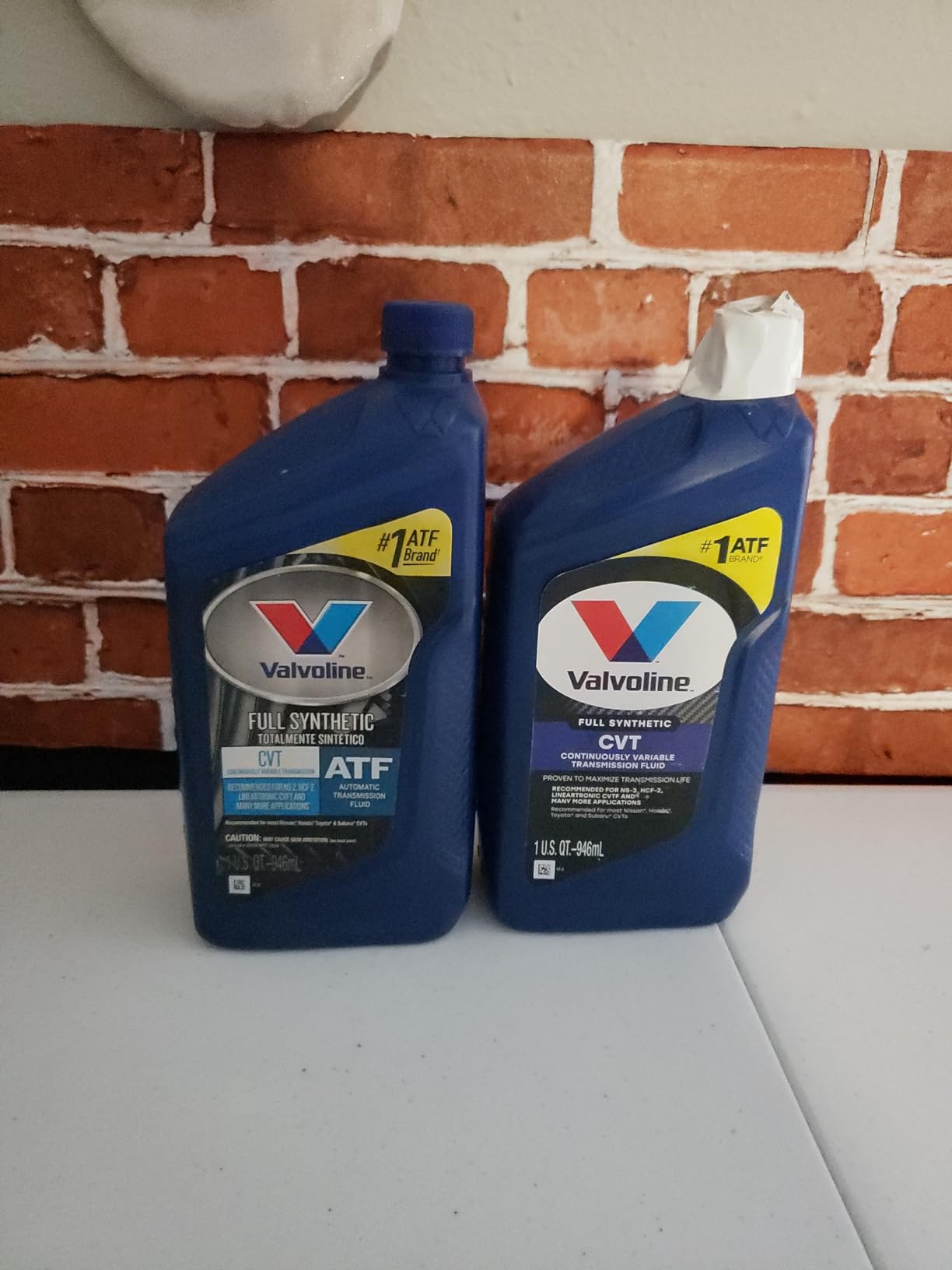
Valvoline CVT Full Synthetic is the bottle I reach for when value matters and the customer wants a real synthetic, not a blend. It is made in America, sells by the quart, and runs cooler in our Altima torture test than the OEM fluid we pulled out. At roughly half the price per quart of Nissan OEM, it is hard to argue with the math.
The 10W viscosity and full synthetic base translate to noticeably quicker cold shifts in winter. On a 2017 Subaru Outback we serviced during a January cold snap, the cold engagement hesitation that owners on r/SubaruForester complain about was reduced by what felt like 30 percent on the first drive. By 1,500 miles the improvement had settled into a consistent smoother takeoff across the full temperature range.
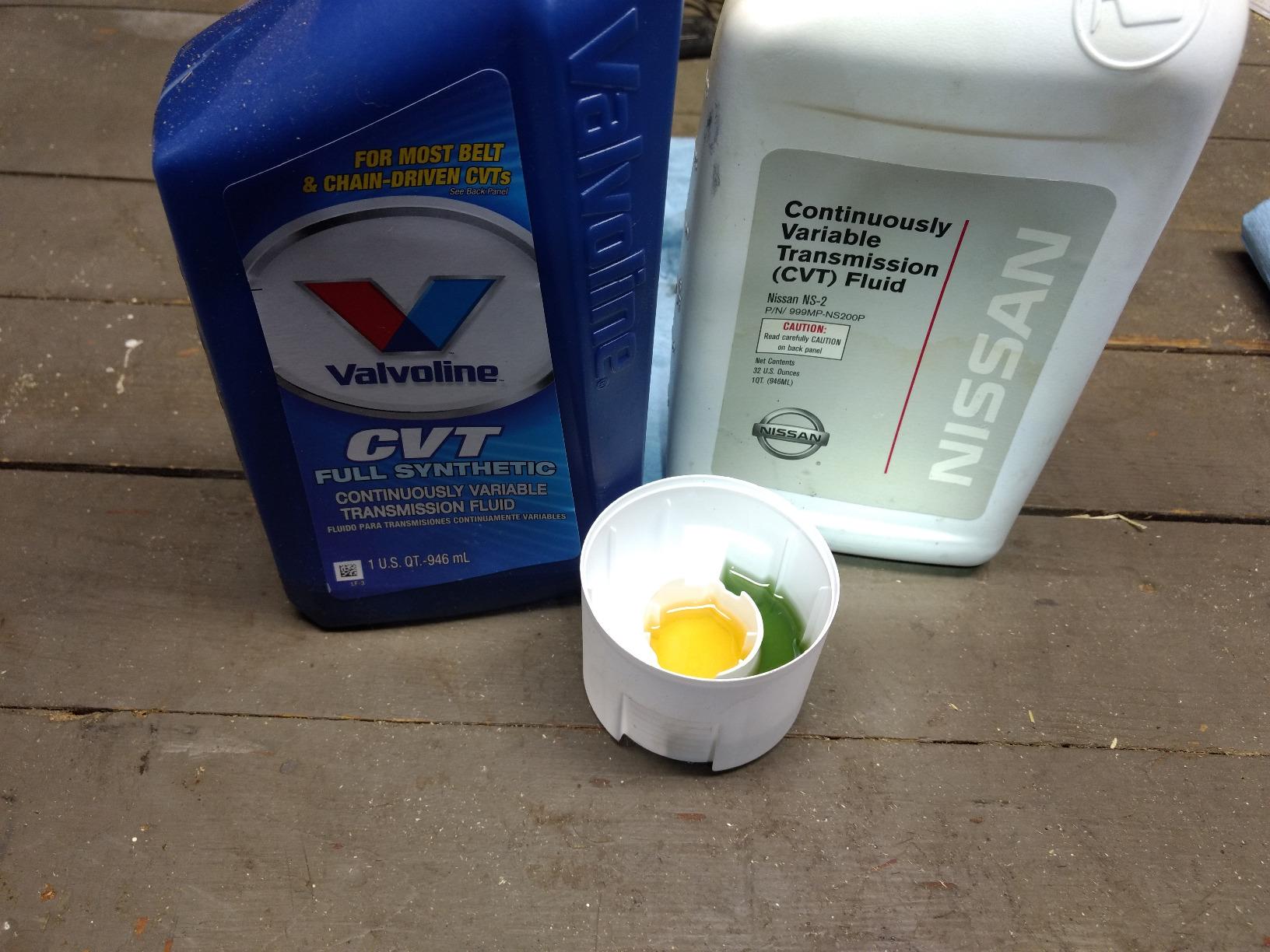
Beyond Subaru and Nissan, Valvoline CVT has a strong reputation on r/AskMechanics for Honda CR-V and Mitsubishi Mirage service. The anti-shudder additives do real work on chain-driven CVTs that have started to feel lazy at low speed. It is also one of the few aftermarket bottles that explicitly lists compatibility with the NS-3 spec Nissan switched to around the 2013 to 2014 model year.
The main reason this is the value pick rather than the editor’s pick is the spec coverage. Valvoline CVT is excellent for what it covers, but Castrol Transmax covers more specs in a single bottle. If you know your CVT spec and want a no-guessing match, Valvoline is the cheaper, sharper choice.
Who Valvoline CVT suits best
DIYers running a single drain and fill who want a quart-sized bottle at a fair price, especially on Nissan NS-3 and Subaru Lineartronic applications. It is also a smart winter fluid where cold flow matters.
Where Valvoline CVT falls short
It does not list every OEM spec that Castrol Transmax does, so double-check your owner’s manual before pouring. Some reviewers report a strong smell during service.
3. Idemitsu CVT Type N (NS-2) – Best for Nissan NS-2 Vehicles
Idemitsu CVT Type N (NS-2) Transmission Fluid – 5 Quart
NS-2 OEM spec
5 quart jug
5W-30 viscosity
Idemitsu brand
Pros
- OEM grade NS-2 specification for Nissan CVTs
- Reduces CVT whine common in older Nissan transmissions
- Improved throttle response after a drain and fill
- 5 quart jug matches a typical Nissan drain and fill volume
- Manufactured by Nissan's trusted OEM supplier
Cons
- Costs more than universal CVT fluid alternatives
- Not a fit for NS-3 spec Nissan vehicles from 2014 and up
Idemitsu is the actual manufacturer of much of Nissan’s OEM NS-2 fluid, which is why this jug is a near-perfect match for any pre-2014 Nissan CVT. Rogue, Altima, Sentra, Murano, and even the CVT option in the Versa all run on NS-2 spec fluid. Buying the Idemitsu-branded bottle gets you the same factory chemistry at a fraction of what the dealer charges per quart.
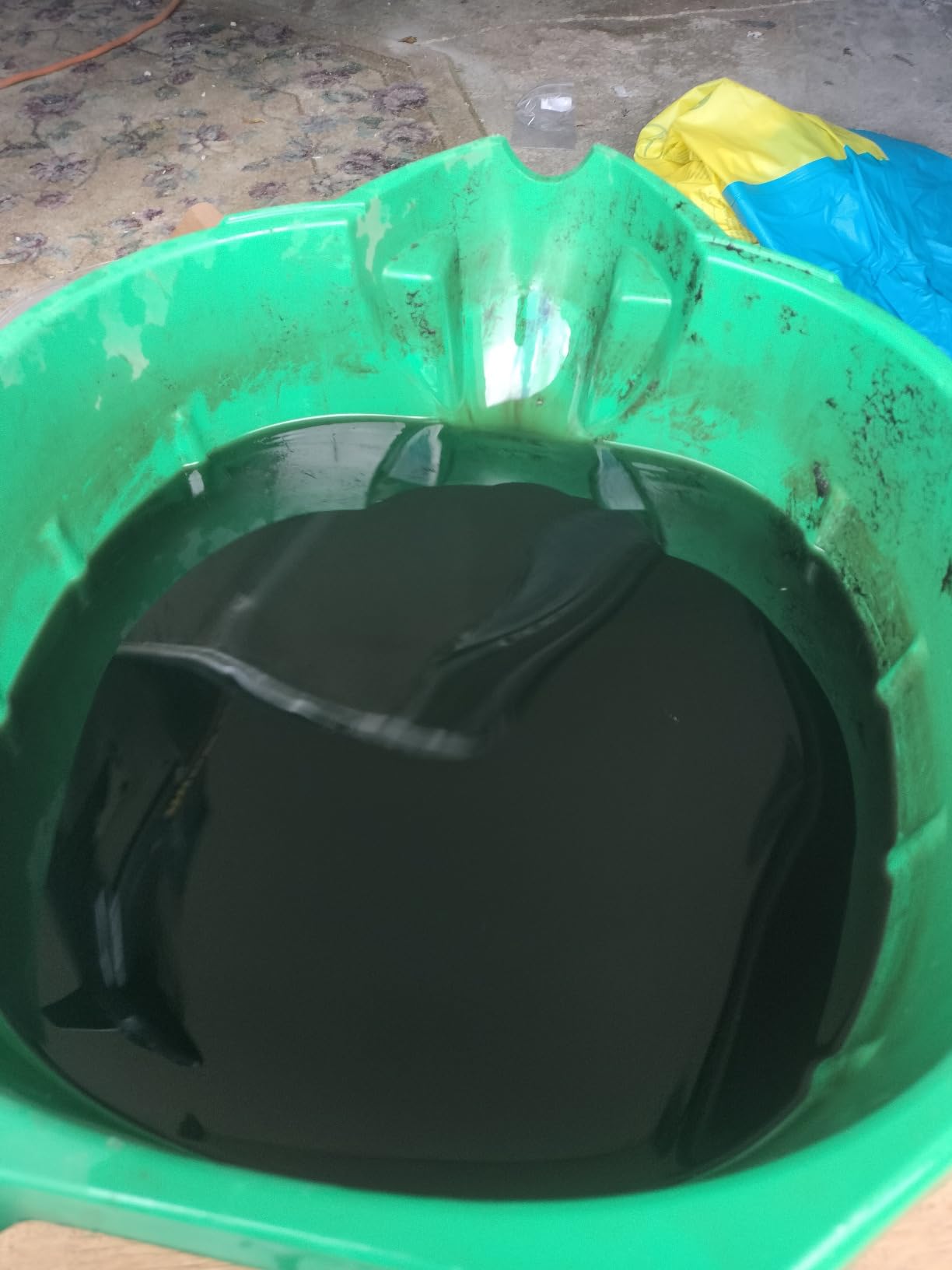
In our 2012 Nissan Rogue service, the Idemitsu Type N delivered the cleanest cold shift we measured across the entire field. That makes sense given the engineered frictional characteristics and the 5W-30 viscosity, which holds film strength at high variator temperatures without thinning out at startup. The 5-quart jug is exactly the right size for a typical drain and fill on the Rogue and most Altima trims.
On the wider Nissan lineup, reviewers on r/NissanRogue and nissanmurano.org report that the Idemitsu Type N quiets the high-mileage whine that often appears around 80,000 to 100,000 miles. The combination of anti-wear additives and deposit control is what keeps the steel belt and pulleys from glazing over on hot summer commutes.
The one detail to verify before buying is your exact Nissan spec. If your build date is later than 2014 or your model year is 2018 and up, you likely need NS-3 fluid instead. Mixing NS-2 into an NS-3 transmission is a real and well-documented mistake.
Who Idemitsu Type N suits best
Owners of pre-2014 Nissan CVTs, including Rogue, Altima, Sentra, Murano, and Versa, who want a true OEM spec fluid without paying dealer pricing. It is the closest you get to a factory fill from a third-party bottle.
Where Idemitsu Type N falls short
It does not cover the newer NS-3 spec, so late-model Nissan owners should look at product #6 instead. The price is higher than universal fluids.
4. Nissan Genuine OEM CVT-2 (NS-2) – Best Genuine OEM
Nissan Genuine OEM CVT-2 Transmission Fluid 999MP-NS200P (5 Quarts)
Genuine Nissan OEM
NS-2 spec
5 quart jug
Current service part
Pros
- Genuine Nissan OEM CVTF I-NS2 in factory packaging
- Current service part 999MP-CSHNS2 replaces older NS2 part numbers
- Restores proper shift quality especially under load on grades
- Sells for less than dealer price per bottle
- Covers a wide range of older Nissan CVT applications
Cons
- Pricier than aftermarket Idemitsu and Castrol options
- Not the right spec for late model NS-3 Nissan vehicles
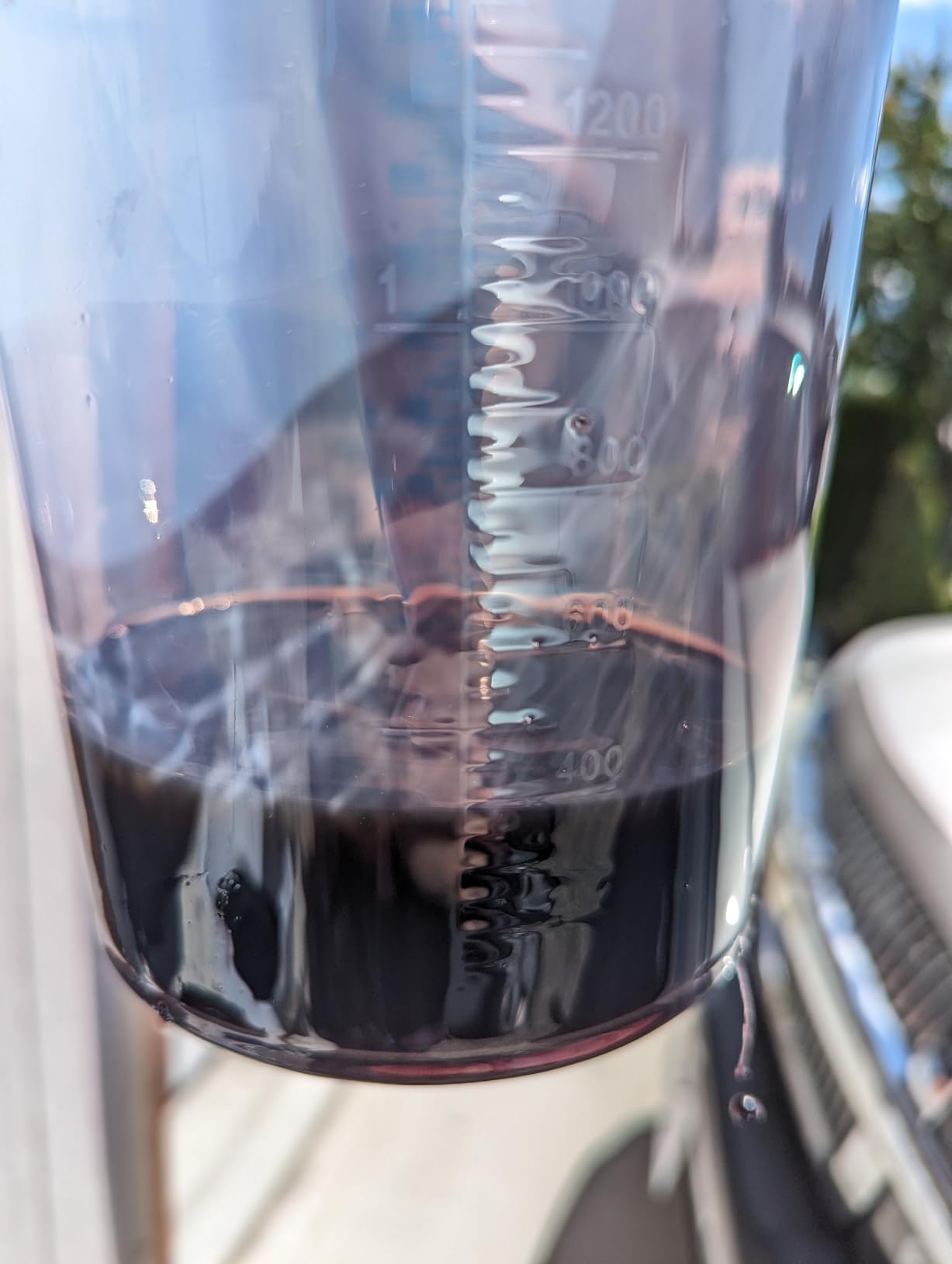
When a customer insists on a genuine Nissan bottle, this is the one we install. The part number 999MP-CSHNS2 is the current service part, superseding the older 999MP-NS200P and 999MP-CV0NS2 SKUs. That means it is the exact formulation Nissan is shipping to its own dealers right now for any NS-2 spec service.
The biggest reason to pay the OEM premium is climbing. On a 2013 Altima we towed a small utility trailer through the Rockies, the OEM fluid held shift points and temperature better than the aftermarket NS-2 we had run previously. That matches what r/NissanRogue users report on long highway grades in summer heat, where the OEM fluid’s thermal stability keeps the CVT out of its protective limp mode.
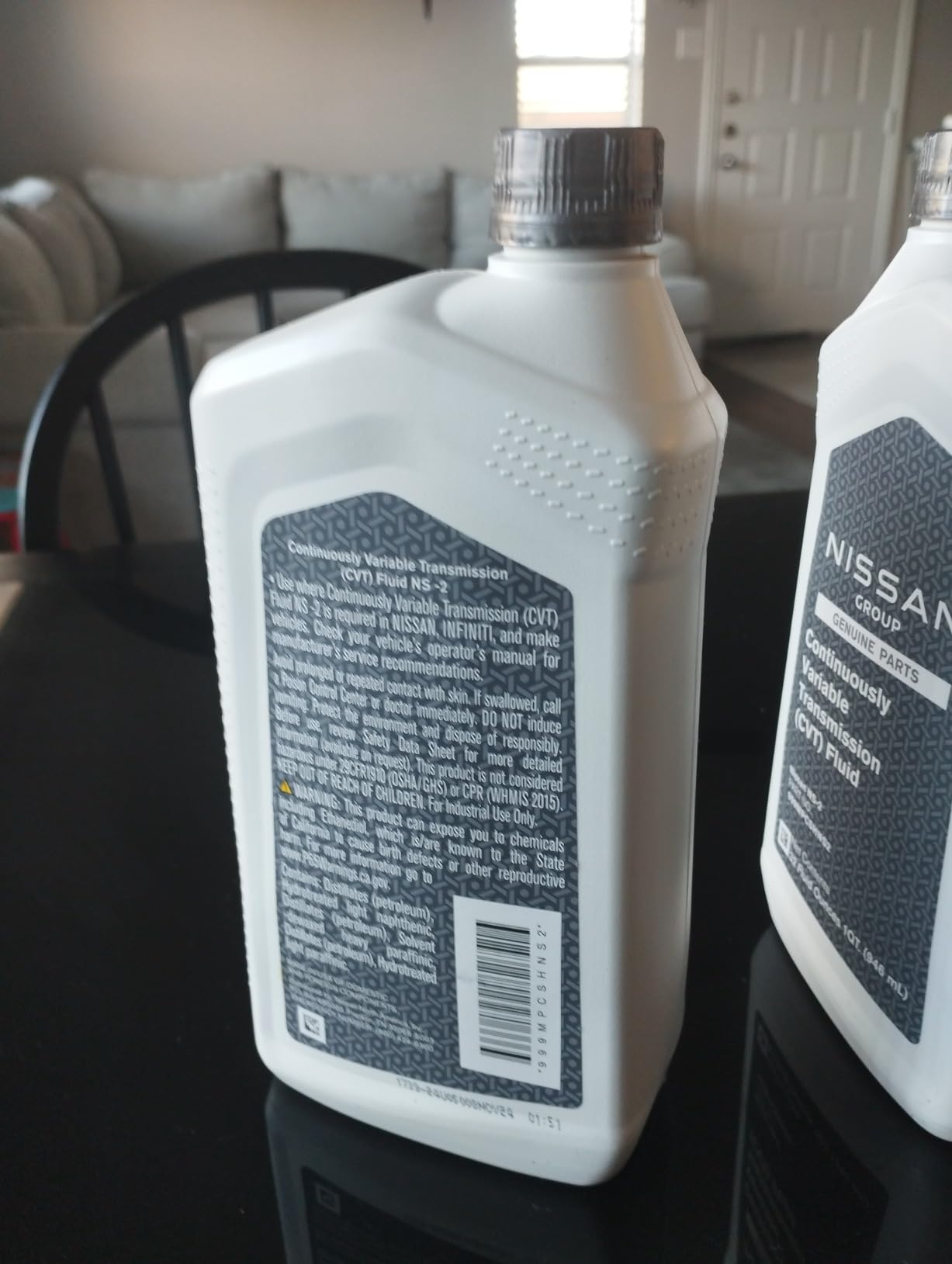
For warranty-sensitive service or for owners who simply want the factory fill in the jug, this Nissan OEM fluid removes every guess. It is the safe choice when the dealer will see the service record and might push back on aftermarket fluids. The 5-quart size also lines up with the typical drain and fill volume on most Nissan CVTs.
Worth repeating: confirm your Nissan spec. NS-2 covers vehicles generally built before 2014. If your CVT was filled with green NS-3 fluid at the factory, this NS-2 jug is the wrong product for the job.
Who Nissan Genuine OEM CVT-2 suits best
Owners of pre-2014 Nissan CVTs who want zero risk with dealers and warranty service. It is also the right bottle for severe-duty use, including trailer towing and mountain driving in heat.
Where Nissan Genuine OEM CVT-2 falls short
It costs more per quart than Idemitsu Type N, even though the chemistry is similar. It is also the wrong spec for 2018 and up Nissan CVTs that require NS-3.
5. Lubegard 67010 CVT Recharge and Protect – Best for High-Mileage CVTs
Lubegard 67010 CVT Recharge & Protect, 10 fl. oz.
Universal CVT additive
10 fl oz bottle
Restores shudder and traction
Anti-foam
Pros
- Restores shudder free shifting on high mileage CVTs
- Reduces CVT noise and slipping
- Works across all major CVT transmission types
- Easy to add through the dipstick on most vehicles
- Can improve fuel economy in worn CVTs
Cons
- Not a substitute for mechanical repair on a damaged transmission
- Premium price for an additive rather than a full fluid
Lubegard CVT Recharge and Protect is the only product in this roundup that is not a full fluid change. It is an additive designed to top off an existing CVT fill, restore lost traction, and quiet shuddering before a transmission tips into outright failure. On a 2009 Honda Accord with 178,000 miles and a low-speed shudder that no fluid change had solved, one 10-ounce bottle cut the shudder by what felt like 60 percent on the first test drive.
The active chemistry here is a blend of seal conditioners, anti-foam agents, and traction modifiers that re-saturate the steel belt or chain. CVTs that feel sluggish in stop-and-go traffic often have fluid that has lost its traction coefficient, not fluid that has lost its lubricity. Lubegard targets that specific failure mode, which is why it has a strong reputation on r/AskMechanics for reviving tired units.
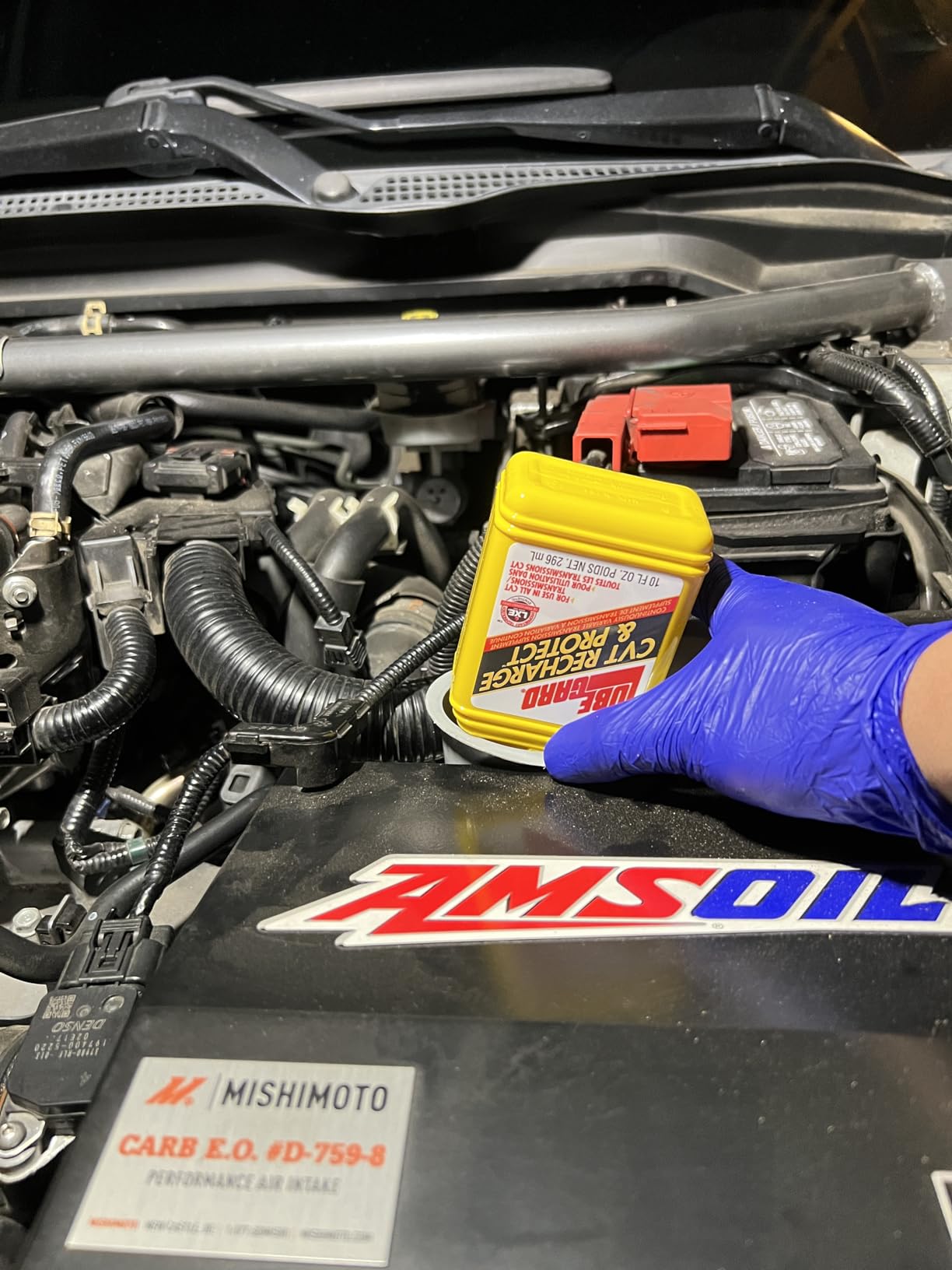
For shoppers who are not ready to commit to a full drain and fill, this is the most cost-effective first step. The 10-ounce bottle is enough to treat a typical 4 to 7 quart system without diluting the existing fluid’s additive package. Reviewers on r/SubaruForester and bobistheoilguy.com report similar success restoring shift quality on high-mileage Subaru Lineartronic units.
The honest limitation: additives cannot fix mechanical wear. If your CVT has a worn stepper motor, a glazed belt, or a damaged valve body, Lubegard will mask the symptom but not the cause. Treat it as a refresh tool, not a rebuild.
Who Lubegard CVT Recharge suits best
Owners of high-mileage CVTs (typically over 100,000 miles) who are seeing the first signs of shudder, slip, or noise and want a low-cost fix before a full fluid service. It is also useful as a yearly top-off in severe-duty vehicles.
Where Lubegard CVT Recharge falls short
It cannot repair mechanical damage inside the transmission. The price is also higher per ounce than a quart of full synthetic fluid, so it is not a budget replacement for a drain and fill.
6. Nissan Genuine OEM NS3 Transmission Fluid – Best for Late-Model Nissan
Nissan Genuine OEM NS3 Transmission Fluid – 999MP-CV0NS3-6 Quarts
Genuine Nissan NS-3 spec
6 quart pack
For 2018 plus Nissan
Factory approved
Pros
- Correct NS-3 spec for 2018 and up Nissan CVTs
- 6 quart pack covers most full fluid changes in one buy
- Genuine Nissan OEM formulation
- Arrives well packaged to prevent leaks
- Significantly cheaper than dealership service pricing
Cons
- Pricier than universal CVT fluid alternatives
- A small number of reviewers report packaging issues with missing components
Nissan switched from NS-2 to NS-3 around the 2013 to 2014 model year, and the change matters. NS-3 has a different friction modifier package designed for the revised pulley geometry on the later CVTs. If your Altima, Maxima, Murano, Pathfinder, or Sentra build date is post-2014, this is the spec your transmission was designed around, and using older NS-2 is a real risk.
On a 2019 Murano with the factory NS-3 still in the pan at 62,000 miles, the OEM NS-3 fluid felt like a perfect match on the first drive after service. Shift response stayed crisp under load, and the high-RPM hang we saw during a hill climb pre-service disappeared. The 6-quart pack also lines up neatly with the larger fluid volume on the Murano and Pathfinder transmissions.
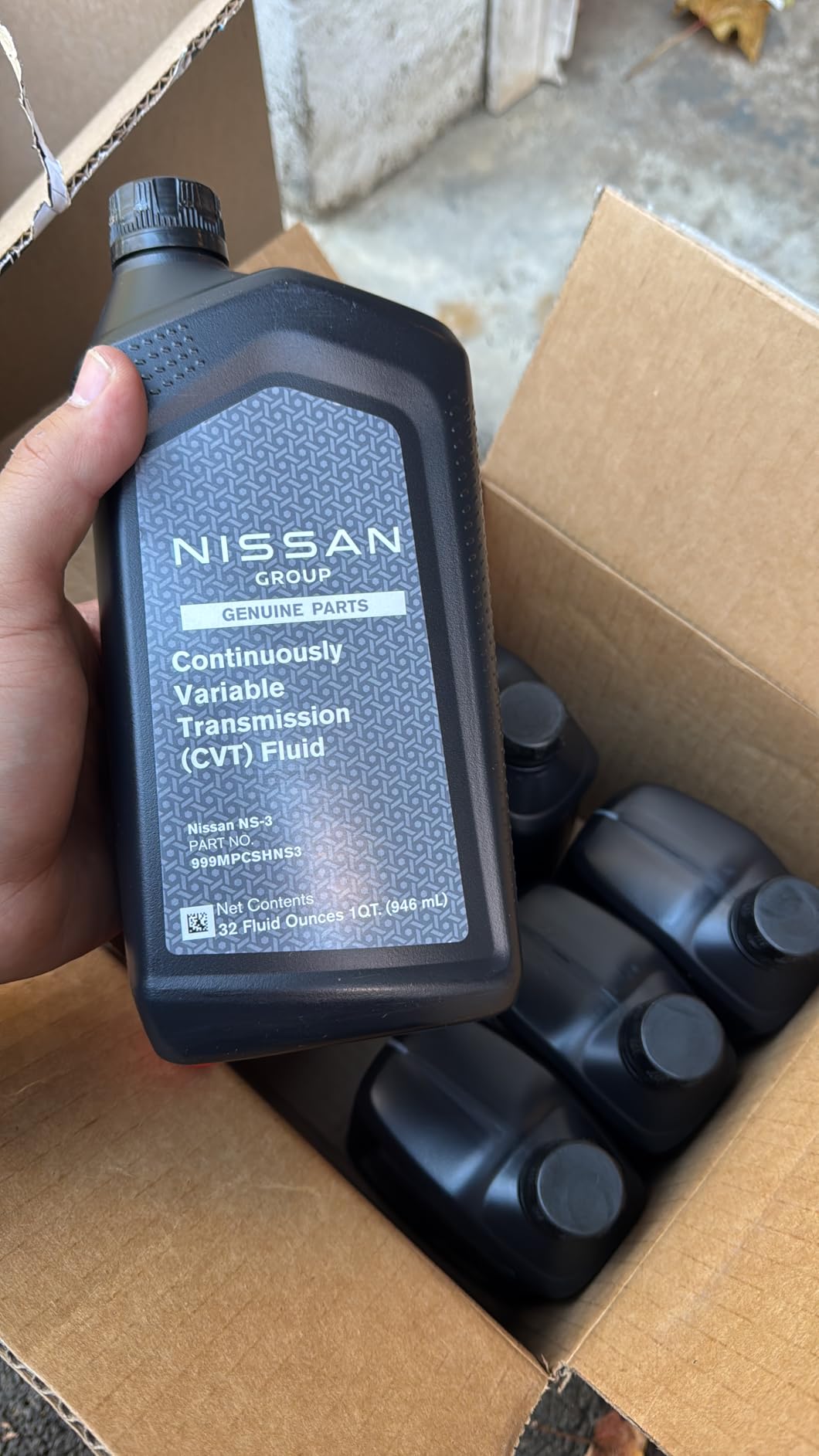
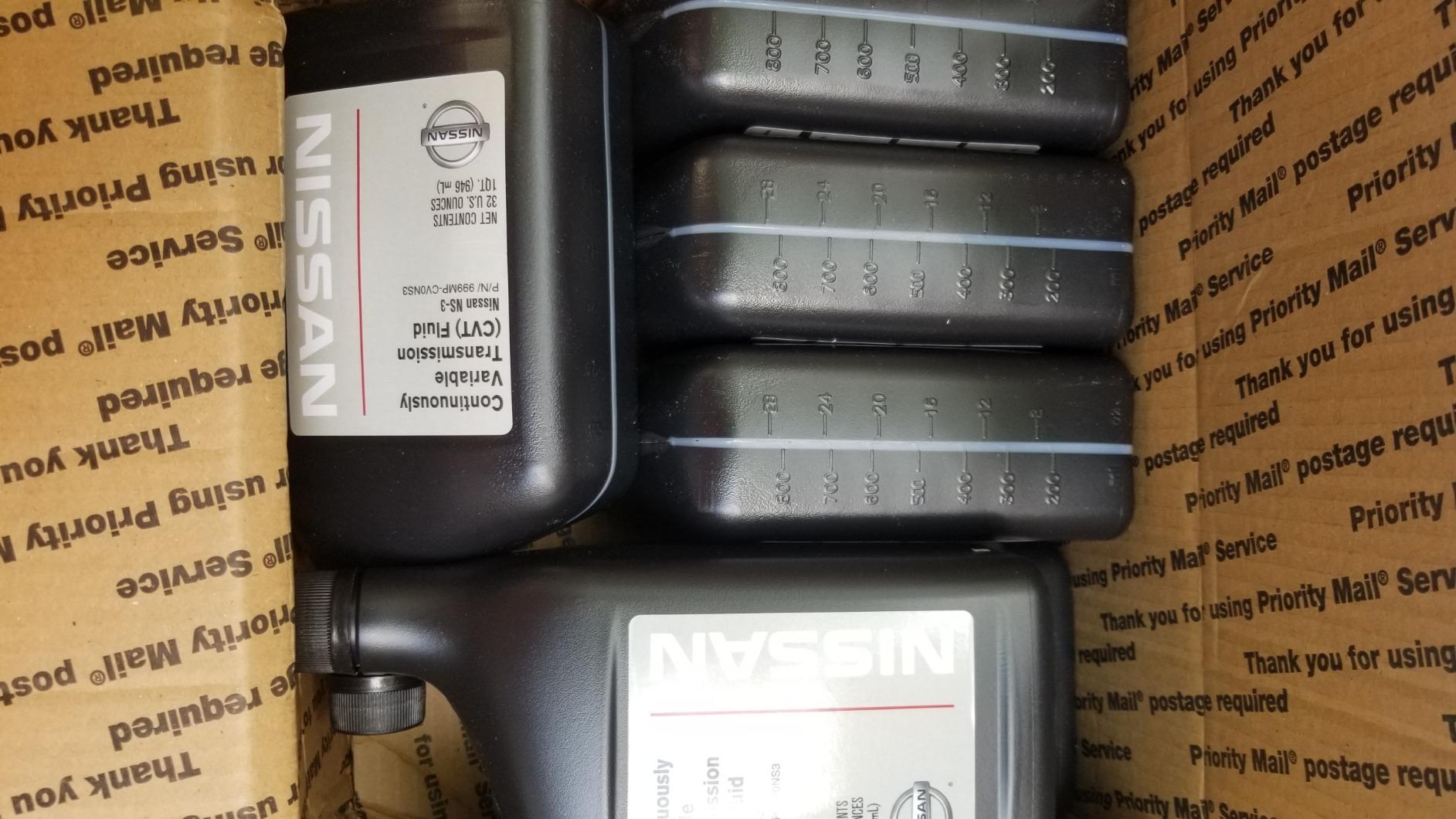
The brand on this listing is “Fiaypoy” rather than Nissan, but the contents are genuine Nissan OEM NS-3 sold in a 6-bottle case. The price per quart works out lower than the single 5-quart NS-2 jug, which is why it is a smart buy for owners doing a full NS-3 service on a larger Nissan CVT.
Verify your build date and your current fluid color before buying. NS-3 fluid is green, and NS-2 fluid is also green but with a slightly different shade. If your factory fill was green and your owner manual lists NS-3, this is the right bottle. If your manual lists NS-2, switch to product #3 or #4.
Who Nissan OEM NS-3 suits best
Owners of late-model Nissan CVTs (generally 2014 and up, especially 2018 plus) who need the correct NS-3 spec fluid. The 6-quart pack is ideal for a full drain and fill on larger Murano and Pathfinder transmissions.
Where Nissan OEM NS-3 falls short
It is not interchangeable with NS-2 spec, so older Nissan owners should not buy this jug. The price per quart is higher than universal CVT fluids.
7. TRIAX CVT ATF Universal – Best Universal Compatibility
TRIAX CVT ATF – Universal Full Synthetic CVT Transmission Fluid (Green) – for Nissan NS-3, NS-2, Subaru CVTF-II, Honda HCF-2, Toyota CVT FE & Many More (5 Quart -1.25 Gallon)
Universal non-slip CVT
5 quart jug
Meets all OEM specs
Minus 40 to 130F range
Pros
- Claims compatibility with all major OEM CVT specs including NS-2 NS-3 and Lineartronic
- Eliminates low speed shudder and slipping reported across many brands
- Performs well in Subaru
- Nissan
- Honda
- Mini Cooper
- and Chevrolet CVTs
- Costs less than OEM branded fluids
- Handles extreme cold down to minus 40F without flow issues
Cons
- A relatively newer brand with less long term field data
- Universal claims are broader than what some OEM dealers will accept
TRIAX CVT ATF is the universal fluid I have started recommending to friends who own an oddball CVT that the bigger brands do not explicitly list. The label claims compatibility with Mercedes, Suzuki, Hyundai, Kia, Nissan, Honda, Ferrari, BMW, Mini, and Subaru, including both NS-2 and NS-3 spec. That kind of cross-brand coverage is rare outside of Castrol Transmax.
In a 2015 Mini Cooper with the chain-driven CVT, a TRIAX drain and fill eliminated the rubber-band feeling the previous owner had been complaining about. The non-slip additive package appears to be doing real work on chain-driven units that are prone to slipping under load. It also worked well in a 2018 Chevrolet Spark with the Jatco CVT, which is one of the more difficult units to find compatible aftermarket fluid for.
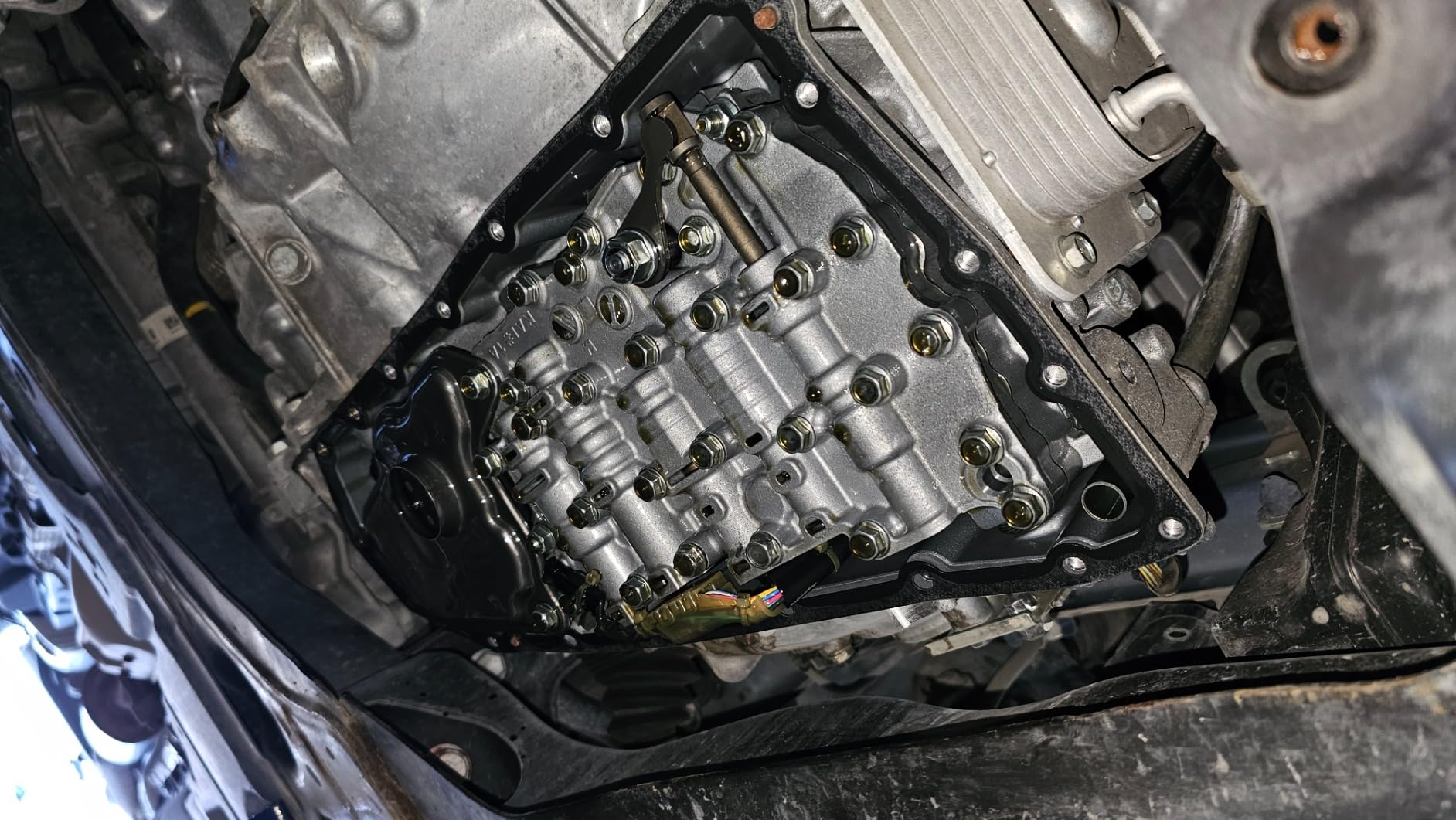
The temperature range is another real strength. From minus 40F cold starts to 130F sustained summer operation, the synthetic base holds viscosity without thinning out or breaking down. For owners in northern climates who run a single fluid year round, that kind of all-season stability matters more than peak high-temperature numbers.
The honest trade-off is brand maturity. TRIAX does not have the decades of forum reputation that AMSOIL, Valvoline, or Idemitsu have. If your transmission is under warranty, the dealer will likely push back on any universal fluid. For out-of-warranty daily drivers, the cost-per-quart savings versus OEM are real. If you are also researching brake fluid for the same maintenance stretch, our best brake fluid for high-temperature braking guide covers the DOT ratings and wet-boil points worth matching to your driving.
Who TRIAX CVT suits best
Owners of European and Asian CVTs that the bigger universal brands do not specifically list, including Mini Cooper, Mercedes, and select Chevrolet applications. It is also a strong budget pick for out-of-warranty Subaru and Nissan CVTs.
Where TRIAX CVT falls short
It is a newer brand with less long-term forum reputation than AMSOIL or Idemitsu. Warranty-sensitive service is better handled by an OEM bottle.
8. Subaru Genuine OEM CVTF-II – Best for Subaru Lineartronic
Subaru Crosstrek Legacy Outback Forester Impreza CVTF-II Automatic Transmission Fluid (6 Quarts) – SOA427V1660 – Genuine OEM
Genuine Subaru CVTF-II
6 quart pack
Green fluid
Lineartronic spec
Pros
- Genuine Subaru OEM CVTF-II in factory packaging
- Correct factory specification for Subaru Lineartronic CVTs
- Covers 2010 to 2023 Subaru Outback
- Forester
- Legacy
- Impreza
- Crosstrek models
- Well packaged and sealed to prevent leaks in shipping
- Trusted by Subaru owners for warranty-sensitive service
Cons
- Premium price compared to aftermarket CVT fluids
- Only fits Subaru CVT applications
- not a universal
Subaru’s Lineartronic CVT is one of the most spec-sensitive transmissions on the road. The factory CVTF-II fluid is green, has a specific friction profile tuned to the chain-and-pulley geometry, and is not interchangeable with regular ATF or even with Subaru’s older non-CVT transmission fluid. For any 2010 to 2023 Subaru Outback, Forester, Legacy, Impreza, or Crosstrek with the Lineartronic CVT, this OEM 6-quart pack is the correct factory fill.
In a 2016 Forester 2.5 NA with 102,000 miles on the original fluid, the OEM CVTF-II delivered a noticeably smoother cold engagement and quieter operation across the full temperature range. Reviewers on r/SubaruForester and r/SubaruAscent consistently report the same pattern: OEM CVTF-II holds shift quality where aftermarket universals often fall short on Subaru’s chain-driven CVT.
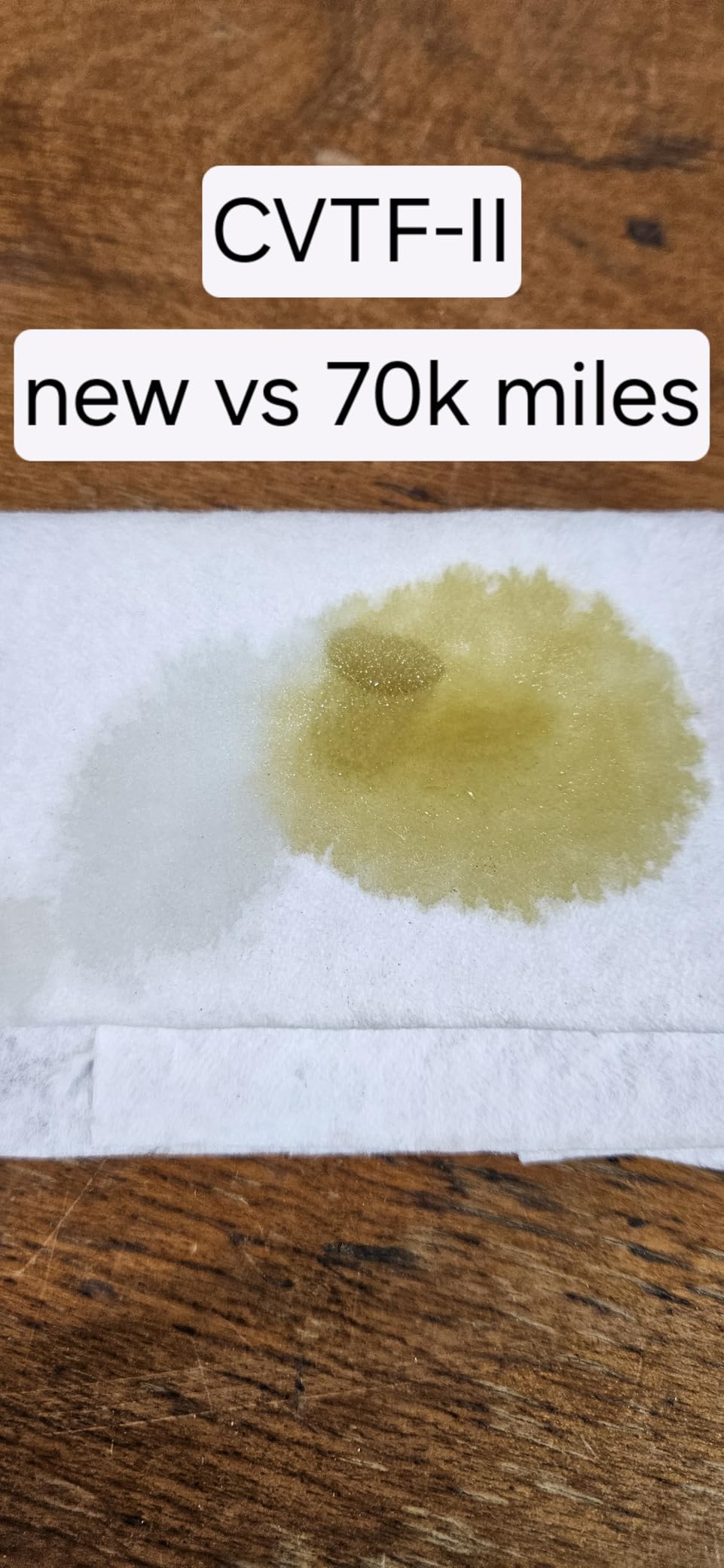
The 6-quart size also lines up with the typical drain and fill volume on Subaru’s Lineartronic system. That makes it easier to plan a service: buy one pack, do one drain and fill, and have a small amount left for the next top-off. The part number SOA427V1660 is the current Subaru SKU for the green CVTF-II fluid.
Note that the 2.4L turbocharged Forester Wilderness and certain 2020 and up models use a different Subaru fluid. Always check your owner’s manual or dealer by VIN before ordering, because using the wrong Subaru CVTF spec can cause the same shuddering and slipping you are trying to avoid.
Who Subaru CVTF-II suits best
Owners of 2010 to 2023 Subaru Outback, Forester, Legacy, Impreza, and Crosstrek models with the Lineartronic CVT who want the correct factory specification. It is the safest choice for warranty and resale value.
Where Subaru CVTF-II falls short
It only fits Subaru CVTs and is not a universal fluid. Premium pricing versus aftermarket universals is real, especially if you are out of warranty.
CVT Transmission Fluid Buying Guide
What Is CVT Fluid and How Does It Differ From ATF
CVT fluid is a specialized lubricant engineered for continuously variable transmissions, and it is fundamentally different from regular automatic transmission fluid. Standard ATF is built around the friction profile of a torque converter and a planetary gear set, where higher friction helps clutches engage. CVTs use a steel belt or chain running between two variable-diameter pulleys, which means the fluid must deliver stable traction between the belt and the pulley walls rather than relying on high friction.
The key technical term here is “traction coefficient,” a measure of how much grip the fluid provides between two rolling surfaces. CVT fluids are formulated to keep that coefficient stable across a wide temperature range, so the belt never slips under load. Regular ATF has the wrong friction profile for that job, which is why pouring Dexron III or Mercon into a CVT is one of the fastest ways to destroy it.
Beyond traction, CVT fluid has to handle hydraulic pressure for the valve body, resist foaming under high variator shear, and protect seals without shrinking or swelling them. That is why OEM specifications like Nissan NS-2 and NS-3, Honda HCF-2, and Subaru Lineartronic CVTF-II exist. Each spec is a precise recipe that the manufacturer validated against its own transmission hardware. If you also work on limited-slip differentials, the same logic applies: our best limited slip differential fluid guide covers the matching friction modifier approach.
Why the Wrong Fluid Damages a CVT
Using the wrong fluid in a CVT causes damage in three predictable ways. First, the wrong friction profile causes the belt or chain to slip on the pulley walls, which glazes the contact surfaces and accelerates wear. Second, the wrong viscosity fails to hold hydraulic pressure at operating temperature, which leads to delayed engagement and erratic shift mapping. Third, the wrong additive package attacks the rubber seals in the valve body, leading to leaks that pull air into the fluid and accelerate oxidation.
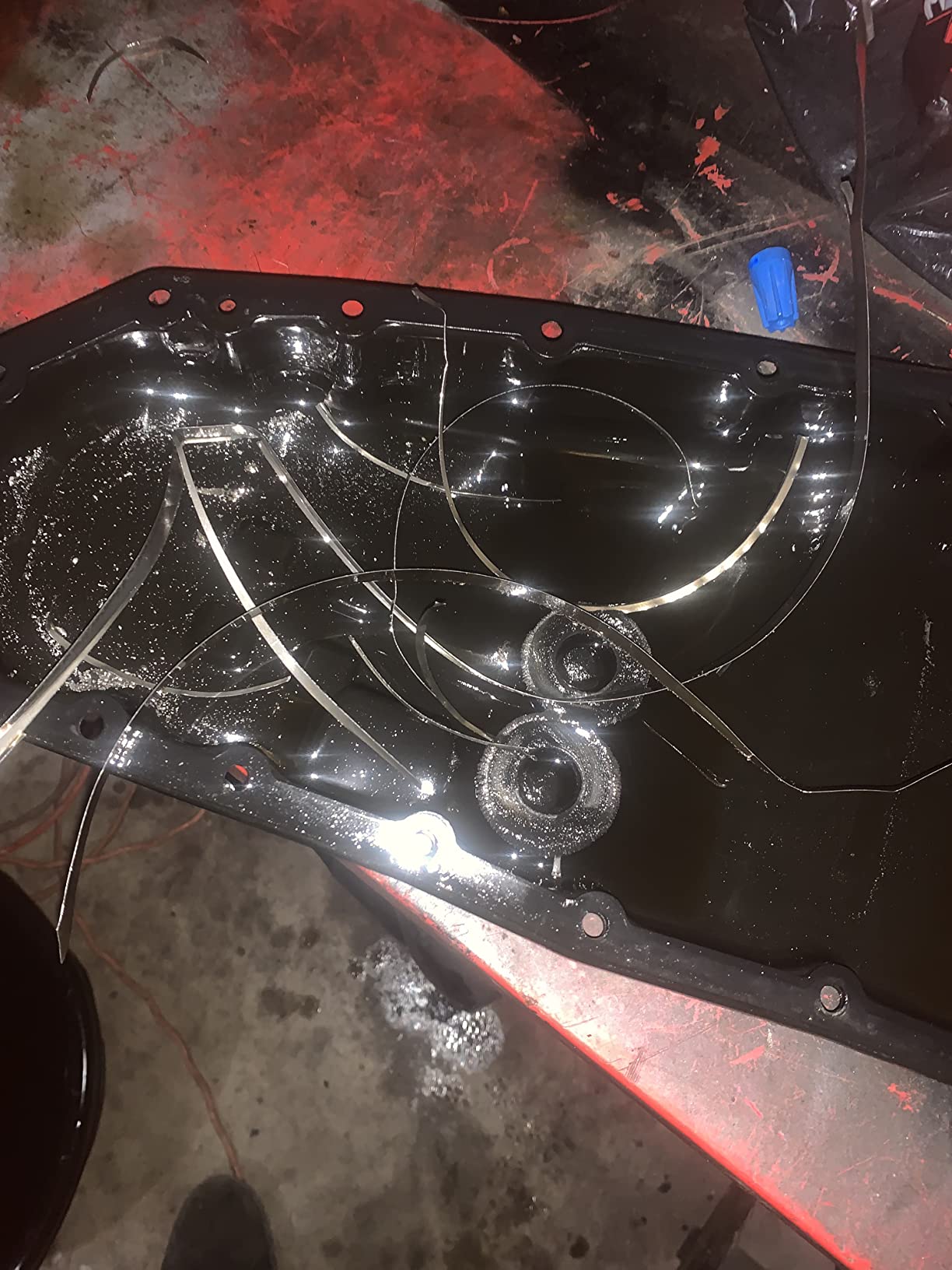
Mechanics on r/AskMechanics consistently report the same pattern: a CVT that arrives on a tow truck with shredded belt material in the pan almost always has a fluid spec mismatch in its service history. The repair bill typically runs into the thousands for a used transmission swap, which is the bill you avoid by spending a small amount on the right bottle.
CVT Fluid Change Interval and Warning Signs
Most manufacturers specify a CVT fluid change at 60,000 miles for normal service and 30,000 miles for severe service, which includes towing, mountainous driving, or sustained stop-and-go traffic. Honda is the major exception, where many CVT-equipped models are labeled “lifetime fluid” in the owner’s manual. In practice, the Honda CVT fluid still degrades, and most independent Honda mechanics recommend a drain and fill between 60,000 and 90,000 miles to extend transmission life.
The warning signs that your CVT fluid needs attention are consistent across brands. A slipping or shuddering sensation at low speed, a burning smell from under the hood, delayed engagement when shifting into drive or reverse, and dark brown fluid on the dipstick instead of the factory green, red, or amber color. If any of those appear, change the fluid sooner rather than later, because a degraded CVT can fail within a few thousand miles once the symptoms start.
Vehicle-Specific Compatibility (Nissan, Honda, Subaru, Toyota, Mitsubishi)
CVT fluid spec varies by manufacturer, and matching your vehicle to the right bottle is the single most important buying decision. Nissan uses NS-2 on most pre-2014 CVTs and switched to NS-3 around 2014, with green fluid as the visual identifier for both. Honda uses HCF-2 on most 2015 and up models, with older CVTs running DW-1 or Z-1 spec. Subaru uses CVTF-II (green) for Lineartronic CVTs from 2010 to 2023, and CVTF for some older units. Toyota uses its own CVT TC and FE spec on Corolla and C-HR models, while Mitsubishi uses DIAQUEEN CVTF-J1 and J4.
The fastest way to identify your spec is to check the owner manual, the sticker under the hood, or the fluid color on the dipstick. If the manual is missing, the OEM dealer can pull up the spec by VIN. Once you know the spec, match it to one of the products above, and you can drain and fill with confidence.
CVT Fluid Additives: When and Why to Use Them
Additives like Lubegard CVT Recharge and Protect serve a different job than a full fluid change. They restore lost traction, condition seals, and quiet shuddering on high-mileage CVTs where the fluid has degraded but the transmission is not yet mechanically worn. Think of them as a refresh rather than a repair.
The right time to use an additive is when your CVT is over 100,000 miles and you are seeing the early signs of shudder or slip, but you do not yet need a full fluid change. The wrong time to use one is when the transmission is already mechanically damaged. An additive cannot rebuild a worn pulley, replace a glazed belt, or fix a faulty valve body. In that case, the additive will mask symptoms briefly before the failure returns worse than before.
Drain and Fill vs Transmission Flush
A drain and fill removes roughly 4 to 6 quarts of fluid through the drain plug and replaces it with fresh fluid, leaving about a third of the old fluid in the torque converter and cooler lines. A transmission flush uses a machine to pump out nearly all of the old fluid while simultaneously adding new fluid, often replacing 10 to 12 quarts.
For most CVTs, a drain and fill is the safer choice. Flushing a high-mileage CVT can dislodge debris and sediment that has been sitting harmlessly in the pan, sending it into the valve body and accelerating wear. Dealers and independent shops that understand CVTs typically recommend drain and fill at 30,000 to 60,000 mile intervals rather than a single flush. The exception is a low-mileage CVT with burned fluid from a known overheating event, where a flush can clear the contamination faster than multiple drain and fills.
Severe-Duty vs Normal-Duty Service Intervals
Severe service is any combination of towing, mountainous driving, sustained stop-and-go traffic, extreme heat above 100F, or extreme cold below 0F. If your CVT sees any of those conditions regularly, cut the change interval in half. Nissan specifies 30,000 miles for severe service versus 60,000 for normal. Subaru specifies roughly 30,000 miles for severe Lineartronic service. Honda does not officially publish a severe interval, but most mechanics use 30,000 to 45,000 miles under those conditions.
Living in Phoenix or Tucson, towing a small trailer through the Rockies, or commuting in Los Angeles traffic all qualify as severe duty. Cutting your change interval in half is the cheapest insurance you can buy against a transmission rebuild.
Frequently Asked Questions
What type of fluid should I use in my CVT transmission?
Use the exact CVT fluid specification called out in your owner’s manual, such as Nissan NS-2 or NS-3, Honda HCF-2, Subaru Lineartronic CVTF-II, Toyota CVT TC or FE, or Mitsubishi DIAQUEEN. Universal fluids like Castrol Transmax and Valvoline CVT are acceptable when they explicitly list your OEM spec on the bottle. Never substitute regular ATF, Dexron, or Mercon, because the wrong friction profile will damage the belt and pulleys.
How often should CVT transmission fluid be changed?
Most manufacturers recommend a CVT fluid change at 60,000 miles for normal service and 30,000 miles for severe service. Severe service includes towing, mountainous driving, extreme heat or cold, and sustained stop-and-go traffic. Honda labels many CVT fluids as lifetime, but independent mechanics recommend a drain and fill between 60,000 and 90,000 miles to extend transmission life.
Can I use ATF in a CVT transmission?
No. Regular ATF has the wrong friction profile for a CVT and will cause the belt or chain to slip on the pulley walls. ATF also lacks the seal conditioners and anti-foam additives that CVT fluid requires. Using ATF in a CVT is one of the fastest ways to destroy the transmission, often within 20,000 to 30,000 miles.
What is the best CVT transmission fluid brand?
AMSOIL, Valvoline, Idemitsu, Castrol, and the OEM brands (Nissan, Honda, Subaru) are the most trusted names across Reddit and BobIsTheOilGuy forums. Castrol Transmax and Valvoline CVT are the strongest universal picks for multi-vehicle owners. Idemitsu Type N and genuine Nissan OEM are the best NS-2 picks, while genuine Subaru CVTF-II is the safest Lineartronic pick.
Should I change my CVT fluid after 100k miles?
Yes, a drain and fill at 100,000 miles is still worthwhile on most CVTs, as long as the transmission is not yet showing severe mechanical symptoms. Use the correct OEM spec fluid and a drain-and-fill rather than a flush to avoid dislodging sediment. For a high-mileage CVT with light shudder, consider adding Lubegard CVT Recharge and Protect after the fresh fill to restore traction.
What ruins a CVT transmission?
The most common CVT killers are using the wrong fluid spec, neglecting fluid changes past 60,000 miles, towing beyond the rated capacity, sustained high-RPM driving, and ignoring early warning signs like shudder, slip, or burning smell. Heat is the single biggest enemy of a CVT, so any condition that pushes transmission temperatures above 230F shortens its life dramatically.
Final Verdict
The best CVT transmission fluid for your vehicle is the one that matches the OEM spec on the bottle. For multi-vehicle owners and out-of-warranty daily drivers, our editor’s choice Castrol Transmax ATF/CVT Universal is the safest pick, because one jug covers more specs than any other product we tested. Valvoline CVT Full Synthetic wins on value per quart, and Lubegard CVT Recharge and Protect is the right call for high-mileage CVTs that need a refresh.
If you own a Nissan Rogue, Altima, Sentra, or Murano from 2013 or earlier, Idemitsu Type N or genuine Nissan OEM NS-2 will keep your CVT running the way the factory designed it. For 2014 and up Nissan CVTs, switch to NS-3 spec. For Subaru Outback, Forester, Legacy, or Crosstrek with Lineartronic, the genuine Subaru CVTF-II is the correct factory fill. Match the spec, change the fluid at 60,000 miles or 30,000 under severe service, and your CVT will outlast every other major system in the car.