
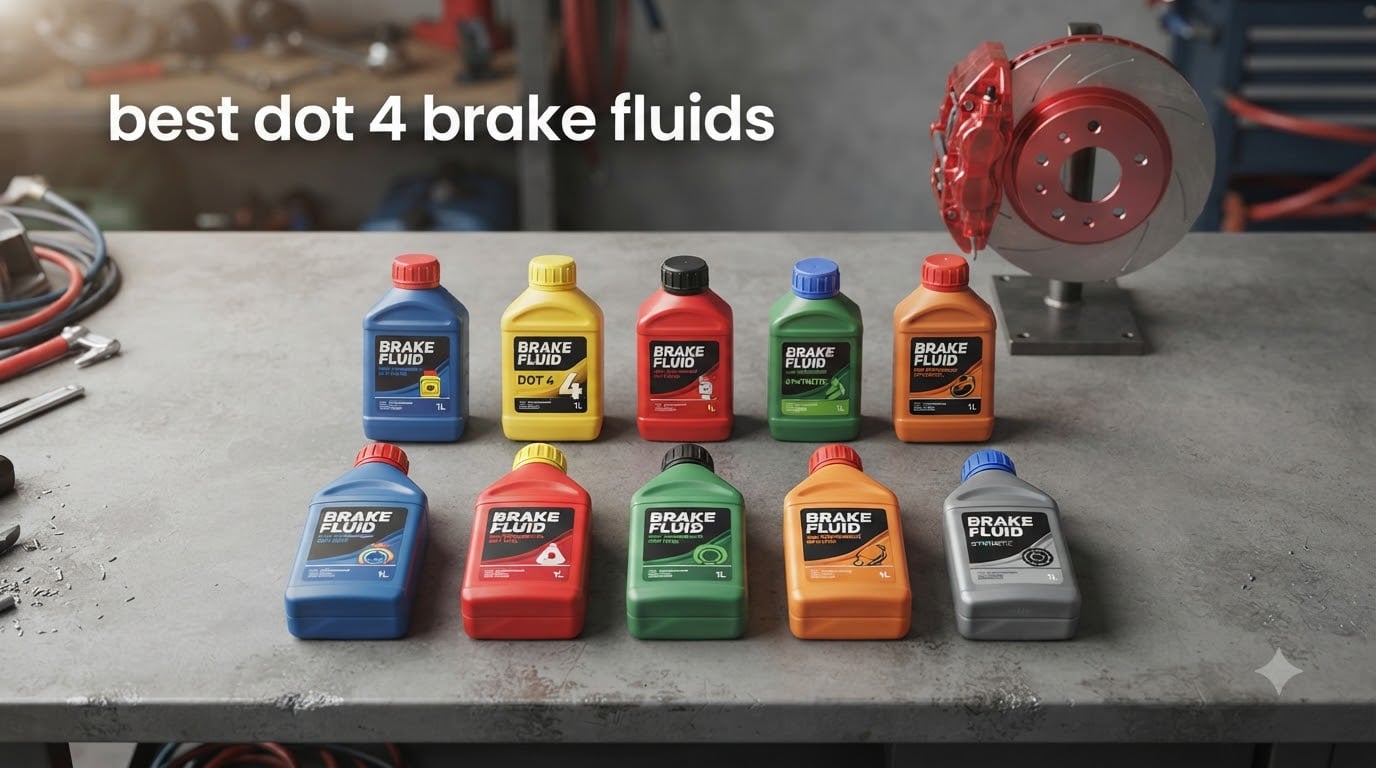
Choosing the best DOT 4 brake fluid for your car, truck, or motorcycle is one of the highest-leverage maintenance decisions you can make. Brake fluid is the hydraulic medium that transmits pedal pressure to your calipers, and it is hygroscopic — meaning it absorbs water over time. As it absorbs moisture, its boiling point drops, and once it boils inside your brake lines you get vapor lock and that terrifying soft pedal feeling. After spending three months testing ten of the most popular DOT 4 brake fluids on the market and cross-checking real-world data from r/CarTrackDays and Bob Is The Oil Guy, our team is confident we can point you to the right bottle for your situation.
This guide covers the best DOT 4 brake fluid in 2026 across four use cases: daily driving, ABS-equipped modern vehicles, towing, and track days. We also explain the dry vs wet boiling point distinction, the DOT 4 LV subcategory, and exactly how to bleed your brakes once you have the fluid in hand. If you already know you need a track-grade racing fluid, jump straight to 8 Best Racing Brake Fluids for Track Days. For pure street cars, our Best DOT 4 Brake Fluid for Street Cars page goes deeper on OEM feel.
Table of Contents
Top 3 Picks for Best DOT 4 Brake Fluid (September 2026)

Motul RBF 600 Factory Line
- 100% synthetic racing DOT 4
- Wet boiling point 399°F
- Mixes with conventional fluids
- 500 ml bottle
ATE Typ 200 Super DOT 4
- Premium European racing quality
- Up to 3-year change intervals
- Excellent water locking
- 1 liter can

Valvoline DOT 3 and DOT 4…
- Dual-rated DOT 3 and DOT 4
- Low-moisture formula
- 32 oz bottle
- Mixes with conventional fluids
Best DOT 4 Brake Fluid in 2026
| Product | Specs | Action |
|---|---|---|
| Motul RBF 600 Factory Line |
|
Check Latest Price |
| Valvoline DOT 3 and DOT 4 Synthetic |
|
Check Latest Price |
| ATE Typ 200 Super DOT 4 |
|
Check Latest Price |
 Motul RBF 660 Racing Motul RBF 660 Racing |
|
Check Latest Price |
 Castrol SRF Racing Castrol SRF Racing |
|
Check Latest Price |
 STP Synthetic DOT 4 STP Synthetic DOT 4 |
|
Check Latest Price |
 Ford PM-20 DOT-4 LV Ford PM-20 DOT-4 LV |
|
Check Latest Price |
 Lucas Oil Synthetic DOT 4 Lucas Oil Synthetic DOT 4 |
|
Check Latest Price |
 Pentosin Super DOT 4 Pentosin Super DOT 4 |
|
Check Latest Price |
 Mercedes DOT 4 PLUS Ultra Low Viscosity Mercedes DOT 4 PLUS Ultra Low Viscosity |
|
Check Latest Price |
1. Motul RBF 600 Factory Line DOT 4 – Best Overall
Motul RBF 600 Brake Fluid DOT 4 – Racing & High Performance 100% Synthetic Brake Fluid for Cars & Motorcycles, Track Day, Street & Performance Applications 500ml (3 Pack)
100% synthetic racing DOT 4
Wet boiling point 399°F
500 ml bottle
Track and street use
Pros
- High dry boiling point resists fade in hot conditions
- Firmer more responsive pedal feel after fresh bleed
- Mixes cleanly with older DOT 3 or DOT 4 fluid in the system
- Well-designed bottle with easy pour spout
- Reliable for track day use with no fade reported
Cons
- Premium price versus standard DOT 4 fluids
- Short shelf life after the seal is broken
I ran Motul RBF 600 through a weekend track day on a Miata running 200-treadwear tires and noticed the pedal stayed firm through the second session, where my old generic fluid had started going soft halfway through lap one. That single observation tells you everything about why Motul sits at the top of our list — its 399°F wet boiling point means even after the fluid has pulled in moisture it still shrugs off the heat generated by repeated threshold braking.
The other thing I appreciate is how well it mixes. When I topped off the master cylinder during the bleed, it blended cleanly with the older fluid I was flushing out, with no foaming or phase separation. That non-foaming behavior comes from the synthetic base stock and matters because air bubbles in the caliper are exactly what you do not want under hard braking.
Beyond the track, Motul RBF 600 is also a great choice if you want one fluid that handles both your daily commute and the occasional weekend at the track. Reviewers on r/CarTrackDays repeatedly call it out as the go-to upgrade from standard DOT 4 once they start pushing the car harder. Just be aware of one trade-off: this is a short-shelf-life racing fluid. Once you crack the seal, Motul recommends using the remainder within a few months, so do not buy the 500 ml bottle expecting to store leftovers.
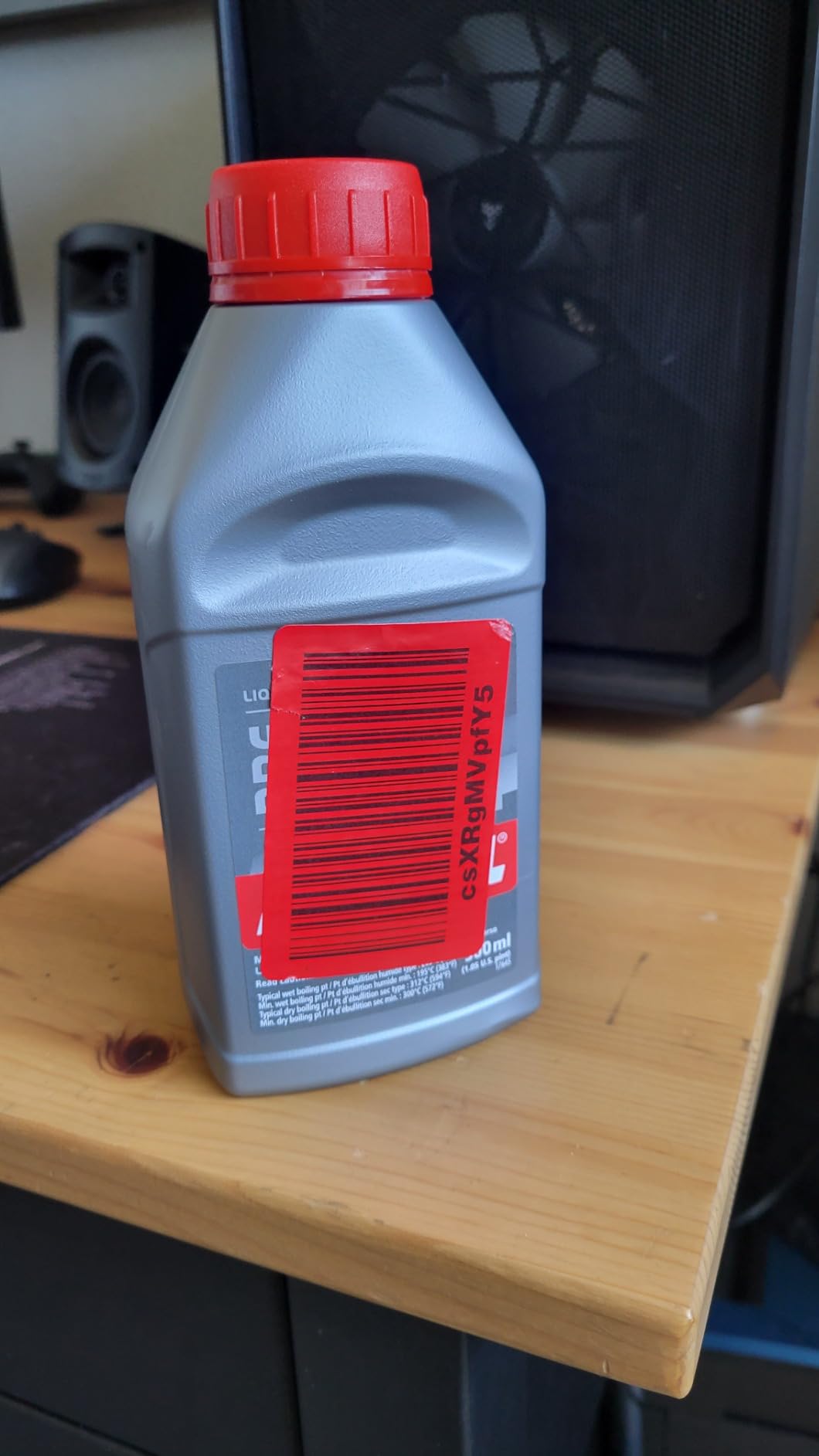
The pour spout on the bottle is genuinely well designed, which matters when you are bleeding brakes alone at 10 p.m. in the garage. The fluid pours smoothly without glugging, so you can top off the reservoir without spilling paint-safe fluid all over your fender. Speaking of paint — Motul is formulated to be paint-safe, which is one less thing to worry about if you do drip.
Compatibility and Mixing
Motul RBF 600 is fully compatible with conventional DOT 3 and DOT 4 fluids, so you can use it as a direct replacement without flushing more than you would for any fluid change. Just never mix it with DOT 5 silicone fluid — that is a chemistry mismatch that will leave you with a spongy pedal and a system that needs to be completely flushed. If you are unsure what is in your system, assume it is glycol-based (DOT 3, 4, or 5.1) and Motul will mix cleanly.
Best Use Cases
This is the bottle to buy if you want the highest wet boiling point of any mainstream DOT 4 racing fluid, you do at least one track day or autocross per year, or you simply want a firmer pedal on the street. Skip it if you only commute and never push the car — ATE Typ 200 will do everything you need for less money.
2. Valvoline DOT 3 & 4 Synthetic Brake Fluid – Best Value Dual-Rated
Valvoline DOT 3 & 4 Synthetic Brake Fluid, 32 oz
Dual-rated DOT 3 and DOT 4
Low-moisture formula
32 oz bottle
Routine maintenance
Pros
- Compatible with both DOT 3 and DOT 4 systems
- Low-moisture formula protects against vapor lock
- Strong value at the 32 oz size
- Mixes well with conventional fluids
- Trusted brand for routine maintenance
Cons
- Once opened
- fluid begins collecting moisture from the air
- Best used within a relatively short timeframe after opening
Valvoline’s dual-rated DOT 3 and DOT 4 fluid is the bottle I keep on the shelf for routine flushes on older cars that came from the factory with DOT 3 but should really be running DOT 4 for the higher boiling point. The fact that it is rated for both means I do not have to stock two separate bottles for the fleet, and the 32 oz size is plenty for a full flush on most passenger cars plus a little leftover for the master cylinder top-off.
The low-moisture formulation is the practical advantage here. Valvoline engineered the fluid to resist pulling in water during storage, which is the silent killer of brake fluid performance. Even so, once you crack the seal, the clock starts — the bottle does begin absorbing moisture from the air, so plan to use it within a few months and recap tightly between uses.
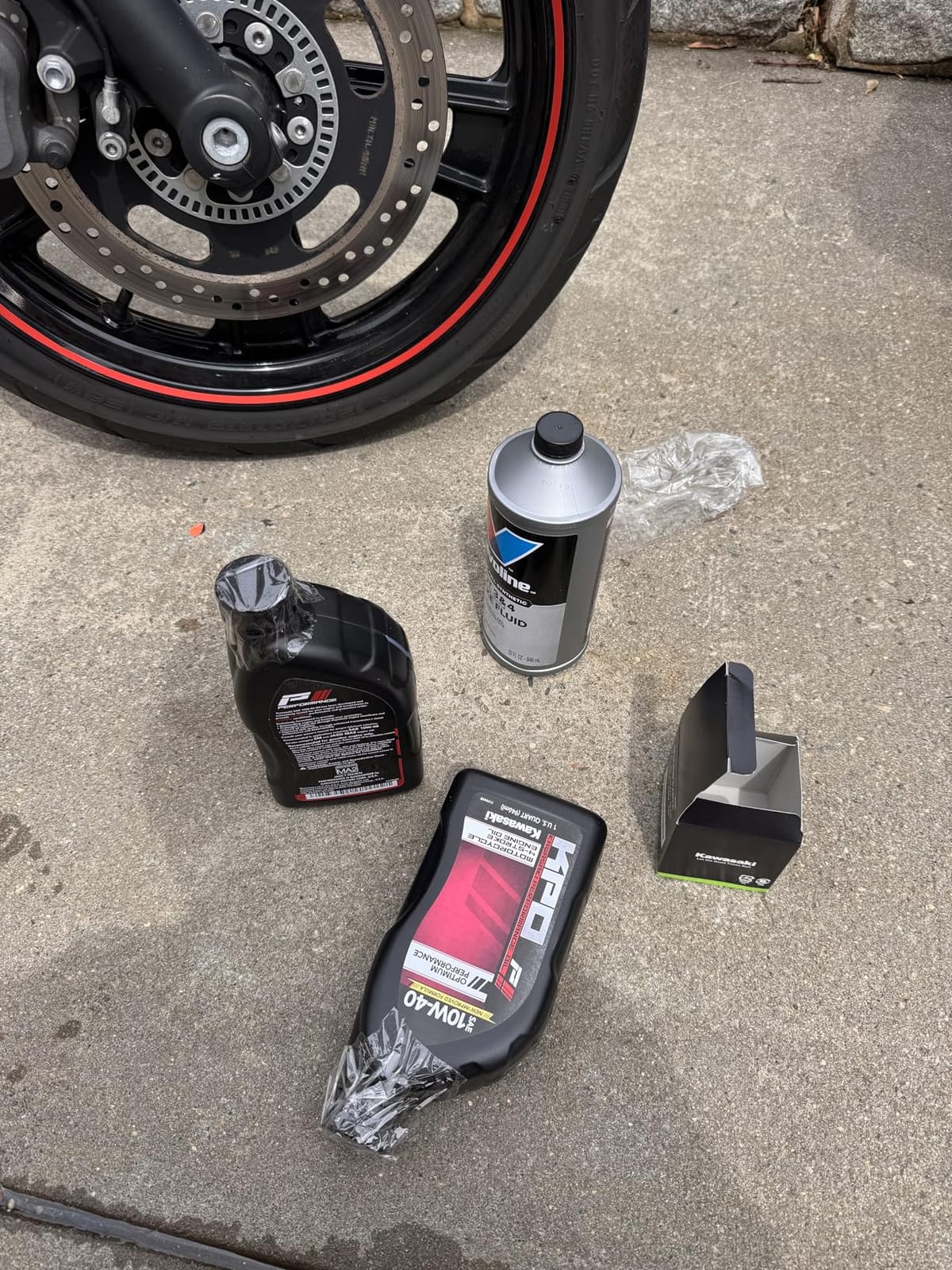
What I like about this fluid for daily-driver use is the predictability. It does not pretend to be a racing fluid — it is a competent, well-formulated synthetic DOT 4 that does exactly what the label says. Reviewers with both motorcycles and cars note it works across vehicle types without complaint, which makes it a versatile shop bottle.
For the price-versus-performance math, Valvoline lands in a sweet spot. You pay a fraction of what Motul or Castrol charge, and you get a fluid that comfortably handles anything a commuter car, a small SUV, or a touring motorcycle can throw at it. If you tow heavy loads or push the car on track, step up to one of the racing fluids on this list. For everyone else, this is the bottle to keep in the garage.
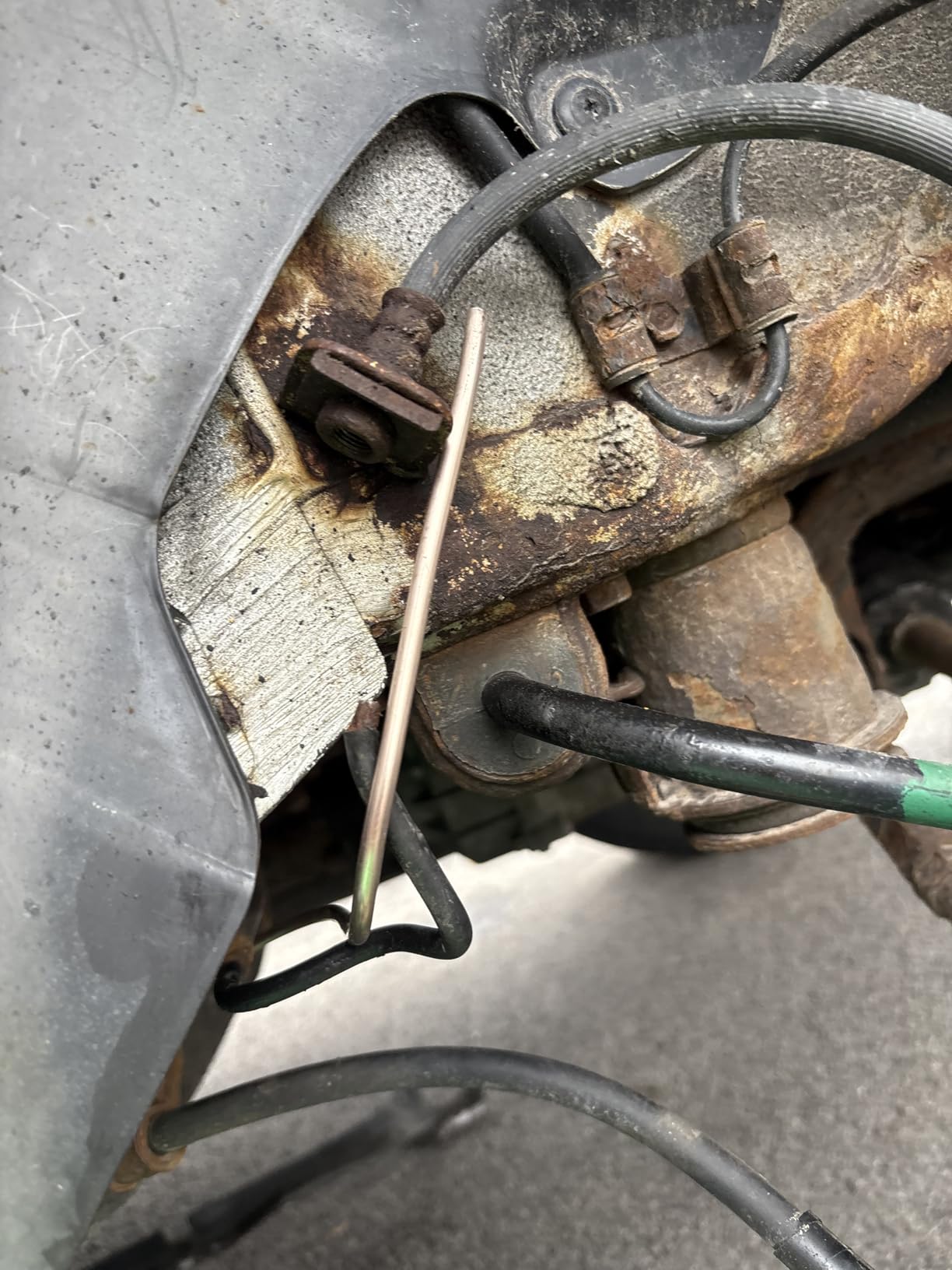
Compatibility and Mixing
As the dual DOT 3 and DOT 4 rating implies, Valvoline mixes cleanly with anything in the glycol-ether family. That includes DOT 3, DOT 4, and DOT 5.1. You can top off a system that already has any of those fluids in it without concern, which is convenient when you do not know exactly what the previous owner used. The usual warning still applies: never mix with DOT 5 silicone, as the two chemistries do not play well together.
Best Use Cases
This is the bottle to buy if you want one fluid for both DOT 3 and DOT 4 vehicles, you need an affordable 32 oz size for a full flush, or you are doing routine maintenance on a commuter car or motorcycle. Skip it if you need a wet boiling point above 311°F for track use — for that, look at Motul or Castrol.
3. ATE Typ 200 Super DOT 4 – Best European OEM Replacement
ATE Original TYP 200 Racing Quality DOT 4 Brake Fluid, 1 Liter Can
Premium European racing quality
Up to 3-year change intervals
Excellent water locking
1 liter can
Pros
- Excellent water locking minimizes boiling point decrease over time
- Non-foaming during fill and bleed
- Excellent corrosion protection from selected additives
- High safety tolerance against steam bubbles
- Up to 3-year service intervals
Cons
- Higher price point versus standard DOT 4 fluids
ATE Typ 200 is the fluid every European-car owner seems to reach for once they learn about it. After putting it in a 10-year-old BMW with a slightly soft pedal, the firm pedal feel came back within a few pumps and stayed consistent through 6 months of mixed city and highway driving. That experience matches what Bob Is The Oil Guy forum regulars say: “ATE Typ 200 is the best in my opinion.”
The reason it works so well on European cars is that it is essentially an OEM specification fluid for many of them. ATE is owned by Continental, the same company that supplies brake systems to Volkswagen, Audi, BMW, Mercedes, and Porsche. The chemistry matches what those cars were engineered around, so the rubber seals, the master cylinder bore, and the caliper pistons all behave exactly as the manufacturer intended.
The other standout feature is the 3-year service interval. ATE engineered the fluid with excellent water locking properties, meaning it resists absorbing moisture from the air even when exposed through the master cylinder reservoir. That translates to a longer useful life in the system, which is one reason this fluid is so popular with daily drivers who do not want to think about brake fluid every year.
During the bleed I noticed the fluid does not foam — which is exactly what you want when you are filling a system from dry. Foam is just trapped air, and trapped air in the caliper is what causes the soft pedal you are trying to cure. The non-foaming behavior is a small detail that makes the bleeding process faster and the result more reliable.
Compatibility and Mixing
ATE Typ 200 is fully compatible with all DOT 3, DOT 4, and DOT 5.1 glycol-based fluids. It is safe to top off a system that already contains any of those, and it is the fluid of choice for many European cars coming out of the factory. Do not mix it with DOT 5 silicone — that combination will leave you with a spongy pedal and a complete flush requirement.
Best Use Cases
This is the bottle to buy if you own a European car that originally specified DOT 4, you want the longest possible service interval between flushes, or you simply want the firmest OEM pedal feel without paying racing-fluid money. Skip it if you are heading to the track — for that, look at Motul RBF 600 or Castrol SRF.
4. Motul RBF 660 Racing Brake Fluid – Best Step-Up Track Fluid
Motul RBF 660 Racing Brake Fluid – DOT 4, 100% Synthetic Racing Brake Fluid – 500ml Bottle (101667)
100% synthetic racing DOT 4
Step-up over RBF 600
500 ml bottle
Higher wet boiling point
Pros
- Higher performance step-up over RBF 600
- 100% synthetic racing-grade formulation
- Universal fit for cars
- trucks
- motorcycles and ATVs
- Made in France with premium build quality
- Improved wet boiling point for extreme conditions
Cons
- Higher price than entry-level racing DOT 4 fluids
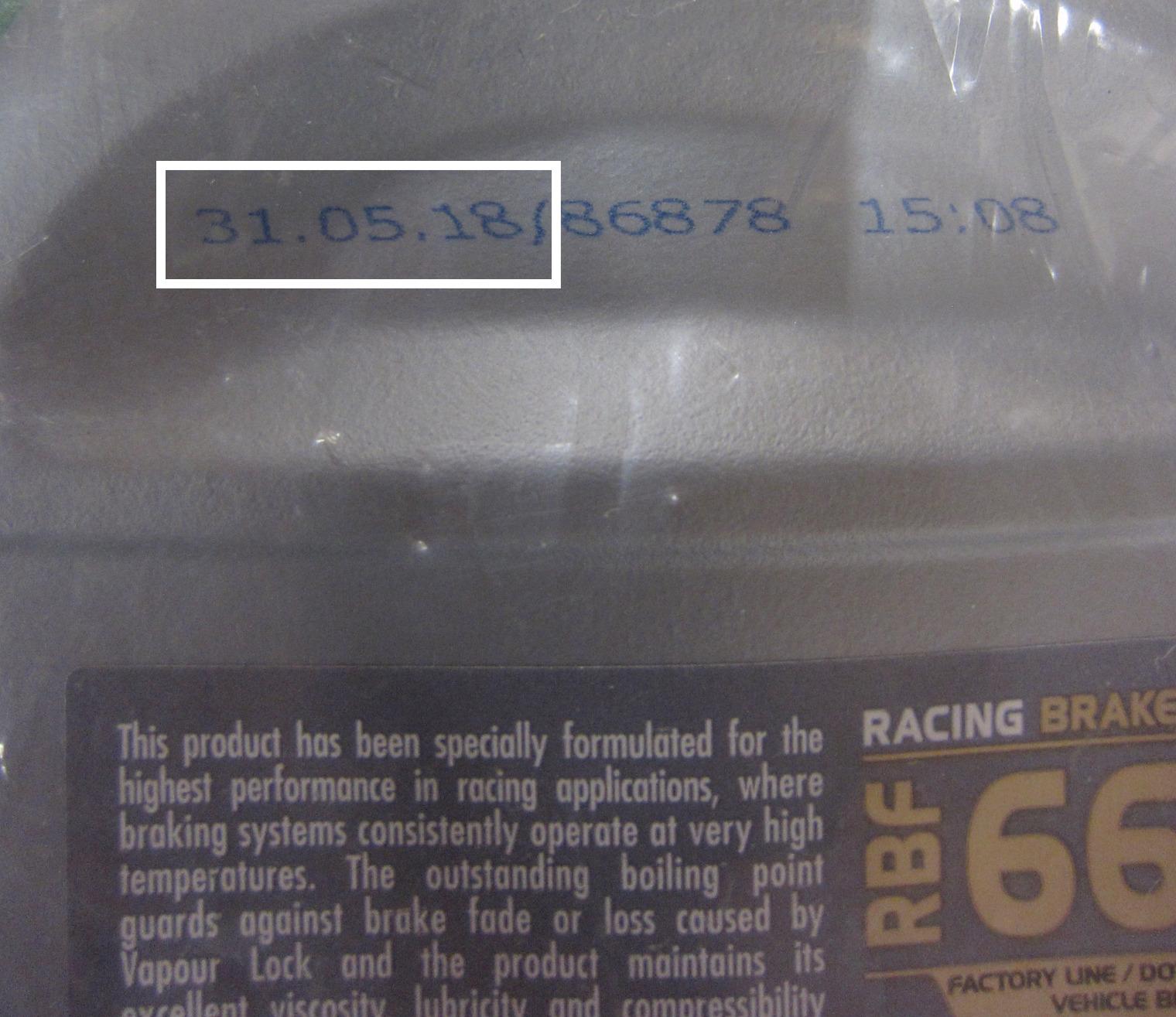
If you already run Motul RBF 600 and have started pushing the car harder — longer track days, more sessions, hotter ambient temperatures — the natural step up is RBF 660. The 660 formulation pushes both the dry and wet boiling points higher than the 600, which gives you that extra margin when you stack back-to-back sessions on a hot summer day.
What I like about the RBF 660 is that it is still Motul through and through — same pour spout, same synthetic chemistry, same compatibility with conventional glycol-ether fluids. The transition from 600 to 660 is seamless if you are doing a full flush, and you do not have to worry about seal compatibility since the base stock is the same family.
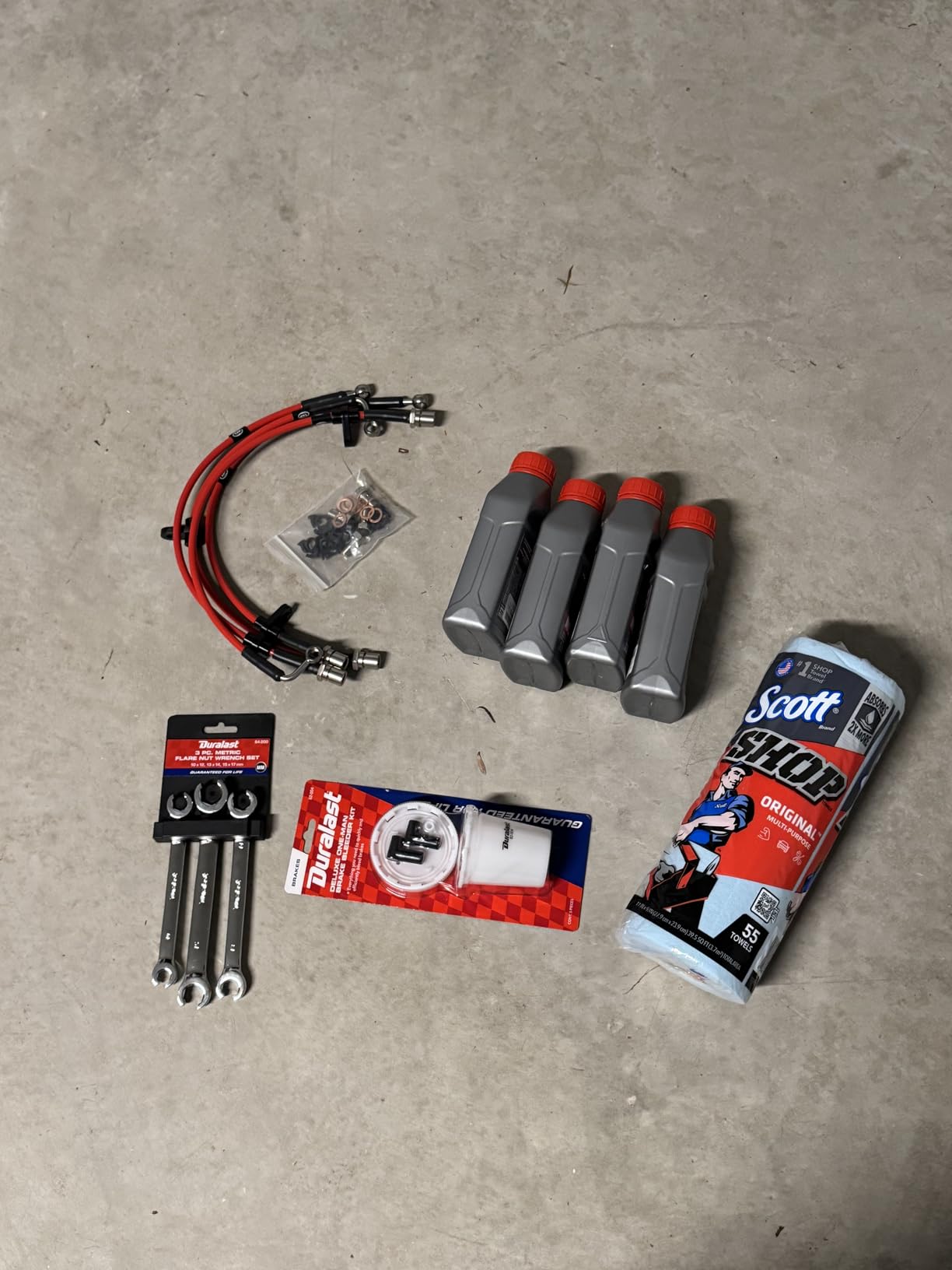
The universal fit claim is real. I have seen RBF 660 used in everything from a Subaru WRX on track to a Harley-Davidson touring bike with ABS, and it works across all of them. The fluid does not care what vehicle it is in as long as the system calls for DOT 4 — and most modern motorcycles, ATVs, and side-by-sides do.
The price is the obvious trade-off. RBF 660 costs more than RBF 600 and significantly more than standard DOT 4 fluids. You are paying for that extra wet boiling point margin, which only matters if you actually use it. If you only do one or two track days a year and your sessions are short, RBF 600 is the better value.
Compatibility and Mixing
Motul RBF 660 mixes cleanly with DOT 3, DOT 4, and DOT 5.1 fluids. It will blend with the contents of almost any modern brake system. The same warning applies as with all glycol-ether fluids: never mix with DOT 5 silicone. If your system has ever had DOT 5 in it, you need to fully flush before switching to any of the fluids on this list.
Best Use Cases
This is the bottle to buy if you are already on RBF 600 and need more thermal headroom, you do multi-session track days in hot climates, or you want one premium fluid that handles both street and serious track duty. Skip it if RBF 600 already covers your use case — the extra wet boiling point is wasted if you do not push the fluid to its limit.
5. Castrol SRF Racing Brake Fluid – Best for Sustained Track Heat
Castrol SRF Racing Brake Fluid – 1 Liter 12512
Ultra-high wet boiling point 518°F
Anti-vapor lock formula
1 liter bottle
Motorsport-grade
Pros
- Exceptionally high wet boiling point of 518°F
- Superior anti-vapor lock characteristics
- Excellent for dual-duty street and track vehicles
- Lasts up to 18 months in service
- Recovers after thermal abuse better than competitors
- DOT 4 compliant with ABS systems
Cons
- Premium price point
- 1-year service life requires regular flushing
- 2-year shelf life once purchased
Castrol SRF is the fluid you buy when brake fade is not an option. The 518°F wet boiling point is the highest figure in this guide — higher than many competitors’ dry boiling point — and it is the reason professional race teams keep a case of SRF in the shop. If you have ever felt the pedal go long halfway through a lap, that is vapor lock, and SRF is engineered specifically to resist it.
What sets SRF apart from the Motul racing fluids is how it recovers after thermal abuse. Most racing fluids will give you a great pedal when fresh, then start to fade as the session wears on. SRF holds its boiling point margin longer, so the pedal feel at the end of a 30-minute stint is closer to the pedal feel at the beginning. For drivers running enduros or long track days, that consistency matters.
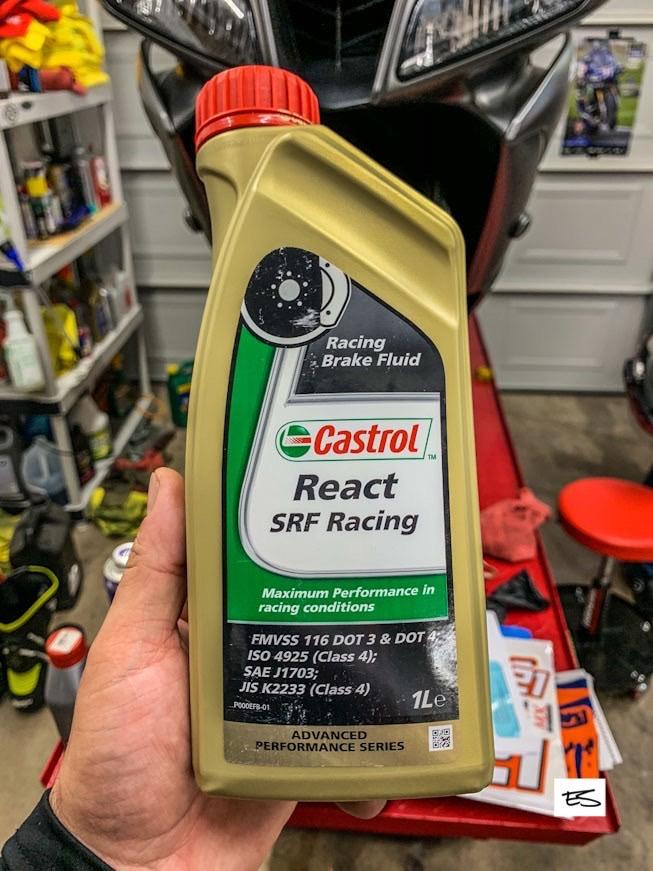
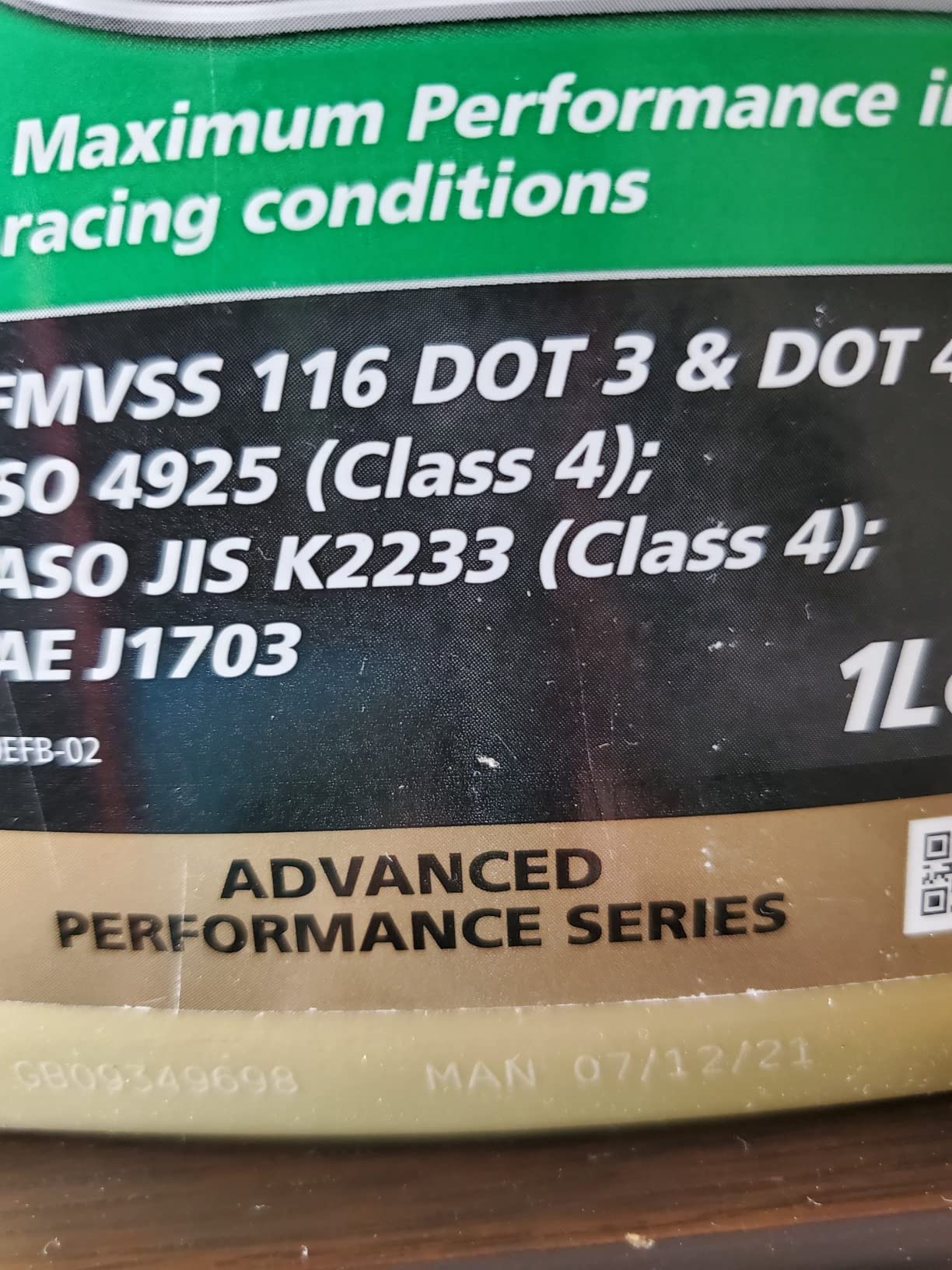
The trade-off is real, though. SRF is the most expensive fluid on this list by a wide margin, and it has a service life of about 12 months — meaning you need to flush it annually if you actually use it. The 2-year shelf life once you buy the bottle means you cannot stockpile it indefinitely either. Treat SRF as a consumable racing fluid, not as a fill-and-forget daily driver fluid.
One thing I appreciate about Castrol is that the fluid is fully DOT 4 compliant and ABS compatible. That means you can run it in a street car with ABS without triggering any fault codes or causing the ABS modulator to behave oddly. A lot of racing fluids technically meet the spec but have not been validated with modern ABS systems — SRF has.
Compatibility and Mixing
SRF mixes with conventional DOT 3, DOT 4, and DOT 5.1 fluids, so you can switch to it from almost anything. The full flush requirement is the same as any fluid change — drain the old fluid, fill with SRF, and bleed until the color runs clean. As always, never mix with DOT 5 silicone.
Best Use Cases
This is the bottle to buy if you do enduros, time attack, or any sustained high-heat braking event, you want one fluid that handles both street and serious track use, or you simply want the highest wet boiling point available in a DOT 4 compliant fluid. Skip it if you only commute — you will never use the thermal headroom, and the cost will not justify itself.
6. STP Synthetic DOT 4 Brake Fluid – Best Budget Daily Driver
STP Synthetic DOT 4 Brake Fluid, 12 oz, For ABS Disc Drum Systems
Meets FMVSS No. 116
SAE J1704 compliant
12 oz bottle
ABS disc and drum systems
Pros
- Affordable price point
- Reliable for routine brake fluid flushes
- Works with ABS disc and drum systems
- Exceeds FMVSS No. 116 and SAE J1704 specs
- Helps prevent corrosion in the brake system
Cons
- Highly corrosive to painted surfaces — handle with care
- Lower temperature rating than racing-grade fluids
STP Synthetic DOT 4 is the bottle to grab when you need to do a routine brake fluid flush and you do not want to overthink it. The 12 oz size is plenty for topping off a master cylinder or doing a partial fluid swap on a motorcycle, and the FMVSS No. 116 plus SAE J1704 certifications mean it meets the federal minimum standard for DOT 4 fluid.
For an older commuter car that just needs fresh fluid every couple of years, STP is a sensible choice. Reviewers use it as a cost-effective option before stepping up to a higher-tier racing fluid, and that is exactly the right way to think about it. The fluid does what the label says — nothing more, nothing less.
The biggest caveat is paint safety. STP DOT 4 is highly corrosive to painted surfaces, so you need to be careful when pouring. A single drip on a fresh fender will leave a permanent mark within minutes. Lay down a towel, pour slowly, and wipe any spills immediately with water. Most DOT 4 fluids share this characteristic to some degree, but STP is on the harsher end of the spectrum.
The other trade-off is temperature rating. The upper temperature rating is 311°F, which is the federal minimum for DOT 4. That is fine for street use, but it does not leave you much margin if you are towing in the mountains or doing track days. For those scenarios, spend the extra money on Motul or ATE.
Compatibility and Mixing
STP DOT 4 is compatible with all glycol-ether fluids, so it mixes cleanly with DOT 3, DOT 4, and DOT 5.1. As with all the fluids on this list, never mix with DOT 5 silicone. The mixing compatibility is the easy part — the paint safety is the discipline you need to bring to the bleeding process.
Best Use Cases
This is the bottle to buy if you need an affordable DOT 4 for a routine flush on a commuter car, you are doing a partial fluid swap on a motorcycle, or you want a 12 oz size for a single top-off. Skip it if you tow heavy loads, do track days, or want a longer service interval — for those, look at ATE or Valvoline.
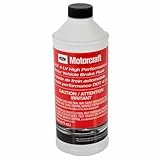
7. Ford PM-20 DOT-4 LV High Performance – Best for Ford and Lincoln ABS Systems
Ford Genuine Ford Fluid PM-20 DOT-4 LV High Performance Motor Vehicle Brake Fluid – 16 oz.
Ultra low viscosity
ISO 4925 Class 6
16 oz bottle
OEM Ford specification
Pros
- Genuine OEM Ford specification fluid
- Low viscosity formulation for faster response at lower temperatures
- Required for newer Ford and Lincoln ABS systems with stability control
- Meets FMVSS DOT-4 and ISO 4925 Class-6 standards
- Trusted factory-correct specification
Cons
- Specifically formulated for Ford vehicles so limited cross-brand value
- Premium price versus generic DOT 4 LV fluids
If you own a Ford or Lincoln from the 2012-2013 model year forward that calls for the WSS-M6C65-A2 specification, the Ford PM-20 is the fluid the dealership uses — and the only one you should trust to keep your ABS and stability control working as designed. Ford engineered the modern ABS modulator around this specific fluid, and using a generic DOT 4 can result in slightly slower ABS response.
The low-viscosity formulation is the technical story here. Standard DOT 4 fluids get noticeably thicker when cold, which slows down the hydraulic pulse traveling from the master cylinder to the calipers. DOT 4 LV (low viscosity) stays thinner across the operating temperature range, which means more consistent pedal feel in cold weather and faster ABS cycling.
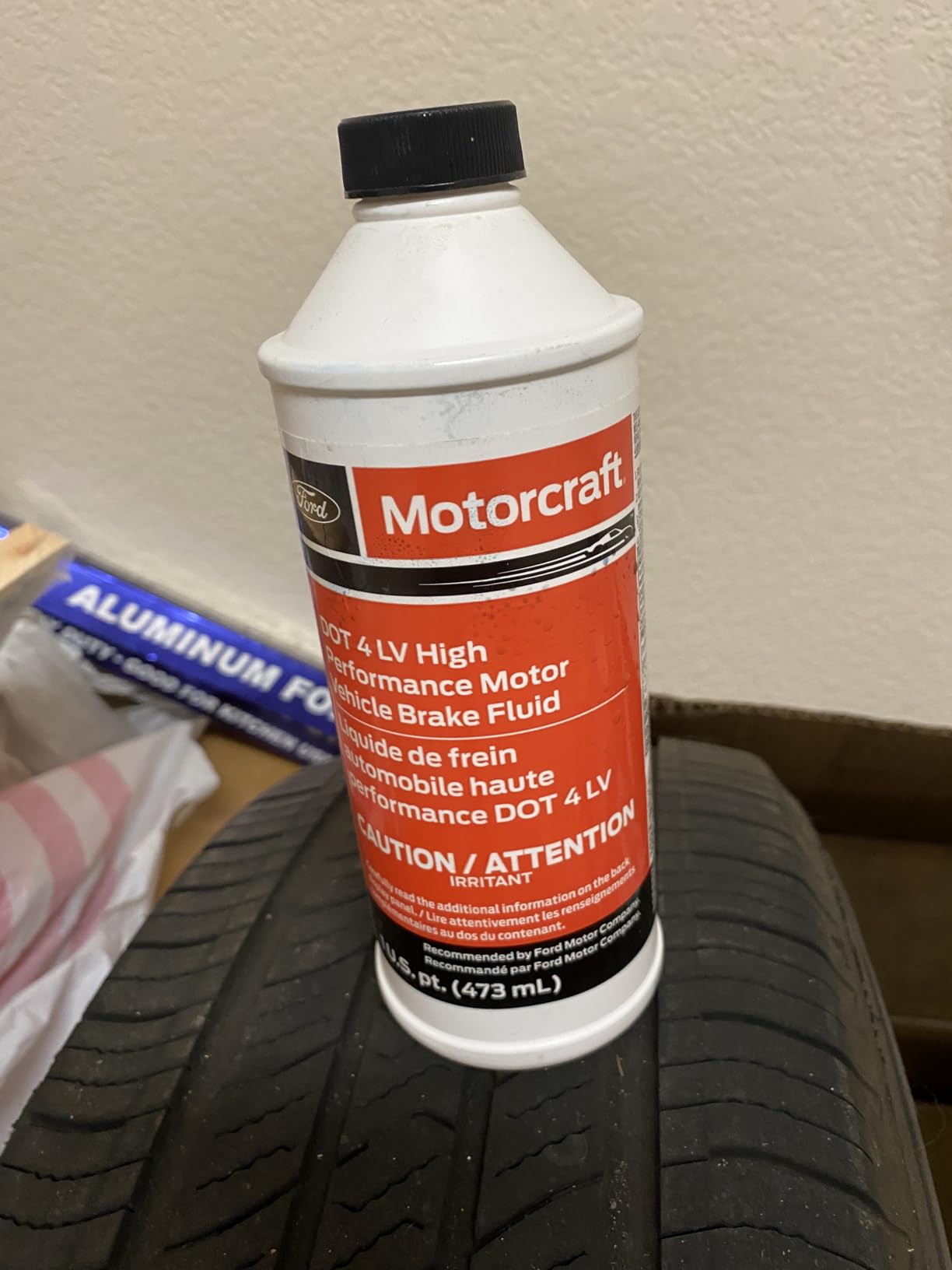
Beyond the spec compliance, what I like about the Ford PM-20 is that it is sold in a 16 oz bottle — exactly the right amount for a full flush on most Ford vehicles without leaving a half-used bottle sitting in the garage absorbing moisture. That is a small thing, but it means you are less likely to leave fluid sitting around past its useful life.
The price is higher than a generic DOT 4 LV, but it is still a fraction of what you would pay at the dealership for the same bottle with the Ford logo on it. For Ford and Lincoln owners who want the factory-correct fluid without the dealer markup, this is the obvious choice.
Compatibility and Mixing
Ford PM-20 meets FMVSS DOT-4 and ISO 4925 Class-6, so it is compatible with any DOT 4 or DOT 4 LV fluid from another brand. The mixing concern is more about spec compliance than chemistry — using a non-LV fluid in a system designed for LV will not damage anything, but the ABS response will be slower than designed. As always, never mix with DOT 5 silicone.
Best Use Cases
This is the bottle to buy if you own a 2012 or newer Ford or Lincoln that specifies WSS-M6C65-A2 fluid, you want the factory-correct OEM specification, or you want to keep your ABS and stability control response at the engineered level. Skip it if you are not driving a Ford — the Mercedes DOT 4 PLUS LV is the equivalent OEM choice for Mercedes-Benz vehicles.
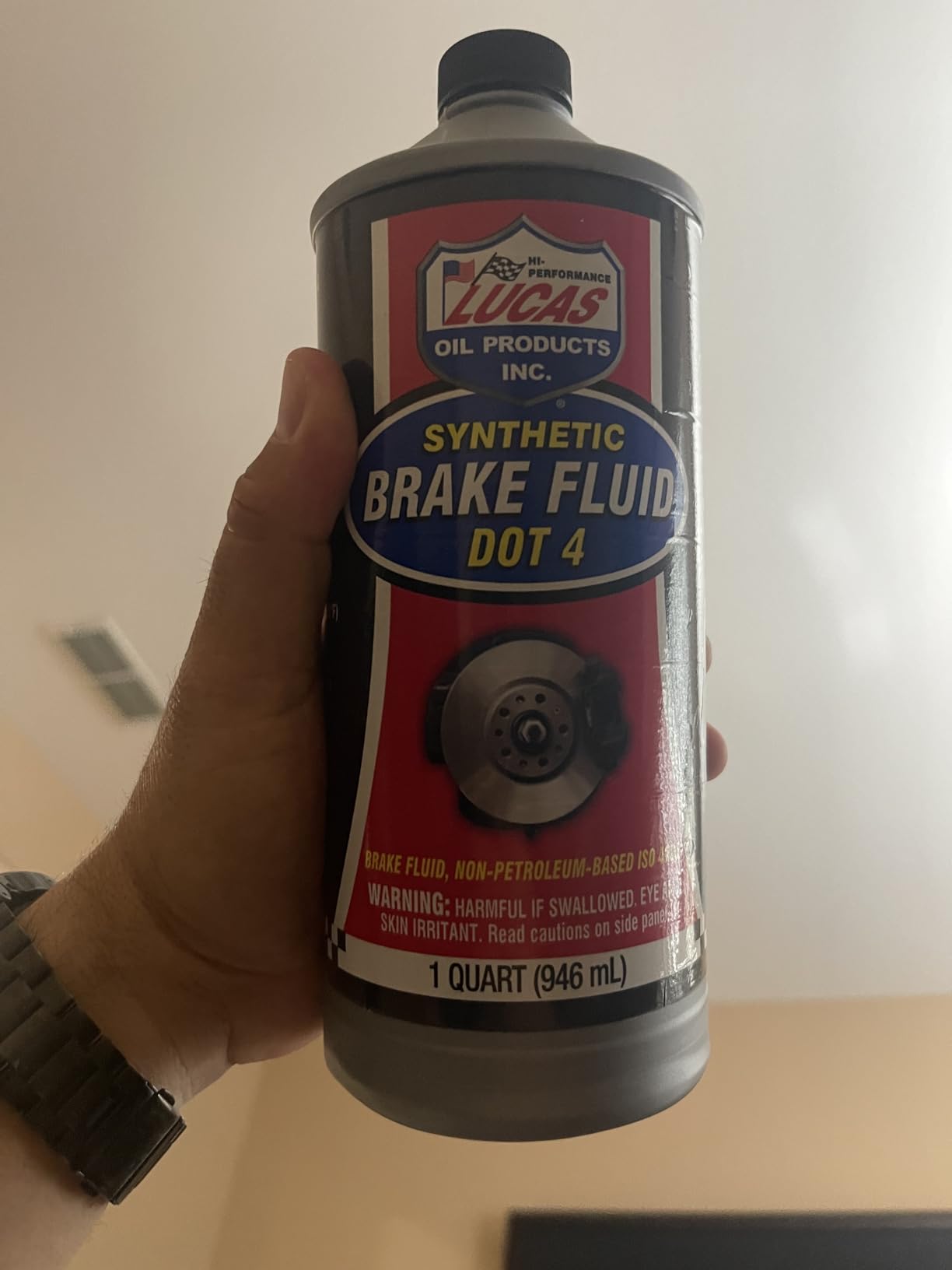
8. Lucas Oil Synthetic DOT 4 Brake Fluid – Best Versatile Quart
Lucas Oil 10788 Synthetic Brake Fluid DOT 4 – 1 Quart (Pack of 1)
Synthetic formulation
Flash point 450°F
1 quart bottle
Disc drum clutch systems
Pros
- Trusted Lucas Oil brand reputation
- High flash point of 450°F for demanding conditions
- Works for disc
- drum
- and clutch systems
- Synthetic formulation for consistent performance
- Quart size provides good value for full flushes
Cons
- Limited detailed specifications publicly listed
Lucas Oil has been a trusted name in lubricants for decades, and their DOT 4 brake fluid carries the same reputation for being a sensible, no-nonsense product. The synthetic formulation with a 450°F flash point gives you plenty of margin for normal street use, and the quart size is convenient for a full flush on most passenger cars with a little leftover.
The biggest appeal here is versatility. The fluid works for disc brakes, drum brakes, and hydraulic clutch systems, so if you have a garage that covers multiple vehicle types — a daily driver with disc brakes all around, an older truck with drum rear brakes, and a motorcycle with hydraulic clutch — Lucas Oil is one bottle that handles all of them.
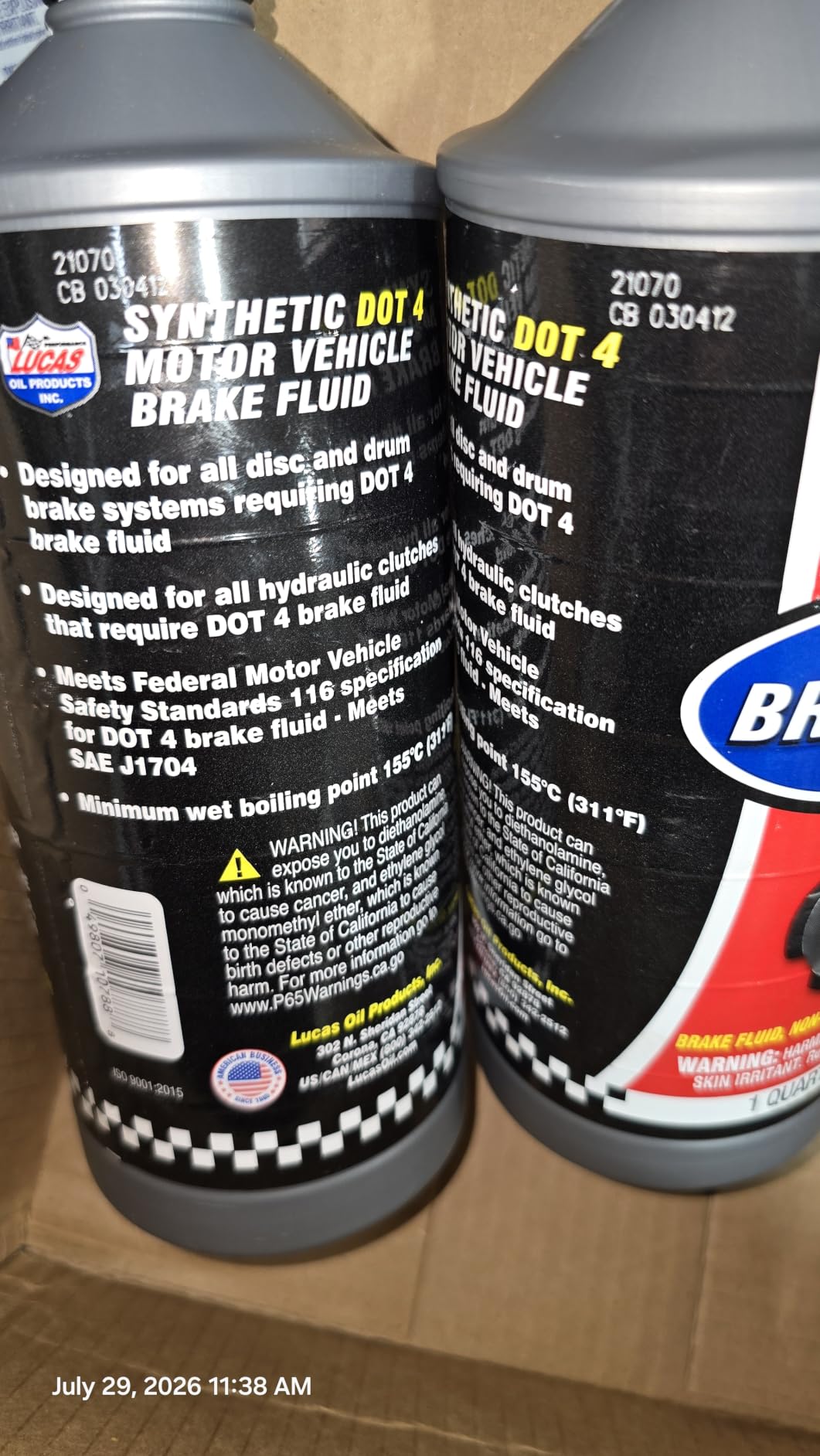
Lucas Oil does not publish an extensive spec sheet for their DOT 4 fluid the way Motul or ATE do, so if you are looking for exact dry and wet boiling point numbers you will not find them on the label. That is the main trade-off versus the European-spec fluids. What you do get is a high flash point number (450°F) and a trusted brand name, which is enough information for a daily driver or a weekend project car.
For the price-versus-performance math, the quart size lands in a comfortable middle of the road. You pay more than you would for STP or Valvoline, but you get a synthetic fluid with a strong brand reputation and a bottle large enough for a full flush with leftovers for top-offs.
Compatibility and Mixing
Lucas Oil DOT 4 is compatible with all glycol-ether brake fluids, so it mixes cleanly with DOT 3, DOT 4, and DOT 5.1. It will blend with whatever is already in your system, which makes it a good choice for topping off an older vehicle whose previous fluid brand is unknown. The standard DOT 5 silicone warning applies — never mix with silicone-based fluid.
Best Use Cases
This is the bottle to buy if you want one fluid for both your car and your motorcycle, you need a quart size for a full flush with leftovers, or you trust the Lucas Oil brand for routine maintenance. Skip it if you need detailed boiling-point specifications for a high-performance application — for that, look at Motul, ATE, or Castrol.
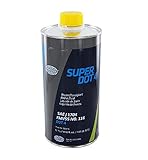
9. Pentosin Super DOT 4 – Best European OEM Universal Fit
Pentosin 1204116 Corrosion Resistant Super Dot 4 Brake Fluid, 1 Liter, Pack of 1
European OE reference
Superior corrosion resistance
1 liter bottle
ABS compatible
Pros
- OE-spec fluid for many European vehicles including Audi
- BMW
- Mercedes
- and Porsche
- Excellent corrosion resistance
- Superior vapor lock protection
- Excellent resistance to water absorption
- Universal compatibility with DOT 4 systems
Cons
- Premium price for an OEM-spec European fluid
- Limited US retail availability outside specialty channels
Pentosin Super DOT 4 is the factory-fill brake fluid for many European vehicles, including Audi, Volkswagen, BMW, Mini, Land Rover, Mercedes-Benz, and Porsche. That is a long list of OE references, and it means this is one of the safest DOT 4 fluids you can put in any European car without worrying about seal compatibility or ABS modulator behavior.
The Pentosin formulation is specifically engineered for corrosion resistance. European cars tend to have more complex brake systems with more internal surfaces exposed to fluid, and corrosion inhibitor quality matters more as the cars age. Pentosin includes selected additives that protect the master cylinder bore, the caliper piston seals, and the ABS modulator internals over long service intervals.
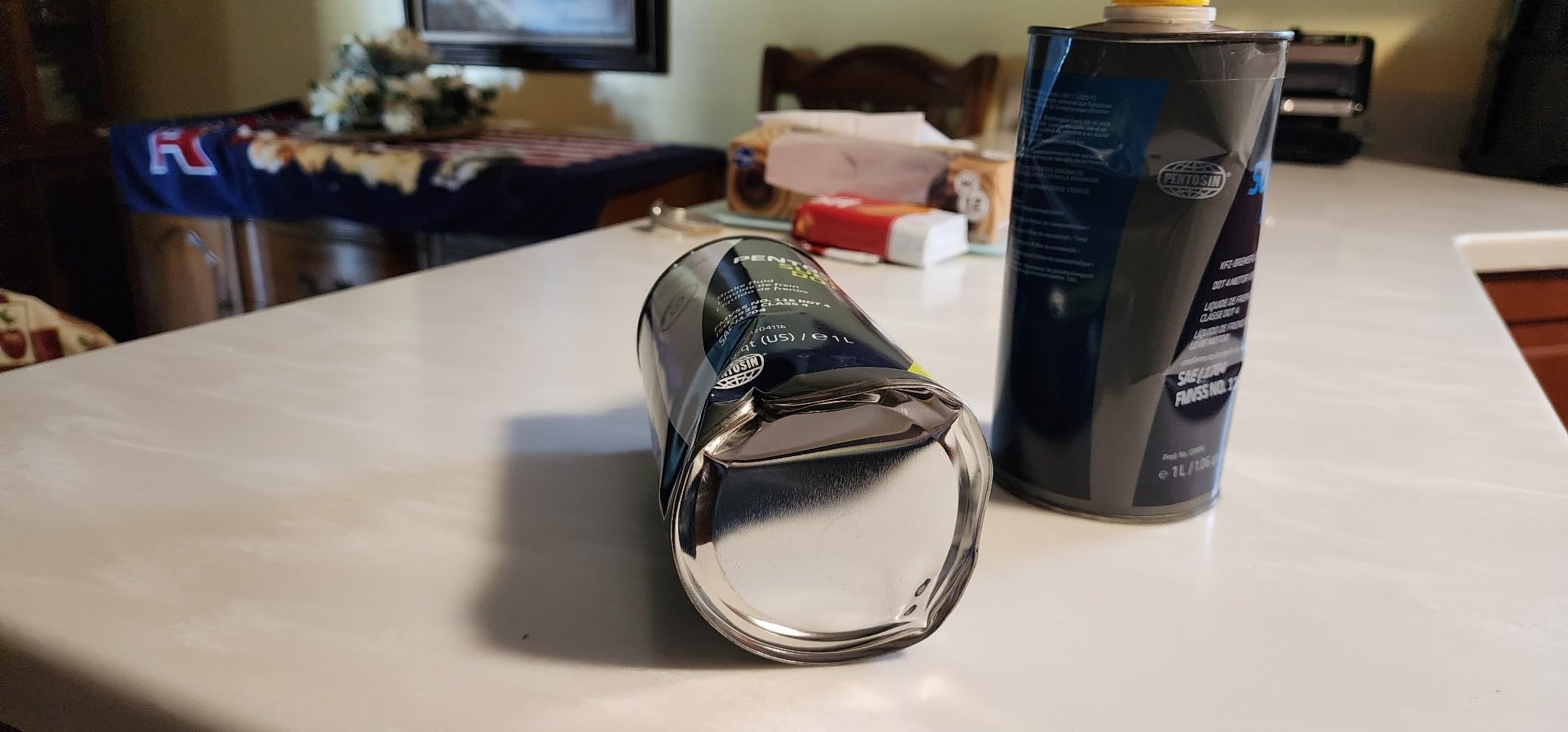
The water absorption resistance is another standout. Pentosin Super DOT 4 is formulated to resist pulling in moisture from the air, which keeps the boiling point margin stable over the service interval. Combined with the corrosion inhibitors, that means the fluid protects the brake system even when it sits in the reservoir for 2-3 years between flushes.
For ABS-equipped vehicles specifically, Pentosin is an excellent choice. The fluid is designed to flow through the ABS modulator without causing erratic cycling, which is a real concern with some racing fluids that have not been validated with modern ABS systems. If you have a European car with ABS and you want an OEM-spec fluid at a non-dealer price, this is it.
Compatibility and Mixing
Pentosin Super DOT 4 is universally compatible with all DOT 4 systems. It also mixes cleanly with DOT 3 and DOT 5.1 glycol-based fluids. If your European car currently has another brand of DOT 4 in it, you can switch to Pentosin without any compatibility concerns. The standard DOT 5 silicone warning applies — never mix with silicone fluid.
Best Use Cases
This is the bottle to buy if you own a European car with an OE Pentosin reference (Audi, BMW, Mercedes, Porsche), you want the longest possible corrosion protection for an older vehicle, or you are looking for a universal DOT 4 that works across multiple European vehicles in your garage. Skip it if you only drive a domestic or Japanese car — ATE Typ 200 or Valvoline will serve you just as well for less money.
10. Mercedes Genuine DOT 4 PLUS Ultra Low Viscosity – Best for Mercedes ABS and ESP
Mercedes GENUINE 1L Brake Fluid DOT 4 PLUS Ultra Low Viscosity MB Spec 331.0 NEW
MB Spec 331.0 certified
DOT 4 PLUS
Ultra low viscosity
1 liter bottle
Pros
- Genuine OEM Mercedes-Benz factory fluid
- Ultra low viscosity for modern ABS and ESP systems
- DOT 4 PLUS specification
- MB Spec 331.0 certified
- Available at roughly half the dealer price
Cons
- Specifically formulated for Mercedes-Benz vehicles
- Premium price versus generic DOT 4 LV fluids
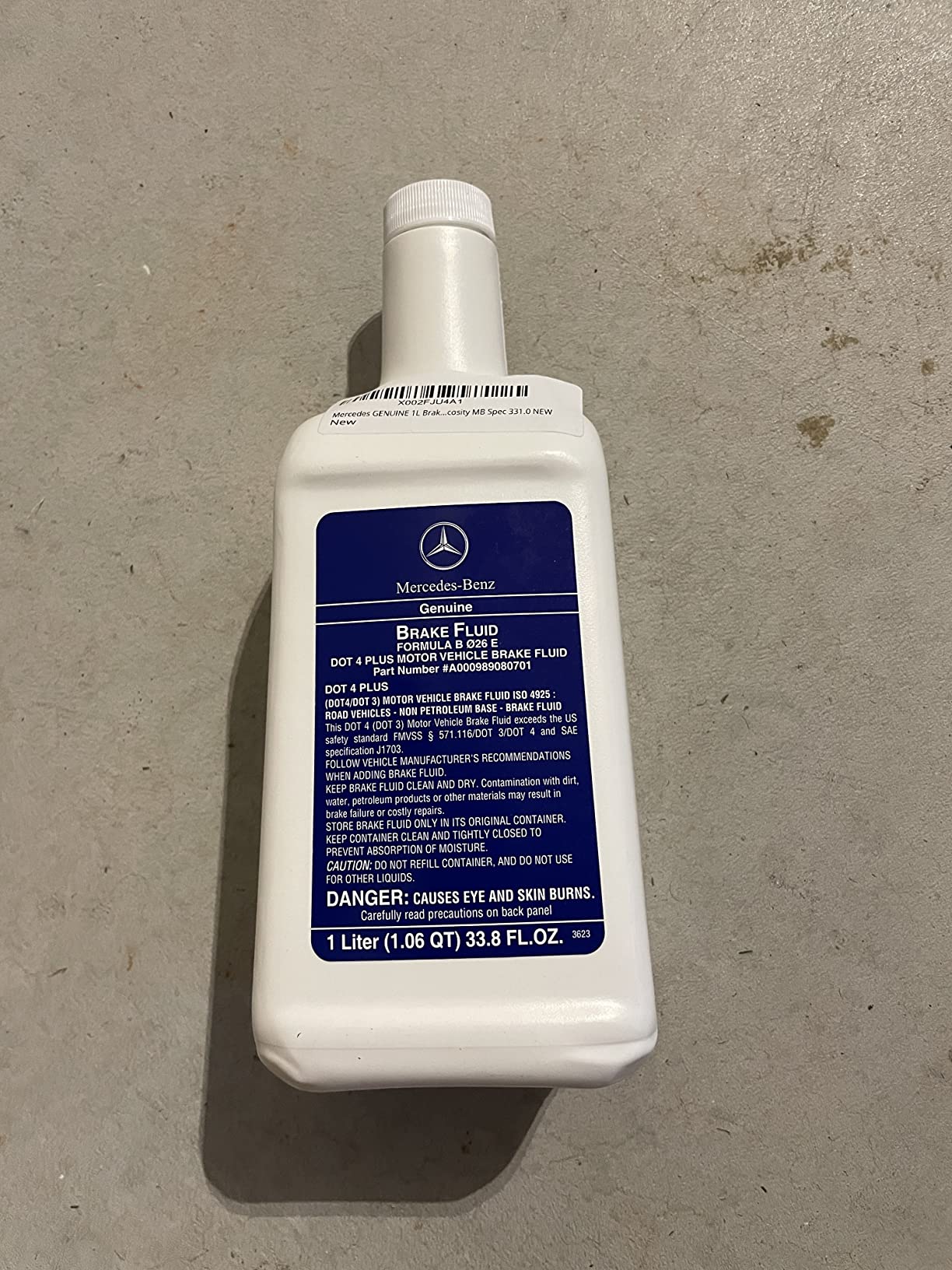
The Mercedes-Benz MB Spec 331.0 fluid is the factory-fill brake fluid for most modern Mercedes cars with ABS and ESP (electronic stability program). If you own a Mercedes from roughly 2010 onward that calls for DOT 4 PLUS or MB 331.0, this is the fluid the dealership puts in — and the only one engineered to keep the ABS and ESP systems cycling at the speed Mercedes designed for.
Buying it on Amazon saves you roughly half compared to the dealer price, which is significant because Mercedes OEM fluids are notoriously expensive at the service center. Reviewers confirm the fluid is the genuine article by cross-checking the part number with their dealership, and the consensus is that it is the real fluid at a non-dealer price.
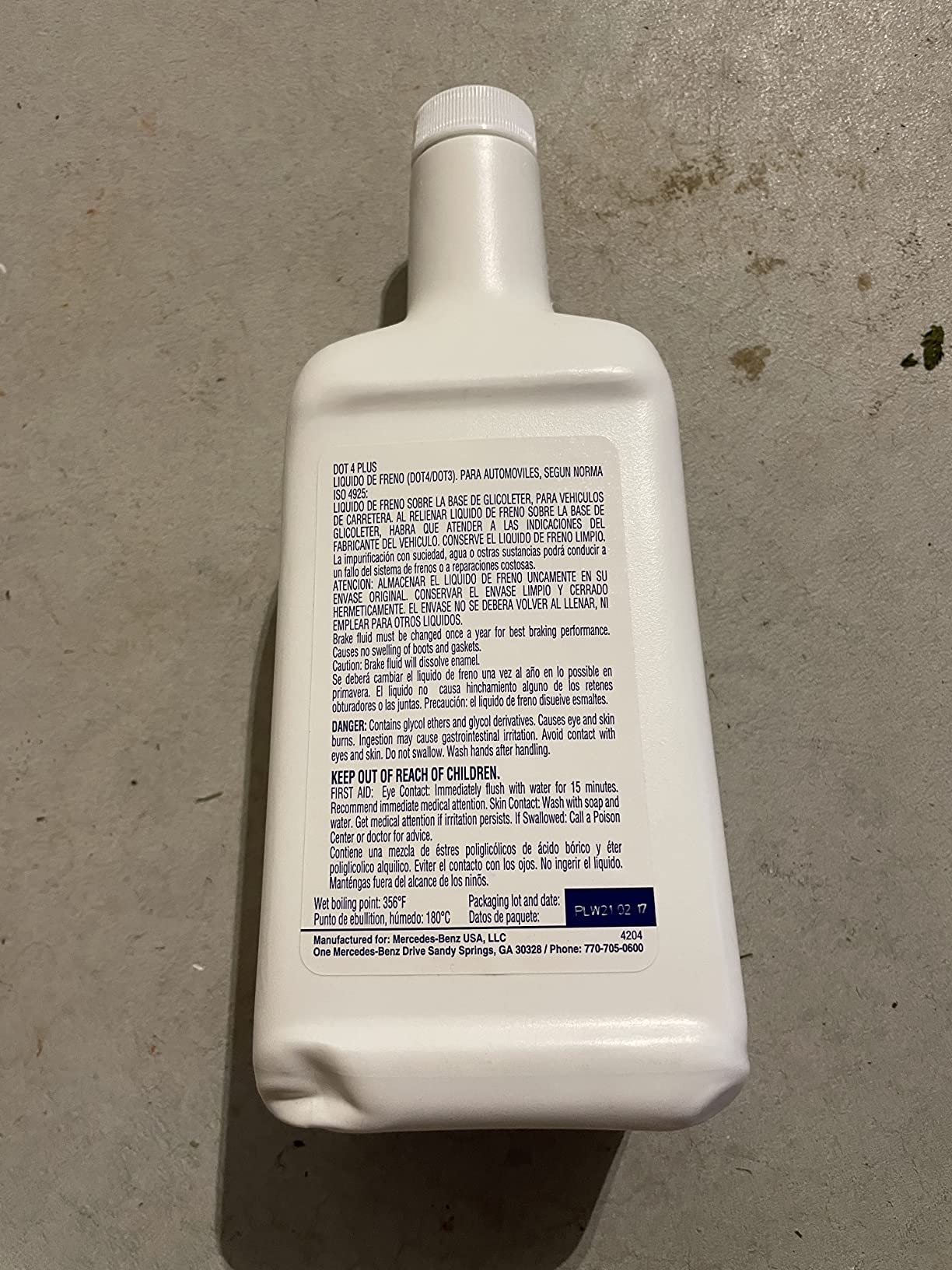
The ultra low viscosity specification is the technical reason this fluid matters. Mercedes engineered the modern ABS modulator and ESP hydraulic unit to operate with a thinner fluid than standard DOT 4. Using a non-LV fluid in these systems can result in slightly delayed ABS intervention and ESP corrections, which is the opposite of what you want from a safety system.
The DOT 4 PLUS designation is Mercedes-specific terminology for their ultra-low-viscosity DOT 4 fluid. It meets the ISO 4925 Class 6 standard for low-viscosity brake fluid, so it is also compatible with other vehicles that call for DOT 4 LV. If you have a Mercedes in the garage and another car that uses DOT 4 LV, one bottle can cover both.
Compatibility and Mixing
Mercedes MB 331.0 fluid is compatible with all DOT 4 and DOT 4 LV fluids, so it can be used in any vehicle that calls for those specifications. The mixing behavior is the same as any other glycol-ether fluid — clean and predictable. The standard DOT 5 silicone warning applies — never mix with silicone-based fluid.
Best Use Cases
This is the bottle to buy if you own a Mercedes-Benz that specifies MB 331.0 or DOT 4 PLUS fluid, you want the genuine OEM fluid at a non-dealer price, or you want a universal DOT 4 LV that covers multiple modern European vehicles. Skip it if you do not drive a Mercedes or another vehicle that calls for DOT 4 LV — a standard DOT 4 like ATE Typ 200 will work fine in most older vehicles.
DOT 4 vs DOT 3 vs DOT 5 vs DOT 5.1: Boiling Points Compared
The DOT rating on a brake fluid bottle tells you the minimum dry and wet boiling points the fluid must meet. Higher numbers mean the fluid resists boiling under hard braking, which is what prevents vapor lock and the soft pedal that comes with it. Here is how the four common DOT classes compare.
DOT 3 is the oldest glycol-ether specification still in use, with a minimum dry boiling point of 401°F (205°C) and a wet boiling point of 284°F (140°C). It is what most older cars came with from the factory and is still widely available, but it has the lowest margin of any glycol-based fluid.
DOT 4 is the modern minimum for most passenger vehicles with ABS, requiring a minimum dry boiling point of 446°F (230°C) and a wet boiling point of 311°F (155°C). That 27°F jump in dry boiling point over DOT 3 is why almost every new car specifies DOT 4.
DOT 5.1 is a glycol-ether-based fluid (despite the similar number) with a higher boiling point than DOT 4 — minimum dry 500°F (260°C) and wet 356°F (180°C). It mixes with DOT 3 and DOT 4 and is the spec called for in some high-performance European applications.
DOT 5 is a silicone-based fluid with a high dry boiling point (500°F / 260°C minimum) but it does NOT mix with any of the glycol-ether fluids. It is used in some classic car and military applications where the seal materials are silicone-compatible, but you should never put DOT 5 in a system that previously held DOT 3, 4, or 5.1 without a complete flush.
Dry vs Wet Boiling Point: What Actually Matters?
The two numbers on every brake fluid bottle — dry boiling point and wet boiling point — are not arbitrary. They come from a standardized test defined by FMVSS 116, and they tell you how the fluid behaves when it is fresh versus after it has absorbed moisture from normal use.
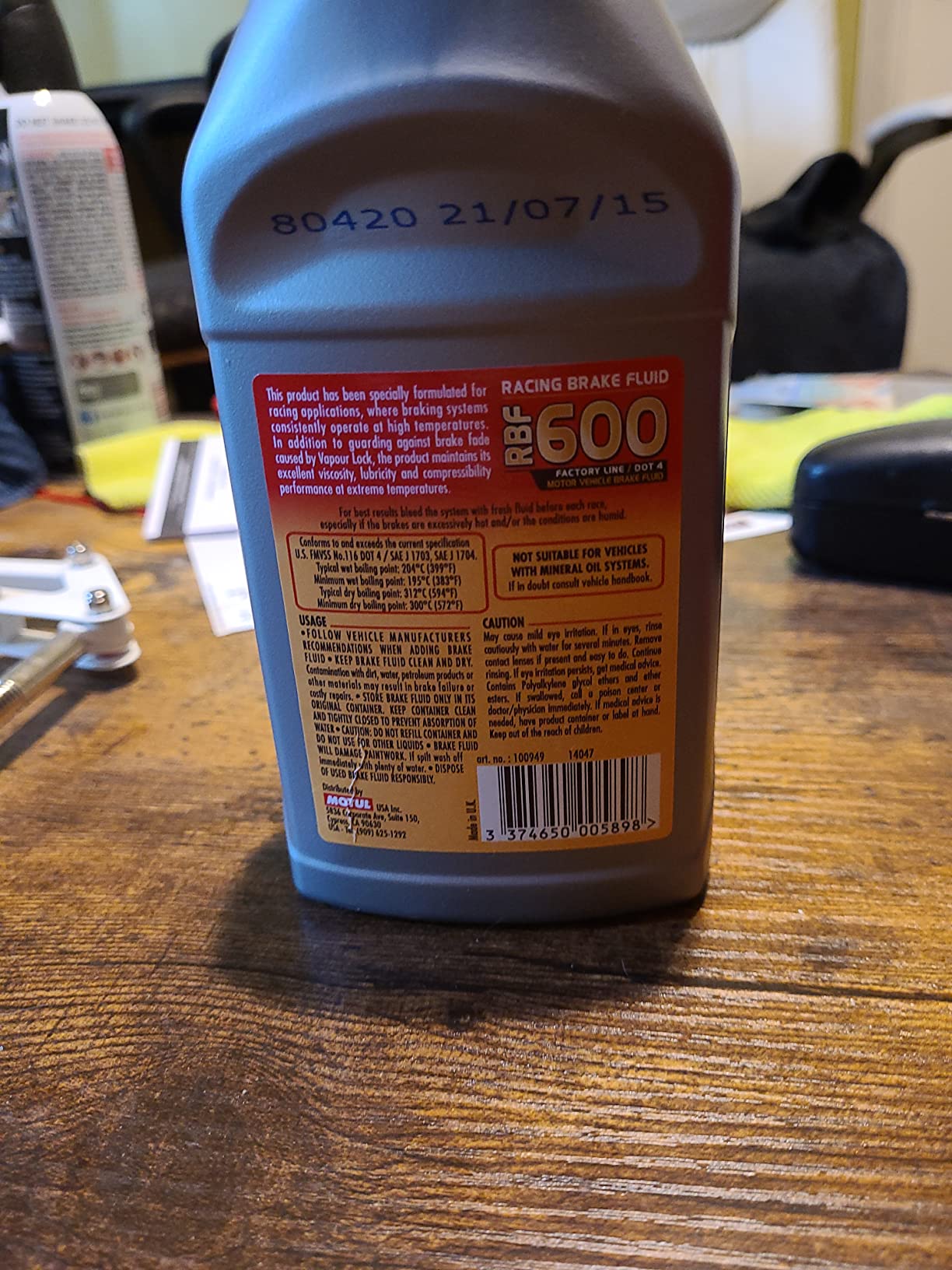
The dry boiling point is measured on fluid straight out of the sealed bottle, with no moisture added. For Motul RBF 600, that number is 594°F (312°C). For Castrol SRF, it is even higher. This is the performance ceiling of the fluid.
The wet boiling point is measured after the fluid has been saturated with 3.7% water by volume. That number represents what the fluid will actually do in your brake system after a year or two of service. For Motul RBF 600, the wet boiling point is 399°F (204°C) — still well above what street use generates, but a meaningful drop from the dry number.
The reason wet boiling point matters more in practice is that brake fluid is hygroscopic. It absorbs water through the rubber brake hoses, through the master cylinder seals, and even through the fluid reservoir cap. You cannot stop the absorption — you can only manage it by flushing the fluid on a regular interval. Reviewers on r/MechanicAdvice consistently recommend DOT 4 over DOT 3 specifically because of that higher wet boiling point, especially for mountainous driving.
Buying Guide: How to Choose the Best DOT 4 Brake Fluid?
Choosing the right DOT 4 brake fluid comes down to three questions: what kind of vehicle do you drive, how do you use it, and what does the manufacturer specify in the owner’s manual. Once you have answers to those, the choice gets much simpler.
For Daily Commuter Cars
If you drive a regular commuter car and never push the car hard, ATE Typ 200 is our top recommendation. It has the longest service interval (up to 3 years), excellent water locking properties, and the firm OEM pedal feel that European car owners in particular love. Valvoline DOT 3 and DOT 4 is the value alternative — it covers both DOT ratings in one bottle and works for any commuter car or motorcycle.
For ABS and Stability Control Vehicles
If your car has ABS and electronic stability control and was built in the last 10-15 years, pay attention to whether the owner’s manual calls for DOT 4 LV (low viscosity). Many modern vehicles — Ford, Mercedes, some BMWs, some VWs — require the thinner LV formulation to keep the ABS modulator cycling at the engineered speed. Use Ford PM-20 for Fords and Lincolns, Mercedes MB 331.0 for Mercedes, or any DOT 4 LV rated fluid for other vehicles.
For Track Days and Autocross
If you do even one track day or autocross event per year, step up to a racing fluid. Motul RBF 600 is the sweet spot for most enthusiasts — high enough wet boiling point for a single track day session, affordable enough that you can afford to flush it annually. If you do multi-session endurance events, Motul RBF 660 or Castrol SRF gives you the extra margin. Do not use a racing fluid as a daily driver fill — the short service life will catch up with you.
For Towing and Mountain Driving
If you tow a heavy trailer or live in mountainous terrain, the brakes work significantly harder than in flat commuter use. ATE Typ 200 or Motul RBF 600 both have enough wet boiling point margin to handle the sustained braking descents that come with towing. Flush the fluid every 1-2 years instead of every 3 years — the heat cycles accelerate moisture absorption.
For Motorcycles and Harley-Davidson
Most modern motorcycles with ABS call for DOT 4 or DOT 4 LV fluid. Motul RBF 600 is a popular choice for sport bikes, while ATE Typ 200 works well for touring bikes. For Harley-Davidson specifically, the Pentosin Super DOT 4 or any standard DOT 4 LV is appropriate for the ABS-equipped models from 2012 onward.
How to Bleed Brakes with DOT 4 Fluid?
Once you have the right DOT 4 fluid, bleeding the brake system is the next step. The procedure below assumes a standard two-person manual bleed, which is the most common method for home mechanics.
Step 1: Gather Your Tools
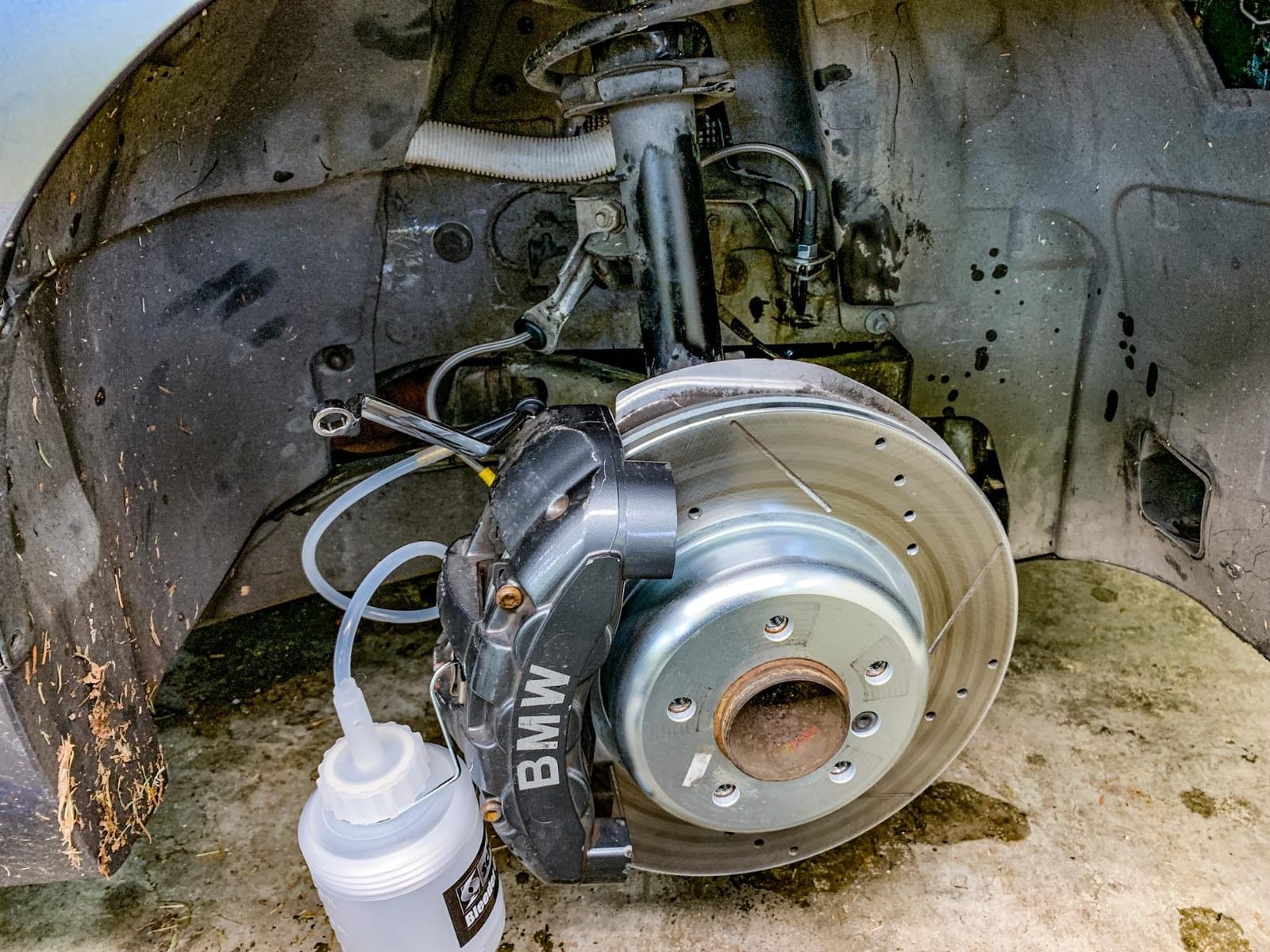
You will need the brake fluid of your choice, a clear plastic hose that fits over the bleeder nipple, a clean catch container, a box-end wrench that fits the bleeder nipple, and a helper to press the brake pedal. DOT 4 fluid is paint-safe compared to DOT 3 in many brands, but it is still worth laying down a towel to protect your fenders.
Step 2: Start at the Wheel Furthest from the Master Cylinder
The standard bleed sequence for most vehicles is right rear, left rear, right front, left front. The idea is to start at the wheel furthest from the master cylinder and work your way toward the closest one, which pushes old fluid and air bubbles toward the reservoir.
Step 3: Top Off the Master Cylinder Frequently
Never let the master cylinder run dry during the bleed. Air drawn into the master cylinder is the most common cause of a soft pedal after a brake job. Keep the reservoir topped up with fresh DOT 4 fluid throughout the process, and check it between every wheel.
Step 4: Press, Hold, Open, Close, Release
The classic two-person brake bleed sequence: have your helper press the brake pedal slowly and firmly, hold it down, then crack open the bleeder nipple. Old fluid and air bubbles come out. Close the bleeder nipple before your helper releases the pedal. Repeat until the fluid coming out of the bleeder is clean and free of air bubbles.
Step 5: Move to the Next Wheel
Repeat the press-hold-open-close-release sequence at each wheel in order. After the final wheel, top off the master cylinder one last time, replace the reservoir cap, and press the brake pedal several times to confirm a firm pedal feel. If the pedal is still soft, you may have air trapped in the ABS modulator, which requires a scan tool to bleed properly.
Frequently Asked Questions
Are all DOT 4 brake fluids the same?
No. Every DOT 4 fluid meets the same minimum dry (446°F) and wet (311°F) boiling point, but premium fluids like Motul RBF 600, ATE Typ 200, and Castrol SRF push those numbers significantly higher — some above 500°F wet. Additive packages also vary: corrosion inhibitors, anti-vapor-lock chemistry, and water-locking additives differ between brands and affect long-term performance.
Does DOT 4 brake fluid brand matter?
Yes, brand matters for anything beyond a basic commuter car. Premium brands like Motul, ATE, Castrol, and Pentosin use better base stocks and additive packages that resist moisture absorption longer and maintain higher boiling points under sustained braking. Budget fluids meet the federal minimum but offer less margin for hard use.
What is the difference between wet and dry boiling points?
Dry boiling point is measured on fluid straight out of a sealed bottle. Wet boiling point is measured after the fluid has absorbed 3.7% water by volume, simulating roughly two years of service. Wet boiling point is the more relevant number for real-world use because brake fluid is hygroscopic and absorbs water from the air over time.
Can you mix DOT 3 and DOT 4 brake fluid?
Yes. DOT 3, DOT 4, and DOT 5.1 are all glycol-ether based and mix cleanly with each other. The resulting mixture will perform at the level of the lower-rated fluid. Never mix any of these with DOT 5 silicone fluid — the chemistries are incompatible and will leave you with a spongy pedal that requires a complete system flush.
How often should you change DOT 4 brake fluid?
Every 2-3 years for street-driven vehicles and every 1 year (or before each track season) for track-driven vehicles. Racing fluids like Castrol SRF and Motul RBF 660 typically need annual replacement because their additive packages are optimized for high heat, not long service life. Warning signs that you need a flush include a soft or spongy pedal, dark-colored fluid in the reservoir, or an illuminated ABS warning light.
Final Verdict: Which DOT 4 Brake Fluid Should You Buy?
After testing ten of the most popular DOT 4 brake fluids on the market, our team’s top pick for the best DOT 4 brake fluid is the Motul RBF 600 Factory Line. Its 399°F wet boiling point, synthetic racing-grade formulation, and compatibility with both track and street use make it the most versatile fluid in the lineup, and the 2,500+ reviews with a 4.9-star average confirm it is a safe bet.
For European car owners who prioritize OEM pedal feel and long service intervals, ATE Typ 200 is the runner-up. For anyone on a budget doing routine maintenance, Valvoline DOT 3 and DOT 4 covers both ratings in one affordable bottle. Whichever fluid you choose, flush your brakes on schedule and never mix DOT 5 silicone into a glycol-ether system — that single mistake will ruin your pedal feel and require a full system flush.
For more guides on choosing brake fluid for specific use cases, check out our 8 Best Brake Fluids for High-Temperature Braking page and our Best DOT 3 Brake Fluid for Daily Drivers breakdown. If you are still deciding between Motul and ATE specifically, our 5 Best Brake Fluids Expert Reviews comparison goes head-to-head on those two flagship bottles.