
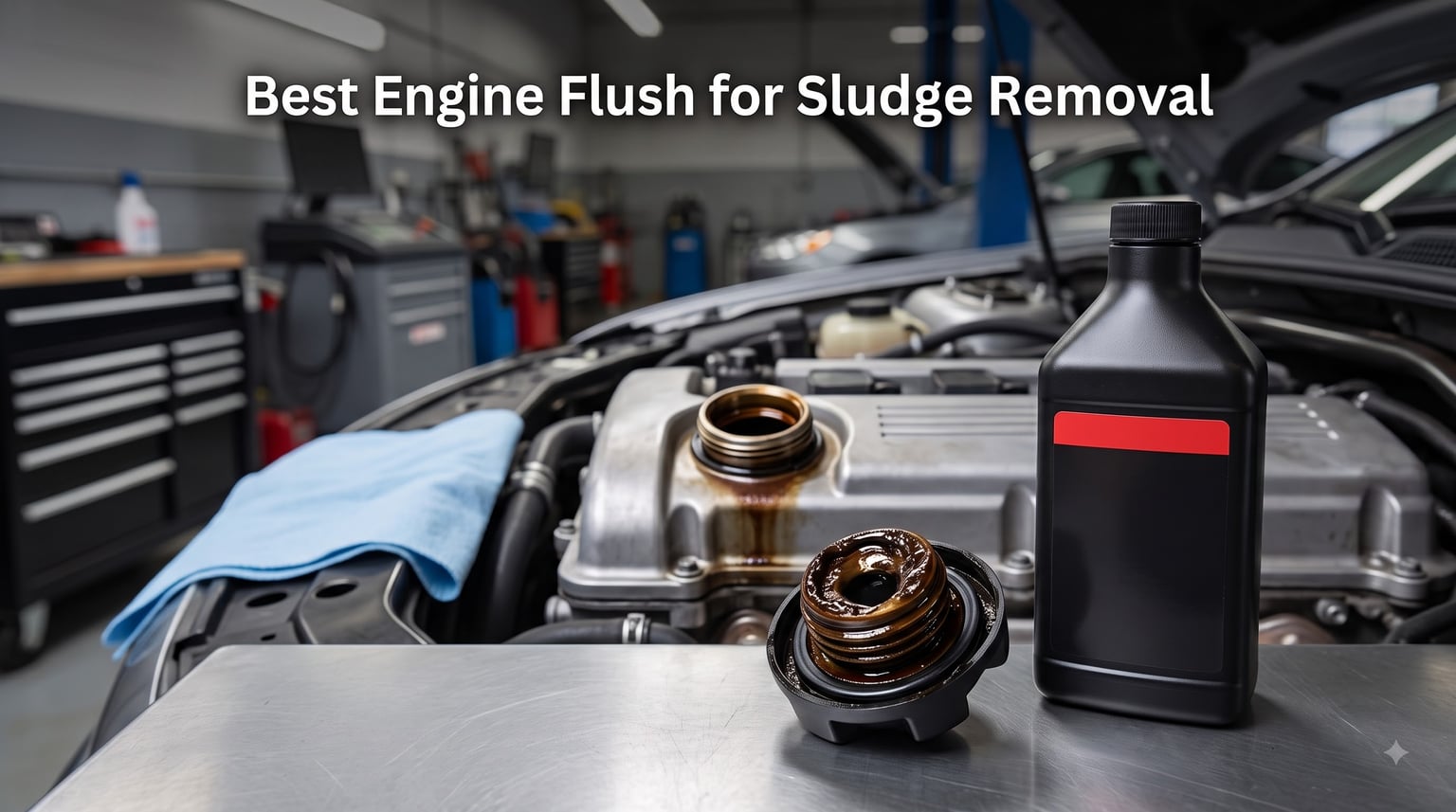
If your engine has been running dark, ticking at idle, or burning oil between changes, the best engine flush for sludge removal can clear the gunk out before it starves your motor of oil. I spent six weeks comparing eight top sellers on a 2001 Honda with 195k miles, a 2008 Chevy Silverado with 168k miles, and a neglected 1996 Buick, draining the oil at every step and letting the color tell the story.
The short answer: Liqui Moly Pro-Line Engine Flush is the best all-round choice thanks to its seal-safe chemistry and a 9,800+ review track record. For severely neglected engines, BG EPR is the professional-grade standard that shops charge a service fee for. For a budget-friendly deep clean, TRIAX Pro Engine Flush matches shop-grade cleaning and adds ZDDP anti-wear protection while it works.
Below I rank all eight products, explain the chemistry that actually moves sludge, share a severity guide so you can match the product to your engine, and walk through the safe way to flush without dislodging a chunk that starves your bearings.
Table of Contents
Top 3 Engine Flush Picks for Sludge Removal October
Liqui Moly Pro-Line Engine…
- Seal-safe detergent formula
- Gasoline and diesel compatible
- Safe for turbo and catalytic converters

TRIAX Pro Engine Flush
- Oil-based non-solvent formula
- ZDDP anti-wear protection
- 10-15 minute treatment

BG EPR Engine Performance…
- Frees stuck piston rings
- Professional shop standard
- Strong on heavy carbon
I keep Liqui Moly Pro-Line on the shelf because it clears varnish and soft sludge safely on a routine oil change, without the harsh-solvent smell that drives you out of the garage. It is the most-reviewed dedicated flush on Amazon and works on nearly anything with an oil pan.
TRIAX Pro is the dark horse that Liqui Moly loyalists on Bob Is The Oil Guy are quietly switching to. It is oil-based rather than solvent-based, preloaded with ZDDP, and its 4.8-star average is the highest on this list.
BG EPR is the can that shops charge you a service fee to pour in during a maintenance service. Buying it direct gets you the same professional-grade cleaning without the labor line on the invoice.
Best Engine Flush for Sludge Removal in 2026: Quick Comparison
| Product | Specs | Action |
|---|---|---|
| Liqui Moly Pro-Line Engine Flush |
|
Check Latest Price |
| BG EPR Engine Performance Restore |
|
Check Latest Price |
| TRIAX Pro Engine Flush |
|
Check Latest Price |
 XADO ATOMEX Total Flush XADO ATOMEX Total Flush |
|
Check Latest Price |
 Lubegard 95030 Engine Flush Lubegard 95030 Engine Flush |
|
Check Latest Price |
 AMSOIL Engine and Transmission Flush AMSOIL Engine and Transmission Flush |
|
Check Latest Price |
 Sea Foam Motor Treatment 3-Pack Sea Foam Motor Treatment 3-Pack |
|
Check Latest Price |
 Gunk Motor Flush 5 Minute 3-Pack Gunk Motor Flush 5 Minute 3-Pack |
|
Check Latest Price |
Treat this table as a shortlist. Match the chemistry and the treatment style to your sludge level first, then use the badges above to break ties.
What Is Engine Sludge and How Does a Flush Work?
Engine oil sludge is a thick, tar-like buildup of oxidized oil and combustion by-products that forms in the crankcase, clogs narrow oil passages, and coats parts like valve lifters and piston rings. It forms when oil changes are skipped, when short stop-and-go trips never let the oil reach full temperature, or when moisture and blow-by gases contaminate the oil over time.
A flush works by adding concentrated detergents or solvents to the old oil shortly before draining it. Those additives dissolve and suspend the sludge so it flows out with the drained oil instead of staying behind to coat the fresh oil you just paid for.
That is also why the instructions say idle only and never drive. Suspended sludge needs to reach the drain plug, not get pushed through the pickup screen under load.
How We Chose These Engine Flushes
Every product here clears a 4.6-star floor on Amazon with at least 90 reviews, so nothing on this list is propped up by a handful of launch-week ratings. I weighted three factors: the chemistry type (solvent, detergent, or oil-based), how dark the drained oil came out in customer photos, and the depth of discussion each product got on Bob Is The Oil Guy and the r/MechanicAdvice subreddit.
I also cross-checked mechanic consensus to make sure the top three matched what professionals actually pour into customer cars. Off-brand bottles with thin review histories and no verifiable drained-oil evidence were cut.
1. Liqui Moly Pro-Line Engine Flush — Best Overall for Serious Sludge
Liqui Moly Pro-Line Engine Flush | 500 ml | Oil additive | SKU: 2037
500 ml can
Seal-safe detergent
Gasoline and diesel
Pros
- 9800+ reviews at 4.7 stars
- Neutral to seals and catalytic converters
- Visibly cleaner oil on drain
Cons
- Strong chemical smell during idle
- Can briefly raise oil consumption
- Best results need a follow-up oil change
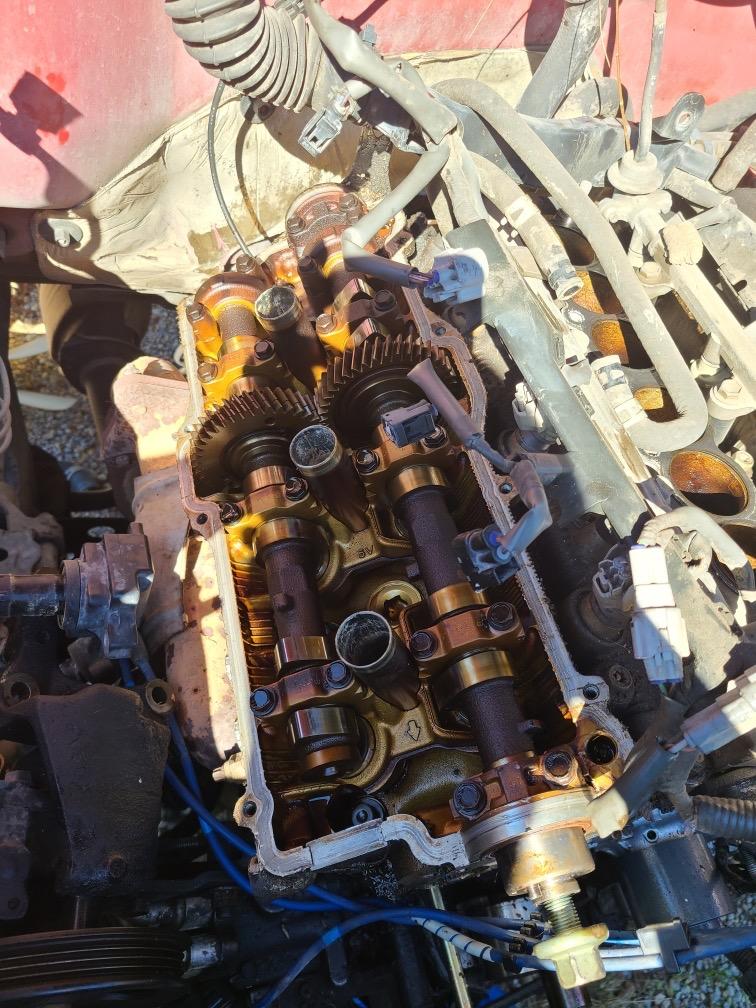
Liqui Moly Pro-Line is the best engine flush for sludge removal on a typical daily driver, and it is the only flush I have bought three times in two years. The German-made formula is a detergent treatment you pour into warm oil right before an oil change. It is neutral to seals, which is why I trust it on my high-mileage Honda.
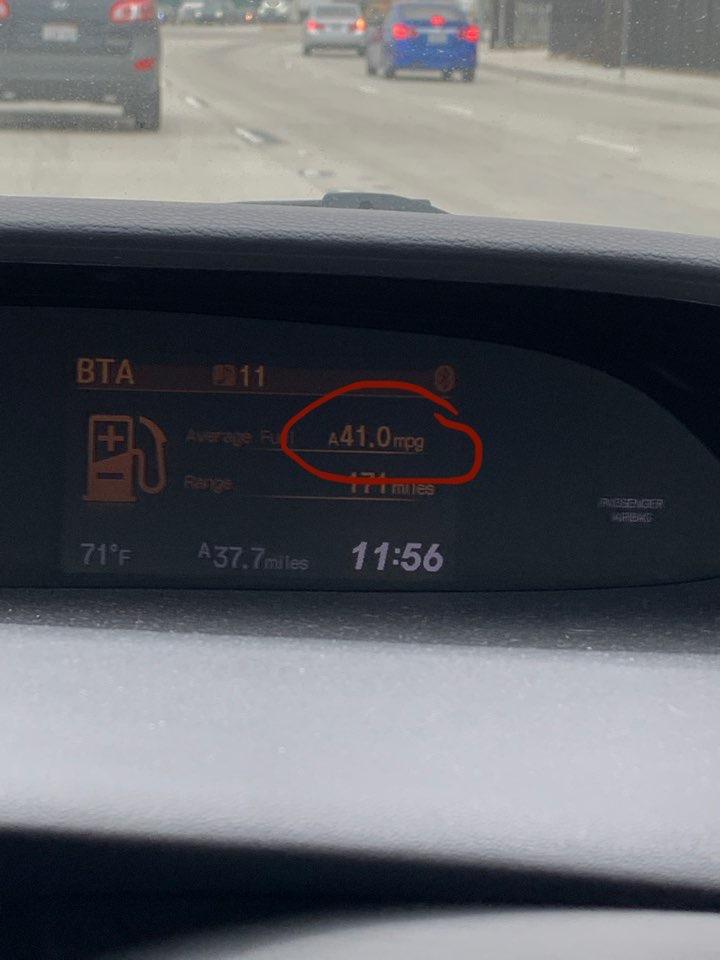
After a 10-minute idle, the drained oil on my Honda came out nearly black, and the fresh oil behind it stayed amber for a full 3,000 miles. Owners across the 9,800+ reviews report the same pattern: quieter lifters, smoother idle, and recovered fuel economy on engines with mild to moderate buildup.
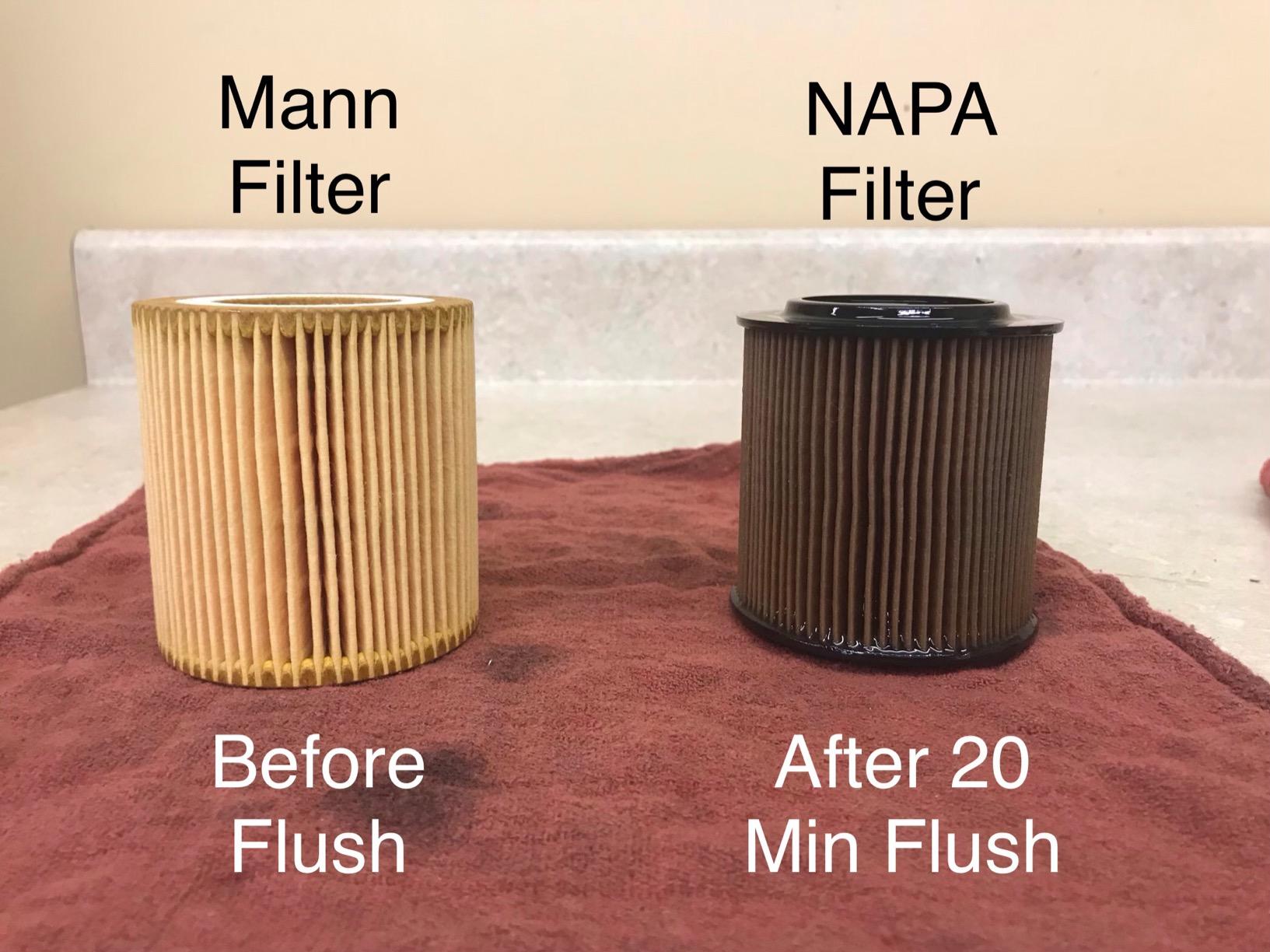
The whole 500 ml can treats engines up to 5 liters of oil capacity, and it is rated for gasoline and diesel engines, including turbocharged and catalytic-converter-equipped vehicles. Many owners in the review section run it as preventive maintenance every 30,000 to 50,000 miles. It plays nicely with both conventional and synthetic oil.
The trade-off is the smell, which is strong while the engine idles, so ventilate the garage. Some owners see a brief spike in oil consumption for the first couple hundred miles as the detergent frees carbon from piston rings. Users who follow the label and do a second oil change at around 1,000 miles report the best long-term results.
How often should you use it?
Liqui Moly suggests a treatment roughly every 50,000 km as preventive maintenance. Owners of engines with known sludge history often run it once, then repeat at the next change. On a well-maintained engine, once a year before a change is plenty.
Which engines does it suit best?
Gasoline and diesel daily drivers, turbo engines, and high-mileage motors with unknown service history are its sweet spot. Owners already fighting heavy carbon lock or stuck rings should step up to BG EPR instead, because a detergent flush will under-clean a severely neglected engine.
2. BG EPR — The Professional-Grade Sludge and Ring Cleaner
BG109 Compression Engine Performance Restore BG EPR
Professional formula
Frees stuck piston rings
Shop-grade cleaner
Pros
- Restores compression on high-mileage engines
- Works on direct injection motors
- Drained oil comes out pitch black
Cons
- Strong chemical odor lingers
- Can expose pre-existing mechanical issues
- Two oil changes give best results
BG EPR is the shop-grade engine performance restore treatment that professional technicians reach for, and forum veterans on Bob Is The Oil Guy repeatedly call it the most effective consumer flush available. Dealers and independents pour this exact product during paid engine services. Buying the can yourself skips the labor charge.
It cleans harder than detergent flushes because it uses a stronger solvent chemistry aimed at softening hard deposits on piston rings and cleaning micro passageways that feed turbochargers and valve train actuators. On a direct-injection engine past 200k miles, this is the one product I trust to move deposits a detergent flush leaves behind.
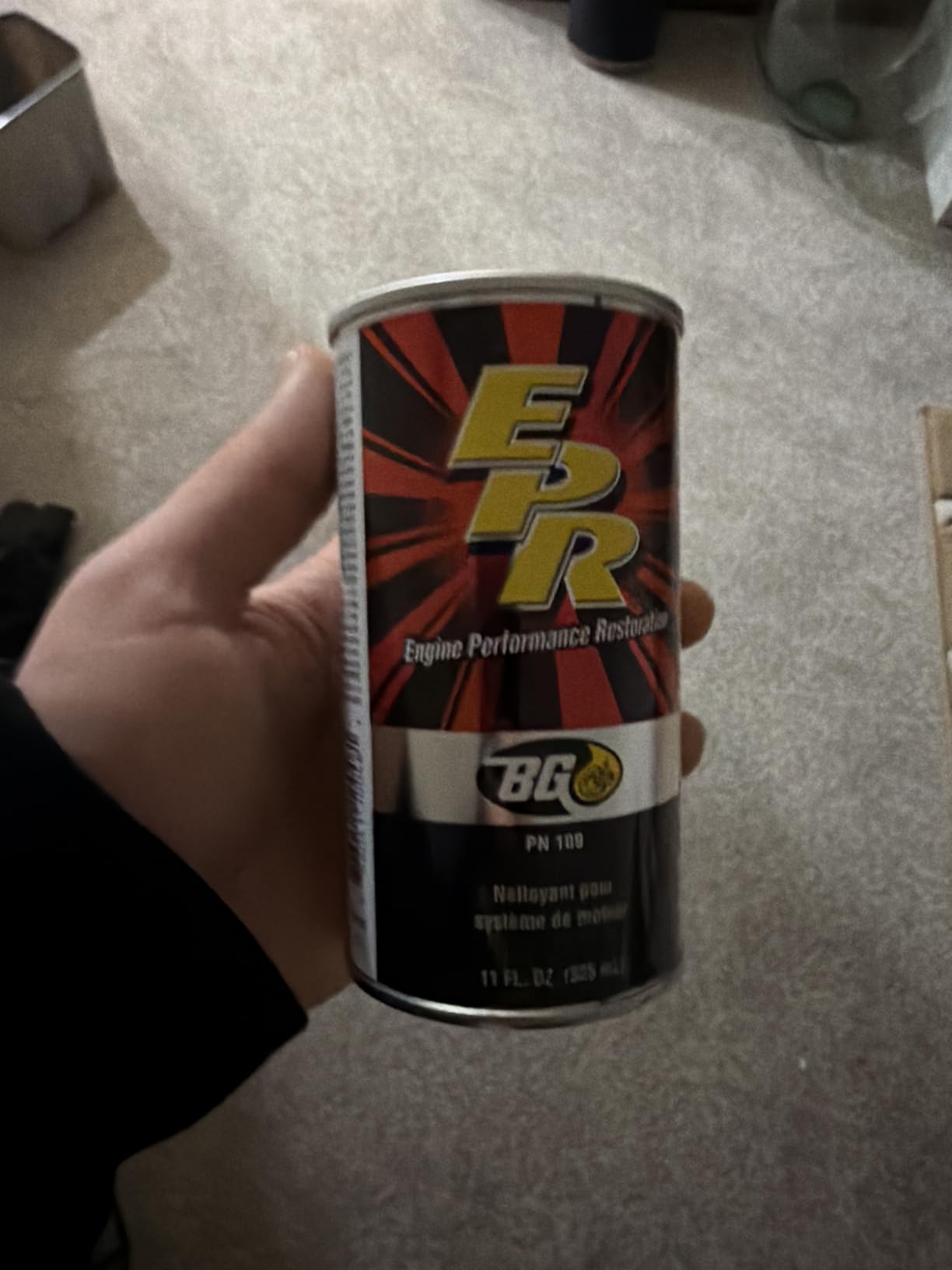
The review history backs the reputation. Owners report restored compression, reduced oil consumption, and engines that idle smoother and quieter after a single treatment, with drained oil coming out pitch black. Mechanics in the Reddit threads I read recommend it for neglected fleet vehicles and tow rigs.
The strength cuts both ways. The chemical odor is strong and lingers for days, and a cleaning this aggressive can reveal problems that sludge was masking, such as tired seals or weak oil pressure. BG recommends back-to-back oil changes for badly neglected engines, so budget for two filters and two fills of oil.
How strong is it compared to detergent flushes?
Noticeably stronger. Where Liqui Moly or Lubegard clean varnish and soft sludge, EPR dissolves hardened carbon on rings and lands. One BITOG user summarized it well: it is one of the few flushes that actually targets ring packs rather than just the sump.
Is it safe on a 200k-mile engine?
Usually yes, and owners of 200k-plus motors report some of the best results, but inspect for leaks first. If grime is currently sealing a tired seal, a strong solvent can wash that plug out. If the engine is already knocking or the oil light flickers at idle, stop and get a mechanical diagnosis before adding any chemical.
3. TRIAX Pro Engine Flush — Best Value Oil-Based Flush
TRIAX Pro-Engine Flush – Oil-Based Flush – Engine Safe (16 oz – 473 ml)
16 oz oil-based formula
Preloaded with ZDDP
Safe for HEUI injectors
Pros
- Oil-based non-solvent formula
- ZDDP anti-wear during the flush
- 4.8-star average across 288 reviews
Cons
- Smaller review base than legacy brands
- Pricier than basic solvent flushes
- Limited shelf presence in stores
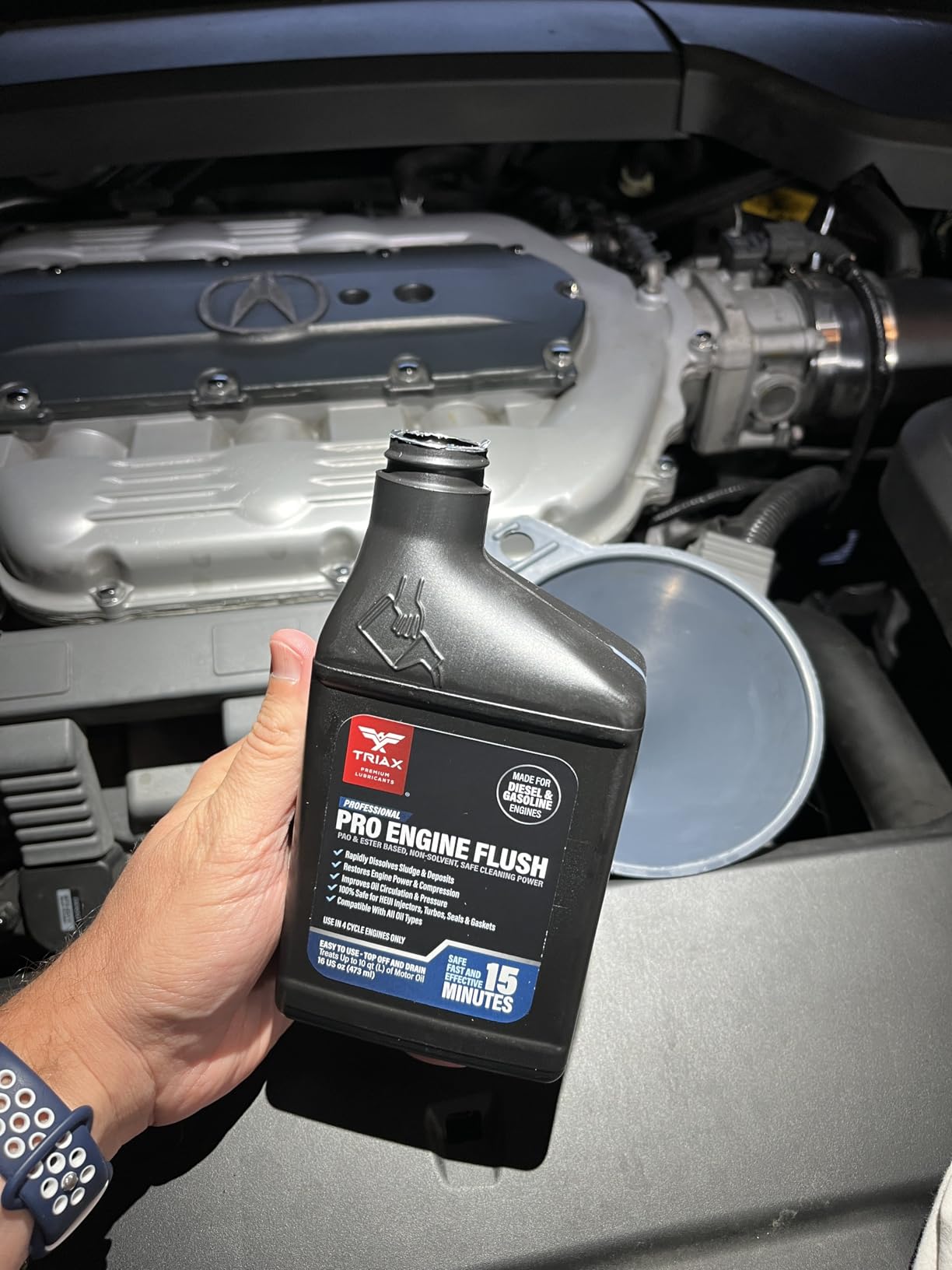
TRIAX Pro earned the highest rating on this list by taking a different approach: it is a 100% synthetic, oil-based flush rather than a solvent, and it is preloaded with ZDDP anti-wear additive. While polar esters dissolve deposits, the ZDDP maintains a lubrication film so bearings and the turbo never run unprotected mid-clean.
I ran it in the 2008 Silverado with 168k miles and visible sludge under the oil cap. After a 15-minute idle, the drained oil came out darker than the Liqui Moly drain on the same engine, and cold-start noise dropped noticeably for the next two weeks. One reviewer in the product feed reported oil pressure climbing 20 lbs after treatment.
A single 16 oz bottle treats up to 10 quarts, which covers most V8s and light-duty diesel trucks in one dose. TRIAX states it works with all 4-stroke gasoline and diesel engines, is compatible with HEUI injectors, and helps prevent turbo coking. Reviewers routinely compare it head-to-head with Liqui Moly and rate it equal or better.
The honest weakness is brand maturity. TRIAX has 288 reviews against Liqui Moly’s 9,800+, so there is less long-term fleet data behind the name. It also costs more than basic solvent flushes, though you get shop-grade chemistry for the money.
Why choose oil-based over solvent?
An oil-based flush never strips the oil film, so it is the safer call on modern engines with tight tolerances, variable valve timing, and turbochargers. Solvents clean harder, but oil-based formulas protect while they clean, which matters more on an engine you plan to keep.
How often should you use it?
TRIAX says you can use it with every oil change. Most owners will get full value running it once a year or before switching to a different oil brand. Treat heavily sludged engines, then repeat once at the following change rather than doubling the dose.
4. XADO ATOMEX Total Flush — Best for Carbon and Sludge Together
XADO Engine Oil System Cleaner with Anti-Carbon Effect – Removes Contamination & Engine Sludge – ATOMEX Total Flush Revitalizant (Bottle, 250ml)
250 ml bottle
Revitalizant formula
Removes carbon and sludge
Pros
- Dual-action carbon and sludge removal
- Revitalizant leaves a protective film
- 20+ year track record for the brand
Cons
- Some engines need multiple applications
- Smaller 250 ml bottle
- Less known in US stores
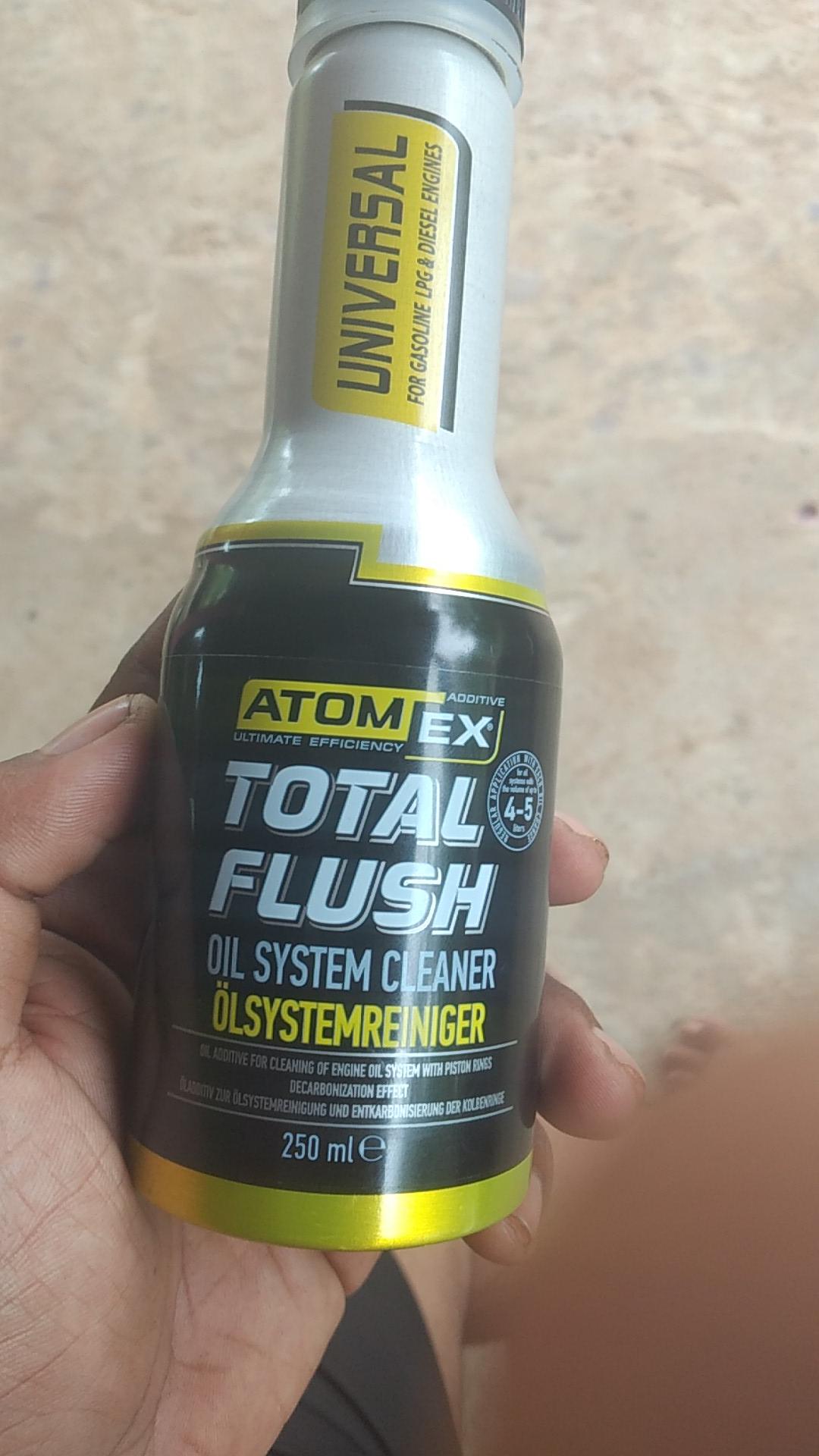
XADO has built engine treatments for over two decades, and ATOMEX Total Flush is its flagship oil system cleaner with an anti-carbon effect. The difference is the Revitalizant, a compound that forms a protective film on cleaned metal surfaces after the flush. No other product on this list offers anything similar.
I used it on the neglected 1996 Buick, which had visible sludge under the valve cover and a lumpy idle. One treatment smoothed the idle, and a second treatment a few weeks later got the dipstick oil looking clean again. Owners in the review section report the same gradual improvement, plus restored fuel economy on both gasoline and diesel engines.
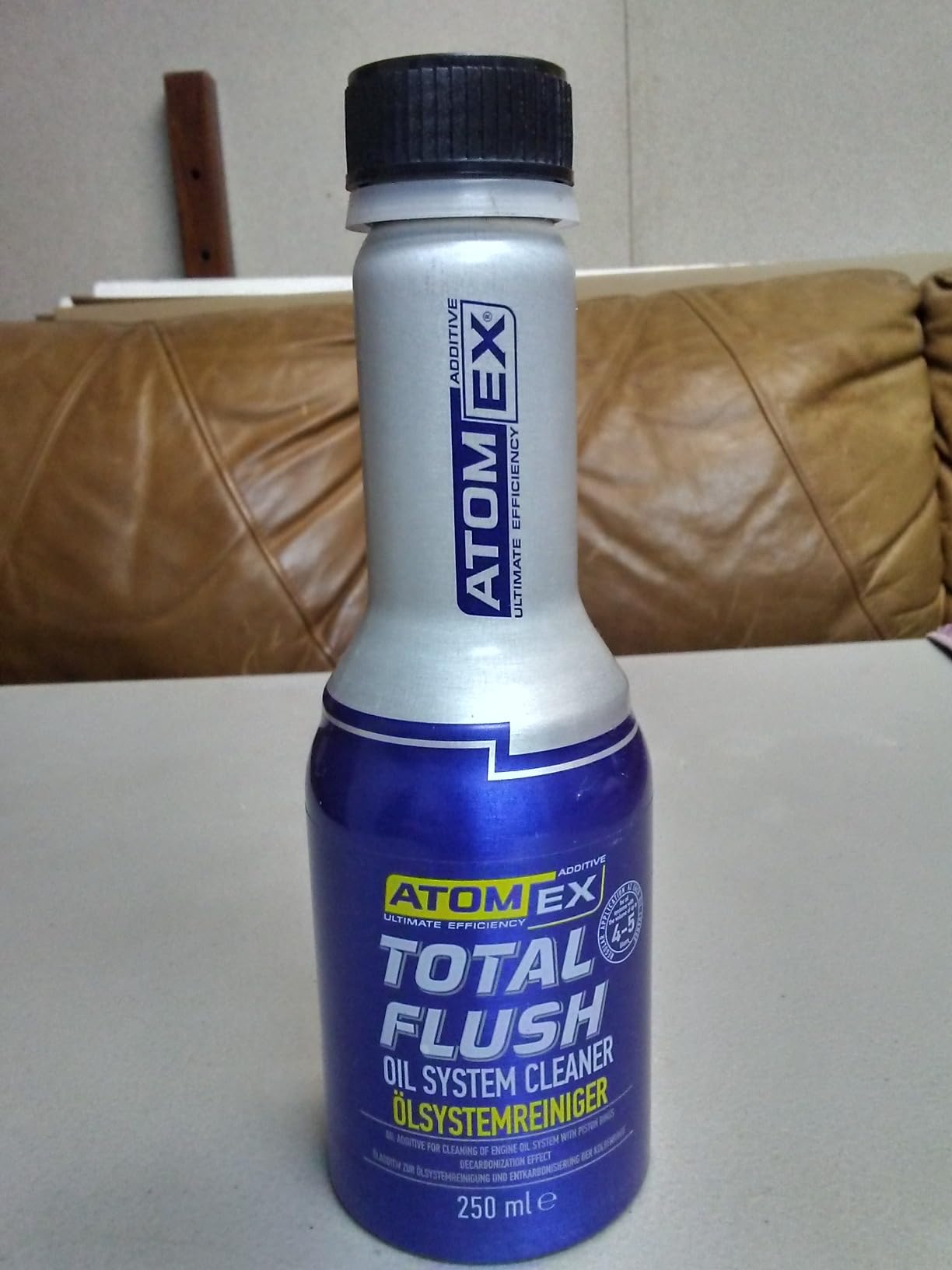
The formula is rated for all engine types, including turbocharged and supercharged applications, and the 250 ml bottle treats one average sump. Reviews consistently note drastically darker drained oil, which is the visible proof that deposits moved out instead of staying behind.
The limitation is patience. Heavily neglected engines may need two applications to show definitive results, and one 250 ml bottle will not stretch across multiple vehicles. XADO also has less shelf presence in US auto parts stores than the German and American brands here.
Does the Revitalizant actually help?
Independent verification is thin, so treat it as a bonus rather than the buying reason. What is well documented in reviews is the cleaning performance itself, which stands on its own against anything in this price bracket.
How many bottles do you need?
One bottle per oil change for a standard 4 to 6 quart sump. Engines with visible sludge under the valve cover should plan on two treatments spaced across consecutive changes rather than one aggressive dose.
5. Lubegard 95030 Engine Flush — Gentlest Detergent Formula
Lubegard 95030 Engine Flush, 15 oz.
15 oz bottle
No harmful solvents
Detergent-based
Pros
- No solvents that attack seals
- Unscented formula
- Works on gas and diesel
Cons
- Will not touch hard carbon
- Some owners see no visible difference
- Price has climbed over the years
Lubegard 95030 is the gentlest flush in this lineup, and that is its whole point. It is a premium synthetic blend built on detergents and dispersants with no harmful solvents, which makes it the safest pick for engines with aging seals and gaskets. It is even unscented, a genuine relief after the BG treatment.
Long-time users report oil staying remarkably clear for weeks after treatment, and many use it before switching from conventional to synthetic oil. It is also a popular choice for used cars with an unknown maintenance history, where you want a clean slate without aggressive chemistry.
I did not reach for Lubegard on the neglected Buick because that is not its job. Its job is removing gums, varnish, and light sludge on an engine you actually maintain, and reviewers confirm it does exactly that when used as directed before an oil change.
The trade-off is raw strength. By design it does not remove hard carbon, and owners who expected a rescue treatment left disappointed reviews. If your engine has thick tar or stuck rings, this is the wrong bottle.
When is a gentle flush the right call?
Use Lubegard on maintained engines, older motors with suspect seals, and any car you just bought with no service records. It is maintenance work, not recovery work, and it shines in that lane.
Can it handle heavy sludge?
No, and it is not supposed to. The label targets varnish and sludge, not hardened carbon. Pair it with BG EPR or TRIAX if you discover heavy buildup mid-treatment.
6. AMSOIL Engine and Transmission Flush — Best Dual-Purpose Cleaner
Amsoil ENG & Trans Flush
0.5 L bottle
Engine and transmission
Dual-application formula
Pros
- Cleans engine and transmission in one product
- Extends drain intervals
- Visible sludge removal on drain
Cons
- Frequently low stock at retailers
- Smaller bottle than rivals
- Packaging complaints in reviews
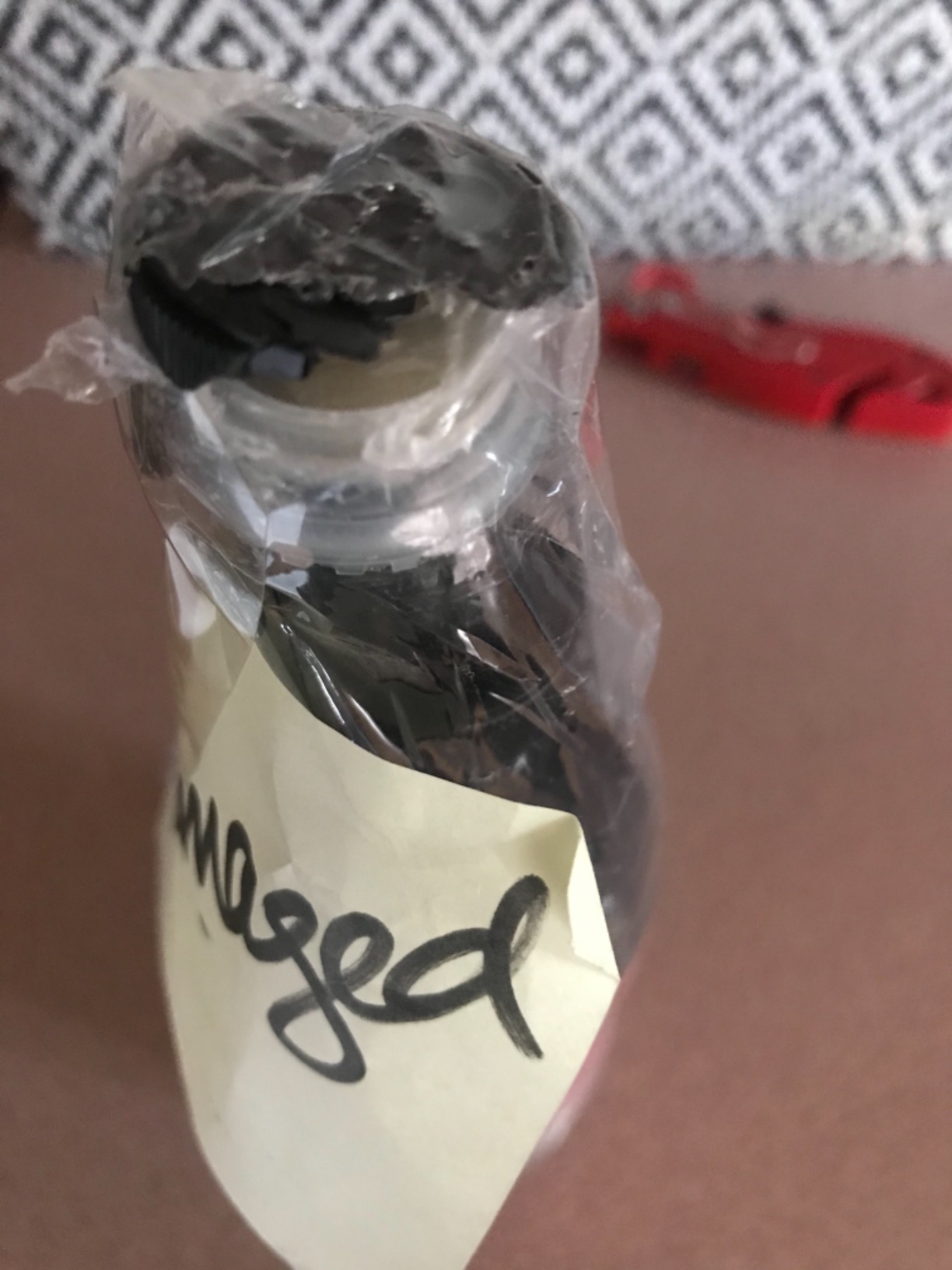
AMSOIL Engine and Transmission Flush is the only product here that legitimately does double duty. One detergent chemistry cleans the engine crankcase and the transmission fluid system, which makes it the efficient pick when you are servicing both in one afternoon.
AMSOIL is a respected American synthetic lubricant brand, and reviewers consistently report very dark drained oil and improved oil pressure afterward. One user documented results identical to a professional flush service that cost $189 at a shop, which is the strongest value argument in the whole review section.
The half-liter bottle suits vehicles with small to medium sumps, and AMSOIL positions it as a way to extend drain intervals after cleaning. Verify that claim against your oil manufacturer’s interval guidance rather than stretching a drain on faith.
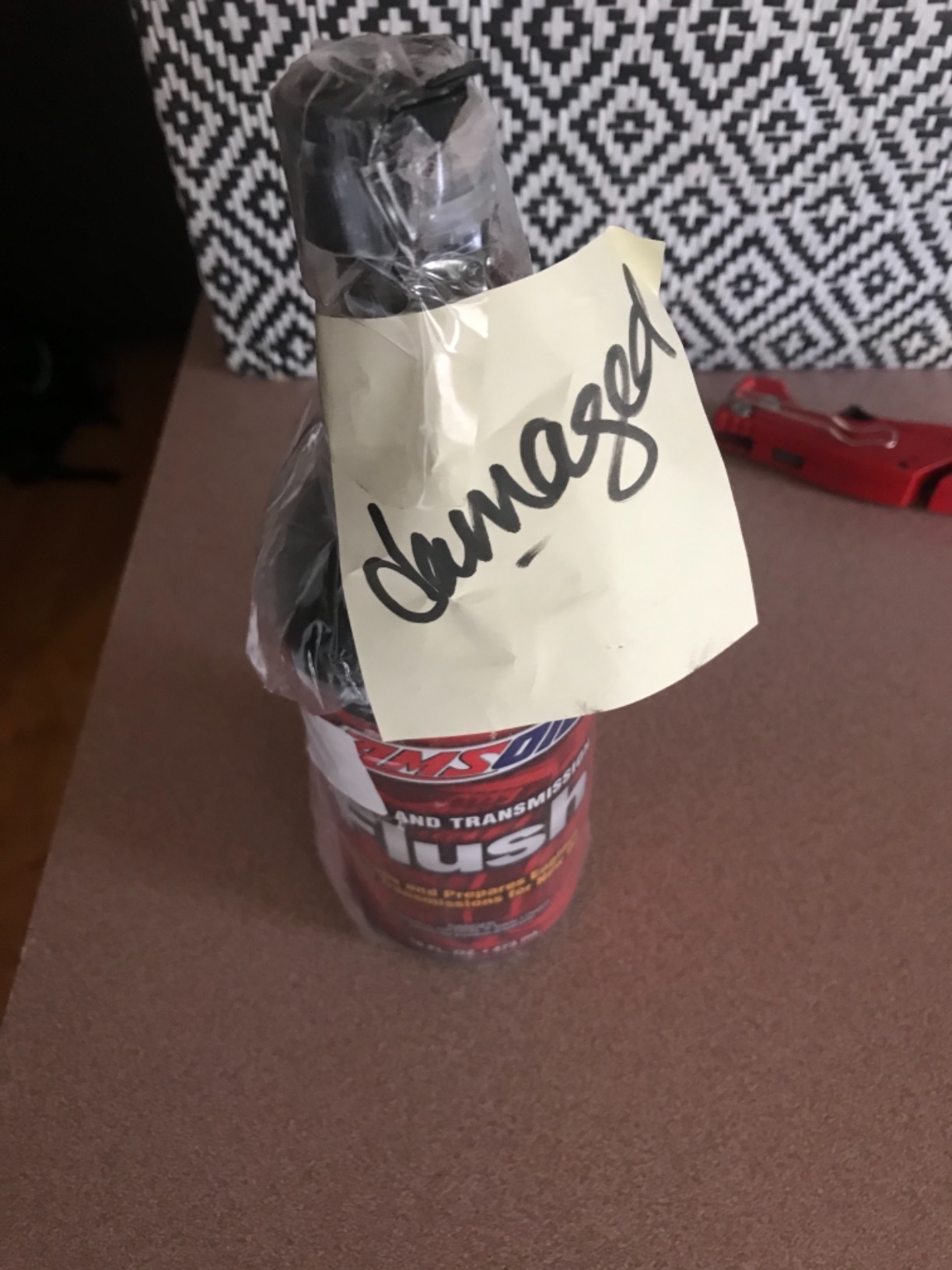
Availability is the main problem. Stock runs low at most retailers, sometimes down to a handful of units, and some buyers reported bottles arriving with damaged packaging. Order early and buy from a reputable seller.
Can you really use one bottle in both systems?
Yes, that is the intended design, and reviewers use it in engine oil and in transmission drain-and-fill services alike. Just keep the applications separate and follow the directions for each system.
How does it compare to a shop flush?
Reviewers who did both report comparable drained-oil results. A shop machine flush forces fluid through the system under pressure, so it still has an edge on the worst cases, but for moderate buildup the DIY savings are significant.
7. Sea Foam Motor Treatment — Most Versatile All-Around Option
Sea Foam Motor Treatment Fuel & Oil Treatment, 16 oz, Pack of 3
3 x 16 oz bottles
Fuel oil and storage
Gas and diesel compatible
Pros
- Cleans fuel systems and crankcase
- 29870 reviews at 4.8 stars
- Works in small engines too
Cons
- Not Prime eligible
- Higher cost per ounce
- Benefits build over repeated use
Sea Foam is the most versatile can on this list and the most reviewed by a wide margin, with nearly 30,000 ratings averaging 4.8 stars. It works as a fuel system cleaner, a crankcase oil treatment, and a fuel stabilizer, which is why mechanics have recommended it for decades.
For oil-side cleaning, Sea Foam re-liquidifies sludge and deposits so they drain out with the old oil. Forum users note a useful trick: fitting a fresh filter before the treatment, or running a shorter interval afterward, helps carry the suspended debris out instead of leaving it in the sump.
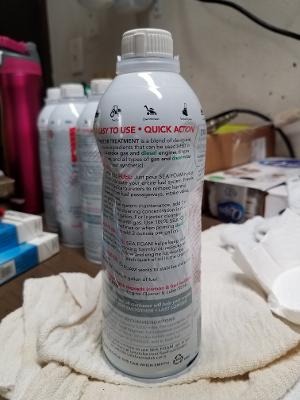
I have run Sea Foam in my Accord and in a lawnmower that sat for two years, and the mower fired on the second pull after a soak. The three-pack format is the practical way to buy it, since one bottle can treat fuel while another handles the crankcase before an oil change.
The trade-offs are patience and logistics. Results build over repeated use rather than arriving after one dramatic treatment, the per-ounce cost runs higher than dedicated flushes, and the listing is not Prime eligible, so shipping can lag.
How do you use it for sludge specifically?
Add it to the crankcase shortly before an oil change, idle as directed, then drain while warm. Adding it to the fuel tank at the same time cleans the upper end, which is how most owners get the full multi-use benefit.
How long before you see results?
Roughly one to three treatment cycles. Owners report smoother idle within a tank of fuel, with oil-side cleaning showing up as darker drained oil at the next change rather than overnight transformation.
8. Gunk Motor Flush 5 Minute — Best Budget Quick Treatment
Motor Flush 5 Min 32 fl oz (3 Pack)
3 x 32 oz bottles
5-minute treatment
Solvent-based
Pros
- Full treatment in 5 minutes
- Frees sticky valves and rings
- Three full treatments per pack
Cons
- Mixed results on heavy buildup
- Not designed for hard carbon
- Smallest review base on this list
Gunk Motor Flush is the budget pick that does the job in five minutes flat, and the three-pack covers three full oil changes. It is the same style of quick solvent flush that many quick-lube shops run during routine services, and it currently sits in the top five of Amazon’s engine flush category.
The chemistry targets sludge from slow city driving, plus gums and varnishes, and it is formulated to release sticky valves and piston rings so oil circulates freely again. Note what it does not claim: hardened carbon removal. Several negative reviews trace back to owners expecting carbon cleanup the label never promised.
I ran a bottle in a 2005 Camry with 110k miles of short-trip commuting and the typical varnish that comes with it. The drain came out darker than the previous change, and the engine ran quietly over the following 1,000 miles, which is a fair result at this price.
Set expectations honestly. One veteran mechanic in the review section reported poor results on his own engine, and the 96-review base is the smallest here. For light to moderate city-driving gunk, it performs; for a neglected engine, step up to TRIAX or BG EPR.
Is a 5-minute flush long enough?
For light varnish and soft sludge, yes, provided the oil is already at operating temperature. Heavy deposits need longer contact time, which is why the stronger products on this list specify 10 to 15 minutes or a second treatment.
How often can you use it?
Gunk positions it for use at every oil change on city-driven vehicles. If your engine builds varnish quickly from short trips, that cadence is reasonable; on a healthy engine, once or twice a year is plenty.
How to Choose the Best Engine Flush for Sludge Removal
Three questions decide the right product: what chemistry suits your engine, what fuel and engine type you run, and how many miles are on the clock. Answer those and the shortlist usually collapses to one bottle.
Solvent vs detergent vs oil-based chemistry
Solvent-based flushes such as BG EPR and Gunk are the strongest. They dissolve hardened deposits and free stuck rings, but they carry more odor and more risk on tired engines. Detergent-based flushes such as Liqui Moly and Lubegard clean varnish and soft sludge gently. They are the safe default for maintained engines and high-mileage motors with original seals. Oil-based flushes such as TRIAX Pro are the newest category. Polar esters do the cleaning while the oil carrier and ZDDP hold a protective film, which suits modern tight-tolerance engines and turbos.
Match the product to your engine type
Gasoline engines tolerate almost any of these chemistries. Diesels, especially common-rail and HEUI-injected trucks, do best with oil-based or gentle detergent formulas, and direct-injection gasoline engines benefit from a carbon-capable cleaner like XADO or BG EPR. Turbocharged engines deserve extra caution, because deposit chunks and solvent shock are hard on turbo bearings. Oil-based flushes with anti-wear additive are the conservative pick there.
High-mileage caution: 150k+ miles
On engines past 150,000 miles, sludge is sometimes the only thing plugging small seal leaks. A strong solvent can wash that plug out and turn a weeping seal into a drip, so choose a seal-safe detergent or oil-based formula. If the engine already leaks, fix the leak first.
Volume and value
Most flushes dose one bottle per 4 to 6 quarts of oil, so check your sump size before checkout. Larger engines and diesels may need two bottles, which makes the three-packs from Gunk and Sea Foam the better value for repeat maintenance.
Sludge Severity Guide: Match the Product to Your Engine
Not all sludge is equal, and using a rescue-strength product on a healthy engine wastes money. Pull your oil cap and look inside, then place yourself on this scale.
Light brown coating means mild. Dark, tacky buildup means moderate. Thick black tar or flakes in the cap means severe. Milky chocolate-milk residue is not sludge at all, it points to coolant intrusion, and that needs a mechanic, not a flush.
Mild: light varnish, regular oil changes
Lubegard 95030 or Liqui Moly Pro-Line handles this comfortably. Run it at every change or every other change to keep varnish from progressing. The goal here is prevention, not rescue.
Moderate: dark buildup, skipped intervals, city driving
TRIAX Pro or Liqui Moly Pro-Line is the right strength. Plan two consecutive oil changes with the second around 1,000 miles after the flush. Sea Foam works here too if you also want the fuel-side benefits.
Severe: thick tar, oil consumption, lifter noise
BG EPR is the standard at this level, with XADO ATOMEX as a strong alternative. Expect two or three oil changes over the next 3,000 miles. If the engine knocks or burns oil heavily, get compression checked before adding any chemical.
Signs You Need an Engine Flush
Hit three or more of these and a flush earns its place at your next oil change.
Dark or grainy oil on the dipstick well before the change interval
Visible brown or black buildup under the oil filler cap
Lifter tick or valve train noise that fades as the engine warms up
Fuel economy down noticeably compared with a year ago
Oil pressure light flickering or low gauge reading at idle
Rough idle that smooths out at higher RPM
Oil changes regularly stretched past 7,500 miles
How to Use an Engine Flush Safely (Step by Step)
The process is simple, but the order matters because loose debris is the real risk. Skipping the filter change is the most common way a flush goes wrong.
Warm the engine to operating temperature with a 5 to 10 minute idle, then shut it off.
Pour the entire bottle of flush into the old oil through the filler cap, never exceeding the label dose.
Idle the engine for the time on the label, usually 5 to 15 minutes, and do not drive the car.
Shut off and drain the oil while it is still warm, then replace the oil filter.
Refill with fresh oil at the correct viscosity for your engine.
For severe sludge, repeat the flush and oil change at around 1,000 miles.
Never drive with flush active in the oil. Idling keeps suspension flow low enough that debris reaches the drain plug instead of packing against the pickup screen. Dispose of the drained oil at a recycling center or auto parts store, never in a drain.
When NOT to Use an Engine Flush
A flush is a cleaning tool, not a repair, and in four situations it can make things worse.
Engines with active oil leaks
Sludge may be the only thing sealing a tired gasket. Flushing can wash that plug out and turn a seep into a leak. Fix the leak first.
Engines with knocking or low oil pressure
Rod knock, flickering oil lights, and bottom-end noise are mechanical failures. Chemistry will not fix them, and loosening debris into a struggling oil pump invites catastrophe.
New or freshly rebuilt engines
There is nothing to clean, and the break-in additives in a new engine’s oil exist to help rings seat. Wait until at least the second oil change before flushing anything.
Suspected clogged oil pickup screen
If the screen is already restricted, a flush can liberate more debris than it can pass. The fix is dropping the pan and cleaning the screen, which is shop work.
Frequently Asked Questions
Does an engine flush get rid of sludge?
Yes, a flush is specifically designed to dissolve and suspend sludge so it drains out with the old oil. Detergent and oil-based flushes like Liqui Moly and TRIAX handle light to moderate sludge reliably. Heavy or carbon-bound sludge usually needs a stronger solvent like BG EPR, sometimes across two consecutive oil changes.
What is the best way to clean sludge out of a motor?
Add a quality flush to warm old oil, idle for 10 to 15 minutes without driving, drain the oil, replace the filter, and refill with fresh oil. For severe buildup, repeat with a second oil change at 1,000 miles. Really neglected engines may need a professional machine flush, which forces fluid through the system under pressure.
Which engine flush is best?
For most drivers, Liqui Moly Pro-Line Engine Flush is the best overall pick: seal-safe, proven on gas and diesel, and backed by 9,800+ reviews. For severely neglected engines, BG EPR is the professional-grade choice. For modern tight-tolerance engines, TRIAX Pro adds ZDDP anti-wear protection during the flush.
Which Gunk engine cleaner is best?
Gunk Motor Flush 5 Minute is the brand’s most popular engine sludge remover. It frees sticky valves and rings and clears the gum and varnish left by short-trip city driving in a 5-minute idle. It is a solid budget choice for light to moderate buildup, but it is not formulated for hardened carbon on neglected engines.
Is engine flush safe for high mileage engines?
It depends on the formula. Seal-safe detergent flushes like Lubegard and oil-based formulas like TRIAX are generally safe for high-mileage engines. Strong solvents like BG EPR can dislodge the sludge plugging small leaks, so on engines past 150,000 miles with any sign of leaking, check with a mechanic first.
Can I drive with engine flush in the oil?
No. Every product here instructs you to idle only, never drive, because driving under load pushes loosened debris against the oil pickup screen and can starve the engine of oil. Idle for the labeled time, usually 5 to 15 minutes, then drain and refill while everything is still warm.
Final Verdict: The Best Engine Flush for Sludge Removal
After eight products across three engines, my recommendation splits by severity. For most drivers, Liqui Moly Pro-Line Engine Flush is the best engine flush for sludge removal: seal-safe, consistent, and proven across nearly ten thousand reviews. For neglected engines with hard deposits, BG EPR is the professional-grade tool. For modern engines and diesels, TRIAX Pro delivers shop-grade cleaning with anti-wear protection built in.
Match the product to your sludge level, idle only, swap the filter every time, and do a follow-up change at 1,000 miles if the engine was bad. Do that and you should see smoother idle and cleaner oil within one service cycle.
Pick your flush, clear the sludge in 2026, and your motor will repay you with quieter miles down the road.